Proceed cautiously on the proposed pact with India – Mahinda

March 6th, 2016

Courtesy Adaderana

Former President Mahinda Rajapaksa asserts that the Government should proceed cautiously on the proposed Economic and Technological Cooperation Agreement with India.

I urge the government to table in parliament the agreement they intend signing with India and seek the views of trade chambers, professional associations and the general public before making any decision to enter into this agreement,” Rajapaksa said issuing a statement today.

Full Statement:

The government has indicated that they intend signing an Economic and Technological Cooperation Agreement with India this month. Neither the Parliament, nor the general public have been officially informed about the contents of this proposed agreement. From the draft that has been unofficially released to professional associations by Minister Malik Samarawickrema, we gather that the proposed ETCA is not a detailed document but only a framework agreement which would leave the specific details on the trade in goods, trade in services and investment to be worked out later.

It is important that Sri Lanka should have a robust trade relationship with India. A trade agreement should be entered into only after a proper study of the possible problems and impediments that could arise. We must learn from our experiences with the 1998 Free Trade Agreement with India which ran into many problems in implementation. Issues such as ports of entry, product certification, mutual recognition of standards, Indian state laws governing trade and the caps imposed on certain export items from Sri Lanka all became issues that prevented Sri Lanka from achieving its full export potential to the Indian market.

Apart from thwarting the objectives of the FTA with India, this situation has given rise to a whole narrative about Indian attitudes towards Sri Lanka. The proposed Economic and Technological Cooperation Agreement with India should specify in detail the manner in which economic and technological cooperation between the two countries will take place. Our experience with the Indian FTA shows that what was needed was more detail, and more specificity – not less. Hence the government should not rush into signing open ended agreements leaving the specific details to be worked out later.

The Trans Pacific Partnership which was signed by 12 Pacific-rim countries last month and of which our government speaks so highly, was negotiated for seven years and has 30 chapters detailing the manner in which trade in goods and services between the partners will take place. India has signed agreements similar to the proposed ETCA or the earlier CEPA with, South Korea, Singapore and other countries but these are very detailed agreements formulated with adequate economic and national security safeguards. In opening up the services sector, we ought to know clear boundaries of such opening.

I urge the government to take a phased approach to entering to an ETCA with India. In the first phase, impediments to the implementation of the existing FTA with India should be ironed out. The problem of Indian fishermen poaching in Sri Lankan waters which has now reached crisis proportions should also be sorted out at this stage, to create an atmosphere of trust between the people of the two countries. After a few years of operating the FTA to the satisfaction of Sri Lankan stakeholders, we can then go onto the next phase and work out the specific details to broaden the relationship through an ETCA.

At present, we provide a market of USD 4,000 million for Indian goods. The value of exports from India to Sri Lanka and vice versa need not reach a perfect balance under the FTA. However it is vital that Sri Lankans feel that we are achieving our full potential in exports to India without being impeded by various non-tariff barriers and bureaucratic stonewalling. Our focus should be to get India to open up without restrictions on Sri Lanka’s main exports like apparel, tea etc. Trying to broaden the trade relationship with India without sorting out existing problems, will naturally give rise to public opposition.

I urge the government to table in parliament the agreement they intend signing with India and seek the views of trade chambers, professional associations and the general public before making any decision to enter into this agreement. The arrogant attitude the government has taken in this matter may end up ruining our chances of forging a mutually beneficial trade partnership with our neighbour.

Lalin’s Column: ‘Traitors’ in SL

March 6th, 2016

By Major General (Retd.) Lalin Fernando

‘Apparently there are many traitors in SL today -according to the Prime Minister (PM). They are supposed to be in the media and the GMOA among other places too. A traitor is a betrayer and is commonly thought to have committed treason. Treason is an act of betraying or attempting to over throw the government.

When the Forces were finally winning in the East in 2006 and the PM was Leader of the Opposition, at some event in Batticaloa, he said that those who had left the army to go abroad had ‘abandoned’ it. He said they could be called traitors too! What was the betrayal or treason in that? He was probably hinting at the then Defence Secretary (DS) who had retired from the Army after 20 years of service, as allowed by regulations and gone to the USA. The DS had served as a commanding officer in an Infantry battalion of the crack Gajaba Regiment. He had been wounded in action too. But this did not prevent the PM from tossing his customary derisive if not derogatory remarks.

Curiously this particular definition of ‘traitor’ came from a man who had never served in any capacity in the Armed Forces. Further being a Government Minister he had not lifted a finger against the humiliating Indo SL agreement (1987), brought about by the behavior and actions of the Government he served. It was an act of appeasement much similar to the Munich Agreement in 1938 that allowed Hitler to annex Czechoslovakia. It allowed the ‘invasion’ of SL by the IPKF. Fortunately the sound battering the LTTE gave the IPKF, precipitated the IPKF withdrawal. It may possibly not have occurred otherwise. The arrival of the IPKF had, amongst other deleterious effects, resulted in many excellent officers of combat regiments seeking early retirement. None would have believed it was they who would be labeled ‘traitors’ by a former PM, when PM again, 20 years on.

During the 26 years of terrorist conflict with the LTTE and the JVP over 160,000 died in 26 years. Those who opposed the Government were condemned as ‘traitors’. Tens of thousands of such ‘traitors’, all Sinhalese, were killed (196 in Hambantota in one day) in 1988/9. Those who supported the LTTE were so condemned too, like the TNA. They at least were open about it. One President even gave weapons and ammunition etc to the LTTE. His ministers did not object. What was he? What were those who fearing political ramifications when the tide had turned against the LTTE, ridiculed the Army? They equated the soldiers to cattle and mocked and scorned the sweeping military victories at Elephant Pass, Killinochchi and Toppigala that turned defeat into victory. Thousands of soldiers died. Earlier thousands of soldiers were sacrificed in vain under politically promoted Army Commanders who toed the government line that the LTTE could not be defeated. What cumulative effects these pernicious appointments, defeatist attitudes and combat disasters had on SL should be considered when the word ‘traitor’ is scattered around from on high.

Today, with a overwhelming parliamentary majority in the absolute peace that the PM never even dreamed was possible, he has spoken of many who do not agree with him, as ‘traitors’. This apparently includes the media, some of whom he has said in Sinhala ‘do dog like deeds’, whatever that means. He has threatened them all with dire consequences. His Minister for Higher Education has apparently gone one better profusely and repeatedly abusing a journalist in unadulterated Billingsgate.

Earlier a state minister when taken to task by a police sergeant, called the officer a ‘drunkard’. The former Sports Minister Dissanayake called 2 officials of the SL Cricket ‘traitors’. The new head of SL Cricket who is also the Deputy Speaker said cricketing legend Mahela Jayawardene’s 10 day contract with the England team nearly 2 years after the last T20 championships ‘unethical’ and suggested it was unprincipled. Sumithipala, a former book maker who was apparently also apparently charged with misuse of SLC office when he was President earlier, was straining his own credibility to the limits. He would be better advised to know what is happening to the SL cricket team since he took over. Having won the last World T20, SL looking utterly demoralized, has been able to beat only the UAE in the ongoing Asian T20, finishing one but last!

The PM has also thought fit to call the GMOA President and other members, lackeys of the former President Rajapakse for questioning the need for the ETCA.

These mounting incidents may appear to show signs of desperation, frustration, maybe even an uneasy conscience or worse among SL’s new political elite.

Dinesh Weerakoday, (Island 1/3/16) nephew of a Minister, supporting the PM says ‘he is a genuine patriot’ and ‘his lifelong political mission is to make SL a better place’ etc. He however cautions that taking the issue to the streets to oppose the GMOA may not be the best solution to criticism of the ETCA. Weerakody thinks the ETCA will be good for SL but that it has been marketed badly, hence the criticism.

The PM who about 10 months ago wanted the Navy to ‘shoot’ Indian poachers in the Palk Straits (they have not done so) can suddenly become a dangerous man even if not roused. But contradictorily he did sign a CFA with the LTTE terrorists too, which shows some confusion in his ‘life long political mission’ etc. But roused he is now. He has threatened to take to the streets and with tens of thousands more than the GMOA can produce. So is SL to undergo the trauma of street battles between tens of thousands of the PM’s men and the membership of the GMOA who are arguably the most respected and virtually indispensable professional class in SL?

There’s something also about Indian Ambulance services for SL. The GMOA said it was in the dark about this too. The PM challenged the GMOA to get a better ambulance service provider from within SL if they can. Is this a job for the GMOA or the subject Minister now in a Singapore hospital? That the GMOA is in the dark even about such a plan with the Indians is not one of the PM’s concerns. Maybe the GMOA if not the PM remembers the IPKF, with or without Indian ambulances, that attacked the Jaffna hospital staff amongst many other vile things it did in SL.

The PM by his actions seems to be implausibly unaware of how brilliantly the medical services performed during the years of LTTE terror (1983-2009) not only in saving lives of thousands of people with bodies torn apart after bombings and shootings. They were brought to hospitals in record time, helped by volunteers including 3 wheel drivers while police and citizens cleared the streets of traffic. If the ambulance services were good then, what has happened since? He should contrast this with what happened in Bombay when Islamic terrorists struck. Both the medical and security services of the Indians were virtually useless, if not paralyzed. So what is this about the Indians and their ambulances that SL does not know or needs?

The PM should also be reminded that during the tsunami, the performance of the Medical services was magnificent. They reached the affected areas however remote by land, sea and air within a few hours and brought succor to the affected. He should be made aware of the SOPs, standing orders, plans and procedures that helped provide timely and expert medical services to the affected. The international medical missions that arrived were hugely impressed and soon found they were virtually redundant.

The PM should also go to any Government hospital now. It will be a revelation. The staff is far more professional, dedicated, effective and caring than ever before and a proud tribute to an independent nation where many other institutions the PM knows have failed the test. The doctors today are overwhelmingly from a less distinguished back ground than his. They identify easily and caringly with the sick, many of them terribly poor. Can they also be ‘traitors’?

What do the people sense about the PM’s increasing frustrations? Are they internal or external? Is there covert opposition from his ‘unity’ government? Who can they be? Should the GMOA, media or ordinary citizens who do not agree with him, therefore be threatened, caught in the crossfire, called MR’s stooges and live in fear for what ails the PM and his minions?

The GMOA ominously says that they had cordial relations with the President when he was Health Minister just over 15 months ago. What do they mean to convey to the PM? Is this about the interests of the nation or a political party?

Before the PM takes his ‘tens of thousands’ on to the streets he should consider just one thing. Do the people in their millions need tens of thousands of politicians and their followers on the streets or the doctors of the GMOA in the hospitals? As for the PM’s ‘traitors’ let’s not have ‘hybrid judges’ from the ‘whole (white) world’ to decide who is what in SL. The people know. But they are powerless, threatened and confused. He knows that.

– Asian Tribune –

ETCA වලට කලින් අපේ උතුරේ ඉන්දීය ධීවර බලහත්කාරය නවත්වා පෙන්වන්න – මහින්දගෙන් ආණ්ඩුවට අභියෝගයක්

March 6th, 2016

-මහින්ද රාජපක්‍ෂ (පා.ම) හිටපු ජනාධිපති

ආණ්ඩුව උද්ධච්ච බලහත්කාරය යොදා කඩි මුඩියේ අත්සන් කරන්නට යන ETCA ගිවිසුම ගැන හිටපු ජනාධිපති මහින්ද රාජපක්ෂ මහතා නිකුත්කළ නිවේදනය.. 

ඉන්දියාව සමඟ යෝජිත ආර්ථික සහයෝගිතා ගිවිසුම

ඉන්දියාව සමඟ ආර්ථික සහයෝගිතා ගිවිසුමක් මේ මස තුළදී අත්සන් කරන බව ආණ්ඩුව හඟවා ඇත. මේ ගිවිසුමේ අන්තර්ගතය ගැන පාර්ලිමේන්තුවවත්, මහජනතාවවත් නිළ වශයෙන් දැනුවත් කර නැත. ඇමති මලික් සමරවික්‍රම මහතා නිළ නොවන මට්ටමෙන් වෘත්තීයවේදීන්ට ලබා දී ඇති මේ ගිවිසුමේ කෙටුම්පතින් පෙනී යන්නේ මේ එට්කා” ගිවිසුම සවිස්තරාත්මක ලියවිල්ලක් නොව භාණ්ඩ හා සේවා වෙළඳාම, සහ ආයෝජනය පිළිබඳ නිෂ්චිත කාරණා පසුව සාකච්ඡා කිරීමට එකඟ වන ගිවිසුම් රාමුවක් පමණක් වන බවයි.

ඉන්දියාව සමඟ ශ්‍රී ලංකාවට යහපත් වෙළඳ සම්බන්ධතාවයක් තිබිය යුතුය. වෙළඳ ගිවිසුමකට එළෙඹිය යුත්තේ එහි ක්‍රියාකාරිත්වයට හරස්විය හැකි සාධක හොදින් අධ්‍යනය කිරීමෙන් පසුව පමණි. 1998 දී ඉන්දියාව සමඟ අත්සන් කරන ලද නිදහස් වෙළඳ ගිවිසුම ක්‍රියාත්මක කිරීමට යෑමේදී පැණනැගුණු ප්‍රශ්න අපි මෙහිදී සැලකිල්ලට ගත යුතුය. ලංකාවේ භාණ්ඩ ඉන්දියාවට ඇතුල් වන වරායන්, භාණ්ඩ ප්‍රමිතීන් සහතික කිරීම, ඉන්දීය ප්‍රාන්ත රාජ්‍යන් තුළ බදු නීති හා ලංකාවෙන් ඉන්දියාවට යවන භාණ්ඩ ප්‍රමාණය මත පැණවෙන සීමාකිරීම් සම්බන්ධයෙන් බරපතල ප්‍රශ්ණ පැණනැගුණු නිසා මේ නිදහස් වෙළඳ ගිවිසුම තුළින් ලංකාවට ලැබීමට තිබූ ප්‍රතිලාභ නොලැබී ගියේය.

මේ තුළින් නිදහස් වෙළඳ ගිවිසුමේ අරමුණු සාක්‍ෂාත් කරගැනීමට නොලැබුනා පමණක් නොව මේ ප්‍රශ්ණ නිසා ශ්‍රී ලංකාව කෙරෙහි ඉන්දියාව දක්වන ආකල්පය ගැනත් නිශේදනාත්මක මත මේ රට තුළ ප්‍රචලිත විය. යෝජිත ආර්ථික හා තාක්‍ෂණික සහයෝගිතා ගිවිසුම තුළින් දෙරට අතර සහයෝගිතාවය ක්‍රියාත්මක වන්නේ කෙසේද යන්න ගැන සවිස්තරාත්මක වගන්ති එහි තිබිය යුතුය. දැනට පවතින නිදහස් වෙළඳ ගිවිසුමෙන් අප ලැබූ අත්දැකීම වන්නේ ගිවිසුමේ වගන්ති වල සවිස්තරාත්මක බව හා නිශ්චිත බව වැඩි වියයුතු බව මිස අඩුවිය යුතු බව නොවේ. එම නිසා නිශ්චිත කාරණා පසුව සාකච්ඡා කරනවා යැයි කියා ගිවිසුම් රාමුවකට අත්සන් තැබීමට ආණ්ඩුව යුහුසුළු නොවිය යුතුය යන්න මගේ මතයයි.

පසුගිය මාසයේ ශාන්තිකර කළාප රටවල් 12 ක් අතර අත්සන් තැබුණු ශාන්තිකර කලාපීය සහයෝගිතා ගිවිසුම ගැන වත්මන් ආණ්ඩුව ඉතා පැහැදීමකින් කතාකරනු අපට ඇසේ. එම ගිවිසුම අවුරුදු 07 ක් මුලුල්ලේම සාකච්ඡා වුණු අතර එයට දායකවන රටවල් අතර භාණ්ඩ හා සේවා වෙළඳාම සිදුවිය යුතු ආකාරය ගැන පරිච්ඡේද 30කින් යුත් නිශ්චිත හා සවිස්තරාත්මක එකඟතාවයක් ඇතිකරගෙන තිබේ. ඉන්දියාව එට්කා” වැනි ගිවිසුම් දකුණු කොරියාව හා සිංගප්පූරුව සමඟත් ඇති කරගෙන තිබේ. නමුත් එම ගිවිසුම් ඉතා සවිස්තරාත්මක ලියවිලි වන අතර, ආර්ථික හා ජාතික සුරක්‍ෂිතතාවය සම්බන්ධයෙන් ඒ ගිවිසුම්වල අවශ්‍ය කොන්දේසි තිබේ. අපේ රටේ සේවා අංශය විවෘත කරන්නේ නම්, එයට අදාල සීමාවන් මොනවාදැයි අපි නිශ්චිතව දැනගත යුතුය.

ඉන්දියාව සමඟ එට්කා” ගිවිසුමකට එළෙඹීමේදී එය අදියර දෙකකින් කළ යුතු බව මම ආණ්ඩුවට යෝජනා කර සිටිමි. පළමු අදියරේදී ඉන්දියාව සමඟ දැනට ක්‍රියාත්මක වන නිදහස් වෙළඳ ගිවිසුමේ ප්‍රශ්න නිරාකරණය විය යුතුය. එයත් සමඟ දෙරටේ ජනතාව අතර විශ්වාසනීයත්වය තහවුරු කිරීම සඳහා අද මහා අර්බුදයක් බවට පත්වී තිබෙන ලාංකීය මුහුදු තීරයේ ඉන්දීය ධීවරයන් අනවසරයෙන් මසුන් මැරීම වැනි කාරණාද එම අදියරේදීම විසදා ගත යුතුය. ලංකාවේ පාර්ශවයන් සෑහීමකට පත්වන ආකාරයට අවුරුදු කීපයක් ඉන්දියාව සමඟ පවතින නිදහස් වෙළඳ ගිවිසුම ක්‍රියාත්මක කිරිමෙන් පසු එම සහයෝගීතාවය තවත් අදියරක් ඉදිරියට ගෙන යාම සඳහාඑට්කා” ගිවිසුමක් ඇතිකර ගැනීමට නිශ්චිත විධිවිධාන ගැන සාකච්ඡා ආරම්භ කල හැක.

අපේ රට දැනටමත් ඉන්දියාවට ඇමරිකානු ඩොලර් 4,000 ක වෙළඳපොළක් සපයයි. ඉන්දියාව සමඟ පවතින නිදහස් වෙළඳ ගිවිසුම යටතේ දෙරට අතර වෙළඳාම සම්පූර්ණයෙන්ම සමතුළිත වියයුතු යැයි අපි කියන්නේ නැත. නමුත් ලංකාවෙන් අපනයනය කළ හැකි සියළු භාණ්ඩ උපරිම ධාරිතාවෙන් හා නිළධාරීවාදී බාධාවලින් තොරව ඉන්දිය වෙළඳපොළ තුළට යන බවට ශ්‍රී ලාංකික පාර්ශවයන් සෑහීමකට පත්විය යුතුය. අපේ ඉලක්කය විය යුත්තේ ඇඟලුම්, තේ වැනි ශ්‍රී ලංකාවේ ප්‍රධාන අපනයන වලට ඉන්දීය වෙළඳපොළ නිසියාකාරව විවෘත කර ගැනීමයි. දැනට දෙරට අතර වෙළඳාම පිළිබඳව පවතින ප්‍රශ්න විසදන්නේ නැතුව මේ සම්බන්ධතාවය තවත් පුළුල් කිරීමට උත්සාහ දැරීම ගැන ජනතාව අතරින් විරෝධයක් පැණනැගිම වැලැක්විය නොහැක.

ඉන්දියාව සමඟ මේ ගිවිසුම ගැන අවසන් තීරණයක් ගැනීමට පෙර එකී ලියවිල්ල පාර්ලිමේන්තුවේ සභාගත කොට ඒ පිළිබඳ වානිජ සංගම්, වෘත්තීය වේදීන්ගේ සංගම් හා මහජනතාවගෙන් අදහස් විමසා සිටිය යුතු බවද මම ආණ්ඩුවට යෝජනා කර සිටිමි. ආණ්ඩුව මේ සම්බන්ධයෙන් දක්වා ඇති අධිපතිවාදී ආකල්පය නිසා අපේ අසල්වාසී රට සමඟ තිබෙන වෙළඳ සම්බන්ධතාවය හොඳ අතට හරවා ගැනීමට අපට තිබෙන අවස්ථාවක් නැති වී යාමට ඉඩ ඇත.

-මහින්ද රාජපක්‍ෂ (පා.ම)
හිටපු ජනාධිපති

Sri Lanka: We should read Qur’an to understand real Teachings of Islam – Bandarawela Top Buddhist Monk remarks.

March 6th, 2016

Abdul Aziz – Press Secretary Ahmadiyya Muslim Jama’at .

Uva Province Governor praised Ahmadiyya Delegation as a Dedicated Team for Noble Cause.

A four member delegation from the Ahmadiyya Muslim Jama’at Sri Lanka (AMJSL) comprising Mr.A. Abdul Aziz, Press Secretary and National Director Faith Outreach – AMJSL, Moulavi A.B. Musthaq Ahmad – Chief Missionary (AMJSL), Moulavi K. Muneer Ahmad (Missionary – Pasyala) and Murabbi Javid Raheem, visited top cities of hill country (6000 feet high from sea level) namely Badulla and Bandarawela recently. Two day long visit started midnight 1.00 a.m.  on 2nd March 2016 from Baithul Hamd – Ahmadiyya National Headquarters in Colombo.

The delegation visited Uva Provincial Library, Badulla and was warmly welcomed by Chief Librarian Mrs. Nilanthi Ernest Perera. She expressed her willingness to get this Holy Book for which she is longing of and continued to say that these books of Islam will be very useful to learn about Islam.

The Principal, Vishaka Girls’ High School, Badulla Ms. Manohari Fonseka also appreciated the task of translating Holy Qur’an into Sinhala language and said this will definitely help them to learn and teach about Islam.

The delegation visited to Badulla Regional Center of The Open University of Sri Lanka and met Asst. Director Mrs. H.N.K. Galchrtojaw who showed much interest to know about Islam Ahmadiyyath. She was briefed in length about Ahmadiyya Community, its Founder and his claim. She was told about the tireless efforts being made by the Khalifa and the Ahmadiyya worldwide leader, Hazrat Mirza Masroor Ahmad, by spreading the true teachings of Islam through various means, particularly addressing lawmakers at Capitol Hill, EU Parliament, in Ireland Parliament, and recently the Dutch Parliament. He was informed about the gist of His Holiness’ address during the recent Dutch Parliament visit.

The delegation further pointed out about the unique feature of the Ahmadiyya Muslim Community and said that this is the only Community which has Spiritual Leadership and termed as ONE COMMUNITY – ONE LEADER’ and added that the Community’s motto is ’LOVE FOR ALL; HATRED FOR NONE’.

‘World Crisis and the Pathway To Peace’ – book also was presented to her along with the copy of Holy Qur’an Sinhala Translation.

The delegation visited to Chief Minister’s Office, Uva Province and met Private Secretary to CM to gift Holy Qur’an Sinhala Translation. He accepted and assured that he will definitely handover to CM.

The excellent opportunity was obtained to the delegation to meet Governor of Uva Province Honorable M.P. Jayasinghe at his Office at Badulla. He warmly welcomed the delegation and accepted Holy Qur’an Sinhala Translation with due respect. He commended the task and praised the delegation by saying that you are all fully dedicated for the noble task. He also gave further opportunity to meet him again.

The delegation met His Worship Upali Nishanke at his Office in Badulla. The Mayor gave much priority to meet the delegation in such a way by setting aside all of his official meeting going on, with high official at a special room. He met Jama’at delegation at his office and accepted this valuable gift by saying ‘a wonderful task’.

The delegation also met Librarian of Badulla Municipal Council and donated Holy Qur’an Sinhala Translation.

The delegation proceeded to Uva Wellassa University, Basdulla and met Vice Chancellor Dr. G. Chandrasena and donated Holy Qur’an Sinhala Translation. A copy was also given to Library of the said University. The Librarian – First ever non- ahmadi lady accepted.

The delegation also visited schools in Badulla namely Dharmadutha College, Viharamahadevi Girls’ High School, Uva Maha Vidyalaya, Badulla Central college,

Then the caravan visited Bandarawela the following day and met top Buddhist Monk Ven. Indrananda Thero. He was very much pleased to receive the delegation and praised to know about Holy Qur’an Translation into 75 languages by the World-wide Ahmadiyya Muslim Community. He went on to say that we should read Qur’an to know the real Teachings of Islam. He further said that all religions teach love for humanity, but the people do on the contrary of these teachings. Real peace can be achieved when the practice go in accordance with teachings, Vent Thero added.

The delegation visited Bandarawela Central College and donated Holy Qur’an Sinhala Translation. Accepting this, Principal A.D. Ranathunga described it is a great treasure.

While accepting the copy of Holy Qur’an Sinhala Translation, the Principal of Dharma Ashoka Central College Mr. Janaka Bandara said that even though he had tried to get a copy of Holy Qur’an Sinhala Translation from the Muslims, he was unable to get it. Therefore, it is the one timely needed as well as valuable treasure describing our copy of Holy Qur’an Sinhala Translation.

The delegation visited more schools in Bandarawela namely St. Joseph’s College, Kuda Kusum Girls’ High School, Vishaka Girls’ High School and Dharmapala Maha Vidyalaya whose Vice Principal Mrs. Renuka Abeywardene  requested additional copy of Holy Qur’an Sinhala Translation for her own reading.

To all of them, along copy of the Sinhala Translation of the Holy Qur’an with some other literatures including Peace Messages in English as well as Sinhala were presented. Moreover, the Sinhala Translation of the book ‘The Philosophy of the Teachings of Islam’ written by Hazrat Mirza Ghulam Ahmad – Founder of the Ahmadiyya Muslim Community in Islam, also presented.

People should read and understand this Holy Book – that is our prayers and wish.

Is CBK trying to be King Leopold II of Belgium

March 5th, 2016

Shenali D Waduge

Writing to Colonial Missionaries in 1883, King Leopold II of Belgium declared teach the niggers to forget their heroes and to adore only ours”. Is this same venture now taking place by attempting to remove the very old and rich history of Sri Lanka where attempts are afoot to remove the Sinhala Buddhist heritage using the bogey of multiculturalism & reconciliation? Christian norms of forgive and forget cannot be allowed to erase a country’s history and replace it with a new narrative by people working to agendas.  A country’s history, is a country’s history. Just because elements of that history are unsavoury to some it cannot be erased and replaced with what is palatable for only a few.

http://www.fafich.ufmg.br/~luarnaut/Letter%20Leopold%20II%20to%20Colonial%20Missionaries.pdf

In the 23 years (1885-1908) Leopold II ruled the Congo he massacred 10 million Africans by cutting off their hands and genitals, flogging them to death, starving them into forced labour, holding children ransom and burning villages while not even setting a foot in Congo. http://www.digitaljournal.com/blog/11297

In 1883 King Leopold II better known as the Butcher of Congo wrote to the Colonial Missionaries. These were his orders

  • the task that is given to fulfil is very delicate and requires much tact”
  • *your evangelization must inspire ….Beligium interests’
  • *your principle objective …in the Congo is never to teach the niggers to know God”
  • your knowledge of the gospel will allow you to find texts ordering and encouraging your followers to love poverty” – happier are the poor because they will inherit the heaven.
  • your action will be directed essentially to the younger ones, for they wont revolt when the recommendation of the priest is contradictory to their parents’ teachings.”
  • teach students to read and not to reason”
  • evangelize the niggers so that they stay forever in submission to the white colonialists’
  • convert the blacks by using the whip. Keep their women in nine months of submission to work freely for us”
  • make sure that niggers never become rich” sing every day that it is impossible for the rich to enter heaven. Make them pay tax each week at Sunday mass.
  • teach the niggers to forget their heroes and to adore only ours”

All missionaries carried out and continue to carry this mandate. The role has been transferred to local priests, bishops, Cardinals, Born-Agains who are ever ready to demonize native deities and history and promote foreign interests only.

Back home in Sri Lanka, CBK has returned from the wilderness. Her unsuccessful attempts to rewrite history during her term of office has now resurfaced. Her latest tryst is to attempt to remove religion and culture from the school syllabus on the pretext that both subjects inject and promote majoritarianism and minoritarianism. When a country has 70% Sinhalese and the rest are minorities, how can she change this physical status quo by changing the syllabus?

What needs to be very clearly conveyed is that the endeavor to annihilate histories of non-Christian nations firstly through colonialism and now with the new wave of neo-colonialism needs to be exposed.

Former independent nations have yet to wake up to the fact that our resources were plundered to help develop the nations that the colonials arrived from. Yet our people think that these colonials are a blessing. There are still people who are disillusioned to think that the white people are the answer to all our troubles. The white colonials and the missionaries were the cause of all the troubles.

History of these countries are target of an insidious plan to rewrite the past and remove all traces where blame and crimes pinpoint to colonials and Christian missionaries thus the best tactic has been to demonize non-Christian natives, denationalize their minds of their heroes and great stories of their achievements using a lame excuse of bringing unity through reconciliation. UNESCO is actually working with same-thinking historians, educationists and politicians to develop a general history syllabus that will rewrite history and future generations will not know what actually took place in their countries thousands of years ago. This is an insult to knowledge and truth to unashamedly use office to denationalise people and their histories.

There is nothing to be surprised when politicians and locals jump with theories in an attempt to rewrite history. Much of history is based on what the white nations wish us to know is our history. The West is always trying to instil its version of our history by tapping into our people willing to do their dirtywork. They have intentionally used their status among their own to distort history using their office.

Up until recent times we were made to believe that Native Indians were the demons and white settlers were the gentlemen. Their version of history hid the genocide of natives, plunder of their lands and the annihilation of their cultures & customs. Christopher Columbus was even made a hero. How many of today’s readers even know of the ancient civilizations of Incas, Mayas etc that the white Christian rulers destroyed?

One of the main purpose in teaching history in schools and higher education levels is to instil national pride and honor the country’s past heroes. Why should the history books be changed to be anti-national? Even India where British subjects in office are trying their utmost to sideline the Hindu history from India and have succeeded in their efforts too.

The other example is the Macaulay minute when Macaulay argued in 1835 that providing education in Sanskrit & Arabic in India is of no use for India’s development. He envisaged creating a class of persons, Indian in blood and color, but English in taste, in opinions, in morals and in intellect”. We call them the Kolambians in Sri Lanka. While knowledge of English is certainly a must it should not be at the cost of totally eliminating a country’s national language.

If you cannot build a nation without creating history to instil positive nationalism especially among youth, CBK’s task obviously is to doctor the history books to ensure nationalism is removed from the minds of the people.

We recall the visionary warnings of Ven. Narada Thero in an open letter to then PM SWRD Bandaranaike in 1957 pointing out Catholic Action the movement was initiated by the Pope in 1923. Its purpose is to utilize the services of lay Catholics for increasing the power of the Pope and the Church. The modus operandi is to infiltrate into key positions in the Armed Forces, the Police and the Public Services, and the organs that mould public opinion such as the Radio and the Press. Through the Press and the Radio…they create confusion, cause tension and bring about a state of social unrest. Thereafter they always wait for the opportune moment to capture power and control the department. It was through infiltration into commanding positions in the Armed Forces, the Police and the Public Services and by obtaining the control of the Press & the Radio and by obtaining foreign aid during a period of unrest that Catholic Action succeeded in obtaining supreme power in Vietnam”.

Is the scenario any different in Sri Lanka since independence? Ven. Narada Thero also writes it is well known that Catholic Action controls the English newspapers. The two managing directors of the Times Group of newspapers are ardent Catholics. The editorial staff of their English newspapers are almost entirely Catholic. You will be most surprised to know the number of Christians and Catholics on the Editorial staff of the Daily News and the Observer”…..Catholic Action is always bent on creating social unrest and this they do through the newspapers by distorting facts and presenting news in a particular manner. The Catholic Church with press support has opposed almost every national and progressive movement in this country. They were opposed to Free Education, to the use of Sinhalese as the Official language, to the teaching of Buddhism to Buddhist children in State schools and the use of National dress”

The present scheme of things using the gavel of multiculturalism and reconciliation is to recolonize people’s minds.

The most effective way to destroy people is to deny and obliterate their own understanding of their history.”
George Orwell

Shenali D Waduge

Is Matthew Russell Lee a paid publicist of the LTTE?

March 5th, 2016

By Chandre Dharmawardana, Ottawa, Canada.

Christina Gallach, Under-Secretary-General for Communications and Public Communication barred Matthew Russell Lee from the UN  offices.  Lee  ran the website known as the  Inner City Press”,  based in New York. This website operated in a  grey area of journalism exposing”  institutional corruption, human rights abuses etc., and  supported   militant  groups in Africa and Asia, some of which are labeled  terrorist groups, or liberation groups”, depending on the politics of  the observer.

A news report in the Sri Lankan newspaper Divaina”, 5th March 2016,  states that  Matthew Russell  Lee is a paid publicity agent of the Liberation Tigers of Tamil Eelam (LTTE). The LTTE is an organization  banned as a terrorist organization by most western countries including the USA and Canada, and also by Sri Lanka and other South-Asian countries. The LTTE, the inventor of the suicide belt used today in the Middle East,  fought a terrible terrorist war against the Sri Lankan  government as well as rival Tamil groups for 30 years, from approximately 1980 to 2009. Its leader Prabhakaran and associates were eliminated by government troops in May 2009. But the LTTE remains a strong well-funded activist organization among diaspora Tamils in the West.

Allegedly, Russell Lee claimed that the UN Secretary General Ban-Ki-moon, and his assistant Vijaya Nambiar had tacitly approved the alleged genocide” of the LTTE cadre  during its last days. According to Russell Lee, the UN leaders were complicit in the elimination of Prabhakaran and his lieutenants by the Sri Lankan army, telling them to surrender with a white flag, but not taking any steps whatsoever for a safe surrender. Many competent analysts hold that  Prabhakaran and his team had no real  wish to surrender, and no such white-flag incident ever occurred, or that a special message could be conveyed to Prabhakaran by UN officials or even the LTTE agents in the Tamil Diaspora, during the last hold-out. However, no reliable information is available.

However, Matthew Russell Lee and others have exploited  the confused situation to claim that a genocide” occurred  with the tacit consent of the UN”.  The UN itself has accused the Sri Lankan government of war crimes” but refuses to divulge sources or make  specific accusations.  Meanwhile a group of UK-based jurists including Sir Desmond de Silva claims that the law of armed conflict, applied  to the accusations made against the Sri Lankan government makes those accusations without merit.  However, ignoring such legal advise, the Sri Lankan Foreign Ministry has decided to meekly accept the UN-Human Rights commission accusations as its working principle!

It is well known that the LTTE held some 300,000 Tamils as human shields” till the very end. But most of them were freed by the government forces in May 2009. A Canadian Think Tank (McKenzie Institute) lauded the work of the government and rejected the accusations of the pro-LTTE NGOs.  The government of the day, as well as  Sri Lankan think-tanks like the Marga Institute  (which identifies with the anglicized Sri Lankans) claimed  that some 7000 people, most of them LTTE fighters, were killed in the final operation. See: http://dh-web.org/cansl1-HRW.html#deathtoll

But the pro-LTTE websites claim that a genocide” of hundreds of thousands of people  occurred, while the UN claims that some 40,000 were killed. The ultra-Hindu Chief minister of the Northern Provincial council, notorious for his racist pronouncements (e.g., his denunciation of inter-racial marriages) has accused all Sri Lankan governments since 1948 to have committed Genocide of the Tamils”.

The Divaina” news report details that Russell Lee remained silent while the LTTE exploded suicide bombs amidst civilians in railways, banks and other public places, and assassinated Tamils who rose up in dissent. However, Russell Lee is allegedly echoed the propaganda of the LTTE through his own website.

Allegedly, one of the most lucrative contracts of Russell Lee was a campaign against Shavendra Silva, an ex-Major General of the Sri Lankan army delegated to the UN. Russell Lee claimed  that Shavendra Silva was a War criminal” and should not be allowed in the UN. Russell Lee engaged in  writing letters to the UN ambassadors on behalf of the LTTE lobby. It is alleged that the Sri Lankan Government and its army” are threatening to kill him, but did not lodge a  complaint to the police or the FBI. The Divaina” claims that Russell Lee’s  false media activity for the LTTE since 2008  earned him a Luxury house in Toronto, Canada.

Russell Lee’s allegations against the Sri Lankan government, as well as against the UN, and finally his attempt to illegally occupy a UN office assigned to translators of UN proceedings of closed sessions are said to have led to his expulsion.  Mr. Shivajilingam, a Sri Lankan provincial parliamentarian who is a cousin of the slain LTTE leader Prabhakaran, as well as Ms. Ananthi Sasikaran, the widow of the late LTTE-leader who was in charge of the LTTE child-soldiers are two people who have launched a protest campaign against the UN for the expulsion of Russell Lee from the UN corespondent’s association.

Russell Lee is said to have worked  hard for  an official showing” at the UN of the  controversial  movie of Callum Macrae of the UK-based Channel 4, named Killing Fields (see: http://dh-web.org/cansl1-HRW.html#Channel-4  ). When this failed, Russell Lee is said to have claimed through various news media that the UN delegate Palitha Kohona had bribed” Giampaolo Pioli and prevented the showing of the Channel-4 movie at the UN. Apparently, Russell Lee had also been caught when he had secreted himself at a social event of Sri Lankan officials, although he was not invited. Russell Lee  acted as a spy” for his pay masters?.

The LTTE organizations, using its wealth has increasingly resorted to using American, Canadian and European nationals rather than Tamils to push forward their activities, as that gives them more leverage and more credibility in their host countries.

In contrast, it is alleged that the Sri Lankan Foreign Ministry under  Mangala Samaraweera does  not take a  clear cut policy of rejection of allegations made by   individuals like Russell Lee, due to the current ambiguous appeasement policies of the government.

ෆිච් ශ්‍රේණිගත කිරීමෙන් ශ්‍රී ලංකාව පහළට ඇද වැටෙයි

March 5th, 2016

ශ්‍යාම් නුවන් ගනේවත්ත උපුටා ගැන්ම දිවයින

රටක ආර්ථිකයේ හොඳ නරක විවිධ ආකාරයෙන් මනිනු ලබයි. එසේම ආර්ථිකයක යම් කරුණක්‌ හෝ කරුණු කිහිපයක්‌ සලකා බලා කරන ශ්‍රේණිගත කිරීම් ද තිබේ. මෙසේ රටේ තත්ත්වය අනුව ශ්‍රේණිගත කිරීම් ලබා දෙන අතර කලින් කල එම ශ්‍රේණිගත කිරීම්වල වෙනස්‌කම්ද සිදු වෙයි. ඒ අනුව රටක අදාළ ශ්‍රේණිගත කිරීම ඉහළට හෝ පහළට ගමන් කළ හැකිය. ෆිච් රේටින්ග්ස්‌ ආයතනයද එවැනි ශ්‍රේණිගත කිරීම් සිදු කරන සුප්‍රකට ගෝලීය මූල්‍ය පර්යේෂණ ආයතනයක්‌ වන අතර එම ආයතනය ලබා දෙන ශ්‍රේණිගත කිරීම් ෆිච් රේටින්ග්ස්‌ නැතහොත් ෆිච් ශ්‍රේණිගත කිරීම් ලෙස හඳුන්වයි. මේ ෆිච් රේටින්ග්ස්‌ ආයතනය විසින් ශ්‍රී ලංකාවේ දීර්ඝ කාලීන විදේශීය සහ දේශීය ව්‍යවහාර මුදල් ණය පැහැර හැරීමේ අවදානම සම්බන්ධයෙන් වන ශ්‍රේණිගත කිරීමෙහි වෙනසක්‌ සිදු කර තිබේ. ඒ ගැන මේ වන විට රටේ ආර්ථික හා මුල්‍ය අංශවල කතා බහට ලක්‌ වෙමින් ද තිබේ. ඒ අනුව සිදුව ඇත්තේ අපගේ ශ්‍රේණිගත කිරීම හෙවත් ශ්‍රී ලංකාවේ දේශීය හා විදේශීය ණය ගෙවීමේ හැකියාව BB- සිට B +දක්‌වා පහත හෙළීමයි. එමෙන් ම එකී අගයන් stable (ස්‌ථාවර) සිට Negative (සෘණ) ලෙස පහළ දැමීමට ද එම ආයතනය කටයුතු කර තිබේ. මේ අනුව පැහැදිලි වන කරුණක්‌ වන්නේ වත්මන් යහපාලන රජයට ආර්ථිකයේ පැවති තත්ත්වය හෝ ඒ අයුරින් රැක ගැනීමට අපොහොසත් වී ඇති බවයි. වත්මන් යහපාලන රජය බලයට පත් වීමටත් පෙර පසුගිය රජයේ ආර්ථික කළමනාකරණය සම්බන්ධයෙන් නොයෙකුත් චෝදනා සහ අවලාද නැගු වත්මන් රජයේ ආර්ථික ඔස්‌තාර්ලාට, පැවති ආර්ථිකය නරක නම් එය හොද පැත්තට ගෙන යැමට හැකියාව තිබුණි. එහෙත් එවැන්නක්‌ සිදු වන බව හෝ සිදුව ඇති බවක්‌ අපට තවමත් පෙනෙන්නට නැත. මේ පසුබිම තුළ ෆිච් ශ්‍රේණිගත කිරීමෙන් ශ්‍රී ලංකාව පහළට ඇද වැටීම ගැන මේ ලිපියෙන් අවධානය යොමු කරමු.

මෙතෙක්‌ කල් ශ්‍රී ලංකාව සම්බන්ධයෙන් පැවති ෆිච් ශ්‍රේණි ගත කිරීම වූයේ ‘BB-‘ ශ්‍රේණි ගත කිරීමයි. මේ ඉහළ ශ්‍රේණිගත කිරීම අපට ලැබුණේ වර්ෂ 2011 මැද භාගයේදීය. ඒ අවස්‌ථාවේ පැවති සාපේක්‌ෂව පහළ ‘B+ ශ්‍රේණි ගත කිරීම ‘BB-‘ දක්‌වා ඉහළ නංවා තිබුණි. දැන් සිදුව ඇත්තේ වසර පහකට පෙර තිබු ‘B+ ශ්‍රේණි ගත කිරීම දක්‌වා ශ්‍රී ලංකාව පහතට ඇද වැටීමයි. මීට වසර පහකට පෙර BB- ශේ්‍රණිගත කිරීමක්‌ ලැබීම සම්බන්යෙන් එවකට ශ්‍රී ලංකා මහ බැංකුව කීවේ මෙවැනි කතාවකි.

“ෆිච් (Fitch) සහ මූඩීස්‌ ආයතන ශ්‍රී ලංකාවේ ස්‌වෛරීත්ව ණය ශ්‍රේණිගත කිරීම් ඉහළ නංවා ඇත.ෆිච් රේටින්ග්ස්‌ ආයතනය විසින් ශ්‍රී ලංකාවේ දීර්ඝ කාලීන විදේශීය සහ දේශීය ව්‍යවහාර මුදල් ණය පැහැර හැරීමේ අවදානම සම්බන්ධයෙන් වන ශ්‍රේණිගත කිරීම ‘B++ සිට ‘BB-‘ දක්‌වා ඉහළ නංවන ලදී. මෙම ණය ශ්‍රේණිගත කිරීම තුළ ඉදිරි දැක්‌ම “ස්‌ථාවර” බවට තහවුරු කර ඇත. තවදුරටත් ෆිච් ආයතනය විසින් රටේ වර්ගීකරණය (Country celling) .B+ සිට ‘BB-‘ දක්‌වා ඉහළ නංවන ලද අතර කෙටි කාලීන විදේශීය ව්‍යවහාර මුදල් ණය පැහැර හැරීමේ අවදානම සම්බන්ධයෙන් වන ශ්‍රේණිගත කිරීම. ‘ඊ’ මට්‌ටමේ සහතික කරන ලදී.

මේ අතර මූඩීස්‌ ආයෝජක සේවා ආයතනය විසින් ශ්‍රී ලංකාවේ B1 මට්‌ටමේ පවතින විදේශීය ව්‍යවහාර මුදල් ස්‌වෛරීත්ව ණය ශ්‍රේණිගත කිරීම පිළිබඳ දැක්‌ම “ස්‌ථාවර” මට්‌ටමේ සිට ‘ධනාත්මක’ මට්‌ටම දක්‌වා ඉහළ නංවන ලදී. මූඩීස්‌ ආයතනය සිය ශ්‍රේණිගත කිරීම් ඉහළ නැංවීම පහත මූලික කරුණු සැලකිල්ලට ගෙන සිදුකර ඇත. එනම් සාමකාමී වාතාවරණය පිළිබිඹු කරමින් ඉහළ ගිය සාර්ව ආර්ථික හා මූල්‍ය ස්‌ථායිතාව සාර්ථක ලෙස ක්‍රියාත්මක වෙමින් පවතින ජාත්‍යන්තර මූල්‍ය අරමුදලේ සමීපස්‌ථ ණය පහසුකම් හා අනුකූල රාජ්‍ය මූල්‍ය සහ ආර්ථික වර්ධන ප්‍රතිපත්ති සම්පාදනය, විදේශීය ගෙවීම් හැකියාව වර්ධනය වීම සහ 2009 වසරේ අභ්‍යන්තර ගැටුම් අවසන්වීමෙන් පසු දේශපාලන අවදානම් තත්ත්වය අවම වීම යන කරුණුය.

ණය ශ්‍රේණිගත කිරීම ඉහළ නැංවීමට ෆිච් ආයතනය විසින් ගත් තීරණය ආර්ථිකය යථා තත්ත්වයට පත්වීම සහ ස්‌ථායි වීම මෙන්ම අය වැය හිඟය අඩු කිරීම සඳහා රජය ගනු ලැබූ පියවර මත පදනම් විය. උද්ධමනය පහළ යාම මෙන්ම ආයෝජකයන්ගේ විශ්වාසය තීව්‍ර වීම සහ ආයෝජන වැඩිවීම හේතුවෙන් මධ්‍යකාලීනව ආර්ථිකය සියයට 8-9 කින් පුළුල් වනු ඇතැයි අපේක්‌ෂා කරන බව මූඩීස්‌ ආයතනය ප්‍රකාශ කර ඇත. මෙම ණය ශ්‍රේණිගත කිරීම ඉහළ නැංවීම ධනාත්මක වර්ධනයක්‌ ලෙස සලකන අතර පසුගිය වර්ෂ කිහිපය පුරා සාර්ව ආර්ථික ස්‌ථායිතාවය සහ ආර්ථික වර්ධනය වෙනුවෙන් ගනු ලැබූ පියවර ඉදිරි වර්ෂවලදී වඩාත් සතුටුදායක ප්‍රතිඵල ළඟා කර ගැනීම උදෙසා ඉවහල් වනු ඇතැයි විශ්වාස කරන බවත් ශ්‍රී ලංකා මහ බැංකුව පවසයි.’

ඒ අප සඳහන් කළේ 2011 වසරේ දී පැවැති තත්ත්වයයි. දැන් මේ අවස්‌ථාවේ ෆිච් ශ්‍රේණිගත කිරීමෙන් ශ්‍රී ලංකාව පහළට ඇද වැටීම සම්බන්ධයෙන් ශ්‍රී ලංකා මහ බැංකුව කුමක්‌ කියනවාදැයි අප හරියටම දන්නේ නැත. ඇතැම් විට කිසිවක්‌ නොකියා නිහඬව සිටීමටද බැරි නැත. එහෙත් එදා මහ බැංකුව කියූ අදහස්‌ අනුව ෆිච් ශ්‍රේණිගත කිරීමෙන් ශ්‍රී ලංකාව පහළට ඇද වැටීම හමුවේ එහි අනිත් පැත්ත අපට සිතා ගැනීමටද බැරි කමක්‌ නැත. එනම් ආර්ථිකය අස්‌ථායි වීම, අයවැය හිඟය ඉහළ යැම සහ උද්ධමනය ඉහළ යැම වැනි කරුණුය. කෙසේ වෙතත් මෙම සෘණ තත්ත්වයන් ඇති වීමට හේතු සාධක වූ කරුණු කීපයක්‌ම ෆිච් ආයතනය විසින් දක්‌වා ඇත. එහි පළමුවැන්න වන ප්‍රතිමූල්‍යකරණ අවදානම එනම් ණය නැවත ගෙවීමේ අවදානම සඳහා විශේෂයෙන් බලපා ඇත්තේ ආර්ථික ප්‍රතිපත්ති පිළිබඳ පවතින අස්‌ථායි තත්ත්වයයි. පසුගිය කාලයේ රටේ ඉදිරි ආර්ථික දැක්‌ම පිළිබඳ කිසිවෙකුට නිශ්චිත ප්‍රතිපත්තියක්‌ හෝ දැක්‌මක්‌ නොතිබූ බව මෙහි අදහසයි. අනිත් කරුණ නම්, ලංකාව විසින් නොයෙක්‌ කාලවල ගත් බෝහෝ ණය 2016 වසරේ දී කල්පීරීම ය. සාමාන්‍යයෙන් එය ප්‍රශ්නයක්‌ නොවුණත්, මේ අවස්‌ථාවේ එය ප්‍රශ්නයක්‌ වන්නේ ආයෝජකයින් රටින් බැහැර වන පසුබිමක්‌ නිසාය. ෆිච් ආයතනය පවසන ලෙස 2015 වසරේ දී පමණක්‌ විදෙස්‌ ආයෝජකයින් ඇමරිකානු ඩොලර්. බිලියන 2 කට වඩා සිය ආයෝජන විකුණා දමා ගොස්‌ ඇත. මෙවන් තත්ත්වයක, ෆිච් ආයතනයට අනුව මේ වසරේ ගෙවීමට ඇති ණය ප්‍රමාණය ඩොලර් බිලියන 4 ක්‌ වුව ද අපගේ වත්මන් විදෙස්‌ සංචිතය වන්නේ ඇමරිකානු ඩොලර් බිලියන. 6.3 ක්‌ පමනකි. එකී ණය ගෙවූ පසු අපට ඉතිරි වන්නේ ඩොලර් බිලියන 2.3 ක්‌ වැනි ඉතා සුළු ප්‍රමාණයකි. එය දෙමසකුත් තව අඩකට පමණක්‌ ආනයන ආවරණය කර ගැනීමට සෑහේ. කෙසේ වෙතත්, රජයේ මූල්‍ය කළමනාකරන දුබලතා යම් පමණකට හෝ අද තත්ත්වයෙන් දරා සිටින්නේ ලෝක වෙළඳපොලේ බෙහෙවින් අඩු වී ඇති බොරතෙල් මිල විසින් නිසාය.

මේ අතර, 2014 අග දී දළ දේශීය නිෂ්පාදිතයට සාපේක්‌ෂ ව සියයට 71 ක්‌ වූ ණය බර 2015 අග වන විට දළ දේශීය නිෂ්පාදිතයේ ප්‍රතිශතයක්‌ ලෙස සියයට 75 කට වඩා වැඩි වී තිබේ. එසේම 2014 වසරේ දී වූ සියයට 42 සිට, 2015 වසරේ දී සියයට 46 දක්‌වා රටේ විදෙස්‌ ණය බර ද වැඩි වීම ද සිදුව ඇත. මේ තත්ත්වය රුපියලේ අගය පහත යැමට විශේෂයෙන් බලපා ඇති බව ද ෆිච් ආයතනය පෙන්වා දෙයි.ශී්‍ර ලංකාව සම්බන්ධයෙන් වන ණය ශ්‍රේaණිගත කිරීම පමණක්‌ නොව මේ වන විට රජයට අනුබද්ධ ආයතන කිහිපයකම ණය ශ්‍රේණි ගත කිරීම්ද ෆිච් ආයතනය විසින් පහත හෙළා ඇත.

විපක්‌ෂයේ පාර්ලිමේන්තු මන්ත්‍රී බන්දුල ගුණවර්ධන මහතා පසුගිය දා කොළඹදී පැවැති මාධ්‍ය හමුවකදී මේ ෆිච් ශේ්‍රණිගත කිරීම සම්බන්දයෙන් මෙසේ පැවසීය.

මෑත ඉතිහාසයේ කිසිදිනක නොවුණු ආකාරයට ලංකාවේ මූල්‍ය කළමනාකරණය දරුණුතම නාය යාමකට ලක්‌ව ඇති බව ජාත්‍යන්තරව පිළිගත් ෆිච් රේටින් ආයතනය සිය මූල්‍ය විශ්ලේෂනයකින් හෙළිදව් කර තිබෙනවා මෙම හෙළිදරව්වට අනුව ලෝකයේ රටවල් වලට ඇති ණය ශේa්‍රණි 18 න් ශ්‍රී ලංකාව ණය ගෙවීමේ හැකියාව අතින් 14 වන ස්‌ථානයට පත්ව තිබෙනවා.

මේ අනුව ලංකාව ණය ශ්‍රේණිගත කිරීමේදී තිබුණු තත්ත්වයට වඩා පහළට යමින් ඊ+ තත්ත්වයේ ඉතාම පහළ නිශේධනාත්මක ලැයිස්‌තුවට අයත් රටක්‌ බවට පරිවර්තනය වෙලා. එම වර්ගීකරණයට අනුව ලංකාව ජාත්‍යන්තරයේ ඉහළ අවදානම් සහිත රටක්‌ බවටද පත්ව තිබෙනවා.

ලෝකය පුරා ඒ ඒ රටවල ආර්ථිකයන් පිළිබඳවත් රජයකට ණය ගෙවීමට තිබෙන හැකියාව පිළිබඳවත් විශ්ලේෂණාත්මක විග්‍රහයක යෙදෙන ජාත්‍යන්තර පිළිගත් ආයතනයක්‌ වන ෆිච්රේටින් ආයතනය ප්‍රධාන කරුණු හතක්‌ පදනම් කරගෙන මෙම ශ්‍රේණිගත කිරීම සිදු කරනවා. රටක දේශපාලන අවදානම රජයේ ආදායම හා ආර්ථික ව්‍යqහය, ආර්ථික වර්ධනය පිළිබඳ අනාගත අපේක්‌ෂාවන්, රජයේ ණය බර රජයේ බාහිර අසම්භාව්‍ය බැරකම්, විදේශ සංචිත රාජ්‍ය මූල්‍ය ස්‌ථාවරත්වය යන ප්‍රධාන කරුණු හත පදනම් කරගෙන මෙම ණය ශ්‍රේණිගත කිරීම සිදුකෙරෙනවා.’

ඉහත ආර්ථික තත්ත්වයන් නිසා මතුවන ගැටලුවක්‌ නම් ඉතිරි විදෙස්‌ ආයෝජකයින් ද රටින් බැහැර වන වට පිටාවක නව ආයෝජකයින් රටට නොපැමිණීමට ඉඩ තිබීමයි. මෙවන් තත්ත්වයකට මුහුණ දීමට බෝහෝවිට අන්තර්ජාතික මූල්‍ය අරමුදලින් ණය පමසුකම් ගැනීමට සිදුවිය හැකිය. එහි දී සුබසාධන කප්පාදුව හා පඩි වැඩි නොකිරීම හා රැකියා නොදීම වැනි අහිතකර කොන්දේසිවලටද මුහුණ දීමට සිදුවිය හැකිය. මේ අතර, මූල්‍ය අරමුදල මගහැර වෙනත් ආයතනවලින් ණය ගතහොත් එහි දී ගෙවීමට ඇති පොළි අනුපාතය ඉතා අධික වීමටද පුළුවන. මේ සියල්ලේ අහිතකර ප්‍රතිපල භුක්‌ති විඳීමට සිදු වන්නේ යහපාලන රජය පත් කරගත් බහුතර මහජනතාවටමය.
[Divaina]

Muddling along

March 5th, 2016

Editorial Courtesy The Island 

Yesterday’s newspapers had many reports of government considering various measures, including tax reforms, to increase its revenue. One report had it that the capital gains tax will be reintroduced. What the eventual outcome will be is likely to be revealed in the short term – probably the next few weeks. It is widely known that the government is woefully cash-strapped and is looking at an IMF bailout. There are conditions attached to the grant of such facilities and the medicine prescribed will certainly not be sweet. The government is placed in a difficult predicament of its own making on the fiscal front thanks partly to the various populist handouts to the electorate ahead of the August 2015 parliamentary election and fulfilling various election related promises. Pay up time is now staring it in the face and some hard decisions are overdue. The UNP – SLFP national government cannot in anyway minimize the political fallout of inevitable unpopular decisions because former President Mahinda Rajapaksa commands a formidable opposition force. The incumbent government is by no means a grand coalition of the country’s two major political parties enabling implementation of unpopular but necessary measures for want of an effective opposition.

Rajapaksa probably has more support within the SLFP than its leader, President Maithripala Sirisena, notwithstanding sweeteners like ministries, deputy ministries and other blandishments that have been handed out with gay abandon. These include indefensible appointments of defeated candidates on the National List to the legislature. Factor Rajapaksa’s support from non-SLFP parties within the UPFA and it is clear that a formidable opposition confronts the government. That obviously bodes ill for implementation of unpopular measures that are becoming unavoidable by the day. So the best way the government can face up to this situation is to collect as much taxes as it could from the more affluent sector of the population and spare the poor as far as possible. That is also the fairest and most equitable was of handling the problem. Prime Minister Ranil Wickremesinghe in a recent speech spoke of spoke of those owning 80% of the country’s capital paying only 20% of its taxes, most likely hinting at what is on the way.

If some unpopular fiscal measures, hurting not only the rich but also probably affecting the middle class and not leaving the poor untouched is in the offing, nobody should be surprised if there will be no local elections this year despite previous contrary assurances. A local election will give the opposition an opportunity not just to test but to prove its mettle. This is obviously something the government will not want. There is no great demand among the people for local elections in any case. Our perception is that only those who aspire to get elected to these bodies and political parties, like the pro-Rajapaksa SLFP/UPFA faction and of course the UNP which will benefit from a divided SLFP running in the contest if that happens, would want them. The average elector is polls weary. The bottom line is that the government would prefer this elections to be deferred and that is why Local Government and Provincial Councils Minister Faizer Mustapha who was singing a different tune not so long ago is now blaming the Jayalath Dissanayake National Delimitation Commission to justify what appears to be an inevitable postponement.

In his recent speech, the prime minister remembered that when he was small his parents paid a variety of taxes – capital tax, estate duty (sometimes called death duty), capital gains tax, wealth tax etc. Dr. N.M. Perera as finance minister imposed a capital levy which was not favoured by the SLFP which led the then ruling United Front coalition. The continuance of that tax would have inevitably forced the rich to dispose of their capital. That would of course have led to consequences like the lack of surpluses available for investment. It is unlikely that a UNP prime minister would go as far as the LSSP leader did. But perhaps it is time that the present government looks at reintroduction of inheritance tax like estate duty abolished during the 1977 dispensation and also a wealth tax. These must be very carefully examined and the rates must be reasonable. Enforcement must be equitable and not motivated by ‘leveling down’ considerations that perhaps impelled the previous capital levy. Taxes, they say, must be collected the way bees collect nectar from flowers without hurting the flower itself.

There is no doubt that the better off sections of our population must pay more taxes but nobody will like to do that. A credible demonstration by the government and its functionaries that financial profligacy is being reined, corruption curbed and waste minimized would make it easier to blunt the resentment of those being squeezed for more taxes. Given the ever rising cost of living, most sections of the population except the very rich have been feeling the pinch. That is why the progressive raising of the threshold at which personal income tax is payable has been widely welcomed. This was further raised in the last budget and will mean that a fair number of those paying Pay As You Earn (PAYE) taxes deducted by employers from the sheets of liable employees and remitted direct to the inland revenue department will be off the tax hook. There has been speculation that this threshold will be lowered in the contemplated reforms. But taking away what has been granted will be difficult for any government.

Given the fact that there were an unprecedented number of changes in the 2016 Budget presented by Finance Minister Ravi Karunanayake, the government has promised to present the current picture to Parliament. That will be an opportunity to present the contemplated tax reforms to the country. The people must know what is in store for them.

Whatever reforms are implemented, there is no likelihood of the government being able to balance its books. The chances, unfortunately, are that we will continue to muddle along as we have long done.

The Economy: Chickens come home to roost

March 5th, 2016

Courtesy The Island

Last Friday, for the first time since the present government assumed office, a special cabinet meeting was held to discuss the economic situation and a proposal to increase taxes. No official statement has yet been given out about the decisions made at that cabinet meeting or whether a final decision was arrived at all. However news that has leaked out to the press indicates that the government intends increasing the Value Added Tax from the present 11% to 15%. Furthermore, VAT exemptions for telecommunications, private health and private education will be removed. The Nation Building Tax is supposed to remain at the present levels. It is assumed that the present level referred to is the 2% that is still being charged even though the NBT was increased to 4% in the 2016 budget. In addition to this a new tax that will be introduced is the capital gains tax which had been abolished some time ago.

article_image

The capital gains tax was introduced along with the quasi-socialist reforms of the S.W.R.D.Bandaranaike government and abolished as the free market economic policy became the norm. Capital gains are the profits that an investor realizes when he sells the capital asset for a price that is higher than the purchase price and capital gains taxes are only triggered when an asset is realized, not while it is held by an investor. An investor can own shares that appreciate every year, but the investor does not incur a capital gains tax on the shares until they are sold. The government needs to demonstrate its ability to pay back the loans they expect to obtain from the IMF as well as on the open market – hence this increase in taxes. In the meantime the corporate income tax rate is also to be retained at the previous level of around 28% without being reduced to 15% as proposed in the Budget for 2016.

The large private business houses have been having a bad time since the present government came into power. Last year, all these conglomerates had to fork out amounts ranging from hundreds of millions to two or three billion rupees each depending on their profits for the past year – for no reason all except to keep the yahapalana government afloat. They had to pay this one off super gains tax over and above their usual tax commitments for that year. This amounts to the same kind of expropriation that was practiced by the 1970 SLFP led government of Mrs Sirima Bandaranaike. At that time whole businesses or estates were taken over by the government. The only difference this time is that the establishments themselves were not taken over, but huge amounts of money equivalent to the value of many smaller businesses have been taken by the government.

The business houses that were rattled by this unexpected expropriation would have been pacified somewhat when the corporate income tax rate was reduced to 15% in the 2015 budget (With a higher rate of 30% for the liquor, tobacco, gaming and banking industries). Now if this reduced rate is not implemented, the relief that the private sector expected would not be forthcoming. It is not clear whether the tax free threshold of 2.4 million a year for personal taxation will remain the same or will be retained at the 2015 level of Rs. 750,000. All these moves appear to have been taken in the backdrop of the Fitch ratings downgrade which now makes it more expensive for Sri Lanka to borrow on the open market and makes the bailout package from the IMF all the more important and the government now seems to be moving fast to implement certain recommendations that the IMF has been making since last year which had been highlighted in this column from time to time. Negotiations with the IMF are to commence after the second week of this month.

If one asks what all this economic distress is due to, the single most important factor is the salary hike of Rs. 10,000 a month for public servants who number around 1.3 million. Even if all those statistically categorized as public servants may not be eligible for this salary increase, still the government needs something like one billion USD every year just to pay that increase. Now the government has given the unions that supported them the undertaking that Rs.2,500 of this would be included in the basic salary of a public servant. When the salary of the lowest grade is increased by Rs. 2,500 the grades above them become entitled to multiples of two, three and four times that increase in the basic salary. In a situation where the lowest grades are in a minority in the public service, this new commitment may cost around 200 to 300 million USD per year to implement. These were insane commitments made to bribe voters. Another measure taken to bribe voters was to reduce taxes on fuel and certain other commodities. The government did manage to win votes as a result of these measures. But now the chickens are coming home to roost.

” ගොවිජන අරගලය ” ජනාධපති මෙෙත්රීපාල සිරිසේන මහතා පලවා හැරීම, ඉලක්ක කරගත් කුමන්ත්රණයක්ද?

March 5th, 2016

චන්ද්‍රසේන පණ්ඩිතගේ විසිනි

පොහොර සහනාධාරය කපා හැර ඇත.
A 1.
ඒ,  මුදල් ඇමති රවි කරුණානායක මහතාගේ මූලිකත්වයෙන් සිදුවූවකි.
A 2.
සමගම රටපුරා ගොවිජනතාව එකවරම වීදි බැස සටන් මෙහෙයවයි. ජනතා විමුක්ති පෙරමුණේ මූලිකත්වයෙණි.
A 3.
මේ විරෝධතාවයන් එල්ල වන්නේ මේ කාර්යය ක්රියාවට නැංවූ මුදල් ඇමතිට එරෙහිව නොව, කෘෂිකර්ම ඇමතිට හා ජනාධිපතිතුමාට එරෙහිවය.

මේ දේශපාලන නාටකයේ, යහපාලනයේ දෘෂ්යමාන නිර්මාතෘවරුන් වන එක්සත් ජාතික පක්ෂය, චන්ද්රිකා කුමාරතුංග මහත්මිය ඇතුලු ශ්රී ලංකා නිදහස් පක්ෂ කණ්ඩායම හා ජනතා විමුක්ති පෙරමුණ. රංගනයක යෙදෙමින් සිටී.

මේ සිදුවීම්, පෙල ගස්සන විට අපට අපූරු චිත්රයක් මැවී පෙනේ. මේ චිත්රයෙන් අපට කියා පාන්නේ ජනතා විමුක‌්ති පෙරමුණ සිය දෙවන කොන්තරාත්තුව ආරම්භ කර ඇති බවයි. එය ජනාධිපති මෙෙත්රීපාල සිිරිසේන මහතාට එරෙහිව සිදු කරන බවත් එහි අරමුණ එතුමාව ජනාධිපති කමින් පලවා හැරීමේ ඉලක්කය බවය.

ගැටලුව නිර්මාණය වූයේ, මුදල් ඇමතිතුමා පොහොර සහනාධාරය කප්පාදු කල බැවිණි. කප්පාදු කල විගසම ජනතා විමුක්ති පෙරමුණ සිදුකලේ,ගොවිජනතාව ඊට විරුද්ධව මහපාරට බැස්සවීමය. මෙය ගොවි ජනතාවගේ ජයග්රහණය උදෙසා සිදු කරන අරගලයක් නම්,

B 1 පලමුව තමන්ගේ සහෝදර යහපාලන මුදල් ඇමතිවරයා සමග සාකච්ඡාවක් ඉල්ලා ගෙන උදාවී ඇති තත්වය සම්බන්ධ සාකච්ඡා කල යුතුය. එය අසාර්ථක වී නම්,
B 2.
අගමැතිතුමා සමග සාකච්ඡාවක් ඉල්ලා මේ  ගැටලුව විසදා ගැනීමට ව‌ෙර දැරිය යුතුය. එම කාර්යද අසාර්තක වූවානම්,

B 3. ජනාධිපතිතුමා සමග සාකච්ඡාවක් ඉල්ලාගෙන මේ ගැටලුවට විසදුමක් ලබා ගැනීමට වෙර දැරිය යුතුව තිබුණි.එයත් අසාර්ථක වුණි නම්  පමණක් කල යුතුව තිබුණේ,

B 4. ගොවි ජනතාව ඒකරාශිකරගෙන  මහපාරට බැස වර්තමානයේදී සිදුකරන ආකාරයේ උද්ඝෝෂණ මාලාවක් දියත් කිරීමයි.

නමුත් එසේ සිදු නොවීය. එසේ සිදු නොවුණේ ඇයි?

අප දන්නා තරමින් මුදල් ඇමතිතුමාගෙන් සාකච්ඡාවක් ඉල්ලා සිටියේවත්, එවැනි සාක්ඡාවක් පැවැත්වුනේවත් න‌ැත. මින් පැහැදිලිවන්නේ, මේ පොහොර සහනාධාරය කපා හැරිය මුදල් ඇමතිතුමා සමග සාකච්ඡාව, එතරම් වැදගත් කටයුත්තක් ලෙස සැලකීමට ජනතා විමුක්ති පෙරමුණට උවමනාවක් නොතිබුණ බවයි.

ඇයි?”   
තවද, ගරු අගමැතිතුමා සමග හෝ ගරු ජනාධිපතිතුමා සමග සාකච්ඡාවක් ඉල්ලා සිටි බවක්වත් සාකච්ඡා කල බවක්වත් එතුමන්ලා සමග එක්ව ගැටලුව විසදා ගැනීමට ව‌ෙර දැරිමක්ද නොකලහ. නැවත වරක්  “ඇයි? යන පැනයම ඉස්මතුවන අතර, පැහැදිලි පිලිතුර වන්නේ, පොහොර සහනාධාර‌නැවත ලබා ගැනීමට වඩා එහා ගිය වෙනයම් සැලස්මක් ජනතා විමුක්ති පෙරමුණට ඇති බවයි.

එසේ නම් සැලැස්ම කුමක්ද?”

ජාත්යන්ත්රණ දේශපාලනයේ පමණක් නොව ජාතික දේශපාලනයේද ” අපි විරුද්ධ වෙන්නම්, ඔයගොල්ලො දිගටම කරගෙන යන්න” යන න්යාය බලපවත්වයි. මෙහි සිදුවන්නේද දේශපාලනයම බව සිදුවෙන සිදුවීම් පෙන්වා දේ.
අනුව මේ ගොවිජන අරගලය, කලින් සූදානම් කරගත් න්යාය පත්රයකට අනුව ආරම්භකර ඇති බව අපට පිලි ගැනීමට සිදුවේ.  එවිට මෙය එක්සත් ජාතික පක්සයේ හා ජනතා විමුක්ති පඑරමුණ යන සුසංයෝගයේ  නිර්මාණිතයකි. පොහොර සහනාධාරය කපා දැමීම එක්සත් ජාතික පක්ෂයේ මුදල් ඇමතිවරයා විසින් දියත් කරන විට, ජනතා විමුක්ති පෙරමුණ , ගොවි විරෝධතාවයන් එකවර ගොඩනැංවීමත් එය දිනෙන් දින වර්ධනය කිරීමත් සිදු කරන්නේ යයි විශ්වාස කරන විට, මුදල් ඇමතිවරයා සමග සාකච්ඡාවක්වත්, අගමැතිතුමා සමග සාකච්ඡාවක්වත්, ජනාධිපතිවරයා සමග සාකච්ඡාවක් වත් අවශ්ය නැති බව වටහා ගත හැක. එසේ නම් මේ ගොවිජනතාව පාරට දමාගෙන ඔවුන් සිදුකරන්නේ කුමක්ද?

වර්තමානයේ මේ සිදුවෙන දෙය අපව, ඉතිහාසයේ 1953 හර්තාල් ව්යාපාරයට පැවති වකවානුවට ඇදගෙන ගොස් පෙන්වා දෙන්නේ; එදා රාජ්ය නායකයාවූ ඩඩ්ලි සේනානායක මහතාව අගමැති ධූරයෙන් පලවා හැරීමට නිර්මාණය කල දේශපාලන වටපිටාවයි.

සිදුවීම හා සිදුවූ ආකාරය වර්තමානය යලි සලකා බැලීම වටී.

සේනානායක පරපුර යනු අධිරාජ්ය ගැති පරපුරක් නොවීම සේනානායකලාට මහත් කරදරවලට මුහුණ දෙන්නට සිදුවූ එක් හේතුවකි. අගමැති ධූරයට පත් ඩී. එස්. සේනානායක මහතා
1. 
උතුරු නැගෙනහිර පලාත් වල ගොවිජනපද පිහිටුවාලීම.
2.
වෙහෙර විහාර ප්රතිසංස්කරණය කිරීම.
3.
ඕලන්ද යුදනැව් වලට කොළඹ වරායේ පහසුකම් සැපයීම නවතාලීම.
4.
චීනය සමග සම්බන්ධතා ආරම්බ කිරීමට ආර්. ජී. සේනානායක මහතාව දිරි ගැන්වීම.
5.
පුරවැසි පනත ගෙන ඒම තුලින්  ඉන්දී‌ඦාතිකයින්ට මෙරට උරුමව තිබූ චන්දය පාවිච්චි කිරීමේ වරම අහෝසි කිරීම.

වැනි මෙරටට අති වැදගත් බාරධූර කටයුතු වලට අත ගැසීම එතුමාගේ අගමැති ධුර කාලය වසර 3කට සීමාකරන්නට හේතුවිය.
මහා දුර දක්නා නුවණක් තිබූ එතුමා සිය ඥාණ ශක්තියෙන් අනාගත ලංකාව මුහුණ දෙන බරපතල ගැටලු නිවැරදිව දක්නා ලදී. ඉදිරිය දැකීම තමන් දුටු අනාගතය සුමගට ගැනීමට කටයුතු කිරීම, ඔහු කල වරද වූ අතර, ඔහුගේ වියෝවෙන් පසුව තවත් සේනානායක කෙනෙක් මෙහි බලයේ සිටිනු දකින්නට අධිරාජ්යවාදීන්ට ඇවැසි නොවීය. අගමැති ඩඩ්ලි සේනානායකව පලවා හැරීම සදහා මුදල් ඇමති ජේ.ආර්. ජයවර්ධන මහතා සහල් මිල ඇතුලු අත්යවශ්ය ආහාරවල මිල 100% කින් ඉහල දැමුවේ එයින් ඇතිවන පීඩනය සම්බන්ධව අවබෝධයක් නැතිව නොවේ. එදා මුදල් ඇමතිවරයා භාණ්ඩ මිල ඉහල දමන විට වාමාංශික ව්යාපාරය සමගම හර්තාලය ආරම්භ කරන ලදී. මුලු රටම නැගිට්ටේ විප්ලවීය ආකාරෙන් මුලු රාජඅය බලයම අත්පත් කරගන්නා ආකාරයෙණි.. පොලිස් වෙඩි පහරින් හර්තාලයට සහභාගිවූවන්ද මියගිය අතර,අගමැති ඩඩ්ලි සේනානායක මහතාට බටහිර උපදේශකයින් දන්වා සිටියේ අගමැති ධූරයෙන් ඉල්ලා අස්වෙන ලෙසය.

වර්තමානයේදී, අධිරාජ්යවාදීන් මෙෙත්රීපාල සිරිසේන මහතාගෙන් ගත හැකි උපරිම ප්රයෝජන ලබාගෙන හමාරය. තවදුරත් සුදු අලියෙක් නඩත්තු කරමින් සිටීමට ඔවුන් සූදානම්ද නැත. ඔවුනට ඔවුන්ගේම පුද්ගලයෙක් ජනාධිපති ධූරයේ රැදවීමේ අවශ්යතාවයද ඇත. එය සිදු කිරීමට නම්, මෙෙත්රීපාල සිරිසේන මහතා එම ධූරයෙන් ඉල්ලා අස්වෙන තත්වයට සමාජවාතාවරණය ගොඩනැංවිය යුතුය. වර්තමාන ගොවි ජන අරගලය විසින් සිදු කරන්නේ එම කර්තව්යයි. මේ වනවිට

1. පොහොර සහනාධාර‌ඏිසිලෙසකින්වත් යලි ලබාදීමේ සූදානමක් නැතිබව රජය පෙන්වයි.
2.
ගොවියන් කොළඹ වටලන බවත් කොළඹට අවතීර්ණ වන සියලුම මාර්ග වසා දමන බවටත් තර්ජනය කරයි
3
ජනාධිපතිතුමා සිය පක්ෂය තුල අසරණයෙකු බවට දිනෙන් දන පත්වෙයි.
4.
ශ්රී ලංකා නිදහස් පක්ෂය කඩාගෙන යාමට බලවත් සූදානමක් ඇත.
5.
ආණ්ඩුවේ කැබිනට් රැස්වීම් තුල එක්සත් ජාතික පාක්ෂිකයිනගේ අවඥාවන්ට පවා ලක්වෙන බව ආරංචි පැතිරෙමින් තිබේ.
6.
පීඩනයන් හේතුවෙන්දෝ ප්රසිද්ධ රැස්වීම් වලට ආරාධනා කලවුන් සමගද ගැටලු ඇති කර ගනී.

මේ සිදුවෙමින් ගලා යන ක්රියාවලියන් තුලින් ජනාධිපතිතුමා බලවේගයක් නොව තනි පුද්ගලයකු බවට පත්ව අන්ත අසරණ තත්වයකට පත්වේ. බයානකම කඩයිම එය වන අතර, මෙය නවතාලිමට වහාම සුදුසු පියවර ගත යුතුය. මෙය කල හැකිය. කල යුතුය.

චන්ද්‍රසේන පණ්ඩිතගේ විසිනි

ජොනතන් හාකර්ගේ මරණය ඇතුළු තවත් කෙටි කතා-මංජුල වෙඩිවර්ධන ගේ පෙරවදනක් 

March 5th, 2016

මංජුල වෙඩිවර්ධන ඇන්සි ප්‍රංශය.

දේශසීමා බිඳහෙලන චෙකොෆියානු සාහිත්‍යකරුවා.

රුවන් එම් ජයතුංග නම් වන චෙකොෆියානු සාහිත්‍යකරුවා ස්වකීය  ෆ්‍රොයිඩියානු සමාජ විශ්ලේෂණයන් යළි වරක් සාහිත්‍ය සමාජය හමුවේ විනිෂ්චය පිණිස තබා ඇත.  පරිවර්ථනීය කෘතියක ධ්වනි නැංවෙන නාමයක් පෙරටුකොටගෙන ය.  « ජොනතන් හාකර්ගේ මරණය » කැටුවැවිත් සිංහලෙන් ජීවිතය ලිහා පහදන ජාත්‍යන්තර වෛද්‍යවරයා සිය වෘත්තියේ සිමා මායිම් පුළුල් වීමට සමාන්තරව සාහිත්‍ය භාවිතයද විස්තාරණය කර පෙන්වයි. එනයින් ගත් විට ඔහු සිය සාහිත්‍යයික සායනයට කැඳවන පාත්‍රයනට දේශ සීමා නැත.  ඔහු, තමන් අත්දකින,අත්විඳන වටපිටාවේ වන ඕනෑම ජීවිතයකට එබී බැලීමට මැලි වන්නේ නැත.

« රෝගියාගේ ඇඳ අසල වූ කුඩා පුටුවේ වාඩි වූ තරුණ වෛද්‍යවරයා මේසය මත වූ දුබල ලාම්පු එළියේ ආධාරය ඇතිව දිනපොත කියවීම ඇරඹීය. කැඞීගිය පිටු අතර තිබූ පළමුවන සටහන වෙත වෛද්‍යවරයාගේ අවධානය යොමු විය. »

මරණ මංචකය හමුවේ ශ්වසනය හා පොරබදන ජොනතන් හාකර්ගේ මරණය පසුබිමේ වන ජීවිතය හා මරණයට හේතු වන්නට ඇතැයි පාඨකයට සමීප කරවන නිෂ්චිත සිද්ධිදාමයෙන් තෝරාගත් සිද්ධි කිහිපයක් රුවන් මෙකී දිනපොත හරහා ප්‍රබන්ධ කර පාඨක මනස කළම්ඹයි.  ප්‍රබන්ධයේ එන වෛද්‍යවරයා රුවන් ම බවත්, ඔහු කියවන දිනපොත ඇත්තම දිනපොතක් බවත් මොහොතකට අනුමාන කර කතාව කියෙව්වද මේ නම් සූර වියමනකි.  අනුන්ගේ දිනපොත් වලට එබීම සාහිත්‍යයික වශයෙන් වැදගත් බව ෆ්‍රොයිඩියානු විශ්ලේශකයා අපට හඟවයි. වෛද්‍යවරයෙකු සතු විශේෂ අවසරය හේතුවෙන් අන් දිනපොතකට එබීමට රුවන් අවසර ගන්නේ නැත.

නමුත් « සංවාදය » අරඹමින් රුවන් සම්මතයක් ඉදිරියට දමයි.

« දෙදෙනකුගේ සංවාදයට කන්දීම ශිෂ්ට සමාජය අනමත නොකරන බව සැබවි.  මම ද එම රීතියි අනුගමනය කරමි. එහෙත් එම ශුද්ධ නීතීය මා කඩකළේ මන්ද?  මා පෙළූ කාන්සිය නිසාද? »

කථකයා වෛද්‍යවරයෙකු වෙතැයි නිෂ්චිත නැති බැවින් ඔහු සම්මත රීතිය පිළිපදින්නට කැමැත්තකු බව රචකයා අපට මෙනෙහි කරවයි. ඒත් ඔහු අතින් ඒ ශුද්ධ නීතිය බිඳ වැටෙයි.  නමුත් කතාව අවසානයේ පාඨක සිතට නැඟෙන්නේ එකී සම්මතය බිඳදැමීම සාහිත්‍යයික වශයෙන් යහපත් වන බව නොවන්නේද?  බිලී සහ සැන්ඩි යන මොන්ටිසෝරි දරුවන් දෙදෙනා හරහා රචකයා අප අබියස විවරණය කරන ලෝකය අපගේ භාව ලෝකය ප්‍රකම්පනය කරවන්නේ දේශ සීමා විනිවිදිමිනි.  අනවසරයෙන් මොන්ටිසෝරියෙන් එළියට බැස සිටින දරුවන් දෙදෙනා ගොඩනංවන සංවාදය මොහොතින් මොහොත සංකීර්ණ වන්නට පටන් ගනී.  රුවන් අප හමුවේ තබන බටහිර ජීවිතයේ අතී සමීප රූපය මොන්ටිසෝරි ලෝකය පිළිබඳ ඇස් ඇරවයි. බලන්න !

« නුඹ පපාට ආදරේද ? » ගැහැනු ළමයා ඇසුවා ය.

« නෑ, මම ලොකු උණාම පපාට වෙඩි තියලා මරණවා. »

« දෙවියනේ, ඒක මොන තරම් භයානකද? ඇයි නුඹ එහෙම නපුරු වැඩ කරන්නේ? »

« පපා ගෙදර ඇවිල්ලා මමාට ගැහුවා. එතකොට මම මේසේ යටට රිංගුවා. පපා මමාගේ ඔලුව බිත්තියේ හැප්පුවා. මමා අඬාගෙන බිම වැටුණා. එතකොට පපා මමාට පයින් ගැහුවා. ටීවී එක උස්සලා පොළොවේ ගැහුවා. »

« නුඹගේ පපා හරි දරුණුයි. » ගැහැණු ළමයා පැවසුයේ පිළිකුල් හඬකිනි.

« නුඹගේ පපා හොඳද? » පිරිමි ළමයා ප‍්‍රශ්නයක් නැගී ය.

මම දැන් අවුරුද්දකින් විතර පපාව දැක්කේ නෑ. පපා අපේ ගෙදර එන්නේ නැහැ.ගැහැනු ළමයා කීවේ දුක්මුසු ස්වරයෙනි. ඇයගේ දෑස් වලට කඳුළු පිරුණි.

« නුඹ අඬන්න එපා, මම නුඹට ආදරෙයි. » කළු පිරිමි ළමයා ගැහැණු ළමයා තුරුල්කර ගත්තේ ය. ගැහැනු ළමයා පිරිමි ළමයාගේ අත තරයේ අල්ලා ගත්තා ය. « මම අපේ ජෙරල්ඞ් බාප්පා තරම් උස ගියාම නුඹව බඳිනවා. » පිරිමි ළමයා ගෑණු ළමයාගේ දෑසට එබී කිව්වේ ය. « නුඹ මාව බඳින්න කැමතියි නේද? » ඔහු ඇගෙන් ඇසුවේ දෑස් ලොකුකර ගනිමින් ය.

ඇය පිරිමි ළමයාගේ අත ගසා දැමුවා ය. « මට බැහැ නුඹව බඳින්න. එල්සි නැන්දා දවසක් කිව්වා සුදු ගෑණු කළු මිනිස්සු බැන්දම ලැබෙන්නේ කළු පැටව් කියලා. මට ඕන රත්තරන් පාට හිසකේ තියෙන ළමයි. »

« මට පුළුවන් නුඹට රන්පාට හිසකෙස් තියෙන ළමයි දෙන්න. » මෙහිදී පිරිමි ළමයා පරාද වීමට අකැමැති හඬකින් පිළිතුරු දුන්නේ ය.

« එහෙම නම් මම නුඹව බදින්න කැමතියි. » ඇය යළිත් පිරිමි ළමයාගේ අත අල්ලා ගත්තා ය.

 « සංවාදය » විසින් අප හමුවේ තැබෙන සංවාදය වනුයේ, සාහිත්‍යයේ කොදෙව්භාවය බිඳදමන්ට කැස කවන රුවන්ගේ නිර්මාණ පරිශ්‍රමය පලදායි වන්නේ ද යන්නයි.  ඔව්, එය පලදායි වන්නේ යැයි පැවසීමට මහත් ශ්‍රමයක් දැරිය යුතු නැත.  ඔහු වචන ඇසුරින් මවන සාහිත්‍ය ලෝකයට පිවිසීමෙන් පමණක් වුව එය හඳුනා ගන්නට අපට පිළිවන. ඔහු වඩ වඩා නිර්ව්‍යාජව එය ස්ථානගත කරන්නට උත්සුක වන්නේ නම් එය පළල් ලෝකයකි.  සාහිත්‍යය යන්න මෙසේ වියමන් වන්නේ නම් පරිවර්ථන සිඟමන් යදිමින් කල්මැරිය යුතු නැති බව දේශාඨනයේ යෙදෙන චෙකොෆියානුවා අපට මෙනෙහි කරවයි.

මේ වනාහි අතිශයින් රුවන් විසින් සිදු කෙරෙන දැනුවත් ප්‍රවේශයක් යයි මම පවසමි.

ඔහු ස්වකීය දේශසීමා බිඳ දැමීමේ සාහිත්‍යයික කැරැල්ල අරඹන්නේ ඔවුන්ගේ පළමු කෙටිකතා සරණිය වූ « සැන්ට බාබරාහී යාචකයා » තුළිනි.  එහිදී එනමින් ම යුතු ප්‍රබන්ධයට අමතරව « මැක්සිම් ඉවානවිච් », « හිමවතිය » සහ « ගුප්ත ආගන්තුකයා » ඔහු අපට සම්මුඛ කරයි.  පරිවර්ථනීයව පමණක් පැමිණෙන පාත්‍රයන් ඔරිජිනලීය සෙයියාවන්ගෙන් අතිශයින් නිරුපද්‍රිතව සිංහල අකුරු අතරේ සැරිසරනු දැකීම විසින් මා කෙරෙහි මහත් විඳුමක් ජනනය කෙරෙයි.

මෙකී සාහිත්‍යයික ජවයට ඉතිහාසයක් ඇත. ඔහු දිවයිනක් වූ තම ජීවිතය විශ්වයක් බව පත් කරගනු ලබන්නේ නව යෞව්වනයේ ආත්මීය ජවයද සමඟිනි.  එතැන් පටන් ඔහු ඓන්ද්‍රීයව උපන් බිම හා ගැට ගැසී සිටියද දේශසීමා රහිත සාහිත්‍යයක රුවගුණ ගවේශනයේ යෙදෙයි.  එය ස්වයංසිද්ධ වන තරමටම දිග්ගැස්සෙනුයේ ඔහුට ගැටගැසෙන්නට සිදුවූ අවකාශය පුරා හිටගෙන සිටි ගැහැණුන් මිනිසුන් දේශසීමා හරහා ඇවිද යමින් සිටින්නන් වන බැවිනි.  ඔහුගේ බොහෝ කතාවන්ට මූලාවේශ වනුයේ මෙකී ජීවන සන්ධර්භයයි.  ඔහු ජොන්තන් හාකර්ගේ මරණය කරා ළංවන විට පළමු කෘතියට වඩා වැඩි ප්‍රතිශතයකින් මෙම අලුත් සම්ප්‍රදායට ගොණු වෙමින් සිටී.  ඒ අනුව කෙටි කතා 13කින් 8ක්ම « කහකුරුල්ලා » මෙන් දේශසීමා මඟහරිමින් අවකාශයේ සැරිසරයි.  උණුසුම් කන්ද දැකගන්නට නම් අහම්බයකින් හෝ බඩ එළිය යා යුතු බව වෛද්‍ය රුවන් එම්. ජයතුංග උත්ප්‍රාසයෙන් යුතුව පවසයි.  නොඑසේ නම් අනුන්ගේ මුව තුළ තලුමැරුණ චුයිංගම් ගුලියක් බඩේ ඇලුණු කලෙක මෙන් බඩ රුජාවෙන් ඔත්පලව මිය යා යුතුය.  ඔහු සංඛේතාත්මකව ප්‍රශ්න කරන්නේ මෙකී සාහිත්‍යයික මිය යාම සිදුනොවන්නට නම් අපට කුමක් සිදුවිය යුතුද යන්න නොවේද?  ඉදින් එබැවින් දේශ දේශාන්තර ජීවිත ගවේශනය ඔහු විසින් අවිච්ඡින්නව සිදු කෙරෙයි.

ඕහෙන්රියානු පන්නයේ « පාදඩයා » තව නිදසුනෙකි.  ගැටළුව ඇත්තේ භෞතික ලෝකය තුළ නොව සංකල්ප ලෝකය තුළ බව රුවන් නිමැවන පාදඩයා අපට පහදයි.  දේවි කිරාන්ගේ නැතිවුණු පසුම්බිය සුරක්ෂිතව ආපසු ලැබෙන්නේ මෙතෙක් කතාව පුරා පිළිකුළ දැනවූ සංඛේතය නිසා බව අනාවරණය වීමෙන් පසු ඔවුන්ට තමන් කෙරෙහිම පිළිකුළක් දැනුනේද?  මහේන්ද්‍ර සින්ග්, වැන්සන්ගේ කරට අතදමාගෙන කෝපි අවනහල කරා පිය නඟන්නේ කවර සංධර්භයක් හරහාදැයි විග්‍රහ කර ගැනීම රුවන් අපට ඉතිරි කර තබයි.  මීට අමතරව « සතුරු ඉසව්ව », « අවන්හල » සහ « කාන්තාර කුණාටුව » ඔස්සේ ඔහු සිය සාහිත්‍යමය චාරිකාවේ අප රැගෙන යයි.  මෙවන් කතා කොදෙව්ව තුළ ස්ථානගත කළ යුත්තේ කොතැනකදැයි පහදා ගැනීම සහෘදයනට බාර කළ යුතු ය.  විශේෂයෙන් කාන්තාර කුණාටුව බඳු කතාවක ඇති විශ්වීය ගති ලක්ෂණ, සිංහලෙන් සාහිත්‍ය කියවන සමාජය නිවැරදි තැන ස්ථාන ගත කර ගනු ඇත.

මා වෙසෙස් අවධාණය යොමු කළේ වෙනත් භූගෝලිය, සමාජාර්ථික හා සංස්කෘතික වටපිටාවක පුද්ගල මනෝභාවයන් රුවන් විසින් ග්‍රහනය කර ගැනෙන අයුරු පිළිබඳ මගේ සාහිත්‍යයික ආකල්පය සංක්ෂිප්තකර ලෙස පැහැදීලි කර ගැනීමට ය.  මා අපේක්ෂා කරන පළමු දෑ ඒ තුළ ඇත.  මගේ කැමැත්ත ය.  මා ඊට කැමැතිය.  මගේ කැමැත්ත නිෂ්පාදනය වනුයේ රුවන් ලේඛනගත කැරමින් සිටින සරලරේඛීයව මෙන් පෙනෙන සිද්ධීන් තුළ වන සංකීර්ණතා සැබැවින්ම අත්විඳිමින් සිටිනා බැවින් වන්නට පිළිවන.

ඉදින් ඔහු  විසින් දේශිය සංදර්භයක සිදුකෙරෙන  දිගහැරුම්  විග්‍රහ කර ගැනීමට ඕනෑතරම් කාලය ඉතිරිව තිබේ යැයි අවසන් වශයෙන් පවසමි.

මංජුල වෙඩිවර්ධන

ඇන්සි ප්‍රංශය.

2014 මැයි 03.


WORLD CUP T2O – PROPOSED SRI LANKAN  SQUAD

March 5th, 2016

BY M D P DISSANAYAKE

During the recently concluded Asia Cup T20, Sri Lanka won only one match  and that was against the UAE.   Victory was not convincing, winning by a meagre 14 runs. Bangladsh beat UAE by 51 runs, Pakistan beat UAE by 7 wickets and mighty India beat UAE by 9 wickets.  It was Lasith Malinga factor eventuated Sri Lanka success, as he took 4 wickets, otherwise Sri Lankan Cricket was destined for a funeral parlour.

Tissara Perera did not stand upto his much publicised reputation as an all rounder.  In the 3 matches played by him against Bangladesh, India and Pakistan, he had given 71 runs and taken 2 wickets.  In the two innings he batted, did score 21 runs.   He cannot be ranked as an all rounder, in comparison with other players in competing teams.

In T20 format, the concept of specialist batsmen is no longer an attractive, affordable  or  effective option.  Based on the pitch, and other conditions, the skipper must have at his disposal variety of players who could handle both bat and the ball in quick succession.  We propose the following squad of 15 players, recognising the all round skills (AR), for the upcoming World Cup:

AR BAT  BOWLER MF  ANGELO MATHEW

AR BAT  BOWLER RAM  CHAMARA KAPUGEDERA

AR BAT BOWLER   RAM  DANUSHKA GUNATILEKK

AR BAT  BOWLER RAOB DILSHAN TILEKRATNE

AR BAT BOWLER  RAOB SACHITHRA SENANAYAKE

AR BAT BOWLER SLA    MILINDA SIRIWARDENE

AR BAT BOWLER  LB  JEEVAN MENDIS

AR BOWLER RAFM  NUWAN KULASEKERA

BAT  KITHRUWAN VITHANAGE

BAT BOWLER RAOB  SHEHAN JAYASURIYA

BAT WK DINESH CHANDIMAL

BOWLER RAF DUSHMANTHA CHAMEERA

BOWLER RAF LASITH MALINGA

BOWLER RAFM  DAMMIKA PRASAD

BOWLER SLA  SPIN RANGANA HERATH

We wish courage and determination to Sri Lankan Team.

පසුබසින ජවිපෙ කැරළිකරුවෝ තායිලන්තයේ කඳවුරු බදිති

March 5th, 2016

ධර්මන් වික්‍රමරත්න -ලෙයින්, යකඩින් සහ ගින්දරින් මර්දනය කළ 1986-90 භීෂණ යුගයේ සත්‍ය කථා – 88 කොටස

මෙතෙක් කථාව : ලාංකීය දේශපාලන ඉතිහාසයේ සම්ප්‍රදායික ගමන්මග වෙනස්කල සන්ධිස්ථානයක් ලෙස අසූව දශකය අවසානයේදී ඇතිවූ ජවිපෙ 2වැනි කැරැල්ල හැදින්විය හැකිය. එය 1986දී ඇරඹුණු අතර 1990 සැප්තැම්බර් මස නිමාවට පත්විය.  එම කාලය තුළ ඝාතනයට ලක්වූ සහ අතුරුදහන් වූ සංඛ්‍යාව 41,813 වේ. නිල නොවන වාර්තා කියන්නේ එය 60,000කට ආසන්න බවය. ජවිපෙ දෙවන කැරළි සමයට පාදකවූ මෙම ලිපි මාලාව ඉදිරිපත් කරන ධර්මන් වික්‍රමරත්න එම බොහෝ සිද්ධීන් සියසින් දුටු  අදාළ කථා නායකයින් සමීපව ඇසුරුකල සහ වාර්තාකල කර්තෘ මාණ්ඩලික පුවත්පත් කලාවේදියෙකි. මෙම ලිපි මාලාව ඉදිරිපත් කරනුයේ ඉතිහාසය කිසිවෙකුට වැලලිය නොහැකි බවට පසක් කරමින් පමණක් නොව දත්ත සහ  ඓතිහාසික කරුණු රැසකින්ද එය පොහොසත් බැවිනි. එමෙන්ම වර්තමානයේ වයස 40 අඩු සියළු පුරවැසියන්ට කිසිදා නොදුටු එහෙත් අසන්නට ලැබුණු අසම්පුර්ණ ඒ අතීත සිදුවීම් මාලාව පිළිබදව පැහැදිලි චිත්‍රයක් මවාගැනීම සඳහාය                                           

ජනතා විමුක්ති පෙරමුණේ(ජවිපෙ) 2වැනි කැරැල්ල 1989 අගෝස්තු වන විට උත්සන්න වෙමින් පැවතිණි. ජවිපෙට එරෙහි සතුරු බලවේග එක පෙළට එකතුවීමේ ප්‍රවණතාවයක්ද දක්නට ලැබිණි. තම සතුරු බලවේග උපක්‍රමිකව වෙන්කර තැබීමට ජවිපෙ අසමත්වූ අතර  එජාප ආණ්ඩුව, ආරක්ෂක හමුදාව පමණක් නොව ශ්‍රිලනිප, වාමාංශික පක්ෂ සහ පැරණි සතුරන් ජවිපෙට එරෙහිව එක්කිරීමට අවශ්‍ය විෂය මූල තත්ත්වයක්ද ජවිපෙ විසින්ම නිර්මාණය කර දෙන ලදී. ජනාධිපති ප්‍රේමදාසගේ ඉන්දීය හමුදා විරෝධි ස්ථාවරයෙන් ජනප්‍රිය සටන් පාඨ සහ සන්නද්ධ හැකියාව පිළිබඳව අධි තක්සේරුවද ජවිපෙ ගිලිහෙමින් පැවතිණි. බරපතල මර්ධනයකට ජවිපෙ සාමාජිකයින් සහ හිතවතුන්ට 1989 සැප්තැම්බර් ආරම්භයේ සිටම මුහුණදීමට සිදුවිය.

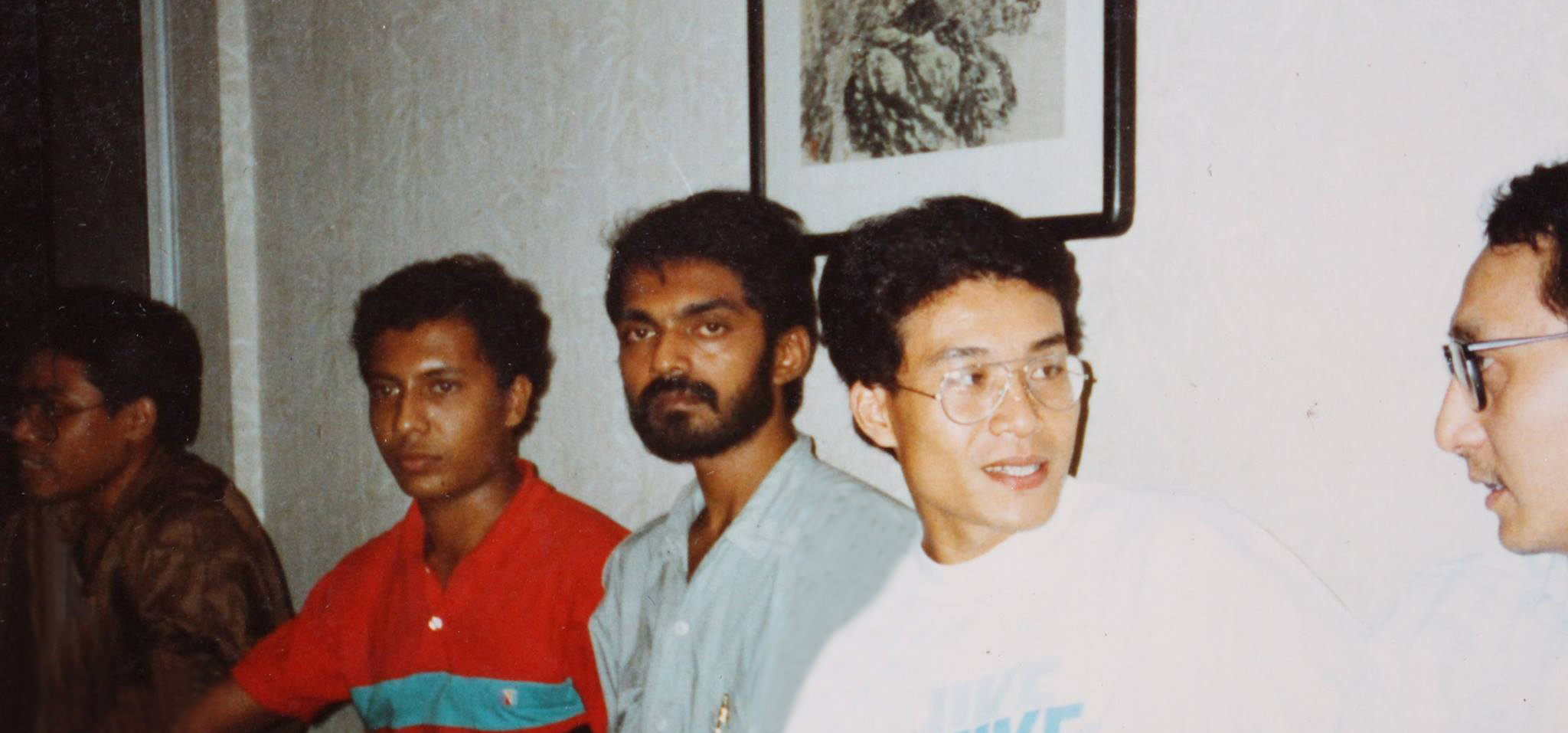
dharman05031602තායිලන්තයට පසුබැස ගිය ජවිපෙ කැරළිකරුවන්ගේ නියෝජිත කණ්ඩායමක් දේශපාලන රැකවරණ ලබාදෙන මෙන් අදාළ අංශ වලින් තායිලන්තයේදී 1990 ඉල්ලීමක් කල අවස්ථාවක්. වමේ සිට බද්දේගම කිඹිල්ලේ ජිනප්‍රිය, හමුදාවේද සිටි ගනේගම උපුල්, ගම්පහ ගාමිණී වැන්ඩකෝන්, වැලිගම සමන් ප්‍රියංකර සහ අනුරාධපුර උදය වලිසුන්දර.

පැවති අරාජික තත්ත්වයන් හමුවේ ජවිපෙ කැරළිකරුවන් පසුබැසීම 1989 ඔක්තෝබර් මස වනවිට ආරම්භවූ අතර කුඩා කණ්ඩායම් වශයෙන් ඔවුහු වනගත පෙදෙස්වලට පසු බසින්නට විය. මොණරාගල හම්බේගමුව, රත්නපුර සිංහරාජය සහ හම්බන්තොට වනගත පෙදෙස් ඔවුන්ගේ කඳවුරු බිම් බවට පත්විය. තවත් දහස් සංඛ්‍යාතික පිරිසක් කැරැල්ලෙන් පසුබැස ගොස් පෞද්ගලික මට්ටමින් සිය නිවෙස් වලින් බාහිරව ඥාතීන් සහ හිතවතුන්ගේ නිවෙස්වල ආරක්ෂිතව පසුවිය. එමෙන්ම ඉන්දියාව සහ තායිලන්තයටද සංක්‍රමණය වී දේශපාලන රැකවරණය ලබාගැනීමටද පිරිස් කටයුතු කලහ. එසේ 1989 ඔක්තෝබර් සිට1991 මාර්තු දක්වා ඉන්දියාවට සහ තායිලන්තයට වෙන් වෙන්ව 200ක පමණ පිරිසක්ද ජීවිතාරක්ෂාව සඳහා සංක්‍රමණයවී තිබිණි.

ශ්‍රී ලංකාවේ වනගතවූ කණ්ඩායම් 3ක් 1990 අගෝස්තු මස වන විට ජවිපෙ ඉතුරුවූ එකම දේශපාලන මණ්ඩල සභිකයා වශයෙන් නායකත්වයට පත්වූ සෝමවංශ‍ අමරසිංහ කැසට් පටියක් මගින් කල ඉල්ලීමක් මත නිල වශයෙන් විසිර ගොස් තිබුණද පිරිසක් 1991 දක්වාම වනගතව උඩවලවේ සහ ඒ ආශ්‍රිත ප්‍රදේශවල රැදී සිටියහ. ඉන්දියාව සහ තායිලන්තයේ දේශපාලන රැකවරණ ලබාගත් පිරිසද 1991 ජුනි මස වන විට වෙනත් යුරෝපීය රටවලට සංක්‍රමණය වී දේශපාලන රැකවරණ ලබාගැනීමට සමත් විය. මේ එසේ තායිලන්තයට දේශපාලන රැකවරණ පතා පැමිණි ජවිපෙ 2වැනි කැරැල්ලේ කැරළිකරුවන්ගේ කථාවය.

dharman05031603එක්සත් ජාතින්ගේ සංවිධානය වෙනුවෙන් ලෝක විශ්ව විද්‍යාල සේවයේ විශේෂ නියෝජිතයෙකු තායිලන්තයේ කඳවුරු බැදගත් ජවිපෙ කැරළිකරුවන්ගේ නියෝජිත පිරිසක් සමඟ සහන සැලසීමේ සාකච්ඡාවකදී. වමේ සිට එගොඩබැද්දේ ගුණසිරි හිමි, වූස් විශේෂ නියෝජිතයා, වර්තමානයේ ඕස්ට්‍රේලියාවේ පදිංචි කැළණි සරසවියේ රතනාලංකාර හිමි සහ කොළඹ සරසවි නීති ශිෂ්‍ය කෑගල්ලේ දුමින්ද.

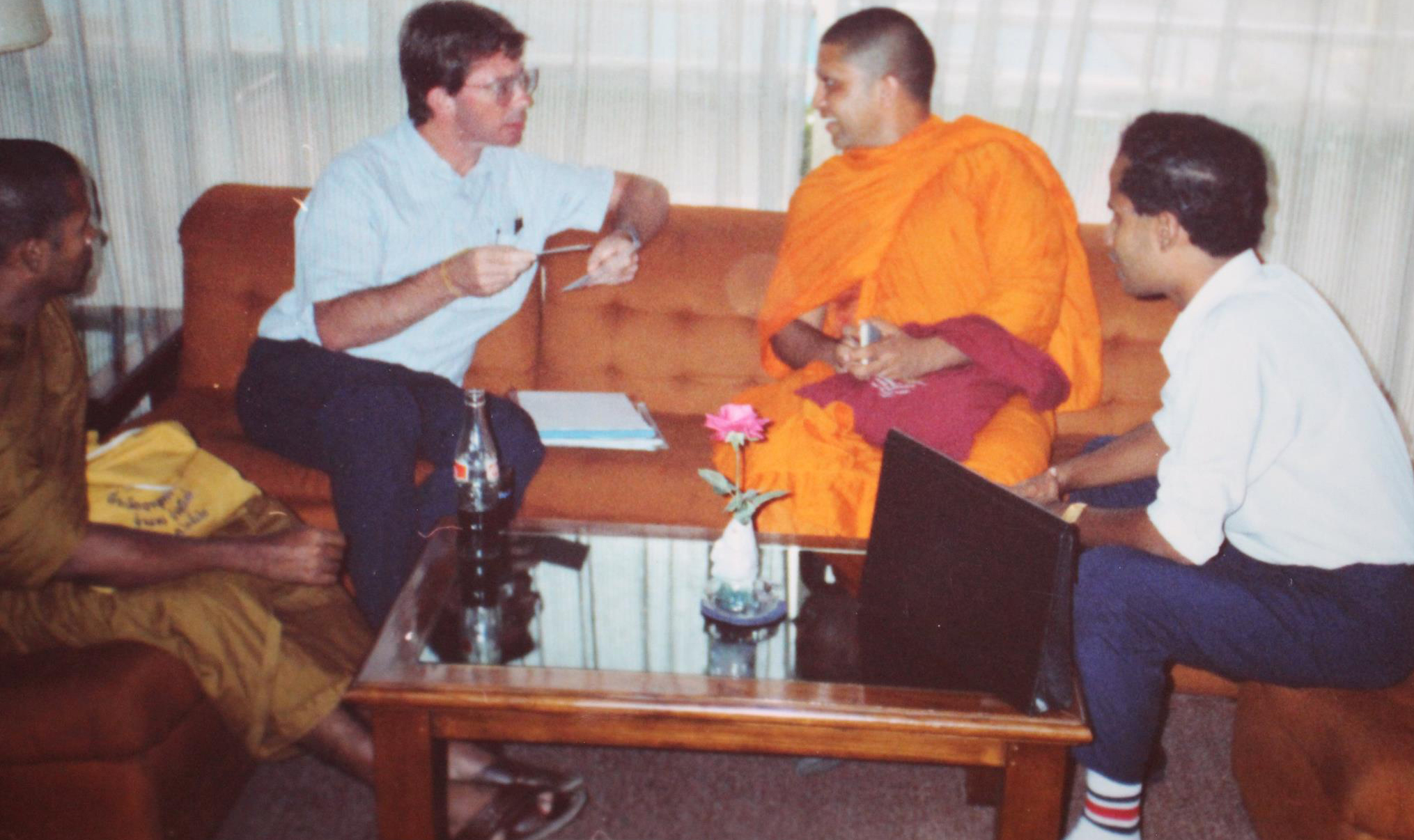
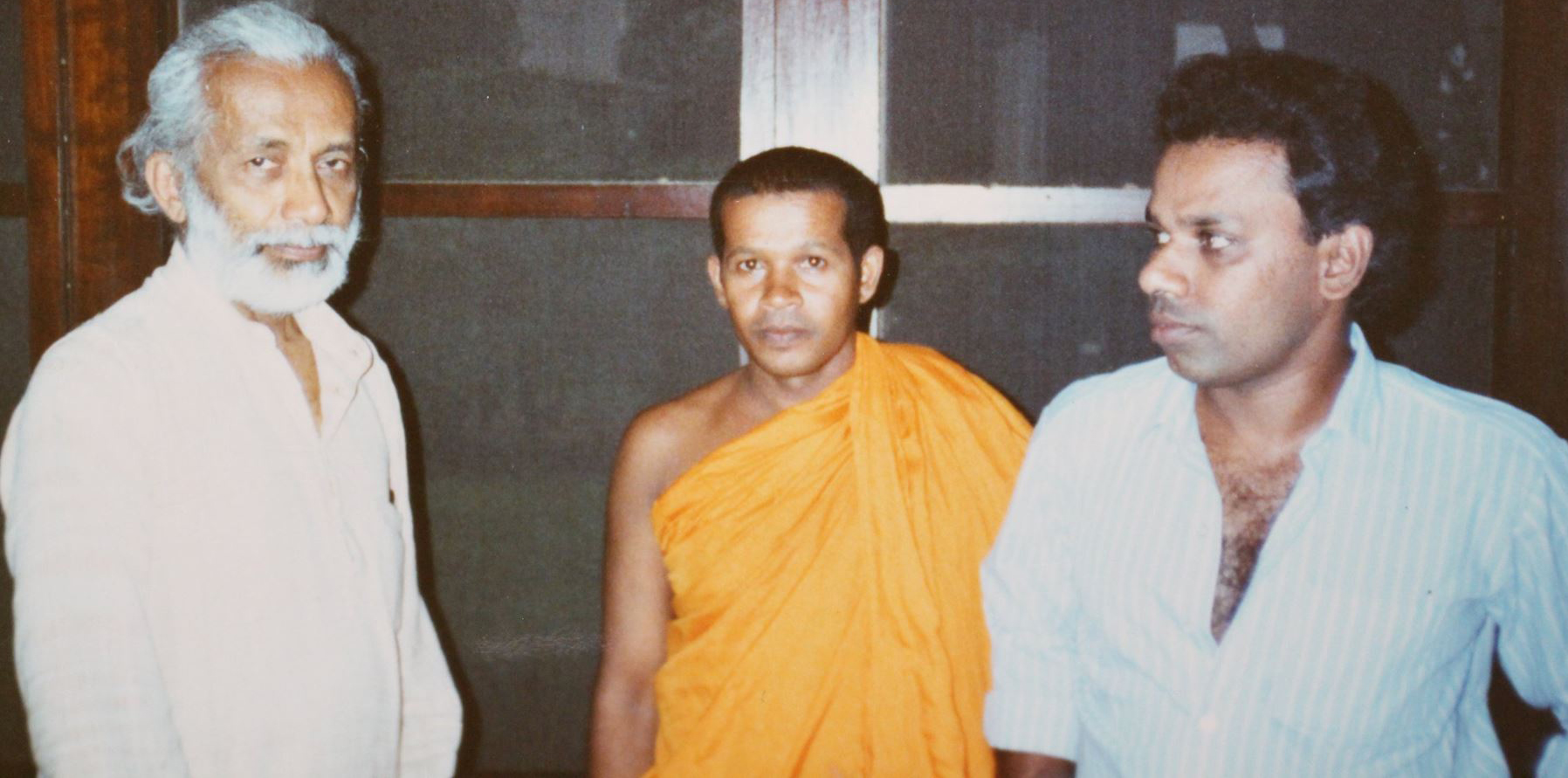
මානව හිතවාදී භික්ෂු සංවිධානය 1983 කළු ජූලියෙන් පසු ආරම්භවූ අතර එය ජවිපෙ දෙවන කැරැල්ලට පාදකවූ සාමූහික අභිලාෂයන් මෙන්ම රාජ්‍ය සාහසිකත්වයට එරෙහි නොබියව කටයුතු කල මානව හිමිකම් සංවිධානයකි. මානව හිතවාදී භික්ෂු සංවිධානයේ නායකයින්වූ මණ්ඩාවල පඤ්ඤාවංශ හිමියන්ද ජීවිත ආරක්ෂාව සඳහා  එක්සත් ජනපදයට ගිය අතර  භාතිගම්මන උත්තරානන්ද හිමි නිකවැරටියේ ගොඩනගන ලද වන අරමක අපිස් දිවියක් ගතකරමින් වර්තමානයේද වැඩ වසති. ජවිපෙ වෙනුවෙන් විනිවිද සඟරාව පළකලේ උඩුගොඩ සෝරත හිමි සහ එගොඩබැද්දේ ගුණසිරි හිමිය. විනිවිද සඟරාව 1987/88 කාලයේදී එක් සඟරාවකින් පිටපත් 62,000ක් අළෙවිවූ අවස්ථාද විය.  විනිවිද සඟරාවේ කලක් සම සංස්කාරකවරයාවූ කොන්ගස්දෙනියේ ආනන්ද හිමියන් භීෂණය හේතුවෙන් ප්‍රංශයට පිටුවහල් විය.කෝන්ගස්දෙණියේ ආනන්ද හිමි 70 සහ 80 දශකයේ මතුව ආ නව සාහිත්‍ය ප්‍රවණතාවයන් සහ රැඩිකල් භික්ෂු සම්ප්‍රදායට පුමුඛව දායකවූ භික්ෂුවක් ලෙස සැලකේ. මානව හිතවාදී භික්ෂු සංවිධානයේ භික්ෂූන් කිහිප දෙනෙකු ඔස්ට්‍රේලියාවේ රෙඩ්බානා ආයතනයේ අනුග්‍රහයෙන් තායිලන්තයේ සති තුනක පුහුණු වැඩසටහනකට 1985දී සහභාගීවූ අතර එය තායිලන්තයේදි මෙහෙයවන ලද්දේ ආචාර්ය සුලක් ශිවරාක්ෂ විසිනි.

dharman05031604

තායිලන්තයේ සිටි ජවිපෙ රැඳවියන් 127ක් වෙනුවෙන් සහන සැලසීමට ක්‍රියාකාරීව නායකත්වය දුන් කැළණි සරසවියේ සිසු බිංගිරියේ මහින්ද, මානව හිතවාදී භික්ෂු සංවිධානයේ විනිවිද සඟරාවේ සංස්කාරකවරයෙකුවූ එගොඩබැද්දේ ගුණසිරි හිමි, ගම්පහ ගාමිණී,1991 ආරම්භයේදී තායිලන්තයේ රැකවරණය ලබාගත් අන්තරේ භික්ෂු පෙරමුණේ නායක කැලණි සරසවියේ බලහරුවේ සෝම, දේශප්‍රේමී ශිෂ්‍ය ව්‍යාපාරයේ තාරපේරියේ රතනජෝති හිමි නමින් සිට පසුව උපැවිදිවූ සිරිවර්ධන, සෝමවංශ අමරසිංහට ශ්‍රී ලංකාවේන් ඉන්දියාවට පිටත්වීමට පෙර අවසන්වරට රැකවරණය සැලසූ දැනට කැනඩාවේ සිටින අම්පාරේ අයියා නොහොත් වික්‍රම(ඉහළ වමේ සිට).

මානව හිතවාදී භික්ෂු සංවිධානයේ ක්‍රියාකාරිකයෙකු සහ විනිවිද මාසික සගරාවේ සංස්කාරකවරයෙකුවූ එගොඩබැද්දේ ගුණසිරි හිමියෝ ලියුම්කරුට මාධ්‍ය ආයතනයේදී සහ ගෝතමී විහාරයේදී නිරතුරුව වසර කිහිපයක් තිස්සේ හමුවී තිබිණි. හදිසියේම ගුණසිරි හිමියෝ හමුවූයේ 1989 ඔක්තෝබර් 23වැනිදා කටුනායක ගුවන් තොටුපලේ ගුවන් ගතවීමට නියමිතව තිබූ තායි ගුවන් සේවයට අයත් යානයකදීය. ලියුම්කරු තායිලන්තයට ගියේ එක්සත් ජාතීන්ගේ පරිසර සමුළුවකට සහභාගිවීම සඳහාය. දිවි බේරා ගැනීම සඳහා තමා පලා යන බවද ඒ සඳහා ලොකු වැඩ කරන පොඩි හාමුදුරුවන් කෙනෙකු උදව්කල බවද ගුණසිරි හිමියෝ පැවසූහ. බැංකොක් නුවර තෙක්ම උන්වහන්සේ ගුවනේදී සංවාදයක නිරත වෙමින් බොහෝ කරුණු කාරණා එහිදී ආවර්ජනය කළේය.  අවසානයේ තමාගේ තාවකාලික නවාතැන තායිලන්තයේ සුලක් ශිවරාක්ෂගේ ස්ථානය බැවින් හැකියාවක් ඇත්නම් එම ස්ථානයට රැගෙන යන මෙන් කාරුණික ඉල්ලීමක්ද කළේය. ලියුම්කරු එය ඉටුකල අතර සුලක් ශිවරාක්ෂද එයට කලින් හමුවී තිබිණි. තායිලන්තයේ මූලස්ථානය කරගත් කලාපීය පරිසර සංවිධානයක ලියුම්කරු තනතුරක් දැරූ හෙයින් ඉන් පසු 1991 මුල් භාගය දක්වාම මසකට වරක් පමණ තායිලන්තයට ගිය හැම අවස්ථාවකදීම ඉඩඇති විටදී ගුණසිරි හිමි සහ තායිලන්තයේ දේශපාලන රැකවරණ ගත් ජවිපෙ කිහිප දෙනෙක්ද හමුවිය.

පසුව 1989 දෙසැම්බර් පමණ වන විට සිංගප්පූරුව හරහා මැලේසියාවට පසුබැස ගිය ජවිපෙ කැරළිකරුවන් කිහිපදෙනෙකුද තායිලන්තයට පැමිණි අතර ඔවුහු සංවිධානගත වන්නට විය. තායිලන්තයේ ජවිපෙ ක්‍රියාකාරිකයින්ගේ සංවිධානය බිහිවන්නේ එහි ප්‍රතිඵලයක් ලෙසය. මානව හිමිකම් සංවිධානයක් ලෙස එයට ඉස්මතු වීමට නීතිඥ ප්‍රින්ස් ගුණසේකර, ආචාර්ය හේමා ගුණතිලක, ආචාර්ය ලක්සිරි ප්‍රනාන්දු, ඇමෙනෙස්ටි ආයතනයේ ආසියානු කලාපය භාර නිලධාරිනියකවූ ඉංග්‍රීච් මසාජ් ඇතුළු පිරිසක් උදව් කලහ. ආචාර්ය සුලක් ශිවරාක්ෂ විසින් තම අධ්‍යාපන ආයතනයේ බාහිර සිසුන් ලෙස ඔවුනට හැදුනුම්පත් නිකුත්කල අතර තායිලන්තයේ ශිෂ්‍ය වීසා ඒ අනුව හිමිවිය. තෙමසකට වරක් ලඟ රටකට ගොස් යළි පැමිණි වීසා අලුත්කර ගැනීමට ඔවුන්ට සිදුවිය.

dharman05031605ජවිපෙ දේශපාලන රැඳවියන්ගේ ප්‍රශ්න විසදීම සඳහා මැදිහත්වීමට තායිලන්තයට පැමිණි හබරාදූව හිටපු මන්ත්‍රී සහ මානව හිමිකම් නීතිඥ ප්‍රින්ස් ගුණසේකර සමඟින් ගුණසිරි හිමි සහ රුහුණු සරසවියේ කථිකාචාර්ය කමල් කරුණාදාස(වමේ සිට).

සංවිධානගත තායිලන්තයේ සිටි ජවිපෙ හිටපු කැරළිකරුවන් පසුව එක්සත් ජාතින්ගේ සරණාගතයින් ලෙස පිළිගත් අතර මසකට ඔවුන්ගෙන් එක් අයෙකුට තායිලන්ත මුදලින් බාත් 5,000ක මුදලක් ඉදුම් හිටුම් සහ ආහාර සඳහා ලැබිණි. ඉන් බාත් 500ක් ජවිපෙ තායිලන්ත ක්‍රියාකාරිකයින්ගේ සංවිධානයේ මාසිකව අරමුදලට පරිත්‍යාග කල අතර සියළු මෙහෙයුම් සහ සම්බන්ධීකරණයන් එමගින් සිදුකරන ලදී. ජවිපෙ 2වැනි කැරැල්ල ඇද වැටීමෙන් පසු එසේ 1989 අවසානයේ සිට 1991 මුල් භාගය දක්වා තායිලන්තයට පසුබැස ගොස් දේශපාලන රැකවරණය ලබාගත් පිරිස 127ක් බවට වාර්තා විය. දේශපාලන රැකවරණ ලබාගත් එම පිරිස නොන්නබූරි ඇතුළු ස්ථාන 7ක සහ වට්ඉන්ද විහාර් පන්සලේ ස්ථානගතවී තිබිණි.

තායිලන්තයේ සිටි ජවිපෙ රැඳවියන් 127ක් වෙනුවෙන් සහන සැලසීමට ක්‍රියාකාරීව නායකත්වය දුන්නේ කැළණි සරසවියේ වානිජ පීඨයේ සිසු බිංගිරියේ මහින්ද රාමනායක(කැලණි සරසවියේ 83/84 කණ්ඩායමේ සාමාජිකයෙකුවූ මහින්දගේ දෙමාපියන් ගුරුවරුන්ය. පසුව ආචාර්ය පල්ලේකැන්ද රතනසාර හිමියන්ගේ සහාය ඇතිව රුසියාවේ වැඩිදුර අධ්‍යාපනය සඳහා යොමුවූ, කැලණි උපාධිධාරියෙකුදවූ මහින්ද වර්තමානයේ ඉහළ වෘත්තිකයෙකි), මානව හිතවාදී භික්ෂු සංවිධානයේ ක්‍රියාකාරිකයෙකු සහ විනිවිද සඟරාවේ සංස්කාරකවරයෙකුවූ එගොඩබැද්දේ ගුණසිරි හිමි, ගම්පහ ගාමිණී වැන්ඩකෝන්(ගම්පහ පදිංචිකරුවෙකුවූ ගාමිණී බණ්ඩාරනායක විදුහලේ ආදි ශිෂ්‍යයෙකි. 1978දී ජවිපෙට සම්බන්ධවූ අතර මුල් පෙලේ ක්‍රියාකාරිකයෙකුවූ අතර පසුව ස්විසලන්තයට සංක්‍රමණය විය), වැලිගම දෙණිපිටි‍යේ සමන් ප්‍රියංකර(ජපානයට සංක්‍රමණයවූ අතර සාර්ථක ව්‍යාපාරිකයෙකි) ඇතුළු අය වේ.

dharman05031606තායිලන්තයේදී ජවිපෙ රැඳවියන්ට නොමසුරු අනුග්‍රහය ලබාදුන් ආචාර්ය සුලක් ශිවරාක්ෂ, කැළණි සරසවියේ ආචාර්ය හේමා ගුණතිලක, ජවිපෙ ලන්ඩන් ශාඛාවේ ලේකම් පෝල් පීරිස්, ලෝක විශ්ව විද්‍යාල සේවයේ අධ්‍යක්ෂක ලක්සිරි ප්‍රනාන්දු, විද්‍යාභිවර්ධන සංගමයේ හිටපු සභාපති ආචාර්ය සුසන්ත ගුණතිලක සහ වොෂින්ටන් බෞද්ධ විහාරයේ භාවනාචාර්ය මණ්ඩාවල පඤ්ඤාවංස හිමි(ඉහළ වමේ සිට).

තායිලන්ත ජවිපෙ ක්‍රියාකාරි සංවිධානය විසින් ශ්‍රී ලංකාවේ මානව හිමිකම් පිළිබඳව මාසික සඟරාවක්ද 90 ජනවාරි සිට නිකුත් කරන ලදී. තායිලන්තයේ සිටින ජවිපෙ කැරළිකරුවන්ට ඉංග්‍රීසි භාෂාව ප්‍රගුණ කිරීම සඳහා තායිලන්තයේ බ්‍රිතාන්‍ය මණ්ඩලය විසින් ඉංග්‍රීසි පාඨමාලාවක්ද ආරම්භකල අතර එයට අනුග්‍රහය දක්වන ලද්දේ ලෝක විශ්ව විද්‍යාල සේවය මගිනි. සංවිධානයට පරිගණකයක් ඇතුළු අවශ්‍ය ලිපිද්‍රව්‍ය ලබාගත් අතර ජවිපෙ තායිලන්ත සංවිධානයේ සාමාජිකයින්ට පරිගණක පුහුණුව ලබා දෙන ලද්දේ මොරටු සරසවියේ රවි විසිනි. රෝහණ විජේවීර ඝාතනය වී වසරක් සැපුරුණ 1990 නොවැම්බර් 13වැනිදා ඉල් මහ සමරුවක්ද තායිලන්තයේ නිවසක 60කගේ සහභාගිත්වයෙන් පැවැත්විමට සංවිධානය සමත්විය. 

තායිලන්තයේ සිටි ජවිපෙ කැරළිකරුවන්ට තායිලන්තයේදී කිහිප දෙනෙක්ම උදව් උපකාර කළහ. ජවිපෙ ඝාතන තර්ජන වලට ලක්ව තායිලන්තයේ ජීවිත ආරක්ෂාව සඳහා වැඩ සිටි පුත්තලම කරුවලගස්වැව විජයාරාම විහාරයේ බුද්ධියාගම චන්දරත්න හිමි ජවිපෙ සාමාජිකයින්ට සිය පිණ්ඩපාතයෙන් තායිලන්තයේදී ලැබෙන ආහාර හා ඔහේලා මාව මරන්ඩනෙ හිටියෙ, කමක් නෑ මෙන්න කෑම තියනව, කනවල! කියමින් ඔවුනට පිදූහ. වරෙක එළවලු රැගෙන ගොස් උයා දුන්හ.

dharman05031607ශ්‍රී ලංකාවෙන් 1991දී ඉතාලියට පැමිණි පසුව බ්‍රිතාන්‍යයට සංක්‍රමණයවූ ජවිපෙ හිටපු ප්‍රධාන ලේකම් උපතිස්ස ගමනායකගේ පුත්‍රයාවූ සුචිර චාමික සහ දියණියවූ ජනිතා 1995දී ලංඩන් නුවරදී කැළණි සරසවියේ අහංගම අරියසිරි හිමි සමඟ(ඉහළ ඡායාරූපය). ගමනායකගේ බිරිඳ කරුණා 2007දී ශ්‍රී ලංකාවට පැමිණ රෝහණ විජේවීරගේ බිරිඳ චිත්‍රාංගනී සහ බාල දියණිය මායා හමුවූ අවස්ථාවක්.   

මේ අතරතුර ශ්‍රී ලංකාවේ මානව අයිතිවාසිකම් පිළිබඳ සමුළුවක් ලෝක සහයෝගිතා සංසදය නමින් 1990 මැයි මස තායිලන්තයේ බැංකොක් නුවර පැවැත්වීමට ඇමනස්ටි ඉන්ටර්නැෂනල්, ලෝ ඒෂියා, ඉන්ටර්නැෂනල් ඇලර්ට් ඇතුළු මානව හිමිකම් සංවිධාන කිහිපයක් එක්ව කටයුතු කල අතර ඒ සඳහා මුල්වූ සම්බන්ධීකාරකවරයෙක් වූයේ කුමාර් රූපසිංහය. මෙම සමුළුවට සහභාගිවීමට ඉඩ දෙන්නයැයි තායිලන්‍තයේ ජවිපෙ ක්‍රියාකාරින්ගේ සංවිධානය ඉල්ලා සිටියද සංවිධායකයෝ එය ප්‍රතික්ෂේප කළහ. පසුව ඔවුහු නීතිඥ ප්‍රින්ස් ගුණසේකර, එගොඩබැද්දේ ගුණසිරි හිමි, මණ්ඩාවල පඤ්ඤාවංශ  හිමි ඇතුළු කිහිප දෙනෙක් ඒ වෙනුවට යෝජනා කළහ. එයද ප්‍රතික්ෂේප විය. එම සමුළුවට ශ්‍රී ලංකාවෙන් සුනිලා අබේසේකර, සරත් ප්‍රනාන්දු, රාජා ධර්මපාල, යොහාන් දේවානන්ද පියතුමා ඇතුළු පිරිසක්ද තායිලන්තයේ සිටින එල්.ටී.ටී.ඊ. සංවිධානයේ නියෝජිතයින්ද සහභාගි වූහ.

dharman05031608ජවිපෙ රැඳවියන් තායිලන්තයේ තමාසාක් සරසවියේ ගැටුමෙන් බේරුණු සිසුවෙකුවූ ප්‍රචාන් සමඟ සිය කටයුතු සම්බන්ධීකරණ සාකච්ඡාවකදී.

තායිලන්තයේ දේශපාලන රැකවරණ ලබන ජවිපෙ කැරළිකරුවන්ට අවශ්‍ය විදේශ රටවල දේශපාලන රැකවරණය ලබාගැනීම පිළිබඳව තායිලන්තයේ පිහිටි යුරෝපීය රටවල් සහ චීනය, ඉරාකය, වියට්නාමය, කාම්බෝජියාව තානාපති කාර්යාල සමඟද  ලාවෝස් නුවර පිහිටි  කියුබාව තානාපති කාර්යාල සමඟද සංවිධාන නියෝජිතයින් විසින් සාකච්ඡා පවත්වන ලදී. කියුබාව විසින් 12කට පමණ උසස් අධ්‍යාපනය ලබාදිමටද ඉරාකය විසින් 20 දෙනෙකුට පමණ රැකියා ලබාදීමටද මූලික අවබෝධයකට පැමිණ තිබිණි. එහෙත් ඉරාන ඉරාක යුද්ධය ඇතිවූ බැවින් ඉරාක රැකියා නොලැබිණි. තායිලන්ත ජවිපෙ ක්‍රියාකාරි සංවිධානය ජවිපෙ සමඟ ශ්‍රී ලංකාවේ සබදතා ඇතිකරගෙන තිබුණේ ජිනදාස කිතුලේගොඩ නොහොත් සුදු අයියා සමඟය. ඔහුද 1990 නොවැම්බර් මස අත්අඩංගුවට පත්වීමෙන් සම්බන්ධතා බිඳ වැටිණි.

බද්දේගම සමිත හිමියන්ගේ සහ ගාල්ල දිස්ත්‍රික් ශ්‍රිලනිප මන්ත්‍රී අමරසිරි දොඩංගොඩගේ මැදිහත්වීමෙන් ජීවිත ආරක්ෂාව සඳහා තායිලන්තයට පැමිණි පිරිස අතර සෝමරත්න, උපුල් සහ සුනිල් එදිරිසිංහ(ජපානයට සංක්‍රමණය විය), සිරිල් විතානාරච්චි (බ්‍රිතාන්‍යයට සංක්‍රමණය විය) ඇතුළු පිරිසක් විය. එයට අමතරව තායිලන්තයේ දේශපාලන රැකවරණ ලබාගත් පිරිස අතර බද්දේගම කිඹිල්ලේ ජිනප්‍රිය(1991දී ජපානයට සංක්‍රමණ  විය), අනුරාධපුර උදය වලිසුන්දර(ඔස්ට්‍රේලියවට සංක්‍රමණය විය), කැළණි සරසවියේ රතනාලංකාර හිමි(භික්ෂු අංශයේ ක්‍රියාකාරිකයෙකි). ඕස්ට්‍රේලියාවට සංක්‍රමණය වී උපැවිදි විය), කොළඹ සරසවි නීති පීඨයේ ශිෂ්‍ය කෑගල්ලේ දුමින්ද(ශිෂ්‍ය අංශයේ ක්‍රියාකාරිකයෙකි. ඕස්ට්‍රේලියාවට සංක්‍රමණය විය), මොරටුව සරසවියේ රවී(කම්කරු සටන් මධ්‍යස්ථානයේ ක්‍රියාකාරිකයෙකි. මීගමුවේ පදිංචි ඔහු බ්‍රිතාන්‍යයට සංක්‍රමණය විය), මහින්ද ජයසේකර(සෝමවංශ කුරුණෑගල සැඟවි සිටි නිවසක හිමිකරුගේ පුතාය. බ්‍රිතාන්‍යයට සංක්‍රමණය විය), වත්තල හැදල නන්දන(ජපානයට සංක්‍රමණය විය), බද්දේගම නන්දසේන(හමුදාවේ හිටපු අයෙකි. ජපානයට ගොස් ඉතාලියට), හෝමාගම දුලානි ලර්නස්හි අධිපති විජේදාස සහ ඔහුගේ දරු පවුල(ජවිපෙ කැරළිකරුවන්ට රියදුරු පුහුණුව දුන් පාසැලක හිමිකරුය. නවසීලන්තයට පවුලම සංක්‍රමණය විය.), යක්කල බෝගමුවේ මහීපාල(රූපවාහිනියේ කලක් සේවය කල අතර සොහොයුරා සෞඛ්‍ය ක්ෂේත්‍රයේ ඉහළ තනතුරක් දරයි. ලංකාවට පැමිණ නිතිඥයෙකි), නිහාල්(සංවර්ධන සභා ඡන්දයට ජවිපෙන් ගාල්ලේ දිසාවට තරඟ ක‍ළේය. ගුරුවරයෙකි බ්‍රිතාන්‍යයේ), බද්දේගම උපල්(හිතහොද මිනිසෙකි.සන්දරවල පදිංචි ඔහු හමුදාවේද කලක් සිටි අතර ටාසන් වීරසිංහගේ මිත්‍රයෙකි. ජපානයට සංක්‍රමණය විය. පසුකාලයේ ලංකාවට පැමිණි විට ලිඳකට වැටී මිය ගියේය).

dharman05031609ශ්‍රී ලංකාවේ කැරළිකරුවන්ට රැකවරණය සැලසූ එක්සත් ජාතීන්ගේ සංවිධානයේ තායිලන්තයේ පිහිටි කලාපීය මූලස්ථානය.

එසේම තායිලන්තයට දේශපාලන රැකවරණය සඳහා පැමිණි ජවිපෙ 127 පිරිස අතර පහත අයද විය. නුවර නිහාල් තෙන්නකෝන්(ඕස්ට්‍රේලියාවට සංක්‍රමණය විය), අහංගම අරියසිරි හිමි(බ්‍රිතාන්‍යයට සංක්‍රමණය විය. උපැවිදිවී දෙදරු පියෙකි.), අරියවිජිත හිමි(උපැවිදි වි ප්‍රංශයේ සිටී), තලාකොලවැව විජිත හිමි(උපවැදිවී ප්‍රංශයේ සිටින තිදරු පියෙකි.), ජාඇල අයිවන් නොහොත් ජයලත්(ඉතාලියට සංක්‍රමණය විය), පුන්‍යරතන හිමි(ප්‍රංශයට සංක්‍රමණයවී උපැවිදි විය), රඹෑවේ විජිත හිමි(කොළඹ සරසවියේ සිසුවෙකි. උපැවිදිව දැන් ප්‍රංශයේ පදිංචි දෙදරු පියෙකි), තැන්නේවෙල චන්ද්‍රනන්ද හිමි(සරසවි භික්ෂුවකි. කැරැල්ලේ ඉදිරි පෙළ නියෙමුවෙකි. ඉතාලියට සංක්‍රමණයවී උපැවිදිව තිදරු පියෙකි), ගාල්ලේ 1989 දිසා ලේකම් දෙබරවැව ගාමිණී නොහොත් පල්ලේවෙල(බ්‍රිතාන්‍යයට සංක්‍රමණය විය),මොරටුවේ ගරුසිංහ(ප්‍රංශයට සංක්‍රමණය විය), නවසීලන්තයට සංක්‍රමණය වූ පිරිස අතර බදුල්ලේ පත්මසිරි, වලස්මුල්ලේ එගොඩබැද්දේ කපිල, වතුරහැර සුමනතිස්ස හිමි(කැළණි සරසවියේ සිසු පසුව උපැවිදිය) ඇතුළත් විය.

dharman05031610මොරටු සරසවියේ මීගමුවේ රවී(වර්තමානයේ බ්‍රිතාන්‍යයේ පදිංචිය) සහ සෝමවංශ අමරසිංහට කුරුණෑගල නැවතී සිටි නිවසේ මහින්ද ජයසේකර නොන්කපුර්හි තාවකාලිකව ලැගුම්ගෙන සිටි රැඳවුම් නිවසක හිමිකරුවන්ගේ තායි දරු දෙදෙනෙකු සමඟින්.

ජවිපෙ සමාජවාදී භික්ෂු සංගමයට 80 දශකයේ අග භාගයේදී නායකත්වය ලබාදුන් අන්තර් විශ්ව විද්‍යාල භික්ෂු බල මණ්ඩලයේ කැඳවුම්කරු බලහරුවේ සෝම, දේශප්‍රේමි ශිෂ්‍ය ව්‍යාපාරයේ ලේකම් තාරපේරියේ රතනජෝති ඇතුළු පිරිසක්ද තායිලන්තයට දේශපාලන රැකවරණ පතා 1991 මුල් භාගයේදී පැමිණියහ. කැළණි සරසවියේ ශ්‍රාස්ත්‍ර පීඨයේ දෙවන වසර සිසුවෙකු වූ බලහරුවේ සෝම හිමි මාතර බලහරුවේ උපන්නෙකි. මාතර උපන් තාරපේරිය රතනජෝති හිමි කැළණිය සරසවියේ ශ්‍රාස්ත්‍ර පීඨයේ දෙවන වසරේ සිසුවෙකි. මෙම භික්ෂූන් තායිලන්තයට 1990 මැද භාගයේ සිට 1991 මුල් භාගයේදී පැමිණ දේශපාලන රැකවරණය ලබාගෙන පසුව යුරෝප රටවලට සංක්‍රමණයවී උපැවිදිව විවාහවී දරුවන්ද ලබා අද පවුල් ජීවිත ගතකරමින් සිටී. බලහරුවේ සෝම හිමි උපැවිදිව සිසිර නමින් ස්වීඩනයේ ජිවත්වන දෙදරු පියෙකි. තාරපේරිය රතනජෝති හිමි උපැවිදිව සිරිවර්ධන නමින් බ්‍රිතාන්‍යයේ ජීවත්වන දෙදරු පියෙකි.

dharman05031611තායිලන්තයට පසුබැස ගොස් දේශපාලන රැකවරණය සලසාගත් සමන් ප්‍රියංකර(කොටුව තුල ඇති ඡායාරූපය) සහ වර්තමානයේ ජපානයේ ඉහළ ව්‍යාපාරිකයෙකුවූ සමන් ප්‍රියංකර සිය ජපන් ජාතික බිරිඳ සහ දූ දරුවන් සමඟින්.

ජවිපෙ දේශපාලන මණ්ඩල සභිකයින් 13 දෙනාගෙන් ජීවිතය බේරා ගැනීමට සමත්වූ එකම තැනැත්තා වන සෝමවංශ අමරසිංහ සිය බිරිඳ සහ දරුවා ආරක්ෂාවට 1989 අප්‍රේල් මස ජපානයට යවනු ලැබූවද යළි ඔවුහු 1989 සැප්තැම්බර් මස ශ්‍රී ලංකාවට පැමිණියහ. එම කාලය තුළ සෝමවංශ සහ දරුපවුලට ශ්‍රී ලංකාවේ රැකවරණය ලබා දෙන්නේ දැනට කැනඩාවේ සිටින වික්‍රම නොහාත් අම්පාරේ අයියාය. යළිත් 1989 දෙසැම්බර් 25 බිරිඳ සහ දරුවා‍ ඉන්දියාවේ කේරලයේ සිටින මිත්‍රයෙකු වෙත යැවීමට සෝමවංශ සමත් විය.ඉන්දියාවට වීසා ලබාගැනීම සඳහා ඔවුනට සහාය වනුයේ ජවිපෙ ක්‍රියාකාරිකයෙකුවූ ඊෂ්වරන්ස් බ්‍රදරස්හි හිටපු තොග කලමනාකරුවෙකු වූ මාතලේ උපන් කොටහේනේ අල්විස් ඇවනිව්හි පදිංචි වික්‍රමසිංහම් නොහොත් සෙල්වාය. සෝමවංශගේ දරු පවුලට ඉන්දියාවේ තිවේන්ද්‍රම් නුවර තමාට හිතවත් ඉන්දීය ජාතික නිවසක නවාතැන් පහසුකම් සම්බන්ධීකරණය කරනුයේ සවුදි අරාබියේ රියාද් නුවර ජවිපෙ කමිටුවේ ප්‍රධාන සංවිධායක කුරුණෑගල මැල්සිරිපුර ජයසිංහය. රියාද්හි ජයසිංහ ගමන් බලපත්‍රයක් සැදිමට පසුව කටුනායකට පැමි‍ණීමේදී උපැවිදිවූ අමරේගේ ඔත්තුවක් අනුව ආරක්ෂක අංශ අත්අඩංගුවට පත්ව ඝාතනය විය. සෞදි අරාබියේ ශක්තිමත් සංවිධානයක් ලෙස ජවිපෙ ගොඩනැගුණේ ජයසිංහගේ මැදිහත්වීමෙනි.

dharman05031612ජවිපෙ කැරළිකරුවන්ගේ දේශපාලන රැකවරණය ඇතුළු මානව හිමිකම් වෙනුවෙන් බ්‍රිතාන්‍යයේදී 1993 පැවති සාකච්ඡාවකින් පසු බ්‍රිතාන්‍යයේ ජවිපෙ ශාඛාවේ නිලධාරින් සමඟ ශ්‍රී ලංකා ප්‍රගතිශීලි පෙරමුණේ ලේකම් ආරිය බුලේගොඩ.

හික්කඩු‍වේ රන්සිරිගේ සම්බන්ධීකරණයෙන් සෝමවංශ අමරසිංහ බෝට්ටුවකින් කුලසේකරපට්නම් වෙරළ හරහා ඉන්දියාවට ගොස් තියේන්ද්‍රම්හි සිය බිරිඳ අයිරාංගනී මාලනී මුණසිංහ සහ පුත්‍රයා හමුවන්නේ 1990 පෙබරවාරි 21වැනිදාය. පසුව සෝමවංශ සිය බිරිඳ සහ පුත්‍රයා සමඟින් තායිලන්තයේ දේශපාලන රැකවරණ සඳහා පැමිණෙන්නේ 1990 ඔක්තෝබර් මසදීය. තායිලන්තයේ ඔහුට දේශපාලන රැකවරණ අනිකුත් ශ්‍රී ලංකිකයින්ට මෙන් ලැබෙන අතර තායිලන්තයේදී එම කටයුතු සම්බන්ධීකරණය කළේ කොළඹ සරසවියේ ශ්‍රාස්ත්‍ර පීඨයේ ජවිපෙ සමාජවාදී භික්ෂු සංගමයේ ක්‍රියාකාරිකයෙකුවූ තායිලන්තයේ 1991 දේශපාලන රැකවරණ ලබාගෙන සිටි ජිනානන්ද හිමිය(ජිනානන්ද හිමිද 1991 ඉතාලියට ගොස් අරවින්ද නමින් උපැවිදිය). තායිලන්තයේ ජවිපෙ ක්‍රියාකාරිකයින් හමුවීම සෝමවංශ විසින් කිහිපවරක් ප්‍රතික්ෂේප කරන ලද අතර ඔහු බැංකොක් නිවසක තාවකාලිකව පදිංචිවී සිටියේය. පසුව සෝමවංශ 1990 නොවැම්බර් මස දරු පවුල සමඟ ඉතාලියට ගොස් වල්පොලගේ ධර්මසේනගේ නිවසේ නවාතැන් ගනී. ධර්මසේන 71 කැරැල්ලේදී අත්අඩංගුවට ගත් කැරළිකරුවෙකුවූ අතර 1980දී රෝමය බලා පැමිණි අයෙකු විය.පසුව සිය දරුපවුල සමඟ ඉතාලියේ සිට ප්‍රංශය හරහා බ්‍රිතාන්‍යයට ගෙන යන සෝමවංශ අමරසිංහ පක්ෂ කටයුතු ප්‍රතිසංවිධානය කරයි.  උපතිස්ස ගමනායකගේ වැන්දඹු බිරිඳ වන කරුණා සහ දරු දෙදෙනාද ශ්‍රී ලංකාවේ සිට ඉතාලිය බලා පැමිණි විට බ්‍රිතාන්‍යයට යන තෙක් පහසුකම් සලසන ලද්දේද රෝමේ ධර්මසේනය.

dharman05031613ජවිපෙ රැඳවියන් පිරිසක් තායිලන්තයේ මානව හිමිකම් ක්‍රියාකාරිකයෙකු සමඟ. වත්තල නන්දන, බද්දේගම නන්දසේන සහ හෝමාගම දුලානි ලර්නස්හි අධිපති විජේදාසගේ දියණියද(වර්තමානයේ නවසීලන්තයේ පදිංචිය) මෙහි වේ. මෙම සාකච්ඡාවට යක්කල මහීපාල, විජේදාස යුවල සහ බෝගමුවේ නීතිඥ අළුත්ගමද සහභාගි විය.

සෝමවංශ සාකච්ඡාවක් දීම පවා ප්‍රතික්ෂේප කිරීමෙන් බලාපොරොත්තු බිඳවැටුණු තායිලන්තයේ සිටි සෙසු ජවිපෙ දේශපාලන රැකවරණය ගත් පිරිසද මාස 6ක් වැනි කෙටි කාලයක් ඇතුළත ඔවුහු සියළු දෙනාම විවිධ රටවල තාවකාලික වීසා ලබාගෙන ගිය අතර පසුව එම රටවල දේශපාලන රැකවරණය ලබා ගත්හ. ජපානය සංක්‍රමණය වූ පිරිස 35ක් පමණ විය. සෙසු පිරිස් බ්‍රිතාන්‍යය, නවසීලන්තය, ස්විසලන්තය, ප්‍රංශය, ජර්මනිය, ඩෙන්මාකය ඇතුළු රටවලට යෑමට සමත්විය.

ජවිපෙ ලන්ඩන් ශාඛාවේ නායකයෝද තායිලන්තයේ දේශපාලන රැකවරණය ලැබූ ජවිපෙ කැරළිකරුවන්ට වෙනත් රටවලට යෑම සඳහා සුවිශේෂි මෙහෙයක් සිදුකළහ. කරුණා ගමනායක සහ දරු දෙදෙනා ඉතාලියේ සිට බ්‍රිතාන්‍යයට ගෙන ඒමටද ඉන්පසු ඔවුනට පහසුකම් සැපයීමටද ජවිපෙ ලන්ඩන් ශාඛාව කටයුතු කර තිබිණි. එම ශාඛාවේ ලේකම් පෝල් පීරිස්, ගුවන් ඉංජිනේරු සී. අයි. ප්‍රනාන්දු, නිතිඥ රංජිත් මෙන්ඩිස්, උප ලේකම් ආවාද ලැනරෝල් සහ තරුණ කොමියුනිස්ට් සංගමයේ ලන්ඩන් ශාඛාවේ ලේකම්ව සිටි චන්ද්‍රන පීරිස් ඇතුළු පිරිසක් එම කටයුතු වලට මුල් විය. රෝහණ විජේවීර ලෝක තරුණ සමුළුවට සහභාගිවීමෙන් පසු 1978 ජුලි මස 23වැනිදා බ්‍රිතාන්‍යයට ගිය අවස්ථාවේදීද ලන්ඩන් ශාඛාවේ සේවය ඇගයීමට ලක්කර තිබිණි. අනූවේ දශකය මැද භාගයේදී ජවිපෙ නායක සෝමවංශ අමරසිංහ විසින් ලොව පුරා ජවිපෙ මුල් පෙළේ ක්‍රියාකාරින් ගණනාවක් සමඟ ආරවුල් ඇතිකරගත් අතර එහි ප්‍රතිඵලයක් ලෙස ජවිපෙ ලන්ඩන් ශාඛාවද සෝමවංශ අමරසිංහ විසින් පසු කලෙක විසුරුවා හරිනු ලැබීය. සෝමවංශ අමරසිංහගේ සංවිධාන දුෂ්ටියේ දුබලතාවන් හේතුවෙන් විදේශගතව දේශපාලන රැකවරණය ඉල්ලා සිටි බොහෝ පිරිසකට බලවත් හානිකර ප්‍රතිඵල උදාවූ බවට චෝදනා විය.

තායිලන්තයට 1989 නොවැම්බර් මස පැමිණ දේශපාලන රැකවරණය ලබාගත් වැලිගම සමන් ප්‍රියංකර ජවිපෙට එක්වූයේ අධ්‍යාපන ධවල පත්‍රිකා විරෝධය හරහා පාසැල් ශිෂ්‍යයෙකු වශයෙනි. ජවිපෙ දෙවැනි කැරැල්ලේ මාතර දිස්ත්‍රික්‍කයේ වගකීම් කිහිපයක් දැරූ සමන් බැංකොක් නුවර ජවිපෙ සංවිධානයේ  1990/91 මූල්‍ය කටයුතු භාරවද කටයුතු කළේය. පසුව 1991 ජුනි මස තායිලන්තයේ දේශපාලන රැකවරණ ලැබූ ජවිපෙ කැරළිකරුවන් 6 දෙනෙකු සමඟ ශිෂ්‍ය වීසා වලින් ජපානයට ගිය සමන් මුලින්ම කටයුතු කරන ලද්දේ වෙල්ඩර් කෙනෙකු වශයෙන්ය. පසුව සයුරු ඉන්ටර්නැෂනල් නමින් ප්‍රධාන ව්‍යාපාර දෙකක හිමිකරුවූ ඔහු දේපල වෙළෙඳාම් සහ වාහන අපනයන ක්ෂේත්‍රයන්හි රටවල් 44ක් සමඟ ව්‍යාපාර ගනුදෙනු කරන සමාගමක හිමිකරුවෙක් බවට පත්විය.

ජවිපෙ ජපන් කමිටුවේ ප්‍රධාන සංවිධායකයා වශයෙන් 1992 සිට 2008 මැයි 20වැනිදා තෙත් කටයුතු කල සමන් ප්‍රියංකර එම කාලය තුළ සෑම මැතිවරණයකදීම ජපන් කමිටුව වෙනුවෙන් රුපියල් ලක්ෂ 20ක් පමණ ජවිපෙට පරිත්‍යාග කිරීමට මුල්විය. ඔහු පවසන පරිදි ලංකා පුවත්පත අධික මුද්‍රණ වියදම් නිසා වැසුනු කල විමල් වීරවංශගේ දැනුවත් කිරීම මත රුපියල් ලක්ෂ 750ක් මුද්‍රණාලයක් වෙනුවෙන්ද පුවත්පතේ නඩත්තුව සදහා තවත් රුපියල් ලක්ෂ 105ක්ද සිය පෞද්ගලික ධනයෙන් වැයකර තිබිණි. එම මුද්‍රණාලය ගත්තේ ඔහුගේ නමිනි. සමන් ප්‍රියංකර වැඩිදුරටත් ප්‍රකාශකර ඇත්තේ වී එෆ්.එම්. ගුවන් විදුලිය අරඹනවිට රුපියල් ලක්ෂ 250ක් ණය පදනම මත අයෝජනය කලද එය ඔහුට නොලැබුණ බවකි.

කැරැල්ලෙන් පසුබැස තායිලන්තයට පැමිණි ජවිපෙ කැරළිකරුවන්ට තම දැක්මට අනුව නව දේශයක් නව ලොවක් බිහි කිරීමේ අරමුණ මුළුමනින්ම බැහැරකර තිබුණේ නැත. තම විශ්වාසයත් ක්‍රියාකාරි සැලැස්මක් ඔවුන් සතුවූ අතර කුඩා කණ්ඩායමක් යන්න වැදගත් නොවීය. ලෝකය වඩාත් යහපත් තැනක් වී ඇත්තේ සියල්ල සිදුවෙමින් තිබියදී නිහඬව බලා සිටියවුන් නිසා නොව යහපත් සමාජයක් උදෙසා අරගල කරවුන්ගේ ධෛර්ය මත බව ඔවුහු පසක් කරගෙන සිටීයහ. පිටකොඳු බිඳගත් පරපුරක් දෙපයින් නැගිටවීම අසීරු වූවද අවස්ථානුකූලව තායිලන්ත ජවිපෙ ක්‍රියාකාරි සංවිධානය යෝධ ශක්තියක් වූ බව නොරහසකි.

අයුක්තිය සහ අසාධාරණත්වයට එරෙහි 80 දශකය අවසානයේදී නැගී සිටි මිනිසුන් දහස් ගණනක් මරා මහමඟ අළුකර දැමීය. තවත් දහස් ගණනක් වධ කඳවුරුවල අවසන් හුස්ම හෙළීය. අනේක විධි වධ බන්ධන වලට ලක්ව රැඳවුම් කඳවුරුවල වසර කිහිපයක් ගෙවා ජීවත්වීමට වාසනාව ලැබූ මිනිසුන් දහස් ගණනක්ද සිටී. තායිලන්තයට සහ ඉන්දියාවට පසුබැස ගොස් ලෝපුරා විදේශීය රටවල දේශපාලන රැකවරණය ලබාගත් ජවිපෙ දෙවැනි කැරැල්ලේ සාමාජිකයින් ගණනද දහසකට අධිකය. නිහඬතාවය රජකල යුගයක එය දෙපළු කරමින් හඬ නැගූ මෙම මිනිසුන්ගේ බහුතරයක හදවතේ පතුලට අදද කිදා බැස ඇත්තේ නිවහල් මිනිසෙක් සහ යුක්තිගරුක දේශයක් බවට සැක නැත.

ජවිපෙ 2වැනි කැරැල්ල ඇද වැටීමෙන් පසු පසුබැස ගොස් 1989 අගෝස්තු සිට 1991 දෙසැම්බර් දක්වා ආරක්ෂාව තකා විදේශගතවූ කැරළිකරුවන් හෝ ජවිපෙ හිතවතුන් පිළිබඳව ඔබ දන්නා ඡායාරූප සහ තොරතුරු පහත ආකාරයට යොමුකල හැකිය. ධර්මන් වික්‍රමරත්න, තැපෙ 26, ශ්‍රී ජයවර්ධනපුර. දුරකථනය: 011-5234384 විද්‍යුත් තැපෑල: ejournalists@gmail.com

තව කොටසක් ලබන සතියේ…    

ප්‍රභාකරන්ගේ සීයලා 2

March 5th, 2016

නලින් ද සිල්වා මේ 1995 දී පළකළ පොතකිනුයි 

x දෙමළ නායකයන් සිංහලයන් බහුතරය බව නොපිළිගැනීම පිළිබඳ ව ඇති සාක්ෂි මොනවාද ?

කලින් සඳහන් කළ ආකාරයට දෙමළ නායකයන්ට සිංහලයන් බහුතරය බව නොපිළිගැනීමට ප‍්‍රධාන ම හේතුව වූයේ ඔවුන්ගේ වරප‍්‍රසාද රැුක ගැනීමයි. සිංහලයන් බහුතරය බව පිළිගතහොත් ජන අනුපාතයට වඩා රැුකියා හා වෘත්තීන්හි තමන් යෙදී සිටීම ගැටලූවක් වන බව ඔවුන් දුටුවා. ඒ වගේ ම ඔවුන් ගේ වෙනත් බලතලත් නැති වන බව ඔවුන්ට පෙනී ගියා. 1885 දී එවකට තිබූ ව්‍යවස්ථාදායක සභාවට මුස්ලිම් නියෝජිතයකු පත් කෙරීම පිළිබඳ ප‍්‍රශ්නය පැන නැගුණා. එහි දී පොන්නම්බලම් රාමනාදන් මහතා කියා සිටියේ මුස්ලිම්වරුන් ජන වර්ගයක් ලෙස ගත් කල දෙමළ බවත්, දෙමළ ජනයා නියෝජනය කෙරීම සඳහා තමන් සිටින බවත් එබැවින් මුස්ලිම් නියෝජිතයකු අනවශ්‍ය බවත් ය. ඔහු ගේ තර්කය වූයේ දෙමළ ජනවර්ගය ආගම ලෙස ගත් කල දෙමළ හින්දු, දෙමළ ක‍්‍රිස්තියානි, දෙමළ මුස්ලිම් වශයෙන් බෙදී සිටියත් ඒ සියල්ල ම ජනවාර්ගික ව දෙමළ බවයි. රාජකීය ආසියාතික සංගමයේ සඟරාවකට රාමනාදන් මහතා ලියූ ලිපියකත් ඔහු ඒ තර්කය මතු කළා. එහෙත් එකලත් මුස්ලිම් නායකයන් රාමනාදන් මහතා ගේ ඒ තර්කයට විරුද්ධ වුණා. සිද්ධි ලෙබ්බේ මහතාත් Ethnography of the Muslims of Ceylon මැයෙන් ලිපියක් පළ කළ එම්. අයි. අබ්දුල් අසීස් මහතාත් එහි දී

 විශේෂයෙන් සඳහන් කරන්න පුළුවන්. ඔවුන් කියා සිටියේ ලංකාවෙ 

මුස්ලිම්වරුන්ට වෙන ම අනන්‍යතාවක් ඇති බවයි. අවුරුදු 100කට පසු වත් මේ ප‍්‍රශ්නය පවා හරිහැටි නිරාකරණය වී නැහැ. අද නැගෙනහිර පළාතේ මුස්ලිම්වරුන් ගේ ප‍්‍රශ්නය මෙම අනන්‍යතාව පිළිබඳ  ප‍්‍රශ්නයක්. 

x නමුත් දෙමළ නායකයන් සිංහලයන් බහුතරය බව නොපිළිගත් බවක් එයින් කියැවෙනවා ද ?

ඉන් මූලික වශයෙන් ම කියැවෙන්නේ දෙමළ ආධිපත්‍යයක් මුස්ලිම් ජනතාව මත පැටවීමයි. එහෙත් එහි එයට වඩා තවත් දෙයක් තිබුණා. දෙමළ නායකයන්ට දෙමළ ගොඩ වැඩි කරගැනීමටත් අවශ්‍ය වුණා. අද පවා දෙමළ කතා කරන ජනතාව යනුවෙන් ඔවුන් වර්ගීකරණයක් කරනවා. මේ දෙමළ ගොඩ යම් ප‍්‍රමාණයකින් හෝ වැඩි කරගැනීම මගින් සිංහල බහුතරයේ සංඛ්‍යාත්මක අගය ඒ ප‍්‍රමාණයෙන් හෝ අඩුකර ගැනීමට දැරූ උත්සාහයකුත් එහි තිබුණා. තමන් හා සිංහලයන් අතර ඇති සංඛ්‍යාත්මක වෙනස අඩු කර ගැනීම තුළ සිංහලයන් බහුතරය බව හදවතින් විඳීමට තිබූ අකැමැත්ත බුද්ධියෙනුත් තරමක් හෝ යුක්ති යුක්ත කරගත හැකියි. 

x ඒත් ඔය කාලයේ දෙමළ නායකයන් හා සිංහල නායකයන් එකට වැඩ කළා නොවේ ද ?

ඔව්. බිරිතානින් ගෙන් යම් යම් ප‍්‍රතිසංස්කරණ ලබා ගැනීමේ දී ඔවුන් එකට වැඩ කළා. ඒත් ප‍්‍රශ්නය වූයේ දෙමළ ජනයා ගේ වරප‍්‍රසාද රැුකගැනීමේ දී, මේ වරප‍්‍රසාදත් එක්ක බලය පිළිබඳ ප‍්‍රශ්නයත් ඈඳුණා. එය ව්‍යවස්ථාදායක සභාව තුළින් ආ දෙයක්. 1885 දී රාමනාදන් මහතා මුස්ලිම් නියෝජනයකට විරුද්ධ වුණා. 1912 දී ව්‍යවස්ථාදායක සභාවට පළමු වරට නිල නොලත් මන්ත‍්‍රීන් ඡුන්දයෙන් තෝරාගනු ලැබූවා. එහි දී උගත් ලාංකිකයන් වෙනුවෙන් තෝරා යැවුණේ රාමනාදන් මහතායි. මේ කාලයේ ඡුන්ද බලය තිබුණේ ඉංගිරිසි යම් ප‍්‍රමාණයකට උගත් අයට, දේපළ හිමියන්ට හා ව්‍යාපාරිකයන්ටයි. ඒ සීමිත ඡුන්ද බලය තිබූ කාලයේ සිට දෙමළ උගතුන් සිංහල බහුතරය බව පිළිගත්තේ නැහැ. බලය පිළිබඳ ප‍්‍රශ්නය විවෘත ව ම කරළියට ආවේ 1918 පමණ කාලයේ දී යි. 

x ඔය කාලයේ ලංකා ජාතික කොන්ග‍්‍රසය පිහිටුවාගෙන තිබුණා නේ ද ? එහි සිංහල, දෙමළ, මුස්ලිම්, බර්ගර් සියලූ දෙනා ම හිටියා නේ ද?

මුල දී එහෙම එකට හිටිය බව ඇත්ත. ලංකා ජාතික කොන්ග‍්‍රසය පිහිටුවූයේ 1917 දීයි. එහි පළමු සභාපති වූයේ රාමනාදන් මහතා ගේ මල්ලි වූ පොන්නම්බලම් අරුණාචලම් මහතායි. ප‍්‍රශ්නය මුලින් ම මතු කෙළේ යාපන සංගමය විසිනුයි. ව්‍යවස්ථාදායක සභාවට ජනවර්ග පදනමක් මත මන්ත‍්‍රීවරුන් තේරීමට ඔවුන්ට අවශ්‍ය වුණා. ජාතික කොන්ග‍්‍රසය 1918 දී තීරණය කෙළේ භූමිය මත පදනම් වී මන්ත‍්‍රීවරුන් තෝරාගැනීමටයි. යාපන සංගමය ලංකා ජාතික කොන්ග‍්‍රසයට ඇතුළු වීමේ දී කොන්ග‍්‍රසයෙහි නායකයන් දෙදෙනෙකු වූ ජේම්ස් පීරිස් හා ඊ. ජේ. සමරවික‍්‍රම මහත්වරු යාපන සංගමයට පොරොන්දුවක් දෙමින් කොන්ග‍්‍රසයෙහි ප‍්‍රතිපත්තියට අනුකූල ව යාපන සංගමයෙහි ඉල්ලීම්වලට ඉඩ දිය හැකි බව පවසා තිබෙනවා. එහෙත් 1920 වන විට යාපන සංගමය කියා ඇත්තේ ජේම්ස් පීරිස් හා ඊ. ජේ. සමරවික‍්‍රම මහත්වරුන් ජනවර්ගය මත මන්ත‍්‍රීන් තේරීමට එකඟ වූ බවයි. මේ වන විට දෙමළ නායකයන් කොළඹ දිස්ත‍්‍රික්කයේ උගත් දෙමළ ජනයා සඳහා වෙන ම මන්ත‍්‍රී ධූරයක් ඉල්ලා සිටියා. කොන්ග‍්‍රසයේ තීරණය භූමිය මත මන්ත‍්‍රීන් තෝරා ගත යුතු ය යන්න බැවින් සිංහල නායකයන් එයට විරුද්ධ වුණා. මේ තත්ත්වය උඩ 1921 දී අරුණාචලම් මහතා කොන්ග‍්‍රසයෙන් අස් වී තමිල් මහජන සබෙයි හෙවත් දෙමළ මහජන සභාව පිහිටෙව්වා. එය තමයි ලංකාවේ පිහිටුවනු ලැබු ප‍්‍රථම ජාතිවාදී සංවිධානය. 

x ජේම්ස් පීරිස් හා සමරවික‍්‍රම යන මහත්වරු තමන් දුන් පොරොන්දුවක් කැඩුවේ නැද්ද ?

නැහැ. පොරොන්දු තිබුණේ කොන්ග‍්‍රසයේ ප‍්‍රතිපත්තියට අනුකූල ව යාපන සංගමයේ ඉල්ලීම්වලට එකඟ වන බවයි. කොන්ග‍්‍රස් ප‍්‍රතිපත්තිය වූයේ භූමිය මත මන්ත‍්‍රීවරුන් තෝරා ගත යුතු බවයි. 

x ඒ මහත්වරු එවැනි පොරොන්දුවක් හෝ දුන්නේ දෙමළ නායකයන් ගේ ඉල්ලීමෙහි යම්කිසි සාධාරණකමක් තිබූ නිසා නොවේ ද?

නැහැ. ඇත්තට ම අද වන තුරු ක‍්‍රියාත්මක වී තිබෙන දෙමළ ජාතිවාදී දේශපාලනයෙහි බීජ අවස්ථාවක් මෙහි තිබෙනවා. යාපන සංගමය ඉල්ලා සිටියේ ජනවර්ගය මත මන්ත‍්‍රීවරුන් තෝරන ලෙසයි. බිරිතානින් ගෙන් යම් යම් ප‍්‍රතිසංස්කරණ ලබාගැනීම සඳහා බලවත් කොන්ග‍්‍රසයක් තිබීම අවශ්‍ය යැයි කල්පනා කළ සිංහල නායකයන් ඒ සංගමය කොන්ග‍්‍රසයට ඇතුළත් කරගැනීම සඳහා ඔවුන්ට යම්කිසි සහනයක් සැලසුවා. උගත් දෙමළ ජනයා ඉන් පසු ක‍්‍රියා කළේ එම සහනය මත පදනම් වෙමිනුයි. කොන්ග‍්‍රසයේ ප‍්‍රතිපත්තියට අනුකූල ව යාපන සංගමයේ ඉල්ලීම්වලට එකඟවිය යුතු ය යන්න දෙමළ නායකයන් විවරණය කෙළේ අනෙක් පෙදෙස්වල භූමිය මත පදනම් ව මන්ත‍්‍රීන් තෝරන අතර කොළඹ දිස්ත‍්‍රික්කයේ උගත් දෙමළ ජනයා සඳහා මන්ත‍්‍රී ආසනයක් ලබා දිය යුතු ලෙසයි.  

x ඔබ කියන්නේ දෙමළ ජනයාගේ ඉල්ලීමේ සාධාරණ බවක් නැති ය කියා ද ?

එහි කිසි ම සාධාරණ බවක් නැහැ. ඒ ඉල්ලීමේ එක ම අරමුණ වූයේ තමන් එතෙක් දැරූ මන්ත‍්‍රී සංඛ්‍යාවෙහි අනුපාතය කෙසේ හෝ පවත්වාගෙන යෑමයි. වරප‍්‍රසාද රැුකගැනීම, ඒ සඳහා ව්‍යවස්ථාදායක සභාවේ බලය ජන අනුපාතයට කිසිසේත් ම නොසරිලන අයුරකින් පවත්වාගත යුතු ය යන්න හා එහි දී සිංහලයන් බහුතරය බව නොපිළිගැනීම ආදිය ඒ ඉල්ලීමෙහි අඩංගු වුණා. 

x ව්‍යවස්ථාදායක සභාවේ බලය ජන අනුපාතයට නොසරිලන ආකාරයකින් පවත්වාගැනීම යනුවෙන් අදහස් කරන්නේ කුමක් ද ?

ව්‍යවස්ථාදායක සභාව පිහිටුවූයේ 1833 දී යි. මුල දී එහි නිල ලත් මන්ත‍්‍රීවරුන් 10 දෙනෙකු හා නිල නොලත් මන්ත‍්‍රීවරුන් 6 දෙනෙකු සිටියා. නිලලත් මන්ත‍්‍රීවරු 10 දෙනා ගෙන් හය දෙනෙක් විධායක සභාවේ සාමාජිකයෝ, අනිත් හතර දෙනා ආණ්ඩුකාරයා විසින් පත් කරපු නිලධාරීන්, නිල නොලත් මන්ත‍්‍රීවරුන් පත් කෙරුවෙත් ආණ්ඩුකාරයා යි. ඒ හය දෙනාගෙන් තුන් දෙනෙක් යුරෝපීය. එක් කෙනෙක් සිංහල . එක් කෙනෙක් දෙමළ. අනෙක් තැනැත්තා බර්ගර්. මේ පළමු ව්‍යවස්ථාදායක සභාවේ සිංහල දෙමළ අනුපාතය 1 : 1 යි. මෙය ඉංගිරිසින් විසින් වුවමනාවෙන් ම කරපු දෙයක්. යුරෝපීයයන් තුන්දෙනා හා බර්ගර් මන්ත‍්‍රීවරයා පත් කෙරීම හිතාගන්න පුළුවන්. එය අධිරාජ්‍යවාදීන් තමන් ගේ වර්ගයට හා සුදු හමට සැලකූ ආකාරයයි. සිංහලයන් හා දෙමළ අනුපාතය සාමාන්‍යයෙන් 6 : 1 අනුපාතයෙන් තිබුණත් මන්ත‍්‍රීවරුන් පත් කෙළේ 1 : 1 අනුපාතය අනුවයි. මේ ව්‍යවස්ථාදායක සභාවේ පනත් ඉදිරිපත් කෙරීමේ බලය තිබුණේ ආණ්ඩුකාරයාටයි. ඒ වුණත් එහි සාමාජිකයන් වීම නිසා ම යම් කිසි දේශපාලන බලයක් මන්ත‍්‍රීවරුන්ට තිබුණා. 1833 දී ඒ බලය සිංහල හා දෙමළ අතර බෙදී ගියේ 1 : 1 අනුපාතයටයි. 1 : 1 හා වැඩි ම වුවහොත් 2 : 1 බලය බෙදා හදාගැනීමේ අනුපාතයක් ලෙස එදා පමණක් නොව පසු වත් දෙමළ ජනයා කල්පනා කළා. බලයට හවුල් වීම බලය බෙදා ගැනීම යනුවෙන් දෙමළ ජනයා කල්පනා කෙළේ එයයි. 

x ආණ්ඩුකාරයා මෙයට අමතර ව ක‍්‍රිස්තියානි, බෞද්ධ, හින්දු ආදී වශයෙන් මන්ත‍්‍රීවරුන් පත් කෙළේ නැද්ද ?

නැහැ. වාසනාවකට එය එසේ සිදුවූයේ නැහැ. එහෙම වුණා නම් අර මා කලින් කිවු දෙය එනම් කිතුනුවන්ට හා කතෝලිකයන්ට රටේ ඉතිහාසය සමග බද්ධ වීමට තිබූ හැකියාව නැතිවෙන්නත් තිබුණා. රැුකියා හා වෘත්තීන්වල තිබූ වරප‍්‍රසාදවලටත් වඩා එක් අතකින් ගත් කල දේශපාලන බලය පිළිබඳ ව ඉංගිරිසින් විසින් දෙමළ ජනතාව ගේ හිත්වලට දමන ලද අනුපාතය මෙහි දී ප‍්‍රධාන වශයෙන් බලපා තිබෙන බවක් පේනවා. දෙමළ නායකයන්ට මේ මානසිකත්වයෙන් තවමත් ගොඩ ඒමට හැකි වී නැහැ.  

x මේ ව්‍යවස්ථාදායක සභාවට අණපනත් ඉදිරිපත් කෙරීමට නොහැකි වූවා නම් එයට තිබූ බලතල මොනවා ද ?

අණපනත් ඉදිරිපත් කෙරීමට නොහැකි වුවත් සාකච්ඡුාවලට සහභාගීවීමෙන් පණත් සම්මත වීමේ දී යම් බලපෑමක් කෙරීමට පුළුවන් වුණා. ඒ වගේ ම 1870 දී මුදල් කටයුතු පිළිබඳ සාකච්ඡුා කෙරීමට ව්‍යවස්ථාදායක සභාවට බලතල දුන්නා.

x ව්‍යවස්ථාදායක සභාවට මුස්ලිම් මන්ත‍්‍රීවරයකු පත් කෙරීමක් ගැන ඔබ කලින් සඳහන් කළා. එය ඉටු වුණා ද ? 

ඔව්. රාමනාදන් මහතා ගේ විරුද්ධත්වය උඩ වුවත් 1889 දී ව්‍යවස්ථාදායක සභාවට මුස්ලිම්වරුන් වෙනුවෙන් මන්ත‍්‍රීවරයකු පත් කළා. ඒ සමග එහි සංයුතියත් වෙනස් වුණා. නිල නොලත් මන්ත‍්‍රී සංඛ්‍යාව 8 ක් දක්වා වැඩි වුණා. ආණ්ඩුකාරයා යුරෝපීයන් 3 දෙනකු පහතරට සිංහල, උඩරට සිංහල, දෙමළ, බර්ගර්, මුස්ලිම් එක්කෙනා බැගිනුත් ව්‍යවස්ථාදායක සභාවට පත් කළා. 1889 දී සිංහල දෙමළ අනුපාතය 2:1 වූවා. 

x උඩරට සිංහලයන් වෙනුවෙන් මන්ත‍්‍රීවරයකු පත් කෙරීම නිසා සිංහලයන් බෙදී ගියා ද ? 

මෙය ඉංගිරිසීන් ගේ පාලනයේ තවත් උපක‍්‍රමයක්. සිංහලයන්ව බෙදන්නට ඔවුන් උත්සාහ කළා. පහතරට සිංහලයන්ට වැඩි වරප‍්‍රසාද ලැබීම හේතු කොට ගෙන උඩරට සිංහලයන්ට සාධාරණයක් ඉටුකෙරීම ලෙසයි එය පෙනෙන්න සැලැස්සුවේ. පසු කාලයෙක උඩරට ප‍්‍රදේශවලට වෙන ම පෙඩරල් ප‍්‍රාන්තයක් ඉල්ලීමට සිංහලයන් යැයි හඳුන්වනු ලැබූ පිරිස යොමු වූයේ ඉංගිරිසින් ගේ එවැනි ප‍්‍රතිපත්ති නිසායි. 1926 වන විට බණ්ඩාරනායක මහතා ද උඩරට සිංහලයන් වෙන ම කොටසක් ලෙස දැක්කා. රට පිළිබඳ ඉංගිරිසින් ඇති කළ ඒ තත්ත්වය වැරදි බව වටහාගැනීමට බණ්ඩාරනායක මහතාට මෙන් ම පොදුවේ සිංහලයන්ට ද වැඩි කල් නොගොස් ම පුළුවන් වුණා.  

x 1889 දිත් නිල නොලත් මන්ත‍්‍රීවරුන් ද පත් කෙරුවේ ආණ්ඩුකාරයා විසිනුයි. සිංහල දෙමළ අනුපාතය කුමක් වුවත් එහි එතරම් වැදගත්කමක් නෑ නේ ද ? ඡුන්දයෙන් මන්ත‍්‍රීවරුන් පත් කර ගත්තේ කවදා ද ?  

මෙහි දී වැදගත් වන්නේ බලය පිළිබඳ අදහසයි. බලය බෙදා හදා ගැනීමේ දී දෙමළ නායකයන්ට තමන් ගේ වටිනාකම පිළිබඳ අදහසක් බිරිතානීන් විසින් දී තිබුණා. 1912 දී නිල නොලත් මන්ත‍්‍රීවරුන් හතර දෙනකු ඡුන්දයෙන් පත් කරගැනීමට ඉඩ සැලැස්සුවා. ඉන් එක් අයකු පමණක් උගත් ලාංකිකයන් වෙනුවෙන් පත්කර ගැනීමට හැකි වූවා. මෙහි දී ඡුන්ද බලය හිමි වූයේ සීමිත පිරිසකට බව මතක තබා ගත යුතුයි. 

1920 ප‍්‍රතිසංස්කරණයත් සමග නිල නොලත් මන්ත‍්‍රී සංඛ්‍යාව නිල ලත් මන්ත‍්‍රී සංඛ්‍යාවට වඩා වැඩි වුණා. නිල ලත් 14 දෙනාට නිල නොලත් 23 දෙනකු පත් කර ගත්තා. ඒ 23 දෙනා ගෙන් 16 දෙනකු ඡුන්දයෙන් පත් වූවා. අනිත් 7 දෙනා ආණ්ඩුකාරයා පත් කළා. 

x මේ අය පත් වුණේ ජනවර්ග පදනමකින් ද ? 

එය මිශ‍්‍ර ව සිදු වූවක්, නිල නොලත් මන්ත‍්‍රීවරුන් 16 දෙනෙකු සීමිත ඡුන්දයෙන් පත් කෙරුණා. ඉන් 11 දෙනෙකු ඡුන්ද කොට්ඨාස නැත්නම් භූමිය මත පදනම් ව තෝරා ගැනුණා. යුරෝපීයන්ට දෙදෙනකුත් බර්ගර්වරුන්ට එක් අයකුත් වෙළඳ මණ්ඩලයට එක් අයකුත් පහත රට නිෂ්පාදකයන් ගේ සංගමයට එක් අයකුත් තෝරා ගත හැකි වුණා. බස්නාහිර පළාතේ උගත් දෙමළ අය සඳහා මන්ත‍්‍රීවරයකු පත් කරගැනීමට දෙමළ නායකයන් ඉල්ලූ නමුත් එය ලැබුණේ නැහැ. ඉතිරි නිල නොලත් මන්ත‍්‍රීවරු 7 දෙනා ආණ්ඩුකාරයා විසින් පත් කෙරුණා. ඒ අය පත් කරනු ලැබූයේ උඩරට සිංහලයන් සඳහා දෙදෙනකු ඉන්දීය දෙමළ ජනයා සඳහා එක් අයකු, මුස්ලිම් ජනයා සඳහා එක් අයකු හා වෙනත් නියෝජනය නොවූ අය වෙනුවෙන් තුන් දෙනකු යන ආකාරයටයි. 

x එහි දී ලාංකික දෙමළ ජනයා සඳහා එක් අයකු වත් ලැබුණේ නැහැ නොවේ ද ? එය දෙමළ ජනයාට කළ අසාධාරණයක් නොවේ ද ?

දෙමළ ජනයා සඳහා වෙන ම මන්ත‍්‍රීවරයකු ඡුන්දයෙන් තෝරා ගැනීමක් හෝ ආණ්ඩුකාරයා පත් කෙරීමක් හෝ නොකළ බව ඇත්ත. සිංහලයන් වෙනුවෙන් ද ඡුන්දයෙන් මන්ත‍්‍රීවරයකු තෝරාගැනීමකට ඉඩ සලසා තිබුණේ නැහැ. එහෙත් ඡුන්ද කොට්ඨාසවලින් සිංහල හා දෙමළ අය තේරී පත් වුණා. ඡුන්දයෙන් තෝරා පත් කර ගැනීම සම්බන්ධයෙන් ඉන් කියැවෙන්නේ සිංහල හා දෙමළ ජන කොටස් අතර අසමානත්වයක් නොතිබූ බවයි. 

ආණ්ඩුකාරයා දෙමළ ජනයා වෙනුවෙන් කිසිවෙකු පත් නොකර උඩරට සිංහලයන් වෙනුවෙන් දෙදෙනකු පත් කෙරීම අසාධාරණයක් කියල කාට හරි කියන්න පුළුවන් බව ඇත්ත. එහෙත් එහි අරමුණ වූයේ ඡුන්ද කොට්ඨාසවලින් උඩරට සිංහලයන් ගෙන් මන්ත‍්‍රීවරුන් ඡුන්දයෙන් තේරීමට ඇති හැකියාව අඩු බැවින් ඔවුන් වෙනුවෙන් දෙදෙනෙකු ආණ්ඩුකාරයා විසින් පත් කෙරීමයි. ඉන්දීය දෙමළ ජනයා වෙනුවෙන් ද මන්ත‍්‍රීවරයකු පත් කෙරුණේ ඒ පදනමිනුයි. එහි දී උඩරට සිංහලයන් සංසන්දනය වන්නේ ඉන්දීය දෙමළ ජනයාටයි. ඉන්දීය දෙමළ ජනයා වෙනුවෙන් එක් මන්ත‍්‍රීවරයකු පත් කරන විට උඩරට සිංහලයන් වෙනුවෙන් මන්ත‍්‍රීවරු දෙදෙනකු පත් කෙරුණා. 

සමස්තයක් ලෙස ගත් කල ලාංකික දෙමළ හා සිංහල ජනයා ජන අනුපාතය කුමක් වුවත් සමාන තත්ත්වයක ලා සැලකුණා.  

x දෙමළ නායකයන් ව්‍යවස්ථාදායක සභාවේ මන්ත‍්‍රී ආසන සිංහල හා දෙමළ අනුපාත 3 : 2 වශයෙන් විය යුතු යැයි ඉල්ලා සිටියේ මේ කාලයේ ද ? 

ඔව්. එය දිගින් දිගට ම කරගෙන ගියා. 1921 දී දෙමළ මහජන සභාව පිහිටුවීමෙන් පසු අනුපාත ප‍්‍රශ්නය තව තවත් අවධාරණය කෙරුණා.

මතු සම්බන්ධයි

මේ 1995 දී පළකළ පොතකිනුයි

Mano Ganesan is the culprit who put me in trouble – NPC CM Wigneswaran  

March 5th, 2016

Global Tamil News

Minister Mano Ganesan is the culprit who pushed me into today’s political troubles said northern province chief minister C.V. Wigneswaran. After pushing me into this deep trouble he had taken up the job of a minister. I was leading a calm peaceful life and was taken to spirituality after my retirement from judiciary. There were many who wanted me to enter politics. All those were personal calls and invitations. But this man Mano  Ganesan convened a public meeting in Colombo for this purpose and convinced me. My good friend and minister Mano Ganesan was to attend this event today. I can’t guess why he did not come. I was eagerly waiting to welcome the person who spoiled peace in my life.

Chief Minister C.V. Wigneswaran said this at the stone laying event today for a new building of the student hostel of the Triberg College, Chavakachcheri, Jaffna. The event was organized by the Old boys union of the college.

http://www.globaltamilnews.net/GTMNEditorial/tabid/71/articleType/ArticleView/articleId/129672/language/ta-IN/article.aspx

என் அமைதியை கெடுத்தவர் மனோகணேசன். – முதலமைச்சர் சி.வி.விக்னேஸ்வரன்:-

04 மார்ச் 2016
Bookmark and Share
குளோபல் தமிழ்ச் செய்தியாளர் கொழும்பு:-

என் அமைதியை கெடுத்தவர் மனோகணேசன். – முதலமைச்சர் சி.வி.விக்னேஸ்வரன்:-
நல்லதொரு சூழலில் அமைதியான முறையில் எனது இளைப்பாறல் காலத்தைக் கழித்துகொண்டு இருந்த என்னை அரசியலுக்கு அழைத்து என் அமைதியை கெடுத்தவர் அமைச்சர் மனோகணேசன் என வடமாகாண முதலமைச்சர் சி.வி.விக்னேஸ்வரன் தெரிவித்துள்ளார்.

சாவகச்சேரி டிறிபேர்க் கல்லூரி பழைய மாணவர்களால் அமைக்கப்படவுள்ள மாணவர் விடுதிக்கான அடிக்கல் நாட்டு விழா வெள்ளிக்கிழமை காலை கல்லூரி வளாகத்தில் நடைபெற்றது. அந்த விழாவில் பிரதம அதிதியாக கலந்து கொண்டு உரையாற்றும் போதே அவ்வாறு தெரிவித்தார்.

மேலும் தெரிவிக்கையில்,

DOES FEDERALISM SOLVE THE ‘NATIONAL ISSUE’?

March 4th, 2016

DHARSHAN WEERASEKERA

The resolution converting Parliament to a Constitutional Assembly states that one of the reasons for a new Constitution is the need for a ‘Constitutional resolution of the National Issue.’[1]  To my knowledge no one has defined the ‘National Issue’.  But, there seems to be general agreement that it is the claim by certain Tamils that they are being oppressed by the Sinhalese, and they need a permanent solution to their ‘grievances.’[2]

Let us presume for a moment that the above is the ‘National Issue.’  What is the solution being suggested for it?  As far as I’m aware, the Government is entertaining only one possible solution, namely, some version or other of federalism.[3]  The reasoning behind this appears to be that if power is devolved so that Tamils have maximum control over their affairs, this will prevent them from craving secession.

In my view, federalism is not a good solution in situations of ethnic or communal disharmony, if the solution being sought is to prevent secession by giving minorities more power.  This view is based on two considerations:  one, theoretical considerations dealing with the purpose behind federalism as a form of government.

And two, practical considerations based on the Indian experience.  It is often suggested that India is a good example of a country where federalism has ‘worked,’ meaning, where federalism has kept the country intact by preventing attempts at secession by disgruntled minorities in the various provinces.

The article consists of two Parts.  In Part One, I define federalism, and draw the necessary inferences about the purpose behind that form of government.  In Part Two, I give my argument as to why federalism is unsuitable as a solution in situations of ethnic disharmony both on theoretical grounds, as well as practical considerations arising out of the Indian experience.

This article is intended for Sri Lankans who are looking for ways to counter the increasingly successful drive by Tamil separatists to get the international community to endorse or underwrite a division of the country by pressurizing the Government to make the necessary concessions.

As that veteran separatist R. Sampanthan said as far back as 2012:

‘The softening of our stance concerning certain issues, and the compromise we show in other issues, are diplomatic strategies to ensure that we do not alienate the international community.  They are not indications that we have abandoned our fundamental objectives….The current practices of the international community may give us an opportunity to achieve, without loss of life, the soaring ambitions we were unable to achieve by armed struggle.’[4]

The only way to counter the above strategy is to circumvent the Governments of the countries working against Sri Lanka at present, to speak to their citizens directly, explain the facts and circumstances behind what is happening in this country, and try and get them to pressure their respective Governments to ease up on this country.

That is obviously a tall order, since Sri Lankans do not at present have the organization or the resources to engage the public in those countries in a meaningful dialogue over the relevant issues.  Nevertheless, what has to be done has to be done.  The point is that the first step in this process is to compile the facts and the arguments, and have them ready.  This essay is intended to contribute to that effort.

PART ONE:  WHAT IS FEDERALISM AND WHAT IS THAT FORM OF GOVERNMENT INTENDED TO ACCOMPLISH?

In order to understand what federalism is, it is necessary to understand the difference between ‘federalism’ on the one hand, and ‘confederacy’ or ‘confederation’ on the other.  In order to explain these concepts, I shall rely on Black’s Law Dictionary, an authoritative dictionary, especially for practicing lawyers.

In order to discuss the purpose behind federalism, I shall draw on relevant sections of The Federalist Papers, universally regarded as the best commentary on the U. S. Constitution.

Generally speaking, United States is credited with inventing what we know today as federalism.

(The Federalist Papers were written by three of the most prominent of the American Founding Fathers—James Madison, Alexander Hamilton and John Jay.  If we start with the premise that, ‘Necessity is the mother of invention,’ and we accept that the Americans did in fact invent Federalism, we must suppose that the American Founding Fathers, more than anyone else, would know the purpose behind their invention.)

I shall start with the definitions.  Black’s Law Dictionary (4th Edition) defines ‘Federal Government’ as follows:

‘The system of government administered in a State formed by a union or confederation of several independent or quasi independent States; also the composite State so formed.

In strict usage, there is a distinction between a confederation and a federal government.  The former term denotes a league or permanent alliance between several States, each of which retains its full dignity, organization, and sovereignty, though yielding to the central authority a controlling power for a few limited purposes, such as external and diplomatic relations.  In this case, the component States are the units, with respect to the confederation, and the central government acts upon them, not upon the individual citizens.  In a Federal Government, on the other hand, the allied States form a union—not, indeed, to such an extent as to destroy their separate organization or deprive them of quasi sovereignty with respect to the administration of their purely local concerns, but so that the central power is erected into a true State or Nation, possessing sovereignty both external and internal—while the administration of national affairs is directed and its effects felt, not by the separate States deliberating as units, but by the people of all, in their collective capacity, as citizens of the nation.’

The same dictionary defines Confederacy” as follows:

‘A league or agreement between two or more independent States whereby they unite for their mutual welfare and the furtherance of their common aims.  The term may apply to a union so formed for a temporary or limited purpose as in the case of an offensive and defensive alliance, but it is more commonly used to denote that species of political connection between two or more independent States by which a central government is created, invested with certain powers of sovereignty (mostly external), and acting upon the several component States as its units, which, however, retain their sovereign powers for domestic purposes and some others.’

Finally, that dictionary defines the word Confederation” as follows:

‘A league or compact for mutual support, particularly of princes, nations or States.  Such was the colonial government during the Revolution.’

From the above definitions one can isolate the essential difference between federalism and confederation, to wit:  in a federal system the power of the central government reaches to the individual citizens within each unit that makes up the union, whereas in a confederation that power reaches only to the Governments of the respective units. (Thus, in a confederation the units can secede easily, for instance by action of their respective governments, or by a referendum of just the inhabitants of the unit seeking secession.)

I shall now turn to The Federalist Papers.  To the best of my knowledge, the crucial discussion of federalism, in terms of why it was necessary for the Americans to devise that system as an alternative to confederation, occurs in Federalist 15, by Alexander Hamilton.  I am incapable of improving on Hamilton’s reasoning or his prose, so what I shall do is quote his passages at length, and then simply highlight the main point I wish to extract from them.

This is what Hamilton says about the reasons that made it necessary for Americans to generate a new Constitution:

‘The great and radical vice in the construction of the existing Confederation is in the principle of legislation for States or Governments, in their corporate or collective capacities, and as contradistinguished from the individuals of whom they consist.  Though this principle does not run through all the powers delegated to the Union, yet it pervades and governs those on which the efficacy of the rest depends.  Except as to the rule of apportionment, the United States have an indefinite discretion to make requisitions for men and money, but they have no authority to raise either by regulations extending to the individual citizens of America.  The consequence of this is that though in theory their resolutions concerning those objects are laws constitutionally binding on the members of the Union, yet in practice they are mere recommendations which the States observe or disregard at their option….

There is nothing absurd or impractical in the idea of a league or alliance between independent nations for certain defined purposes precisely stated in a treaty regulating all the details of time, place, circumstance, and quantity, leaving nothing to future discretion, and depending for its execution on the good faith of the parties.  Compacts of this kind exist among all civilized nations, subject to the usual vicissitudes of peace and war, of observance and nonobservance, as the interests or passions of the contracting parties dictate.  In the early part of the present century there was an epidemical rage in Europe for this species of compacts, from which the politicians of the times fondly hoped for benefits which were never realized.  With a view to establishing the equilibrium of power and the peace of that part of the world, all the resources of negotiations were exhausted, and triple and quadruple alliances were formed; but they were scarcely formed before they were broken, giving an instructive but afflicting lesson to mankind how little dependence is to be placed on treaties which have no other sanction than the obligations of good faith, and which oppose general considerations of peace and justice to the impulse of any immediate interest or passion.

If the particular States in this country are disposed to stand in a similar relation to each other, and to drop the project of a general discretionary superintendence, the scheme would indeed be pernicious and would entail upon us all the mischiefs which have been enumerated under the first head; but it would have the merit of being, at least, consistent and practicable.  Abandoning all views towards a confederate government, this would bring us to a simple alliance offensive and defensive; and would place us in a situation to be alternate friends and enemies of each other, as our mutual jealousies and rivalships, nourished by the intrigues of foreign nations, should prescribe to us.

But if we are unwilling to be placed in this perilous situation; if we still will adhere to the design of a national government, or, which is the same thing, of a superintending power under the direction of a common council, we must resolve to incorporate into our plan whose ingredients which may be considered as forming the characteristic difference between a league and a government; we must extend the authority of the Union to the persons of the citizens—the only proper objects of government….

In our case the concurrence of thirteen distinct sovereign wills is requisite under the Confederation to the complete execution of every important measure that proceeds from the Union.  It has happened as was to have been foreseen.  The measures of the Union have not been executed; and the delinquencies of the States have step by step matured themselves to an extreme, which has, at length, arrested all the wheels of government and brought them to an awful stand.  Congress at this time scarcely possesses the means of keeping up the forms of administration, till the States can have time to agree upon a more substantial substitute for the present shadow of a federal government.  Things did not come to this desperate extremity at once.  The causes which have been specified produced at first only unequal and disproportionate degrees of compliance with the requisitions of the Union.  The greater deficiencies of some States furnished the pretext of example and the temptation of interest to the complying, or to the least delinquent States.  Why should we do more in proportion than those who are embarked with us in the same political voyage?  Why should we consent to bear more than our proper share of the common burden?  There were suggestions which human selfishness could not withstand, and which even speculative men, who looked forward to remote consequences, could not without hesitation combat.  Each State yielding to the persuasive voice of immediate interest of convenience has successively withdrawn its support, till the frail and tottering edifice seems ready to fall upon our heads and crush us beneath its ruins.’[5]

The pertinent detail I wish to extract from the above passages is this.  The original purpose of federalism was to combat the defects of confederation:  it was to address a situation where there was already a union of States, but each State had an excess of freedom, and there was a need to curtail or limit that freedom.

To summarize the discussion so far, the defining characteristic of federalism is that under it the power of the central government reaches to the individual citizens in the units that make up the union.  The purpose of federalism is to transform a loose union of States with excessive freedom, into a strong union, with each State having less freedom that it had previously.  To repeat, it is to curtail the freedom of each unit, rather than to grant, or to extend such freedom.

PART TWO:  FEDERALISM AND ETHNIC HARMONY

In this section, I take up the question:  ‘Is federalism a good solution in situations of ethnic disharmony?’  I argue that it isn’t, based on, one, theoretical considerations; and two, practical considerations arising from the Indian experience.

  1. a) THEORETICAL CONSIDERATIONS

Let us first ask the question, ‘If federalism is imposed as a solution in a situation of ethnic or communal disharmony, how it is supposed to accomplish that goal?’  Presumably, the answer is that federalism will allow a devolution of power to different areas of the country where the different ethnic groups predominate, allowing them a greater say in their affairs, which in turn reduces the possibility of friction between those groups and groups that predominate in other units, thus ensuring overall harmony.

In other words, what federalism is supposed to do is to facilitate an increase of freedom to the different regions of the country.  Recall that, from the discussion in the previous section, we saw that federalism, as originally conceived by the Americans, was a devise to curtail or limit the freedom of the different units, in order to strengthen the center.  The units, meanwhile, were voluntarily relinquishing their freedom, or at any rate a portion of such freedom, by ratifying the federal constitution.

To turn to a situation where federalism is applied as a solution to ethnic disharmony, there, as I explained earlier, one is diffusing power from the center to the different units, or even creating units that did not exist before.  (For instance, if the units had existed in some nominal form, one would be empowering them with constitutional recognition, which means creating division, or potential for division, that did not exist previously).

Thus, if the original purpose of federalism was to curtail or limit the power and freedom of peripheral units in order to create a stronger center, such a system, theoretically at least, is unsuitable as a solution to ethnic or communal disharmony, which entails empowering the peripheral units at the expense of the center, the precise opposite of the original purpose.

  1. B) THE CASE OF INDIA

The Indian Constitution is often held up as a model that Sri Lanka ought to follow, and indeed in a number of key areas we have done so.  For instance, the entire section on ‘Directive Principles’ is a replication of the corresponding section in the Indian Constitution.  Meanwhile, the 13th Amendment follows the Indian example of demarcating the powers of the central government and the provinces according to lists.

The 6th Amendment, which contains provisions to prevent or discourage secession follows very closely the Indian Unlawful Activities Prevention Act of 1963.  Finally, the Fundamental Rights section of the Sri Lanka Constitution also follows the Indian model closely.  So, Sri Lanka has already borrowed heavily from the Indian model.  The question is whether we should go even further, and fully replicate Indian federal system.

There’s no question that India, perhaps more than any other country, has the greatest number of religious, linguistic, and other communal groups.  There’s also little dispute that, in spite of deep-seated differences, (erupting at times in communal riots) India has remained a single nation, and it is reasonable to suppose that some element in the Indian Constitution has contributed to this situation.

In my view, federalism is not, and cannot be, the aforesaid element, and it would be a grave mistake for Sri Lanka to replicate the Indian model in this respect, in the belief that devolving power to the minorities is somehow a panacea to ethnic or communal disharmony.  In order to establish my claims with respect to this matter, it is necessary to establish three points.

First, the Indian system is indisputably federal—not quasi-federal, as some academics would have it, not cooperative federal (Modi’s phrase)[6] or some such thing, but federal plain and simple.  Second, the intention behind adopting the said system was to derive the benefit traditionally associated with federalism, namely, a strong central government.

Third, to the extent that there has been ethnic or communal harmony in India, sufficient to keep India intact as a single nation, it is not the result of federalism, but other factors, such as the Unlawful Activities Prevention Act of 1963 and its amendments, and more important, the fundamental rights section of the Constitution.

In support of the first point above, I shall cite former Chief Justice of India H. M. Sikri from his celebrated ruling in Keshavananda Bharati vs. State of Kerala.  That case is often described as ‘The case that saved Indian democracy,’[7] and Justice Sikri’s 700-page judgment is rightly recognized as one of the finest commentaries on the Indian Constitution.  His assessment of the form of government set up under the Indian Constitution can therefore be taken as definitive.

In support of the second point, I shall cite two observations of Jawaharlal Nehru.  Nehru is considered by many to be the architect of modern India.  He is without question the preeminent political figure in that country at the relevant times when the Constitution was being drafted.  His observations can therefore taken as authoritative, if not definitive, on the political intention behind relevant aspects of the Constitution.

In support of the third point, I shall cite two pieces of evidence:  one, a section of the Unlawful Activities Prevention Act of 1963 (as amended) and draw the relevant inferences; and two, sections of Justice Sikri’s judgment in the Keshavananda case where he interprets the relative importance of Fundamental Rights and Directive Principles in the Indian Constitution, and draw the relevant inferences.

First, here is Justice Sikri on the system of government set up under the Indian Constitution:

‘Our Constitution is Federal in character and not unitary….According to Dicey, a Federal State derives its existence from the Constitution.  A Federal State derives its authority from the Constitution, just as a corporation derives its existence from the grant by which it is created.  Hence, every power, executive, legislative, or judicial, whether it belongs to the Nation or the individual States, is subordinate to and controlled by the Constitution.’[8]

Justice Sikri’s observation above is self-explanatory and does not require any commentary on my part.  I shall only highlight the following two points:  first, Justice Sikri unequivocally says that the Indian system is federal; and two, a federal system is understood as one where all powers, including that of the States, is subordinate to the Constitution, which is to say the central government.

I shall now turn to two observations of Mr. Nehru’s.  The first is from a speech in 1945, that is, prior to Partition, and the second from 1947, that is, when the Constitution was being written.  (What I’m trying to show is that devolution of power for purposes of addressing the communal problem was entertained only prior to Partition, and that once Partition was a fact, the imperative was for a strong center.)

First, here’s Nehru speaking in Lahore, in 1945:

‘All the present communal troubles in India are due to separate electorates.  They can go only by our consent and not by force.  In the present historical background, safeguards will have to be provided for the protection of minority interests.  Such safeguards are essential features of every democratic system of government.  But here in India, the process is reversed.  Here, landlords and capitalists want safeguards.  This is absurd.

My solution to the communal problem is that there would be semi-independent autonomous provinces with all possible protection to the minorities—cultural, linguistic and religious.  The Muslims should not forget that the Congress has conceded separation by its Bombay resolution of 1942 to any territorial unit provided it is sought by a clear and definite majority.’[9]

Here, meanwhile, is Nehru writing to the President of the Constituent Assembly (he was writing in his capacity as Chairman of the Union Constitutional Committee, the official body advising the Constituent Assembly):

‘The severe limitation on the scope of central authority in the Cabinet Mission’s plan was a compromise accepted by the Assembly much, we think, against its judgment of the administrative needs of the country, in order to accommodate the Muslim League.  Now that partition is a settled fact, we are unanimously of the view that it would be injurious to the interests of the country to provide for a weak central authority which would be incapable of ensuring peace or coordinating vital matters of common concern and of speaking effectively for the whole country in the international sphere.  At the same time, we are quite clear in our minds that there are many matters on which authority must lie solely with the Units and that to frame a constitution on the basis of a unitary State would be a retrograde step, both politically an administratively.  We have accordingly come to the conclusion—a conclusion which was also reached by the Union Constitution Committee—that the soundest framework for our constitution is a federation with a strong Centre.  In the matter of distributing powers between the Centre and the Units, we think that the most satisfactory arrangement if to draw up three exhaustive lists on the lines of the Government of India Act of 1935, viz., the federal, the provincial and the concurrent.’[10]

The import of the above passages is clear.  The first set shows that, prior to Partition, Nehru’s view (and we can safely presume Nehru’s view was the consensus among the key Constitution-makers at the time) was that the solution to the communal problem was maximum devolution, and he was willing to go so far as to accept semi-independent autonomous provinces that could secede by referendum.

The second passage shows the shift in position after Partition.  Here, the emphasis is on a strong center.  It is true Nehru appreciates the importance of leaving certain powers with the provinces, but he indicates that this is in recognition of existing political and administrative realities.  In any event, there’s no indication that, at this stage, he saw devolution of powers as a means of ensuring communal harmony.

In fact, the indication is that he saw communal harmony being brought about, if at all, through the agency of the strong center, since he says that one of the primary purposes behind the need for a strong center is for ‘ensuring peace,’  and ‘coordinating vital matters of common concern.’  ‘Peace’ in this context obviously includes domestic peace; and communal harmony, which invariably requires among other things coordinating matters of common concern, is an integral part of domestic peace.

If we consider Justice Sikri’s and Mr. Nehru’s observations together, Justice Sikri is identifying, in a legal sense, the form of government imposed on India, while Mr. Nehru is giving the political reasons for imposing that form of government. From both, one thing is abundantly clear:  the Indian Constitution requires, and in fact is predicated on, the existence of a strong center.

I shall now turn to my final point, namely, to the extent India has managed to remain intact as a single nation, it is not the result of cooperative federalism, but other factors, in particular such as the Unlawful Activities Prevention Act (UAPA), and more important, fundamental rights.  My argument is indirect and circumstantial, and involves drawing reasonable inferences from relevant facts,

I’ll first turn to the UAPA.  The key provision in the said Act says:

‘Unlawful activity in relation to an individual or association, means any action taken by such individual or association (whether by committing an act or by words, either spoken or written, or by signs or by visible representation or otherwise),

  1. Which is intended, or supports any claim to bring about, on any ground whatsoever, the cession of a part of the territory of India, or the secession of a part of the territory of India from the Union, or which incites any individual or group of individuals to bring about such cession or secession
  1. Which disclaims, question, disrupts or is intended to disrupt the sovereignty and territorial integrity of India
  • ‘Cession of a part of the territory of India’ includes admission of the claim of any foreign country to any such place.
  • ‘Secession of a part of the territory of India from the Union’ includes the assertion of any claim to determine whether such part will remain a part of the territory of India’[11]

The Indian Parliament has amended the said Act five times since 1963, the last in 2008, each time making the Act stronger.  My point is this:  If Federalism alone is sufficient to hold India together, then why did India need something like the Unlawful Activities Prevention Act to protect itself?  And why has it been necessary to strengthen that Act eight times since its inception?

I’ll now turn to fundamental rights.  My argument regarding this matter is briefly this.  According to the ruling in the Keshavananda case, (and the reasoning in that ruling has been consistently upheld by the Indian Supreme Court since then), where there is a clash between Fundamental Rights and Directive Principles, Fundamental Rights are to invariably prevail.

(Fundamental Rights are individual rights, while Directive Principles are principles intended to guide the State when formulating policy, and in general focused on addressing the grievances of groups of people as groups.  For instance, so-called ‘economic rights’ come under Directive Principles.)

What I’m interested in here is to isolate the Court’s reasoning as to why Fundamental Rights always trump Directive Principles.  In my view, from the said reasoning it is possible to draw an inference as to what the Indian Constitution’s position is with respect to the issue of devolution also.

I shall begin by briefly summarizing the background as well as the facts of the Keshavananda case for those readers who may be relatively unfamiliar with it.  From the time of independence, various States within the Indian polity had enacted legislation to enforce Directive Principles, which invariably led to clashes with Fundamental Rights.

For example, where some law was passed to help improve the economic lot of a particular group, it often clashed with the individual rights of persons who did not derive benefits under the law in question or were inconvenienced by it.  Under the Indian Constitution, (as indeed under the Sri Lanka Constitution) Directive Principles are not justiciable.  So, whenever a law to promote Directive Principles was challenged in the courts, the general position of the courts was that fundamental rights should prevail.

This situation continued for a number of years, until in late 60’s the Indian Parliament decided to amend the Constitution in order to make Directive Principles justiciable.  This is what led to Keshavananda’s case.  The text of the Constitution does not impose any restriction or qualification on the power of Parliament to amend the Constitution, and the issue in the case was whether Parliament could introduce amendments to facilitate directive principles, where those amendments clashed with fundamental rights.

The court ruled that Parliament does not have the power to introduce amendments that contravened the fundamental rights section of the Constitution, because it would contravene the basic structure of the Constitution, which is to say, contravene the purpose for which the Constitution had been enacted.

This is how Justice Sikri starts his argument:

‘I must interpret 368 in the setting of our Constitution, in the background of our history and in light of our aspirations and hopes, and other circumstances.  No other Constitution in the world combines under its wings such diverse peoples, now numbering more than 550 millions, with different languages and religions, and in different stages of economic development, into one nation, and no other nation is faced with such vast socio-economic problems.[12]

I need hardly observe that I am not interpreting an ordinary statute but a Constitution which apart from setting up a machinery of government has a grand and noble vision.  The vision was put in words in the Preamble, and carried out in part by conferring fundamental rights on the People.  The vision was directed to be further carried out by the application of Directive Principles.’[13]

Here is Justice Sikri discussing the place of fundamental rights in relation to the purpose of the Indian Constitution:

‘One of the well-recognized rules of construction is the rule in Haydon’s case.  What is the mischief that the Constitution-makers intended to remedy?  What was the purpose intended to be achieved by the Constitution?  To answer this question it is necessary to make a brief survey of our Nationalist Movement ever since 1885 and the objectives sought to be achieved by that Movement.[14]

The objectives underlying our Constitution began to take shape as a result of forces that operated in the national struggle during the British rule where the British resorted to arbitrary acts of oppression such as brutal assaults on satyagrahis, internment, deportation, detention without trial and muzzling of the press.  The harshness with which the executive operated its repressive measures strengthened the demand for Constitutional guarantees of fundamental rights.’[15]

Finally, here is the crux of the argument with respect to the primacy of fundamental rights over directive principles:

‘We are unable to agree with the contention that in order to build a Welfare State it is necessary to destroy some of the human freedoms.  That, at any rate is not the perspective of our Constitution.  Our Constitution envisages that the States should without delay make available to all the citizens of this country the real benefits of those freedoms in a democratic way.  Human freedoms are lost gradually and imperceptibly and their destruction is generally followed by authoritarian rule.  That is what history has taught us.  Struggle between liberty and power is eternal.  Vigilance is the price that we like every other democratic society have to pay to safeguard the democratic values enshrined in our Constitution.  Even the best of governments are not averse to have more and more power to carry out their plans and programs which they may sincerely believe to be in the public interest.  But a freedom once lost is hardly ever regained except by revolution.  Every encroachment on freedoms sets a pattern for further encroachments.  Our Constitutional plan is to eradicate poverty without destruction of individual freedoms.’[16]

To summarize Justice Sikri’s argument:  Fundamental Rights are things from which all India citizens derive an equal and personal benefit.  Therefore, Fundamental Rights are the things that can, if anything can, appeal to Indians across the board and unify them despite their differences.  Fundamental Rights, to repeat, are supposed to be the glue that, in a manner of speaking, holds India together.

Directive Principles are things from which groups of persons derive benefits as groups.

In trying to pursue Directive Principles and improve the lot of one group, the State can violate the rights of members of other groups even though the State may sincerely think what it is doing is in the public interest.  On those occasions, the only protection for individuals is Fundamental Rights.

Therefore, if and when Fundamental Rights and Directive Principles clash, the former must always prevail, because otherwise, the very purpose of the Indian Constitution—i.e. to fuse the various ethnic and communal groups into a single nation—is completely undermined.

Let us now turn to the issue of devolution of power for purposes of promoting or maintaining communal harmony.  A moment’s reflection will show the reader that devolution for the said purpose is in principle an attempt to address the grievances of groups as groups.

As I have explained above, the inherent logic of the Constitution (and I believe we can take Justice Sikri’s interpretation of the structure of the Indian Constitution as definitive) is that the glue that is supposed to hold the different groups together is Fundamental Rights, which is to say individual rights.

If that is the case, it is illogical to suppose that the structure of the Constitution, to the extent it has helped promote or maintain communal harmony, has done so through devolution, i.e. a practice of catering to the concerns of groups as groups.  On the contrary, it is reasonable to suppose that, to the extent the structure of the Constitution has facilitated communal harmony, it has done so through Fundamental Rights.

Summary

If we understand by federalism” the concept defined in dictionaries and commented on in authoritative texts, then, based on theoretical considerations, that concept is unsuitable as a solution to ethnic or communal disharmony.

If it is contended that India is a particularly good example of a country where federalism has purportedly ‘worked’ and kept the nation intact by helping combat ethnic or communal disharmony, reflection on certain facts of Modern Indian history, along with what appears to be the structure of the Indian Constitution, show that not to be the case.

CONCLUSIONS

If Sri Lanka adopts a new Constitution and it includes a section on full devolution of powers that amounts to setting up a federal system (even though it may not be called by that name) then at a minimum the following safeguards must be included.

First, provisions such as those found in the 6th Amendment, or more stringent provisions such as found in the Indian Unlawful Activities Prevention Act, that can help identify and punish separatists must also be adopted.  These provisions should include interpretation clauses that define the terms ‘federal,’ ‘unitary’ ‘confederation’ and so on, so that it is easy to catch separatists who try to play semantic games in order to escape detection.

Second, the new Constitution should allow for maximum powers of judicial review, which means that an obnoxious provision such as Article 80(3) which limits judicial review of legislation to only one week after the proposed Bill is placed on the Order Paper of Parliament, is never again entertained.  The courts must have full power to review legislation after it is passed, and at any time when a citizen, with good reason, considers that such legislation violates the Constitution.

The above will ensure that the Tamils, once they gain control over the North and the East (by way of the federal arrangement) will not pass subsidiary legislation limiting the access to those areas to the Sinhalese, who might choose to move to those areas and settle down, exercising among other things their fundamental right to freedom of movement.

Dharshan Weerasekera is an Attorney-at-Law.  He is the author of two books:  The UN’s Relentless Pursuit of Sri Lanka (2013), and, The UN’s Subversion of International Law:  The Sri Lanka Story (2015)

[1] Resolution for Appointment of the Constitutional Assembly, Order Paper of Parliament, 26 January 2016, www.parliament.lk

[2] For instance, Prime Minister Mr. Ranil Wickremasinghe, while on a visit to Japan in October 2015, gave an important speech at the National Diet of Japan, where he indicated that the main purpose behind the new Constitution is to solve perceived disharmony and disunity among the country’s ethnic, linguistic and religious groups.  He said, inter alia: Our political goals include a new Constitution….But what is most important to us is to incorporate a political settlement to the outstanding issues relating to national unity, ethnicity and religion.  We have already started informal discussions with the Tamil National Alliance and other parties on a political solution.  (Memorial Speech by Ranil Wickremesinghe at the National Diet of Japan, 6th October 2015, www.mea.gov.lk).

[3] There are two reasons for this conclusion:  first, the Tamil National Alliance (TNA), the Government’s main negotiating partner over ethnic issues, particularly where they relate to Tamils, has called for a federal solution; and second, India, whose views Sri Lanka can ill-afford to ignore, has also called for or indicated that they want a federal solution.  With respect to the first, the TNA Election Manifesto for the Parliamentary elections that were held in August 2015 says, inter alia:  Power sharing arrangements must continue to be established as it existed earlier in the unit of a merged Northern and Eastern Provinces based on a federal structure.”  (Our Stand on a Political Solution,” TNA Election Manifesto, 26 July 2015, www.colombotelegraph.com).  With respect to the second, when Prime Minster of India Mr. Narendra Modi visited Sri Lanka in mid-2015, among other things he addressed the Sri Lanka Parliament.   In that speech, he dropped the following rather telling hint:  I am a strong believer in Cooperative Federalism.” (Full text of Modi’s speech in Parliament, 13th March 2015, www.sundaytimes.lk)

[4] ‘Text of Presidential Address by R. Sampanthan at the 14th National Convention of ITAK in Batticaloa,’ www.dbsjayaraj.com, 27 May 2012

[5] All references are to, James Madison, Alexander Hamilton and John Jay, The Federalist Papers, (ed. Isaac Kramnick), Penguin, London, 1987, pgs. 147-151

[6] See Modi’s remark at the Sri Lanka Parliament, footnote 3 of the present essay

[7] The case that saved Indian Democracy,” Arvind P. Datar, The Hindu, 24 April 2013, www.thehindu.com

[8] Keshavananda Bharati vs. State of Kerala, 24 April 1971, www.indiankanoon.org,  Paragraph 518

[9] The absurdity of Partition,”  Address at Press Conference, Lahore, 1945, Selected Works of Jawaharlal Nehru (ed. S. Gopal), Vol. 14, Jawaharlal Nehru Memorial Fund, 1981, p. 51

[10] Letter to the President, Constituent Assembly of India, 5 July 1947, Selected Works of Jawaharlal Nehru, Second Series, (ed. S. Gopal), Vol. 3, Jawaharlal Nehru Memorial Fund, 1984, p. 54

[11] Section 2(f)

[12] Keshavananda, Paragraph

[13] Ibid, paragraph 15

[14] Ibid, paragraph 683

[15] Ibid, paragraph 684

[16] Ibid, paragraph 705

1885 Berlin Conference: How African nations were created by greedy White Christian West

March 4th, 2016

Shenali D Waduge

 It did not happen that far back, exactly 131 years ago an entire continent was cut and divided between greedy Western nations without so much as asking the African tribes if they minded. This was their notion of making the black people ‘civilized’. We look back on how Africa’s nations & borders were artificially created and become the root cause for most conflicts. British Prime Minister at the time Lord Salisbury summarised: “we have been engaged in drawing lines upon maps where no white man’s feet have ever trod; we have been giving away mountains and rivers and lakes to each other, only hindered by the small impediment that we never knew exactly where the mountains and rivers and lakes were.”

Africa before colonial division

afrika01

New Borders drawn by Christian West in 1885 after the Berlin Conference

afrika02

By 1914 Africa – the White West just took a pen and drew lines and allocated nations to themselves to plunder. How shameful. (this area for you, this area for me, this area is common)

afrika03

At the time of World War 1

afrika04afrika05

Partition of Africa took place after the invasion, occupation, colonization and annexing of Africa by Anglo-Americans between 1881 and 1914.  The white race arbitrarily set borders and created new countries that didn’t represent their heritage, setting the foundation for the problems that exist to date. African borders became what Europeans happened to have marked down during the 19th and 20th centuries.

European drive to acquire foreign territory became known as the Scramble for Africa. By 1914 only two countries of Africa managed to be free of European invasion – Ethiopia in the East and Liberia in the West.

The Berlin Conference was more or less to lay down some ground rules to the white nations who were restless to get their dirty paws into the African resources. Industrial Resolution meant the need for cheap labor, raw materials and new markets and of course competition and the Europeans were thirsty. The Berlin Conference was held on 15 November 1884 under leadership of German Chancellor Otto Von Bismarck.  Article 34 of the Berlin Act bound any European nation that took possession of an African coast or named themselves as ‘protectorate’ needed to inform to have official authority over the area. This paved the way for the ‘sphere of influence’ doctrine – any nation that controlled a coast would control the hinterland. The doctrine of ‘effective occupation’ emerged from Article 35 that required a nation in possession of a coast having to prove they could control & protect freedom of trade and transit.

At no time during this horse trading did these White Christian leaders even stop to wonder that they were doing wrong in taking over lands that were not theirs. At the time of the conference, 80% of Africa remained under Native Traditional and local control. 14 countries thereafter divided Africa for themselves. Austria-Hungary, Belgium, Denmark, France, Germany, Great Britain, Italy, the Netherlands, Portugal, Russia, Spain, Sweden-Norway (unified from 1814-1905), Turkey, and the United States of America.

Decisions taken at the conference

  • Congo River and Niger River mouths and basins would be considered neutral and open to trade
  • Kongo Basin became a personal Kingdom (private property) for Belgium’s King Leopold II and under his rule, over half of the region’s population died
  • disregarding the cultural and linguistic boundaries already established by the Native Indigenous African population. What ultimately resulted was a hodgepodge of geometric boundaries that divided Africa into fifty irregular countries.
  • This new map of the continent was superimposed over the one thousand Indigenous cultures and regions of Africa
  • The new countries lacked rhyme or reason and divided coherent groups of people and merged together disparate groups who really did not get along.
  • By 1914, the conference participants had fully divided Africa among themselves into fifty unnatural and artificial States.

Colonisers partitioned Africa into spheres of influence, protectorates, colonies, and free-trade areas. The borders were designed in European capitals by Europeans who had not even set foot in Africa. Is the same not taking place under UN auspices in creating new states for Western geopolitical advantage?

Territories under dispute because of the West

Sudan : Is it because of the rich oil in Abyei an area of close to 11,000 sqkm  that Sudan and South Sudan are still fighting over and why the West declared it a ‘special administrative status’ in the 2004 peace agreement? Originally residents of Abeyi were told they could decide whether they wanted to be part of Sudan or South Sudan when Sudan was first separated but as usual that choice was denied.

Eritrea-Ethiopia : Badme town triggered war in 1998 and 2000 with both Eritrea and Ethiopia claiming it. Ethiopia won the entire disputed area

Nigeria-Cameroon – fighting over Bakassi peninsula on the Gulf of Guinea. The matter went to the ICC in 1994 and the judgement went in favor of Cameroon.

France, Madagascar & Comoros are claiming Banc du Geyser in Mozambique channel. France says it is part of reef in the Indian Ocean, Comoros says area is part of their exclusive economic zone given by UN on the Law of the Sea while Madagascar said it annexed the reef in 1976 because of oil.

Egypt-Sudan : Both claim Bir Tawil a 2060sq.km area along border between the two countries. Dispute arises from the Sudanese border and Egyptian border do not meet. Egypt has controlled the area since 1990s.

Mozambique: Glorioso islands a group of French islands in northern Mozambique also being claimed by Madagascar, Comoros and Seychelles. Phosphate is found there.

Sudan-South Sudan: both claiming Jodha

Swaziland-South Africa : Tussle over KaNgwane which was created by Swazi people and declared Bantustan (black state) for Swazi people under apartheid. After the end of apartheid KgNgwane became part of South Africa.

Congo-Angola : Fighting over Kahemba region

Mayotte archipelago became an overseas French outlet after the over 200,000 population chose over a referendum in 1975. However the territory is part of Comoro Islands and even the African Union has protested against it being part of France. On January 2014, Mayote became an outermost region of the European Union.

Malawi-Tanzania: both claiming Mbamba Bay.

Ethiopia-Somalia: both claiming Ogaden sparking a war between the two in 1977-8. US took the side of Ethiopia while the Soviets backed Somalia. Afterwards the US-Soviets changed sides of allegiance with US backing Somalia and Soviets backing Ethiopia. Eventually Ethiopia gained control over the area.

Namibia-South Africa: dispute over Orange River borderline for over 120 years when UK-Germany defined boundaries of Namibia.

Having create the mess the West is now playing the ethnic card in other parts of the world entertaining minority demands for mono-ethnic independent states. Apply this theory to Africa there would be over 2000 countries based on ethnicity alone.

The West has done great damage to Africa. Nearly 44% of Africa’s borders are straight lines splitting at least 177 ethnic groups into two or more countries. 4 out of 10 Africans have their ethnic groups across borders artificially drawn.

A study has revealed that conflicts and casualty rate is 25% higher in areas where ethnicity is divided and is a key argument against the creation of a mono-ethnic Tamil homeland in Sri Lanka when over 50% of Tamils are living elsewhere. Such partitioning as in the case of Africa has shown that ethnicities that are a minority in one part want to unity with their kin across the borders. A shining example of what Sri Lanka can expect if Tamil demands are given.

Somalia is a perfect example. It is split between 5 countries – Somalis are in northern Kenya, southern Ethiopia, Eritrea & Djibouti. There have been at least 3 wars Somalis have waged in Ethiopia, Djibouti and Kenya to become part of Somalia. Somali’s national flag with white 5-pointed star against a blue background denotes these 5 Somali groups.

Similarly the Malinke’s of West Africa are found in 6 different countries – Senegal, Guinea, Guinea-Bissau, Mali, Ivory Coast and Gambia.

The Ndembu tribes are split between Angola, Zaire, Zambia while the Nukwe clans are split between Angola, Namibia, Zambia and Botswana. The Alur’s are found in both Uganda and DR Congo while Ibibio are split into Nigeria and Cameroon.

Drawing straight line borders is written at length by Tarek Osman revealing how the British-French plan created modern-day Middle East. The British were represented by Mark Sykes while the French were represented by Francois Georges-Picot. Both believers that non-whites were better off under European rule.

It was in 1916 that Sykes pointed to a map and said I should like to draw a line from ‘e’ in Acre to the last ‘k’ in Kirkuk”. That was how these two men divided land under Ottoman rule since 16th century into new countries creating 2 spheres of influence. All these decisions again without Arab knowledge and broke a promise made by Britain to the Arabs in 1910s. This led to military regimes and uprisings.

Britain and France divided Turkish-held Syria, Iraq, Lebananon and Palestine between them.

Iraq, Transjordan and Palestine came under British influence. Britain also controlled Egypt

Syria & Lebanon under French influence. France controlled Maghreb

As in the case of Africa the newly created borders divided people by sects, tribes and ethnicity. It was the intention of the British-French to divide Lebanon as a haven for Christians (Maronites & Druze), Palestine with a sizable Jewish community, Bekaa Valley between two countries, Syria with Sunni Muslims.

The change of demography has triggered chaos which the West is again benefitting from.

Therefore, the entire African continent has been ruined because of the selfishness of the White Christian West and they are continuing to ruin while plundering the lands, people and resources further.

The West speaks about accountability little remembering that accountability and apology and reparations for crimes committed must begin with them first.

Africans are fighters unlike the Asians. Africans are coming out writing about what the West has forcibly taken from them and demanding justice. It is time the Asians woke up and start demanding justice for colonial crimes as well.

Shenali D Waduge


ඔපරේෂන් ‘බිංකුන්ඩෝ’

March 4th, 2016

 ධර්මන් වික‍්‍රමරත්න

බිංකුන්ඩෝ බොල තෝත් නටාපිය, මාත් නටන්නම් කීවේ එදාය. බිංකුන්ඩෝ ඉන්න වලකට පොඩි ඉරටුවක් දාලා කරකවලා බිංකුන්ඩා එළියට ගෙන ඌව නැටවීම අතීතයේ ඇතැම් ළමුන්ගේ සෙල්ලමකි. බිංකුණ්ඩා අල්ලා ගැනීම ලෙහෙසි වන්නට කූහුඹියෙක් දමන අවස්ථාද විය. වර්තමානයේ වැසිකිලි වලවල් සුද්ධ කරගැනීමට අවශ්‍යනම්, බතල හෝ මංඤොක්කා සිටුවා ගැනීමට බිම හාරාගැනීමට අවශ්‍යනම්, පොල් වත්තක පොල් පැල ඉන්දීමට වලවල් කැපීමට අවශ්‍ය නම්, නාන තටාකයක වුවද වැලි ගොඩදැමීමට අවශ්‍යනම්, ‘අරයාගේ’ රත්‍රන් හෝ වස්තුව එහි සඟවා ඇති බවට අර මොකද්දෝ අපරාධ ඒකකය වෙත දැනුම්දිය යුතුය. එය බැකෝ යන්ත්‍ර පවා නොමිලේම දෙන ක්ලීනින් සර්විස් එකක් වගේ රාජකාරියකි.

dharman04031605විද්‍යාත්මක ක්‍රමවේදයට අනුව මහාමාර්ග සහ උසස් අධ්‍යාපන අමාත්‍යාංශ දෙකම පූට්ටු කිරීමේ ප්‍රතිඵල දැන් ඇස් පනාපිටම ඇත. එහි ඇමති ලක්ෂ්මන් කිරිඇල්ල බක බක ගා සිනාසෙමින් කට ඇරිය ගමන් මොළේට රාජකාරි නිවාඩුය. ජේ.ආර්ගේ එජාප ආණ්ඩු කාලයේ ජේ.ආර්ම උසස් අධ්‍යාපන ඇමතිවරයාවූ අතර එහි නියෝජ්‍ය ඇමතිවරයා වූයේ උඩුදුම්බර ආර්.එම්.බී අත්තනායකය. උසස් අධ්‍යාපන නියෝජ්‍ය ඇමති අත්තනායක වරෙක කියා සිටියේ කාල් මාක්ස් උගත්කමක් නැති යාචක තත්ත්වයෙන් සිටි අයෙකු බවය. ඇත්ත පත්‍රයේ කර්තෘ බී. ඒ සිරිවර්ධනයන් එයට කතුවැකියකින් කියා සිටියේ ගොනා වුණාට උම්බෑ කියන්න එපා යනුවෙනි. නීතිපති විසින් අපහාසයක් සිදුකල බවට නඩු පැවරිණි. දඬුවම රුපියල් 50ක දඩයකි. රුපියල් 50ක ‘බරපතල’ දඬුවමට ඇත්ත පත්තරය කළේ රුපියල් 50 සොයාගැනීම සඳහා පාඨකයින්ගෙන් සතය සතය ලබාගැනීමේ අරමුදලක් ඇරඹීමය. ඇත්ත පාඨකයින් පමණක් දන්නා කථාව මුළු රටම දැන ගත්තේය. වර්තමානයේ කියන්නට සිදුවන්නේ ලූලා නැති වලට කනයා පණ්ඩිතයා වන්නාසේ කිඹුලා නැති විලට දිය ගැරඩියාද කෙරුමෙක් යන්නය. අවසානයේදී උසස් අධ්‍යාපනය වෙනුවෙන් එකඟවූ සියයට 6ත් නැත. ෆූටාවත්(සරසවි ආචාර්යවරුන්ගේ සම්මේලනය) අද උපන් ඇදුමෙනි.
dharman04031602

රටපුරා ගොවීන්ගේ විදි සටන්ය. කෘෂි ඇමති දුමින්ද දිසානායකගේ නිවසද ඔවුන් වටලෑවේය. එදා වී කිලෝව රුපියල් 48කි. අද වී කිලෝව 19කි. හාල් මිළ ඉහලටය. වී මිල පහලටය. ගොවියා වලපල්ලටය. ඇමරිකානු තිරිඟු පිටිවලට ජයශ්‍රීය. ජවිපෙ විසින් ගොවීන්ට අමුඩ ගස්සවා පුරහලේ සිට අරලියගහ මන්දිරය තෙත් පෙළපාලියක ගොස් පෙත්සමක් ගිණි තැබූ පලියට පොහොර සහනාධාරය ලැබෙන්නේ නැත. මහින්ද රාජපක්ෂ ආණ්ඩුව කාලේ රුපියල් 350ට තිබුණු පොහොර මිටිය යහපාලන ආණ්ඩුව රුපියල් 3,500ක් කළේය. දැන් එම මිල 3,500 සිට 2,500ට අඩුකර ඇතැයි රජය නිවේදනය කළේය. මේවා පනා පුත්‍රයින්ගේ ගණිත සූත්‍රයන්ය. එජාප ජාතික ලැයිස්තුවෙන් පත්වූ අතුරලියේ රතන හිමියන් ගෙන්ද දැන් අමුතු බණක්ය. ඒ අනුව වස විස නැති යටි මඩි නැති පොහොර සහනාධාරය මුදල ගොවි ජනතාවට පැහැබර අනාගතයකි. රතන හාමුදුරුවෝ මේ බණ කියන්නේ මොන කටින් දැයි සැකයකි. පොහොර සහනාධාරය කප්පාදු කොට ගොවියන් මත බර පටවා වස විස නැති ආහාර සෑදීමේ සිහිනය දේශීය කෘෂිකර්මාන්තය විනාශ කිරීමේ බහුජාතික කූට උපායක් බව අනාගතය සාක්ෂි දරණු ඇත.

මැතිවරණ කොමිසම හොර නින්දකය. හොර ඡන්ද දමන අයට වෙඩි තැබීමට බලය ඇති බව එදා කියු මැකෝ පළාත් පාලන ඡන්ද කල්දමන විට මෙදා නිහඬය. මේ ගොරකා දඩමස් කරන යුගයකි. ඒබ්‍රහම් ලින්කන් වරක පැවසූ පරිදි ඔබට යමෙකුගේ සැබෑ ස්වරූපය දැනගැනීමට අවැසි නම් ඔහුට බලය ලබාදිය යුතුය.

dharman04031603

වංචා දූෂණ සම්බන්ධයෙන් ටොම් පචයා චිත්‍රපටියේ නව නිෂ්පාදනයේ  ප්‍රධාන නළුවාගේද අතේ රෝල් නිමක් නැත. සිනමා නළුවන්වන වන්ෂොට්ලා මාධ්‍ය සංදර්ශන වලට සහභාගිවී සිය හුඹස් කටවල් ප්‍රදර්ශනය කරණු නිරතුරුව දක්නට ලැබේ. දකුණු පළාත් අමාත්‍ය ඩී.වී. උපුල් විසින් පන්සලේ ඉඩමක් ලංකාපුත්‍ර සංවර්ධන බැංකුවට උකස් තියා රුපියල් කෝටි ගණනක ණයක් ගත් බවට චෝදනා කලද එම බැංකුවේ කිසිදු ශාඛාවකින් කිසිදු ණය මුදලක් පළාත් ඇමති උපුල් ලබානොගත් බව ලංකාපුත්‍ර බැංකුවේ සමාන්‍යාධිකාරිවරයා පෙබරවාරි 23වැනිදා නිල වශයෙන් ප්‍රකාශයට පත් කළේය. එමෙන්ම රජගෙදර හිටපු කැරපොත්තා ලෙසට ‘යහපාලනය’ නම්කල නැකත් බැලූ බව කියන  කට්ටඩියාද කියා සිටියේ එදා දුරකථන දෙබස  නළුවා සමඟ කලින් කථා බස් කර සෙට්වෙලා කල ඇක්ටින් පාරක් බවය. මෙකල දේශපාලන බිමේ කොතෙකුත් හමුවන්නේ මෙවැනි අඳ ඇතුන්ය. ඔවුහු බොහෝ දේ කියති. කරති. එහෙත් එහි සම්මත නීති රීති නොදනිති. එබැවින් රඟපෑම ඉවරයක් නැත. උගත් බුද්ධිමතුන්ගේ හාස්‍යයට ලක්වන ඔවුහු මෝඩයන් ගෙන් ඔල්වරසන් ලබති. වෙනස එයයි. හොරු අල්ලන නාට්‍යය වේදිකාවේ තිරගත වූවද තිරය පිටුපස ඇත්තේ රට බෙදන නාඩගමය.

ශ්‍රිලනිප සංවිධායකවරුන් ගණනාවක් ඉවත්කර පරාජිත මැතිවරණ අපේක්ෂකයින් ඇතුළු 17 දෙනෙකු  නව සංවිධායකයින් ලෙස පත්කර ඇත. පක්ෂය කඩාගෙන එජාප සරණ ගිය ශ්‍රිලනිප හිටපු මහලේකම්වරයාට අභයදානය වුවද සැබෑ ශ්‍රිලනිප පාක්ෂිකයින් වෙනුවෙන් හඬනැගූ සංවිධායකවරුන් දඬුකදේ ගැසීමට තැත් කරයි. පළිගැනීම් උග්‍ර අතටය. දඩයම ත්‍රීව්ය. අහෝ ඛේදයකි. පත්කල ඇතැම් සංවිධායකවරුන්ට චෝදනා එමටය. මීරිගම පළාත් සභා මන්ත්‍රීනි කෝකිලා ගුණවර්ධනගේ වැඩිමහල් සොහොයුරාවූ පළාත් සභා මන්ත්‍රී නාමල් ඝාතන චෝදනා සම්බන්ධයෙන් සංජය සිරිවර්ධන කලක් රිමාන්ඩ් බන්ධනාගාරයේය. හෙක්ටර් බෙත්මගේ මිනිස් සංක්‍රමික ජාවාරම් වැනිදෑට හවුල් බවට චෝදනා කළේ වෙනින් කවුරුත් නොව කඩුවෙල සොදුරු ආඥාදායකයා ලෙස තමාවම හදුන්වාගන්නා හිටපු නගරාධිපති බුද්ධදාසය. ගල්කිස්සේ කීර්ති උඩවත්තලා පළාත් සභාවෙන්ද, මහින්ද සමරසිංහලා, රුවන් රණතුංගලා, චන්දිම රාසපුත්‍රලා, ප්‍රසංග සෝලංගආරච්චිලාද මහ මැතිවරණවලින්ද පරාජිත අපේක්ෂකයින්ය. අලුතින් පත්වූ බොහෝ දෙනා වැඩබැරි ටාසන්ලාය. ශ්‍රිලනිප කෙසේ වෙතත් ඔවුන්ගේ (නො)හැකියාවෙන් එජාපය උපරිම ඵල නෙලාගනු ඇත.

dharman04031604

කොට්ටෝරුවාට දැනටමත් වැඩ වැරදී ඇත. දැන්වත් සිදුකල යුත්තේ කෙසෙල් ගසේ බෙනය සෑදීම නොව නම්බුකාර ලෙස හොට බේරා ගැනීමය. දේශපාලනය තුළ දෙවිවරුන් සොයා ගැනීම අසීරු බව සත්‍යයකි. සැබෑ ශ්‍රිලනිප පාක්ෂිකයින් තෝරාගෙන ඇත්තේ අඩු නපුරය. ඒ මව්බිමේ අනාගතය වෙනුවෙනි. මිනිසුන්, ගහ කොළ, සතා සීපාවා සහ පරිසරය වෙනුවෙනි. ශ්‍රිලනිපයේ ප්‍රථම ඡන්ද ප්‍රතිඵලයද දැන් ලැබී ඇත. ලේක්හවුස් පුවත්පත් සමාගමේ ශ්‍රිලනිප වෘත්තීය සමිතියේ නිලවරණයේදී ඩාර්ලි පාරේ නෛතික ශ්‍රිලනිප පරදවා සැබෑ ශ්‍රිලනිප වාදීහු වැඩි ඡන්ද 284කින් විශිෂ්ඨ ජයක් ලැබීය. එළිවෙන ජාමෙට හොඳ හොඳ සෙල්ලංය.

සන්ධානයේ මහලේකම් විශ්වා වර්ණපාල කළුරිය කිරීම පිළිබඳව සැමටම ඇත්තේ ශෝකයකි. ශ්‍රිලනිප හෝ සන්ධානයේ හිටපු ලේකම්වරු වශයෙන් ඔහු සමකල හැක්කේ සෝමසාර දසනායක වැනි මල්දෙන සමිතියක ලේකම්වරයෙකුට පමණි. අතීතයේ හෝ වර්තමානයේ රට විනාශ කරන එජාප ආණ්ඩු හවුලකට ශ්‍රිලනිප කොටස්කාරයෙක් කිරීමේ පාපයට කිසිවෙකුට සමාව දිය නොහැක. මහාචාර්ය විශ්වා වර්ණපාල ගෙන් අවසානයේ රටට ඉතිරිවූයේ කිසිදා මිය නොයන න්‍යායක් ලෙස පේරාදෙණිය සරසවියෙන් ‘මල් කැඩීම’ සඳහා ඔහු එක්කල වර්ණපාල තියරිය පමණි.

ශ්‍රිලනිප ඇමතිකම් ගත්තේ මධ්‍යම කාරක සභාවේ තීරණයක් අනුව බව ඇමති වරදාන ගත් ශ්‍රිලනිප පිරිස පැවසුවද මධ්‍යම කාරක සභාවේ 13ක් පැරෆුට් මගින් පත්කල පසු එහෙයියන්ගේ සමන්විත මධ්‍යම කාරක සභාවක ඇති සදාචාරය කුමක්ද? ලිප ගිනි මොළවන තෙක් දිය සැලියේ සැපයකි, කකුළුව දිය කෙලියේ යැයි කියමනක් ඇත. බලය සදාකාලික නැත. සන්ධානයේ බයියෝද යහපාලන ටොයියෝද දේශපාලනයෙන් දෙපිලකට බෙදී ඩේටා කැපි අතින් කයිට් කර ගත්තද ඇමති වරදාන ලැබූ එජාප සහ ශ්‍රිලනිප බහුතරයකගේ දේශපාලන යනු පරම්පරා හත අටක් ගොඩයන එකකි.

චෞර රැජින හදන්නේ ඉතිහාසය අළුතින් ලියා දෙස බස රැස වනසන්නටය. ඒ ඇයගේ නවතම ප්‍රහසනයයි. රටක් ඇත. හෙටක් නැත. එදා මැර නායක බැද්දෙගානේ සංජීව බොඩිගාඩ් කරගෙන, රූකාන්ත සහ චන්ද්‍රලේඛාගේ කොණ්ඩය කපා දස වධදී, අනෝජා වීරසිංහගේ ගේ ගිණිබත් කල අය වර්තමානයේ සහජීවනය ගැන කථා කිරීම ගිනස් පොතට යන තාලේ විහිළුවකි. උතුරා යනවායැයි කියන ප්‍රජාතන්ත්‍රවාදය යටතේ ලංකාවෙන්ම ඡන්ද 28,587ක් ගත් ප්‍රජාතන්ත්‍රවාදී පක්ෂය වෙනුවෙන් එහි නායකයාට කැබිනට් ඇමතිකමක්ය. සරලය. සුන්දරය.

කොටස් වෙළෙඳ පොළේ දැවැන්ත කඩා වැටීමකි. බොරතෙල් මිල බොහෝ අඩුවූවද ඉන්ධන මිල අඩුවී නැත. තෙල් මිලේ වාසිය ජයකොඩි උසවන්නට චන්දිම වීරක්කොඩිට තවමත් ගට්ස් නැත.  සුරාබදු ආදායම වසර 2014දී රුපියල් බිලියන 42කි. එය ඉකුත් 2015දී බිලියන 105කි. රජයේ ඉලක්කය වසර 2016කදී සුරාබදු ආදායම රුපියල් මිලියන 200කි. මතට තිත මරේ මරුය.

දැන් බෙහෙත්, සබන්, ක්‍රීම්, දුරකථන සමාගම්, ඉන්ධන පිරහුම්හල්, ටෙලිනාට්‍ය ඇතුළු බොහෝ දෑ මේඩ් ඉන් ඉන්දියාය. ඉන්දියානු ව්‍යාප්තවාදයේ ඊළඟ දිගුව සේවා අවස්ථාය. රටේ ආර්ථිකය ඉන්දියාවට බිලිදෙන එට්කා ගිවිසුමට එරෙහිව විරෝධය අල කිරීම සඳහා ජුන්ටා උද්ඝෝෂණ බදුල්ලේ මෙන්ම කුරුණෑගල පාදෙනිය ගමේද පැවැත්විණි. එට්කා ගිවිසුම යනු නූපන් දරුවෙකු බව ඇතමුන් කීවද උපදින දරුවා, උපදින විගස අංගවිකලව හෝ රෝගීව උපදිනවාට කිසිවෙකු කැමති නැත. ඇවැස්ස නෑනා මස්සිනා විවාහ අකැපද එබැවිනි. දරුවාගේ උපත නිසා මවගේ ජීවිතයට අවදානමක් තිබේනම් හෝ දුෂණයට ලක්වූ ස්ත්‍රීයක් ගැබ්ගත් විට උපදින දරුවා පවා ගබ්සා කිරීමට නීතියෙන් වැට බැඳ නැත.

මුළුමනින්ම වාගේ කටුගෙට යවා තිබූ පාතාලයද දැන් යළි හිස ඔසවමින් පවතී. භාරත ඝාතන සැකකරුවන් ගෙන යන ලද බන්ධනාගාර බස් රථයකට වෙඩි පිට වෙඩිය. රාජගිරිය ඔබේසේකරපුරදී ඊයේද වෙඩි තැබීමකි. අතීතයේදී මෙන් ගෝනවල සුනිල්ලා, නාවල නිහාල්ලා සොත්ති උපාලිලා, තට්ට සෝමේ, මාළු නිහාල්, මොරටු සමන් වැනි පාතාලය දැන් ක්‍රියාත්මකය. නීතිය හා සාමය ගැන එදා කෑ ගැසූ අය  අද නිහඬය. පතාලය විසින් යහපාලනය හැඩකරනු ලබයි. රට ආපස්සට ගෙන යන ගමනට එරෙහිව දේශප්‍රේමී සහ ප්‍රගතිශීලි සැවොම එක්විය යුතු කාලය එළඹ ඇත. අන්තවාදය යනු ම්ලේච්චත්වයයි. එහි සිංහල අන්තවාදයද, දෙමළ අන්තවාදය, මුස්ලීම් අන්තවාදය කියා කිසිදු වෙනසක් නැත.

කලකදී ක්‍රිකට් ලෝක ශූරයින්වූ ශ්‍රී ලංකාව එක්සත් අරාබි එමීර් රාජ්‍යයෙන් යන්තං ජාම බේරා ගත්තේය. බංගලාදේශයෙන් මදි නොකියන්නට කෑවේය. ඉන්දියාවෙන් හතේ හත වැදුනේය. මේවා කියනුයේ අපහාසයකට හෝ උපහාසයකට නොවේ. මෙවැනි තත්ත්වයකට ඇද වැටී ඇත්තේ කාගේ වරදින්ද? නමුත් රටක් වශයෙන් බලාපොරොත්තු වන්නේ ඊයේ පෙරේදා ටෙස්ට් තත්ත්වය ලැබූ බංගලාදේශයටද පරදින මෙවැනි තරඟනම් නොවේ. ඩොට්වල සැර බලමින් ටී.එන්.එල් වලින් මැච් බැලුවද තරඟය මරාලේය.

සිදුවෙමින් පවත්නා මෙම ව්‍යසනයට එරෙහිව සිය න්‍යායික පදනම් වෙනුවෙන් කරන සටන් මධ්‍යයේම වාමාංශික පක්ෂ, කණ්ඩායම් සහ කල්ලිද පොදු සතුරා පැරදවීම සඳහා නාභිගත විය යුතුය. ස්ටැලින්වාදීන්, ට්‍රොට්ස්කිවාදීන්, පශ්චාත් නූතනවාදීන් සහ මාක්ස්වාදීන්, මාවෝවාදීන්, ස්ත්‍රීවාදීන්, පරිසරවාදීන් ඇතුළු මෙකී නොකී ප්‍රජාතන්ත්‍රීය අයිතීන් වෙනුවෙන් පෙනී සිටින්නන් පුළුල් ලෙස එක්විය යුතුය. සන්ධානගත විය යුතුය. සිය අන්‍යනතාවයන් රැක ගන්නා ගමන් ජනතාවාදී සටන් වෙනුවෙන් පෙනී සිටීම කිසිවෙකු බාධා කරගත යුතු නොවේ.

තැල්ල බදින්නත් බෙල්ල තිබිය යුතුය. අවශ්‍ය වන්නේ කිසිවෙකු රජ කිරීම නොව රටත් රටවැසියාත් දිනනවා දැකීමය. ‘යහපාලනය’ පෙරලන ජන සටන තවත් මඟකට මුල පුරන්නේ මාර්තු 17වැනිදාය. එය රට නඟන නැවුම් බලාපොරොත්තුවක පෙර ගමන්කරුවෙකු බවට පත්වන නැකත නුදුරේය.

ධර්මන් වික්‍රමරත්න

ejournalists@gmail.com

CABINET MINISTERS NOT ABOVE THE LAW

March 4th, 2016

Dr. Tilak S. Fernando

Dramatic turn of events were exposed in Ceylon Today (3 March) by two young men after giving chase to a black SUV jeep that attempted to escape and run, after hitting two motorcyclists in Welikada, Borella, last Sunday (28), under the headline Eyewitness Reveals Champika in Hit-and Run Drama.

The news story, which has already gone viral, gives two conflicting statements. The two young men, after giving chase to the black jeep that sped away after the accident, swear by their statements stating it was Minister Champika Ranawaka, who spoke to them when he was obstructed in trying to escape, and the other being the Police report which allegedly has changed the name of the driver at the time of the accident! The situation makes it worse by Welikada Police not allowing the petitioners (the young men) to read the report lodged after the accident, the Police officials requesting them to ‘simply sign at the bottom of the report’!

The young men who chased after the jeep insist in their statement that they followed the jeep and blocked it so that the driver had no option but to stop the fleeing vehicle. At that moment they seem to confirm that the driver at the wheel came out stating, “I am the Minister Champika. I admit the fault. Let’s go to the Borella Police”.

People in this country have elected a new administration called Yahapalanaya (Just Government) to ensure that justice prevails by eradicating the ‘evil that existed’! But this incident, no doubt, is a clear-cut indication to prove the Sinhala dictum, ‘Cotte Maaru Kalata Oliwe Riduma nam gihin neha’ (Changing the pillow has not resulted in curing the headache) !

Privilege

 The Thesaurus describes the word ‘Privilege’ as a special entitlement or immunity granted by the State or another authority to a restricted group. Etymologically, a privilege means a private law to a specific individual(s) or special powers held as a consequence of political power or wealth.

In Sri Lanka people have been democratically electing, over a period of years, powerful cliques as VIPs and VVIPs to uplift the whole nation to prosperity with commitment. One may turn a Nelsonian eye to the ineffectiveness or on the performance of those who were elected, but one cannot completely ignore the repugnance felt by society on the gross abuse of power by some rotten eggs in the VVIP mixed bag.

Undertaking the full responsibility to conduct and maintain a yahapalanaya would be an arduous task for President Maithripala Sirisena alone, which requires collective commitment. The representatives were appointed by him and the Prime Minister to this contemporary lot of VIPs perhaps thinking they are ‘well burnt bricks in Sri Lankan political ovens,’ to ensure that ‘the Nation Building’ was properly constructed according to the President’s blueprint.

But the above-mentioned incident goes to show how unpleasant, dreadful and outrageous for a Senior Minister of the Yahapalanaya Cabinet to act in such a disdainful manner by not even stopping the vehicle after knocking down a motorist on a public road and to vanish from the scene. Certainly there are no words in the English language to describe such a tyrannical act, which is against the Sri Lankan Law in the first instance (to hit and run), which the whole country should condemn as an outrageous act.

Motorcyclists and Accidents

It is an accepted fact that motor cyclists are not angels on Sri Lankan roads, but a real nuisance at times when they creep in and out of traffic like cockroaches even taking chances on their own dear lives. But that does not make it a right for anyone (according to the Law of this country) to ‘ hit and run’ allowing the victim to die on the road! This sort of behaviour cannot at any rate be expected from a Senior Member of President Sirisena’s Cabinet.

One could expect irrational behaviour in Sri Lanka when an accident occurs; especially at times the victim dies on the spot. In such instances it has gone on record that onlookers and the public going berserk and attacking the driver, and setting fire to concerned vehicle as well, even if the driver is innocent, but in this instance being the minister a VVIP should have shown more respect and decent behaviour at the scene rather than absconding from the scene especially when confronted by two youths by simply stating – (quoted in print) “I am Minister Champika. I admit the fault. Let’s go to Borella Police”.

Bygone Era

In a bygone era public had seen not only VIP and VVIPs abusing their privileges, but some blue eyed lucky boys in duty free luxury cars and SUV jeeps flying on the roads with an ‘army’ of hell’s angels to protect them and displaying typical road rage, where other road users were virtually thrown into roadside drains; their ‘god given’ powerful hands covered with white gloves ruled the traffic!

However, Sri Lanka today is free from such harassment thanks to a steadfast President who even instructs his chauffer, on seeing pedestrians waiting to cross at Zebra crossings, to stop his vehicle and let the public cross the road safely. At least this senior Cabinet Minister should have taken a leaf out from his Commander’s book in this instance rather than behaving in such a despicable and uncouth manner. If we are to believe that no one is above the law in this country, then this kind of behaviour is indeed a downright breach of regulations.

Attorney General’s version

Former Attorney General, Mohan Peiris, was once quoted as saying: “Being a Parliamentary Minister does not make anyone above the law. They were only called to Parliament to exercise their right to vote during a voting, so that parliamentary affairs could be carried out efficiently. As elected officials, ministers should not abuse the privileges given to them.”

tilakfernando@gmail.com

The Rape of East Timor: “Sounds Like Fun”

March 4th, 2016

Mahinda Gunasekera Toronto, Canada

International Crisis Group
Brussels
Attn.  Mr. Gareth Evans, President Emeritus, ICG

Dear Mr. Gareth Evans,

We remember you visiting Sri Lanka to deliver the keynote address at a symposium organized by the Centre for Policy Alternatives, where you threatened Sri Lanka with RTP action when   the Sri Lankan Government responded to a war thrust on her by the Liberation Tigers of Tamil Eelam (LTTE), aka Tamil Tigers, a group which had been designated an international terrorist movement by the UNSC and banned by 32 countries including the USA, UK, EU, and India.  The LTTE had over a space three decades caused immense loss of life and an inestimable amount of damage to valuable property, and did not negotiate in good faith during five separate attempts to seek a peaceful resolution using foreign facilitators and in direct talks, leaving no alternative but to militarily defeat them to usher in peace and normalcy in the land.  The LTTE forcibly took the resident population living in areas under their control as they retreated in order to exploit them for their labour, conscript them to replace fallen cadre and to finally use them as a human shield and a bargaining chip to obtain foreign intervention.  Sri Lanka’s military succeeded in not only rescuing the vast majority of the civilian hostages numbering nearly 300,000 with minimal loss of life of civilians and defeating the LTTE’s military wing which refused to release the civilians during two 48 hour ceasefires in 2009, nor surrender when given the opportunity while being trapped and surrounded in a narrow strip, after a 30 month operation as of May 19, 2009,  As you are no doubt aware, steps have since been taken to demine the land of 1.5 million land and anti-personal mines, infrastructure put in place,  and the IDPs resettled with a package of aid within a democratic framework with functioning local government and provincial bodies.

When you visited Sri Lanka, you made yourself out as a champion of human rights deeply concerned about the safety of civilians in the war zone, even threatening RTP action against the country.  Your background has been clearly described by the Australian journalist John Pilger in his article annexed hereto, where you overlooked the atrocities being committed by General Suharto’s forces of Indonesia that wiped out a third of the East Timorese people, as you sought to share the vast petroleum deposits between Indonesia and Australia, where you played a key role as Australia’s Foreign Minister.  Well ! Well ! President Emeritus of the International Crisis Group, your being selectively blind to violations depends on who will butter your bread and pay handsomely to enable you to live in luxury on Graft Street.

Sincerely,

Mahinda Gunasekera
Toronto, Canada
—– Original Message —–

Easttimor

The Rape of East Timor: Sounds Like Fun”

by John Pilger

“The terror that followed has few parallels; not even Pol Pot succeeded in killing, proportionally, as many Cambodians as Suharto and his fellow generals killed in East Timor. Out of a population of almost a million, up to a third were extinguished.

In 1993, I interviewed C. Philip Liechty, a former senior CIA operations officer in the Jakarta embassy during the invasion of East Timor. He told me: Suharto was given the green light [by the US] to do what he did. We supplied them with everything they needed [from] M16 rifles [to] US military logistical support … maybe 200,000 people, almost all of them non-combatants died.

When the atrocities began to appear in the CIA reporting, the way they dealt with these was to cover them up as long as possible; and when they couldn’t be covered up any longer, they were reported in a watered-down, very generalised way, so that even our own sourcing was sabotaged.”

Secret documents found in the Australian National Archives provide a glimpse of how one of the greatest crimes of the 20th century was executed and covered up. They also help us understand how and for whom the world is run.

The documents refer to East Timor, now known as Timor-Leste, and were written by diplomats in the Australian embassy in Jakarta. The date was November 1976, less than a year after the Indonesian dictator General Suharto seized the then Portuguese colony on the island of Timor.

The terror that followed has few parallels; not even Pol Pot succeeded in killing, proportionally, as many Cambodians as Suharto and his fellow generals killed in East Timor. Out of a population of almost a million, up to a third were extinguished.

This was the second holocaust for which Suharto was responsible. A decade earlier, in 1965, Suharto wrested power in Indonesia in a bloodbath that took more than a million lives. The CIA reported: In terms of numbers killed, the massacres rank as one of the worst mass murders of the 20th century.”

This was greeted in the Western press as a gleam of light in Asia” (Time).The BBC’s correspondent in South East Asia, Roland Challis, later described the cover-up of the massacres as a triumph of media complicity and silence; the official line” was that Suharto had saved” Indonesia from a communist takeover.

Of course my British sources knew what the American plan was,” he told me. There were bodies being washed up on the lawns of the British consulate in Surabaya, and British warships escorted a ship full of Indonesian troops, so that they could take part in this terrible holocaust. It was only much later that we learned that the American embassy was supplying [Suharto with] names and ticking them off as they were killed. There was a deal, you see. In establishing the Suharto regime, the involvement of the [US-dominated] International Monetary Fund and the World Bank were part of it. That was the deal.”

I have interviewed many of the survivors of 1965, including the acclaimed Indonesian novelist Pramoedya Ananta Toer, who bore witness to an epic of suffering forgotten” in the West because Suharto was our man”.  A second holocaust in resource-rich East Timor, an undefended colony, was almost inevitable.

In 1994, I filmed clandestinely in occupied East Timor; I found a land of crosses and unforgettable grief. In my film, Death of a Nation, there is a sequence shot on board an Australian aircraft flying over the Timor Sea. A party is in progress. Two men in suits are toasting each other in champagne. This is a uniquely historical moment,” babbles one of them, that is truly, uniquely historical.”

This is Australia’s foreign minister, Gareth Evans. The other man is Ali Alatas, the principal mouthpiece of Suharto. It is 1989 and they are making a symbolic flight to celebrate a piratical deal they called a treaty”. This allowed Australia, the Suharto dictatorship and the international oil companies to divide the spoils of East Timor’s oil and gas resources.

Thanks to Evans, Australia’s then prime minister, Paul Keating — who regarded Suharto as a father figure — and a gang that ran Australia’s foreign policy establishment, Australia distinguished itself as the only western country formally to recognise Suharto’s genocidal conquest. The prize, said Evans, was zillions” of dollars.

Members of this gang reappeared the other day in documents found in the National Archives by two researchers from Monash University in Melbourne, Sara Niner and Kim McGrath. In their own handwriting, senior officials of the Department of Foreign Affairs mock reports of the rape, torture and execution of East Timorese by Indonesian troops. In scribbled annotations on a memorandum that refers to atrocities in a concentration camp, one diplomat wrote: sounds like fun”. Another wrote: sounds like the population are in raptures.”

Referring to a report by the Indonesian resistance, Fretilin, that describes Indonesia as an impotent” invader, another diplomat sneered: If ‘the enemy was impotent’, as stated, how come they are daily raping the captured population? Or is the former a result of the latter?”

The documents, says Sarah Niner, are vivid evidence of the lack of empathy and concern for human rights abuses in East Timor” in the Department of Foreign Affairs. The archives reveal that this culture of cover-up is closely tied to the DFA’s need to recognise Indonesian sovereignty over East Timor so as to commence negotiations over the petroleum in the East Timor Sea.”

This was a conspiracy to steal East Timor’s oil and gas. In leaked diplomatic cables in August 1975, the Australian Ambassador to Jakarta, Richard Woolcott, wrote to Canberra: It would seem to me that the Department [of Minerals and Energy] might well have an interest in closing the present gap in the agreed sea border and this could be much more readily negotiated with Indonesia … than with Portugal or independent Portuguese Timor.”  Woolcott revealed that he had been briefed on Indonesia’s secret plans for an invasion. He cabled Canberra that the government should assist public understanding in Australia” to counter criticism of Indonesia”.

In 1993, I interviewed C. Philip Liechty, a former senior CIA operations officer in the Jakarta embassy during the invasion of East Timor. He told me: Suharto was given the green light [by the US] to do what he did. We supplied them with everything they needed [from] M16 rifles [to] US military logistical support … maybe 200,000 people, almost all of them non-combatants died. When the atrocities began to appear in the CIA reporting, the way they dealt with these was to cover them up as long as possible; and when they couldn’t be covered up any longer, they were reported in a watered-down, very generalised way, so that even our own sourcing was sabotaged.”

I asked Liechty what would have happened had someone spoken out. Your career would end,” he replied. He said his interview with me was one way of making amends for how badly I feel”.

The gang in the Australian embassy in Jakarta appear to suffer no such anguish.  One of the scribblers on the documents, Cavan Hogue, told the Sydney Morning Herald: It does look like my handwriting. If I made a comment like that, being the cynical bugger that I am, it would certainly have been in the spirit of irony and sarcasm. It’s about the [Fretilin] press release, not the Timorese.” Hogue said there were atrocities on all sides”.

As one who reported and filmed the evidence of genocide, I find this last remark especially profane. The Fretilin propaganda” he derides was accurate. The subsequent report of the United Nations on East Timor describes thousands of cases of summary execution and violence against women by Suharto’s Kopassus special forces, many of whom were trained in Australia. Rape, sexual slavery and sexual violence were tools used as part of the campaign designed to inflict a deep experience of terror, powerlessness and hopelessness upon pro-independence supporters,”  says the UN.

Cavan Hogue, the joker and cynical bugger”, was promoted to senior ambassador and eventually retired on a generous pension. Richard Woolcott was made head of the Department of Foreign Affairs in Canberra and, in retirement, has lectured widely as a respected diplomatic intellectual”.

Journalists watered at the Australian embassy in Jakarta, notably those employed by Rupert Murdoch, who controls almost 70 per cent of Australia’s capital city press.  Murdoch’s correspondent in Indonesia was Patrick Walters, who reported that Jakarta’s economic achievements” in East Timor were impressive”, as was Jakarta’s generous” development of the blood-soaked territory. As for the East Timorese resistance, it was leaderless” and beaten. In any case, no one was now arrested without proper legal procedures”.

In December 1993, one of Murdoch’s veteran retainers, Paul Kelly, then editor-in-chief of The Australian, was appointed by Foreign Minister Evans to the Australia-Indonesia Institute, a body funded by the Australian government to promote the common interests” of Canberra and the Suharto dictatorship.  Kelly led a group of Australian newspaper editors to Jakarta for an audience with the mass murderer. There is a photograph of one of them bowing.

East Timor won its independence in 1999 with the blood and courage of its ordinary people. The tiny, fragile democracy was immediately subjected to a relentless campaign of bullying by the Australian government which sought to manoeuvre it out of its legal ownership of the sea bed’s oil and gas revenue. To get its way, Australia refused to recognise the jurisdiction of the International Court of Justice and the Law of the Sea and unilaterally changed the maritime boundary in its own favour.

In 2006, a deal was finally signed, Mafia-style, largely on Australia’s terms. Soon afterwards, Prime Minister Mari Alkitiri, a nationalist who had stood up to Canberra, was effectively deposed in what he called an attempted coup” by outsiders”. The Australian military, which had peace-keeping” troops in East Timor, had trained his opponents.

In the 17 years since East Timor won its independence, the Australian government has taken nearly $5 billion in oil and gas revenue — money that belongs to its impoverished neighbour.

Australia has been called America’s deputy sheriff” in the South Pacific. One man with the badge is Gareth Evans, the foreign minister filmed lifting his champagne glass to toast the theft of East Timor’s natural resources. Today, Evans is a lectern-trotting zealot promoting a brand of war-mongering known as RTP”, or Responsibility to Protect”.  As co-chair of a New York-based Global Centre”, he runs a US-backed lobby group that urges the international community” to attack countries where the Security Council rejects a proposal or fails to deal with it in a reasonable time”. The man for the job, as the East Timorese might say.

Join the debate on Facebook

John Pilger can be reached through his website: www.johnpilger.com

http://www.counterpunch.org/2016/02/26/the-rape-of-east-timor-sounds-like-fun/

Witnesses to Champika’s hit-and-run files affidavit..

March 4th, 2016

BY Cassendra Doole Courtesy Ceylon Today

The two eye witnesses who gave chase to Minister Champika Ranawaka  following his  hit and run  case yesterday, filed an affidavit at the Police Headquarters today (4) regarding the accident.

Speaking to the media shortly after, one witnesses said that the Minister had fled the scene after hitting the two injured victims. The witness – Gayashan – gave chase and cornered the Minister when he identified  himself.

He further added that while the injured motorcyclists were being transported to the Colombo National Hospital (CNH) they chased after the fleeing Jeep and obstructing its path forced it to halt before demanding the driver’s NIC.

The driver of the vehicle had identified himself as Minister Champika Ranawaka.

Furthermore, the two witnesses told the media that the victim Sadim Sampath rode a 1000cc motorbike while they themselves were riding a 100 – 250 cc motorbike.

Jt. Opp asks police, human rights commission to step in to see justice is done-Alleged police cover-up of hit-and-run accident:

March 4th, 2016

By Shamindra Ferdinando Courtesy The Island

The Joint Opposition yesterday said that it wanted the National Police Commission (NPC) to inquire into serious accusations directed against the police in respect of the cover-up of a recent accident in which Megapolis and Western Development Minister Patali Champika Ranawaka was allegedly involved in.

A senior Joint Opposition spokesperson told The Island that the NPC could initiate an inquiry even without having received a complaint as in the case of the brutal police attack on HNDA (Higher National Diploma in Accountancy) students last year.

article_image

Twenty-four year old motorcyclist Sadim Sampath, an old boy of D.S. Senanayake, College, injured in Sunday’s accident is being treated at the National Hospital in a critical condition.

The National Police Commission (NPC) comprises Senior Prof. of Sociology of the University of Colombo Prof. Siri Hettige, Senior Administrative Officer, Thilak Kollure, former IGP Frank Silva, P.H. Manatunga, Savithri Wijesekara, Y. L.M. Zawahir and Anton Jeyanathan, also formerly of the police.

Former External Affairs Minister Prof. G. L. Peiris told The Island that it would be the NPC’s responsibility to ensure an impartial investigation into allegations. “We’ll be following police investigation and action taken by the NPC,’ Prof. Peiris said.

National Freedom Front (NFF) leader Wimal Weerawansa, MP, yesterday told The Island that the Joint Opposition would raise the issue in Parliament unless the police and the NPC acted in a fair and just manner. The NPC as well as the Human Rights Commission of Sri Lanka could seek an explanation from police headquarters in this regard, MP Weerawansa said.

The Colombo District MP pointed out that the NPC and HRCSL had summoned police in respect of several cases including the alleged ill-treatment of two persons falsely arrested in connection with the killing of five-year-old girl in the Kotadeniyawa police area, killing of a person allegedly by the police in the Embilipitiya police area as well as the attack on HNDA students.

MP Weerawansa said the NPC and the HRCSL came under the scrutiny of the 10-member Constitutional Council headed by Speaker Karu Jayasuriya.

Responding to a query, MP Weerawansa said the conduct of those who had been at the Borella police station at the time a person surrendered to police claiming responsibility for the accident should be investigated. The MP said that the conduct of officers at the Welikada police, too, was questionable. Having recorded statements from two youth who had identified the driver of the hit-and-run jeep as Minister Ranawaka, the Welikada police didn’t allow them to read statements that they signed, MP Weerawansa said.

Secretary to the NPC Ariyadasa Cooray told The Island that the issue had not been brought to their notice. The NPC regularly meets on Thursdays to discuss developments as well as progress in ongoing inquiries and other related matters. Cooray said the matter was likely to be taken up next Tuesday.

HRCSL spokesperson attorney-at-law Saliya Peiris told The Island that the Commission couldn’t act only on the basis of media reports.

HRCSL comprises Dr. Deepika Udagama (Chairperson), Hamid Ghazali Hussain, Saliya Pieris, Ambika Satkunanathan and Dr. Upananda Vidanapthirana

The spokesman said the HRCSL hadn’t received a complaint as yet and in case it received a credible complaint action could be taken. Peiris said that it would be impossible for the HRCSL to investigate all media reports pertaining to the police.

UPFA MP Udaya Gammanpila told The Island that Independent Commissions should safeguard the rights of the people without giving excuses. The former JHU heavyweight and attorney-at-law said that the police in spite the accident leaving the victim in a critical condition produced in court the purported driver who was released him on personal bail of Rs 500,000.

බිග් මැච් උමතුව

March 4th, 2016

වෛද්‍ය රුවන් එම් ජයතුංග 

අප පාසල් ගිය හැත්තෑව දශකයේ බිග් මැච් උමතුව තදින්ම තිබුනේය​. වර්ණපුර විසින් වාර්තා බිඳ හෙලමින් ආනන්ද නාලන්ද සුලෝහිත සංග්‍රාමයේදී ක්‍රීඩා කල නිසා බොහෝ දෙනෙකු ක්‍රීඩා තරඟ නැරඹීමට ආහ​. මාගේ සොහොයුරන් තිදෙනෙකු ආනන්දයේද එක් අයෙකු රාජකීය විද්‍යාලයේද ඉගෙනුම ලැබූහ​. මේ නිසා බිග් මැච් කාලයට නිවස වලි වලින් පිරී තිබුනේය​.

බිග් මැච් එකට සති කීපයකට පෙර පාසල් බස් වල විදුහල් කොඩි දක්නට තිබේ. කොසු පොල්ලක ආධාරයෙන් බස් රථයේ ජනේලයෙන් එලියට දමන මෙම ධජ නිසා රියැදුරාට පැති කන්නාඩිද නොපෙනේ. මේ හැර සිසුහු පාරේ බස් වලද නැග කොඩි ජනේල වලින් එලියට දමති. එසේම බසයේ පසුපස හදිසි දොරටුව ඇර සින්දු කියති පාරේ යන කෙල්ලන්ට උසුළු විසුළු කරති. එසේම සිංදු අතරමග නවතා එන්. ඒ .එල් ඒ.එන්.ඩී.ඒ. නාලන් ද කියා සෙසු මගීන් ගේ කන් බිහිරි වන සේ කෑගසති. මේ හැර පාසල් වාදය කරට ගත් සමහරක් ආර්. ඕ. වයි. ඒ. එල්. බල්ලෝ කියාද කෑගසති. මගේ එක් සොහොයුරෙක් ද මිතුරන් බොහෝ දෙනෙකුද රාජකීය විද්‍යාලයේ ඉගෙනුම ලැබූ නිසා මම මෙම අපහාසය අනුමත කලේ නැත​.

bigmatch

බිග් මැච් එක කාලයේ ට්‍රක් යාම කොල්ලන්ට විනෝදයකි. කොහෙන් හෝ  ලොරි කබලක් , ජීප් එකක් හොයා  ගෙන එයට පපර බෑන්ඩ් එකක් නග්වාගෙන වාහනයේ ටිං කබල් එල්වාගෙන කොඩි වලින් පුරවාගෙන කොල්ලෝ කෑ ගසමින් සින්දු කියමින් වීදි සංචාරය කරති. සමහර විට විසාකා , ගෝතමී, දේවි බාලිකා වැනි කාන්තා විදුහල් වලටද පැන පිස්සු නටති. කෙල්ලෝ බිග් මැච් හමුදා පාසලට කඩා වැදීම ප්‍රිය කරති. ඒ නිසා පාසල අසලින් ට්‍රක් එකක් යන විට පන්ති කාමයේ ජනේල වලින් එබී බලති.

ආනන්ද නාලන්ද , රොයල් තෝමියන් , ඉසිපතන තස්ටන් , සාන්ත පීතර – සාන්ත ජෝසෆ් ට්‍රක් අලංකාරයට පාරේ ගිය අයුරු මතක් වේ. සමහර විට ට්‍රක් තිහ හතලිහ එකට ගමන් කරති. වරක් තෝමියන් ට්‍රක් එකක මිනී පෙට්ටියක්ද ගෙන ගිය අයුරු මට සිහිපත් වේ. එසේම මේ ට්‍රක් වලට ඉන්ධන ගැසීමට හැට් කලෙක්‍ෂන් කරති. ඉතිරි මුදල් වලට අරක්කු හෝ බියර් බෝතල් මිලට ගෙන සමහර සිසුන් කරටි කැඩී යන ලෙස බොති.

වරක් 70 දශකයේ මුල් භාගයේ බීමත්ව ට්‍රක් රථයේ බොනට්ටුව උඩ ගිය රාජකීය විද්‍යාලයේ සිසුවෙකු  බිම වැටී රෝදයට යටවී මිය යන ලදි. එම නිසා පොලිසිය ට්‍රක් වලට බාධා කරති. එබැවින් කොල්ලන් ට්‍රක් යාමට පෙර පියවරු පොලිසියේ සේවය කරන සිසුන් මගින් අනියම් අවසර ලබා ගනිති. අපගේ ශ්‍රේනි වල සිටි හර්ශන පෙරේරා ගේ පියා කොලඹ පොලිස් ස්ථානයක සේවය කල නිසා  ට්‍රක් උමතුව හිසට ගැසූ කොල්ලන් බිග් මැච් සමයේදී  හර්ශන පෙරේරා සොයාගෙන පන්තියට  ඒමට පුරුදුව සිටියහ​.

වරක් ට්‍රක් කීපයක් නැවැත්වූ කුරුඳුවත්ත පොලිසිය කොල්ලන්ව   කූඩුවට දමන ලදි . කොල්ලෝ කූඩුව ඇතුලේ සිට පපර බෑන්ඩ් ගසා සිංදු කියන්නට පටන් ගත්තෝය​. මේ කරච්චලය නිසා පොලිසියේ වැඩ ඇණ හිටි අතර අවසානයේදී ස්ථානධිපති විසින් කොල්ලන් එලියට දමන ලදි. කොල්ලෝ පොලිසිය ඉදිරියේ නටමින් කොඩි ලෙලවූහ​.

බිග් මැච් දිනයට පෙර දිනයේදී සයිකල් පැරේඩ් එක පැවැත්වේ. සයිකල් සිය ගනනක් පිරිවරාගෙන ක්‍රිකට් කන්ඩායම් නායකයාගේ නිවසට යති. වරක් අප සයිකල් පැරේඩ් එකකින් අසංක ගුරුසිංහගේ නිවසට ගියෙමු. ක්‍රිකට් කන්ඩායම් නායකයාගේ නිවසේදී කොල්ලන්ට කෙටි කෑමක් සමග සිසිල් පැන් ලැබේ. වරක් ආනන්දේ සයිකල් පැරේඩ් එකක පෝනීන් පවා ගෙන යන ලදි.

බිග් මැච් එක දිනයේදී කොල්ලන් උදේ රැයින් පී සරා හෙවත් ඕවල් ක්‍රීඩාංගනයට යති. ඕවල් ක්‍රීඩාංගනයට යන්නේ වනාතමුල්ල හරහා නිසා කොල්ලෝ සංවරව ප්‍රදේශවාසීන් අකමැති දේවල් නොකරමින් ක්‍රීඩාංගනයට යන අතර ක්‍රීඩාංගනයේදී කොල්ලෝ හිතේ හැටියට කෑකෝ ගසති. ඒ කාලයේ ලී ටකයක් වැනි උපකරණ විකිනීමට තිබූ අතර එයද කරකවා ශබ්ද පිට කිරීම කොල්ලන් ගේ සිරිත විය​. මෙම ලී ටකයක් වැනි උපකරණයේ  උපතද වැදගත් ය​. එය මුලින්ම භාවිතා කොට තිබෙන්නේ පළවන ලෝක යුද්දයේදී වන අතර අර්ටිලරි බෝම්බ වැටෙන විට අනතුරු ඇඟවීම සඳහා එය කරකවා තිබේ. මේම ලී ටක මම වරක් බ්‍රිතාන්‍ය යුද කෞතුකාගාරයකදී දුටුවෙමි.

ක්‍රීඩාව ආරම්භ  කිරීම සඳහා විනිසුරුකරුවන් දෙදෙනා කබා ඇඳ පිටියට එන විට අත්පොලොසන් නාදයක් පැතිර යයි. කාසියේ වාසිය උරගා බැලීමෙන් පසු තරඟය ආරම්භ වේ.  මේ අතර කොල්ලන් ගේ ටෙන්ට් වල දුම්කොල සමාගම විසින් වෙලඳ සේවකයන් යොදාගෙන සිගරට් විකුනති. ඒ කාලයේ බ්‍රිස්ටල් මයිල්ඩ් කියා දුම්වැටියක්  සිසු ටෙන්ට් වල විකුනන ලදි. එසේම ක්‍රිකට් ක්‍රීඩකයන් පාසල් හැර යාමෙන් පසු කෙලින්ම රැකියාවට ගියේ දුම්කොල සමාගම වෙතය​. මේ හැර බ්‍රිස්ටල් අනුග්‍රහයෙන් ප්‍රේමසර ඈපාසිංහ ක්‍රිකට් විස්තර ගෙන ආවේය​.

බොහෝ සිසුන් පොඩි පොකට් රේඩියෝ අත තබාගෙන ක්‍රිකට් විස්තර වලට සවන් දුන්හ​. සමහරු ටෙන්ට් වල පසුපසට ගොස් සිගරට් පානය කලහ​. කෙසේ නමුත් දුම්කොල සමාගමට අපගේ පරම්පරාවේ කොල්ලන් දුම්පානය වෙත ග්‍රහනය කර ගැනීමට අපහසු වූ බව මම සිතමි. මගේ සමකාලීනයන් බොහෝ දෙනෙකු දුමින් තොරය​.

ක්‍රිකට් තරඟය යන අතර මගදී ගසන හයේ පහරකට , හතරේ පහරකට කොල්ලෝ ඔල්වරසන් දෙති. එසේම යමෙකු සෙන්චරියක් දැමූ විට කොඩි ඔසවාගෙන පිටියටද පනිති. අප ප්‍රතිවාදී පිලේ ක්‍රීඩකයෙකු සෙන්චරියක් දැමූ විට පවා පිටියට දිව ගියෙමු. එසේ දිව ගොස් අප මිලෙන් වැඩි ආදි සිසුන් ආරාධිතයන් සිටි ටෙන්ට් එකට පනින්නෙමු. එහි පහසුකම් වැඩිය​. එසේම පපර සංගීතය ගලා ගෙන යයි.

වරක් ආනන්ද පිලේ ප්‍රසන්න අමරසිංහ බන්දුල වර්ණපුරගේ 111 වාර්තාව කැඩූ විටද​, රොශාන් මහානාම පසුකාලීනව ප්‍රසන්න අමරසිංහ ගේ 121 වාර්තාව කැඩූ විටද මම කොල්ලන්  සමග පිටියට පැන වී.අයි.පී ටෙන්ට් එකට උත්ක්‍රමණය වූයෙමි.

බිග් මැච් එකේ අවසන් දිනයේ සවස් වරුවේ කොල්ලෝ තමන්ට ජාති දැමූවන්ට , කරදර කල ශිෂ්‍ය නායකයන්ට සබ්බුව දෙති. බොහෝ විට වයසෙන් වැඩි කොල්ලෙක්ට මුදල් දී අවශ්‍ය කොළුවාට ගස්සවති. එසේම සිසුන්ට නිබඳවම පහර දෙන ගුරුවරු ද මේ දිනයේදී ඉලක්ක කරති වරක් ආනන්ද විද්‍යාලයේ එඩිසන් නම් ගුරුවරයාගේ හිස ඉලක්ක කොට කොල්ලෙකු ගලකින් ගසනවා මම සියැසින් දුටුවෙමි. ගල වැදුනු එඩිසන් මහතා ඔළුව අල්ලාගෙන පහත් විය​. මමද වරක් බිග් මැච් එකකදී මට පාට් එකක් දැමූ ශිෂ්‍ය නායකයෙකු වූ අතුල සුරේන්ද්‍ර හෙවත් ගොරකයාට රිටන් එකක් දීමට ගොස් ඇණ ගත්තෙමි. වර්තමානයේ අතුල සුරේන්ද්‍ර  මගේ මිතුරෙකි.

බිග් මැච් අවසාන වූ විට කොල්ලන් රොත්ත පිටින් ගී ගයමින් කෑකෝ ගසමින් පාරට එති. නිවසට යාම සඳහා බස් රථයකට නගින ඔවුන් බසයේ පසුපසටම ගොස් හදිසි දොරටුව විවෘත කොට ගී ගයති. සමහරු මේ අතර අසභ්‍ය ගීතද අවශේශ මගීහු ගැන නොසලකා ගායනා කල බව කිව යුතුය​. අපේ කාලයේ තම්බි කඩයක තේ පැන් සෑදීම​, වත්ත පහල වෙලක සිදු වූ අසිරිය යනාදී වශයෙන් අසභ්‍ය ගීත ගනනාවක් තිබුනේය​. වරක් කොල්ලන් බස් රථයක මෙසේ අසභ්‍ය ගීත ගයන විට උරණ වූ කොන්දොස්තර සිසුන්ට බැණ වැදී ගීතය නවතන ලෙස කීවේය​. ඉක්බිති සිසුහු එකී ගීතය නවතා “මනකල් හද විල් තලයේ පිපි නිවහල් මල් , රටට පිපෙන මල් අපි වෙමු පුංචි කැකුළු මල් කියා” ළමා ගීතයක්  ගායන කලෝය​.

වෛද්‍ය රුවන් එම් ජයතුංග 

PPFA demands action against separatist militants

March 4th, 2016

By Our Correspondent

Guwahati: Expressing serious concern over a brutal attack on a Manipuri film-maker by separatist militants, the Patriotic People’s Front Assam (PPFA) urged the authority to take serious note of the situation where the banned armed militant outfits continue targeting civilians for not entertaining their extortion notices.

According to Imphal based media outlets, popular Meitei film director M. Raghumani was abducted from his residence at Imphal on the night of

2 March 2016 and tortured him near the Ngaina Ching locality. Badly injured Raghumani was in unconscious condition, when the locals found him next morning. He was shifted to a private hospital and still undergoing treatment in a critical condition.

The local media, quoting the responsible police sources, also reported that Raghumani was targeted by militants for not obeying their demand to offer the ‘protection money’.  A former office-bearer of Film Forum Manipur (FFM)  Raghumani received the extortion notice from the underground militants, though he could not entertain them on time. The FFM members have already reacted angrily to the incident without naming the culprits.

The PPFA, while denouncing the militants’ attack on unarmed civilians just for not paying the demanded amount of money, called on the Manipur chief minister O. Ibobi Singh to take prompt actions against those goons so that they cannot run a parallel government there. The forum also appealed to the civil society groups including the media fraternity of Manipur to stand behind Raghumani at this time of crisis.

Issued by Rupam Barua, Nava Thakuria, Pramod Kalita for PPFA

Wayside Shelters for Travellers in Sihaladipa in Past Times

March 4th, 2016

Keith Bennett Courtesy Thuppai’s Blog

Several centuries ago, only footpaths connected Sri Lanka’s villages, so there was a need for wayside shelters where wayfarers could rest on long journeys. The solution was a classic example of indigenous architecture: the ambalama.

aa=waldemarThe last Rest-house [ambalama] on the way to Adam’s Peak” by Prince Waldemar from Early Prints of Ceylon (De Silva 1985)

 In the days when travel by foot was the custom (unless you were privileged enough to be transported in the box-like palanquin), different types of people frequented the paths that traversed the plains, pierced the jungle and climbed into the mountains. There were people going to and from the capital of Kandy; officials on tour accompanied by an entourage; king’s messengers; traders of various descriptions; mendicants; and pilgrims, mainly travelling to Sri Pada (Adam’s Peak). Men and women were able to walk long distances but required a wayside shelter to rest, eat, wash in a local stream, and possibly stay overnight. Thus the mellifluous-sounding ambalama evolved and became a classic of Sri Lanka’s architecture alongside, for example, the pirivena (monastic college) and the padhanaghara (meditation unit).

aa-Galle FortAmbalama, Galle Fort, the simplest of designs

aa-PanavitiyaPanavitiya Ambalama, Only its charm and taste remain”

In Medieval Sinhalese Art (1908), Ananda K. Coomaraswamy, perhaps the most brilliant scholar Sri Lanka has produced, gives a thorough description of theambalama: Of these there were many at no great distance apart on the frequented paths, and better ones in each village, erected by all its villagers, or by one man or even a woman, anxious to perform so meritorious an act.” Coomaraswamy continues: The smallest ambalama consisted of a foundation of four beams to sit upon, with four posts at the corners and a thatched or tiled roof; the better ones had more pillars and were sometimes divided into compartments for the convenience of those desirous of spending the night there. But a single-roomed ambalama could be sub-divided for the sake of privacy by means of a pili-vela [clothes line], consisting of two cords passed through a central block; the four ends of the cords being fastened in the four corners of the room, and clothes hung over the cords themselves, the room was divided into four compartments.”

Although architecturally simple, the wooden pillars sometimes displayed elaborate carvings typical of the period – dancers, scenes of everyday life, animals (erect cobras carved out of the pillar are impressive), mythical beings, leaf designs, and much more.

Wayfarers had to fend for themselves where food was concerned; they usually carried their own provisions and cooking utensils. Drinking water was another matter. There is one custom here which I have not seen elsewhere, which struck me as remarkably humane,” wrote Reginald Heber, Bishop of Calcutta, in 1825. At certain distances along the road, large pots of water, with ladles attached to them, are placed for the use of travellers.”

Coomaraswamy remarks: The ambalama served not only as a halting place for strangers, but was generally resorted to for exchange of news and a quiet chew.” This was noted by Robert Knox, the first to describe the ambalama in English, inAn Historical Relation of Ceylon (1681): At their leisure, they commonly meet at places built for strangers and wayfaring men to lodge in, in their language called amblomb, where they sit chewing betel, discoursing concerning the affairs at court between the King and the great men; and what employment the people of the city [Kandy] are busied about.

Also they talk of their own affairs, about cattle and husbandry. And when they meet with outlandish-men they inquire about the laws and government of their country, and if it be like theirs. This manner of passing their leisure time they account the greatest recreation.

In addition, the ambalama served as a meeting place for the gamsabhava(village tribunal consisting of the principal inhabitants of the village), and was therefore closely associated with the life of the community. For example, in a case of assault the gamsabhava assembled at an ambalama, held an inquiry and, if necessary, would order the offender to be taken to Kandy for trial.

The ambalama is embedded in the Island’s culture. There is a Sinhalese proverb: Although the ambalama be unroofed, will it shorten the journey?” A good reputation survives poverty. There is a fine description of an ambalama in a 15th Century poem: People gather from diverse ways to rest here. Some recite poetry, and vie with each other; one challenges another at riddles. Foreigners learn and repeat the Buddha’s teaching.”

In contrast, the giant Maha Sohana (the second of a trio of demons of Sri Lankan superstition) was believed to frequent graveyards and to haunt ambalamas.

During the 19th Century, British colonists began to describe the ambalama. Major Forbes writes in Eleven Years in Ceylon (1840): Wherever a path crossed or diverged from the road, an ambalama existed. An ambalama is generally a strong shed of small size, raised on a foundation eight or ten feet in height: under its shade travellers rested during the heat of the day; or, if benighted, its elevated position offered them security against elephants.”

In Adam’s Peak (1870), William Skeen describes a two-storey ambalamaat Heramitipana: This ambalama, a building about 60ft by 30ft [18m by 9m], with lean-tos at each end, is unwalled on three sides; the roof is supported by six rows of pillars, on the four inner rows of which is laid the planking that forms the upstairs apartment; the staircase leading to the cock-loft is the notched trunk of a tree.”

 My favourite reference is by Booker Prize-winner Michael Ondaatje from his novel Anil’s Ghost (2000): The wooden ambalama felt like a raft or four-poster bed drifting in the black clearing.” Today, the most astounding example of an ambalama is at Panavitiya, located on an ancient route between Dambadeniya and Kurunegala. It is constructed on four large stone slabs to prevent damage from termites. Herbert Keuneman enthuses in Sri Lanka: Insight Guide (1983): It is a mere pavilion with a roof supported by wooden columns and stout beams, artless but for the delightful carving. This ambalama, as others, is genuine Sinhala architecture stripped of pretension and sophistication. Only its charm and taste remain.”

aa-KadugannawaKadugannawa Ambalama, on the road to Kandy

The most likely ambalama to be encountered is at Kadugannawa, on the A1 route’s ascent to Kandy This little building looks like a small house from the outside, but it is an ambalama containing one room, which has a masonry seat on three sides,” Ronald Lewcock, Barbara Sansoni and Laki Senanayake remark inThe Architecture of an Island (1998). The recently added portico welcomes the traveller, and provides a cool, though small, terrace in hot weather. The portico has a roof, which incorporates a change in pitch halfway up its height.”

If you are fortunate enough to come across an ambalama, stop and imagine you are a hot, foot-sore wayfarer rather than an air-conditioned occupant of a vehicle. Sit on a beam, marvel at the simple architecture and any carvings, and picture wayfarers from the past enjoying a well-deserved rest.

ADDENDUM by Michael Roberts

Also see the excellent image of the Mangamuwa Ambalama taken byLuxshmanan Nadaraja of Studio Times and reprinted as Fig. 3 in Roberts,Sinhala Consciousness in the Kandyan Period (2004). Supplement this with reference to the text pp. 27-28, 113, 138, 157. For other information go to R. Dassanayake, Ambalama saha Samaajaya, Colombo, 2000, pp. 115-74.

and then there is this image

Dom'S AMBALAMA An ambalama—location not known  ….. details being sought

Shooting down a Star

March 4th, 2016

Arun Dias Bandaranaike Courtesy Thuppahi’s Blog

Kishani Jayasinghe is an achiever among achievers.  This has reference to the stature she has been able to seek and establish in what is clearly a punishing environment. She demonstrated her talent as singer and actress on stage while yet at Visakha Vidyalaya, a leading school in Colombo. She was also a winner of a competition, conducted under the aegis of the Board of the Symphony Orchestra, referred to as the Concerto Competition”. This, too, while at school.  After her exposure to the real world of grand opera” while on a Rotary Scholarship, she returned home with a determination to push the envelope and seek a career in music. This ambition took her to England.

Kishani-Jayasinghe 33

She also studied Law, in the event of a need for a fallback. But, her musical training was at the highest level, and her academic grasp of the idiom, and languages of opera was definitely at a masterly level. She also has a stamina and capacity for hard work. As to how she manages her energies and controls fear and nervousness in the arena is a secret that is hers.  With her enjoying considerable success and acceptance at the topmost level in Europe’s operatic realm, she has indicated that there was something remarkable within . Especially given the near hopeless situation that confronts Asian aspirants in this creative field. This is a professional field that can boast of phenomenal talent from many European and American climes who usually dominate the whole province in this rarefied space.

Kishani Jayasighe 11Clearly Kishani is on par with similarly gifted Lankan performers, of who Lanka’s people are largely ignorant. ‘Cellist Rohan de Saram, pianists Malinee Jayasinghe-Peris, and Rohan de Silva and tenor Asita Tennekoon amongst a few others, are rarely mentioned in Sri Lanka, even though their work is avidly discussed, reviewed, recorded and appreciated (and occasionally venerated!) elsewhere in the centers of the arts around the globe, both East and West.

kishani j LWTKishani Jayasinghe in concert in December 2015 at the Lionel Wendt Theatre

In December 2015, Kishani presented a concert at the Lionel Wendt theatre in Colombo. The musical selections were categorised as French Grand Opera, Art Songs, sacred songs, and Popular favourites, including a medley of Broadway type hits.

At the concert, Kishani decided to spring a surprise on the audience: just after a fairly delightful rendition of Bach-Gounod’s ever so familiar Ave Maria”, she rendered a specially arranged version of Anurādha Nagaraya ” (Dunno Budunge) with piano played most effectively by Soundarie David-Rodrigo. [Interestingly, there is another version, namely a choral version of the same song, successfully performed by the group led by Soundarie known as Soul Sounds”. Such an arrangement for several voices in harmony, is also a departure from the old ‘tradition’, though it would not be Soul Sounds that first attempted such a choral version. This all-girl aggregation have also gained international recognition with their well publicised success at the Welsh Eisteddfod and at the Choir Games in Graz. It was a significant performance of this same John de Silva song that merited the attention of the judges at these international events.]

At the December concert the song Anurādha Nagaraya was delivered in the bel canto style, by Kishani. The lyric was as originally composed. The tune was the same, the articulation in Sinhala was pretty authentic, but given the vowel intonation required in the Italian bel canto there were a few slight aberrations in the Sinhala vowel sounds, which I would consider eminently negligible. Overall, it was a stunning performance” and the audience (made up of aficionados and those who have a wider world view) was awed. They gave Kishani a standing ovation.

This is a review (in extract) as appeared in the press of that December concert. The second segment of Sacred Music was just utterly breathtaking and perhaps my favourite of the show. It had that ethereal and heavenly quality and touched a chord, which made that entire segment of music a profound experience. The way each piece seamlessly flowed into the other was sheer genius and a huge commendation to the musicians that suspended each piece perfectly before merging it with the next. It is easy to see why Kishani holds these incredible musicians in such high esteem for they were all truly excellent and displayed such mastery of technique and musicality that every note was just simply delicious. The biggest surprise of the night was the operatic rendition of John de Silva’s Danno Budunge. The gasp of surprise that met the initial introduction was quickly followed by almost palpable and deeply felt joy. Surely this is one of Sri Lanka’s most beloved devotional songs and to hear it sung in such a beautiful and rich operatic voice was a truly special moment of the concert.” [The Island-Dec 12, 2015- Review by Charmaine de Silva]

In the audience at the Lionel Wendt Theater in December were two individuals who had paid for their two tickets (they were not issued complimentary tickets, and were not chief guests or ‘special guests’, rather, bona fide patrons.). These two were Ranil Wickramasinghe, the Prime Minister, and his wife Maithree. Clearly, Mrs. Wickramasinghe was impressed with Kishani. Her enthusiasm was genuine. At the end of the concert, Maithree approached the singer, and while congratulating her, mentioned to her that if Kishani would oblige, she would like to arrange for her to sing at a State event. Kishani and her family communicated that information to me later. She was pleased that her surprise entry in the program had borne some fruitage.

ind day 2016 president-maithripala-sirisena-at-68th-independence-day-in-sri-lanka

Kishani’s rendition on February 4th 2016, of that song and another kāvya, were in the same genre. On this occasion too, she had the vital support from her wonderfully gifted collaborator at the piano, Soundarie David-Rodrigo.  At the event she wore a saree, which was different to the formal evening gown worn by her at the December concert at the Lionel Wendt.What was also quite different was the audience. The difference was monumentally evident. The vast throng would scarcely know a trombone from a tambourine, or an art song from a dramatic piece in the Kabuki. In fact, they would scarcely know what was from the Tower Hall era and what is a crib-off of a Hindi song in a movie, with lyrics in Sinhala!!!!

KISHANI on FBThe Facebook presence of the clip of a not-so-excellent recording of the Independence Day performance, which drew the ire of so many detractors

***  ***

Arun Dias Bandaranaike has been a professional broadcaster, newscaster, commentator and moderator for around 25 years, serving with the national broadcast services in Sri Lanka, the Sri Lanka Broadcasting Corporation, and Sri Lanka Rupavahini Corporation.

ALSO SEE

  • Arun Dias Bandaranaike: The Evocative Minor Chords of Dunno Budunge and the Current Dischord,” 4 March 2016, https://thuppahi.wordpress.com/2016/03/03/the-evocative-minor-chords-of-dunno-budunge-and-the-current-discord/
  • Kamanthi Wickremasinghe: Dilemma over ’Danno Budunge’,”Daily Mirror, 23 February 2016,http://www.dailymirror.lk/105838/Dilemma-over-Danno-Budunge-

The Evocative Minor Chords of ‘Dunno Budunge’ and the Current Discord

March 4th, 2016

Arun Dias Bandaranaike … an original essay Courtesy Thuppahi’s Blog

One month ago, a bit of musical whimsy staged a century ago was extracted and extrapolated upon a set of circumstances, which, in turn, fostered an outpouring of comment and diatribes. This should be a cause for surprise and it certainly was worrying in that this needless controversy illustrates a fragmented Lankan community and underscores the already existing lines of societal fracture.

TOWER HALL The Tower Hall, Maradana – after its restoration and refurbishment in the 1980s

On reflection over these recent eruptions of public distaste, poor taste and sullied decorum, one feels a sober analysis is apt. Discussing merits and demerits is outside of my province, but understanding the flow of the tide (and of what is revealed in the times past) would help. There may well be vultures that prey on culture, but that should hardly interest a nation of sentient beings whose real interest, as always, is about getting on and going on.The simple trigger happened to be a song that has the accepted title, Dunno Budunge”. Context is EVERYTHING in connection with this song!  As it stands, the title makes no sense at all.  It forms an incomplete thought within Sinhala syntactical norms. These two words are the first in the opening line of verse of the first stanza of the lyric of a song that, by rights, should bear the title Anurādha Nagaraya. The subject and content in the lyric is just an idealized evocation of the idyllic grandeur of the capital city of Anuradhapura; and the song (yes, a mere song, not an oratorio, an incantation nor a profound sacred pronouncement nor extract from a philosophical treatise) was included in the stage play Siri Sangabo, popular in the first years of the 20th century (c. 1903) after its being staged at the Public Hall in Colombo.[i]

The paean starts with these two words, and continues Dunno Budunge sri dharma skundha.” [literally: Those that possess knowledge (dunno) of the weight and value (skundha=Mass/weight) of the Buddha’s teaching …..”].  Beyond these words, the remainder of the song refers not to the Teaching, nor the person of the Teacher, nor alludes to any aspect of the acts of devotion; but it does reveal a ‘pious’ sentiment as generated by seeing the beauteous aspect of the ancient capital city (kingdom) of Anuradhapura, which at the time the play was staged lay in ruins and almost completely submerged under the jungle tide, save for the initial restorations affected by the Department of Archaeology established by writ of Her Majesty’s Government under Queen Victoria. The setting for the play is what takes matters back to the grandeur lost, when Lanka’s (Sinhala) kings ruled from the north central province.

The dramatist was John de Silva (who was both a teacher at Wesley College and also a proctor of the Supreme Court) who composed the lyric. His collaborator in the work was an Indian, Vishwanath Lawjee from Bombay.

JOHN DE SILVAJohn de Silva, as always, dapper in his ‘Western’ (!?) three -piece suit and tie, who, with all his affinity with the Sinhala renaissance, never sought to follow the lead of his cohort in adopting a ‘national’ dress or costume)

In his monumental thesis The Folk Drama of Ceylon”[ii] Professor Ediriweera Sarathchandra discusses in his eighth chapter the emergence of the nurthya” [also written as nruthya] style, emanating from the earlier nādagam theatrical oeuvre, and, also mentions John de Silva’s disquiet as regards that earlier established tradition.  De Silva wished to usher change. Ediriweera’s text dwells on the influences prevalent at the time and of the Parsee, Baliwallah Theatrical Company who set up the Elphinstone Dramatic Company of Bombay, and later also established a place in Maradana in Colombo. In the 1880s[iii] Balliwallah’s troupe performed in Colombo. Ediriweera says, Balliwallah is said to have performed for over three months to packed audiences in the Floral Hall, a wooden structure in the old Raquet Court in the Pettah”.[iv]  He then quotes from The Ceylon Observer, July 9, 1944, and refers to an article reviewing the trends of that time in the previous century.

The writer of that Observer review, Wilmot Wijetunge, is referred to as being intelligent and knowledgeable”, and is quoted verbatim: Gorgeous and scintillating costumes, colourful and artistic sceneries before brilliant kerosene-oil footlights, breathtaking spectacular mechanical devices (of marble palaces floating up into thin air, and of wondrous magic treasure caves), rapid dramatic sequences grasped in spite of a foreign language and, above all, the haunting airs of the music of North India –all these fascinated and captivated the onlooker accustomed to the slow- moving, bald, and unsophisticated Nadagama. Henceforth it was destined to yield precedence to this new dramatic form born in such fortuitous circumstances –to the Nurtiya (sic).”[v]

Nruthya then, was the ‘new’ theatrical experience and was popularized within the crowded space of The Tower Hall, Maradana. It was in this locale that John de Silva exerted his considerable influence, indeed, as did several others of his ilk.

De Silva’s Siri Sangabowas repeatedly performed at this venue after its premiere in 1903. The drama was composed, created and staged in a milieu that is described by Sarathchandra thus: [de Silva’s] aim was to rescue the Nurtiya from the position it had descended to, as the vehicle of a hybrid Anglo-Oriental culture, and to make it a medium for the propagation of national and religious sentiments among the people. He drew this themes, therefore, largely from episodes in Sinhalese history and legend, and with the help of these he tried to recreate something of the splendour of the past, and to set before the people the example of kings like Siri Sangabo and Dutugamunu, and thereby evoke emotions of piety and of respect for the ideals of our forefathers.”[vi]

Commenting on the prevalent styles of musical-theatre in Lanka in the immediate post-Balliwallah period, Sarathchandra writes: The songs that follow (the introductory interventions of a narrator-jester) have tunes drawn from a variety of sources, Hindustani, Tamil and even English. In the text of the play, the first line of an existing song is given at the beginning of each song, to indicate the tune to which it is to be sung, and, it is interesting to note that one song has to be sung to the tune of Jack and Jill went up the Hill”. This custom of prefixing the first line of an existing song to indicate the tune began with the adoption of Hindustani airs, and continued up to the time of John de Silva…”.[vii]

Siri Sangabo

The story line of this musical-play refers to a fantastic account of a ‘saintly king’ of that name, who lived and reigned amidst much palace intrigue in the early centuries of the Common Era, and who is reported to have decapitated himself and handed over his severed head to his humble benefactor, in order that such a grisly ‘sacrifice’ would accrue monetary benefit to this impoverished subjects in his Kingdom at Anuradhapura. The claimed ‘nobility’ of this self-destructive act is held up as an ideal worthy of imitation. Attanagalla in the Anuradhapura district, is a monument to this king. [Ref: Mahawamsa 58-97].

Now, more than a century after the play’s composition, a London based, Lankan born singer was the subject of a rallying call for a figurative artistic decapitation to be pronounced upon her. Her name is Kishani Jayasinghe. She had been a Senior Prefect in a well-known school, Visakha Vidyalaya in Colombo and had decided to pursue a career employing her considerable gifts as an actress and singer. Today, after much training and the acquisition of skills at the highest levels before her debut in the UK, Kishani has been warmly accepted in the verity of the world of European classical Opera. Her reputation has been discussed elsewhere.

Kishani Jayasinghe, however, was recently reviled in public and ‘convicted’ of singing the song Anuradha Nagaraya” (a.k.a. Dunno Budunge”) in a vocal rendition that was considered inappropriate and destructive of the values that that particular song is said to be imbued with. The Internet social media was alive with the hubbub of jeering and insults against her bel canto interpretation of this century old staple of the Tower Hall theatre era.

Kishani is certainly not the first person to deliver the lyric of this same song in the Italian bel canto style.  In the 1920s and 1930s another versatile singer was the tenor Hubert Rajapakse.  His world straddled both the ‘western’ and the ‘oriental’, although his performances in public were usually modeled on the bel canto, and included lyrics in English, Italian and also in his native tongue, Sinhala.  Rajapakse has even an acetate record of his rendition, and there are likely a handful of persons in Colombo who may have access to that rare gem. Curiously, Rajapakse has either erroneously or deliberately pronounced the opening two words as Dharma Budunge”, which, of course, does not make much sense.  The rest of his rendition is of the lyric as they were written.  His transcriber may well have to take the blame for the error!

It is by pure chance that I am acquainted with Hubert Rajapakse’s work. That is because my father’s youngest sibling was a trained tenor in the bel cantotradition, and his first voice teacher was Rajapakse.

Quite apart from this singer, there were many others who have also been heard in performance singing the same song and the same lyric, obeying the same tempi and identical intonation as associated with the classical Italian style. None of them, perhaps, sang it thus at an open-air event, before a wide audience at such a venue and extended via the electronic media, to include even larger numbers than were gathered at the celebratory event on February 4th, 2016 on Galle Face in Colombo. It was Kishani who had to suffer the consequence.

However, murmurs against ‘tampering’ with this perennial actually were heard in 2013, when the Symphony Orchestra was in public performance during the CHOGM 2013 celebrations in Colombo. HRH Prince Charles was in attendance along with heads-of-state of the Commonwealth and they were treated to a concert. A close friend of mine, and erstwhile conductor of the of the Symphony Orchestra, and former principle French Horn player in the same orchestra, was commissioned to arrange for this concert an orchestral version of Anurādha Nagaraya” (Dunno Budunge).

The CHOGM concert was conducted by the guest from London, maestro Gregory Rose. Conductor Rose rendered justice to the score, which was projected in the lush imaginatively arranged style of a full instrumental version, akin to an interlude as may have been composed by, say, a Ralph Vaughn Williams. The audience obviously relished the concert performance. For some it meant nothing. For the few from Lanka who may have graced the concert, it was an interesting interpretation with breadth and scope hitherto unheard in a rendition that was purely instrumental, with no voice. On the other hand, there were a few, including some players, who chose to attack the arranger of the score, and condemned him viciously for having ‘baptized Dunno Budunge’!!! A rather telling employment of phrase, this – a criticism which indicates the displeasure of the detractors who considered that a piece that was a ‘nationalist’ vehicle of ‘religious’ significance was now coopted in a different ‘mould’ alien to its culture.

This unexpected response set off an informal, albeit feverish, bit of research by a friend of the commissioned arranger of the piece. This inquiry into the origins of the tune was initiated by Udaya Siriwardhana (son of the late, revered Principal of Visakha Vidyalaya, Colombo, Mrs. Eileen Siriwardhana, and of the doyen among the civil servants of yesteryear, the late Mr. D.B.I.P.S. Siriwardhana).

European Elements

As noted above, John de Silva’s collaborator was the Indian Vishwanath Lawjee, and he was chosen because de Silva wished to bring in a varied ethos into his work, given his disenchantment with the prevailing custom. As Sarathchandra notes: he eschewed Nadagam tunes completely and attempted to make Nurtiya music more systematic…..[In earlier examples] The tunes were more or less haphazardly chosen, and, if at all, only in accordance with lay notions of their suitability for the various situations in the story.   John de Silva decided to apply the Sanskrit theory of rasa or dramatic sentiment to his plays.”[viii]  However, as we have also established above, there is the insight offered us into the practice of employing introductory bits of other established tunes from different sources, and incorporating them in the body of the melodic content of the plays of John de Silva and his cohort. Lawjee, notably, came from Bombay, and was acquainted with a variety of sophisticated musical traditions, including the northern Indian traditions and formal arrangements of melody and rhythm.

Was the borrowed bit of the melody for Dunno Budunge from such an extraneous source?  This was an interesting question, and Udaya Siriwardhana chose to chase after the available evidence.

In the 1820s a former member of Ceylon’s Judiciary, one Johnston, was now holding a senior position in the Colonial Office in London. In 1829, in connection with what is deemed to be an edict for the abolition of slavery” [not to be confused with such attempts later in the United States of America], there was to be an event in Ceylon for which it was decided to do something original.

FELIX M Felix Mendelssohn

ALEX JOHNSTONE Alexander Johnston: 1775-1845 … https://en.wikipedia.org/wiki/Alexander_Johnston_%281775%E2%80%931849%29

Johnston was on good terms with Felix Mendelssohn the composer. Mendelssohn was equally at home in England as he was in Leipzig, and was known to be a very winsome conversationalist, fluent in English as much as in his own language.  Since such camaraderie existed between them, Johnston had, in a ‘by the way’ fashion, asked if Mendlessohn would write a work. As Udaya and his contacts have found, this is borne out by the records at the Mendelssohn archives and entries in the composer’s diary as well as in a letter or two. There is a record of the letter of thanks from Johnston, saying that the piece was good and was well received at its performance. This was an orchestral piece, it may be noted. Sadly, even though published, not a scrap exists of that orchestral work!!!! The Mendelssohn archivists admit to that lack.

However, following the ‘popularity’ of the piece for Ceylon, Mendelssohn had later written a shorter work for solo piano. That was not a reproduction of the whole orchestral in a fresh setting. Rather, it was a completely new piece, but it is surmised that he did employ thematic elements from the earlier composition. Those thematic elements were identical with the tune that was used by Lawjee and John de Silva as a vehicle for his paean. In the turn of the century period, at the end of the 19th, that tune had currency and acceptance.

John de Silva and Lawjee’s work does not pretend to be anything outside the mould of the European structure of musical theme and development, using a minor mode and then modulating into a major theme for the more ‘valorous’ subsections of the song. This kind of stylized or formalised musical structure was and is completely alien in the South Asian traditions in musical composition of any sort.

When Rev. W. S. Senior of Trinity College Kandy composed the English Hymn for Ceylon”, his collaborator in Ceylon was none other than Devar Suriya Sena. In the early 1950s (and not long since the Independence of Ceylon from British governance), Suriya Sena borrowed the tune associated with de Silva and Lawjee, save for the opening mode being a major scale rather than the minor mode as employed by Lawjee.  There does not appear to be any ‘murmurs’ against that adoption and adaptation in the literature available on this topic …. until now.

It is yet to be indubitably established that Dunno Budunge aka Anurādha Nagaraya was, in fact, extracted from Mendelssohn’s composition for piano. Scholars are even now working to determine this. The Mendelssohn Archives in Europe are also keen to trace these links, since the correspondence does allude to the composer obliging a friend in the Colonial HQ in Victorian London.

Therefore, … Dunno Budunge has had a mixed musical provenance, but primarily it is a song of the Lankan stage, no more, no less. It could be measured as being on par with the works of Andrew Lloyd Webber and Tim Rice.

************** Arun Dias Bandaranaike  has been a professional broadcaster, newscaster, commentator and moderator for around 25 years, serving with the national broadcast services in Sri Lanka, the Sri Lanka Broadcasting Corporation, and Sri Lanka Rupavahini Corporation.

ALSO SEE ... Arun Dias Bandaranaike: Shooting down a Star,”4 March 2016,  https://thuppahi.wordpress.com/2016/03/03/shooting-down-a-star/#more-20021

Kamanthi Wickremasinghe: Dilemma over ’Danno Budunge’,” Daily Mirror, 23 February 2016, http://www.dailymirror.lk/105838/Dilemma-over-Danno-Budunge-

FOOTNOTES

[i] Published by The Dept. of Cultural Affairs, Ceylon- 2nd Ed. April 1966.

ii The Folk Drama of Ceylon- Sarathchandra. p.130.

iii Ibid pp. 130,131

[iv]  Ibid p.131.

[v]   Ibid p.131.

[vi] Ibid p.133

[vii] Ibid p.131

[viii] Ibid p.134

Like Loading…Related

Julie Bishop canes WeissIn “accountability”

Marga and CHA provide a Third Narrative of Eelam War IVIn “accountability”

Views of British Ceylon and LankaIn “cultural transmission”

1 Comment

Filed under British colonialism, Buddhism, cultural transmission, education, heritage, historical interpretation, Indian traditions, landscape wondrous, life stories, nationalism, performance, plural society, politIcal discourse, sri lankan society, unusual people, world events & processes

← Mount Lavinia Hotel celebrates its 210th Year with A Literary Feast

Shooting down a Star →

One response to The Evocative Minor Chords of ‘Dunno Budunge’ and the Current Discord


ඉන්දු ශ්‍රී ලංකා ධීවර ගැටළුව පිලිබඳ විශ්ව විද්‍යාල සහයෙන්  අධ්‍යනයක්.  ගැටළුවට තිරසාර විසඳුමක් සඳහා ආකල්පමය වෙනසකට මුල් පියවර තබනවා.-දිලිප් වෙදආරච්චි අමාත්‍යතුමා අවධාරණය කරයි.-

March 4th, 2016

අයේෂ් රණවක ගරු අමාත්‍යතුමාගේ උපදේශක / මාධ්‍ය ලේකම්

තිස් වසරක් තිස්සේ නොවිසිඳි දිනෙන් දින උග්‍ර වෙමින් පවතින ඉන්දු ලංකා ධීවර ගැටළුවට විසඳුම් ලබා දීමේදී නව මංපෙත් මෙන්ම ආකල්පමය වෙනසක් ඇති කිරීම සඳහා පියවර ගතයුතු කාලය උදාවී ඇතැයි ධීවර හා ජලජ සම්පත් සංවර්ධන ගරු රාජ්‍ය අමාත්‍ය දිලිප් වෙදආරච්චි මැතිතුමා සඳහන් කළේය.

අමාත්‍යතුමා පෙන්වා දුන්නේ විවිධ රජයන්සේම එම රජයන්හි ධීවර විෂය භාරව සිටි ඇමතිවරු ගණනාවක්ම මෙම ඉන්දු ශ්‍රී ලංකා ධීවර ගැටළුවට විසඳුම් සෙවීමට උත්සහ කළද එම සියලු උත්සහයන්හි අපේක්ෂිත අරමුණු ඉටු නොවූ බවය.

මෙම ගැටළුවට ප්‍රධාන හේතුව ධනවත් ඉන්දියානු ව්‍යාපාරිකයන්ගේ ග්‍රහණයට යට වු ධීවර කාර්මිකයන්ට සිය වෘත්තිය කර ගෙන යාමට හේතු වු බැවිනි. මෙම මුදාලාලිකරණය යටතේ සේවය කරණ අසරණ අහිංසක ධීවර සේවකයින් සිය දරු පවුල් නඩත්තු කිරීම සඳහා මෙවැනි නීති විරෝධී ක්‍රියාවලට පෙළඹී සිටින බව පැහැදිලිය.

එබැවින් නීති විරෝධී ක්‍රියාවල නිරත වන ඉන්දියානු ධීවරයින්ට එහි අනිටු ප්‍රතිඵල පිළිබඳව මනා අවබෝධයක් ලබා දී සිය වෘත්තීය නිවැරදිව හා වඩාත් අදායම් උපයාගත හැකි ක්‍රමවේදයන් හඳුන්වා දීම මඟින් එම් ධීවරයින් මෙම ගැටළු වලට මැදිවීමෙන් වළක්වා ගත හැකිය යන්න විශ්වාසයයි.

මෙහිදී නීති විරෝධී ක්‍රියාවලට ලක්ව දඬුවම් විඳීමට සිදුවීම මඟින් තමන්ටත් තම දරු පවුල් වලටත් විඳීමට සිදුවන දුක්ඛිත තත්වය අඹුදරුවන්ගේ ජිවනෝපාය හා ආරක්ෂාව මෙන්ම ළමුන්ගේ අධ්‍යාපනයට වන හානිය පිළිබඳවත් නිවැරදි අවබෝධයක් මෙන්ම නිවැරදි පන්න ක්‍රම භාවිතා කිරීමේ වැදගත්කම ඉන්දියාවේ මෙන්ම ශ්‍රී ලංකාවේ බලාත්මක නීති පිළිබඳ අවබෝධයක් ලබාදීම මඟින් මෙම ඉන්දු ලංකා ධීවර ගැටළු වලට තිරසාර විසඳුමක් ලබා දීම පහසුවනු ඇතැයි දිලිප් වෙදආරච්චි අමාත්‍යතුමා පෙන්වා දුන්නේය.

මේ සඳහා තමිල්නාඩු ධීවරයන්ගේ ආකල්ප ප්‍රවර්ධනය කිරීමේ වැඩසටහනක් සැලසුම් කළ යුතුය. ගැටළුව නිවැරදිව අවබෝධ කරගෙන ඒ පිළිබඳව ඉන්දීය ධීවරයින් දැනුවත් කිරීමේ ප්‍රයෝගික වැඩ පිළිවෙල නිශ්චිතව  හඳුනා ගනිමින් එවැනි දැනුවත් කිරීමේ ක්‍රමවේදය ප්‍රායෝගිකව ක්‍රියාත්මක කළ හැක්කේ කෙසේ ද යන්න සැලසුම් කිරිම සඳහා සමීක්ෂණයක් කිරීමට සිංගප්පුරුවේ විශ්ව විද්‍යාලයක සහය ලබා ගැනීම පිළිබඳව සාකච්ඡා කිරීමට අදහස් කර ඇති අතර එවැනි සමීක්ෂණයක් මඟින් මෙම නීති විරෝධී ක්‍රියාවන්හි නියමිත රටාව හඳුනාගෙන එයට සමගාමීව තමිල් නාඩුව තුළ සංකල්ප ප්‍රවර්ධනයක් (Concept Building) සිඳුකිරිම මඟින් ඵලදායීතාව ඉහල අගයක රඳවා ගත හැකි බව තම විශ්වාසය යැයිද රාජ්‍ය අමාත්‍ය දිලිප්  වෙදආරච්චි මැතිතුමා තවදුරටත් පැවසිය.

මෙම දැනුවත් කිරීමේ ක්‍රියාවලිය සඳහා ඉන්දීය හා ශ්‍රී ලංකා ධීවරයගේ ආකර්ශනය දිනාගත හැකි තැනැත්තන් සන්නාම තානාපතිවරුන්සේ පත්කර ඔවුන්ගේ උපරිම දායකත්වය මෙම ක්‍රියාවලිය සාර්ථක කර ගැනීම සඳහා ලබා ගැනීම අපේක්ෂාව බවද අමාත්‍යතුමා තවදුරටත් කියා සිටියේය.

අයේෂ් රණවක

ගරු අමාත්‍යතුමාගේ උපදේශක / මාධ්‍ය ලේකම්

Why Yoshitha ?  Why not Ravi Karunanayake, Arjun Mahendran and Ranil Wickramasinghe?

March 3rd, 2016

By Charles.S.Perera

Law does not differentiate a Prime Minister or a common man. If any one commits a verbal or physical act which is against the law then he could be arrested  and brought, before the law. In law there should be sufficient legally acceptable evidence a  probable cause for reasonable suspicion to arrest a person  and brought him  before a judge. It is the judge who decide  on the existence of a probable cause for arrest.

Otherwise any person could be accused on very flimsy evidence and brought before a court of law causing detriment to his character and abuse of law to satisfy personal grievances against a person.  This is exactly what has happened in the case of Yoshitha Rajapakse.

In Sri Lanka today under the guise of good governance there is an absence of law.  The Government manipulates the law to punish those they fear would  turn against their political mismanagement. The Government which  is Ranil Wickramasinghe and Maithripla Sirisena gets rid of Attorney Generals or require  judges to retire not because they are inefficient but because they cannot be made to do what  Ranil and Sirisena want them to do.   There is a Committee under 19A for appointment of Judges but the Commistttee has to agree on the President’s choice. There ends the independence of  Constitutional Committees.

Since the coming into power of Sirisena –Ranil duo nothing happens according to accepted norms of law and order.  Persons continue to be arrested by the sinister FCID of the Prime Minister,  and arrests are made without giving reasonable cause or  reasonable suspicions.

The graves are dug and bodies exhumed, without evidence of  reasonable suspicions.  Swimming pools which have been covered are uncovered to look for hidden treasures.  The grounds are dug up to search gold supposed to have been stolen by the former President Mahinda Rajapakse.   There is a deputy Minister whose duty,  it appears is to accuse the persons of previous government for hidden money in banks, shares in hotels, or  constructing Buddhist  meditation centres.

Is it not time that Maithripala Sirisena and Ranil Wickramasinghe stop this paranoia and begin  to do some work for the country and ameliorate the condition of living of the people ?

It does not help the country, people, or the government to make, catching thieves , bribe-takers, and arresting money launders, their whole occupation.  Enough is enough , it is time to get down to do some work and seriously think  of taking  action  to help the country and the people instead of selling the Sovereignty of Sri Lanka to the West, building bridges between south India and north of Sri Lanka, signing agreements  with India that are detrimental to  Sri Lanka and its people.

Yahapalanaya should take serious steps to separate the legislative, executive and the Judiciary.  As it is the Judiciary has become a Yahapalanaya family affair.  The Judges are frightened to antagonize the Ranil -Sirisena duo and make judgements to satisfy them. The Police takes orders from the Prime Minister and a Committee set up by him.

We see this Judicial fear in the Ravi Karuynanayake’s money laundering case involving 390 million rupees received from Raja Rajaratnam the American Tamil Millionaire who financed the Tamil terrorists.   The case was settled unders suspicious circumstances in a very short time  by the High Court Judge Iranganee Perera  who acquitted Ravi Karunanayake.  Strangely,  the Judge Iranganie Perera retired immediately after the case.  She was later appointed as the High Court Commissioner.  Ravi Karunanayake was acquitted on technical grounds. The court hearing of the  case left  much to be desired.

In the case of Yoshitha Rajapakse there is no evidence as to money laundering as in the case of Ravi Karunanayake. Yoshitha had proposed the setting up of a TV station reserved for sports.  Some persons and agencies had contributed by providing loans for its setting up. The agreements for the loans taken  had been  refused  to be  accepted by the FCID, which considers the loans as black money.”

In the case of Ravi Karunanayake there was certitude that the money in question had come from Raja Rajaratnam. But  the case took a different turn since the government had changed and Ravi Karunanayake  was appointed the Minister of Finance.

Incidentally, talking about  money laundering, the Government has not divulged to the public  the Belgian  who parked one billion dollars,  and another who parked a similar amount in the Sri Lanka Central Banka . In the absence of information, it is normal that one have doubts.

One also begins to questions why Sri Lanka Yahapalanaya leaders  have suddenly taken  a great interest in Singapore.

They go to hospitals in Singapore, even Ranil Wickramasinghe visits Singapore unofficially quite  often . Yahapalanaya is even getting down specialists from Singapore to re-organise the  Sri Lanka Foreign Service. The Governor of the Sri Lanka Central Bank is a citizen of Singapore. Has  this great interest in Singapore on the part of the Yahapalanaya Government has anything  to do  with the billions of rupees involved in the Sri Lanka Central Bank Bond scam ?

There is no information as to what happened to the two  billion rupees involved in the Sri Lanka Bond Scam.  The whole Bond Scam issue has been conveniently covered up.  The COPE report was never allowed to see the light of day.  Will the new COPE President Handunetti of JVP take it up ?

  1. 3 million dollars said to have been received by the CSN from a questionable foreign source  and the failure to give details of how Rs.234 million was obtained  were the reasons  on which Yoshitha Rajapakse has been arrested and refused bail . These amounts  are just peanuts compared to the money involved in the Central Bank Bond Scam.  Yet Ranil Wickramasinghe’s FCID  has not bothered to look for these bond scam rogues who are free  while Yoshitha Rajapakse has been arrested and  refused bail.

Is their law and order under Yahapalanaya Government which controls every thing ?  Accusations on which persons are arrested by the FCID are questionable, and no body in Sri Lanka is safe-today, as blame and guilt could easily be fabricated by the FCID established by the establishment to arrest any one it wants.

The  thieves and bribe takers , and money launders in Sri Lanka, according to the Yahapalanaya government of Maithripala and Ranil,  are those who are in some way  connected to  the former President Mahinda Rajapakse.

In a recent Rupawahini TV Debate Kauda Atta Kiyanne”, Attorney Mr. Thishara Dissanayake said, quoting a news paper that at a special committee meeting where the action against those arrested by FCID is discussed,  Minister Rajita Seanaratna had told the IGP who was present that even though there are accusations against the members of the  family of the former President Mahinda Rajapakse , no body has still been arrested, and he had  pointed his finger at the IGP and told him that he should get the FCID to arrest Yoshita Rajapakse.

If that is how Yoshitha Rajapakse came to be arrested then this government has become a police state- a dictatorship of Yahapalanaya .   The TV debate was on whether the CSN  where Yoshitha Rajapakse was the Organiser, was set up for the purpose of money laundering and not because of the necessity for a TV  Station exclusively for Sport.

Yoshitha Rajapakse had been arrested for political purposes and to get credit to the Yahapalanaya Government’s principle activity of  accusation and arrestation of persons of the family of the former President Mahinda Rajapakse.

The Yahapalanaya is an extreme rightist political party of Ranil Wickramasinghe a member of the Mount Pelerin Society.  He is very keen in abolishing the Executive Presidency,  as then he as the Prime Minsiter will have power  making the  President a political decoration. In fact Maithripala Sirisena has little power as it is the UNP led by Rani Wickramasinghe which takes political decisions.

Recently Ranil Wickramasinghe’s Foreign Minister  in a question and answer session after he made a speech to the US Institute of Peace in Washington DC on 25 February, 2016, phoo-poohed the  President Maithripala Sirisena’s statement that he would not allow foreign judges in a court established in Sri Lanka  to  try the war heroes,  as a personal opinion of the President.

…..Samaraweera responding to a question from the audience said that Sri Lanka is still open for international actors including judges, forensic experts and other relevant professionals, as he thinks it is only fair that the victims of the war would want some form of guarantee.

He also said that the government is looking into all options and come up with a Special Court that is not only credible but also acceptable to all victims of the war, within the next five to six months.
However, when the person who posed a question raised the point that President Sirisena has clearly ruled out foreign involvement Samaraweera responded:
“What the President has expressed is his own opinion, and in Sri Lanka there are various thoughts on how this matter should be handled. Frankly, we too admit the need of international participation in the process, and even some nationalist parties in Parliament agree. There is general agreement across the board that a Special Court will have to be set up in Sri Lanka if the process is to have any credibility, as the Judiciary has lost its credibility over the past 10 years due to the politicization of the judicial process by the previous government.”

( https://www.ceylontoday.lk/142-119521-news-detail-president-outraged-at-mangala.html)

This is the Yahapalanaya that exists in Sri Lanka under Ranil Wickramasinghe. The President Maithripala Sirisena  is only a decoration, without a voice in Sri Lanka’s Foreign Policy which has been  exclusively taken over by Ranil Wickramasinghe and his Foreign Minster Mangala Samaraweera.

This is the Yahapalanaya Government that says it got rid of the white van culture. Yahapalanaya has instead set up the FCID creating a Culture of fear of arrest by FCID where  any one may be  arrested at any time without reasonable cause merely for political reasons.

Remembering  Dr. D.V. J.Harischandra (11 March 1938  – 1 March 2013)

March 3rd, 2016

Dr Ruwan M. Jayatunge

I first met Consultant Psychiatrist, Dr. D. V. J Harischandra, in 1998, when he came to deliver a presentation on Euthanasia at the Brown’s Beach Hotel in Negombo that was organized by the Clinical Society of the Negombo Hospital. On that day he gave an outstanding presentation on Euthanasia and Medical Ethics and captured everyone’s attention with his knowledge and language skills. He was a superb orator.

Dr. Harischandra was an excellent media presenter and he had the exceptional ability of presenting deep concepts of psychology and psychiatry to the general public in simplistic manner. He was an admirable teacher and an instructor. Trained as a Psychiatrist, he served in a number of hospitals, treating a large number of patients. He was a friendly and a gentle specialist who observed the professionals ethics at all times.

He had a profound knowledge of Psychiatry, Psychology, Sociology and Philosophy. It was a rare combination. He was not a traditional doctor with limited specialty. He could eloquently speak of many subjects and I always considered Dr. Harischandra as a walking encyclopaedia. He never gave up reading and exploration. He was open to new subjects and never became a slave to any dogma. Until his death, Dr. DVJ actively engaged in the process of accumulation of knowledge.

Dr. Harischandra used different strategies to treat his patients. Although he was trained in England Dr. DVJ never forgot the traditional healing methods that brought holistic approach. He strongly believed in the impact of culture in the healing process. He did incorporate psychodrama to treat his patients. In 2002 he invited me to visit his clinic in Galle where he used numerous successful psychotherapies. He was an excellent and a gifted counselor who knew Rogerian Therapy from A to Z. He offered empathy and treated his patients in a nonjudgmental atmosphere. I had never met a Psychiatrist who had a deep knowledge in Psychoanalysis as Dr. Harischandra.

He knew the works of Freud, Jung, Alfred Adler, Melanie Klein and Eric Fromm like the back of his hand.

The leading Psychiatric also took a special interest to study the Buddhist Jathaka stories. He knew that the Jataka stories deeply analyzed the human mind and it contained a profound universal humanistic philosophy. In his famous book “Psychiatric Aspects of Jataka Stories”, Dr. Harishandra pointed out that the Western Psychologists Psychiatrists should carefully study this ancient DSM which is a priceless piece of work.

He adored the work of Munidasa Cumaratunga – the great Sri Lankan linguist and a writer who had a reflective knowledge of the Sinhala language. He believed that Cumaratunga had similar views on language like Jacques Derrida who introduced the theory of Deconstruction. He knew that Cumaratunga and Derrida were two different people who lived in different academic eras, but they shared something common.

He highlighted the major child psychology concepts that were used by Cumaratunga in his works. According to Dr. Harischandra, Cumaratunga used linguistic scaffolding in the language acquisition period to help children to grasp language skills.

Dr. Harischandra realised the psychological impact of the war in Sri Lanka first hand and encouraged me to study combat Psychology. Once on a TV program he quoted a few lines from one of my books that recounted Combat Trauma in Sri Lanka. He knew the psychological repercussions of the armed conflict and how it affected mental health. He had treated a large number of war victims. In addition, during the Asian Tsunami in 2004, he rendered an invaluable service to Tsunami victims.

Our last meeting was in 2007 at the 3rd International Conference of South Asian Federation of Psychiatric Associations that was held at the Tangerine Hotel, Kalutara. After that, we intermittently exchanged views via telephone. When I asked for his email Dr.Harischandra replied: I am an old fashion guy and I don’t have an email. He honestly admitted that he was little far behind computer technology.

But I have no doubt that Dr. Harischandra was conversant with it.He was a genius and a quick learner.

Before I conclude, I ought to mention some of the extraordinary human qualities of Dr. Harischandra. He did not walk with a big ego and a chip on his shoulder. He possessed no professional jealousy and he never treated the junior doctors with sarcasm. He had an open mind to admire the knowledge and skills of his junior doctors. He was a true professional until his last day.

Dr Ruwan M. Jayatunge


Copyright © 2026 LankaWeb.com. All Rights Reserved. Powered by Wordpress