One of the long-standing unresolved issues between Bangladesh and India is the Teesta water-sharing agreement. The agreement between Bangladesh and India on Teesta water sharing has been discussed for the last few years. But the Teesta issue has stopped with assurance.
After the Ganges Treaty in 1996, the issue of distribution of water of the river Teesta became the most important topic of discussion. The issue of Teesta water sharing between Bangladesh and India started at the Ministerial level meeting of the two countries in August 1983.
In September 2011, the then Prime Minister of India Manmohan Singh visited Dhaka. At that time Teesta water-sharing agreement was to be signed. The term of the interim agreement was 15 years. According to the agreement, India’s right to 42.5 percent of the Teesta’s water and Bangladesh’s 37.5 percent will be established. But the deal was not finalized due to opposition from West Bengal Chief Minister Mamata Banerjee.
Later in 2014, Prime Minister Sheikh Hasina visited India. His visit to India sparked hopes of signing the Teesta Treaty. During the visit, he had a meeting with West Bengal Chief Minister Mamata Banerjee. But even then, the Chief Minister of West Bengal did not agree.
She said that the main reason for her disagreement was that she was not willing to give water to Bangladesh by depriving the people of North Bengal. Even in 2015, West Bengal Chief Minister Mamata Banerjee visited Dhaka with Indian Prime Minister Narendra Modi. Although positive statements were made about the Teesta treaty at that time, no results were obtained. There are 54 inter-border rivers or common rivers flowing through Bangladesh and India. Of these, India holds most of the waters of 43 common rivers, which is virtually unfair to neighboring countries.
The technical committee of 54 India-Bangladesh Joint Rivers Commission has been meeting for two days from January 5, 2021. The meeting was virtually completed due to the coronavirus situation. The meeting discussed a framework agreement for the distribution of water in the common river. Earlier, the Bangladesh government agreed to draw 1.82 cusecs of water from the Feni River for humanitarian reasons to address the water crisis in the town of Sabroom in Tripura. However, the issue of distribution of Teesta water has remained unresolved day after day.
The agreement was important in sharing water across a transboundary river, as it ensured a country’s water share and availability.
If the agreement is not completed then it will not be possible to meet the water shortage in the city of Sabroom and even in Bangladesh, it will not be possible to implement it by constructing an irrigation project with a pump house. The agreement would benefit both countries.
Ghazaldoba Dam was established in 1998 in the Malbazar subdivision of Jalpaiguri district in India upstream of Teesta river in Nilphamari. Through the construction of this dam, the control of the river Teesta passed into the hands of India. The dam has 54 gates that are closed to divert water from the mainstream of Teesta to various sectors. The dam was built mainly to divert the Teesta water into the Teesta-Mahananda canal.
Before the Ghazaldoba Dam, where 2500 cusecs of water were available in the Teesta Basin, now the water flow is less than 400 cusecs due to the withdrawal of water from India. During the dry season in Bangladesh in 1997, the flow of water in the Teesta was about 6,500 cusecs, which dropped to 1,348 cusecs in 2006, and in 2014 it stood at only 800 cusecs. Which is affecting the entire economy of Bangladesh. Many lands have become uncultivable due to a lack of water. As a result, ordinary farmers are facing losses, which is affecting their livelihood. Due to insufficient water flow, the river is filling up with chars.
Even in summer, there is no water in the river at all. People cross the river on foot. Teesta has turned into a dead river. If this continues, not only public life but also biodiversity will be threatened. The Teesta water-sharing agreement is now the demand of the time. But India’s procrastination over the Teesta water-sharing deal suggests they are reluctant to abide by it.
The Teesta project will excavate 115 km of the river Teesta flowing through the border of Bangladesh. The depth of the river will be significantly reduced through excavation. Many rivers will be rescued through river management. Land along the river will be made suitable for cultivation. It will even be possible to build industrial cities on both the banks of the river Teesta which will create employment opportunities for many people. Which will enrich the economy of the country.
Basically not signing the Teesta River agreement is belittling the neighborly spirit between India and Bangladesh. India should remember that Bangladesh is a well-trusted ally in the region. If India doesn’t sign the agreement with Bangladesh, Bangladesh will definitely try to find out an alternative. It is often said that Bangladesh and India are currently witnessing a golden age in their bilateral relations. India should take immediate steps to resolve the dispute before accepting China’s cooperation on the Bangladesh issue. Bangladesh has already agreed to be a part of China’s Belt and Road Initiative (BRI). But despite this, Bangladesh has indicated that it still considers India as its most important neighbor and ally. Due to the growing domestic demand, Sheikh Hasina is keen to solve the problem of Teesta River distribution. But if it is too late on the part of India, Bangladesh may think of an alternative path.
But it needs to be signed as soon as possible. India should sign the treaty with Bangladesh for ensuring its own interest. A fruitful solution to the Teesta problem will not only benefit Bangladesh economically but also help strengthen bilateral relations between India and Bangladesh. The Teesta Treaty will also greatly benefit India also. If this bilateral agreement goes ahead, it will be able to satisfy all the stakeholders of Bangladesh. India will definitely be able to strengthen its position as a strong ally of Bangladesh and build a strong economic and diplomatic partnership. Therefore, speedy action should be taken in this regard and the ‘golden age of bilateral relations with Bangladesh should be utilized in the best interest of India.
The river Teesta has immense potential. If the proper implementation of the Teesta water-sharing agreement or Teesta project is possible then not only the people of the Teesta coast or North Bengal but the whole of Bangladesh will enjoy its benefits. The change will come in the public life of the people of North Bengal. Bangladesh’s economy will be prosperous. Overall, it is important to take effective steps to implement the Teesta Agreement or the Teesta Project.
An Israeli citizen who was killed in Ukraine called his partner shortly before being fatally shot, saying, I don’t want to die.”
Roman Brodsky, 37, was gunned down while in his vehicle, apparently by Ukrainian forces who mistook him for a Chechen soldier. He made the phone call to his partner as the gunfire broke out, his father, Yafim, told Israeli public broadcaster Kan.
GET THE BEST OF THE ALGEMEINER STRAIGHT TO YOUR INBOX!SIGN UP!
Yafim praised his son’s partner for not leaving his body behind, explaining, She stayed there in spite of the fact that she was in danger and did not leave the body, and we admire her for that so much.”
I ask for help to bring my son and his girlfriend back to Israel so we can bury him here,” he said.MARCH 1, 2022 9:44 AM2
i24 News – Israel on Tuesday ended its state of emergency in place since the start of the Covid pandemic…
Brodsky’s partner is still in Ukraine with his body and finding it difficult to leave.
Alex Miller, described as a close friend of Brodsky, told news site Walla that he warned Brodsky against staying in Ukraine, to no avail.
We talked every day; we’ve been friends for 20 years,” Miller said. When Miller warned Brodsky the situation was dangerous, he laughed at me; he didn’t think it would happen. I told him to get out of there.”
Everyone is broken and we’ve received extremely difficult news,” Miller added. It’s an extremely difficult and sad morning for the family and friends.”
We knew 20 minutes after” the incident, he said. His partner called screaming and said that Roman is gone and they shot him.”
He was a man who everything he touched was a success,” Miller said of his friend.
Sri Lanka says it is convinced that counter-terrorism legislation must secure and protect the rights of persons subject to investigation detention and trial, and must not restrict democratic freedoms such as the freedom of expression.
Minister of Foreign Affairs, Prof. G.L. Peiris made this remark delivering the High-Level Segment Statement at the 49th session of the Human Rights Council today (March 01).
As elsewhere in the world, we endeavor to strike a just balance between human rights and national security when dealing with terrorism,” the foreign minister told the council.
Speaking further, Prof. Peiris took particular objection to the use of voluntary funding which has the necessary consequence of undermining objectivity and detachment.
Against this background, Sri Lanka once again reiterated its view that the evidence gathering mechanism established under OP 6 of resolution 46/1 is unhelpful to the people of Sri Lanka, will polarize Sri Lankan society, and adversely affect economic development, peace and harmony at a challenging time.
It is an unproductive drain on Member State resources, at a time of severe financial shortfalls across the entire multilateral system including the High Commissioner’s Office, Minister Peiris said further.
The Health Ministry says that another 914 persons have tested positive for Covid-19 today, as the daily count of new cases continues to rise in the country.
This brings the tally of Covid-19 cases registered in the country thus far to 646,948.
According to official figures, 609,092 positive cases have recovered.
Following the new development, the number of virus-infected people who are undergoing treatment moved to 21,612. Meanwhile, the death toll stands at 16,244.
The Director-General of Health Services has confirmed another 22 coronavirus-related deaths for February 28, pushing the country’s death toll from the pandemic to 16,244.
The deaths reported today include 11 males and 11 females, according to the figures released by the Department of Govt. Information.
Two of the victims are between the ages of 30-59 years. Another one is aged below 30 years and the remaining 19 are in the age group of 60 years and above
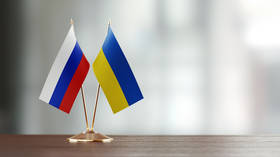
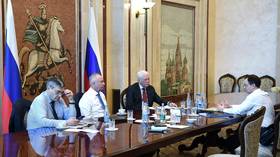
Russian and Ukrainian officials agreed to meet in Gomel region, Belarus on Monday for talks aimed at halting the fighting in Ukraine and resolving the crisis between Moscow and Kiev.Russian and Ukrainian negotiators have found some points of contact from which common positions can be built on, Vladimir Medinsky, special assistant to President Putin and head of the Russian delegation, has told reporters.
“Talks with the Ukrainian side which lasted about 5 hours have just wrapped up. We discussed in detail all the items on the agenda and found some common points on which we predict common positions can be found,” the official said.First and foremost, this includes agreement on the need to continue talks. “The next meeting will take place in the coming days on the Polish-Belarusian border. There is a corresponding agreement on this,” Medinsky said. “Until then, each delegation – the leadership of each delegations will consult on each of the negotiating positions with the leadership of their respective country,” he noted.Mikhail Podolyak, advisor to the head of Ukrainian President’s Office, confirmed that a second round of talks was discussed.
“The two sides identified a number of priority topics on which certain decisions have been outlined. In order for them to have an opportunity to be implemented…the parties are leaving for consultations in their respective capitals. The possibility of a second round of negotiations in the near future during which these topics will receive concrete, practical development was discussed,” Podolyak said.
Two Sides ‘Heard Each Other’
Leonid Slutsky, another member of the Russian delegation and the head of the Duma’s Committee on Foreign Affairs, said that the two sides had found “a number of important points on which progress can be reached.””The Ukrainian delegation was ready to listen and participate in the most detailed discussion of the essence of the issues on today’s agenda,” Slutsky added. “The main result is that the negotiations themselves took place, that the parties heard each other,” the lawmaker said.Belarusian Minister of Foreign Affairs Vladimir Makei promised his country was ready to continue to do its part in helping to resolve the crisis between Russia and Ukraine. Makei said organizing Monday’s meeting was a difficult but necessary task, and said the next round of talks were set to take place in a “couple of days.”Monday’s talks, which were also attended by Russian Ambassador to Belarus Boris Gryzlov, Ukrainian Defence Minister Oleksiy Reznikov, Ukrainian Deputy Foreign Minister Mykola Tochitsky and others, were held after days of waffling by Kiev.Belarusian President Alexander Lukashenko repeatedly stressed his readiness to facilitate Moscow and Kiev with a negotiating platform. On Saturday, he warned that external forces were encouraging and “pushing” Kiev to keep fighting, and that the longer the conflict takes place, the more of a chance there is that it will be turned into a foreign-backed “meat grinder” for both nations.The United States and the European Union have agreed to provide with nearly $1 billion in additional military assistance, with EU foreign affairs chief Josep Borrell saying Monday that this would include “high-calibre arms, anti-tank [systems], all kinds of equipment,” plus fuel for Ukrainian tanks and aircraft. Borrell expressed satisfaction over reports of fighting on the ground, suggesting that Russia was “paying a high toll on number of casualties.”Situation in UkraineEuropean Union Determined to Further Increase Military Aid to Ukraine, Borrell Says9 hours agoRussia launched a military operation in Ukraine last Thursday, coming to the defence of its Donetsk and Lugansk Republic allies after weeks of escalating Ukrainian mortar, artillery and sniper attacks in the Donbass conflict zone. The Donbass broke off from Ukraine in 2014 in the wake of a Western-backed coup in Kiev in 2014, sparking a civil conflict which has claimed over 14,000 lives and forced over 2.5 million people to flee their homes, about 1 million of them to Russia.
Moscow and Kiev have found certain things that could be agreed on during the ceasefire talks hosted by Belarus and will return for consultations before the next round, both delegations told reporters after the talks ended on Monday.
The main purpose of the talks was to discuss a ceasefire in Ukraine, said Mykhailo Podolyak, adviser to Ukrainian President Volodymyr Zelensky. The two sides have identified a number of priority topics, on which certain solutions have been outlined,” he added.
The two delegations found points on which common positions could be reached, confirmed Vladimir Medinsky, aide to Russian President Vladimir Putin.
Monday’s talks, which lasted for nearly five hours, took place in Belarus near the Russian and the Ukrainian borders. The next round will take place on the border between Belarus and Poland in the coming days, Medinsky said.
Ukraine’s delegation was led by Defense Minister Alexey Reznikov, and its main demand was an immediate ceasefire and withdrawal of all Russian troops from the country.
Zelensky said on Sunday he didn’t really believe the negotiations would succeed, but thought they were a chance, however small, to de-escalate the situation.”
While the talks were ongoing, Zelensky sent a formal request for Ukraine’s EU membership to Brussels. Meanwhile, Russia has put its nuclear deterrent forces on highest alert amid NATO moves to send weapons to Kiev.
Moscow ordered military forces into Ukraine on Thursday, saying Kiev needs to be demilitarized” and denazified” to protect the breakaway republics of Donetsk and Lugansk, as well as Russia itself. Ukraine and its Western supporters accused Russia of unprovoked” aggression. The UK, US, EU and several other countries have imposed sweeping sanctions targeting not just the Russian economy, but Putin and other senior Russian officials personally.
The British foreign secretary made unacceptable” statements on clashes” between NATO and Russia, Putin’s spokesman said
Kremlin spokesman Dmitry Peskov said on Monday that Russian President Vladimir Putin placed Russia’s deterrence forces – including nuclear weapons – on high alert in response to statements by British Foreign Secretary Liz Truss on potential conflict between NATO and Moscow.
Statements were made by various representatives at various levels on possible altercations or even collisions and clashes between NATO and Russia,” Peskov told reporters. We believe that such statements are absolutely unacceptable. I would not call the authors of these statements by name, although it was the British foreign minister.”
Speaking to Sky News on Sunday, Truss said that if we don’t stop Putin in Ukraine, we are going to see others under threat: the Baltics, Poland, Moldova, and it could end up in a conflict with NATO. We do not want to go there.” Truss did not specify how the UK could stop” Russia in Ukraine, although the British government has already sent anti-tank weapons and other lethal aid” to Kiev.
However, a Foreign Office source told the BBC on Monday: I don’t think anything Liz has said warrants that sort of rhetoric or escalation,” adding that Truss has always spoken of NATO – which was formed with the explicit goal of opposing the Soviet Union – as a defensive alliance.”
Read more
Websites of major Russian media taken down by hackers
While Putin’s announcement does not signal any intent to use nuclear weapons, it has been received in the West as a reminder of the importance Moscow places on Ukraine, and its determination to keep the country out of NATO. Since the end of the Cold War, successive Russian leaders have consistently opposed the eastward expansion of the alliance, and Moscow considers the idea of a NATO-armed Ukraine on its borders an existential security threat.
In Washington, White House Press Secretary Jen Psaki condemned Putin’s decision to raise the alert level, accusing the Russian president of manufacturing threats that don’t exist in order to justify further aggression.”
Meanwhile in Ukraine, Russia’s operation is still underway, and fighting has taken place in the cities of Kharkov, Mariupol, and on the outskirts of Kiev. Tentative negotiations between Ukrainian and Russian officials took place in Belarus on Monday.
Since the days of President Jayawardena we have got used to look for foreign goods and following the IMF model of allowing imports without any control, spending our foreign exchange for luxury purposes even when we did not have sufficient funds, we have become an indebted country. The IMF advice was intended to make us subservient and make us a colony once again where our countries had to obtain all goods from developed countries; our countries can only continue to produce and sell the raw material. The IMF Model also imposed a high interest policy where our entrepreneurs had to get loans at high interest as much as 24% while in Developed Countries entrepreneurs can get loans at 2 to 4 %. That caused the closure of our industries. This caused unemployment and poverty.
The youth of our country have had to migrate to work in developed and rich countries performing menial and third grade jobs and send a few dollars to their loved ones. Today we have many Departments that encourage sending our youth abroad and The Governments keep counting the money they send, thinking of it as a great achievement. Sadly we have forgotten how to build up our industries, train and find employment for our youth in a respectable manner……
The question before policy makers today is whether to seek a bail out from IMF and face a certain devaluation of the rupee. It is like the proverbial curate’s egg. Sri Lanka has had several devaluations of the rupee. I am not aware whether a proper evaluation of the impact of devaluation on exports and the economy has been done. Critics of the IMF claim that their mandate is to make imports from the developing countries cheaper to Western buyers and make poor countries to pay more for their exports. If developing countries try to restrict imports with tariff controls, there is the WTO to prevent that.
An export consignment of 10$ million dollars from Sri Lanka during 1982 when exchange rate was Rs 21 to the dollar, due to devaluation, in today’s exchange rate will cost the foreign buyer only $1million. A tenfold advantage. Many IMF and WB experts used to visit the EDB during the 1980s.
Justification of devaluation is based on that it makes the domestic currency cheaper relative to other currencies. … First, devaluation makes the country’s exports relatively less expensive for foreigners. Second, devaluation makes foreign products relatively more expensive for domestic consumers.
Certainly, the buyer interest of developed countries are well looked after by the IMF. But has devaluation discouraged imports? Despite the Dollar crisis and restrictions on imports, volume and value of imports have continued to soar. Even exporters have to pay higher prices for the import of raw material used in production for export.
Old timers will remember how with an annual salary of Rs 4080 how staff grades lived a semi luxury lives and even saved some money. Now they are in debt.
This is what a reputed economist Nicholas Kaldor had to say on devaluation—
The prescription, generally recommended by the Fund, to improve the current account in such cases is a program of phased financial retrenchment, the liberalization of foreign trade, and, to make all this possible, substantial devaluation.
The main objection to this approach is that it assumes devaluation is capable of changing critical price and wage relationships that are the outcome of complex political forces and that could not be changed by domestic fiscal and monetary policies. But it is more likely that a large-scale devaluation will end up reproducing much the same initial price relationships at the cost of a great deal of additional inflation. This outcome is, of course, particularly likely in developing countries, where the gap in the standard of living between the urban and rural population is large and where modern industry or the so-called organized” sector of the economy) extends to only a segment of the population.”
There is some truth that devaluation makes an economy instantly more competitive in the international markets. But it has not always worked as was the experience of–the U.K.’s 25% devaluation during 2007 and 2008 when it failed to spur the anticipated boom in demand for British goods.
For exports to increase depends on elasticity of supply. At the time of devaluation in 1977 our exports were mainly Tea, rubber and coconut products which made up of around 70 percent of the export value. There was hardly elasticity of supply in these plantation commodities. On the other hand, there was a pent-up demand for imports. Imports increased from Rs 6 million in 1977 to Rs 14.6 million in 1978. Even today the pent-up demand continues, and imports are bound to increase despite higher prices.
Wages do not keep pace with devaluation. For instance, in November 1977, Sri Lanka devalued the currency from about Rs. 5.95 = US $ 1 to Rs. 16 = US$ 1. But there was no commensurate wage increase.
Value of exports even today is around US$ 20 billion whereas the GDP is US$ 80 billion, four times the value of exports. Therefore, rupee depreciation will benefit a small section of the country and will not be the best option for the majority of the people and will leave consumers worse off.
One is made to believe that the west has merely graduated from exploitation of developing countries (DCs) with the use of arms and occupation, which had a cost, has now resorted to use sophisticated policy instruments to exploit the developing countries at no cost to them. An instrument they have used effectively is the devaluation of the currency of the DCs which makes the products of DCs cheaper for them. If a developing country tries to restrict imports then they invoke the WTO rules to prevent it. You would remember how the EU Ambassadors ganged up against the recent import restrictions imposed by the present government. The system is highly loaded against developing countries. Some countries resist but others like us accept them and even defend them.
Evidence on the ground shows that devaluation is not a solution. Singapore has the strongest currency in Asia. It is not the exchange rate but the products and productivity that matter. We need skills, capital, and technology. We need to change our education policy to be attuned to a high technology policy. In order to commercialize what comes out of technology we need to have an investment policy which is not averse to risk. In other words we need venture capital. Look at what happened to one of the best technical breakthroughs we had in nano technology. We did not commercialize the nano urea project and sold it off to India. The NDB was established to meet challenges like this. We privatized it.
Let us look at the exchange rates of a few Asian countries.
Bhutan N 74.67, Indian Rupee 74.67, Malaysian Ringgit 4.187,Nepalese Rupee 120.3, Singapore Dollar 1.3467,Pakistan Rupee 177,Sri Lanka Rupee 202.97Philippine Peso 51.385, Maldive Rufiyaa. 15.38, Bangladeshi Taka 86.4514.
They have devalued gradually and retained the strength of their currency. Every single country in this list, including Bhutan and Nepal, boasts of exchange rates better than ours. Bangladesh is one of our competitors in the apparel market. Bangladesh has increased their exports in leaps and bounds. Maldives is a competitor in tourism. They have increased their tourist earnings despite a strong currency which is less than 16 rupiah to a dollar. A US Dollar has more than 16 times buying power in Sri Lanka than in Maldives.
The strategy is not to stick to a fixed rate of exchange but adjust it gradually as a marketing strategy and not on IMF theories. That is what a village trader or a Super Marker would do to retain and expand their markets. They do not cut their price in half to meet competition but make a small adjustment but add value to the product.
What is the evidence on the ground that we have gained through devaluation? Let us look at the results in price increase in dollars in our two main commodities from the time of first devaluation to the present time. In November 1977, Sri Lanka devalued the currency from about Rs. 5.95 = US $ 1 to Rs. 16 = US$ 1.
$ to LKR 1978. at 16 Now at 250 % increase from 78 US$ US$ US$
Tea 2.07 2.56. 19.1
Rubber RSS 0.95 1.88. 49.4
One can work out what should have been the price increase at 1% compound interest for the last forty years.
The American Business-Higher Education Forum said in 2005 that ; Increased global competition, lackluster performance in mathematics and science education, and a lack of national focus on renewing its science and technology infrastructure have created a new economic and technological vulnerability as serious as any military or terrorist threat.” This is more relevant to Sri Lanka.
One might argue that we do not have the resources. Was Singapore resource rich? One of the most sophisticated iron and steel industries, POSCO is in South Korea which does not have iron or Coal. Korea invested in POSCO despite strong advice against it from the World Bank & IMF.
We have not exploited our minerals and marine resources. There can be value addition to our coconut products and spices. The immense potential of the Services sector has not been fully tapped.
What is lacking is not resources but imagination. Devaluation can be done with the stroke of a pen but for sustainable development we need imagination, innovation and application.
The article in the website quoted below on – The Korean Steel Industry in Retrospect : Lessons for Developing Countries” should be a compulsory manual for policy makers.
Mehjabin Bhanu Rajshahi City Corporation in Bangladesh
A six-day joint exercise titled ‘Exercise Cop South-2022’ participation of Bangladesh Air Force and US Pacific Air Force under the direction of the Armed Forces Department and under the management of Bangladesh Air Force Air ended at Bangladesh Air Force Base Bangabandhu on 25 February 2022 (Friday).
36th Airlift Wing of the US, Yokota Air Base, Japan (part of the US Pacific Air Force), and the Bangladesh Air Force (BAF) started their joint air exercise, dubbed Cope South 22, focusing on enhancing the bilateral relations of the Bangladesh Air Force with the United States, assisting in the long-term modernization efforts of the Bangladesh Armed Forces by providing training and strengthening regional stability for a shared goal of a free and open Indo-Pacific in the Indo-Pacific in February 20 in the Dhaka Kurmitola Cantonment and Operation Alpha in Sylhet, according to the Pacific Air Force statement.
The focus of the exercise is to enhance humanitarian assistance capability during any natural disaster, the objective of the exercise is to ensure maximum utilization of BAF transport aircraft and develop interoperability between BAF and United States Air Force.
According to a statement released by Pacific Air Forces on February 11, US airmen from 374th Airlift Wing, Yokota Air Base in Japan, and Bangladesh Air Force (BAF) participate in exercise “Cope South 22” on February 20-25 at BAF Kurmitola Cantonment, Dhaka and operating location – Alpha in Sylhet for a Pacific Air Forces-sponsored bilateral tactical airlift exercise.
Approximately 70 US airmen along with two US Air Force C-130J Super Hercules from 36th Airlift Squadron will join approximately 300 Bangladesh armed forces members and 2 Bangladeshi C-130Js for the exercise.
About six members of the 36th Airlift Squadron of the United States, including two C-103J Super Hercules, take part in the exercise. About 300 members of the Bangladesh Armed Forces, including two C-130s, participate in the exercise.
Since 2020, the United States has provided at least 121 million UDS in assistance to Bangladesh for Covid-19. Cop South is going to be the first year after the start of the Corona epidemic.
The United States Department of State issued a joint statement on June 11, 2019. In it, the governments of the two countries reaffirmed their commitment to a lasting partnership. Emphasis was placed on close cooperation in security, development, humanitarian assistance, disaster relief, and counter-terrorism. Both Governments agreed to continue to pursue the vision of a free and open, participatory, peaceful, and secure Indo-Pacific region based on close cooperation.
This type of joint exercise exchanges and enhances both military professionals and helps develop a deeper mutual understanding of overall operations of tactics, techniques, and procedures which are vital towards successful regional and international relief operations. It also ensures mutual cooperation between the two parties. The joint exercise reflects the mutual understanding between the US and Bangladesh, and bolsters their relationship of trust.
The United States Pacific Air Force has been conducting various training exercises in response to natural disasters in different parts of the world every year. As Bangladesh is a coastal and riverine country, it is prone to various natural disasters every year due to climate change. At that time Bangladesh Air Force transport planes were used to distribute relief goods in the disaster-affected areas. ‘Exercise Coop South’ conducts various exercises mainly to deal with emergencies and natural disasters as well as to ensure maximum utilization of Bangladesh Air Force transport aircraft.
This joint exercise includes enhanced capacity building between the Bangladesh Air Force and the Pacific Air Force of the United States, training exchanges, improved utilization of various equipment used during training, identification of equipment required by the Bangladesh Air Force in future activities, and various maintenance procedures of transport aircraft. The focus is on the subject.
It is true that since the exercise was conducted, for the past 27 years, it has benefited the Bangladesh Armed Forces, especially the Bangladesh Air Force. Exercise Cope South 2022 helped to evaluate proficiency and identify future training and other actions that enhance partnership capability between U.S. and Bangladesh forces.
The US is a major stakeholder of Bangladesh in South Asia in the sector of trade, aid, grant, security cooperation, humanitarian assistance, etc. The US has been training Bangladeshi security personnel from time to time. Basically, Bangladesh has been getting a lot of assistance from the USA authority. Since 2005, the United States has contributed nearly $44 million to support training, equipment, and facilities upgrades to enhance Bangladesh’s peacekeeping capabilities. Since 2015, the United States provided $66.9 million in Foreign Military Financing (FMF) and $7.29 million in International Military Education and Training (IMET) assistance to Bangladesh.
Since 2010, the United States has conducted the annual multinational military exercise Cooperation Afloat Readiness and Training (CARAT) with Bangladesh to expand relationships and enhance maritime domain awareness. Since 2008, Bangladesh has partnered with the state of Oregon via the National Guard’s State Partnership Program, where a state’s National Guard is partners with a foreign military in order to establish a relationship that fosters cooperation and understanding.
We know The USA has imposed sanctions on ‘Bangladesh Rapid Action Battalion’ Bangladesh’s elite branch of police and some officers of the security organization for alleged violations of human rights in Bangladesh on December 10, 2021.
At this critical time in Bangladesh, a joint air exercise between the US and Bangladesh can give Bangladesh some relaxation. Many people may think that the bilateral relations between the US and Bangladesh have been jeopardized due to the US sanctions on RAB and its officials which is a misconception. This exercise can help both Bangladesh and USA strengthen the security partnership and dispel the bilateral misunderstandings. At this time, Bangladesh also needed such kind of bilateral engagement (joint exercises, joint discussions, sessions). The real situation is that Bangladesh and US security cooperation in the region is growing.
The US has started to consider Bangladesh as an important security partner in the region. Bangladesh and USA both are interested to combat security threats in the region. Now, Dhaka is keen to engage itself with Washington broadly. The Bangladesh government is expected to extensively engage with the United States at various levels in March-May to work ways to remove impediments in bilateral relations.
The recent joint air exercise conveys the messages to us. For nearly 50 years, the United States and Bangladesh have enjoyed cordial diplomatic relations and have partnered on a wide range of security issues, including border security, maritime security, counterterrorism, peacekeeping, defense trade, and defense establishment. The recent joint exercise of Bangladesh and US reflects the such kind of bilateral mutual understanding.
Because of war, Ukrainian holiday makers cannot leave the island nation. Today the Sri Lankan government will discuss the possibility of providing financial assistance and extending visas. In recent days, protests broke out in front of the Russian embassy.
Colombo (AsiaNews) – The Sri Lankan government will consider providing financial assistance and extending visas for thousands of Ukrainian tourists stranded during their vacations by the war that broke out in their country.
Sri Lanka’s Tourism Minister Prasanna Ranatunga said that he will make such a proposal at today’s cabinet meeting. The Foreign Ministry and the Department of Immigration and Emigration are already holding talks on the matter,” Ranatunga noted.
According to the Sri Lanka Tourism Development Authority, some 4,000 Ukrainian tourists and 11,500 Russian tourists are in the country. Some staged protests yesterday on the beaches in Galle and Mirissa in the country’s Southern Province.
“We came to Sri Lanka for a vacation. Now we are helpless,” one woman told the media. “I don’t understand why the world is silent. This can happen not only to us but to everyone if the world does not act quickly,” she added.
We are having sleepless nights,” said a tearful young woman, worried about her mother and sister, stranded by Russian bombing in two different parts of Ukraine.
A friend explained that they had come to Sri Lanka for a short vacation, but now hade no idea when they would be able to go home. It would be great if the Sri Lankans could help us survive until we leave, as our money is running out,” she added.
After Putin’s attack, Ukrainians in Sri Lanka demonstrated in front of the Russian embassy in Colombo, urging Russian citizens “not to be silent”.
The European Union delegation in Sri Lanka, in agreement with the embassies of France, Germany, Italy, the Netherlands and Romania, condemned the invasion of Ukraine by the Russian armed forces.
“Russia’s recent actions with regard to Ukraine have been a blatant breach of the UN Charter and the Minsk Agreements,” they said in a statement.
The UN Charter prohibits the threat or use of force against the territorial integrity or political independence of any state, or in any other manner inconsistent with the Purposes of the United Nations,” it went on to say.
“This poses a serious threat to the rules-based international order, which we have together vowed to stand up for around the world, including the Indo-Pacific region.”
While identifying the priorities, the government should decide whether to stay in the dark after eating apples, grapes and oranges or make sacrifices to prioritise our limited foreign exchange spending on essential commodities such as medicine and fuel, Energy Minister Udaya Gammanpila said.
Addressing the media yesterday, he said without considering the priorities, the country is importing water, apples, grapes, and oranges without fuel. We have imported honey, but do not have enough medicines, he said.
We have the ability to ensure an uninterrupted supply of fuel if we manage it sparingly and cut down on unnecessary expenses. Through that, the country can ensure an uninterrupted power supply.
The minister also claimed that what the country is experiencing is not an electricity crisis or a fuel crisis, but a foreign exchange crisis.
The government spent $21 billion on imports last year (2021), of which $2.8 billion was allocated for fuel imports, the minister said. (Chaturanga Samarawickrama)
The Health Ministry says that another 996 persons have tested positive for the novel coronavirus today (Feb. 28).
This brings the tally of confirmed cases of Covid-19 detected int eh country to 646,033.
Approximately 20,888 patients infected with the virus are currently undergoing treatment across the island.
The Director General of Health Services has confirmed another 32 coronavirus related deaths for February 27, pushing the country’s official Covid-19 death toll to 16,222.
The deaths reported today include 16 males and 16 females while two of them are below the age of 30 years. Six victims are between the ages 30-59 while the other 24 are aged 60 years and above.
As Global media outlets provide 24/7 updates about the conflict in Ukraine, several Western media journalists used racialised language while reporting about the developments. The military operations started after the Donetsk, and Lugansk People’s Republics requested Russia to defend them from Kiev aggression.India’s Minister of State for Electronics and Information Technology Rajeev Chandrasekhar has lambasted journalists from the Western media for their biased views towards people from places other than Europe and the US.Quoting a series of tweets in which Western journalists used racial language while reporting from Ukraine, Chandrasekhar said, “This thread about why some in Western media have seriously disturbing double standards.”In a video clip, a BBC anchor can be heard saying he respects the “emotion” when Ukraine’s Deputy Chief Prosecutor David Sakvarelidze explained that the conflict with Russia and Ukraine is very emotional for him because he sees “European people with blue eyes and blonde hair being killed.
A senior correspondent for CBS News stated that Kiev “isn’t a place, with all due respect, like Iraq or Afghanistan, that has seen conflict raging for decades. This is a relatively civilised, relatively European…city, where you wouldn’t expect that or hope that it’s going to happen.”On BFM TV of France, an anchor said that European cities are facing cruise missile fire as though “we were in Iraq or Afghanistan, can you imagine!?”A British ITV journalist considers the crisis “unthinkable” as Ukraine is not a “developing, third-world nation; this is Europe!”Not only did the TV news anchors or correspondents make such colourist, racial remarks, but print journalists also wrote similar articles.Daniel John Hannan, a British writer journalist, reckoned that Russia’s military action in Ukraine is an “attack on civilisation” as they [Ukrainian] “seem so like us” and have Instagram and Netflix accounts.”War is no longer something visited upon impoverished and remote population,” Hannan, a former politician serving as an adviser to the UK Board of Trade since 2020, wrote in The Telegraph.As military operations rage in more parts of Ukraine, the UN refugee agency has reported that more than 368,000 people have fled Ukraine since Thursday. The agency fears that the conflict could see more than 5 million people seeking refuge in neighbouring countries like Poland, Hungary, Slovakia, and Moldova.While explaining the reasons for accepting refugees from Ukraine, a Polish journalist said, “To put it bluntly, these are not refugees from Syria, these are refugees from Ukraine… They’re Christians, they’re white. They’re very similar [to us].”The “implicit racial bias of some of the Ukraine coverage” has not gone down well with the Arab and Middle Eastern Journalists Association.The association condemned and categorically rejected “orientalist and racist implications” towards the Middle East, Africa, and Asia.”This type of commentary reflects the pervasive mentality in Western journalism of normalising tragedy in parts of the world such as the Middle East, Africa, South Asia, and Latin America. It dehumanises and renders their experience with war as somehow normal and expected,” it said in a statement.
Over the weekend, Western countries initiated new sanctions against Russia in connection with the Russian operation in Ukraine. European Union banned any Russian aircraft from landing, taking off or flying over the territory of the EU.Russia, as a response to a ban the European states placed on the operation of flights of Russian aircraft, has limited the operation of flights via the airlines of 36 states, the Federal Air Transport Agency said.
The history of the International Monetary Fund indicates that it was established (1944) when there was a crisis in the international financial system in the 1930s, France and associated countries attempted to devalue and revalue national currencies to gain trade advantages using the international financial system. At that time there was no international authority to control financial systems in individual countries. Many inappropriate decisions to penetrate the stability were taken and such behaviour invited the requirement of central control in the international financial system. The International Monetary Fund was a successful effort that was agreed upon by many countries. Since 1944 the IMF has been working to protect the financial system despite many issues, and the fund supported many countries including China and India with massive funds to resolve issues when they needed outside support. Small countries like Sri Lanka have countenanced about declining foreign and domestic value of the national currency unit the aim of Sri Lanka is to have a higher exchange rate for the national currency in contract to real value. The problem has been associated with many issues and it is not the right way for blaming the IMF, it is a demand and supply related problem and the government policy needs to be set logically to manage a good equilibrium.
If Sri Lanka produces demanding high-quality products and services it would support competition and earn more foreign exchange and stabilise the exchange rate of the domestic currency unit. This is a theoretical aspect and many criticize this aspect because Sri Lanka has no financial power to compete with other countries. The exchange value of the national currency unit of Sri Lanka cannot quickly increase and it associates with many factors, the history of many hard currencies indicates that they had fluctuated during the past century and Sri Lanka cannot change that reality as politicians expect.
The IMF was originated considering two proposals from Keynesian supporters and American view to establishing an international currency called Bancor. The establishment of the International Monetary Fund was successful and the Common currency idea has successfully been operating in the Eurozone since the year 2000, it seems that operating major currencies in five zones that the global financial system divided would be successful to reduce the current fluctuation and sharing the responsibility to maintain the stability of the domestic and foreign value of currencies. Why does Sri Lanka needs billions of foreign currency reserves if they aren’t supposed to use for demand and supply purpose, no economist has explained this point in detail and the media uses to talk about this without presenting logical examples.
The current problem in many countries seems that they are in shortage of foreign currency and it is an issue that many countries have no appropriate controls to balance the available foreign currency reserves and the ability to generate reserves by exports of goods and services. Concerning this point, the product and service quality of many developing countries including Sri Lanka is questionable because these countries have no comparative product quality management and labour control and the application of technology in countries like Sri Lanka remain weaker, and political influences in Sri Lanka seems that indirectly associate with the foreign exchange management. If it exams the history of hard currency it cannot be seen that political parties and corrupt practices of political party supporters did not influence the management of economic and currency management. It was a liberal system and demand and supply of foreign currency incurred automatically.
The main purpose of the IMF was to provide financial support for the balance of payment adjustment problems in member countries. The balance of payment in a country is defined as the difference between the real national income and expenditure. If it deeply analyses the balance of payment in Sri Lanka, the trade balance of income and expenditure accounts and the capital account contributes to the gap between real national income and expenditure.
What is wrong with gaining financial support from the IMF, which provides support from various ways and such financial supports are subject to conditions. The IMF policy is to supervise how to use finance provided by it would not allow misusing as expected by politicians. The concern of IMF is to take the entire economy to the right pathway and it is related to macroeconomic factors and it is not simple as the politicians think.
Sri Lanka and many developing countries obtained financial support from the IMF and why Sri Lanka is reluctant to seek support from the IMF is not a dogma to understand. The main reason is the conditions imposed by the IMF which are not helping to misuse of funds by politicians. There is no way to provide financial support without conditions and the truth in Sri Lanka is even rural informal money lenders too insist on conditions for small lending volume and what is wrong with loan conditions for large amounts of funds. The funds that will obtain from the IMF are used for payments and the first condition will be the payment should go to a member country for goods or services.
The IMF may not agree with the inward-looking economic strategies and there may be the condition to follow outward-looking strategies that create many job opportunities and such conditions support expanding domestic and international trades. Since 1978, limited liberalization of trade created a market for rural products and services. Many Sri Lankans have gone for green pastures in foreign countries, in contrast to the expectation, they achieved limited gains and many social issues created in families.
The other significant condition would be the government should get away from public enterprises management incurring a huge loss and the pushing responsibility to private investors may be a condition. This condition is subject to the elimination of corruption which is a major issue in the country. After the privatization of public enterprises, the government must supervise the operation without influencing management. The reality in Sri Lanka is after privatizing enterprises politicians wants to influence the management decision of enterprises. These are major reasons that the government reluctant to go for the IMF for financial supports.
Many Sinhalese believe that due to Thesavalamai law they cannot buy (or lease) property in the North. This seems a misconception on their part.
There are only two classes of people who are benefitted by the Thesavalamai Ordinance (No 59 of 1947). They are bestowed with the right of pre-emption:
Persons who are co-owners of a property.
This means the subject land must be of undivided (un-partitioned) – jointly owned by two or more people.
When selling the property, before anybody else, it must be offered to the other co-owner/s at market price.
Majority of the land in Sri Lanka including the North are held under sole ownership; the Ordinance does not apply to them.
In the event of intestacy (owner dying without a will), the heirs (next of kin) of the deceased person have the right to buy the property at market price.
Others including the Sinhalese of the south are able to buy the subject land only if the offer made to the heirs (at market price) fails.
During the late 17 and early 18 centuries, lots of Tamils from South India’s Coromandel Coast migrated to Sri Lanka, mainly to work in the newly established tobacco plantations. They brought with them their laws. In order to please them, the then Dutch Governor Simmons codified these laws (in 1706).
The Dutchman, Jan Pirus, translated the Code into Tamil.
It may perhaps be that with these new Malabar laws the Dutch amalgamated any existing Tamil customs and rules of Jaffna (Jaffenapatnam – යාපා පටුන).
During the British period, the laws were continued to be applied. Sir Alexander Johnston translated the Thesavalamai Code into English.
In the early periods it seems the Thesavalamai law only applied to Jaffna. The word ‘Jaffna’ was the key term, there was no mentioning of ‘Northern Province’.
But, in a landmark case in 1988 (Sivaganalingam v Suntheralingan) the then Chief Justice Sharvananda (of the Supreme Court) held that the law applied to the whole of the Northern Province, not just to Jaffna. His Honour further held that the law applies to inhabitants of the Northern Province irrespective of where they live in Sri Lanka. This benefitted many Colombo domiciled Tamils who had maintained a close nexus with the Northern Province.
Recent case law (after 1988) shows that sometimes Thesavalamai law applies to movable property (a car in Manikkasagar v Kandasamy). The right of pre-emption now applies to adjacent land owners also.
Case law is how the judiciary interprets codified law/legislation; in this instance, the Thesavalamai Ordinance. The judiciary cannot create law, only the State.
The State can legislate to override any case law errors/anomalies.
Thesavalamai law does not apply to the Eastern Province. So, the Sinhalese can freely and readily purchase any immovable property in the Eastern Province.
The writer reiterates that except in limited situations – as exemplified above, there should be no major impediment for the Sinhalese to purchase land in the North.
Thus, they should go ahead and buy Northern lands that are not affected by Thesavalamai law, after obtaining legal advice.
Russia said on Sunday that, after some back-and-forth, Ukraine agreed to dispatch a team to Belarus for talks to end the Russian military campaign in the country.
Kiev confirmed” the planned talks in Gomel Region, which is close to the borders of both Russia and Ukraine, Russian chief negotiator Vladimir Medinsky told reporters.
Medinsky, an aide to President Vladimir Putin and former culture minister, added that the parties are now deciding on the logistics and the exact location of the summit, with maximum security” for the Ukrainians.
We guarantee that the travel route will be 100% safe. We will be waiting for the Ukrainian delegation,” Russian chief negotiator said.
The Russian team arrived in Gomel on Sunday, where it said talks were planned with the Ukrainians. Kiev later said it wanted to negotiate on neutral ground,” arguing that Russian troops were using Belarusian territory to stage attacks on Ukraine. Minsk, however, denied that its forces were participating in the Russian operation.Read more UK warns of Russia-NATO conflict
The Russians initially said their team would stay in Belarus until 3pm local time. However, Ukrainian President Volodymyr Zelensky spoke to his Belarusian counterpart, Alexander Lukashenko over the phone, asking to move the deadline, according to Lukashenko’s spokeswoman, Natalia Eismont. She said the Belarusian leader then spoke to Russian President Vladimir Putin, who agreed to move the planned negotiations to a later time.
Zelensky’s office later confirmed the call with Lukashenko. The statement said the two agreed that the Ukrainian delegation will meet with the Russians without any preconditions on the Ukrainian-Belarusian border, near the Pripyat River.”
Moscow attacked its neighbor this week, arguing that it was defending the Donetsk and Lugansk People’s Republics, which broke off from the eastern part of Ukraine shortly after the 2014 coup in Kiev. Ukraine said the move was an act of unprovoked aggression.
The Western alliance promised to “hold Russia” and Belarus “accountable” for the “brutal and wholly unprovoked and unjustified” “invasion” of Ukraine on Friday, warning that Moscow would be made to pay “a severe price” for its actions.
Russian President Vladimir Putin ordered the military to put the nation’s nuclear deterrence forces on high alert Sunday following “aggressive statements” from NATO.“Top officials of leading NATO nations indulge in making aggressive statements about our country. Therefore, I am ordering the minister of defence and the chief of the general staff to put the deterrence forces of the Russian army into special combat duty mode,” Putin said in a briefing with Defence Minister Sergei Shoigu and Chief of General Staff Valery Gerasimov in Moscow.
Putin’s order follows remarks by UK Foreign Secretary Liz Truss earlier in the day warning that if Russia’s military operation in Ukraine was not “stopped,” it could lead to a conflict with NATO.”This long-running conflict is about freedom and democracy in Europe. Because if we don’t stop Putin in Ukraine, we are going to see others under threat: the Baltics, Poland, Moldova. And it could end up in a conflict with NATO,” Truss said.Situation in UkraineUK’s Truss Claims Unless Russian Op in Ukraine is Stopped, It May Result in Conflict With NATO12 hours agoWhite House spokeswoman Jen Psaki condemned the Russian president’s decision later Sunday, suggesting it was part of a “pattern” of “manufacturing threats that don’t exist to justify further aggression.” Psaki did not comment on Truss’s remarks.
Russia ‘Will Be Held Accountable’, NATO Says
The leaders of the Western alliance held an emergency virtual summit on Friday to “condemn in the strongest possible terms” what they called “Russia’s full-scale invasion of Ukraine, enabled by Belarus.” In a joint statement, the alliance called on Moscow to “immediately cease its military assault, to withdraw all its forces from Ukraine and to turn back from the path of aggression it has chosen.”The bloc warned that “the world” would “hold Russia, as well as Belarus, accountable for their actions,” and accused Moscow of bearing “full responsibility for this conflict” by “reject[ing] the path of diplomacy and dialogue repeatedly offered to it by NATO and Allies.”The alliance promised to “take all measures and decisions required to ensure the security and defence of all Allies,” including through the deployment of additional land and air units in Eastern Europe and maritime assets “across the NATO area.” This has included the deployment of the NATO combat-ready response force ‘as a precautionary measure’, for the first time in the bloc’s history.US media have also warned in recent days that a Russian cyberattack on Ukraine could trigger Article 5 -the NATO Treaty measure committing allies to joint defence in the event of an attack on one member, if such a cyber action impacts eastern Poland.NATO chief Jens Stoltenberg warned Thursday that the alliance would protect “every inch” of the bloc’s territory, but noted that NATO does not have “any plans” to deploy troops in Ukraine.”There must be no space for miscalculation or misunderstanding. We will do what it takes to protect and defend every ally, and every inch of NATO territory,” Stoltenberg said.The NATO chief and others, including US President Joe Biden, have indicated that the alliance’s assistance to Kiev would continue include weapons and other support.
Ukraine Crisis: Decades in the Making
The current security crisis in Ukraine is at least in part a calamity of NATO’s own creation. Russian officials have spent years condemning the bloc for its decades-long eastward push toward Russia’s borders, and Washington’s unilateral moves to break security agreements with Moscow aimed at ensuring peace and strategic stability – such as the Anti-Ballistic Missile Treaty, the Intermediate-Range Nuclear Forces Treaty, and the Open Skies Treaty.US Systematically Removed Trust, Transparency Safeguards Preventing Nuclear War, Ignores Remainder28 January, 23:33 GMTAt each step, whether in incorporating new members into the alliance or ripping up a post-Cold War security treaty, the US and its allies continued to assure Moscow of their readiness to “talk” to address Russian security concerns.
“They will chat endlessly, speak endlessly about the need to negotiate, and do nothing, except pumping up our neighbour with modern weapons systems, and increase the threat to Russia, which we will then be forced to somehow deal with, somehow live,” Putin said in an interview with Russian media late last year.In 2014, Ukraine’s bloc-neutrality-seeking government was overthrown in a violent, Western-backed coup d’etat, setting Kiev on a course for membership in the European Union and NATO. The coup led Crimea to break off from Ukraine and rejoin Russia, and sparked a civil war in eastern Ukraine between Kiev forces and local militias refusing to recognize the new regime. The bleeding wound in eastern Ukraine would continue to remain unhealed for nearly eight years, with Kiev ducking promises made to Germany, France and Russia to end the war by providing the self-proclaimed Donbass republics with constitutionally-guaranteed autonomy, in accordance with the 2015 Minsk Agreements.In December, the Russian Foreign Ministry proposed two security treaties to NATO and the US aimed at easing tensions and restoring strategic stability to Europe. The draft agreements called on both sides to limit the deployment of troops, missile systems, aircraft and warships in areas where they could be considered a threat by the other side. Crucially, they also included a demand that NATO end its eastward expansion into the former Soviet Union, including Ukraine, and limit the deployment of forces in countries which joined the bloc after the end of the Cold War. Washington and the alliance openly and publicly rejected the Russian proposals, expressing hopes for continued talks.Russia recognized the Donetsk and Lugansk People’s Republic as sovereign states last Monday. On Thursday, amid continued Ukrainian mortar and artillery attacks on Donetsk and Lugansk People’s Republic territories, Moscow launched a military operation in Ukraine which Putin said is aimed at “demilitarising and denazifying” the country.
Colombo, February 27: Sri Lanka should not take its relations with China for granted and should pay more attention to develop its longstanding relationship with the global power, Sri Lanka’s Ambassador to Beijing Dr. Palith Kohona told The Sunday Morning. Sri Lanka and China are celebrating a milestone year in diplomacy, with a major trade, tourism, and investment event planned for April this year, while 2022 may also see a visit to China by President Gotabaya Rajapaksa following an invitation extended to him by the Chinese Foreign Minister last year.
In an interview, Sri Lanka’s top diplomat in China pointed out the need for Sri Lanka to develop a better understanding of China, be more receptive to the global giant’s needs, and not promote imaginary threats when engaging with China, which is one of the largest investors in Sri Lanka.
Following are excerpts of the interview:
How has Sri Lanka’s foreign policy evolved over the last decade? Or has it remained unchanged?
I think under the current administration our foreign policy has evolved and been refined. Historically we have maintained a non-aligned foreign policy. I think it has been further strengthened in recent times. For us, China and India are the most important external relationships.
We have to remember that China is one of the most important relationships in our external relations framework. China is the second biggest economy in the world. It was, until this year, the biggest contributor to Sri Lanka’s development efforts. Many consider it to be a power to be reckoned with. China has got its own global perspectives and interests.
Sri Lanka’s mission to China is one of the most critical missions for trade, economics, politics, and tourism. So our relationship with China needs to be managed at a sophisticated level. It should not be handled in a haphazard way. We need to place a lot more interest on China and have a better analysis and it is also in our interest to engage in-depth with China. That can only be done with more feet on the ground, more ears at the discussion tables, and more analysis.
Of course it can’t be done with two third secretaries and a deputy at the mission. In comparison, the Pakistani mission has 46 diplomats, India has 26 and Israel has 18 in China. The way we staff our mission in Beijing may also send a wrong message to our host, the Chinese; they may think we are not taking them seriously.
I think the current Government recognizes the importance of the relationship, but it needs to pay more attention to China. There are other major players active in our region, like the United States, who also need to pay attention to them.
At the end of the day, we need to understand that it is crucial that we protect our interests, sovereignty, and territorial integrity and survive as a sovereign nation.
How will the growing geostrategic competition in the Indian Ocean affect China-Sri Lanka relations for Sri Lanka in 2022?
China is sensitive about certain things, like its borders and its territory. We have committed to the ‘One China’ policy a long time ago. It is very important that we stick by that. China values that commitment, because when China was weak, Sri Lanka was one of those countries that steadfastly supported the ‘One China’ policy. Also, when China was making legitimate efforts to resume its seat at the United Nations, Sri Lanka was a vocal supporter of that effort.
So we have a good background, a foundation with China. I think we need to be conscious about China’s sensitivities. Another factor is that China has not stated anywhere that it is interested in territorial acquisitions or building bases. It has one base in Djibouti, which services the anti-piracy efforts of not only China, but a number of other countries.
Many countries involved in the international maritime trade have established bases in that area. It has of course built harbors in Bangladesh, Pakistan, and Sri Lanka, but nowhere has China said that it wants these harbors for military use. I think we need to be aware of what China has stated publicly and said in private. That is very important in formulating our approach towards China.
Therefore, there is no need to hype up imaginary threats when no threat exists. In my view, it is unfortunate that we see some segments in Sri Lanka hyping up an imagined threat. Perhaps our policymakers should steer clear from such segments. At the end of the day, if we are to raise our heads as an economically strong nation, we need the assistance of countries like China. I feel that China’s support to Sri Lanka has been genuine and sincere.
What are the key areas with regard to relations with China that need to improve and how are you pursuing them?
There are four key areas that we need to improve. We need to improve our investment framework for Chinese investors. In terms of bilateral trade, we need to improve Sri Lanka’s exports to China. We need better engagement on tourism.
Then there is the bilateral political relationship. It is at an all-time high. It is a close and warm relationship. President Xi Jinping has telephoned our President as recently as last week. He recently sent a message to his political contacts in Sri Lanka, congratulating them on the 65th anniversary of diplomatic relations between the countries and the 70th anniversary of concluding the Rubber-Rice Pact.
However, no relationship should be taken for granted. I worry that some parties may be doing just that. Every relationship has to be worked on consistently. We need to be sensitive to the needs of our partner and respond appropriately.
I have noticed in some instances we (Sri Lanka) simply go and ask for aid from some countries. But when they require our assistance, we either don’t pay any attention or we don’t respond adequately. I think this is a weakness in our foreign policy establishment, because foreign relations are not only about our needs, it is also about the needs of our partners.
I think this message is not being taken seriously enough. China has needs as an emerging power and we need to respond to those. It can’t be a one-way street. We always turn to China in our hour of need. China too has needs from us, as small as we may be. In the past we have responded to such needs, whether at the UN or elsewhere.
China is the biggest source of Foreign Direct Investment (FDI) today; $ 146 billion flowed out of China last year. We need to attract a fraction of that. Investments are essential for us to pull ourselves out of the difficult situation we are in at present. We need FDI, it may be from any part of the world. However, China brings the biggest FDI in the world and we have a good relationship with them.
I have been able to speak to 60-70 major companies in China to promote Sri Lanka as an investment destination. The embassy works closely to develop that. Sri Lanka is ideally situated with access to Indian, South East Asian, Middle East, and African markets, with several Free Trade Agreements (FTAs) with them already.
Trade with China is an area in which Sri Lanka has performed poorly in the last decade. China exported $ 4 billion worth of goods to Sri Lanka last year. However, Sri Lanka only exported around $ 280 million worth of goods last year, so there is a long way to go. We know that ‘balancing trade’ between the countries is not something that is ever going to happen. However, we certainly can export more to China and we are making an effort by talking to the relevant authorities about it. Given our foreign currency crisis, my view is that one of the best ways out of it is to increase our exports. China is the biggest consumer market in the world. However, it is not an easy market; you need to build relationships and understand the Chinese consumers. It is a slow process but a valuable market.
Tourism is a low-hanging fruit. I have been to 14 provinces in China; there is a big enthusiasm to travel. COVID restrictions have held them back. In 2019, 156 million Chinese travelled overseas; we just need a small fraction of that to come to Sri Lanka. On average, the Chinese spend $ 4,000 per head during overseas travel.
We have put a lot of effort into meeting travel agents and companies to promote Sri Lanka as a tourism destination. There has been a lot of enthusiasm. We have also requested that Sri Lanka be designated as a ‘Preferred Destination’ for Chinese travelers. Many of the large travel companies in China are State controlled and I think if we get this designation, it will give our tourism sector a boost.
China has signaled a desire to pursue an FTA with Sri Lanka. Some in the Government feel a Preferential Trade Agreement (PTA) is a better option at this stage. What is the Chinese response and progress on this?
I have repeatedly said that we need to go for an FTA with China. Of course, some may say given the size of the Chinese market, it may simply inundate our market. An FTA has to be negotiated well. There are nearly 25 countries and regional bodies that have entered into FTAs with China. Nobody has suffered inundation by the Chinese market. No negotiation process for an FTA with China has been started yet. I would like to encourage our policymakers to start the process. We don’t need to conclude the process tomorrow. We can put our best people on it and get them to analyze and negotiate. We shouldn’t shy away from it. I think if we were to start negotiating, I believe China would understand our needs and concerns.
Has Sri Lanka made a request to restructure Chinese debt? How has China responded and have negotiations made progress?
The discussion is ongoing at the Central Bank level. They are progressing. An important fact is that only 10% of Sri Lanka’s external debt is owned by China. Almost 90% are owed to multilateral institutions and financial institutions. I think it is correct that we have asked China to delay interest payments on part of the debt. We have also asked for a line of credit for our industrial imports. This is important for our garments industry, for raw materials and related machinery. I think, as a whole, we can feel confident that China will respond favourably to our request.
Further, the BRICS Bank has approached us and offered membership to Sri Lanka. Once Sri Lanka becomes a member, we will have access to considerable finance at a low interest rate from the bank.
China has historically been supportive of Sri Lanka in international forums. Do you think China will continue to be supportive to Sri Lanka in forums like the UNHCR?
China has said that it will and I have every confidence that it will support us. But as I said earlier, every relationship needs to be worked on. We should never take any country for granted.
What investments are in the pipeline for the Colombo Port City, Hambantota Port, and the adjacent Industrial Zone?
From our records and discussions over the last 12 months I can say that there is about $ 2.5 billion worth of investments in the pipeline. A major Chinese company has assured us that they will invest $ 530 million in the Financial Centre at the Colombo Port City. In addition, we are talking with a major Chinese industrial company to establish a state-of-the-art, environmentally-friendly steel manufacturing facility at the Hambantota Industrial Park. Once completed the steel plant will be worth about $ 1 billion and will create a lot of jobs.
Several companies have approached us on the renewable energy industry. One is keen to establish a solar panel manufacturing plant in Sri Lanka, as we have high quality silica in the island. A delegation was dispatched to Sri Lanka to inspect the site. A proposal that came to us which has been lingering in Colombo for several months is one to build a processing plant for mineral sands in Pulmodai, near Trincomalee. At the moment, we only do basic processing of the sand to export to other countries. The company has offered to carry out advanced processing of the minerals for export.
Both Sri Lanka and China have invested heavily in the Colombo Port City project, making it a critical infrastructure for Sri Lanka’s economic growth. How confident are you of its success?
Yes, in the next year or so you will see things pick up. However, we need to be proactive. We need to be out there attracting investment, not only from China, but from other countries as well. From India, the Middle East, from Europe, and America. We need to market the Port City better; I feel that we need to revamp its marketing.
What was the outcome of Foreign Minister Wang Yi’s visit to Sri Lanka last year and will President Gotabaya Rajapaksa visit China (there is an invitation), if so, when?
I hope so. It will be a very important visit. But right now may not be the best time for our President to visit China due to COVID-related travel and entry regulations. It would make meetings and visiting key places difficult. He may want to visit some of the major achievements of China, in particular how China has modernized agriculture with the use of technology.
Is there a proposed technology university project being planned for Sri Lanka with Chinese assistance?
We have been talking to key Chinese officials and companies about establishing a high-technology university in Sri Lanka. The discussions have progressed substantially. It will also introduce technology-driven agriculture. We are now discussing with Colombo how the faculties will be formed. The matter is now before the China International Development Cooperation Agency (CIDCA). CIDCA has expressed interest in funding this project. The University of Wuhan, Power China Group, China Great Wall Industry, and the Foreign Ministry are discussing the project that will see this high-tech university proposed to be built in Hambantota. These are the institutions involved in developing this project. Great Wall China is a multi-billion dollar company, but it has a soft spot for Sri Lanka. One of the aims of this project is to upskill our workforce as the Hambantota Industrial Zone is developed. They will need skilled persons and tech experts to operate new factories in the zone. It will also help to upskill our migrant employees. As such, it will help unemployment among youth.
How have the disputes over the controversial organic fertilizer shipment and the Central Expressway Project affected China-Lanka relations?
I think the China-Sri Lanka relationship is strong enough to withstand such situations. It is unfortunate that the problem regarding the fertilizer shipment arose and developed in the way it did. I believe that now it is behind us. On the Central Expressway issue, of course any bidder is going to be disappointed when they are not successful. It is important for us to have a mechanism to deal with such disputes efficiently and transparently. The longer such disputes are discussed in the media, the more difficult they become to resolve through a process. It is good to have a quick and transparent process to handle any disputes from foreign companies. Investors and bidders will also look at such a mechanism in a favorable way. If we deal with foreign companies in an incorrect manner, other companies will not be encouraged to come to Sri Lanka.
Several energy experts have criticized the Chinese-built Norochcholai Power Plant due to frequent breakdowns and interruptions to its operations. What is your office doing to facilitate technical assistance and maintenance of this critical infrastructure?
Norochcholai provides nearly 30% of the national power generation capacity, so it is filling a critical gap in our power supply. I think we need to be a little bit more careful about how we protect our interests and be more detailed when we go into such contracts to avoid such maintenance issues. With regard to the issues faced by the plant, I don’t know if all the criticism can be solely levelled at the Chinese contractor.
Regarding the cancellations of projects like the mixed energy project in the islands off Jaffna due to regional security concerns, a number of politicians in the north have publicly stated that they don’t want Chinese investments in the region. How is such action viewed by China and is it detrimental to China-Sri Lanka relations?
I think it didn’t matter for them given the small scale of the said projects. I don’t think the Chinese will lose any sleep over the matter. Unfortunately, it is the people in those islands who are now waiting for power, especially with the ongoing power situation.
Year 2022 is a milestone year for Sri Lanka-China relations, with the 65th anniversary of diplomatic relations and the 70th anniversary of the Rubber-Rice Pact. What is being planned?
We have planned a series of activities for the year. In January, we conducted a significant tourism promotion campaign, partnering with Sri Lankan Airlines. It saw participation of about 70 key travel agencies, tour operators, and influencers in China. We also hosted a major exhibit of Sri Lanka gems and jewellery in January. This month we are carrying out a promotion for Ceylon Tea.
We are planning a big tourism, trade and investment forum in April. Hopefully, the Covid-19 restrictions will be relaxed to permit wide participation by April. This expo/forum will not cost Sri Lanka anything as it is funded by our well-wishers. The Embassy also launched a TikTok account as TikTok has a massive following in China and nearly two billion people are on the platform worldwide. We are planning to participate in the CIIE exhibition in China this year, as we did last year. It is the biggest expo in the world. Sri Lankan businesses need to be present either physically or virtually.
Is Sri Lanka expanding its diplomatic presence in China? What new services will Sri Lanka offer its citizens in China?
We have now appointed a new honorary consul in Hong Kong. We have plans to establish a Consulate General in Chengdu (Sichuan Province), we had one until about four years ago. I don’t know why, but it was closed down. We plan to expand the two consulates to three. However, what is important is to have a stronger presence in Beijing, with more specialized staff, particularly for trade relations, tourism, and to promote investments, etc. I also feel that we should strengthen the political relations of the Embassy.
The Health Ministry says that another 977 persons have tested positive for Covid-19 within today (27).
The total number of coronavirus cases registered in the country thus far climbs to 645,037 with this.
Meanwhile over 20,000 patients infected with the virus are currently undergoing treatment island-wide
The Director General of Health Services has confirmed another 24 coronavirus related deaths for February 26, increasing the death toll in Sri Lanka due to the virus to 16,190.
This figure includes 15 males and 09 females, according to the Government Information Department.
Four of the deceased are between the ages 30-59 years while the remaining 20 are in the age group of 60 years and above.
Meanwhile the Health Ministry reports that 244 patients who had tested positive for Covid-19 have completed their recovery and have been discharged within the last 24 hours.
This brings the tally of Covid-19 recoveries in the country to 608,719 while approximately 19,175 patients infected with the virus are currently undergoing treatment.
George Turner, an English officer in the Ceylon Civil Service, translated the first 38 chapters of the Mahavamsa (termed the Great Dynasty ending with King Mahasen) from Pali to English which was published in 1837. With his death at the age of 44, the balance chapters 38 to 100 – by far the greater portion of the translation – was done by my Great grandfather Mudaliyar Louis Corneille Wjesinha. He was the eldest son of Reverend Cornelius Wijesinha – the first Sinhalese Wesleyan Methodist Minister.
The following is a drawing of Mudaliyar L C Wijesinha done by my late aunt Ruth Wijesinha.
What is interesting to note from these historical writings is that King Elara – was a Dravida by Nationality – or Dravidian who spoke Dravidian Language. The Malabar inhabitants of the Northern Province of Sri Lanka was an immigrant Tamil Concept which was one that was developed to distort the chronicles of Ceylon by the Portuguese followed by the Dutch and the British who brought in South Indian Tamil settlers to Sri Lanka. When their agenda did not gain prominence as they wished; then the Tamil Eelam concept was one that was push-forward through neighboring India through the influencing of these European communities to re-establish a lost political colonization in Sri Lanka. The Eelam Symbol Tiger itself centralizes India as there are no tigers in Sri Lanka, but instead Leopards and cheetahs who has spots and not stripes.
Washington has accused the Russian president and his FM of being directly responsible” for an unprovoked” attack on Ukraine
The United States has slapped sanctions on Russian President Vladimir Putin and Foreign Minister Sergey Lavrov, mirroring an earlier decision by the European Union and British government in retaliation for Moscow’s military action in Ukraine.
President Putin and Minister Lavrov are directly responsible for Russia’s unprovoked and unlawful further invasion of Ukraine, a democratic sovereign state,” the department said in a statement on Friday, adding that it is exceedingly rare for Treasury to designate a head of state.”
The newly-updated list of Russian officials sanctioned by Washington also includes Minister of Defense Sergey Shoigu and Chief of the General Staff of the Russian Armed Forces Valery Gerasimov.
Eleven members of the Russian Security Council, including Director of the Foreign Intelligence Service Sergey Naryshkin and Secretary of the Russian Federation Security Council Nikolai Patrushev, had already been subject to the US sanctions, with Washington saying that it will designate more in the future if Russia’s unprovoked campaign against Ukraine does not immediately conclude.”
The sanctions envision the freezing of any US-based assets of those targeted. American citizens were also barred from all transactions involving any property or interests” of the blacklisted individuals. Though White House Press Secretary Jen Psaki hinted at a press conference earlier on Friday that the penalties would include a travel ban to the United States, the Treasury Department did not mention any travel restrictions in its statement.
It’s unclear what the sanctions entail for Putin and Lavrov exactly. Russian Foreign Ministry spokesperson Maria Zakharova stated on Friday that neither of the two politicians possesses any assets outside Russia.
The European Union and other allied nations have moved ahead with similar sanctions of their own, with the EU and Britain also personally targeting Putin and Lavrov with penalties.
Moscow launched a special military operation” in the Donbass early on Thursday morning at the request of the region’s recently recognized Donetsk (DPR) and Lugansk (LPR) People’s Republics, vowing to demilitarize” Ukraine and defend the people against aggression” by Kiev. The mission has so far targeted military sites across the country, while Russian troops have since advanced into major cities and are reportedly closing in on the capital.