The Health Ministry says that another 988 persons have tested positive for Covid-19 today, as the daily count of new cases continues to rise in the country.
This brings the tally of Covid-19 cases registered in the country thus far to 644,060.
According to official figures, 608,475 positive cases have recovered.
Following the new development, the number of virus-infected people who are undergoing treatment moved to 19,419. Meanwhile, the death toll stands at 16,166.
The Director-General of Health Services has confirmed another 24 coronavirus-related deaths for February 25, pushing the country’s death toll from the pandemic to 16,166.
The deaths reported today include 16 males and 08 females, according to the figures released by the Department of Govt. Information.
Five of the victims are between the ages of 30-59 years. The remaining 19 are in the age group of 60 years and above.
Russia and its allies from the Donetsk and Lugansk People’s Republics launched a military operation in Ukraine on Thursday aimed at “demilitarising and denazifying” the country in the face of a security crisis of a scale unseen in Europe in decades.Russian President Vladimir Putin ordered a temporary halt to the Russian military operation in Ukraine on Friday afternoon in connection with the expectation of negotiations with Kiev, but the operation was resumed Saturday afternoon after the Ukrainian leadership refused to talk, Kremlin spokesman Dmitry Peskov has said.
“Yesterday afternoon, in connection with the expected negotiations with the Ukrainian leadership, the Russian president and supreme commander ordered the suspension of the advance of the main forces,” Peskov said, speaking to reporters on Saturday. “Since the Ukrainian side essentially refused to negotiate, the advance of the main Russian forces resumed this afternoon in accordance with the operational plan,” he added.Peskov clarified that the halt in the advance did not lead to a stop in localised fighting, with hostilities continuing across a number of areas.https://391fd1d274299aa1b610ef2ebcf645da.safeframe.googlesyndication.com/safeframe/1-0-38/html/container.html“There were clashes with mobile groups of nationalists and Banderites, who used light vehicles and trucks fitted with weapons on the principle of ‘jihad mobiles,’ only there they are now called ‘Bandera mobiles’,” the spokesman said.”Banderite” is a reference to Stepan Bandera, a WWII-era Ukrainian ultranationalist and Nazi collaborator whose followers exterminated tens of thousands of Poles, Jews and Red Army troops during the war. Bandera has been lionized as a national hero by Ukraine’s authorities ever since the 2014 coup in Kiev.Moscow has distinguished the Ukrainian nationalist formations from the regular Ukrainian Army, with President Putin on Friday calling on the country’s military to seize power from the “gang of junkies and neo-Nazis who settled in Kiev and took the entire Ukrainian people hostage.”
Ukraine to ‘Dictate’ Peace Talks’ Terms
Ukrainian President Volodymyr Zelensky invited Putin to “sit down at the negotiating table to stop the death of people” on Friday. The Kremlin responded with a willingness to send a delegation of high-ranking officials to Minsk, Belarus for talks. The Belarusian capital previously served as an agreed-upon neutral zone for negotiations aimed at ending the civil war in eastern Ukraine.Zelensky Invites Putin to Negotiating TableYesterday
However, on Saturday, Ukrainian presidential advisor Mikhail Podolyak said that Kiev has rejected negotiations with Russia for the time being because the conditions were not right. “Any war ends with a negotiation process, but I think that the positions in this negotiations process will be different. These will be positions that Ukraine will dictate. It will set the conditions for what will happen next, including in the Donetsk and Lugansk regions,” Podolyak said.Separately, Oleksiy Arestovich, an advisor to the head of the Ukrainian presidential administration, said that Kiev’s refusal to negotiate was connected to conditions proposed by the Russian side being “unacceptable for us.””It was an attempt to force us to surrender,” Arestovich said.
Lukashenko Calls for Immediate Talks
On Saturday, Belarusian President Alexander Lukashenko reiterated his readiness to immediately provide Russia and Ukraine with a platform for peace talks.
“We are open. They can come today. We will provide everything needed and help in this regard to prevent a war and slaughter. It is still a conflict for now, a conflict in the inflammation stage. It has to be stopped. You know our stance. I spoke about it on the first day,” Lukashenko said.Lukashenko said he proposed talks in Minsk from day one of the fighting. “Vladimir Putin called me and said…Well, various games are being played over there. Some want [talks in] Warsaw and some [in] America. Listen, Kiev is virtually surrounded while they keep prating. People are dying while they keep prating.”The Belarusian president went on to accuse some foreign actors of encouraging and “pushing” Kiev to keep fighting, and promising aid in the form of fighters from Afghanistan, the Middle East and private military companies. “These are professional warriors, professional killers. And if they get involved, you can imagine what will happen in Ukraine,” he said.On Thursday morning, Russian, Donetsk, and Lugansk People’s Republic forces launched what Putin characterised as a “special military operation” in Ukraine aimed at “demilitarising and denazifying” the country. The move came after the continued escalation of back and forth shelling and mortar attacks in the Donbass, despite Russia’s move to recognise the sovereignty of the DPR and LPR last Monday.The US and its allies condemned the Russian-led operation as an out of the blue and unprovoked “act of aggression” and “invasion,” slapping Moscow with new sanctions and promising to send more military aid to Ukraine.The current situation is the culmination of a political, economic and security crisis, which began in February 2014 when Ukraine’s unpopular but democratically elected government was overthrown in a US- and EU-backed coup by forces seeking to integrate the country into the Western economic and military blocs. In January, NATO Secretary-General Jens Stoltenberg announced that Ukraine’s entry into NATO was a done deal, and merely a question of timing. A month earlier, Moscow sent the US and NATO a pair of security proposals beseeching Washington and the alliance to keep Ukrainian membership in the bloc off the table.
Sri Lanka’s High Commissioner to India Milinda Moragoda met with the Chief of the Rashtriya Swayamsevak Sangh (RSS) Shri Mohan Bhagwat. The meeting took place at the Headquarters of the RSS in Nagpur, Maharashtra. The Rashtriya Swyamsevak Sangh, literary meaning the ‘National Volunteer Organization’, is a large and widespread Indian Hindu volunteer organization with a membership of 5-6 million.
The Chief or the Sarsanghchalak of the RSS, Shri Mohan Bhagwat extended a very warm welcome to High Commissioner Milinda Moragoda. During the meeting they discussed a wide range of issues, including the age-old cultural and religious relations between India and Sri Lanka, especially between Buddhism and Hinduism, and sought ways and means through which a dialogue could be established between these two world religions both of which originated in India. The senior office bearers of the organization were also present at the meeting.
The High Commissioner of Sri Lanka gifted two large framed photographs to the organization to mark this occasion. These photographs feature two murals from the Kelaniya Rajamaha Vihara which depict the gift of Buddhism to Sri Lanka by India. Of these photographs, the first depicts a mural of Arahat Mahinda delivering the message of the Buddha to King Devanampiyatissa upon arriving in Sri Lanka while the second depicts the arrival of Theri Sanghamitta to Sri Lanka bearing the right-hand branch sapling of the Sri Maha Bodhi Tree.
Earlier in the day, High Commissioner Moragoda paid a floral tribute to the memorial of the late Dr. Keshav Hedgewar, founder of the Rashtriya Swyamsevak Sangh. There, at the Dr. Hedgewar Smarak Samiti (Hedgewar Memorial Committee) building he also unveiled the two photographs that were gifted, in the presence of the senior officials of the Committee.
Founded by Dr. Keshav Baliram Hedgewar on 27 September 1925 in Nagpur with the intention of creating a Hindu nation, the RSS promotes the ideals of upholding Indian culture and the values of a civil society and spreads the ideology of Hindutva, to strengthen the Hindu community.
Shri Mohan Bhagwat is the 6thSarsanghchalak of the Rashtriya Swayamsevak Sangh. He holds that position since 2009.
The primordial interest of the United States, over which for centuries we have fought wars– the First, the Second and Cold Wars– has been the relationship between Germany and Russia, because united there, they’re the only force that could threaten us. And to make sure that that doesn’t happen.” George Friedman, is now Founder and Chairman of Geopolitical Futures
February 17, 2022: Information Clearing House— “UNZ”— The Ukrainian crisis has nothing to do with Ukraine. It’s about Germany and, in particular, a pipeline that connects Germany to Russia called Nord Stream 2. n. Washington sees the pipeline as a threat to its primacy in Europe and has tried to sabotage the project at every turn. Even so, Nord Stream has pushed ahead and is now fully-operational and ready-to-go. Once German regulators provide the final certification, the gas deliveries will begin. German homeowners and businesses will have a reliable source of clean and inexpensive energy while Russia will see a significant boost to their gas revenues. It’s a win-win situation for both parties.
The US Foreign Policy establishment is not happy about these developments. They don’t want Germany to become more dependent on Russian gas because commerce builds trust and trust leads to the expansion of trade. As relations grow warmer, more trade barriers are lifted, regulations are eased, travel and tourism increase, and a new security architecture evolves.
In a world where Germany and Russia are friends and trading partners, there is no need for US military bases, no need for expensive US-made weapons and missile systems, and no need for NATO.
There’s also no need to transact energy deals in US Dollars or to stockpile US Treasuries to balance accounts. Transactions between business partners can be conducted in their own currencies which is bound to precipitate a sharp decline in the value of the dollar and a dramatic shift in economic power. This is why the Biden administration opposes Nord Stream. It’s not just a pipeline, it’s a window into the future; a future in which Europe and Asia are drawn closer together into a massive free trade zone that increases their mutual power and prosperity while leaving the US on the outside looking in. Warmer relations between Germany and Russia signal an end to the unipolar” world order the US has overseen for the last 75 years. A German-Russo alliance threatens to hasten the decline of the Superpower that is presently inching closer to the abyss. This is why Washington is determined to do everything it can to sabotage Nord Stream and keep Germany within its orbit. It’s a matter of survival.
That’s where Ukraine comes into the picture. Ukraine is Washington’s ‘weapon of choice’ for torpedoing Nord Stream and putting a wedge between Germany and Russia. The strategy is taken from page one of the US Foreign Policy Handbook under the rubric: Divide and Rule. Washington needs to create the perception that Russia poses a security threat to Europe. That’s the goal. They need to show that Putin is a bloodthirsty aggressor with a hair-trigger temper who cannot be trusted. To that end, the media has been given the assignment of reiterating over and over again, Russia is planning to invade Ukraine.” What’s left unsaid is that Russia has not invaded any country since the dissolution of the Soviet Union, and that the US has invaded or toppled regimes in more than 50 countries in the same period of time, and that the US maintains over 800 military bases in countries around the world. None of this is reported by the media, instead the focus is on evil Putin” who has amassed an estimated 100,000 troops along the Ukrainian border threatening to plunge all of Europe into another bloody war.
All of the hysterical war propaganda is created with the intention of manufacturing a crisis that can be used to isolate, demonize and, ultimately, splinter Russia into smaller units. The real target, however, is not Russia, but Germany. Check out this excerpt from an article by Michael Hudson at The Unz Review:
The only way left for U.S. diplomats to block European purchases is to goad Russia into a military response and then claim that avenging this response outweighs any purely national economic interest. As hawkish Under-Secretary of State for Political Affairs, Victoria Nuland, explained in a State Department press briefing on January 27: If Russia invades Ukraine one way or another Nord Stream 2 will not move forward.” (America’s Real Adversaries Are Its European and Other Allies”, The Unz Review)
There it is in black and white. The Biden team wants to goad Russia into a military response” in order to sabotage NordStream. That implies there will be some kind of provocation designed to induce Putin to send his troops across the border to defend the ethnic Russians in the eastern part of the country. If Putin takes the bait, the response would be swift and harsh. The media will excoriate the action as a threat to all of Europe while leaders around the world will denounce Putin as the new Hitler”. This is Washington’s strategy in a nutshell, and the whole production is being orchestrated with one goal in mind; to make it politically impossible for the German Chancellor Olaf Scholz to wave NordStream through the final approval process.
Given what we know about Washington’s opposition to Nord Stream, readers may wonder why earlier in the year the Biden administration lobbied Congress NOT to impose more sanctions on the project. The answer to that question is simple: Domestic politics. Germany is currently decommissioning its nuclear power plants and needs natural gas to make up for the energy shortfall. Also, the threat of economic sanctions is a turn-off” for Germans who see them as a sign of foreign meddling. Why is the United States interfering in our energy decisions,” asks the average German. Washington should mind its own business and stay out of ours.” This is precisely the response one would expect from any reasonable person.
Then, there’s this from Al Jazeera:
Germans in the majority support the project, it is only parts of the elite and media who are against the pipeline…
The more the US talks about sanctioning or criticizes the project, the more it becomes popular in German society,” said Stefan Meister, a Russia and eastern Europe expert at the German Council on Foreign Relations.” (Nord Stream 2: Why Russia’s pipeline to Europe divides the West”, AlJazeera)
So, public opinion is solidly behind Nord Stream which helps to explain why Washington settled on a new approach. Sanctions are not going to work, so Uncle Sam has flipped to Plan B: Create a big enough external threat that Germany will be forced to block the opening of the pipeline. Frankly, the strategy smacks of desperation, but you have to be impressed by Washington’s perseverance. They might be down by 5 runs in the bottom of the 9th, but they haven’t thrown in the towel just yet. They’re going to give it one last shot and see if they can make some headway.
On Monday, President Biden held his first joint-press conference with German Chancellor Olaf Scholz at the White House. The ballyhoo surrounding the event was simply unprecedented. Everything was orchestrated to manufacture a crisis atmosphere” that Biden used to pressure the chancellor in the direction of US policy. Earlier in the week, White House spokeswoman Jen Psaki repeatedly said that a Russian invasion was imminent.” Her comments were followed by State Department flak Nick Price opining that the Intel agencies had provided him with details of an alleged Russian-backed false flag” operation they expected to take place in the near future in east Ukraine. Price’s warning was followed on Sunday morning by national security advisor Jake Sullivan claiming that a Russian invasion could happen at any time maybe even tomorrow.” This was just days after Bloomberg News agency had published its sensational and utterly-false headline that Russia Invades Ukraine”.
Can you see the pattern here? Can you see how these baseless claims were all used to apply pressure to the unsuspecting German chancellor who seemed oblivious to the campaign that was aimed at him?
As one might expect, the final blow was delivered by the American president himself. During the press conference Biden stated emphatically that,
If Russia invades … there will no longer [be] a Nord Stream 2.. We will bring an end to it.”
So, now Washington sets policy for Germany???
What insufferable arrogance!
The German chancellor was taken aback by Biden’s comments which clearly were not part of the original script. Even so, Scholz never agreed to cancel Nord Stream and refused to even mention the pipeline by name. If Biden thought he could sandbag the leader of the world’s third biggest economy by cornering him in a public forum, he guessed wrong. Germany remains committed to launching Nord Stream regardless of potential flare-ups in far-flung Ukraine. But that could change at any time. After all, who knows what incitements Washington might be planning in the near future? Who knows how many lives they are prepared to sacrifice in order to put a wedge between Germany and Russia? Who knows what risks Biden is willing to take to slow America’s decline and prevent a new polycentric” world order from emerging? Anything could happen in the weeks ahead. Anything.
For now, Germany is in the catbird seat. It’s up to Scholz to decide how the matter will be settled. Will he implement the policy that best serves the interests of the German people or will he cave in to Biden’s relentless arm twisting? Will he chart a new course that strengthens new alliances in the bustling Eurasian corridor or will he throw his support behind Washington’s crazed geopolitical ambitions? Will he accept Germany’s pivotal role in a new world order— in which many emerging centers of power share equally in global governance and where the leadership remains unflinchingly committed to multilateralism, peaceful development and security for all– or will he try to prop up the tattered post-War system that has clearly outlived its shelf-life?
One thing is certain; whatever Germany decides is bound to affect us all.
Colombo, Feb 25 (DailyMirror) – Public anger has grown in Sri Lanka as the government is struggling to sort the foreign exchange crisis, thereby leading to the massive power and fuel crisis, a halt in imports as well as a soaring cost of living with some terming the daily struggles as ‘unimaginable’.
In fact, public confidence in this government has dipped with the escalating turmoils and people are urging for some relief from the President and Prime Minister to carry on with their daily lives.
The opposition too has failed to play any vital role with statements being limited only to social media and protests being limited to Parliament. In fact, as much as the popularity of the government has dipped, the popularity of the main opposition – the SJB has also dipped with public confidence on almost all parliamentarians now lifted.
Presently Sri Lanka is seeing long queues for fuel, essential food items and even medicines with officials warning this will only deepen further in the coming months if the dollars fail to come in.
For that, the government is stubborn it does not want to go in for an agreement with the IMF, which many economists see as the most ideal solution for immediate relief, and instead hope countries will grant big loans which will help them out of the crisis with the dollars coming in.
Finance Minister Basil Rajapaksa is off to India yet again today, his second visit to New Delhi in two months, to discuss a one billion dollar loan agreement that will facilitate the imports of essential commodities and pharmaceuticals. The agreement is to be signed with an Indian Bank with the intervention of the Indian government.
The Daily Mirror learns that discussions to obtain loans are also ongoing with Saudi Arabia and China in order to increase Sri Lanka’s foreign reserves, while presently Sri Lanka’s foreign reserves stand at US2.3 billion dollars only as of the end of January.
This, however, is not enough. In fact, in order to save dollars, Sri Lanka halted almost all its imports to prevent the dollars from going out. this has led to the country plunging into chaos and lengthy queues for almost every essential need.
FOOD CRISIS IN SRI LANKA WHAT LIES AHEAD?
While food such as rice, milk powder, dhal and sugar are now limited, the prices of these items are also soaring.
Chairman of the National Movement for the Protection of Consumer Rights, Ranjith Vithanage told Daily Mirror that in several areas these items were now not available and there was a limit that each individual could purchase.
He said that items such as rice, sugar, flour and milk powder were being sold at different rates and there were no price controls as the government had cancelled the necessary gazette which made it mandatory for prices to be controlled on essential items. He said initially this was not so.
Prices of these items would only increase in a year or two and that too because of some reason. But now prices were fluctuating daily with no stable prices maintained. He said retailers sold it at much above the market rates and if today the price of a kilo of sugar was Rs.120 then tomorrow it could rise to Rs.240.
There is nobody monitoring this and these items are being sold at exorbitant rates.
Even the locally manufactured items including basic vegetables are being sold at skyrocketing prices,” Vithanage said.
He further alleged that despite people standing in queues for hours to purchase these essential food items, they had received complaints that those who paid much higher prices behind closed doors were handed over the items first and there were no limits for them.
This has severely angered the public but authorities have gone blind to it.
Vithanage also said that with the country having no dollars, essential food items imported into the country remained stuck at the Colombo Port and till such time Sri Lanka’s foreign exchange crisis did not ease, the shortage in all food items would continue and prices would continue to soar.
In fact, this shortage has prompted the Consumer Affairs Authority to act.
A senior official of the Consumer Affairs Authority (CAA) told Daily Mirror that they are going to identify the existing essential goods stocks that are already with the importers as importers usually keep a backup stock that was sufficient for two months. Once they identify this, all these items will be immediately released into the market.
The officials said the government also intends to import critical item stocks from India, and preparations are being made. The CAA will next week meet the importers to get a count of their stocks.
Finance Minister Basil Rajapaksa however said yesterday that based on data available with the Sri Lanka Customs, essential goods that are required for three months have entered the country.
MEDICINE SHORTAGE PANADOL, PANADEINE, PARACETAMOL, INSULIN, SALINE AND OTHER ESSENTIAL DRUGS TO STOP IN THREE MONTHS
The public has complained that essential drugs such as Panadol and even insulin are very limited in the market and whatever socks are available are being purchased by desperate customers.
The Allisland Private Pharmacy Owners’ Association (AIPPOA) said that this was because the ingredients required to manufacture these medicines had been halted due to the ban on imports.
In fact, the situation will worsen so much that in three months most of these essential drugs will not be available in the market with the government presently not having any backup solution.
With the current dollar crisis in the country, the manufacturers and importers cannot manufacture or import the required medicine stocks as they are higher in price. If some of the drugs they import are subjected to a price control imposed on several drugs, they cannot sell them in the local market. Most of the drugs are sold at controlled prices,” officials said.
POWER CRISIS IN SRI LANKA ONLY TO DEEPEN – 10-HOUR POWER CUTS TO BE IMPOSED DAILY FROM MARCH
The Public Utilities Commission of Sri Lanka increased the power cut timings to over five hours today. In a special cabinet meeting held with President Gotabaya Rajapaksa on Tuesday, sources said the President was desperate that monies be released to clear the fuel stocks lying at the Colombo Port to ensure power cuts are limited as much as possible.
Sources within the CEB said the situation however was ‘at its worst’ and will only escalate further.
With the lack of dollars to purchase fuel, these past few months, officials were compelled to switch to hydropower and have now used up the water from its reservoirs.
Now only the rains can save us and a miracle. If not we will be compelled to go in for 10-hour power cuts from March due to the lack of fuel supplies and lack of water,” a senior CEB source said.
The Daily Mirror in its articles on the power crisis published last month had in fact predicted this.
In previous articles, the Daily Mirror had said the power crisis would lead to long power cuts imposed daily and by March, a power supplying time would be released, similar to some African countries.
The CEB is now preparing for the worse and has urged the public to use electricity sparingly.
The Kelanitissa Power Plant has come to a complete halt due to the lack of fuel while other plants are running on a bare minimum.
CEB officials said this however was not the fault of this government alone and even the past government was to blame for failing to take the country towards a self-sustained economy. Only a miracle can now save us from the power cuts,” CEB sources said.
ECONOMIC CRISIS – WHERE DO WE STAND AT THE MOMENT
According to Deshal de Mel, Research Director at, Verité Research, Sri Lanka has had challenging macroeconomic and debt dynamics even prior to the COVID-19 pandemic.
However, the country maintained access to global financial markets until early 2020 and was able to manage its external debt as a result.
However, with the tax policy changes at the end of 2019, Sri Lanka lost access to global financial markets (Fitch revised Sri Lanka’s credit rating to negative on 18th December 2019 citing reversals in tax policy).
Subsequently, Sri Lanka has had to settle maturing debt out of its foreign exchange reserves, resulting in reserves declining rapidly in the last two years from Us$7.6bn at the end of 2019, de Mel said.
He further explained that Sri Lanka’s foreign exchange reserves had declined to US$ 2.3 bn by the end of January 2022, of which US$1.57 bn was a yuan-denominated swap.
There is no clarity as to whether the yuan swap can be used to settle US dollar-denominated liabilities, therefore excluding the yuan swap, usable foreign reserves were at US$ 790 mn as at end January – this is just around half a month of import coverage.
Sri Lanka’s monthly average imports in 2021 were US$ 1.7 bn – that was when oil was a lot cheaper than it is today,” de Mel said.
Sri Lanka has to settle US$ 1.84 billion foreign currency debt liabilities in the months of February and March 2022.
This is excluding current account payments (that is payments for imports of goods and services).
In addition to US$ 6.9 bn liabilities to be settled during 2022, Sri Lanka would also have to finance a current account deficit of around US$ 2.5 to 3 bn for the year.
Given the country’s low reserve position and large near term debt liabilities, Sri Lanka has had to ration the usage of foreign exchange to pay for imports of goods and services, resulting in limited availability of foreign currency to pay for critical imports including fuel. Sri Lanka’s authorities expect to bridge the gap between maturing debt liabilities and limited reserves through bilateral loans and swaps, asset divestments, and tourism inflows. However the gap between near term debt liabilities and reserves is large and time is limited,” de Mel said.
De Mel further said that to emerge from this crisis Sri Lanka’s most pragmatic option would be to enter into negotiations with its foreign creditors with a view to restructuring its external debt.
That could entail delaying capital payments to create some space for Sri Lanka to put in place the necessary fiscal reforms and build up reserves to improve its credit ratings and regain access to global capital markets in order to continue servicing its external liabilities.
An agreement with the IMF would play an important role in providing a credible debt sustainability analysis that will be accepted by all stakeholders, and an IMF programme can unlock additional sources of financing for Sri Lanka whilst it navigates what could be a challenging restructuring process,” de Mel said.
DOLLARS SOLD AT RS.260 IN THE BLACK MARKET AS THE OFFICIAL RATE STANDS AT RS.203
Amidst all these crises, those who are travelling overseas are in for another shock.
With banks giving limited dollars, that too after following some procedures, people were presently dependent only on the black market to purchase their dollars.
Presently one US dollar is available at Rs.260 in the black market when compared to the official rate of Rs.203 sold by the banks. (Jamila Husain)
Sri Lanka is playing a significant role in the food security needs of Qatar amidst steady growth in its local and expatriate population and the imminent influx of millions of tourists for the 2022 FIFA World Cup, according to a top business leader. Qatar’s population is growing and as we come close to hosting the World Cup by the end of this year, LuLu is diversifying the State’s sources of food different nationalities, so from a food security perspective, Sri Lanka is a reliable partner, Dr Mohamed Althaf, director, LuLu Group International, told Gulf Times. Through LuLu’s sourcing facility in the Sri Lankan capital of Colombo, Althaf said Sri Lanka is able to export fresh fruits and vegetables, as well as other food products to Qatar. This is an ideal strategy because Sri Lanka has the same food basket as that of other Southeast Asian countries. Whenever we have supply issues with other countries, Sri Lanka can be a very good support source,” Althaf explained. This was also echoed by Sri Lankan ambassador Mohamed Mafaz Mohideen, who stressed that LuLu’s direct dealings with local suppliers are not only generating employment and business for Sri Lankan farmers, food producers, and SMEs, but giving them access to the Qatari market, thus improving both countries’ bilateral trade exchange. Qatar-Sri Lanka bilateral trade stood at $90mn” in 2021, according to Mohideen, who noted that he expects business relations with Sri Lankan manufacturers and traders to expand across many different sectors. The ambassador emphasised that in terms of food security, the export of Sri Lanka’s vast agricultural products will help stabilise the country’s food market.” He stressed that LuLu and Sri Lanka’s partnership helped guarantee the steady and uninterrupted supply of goods to Qatar from Sri Lankan producers. Althaf said LuLu has started its private label in its sourcing facility in Colombo, as well as contract manufacturing. He said not only is the hypermarket chain able to provide the needs of the Sri Lankan community here, but LuLu also caters to expatriates and citizens’ food and non-food requirements. We are also looking at some lines that people don’t traditionally associate with Sri Lanka, such as large organic varieties of coconuts and organic vegetables and similar items. Through our textile section, LuLu now offers a variety of quality saris and other women’s garments from Sri Lanka. We are also handling skin care products based on organic vegetable oils and other products. The customer response was very good. At least 80% of these products are not aimed only at Sri Lankans; they are meant for the general customer. Once travel abroad picks up and the flight frequencies increase, we hope to have more products from Sri Lanka coming in,” said Althaf. He added: We are busy exporting a wide range of products. Our facility in Colombo is doing a lot of local level coordination there, as well as quality control operational procedures like what we have done in our facilities in other countries. Our target is to expand our sourcing base, so we can make sure that good quality products are available consistently and without any disruptions. Sri Lanka is now adding more items to our customer base in Qatar, such as textiles, handicrafts, and organic skincare items.”
By Uditha Jayasinghe and Devjyot Ghoshal Courtesyinvesting.com
COLOMBO (Reuters) – In late November 2019, after winning Sri Lanka’s presidential election and months ahead of a parliamentary ballot that would again test his popularity, Gotabaya Rajapaksa gathered his cabinet and made good on a campaign promise to slash taxes.
The move, which included a near-halving of value added tax, blindsided some top central bank executives.
“The tax cuts just after the elections came as a surprise,” P. Nandalal Weerasinghe, the Central Bank of Sri Lanka’s (CBSL) Senior Deputy Governor until September 2020, recalled.
“There was not any kind of a consultative process,” added Weerasinghe, who spent 29 years at the CBSL before retiring.
The economic argument for the cuts was simple – to free up spending and boost Sri Lanka’s ailing finances.
A similar move by an administration led by Gotabaya’s older brother Mahinda had helped drive the country’s economic recovery after a decades-long civil war ended in 2009, a ruling party member close to the Rajapaksas said.
“That is why they made this promise … Then, the pandemic came,” said Milinda Rajapaksha.
The case against was that reducing potential revenues when obligations were high was risky and undermined a 2019 debt management plan that hinged on a narrowing fiscal deficit.
“That was a mistake,” W.D. Lakshman, the CBSL’s governor between December 2019 and September 2021, said of the cuts, in his first interview since leaving office.
Not long after the move, the pandemic struck, crippling an economy heavily reliant on tourism.
While the hit to Sri Lanka’s coffers was all but inevitable, three former CBSL officials and some analysts said policies before COVID-19 struck and since have exacerbated the problems, leaving the country in a vulnerable financial position.
The government did not respond to a request for comment on the state of the economy and whether policy errors were made.
The CBSL said in a statement that the economy was in better shape than some reports suggested, with the key tourism industry already showing signs of revival and the stock market performing “reasonably well”.
Yet foreign exchange reserves have shrunk almost 70% in two years to $2.36 billion, short of $4 billion or so in debt repayments due in 2022.
Inflation has surged, key imports have been held up at Colombo port due to the lack of cash and the conflict in Ukraine has pushed energy bills higher. There is only enough fuel for a few days; national power cuts have begun.
‘NEVER DAUNTED’
At a time when Sri Lanka badly needed access to international capital markets to keep its debt management programme on track, a series of downgrades by rating agencies in the wake of the pandemic in 2020 effectively locked it out.
In the past when times were tough, Sri Lanka has turned to the International Monetary Fund (IMF) for help.
But potential discussions with the IMF on restructuring Sri Lanka’s foreign debt were effectively shot down by the government and CBSL leadership as early as April 2020, Lakshman said, including by himself as governor.
With the IMF out of play, the government still could have moved towards fiscal consolidation and provided a credible recovery plan, Weerasinghe said, adding that it failed to do so.
“What was presented and in the 2021 budget was completely not consistent with what would have been accepted by international investors or international creditors,” he said.
The budget banked on a strong rebound in economic growth of around 5.5% in 2021, which failed to materialise in part due to the Delta variant that led to island-wide lockdowns.
Sri Lanka overshot its fiscal deficit target by more than two percentage points in 2021, and the trade deficit widened to $8.1 billion in December 2021 from $6 billion a year before.
Foreign workers’ remittances slumped 22.7% to $5.5 billion in 2021.
The government, led by Rajapaksa and his brothers, has raised swaps and credit lines worth $1.9 billion from India, and two more are under negotiation with Pakistan and Australia.
Sri Lanka also received a $1.5 billion Yuan swap in December and the last tranche of a $1.3 billion syndicated loan from China arrived in September 2021.
Finance Minister Basil Rajapaksa – brother of the president and Prime Minister Mahinda Rajapaksa – has struck a bullish tone since taking up the post last July.
“The Rajapaksas have a history of never being daunted by challenges,” he said last November in his first budget speech. The plan envisages a budget deficit of around 8.8% of GDP and raising some taxes.
The CBSL said in its statement that it was committed to meeting all debt obligations and that suggestions Sri Lanka was close to default were wrong.
“The Sri Lankan authorities are pursuing a carefully thought-out plan which will ensure Sri Lanka’s debt sustainability and economic revival.”
FEARS OF DEFAULT
Some analysts and opposition politicians, however, fear Sri Lanka may default this year if it does not restructure its debt in the coming months.
“This prevarication, and somehow imagining there is another solution, I think, is a delay that the country can ill afford,” said Nishan de Mel, Executive Director of the Verité Research think-tank, adding that the 2022 budget did not go far enough.
“Muddling along is the path to failure. Restructuring is the path to success.”
Sri Lanka’s 10-year bond yield stood at 13% on Wednesday, compared with 8.13% on Feb. 23 last year.
Some opposition politicians and economists have urged the government to seek assistance from the IMF and other lenders, a move they say would help it tap capital markets again and ease the debt crunch.
IMF loans are likely to come with conditions, however, including austerity measures potentially unpopular with the population of 22 million to try to balance the books.
Basil Rajapaksa wants to focus on getting the domestic economy up and running again before contemplating loan programmes, aide Milinda Rajapaksha told Reuters this month, and the CBSL said there was no need for an IMF programme.
Masahiro Nozaki, IMF mission chief for Sri Lanka, told Reuters that the body had not received a recent request for financial support from Sri Lanka, but stood ready to discuss options.
In a further challenge, soaring oil prices on any war in Ukraine would “really hurt” Sri Lanka, cabinet spokesman and Plantation Minister Ramesh Pathirana warned on Tuesday.
The Russian invasion has begun and on Thursday crude prices peaked at $105 a barrel for the first time since 2014.
Former Rep. Tulsi Gabbard (D-HI) said she thinks the Biden administration wants Russia to invade Ukraine so that it has an excuse to impose draconian” sanctions.
Russia’s military has amassed along its border with Ukraine for weeks as international leaders have become increasingly concerned that Vladimir Putin will order an invasion. Tensions have escalated to such a point that on Tuesday, National Security Advisor Jake Sullivanurged Americans in Ukraine to leave within 48 hours.
Appearing on Tucker Carlson Tonight, Gabbard declared that President Joe Biden could prevent an invasion simply by assuring Russian President Vladimir Putin that Ukraine will never be a member of NATO.
It’s hard to know what to believe – always – and especially now,” Tucker Carlson said, But let’s stipulate – agree to agree – that it seems likely we could see some conflict between Russia and Ukraine soon. How should we view that?”
First of all, President Biden could end this crisis and prevent a war with Russia by doing something very simple,” Gabbard responded. Guaranteeing that Ukraine will not become a member of NATO – because if Ukraine became a member of NATO, that would put U.S. and NATO troops right on the doorstep of Russia, which, as Putin has laid out, would undermine their national security interests.”
Gabbard said it’s highly, highly unlikely,” Ukraine will ever become a NATO member.
Video: Biden administration warns Russia of severe consequences if it invades Ukraine (FOX News)PauseCurrent Time 0:54/Duration 4:47Loaded: 41.81%HQCaptionsFullscreenMute100Biden administration warns Russia of severe consequences if it invades Ukraine
So the question is, why don’t president Biden and NATO leaders actually just say that and guarantee it?” she asked. Which begs the question of why are we in this position then? If the answer to this and preventing this war from happening is very clear as day. And really, it just points to one conclusion that I can see, which is, they actually want to Russia to invade Ukraine.”
The former congresswoman said that such an invasion would give Biden a pretext to impose harsh sanctions.
Number one, it gives the Biden administration a clear excuse to go and levy draconian sanctions, which are a modern day siege against Russia and the Russian people,” she said. And number two, it cements this Cold War in place. The military-industrial complex is one of the benefits from this. They clearly control the Biden administration. Warmongers on both sides of Washington have drumming up those tensions. If they get Russia to invade Ukraine, then, again, it locks in this new Cold War.”
For years, Russia has been calling on Western nations to investigate cases of human rights abuse, illegal killings, and war crimes committed by the Ukrainian authorities that came to power after the 2014 coup. Moscow pointed out that many of them were committed by neo-Nazis against Russians or Russian-speaking people.When Russian President Vladimir Putin was announcing the start of a special operation to protect the Donetsk and Lugansk People’s Republics (DPR and LPR) on 24 February, he described the goals as “demilitarising and denazifying” Ukraine. His spokesman later elaborated that “denazifying” means that Russia is planning to free Ukraine from neo-Nazis, their supporters, and their ideology.Moscow has repeatedly warned foreign nations about neo-Nazis taking control of Ukraine following the West-backed coup in 2014. However, Western nations chose to ignore the human rights violations committed by the Kiev regime.What were these crimes?
Setting Trade Unions House on Fire…. With People in It
As nationalists and neo-Nazis were illegally seizing power across the country, they faced opposition from the so-called “anti-Maidan” movement, which was against the coup. Clashes between neo-Nazis and anti-Maidan protesters took place across the country, but what happened in Odessa on 2 May 2014 would be remembered as one of the darkest pages in Ukraine’s history.
Following street fighting with neo-Nazis, the anti-Maidan protesters barricaded themselves in a local trade unions house. Their opponents, backed by the new Ukrainian authorities, encircled the building and set it on fire using petrol bombs.
War Crimes of Nationalist Volunteer Battalions Exposed, Not Prosecuted
Apart from deploying regular troops to shell the cities of the DPR and LPR, the new Kiev leadership attracted several so-called “volunteer battalions” – ragtag groups of people, often nationalists and ex-convicts, funded and equipped by Ukrainian oligarchs and businessmen with connections to the new government. Their members were often involved in various war crimes – ranging from looting to killing civilians and rape. One such battalion, dubbed “Tornado”, was disbanded in December 2014 by Kiev following numerous reports of its crimes, but its members were never prosecuted, with many of them moving to other battalions.The crimes of another notorious voluntary battalion, “Aidar”, were investigated, documented, and exposed by the Amnesty International non-profit. Nonetheless, its horrific deeds would remain unpunished. One of the many crimes was uncovered by the DPR militia near the “Kommunar” mine, where they unearthed the bodies of four women and several men – all of them civilians. They had been tied up, tortured, and either executed by gunshot to the head or beheaded. One of the women was believed to have been raped by the battalion’s fighters.
Illegal Persecution, Incarceration, and Killings of Opposition Members and Journalists
The nationalists and neo-Nazis sitting in the government in Kiev also have a rich history of violating human rights and committing crimes – many of them meticulously gathered in an 80-page-long White Book assembled by the Russian Foreign Ministry. By mid-June 2014 – less than five months after seizing power – the new Ukrainian authorities started infringing on people’s rights to express their opinions and on press freedom, conducting searches and detentions of protesters, journalists, and blocking foreign media members from entering the country.The new Kiev authorities also did not shy away from threatening and kidnapping political opponents – politicians and even lawmakers who opposed the war against the DPR and LPR, and those who objected to the coup. Some of the opposition politicians and independent journalists were also killed, allegedly by the same nationalists and neo-Nazis, with many cases remaining unsolved to this day.The murder of Oles Buzyna, a Ukrainian journalist known for his pro-Russian views, is among the most prominent cases. Buzyna was shot dead outside his home by unidentified individuals in Kiev just a day after the killing of ex-MP Oleg Kalashnikov in his home. The cases were never solved, but they are believed to have been related to the victims’ involvement with the anti-Maidan movement.
Discrimination Against Anything Russia-Related
In addition to allowing war crimes to go unpunished and hunting down their political opponents, the Ukrainian leadership often appeased and encouraged countrywide discrimination against anything related to Russia or the Russian language.This policy revealed itself in various forms: from relatively harmless calls to refrain from buying Russian goods to the firing of Russian academics teaching Russian literature, detention of Russian-speaking travellers without legal grounds, official bans on certain Russian products, drawing of swastikas on memorials to the Second Wold War and victims of the holocaust, and allowing neo-Nazi marches featuring calls to “kill Russians” living in Ukraine.
US President Joe Biden boasted in January he had already sent more than $600 million worth of military aid to Ukraine since taking office a year prior. On Thursday, Congressional Democrats announced plans to send another $600 million.
The Russian military said on Friday it had seized a large cache of Western-supplied weapons inside of Ukraine.
The cache included American-made FGM-148 Javelin and British-made MBT NLAW anti-tank missiles, according to the Russian Ministry of Defense.
The two fire-and-forget missile systems have been a key part of Western aid supplied to Ukraine in recent years, intended to be a soft defense against Russia’s considerable armored forces. Biden said in January that he had already sent $600 million in aid to Ukraine, which was just a drop in the bucket of shipments sent since 2014. However, the NLAWs only arrived last month as part of a rushed shipment amid tense negotiations between Russia and NATO.
NATO said on Friday it would continue to provide “practical assistance” to Ukraine and called on other states to do the same. Secretary-General Jens Stoltenberg said that would include air defense systems.“We condemn in the strongest possible terms Russia’s full-scale invasion of Ukraine, enabled by Belarus. We call on Russia to immediately cease its military assault, to withdraw all its forces from Ukraine and to turn back from the path of aggression it has chosen,” the Brussels-based alliance said. Ukraine is not a member of the alliance, but has cooperated closely with the bloc and was considered a prospective future candidate for membership – one of Russia’s key objections in the security talks prior to the present conflict.
The MoD said on Friday that it had destroyed a total of 211 military infrastructure facilities in Ukraine since the present “neutralization” operation began on Thursday morning. The cities of Konotop and Sumy, in northeastern Ukraine, had also been blockaded by the Russian Army. Other cities near the border have also been blockaded and circumvented by Russian forces, including historic Chernigov.Russian President Vladimir Putin announced the present operation on Thursday morning, saying that Ukraine would be rendered a neutral country and the “Nazi” leadership would be removed. He also said that perpetrators of war crimes against the People’s Republics of Donetsk and Lugansk, which rebelled against Kiev in 2014, would be brought to justice. On Friday, Putin called on the Ukrainian military to overthrow the government of Ukrainian President Volodymyr Zelensky, saying they might be more reasonable to negotiate with. response to the operation, the West has implemented severe economic sanctions targeting Russia’s largest financial institutions, its sovereign debt, key state-owned enterprises, and major export industries.
Ukrainian officials are already discussing terms of potential negotiations with Russia, Kiev claimed
Ukrainian President Volodymyr Zelensky is ready to start negotiating a ceasefire with Russia, his spokesperson has said, claiming that Kiev has been in touch with the Kremlin about a possible venue and the date of the talks. Moscow previously said the Ukrainian leader disappeared” after initially agreeing to negotiations.
I have to refute the claims that we have refused to negotiate,” Zelensky spokesman Sergii Nykyforov wrote in a Facebook post on Saturday.
Ukraine was and remains ready to talk about ceasefire and peace” he said, insisting that currently, the parties are consulting about the place and time of the negotiation process.
Kiev also appeared to confirm reports that the Zelensky government had asked Tel Aviv to serve as a mediator at the talks with the Kremlin.
Ukraine’s Ambassador to Israel Yevgen Korniychuk told the New York Times that Tel Aviv has yet to respond. They didn’t say no. They are trying to figure out where they are in this chess play,” he said, adding We do believe that Israel is the only democratic state in the world that has great relations with both Ukraine and Russia.”
Shortly before Nykyforov released his statement, Russian Foreign Ministry spokeswoman Maria Zakharova claimed that Kiev refused to hold negotiations on Friday, adding that Kiev suggested postponing the discussion of the issue till Saturday.
Zelensky had earlier suggested the Polish capital of Warsaw as a venue for the talks rather than Moscow’s proposal of Minsk, but disappeared” soon after, Kremlin spokesman Dmitry Peskov said earlier on Friday. The Kremlin spokesman also accused nationalist elements” within Ukraine of deploying rockets into residential areas around the same time, warning that could result in civilian casualties.
In a national address early Friday, the Ukrainian president said he is not afraid to talk with Russia,” including about a neutral status” for Ukraine, but demanded third-party guarantees. The Ukrainian leader also claimed that NATO and the European leaders left Ukraine to fend for itself.
Moscow launched a special military operation” in the Donbass early on Thursday morning at the request of the region’s recently recognized Donetsk (DPR) and Lugansk (LPR) People’s Republics, vowing to demilitarize Ukraine and defend the people against Ukranian aggression.” The mission has targeted military sites across Ukraine and Russian forces have since advanced into major cities, reportedly closing in on the capital of Kiev.
Western leaders have reacted with a series of harsh sanctions targeting Russian financial institutions, senior officials, lawmakers and media organizations, including penalties on President Vladimir Putin and Foreign Minister Sergei Lavrov personally.
The Health Ministry says that another 1,286 persons have tested positive for Covid-19 today, as the daily count of new cases continues to rise in the country.
This brings the tally of Covid-19 cases registered in the country thus far to 643,072.
According to official figures, 608,226 positive cases have recovered.
Following the new development, the number of virus-infected people who are undergoing treatment moved to 18,704. Meanwhile, the death toll stands at 16,142.
The Director-General of Health Services has confirmed another 26 coronavirus-related deaths for February 24, pushing the country’s death toll from the pandemic to 16,142.
The deaths reported today include 13 males and 13 females, according to the figures released by the Department of Govt. Information.
Six of the victims are between the ages of 30-59 years. The remaining 20 are in the age group of 60 years and above.
The Health Ministry says that another 1,208 persons have tested positive for Covid-19 today, as the daily count of new cases continues to rise in the country.
This brings the tally of Covid-19 cases registered in the country thus far to 641,786.
According to official figures, 607,912 positive cases have recovered.
Following the new development, the number of virus-infected people who are undergoing treatment moved to 17,758. Meanwhile, the death toll stands at 16,116.
The Director-General of Health Services has confirmed another 30 coronavirus-related deaths for February 23, pushing the country’s death toll from the pandemic to 16,116.
The deaths reported today include 21 males and 09 females, according to the figures released by the Department of Govt. Information.
Seven of the victims are between the ages of 30-59 years. Another one was aged below 30 years and the remaining 22 are in the age group of 60 years and above.
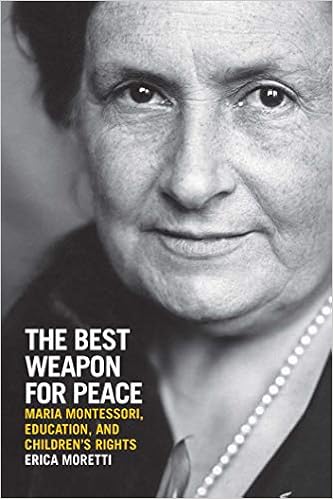
The Italian educator and physician Maria Montessori (1870–1952) is best known for the teaching method that bears her name. She was also a lifelong pacifist, although historians tend to consider her writings on this topic as secondary to her pedagogy. In The Best Weapon for Peace: Maria Montessori, Education, and Children’s Rights .Erica Moretti reframes Montessori’s pacifism as the foundation for her educational activism, emphasizing her vision of the classroom as a gateway to reshaping society. Montessori education offers a child-centered learning environment that cultivates students’ development as peaceful, curious, and resilient adults opposed to war and invested in societal reform.
Using newly discovered primary sources, Moretti examines Montessori’s lifelong pacifist work, including her ultimately unsuccessful push for the creation of the White Cross, a humanitarian organization for war-affected children. Moretti shows that Montessori’s educational theories and practices would come to define children’s rights once adopted by influential international organizations, including the United Nations. She uncovers the significance of Montessori’s evolving philosophy of peace and early childhood education within broader conversations about internationalism and humanitarianism. (Published by the University of Wisconsin press)
Post Script: Montessori schools around the world, unlike those in Sri Lanka educate children from toddlers through high school using the Montessori method. This is mostly prevalent in Europe, South America and North America including such countries as Canada and the United States.
Some famous Montessori students have been the founders of Google: Larry Page and Sergey Brin, the founder of Amazon, Jeff Bezos, Anne Frank the young girl who wrote, The Diary of Anne Frank before the Nazis sent her to a death camp. Others have included the former co-owner of the Washington Post, Katherine Graham and actresses Helen Hunt and Melissa Gilbert.
The country is in the midst of a acute power crisis. If we ignore the immediate problem of dearth dollars to buy fuel the present crisis is mainly due to the Yahapalana government not investing in a single new power generation unit. The dollar crisis will exacerbate with oil prices expected to go over 100 dollars a barrel in the coming weeks. Policy makers seem to concentrate on solar power and wind power. Have we exhausted the conventional hydroelectric power? There is more potential in minor hydro schemes, but the environmental constraints limit further expansion in this area.
A few days back I looked at the RUN OF THE RIVER power production and found that it is a much-utilized source of electricity. I wonder why our power gurus have not thought of this source. Before getting at streams and canals why are we not harnessing our rapids. All our major rivers have rapids which may have the potential to be tapped under this technology. In the Mahaweli there are a few rapids close to Kandy. In the Kalani there is Kitulgala and in Kaluganga there is the Naragala rapids. Naragala is in the same latitude as the Labugama reservoir, and it may be possible to tap Kaluganga at this point to augment Labugama water supply.
I found in the Wikipedia the following examples of existing run of the river projects in different parts of the world with over 1500 MW capacity.
· The following website lists 58 hydroelectric power stations that generate power using the run-of-the-river method. This list includes most power stations that are larger than 100 MW in maximum net capacity, which are currently operational or under construction.
One minute you go to UNO. The next minute you go to the Indian Prime Minister. Now you are asking Tamil Nadu politicians to support your move against the GOSL on Human rights violation.This is never ending agitation. In your old age Sampanthan you must sit down and relax reading the newspaper. Look back at your past. What have you achieved in your campaign against the GOSL? You conducted a campaign with the Tamil Diaspora and the LTTE Terrorists against the GOSL to establish a seperate State in the North and East of Sri Lanka with the blessings and support of Tamil Nadu to the world.. Did you go anywhere with your Tamil people’s aspiration propaganda campaign telling a pack of lies. Did you ever tell the world that GOSL rescued 298,000 Tamils in the North when they were taken hostage by the LTTE to make a human shield?
The GOSL gave you a new lease of life after annihilating the LTTE terrorists menase by not locking you up in a cell for the campaign conducted against the GOSL This is a classic example Sampanthan. You must tell the world the TRUTH. You exported some 250,000 Tamils from North to the west under the guise of Refugees. They are in actual fact BOGUS Tamil REFUGEES who are supporting you financially to topple Rajapakse government.
Sampanthan, you are lucky to be in Sri Lanka. If it is in the western country You are thriving in jail for treason charges.
Sampanthan, tell the truth. You are lucky to be a Sri Lankan.
13A.
75% of Sri Lanka’s population are Sinhalese. Tamils are only 12% of the population. You are demanding privileges not enjoyed by 75% of the total population. These 75% of the population gave 2/3 majority votes in the Rajapakse Government to delete the 13th amendment from the constitution.
My dear Sampanthan, just relax and learn to enjoy your life at this old age of yours. Your bogus claim of Tamil peoples aspiration is a myth. You have no genuine desire to serve the Tamils in Sri Lanka.
Say “thank you Sri Lanka” for the new lease of life after the annihilating LTTE Terrorism.