ප්‍රවීනයන් අතින්ම සම්මාන පුදන්නට සළස්වමින් ඇමති නාමල් රාජපක්ෂ 42වැනි ජාතික යෞවන සම්මාන උළෙලේ සම්ප්‍රදාය වෙනස් කරයි.

November 28th, 2021

තරුණ හා ක්‍රීඩා අමාත්‍යාංශය, සංවර්ධන සම්බන්ධීකරණ හා අධීක්ෂණ අමාත්‍යාංශය, ඩිජිටල් තාක්ෂණ හා ව්‍යවසාය සංවර්ධන රාජ්‍ය ආමාත්‍යාංශය.

ජාතික තරුණ සේවා සභාව සංවිධානය කළ 42වැනි ජාතික යෞවන සම්මාන ප්‍රදාන උළෙල අති උත්කර්ෂවත් අයුරින් කොළඹ නෙළුම් පොකුණ මහින්ද රාජපක්ෂ රඟහලේ දී ඊයේ (26) දින තරුණ හා ක්‍රීඩා අමාත්‍ය නාමල් රාජපක්ෂ මහතාගේ ප්‍රධානත්වෙයන් පැවැත්විණි.

යෞවන සම්මාන උළෙල තවත් වර්ණවත් කළ කැපී පෙනෙන සිදුවීම වූයේ ප්‍රධාන ආරාධිතයා ලෙස උළෙලට එක්වූ අමාත්‍ය නාමල් රාජපක්ෂ මහතා, සියලුම සම්මානලාභීන්ට සම්මාන ප්‍රදානය ඒ ඒ ක්ෂේත්‍රයන්හි ප්‍රවීනයන් ලවා ලබා ගැනීමට සළස්වා එදෙස බලා සිටීමයි.

කොවිඩ් වසංගත තත්ත්වය හේතුවෙන් පසුගිය වසරේ පැවැත්වීමට නොහැකි වූ 42වැනි ජාතික යෞවන සම්මාන උළෙල මෙවර පැවැත්වූයේ අමාත්‍ය නාමල් රාජපක්ෂ මහතාගේ සෘජු අධීක්ෂණය යටතේ ජාතික තරුණ සේවා සභාවේ ජව සම්පන්න තාරුණ්‍යයේ සංවිධාන ශක්තියෙනි.

නැගී එන ජව සම්පන්න තාරුණ්‍යයේ කලා හැකියාවන් ඇගයීමට ලක්කිරීම සඳහා පැවැති 42වැනි ජාතික යෞවන සම්මාන උළෙලේ දී සිංහල හා දමිළ කෙටි නාට්‍ය, දිගු නාට්‍ය, ගද්‍ය හා පද්‍ය රචනා ගායන, වාදන නර්තන යනාදී තරග අංශ 45ක් යටතේ තරුණ නිර්මාණකරුවන් 130කට අධික සංඛ්‍යාවක් වෙනුවෙන් සම්මාන ප්‍රදානය කෙරිණි.

විශේෂ අවශ්‍යතා සහිත තරුණ තරුණියන් වෙනුවෙන් ද නිවේදන, කථික,යොවුන් ගායනා, ජන ගායනා, චිත්‍ර හා නව නිර්මාණ නැටුම් යනාදී තරග අංශ සඳහා යෞවන සම්මානවලට අමතරව සහතික හා වටිනා මුදල් ත්‍යාග පිරිනැමීම මෙවර උළෙල තවත් අර්ථවත් කළේය.

මෙම සම්මාන උළෙලට සමගාමීව 09 වන යෞවන චිත්‍රපට උළෙලේ කෙටි හා වාර්තා චිත්‍රපට තරගාවලියේ ජයග්‍රාහකයන්ට තිළිණ හා මුදල් ත්‍යාග පිරිනැමීම ද සිදුවිය.

90 දශකයේ අග භාගයේදී ජාතික තරුණ සේවා සභාව හා ජාතික රූපවාහිනිය එක්ව ශ්‍රී ලාංකේය ප්‍රේක්ෂකයන්ට නවමු අත්දැකීමක් එක්කරමින් එළි දක්වන ලද ‘’තුරුණු ශක්ති සෞන්දර්යය චාරිකාව’’ නැමැති ප්‍රථම රියැලිටි වැඩසටහන තරුණ හා ක්‍රීඩා අමාත්‍ය නාමල් රාජපක්ෂ මහතාගේ උපදෙස් හා මඟපෙන්වීම මත නව පරපුරට ගැළපෙන පරිදි ‘‘තුරුණු ශක්ති Next Gen’’ නමින් නව්‍යතාවයන් සමඟ ආරම්භ කිරීමද මෙයට සමඟාමීව සිදුවිය.

දිවයින පුරා විසිර සිටින නිවේදන හැකියාවෙන් පිරිපුන් වයස අවු. 15-29 අතර තරුණ තරුණියන්ගේ නිවේදන හා ගායන කුසලතා ජාතියට හඳුන්වාදීමේ අරමුණින් මෙම වැඩසටහන සංවිධානය වේ.

මෙම අවස්ථාවට මහජන ආරක්ෂක අමාත්‍ය සරත් වීරසේකර, ජාතික උරුමයන්, ප්‍රාංගික කලා ග්‍රාමීය ප්‍රවර්ධන රාජ්‍ය අමාත්‍ය විදුර වික්‍රමනායක, නාගරික සංවර්ධන අපද්‍රව්‍ය බැහැරලීම් හා ප්‍රජා පවිත්‍රතා රාජ්‍ය අමාත්‍ය නාලක ගොඩහේවා, ජාතික තරුණ සේවා සභාවේ අධ්‍යක්ෂ ජනරාල් දමිත වික්‍රමසිංහ, තරුණ හා ක්‍රීඩා අමාත්‍යාංශයේ  ලේකම් අනුරාධ විජේකෝන් යන මහත්වරු ඇතුළු ප්‍රවීන හා ජ්‍යෙෂ්ඨ කලාකරුවෝ රැසක් එක්ව සිටියහ.

මාධ්‍ය ඒකකය.

තරුණ හා ක්‍රීඩා අමාත්‍යාංශය, සංවර්ධන සම්බන්ධීකරණ හා අධීක්ෂණ අමාත්‍යාංශය, ඩිජිටල් තාක්ෂණ හා ව්‍යවසාය සංවර්ධන රාජ්‍ය ආමාත්‍යාංශය.

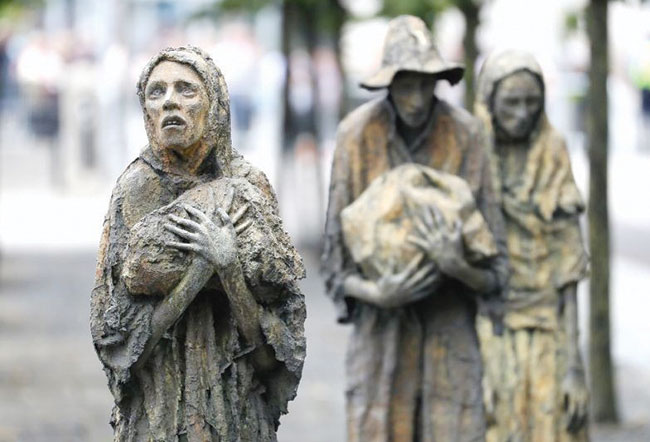
Are we heading for an unprecedented disaster like the Irish Potato Famine?

November 28th, 2021

by Dr Parakrama Waidyanatha Courtesy The Island

When the potato crop, the staple diet then in Ireland, began to totally fail with a fungal infestation that lead to the historic Irish famine (1845-1852), the Irish leaders in Dublin turned to Queen Victoria and the British Parliament for redress. However, the British government under which Ireland was then a colony, acted negatively repealing certain laws and tariffs that made food such as corn and bread prohibitively expensive. Tenant farmers were unable even to produce enough food for themselves, and hundreds of thousands died of starvation and diseases caused by malnutrition!

The exact role of the British government in the Potato Famine and its aftermath—whether it ignored the plight of Ireland’s poor out of malice, or if their collective inaction and inadequate response could be attributed to incompetence—is still being debated. However, even during the famine some food items were exported out of Ireland. Our situation looks very comparable to the Irish fiasco except that our leaders are not acting with malice but with foolish obstinacy, not analysing the issues at stake, not consulting experts in the subject and sticking coherently to their policy of organic farming with unattainable goals.

Our rice farmers may yet not be starving because they have at least the last Yala rice crop which has been reasonable despite the fertilizer and other agrochemical shortages. On the other hand, tea and vegetable farmers appear to be the most hit. Many tea smallholders complain that without adequate nitrogen fertilizer their crops have declined immensely and some are not even harvesting the meagre flush as it can hardly meet even the workers wages. The seriousness of the situation is further aggravated by our losing the markets which the industry claims can be substantial.

At the same time, for the general public, sky-rocketing prices of food and other essentials are unbearable. Our women won’t be able even to emulate what the French women did during the days of the French Revolution due to inflation, carrying the money in the shopping bags and bringinging back the purchases in their purses, because they have no money to carry.

It is regrettable that the President did not consult the agricultural experts in deciding to rush to convert the country entirely to organic from conventional farming within one season.He has not positively responded to the current fiasco of neither chemical nor organic fertilizer being available. His main consultants on matter appear to be a pediatrician who wants to go back to traditional rice varieties which yield less than half the new improved varieties and a professor of agriculture who identified sorghum as a rice variety, Swayanjatha wee’, with which, he claims, King Dutugamunu fed his ‘Dasa Maha Yodayas.’ There are many other ‘yes men’ behind him nodding their heads to every thing he says.

The President should be mindful that the world moved away from organic farming from about the 1850s to conventional farming because even in that era organic farming could not meet the food demand. The writer hopes that he would at least look at Table 1 here which shows how chemical fertilizers and new high yielding varieties pushed production from essentially organic farming and traditional rice to chemical farming and new varieties by three to four fold across many countries. Distinguished Professor Vaclav Smil, University of Manitoba calculated that 40% of the global population in 1999 would not have lived if urea fertilizer had not been invented.

Table 1. Comparative Rice

Production (Million MT)

Country 1960 1999

China 48 170

India 46 112

Sri Lanka 1.1 3.4

The transition from traditional agriculture where fertilizer comprised essentially farmyard manure(FYM) and green manures, to conventional agriculture(CF), as we know it today, took place in the mid 19th century with two ground breaking inventions , the synthesis of soluble (super) phosphate(John Lawes,1814 to 1900) and the need for chemical nitrogenous fertilizer for crop growth (Justus von Liebig,1803-1873) by two great scientists. In 1909, another great German scientist, Fritz Haber (1868-1934) successfully synthesized ammonia by combining atmospheric nitrogen and hydrogen which revolutionized the production of urea and other commercial nitrogenous fertilizers.

These inventions and the rapidly growing knowledge then in plant chemistry led to the substitution of natural dung with chemical fertilizer. The third important element, potassium, was provided largely by potash, a substance that had been known from antiquity. It has been said that without these inventions, the industrial countries of Western Europe could not have supported the dense population growth of the 19th century. It is the same reason that later led to the Green Revolution. This is ironically the fundamental question that we should ask: is there adequate organic matter and associated technologies to go green” fully, as the President calls it, now, if it was not possible then with much lower populations but more farmlands. Sir John Russell (1942), the reputed British soil scientist, in an article titled British Agriculture states that: it is difficult for us in this distance in time to recapture the feelings with which the farmers received the information that a powder made in a factory and applied out of a bag at the rate of only a few hundred weights per acre could possibly act as well as farmyard manure put on the land as dressings of tons to meet the nutrient demands of crops’. The question then is if organic matter was inadequate to meet the fertilizer requirements then, can it do so now on a global scale?

The main blame of the President and his cabinet colleagues is on health hazzards of agrochemicals. There is no argument that there are risks largely due to misuse of agrochemicals. One serious problem recently has been phosphate pollution of the Rajarata water bodies due to excessive application of phosphate fertilizers in the upcountry vegetable farms. On the other hand, no comprehensive studies reveal pollution of water or soil with heavy metals or pesticides, a subject much spoken about. Farmer training on judicious use can greatly reduce the risk of agrochemical misuse which sadly is not happening with the very ineffective extension services of the day. Strengthening this service is matter of highest priority.

On the other hand hardly any politician utters a word about ambient air pollution, which is a far more serious problem than agrochemical pollution. Records reveal that it caused 3.5 million premature, non-communicable disease- deaths, globally in 2017. These were from stroke, ischemic heart disease non chronic obstructive pulmonary disease, lung cancer, respiratory infections, and diabetes. Local health records reveal that our situation is no better.

The President and many of his cabinet colleagues including the Minister of Agriculture continue to lay the blame on agrochemicals for the kidney disease in the Rajarata and other non- communicable diseases, apparently the main reason for the President ‘going green.’ At some public meeting the President was heard to say that if he gives ‘chemical fertilizer with one hand he will have to give a kidney’ to the farmer with the other. He was prompted to say so by one of his key advisors in agriculture, a pediatrician turned agriculture expert. Sadly he has not sought advice from the health authorities as to the causation of the kidney disease. Numerous knowledgeable scientists and publications have revealed beyond doubt that hardwater and fluoride are the cause of the disease, and a recent comprehensive report by the Health Ministry reveals that there is no evidence to implicate agrochemicals in the causation of the disease.

In this crisis situation, of diminishing food production, the President does not appear to have sought the advise of real agriculture experts. In fact a letter delivered to him over a month ago with some 140 signatures of qualified agriculture researchers and academics seeking an opportunity to discuss the current agricultural calamity has fallen on deaf ears. Let alone the local expert knowledge, he should have sought evidence from what happens elsewhere in the world. Many countries are only gradually expanding their organic crop cover which, however, yet stands at 1.5 % of the total global croplands expanding annually at a meagre 2% per annum.Only 16 countries have exceeded 10 % of the crop cover in organic farming, and in nearly all them the major extents are in pasture fertilized with farmyard manure.

Policy blunders continue to be committed. To meet the rice fertilizer needs the government claims importing 2.1 million litres of nano fertilizer at a cost of USD 12 per litre. It appears to be nano urea although the Minister of Agriculture vehemently claims that it is not nano urea but ‘nanonitrogen’ to give it an organic stance. Urea is not allowed in organic farming. The authorities claim that the cost of a litre is USD 12, and it has 4% nitrogen, meaning there are 40 grams nitrogen/litre. As average rice crop of 5 tons/ha removes over 100kg nitrogen , meaning to meet the crop demand the farmers should spray 2,500 bottles of which the theoretical cost should be USD 30,000. However, the government makes the ridiculous claim that five litres/ha of nanonitrogen is adequate to meet the crop demand. God save the farmers!

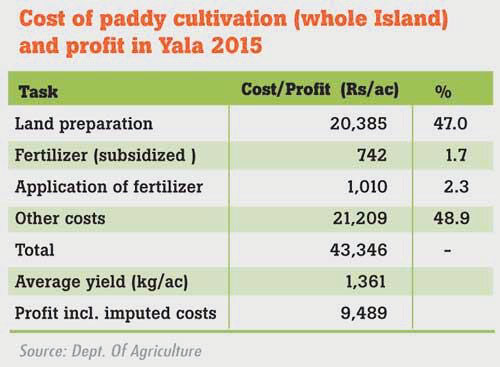
The global synthetic urea prices have soared to about USD 750 per metric ton from about USD500 last November. Assuming that a farmer applies 100kg nitrogen/ha with urea (46% N) his cost should be Rs 32,608 without subsidy; and assuming he sells his crop of five tons at Rs 60/kg, his gross income should be Rs 300,000, and the cost of urea alone should be over 10.6% of the gross income. On the other hand, with the huge fertilizer subsidy in previous years the total fertilizer cost for rice farming was a mere 2 to 3% of the total cost of production or about 1.5% of the gross return. Incisive thinking on fertilizer subsidy is another matter that needs state attention.

The need for a national advisory body like the one in India set up by Nehru in 1963, which still continues with a name change made by Prime Minister Modi to give it more emphasis on technologies. Modi also recently reported repealing antiquated regulations that are adversely affecting small farmers. Moreover, whereas we have rushed to ban palm oil imports (now reversed) and oil palm cultivation, promoting coconut cultivation to meet the national oil yields despite it yielding only 20% of oil as oil palm, Modi has engaged in a policy of expanding oil palm cultivation extending it to irrigated lands and replacing some of the low-yielding arable oil crops. His target is to expand the oil palm cover from the current level of about 400,000 ha to a million by 2025. This writer repeats that our leaders should look at what happens elsewhere in the world apart from listening to proven experts in the respective fields.

The Sandahiru event – celebrating failure

November 28th, 2021

by Anura Gunasekera Courtesy The Island

A few days ago President Gotabaya Rajapaksa(GR), the first military man and, unarguably, the most ignorant in the ways of governance to occupy the presidential seat, celebrated the completion of two years as the eighth president of the Republic of Sri Lanka. The salutation coincided with the formal vesting with the Sangha, of the Sandahiru Seya” in Anuradhapura, a project commenced during brother Mahinda’s last term as president. A towering stupa rising above the Jetawana and the Abhayagiri, ostensibly to honour the services rendered by the armed forces and the police in our ethnic conflict but, in reality, a monument to the Rajapaksa delusions of grandeur, aligns the Rajapaksa Family dynasty with the Sinhala Kings. A tribute to the heroic is justified but the supreme incongruity of conflating the quintessential Buddhist symbol, with success in a bloody military campaign, is inconsequential to a hegemonic mindset. The incompatibility was also ignored by the Rajapaksa-adoring Sangha, including the Anunayake Theros of both Asgiriya and Malwatte Chapters, who participated and enthusiastically endorsed its purpose.

Notwithstanding a grandiose commemoration, as Rajapaksa’s second year in the presidency ends and the year 2021 draws to a close, the country stands mired in calamities on every public front.

The Crisis

The economy is in disaster mode. Foreign reserves which were at USD 7.5 Billion in November 2019, when GR took office, had declined to USD 2.8 Billion by August 2021. Despite Central Bank Governor Cabraal’s blithe assurance that the economy can be restructured without IMF assistance, and that wildly reckless money-printing has no impact on inflation, banks are unable to provide importers with forex to import essentials, whilst prices of basic commodities are placing them beyond the reach of ordinary consumers. According to most economists, in the real world, when money printing increases in a background of stagnant or declining national output, all other factors being equal, hyper-inflation is the certain outcome. Recent historical examples are too numerous to quote here. However, Cabraal, who is one of the architects and, also, a highly privileged inhabitant of the Rajapaksa Dystopia, is obviously reading from a different text!

For the last few months, in every village, town and city across the island, for the first time since the Sirimavo Bandaranaike regime 50 years ago, desperate citizens have been waiting in queues to buy the most basic items. There are frequent shortages of sugar, rice, milk powder and cooking fuel; very recently, suppliers ran short of kerosene oil, the only convenient and affordable alternative to cooking gas. Gathering firewood is not an option, especially for the four million urban population of Sri Lanka.

The government has responded to the foreign exchange shortage by imposing drastic regulations to limit dollar usage, declaring over 600 imported items, including mobile phones, clothing, household appliances and a range of foods, as non-essential. Vehicles imports are also included in the restrictions.

Prices of essential foods, vegetables and staples have seen an astronomic escalation during 2021, due to low supply, either because of import restrictions or, in the case of locally grown items, a result of poor harvests due to denial- through unavailability- of basic nutrient inputs, and disruptions in the supply chain from distant growing areas.

The Cause

The pandemic has contributed to the crisis, dismantling livelihoods with some of the monthly paid subjected to wage cuts or layoffs, whilst daily paid workers are denied earnings through inability to access places of work or, because the lockdown has compelled the closure of many small establishments, which rely mainly on casual labour. As in many countries in the developing world, in Sri Lanka, the informal, small and medium scale entrepreneurial sector collectively supports more livelihoods, than either the State or the corporate sector. However, the Covid pandemic is only a contributory factor to an escalating socio-economic disaster. The government, through the implementation of a series of imprudent and ill-conceived policies, has aggravated the situation to a degree beyond retrieval.

Immediately after assuming the presidency, GR ordered sweeping tax concessions, which resulted in the diminution of government revenues by about 30% in 2020. These concessions were beneficial to a minute proportion of the population, which actually needed no such relief. They did not cascade to the ordinary citizen. Soon thereafter, to bridge the cash supply deficit the money printing spree commenced, according to some sources injecting as much as an additional 35% – 40% in to the economy, by mid-2021.

The pandemic Task Force was led by a retired army commander, appointed by a president unable to distinguish between the scientific complexities of fighting a virus, and the tactical requirements of assaulting an enemy garrison. This mindset was also compounded by an inherent insensitivity to the suffering of ordinary people. The mismanagement of the project in its early, critical stages led to an escalation of infections and deaths, especially amongst the elderly who were denied vaccinations at the outset. Successive waves of infection even led to embarrassing State sponsorship of miracle cures- the ridiculous Dhammika Elixir” and the casting of holy water pots in to flowing water!!

Whilst people were desperately scrabbling around to sustain themselves in a setting of loss of income, essential item scarcities and other privations, overnight, the president decreed a ban on the use of inorganic fertilizer and agro-chemicals. All professional agriculturists in the country (the writer was one for over 50 years) and scientists in related disciplines, have pointed out the certainty of the disastrous outcomes from the implementation of this irrational, unscientific and impractical policy; the adverse consequences are already visible in the case of short term crops, especially rice and vegetables, whilst the impact on the long-term plantation crops, particularly tea, will very soon be evident in the form of crop declines, diminished exports and shrinking foreign exchange earnings.

The Response

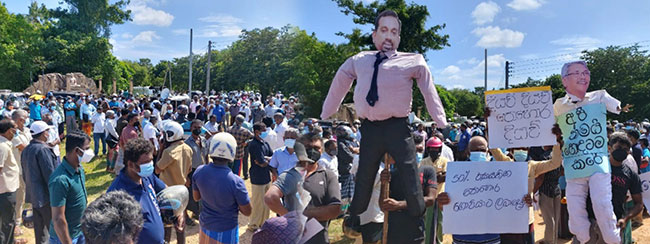
The island-wide uprising of despairing farmers, beating and burning effigies of senior ministers and demanding a reversal of the fertilizer ban, was met with the promise of organic fertilizer as an alternative. The imported organic nutrient, apparently a mixture of sea weed and faeces- a second virus from China after Corona- was found unsuitable, leading to imports from India of liquid nitrogen”, a product untried on a large scale in that country. One of the President’s responses to the anguish of the farmers was to declare at a public meeting that he could, if he considered it desirable, use the army to seize the farming community by the scruff of its collective neck and compel them to use organic fertilizer!!

The ban on the slaughter of cattle is a similarly ill-considered directive. Alleviating animal suffering is a noble cause but the consequences of the ban will be dire for several hundred thousand people. The cattle rearing industry is multi-faceted and interconnected. Milk production, beef supply and the supply of animal skin to the tanning industry go hand-in-hand. Dairy industry, which is essentially a small farmer collective enterprise, becomes unviable unless unproductive animals are converted to meat. This ban will disempower around 200,000 individual farmers island-wide, many of them Muslims in the Eastern province. The certain consequences will be the decline of local milk production, scarcity of allied dairy products and the unpreventable escalation of illicit cattle slaughter. That proverb of unknown origin, that ” The Road to Hell is Paved With Good Intentions,” is an apt commentary on both the fertilizer and cattle slaughter ban.

Younger brother Basil, hailed by Rajapaksa acolytes as an economic genius of Einsteinian proportions- despite the absence of previous experience and known academic background – has produced a budget reinforced by bloated statistics and unrealizable dreams. His disgracefully incoherent Budget speech, delivered in Sinhala, justifiably lampooned in multiple forums, was not improved by his rambling, garbled contributions in a subsequent English language interview on the same subject, with Ms Indeewari Amuwatte on Ada Derana. The questions were intelligent, precise and designed to elicit clarity. The responses were vague, evasive and inarticulate, by a man struggling to defend the indefensible in a medium clearly unfamiliar to him; at best a cringe-worthy performance.

Consequences

A frustrated electorate propelled GR in to power in justifiable disgust at the dysfunctional governance of the Sirisena- Wickramesinghe regime, only to be confronted, in less than two years, with an ineptitude of colossal proportions. The enormous parliamentary advantage of a two-thirds majority and a presidency with unlimited power, the two moving in parallel rather than in unison, has paved the way for an economic and social disaster. It is an inevitable consequence of the 20th Amendment, which has expanded the powers of the President, whilst encroaching on the authority of the parliament and the judiciary. When the individual so elected believes that he is the sole repository of wisdom in governance – despite a total lack of experience in the field and a wretched absence of ordinary commonsense – chaos ensues. That is what we see everyday, in mass protests against moronic directives.

The only visible success in governance in Sri Lanka today is the inexorable onward march of the Rajapaksa project, which commenced during Mahinda Rajapaksa’s first term and, after a slight hiccup during the abortive Sirisena regime, has gathered a terrifying new momentum since end 2019. It is conservatively estimated that about 64% of the country’s economy is directly controlled by the Rajapaksa family and those connected to it. In a country rapidly sliding in to an abyss where lies the bleak certainty of food and other essential item scarcities – including pharmaceuticals – widespread malnutrition, loss of employment and livelihoods, declining foreign exchange earnings, disruption to education at all levels and the disintegration of the society, the only glow in a leaden sky comes from the Rajapaksa comet. The State will surely fail but the First Family will surely prosper.

Unless a disoriented and vacillatory opposition quickly gathers its wits, firstly jettisoning the toxic Ranil Wickremesinghe and then rallying round Premadasa – not necessarily the best of men but the only possible alternative – the Rajapaksa dynastic succession, from elder brother to younger brother and from uncle to nephew, and thereafter to another sibling or relative, is a certainty.

Gotabaya Rajapaksa was elected President by the convergence of normally divergent political forces. But, once elected, by-passing the legislature and other democratic institutions, he has chosen to govern through the armed forces and a collection of Task Forces”, staffed or led by ex-military men, and other disciples and profiteers, answerable to only him. A spineless, collusive and essentially corrupt legislature has become a rubber stamp to his will. A reading of the two year performance report establishes beyond doubt that the Viyathmaga” is the road to certain ruin, and that the Eliyamaga” will condemn this country to economic darkness before the Gotabaya presidency ends.

Very recently, parliamentarian Kumara Welgama delivered a speech at the Diyawanna assembly, amusing, but brutally frank, in its exposure of the venality of recent regimes and the familial considerations which overrode national interests in decision making at the highest levels of governance, whilst highlighting the aberrant mentality that pervades the current dispensation. It was also prophetic in the warnings sounded to the ruling regime. Not one of his statements were contested. It must now be clear to all that when madmen are allowed to run the asylum, lunacy becomes institutionalized and insanity infiltrates governance.

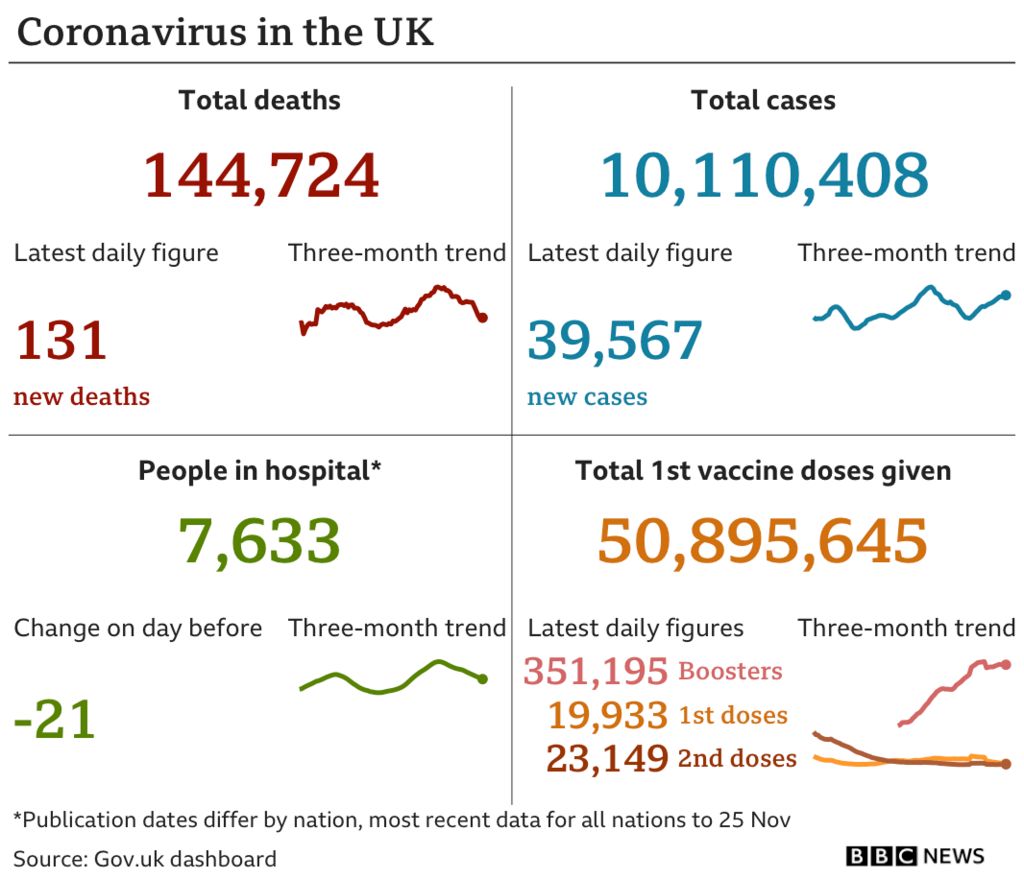
Daily coronavirus cases count climbs to 742 and reports another 27 deaths

November 28th, 2021

Courtesy Adaderana

The Health Ministry reported that another 210 persons have tested positive for coronavirus, pushing the daily count of new cases to 742.

This brings the tally of Covid-19 cases confirmed in the country thus far to 562,520 while over 18,500 infected patients are currently undergoing treatment island-wide. 

The Director General of Health Services has confirmed another 27 coronavirus related deaths for November 27, increasing the death toll in the country due to the virus pandemic to 529,662.

According to the figures released by the Govt. Information Department, the deaths reported today include 14 males and 13 females.

Five of the patients are between the ages 30-59 years while the remaining 22 are in the age group of 60 years and above. 

War-mongering Chelvanayakam piloted the declaration of Vadukoddai War – Part II

November 27th, 2021

H. L. D. Mahindapala

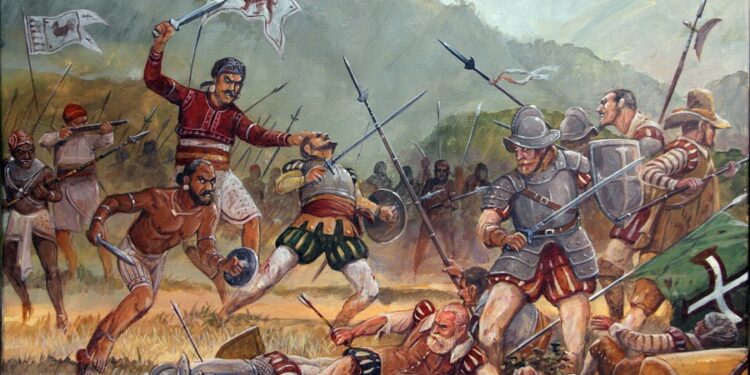
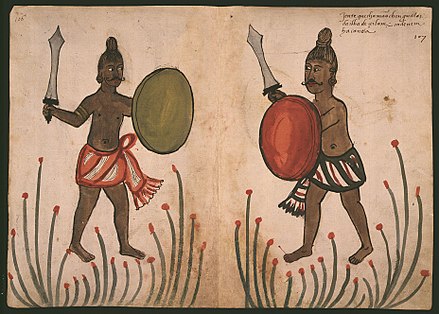
On May 14, 1976 the Vellala Tamil leadership – there was no other dominant political leadership in Jaffna – declared war on the democratically elected state of Sri Lanka. The Vellala Tamil leadership consisted of the descendants of the  Malabaris who invaded Jaffna in 1215. The invasion was led by an obscure terror called Magha of Kalinga,” ( p.37 – Learing Politics from Sivaram, Mark P. Whitaker). Whitaker, an American anthropologist,  adds that Magha was brutal. He consolidated his rule with relentless violence. Citing a Tamil chronicle, Whitaker states on the same page that Magha was a conqueror very fond of stomping about, laying waste to Buddhist shrines, smashing non-Saivite temples and plucking the eyes out of opposing  heretics.” As the first king of Jaffna he set the template for the culture of violence that ruled Jaffna from 1215. Sankili followed him by killing 600 Tamil Catholics for not owing allegiance to him. The ruling powers of Jaffna—from Magha to Prabhakaran  —  has consistently exerted excessive power, reaching inhuman levels, to survive in politics. The  culture of political violence made oppression or killing of Tamils the norm in Jaffna.

The political legacy left behind by Magha opened the pathways for his successors to go on the rampage, oppressing and killing Tamils, or ethnically cleansing Jaffna of Buddhists and Muslims. The Magha- Sankili-Vellala-Prabhakaran culture denied the basic human rights to the Jaffnaites. There are many Ph.Ds awaiting those who dare to explore the roots of Tamil violent culture. Research studies on Tamil violence will not come from the Jaffna University because  its academic culture is to hide the dark side of Jaffna history, particularly its violent casteist history. Those who dared to reveal the hidden truth had to flee Jaffna in search of safe havens. Prof. K. Indrapala, the first professor of histoy of the Jaffna University, had to run for his life because he said that the history of Jaffna began in 12th century. Prof. Rajan Hoole had to go into hiding because he asked too many questions about Tamil violence, Ms. Rajini Tiranagama, an academic in the Medical Faculty of Jaffna, was shot dead as she was cycling home, because she was a Tamil dissident. The Tamil tendency, however, has been to deify Tamil violence. They elevated Prabhakaran, the unrepentant killer of Tamils, to the level of  Surya Devan” (Sun God). .

The history of Jaffna has been the history of the triumph of the violent and casteist Vellalas. They ruled Jaffna with an iron-fist. Others were forced to obey. The Sudra Vellalas, the lowest caste in India, flooded the peninsula in the post-1215 period. The waves of Sudra Vellala migrants that came after Magha stabilised Vellala supremacy. Some of these waves are recorded in detail in the Yalpana Vaipa Malai (historical garland), the mini-Mahavamsa of Jaffna. Because they came from Malabar they were known as the Malabaris during the Dutch and the British in the 19th century. It was in the 20th century that the Malabaris were designated as Tamils. The Tamil identity was resuscitated by Arumuka Navalar, the Hindu religious reformist, who revived the forgotten Tamil classics. In the absence of the Brahmins in the Hindu society of Jaffna it was Navalar, the religious guru of  the Vellalas,  who elevated the Vellalas to the highest peak  in the caste hierarchy. The Northern leadership that declared war consisted of the Vellala Tamil MPs elected democratically by the Tamils of Jaffna. The declaration of war which was adopted unanimously by the first National Convention of the Tamil United Liberation Front (TULF) held in Vadukoddai was a crime against peace, according to international law. The Convention that passd the Resolution  was chaired by S. J. V. Chelvanaykam, leader of the Tamil separatist movement.  Before sitting down to steer the declaration of war he had gone through every word of the Resolution with a fine comb, according to his son-in-law, Prof. A. Jeyaratnam Wilson. (p. 128 – S.J. V. Chelvanayakam and the Crisis of Sri Lankan Tamil Nationalism, 1947 – 1977, A Political Biography, A. J. Wilson).  In other words, Chelvanayakam, the war-mongering Gandhi of Jaffna, piloted the declaration of war from the beginning to the end. Parenthetically, it is necessary to note that the Nazi leaders of World War II were tried and sentenced at the Nuremberg Trials, inter alia, on this charge of committing crimes against peace. After the Vadukoddai Resolution legitimized violence, it is logical for the inherent Magha-Sankili-Vellala culture to produce Velupillai Prabhakaran, the Tamil leader who killed more Tamils than the others. When the university students of Jaffna celebrate Maaveerar Day” they are hero-worshipping the worst killer of Tamils next to Sankili. It is  the equivalent of neo-Nazis celebrating Hitler’s birthday.

Riding high on the anti-Sinhala-Buddhist hate politics – it had  reached boiling point in Jaffna by 1976 — the Vellala Tamil leaders declared war to achieve their elusive Eelam. Declaring war was the ultimate offensive that was left for the the Tamil extremist to pursue Eelam. But no democratically elected government would agree to divide Sri Lanka into two separate states. After committing themselves to pursue the Vadukaddai War (a.k.a. Eelam War) — there was no strategic goal higher than declaring war for the Tamil leaders to pursue Eelam — the Tamil leaders were trapped in a war they never expected to drag so long. Appapillai Amirthalingam, was  one of the Fathers of the Vadukoddai Resolution. He hailed the gun-toting children that came out of the Vadukoddai Resolution as our boys”. He and other lawyers who rallied behind the violent Vadukoddai Resolution rushed to defend the boys” in courts and told them not to be afraid of killing Tamil traitors”. After all, the Vadukoddai Resolution had legitimized violence and urged the boys” to take up the gun and never to flinch until they achieve Eelam. The Sansoni Commission report records how the Vellala leadership egged the boys” to pursue violence without fear. One day the boys” walked into Amirthalingam’s house and shot him dead at point blank range. The children of the Vadukoddai Resolution had no compunction in killing their fathers. The violence in the Vadukoddai Resolution was directed primarily at the Sinhalese who were demonised as the enemy”. But, as it often happens, history does not run on premeditated lines. Tamil violence took off on a logic of its own. The unintended consequence of the Vadukoddai Resolution was to release the bottled genie of Magha-Sankili-Vellala cult of violence.  Once Tamil violence was released it ran amok killing  indiscriminately. Tamil violence first turned against the Tamils. The bullets that were aimed at the Sinhalese ricocheted  and killed the Tamils. Tamils killed more Tamils than the Sinhalese in the Vadukoddai War

The Vadukoddai War ended on May 19, 2009 in the brackish waters of Nandikadal Lagoon in Jaffna. It lasted 33 years and five days, to be precise. It was a futile war. The consequences of the brutal violence unleashed by the Vadukoddai War impacted on all communities. The Tamils of the North suffered the most. V. Ananadsangaree, the leader of the TULF, said that the Tamils had the freedom to protest when Mrs. Sirimavo Bandaranaike, Prime Minister, opened the Jaffna University but could not even step into Jaffna which was under a Tamil Thalaivar” (Leader). S. C. Chandrahasan, son  of the father of the Vadukoddai declaration of war, Chelvanayakam, mourned that more Tamils were killed by the Tamil killing machines of Prabhakaran – the first-born child of the Vadukoddai Resolution — than any other force. The Vellala Tamil elite who fled to greener pastures abroad continued to finance the war that was killing more Tamils than the other communities. The Vellala Tamils invested all their collective resources, both from abroad and at home, into the war chest of Prabhakaran. The best of Tamil intellectuals invested their knowledge, skills and expertise to win the war. When they ran out of cadres to fight their war they even forcibly recruited under-aged children to save invincible” Prabhakaran, their Surya Devan”. In the end the Tamils lost the war.

In short, it was an unnecessary, senseless and immoral war that ended with the Vellala Tamils, who launched it, achieving nothing. Now that the gruesome and painful episode is over it is the moral duty of the Tamil leadership and the intellectuals who went along with the war-mongers of the Tamil killing machine, to consider what went wrong. Instead the intellectuals are deliberately turning a blind eye to the political forces and the ideological justifications that contributed to the prolongation of the war for 33 years. Wars are not fought with bullets alone. The finger that pulls the trigger to fire the bullet is motivated by ideology. In manufacturing theoretical and ideological justifications for the violence that flowed from the declaration of the Vadukoddai War the intellectuals were complicit in the war crimes and the crimes against humanity committed in the name of Tamil Eelam. Judge C. G. Weeramantry, Vice-President of the International Court of Justice, who in his celebrated  dissenting judgement declared that nuclear weapons were unlawful under any circumstances, also held the view that the scientists and the technicians should be held responsible for the intellectual input they contribute to make weapons of mass destruction. He went beyond the political decision-makers to pin moral responsibility on the scientific community that contributed their knowledge for construction of WMDs. The primary function of intellectuals is to produce knowledge. The knowledges” that intellectuals produce are not mere abstract theories that remain as dead letters between covers of a book. Their knowledges” have serious consequences and they should be held responsible for the impact of their ideologies on humanity. In Sri Lanka the intellectuals who gathered in seminars, produced books, manufactured theories and ideologies, lobbied and influenced decisions-makers and propagandized their knowledges” without telling the truth to centres of power should be held responsible for the part they played in prolonging the fascist terror unleased by the Northern leadership.

The Vadukoddai War spawned research centres specifically to manufacture knowledge” to produce peace. Centres like the National Council for Peace, International Centre for Ethnic Studies, Centre for Policy Alternative and MARGA are some of the intellectual factories set up purportedly to produce knowledge for peace. They laboured for 33 years without producing a single theory/formula to end the war. They were a miserable failure. It was plainly because they were going along in devious ways with concocted histories of the past that fitted into Tamil separatist agenda of the present. They, imported theories to justify the violence that were running  berserk. They hatched formulae arguing that more power should be devolved to the moderates” knowing that they had pledged their loyalty to Prabhakaran. The intellectuals were hoping to wean the moderates” away from Prabhakaran by giving in to all their demands. But moderates” had surrendered their powers to Prabhakaran, whom they had acknowledged as the sole representatives of the Tamils”. So what was the point in giving  more powers to the moderates”? Even their well-meaning theories went to reinforce the powers of the invincible Surya Devan”. Clearly, the intellectuals had no viable solution to end the war. They operated on the misguided belief that minority rights”, claimed by a fascist tyrant, who was oppressing and killing the very minority he was supposed to liberate, should be appeased to end the war. Their theories were designed to appease the political agenda outlined in the Vadukoddai Resolution. In other words, they acted as stake holders in a peace process that was going nowhere.

Stuck with an anti-Sinhala-Buddhist bias they never understood the intrinsic dynamics that were driving the war into a dead end. It was Prabhakaran who was in the driver’s seat of the war. The war could end only either (1)  by appeasing him – i.e., agreeing to the establishment of a Tamil separate state—or (2) by eliminating him from the political equation. As the first option failed with several appeasements (CFA with international guarantees was one) the military option was the only way out. For instance, Prabhakaran shot to pieces the much-vaunted Cease-Fire Agreement, signed with much fanfare by the international community, Ranil Wickremesinghe, the then Prime Minister, and the NGOs. Did it end the war? The logic of evolving  events proved that only a decisive military offensive could end the war. Our intellectuals, their research centres in the NGOs, their theories and formulae were doomed to fail because none could appease Prabhakaran. His intransigence was immoveable. His arrogance arising particularly from his military successes, his fixed blinkers that prevented him from seeing the possibilities with flexible diplomacy, his instructions to his aides kill him if he fails to achieve Eelam, his ideological fixations, his tearing up of peace agreements and offers of power-sharing to coexist within a democratic state (CBK’s offer), his statements categorically asserting his commitment to Eelam or nothing, confirmed that there was no way of arriving at a negotiated settlement. He offered no alternative to his mono-ethnic extremism. He relied essentially and doggedly on his gun held at the head of the nation. He was depending on a military success.  He believed he could dictate terms to the world with his Kalashnikov. Consequently, the problem had to be finally settled with the gun. And that is what happened in the end with the minimum of fuss. Lord Naseby’s figures of casualties proved it.

Our intellectuals manufacturing peace formulae in NGOs refused to recognise these realities. To them the war was a gold mine funding their high life-style. Funded by foreign governments and allied agencies the centres manufacturing partisan knowledge” were run by peace mudalalais” with enough cash to buy some of the best intellectuals in academia and civil society. It is common knowledge that intellectuals are wont  to hawk their knowledge” to the highest bidders in the market. By and large, the Sri Lankan intellectuals formed an English-speaking, theory-spouting, anti-Sinhala-Buddhist, pro-Tamil  mafia guzzling free booze in the diplomatic cocktail circuit. Though they scratched their eyes out, fighting for the last dollar available in the pockets of the foreign-funders, they closed ranks to form a solid front against the democratically elected state. Simultaneously, they manufactured knowledges” to justify the violence of the Vadukoddai War. Playing footsy with  the fascist quasi-state in the North, they wrapped the Vadukoddian knuckles with a wet tissue paper occasionally to show that they were objective. They played with the power/knowledge relationship to manufacture the required quantum of knowledge” to influence the peace process – a role that financed their whisky-guzzling  life-style. Knowledge was manipulated to denigrate, demean and devalue the state and, thereby, to weaken its power. Simultaneously, another chunk of knowledge” was manufactured to glorify the Tamil mono-ethnic extremists on the basis of minority rights. Jehan Perera once claimed that Prabhakaran’s regime was democratic because it gave him permission to run just one seminar on the periphery of Vanni.

Victimology was played to the hilt. Seminars, publications, lectures, media, films etc, were organised and exploited to manipulate knowledge” to serve their political agenda. In Sri Lanka, the NGOs trawled every nook and corner in the South fishing for knowledge” that could demonise  the Sinhala-Buddhists. The ICES, for instance, produced research” on the Kalutara Maha Bodhiya and Vihara Maha Devi Park. But it never bothered to even peep behind the cadjan curtain in Jaffna to unearth the forces that were driving  Jaffna into irreversible extremism. Jaffna, the centre of Northern politics, was never explored in depth to expose the horrors of the inherent Sankili-Vellala culture of violence. To me ICES was the Incestuous Cabal for Eelamist Sycophants producing knowledge” to justify the violent Tamil political culture while denigrating the Sinhala-Buddhist society in the South. A typical example is that of three intellectuals from the South who sat at the feet of Velupillai Prabhakaran in the Vanni and returned home to inform the media at a press conference that he is humane”. It was ridiculous.

All three of them were left-leaning intellectuals. Fr. Kenneth Fernando, Bishop of the Anglican Church, Charles Abeysekera, an ex-civil servant who left government service under a cloud, and Prof. Jayadeva Uyangoda, a committed Marxist who hero-worshipped the Southern fascist killer, Rohana Wijeweera, leader of the JVP., were public intellectuals involved in the political discourse.  When they proclaimed that Prabhakaran was humane” they reached the giddy limit of morality. Take the case of Prof. Uyangoda, a cock-eyed Marxist, if ever there was one. He knew that Karl Marx, his revered guru, earned some pocket money, by contributing the New York Herald Tribune. If he was reporting on Sri Lanka would he have ever categorised Prabhakaran as humane”? Besides, it was a despicable lie. In his famous  essay on The Responsibility of Intellectuals, Noam Chomsky decried the failure of the intellectuals to tell the truth to centres of power. The anger in Noam Chomsky‘s article was mainly against the intellectuals like Arthur Schlesinger, the Harvard historian, who lied to justify Kennedy invasion of the Bay of Pigs. Colin Powell is another who lied through his teeth when he accused Saddam Hussein of possessing WMDS.  Powell lied to wage war. Uyangoda lied to boost the image of a beastly killer who had no compassion even to the live insects he pinned on the pages of his books when he was young. Apart from the moral considerations, their statement that Prabhakaran was humane” actually questions the sanity of these three intellectuals. A lie of that magnitude is unpardonable. The only possible explanation is that it was not difficult for Prof. Uyangoda to shift his political loyalties from the Southern fascist killer, Rohana Wijeweera, to the Northern fascist killer, Prabhakaran!

He is typical of the twisted intellectuals produced by the Vadukoddai War. Jehan Perera too proved to be a shameless liar when he conferred arbitrarily a doctorate on Anton Balasingham, the Goebbels of the Eelamists. The immorality of these intellectuals is in the fact that they knew they were lying on behalf of Prabhakaran – a Pol Potist killer. If a choice had to be made it should have been on the side of the democratic state. A victory for Prabhakaran would never have brought dignity, equality or justice to the Tamils, nor peace to the  rest of the nation. As a one-man regime he could survive only in a permanent state of war. Dictators need wars as a scapegoat to justify their fascist oppression. Besides, a democracy and a dictatorship could never co-exist in peace within an island. The tensions between the two systems make wars inevitable. What is worse, Prabhakaran could never deliver dignity, equality or justice to the Tamils in his fascist regime. Peace could be won only by eliminating him from the political equation. History has proved it: there is peace because the Security Forces definitively put an end to Prabhakaran killing Tamils. 

Our intellectuals refused to recognise the realities. They continued to believe in their theoretical fictions because it sustained their life-style, or advanced their careers in academia, or gained glory as new knowledge-makers in partisan research centres. They, however, bragged that they possessed the alternative to war. The Centre for Policy Alternative was supposed to provide alternatives to the likes of Prabhakaran. That is a tragi-comic saga that should be explored in the next article.

mahindapala8@gmail.com

TNA, GTF articulates Tamil people’s concerns; Which segment of the Tamil people?

November 27th, 2021

Raj Gonsalkorale

The Sri Lankan Daily Mirror reports that the Tamil National Alliance (TNA) and the Global Tamil Forum (GTF) have jointly called for a more engaged  role by the United States in promoting human rights, accountability, political resolution, and reconciliation in Sri Lanka (see https://www.dailymirror.lk/breaking news/TNA-GTF-jointly-call-for-more-U-S-engagement/108-225498

The report went on to state, quote” The particular focus of the current engagement was to call for a proactive USG role in promoting a holistic approach to reconciliation, which would include addressing the root cause of conflict and human rights violations, the denial of political rights to the Tamil people. The Delegation emphasised that addressing the legitimate aspirations of the Tamil people for equality, justice, peace, dignity, and meaningful power devolution is critical in guaranteeing non-recurrence. The challenges faced by the Tamil community on a daily basis to protect their land and preserve their identity in the Tamil majority Northern and Eastern Provinces against rampant militarisation and state sponsored initiatives aimed at altering regional demography was discussed. Details of some of the recent land appropriation measures by the government of Sri Lanka were presented and the urgency to counter such measures with international assistance was sought” unquote.

While not arguing that Tami people of Sri Lanka do not have unresolved issues, one needs to be clear about the Tamil people that are represented by the TNA and the GTF. For many Sri Lankans, especially Sinhala and Muslims, Tamils of the country are one community irrespective of where they live, how long ago they arrived in the island, their castes and station in life. If Tamils face any ongoing discriminatory practices in the hands of the majority community, all Tamils face these and not only some. For the Sinhala and Muslim community, some Tamils are not more equal than others.

This does not seem to be the case for the TNA and the GTF. They seem to be the spokes persons for the Tamils in the North and the East, and one wonders whether this partiality extends to those belonging to particular castes as well. It is more than certain that the US government which has promised to support addressing of ongoing problems of the Tamil community, do not have an idea of the complexities associated with what is understood to be as the Tamil community in Sri Lanka.

In an article titled Which Tamils hopes are fading? Open letter to Professor Ratnajeevan Hoole”, published in the Colombo Telegraph on the 4th of March 2019, (https://www.colombotelegraph.com/index.php/open-letter-to-professor-ratnajeevan-hoole-which-tamils-hopes-are-fading/), the writer presented a few challenges to Professor Hoole. Many parts of this article are quoted here due to its relevance to the current topic TNA, GTF articulates Tamil people’s concerns; Which segment of the Tamil people?”

Quote” Professor Ratnajeevan Hoole in an article appearing in the Colombo Telegraph on the 1st of March, poses the question Tamils’ hopes fading: Every village is Sinhalese? Raghavan sacked?” Firstly, it will be useful and important for the good Professor to clarify for all of us who he means when he refers to Tamil hopes are fading”. The Tamil population demographics and its composition is very complex and Professor Hoole should inform readers whether he is referring to all Tamils living in the country or whether he is referring to a specific group of Tamils. There are Northern Province Tamils, Eastern Province Tamils, Plantation or up country Tamils”, Tamils living in areas outside the above areas who are from all of the above areas, Tamil speaking non Tamils (Islamiyath Thamilar or Tamil Muslims) and so on” unquote.

In the same article the writer quoted Dr. S. I. Keethaponcalan, Chair of the Conflict Resolution Department, Salisbury University, Maryland who in an article titled Who Is a Tamil?” published in the Colombo Telegraph in December 2016, had stated that in view of the devolution debate in general and devolution to the North-East Provinces in particular, the term Tamil” means Sri Lankan Tamils,” who live or have roots in the North-East Provinces. He also says that The Sri Lankan Tamils on the other hand, believe that the North-East Provinces are their homeland” and they fought for a separate state”.

As the writer challenged both gentlemen, it is perhaps opportune to challenge the TNA and the GTF and ask the question whether they unequivocally subscribe to the view expressed by Dr Keethaponcalan’s that when a reference is made to Tamil hopes are fading”, whether in fact the reference is only to the hopes of Sri Lankan Tamils, who live or have roots in the North-East Provinces and who believe the North and East is their homeland”. This clarification is important as one needs to know the wants, needs and objectives of the group of Tamils referred to as Sri Lankan Tamils by Dr Keethaponcalan who goes onto state that that in Sri Lanka, a distinction is made between Indian (or plantation or up-country) Tamils and Sri Lankan Tamils.

Dr Keethaponcalan also stated that he quote subscribes to the idea that Muslims are not and that they are an independent social group defined by religion. Every social group has the right to define it’s identify as it deems fit. The Muslims have the right to define who they are. Tamils trying to define the Muslims identity may make them hegemonic. Therefore, Tamil people, do not include the Muslims. The recognition that Muslims are an independent group has the potential to promote Muslim-Tamil reconciliation” unquote.

Dr Keethaponcalan mentions that Sir Ponnampalam Ramanathan had famously argued that Muslims are Islamiyath Thamilar. This notion created serious rift between the two communities. Muslims believed that Tamils have political motives to label them as Tamils. Many Muslims who write about Muslim-Tamil issues often start their analysis from Ramanathan. The label, Islamiyath Thamilar makes the Muslims a subcategory of Tamil. Hence, the resistance. In this context, it would not be out of place to state that the Tamil speaking Muslim community in the Eastern province cannot be taken as Tamils” as the TNA does, when it suits them, to include them to bolster Tamil” community numbers in the Eastern province.

The complexity of the composition of Tamils from a Sinhala perspective and how Tamils themselves define their composition is a barrier that has created difficulties in finding a solution to what is generally referred to as the Tamil” issue.

The writer, in an article published in the Daily FT New Constitution: Reinforcing the Tamil homeland theory or solving the Tamil” issue?” (http://www.ft.lk/opinion/New-Constitution–Reinforcing-the-Tamil-homeland-theory-or-solving-the-%E2%80%9CTamil%E2%80%9D-issue-/14-671737), pointed out that in contemporary Sri Lanka, only two provinces have a Tamil majority. The Northern Province, which has a Tamil population of 93.8% and the Eastern Province, a Tamil population of 39.2%. The statistics quoted in this article are from the Census conducted by the Department of Census and Statistics in 2012. Nationally, 51.5% of all Tamils in the country live in the Northern and Eastern Provinces, while 48.5% live outside these two provinces. In reality, 48.5% of the Tamil population lives as minorities in seven of the nine provinces in the country. In the Eastern Province, the Tamil population is a minority if the Sinhala and Muslim population is combined.

The writer also pointed out that if the intention of a new Constitution, whenever it is formulated,  is to devolve power, or some powers, to the provinces and make them more independent (of the centre), and provide avenues for greater self-determination, from a Tamil perspective, their minority status in the seven provinces and in the Eastern Province (when the Sinhala and Muslim populations are combined) will not provide the freedom and the flexibility their brethren will have in the Northern Province. So, in this sense, a class of Tamils who are more equal than others (in the rest of the country) will be created. 

If the Tamil” issue arose on account of domination and discrimination by the Sinhala majority, then, a new Constitution will not change anything except in the Northern province as the status quo in regard to the majority position will remain elsewhere irrespective of constitutional provisions that prohibit discrimination by race, religion, gender, disability, etc. as already enshrined in the current Constitution.

In respect of the Tamil” issue, granting greater devolution of powers to provinces will benefit the Tamils in the Northern Province and to a lesser extent the Tamils in the Eastern Province. Other Tamils will have to work out how best they could share power with the Sinhala community and other communities and work for the betterment of all communities. The question that springs to mind is whether this is in fact what a constitution model should be for the entire country, and what kind of constitutional structure would provide the foundation for a society which accepts and respects the diversity of the country.

If it is to do with a political issue, which is substantially the Tamil homeland issue, it is a highly debateable issue and it is one without any solution as it has no contemporary bearing and only circumstantial information. If as Professor Hoole has argued, the solution is a Tamil homeland in the North and the East, there will not be any hope for the Tamils he is referring to. The question of provincial devolution, both administrative and political, is something that can and should be visited, but, there has to be clarity on the ultimate objective/s and desires of the different groups of Tamils in Sri Lanka. Classifying only some Tamils as Sri Lankan Tamils does not appear to facilitate such a clarification especially to others who are not Sri Lankan Tamils” and also to the majority Sinhala community and the Muslim community.

If the TNA and the GTF are of the same view as Professor Hoole and Dr Keethaponcalan as regards what is termed as a solution for the Tamil issue”, in that it is to do with carving out a territory comprising of the North and East provinces of the country for Tamils living there or who have roots there, and creating a separate State or a fully autonomous political State, then unfortunately for the Tamils, their solution will only be the beginning of a new problem and not a solution. A lasting solution should include some political administrative devolution, but to all provinces, on the premise that such an exercise is needed to serve the people in provinces better, more effectively and efficiently. Besides this, Tamil people of all segments within what is identified as Tamils of Sri Lanka should be represented, and should have sufficient power in the National Parliament to ensure justice and fair play for all Tamils and to ensure they are not subjugated by an accidental numerical majority status enjoyed by the Sinhala Buddhist community. A divisive methodology to address Tamil concerns surely cannot be called a solution, and hopefully, the TNA, GTF and other Tamil political parties will accept this at least for the sake of the people they claim they represent.


2022 සඳහා වූ පාසැල් ඉතිහාස පොත් වල ශ්‍රී ලාංකික ඉතිහාසය විකෘති කිරීම් බොහෝයි; නිවැරදි කල යුතුයි

November 27th, 2021

චානක බණ්ඩාරගේ, සභාපති, සිංහල සංවර්ධන සංවිධානය

මෙම කරුණ පිළිබඳව අප විසින් කලින් ලිපි කිහිපයක් පල කිරීමෙන් අනතුරුව ලබන වසර (2022) සඳහා වන පාසැල් පොත් වල කලින් තිබු ශ්‍රී ලාංකික (සිංහල) ඉතිහාසය විකෘති කිරීම්  නිවැරදි කර තිබේ. මෙවර පොත් යුරෝපිය, ඉන්දීය ඉතිහාස වලින් ද පුරවා ඇති බව පෙනේ.

නමුත්, සිංහල ඉතිහාසයට අහිතකරවු වැරදි රාශියක් තවමත් ඇත. ඒවා අප මෙසේ ඉදිරිපත් කරමු:

6 ශ්‍රේණිය පොත  (සංස්කාරක මණ්ඩලය –  හඟුරන්කෙත ධීරානන්ද හිමි, රාජ් සෝමදේව, පත්මසිරි කන්නංගර, චන්දිමා ධර්මපාල) –

33වෙනි පිටුව – විජය නමින් හැඳින්වෙන කුමරෙකු ……. ඉන්දියාවේ සිට පැමිණ මේ රටේ පදිංචි වූ බව ඉතිහාසයේ සඳහන්ය. මේ බව පැහැදිලිව විස්තර වන්නේ  ……. මහාවංශය නම් වූ වැදගත් ඓතිහාසික මුලාශ්‍රයෙනි.” 

විජය ‘නමින්’ , මහාවංශය ‘නම්වූ’ වදන් වලින් සිසු දරුවාගේ මනසේ විජය, මහාවංශය පිළිබඳව කුකුසක් ඇති කරවයි. මෙය උවමනාවෙන්ම සිදු කර ඇති දෙයකි.

මෙම පොත විජයාගමනය ඉතාම  සුළුවෙන් හුවා දක්වයි. විජය රජු උතුරු ඉන්දියාවේ වංග දේශයේ, ලාට රටේ සිංහබාහු රජුගේ පුත්‍රයා බව මෙම පොත පාසැල් දරුවන්ගෙන් වසන් කරයි. 19, 20වෙනි ශතවර්ෂ වල ලියැවුණු පාසැල් ඉතිහාස පොත් වල මේ බව අනිවාර්යයෙන්ම සඳහන් වුණි. ඒ පිළිබඳව දීර්ඝ විස්තර ලබා දෙන ලදී.

සිංහලයා තමා විජය රජුගෙන් පැවත ඒම ගැන ඉතා ආඩම්බර වුහ. දැනට වසර 20ක පමණ සිට සිංහලයා පැවතෙන්නේ විජයගෙන් නොව රාවණා වැනි මිත්‍යා චරිතවලින් බව පෙන්වා දීමට ඇතැම්  ඉතිහාසඥයෝ මහත් උත්සහයක් දරත්. ඒසේත් නොමැතිනම්, සිංහලයාගේ සම්භවය නොපැහැදිලි, අවුල් සහගත දෙයක් ලෙස පෙන්වීමට ඔවුහු උත්සහ දරත්. මහාවංශය බොරු බවත්, සිංහලයාට ප්‍රථම මේ රටේ ද්‍රවිඩයන් වාසය කල බවත්, සිංහලයාට ඇත්තේ උතුරු ඉන්දීය නොව දකුණු ඉන්දීය සම්භවයක් බවත් ඉතා  සුක්ෂම ලෙස පෙන්වා දීම ඔවුන්ගේ වෑයමයි. ප්‍රභාකරන්, ඇන්ටන් බාලසිංහම්, විග්නේස්වරන්, සීවජිලිංගම් වැන්නන්ට අවශ්‍ය කලේ ද  මේ මතයම සමාජගත කිරීමටය.  

දෙමළ ඊලාම් වාදීන් සිංහල ඉතිහාසය අවුල් කිරීමට කුවේණිය ද්‍රවිඩ කාන්තාවක් යයි කියති. දේවානම් පියතිස්ස ‘පියතිස්සම්’ වශයෙන් හුවා දක්වති. 

බුදුන් වහන්සේ පැමිණීමට ප්‍රථම ශ්‍රී ලංකාවේ බුදු සසුන තිබුණි, ශ්‍රී ලංකාවේ දෙමළ බෞද්ධයෝ වුහ, බුදුන් වහන්සේ උපන්නේ ශ්‍රී ලංකාවේය, ලොව සියල්ලන්ටම පෙර වාගේ වී වගාව, යකඩ සොයා ගැනීම සිදු කලේ සිංහලයාය, ශ්‍රී ලංකාවේ සිංහයෝ සැරි සැරූහ, මීට වසර 49,000 පෙර සිංහලයෝ හෝර්ටන් තැන්නේ බාර්ලි, ඕට්ස් වැවුහ වැනි  බොරු කියන ඉතිහාසඥයෝ/පුරාවිද්‍යාඥයෝ අද සිටිති.

මේ බොරු ප්‍රචාර වෙනුවෙන් ඇතැම් පුද්ගලික රුපවාහිනි නාලිකා තදින්ම වැඩ කළහ, අදද වැඩ කරති. රාවණා රුවක් රාවණා ඇල්ල පසු පස කළු ගලේ දිස්වන බවට බොරුවක් මේ මෑතකදී අන්තවාදී ද්‍රවිඩ අයිතිකරුවන් ඇති එක් රූපවාහිනී මාධ්‍යයක් විසින් ප්‍රචාරණය කරන ලදී.  අද ඇතැම් යු ටියුබ් නාලිකාද මේ බොරු ප්‍රවර්ධනයට තදින්ම වැඩ කරයි. 

ශ්‍රී ලංකාවේ තරම් ඉතිහාසය ඉතා හොඳින් ග්‍රන්තාරූට කරන ලද වෙනත් කිසිම රටක් ලොව නැතැයි කිවේ පොන්නම්බලම් රාමනාදන්ය. නමුත් නුතන ඉතිහාසඥයන් උත්සහ දරන්නේ එම පැහැදිලි ඉතිහාසය අවුල් ජාලාවක් බවට පත් කිරීමටය. එහිදී, අපේ දරුවන් නොමඟ යැවීමට තැත් කිරීම සමාව නොදිය හැකි වරදකි.

වසර 2000ට එහා සිට මුළු ලොවම පිළිගත් ඉතිහාසයක් මෙරට අපට ඇත. එය අනගාරික ධර්මපාල, වලිසිංහ හරිස්චන්ද්‍ර, පෝල් ඊ පීරිස්, සෙනරත් පරණවිතාන, පී ද එස් කුලරත්න, එල් එච් මෙත්තානන්ද, චාර්ල්ස් ගොඩකුඹුර, ගුණපාල මලලසේකර, මාර්ටින් වික්‍රමසිංහ, එදිරිවීර සරත්චන්ද්‍ර, මඩිහේ පන්ඥාසීහ හිමි  වැනි වියතුන් අපට ඉගැන්වූ ඉතිහාසයයි. තමන් මේ වියතුන්ට වඩා දන්නේය යන මතයේ සිට අපේ පිළිගත් ඉතිහාසය විකෘති කිරීමට වලිකණ නුතන ඉතිහාසඥයන්/පුරාවිද්‍යාඥයන් පිරිසක් මතුවීම අභාග්‍යයකි. සියල්ල සිදුවුයේ ශ්‍රී ලංකාවේ යයි ඔවුහු කියති. මේවා විශ්වාස කරන අප දරුවන් ජාත්‍යාන්තරයට ගිය විට තමන්ගේ දැනුම වැරදි බව වැටහෙන විට සියල්ල පමා වී වැඩිය.

35 පිටුව – අවුරුදු 4000 කට ඉහත කාලයකදී ඔවුහු යකඩ සොයා ගත්හ.”

මෙය නව සොයා ගැනීමකි. එවැන්නක් ‘peer review’ මඟින් ලෝකයේ පිළිගත් ඉතිහාසඥයන් විසින් සනාථ කල යුතුය. අප දන්නා පරිදි එවැන්නක් සිදුවී නොමැත. ලෝකයේ පැරණිතම මානව ශිෂ්ටාචාරය වන්නේ ඉන්දු වැලිය. එය වසර 5500කට එහා වුවකි. විකිපීඩියා අනුව ලොව මුලින්ම වාත්තු යකඩ සොයා ගත්තේ චීනයේය. ඒ මින්  වසර 3500කට පෙරය.

7 ශ්‍රේණිය පොත   (සංස්කාරක මණ්ඩලය – පද්මසිරි කන්නංගර, රාජ් සෝමදේව, අනුෂා සේනාධිරාජා, චන්දිමා ධර්මපාල) –

60වෙනි පිටුව – යාපනය රාජධානිය ගැන වෛය්පමාලයි සහ ගේගරාසසේකරමාලයි යන ග්‍රන්ථ මේ රාජ්‍ය ගැන තොරතුරු සපයන මුලාශ්‍රයන් වේ.”

මෙවැනි ග්‍රන්ථ ගැන අප කිසිදා අසා නැත්තෙමු. මේවා මෑතක බිහිවූ ග්‍රන්ථ විය නොහැකිද? අප අසා ඇත්තේ මහාවංශය, දීපවංශ, චුලවංශය, පුජාවලිය වැනි මුලාශ්‍රය. ඒවායේ දැක්වෙන ඉතිහාසය සත්‍යය.

61 වෙනි පිටුව – යාපනය රජ පරම්පරාව ආර්ය චක්‍රවර්තී පරපුර ලෙස හැඳින්වේ. එම රජ පරම්පාරාවේ ආරම්භකයා විජය කුලංගෛය් ආර්ය චක්‍රවර්තී වේ. මෙබඳු පාලකයන් 12 දෙනෙකු සිටි බවට තොරතුරු තිබේ. ගම්පොල යුගයේදී සහ කෝට්ටේ යුගයේදී යාපනය රාජ්‍ය ප්‍රධාන රාජධානියට යටත් කෙරුණි. එහෙත් පසුව යාපනයේ රජවරු යළි තම බලය පිහිටුවා ගත්හ. පෘතුගීසින් පැමිණෙන විට යාපනය පාලනය කරන ලද්ද්දේ සංකිලි රජු විසිනි. 1619 වර්ෂයේදී පෘතුගීසීහු යාපනය ආක්‍රමණය කොට තම ආධිපත්‍යට යටත් කළහ.”

විජය කුලංගෛය්’ වදන නව සොයා ගැනීමක්ද?  විජය රජු සහ ආර්ය චක්‍රවර්ති එකම සම්භවයක් ඇති බවට පෙන්වීමට වෑයම් කිරීමක්ද?

අනුරාධපුර යුගයේ ආරම්භයේ සිට මහනුවර යුගයේ අවසානය දක්වා කිසිම අවස්ථාවක යාපනය අර්ධද්විපයේ ස්වාධින ද්‍රවිඩ රාජ්‍යක් තිබුනේ නැත වශයෙන් මහාචාර්ය සිරිමල් රණවැල්ල පවසයි.

දාමරික දකුණු ඉන්දියානුවන් විටින් විට පැමිණ ශ්‍රී ලංකාව ආක්‍රමණය කල බව සැබවී. සිංහල රජවරුන් සෑම විටම ඔවුන් පලවා හැරියහ. එළාර දෙමල නොව ඉරාණ සම්භවයක් ඇත්තේ යයි ඇතැම් ඉතිහාසඥයන් දක්වා ඇත. මෙහි සත්‍ය අසත්‍ය භාවය මෙම ලිපිකරු නොදනී.

දෙමළ ආර්ය චක්‍රවර්තී වසර එකහමාරකට අඩු කාලයක් බලහත්කාරයෙන් යාපනය පාලනය කල බව ඉතිහාසඥයන් දක්වා ඇත.  ඉන්පසු සපුමල් කුමාරයා කෝට්ටේ 6 වන පරාක්‍රමබාහු රජතුමා යටතේ යාපනය පාලනය කළේය. එය සත්‍යයකි.

6 වන පරාක්‍රමබාහු රජතුමා (1412 – 1467) කෝට්ටේ සිට යාපනය මුලුමනින්ම පාලනය කළේය. යාපනය සිංහල රාජ්‍යට අයත් විය. කාර්තිගේසු ඉන්ද්‍රපාල මහාචාර්යවරයා පවසන්නේ මෙම පරාක්‍රමබාහු රජු යාපනය පාලනය කරන අවධියේ කයිට්ස් දුපතේ ඉතා වැදගත් නාවික මධ්‍යස්ථානයක් පවත්වාගෙන ගිය බවයි (1983න් පසු මොහු ඊළාම්වාදියෙක් වී තමන්ගේ පර්යේෂණ තමන් විසින්ම මොට කරගැනීමට උත්සහ ගත්තේය).

දෙමළ රජවරුන් 12ක් ඇත්තටම ස්වාධීනව යාපනය පාලනය කලේ නම් ඒ අයගේ නම් අපගේ දරුවනට මේ පෙළ පොත් මඟින් දිය යුතුය.          මේ කියමන් සත්‍ය බව සාක්ෂාත් කල යුතුය.

යාපනයේ දෙමළ රජවරුන් සිටියා නම් ඔවුන්ගේ සෙල් ලිපි තිබිය යුතුය. නමුත් එවැනි එකදු සෙල් ලිපියක්වත් මෙතෙක් හමුවී නොමැත.  

8වන ශ්‍රේණිය පොත (සංස්කාරක මණ්ඩලය  – පත්මසිරි කන්නංගර, අනුෂා සේනාධිරාජා, චන්දිමා ධර්මපාල)

කිසිදු අඩුපාඩුවක් නොමැත

9වන ශ්‍රේණිය පොත (සංස්කාරක මණ්ඩලය  – පත්මසිරි කන්නංගර, පී පුෂ්පරත්නම්, කේ අරුන්තවරාජා, චන්දිමා ධර්මපාල, සමන්ති ගුණවර්ධන)

අනගාරික ධර්මපාලතුමා පිළිබඳව මෙවර පොතේ වැඩි සඳහනක් කිරීම හොඳය. නමුත් ‘හින්දු පුනර්ජීවන ව්‍යාපාරය’ යනුවෙන් වන පර්ච්චේදයේ ආරුමුගම් නාවලර්ට ධර්මපාලතුමාට වඩා වැඩි තැනක් පොතෙන් දී තිබේ.

10වන ශ්‍රේණිය (සංස්කාරක මණ්ඩලය – හඟුරන්කෙත ධීරානන්ද හිමි, රාජ සෝමදේව, පත්මසිරි කන්නංගර, අනුෂා සේනාධිරාජා, සමන්ති ගුණවර්ධන) –

29වෙනි පිටුව මහාවංශය සඳහන් කරන ආකාරයට විජය කුමරු ඇතුළු ඔහුගේ පිරිස මෙරටට පැමිණෙන අවධියේ ශ්‍රී ලංකාවේ ඉතා සංවිධානාත්මක සමාජයක් පැවතිණි.”

මෙය අසත්‍ය ප්‍රකාශයකි. මහාවංශයේ එවැන්නක් සඳහන්ව නැත. කුවේණිගේ යක්ෂ ගෝත්‍රිකයන් ‘දඩයම සහ එකතුකිරිම’ යන ජීවන රටාව ගෙවුවෝය. ඔවුන් ඕස්ත්‍රේලියාවේ ඇබරජින්වරුන්ට වඩා දියුණු තත්ත්වයේ වුහ. නමුත් කෘෂිකාර්මික නොවුහ. ශ්‍රී ලංකාවේ දියුණු කෘෂිකාර්මික ජීවන රටාවක් ඇරඹියේ විජයාගමනයට පසුවයි. එවැනි සමාජයකට මුලාරම්භය හොඳින්ම වැටුනේ පණ්ඩුකාභය/දේවානම් පිය තිස්ස රජ සමයන්හීය.

මහාවංශය සඳහන් කරන ආකාරයට විජය ලංකාවට පැමිණියේ බුදුන් වහන්සේ පිරිනිවන් පෑ දිනයේය. මහාවංශයට අනුව පිරිනිවන් මංචකයේ හොත්තාවූ බුදුන් වහන්සේ ශක්‍රයා අමතා ‘සිංහබා පිත් තෙල විජය කුමර අනගත සත් සියයක් පිරිවර ඇතිව ලාට රටින් ලක්දිව් බැසේය. දේවේන්ද්‍රය මාගේ සස්න ලක්දිව්හි පිහිටන්නේය. එහෙයින් පිරිවර සහිත උහුද ලංකාවද මොනවට රකුව’ යි වදාළ සේක.”

31වෙනි පිටුව – ක්‍රිස්තු පුර්ව 2400ක තරම් ඈත කාලයක සිට මෙරට කෘෂිකාර්මික සමාජයක් දියුණු වෙමින් පැවති බව බෙරගල, හල්දුම්මුල්ල ආදී ප්‍රදේශවලින් සොයා ගෙන තිබෙන පැරණි සොහොන් බිම්වලින් තහවරු වී ඇත.” 

මේවා දැවැන්ත නව සොයා ගැනීම්ය; ඒවා ලෝක ඉතිහාසඥයන් කිසි තැනක සනාථ කර නැත.  සොහොන් බිම් වලින් මෙවැනි දේ සනාථ වෙන්නේ කෙසේද? 

මේ පොතේ කතෘන්  කියන ලෙස දැනට වසර 4400 ක පමණ සිට මෙරට කෘෂිකාර්මික ජිවන ක්‍රමයක් පැවතිණි. මුළු ලොවම පිළිගන්නේ ලොව ප්‍රථම කෘෂිකාර්මික ජිවන ක්‍රමය බිහි වුයේ මිසපොටේමියාවේය (දැනට වසර 5500ට ප්‍රථම). ඉන්පසුව ලොව බිහිවූ කෘෂිකාර්මික ශිෂ්ටාචාර වනුයේ  ඊජිප්තුව, ඉන්දු වැලි සහ දකුණු ඇමරිකාවේ ඇන්ඩිස් කඳුකරය ආශ්‍රිතවයි. ලොව කිසිම පොතක ශ්‍රී ලංකාවද මේ ගොන්නට අයත් වන බව පවසා නැත.

කෘෂිකාර්මික ශිෂ්ටාචාරයක් (ජීවන රටාවක්) යනු බෝග වගාවන් සහ සත්ව පාලනයෙන් ජිවන ක්‍රමය ගෙන යන සමාජයකි. ක්‍රමානුකූලව භුමිය වගා කිරීම සහ සතුන් පාලනය කිරීම ඒ සමාජයේ ප්‍රධානතම ජීවන ක්‍රමයයි. ඒ තත්ත්වයට එන්නේ ‘දඩයම සහ එකතුකිරිම’ යන ජීවන රටාවෙන් ඔබ්බට දියුණු වීමෙනි. කර්මාන්ත ඇතත් අද ද  ශ්‍රී ලංකාව කෘෂිකාර්මික ශිෂ්ටාචාරයක් (ජීවන රටාවක්) ඇති රටක් වශයෙන් දැක්විය හැක (කලින් සඳහන් කලාක් මෙන් පන්ඩුකාභය/දේවානම් පියතිස්ස ඒ ආරම්හය අපට දුනහ). වෙනත් බොහෝ රටවල්ද එසේය.  ඉන්දියාව කාර්මික වීමට උත්සහ දරන තවමත් කෘෂිකාර්මික රටකි. කෘෂිකාර්මික ජිවන රටාවක් තුල වවන ලද බෝග වල අතිරික්තය ගබඩා කිරීමක් සිදුවේ.  කෘෂිකාර්මික ජිවන රටාවට පසුව එන්නේ 3වෙණි සහ අවසාන ජිවන රටාව වන කාර්මික ජිවන රටාවයි. අද ඇමරිකාව, බටහිර යුරෝපය, ජපානය, ඕස්ත්‍රේලියාව, දකුණු කොරියාව වැනි රටවල්.  මේවාද කාලාන්තරයක් කෘෂිකාර්මික ජිවන රටාවන් හෙබි රටවල් විය.  

පිටුව 31 – එහෙයින් මෙරට සමාජයේ දේශපාලන බලය දියුණු වීමේ ඉතිහාසය විජය කුමරුගේ පැමිණීමට පෙර වකවානුවට අයත්ය.”  

දේශපාලන බලය යනු නුතන සංකල්පයකි. එය පක්ෂ දේශපාලනය, ප්‍රජාතන්ත්‍රවාදය වැනි දේ හා බැඳේ. විජය/කුවේණි කල පැවතියේ ජීවන රටාවකි, දේශපාලනයක් තිබුනේ නැත.

පිටුව 31 – රටක් පාලනය කිරීමේ බලය රජුට හෝ රැජිනකට පවරා දෙනු ලබන්නේ එරටේ වෙසෙන මහජනයා විසිනි. කවරෙකුට වුව රටක් පාලනය කිරීමට මහජනතාවගේ කැමැත්ත අවශ්‍යය.”

මේ අදහස වැරදිය. මේ අදහස නුතන ප්‍රජාතන්ත්‍රවාදී සමාජයනට බලපායි. නමුත් ආදී ශ්‍රී ලංකාවේ රජවරුන් බලයට පැමිණයේ මහජන කැමැත්ත ලබා ගෙන නොවේ.  උරුමය, යුධ වැදීම්, රජුන් ඝාතනය කිරීම වැනි ක්‍රියාවලින් බලය අල්ලා ගත්හ.  අදද ලෝකයේ ඒකාධිපති පාලන ක්‍රමයන් ඇත – එනම් මහජන කැමැත්ත නොමැතිව බලහත්කාරයෙන් කරන රාජ්‍ය පාලනයි.

42 පිටුව – විමධ්‍යගතව පැවතී මෙරට දේශපාලනය මධ්‍යගත කිරීමේ ව්‍යාපාරය ආරම්භ කරන ලද්දේ දුටුගැමුණු රජතුමා විසිනි.”

දුටුගැමුණු රජතුමාට ප්‍රථම සිටි එළාර මුළු රටම රාජ්‍ය කල බවට සාධක නොමැත. ඔහුගේ අණසක අනුරාධපුරය කේන්ද්‍ර කර පැවතුනි. එසේ නම් මධ්‍යගත රාජ්‍ය කිරීමක් එළාරට අදාළ නොවේ. දුටුගැමුණු රජතුමා දේශපාලනයක් නොකළ බවත් එතුමා පිය උරුමයෙන් රජකමට පත්වූ බවත් ඕනෑම කෙනෙක් දන්නා කරුණකි. බලය විමධ්‍යගත කිරීම වැනිදේ නුතන සංකල්පය, ඒවා පුරාණ රාජධානි සමයේ නොපැවතිණි. රජවරුන් ඒකාධිපතිත්වයෙන්, සිය අමාත්‍ය මණ්ඩලය සමඟ, තනිව රාජ්‍යන් පාලනය කළහ. ඒකාධිපති වුවත් ඉතා හොඳ, කාරුණික, ධාර්මික, බුද්ධිමත් බොහෝ රජවරු ශ්‍රී ලංකාවේ වුහ.

 61 පිටුව – පුරාණ කාලයේ ශ්‍රී ලංකාවේ පාලන කටයුතු විධායකය, ව්‍යවස්ථාදායකය සහ අධිකරණය යනුවෙන් ආයතන තුනක් මඟින් ක්‍රියාත්මක විය.”

මෙය වැරදිය. සියල්ල පැවතියේ රජතුමාගේ අණසක යටතේය. සුළු නඩු ඇසීමට රජතුමා  නිලධාරීන් පත් කල බව සැබවී. මරණ දඬුවම නියම කිරීමේ අයිතිය තිබුනේ රජතුමාට පමණි. රජකාලයේ ශ්‍රී ලංකාවේ ව්‍යවස්ථාදායකයක් තිබුනා යයි පැවසීම වැරදිය. මේවා ඉතා නුතන සංකල්ප වේ. අපගේ වර්තමාන ආණ්ඩුක්‍රම ව්‍යවස්ථාවේ නම් රාජ්‍ය පාලනය විධායකය, ව්‍යවස්ථාදායකය සහ අධිකරණය යන කාණ්ඩ 3ට බෙදා තිබේ. එදා රජ කාලයේ මෙවැනි රාජ්‍ය පාලන සංකල්ප තිබුනේ නැත.

61 පිටුව – ….. සෑම  අවස්ථාවකදීම අපේ පැරණි පාලකයෝ නම්‍යශීලි විදේශ ප්‍රතිපත්තියක් අනුගමනය කළහ.”

ඒ කාලයේ ‘විදේශ ප්‍රතිපත්ති’ කියා දෙයක් තිබුනේ නැත. නම්‍යශීලි විදේශ ප්‍රතිපත්තියක් පැවැත්වුයේ කිනම් රාජ්‍යයන් සමඟද කියා සිසුනට දැක්විය යුතුය. 1955 බැන්ඩුන් සමුළුවෙන් පසු නොබැඳි ව්‍යාපාරය ලොව මුලින්ම ඇරඹුණේ 1961දි යුගෝස්ලාවියාවේ බෙල්ග්‍රේඩ් නුවර පැවති සමුළුවෙනි.

103 පිටුව – යාපනය රාජධානියේ ආරම්භකයා විජය කුලංකෛ ආර්ය චක්‍රවර්තී ලෙස සැලකේ. ඔහුගේ පාලන කාලයේ සිට පෘතුගීසින්ගේ පැමිණීම තෙක් යාපන ප්‍රදේශය පාලනය කළ කුලශේකර, වික්කිරම, වරෝදය, මාර්තන්ඩ වැනි පාලකයන් දොලොස්දෙනෙකු පිලිබඳ විස්තරයක් යාල්පාන චෛය්පව මාලයි ග්‍රන්ථයෙහි දක්වා තිබේ.”

මේවා මෑත කාලයේ එළිදැක්වූ ග්‍රන්ථ නාමය. සමහවිට 21 වන සියවසේ මතුවූ පොත් විය හැක. මෙම ලියුම්කරු මේ පොත් ගැන නොදනී.

අප දන්නා පිළිගත් ඉතිහාසය නම් යාපනයේ ස්වාධින දෙමළ රාජ්‍යන් තිබී නැත. පෘතුගීසින් පැමිණෙන තෙක්ම යාපනයේ සිටි යුව රජුන්/කුමරුන් පාලනය වුයේ කෝට්ටේ සිංහල රාජධානියෙනි. ‘ලංකා ආක්‍රමණය’ යන පොතේ ක්ව්රෝස් නමැති පෘතුගීසි කතෝලික ඉතිහාසඥයා සඳහන් කරන්නේ ද්‍රවිඩ නායකයන් ඒ ප්‍රදේශ පාලනය කරන ලද්දේ කෝට්ටේ රාජ්‍යය යටතේ වූ පාලකයන් වශයෙන් බවය.  ඕලන්ද කාලයේ කාලයේ විසු ඕලන්ද ජාතික පිලිපස් බැල්දියස්  පියතුමා ශ්‍රී ලංකාව පිළිබඳව විස්තරයක් සඳහන් කරමින් දක්වනුයේ එකල සිටි දෙවන රාජසිංහ රජු (1635 – 1687) ශ්‍රී ලංකාවේ එම්ප්‍රදෝරු රජු වශයෙන් ඕලන්ද ආණ්ඩුකාරතුමා හැඳින්වූ බවයි. ඔහු කියන පරිදි එකල ශ්‍රී ලංකාව ඒ රජු හට ආරූට කරන ලද රාජ්‍ය 5කින් සමන්විත විය – කන්ද උඩරට, කෝට්ටේ, දඹදෙණිය, අනුරාධපුරය සහ යාපා පටුනයි. එම රජු ත්‍රිකුණාමලේහි සහ මඩකලපුවේ කවුන්ට් වරයා යන විරුදාවලියෙන් ඕලන්ද නායකයන් සලකා ඇත. රොබර්ට් නොක්ස් ත්‍රිකුණාමලයේදී අත් අඩංගුවට ගැනීමෙන් පසු භාර දෙන ලද්දේ කන්ද උඩරට රජුටය, දෙමළ රජෙකුට/නායකයෙකුට නොවේ.

103 පිටුව – රජරට ශිෂ්ටාචාරය බිඳ වැටීමෙන් පසු නැගෙනහිර, උතුරු මැද හා වයඹ  පලාත්වල ජන ඝනත්වය අඩු ප්‍රදේශ ආශ්‍රිතව වන්නි වශයෙන් හැඳින්විය හැකි කුඩා පාලන ඒකක කිහිපයක් නිර්මාණය වූ බව පෙනේ.”

අප දන්නා පමණින් වන්නි වශයෙන් හැඳින්වෙන්නේ වවුනියාවේ උතුරේ සිට කිලිනොච්චි/එලිෆන්ට් පාස් දක්වාවූ ප්‍රදේශයි.

131 පිටුව – ‘සංකිලි නම් රජෙක් 1519දි සිට 1561 දක්වා යාපනය රාජධානිය පාලානය කළේය.’ 

මේ පෘතුගීසි පාලන සමයයි. එවිට කෝට්ටේ රාජධානිය දෙදරුම් කා තිබුණි. 1530දි පමණ කෝට්ටේ පාලනය කල බුවනෙකබා රජු තම සහෝදර මායාදුන්නේගෙන් පලි ගැනීමට පෘතුගිසින්ගෙන් ආධාර පැතිය (ලංකාව අත් හැර දමා පෙරලා යාමට සිටි පෘතුගීසින්ට යලි ලංකාවේ නතර වීමට සිතුනේ එවිටය). මේ කෙටි කාලයේදී සංකිලි සමහර විට ස්වාධීනව යාපා පටුන පාලනය කළා විය හැකියි. ඔහු තවදුරටත් කෝට්ටේ යුව රජ වශයෙන් කටයුතු කළා යයි ඇතැම්හු තර්ක කරති. 1621 පමණ වන විට යාපන අර්ධද්වීප පාලනය මුළුමනින්ම පෘතුගීසින් අත්ට පත්ව තිබුණි.

20වෙනි සියවසේ මුල් භාගයේ ශ්‍රී ලංකාවේ ඉතිහාසය පිලිබඳව පොත් පලකල බී හෝර්ස්බර්ග්, ජේ පී ලුවිස්, එස්  ඥානප්‍රගාසම් පියතුමා, එස් ඩබ්ලිව් කුමාරස්වාමි යන අය ලියා ප්‍රසිද්ධ කර ඇත්තේ මුල පටන්ම යාපනය සිංහල  ප්‍රදේශයක් වූ බවත් ද්‍රවිඩයන් පසුව සිංහල ගම් නම් දෙමළ කල බවත්ය. ඒ බව තහවරු කිරීමට ඔවුහු උතුරේ බෞද්ධ වෙහෙර විහාර පිළිබඳව කරුණු රාශියක් හෙළි දරව් කර ඇත.

11 වන ශ්‍රේණිය  පොත (සංස්කාරක මණ්ඩලය  – පත්මසිරි කන්නංගර, අනුෂා සේනාධිරාජා, චන්දිමා ධර්මපාල)

කිසිදු අඩුපාඩුවක් නොමැත.

‘නැනෝ නයිට්‍රිජන් ගෙන්වීමෙන් ශශේන්ද්‍ර කෝටි 1100 හොරකම් කළාද’ ඇසූ නිසා කුට්ටිආරච්චි දමා කුණුහරුපෙන් බැන්නා..

November 27th, 2021

උපුටා ගැන්ම ලංකා සී නිව්ස්

නැනෝ නයිට්‍රජන් පොහොර ආනයනය කිරීමේ දී විෂය භාර රාජ්‍ය අමාත්‍ය ශෂීන්ද්‍ර රාජපක්ෂ මහතා රුපියල් කෝටි 1100 වංචා කළා ද ?’ යනුවෙන් පාර්ලිමේන්තුවේදී තමන් සිදු කළ ප්‍රකාශයත් සමඟ තිස්ස කුට්ටිආරච්චි මන්ත්‍රීවරයා යොදවා තමන් අපහසුතාවයට පත්වන ආකාරයෙන් පහත් ලෙස ප්‍රකාශයක් සිදුකළ බව සමගි ජන බලවේගය පාර්ලිමේන්තු මන්ත්‍රිනී රෝහිණී කවිරත්න මහත්මිය ආණ්ඩුවට චෝදනා කරයි.

තමන්ගේ ප්‍රකාශය අදාළ හොරකම කළ පුද්ගලයාට වැදුණු නිසා ආණ්ඩුවේ ප්‍රබල බළල් අතක් තිස්ස කුට්ටිආරච්චි මන්ත්‍රීවරයා යොදවා පහත් ආකාරයෙන් තමා විවේචනය කළ බව රෝහිණී කවිරත්න මන්ත්‍රීවරිය පෙන්වා දෙයි.

නැනෝ නයිට්‍රජන් ගෙන්වීමේදී එකකින් ඩොලර් නවයේ පනහක වංචාවක් සිදුව ඇති බව කවිරත්න මහත්මිය වැඩිදුරටත් සඳහන් කරයි.

ඒ අනුව නෑලු නයිට්‍රිජන් පොහොර ගෙන්වීමේදී සිදුව ඇති සමස්ත පාඩුව කෝටි 1100 බව මන්ත්‍රීවරිය පෙන්වා දෙයි..

තමා ව විවේචනය කිරීමට තිස්ස කුට්ටිආරච්චි මන්ත්‍රීවරයා යොදාගත් ආණ්ඩුවේ ප්‍රබල බළල් අත පිළිබඳව රටේ ජනතාව අද කතා කරමින් සිටින බව ද රෝහිණී කවිරත්න මන්ත්‍රීවරිය පෙන්වා දෙයි.

එහිදී ඇය සඳහන් කළේ ශෂීන්ද්‍ර රාජපක්ෂ මහතාගෙන් සහ මහින්දානන්ද අලුත්ගමගේ මහතාගෙන් ප්‍රශ්න කිරීමක් සිදු කළොත් සැබෑ හොරුන් හඳුනාගත හැකි බවයි.

අද රටේ තීන්දු තීරණ ගන්නේ එකම පවුලක සහෝදරවරුන් කිප දෙනෙක් බවත් ඒම එම තීරණ මහපොළොව තුළ ප්‍රායෝගික නොවන බවත් කවිරත්න මහත්මිය වැඩිදුරටත් සඳහන් කරයි.

මේ අතර ආණ්ඩුවේ පිරිසක් ඉදිරියේදී විපක්ෂය සමග එක්වීමට නියමිත බවත් මේ මොහොතේ හෙළි කළ නොහැකි බවත් කවිරත්න මහත්මිය සඳහන් කරයි.

ඔවුන් මේ මොහොතේ විපක්ෂය සමග සාකච්ඡා කරමින් සිටින බවත් ඒවා දේශපාලන රහස් නිසාවෙන් කිසිවක් හෙළි කළ නොහැකි බවත් මන්ත්‍රීවරිය වැඩිදුරටත් සඳහන් කළාය.

රටේ පවතින ආර්ථික ප්‍රශ්නෙට පිලියමක් ලෙස නිසි නීති රීති රාමුවක් තුළ ගංජා වගාව නීතිගත කළ යුතු බවද රෝහිණී කවිරත්න මහත්මිය සඳහන් කරයි.

පාර්ලිමේන්තුවේ වත් මන් කතානායක මහින්ද යාපා අබේවර්ධන මහතා අපක්ෂපාතීව කටයුතු නොකරන බව ද කවිරත්න මහත්මිය සඳහන් කරයි.

ඇය මෙම අදහස් පල කරන්නේ අන්තර්ජාල නාලිකාවක සාකච්චාවකට ඒක්වෙමිනි.

Sri Lanka’s textile & garment exports on path to cross $5bn this year

November 27th, 2021

Courtesy fibre2fashion.com

Pic: Tatiyana Akimova | Dreamstime.com

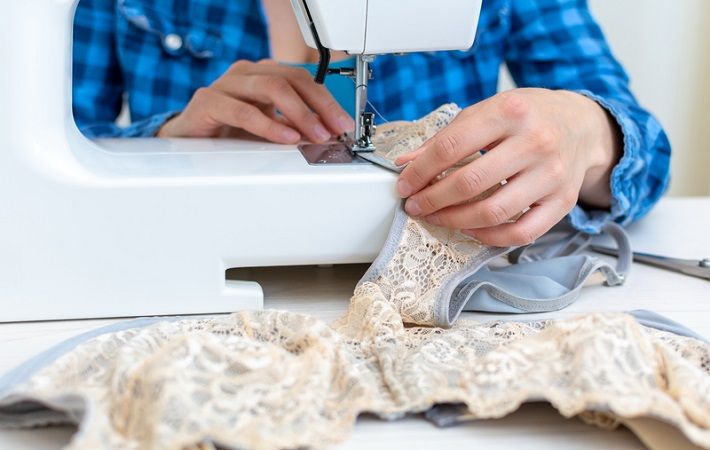
After registering a steep fall of 21 per cent year-on-year to $4.423 billion last year, textile and garment exports from Sri Lanka are likely to cross $5-billion mark in 2021, as the island nation has already earned $3.893 billion until September, growing at 18.5 per cent year-on-year, according to the statistics released by the Central Bank of Sri Lanka.

Exports of garments were up 21.4 per cent year-on-year to $3.544 billion during the first three quarters of this year, while textile exports increased by 40.3 per cent and fetched $254.8 million, the central bank said in its report ‘External Sector Performance – September 2021’.

Exports of other made-up textile articles fetched $94.2 million, registering a huge decline of 49.2 per cent year-on-year.

Textiles and garments exports accounted for 56.43 per cent of all industrial exports from Sri Lanka during the nine-month period, the report showed.

Imports of textiles and textile articles too rose by 32.4 per cent to $2.206 billion, while clothing and accessories imports were up marginally by 2.4 per cent to $156.8 million during January-September 2021.

In September 2021, Sri Lanka’s earnings from textiles and garment exports increased 5.7 per cent to $458.5 million, compared to exports of $433.7 million in the same month of 2020. Expenditure on textiles and textile articles shot up by 25.8 per cent year-on-year to $262.2 million, while clothing and accessories imports were up 17.4 per cent to $18.1 million.

In 2020, Sri Lanka’s clothing exports fetched $3.939 billion, a fall of 24.3 per cent over $5.205 billion in 2019. On the other hand, imports of textiles and textile articles decreased by 19.7 per cent to $2.335 billion.

Covid: Travel and mask rules tightened over Omicron variant in the UK

November 27th, 2021

By Alex Kleiderman  Courtesy BBC News

Face coverings will become mandatory again in shops and on public transport in England from next week under a raft of measures to target the new Covid variant, Omicron, the PM has said.

PCR tests for everyone entering the UK will be introduced and all contacts of new variant cases will have to self-isolate, even if fully jabbed.

But Boris Johnson said Christmas would be “considerably better” than in 2020.

The measures were “temporary and precautionary”, he added.

Mr Johnson announced the restrictions at a Downing Street news conference after it was confirmed that two Omicron cases had been detected in Brentwood, Essex, and Nottingham. Officials said the cases were linked and connected to travel in southern Africa.

The new variant was first reported from South Africa on Wednesday, with early evidence suggesting it has a higher reinfection risk.

Mr Johnson said: “Our scientists are learning more hour by hour, and it does appear that Omicron spreads very rapidly and can be spread between people who are double vaccinated.”

He added: “We need to slow down the spread of this variant here in the UK, because measures at the border can only ever minimise and delay the arrival of a new variant rather than stop it all together.”

The prime minister said the new measures would be reviewed in three weeks, by which time they should have better information about the “continuing effectiveness” of vaccines.

The prime minister said the “tightening up” of the mask rules will be outlined by Health Secretary Sajid Javid “in the next day or so”. He did not indicate when PCR tests would begin and in a press release the Department of Health only said it was among the measures being “introduced from next week”.

Covid restrictions were tightened across the UK days before Christmas last year amid a surge in cases.

Asked by the BBC’s Iain Watson if the prime minister could say with any confidence whether or not people could keep their Christmas plans this year, Mr Johnson replied: “We continue to be in a strong position largely thanks to the speed of the vaccine rollout, another booster rollout, and… I’m pretty confident to absolutely confident this Christmas will be considerably better than last Christmas.”

Countries around the world are introducing travel bans and restrictions on southern African countries in an effort to contain the variant’s spread.

Under the plans:

  • Everyone entering the UK will have to take PCR test within two days of their arrival and self-isolate until they receive a negative result
  • All contacts of suspected Omicron cases must self-isolate, regardless of whether or not they are fully jabbed
  • Face coverings will be made compulsory in shops and on public transport – but hospitality settings will be exempt from the changes
  • The health secretary is to ask advisers to consider rapidly extending boosters, including reducing the gap between the second dose of the vaccine and the booster

The UK’s chief medical adviser, Prof Chris Whitty, said there was a “reasonable chance” that vaccines could be less effective against the new variant but stressed people who are vaccinated or receive the booster jab will be less likely to become seriously ill.

He said the Joint Committee on Vaccination and Immunisation would now need to decide whether to extend the booster vaccine down to adults age 18, and whether a second dose should be offered to children aged 12-15.

Paddy Lillis from the shopworkers’ union Usdaw accused ministers of “flip-flopping on basic and sensible Covid measures” and said the face covering rules should have been kept in place when restrictions were relaxed in July.

“Retail staff working with the public every day are deeply worried about catching Covid-19 and the arrival of the Omicron variant is a further concern,” he said.

Carol Popplestone, chairwoman of the Royal College of Nursing, said face coverings were “something we have already called for and it should not have been a new variant that forced the prime minister to act”.

2px presentational grey line
Analysis box by Nick Eardley, political correspondent

This is a moment the government had wanted to avoid.

We’ve got used to restrictions in England being lifted. But for the first time in months, they’re now being re-imposed in response to the new variant.

And these restrictions could have a significant impact.

For example, anyone who goes on holiday will now need to pay for a PCR test and self-isolate until they get a negative result. If Omicron spreads quickly, there could be a lot of people forced to self-isolate for 10 days as close contacts.

But the government hasn’t gone for its full plan B. Masks won’t be mandatory in hospitality settings in England like they are in Scotland and Wales.

People aren’t being told to work from home – and there still aren’t plans for vaccine passports.

But it’s a sign of the uncertainty and concern in Whitehall that Boris Johnson felt he had to announce these measures.

2px presentational grey line

Both the UK cases of the Omicron variant and their households are self-isolating. Additional testing is being carried out at locations where those people were likely to have been infectious.

“Confirmed cases and contacts are being followed up and requested to isolate and get tested as necessary,” the Department of Health said.

Ten countries – South Africa, Namibia, Zimbabwe, Botswana, Lesotho, Eswatini, Angola, Mozambique, Malawi and Zambia – are now on the UK’s travel red list meaning, from Sunday at 04:00 GMT, all arrivals will have to quarantine in a hotel for 10 days.

Other countries are also introducing travel bans and restrictions on southern African countries in an effort to contain the variant’s spread.

The average number of daily confirmed Covid cases in the UK began rising again in early November. A further 39,567 confirmed cases were announced on Saturday.

Infographic showing UK Covid case statistics on 27 November 2021
Banner Image Reading Around the BBC - Blue

Sri Lanka bans travellers from several South African Countries

November 27th, 2021

Courtesy The Daily Mirror

Travellers with a travel history (including transit) in past 14 days to South Africa, Botswana, Lesotho, Namibia, Zimbabwe & Eswatini will not permitted to disembark in Sri Lanka, Civil Aviation Authority of Sri Lanka (CAASL) said.

In a statement, the CAASL said the travel ban, which was imposed over the new COVID variant threat, would be in effect from tomorrow (28).

ඇමති පිළිගත් වගා හානිය

November 27th, 2021

උපුටාගැණීම අද දෙරණ

රසායනික පොහොර තහනම නිසා තේ වගාවේ ගුණාත්මකභාවයට විශාල හානියක් සිදුවු බව තමාද පිළිගන්නා බව වැවිලි කර්මාන්ත අමාත්‍ය, වෛද්‍ය රමේෂ් පතිරණ මහතා පවසයි.

2022 අයවැය තෙවන වර හෙවත් කාරක සභා අවස්ථාවේ විවාදයට එක් වෙමින් අමාත්‍යවරයා මේ බව කියා සිටියේය.

වැවිලි අමාත්‍ය වෛද්‍ය රමේෂ් පතිරණ මහතා,

“තේ වගාකරුවන් යම්කිසි අපහසුතාවයකට පත්වුණා. තේවල ගුනාත්මකභාවය පිළිබඳ ප්‍රශ්නයක් මතුවුණා. ඒක අපි පිළිගන්න අවශ්‍යයි. පෙබරවාරි වෙද්දි සහනදායි මිලට පොහොර ගන්න පුළුවන් වෙයි.”

COVID: 719 new infections and 20 deaths confirmed in Sri Lanka within the day

November 27th, 2021

Courtesy Adaderana

The daily count of COVID-19 cases confirmed in Sri Lanka moved to 719 today (November 27) as 226 more people were tested positive for the virus, the Epidemiology Unit said.

This brings the total number of confirmed cases of coronavirus reported in the country to 561,778.

As many as 529,240 recoveries and 14,278 deaths have been confirmed in Sri Lanka since the COVID-19 outbreak.

More than 18,200 active cases in total are currently under medical care, official figures showed.

The Director-General of Health Services has confirmed 20 new coronavirus-related deaths for November 26, increasing the death toll in the country due to the virus pandemic to 14,278.

The new fatalities include 13 males and 07 females. Among them are 04 individuals between the ages 30-59 years. The remaining 16 are in the age group of 60 years and above. 

Laos Could Benefit From Resolving The Rohingya Crisis Between Myanmar and Bangladesh

November 26th, 2021

MD Pathik Hasan

Laos-Myanmar-Bangladesh could exchange regional some advantages but Rohingya issue must be resolved. Closer Bangladesh-Myanmar ties have great economic potential but the regional crisis should be resolved as soon as possible for ensuring the greater interest of South Asia and South East Asia including Laos. Myanmar is one of Bangladesh’s closest neighbors with historic connectivity going back centuries. The 271 km long Bangladesh-Myanmar border is very important for Bangladesh due to its strategic position, although at present the area is militarized due to its ongoing internal conflicts. Were this to be resolved, Bangladesh could develop routes via Myanmar to access China to the east, and other southeast Asian countries to the south.

On the other hands, Laos is a neighboring state of Myanmar. Myanmar and Laos can be able to access in South Asia through Bangladesh. If Laos connects itself with Bangladesh-Myanmar-Thailand-India connectivity project and Bangladesh-China-India-Myanmar connectivity corridor, Laos would benefit. A huge potential is waiting for Cambodia. If the two projects can be implemented truly, Laos will be gainer in this regard. Bangladesh-Myanmar improved ties is very needed in this regard. Laos is a very friendly country to both Myanmar and Bangladesh.

Myanmar can also use Bangladesh as a transportation route to reach markets such as Nepal, Bhutan, and India. Both Bangladesh and Myanmar are members of the Bay of Bengal Initiative for Multi-Sectoral Technical and Economic Cooperation (BIMSTEC), an organization consisting of Bangladesh, Bhutan, India, Myanmar, Nepal, Sri Lanka, and Thailand that seeks to foster regional and economic cooperation. Laos can and should join BIMSTEC to utilize the benefits. Being a land locked country, Laos can use the routes to enter in the Bay of Bengal and Indian ocean easily. Then it would be able to bolster its trade ties with South Asia, Central Asia and Middle East Asia. Laos can decrease its dependence on Thailand, Cambodia, Singapore, Malaysia, Vietnam easily in such way in this regard.

Bangladesh is a Southeast Asian country and can be used as an important hub to connect ASEAN and the South Asian Association for Regional Cooperation (SAARC). members of Afghanistan, Bangladesh, Bhutan, India, Maldives, Nepal, Pakistan, and Sri Lanka is difficult. Myanmar too, as an ASEAN member, can access the SAARC free-trade bloc through Bangladesh. Such a way, Laos would benefit economically to boost up their trade ties. Laos will be able to ensure its maximum business interest. Laos can access into the market of India, Nepal, Bhutan, Pakistan, Sri Lanka, Afghanistan and Central Asia easily.

Myanmar and Bangladesh have also resolved a dispute over their maritime borders through the International Court of Justice. As a result, the rights of Bangladesh have been established in an area of 1,11,000 square kilometers. Myanmar’s waters have also been properly identified. Bangladesh-Myanmar-Laos has potential to invest in maritime business in the Bay of Bengal. These countries should utilize and extract the maritime resource from the maritime zone. Blue economy can bring benefit for Bangladesh-Myanmar-Laos also.

The proposed construction of the Asian Highway, funded by the Asian Development Bank can increase land connectivity between the two countries and increase trade in products such as fertilizers, plastics, cement, and furniture, etc. Laos should join the project to ensure its maximum business interest.

Myanmar and Laos which at present does have sophisticated manufacturing, can import electronics and pharmaceutical products that are readily produced from Bangladesh and benefit from the technology transfer. Bangladesh-Myanmar-Laos has potential of rice and fishery production. Trilateral effort is very needed here. Bangladeshi medicines, agricultural products garments, footwear and leather goods, knitwear, pharmaceuticals, tableware, home textiles, textiles, seafood and marine products, tea, potatoes, jute and jute products, light engineering products, spices, cosmetics and ceramics, Toilets, etc. can be exported easily to Laos through Myanmar.

According to Bangladeshi media outlets, On the other hands. Laos mainly exports Machinery, boilers, Manmade staple fibers, Paper and paperboard, articles of pulp, paper and board, Cotton, Pearls, precious stones, metals, coins, Raw hides and skins (other than fur skins) and leather etc. to Bangladesh. One of the major problems is the lack of adequate transport links for the expansion of bilateral trade between the two countries. Both countries are working to resolve this transportation issue and are in the process of joining the Asian Highway Network, which is expected to address this issue.

Prime Minister of Bangladesh Sheikh Hasina visited Laos in 2012. Bangladesh and Laos have been supporting each other in various international forums. In 2012, Laos supported Bangladesh’s inclusion in the AESM.

China is now the biggest investor in Myanmar. China has invested over US$3 billion since the 2016-2017 fiscal year. One of the most strategic components of these investments is the US$1.3 billion Kyaukphyu deep seaport, which when completed, can provide China’s Yunnan province a shortcut to the Indian Ocean. Cambodia can extract some benefits from the investments for its own gain.

The country’s biggest economic advantage for Myanmar is that they are a member of ASEAN. ASEAN controls about 24 percent of total world trade and its share in world trade is growing yearly. ASEAN’s trade relations with China, Japan, and South Korea are deepening due to the increase in trade and the upcoming RCEP agreement. ASEAN countries account for more than 50 percent of total trade between themselves and these three countries.

Bangladesh is keen to provide assistance to Myanmar. Covid-19 vaccine distribution and counter-terrorism training are some areas for cooperation. The Rohingya refugee problem has, however, created some tension between the two countries, and find the solution can serve the longer-term interests of Bangladesh and Myanmar even Laos also. Myanmar and Bangladesh should resolve this problem to serve its own and reginal interest. Myanmar should understand that it is the issue of the region. Whole South Asia and South East Asia may be volatile and unstable for this problem.

Laos can play a very significant role in this regard. Laos can mediate to bolster the strained relations between Bangladesh-Myanmar. Laos can play to repatriate the Rohingyas in Rakhine in Myanmar. Laos can easily resolve the problem because it has a very good relations with Myanmar.

However, the three countries can also increase production in the agricultural sector through joint ventures. Apart from adopting joint investment projects, Bangladesh can increase imports of various agricultural products including pulses, spices, fish and rice. Thus, enhancing trilateral relations could contribute to the growth of trade and investment relations with ASEAN and BIMSTEC countries. This will create an opportunity to resolve the Rohingya problem and stop militant activities. Therefore, Myanmar should take effective steps to strengthen bilateral relations to connect the South East Asia with South Asia. Laos should play an effective role to motivate Myanmar to bolster ties with Bangladesh. Laos should take significant initiative to resolve the crisis. Benefit is waiting not only for Myanmar but also for Laos.

ශ්‍රී ලංකාවේ කෘෂිකර්මාන්තය අගතියට පත් කිරීම සහ එයට එරෙහිවන කෘෂි වෘත්තිකයින් හා විද්‍යාර්ථීන් සම්බන්ධව සිදුකරනු ලබන අපහාසාත්මක සාවද්‍ය ප්‍රකාශ හෙළා දැකීම වෙනුවෙනි

November 26th, 2021

විශ්වවිද්‍යාල ආචාර්ය සංගමය

නිසි වෘත්තීය මට්ටමේ මැදිහත්වීමකින් හෝ පැහැදිලි ප්‍රායෝගික දැක්මකින් තොරව, 2021 මැයි මස හයවන දින ප්‍රකාශයට පත්කරණ ලද,  සියළු කෘෂිරසායන ආනයනය අත්හිටුවීමේ ගැසට් නිවේදනය සහ ඒ හා සමගාමීව සිදුකෙරුණු ශ්‍රී ලාංකික කෘෂිකර්මාන්තය ක්ෂණිකව 100%ක් කාබනිකකරණය කිරීමේ රාජ්‍ය ප්‍රතිපත්තිය මේ රටේ ජීවත්වන කෘෂි වෘත්තිකයන්, ගොවීන් සහ සිවිල් පුරවැසියන්ගේ ප්‍රබල ප්‍රශ්නකිරීම් වලට ලක් වූ බව සියල්ලන් දන්නා කරුණකි. 

විද්‍යාත්මකව නිවැරදි නොවූ උපදේශ මත, අදුරදර්ශී ලෙස ගන්නා ලද මෙම තීරණයේ සෘජු ප්‍රතිඵලයක් ලෙස මේ වනවිට ශ්‍රී ලංකාව තුළ, වාණිජ කෘෂිකර්මාන්තය කරගෙන යාම සඳහා අවශ්‍ය ශාක පෝෂක සහ පලිබෝධ නාශකයන්ගේ දරුණු හිඟයක් ඇති වී තිබේ. ශ්‍රී ලංකාව තුළ ආහාර සුරක්ෂිතතාවය පවත්වා ගැනීම සඳහා අවශ්‍ය කෘෂිකාර්මික අස්වැන්න ලබා ගැනීමට නම් මෙම යෙදවුම් නිසියාකාරව වගාවන්ට ලබා දිය යුතුය. කෘෂි විද්‍යාර්තීන් ලෙස අප නැවත නැවතත් අනතුරු හඟවන්නේ විද්‍යාත්මක පදනමකින් තොරව ගන්නා ලද මෙම ප්‍රතිපත්තිමය තීරණය හරහා ශ්‍රී ලංකාවේ කෘෂිකාර්මික නිෂ්පාදන පහළ වැටීමටත් ඒ හා සමගාමීව ග්‍රාමීය ආර්ථිකය බිඳ වැටීමටත් ඉතා විශාල අවකාශයක් පවතින බැවිනි.

පවතින වසංගත තත්ත්වය පවා නොසලකමින්, මෙවර මහා කන්නයේ වගා කටයුතු සිදුකිරීම සඳහා අවශ්‍ය රසායනික පොහොර හෝ වෙනත් සුදුසු පොහොරක් ඉල්ලා වීදි බැසීමට මේ රටේ සියලු ගොවි ජනතාවට සිදු වී ඇත්තේ එය ඔවුන්ගේ එකම ජීවිකාව වන හෙයිනි. පසුගිය මාස හයකට ආසන්න කාලය මුළුල්ලේ මෙරට කෘෂි විද්‍යාඥයන් මෙම අවාසනාවන්ත තත්ත්වය සම්බන්ධයෙන් අනතුරු අඟවමින් සිටින අතර, මෙවැනි කාබනික පරිවර්තනයක් සඳහා අනුගමනය කල යුතු විද්‍යාත්මක සහ ප්‍රයෝගික ක්‍රමවේදය පෙන්වා දෙමින්, වගකිවයුත්තන්ගේ අවධානය ඒ සඳහා යොමු කිරීමට විවිධ උත්සාහයන්හි නිරතවෙමින් සිටියද, බලධාරීහු ඒ පිළිබඳව කිසිදු තැකීමක් සිදු නොකොට, තවදුරටත් මෙම අසාර්ථක ක්‍රමවේදය ක්‍රියාත්මක කිරීම සඳහා මහජන මුදල් යොදවමින් සිටිති. උදාහරණ ලෙස මෑතකදී ඉතා විශාල ආන්දෝලනයන්ට තුඩු දී ඇති, ඉන්දියාවෙන් ආනයනය කරන ලද නැනෝ-යුරියා දියර පොහොර සහ, චීනයෙන් ඇණවුම් කරන ලද අහිතකර ක්ෂුද්‍රජීවීන් අඩංගු කාබනික පොහොර තොගය පෙන්වා දිය හැකිය.

මේ රටෙහි ජීවත්වන වගකිවයුතු කෘෂි විද්‍යාර්ථීන් සහ කෘෂිකර්ම ක්ෂේත්‍රයේ විශේෂඥයන් ලෙස, පවතින තත්ත්වය සම්බන්ධයෙන් අපගේ විද්‍යාත්මක දැනුම සහ අත්දැකීම් අනුව යමින්, මේ රටේ ජීවත්වන සියලු පුරවැසියන්ගේ යහපත වෙනුවෙන් පෙනී සිටීම අපගේ පරම යුතුකමක් හා වගකීමක් ලෙස ඉතා දැඩිව විශ්වාස කරමු. එය එසේ වුවද, රජයට සම්බන්ධ විවිධ පාර්ශව මඟින් අපගේ මෙම ධනාත්මක මැදිහත්වීම, ප්‍රසිද්ධියේ විවේචනයට හා සාවද්‍ය චෝදනා යටතට පත් කිරීම ඉතා අවාසනාවන්ත තත්ත්වයකි.

තවද, අප මෑතකදී අත්දුටු ඉතා අභාග්‍යසම්පන්න තත්ත්වයක් වනුයේ ඇතිවී තිබෙන අර්බුදය  සම්බන්ධයෙන් නිවැරදි විද්‍යාත්මක කරුණු මත පිහිටා කටයුතු කිරීමට උත්සාහකරනු ලබන අමාත්‍යංශ ලේකම් වරුන්, ජ්‍යෙෂ්ඨ රාජ්‍ය නිලධාරීන් සහ විශ්වවිද්‍යාල ප්‍රජාව විව්ධාකාරයේ තර්ජන කිරීම් හරහා නිහඬ කිරීමට දරන උත්සාහයයි. මෙම නිලධාරීන්ගේ වෘත්තිමය ගරුත්වය සිතාමතා හැල්ලුවට ලක් කරමින්, ඉතාමත් අදුරදර්ශී ක්‍රියාවලියක් කරා මේ රට තල්ලු කිරීමට තරම් වර්තමාන දේශපාලන නායකත්වය අත්තනෝමතික තත්ත්වයට පත්ව තිබේ. ඒ අතරම, මෙම කාබනික ප්‍රවේශය හරහා බලධාරීන්ට සමීපව කටයුතු කරන ඇතැම් පාර්ශව විසින් මහජන මුදල් මංකොල්ලකන තත්ත්වයට පත්ව තිබීම ඉතාමත් නින්දිතය.

ශ්‍රී ලංකාවේ සියලු විශ්වවිද්‍යාල නියෝජනය වන විශ්වවිද්‍යාල ආචාර්ය සංගමයේ (FUTA) කෘෂිකර්මාන්තය සම්බන්ධ අනුකමිටුව නියෝජනය කරනු ලබන කෘෂිවිද්‍යාර්ථීන් සහ කෘෂි වෘත්තිකයන්ගේ එකමුතුව ලෙස අප, රජය විසින් ශ්‍රී ලාංකික කෘෂිකර්ම ක්ෂේත්‍රය සම්බන්ධව ගනු ලැබ ඇති මෙම අදුරදර්ශී, අවිද්‍යාත්මක ක්‍රමවේදය ඉතා දැඩිලෙස හෙලා දකින අතර, මෙම අර්බුධය විසඳීම සඳහා වහාම මැදිහත්වන ලෙස ක්ෂේත්‍රයට සම්බන්ධ සියලු රාජ්‍ය නිලධාරීන් සහ වෘත්තිකයන්ගෙන් ඉතා දැඩිව ඉල්ලා සිටිමු.

තවදුරටත්, රාජ්‍ය නිලධාරීන් සහ කෘෂි විද්‍යාඥයන් විද්‍යාත්මක දත්ත මත පදනම් වී ගනු ලබන ක්‍රියාමාර්ගයන් කෙරෙහි සිදුකරන අනවශ්‍ය බලපෑම් වහාම නතර කරන ලෙසටත්, මුළු රටම එකවර කාබනිකකරණය කිරීමේ රාජ්‍ය ප්‍රතිපත්තිය නැවත සලකා බලා, හරිත/කාබනික කෘෂිකර්මාන්තය නිවැරදිව ක්‍රියාවේ යෙදවීම සඳහා අවශ්‍ය නිවැරදි විශේෂඥ උපදෙස් ලබාගැනීම සඳහා සුදුසුකම් ලත් කෘෂි වෘත්තිකයන්ගේ සේවය ලබාගන්නා ලෙසටත් රජයට බලකර සිටිමු. මෙම අර්බුධයට කෙටිකාලීන විසඳුමක් ලෙස දැනට හිඟව පවතින කෘෂිරසායන ගොවීන් වෙත ලබා දීමට කටයුතු කිරීමට අපි රජයට බල කර සිටිමු. අවසාන වශෙයෙන් අභ්‍යන්තර සහ බාහිර තර්ජනයන්ගෙන් රාජ්‍ය නිලධාරීන් ආරක්ෂා කිරීම රජයේ වගකීමක් බවද අවධාරණය කර සිටිමු.

වර්තමාන රාජ්‍ය පාලනය ඉහත සඳහන් ඉල්ලීම්වලට අනුගත නොවන්නේ නම් ඉතා නුදුරේදීම මේ රටෙහි කෘෂිකර්ම ක්ෂේත්‍රය සහ සමස්ථ ආර්ථිකය ඉතා දරුණු ඛේදවාචකයකට මුහුණදීම නොවැලක්විය හැකි වනු ඇත. මෙවන් අවාසනාවන්ත තත්ත්වයකදී ආර්ථිකමය සහ දේශපාලනිකමය වාසි ලබනු ඇත්තේ මේ රටේ නිදහස සහ ස්වෛරීභාවය විනාශකිරීම කෙරෙහි මානබලමින් සිටින විදේශ ආක්‍රමණික බලවේග පමණක් බවද අපගේ දැඩි විශ්වාසයයි.

එබැවින් පවතින තත්ත්වය පිළිබඳව යතාර්තවාදීව සලකා බලා, කෘෂිකර්ම ක්ෂේත්‍රය මුහුණ දී සිටින අර්බුධය විසඳීම සඳහා දැන්වත්  නිවැරදි තීරණ ගැනීම, මේ රටේ දේශපාලන නායකත්වයේ පරම වගකීම බව අවසාන වශයෙන් සඳහන් කරනු කැමැත්තෙමු.

සමහරුන්ට ශ්‍රී ලංකා නිදහස් පක්ෂය අද පොඩියට පේනවා වෙන්න පුලුවන්

November 26th, 2021

තිසර සමල් – අනුරාධපුර 

සමහරුන්ට ශ්‍රී ලංකා නිදහස් පක්ෂය අද පොඩියට පේනවා වෙන්න පුලුවන් හැබැයි ඒ පොඩියට පේන්නේ තමන්ගේ මහ ගෙදර කියන එක අමතක කර ගන්න එපා. අද අපි ආණ්ඩුවේ ඇතුලේ හිටියට ශ්‍රී ලංකා නිදහස් පක්ෂයට දේශපාලනය කිරීමේ අයිතිය තියෙනවා.ඒ අයිතිය කාටවත් නවත්වන්න පුලුවන්කමක් නෑ,තැන්තැන්වල ආඩපාලී කියලා  ශ්‍රී ලංකා නිදහස් පක්ෂය ශක්තිමත් පක්ෂයක් කිරීමේ අරමුණ අපෙන් ඈත් කරන්න කාටවත් පුලුවන්කමක් නෑ,ඒ වගේම ශ්‍රී ලංකා නිදහස් පක්ෂය නැවත වතාවක් ශක්තිමත් කිරීම වෙනුවෙන් අපිට කාගෙන්වත් අවසර ගන්න ඕනකමකුත් නෑ යැයි ශ්‍රී ලංකා නිදහස් පක්ෂ ජාතික සංවිධායක රාජ්‍යය අමාත්‍යය දුමින්ද දිසානායක මහතා පැවසීය.

අමාත්‍යයවරයා මේ බව ප්‍රකාශ කර සිටියේ අනුරාධපුර නැගෙනහිර ආසන ශ්‍රී ලංකා නිදහස් පක්ෂ බල මණ්ඩල රැස්වීම අමතමින්ය.

අනුරාධපුර නැගෙනහිර ආසන ශ්‍රී ලංකා නිදහස් පක්ෂ ආසන සංවිධායක ප්‍රේමසිරි හෙට්ටිආරච්චි මහතාගේ සංවිධායකත්වයෙන් අනුරාධපුර මිහින්තලය ප්‍රදේශයේදී මෙම ආසන බල මණ්ඩල රැස්වීම සංවිධානය කර තිබිණි.

එහිදී වැඩිදුරටත් අදහස් දැක්වූ රාජ්‍යය අමාත්‍යය දුමින්ද දිසානායක මහතා,

ශ්‍රී ලංකා නිදහස් පක්ෂය තරම් මේ රටට ජනතා ජයග්‍රහණ ලබා දුන් වෙනත් පක්ෂයක් නෑ,ඒ නිසා අපට ආඩම්බර වෙන්න පුලුවන්කම තියෙනවා.මහින්ද මහත්තයා තමයි යුද්ධය ජයග්‍රහණය කලේ කියනවා වගේම අපිට අයිතියක් තියෙනවා කියන්න ඒ මහින්ද මහත්තයා ශ්‍රී ලංකා නිදහස් පක්ෂයේ සභාපතිවරයා විදිහට තමයි යුද්ධය ජයග්‍රහණය කලේ.ඒ යුධ ජයග්‍රහණයේ අයිතිය තියෙන්නෙත් පක්ෂයක් විදිහට ශ්‍රී ලංකා නිදහස් පක්ෂයටයි.ලෝකයේ කවදාවත් ජයග්‍රහණය කරන්න බෑ කිව්ව, පරාද කරන්න බෑ කිව්ව ප්‍රභාකරන්ව පරාද කරන්න පුලුවන් වුණෙත් ශ්‍රී ලංකා නිදහස් පක්ෂයේ නායකයාටයි.එහෙම නම් අපිට ආපස්සට හැරිලා බැලුවම ආඩම්බර වෙන්න පුලුවන්කම තියෙනවා අපි ඉන්න පක්ෂය, අපිට ලැජ්ජා නැතිව හිටගන්න පුලුවන් පක්ෂයක්, ආඩම්බරයෙන් කථා කරන්න පුලුවන් පක්ෂයක්, ඒ වගේම අනාගතය ගැන බලාපොරොත්තු තියාගන්න පුලුවන් පක්ෂයක්.අපේ පක්ෂය හැමදාම රටට ජයග්‍රහණ ලබා දුන්න පක්ෂයක් මිසක් රට විනාශ කරන්න මුල් වුණ පක්ෂයක් නෙමෙයි.අද අපි පොඩ්ඩක් අඩු වෙලා තියෙන බව ඇත්ත, ඒ අඩු වෙලා තියෙන්නේ අපේ අඩුවකින් නෙමෙයි, පක්ෂයේ අභ්‍යන්තරයේ ඇති වුණ නොයෙකුත් ප්‍රශ්න නිසා ඇති වුණ දෙයක්, හැබැයි ඒ හැමෝටමත් මතකයි මහ ගෙදර මොකක්ද කියන එක,ඒ හැමෝටමත් මතකයි ආරම්භය මොකක්ද කියන එක, එහෙම නම් ශ්‍රී ලංකා නිදහස් පක්ෂය අද පොඩියට පේනවා වෙන්න පුලුවන් සමහරුන්ට හැබැයි ඒ පොඩියට පේන්නේ තමන්ගේ මහ ගෙදර කියන එක අමතක කර ගන්න එපා. සමහරු තරහා වෙලා යනවා, සමහරු පොඩි පොඩි අමනාපකම් හදා ගන්නවා, අවසානයේ මහ ගෙදර දොර විවෘත වෙලා තියෙනවා ගියපු අයට, තරහා වෙච්ච අයට, ඒ ඕනෑම කෙනෙක්ට.අන්තිමට වැටෙන්න තියන තැන තමයි ශ්‍රී ලංකා නිදහස් පක්ෂය කියන ඒ අපේ මහගෙදර.

ඒ නිසා ශ්‍රී ලංකා නිදහස් පක්ෂය නැවත වතාවක් ශක්තිමත් කරන, නැවත වතාවක් යෝධ බල – යෝධ ශක්තියක් තියෙන පක්ෂයක් බවට පත් කිරීම තමයි පාක්ෂිකයෝ විදිහට අපේ වගකීම වෙන්න ඕනකම තියෙන්නේ.අපි ශ්‍රී ලංකා නිදහස් පක්ෂය ශක්තිමත් කරන්න හදන කොට අපිට ඇහෙනවා සමහරු, සමහර තැන් වලින් නොයෙකුත් දේවල් කථා කරනවා. හැබැයි අපි ඒ අයට මතක් කරන්න ඕන එක කාරණයක් තියෙනවා.අපි ගෝඨාභය මහත්තයාව ජයග්‍රහණය කරවන කොට, අපි සන්ධානයක් විදිහට එකතු වෙලා පාර්ලිමේන්තු මැතිවරණයට ඉල්ලන කොට අමතක කරන්න එපා අපි ආවේ දුමින්දලා විදිහට වෙනම නෙමෙයි, අපි ආවේ මෛත්‍රීපාල සිරිසේන විදිහට වෙනම නෙමෙයි.අපි ආවේ ශ්‍රී ලංකා නිදහස් පක්ෂයක් විදිහට.අපි ගෝඨාභය මහත්තයා එක්ක ගිවිසුම් අත්සන් කරනවා.අපි පොහොට්ටුවත් එක්ක ගිවිසුම් අත්සන් කරනවා.ඒ අත්සන් කරන්නේ පුද්ගලික නම් වලින් නෙමෙයි, ශ්‍රී ලංකා නිදහස් පක්ෂය විදිහට, එහෙම නම් අද අපි ආණ්ඩුවේ ඇතුලේ හිටියට ශ්‍රී ලංකා නිදහස් පක්ෂයට දේශපාලනය කිරීමේ අයිතිය තියෙනවා.ඒ අයිතිය කාටවත් නවත්වන්න පුලුවන්කමක් නෑ,තැන්තැන්වල ආඩපාලී කියලා  ශ්‍රී ලංකා නිදහස් පක්ෂය ශක්තිමත් පක්ෂයක් කිරීමේ අරමුණ අපෙන් ඈත් කරන්න කාටවත් පුලුවන්කමක් නෑ,ඒ වගේම ශ්‍රී ලංකා නිදහස් පක්ෂය නැවත වතාවක් ශක්තිමත් කිරීම වෙනුවෙන් අපිට කාගෙන්වත් අවසර ගන්න ඕනකමකුත් නෑ, ශ්‍රී ලංකා නිදහස් පක්ෂය කියන්නේ  වෙනම පක්ෂයක්, ඒ නිසා ශ්‍රී ලංකා නිදහස් පක්ෂය නැවත වතාවක් තිබුණ තැනට ගේන එකේ වගකීම තියෙන්නේ පාක්ෂිකයන් විදිහට ඔබටයි, මටයි, අපි හැමෝටමයි.ඒ නිසා ශ්‍රී ලංකා නිදහස් පක්ෂය ශක්තිමත් කරන්න යන ගමනේ අපිට කාගෙන්වත් අවසර ගන්න ඕනකමක් නෑ කියන එක අපි ඒ හැමෝටම මතක් කරන්න ඕනකම තියෙනවා.

ආණ්ඩුව අපිට සලකනවාද? නැද්ද ? කියලා කිය කිය ඉන්න එපා දැන්, අපේ බලාපොරොත්තුවක් තිබුණා නම් ඒ බලාපොරොත්තු ඉෂ්ඨ වුණාද ? නැද්ද ? කියලා දුක් වෙන්න එපා දැන්. මොකද? ශ්‍රී ලංකා නිදහස් පක්ෂය මීට වඩා අමාරු තැන් වලට වැටුණා, හැබැයි නැවත වතාවක් අපිට ආණ්ඩු බලය ගන්න පුලුවන්කම ලැබුණා.අපි ඉන්න ඕන අරක ලැබෙනවාද ?- මේක ලැබෙනවාද? , මොනවද දෙන්නේ? -කොහොමද ගන්නේ ? කියලා නෙමෙයි.දැන් අපි පක්ෂය ශක්තිමත් කරන වැඩසටහන ආරම්භ කළ යුතු වෙනවා.අපිට ඉදරියේ එන්නේ පළාත් සභා මැතිවරණයද?  ප්‍රාදේශීය සභා මැතිවරණයද? පාර්ලිමේන්තු මැතිවරණයද? එහෙම නැත්නම් ජනාධිපතිවරණයද? අපේ වටිනාකම තියෙන්නේ අපේ ශක්තිය කොච්චරක්ද කියන ප්‍රමාණය මත, එහෙම නැතිව අපි නිකම්ම හිටියොත් අපිව කවුරුත් ගණන් ගනීද? ශ්‍රී ලංකා නිදහස් පක්ෂය ශක්තිමත් කරන වැඩේ ගමෙන් පටන් ගන්න.එහෙම කරලා නැවත වතාවක් තිබුණ තැනට ශ්‍රී ලංකා නිදහස් පක්ෂය ගෙනියන්න පුලුවන්කම තියෙනවා.ඒ වගේම අමතක කරන්න එපා මේ රටට ජනතා ජයග්‍රහණ සියල්ලම ලබා දුන්න පක්ෂයේ මහ ගෙදර තමයි ශ්‍රී ලංකා නිදහස් පක්ෂය කියන එක හැමෝටම මතක් කරලා දෙන්න ඕනකම තියෙනවා.මේ කියන්නේ ශ්‍රී ලංකා නිදහස් පාක්ෂිකයන්ට පමණක් නෙමෙයි, සමහර වෙලාවට පුංචි පුංචි දේවල් වලට අපෙන් ඈත් වුණ ඒ සියලු දෙනාටමත් අපි කියනවා, මහගෙදර අපි සූදානම් ඔබතුමන්ලාත් එක්ක නැවත මේ රටට ඒ ජනතා ජයග්‍රහණ ලබා දෙන්න.

ආණ්ඩුවට දැන් වැඩියෙන්ම බනින්නේ කතිරේ ගහපු අපිටත් වඩා පොහොට්ටුවේ අයයි බනින්නේ.සමහර කරන කියන දේවල් පිළිබඳව ජනතාව අතර විශ්වාසය අඩු වෙලා තියෙනවා.ඒ වගේම ආණ්ඩුව කරන්නේ මොකකද් කියන එක පිළිබඳව ආණ්ඩුවට කියාගන්න බැරි වෙලා තියෙනවා.බඩු මිල අරවා මේවා පිළිබඳව මම කථා කරන්නේ නෑ, කොරෝනා නිසා ලෝකයේ හැම රටේම මේවා වෙලා තියෙනවා.මං අහගෙන බන්දුල ගුණවර්ධන ඇමතිතුමා කියනවා බඩු ගැන අහන කොට, පිටරටින් එන බඩු එන්නෙ නැව් වලින්, දැන් නැව් එන එක අඩු වෙලා තියෙනවා, නැව් නැවතුනොත් බඩු නෑ කියනවා.ඒක තමයි ඇත්ත, ඒකට අපි මුහුණ දෙන්න වෙනවා.ඒකට මේ ආණ්ඩුව නෙමෙයි මොන ආණ්ඩුව තිබුණත් මේ කොරෝනා එක්ක බලපාන ප්‍රශ්න කාටත් පොදුයි.ඒක අපිටත් එකයි, එංගලන්තයටත් එකයි, ඇමරිකාවටත් එකයි.හැබැයි අපිට වඩා වැඩියෙන් දැනෙවා, අපිට සල්ලි ටිකක් අඩුයි.අර දියුණ රටවල් වගේ නෙමෙයි, අපි ගාව සල්ලි තිබුණා නම් පාවිච්චි කරන්න තිබුණා.අපේ රටේ ආර්ථිකයත් එක්ක කොරෝනා නිසා ඒක වැඩියෙන් දැනෙනවා.හැබැයි රජයට අපි ස්තූතිවන්ත වෙන්න ඕන, කොරෝනා එන්නත් ටික රටේ ජනතාවට දුන්න එකට.අනෙක් රටවල් එක්ක බලන කොට අපිට ඉතාමත් වේගෙන් එන්නත්කරණය කරන්න පුලුවන්කම ලැබුණා යැයිද පැවසීය.

මෙම අවස්ථාවට මහා සංඝරත්නය, හිටපු අමාත්‍යය තිස්ස කරල්ලියද්ද, අනුරාධපුර නැගෙනහිර ආසන ශ්‍රී ලංකා නිදහස් පක්ෂ සංවිධායක ප්‍රේමසිරි හෙට්ටිආරච්චි මහතා ඇතුළු ප්‍රාදේශීය දේශපාලඥයින් ඇතුළු පාක්ෂිකයන් විශාල පිරිසක් සහභාගී වූහ.

Ambassador C. A. Chaminda I. Colonne presents Letters of Credence to the United Nations Economic and Social Commission for Asia and the Pacific (UNESCAP)

November 26th, 2021

Embassy and the Permanent Mission of Sri Lanka to the UNESCAP Bangkok, Thailand

Permanent Representative of Sri Lanka to the United Nations Economic and Social Commission for Asia and the Pacific (UNESCAP), Ambassador of Sri Lanka to Thailand, C. A. Chaminda I. Colonne presented Letters of Credence to the Executive Secretary Armida Salsiah Alisjahbana of UNESCAP on 26th November 2021 at the UNESCAP Secretariat in Bangkok, following her virtual meeting on 20th April 2021.

After congratulating Ambassador Chaminda Colonne and warmly welcoming her to the UNESCAP Secretariat, Executive Secretary Armida Salsiah Alisjahbana assured fullest cooperation to the Sri Lanka’s Permanent Mission in Bangkok, the Government of Sri Lanka, and in realizing 2030 Agenda on the Sustainable Development and related activities, programmes in Sri Lanka.

While conveying warm greetings from H.E. the President, Hon. Prime Minister and Hon. Foreign Minister of Sri Lanka Ambassador Chaminda Colonne conveyed Sri Lanka’s continued fullest support and cooperation to UNESCAP in achieving common Sustainable Development Goals.

Executive Secretary Armida Salsiah Alisjahbana expressed appreciation to Prime Minister Mahinda Rajapaksa and the Government of Sri Lanka for hosting the Fifth South Asia Forum on the Sustainable Development Goals, in Sri Lanka from 15-16 November 2021. Recalling her recent virtual meetings with Minister of Energy Udaya Gammanpila  and the Foreign Secretary Admiral Prof. Jayanath Colombage,  Executive Secretary Armida Salsiah Alisjahbana highlighted UNESCAP’s interest in providing technical assistance to realize SDG 7, namely affordable and clean energy in line with the SDG Road Map.

Both discussed on future cooperation in the areas of data & statistics, organic farming, Public Private Partnership (PPP) and financing for development as well as on the provision of technical and financial support in the renewable energy development in Sri Lanka.

Elaborating on the keen interest and efforts taken by President Gotabaya Rajapaksa to move from chemical to organic fertilizer, Ambassador Chaminda Colonne requested UNESCAP’s technical assistance, research and awareness programmes for shifting  toward organic farming in Sri Lanka.

Secretary of the Commission Lorenzo Santucci, Director of Strategy and Programme Management Division and Officer in Charge, Subregional Office for South and South-West Asia, Adnan Aliani of UNESCAP and First Secretary and Deputy Permanent Representative Saritha Ranatunga from Sri Lanka Mission in Bangkok joined the discussion.

Embassy and the Permanent Mission of Sri Lanka to the UNESCAP Bangkok, Thailand

26th November 2021

පාඩු ලබන ආයතන ලාභ ලබන ආයතන ලෙස පරිවර්ථනය කරමින් රාජ්‍ය ආයතන 2022 වසරේ දී විශේෂ ප්‍රගතියක් අත්කර ගත යුතුයි – අග්‍රාමාත්‍ය මහින්ද රාජපක්ෂ මහතා

November 26th, 2021

අග්‍රාමාත්‍ය මාධ්‍ය අංශය

සියලු රාජ්‍ය ආයතන ලබන වසරේ දී විශේෂ ප්‍රගතියක් අත්කර ගත යුතු බව අග්‍රාමාත්‍ය මහින්ද රාජපක්ෂ මහතා අද (26) දින අරලියගහ මන්දිරයේ දී අවධාරණය කළේය. 

මේ වනවිට පාඩු ලබන ආයතන ලබන වසරේ දී ලාභ ලබන ආයතන ලෙස පරිවර්ථනය කර ගැනීම කෙරෙහි ද සියලු නිලධාරීන්ගේ අවධානය යොමු විය යුතු බව ද අග්‍රාමාත්‍යතුමා ප්‍රකාශ  කළේය.

ග්‍රාමීය නිවාස සහ ඉදිකිරීම් හා ගොඩනැගිලි ද්‍රව්‍ය කර්මාන්ත ප්‍රවර්ධන රාජ්‍ය අමාත්‍යාංශය හා අනුබද්ධ ආයතනයන්හි තෙවන කාර්තුව සඳහා වූ ප්‍රගති සමාලෝචනයට නාගරික සංවර්ධන හා නිවාස අමාත්‍යවරයා ලෙස එක්වෙමින් අග්‍රාමාත්‍යතුමා මේ බව සඳහන් කළේය.

ග්‍රාමීය නිවාස හා ඉදිකිරීම් හා ගොඩනැගිලි ද්‍රව්‍ය කර්මාන්ත ප්‍රවර්ධන රාජ්‍ය අමාත්‍ය ඉන්දික අනුරුද්ධ මහතා මෙහිදී අරමුණ පැහැදිලි කළ අතර අමාත්‍යාංශ ලේකම් සිරිනිමල් පෙරේරා මහතා දැනට ලබා ඇති සමස්ත ප්‍රගතිය සාරංශගත කොට ඉදිරිපත් කළේය.

ජාතික නිවාස සංවර්ධන අධිකාරිය, සීමාසහිත ගොඩනැගිලි ද්‍රව්‍ය සංස්ථාව, ගොඩනැගිලි දෙපාර්තමේන්තුව, රජයේ කර්මාන්තශාලා දෙපාර්තමේන්තුව, ඉදිකිරීම් කර්මාන්ත සංවර්ධන අධිකාරිය, රාජ්‍ය ඉංජිනේරු සංස්ථාව, ජාතික යන්ත්‍රෝපකරණ ආයතනය සහ ඕෂන්වීව් සංවර්ධන පුද්ගලික සමාගමට අයත් ප්‍රගතිය පිළිබඳව ඒ ඒ ආයතන ප්‍රධානීහු අග්‍රාමාත්‍යතුමාට සැළකර සිටියහ.

අඩක් නිම කරන ලද නිවාස 72000න් තවදුරටත් වැඩ නිම කළ යුතු නිවාස 40723ක් සඳහා වාර්ෂිකව රුපියල් මිලියන 500 බැගින් ප්‍රතිපාදන ලබා ගැනීම, මාදුළුවාවේ සෝභිත නා හිමි ගම ඉතිරි නිවාස 31 හා අත්‍යවශ්‍ය වැඩ නිම කිරීමට රුපියල් මිලියන 112ක් ප්‍රතිපාදන ලබා ගැනීම ඇතුළු සංවර්ධන ව්‍යාපෘති මෙන්ම අමාත්‍යාංශය යටතේ ඇති ආයතන ලබා ගත් ණය මුදල් සඳහා අදාළ බැංකුවලින් යම් සහනයක් ලබා ගැනීම ඇතුළු කරුණු රැසක් මෙම හමුවේ දී අවධානයට යොමු විය.

මෙම අභියෝගාත්මක කාලයේ  වැඩ අඩපණවීමට ඉඩ නොදිය යුතු බව කී අග්‍රාමාත්‍යතුමා සාකච්ඡා මාර්ගයෙන් කඩිනම්ව අවශ්‍ය තීරණ ගෙන නීත්‍යානුකූලව අදාළ කාර්යයන් නිසි පරිදි අවසන් කිරීමට කටයුතු කළ යුතු යැයි නිලධාරීන්ට උපදෙස් දුන්නේය.

ආයතන අතර සහයෝගයෙන් කරන ව්‍යාපෘති වලදී ව්‍යාපෘති අවසන් කිරීම සඳහා සියලු ආයතන වල සහයෝගය ලබාදීම වැදගත්, වෙළඳපොලේ ටයිල් හිඟයක් ඇති වූ අවස්ථාවේ රාජ්‍ය ආයතන ක්‍රියාත්මක වූ ආකාරයෙන්ම සිමෙන්ති සහ යකඩ හිඟවීමකින් තොරව ලබාදීම කෙරෙහිත් අවධානය යොමු කරන්න” යැයි අග්‍රාමාත්‍යතුමා පැවසීය.

ඉදි කිරීම් සඳහා ආනයන කරන අමුද්‍රව්‍ය වල තත්ත්වය නිවැරදි විය යුතු බවත් නිවැරදි තත්ත්වයෙන් යුතු අමුද්‍රව්‍ය  ආනයනය කිරීමට ආනයනකරුවන්ට මඟපෙන්වීම වැදගත් බවත් අග්‍රාමාත්‍යතුමා අවධාරණය කළේය.

පසුගිය යහපාලන රජය ගෙන ගිය අදුරදර්ශී වැඩපිළිවෙළ සමඟ පාඩු ලබන තත්ත්වයට පත්ව තිබූ රාජ්‍ය ඉංජිනේරු සංස්ථාව මේ වන විට ලාභ ලබන තත්ත්වය දක්වා පැමිණෙමින් තිබෙන බවත් මෙහිදී හෙළි විය.

මෙයට අමතරව යහපාලන ආණ්ඩුව අයතු ලෙස භාණ්ඩ බෙදා දීම නිසා විශාල වශයෙන් පාඩු ලබන තත්ත්වයට පත්කර තිබූ ගොඩනැගිලි ද්‍රව්‍ය සංස්ථාව විෂය භාර අමාත්‍ය අග්‍රාමාත්‍යතුමාගේත්, රාජ්‍ය අමාත්‍යතුමාගේ හා නිලධාරීන්ගේත් කැපවීම මත අද වනවිට ලාභ ලබන ආයතනයක් බවට පත්ව ඇති බව ද මෙහි දී අනාවරණය විය.

පසුගිය ආණ්ඩුව යටතේ නවතා දැමූ සංවර්ධන ව්‍යාපෘති නැවත ආරම්භ කිරීම තුළින් භාණ්ඩාගාරය මගින් වැටුප් ගෙවමින් තිබු ආයතන රැසක් මේවනවිට භාන්ඩාගාරයට බරක් නොවී ලාභ ලබමින් පවත්වාගෙන යන බව ආයතන ප්‍රධානීන් කිහිප දෙනෙක් අදහස් දක්වමින් පෙන්වා දුන්හ.

මෙම අවස්ථාවට රාජ්‍ය අමාත්‍ය ඉන්දික අනුරුද්ධ, නාගරික සංවර්ධන හා නිවාස අමාත්‍යාංශයේ ලේකම් සිරිනිමල් පෙරේරා, අතිරේක ලේකම් ආචාර්ය එම්.එම්.එස්.එස්.බී යාලේගම, ජ්‍යෙෂ්ඨ සහකාර ලේකම් එම්.ඒ.එස්.කේ ගුණවර්ධන,  නිවාස සංවර්ධන අධිකාරියේ සභාපති ආර්.දුමින්ද සිල්වා, ගොඩනැගිලි දෙපාර්ත්මේන්තුවේ අධ්‍යක්ෂ ජනරාල් එච්.එම් ඉස්මයිල්, රජයේ කර්මාන්ත ශාලාවේ අධ්‍යක්ෂ ජනරාල් කේ.පී වතුගේ, ඉදිකිරීම් කර්මාන්ත සංවර්ධන අධිකාරියේ සභාපති මහාචාර්ය එන්.ටී.එස් විජේසේකර, ඉංජිනේරු සංස්ථාවේ සභාපති ආර්. කළුපහන, යන්ත්‍රෝපකරණ ආයතනයේ සභාපති භාග්‍ය ජයතිලක, ඕෂන් වීව් සංවර්ධන පුද්ගලික සමාගමේ සභාපති මහින්ද සෙනවිරත්න, කළමනාකරණ සේවා දෙපාර්තමේන්තුවේ අධ්‍යක්ෂ ජනරාල් හිරන්සා කළුතන්ත්‍රි, රාජ්‍ය මූල්‍ය දෙපාර්තමේන්තුවේ අතිරේක අධ්‍යක්ෂ ජනරාල් එස්.යූ. චන්ද්‍රකුමරන්, රාජ්‍ය මූල්‍ය දෙපාර්තමේන්තුවේ අධ්‍යක්ෂ ඩබ්ලිව්.එච්.ඒ. විමලජීව, නිවාස හා යටිතල පහසුකම් ව්‍යාපෘති අධ්‍යක්ෂ හා නියෝජ්‍ය අධ්‍යක්ෂ  ආර්.ඒ.එම්.ඩී රාජපක්ෂ, ආර්.එස්.මදුරප්පෙරුම මහත්ම මහත්මීහු ඇතුළු රාජ්‍ය නිලධාරී පිරිසක් එක්ව සිටියහ.

Kandyan peasant armies kept Europeans at bay for two centuries

November 26th, 2021

By P.K.Balachandran/Daily Mirror Courtesy NewsIn.Asia

Kandyan peasant armies kept Europeans at bay for two centuries

The Kandyan Kingdom’s dogged resistance to European invaders from the 17 th. Century to the second decade of the 19 th., Century has not received the attention it deserves from military historians, laments historian Dr. Channa Wickremesekera, the author of Kandy at War: Indigenous Military Resistance to European Expansion in Sri Lanka 1594-1818”

Kandy was but a small, landlocked, sparsely populated place in central Sri Lanka surviving on subsistence agriculture and without any other material resources. But it had kept at bay, and inflicted heavy casualties on, better armed and trained Portuguese, Dutch and British forces for two centuries. This is unique in the annals of warfare, Wickremesekera asserts.

The Kandyan ‘army’ was not a standing army but only a temporary collection of peasants coming together for the limited purpose of facing a particular invasion or conducting a particular offensive. Local chiefs and village headmen gathered men under the Rajakariya system (service obligation to the King). The motivating factors were: loyalty or submission to the King or the local chief, Sinhala pride, land grants, awards and also opportunities to plunder and loot. 

The men carried a wide assortment of weapons including swords, knives, pikes, spears, bows and arrows, clubs and rocks, muskets, Gingals (large muskets fired from a rest) and light artillery. However, only a section of the armed men carried firearms. This was so in the Portuguese and Dutch armies too. Pikes and spears played a major role in the fighting in Balana in 1594. Constantine de Sa Norohna’s army in 1630 fought with spears. The Kandyan and Portuguese firearms were similar.   

However,  weaponry was not a critical factor for the Kandyans because they rarely faced the enemy head-on. They opted for guerilla warfare which suited their terrain. Kandy town had been occupied several times by European armies but they could never stay there for long. Typically, the King would evacuate the town and retreat to the countryside and organize guerilla strikes, with the full participation of the people. They would let the heat and rain, tropical diseases and fevers debilitate the invader, especially the Whites. And when the latter withdrew in desperation, the guerillas, hiding in the jungle, would ambush them on the narrow hill-side pathways. Several European armies had been annihilated in this way.   

According to Wickremeskera, three large Portuguese armies were completely destroyed and one was badly mauled. Nearly 2000 Portuguese troops were captured or killed. Dutch attempts to invade in 1764 and 1765, were repulsed inflicting heavy losses. In 1803-1804, the British made two attempts to seize Kandy. One of the British contingents was trapped in Kandy and massacred, and the other escaped with heavy losses. The guerillas put obstructions and batteries with Gingals on the pathways to ambush the enemy trapped in the narrow pathways.

Portuguese   

The first notable success against the Portuguese was the rout of the army headed by Captain General Pedro Lopes de Souza in 1594. When he was returning to Colombo from Kandy after an unsuccessful attempt to put Dona Catherina (formerly Kusumasana Devi) on the throne, the Kandyans killed him and many of his troops. With this, Konappu Bandara who took the name Vimala Dharma Surya I, got back his throne. A force under Dom Janome de Azevedo was sent to punish Vimala Dharma Suriya I. It narrowly escaped annihilation. Thereafter the Portuguese gave up the idea of occupying Kandy and took to raiding, ravaging and burning its territories. However, in 1630, Capt.Gen.Constantine de Sa Norohna invaded Kandy, but his army was  annihilated in Uva. In 1638, an army under Diogo de Mello de Castro, was annihilated outside Kandy.

Kandyan peasant warriors. Codice Casanatense Sinhalese warriors. Wikiwand

Dutch

In 1638, the Kandyans struck an alliance with the Dutch to get rid of the Portuguese. The Dutch drove out the Portuguese in 1658, but they did not hand over the sea ports to Kandy as promised. Land-locked Kandy desperately needed access to these ports. It needed to import essentials like salt, cloth and Indian mercenaries the Europeans were liberally recruiting. In 1670 and 1675, King Rajasinha II launched offensives against the Dutch and inflicted losses, but failed to get the ports.  In 1765, the Dutch under Baron Van Eck attacked Kandy and occupied it but harassed by the Kandyans, they withdrew

British

The British, who took over from the Dutch in 1795-96, and like their European predecessors, eyed Kandy. In 1803, the British sent 3,400 troops to Kandy to place a puppet, Muttusamy, on the throne in place of the unbending Sri Vikrama Rajasinha. British troops succeeded in doing so, but the Kandyans attacked the British detachment and annihilated it. Eventually, the British exploited the political divisions in Kandy and got disgruntled local nobles to collaborate and hand over the kingdom to them on a platter in 1815. But in 1818, when there was a serious revolt in Uva, the British took no chances. Governor Brownrigg moved to Kandy, and with reinforcements from India, unleashed a reign of terror, virtually depopulating Uva to stamp out Kandyan dreams of independence. 

Kandyan Army

The Kandyan soldier was a peasant who brought his own weapons, and learnt to fight on the job. The army also had local Malays and Kaffirs (Africans) and also Indians like Malabars, Tamils, Telugus, and Canarese (Karnatakas).  There was also an assortment of European deserters and prisoners. These mercenaries also served in the armies of European powers.  

King Rajasinha II receives the Dutch Ambassador

Being locals, the Kandyan soldiers carried very little rations (usually rice and kurakkan or millet) when on campaigns which never lasted more than two weeks. They also had access to local resources. At any rate they never went too far from their villages. When food stocks were over, they would get back to their villages for replenishment. In contrast, the invading European armies had to collect provisions from their bases on the coast, and transport them using carts, pack animals and coolies. Camp followers could at times be more than the fighting men. Each European officer would have a number of attendants. Top officers even took their furniture on campaigns. But the porters were very vulnerable to Kandyan guerilla attacks and would often abandon their carts and run. This would create a shortage of food, especially meat, and that would seriously affect the Europeans.

Starvation, leech bites, diseases and fevers typical of tropical jungles, were common among the Europeans and their men.  Deaths and diseases badly affected the fighting strength and fighting capability of invading foreign troops. A fifth of the British troops died of disease in the 1818 Uva campaign. In the 17 th.Foot the death toll was 410 out of 1000.

However, the Kandyans were over-run eventually. Technological backwards, the subsistence economy, outdated military techniques and lack of access to outside (Indian) manpower, and lack of material resources, led to a weakening of morale. The Dutch and the British in the second half of the 18 th. and early 19 th.Century had cannons and mortars, which could take on the Kandyans from a distance. Their firearms could lay down heavier and more frequent volleys. Furthermore, the Europeans were able to bring mercenaries from India.      

While both sides indulged in unspeakable brutalities, the wanton devastation inflicted on the land and the subsistence economy every time the Europeans invaded, broke the will of the Kandyan peasant fighters. The Kandyan subsistence economy was no match to the economic strength of the British Empire, Wickremesekera points out.

In a surrealistic denouement, the brave Kandyans submitted to the British meekly after some of their top chiefs handed over the Kingdom to the British on a platter in March 1815 only to get rid of King Sri Vikrama Rajasinha.

Daily COVID cases tally climbs to 714 today and figures move up with 26 new deaths

November 26th, 2021

Courtesy Adaderana

The daily count of COVID-19 cases confirmed in Sri Lanka moved to 714 today (November 26) as 226 more people were tested positive for the virus, the Epidemiology Unit said.

This brings the total number of confirmed cases of coronavirus reported in the country to 561,059.

As many as 528,806 recoveries and 14,258 deaths have been confirmed in Sri Lanka since the COVID-19 outbreak.

More than 17,900 active cases in total are currently under medical care, official figures showed.

The Director-General of Health Services has confirmed 26 new coronavirus-related deaths for November 25, increasing the death toll in the country due to the virus pandemic to 14,258.

The deaths include 16 males and 10 females. The latest coronavirus victims include one male aged below 30 years and three others between the ages 30-59 years. The remaining 22 are in the age group of 60 years and above. 

Five-judge panel to hear petition against Yugadanavi agreement (video)

November 26th, 2021

Courtesy Hiru News

A five member bench has been appointed to consider the fundamental rights petition filed against the supply agreement of the Kerawalapitiya Yugadanavi power plant.

Although the Attorney General appeared on behalf of the members of the Cabinet headed by the Prime Minister who have been named as respondents in the petitions which were called before a three-judge panel today (26), three Ministers have been represented by private lawyers.

Private lawyers appeared for Ministers Wimal Weerawansa, Udaya Gammanpila and Vasudeva Nanayakkara.

Covid: New variant classed ‘of concern’ and named Omicron

November 26th, 2021

Courtesy BBC

The World Health Organization (WHO) has declared a new coronavirus variant to be “of concern” and named it Omicron.

It had a large number of mutations, and early evidence suggested an increased reinfection risk, the WHO said.

It was first reported to the WHO from South Africa on 24 November, and has also been identified in Botswana, Belgium, Hong Kong and Israel.

A number of countries have now decided to ban or restrict travel to and from southern Africa.

It is not uncommon for a virus to change, or mutate, over time. A variant becomes a variant of concern when that mutation might affect things like transmissibility, virulence or the effectiveness of vaccines.

‘Bad news – but not doomsday’

On Friday, the WHO said the number of cases of this variant, initially named B.1.1.529, appeared to be increasing in almost all of South Africa’s provinces. 

“This variant has a large number of mutations, some of which are concerning,” the UN public health body said in a statement.

It said “the first known confirmed B.1.1.529 infection was from a specimen collected on 9 November”.

The WHO said it would take a few weeks to understand the impact of the new variant, as scientists worked to determine how transmissible it was.

A top UK health official warned that vaccines would “almost certainly” be less effective against the new variant.

But Professor James Naismith, a structural biologist from the University of Oxford, added: “It is bad news but it’s not doomsday.”

He said mutations in the variant suggested it may spread more quickly – but transmissibility “is not just as simple as ‘this amino acid does this'” and was determined by how mutations worked together.

If the variant were to spread more quickly, it would inevitably reach the UK, Prof Naismith said.

Meanwhile, US infectious disease chief Dr Anthony Fauci said that while the reports on the new variant threw up a “red flag”, it was possible that vaccines might still work to prevent serious illness.

“Until it’s properly tested… we don’t know whether or not it evades the antibodies that protect you against the virus”, Dr Fauci told CNN.

The WHO has warned against countries hastily imposing travel restrictions, saying they should look to a “risk-based and scientific approach”.

However, the UK, US, EU countries and Switzerland have temporarily halted flights to and from some southern African countries.

“It is now important that all of us in Europe act very swiftly, decisively and united,” European Commission chief Ursula von der Leyen said.

South Africa’s Health Minister Joe Phaahla told reporters that the flight bans were “unjustified”.

“The reaction of some of the countries, in terms of imposing travel bans, and such measures, are completely against the norms and standards as guided by the World Health Organization,” he said.

Echoing his words, Angelique Coetzee, chairperson of the South African Medical Association, told the BBC that the travel restrictions on her country were premature.

“For now, it is a storm in a tea cup,” she said.

Stock markets across the world also fell sharply on Friday, reflecting the fears of investors over the potential economic impact.

Presentational grey line
Analysis box by James Gallagher, health and science correspondent

A “variant of concern” is the World Health Organization’s top category of worrying Covid variants.

The decision adds weight to the mounting scientific worry about the potential of this new variant, but it doesn’t change any of the facts.

The variant has an astounding collection of mutations which are thought to increase its ability to spread and bypass some, but not all, of the protection from vaccines.

However, we still don’t have the clear real-world data.

We don’t know for sure that it spreads faster, makes vaccines or drugs less effective or whether it leads to more severe disease.

The WHO have also given it a name and ended days of speculation that we would end up in the slightly ridiculous position of calling the new variant the “Nu variant”.

There have even been arguments about the correct pronunciation of the Greek letter Nu (it’s technically a “Nee”).

Instead, you can guarantee we’ll be talking a lot about Omicron in the weeks to come.

Presentational grey line
Variants explained

Conditions imposed on chemical fertilizer importation

November 26th, 2021

Courtesy Hiru News

The Fertilizer Importers’ Association states that the Minister of Agriculture has stated that although the importation of chemical fertilizers is permitted, the importation of several major chemical fertilizers including urea is not permitted.

The Secretary of the Association Sujeewa Walisundera speaking to the Hiru News team stated that this was stated during a discussion held with the Minister of Agriculture.

යහපාලන ආණ්ඩුව එදා පුළුවන් තරම් ණය ගත්තත් කරපු දෙයක් නැහැ – අග්‍රාමාත්‍ය මහින්ද රාජපක්ෂ මහතා

November 25th, 2021

අග්‍රාමාත්‍ය මාධ්‍ය අංශය

මත්තල ගුවන්තොටුපොලේ වී ගබඩා කරන්න තරම් බංකොළොත් මට්ටමට වැටුණු යහපාලන ආණ්ඩුව එදා පුළුවන් තරම් ණය ගත්තත් ඉන් කරපු දෙයක් නැති බව අග්‍රාමාත්‍ය මහින්ද රාජපක්ෂ මහතා අද (25) දින පැවසීය.

බණ්ඩාරනායක ජාත්‍යන්තර ගුවන් තොටුපොළ සංවර්ධනය කිරීමේ ව්‍යාපෘතිය යටතේ ඉදිකරන ලද නව ගුවන් යානා අංගනය හා උප ධාවන පථය විවෘත කරමින් අග්‍රාමාත්‍ය මහින්ද රාජපක්ෂ මහතා මේ බව සඳහන් කළේය.

ජපාන ජාත්‍යන්තර සහයෝගීතා ආයතනයේ (JICA) මූල්‍ය ප්‍රතිපාදන යටතේ ගුවන් තොටුපොළ හා ගුවන් සේවා සමාගමේ පූර්ණ දායකත්වයෙන් නව ගුවන් යානා අංගනය සහ උප ධාවන පථය ඉදි කර තිබේ.

සෞභාග්‍යයේ දැක්ම යටතේ කඩිනම් කර ඇති මෙම ව්‍යාපෘතිය අග්‍රාමාත්‍ය මහින්ද රාජපක්ෂ මහතා ජනාධිපතිවරයාව සිටියදී මුල්ගල තබා ආරම්භ කරන්නට යෙදුණු ව්‍යාපෘතියකි. යහපාලන ආණ්ඩුව සම්පූර්ණයෙන්ම මෙම ව්‍යාපෘතිය නවතා දමා තිබී ඇත. ඒ අනුව 2020 වසරේ දී නැවත ව්‍යාපෘතිය ආරම්භ කර අද දින මෙසේ ජනතා අයිතියට පත්කෙරිණි.

මෙම ව්‍යාපෘතිය මගින් නව ගුවන් යානා නැවැත්වීමේ අංගන 23ක් ඉදිකර ඇති අතර ඒ අනුව බණ්ඩාරනායක ජාත්‍යන්තර ගුවන්තොටුපොළේ ගුවන් යානා නැවැත්වීමේ අංගන සංඛ්‍යාව 48 දක්වා ඉහළ ගියේය.

බණ්ඩාරනායක ජාත්‍යන්තර ගුවන්තොටුපොළ නව ගුවන් යානා අංගනය හා උප ධාවන පථය විවෘත කරමින් අග්‍රාමාත්‍ය මහින්ද රාජපක්ෂ මහතා කළ සම්පූර්ණ කතාව මෙසේය.

ආසියාවේ කේන්ද්‍රීය ගුවන් සේවා මධ්‍යස්ථානයක් විදියට අපේ ගුවන්තොටුපොළ සංවර්ධනය කරන්න අපි තීරණය කළේ 2010 දී. අපිට අවශ්‍ය වුනේ ගුවන්තොටුපොළ වර්තමානයට ගැලපෙන විදියට සංවර්ධනය කරන්න. ඒ වගේම තවත් වසර 20ක් එහා අනාගතය ගැනත් හිතලයි එදා අපි මේ සංවර්ධන සැලසුම් හැදුවේ. 

ජපානයේ හිටපු අගමැති ශින්ෂුවා අබේ මහතාගේ ප්‍රධානත්වයෙන් කටුනායක ජාත්‍යන්තර ගුවන්තොටුපොළ සංවර්ධන ව්‍යාපෘතියේ ගිවිසුම් අත්සන් කළේ 2014 වර්ෂයේදියි. සංවර්ධන ව්‍යාපෘතිය ඉදිරියට ගෙනියන්න ආයෝජකයෝ  එක්ක ගිවිසුම් පවා අත්සන් කරලා තිබුණ වෙලාවකයි 2015 දි අපේ රජය පෙරලුණේ.

ගුවන්තොටුපොළ සංවර්ධන ව්‍යාපෘතිය අදියර දෙකකින් අවසන් කරන්න ඒ වන විටත් සැළසුම් සකස් කරල තිබ්බේ. ‍ 2015 දී බලයට පත් වුන යහපාලන රජය මේ ව්‍යාපෘති නියමිත පරිදි කරගෙන ගියේ නැහැ. අපේ  රජය බලයට ඇවිත් 2020 මාර්තු මාසෙදී තමයි පළමු අදියරේ වැඩ ආරම්භ කළේ.

අද අපි මහජනතාවට විවෘත කරන  මේ අදියරේ වැඩ ආරම්භ කිරීමත් යහපාලන ආණ්ඩුව ප්‍රමාද කළා. මේ ගොඩනැගිල්ලේ වහලයේ සැළසුම වෙනස් කරන්න ඒ අයට අවශ්‍ය වුනා. මුල් සැළසුමේ නෙලුම් මලක හැඩයට වහලය ඉදිකරන්න නියමිතව තිබුණා. ඒ වෙනුවට ශාක පත්‍රයක හැඩයට වහලයේ සැළසුම වෙනස් කරන්න විතරක් යහපාලන ආණ්ඩුව රුපියල් මිලියන 661 ක් වියදම් කළා.  ඒ විදියට සැළසුම වෙනස් කරන්න ගිය නිසා තමයි දෙවැනි අදියරේ වැඩ ආරම්භ කරන්න ප්‍රමාද වුනේ.

අද ඉදන් ගුවන්තොටුපොළේ ගුවන්යානා නැවැත්වීමේ අංගන ප්‍රමාණය 48ක් බවට පත්වෙනවා. මේ වෙනකල් තිබුණේ අංගන 25යි. මේ දක්වා එක අවුරුද්දකට  මිලියන 6ක් වන මගීන් හැසිරවීමේ ධාරිතාව 2023 වන විට මිලියන 15 ක් දක්වා  වැඩි වෙනවා.

මිත්‍රවරුනි,

ඔබට මතක ඇති කටුනායක ගුවන්තොටුපොළට කොටි ත්‍රස්තවාදින්ගෙන් එල්ල වුන මිලේඡ්ච ප්‍රහාරය. එදා ගුවන්තොටුපොළේ සේවය කරපු අය ඒ ප්‍රහාරයේ බිහිසුනු බව අත්වින්දා. එදා ඇති වුන හදිසි තත්ත්වයේදී ලංකාවට එමින් සිටි ගුවන්යානා යොමු කරන්න වෙනත් ගුවන්තොටුපොළක් අපිට තිබුණේ නැහැ. මේ නිසා ආසන්න රටවලට ඒ ගුවන්යානා යොමු කරන්න සිදුවුනා. එදා තමයි අපේ රටට අතිරේක ගුවන්තොටුපොළක අවශ්‍යතාවය තදින්ම දැනුන දවස. ඒ අනුව තමයි අපේ රජය කටුනායක ජාත්‍යන්තර ගුවන්තොටුපොළට අතිරේකව තවත් ගුවන්තොටුපොළක අවශ්‍යතාවය පිළිබඳව අවධානය යොමු කළේ. ඒ අනුව අපි මත්තල ගුවන් තොටුපළ හැදුවා.

2015 දී බලයට ආපු යහපාලන ආණ්ඩුව මත්තල ගුවන්තොටුපොළ ආර්ථික සංවර්ධනයට දායක කර ගන්නවා   වෙනුවට  රාජපක්ෂලාගෙන්    පළිගන්න  වී ගබඩා කළා.

ඒ වගේ බංකොළොත් මට්ටමකට වැටුණු යහපාලන ආණ්ඩුව පුළුවන් තරම් ණය අරගත්තා. හැබැයි කරපු දෙයක් නැහැ. ණයක් ගත්තා නම් ඒ ණය මුදල් ආයෝජනය කරලා කරපු දෙයක් ‍තියෙන්න ඕනේ. මත්තල ගුවන්තොටු‍පොළ විනිමය උපයන්නේ අපේ රටට. ඒවා අපේ රටේ සම්පත්.

යහපාලන ආණ්ඩුවට කිසිම සංවර්ධන සැලසුමක්, සංවර්ධන ඉලක්කයක් තිබුණේ නැහැ.

මානුෂීය මෙහෙයුම මඟින් ත්‍රස්තවාදය අවසන් කරලා, රටට සාමය උදා වුනාට පස්සේ අපේ රටට එන සංචාරකයින්ගේ ප්‍රමාණය වැඩිවුනා. ඇත්තටම සංචාරක කර්මාන්තය මෙරට විනිමය ඉපයීමේ ප්‍රධානම ආදායම් මාර්ගය බවට පත්වුණා. අපේ රටට පැමිණෙන සංචාරකයින් ප්‍රමාණය වැඩිවෙනවාත් එක්කම ක්‍රමයෙන් ගුවන්තොටුපොළ පරිහරණය කරන ගුවන් මගීන් ප්‍රමාණය ද  වැඩිවුණා. 

කොවිඩ් වසංගතයත් එක්ක ජනතාවගේ ආරක්ෂාවට මූලිකත්වය දීලා කටයුතු කළ නිසා පහුගිය කාලයේ ගුවන්තොටුපොළ වසා දැමුවා. රටවල් අතර ගමනාගමනය නතර වෙලා අපේ රටට සංචාරකයින්ගේ පැමිණීමත් නතර වුනා.  සංචාරක ව්‍යාපාරය කඩා වැටුනා කියලා ගුවන්තොටුපොළ සංවර්ධන කටයුතු අඩාල වෙන්න අපේ ඇමැතිතුමන්ලා ඉඩ තිබ්බේ නැහැ. ජනතාව‍ගේ සෞඛ්‍ය ආරක්ෂාව තහවුරු කිරීමෙන් පසුව තිබුණාටත් වඩා හොදින් සංචාරක ව්‍යාපාරය පවත්වා ගෙන යන්න සුදුසු පරිසරය සකස් කරන්න සංචාරක ඇමැතිතුමා පියවර ගත්තා.

අපේ රජයන් බලයට පැමිණි හැම කාලයකදිම වැඩ කලේ ඉදිරි දැක්මක් සහිතව ක්‍රමාණුකුලවයි. එදා මහින්ද චින්තන වැඩපිළවෙල යටතේ ගුවන්‍‍තොටුපොළ සංවර්ධනය කිරීමේ ව්‍යාපෘතියේ මූලික පසුබිම සකස් කරලා, ව්‍යාපෘති ක්‍රියාත්මක කරන තැනටම ගෙනාවා.

මෙවර ගෝඨාභය රාජපක්ෂ ජනාධිපතිතුමා ඉදිරිපත් කරපු සෞභාග්‍යයේ දැක්ම වැඩපිළිවෙල මඟින් ද කටුනායක ගුවන්තොටුපොළේ සංවර්ධන ව්‍යාපෘතිය කඩිනම් කරන බව කිව්වා.

කියනවා වගේම අපේ රජයන් බලයට පත්වුනාම වැඩ කරලාත් පෙන්වනවා. අපි කරන සෑම සංවර්ධන ව්‍යාපෘතියකම ප්‍රතිලාභ ලැබෙන්නේ අපේ අනාගත පරපුරට බව ප්‍රකාශ කරන්න ඕනේ. ඔබ සැමට සුභ අනාගතයක් ! යැයි අග්‍රාමාත්‍යතුමා පැවසීය.

ගුවන් සේවා හා අපනයන කලාප සංවර්ධන රාජ්‍ය අමාත්‍ය ඩී.වී චානක  මහතා

අවුරුදු පහක් නැවතිලා තිබූ සංවර්ධනය නැවත වතාවක් සංවර්ධන මාවතකට අරන් එන මොහොතක් මේක. මේ ව්‍යාපෘතිය ආරම්භ කරපු මහින්ද රාජපක්ෂ අග්‍රාමාත්‍යතුමා අපේ නායකතුමා අතින්ම මේක විවෘත කරන්න ලැබීම විශාල ගෞරවයක් සේ සලකනවා. ඒ වගේම මේ ව්‍යාපෘතිය සම්පූර්ණයෙන්ම අවුරුදු කිහිපයක් මග නැවතිලා තිබුණා. මේ මග නැවතුණු  ව්‍යාපෘතිය නැවත පටන්ගන්නකොට  විශාල අභියෝග තිබුණත් ව්‍යෘපෘතිය කරගෙන යන්න කියල අපිට ගෝඨාභය රාජපක්ෂ ජනාධිපතිතුමා  භාරදුන්නා.

අද අපි ලංකාවේ ව්‍යාපෘති දිහා බැලුවත්  ලංකාවේ සංවර්ධනය දිහා බැලුවත් මෑත ඉතිහාසයට ගත්තම සංවර්ධනයක් වෙලා තියෙනවනම් වෙලා තියෙන්නේ මහින්ද රාජපක්ෂ මැතිතුමා ආරම්භකරපුව විතරයි.  ගොඩබිම බැලුවත් මුහුද බැලුවත් ගුවන බැලුවත් කොහෙන් බැලුවත් සංවර්ධන ව්‍යාපෘතියක් තියෙනවනම් තියෙන්නේ මහින්ද රාජපක්ෂ මැතිතුමා හදපුවා. කොළඹ වරාය ගත්තම වරාය වැඩිදියුණු කළේ එතුමා. හම්බන්තොට වරාය හැදුවා. ගොඩබිමෙන් හයිවේ ටික හැදුවා. පාරවල් ටික කාපට් කෙරුවා. අනිත් පැත්තෙන් ගුවනට යනකොට මත්තල ගුවන් තොටුපොළත් හැදුවා යැයි රාජ්‍ය අමාත්‍ය ඩී.වී චානක මහතා පැවසීය.

මෙම අවස්ථාවට අමාත්‍යවරුන්වන ප්‍රසන්න රණතුංග, නාමල් රාජපක්ෂ, රාජ්‍ය අමාත්‍යවරුන්වන ඩී.වී චානක, ප්‍රසන්න රණවීර, පාර්ලිමේන්තු මන්ත්‍රීවරුන්වන මිලාන් ජයතිලක, උපුල් රාජපක්ෂ, කෝකිලා ගුණවර්ධන, නලින් ප්‍රනාන්දු, ශ්‍රී ලංකාවේ ජපාන තානාපති මිසිකොෂි හිදෙකි, සංචාරක අමාත්‍යාංශයේ ලේකම් එස්.හෙට්ටිආරච්චි, රාජ්‍ය අමාත්‍යාංශයේ ලේකම් මාධව දේවසුරේන්ද්‍ර, ගුවන්තොටුපොළ හා ගුවන්සේවා සමාගමේ සභාපති මේජර් ජෙනරාල් (විශ්‍රාමික) ජී.ඒ චන්ද්‍රසිරි, උප සභාපති රජීවසිරි සූරියාරච්චි, ආගමන විගමන පාලක ජනරාල් සරත් රූපසිරි, ජපාන ජාත්‍යන්තර සහයෝගීතා ආයතනයේ ප්‍රධාන නියෝජිත ටෙට්සුයා යමාදා මහත්වරු ඇතුළු පිරිසක් මෙම අවස්ථාවට එක්ව සිටියහ.

දරුවන්ගේ විශ්වවිද්‍යාල අධ්‍යාපනය පමා නොකළ යුතුයි – අග්‍රාමාත්‍ය මහින්ද රාජපක්ෂ මහතා

November 25th, 2021

අග්‍රාමාත්‍ය මාධ්‍ය අංශය

දරුවන්ගේ විශ්වවිද්‍යාල අධ්‍යාපනය පමා නොවීම තහවුරු කළ යුතු යැයි අග්‍රාමාත්‍ය මහින්ද රාජපක්ෂ මහතා අද (24) දින පස්වරුවේ අරලියගහ මන්දිරයේ දී අවධාරණය කළේය.

වෛද්‍ය උපාධිය වයස අවුරුදු 22 වනවිට සම්පූර්ණ කිරීම හා අනෙකුත් මූලික උපාධි වයස අවුරුදු 20 වනවිට සම්පූර්ණ කිරීමට අදාළව රජයේ වෛද්‍ය නිලධාරීන්ගේ සංගමය අද පැවැති හමුවේ දී ඉදිරිපත් කළ යෝජනා පිළිබඳව අවධානය යොමු කරමින් අග්‍රාමාත්‍යතුමා මේ බව සඳහන් කළේය.

මේ වනවිටත් අධ්‍යාපන හා උසස් අධ්‍යාපන අමාත්‍යාංශ මේ සම්බන්ධයෙන් අවධානය යොමු කර නියමිත පරිදි විභාග පැවැත්වීම සහ ප්‍රමාදයකින් තොරව විශ්වවිද්‍යාලවලට බඳවා ගැනීම් සිදුවන බව මෙම හමුවේ දී අනාවරණය විය.

වෛද්‍යවරුන් ඇතුළු වෘත්තිකයන්ගෙන් ආදායම් බදු අය කිරීමේ දී යහපාලන කාලයේ පැවති ප්‍රතිපත්තිය වෙනුවට මහින්ද රාජපක්ෂ යුගයේ බදු ප්‍රතිපත්තිය ක්‍රියාත්මක කරන්නැයි රජයේ වෛද්‍ය නිලධාරීන්ගේ සංගමය වෙනුවෙන් විශේෂඥ වෛද්‍ය අනුරුද්ධ පාදෙනිය මහතා මෙම හමුවේ දී ඉල්ලා සිටියේය.

සියයට 12ක්ව පැවති ආදායම් බදු යහපාලන ආණ්ඩුවෙන් සියයට 24ක් දක්වා වැඩි කර ඇති බවත් වෘත්තිකයන් ව්‍යාපාරිකයන් ලෙස සලකා ඒ මට්ටමෙන් මෙම බදු අය කිරීම සිදුවන බවත් වෛද්‍ය අනුරුද්ධ පාදෙණිය මහතා පෙන්වා දුන්නේය.

අදාළ ගැටලු නිරාකරණය සම්බන්ධයෙන් පියවරක් ගැනීමට ඊට අදාළ පාර්ශව සමඟ සාකච්ඡාවක් සූදානම් කරන්නැයි අග්‍රාමාත්‍යතුමා මෙහි දී අදාළ නිලධාරීන්ට උපදෙස් දුන්නේය.

රාජ්‍ය සේවකයන්ගේ වැටුප් සම්බන්ධයෙන් පවතින ගැටලු නිරාකරණයේ දී ඒ සම්බන්ධයෙන් මුදල් අමාත්‍යාංශය, රාජ්‍ය පරිපාලන අමාත්‍යාංශය එක්ව ජාතික වැටුප් ප්‍රතිපත්තිය මත පිහිටා වැටුප් කොමිසමේ නිර්දේශ අනුව වැටුප් සම්බන්ධ ගැටලු විසඳන්නැයි රජයේ වෛද්‍ය නිලධාරීන්ගේ සංගමයේ වෛද්‍යවරු මෙහි දී අග්‍රාමාත්‍යතුමාගෙන් ඉල්ලා සිටියහ.

සෞඛ්‍ය අමාත්‍ය කෙහෙළිය රඹුක්වැල්ල, රාජ්‍ය අමාත්‍ය ලොහාන් රත්වත්ත,අග්‍රාමාත්‍ය ජ්‍යෙෂ්ඨ සහකාර ලේකම් ප්‍රියංග නානායක්කාර,ජාතික වැටුප් කොමිෂන් සභාවේ ලේකම් චන්ද්‍රානී සේනාරත්න, රාජ්‍ය සේවා, පළාත් සභා හා පළාත් පාලන අමාත්‍යාංශයේ අධ්‍යක්ෂ තරංගා හේරත්,කළමනාකරණ දෙපාර්තමේන්තුවේ අධ්‍යක්ෂ ජනරාල් හිරන්සා කළුතන්ත්‍රි, ජාතික අයවැය දෙපාර්තමේන්තුවේ අධ්‍යක්ෂ ජනරාල් ජූඩ් නිලුක්ෂාන්, සෞඛ්‍ය අමාත්‍යාංශයේ අතිරේක ලේකම් වෛද්‍ය සුනිල් ද අල්විස්, විශ්ව විද්‍යාල ප්‍රතිපාදන කොමිෂන් සභාවේ සභාපති ජ්‍යෙෂ්ඨ මහාචාර්ය සම්පත් අමරතුංග, රජයේ වෛද්‍ය නිලධාරීන්ගේ සංගමයේ විශේෂඥ වෛද්‍ය අනුරුද්ධ පාදෙණිය මහත්ම මහත්මීහු ඇතුළු රජයේ වෛද්‍ය නිලධාරීන්ගේ සංගමයේ වෛද්‍යවරු මෙම හමුවට එක්වූහ.

එක් රටක් එක් නීතියක් යන ජනධිපති කාර්ය සාධක බලකායයේ සිටින සිංහල බෞද්ධ නායකයන් අනිවාර්යෙන් කියවිය යුතු පොත් පෙළක්

November 25th, 2021

පාලිත ආරියරත්න

කොමිසමේ සංයුතිය (පත් කොට ඇති නිලධාරී මඩුලු ) සංයුතියට මා පෞද්ගලික හා මුළුමනින් විරුද්ධ හෙයින් හා අල්ලපු ගෙදර සිටින හොර පදිංචි කාරයන්ට හෝ වෙළදාමේ ආපු  වුවන්ට ‘ මාගේ මහගෙදර ප්‍රශ්න කීමට යාමේ අකමැත්ත හා එය අප්‍රිය සහගත බවද නිසාද තවද මා එසේ කලහොත් එය මාගේ අතීත මුතුන් මිත්තන් වෙතින් කියා දුන් සදාචාරයට විරුද්ධ ක්‍රියාවක් වන බැවින්ද, නිකමට හෝ මා එසේ කළහොත් එය සදාචාර සම්පන්න ක්‍රියාවක් නොවන බැවින්ද, කතෘ වන මාගේ ජාතියේ අභිමානයට කැළලක් වන හෙයින්ද  අපගේ දුක් ගැනවිල්ල පූජ්‍ය පණ්ඩිත ගලගොඩඅත්තේ ඥානසාර හිමි වෙත පමණක් මෙසේ අන්තර් ජාලය තුලින් දන්වමි. ඔබවහසේගේ කාරුණික නෙත මේ සඳහා යොමු වේවායි පතමි.

බුද්ධ ශාසනය සුරක්ෂිත කොට පෝෂණය කිරීමේත් සිංහල බෞද්ධයන්ගේ වසර දෙදහස් දෙසිය හැත්තෑවකට වැඩි කාලයක් පුරා මෙරට බෞද්ධ ජනතාවගේ අනුලංඝනිය උරුම හිමිකම වෙන තවද 1815 ඉංග්‍රීසි ගිවිසුමේ 5 වෙනි වගන්ති අනුව ,1972 ආණ්ඩුක්‍රම ව්‍යවස්ථාවේ 6  වගන්තිය ප‍්‍රධාන කොටගෙන ඉන් ඉදිරියට අද දක්වා රටේ බෞද්ධ ජනතාවගේ මූලික අයිතියක් වන 1978, 9 වෙනි ව්‍යවස්ථාව ආරක්‍ෂා කිරීමට විධායකය, ව්‍යවස්ථාදායකය පමණක් නොව අධිකරණය ද රටේ සියලූ පුරවැසියන් ද බැඳී ඇත  යන්න මාගේ  විශ්වාසයයි.

එය එසේ තිබුනත් දිනෙන් දින තාඩනයට , පිඩනයට, ගැහැටට හා සමහර වේලාවන්වලට භික්ෂුන් වහන්සේලා පවා අමු අමුවේ හිර ගෙවල් වලට දැමීමට  තාමත් උත්සහා ගනිමින් සිටි.

සංඝාදී කරණයක අඩුපාඩුවද , අන්‍යාගමික කරණයේ මහා උගුල ඇතුළුව දහසක් කි නොකී කුමන්ත්‍රණ මැඩ පැවැත්තිමට හා බුදුන් උපන්නේ ලංකාවේ කියන ”ටොම් පචයද ” සිංහලයන්ම කැලි කැලි වලට කඩා බිඳ දමා හෙළයන් හා සිංහලයන් වශයෙන්  නැවතත් බෙදා එකම ජන කොටස තවත් තවත් කොටස් දෙකකට බෙදා ” පච හැලි ” දමා අමු අමුවේ අපේ ඉතිහාසය විනාශ කරන සිංහලයන් වේශයෙන් සිටින අබෞද්ධයන්ද , ජාතියේ සතුරු මුග්දයන්ටද එක් රටක් එක් නීතයක් යටතේ ක්‍රියා කොට පිරිසදු ථෙරවාදී බුද්ධ ධර්මය රැකීම සඳහා හා  දිවි පරදුවට තබා සම්බුද්ධ ශාසනය රැකීමට ක්‍රියාකරණ , භික්ෂු, භික්ෂුණි, උපාසක,උපාසිකාවන්ගේ සදාකලික උරුමයන් රැකදීමට මේ උදාවී තිබෙන හොඳම කාලයයි.

සුළු ජාතික මානව හිම්කම් මුවාවෙන් නැගෙන බෙදුම් වාදී උපක්‍රම හා එම කටයුතු තව දුරටත් මැඩපවත්වා ගැනීමට හා මානව තහවුරු කරගැනීමට මෙම ජනධිපති කාර්ය සාධක බලකායේ සභාපතිවන පූජ්‍ය ගලගොඩඅත්තේ ඥානසාර හිමි හට දේශීය, විදේශීය ගරු ස්වාමින්වහන්සේලා, දේශ හිතෛසිය බලවේග, පර්යේෂකයන්, ලේඛකයන්, මැති ඇමති, බෞද්ධයා අබෞද්ධයාදු කවුරුත් පක්ෂ විපක්ෂ නොබලා තරයේ සහය දියයුතු බව ඔබ සැමගෙන් කාරුණිකව ඉල්ලමි.

ඒ අතරම ”එක් රටක් එක් නීතියක් සැකසීමේද ” කිසිම අයුරකින් අතීත මහා සටන් 21 එකට වඩා පරාජය කිරීමට දිවි පරදුවට තබා තම අඹු දරු,ගහකොළ සතා සිවුපා හා කාලය, ධනයද තම අනාගතතය කැපකළ මහා අනර්ඝ ජාතියකට ”පෙර පිනකට” ලොව හිමිකම් ලද සිංහල බෞද්ධයන් වන අපහට අබමල් රේණුවක කෙනෙහෙළි කමක් නොවේවායි පතමි!. අවාසනාවකට එසේ සිදුවුවොත් එම නිර්ණායක එතනදීම අහෝසි කරලීමට රාජ්ජය තන්ත්‍රය ක්‍රියාකොට සිංහල බෞද්ධ රාජ්‍ය රැක ගන්නා  මෙන් ද ඉල්ලමි.

තම පන රැකදුන් විරෝධාර ත්‍රිවිධ හමුදාව හා පොලසිය පාවාදීමට මානව හිම්කම් කුලප්පුව අතේ රැගෙන බොරුවට රඟන හොරුන්ද මැඩ පැවැත්වීමට මෙයම අවස්ථාවක් වේවායි පතමි. 

තෙරුවන් සරණයි!

බෞද්ධ කටයුතු පිලිබඳ විශ්ලේෂක දෙශාඅභිමානී සුර්ය වංශ රත්න විභූෂණ පාලිත ආරියරත්න ‘ජාතික බෞද්ධ බලවේගය කැදවුම් කරු හා සභාපති   සෙන්කඩගල සිංහ ද්වාරයේ සිට 2021-11-25

Book one: https://books.google.lk/books?id=7zYyX0HUC14C&printsec=frontcover&dq=Palitha+Ariyarathna+googel+book&hl=en&sa=X&redir_esc=y#v=onepage&q&f=false

New challenge for Buddhism  The book is a radical re-examination of religious conversion. This work examines key moments in colonial and post-colonial history to show how conversion questions the limitations of secular ideologies, particularly the discourse of rights central to Portuguese, Dutch, British Empires. In the book, Palitha Aritarathna says that religious conversion is probably one of the most unsettling political events in the life of any society. (Sinhala Language ) books.google.lk

Book 2:https://books.google.lk/books?id=Q3yLA3HTir4C&printsec=frontcover&dq=palitha+ariyarathna+google+book&hl=en&sa=X&redir_esc=y#v=onepage&q&f=false

Invisible Destructive force Behind Vanishing Nation (Helaya)  The book is a re-examination of religious conversion gone through in a surreptitious way also from this book Author mention how the invisible power of invaders trying to Demise Buddhism and Shinhala Nation .At This book examines key point… of cultural war towards their (Sinhalese) own nation , Palitha Aritarathna says that ‘religious conversion is probably one of the most unsettling political events in the life of any society and still no minister, no person would like to talk the truth behind proselytizing effort of NGO and Some of extremist are who believe right religion is their own only. In other way author is use to mention that mutual understanding must be improve and who or they are coming, visiting, working, touring, illegally staying at Another country or Land should respect and protect its origins, (religion and Nationality)planning to demise Buddhism and shinhalese is an a work that stop immediately.. War on religion is a big shame. Avoid, Step back from converting peoples and i books.google.lk
New challenge for Buddhism  The book is a radical re-examination of religious conversion. This work examines key moments in colonial and post-colonial history to show how conversion questions the limitations of secular ideologies, particularly the discourse of rights central to Portuguese, Dutch, British Empires. In the book, Palitha Aritarathna says that religious conversion is probably one of the most unsettling political events in the life of any society. (Sinhala Language ) books.google.lk

Book 3: https://books.google.lk/books?id=-5EFDUOB6QEC&printsec=frontcover&dq=Palitha+Ariyarathna+googel+book&hl=en&sa=X&redir_esc=y#v=onepage&q&f=false

Sihala Investigation The book   primary investigative popular myths in Nationalist, religious, cultural and Political event at Srilanka. Also author amid many historical notice point that public should not forget if they really want to know the Srilanka where heading now.  Also in this book author had been challenge too many undercover religious authority that acts in covert way to support terrorism in the world and capture and demise other land in long run. Author refuses all the extremism act in this world behalf of established real peace in the world. Also encourage scientists, political leaders, and religious authorities for help in established the real peace. Book Name: ‘Sihala Investigation’ (Sinhala Language ) Limited edition not available at book shop First edition. 2013 April  books.google.lk

Book 4: https://books.google.lk/books?id=EG-uwWz9hUoC&printsec=frontcover&dq=Palitha+Ariyarathna+googel+book&hl=en&sa=X&redir_esc=y#v=onepage&q&f=false

A Sinhala Buddhist reply to the lessons learnt and reconciliation commission (Last Chapter) / books.google.lk

Book 5: https://books.google.lk/books?id=yDg3DgAAQBAJ&printsec=frontcover&dq=Palitha+Ariyarathna+googel+book&hl=en&sa=X&redir_esc=y#v=onepage&q&f=false

The truth never be hidden  The truth never be hidden and a Sinhala poetry book that written by Palitha Ariyarathna. The book can categorizes under an sonnet (Swatantra) or as an imagery poems. But author himself in this book watch over the society by in different way and his own glittering eyes looks and speaks about hidden agenda that trying to demise Buddhism and its original nation (Sinhala Nation) by secret way and he proclaimed from his book many of truth that has been hidden in most unlikely places. Those who believe in that in Srilanka there is a hidden agenda for ethnic cleansing of Sinhala Buddhist must read and review this book. Palitha Ariyarathna says according to Buddha’s word there are three things cannot be long hidden: the sun, the moon, and the truth. The Books can be uses for Academic Institutions for research purpose. books.google.lk

‘One country, one law’ and forgotten manuscripts

November 25th, 2021

Malinda Seneviratne

If a priest, to toss in another example, claims that someone is guilty of a crime (for example, an act of terrorism), he/she better substantiate the claim — saying ‘Aney, I am also a victim, it was those in my faith-community who suffered most,’ won’t do. ‘Victimhood’ does not confer special rights to insult anyone and hiding behind a robe or cassock is a coward’s scheme. 

One country, one law. Now there’s something that has to prompt wild cheers from so-called liberals (including ardent UNPers, SJBers, not-so-red JVPers, funded-voices, rent-a-protest agitators and other Colombians). They are not cheering.

Why not? Let’s get that question out of the way first.  Several answers. The more legitimate would be the composition of the Task Force on the subject appointed by the President, in particular its Chairperson, Rev Galabodaaththe Gnanasara Thero. In word and deed the Thero has espoused the notion, but with a caveat. The Thero has ‘Sinhala Buddhist’ instead of the word ‘One.’ That said, the Task Force has since appointment strived to broaden the composition and make it more inclusive. Nevertheless the name and history of its head can be disconcerting.

The objectors, however, haven’t called for a re-composition. They don’t seem to be interested in moving beyond sneer and jeer. The real objection, then, could be that it is their political opponents who have moved on matters they swear by. Well, their ‘swearing’ is essentially about trumping Sinhalese and Buddhists while safeguarding the privileges of other religious and ethnic communities. ‘One country, one law’ for them is just that. The many proposals for constitutional amendment stand witness to this state of mind. They want ‘secular’ applied to some but not for others and so we have both celebration and abuse of specificity. What applies in the general should not be trumped by the specific, but they don’t mind that.

That’s politics and not some high minded philosophical predilection. They want a green Sri Lanka, for example, but would cut down all the trees and poison the land, air and water rather than see this government delivering what they are supposedly fighting for.

So there’s a lack of trust. That’s understandable. After all, we don’t live in a country where anyone can claim the judiciary is absolutely independent, rule of law rules, there’s due process etc. Such things are promised but laws, institutions, officials and cultures make delivery a tough task. We also have unequal application of statute. There’s also very real and highly visible privileging. We could use the term ‘privilege’ when dissecting religious holidays, but even in the everyday we all know that laws are bent and rules ignored. A significant portion of the Police Force, for example, is deployed for VIP security. We see VIP convoys. Part of the pessimism could be explained by such things.

People are cynical about new laws being promulgated and for good reason. In many cases it’s not that the legislation is absent; there’s sloth or even absence when it comes to application. This does not mean that we should abandon the idea. It’s better to have the laws in place than not.

In this case, moreover, the vast majority of people voted for the notion. A total of 12.6 million voted for ‘one country, one law’ (6.9 million for Gotabaya Rajapaksa and 5.7 million for Sajith Premadasa). The other 33 presidential candidates either echoed this vision in their manifestos and rhetoric or were silent. In other words, 94.24% of the total number who cast valid votes (52.25% for Gotabaya and 41.99% for Sajith), picked candidates who believed that Sri Lanka is a SINGLE COUNTRY and therefore should have ONE LAW for all.    Well, the people have spoken, haven’t they? We are talking of 12.6 million (or 94.24% of those who voted).

What Rajapaksa and Premadasa (and other candidates) promised is that there would be a single corpus of laws. In other words, what applies to a Sinhalese would apply to a Tamil, what applies to a Hindu would apply to a Muslim, etc. In other words, the fundamental concept of ‘Equality’ should be applied across the board.  Alternatively, and this seems to be the most logical course of action, all such regional, ethnicity or religion based laws should be repealed. Anyway, President Gotabaya Rajapaksa has the mandate. And the United National Party (UNP) is honor-bound to support implementation.

Will the Task Force get the job done? That’s left to be seen. In a sense, the logic of setting up this body can be questioned since there’s already a committee tasked to draft a new constitution. That committee would not be ignorant of mandates. It has deliberated for close to two years now.

On the other hand, this is a Task Force. There are ‘tasks’ that can be undertaken. They could, for example, wipe the dust off the report submitted by the Sectoral Oversight Committee on Extremism on February 19, 2020, days before Parliament was dissolved. The mandate is clearly evidenced by the lengthy title: ‘Proposal for formulation and implementation of relevant laws required to ensure national security that will eliminate New Terrorism and extremism by strengthening friendship among races and religions.’ It is about national security and combating extremism, but does speak to the one-country-one-law idea.  

The report contained recommendations on the following areas: 1. Education, 2. Banning face coverings which hinder identification, 3. National Defence Policy, 4. Amending the Immigration and Emigration Law in line with new developments, national and international, 5. Electronic, print and social media, 6. Amending the Muslim Marriage and Divorce Law, 7. Empowering Muslim civil society, 8. Empowerment and legalization of the NGO Secretariat, 9. Amendment of the Wakf Act, 10. Suspension of registration of political parties on ethnic and religious basis, 11. Issuing birth certificates with Sri Lankan Identity Number, 12. Establishment of a ministry of religious affairs that combines all religions, 13. Building and maintaining Dhamma schools and religious centers to ensure inter-religious cohabitation, and 14. Halal certification process. The proposals, then, certainly address the vexed issue which we could headline as ‘One country, many laws.’

There are short and medium measures that could be immediately implemented this side of constitutional amendment. There are several important measures which can be implemented by the ministries of education, defence, media, justice, telecommunications, religious affairs etc. The Task Force could strongly endorse the recommendations of the Sectoral Oversight Committee and this would go a long way in putting lots of things right.

As mentioned, we don’t have to wait for constitutional reform for all things. Existing laws can be implemented. Rules can be enforced. And the onus is especially on those who have made careers for themselves by shouting themselves hoarse about such things.

No one is above the law and no one should have extra privileges. He who is libellous, for example, should be duly charged be he/she a politician or a priest. Citing parliamentary privileges, for example, is like shooting an unarmed person in the back. If a priest, to toss in another example, claims that someone is guilty of a crime (for example, an act of terrorism), he/she better substantiate the claim — saying ‘Aney, I am also a victim, it was those in my faith-community who suffered most,’ won’t do. ‘Victimhood’ does not confer special rights to insult anyone and hiding behind a robe or cassock is a coward’s scheme. It won’t do in a one-country, one-law situation.

So there are lots of interesting things to talk about in this one-country, one-law business. Among them, hidden manuscripts and even hidden agendas. Keep things in the public domain. Facilitate open discussion. Skeletons may fall out of cupboards. Good for the country, all things considered.

malindasenevi@gmail.com.
[Malinda Seneviratne is the Director/CEO of the Hector Kobbekaduwa Agrarian Research and Training Institute. These are his personal views.]

පොහොර ගැසට් රිවස් කලා කියලා දැන් දාන්න දෙයක් තියෙනවාද? ගේන්න දෙයක් තියෙනවාද?

November 25th, 2021

තිසර සමල් – අනුරාධපුර 

පොහොර ගැසට් රිවස් කලා කියලා දැන් දාන්න දෙයක් තියෙනවාද? ගේන්න දෙයක් තියෙනවාද? අපි දැන් වගාව පටන් අරගෙන ඉන්නේ,අපිට දැන් හරි හෝ වැරදි මේ වැඩේ කරමු, පුලුවන් තරම් උත්සහ කරමු, ගන්න පුලුවන් ආදායමක් අපි මේ වගාවෙන් ගමු.එහෙම කරලා අපි ආණ්ඩුවට කියමු දැන් හරි බලලා පාඩුවක් වුණොත් වෙච්ච පාඩුව බලලා අපිට සාධාරණයක් කරන්නඅපි වගා කරලා හොඳ අස්වැන්නක් ගත්තොත් නේද රටටම බෙදන්න පුලුවන්කම තියෙන්නේ.ඒ නිසා දැන් සියලු තරහා මරහා පැත්තකින් තියලා රටේ මිනිස්සු ගැන හිතලා මේ අභියෝගය භාරගමු.කොහොම හරි මේ අභියෝගයෙන් ඉස්සරහට යමු යැයි රාජ්‍යය අමාත්‍යය දුමින්ද දිසානායක මහතා මෙරට සමස්ථ ගොවීන්ගෙන් ඉල්ලීමක් කරනු ලැබීය.;

ඒ මහතා මේ ඉල්ලීම සිදු කරනු ලැබුවේ අනුරාධපුරයේ පැවති ගොවි හමුවකදීය.

එහිදී වැඩිදුරටත් අදහස් දැක්වූ ඒ මහතා,

අද සියලුම ගොවියෝ අසතුටින් ඉන්නේ, රජයේ සේවකයොන්ට නම් මාසේ පඩිය හම්බෙනවා, කොරෝනා තිබ්බත් නැතත් පහුගිය අවුරුදු 1 ½ ත් වැඩ කරත්, නොකරත් පඩි ලැබුණා, ව්‍යාපාරිකයොන්ටත් ව්‍යාපාර කරගෙන කීයක් හරි හොයාගන්න පුලුවන්.හැබැයි අපේ ගොවි මහත්වරුන්ට පුරුදු විදිහට හරි, අලුත් ක්‍රමයට හරි නිසි වෙලාවට වගා කරලා අස්වැන්න ලැබුනේ නැත්නම් අවුරුදු කන්නේ කොහොමද කියලා නේද කල්පනා කරන්නේ ? ඒ අස්වැන්න විකුණගෙන හම්බෙන ගානෙන් නේද මාස ගාණක් ජීවත් වෙන්නේ ? තමන්ගේ දරුවන්ගේ අධ්‍යාපනය වෙන්න පුලුවන්, කන-බොන එක වෙන්න පුලුවන්, ටියුෂන් පන්ති ගාස්තු ගෙවන එක වෙන්න පුලුවන්, ඇඳුමක් කැඩුමක් ගන්න එක වෙන්න පුලුවන් මේ වෙනුවෙන් තමයි ගොවියෝ ආණ්ඩුවේ වැඩපිළිවෙල පිළිබඳව යම්කිසි කණස්සල්ලකින් ඉන්නේ.

එදා තිබුණ ක්‍රමවේදය වෙනස් කරනවා නම් දෙනවයි කිව්ව වෙලාවට දුන්නා නම් ගොවියන්ට සැකයක් තියෙනවාද? ඇයි මේ සැකය ආවේ, රෑට ටීවි එක බලනකොට දෙනවා කියලා කියනවා, තියෙනවා කියලා කියනවා,  හැබැයි ඩී.ඕ නෝනා ගාවට ගියපුවහම, කෘ.ප.නි.ස ගාවට ගියපුවහම, කෘෂිකර්ම නිළධාරියෙක් හම්බෙන්න ගියපුවහම මොනවද කියන්නේ, අනේ තාම අපිට කියලා නෑ,අපිත් දන්නේ නෑ තාම මේක කොහොමද වෙන්නේ කියලා.මේක නේද ගොවියන්ට සැනසෙන්න බැරිව උදැල්ලත් කරේ තියාගෙන පාරට එන්න, බෝඩ් එකක් උස්ස ගන්න වෙන පක්ෂයක මිනිහෙක්ට ඇවිල්ලා අපේ ගොවියෝ ටික දැලේ දාගන්න වෙලා තියෙන්නේ ඇයි? අපි මේක හරියට කරපු නැති නිසයි.අපි ක්‍රමය හදා ගත්තේ නැති නිසයි.කාබනික ගොවිතැනට අපි කවුරුත් අකමැති නෑ,අපි හැමෝම කැමතියි.

විශේෂයෙන්ම වකුගඩු රෝගය හැදෙන්නේ රසායනික පොහොර නිසා කියලා කියනවා නම් රසායනික පොහොර නැතිව කාබනික පොහොර වලින් මේ ආදායම ලබාගන්න පුලුවන් කියලා කියනවා නම් වැඩියෙන්ම සතුටු වෙන්නේ රජරට ජනතාව. වැඩියෙන්ම මැරෙන්නේ අපි නම්, රසායනික පොහොර භාවිතා නොකිරීමත් එක්ක අපේ ජීවිත සුරක්ෂිත වෙනවා නම් ඔය දොස්තර මහත්වරු කියන විදිහට, එහෙනම් වැඩියෙන්ම සතුටු වෙන්නේ අපි,එහෙම නම් අපිට තියෙන ගැටලුව මොකක්ද? අපිට තියෙන ගැටලුව කාබනික පොහොර වලට විරුද්ධ වීම නෙමෙයි, කාබනික හරි වෙන්න පුලුවන් රසායනික හරි වෙන්න පුලුවන් මේකට ආදේශකයක් දෙන එක හරි වෙලාවට දෙනවා නම්, ඒක අපිට උත්සහ කරලා බලන්න වුණත් සූදානම්, අස්වැන්න අඩු වුණොත් වන්දිය ආණ්ඩුවෙන් ගෙවනවා කියලා විශ්වාස කරනවා නම් අපේ ගොවියන්ට භය හිතෙන්නේ නෑ නේද? එහෙම නම් මේ භය වෙලා තියෙන්නේ මොකටද? ආණ්ඩුවේ වැඩපිළිවෙල අපිට හරියට කියාගන්න බැරි වෙලා තියෙනවා.

හැබැයි අපි බලාගෙන ඉන්නවා අර කියන නැනෝ යූරියා ටික එනකල්, ඒකත් මේ මාසේ 30 වෙනකොටවත් අනුරාධපුරයේ අපේ වී ගොවිතැනට ලැබුනේ නැත්නම් අපි ඉන්නේ ලොකු අමාරුවක.මම දැන් කීපවිටක්ම කිව්වා අපිට මේක 30 වැනිදාට කලින් ගෙනත් දුන්නේ නැත්නම් අපේ ගොවියෝ අමාරුවේ වැටෙනවා කියලා.කෘෂිකර්ම අමාත්‍යංශය ඒ සඳහා උත්සහ කරනවා.හැබැයි අපි කණගාටු වෙනවා මුලින් සැලසුම් කරලා කිව්ව විදිහට වෙලාවට ගෙනත් දෙන්න බැරි වෙච්ච එක ගැන ආණ්ඩුවක් විදිහට අපි කණගාටු විය යුතුයි.

හැබැයි දැන් මේක රිවස් කලා කියලා දාන්න දෙයක් තියෙනවාද? ගේන්න දෙයක් තියෙනවාද? අපි දැන් වගාව පටන් අරගෙන ඉන්නේ,අපිට දැන් හරි හෝ වැරදි මේ වැඩේ කරමු, පුලුවන් තරම් උත්සහ කරමු, ගන්න පුලුවන් ආදායමක් අපි මේ වගාවෙන් ගමු.එහෙම කරලා අපි ආණ්ඩුවට කියමු දැන් හරි බලලා පාඩුවක් වුණොත් වෙච්ච පාඩුව බලලා අපිට සාධාරණයක් කරන්න.අපි ඉදිරියේදී කරන්න ඕන රසායනික වගාව එක පාරින් මේ වගේ වෙනස් කරලා කරනවාද? එහෙම නැත්නම් අදියරෙන් අදියර අපි මේක කරනවාද?  භෝගයෙන්-භෝගයට මේක කරනවාද? දිස්ත්‍රික්කයෙන් දිස්ත්‍රික්කයට මේක කරනවාද? එහෙම ක්‍රමයක් අපිට හදලා දෙන්න කියන පණිවිඩය අපි කියමු.හැබැයි දැන් යන්න ආපස්සක් නෑ,ඒ නිසා දැන් මේක කාගෙන හරි යන්න වෙනවා.හරි හෝ වැරදි, ලාභ හෝ පාඩු. අපි ආණ්ඩුව විශ්වාස කරමු, දෙන එක වෙලාවට දෙයි, අස්වැන්න අඩු වුණොත් වන්දියත් අපිට දෙයි, මේ ගැන විශ්වාස කරලා සියලු ගොවි මහත්වරු පුලුවන් මට්ටමින් වගා කරමු.

එහෙම නැති වුණොත් මොකද වෙන්නේ, දැන් උඩරට එළවලු ටික පල්ලෙහාට ආවේ නැති වුණොත් මොකද වෙන්නේ? බඩු අඩු වෙනවා- ගණන් වැඩි වෙනවා. නගර වල මිනිස්සුන්ට කොහෙන්ද කන්න වෙන්නේ, අපි වැව්වොත් නේද කන්න වෙන්නේ,අපි වගා කරලා හොඳ අස්වැන්නක් ගත්තොත් නේද රටටම බෙදන්න පුලුවන්කම තියෙන්නේ.ඒ නිසා දැන් සියලු තරහා මරහා පැත්තකින් තියලා රටේ මිනිස්සු ගැන හිතලා මේ අභියෝගය භාරගමු.කොහොම හරි මේ අභියෝගයෙන් ඉස්සරහට යමු, කොහොම හරි මේක කරමු, තමන් වෙනුවෙන් නෙමෙයි.මං අහගෙන සමහර ගොවි මහත්වරු ටී.වී එකේ කියනවා කන්න ටිකක් හදා ගන්නවා කියලා.කන්න ටිකක් හදාගත්තොත් ඒ ගොවි මහත්තයා කයි.හැබැයි රටේ අනික් මිනිස්සුන්ට කවන්නෙත් අපියි.ඒ නිසා මේ අභියෝගය අමාරු බව ඇත්ත, මේ අභියෝගය ජීවිතයත් මරණයත් අතර සටනක් වගේ වෙන්නත් පුලුවන්, හැබැයි රට වෙනුවෙන්  ඒකත් භාර ගන්න කියලා අපි ඉල්ලීමක් කරනවා යැයි පැවසීය.

මෙම අවස්ථාවට ගොවි නායකයින් හා ගොවි ගෙවිලියන් ඇතුළු පිරිසක් සහභාගී වී සිටියහ.

පලිබෝධනාශක ආනයනයට මාස දෙකහමරාක් යනවා.. මහ කන්නයට දෙන්න බෑ..- සමාගම් කියති…

November 25th, 2021

උපුටා ගැන්ම ලංකා සී නිව්ස්

පලිබෝධ නාශක ආනයනය සඳහා අවසර ලබා ඇතත් මහ කන්නයට අවශ්‍ය පළිබෝධනාශක ආනයනය කිරීම සඳහා මාස දෙකහමාරක පමණ කාලයක් ගතවනු ඇතැයි මෙරට ප්‍රධාන පෙළේ ආනයන සමාගම් කියා සිටිති.

මේ හේතුවෙන් මහ කන්නයේ වී ගොවිතැනට අවශ්‍ය කෘමිනාශක දිලීරනාශක සැපයීම ගැටලුවක් බවද ඔවුන් පෙන්වා දෙති.

එමෙන්ම අවශ්‍ය පළිබෝධනාශක ඉල්ලුම් කර ලබා ගැනීමට යම් කිසි කාලයක් ගත වන බවත් ඒවාට ගෙවීම් සදහා ඩොලර් හිගයද බලපා තිබෙන බවත් ඔවුන් කියා සිටිති.

මාස හයකින් පසු මුදල් ගෙවීමේ පදනම මත ආනයනය කරන ලෙස රජය දැනුම් දී ඇතත් බොහෝ සැපයුම්කරුවන් මාස දෙකක් තුනක් අතර කාලයකදී මුදල් ඉල්ලා සිටින බවද සමාගම් පවසති.

Why Nano-Urea with cost and dangers?

November 25th, 2021

Dr. C. S. WEERARATNA Courtesy The Island

The importation of inorganic fertilisers, pesticides and herbicides was banned by a Cabinet Memorandum dated April 27. Subsequently, the Ministry of Agriculture (MOA) promoted the manufacture of organic fertilisers, perhaps hoping to replace inorganic fertilisers; but they were unable to get sufficient amounts of it manufactured due to obvious reasons. Probably the Finance Minister, having realised the utter foolishness of banning import of inorganic fertilisers and synthetic pesticides, lifted the ban and issued a gazette notification on 3rd August. According to this gazette notification, permission has been granted theoretically for the importation of virtually all chemical fertilisers, under import control licenses, although the government claimed that there is no shift in its organic agriculture policy.

After almost four months and agonizing millions of farmers in the country, the MOA has finally decided to allow importation of inorganic fertilisers and pesticides. Very recently, MOA decided to purchase ‘nano- nitrogen’, a liquid fertiliser from India instead of urea, as a source of nitrogen (N), which is an essential plant nutrient. As indicated by Prof. O. A. Ileperuma in his write – up in a recent publication of The Island, although the Agriculture Ministry arbitrarily called this nano- nitrogen, it is really a product best classified as nano- urea.(NU) During the last two weeks millions of liters of NU have been imported and distributed among farmers in some areas.

According to a website https://patents.google.com/patent/CN1269774C/en Nano-urea comprises 0.01 to 5 wt% of quinhydrone, 0.01 to 10 wt% of calcium cyanamide . The urea content of NU is 4 %. There were some who were of the view that Chronic Kidney Disease (CKDU) is caused by fertilisers. This is one of the reasons given to justify banning inorganic fertilisers and synthetic pesticides. In view of the fact that NU contains quinhydrone and calcium cyanamide (has undesirable effects – https://www.epa.gov/sites/default/files/2016-09/documents/calcium-cyanamide.pdf ) whether nano-urea will cause similar effects is not known.

Around 225 kg of urea has to be applied to a hectare of paddy which will yield 4 tons. N content of urea is 46%. Hence, 225 kg of urea will supply the app. 100 kg of N . NU has 4% N. i. e. 8 g of N in 1 liter of NU. Accordingly, 1,250 liters of Nano-urea should be applied per hectare, in order to provide 100 kg of N if it is the only source of nitrogen added to the crop. However, the Government is distributing only 2.5 liters of nano-urea per hectare, which is totally insufficient, and will severely reduce rice production. NU is supplied in 500 ml containers.

A farmer who cultivates a hectare will have to be given /obtain 2500 such containers, which is highly impracticable. The approximate cost of 1 kg of N from urea is around Rs 330.00 (currently 1 ton of urea costs nearly Rs. 150,000). A 500 ml of NU is bought at US$ 12.45. Hence the cost of one kilo of nitrogen in Nano-Urea” is around Rs. 125,000. Hence applying urea is much cheaper than applying nano-urea.

Nano-urea needs to be sprayed to the foliage, and it is possible that it could have a disastrous effect on living organisms, including human beings in the respective area, which the health authorities need to give serious consideration. The person who applies NU gets exposed to NU droplets, which are extremely small particles having diameters in the range of one to 100 nanometers. A nanometer (nm) is one billionth of a metre and they cannot be seen with the naked eye.

Nano products are new to the environment, and not enough research has been conducted on the long-term effects of nanoparticles on animal health and environment. There are no recommendations on the amounts, and frequency of nano-urea to be applied to different crops. With all these issues related to nano-urea, it is difficult to understand why the MOA decided to import nano-urea, instead of granular urea, which we have been using all these years. Urea is the most widely used nitrogen fertiliser in the world. It is effective on all crops, and its granule size allows uniform distribution over the soil surface.

Dr. C. S. WEERARATNA


Copyright © 2026 LankaWeb.com. All Rights Reserved. Powered by Wordpress