Sri Lanka is planning to import 6 million more doses of Sputnik V coronavirus vaccine from Russia, says the Department of Government Information.
During its meeting held on Monday (April 05), the Cabinet of Ministers approved the proposal tabled by Health Minister Pavithra Wanniarachchi to order more of Sputnik V jabs to proceed with Sri Lanka’s inoculation drive.
The National Medical Regulatory Authority on March 04 approved the emergency use of Russia’s Sputnik V COVID-19 vaccine in Sri Lanka.
Later, on March 23, the Cabinet of Ministers gave the nod to purchase 7 million doses of Russia-made Sputnik V coronavirus vaccine for USD 69.65 million.
The purchase order was placed on the recommendation of the Cabinet-appointed Negotiation Committee.
According to the Government Information Department, each vaccine will be purchased for USD 9.95.
Culture
is defined by many focusing on the past civilization; however, the culture
cannot strictly define its real complexity limiting to past matters, which were
broader and connected to social, economic, political, religious, races, and
many others, the evolution of civilization added many features to the culture and
historical information provides that many conflicts between cultures had been
incurred based on values and assents. This means that culture and values had a
partnering relationship and the other vital fact on this matter was that values
developed as a result of the evolution of culture. It can identify that the
relationship between the culture and values was bark and tree in history that
means anything dies both will die. People in any country have respect and
attitudes toward the impregnable of the past cultures. The impression and
evolution of past culture supported to build of new cultures based on past
values.
It
is quite difficult to identify that anyone has analyzed the relationship
between cultures and modern laws, rules, regulations, and practices, and the
legality of cultures. When making a deep
analysis of the relationship between culture and law it could be seen that
cultural features have been converted to common law which consists of Roman Law
for many common areas, judge-made laws, and legislation enacted by parliament
throughout history. The other important point is that having cultural
ceremonies have been recognized as a valid agreement in Sri Lanka by the
Supreme Court. For example, a marriage ceremony held in a church or any other
place recognizes as a valid agreement and this is the best example for
indication recognition of culture as law in certain instances.
Even
though common law in Sri Lanka is based on the collective culture that applies
to all communities and when sub-cultural customs failed to integrate into the
common law the concept of personal laws been originated in the legal system. Sometimes in Sri Lanka and other countries
could observe that cultural rules of sub-cultures contradict the law of common
and in such a situation, personal laws must have originated could be assumed. Many
Western countries refuse the cultural rules of sub-cultures and they dislike to
incorporate with the law of the countries. For example, the marriage rule of
the Muslim community rejects within the main legal framework of the country
(the practice of divorce and the age of marriage, etc.)
It
seems that the concept of personal laws violates the new concept of one country
and one law for all that people in Sri Lanka cry to implement, in some
instances, personal laws should justify the application in sub-cultures. For
example, the law of Temples and Worshiping places could not be applied to
Christian and Muslim communities.
Therefore, the comparison or identifying the relationship between the
culture and law is an arduous task.
The
supplementary question ascends with the definition of culture is what are
values? Generally, values are described
as good or bad things in life, and the general meaning of values seems to be
forced humans to refrain from bad value practices and adhere to good value
practice. Values are an integral part of
the culture, people accept or willing to continue cultural values if such
values helpful in building a good society that is abiding by laws, respect, and
many other matters in society. It will
promote the development of a rich culture. When it goes through the whole
spectrum of views the culture defines as rules, regulations, customs,
acceptances in the society based on values.
In
history, there were no restrictions for human or animal movements and people
from one country to another had been moving for various purposes and the free
movements of people had restricted by the power of tribes and laws of countries. Even in the era of homo sapiens or before the
power of tribes instrumented the restrictions for free movements and later
physical restrictions converted laws and regulation against the movements.
Despite
restrictions for human movements, many western countries have been allowed the
immigration of people from other countries as such policy would be helpful for
business development. The immigration policy of developed countries expects
that the overseas-born people would be integrated into the domestic culture and
as the result of this process one nation with uniform culture will be
established in the western countries. This process is called the cultural
integration of migrants. For
successfully cultural integration, Developed countries spend funds for helping
migrants adapting for cultural integration, but it doesn’t mean that funding
for cultural integration is for creating sub-cultures in the country. When it
looks at the behavior of many Sri Lankan migrants overseas it is a reasonable
question whether they are integrating into the main culture or attempting to
create sub-cultures in developed countries.
Cultural
integration while controlling the restriction of movements and animated
movements of people for economic reasons. The movement of people or immigration
of people had been encouraged in many Western countries such as Australia,
America, Canada, and other European countries as the economic policy of such
countries called for labor from outside to successfully implement economic
plans. It has created conflicts between
existing people and new migrants and many people blotted out that they were
migrants and God created the universe for people who have the right to enjoy and
reasonably manage countries. Policymakers in many Western countries have to
work within many restraints and the movement of people has become a severe
issue.
The
concept of cultural integration embellished in many developed countries to
democratically allow the movements of people. What is meant by a sub-culture?
It is making culture within the main cultural framework of people. Cultural
integration has become an issue in developed countries as the purpose of many
migrants has become a complicated question. There is no doubt that Sri Lankan
migrants to developed countries have given priority to have good life and
purposes such as educating children.
While working on these objectives of Sri Lankan migrants have gone back
to the country when they were born country after the retirement is on the
priority list. In this situation, the
purpose of creating sub-cultures is not difficult to understand, and this
situation had been generally in human s since the era of homo sapiens. The conflicts between attitudes and the
environment abide by religious engagements.
Many
kids either born overseas or born in Sri Lanka have constraints in cultural
integration or joining to the sub-culture mainly because they are living in
between the cultural integration and the sub-culture. The major reason for this
situation is the burdensome factors such as difficulty in formidable
communication with each other and suspect to integration in common culture
result of misinformation about it.
Is
there any solution to this problem? The cultural conflict could be seen among
other communities too, but they have successfully adapted to the situation and
the main supportive factor was the use of language in the domestic environment
and maintaining the value-laden society. Attitudes of many Sri Lankans bias
towards making a meaningless posh society rather than agree with the reality.
As already intimated to you [to Expert Committee] orally and in writing, we are willing to evolve a settlement within the framework of a united, undivided and indivisible country: yet based on the principle of internal self-determination resulting in maximum possible devolution.” -TNA leader Sampanthan (Island newspaper, March 21, 2021)
The
Tamils of Sri Lanka are the indigenous people of Sri Lanka. They have continued
to live in this Island for over 3000 year North and East of
Sri Lanka are our traditional Homelands for over 3000 years. To expropriate
such lands amounts to the destruction of our community. The Indo Sri Lanka
Accord 1987 recognized the North and East of Sri Lanka as the traditional
homelands of the Tamils. Thus expropriation of our lands amount to genocide.”
Sinhala
politicians today are divided into two camps on the crucial issue of the fate
of the PC system: (1) those who oppose
13-A and (2) those knowingly or stupidly fighting for the continuation
of the 13-A trap, despite the clear evidence that it will balkanize the island
sooner than later. During 1994-2000, Mrs. Chandrika tried it but lost because
she was short of just 7 votes. A second Orumitthanadu attempt was made in 2019
by the yahapalana cabal, but president Sirisena bombed it, last minute.
Part I of this
essay discussed the origin of the pro-13A lobby which has different and hidden
agendas. One who climbed up the PC ladder asked recently, what are we going to
do the massive PC staff if PC system is abolished. Most probably he has a son
or a nephew ready to be sent to the PC political Montessori. Similarly, Tamils
democratic rights is what American and Indian politicians project via the
agitation for 13-A plus, but their real aim is to use it to resurrect the MCC Trojan horse.
It is clear by
now that a win-win situation between the Tamil separatist TNA lobby and the
Sinhala Buddhists is not possible via the 13-A path. Therefore, the Expert
Committee has to escape from this balkanization trap by taking an alternative path. That path is
the empowerment of people at village level, because by trying to satisfy a genocide-talking TNA MP set, Jaffna’s
people suffering cannot be ended. If the
expert committee members watch you tube clips by Arun Siddharthan, they will
see how discrimination of low caste Tamils is rampant even within the Jaffna MC
limits.
In my written
submissions, I have explained in detail the solution to this 13-A dilemma. Part
II of this essay considers the efforts
made by Tamil separatists and Sinhala-Christian-Marxist black-whites such as
Dayan Jayatilleka to dishonestly (knowing that 13-A plus theory is not stop
Eelam demand) justify their 13-A claim, hooking it up now with USA-India
geopolitical strategy, after the MCC Trojan horse debacle. America will never
give up it is strategy even if it takes decades to reach the goal.
How can you
unite by dividing!
After a long
discussion about Sri Lanka’s 13-A
formula for peace between Prabakaran and GOSL, an American once asked
one of my friends, How can you unite by dividing?” This <dividing> idea
has a history going back to years 1923-1924, when Ponnambalam Arunachalam took
a decision to create an international organization to protect and promote
Tamilakkam (Tamilness), influenced by the Dravidasthan movement started in the
Madras Presidency in 1917. The two laughable statements above by Sampanthan and
Vigneshwaran are the latest version of this Tamilakkam idea. In the case of
Sampanthan, the real purpose of inserting a principle of an internal self-determination
cannot be camouflaged by words like- united, undivided, indivisible country.
Why are Tamil
separatists so afraid of the term, UNITARY Sri Lanka, if not a simple name like
the Sinhale (land of Sihalayas like Italy, land of Italians) used prior to
1815? By getting Tamils to vote en masse to Sarath Fonseka in 2010, the TNA
crowds lost any legal or moral basis to talk about a Tamil genocide in Sri
Lanka. Thus, by its last minute letter appealing for an invitation to appear
before the Expert Committee, TNA got
itself automatically uninvited by revealing its hidden agenda! This kind of
game is anathema to 6.9 million voters who wanted one country-one law.
Vigneshwaran’s
performance is no better in this regard, at his ‘historic’ Zoom conference. He thanked
Sampanthan for conducting him in to Jaffna-TNA politics. The island of Sri
Lanka in his book was originally a Tamil land. Then he talked about, north and east of the island
as the Tamil homeland for over 3000 years. For some mysterious reason/s, his
original Tamil population moved to the limestone region of Jaffna and coastal
strip of the eastern province! He has forgotten his previous story of a five
Siva lingams brought down from India in pre-historic times to bless the entire
island
One cannot justly
and rationally handle or convince this kind of delusional minds. In 1958 prime
minister SWRD identified this delusional mind of SJV Chelvanayagam, recorded in
the Hansard (Vol. 31 (June 3, 1958) cols. 244-5). But about his story on the
<expropriation of our land>, historian K. M. de Silva (The traditional
homelands” of the Tamils, ICES, 1987) and geographer G. H. Peiris have
separately published objectively
convincing facts and data relating to the myth of a Tamil homeland and the so
called Sinhalization of that homeland. With colonial administrative data on
Sinhala Purana Gam, professor Peiris has shown that nothing adverse had
happened to Tamil settlements in the EP. The responsibility for killing of a
futuristic <Tamil homeland> goes to the malaria mosquito.
Homeland is a
tiger’s tail
SJVC’s
son-in-law A. J Wilson, was honest in this regard. In his book about his
father-in-law, (SJV Chelvanayagam and the crisis of Sri Lankan Tamil
nationalism, 1947-77: a political biography, 1994). Wilson records how, after
landing in Colombo via the South Indian church, SJVC had to invent a homeland
story to carve out a larger land area for his Kosovo plan, (page 42) because
Jaffna limestone region was not a viable piece of real estate. Ever since
separatism-bent federalists had to dig
for anything written to keep this myth running. They could not get any help
from Robert Knox. Instead, they thought the Hugh Cleghorn’s Minute dated June
1, 1799 would supply the desperately needed oxygen. Upon analysis it was found
to be a stupid minute non-starter.
Then came
Karthigesu Indrapala’s University of London doctoral thesis (1965, 1969) which
went against the homeland myth. He could find
notable Tamil settlements only from about the 10th century A.D. Apparently, with
Prabhakaran coming to the scene in a cruel manner he could find (dig) new
evidence (2007 book) to change his previous research, which was challenged by
independent critics (Justifying a change of heart: Indrapala’s evolution of an
ethnic identity, Gaston Perera, Island, 2008/2/6).
With Christian
influence on the Federal State Party waning and Prabakaran becoming history,
Vigneswaran began developing a new front. Sunil Ariyaratna while hiding in
Madras with Nanda Malini collected data on buried Buddhist ruins there and
wrote a book titled, the Demala Bauddhaya. Vigneswaran capitalized on
this and used it as a political tool for the homeland myth. Thus, the new
version is Tamil Buddhists in the island became Siva Hindus overpowered later
by Sinhala Buddhists! He says five Siva lingas were brought from South India to
bless the island.
Suren Raghavan,
ex- NP governor and now SLFP list MP, who says he is a Tamil Buddhist, has
taken this a step further by blaming Sinhala Buddhist monks for not taking
Buddhism to Tamils in Jaffna.
He cannot
understand that, monks do not take Buddhism to places as if looking for herds
of lambs. Federal State party hated Buddhist monks ‘roaming’ in Jaffna. Monks
did not go to help Ambedkar to convert Dalits to Buddhism. They went to Europe
and America because they were invited. Suren as the only Tamil Buddhist in the
parliament, fails repeatedly to tell in Tamil to Vigneswaran and others that
there was no Tamil genocide in Sri Lanka, then or now.
Unreasonableness
Tamil
separatist ideology was based on unreasonable demands in 1921 or now in 2021.
They are unjust, un-scientific and irrational propositions. For example,
governor Manning, Arunachalam, other minoirites and Sinhala Christian black
whites agreed then, to balance (control) the Sinhala majority in the
legislative council by giving minorities collectively the needed numerical
strength. At a later stage GG Ponnambalam did not want accept 45-55, instead of
50-50 formula. Small amount of money allocated for the preservation of Anuradhapura
ruins was cited by Tamil leaders, before the Soulbury commission, as an example
of discrimination against them by Donoughmore ministers.
Peasant
colonization schemes aimed at helping villagers squeezed out of up-country tea
estates were cited as Sinhalization of a Tamil homeland. All most all technical
cadre in such projects were Tamil officers who knew little Sinhala to speak and
who could not or did not help hard-working farmers. Take over of Trinco naval
base from the British, nationalization of schools, nationalization of estates,
all were hostile acts directed against Tamils. Any Tamil leader who escaped from this separatist
trap and joined with the Colombo government was branded as a Tamil traitor.
Even GG Ponnambalam was one of them, who got chemical, cement and paper
factories to Tamil areas.
No win-win
situation
With regard to
the recent Asath Saali episode, Sepal Amarasinghe pointed out an interesting
game people play with freedom and human rights. In countries like Sri Lanka,
there is a play between legal and illegal (what is allowed and not allowed).
This is like the play (not too tight and not too loose) between two cogwheels.
Wise men or crooks know how to operate (use words) within this play area, but
sooner or later unwanted/unexpected words jump out of their mouth. This was
what happened to Asaath Saali, Ranjan Ramanayaka and most recently to
Vigneswaran who is now asked to appear before the CID.
What is clear
from this collective Tamil separatist behavior is that the expert committee
cannot try to create a WIN-WIN situation to both the TNA crowds and the Sinhala
Buddhists using the 13-A path, which according to the Supreme Court a federal
path. The expert committee ought to call as witnesses two Tamils. On one end is
Tamara Kunananyakam, who says 13-A will divide the island into two ethnic
states. She says as a Tamil she has found no discrimination against Tamils. The
other end is Arun Siddharthan, a Tamil Che Guerra coming from two toddy-tapping
caste grandfathers.
The prevention
of social disabilities act was passed on April 13, 1957, to bring social and
economic justice to non-vellala Tamils in Jaffna. In fact, fishing caste
Prabakaran was a result of not implementing this law or sabotaging it by the
Federal State Party TULF and TNA. Prabakaran was treated like a paraya by the FP central committee (I
was told this by a close relative of P when he was with me in Canada as a
student). By exposing the game played by Vigneswaran, TNA, Gajendra
Ponnambalam, Arun has begun an unexpected social revolution in Jaffna. The
abject poverty in pockets in Jaffna landscape that he brings to light by you
tube Video clips put to shame the Tamil politicians, NGOs and even the GOSL
since 2010. Just like the PC system failed to make the South better place to
live, 13-A will not help the Jaffna common man and woman. What are Tamil
aspirations for Sumanthiran and
Vigneswaran living in Colombo 7 or Ponnablam
domiciled in London and for the low caste Tamils living within the
Jaffna MC limits without water or toilets for 40 years!
Revolutionaries, self-styled or otherwise, are hard to imagine as old people, the exception of course being Fidel Castro. Castro grew old with a Cuban Revolution that has demonstrated surprising resilience. Che Guevara was effectively stilled, literally and metaphorically when he was just 39, ensuring iconic longevity — and the wild haired image with a star pinned on a beret is a symbol of resistance and, as is often the case, used to endorse and inspire things and processes that would have horrified the man. Daniel Ortega at 75 was a revolutionary leader who reinvented himself a few decades after the Sandinistas’ exit was effectively orchestrated by the USA in April 1990. He’s changed and so has the Sandinistas. Revolutionary is not an appropriate descriptive for either.
Rohana Wijeweera is seen as a rebel by some, naturally those who are associated with the party he led for 25 years, the Jonathan Vimukthi Peramuna (People’s Liberation Front), widely referred to by its Sinhala acronym, J.V.P. He led two insurrections and was incarcerated alive on November 13, 1989 in the Borella Cemetery during the UNP regime that held stewardship during the bloodiest period in post-Independence Sri Lanka. If he was alive today, he would be almost78. Imagination following the ‘ifs’ probably will not inspire comparison with Castro or Che. Not even Ortega, for the Nicaraguan actually helped overthrow a despotic regime and, as mentioned, succeeded in recapturing power, this time through an election.
Wijeweera did contest elections, but he is not remembered as a democrat. Neither he nor his party showed any success at elections during his leadership. In any event, as the leaders of what was called ‘The Old Left’ as well as people who are seen as ‘Left Intellectuals’ have pointed out, the 1971 insurrection was an adventure against a newly elected government whose policy prerogatives were antithetical to the world’s ‘Right.’ As such, although the JVP had the color and the word right, moment and act squarely placed it as a tool of the capitalist camp, it can be argued.
As for the second insurrection, the JVP targeted leaders and members of trade unions and political parties who, although they may have lost left credentials or rather revolutionary credentials, were by no means in the political right. That such individuals and groups, in the face of the JVP onslaught, ended up fighting alongside the ‘right’ is a different matter.
Anyway, this Monday marks the 50th anniversary of the first insurrection launched by the Wijeweera-led JVP. Of course that ‘moment’ was preceded by preparation and planning that was good enough to catch the United Front government led by the SLFP by surprise, but the entire adventure needs to be examined by the longer history that came before.
Wijeweera belonged to what was called the Peking Wing of the Communist Party, formed after the USSR and China parted political/ideological ways. When Wijeweera broke away from the Peking Wing he was barely out of his teens. What he and others dubbed as ‘The Old Left’ were at the time seen as having lost much of its previous revolutionary zeal. Entering into pacts with the ‘centrist’ SLFP gave credence to this perception. There was, then, a palpable void in the left half of the political spectrum. Wijeweera and the JVP sought to fill it.
It’s easy to play referee after the fact. April 5, 1971 was inauspicious one could argue. The entire strategy of capturing police stations, kidnapping/assassinating the Prime Minister, securing control of the state radio station etc., describe a coup-attempt rather than a revolution. There was no mass movement to speak of. There wasn’t even anti-government sentiment of any significance.
Nevertheless, it was an important moment. As Prof Gamini Samaranayake in his book on the JVP pointed out, the adventure revealed important things: a) the state was weak or rather the security apparatus of the state was weak, and b) armed struggle was now an option for those who aspired to political power. Indeed these two ‘revelations’ may have given some ideas to those Tamil ‘nationalists’ who would end up launching an armed struggle against the state and would so believe that victory was possible that they would try their luck for thirty long years!
Had ‘April 5’ not happened, would we have ever had an armed insurrection? If we did, would it have been different from April 1971 and 1988/89? That’s for those who enjoy speculation. Maybe some creative individual with an interest in politics and thinks of producing fiction based on alternative realities might try his/her hand at it. It would probably make entertaining reading.
The April 5 adventure ended in an inglorious defeat. Wijeweera himself was captured or, as some might claim, planned to be captured (a better option than being killed, as hundreds of his followers were). The captors did not know who he was until he himself confessed. He spilled the beans, so to speak, without being urged to do so.
The JVP, thereafter, abandoned the infantile strategy adopted in April 1971. The party dabbled in electoral politics for a while after J.R. Jayewardene’s UNP offered a general pardon that set Wijeweera free. Wijeweera and the JVP would focus mostly on attacking the SLFP thereafter. Others who were arrested opted go their individual ways. Some went back to books and ended up as academics (Jayadeva Uyangoda or ‘Oo Mahaththaya’, Gamini Keerawella and Gamini Samaranayake for example). Others took up journalism (Victor Ivan alias Podi Athula and Sunanda Deshapriya). A few joined mainstream political parties (e.g. Loku Athula). Many would end up in the NGO sector (Wasantha Dissanayake, Patrick Fernando and Sarath Fernando). Their political trajectories, then, have been varied.
The JVP is still around. For the record, the ‘Old Left’ is still around too, although not as visible as the JVP. We still have the CP (Moscow Wing) and LSSP, as well as their off-shoots. Individuals who wished to be politically active, either joined the SLFP or the UNP or else were politically associated with such parties, even if they didn’t actually contest elections.
The JVP still talks of Wijeweera but this has been infrequent. It’s nothing more than tokenism, even then. The party has politically aligned itself with the SLFP and the UNP at different times and as of now seems to have been captured by the gravitational forces of the latter to a point that it cannot extricate itself or rather, finds itself in a situation where extrication allows for political crumbs and nothing more. The Marxist rhetoric is gone. Red has been replaced by pink. There’s no talk of revolution.
The high point in the post-Wijeweera era was returning some 40 members to parliament at the 2004 elections in a coalition with the SLFP. However, the decision to leave the coalition (UPFA) seems to have been the beginning of a serious decline in political fortunes. It demonstrated, one can argue, the important role that Wimal Weerawansa played in the party’s resurgence after the annihilation of the late eighties. In more recent times, the party suffered a more serious split which had a significant impact on its revolutionary credentials. The party’s radicals broke ranks and formed the Frontline Socialist Party, led by Kumar Gunaratnam, younger brother of the much-loved student leader Ranjithan (captured, tortured and assassinated sometime in late 1989).
The JVP, led by Anura Kumara Dissanayake, has done better than the FSP in elections thereafter, but the split also saw the former losing considerable ground in the universities, the traditional homelands of recruitment if you will. The spark went out as well. There’s palpable blandness in the affairs of the party. At the last general election the JVP could secure just 3% of the vote.
The JVP is old. Too old to call itself the ‘New Left’ (by comparing itself with the LSSP and CP). The FSP is ‘new’ but it poses as the ‘real JVP’ and as such is as old. There’s nothing fresh in their politics or the ideological positions they’ve taken. In fact one might even argue that now there’s no left in the country. It doesn’t mean everyone is in the right either. There’s ideological confusion or, as some might argue, ideology is no longer a factor in Sri Lankan politics. It’s just about power for the sake of power. That’s not new either, but in the past ideological pretension was apparent whereas now politics is more or less ideology-free. Of course this means that a largely exploitative system and those in advantageous positions within it are the default beneficiaries.
Can the JVP reinvent itself? I would say, unlikely. There’s a name. It’s a brand. It’s off-color. It is politically resolved to align with this or that party as dictated by the personal/political needs of the party’s leadership. His son Uvindu is planning to jump-start the party with a new political formation, but adding ‘Nava’ (new) doesn’t make for the shaving off of decades. Neither does it erase history. Its potential though remains to be assessed. Maybe a decade or two from now.
So, after 50 years, are we to say ‘we had our first taste of revolution or rather pretend-revolution and that’s it’? The future can unfold in many ways. A half a century is nothing in the history of the world. It’s still nothing in the history of humankind. Systems collapse. Individuals and parties seemingly indestructible, self-destruct or are shoved aside by forces they unwittingly unleash or in accordance with the evolution of all relevant political, economic, social, cultural and ecological factors.
People make their history, but not always in the circumstances of their choice. The JVP is part of history. They were in part creatures of circumstances and in part they altered circumstances. Left a mark but not exactly something that makes for heroic ballads. Time has passed. Economic factors have changed. Politics is different. This is a different century and a different country from ‘Ceylon’ and the JVP of 1971. The JVP is not a Marxist party and some may argue it never was, but Marx would say that a penchant for drawing inspiration from the past is not the way to go. One tends to borrow slogan and not substance that way.
April 5, 1971. It came to pass. It was followed by April 6. The year was followed by 1972. Forty nine years have passed thereafter. A lot of water has flowed under the political bridge. Good to talk about on anniversary days so to speak. That’s about it though.
malindasenevi@gmail.com [Malinda Seneviratne is the Director/CEO of the Hector Kobbekaduwa Agrarian Research and Training Institute. These are his personal views.]
A few days ago, in Geneva, a ‘resolution’ was introduced
against Sri Lanka.
Reports indicate that this ‘resolution’ was based on
falsities and inaccuracies, involving non-disclosure of vital
information (as an example, one reads of suppression of ‘Gash reports’).
All this seems to constitute a perversion of
what is called ‘human rights’ for political purposes of certain countries,
thereby removing any moral value and legitimacy in this so called
resolution.
It also seems to raise the question whether any official who
contributed to this type of ‘resolution’ is a fit and proper person to hold the
specific office.
Outcome of vote
According to reports, out of 47 eligible countries, 22 had
voted for this ‘resolution’, 11 against and 14 had abstained from voting for
it.
Therefore, in truth, the majority of the
47, did not, in one way or another, provide its consent to
this ‘resolution’, perhaps sensing its fakeness.
On the other hand, those who did provide consent seem to
have done so without any sense of propriety or shame.
The gift of the Dhamma
excels all gifts; the taste of the Dhamma excels all tastes; delight in the
Dhamma excels all delights. The eradication of Craving (i.e., attainment of
arahatship) overcomes all ills (samsara dukkha).
The
seven hundredth Dhamma conference which will be held in this weekend on
Saturday the 10th evening at 7:00 pm EST and Sri Lankan time on Sunday the 11th
at 4:30 am and it can be joined and participated by Dhamma loving people all
around the world.
There
had been 699 Dhamma conference programs held so far and hundreds of
participants have obtained immeasurable knowledge by this noble program. Dr. Sisira K. Amarasinghe living in Chicago
USA has been the patron of this conference right through out and it is a weekly
program which happens at 7 pm EST every Saturday.
Conference details are as
follows:
Participants using Telephones:
1. Dial the USA conference
bridge number ( +1-805-309-2350)when dialing from USA,
Canada or any other country.2. Enter the Conference ID (“9120699”)
followed by # when prompted
Participants using Skype:
1. Dial +99051000000481 using Skype’s Call Phones feature [Please note that this call is totally free!
You do NOT need Skype callout credits to make this call]
2. Enter the Conference ID (“9120699”) followed by # on the Skype
Dial Pad when prompted. [Please note that if you are using Skype V
4.0.0.0 or later, the Conference ID needs to be entered on the dial pad that
appears right next to the Skype volume control bar, and not on call phones
keypad. In later versions of Skype, you may find that you need to select
“Show Dial Pad” option on the “Call” menu tab that appears
on top of the Skype window, in order for Dial Pad to be visible]
Participant Commands:
*6 – Unmute/Mute your own line so other people can/can’t hear you talking
(toggle on/off)
[Please contact Dr. Sisira
Amarasinghe on phone # +1-864-674-7472 or via Skype instant text
messaging (Skype ID: skamarasinghe) right away if you experience any connection
problems while joining the conference. He may not be able to answer Skype voice calls while
the conference is in progress.
Please mark
your calendar for this precious program and kindly spread this news among your
Dhamma friends.
Cardinal Malcolm Ranjith has
already judged and found that the former President of Sri Lanka Mr
Maithreepala Sirisena guilty for the crimes committed on Good Friday in Sri
Lanka. He has thus surpassed the King Kekille of yesteryears. By
his explosive speech at St Anthony;s Church at ,Kochchikade, Kotahena, he
blasted the former President based on privilege information ( the full
text of the Presidential Commission Report), using downtrodden abusive language
in the Church premises.
The Presidential Commission
is a fact finding mission. In addition, a Parliamentary Select
Committee concluded its findings, the Cardinal was dead silent at that time.
The CID investigations are still in progress. The Attorney
General is yet to make indictments before Courts.
As a consequence of these outbursts, it is imperative
to List His Eminence Albert Malcolm
Ranjith Patabendige Don as a key
witness during court proceedings for cross examination. Link: https://www.youtube.com/watch?v=F0ZSQIJsVbU
Unclear. Untold. Unfair. These are words that one can reasonably expect in any decent conversation or review of the recent UN Human Rights Council resolution on/against Sri Lanka. However, such dismal descriptives are applicable to other matters, institutions and processes as well.
Just the other day, those words were uttered at the launch of Dr Prasanna Cooray book ‘Politics of a Rainforest: Battles To Save Sinharaja,’ L. J. Mendis Wickramasinghe is a Sri Lankan herpetologist, taxonomist, naturalist, wildlife photographer, framed his observations with that telling end-note.
The book contains much information on the subject. Mendis Wickramasinghe’s thoughts as well as those expressed by others offered insights rich in detail and nuance. The picture that emerged was worrisome and not only on account of the horror stories of deforestation doing the rounds, which, by the way, are marked as much by fact as hyperbole.
What is most worrisome is the dimensions of ignorance demonstrated by commentators, the officials, politicians, self-righteous, the horror-stricken and the loud objectors. There’s also the inevitable cash-in attempts motivated by political capital to be secured. Such efforts are not unusual and typically are the bread and butter of people whose interest in ecological matters are subservient to political designs.
Of course the hue and cry even if politically motivated do have a positive impact. They draw attention to things that do warrant investigation, even if one were conservative. There’s a downside to it as well — the ill-willed only need to debunk the rhetoricians in order for the issue to be discredited.
Two things get dismissed: the enormity of the problem and the complexity. The first gets pooh-poohed The second get’s little or no play at all. Both outcomes can have seriously negative impacts.
Complexity. This is a word that all nature-lovers, officials, politicians and even citizens who are less invested in things ecological (compared to other concerns) should take into account. Mendis Wickramasinghe interjected an interesting example. In a word (or name), Meemure.
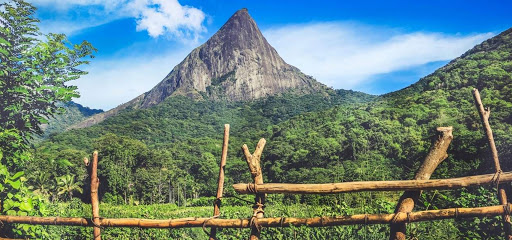
Meemure. Say it. Close your eyes and say it. It’s like someone humming a melody. Now think ‘Meemure.’ You will remember all you’ve heard of the name and the place. Idyllic. Dreamy. Mysterious. You can pick one of many adjectives. It’s a yanna hithena thanak (a place you want to visit).
Meemure. You might remember the name as one of the weekly ‘stops’ in the President’s Game Samaga Pilisandara (Conversation with the village(rs)) program. During that visit some villagers had requested the president to permit them to cultivate cardamom. On the face of it, a reasonable request considering that people in the area have harvested cardamon from the surrounding forests for centuries, i.e. until the possible dangers were noted, studied, policy recommendations submitted and laws enacted to stop the practice.
The problem is simple. That Meemure of, say, twenty years ago, is no longer the Meemure that you will encounter today. Those who are ignorant of changes that have taken place might argue that the villagers always had a symbiotic relationship with the jungle. They harvested various things but without compromising regenerative capacities, without felling trees, without facilitating any decline in biodiversity and so on. Then. Not any more.
Today, the notion of the innocent villager robbed of a lifestyle where livelihood was made in part by an engagement with the forest is a convenient cover. There’s a difference between someone picking cardamom growing wild to flavor a meal and someone growing cardamom for commercial purposes. The latter type can and do abuse opportunities offered to the former in good faith.
Today, there’s no juggery that’s not sugar-made. Today, if a villager falls seriously ill (at the ‘wrong’ time of the day), he/she might die on the way to the hospital because of the sheer traffic — it’s now a tourist destination, not an idyllic village. Of course there’s good and bad in these ‘developments.’ Some villagers have and continue to prosper. Some lament. In any event, it’s a different Meemure that’s out there. Well, it is a different country too. The economic system has undergone a lot of transformation. Profit is a powerful driver that can obliterate other factors. The needs-of-the- here-and-now constitute a powerful objector to sustainable lifestyles and of course all those other things flagged by ecologists, nature-lovers, econazis and of course those who use ‘ecology’ as a convenient armor in petty and narrow political battles.
Meemure, moreover, could be a metaphor for what’s happening in many parts of the country, especially when it comes to sensitive ecologies. Only the scientists truly know what’s what about such things. Indeed, anyone who truly loves nature will take the time to learn the science or seek the views of the scientists. Others are essentially dabblers. Dabblers can harm, knowingly or unknowingly.
As Mendis-Wickramasinghe pointed out, most who go to Sinharaja, for example, might want to see a bear, an elephant or a leopard. No bears, he said. There are some leopards, he said. Maybe elephant-sightings too. For that, he said, you would have to spend a long time there. More importantly, he showed pictures of all kinds of creatures that those who look for ‘the big guys’ would most certainly miss. He spoke of what damage can be caused by ignorance of complex phenomenon and processes, for things are connected in numerous ways. If you don’t see the complexity, your response, even with the best of intentions, could engender monumental disasters.
And here’s something else he said. Mendis-Wickramasinghe offered that we have a very narrow notion of ‘diversity’. We limit it to ethnicity and religion. How about the hundreds of indigenous species of fauna and flora, he posed. How about history? How about effective land-use options? How about impact on climate? How about, yes, the people, in these ‘Meemures’ and elsewhere?
Meemure. Yanna hithena thanak, that it is. Is it an inna hithena thanak (a place you want to remain), though? Think about it.
Things are unclear. Untold. Unfair. Certain things are even untenable. These are words that those who talk of development as being antithetical to the environment and even those who do not cut it that way rarely appreciate.
malindasenevi@gmail.com [Malinda Seneviratne is the Director/CEO of the Hector Kobbekaduwa Agrarian Research and Training Institute. These are his personal views.]
Colombo, April 5: The Gotabaya Rajapaksa Presidency, which is in its second year, is facing multiple problems, both domestic and external, economic as well as political.
Divisions have arisen in the ruling Sri Lanka Podujana Peramuna (SLPP) and also with alliance partners. There is difficulty in kick-starting the economy derailed by the COVID-19 pandemic, mainly due to flaws in the decision making and implementing apparatuses. The external debt repayment issue is looming in the horizon.
And last, but not the least, there is pressure from the UN Human Rights Council (UNHRC) on war time and post-war accountability issues with the Council getting authorization for the setting up of a mechanism to collect data on alleged war crimes and rights violations after the war.
The government is under pressure from India (and also the UNHRC) to hold the Provincial Council (PC) elections, not held since 2018. India insists that the 13 th. Amendment (13A) of the constitution which had set up the semi-autonomous, elected Provincial Councils, should not be repealed. The leadership is divided on the issue of PC elections and also on retaining the 13A.
President Gotabaya is against devolution power, especially as envisaged by the 13A. Sri Lanka will not allow other countries to achieve their geopolitical needs by introducing separatism under the guise of power devolution in the island nation”, he told a village audience recently.
Nationalist and Sinhala-majoritarian hardliners, who claim to be the architects of the SLPP’s victory in the November 2019 and August 2020, elections, strongly back the President on this issue. But Prime Minister Mahinda Rajapaksa and SLPP organizer Basil Rajapaksa look at Provincial Councils with devolved power as a useful political institution. They are keen on holding elections to the Councils.
Nevertheless, considering the opposition to the Provincial Councils and to holding elections to them now, Prime Minister Mahinda Rajapaksa has sought a parliamentary committee to go into the system under which they could be held. This issue has been pending for long. In 2018 parliament rejected the electorate de-limitation report submitted by the Delimitation Commission.
According to official sources, Provincial Council polls, if held at all, are unlikely before the end of 2021. Doubts about their being held at all have mounted since a section of Buddhist monks demanded that they should not be held before government delivers on its election promise to give a new constitution for the country. The new constitution is expected to be centralized and Sinhala-majoritarian in character to accord with the SLPP’s voter base. But that will run into trouble with the Tamil minority.
The 11 parties which are in alliance with the SLPP are now restive complaining that the SLPP leadership does not take them into confidence before taking decisions. Their target is the SLPP organizer Basil Rajapaksa. They plan to meet President Gotabaya to apprise him of their grievances. They have decided to display their autonomy by holding May Day programs separately this year.
Due to COVID-19 triggered restrictions, the total number of jobs in the economy contracted by 160,996 in the first quarter of 2020. Overall, in 2020, unemployment had increased from 48% to 6% according to one estimate. With tourism still curbed and the Middle East labor market being down, there is no immediate relief in sight as regards jobs. While agriculture has revived, the industrial and service sectors are sluggish with government reluctant to relax pandemic time restrictions. Sri Lanka has about US$3.5 billion foreign currency denominated debt to repay between March and December 2021.
To manage the challenge posed by the UNHRC, President Gotabaya has appointed a commission to go into alleged rights violations during the war and afterwards. Foreign Minister Dinesh Gunawardena has appealed to Tamil leaders and agitators to present their case before the commission and also utilize the existing Office of Missing Persons and the reparations office, instead of lobbying with the international community and the UNHRC.
But the Tamils say that they have no faith in Sri Lanka’s domestic mechanisms. In justification of this dim view, they cite Prime Minister Mahinda Rajapaksa’s repeated plea that the missing persons” had all died in the conflict.
Meanwhile, pressure is mounting on the government to take action on the report of the Presidential Commission which went into the April 21, 2019 suicide bombings in which 260 persons, mostly Catholics, were killed. Government is dithering on this report as it would be difficult to punish many named in the commission’s report, including former President Maithripala Sirisena who is now an ally of the SLPP government.
Cardinal Malcolm Ranjith has threatened to launch an agitation if the masterminds behind the bombings by Islamic zealots were not found out and all those who aided the bombers were not punished. But government has to tread carefully in this matter because any reckless action or unjustified actions against Muslims will alienate Islamic countries like Pakistan which supported Sri Lanka in the UNHRC recently, braving Western pressure to vote for their anti-Sri Lankan resolution.
New Delhi, Apr 05: Preliminary investigations into the Sukma attack by the naxalites suggest that CPI (Maoist) leader Basava Raju led the execution.
Basava Raju alias Nambala Keshav Rao took over as the general secretary of the CPI (Maoist) and has been part of the naxal movement since the 1970s. The National Investigation Agency had announced a reward of Rs 1.5 million for any information on Raju who is 67 years old. He is an expert at using the AK-47 according to a Intelligence Bureau report of 2011.
In the year 1987, Basava Raju along with Ganapathy, Mallojoula Koteshwar Rao, Malla Raju Reddy among others underwent training by LTTE cadres in the forests of Bastar in ambush tactics. In 1992, he was elected as member of the central committee of the erstwhile Communist Party of India Marxist-Leninist People’s War. In 2004 when the CPI (Maoist) was formed, Basava Raju was made the secretary of the central military commission.
In an article published in the party’s People’s War, Raju had said that if they could mobilise the peasantry on a vast scale and militantly into an armed agrarian revolution to completely solve the land issue in the country, they would acquire the most essential basic condition and preconditions to defeat all their enemies and complete the New Democratic Revolution.
Basava Raju’s primary areas of operation have been in the forests of Chhattisgarh. He is also a member of the CPI (Maoist) central region bureau. He is a resident of the Jiyannapeta village in Srikakulam, Andhra Pradesh. He goes by the aliases Krishna, Vijay, D Narasimha Reddy and Narasimha. He studied at the Regional Engineering College, Warrangal.
A Myanmar court has sentenced 12 Sri Lankan fishermen to jail terms of three to five years on three charges.
The 10-crew members were imposed with a jail term of three years and six months with a fine of 20,000 kyats
(Rs 2,800) each, while the fishing trawler drivers were charged with five years and six months jail term, with a fine of 200,000 kyats (Rs 28,300).
According to information received by Ceylon Today, the Court charged them for illegal entry into Myanmar waters, illegal fishing (without a fishing licence to fish in Myanmar territorial waters), and for not surrendering to the Navy Commander when spotted in the sea.
However, Ceylon Today learns that on 13 March, the Myanmar Court had issued a proposal for the deportation of the fishermen with a fine imposed, but the Government has not made use of the opportunity. The Ambassador posted to Myanmar has sent a Sri Lankan who is working there to resolve the problem, but it has failed, it is alleged.
The fishermen were arrested in February 2021 and were languishing in the detention camp, urging the Government to rescue them. However, Ambassador to Myanmar, Prof. Nalin de Silva had formally requested diplomatic intervention to obtain the release of them amidst the political upheaval in the country. Also, Foreign Affairs Secretary, Admiral Prof. Jayanath Colombage earlier told Ceylon Today they were working on negotiating the release of the fishermen.
It seems the delay in settling the matter has resulted in the Court sentencing them to prison.
It is said, the Myanmar Embassy in Sri Lanka has sent a letter to the Ministry of Religion and Cultural Affairs of Myanmar to get them released and the proposal supplement for the repatriation of Sri Lankan fishermen.
While working on the matter, the Ambassador to Myanmar had lamented that he is unable to rescue the fishermen and he failed in his mission. When Ceylon Today asked him why he had to post such a note on Facebook, he said it was his personal note.
Archbishop of Colombo, Malcolm Cardinal Ranjith yesterday asked the government not to appoint any more committees to delay action against those responsible for the Easter Sunday attacks. He made this statement after visiting a number of churches in Colombo and the suburbs yesterday.
The Cardinal said that the government had time till 21 April to take action against the perpetrators of the attacks and Catholics will take to the streets if their request went unheeded.
We won’t be fooled again. Please, don’t try to mislead us. The Presidential Commission of Inquiry (PCoI) on Easter Sunday attacks took 18 months to submitted its report. There is no need to delay to act on its recommendations. If taking action, based on this report, is delayed further it is an indication that there is no law in this country.”
Cardinal Ranjith also criticised former President Maithripala Sirisena. The PCoI report clearly said that President Sirisena had prior warning of the imminent attacks, the Cardinal said.
He is still a political party leader. He wants to contest elections. I would like to ask him whether he has no shame. He went abroad ignoring prior warnings of the attacks. How can he go before the people again? The PCoI report says he is guilty. There is no need to delay taking legal action against him.”
The Cardinal added that the PCoI report also mentioned about a senior police officer, who is in now a SDIG in the Central Province. He urged the government to implement the recommendations of the report.
Meanwhile, President Gotabaya Rajapaksa vowed to take action against the perpetrators of the Easter attacks. Issuing a message, President Rajapaksa said that the sorrowful memory of pain and loss caused by this tragic incident had not faded away from the broken hearts of the suffering people even today.”
The President also said that the government would ensure that such tragedies will not recur.
Yohan Perera and Ajith Siriwardana Courtesy The Daily Mirror
The Government is ready to introduce new legislation to regulate international schools, Education Minister Professor G. L. Peiris told Parliament today.
Responding to an oral question raised by SJB MP Sumith Sanjaya Perera in the House, Professor Peiris said the Government is willing to have a dialogue with the Opposition and then draft legislation to this effect.
We have no legislation to regulate international schools in the country. There are 393 international schools in the country that are registered with the BOI (Board of Investment) and Registrar of Companies. They are not registered with the Ministry of Education. However we are willing to have a dialogue with the Opposition and introduce legislation to regulate these schools,” he said.
The Minister who responded to a question raised by MP Mujibur Rahaman earlier said the Government will take action against state-funded private schools which do not follow the circular issued by the Ministry of Education regarding enrolment of children for Grade I.
Sri Lanka on Monday (April 05) confirmed another 37 fresh cases of the novel coronavirus in the country as total infections detected within the day reached 137.
This brought the total number of Covid-19 confirmed in the country thus far to 93,595.
According to the Epidemiology Unit, 2,451 patients infected with the virus are currently under medical care at designated hospitals and treatment centres while total recoveries have reached 90,563.
The death toll due to the Covid-19 pandemic in the country stands at 581.
President Gotabaya Rajapaksa has ordered the importation of Palm Oil into Sri Lanka to be halted with immediate effect.
Secretary to the President P. B. Jayasundera has advised the Controller-General of the Department of Imports and Exports Control to issue the relevant gazette order to give effect to these instructions within today (April 05).
Further, the Director-General of Customs has been advised to refrain from clearing palm oil cargos at the Department of Customs.
Concurrently, the cultivation of oil palm (Katu Pol) will be completely banned, President’s Media Division stated. Orders have been issued under the relevant laws enforcing the advice given by the President to ban the cultivation of oil palm completely.
Over six months ago, the President instructed to gradually ban the cultivation of oil palm in Sri Lanka.
Furthermore, companies and entities which have oil palm cultivations shall be required to remove them in a phased out manner with 10% uprooting at a time and replace it with the cultivation of rubber or environmentally-friendly crops each year to free Sri Lanka from oil palm plantation and palm oil consumption.
When this is fully operational, the government intends to stop the cultivation of oil palm and the consumption of palm oil completely, President’s Media Division stated.
Moditha Ekanayake, Attorney-at-Law, has issued a Letter of demand against 12 individuals seeking compensation of Rs 500 million for the physical and psychological damages caused to him by the failure to prevent the 2019 Easter Sunday terror attacks.
The letter of demand issued via Attorney at Law Sujeewa Gunatilake has been issued to 12 respondents including the former President Maithripala Sirisena, former Prime Minister, former State Minister of Defense Ruwan Wijewardene, former Inspector General of Police (IGP) Pujith Jayasundara, former Defense Secretary Hemasiri Fernando, and Attorney General.
Ekanayake, via his letter of demand, claims that the respondents had not taken steps to prevent the attack despite receiving sufficient intelligence on it.
Pointing out that he suffered critical injuries in the suicide bombing that took place at the Shangri-La Hotel in Colombo, the Attorney at Law demands Rs 500 million as compensation from the respondents.
The letter of demand further stated that legal action will be sought if the compensation is not paid within 14 days.
Further, Attorney at Law Moditha Ekanayake has issued another letter of demand to the Director Board of the Shangri-La Hotel in Sri Lanka demanding USD 1.5 million in compensation for the attack.
He claims that 02 suicide bombers were able to carry out their attack due to the lack of proper security arrangements at the Shangri-La Hotel.
In addition, the Attorney has issued yet another letter of demand to three more individuals including Mohammad Yusuf Ibrahim – father of the Shangri-La suicide bomber Mohamed Insaaf – who is currently under remand custody.
He has demanded compensation of Rs 400 million from the relevant letter of demand.
State Minister of Money & Capital Market and State Enterprise Reforms, Ajith Nivard Cabraal, says that Sri Lanka had spent Rs. 1,239 billion to import vehicles from 103 countries during the period from 2015 to 2019.
During 2015 to 2019, Sri Lanka has spent Rs. 1,239 billion to import vehicles from 103 countries”, he said speaking in parliament today (05).
He further said that the total number of vehicles imported during the period from 2015 to 2019 was 2,515,546.
In response to a question raised by MP Mohamed Muzammil, the State Minister stated that Sri Lanka has spent Rs. 41,576 million for timber imports from 2015 to 2019.
Two suspects, who had been arrested by the Terrorism Investigation Division (TID) after being deported from the United Arab Emirates (UAE), have been revealed to have propagated extremist ideologies.
Sri Lanka Police and the TID recently arrested two individuals who were deported from the UAE over various offenses.
One suspect, a 44-year-old from Mawanella, had been arrested on March 30 while the other, a 47-year-old from Matale had been arrested on March 25.
The laptops seized from the suspect had been analyzed and examined by a team of experts, revealing various lectures and video footage containing extremist ideologies.
Further investigations being carried out by the TID have revealed that the duo had conducted various lectures for Sri Lankan families in the UAE.
A special team has been deployed to interrogate the duo, according to Police Media Spokesperson DIG Ajith Rohana.
There is so much publicity
today in the Western Media of the vile nature of the Burmese (Myanmar) Army.
Before the Army took power
overthrowing the Govt. of Aung San Suu
Kyi recently, the entire Western media was gunning for Aung San Suu
Kyi branding her as a tyrant engaged in the persecution of
Bengali Muslims who had infiltrated Myanmar illegally and calling themselves as
‘ Rohingyas ‘.
All the accolades she had won previously were withdrawn one by
one by western institutions and Universities for the ‘crime’ of not allowing
illegal immigrants to settle down in Myanmar permanently.
Now again she is projected in better light by the media in order
to demonise the Myanmar Army.
What the vast majority of readers all over the world do not know
(and which is kept hidden from them) are the factors that have contributed
substantially to the political and economic crisis of Myanmar.
The exploitation of Burma by the British Empire.
This article was written by an Englishman E.A. Blair in 1929 and
archived by the Orwell Foundation.
Burma : HOW A NATION IS EXPLOITED – THE BRITISH EMPIRE IN BURMA
Following the recent troubles in India, we have asked our
contributor, Mr E. A. Blair, whose investigations on ‘The Plight of the British
Worker’ have already appeared in these pages, to tell us something of the
unrest which has been fermenting in the sub-continent for some years, and which
is threatening to spread to English Indo-China.
Mr E. A. Blair, who lived in Burma for some years,
has written the following interesting article for us[1], which shows the
methods the British Empire uses to milk dry her Asian colonies.
Burma
lies between India and China. Ethnologically it belongs to Indo-China.
It
is three times the size of England and Wales, with a population of about
fourteen million, of whom roughly nine million are Burmese.
The
rest is made up of countless Mongol tribes who have emigrated at various
periods from the steppes of Central Asia, and Indians who have arrived since
the English occupation.
The
Burmese are Buddhists; the tribesmen worship various pagan gods.
To
be able to talk in their own language to the people of such diverse origins
living in Burma, you would need to know a hundred and twenty different
languages and dialects.
This
country, the population of which is one-tenth as dense as that of England, is
one of the richest in the world. It abounds in natural resources which are only
just beginning to be exploited.
There
are tin, tungsten, jade and rubies, and these are the least of its mineral
materials.
At
this moment it produces five per cent of the world’s petroleum, and its
reserves are far from exhausted.
But
the greatest source of wealth-and that which feeds between eighty and ninety
per cent of the population-is the paddy fields.
Rice
is grown everywhere in the basin of the Irrawaddy River, which flows through
Burma from north to south.
In
the south, in the huge delta where the Irrawaddy brings down tons of alluvial
mud every year, the soil is immensely fertile.
The
harvests, which are remarkable in both quality and quantity, enable Burma to
export rice to India, Europe, even to America.
Moreover,
variations in temperature are less frequent and sharp than in India.
Thanks
to abundant rainfall, especially in the south, drought is unknown, and the heat
is never excessive. The climate as a whole can thus be considered one of the
healthiest to be found in the tropics.
If
we add that the Burmese countryside is exceptionally beautiful, with broad
rivers, high mountains, eternally green forests, brightly coloured flowers,
exotic fruits, the phrase ‘earthly paradise’ naturally springs to mind.
So
it is hardly surprising that the English tried for a long time to gain
possession of it.
In
1820 they seized a vast expanse of territory. This operation was repeated in
1852, and finally in 1882 the Union Jack flew over almost all the country.
Certain mountainous districts in the north, inhabited by small savage tribes,
had until recently escaped the clutches of the British, but it is more and more
likely that they will meet the same fate as the rest of the country, thanks to
the process euphemistically known as ‘peaceful penetration’, which means, in
plain English, ‘peaceful annexation’.
In
this article I do not seek to praise or blame this manifestation of British
imperialism; let us simply note it is a logical result of any imperialist
policy.
It
will be much more profitable to examine the good and bad sides of British
administration in Burma from an economic and a political standpoint.
*
* * * * * * * * * * * * * * *
Let
us turn first to politics.
The
government of all the Indian provinces under the control of the British Empire
is of necessity despotic, because only the threat of force can subdue a
population of several million subjects.
But
this despotism is latent. It hides behind a mask of democracy.
The
great maxim of the English in governing an oriental race is ‘never get
something done by a European when an Oriental can do it’. In other words,
supreme power remains with the British authorities, but the minor civil
servants who have to carry out day-to-day administration and who must come into
contact with the people in the course of their duties are recruited locally.
In
Burma, for example, the lower grade magistrates, all policemen up to the rank
of inspector, members of the postal service, government employees, village
elders etc. are Burmese.
Recently,
to appease public opinion and put a stop to nationalist agitation which was
beginning to cause concern, it was even decided to accept the candidature of
educated natives for several important posts.
The
system of employing natives as civil servants has three advantages.
First,
natives will accept lower salaries than Europeans.
Secondly,
they have a better idea of the workings of their fellow countrymen’s minds, and
this helps them to settle legal disputes more easily.
Thirdly,
it is to their own advantage to show their loyalty to a government which
provides their livelihood.
And
so peace is maintained by ensuring the close collaboration of the educated or
semi-educated classes, where discontent might otherwise produce rebel leaders.
Nevertheless
the British control the country. Of course, Burma, like each of the Indian
provinces, has a parliament-always the show of democracy-but in reality its
parliament has very little power.
Nothing
of any consequence lies within its jurisdiction. Most of the members are
puppets of the government, which is not above using them to nip in the bud any
Bill which seems untimely.
In
addition, each province has a Governor, appointed by the English, who has at
his disposal a veto just as absolute as that of the President of the United
States to oppose any proposal which displeases him.
Yet
although the British government is, as we have shown, essentially despotic, it
is by no means unpopular.
The
English are building roads and canals-in their own interest, of course, but the
Burmese benefit from them-they set up hospitals, open schools, and see to the
maintenance of law and order.
And
after all, the Burmese are mere peasants, occupied in cultivating the land.
They
have not yet reached that stage of intellectual development which makes for
nationalists.
Their
village is their universe, and as long as they are left in peace to cultivate
their fields, they do not care whether their masters are black or white.
A
proof of this political apathy on the part of the people of Burma is the fact
that the only British military forces in the country are two English infantry
battalions and around ten battalions of Indian infantry and mounted police.
Thus
twelve thousand armed men, mostly Indians, are enough to subdue a population of
fourteen million.
The
most dangerous enemies of the government are the young men of the educated
classes. If these classes were more numerous and were really educated, they
could perhaps raise the revolutionary banner. But they are not.
The
reason is firstly that, as we have seen, the majority of the Burmese are
peasants.
Secondly,
the British government is at pains to give the people only summary instruction,
which is almost useless, merely sufficient to produce messengers, low-grade
civil servants, petty lawyers’ clerks and other white-collar workers.
Care
is taken to avoid technical and industrial training. This rule, observed
throughout India, aims to stop India from becoming an industrial country
capable of competing with England.
It
is true to say that in general, any really educated Burmese was educated in
England, and belongs as a result to the small class of the well-to-do.
So,
because there are no educated classes, public opinion, which could press for
rebellion against England, is non-existent.
*
* * * * * * * * * * * * * * *
Let
us now consider the economic question. Here again we find the Burmese in
general too ignorant to have a clear understanding of the way in which they are
being treated and, as a result, too ignorant to show the least resentment.
Besides,
for the moment they have not suffered much economic damage.
It
is true that the British seized the mines and the oil wells. It is true that
they control timber production. It is true that all sorts of middlemen,
brokers, millers, exporters, have made colossal fortunes from rice without the
producer-that is the peasant-getting a thing out of it.
It
is also true that the get-rich-quick businessmen who made their pile from rice,
petrol etc. are not contributing as they should be to the well-being of the
country, and that their money, instead of swelling local revenues in the form
of taxes, is sent abroad to be spent in England.
If
we are honest, it is true that the British are robbing and pilfering Burma
quite shamelessly.
But
we must stress that the Burmese hardly notice it for the moment. Their country
is so rich, their population so scattered, their needs, like those of all
Orientals, so slight that they are not conscious of being exploited.
The
peasant cultivating his patch of ground lives more or less as his ancestors did
in Marco Polo’s day. If he wishes, he can buy virgin land for a reasonable
price.
He
certainly leads an arduous existence, but he is on the whole free from care.
Hunger
and unemployment are for him meaningless words. There is work and food for
everyone. Why worry needlessly?
But,
and this is the important point, the Burmese will begin to suffer when a large
part of the richness of their country has declined.
Although
Burma has developed to a certain extent since the war, already the peasant
there is poorer than he was twenty years ago.
He
is beginning to feel the weight of land taxation, for which he is not
compensated by the increased yield of his harvests.
The
worker’s wages have not kept up with the cost of living.
The
reason is that the British government has allowed free entry into Burma for
veritable hordes of Indians, who, coming from a land where they were literally
dying of hunger, work for next to nothing and are, as a result, fearsome rivals
for the Burmese.
Add
to this a rapid rise in population growth-at the last census the population
registered an increase of ten million in ten years-it is easy to see that
sooner or later, as happens in all overpopulated countries, the Burmese will be
dispossessed of their lands, reduced to a state of semislavery in the service
of capitalism, and will have to endure unemployment into the bargain.
They
will then discover what they hardly suspect today, that the oil wells, the
mines, the milling industry, the sale and cultivation of rice are all
controlled by the British.
They
will also realise their own industrial incompetence in a world where industry
dominates.
*
* * * * * * * * * * * * * * *
British
politics in Burma is the same as in India.
Industrially
speaking, India was deliberately kept in ignorance.
She
only produces basic necessities, made by hand. The Indians would be incapable,
for example, of making a motor-car, a rifle, a clock, an electric-light bulb
etc. They would be incapable of building or sailing an ocean-going vessel.
At
the same time they have learnt in their dealings with Westerners to depend on
certain machine-made articles. So the products of English factories find an
important outlet in a country incapable of manufacturing them herself.
Foreign
competition is prevented by an insuperable barrier of prohibitive customs
tariffs. And so the English factory-owners, with nothing to fear, control the
markets absolutely and reap exorbitant profits.
We
said that the Burmese have not yet suffered too much, but this is because they
have remained, on the whole, an agricultural nation.
Yet
for them as for all Orientals, contact with Europeans has created the demand,
unknown to their fathers, for the products of modern industry. As a result, the
British are stealing from Burma in two ways:
In
the first place, they pillage her natural resources; secondly, they grant
themselves the exclusive right to sell here the manufactured products she now
needs.
And
the Burmese are thus drawn into the system of industrial capitalism, with any
hope of becoming capitalist industrialists themselves.
Moreover
the Burmese, like all the other peoples of India, remain under the rule of the
British Empire for purely military considerations. For they are in effect
incapable of building ships, manufacturing guns or any other arms necessary for
modern warfare, and, as things now stand, if the English were to give up India,
it would only result in a change of master. The country would simply be invaded
and exploited by some other Power.
British
domination in India rests essentially on exchanging military protection for a
commercial monopoly, but, as we have tried to show, the bargain is to the
advantage of the English whose control reaches into every domain.
*
* * * * * * * * * * * * * * *
To
sum up, if Burma derives some incidental benefit from the English, she must pay
dearly for it.
Up
till now the English have refrained from oppressing the native people too much
because there has been no need. The Burmese are still at the beginning of a
period of transition which will transform them from agricultural peasants to
workers in the service of the manufacturing industries.
Their
situation could be compared with that of any people of eighteenth-century
Europe, apart from the fact that the capital, construction materials, knowledge
and power necessary for their commerce and industry belong exclusively to
foreigners.
So
they are under the protection of a despotism which defends them for its own
ends, but which would abandon them without hesitation if they ceased to be of
use.
Their
relationship with the British Empire is that of slave and master.
Is
the master good or bad? That is not the question; let us simply say that his
control is despotic and, to put it plainly, self-interested.
Even
though the Burmese have not had much cause for complaint up till now, the day
will come when the riches of their country will be insufficient for a
population which is constantly growing.
Then
they will be able to appreciate how capitalism shows its gratitude to those to
whom it owes its existence.
E.
A. BLAIR
NOTES
[1] Raoul Nicole wrote on 22 March 1929, while Orwell was
still in the Hôpital Cochin, to say he was sorry Orwell was ill and thanking
him for his article on Burma. This would, he said, be included in an early
issue of Le Progrès Civique, and,
indeed, would have appeared already were it not that the journal had been
embarrassed by a large number of articles on foreign affairs. Orwell was paid
225 francs for the article on 11 June. This was the last article he is known to
have had published in Paris.
Published
by Le Progrès Civique, 4 May 1929. CW 86.
Translated into English by Janet Percival and Ian Willison
Jayawewa! Venceremos! Viva
la Sri Lanka! We, the Non-Aligned, the Global South and Sri Lanka, gave a
bloody nose to the global bully; we together defeated America, the new
Caucasian Colonial cuss which attempted to use the UNHRC, to drag our heroic
soldiers and fry them after a mock trial in an Electric chair in the US for
having decisively defeated the American backed terrorists; the Americans also
attempted to use the UNHRC to give itself unilateral powers to invade sovereign
Nation States with impunity and, to unilaterally impose economic sanctions on
other Nation States of the world.
The Americans failed
thanks to the valiant efforts of the Progressives in the Government,
spearheaded by Mahinda Rajapaksa and which included Dinesh Gunawardena.
But that was only a single
battle; let Sri Lanka gear up for more. We shall overcome the Enemy if we are
vigilant and use our heads.
But first things first,
let us savour our victory.
The henchmen of the
Americans tabled the draft Resolution against Sri Lanka, with all its
fabrications and lies.
America’s
devious plan
While Sri Lanka was the
obvious target of the draft Resolution, the Americans had deftly concealed a
far more devious plan; the Americans conspired to have the draft Resolution
adopted unanimously using some of their agents, inside Sri Lanka.
If the draft Resolution
against Sri Lanka had been adopted unanimously, such unanimity would have given
moral justification, by virtue of precedence, for the application of these same
recommendations to other sovereign Nation States, especially those in the
Non-Aligned bloc and the Global South, also targeted by the Americans for
Colonisation.
Bachelet
attempts to arrogate to herself the powers of the UN Security Council
It is ironic that the
justification for the application of the Resolution to Sri Lanka and extending
that justification to other Sovereign States was being made when the
recommendations made by Bachelet were in total violation of the UN Charter,
when the High Commissioner was acting ultra vires in making such
recommendations and when the High Commissioner, arrogantly and in violation of
the UN Charter, was arrogating unto herself the powers of the UN Security
Council.
The
New World Order – the Order of the American bully
If the draft Resolution
had been passed, unanimously, the world would have been pushed, yet another
step closer, to a new Global Order, the Order of the American bully where only
American unilateralism would prevail; it would have resulted in the demolition
of some major pillars of the existing Multilateral Global Order where every
Nation State enjoys Sovereign Equality and every sovereign Nation respects the
sovereignty of the others.
The recommendations and
wording in the Bachelet Report gave the lie to why the Americans were pushing
for the draft Resolution to be adopted unanimously.
Reaching
Consensus on the Resolution meant Sri Lanka admitting to being a Failed State
Bachelet in her report
says, The Government has now demonstrated its inability and unwillingness
to pursue a meaningful path towards accountability for international crimes and
serious human rights violations.”
If the draft Resolution
had been adopted, unanimously, it would have meant that Sri Lanka admits and
agrees with the rest of the world community to being a Failed State; viz,
unable and unwilling to enforce the law against perpetrators of major crimes
and violators of Human Rights.
And loaded into that
statement, subtly camouflaged but nevertheless implied, is the admission that
Sri Lanka did commit ‘international’ crimes and that Sri Lanka is indeed guilty
of serious Human Rights violations.
With such a
self-admission, with the Resolution having the unanimous support of all the
Nations of the world, it would have been a herculean task for Sri Lanka to
resist the recommendations, made by Bachelet, being implemented within the country,
although the contents of Bachelet’s recommendations are in violation of the UN
Charter and although Bachelet has not been delegated by the UN with the powers,
she has arrogated unto herself to make such recommendations.
Bachelet
copies verbatim from the dust -binned American template of Colonising Sovereign
Nation States
The Bachelet report
contains verbatim, some passages from that obnoxious document, rejected by the
world community, ‘Responsibility-to-Protect-Other-Nations’, the American template
to Colonise Sovereign Nation States.
Bachelet had perhaps
retrieved this document from the dustbins of a handful of fellow trailer-trash
who in 2001, banding together, had given a highfalutin description of
themselves, heh-heh-heh, ‘The International Commission of Intervention and
State Sovereignty (ICISS)’!!
Canada
embroiled in the ongoing genocide of a group of its citizens funds the
‘Responsibility to Protect-Other-Nations’ project
It was this schmuck that
produced this fetid document, ‘Responsibility-to-Protect-Other-Nations’. This
trailer-trash group was financed and directed by Canada, that white settler
Nation making feeble attempts to clear itself of charges of ongoing genocide of
the country’s indigenous population.
Some crucial passages from
this discredited doctrine, have been borrowed and insidiously inserted by
Bachelet in her Report.
The Bachelet Report
recommendations permit the Americans to military invade any country, if America
unilaterally decides to do so; it permits America to kidnap, investigate,
prosecute, convict, imprison and execute soldiers of any country (like the case
of Sri Lanka’s soldiers) in American facilities including those forcibly and
illegally occupied by them like Cuba’s Guantanamo Bay, and additionally to
peremptorily invade any country to prevent an anticipated disaster or tragedy
as foreseen by America.
Sarath Wijesinghe former Chairman Consumer affairs Authority, President’s Counsel, former Ambassador to UAE and Israel, President Ambassador’s forum
Introduction of digitalization during the festive season for sustainable
educational framework
World is fast changing despite dangerous ‘’Covid19’’ – a Pandemic leading
towards success in Sri Lanka through education on vistas of prosperity and
spender in order to digitalize the system and
modernize the natural knowledge
based on human capital to suit the 21st century on the theme ‘’Towards
a perfect education that enriches wisdom and experiment’’ on steps taken by the programme and vision of the
President ‘Gotabaya Rajapaksa’ , in education and digitalization on introducing
a new platforms and programmes coupled with education, development and other
subjects including trade and international
issues- a leap frog from programme for the future. It is a salutary news that
Sri Lanka is keeping pace with the modern developments even during the festive
season easing the citizen pressurised with pandemic and economic hardships due
to economic downturns world over. It is indeed salutary that digitalization and
modern international platforms are utilized in combating ‘’Covid 19’’ and
development strategies including agriculture which is in the topic of the
agenda today.
Festive season and prices of consumer items in the current legal regime
Festive season is nearing and the talk of the town is the prices of
consumer items and the legal frame work which has not still been settled on
trade, business, competition and prices of items in demand. There is a leading
news by the Minister ‘Bandula Gunawardena’ that Consumer Protection act of 1979
will be amended when in fact it is repealed by the Consumer Affairs Authority
Act no 9 of 2003 on 17th march 2003 with other existing legislation amalgamating
the current act which is a combination of Australian, Canadian, Modelled system
with basic English principles partly embodied in the act which is not a
properly effective piece of legislation in action today. It is the duty of the
officials to brief the minister on updates on legislature on making such
important public statements which are the basis of current and future changes
on legislature, when the Minister again claims to change current old and
outdated legal structure to be proactive modern and applicable for the current developments. Minister has quite
correctly stated that the current legislation is outdated and is a ‘’toothless
lion’’ needing drastic changes and vigour with modern changes on the digital
age with new international platforms and developments in line with the changes world
over. Act no 9 of 2003 changed the existing (then) pattern and structure of
successful concept of price control still in force in the United Kingdom to the
current system of regularization of trade also based on competition law and
modern commercial law concepts, which has not been understood by the successive
regimes attempted to implement the concept introduced by Hon ‘Lalith
Atulathmudali’ then Minister of Trade who introduced the legislation with best
of intentions which unfortunately unsuccessful on implementation. Undisputedly change of the CAA act is badly
needed and the CAA during successive Chairmen has attempted to do so with no
success. It is advisable to seek the advice of the previous chairmen in the
process.
Drastic changes necessary
This is not the time for immediate major drastic changes of law, and
best is to give time and long space for
a complete and comprehensive study in the law and practice with international
trade and developments which are now interwoven and interlinked. What is news
today is the controversy over coconut oil, paddy and rice prices, alleged sugar
scam, and rising cost of living due to price rise of every consumer item the
CAA has miserably failed to answer. How does the price structure operate in Sri
Lanka is very interesting. Trader can sell consumer prizes at any reasonable price
provided it is of good quality and of quality health standards in order to
provide the prize mark is exhibited on the show room cage for the citizen
clearly seen identifying the items, whereas under the previous legislation
control of prices act 173 (which is repealed) prize mark was strictly adhered
to on conditions on price control legislation with prize control system. Then
what is the maximum prize? In the current prize regime and the fluctuation of
the prizes of paddy, rice, sugar, coconut ect are issues confronted to the consumer which is
bit hard to understand to follow. It is operative under S/18 of the act when
the Minister and the Authority can determine the wholesale and retail prize if
the consumer item by a gazette notification with the condition that 18(2). No
manufacturer or trader shall increase the retail for wholesale price of any
goods of and services specified under subsection (1) except with the prior
written approval of the authority. This is not effective and straight as the
price control procedure which is working well in UK which is repealed here in
1979. Attempts have been made to change the consumer law on many previous
occasions and today we have to be extra cautious due to the modern trends,
introduction of new international platforms and changes due to
digitalization process which is ever growing with the mobile
penetration of 110% of the population and the developments on the knowledge an practice
one learning when village children climbed water tanks for WIFI and the
villager got use to what’s up for the payment of water and electricity bills through
the network of computer centres at aver junction. A good trend ever increasing
in deed! We have to take note of all international trends and changes in
framing if any legislation or rules on consumerism in future! School teachers
conducted online classed with the help of their computer literate children –
our future scientists.
‘’Covid 19 ‘’- do not see and end so soon- let us be ready for any
eventuality
‘’Covid 19’’ has changed the entire marketing developments and life of
the ordinary citizen including students and the working class. There is no guarantee
the ‘’Covid 19’’ will end or a time frame to end thereby we have to live on
hopes and be prepared for any eventuality, so that future planning is near
impossible. Sri Lankans proved themselves to be adoptable to any adverse
conditions or situations on facing for ‘’Covid 19’’ and hardships to citizen
all of whom are consumers. Prices of consumer items are going up with ‘’Covid19’’
in addition many other considerations which effects the consumer in all fronts,
food being the main consideration. Food that is available should be reasonably
prized and of quality as requited by section 7 (a) (b) (c) and (d) which states
that it is the duty of the Authority to see that consumer is provided with
goods and services not hazardous to the consumers (section 4) protect against unfair
trade practices, adequate access to goods and provide redress against
exploitation. All this has to be implemented by regulatory powers in part two
of the Act. Anti-competitive practices are dealt with in the Consumer Affairs Council
also engaged in research and procedure on air trade practices. ‘’Covid 19’’
also has melded the attitudes of the citizen with better relations with the
trader consumer, and the regulator, for the trader and industrialist to be fair
and the consumer to be smart sharp and careful to have the ideal combination of
fair trader, alert consumer and able regulator. Consumer must change attitudes
to be simple and smart to ascertain a) when to purchase, b) where to purchase
and how to purchase items available. Consumer items to be purchased with required
quantities and well planned for the day or week giving priority to health and
quality. Fruits should not be purchased from long term stalls and imported
fruits and vegetable should be avoided when we have such great verities- for
example Banana in UK has only one variety which is available with not much
taste when we have so many verities at very reasonable of taste and quality.
Fresh vegetables and fruits could be purchased cheap in markets. Cola should
not be consumed at any cost which is poisons
and expensive. Why consume bottled water in plastics bottles which can
be poisonous, and unhealthy, when we can have boiled and cold water in glass
bottles which is cheap and healthy. Where you purchase consumer items is north
worthy to note as the best would be ‘Sathosa’ when non-perishables can be
stored and it is a good idea for the family to plan out the week or month as an
exercise to save and be healthy. During goods online purchase can be practised
which can extend to clothes and other consumer items for convenience and
safety. Now that the entire life style is changed due to ‘’Covid 19’’, it is
time to be prepared to go through it for an unspecified period with changes of
future plans. Needless to state that all precautionary measures are to be
followed to the last word for a long term solution and healthy stable and happy
life with the family.
Bogus Sales, Congestion, perches of varied items and presents to family
and friends
Consumer should be aware of rights, duties and the expectations from the
trader and the industrialist. It is the duty of the trader to give the consumer
dignity, quality goods, and services, at a reasonable price indicated on the
rack or the showcase. Consumer has the right to complain to the CAA or a branch
office which you will have access form 1919 system, or personal complain to the
CAA office or a branch. Telephone and written complaints are accepted and the
CAA is prompt on complaints by the consumer who the CAA and the trader
considers as top priority. Consumer need not be hesitant to question or
complain and it can be done in friendly manner as it is your right to do so.
Bogus sales are plenty and the consumer should use common sense in purchasing
very cheap items with hidden charges. It is advisable to take your own time in selecting
the gods as it is your money that you are parting with. Consumer should know the
basic needs rights and duties and expectations from the trader to be a
satisfied consumer. When you purchase electric and electronic items one should
be careful on the make, quality and the condition you may not be conversant
with when you have to be careful on the guarantee/documents/cards and specially
the letters in small letters in a language not known to you. It is advisable to
demand for a receipt for which you are entitled to and you can request more
details on the receipt. Some traders will encourage you to give on credit on
hire purchase schemes, and you should be careful in signing documents on
conditions with small letters in a language not known to you, and giving your
personal information. It is advisable to seek the advice of a known family member
generally conversant with trade practices. Always ask for the visiting card and
other details of the trader and trading names with contact numbers. It is a
joint effort of trader, consumer, regulator, and industrialist for a better
consumer regime and a fair trading regime. Especially during festive season be
extreme careful of the 8000 drug addicts on the road in Colombo awaiting for
preys which can be dangerous with their addictions on drugs. Always be in touch
with security forces and loved ones always during exposure to the traders and
public.
Quality of consumer items/ Consumer Organisations
Trader is bound to give items of quality to the consumer and finding the
quality is an issue always unless it is tested by the standard bureau or tests
by a group of consumers. It is imperative for the consumers to be a member of
one or more consumer organization which is very forceful in other parts of the
world. In the United Kingdom the consumer organizations are very powerful and
the trader is obliged to be consumer friendly based on the famous adage that
consumer dies no wrong and always correct. Consumer Affairs Authority is
expected to assist monitor and encourage consumer organizations as powerful
groups though less powerful compared to UK and other parts of the world. Then
what about the rice prices, adulterated coconut oil, consumer items of inferior
quality, and hiding a storing the consumer items refusing to sale are offence
under the consumer liable to be prosecuted. In UK and west the returned items
are accepted but sadly not in Sri Lanka, when you can exchange if and when you
need to change or return. Consumer organizations should agitate for this right
with the help of CAA.
Digitalization modernization and modern trends on trade practices
The quality of goods services of food and consumer items are substandard,
and of inferior quality due to lack of supervision and regulation by the CAA
and other regulators such as TRCEL insurance, and Trade Ombudsman ,Public health
inspectors local councils , health department, and many statutory bodies. With
advancement of technology Sri Lankans are at the doorsteps of digitalization
with mobile phones in everybody’s hand (110% of the population) and computer literacy of 40% ever increasing?
Younger generation is now armed with excellent computer skills able to use
credit cards, advanced banking methods, and engaged in modern technology via
face book and other social media platforms for day to day office with computer
centres every corner on the road used by adults. However in Sri Lanka online
shopping is not practiced often as in the United Kingdom where 40% of the consumer
items are purchased online when the practice is fast used in Sri Lanka too. Sri
Lanka appears to be ready for a leap
frog with the advanced applicability of modern technology and day to
day transections and day will not be too far when the majority of the
population makes its purchases online. ‘’Uber’’ a worldwide digital application
catering to millions of people worldwide including Sri Lanka. These technologies
are expanding to blow drying to food chains when majority of consumer’s
population purchases online. ‘’Uber’’ – a main digital application
catering to millions of customers worldwide including Sri Lanka These
techs are expanding to bring blow drying and food items to door
steps which will revolutionize online
purchasing further. Digitalization of
Education has commenced by setting digital classrooms which equips students and
teachers with laptops and tabs how do you make digital regimes fairer in Sri
Lanka with outdated regulator CAA with fast developments on technology? We
watched on the television an impressive digital class room at ‘’Thurstan
College’’ and we understand the trend is fast spreading. Are we in the digital age
or in the door steps are the issues to be resolved today. Digitalization in the
world is fast spreading with adverse effects shedding billions of
jobs with no strategy from the state and the leaders of the private
sector to find alternate arrangements to use them as innovators as in Israel.
Digital Market places are thriving in west has a foothold in Sri Lanka and the
potential is very interestingly limited changes of lifestyles due to innovative
changes making life easier. However these changes include the risk of health other
unexpected and undesirable changes in the economy. Will Sri Lanka be effected
by the ripple effect or to what extent it will invade Sri Lanka is a matter of
time Digitalization developments depend on the vision considering the mobile
and internet user are young. Experts predict
saturated digital market in Sri Lanka in Sri Lanka in 10 year with innovative smart cities in
line with Israel Hong Kong and UAE When
40% of the global population is online with 750 million global internet
users Sri Lanka will be finding it difficult
to join the world out of necessity ad compulsion. Chinese multinational
company Alabama started by the owner an English Teacher Hangzhou is the biggest
retailer with 100 British Brands and with 440 million active clients which is
also protected by the UK government could be considered as a guide lines for our digital mister
Introduction of the Mycroft 365 with cloud business transformation by commercial
banks are in the It is good to be Careful
anyway It is time to encourage and promote our young entrepreneurs in in with
the vision in the Israel youth on innovation taking them up to the world standards
on creative innovative Dhammika Perera supposed to be the richest man in Sri Lanka
who bought Singer recently said at the recent
presentation in Colombo he has increased business of singer by 38% after taking over
and introducing online observed that
online trend was settling to a mixture of online and storage stores
worldwide again indicating the
uncertainty of world business trends at
successive speed.
Challenges and Way Forward
Digitalization, Modernization, Trade and Consumerism is interconnected
and interwoven with each other in the present context connected and depending
on each other. Trade and consumerism is a part and parcel of the life and digitalization
and modernization are complementary. World is ever changing with challenges
they are faced with especially on ‘’Covid19’’ pandemic when village bravely
faced by using what’s app to make payments,
children climbed water tanks for WIFI and teachers were guided and
trained by children for distant teaching on line are proof that Sri Lanka and
Sri Lankans are adoptable to any challenges. Invasion of international digital
platforms to Sri Lanka is inevitable and be ready to accept and meet challenges
without changing ourselves culturally and age old traditions and habits we are
lived with. Consumerism is not an alien concept to us when we had the Badulla
‘’TAM’’ in 1857 AD, with instructions to the consumer and trader along with
other 4000 ‘’TAMS’’ found on excavations, to show our past glory and education
on the subject. Therefore it is time for us to give and interpret the correct
meaning on consumerism to have the balancing livelihood of consumer, trader,
regulator and the industrialist. We hope and expect the citizen be happy
contended and extend peace goodwill and loving kindness to the world over.
Sarath7@hotmail.co.uk
Colombo, April 2: Chinese President Xi Jinping, in his telephone conversation with Sri Lankan President Gotabaya Rajapaksa earlier this week, said that China can lend a hand to Sri Lanka in the eradication of poverty adding that China succeeded in ending extreme poverty among 99 million people.
President Rajapaksa said that the Hambantota Port Project and development of infrastructure facilities are continuing in a satisfactory manner and urged the government of China to complete the project. He said he is committed to putting the country on the track of prosperity within the next four years. The eradication of poverty is my prime concern for which we can take a cue from China,” President Rajapaksa said.
On September 25, 2020, President Gotabaya launched the ‘Discussion with the Village’ (Game Samaga Pilisandara) program in Haldummulla in Badulla district. The core intention of this program is to meet the people of remote villages who have not been given due attention so far, and inquire into their problems, to bring them to the notice of officials and provide solutions. The ultimate aim of the program is to eradicate rural poverty.
Chinese President Xi Jinping had a similar program in which he continually conducted grassroots visits since he became President of China in the beginning of 2013. His program titled, Precision Poverty Alleviation” began with a visit to Shi Ba Dong Village, Hu Heng County, Hu Nan province, which is a remote village, marked by rampant poverty.
Right after President Xi’s visit to this village, a national campaign to alleviate poverty with precise and sustainable solutions was developed. By December 2020, China has successfully eliminated extreme poverty for the first time in its 2200 year existence as a State.
Based on the experiences and successes achieved with the Precision Poverty campaign, China further developed its rural development mechanism to a comprehensive system called Rural Revitalization”, launched in January 2018.
In January 2021, while still being challenged by domestic and international challenges caused by the pandemic, the Chinese government issued the No.1 Government Document to set Rural Revitalization” as the top priority of the President Xi’s administration. China would like to share its experiences and solutions with other developing countries through innovative international cooperation.
President Xi has emphasized that the reason why his administration has put rural livelihood development and upgrading among its top priorities is because a really healthy and strong country or a human society cannot be formed without a solid foundation of the happiness of their people coming from different geographic and social backgrounds, especially the most vulnerable ones. This is not merely a mission of China, but the vision for human civilization.
Chief Researcher of International Research Center for NeoChina Socialism, Liu Yang Sloan, says there is vast potential to integrate China’s RR experiences into the Sri Lankan context and form a duplicate mechanism for other developing countries. It is believed that the system will be able to integrate international support and investment directly to even the most remote corners of the earth through cutting-edge technologies such as GIS and Blockchain.
We will take a close follow-up look at this mechanism and see how such a miracle is happening here in Sri Lanka,” he added.
To develop a comprehensive and sound rural revitalization system which can deal with the complexity of the rural situation in each developing country is not an easy job. However, thanks to the joint work of the International Research Center of NeoChina Socialism , National Youth Service Council, Sri Lanka Telecom, Colombo Stock Exchange and a number of other technical and social institutions in Sri Lanka and China, an integrated RR mechanism called 3DRROS is currently under development in Sri Lanka, Liu said.
President Rajapaksa sought Chinese assistance for the establishment of a Technology University in Hambantota as a symbol of close and cordial relations between the two nations. With regard to cooperation in technology for economic development, Chinese Researcher Liu detailed the proposed cooperation under the academic enhancement campaign of Science, Technology, Engineering and Mathematics (STEM) which has been widely accepted by the world to boost human, social and economic development for any specific region.
Xi Jinping visits a poor Chinese rural household
As the entire human race is facing unprecedented challenges caused but the COVID-19 pandemic, continuous out-of-box solutions must come on stage as soon as possible to meet the urgent needs of the people, especially the most vulnerable ones, he said.
All such solutions should be objective and STEM-based so that they can be delivered to the people efficiently to make some real changes.
Liu pointed out that President Gotabaya Rajapaksa has a sound technical background with his academic achievements while studying as an IT student in Colombo University and working as a Unix Solaris Expert in the USA. He has a clear understanding about the importance of integrating the STEM environment into the social development of Sri Lanka.
Ever since the establishment of the Ministry of Technology and as the Minister, President Rajapaksa has emphasized the necessity to immediately equip Sri Lankan youth with STEM-related knowledge and skills to better deal with the current challenges and difficulties of their personal lives in national and international scenarios,” he said.
When it comes to Rural Revitalization, STEM means to bring all the cutting-edge technology to the rural area and make miracles happen, starting from satellite based smart agriculture to all sorts of agricultural equipment to comprehensive e-commerce mechanism which can link rural products to the world market efficiently, to smart classrooms which will pave a solid foundation for rural children so that they can have enough capabilities to change their lives.
Senior Advisor Hemal Dias of International Research Center for NeoChina recalled that since independence all the successive governments in Sri Lanka have focused on poverty alleviation with the introduction of many programs such as Janasaviya, Samurdi and Gamaneguma, but many people still live below the poverty line.
The majority of our rural families are still poor. Droughts, floods, diseases, and economic shocks could drag huge numbers further into poverty. To lift themselves out of poverty, rural people need to learn new skills and one of our main tasks through the Rural Revitalization (RR) project in Sri Lanka is to help rural people learn and practice new skills so they can improve their incomes from their newly acquired expertise,” he explained.
During his telephone conversation on March 29, Chinese President Xi said China is willing to work with Sri Lanka to enhance the Belt and Road cooperation and contribute to the economic revival of Sri Lanka in the post-pandemic era. He said China will continue to provide necessary assistance to Sri Lanka, conduct cooperation in areas including aviation and education, and explore other potential cooperation areas.
The Chinese President said that China firmly stands by Sri Lanka in the face of unjust pressure exerted at various multilateral forums. President Rajapaksa thanked China for donating 600,000 COVID-19 vaccine doses to Sri Lanka. He also expressed his gratitude to President Xi and the Chinese Government for standing by Sri Lanka at the 46th session of the UN Human Rights Council.
The President also appreciated the swap facility offered by the People’s Bank of China to the Central Bank and reiterated that this facility will lead to Sri Lanka’s financial stability.
Colombo, April 3 (Daily Mirror) – The Serum Institute in India, which manufactures Covishied Astrazeneca vaccines, which was administered in Sri Lanka, has informed the State Pharmaceuticals Corporation (SPC) that it is presently unable to supply any further doses due to the temporary ban imposed on vaccine exports by the Indian government.
The Daily Mirror learns that the SPC has sent several emails and made calls to the Serum Institute but it has only responded saying it will not be able to supply the further doses due to the Indian government’s temporary export ban, due to the high demand for vaccines in the Indian market following a staggering rise in COVID-19 infections in several states.
The SPC was expecting 500,000 doses of the Covishield Astrazeneca in April and a further 500,000 in May which would have been sufficient for the health authorities to complete the second round here.
However now with the Serum Institute unsure when they can re-commence supplies, Sri Lanka is left with only an estimated 340,000 doses which will be administered to health workers and tri force personnel who were the first to receive the jabs in late January and February.
Up to now we have not got any positive response from Serum Institute so we are waiting for it. We are continuously sending them emails and calling them but their issue is the government ban. What they say is when the Indian government lifts the ban, they are willing to export it,” a senior SPC official said.
The April and May doses are not confirmed till the Indian government gives them the greenlight. Till then they are not in a position to proceed with this,” the official added.
Chief Epidemiologist of the Epidemiology Unit, Dr. Sudath Samaraweera said that Sri Lanka has in total received 1,264,000 doses of the Astrazeneca doses and as of last morning, 923,954 doses had been administered. Which leads to a remaining of 340,046.
Due to the sudden halt in supplies by Serum Institute, the government has immediately suspended the vaccination programme which was ongoing in the Western Province, to save the remaining doses for the second round. The government says it will commence the second round from mid April.
The SPC says it will continue to be in constant touch with Serum Institute, hoping they could recommence supplies soon.
Meanwhile, as health experts do not recommend the vaccines to be mixed, for example, the first and second doses to be of different brands, and in order to avoid a shortage, the SPC is in discussions with Astrazeneca in UK and have requested the manufacturers in Britain to submit the documents to obtain NMRA clearance. Presently, the SPC is awaiting the documentation from UK.
Meanwhile, 100,000 doses of Russia’s Sputnik V vaccines will arrive in Sri Lanka this month after Sri Lanka signed the initial agreement to purchase 7 million doses.
The SPC official said that Russia’s Gamaleya Research Institute had agreed to supply the 7 million doses within this year, in installments and yesterday the SPC received a confirmation that an additional 6 million doses which had been requested had also been approved. The SPC has received the delivery schedule and the government may recommence the vaccination programme in the country once again after the Sputnik V doses arrive. (Jamila Husain)
Action should be taken against former President Maithirpala Sirisena without delay as he has been held responsible for the Easter Sunday attacks, Archbishop of Colombo Cardinal Malcolm Ranjith said today.
Cardinal Ranjith who was speaking to the media after Easter Sunday services said a question arises whether some politicians who are held responsible are shameless to go before the people once again.
Archbishop Malcolm Cardinal Ranjith questioned whether the former President is leading a party and is seeking re-election wearing clothes.
Why wait for months to take action against the former President as he has been clearly held responsible for negligence when it comes to preventing the Easter Sunday attacks despite receiving prior warning,” he questioned.
Some who associated with Zaharan Hashim are still in Parliament,” he also said.(YohanPerera)
Ministry of Health on Saturday (April 04) confirmed 25 more new cases of the COVID-19 in Sri Lanka as the daily cases count reached 122.
The new development has brought the total number of COVID-19 confirmed in the country thus far to 93,436.
According to the Epidemiology Unit, 2,647 patients infected with the virus are currently under medical care at designated hospitals and treatment centres.
Total recoveries from the virus infection have reached 90,208 while the death toll stands at 581.
Archbishop of Colombo Cardinal Malcolm Ranjith called on the government to take legal action against former president Maithripala Sirisena, who has been found guilty in the report of the Presidential Commission of Inquiry on the 2019 Easter Sunday attacks.
Speaking to the media following the Easter Sunday Mass at St. Lucia’s Church, Kotahena, this morning (04), the Cardinal called for the recommendations of the report to be implemented as soon as possible.
The Archbishop said, I earnestly request the Government to implement the report of the Commission appointed to study the Easter Attacks.
We feel embarrassed at times. There is a rumor that our former President is seeking to contest at the elections. I would like to ask whether this was stated while wearing clothes. How can a President who left the country while knowing about the deaths of people contest at elections once again? How can he become a party leader?
The Commission has convicted him through its report. So, there is no need to delay further in taking legal action against him.
I ask the relevant leaders not to be like [Pontius] Pilates who wash their hands of their crimes. Go home and mind your own business.”