Falsehoods circulated against me & govt. in organized manner – President

April 4th, 2021

Courtesy Adaderana

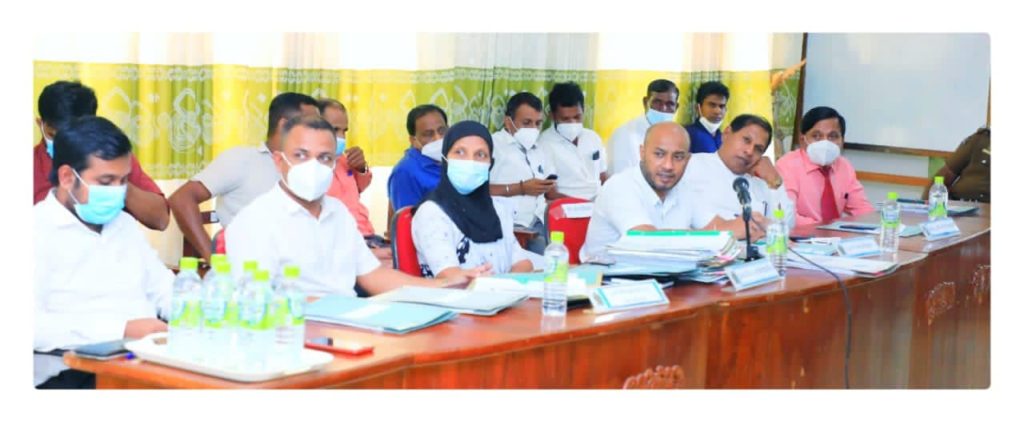
President Gotabaya Rajapaksa today moved to give a reminder that all public servants, including those in Forest Conservation and Wildlife Departments, are in fact there to serve the people and should therefore look at both sides of the issues when addressing them. 

Some do not understand the issues of the underprivileged. They haven’t visited these areas and haven’t witnessed anything. If I ask to release these lands, I will be attacked from tomorrow saying that I asked for the forests to be cleared.”

Speaking further, the President said the officials in forest conservation too do not understand this since they don’t look at the other side of the matter. All officials in forest conservation, wildlife, agriculture and environment are there for the people.”

His remarks came during the 17th phase of ‘Gama Samaga Pilisandara’ held in Vavuniya earlier today (April 03).

Touching on the criticism levelled at the government with regard to the unhealthy coconut oil importation saga, the President made it clear that it is not the government that imports these goods but private entities.

Coconut oil is the best and there is a great global demand for it. We haven’t cultivated that much and coconut trees were also felled in recent times. We had to import coconut oil. There are various businessmen who import it. There are government institutions to inspect the quality of the imported goods. The responsibility of these institutions is to crack down on substandard goods” he said stressing that the government is accused of importing toxic coconut oil when such crackdowns are executed.

The President went on to note that there are falsehoods circulated in an organized manner against him and the government. I always say that it is not ‘Gotabaya Rajapaksa’ who is important but the force that brought me here. That is what we should protect. It is against these that falsehoods are spread. I’m doing what I promised the people.”

‘HUMAN RIGHTS’ AND ECOLOGICAL CRISIS IN SRI LANKA

April 3rd, 2021

Prof. Asoka Bandarage

The recent UN Human Rights Council (UNHRC) resolution A/HRC/46/L.1/Rev.1 of March 16 has brought extensive charges against Sri Lanka over alleged human rights violations, but is arguably seriously flawed. Opportunistic and strategic use of human rights by the western powers to maintain hegemony continually ignore violations of the rights of nature and humanity rooted in the destructive model of economic development the same powers introduced to the world.

Historical Background

Ancient Sri Lanka was known for its Buddhist eco-centric approach to life. The origin of the contemporary ecological and social crisis can be traced to the colonial period and the incorporation of the country into the global capitalist economy.

Vast tracts of forest were cut to establish mono-cultural coffee, tea and rubber plantations and local people lost rights to ancestral lands and resources. Deforestation destroyed water resources that irrigated the rivers leaving village tanks dry. Multi-crop subsistence agriculture was undermined, leaving people to become dependent on imported food supplies.

Sri Lanka’s forest cover declined from 84% in 1881 to 70% in 1900 and to around 50% in 1948, when the British left. Deforestation and plantation development laid the basis for land erosion and loss of animal habitats and biodiversity.

The origin of the current human- elephant conflict is attributed to deforestation starting in the British era, along with the widespread colonial practice of killing animals for sport and trade. The revered elephant was declared a pest and a reward of a few shillings was given for the head of an elephant.

With the introduction of the Open Economy in 1977, Sri Lanka became subjected to neo-liberal policies such as privatization and structural adjustment, largely as conditions to loans from the World Bank and the IMF. The massive Mahawaeli River Development Program of this period provided access to land for the poor and a significant increase in the country’s food production and power resources. However, the construction of dams and irrigation networks, roads, and similar infrastructure also radically altered soil and water systems including degradation of watershed conditions and loss of wildlife habitat and populations.

A related agricultural reform began in the 1960s (the Green Revolution”), with a campaign to promote the use of agrochemicals and transgenic crop varieties, resulting in the loss of original indigenous seed varieties. The Mahaweli program and irrigation have supplied the water for most of the rice cultivation in the North Central Province. This area ­is also – likely not coincidentally ­–  the site of the nation’s highest incidence of chronic kidney disease among poor farming communities.

Current Realities

The rich industrialized countries in the Global North are responsible for nearly 80% of historical global carbon emissions. Yet poor countries in the global South, such as Sri Lanka ­– whose carbon footprint is negligible – are the greatest victims of climate disasters. The current and looming impact of climate change on Sri Lanka is massive:

  • Annual mean air temperature has significantly increased by between 1961- 1990 increasing 0.016 °C per year;
  • Annual average rainfall over Sri Lanka has decreased by about seven percent between the 1931-1960 period and the 1961 to 1990 period;
  • Forecasting the rise in sea level, Sri Lanka is faced with a predicted devastating coastal erosion rate of 0.30-0.35 meter a year, with adverse impact on nearly 55 percent of the shoreline.

The 2004 tsunami drastically highlighted the vulnerability of the low-lying plains in the coastal zone to any future rise in sea level. Northern and eastern coastal areas claimed as traditional ‘Tamil homelands’, are vulnerable to submersion as they are flatter than other coastal areas. This has serious implications for both population displacement and renewed political conflict, concerns totally absent in UNHCR Resolutions that focus on identity politics and calls for political devolution.

In 2015, the Internal Displacement Monitoring Center (IDMC), an international aid NGO, identified Sri Lanka ‘as the country with the highest relative risk of being displaced by disaster in South Asia. For every million inhabitants, 15,000 are at risk of being displaced every year in Sri Lanka’.

In 2017 alone, the country experienced seven disaster events, mainly floods and landslides, and ‘135,000 new displacements due to disaster. Sri Lanka is also at risk from slow-onset impacts like soil degradation, saltwater intrusion, water scarcity, and crop failure’.

Sri Lanka was ranked second among countries most affected by extreme weather events in the Global Climate Risk Index 2019 and sixth in 2020.

Deforestation

Deforestation is considered the greatest environmental threat facing Sri Lanka today. Sri Lanka ranked fourth among countries with worst deforestation of primary forests in the world in the 2000-2005 period. Forest cover, which had declined to about 50% at the end of British rule, has further declined to 44% in 1956 and 16.5 % in 2019.

A highly controversial current case is the housing development supposedly constructed for internally displaced persons (IDPs) on Willpattu National Wildlife Park. The housing will remain despite a recent court judgement that declared it illegal. The ‘polluter pays’ principle was upheld, but this only requires that the offender reforests other lands ‘in any area equivalent to the reserve forest area used for re-settlement of IDPs’. Even this court decision is under appeal by the 7th respondent, former Minister of Industry and Commerce, Rishard Badiuddin. Moreover, as ecologists point out, mere tree planting elsewhere will not lead to recovery of the intricate forest eco-systems that were destroyed.

Another major controversy involves the Sinharaja Rainforest covering an area of 18,900 acres. It is home to over 50% of the country’s endemic species and is a UNESCO World Heritage Site. Deforestation is now taking place in the Sinharaja area for the construction of a road for an isolated village bordering the Forest Reserve and for the suspected building of hotels, shops and other encroachments.

A National Plan based on surveys and clear demarcation of boundaries of Forest Reserves, Wildlife Sanctuaries and Conservation Areas and enforcement is urgently needed to avoid conflict and encroachment over remaining forests.

A recent announcement was made by the Government Minister of Irrigation, Chamal Rajapaksa, regarding proposals to construct two irrigation tanks inside the Sinharaja, each spanning an area of five acres, with Chinese involvement. A 30-kilometer water tunnel to transport fresh water to areas in the South (including possibly Chinese controlled Hambantota port) is also reported. This announcement has raised alarm over environmental impact and likely loss of the UNESCO World Heritage status.

Mining, Dumping and Export-led Growth

There are, unfortunately, many other environmental controversies, the most destructive of which involve export-led growth and foreign companies.

In 2017, 263 waste containers carrying biomedical, plastic and other waste from the UK was brought for illegal dumping in Sri Lanka. Such toxic dumping by rich Northern countries in the poor countries of the South is sadly a common practice. After a legal victory by environmentalists, the containers are being sent back to the UK.

A proposed new project in the Eastern Province is the Eastern Minerals Project of Capital Metal, a company from the UK which plans to mine the ‘highest-grade’ mineral sands containing ilmenite, rutile, zircon and garnet. While it promises to be a highly profitable venture, environmentalists fear massive and irreversible damage to the vulnerable eastern coastline.

Yet another controversial mining project is proposed by Titanium Sands, an Australian company,that wants to mine titanium on the island of Mannar off the northern coast of Sri Lanka. Mannar is a bird paradise and local environmentalists blame the Australian company of ‘illegal conduct’ and plans to dramatically transform the ecosystem and limit land use by the local community.

Neo-Colonialism

Just as the world is at the cusp of a new era of technological and corporate authoritarianism, Sri Lanka, with its strategic location in the Indian Ocean, is also at a decisive historical juncture. The island is facing new forms of external intervention and competition primarily involving the expansionist and national security efforts of China, USA and India. These three countries are also the biggest carbon polluters, pursuing unbridled economic growth despite the impending global climate catastrophe.

Sri Lanka is centrally placed in the maritime route of China’s Belt Road Initiative. China is now in control of the Hambantota port, the Colombo Port City, a terminal of the Colombo port and a hybrid renewable energy project on three islands off the Jaffna peninsula, just 50 km from the Tamil Nadu coast.

The Quadrilateral Alliance of the USA, India, Australia and Japan is challenging this Chinese expansion, and is, in turn, in control of key strategic positions and natural resources.

India, for example, is in control of the British colonial era Oil Tank Farm in the seaport town of Trincomalee. It is reported that the development of the west terminal of the Colombo port will also be given to the company of Indian billionaire Adani.

The US Millennium Challenge Corporation’s proposed Compact with Sri Lanka was turned down by Sri Lanka due to local protests over resource exploitation, land grab and an effort to splinter Sri Lanka into two separate entities under the control of the United States. However, there is suspicion that some of the main objectives of the MCC to digitalize land registers and privatize land to make them available for development by transnational corporations maybe be continuing in other ways.

The US signed an Acquisitions and Cross Services Agreement (ACSA) with Sri Lanka in 2017 making the island a ‘logistics hub’ allowing US military vessels open-ended access to Sri Lanka’s seaports and airports. The ACSA is part of the ‘grand strategy of a united military front between the US and India in the Indo-Pacific’.

A Status of Forces Agreement (SOFA) between the USA and Sri Lanka, which could turn Sri Lanka into a US military base, has been proposed but not yet signed due to local protest.

Neo-Colonialism and Eco-Social Implications

While the implications of Neo-Colonialism for Sri Lanka’s sovereignty, unity and territorial integrity have been much discussed in recent media, the ecological and social implications remain relatively unexplored. Some of these include:

  • Conflicts between Chinese interests and farming families around the Hambantota port over Chinese offers to buy ancestral properties of locals.
  • Protests and legal action by environmentalists over Chinese Port City, especially coastal sand excavation and dumping of chemical waste.
  • Control of the west terminal of the Colombo harbor by India’s controversial Adani Group, which has a history of environmental and financial violations in Australia and India.
  • Effects of militarization of the island under the ACSA and possible SOFA agreements and military confrontation between the Quadrilateral Alliance and China in the Indian Ocean.

Future Survival with the Wisdom of the Past

Sustainable agriculture has a long history on the island, as in any long-lasting indigenous culture, and it needs to be brought back to the fore. Local self-sufficiency and agro-ecology are the only solutions to future food scarcity and surviving the vicissitudes of the global economy.

Both Sri Lanka and the world have enough natural resources to support people if resources are shared equitably and sustainably used. It is the apocalyptic destruction of the unregulated greed of neoliberalism that must end.

For this to happen, policies of corporate regulation must be put in place at both the national and global levels. These policies also need to incorporate a broader definition of human rights that includes the rights of nature and people’s rights to natural resources and livelihoods. 250 major civil society organizations from around the world have signed a declaration calling for an end to ‘corporate control and cooptation’ of the United Nations including the U.N. Convention on Climate Change. Indeed, the moral authority of the United Nations and its partisan approach to human rights need serious questioning.

There is an urgent concurrent need for environmental education that transcends political party and ethno-religious divisions and unites people both with each other and with a survivable environment. Environmentalism is also humanism that looks to the future, and the rights and survival of future generations.

THE GENERAL ELECTION OF 1956 Part 10C

April 3rd, 2021

KAMALIKA PIERIS

The 1956 government attempted to radically reform the economy. It was the first Sri Lanka government to try to do so.   It was also the first government, and the only government to date, to see the need for a modern policy of Industrialization for Sri Lanka.

There were no local industries when MEP came to power in 1956, everything was imported. The country was importing everything, from a pin, comb, pencil, and biscuit to mammoties, water pumps, agriculture and industrial machinery, reported economists.

MEP had a long term plan for industrialization. The state would lead with a few basic industries whilst the rest were left to the private sector. There were three lists. The first list consisted of items reserved for the state. They included iron and steel, cement, chemicals, fertilizer, salt, mineral sands, sugar, power alcohol and rayon. 

The second list had industries which were open to both state and private sectors. They included textiles, tyres and  tubes, tiles, asbestos products, bicycles, industrial alcohol, acetic acid,   sugar, vegetable oil, ceramic ware, glass ware, leather products, plywood, paper, electric bubs, dry cell batteries, accumulators, barbed wire, lumber, agricultural implements, wood working, furniture and cabinetry,  and concrete products. 

There was a third list of 82 industries ranging from motor car assembly to activated charcoal, reserved exclusively for the private sector.  Persons embarking on these industries would receive tax concessions and tariff protection. Meegama observed that this period therefore saw the beginning of a private sector in industry with government encouragement. Industrialists promptly asked the government to stop imports in the goods they are producing. The first industrial estate was established at Ekala in 1960. 

MEP planned to diversify its overseas trade and build up new markets. Under Bandaranaike foreign policy was linked to trade policy. Bandaranaike entered into   agreements, mainly trade,  with  US, Hungary,  Bulgaria,  Germany,  Czech,  India,  Canada,   UK, Italy,      china,  USSR,  Sweden,   Australia,       Burma,

When MEP took over, external trade was confined to 25 countries,   mostly the white dominions of the British Commonwealth.  And that   trade was dependant on the goodwill of those countries.  

But the MEP government was never able to break this monopoly. The only new addition was trade with Russia.  Imports from non-Commonwealth countries went up to 51.9% in 1959. But exports continued to go to Commonwealth countries.

 Sri Lanka’s import and export trade was dominated by expatriates. They came during British rule, and stayed on. The traders were all non- Ceylonese, mainly British but also Indian. Non Ceylonese were allowed to free transfer of their entire holdings.  The trading houses   were all foreign owned.  Their profits were   sent abroad.

The MEP government restricted this outflow. In 1956, profits and dividends sent out was  52.4% for foreign capital and   83.3.% for profit and dividends. In 1957 Central Bank restricted the repatriation of money and in 1959, the figures were13.6% and 58.4%.

MEP government encouraged locals to engage in external trade. The number of registered Ceylonese traders  increased from 772 in 1955 to 1179 in 1960. Import of certain goods, such as textiles, motor cars, watches and export of certain commodities like timber were  reserved for Ceylonese traders.

 Trade with certain countries was also  reserved for Ceylonese traders. The countries were  Austria,. Bulgaria, China, Czechoslovakia, West Germany, Hungary, Japan, Poland , Rumania,  USSR and Yugoslavia . (HSS Nissanka. The foreign policy of Sri Lanka  under SWRD Bandaranaike .  p  106 )

Bandaranaike’s  foreign policies  angered the British who controlled most of Sri Lanka external trade. His Non-aligned policy also worked against western trade. This led to a sharp decline in export trade. There was a huge drop in export to Commonwealth countries, such as Australia, Canada, Britain,  but fortunately, trade with other countries such as Germany continued satisfactorily.

 Sri Lanka’s balance of trade fell drastically  in the period 1957-1959. In 1956 there was a surplus of 102 million rupees, but by 1959 there was a record deficit of 252 million culminating three years of deficits in foreign trade.

In 1955 external assets were Rs 80 million in 1959 it was Rs 15.2 million. This means that Sri Lanka was in great financial difficulties during MEP rule. But this was common to all newly independent countries in Asia and Africa, at the time, observed Nissanka.

It was the same with foreign investment. During Bandaranaike’s rule,  Ceylon attracted only Rs 141 million in investments.  Assets worth  Rs 427 million were taken away by private investors.

In 1957 there were 12 banks in Sri Lanka of which 11 were    foreign owned. The exception was Bank of Ceylon (est. 1939) . The foreign owned banks were  Chartered Bank of India, Eastern bank, Hatton bank,   HSBC, State bank of India,  Indian Bank, Indian Overseas bank, Mercantile bank of  India,  National overseas and Grindlays bank, Oriental bank of Malaya, Habib bank.

These banks did not bring in any capital. They did their business using rupee deposits and then  sent all the profits , around Rs 5 or 6 lakhs, out of the country.  In 1961,  the banking situation improved. Bank of Ceylon was nationalized and a second national  bank, the Peoples Bank was  started.

Up to 1956 Sri Lanka had profited greatly from ships that entered its  harbor. Sri Lanka had harbor facilities which other countries did not possess. But from  1956- 1959, there was a sharp decline in shipping revenue. The number of vessels dropped from 13,000 in 1955 to 8400 in 1959. This was due to the crop of dock workers strikes set up by the Left. This non cooperation by the Left to a fledgling  progressive government must be placed on permanent record and condemned.

Sri Lanka did not have her own shipping lines, she depended heavily on British shipping. Bandaranaike was considering  an independent shipping line for Sri Lanka, but  he  did not live long enough to pursue the matter.

Bandaranaike seems to have juggled his foreign policy well. His  Non aligned  policy gave  him, leverage  and Bandaranaike was able to get aid from western bloc as well.

MEP  got  457.3 million in aid from 1957-1963  of which, Communist bloc gave 373.8  million.    Foreign aid from Commonwealth countries in 1956-1960 had  declined sharply. But the   contribution from USA  trebled. The earlier  government was not able to secure such a quantity of   foreign aid.

From 1956-1959 Sri Lanka entered into 45 agreements, relating to  trade, aid, technology, economic cooperation and cultural relations with different power blocs. 19 with western bloc 15 with communist, 5 with non aligned countries.

There was a loan from China of 75 million rupees for a period of five years. There were also economic and technical cooperation agreements with Sweden and Italy. An agreement with Germany.  provided , inter alia, steel superstructures of ten bridges, and one substructure for one bridge, equipment for dismountable bridges, design and technical equipment for a roofing tile factory, and qualified German staff.

UNP complained that in 1953, USA only   provided a cook for Kundasale Girls’ school when they asked for  USA’s point four aid”(1950)   in 1955  Prime Minister Sir John  said  we received no aid from US.

But USA  had a ‘general agreement’ with MEP government . It included,  in the form of grant, a large amount to wheat, the sales of which were to be converted to local currency. But USA put many condition for their wheat flour even  on a commercial basis,  said Sarath Amunugama. PL 480 which provided  subsidized flour shipments to Sri Lanka  was a highly contentious issue with the Bandaranaikes,  he said.

Bandaranaike  saw  that it was unwise for newly emerging states to rely only on foreign aid. He said it was not good  for third world countries to be too dependent on foreign aid. Another mechanism was needed.  Bandaranaike thought that maybe, the solution lay in an Asian Economic Community.

 He called for a meeting of African and Asian nations to discuss the idea. The first session of the Afro Asian Economic Conference was held in Colombo in May 1959. Bandaranaike was the convener.  He  addressed the Conference and spoke of the need for commodity trade in the region, diversification of exports, and establishment of national regional banks.

Bandaranaike brought in world renowned economists to advise on a new economy for Sri Lanka. HSS Nissanka had quoted some recommendations given by Gunnar Myrdal in 1958, to the National Planning Council. His recommendations are relevant even  today .Myrdal said 

  • Immediate takeover of foreign owned  enterprises such as  plantations would not be wise. Sri Lanka should instead work out a 15 or 20 year scheme through which foreign asset would pass into Ceylonese hands.
  • Sri Lanka needs both foreign capital and knowhow for industrialization.
  • Sri Lanka should not rely on the inflow of foreign capital  on government to government basis only. That would restrict her capital imports to countries for whom government lending was good Cold War business
  • Sri Lanka should have a system like a management contract with which she could have agreements between her government and foreign firms
  • The foreign policy should link with Sri Lanka development efforts. There must be measures to regulate the inflow of non essential imports and maximize the amount of foreign exchange available for the import of capital goods . ( continued)

UNHRC-Proof the Economy

April 3rd, 2021

Dilrook Kannangara

UNHRC voting clearly showed Sri Lanka’s friends and enemies (and the in-betweens). Although India abstained from voting, India fully supported the anti-Sri Lanka resolution. Sadly, some enemies are key export destinations (and import origins) of Sri Lankan produce (and Sri Lanka’s imports) which can become a future threat. While it is only the UN Security Council that can impose economic sanctions on a nation, individual nations are free to impose their own sanctions on another nation. It was not that long ago that the EU removed the GSP Plus facility to Sri Lanka following the defeat of Tamil terrorists. Therefore, it is vital to UNHRC-proof the Sri Lankan economy by diversifying Sri Lanka’s exports (and imports) away from EU nations and India.

Relying on EU nations and India will prove disastrous very soon when they complete their investigations into alleged war crimes and compel Sri Lanka to handover war heroes to be executed by them. While this process will take years, Sri Lanka must act now to diversify international trade away from these nations.

Besides the exports to these nations and USA actually earn on peanuts for Sri Lanka. All material, machinery, equipment, etc. for garment manufacturing are imported. If one considers the real local value addition it is extremely small. Other exports to these western nations are the same. This is the very reason they manufacture these in Sri Lanka and other less developed nations!

Sri Lanka’s future is in shipping, industrial exports, electronics, tourism, knowledge economy, marine resources, food production and import substitution. Garments, tea, export processing zones and other near slavery sweatshops are on their way out. Interestingly these industries locally are dominated by the very people who connived with the enemies of Sri Lanka at the UNHRC!

It will be a twin victory for Sri Lanka to move away from exports to and imports from enemy nations. The time to act is now.    

අප්‍රේල් කැරැල්ලට වසර 50යි

April 3rd, 2021

චන්ද්‍රසේන පණ්ඩිතගේ විසිනි.

අප්‍රේල් කැරැල්ලට වසර 50ක කාලයක් ගතව ඇත. වසර 50ක් යනු සුළුපටු කාලයක් නොවේ. ජනතා විමුක්ති පෙරමුණ ගොඩනැගීමට දායකවී අප්‍රේල් කැරල්ලටද සහභාගිවී, සිරගතවී, සිරගෙදරන් පලාවිත් යලි දේශපාලනය කල අයෙකු තුල මේ වන විට ඇති සිතුවිලි දහරාව කුමක්විය යුතුදැයි සොයා යනවිට, ජිවිතයේ සුන්දරම අවදිය, ඔවුන් විසින්ම ගින්දර ගොඩකට ඇදදමුවාක් වැනි මේ ක්‍රියාදාමයට ඔවුන් සහභාගී වුයේ ඇයිද යන්න ගැටලුවකි. විශේෂයෙන්ම අප්‍රේල් කැරැල්ලට දායකවූ තරුණයින් අයත්වන්නේ මධ්‍යම පාන්තික හා සුළු ධනේශ්වර පන්තියට අයත් පවුල් වලට වීම එම කැරැල්ලේ ඇති විශේෂත්වයයි. ස්වභාවය විසින් මේ තරුණයින්ගෙන් යමක් බලා පොරොත්තුවී ඇත.

අපි මිලින්ද ප්‍රශ්නය තුලින් දකින්නේ ස්වභාවයේ ක්‍රියාකාරිත්වයේ සංකීර්ණභාවයයි.ස්වභාවයට අවැසි දේ ඉටුකරවා ගැනීම සඳහා දිව්‍ය සම්පත් විදිමින් සිටි අයෙකුව ඔහුගේ විරෝධතාවය නොතකා යොදවාගත් ආකාරය අපි එහිදී දකිමු.. කාරණය ඉතා අතවශ්‍ය නම්, ස්වභාව කුමන පදනමකින් හෝ බ්‍රහ්මයෙක්, දෙවිකෙනෙක්, මිනිසෙක් හෝ මිනිසුන් සමුහයක් යොදා ගන්නා  අකාරය අපි දැක ඇත්තෙමු. 1971 අප්‍රේල් කරල්ල තුලද එවැනි පසුබිමක් අපි දකිමු. වැදගත් වන්නේ ඒ තත්වය මනාව අවබෝධකර ගැනීමයි.

අපේල් කැරැල්ලට සහභාගිවූ තරුණ සමුහය, ශ්‍රී ලාංකීය විප්ලවය අරමුණු කරගෙන පසුබිම සකස් කරන්නේ, ජාත්‍යන්තර විප්ලවවාදියකුවූ චේ ගුවේරා මුළු ලෝකයේම තරුණ තරුණියන්ගෙන් විශේෂිත ඉල්ලීමක් කර ඇති පසුබිමකය. ඒ ඉල්ලීම වුයේ, “ලෝකයේ ව්ප්ලවවාදිනි, ඇමරිකානු අධිරාජ්‍යවාදය පරාජය කිරීමට ලෝකය පුරාම වියට්නාමයන් ගණනාවක් බිහි කරව!” යන්නය.

එදා ලෝකය මිට වඩා ගොඩාක් වෙනස්ය. මුළු ආසියාවම පැවතියේ යුධ ගිනි දැල් මැදය වියට්නාමය, ලාවෝසය, කාම්බෝජය, කොරියාව පුරාම දිනපතාම හෙලනු ලැබුවේ සිය දස ගණනින් මිනිසුන් මරා දැමීමට පමණක් නොව පරිසරයද විනාශ කරන බෝම්බය. ලතින් ඇමරිකාව ලෝකයේ නොදියුණු ආකාරයේ කුරිරු මර්ධනයකට යටත් කරගෙන පාලන රටාවක් පැවතිනි. අප්‍රිකාව වර්ගවාදී සුද්දන් පාලනය කලේ  අප්‍රිකානුවෝ වහලුන් හා සතුන් ඝනයට ලාගෙනය. චීනයට එක්සත් ජාතීන්ගේ මහා මණ්ඩලයේ ආසනය අහිමිකර, එහි අයිතිය පොමොසාව නම්වූ රුකඩ චිනයකට ලබාදී තිබුණි  එක්සත් ජාතීන්ගේ මහා මණ්ඩලය ලොව පුරාම යුධ ඇතිකරමින් ඒවා පෝෂණය කරමින් වර්තමානයේදී මෙන්ම එදාද කටයුතු කරමින් සිටියහ. එවන් යුගයක  මේ රටේද අධිරාජ්‍ය ගැති රුකඩ පාලන රටාවට එරෙහිව එකී තරුණයින් සංවිධානය වීම එදා ආරම්භ කළහ.

එදා සටන් පාඨයන්  වුයේ
“අධිරාජ්‍යවාදයට විනාශය ජනතාවට විමුක්තිය ”
“ඉන්දීය ව්යාප්තවාදයට විනාශය ජනතාවට විමුක්තිය ” යන්නන්ය.
ඒ අතරම රතු ආසියාවක් ගොඩනැංවීමේ ප්‍රබල අපේක්ෂාවක් මේ තරුණයින් අතර විය. අවසාන ඉලක්කය වුයේ සමාජවාදී සමාජයක් රටතුල ගොඩනැංවීමය..

සතුරා අපිට වඩා දක්ෂය,අප අතරට රිංගු සතුරා අප ගොඩනැංවූ සංවිධානය එදා අප විසින්ම ගොඩනැංවූ සිරිමා බණ්ඩාරනායක රජයට එරෙහිව මෙහෙයවා, මෙරට දේශප්‍රේමී තරුණයින් පිරිසක් මෙන්ම  ජාත්‍යන්තරයේ ප්‍රගතිශීලි කාර්යභාරයක් ඉටුකළ රජයක්ද විනාශ කළහ. ඔවුන් සියුම්ව සිදුකලේ අප අපේක්ෂා කල දෙය නොවේ. 1971 අප්‍රේල් කැරැල්ලට මවෙක් හෝ පියෙක් නැත.එයට අණ දුන්නේ කවුදැයි කිසිවෙක් දන්නේ නැත. විජේවිරයන්ට අනුව සිරගතව සිටි ඔහු මේ පහරදීමට අණදී  නොමැත.නමුත් අපි පහරදිමකට සහභාගී විය. ඒ කාගේ අණ යටතේද යන ප්‍රශ්නය මිනිස් බුද්ධියට තීරණය කිරීමට ඉතිරිව ඇත.

එදා අප්‍රේල් කැරැල්ල සිදුවෙන විට විශේෂිත දේවල් රාශියක් මෙරට තුල සිදුවිය. අප්‍රේල් කැරැල්ල මේ රටේ හමුදාවේ ඇති දුර්වලත්වය පෙන්වා දුන්හ.එය මේ කැරැල්ල විසින් මේ රටට කල විශේෂිතම මෙහෙවරකි. එහි පලයක් වශයෙන් යුධ හමුදාව වහාම පුළුල් කිරීමට පියවර ගැනිණි. ඒ සමගම තවත් විශේෂිත කටයුත්තක් සිදුවිය. ඒ මේ මවුබිමට ආදරය කල වෙනත් ආකාරයෙන් සිතන තරුණයින් කණ්ඩායමක්ද ශ්‍රී ලංකා යුධ හමුදාවට බද්ධවිමයි. එම තරුණයින් පසුකලෙක මෙරටට එරෙහිව අධිරාජ්‍යවාදීන් විසින් නිර්මාණය කල කොටි ත්‍රස්තවාදය මුළුමනින්ම බිදහෙලා මේ රට අධිරාජ්‍යවාදී මර උගුලින් බේරා ගත්හ.එය මේ අවස්ථාවේදී ගෞරවයෙන් සිහිපත් කරනුයේ “අධිරාජ්‍යවාදයට විනාශය ජනතාවට විමුක්තිය”  හා “ඉන්දීය ව්‍යප්තවාදයට විනාශය ජනතාවට විමුක්තිය” යන සටන් පාඨයන්ම වෙනත් ආකාරයකින් පෙරමුණේ තබාගෙන මේ සටන සිදුවුණා බැවිනි.

1971 අප්‍රේල් කැරැල්ල ආරම්භවීමත් සමගම එක්තරා තරුණයෙක්, එම කැරැල්ල මර්ධනය කිරීමේ අරමුණින් එදා හමුදාවට බැදී  සේවය කිරීම ආරම්භ කළහ. මේ තරුණයා හමුදාවට දිමේ කටයුත්තට මාවත විවර කලේ 1971 අප්‍රේල් කැරැල්ල නම්, ඒ කැරැල්ලෙන් සිදුවුණා විශාලම ජාතික මෙහෙවර වන්නේද එයයි. ඒ තරුණයා අද මෙරට ජනාධිපති ගෝඨාභය රාජපක්ෂයන්ය.මේ අනුව අප්‍රේල් කැරැල්ලට වසර 50ක් ගතවන අවස්ථාවේදීම ගෝඨාභය රාජපක්ෂ මහතා මෙරට ආරක්ෂක හමුදාවට සම්බන්ධව වසර 50ක සේවාකාලය සැමරීමද සිදුවේ.

දැන් අපි වසර 50ක ඉතිහාසය හාරා අවුස්සා බලන විට,

1.එදා පවතී යුධ බිය ආසියාවෙන් තුරන්ව ඇත.
2.වියට්නාමයෙන් හා කාම්බෝජයෙන් ඇමරිකන් හමුදා මුළු මනින්ම පලවා හැර ඇත.
3.චීනය අද එක්සත් ජාතීන්ගේ සංවිධානයේ ප්‍රබල සාමාජිකයෙකි.
4. චනය ලෝකයේ ප්‍රබලම රාජ්‍යක් බවට පත්ව ඇත.
5.ලතින් ඇමරිකාවේ එදා ඇමරිකාව දැමු සෙල්ලම් සියල්ලක්ම ලේල්ලම්වී හමාරය.
6.අප්‍රිකාවේ සියලුම වර්ගවාදී රාජ්‍ය ක්‍රම අහෝසිවී ඇත.
7. ඇමරිකාව හා ඉන්දියාව බලවත් ආර්ථික හා දේශපාලන ගරා වැටීමට ලක්ව ඇත.
8. මුළු යුරෝපයම අර්බුද ගණනාවකට ලක්ව ඇත.
9. ශ්‍රී ලංකාව අධිරාජ්‍යවාදීන්ගේ සතුරුම දකුණු ආසියාතික රාජ්‍ය බවට පත්ව ඇත.
10. අපේ රටට ජාත්‍යන්තරව රැකවරණය ලබාදෙන්නේ එදා රෝහණ විජේවීර සහෝදරයා අපේක්ෂා කල ආකාරයටම, රුසියාව, චීනය, වියට්නාමය, කියුබාව හා උතුරු කොරියාව යන රාජ්‍යන්ය.

වසර 50ක කාලය තුලදී අපි පතු ආකාරයට අධිරාජ්‍යවාදය විනාශවී පන අදිමින් සිටි. හෙට අනිද්දා යුක්රේනයේ ඇතිවන තත්ත්ව තුල, ඔවුන් යලි නොනැගිටින තත්වයකට පත්වෙනු ඇත.

ගෝඨාභය රාජපක්ෂයන්ගේ පාලන කාලය තුලදී ඉන්දීය ව්යාප්තවාදින්ටද යලි නොනැගිටින තත්වයක් උදාව ඇත. වැදගත් වන්නේ පුද්ගලයා නොව ගෙන යන ප්‍රතිපත්ති කුමක්ද යන්නයි. මේ ප්‍රතිපත්ති තුල පැහැදිලිවම ඇත්තේ අධිරාජවාදින්ට එරෙහිවීම හා ඉන්දීය ව්යාප්තවාදින්ට එරෙහි වීමයි.

වසරව් 50ක් සපිරෙන මේ අවස්ථාවේදී අපි අප්‍රේල් සටනේදී දිවිදුන් හා එයට දායකත්වය සැපයූ සියලුම සොයුරු සොයුරියන් සිහිපත් කරමු. අද රාජ්‍ය ප්‍රතිපත්තිය බවට පත්ව ඇත්තේ ඔබ අප හැම පැතු ප්‍රතිපත්ති මාලාවය. එය මෙහෙයවන පුද්ගලයා එදා අප්‍රේල් කැරැල්ල මර්ධනය කිරීමට හමුදාවට බැදුන ගෝඨාභය රාජපක්ෂයන්ය. එතුමාද  ඉල්ලා සිටින්නේ පුද්ගලයා දෙස නොබලන්න ප්‍රතිපත්ති දෙස බලන්න යනුවෙනි.

පාස්කු දින ප්‍රහාරයේ වින්දිතයන් වූ සැමට සාධාරණය ඉටුවන තෙක් වූ කිතුණු ජනතා ඉවසීම විශිෂ්ටයි – ගරු අග්‍රාමාත්‍ය මහින්ද රාජපක්ෂ මහතා

April 3rd, 2021

අග්‍රාමාත්‍ය මාධ්‍ය අංශය

පාස්කු දින ප්‍රහාරයේ වින්දිතයන් වූ සැමට සාධාරණය ඉටුවන තෙක් වූ කිතුණු ජනතා ඉවසීම  විශිෂ්ට බව ගරු අග්‍රාමාත්‍ය මහින්ද රාජපක්ෂ මහතා අද (03) දින සිහිපත් කළේය.

දෙවසරක් ගතවන පාස්කු දින ප්‍රහාරය සම්බන්ධයෙන් අදහස් පළ කරමින් අග්‍රාමාත්‍යතුමා මේ බව අවධාරණය කළේය.

ලොව පුරා කිතුණු බැතිමතුන් සමඟ එක්ව ශ්‍රී ලාංකේය කිතුණු ජනතාව හෙට (04) දිනයේ ඉමහත් හරසරින් පාස්කු මංගල්‍ය සමරති.

විමුක්තිදායක ප්‍රීතියේ සැමරුම් දිනය වන මෙදින ශ්‍රී ලාංකේය කිතුණු ජනතාව ජේසුස් ක්‍රිස්තුස් වහන්සේ මරණය පරාජය කර උත්ථානවීම බැතියෙන් සිහි කරති.

මෙයට වසර දෙකකට පෙර 2019 අප්‍රේල් 21 වැනිදා පාස්කු මංගල්‍යය දින එල්ල වූ ත්‍රස්ත ප්‍රහාරයෙන් කුඩා දරුවන් ඇතුළු කිතුණු බැතිමතුන් දෙසිය පනහකට අධික පිරිසකගේ ජීවිත අහිමු වූ බව අපි දනිමු.

මෙම මිලේච්ඡ ප්‍රහාරය එදා මෙන්ම අදත් අප තරයේ හෙළා දකින අතර ප්‍රහාරයෙන් ජීවිත අහිමි වු කිතුණු ජනතාවගේ පවුල්වල සමාජිකයන්ට මෙන්ම සමස්ත කිතුණු ජනතාවට අපගේ සංවේගය පළ කරන්නෙමු.

එමෙන්ම පාස්කු දින ත්‍රස්ත ප්‍රහාරයට වගකිවයුත්තන් නීතිය හමුවට ගෙන ඒමේ පරීක්ෂණ රජයක් ලෙස මේ දක්වා අඛන්ඩව ඉටු කර තිබෙන බව ඔබට සිහිපත් කරමි.

කිතුණු ජනතාව බලාපොරොත්තුවන පරිදි ප්‍රහාරයට වගකිවයුත්තන් නීතිය හමුවේ වරදකරුවන්වනතුරු එම පරීක්ෂණ ක්‍රියාවලිය කිසිඳු බලපෑමකින් තොරව ක්‍රියාත්මක වේ.

පාස්කු දින ඉටි පහනේ අලෝකය සහෝදර ජනතාවට සහනාලෝකය අත්විඳින්නට ඉඩ සළස්වනවා මෙන්ම පාස්කු අර්ථයෙන් ගත්විට සියලු දෙනා එතෙර වීම කිතුණු ජනතාවගේ ද අපේක්ෂාවයි.

එම උදාර අරමුණ අනුව යමින් පාස්කු දින ප්‍රහාරයේ වින්දිතයන් වූ සැමට සාධාරණය ඉටුවන තෙක් වූ කිතුණු ජනතා ඉවසීම විශිෂ්ට බව සිහිපත් කරමි.

සමාජය තුළ මුහුණ දීමට සිදුවන විවිධ අභියෝග හමුවේ මානව දයාවෙන්,සහජීවනයෙන් හා අන්‍යෝනය ප්‍රේමයෙන් යුතුව දිවි ගෙවීමට කිතුණු ජනතාවට හැකිවේවා යන්න අප සැමගේ ප්‍රාර්ථනාවයි. ශ්‍රී ලාංකේය කිතුණු බැතිමතුන් සැමට සුබ පාස්කු මංගල්‍යයක් වේවා!යි  ප්‍රාර්ථනා කරමි යැයි අග්‍රාමාත්‍යතුමා පැවසීය

Coronavirus: 167 new infections confirmed on Saturday

April 3rd, 2021

Courtesy Adaderana

Sri Lanka has confirmed 37 more positive cases of COVID-19 today (April 03) as the daily infections count climbed to 167. 

Among today’s positive cases are 07 persons who were detected from the prisons cluster and 32 who arrived from foreign countries.

According to the Department of Government Information, the country has confirmed a total of 93,295 positive cases since the outbreak of the pandemic.

However, 2,695 of them are still under medical care at designated hospitals and treatment centres across the island.

Meanwhile, the death toll from the virus stands at 579.

Four new COVID deaths in Sri Lanka

April 3rd, 2021

Courtesy Adaderana

Sri Lanka has confirmed 04 new COVID-related deaths today (April 03), according to the Director-General of Health Services.

The new development has pushed Sri Lanka’s death toll to 579, says the Department of Government Information.

One of the deceased is a 44-year-old woman from Akurana area. She died on March 28 while receiving treatments at the Teaching Hospital in Kandy. The cause of death was recorded as sepsis and COVID pneumonia.

A 44-year-old  who was residing in Rambukkana area died on March 31 due to COVID pneumonia. He was also under medical care at the Teaching Hospital in Kandy at the time of his passing.

In the meantime, a 78-year-old man from Colombo 10 passed away on April 02 on admission to the National Hospital in Colombo. The cause of death was recorded as COVID SARS pneumonia, the Government Information Department said.

The last victim is a 37-year-old woman from Ratnapura area. She was identified as a COVID-infected patient while receiving treatment at the Teaching Hospital in Ratnapura. She was then moved to the IDH where she passed away on April 02. The cause of death was cited as COVID pneumonia, diabetes mellitus, hypertension and chronic kidney disease.

I would like to draw your serious and immediate attention to the content of this article, (attached) especially sections marked in red by Kamalika.

April 2nd, 2021

Dr Sudath Gunasekaara Mahanuwara

HE the President,
Republic of Sri Lanka

Dear Sir,

I would like to draw your serious and immediate attention to the content of this article, (attached) especially sections marked in red by Kamalika. I am afraid the same intrigue by the West is in full thrust even now, rather in a more organized and larger scale

 What is worse is the additional conspiracies now hatched by India and Muslim Jihad terrorists

Both the western countries, their allies and India and even Arabic terrorist have established their own terrorist, jihad and  ISIS networks within the country in addition to their global operations

 In this context, I would request your Excellency to be extremely careful in your personal security and restrict your movements within the country and avoid foreign travel as well. I am deeply concerned about your safety and security

In this backdrop, I would strongly advise you to rethink and revisit your weekly Gamana samanga Pilisandarak programme as well.

In the Indian Ocean, we are surrounded and sandwiched by the Quadrilateral forces, and at home threatened by the Dasa bimbarak marasena of the opposition, Tamil and Muslim extremists and separatist, and the agents of the West and India that have infiltrate every nook and corner in the Island

If I were you I would seriously think of an alternative way to get this Pilisadarak program implemented through the Officials of the respective Districts more efficiently at a lower cost

I think that will avoid a big risk, save the time of public officials and also the excessive cost

Things in the country are so bad and vulnerable I think we should not take a chance.

With best regards.

Dr. Sudath Gunasekara 

THE GENERAL ELECTION OF 1956 Part 10B

April 2nd, 2021

KAMALIKA PIERIS

This essay looks at two important ‘results’ or ‘consequences’ or whatever, of the 1956 General election. They are firstly, the emergence of the SLFP. Secondly, the rise of Sirimavo Bandaranaike as the world’s first woman Prime Minister.

SRI LANKA FREEDOM PARTY

SWRD Bandaranaike formed the SLFP for two reasons, said Wiswa Warnapala. Firstly, as a democratic alternative to UNP and Marxist parties.  Secondly, to provide a means of political expression for Sinhalese and Buddhist vested interests. SLFP   stood for Sinhala culture and Buddhism at the time when no other political party was prepared to articulate these issues.

SLFP had its base in the rural areas. It catered   to the   full spectrum of voters there,   from the ordinary villager to the rural elite.  Unlike the other parties, SLFP knew how to make use of interest groups, observed Wiswa. This gave the SLFP a formidable base.

The SLFP from the beginning was a political party founded on the aspirations of the villager. The impoverishment of the village and its alienation from western culture isolated the villager from the political and economic life of the country. This group, who were marginalized during colonial period, needed its own political party. SLFP filled this need.

SLFP still remains loyal to its traditional support base, said Wiswa.  The rural forces never allowed the party to move in any other direction. It never functioned as an instrument of the people in the urban areas. Even after half a century SLFP remains the main vehicle   for the aspirations of the ‘common man’, said Wiswa.

The urban sector had a complementary view. The urban middle class wished to escape its village roots. That was why they left the village in the first place.   They wanted a western model of governance, not a village one. They did not wish to support the SLFP. That reluctance continues to this day.

SLFP was never considered a party that could run the country. UNP was considered a better bet, due to its so-called sound economic policies.  But Sri Lanka’s foreign policy under SLFP rule has been far superior to UNP foreign policy. SLFP knew to frame the right foreign policy, said analysts. Bandaranaike set the direction, Sirimavo and Mahinda Rajapaksa continued it.

SLFP became utterly unpopular in the 1970s due to its absurd economic policy. SLFP lost the 1977 general election and the 1982 Presidential election, but the party did not fall.  Instead its voter base rose from 1,855,331 in 1977 to 2,548,438 in 1982. This was a jump of 37%. The SLFP got nearly 700,000 new votes that they had never got before. Nobody has yet broken this record, said Chandraprema in 2015.

SLFP was not in power from 1978- 1994. The period under SLFP’s Chandrika Kumaratunga 1994-2005 did not please anyone. But when Mahinda Rajapaksa took over the leadership of the SLFP in 2005, as President, the     rural base got energized, said Wiswa.

They had voted Mahinda in to create yet another 1956, with a different emphasis, he said.  The rural voter now wants a leader who could take them beyond the achievements of 1956. Therefore SLFP now needs to meet the challenges of the 21st century, a very advanced and developed century, concluded Wiswa, writing in 2006.

SIRIMAVO  BANDARANAIKE

The assassination of SWRD led to the unexpected rise of his widow, Sirimavo, to the position of Prime Minister .Sirimavo held the post of Prime Minister from 1960- 1965 and 1970-1977. The 1960-65 period is definitely a continuation of the 1956 run.

Sirimavo was not the backward rural product she was made out to be. She came from a top family,  the Mahawalatenne family, and she had studied at a leading Christian school in Colombo, St Bridgets.

As first woman Prime Minister Sirimavo made global headlines and brought fame to Sri Lanka. Fame which lasted for decades said analysts. But Sirimavo was not a mere figurehead. She actually led the country and was most effective. Sirimavo from the beginning showed strength of will, shrewd judgment, and political skill of a high order, said KM de Silva.

Sirimavo took to politics like a duck to water. She was well prepared .Sirimavo had supervised the breakfast press briefings   given by Bandaranaike when he was Prime Minister. So she knew what was happening.  She had offered her opinion to Bandaranaike on the Paddy Lands Bill, and asked whether the Bill need be so extreme. Politics was not entirely unknown to her, said DB Dhanapala.  

 Sunetra Bandaranaike confirmed this when interviewed about her mother. Asked whether her mother was interested in matters of state during Bandaranaike‘s tenure of office Sunetra said ‘oh yes. She used to always be deeply involved in his political life from the outside, finding out what was happening.  When Cabinet ministers came home, she would sit and listen a little, or bring in tea and hear conversations. She was fully aware of what was happening and gave her views very strongly.’ said Sunetra.

She argued ‘all the time’ with SWRD on political matters, continued Sunetra. They would discuss politics over morning tea.  Sirimavo who had her own ideas on the political problems of the moment would say’ now Solomon, if I were you,   this is how I would do it.’ Sunetra had heard this many times. She had taken a far more strict position than SWRD. SWRD would agree and then do what he wanted, said Sunetra. (Interview with Sunetra Bandaranaike. Daily News 4.1.16 p 11)

Sirimavo was very   active in domestic politics. She took over Lake House.  Peoples Bank was set up, providing bank services to places which did not have banks. State Insurance Corporation was set up.  Assisted schools were nationalized.  Ceylon Petroleum Corporation took away the oil distribution from Caltex and Shell. Ceylon Civil Service was abolished and Ceylon Administrative Service which included the  DROs was set up. The position of Village headman was abolished and the grama sevaka created.

Sirimavo showed bias in her domestic administration. I think that she would have had a very parochial attitude.  Victor C de Silva, a relative of mine, rose to the position of Director, Public works Department on his own merit and seniority after decades of dedicated, unblemished service. The family was proud and happy. Then they got a shock. Prime Minister Sirimavo had summarily removed Victor and appointed someone else, whom no one had heard of, to the post. I forget his name. The matter was corrected later, but it caused much temporary unhappiness and left a bad taste in the mouth. I am sure that there would have many other instances of this sort.

While the faults of Sirima” are widely accepted, her foreign policy and internationalism, deserves  attention,  said Leelananda de Silva.    She had great achievements during  her first term, as Prime Minister and Foreign Minister between 1960 and 1965.

The period that she was foreign minister (and Prime Minister) saw Sri Lanka punching above her weight in foreign affairs. The Cold War  was on, and  international diplomacy required careful navigation, especially for a country like Ceylon that had recently  achieved independence.

Diplomacy was not new to Sirimavo. She had entertained the several heads of state who visited Sri Lanka when her husband was Prime Minister.  Sirima entertained and came into close contact with some of the world’s topmost leaders said DB Dhanapala.  He named Nehru, Chou, Tito, Rajendra Prasad and Harold Macmillan.  She   had visited US, Britain, France, India and Burma with her husband when he was Prime Minister said  Dhanapala. Sirimavo was therefore familiar with  diplomacy and diplomatic  protocol,. Bradman  Weerakoon said Sirima was always impeccably dressed for any function, neither over nor under dressed.

Sirimavo strengthened the two valuable diplomatic links established by her husband,   China and Russia. In the summer of 1962, she became the first Sri Lankan Prime Minister to visit the Soviet Union. Sirimavo was treated as a special guest of Khrushchev. She was given red carpet treatment. Most state visitors were put up in hotels or the state guest house but Sirima and her group were put up in luxurious suites in the Kremlin Palace.

As soon as they arrived, Khrushchev had ordered that the group be given warm clothes. He did not want them to die of the cold on this official visit. The Sri Lanka delegation was taken to the Bolshoi Ballet and in return, Sri Lanka presented  the Chitrasena ballet, Kara Diya. It had been well received.

In December 1962 Sirimavo visited China.  This was the first time that a Sri Lanka Prime Minister had visited China.  China treated it as a state visit and Sirimavo was received with much pomp and ceremonial. At Canton she was greeted with an army guard of honor, march past, dancers in traditional lion costume and bands playing Chinese music. They were given heavy fur overcoats and head gear to face the cold.  She met several times with Chinese Premier Chou en Lai at Peking.

In February 1964,  Chou visited Bandaranaike in Ceylon with offers of aid, gifts of rice and textiles, and discussions to extend trade. The two also discussed the Sino-Indian border dispute and nuclear disarmament.  There was a second state visit to China in 1972. This was the most successful visit of a Sri Lankan leader to a foreign country that I have witnessed  said Jayantha Dhanapala.

Sirimavo had a close   friendship with Indira Gandhi, Prime Minister  of India. Sirimavo had first met Indira when Nehru had invited SWRD and family to India for a private visit, recalled Sunetra.  We stayed at his residence. That is how they met.  We had had a lovely visit,   seeing all the sites.

Indo-Sri Lanka relations were excellent said Leelananda. Sirimavo settled the issues relating to Indian citizens in Ceylon (the Sirima-Shasthri pact) and maritime border issues with India.

 In September 1964, Bandaranaike led a delegation to India to discuss the repatriation of the 975,000 stateless Tamils residing in Ceylon. Along with Indian Prime Minister Lal Bahadur Shastri, she ironed out the terms of the Srimavo-Shastri Pact, a landmark agreement for the foreign policy of both nations. Sirimavo also got India to withdraw its claim to Kachchativu.

Sirimavo intervened in the Sino-Indian dispute, travelling to both countries as an intermediary. She was a key player in reducing tensions between India and China after their 1962 border dispute. In November and December of that year, Bandaranaike called conferences in Colombo with delegates from Burma, Cambodia, Ceylon, Ghana and the United Arab Republic to discuss the dispute. She then travelled with Ghanaian Justice Minister Kofi Ofori-Atta to India and China in an attempt to broker peace . In January 1963,  Nehru agreed to present to the Indian Parliament the settlement Sirimavo had advocated. 

Professor J.K. Galbraith, who was the US Ambassador in India at the time, records in his Ambassador’s Journal, the anticipation with which interested parties looked forward to Mrs. Bandaranaike’s mediation efforts. Mrs. Bandaranaike attached the highest importance to the maintenance of friendly relations with India, and she did that as an equal and not as a subordinate party, observed Leelananda.

 However, Sirimavo took an independent stand when it came to India’s two neighbors, Pakistan and Bangladesh. Sirimavo gave Pakistan refueling facilities for its aircraft and permission to use Sri Lanka air space, during Bangladesh war of independence 1971,  irritating Mrs. Gandhi no end, observed Leelananda.  Pakistan and Bangladesh  have never forgotten this, though Sri Lanka has.

Sirimavo was  careful. When the tea estates belong to Sterling companies were taken over, she was anxious to ensure that fair compensation was paid to British  owners and she discussed this issue with Harold Wilson, the British Prime Minister. She did not want to jeopardize the relationship with Britain.

Sirimavo benefited from SWRD’s  diplomatic activities. When Sirimavo took over oil distribution from Shell and Caltex, America was angry. Egyptian President Abdel Nasser sent oil tankers to Sri Lanka.  Egypt had not forgotten that Bandaranaike had strongly supported Egypt during the Suez crisis.

Sirimavo paid state visits to Poland, Czechoslovakia, and East Germany,. She recognized East Germany though it angered West Germany. Yugoslavia was a favorite country of hers. She went there often for treatment for her  arthritis. Her relations with Josip Broz Tito were excellent, said Bradman.

Sirimavo continued her husband’s policy of linking diplomacy with trade. She wanted foreign policy to be of relevance to her domestic economic policies, said Leelananda. When she visited countries in the South East Asian region including Japan her concerns were equally economic and political.

There are many  instances I can quote, from my own experience of Mrs. Bandaranaike’s concern to link up domestic and foreign policy, said Leelananda. She  returned from the Russian visit with an agreement for large quantities of discounted petroleum from USSR. With only two weeks’ worth of rice in stock, she negotiated an emergency shipment of 40,000 tons from China. In 1975 Ms. Bandaranaike  negotiated with Saddam Hussein, then Vice President of Iraq, for 250,000 tons of oil on a deferred payment scheme.  

Sirimavo followed SWRD’s policies   in international affairs. She attended the Commonwealth Prime Ministers’ Conference in London March 1961.  Sirimavo was ever anxious to push the image of newly independent Sri Lanka on such occasions.

 When she was in London for this conference, she found that Ceylon’s High Commissioner was giving a dinner in her honor. Sirimavo wrote to Bradman Weerakoon that she would like some Ceylon fruits used at this dinner. She wanted mangosteens, rambuttan and mangos. She said that the mangosteens could be plucked fresh form Horagolla. The rambuttans must be sweet not sour. She specified the amount, 100 mangosteens,    50 rambuttans and 3 dozen mangos.They must not be too ripe when they leave Ceylon. They could come on the Air Ceylon flight just in time for the dinner.  This letter in Sirimavo’s handwriting can be seen in Bradman Weerakoon’s Rendering unto Caesar p 91.

Sirimavo  developed SWRD’s line on Non-alignment and did it  better than  SWRD, who was not given a change to develop it himself. Sri Lanka grew in stature internationally as a founder nation of the Non-Aligned Movement under the guidance of Ms. Bandaranaike,  said Leelananda. 

Sirimavo attended the Conference on Non-Aligned Nations in Belgrade, Yugoslavia, in September 1961 . She co-sponsored the Non-Aligned Conference held in Cairo In October, 1961  at Cairo, . She  got much publicity for her speech   which started As a woman and a mother.”  Felix Dias Bandaranaike and others in her team had initially toyed with the idea of saying ‘Mummy’ instead of Mother, since they were in  Egypt, the land of mummies.

She also addressed the UN General Assembly in 1976 as Head of Non-aligned movement .  The climax of her work in Non-alignment was the highly successful  Non Aligned conference held in Colombo in 1976. This was Sri Lanka ‘s first international conference and  Colombo did an excellent job.

Mrs. Bandaranaike also proposed that the  Indian Ocean to be a Zone of Peace. She first mentioned the idea briefly in her speech at the NAM Summit in Lusaka in September 1970, and it was reflected in the final declaration of the Lusaka summit. On her return from Lusaka she directed the Foreign Ministry to flesh out the concept. The concept had been influenced by  Diego Garcia becoming  a U.S. base.

A resolution was proposed by Sri Lanka at the UN General Assembly’s First Committee dealing with Disarmament and International Security Issues. The resolution was introduced hastily at the behest of Mrs. Bandaranaike without full consultations among the littoral states and the major powers, observed Jayantha Dhanapala. Out of respect for Mrs. Bandaranaike the NAM countries supported the resolution, but most of the West abstained with the U.S., U.K. and France strongly opposed. However, an ad hoc committee was created with the Permanent Representative of Sri Lanka appointed chairman.

The Prime Minster did not have the time or the inclination to intervene with details of foreign policy management and administration. Those tasks Mrs. Bandaranaike left to her permanent secretary, said Leelananda.

 The management of the Foreign Service was highly professional at that time, said Leelananda. SWRD was responsible for initiating  this.  Sirimavo  appointed career diplomats as heads of missions: Arthur Basnayake to Japan, Ben Fonseka to Kenya and  H. O. Wijegoonewardena to Iraq. Vernon Mendis remained as Director-general in the foreign ministry. Mrs. Bandaranaike relied on his advice and expertise, said Jayantha Dhanapala.

The best fortnightly reports sent in by the  diplomats were sent to Mrs. Bandaranaike. She also received special dispatches from the Sri Lanka diplomatic missions, as well as policy papers generated by the Foreign Ministry. She  studied them  and they were all returned with neatly penned marginal comments, recalled Jayantha Dhanapala.

This essay concludes with two   reminiscences by Jayantha Dhanapala.  A group of Chinese doctors came on a private visit to Colombo in the 1970s to attend on Mrs. Ezlynn Deraniyagala, a kinswoman of  Sirimavo and on Sirimavo herself. They were accommodated in the Prime Minister’s official residence, but official transport was not  used for their private excursions.  The delegation was given lunch at the Hikkaduwa Rest House.  Sirimavo had  later  asked for the bill  and paid the expenses from her personal funds. I continue to marvel at this exemplary conduct, unique in the behavior of our politicians,” said Jayantha Dhanapala.

At the end of the 1972 state    visit to China ,  the officials  in Beijing began preparing the customary gifts for those in the Chinese government associated with the visit. It was late at night in the Sri Lanka delegation’s office room as we gift-wrapped the parcels and pasted the appropriate labels on them. A figure in a dressing gown with her hair let down in a plait slipped in to join in our collective work. It was Mrs. Bandaranaike, quietly working with her staff. Her personal touch in supervising the tying of the bows and the neatness of packaging of us clumsy-fingered men was invaluable, concluded Jayantha Dhanapala. ( Continued)

Colambage Interview with Conflict Zone – Tim Sebestian Continues to Orchestrate The Complex Web of Deceit and Deception Against Sri Lanka

April 2nd, 2021

Chula Rajapakse

Largely a good response against a case built on the foundations of the allegation of an uneacceptably large civilian casualty rate of 40000 or over in the last few weeks of the war, being led  & peddled by Uk and US against the reporting of their own embassies in Colombo at that time.

These embassy’s Defence attaché s regular dispatches during these weeks, obtained using suppression of information act in UK and tabled in the UK House of Lords in Oct 2017 by Lord Naseby, clearly and repeatedly had indicated that this was  not the case .Instead  that the real casualty rate was around 7000 later supported  by the then UN resident rep Sir John Holmes and confirmed later by the Tamil University Teachers Census and further evidenced by the absence of any burial sites for such a large number of casualties even ten years after the war nor evidence of the two to three times that number of injured civilans had the casualty figure been correct. 

These dispatches had also confirmed that the SL security forces took every care to minimize civilian casualties against tigers deliberate attempt to increase the civilian casualties to use this to make the international community apply pressure on the SL govt to withdraw their offensive that was going to soon destroy them as happened and for future use as propaganda such as what Tim Sebastian is doing now.

Tigers deliberately sought to increase civilian casualties by using  them as human shields , nearly 300,000 of them were rescued at the end of the war.

The abject hypocrisy on the part of the UK and US to sponsor the  recent UNHCR resolution  against this background is what Tim Sebastian should be questioning .This has to be repeatedly pointed out to TS and the international community.

 Against this monumental hypocrisy, deceit and deception neither US nor UK has any moral right or standing to question SL on accountability when they ignore their trusted information sources  without any accountability. Lord Naseby only got this information using the freedom to information act and that too much redacted. Instead they now orchestrate the allegations that the Tiger Diaspora first initiated which has since been orchestrated by many cash strapped media outlets first by UK channel four and now by Tim Sebastian begging the question of what part the ill gotten billion dollar war chest of the Tiger diaspora is playing in all this orchestration.

Even  more deplorable is how Tim Sebestian attempted to stoke the calming embers of Muslim concerns by orchestrating their past concerns re burial rights for Covid victims, which is now a  thing of the past which no doubt the likes of the Tiger Diaspora would hate to see settled.

The UNHCR described as cess pool of intrigue” by President Trump is doing itself no favors nor Tim Sebestian , by orchestrating Tiger Diaspora rhetoric ignoring the over whelming evidence against it’s veracity.

Even worse ,countries like US and UK by doing the same is bringing into disrepute the very concept of democracy and free speech if it uses this sacred right to peddle such falsehood simply because it suits their respective political  agendas.

The nations committed truely to democracy sans political agendas should rise up against these powerful nations for political reasons pouncing to vulture a small nation doing a sterling job eliminating world’s worst terrorism, carrying out the greatest rescue in human history of 300,000 human shields , in itself worthy of Nobel Prize recognition .

The political reasons , lest it not be realized , is SL’s closeness to China to which SL has been driven to by cornering by these nations and their own development necessitations and the Tiger Diaspora’s orchestrated political clout in UK ‘s marginal electorates and hence the eventual outcome of the whole election.

This vendetta against Sri Lanka based onTiger Dispora inspired allegations must stop . 

Instead  countries like UK, US and Canada that provided safe havens to this Tiger dispora to to fund to wage three decades of  world most brutal terrorism as characterize by the FBI,that saw over one hundred thousand casualties and many times more maimed should be made to account for this UNPRECEDENTED WAR CRIME IN HUMAN HISTORY, , through legal mechanisms. Their safe havens should immediately be withdrawn . The rest of the world should make a clarion call for this

It is only then that regurgitation ,of this same wine in different bottles , will stop.

The United Nations and the rest of the world , must rise up to the challenge.

Dr. Chula Rajapakse MNZM 
Spokesperson 
United Sri Lanka Association 
Wellington NZ

ප්‍රාදේශීය සම්බන්ධීකරණ කමිටු රැස්වීමකදී රාජ්‍ය ඇමති දුමින්දත් පොලීසියට දුන් උපදෙස..

April 2nd, 2021

තිසර සමල් – අනුරාධපුර 

පොලීසිය ඉන්නේ දඩ ගහන්න නෙමෙයි,පොලීසිය ඉන්න ඕන සමාජය යහපත් කරන වැඩේ කරන්න.ඒ නිසා අපි වෙනදටත් වඩා මහජනතාවත් සමඟ සම්බන්ධ වෙලා කරන වැඩ කළ යුතුයි.ඒකෙන් මම කියන්නේ නෑ හොරු අල්ලන්න එපා, කුඩු අල්ලන්න එපා,කසිප්පු අල්ලන්න එපා කියන එක නෙමෙයි,ඒ ටිකට දඩ ගහනවාට අමතරව,ඔවුන් යහපත් මාර්ගයට ගන්න වැඩේ තමයි අපි කරන්න ඕනකම තියෙන්නේ යැයි රාජ්‍යය අමාත්‍යය දුමින්ද දිසානායක මහතා පැවසීය.

ඒ මහතා මේ බව ප්‍රකාශ කර සිටියේ අනුරාධපුර දිස්ත්‍රික්කයේ තිරප්පනය ප්‍රාදේශීය සම්බන්ධීකරණ කමිටු රැස්වීමේදීය. සූර්ය බල, සුළං හා ජල විදුලි ජනන සංවර්ධන රාජ්‍ය අමාත්‍යය දුමින්ද දිසානායක මහතාගේ සභාපතීත්වයෙන් මෙම කමිටු රැස්වීම තිරප්පනය ප්‍රාදේශීය සභා ශ්‍රවණාගාරයේදී පැවැත්විණි.

එහිදී වැඩිදුරටත් අදහස් දැක්වූ රාජ්‍යය අමාත්‍යයතුමන්,

අපි ආණ්ඩුවක් විදිහට තීන්දුවක් අරගෙන තියෙනවා, වෙනදා අපි එක පුද්ගලයෙක් වෙනුවෙන් විදුලිය ලබා දෙන්න වැය කලේ උපරිමය ලක්ෂ තුන හමාරයි,ලක්ෂ තුන හමාරකට වඩා වියදමක් යනවා නම් වැඩිපුර යන වියදම පාරිභෝගිකයා විසින් දැරිය යුතුයි.හැබැයි අපි ප්‍රථිපත්තිමය තීන්දුවක් ගත්තා සැමට විදුලිය ව්‍යාපෘතිය යටතේ 2021 වර්ෂය සියලු දෙනාටම 100% ක් විදුලිය ලබා දී අවසන් කරන වසර විදිහට.ඒ අනුව අපේ ප්‍රථිපත්තිය වෙලා තියෙන්නේ මුදල පදනම්ව නෙමෙයි,සෑම නිවසක්ම, විදුලිය අවශ්‍යතාව තියෙන සෑම කෙනෙකුගේම නිවස හෝ සේවා ස්ථානය හෝ අදාළ ස්ථානයේ ඉදිරිපිට තියෙන විදුලි කණුවේ විදුලිය තියෙන්න ඕන,මේක තමයි අපේ ප්‍රථිපත්තිය දැන්. විදුලිය ගන්නවාද නැද්ද කියන එක එයායේ වැඩක්,ඒ නිසා අපි ලක්ෂ 3 ½ ක් යනවාද, ලක්ෂ 05 ක් යනවාද, ලක්ෂ 10 ක් යනවාද, ට්‍රාන්ස්ෆෝමර් දාන්න වෙනවාද කියලා නෙමෙයි අපි බලන්නේ, විදුලිය කියන එක සියලු දෙනාටම තියෙන්න ඕන පහසුකමක් විදිහට තමයි මේ ආණ්ඩුවේ අපි සලකන්නේ,ඒ නිසා විදුලිය නොමැති සියලු දෙනාගේම අයදුම්පත් අරගෙන අපිට ඒවා භාර දෙන්න, ඒ වගේම අපි සිංහල-හින්දු අලුත් අවුරුද්දට කලින්, මීටර 50 ට අඩු විදුලිය දීර්ඝ කිරීම් ටික කරලා, ඒ අයට අපි විදුලිය ලබා දෙන්න කටයුතු කරනවා.ඒ වගේම මේ වැඩසටහන යටතේ අපි සමෘද්ධිලාභීන් හා සමෘද්ධි පොරොත්තු ලේඛනයේ ඉන්න සියලු දෙනා වෙනුවෙන්, නොමිලේ විදුලිය ලබා දෙනවා,විදුලි බල මණ්ඩලයෙන් සම්බන්ධ කිරීමේ ගාස්තු ලෙස රුපියල්  20 000 ක් පමණ අය කරනවා සාමාන්‍යයෙන්, හැබැයි ඒ 20 000 ක මුදල අය නොකර, ඒ මුදල ආණ්ඩුවෙන් දරලා, සමෘද්ධිලාභීන්ට හා සමෘද්ධි පොරොත්තු ලේඛනයේ සිටින පිරිසට නොමිලේ විදුලිය ලබා දෙනවා.සමෘද්ධි ව්‍යාපාරය හරහා  වයරින් කර ගන්න අවශ්‍ය උදව්ව ලබා දීමේ වැඩසටහනකුත් ක්‍රියාත්මක වෙනවා. ඒ අනුව මේ වර්ෂය තුළ විදුලිය 100% ක් ලබා දීමේ වැඩසටහන ක්‍රියාත්මක කරනවා.

ඒ වගේම අපි කීප විටක්ම තොරතුරු ගත්තා, විදුලිය ධාරිතාව සම්බන්ධයෙන් ගැටලු තිබෙනවා නම්, පාරවල් වල තියෙන කණු ඉවත් කර ගන්න තියෙනවා නම්,වතු හරහා යන වයර් අයින් කර ගන්න තියෙනවා නම්, විදුලි බල මණ්ඩලය සම්බන්ධ ගැටලු සියල්ලම අපිට ලබා දෙන්න,එම ප්‍රශ්න-ගැටලු ටිකත් මේ වර්ෂය ඇතුළත අපි විසදලා දෙනවා.

එහිදී ප්‍රදේශයේ ආරක්ෂක කටයුතු සම්බන්ධයෙන් අදහස් දැක්වූ තිරප්පනය පොලිස් ස්ථානාධිපති, පොලිස් පරීක්ෂක ආර්.එම්.අයි බණ්ඩාර මහතා කියා සිටියේ,

රථ වාහන පාලන රාජකාරීයේදී, බීමත්ව රිය පැදවීම වැනි නඩු තතුළින් පමණක් මේ වර්ෂයේ අනුරාධපුර දිස්ත්‍රික්කය තුළ කෝටි 22 කට අධික මුදලක් දඩලෙස අය කර ගෙන තියෙනවා යනුවෙනි.

ඊට පිළිතුරු දුන් දිස්ත්‍රික් සම්බන්ධීකරණ කමිටු සභාපති රාජ්‍යය අමාත්‍යය දුමින්ද දිසානායක මහතා,

පොලීසිය සම්බන්ධයෙන් ගත්තම ආරක්ෂාව සම්බන්ධයෙන් පමණක් නෙමෙයි,මහජන හිතකාමී පොලීසියක් විය යුතුයි.දඩ ගහනවා කියන එක ගත්තම පොලීසිය ඉන්නේ දඩ ගහන්න නෙමෙයි,පොලීසිය ඉන්න ඕන සමාජය යහපත් කරන වැඩේ කරන්න.ඒ නිසා අපි වෙනදටත් වඩා මහජනතාවත් සමඟ සම්බන්ධ වෙලා කරන වැඩ කළ යුතුයි.ඒකෙන් මම කියන්නේ නෑ හොරු අල්ලන්න එපා, කුඩු අල්ලන්න එපා,කසිප්පු අල්ලන්න එපා කියන එක නෙමෙයි,ඒ ටිකට දඩ ගහනවාට අමතරව,ඔවුන් යහපත් මාර්ගයට ගන්න වැඩේ තමයි අපි කරන්න ඕනකම තියෙන්නේ යැයි පැවසීය.

වැඩිදුරටත් අදහස් දැක්වමින් නිළධාරීන්ට උපදෙස් දුන් රාජ්‍යය අමාත්‍යයතුමන්,

ඒ වගේම හදිස්සියේ අමාත්‍යංශ වලින් සංවර්ධන යෝජනා ඉල්ලීම් කරනවා,ඒ සෑම යෝජනාවක්ම ඉල්ලනකොට ග්‍රාමීය කමිටුවත් එක්ක සාකච්ජා කරලා අවසන් තීන්දුව ගන්න.ඒක පුරුද්දක් කර ගන්න.මොකක් හරි යෝජනාවක් ගන්න ගමට ආවොත් ඒක කමිටුවත් සමගින් සාකච්ජා කරන්න.මොකද හැමදේම ක්‍රමවේදයකටනේ අපි යන්න යන්නේ,ජාතික කමිටු හදලා, අනු කමිටු හදලා,දිස්ත්‍රික් කමිටු හදලා, ප්‍රාදේශීය සම්බන්ධීකරණ කමිටු හදලා, ප්‍රාදේශීයව අනු කමිටු හදලා අපි බලාපොරොත්තු වෙන්නේ කාගෙන් යෝජනාවක් ගත්තත් ඒක සාකච්ජා කරලා ගන්න හරිම යෝජනාව විදිහට අපි දකින්නේ.හැබැයි අපිට තේරෙනවා අපි ක්‍රමවේදය හදාගෙන ආවාට,දැන් ක්‍රීඩා බඩු බෙදන එකක් ගත්තොත් අර තාම පුරුදු වෙලා ඉන්නේ ක්‍රීඩා නිළධාරීතුමා තමන් ගාව තියෙන ලැයිස්තුවට තමයි, නැත්නම් ගමෙන් තමන්ගෙන් ඉල්ලීමක් කරපු එක තමයි එයා එවන්නේ.එහෙම නොකර ඒ සම්බන්ධයෙන් ග්‍රාමීය කමිටුවත් සමඟ සාකච්ජා කරන්න, එහෙම සාකච්ජා කරලා ප්‍රමුඛතාවය අනුව තමයි ලැයිස්තුව එවන්න ඕනකම තියෙන්නේ.

ඒ වගේම මම දැක්කා වසමකින් නිවසක් හදන වැඩසටහනේදී,වසම් කීපයකම යෝජනා ඇවිල්ලා නෑ,ඇයි කියලා ඇහුවම මන්ත්‍රීතුමත් උඩ බලනවා, නිළධාරීන් කියනවා අපිට දීලා නෑ කියලා,රජයේ නිළධාරීන් ලෙස ඔබතුමන්ලාට යම් යම් නිර්ණායක මත තමයි මේක තෝරන්න දීලා තියෙන්නේ,ඒ නිර්නායක අනුව තමයි දේශපාලන අධිකාරියයි,ඔබතුමන්ලයි හැමෝම ප්‍රථිලාභීයා තෝරන්න ඕනකම තියෙන්නේ. කොට්ඨාශයෙන් මේ යෝජනාව ගන්නවා නම් අපිට නිළධාරීන් ඕන නෑනේ, අපිට කැමති කෙනෙක් තෝරන්න පුළුවන්.ඒ නිසා රජයේ නිළධාරිනුයි, දේශපාලන අධිකාරියයි සහ මේ නීතී රීතී හා චක්‍ර ලේඛණ වලට අදාල විදිහට තමයි මේ ටික තෝරන්න ඕනකම තියෙන්නේ.කාටවත් ඇගිල්ල දික් කරන්න එපා මේක මන්ත්‍රීතුමා දුන්නා,මේක නිළධාරියා දුන්නා කියලා, මේක නෙමෙයි අපිට අවශ්‍යය කරන්නේ, හරිම කෙනා තෝරා ගැනීමයි අවශ්‍යය වෙන්නේ,ඒ නිසා මම කියන්නේ එන සෑම යෝජනාවක්ම ග්‍රාමීය කමිටුව සමඟ සාකච්ජා කරන්න, ඊට අමතරව අපි හිතමු වැව් ටික හදන්න ඕන කියලා, අපි ආයේ පාරක් ගමෙන් ගිහින් වැව් ලැයිස්තු ගන්න බෑ,අපි දැන් ගම සමඟ පිළිසඳරක් හරහා සියලුම යෝජනා ටික ප්‍රමුඛතාවක් ලෙස හදලා තියෙනවා.ඒ නිසා මේ ටික වෙනම කාණ්ඩ ගත කරන්න.එවිට සංවර්ධන කටයුතු ඒ ප්‍රමුඛතා ලැයිස්තු අනුව කළ හැකි වෙනවා. පහුගිය කාළයේ අපි එක එක විදිහට වැඩ කරපු නිසා ක්‍රමය පොඩ්ඩක් එහෙ මෙහෙ වෙලා ඇති,නමුත් ආයේ පාරක් අපි හරි පාරට ආවම වැඩ ටික කරන්න පුලුවන් යැයි පැවසීය.

මෙම අවස්ථාවට, මිහින්තලය ආසන ශ්‍රී ලංකා නිදහස් පක්ෂ ජාතික සංවිධායක සරත් ඉලංගසිංහ,තිරප්පනය ප්‍රාදේශීය සභා සභාපති රොෂාන් ඉලංගසිංහ යන මහත්වරුන් ඇතුළු දේශපාලන නියෝජිතයින්,තිරප්පනය ප්‍රාදේශීය ලේකම්තුමිය සජිදාභාණු මහත්මිය ඇතුළු රාජ්‍යය නිළධාරීන් සහභාගී වූහ.

Sinopharm, Sinovac COVID-19 vaccine data show efficacy: WHO

April 2nd, 2021

Courtesy Yahoo News

GENEVA (Reuters) – Chinese vaccine makers Sinopharm and Sinovac have presented data on their COVID-19 vaccines indicating levels of efficacy that would be compatible with those required by the World Health Organization, the chair of a WHO advisory panel said on Wednesday.

The WHO’s Strategic Advisory Group of Experts (SAGE) hopes to issue recommendations on those vaccines by the end of April, its chair Alejandro Cravioto, told a Geneva news briefing.

“The information that the companies shared publicly at the (SAGE) meeting last week clearly indicates that they have levels of efficacy that would be compatible with the requirements that WHO has asked for this vaccine,” Cravioto said, referring to the group of independent experts’ closed-door meeting.

“That means about 50% (efficacy) and preferably close to or above 70% and of course, they have all the safety data to show that this vaccine would cause no harm in humans when used.”

The vaccines would first require emergency use listing from the WHO or from what the agency considers to be a stringent regulatory authority before SAGE experts can make recommendations about their use, he added.

WHO spokeswoman Margaret Harris said earlier this month that Sinopharm and Sinovac vaccines could receive WHO emergency listing “quite soon”.

No detailed efficacy data of Sinopharm’s COVID-19 vaccine has been publicly released but its developer, Beijing Biological Products Institute, a unit of Sinopharm subsidiary China National Biotec Group (CNBG), said the vaccine was 79.34% effective in preventing people from developing the disease based on interim data. It has been approved in several countries including China, Pakistan and the UAE.

Sinovac’s vaccine showed varied efficacy readings of between 50.65% and 83.5% based on trials from Brazil, Turkey and Indonesia.

The two China-made vaccines have seen strong demand from many developing countries which have limited access to shots made by rival Western drugmakers.

(Reporting by Stephanie Nebehay and Kate Kelland)

We are at India’s mercy : Dr. Fernandopulle

April 2nd, 2021

Courtesy Ceylon Today

State Minister of Primary Health Care, Epidemics and COVID Disease Control, Sudarshini Fernandopulle speaking to Ceylon Today stated that Sri Lanka’s inoculation program has been temporarily suspended due to  lack of COVISHIELD Vaccine stocks.

When inquired further, Minister Fernandopulle stated that the Ministry of Health is in possession of only 264,000 doses of the vaccine, and therefore it has been decided to suspend the administration of the vaccine till 19 April, despite promises made that at least 20% of the population will be vaccinated. 

The second dose of jabs is scheduled to begin on 19 April, as per a statement previously made by Chief Epidemiologist of the Epidemiology Unit Dr. Sudath Samaraweera.

Speaking about the vaccines that were due to arrive from the Serum Institute of India (SII), the State Minister explained that due to the dramatic increase in the number of COVID-19 patients in India, they have decided to prioritize their own population. 

Following this rapid increase, Sri Lanka’s requests for additional stocks of vaccines have remained unheard, she said, adding that it cannot be expected for the consignment to arrive as promised.

“We are at their mercy”, she said.

Moreover, with relation to Russia’s Sputnik V vaccine, Minister Fernandopulle stated that as per the requests that have been made thus far, and the discussions that have followed, doses of the Sputnik V vaccine are due to arrive in Sri Lanka in May.

Daily COVID infections count at 211

April 2nd, 2021

Courtesy Adaderana

Sri Lanka has confirmed 91 more positive cases of COVID-19 today (April 02) as the daily infections count climbed to 211.

Among the daily positive cases, 28 persons were identified as arrivals from foreign countries.

https://adaderana-english-polly.s3.amazonaws.com/adaengmp3-02-04-2021-1617381810.mp3

According to the Department of Government Information, the country has confirmed a total of 93,128 positive cases since the outbreak of the pandemic.

However, 2,856 of them are still under medical care at designated hospitals and treatment centres across the island.

Meanwhile, the death toll from the virus stands at 571.

Two Qatar deportees arrested for spreading extremist ideologies

April 2nd, 2021

Courtesy Adaderana

Two more persons have been arrested for propagating Wahhabism and extremist ideologies through social media, says the Police Spokesperson DIG Ajith Rohana.

Terrorism Investigation Division (TID) had made the arrest on Friday (April 02).

The suspects, aged 28 and 29 years, were identified as residents of Kattankudy area in Batticaloa.

The duo had been deported from Qatar along with four other individuals on the 21st of November 2020. The TID arrested the other four suspects on Thursday (April 01).

According to the police spokesperson, the suspects in question, while they were residing in Qatar, had propagated Wahhabism and extremist ideologies through a WhatsApp group named ‘One Ummah’.

They had used the said social media group to establish a dogma that is contrary to that of the traditional Sri Lankan Muslims, DIG Rohana said further.

It was also revealed that the six suspects in question were involved in releasing the pledge-taking video of Zahran Hashim and other suicide bombers to the internet shortly after the Easter Sunday terror arracks.

The police spokesperson added that the accused, who studied the ideology of the Islamic State (IS), had been incarcerated in Qatar prior to deportation.

The two suspects who were arrested on Friday are expected to be detained by TID under the provisions of the Prevention of Terrorism Act (PTA). All six suspects who were deported from Qatar are now under the custody of the TID, the police spokesperson said further.

Administering first dose of AstraZeneca vaccine suspended

April 2nd, 2021

Courtesy Adaderana

Chief Epidemiologist Dr Sudath Samaraweera says that the programme to administer the first dose of the AstraZeneca Covid-19 vaccine has been temporarily suspended in Sri Lanka.

He stated that the programme to administer the first dose was suspended in order to commence providing the second dose of the AstraZeneca COVISHIELD vaccine. 

Speaking at a press briefing in Colombo today (02), he said that thus far Sri Lanka has received a total of 1,264,000 doses of the vaccine and that as of this morning 923,954 of those doses have already been administered. 

He stated that therefore the second dose of the jab has to be provided now to those who received the first one and in order to this they will temporarily suspend administering the first dose of the vaccine.

Dr Samaraweera stated that they are expecting to receive the AstraZeneca COVISHIELD vaccine doses ordered and purchased by Sri Lanka as well as the doses expected through the COVAX facility by the end of April or beginning of May.

He said the inoculation drive would recommence as soon as these vaccine doses are received. 

Russia resumes flights to 06 countries including Sri Lanka

April 2nd, 2021

Source: TASS

Russia resumes flights to 06 countries including Sri Lanka

Russia has officially resumed flights to Sri Lanka and several other countries, namely, Germany, Tajikistan, Uzbekistan, Venezuela and Syria on April 1, according to a decision made by the country’s anti-coronavirus crisis center last week.

The crisis center noted that regular flights would be resumed in a limited format. Most quotas have been allocated for routes to and from Germany: flights will depart from Moscow to Frankfurt am Main five times a week, from St. Petersburg to Frankfurt am Main – three times a week and from Moscow to Berlin – five times a week.

Furthermore, as many as two flights a week will operate from Moscow to Caracas. As for all other destinations, there is a quota of one flight per week between the capitals (except for Sri Lanka, where one can depart from Moscow to Colombo).

The frequency of flights from Moscow to Cuba will be increased from April 1 to seven flights a week, whereas a regular flight Kaliningrad – Minsk has been agreed for travellers to Belarus.

Airlines can now carry out one flight a week from Russia’s regions to Azerbaijan, Armenia, Egypt and the United Arab Emirates.

Meanwhile, the list of regions, from which international flights can be resumed, added 13 more cities: Barnaul, Belgorod, Volgograd, Voronezh, Kaluga, Krasnodar, Lipetsk, Nalchik, Orenburg, Saratov, Sochi, Tyumen and Yuzhno-Sakhalinsk.


Not everyone eligible

Currently, no Russian company has officially announced plans to resume regular flights to these countries. However, according to Deputy Director of the Civil Aviation Agency under Tajikistan’s Government Aziz Nabizoda, regular flights will be launched between Dushanbe and Moscow from today, as operated by Tajikistan’s Somon Air and Russia’s Utair. Tajikistan’s borders are still closed for tourists though, with only citizens and diplomats being allowed to cross them. All visitors will need to undergo a 14-day quarantine.

The same goes for Germany that banned tourists from entering the country – only citizens of the EU or several other countries, which do not include Russia, will be allowed in. As for Russians, they can fly to Germany only on a work or educational visa with a residence permit.

Tourists will be also banned from entering Venezuela.

Uzbekistan, on the contrary, even canceled a mandatory express test for COVID-19 antibodies, requiring only a 72-hour PCR test. Currently, Uzbekistan is open for tourists as well as Sri Lanka.


Countries open for air travel

On August 1, there began a gradual lifting of restrictions on international flights. Russia’s government allowed to resume limited flights to the UK (they are now temporarily suspended again due to the epidemic situation), Tanzania and Turkey. Currently, flights have been resumed to Armenia, Azerbaijan, Belarus, India, Kazakhstan, Vietnam, Greece, Singapore, Ethiopia, Qatar, Kyrgyzstan, South Korea, Egypt, the UAE, Turkey, Switzerland, Tanzania, Serbia, Finland, Japan, the Maldives, Cuba and Seychelles.

Source: TASS

Suspected container truck with coconut oil seized from Dambulla

April 2nd, 2021

Courtesy Adaderana

A container truck has been seized from Dambulla on Thursday night (April 01) on suspicion of carrying a consignment of coconut oil containing carcinogens.

The vehicle in question was taken into custody by a team of officers of Dambulla Police, acting on a tip-off received by the Mayor of Dambulla Jaliya Opatha.

The said container truck was found while parked at a private warehouse located behind the Dambulla Dedicated Economic Center.

The health authorities will subject the samples of the seized coconut oil stock for testing to ascertain if they are suitable for human consumption.

According to Dambulla Mayor, a permit or any sort of legal document allowing the transportation or storage of the coconut oil consignment in question has not been found during the raid.

මහා සිකුරාදා, අප සැමට කියන කථාන්තරය.

April 1st, 2021

චන්ද්‍රසේන පණ්ඩිතගේ විසිනි.

ලෝකයේ මහා ඛේදවාචකයන් ගනනාවක් සිදුව ඇත. සමහර ඛෙදවාචකයන් ඓතිහාසිකව සටහන්ව ඇති අතර, සමහරක්වා කිසිදු සටහනක් නැතිව ඉතිහාසය තුල වැලලී ගොස් ඇත.

පවතින සමාජ කඩතුරාවන් ඉරා නව ලොවක් සොයා බලන හැමටම උරුම දඩුවම මරණයයි. එම සමාජ කඩතුරාව ඉරා දමන පුද්ගලයා කවරෙකු වුවද ඔහුට උරුමව ඇත්තේදැඩි දඩුවම් සහිත මරණයකි.

මරණය දඩුවමක් සේ දකින්නේ ඝාතකයායි. ඝාතකයා සතුටුවන්නේ තමන්ගේ සතුරාට වද දෙමින් ලබා දෙන මරණයටයි. මෙවන්වූ සහසික ඝාතනයක් මීට වසර 1988කට පමණ පෙර කාලයක් තුලදී මේ පෘතුවිය මත සිදුවිය. එම ඝාතනය පිලිකුලින් හෙලා දැකීමේ හා ඝාතනයට ලක්වූ යේසුස් ක්‍රිස්තුස් වහන්සේ සිහිකිරීමේ අරමුණු සහිතව අපි මහ සිකුරාදා සමරමු.

මෙම ඝාතනය ඉතාමත් සැලසුම් සහගතව, කාලාන්තරයක් මුලුල්ලේ ඒ සදහාම, සමාජ වට පිටාව සකස් කරමින් කරන ලද කර්තව්‍යයකි. එදා එතුමාට මේ වේදනාකාරී මරණය උරුම කිරීමට පෙර මහත් වද බන්දන රාශියකට භාජනය කරන ලදී. ඒ ප්‍රසිද්ධියේමය. මේ සෑම ක්‍රියාදාමයක්ම සියසින් දැක ගන්නට ජනතාවට අවස්ථාව ලබාදී තිබීම තවත් සුවිශේෂී ලක්ෂණයක් විය.

 ඝාතකයෝ එතුමාට වද බන්ධන දීම සදහා ඔවුන් ප්‍රිය කරන මෙවලම් උපයෝගිකර ගත්හ. කුරුසය, කටු ඔටුන්න හා කසය මෙම වදබන්ධක උපකරණ විය. මහා බර දැව කදකින් සකස් කරන ලද කුරුසය උන්වහන්සේගේ පිටමත ගැට ගසා, එය උන්වහන්සේ ලවාම මරණ මංචකය වෙත ඇදගෙන යාමට සැලැස්වීම ඔවුනගේ පලමු පියවර විය. තමන්ගේ කුරුසයේ බර උන්වහන්සේගේ ශරීරය පෙලන ආකාරය ඔවුනගේ මනදොල පිනවන රස ආකරයක් විය. ඔවුනගේ දිව්‍ය මන්ත්‍රය වූයේ “ආදරණීය කුරුසය,  අපගේ රාජ්‍ය මිත්‍යාව ලොවට හෙලි කිරීමට වලිකන මොහුට, වේදනාත්මක වධ බන්දන උරුම කරමින් පෙලව, තව තවත් පෙලව; නුඹ අප වෙනුවෙන් ඓතිහාසිකව ඉටු කරන මේ කාර්යය භාරය වෙනුවෙන්, අප නුඹව ලෝකයේ ඉහලම තලයට ඔසවා තබනවා පමණක් නොව, සකලවිද සියලු දනන්ගේ පූජණීයම වස්තුව බවට පත් කරන්නෙමු.” යන්නයි. උන්වහන්සේට කුරුසය තරම් වධ බන්දන පැමිණවූ වෙනත් මෙවලමක් නොතිබිණ. මෙම ක්‍රියාදාමය සිදුවෙන අවස්ථාවේදී එය නරඹමින් සිටි එතුමාගේ අනුගාමිකයින්ගේ සිත්තුල වූයේ මේ කුරුසය කඩා බිද දමා, එතුමාව පෙලන; එහි බරින් මුදවා ගන්නේ කෙසේද යන පැනයයි. මෙය නරඹමින් සිටි එතුමාගේ අනුගාමිකයෝ තරම් කුරුසයේ පාපී ක්‍රියාව දුටු හා වටහා ගත් මිනිස් කණ්ඩායමක් ලොව නොසිටියහ. එදා ඝාතකයාගේ පූජණීය දණ්ඩක උපකරණය, එතුමාට දහසක් වද බන්ධන දී අවසන මරණය උරුම කලහ.

සියලු සත්වයන්ගේ විමුක්තිය උදෙසා ඇස්, ඉස්, මස් ලේ දන්දීම මහගු කාර්යයක් බව අපි දනිමු. උන්වහන්සේ දෙනෝ දහක් දනන් අතරේ, එම උත්තරීතර දානමය පුණ්‍ය කර්මය ඉටු කිරීම සදහා ගමන් කලේ වේදනාවෙන් වුවද, පාපීන්ගෙන් ජීවිතය යදිමින් නම් නොවේ. අභීතව හා ආදර්ශමත්වය.

එතුමාගේ සතුරෝ, රාජය, අධිකරණය, හා සමාජයේ සාමාන්‍ය ජන මනස තුල අපූරුම ආකාරයකට,එම ඝාතනය සාධාරණීය කරන බීජයක් තැන්පත් කරන ලදී. මෙම බීජය දලුලා අතුලා වැඩුණේ විශ්මිත ආකාරයටය. මෙම වැඩුන ශාකයේ හෙවනේ සිටගත් මිනිසුන්ට තමන් දුටු දේ අමතක විය. එදා යේසුස් ක්‍රිස්තුස් වහන්සේව වධ බන්දන වලින් පෙලන මොහොතේ, කුරුසය විනාශ කලයුතු,  වෛරී දණ්ඩක උපකරණයක් සේ සිතූ එතුමාගේ අනුගාමිකයෝම කුරුසය වැලදගෙන සිප ගන්නා තත්වයට මිනිස් මනස සකස් කිරීමට තරම් ඒ වපුල බීජයට හැකියාවක් තිබිණ.

කුරුසයේ සැබෑ හිමි කරුවෝ වූ යේසුස් ක්‍රිස්තුස් වහන්සේගේ සතුරෝත්, උන්වහන්සේගේ ප්‍රබල අනුගාමිකයෝත් කුරුසය වැලදගෙන එය පූජණීයත්වයට පත් කරවීම, ඓතිහාසික වශයෙන් අප දකින අති සාර්ථකම මොල ශෝධනයයි. මෙහිදී අප දකින අපූරුම සංවිධානාත්මක අරුමයන් ඝනනාවක් ඇත. මේ වනවිට සැබෑ ලෙසම කුරුසයේ හිමිකරුවෝ එනම් එතුමාගේ සතුරෝ, උන්වහන්සේගේ ධර්මය හා දර්ශණය බෙදුම්වාදයට නතුකොට කැබලි වලට කඩා සභාවන් ගනනාවක් ලෝකය පුරාම ස්ථාපනය කිරීමයි. ඉන් නොනැවතී මේ වන විටත් විශේෂයෙන් ඇමරිකා එක්සත් ජනපදය තුල තව තවත් සභාවන් නිර්මාණය කරන යාන්ත්‍රණයක් ක්‍රියාත්මක වෙමින් පවතී. සත්‍ය වශයෙන්ම මේ ලොව පුරා ඇති සභාවන් ගනන මෙතෙකැයි කිසිවෙකුට කිව නොහැකි තරමට   සතුරන් විසින් විකෘති කරන ලද මෙතුමාගේ ධර්මය ප්‍රචාරණයට සභාවන් ගනනාවක් නිර්මාණය කර ඇත. කිසිදා එක්සත් නොවෙන ආකාරයට බෙදා ඇති මේ ධර්ම සභාවන්ගේ ඉහලින්ම දිදුලන්නේ ඒ මහා සිකුරාදාවක උන්වහන්සේට සකල විද වධ බන්ධනයන් උරුම කල සතුරාගේ දණ්ඩක උපකරණය වූ කුරුසයයි. අද සියලූම සභාවන්හි සිටින සියලූම ජනතාවගේ ආදර ගෞරවය උන්වහන්සේට නොලැබුණද,  කුරුසයට ලැබේ.

කුරුසයේ වධ වේදනා  විදීන අපගේ ස්වාමින්වහන්ස, ඔබ වහන්සේටත්, ඔබ වහන්සේගේ අනුගාමිකයන්ටත් ඔබ වහන්සේගේ සතුරෝ,  උරුම කල සකල සියලූ දේ අපි මනාව හදුනමු. අපි  ඔබ වහන්සේ ඉතිහාසය තුල මිනිසුන් දැනුවත් කිරීම සඳහා සිදුකල කැප කිරීම ඉහලින් අගය කරන්නෝ වෙමු. අපගේ නමස්කාරය පිළිගන්න ස්වාමිනි. ආමෙන්!

චන්ද්‍රසේන පණ්ඩිතගේ විසිනි.

සුභාශිංසන පණිවිඩය

April 1st, 2021

මහින්ද රාජපක්ෂ ශ්‍රී ලංකා ප්‍රජාතාන්ත්‍රික සමාජවාදී ජනරජයේ අග්‍රාමාත්‍ය

විමුක්තිදායක ප්‍රීතියේ සැමරුම් දිනය පාස්කුවයි. මෙදින ලොව පුරා කිතුණු බැතිමතුන් සමඟ ශ්‍රී ලාංකේය කිතුණු ජනතාව ජේසුස් ක්‍රිස්තුස් වහන්සේ මරණය පරාජය කර උත්ථානවීම මහත් හරසරින් සමරනු ලබයි.

පාස්කු මංගල්‍යයට පෙර කිතුණු බැතිමත්හු ජේසුස් ක්‍රිස්තුස් වහන්සේ කුරුසිය මත දිවි පිදීමේ යාගය මහ සිකුරාදා දිනයේ සිහිපත් කරති.

ඒ සඳහා ඔවුන් දින හතළිහක කාලයක් යාඥාවෙන් භාවනාවෙන්, උපවාස ශීලයෙන් හා විවිධ පුණ්‍ය ක්‍රියා ඔස්සේ අධ්‍යාත්මික සහනය ප්‍රාර්ථනා කරයි.

පාස්කු ඉටි පහනේ අලෝකය සහෝදර ජනතාවට සහනාලෝකය අත්විඳින්නට ඉඩ සළස්වන මහඟු අවස්ථාවකි. පාස්කු අර්ථයෙන් ගත්විට සියලු දෙනා එතෙර වීම මුළු මහත් සමාජයම බලාපොරොත්තුවන්නකි. 

පරිත්‍යාගශීලී ජීවිතයක වටිනාකම මෙන්ම ධෛර්ය හා ශක්තිය ජීවිතයට ළඟා කර ගත හැකි අධ්‍යාත්මික මාර්ගය මෙනෙහි කිරීමට අද වැනි දිනයක් සියලු දෙනාට එක සේ වැදගත්ය.

ජීවිත ආදර්ශය තුළ සැබෑ ජීවන වෙනසක් අත්දකිමින් සමාජය තුළ මුහුණ දීමට සිදුවන විවිධ අභියෝග හමුවේ මානව දයාවෙන්,සහජීවනයෙන් හා අන්‍යෝනය ප්‍රේමයෙන් යුතුව දිවි ගෙවීමට කිතුණු ජනතාවට හැකිවේවා ! යැයි මම ප්‍රාර්ථනා කරමි.

ශ්‍රී ලාංකේය කිතුණු බැතිමතුන් සැමට සුබ පාස්කු මංගල්‍යයක් වේවා !

මහින්ද රාජපක්ෂ ශ්‍රී ලංකා ප්‍රජාතාන්ත්‍රික සමාජවාදී ජනරජයේ අග්‍රාමාත්‍ය

Several ‘unexpected’ influencers prevented Sinopharm from arriving in Sri Lanka – Gov

April 1st, 2021

by Jamila Husain Courtesy NewsIn.Asia

Colombo, April 1 (Daily Mirror) – The government yesterday said that despite several difficulties faced within the past few weeks from ‘unexpected influencers’ to bring down the Sinopharm vaccines from China, the government had finally been successful.

State Minister of Pharmaceutical Production, Supply and Regulation Prof. Channa Jayasumana said that Sri Lanka faced many difficulties within the last two to three weeks from certain unexpected influencers from various parties to bring the vaccines to Sri Lanka, but the government had been able to overcome all this and had ultimately been able to make it a success.

Jayasumana said this even while the National Medicines Regulatory Authority (NMRA) is yet to issue a clearance to administer the vaccines on locals, as officials await a document from Beijing with the English translation.

President Gotabaya Rajapaksa yesterday officially accepted 600,000 doses of the Sinopharm vaccines after it arrived from Beijing at the BIA and was accepted by China’s Ambassador to Sri Lanka Qi Zhenhong. Jayasumana said the donation was a very important milestone in the friendship shared between China and Sri Lanka and thanked the Chinese President and government on behalf of the Sri Lankan government.

Ambassador Qi said the Chinese side appreciated that the Sri Lanka government had decided to include Chinese nationals in its vaccination plan.

To this regard, on behalf of China, I would like to extend our highest appreciation for this most friendly gesture,” the Chinese envoy said.

The Daily Mirror learns that Chinese nationals in Sri Lanka have already begun registering to receive the vaccine nearly 5,000 Chinese nationals reside in the country. The vaccination program will commence for Chinese nationals as soon as possible while after approval is issued by the NMRA the vaccines will be administered to locals.

Sinopharm also requires to be administered in two doses per person, similar to the Astra Zeneca vaccines.

Solidarity is the only way to beat the pandemic, says Chinese envoy

April 1st, 2021

Courtesy NewsIn.Asia

COLOMBO, April 1 (Xinhua) — A batch of Sinopharm vaccines arrived in Sri Lanka from China on Wednesday as part of a donation by the Chinese government to the island nation.

The vaccines arrived at the Bandaranaike International Airport on Wednesday where it was officially handed over to President Gotabaya Rajapaksa by China’s Ambassador to Sri Lanka Qi Zhenhong.

Several Ministers including Foreign Minister Dinesh Gunawardena and Minister of Tourism Prasanna Ranatunga were present at the occasion.

The President, the Chinese envoy, Minister and the Sri Lankan air crew. Photo: Tang Lu/Xinhua

Workers transport packages of Sinopharm COVID-19 vaccine at the Bandaranaike International Airport in Colombo, Sri Lanka, March 31, 2021. (Sri Lankan President’s Media Division/Handout via Xinhua)

An official certificate signing ceremony took place between the Chinese Ambassador and Sri Lanka’s State Minister of Pharmaceutical Production, Supply and Regulation Channa Jayasumana, after which the vaccines were handed over to President Rajapaksa.

Speaking at the ceremony, Jayasumana thanked the Chinese government and its people for the donation and said this was a very important milestone in the friendship between Sri Lanka and China.

Ambassador Qi, at the ceremony, said the arrival of the vaccines once again demonstrated the brotherhood between Sri Lanka and China and once again implemented the commitment of China in making the Chinese COVID-19 vaccines a global public good.

Chinese envoy Qi Zhenhong, and Lankan Ministers Channa Jayasumana and Sudarshani Fernanndopulle at the certificate signing ceremony. Photo: Tang Lu

It also once again declared that solidarity is the only right way for the international community to defeat the pandemic at an early date and build a global community of health for mankind,” the ambassador said.

He further added that Sri Lanka was among the first countries to which China donated the vaccines.

It is particularly worth mentioning that the Sri Lanka government has decided to include Chinese nationals in its vaccination plan. In this regard, on behalf of China, I would like to extend our highest appreciation for this most friendly gesture,” Qi said.

Withstanding the test of the pandemic, the ambassador said, he firmly believed the China-Sri Lanka strategic cooperative partnership based on sincere, mutual assistance and ever-lasting friendship would elevate to a new level. Later the day, the WHO’s Strategic Advisory Group of Experts (SAGE)

See video:

https://xhnewsapi.xinhuaxmt.com/share/news?id=549152249663488&showType=3008&utdId=Xt5iMda2uQYDAPr9pUvXoRHV

Indian under graduate, post graduate and Ph.D scholarships available to Sri Lankans

April 1st, 2021

Courtesy NewsIn.Asia

Indian under graduate, post graduate and Ph.D scholarships available to Sri Lankans

Colombo, April 1 (newsin.asia): The High Commission of India, Colombo, invites applications for the following ICCR scholarships for 2021-2022 academic sessions:  Nehru Memorial Scholarship Scheme:  This scheme covers all Undergraduate courses (except Medical/Paramedical& Fashion Design course) including Engineering, Science, Business, Economics, Commerce, Humanities and Arts.

Maulana Azad Scholarship Scheme: Masters Degrees courses (except Medical/Paramedical& Fashion Design course) including Engineering, Science, Economics, Commerce, Humanities and Arts. However, preference would be given to the fields of Engineering, Science and Agriculture.

Rajiv Gandhi Scholarship Scheme: Undergraduate courses in the field of ‘Information Technology’ leading to a B.E or B.Tech Degree.

Commonwealth Scholarship Scheme: PhD Degrees in all subjects except Medical/ Paramedical& Fashion Design course.

The Government of India selects meritorious Sri Lankan nationals for award of these scholarships. Selection of candidates is done in consultation with the Ministry of Education, Government of Sri Lanka, to pursue undergraduate, postgraduate and PhD Degrees in some of the topmost universities in India. All scholarships cover full tuition fees for the entire duration of the course, monthly sustenance allowance, and annual grant for books & stationary. The Selected candidates would also be provided hostel facility inside the campus.

Besides, all ICCR scholars in India are provided, air fare to the nearest destination in India and an annual grant for educational tours to various parts of the country, apart from several other auxiliary benefits.

The necessary details are available in the website of the Ministry of Education at www.mohe.gov.lk. Prospective students are advised to approach the Ministry of Education,Sri Lanka or High Commission of India, Colombo to learn more about the eligibility criteria and selection procedure.

Sri Lanka’s rejection of the UNHRC resolution: A shift towards China?

April 1st, 2021

ASANGA ABEYAGOONASEKERA courtesy orfonline.org

Sri Lanka’s foreign policy posture is to balance the US and China, being part of both BRI and the Indo-Pacific.

In Geneva, a tough resolution on promoting reconciliation, accountability, and human rights in Sri Lanka was passed with 22 votes out of 47 countries supporting the resolution. The current resolution gives more teeth to the Office of the United Nations High Commissioner for Human Rights (OHCHR) to investigate and collect evidence of human rights violations, not limiting to the past unaddressed concerns by the government but also to the future concerns in President Gotabaya Rajapaksa’s government, which is explained by Elisabeth Tichy-Fisslberger, speaking on behalf of the European Union at United Nations Human Rights Council (UNHRC). Backed by the US Secretary of State Anthony Blinken, he ‘called on the Council to adopt resolutions due to Sri Lanka’s lack of accountability for war crimes.’ Sri Lanka’s Foreign Minister Dinesh Gunawardena was quick to respond soon after the vote, The UN Core Group failed to secure 25 votes from the 47 member UNHRC,” calculating the nations who did not support and abstained as one group; an illogical victory was projected. The result at UNHRC was quickly weaponised by the government in their favour, catering to their majoritarian voter base. The ultra-nationalist political view of the government is a readily available feature that could be used to call it an attempt by Western countries to bully countries such as Sri Lanka.

It has been 12 years since the end of the Civil War and all subsequent governments have failed to implement a domestic mechanism that could win the Tamilian and the international community.

This projection itself gives a bad start to work towards the resolution; the need of the hour is correcting the path towards addressing minority concerns, not narrating an alternative view with unacceptable arguments and rejecting the resolution. Before the vote in Geneva, Sri Lankan foreign secretary assured India will vote for Sri Lanka, this was his own assessment and not a commitment that came from New Delhi. India abstained, with the Tamil Nadu election on the cards and much pressure from the Tamilian polity due to the present Sri Lankan government’s unfulfilled commitments where nothing substantial was spoken or achieved on Tamilian concerns. India to abstain from voting at UNHRC is justifiable due to the internal pressure from Tamilian polity and non-commitment from Sri Lankan government towards the devolution of power and absence of a genuine reconciliation process, clearly highlighted by minister Jaishankar’s visit in early January. It has been 12 years since the end of the Civil War and all subsequent governments have failed to implement a domestic mechanism that could win the Tamilian and the international community. The trust deficit has widened from co-sponsorship of its own resolution in 2015 to a complete withdrawal by the present government. This was due to an inconsistent policy on reconciliation and multiple voices of several foreign ministers pledging its support from different solutions, speaking at previous UNHRC sessions in Geneva. The new feature of the present resolution not only limits to the Civil War, thus giving more emphasis to the last two years of the deteriorating human rights environment, adding new concerns such as on militarisation of the present government.

The danger of this resolution is two-pronged. First, if the Sri Lankan government completely rejects the resolution, which was referred by Sri Lanka’s Ambassador in Geneva, C.A. Chandraprema as unhelpful and divisive.” A similar rejection was expressed after the vote by Foreign Minister Dinesh Gunawardena. President Gotabaya Rajapaksa expressed his displeasure pointing out to geopolitics and India’s devolution plea I will not allow these countries to achieve their geopolitical needs by introducing separatism under the guise of power devolution.” The complete rejection of the resolution could directly impact the relationship with the west and deteriorate Colombo’s commitment towards international norms, moving the foreign policy balance away from rules-based order, Indo-Pacific norms, and its allies. Second, it could impact the overall country’s exports to the western nations, with the EU and the US being its largest export markets. This would also impact the country’s image to attract western investments, initiating an inexorable drift of Sri Lanka towards China.

The new feature of the present resolution not only limits to the Civil War, thus giving more emphasis to the last two years of the deteriorating human rights environment, adding new concerns such as on militarisation of the present government.

Anchorage to IOR

United States (US) Secretary of State, Anthony Blinken, and National Security Advisor, Jake Sullivan, met with China’s most senior diplomat, Yang Jiechi, and State Councilor, Wang Yi, in Anchorage, Alaska, marking the beginning of the Biden administration’s China policy. Both parties were to exchange their views to ease the US-China tension that had exacerbated in the last few years. The US position on China was clearly articulated, highlighting China’s aggressive behaviour and violation of human rights in several geographies. According to senior US diplomat Richard Haass, the discussion was mishandled and a terrible start” to the de-escalation efforts, where both sides accused each other on their respective policies.

A day before the Alaska summit, the US escalated its sanctions on China over its crackdown of political freedoms in Hong Kong. According to Wang Yi, Chinese people are outraged by this gross interference in China’s internal affairs…this is not supposed to be the way one should welcome his guests…this is miscalculated and only reflects the vulnerability and weakness inside the US. And this will not shake China’s position.” Adding to that, Yang Jiechi said, the time had passed when a small group of wealthy Western nations could dictate the shape of the global order and the US no longer represents world opinion…” While both sides depicted the same hostility, it is perhaps a deliberate recalibration, well-orchestrated by the US to continue the anatagonism to build strong relationships with her allies, which is a priority for the Biden administration. A Japanese scholar Satoru Nagao argues that ‘the more China escalates the situation, more the defence capabilities of the Quad will be institutionalised.’ In the meantime, due to US administration’s unfavourable China policies, Beijing is charting a course ahead that depends less on the West, with its ‘dual circulation’ economy which is a more self-reliant economic model.

The recent tripartite agreement between Sri Lanka, the Maldives, and India is considered to be a move in the same direction of minilateral successes.

The tense US–China posture in Anchorage will impact the Indian Ocean Region (IOR). China’s belligerence could propel nations to expand their security footing in the IOR. Strengthening Prime Minister Modi’s Security and Growth for All the Region (SAGAR), the Indian Foreign Minister Dr Jaishankar made repeated visits to the Maldives to establish the coast guard naval operational base in at Sifvaru–Uthuru Thilafalhu (UTF), which will be developed and supported by Indian naval assistance, further extending US$ 50 million credit line for defence. Sifvaru, which is geographically situated closer to the southern Indian shores, is a perfect location for Indian logistics, HADR efforts, and maritime security operations. The Maldives has been a strategic location even during the British Empire where Gan (Addu Attoll) in the Maldives was used for a similar purpose by the Royal Navy and the Royal Air Force. The second leg of Dr Jaishankar’s visit was to Mauritius where security and defence cooperation was further strengthened. The northern island of Agaléga in Mauritius has already been developed by India for military use. A P-8I reconnaissance aircraft could easily land on the newly built runway. All these, and more security partnerships such as those with Japan to access Djibouti are clear security expansions made in the western IOR by India. The recent tripartite agreement between Sri Lanka, the Maldives, and India is considered to be a move in the same direction of minilateral successes.

During the Quad leaders’ summit with India, US, Australia, and Japan, where Joe Biden, Scott Morrison, Yoshihide Suga, and Narendra Modi pledged their commitment to safeguard the interests of democratic nations and to sustain a rules-based order in the Indo-Pacific where Chinese aggression is a concern to the Quad. The US commitment to a rules-based order in the Indo-Pacific was reiterated in Sri Lanka by the most senior US General, Kenneth S. Wilsbach, who visited the island after a decade. The US, along with Quad commitment and the role of the Quad has strengthened due to the assertive behaviour of China in the Indian periphery, the only Quad member who shares a land border with China. In this geopolitical equation, it is vital that India strikes a balance and deter Chinese expansion, especially towards the IOR. Indian scholar, Brahma Chellaney, correctly observed, ‘it is imperative that the Quad gain strategic heft so as to bring an expansionist China under pressure.’

The growing Chinese space in India’s periphery will be of great concern for New Delhi.

Sri Lanka’s foreign policy posture is to balance the US and China, being part of both BRI and the Indo-Pacific. Neither can it afford to move away from India nor the rules-based alliance, where Sri Lanka could play an important strategic role rather than a passive partner, silently accommodating China’s expansion in the island. However, there are clear signs that the Rajapaksa administration will continue to tilt in favour of China in certain sectors due to China’s unconditional support in defending the Sri Lankan administration on its human rights record in Geneva, questioning the OHCHR report. Along these lines, China will support the domestic political position on minority concerns taken by the Rajapaksa regime to make strategic inroads into the politics of the island. Few days ago, President Gotabaya Rajapaksa thanked President Xi for China’s support at UNHRC over the recent telephonic concertation they shared. During which President Xi also gave a firm pledge to stand by Sri Lanka in case of undue pressure exerted by western countries.

This growing Chinese space in India’s periphery will be of great concern for New Delhi. Sri Lankan foreign policy bureaucrats and advisors should clearly understand the geopolitical concerns, not limiting to mere rhetoric of ‘India first’ approach from the front door while welcoming ‘China preferred’ approach from the back door. While the Sri Lankan government has drafted a 20-point Foreign Policy Directive in an attempt to have a more consistent foreign policy, approved by the cabinet without inputs from the Parliament, that is privy to only a few ministers, needs a broader view and a collective approach to calibrate the balance.The views expressed above belong to the author(s).

As Pandemic Threatens Restaurants, Charities Battling Hunger Offer a Lifeline

April 1st, 2021

by  Courtesy The San Francisco Public Press

With food insecurity predating COVID-19, nonprofit groups see opportunity in subsidizing hybrid business models during the crisis

Restaurants in Chinatown and elsewhere adapt to pandemic restrictions by serving meals to the poor.

Some restaurants have altered their business model to help feed the poor in the face of coronavirus restrictions. Tilly Tsang, former owner of Washington Bakery, prepares dinner plates of pumpkin fish and rice for Sunday meal distribution in Chinatown. Every Friday, seven people cook more than 300 traditional Chinese cuisine options for breakfast, lunch and dinner.

On a sunny weekday morning in March just shy of the one-year anniversary of San Francisco’s shelter-in-place order, Brian Fernando, the chef and owner of the Michelin-rated modern Sri Lankan restaurant 1601 Bar & Kitchen, was in a rush. He and his only colleagues still working at the restaurant — his wife and one line cook — were busy transferring 105 individual brown paper bag lunches to the trunk of his car. He would then drive them from western SoMa, where his restaurant is located, to Lombard Street, the site of that day’s delivery. The lunches they had prepared were not the restaurant’s typical Sri Lankan-inspired dishes sourced from the foods of his childhood but, as requested by the community-based organizations working to feed residents facing food insecurity, American comfort food.”

We’ve totally transitioned into basically a soup kitchen from normal restaurant operations,” Fernando said. 

[Reporter Sonia Paul guest-hosted our daily podcast and radio show, Civic,” this week, interviewing restaurateurs and nonprofit leaders working to save small businesses while addressing hunger. Listen to the three shows on this page or subscribe to the podcast.]

1601 Bar & Kitchen is one of 189 small restaurants working with the pandemic-born nonprofit SF New Deal. Spearheaded by Jacob Bindman, the group’s director of operations, and Lenore Estrada, CEO of the pie-baking business Three Babes Bakeshop, SF New Deal is a grassroots organization that sourced seed money from philanthropy — a $1 million investment from Twitch CEO Emmett Shear — to employ restaurant workers to feed the hungry. The nonprofit serves as a direct-services mediator between restaurants and community-based organizations that have long been doing the work of feeding vulnerable populations, and it continues to add restaurants to its roster on a rolling basis.

But as the coronavirus vaccine rolls out and San Francisco’s commercial eviction moratorium extends at a piecemeal rate — it was scheduled to lift at the end of this month but has now been extended to meet the duration of California’s commercial eviction moratorium through the end of June — questions about the future of SF New Deal and similar programs, and the future of the city’s restaurant industry, are becoming louder.

Organizers in the restaurant industry, including SF New Deal, are well aware that food insecurity is a symptom of a much larger rot — poverty and systemic racism — and that the restaurant industry was in crisis before the pandemic. It is one of the largest employers in the U.S. yet pays the lowest wages out of any industry, according to the Bureau of Labor Statistics. Restaurant profit margins are slim. Workers already driven out of San Francisco because of its high rents can barely afford to work in the industry.

Chelsea Hung, owner of Washington Bakery, bags breakfast, lunch and dinner meals for distribution through the SF New Deal program.
Yesica Prado / San Francisco Public PressChelsea Hung, owner of Washington Bakery, bags breakfast, lunch and dinner meals for distribution through the SF New Deal program.

Against this context, the restaurant industry has suffered more than any other sector in the pandemic. The National Restaurant Association found that as of Dec. 1, 2020, more than 110,000 eating and drinking places in the U.S. had closed either temporarily or for good, and that 2.5 million restaurant jobs had disappeared. In San Francisco, 112 restaurants have shuttered, according to a non-exhaustive list compiled by The Infatuation. The Small Business Administration recently announced it would roll out the $28.6 billion Restaurant Revitalization Fund grant program, part of Congress’s recently passed American Rescue Plan Act of 2021, within 30 days, although the exact details on when and how restaurants can apply for direct aid are still unclear.

Struggling restaurants, meanwhile, are hanging by a thread. The California restaurant industry employs about 1.6 million people, according to the Bureau of Labor Statistics, making it one of the largest private-sector groups in the state, and sales from the California restaurant industry generated an estimated $97 billion in 2018, according to the National Restaurant Association. A recent report from San Francisco’s Budget and Legislative Analyst’s Office — based on data from a number of real estate reports and rent surveys — estimates that from April to December 2020, the retail sector, excluding hotels but including restaurants and bars, may have accounted for 89% to 98% of unpaid commercial rent in San Francisco, and that the total amount of unpaid rent from all retail properties may be between $18.5 million and $39.8 million per month. The city instituted a commercial eviction moratorium in March of 2020, soon after it announced shelter-in-place orders.

Our expectation is that SF New Deal alone is not enough to keep small businesses afloat, but what we’ve heard is that for the majority of the businesses participating, it is enough to close the gap.”

Jacob Bindman

The city allocated about $46 million to address COVID-19-related food insecurity, and SF New Deal is one of a few nonprofits the city is supporting in this response, said Shireen McSpadden, executive director of the San Francisco Department of Disability and Aging Services. While San Francisco has an overall policy to support organizations that distribute food in the community, McSpadden said circumstances will change as more workers go back to their jobs, kids go back to school and older adults return to senior centers.

Right now, our thought is that we will be scaling back a little bit in the next fiscal year, on some of this food support,” she said.

In addition to government contracts from the city, private donations also help to keep SF New Deal funded. This in turn allows the nonprofit to distribute anywhere from $6,000 to $8,000 a week to each participating restaurant for a minimum of 12 weeks, Bindman said.

Our expectation is that SF New Deal alone is not enough to keep small businesses afloat,” he said. But what we’ve heard is that for the majority of the businesses participating, it is enough to close the gap.”

That is the case for Fernando at 1601 Bar & Kitchen. Neither transitioning to takeout nor setting up outdoor dining were viable options for his business, which he said he believes is the only brick-and-mortar Sri Lankan restaurant in San Francisco. It was always a destination restaurant where patrons paid for the atmosphere on top of the cuisine. Support Fernando has received from SF New Deal is the main reason his business survived the past year, he said.

Some restaurants have altered their business model to help feed the poor in the face of coronavirus restrictions. Tilly Tsang, former owner of Washington Bakery, prepares dinner plates of pumpkin fish and rice for Sunday meal distribution in Chinatown. Every Friday, seven people cook more than 300 traditional Chinese cuisine options for breakfast, lunch and dinner.
Yesica Prado/San Francisco Public PressBrian Fernando brings out salad dressing from his walk-in refrigerator at 1601 Bar & Kitchen in San Francisco, which distributes meals through SF New Deal. He prepares all his food from scratch.

He has continued to pay all his fixed costs throughout the pandemic including rent, thanks to income from SF New Deal, and has recently requested a rent reduction from his landlord, the Tenderloin Neighborhood Development Corporation. At the time of reporting, the only response he had received was essentially a copy and paste of the city’s commercial eviction moratorium, a policy that is both beneficial and frustrating, he said.

We’re not making any money, we’re getting the money that we’re supposed to be paying now waived to some later date in the future,” Fernando said. In the meantime, there’s no means for us to make up for that money lost.”

Fernando gestured to structural damage in the interior of the restaurant from a car ramming into it at the end of last year, which the landlord has yet to repair. He said it is obvious why so many places are closing: The simple arithmetic of what they are earning versus what they owe gives owners few revenue-positive options. 

Providing grants to restaurants to feed people for free isn’t ultimately going to make them sustainable. What is going to make them sustainable is that people in their communities, in their neighborhoods, can afford to eat out, have the ability to consume and eat out. And ultimately, that requires raising wages and increasing equity.”

Saru Jayaraman

Fernando said he would like to see food support programs like SF New Deal embedded in the larger fabric of the restaurant industry long term, and would be glad to make it a part of his business model. But that does not eliminate the stress of trying to stay in business, or worries about the potential displacement of restaurants once the commercial eviction moratorium lifts this summer, despite a number of rent repayment options San Francisco has instituted that extend beyond June 30.

That points to a burgeoning catastrophe within a catastrophe, and organizers are trying to think beyond the pandemic. While food support programs are a worthy cause, Saru Jayaraman, director of UC Berkeley’s Food Labor Research Center and president of One Fair Wage, emphasized that they do not actually tackle the root of the issues.

Providing grants to restaurants to feed people for free isn’t ultimately going to make them sustainable,” she said. What is going to make them sustainable is that people in their communities, in their neighborhoods, can afford to eat out, have the ability to consume and eat out. And ultimately, that requires raising wages and increasing equity.”

Jayaraman is one of the co-founders of High Roads Kitchen, another food program initiated in the pandemic. It offers cash grants to restaurants that commit to participating in the organization’s gender and equity program and providing free meals to the community. While High Roads Kitchen currently has a limited presence in San Francisco, operating in 10 cities nationwide, it started in California. It was launched with the support of Gov. Gavin Newsom.

Now we’re in conversations with the Biden administration about making it a federal program,” Jayaraman said.

Line cook Jose Mcha prepares turkey and pasta dinners for charity distribution.
Yesica Prado/San Francisco Public PressOn a Monday morning in March, José Mcha of 1601 Bar & Kitchen assembles 65 turkey and pasta dinners for the next day’s charity food delivery. He is the sole line cook, preparing hundreds of meals weekly with owner Brian Fernando.

As organizers try to influence the future of the industry, restaurant owners are still reeling over how the past year has reshaped their present operations. Over Hong Kong-style milk tea at Washington Bakery in San Francisco’s Chinatown, owner Chelsea Hung, who took over the restaurant from her parents, said she started observing a difference in the neighborhood back in January 2020. While more people are emerging now, the situation is hardly normal.

We’ve noticed a huge decline in foot traffic here,” she said. A lot of it had to do with misconceptions of the virus, a lot of xenophobia and people just avoiding Asian communities.”

Hung, who previously worked in the tech industry, said she had a much bigger appreciation for the sacrifices her parents made to build the restaurant after a roller-coaster year. She has had to lay off and rehire staff, negotiate rent, figure out delivery apps and innovate the menu to offer items people would want in a pandemic, like meal kits for popular noodle soups. SF New Deal is not the only program Washington Bakery is participating in. It is also involved with Feed + Fuel, a program run by the Chinatown Community Development Center.

I really do hope that this program can be long term or permanent,” Hung said of SF New Deal in particular, and food-support programs more generally. She added that her restaurant also used to serve office workers who may be inclined to work from home beyond the pandemic.

I hope that as this becomes long term, more restaurants can be involved, because so many restaurants — it’s going to take them years to recover from this,” Hung said. We’re still currently in this situation.”

Audio segments from our radio show and podcast, Civic.” Listen daily at 8 a.m. and 6 p.m. on 102.5 FM in San Francisco, and subscribe on AppleGoogleSpotify or Stitcher

Terrorism Investigation Division nets four radicalists for spreading Wahabism in social media: Police

April 1st, 2021

Darshana Sanjeewa Balasuriya Courtesy The Daily Mirror

The officers of the Terrorism Investigation Division (TID) had arrested four suspects in connection with the offences of spreading extremist ideologies and Wahabism with the help of social media platforms, police spokesman DIG Ajith Rohana said.

He said the two suspects, a 31-year-old man from Wellampitiya and a 32-year-old male from Thihariya. 

They returned from Qatar after working there for a couple of years, he said.

During their tenure in Qatar, they had created a WhatsApp group known as ‘One Umma’ and had circulated various ideologies connected to extremism and Wahabism among the Sri Lankans who were in their group, the spokesman said.

Investigations have brought to light that they had promoted Zahran Hashim’s ideology on extremism and Wahabism, he said.

Accordingly, the Sri Lankan authorities alerted the Qatar authorities about their activities through the social media group which they had created.

Upon the investigations conducted by the Qatari authorities, the suspects had been deported.

Following investigations by the TID, the suspects were arrested yesterday. 

Investigations also disclosed that one of the men was involved in publishing the Zahran’s oath-taking of Baiyath soon after the Easter Sunday attack, the police spokesman said.

Also found that he had involved in publishing various photographs and videos relating to extremism and Wahabism.

The suspects are being detained by the TID under the Prevention of Terrorism Act (PTA).

Meanwhile, another two suspects (38, 37) have been arrested in Muthur. The investigations said that the duo has conducted instructions and classes in 2018 for schoolchildren who had done their G.C.E. Ordinary Level (O/L) examination. The classes were conducted by the followers of Zahran Hazim.

The duo was also brought to the TID for further investigations. 

Teacher from Ananda College tests COVID-19 positive

April 1st, 2021

Courtesy The Daily Mirror

A male teacher from Ananda College in Colombo has tested positive for the COVID-19 virus, Public Health Inspectors’ (PHI) Union Secretary M. Balasuriya said.

He told the Daily Mirror that the teacher had tested positive yesterday after being subjected to a PCR test. Balasuriya said the teacher was attached to the school hostel and PCR tests were underway even today on the students.

The PHIs were tracing the associates of the infected teacher.

Three more COVID fatalities bring toll to 571.

April 1st, 2021

Courtesy Adaderana

Sri Lanka has reported 03 more coronavirus-related deaths, the Director-General of Health Services confirmed today (April 01).

The new deaths bring the number of COVID-19 related deaths witnessed in Sri Lanka to 571 in total.

https://adaderana-english-polly.s3.amazonaws.com/adaengmp3-01-04-2021-1617299459.mp3

01. The deceased is an 80-year-old female resident from Katugasthota. She died on 31.03.2021 while undergoing treatments at a National Hospital  Kandy. The cause of death is mentioned as lung infection and Covid-19  pneumonia.
 
02. The deceased is an 80-year-old male resident from Eheliyagoda. He was diagnosed as infected with the Covid-19 virus while undergoing treatments at  Base Hospital Eheliyagoda and transferred to Base Hospital Homagama where he died on 31.03.2021. The cause of death is mentioned as Covid-19  pneumonia, sepsis, and acute kidney injury.

03. The deceased is an 85-year-old male resident from Panadura. He was diagnosed as infected with the Covid-19 virus while undergoing treatments at  National Hospital Colombo and transferred to Base Hospital Homagama where he died on 01.04.2021. The cause of death is mentioned as Covid-19  pneumonia and fractured neck of femur.

Sri Lanka’s COVID-19 count up by 197 more cases within the day.

April 1st, 2021

Courtesy Adaderana

Sri Lanka has registered 72 more positive cases of Covid-19 today (April 01), the Ministry of Health confirmed.

Thereby, Sri Lanka has detected 197 new positive cases of COVID-19 within the day.

As per statistics, the total number of Covid-19 infections confirmed so far in the country now stands at 92,917.

Recoveries from the virus meanwhile climbed to 89,407 earlier today, as 156 more patients regained health.

However, 2,939 active cases are still under medical care at selected hospitals and treatment centers located across the island.

Total lives claimed by the pandemic outbreak sits at 571 at present.


Copyright © 2026 LankaWeb.com. All Rights Reserved. Powered by Wordpress