By Noor Nizam, Peace and Political Activist, Political Communication Researcher, SLPP Stalwart and Convener – The Muslim Voice,
SRI LANKA MUSLIM VOTE BANK MUST HAVE THE COURAGE TO FACE
THE TRUTH. EACH MUSLIM VOTER SHOULD DECIDE TO VOTE FOR THE BENEFIT OF THE
COUNTRY AT LARGE.They should let go clining to the SLMC, ACMC, NC &
UNP/NDF.
IT IS BETTER FOR THE SRI LANKA
MUSLIMS TO SUPPORT THE GOVERNMENT OF HE. PRESIDENT GOTABAYA RAJAPAKSA AND PM.
MAHINDA RAJAPAKSA FROM THE BEGINNING TO MAKE SURE THAT THE SLPP SLPP GETS
A 2/3 MAJORITY AT THE AUGUST 5th., 2020 GENERAL ELECTIONS. This is what HE.
Gotabaya Rajapaksa is asking for from the SLPP Candidates who are contesting
the general elections and who hope to become the new government
parliamentarians and the people of our Maathruboomiya”. The Muslims should
look at this political opportunity positively and this is the right time for
Muslims to get organized to make sure that the Muslim Vote Bank will caste
their votes to the SLPP candidates at the next general elections on August
5th., 2020.
What WE AS SRI LANKA MUSLIMS HAVE FORGOTTEN is about the aspirations and
inspirations of the Sri Lanka Muslims and Muslim Vote bank. We/our votes are
sold to either the UNP or SLFP (UNF, UPFA or NDF) for the benefit of the
deceptive MUNAAFIKK” Muslim political leaders/party leaders. The Muslim Voice”
believes that the country’s thinking that a CHANGE” should be brought in with
minority communities supporting the SLPP is correct. It has been proved beyond
doubt that the present PM Ranil Wickremasinghe is really involved in the Bond
Scam and has always worked against the welfare of the poor and supported the
capitalist elite with great interest in helping the foreign powers with whom
governments headed by Ranil has been maintaining close dealings, against the
interest of Sri Lanka – our MAATHRUBOOMIYA”. Muslims should understand more
what MAATHRUBOOMIYA” has meant to the majority Sinhalese people. Moreover, he
has also forgottenbetrayed the Muslims when
ever he was in power after getting EN-BLOCK” Muslim. Since 2014,”The Muslim
Voice” spoke in favour of the Sri Lanka Muslims supporting the MAHINDA PELA”,
JO and now the SLPP, the Sri Lanka Podujana Peramuna (POTTUWA). The
Muslim Voice” is happy that 38% of the Muslim Vote Bank voted HE.
Gotabaya Rajapaksa at the November 16th., Presidential Elections. What
ever some of the Sinhala MP’s who say that the Muslims did not vote HE.
Gotabaya Rajapaksa (SLPP/POTTUWA), the did vote the SLPP/Gotabaya Rajapaksa and
that is the political truth.
Why The Muslim Voice” advocated this view was because, the Sri Lanka Muslims
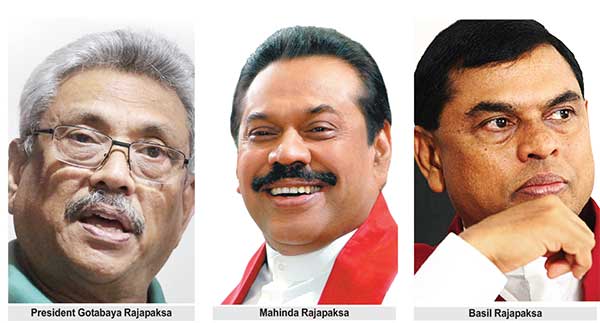
would have worked out to win the confidence of the Mahinda/Gotabaya/Basil Pela
and its Sinhala Buddhist Nationalistic supporters/voters. Today the Muslims,
politicians and so-called civil society organizers (not the ordinary Muslim
voter) trusting the UNP and flocking en-block and have traded nearly 800,000 Muslim
votes to the UNP/NDF/TNA alliance, has betrayed and dumped the Sri Lankan
Muslims in the political dustbin, beaten and penalized as a result of the
conspiracies of the UNP/BBS/Rajitha Seneratne, Champika Ranawaka and the
so-called Civil Society groups like the Puravasibalaya which is supported by
our own Muslim Civil Society groups such as the Muslim Council of Sri Lanka (an
ad-hock group gathered without a constitution and by-laws), the National Shoora
Council and ACJU.
The political principle/ideology that The Muslim Voice” advocated and is
advocating it even now is because it is based on the political vision shown to
us by the late Dr. T.B.Jaya, viz-a-viz – NOT TO PUT ALL OUR EGGS IN ONE BASKET
WHEN IT COMES TO POLITICS”. It is Time up that the Sri Lanka Muslims should
rethink their stand to gain advantages for the future by supporting/negotiating
with the SLPP or the Mahinda Pela. THEREFORE IT IS BETTER FOR THE SRI LANKA MUSLIMS
TO SUPPORT THE GOVERNMENT OF GOTABAYA RAJAPAKSA AND PM MAHINDA RAJAPAKSA FROM
THE BEGINNING AND HELP THE SLPP ALLIANCE WIN THE GENERAL ELECTIONS IN APRIL/MAY
2020 WITH A 2/3 MAJORITY IN PARLIAMENT, Insha Allah.
The Muslim Voice” is followed by many thousands of
well-wishers supporters who have appreciated our NOBEL” cause in the struggle
to get rid of the Sri Lanka Muslim Community of MUNAAFIKK” Muslim politicians,
Civil Society groups and the deceptive ULEMA, the ACJU, Alhamdulillah. We will
therefore continue our Nobel mission till we achieve the end political goal of
creating a NEW POLITICAL FORCE that will be honest and sincere and FREE OF
CORRUPTION willing to work with the majority community,
to stand up and defend the Muslim Community politically and otherwise,
especially from among the YOUTH. This has now emerged from within the Sri Lanka
Muslim Community to face any new general election expected to take place in
August 5th., 2020, Insha Allah.
Sri Lankans would be going to the polls on August fifth to elect a new parliament. However, what is to follow depends on which party secures the majority to form a stable government. The prevailing prediction is that the Sri Lanka Podujana Peramuna (SLPP) is most likely to secure at least a sufficient majority to form a government.
Such an outcome would mean that President Gotabaya Rajapaksa as the Executive and a legislature headed by Prime Minister Mahinda Rajapaksa would be jointly responsible for the governance of Sri Lanka. If the SLPP secures only a simple majority the processes of governance would be constrained by the limitations and contradictions inherent in the 1978 Constitution and in the Nineteenth Amendment (19A). This would hamper post COVID-19 recovery. Therefore, it is imperative that without a two-thirds (2/3) majority to amend 1978 Constitution and 19A to bring clarity to its provisions or even introduce a new Constitution, it would not be possible for Sri Lanka to emerge from the unprecedented challenges presented by the COVID-19 disaster.
If, on the other hand, the SLPP secures only a simple majority, a national government with a 2/3 majority could be formed by means of provisions of Article 46 (4) similar to the dubious precedent crafted by the Yahapalana government. Such an approach would compel a SLPP government to accommodate the interests of coalition partners at considerable cost both financially as well as having to compromise its agenda. Therefore, if Sri Lanka is to recover from the COVID-19 crisis it is best that the government has a 2/3 majority sufficient to give it the freedom to act free of constraints of coalition demands and fetters of the 1978 Constitution and19 A.
THE NEED to REVISITING 19A
The need to revisit the 1978 Constitution and 19A is because the ambiguities and contradictions in their provisions have caused constitutional experts and academics to arrive at vastly divergent interpretations and conclusions. For instance, some interpret that 19A has transformed what was essentially a Presidential system based on separation of power into a Parliamentary system where separation of power is blurred to such an extent that they describe the present system as a Parliamentary Democracy. Others on the other hand, maintain that what 19A achieved was to prevent arbitrariness of Executive action that had existed under the 1978 Constitution, and not to transfer power from the Executive to Parliament. This is confirmed by the Supreme Court ruling on 19A that stated: “that the transfer, relinquishment or removal of a power attributed to one organ of government to another organ or body would be inconsistent with Article 3 read with Article 4 of the Constitution”. Therefore, it could be concluded that the intended transformation from a Presidential system to a Parliamentary system did not materialize notwithstanding such claims.
The 1972 Constitution is unambiguously based on a Parliamentary system while the 1978 Constitution is based on a Presidential system. However, the incorporation of certain provisions from the 1972 Constitution into to the 1978 Constitution, followed by 19A, has caused divergent interpretations. Hence, a few key issues are presented below to illustrate the need to revisit the 1978 Constitution and 19A in order to bring clarity to the current Constitutional provisions to ensure that the system of governance is either clearly Parliamentary or Presidential and not a mix of both.
CONSTITUTIONAL PROVISIONS of the 1972 CONSTITUTION
The relevant Articles in the 1972 Constitution are:
Article 91: “The President shall be responsible to the National State Assembly (Parliament) for the execution and performances of the powers and functions of his office under the Constitution…”.
Article 92 (1) states: “There shall be a Cabinet of Ministers charged with the direction and control of the government of the Republic which shall be collectively responsible to the National State Assembly and answerable to the National State Assembly on all matters for which they are responsible”.
Article 92 (2) states: “Of the Ministers, one who shall be the Head of the Cabinet of Ministers shall be the Prime Minister”.
Article 94 (1) states: “The Prime Minister shall determine the number of Ministers and Ministries and the assignment of subjects and functions to Ministers”.
Article 94 (2) states: “The President shall appoint from among the members of the National State Assembly Ministers to be in charge of the Ministries so determined”.
Article 94 (3): “The Prime Minister may at any time change the assignment of subjects and functions and recommend to the President changes to the composition of the Cabinet of Ministers…”.
CONSTITUTIONAL PROVISIONS of the 1978 CONSTITUTION
Article 42 states: “The President shall be responsible to Parliament for the due exercise, performance and discharge of the powers, duties and functions under the Constitution…’.
Article 43 (1) states: “There shall be a Cabinet of Ministers charged with the direction and control of the Government of the Republic which shall be collectively responsible and answerable to Parliament”.
Article 43 (2) states: “The President shall be a member of the Cabinet of ministers and shall be the Head of the Cabinet of Ministers”.
Article 44 (1) states: “The President from time to time, in consultation with the Prime Minister, where he considers such consultation to be necessary –
(a) “determine the number of Ministers of the Cabinet of Ministers and the Ministries and the assignment of subjects and functions to such Ministers” and
(b) “appoint from among the members of Parliament Ministers to be in charge of the Ministries so determined”.
Article 44 (3) states: “The President may at any time, change the assignment of subjects and functions and the composition of the Cabinet of Ministers…”.
CONSTITUTIONAL PROVISIONS of 19A
Article 42 (1) states: “There shall be a Cabinet of Ministers charged with the direction and control of the Government of the Republic”.
Article 42 (2) states: “The Cabinet of Ministers shall be collectively responsible and answerable to Parliament”.
Article 43 (1) states: “The President shall in consultation with the Prime Minister, where he considers such consultation to be necessary, determine the number of Ministers of the Cabinet of ministers and the Ministries and the assignment of subjects and functions to such Ministers”.
Article 43 (2) states: “The President shall on the advice of the Prime Minister appoint from among Members of Parliament, Ministers, to be in charge of the Ministries so determined”.
Article 43 (3) states: “The President may at any time change the assignment of subjects and functions and the composition of the Cabinet of Ministers…”.
IMPACT of CONTRADICTORY PROVISIONS
The constitutional provisions of the 1972 Constitution presented above are consistent with a Parliamentary system. Notwithstanding this fact, such provisions that are appropriate for a Parliamentary system have been incorporated into the 1978 Constitution and 19A that are essentially Presidential. This has caused both the 1978 Constitution and 19A to be seriously compromised. It is therefore imperative that amendments are introduced to ensure that the system of governance is either Parliamentary or Presidential in all respects.
For instance, commenting on Article 43 of the 1978 Constitution (presented above), the Supreme Court in S.D. No. 04/2015 stated: “This important Article underscores that the Cabinet collectively is charged with the exercise of Executive power, which is expressed as the direction and control of the Government of the Republic and the collective responsibility of Cabinet of which the President is the Head. It establishes conclusively that the President is not the sole repository of Executive power under the Constitution. It is the Cabinet of Ministers collectively, and not the President alone, which is charged with the direction and control of the Government. This Cabinet is answerable to Parliament. Therefore, the Constitution itself recognizes that Executive power is exercised by the President and by the Cabinet of Ministers, and that the President shall be responsible to Parliament and the Cabinet of Ministers, collectively responsible and answerable to Parliament with regard to the exercise of such powers…”.
On the other hand, the Courts have accepted that Article 3 that deals with the sovereignty of the People should be read with Article 4. Therefore, the guiding principle in the exercise of Executive power in the 1978 Constitution should be Article 4 (b). Article 4 (b) states: “the executive power of the People, including the defence of Sri Lanka, shall be exercised by the President of the Republic elected by the People”. This Article specifically reposes Executive power of the People ONLY in the President. Therefore, Executive power must necessarily be exercised solely by the President and not jointly shared with the Cabinet of Ministers. This means that anyone else exercising executive power must derive its authority from the President.
The comments of the Supreme Court in S.D. No. 04/2015 also stated: “It is in this background that the Court in the Nineteenth Amendment Determination came to a conclusion that the transfer, relinquishment or removal of the power attributed to one organ of government to another organ or body would be inconsistent with Article 3 read with Article 4 of the Constitution. Though Article 4 provides the form and manner of the sovereignty of the people, the ultimate act or decision of the executive functions must be retained by the President. So long as the President remains the Head of the Executive, the exercise of his powers remain supreme or sovereign in the executive field and to others to whom such power is given must derive the authority from the President or exercise the Executive power vested in the President as a delegate of the President”.
If, as stated above by the Court, the President as the Head of the Executive is “sovereign in the executive field”, the President who represents one of the three branches of the Government – the Executive, is co-equal with the Legislature and the Judiciary under provisions of separation of power. Therefore, the President cannot be responsible to another organ of government – the Parliament. Furthermore, since the Cabinet of Ministers derive their authority from the President, the Cabinet cannot be responsible and answerable to Parliament either. Under the circumstances, Article 33A that calls for the President to be responsible to Parliament “for the due exercise performance and discharge of his powers, duties and functions” is a violation of the principle of separation of power.
Another important issue that arises from the fact that the President is sovereign in the executive field is the constitutional provision that his executive powers include the defence of Sri Lanka. Therefore, the President has a right granted by the Constitution to be the Minister of Defence regardless of whether the President is a Member of Parliament or not. The prerogative of such a decision should be left to the President, instead of having to delegate it to someone else, invariably less competent in issues relating to security. Since the provision to select Cabinet Members from among members of Parliament is a carry-over from the defunct 1972 Constitution this constraint should be repealed since it has no relevance in a Presidential system.
ARTICLE 46 – UNIQUE ONLY TO 19A.
Article 46 (1) (a) and (b) limits the number of Cabinet of Ministers to thirty and sets an aggregate limit of forty on the number of Ministers who are not members of the Cabinet of Ministers and Deputy Ministers.
Having sets limits, the framers of 19A provided a device by means of Article 46 (4) and (5) to enable Parliament by Resolution to exceed the very limits they themselves stipulated above. In fact, this device is so crafty that it enables even a minority government with the largest majority to form a National Government with even a 2/3 majority by forming a coalition with other recognized political parties. Had the Article stated “the political party with the largest majority together with ALL other political parties” the task of forming a National Government would in all likelihood been unrealistic. This device was exploited to the fullest advantage by the former Yahapalana government. The net effect of the current provisions in 19A is to ridicule their own attempts to appear well intentioned by proposing a leaner Cabinet and make a mockery of the “will of the people” by introducing a corrupted way out of the limits set by themselves.
19A – THE CONSTITUTIONAL COUNCIL
Article 41 B (1) states: “No person shall be appointed by the President as the Chairman or the member of any of the Commissions specified in the Schedule to this Article, except on a recommendation of the Council”.
Article 41 C (1) states: “No person shall be appointed by the President to any of the Officers specified in the Schedule to this Article…unless such appointment has been approved by the Council”.
The Court ruled that the transfer, relinquishment or removal of power attributed to one organ to another violates Article 3 when read with Article 4 of the Constitution. If this is so, would not the transfer of power that the President had, to appoint Commissions and Officers prior to 19A, to another body that is not even another organ of Government as recognized by Article 3 read with Article 4, amount to a violation of the sovereignty of the People? Furthermore, the operation of the Council has become so dysfunctional that the country today does not have a functioning Inspector General of Police. The reason for this is a system failure because the President who makes the appointment could keep on rejecting nominations by the Council causing posts being vacant as in the case of the IGP. Therefore, this provision too needs to be seriously amended. An alternative would be to restore the powers the President had under Articles 54, 55 and 107 of the 1978 Constitution and for him to make appointments subject to the approval of the appropriate Oversight Committees of Parliament and repeal Chapter VIIA of 19A.
19A – DISSOLUTION of PARLIAMENT
According to 19A Article 70 (1) states: “The President may by Proclamation, summon, prorogue and dissolve Parliament. Provided that the President shall not dissolve until the expiration of a period of not less than four years and six months…unless Parliament requests the President to do so by a resolution passed by not less than two-third of the whole number of Members voting in favour”.
This Article presents two serious issues. One, it places the President at a disadvantage in relation to Parliament since Parliament is not constrained by a time bar whereas the President is. Therefore, Parliament could request the President to dissolve Parliament at any time with a 2/3 majority whereas the President is compelled to wait four and half years to dissolve Parliament. Such drastic disadvantages are not in keeping with principles of separation of power among co-equals. Such inequality is unacceptable for two separate organs of government elected separately by the People. The second serious issue is that securing a 2/3 majority for a political party under provisions of proportional representation is bound to be a rarity. This compels Parliament to continue however dysfunctional it is.
Therefore, the net effect of Article 70 (1) as currently presented is for the country to be governed by a government even if the situation is so dire that it warrants dissolution of Parliament because of the constitutional straightjacket of this Article. Consequently, as always, it is the People who have to endure.
CONCLUSION
The outcome of the forthcoming General Election to elect a new Parliament would have a serious impact on how effectively Sri Lanka recovers from the challenges imposed by the unprecedented COVID -19 crisis. The most significant single factor that would influence the recovery process is the current Constitution. The 1978 Constitution and 19A contain constitutional provisions that are a mix appropriate to both Parliamentary and Presidential systems. This has made governing processes convoluted. Therefore, it is imperative that the current provisions are amended, so that the Constitution is Presidential in all respects and not a mix of both Parliamentary and Presidential as currently exists, with the appropriate checks and balances by the Parliament and the Judiciary, in a way that would not hamper effective Executive action.
The reason for the existence of Parliamentary and Presidential systems in the present Constitution is because the operation of a Presidential system based on separation of power, is not commonly understood despite it being in existence for over four decades. A glaring example of the lack of appreciation of what separation of power means is selection of the Cabinet of Ministers from among Members of Parliament. This results in the same individual serving two separate organs of government resulting in conflict of interest. This practice should cease. If Members of Parliament are to be Members of the Cabinet, they should relinquish their association with Parliament as practiced by other countries with Presidential systems.
Under the circumstances, a government with a simple majority would not be in a position to introduce the needed amendments without which the recovery process would be hampered by the existing constitutional ambiguities and contradictions. Therefore, it is only a 2/3 Parliamentary majority that would facilitate the introduction of the needed amendments without which it would not be possible for Sri Lanka to emerge from the unprecedented challenges presented by COVID-19 pandemic.
There was a news item about the role of Viyathmaga started under the patronage of the President Few members expected to get appointed to posts of heads of corporations after presidential Election.
No one was appointed and the military top brass with the responsibility to uphold law and order were appointed to many places.
At least members of Viyathmaga could have been appointed as deputy head or head of operations to help the military head to effectively and scientifically managed.
Today we can see that some members were given nominations under protest from Old Guard politicians and the enthusiasm and the drive among Viyathmaga is somewhat fading away.
As mentioned earlier in An article, the newly formed Sri Lankan collective of Viyath (intellectuals) can play a wider role by helping the politicians to take the right path. They can be the driving force behind the politicians to run the country.
Every minister to have an Advisory Committee to scrutinize the actions initiated by the minister and advisor him to take the right path.
In the field of industries such as Agriculture, Fisheries, Transport, and Tourism an experienced advisory board under the control of the president can be very useful.
This could have been the role of existing Viyath Maga
But it is sad that the members got nominations and now forgotten their roles and gunning after the Manapa.
All the political parties have now
issued their manifestos. A large part of the government’s foreign exchange
budget goes for purchasing fossil fuels for generating electric power, and for
feeding the fleet of vehicles, tractors, trains and other internal combustion
engines used in Sri Lanka. These total some 8-10 million engines. All this
costs some 5 to 6 Billion US dollars, approximating half the total export
earnings. The burnt fuels are a major cause of sub-micron particulate dust,
heavy-metal deposition and gaseous environmental pollution, leading to
increased respiratory diseases, allergies, cancers, etc.
So, any scheme to cut down Sri Lanka’s fossil fuel imports would be a large
step forward. Unfortunately, while there is much agitation about things like
the Bhuvaneka audience hall, or Karuna’s loose talk, matters most relevant to
the nation are ignored. Where is the agitation against fossil fuel?
As the SLPP is the party most likely to win the election, it is worthwhile
looking at their Manifesto. Page 58 deals with energy. While the manifesto
mentions wind and solar power, its main emphasis continues to be on fossil
fuels.
The manifesto states that:
* We will also expedite the exploration of natural gas, identified in the
three zones of the geological survey, to ensure that the people of this country
would reap the benefits in the next three years.
Those who benefit from natural gas, in the next three years, are those who will
collect commissions! This is a project most dangerous to the environment, and
least compatible with a future of non-polluting renewable energies.
Furthermore, if significant amounts of natural gas, and other fossil fuels were
found, global oil cartels will attempt to control the resource. Countries in
Latin America, Africa, etc., that possess such resources, have been taken overs
since World War I.
The manifesto says:
* The oil refinery, located in Kolonnawa, which is 40 years old, will be
modernized, while the oil storage tanks, in Trincomalee, will also be
re-constructed and developed so that they can be used for the economic
development of the country.
We have already seen how attempts to re-command the oil tanks in Gokanna
(Trincomalee) have failed. The proposal to build oil storage in Hambantota is
adding NEW infrastructure for fossil fuels, rather than attempting to WIND DOWN
their use.
The manifesto says:
* Roof top solar systems will be encouraged so that households and small
businesses would have access to low cost energy, which will be done in the
course of the next five years. The total cost of such investments would be made
available through bank loans with low/concessional interest rates. The
government will also introduce a new method to release excess power generation
to the national grid in improving solar energy utilization.
* We will remove all impediments and incentivize the private sector and
entrepreneurs interested in setting up renewable energy projects i.e. solar and
wind, and to this end, the government will provide assistance.
The major impediment to the complete winding down of fossil fuels is the
claimed lack of a means of storing solar and wind power. They are generated
only when the wind blows, and when the sun shines. The use of ever larger
storage batteries is not a solution. It is increasingly expensive, and
disposing of used batteries is a problem. It is as bad as turning to coal, oil
or LNG as a “solution” to meeting the nation’s power needs. Turning
to huge storage batteries is NOT a solution.
Sri Lanka is fortunate in having many reservoirs, of which some 22 (e.g., Gal
Oya, Victoria, Moragahakanda, etc.) are equipped with turbines for
hydro-electric power generation. They enable a simple inexpensive scheme
that can be implemented within a few years. The rooftop solar panels, and
wind-power sources, wherever they be, have to be connected to the central
electricity grid. When they generate electricity, the power generation by the
22 hydro-electric turbines can be reduced or shut off, saving water in the
reservoirs. The saved water can be used later, at times when the sun is not
shining, and when the wind has waned. This simple means of saving power adds NO
costs, needs no batteries, pumps or storage tanks.
It only requires the use of modern algorithms to synchronize the operation of
the hydro-turbines with the distributed output of solar and wind energy.
Even as it is, the operation of turbines is controlled by input-output
algorithms. They have evolved from the hand charts originally used for the
purpose. These “single-sheet” charts can be made into multi-sheet
charts (or layers) which, when coupled together, evolve into what are known as
neural-network algorithms. For instance, while some of the layers contain the
same information as used today, new layers will have “nodes” that are
“trained” to deal with information about power from solar arrays,
wind turbines, etc. Data from a few seasons can be used to “train”
the neural algorithms for optimal control of the system, so that there is firm
power available all the time. I have discussed the principles behind neural
network algorithms in section 2.2.5 of my book “A Physicist’s View of
Matter and Mind“, (World Scientific, 2014).
The amount of electric power available can be boosted by some 25-30%, even if
the sun does not shine, by the simple process of positioning solar panels on
floats placed on reservoirs. The 25-30% boost comes from the fact that floating
panels cut down the evaporation of reservoir water by wind, and SAVES water day
and night. The use of floats cuts down the growth of water weeds and algae. So
the environmental impact works out to be very positive. The 25-30% saving is
enough to cover even a three to four month drought, and actually increases Sri
Lanka’s hydro-electric capacity of some 2000 MW to 2600 MW.
The actual increase is even larger because the floating solar arrays, occupying
up to about 60% of the surface area of 22 reservoirs, will also generate
electricity during the day time, and this electricity will be saved as head
water in the reservoirs themselves. Of course, the introduction of floating
solar panels on reservoirs is a gradual process. However, the speed of
implementation depends on the motivation of the government, the time needed to
move the extremely sluggish bureaucracy of the power administrators in Sri
Lanka, and in keeping the fossil-fuel lobby under control.
Another
approach to storing power generated from roof-top solar panels or wind turbines
is to use the batteries of the motor cars, vans, buses, tractors, trains, etc.,
owned by the government, businesses, and private individuals. Sri Lanka has
some eight million such “engines”. If these were all hybrid vehicles
storing an average of 50 kWh, these when integrated by connection of the
vehicles to the grid will create a spatially distributed mega-battery of 40 GW
capacity. Such a possibility means that the cost of the giant battery is
divided among eight million owners and costs very little to the government.
Vehicle-to-grid storage is still a
new concept but almost ready to jump off the research lab to industry. It
requires dedicated two-way charging devices that communicate with the vehicles
using high-level aggregator control systems. However, this technology already
exists. Nissan offers a limited vehicle-to-home (V2H) system that lets people
use their cars to store energy from roof-top solar panels until nightfall, when
power is needed. However, the integration to the grid is a task that the
AI-engineers who are in charge of the grid should develop, according to the
local needs, by integrating the V2H systems with the grid.
I have only considered the 22 reservoirs usually described as dedicated
hydro-electric reservoirs in the above discussion. If the
reservoirs dedicated to irrigation ( at least 12 more) are also included
in the analysis, the use of floating solar arrays on them can be used to
increase the available water as a very robust buffer against drought by cutting
the evaporation from them. The electricity generated from those floating
solar panels can also be used to save water in the hydro-electric reservoirs.
Hence the estimates given in the previous sections are a modest lower bound to
what can be down.
Unfortunately, there is a great
reluctance to move away from the well-trodden path of coal and oil that the
older power engineers of Sri Lanka learnt during their “E-Fac” days.
Most of the hydro-power potential in Sri Lanka has already been harnessed. The
politicians and senior managers are lobbied by the well-heeled fossil-fuel
merchants who come with so-called “turn-key solutions” to the
Nation’s energy problems, but at the price of a long-term commitment to being
bled for ever; sapping the nation’s wealth, and also its health and
environmental well being. Such long term issues are of no interest to
politicians who are assured of a pension after even one term in office, with
near absentee attendance in parliament.
Institutional collaboration for online training of health professionals was among the subjects discussed
Colombo, July 29 (newsin.asia): Dr. Sushil Kumar, First Secretary (Technical Cooperation) in the Indian High Commission met Mrs.H.W.M.Pushpalatha Manike, Additional Secretary, Ministry of Health and Indigenous Medicine Services of Sri Lanka on July 27th, 2020 and discussed cooperation in the area of alternative medicine systems.
Both sides also discussed institutional collaboration for online training of health professionals, health care delivery and research & development of Homeopathic medicines.
Earlier last month, the High Commission of India had handed over a consignment of Homeopathic medicines to the Government Homeopathic Hospital of Sri Lanka. Under the Indian Technical and Economic Cooperation (ITEC) capacity building Programme, Sri Lankan health professionals working in the areas of Ayurveda, Yoga & Naturopathy, Unani, Siddha and Homeopathy (AYUSH) have participated in short term trainings in India.
The Hindu epic provides rallying points for Hindutva in India as well as Sinhala-Buddhist nationalism in Sri Lanka
The Hindu epic Ramayana has had the unusual function of providing rallying points for two contradictory and clashing nationalisms, namely, Hindu-Indian nationalism in India, and Sinhalese Buddhist nationalism in Sri Lanka.
While the Hindutvic forces in India have been assiduously turning the Ramayana and its protagonist, Rama, into a rallying point against Indian Muslims seen as an outside force,” Sinhalese-Buddhist nationalism has been fostering the epic’s antagonist, Ravana, as a rallying point against outside forces like India and the West threatening the island’s sovereignty.
The Babri Masjid-Ramjanmabhoomi issue helped the forces of Hindutva prevent the separation of the Backward Classes from the upper castes when the V.P.Singh government implemented the Mandal Commission’s report to give 27% reservations in jobs and education to the Backward Classes, thus jeopardizing Hindu unity”. Later, the demolition of the Babri Majid and the demand to build a Ram temple in its place, helped defeat the forces of secularism represented by the Congress and the Left parties.
Presently, the building of the Ram temple in the place of the destroyed Masjid under the direct supervision of Hindutva icon and Prime Minister Narendra Modi, is going to be used to consolidate the hold of Hindutva in the face of mounting challenges on multiple fronts. The Modi regime has to contend with its utter failure to revive the flagging economy, combat COVID-19 and safeguard the borders against Chinese intrusions.
Ravana Cult in Sri Lanka
In Sri Lanka, Sinhalese Buddhist nationalists have been building a parallel nationalist cult around Ravana, the ancient Lankan ruler, who is Rama’s antagonist in the Ramayana. While efforts to build the image of Ravana as the embodiment of Sri Lanka in its fight against an Indian invader had been on for some years, the present nationalist government of President Gotabaya Rajapaksa has revived the nationalist project to consolidate its political base vis-à-vis the opposition which is perceived as pro-India and pro-West. The Ravana project should help the ruling Sri Lanka Podujana Peramuna (SLPP) in the August 5 parliamentary elections.
Recently, the Sri Lankan Ministry of Tourism and Civil Aviation had issued a newspaper advertisement in Sinhala urging people to share documents, books, and research material on Ravana, the legendary king of Lanka. The advertisement said that the Ministry is conducting in-depth research on King Ravana and the ancient domination of the aerial routes that is now lost”. Ravana is believed to have manufactured an aircraft called Dandu Monara” (known as Pushpaka Vimana in India). He had used the aircraft to fly to India and several other places overseas.
Although the research is being given a scientific goal – to find out Ravana’s air routes, it has a nationalistic purpose in the context of the internal and external challenges that Sri Lanka is now facing. The vestiges of Tamil separatism are still there with almost all Tamil parties in the electoral fray calling for self-determination” within a federal system marked by maximum devolution of power to a united Tamil province. The Tamil Peoples’ National Alliance (TPNA) led by former Northern Province Chief Minister C.V.Wigneswaran has even sought an UN-supervised referendum among the Tamils to determine the kind of solution they want , It wants an interim administrative arrangement in the Tamil areas supervised by India and the international community. The TPNA has also sought the reduction of Lankan army strength in the Tamil areas to the 1983 level.
Additionally, there is US pressure to sign agreements which dilute national sovereignty like the Millennium Challenge Corporations (MCC) Compact and the Acquisition and Cross Services Agreement (ACSA). Though the threat to Lanka on the human rights front is less now because of the weakening of the UN and the Western bloc by COVID-19, it could be revived to intimidate it into toeing the West’s line vis-a-vis China, which is a major investor in Lanka.
From Big Brother” India, there is pressure to yield to it the Eastern Container Terminal in the Colombo Port. But giving it to India goes against the national policy of not leasing out national assets like ports and airports to foreign interests. This policy stemmed from the controversial 99-year lease of the Hambantota port to China. The building of the Ravana cult is meant to tell foreign hegemons that attempts to enforce their will would be met with resistance.
Since Ravana stood for Lankan power, there is a Buddhist monk-led political organization called Ravana Balaya”. Sri Lanka’s first indigenously made satellite was named Raavana I” as Ravana was the first Lankan aviator.
In her paper Remaking and Trans-creating Ravana in Contemporary SriLanka,” Dr. Kanchuka Dharmasiri of the University of Peradeniya says that popular songs, films, plays, television series, social media, and historical” narratives on Ravana have gained unprecedented popularity” in 21st. Century Sri Lanka. She delineates the ways in which Ravana has been reimagined and trans-created during significant socio-political transformations in Sri Lanka since the 1950s. She examines how performances of Ravana are intertwined with present-day ideologies of nationalism, neoliberalism and power, and how the image of Ravana is in a process of continual transformation.
Deborah De Koning of Tilburg University in The Netherlands, in her paper entitled: The Ritualizing of the Martial and Benevolent Side of Ravana in Two Annual Rituals at the Sri Devram Maha Viharaya in Pannipitiya, Sri Lanka says that in this recently constructed Vihara, Ravana is the object of devotion. In addition to erecting a Ravana statue in a shrine of his own, two annual rituals for Ravana are organized by this temple. In these rituals one can clearly discern the portrayal of Ravana as a warrior king, and as a benevolent healer. De Koning says that the glorification of an ancient civilization are part of increased nationalistic sentiments and an increased assertiveness among the Sinhalese Buddhist majority in post-war Sri Lanka.”
Role of Arisen Ahubudu
Sinhalese historical chronicles like the Mahawamsa, Rajavaliya and Ravanavaliya mentioned Ramayana but identified Ravana as a Sinhala king and extolled his intellectual, artistic, physical and political prowess.
However, the credit for starting the Ravana cult in the modern era goes to the Sinhala cultural and linguistic revivalist, the Late Arisen Ahubudu. Ahubudu represented the Hela” movement founded by the Late Munidasa Kumaratunga. The Hela movement has been urging the Sinhalese to go back to their roots, shunning Indian, Hinduistic and other alien influences.
In his book Sakvithi Ravana (1988) Ahubudu says that Ravana reigned from 2554 to 2517 BC. He quotes Ravanavaliya to say that Ravana belonged to the Sun race”, as Ra” signified the Sun and vana” signified generation. Ravana’s ten heads represented the ten crowns he wore as a result of his being the sovereign of ten countries.
Ahubudu trashes the story that Rama invaded Lanka because Ravana had kidnapped his consort Sita. According to Ahubudu, Ravana’s step brother Vibhishana, had invited Rama to invade Lanka because he was wanting to oust Ravana from the kingship of the island and take it over. Considering the fact that Sita’s chastity was proved, this (the alleged abduction of Sita) can be taken as a story concocted by Yuwaraja Vibhishana in order to discredit Ravana in the eyes of his people and take advantage thereof.”
According to Prof.Buddhasasa Hewavitharana, the Sinhalas disapproved of Vibhishana’s conduct. In popular lore, the area to which he belonged to (Kalutara North) came to be known as the land of the Desha Shatru (betrayer of the country).
Munidasa Kumaratunga claimed that Ravana had written medical books such as Nadi Pariksha, Arka Prakashata, Uddisa Chiktsaya, Oddiya Chikitsa, Kumara Tantraya and Vatina Prakaranaya in Sinhala, which were translated into Sanskrit.
Historically, Sri Lankan Buddhist monks have had problems with Rama. Prof K.N.O. Dharmadasa, Editor of the Sinhala Encyclopaedia recalled that a 15th century Sinhala poet had asked why Rama, a God, could not hop across to Sri Lanka like Hanuman did, and had to get a bridge constructed. Could a God’s power be so small in this world?” the poet wondered.
President Gotabaya Rajapaksa stated that the Colombo city will be developed according to a systematic plan, after identifying the major problems faced by the people living in the Colombo district.
The President’s Media Division stated that this program aims to address issues such as lack of housing facilities, difficulties related to garbage disposal and flooding.
The President made this statement at a public meeting held in Colombo.
Prime Minister Mahinda Rajapaksa yesterday said a new government will introduce laws making it mandatory to present agreements with regard to state properties in parliament before signing them.
Speaking at a forum of professionals in Colombo, Mr. Rajapaksa said the members of the previous Yahapalana Government has signed contracts to handover the Eastern Container Terminal (ECT) at the Colombo Port to India since it already leased out the Hambantota Port to China.
Had the Yahapalana Government remained in power for another term, nothing would have been left in the country. Therefore, we will introduce laws making it mandatory to submit agreements with regard to state properties in parliament before signing them. However, today, we have been forced to go ahead with whatever we are left within the country including the destruction the previous government has made,” he said.
He said the foreign exchange revenue earned from expatriate workers and the income from the garment industry continued to be the two main source of income for the country. He said the country cannot further depend on these two sources.
We made plans to set the course of the country’s economy on a new path and to create novel ways of generating income. That’s why we created the Hambantota Port, the Port City and the Mattala Airport. We made highways connecting all these to make the country an international trade centre,” he said.
Referring to the COVID-19 pandemic and its impact, Prime Minister Rajapaksa said the economy of not only Sri Lanka but also the entire world has imploded.
This is the challenge we face in the short term. Due to the fluctuations in the world economy, we are yet again at a juncture where the existence of the country depends on the ability of the leaders. Had Gotabaya Rajapaksa not been elected President, the country would have become a ‘Vishala Mahanuwara.’ I hope all Sri Lankans will use their voting right to strengthen the Gotabaya Rajapaksa Government,” Prime Minister Rajapaksa said.
The Ministry of Education has decided to resume academic activities at all government schools from August 10, following government imposed holidays due to the COVID-19 outbreak.
However, only Grades 5, 10, 11, 12, and 13 will be allowed attend school on all five weekdays.
Grades 1, 2, and 3 will have school for only one day per week.
It has also been decided to reopen schools according to the number of students in the school.
Schools with less than 200 students may reopen for all grades from August 10.
Primary schools with over 200 students will reopen as:
Grades 1 and 5 – Monday
Grades 2 and 5 -Tuesday
Grades 3 and 5 -Wednesday
Grades 4 and 5 -Thursday, Friday
Secondary schools with over 200 students will reopen as:
Grades 6, 10, 11, 12, 13 – Monday
Grades 7, 10, 11, 12, 13 – Tuesday
Grades 8, 10, 11, 12, 13 – Wednesday
Grades 9, 10, 11, 12, 13 – Thursday, Friday.
However, the time duration for a school day for Grades 6, 7, 8, and 9 will be from 7.00 am till 1.30 pm, while it will be from 7.30 am until 3.30 pm for Grades 10, 11, 12, and 13.
Meanwhile, Heads of Schools have been informed not to open school canteens until health officials confirm that the prevailing situation is under control.
President Gotabaya Rajapaksa assures that all the corruption, malpractices and irregularities in the government will be eliminated and establish an efficient public service in the country.
President Rajapaksa emphasized that bribery, corruption and irregularities in the government sector will cease to exist and a government dedicated to serve the citizens in a satisfactory manner would be established.
President made these remarks during the election tour in Kalutara today (July 29) in support of the candidates representing Sri Lanka Podujana Peramuna (SLPP) at the forthcoming general election.
President Rajapaksa commenced his election tour by attending the public gathering organized by candidate Mahinda Samarasinghe at Keselwatta Pradeshiya Sabha Playground in Panadura, stated President’s Media Division.
The government has initiated to build an economic system to end the import-based trade system in the country and to give priority to local productions. President advised the crowd to enter themselves into the agricultural and manufacturing industries in order to reap the full benefits offered in these sectors.
It is time to incorporate modern technology to strengthen the farming economy. For this purpose, the government has banned the importation of agri produce into the country. Job appointments for 150,000 underprivileged individuals and graduates will be given following the general election. These measures and opportunities will aid the country in its development curve.”
President Rajapaksa participated in a public rally at Panadura Municipal Grounds organized by the SLPP candidate Jagath Angage and exchanged pleasantries with the crowd present and inquired into further facilities they require in the district.
We would resolve the shortage of drinking water in the area”, President promised the locals during a public rally in Korosduwa Playground, Panadura organized by the former state minister Jayantha Samaraweera.
During his tour, students due to sit for A/L examination in 2021 urged the President to pay his attention to the difficulties they had faced as the studies were disrupted on account of the COVID 19 pandemic this year and the Easter Sunday attacks last year.
President Rajapaksa took note of the requirement to renovate the Kalutara Nursing School. In response to another request for renovation of buildings of the Panadura Central College, President instructed former state minister Jayantha Samaraweera to attend the matter.
Former state minister Rohitha Abyegunawardhana was also present at these gatherings.
The repatriation of Sri Lankans stranded abroad due to COVID-19 pandemic will resume from the 31st of July, according to Admiral Jayanath Colombage, Additional Secretary to the President for Foreign Relations.
With the identification of COVID-19 patients from the Kandakadu Rehabilitation Center, steps were taken to restrict the repatriation of Sri Lankans abroad from the June 15 due to the increase in the number of cases of coronavirus infections in the country.
However, Admiral Colombage stated that the government has decided to resume the repatriation process considering the current situation in the country.
Meanwhile, 29 Sri Lankans in Qatar arrived at the Bandaranaike International Airport (BIA) early this morning (29) while 3 more Sri Lankans in England returned to the country last night (28).
Prime Minister Mahinda Rajapaksa has appointed an Archaeological Advisory Committee to assist with the safeguarding of the country’s archeological sites.
The relevant letters of appointment were handed over to the committee members at Temple Trees on Wednesday (29).
The 20-member advisory committee is tasked with advising the subject minister on matters concerning archaeology in the country, providing advice for special projects, policy making, archaeological site observation and assisting with promoting development activities.
The committee is comprised of the following members:
1.Anunayake of the Asgiri Chapter Ven. Wedaruwe Dharmakeerthi Sri Ratanapala Thero 2. Chief Sanganayake of Dhakshina Lanka Ven. Metaramba Hemarathana Thero 3. Viharadhikari of Ruwanweli Maha Chaithyaramaya Ven. Pallegama Hemarathana Thero 4. Archaeological Chakravarthi Ven. Ellawala Medhananda Thero 5. Ven. Alikewela Seelananda Thero 6. Ven. Yatigaloluwe Wimalarathana Thero 7. Chief Incumbent of Somawathi Rajamaha Vihara Ven. Pahamune Sri Sumangala Thero 8. Professor Ven. Induragare Dhammarathana Thero 9. Dr. Ven. Maduruoye Dhammissara Thero 10. Former Director-General of Archaeology Dr. Siran Deraniyagala 11. Archaeologist Professor T. G. Kulatunga 12. Dr. Gamini Wijesuriya 13. Prof. Nimal De Silva 14. Engineer Gemunu Silva 15. Professor Anura Manatunga 16. Architect Ashley De Vos 17. Professor Raj Somadeva 18. W.M.S. Weerasekara 19. Sirinimal Laddusinghe 20. Professor Munidasa Padmasiri Ranaweera
Former Director of State Intelligence Service (SIS) Nilantha Jayawardena revealed at the Presidential Commission of Inquiry probing 2019 Easter Sunday terror attacks that Mawlawi Naufer, who is currently under arrest, had served as the theoretician of the banned-terror group National Thowheed Jamaath (NTJ).
Giving evidence at the Presidential Commission of Inquiry yesterday (28), Jayawardena said that Mawlawi Naufer, who had lived in Qatar for 19 years, had played a role at NTJ similar to the role played by Anton Balasingham in the LTTE.
According to the former SIS chief, a conflict had arisen among the terrorists on April 13, 2019, at the Enderamulla safe house, with regard to the organization’s leadership.
However, Mawlawi Naufer was arrested by authorities at a Dambulla hotel following the attacks, on April 22.
Speaking on the SIS investigations carried out on Zahran Hashim, Jayawardena revealed that despite there being information that Hashim had fled the country following the 2017 Aliyar conflict, he had in fact been hiding at his wife’s home in Kekunagolla, Narammala.
With the revelation that persons involved in the case of Mawanella Buddha statue vandalism had kept close contacts with Hashim, Jayawardena said that, 6 months prior to the attacks he had informed the then-National Intelligence Chief Sisira Mendis that Zahran Hashim had been urging his followers to launch an attack in Sri Lanka similar to the attacks carried out in other parts of the world that the IS have claimed responsibility for.
Here are some of the comments made regarding the expulsion of the candidates of the Samagi Jana Balawegaya from the UNP and the current political situation.
Field Marshal Sarath Fonseka stated that whatever decision is taken by the Working Committee, legal action will be taken against those decisions.
Speaking on the election platform Rohitha Abeygunawardena spoke about the fate that befell the remaining members of the local government bodies of the UNP.
MP Kanaka Herath stated that Ranil Wickremesinghe’s name is also on the list of people to be expelled from UNP.
Former parliamentarian Chaminda Wijesiri has stated that Sajith Premadasa will be the next leader of the UNP despite the best efforts of Vajira and Naveen. <br /><br />Former General Secretary of the UNP Tissa Attanayake stated that all issues will be resolved on the 5th. <br /><br />Former Member of Parliament Ranjith Madduma Bandara stated that the money from the Central Cultural Fund was obtained to develop religious places.
This essay
is on the findings of Ven
Ellawala Medhananda.Ven. Ellawala Medhananda paid special
attention to the Buddhist archaeological remains in the North and east. He
explored as much as he could in these two provinces, using his own resources He
found that the north and east had many Buddhist ruins and many explorations
were needed, before they could be fully examined and recorded.
If one travels north along the sea coast road,
starting from Trincomalee town, one can see many Buddhist ruins, even at
present, he observed. Many ruins can be seen at Ridikanda area in Trincomalee
district as well. In Batticaloa district, in the deep forest, there is
Vasibandagala, Atubandagala, Iddagala, Nelugala, and Mavulivala,
full of ruins which have not been explored.
Medhananda found that the public did not know
that there had been a vibrant Buddhist civilization in the north and east.
Nobody had gone and researched there. So, for several years, after each
exploration, Medhananda wrote up his findings and sent them ‘Divaina’
newspaper. These writings were very popular. Thousands of readers have
encouraged me by letter and phone calls, after reading what I wrote, said
Medhananda. Medhananda made particular mention of Prof Wijaya
Dissanayake, then in London.
Medhananda was repeatedly asked to
put his writings into one book. The result was, Pacina passsa, uttara passa,
nagenahira palata ha uturu palate Sinhala Bauddha Urumaya” (Dayawansa Jayakody,
2003). The book has gone into five reprints, the last was in 2013. It is a
substantial text of 536 pages, giving detailed descriptions of the ruined
Buddhist viharas and monasteries. This book has been translated into English as
‘The Sinhala Buddhist heritage in the east and north of Sri Lanka (Dayawansa
Jayakody, 2005) .This is not a very good translation and has many omissions. I
would therefore advise readers to go direct to the Sinhala original.
Medhananda has prepared a set of maps which
showed the Buddhist ruins found by him, which are NOT shown on the map compiled
by the Department of Archaeology. The maps therefore only show the
places Medhananda has found, they do not show all the Buddhist ruins found in
the Province. This should be kept in mind.
Medhananda‘s maps shows 17 new locations
for Jaffna, including 4 on the smaller islands and 19 for Vavuniya
and Mullaitivu Mannar has 32 places, of which 15 are lined along
the sea coast. The map of the Eastern province showed Ampara 22 places,
many along the coast or near it, Trincomalee 6, and Batticaloa
4. These maps are found in the English translation, not in
the Sinhala original. Medhananda says this list is incomplete. ‘There should be
much more than we found.’
Medhananda was able to explore the Eastern
Province with greater freedom than the north. Medhananda has explored 80
Buddhist sites In the Eastern province. They included Agbo Raja Maha Vihara,
Ariyakara Raja Maha Vihara, Bollegama Raja Maha Vihara,
Balahandu vihara, Bambaragastalawa vihara, Boralukanda temple, Nilaveli.
Bowattegala vihara, Buddhangala hermitage,
Dighavapi, Diviyagala vihara , Ganegama vihara ,
Girikumbara vihara , Habutala Karandahela vihara , Harasgala vihara
, Henanegala cave temple, Illukpitiya kanda len vihara Ampara. Kalkulam
Udagala Dagoba, Kiliveddi bodiya, Kirivehera Raja Maha
Vihara, Kombanachhi Ruhunu Somawathi vihara , Kongala natabun
vihara , Kopavela vihara , Kotaveheragala vihara ,
Kuchchaveli Maha vihara, Kudimbigala hermitage,
Kukuluvagala vihara, Lankapatuna Samudragiri vihara , Linemalai Sipavata vihara
, Malayadikanda vihara, Namalu vihara , Nawinna Raja Maha Vihara (
Ampara), Neelagiri vihara and cave, Niyaguna kanda
vihara , Okanda vihara , Omunugala cave temple, Panama raja
maha vihara , Piyangala vihara , Pulakunava Maha vihara , Rajagala
Maha vihara , Ratgala vihara , Rugama Piyakalutota vihara,
Ruhunu magul maha vihara , Samangala hermitage, ,Samudragiri,
Sastravela vihara , Seruwila vihara , Sri Pana Raja Maha Vihara, Potuvil,
Tilapola pansala, Tiriyaya, Udayagiri Raja Maha Vihara
, Vedikkinarmalai rock temple, Veheragala cave
temple, Veheragama kubira therun vanaya Ampara, Veherakema Mavala
vihara , Velatti badda aramaya and Velgam vihara.
Medhananda has also looked at ruins. These are
generally of monasteries or vihara, but some were settlements. Medhananda found
ruinsat Ananda kulam , Agbo Raja Maha Vihara , Allai,
Arantawala Balagala, Bandaraduva ,Buriyakulam kanda ,
Dighavapi, Etha bandi wewa, Galkanda , Hingurana sugar
factory (ruins near it). Ichchalanpattai, Kadolupotana kanda
Kandikudichchi aru, Kondavattavana, Koravanvadu, Kantalai
track 6 and track 13 ruins, Kivulevatta ,
Kulankullimalai , Kunchinamalai, Mulgama kanda. Moraha Pokuna,
Mundikulam malai Narakamulla, Nuwaralagala, Padi kemgala,
Pallewela, Paragahakele, Pulmoddai , Punyadi ,
Ridikanda Ranankaduwa, Sembumalai Serupitiya, Seruwila, Sunetra
wewa, Taravakulam, Tirumangala, Toppigala , Valmandiyagala
Veheragala, Veheragoda , Veherakema, Veheratenna, and Vilankulam.
Medhananda has also looked at ancient wewas in
the Eastern Province. He found 115 ancient wewa in Ampara district,
64 in Batticaloa district and 300 in Trincomalee district. In
Batticaloa and Trincomalee most of the wewa were known a ‘kulam’.
Medhananda has also listed 66 ancient wewas mentioned in
inscriptions.
Medhananda made it a point to record the
ancient names of the places he explored. Mahakaccakodiya vihara in Vavuniya was
Tittavalkada, . Kuchchaveli maha vihara was Samudradevi vihara. Verugal
was originally Veheragala. Kottiyar pattu was Kotthasara.
Panama was known as Vajana rata in 7th century.
A Gama donated to an aramaya become ‘aramagam’ which became ‘Arugam’.
Rugam is the Tamilisation of this, said Medhananda .
Medhananda commented on the ruins he
saw. The Yan Oya valley is studded with many stupas and other buildings, he
said. Inscriptions show that there were Buddhist settlements there.
At Lankapatuna Medhananda Found an unprotected moonstone, the rest
have been destroyed. I found 6 inscriptions there. After I told them the
Department of Archaeology went and copied the inscriptions.
The most number of ruins were found at Ampara.
One and a half miles to the east of the preset Devalahinda school, Ampara,
there are many ruins of stupas, ponds, Buddha foot prints, and asanagharas.
there is a wall fortification 7’ wide, stretching for a distance of about 600
feet.
Sembumale monastery complex spreads over an
area of more than hundred acres. Somawathi vihara, Kombanachchiya had ruins no
one has seen before. Places like Diviyagala, Damana and Timbirigolle in the
vicinity also have inscriptions and ruins. Budu patum kande is ‘full of
ruins’. Medhananda found a sandaka pahana there, also interesting
bricks.
Veherakema, originally known as
Mavala vehera is in the middle of the Lahugala forest. Medhananda
took four hours to travel the 7 or 8 miles to get there. he was the first
to explore Veherakema. He found a huge rock with the ruins of a
probable padhanaghara, columns 6 or 7 feet high and a plain moonstone
without decoration.
In the Veheragoda ruins at Ampara, there is a
stupa which shows the earlier style of stupa building. this
style is also seen at Buddhangala and Rajagala. Veheragoda
wewa had a kalugal sorrowwa.
At Karandahela, Medhananda found a lotus
petal moonstone, very old bricks, a huge cave, 512 feet long, 30 ft
wide, and 82 feet height and a rock carved gal vangediya, one
foot deep with circumference of 7’ 2”.
At Veheragalkanda, Medhananda saw
a foundation , 50’ x50’ with stone door frame facing the east 9’8” in height
There was another structure, 18’8’ by 14 ‘1” with ten pillars
in the middle, this could be a gigantic doorway, said Medhananda . When I
first visited the place there was a torso of a statue lying
there but ‘now it is not to be seen’.
Bambaragastalawa has acres of
ruins, many, many stupa on hill tops and flat ground, also remains of
viharas, image houses, as well as steps, pillars and caves.
There was no road access to Bambaragastalawa. Medhananda had to go
through dense forest inhabited by wild animals.
Medhananda said that many of the places
he saw have not been looked at by the Department of Archaeology. There
are far more Buddhist ruins in Trincomalee district than the 54 given by
the Department, Medhananda said. In our exploration at Digamadulla, too we
found many inscription and ruins never seen before. The ruins around Dighavapi
have not been explored, either.
Medhananda had explored
Bambaragastalawa, Lenama, Budubava,
Nalitta, and found ruins which the Department of Archaeology had
not found. There are no reports in the Department of Archaeology as to the
ruins at Mahapattuva , 8 km from Timbirigolla Vidyalaya. I found very
fine archaeological ruins at Kadavat maduva near Batticaloa railway
station. No one had looked there.
Toppigala has not been properly explored
by the Department of Archaeology . Medhananda found 150
archaeological sites in Toppigala. All hillsides around Toppigala such as
Motagala, Vesibandagala, Atubandagala, Varakamulla,
Kunchinamalai, Devinigala, Kavinigala, had vihara on it. Every hill
side around Thoppigala has a ruin of an aramaya. There were
inscriptions too. I spend 8 days exploring in Toppigala jungles, said
Medhananda .
Viharagal kanda at Trikonamadu has ruins
extending for 10 acres. These have not been explored before. The ruins
of stupa, walls, caves, asanaghara could be seen. There is an
ancient wewa near ruins. The archaeological sites at Vasi bandagala,
Atubandagala, Iddagala, Nelugala, Mavulivala, have not been explored
before. There are lots of ruins . Siripalena, Siluminiseya, Devagala in
Maduruoya valley also have unseen ruins.
The area north of Badulla –Eravur has not
been explored. Lots of Buddhist sites
there in the forests, also ruins of irrigation schemes. There are Buddhist
ruins also at Perillaveli in Eravur pattu, Batticaloa district. These are in
dense forest and have not been seen by the Department of archaeology.
Medhananda found that many
areas, now thick forest, had been populated in ancient times. The whole
Thottama area was populated. A part was at Digamadulla under
Ruhuna, a part was under Wellassa. Irrigation channels at Valmandiyagala showed
that this was a large settlement. Periyakulam is actually Manamatta wewa and is
part of the Sinhala irrigation schemes. Kannimaduwa
inscription refers to Salapavu vehera and its villages, said Medhananda .
Medhananda found 114 wewas at
Dimbulagala as well as an area which had held paddy fields in the
ancient period. . Harasgala and Serankada vihara near Maha
oya were prosperous in ancient times said Medhananda. Veherapokuna in Maduru
oya valley was an important stopping place between Magama and Jaffna.
Ruins at Velatti badda aramaya in
Uhana, shows that this was a very developed aramaya.
The north and the east were a part of
the ancient Raja Rata, explained Medhananda . The Raja rata was divided
into uttara passa ( north) dakkhina, ( south) pacina, (east) and
pajjima (west) . Each division was ruled by officer appointed by
king, said Medhananda .
Medhananda’s explorations confirmed that the
Eastern province was originally Sinhala Buddhist. Medhananda found that
in the east, Kumbukkan oya had Kamboja gama, Heda oya bank had Mayvelesa
gama, Gal oya had Dighavapi. Batticaloa had Kasaba
nagara, Giritisa gama,Karaginitisa gama, Vilagama, Malu gama.
Vihara gala ara,( Verugal aru today) had
Dahadiya.
At Pulukunava there are ruins all
over the place. You see caves all over the hillside, with and without drip
ledge and inscription. There are about 70 caves of different
sizes. This whole area has been a developed Sinhala Buddhist
area, said Medhananda . Sipavata vihara at Linemalai on Potuvil –Akkaraipattu
road, Ampara, has inscriptions which have not been examined. They indicate that
this area was once a Buddhist agricultural area.
Panam pattu, today has Helawa Eliya, a
Sinhala gama. Tilapola pansala near Kallar, ‘also has a Sinhala gama
today,’ said Medhananda . In 1806, the AGA had found 7
Sinhala villages, Halava, Okanda, Kumana, Potana, Yala, Buttuwa,
Palatupana in Panama. Today there are just two villages left, Panama and
Kumana and they are destitute, said Medhananda.
Inscriptions in Mahaweli region indicate
that there were many settlements there. These areas were suitable
for agriculture. There was flat land and water. At least 25,000
settlements would have been there, said Medhananda . There were two ancient
towns, Seru and Soma between Veheragala aru and Mahaweli. ( continued)
Medhananda also went on exploration
to the Northern Province and wrote his findings in his book Pacina passsa,
uttara passa, nagenahira palata ha uturu palate Sinhala Bauddha Urumaya”. Ven.
Ellawala Medhananda was not able to explore the North as much as he would have
liked, due to LTTE control. The Northern Province consists of Jaffna,
Kilinochchi, Mannar, Mullaitivu and Vavuniya districts.
Medhananda gave the
historical background to the Buddhist civilization of the North. He
stated that Jaffna, Elephant Pass and the islands around it was known
originally as Nagadipa. Ptolemy had called it ‘Nagadiboy’.
Vallipuram manuscript of Vasabha called it Nakadiva.
Medhananda declared that the North was part of the Sinhala kingdom. It was part of the Rajarata there was a main road from Jambukolapatana to Anuradhapura. The Raja rata was divided into uttara passa (north) dakkhina, (south) pacina, (east) and pajjima (west). Uttara passa consisted of today’s Vavuniya, Mullaitivu, Kilinochchi, Mannar, and Jaffna. Each division was ruled by officer appointed by king. Tonigala and Mannar inscriptions speak of uttara passa . Periyakulam inscription says that during the time of Devanam Piyatissa, Vavuniya was ruled by ‘Naga’ and ‘Uti’ and Mannar was ruled by ‘Kana’.
In Vasabha’s time (111-14) Jaffna
was ruled by Vasabha’s Minister Isigiri. Nelugala inscription indicated that a
minister, also named, Asgiri administered the north under Bhatiya Tissa
II (143-167) and Kanitta Tissa (167-186). Sigiri Gee (5th-8th century)
contains verses written by ‘Uturupasa vasi Samanal bati’ and
‘Uturupasa vasi Agalabati’ . They wrote in Sinhala. Inscription of
Kassapa IV(914-23) at Kadurugoda said Kassapa was the ruler of the south as
well as the north.
Mannar was a part of the
Sitawaka kingdom. During the time of Rajasinha I, (1581-93)
Manamperi Mohottala administered Mannar. The Udarata kingdom included the
north and the east, said Medhananda .Baldeus (1632-72) writing during the
Dutch occupation, gave a list of places under the Sinhala king. It included
Trincomalee, Mannar, Batticaloa, and Jaffna. Kokila sandesaya gives a
route from Kotte to Jaffna via Mannar. The inscriptions
in Ichchalampaththai ( date not provided) show that these were Sinhala
villages.
Another way of showing that the
North was ruled by the Sinhala king was by comparing the language and
script in northern inscription and those elsewhere, said Medhananda .
Medhananda found 2 inscriptions dated to 2 century AD at Kandakudichchi aru
ruins. The script and language resembled inscriptions at Ritigala,
Vessagiriya, Mihintale. He found that the language and script
were the same in the Mailagastota , Kallampattuva
and Tunukai inscriptions . Mailagastota was in
the south, Kallampattuva in the east and Tunukai
in the north of Sri Lanka . Medhananda said that inscriptions
of Kassapa IV were found in south, east and northwest of the
island. The script and language was the same.
Medhananda says the North is full of
Buddhist remains, every hill, every mound has a Buddhist
building. Every village had an aramaya. Medhananda said that
there were over 1500 Buddhist archaeological sites in the districts of
Vavuniya, Kilinochchi, Mullaitivu and Mannar. Each time I went to
Vavuniya and Mullaitivu I found new ruins. He has found foundations of
buildings, lived in caves, inscriptions, pada lanjana and bricks. He says there
are many more sites. Medhananda said there are more than 20
archaeological sites on the small Dollar Farm village alone.
Vavuniya is full of
Buddhist ruins. There are hundreds of Buddhist ruins In
Vavuniya there are three sets of ruins in a straight line, at Mahakachca
kodiya, Erupotana, and Periyapuliyam kulam malai.
Odiamalai, Thadda malai, Kurundam malai had inscriptions. Kurundammalai
, originally Kurunvashoka vihara, had a lot of ruins. Medhananda
said that this was the place where he saw the most ruins. Have not seen
so many ruins in any other place I have gone to.
Vavuniya and Mullaitivu Buddhist
ruins have not been examined fully by anyone., said Medhananda . Most of
these are not recorded by Department of Archaeology. ‘We have never
explored these areas, said Medhananda . Our archeology only concentrated on
Anuradhapura, Polonnaruwa and a few other places.
From Jaffna to Wilpattu, all along
the ocean strip, one sees places with over 100 ruins. No explorations have been
done in this area. These sites were never examined carefully, other than
presenting a random report.
In his book Pacina passsa, uttara
passa, nagenahira palata ha uturu palate Sinhala Bauddha Urumaya”
Medhananda gives a list of Buddhist ruins seen by him in the
Northern Province. The viharas seen by Medhananda in his northern explorations
include Atambagaskada kiri vihara , Buddhanehela Raja Maha Vihara ,
Galgiriyagama kanda vihara , Iratperiyakulam vihara , Kadurugoda
vihara , Kurundammalai vihara , Madukande Dalada vihara ,
Mahakachcha kodiya vihara, Mangana vihara, Piyagukatissa vihara ,
Paribhoga chaitya, Salavana vihara , Tonigala vihara , Valli
vihara and Vedikinarimalai Vaddamana parvata vihara .
Medhananda gives 48
places in Jaffna where he has seen Buddhist ruins He says there are
others as well. the places listed are Algiriya, Anai kottai, Analativu,Ariyalai,
Atchuveli, Buddhatottam, Buddhawalawwa, Chakaveli, Changanai,
Chulipuram, Chunnakam, Delft, Elavativu, Gotamalu watte,
Karaitivu,Kodiyavatte Mahiyapiddy, Mallakam, Manipai,
Marattamadam,Mavaddipuram, Nagachcha kovil precincts, Nagarkovil,
Nainativu,Nallur, Neelavarai, Pinwatte, Ponnalai, Poonaryn, Pukuditivu,
Puloli, Puttur,Sambaturai,Tellipilai, Tennavali,
Tiruadanilai, Tisamalai, Tunukai, Udupiddy,
Uduvil, Uratota,Uraturai, Vadukkodai, Valikamam and Valvettiturai.
Medhananda says these ruins show bricks, tiles, statues, potsherds,
inscriptions. Most are in private lands, Medhananda observed..
Medhananda has also found
ruins of some 1538 tanks form Vavuniya, Kilinochchi, Mullaitivu, Elephant pass,
Pooneryn Omanthai and Mannar. Medhananda had also made a list of the wewas
found in the Northern Province. They are listed by name in his book. He has
listed 340 wewa in Vavuniya, mostly called kulam, and 15 wewa in Mannar
Iranamadu in Kilinochchi district, was originally Ranmadu
wewa.
Medhananda has given a
detailed description of the sites he has visited. In Vavuniya,
Medhananda explored Buddanehela Raja Maha Vihara .
Ruins are fast deteriorating he said. Galkiriyagama kande vihara,
had remains of a huge stupa , a Siripatula and ponds. Inscriptions
show king Uththiya’s queen had built a structure here.
Kirivehera at
Atambagaskada, 6 km from Vavuniya, has a Samadhi Buddha statue, which is
far superior to those found in this area. According to villagers was brought
from elsewhere. It is 2’ 21/2” high, the head dress or ketumala is
unique. Eeratiperiyakulam ruined vihara, Vavuniya, ruins show
avasa, vihara and 150 year old Bodhi tree. Medhananda had found a stylish
statue in pieces and had put it together. ( continued)
My family beginning to feel safe & confident in the country more than ever before, and feel the value of peace you have been creating in the country” -Tamil Civilian
People don’t want constitutional mockery & fights in Legislative Assembly
I have been trying my best to educate the public in terms of using their mandate to a cause which is predominantly to a future perfect decision by no mistake. In this cause of decision making; the public needs to think a few areas of interest of nationally, locally, economically, culturally, socially, making our country in the center of their decision. We all more or less love in our country. As a good citizen of the country, everybody has a duty towards the country. A good citizen needs to follow rules and obey the law and order of the country. We all know the year 1948 February 4th we were given independence from the British Crown. Well over 70 years gone by now, where are we today. We say we are a proud nation with a great history. There is no doubt about it, but as a proud nation did we introduce any product of our own to the rest of the world. As far as I know, we didn’t. During the second world war, many countries shattered to their poorest economic status and then rose by themselves relying on their own strengths, and energy. They became proud nations in the world. Think about Germans, Japanese, Italians, French, All those nations were ruled by strong leaders, even Adolf Hitler he was a ruthless leader to rest of the world, but he is never being considered that way by Germans. He made Germans proud. His effort of making Germany a great country with its own products to the world has been a reality in the modern world. From that perspective, he has been a great leader to Germany. But Hitler himself should be tried in an international court of justice for the crimes he did to humanity, again and again.
But in Sri Lanka, we never had foreseeable leaders who could bring the country on the development strategy 10 years from the time, or 20 years from the time, etc, kind of a vision and a strategy. We didn’t have such leaders either the present day. In Asia Lee Kuan Yew is the only leader who had that vision and strategy and he could build a Singapore; the people of Singapore want to have. Lee Kuan Yew’s vision and strategy had become a reality. All the Singapore leaders follow Lee’s vision and move forward the country through that vision with changing economic strategies of the world. So our leaders did not introduce anything made in Sri Lanka to the rest of the world. When the British Crown ended they gave us a problem that we never ever able to solve; which is called the ethnic problem”. We have been engulfed in this problem all those years and still, we are in that problem. The British rule initiated ethnic unrest all the countries they had been ruled, and they were well aware the local leaders will suffer out of that, and will never find solutions to the ethnic problem which they had created. And they found that is the best way to continue colonial hand in these countries because they knew it will bring them enough time and resources finding solutions. So ultimately we as Sinhalese, Tamils, Muslims living in a country with problems
There aren’t many countries in the world where politicians can dress or make their constituents to cows or bulls, (Janathawa gonata andaweema) but it is happening in Sri Lanka. It is because politicians have developed a culture in this country to go behind them and secure employment. This tendency had been occurring ever since up to now. A segment of people secure their jobs through political intervention, in return, the politicians expect from these people to work for them on elections and campaigns. This means getting more counts of voting for them by influencing people. This culture has created an enormous problem in society. This intervention has been criminalized independence of people to think themselves. Nobody can influence of people voting rights. Politicians have been using, people for various political objectives; this relationship would be the prolongation of the massive structural splitting of peace and harmony in our society. We have heard many names of such people involved of drug dealings and underworld connections, and murders. Some of those candidates still active in the election campaign to the present day.
None of the non-governmental organizations come forward and introduced criteria to select candidates for the legislative assembly. I am aware of Rohana Hettiarchchi and his organization working to educate people of selecting candidates, but their work is not sufficient. People need to select candidates who did not involve corruptions, The candidate not involved criminal activities, The candidate’s wealth need to be aware and how he earned the wealth, Candidates behavior and conduct over the past years, Does the candidate holds good education, Does the candidate involve to vandalism of ancient historical sites, is he involved in the drug business? etc. So those are the basic entry-level qualifications as a candidate. We want to have peoples Trustees in the Legislative Assembly in Sri Jayawardenapura Kotte. So it is important to select Trustworthy, competent, Committed, resilient, respectful, collaborative candidates as people’s representatives to the National Legislative Assembly.
When presidents visit people they request to arrest the drug dealers in their villages. Then the president asks them to send the information to the president’s office. So the question is the village police officers don’t do their duties to keep the community safe. Then the defense secretary announced if the police stations surrounding areas’ crimes are increasing; the police O.I.C held responsible and accountable for keeping the peace, law, and order for the community. Which is absolutely a great mitigation of responsibility? It is a huge battle against heroin, in the country. This battle needs to continue until the forces find the last gram of heroin in this country.
The Code of conduct for members of the assembly is a must as we are heading to a new era of politics in Sri Lanka. We have seen the behavior and conduct of members in the former parliament, the whole nation frustrated what we have seen in parliament. Then the public decided that they don’t need the whole 225 people and no use of them; parliament day was a waste of public money and the president very rightly never interested in having meetings with those members. It is the members of the parliament and Prime Minister need code conduct. The objective of such code of conduct is to bring awareness of good judgment and behavior needed by the public trustees of representatives. Awareness of public trustee responsibility towards their duties as the representative. such a code of conduct needs is important because when it comes to national interest matters the members need to align with every member for the sake of the country. The country and its people are the first, not the party they representing.
Corruption, defamation, conspiring, stealing, bribing by projects had been integral in Sri Lankan political system. Politicians have been openly discussing these violations publicly.( E.G Range Bandara and S.B Dissanayake) Sometimes we used to think that is how politicians live and do the public service. Many of those corruptions occurred through projects over the past 15 years. Most of the Chinese investments made politicians to earn massive commissions? There are no proven auditor general reports but reports reveal such irregularities happen all levels of administration of the government. Some of those state administrative officers caught in red-handed, but many of those people not caught by the government. The bribery commission does not function as it was as in the 1970’s administration. I believe the Government of China will not allow their state officers to do corruption, but when dealing with financial aided projects for foreign investments, they will encourage their officers to bribe local politicians to make the Chinese interests. The question is, Do we have a mechanism of transparency?
Sri Lankan political stage is quite tense due to the upcoming election. One of the media people ask Your name is Ravi Karunanayake but people say Hora” Then the politician said I am not a thief. So this person is one of the candidates for the election. Question is do you need this person in parliament? Sujeewa Semasinghe wrote a book about the bond scam and tried justifying there isn’t anything happen in the bond issue. Do you need this person in the parliament? When the Hambantota port deal was signed with the Chinese government Sajith Premadasa never utter a single word against the deal. Heartbreaking news for me is not that; this is an asset of our country and it is the asset of our future generation. Ranil Wickramasinghe and the gang were selling our national assets to foreign countries. I remember Rajitha Senaratne was saying that they will sell Mattala International Air Port to India. Question is Do you want Rajith Senaratna in the parliament? Over the past 4 and a half years, drug trafficking and smuggling took place in a big way. People started selling drugs-related items in the close vicinity of schools. One time Ranjith Maddumabandara became the minister for police and police operations in the country. Did Ranjith Maddumabandara do anything to find the drug traffickers and people who did those crimes? Do you Ranjith Maddumabandara in parliament? I am requesting the public to think about 5 years from now, or 10 years from now, think about your family, think about the future of your children, think about our resources and assets of the country. Most importantly think of our environment and forest reserves, think about the safety, security of the country. Then decide. This election will be the turning point of our future, our heritage, our economy, our safety, security, and many more. It will happen the way as people expected and will continue that rule many years in the country. People need to make the Good Trouble” with their consciousness of selecting the properly educated member for the legislative assembly.
The tuition teacher has been arrested for being sexually abusing school children. There may be many like such people in society. Hunting them down and charge them and jail them is the normal procedure according to law and order. What is prudent and wise is to introduce something different immediately. Child abuse cases increasing in an alarming pattern in the country, so hunting them down, charge and jail them not sufficient. It is the time of government to introduce a much-needed Child abuse registry, & Adult abuse registry checks immediately. For all kinds of jobs of government, abuse registry check must be a prerequisite before the job offer. Professionals who engaged in medicine, child care, etc need to check the child abuse registry. If anybody convicts of such abuse they shouldn’t continue to be doing the job of such nature. The confidential registry information could be protected by the competent authority. The commissioner of child and adult abuse registrar. These are real solutions to protect the society as well as our children, I brought up this valued idea as we are in the threshold of change for better governance.
‘TNA party has published their election manifesto, which is different to any other political party. In the manifesto, they are inviting international mediation of United Nations Intervention, etc. They want all our local problems and make international mediation. Surprisingly they enjoy all the benefits and privileges form the Government Of Sri Lanka. They are not transparent and honest about their agenda. The dangerous politician Sumanthiran has been in his ideology of separatism well over a period of time. He needs to understand that his ideology will welcome by the international countries as well as countries that have geopolitical interests and organizations interested in diaspora dollars. The money they have and the assets; have been a huge influence on this cause. Most importantly the people in north and east do not need a separate land. Mr. Sumanthiran please do something good to your people in north and east. First of all Sri Lanka is your country, please love your country, learn the Sinhalese language, travel everywhere in the country see the beauty of the land, encourage Tamil people to learn the Sinhalese language. Have a daily meeting with your people and identify their problems in farming or small industries and try to find solutions. As long as this country has liberated from terrorism, there will not be separate police powers for provinces, there will not be separate sea for north and east. There will not be separate constitutions etc. You have been singing an old song but it Is no more a song for Tamil people in this country. Please do something lasting value to your people to improve their lives, at least those people will have some gratitude if you could honestly deliver something good to those deserving people. Those people weary of the past 30-year civil war. They are craving for equality, respect, education, opportunity, inclusion to Sri Lankan workforce, dignity, and live a better life with their families. Please don’t propagate separatism in the country. The concept of separate Tamil land is a dead and gone entity. It will never ever surface again.
Today expatriates living in the western world living with enormous chaos of Covid-19 and other racially motivated issues. There are a lot of discussions actively happening in media as well as in institutions. Topics include such as microaggression, unconscious biases in corporations, diversity, equality, inclusion, on a daily basis. One thing very clear in the western world as such, when issues surface, everybody makes their platform to discuss in depth the nature of it and solutions. They contribute in many ways and participate to analyze the issue and that helps to experience many facts behind incidents. They openly discuss victims and experts contribute to finding solutions. As an example start bucks which has 8000 stores worldwide wide discuss how to train their employees on unconscious bias training. Because they need their mission statement of third place” for their communities. They want their employees to aware of unconscious bias. Star bucks taking active actions to make their policies, the culture around employees, one that is less racist and more equitable. In the western world today there are two pandemics in discussion to find solutions. In many parts of the world England, France, the United States Of America racism is there, but nobody didn’t want to discuss racism and discrimination because it is ugly by its nature. In many countries, racial residual remains as it is, and certain segments of the white population want to consider slave traders as heroes. What we saw over the months’ black people turned slave traders statues and vanished. In the United States George Washinton named as a slave trader. If you happen to read the book of Roots” of Alex Haley you may know in-depth how terrible slavery at that time.
The first pandemic is Covid-19 and the other issue has been racism, diversity, equality, and inclusion in their societies. Racism has defined in many ways in different countries. In some countries such as Brazil, it will be defined as how you look like. In the united states in multiple ways, it is defined. The incorporate world it is an unconscious bias for discrimination of racism. Microaggression, white privileged which is quite common in the world. White privilege works in such a way that black people and white people in two different ways. Today world-class athletes and many in the United States says equality still remains an elusive goal to achieve. However, they have started the conversation of black lives matters, white privilege, unconscious bias, racial disparities, etc. All the university dons are doing research to find solutions to the racism problem. There is a huge public awareness and participation happening in the entire United States Of America. It is because American history is the history of black people, without them, there is no United States Of America.
On
the 25th of July(2020) President had held a meeting with MAHA SANGA
and also with the new Director General of the Department of Archaeology. According
to news papers very important matters have been discussed. Results could be
expected without much delay. In view of this other responsible officers will furnish more detailed matters
required.
It is paramount to look into the religious
misconceptions involved in Buddhism due to unbelievable historical
misadventures procreated by authors without paying any heed to evidence and facts.
Even with regard to the origination of the Sinhala community is based on purely
on an unbelievable folk tale adventurously portrayed in the Mahavansa..We are
the products of woman and an animal. These misadventures once and for all
should be cleared. Otherwise these are insults to the Sinhala Buddhist nation.
Before trying to investigate misadventures of the previous regime present
President should enthusiastically look into and ameliorate these yarns within
the power that he possessed now.
At the inception of the new Government it is very appropriable to look into the history of our little Island which has been obtusely mislead the people and made them ignorant masses to believe all what ancient historians have written without evidence and facts as historical relations. We all must live in this little island in unity irrespective of ethnic, religious or political susceptibilities. But we must have a clear and acceptable history of the country for our children to familiarize with. Somme times back it has been taken out from the school curriculum. Although Lanka is supposed to be a country with a long documented history, it is not being taught in schools. It was appeared in one of the tabloid published in Canada–DASATHA,by Professor.Padmasiri Kannangara in the month of August in 2016 where history has been taken out of the school curriculum in 1972,when Badurdeen Mohommed was in charge of the portfolio of Education. When people kicked up a row it was reintroduced in 1995.What amendments they have made no one knows. It is worth look into. Students for over twenty odd years could not learn HISTORY of the country.
This article is addressed to Buddhist
intellectuals only, because they have neglected their fundamental duty to
ameliorate the historical and biographical situations relevant to compassionate
Buddha who had no regard for falsifications.
IT IS TIME TO APPOINT A PANEL COMPRISED
WITH ERUDITE SCHOLARS TO INVESTIGATE THE HISTORY OF THE ISLAND AND REFORM IT IN
CORRECT PERSPECTIVE.
This is something imperative and should be
reformed in such a way not to hurt the susceptibilities of masses, particularly
that of Buddhists but fully convince them representing the truth to a possible
extent. In future they will observe the history in a correct perspective. .
Buddhists in the country who are majority should live with other citizens
amicably and in broad unity. Present President of the country definitely
desires to live with everyone of them more closer in executing all the
functions of a good
Government.
But sad to say they give more publicity for misconducts of the members of the
previous government without even basically ascertain that there is a wee-bit of
truth of their huge allegations. After proper investigation if there is
something legal actions should be initiated and announce to the public. Then
only must shout about it. Otherwise those will sound as old widows allegations!
Buddhists should fully realize what is
Buddhism is. It is a profound philosophy of the Buddha who treated everyone
alike, irrespective of their religious differences, ethnicities or political
affiliations. To Buddha all are human
beings with same anatomy.. His ardent follower
after the conversion,, who sent his son and daughter to Sri Lanka to
establish Buddha Sasana. King Dharmasoka in his Piller Edicts # 6 and 7 where
he had given specific instructions to his administrators to allow and help
others to profess their religious views in their own way and further he has
engraved in the Girinar Edict #12, by an aphorism that whoever honour his own
religion and condemn the religions of others wholly from devotion to his own
religion, in acting thus, injures more gravely his own religion. Every Buddhist
must bear this in mind more profoundly.
TERM SINHALA IN MAHAVANSA.
Prof. Hema Ellawala, who made an extensive
research on Mahavansa, the great chronicle, affirmed as an established
historical document but Mahavansa’s fallings are many and it contains much is
myth and legend. Wilhelm Geiger who did a yeoman service to SL history comments
in his,’The Culture of Ceylon in medieval times,’- It would be too rash simply
to set aside these ancient legends which contain a kernel of history wrapped up
in the tales and inventions of pious traditions.
As a matter of fact, Mahavansa has given
more prominence to create adventures and legends on religious basis in order to
create more piety. As the author was a Buddhist monk he promulgated Buddhist aspect of adventures formed in order
to create piety. At the end of 37 chapters of Mahavansa he boldly made a notion
to say he compiles this for the serene joy and emotion of the pious- That suggests not to establish only facts or
evidences but to create some pious fulfillments. Ancient kings who were the very embodiment of
piety highly taken this up as truth as crystal.
This has grossly misled the public and ultimately removed History” from
school curriculum a few decades back. Those who come out from educational
institutions are lack of historical knowledge.
Origination of term Sinhala from Vijaya is
not at all justifiable. Mahavansa made him the progenitor of the Sinhala
community. He goes as the FIRST king in the country according to
Mahavansa..When Vijaya met Kuveni it was discovered that there was a king of
yakka tribe who was known as Mahakalasena and his kingdom was Sirasawasthu.
Then he should be the first king in the country. Yakka was one of the tribes
out of the four ancient Sinhala tribes, viz. Yakka, Deva, Naga and Raksa. Vijaya
was a Gujarathian, a foreigner. Moreover
Vijaya was a plunderer. He robbed country people with his followers. He was a
crook and that is why he was ousted from the country!
Vijaya was supposed to be a son of
Sinhabahu and Sinhaseevali, both were the products of a lion and a woman. The author didn’t know a lion and a
woman cannot procreate human children. Late Dr.Ananda Guruge and historian, John
M Senaviratna revealed it was not a lion but a human being who had a name
Sinha. Then why on earth, it was taken so seriously to stabilized a community
as Sinhalese. Mahavansa says, Sinha lunathi Seehalo.It was the reason the
author adduced. Author was Rev.Mahanama of Deegasanda Senapathi Pirivana,
Anuradhapura. Veteran archeologist, Siran Deraniyagala revealed from his recent
excavation at Anuradhapura that there was a civilization 300 years prior to the
advent of Vijaya. In several ancient Sanskrit literature before Vijaya the term
Sinhala has been given explicitly. .Markadyapurana, Brahath Sanghitha,
Bhagawatha, much prior to that in Mahabaratha more prominently.
I came across the term Sinhala in the second parva (bk) of Mahabaratha.
Mr.K.M.Ganguli who translated all the 18 books of Mahabaratha says Sinhala is
given in bk2,ch33,and ch51, bk 3 ch51and in bk 7 . According to Monier Monier
Williams who compiled the very first English Sanskrit Dictionary, commented Mahabaratha
commenced its compilation in 1200 B.C.Intrnet says it was in 900 BC.
Dr.B.J.Perera who contributed an article to Ceylon Historical Journal vol 2,
says Sinhala is mentioned in the Sanskrit Commentaries of Jaina Canonical
works. Ravana in Ramayana authored by
Valmiki, had written several books in Sinhala, the language obviously seems to
be Sanskrit. That suggest the language used by the people of the country at
that time probably could be Sanskrit which was known as Sinhala..Perhaps it
could be surmised thus: when Panini introduced his grammar book, Asthadayi with
three thousands odd grammatical rules even in India the flow of writing became
lethargic. Writers may have thought involving in literary work without grammar
is not congenial. Thereafter releasing of books became very slow. In Lanka
instead of jaw breaking terms they may have introduced Illu as a simple
language in place of Sanskrit.
Ravana who was supposed to be a king of
Lanka according to Valmiki had written a few books in Sanskrit( Sinhala) such
as Nadi Pariksha,Uddisa Chikithsa, Rasarathnakaraya, KumaraTantra, Vatika
Prakarna and Herth Chikithsa.( late M.H.Sirisoma,Commissioner of archaeology-
Well read personality.
Dr.Paranavithana
in the foot note of his Seegiri Gee affirmed the term Sinhala is Sanskrit, in
Pali it is Seehala, in Prakrit Sainhala and the term Hela occurred in the
Graffiti as an equivalent of Illu or
Elu. The late Mr.Arisen Ahubudu had expressed that the four tribes,viz. Deva,
Naga, Yakka and Raksa in the Island earned the term Siv+hela=Sihala and that
was the equivalent of Sanskrit Sinhala.
Our archaeologists reveled the first
discovery of a human bone in Sri Lanka was
125,000 years old and it was discovered from Pathirajawela, down south.
Second was 80,000 years. At that era there were lions in this country. So our archaeologists
should make further research to find out whether there was any relationship to
lions and thereby Sinha concept crept into our language.
Sinhala Guru,Munidasa Cumaratunga commented
in Prabhasodaya in 1936,Sinhala was the term in ancient time used to the
language and the country.
Sinha names were given to some kings in
Akkad in Babylonia where there was a Sinha Dynasty. In 2488 BC. There was a
great ruler in Akkad, known as Narang Singh,and another king by the name Bhur Sinha who was in Akkad in 2331, Gimal
singh was in 2222 BC. Today nearly 95% of males in Punjab have Singha title at
the end of their names. Because these people are the descendants of those who
came to Mohanjo daro around 2500 BC.
Ayubowan, Wannakkam, Asalam Malaikum, Kiora, Good Evening PAMINA sitina OBA sama DENAMA, eksath SRI LANKA SANGAMAYA VENUWEN, ethamath SADARAYEN saha GAURAVAYEN piliganimu”
Honorable Ministers, Members of Parliament, Honorary consul of Sri Lanka, ladies and gentlemen. on behalf of the United Sri Lanka Association, we welcome you, to this inaugural Sri Lankan Parliament Day.
First, I wish to pass my gratitude, to Mr. Greg O’Conner and Mr. Brett Hudson, inviting Sri Lankan Community, to New Zealand Parliament building, to host Sri Lankan Parliament day.
I also wanted to thank, ‘Tangata—F(W)henua’, accepting the Sri Lankan community to be, part of ‘Ao-tea-roa’. United Sri Lanka Association, inception in 1983. For the past 37 years, we have been at the forefront of community activities.
Today, I am humbled and honored, to be the President of the United Sri Lankan Association. Today, we have closer to 130 people, from our community gathered here.
This number is less than 10% of the estimated Sri Lankans, living in the Wellington region. This gathering represents a well-distributed subset of our community.
In this gathering, we have… Medical Doctors, Engineers, Financial experts, Ethnic Affairs representatives, Bankers, IT professionals, Anthropoeias, Accountants, Statisticians, Educators, Lecturers, Nurses, Teachers, Business Owners, Tradesmen, Chefs, Musicians, Cricket Coachers, Physical trainers, Housewife’s, Moms and Fathers… and many other Professionals. Also, we have representatives of other community organizations, who tirelessly give away their personal time, doing 100’s of voluntary hours, contributing their well-earned knowledge, to make Sri Lankan society thrive.
Specially to make our children, responsible citizens of New Zealand with Sri Lankan touch. Some of these organizations, have operated in Wellington, closer to half a century. Most of the organizations, are older than 30 years, since its inception. Today we not only have organizations from Wellington, also from other cities.
I will take a moment, to introduce them to you. – Sri Lankan Dance Academy – Founder – Mrs. Dayani Gonsalkorale – Sri Lankan friendship Society – President – Dr. Shahen De costa – Wellington Sri Lankan School – Treasurer – Mr Gamini Settinayake – Sri Lankan Seniors – President – Mr Bunny Saldin. – Sri Lanka Association of New Zealand – President – Mr Athula Wanasinghe – Sri Lankan Sports Club – President – Chathura Gunawardhana and Club Captain – Nal Ariyawansa – Sri Lankan Masters Cricket – Founder Member – Mr Nadun Kithulagoda, represent by his wife, Niromi Kithulagoda – HB Association – Senior Committee Members, Dr Daya Dayathilaka and Mr. Sarath Kuruwita Also, in this gathering, we have 4 very special individuals.
They were amongst 90 founder members, that formed, the united Sri Lanka association in 1983. Without them, we wouldn’t be here today…. My Special gratitude goes to, – Dr Nihal Gonsalkorala – Mrs Dayani Gonsalkorala – Mr. Dhammika Muthumala – Dr Kamala Rupasinghe and her (Late Husband Mr Leonard Rupasinghe) Also, I wish to pass my gratitude, to all the other founder members, past Presidents, Members, and Office Bearers of USLA, for their voluntary service rendered to the organization, and the community.
Today, as a President of the United Sri Lanka Association, we are extending our vision, towards connecting the Sri Lankan community, with the “House of Representatives”. We believe, this would greatly benefit, our community organizations, individuals, and business, to make connections, and open channels for, future endeavors. Also, we believe, the “House of Representatives”, would broaden the view of, who we are, our background, and our contributions to …. New Zealand social and economic landscape.
We have many aspirations and goals, for how our community should progress, towards the future. We want to do our part, doing so we want to contribute, effectively and efficiently, towards making the society better. We bring our humbleness, knowledge, Expertise, Hospitality, Culture & knowhow to New Zealand, to be shared with all other communities, and live in Harmony.
We bring all these learnings from Sri Lanka, inherited through our rich history of over 2500 years of a thriving civilization. Built on Buddhist Philosophy, Occupations by Europeans in recent history, (Portuguese, Dutch, and English), Being in the middle of ancient sea trade roots, mix of cultures and food, embedded traditions, Different styles of dances, drumming and rituals, it made who we are today.
Our mother Lanka, has an unbroken written history in a book, called ‘Mahawansa’, starting from 543 BC, since King Vijaya established his kingdom in Sri Lanka.
This made no doubt, what our origins are. As the President of the United Sri Lankan Association, I would like to see, a United Sri Lankan Community, who would stand tall, Do the right thing, and help each other. To meet our community future aspirations, – We want to extend our community house, called Lakmadura, to wider community needs with added facilities. – We want to start a close dialog with the local House of representatives, Wellington City Council, and Hutt City Council. – We want to share information, and resources, with other organizations… not limited to Wellington.
I am hoping when the Sri Lankan community meets the House of Representatives” next year, in a similar setting, we would have built closer dialog with each other.
Also hoping that the connection that you would initiate today will become stronger as days go by. Finally, thank you for your time and presence today at this historical event.
I hope you all will have a good time this evening, mixing mingling with members of the parliament, and your friends, sharing your thoughts and ideas. I wish you all a long and happy life” Ayubowan,
There are many a reason why someone should vote for a
particular party at this election.
As usual we will be in a quandary to choose the right one
if not yet decided.
But what should really be the reason to make your final
decision?
The yahapalana regime may not have shown the worst
of the President and Prime Minister dual because both embarked from the same
party and with an agreed plan at the outset.
What would happen if they are from different parties with
different agendas?
Clearly the President has declared a nationalistic
economy whereas both main opposing candidates argue for an open economy. That
is just a beginning.
And here we have now a President who is known to have a
strong head and leadership.
It will be very different to a lame soft spoken Sirisena
if this President has to deal with an opposing candidate in the government.
For instance will he give into awarding twenty
thousand or ten thousand rupees as promised at the election by the
opposition?
Even if you vote with the hope of receiving this it is
very unlikely to materialize with this President in power.
Out of many valid reasons the security of the country was
the most important at the last Presidential election.
Should not this be the most important reason, to avoid a
dual battle in the government that will be most harmful to the country that
should decide your final solution?
Even in an unlikely scenario if any of those opposing
parties is elected it will be a worse case scenario the general public will be
left to witness in disgust.
Sri Lankan auto rickshaw driver Prasad Dinesh was linked by officials to nearly half the country’s more than 2,600 coronavirus cases.(AP: Eranga Jayawardena)
With governments around the world actively pursuing contact tracing of COVID-19 cases, it’s becoming more common to see a certain term emerge around specific clusters.
While science suggests some people are more infectious than others, history has taught us that society often treats these individuals during disease outbreaks as outcasts and lepers.
It was the case for Typhoid Mary, who was forced to spend nearly three decades in isolation in the US after she was blamed for several outbreaks in New York from the turn of the century.
But while that may have been a true case of a superspreader, more recently the term has been used to broadly label someone considered to be at the centre of a larger outbreak.
Mary Mallon (foreground), who was nicknamed Typhoid Mary by the media, was forcibly quarantined as a carrier of typhoid fever in 1907 for three years and then again from 1915 until her death in 1938.(Wikimedia Commons: The New York American)
In many cases they have been the villains of the COVID-19 pandemic. You’ve probably read about some of the stories.
Certainly it appears as if both individuals didn’t follow appropriate public safety measures, but some experts have raised concerns about whether one person can truly be responsible for a large outbreak.
“We have this tendency to scapegoat a population or individuals,” said Dr Diego Silva, a lecturer in bioethics at the University of Sydney.
“Why that’s the case, whether it’s fear or ignorance, I’m not entirely sure, but certainly in the case of politicians, they’re using it to further their agendas.
“We are definitely seeing that in the context of COVID-19.”
Early on in South Korea blame centred around a “public harm auntie”.(ABC News: Brant Cumming)
It was no surprise then that a similar story began to emerge in Sri Lanka, where nearly half of the country’s coronavirus cases have been blamed on one man.
As the country’s infection rate spiralled in April, ‘Patient 206’ was slammed by the government as an irresponsible superspreader on television and social media.
The criticism was swift as further details came to light. Patient 206 was accused of infecting 1,100 people — including 900 sailors — when he robbed houses to support his heroin addiction.
How fast is coronavirus growing around the world?
050100150Days since 100th case1001k10k100k1MCumulative known casessince 100th caseAustraliaBrazilChinaIndiaJapanMexicoRussiaSwedenUSS. KoreaNZTaiwanUK
But then the accused superspreader came forward and cast doubt on the Government’s claims.
“I can’t accept that I am responsible for infecting so many, including the navy sailors,” 33-year-old Prasad Dinesh said.
It is not clear if Mr Dinesh is actually more infectious than others.
But he says he makes a useful scapegoat for a government that has regularly demonised drug users.
How coconut robberies allegedly started the spread
According to local authorities, on April 5 Mr Dinesh was caught by village residents for a robbery and handed over to police.
Prasad Dinesh says he’s had difficulty finding work to support his family since being slammed by the Sri Lankan government as ‘Patient 206’.(AP: Eranga Jayawardena)
While he was at the station, police said they noticed he had a fever as well as a leg injury sustained during the robbery.
He was admitted at a nearby hospital, where he tested positive for the coronavirus and stayed for 31 days.
AP reports that Mr Dinesh hasn’t contested charges that he and the others he was with broke into a house in a nearby village to take coconuts they could sell in order to buy heroin.
Once he had tested positive, those associated with the arrest — including the police involved and Mr Dinesh’s friends — as well as more than 100 people in his neighbourhood were ordered to quarantine at home.
Prasad Dinesh says he is being blamed for Sri Lanka’s outbreak because he used to be a drug user.(AP: Eranga Jayawardena)
It sparked a panic among some of Mr Dinesh’s associates — some of whom reportedly tried to climb fences and trees when the sailors arrived.
AP has reported that of the 28 people seized from the community and quarantined, 16 tested positive. Two weeks later, some sailors involved in the operation did, too.
It took more than one man to spread the virus
According to the World Health Organisation, the problem with using the term superspreaders in these situations is that it puts the blame on the person.
“[It is] the circumstances and the situation that makes transmission exist, not the person,” spokesperson Sylvie Briand said.
In the Sri Lankan case, questions have been raised over whether the navy were equipped to handle tracing COVID-19 cases.
Navy spokesperson Lieutenant Commander Isuru Suriyabandara has defended the navy, saying troops were well-trained and wore protective gear. He said the group were quarantined for 21 days after the operation.
On April 22, the first infected sailorwas reported. He was on leave in the town of Polonnaruwa, about 225 kilometres northeast of Colombo, prompting health officials to isolate 12 nearby villages.
The next day, 30 other sailors tested positive.
Under President Gotabaya Rajapaksa, the country has used the armed forces to combat the virus.(AP: Eranga Jayawardena)
In response, authorities ordered troops from all arms of the military to report back to their camps.
Some 4,000 navy sailors were quarantined inside a single camp, while more than 200 relatives were taken to navy-run quarantine centres.
At least 15 villages were isolated in different parts of Sri Lanka for about two weeks, and about 1,300 other people underwent self-quarantine.
Ultimately, about 900 navy sailors tested positive, with around 50 other infected people also part of that cluster.
Two other clusters also blamed on Mr Dinesh had at least 150 coronavirus cases, according to authorities.
But given how things unfolded, experts have suggested this is more likely a result of a superspreading event rather than one person.
Experts concerned with how superspreaders are treated
Mr Dinesh is not the only person who has been personally blamed during the coronavirus pandemic.
Ms Briand warned back in February that calling people superspreaders puts them at risk of stigma.
While social pressure from public health officials and the media might encourage people to stay home, experts say COVID-19 shame could dissuade people from being tested.
“We know from previous infectious diseases that people often defy public health orders, not because they’re malicious, but because they have other issues at play, like needing to feed their family and pay their rent,” Dr Silva said.
Dr Silva said we all have a shared responsibility during a pandemic to practice social distancing and stay home when sick.
But he warned against singling out individuals who have fallen ill and unknowingly passed on the disease.
“Responsibility should be shared in a pandemic, and I think it’s very dangerous — especially when it’s an airborne virus — to blame one person,” he said.
A three-member committee appointed to probe the alleged financial malpractice at the Central Cultural Fund has found that over Rs. 11 billion was misappropriated during the three-year period from 2016 to 2019.
The committee handed over its report to Prime Minister Mahinda Rajapaksa yesterday (28).
The report has revealed an unauthorised removal of Rs. 400 million from the Fund during the presidential election in 2019.
As per the committee report a loss of Rs 2,608 million has resulted from an unauthorised withdrawal of fixed deposits of the CCF and, thereby losing interest.
Another loss of Rs 48 million has been caused due to the encashment of travellers cheques.
It has been found that Rs 2,266 million that should have been handed over to the Archaeological Trust was used for other purposes.
The CCF has suffered another loss of eight million rupees due to the handing over of assets of the Ape Gama Project, says the report, adding that there was an additional loss of Rs 2,316 million due to donations and awards given in violation of financial regulations.
A loss of Rs 3,060 million has been caused by recruitments in excess of the approved cadre.
The sum total of the loss and misappropriation of funds is about Rs 11,059 million, the report said.
The committee was appointed to probe the activities of the Central Cultural Fund during the period from 2016 to 2019. It was appointed by the Prime Minister Mahinda Rajapaksa as the Minister of Buddha Sasana, Culture and Religious Affairs.
Former High Court Judge Gamini Sarath Edirisinghe chaired the Committee and Gotabhaya Jayaratne and Harigupta Rohanadheera were other members of the committee. It was tasked to probe whether the funds of the Central Cultural Fund had been used legally and whether revenue generation had taken place properly.
The committee conducted investigations to ascertain whether the expenditure of the Fund had been in compliance with the regulations and what the losses are at present.
The Central Cultural Fund has power to receive funds from donor institutions and agencies in Sri Lanka and abroad and utilise them for heritage conservation and management activities.
A financial misappropriation amounting to Rs.11 billion had taken place at the Central Cultural Fund (CCF) during 2016 to 2019, a committee appointed to probe financial irregularities at the CCF said in its report yesterday.
The three-member committee appointed by Prime Minister Mahinda Rajapaksa as the Buddha Sasana and Cultural Affairs Minister, handed over its report to the Prime Minister yesterday.
The committee comprising retired High Court Judge Gamini Sarath Edirisinghe, former cabinet ministry Secretary Gotabaya Jayaratne and Attorney-at-Law Harigupta Rohanadeera was appointed to probe financial irregularities and misappropriation that took place at the CCF from 2016 to 2019.
The Prime Minister’s Media Division quoting the committee report said financial misappropriation amounting to Rs.11,059 million had taken place at various occasions.
A sum of Rs.2,608 million lost when withdrawing fixed deposit funds without proper approval, Rs.2,316 million spent for various affairs without making contributions to the Archaeological Trust, Rs. 8 million lost when handing over Ape Gama project property and Rs.2,316 million distributed as cultural donations and contributions without proper approval are among the total Rs.11,059 million lost at the CCF,” the report said.
It also said Rs.400 million has been released from the savings account during the previous presidential election campaign without approval. Funds from the dollar account had also been released illegally,” it said.
The committee further revealed that the CCF had opened and maintained 25 current accounts without the approval of the Treasury and purchased equipment violating fiscal policies among other irregularities.
It further said a director board meeting has been called on November 15 last year to get the approval for all improper expenses made in 2019.
Only five members have attended the meeting but the signatures of other members have also been obtained. There are issues about the legality of this director board meeting and it is recommended to confirm the signatures of the members,” it said.
The committee recommended that legal action be taken against those responsible over the incidents of financial and administrative appropriations that took place at the CCF.
The committee appointed to probe the financial misuse of at the Central Cultural Fund has handed over its report to Prime Minister Mahinda Rajapaksa today (28).
The report states that Rs. 11 billion was misappropriated during the three-year period from 2016 to 2019, the Office of the Prime Minister said.
It further reveals an unauthorized removal of Rs. 400 million from the Fund during the Presidential Election in 2019.
Former Director of the State Intelligence Service (SIS), Nilantha Jayawardena has told the Presidential Commission of Inquiry (PCoI) probing Easter attacks that the National Security Council was kept informed of all threats posed by Zahran Hashim but no action was taken to arrest the ringleader of the carnage.
Senior DIG Jayawardena was the first person to receive foreign intelligence warnings of impending attacks by Islamic extremists in the country.
When the testimony hearing commenced, due to the objections raised by the witness’s legal counsels, citing national security risks, the members of the media were not allowed to cover the entire proceedings.
However, media personnel were allowed back in the chamber to cover the parts of the testimony, approximately 5 hours after the witness began testifying.
Continuing his testimony, Senior DIG Jayawardena told the Commission that, during his tenure as the Chief of the SIS, the intelligence officials were forced to tread the middle path in order to deal with coalition government.
He noted that prior to the Easter Sunday attacks, he had enjoyed cordial relations with all high-ranking state officials.
However, when asked about his relationship with the then-Director of the Military Intelligence Bord Chula Kodituwakku, the witness stated that although his relationship with the predecessors were cordial, this specific relationship could be described as less than ideal.
When asked to describe his ties with the former Terrorist Investigation Division (TID) chief Nalaka De Silva, the witness requested to answer the question without the presence of media personnel.
Continuing his statement, the Senior DIG said, after the clash at the Aliyar Junction on the 10th of March 2017, he had informed the Security Council that Zahran Hashim had gone beyond being a mere dissemination of Islamic extremist ideology.
Further, the witness also revealed, he had warned the Security Council that the failure to arrest Zahran Hashim could lead to disastrous consequences.
I also informed the council that, vandalism of Buddha Statues in Mawanella on the 26th of September 2018 was not an isolated incident but an act of terrorism,” the witness continued.
The Security Council was informed both verbally and in writing of Zahran Hashim’s links to the Mawanella and Wanathawilluwa incidents, the witness stressed.
The panel then asked the witness if he had been aware of Zahran Hashim spreading extremist ideologies in various parts of the country. To this, Senior DIG Jayawardena responded, I was aware of this, and I had informed all responsible parties of Zahran Hashim hiding out in Kekunugolla area at the time.”
The high court has ruled at the conduct of Samagi Jana Balawegaya (SJB) is an attempt to harm the United National Party (UNP, says the party leader and former Prime Minister Ranil Wickremesinghe.
He made this remark defending the decision taken by the UNP’s Working Committee on Tuesday (28) while addressing a public meeting held in Rambukkana.
The UNP’s Working Committee on Tuesday (28) approved the removal of party memberships of 115 members.
It is reported that 54 members who submitted nomination from the Samagi Jana Balawegaya (SJB) and another 61 Local Government members.
The UNP leader said letters have already been directed to the ousted party members and that their names will be publicized on Wednesday (29).
Wickremesinghe meanwhile insisted that the UNP is the only political party in the country with a Sri Lankan identity.
Speaking at a public gathering, Wickremesinghe also stressed that the UNP has also protected the minorities and will continue to do so.
The economic crisis given rise to by the outbreak of COVID-19 pandemic could not be controlled,” the UNP leader said adding that USD 7 billion of the country’s foreign exchange was lost and that the government revenue has dropped by 50%.
The country cannot be sustained and this government does not have the strength to do so, the former Premier continued.
Only the United National Party has that strength.”
He also said the Muslim and Tamil communities must be protected, stating that he prevented them from being harassed after the blasts.
The UNP is the only political party with a Sri Lankan identity, he said further.