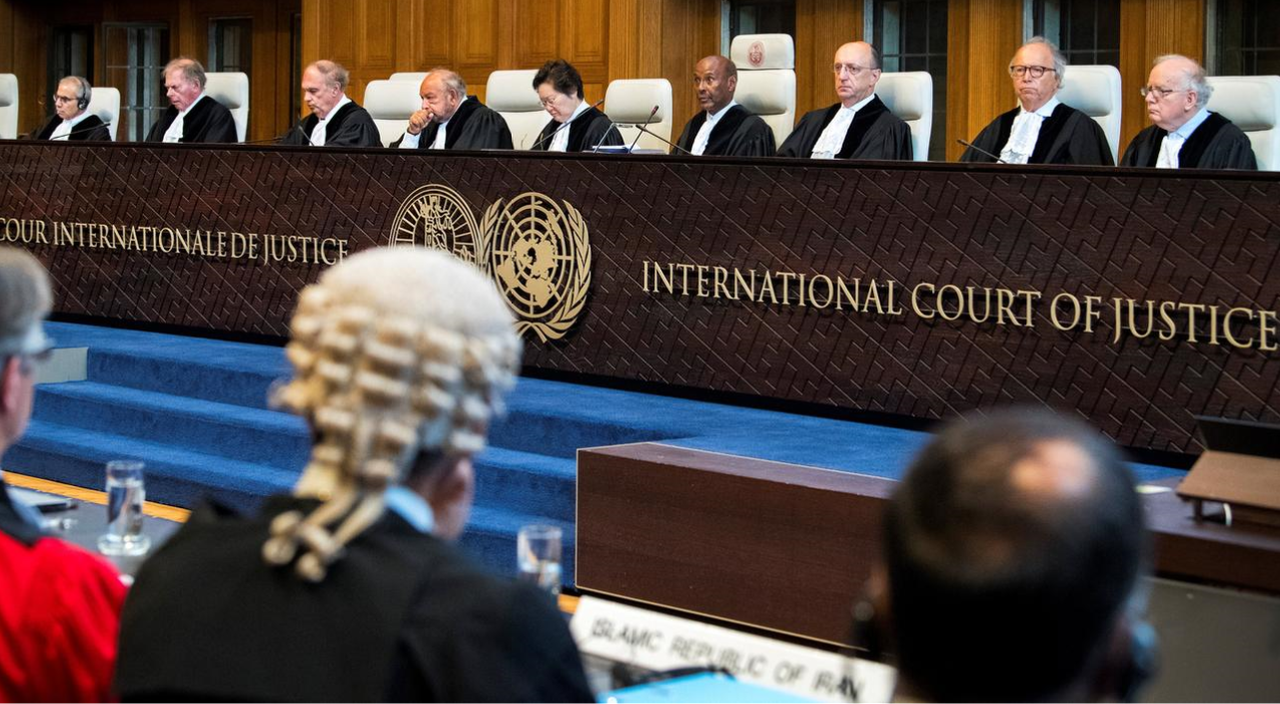
Sri Lanka’s Minister of Foreign Relations, Dinesh Gunawardena, has officially withdrawn from the co-sponsorship of the UN Human Rights Council (UNHRC) Resolution on Promoting reconciliation, accountability, and human rights in Sri Lanka”. His predecessor, Mangala Samaraweera, had co-sponsored it along with the U.S. and a number of European member countries, in October 2015.
Most Sri Lankans perceive the UNHRC as a ‘big bully’ who acts on behalf of major western nations to steer small nations to serving the geo-political interests of the West. The human rights body in their view is a hypocritical organisation, which accuses small nations like Sri Lanka and Myanmar of war crimes but ignores much bigger war crimes perpetuated by the U.S. and its NATO allies.
Gunawardena in his address to the UNHRC’s 43rd Session on February 26 said that the resolution signed by Samaraweera was against the wishes of the people of Sri Lanka, and that his government is committed to addressing these wishes. The prosperity of Sri Lanka is the Sri Lankan government’s priority to be achieved through security and development, and in the best interests of Sri Lankans.
Foreign Minister Gunawardena laid out a plethora of reasons as to why the Sri Lankan government had decided to withdraw from the co-sponsorship of the Resolution. He said that the Resolution infringed upon the sovereignty of the people of Sri Lanka as well as violated the basic structure of Sri Lanka’s Constitution.
The previous Government had violated all democratic principles of governance as it declared support for the Resolution even before the draft text was presented, sought no Cabinet approval to bind the country to deliver on the dictates of an international body, had no reference to the Parliament processes, undertakings, and repercussions of such co-sponsorship, and included provisions which were undeliverable due to its inherent illegality, being in violation of the Constitution the supreme law of the country,” the Foreign Minister told the UNHRC.
Gunawardena added that the first Resolution 30/1 of October 2015, and the subsequent Resolution 34/1 of March 2017, have eroded Sri Lankans’ trust in the international system and the credibility of Sri Lanka as a whole in the eyes of the international community”.
He added: This irresponsible action also damaged long nurtured regional relationships and Non-Aligned as well as South Asian solidarity. The deliberate polarization it sought to cause through trade-offs that resulted in Sri Lanka’s foreign policy being reduced to a ‘zero-sum game’, made my country a ‘pawn’ on the chess board of global politics, and unnecessarily drew Sri Lanka away from its traditional neutrality.”
Furthermore, It weakened national security which had allowed the 2019 Easter Sunday bombings by alleged Islamic terrorists to take place in Colombo. It is widely believed in Sri Lanka that pressure from UNHRC through these resolutions helped to undermine the military and intelligence services, that have been demoralized.
At the time of the bombing, under intense pressure from Geneva, the Sri Lankan government was drafting a watered-down new anti-terror law, that was to replace the three decades old Prevention of Terrorism Act (PTA) which the UNHRC resolutions asked Sri Lanka to dismantle.
In an interview with a popular current affairs program on Maharaja TV at the weekend, Sri Lanka’s former permanent representative to the UN in New York, Ambassador Dr Palitha Kohona, pointed out that the very countries that were asking for the PTA to be scrapped had much more draconian anti-terror laws to stem ‘Islamic terrorism’.
In response to Sri Lanka’s withdrawal from the sponsorship of the resolution, UNHRC chief Michelle Bachelet said that domestic processes have consistently failed to deliver accountability in the past and she regretted the approach the new government (of President Gotabaya Rajapaksa) has taken (to focus on a home-grown remedy).
Commentaries in the local media in Colombo have widely welcomed the government’s move, except for a few Tamil politicians and western-funded NGO spokespeople, who want Sri Lanka to be taken up by the UN Security Council. That will be a no-go with China and Russia firmly backing the Rajapaksa government.
Malinda Seneviratne, writing in the Sunday Observer asked Bachelet to account for dubious reports they have been presenting for the past decade accusing Sri Lanka of war crimes at the end of the 30-year war with the terror group LTTE (Liberation Tigers of Tamil Eelam). Reports have been framed by their own outcome preferences, he claims.
None of these ‘reports’ are substantiated. The sources at best are unreliable”, argues Seneviratne. We’ve had a lot of that in the past and that’s what went into the substance of the infamous Darusman Report (a report on Sri Lanka war crimes commissioned by former UN Secretary-General Ban Ki-Moon, based on which the UNHRC needled Sri Lanka at every turn. Eventually, the movers and shakers, principally the USA — which called the UNHRC ‘a cesspool of bias” — (when they moved to investigate Israeli war crimes), got a pliant government to co-sponsor an anti-Sri Lanka resolution (30/1) in 2015.”
A figure of 40,000 missing persons has been quoted regularly by UN sources and the western media to accuse the Sri Lankan army of war crimes when they crushed the LTTE in 2009.
Dr Kohona pointed out in the TV interview that this figure has never been substantiated nor any names produced to support the claim. He said this figure includes the thousands who went missing during the Marxist JVP insurrection in the late 1980s (which were mostly Sinhalese) and those who left by boat to claim asylum in countries like Australia. Because they did not go through immigration procedures, they would be listed as missing. Those who accuse Sri Lanka of war crimes have to come clean with facts (names) and figures,” said Dr Kohona.
Meanwhile, on March 2, Sri Lanka has rejected a ‘Special Rapporteur on freedom of religion or belief’ tabled at the UNHRC by UN Rapporteur Ahmed Shaheed, following his visit to Sri Lanka in August 2019.
Sri Lanka’s Ambassador to the UN in Geneva, Dayani Mendis said that claims in the report about Sri Lanka’s security forces colluding with mobs who attacked Muslims (following the Easter Sunday attacks) and not try to prevent such attacks, was inaccurate. She also criticized the report for inaccurately suggesting that there was inaction by authorities to stem such violence, and that criminal investigations into the Easter Sunday attacks by Muslim youth, were portrayed as violation of religious freedom and belief.
Easter Sunday attacks reminded us that we are fighting a common adversary in terrorism, radicalization and extremism, which is a global threat,” Ambassador Mendis pointed out. In this context, we consider it unfortunate that the SR’s (Special Rapporteur’s) report has, to a large extent, sought to judge the space for freedom of religion or belief in Sri Lanka through the few months that followed the Easter Sunday attacks,” she said.
It is also regrettable that the report has sought to portray instances where criminal investigations have been conducted to prevent acts of terrorism in accordance with the law, as an endeavour to violate the freedom of religion or belief,” Mendis added.
She criticized the report for its failure to adequately discuss the drivers and root causes of radicalization of youth from one particular religious community (i.e. Muslims) and a lack of inputs from a broader spectrum of Sri Lankan society (i.e. Sinhalese).
In describing attacks against and desecration of places of worship, the report has failed to refer to incidents of attacks on and vandalizing of Buddhist places of worship and instances of obstruction of Buddhist devotees in certain areas of the country,” Ambassador Mendis pointed out.
Any discourse that can yield something positive cannot happen in an environment where outsiders demand that Sri Lankans inhabit their version of Sri Lanka’s reality. It has to happen the other way about. We create room for our story, with all its complexities, contradictions, trauma, despair and hope. That’s something that was ruled out by the Yahapalanists (previous government) and Resolution 30/1,” notes Malinda Seneviratne.
It is
approximately 100 days since HE GR took up a position as the President of
SriLanka. Any intelligent person in SL who is able to assess the progress of
the administration and the country can observe the tactical moves the
President made on positive progress with his strategicgoal in
mind. The President may have decided on his tactical moves at important nodes
of the network in order to achieve his target on a real-time frame. (Quote: Any
system connected to a network is known a node)
In a real time frame, people in SL
should be able to observe the country has made positiveprogress
with respect to financial, energy resources, strengthen operations, ensure that employees (estate) and other
stakeholders are working toward common goals, establish agreement around
intended outcomes, assess and adjust to the organizational culture.
However, the
political covetousness and greediness of some hawks and vultures instigate some
media to create a crevice between the Executive and the Legislature.
Legislature
The legislature
or the Parliament, in other words, is a body of people who have the authority
to vote and enact laws. The encyclopedia defines the legislature as the lawmaking branch of a government . Since
the forum has to be an intellectual forum the members in the legislature are
expected to be intelligent, educated, knowledgeable, and have a wider knowledge
in politics, social science, economics, commerce, legal studies, technical,
understanding of productivity, supply and demand, GDP and income and
expenditure and have a high level of perception. This means that the MPs need
to have a minimum level of education with a high level of perception relative
to ordinary citizens. Politicians should have a bachelor’s degree, or equivalent diploma or equivalent
qualification. Most people
may not be capable to read English. Since the Universal link language is
English, all MPs should be able to read and write in the English language, to a
certain level which then can be considered a rich parliament/legislature.
Important criteria for the MPs are to be free from xenophobic attitude, racial
outlook, and be selfish to be focussed in a narrow area only. Lateral thinking
is a must for all MPs.
However, the SriLankan parliament has a majority of
uneducated people with very little knowledge in the above-mentioned areas of
studies. The MPs behave like thugs in the parliament, throwing chairs and
pulling out a knife. During the last regime under Ranil, there was chaos inside
the parliament. The speaker had to call the police, which indicates the barbarianism
of Sri Lankan parliamentary culture.
Some years back the writer attended a
meeting with a group of staff and a Minister known as Alidong Sirisena”. (අලිඩොනං සිරිසේන) The writer noted the minister could not
speak English properly and could not express himself clearly even in Sinhala.
Apart from speaking English properly, the Minister had a low level of knowledge
and perception. The writer was laughing to himself: Is this SriLankan
parliament and a cabinet Minister?
Quote: Perception is an active
mental act. It is a dynamic, dialectical conflict between the self-perspective
transformation and external vectors of power bearing upon us. That which we
perceive is a balance between these antagonists”. (Ref:Understanding Conflict and War: vol. 1: the
dynamic psychological field, chapter 11, by R.J. Rummel)
Quote from Kanthar Balanathan
s book: Humans perceive different effects about the same state, as
perceptions vary from person to person. People assign different meanings to
what they perceive.This is the reason for conflicts. Although all human
males are born with =1.5 kg of the brain, not all perceive the same thing in
the same perspective, the same way.
For an effective
and efficient parliament and a cabinet, the ruling party should have people thinking
of the same wavelength and have a high level of perception. A political party
should have members with the same ideology. People with different ideologies
should float their own political party which then will be noted whether popular
or not by the votes they get from the people.
Quote e.g.: The main purpose behind
an ideology is to offer a change in society, and adherence to
a set of ideals where conformity already exists, through a normative thought
process. Ideologies are systems of abstract thought (as
opposed to mere ideation) applied to public matters and thus make this concept
central to politics.
In a party
member claim that they are Right”, Left”, and center-left”
are noted to fool the people to get more representation. Eventually, in the
legislature, it can raise conflicts and disputes only. This is why parties
enter into a coalition form of government; however, they must lay strict
agreement on their conditions of the coalition. As said earlier, people with
leftist ideologies should not be admitted to a right-wing party.
For example, the
legislature shall travel in the same wavelength as the executive. That is to
say that the legislature and the Executive shall be synchronized in a
developing country.
During the last regime, UNP
introduced the amendment bill 19A to dilute the powers of the Executive. With a
lack of understanding and through external indoctrination the last regime made
this biggest blunder. Not only this, the last regime tried to bribe their MPs,
by giving them expensive luxury cars. E.g. Vijayakala Maheswaran
A true citizen,
who is a voter must understand that this raises conflicts and the power
struggle between the Executive and the PM + Legislature equating to a third
world illiterate government. Finally, the power struggle and differences can
lead the country to a demise in every aspect. SriLankan culture is that
illiterate MPs, in order to get a ministerial portfolio will droop down to any
level and lick the foot of the power man.
Therefore, it
is an appeal to the voters in SriLanka: Please study the candidates contesting,
and vote for the correct candidate who will think in the same wavelength as the
current President to achieve the objective of the current President HE GR and
the citizens of SL. The PM-elect shall think in the same wavelength with no
avidity for power. All have been elected to serve the people and the country,
not to fill their pockets. The dynasty system shall be circumvented, however,
if eligible they can come on their own merit.
The last UNP regime can be considered
as a group that lived on Gilligan’s Island. Especially the UNP & JVP can be
categorized as a group living in Gilligan Island”, with members may be
targeted as Gilligan’s who do not understand Nationalistic patriotism and to
work for it. (Quote: https://www.youtube.com/watch?v=WDMMqdLpR5U). Who is Gilligan and who
is the skipper here?
The election
targeted for the legislature, i.e. 25th of April 2020, is considered
a critical election for the growth of SL. If people fail in their voting and
the elected GOSL will generate conflicts within GOSL then SL will go down the
drain with economic, financial, ethnic and technological disasters.
To be
continued Part II- Tamils in Gilligan’s Island
The utterly shameless and spineless master
traitor Sirisena released a UNP concocted document as his manifesto,
titled A Compassionate Maithri Governance — A Stable Country,
on 19 December 2014 at a rally held at the Viharamahadevi Park. The main pledge in the said manifesto was the
replacement of the executive presidency with a Westminster style Parliament and a Senate but the manifesto acknowledged that Sirisena would need the support of the parliament to amend the constitution. The manifesto also made a commitment to replace the open list proportional representation system with a mixture of first-past-the-post and PR for electing MPs. It said Parliamentary elections will be held in April 2015 after the constitution has been amended. Independent commissions will be established to oversee the judiciary, Police, elections department, Auditor-General’s Department and Attorney-General’s Department. The Commission on Bribery or Corruption will be strengthened and political-diplomatic appointments annulled.
In a separate document purely focussed on pleasing the Tamil terrorists and separatists, Sirisena pledged that he would establish an independent domestic inquiry into the alleged war crimes during the final stages of the Sri Lankan Civil War. By this very statement, Sirisena changed the hitherto held the right concept of the war from terrorist aggression to a civil war”. Civil war as per international lexicons is a war between two civil groups in a country and not a defensive or defeatist war by the national forces of a country against a terrorist or rebellious group and not a war against terrorism..
In addition to this, the imbecile Sirisena also presented at the above-referenced meeting a plan called 100 days government plan signed by him and said that many fundamental changes, including constitutional amendments, will be made within the next 100 days as outlined in the programme.
However, it seems that this power greedy Sirisena has signed this 100 days programme document written by the UNP blindly without even reading it as he refuted his agreement to the contents of the programme subsequently. A news item in the Daily Mirror on 6th June 2018 under the title MS and the 100-day-programme carried with an appropriate cartoon. The report and the cartoon are reproduced here:
Courtesy: Daily Mirror
Who would have thought Sirisena was not in agreement with the 100-day-program marketed by the President himself, who broke the news against it last week.
Sirisena dumbfounded the entire country,
perhaps including his family members, at a function held at the Sri Lanka
Foundation to commemorate the 76th birth anniversary of the late Ven.
Maduluwawe Sobitha Thera, when he questioned as to who compiled the
100-day-programme. He said with only 47 UNP MPs in Parliament, a programme was
prepared in calendar form to be implemented within 100 days. He said the right
thing that should have happened was to have dissolved Parliament the very next
day he was sworn in.
He baffled the entire country by implying that he was oblivious to the 100-day-programme. It is a well-known fact that the Presidential election campaign was purely planned and put into practice by the United National Party (UNP) leadership and therefore, there may be some truth in what hopper man Siriena says. The UNP might have strategized the course of action without the knowledge and consent of their common candidate, but in the belief there was no reason for him to oppose it. And also the UNP, during its two tenures under Presidents of other parties, had been exercising the habit of bulldozing through the latter’s wishes and it might have ignored the President as he implies.
Yet, why did he wait for so long (three
and a half years) to speak this truth” to his countrymen?
It is unlikely that people would believe
what he said as the programme seemed to have had his blessings and the support
of the SLFP group that paralyzed former President Mahinda Rajapaksa’s
leadership along with him, throughout the 100 days when some of the 100 points
of it were implemented. The President rightly boasted that it was he who gave
necessary Parliamentary support as head of the SLFP to give effect to the main
components of the 100-day-programme such as the mini-Budget with so many
concessions to the people in the first month of his administration and the 19th
Amendment which was passed in Parliament in April 2015. Did he mean support was
given to implement a programme which he did not agree with?
The common Presidential candidate of the
opposition, Maithripala Sirisena had announced on the first day of his
candidature that he would appoint UNP leader Ranil Wickremesinghe as Prime
Minister immediately after his election; he readily kept that promise. If he
had not expected some programme – 100-day or else — to be implemented in days
to come, why did he appoint a Prime Minister and board of ministers without
dissolving the Parliament straightaway?
One has to accept the important point he articulated about the role of the SLFP under his leadership in bringing in democratic reforms after the so-called Yahapalana Government came to power. There were 142 MPs who had accepted the leadership of former President Mahinda Rajapaksa then, and without their support, no reforms could have been brought in by the UNP which had only 47 MPs. Siirisena used his SLFP chairmanship to make his party members support those reforms. The fact that he is not only the SLFP Chairman but also the Executive President of the country might have worked towards this end.
However, the report said his outburst
points out that bickering between the UNP and the President’s group in the
government was worsening. And neither party seemed to be giving in which has
already adversely affected the country. They have to put up with each other for
the next 18 months as the law does not allow people to replace the incumbent
government with another. Hence, circumstances demanded leaders from both ruling
parties to act responsibly.
In a recent interview with a Sinhala weekly newspaper, Sirisena claimed that during his tenure as the President of the country only animals had been associated with him and he only realized it after his retirement.
The newspaper said that it is the text of a discussion they had with Mr Maithreepala Sirisena just 3 months after his retirement as the President of Sri Lanka.
It is now 52 years for my political
life. 26 of these years I spent in the
Parliament. From
9th January 2015 till 18th November 2019 for nearly 5 years I functioned as the President of this country.
I hold a Left Progressive political ideology
and respect Social Democracy as a political vision. When I was told that I will be made the
Common Candidate, I accepted it with the objective of rendering a great service
to the country in accordance with my policies and vision.
Though I wanted to carry out a clean
political State Administration under indigenous thinking nurturing our values
the people who brought me to power wanted to get their policies implemented,
All of you are aware that I am a person who was against corruption but within two months of forming the government the Central Bank Treasury Bond robbery took place. From then onwards there were serious conflicts of opinion between me and Mr Ranil Wickremasinghe. He went to Parliament and said that he would accept responsibility for that and no dispute has taken place in respect of the Treasury Bonds transactions. But public opinion got created otherwise. It was then I appointed a Presidential Commission comprising Supreme Court Judges.
Then it became evident that those in the United National Party had links to this Scam. In this manner, I struggled for more than four years within the government against corruption and against follies and lapses in Economic management.
Responding to a question raised as to whether he did not think at the time of appointing a foreigner, a friend of the Prime Minister as the Governor of the Central Bank as that it was unsuitable, Sirisena has responded saying that it was the beginning of the disputes between him and Mr Ranil Wickremasinghe. Sirisena said that he strongly opposed this appointment but Mr Wickremasinghe was firmly insisting that Mahendran should be appointed. It is not proper to have conflicts immediately after the government coming to power. On the other hand, it was the United National Party that made me the President. Therefore, in consideration of these matters, I conceded to the Prime minister’s request.
Responding to the question you said that the government hindered for you to work according to your policies though it was they who had presented the policies, Sirisena said that he presented a programme of work, and he submitted a plan to appoint a Cabinet of Ministers on a scientific basis. He said that the plan was formulated by a panel of Professors. But the Prime Minister even didn’t look at it and created Ministries joining the Highways and Higher Education together. That also was the reason for a clash between the two of us. After that, I presented my programme of work criticizing the government and creating clashes between us. But there was no one other than me to implement my programme of work. The Prime Minister and the Cabinet of Ministers were on the opposite side.
However, I was able to carry out a considerable volume of work on behalf of the country amidst this confronting atmosphere. These included consolidation of democracy in the country, protection of human rights, protection of fundamental rights, media freedom etc. Whatever there were criticisms about me it was during my period that after Madam Sirimavo Bandaranaike’s rule the foreign relations became strengthened. I was able to make Obama, Putin and Xi Jinping look at this country without differentiation between the West and the East. Though it was not properly used by those below me, I went around the world and brought a large volume of investment proposals for this country. I have the fullest satisfaction that I was able to do much work for this country despite the clashes we had.
During the latter part of my presidency, I issued around 62 gazette notification which was very essential for the country. I assigned thousands of acres of lands to Sinharaja. Although Somawathiya and Madu Church had been declared as places of worship they did not have sufficient land and fulfilled this lacuna. The 36-year-old Saman Devale perahera of Ratnapura was made a national heritage. I loved the ministerial portfolio of environment similar to the president post I loved. That was why I made a sacrifice like this.
Responding to a question that despite the claim of strengthening international relations, there were severe criticisms from the opposition that the government has betrayed this country, Sirisena admitted such betrayals and said that it was because of his opposition more such betrayals could be prevented. He said that he had no connection with the Hambantota agreement. It was not even discussed with him. He said that he suspended the Singapore pact. He said that the country would have dwindled to the abyss further if he did not oppose for things, and he was happy about it.
Q: You became so desperate because of the 19th
Amendment. Didn’t you make a lot of efforts
to bring in that amendment?
A: Yes. Even
votes from Mt. Mahinda Rajapaksa’s side was received for the 19th
Amendment. Ranil Wickremasinghe had only 42 seats and Mr Mahinda Rajapaksa had 142 seats. After one week of my becoming the president, the party was handed over to me.
Whatever it is that blessing was a strength for me
to carry out my work in the first year.
It was because of the support we received from the 142 seats of Mr. Mahinda Rajapaksa we were able to adopt many Bills such as Drugs Act, the Act related to the warning on cigarette packets, and Bills that needed 2/3 majority in accordance with the 19th amendment.
Q: But you said later that the 19A was a conspiracy?
A: I say that even today. 19 was a political conspiracy. More than curtailing powers of the President, what happened through the 19 was creating 3 powerful individuals, such as the President, the Prime Minister and the Speaker. The Speaker has got a superpower. The power to steer the whole State apparatus. The Speaker got these powers from the 19. The Independent Commissions did not become independent. The independent commissions completely acted in the way Karu Jayasuriya wanted. It was the way he wanted that appointments to Commissions and other Institutions took place.
Additionally, see the way how the 19 was adopted. It was debated in the Parliament for two days. On the second day, voting was adjourned for two hours to take up the existing amendments. During that short time, these amendments were made even without heeding the opinions of constitutional experts. It was done as per the wishes of those representing the Parliament. It was a clandestine act done by Ranil Wickremasinghe and his NGO cabal. Therefore the country faced a collapsing situation.
Q: The support of the Sri Lanka Freedom Party was also received for the appointment of the current President Mr Gotabhaya Rajapaksa. Now it is three months since he became President. What is your assessment about the performance of the President and the government during this period?
A: What I have noticed during this period is that President Gotabhaya Rajapaksa is making a great effort to take the country forward. Therefore it is my policy to extend unconditional support to him. I and the Sri Lanka Freedom Party will extend our unconditional support to strengthen him. The reason is that that a single individual can never uplift a country. There should be a united responsibility either to the President or the Prime Minister to uplift a country. There should be a united commitment of the President, the Prime Minister, Ministers, the Parliament, public servants as well as the general public.
It is not a secret to anyone about the economic problems being faced by the country. Because of the Corona epidemic, this situation has got further aggravated. It is not only our country even the powerful countries of the world have got affected economically. Therefore we have a great danger in the future. Therefore anyone who loves this country should extend his/her support to the President.
Q: Although you state so, yet there is no common
agreement between the SLPP and the
SLFP on contesting the general election. Isn’t it?
A: There is no conflict between the two parties although the media is attempting to invent such a thing. I even discussed recently with all these leaders. The second and third level members are making various statements without knowing the agreements that exist at leadership levels. The other thing is that we signed two agreements prior to the presidential election with President Gotabhaya Rajapaksa and with the Sri Lanka Podujana Peramuna (SLPP). Hence we expect to act according to those agreements. After we signed these agreements both Mr. Gotabhaya and Mr. Mahinda told in all meetings that since the Sri Lanka Freedom Party has joined with them their victory was certain. It denoted that the members of the two parties could hold hopes, and that is why they were contesting.
There is no question about the symbol. It doesn’t
matter what the symbol is. What is
needed is to have the Alliance. We are not taking those things with us when we
die. Only we have to think about the country.
Q:Sri Lanka Freedom Party was one of the two leading political parties in this country. There are allegations that you zeroed this party?
A: It is like this.
Not only the Sri Lanka Freedom Party, Ranil Wickremasinghe even
diminished me. Ranil Wickremasinghe filed cases against 70 MPs of the
SLFP. These cases were filed in the
Bribery Commission and in the Courts via the Attorney General.
All these cases were framed by Ranil’s Anti
Corruption Secretariat Office operated from the Temple Trees. By now all are aware who functioned in this
office.
Q: Do you say that the allegations were baseless?
A: Just see, a case was filed against Minister Fawzi saying that he took a vehicle. That vehicle was not lost. It has been taken from one Ministry to another Ministry. Then a case was filed against a relevant Minister alleging that he had given a job to the daughter of Priyankara Jayaratne. A large number of similar concocted and invented cases had been filed. These things were done by the so-called Anti-Corruption Office and then they told Mr Mahinda Rajapaksa that it was not Ranil who was doing that but it was the President. I did not have police with me, CID with me, FCID with me, and Attorney General with me. All these were with them. It was with all these institutions they carried out all those things.
Q: Will you contest in the forthcoming elections?
A: Of course.
I will contest from Polonnaruwa.
Q´ But there is an objection from your district about it?
A: What is there in this country that has no
objections? A few days ago there were 7 protestations in front of the presidential
secretariat. In the political world protestations
and Satyagraha are ordinary things. They
are signs of Democracy.
Q: During the last period of your rule, you made a great effort to activate capital punishment for those who have been convicted with the death sentence. Did that also become unsuccessful because of internal clashes?
A: I signed papers for capital punishment for four persons. There was a fundamental rights petition against it. The Supreme Court gave judgment against my ruling. Yet this case is not completed. Who filed this case? It was the agents of the judges.
Regretfully I must say that at that time leaders of the government as well as the opposition said that it was wrong to carry out capital punishment. However if those
4 persons were given the capital punishment the
drug trade in this country could have gone down. It was a national calamity rather than my set
back.
Q: At the zenith of clashes between you and Ranil
Wickremasinghe you dismissed Ranil
Wickremasinghe from the premiership and appointed Mr Mahinda Rajapaksa as the Prime minister. But the Cout decided that it was a decision taken against the Law?
A : I took that decision based on opinion provided
by a panel of Sri Lanka’s much reputed and popular Lawyers.
Q: It was claimed that foreign diplomatic offices
carried a joint operation from the time you became the common candidate until
your victory. The opposition said then
that it was a foreign conspiracy?
A: I do not accept that it was a foreign conspiracy
that made me a common candidate.
Even after Mr Mahinda Rajapaksa called for elections and started the campaign work the UNP did not have a candidate capable of winning the election. Even in 2010, the UNP didn’t have a candidate. Then they brought in the Army Commander. In 2015 too they did not have a candidate capable of winning the election. At that time a group consisting of Chandrika, Rajitha, and Ven. Sobhita Thero held discussions and selected me.
Q: How the former President Mrs Chandrika Kumaratunge who was instrumental in making you the common candidate fell out with you?
A: She went on Ranil worshipping. She abandoned the Sri Lanka Freedom Party and
went after a highly corrupted person who had betrayed the country.
Q: This house that is having this discussion is reported to have been repaired by you spending a colossal sum of Rs. 80 Million. Was there any truth in it?
A: Why I should spend. None of these is things made for me. This was the house resided by Minister Keheliya Rambukwella. I came to reside in it after getting it cleaned.
Is it this house or the house where Chandrika is residing more valuable? That house is in Torrington, Colombo 7. Further, all the previous 5 Presidents got houses. J.R.Jayawardene has adopted an Act titled Presidential Entitlement Act – Act No. -04 of 1986” This Act clearly states that a retired Presidents should be provided with all facilities entitled for a Cabinet Minister. It was in accordance with the hat after the assassination of President Premadasa all Presidents were provided with houses.
Who said that several million were spent on this house? It is a vulgar statement.
Q: What is happening to the Sri Lanka Freedom
Party?
A: We are now working with the government. Hence I think that all of us will become
successful. There had been governments based on Fronts, and Alliances concepts
since
1956. Therefore, no one can form governments in the
future without getting united. Even the
UNP has gone for an alliance.
Q: You have gained experience as a President. How it would be the experience that will be
gained as a former President?
A: It was after I bid farewell from the pst of President I clearly understood the difference between human beings and Inhumans. I identified the beasts camouflaged in the guise of human beings after retirement. It became clear in the last month. But it doesn’t matter because of our long-time political experience. We have been victorious and we also have been defeatists. These are very familiar now. However, of I contest and get defeated the situation will become worse. And the other thing is at the time of my retirement I had supported the candidate who was victorious. That was also one reason to minimize the pressure that gets built up after retirement.
Q: Will a member of your family enter politics
after you?
A: Not yet.
It has to be seen after 2025. I
have no intention to be in politics after 2025.
After that, if one of my children had any wish they may come. Had been a President of this country. Therefore, I think that there is nothing wrong if my children come to politics after me.
The treacherous Sirisena who attempted to portray himself in the aforementioned article and the interview as an innocent and flawless person has accidentally coughed out a plan to destroy the SLPP as well despite the compassion shown by the SLPP leadership ignoring the valid and justifiable objections raised by some Ministers and State Ministers who were founding members of the SLPP.
This utterly shameless and ungrateful treacherous Sirisena addressing a meeting in Polonnaruwa has said that he is similar to a merciless Falcon that snatches away the fish caught by a halcyon (a kingfisher) he would attack the SLPP at the right time in a right manner. This statement has brought a flurry of criticism from SLFP parliamentarians, SLFP party members, from the SLPP and also from some UNP parliamentarians and members and the general public.
In a subsequent speech this Falcon fellow,
who seems to be out of mind due to being out of power, has said that he will
not allow all and sundry to lay their eggs in his nest.
He has said that the kidney patients hospital in Polonnaruwa is a gift given to him by the Chinese President and it is now being used by some others for their political advantage and many public servants in the Polonnaruwa district by now are being subjected to political victimization. Criticizing the cancellation of the land deeds he has said that he will go to Courts on behalf of the farmers.
Many former
SLFP MPs and members have sought SLPP to accept them as their members and also
to give them nominations claiming that they will not get votes if they further
associate with stupid Sirisena after his Falcon speech.
Minister Wimal Weerawansa sternly criticizing Sirisena as a historically proved betrayer has said that this Falcon fellow has no gratitude at all for the favors dome to him despite his well-known treachery since his last supper with Mr. Mahinda Rajapaksa om 21st November 2014. He urged the voters to ensure that only those who can contribute to the vision and aspirations of President Gotabhaya Rajapaksa elected in the forthcoming elections so that this country can be rebuilt as envisaged by the patriotic masses. He vehemently condemned the Falcon speech of Sirisena and said that all Falcons and Chameleons should be sent home without any mercy.
Meanwhile, the
former UNP MP Palitha Range Bandara has said that Sirisena deliberately ignored Easter Sunday
bombings and he is a fellow who has no concern for anything that could befall
on this country. He said if Sirisena
properly acted on reports received from intelligence services all the people who
lost their lives untimely in the Easter Sunday carnage could have been saved and
the terrorists could have been arrested.
Referring to Sirisena’s Falcon talk he said that it was his Falcon
attack that kept Secretary to the Ministry of Defence Hemasiri Fernande and the
former IGP Pijoth Jayasundera under remand custody for several months as mere
scapegoats while Sirisena and his family were enjoying presidential perks.
Prime Minister Mahinda Rajapaksa responding to the recent statements of the treacherous Falcon Sirisena has said at a meeting in Kurunegala that it was the poor and innocent people of this country who had to endure unbearable hardships owing to the factional fighting among the rulers and some people trying to be falcons and snatch away the possessions of others. Mr Rajapaksa pointed out that in the Falcon/Butterfly government, the President was not agreeable with the Prime Minister and similarly the Prime Minister was not agreeable with the President and these controversies only caused the people to suffer extensively and no service was rendered to the nation.
Despite all the difficulties, there needs to be a concerted effort to develop a negotiating framework that can command the widest possible support. Such a negotiating framework must include at least minimal acceptance, by both sides, of the norms and standards relating to international human rights and a determination to restore peace, normalcy, civil society, and democratic governance.” Dr.Neelan Tiruchelvam
President Gotabaya Rajapaksa’s Government concluded
its first 100 days on 25th February 2020. The previous Sirisena administration
maintained a website[i] to track the progress of the initial 100 days. It went defunct
after most promises were not addressed. While unattainable promises are pledged
during elections, Sri Lankan political history is filled with such deceived
domestic and international promises and policy reforms. In the international
arena, the country often loses its reputation and credibility due to
unfulfilled pledges and duality of its own policy.
On October 1st, 2015 Sri Lanka committed at UNHRC to probe allegations of human rights abuse during the protracted civil war by co-sponsoring the 30/1 resolution. Three foreign Ministers Mangala Samaraweera, Thilak Marapana and Dinesh Gunawardena during the last five years have taken three dissimilar actions contrary to each other on Geneva cosponsored resolution by Sri Lanka. First, Minister Samaraweera cosponsored the 30/1 resolution fully in 2015 along with 11 other nations. In 2019 Minister Marapana was articulating his position on government reservation for having international judges ‘hybrid court’ referring to a constitutional amendment with 2/3rd of parliament and a referendum is required to have foreign judges[ii] for its judicial process. This year the present Foreign Minister Dinesh Gunawardena explained his administration’s position to withdraw from the co-sponsorship, an election pledge by President Gotabaya Rajapaksa.
The US ‘travel ban’ on army chief, Lt-Gen Shavendra Silva[iii] and his family came as a surprise. Upon meeting Alice G. Wells, the US Deputy Assistant Secretary, in Oman at a conference a few months ago, I advised the previous government that this could be in the process. The same travel ban was applied to the only Field Marshal and the cabinet minister Fonseka a few years ago despite the former President’s intervention. Lt-Gen Shavendra Silva’s travel ban could be a revisit of US policy carried out in the past towards the Rajapaksa regime.
The consequence of moving out of the 30/1 cosponsored resolution will have a significant negative impact heading towards a confrontational course in the global arena due to its weak internal policies. Long-term implications of the withdrawal have not been considered. The Government which is about to face a Parliament election is pushing a short-sighted ‘irrational decision’ in the global arena. The previous government rushed to co-sponsor the resolution in 2015 without prior consultation of the parliament nor any public discussion about the decision was also unaccepted in a democratic nation. I have analyzed the duality of policy within the Government in my article titled ‘U-Turns are difficult’ [iv] published in March 2019. Some of the advisers and policy experts have ill-advised the political leadership to move out from the cosponsored resolution without calculating nor understanding its long-term impact on Sri Lanka.
First, the country cosponsored a resolution against itself in 2015, and now it wishes to symbolically withdraw from the cosponsorship after 5 years. It is a blaring display of policy inconsistency. Withdrawing from the resolution will require 27 votes at UNHRC at the time of the vote end of the moratorium period, a rather difficult exercise. Foreign Minister Dinesh Gunawardena explained closure is important at this stage because of the resolution violates countries constitution, a factor which should have been considered prior to the cosponsorship, not post, this was not considered nor agreed upon as a violation of the constitution by his predecessors, a serious blurring in domestic policy which will be explained and displayed how weak national policy decisions could be at the global arena. U-Turn from such statements is near impossible for the next several years and the country will face significant consequences.
Such decisions should be taken not thinking of next month’s election but analyzing different scenarios and in-depth foresight study with much discussion along with foreign policy experts and with think tanks weighing the impact. Unfortunately, one such Government think tank that could have sent some sensible recommendations was reset last month after appointing a former military officer. The nation has failed in this regard in many policy decisions in the recent past. Meeting a distinguished Sri Lankan foreign service officer a few days ago, I was inquiring on the withdrawal, to which the officer said ‘we have not calculated the long term implications to the nation and what’s the guarantee that China and Russia will support us in every occasion?’
The country will be seen by the international
community as a place of duality in its policy, changing according to the
political circumstances. Political pledges and unfulfilled promises one after
another proving a clear point for the diaspora and the nations supporting the
Resolution. Sri Lanka will be seen as subject to selective targeting by the West and will invite a new phase of risk factors. Firstly, the nation will tilt towards its savior nations China and Russia at the Security Council, this will directly impact the so-called executing ‘balanced and equidistance’ foreign policy of the President. Second, a clear indication that Sri Lanka will drift away from international assistance for the reconciliation process including inviting international judges, isolation from many friendly nations where our democratic values and economic interest are intertwined from the past. While we disengage from the international process we will have a systemic barrier to improve the domestic mechanism to achieve reconciliation, accountability and human rights targets in Sri Lanka. Third, working outside the UNHRC framework will limit regular visits by rapporteurs who played an important role in trust-building with the international community will be absent. How will a mechanism outside the UNHRC framework guarantee a genuinely inclusive process?
UNHRC chief Michael Bachelet has taken a stronger position on Sri Lanka due to the unfulfilled targets towards the overall reconciliation process, during the last decade which continuously identified the diminishing hope year by year. Bachelet said that domestic processes have consistently failed to deliver accountability in the past and not convinced the appointment of yet another Commission of Inquiry will advance this agenda… I am therefore troubled by the recent trend towards moving civilian functions under the Ministry of Defence or retired military officers and renewed reports of surveillance and harassment of human rights defenders, journalists, and victims. The increasing levels of hate speech, and security and policy measures appear to be discriminately and disproportionately directed against minorities, both Tamil and Muslim,”[vi]
Four years after co-sponsoring Resolution 30/1 and
40/1, the Sri Lankan government has fulfilled six out of 36 commitments on
reconciliation, human rights and accountability[v].
Despite the slow progress post-2015 Sri Lankan Government did invest heavily in transitional justice, human rights and accountability along with international actors committing to international processes. UNHRC has given a moratorium till March 2021 for the Government of Sri Lanka to implement the provisions of the resolution. With lapses in the progress and the present decision to symbolically withdraw from the cosponsorship has sent the wrong message to the global arena. The past investments made by the previous government to fill in the foreign policy gap created by the pre-2015 Rajapaksa regime with the international community will be lost. Reversing the nation to a pre-2015 scenario. The government should have made amendments rather than completely resetting the process, a loss for the country. Seen as a permanent solution, the entire exercise will only sweep the problem under the carpet which will immerge at a later stage. The Government should have navigated with the international community embracing global best practices and addressed the domestic political concerns such as devolution of power to build a secular nation that will lead to prosperity rather than bandwagon towards a more ultra-nationalist stance were dominated by irrational decision-makers.
The Resolution 30/1 debacle saw Sri Lanka’s government
reach a crossroads and take a step while many watched on helplessly. The
choices are asserted and the path is set. Who speaks political rationale in
Bedlam?
*Asanga Abeyagoonasekera is the author of ‘Sri
Lanka at Crossroads’(2019) published by World Scientific Singapore. He was the
former Director General of the National Security Think Tank (INSSSL) under
Ministry of Defence and the former Executive Director of the Foreign Policy
Think Tank (Kadirgamar Institute) under Ministry of Foreign Affairs in Sri
Lanka. The article was initially published by Hudson Institute Washington DC.
Yaroslav Mudry guard ship will search for a notional enemy’s submarine with a Ka-27 helicopter’s take-off while the anti-terror squads on the ships and vessels will practice various scenarios of fighting pirates in the Indian Ocean
MOSCOW, March 4. /TASS/. The Baltic Fleet guard ship Yaroslav Mudry has made a planned business call at the port of Colombo in Sri Lanka in its anti-piracy deployment to the Indian Ocean, the Fleet’s press office reported on Wednesday.
“During its anchorage in Colombo, the crew will replenish fresh water, fuel and food supplies and technically inspect the ship. After completing its visit that will last through March 6, the Baltic Fleet guard ship will continue its anti-piracy watch in the Indian Ocean,” the press office said in a statement.
The ship’s combat team will hold planned drills to search for a notional enemy’s submarine with a Ka-27 helicopter’s take-off while the anti-terror squads on the ships and vessels will practice various scenarios of fighting pirates in the Indian Ocean, the statement says.
The Baltic Fleet’s naval group comprising the guard ship Yaroslav Mudry, the sea tug Viktor Konetsky and the sea tanker Yelnya embarked on their long-distance deployment from the Baltic Fleet’s main naval base of Baltiysk in the westernmost Kaliningrad Region on October 1 and set off for the Indian Ocean.
In December, the warships took part for the first time in the naval phase of the Indra-2019 Russian-Indian drills and in the Maritime Security Belt Russia-China-Iran naval maneuvers. On January 21-22, 2020, the Baltic Fleet’s naval group held anti-piracy drills with the destroyer Harusame of Japan’s Maritime Self-Defense Force in the Arabian Sea.
World Bank is worried that places like Africa, the Philippines, Sri Lanka and Vietnam are ill-equipped to handle the coronavirus emergency.
The World Bank is providing $12 billion in emergency grants and assistance to help developing countries respond to the coronavirus crisis.
The aid package, announced Wednesday, comes as the virus has spread to more than 60 countries and topped 94,000 cases and 3,000 deaths. More than 80,000 cases are in China.
In addition to severe quarantine measures, China has mobilized the resources of its advanced economy and medical system to combat the virus and reduce the rate of new infections.
But the World Bank is worried about places like Africa, the Philippines, Sri Lanka and Vietnam. It says poor countries, with limited public health resources, are at particular risk.
The World Bank says it’s providing an infusion of cash, financing and global expertise to help. Its president, David Malpass, said: “We are working to provide a fast, flexible response based on developing country needs.”
Dr. John Nkengasong is the director for the Africa Centres for Disease Control and Prevention. He said health systems on the continent are ill-equipped for a virus spread like China has had.
“We have to scale up our ability to train many people quickly on infection prevention control to enhance the screening of our ports of entry as quickly as possible to cascade the diagnostics into the country so that our strategy continues to be rapid detection and rapid containment, because there’s no way our health systems will be rapidly improved to be able to cope with a large outbreak like what we are seeing in China,” Nkengasong said.
The World Bank says it will “fast track” $8 billion in new aid and reallocate $4 billion from other programs for coronavirus detection and treatment programs in developing countries.
Malpass, the World Bank president, told reporters: “The point is to move fast. Speed is needed to save lives.”
Prime Minister Mahinda Rajapaksa as the Finance Minister has decided to increase the low interest loans from Rs. 40,000 to Rs. 60,000 in order to relieve the burden on those struggling due to the high interest charged by microfinance companies.
In order to provide relief to those in the North and North Central Provinces burdened by these debts, currently, low-interest loans are made available to them through rural banks and thrift societies.
However, the Finance Minister has been receiving requests to increase the low-interest loan limit.
Therefore, taking note of the requests made by the District Secretariats, public representatives and the people, the Prime Minister had taken the decision to further streamline this low-income loan scheme. These low-income loan schemes are currently operational in six District Secretariat Divisions.
For this purpose Rs. 542 million has been allocated with Rs.292 million allocated for the Northern Province and Rs. 250 million allocated for the North Central Province and has been sent to the rural banks and thrift societies.
In the North Central Province it is estimated that there are around 14,000 who are caught up in the microfinance debt trap but under the Rs. 40,000 loan scheme only around 227 have been granted loans. Out of the allocated Rs. 250 million only Rs. 9.76 million has been utilized to grant low-interest loans.
However, with this decision taken by the Prime Minister a greater number of persons would be eligible to obtain loans. Further, in order to provide greater relief, the interest rate is expected to be brought down from 14% to 9%.
A district committee would also be set up to report the progress of this low interest loan scheme every three months to the Treasury. These operations committees would also be entrusted with the responsibility of encouraging the people to obtain these low interest loans instead of getting themselves trapped in the micro finance debt at high interest rates and saving the rural public from this debt trap.
The Cabinet paper submitted by the Prime Minister in his capacity as the Finance Minister has been approved.
It was people who had to suffer when leaders of the previous Government attempted to be eagles, Prime Minister Mahinda Rajapaksa said during an event held at Kurunegala yesterday.
There were frequent clashes and confrontations between the Executive and the Legislature. At the same time, the then President did not give heed to the Prime Minister and the Prime Minister did not give heed to the President,” Rajapaksa said.
At the end of the day, nothing worthwhile happened to the common man,” he added.
The Ministry of Health has decided to convert Leprosy Hospital in Hendala into a quarantine facility for passengers arriving in the country from Italy, South Korea and Iran where COVID-19 is spreading at a faster rate outside of China.
Delivering a special statement in this regard on Wednesday (04), Health Services Director General Dr. Anil Jasinghe stated that every passenger reaching Sri Lanka from the aforesaid three countries will be quarantined for 14 days as per a decision reached by the National Action Committee set up to prevent the spread of COVID-19 in island.
The National Action Committee on COVID-19, chaired by Health Minister Pavithra Wanniarachchi, convened at yesterday (03).
Dr. Jasinghe also spoke of the facility that was previously set up at Diyatalawa army camp’s Base Hospital to quarantine students, who were evacuated from, Wuhan, the epicentre of the deadly virus.
He added that quarantine is for people who may have been exposed to COVID-19 but who are yet in a healthy condition. Those who have contacted the virus are not quarantined but hospitalized,” Dr. Jasinghe noted. If a person is infected with the virus, a virus can take up to 14 days to show symptoms, he explained.
Sri Lanka Army is rendering its maximum support to convert the Leprosy Hospital into a quarantine facility, Dr. Jasinghe stated.
He also emphasized that health and safety of the residents in the vicinity of the Leprosy Hospital will be fully ensured.
Accelerating economic development is the primary challenge facing Sri Lanka today and most of the security issues that Sri Lanka has faced over the years have been due to the exploitation of the economically disadvantaged, President Gotabaya Rajapaksa said.
The proposed people-centric model takes this factor into account, said the President at a forum with representatives of the ICT sector held at the Presidential Secretariat today (4).
We must ensure that the benefits of economic growth will reach everyone in our society, especially the very poor. We must raise their standard of living in a rapid and sustainable way, bringing them out of poverty and making them productive contributors to the economy,” President added.
To succeed in the digital era, companies need to recruit world-class talent, he said. We need to ensure that our citizens are equipped with new technological skills, said the President adding that the government confronts the challenge to make easier for people to develop the skills they need for better job opportunities in a technology-based economy.
President highlighted the significant misalignment between the demands of the job market and the workforce that emerges from our schools, training institutes and universities. The shortage of skilled workers that the IT sector faces today is just one of the symptoms of this mismatch, he said. The importance of undertaking short- term and medium-term solutions to the problems inherent in our education system was observed by the President.
Pointing out the deterioration of the public service in recent years President said and creating an environment for productive economic activities to thrive, without any obstruction, is a priority of his Government. Infusing technological solutions including automation to make the public sector much more efficient in discharging its duties is essential to liberating the economic potential of our people”.
Expressing his views, Chairman of ICT Industry Council Chinthaka Wijewickrema said the information communication technology industry is a very dynamic sector and President Gotabaya Rajapaksa is the first President of this country to address this vital sector.
The General Secretary of the Council Shantha Yapa requested the President to prioritize the promotion of local software industry.
‘The Global Delivery Destination of the Year’ award of the Global Sourcing Association won by the Sri Lanka Association of Software and Services Companies was handed over to President Rajapaksa by its Chairman Ranil Rajapaksha.
Representatives of the ICT sector and the Honorary Advisor to the President Lalith Weeratunga were also present at the forum.
The decision on whether or not to issue arrest warrants on MP Ravi Karunanayake and 11 others will be announced by the Fort Magistrate on the 6th of March.
The Attorney General, yesterday (03) directed the Acting IGP to obtain arrest warrants against several suspects in the Central Bank bond scam case including former Finance Minister Ravi Karunanayake, former CBSL Governor Arjuna Mahendran and PTL owner Arjun Aloysius.
Further, the 12 suspects have been barred from leaving the country.
The Acting IGP was instructed to obtain warrants from the court for the arrest of former Finance Minister Ravi Karunanayake, former Governor of the Central Bank Arjuna Mahendran, Perpetual Treasuries Limited (PTL) owner Arjun Aloysius, CEO Kasun Palisena, former Director of the Public Debt Department of the Central Bank T.H.B. Sarathchandra and several others.
They are to be arrested on charges of conspiracy, criminal misappropriation, cheating and market manipulation in respect of the bond auctions of March 2016.
The Attorney General Dappula De Livera states that there is reasonable suspicion against the following individuals with regard to the criminal wrongdoings which had occurred during the treasury bond issuances on March 29 and March 31, 2016 and that they should be considered as suspects:
1. Perpetual Treasuries Limited
2. Sandesh Ravindra Karunanayake
3. Lakshman Arjuna Mahendran
4. Arjun Joseph Aloysius
5. Palisena Appuhamilage Don Kasun Oshada Palisena
6. Geoffrey Joseph Aloysius
7. Chitta Ranjan Hulugalle
8. Muthuraja Surendran
9. Ajahn Gardiye Punchihewa
10. Thuyya Handiyage Buddhika Sarathchandra
11. Sangarapillai Pathumanapan
12. Badugoda Hewa Indika Saman Kumara
The AG instructs the Acting IGP to name the aforementioned individuals as suspects with the regard to the investigations, record statement from them and report information to the court naming them as suspects.
The Kuwaiti government announced it will start screening travelers coming from Sri Lanka and 9 other countries arriving in the Gulf state beginning Sunday, March 8, following the continued spread of the novel coronavirus (COVID-19) worldwide.
The Kuwait Directorate General for Civil Aviation made the announcement on Wednesday, March 4, saying the new measure would cover ex-pat passengers coming from Sri Lanka, India, Bangladesh, Egypt, Syria, Azerbaijan, Turkey, the Philippines, Georgia, and Lebanon.
Travelers from these countries will need to undergo a medical examination and submit a certificate confirming they are not infected with the coronavirus or risk being deported from Kuwait.
The Kuwaiti government emphasized medical certificates must be issued by health centers approved by the countries’ respective embassies in Kuwait. If there is no embassy setup, medical certificates must be issued by each countries’ respective health authorities.
Passengers entering Kuwait without the required certificate, they added, will be denied entry and deported on the same airplane used to travel to the country.
The Kuwaiti government warned it will not bear financial costs for passengers who will need to leave the country. It will also fine airline companies for violating its rules on ensuring passengers carried the required medical certificates.
Of all
the community leaders in Sri Lanka only the Tamil leadership has officially
declared war against another community (i.e., the Sinhalese) and led their
people to commit the crime against peace. On May 14th 1976
they collectively passed the Vadukoddai Resolution urging the Tamil youth to
take up arms and never cease until they achieve Eelam. They unleashed the
longest war in Sri Lanka which has led to the violation of human rights on an
unprecedented scale. Having laid the foundation for the violations of human
rights and perpetuated the violations through a brutal war which the Tamil
leadership never wanted to end for 33 years, despite several peace offers, the
Tamil leadership go around the world claiming to be the victims of the
violations of human rights by the Sinhala state”. Sri Lankan politics is full
of ironies and this one beats them all.
When the
Tamil leadership adopted the Vadukoddai Resolution they abandoned the
non-violent democratic mainstream and opted deliberately for violence which
inevitably leads to the violations of human rights. In endorsing Vadukoddai
violence the Tamil leadership abandoned the higher principle of upholding, defending
and protecting the human rights of others as well as their own Tamil people.
Aggressive wars pursuing territorial gains are not launched to protect human
rights. In international law it is considered to be a crime against peace. Such
wars will grind its way invariably violating human rights. Only counter wars
launched to end wars that violate human rights have the moral right to pursue
violence in defence of human rights.
The
contradiction in declaring war against a neighbor and then proceeding to parade
as the victims of the counter violence organized to end the violations of human
rights is obvious. It is also hypocritical and hilarious, to say the least. The
Tamil leadership committed themselves to war knowing very well that it leads to
the violations of human rights. But they refuse to categorize their violence as
war crimes, or violations of the human rights. They assume that their violence
has a superior moral purity / force that elevates their brutalities above the
level of crimes against humanity or war crimes. They assume that there is
nothing higher than Tamil rights and everyone else must surrender their rights
to enthrone Tamil rights as the ultimate human right. In fact, in their
political equation they believe that Tamil political rights = human
rights. And that any other counter force — moral or military – should be
condemned as violations of human rights.
This was
demonstrated amply by Pakiasothy Saravanamuttu, the foreign-funded
multi-millionaire circulating in the American cocktail circuit with a whiskey
glass in hand. In the dying days of the Tamil Tiger terrorists he jumped from
Western city to city posing as the great champion of human rights engaged in
saving the Tamils from the advancing Security Forces who were on
verge of ending the war. His self-appointed mission then was to mobilize
international opinion to halt the Security Forces advancing to end the war –
the only means of saving human rights from the merciless brutalities of the
world’s deadliest terrorist” (FBI). He argued that the advance of the Security
forces would lead to a great humanitarian disaster. It didn’t. On the contrary,
it released 290,00 Tamils held forcibly by Prabhakaran to impress the world
that the Tamil people were with him. While the Tamil people were marching out
of Prabhakaran’s prison camp into the arms of the Security Forces Saravanamuttu
was doing his damnedest to stop the advance of the Security Forces bleating
that stopping the war (meaning: saving Prabhakaran) was the only way to save a
humanitarian disaster. He was operating on the premise that the
Prabhakaran had the moral right to wage his war until his demands were granted
and the Sri Lankan forces had no right to end his violence.
This
cock-and-bull story of Saravanamuttu was rejected by the triumphant events that
ended the Vadukoddai War on the banks of Nandikadal. The commonly accepted
wisdom of the day too concluded that removing Prabhakaran from the prevailing
political equation was the only way to regain peace. Keeping Prabhakaran
alive for another day would have meant the perpetuation of the violations of
human rights. Knowing this Saravanamuttu kept on chanting his mantra which like
all other NGO mantras only aided and abetted Prabhakaran to ruthlessly
perpetuate violations of human rights. Under the cover of protecting human
rights Saravanamuttu’s hidden agenda was to save Prabhakaran from annihilation.
He had tacitly accepted Prabhakaran as the defender of the Tamil rights which
he had equated with the human rights of the Tamils.
His
efforts in Western capitals was to keep Prabhakaran alive and kicking. It was
the humiliating defeat of Prabhakaran that was hawked by Saravanamuttu as
triumphalism” of the Sinhala-Buddhist forces. Saravanamuttu’s theories,
strategies and policies were smashed to smithereens by the Security Forces who
restored peace, human rights and the dignity of the Tamils. Shamed by the
triumph of the democratic forces that eliminated Tamil tyranny he reacted
bovinely by branding the victory of the Security Forces as triumphalism”.
After Nandikadal Saravanamuttu was forced to live on a diet of sour
grapes.
In his
political calculations the Sinhala state” was on the wrong side of human
rights even though it saved the Tamils from the Tamil Pol Pot and restored
their dignity to live as free individuals. But Prabhakaran’s one-man state was
categorized to be on the right side of human rights even though he fought his
futile war by recruiting under-aged children and liquidating Tamil
dissidents and those who posed a threat to his claim to be the sole
representative of the Tamils”. Even the American policy-makers kicked into this
debate. Their kind of human rights led them to grant full citizenship to
Prabhakaran’s lawyer, V. Rudrakumaran, who was a committed and willing partner
in the war crimes and the crimes against humanity committed by his leader while
denying even a visa to Lt. Gen. Silva – the General whose military strategies
led to the triumph of democracy and the restoration of peace in Jaffna.
Even in
the last stages the NGO millionaires refused to accept that Tamil violence had
reached intolerable levels under Prabhakaran – the firstborn child of the
Vadukoddai Resolution. It was a time when the best of Tamil intellectuals
could not defend his brutalities. Unable to defend the inhuman violence of
Prabhakaran they argued that he was created by the Sinhalese. If this is a valid
argument Prabhakaran should have then targeted only Sinhalese to get even with
the violence of the Sinhalese. But he began his violence by targeting the Tamil
leadership. What had Alfred Duraiyappah done to the Tamils to be slaughtered by
Surya Devan” (Sun God of the Tamils)? What had Appapillai Amirthalingam and
Neelan Tiruchelvam done to the Tamils to be assassinated by the Tamil hero?
Then he targeted the Muslims. What had the Muslims done to harm the Tamils? So
was Prabhakaran made by the Sinhalese or by the internal dynamics of Jaffna
which had political culture of unmitigated violence,
It is
universally accepted that wars indiscriminately lead to violations of human
rights from both sides. The moral victory, however, should go in the end to those
can end the violations of human rights swiftly, using the least violence.
Obviously, what is acceptable / tolerable is the side that can successfully end
violence, either through non-violent negotiations, or through the application
of minimum of violence. The side that refuses to accept negotiations and
insists on perpetuating violence to achieve its goals, particularly when they
are facing defeat, cannot be treated / accepted / trusted as defenders of human
rights. They forfeit the rights that flow from the fundamental principles of
human rights because in war human rights can be protected only by ending war.
The Tamil leadership went the other way. They ripped apart peace deals
repeatedly insisting on grabbing what they called their rights (mainly territory)
at the expense of the others. Mulish intransigence of the Tamil leadership had
never served the goals of saving human rights.
Incorrigible
war criminals who insist on pursuing their self-serving goals should be
condemned as the enemies of human rights. In the Vadukoddai War the Tamil
tactic has been either to disregard or underplay the violations of human rights
generated by Tamil violence or, simultaneously, to go under the cover of Tamil
rights to pursue their violence. They believe that morality is on their side
even when they violate it to pursue their political goals. Morality that
goes along with this double standard will lose its credibility and viability.
War-mongering criminals can’t have it both ways. They can’t declare war and in
the same breath claim to be victims of those fighting back to end the
violations of human rights. The rights of those waging a war to end the
violations of human rights are superior to those violating human rights to
pursue their self-serving, narrow political ends. The highest morality must
necessarily serve to end the violations of human rights. It cannot serve to
perpetuate the violations of human rights. That is immoral.
It is the failure of the Tamil leadership to
stand up for the human rights of their own people unequivocally that turn them
into absolute political Judases. They condemn the Security Forces that restored
their right to walk this earth with dignity, honour and respect. But they
hero-worshipped and went on their bended knees before their Surya Devan” (Sun
God) who suppressed their rights to exercise their basic rights. Tamil
leadership must also take full responsibility for the violence they unleashed
in Vadukoddai. In passing the Vadukoddai Resolution they not only legitimized
Tamil violence as a political tool to achieve their separatist goals but also
became partners, subsequently, in the crimes committed by the children of the
Vadukoddai Resolution. Prabhakaran and his criminal gang were ther boys” who
came out of the Vadukoddai Resolution. They were urged to take up arms
against the Sinhala south by the fathers who drafted and passed the Vadukoddai
Resolution.
Rajavarothiam
Sampanthan, who is now shedding crocodile tears for his people, not only was a
founding father of the Vadukoddai Resolution but went along with Prabhakaranism
without a murmur of protest. He gave his full backing to the horrendous
violence unleashed by the Vadukoddai Resolution. So what right has he and his
side-kick, Abraham Sumanthiram, to speak of the human rights of the Tamil
people when both of them went on their bended knees to hero worship their
Suriya Devan” (Sun God) –the political criminal who killed more Tamils than
all the others put together? In every national and international forum they
never failed to point a finger at the Sinhala state”. They never raised a
voice against Prabhakaran. Accusing the Sinhalese was their theme song
to divert attention from the violations of human rights committed by the
Tamil leadership. Besides, they feared the loss of political sympathy from the
international community if they revealed that Prabhakaran was a Tamil Pol Pot.
Their
failure to resist the subhuman racist violence of Prabhakaran make them
complicit partners in the crimes against humanity and the war crimes. They have
no right to point an accusing finger at the generals who restored their right
to walk this earth with dignity, respect and honour. They have survived on
their myths of victimology long enough. The most privileged community in Sri
Lanka, with the highest quality of life index, pretending to be the victims of
the majority community, is a joke. They enjoyed the best of both worlds – the
north and the south. As old saying goes, the son shone in Colombo while
the father reaped the harvest in Jaffna. The undeniable historical fact is that
the Sinhalese had never treated the Tamils in the inhuman way the Tamil
leadership treated their own people from the time they set foot in Jaffna.
It was
their misguided politics that led the Tamil people to their miserable end in
Nandikadal. In short, the Tamil leadership played the hideous role of the Pied
Piper of Hamelin and lured their people all the way to drown in Nandikadal. The
total responsibility for the failure of Tamil violence, Tamil politics and the
subsequent violations of human rights rests solely on the war-mongering Tamil
leadership. The fathers of the Vadukoddai violence cannot escape the
responsibility of the violence of the children who came out of the womb of
Vadukoddai.
Gotabaya Rajapaksha President of the Democratic Socialist Republic of Sri Lanka Presidential Secretariat Colombo 01.
Your excellency,
We the undersigned trade unions of the Sri Lanka Council of the IndustriAll Global Union representing the private sector and semi Government sector employees, wish to draw your immediate attention to the following. These are issues that affect employees in the private and semi-government sectors in general and our members in particular.
As
promised during the last presidential election in November 2019, the national
minimum wage approved by the cabinet to be increased by Rs.2500/-
has not been accordingly increased as the National Minimum Wage Act No: 04 of 2016 has not been amended in order to
implement the approved salary increase.
The Rs.2,500/- salary increase for the public sector employees has not been given to the employees in the semi Government sector and as a result, more than 500,000 employees in this sector have been deprived their due salary increase.
While thanking Your Excellency for appointing a new Salary and Carder’s Commission to cover public, semi-government and the private sector, we wish to draw your attention to the fact that there are no trade union representatives included representing private and semi-government sectors.
We, therefore, urge you to take immediate steps to rectify the above-mentioned anomalies in favour of these sectors.
Further, we would like to urge you to give us and an opportunity to meet your honour to discuss above mention matters with more details.
Thank You
Yours Faithfully
Lesly
Devendra Anton Marcus
General Secretary, Co Secretary
Nidahas Sewaka Sangamaya Free Trade Zones & General Services Employees Union
Giriraj Bhattacharjee Research Associate, Institute for Conflict Management
On February 22, 2020, in response to reports of an attempted terror attack,
the Maldives Police raided three houses on the Naifaru island of Lhaviyani
Atoll. According to the Police, the residences were of three individuals
accused of planning to set off an explosive device on the island.
On February 13, 2020, the Maldives Police arrested an Islamist extremist
from an undisclosed location for his suspected role in a February 4, 2020,
stabbing incident. Earlier, on February 6, 2020, six extremists were arrested
in the same case from an undisclosed locations.
Significantly, on February 4, 2020, Islamist extremists, suspected to be
inspired by the Islamic State (IS, aka Daesh), stabbed and injured three
foreign nationals – two Chinese and one German – near Hulhumale Redbull Park
Futsal Ground in the Hulhumale city of Kaffu Atoll. In a video posted on Telegram
channel Al-Mustaqim Media,some people speaking in Dhivehi
(the native language of the Maldives), claimed responsibility for the attack.
They alleged that the Maldivian Government was being run by infidels and warned
of more attacks in the future. Police are probing the authenticity of the
video.
The last attack by Islamist radicals was reported in December 2019 (date not
available), when a Turkish national was stabbed in Hulhumale city.
UNHRC Resolution Number 30/1 of October 2015 introduced by the USA, UK and other Western powers to get Sri Lanka to revise her constitution, scale back the armed forces, establish a Hybrid Court with foreign judges, prosecutors, and investigators to try members of Sri Lanka’s armed forces alleged to have committed war crimes and International HR violations, establish a Reparations Office to compensate members of the Tamil community alleged to be missing after surrender to the armed forces as contained in the report of UNSG’s panel of experts published in April 2011 where the panel recommended that the information provided by members of the Tamil community supportive of the internationally designated Terrorist Group known as the Liberation Tigers of Tamil Eelam (LTTE) be locked away for a period of 20 years till the year 2031. These measures were prescribed by the western powers to bring about reconciliation amongst the Tamil people and members of Sri Lanka’s other communities from the Sinhalese, Moor, Malay, Burgher, etc. following the conflict between the state and the LTTE which waged armed warfare to create a separate mono-ethnic state in the northern and eastern parts of the island exclusively for members of the Tamil community. The charges against Sri Lanka were based on unsubstantiated allegations put forward by supporters of the terror group called the LTTE.
Sri Lanka has on her own without outside prompting carried out a homegrown reconciliation program of providing care including all meals, medical services, education, psychological care, vocational training to provide livelihood skills to the internally displaced Tamils till such time as the nearly 1.5 million anti-personal landmines were removed and the region made safe for resettlement in their former places of residence in the north. Former Tamil Tiger cadres too were rehabilitated with new skills and released to society. A massive development program too was carried out in the north allocating between 85-90 percent of the development budget to speedily improve the economy which resulted in the north recording GDP growth of as much as 20-27 percent.
Please see the news report carried in Sri Lanka’s Daily Mirror wherein it is reported that the hospital in the cultural capital of predominantly Tamil city of Jaffna is unable to carry out life-saving surgeries as blood available in the blood bank cannot be used due to the Caste differences amongst members of the Tamil community necessitating the supply of blood from hospitals in the south mainly inhabited by the majority Sinhalese community.
The Attorney General has directed the Acting IGP to obtain arrest warrants against several suspects in the Central Bank bond scam case including former Finance Minister Ravi Karunanayake, former CBSL Governor Arjuna Mahendran and PTL owner Arjun Aloysius.
The AG’s Coordinating Officer Nishara Jayaratne stated that the Acting IGP was instructed to obtain warrants from court for the arrest of former Finance Minister Ravi Karunanayake, former Governor of the Central Bank Arjuna Mahendran, Perpetual Treasuries Limited (PTL) owner Arjun Aloysius, CEO Kasun Palisena, former Director of the Public Debt Department of the Central Bank T.H.B. Sarathchandra and several others.
They are to be arrested on charges of conspiracy, criminal misappropriation, cheating and market manipulation in respect of the bond auctions of March 2016.
In his letter to Acting IGP C.D. Wickramaratne, the Attorney General Dappula De Livera states that there is reasonable suspicion against the following individuals with regard to the criminal wrongdoings which had occurred during the treasury bond issuances on March 29 and March 31, 2016 and that they sould be considered as suspects:
1. Perpetual Treasuries Limited
2. Sandesh Ravindra Karunanayake
3. Lakshman Arjuna Mahendran
4. Arjun Joseph Aloysius
5. Palisena Appuhamilage Don Kasun Oshada Palisena
6. Geoffrey Joseph Aloysius
7. Chitta Ranjan Hulugalle
8. Muthuraja Surendran
9. Ajahn Gardiye Punchihewa
10. Thuyya Handiyage Buddhika Sarathchandra
11. Sangarapillai Pathumanapan
12. Badugoda Hewa Indika Saman Kumara
The AG instructs the Acting IGP to name the aforementioned individuals as suspects with the regard to the investigations, record statement from them and report information to the court naming them as suspects.
The AG further instructs to forward copies of their statements to him without delay and to carry out further investigations if necessary regarding the information uncovered from the statements.
He urges the police to report to the relevant magistrate’s court on the charges against them and to obtain warrants for their arrests.
Sri Lanka has rejected the inaccurate assertions made by the UN Special Rapporteur on freedom of religion or belief.
A statement of Sri Lanka was delivered at the interactive dialogue of the 43rd session of Human Rights Council (UNHRC) with the Special Rapporteur on freedom of religion or belief in regards to the report of his visit to Sri Lanka.
Ahmed Shaheed, Special Rapporteur on freedom of religion or belief, who visited Sri Lanka from 15 to 26 August 2019, has tabled his presented his report containing his conclusions and recommendations to the 43rd UNHRC session and Sri Lanka provided general observations on the Special Rapporteur’s report.
In his advanced unedited report, Shaheed has raised concerns on the freedom of religion or belief in Sri Lanka. Commenting on the contents of the report, Sri Lanka stated that the Special Rapporteur arrived on the island barely 4 months after the country had suffered a series of horrendous terrorist attacks”.
The facilitation of the visit, at a time of numerous national challenges, was a manifestation of the Government’s policy of open and constructive dialogue with UN human rights mechanisms, Sri Lanka’s statement noted.
We consider it unfortunate that the SR’s report has, to a large extent, sought to judge the space for freedom of religion or belief in Sri Lanka through the few months that followed the Easter Sunday attacks. As may be recalled, the scale of these attacks brought about a national emergency in Sri Lanka which called for prompt action by the State to identify and neutralize terrorist elements in different parts of the country in the interest of safety and security of all communities, while maintaining the delicate balance between national security and human rights.
Sri Lanka reiterated that it rejects the inaccurate references in the Special Rapporteur’s report to serious concerns” regarding Sri Lankan security forces colluding with mobs and not acting to prevent or stop the violence”; the lack of response from the authorities against this violence”; and the claims that acts of violence are indulged by the silence and inaction from the authorities”.
Sri Lanka remains committed to protecting and promoting the freedom of conscience and religion of all its people, in accordance with the Constitution of the country, the statement noted further.
Read Sri Lanka’s full statement on the Special Rapporteur’s report below:
Madam President,
Sri Lanka takes note of the report of Mr. Ahmed Shaheed, Special Rapporteur on freedom of religion or belief following his visit to Sri Lanka from 15 to 26 August 2019, which has been presented to this Council today (A/HRC/43/48/Add.2). The advanced unedited report of the Special Rapporteur (SR) was shared with Sri Lanka, for comments, on 3 February 2020, with a deadline of 28 February 2020, i.e. last Friday, leading to an Interactive Dialogue thereon today – Monday.
However, within the limited time available, Sri Lanka wishes to provide some general observations on the SR’s report. We request that our full observations, which will follow, be published as part of the report.
Sri Lanka received the SR in August 2019, barely 4 months after the country had suffered a series of horrendous terrorist attacks by certain local groups inspired by ISIS which targeted innocent civilians at worship and at hotels on Easter Sunday, causing the death of 258, including 45 foreign holidaymakers. The facilitation of the visit, at a time of numerous national challenges, was a manifestation of the Government’s policy of open and constructive dialogue with UN human rights mechanisms.
The people of Sri Lanka have lived amicably despite racial and religious differences for centuries, and continue to do so. Having suffered the scourge of separatist terrorism for nearly three decades, they had been enjoying their hard-won peace and freedom and had embarked on the path of reconciliation and national healing over the last decade. However, the Easter Sunday attacks reminded us that we are fighting a common adversary in terrorism, radicalization and extremism, which is a global threat.
In this context, we consider it unfortunate that the SR’s report has, to a large extent, sought to judge the space for freedom of religion or belief in Sri Lanka through the few months that followed the Easter Sunday attacks. As may be recalled, the scale of these attacks brought about a national emergency in Sri Lanka which called for prompt action by the State to identify and neutralize terrorist elements in different parts of the country in the interest of safety and security of all communities, while maintaining the delicate balance between national security and human rights. In the aftermath of the attacks, the Government immediately took all possible measures to prevent any retributive acts of civil unrest, maintain law and order, and most importantly to ensure the safety and security of all people, particularly the Muslim community. The constructive and reconciliatory approaches and calls made by the civil and political leadership of the country which helped contain the situation were widely acknowledged and appreciated. The Muslim community particularly took proactive measures to cooperate with the security agencies in their investigations and search operations. Suspects who were arrested were afforded their legal safeguards and independent institutions were provided access to monitor their situation.
The incidents of mob violence that occurred 3 weeks after the terrorist attacks were not communally motivated but caused by unruly elements. These mobs were efficaciously neutralised by the Government through a number of arrests and by bringing to justice alleged perpetrators. The country fast returned to normalcy, reassuring the safety and security of all Sri Lankans and visitors to the country. Through giving effect to relevant legal provisions and following necessary legal processes, order and rule of law has been firmly re-established. The security forces of Sri Lanka merit particular commendation for their prompt and professional action in this regard.
Therefore, the Government rejects the inaccurate references in the SR’s report to serious concerns” regarding Sri Lankan security forces colluding with mobs and not acting to prevent or stop the violence”; the lack of response from the authorities against this violence”; and the claims that acts of violence are indulged by the silence and inaction from the authorities”. It is regrettable that these inaccurate accounts have been included in the report, even after they have been fully rebutted and explained by the Government soon after the alleged incidents.
It is also regrettable that the report has sought to portray instances where criminal investigations have been conducted to prevent acts of terrorism in accordance with the law, as an endeavour to violate the freedom of religion or belief.
With regard to references to restrictions on dress code, it is noted that the regulation concerned was a temporary measure under the Emergency Regulations aimed at preventing concealing of identity, in view of the imminent security threat that existed at the time. In this regard, we wish to draw the attention of the Council that the International Covenant on Civil and Political Rights (ICCPR)[1] itself has permitted limitations by law to the freedom to manifest one’s religion or beliefs for the purposes of protecting public safety, order, health, or morals or the fundamental rights and freedoms of others.
Sri Lanka also categorically rejects the inaccurate assertion in the report that the ICCPR Act has not been applied to protect minorities but has become a repressive tool” curtailing freedom of religion or belief. In this regard, we wish to point out that since its enactment in 2007 to date, 90% of the suspects who were arrested under the ICCPR Act have been from the majority Sinhala community.
With regard to comments made in the report about alleged discrimination based on supremacy” of Buddhism over other religions, we wish to highlight that Article 9 the Constitution requires the State to protect and foster the Buddha Sasana while assuring all religions the rights granted under the Constitution. No provision in Sri Lanka’s Constitution or national laws permit discrimination of an individual based on religion or belief in any sphere of public life. On the contrary, Article 12 of the Constitution prohibits discrimination based on race, religion, language, caste, sex, political opinion, place of birth or any such grounds.
In the SR’s report, certain instances, determinations of the Supreme Court have been inaccurately reflected based on surmise. In certain other instances, the Constitutional provisions have been inaccurately reflected, for example, the SR’s comments on the right to proselytize and conversion which are an inaccurate reflection of the determination of the Supreme Court.
The report has failed to adequately discuss the drivers and root causes of radicalization of youth from one particular religious community to the extent of engaging in acts of terrorism, and appears to lack inputs from a broader spectrum of Sri Lankan society, including family members of victims and suspects, as well as other neutral groups. In describing attacks against and desecration of places of worship, the report has failed to refer to incidents of attacks on and vandalizing of Buddhist places of worship and instances of obstruction of Buddhist devotes in certain areas of the country.
The report also fails to adequately address positive measures undertaken by the Government and the law enforcement agencies to foster religious harmony, such as addressing extremist elements on all sides, payment of compensation through the Office for Reparations to victims of violence, and setting up of mechanisms such as an Inter-Religious Council. It is unfortunate that the resilience and solidarity of Sri Lankans protecting and assisting fellow citizens of all faiths in the aftermath of April 21, as demonstrated by Buddhists and Christians guarding Muslims at prayer, renovation of damaged property and restoration of damaged churches by the security forces, have not been reflected in the report. Nor has the laudable role played by the independent institutions of Sri Lanka, such as the Human Rights Commission, during this challenging period, received the attention that it warrants.
The report notes that the school curriculum should be designed to include human rights education”, whereas human rights education is already part of the national curriculum in schools. There are a number of co-curricular programmes and activities being planned and delivered at various levels, including at schools, to foster greater understanding amongst school children from different communities and religions.
The GoSL wishes to reiterate that the State possesses credible agencies, the capacity and the necessary legal framework to address the issues of concern. Sri Lanka remains committed to protecting and promoting the freedom of conscience and religion of all its people, in accordance with the Constitution of the country.
We look forward to continuing to engage with the Special Rapporteur and this Council in a constructive and meaningful manner towards this end.
According to the latest
media reports, ethnic violence in India’s capital has left more than 40 dead
and hundreds injured after a Hindu
nationalist rampage, stoked by the rhetoric of Narendra Modi’s populist
government.
Violence has been a stain on India’s history since partition in 1947 when Pakistan was formed as a separate Muslim state and up to two million people died in the fighting and its aftermath. Riots have continued to erupt along religious lines in a country where around 14% of the population is Muslim, with an 80% Hindu majority.
When the BJP was elected to government in 2014, led by Prime Minister Modi, divisions widened. Even before he became PM, Modi’s reputation had been tainted by hatred and violence. As chief minister of Gujarat, he had been accused of encouraging sectarian riots in 2002 that left more than 1,000 people dead, 800 of them Muslims. Modi denies the charges, which resulted in him being banned from the US.
The above ethnoreligious riots are a clear indication of the failure of the Indian Prime Minister Narendra Modi to practice what he preaches to Sri Lankan leaders eloquently.
As we are aware, Indian PM has raised the issues of reconciliation, aspirations, equality, justice, peace, and dignity of the Sri Lankan Tamil community and the necessity of the implementation of the 13th Amendment to the Constitution of Sri Lanka when Prime Minister Mahinda Rajapaksa visited India last month. Indian PM raised the same ‘concerns’ with President Gotabhaya Rajapakse too when he visited India last November. The above ‘concerns’ of India appear that some quarters of the central government of India are still in confusion over its territories, despite its past misdeeds and failures.
India became the first country, since independence, to interfere with the internal affairs of Sri Lanka openly in the 1980s and the resulted Indo-Lanka Pact of 1987; IPKF, etc were nothing but gross violations of the internal affairs of Sri Lanka. India had to pay a heavy price later.
It is a well-known fact that India’s spy agency RAW provided arms, training and monetary support to six Sri Lankan Tamil terrorist groups including the LTTE and their leaders during the period 1983-87. The idea was that the Sri Lankan Tamils after being trained and armed would be sent back to northern Sri Lanka to engage the Sri Lankan troops in guerrilla warfare.
Image from left: Lingam(Prabhakaran’s bodyguard), Aruna (Batticaloa commander), Prabhakaran (LTTE chief), Pulendiran (Triconmalee commander), Victor (Mannar commander), Bottu Amman (chief of intelligence).
Karuna Amman’s declaration later that
he himself received training in India and how his training contributed to the war
in Sri Lanka is a clear indication of the perpetrators of the problem.
Those who blindly parroting the words the
implementation of the 13th Amendment” appear to have forgotten the
background against which the 13th Amendment to the Constitution, forced on us as
a result of Indo-Lanka
pact, and most of them may not be aware of what really is
in it since the Indo-Lanka pact was signed over three decades ago.
Those who promote its implementation
argue that the Amendment already exists and what is needed is implementation. The
repercussion we are experiencing today as a result of the controversial, ill-fated,
ill-defined and hastily prepared 19th Amendment to the Constitution is a minor case
in point of attempting to implement anything, just because it is in the
constitution, compared to the disastrous consequences that could be expected by
devolving power on ethnic lines as stipulated in the 13th Amendment.
The 13th Amendment to the Constitution drafted
by the Indian Civil servants, influenced by the Indian Quasi- Federal system, was
certainly ill-conceived
and hurriedly pieced together by picking bits and pieces of the Indian
Constitution in keeping with the Indo-Lanka Accord and hence was not
practicable. http://www.asiantribune.com/?q=node/18301
Prior to the signing of the 13th Amendment, there had been a belief that the ‘Official language policy” of 1956 was the root cause of the conflict. The 13th Amendment made Tamil an official language overnight as a solution but the charges against discrimination and demand for self-determination continue to be made based on those lines. If the official language is the root cause, the conflict would have resolved itself with the implementation of the 13th Amendment language policy.
Although the Indian government undertook to disarm the terrorist group in return for implementing the constitutional amendment imposed on the Sri Lanka government, India failed miserably to fulfill its obligation as per the agreement. On the other hand, Sri Lankan people had to bear the huge cost of war against terror and the cost of implementing the constitution amendment, thus imposed under the failed agreement, in addition to the loss of lives since 1987. Since it is the Sri Lankan Security forces who ultimately disarm the terrorists, the moral rights of the Indian government to ask the government of Sri Lanka to implement the 13th amendment is highly questionable.
On the other hand, the basic question we have is what it makes us believe that the 13th Amendment based on Indian devolution model is ideal for Sri Lanka when India’s quasi-federal model itself has failed to address the issues of safety, aspirations, equality, justice, peace, and dignity of its own communities.
The Parliament was to be dissolved last night to hold the General Election on 25th April. This is the first of a series of articles to highlight the ravages caused to this country during the worst period of rule that prevailed in the post-1948 Sri Lanka which was the period from 8th January 2015 to 15th November, 2019. The people of this country (the voters) have a daunting task to take all precautions to prevent the swindlers and crooks gaining power in this country and subject the country once again by falling it into the hands of western and terrorist servile rogues and getting misguided by the propaganda/smear campaign of the treacherous reactionary UNP and its bandits aided by the terrorist TNA and financed by terrorist diaspora and anti-Sri Lankan western nations.
The western powers, the 20 odd tyrant western nations (TWNs) including U.S.A., Canada, and Britain and the hegemonic India (HI) despised the Sri Lankan government of Mr. Mahinda Rajapaksa because it happened to be the fast-growing economy in Asia next only to China and hence the iron-willed leader did not bow down to their diktats.
For instance, demands made by Robert Blake, Milliband, and Koushner to halt the war against the terrorists and allow them to rescue the terrorist leadership and transport them through the sea, from Mullaitivu or Trincomalee to a western destination got rejected outright from the President Mr. Mahinda Rajapaksa.
Under this scenario, the TWNs and HI thought it was vital for those ruffians to take strong actions to topple the people friendly Rajapaksa government and replace it with a government entirely servile and docile to them. To get this objective fulfilled they adopted a two-pronged strategy of 1) creating anti-government activities through the government itself and 2) launching measures to topple the government through external sources.
Under plan no.1-A, they used the racist and pseudo-Buddhist Champika Ranawaka, a fellow belonging to the Rodiya caste (source Wikipedia – Castes of Sri Lanka) to espouse racism and create divisions between the Sinhala Buddhists and the Muslims targeting to deny Muslim votes to Mr. Rajapaksa. This racist pseudo-Buddhist former JVPer Rodiya Ranawaka launched an anti-Muslim program deploying Gnanasara Thero who contested the 2010 General Election under JHU and lost as a henchman for his mischievous plans. He was sent to Norway to get political orientation and expenses for this trip including air tickets were reportedly provided by UNP MPRavi Karunanayake (Bond Ravi). Upon the thero’s return from Norway, Champika organized a meeting against Halal” rulings under the leadership of Gnanasaara and he even made a speech in the Parliament severely criticizing Halal practices and Shariah Laws, just to antagonise Muslims against the Rajapaksa government..
In this manner, he espoused Muslim anger against the government and was also the mastermind behind the anti-Muslim riots in Aluthgama/Beruwela areas. Champika’s thugs were transported to Aluthgama/Beruwela areas and went into action of torching Muslim homes and business premises following hate speeches delivered by Gnasaara and some others in a meeting at the Aluthgama town. At that time President Mahinda Rajapaksa was not in the country and upon his return he immediately and straight away went to Aluthgama/Beruwela and instructed the security forces personnel to commence repair of damaged houses and business premises immediately and was to arrest and take legal action against Gnanasaara for instigating these troubles. Champika intervened then and threatened Mr. Rajapaksa that if he initiates legal action against Gnanasaara he would bring several thousand Buddhist monks to the streets to protest against Gnanasaara’s arrest and said that there could be a blood bath and chaos in the country which prevented the President from taking further action.
On the other hand, the cunning fox Ranil Wickremasinghe went into action to take political advantage from the situation and he made wealthy Muslim UNP stalwarts to make videotapes relating to the Aluthgama/Beruwela destructions and requested them to screen these videos on wide-screen TVs in Muslim villages which angered the Muslims and in turn, they distanced from the government and became hateful of Rajapaksa government.
Under Plam No. 1-B the bluff master Rajitha Senaratne went into action and deliberately ignored fishing rules stipulated by the European Union in order to antagonize them. Fisheries Ministry officials said that Rajitha purposely made our fishermen violate EU stipulations and hereby made them suspend GSP+ facilities to Sri Lanka. In addition to this Rajitha also made a plethora of promises to the fishing community and intentionally failed to fulfill these promises and thus distanced the fishing community from the government.
As per the Fisheries Ministry sources, these false promises made by Rajitha included that
Two mother ships will be brought from China and they would buy the catch of our boats in the sea itself and would also provide fuel and water to boats enabling them to stay in the sea for long periods;
Diesel for the fishing boats will be provided at concessionary rates;
Ice plants will be established in all fishing harbors;
Three large fishery harbors including one at Gurunagar will be established;
An insurance scheme will be introduced to cover fishermen and their boats;
GPS facilities will be provided to all boats facilitating their easy location and navigation;
Fisheries Corporation outlets will be increased and they will be made to purchase fish harvest directly from the boats;
Experts will be brought down from Vietnam to develop the Inland Fisheries Industry and our fishermen will be sent to Vietnam and Seychelles to acquire knowledge on modern fishing technology.
Fisheries Ministry sources also alleged that despite Rajitha’s false promises to the fishing community in the country, he was reported to have bought four ships and these ships are registered under the names of his family members.
In the meantime, the terrorist diaspora and the Terrorist National Alliance (TNA) were on out for action to avenge Mahinda Rajapaksa for vanquishing the terrorist military outfit from the soil of this country. Accordingly, the first salvo of the conspiracy to topple the Mahinda Rajapaksa government was fired at Singapore in August 2012 at a meeting between the UNP and the TNA facilitated by foreign servile Ranil Wickremasinghe and the anti-national Old Hag Chandrika Kumaratunge. Sumanthiran and TGTE’s Rudrakumar participated at this meeting on behalf of terrorists and Mangala Samaraweera and Jayampathy Wickremaratne attended on behalf of the reactionary conspirators. Also, present in the meeting as an observer was an unnamed representative of the despicable political outfit called MuslimCon-gross. meeting agreed to implement 10 demands presented by the Tamil group, including replacement of the existing constitution with a federal and secular constitution and after the meeting, the ferociously anti-Sri Lankan Sumanthiran expressing their delight over the decisions taken at the meeting said that Mangala Samaraweera came to the meeting like a desperate beggar ready to agree for any demand.
With this opening, a host of activities originated financed by the terrorist diaspora and guidance provided by the vicious foreign conspirators such as CIA/M 16 and India’s RAW Agency. Thre RAW Agency stationed one of their leading conspirators Atul Devol at the Indian High Commission and he acted as the main coordinator among the terrorist rump, UNP, NGOs, fringe political groups and other organizations. Terrorist funds flowed into the country in Millions and it facilitated to mushroom over 45 reactionary groups to undertake various activities against the government and these groups mainly acted as fake news originators.
These fake news syndicates launched a
hitherto never seen smear campaign with unbelievable, astonishing and phony
propaganda against the government which included:
President Mahinda Rajapaksa has swindled the wealth of the country and 18.5 Billion U.S.Dollars have been taken out of the country and deposited in a Dubai Bank;
Rajapaksa sons have brought down the world’s expensive vehicles such as Lamborghini and Aston Martin cars for their personal use;
Rajapaksa sons own golden horses and they take helicopter rides to Nuwara Eliya during weekends to learn horse riding;
Rajapaksa sons have brought down many expensive racing cars to hold car races in Kandy and in Colombo;
Rajapaksa sons have bought several palatial residences in Colombo 7 and other areas’
Gotabaya Rajapaksa received several million U.S.Dollars as commissions from Ukraine for the MIG fighter planes brought for the Air Force’
Also, he received several million dollars as commissions for arms and ammunition brought from china.
Valuable lands throughout the country have been gifted to China;
Rajapaksa family members and their cronies have received huge commissions through government contracts;
Expenditure that had been incurred for the construction of Expressways was so huge and these roads could have been built with Gold for the expenditure so incurred;
The new government will enable every family to own at least a small car ;
One million jobs will be provided within the next five years;
Foreign investors are waiting in queue to come and invest in development projects under the new government;
A Volkswagen car manufacturing factory will be established in Kuliyapit6iya’
A super tire factory for the manufacture of heavy-duty vehicle tires will be established in Horana’
The Executive Presidential System will be abolished;
People will be made rich, enjoy a leisurely life and poverty will become an enigma of the past.
The
Old Hag Chandrika who was jealous about the achievements made by Mahinda
Rajapaksawithin a short period of time undertook the task of splitting the SLFP and staging an internal coup within the government. Accordingly, she consistently and continuously persuaded Maithreepala Sirisena to leave the government and come forward as the Common Candidate with full blessings of the UNP and assured that Ranil Wickremasinghe will provide his and UNPs full backing for his candidature. Shed is closed to the media that she communicated with Sirisena using Viber technology to avoid detection of their activities by Rajapaksa agents.
Siriena kept on shrugging speculation about the possibility of his coming forward as the opposition’s common candidate and even on the night of 21st November 2014 visited the Temple Trees and had a hopper dinner with Mr. Mahinda Rajapaksa. It must be mentioned that it was Mr. Mahinda Rajapaksa who vigorously campaigned for Sirisena to get elected to the post of the General Secretary of the SLFP and he held the post for almost 11 years. Despite all this, on 22nd November this ungrateful hopper man called a media conference on November 22nd and joined by Ranil Wickremasinghe, Chandrika, and Ven. Sobhita Thero announced his coming forward as the common opposition candidate to contest against President Mahinda Rajapaksa. He also announced that the family rule will be ended, Ranil Wickremasinghe will be made the Prime Minister of the country, discriminations being encountered by Tamils will be ended, a new constitution will be enacted to devolve power to Tamils.
The JVP and the fringe Muslim parties of the two avaricious self-appointed leaders also pledged their support to Sirisena’s candidacy. The JVP gave a stern pledge to launch an extensive campaign to ensure the victory of Sirisena and usher in a new political culture.
Several UPFA MPs also defected along with Sirisena. They were Duminda Dissanayake, M. K.A.D. S. Gunawardena, Wasantha Senanayake, Rajitha Senaratne, and Rajiva Wijesinha. Subsequently, more MPs such as Navin Dissanayake, Palani Digambaran, Velusami Radhakrishnan,s, Faiszer Musthapha, Nandimithra Ekanayake, Achala Jagodage joined the Sirisena camp and the strange phenomena seen at that time was that these late joiners made a trip to Singapore before they joined Sirisena camp and speculation was ripe that a strange personality in Singapore (suspected as Arjun Mahendran) bought them for enormous sums. At that time Siriena gas made a night visit to Minister Fawzi’s residence at Bauddhaloka
Mawatha
and urged him to join with him promising to pay Rs. 200 Million each or more
for him and his son Nouser.
Sirisena
pledged to abolish the executive presidency within 100 days of being elected,
repeal the controversial eighteenth amendment, re-instate the seventeenth
amendment and appoint UNP leader Ranil Wickremasinghe as Prime Minister. On 1 December 2014 Sirisena signed a memorandum of
understanding (MOU) with 36 opposition parties/civic groups promising to
abolish the executive presidency, hold parliamentary elections, form an
all-party national government and carry out various political reforms.
Signatories
to the MOU included the UNP, Sarath Fonseka’s Democratic Party, Democratic People’s
Front, Azath Salley‘s Muslim
Tamil National Alliance, Free Media Movement, Federation of University Teachers Association as well
as dissident groups of the LSSP and Communist Party. The following day the JHU
announced that it was supporting Sirisena in the presidential election. On
30 December 2014 the Tamil National Alliance endorsed Sirisena
United National Party is in its terrible divisional junction to demise end by itself. In differences in the party outpouring to the public in different ways; as such, frustrated members, different viewpoints in the same party, dishonest answers to public, rude, ruthless comments of their own leaders. These are quite common these days to the public. They don’t know what they are doing, and what they need to do, etc. It is a visible completely unstable party without a vision and no values for the country from them, and its future is in turmoil. People in that party including Ranil Wickramasinghe; he is planning to snatch the power by infamous tactics and do more harm to our country. I want to say people around this party will not be accepted by the public of the country. If the party cannot find a solution to their own problems; the simple question is will they be able to find solutions to the country at this most important time of our era. One of the Politicians like Harsha was saying to himself that he is frustrated by himself. Obviously Mr. Harsha if you were doing your job without coming to politics, I am sure you would have been a satisfied person today. Being a professional you lied to Sri Lankan people. Being a professional what was your output to my country; I would say nothing and today you are a frustrated person because of politics. If you were under progressive leadership, you would have to be a satisfied person.
UNP members want to make Sri Lanka a country with no national security. We experienced a huge tragedy in the country as they undermine national security. None of the Sri Lankan will vote for them in the future election.
I heard the saga of bleeding the party into pieces this morning news. Definitely they need to solve this problem in a different setup. I would suggest them to divide into two groups and take some clubs into their hands and do a battle in an open ground. There will be bleeding people upon this battle, but there will be a definite winning group. They may have the right to say; that they are the UNP party. That is the only creative solution left for them at this time. This is a strong message to these cowards and power-hungry creatures has to do at this time. The people at this party I would name them. Champika, Ravi, Ranil, Navin, Akila, Ranjith Maddumabandara, and many more all the front liners are corrupted candidates to Sri Lankan people. When people review everybody’s political resume; it is corrupted, so public will ban them forever. You will never ever come to power in this country. The public has the awareness what is happening in UNP by now, and that is the same thing we saw while you guys were ruling the country using Maithreepala for the past 5 years. People do not want such dubious rulers anymore to rule this country. This country belongs to us by now, and it will belong to future sons and daughters of this country. The politician who comes to power must realize they need work for the country not plunged, and rob the country. That is the common sense of the people of this country.
Whether I am living in a foreign country I love my country. There is no such beautiful country anywhere else in this world. I am requesting from every Sri Lankan not to vote for UNP members. They will sell all assets which we have protected for the future generation and will make the country a foreign property. These people of UNP need to understand the society has changed, they need to understand there is a powerful think tank developing among the society in the country whom they are willing and want to find out true, honest, dedicated, transparent, collaborative, visionary, clean, responsible, accountable leadership and lead the country for prosperity. Those leaders expected to show up themselves and character must be a mirror image of what they say and what they do. Those who will elect through elections must be public trustees. The moment they do not show that transparency will have to pay the price. Our country has the potential to become the most economically vibrant country in the world. In order to achieve that we need strong, visionary leadership in the country. We are happy Sri Lanka has such a great leadership now. We need to start that journey towards prosperity. I must say every Sri Lankan citizen must gather around that leadership and mobilize the country towards that prosperity.
1. Scrap the wasteful 13th amendment and Provincial Councils 2. Scrap the shameful Indo Lanka Accord, which no self-respecting nation would abide by. Does Austria, or the Czech Republic abide by the Nazi imposed Anschluss to this day? 3. Scrap all unnecessary bureaucracy – a burden to the nation’s taxpayers 4. Adopt Singapore’s “Ethnic Integration Policy” (which DS Senanayake used) to settle ALL ethnicities islandwide to ensure zero ethnic ghettos 5. Ban all ethnic parties 6. Ensure one medium of instruction in English for all students in one school system and gear it toward the future skills of IT, engineering, economics and science (the STEM education model). Ensure that every child is bilingual in one mother tongue and English (e.g. Sinhala and English). 7. At any election, run with NEW people. Young people who have a vision, not the fat buffoons from before. 8. Stop pandering or focusing on India. Open to the WHOLE WORLD and become like Singapore. This country needs massive investment which China, South East Asia, etc can provide. Furthermore, scrap all Indian rubbish trains and invest in high-speed electric air-conditioned transport for all (both trains and buses from China, Japan and homemade ones here) 9. Establish ONE LAW, ONE PEOPLE, ONE NATION with an indomitable destiny of excellence on the island of Ceylon/Sinhaledeepa/Sri Lanka and make us a first-world oasis in a third world region?
Look at a picture of the 1940s/50s Ceylon and compare it to the equivalent picture of Singapore, Japan, China, South Korea, Malaysia, or even any old capital in the West. It was said by Sir Ivor Jennings that the Ceylonese spoke better English than their British counterparts and our island with its Sterling Reserves, garden cities and cultural history of over 2,500 years would blossom into an economic powerhouse and first-world oasis in a third world region.
Compare where our competitors (listed above) have gone versus ourselves thanks to inept, unambitious, Indian bootlicking, spineless and treacherous leaders we have had. Look at Japan with its bullet trains, China with its high-speed trains and futuristic cities, Singapore with its integrated housing schemes (no ethnic ghettos) and zero tolerance for corruption, the fellow Buddhist nation of Thailand with temples nationwide, South Korea exporting some of the world’s best cars, televisions, and phones. The truth is that Sri Lanka could become greater than Singapore (a great nation) in no more than 10 years. But 10 years after the destruction of the INDIAN created Tigers, and we are languishing as an Indian style kakistocracy.
So
when you vote, THINK about the above. WHO will promise these 9 BASIC things
BEFORE the election? (I would add who would rename the country Sinhale, or
Ceylon as well).
Ask
not for whom the bell tolls, it tolls for thee oh Sri Lankans/Ceylonese!
Dear Colleagues, as
some of you may recall, when I was a professor of
pathology at the University of California San Diego, I was one of the
first molecular virologists in the world to work on coronaviruses
(the 1970s). I was the first to demonstrate the number of genes the
virus contained. Since then, I have kept up with the coronavirus
field and its multiple clinical transfers into the human population
(e.g., SARS, MERS), from different animal sources.
The current projections for its expansion in The US are only
probable, due to continued insufficient worldwide data, but it is
most likely to be widespread in the US by mid to late March and April.
Here is what I have done and the precautions that I take and will
take. These are the same precautions I currently use during our
influenza seasons, except for the mask and gloves.:
1) NO HANDSHAKING! Use a fist bump, slight bow, elbow bump, etc.
2) Use ONLY your knuckle to touch light switches. elevator buttons,
etc.. Lift the gasoline dispenser with a paper towel or use a
disposable glove.
3) Open doors with your closed fist or hip – do not grasp the handle
with your hand, unless there is no other way to open the door.
Especially important on bathroom and post office/commercial doors.
4) Use disinfectant wipes at the stores when they are available,
including wiping the handle and child seat in grocery carts.
5) Wash your hands with soap for 10-20 seconds and/or use a greater
than 60% alcohol-based hand sanitizer whenever you return home from
ANY activity that involves locations where other people have been.
6) Keep a bottle of sanitizer available at each of your home’s
entrances. AND in your car for use after getting gas or touching
other contaminated objects when you can’t immediately wash your hands.
7) If possible, cough or sneeze into a disposable tissue and discard.
Use your elbow only if you have to. The clothing on your elbow will
contain infectious virus that can be passed on for up to a week or more!
What I have stocked in preparation for the pandemic spread to the US:
1) Latex or nitrile latex disposable gloves for use when going
shopping, using the gasoline pump, and all other outside activity
when you come in contact with contaminated areas.
Note: This virus is spread in large droplets by coughing and
sneezing. This means that the air will not infect you! BUT all the
surfaces where these droplets land are infectious for about a week on
average – everything that is associated with infected people will be
contaminated and potentially infectious. The virus is on surfaces and
you will not be infected unless your unprotected face is directly
coughed or sneezed upon. This virus only has cell receptors for lung
cells (it only infects your lungs) The only way for the virus to
infect you is through your nose or mouth via your hands or an
infected cough or sneeze onto or into your nose or mouth.
2) Stock up now with disposable surgical masks and use them to
prevent you from touching your nose and/or mouth (We touch our
nose/mouth 90X/day without knowing it!). This is the only way this
virus can infect you – it is lung-specific. The mask will not prevent
the virus in a direct sneeze from getting into your nose or mouth –
it is only to keep you from touching your nose or mouth.
3) Stock up now with hand sanitizers and latex/nitrile gloves (get
the appropriate sizes for your family). The hand sanitizers must be
alcohol-based and greater than 60% alcohol to be effective.
4) Stock up now with zinc lozenges. These lozenges have been proven
to be effective in blocking coronavirus (and most other viruses) from
multiplying in your throat and nasopharynx. Use as directed several
times each day when you begin to feel ANY “cold-like” symptoms
beginning. It is best to lie down and let the lozenge dissolve in the
back of your throat and nasopharynx. Cold-Eeze lozenges is one brand
available, but there are other brands available.
I, as many others do, hope that this pandemic will be reasonably
contained, BUT I personally do not think it will be. Humans have
never seen this snake-associated virus before and have no internal
defense against it. Tremendous worldwide efforts are being made to
understand the molecular and clinical virology of this virus.
Unbelievable molecular knowledge about the genomics, structure, and
virulence of this virus has already been achieved. BUT, there will be
NO drugs or vaccines available this year to protect us or limit the
infection within us. Only symptomatic support is available.
I hope these personal thoughts will be helpful during this
potentially catastrophic pandemic. You are Welcome to share this
email. Good luck to all of us! Jim
Sri
Lanka takes note of the report of Mr. Ahmed Shaheed, Special Rapporteur on
freedom of religion or belief following his visit to Sri Lanka from 15 to 26
August 2019, which has been presented to this Council today (A/HRC/43/48/Add.2).
The advanced unedited report of the Special Rapporteur (SR) was shared with Sri
Lanka, for comments, on 3 February 2020, with a deadline of 28 February 2020,
i.e. last Friday, leading to an Interactive Dialogue thereon today – Monday.
However,
within the limited time available, Sri Lanka wishes to provide some general observations
on the SR’s report. We request that our full observations, which will follow,
be published as part of the report.
Sri
Lanka received the SR in August 2019, barely 4 months after the country had
suffered a series of horrendous terrorist attacks by certain local groups inspired
by ISIS which targeted innocent civilians at worship and at hotels on Easter
Sunday, causing the death of 258, including 45 foreign holiday makers. The
facilitation of the visit, at a time of numerous national challenges, was a manifestation
of the Government’s policy of open and constructive dialogue with UN human
rights mechanisms.
The
people of Sri Lanka have lived amicably despite racial and religious
differences for centuries, and continue to do so. Having suffered the scourge
of separatist terrorism for nearly three-decades, they had been enjoying their
hard-won peace and freedom, and had embarked on the path of reconciliation and
national healing over the last decade. However, the Easter Sunday attacks
reminded us that we are fighting a common adversary in terrorism,
radicalization and extremism, which is a global threat.
In
this context, we consider it unfortunate that the SR’s report has, to a large
extent, sought to judge the space for freedom of religion or belief in Sri
Lanka through the few months that followed the Easter Sunday attacks. As may be
recalled, the scale of these attacks brought about a national emergency in Sri
Lanka which called for prompt action by the State to identify and neutralize
terrorist elements in different parts of the country in the interest of safety
and security of all communities, while maintaining the delicate balance between
national security and human rights. In the aftermath of the attacks, the
Government immediately took all possible measures to prevent any retributive
acts of civil unrest, maintain law and order, and most importantly to ensure
the safety and security of all people, particularly the Muslim community. The
constructive and reconciliatory approaches and calls made by the civil and
political leadership of the country which helped contain the situation were
widely acknowledged and appreciated. The Muslim community particularly took
proactive measures to cooperate with the security agencies in their
investigations and search operations. Suspects who were arrested were afforded
their legal safeguards and independent institutions were provided access to
monitor their situation.
The
incidents of mob violence that occurred 3 weeks after the terrorist attacks
were not communally motivated but caused by unruly elements. These mobs were
efficaciously neutralised by the Government through a number of arrests and by
bringing to justice alleged perpetrators. The country fast returned to
normalcy, reassuring the safety and security of all Sri Lankans and visitors to
the country. Through giving effect to relevant legal provisions and following necessary
legal processes, order and rule of law has been firmly re-established. The
security forces of Sri Lanka merit particular commendation for their prompt and
professional action in this regard.
Therefore,
the Government rejects the inaccurate references in the SR’s report to serious
concerns” regarding Sri Lankan security forces colluding with mobs and not
acting to prevent or stop the violence”; the lack of response from the
authorities against this violence”; and the claims that acts of violence are
indulged by the silence and inaction from the authorities”. It is regrettable
that these inaccurate accounts have been included in the report, even after they
have been fully rebutted and explained by the Government soon after the alleged
incidents.
It is also
regrettable that the report has sought to portray instances where criminal
investigations have been conducted to prevent acts of terrorism in accordance with
the law, as an endeavor to violate the freedom of religion or belief.
With
regard to references to restrictions on dress code, it is noted that the
regulation concerned was a temporary measure under the Emergency Regulations aimed
at preventing concealing of identity, in view of the imminent security threat that
existed at the time. In this regard, we wish to draw the attention of the
Council that the International Covenant on Civil and Political Rights (ICCPR)[1]
itself has permitted limitations by law to the freedom to manifest one’s
religion or beliefs for the purposes of protecting public safety, order,
health, or morals or the fundamental rights and freedoms of others.
Sri
Lanka also categorically rejects the inaccurate assertion in the report that
the ICCPR Act has not been applied to protect minorities but has become a repressive
tool” curtailing freedom of religion or belief. In this regard, we wish to
point out that since its enactment in 2007 to date, 90% of the suspects who
were arrested under the ICCPR Act have been from the majority Sinhala community.
With
regard to comments made in the report about alleged discrimination based on
supremacy” of Buddhism over other religions, we wish to highlight that Article
9 the Constitution requires the State to protect and foster the Buddha Sasana
while assuring all religions the rights granted under the Constitution. No
provision in Sri Lanka’s Constitution or national laws permits discrimination
of an individual based on religion or belief in any sphere of public life. On
the contrary, Article 12 of the Constitution prohibits discrimination based on race,
religion, language, caste, sex, political opinion, place of birth or any such
grounds.
In the
SR’s report,certain instances,
determinations of the Supreme Court have been inaccurately reflected based on
surmise. In certain other instances, the Constitutional provisions have been
inaccurately reflected, for example, the SR’s comments on the right to
proselytize and conversion which are an inaccurate reflection of the
determination of the Supreme Court.
The
report has failed to adequately discuss the drivers and root causes of
radicalization of youth from one particular religious community to the extent
of engaging in acts of terrorism, and appears to lack inputs from a broader
spectrum of Sri Lankan society, including family members of victims and suspects,
as well as other neutral groups. In describing attacks against and desecration
of places of worship, the report has failed to refer to incidents of attacks on
and vandalizing of Buddhist places of worship and instances of obstruction of Buddhist
devotes in certain areas of the country.
The report
also fails to adequately address positive measures undertaken by the Government
and the law enforcement agencies to foster religious harmony, such as addressing
extremist elements on all sides, payment of compensation through the Office for
Reparations to victims of violence, and setting up of mechanisms such as an Inter-Religious
Council. It is unfortunate that the resilience and solidarity of Sri Lankans
protecting and assisting fellow citizens of all faiths in the aftermath of
April 21, as demonstrated by Buddhists and Christians guarding Muslims at
prayer, renovation of damaged property and restoration of damaged churches by
the security forces, have not been reflected in the report. Nor has the
laudable role played by the independent institutions of Sri Lanka, such as the
Human Rights Commission, during this challenging period, received the attention
that it warrants.
The
report notes that the school curriculum should be designed to include human
rights education”, whereas human rights education is already part of the national
curriculum in schools. There are a number of co-curricular programmes and activities
being planned and delivered at various levels, including at schools, to foster
greater understanding amongst school children from different communities and
religions.
The
GoSL wishes to reiterate that the State possesses credible agencies, the capacity
and the necessary legal framework to address the issues of concern. Sri Lanka remains committed to
protecting and promoting the freedom of conscience and religion of all its
people, in accordance with the Constitution of the country.
We look forward to continuing to engage
with the Special Rapporteur and this Council in a constructive and meaningful
manner towards this end.