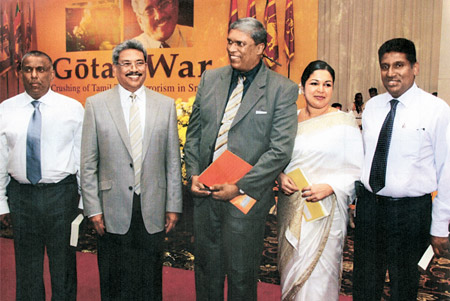
RANJANGATE SCANDAL – Colombo Crime Division (CCD) records statement from Judge Gihan Pilapitiya

January 20th, 2020

Courtesy Ada Derana

The Colombo Crime Division (CCD) has recorded a statement from High Court Judge Gihan Pilapitiya with regard to controversial phone recordings of MP Ranjan Ramanayake, on the instructions of the Attorney General. 

The Police Media Unit said that accordingly CCD officers had recorded a statement from the High Court Judge for nearly 5 hours last evening (19).

Last week, the Attorney General directed the CCD Director to record statements from the judges who were involved in the controversial telephone conversations with UNP MP Ranjan Ramanayake, without delay.

Earlier this month, a series of audio recordings of phone conversations between the MP and several high-profile officials in the country including former Director of the Criminal Investigation Department (CID) Shani Abeysekara and justices, had been released to the media.

Recordings contained phone conversations between the parliamentarian and Justices Gihan Pilapitiya, Padmini Ranawaka, and Magistrate Dhammika Hemapana.

Baddegama Magistrate Dhammika Hemapala had been interdicted by the Judicial Services Commission (JSC) last week over the issue while the commission had also sent its recommendations to the President on High Court Judge Gihan Pilapitiya.

As the Commission has no power to interdict a High Court Judge, it had sent its recommendations to President Gotabaya Rajapaksa.

RANJANGATE SCANDAL – Colombo Crimes Division (CCD) RECORDS A STATEMENT FROM FORMER HIGH COURT JUDGE PADMINI N RANAWAKA WITH REGARD TO HER TELEPHONE CONVERSATION WITH RANJAN RAMANAYAKE

January 20th, 2020

Courtesy Hiru News

The Colombo Crimes Division recorded a statement from Former High Court Judge Padmini N Ranawaka for over two hours, regarding the telephone conversations recorded by MP Ranjan Ramanayake.

Meanwhile, a statement was recorded from Ambilipitiya High Court Judge Gihan Pilapitiya for five hours yesterday, regarding the telephone conversations he allegedly had with MP Ranjan Ramanayake.

The Attorney General had earlier instructed the Colombo Crimes Division to record statements from judges who had telephone conversations with Ranjan Ramanayake regarding court proceedings.

RANJANGATE SCANDAL – PERSONS WHO MANIPULATED JUDGES TO CONDEMN SOME INDIVIDUALS TO DEATH AND, THE JUDGES WHO INTERPRETED LAW ACCORDINGLY SHOULD ALSO BE CONDEMNED TO DEATH, SAYS THE PRIME MINISTER

January 20th, 2020

Courtesy Hiru News

Prime Minister Mahinda Rajapaksa says if any person has been condemned to death by manipulating judges; such persons who made the manipulation as well as the judges who interpreted the law to sentence the victims should be served with capital punishment.

He was meeting with the heads of media institutions at Temple Trees this morning.

Meanwhile, Prime Minister Rajapaksa said that the government will intervene to help the Colombo Stock Market to bounce back from its collapsed trading activities.

He was meeting a group of stockbrokers in Colombo today.

ATTORNEY GENERAL WILL NOT APPEAR FOR FORMER PRESIDENT AND PRIME MINISTER

January 20th, 2020

Courtesy Hiru News

The Attorney General informed the Supreme Court today that his department would not appear on behalf of the former president Maithripala Sirisena and Prime Minister Ranil Wickremesinghe in the petition against them for not preventing the Easter Sunday terrorist attacks.

Both Sirisena and Wickremesinghe are among the respondents named in the fundamental rights petitions filed in connection with the Easter Sunday terrorist attacks.

The petitions were taken before a full bench of seven Supreme Court Judges today.

Additional Solicitor General Farzana Jameel informed the court that the Attorney General who appeared for former President Sirisena and Prime Minister Wickremesinghe on the previous occasion would not do so as both Sirisena and Wickremesinghe are currently not in office.

Meanwhile, Attorneys-at-law Pulasthi Rupasinghe and Suren Fernando who appeared for former president Sirisena and former Prime Minister Wickremesinghe respectively requested the court to grant them time to file objections for their clients.

Accordingly, the judges ordered them to do so before 6th of March and informed the petitioners to file any oppositions if any before the 27th of March.

Later, the court decided to take the petitions for hearing on 12, 13 and 14th of May

Meanwhile, suspended IGP Pujith Jayasundera and former Defence Secretary Hemasiri Fernando were further remanded until the 3rd of February

The suspects were produced before Colombo Additional Magistrate Priyantha Liyanage today.

RANJANGATE SCANDAL – රන්ජන්ගේ දුරකථන සංවාදය ගැන, හිටපු මහාධිකරණ විනිසුරු පද්මිනී එන්. රණවකගෙන් සී.සී.ඩී.ය ප්‍රකාශ ගනී

January 20th, 2020

උපුටා ගැන්ම හිරු නිව්ස්

පාර්ලිමේන්තු මන්ත්‍රී රන්ජන් රාමනායකගේ දුරකථන හඬ පට සංවාද සිද්ධියට අදාළව හිටපු මහාධිකරණ විනිසුරු පද්මිනී එන්. රණවකගෙන් කොළඹ අපරාධ කොට්ඨාශය අද පැය 2කට අධික කාලයක් ප්‍රකාශයක් ලබා ගත්තා.

%E0%B6%BB%E0%B6%B1%E0%B7%8A%E0%B6%A2%E0%B6%B1%E0%B7%8A%E0%B6%9C%E0%B7%9A+%E0%B6%AF%E0%B7%94%E0%B6%BB%E0%B6%9A%E0%B6%AE%E0%B6%B1+%E0%B7%83%E0%B6%82%E0%B7%80%E0%B7%8F%E0%B6%AF%E0%B6%BA+%E0%B6%9C%E0%B7%90%E0%B6%B1%2C+%E0%B7%84%E0%B7%92%E0%B6%A7%E0%B6%B4%E0%B7%94+%E0%B6%B8%E0%B7%84%E0%B7%8F%E0%B6%B0%E0%B7%92%E0%B6%9A%E0%B6%BB%E0%B6%AB+%E0%B7%80%E0%B7%92%E0%B6%B1%E0%B7%92%E0%B7%83%E0%B7%94%E0%B6%BB%E0%B7%94+%E0%B6%B4%E0%B6%AF%E0%B7%8A%E0%B6%B8%E0%B7%92%E0%B6%B1%E0%B7%93+%E0%B6%91%E0%B6%B1%E0%B7%8A.+%E0%B6%BB%E0%B6%AB%E0%B7%80%E0%B6%9A%E0%B6%9C%E0%B7%99%E0%B6%B1%E0%B7%8A+%E0%B7%83%E0%B7%93.%E0%B7%83%E0%B7%93.%E0%B6%A9%E0%B7%93.%E0%B6%BA+%E0%B6%B4%E0%B7%8A%E2%80%8D%E0%B6%BB%E0%B6%9A%E0%B7%8F%E0%B7%81+%E0%B6%9C%E0%B6%B1%E0%B7%93

හිටපු මහාධිකරණ විනිසුරුවරිය අද පස්වරු 3ට පමණ කොළඹ අපරාධ කොට්ඨාශය වෙත පැමිණි අතර එහිදී ඇය පැය 2කට අධික කාලයක් ප්‍රකාශයක් ලබාදී පිටව ගොස් තිබෙනවා.

පාර්ලිමේන්තු මන්ත්‍රී රන්ජන් රාමනායක සමඟ දුරකථන සංවාදවල නිරතවීමේ සිද්ධීන්වලට අදාළව, ඇඹිලිපිටිය මහාධිකරණ විනිසුරු ගිහාන් පිලපිටියගෙන් ද කොළඹ අපරාධ කොට්ඨාසය ඊයේ පැය 05ක කාලයක් ප්‍රකාශ සටහන් කර ගනු ලැබුවා

රන්ජන් රාමනායක සමඟ අධිකරණ කටයුතු සම්බන්ධයෙන් දුරකථන සංවාදවල නිරත වූ විනිසුරුවන්ගෙන්, කල් නොයවා ප්‍රකාශ සටහන් කර ගන්නා ලෙස නීතිපතිවරයා මීට පෙර කොළඹ අපරාධ කොට්ඨාශය වෙත දැනුම්දීමක් කර තිබුණා.

ඒ අනුව හිටපු මහාධිකරණ විනිසුරු පද්මිනී එන්. රණවක, මහාධිකරණ විනිසුරු ගිහාන් පිලපිටිය සහ මහේස්ත්‍රාත් ධම්මික හේමපාලගෙන් වහාම ප්‍රකාශ සටහන් කර ගන්නා ලෙසයි නීතිපතිවරයා කොළඹ අපරාධ කොට්ඨාශයට නියෝග කර තිබුණේ.

එමෙන්ම, ආන්දෝලනාත්මක දුරකථන සංවාද හේතුවෙන් බද්දේගම මහේස්ත්‍රාත් ධම්මික හේමපාලගේ සේවය අධිකරණ සේවා කොමිසම විසින් පසුගියදා වහාම ක්‍රියාත්මක වන පරිදි අත්හිටුවනු ලැබුවා.

එමෙන්ම එම කොමිසම ඇඹිලිපිටිය මහාධිකරණ විනිසුරු ගිහාන් පිලපිටිය සම්බන්ධයෙන් අවශ්‍ය වන නිර්දේශ ජනාධිපතිවරයා වෙත යොමුකොට තිබුණා.

RANJANGATE SCANDAL – මරණ දඬුවම පැනවීමට විනිසුරුවන්ට බලපෑම් කළ පුද්ගලයන්ට සහ එම විනිසුරුවන්ට ද මරණ දඬුවම දිය යුතුයි – අගමැති

January 20th, 2020

උපුටා ගැන්ම හිරු නිව්ස්

අධිකරණ විනිසුරුවරුන්ට බලපෑම් සිදුකොට යම් පුද්ගලයෙකු වෙත මරණ දඬුවම නියම කර ඇත්නම් එම බලපෑම් සිදුකළ පුද්ගලයාට මෙන්ම එම වරද සිදුකළ විනිසුරුවරයාට ද මරණ දඬුවම ලබා දිය යුතු බව අග්‍රාමාත්‍ය මහින්ද රාජපක්ෂ ප්‍රකාශ කළා.

ඒ, අරලියගහ මන්දිරයේදී මාධ්‍ය ප්‍රධානීන් සමඟ අද පැවති විශේෂ සාකච්ඡාවේදියි. එම සාකච්ඡාවට අමාත්‍ය බන්දුල ගුණවර්ධන, රාජ්‍ය අමාත්‍යවරුන් වන මහින්දානන්ද අලූත්ගමගේ සහ කෙහෙලිය රඹුක්වැල්ල ද එක්ව සිටියා.<

මේ අතර, පසුගිය වසර හතර හමාරක කාලය තුළ මෙරට ආර්ථිකය වසර 15කින් පමණ ආපස්සට ගොස් ඇති බව අග්‍රාමාත්‍යවරයා කියා සිටියා.

ඒ, කොළඹ කොටස් වෙළඳපොළ තැරැව්කාර සමාගම් නියෝජිතයින් පිරිසක් සමඟ අද පැවති සාකච්ඡාවකදියි.

කඩා වැටී කොළඹ කොටස් වෙළදපොළ නැවත යථා තත්ත්වයට පත් කිරීම සඳහා කඩිනමින් රජය මැදිහත් වන බව ද අග්‍රාමාත්‍යවරයා එහිදී ප්‍රකාශ කර තිබෙනවා.

හිටපු ජනපති සහ අගමැති වෙනුවෙන් නීතිපති නැහැ

January 20th, 2020

උපුටා ගැන්ම හිරු නිව්ස්

පාස්කු ඉරිදා ත්‍රස්ත ප්‍රහාර වලක්වා නොගැනීම සම්බන්ධයෙන් ගොනුකර ඇති මූලික අයිතිවාසිකම් පෙත්සම් දොලහේ වගඋත්තකරුවන් ලෙස නම් කර සිටින හිටපු ජනාධිපති මෛත්‍රීපාල සිරිසේන සහ අග්‍රාමාත්‍ය රනිල් වික්‍රමසිංහ වෙනුවෙන් නීතිපතිවරයා පෙනී නොසිටින බව නීතිපති දෙපාර්තමේන්තුව ශ්‍රේෂ්ඨාධිකරණයට අද දැනුම් දුන්නා.

ඒ, එම පෙත්සම් සත් පුද්ගල පූර්ණ විනිසුරු මඩුල්ලක් හමුවේ කැදවූ අවස්ථාවේදීයි.

මීට පෙර මෙම පෙත්සම් සලකා බැලූ විනිසුරු මඩුල්ලේ සාමාජිකයෙකුව සිටි ශ්‍රේෂ්ඨාධිකරණ විනිසුරු ප්‍රසන්න ජයවර්ධනගේ අභාවයෙන් ඇති වූ පුරප්පාඩුවට ශ්‍රේෂ්ඨාධිකරණ විනිසුරු ප්‍රීති පද්මන් සූරසේන පත් කර තිබුණා.

පෙත්සම කැදවූ අවස්ථාවේදී නීතිපතිවරයා වෙනුවෙන් පෙනී සිටි රජයේ අතිරේක සොලිසිටර් ජනරාල් ෆර්සානා ජමීල් අධිකරණයට දැනුම් දුන්නේ මෙම පෙත්සම්වල වගඋත්තකරුවන් ලෙස නම් කර සිටින හිටපු ජනාධිපතිවරයා සහ අග්‍රාමාත්‍යවරයා වෙනුවෙන් මින් ඉදිරියට නීතිපතිවරයා පෙනී නොසිටින බවයි.

මීට පෙර අදාළ වගඋත්තරකරුවන් ජනාධිපති සහ අගමැති ධුරයේ කටයුතු කරන අවස්ථාවේදී නීතිපතිවරයා ඔවුන් වෙනුවෙන් පෙනී සිටියද, මේ වනවිට ඔවුන් අදාළ ධුරයන්හි කටයුතු නොකරන බැවින් නීතිපතිවරයා තවදුරටත් පෙනී නොසිටින බවයි අතිරේක සොලිසිටර් ජනරාල්වරිය සඳහන් කළේ.

ඇය පෙන්වා දුන්නේ ඒ අනුව එම වගඋත්තරකරුවන්ට පෞද්ගලික නීතිඥයින්ගේ සහය ලබා ගැනීමට සිදුවන බවයි.

කෙසේ වෙතත්, මෙහිදී හිටපු ජනාධිපති මෛත්‍රීපාල සිරිසේන වෙනුවෙන් නීතිඥ පුලස්ථි රූපසිංහ සහ හිටපු අග්‍රාමාත්‍ය රනිල් වික්‍රමසිංහ වෙනුවෙන් නීතිඥ සුරේන් ප්‍රනාන්දු අධිකරණය හමුවේ පෙනී සිටිමින් තම සේවාදායකයින් වෙනුවෙන් විරෝධතා ගොනු කිරීමට යම් කාලයක් අවශ්‍ය බවට ඉල්ලීමක් කළා.

එය සලකා බැලූ සත් පුද්ගල ශ්‍රේෂ්ඨාධිකරණ විනිසුරු මඩුල්ල මාර්තු මස 6 වන දිනට පෙර එම විරෝධතා ගොනුකරන ලෙසත්, ඊට ප්‍රතිවිරෝධතා මාර්තු මස 27 වනදිනට පෙර ගොනුකරන ලෙසත් පෙත්සම්කාර පාර්ශවයන්ගේ නීතිඥයින්ට දැනුම් දුන්නා.

එසේම, මේ සම්බන්ධයෙන් වූ ලිඛිත දේශන අප්‍රේල් මස 30 වන දිනට පෙර ගොනුකරන ලෙස පෙත්සම්කාර පාර්ශවයන්ගේ නීතිඥයින්ට දැනුම් දුන් සත් පුද්ගල ශ්‍රේෂ්ඨාධිකරණ විනිසුරු මඩුල්ල පෙත්සම් විභාගය මැයි මස 12,13, සහ 14 දිනයන්හිදී ද, සිදුකිරීමට දින නියම කළා.

මේ අතර, දැනට රක්ෂිත බන්ධනාගාර ගත කර සිටින අනිවාර්ය නිවාඩු යවා ඇති පොලිස්පති පූජිත් ජයසුන්දර සහ හිටපු ආරක්ෂක ලේකම් හේමසිරි ප්‍රනාන්දු අද යළි කොළඹ අතිරේක මහේස්ත්‍රාත් ප්‍රියන්ත ලියනගේ හමුවට ඉදිරිපත් කෙරුණා.

එහිදී අපරාධ පරීක්ෂණ දෙපාර්තමේන්තුව අධිකරණයට දැනුම් දුන්නේ පාස්කු ප්‍රහාරය සම්බන්ධයෙන් වන විමර්ශනවලට අදාළව හිටපු ජනාධිපති මෛත්‍රීපාල සිරිසේන, හිටපු අමාත්‍යවරුන් වන රිෂාඞ් බදියුදීන්, රවුෆ් හකීම්, නැගෙනහිර පළාත් හිටපු ආණ්ඩුකාර එම්.එල්.ඒ.එම් හිස්බුල්ලා, බස්නාහිර පළාත් හිටපු ආණ්ඩුකාර අසාද් සාලි ඇතුළු 7 දෙනෙකුගෙන් මේ වනවිට ප්‍රකාශ සටහන් කරගෙන ඇති බවයි.

එමෙන්ම, හිටපු අග්‍රාමාත්‍ය රනිල් වික්‍රමසිංහගෙන් සහ හිටපු අග්‍රාමාත්‍ය ලේකම්වරයාගෙන් ප්‍රකාශ සටහන් කර ගැනීම සඳහා දින ඉල්ලා ඇතත්, මෙතෙක් ඊට දිනයක් ලබා දී නොමැති බව ද අපරාධ පරීක්ෂණ දෙපාර්තමේන්තුව අධිකරණයට දැනුම් දුන්නා.

කරුණු සලකා බැලූ කොළඹ අතිරේක මහේස්ත්‍රාත් ප්‍රියන්ත ලියනගේ, දැනට අනිවාර්ය නිවාඩු යවා ඇති පොලිස්පතිවරයා සහ හිටපු ආරක්ෂක ලේකම්වරයා ලබන මස 3 වනදා දක්වා තවදුරටත් රක්ෂිත බන්ධනාගාර ගත කිරීමටයි නියෝග කළේ.

RANJANGATE SCANDAL – රංජන්ගේ හඬ පට ගැන අදත් විවිධ අදහස්

January 20th, 2020

උපුටා ගැන්ම හිරු නිව්ස්

රක්ෂිත බන්ධනාගාර ගත කර සිටින රංජන් රාමනායක මන්ත්‍රීවරයා විසින් පටිගත කර ඇති ආන්දෝලනාත්මක හඬ පටි සම්බන්ධයෙන් විවිධ පාර්ශ්ව අදත් අදහස් පළ කළා.

RANJANGATE SCANDAL – බී බී සී යේ හර පද්ධතිය විනාශ කරමින් කටයුතු කළ අසාන් අමීන් වහාම ඉවත් කරන්න – වියත්මග

January 20th, 2020

උපුටා ගැන්ම හිරු නිව්ස්

බී.බී.සී. මාධ්‍ය ජාලයේ හර පද්ධතිය විනාශ කරමින් කටයුතු කළ අසාන් අමීන් මාධ්‍යවේදියාව එම මාධ්‍ය ආයතනයෙන් වහාම ඉවත් කරන ලෙස එහි අධ්‍යක්ෂක මණ්ඩලයෙන් ඉල්ලා සිටින බව ජ්‍යෙෂ්ඨ කථිකාචාර්ය නීතිඥ රාජා ගුණරත්න මහතා පවසනවා.  

වියත් මඟ සංවිධානය අද කැඳවා තිබූ ප්‍රවෘත්ති සාකච්ඡාවකදී ඔහු මේ බව සඳහන් කළ අතර නීතිඥ මනෝජ් ගමගේ මහතා ද එම අවස්ථාවට එක්ව සිටියා.

RANJANGATE SCANDAL – රංජන් විපක්ෂ නායක සජිත් ප්‍රේමදාසගේ පසුගිය මැතිවරණ වේදිකාවේ වෙළඳ භාණ්ඩයක්

January 20th, 2020

උපුටා ගැන්ම හිරු නිව්ස්

පසුගිය මැතිවරණ සමයේදී විපක්ෂ නායක සජිත් ප්‍රේමදාස මහතාගේ මැතිවරණ වේදිකාව තුළ පාර්ලිමේන්තු මන්ත්‍රී රංජන් රාමනායක වෙළඳ භාණ්ඩයක් ලෙස භාවිත කර ඇති බවට බලශක්ති රාජ්‍ය අමාත්‍ය රෝහිත අබේගුණවර්ධන මහතා පවසනවා.

නෙළුම් මාවත පක්ෂ කාර්යාලයේ අද පැවති ප්‍රවෘත්ති සාකච්ඡාවකදී ඔහු මෙම අදහස් පළ කළ අතර ඊට පාර්ලිමේන්තු මන්ත්‍රී ඩී.වී. චානක මහතාද එක්ව සිටියා.  

How MCC Aids the Tamil Eelam Project

January 20th, 2020

Dilrook Kannangara

MCC agreement’s land issue is the very same matter that ITAK, India and USA have been demanding since 1955 since Ceylon ended the Anglo Ceylon Defence Partnership Agreement resulting in expelling USA and UK from Trincomalee. Since then India and their agents have been trying their best alienate land around Trincomalee port area from Sri Lanka.

MCC is an enabler of US troop and military logistics movement between the US military base of Diego Garcia and towards China in order to contain China. The other two matters – US troop and military logistics – have been achieved already.  The Agreement regarding the status of U.S. military personnel and civilian employees of the Department of Defense who may be present in Sri Lanka for exercises or official duties” came into force on May 16, 1995 and Agreement concerning acquisition and cross-servicing (ACSA) came into force on March 11, 2007.

The MCC will complete the militarization of Sri Lanka for the purpose of US troop and military logistics movement between the US military base of Diego Garcia and towards China in order to contain and confront China.

However, it has another aspect – Tamil Eelam project.

The declared capital of Tamil Eelam by the Vadukoddai Resolution (1976) was to be Trincomlaee. LTTE also declared that Trincomalee would be its capital. India in 1987 post Indo-Lanka Peace Accord declared Trincomalee to the capital of the merged northern and eastern province after massacring over 100 Sinhala civilians in an attempt to turn the are Tamil-only. However, LTTE rejected it in 1987 fearing an Indian takeover of Trincomalee port. 13A to the Constitution devolved most powers to the provincial council including land powers. Sri Lankan government has restricted land powers to the provinces using administrative means. Legally, land powers rests with the province.

In 2013 September, just a week after TNA swept the Northern Provincial Council election, the Supreme Court decided that state land” is the subject of the central government and not the provincial council. Specifically, provincial high courts cannot judge matters relating to state land”. Over 75% of the land are state land”. Tamil Eelam project cannot proceed without land.  

MCC agreements regulates land registration and makes it easy to convey land title. MCC also encourages the government to reform” land laws to make it easier to sell or lease out land to local and foreign private buyers. Once these lands are no longer state land”, the Eastern Provincial council will pounce demanding land powers. There is no use having land powers until then.

USA helps India and Tamil Eelamists in their project by removing their biggest road block cleverly.

It will create a submissive and compliant weak nation in the island’s north and parts of the east. Displaced people will be sent to the remaining piece (Sri Lanka?) which will accommodate them thanks to foolish generosity. The next Diego Garcia in the making. They would have achieved their goal peacefully where war failed.

Millennium Challenge Compact – Can it reach its ‘goal’ of ‘reducing poverty through economic growth in Sri Lanka’?

January 20th, 2020

By Samantha Kumarasinghe

Millennium Challenge Compact isan agreement between the United States of America, acting through The Millennium Challenge Corporation (‘MCC’), and the Democratic Socialist Republic of Sri Lanka, acting through The Ministry of Finance (‘Government’)

(It is important to note that what ‘MCC’ means in the said Millennium Challenge Compact document is The Millennium Challenge Corporation of USA and not Millennium Challenge Compact. The latter is referred to as ‘Compact’ in the said document)

Following excerpts are from the Millennium Challenge Compact document released recently by the government of Sri Lanka

Background

  • December 2015 – MCC’s board of Directors selected Sri Lanka to develop a threshold program
  • During the development of the threshold program, the Government and MCC conducted a constraints analysis in collaboration with the Centre for International Development at Harvard University – Completed in November 2016
  • December 2016 – MCC board selected Sri Lanka to develop a compact
  • Government recruited the compact development team – housed in the Prime Minister’s Office of Policy Development
  • November 2017 – Government submitted project proposals that focused on addressing Sri Lanka’s binding constraints
  • June 18, 2018 – Amended and Restated Grant and Implementation Agreement (CDF Agreement) Pg 9

Consultative Process as given in the Millennium Challenge Compact agreement document

  • The Government consulted a wide range of public officials, the private sector, civil society and development partners
  • Separate meetings with various Government ministries and agencies, the Ceylon Chamber of Commerce and the American Chamber of Commerce in Sri Lanka
  • Stakeholder workshops, outreach sessions targeted at specific interest groups
  • In 2017 – Series of workshops with Government ministries and agencies working on transport and land, various think tanks and civil society
  • While finalizing in May 2018 – extensive consultations and workshops with stakeholders

Goal and Funding

  • Goal is to reduce poverty through economic growth in Sri Lanka. MCC shall provide assistance in a manner that strengthens good governance, economic freedom and investments in Sri Lanka
  • Upon entry into force of this compact, MCC shall grant to the Government Four Hundred Forty-Seven Million Five Hundred Thousand United States Dollars (US$ 447,500,000) to implement the programme (multi-year allocation of funding is described in Annex II)
  • Upon the signing of this compact, MCC shall grant to the Government Thirty-Two Million Five Hundred Thousand United States Dollars (US$ 32,500,000), in addition to above funding

Other information on Millennium Challenge Corporation and Millennium Challenge Compacts

  • Jenner Edelman is the Resident Country Director for MCC in Sri Lanka. Her last assignment has been in Georgia where MCC had signed agreements for USD 395.3 Million in 2005 and USD 140 Million in 2013 respectively. During the said periods Georgia’s GDP growth rate declined from 9.6% to 4.7%, and today it is a poor country with a total GDP of USD 16.2 Billion. I was not able to find information on what USA gained in Georgia through these two agreements.
  • There are three types of MCC grants:
  1. Compacts: Five-year grants for countries that meet MCC’s eligibility criteria (type of agreement proposed to Sri Lanka)
  2. Concurrent Compacts for Regional Investments: Grants that promote cross-border economic integration
  3. Threshold Programs: Smaller grants for countries that come close to passing MCC’s eligibility criteria and show commitment to improving their policy performance

The basic purpose of this MC Compact is said to be to grant USD 480 Million to Sri Lanka to reduce poverty through economic development.

We will now look at how the 27 countries who have signed Millennium Challenge Compacts with USA have benefitted or lost from those Compacts based on the Gross Domestic Product (GDP) growth rate criteria.

Data Source: World Bank Data 2018

Observations and conclusions that can be made from the data given in the above table:

  • 15 out of the 27 countries are in Africa and they are extremely poor, small countries.
  • Jordan is the only country from Middle East and that is one of the poorest among the oil rich Middle Eastern countries. After signing the MCC compact in 2010, economic growth has declined drastically. GDP growth rate which was 7% in 2008 has declined to 2.3% in 2010 and further declined to 1.9% by 2018. Total GDP of Jordan is USD 42 billion which is about 50% of the GDP of Sri Lanka.
  • There are three countries in Central America, and they are El Salvador, Nicaragua and Honduras which are poor countries with small populations. All three countries have experienced serious economic problems after signing the MCC agreements and have ended up with negative economic growth within few years after signing the agreements.
  • Only two countries in Western Asia, Georgia and Armenia, have signed MCC agreements and both countries have experienced negative economic growth after signing MCC agreements. They still remain to be countries with extreme poverty levels compared to their neighboring countries such as Turkey, Bulgaria and Russia.
  • Philippines and Indonesia are the only countries with a considerable GDP size that have signed MCC agreements.
  • Although the GDP growth rate has not significantly declined in Philippines, there is no improvement in growth after signing the agreements. Philippines has now become a country faced with a major drug problem.
  • Indonesia has experienced a gradual decline in economic growth rate after signing the MCC agreement in 2010 from 6.2% to 4.9% in 2015.
  • Nepal is the only country in South Asia that has signed a MCC agreement. As it was signed in 2017, not much can be said yet about the impact of the MCC agreement on Nepal.

MCC- A grant from the ‘biggest debtor in the world’ with very high poverty levels?

  • In Sri Lanka, 4.1% of the population lives below the national poverty line as per World Bank data for 2016.
  • The official poverty rate for USA is 12.3%, based on the U.S. Census Bureau’s 2017 estimates. Deep poverty is 5.7%.

https://poverty.ucdavis.edu/faq/what-current-poverty-rate-united-states

  • USA has the biggest external debt in the world which is USD 20.2 Trillion in 2019. This is USD 4 Trillion higher than the external debt of entire EU.

https://www.gfmag.com/global-data/economic-data/xtegh9-external-debt-in-countries-around-the-world

Given the above poverty and debt levels, it is obvious that USA is not going to simply give a grant to develop our country without significant benefit for USA. Sri Lanka has to be extremely careful in signing complicated and binding agreements that are subjected to international law, especially since USA has a history of having signed over 100 agreements with the Native American Indians during the period 1778 to 1871, which subsequently led to the Native American Indians losing almost all their land that they had lived on for thousands of years prior to signing the said agreements.  

Concerns on Land issues for Sri Lanka

Under the proposed agreement, USD 350 Million is for a Transport project and USD 67.3 Million for a Land project. Land project allows MCC to survey lands in Anuradhapura, Kandy, Kegalle, Kurunegala, Mathale, Polonnaruwa and Trincomalee districts. Further, the agreement allows MCC to survey lands in other areas covering 67% of the total land extent of Sri Lanka. All such data collected in the above surveys will become the intellectual property of MCC USA. It means that MCC will have intellectual property rights to survey plans of 67% of land in Sri Lanka, including places of natural resources and water resources. Sri Lankan proponents of MCC agreement do not seem to have any idea of limitations or bindings of such intellectual property rights given to a country like USA that is trying hard to maintain their military powers in the Asian region through various strategic agreements.

The proposed MCC agreement does not fall under the laws of Sri Lanka and will be subjected only to international law.

A country that loses its land will always be a country of people in extreme poverty. We should not forget the important statement once made by Desmond Tutu, the world famous South African Archbishop, When the missionaries came to Africa they had the Bible and we had the land. They said ‘Let us pray.’ We closed our eyes. When we opened them we had the Bible and they had the land”.

Through an act in 1913, the White rulers of South Africa acquired about 93% of land from the indigenous black people, chasing them out from their traditional homelands. Mandela fought against this and for the freedom of black South Africans. Mandela was jailed in 1964 for about 30 years. He was later released and became the President of South Africa and Apartheid was said to be over. Twenty five years have passed since 1994 but still the black people in South Africa have not got their land back and majority of them live in extreme poverty. Even today the average income of a white man in South Africa is 5 times that of a black man. That is why losing land is proven to be the beginning of the loss of future prosperity of any nation.

Agreements such as the Millennium Challenge Compact, if signed at the expense of entire future generations of a country, will only help a handful of unpatriotic, power hungry and greedy politicians who want to be in power for few more years till they die of old age.

Sri Lanka is now an upper middle income country with a per capita income of over USD 4,000 and thus technically cannot fulfill the MCC criteria for a grant. To overcome this issue the former Government and MCC have taken the year of grant approval as 2016, which is just before the year that Sri Lanka passed the USD 4,000 per capita income level. Therefore, my personal opinion is that if the present Government wants it can avoid signing the Millennium Challenge Compact on that criterion.   

Being an upper middle income country, we do not have to run to other countries with a begging bowl anymore. Strong, patriotic leadership with good negotiation skills and confidence in local capabilities is the need of the hour to develop the country, whilst improving living standards of the entire population. There is no point in increasing the GDP of a country unless it really helps to increase the income and living standards of the poor people in the bottom layers of the income pyramid.

I sincerely believe in the reality that ‘Not signing agreements’ is always better than ‘Signing unfavourable agreements’ that put the future of many generations to come in a miserable situation that they can never escape.    

Data Sources

MCC                https://www.mcc.gov/where-we-work   

GDP                 https://data.worldbank.org/indicator/NY.GDP.MKTP.CD

Population        https://data.worldbank.org/indicator/SP.POP.TOTL

GDP per capita https://data.worldbank.org/indicator/NY.GDP.PCAP.CD

After 30 electoral defeats Ranil thinks he is still a leader

January 19th, 2020

H. L. D. Mahindapala

Ranil Wickremesinghe’ss refusal to quit, when the rising waves of the UNP are pushing him out, confirms his total inability to grasp the grinding power of the ground realities that had knocked him out 30 times in the power struggle with his opponents in the electoral field – a fate that has haunted his entire political career. He has yet to learn the lesson taught by King Canute : you can’t dictate to unstoppable waves with royal (no pun intended!) commands. He is fighting with his back to wall to stall the UNP young Turks rising against him with a vengeance. Ranil’s defence, according to the newspaper reports, is typical of his arguments which expose his febrile intellect and congenital inability to be an effective leader. His arguments and his tactics had never worked to save him, or his party, or the nation. (I’ll come to this later).

At the moment he is arguing, according to newspapers, that he had consulted key figures, including prelates (possibly Malwatte Mahanayake) who had told him not to quit. This is a childish argument of a baby in a crib crying for some sustenance for survival and not that of a mature leader. Can anyone of those henchmen who back him make him win elections? Or give him the power he needs to be a leader?  Power has been slipping out of him with each election he had lost. The power within the Party has demonstrably  shifted to the young leader, Sajith Premadasa. The numbers are with him. And Ranil is left with only a handful of creepy-crawly invertebrates who had endorsed him. How far can he go with them?

Politics depends on hard analysis however repugnant it may be to the panjandrums holding power. And the grim truth is that Ranil is unwanted by the party, by his fellow Parliamentarians and, most of all by the people. The time has come for him to go. He must bow down now to the will of the people who had rejected him 30 times.

It is a unique record in the electoral politics of the democratic world. Leaving aside all the other arguments, he should know that in the hallowed traditions of Westminster parliamentary system he should have resigned each time he was rejected by the people. To hang on to the seat of the leader after 30 defeats is an abominable travesty of all accepted and known norms and traditions of parliamentary democracy. He has made a mockery of democracy. No political leader in the mainstream had subverted the democratic traditions as disgustingly as Ranil Wickremesinghe. He has been a political pervert who has had no qualms about abusing power to survive in politics. Now I understand why Socrates, Plato and Aristotle dismissed democracy as an undesirable form of government. They knew that the likes of Ranil would take over democracies and twist it to serve their mean ends. As Alcibiades, one of the Athenians, said democracy is acknowledged folly.”  (p.99 – Athenian Democracy, A. H. M. Jones, Professor Ancient History, Cambridge).

The highlight of Ranil’s Parliamentary career reached its climax when he was seen flapping his arms like a chook without a head on the floor of the House and shouting: Kavuda Hora! Kavuda Hora!” to cover up his role in the bond scandal. In between he was egging his stooges to follow his example! It is the most ridiculous show I’ve seen on the floor of the House – and I’ve seen Parliamentary performance as the lobby correspondent for The Observer from the days when the old Parliament stood as a monument of democracy with intellectual giants, from both sides of the House, dominating each sitting.  As I said earlier, it is the transparent  cheap tactics of Ranil that makes him the biggest joker in the pack. He lacks substance. He has cunning but where has it taken him, his party and the nation?

Besides, he doesn’t deserve to be a leader because he has shown no leadership qualities in any field to pull the nation out of the major crises into which it had fallen when he was leading the UNP,  one of the great political parties in the post-Independent era. Consider his role in the critical crises he had handled as the leader: 1. ending the North – South war and restoration of peace; 2. maintaining and protecting the sacred institutions of democracy: the legislature, executive and judiciary; 3. economy, 4, security  and 5. combating corruption.

The sixth is the fate of the UNP under his stewardship. The  self-destructive in-fighting speaks for itself. Never has the UNP fallen into such disrepute and degeneracy traumatising not only the Party but the nation as well. This apart, he should be judged mainly on his role in the five main issues listed above.  Which one did he solve? Any leader who had solved any one of these issues that  plagued the nation — the longest war, erosion of moral values, loss of security, corrosive corruption etc.,– would deserve the eternal gratitude of history. But is there anything remarkable or memorable in his role in any one of these crises? What everyone knows is that he has worsened the situation each time he stepped into each crisis. So how will history judge him? Will history categorise him as a male Queen Anula surrounded by Tamil gigolos? Will his red-lipped Secretary’s letter be the final epitaph on his gravestone? Will history hang him with the bond noose tightened round his neck? Will generations to come spit on the memory of his traitorous move to let our heroic soldiers be tried by foreign judges for  saving the nation  and  democracy from the tyranny of the fascist Tamil Tigers and restoring the peace that he could not restore with his fake Cease Fire Agreement in 2002?

No leader in the post-independent era had misread, misjudged and misdirected the nation as Ranil. That is why he could not tackle any one of the major issue listed above. He pretended to be the solution. But on each issue he became the problem. He never knew how to handle a problem head-on and work out a solution to the last detail. He always took refuge under his numerous committees. He never grasped the dynamics of the political culture of the people. Ideologically he was most comfortable with the West and their agents in NGOs who ran his agenda. Neither he nor his catchers” in the foreign-funded NGOs ever produced a viable solution to any one of the national crises. He failed because he followed the NGO agenda abandoning the mainstream culture.  Which one of their confidence – building theories ever helped to end the war? Which one of the political, military and territorial concessions made by Ranil helped the nation to regain peace? The fake theories and futile peace deal with Norway led Ranil and NGOs nowhere.

Without any highfalutin theories Mahinda Rajapakse showed results by doing what had to be done with his brother Gotabaya Rajapakse. A leader is known by his victories and not by his defeats. Ranil has never shown any leadership qualities. Now he is a tired old man, exhausted septuagenarian, with nothing new to offer except further defeats. Is this what the Party needs? With his demoralising record of successive defeats he would not survive one day if he was a leader in a Western democracy.  He knows it. So why does he want to hang on to the  chair in Siri Kotha from which he cannot deliver results? The acid test on which he can be retained as the leader depends on what new strategies he has to offer to win back the Sinhala-Buddhist base he lost in the last election. How can a leader who is prominent  Dayakaya of the Gangaramaya Viharaya – mark you, he also comes from a leading Buddhist family – lose his Sinhala-Buddhist base? It is the refusal of the Sinhala-Buddhists to recognise him as their trustworthy leader that has damned him forever and no one is to be blamed  except his warped politics that made him believe that his future is in the West and  NGOs.

Ranil Wickremesinghe is now a scared man clutching at straws. He is facing a future without pomp, glory and power. Like the way he did not know how to handle power he is now befuddled not knowing how to live without power. Throughout his adult life he had not earned his crust with any hard labour. He did a brief stint in Senator Tiruchelvam’s chamber and that is a tale not worth telling. The rest of his time he had been a free-loader living off the public purse. He has been living the highlife holding public office, junketing abroad, hobnobbing with the bigwigs like George Soros who had virtually ignored him, or paying pooja to Buddhist prelates while stabbing Buddhism in the back with his NGO ”catchers”. His best political buddy was Mangala Samaraweera who now takes refuge only in the Buddha and Dhamma and not the Sangha. He is surrounded by a gang of mediocrities who had contributed their best to run the most despised  kakistocracy in the history of the nation.

His known record shows that he has not produced anything worthwhile to make him look like a leader who can be trusted to make the nation great.  Take, for instance his 19th Amendment – his great political initiative that was supposed to be the ko-ka-tath thigh-layer” (cure all). None of the so-called independent institutions set up under it lived up to the promised expectations. A good example is the Police Commission. His hand-picked expert, Prof. Siri Hettige, bolted from his job as Chairman, on some silly pretext within a few months. Ranil’s other handpicked head of the Police, IGP, Pujitha Jayasundera, is in remand jail. Instead of being independent the IGP was caught on camera saying Yes, Sir. I will not arrest him, Sir” to one of his political masters. Within hundred days of Ranil assuming office he imported Ali Baba from Singapore to rob the Central Bank. That was the beginning. The end was filled with dramatic thrills. Full of fireworks. All the evidence hidden in Ranil’s corrupt and degenerate regime was exposed in Ranjan Ramanyake’s tapes.

If the bond ropes fail to hang Ranil then surely the Ranjan tapes doing the rounds in social media will certainly be sufficient to tighten round his neck and choke him. Whatever credibility there was in Ranil’s regime has been eroded with a few recorded telephones calls. It is the explosive revelations of the hitherto unsuspected operations in Ranil’s regime that have come to light. Every bit of it makes Ranil look like a the most inept, corrupt and disreputable leader ever produced in the history of the nation.

His chief partner in the crimes against the three pillars of the state – the legislature, the executive and the judiciary – has been Karu Jayasuriya, the Speaker. Together they reduced the Parliament to a brothel. Which Parliament in recorded history had appointed a leader with only 16 MPs in a House of 225 MPs as the leader of the opposition? He was imitting his uncle JR’ who appointed  Appapillai Amirthalingam to spite and deprive Mrs. Sirimavo Bandaranaike her legitimate place. Jointly with the consent of Karu he manipulated Parliament to avoid the necessary scrutiny of the biggest daylight robbery of the Central Bank. Jointly, with the consent of the Speaker, he introduced subjects that needed two-thirds majority into  bills that  could pass with a simple majority. As the veteran Parliamentarian from the old House, D. E. W. Gunasekera said in a TV interview Ranil never led a debate or wound up a debate on major issues like the budget. Nor  did he not command the respect of the House like Mrs. Sirimavo Bandaranaike and Dudley Senanayake who had only turn round and stare at the back benchers to  quieten them down. On the contrary, he led mob rule on the floor like burning the CBK- Tiruchevlam peace deal inside the House.

After presiding over the biggest bank robbery of the nation, after using Parliament as a corrupt institution to legalise his shady deals, after agreeing to hand over our soldiers to be condemned by foreign judges, after the collapse of the 19th Amendment, after instituting the illegal FICD as a Star chamber to persecute his political opponents, after joining  the NGOs to run their agenda against  the will of the people, after undercutting his own deputy in the Presidential election, after failing to give any hope to the nation during his stewardship, after letting himself down with his pathetic performance to hang on to a leadership slipping away from his hands, and now after the Ranjan tapes exposing how his regime perverted the key institutions of the state, including the judiciary, is there any purpose in retaining him as their useless leader?

Every move Ranil makes indicate that he is desperate to hang on to power. He is bent on hanging on to power and not to give any constructive or promising leadership. Well, he has had power in his hands for over two decades. What good has it done to anyone, including him?

Ranil is trapped in his self-centred, dog-in-the-manger brand of politics. He knows he can’t win. Nor does he want any anyone else to win, if he can’t win. UNP at this stage is faced with a critical issue: Is the UNP ready to go for surgery to cure the cancer eating its heart out from within? Ranil is a political patient who can’t be cured. Obviously, the answer is to get rid of him. If it doesn’t happen today it will have to happen tomorrow. That is inevitable.

He has been the bane of the Party. And also of the nation. Moving him out will be like moving out an evil planet casting its malefic spell on earth.

The future depends on the UNPers fast-forwarding their clocks.

ERASING THE EELAM VICTORY Part 12B

January 19th, 2020

KAMALIKA PIERIS

OFFICE ON MISSING PERSONS (OMP)

The Office on Missing Persons (OMP) Act no 14 of 2016 was passed in Parliament   in August 2016. There were complaints that Parliament had not followed proper procedures in adopting it. That   it was steamrollered through Parliament, in an undemocratic manner, disregarding objections of the Joint Opposition.  It went through all three readings very quickly, taking just 40 minutes altogether. The JVP voted for it. Government claims 2/3 majority for the bill but is unable to state the number of votes, said critics. USA’s Asst Secretary of State Nisha Biswal and the US Ambassador in Colombo hailed the passing of the OMP Bill. 

The objective of the Act is to take all measures necessary for searching and tracing of missing persons,  clarify  circumstances in which such persons went missing,  protect the rights and interests of missing persons  and identify  means of redress.

 Missing Person” is defined as “one whose fate or whereabouts are reasonably believed to be unknown” , in connection with the conflict which took place in the Northern and Eastern Provinces and its aftermath, or is a member of the armed forces or police who is identified as missing in action” or  in connection with political unrest or civil disturbances .

The OMP has the power to receive, from a relative or any other person complaints about missing persons. OMP also had the power to initiate an inquiry into the whereabouts and circumstances of disappearance of a missing person either on a complaint made to OMP or any other Commission of inquiry.

The OMP must set up a Tracing Unit  to trace and search missing persons, how they wnet missing and where they are now.OMP must also have a Victim and Witness Protection Division that can protect victims, witnesses and relatives of missing persons.

When authorized by the OMP, an officer of the OMP can enter without warrant, at any time, any place of detention, police station, prison or any other place in which any person is suspected to be detained, and make inquiries to find out the conditions of detention. They can take away any document or object. The public cannot obstruct, resist or threaten OMP officers, or any persons who are assisting the OMP. They must not try to influence OMP officers either.

OMP can compel any person in Sri Lanka to appear before the OMP to provide a statement or produce any document or other thing in his possession. They cannot refuse to come or refuse to answer questions. They must obey any orders made by OMP and must produce documents when OMP asks for them.  Failure to do so will go as contempt of OMP. When that occurs, the OMP will report the matter to the Court of Appeal and the Court of Appeal will treat it as thought it was contempt committed against the Court of Appeal.

OMP can accept confidential information or information in camera. The provisions of the Right to Information Act, No. 12 of 2016, will not apply to such confidential information. No order, decision, act or omission of OMP or its staff can be questioned in any proceedings or any court of law, except under Article 126 or 140 of the Constitution. No proceedings civil or criminal can be instituted against any member of the OMP or any officer or servant appointed to assist the OMP, other than for contempt against the authority of the OMP.

The Act permits OMP to ignore the provisions of the Evidence Ordinance. OMP can   accept any statement or material, written or oral, which might be inadmissible in civil or criminal proceedings. This clause carries other implications.

 Palitha Senanayake observed that certain categories of evidence, which would help support war crimes allegations, could   be entertained, by the OMP using this clause. That will be evidence which is not accepted under   the law of evidence. Evidence concocted by the likes of Channel 4, as well as Tamil Separatist propaganda could also be accepted by the OMP, as evidence against the Sri Lanka forces.

Sarath Weerasekera   adding to this said that the two Acts, Office of Missing Persons Act and Enforced Disappearance International Convention Act would help to collect false evidence against war heroes and subject them to foreign judicial powers and to ICC jurisdiction.

Chandraprema made a series of observations on the Act. This office will be outside the state justice system, he noted.  The OMP can received foreign funding directly, can enter into agreements with foreign organization, they can receive complaints from just anybody. All government bodies, including military have to give fullest cooperation to OMP.

OMP can authorize special officers who can be foreigners to enter without warrant, and investigate any time of the day any police office, prison, military installations and can seize documents .If a missing persons is found, if he so wishes he can remain missing, as unless he agrees, this relative will not be informed, concluded Chandraprema.

The seven members of the OMP are to be appointed by the Constitutional Council. This Council is dominated by western funded NGOs, observed Manohara de Silva. Further, the members of the OMP must be persons with previous experience in fact finding or investigation, human rights law, international humanitarian law and investigative skills. This means that all the appointments will be persons from foreign funded NGOs, added Manohara.

The Office was established 15 September 2017, and operations commenced in February 2018. The OMP had a budget of Rs 1.3 Billion in 2018. OMP annual report for the year 2018  said that it had received 14,641 complaints from National Integration and Reconciliation Ministry, plus an additional 129 new complaints through letters, telephone calls, visits to the OMP Head Office, public meetings and through direct meetings with families of the missing and disappeared.

Complaints about missing persons had started long before. In 2001 Amnesty International published accounts of missing. A woman in Ariyala, Jaffna said   army personnel came and arrested her son who subsequently disappeared. There were witnesses’ to the arrest. In Madhu a woman said her husband had been abducted from their home by a man who she is told had worked for the CID. Several said that they suspected that the navy personnel manning local checkpoints were responsible for the disappearances. One man had disappeared on his way home from a beer bar at a junction where navy were checking IDs. 

From 2017 onwards there were organized protests over missing persons. There was a sit down protest for over 200 days in Kilinochchi in 2017. Most of them were women, reported the media.  All had lost their loved ones in the final days of the war in 2009. On the 100th day these women called a massive demonstration and hundreds of people took to the streets and blocked the A-9 in Kilinochchi.

They sit when it rains, and they sit when the hot wind off the A-9 highway blows sand into their makeshift tent. They’ve been sitting for over 200 days now in Kilinochchi, protesting the loss of their family members. They are mostly women, and they say they have one thing in common: they all lost their loved ones in the final days of the war in 2009, reported the media in 2017.

They want to know if their sons, daughters, parents, husbands and in-laws are dead, or if they’re alive somewhere, in a prison or detention camp. Many believe that their loved ones are still alive somewhere, and if they were released, they could come home and help take care of their shattered families.

Some of the missing are LTTE who surrendered after the Army’s final offensive .But others were just civilians, picked up in camps for internally-displaced persons or loaded on to buses and never seen again.

Thangavelu Sathiyathevy recalled the last time she saw her family. She said she remembers the day exactly. This was May 18, 2009. We were in Vadduvakallu, and there were buses taking people away,” she said. Thousands of displaced people had gathered on the beaches there, seeking safety from the fighting. Vaddavakallu was technically in a no-fire zone. My daughter, son-in-law, and their three children were taken into the bus. He was an LTTE member,” she said, we also asked to join with them. But they said no, you can go separately.”Sathiyathevy said she was taken to Manik Farm, an IDP camp near Vavuniya. But she has never seen or heard from her family again. The children were 2, 9, and 10 years old.

Sivayogam Ratnaraja said she and her family was also taken to an IDP camp in Vavuniya after the war. In June, her son Ratnam Ratnaraja came to visit them from the University of Moratuwa, where he was studying engineering. But after he left the camp, he was arrested by local police. Ratnaraja said she was never given a reason for his arrest. But she has a suspicion. Her elder son, Ratnam’s older brother, was an LTTE cadre and died during the fighting. The Police or an informant might have known this. Six months later, Ratnaraja said one of her neighbors, met with and spoke with her son at Anuradhapura prison. But she has not heard from him thereafter.

Jeyakanthi Narmila’s husband from Thilaiyampathi in Kondavil, Jaffna, disappeared on August 17, 2007. She alleged that he was taken away by the Army in a white van. Some Army soldiers reached my home in a white van, it was around 3.30 am. He has not returned since. I haven’t heard anything about him. I made complaints about the abduction of my husband to the Uralu Army Camp and the Kopai Police,” she said.

Six months after the disappearance, she had seen her husband on a motorcycle pillion, ridden by an Army soldier. Three years later, she saw her husband once again, in an army truck. On that day, a piece of cloth was tied round his mouth. Thereafter, I never saw my husband again.

In 2018 media reported that families of the disappeared were protesting across Vavuniya, Kilinochchi and Mullaitivu, demanding to know the whereabouts of their loved ones. Relatives of those missing still continue with their public protests even as their numbers get less due to the vicissitudes of time and age, said Jehan Perera. The fate of the missing persons is an emblematic issue to the northern people. The numbers who went missing was large, one of the largest in the world at that time, and memories of those beloved do not fade for those who living, he said.

.In 2019 Mannar residents protested opposite Mannar GA office demanding that government locate those reported missing during the war. Families of those missing during Eelam war IV also gathered in Colombo, Jaffna and Batticaloa. In Colombo they protested in silence at Lipton Circus. Lovers who have been deprived due to enforced disappearance during armed conflict, commemorated ‘Missing lovers Day’ opposite Dutch Hospital in Colombo.

A series of demonstrations and protest marches were organized in the North, in 2019 to mark the ‘International Day of the Victims of Enforced Disappearances’. The Association of Missing Persons Relatives” and other organizations had organized demonstrations and protest marches in every district in the Northern Province. They wanted the Government to trace their loved ones and to mete out justice to their families.  They said they didn’t want an Office on Missing People, they needed relief.

One protest march was to wish for the destruction of the United Nations, which, they said, was not doing enough for those who had disappeared during the war. The protestors said that they had complained to the UNHRC on a number of occasions but their complaints had gone unheeded.”Therefore we curse them. We hope that the UNHRC will face destruction,” a protester said. After wishing ill on the UN, the protesters marched across Vavuniya.

The hope that the establishment of an Office of Missing Persons would bring a solution has ebbed as no one who disappeared has yet been said Jehan Perera. In 2019, a group of people protested opposite the Office of Missing Persons Office, demanding that it be closed as it had served no purpose. The protesters also called for a proper compensation scheme as Rs. 6,000 promised to families of the missing persons was insufficient. They also said that the government did not need to obtain information on missing persons afresh.

However, OMP was not inactive. In 2018, in is interim report, OMP spoke of the economic hardships faced by families of the disappeared and missing. The importance of providing interim relief until compensation and other forms of reparation are provided to address their complex needs and acknowledge the harms suffered.

MP had recommended that the government provide Rs.6,000 monthly relief to families of mission persons  as interim relief  for those who have obtained Certificate of Absence, unit the Office for Reparations resolves their claims. OMP stated that this must not be regarded waiver of the right to adequate, prompt and effective reparations and to seek judicial remedies.

To the great joy of the OMP, Yahapalana government  included  the Rs 6,000 payment  in its 2019 Budget. However, OMP observed that the linking of the monthly relief to the possession of a Certificate of Absence (COA) poses a challenge. The OMP has a legal responsibility to facilitate the provision of COAs and is in the process of devising methods to increase awareness and assist families to apply for COAs.

The OMP made a number of other recommendations relating to interim relief including debt relief, housing, education, vocational training and livelihood development and employment. One such recommendation is that the families of the missing and disappeared be included in financial aid programmes and loan schemes such as ‘Enterprise Sri Lanka’ to help families achieve economic independence . The families are required to join the livelihood programmes coordinated by the Office for National Unity and Reconciliation (ONUR).

MANNAR SKELETONS 

In May  2018, a mass grave of more than 300 skeletons were discovered at a construction site in Mannar. It was the second mass grave found in Mannar. The first was found in 2014.

The German Ambassador in Colombo accompanied by a large group of foreign and local journalists, was one of the first diplomats to inspect the site on. A British team came next. There was speculation whether these bodies had been tortured. Office on Missing Persons  funded tests, to determine whether the victims were killed during the Eelam conflict.

However, Beta Analytic Institute of Florida, USA, said that the samples of skeletal remains sent from the Mannar mass grave site for carbon dating, were dated to  a period between 1499 and 1719 AD. This was the time of Portuguese-Dutch rule . The National Peace Council, Center for Policy Alternatives and TNA called for a second opinion.” TNA  wanted the bones to be tested in a different country.

‘ENFORCED DISAPPEARANCES’

Yahapalana government signed and ratified the ‘International Convention for the Protection of All Persons from Enforced Disappearances’ in December 2016.

Article 10 of this Convention makes it clear that any State in whose territory a person (who can be a citizen of any other member state) suspected of having committed an offence of enforced disappearance is present, can take that person into custody, said Chandraprema.

According to Article 11, after making an arrest in that manner, the member state concerned can take one of three alternative courses of action – (a) extradite that person to another country in accordance with its international obligations, (b) prosecute that person under its own laws or (c) hand him over for prosecution to an international criminal tribunal whose jurisdiction that member state has recognized.

These two Articles of the International Convention Against Disappearances read together gives a clear picture of the action that any member state of this Convention can take against one of its own citizens or the citizen of any other member state who may be present in its territory, continued Chandraprema.

Article 13 of the international convention also states that any member state may request the extradition of a person suspected of being responsible for enforced disappearances in any other member state and all member states are supposed to respect such requests for extradition.

 Because Sri Lanka is now a signatory to the International Convention for the Protection of All Persons from Enforced Disappearance, the provisions of Articles 10, 11 and 13 form a part of our obligations under this Convention.

Clause 8 says that where a request is made to the Government of Sri Lanka, by the Government of a Convention State for the extradition of any person accused or convicted of causing an enforced disappearance, the Minister shall, on behalf of the Government of Sri Lanka, forthwith notify the Government of the requesting State of the measures which the Government of Sri Lanka has taken, or proposes to take, for the prosecution or extradition of that person for that offence, continued Chandraprema.

When you read Articles 10, 11 and 13 of the International Convention Against Enforced Disappearances together with Clauses 8 and 21 of the Bill that had been presented to Parliament to give effect to that convention in Sri Lanka, it is clear that once the Convention becomes operational in Sri Lanka, foreign countries which are members of the International Convention will have complete jurisdiction over Sri Lankans who are alleged to have been involved in causing enforced disappearances in Sri Lanka.

Even if a person believed by foreign states to have been involved in enforced disappearances in Sri Lanka happens to be in Sri Lanka, any interested foreign government can request the Sri Lankan government to extradite that person to their country to be prosecuted or handed over to an international criminal tribunal to be prosecuted.

 By signing and ratifying the International Convention against Enforced Disappearances Sri Lanka has accepted that its citizens can be handed over to an international criminal tribunal for prosecution under Article 11. Nobody will be able to argue that the ICC does not have the jurisdiction to prosecute a Sri Lankan handed to them by a third country because Sri Lanka has granted authority to all member states of the International Convention against Enforced Disappearances to take action against Sri Lankans for offences under this Convention and one of the actions specifically sanctioned is the handing over of suspects to an international criminal tribunal.

Chandraprema pointed out that the United States, Britain, Australia and Canada, had not signed this Convention. USA has a clear policy that no foreign government is going to try an American soldier. Scandinavian countries which are usually at the forefront of any human rights initiative had signed it in 2007, but never ratified it. India had also signed it ten years ago, she too had never ratified it. But Yahapalana had had signed and ratified this convention within a few months .

Yahapalana then moved on to the next step which was a Bill to incorporate into the law of Sri Lanka, the provisions of the ‘International Convention for the Protection of All Persons from Enforced Disappearances’.

There was opposition. This Bill seeks to enable foreign countries to request the extradition of a Sri Lankan who is suspected, accused or convicted of having caused enforced disappearances in Sri Lanka. Under this law foreign countries would also be authorized to arrest and try Sri Lankans for disappearances that allegedly took place in Sri Lanka and even to hand over persons so arrested to an international criminal tribunal even if Sri Lanka does not come under the jurisdiction of that international tribunal, said Chandraprema.

G.L.Peiris  observed that this Bill was probably not even drafted here but sent from overseas. earlier the controversy was about whether foreign judges should be allowed to serve in a war crimes tribunal in Sri Lanka but that now the government seems to have changed their strategy and instead of bringing foreign judges here, they are trying through this proposed legislation to send our armed forces personnel overseas to be tried by interested foreign governments, he said.

He pointed out that this proposed legislation seeks to circumvent the safeguards in Sri Lanka’s Extradition Law No 8 of 1977. One of those protections was that no person can be extradited for an offence of a political nature. That protection which is even enshrined in customary international law, is specifically taken away and furthermore, that through this proposed Bill, it becomes possible to send Sri Lankans to the Hague through a foreign country.

He said that Clause 23 of the proposed Bill enables the proposed law to supersede all other written laws in Sri Lanka giving it a status akin to the constitution. Joint Opposition said it does not want the debate on this Bill. They want it withdrawn altogether.

Yahapalana  government took no notice. Sri Lanka enacted the International Convention for the Protection of All Persons from Enforced Disappearance Act in March 2018. Here are  two clauses in this Act.

Where a request is made to the Government of Sri Lanka, by or on behalf of the Government of a Convention State for the extradition of any person accused or convicted of an offence under sections 3 or 4, the Minister shall, on behalf of the Government of Sri Lanka, forthwith notify the Government of the requesting State of the measures which the Government of Sri Lanka has taken, or proposes to take, for the prosecution or extradition of that person for that offence.”

Notwithstanding anything in the Extradition Law, No. 8 of 1977, an offence specified in the Schedule to that Law or an offence under this Act, shall  not be deemed an offence of a political character for the purposes of the extradition of any person accused or convicted of any such offence, as between the Government of Sri Lanka and any Convention State.

OFFICE FOR REPARATIONS

Yahapalana government passed the Office for Reparations Act, No. 34 of 2018. Yahapalana appointed  the Board in April 2019.Dhara Wijayatilake, Chairperson, J. M. Swaminathan, Sellathamby Sumithra, A.A.M. Fathihu, Lt. Colonel (Retired) Rathnapriya Bandu . Yahapalana government allocated Rs. 700 million for the Office for Reparations.

Office for Reparations is the second step of the transitional justice mechanisms for reconciliation process formulated locally and implemented by the Government of Sri Lanka, said Yahapalana .It is the responsibility of the Office for Reparation to identify the aggrieved victims qualified for reparation and provide appropriate compensation individually or collectively to them, reported the media.

The Office for Reparations is an independent body reporting to the Parliament of Sri Lanka.

 The Office is tasked to identify the aggrieved persons, who are eligible for reparations as well as their level of need, and to formulate and recommend policies on Reparations and guidelines with regard to the grant of individual and collective reparations, including the criteria for eligibility, and the nature and severity of grievances for which reparations will be available. 

The objectives of this Office would include formulating policies on reparation to grant individual and collective reparations to aggrieved persons. Also to facilitate and implement such Policies, which could include memorialization.

The Office for Reparations   had the power to receive recommendations with regard to reparations to be made to aggrieved persons from OMP, other relevant bodies, institutions,   as well as aggrieved persons or their representatives and to verify the authenticity of such applications, for the purpose of assessing the eligibility for reparations also to consider non-monetary reparations and collective reparation. The Office was also to take action on collective reparations such as memorials and measures of restitution, including the provision of land and housing.

The    Office for Reparation was to focus primarily on those affected by Eelam war, or enforced disappearances as defined in the International Convention for the Protection of all Persons from Enforced Disappearance Act, No. 5 of 2018.

The idea of reparation had been floated long  before the Act was passed. In 2016 ‘Fairplay’ had written to the papers saying that the government should pay compensation to Tiger widows.  Then  In  2018, MP Swaminathan wanted enhanced compensation” paid to Tiger guerrilla ex-combatants who were defeated in the separatist war that ended in 2009 and their next of kin.

Swaminathan  made use of an LLRC recommendation that said ex combatants and next of kin should also be considered eligible for compensatory relief. Compensatory relief  should be given for the deaths and injuries of those who were involved in suspected terrorist activities and their next of kin, said LLRC. Government wants to pay enhanced” compensation to those who took to arms to create a separate homeland” in Sri Lanka, observed  contemptuous critics.

Swaminathan had submitted this proposal to Cabinet thrice. The Cabinet Paper had been deferred in the first two instances, but on the third occasions, due to continued protests from Ministers, was stopped for good, reported the media. The paper had also proposed to compensate civilians, places of religious worship and the families of dead LTTE cadres as persons affected by the war. ( Continued)

High Prices for Vegetables: Is there a remedy?

January 19th, 2020

By Garvin Karunaratne

The high prices for vegetables in Sri Lanka today tells me of where we went wrong. 

Once in the pre IMF days, in the days before Sri Lanka started playing poodle to the IMF Sri Lanka did have a method by which it controlled inflation.

That was the Marketing Department at work. There was a  scheme where the Marketing Department purchased vegetables at the producer fairs, brought the produce overnight to the cities and sold the produce keeping a very low margin of some fifteen percent to cover up cost of transport and wastage. This Scheme which had been developed by Sri Lankan administrators and politicians was abolished on instructions from the IMF in 1978 when the Jayawardena Government caved in to the IMF. Since then it is the private sector traders that rule trade.

I enclose on of my earlier Papers that detail how the Marketing Department once controlled the prices of vegetables and also ran a Cannery that produced all the fruit juice and  jam we required. We not only controlled inflation but we saved foreign exchange by producing fruit juice and jam. Our Cannery even built up an export trade in pineapple pieces.

I hope that our new leaders will study the methods we had used in the pre IMF days and  get down to ensure that the trader mafia cannot rule us any more.

If only the Marketing Department  activities are restored, we can not only control inflation, but we can also reduce imports and also find employment for our people.

I enclose one of my earlier published Papers in the hope that the new Government may  consider some action.

Once in the reign of Premier Mahinda Rajapaksa the Army was enlisted to purchase vegetables and sell in their lorries and people were assured of vegetables at reasonable rates. I was then full of hope that the Marketing Department activities will be restored. But it did not happen.

It is time that our new Government makes an initiative to re establish the Marketing Department activities- its vegetable and fruit marketing scheme and the Canning Factory. That will be a real achievement.

Controlling Inflation- undue high prices for essential produce is the key to poverty alleviation.  How we once did it.
Posted on December 25th, 2017 in Lanka Web

By Garvin Karunaratne

Inflation- Rising Prices is a major concern today. Sri Lanka had built up the infrastructure to control inflation. What we are seeing today-unbridled inflation, has been caused because we  did away with the infrastructure we had.

For the marketing of essential commodities, in my own words:

The Department for the Development  of Agricultural Marketing”¦ ensured that prices of all essential commodities were indirectly controlled and the traders were compelled to offer fair prices to the producers and the retail shop keepers were compelled to sell at fair prices to consumers.  This is a system that I have never seen elsewhere in the world’ ¦The motto of the Department was to pay the highest possible price to the producer and sell at the lowest possible price  to the consumer.( From: How the IMF Ruined Sri Lanka,”¦ (Godages)

 I was involved with the entire System because I was appointed Assistant Commissioner for the Development of Agricultural Marketing in 1955, and worked in the Ratnapura, Hambantota, Anuradhapura  Districts as well as was in charge of the Tripoli Market, the Headquarters of the Vegetable Marketing Scheme for a year in 1957.

 This System involved a Network of Retail Shops(Fair Price Shops) in every major city and a Vegetable  and Fruit Marketing Scheme involving purchasing, selling and processing   vegetables and fruits, a Scheme  that covered the entire island.

The entire island was covered by Assistant Commissioners in the Provinces and Marketing Officers posted in producer areas, who had to +report the availability of produce, prices at the Fairs, and guide producers to plant varieties in demand.

 A Network of Retail Shops(Fair Price Shops)

In order to enable the availability of essential food the Marketing Department established a large number of shops in the cities and these shops were well stocked with essential food like dhall, sugar, flour, onions and vegetables. These were sold at rock bottom prices, where no profit margin was kept. The intention was to unofficially control the retail prices offered by private traders. When a well stocked shop was selling goods at a low price the private retailers too had to sell at similar prices otherwise they will have no sales because the consumers will all go to the Marketing Department shops and the private shop keepers will have to close down. Assistant Commissioners had to ensure  that the Departmental shops were well stocked.

An incident comes to mind. I was then in charge of the Southern Province with my office at Ambalantota. In the Red Onion season we got wagon loads of red onions from Jaffna and we were required to sell at whole sale prices to traders and also to sell at our shops. One day  I had just inspected our shop at Galle and also visited a number of private traders’ shops to ensure that they did sell red onions at reasonable prices. I returned to Ambalantota. The next morning in office I got a telegram from Head Office. It read, Member of Parliament Dahanayake reports that there is a shortage of red onions in Galle. Inspect and report at once”. Those were the days when we had no mobile phones and it was very difficult to get long distance calls. . I got into my car and reached Galle by  around four. I went straight to our shop and found it well stocked with red onions. I checked the books for sales. I visited a number of private shops and found them well stocked selling at a slight higher price than our price. That was how it ought to be. Armed with these details I went to Mr Dahanayake’s residence. He was not in and I waited for him. I knew him well. It was late in the night about ten that he came home and inquired what brought me there. I brandished the telegram and said that I had been in Galle the earlier day and found that red onions were available in our shop and that there was no shortage. He  looked hard at me for a few minutes and said,

Garvin, You know a man came to meet me and said that there was a shortage of red onions and to satisfy him I sent a telegram to the Minister”

I quipped, ” But sir, there is no shortage and there never was”

” That I know but to keep that man happy I had to send a telegram.”  He added,” That is politics, Garvin. We have to keep our supporters happy. Don’t you worry, next time when I go to Colombo I will meet the Minister and tell him that there is no problem here with the Marketing Department” 

 That was all. I reported this meeting to our Commissioner and never heard again. Presumably Mr Dahanayake had phoned the Minister.  We Assistant Commissioners had to have a dragnet over all essential supplies and that included not only our shops but all private shops. It was an indirect control of prices and availability.

Again, once at the District Coordination Committee at Anuradhapura it was reported that the few traders were fleecing the colonists at Padaviya by charging high prices. I was the Assistant Commissioner at Anuradhapura and said that we will open a shop at Padaviya. I got covering approval from the Commissioner and in a few days time opened a Shop at Padaviya, to serve the colonists. Our Shops effectively controlled the cost of living. The private traders had to cut their profits as otherwise they would be  out of business. That scheme worked well.

The Vegetable and Fruit Marketing Scheme

The Marketing Department established Vegetable and Fruit Packing Sheds(actually purchasing units) in all producing areas. The name given was packing sheds and they were in many places in temporary buildings mostly made with timber. Even some Assistant Commissioners had their offices in these temporary buildings in 1955.

The entire Vegetable Marketing Scheme was administered from Tripoli Market, based in the largest hangar in the Colombo Goodshed.  One part of the Scheme was to purchase vegetables and fruits from producers who brought their produce to our Vegetable Packing Sheds. They were paid immediate cash. The Department was equipped with lorries that were sent to the chief  Producer Fairs in the producer areas. Thus there were mobile purchasing uints at all major fairs like Embilipitiya, Colombage Ara,  Bandarawela, Welimada, Kekitrawa to mention just a few. These Purchasing Units comprised Marketing Officers and a staff of purchasing officers and labourers. The produce brought in was weighed and accepted from producers and they were paid cash immediately. The Assistant Commissioners of the Districts were required to visit all major fairs to ensure that the purchases were made regularly. When I worked in the Districts on most days my day commenced at four to get to the Fairs by six in the morning. Vegetables were purchased and packed and dispatched to Triploi by evening either by wagons(by trains) or by special lorry.

At Tripoli Market, the Assistant Commissioner  had a Marketing Officer at the Colombo Wholesale Market. His task was to report the prices at which the wholesale traders sold the produce to the retail traders and to report on the availability of produce. In the Districts, the Assistant Commissioners and the Marketing Officers had to report the prices at which private traders purchased vegetables and fruit.  Generally there was a wide gap between the prices at which the traders purchased goods and the prices at which the Wholesale Traders sold to the retail traders in Colombo. Based on these prices, the Assistant Commissioner at Tripoli Market decided the purchasing prices at which goods were to be purchased at the Fairs. This price was always above the prices offered by the traders who bought goods at the Fairs. This helped the producers and the traders at the Fairs too had to offer a similar price because otherwise the producers will not sell to them.

On a daily basis Tripoli Market received around twenty wagon loads of vegetables and a similar number of lorries bringing in produce. These were checked and had to be in our Retail shops by ten in the morning.  Tripoli Market was a hive of activity from early morning.  Then the Railways ran a very efficient service and brought in produce in time.  For instance curd from Ridiyagama Farm in Hambantota was sent by lorry to Matara and came by night mail train to Tripoli. This was an item in high demand. The retail price we fixed for Ridiyagama Curd effectively controlled the prices of curd in private shops in Colombo.

The Assistant Commissioner at Triploi Market kept a very low margin to cover up cost of transport and handling and fixed a low price for sales to the consumers through the network of Shops. Generally the Marketing Department kept a margin of around 10 to 15% above the purchase price while the private trader at the Fair  kept a margin to 40 to 50% and the Whoelsale Traders too kept around 40% and further the retail trader too kept around 40%.  Thus while the private trader generally kept a margin of 100% or 120% over the purchasing price at the Fair, the Marketing Department kept a margin of 10% to 15%.  

The working of the Marketing Department  meant that the private traders at the Fairs and the Wholesale Traders as well as the Retail Traders in the cities had to be satisfied with a low margin.

The Marketing Department in the Fifties was headed by BLW Fernando, a Chartered Accountant and he would not allow any Assistant Commissioner to keep a higher margin than 15%. That was a rule to be followed. Every month all Assistant Commissioners had to attend a Conference where the Profit and Loss calculations were closely studied and the Commissioner would chastise all Assistant Commissioners that  had a profit of over 10% or incurred a loss.  We were expected to cover up, not to incur a loss or  to get a large profit.

This was the key method by which the prices of vegetables and fruits were kept in check. The Scheme has thus a dual aim- of offering the producer a fair price as well as offering the consumer a low price.  At times it was like walking on a rope but we got used to walk on it.

The Retail Shops had to be well stocked and full of goods otherwise the wrath of the Commissioner had to be faced.

A few years ago on one of my visits I found tomatoes being sold at forty rupees a kilo by a producer on the Mahiyangana Road, when the retail price in Colombo was around rupees eighty to one hundred, a margin of over hundred percent. This could not happen while the Marketing Department was at work. The Assistant Commissioners  were eternally traveling as they had to visit Fairs, inspect purchasing at the Fairs and the Vegetable Purchasing Depots, contact producers and offer advice on items on demand. Generally our traveling allowances exceeded our salaries.

Tripoli Marker had cold rooms where the excess produce could be stored.

This Vegetable Marketing & Fruit Marketingh Scheme  was very successful in ensuring that consumers in cities obtained vegetables and fruits at cheap rates. The Cost of Living was kept in check.

 The Canning Factory

Local producers got a boost with the establishment of the Canning Factory in 1955. At that time Sri Lanka imported fruit juice and fruit from Australia and the task of the Canning factory was to produce fruit juice, jam an-d jellies. The Vegetable Purchasing Centers sent goods to the Canning Factory. At the initial stages in canning fruit juice many problems were faced and it took over a year to surmount them and get down to production for all Sri Lanka’s requirements. The Marketing Department offered  floor prices for pineapples, red pumpkin and ash pumpkin and producers benefited immensely. Floor prices meant that the Department will purchase everything offered at that price. Pineapple was tinned and even an export trade was built up. Assistant Commissioner Oswald Tilekeratne spread his wings abroad very often. Red Pumpkin was turned into Golden Melon Jam and Ash Pumpkin was turned into Silver Melon jam. The Factory activity made Sri Lanka self sufficient in fruit juice, jam and many other processed food within a few years.

The Marketing Department was called upon to attend to many tasks.

Once Sri Lanka was not self sufficient in eggs. The Marketing Department offered a floor price for eggs and Triploi Market collected eggs from the Negombo-Nattandiya area till Sri Lanka was self sufficient in egg production. Once Self sufficiency was  reached the scheme was disbanded.

It was found that during the Kataragama Season, the restaurants charged high prices for meals.  This the Government combatted by running a large restaurant. Officers who have the ability were posted from various units and they provided quality meals. The Menu included thosa, kiribath, string hoppers, pittu, rice and curry and the restaurant was kept open till late. When I covered the Southern Province I was in charge of this restaurant for two years and was held responsible for providing good quality meals at a cheap rate.  This was the method by which the cost of living of the pilgrims was controlled.

With the abolition of the Marketing Department, and the privatization of the canning factory all this achievement was lost. That was the way in which the IMF crippled the development of the Third World and created a situation where we had to import from the Developed Countries.

Once the tomatoes producers at Hanguranketa made pandals of tomatoes in order to highlight their plight of not being able to sell their tomatoes. This could not have happened while the Marketing Department was functioning. To start with the Assistant Commissioner would be held responsible. If that happened when I was in charge of The Triploi Market I would have sent a few lorries and the entire stock of tomatoes would have been purchased within a few hours and it would have been turned into Tomatoe Sauce and Juice at the Factory. Today Spain produces tomatoe sause, tomatoe juice, tomato paste and sun dried tomatoes for most countries in Europe. With a Tomatoe belt in Hanguranketa we cannot produce tomato sauce even for our requirements. Our climate had enabled a variety of crops. There is a mango belt from Anuradhapura to Matale. Even today if action is taken to pluck mangoes and process it, we can be self sufficient in all fruit juice within six months. The Chena cultivators will find sales for their Red Pumpkin,Ash Pumpkin and Melon. There is an Avacado belt from Peradeniya to Gampola and avacado juice can easily be made. The country will benefit by avoiding the millions spent on imports.

Following the liberalization free market economics of the IMF we  created a market for tomatoe sauce from the USA, and fruit juice from as far as Canada and Oregan in the USA.  Our producers have stopped producing large quantities for fear of being unable to sell and we have unemployment and our farmers have low incomes. The Colombo Supermarkets are full of Heinz Tomatoes sauce from the USA and fruit juice and jam from Australia. The IMF did its work right to cripple development in our countries and for us to buy goods from the Developed Countries.  That was the Structural Adjustment Programme in action. (For more details: How the IMF Sabotaged Third World Development: Kindle & Godages

Open Letter to Ms. Meenakshi Ganguly South Asia Director HUMAN RIGHTS WATCH

January 19th, 2020

Asoka Weerasinghe Kings Grove Crescent . Gloucester . Ontario . K1J 6G1 . Canada

17 January 2020
Ms. Meenakshi Ganguly
South Asia Director
HUMAN RIGHTS WATCH
350 Fifth Avenue
34th Floor
New York, NY 10118-3299
USA

Dear Ms. Meenakshi Ganguly:

What’s this that I read, a nasty bit of news reported by Human Rights Watch from New York which said, Respect for fundamental human rights in Sri Lanka is in serious jeopardy following Gotabaya Rajapaksa’s election as President in November 2019, Human Rights Watch said today in its World Report 2020.”

Meenakshi, come again.  You must be joking. Was the person who wrote that piecefor the World Report 2020 on Sri Lanka on some kind of a hallucinating drug, andon a high, when the person was writing it, in Whoopee do, I am in Lala land?”

If it was supposed to be a joke then I didn’t get it, and it was a cruel joke.  Here’s what I mean.

     1.  If Gotabaya Rajapaksa who as Secretary of Defence led a team of armed forces who annihilated the world’s most ruthless terrorists, the Tamil Tigers, on 19 May 2009, who hemorrhaged Sri Lanka for 30 bloody years, and gave back to their 20.5 million Sri Lanka’s people their fundamental human    rights”, their Right-to-Life, which was hijacked by these Tamil Tiger   terrorists, being elected as President of Sri Lanka should not be an issue of terrorists, being elected as President of Sri Lanka should not be an issue of  concern to anyone, and most certainly not Human Rights Watch. 

           After all, 6,924,255  (52.25%) voted for him and you outsiders have no moral right to announce to the world that, Respect for fundamental human   rights in Sri Lanka is in serious  jeopardy following Gotabaya Rajapaksa’s election as President in November 2019,”   Wow, Human     Rights Watch, hold on to your horses right there”.  Who the hell does Human Rights Watch think you are to be so pretentious and obnoxious., That’s a load of Bull” Meenakshi.

           This Gotabaya’s Classic Text book ‘fundamental’ Humanitarian Act in a Terrorist War has never been recognized and spoken of by your pretentious squeaky clean Human  Rights Watch guys or any other joker-International Human Rights outfit like Amnesty International.  That itself is proof positive that you  guys are  anti-Gotabaya Human Rights Humbugs.” 

           Shame on you all,  I say to Human Rights Watch, just cut out that        boloney.

      2.    Was it that President Gotabaya Rajapaksa as Secretary of Defence led a team of armed forces and rescued 295,873 Tamil refugees in 2009, from  the clutches of the most ruthless terrorists in the world, the Tamil Tigers, who used them as a human shield, and were marched for 30 months like a herd  of unwashed cattle from the west coast to the east coast under the scorching Jaffna-Killinochchi sun.

              Is this restoring of fundamental Human Rights” of 295,873 Tamil   refugees the reason why Human Rights Watch feels that respect   for fundamental human rights in Sri Lanka is in serious jeopardy       following Gotabaya’s election as  President in November 2019.”

              Sweet Mother of Jesus, these guys at Human Rights Watch  are up their  rocker. What a hocus-pocus logic is that?  Come on Meenakshi, ask your   anti-Gotabaya colleagues to give me a break.

              I don’t get it Meenakshi.  If it was meant to be a joke then your outfit were  pulling my wrong leg.  It is the right leg that had jingle bells, so that I could   have had a hearty laugh Ha, Ha…Haa! in sync to the sound of the staccato  ringing jingle bells. You guys at  Human Rights Watch must be suffering from a mystery New Yorker ‘Dishonest’ syndrome’.

              Tell me, Meenakshi, how is it that you all shy away from honesty and the truth when dealing about Gotabaya.  I thought you were a bunch of pristine Human Rights wallahs on a World Watch, but now I find that you guys at Human Rights Watch are a bunch of no good Humbugs.  Did you all  ever mention this amazing Classic Rescue Mission of the 295,873        Tamil refugees from the clutches of the most ruthless Terrorists in the World, the Tamill Tigers, who perfected the art of human suicide            bombings with a suicide body pack?

               O Hell Na! That is my litmus test on your honesty being the International Human Rights  Police.  You all bombed it with your stupid anti-Gotabaya rhetoric. You failed miserably and you all should be ashamed of yourselves.

               Mind you 6,924,255 Sri Lankans voted for Gotabaya to be their   President. So why are you all belly aching, Meenakshi?  Human Right         Watch has no moral right to challenge the will of the Sri Lankan people’s     choice.  That’s what counts.  And you bet, that everyone of the 6,924,255        Sri Lankans who voted for Gotabaya to be their President will tell every        Human Rights Watch staffer to go jump into a Winter’s icy cold lake, and    those in the warmer countries, to go and fly a kite.

       3.     Meenakshi, Human Rights Watch being an almost exclusively a US- American Organization, I am not surprised that what good President      Gotabaya did in favour of fundamental Human Rights while being the        Secretary of Defence will not be picked up and ignored by your               Organization’s radar. 

                We all know who butters’ your and your colleagues slices of white-bread  for your breakfast, don’t we, Meenakshi.

                 If  fundamental Human Rights is to see that people do not starve to   death, especially in a war theatre, and sustain them by providing them    with food.  That is why we have Food Banks dotted in countries to sustain      the lives of the hungry and the poor,  and we have quite a few Food Banks    in Canada’s capital city, Ottawa too.

                 If that is indeed the case, tell me how come Human Rights Watch did    not have the courtesy, not have the honesty, not have the courage,   not have the gumption, not have the grace, not have the dignity to  acknowledge loud and clearly to the world, since you act as if you are the   Human Rights World Police, when  Gotabaya’s team prepared one million hearty breakfasts, lunches and dinners every day to feed the  295,873 rescued Tamil Refugees who were used as a human shield by   the most ruthless terrorists in the world, the Tamil Tigers.

                 This was a Himalayan undertaking for a puny island like Sri Lanka, and  yet Human Rights Watch had difficulty to recognize this Nobel Peace Prize caliber Classic Textbook fundamental humanitarian Human    Rights Act, pat Gotabaya Rajapaksa’s back and say, Good show                  Mr. Gotabaya.  Way to go!”

                  How come you all didn’t,  Meenakshi?  I smell a nest of rats there!

These Tamil Refugees were housed in temporary camps, and some of  Gotabaya’s members of the armed forces acted as temporary cooks and  chefs to prepare the million meals a day for the rescued Tamil Refugees.

 These camps that housed and fed the Tamil refugees were the living    laboratory of the fundamental Human Rights you guys talk of.  

Hallelujah!  Eat your hearts out Human Rights Watch.  

  Providing the fundamental Human Rights is a natural feature in       Gotabaya Rajapaksa’s planning and thinking for his people.

How could you all ignore it.  How could you’ll miss it, and come up with that rubbish about him in your World Report 2020.  What a  bunch of Yahoos!

President Gotabaya Rajapaksa, the then Defence Secretary was                  involved in these honest fundamental Human Rights acts, every step  of the way.

 And Human Rights Watch says to the world that Respect for    fundamental human rights in SriLanka is in serious jeopardy following Gotabaya Rajapaksa’s election as President in   November 2019.”  What piffle! What a crock of codswallop! What a statement from a sick!  It would be interesting to find out whether the   author of that statement for your World Report 2020, was on a  hallucinating drug high, when writing it in a state of Whoopee do, I am   in Lala  land.”

                   So Meenakshi, your Human Rights Watch had the gall and temerity to    tell the world in your World Report 2020 –   Respect for fundamental human rights in Sri Lanka is in serious  jeopardy following Gotabaya Rajapaksa’s election as President in November 2019, Human Rights Watch said today in its World   Report 2020.”

tell the world in your World Report 2020 –  Respect for fundamental human rights in Sri Lanka is in serious  jeopardy following Gotabaya Rajapaksa’s election as President in  November 2019, Human Rights Watch said today in its World Report 2020.”

                    Shish! What a bunch of disingenuous Yahoos, what a bunch of anti-    Gotabaya Humbugs.

                    Meenakshi, now I understand why Human Rights Watch has been    kicked out from several countries.   And it certainly does not look pretty     when a country like Cameroon does it.  No doubt they had a reason.

                    I sincerely hope that when you deal with Sri Lanka the next time, cut  out that false disingenuous crap, and stop undermining the intelligence  of Sri Lankans.  And show us that you all at Human Rights Watch    notwithstanding who butters your slice of white-bread have the   capacity to be sincere, to be honest, to be truthful and make an effort to   understand what fundamental Human Rights are all about.  Like finding  away to give back to 20.5 million people their right-to-life which had been hijacked by a terrorist group; like rescuing 295,873 Tamil refugees from the clutches of a ruthless Tamil Terrorist group which had used them as a human shield for 30 months; like sustaining the lives of  295,873 refugees by preparing one million hearty breakfasts, lunches   and dinners without letting them starve to death. If they do fit in to  International norms of ‘fundamental Human Rights’ thenacknowledge them without holding back that amazing bit of news from  around the world. 

                    Failing to be honest and not acknowledging those fundamental human   rights and presenting them to the world is proof positive that Human Rights Watch is an Organization of  HUMBUGS.  It is that simple.

                    I doubt that the present Sri Lanka’s administration will tolerate that    rubbish in World Report 2020 spewed by your Human Rights Watch .

                    Enough is enough.

                     My hunch is that they will not tolerate International bullies who try to  run their business, by poking their noses into Sri Lanka’s internal-    affairs.

                     You bet! I resent what you all said about Sri Lanka’ new President   Gotabaya Rajapaksa, who 6,924,25 (52.25%) Sri Lankans voted him in.. Human Rights Watch, you certainly got my goat.

Sincerely,

Asoka Weerasinghe (Mr.)

‘Implement Animal Welfare Bill’, urge activists

January 19th, 2020

BY RAJITHA JAGODA ARACHCHI Courtesy Sunday Observer

Dog needing care.

Dog needing care.

Sensing danger, the dog started whimpering and running in the massive cage. But there was no room for escape. The cold-hearted gunman started shooting at the poor animal, while it tried to cry out loud saying, help me”. Amid back to back bullets, it tried to stop the gunman by jumping onto him and the man stopped the dog by hitting it with his gun. Then another shot was fired and the dog just laid on the floor in pain. That’s the end of the video circulating on social media for the past couple of days, revealing information about an animal dungeon in Kobeigane, Nikaweratiya.

This was not the first and would not be the last incident we will hear or see about the torture of animals and unleashing of unimaginable cruelty upon them.

About a year ago most Sri Lankans were shocked hearing the death of a dog named ‘Charlie’, who died after someone set it on fire while it was sleeping in its cage. A few days ago another video was shared on social media where an elephant named ‘Myan Kumar’ belonging to a famous Buddhist temple was inhumanely beaten by a servant. These shocking incidents brought public attention back to the long due Animal Welfare Act.

Currently, the animal population excluding wildlife, is protected by an outdated law, Prevention of Cruelty to Animals Ordinance, 1907 (amended). According to this Ordinance, the maximum fine for a person found guilty on an offence related to torturing animals is a mere Rs. 100, which clearly indicates the dire need for a new legal provision to protect innocent animals.

Attorney-at-Law and currently Senior Adviser to Justice for Animals Sri Lanka, Senaka Weeraratna points out that as the penalty which is more than a century-old is no real deterrent on potential offenders committing heinous crimes related to cruelty to animals, the police is reluctant to investigate and prosecute offenders for the simple reason: Because anybody can get away today by paying the Rs. 100 fine”.

Realising the archaic and obsolete character of the outdated Ordinance, the Law Commission decided to update the governing legislation by drafting an Animal Welfare Bill and completed the exercise in 2006. Senaka Weeraratna who served as the Honorary Legal Consultant on animal welfare legislation to the Law Commission steered the drafting.

We handed it over to the then-President Mahinda Rajapaksa in 2006 as a piece of draft legislation of the Law Commission. But though almost 14 years has now elapsed, it is still in the pipeline with no certainty of seeing light at the end of the tunnel,” Weeraratna lamented.

In 2010, Parliamentarian Ven. Athuraliye Rathana There presented an Animal Welfare Bill based on the Law Commission draft as a Private Member’s Bill to the Parliament and the last government had given cabinet approval to the enactment of the Bill. But so far nothing has come into effect because of stiff opposition from sectors that exploit and abuse animals for private profit .

Animals do not have clout, money and votes. I think that is why none of the lawmakers bother to take up the cause of animals in Parliament by articulating their pain and suffering, and their grievances and enact the Animal Welfare Bill. It’s just sad that we are shamefully so far behind the rest of the world in this respect. If foreign critics take the same interest on our track record on Animal Rights as much as they do on our adherence to Human Rights, we will then have nowhere to look,” Weeraratna commented.

Nevertheless, cruelty towards animals is not just a subject to stray animals. Even pets are sometimes badly treated by their owners.

President of Animal Welfare and Protection Association (AWPA) Hemantha Jayatilake told the Sunday Observer that the association frequently receives complaints from people about pets ill treated at homes.

Some are not given food properly. Some are beaten. And some are confined to kennels for 24 hours. But we as a welfare organisation have no authority to enter into private homes and rescue animals. It is a job for the police,” she explained.

Jayasinghe also thinks that educating people on how to handle pets is also a must. We need the support of media in that cause. At least media should advise people that torturing animals is not something acceptable.

However if the government steps in and make cruelty to animals a punishable offence, I think we can save a lot of animals” she opined.

Baw Baw, an organisation dedicated to the well-being of animals is now eyeing to work closely with the government to reduce the number of stray dogs on streets who are often subjected to torture.

We believe that a 3-5 year island-wide sterilisation program for stray dogs would do justice for both dogs and people.

But the consistency of such program is essential,” founder of Baw Baw and animal welfare activist Gihan Dinushka opined.

Dinushka and other supportive activists have prepared a proposal with 15 demands which are important towards the betterment of animal welfare.

These demands include establishing a state animal welfare committee which could overlook all matters related to domestic animals.

Courtesy: Sunday Observer (January 19, 2020)

අවුලේ මුල

January 19th, 2020

ආචාර්ය වරුණ චන්ද්‍රකීර්ති

1978 සම්මත කරගත්ත දෙවැනි ජනරජ ආණ්ඩුක්‍රම ව්‍යවස්ථාව මුලින් ම සම්මත කරගනිද්දි ව්‍යවස්ථාවේ සම්පූර්ණ අන්තර්ගතය පරිච්ඡේද 24 ක් යටතේ තමයි පෙළ ගස්වලා තිබුණේ. විධායකයට සහ ව්‍යවස්ථාදායකයට අදාළ ව්‍යවස්ථා සහ විධිවිධාන ඒ ආණ්ඩුක්‍රම ව්‍යවස්ථාව ඇතුළේ බොහොම පැහැදිළිව පරිච්ඡේදවලට වෙන් කරලා පිළිවෙළකට දක්වලා තිබුණා.

විධායකය

7 වැනි පරිච්ඡේදය – ජනරජයේ ජනාධිපතිවරයා
8 වැනි පරිච්ඡේදය – අමාත්‍ය මණ්ඩලය
9 වැනි පරිච්ඡේදය – රාජ්‍ය සේවය

ව්‍යවස්ථාදායකය

10 වැනි පරිච්ඡේදය – පාර්ලිමේන්තුව
11 වැනි පරිච්ඡේදය – කාර්ය පටිපාටිය සහ බලතල
12 වැනි පරිච්ඡේදය –  ආණ්ඩුක්‍රම ව්‍යවස්ථාව සංශෝධනය කිරීම

අන්තර්ගතය මේ විදිහට පෙළ ගැස්සුවාම ව්‍යවස්ථාවේ අන්තර්ගතය තේරුම් ගන්න පහසුයි. (ව්‍යවස්ථාවේ මේ පරිච්ඡේද නම් කරලා තියෙන්නේ රෝමානු ඉලක්කම්වලින්. ඒවා මේ විදිහට ලිව්වේ ලේසියෙන් තේරුම් ගන්න පුළුවන් වෙන්න).

1978 අවුරුද්දේ ඉඳලා 1987 වෙන කල් එකොළොස් වතාවක් ම (12 වැනි ව්‍යවස්ථා සංශෝධනය ක්‍රියාත්මක වුනේ නෑ) ආණ්ඩුක්‍රම ව්‍යවස්ථාව සංශෝධනය කළත් ඒ හැම සංශෝධනයක් ම වචන කීපයකට, වාක්‍ය කීපයකට විතරක් සීමා වුනා. ඒවා එකක්වත් මහා පරිමාණයෙන් කරපු ව්‍යවස්ථා සංශෝධන කියලා කියන්න බෑ. ඒ සංශෝධන හින්දා ව්‍යවස්ථාවේ මූලික ස්වරූපයට ලොකු බලපෑමක් ඇති වුනේ නෑ.

ඉන්දියාවේ බලපෑම්වලට යටත් වෙලා 1987 අවුරුද්දේ කරපු 13 වැනි ව්‍යවස්ථා සංශෝධනය ඊට වඩා ගොඩක් වෙනස්. ඒ සංශෝධනයේ දී අලුතින් ම පරිච්ඡේයක් ආණ්ඩුක්‍රම ව්‍යවස්ථාවට එකතු කළා. 17 සහ 18 පරිච්ඡේද අතරට එකතු කරපු ඒ අලුත් පරිච්ඡේදය නම් කරලා තියෙන්නේ 17අ පරිච්ඡේදය කියලා. ඒ ව්‍යවස්ථා සංශෝධනය ඉතිහාසයට එකතු වෙලා තියෙන්නේ ජනතාවගේ මතය විමසන්නේ නැතුව කරපු මහා තක්කඩිකමක් විදිහට. ඒකට අවශ්‍ය ඡන්ද ලබාගත්තේ දින නැති ඉල්ලා අස්වීම් ලිපි මන්ත්‍රීවරුන්ගෙන් ලබාගෙන කියන එකත් අපි හැමෝ ම අහලා තියෙනවා.

1988 අවුරුද්දේ ආණ්ඩුක්‍රම ව්‍යවස්ථාව තුන් වතාවක් සංශෝධනය කළා. දෙවැනි ජනාධිපතිවරණය පැවැත්තුවේ 1988 දෙසැම්බර් 19 වැනි දා.  ඊට දවස් දෙකකට කලින් – ඒ කියන්නේ 1988 දෙසැම්බර් 17 වැනි දා; ආණ්ඩුක්‍රම ව්‍යවස්ථාවේ 15 වැනි සහ 16 වැනි සංශෝධන සම්මත කරගත්තා. ඒ, මහා භීෂණයකින් මුළු රට ම වෙලාගෙන තිබුණු කාලයක්. මිනිස්සු ඡන්ද දෙන්න යන එක වළක්වන්න ජනතා විමුක්ති පෙරමුණත් සෑහෙන්න මහන්සි වුනා. ඒ ඡන්ද ව්‍යාපාරය තියෙන කාලය තුළ ජනතා විමුක්ති පෙරමුණ විසින් විතරක් කරපු දේශපාලන ඝාතන ප්‍රමාණය 800 කටත් වැඩියි. ආරක්‍ෂක අංශවල සහ ඒ අයගේ පවුල්වල අයගේ මරණ මේ ගණනට අයිති නෑ. අන්තිමේ දී ඡන්ද හිමි මිනිස්සුන්ගෙන් සියයට 55 ක් විතර ප්‍රමාණයක් ඡන්දය දීලා තිබුණා. ඒ ප්‍රමාණයෙන් සියයට 50 සීමාව යන්තමින් (ඡන්ද 21,810 කින්) ඉක්මවලා ඡන්ද ගත්ත ප්‍රේමදාස මහත්තයා ජනාධිපති බවට පත්වුනා. ඇත්තෙන්ම ඒ මහත්තයාට ලැබිලා තිබුණේ ලියාපදිංචි මුළු ඡන්ද ප්‍රමාණයෙන් සියයට 27 ක් විතරයි.

1988 අවුරුද්දේ කරපු ඒ වික්‍රමයෙන් පස්සේ අවුරුදු 13 ක් ගත වෙන කල් ආණ්ඩුක්‍රම ව්‍යවස්ථාව එක වතාවක්වත් සංශෝධනය කළේ නෑ. අලුත් ව්‍යවස්ථාවක් හදන වැඩකට තමයි චන්ද්‍රිකා නෝනා කර ගහලා තිබුණේ. ඒත් ව්‍යවස්ථා විප්ලව කරන්න රනිල් වික්‍රමසිංහ මහත්තයාට තියෙන හපන්කම චන්ද්‍රිකා නෝනාට තිබුණේ නෑ. ඉතින් කොච්චර සුදු නෙළුම්, තවලම් පෙන්නුවත් පරණ පුරුදු විදිහට ම ආණ්ඩුක්‍රම ව්‍යවස්ථාව ආරක්‍ෂා වෙලා තිබුණා.

2000 ඔක්තෝබර් 10 වැනි දා පවත්වපු මහ මැතිවරණයෙන් ජනතා විමුක්ති පෙරමුණට ආසන 10 ක් ලැබුණා. චන්ද්‍රිකා නෝනාගේ පොදුජන එක්සත් පෙරමුණට ලැබුණේ ආසන 107 කුත් රනිල් මහත්තයාගේ එක්සත් ජාතික පක්‍ෂයට ආසන 89 කුත් ලැබුණා. ඉතින් චන්ද්‍රිකා නෝනා ආණ්ඩුවක් හැදුවේ අෂ්රොෆ් මහත්තයාගේ (ඇත්තෙන්ම ඡන්දයට දවස් 25 කට කලින් සිද්දවෙච්ච ගුවන් අනතුරකින් අෂ්රොෆ් මහත්තයා පරලොව ගියා) සහ ඩග්ලස් දේවානන්ද මහත්තයාගේ උදව්වෙන්. ඒ විදිහට හවුලක් හදාගෙන පාර්ලිමේන්තුවේ ආසන 115 ක බලයක් තහවුරු කරගන්න චන්ද්‍රිකා නෝනාට පුළුවන් වුනා.

මේ විදිහට අමාරුවෙන් අටවා ගත්ත ආණ්ඩුවට රට පාලනය කරන්න පුළුවන් වුනේ දවස් 358 ක කාලයක් විතරයි. ආණ්ඩුවේ වයස දවස් 246 ක් වෙද්දි (2001 ජුනි 20 වැනි දා) හකීම් මහත්තයා ඇතුළු මන්ත්‍රිවරු පිරිසක් ආණ්ඩුවෙන් අයින් වුනා. ඒ කියන්නේ ආණ්ඩුවේ බලය මන්ත්‍රීවරු 109 ක් බවට පත් වුනා. එහෙම වුනාම විපක්‍ෂයේ බලය ආසන 115 ක් බවට පත්වුනා.

ජුලි 10 වැනි දා විපක්‍ෂයේ මන්ත්‍රිවරු 115 ක් අත්සන් කරපු විශ්වාසභංග යෝජනාවක් කතානායකතුමාට භාර දුන්නා. ඒ දවසේ ම චන්ද්‍රිකා නෝනා පාර්ලිමේන්තු වාරය අවසන් කරලා සැප්තැම්බර් 7 වැනි දා නැවතත් පාර්ලිමේන්තුව රැස්වෙන බව නිවේදනය කළා. ඒ මදිවට මේ ඔක්කොම කලබල මැද්දේ අලුත් ආණ්ඩුක්‍රම ව්‍යවස්ථාවක් සම්මත කරගන්න කියලා ජනමත විචාරණයක් පවත්වනවා කියලාත් නිවේදනයක් නිකුත් කළා. අගෝස්තු 21 වැනි දා ඒ ජනමත විචාරණය තියන බවක් තමයි කිව්වේ.

ටික දවසක් ගත වුනාට පස්සේ ජනමත විචාරණය පවත්වන වැඩේ ඔක්තෝබර් 18 වැනි දා දක්වා කල් දැම්මා. අගෝස්තු 25 වැනි දා වෙද්දි චන්ද්‍රිකා නෝනා ජනතා විමුක්ති පෙරමුණත් එක්ක සාකච්ඡා පටන් ගත්තා. ඊට පස්සේ පරිවාස ආණ්ඩුවක් හදනවා කියලා පොදුජන එක්සත් පෙරමුණයි ජනතා විමුක්ති පෙරමුණයි එකතු වෙලා අවබෝධතා ගිවිසුමක් අත්සන් කළා. මේ හපන්කම කළේ සැප්තැම්බර් 5 වැනි දා. ඒ ගිවිසුමේ හැටියට හදපු අමාත්‍ය මණ්ඩලය සැප්තැම්බර් 14 වැනි දා දිවුරුම් දුන්නා.

මේ ඔක්කොම සෙල්ලම් මැද්දේ තවත් ව්‍යවස්ථා සෙල්ලමක් ක්‍රියාත්මක වෙමින් තිබුණා. ඒ වැඩේට මුල් වෙලා තිබුණේ ශ්‍රී ලංකා විද්වත් වෘත්තිකයින්ගේ සංගමය. ඒ අය මුල් වෙලා හදපු ව්‍යවස්ථා සංශෝධන යෝජනාවක් ඒ අය විසින් ම 2001 ජනවාරි මාසයේ දී අනුමත කරගෙන තිබුණා. මේ විදිහට අනුමත කරගත්ත ව්‍යවස්ථා සංශෝධන කෙටුම්පතට ශ්‍රී ලංකා විද්වත් වෘත්තිකයින්ගේ සංගමය කිව්වේ 17 වැනි ව්‍යවස්ථා සංශෝධනය කියලා.

ඒ කියන්නේ 2001 ජුනි මාසයේ පාර්ලිමේන්තු කුණාටුව ඇති වෙන වෙලාව වෙද්දි ව්‍යවස්ථා යෝජනා දෙකක් ගැන කතාබහක් ඇතිවෙලා තිබුණා. එකක් තමයි චන්ද්‍රිකා නෝනාගේ කට්ටිය මුල්වෙලා හදපු අලුත් ආණ්ඩුක්‍රම ව්‍යවස්ථාව. අනිත් එක තමයි ශ්‍රී ලංකා විද්වත් වෘත්තිකයින්ගේ සංගමය ඉදිරිපත් කරපු 17 වැනි ව්‍යවස්ථා සංශෝධන යෝජනාව.

චන්ද්‍රිකා නෝනා ජනමත විචාරණයක් පවත්වනවා කියලා නිවේදනය කළේ තමන්ගේ කට්ටිය මුල්වෙලා හදපු ආණ්ඩුක්‍රම ව්‍යවස්ථාවට ජනතා කැමැත්ත ලබා ගන්න අදහසින්. ඒත් ජනතා විමුක්ති පෙරමුණ චන්ද්‍රිකා නෝනා ළඟට ඇරගෙන ආවේ ශ්‍රී ලංකා විද්වත් වෘත්තිකයින්ගේ සංගමය විසින් අනුමත කරගෙන තිබුණු 17 වැනි ව්‍යවස්ථා සංශෝධන යෝජනාව.

ඉතින් දෙගොල්ල එකතුවෙලා සැප්තැම්බර් 5 වැනි දා අත්සන් කරපු අවබෝධතා ගිවිසුමට මේ 17 වැනි ව්‍යවස්ථා සංශෝධන යෝජනාවත් රිංගවාගන්න ජනතා විමුක්ති පෙරමුණට පුළුවන් වුනා. සැප්තැම්බර් 24 වැනි දා වෙද්දි 17 වැනි ව්‍යවස්ථා සංශෝධන යෝජනාව පාර්ලිමේන්තුවේ සම්මත කරවලා ආණ්ඩුක්‍රම ව්‍යවස්ථා සභාවකුත්, රාජ්‍ය සේවා කොමිසම් සභාවකුත්, මැතිවරණ කොමිසම් සභාවකුත්, අධිකරණ සේවා කොමිසමකුත්, ජාතික පොලිස් කොමිසමකුත් පත් කරන්න ඕන නීතිමය පසුබිම හදන්න කියලා ජනතා විමුක්ති පෙරමුණ චන්ද්‍රිකා නෝනාට බල කළා.

මේ ආණ්ඩුක්‍රම ව්‍යවස්ථා සභා අදහස නේපාලයෙන් ණයට ගත්ත එකක් කියලා තමයි කියන්නේ. හොඳ දෙයක් නම් කොහෙන් ගත්තම මොකද?

17 වැනි ව්‍යවස්ථා සංශෝධන යෝජනාව සම්බන්ධයෙන් ශ්‍රේෂ්ඨාධිකරණය දක්වපු මතය සැප්තැම්බර් 24 වැනි දා කතානායකතුමාට ලැබුණා. සැප්තැම්බර් 25 වැනි දා පනත් කෙටුම්පත සම්බන්ධයෙන් පාර්ලිමේන්තුවේ වාද කළා. ඉතින් ඒ විදිහට ආණ්ඩුක්‍රම ව්‍යවස්ථාවට ඉදිරිපත් කරපු 17 වැනි සංශෝධනය සම්මත කර ගත්තා. ඒ විදිහට සම්මත කරගත්ත යෝජනාවට කතානායකගේ අත්සන යෙදුවේ ඔක්තෝබර් 3 වැනි දා. ඒත් එක්කම 17 වැනි ව්‍යවස්ථා සංශෝධනය බලාත්මක වුනා.

ඊට පස්සේ දවස් 6 ක් ගත වෙද්දි බන්දුල ගුණවර්ධන මහත්තයා විපක්‍ෂයට එකතු වුනා. ඊ ළඟ දවසේ එස්.. බී. දිසානායක, විජේපාල මෙන්ඩිස්, ආනන්ද මුණසිංහ, මහාචාර්ය ජී. එල්. පිරීස්, මහින්ද විජේසේකර, බන්දුල පරාක්‍රම ගුණවර්ධන, එදිරිවීර ප්‍රේමරත්න, ජයසුන්දර විජේකෝන් කියන අට දෙනාත් විපක්‍ෂයට එකතු වුනා. ඊට පස්සේ ලංකා කම්කරු කොංග්‍රසයේ නායක ආරුමුගම් තොන්ඩමන් මහත්තයාත් විපක්‍ෂය එකතු වුනා.

මේ පිමි ටික පනිද්දි පරිවාස ආණ්ඩුව කිසිම අර්ථයක් නැති විහිළුවක් බවට පත්වෙලා ඉවරයි. ඉතින් චන්ද්‍රිකා නෝනාට කරන්න ඉතිරි වෙලා තිබුණේ එක ම එක දෙයයි. ඔක්තෝබර් 10 වැනි දා වෙද්දි කලින් මහ මැතිවරණය පවත්වලා අවුරුද්දකුත් සම්පූර්ණ වුනා. ඉතින් චන්ද්‍රිකා නෝනා පාර්ලිමේන්තුව විසිරෙව්වා.

පාර්ලිමේන්තු මැතිවරණය පැවැත්වුනේ දෙසැම්බර් 5 වැනි දා. ඒ මැතිවරණයෙන් රනිල් මහත්තයාට ආසන 109 ක් ලැබුණා. චන්ද්‍රිකා නෝනාට ලැබුණේ ආසන 77 යි. ජනතා විමුක්ති පෙරමුණට ආසන 16 ක් ලැබුණා.

17 වැනි ව්‍යවස්ථා සංශෝධනය කියලා කියන්නේ අපේ පාර්ලිමේන්තු ඉතිහාසයේ වාර්තා වෙලා තියෙන දැවැන්තම ව්‍යවස්ථා සංශෝධන කටයුත්ත. මේ වැඩේ වෙද්දි පාර්ලිමේන්තුව සාමාන්‍ය විදිහට නො තිබිච්ච බව දැන් අපි හැමෝට ම පැහැදිළියි. රටේ තිබුණු වාතාවරණයත් සාමාන්‍ය එකක් නෙවෙයි. උදාහරණයක් විදිහට කියනවා නම් කොටි සංවිධානය කටුනායක ගුවන් තොටුපොළට පහර දුන්නේ 2001 ජුලි 24 වැනි දා.

පාර්ලිමේන්තුවේ ඒ තරම් අවුලක් තියෙද්දි, රටේ ඒ තරම් මහා විනාශයක් සිදුවෙමින් තියෙද්දි ආණ්ඩුක්‍රම ව්‍යවස්ථාවට පරිච්ඡේද පහක් ම 17 වැනි ව්‍යවස්ථා සංශෝධනයෙන් රිංගෙව්වා. ගෑණියෙක් පිරිමියෙක් කරන එකයි – පිරිමියෙක් ගෑනියෙක් කරන එකයි ඇරෙන්න ඕන දෙයක් කරන්න පුළුවන් කියලා පම්පෝරි කියවපු ජේ. ආර්. මහත්තයාවත් මෙහෙම වැඩක් ක‍ළේ නෑ.

ආණ්ඩුක්‍රම ව්‍යවස්ථාදායක සභාව ගැන විධිවිධාන ඇතුළත් ව්‍යවස්ථා රිංගවලා තියෙන්නේ විධායකය ගැන විධිවිධාන ඇතුළත් පරිච්ඡේද දෙකක් මැද්දට. ඒ කියන්නේ 7 වැනි සහ 8 වැනි පරිච්ඡේද දෙක මැද්දට. ඒ අලුත් පරිච්ඡේදය 7අ පරිච්ඡේදය කියලා තමයි නම් කරලා තියෙන්නේ.

7 වැනි පරිච්ඡේදය – ජනරජයේ ජනාධිපතිවරයා
(7අ වැනි පරිච්ඡේදය – ආණ්ඩුක්‍රම ව්‍යවස්ථා සභාව)
8 වැනි පරිච්ඡේදය – අමාත්‍ය මණ්ඩලය
9 වැනි පරිච්ඡේදය – රාජ්‍ය සේවය

17 වැනි ව්‍යවස්ථා සංශෝධනය කියලා කියන්නේ මහා අවුලක් මැද්දේ ඇති කරපු තවත් මහා අවුලක්. 2015 අවුරුද්දේ සම්මත කර ගත්ත 19 වැනි ව්‍යවස්ථා සංශෝධනයට පදනම් කරගෙන තියෙන්නෙත් මේ 17 වැනි ව්‍යවස්ථා සංශෝධනය. ඒ හින්දා ඇත්තටම මේ වැඩේ පිටිපස්සෙන් හිටියේ කවුද කියන එක අපිට හිතා ගන්න පුළුවන්. මේක මහා අවුලක් මැද්දේ ඇති කරපු මහා අවුලක් කියන එක වටහා ගැනීම දැනට ප්‍රමාණවත්. මේ අවුල ගැන වැඩි විස්තර පස්සේ කියන්නම්.
ආචාර්ය වරුණ චන්ද්‍රකීර්ති

The fork-tongued stance of the UNP on the MCC pact

January 19th, 2020

MEDIA RELEASE Mahinda Rajapaksa Prime Minister

We hear the newly appointed Opposition Leader and other Parliamentarians of the UNP making frequent references to the controversial MCC pact. The Opposition Leader states on the public platform that the MCC pact should be torn up and that he will not allow the present government to implement it. Last week, the UNP Opposition Leader was even seen telling the Most Venerable Mahanayaka Theras that the MCC pact should be torn up. Other MPs of the UNP have been making similar statements. I have been listening to all this with amazement. Just weeks ago, the present Opposition Leader was a leading member of the UNP Cabinet in his capacity as the Deputy Leader of the UNP. With only a matter of days to the Presidential election, the UNP Cabinet officially decided to sign the MCC pact. The UNP Prime Minister told the media that this pact would be signed before the Presidential election.

On that occasion, I as the then Opposition Leader, issued a written statement telling the UNP government that they should not under any circumstances sign that agreement without informing Parliament and the general public about its contents. I also pointed out to them that it was unethical and unacceptable to hastily sign an agreement with another country with just days to go to the Presidential election. My stand was that the decision whether to sign the MCC pact or not should be left to whoever obtains the people’s mandate at the Presidential election. The present Opposition Leader who was then the Deputy Leader of the UNP and a key member of the UNP Cabinet remained completely silent about the MCC pact that was being promoted by his own government. He did not make any mention of it even during the Presidential election campaign.

Yet we now see him going around the country telling the new government how they should handle the MCC issue. Politics should have some basic ethical and moral standards. When the UNP government was arbitraily trying to sign this pact in haste with just days to go to the Presidential election, the Ven. Ududumbara Kashyapa Thera had to stage a protest fast to put a stop to it. Powerful members of the present Opposition Leader’s faction in the UNP such as former Finance Minister Mangala Samaraweera, were also in favour of signing the MCC pact as quickly as possible. Both factions of the UNP had the identical policy with regard to the MCC pact.

One can form a fair idea of the present Opposition Leader’s political morality by what he is now saying about the MCC pact in the belief that the people have forgotten what the UNP was trying to do just two months ago. The President has appointed a committee to study the contents of the MCC pact that the UNP Cabinet approved last October. Once the findings of this Committee are available, we will inform Parliament and the general public about the course of action we intend taking with regard to this matter. Under no circumstances will our government sign any agreement with a foreign country without informing the Parliament and the people. Furthermore, our government will not sign any agreement that is inimical to the interests of this country. That is the difference between the UNP and its allies on the one hand and the Sri Lanka Podujana Peramuna led government on the other.

Mahinda Rajapaksa

Prime Minister

එම්.සී.සී ගිවිසුම ගැන එ.ජා.ප.යේ දිව දෙකේ ස්ථාවරය

January 19th, 2020

මාධ්‍ය නිවේදනය අග්‍රාමාත්‍ය මහින්ද රාජපක්‍ෂ

එක්සත් ජාතික පක්ෂයේ නව විපක්ෂ නායකවරයාත්, එ.ජා.ප මන්ත්‍රීවරුනුත් දැන් නිතරම   එම්.සී.සී ගිවිසුම ගැන කථාකරති. එම්.සී.සී  ගිවිසුම ඉරා දැමිය යුතු බවත්, එම ගිවිසුම ක්‍රියාත්මක කිරීමට ඉඩ නොතබන බවත්, නව විපක්‍ෂ නායකවරයා ප්‍රසිද්ධ වේදිකාවේ කියයි. පසුගිය සතියේ එක්සත් ජාතික පක්‍ෂ, විපක්‍ෂ නායකවරයා අතිපූජනීය මහා නාහිමිවරුන් ඉදිරියේද එම්.සී.සී  ගිවිසුම ඉරා දැමිය යුතු බව කියා සිටියේය. එ.ජා.පයේ සෙසු මන්ත්‍රීවරුන්ද ඊට සමාන ප්‍රකාශ කරමින් සිටී. මේ ප්‍රකාශ අසා මම මවිතයට පත් වුණෙමි. වර්තමාන විපක්‍ෂ නායකවරයා මීට සති කිහිපයකට පෙර එක්සත් ජාතික පක්‍ෂයේ නියෝජ්‍ය නායකයා වශයෙන් එ.ජා.ප කැබිනට් මණ්ඩලයේ ප්‍රබල සාමාජිකයෙකු විය. ජනාධිපතිවරණයට දින කිහිපයක් තිබියදී එම එ.ජා.ප කැබිනට් මණ්ඩලය එම්.සී.සී ගිවිසුම අත්සන් කිරීමට නිල වශයෙන්ම තීන්දු කළේය. එම ගිවිසුම ජනාධිපතිවරණයට කළින් අත්සන් කරන බවත් එ.ජා.ප අග්‍රාමාත්‍යවරයා මාධ්‍යට පවසා සිටියේ ය.

එම අවස්ථාවේදී විපක්‍ෂ නායකවරයාව සිටි මම, ලිඛිත නිවේදනයක් නිකුත් කරමින් ආණ්ඩුවට තරයේ පවසා සිටියේ පාර්ලිමේන්තුවට නොදන්වා, ජනතාවටත් මේ ගිවිසුමේ අන්තර්ගතය හෙළි නොකර, කිසිසේත්ම මෙය අත්සන් නොකළ යුතු බවයි. තවද ජනාධිපතිවරණයට දින ගණනක් තිබියදී මේ ආකාරයට විදේශීය රටක් සමඟ ගිවිසුමක් කඩිමුඩියේ අත්සන් කිරිම සදාචාර සම්පන්න නොවන බවද මම ඔවුන්ට පෙන්වා දුන්නෙමි. එම්.සී.සී ගිවිසුම ගැන තීන්දුවක් ගැනීම ජනාධිපතිවරණයෙන් පසුව, ජනවරම ලැබු පාර්ශවය සිදුකල යුතු බවද මම අවධාරණය කලෙමි. ඒ අවස්ථාවේදී එ.ජා.ප.යේ නියෝජ්‍ය නායකයා හා ප්‍රධාන කැබිනට් මණ්ඩල සාමාජිකයෙකු වූ වත්මන් විපක්‍ෂ නායකවරයා සිටියේ සම්පුර්ණයෙන්ම නිහඩවය. එ.ජා.ප.යේ ජනාධිපති අපේක්‍ෂකයා වූ ඔහු අඩුම වශයෙන් ජනාධිපතිවරණ වේදිකාවේදී වත් එම්.සී.සී ගිවිසුම ගැන වචනයක්වත් කියනු අපි අසා නැත.

තමන්ගේ ආණ්ඩුව එම්.සී.සී ගිවිසුම පාර්ලිමේන්තුවටත්, ජනතාවටත්, වසන් කර කඩිමුඩියේ අත්සන් කිරීමට සැරසෙද්දි වචනයකින්වත් එම ක්‍රියාදාමයට එරෙහි නොවි සිටි වත්මන්  විපක්ෂ නායකවරයා, අලුතින් පත්වූ ආණ්ඩුවට එම්.සී.සී  ගිවිසුම ගැන දැනමුතුකම් කියමින් රට වටේම යයි. දේශපාලනයේදී අවම සදාචාරයක්වත් තිබිය යුතුය. එ.ජා.ප ආණ්ඩුව ජනාධිපතිවරණයට දවස් ගණනක් තිබියදී අත්තනෝමතික ආකරයට මේ ගිවිසුම අත්සන් කිරීමට උත්සාහ දැරූ අවස්ථාවේ, එය වැලැක්වීමට උඩදුම්බර කාශ්‍යප ස්වාමින් වහන්සේට උපවාස කිරීමට සිදුවූ හැටි අපට මතකය. එ.ජා.පය තුළ සිටින වත්මන් විපක්ෂ නායකවරයාගේ පාර්ශවයේ ප්‍රබලම නායකයෙකු වන මංගල සමරවීර හිටපු මුදල් ඇමතිවරයාත් මේ ගිවිසුම පාර්ලිමේන්තුවටත්, ජනතාවටත්, වසන් කර කඩිමුඩියේ අත්සන් කිරීමට පක්‍ෂ විය. එම්.සී.සී ගිවිසුම සම්බන්ධයෙන් එ.ජා.ප.යේ කල්ලි දෙකම හිටියේ  එකම ස්ථාවරයකය.

ඒ සියල්ල ජනතාවට අමතක වී ඇතැයි සිතා එම්.සී.සී ගිවිසුම ගැන එ.ජා.ප විපක්ෂ නායකවරයා දැන් කරන කථා වලින් ඔවුන්ගේ දේශපාලන සදාචාරය කෙබදුදැයි ජනතාවට පැහැදිලි විය යුතුය.  එ.ජා.ප කැබිනට් මණ්ඩලය විසින් පසුගිය ඔක්තෝම්බර්  මාසයේ අනුමත කරපු එම්.සී.සී ගිවිසුමේ අන්තර්ගතය හදාරා බලා වාර්තා කිරීම පිණිස ජනාධිපතිතුමා විද්වත් කමිටුවක් පත්කොට ඇත. එම කමිටුවේ වාර්තාව සලකා බලා මේ සම්බන්ධයෙන් ගන්න පියවර කුමක් දැයි, කැබිනට් මණ්ඩලය ඉදිරියේදී  පාර්ලිමේන්තුවත් මහජනතාවත් දැනුවත් කිරීමට පියවර ගනු ඇත. අපේ ආණ්ඩුව මොනම හේතුවකටවත් මේ වගේ  ගිවිසුම් පාර්ලිමේන්තුවටත්, ජනතාවටත්, හොරෙන් අත්සන් කරන්නේ නැත.   අපේ ආණ්ඩුව රටට අහිතකර කිසිඳු ගිවිසුමකට අත්සන් කරන්නේත් නැත. එ.ජා.පය ප්‍රමුඛ පාර්ශවයත්, ශ්‍රි ලංකා පොදුජන පෙරමුණ ප්‍රමුඛ ආණ්ඩුවත් අතර ඇති වෙනස එයයි.

මහින්ද රාජපක්‍ෂ

අග්‍රාමාත්‍ය

මහනායක හිමිවරු රනිල් ඉල්ලයි – “2023 වෙනකන් නායකයා මමයි ” ; රනිල් කියයි

January 19th, 2020

උපතිස්ස පෙරේරා උපුටා ගැන්ම මව්බිම දැන්

මහ නායක මාහිමිපාණන් වහන්සේ ප්‍රමුඛ මහ සංඝරත්නයේ මෙන්ම එජාපෙ හවුල්කාර පක්ෂවල ඉල්ලීම මත තමන් එක්සත් ජාතික පක්ෂයේ නායකයා ලෙස 2023 පමණ වන තෙක් කටයුතු කරන බවත් 2025 මැතිවරණයට ඉදිරිපත් නොවන බැවින් ඒ වන විට එජාප නායකත්වය සුදුසු අයකුට පවරන බවත් එජාප නායක රනිල් වික්‍රමසිංහ මහතා ප්‍රකාශ කරයි.

සිරිකොත එජාප මූලස්ථානයේදී පැවැති එජාප පාර්ලිමේන්තු කණ්ඩායම් රැස්වීමේදී මේ බව පළ කළ වික්‍රමසිංහ මහතා පක්ෂ නායකත්වය වෙනස් කිරීමේ අදහසක් මේ මොහොතේ පැනනොනඟින බවද සඳහන් කර තිබේ. එමෙන්ම ව්‍යවස්ථානුකූල මත විමසීමේ අවශ්‍යතාවක් නොමැති බව පවසා එජාප නායකයා එදින රැස්වීමෙන් පිටව ගොස් තිබේ. 

SIS head’s handling of Indian warning mysterious, basic procedures not followed Presidential probe into Easter attacks:

January 19th, 2020

By Shamindra Ferdinando Courtesy The Island

article_image

One-time defence advisor retired Senior DIG Merril Gunaratne has questioned the conduct of ousted head of the State Intelligence Service (SIS) Senior DIG Nilantha Jayawardena over the latter’s responsibility as regards the intelligence failure leading to the Easter Sunday attacks.

Testifying before the Presidential Commission of Inquiry on Friday, January 17, at the BMICH, Gunaratne, who had served the state intelligence apparatus for about 15 years, pointed out how negligence on the part of SIS Chief had paved the way for near simultaneous Easter Sunday suicide attacks.

The Commission appointed by former President Maithripala Sirisena in Sept 2019 consisted of Court of Appeal Justice Janak de Silva (Chairman), CA Judge Nissanka Bandula Karunarathna, CA Judge (retd) Nihal Sunil Rajapaksa, High Court Judge (retd) Atapattu Liyanage Bandula Kumara Atapattu, and W. M. M. Adikari, retired Ministry Secretary.

Gunaratne described the way the then SIS Chief had handled the intelligence warning received from India as mysterious.

Responding to queries posed by the Commission, Gunaratne explained how the Indian warning received on April 04, 2019 had been handled. The SIS Chief could have immediately dispatched an operative to New Delhi to make further inquiries/seek clarifications while taking tangible measures to have the original warning verified, Gunaratne said. Instead, the SIS Chief had mysteriously suppressed the issue without taking it up at the National Security Council, Gunaratne said.

Gunaratne, who retired from service in 2000 after having served the police for three and a half decades explained how the SIS Chief could have helped aver the Easter Sunday carnage.

At the time of the attacks, President Maithripala Sirisena who held the defence portfolio was away in Singapore.

Referring to previous disclosures before the Parliamentary Select Committee (PSC) on Easter Sunday attacks, Gunaratne frowned on the SIS Chief’s note to the then IGP Pujith Jayasundera, requesting that the DIG, TID (Terrorist Investigation Division) be asked not to inquire into several incidents later proved to be connected with the National Thowheed Jamaat (NTJ).

Nearly 270 persons perished and about 400 were wounded in seven separate attacks on six locations with Shangri La hotel hit by two suicide blasts.

President Gotabaya Rajapaksa replaced Senior DIG Nilantha Jayawardena with Brigadier Suresh Sallay recently. The SIS has never been under the Army. Earlier Sallay was removed from the post of Military Intelligence Chief, a matter also figured in a leaked telephone conversation between UNP MP Ranjan Ramananayake and recently ousted Director of the Criminal Investigation Department (CID) SSP Shani Abeysekera.

Gunaratne explained the person who functioned as the Chief of SIS wielded the real power in spite of the existence of Chief of National Intelligence (CNI) Office. Retired DIG Sisira Mendis held the post of CNI. Mendis was brought in place of retired Maj. Gen. Kapila Hendavitharana, one of the most experienced intelligence officers.

Gunaratne said that he couldn’t explain why Senior DIG Nilantha Jayawardena behaved the way he did.

According to Gunaratne had there been a proper evaluation of the Indian intelligence warning followed by immediate meeting of all relevant parties and the Ministry of Defence tackling the issue in consultation with the then President, the NTJ operation could have been averted. None of those responsible officers, including Hemasiri Fernando, Secretary Ministry of Defence and IGP Jayasundera as well as those DIGs who received the warning did anything, Gunaratne said.

However, SIS head was named as the main culprit by the former Senior DIG.

Gunaratne asserted that the Indian warning couldn’t be considered a proper intelligence document as the recipient didn’t conduct a proper assessment as required.

Before Gunaratne appeared before the Commission, a copy of his controversial memoirs with the focus on severe criticism of UNP leader and PM Ranil Wickremesinghe during 2002-2004 premiership in respect of security related matters was made available to the Commission.

Gunaratne told the Commission the SIS hadn’t followed proper procedures in respect of warning received from India thereby created an environment conducive for the NTJ operation. The former veteran police officer referred to several senior colleagues who had expertly handled intelligence during JRJ presidency. Retired Senior DIG also pointed out how those responsible for national security could benefit from the work of regular political and defence columnists.

The Commission dealt only with the original Indian warning though there were altogether three separate warnings.

Gunaratne also explained that the police on their own couldn’t have handled the Indian warning. The Defence Ministry intervention was required to prevent panic among the public, he added.

The Presidential Commission inquiring into Easter Sunday attacks is yet to record a statement from Senior DIG Nilantha Jayawardena, who was the head the SIS at the time of the Easter attacks.

Authoritative sources confirmed that Jayawardena’s statement was yet to be recorded though so far approximately 400 furnished statements to the police.

So far, nearly 50 persons have appeared before the Commission.

The Parliamentary Select Committee headed by Deputy Speaker Ananda Kumarasiri questioned Jayawardena at an undisclosed location. The media was not given access to Jayawardena’s statement.

RANJANGATE SCANDAL – රන්ජන්ගේ තවත් හඬ පටයක් එළියට

January 19th, 2020

උපුටා ගැන්ම හිරු නිව්ස්

ජනාධිපතිවරණ සමයේ පාර්ලිමේන්තු මන්ත්‍රී රංජන් රාමනායක සහ බී.බී.සී. සිංහල සේවයේ වාර්තාකරු අසාම් අමීන් අතර සිදු වූ දුරකථන සංවාද වලට අදාල හඬ පට කිහිපයක් සිංහලේ සංවිධානය අද (19) පැවති ප්‍රවෘත්ති සාකච්ඡාවකදී මාධ්‍යයට අනාරවණය කළා.

RANJANGATE SCANDAL – මව්බිම වෙනුවෙන් රණවිරුවෝ සංවිධානයෙන් හෙළිදරව්වක්

January 19th, 2020

උපුටා ගැන්ම හිරු නිව්ස්

2015 ජනාධිපතිවරණයේදී මහින්ද රාජපක්ෂ හිටපු ජනාධිපතිවරයාට සහය දැක්වූ එක්සත් ජාතික පක්ෂ හිටපු මහලේකම් තිස්ස අත්තනායක අත්අඩංගුවට ගෙන රක්ෂිත බන්ධනාගාර ගත කරනු ලැබුවේ යහපාලන ආණ්ඩුවේ බලපෑම මත බවට මව්බිම වෙනුවෙන් රණවිරුවෝ සංවිධානය හෙළිදරව්වක් සිදුකළා.

කොළඹ අද (19) පැවති මාධ්‍ය හමුවකට එක්වෙමින් එහි කැදවුම්කරු විශ්‍රාමික මේජර් නීතිඥ අජිත් ප්‍රසන්න තවදුරටත් කියා සිටියේ යහපාලන ආණ්ඩුවේ බලපෑම මත විශ්‍රාමික මහාධිකරණ විනිසුරු කුසලා සරෝජනී වීරවර්ධන මෙය සිදුකළ බවයි.

RANJANGATE SCANDAL – රක්ෂිත බන්ධනාගාර ගතකර සිටින රන්ජන් ගැන කියන කතා

January 19th, 2020

උපුටා ගැන්ම හිරු නිව්ස්

රක්ෂිත බන්ධනාගාර ගතකර සිටින රන්ජන් රාමනායක මන්ත්‍රීවරයාගේ ආන්දෝලනාත්මක හඬපට සම්බන්ධයෙන් දේශපාලනඥයින් අදත් අදහස් පළ කළා.

එජාපයේ අර්බුදය ගැන පක්ෂ විපක්ෂ අදහස්

January 19th, 2020

උපුටා ගැන්ම හිරු නිව්ස්

එක්සත් ජාතික පක්ෂ නායකත්ව අර්බුදය සම්බන්ධයෙන් පක්ෂ විපක්ෂ දේශපාලනඥයින් අදහස් පළ කළා.

RANJANGATE SCANDAL – රන්ජන්ගේ තවත් හඬ පටයක් නිකුත් වේ.. BBC අසාම් අමීන්ගේ ස්වාධීන රෙද්ද ගැලවේ..

January 18th, 2020

උපුටා ගැන්ම ලංකාසීනිවුස්

එක්සත් ජාතික පක්ෂ පාර්ලිමේන්තු මන්ත්‍රී රන්ජන් රාමනායකගේ දුරකථන සංවාද ගොන්න අතරින් තවත් එකක් සමාජ ජාලා වෙත නිකුත් වී ඇත.

මෙරට බීබීසී වාර්තාකරු අසාම් අමීන් සමග කරන සාකච්ඡාවක් එම හඬපටයේ දැක්වෙයි.

පසුගිය ජනාධිපති මැතිවරණ ප්‍රචාරක කටයුතු සම්බන්ධයෙන් ඔවුහු එහිදී සාකච්ඡා කරති.

එමෙන්ම ජනතා විමුක්ති පෙරමුණේ සහය සජිත් ප්‍රේමදාස මහතාට කළ ලබාගන්නා ආකාරය ගැන ද ඔවුහු එහිදී අදහස් පල කරති.

ස්වාධීන මාධ්‍යවේදියෙකු යයි පවසන බීබීසී මෙරට වාර්තාකරුට මෙම හඬ පටයත් සමගින් සමාජ ජාලාවන්හි එල්ල වන්නේ දැඩි විරෝධයකි.

https://www.facebook.com/watch/?v=510823336234954

Veteran columnist C.A.Chandraprema appointed as Lankan envoy at the UN in Geneva

January 18th, 2020

Courtesy NewsIn.Asia

His task will be tell the UNHRC session in February-March 2020 what Sri Lanka can and cannot do in the matter of accountability for alleged war crimes

Colombo, January 18 (newsin.asia): Veteran Sunday Island columnist, C.A.Chandraprema, has been appointed as Sri Lanka’s Permanent Representative at the United Nations in Geneva, within which is located the UN Human Rights Council (UNHRC).

At the UNHRC, Chandraprema will be expected to take up the cudgels on behalf of the government of Sri Lanka against Sri Lanka baiters from Western Europe and the Tamil Diaspora.

Chandraprema can be counted on to deliver the goods as he has been writing on the war, human rights and other related subjects with authority for years from a Lankan nationalist perspective.

As a columnist, Chandraprema has a reputation for writing data-based, well-argued and neatly woven articles on contemporary subjects. And he has always had a point of view to project, which is robustly argued with verifiable facts.

Chandraprema’s task in Geneva will be to stoutly defend the Gotabaya Rajapaksa government’s stand on the United Nations Human Rights Council’s resolutions against Sri Lanka. The differences are over the accountability mechanisms to be set up to address allegations of war crimes against the Sri Lankan military.

The Rajapaksa government’s case is that there was no willful targeting of civilians and that strong military action was needed to break the back of the world’s most ruthless terrorist group, the LTTE. Furthermore, Chandraprema would point out that some of the accountability mechanisms suggested by the UNHRC resolutions cannot be put in place because the Sri Lankan constitution and law would not allow them. For example, there could be no foreign judges or lawyers in a Sri Lankan judicial mechanism. At any rate, the Sri Lankan government has decided that none of its soldiers who are considered war heroes by the majority of the population would be made to face any foreign or international court.

At the release of his book Gota’s War” in 2012 with Gotabaya Rajapaksa

Chandraprema also believes, like the Rajapaksa government, that much of the information on which Western narratives of the Lankan ethnic conflict and the war, is selective if not based on outright falsehood. These misconceptions have to be corrected during the February-March 43 rd. session of the UNHRC.

While releasing his book Gota’s War” published in 2012, Chandraprema said: A study of the ICRC’s compendium on customary humanitarian law, which is quoted most often in relation to the Sri Lankan case, will yield some surprises. Large chunks of the compendium tend to be ignored by those who talk of war crimes in Sri Lanka. Only carefully selected parts of it are applied in a manner that distorts both the letter and the spirit of the customary humanitarian law compiled in the ICRC study.”

During the coming session of the UNHRC, Chandraprema will be expected to lobby for the amendments which Colombo would want made in the existing resolution. In this endeavour he is assured of the help of countries which are amenable to persuasion by Lanka’s firm friends, Russia and China. The Russian Foreign Minister Sergey Lavrov and the Chinese Foreign Minister Wang Yi, have pledged support to Sri Lanka’s bid to maintain its sovereignty in their meetings with the Lankan President Gotabaya Rajapaksa on January 14. Pakistan is another country, Sri Lanka can count on. India too could help as New Delhi has extended its hand of friendship to the Gotabaya government to keep up its influence in the region.

But there are formidable challenges too. Germany has taken up the cudgels against Sri Lanka in the absence of the US from the UNHRC. Then, of course, there is the Tamil Diaspora, which is quite formidable with support from many European countries which have significant numbers of Tamil refugees or economic immigrants.

India tells Lanka, Maritime Domain Awareness system must be reviewed and expanded

January 18th, 2020

Courtesy NewsIn.Asia

Need for the inter-operability of the Coast Guards of India and Lanka was emphasized in the meeting between Ajit Doval and President Gotabaya Rajapaksa

India tells Lanka, Maritime Domain Awareness system must be reviewed and expanded

Colombo, January 18 (newsin.asia): India’s National Security Advisor (NSA) Ajit Doval has told the Sri Lankan President Gotabaya Rajapaksa that it is important that India, Sri Lanka and the Maldives review the Maritime Domain Awareness (MDA) regime and include other regional countries as observers.

The MDA regimen keeps track of vessels in the area.

Doval said this, among other things, when he met President Gotabaya Rajapaksa here on Saturday. There were two meetings, the first one was one to one, and the other was in the presence of officials from both sides. The meetings were followed by a working lunch.

The Presidential Media Division said in a press release that in the cordial discussions, both countries expressed an interest in stepping up military to military corporation, maritime security and close co-operation and inter-operability between their Coast Guards.

Doval brought up the need for the inter-operability of the two Coast Guards in order to check smuggling, drug-trafficking, gun-running by Non-State Actors and illegal fishing.

India also pledged assistance to Sri Lanka in acquiring intelligence gathering technology. An USD 50 million credit line to purchase intelligence gathering equipment was reiterated. Establishment of a Maritime Research Coordinating Centre” was also discussed.

It is not known as to what other matters were discussed in the one on one meeting between the Lankan President and the Indian NSA. But in the presence of other officials, Indian fishermen’s intrusions and poaching in North Sri Lanka; Islamic terrorism and the deal to give the Eastern Container Terminal construction work to a consortium including India and Japan, were not discussed, reliable sources said.

RANJANGATE SCANDAL – විනිසුරු පිලපිටියට රන්ජන්ගෙන් මරණ තර්ජන- ආන්දෝලනාත්මක හෙළිදරව්ව මෙන්න

January 18th, 2020

චාමර අමරසූරිය උපුටා ගැන්ම මව්බිම දැන්

එවක හිටපු ආරක්ෂක ලේකම් වත්මන් ජනාධිපති ගෝඨාභය රාජපක්ෂ, හිටපු ජනාධිපති මහින්ද රාජපක්ෂ මහතා ඇතුළු විපක්ෂයේ සිටි මැති ඇමැතිවරුන්, ප්‍රබල රාජ්‍ය නිලධාරීන්, ආරක්ෂක අංශ නිලධාරීන් මෙන්ම ප්‍රසිද්ධ ස්වාමීන් වහන්සේලාට විරුද්ධව තම අධිකරණයේ විභාග වූ නඩු කටයුතු සඳහා පසුගිය ආණ්ඩුවේ රාජ්‍ය අමාත්‍ය ධුරය හෙබ වූ රන්ජන් රාමනායක මහතා තමා ඇතුළු තම පවුලේ සාමාජිකයන්ට මරණ තර්ජන කළ බවට කොළඹ හිටපු ප්‍රධාන මහෙස්ත්‍රාත් ගිහාන් පිලපිටිය මහතා වැඩ බලන පොලිස්පතිවරයාට ලිඛිත පැමිණිල්ලක් ඉදිරිපත් කර තිබේ. 

හෙතෙම වර්තමානයේ ඇඹිලිපිටිය මහාධිකරණ විනිසුරු ලෙස කටයුතු කරමින් සිටින අතර මෙම පැමිණිල්ල පිලපිටිය මහතා විසින් ඉකුත් 9 වැනි දින වැඩ බලන පොලිස්පති චන්දන වික්‍රමරත්න මහතාට යොමු කර ඇත.

මීට අදාළ විමර්ශන කටයුතු වැඩ බලන පොලිස්පතිවරයා විසින් බස්නාහිර පළාත භාර ජේ‍යෂ්ඨ නියෝජ්‍ය පොලිස්පති දේශබන්දු තෙන්නකෝන් මහතාට යොමු කර ඇත.

ගිහාන් පිලපිටිය මහතා කොළඹ ප්‍රධාන මහෙස්ත්‍රාත්වරයා ලෙස රාජකාරි කටයුතු කර ඇත්තේ 2014 සහ 2016 යන කාලසීමාව තුළදීය.

2015 වර්ෂයේ සිදුවූ ආණ්ඩු පෙරළියත් සමඟ එවක රාජ්‍ය අමාත්‍යවරයකු ලෙස කටයුතු කළ රන්ජන් රාමනායක මහතා දුරකථන ඔස්සේ තමාට ඇමැතුම් ලබාගෙන යහපාලන සංකල්පයට අනුව නඩු විභාග කළ යුතු ආකාරයක් ඇති බැවින් ඊට අනුගතව කටයුතු කළ යුතු බවට තර්ජනාත්මකව තමාට බලපෑම් කළ බව ගිහාන් පිලපිටිය මහතා සිය ලිඛිත පැමිණිල්ල මඟින් දන්වා තිබේ.

විශේෂයෙන් එවක තමාගේ දියණිය සහ පුතා පාසල් යමින් සිටි බවත් ඔවුන්වද රන්ජන් රාමනායක හිටපු රාජ්‍ය අමාත්‍යවරයා අනතුරකට පත් කරන බවත් සඳහන් කර තිබූ බවද ඔහු සිය පැමිණිල්ල මඟින් දන්වා ඇත. 

කොළඹ ප්‍රධාන මහෙස්ත්‍රාත් අධිකරණයේ  රාජකාරි කරන සමයේ සංකීර්ණ හා ආන්දෝලනාත්මක නඩු රාශියක් දේශපාලනික මුහුණුවරකින් පැවැති බවත් එවැනි නඩු ලෙස හිටපු ආරක්ෂක ලේකම් ගෝඨාභය රාජපක්ෂ මහතා, හිටපු හමුදාපතිවරුන්, පොලිස්පතිවරුන් වන ආදී සම්බන්ධ නඩු, හිටපු බුද්ධි අංශ නිලධාරියකු වන ජෙනරාල් හෙන්දාවිතාරණ, හිටපු ජනාධිපති කාර්ය මණ්ඩලය ප්‍රධානී ගාමිණී සෙනරත්, එවක විපක්ෂයේ සිටි පාර්ලිමේන්තු මන්ත්‍රිවරුන් මෙන්ම ප්‍රසිද්ධ ස්වාමීන් වහන්සේලා කිහිපදෙනකුගේ නඩු පෙන්වා දිය හැකි බවත් ගිහාන් පිලපිටිය මහතා සිය පැමිණිල්ල මඟින් දන්වා තිබේ. 

ඔහු සිය පැමිණිල්ල මඟින් දන්වා ඇත්තේ තමාට සහ තම පවුලේ සාමාජිකයන්ට දුරකථන ඇමැතුම්වලට අමතරව ලිපි මඟින්ද මරණ තර්ජනය එල්ල කළ බවටය.

මෙම මරණ තර්ජනයන් රන්ජන් රාමනායක මහතා විසින් තමාගේ ජංගම දුරකථනයට, අධිකරණයේ නිල මැදිරියේ හා නිල නිවෙසේ ඇති ස්ථාවර දුරකථවලට මෙන්ම රත්නපුර කලවාන ප්‍රදේශයේ පිහිටි තමාගේ පෞද්ගලික නිවෙසේ ඇති ස්ථාවර දුරකථනයන්ට සහ ප්‍රධාන මහෙස්ත්‍රාත් අධිකරණයේ රෙජිස්ට්‍රාර් කාමරයේ ඇති දුරකථනවලටත් ලබාදී ඇති බවද සිය ලිඛිත පැමිණිල්ල හරහා ගිහාන් පිලපිටිය මහතා දන්වා තිබේ.

ඉන් නිල මැදිරියට ලද රන්ජන් රාමනායක මහතාගේ දුරකථන ඇමැතුමකට උසාවි පොලිස් නිලධාරියා ලෙස කටයුතු කළ පොලිස් සැරයන්වරයකු පිළිතුරු ලබාදී ඇති බවද ඔහුගේ ලිඛිත පැමිණිල්ලේ සඳහන් වේ.

එමෙන්ම මෙම කාලසීමාවේ කොළඹ අතිරේක මහෙස්ත්‍රාත්ව සිටි වත්මන් මහාධිකරණ විනිසුරුවරියක වන නිරෝෂා ප්‍රනාන්දු මහත්මියට සැකකරුවකු විසින් සිදුකළ පාපෝච්චාරණයක් හරහා තමාව ඝාතනය කිරීමට සූදානමක් ඇති බවට තොරතුරු ලැබී තිබූ බවද එම ලිඛිත පැමිණිල්ලේ සඳහන්ය.

තවද එවක මාරවිල දිසා විනිසුරු කල්‍යාණි ලියනගේ මෙනෙවියටද එලෙසම සැකකරුවකු විසින් ප්‍රකාශයක් ලබාදෙමින් තමාව ඝාතනය කිරීමට ඇති සූදානමක් පිළිබඳ ප්‍රකාශ කර තිබූ බවද පිලපිටිය මහතා තම පැමිණිල්ලේ දන්වා තිබේ. 

තමාව ඝාතනය කිරීමට දරන උත්සාහය ගැන මෙම විනිසුරුවන් දෙදෙනාම තමාව දැනුවත් කළ බවත් ඒ සම්බන්ධයෙන් තමා එවක අධිකරණ කොමිෂන් සභාවේ හිටපු ලේකම්වරයකු වූ සිසිර රත්නායක මෙන්ම එම කාලයේ නියෝජ්‍ය සොලිසිටර් ජනරාල්වරයකු වූ ශවින්ද්‍ර ප්‍රනාන්දු යන මහත්වරු දෙදෙනාට දැනුම් දී උපදෙස් පැතූ බවද ඔහු සිය පැමිණිල්ලේ සඳහන් කර ඇත.

ඔවුන්ගේ උපදෙස් පරිදි මීට අදාළව 2015-7-15 වැනි දින අධිකරණ සේවා කොමිෂන් සභාවේ ලේකම්වරයා වෙත ලිඛිතව වාර්තා කළ බවත් එසේම මේ සම්බන්ධයෙන් එවක පොලිස්පති ලෙස කටයුතු කළ එන්.කේ. ඉලංගකෝන් මහතාට ලිඛිතව දැනුම් දුන් බවත් ඔහුගේ ලිඛිත පැමිණිල්ලේ සඳහන් වේ. 

වන අලි නඩුවේදී ගෝඨාභය රාජපක්ෂ මහතා මෙන්ම මහින්ද රාජපක්ෂ යන මහත්වරුන්ද සැකකරුවන් ලෙස ඇතුළත් කරන ලෙසට රන්ජන් රාමනායක මහතා බලපෑම් කළ බවද ගිහාන් පිලපිටිය මහතා සිය පැමිණිල්ල මඟින් දන්වා ඇත.

රන්ජන් රාමනායක මහතාගේ දුරකථන කතා විලාසය චෝදනාත්මක විලාසයක් ගත් බවත් තමා රාජපක්ෂ හිතවාදියකු බවත් ඔහු ප්‍රකාශ කළ බවද එම පැමිණිල්ලේ දැක්වේ. 

තමා එම චෝදනා ප්‍රතික්ෂේප කළ බවත් ඔහු පැමිණිල්ල මඟින් දක්වා තිබේ.

තමාට එල්ල වී ඇති තර්ජනය ප්‍රසිද්ධියට පත් වුවහොත් එම තර්ජනය බරපතළ විය හැකි යැයි තමා සිතා එය මාධ්‍ය වෙත හෙළි නොකරන ලෙසට තමා සමඟ අධිකරණයේ කටයුතු කරන පොලිස් නිලධාරීන්ට දැනුම් දුන් බවද ඔහුගේ පැමිණිල්ලේ දැක්වේ. 

තමාට දිගින් දිගටම මහජන පෙත්සම් ස්වභාවයෙන් අධිකරණ නඩු කටයුතු සම්බන්ධයෙන් බලපෑම් එල්ල වූ නමුත් ඊට තමා උපක්‍රමශීලීව අදාළ තර්කයන් මඟහරිමින් කටයුතු කළ බවද පිලපිටිය මහතා තම පැමිණිල්ල හරහා දන්වා ඇත. 

රන්ජන් රාමනායක මහතාගෙන් ලද දුරකථන ඇමැතුම් දැඩි සේ ප්‍රතික්ෂේප කිරීමට ලක් නොකර ඔහුගේ අරමුණ හා ඉල්ලීම් ඉටු නොවන පරිදි සෑම විටම තමාට ඉදිරිපත් වූ කරුණු මත සලකා නීත්‍යනුකූල තීන්දු, තීරණ ලබාදුන් බවද සිය පැමිණිල්ලේ ඔහු දක්වා තිබේ.

රන්ජන් රාමනායක මහතා සමඟ තමා සුහද පරිදි දුරකථන සංවාදවල යෙදුණද ඔහුගේ අවශ්‍යතා ඉටු නොවන පරිදි කටයුතු කළ බවක්ද ඔහු පැමිණිල්ල හරහා දන්වා තිබේ.

පැවැති තර්ජන හමුවේ හිටපු රාජ්‍ය අමාත්‍යවරයා හා මිත්‍රශීලීව උපක්‍රමශීලීව කටයුතු කිරීමට තමා උත්සාහ ගත් නමුත් ඔහුගෙන් අධිකරණයේ නඩුවලට දිගින් දිගටම බලපෑම් එල්ල වූ බව ගිහාන් පිලපිටිය මහතා පැමිණිල්ලේ දක්වා තිබේ.

එක් අවස්ථාවකදී මා ඉදිරියේ පවතින නඩු සම්බන්ධයෙන් ඔහු අපේක්ෂා කරන අරමුණ ඉටු නොවේ නම් ජනතාව උසාවිය වටලා උසාවියට ගල් ගැසීමටත්, ගිනි තැබීමටත් සූදානමක් පවතින බවද රන්ජන් රාමනායක හිටපු රාජ්‍ය අමාත්‍යවරයා තමාට දන්වා සිටි බවද ඔහුගේ පැමිණිල්ලේ දක්වා ඇත. 

ඔහුගේ බලපෑම් සහ ඉල්ලීම් පිළිබඳව මා විසින් යහපත් ප්‍රතිචාරයක් නොතිබුණු නිසා රාමනායක මහතා තමාව පාර්ලිමේන්තුව තුළදී දැඩිව විවේචනය කළ බවද එම ලිඛිත පැමිණිල්ලේ සඳහන් විය.

තවද රන්ජන් රාමනායක මහතාට අමතරව ඔහු විසින් තමාට බලපෑම් කළ නඩු කටයුත්තක් සඳහා අල්ලස් කොමිසමේ හිටපු අධ්‍යක්ෂ ජනරාල්වරිය තම නිවෙසට පැමිණ පෞද්ගලිකව තමාට බලපෑම් කළ බවද ගිහාන් පිලපිටිය මහතා විසින් මේ වන විට පොලිසිය හමුවේ ප්‍රකාශයක් ලබාදී ඇතැයි වාර්තා වේ. ඊට අමතරව ඇය විවෘත අධිකරණයට පැමිණ ගෝඨාභය රාජපක්ෂ මහතාද සැකකරුවකු ලෙස සිටි නඩුවකට සැකකරුවන් රක්ෂිත භාරයට පත් කරන ලෙස ඉල්ලා සිට තිබූ බවද පිලපිටිය මහතා පොලිසිය හමුවේ ප්‍රකාශ කර ඇති බවද වාර්තා වේ. 

එසේම මේ දිනවල සමාජ මාධ්‍ය ඔස්සේ ප්‍රචාරය වන තමා හා රන්ජන් රාමනායක මහතා අතර සිදුවූ දුරකථන හඬපටයට අදාළ සිද්ධියේදී හිටපු අමාත්‍ය ඒ.එච්.එම්. ෆවුසි මහතා රක්ෂිත භාරයට පත් කරන ලෙසට රාමනායක මහතා තමාට දැඩිව බලපෑම් කළ බවද ගිහාන් පිලපිටිය මහතා පොලිසිය හමුවේ ප්‍රකාශ කර ඇතැයි සඳහන් වේ.

මහාධිකරණ විනිසුරු ගිහාන් පිලපිටිය මහතා වැඩ බලන පොලිස්පතිවරයාට සිදු කර ඇති ලිඛිත පැමිණිල්ලට අනුව මේ වන විට කිහිපදෙනකුගෙන් පොලිසිය ප්‍රකාශ සටහන් කරගෙන ඇති බව පොලිස් මූලස්ථාන ආරංචි මාර්ග පවසයි.

ගිහාන් පිලපිටිය මහතාගේ පෞද්ගලික ආරක්ෂක නිලධාරිවරයාගෙන්, උසාවි පොලිස් නිලධාරියාගෙන්, අධිකරණ සේවා කොමිෂන් සභාවේ හිටපු වැඩ බලන පොලිස්පතිවරයාගෙන් හා නීති දෙපාර්තමේන්තුවේ විශ්‍රාමික ආරක්ෂක සොලිසිටර් ජනරාල්වරයාගෙන් දැනට ලබා ගෙන ඇති ප්‍රකාවලින් මෙම තර්ජනය රන්ජන් රාමනායක මහතා විසින් සිදුකළ බවට අනාවරණය  වී ඇති බවද එම ආරංචි මාර්ගයන් පවසයි.

එමෙන්ම කොළඹ ප්‍රධාන මහෙස්ත්‍රාත් අධිකරණයේ උසාවි භාර නිලධාරියා වශයෙන් කටයුතු කළ පොලිස් සැරයන්වරයා එක් දිනෙක (විශේෂ නඩුවක් පැවැති දිනකට පසු දිනක) මහෙස්ත්‍රාත් නිල මැදිරියේ තිබූ ස්ථාවර දුරකථනයට ප්‍රතිචාර දක්වා තිබේ.

ගිහාන් පිලපිටිය මහතාගේ නිල කාමරය වන ඊට ඇමැතුම ලබාදී තිබුණේ කටහඬ ජනප්‍රිය චිත්‍රපට නළුවකු වන එවක රාජ්‍ය අමාත්‍ය රන්ජන් රාමනායක මහතා විසින් බව සැරයන්වරයා අවබෝධ කරගෙන තිබේ.

හා ලොක්කා තවම අපිට ඕන විධියට වැඩේ වෙන්නේ නෑ වගේ පේන්නේ, කෝ ලොක්කා තවම බැස්සේ නැද්ද?” යනුවෙන්  ඇමැතුම ලබාගත් අය ප්‍රතිචාර දක්වා ඇති බවද වාර්තා වේ. 

මේ අතර අවස්ථා කිහිපයකදීම යහපාලන සංකල්පයට අනුව නඩු විභාග කළ යුතු ආකාරයක් ගැන පවසමින් රන්ජන් රාමනායක මහතා විනිසුරු ගිහාන් පිලපිටිය මහතාට දන්වා ඇත්තේ එය එලෙස ඉටු නොවේ නම් අම්පාර, හම්බන්තොට, පුත්තලම, ත්‍රිකුණාමලය ආදී අධිකරණයක් තෝරා ගන්නා ලෙස බවද වාර්තා වේ.

තවත් වරක් රාමනායක මහතා ගිහාන් පිලපිටිය මහතාට ඔහුගේ අරමුණු ඉටු නොවේ නම් විනිසුරු අඹේපිටිය මහතාට සිදු වූ ඉරණම සිදුවේ යැයි තර්ජනාත්මක ස්වරයෙන් දන්වා ඇති බවද වාර්තා වේ. 

චාමර අමරසූරිය


Copyright © 2026 LankaWeb.com. All Rights Reserved. Powered by Wordpress