Harin tweets intelligence memo warning of a planned attack

April 21st, 2019

Courtesy The Daily Mirror

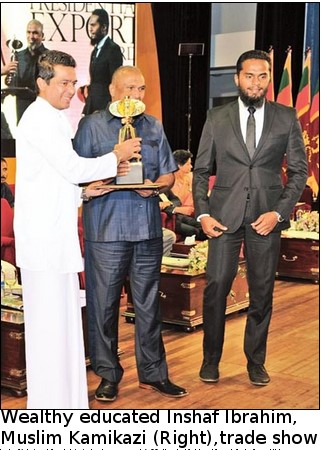
Minister Harin Fernando today tweeted the image of an internal memo and report by the police intelligence of a terror attack to be carried out by an organisation called National Thawheed Jamath.

Some intelligence officers were aware of this incidence. Therefore there was a delay in action. What my father heard was also from an intelligence officer. Serious action need to be taken as to why this warning was ignored. I was in Badulla last night,” the minister tweeted.

The letter signed by the DIG and dated on April 11 was addressed to a number of key officials in the security services including the Directors of the Ministerial Security Division (MSD), Former Presidents’ Security Division and the Ambassadors Security Division.

The letter titled Information of an alleged plan attack” said the state intelligence services had received information from a foreign intelligence service to the effect that National Thowheed Jamath Leader Mohammed Zahran was about to launch a suicide bomb attack in Sri Lanka targeting famous catholic churches and the Indian High Commission.

In the letter, the DIG requested the concerned authorities to pay attention to the information and to beef up the security provided to VIP personnel and to the locations.

Intelligence failures, soft-peddling envelopes deadliest suicide attacks in Sri Lanka

April 21st, 2019

Hafeel Farisz  Courtesy The Daily Mirror

Two men checked into the Shangri-La which now takes pride of place in the heart of the city on April 20, 2019. They had provided an address in Dematagoda when checking in. Close to 9 a.m. yesterday (April 21) the duo detonated two bombs. One at the packed restaurant cum cafeteria on the 3rd floor of the super luxurious hotel, at which many families had come to indulge in a scrumptious Easter Breakfast, and the next on the corridor of the same floor close to the elevators- not too far from each other. The two explosions rocked the Hotel, with the death toll yet unconfirmed.

This was after the twin explosions at two revered Churches, in Kochchikade and Katana were reported.

The first explosion was at the revered church of St Anthony’s, just outside the city after which the second at the Katuwapitiya Church.

The bombings at the city hotels took place right after. A few minutes after, a massive explosion was reported from the Zion Church in Batticaloa. Police Spokesperson SP Ruwan Gunasekara failed to give specific times.

They were all between 8.45 a.m. and 9.05,” he said.

My ears are still reeling” a worker at Shangri La, who spoke to Daily Mirror last evening said.

We didn’t know what happened,” he said. Foreigners and locals had gathered to identify bodies scattered on the floor. Many still in shock and disbelief.

Many are still missing”, hotel sources said giving a number of those who are yet to be reported back safe.

Another explosion was also reported from the Kingsbury Hotel. At around the same time, the Taprobane Restaurant at the Cinnamon Grand Restaurant, rife with the same festive delight was rocked by an explosion. All three are located at the heart of the city’s establishment.

Sleuths were quick to navigate through the Shangri-la blast.

The suspects were booked to room 616 they told the Daily Mirror. They had recovered two iPhone chargers and other pamphlets and paraphernalia associated with extremist ideology, they said.

They zeroed down on the leads to a building in Dematagoda where they arrested three persons. Three officers were killed as a result of twin explosions around the safe house.

Investigators on the scene said that the Shangri-La blast was a result of at least 25 kilo grams of C-4 explosives. The conclusions are based on initial investigations and await formal confirmation by the Government Analyst.

The Indian media were the first to ascribe blame, giving rise to disbelief initially and speculation thereafter. Top ranking sources informed the Daily Mirror that it was around noon that they uncovered certain identities of the suspects.

However, Indian media was rife with identities of individuals and ideology at least 30 minutes prior. It is uncertain as to how such news was given or gained, with many theories being floated. One is that the Indian Intelligence Agency had warned their Lankan counterparts of the attack.

Sources confirmed that a letter signed by Deputy Inspector General (DIG) Priyalal Dasanayake dated April 11 which was widely circulated through social media pertaining to an impending attack, was authentic. The Secretary of Defense and the Establishment did not deny knowledge of the warnings of an attack. The letter specifies the suspected perpetrators too. Prime Minister Ranil Wickremesinghe also confirmed that information was there”.

Officials sources, however, denied or soft-peddled either willingly or unwillingly the reach of the suspects and their motives. SP Gunasekara at a press conference held at the Ministry of Defense insisted that it was only locals” but did not identify a group. At a meeting held prior to the press conference, for the heads of Media, the Entire Security Establishment insisted that it was all local”.

One group, according to them, had been identified and zeroed in on. At the official presser, journalists were told that 3 persons were under arrest whilst at the previously closed door meeting the number given was 7. The final count was Thirteen persons arrested with 10 detained. Gunasekara, when questioned on the letter, said:

It is still under investigation”. It couldn’t have been lost on him that the investigation” was a mere phone call away, from the person said to have signed the letter.

Unofficially all sources including those at the top rung said that the suspects were all a part of one single ideology. They were all a part of a Radical Islamist group” they confirmed together with the identities of the suspects.

The many questions that arise out of the blanket press story” together with the unofficial titbits were left unanswered.

How did the group form, and why does the State machinery insist that they were acting in isolation? Could they have acted in total isolation? How do normal local Muslims decide to attack another minority group if not any group? What was the ideology and were the perpetrator’s mere actors? How far and wide does the ideology seep in within the local community? What did it take to ensure coordinated suicide blasts around Churches and Hotels at the heart of the country? Who was behind the brainwashing of the individuals and where was the training from? The only local” narrative has to fail, and the questions posed are those of an ordinary civilian. The many other questions which have not been posed must be, and answers must be given. soon.

The local Muslim communities in the Island are in shock and understandably so. The Muslim community was a minority community living on the island with no history of violence. Throughout the millennia of existence, the Muslims were an integral part and parcel of the islands rich heritage and culture. They were ‘Bhoomiputhras’ alongside the other communities.

There was another explosion at Tropical Inn Dehiwala, just beside the National Zoological Gardens at around 1.45 pm killing two. It is unclear as to why or how a motel cum hall was chosen as the target or if the target was missed. The Dematagoda house at which two explosions occurred killing three Crime Divisions officers was the final fatality to a morbid day in Colombo. There were reports of a shoot out in the area too with reports being hazy.

A vehicle was ceased in Ramakrishna Road Wellawatte, suspected to have been used to transport some of the suspects late in the evening. Sources continue to confirm that a safe house in Panadura has been identified, obtained via a prominent online store for rent of Rs. 45,000 a month two months ago.

Information still remains guarded.

We can’t hamper investigations” we were told. But slowly a picture is being painted. The picture of how the deadliest terror attack was perpetrated and by whom is yet to emerge. Only that the picture must be painted fully and accurately, for the public to decide on what course the Island Nations future should take. (

Easter Day Explosions: Death toll hikes to 207, over 450 injured

April 21st, 2019

Courtesy Adaderana

A total of 207 deaths have been reported in the eight explosions which occurred around the country on Easter Sunday (21).

According to the Police Media Spokesperson, over 450 persons have been injured in the explosions which shook the country.

Three policemen dead in Dematagoda blast

April 21st, 2019

Courtesy Adaderana

Three police officers have been reported dead from an explosion at Mahawila Gardens housing scheme in Dematagoda.

Zooming on Sooka

April 21st, 2019

By Shivanthi Ranasinghe Courtesy Ceylon Today

By Shivanthi Ranasinghe


Yasmin Sooka was rolling with glee when she was asked, How did the former Defence Secretary get caught?” Her answer was that it was sheer hubris that led Gotabaya Rajapaksa to take one last chance to visit America. According to her thinking his visit to a Trader Joe’s store proves his arrogance. 

She exclaims, Justice may take a long time, but when it does come, it happens”. Her whole perception was, as if, Rajapaksa had already been convicted, thrown behind bars and the key thrown away.


In reality, he had been informed of only two civil cases had been filed against him. It was not even summons for him to appear before court. He has time to respond to the charges and the onus of proving his guilt is squarely on the shoulders of the plaintiff. 

Good luck to the plaintiffs if they are being advised by Yasmin Sooka with the rest of the legal team also, like her, is unable to differentiate between conviction and of being simply informed.


Clearly, for the plaintiffs’ legal team this simple act of getting the papers across to Rajapaksa had been a huge challenge and its success worth popping the Champaign bottle open. 

Though she found it incredible that he had the audacity to visit a Trader Joe’s store, there’s nothing unusual going to the place. It is as if one finds it the height of arrogance to be shopping at Keells, Aripco, Food City or any of the other supermarkets. After all, Trader Joe’s is simply an American chain of grocery stores based in Monrovia, California with 474 stores in 43 States.


This very simple and straightforward process had been portrayed as if all this time Rajapaska had been in hiding, scurrying from one dark corner to the next before he was finally tracked down and served. It is as if a dangerous mission was bravely accomplished. Hence, the question, how did the former Defence Secretary get caught?”


In truth, handing the papers to Rajapaksa could not have been such a difficult task. He as a dual citizen; has assets, a residence (and as such a permanent address) and family in America. He is in the habit of visiting the country at least two-three times a year and almost always coinciding with the holidays. 

When he returns to America he spends a month or so in the country visiting his family and friends. Even people in Sri Lanka, even those who are not ‘monitoring’ him to prosecute him, know of this routine. 

We know because photos of him with his family and friends regularly appear in social media. Therefore, not much skill was needed to ‘track him down’.


Therefore, there is absolutely no justification at all to wait 10 years to file a civil lawsuit against him. Either, this attests to the sheer incompetence of the plaintiffs’ legal team or there is an ulterior motive in the timing.

 In the absence of any conclusive investigations to pin the blame on Rajapaksa or the fact that he is not even a respondent to any of these investigations, many are sceptical of the lawsuits’ outcome.


Long hound


Trying to entangle Rajapaksa in a legal battle has been in operation since 2015. It was just 10 days after the Yahapalana Government assumed power on 9 January, 2015 that Ryan Goodman wrote to New York Times (under the caption, ‘Helping Sri Lanka’s New Democracy’) that ‘The former President Mahinda Rajapaksa, and his brother, Gotabaya Rajapaksa, aren’t politically dead yet…Independent observers have long viewed Gotabaya Rajapaksa as an obstacle, perhaps even more than his brother…’. 

Therefore, ‘It is in the new Government’s interest to move decisively to protect its democratic victory by eliminating the threat of Rajapaksa’s return to power…’


However Goodman notes, ‘Proceeding against  Rajapaksa will be politically challenging for the new Sri Lankan government to do on its own…The United States could help by signalling its own interest in opening a criminal case against  Rajapaksa in the event that Sri Lanka doesn’t. That would give the new government both an opportunity and a justification to clean its house. 

Because of  Rajapaksa’s citizenship, the United States would also be less vulnerable to accusations that it was meddling in the affairs of another nation.’


To be fair, it is not as if the Yahapalana Government did not heed Goodman’s advice for they really did try. First there was this brouhaha over the alleged disappearance of the Ekneligoda case.

 An entire Military Intelligence team was taken into remand custody and most were detained for over a year. The officers and men were chained, handcuffed and paraded before the media while been taken to and from the courts.


The officers and some of their spouses submitted affidavits to the Human Rights Commission against the officer in charge of the investigation. He was accused of exerting severe pressure on them to state that they acted on Rajapaksa’s orders.

 The Human Rights Commission is usually very vociferous, especially when the allegations are against the Sri Lanka Security Forces. However, the course of action taken on these affidavits is not clear.


Since then we have had the second senior officer in the Sri Lanka Navy Commodore DKP Dassanayake along with few other officers taken into custody for their alleged involvement in the abduction of 11 persons. Again, the pressure on them was to pin Rajapaksa to the crime.


When that did not work, Major General Amal Karunasekera who was the Military Intelligence Director during the height of the war and later the Chief of Staff of the Sri Lanka Army was detained, over the assault of Nation Editor Keith Noyahr. 

His arrest was considered a major breakthrough in the case. Much publicity was given to the Police team that went to Australia to get Noyahr’s statement. However, the actual statement did not receive the same attention.


Likewise, high ranking officers of the Army, Navy and the Police had been detained over cases such as the 2012 Welikada Prison riots, assassination of Lasantha Wickrematunge, and the death of Thajudeen. 

The investigations have gone even to the extent of exhuming the bodies of Wickrematunge and Thajudeen. Yet, none of these investigations have been successfully concluded.


All these investigations appear to be geared on narrowing on Rajapaska. After Commodore DKP Dasanayaka’s arrest, the next move was to arrest the then Navy Commander Wasantha Karannagoda and from him to Rajapaksa. Due to severe opposition from the public and Buddhist clergy, it had not been possible to arrest Admiral Karannagoda.


Publicity stunts


For all purposes, this new civil lawsuits appear to be another politically motivated media stunt. At the beginning of the Yahapalana Regime, we saw a lot of these kinds of media shows. 

We saw various MPs carrying huge piles of files to CID, FCID and CIABOC with an entourage of reporters and cameramen. Just in front of the gate there would be the inevitable voice cut promising justice. None of these had moved an inch beyond that step. 

Now, even the local media appears to have got bored with these side shows and does not give as much prominence, as they once did.


Justice and Sooka


If Sooka is really after justice, then she is after the wrong person. She ought to turn her radar on the likes of Adel Balasingham. Then, Sooka would not have to canvass others also to join the lawsuit.

 According to LTTE’s own record, they had deployed around 300 men and women on suicide missions. 

This dubious credit goes to Balasingham for she played a pivotal role in creating these human bombs. In doing so, she is not only responsible for the death and destruction of thousands of lives, but also an ancient culture that revolved around deity.


Today, Balasingham is living very comfortably in London along with many other terrorist hierarchies without a single Human Rights lawyer zooming on any one of them.


ranasingheshivanthi@gmail.com

Lasantha’s murder: A factual analysis

April 21st, 2019

By Udaya P Gammanpila Courtesy Ceylon Today

It was a memorable post found in Facebook towards late 2015. It said May aanduwen godagiye dennayi. Ea Lasanthayi Thajudeenuyi vitharayi meaning Only two people have come up under this government. 

They were Lasantha and Thajudeen because their bodies were taken out from their graves”. The deaths of Lasantha and Thajudeen were hot topics during the Presidential Election campaign in 2015. 

Their so-called friends forgot about them after being elected to power. All of a sudden, they have become the focus again after the dissolution of Parliament. Their bodies were taken out from the graves. Soon after the Election, they were able to rest in peace again. 

They became a topic once again only at the last local authority Election held in February 2018. As usual, they were conveniently forgotten soon after the Election. Since the Presidential Election is round the corner, Lasantha’s murder has begun to generate events and news again.


Unethical journalism


Some may be critical of his unethical journalism. I was also highly critical about his politically motivated journalism in which he distorted or suppressed material facts for the advantage of the UNP. Since I closely associated with him, I was about to directly tell my views to his face. 

A few chose the most productive option of challenging him before a court of law. However, nobody had the right to grab his life just because he has unjustly hurt him.


It is unfair by Lasantha for me to mention only the dark side of his journalism. Lasantha should be credited for disclosing several massive corrupt deals and deceptions which were not disclosed by other Media due to fear or favour. If he conducted his investigative journalism without political bias, he would have been honoured by the entire nation with great enthusiasm.


When I allege that Lasantha’s writing was politically motivated, he should be given the opportunity to defend himself. Hence, the truth should be determined by an impartial court after giving a fair hearing to both sides. I have no right to hear my own case and punish Lasantha. Hence, Lasantha’s murder is not a mere homicide, it is an attempt to destroy Media freedom.


Lasantha’s murderers have not been identified yet. However, nobody has doubts about the person behind the murder. Prime Minister Ranil Wickremesinghe, then the Leader of the Opposition made a revelation about the person responsible for the murder, within 24 hours. 

Addressing Parliament on 9 January 2009, He said that Lasantha was murdered by an army unit directly under Army Commander Sarath Fonseka. He has repeated the same with diplomats on the same day according to a cable sent by then US ambassador on 13 January. This cable is now available on the WikiLeaks website.


Military unit


The UNP had been maintaining the stand that there was a military unit under General Fonseka which abducted and tortured journalists. The then Chief Opposition Whip, Joseph Michael Perera informed Parliament on 8 January 2008 that there was a trend of abducting, torturing and killing journalists. He further said that General Fonseka was behind these illegal activities.


Not only the UNP, Lasantha’s family had identified General Fonseka as the person responsible for the murder. In an interview with ‘The Independent’ of UK in February 2013, Lal Wickrematunga, the brother of Lasantha, said that he had informed the UN High Commissioner for Human Rights in writing that General Fonseka was responsible for the murder of his brother.


Ardent UNP supporters


Just like Lasantha, his family are also ardent supporters of the UNP. Not only UNP leaders even Lasantha’s family loved the UNP more than Lasantha as evinced by subsequent events. President Rajapaksa had decided to call for an early Presidential Election to exploit the advantage of the military victory. 

In order to prevent President Rajapaksa receiving the advantage of the military victory, another war hero should be fielded by the Opposition. As President Rajapaksa was ranked the Number One war hero, former Defence Secretary Gotabaya Rajapaksa and Army Commander Fonseka were ranked second and third respectively. 

The Opposition did not in their wildest dreams expect Gotabaya Rajapaksa to contest against his own brother. Hence, they targeted General Fonseka.


Conspiracy


As a result of a massive operation, which can also be dubbed as a conspiracy, Fonseka agreed to be the Opposition’s presidential candidate. 

Nine months was just not enough to erase the memory of Lasantha who sacrificed his life for the cause of the UNP. Surprisingly, the UNP chose Fonseka as their candidate and who had been identified by the UNP itself as the person responsible for the murder of their beloved Lasantha. 

The genuine surprise came from Lasantha’s family. They surprised the entire country by deciding to support Fonseka’s candidacy. Fedrica Janz, the successor to Lasantha at Sunday Leader, testified before the court that the Sunday Leader management decided to support Sarath Fonseka at the presidential election, at a meeting chaired by Lal Wickrematunga.


Murdered


Lasantha was murdered in broad daylight. Nobody says he committed suicide. Hence, the UNP and the Wickrematunga family had to find a scapegoat to acquit Fonseka of the unpardonable allegation. Their scapegoat was Gotabaya. The UNP considered Gotabaya as the biggest threat at a future Presidential Election. 

Hence, they transferred the charge from Fonseka to Gotabaya. However, they were cautious not to conduct a genuine investigation because if they did so, police dogs would reach UNP headquarters along the leads to find the true culprits of the murder.


legal action


Meanwhile, Lasantha’s daughter has filed legal action against Gotabaya in the US when he was there, for the murder of her father. Being a US citizen, Gotabaya had visited the US so many times since Lasantha’s murder. 

He visited the US three times within a year in 2018. Lasantha’s daughter never wanted to  file action against him during any of those opportunities. Does she have a specific reason to file action this time around? Of course, yes. 

Gotabaya announced his intention of running for presidency in January 2019. He filed an application for renunciation of his US citizenship in March 2019 which is a pre-requisite for the candidacy. The UNP now wants to prevent Gotabaya from contesting the presidency. In the least they want to sling mud at him.


There is no impact whatsoever on Gotabaya’s renunciation of US citizenship caused by the legal action filed by Lasantha’s daughter. In their attempt to insult Gotabaya, the UNP has insulted itself by shamelessly selling Lasantha’s murder once again for political gain. The UNP is attempting to run with the hare while hunting with the hounds. I genuinely feel sorry for Lasantha since his loved ones have also become a part of this dirty game of politics!

Yes, A Mahatma Got Us Independence. His Name Was Subhas Chandra Bose

April 21st, 2019

by Koenraad Elst  Courtesy Swarajymag

Subhas Chandra Bose 

Subhas Chandra Bose 

Snapshot
  • Popular history had us all believe that it was because of Mohandas Karamchand Gandhi that India is independent today.But the truth lies buried away deep, and purposely too, by those who find it difficult to digest.

Bose or Gandhi: Who Got India Her Freedom? G D Bakshi. K W Publishers Pvt Ltd. 244 pages. Rs 500.

General GD Bakshi is not just anyone. After retiring from the army, he became a well-known television face applying his military knowledge both to the contemporary political debate and to classical cultures, e.g. the strategic aspect of the Mahabharata war. Everyone in India knows the story that on his very first day in service, in 1971, he was called to fight in the Bangladesh war — a Just War if ever there was one. It showed that sometimes, going to war is the lesser evil: in this case, it was the only practical way of stopping a Pakistani genocide that was making more victims per day than the whole Indian military intervention made.

Mahabharata For Strategists

It is at several conferences on the Mahabharata, the classic on the theme of Just War (Dharma Yuddha), that I first met the general. There, his cold strategic look at the story, was quite an eye-opener to historians like me, but a bit of a cold shower to more religious types.

For pious denouncers of arch-villain Duryodhana, whose refusal to give even five villages to the rival Pandava brothers counts as the proverbial example of unreasonableness, please consider the strategic angle. After their wedding with Panchala princess Draupadi, the Pandavas might well want the fusion of the Bharata kingdom with Panchala, meaning the conquest of the Bharata kingdom, and in that project, the five villages would acquire tactical value as offensive outposts.

Even Krishna, a common object of devotion, was not spared. As we know, Gandhari, mother of the slain Kaurava brothers, curses him as the real culprit of the war. After all, he as a prince of the Yadava tribe, egged the two sets of Bharata princes on to fight and massacre one another. Not surprisingly, it is the non-Bharatas who profit, with the throne of the Pandava capital Indraprastha falling to a Yadava prince, viz. Krishna’s own grandson. So, though idealised and ultimately even divinised by the epic’s pious editors, Krishna may originally have merely been a calculating strategist mindful of the Yadava tribe’s self-interest. That, at least, is what naked strategic data suggests.

It does not come as a surprise, therefore, that regarding the independence struggle too, General Bakshi brings down a pious legend featuring a canonised saint.

Who Achieved Independence?

In the present volume, Bose or Gandhi, Who Got India her Freedom? (Knowledge World/KW Publications, Delhi 2019, ISBN 978-93-87324-67-1, 216 pp.), Bakshi takes on an important topic from recent history: what factor was decisive in achieving India’s Independence? The received wisdom, both in ‘Congress’ India and internationally, is that this historical achievement was the result of Mahatma Gandhi’s non-violent agitation. But was it?

How do you wrest sovereignty over a subcontinent from a world power? The British-Indian empire was built on bluff and on the dividedness of the population against itself. This was not threatened by the initial Congress movement, which was just a talking shop of lawyers pleading for native interests within the British empire. By contrast, it had really been threatened by the Mutiny of 1857, when different communities rallied around the Sepoys (Sipahi, a native soldier in colonial service) and came together to revolt against the British. And this gives the gist of Bakshi’s narrative already away: the British were afraid of military revolt, particularly by the native mercenaries on whom they counted to uphold their imperial edifice, not of pious discourses and slogans.

However, the General does give the Mahatma a part of the honour. No doubt, the shift of Congress activity from lawyerly negotiations to agitation at the mass level was Gandhi’s achievement. He popularised the Freedom Movement. This is undeniable, but the point is: it is not what made the British decide to pack up and leave.

Look at it in more detail than is done in, for example, Richard Attenborough’s propaganda movie Gandhi. The Mahatma’s last campaign was not the camera-savvy Salt March or other events from before the Government of India Act 1935, the reform with which the British managed to renormalise the situation and regain control over political developments. It was the Quit India movement started in August 1942, which was a failure in every respect.

First off, it was based on an assessment of the world situation that seemed plausible in 1942 but turned out to be wrong: that the Japanese would win the war and chase the British from India. In that event, India would be in a better position if it was an independent Asian nation rather than a British colony (though, what about the independent Republic of China?). Second, it created profound dissensions in Congress, which was mostly reluctant to embark upon this adventure.

Strategically, the British were at war and on the defensive, so they would not pull their punches in the repression of any disloyal” agitation; and morally, many Congressmen such as Jawaharlal Nehru were on the British side in that war. Indeed, it is mostly Nehru’s speech against Quit India that made the British decide he was essentially one of us”, so that they started treating him rather than Gandhi as their Congress contact.

Third, though intended to be non-violent, the movement soon lapsed into violence, depriving Gandhi of his moral high ground. Fourth, the British put the movement down brutally but efficiently. Fifth, the Congress leaders were imprisoned and neutralised while their rival Mohammed Ali Jinnah remained free to enlarge his influence. Sixth, when they were released, they were demoralised and had lost credibility.

Especially Gandhi, chiefly responsible for the movement, had been cut to size; he only regained his place in history by his martyrdom.

After the Japanese capitulation on 15 August 1945, the Freedom Movement as such was nowhere to be seen. Paul Johnson and other historians who have lapped up the official version, with the Mahatma as the main motor of decolonisation, write that if the British themselves hadn’t been kind enough to leave, it is unclear how Independence could have come about, as the native dynamic for it had petered out. But they have been tutored to be oblivious of the one factor that dramatically revived the Freedom Movement within weeks: the return (in chains) of the soldiers of Subhas Chandra Bose’s Indian National Army (INA) or Azad Hind Fauj.

The INA

After the war had broken out on 3 September 1939, India’s politicians had to choose their camp. Jinnah’s Muslim League automatically sided with the British, and so did Vinayak Damodar Savarkar, mainly for tactical reasons: that way, numerous Hindu young men would get a military training and experience. The sympathies of the Congress largely lay with the British, but they fell out over a procedural matter: the Viceroy had declared war without first consulting with Congress, their partner in administering India’s partial self-rule. So, while its political rivals were earning British gratitude, they remained on the sidelines, never the best way to make the most of a war situation.

The Communists, meanwhile, opposed the imperialist war”, citing the Soviet example on the bourgeois democracies” France and Britain, rather than on Germany; it is only after the German attack on the Soviet Union that they did an about-turn, supporting what had become a people’s war”.

One significant leader remained on his own: Subhas Chandra Bose, born in Cuttack in 1897. He belonged to the Congress’ Left wing, but had been ousted as Congress president by Gandhi. As a response, in 1939, he founded his own party, at first intra-Congress, the Forward Bloc. It would remain in existence after the war and be part of the Communist-led alliance that governed West Bengal for decades.

In spite of being under house arrest in Kolkata, he fled to Afghanistan in January 1940, and thence to Moscow, where he hoped to get cooperation for military action against Britain. He was told that the Soviet Union was not at war with Britain, but their temporary ally Germany was.

Ideologically this did not pose a problem: Bose had always believed that India would need a few decades of dictatorship, which would administer the best elements from both Communism and Nazism (Mind you, this is my own addition to the background sketch. General Bakshi purposely leaves the ideological aspects out of his consideration: some readers might object to Bose’s ideological choices, yet that doesn’t alter his strategic role in forcing the transfer of power, the actual topic of this book). He had already lived in Austria intermittently in 1934-37 and even had a wife and baby daughter there. So, he was brought to Germany, where at once he could raise an Indian army with 3,000 Indians from among the British prisoners of war caught in Dunkirk, with the privilege of only fighting British enemy soldiers.

It is in Germany that Bose received the title Netaji from his men, revered leader”, roughly the translation of Führer or Duce. It was in Hamburg, during the founding of the German-Indian Friendship Association, that his soldiers and well-wishers stood to attention for the first time for Jana Gana Mana as the national anthem.

While Foreign Minister Joachim von Ribbentrop had humoured him with vague assurances of support, Bose’s meeting with Adolf Hitler was a cold shower. Hitler expressed his belief in the rightness of British (‘Aryan’) colonisation. When Japan entered the war in December 1941, and asked Germany for Bose after taking hundreds of thousands of Indian prisoners-of-war in Singapore, Germany transported him by submarine in early 1943, and he was now welcome to lead some 40,000 soldiers in the INA.

This force had already been founded by expatriate Indians, notably by Ras Behari Bose, but now it needed a credible leader, and Subhas Bose was the right man for the job.

Bakshi informs us cursorily that from abroad, Bose also did what he could to contribute to the struggle within India, including the Quit India movement. Alas, the delivery of arms and other material which he arranged for, was often sabotaged by unreliable agents, and remained without sizeable effect. His main claim to fame was and still is the INA.

Unfortunately, in military respect, the INA came too late on the scene. It never controlled more of India than the Andaman and Nicobar Islands, and some border areas of the Northeast. When it seriously besieged the Northeastern cities of Imphal and Kohima, the momentum of the Japanese advances had passed, and the British-Indian army could take care of it. The INA still fought some battles against the British forces in Burma, but its historic chance in India had passed.

Bose’s Afterlife

In the chaos of war’s end, Bose is said to have died during an aerial accident in Taiwan. That at least is the official version, but since the beginning already, it has been doubted. It was based solely on the eyewitness testimony of a surviving companion and lieutenant of Bose’s, whom British intelligence immediately suspected of merely having thereby carried out orders from Bose himself, who this way had staged his own escape. Bakshi is not into writing a biography here, so sensation-hungry readers will be disappointed to find that he merely gives a nod to Anuj Dhar’s eye-catching book India’s Biggest Cover-Up, 2012, which argues that Bose did indeed escape to the Soviet Union, where he was put in custody.

Nehru was good friends with the Soviet leaders (to the extent that when in 1962, the Chinese, angry with Soviet manoeuvres on the Manchurian borders, decided to pin-prick the USSR, invaded India), so it sounds plausible that they did his bidding, which was to keep Bose out of reach of India.

Bakshi doesn’t evaluate such questions, because no matter what Bose’s ideology or personal destiny, one solid fact deserves to be established now beyond future doubt: his decisive role in achieving Independence.

Indeed, all speculations on Bose’s personal life are dwarfed by the immediate effect of India’s exposure to what the INA had meant. In autumn 1945, a large part of India’s population immediately sided with the INA veterans upon their return (in chains) to India.

The British gradually released the ordinary soldiers in batches, which already had a palpable effect, for as Nehru observed, these men were hard as nails and hated British rule. The eye was mainly on three top defendants. Their trial, in the Red Fort, was meant to send a message to the Sepoys never to be disloyal again. Coincidence would have it that they were a Hindu, a Muslim and a Sikh, which came in handy for the Congress narrative of a pan-Indian unity. Congress leaders buried their one-time diatribes against the INA and offered to defend them in court.

From the Empire’s perspective, the trial really backfired. The people’s mood proved not to be just a fleeting sympathy but threatened to become a rebellion. A large part of this book holds the British military correspondence of autumn-winter 1945-46 against the light. It becomes abundantly clear that the British top brass, especially Viceroy Archibald Wavell and Commander-in-Chief Claude Auchinleck, were in a state of panic. They had received reports from the provinces, including their main recruiting-area Panjab, that their colonial troops could no longer be relied upon. Every Indian had become a nationalist, galvanised by the presence in India of thousands of Bose’s soldiers. Nobody was willing to accept the punishment which the British would normally have given to leaders who had taken up arms against the King-Emperor.

In proportion to the gravity of what from the British viewpoint was a crime, they should have been sentenced to death. Sensing that this would only trigger a revolt, Wavell and Auchinleck arranged for a reduced sentence to transportation for life, which moreover was at once commuted to a token prison sentence. To prevent any incipient unrest, they made sure that this decision was immediately communicated to the public. It became a staged trial with the outcome determined by extra-judicial considerations, a show trial” but this time not to the detriment of the defendants, thanks to the emerging anti-British power equation in society.

But this was to prove insufficient, and the real gravity of the situation was yet to come to light. The British troops sent to India for the war against Japan were being demobilised and repatriated. More than before, the Empire was now dependent exclusively on the Sepoys. And in early 1946, in a number of Naval units, these soldiers bound by oath to the King-Emperor rose in revolt. This was the decisive pillar under the imperial structure: if it crumbled, it was curtains for the Empire.

A combination of repression and moral pressure by Congress, committed to non-violence but also mindful of its own privileged relation with the British, managed to put down this Naval Mutiny. But only for now; the British rulers realised that they might not be so lucky next time. So, they called on London to announce a date for Independence. The last Viceroy, Louis Mountbatten, arrived in March 1947 with the one-point programme of organising the transfer of power.

Other Considerations

What Gandhi had not achieved in decades of campaigning, Bose’s INA achieved posthumously in less than two years: making the British decide to quit India. And this, in fact, without firing too many bullets: if you radiate power, you often don’t have to use it. The court historians have always downplayed the role of the INA and attributed the merit for the achievement of Independence to the Mahatma. But this legend was gainsaid by no less an agent that the British Prime Minister who effected the transfer of power, Clement Attlee. During his visit to India, he was asked what considerations had made him decide to decolonise India. He cited the military equation with the increasing unreliability of the troops, and as for Gandhi’s role, in his estimation, it was m-i-n-i-m-a-l”.

As this book was going to the press, it so happened that official India was finally extending recognition to the INA. A handful of surviving veterans, nearly 100 years old, were driven in an open jeep in the Republic Day parade. When Westerners hear of Bose, they consider him as a mere Axis collaborator. For Indians, he is first of all a national hero, and the cruelties which made the German and Japanese war machines infamous, were not the doing of their Indian army units.

These soldiers did not join their units to fight for some German or Japanese Empire, but for their own Motherland.

In India, some had fought with the British, some against them, some had taken different positions in succession, some had tried to stay on the sides, but at war’s end, it was agreed that everyone had done it for the best of Mother India. In some cases, that was a flattered assessment, but precisely in its flawed truthfulness, it showed the generosity of spirit of Indian patriotism. No one’s war record was scrutinised, for in India on 15 August 1945, the Second World War was really over.

Nationhood

In his introduction and his last chapter, General Bakshi also explores issues of nationhood, India’s unity and integrity, and India’s status as a civilisational state. It is interesting to see how a no-nonsense patriot thinks about the current political contentions.

Of course, he rejects Gandhi’s and to some extent Nehru’s option for a defence without military strength. It is a state’s prime duty to protect its citizens, and this requires an army. As a NATO slogan from my young days said: Peace through strength.” This is a truism, followed by most state leaders in history, and it is not India’s major claim to fame that its national Saint flatly denied it.

India’s integrity demands that the system of caste-based and communal reservations is phased out. This system has been instituted by the British as part of their policy of divide and rule. Since the Government of India Act 1935, and expanded in the Constitution of India 1950, it divides society in birth groups. Then, it was in the name of Imperial Justice”, now it is in the name of its more modern-sounding equivalent, Social Justice”.

That this became the central value of India’s Constitution, and not Liberty” or so, provides an interesting parallel with the contemporary West, where Social Justice” has become the justification for the craziest demands, and indeed for an expanding system of mostly birth-based (racial, gender et cetera.) quota. Yet in India, this did not originate in Marxist or quasi-Marxist sources like Antonio Gramsci or the Frankfurter Schule, but in another system of colonial domination, such as British colonialism. The effect is nonetheless the same: endless dividedness, a variation on the Marxist model of class struggle.

It has logically been the Left that made itself the heir of this British system of reservations, and now champions quota schemes such as job quota for Backward Castes and the 2008 Right to Education Act. Today, little difference is left between the quota philosophy in India and in the US, except for the Indian oddity of the caste system. Bakshi proposes to make short work of this system and replace it with economically-based reservations. These would automatically favour the lower castes, which have more poor people, except their creamy layer”, those who have worked themselves up yet keep on milking the caste-based system and now have most interest in perpetuating birth-based reservations.

With the introduction of the Aadhaar Card, a kind of identity card including one’s financial-economic data, this is now technologically possible.

But there, we have crossed over to the issue of decolonisation”. India wants to get rid of the remnants of colonialism, and one of these is the reservation system. The philosophy was that the benighted natives were naturally unjust and that the coloniser was needed as an impartial arbiter. Later, the Nehru-Gandhi dynasty appropriated that role to itself. By now, India is mature enough to shake off such colonial-age solutions.

In parallel, another relic of the colonial age and its immediate aftermath is the lionisation of Mahatma Gandhi as bringer of Independence and the concomitant downplaying of Subhas Chandra Bose’s contribution. That motivated legend is, after this book, no longer sustainable.

Sri Lankan police chief warned about possible bombings 10 days before Easter attacks

April 21st, 2019

RT

Sri Lankan police chief warned about possible bombings 10 days before Easter attacks

Priests walk into the St. Anthony’s Shrine, Kochchikade church after an explosion in Colombo. ©REUTERS / Dinuka Liyanawatte

Just 10 days before explosions at six churches and hotels in Sri Lanka claimed some 160 lives, the national police chief reportedly sent an alert about a radical Islamist group planning bomb attacks on prominent churches.

The alert was sent by Pujuth Jayasundara on April 11, AFP reported. It said that Sri Lankan authorities had received a tip from a foreign intelligence service, warning of bomb threat posed by a radical group.

A foreign intelligence agency has reported that the NTJ (National Thowheeth Jama’ath) is planning to carry out suicide attacks targeting prominent churches as well as the Indian High Commission in Colombo,” the alert said, as quoted by the news agency.

The bombings at three Christian churches and three luxury hotels happened on Easter Sunday, just as churchgoers were converging to celebrate the resurrection of Jesus Christ. The apparently coordinated attacks claimed at least 160 lives and injured hundreds, according to the latest reports, with the death toll expected to rise. No group has immediately claimed responsibility for the Easter bombings.ALSO ON RT.COMAround 160 killed, hundreds injured in 6 blasts at Sri Lankan hotels and churches on Easter Sunday

The NTJ is a radical Islamist group based in Sri Lanka, which came to prominence last year after vandalizing Buddhist statues.

Sri Lanka is a predominantly Buddhist nation, with some 70 percent of its population of 22 million following the faith. Muslims are the third-largest denomination after the Hindu, with less than 10 percent of Sri Lankans subscribing to Islam. Christianity is the fourth-largest religion, adherents of which compose some 7.6 percent of the population, according to the 2012 national census.

Around 161 killed, hundreds injured in 6 blasts at Sri Lankan hotels and churches(WATCH LIVE)

April 21st, 2019

RT

Six explosions rocked Catholic churches and luxury hotels in Sri Lanka as Christians began Easter Sunday celebrations, with at least 161 killed and hundreds more injured, local authorities said.

The blasts occurred at around 8:45am local time at St. Anthony’s Church in Colombo and St. Sebastian’s Church in Negombo, a Catholic-majority town outside of the capital. The Zion Church in Batticaloa on the eastern coast was also targeted.

At around the same time, the Shangri-La, Cinnamon Grand and Kingsbury five-star hotels were also hit, police confirmed. All attacks appear to have been coordinated.

At least 138 people were killed, media reported, citing police. More than 400 were injured in the attacks.

https://youtu.be/O8HSrzkmfJ0
https://youtu.be/qYycq7Ksmso
https://youtu.be/-BjGLuu1BoE
https://youtu.be/O8HSrzkmfJ0

Explosions in Kochchikade, Katuwapitiya and Colombo

April 21st, 2019

Courtesy The Daily Mirror

At least six explosions were reported this morning at three churches in Kochchikade, Katana, and Batticaloa and three five-star hotels in Colombo, police said.

Explosions were reported at St. Anthony’s Church in Kochchikade, Kotahena and St.Sebastian’s Church in Katuwapitiya, Katana.

https://youtu.be/qYycq7Ksmso

Explosions were also reported at three five-star hotels, the Shangri-La, Cinnamon Grand and Kingsbury in Colombo.

Police said another explosion was reported at a church in Batticaloa.

Several casualties including foreign tourists have been reported.

Simultaneous Terrorist attacks in Sri Lanka on Easter Sunday-100 killed as churches and hotels targeted

April 20th, 2019

Courtesy BBC


At least 100 people are reported to have been killed and hundreds more injured in explosions at churches and hotels in Sri Lanka.

At least six explosions have been reported. Three churches in Kochchikade, Negombo and Batticaloa were targeted during Easter services.

The Shangri La, Cinnamon Grand and Kingsbury hotels, all in Colombo, were also hit.

Media captionDeadly explosions strike across Sri Lanka

Easter Sunday is one of the major feasts in the Christian calendar.

Images on social media showed the inside of one of the churches – St Sebastian’s in Negombo – with a shattered ceiling and blood on the pews.

Sri Lankan media report that foreign tourists may be among the casualties.

Some media sources are putting the death toll even higher. Reuters quoted a police source as saying more than 50 died in Negombo alone.

A hotel official at the Cinnamon Grand, near the prime minister’s official residence, told Agence France-Presse the explosion there had ripped through a restaurant, killing at least one person.

‘Horrible scenes’

President Maithripala Sirisena has issued a statement calling for people to remain calm and support the authorities in their investigations.

PM Ranil Wickremesinghe is chairing an emergency meeting.

On Twitter, Finance Minister Mangala Samaraweera said the attacks appeared to be a “well-co-ordinated attempt to create murder, mayhem and anarchy” and had killed “many innocent people”.

Another minister, Harsha de Silva, described “horrible scenes” at St Anthony’s Shrine in Kochchikade, saying he had seen “many body parts strewn all over”.

No-one has yet said they were responsible for the attacks.

There have been fears that returning fighters from the Islamic State group could pose a threat in the country.

In the years since the end of Sri Lanka’s civil war, there has been some sporadic violence, with members of the majority Buddhist Sinhala community attacking mosques and Muslim-owned properties. That led to a state of emergency being declared in March 2018.

Map

Rising power of Thirupathi politics

April 20th, 2019

By Lucien Rajakarunanayake Courtesy The Island

article_image

Are we heading with speed towards Solar Relief? The Avurudu highlights of solar tradition were completed with joyous participation of the people, and we had the recognized leader of the nation, President Sirisena, travel at speed to India the next day, to participate in a ritual at the Thirupathi Kovil.

For those who follow the Hindu tradition and belief, we are now living in the Kali Yuga – the period of darkness and divisiveness, hatred and greed, warfare and inequality. The deity at Thirupathi – Lord Sri Venkateswara, an incarnation of Vishnu, who is believed to have appeared to save mankind from, the trials and troubles of the Kali Yuga.

Let’s get it all straight. Thirupathi is the divine hope and expectation of all our political leaders. It is the place of worship and pleading to divinity by Maithripala Sirisena, Mahinda Rajapaksa, Ranil Wickremesinghe, the Hindu Tamil leaders, and almost all other political leaders and catchers, who make a very big noise about this being a Sinhala Buddhist country and society.

How can a people who claim to be Buddhists have so much belief and faith in a Hindu diety; and how does a society that is largely organized on the lunar calendar and customs, such as the Poya Day, leap with such speed and distance to the deities in the solar tradition?

How can a country that seeks to accept the Thripatakaya as a national heritage of Sri Lanka, and also call for inscription of the Thripatakaya in the World Register of Monuments, be so wholly committed to the worship of Hindu deities, and beliefs in the power and help of divine forces in politics, governance and day-to-day living?

The Sri Lanka Government organized special Thripitaka events to ensure its international recognition at special diplomatically organized ceremonies in the US, Europe and other parts of the world. Doesn’t the acceptance of the Thripitakaya and its values of Buddhist teaching pull one away from any belief or faith in the deities of Hinduism, or any other faith based on divinity – of one or many gods?

The problem the country faces today is that of a competition between the Thripitakaya and Thirupathi, and all signs are that Thirupathi is racing ahead, with the Thripitakaya possibly being confined to Aluvihara, even after any national or international recognition.

All the rituals of the Avurudu Sirith are drawn from the solar traditions, and that is how it has been through the years. But, what is now seen in a dominance of the belief in the power of deities, moving far away from the rationalist thinking of Buddhist teaching. Our people are being fast moved away from the values of meditation and rationality, which is the Buddhist Way of Life, to that of an increasing and overriding faith in the deities, – at Thirupathi and elsewhere.

We need not look very far. Just look above the wrists of all our political and most social leaders and you will see the threads of divinity tied there. From the white ‘pirith noola’ that is said to bring divine favour or protection, these hands have threads of many colours too, often stretching upwards towards the elbow, bringing the blessings of many deities. Around the necks of many are amulets that carry the charms assuring deity assistance, and on their fingers are also gold rings with coloured and costly stones, with assurances of the help of deities.

As our education system crumbles we see increasing influence of the deities in helping students to pass their examinations, strongly supported by both parents and teachers, including the tuition earners.

The Bodhi Pooja, a tradition of offering gratitude to the Bodhi Tree that gave shelter to Siddhartha Gauthama to become enlightened as the Buddha, is now given divine powers that no tree can have, to help in exam passes, cure of patients, winning of sweep tickets and also sadly, to cause harm to enemies.

The Avurudu anointing of heads at the Nekath Velaava is a tradition of warm good wishes, both to humans, elephants and other pets. It must be kept as such, and not moved into an ascending faith in deities beyond the richness of a human blessing of good intent, and not a call to the power of deities.

Thriupathi Vandanaa will soon gain both prominence and dominance in the play of politics in the country, as elections – both presidential and parliamentary – draw closer. The Executive Presidency and office of Prime Minister will be the plea to Lord Sri Venkateswara, to bring the nomination and later results in favour of the pleading politicos. The Thirupathi deity will certainly have a problem of choice, unless he is moved by the load and value of offerings made and prayers chanted.

How much can the deity at Thirupathi influence the millions of voters in this country? Let’s keep looking at the miracle threads round the wrists, the widening amulets round the necks and the shining gems on the costly rings of politicians.

Let the people decide, and not any god or deity, on saving us from the trials and troubles of the Kali Yugaya.

‘Everybody Lies’, a book on Big Data: Benefits of Digital Truth Serum

April 20th, 2019

By Rohana R. Wasala Courtesy The Island

Everybody Lies – What the Internet Can Tell Us about Who We Really Are’ (Seth Stephens – Davidowitz, London, Bloomsbury Publishing, Paperback edition, 2018, 338 pp, ISBN 978 – 1- 4088 – 9473 – 6) is a book on Big Data (a term explained below), which introduces a still evolving subject in an informal, entertaining manner. It was first published in Great Britain in 2017. Though the book is primarily addressed to an American audience, the author being an American (a New Yorker) and the basic subjects of his study being Americans, it is also intended for a much more global readership, which, in my opinion, it well deserves. I am left with the impression that it would be of great appeal to interested general readers like me as well as internet data experts or data scientists like the author Stephens-Davidowitz himself; it will also be of special interest to young college students who are looking forward to a career in Data Science. (Incidentally, it was while I was contemplating writing this review after reading the book a week or two ago that I came across a media news report from Sri Lanka about some student agitators from the Sabaragamuwa University there demonstrating near the Parliament roundabout, demanding an increase in the number of admissions to the Social Sciences and Languages Faculty in their university. The relevance of this piece of news here is that the development and illustration of Stephens-Davidowitz’s ideas in this book are almost entirely in relation to the broad subject domains of social sciences and languages usually covered at university level anywhere in the world.)

Seth Stephens-Davidowitz is a New York Times journalist, a former visiting lecturer at the Wharton School of Pennsylvania University, and a former data scientist at Google. He holds a BA Phi Beta Kappa in philosophy from Stanford and a PhD in economics from Harvard.

That everybody lies is Seth’s unflattering discovery about us common humans.  But he seems to have made an extra effort to reveal the truth about himself as a person, researcher and writer. His wish to be candid about himself is evident throughout the text, which  incorporates personal details that touch on his interactions with his family, friends, his tutors and colleagues, etc, particularly in the beginning and the concluding  chapters, and in addition, in the ‘Acknowledgements’ section. He does not claim all the credit for this product of  rigorous intellectual discipline and labour. He describes the book as ‘a team effort’. It was obviously a large team. His parents are imlicitly included in that team. His mother Esther Davidowitz read the entire manuscript a number of times, we are told, and helped ‘dramatically improve it’. During a job interview, a professor grilled him: ‘What does your mother think of  this work you do?’ Seth explains why the professor asked him this: ‘The idea was that my mom would be embarrassed that I was researching sex and other taboo topics. But I always knew that she was proud of me for following my curiosity, wherever it led’ (as she always advised him to do). His father Mitchell Stephens’ involvement was perhaps even more important, for without him, Seth gratefully acknowledges, he could not have finished the book. This was because, at one point, Seth felt ‘deeply stuck, lost, and close to abandoning the project’. So, the old man took his son to the country, and did what he could to restore his spirits. He discussed things such as love, death, success, happiness, and writing with his son.The point Seth is making by this is that he is a normal imperfect human being who is very close to one or another of us. But with the special insights we netizens gain from reading his book, we would hardly allow ourselves to be unsuspecting guinea pigs of his experiments!

Seth adopts an easy, chatty, informal style of writing, enlivened with a pleasant sense of humour, which makes his extremelycomplicated and complex subject accessible to most readers. He launches into his task with a short description of a certain family Thanksgiving dinner table conversation in which the subject of choosing a suitable bride for him, at thirty-three years of age already, crops up. Seth’s sister, brother and father believe that he is crazy, but his mother doesn’t think so. The sister proposes that they look for a girl who is crazy like him to match his craziness, while the brother’s suggestion is for a normal young woman ‘to balance him out’. It is obvious that they are all passing judgement on Seth based on what information (data) they possess about him. At this point, it is his soft-spoken  eighty-eight year old grandmother who joins in with: ‘Seth, you need a nice girl. Not too pretty. Very smart. Good with people. Social, so you will do things. Sense of humour, because you have a good sense of humour.’ 

Why does this old woman’s advice command such respectful attention in his family?, Seth asks, and he answers his own question: Having observed many marriages, some of which worked and some didn’t, she has catalogued, over a long time, the personal qualities of marriage partners that contribute to successful relationships. She has had access to the largest number of data points about the subject. In view of this, Seth says, his grandmother is Big Data. The grandmother analogy is in keeping with his declared intention in this book, which is to ‘demystify’ data science.

 A data scientist mines the big data on the internet/web for four unique powers that, Seth claims, Big Data has. (It is good to remember that the internet and the web are not identical, as we all know; here, we are more concerned with the internet, which really is the virtually limitless ever growing, ever renewing ocean of information.) He illustrates these characteristic strengths of big data through his analytical comment on Sigmund Freud in Chapter 2 titled ‘Was Freud Right?’ Big data analysis gives a more reliable method to understand the secretive human mind and the social reality than our intuition (‘our faulty gut’, as Seth calls it) or conventional wisdom The powers of big data, according to Seth, are fourfold: i) it offers new types of data, e.g., pornographic material, ii) it provides honest data; for example, porn data is not only new, but undisguised, iii) big data enables us to zoom in on small subsets of people, and iv) big data allows data scientists to do many causal experiments, that is, it makes it possible for them to carry out rapid controlled experiments that focus on causality, not on mere correlation.

Data science is the same concept as Big Data. As it is a fast evolving field, it is not easy to find a comprehensive definition of big data that is accessible to the general reader. The following is a satisfactory enough explanation of Big Data adapted from the Wikipedia (as of March 7, 2019): ‘Big data refers to datasets that are too large or complex for traditional data processing application software to adequately deal with…. Big data challenges include capturing data, data storage, data analysis, search, sharing, transfer, visualization, querying, and updating information privacy and data source’. What Seth offers us in the book is data science in practice, so we experience a more concrete sense of the abstract notions involved.

Seth starts his introduction  with an explanation of what led to Donald Trump’s surprise win at the 2016 US presidential election in terms of data science. Most polling experts had predicted that Donald Trump was going to lose. Seth, as a data scientist, maintains that Trump’s superior performance, both at the primaries and the general election, was reflected in the internet data at the time. He concluded that racism played a significant part in the Trump victory.  Seth arrived at this conclusion by scientifically analyzing the large number of Google searches that Americans carried out privately during the relevant period. Seth implies that the pollsters went wrong about the presidential election results because they missed lots of information that are available in the internet that would have helped them understand many subjects including elections.

What Seth claims to have discovered is that everybody lies. People lie about everything. Parents lie to children and vice versa, lovers lie to each other, husbands lie to wives, and wives to husbands, and so on. Why do people do that? It’s because they want to look good. That is why they lie about their own embarrassing behaviours and thoughts. This is called social desirability bias. Seth suggests that the pollsters’ failure to correctly predict Donald Trump’s 2016 victory was probably due to social desirability bias on the part of the voters surveyed; that is, they lied in order to hide their racist prejudice against Barak Obama. Not only do people lie to others, they lie to themselves! People say they don’t want to stalk their friends. But the truth is that they always want to keep up with their friends and judge them, a fact that Mark Zuckerberg, cofounder of Facebook, made use of  to become a multi-billionaire.

The second power of big data already mentioned above is that it provides honest data. Certain online sources get people to admit things that they would not reveal anywhere else. Similarly, there is a tendency for them to be truthful in their private Google searches and responses. They provide an incentive for people to tell the truth.  For example, if someone is suffering from depression they may be unwilling to reveal this to a survey, but they will have an incentive to make Google searches for symptoms of depression and suitable remedies for it with no fear of being exposed to possible social stigma on this account.  Datasets consisting of such searches and responses provide a good source of information for data experts to explore in order to reveal the inner nature of the human mind and the hidden reasons that account for inexplicable social realities.

Stephens-Davidowitz holds that, on the average, ‘digital truth serum’ tells us that the world is worse than we think it is. However, according to him, this knowledge can improve our lives in three ways: 1) it can be comforting to know that you are not alone in your insecurities and embarrassing behaviours; he updates the well known self-help quote ‘Never compare your insides to everyone else’s outsides’ thus: ‘Never compare your Google searches to everyone else’s social media posts’; 2) it alerts us to people who are suffering; the Human Rights Campaign has asked Seth to work with them in helping them to educate men in certain states to come out of the closet (this is a reference to gay men); child-abuse victims can also be helped through Big Data; and 3) its ability to lead us from problems to solutions is perhaps the most powerful value in the digital truth serum: ‘With more understanding, we might find ways to reduce the world’s supply of nasty attitudes’.

The lankacnews.com online journal carried news about two scandalous episodes involving some members of the Sri Lankan FB community. The later report was about a YouTube video that showed a wife-beating incident that had taken place some seven months ago, but that the victim had remained passive about at the time; now, however, she feels bitterly aggrieved at it, while the offending male contemptuously dismisses the concerns expressed on her behalf by the ‘avajaathakayin’ (ill-bred busybodies) who, allegedly, are raising a hue and cry about it in the social media. It is shocking that this young man who not only beat up his wife or living together partner while allegedly videoing it calls the critics of his actions ill-bed”. I, for one, wish the local no-violence-against-women campaigners took immediate action. Both of these young people seem to be in need of help. Violence against women is a global problem, and it figures in Big Data activity. Readers of ‘Everybody Lies’ will find much to read about the subject and countless other problems that afflict the modern world.

The earlier reported incident was datelined the same day it happened or it had happened the day before. The news was published in the lankacnews website on April 7, 2019. It is about a celebratory event held to mark the Sinhala Aluth Avurudda, a traditional cultural festival of great antiquity, at Campbell Park, Colombo. The activity had been organized by some young Facebookers. Traditional games, trials of strength for fun, and other forms of recreation, especially among young men and women,  that go on for days sometimes, are part and parcel of the celebrations connected with the Aluth Avurudda. The young Facebook activists reportedly introduced a new, previously unheard of, item named ‘kukkubeeme tharangaya’ or a ‘suckling match’ during which, as a photo shows, two young men were sucking at bottles, seemingly containing milk, held by two young women in their armpits close to their breasts, as if they were ‘suckling’ those two ‘babies’, (something, needless to say, that would have been outrageously offensive to the traditional cultural sensitivities of the Sinhalese, who are the principal celebrants of the festival,  had it been staged in the more conservative rural areas; it has triggered a lot of adverse comments within the Facebook community itself).

The ‘suckling match’ novelty resonates with, or even confirms, something unexpected that Stephens-Davidowitz has encountered through Big Data analysis. He says that he sometimes hits upon a new dataset that reveals a behavior, desire or a concern that he would have never even considered. There are many sexual propensities that fall into this category. For example, in India, the number one Google search beginning my husband wants….” is my husband wants me to breastfeed him”! According to Seth, this comment is far more common in India than in other countries. He further says that ‘porn searches for depictions of women breastfeeding men are four times higher in India and Bangladesh than in any other country in the world’. The same observation might apply to Sri Lanka. I don’t know whether the ‘suckling match’ reveals an existing sexual aberration, diversion, perversion, psychotic condition, or some other diseased state among young Sri Lankans. But there is no doubt that it is culturally unacceptable behaviour for most Sri Lankans irrespective of ethnicity.

Big Data analysis has infinite potential to help us improve our private and social lives, and the country as a whole by revealing strange but powerful hidden truths about ourselves and our society. However, as Stephens-Davidowitz cautions us, Big Data must be handled with care. For there are dangers too, intrinsically associated with it. Of these, two are prominent. These he characterizes as empowered corporations and empowered governments. The terms are self-explanatory, and Sri Lankans are too familiar with the harmful consequences of both to need any explicit elaboration.  

රෝහලට ගිය ටිකිරි ලියා

April 20th, 2019

වෛද්‍ය රුවන්  එම් ජයතුංග 

ටිකිරි ලියාට වතුර කළයක් ගෙන එන ලෙස මව කියූ අතර ටිකිරි ලියා මැටි කළයත් ගෙන ලිඳට ගියාය. ලිඳ වට කර කබරගොයෙක් සිටි නිසා ටිකිරි ලියා උගේ බාව මඟ හැර  ලිඳ  අසලට ගිය නමුදු එතැන සිටි දිය බරියා  ටිකිරි ලියා ගේ කකුල කෑවේය. ඒ සමග ටිකිරි ලියා ගේ අතින් කළය බිම වැටී කැඩී ගියේය. ටිකිරි ලියා “බුදු අම්මෝ ” කියා කෑගැසුවාය. 

ටිකිරි ලියා ගේ කෑ ගැසීම ඇසූ අම්මාත් නයිදෝරිස් මාමාත් ලිඳ අසලට දිව ආහ. ඔවුන් ටිකිරි ලියා වත්තන් කරගෙන ගෙට ආහ. දියබරියා කාපු ස්ථානයෙන් ලේ එන නිසා ටිකිරි ලියාව හැකි ඉක්මනින් ඉස්පිරිතාලයට ගෙන ගිය යුතු බව මව අවධාරණය කලාය. ඒ නිසා නයිදෝරිස් මාමා හන් දියට දිව ගොස් ත්‍රී වීල් එකක් ගෙනාවේය. ඔවුන් ටිකිරි ලියාව ත්‍රිරෝද රථයේ දමාගෙන රෝහලට ගියෝය. 

රෝහලේ ගේට්ටුවේ සිටි සෙකුරිටි  ත්‍රී වීල් එක නවතා බෝම්බ පරික්‍ෂා කරන පොලිස් කාරයෙකු මෙන් රළු හඞකින් “මොකද ?කියා ඇසුවේය.  මේ සෙකුරිටි  තැන තමන් ජෙනරාල් සරත් ෆොන්සේකා මෙන් සිතාගෙන ගේට්ටුව හරහා යන ලෙඞුන්ටත් ඔවුන් ගේ ඥාතීන්ටත් සැර දැමීමට පුරුදුව සිටි අයෙකි. “අපේ දුවව දියබරියෙකු කාලා “කියා ටිකිරි ලියාගේ මව හැඞුම් බරව කීවාය. මොහොතක් ටිකිරි ලියා දෙස බැලූ සෙකුරිටි ගේට්ටුව ඇරියේය. 

රෝහලේ ඉදිරි පිට ලෙඩුන් ගෙනියන හිස් ට්‍රොලි කීපයක් තිබූ අතර තරමක් ඈතින් රෝහල් කම්කරුවන් තිදෙනෙක් කතා කරමින් සිටියහ. නයිදෝරිස් මාමා ඔවුන් අසලට ගොස් ” අපේ කෙලී දියබරියෙක් කාලා ඉක්මනට ගෙනියන්ට උදව් කරන්ට ” කියා කීවේය. 

මේ රෝහල් කම්කරුවන් සෞඛ්‍යය අමාත්‍යවරයාට මැතිවරණයේදී පෝස්ටර් ගැසූ පුද්ගලයන් වූ අතර ඔවුන් මැතිවරණයෙන් පසු අනියම් සෞඛ්‍යය කම්කරුවන් ලෙසට පත්වීම් ලබා ගත් අය වූහ.  තමන් සෞඛ්‍යය අමාත්‍යවරයාගේ මිනිසුන් කියා සිතූ ඔවුන් තමන් ලෙඩුන් අදින්නේ නැති බව කියා නයිදෝරිස් මාමා ගේ ඉල්ලීම ප්‍රතික්ශේප කොට දැමූහ. 

ඒ මේ අත දිවූ  නයිදෝරිස් මාමා අවසානයේදී කම්කරුවෙකු සොයා ගෙන ඔහුගේ අතට නෝට්ටුවක් දුන් අතර ඔහු ටිකිරි ලියාව ට්‍රොලියක තබා ඕපීඩී එක හෙවත් බාහිර රෝගී අංශයට ගෙන ගියේය. 

තවමත් උදෑසන වූවද බාහිර රෝගී අංශයේ සිටි වෛද්‍යවරයා ගේ දෙනෙත් නිදිමතින් බරවී තිබුණි. ඔහු සේවා මුර දෙකක් එක දිගට කරමින් සිටියේය. සේවා මුරයට නියමිත වෛද්‍යවරයාට පුද්ගලික ඩිස්පැන්සරියක් තිබූ අතර ඔහු තම සේවා මුරය මේ වෛද්‍යවරයාට භාර දී ඒ සඳහා නියමිත මුදලද දුන්නේය. 

නිදිමතින් සිටි වෛද්‍යවරයා සිටියේ දුරකථන පණිවිඩයක් දෙමිනි. ඔහු ඕපීඩී එකේ සිට ඉන්ටකොම් එක හරහා ශල්‍ය වාට්ටුවේ සිටි ඇටෙන්ඩන්වරයෙකු අමතමින් තමන් ගේ අළුත්ම වාහනය විකිනීම ගැන කතා කරමින් සිටියේය. ශල්‍ය වාට්ටුවේ සිටි ඇටෙන්ඩන්වරයා වාහන බ්‍රෝකර්කම්ද කල අයෙකි. ඒ නිසා මේ දුරකථන පණිවිඩය ඔහුට වැදගත් විය. ඔහු දුරකථනයෙන් කතා කරන අතර තුර ටිකිරි ලියා ට්‍රොලිය මත කෙඳිරිගාමින් සිටියාය. 

මේ අතරවාරයේ ඕපීඩී එකට සහකාර වෛද්‍ය නිලධාරියෙකු ආවේය. තමන් ඉදිරියේ තිබෙන ඇඩ්මිෂන් එක බලන ලෙස ඔහුට කීමට සිතුනද මේ රෝහලේ වෛද්‍යවරු සහ සහකාර වෛද්‍යවරු අතර එතරම් කතා බහක් නොමැති නිසා   ඔහු එම ඉල්ලීම නොකලේය. ඔහු ටිකිරි ලියාව බැළුවේ දුරකථන පණිවිඩය හමාර කිරීමෙන් පසුවය. 

” මොනවා වෙලාද ? ඔහු පොලිස්කාරයෙකු ලෙස ඇසුවේය” 

” අනේ දොට්ට අපේ කෙලීව දියබරියෙක් කාලා ” කියා ටිකිරි ලියාගේ ඔව කීවාය. තමන්ට සර් හෝ මහත්තයා නොකියා දොට්ට කීම නිසා ඕපීඩී වෛද්‍යවරයා තොල විකාගෙන ලෙඩුන් ඇතුලත් කරන පෝර්මයේ ස්නේක් බයිට් කියා ලියා. රුධිර පීඩනය 100/60 ද නාඩි වැටීම 78 ද කියා ලියුවේය. එහෙත් ඔහු ටිකිරි ලියාගේ රුධිර පීඩනය හෝ නාඩි වැටීම  බැලුවේ නැත. මේ වන විට හෙතෙම ලෙඩුන් ගේ මුහුණ බලා රුධිර පීඩනය හා නාඩි වැටීම ලිවීමේ සමතෙකි. කෙසේ නමුත් රෝගියාට පසුව අසාධ්‍ය උවහොත් මේ මරාළය තමන් ගේ හිසේ කඩා නොවැටෙනු වස් ස්ටැට් හෙවත් වාට්ටුවේ වෛද්‍ය නිලධාරියා කඩිනමින්ම බැලිය යුතු කේස් එකක් ලෙස ටිකිරි ලියාගේ රෝහලට ඇතුලත් කරන ලද පෝර්මයේ සීල් එකක් ගැසුවේය. එසේ කොට ටිකිරි ලියාව වාට්ටුවට ගෙන යන ලෙස නියම කලේය. 

ටිකිරි ලියා වාට්ටුවට ගෙන යන ලදි. එදින සතියේ දවසක් වූවද වෛද්‍යවරු කිසිවෙකු වාට්ටුවේ සිටියේ නැත. සිටියේ හෙදියන් දෙදෙනෙකි. ඔවුන් ද කොයි මොහොතේ මේට්‍රන් මෙතනට කඩා පාත් වෙයි දෝ කියා වරින් වර කොට බිත්තිය උඩින් කොරිඩෝව  දෙස බලමින් සිටියෝය. ඔවුන් ටිකිරි ලියාව පිලි ගත්තේ මඳ රැවීමකිනි. 

“මේක ස්ටැට් එකක් ” එකියක් කීවාය. “එහෙනම් ඩොක්ටට කතා කරමු ” කියා අනෙක් හෙදිය දුරකථනය වෙත ගියාය. 

සීමාවාසික වෛද්‍යවරයා තම නිල නිවාසයේ සරමක් ඇඳගෙන රෙදි සෝදමින් සිටින විට හෙදියගේ කෝල් එක ආවේය. ඔහු කුණුහරපයක් දෙකක් තොල් මතුරමින් රිසීවරයට කන තිබ්බේය. හෙදිය කියූ විස්තරය ඇසූ ඔහු ” එහෙනම් බ්ලඩ් ඩ්‍රෝ කරලා සේලයින් එකක් දාලා තියන්න මම එන්නම් කියා කීවේය. 

හෙදියන් දෙදෙනා අයත් වූයේ වෘත්තීය සමිති දෙකකටය. එක් හෙදියක්  හාමුදුරුවන් ගේ වෘත්තීය සමිතියේ සාමාජිකාවක් වූ අතර අනෙක් තැනැත්තිය  මේල් නර්ස්වරයාගේ වෘත්තීය සමිතියේය. මේ නිසා කවුරු විසින් ලේ ගන්නේද කියා මොවුන් රෝගියා ඉදිරියේ විවාද කලහ. 

ඔයා ගන්න කියා පළමු හෙදිය දෙවන හෙදියට කීවාය. නෑ ඔයා ගන්න කියා දෙවන හෙදිය පළවන හෙදියට කීවාය. මෙසේ විනාඩි විස්සක් පමණ කඹ ඇද අනතුරුව දෙදෙනාම ටිකිරි ලියාගේ අත මිරිකා කැනියුලාවක් දමා ලේ ගත්තෝය. ඉක්බිති ලේ සාම්පලය පරියේෂණාගාරයට යැවීම සඳහා වාට්ටුවේ ඇටෙන්ඩන්වරයාව සෙවූහ. 

වාට්ටුවේ ඇටෙන්ඩන්වරයා මේ වෙලාවේ සිටියේ ඕවසියර් ගේ කාමරයේ පවත්නා දේශපාලන තත්වය ගැන කතා කරමිනි. මෙලෙස පැය භාගයක් පමන කථිකාවේ යෙදුනු ඇටෙන්ඩන්වරයා වාට්ටුවට ගිය විගස ලේ සාම්පලය ලැබ් එකට ගෙනියන්නට කියා හෙදිය ඔහුගේ අතට සාම්පලය දුන්නාය. එය අතට ගත් ඔහු ළමා වාට්ටුවේ සිටි තම ගෙවල් අසල අඳුනන කෙනෙකුගේ ළමයෙකුගේ විස්තරද බලා පරීක්‍ෂණාගාරයට ගියේය. 

” ලේ සාම්පලය ඔතනින් තියන්න ” කියා පරීක්‍ෂණාගාරයේ සිටි එම්. එල්.ටී කීවේය. මේ සාම්පලය සවස හතරින් පසු කිරීමට ඔහු ඉටා ගත්තේ අතිකාල ලබා ගැනීමේ අදහසිනි. 

වාට්ටුවට පැමිනි සීමාවාසික වෛද්‍යවරයා ටිකිරි ලියාව පරීක්‍ෂා කලේය. රෝහලේ ජේෂ්ඨ වෛද්‍ය නිලධාරී හෙවත් එස් .එච් .ඕ සති අන්තයේ තිබෙන මගුල් ගෙදරකට දිය යුතු පිඟන් බඩු ත්‍යාගයක් අඩු මිලට ලබා ගැනීම සඳහා ටවුමට ගොස් සිටියේය. ඔහුගේ දුරකථනයට කතා කල යුතු බව ඉන්ටර්න්වරයා සිතුවේය. ඒ නිසා රෝහලේ දුරකථන  ක්‍රියාකරු අමතා ජේෂ්ඨ වෛද්‍ය නිලධාරීව සම්බන්ධ කොට දෙන්නට කියා කීවේය. 

මෙම දුරකථන  ක්‍රියාකරු රෝහලේ කාර්‍යමණ්ඩලය හඳුන්වන්නේ “ලයින් දෙකම බිසි ” කියාය. ඔහු “ලයින් දෙකම බිසි ඩොක්ටර් ” කියා කීවේය. ජේෂ්ඨ වෛද්‍ය නිලධාරී නොමැති නම් ඔහු විශේසඥ කායික වෛද්‍යවරයා ඇමතිය යුතුය. විශේසඥ කායික වෛද්‍යවරයා මේ වන විට සිටියේ නගරයේ පුද්ගලික රෝහලේ චැනල් කාමරයේය. මේ වේලාවට වාට්ටුවෙන් කෝල් එනවාට ඔහු කැමති නැත. මේ නිසා ඉන්ටර්න්වරයා මුහුණ දුන්නේ  උභතෝකෝටික ප්‍රශ්නයකටය. එහෙත්  ඔහුගේ වාසනාවකට මෙන් ආර් එච් ඕ හෙවත් සහාය වෛද්‍ය නිලධාරී වාට්ටුවට ආවේය. 

ආර් එච් ඕ හෙවත් සහාය වෛද්‍ය නිලධාරී වාට්ටුවට ආ විගස ඔහු කරන්නේ ලෙඩුන් ගේ ෆයිල් එක අතට ගෙන ඇඳ ඉහපත් නොම්බර කීපයක් ලියා ගැනීමය. එම නොම්බර අතිකාල ලියන පොතේ ඔහු සඳහන් කරයි. මෙලෙස රෝගීන් නොබැලුවද සෑම මාසයකම උපරිම අතිකාල දීමනා ඔහු ලබා ගනියි. මෙයට කියන්නේ ගසා ඛාන් අතිකාල කියාය. මෙම රෝහලේ ඇම්බුලන්ස් ඩ්‍රයිවර්ලාද දිනකට පැය 24  ගනනේ  මාසයක් එක දිගට අතිකාල වැඩවල යෙදුනා කියා  අතිකාල දීමනා ඉල්ලති. මෙම ඇම්බුලන්ස් ඩ්‍රයිවර්ලා රෝගීන් කෙරෙහි කොපමණ කැප වීමෙන් වැඩ කරනවාද යත් ඔවුන් නිදා ගන්නේද නැත.  

කෙසේ නමුත් ආර් එච් ඕ ගේ පැමිනීම ඉන්ටන්වරයා හෙවත් සීමාවාසික වෛද්‍යවරයාගේ සිතට සහනයක් විය.  ආර් එච් ඕ ටිකිරි ලියාව උඩින් පල්ලෙන් බලා බෙහෙත් වගයක් ලිවීය. ඉන්පසු ඔහු වාට්ටුවෙන් පිටවී  ගියේ පුද්ගලික රෝහලේ ඕපීඩ් එක වෙත යාමටය. 

ඉන්ටන්වරයා ආර් .එච්. ඕ ලියා දුන් බෙහෙත් ටිකිරි ලියාට දෙන්නට කියා කීවේය.  නියම කරන ලද බෙහෙත් දෙස බැලූ හෙදිය “ඩොක්ටර් එකක් ලෝකල් පර්චස් ” කියා කීවේය. එම නිසා ඉන්ටන්වරයා අදාල ඖෂධය ඩිස්පැන්සරියෙන් ලබා දෙන ලෙස ඉල්ලා ඇඳ ඉහ පතේ වෛද්‍ය අධිකාරීවරයා වෙත ඉල්ලීමක් කලේය. 

මෙම ඇඳ ඉහ පත අතට ගත් වාට්ටුවේ ඇටෙන්ඩන්වරයා වෛද්‍ය අධිකාරීවරයාගේ කාර්‍යාලය වෙත ගියේය. කාර්‍යාලය අසලදී මෑතකදී පත්වීම් ලද සහකාර කළමණාකාරවරු දෙදෙනෙකු ඔහු දුටුවේය. කළා උපාධිධාරීන් වූ ඔවුන් රෝහලේ ඔබ මොබ යමින් කාලය ගත කළහ. 

” මචං සර් කිව්වා ෆැක්ස් එකක් යවන්න කියලා . උඹ දන්නවද  ෆැක්ස් එකක් යවන හැටි ? පළවන සහකාර කළමණාකාරවරයා දෙවැන්න ගෙන් ඇසුවේය. ” නෑ මචං මම දන්නේ නෑනේ ” කියා දෙවැන්නා කීවේය. 

වෛද්‍ය අධිකාරීවරයා සිටියේ නොසන්සුන්කමිනි. මීට සුමානයකට පෙර නාරි හා ප්‍රසව වාට්ටුවට ඇතුලත් කරන ලද ගැබිණි මවක් කාර්‍යමණ්ඩලයේ නොසැලකිල්ලෙන් මිය ගියා කියන ආරංචිය මත ප්‍රාදේශීය පත්‍ර වාර්තාකරු රෝහලට පැමිණ සිටියේය. ඔහු රෝහලේ සිදුවන ආටක නාටක ලියන්නෙකි. එහෙත් රෝහල් පරිපාලන නිලධාරී ඔහුව හවස බාර් එකේදී හමු වන බවට පොරොන්දුවක් දුන් නිසා කාර්‍යමණ්ඩලයේ නොසැලකිල්ලෙන් ගැබිණි මව මිය යයි යන හෙඩිම වෙනුවට රෝහලේ ජල නලයක් පුපුරා ලෙඩුන් අපහසුතාවයට කියා නව හෙඩිමක් ඔහු ලියා ගත්තේය. 

තම දකුණු අත වන් පරිපාලන නිලධාරියාගේ ස්ථානෝචිත ප්‍රඥාව ගැන වෛද්‍ය අධිකාරී සතුටු විය. ඒ නිසා ඔහු යාන්ත්‍රිකව මෙන් ටිකිරි ලියාට නිර්දේශ කරන ලද බෙහෙතට තම අත්සන තැබුවේය. ඉන් පසු රෝහලේ වාට්ටුවේ ඇටෙන්ඩන්වරයා ගියේ ෆාමසියටය. 

ෆාමසියේ මහත්තයා  ඩිපෝ ප්‍රවේරා තොගයක් සහ තවත් වේදනා නාශක බෙහෙත් මෙන්ම මිලෙන් අධික ප්‍රති ජීවක බෙහෙත් අඩංගු  කුඩා පෙට්ටියක් වෙනම  මල්ලකට ඔබමින් සිටියේය. වාට්ටුවේ ඇටෙන්ඩන්වරයා දුටු හෙතෙම සිනහවකින් මුව සරසාගෙන ඇඳ ඉහ පත ඇටෙන්ඩන්වරයා අතින් ඉල්ලා ගත්තේය. 

දහවල් වන විට එස්. එච් .ඕ හෙවත් ජේෂ්ඨ වෛද්‍ය නිලධාරී වාට්ටුවට ආවේය. ඔහු ටිකිරි ලියාව පරික්‍ෂා කොට පුද්ගලික චැනල් මධ්‍යස්ථානයේ සිටින විශේසඥ කායික වෛද්‍යවරයා  වෙත ඇමතුමක් ගත්තේය. ඉන්පසු ” සර් කියනවා ලෙඩාව ට්‍රාන්සර් කරන්න ” කියා කීවේය. 

සැනසුම් සුසුමක් හෙලූ ඉන්ටර්න්වරයා ටිකිරි ලියාව  මාරු කර යැවීම සඳහා අදාල පෝර්මය පිරවීය. ඒ අතරවාරයේ ජේෂ්ඨ වෛද්‍ය නිලධාරී ටිකිරි ලියාට දීම සඳහා සේලයින් බෝතලයක්  හෙදියගෙන් ඉල්ලුවේය. 

හෙදිය විසින් ගෙනත් දුන්  සේලයින් බෝතලය මඳක් අඳුරු පාටය. එහි පුස් වගයක් පාවෙමින් තිබුනේය. මේ සේලයින් තොගය අමාත්‍යවරයාගේ නිර්දේශය මත  ටෙන්ඩර් හරහා සෞඛ්‍යය අමාත්‍යාංශයේ නිලධාරීන් විසින් ඉන්දියාවේ කොම්පැනියකින් මිලදී ගෙන තිබුණි. සේලයින් තොගය ඔවුන්ට වාසනාව ගෙන ආවද රෝගීන්ට දුර්විපාක ඇති කරන ලදි. 

මෙලෙස වැඩිදුර ප්‍රතිකාර සඳහා ටිකිරි ලියාව මාරු කර යවන ලදි. ඉන්ටර්න්වරයා  ටිකිරි ලියා මාරු කර යැවීමෙන් පසු කෙලින්ම නිල නිවස වෙත දිව්වේ ඉතිරි රෙදි ටික සේදීම සඳහාය. 

The West created this widespread mess!

April 20th, 2019

S.H.MOULANA Courtesy The Island

After the 2003 illegal invasion of Saddam’s Iraq by Bush and Blair, followed by the ousting of Gaddafi by the West in 2011, we saw an uprising in Syria, which has so far taken more than 400,000 lives of fighters as well as innocent civilians, by bombs dropped by foreign powers supposed to be there to bring peace to the country. Now the country remains in ruin. Iraq faced the heaviest bombardment which killed over 460,000 Iraqis. Although the rulers of those three countries were dictators, they did not rob their country’s wealth but did well for the inhabitants.

Most importantly, the three rulers of these countries Saddam, Gaddafi and Bashar Al Assad, respectively never tolerated terrorists within their borders, and the people were absolutely free from any threat of the extremists. Communities of diversified faiths coexisted in an admirable atmosphere. Sadly, the countries are now infested with various extremist groups which have created division among the communities unlike before.

Many Iraqis now repent losing Saddam and his national campaign for eradication of illiteracy. UNESCO awarded a prize for the Saddam government’s achievement in this field. Education was made free for everyone in Iraq from grade one to university and further. He made Iraq one of the leading oil producers. Government employees were given pieces of land for them to build houses. Water and electricity were made available in every city and village in Iraq. All industries flourished during his rule. Healthcare was made absolutely free. A crippling sanctions were imposed on Iraq after Saddam’s mistake of his attacking Kuwait.

For 41 years until his death in 2011 Gaddafi did some truly amazing things for his country and countrymen. He helped practically all member countries in the African Union. Libya too, like Iraq, had free education and healthcare for all citizens. He carried out the largest irrigation project in the world. Every new born child and mother got US $ 5000 from the government. Electricity was absolutely free and petrol sold at rock bottom price of 0.14 dollar per litre.

Syria prior to the current upheaval was one of the major suppliers of fruits and vegetables to the Gulf countries and other neighbouring Arab countries. Now it is in dire need of these products for its survival. Thought of all what the Iraqis, Libyans and Syrians enjoyed just few years ago are tormenting them now. So, who created this mess? It is the West with their adventure in the pretext of introducing democracy!

When Does Sri Lanka President’s Term End? – OpEd

April 20th, 2019

By  Courtesy Urasia Review

Many people in Sri Lanka thought that President Sirisena would leave office in January 2020. The conventional wisdom was that Sirisena’s term issue” was resolved when the Supreme Court (SC) ruled that he was entitled to a five-year term; not six years. This ruling was delivered in January 2018 in response to a quarry from the president.

Last week, Dayasiri Jayasekara, General Secretary of the Sri Lanka Freedom Party (SLFP), announced that the president might seek the opinion of the SC on the expiry date of his term. The president’s team seems to believe that his term ends in May 2020, not January.

19th Amendment

The crux of the matter lies in the 19th Amendment to the Constitution. President Sirisena was elected in January 2015 for a term of six years.” The 19th Amendment reduced the time from six years to five years. The SC relied on this change for its decision in January 2018. Now, if the president goes back to the SC with the new question, he will rely on the fact that the 19th Amendment was certified on May 15, 2015.

According to newspaper reports on this issue, opinions differ on the last date of President Sirisena’s term in office. Some believe that it ends on January 8, 2020, and others seem to think that he can continue until May.

Jayasekara’s announcement forced me to go back and recheck the 19th Amendment. I got the feeling that President Sirisena has a case here. First, Section 1 (2) of the Amendment states that the provisions of this Act other than the provisions of section 9 … and the provisions of section 15 shall come into force on the date on which this Act comes into operation.” Section 9 deals with the Prime Minister and the Cabinet of Ministers. Section 15 is about the term of Parliament. The point is that everything else in the Amendment came into force when the Amendment became operational.

The presidential term related arrangements are in section 4 and section 49 of the 19th Amendment. Dealing with the presidential term, Section 4 (2) (b) substituted the words for a term of six years” with the words for a term of five years.” Section 49 is called transitional provisions.” Section 49 (1) (b), part of the transitional provisions states, the persons holding office respectively, as the President and Prime Minister on the day preceding April 22, 2015 shall continue to hold such office after such date, subject to the provisions of the Constitution as amended by this Act.”

In other words, the president was allowed to continue, albeit with a reduced term in office, by the 19th Amendment. The Amendment came into force on May 15, 2015. In my view, therefore, the president’s five-year term commenced on May 15, 2015. His term should end on May 14, 2020.

Ask the Court

Jayampathi Wickeremarathne, one of the architects of the 19th Amendment has already stated that the president’s term ends in January 2020. Hence, it is clear that this subject is controversial and has the potential to ignite intense public debate if the president finally goes to the Court with the question.

What is imperative to note is that provisions related to this question are, at least, vague. When the president illegally dissolved the Parliament last year, he did not have the Constitution on his side. The 19th Amendment plainly stated that the president shall not” dissolve Parliament until the expiration of four and a half years from its first meeting. In this issue, it is not the case. The provisions are not explicit. Hence, they could be subject to interpretation. This is good news for the president. The Court might give the benefit of the doubt to the president. This is precisely why I think the president will eventually seek the opinion of the SC.

He has the constitutional authority to approach the SC and will not lose anything by asking the SC to rule on this. Moreover, he has everything to gain from a favorable ruling. First, an additional four month in the office could be immensely valuable when the president does not have a viable path to the presidency for the second time. Second, the ability to dissolve parliament as soon as the four and a half years of mandatory period expired could open up new possibilities in terms of strategizing his future. Right now, his options are minimal. He can contest the presidential election and lose or concede it to the Sri Lanka Podujana Peramuna (SLPP) candidate.

UNP’s Predicament

The possibility that President Sirisena’s time in office could be extended by four months could be bad news for the United National Party (UNP).

Currently, the party could ignore the president while extending basic formal courtesies because the president cannot dissolve the Parliament and need to face the voters first. If allowed to stay in office until May, the president could dissolve the Parliament in February and force a general election on the UNP.

Facing the general election first will not be in the best interest of the UNP. The party has a better chance in a presidential election. Hence, it might prefer the presidential election first followed by the general election. The party probably want to win the presidential election and then go for the general election as soon as possible. This preferred option of the UNP could be disturbed by Dayasiri Jayasekara’s announcement.

Tamil Tigers return to Swiss court

April 20th, 2019

Courtesy Swissinfo.ch

flag with tiger on it
Tamil Tiger supporters demonstrating outside the Federal Criminal Court in Bellinzona(KEYSTONE/TI-PRESS/ALESSANDRO CRINARI)

The Swiss Federal Court must decide whether the Tamil Tigers are a criminal group – following a complaint from the Office of the Attorney General (OAG).

The OAGexternal link has filed a complaint against last year’s verdict from the Federal Criminal Court, which ruled that 13 alleged financiers of the Sri Lankan Tamil separatist group – Liberation Tigers of Tamil Elam (LTTE) – could not be convicted of supporting a criminal group.

On Saturday, a spokesman for the OAG confirmed a report published by CH Media newspapersexternal link, but he gave no reason for the continued legal proceedings. After an investigation lasting nine years, the OAG suspected the accused of financially supporting the World Tamil Coordinating Committee (WTCC).

+ Details of the trial, which cost over $4 million

In June 2018, the Federal Criminal Court found that the hierarchical link between the LTTE and WTCC could not be sufficiently established. The judges also felt there was not enough concrete proof to consider the LTTE as a criminal group.

However, it sentenced five of the accused to conditional prison sentences for commercial fraud and in two cases for forgery of documents. According to the CH Media newspaper report, Zurich lawyer and WTCC defender Marcel Bosonnet, who was handed a conditional sentence, has asked the Federal Court to acquit him.

Tamils demonstrating outside the court

COURT CASENo jail for Swiss Tamil Tiger financiers

The 13 accused were either given suspended custodial sentences or acquitted by the Swiss Federal Criminal Court.

Minister of Finance and Mass Media, Mangala Samaraweera behind int’l lawsuits against former Defence Secretary Gotabaya Rajapaksa – Kanchana

April 20th, 2019

RANMINI GUNASEKARA Courtesy Ceylon Today

Minister of Finance and Mass Media, Mangala Samaraweera is behind the international lawsuits against former Defence Secretary Gotabaya Rajapaksa, alleged UPFA Parliamentarian Kanchana Wijesekera today (18).

He said this, at a Sri Lanka Podujana Peramuna (SLPP) media briefing held at the Party headquarters in Battaramulla.

He further claimed that one international civil lawsuit against Rajapaksa had been filed by a Canadian citizen named Roy Manoj Kumar, who was in exile from Sri Lanka since 2010, for allegedly assisting the publicity campaigns of the Liberation Tigers of Tamil Eelam.

We also have evidence to say that Kumar has maintained relationships with high ranking officials of this Government, including Field Marshal Sarath Fonseka and the former Chief Minister of the Northern Province, C.V. Wigneswaran. So it’s clear that the current Government is behind this ploy,” claimed Wijesekera.

He further alleged that the lawsuits were a deliberate attempt by the Government to sabotage Rajapaksa’s possible Presidential candidacy.

Another lawsuit has been filed in the United States by slain Sunday Leader Editor Lasantha Wickrematunge’s daughter Ahimsa Wickrematunge.

Meanwhile, it was further said that the SLPP Youth Front will be organising a vehicle parade which will commence from Trincomalee and end in Campbell Park in Borella, to commemorate May Day.

Solar power could save Rs 266b – SIA

April 20th, 2019

RANMINI GUNASEKARA Courtesy Ceylon Today

The immediate implementation of the ‘Least Cost Long Term Solar Power Generation Plan’ will save a total of Rs 266 billion for the Sri Lankan economy, the Secretary of the Solar Industries Association (SIA), Lakmal Fernando claimed today (18).

He said this at a SIA Press conference held in Colombo.

Fernando further claimed that the proposed plan can also prevent a foreign currency outflow of approximately Rs 1,187 billion on emergency power purchases.

The Ceylon Electricity Board (CEB) has been purchasing emergency power for the last four years. At this point, we can’t even call this recurring habit of power purchasing ‘emergency power’ anymore. According to our calculations, the Government has spent around Rs 1,187 billion for the last four years to purchase emergency power,” he added.

He further added that the savings of Rs 266 billion can be realized in another five years if the Government was to implement the proposed solar power generation plan immediately.

Fernando also said that the CEB would have received 1,550 mega watts (MW) from the pending 617 solar power applicants.

The CEB is just sitting on these applications. If these 1,550 MW were in the system, we could have avoided these power cuts all together. Why are they not approving these applications? As the SIA, we have added 230 MW to the system, and if not for this addition, the power cuts would have been even longer. We are simply trying to increase this contribution,” he added.

Swiss court verdict on 13 Tamil Tiger financiers challenged

April 20th, 2019

Courtesy Adaderana

The Swiss Federal Court must decide whether the Tamil Tigers are a criminal group – following a complaint from the Office of the Attorney General of Switzerland (OAG).

The OAG has filed a complaint against last year’s verdict from the Swiss Federal Criminal Court, which ruled that 13 alleged financiers of the Sri Lankan Tamil separatist group – Liberation Tigers of Tamil Elam (LTTE) – could not be convicted of supporting a criminal group.

On Saturday, a spokesman for the OAG confirmed a report published by CH Media newspapers, but he gave no reason for the continued legal proceedings. After an investigation lasting nine years, the OAG suspected the accused of financially supporting the World Tamil Coordinating Committee (WTCC).

In June 2018, the Federal Criminal Court found that the hierarchical link between the LTTE and WTCC could not be sufficiently established. The judges also felt there was not enough concrete proof to consider the LTTE as a criminal group.

However, it sentenced five of the accused to conditional prison sentences for commercial fraud and in two cases for forgery of documents. 

According to the CH Media newspaper report, Zurich lawyer and WTCC defender Marcel Bosonnet, who was handed a conditional sentence, has asked the Federal Court to acquit him.

Source: swissinfo.ch

CAN THE CAPITAL PUNISHMENT JUSTIFY IN A DEMOCRATIC SOCIETY?

April 18th, 2019

BY EDWARD THEOPHILUS

Narcotic has become a serious problem in the modern world as they are badly affected to human body as adherent substance in the one hand and the consumers and dealers of illicit drug do massive harmful to young generation and to the society in other hand. Many countries have passed legal provisions against the use of illicit drugs considering harmfulness to the human body as well as they have become a burden to the society.  The example of Sri Lanka and many other countries demonstrate that consuming and dealing with narcotic would support to creating a lawless society.  It seems that Sri Lanka has become a centre of distribution of various narcotic to other countries and international narcotic dealers have turned Sri Lanka to promote illicit drug business and crimes against the democratic rights of people.  Many countries have criminalized all activities associated with narcotic substances, some responsible members of Sri Lanka’s parliament (Mr Rajitha Senaratne) launched a campaign to decriminalize narcotic in the country without knowing the harmfulness of them not only to Sri Lanka but also to other countries in the world.

The dealing with all kind of narcotic substances such as consuming and using as a business device have been banned by the world and some countries wherein an uncontrollable illicit drug problem has imposed capital punishment for consuming as well as association with distribution. Middle Eastern and Asian countries have severe punishments for consuming and dealing with narcotic.   The president of Philippines insisted capital punishment to people associated with illicit drugs in absence of a trial and as a result of this decision, it has recorded that more than 3000 people who associated with illicit drugs were subject to capital punishment or on the spot death.  It is a topic that internationally debating, we can express views on the decision of the president of Philippines, but have no ability to revert the decision of the president as it specifically related to a serious problem of the country. I spoke to several citizens of Philippines in different countries, they agree with the decision of the president as the narcotic is an austere problem affecting to day to day life of ordinary people in Philippines.

Australian Institute of Criminology has published an excellent paper, Polas and Walker (1987), Capital Punishment: Trends and Issues, Crime and Criminal Justice No 3, Canberra (www.aic.gov.au) and the paper described that the term capital punishment is derived from caput, meaning head.  It originally referred to death by decapitation, but now applies generally to state sanctioned execution. Recently, the President of Sri Lanka has publicly stated that he will sanction the execution of drug dealers who were punished by the court of justice after a fair trial. The intention of president of Sri Lanka cannot be compared to public execution of drug offenders by the president of Philippines because the statement of Sri Lanka’s president is a punishment within the legal framework. Therefore, the intention of the president of Sri Lanka and the practice of the president of Philippines has a vast difference and the practice of the Philippines cannot be implemented in Sri Lanka, which is a Buddhist country, and all religions in Sri Lanka cogitate killing a person is a sin for any reason, and there might be a convincing opposition to killing drug dealers on roads or public.

However, the statement of the president of Sri Lanka to sanction state execution for drug dealers has composed a sharp debate from different point of views and some religious leaders have expressed their opinion, but such opinion may not be an authentic decision of the religious organizations. Why the president of Sri Lanka openly expresses his intention to introduce capital punishment, to attract popularity or any other purpose is a question to public, and it might be a dubious decision or an intention. Another vital point is that did the president consult his own cabinet or the parliament before take the decision and what were the response of them.  The president is a democratic institution, and before make decisions he should consult or get approval from the relevant institutions, and it is the good governance.  His predecessor, Mr Mahinda Rajapaksa consulted the cabinet and other relevant authorities and neighbouring countries before making decisions in many instances.  Why the current president has departed from the practice of previous president?  In a moralize society, making a statement on sanctioning state execution should not be a behaviour of a leader, is my opinion.  It is not a cause for attracting personal popularity.       

In terms of criminal law, the purpose of punishment is to prevent a person further engage in wrong doing.  A punishment may achieve or may not be achieved the purpose. According to the common experience, it has seen that many wrong doers were given punishments but after the period of punishment they reengage in committing crimes, many feels that punishments have not prevented wrong doings. Practically in Sri Lanka, illicit drug offenders were punished by the court, nevertheless, these criminals recommenced criminal behaviour while staying in the jail. How and why they are happening if there are an efficient and effective administration is in jail administration the country. For this situation, administrators including the president of Sri Lanka are responsible.  

The deterrence theory further aims at punishing to drug offenders with jail sentence to off the opportunity to committing crimes.  According to the theory of deterrence in criminal law, people generally believe that when drug offenders deter, drug business will stop but the reality in Sri Lanka is that after the punishment, drug criminals reiterate wrong doing same as the way or more vigorously killing the judge or personnel in law enforcement authority.  It is a really concern experience in Sri Lanka compared to other countries. The minister responsible for jail administration has publicly expressed that officers in jail as well as personnel in law enforcement authority are associated with the narcotic business dealers. This statement proves that Sri Lanka has a weak law enforcement authority and jail administration, which are not supported to control illicit drugs in the country.

The illicit drug problem in Sri Lanka is a management related problem in the country, which needs effective controls and management methods.  Many expressed views that government politicians, henchmen of them, top brass of the government and civil society activists sophisticatedly linked to drug business and obviously, it seems that current weakness in political administration is responsible for the problem.  In order to get out of owned weakness for formulating right strategies to control drug problem, president talks on imposing capital punishment, which is rejected by democratic world, is not a competent administration and a behaviour of responsible president elected by the votes of people.

 In Sri Lanka a wide spread talking point or a gossip was, that originally abolished capital punishment was re-established after the assassination of Prime Minister S.W.R.D. Bandaranaike, and the capital punishment was given to the assassinator, Rev. Talduwe Somarama was not the real assassinator, but some other person did it, and the exterminator disguised with the support of the law enforcement authority. This means that it is a quite difficult task to detect the real criminals to give capital punishment and the best option is to consider other method of punishment for drug criminals.  It does not mean that the system of justice should ignore the offence, but to use alternative strategy.

Many countries have controlled illicit drug problems using effective strategies and techniques. Local drug problem in Sri Lanka is basically related to consuming or use of drug, which can be controlled by using multiple methods such as educating about drugs and harmful effects of drugs to individuals and the society.  Sri Lanka has a history of small-scale drug business in villages. Opium and cannabis business had been operated in Sri Lanka since beginning of human being in the country. Opium business had been operated in villages by small scale Indian businessmen, who illegally migrated to Sri Lanka and used opium as a business device to quickly achieving enrichment.  Sri Lanka is not growing the plants which use to produce opium (Popi plant) or cocaine (Koki Plant).  Sri Lanka Politics and education in in the country did not focus to control such business in the past.  Therefore, Sri Lanka has an ideal environment for illicit drug and alcohol business and consumption.     In many countries, drug education is a part of school curriculum and lots of resources are spent for this purpose.  Sri Lanka needs vigorous campaign on drug education not only in schools but also to young generation who are out of schools. The government needs funding for advertisements against drug in newspapers, radio and TVs.

Another vital aspect of narcotic and illicit alcohol in Sri Lanka is that traditional people treated cannabis as a medicinal plant and many Ayurveda doctor use cannabis and opium for production of medicines in various forms. History recoded that illicit alcohol used in the war between King Dutugemunu and Elara. Many traditional employees such as toddy tappers, coconut husk removers, coconut pickers and many hard labour workers used opium as a pain killer and sleeping chemical. In the recent past, many Ayurveda doctors got caught using cannabis and opium for making medicines for Asma and other common deceases.  In villages, women use cannabis to soften village rooster’s meat. Religions did not address the issue.  Catholic priests appreciated with illicit alcohol producers and dealers who contributed funds for church festivals.  Cannabis dealers associated with Buddhist temples and religious leaders reluctant to openly talk about narcotic and alcohol business, the stand of religion now has radically changed and openly talk against illicit drugs and all religions in the country have commence drug education programs.

People should be vigilant on drug traffickers.  During the LTTE war people were highly concerned on explosive and similar way, people need concern on drug traffickers and inform about the suspicious people to law enforcement authority.   

Capital punishment from the point of views of religion may not be justified due to various points. According to Christianity humans are creation of God and human have no right to make judgment to destroy a creature of God.  This is a complex argument because human make decisions to destroy animal, plants, which are also creatures of God.  Because of some people do wrong things, it doesn’t warrant to kill them.  For example, Adam and Eva believed to be the first human were created by God and when they committed the original sin, God could have given a punishment to kill them and end human being in this world, but God never done it. Instead of destroying creation God sent his own son (Jesus Christ) to this world to save human being sacrificing his life and to educate people to get away from bad habits and sins. Therefore, Christianity doesn’t agree with the capital punishment for drug or any other kind of offenders.

Buddhism also does not agree with capital punishment as a killing of a person regards as a Karma, which is sorrow in metempsychosis transmigrating one life to other and Buddhism would not agree with the capital punishment. In Hinduism, it is a controversy, in terms of Bagawarh Geetha, if God has not sanctioned, a killing a person is regarded as Karma. Islam also against killing people.  In this religious background, capital punishment is not approved by religions in Sri Lanka and the president’s decision for the capital punishment for drug offenders would not be justified by any religion operating in Sri Lanka.   

HEALTH, EDUCATION AND YAHAPALANA Part 5

April 18th, 2019

KAMALIKA  PIERIS

Revised 20.6.19

HEALTH

We start with Sunshine stories”. Here they are:

  • European standard hospitals will be established in Hambantota, Panadura, Dambulla, Matale and Embilipitiya with German, Netherlands and French aid.
  • New accident wards are to be established in 24 General Hospitals and Teaching Hospitals located island wide.
  •  A total of 48 blood transfusion centres have already been established island wide.
  • A  clinical wastage recycling project, spending Rs. 2600 million will  be launched.
  • A foreign company will invest in E-Health system and issue E-Health cards for Sri Lankans .the company will include all State hospitals in the E-Health system. It has provided E-Health cards for 40 million people in Andhra Pradesh in India.

The country’s health care system will be digitized via an E-Health policy. According to the E-Health policy, all citizens will be issued E-Health Cards which will record their health conditions so that any doctor can have history of their patients. The E-Health System will be introduced to 45 Hospitals in the next two years 2018-19 .it is to be expanded to 300 hospitals following the initial implementation.

  • The government is to launch a project to manufacture a key ingredient in medical products using liters of blood plasma daily unused in the country. We will have a joint project with United States of America and India to produce certain ingredients which are very important in some medical products. When we export blood plasma, these countries manufacture these ingredients and export them back to our country for very high prices. With this new project, we will receive a quantity of these products for our local use.

***

In 2017, The Government Medical Officers’ Association (GMOA) urged  the Health ministry to appoint a suitable officer to the post of Director General of   Health services. This is the apex position in the health services and the post has been vacant for nearly one year now with an acting DGHS.

***

In 2018 The GMOA asked the Health Ministry to fill the 148 Deputy Director posts which had fallen vacant instead of creating  ‘Acting Deputy Directors’. There were 180 Deputy Director posts in the country and 148 of them were vacant. the vacancies had been advertised about one year back. But, no attempt had been made to fill them. Medical Superintendents in Base hospitals, Deputy Directors in all major hospitals, Deputy Regional Directors come under the category of Deputy Director. State-run hospitals are facing a crisis due to the delays in appointments. 

***

In 2018 the Government Medical Officers’ Association  warned it would resort to a strike if the North Central Provincial Council attempted to bring doctors serving in the province under the Provincial health service. North Central Province (NCP) had, in a letter, informed the Provincial Director Health Services that the Council had taken a decision to absorb doctors under its purview. GMOA said doctors belonged to the All-Island service.

The doctors had also wanted to take up with the Governor NCP several other issues including Indian medical officers conducting mobile clinics in the East, the misuse of World Bank funds and the delay in paying doctors’ overtime. A group of GMOA representatives in the East who attempted to take up those issues at a meeting with Governor on March 29 had been threatened.

***

Puttalam nurses staged a demonstration in March 2018 saying that they had worked in Puttalam for nine years and had got transfer orders but the hospital is not letting them go.

***

Doctors protested in 2018 against an appointment of a second vascular surgeon to the Ragama Teaching Hospital (Colombo North Teaching Hospital) from outside the annual transfer list. The surgeon involved was sent to the Anuradhapura Teaching Hospital in 2016.Two years later a special position had been created for a second vascular surgeon at Colombo North Teaching Hospital (CNTH), Ragama and this surgeon appointed to it, in violation of the annual transfer list. Doctors allege that the second position had been created to accommodate this particular surgeon. Director of the Ragama hospital told the Director General Health Services, that two vascular specialists are not required in his hospital as the hospital doesn’t have a specialized unit for vascular surgery.

***

The post of the Chief Epidemiologist was always held by a qualified epidemiologist but a doctor without the required medical knowledge  was   appointed to this position in 2017. Protests were made by the GMOA, former Chief Epidemiologists, current Epidemiologists and senior academics.

Chief Epidemiologist, Dr. Paba Palihawadana, sought and obtained no-pay leave from the Health Ministry to join the UN service for one year, in 2017. While she was on no-pay leave, another senior public health specialist of the Epidemiology Unit acted for the Chief Epidemiologist. However, when Dr. Palihawadana reported back for duty as Chief Epidemiologist on January 1, 2018, she found that another person had been appointed to the post.

Dr. A.  Dissanayake was appointed as Chief Epidemiologist on December 19, 2017, There was an advertisement, I applied and I was selected,” he said, pointing out that the appointment was made by the Public Service Commission in accordance with the prevailing medical minutes. Dr. Dissanayake said he had headed the National Blood Transfusion Service for several years.  Before that he was Regional Director of Health Services (RDHS) in Kalutara, where he was handling everything”. The medical profession did not agree. They said Dr D. did not have the necessary qualifications.  He had a M.Sc in Medical Administration.”

According to  circular No. 02-132/2000 dated September 26, 2000, the Chief Epidemiologist should be a Board certified Consultant in Community Medicine with work experience in epidemiology,. These criteria are also included in the Medical Services Minute of 2014. All Consultants attached to the Epidemiology Unit have these qualifications and field experience in epidemiology-related activities.

The Epidemiology Unit is responsible for controlling communicable diseases. If there is a major outbreak of a communicable disease, the Epidemiology Unit, will not be able to handle the crisis with a non-technical head without a background in epidemiology, Sri Lanka’s much-commended public health system would crash with the next outbreak of disease.

All epidemiological-related activities — which include communicable disease control and the immunization programme – are coordinated and implemented through Regional Epidemiologists based at district-level. When the Regional Epidemiologists need any technical input, it has to be provided by the Chief Epidemiologist. the Chief Epidemiologist has to provide technical advice and guidance to these Consultants. The doctors will not be ready to follow the medical instructions given by a doctor who does not have the requisite knowledge. That is why we think that the current Chief Epidemiologist cannot handle the job,”

Doctors pointed out that a non-technical doctor  had been appointed to head the Dengue Control Programme. He had abandoned” his post during the height of the dengue epidemic in 2017. The main reason for influenza reaching the epidemic level in the Southern Province is the appointment of a  doctor without the relevant medical knowledge to the post of Chief Epidemiologist, said the GMOA in May 2018.

The influenza started to spread in the Southern Province one month ago, but nothing was done to control it, The Chief Epidemiologist kept mum. Now it is up to the parents and the school authorities to control the outbreak and prevent it from spreading all over the country.  The Epidemiology Unit and the Chief Epidemiologist is not ready to face any possible disease outbreak that could occur as a result of the present floods, either.

***

Cardiothoracic surgeon Dr. Namal Gamage has decided, in July 2018, to stop performing surgeries as the air-conditioner at the Karapitiya Teaching Hospital was not functioning. There were around 3,000 heart patients waiting to undergo heart surgery at the hospital. Although a number of requests had been made for repairing the central air-conditioning system, no action had been taken, The patients also made the same request to the authorities.

***

The Health Ministry said in 2017 it would make use of theatres at private hospitals to perform cardiac and eye surgeries to clear waiting lists at government hospitals. The surgeons and staff would be from the government and private sectors.  Health Ministry would meet the cost. The private hospitals  have submitted their charges for each surgery and the time table during which the operations could be performed. The Private Sector Regulatory Authority would study the report and come up with an action plan.

***

The Emergency medical Service system of the country will soon be strengthened with eight Airbus Helicopters and 28 state-of-the-art emergency vehicles, said the Ministry in 2017. Steiger Foundation of Germany will provide 24 helicopters, 1,025 ambulances and 24 emergency vehicles. Helicopters will be  useful addition to the system,  considering   road traffic congestion . Sometimes ambulances could not travel through roads due to traffic congestion.

The government  announced that it has decided to continue with Sri Lanka’s pioneering  Pre Hospital Emergency Care Ambulance Service, Suwasariya, launched with Indian financial backing  in 2016. the free ambulance services now operating in Western and Southern Provinces will be expanded covering the entire country by  2018. Joint Opposition pointed out in Parliament  that  it was the ambulance service in the hospitals which should be expanded.

The Indian firm GVK EMRI LANKA operated the free ambulance  service through a Public-Private Partnership with the Ministry of Health,. The operation is a 24 hour, 7 days a week, round the clock service, the Control Centre received over 322,000 calls and has served over 32,000 cases, out of which, cardio, trauma, and stroke were the major cases.

In a Memorandum to the Cabinet of Ministers, Wickremesinghe had said that the Pre Hospital Emergency Care Ambulance Service, which was launched in the Western and Southern Provinces with GVK EMRI Lanka Limited and assistance of the Indian Government on July 29, 2016 had by April 2017, responded to 236,000 calls with an average responding time of 12.52 minutes and transported 130 to 135 patients daily.

In a ‘letter to the editor’ which was supposedly to praise a hospital ward, ‘Concerned woman’ heaped praise on the Indian ambulance service which she said was excellent. The service included a  doctor, a nurse and nurse aide. They were trained in India,  including  the driver. They knew emergency medical action. they were considerate and capable. They helped revive her husband with emergency first aid. All this at no cost thanks to the present government, she said.

***

Health Ministry has. in 2018,  outsourced the laundry services of hospitals in the Western Province to an Indian Company, complained Government Medical Officers’ Association  . The GMOA wanted this outsourcing of the laundry in government hospitals to an Indian Company, stopped.

The Ministry said that the new  laundry  service would be provided  by the Sri Lankan affiliate of India’s Sugram Hospital Solutions, which is engaged in laundry services at several hospitals worldwide, The service is a Board of Investment (BOI) project under the Build, Operate, & Transfer (BOT) method with a  USD 4 7.5 million investment. The government does not bear any expenses for the project. Constructing  of  buildings and installing required machinery, will be done at the expense of the investors, After 15 years the project, with up to date technology will be transferred to the Ministry of Health. More than 300 unemployed youths will be given employment.

Under the project, the garments used by the patients and staff during the surgical procedures will be sterilized using modern methods, washed and ironed, sealed in protective covers, and transported to the hospitals in sterilized trucks. The Ministry of Health will spend less than the cost incurred by the hospitals on local laundry services at present.

 The Ministry said doctors in Western Province had complained about the local providers who were engaged in the laundry service for the hospitals in the Western Province. They were using substandard materials for sterilization,  they were not sterilizing, there was  delay in providing cleaned laundry to hospitals during rainy season,  and the possible spread of skin related diseases due to incomplete cleaning also, white-colored bed linen are brownish. They were washed with water from the Beira Lake.

GMOA replied that the local agencies involved in washing hospital linen had been registered with and certified by the Health Ministry after calling for tenders. They were experienced and met the required standards. The charge that Beira Lake water was used for washing hospital linen was incorrect. GMOA wanted to know whether cleaner water was to be brought from India or whether linen was to be sent to India to be washed and brought back to Sri Lanka.

This was yet another instance of Sri Lankan politicians acting as agents of foreign countries. They were selling government institutions and services to foreign companies, said GMOA.   GMOA had warned that the Economic and Technology Corporation Agreement (ETCA) would threaten the services and professions in Sri Lanka. Now, it seems that not even small enterprises and family trade would be safe with ECTA,  said GMOA. This project has no relevance to ETCA, replied the Ministry.

***

there were 13 local drug manufacturers who locally produce 82 items for the State Pharmaceuticals Manufacturing Corporation, said the Ministry at a media briefing in 2017. Ten more local manufacturers producing 40 more items will join the local drug manufacturing in the near future. a total of 38 agreements have been signed between the government and the local drug manufacturers to produce drugs in Sri Lanka .Sri Lanka has already begun local drug production at two factories situated in Kandy and Horana.

Sri Lanka expects to produce 80% of its drug requirements by the end of 2018, which will save USD 400 million plus annually which the government spends for drug importation. Accordingly, the importation of all drugs which can be produced locally, will be stopped by the end of 2018.

**&

The State Pharmaceuticals Manufacturing Corporation of Sri Lanka (SPMC) and Pharma Zone (Pvt) Ltd entered into an agreement in January 2018, to build the first ever exclusive pharmaceutical manufacturing zone (Pharma Zone) of Sri Lanka. It will be located on 50 acres in Welipenna, Kalutara district at an investment of over US $ 10 million. to be.

The Pharma Zone is a BOI approved company whose principals are the Sultan of Johor and Patrick Lim Soo Kit, a leading Malaysian entrepreneur. This is a 100 % Malaysian investment and it underlines the high regard that the Sultan and the people of Johor for Sri Lanka, said the Ministry.

The Zone will be run and administered by Pharma Zone, headed by Patrick Lim Soo Kit, while the SPMC along with the Ministry of Health will set the standards and monitor quality. Electricity, water, road infrastructure, security, waste water management,  will l be provided to the companies operating within the Zone. it is the intention of Pharma Zone to attract overseas investors to set up operations within the Zone as well. “We will be marketing Pharma Zone regionally,” said Lim.

Pharma Zone will facilitate the local pharmaceutical manufacturers with sufficient land for manufacturing plants and basic infrastructure facilities for the manufacture of pharmaceutical products. So that the government can achieve its target of localising production of essential pharmaceutical items to a value of US$100 million. with the completion of the Pharma Zone, envisaged to be in operation within one year, the country’s dependency on imported drugs will soon become a thing of the past, said the Ministry.

**&

 In 2017 the Health Ministry announced an exclusive agreement between the government and the staff of the State Pharmaceutical Corporation (SPC) to grant a staggering 55 per cent salary increase to the lowest paid employees and 41 per cent pay hike to their highest paid counterparts. This  salary increase had been granted due to an impressive profit of Rs 1,800 earned by the SPC . it would be effective from July 1, 2017 to June 6, 2020.

***

Hospitals do not have adequate drugs to treat cancer patients and are not sure when the drugs will arrive critics said in January 2019. This is due to the delay in appointments to tender boards. That is turn is due to vetting process by the committees appointed by the President. The Boards cannot function until persons are formally appointments to tender boards. the Medical Supplies Division  of the Health Ministry and the State Pharmaceuticals Corporation (SPC) responsible for supplying the required medicines confirmed that delays in appointing tender boards and the release of payments to suppliers had adversely affected the supplies.

 The resulting delays in completing tender processes has  particularly affected the purchase of vital drugs for cancer patients.. medical authorities have been forced to defer treatment of cancer patients throughout the country. the country’s main Cancer Hospital, ‘Apeksha’ in Maharagama  was forced to tell patients to come back later for treatment or advise them to by the medicine from private pharmacies. Hundreds of patients have already been turned away, reported the media.

***

in September 2018,  Health Ministry officials said that a crisis is looming in the health sector due to the Treasury not releasing more than Rs 20 billion to settle bills for essential items, including medicines,  it is the first time such a large amount has been outstanding. Of this, Rs 10 billion is owed to the Health Ministry. Another Rs 10 billion is due to the State Pharmaceuticals Manufacturing Corporation (SPMC) which has not been paid up to five months for production of essential medicines. Arrears to the tune of Rs 450 million are owed to one supplier.

The SPMC takes out loans to manufacture close to 200 pharmaceuticals. When Treasury reimbursement is delayed, it is forced to reduce the quantity of drugs it produces or cease manufacturing completely. This is because it costs money to import the raw material required to make the medicines in Sri Lanka. All these medicines are for Government hospitals,” said the official. If the outstanding amounts are not settled soon, manufacturers will refuse to provide medicines, plunging the free health service into crisis.”. There is also no money to advertise tenders, meaning those that are in the pipeline will be delayed.

***

 In 2017 Yahapalana government   purchased two clinically untested cancer drugs  Trastuzumab and Bevazizumab, produced and imported from Russia. In 2016, 25 oncologists wrote to the Health Ministry advising it not to import these two  drugs.   The drugs were of low quality and were not used even in Russia. Their price was higher than other drugs which have US Food and Drug Authority (FDA) approval.

The drug was hurriedly registered in the NMRA    and tenders called. There were no Oncologists in the technical committee which approved the tender. The tender was floated by the State Pharmaceuticals Corporation of Sri Lanka (SPCSL). (Tender No. LP/MSD/CPU – DHS/RQ/016/018). The five shortlisted bidders submitted quotations for Rs. 64,700, Rs. 93,950, Rs. 109,000, Rs. 135,900 and Rs. 190,000 per vial, respectively. The second highest bidder wasawarded thetender, despite a substantial price difference of Rs. 39 million for the whole stock of 557 vials.

The company which submitted the lowest bid wrote to the authorities, complaining about the unjust manner in which it was elbowed out and the tender awarded to the second highest bidder. The lowest bidder  said that he too was able to supply 100 vials ex stock (with three vials free of charge) and the balance within 14 working days on receipt of the confirmed order.

A second purchase  order was placed on October 3, 2017 with the local supplier for another 2,500 vials of Trastuzumab at a staggering cost of Rs. 360,250,000, despite a competitor offering a time-tested, FDA approved product, at a competitive price. The move to purchase another 2,500 vials of a product which has generated much controversy is beyond belief, said critics. Somebody is making a big kill on the bid. Otherwise, why opt for a higher price when a better, time-tested drug is on offer.

After the appointment of Mahinda Rajapaksa as Prime Minister and Chamal Rajapaksa as Health Minister,  in October 2018, the SPC had ordered a better and cheaper drug, but when a court order preventing the Prime Minister and the Cabinet from functioning was made, the SPC  cancelled the order and again ordered the Russian drug.

The SPC bought 557 vials from this company at the second highest bid price of Rs. 135,900 each at a total cost of more than Rs. 75 million. The lowest bidder had offered the stock for Rs. 36.37 million which meant that the government had spent an additional Rs. 39 million. analysts said this was done to prevent losses to the local importer of this drug.  The importer was holding large stocks of this very expensive drug. It had known that the Ministry  will definitely purchase the drug from them. These three purchases have resulted in a colossal loss of more than Rs. 108 million to the country, said critics.

**&

The Commission of Inquiry (CoI) appointed by the President to investigate and inquire into serious acts of fraud, corruption, and the abuse of power, state resources and privileges by the   present the government,  issued summons on the current and former chairmen of the National Medicines Regulatory Authority (NMRA).This was regarding the import of the Russian-made cancer drug Herticad by the State Pharmaceutical Corporation (SPC) for the Maharagama Cancer Hospital.This drug is deemed to be of an inferior quality, and can only be used on patients with stage two cancer.

SPC had decided to import a drug that couldn’t be used for all stages of the disease in spite of paying such a high price for it. Furthermore this drug lacked the approval of the World Health Organisation (WHO) and the European Medcines Agency (EMA).Several Oncologists in the country had objected to the use of this drug said the Attorney General’s department .

Those summoned before the Commission stated that Government hospitals do not have proper supplementary medicines that are used with chemotherapy for early stage breast cancer patients. Currently Sri Lankan government hospitals only had the drug, Herticad and that it was not suitable for treating early stage breast cancer patients. “Herticad is good for treating patients with advance cancer.

Herticad saw clinical practice in Russia, where the drug originates, only in March 2016. The NMRA had registered the drug in Sri Lanka in February 2016.The reasons given was that NMRA only registers drugs and the decision to import them or not is decided by a tender committee.

Herticad was introduced in 2016 by the Ministry of Health that insisted that the drug is a cheaper alternative to Herceptin. However oncologists have been critical of the drug stating that 80% of Sri Lankan breast cancer patients are detected at an early stage and that Herticad is not suitable for treating them.

the oncologists on the tender committee, objected to Herticad stating that by allowing this drug, NMRA has failed to follow guidelines set by WHO and European Medicines Regulatory Authority. ‘This product is not suitable to be used for adjunct use (during early stages of cancer.

A number of oncologists have written to the Ministry of Health about the dangers of Herticad. But the response from the Ministry has not been positive. Four oncologists had to face a disciplinary inquiry due to their objections to using Herticad. “The inquirer wasn’t even a technical person. When oncologists had sent letters complaining about it to the Ministry it has responded by saying that this is the only drug available and that they better use it,”

***

From the time Yahapalana government took power,  the GMOA has been actively opposing  the government  on economic issues such as ECTA. They  antagonized the government and the government  retaliated . In November 2016, the tyres of cars belonging to doctors has been deflated at the Ministry. Doctors at Kandy, Kurunegala and Matara had suspended work for four hours as protest.  

There were several disagreements between the doctors and the  Health Ministry. GMOA said government has cut down vehicle permits, their children were not given good schools when transfers were made and did not grant schools to their children  when they returned from abroad, Government said schools had been given. Doctors said , no. Not all children had  got schools. only     20 out of 138 children had got schools. Doctors were contemplating trade union action

doctors also complained of an inordinate delay in the implementation of enhanced transport allowance as well as the amendments in respect of duty free vehicle scheme. They objected to the  way they were taxed in Budget 2017. they  staged a lunch hour protest demanding that the government solve several issues of the Budget 2017. Western province doctors would stop private practice for a day, against the budget proposal to tax government employees  private practice. 

Association of Medical Specialists said in June  2018 they would refrain from private practice  in protest over the new tax policy for doctors All specialists doctors will strike if the discussion with the Finance Minister fails. Yahapalana gave in and said they would give the disturbance, availability and transport allowance. and allowances will be increased. Also doctors  private practice will not be subject to tax.

In 2017, the Ministry said that GMOA was preventing  the routine transfers. GMO said that was nonsense. The GMOA has always participated in the transfer process for years and it is only  in 2017 that GMOA has clashed like this with the Health ministry. The ministry has still not got the transfer list ready,  they said. The list should have been published in December last year and by now the doctors would have been in their new stations.  

EDUCATION

The Ceylon Teachers Union (CTU) said in 2018 that though around 7,500 candidates qualified for promotions, only 700 were promoted Principals. That is due to a circular issued by the Ministry of Education (MoE) in 2015, that all teachers to be eligible for the Principal’s post should have a Simple Pass in Sinhala or Tamil at their Ordinary Level (O/L) exam. A Sinhala medium teacher have a Pass in the Tamil Language, while a Tamil medium teacher have a pass in the Sinhala Language.  Of those eligible for promotion to the Principal grade, only 4% possess Language proficiency.

This has resulted in about 4,000 Grade 2 teachers and 3,500 Grade 3 teachers stagnating without their due promotions. Minister Mano Ganeshan   granted a solution by diluting the clause, stating that teachers over 50 year of age, instead of the Pass at O/L, could follow a 100-hours course in Tamil/Sinhala, to qualify for promotions. However, the Ministry has this concession and granted promotions only to those candidates with Passes in Sinhala/Tamil in their O/Ls.

The Ceylon Teachers Unions stated that teachers in class III and II unable to acquire proficiency    in Sinhala and Tamil are stagnating in their grades and unable to get promotion. According to   Public Administration circular 1/2007 all officers recruited to the public service and provincial PS  should acquire proficiency in the other official language within a period of 5 years of their recruitment. This includes a pass in S or T at O level, and speech test.

When the matter came up in 2017, they granted concession to all teachers who had reached the age of 50, they were allowed to follow 100 hours of Sinhala or Tamil course conducted by the Ministry of National Integration and Official languages. However government failed to extend this concession in 2018 and 2019 which resulted in several teachers retiring without achieving class I status, and have gone on pension without this.

***

The Ceylon Teachers Union (CTU) charged that the Education Ministry, which failed to distribute free copies of the Teacher’s Guide Book for the Year 4 syllabus, is now selling the books to teachers. The syllabus for Year 4 had changed, and teachers were inconvenienced as there was no guide. The Education Publications Department (EPD), which is responsible for distribution, was now selling the Guide at Rs545 a copy and teachers serving Year 4 classroom had to buy them. The Teacher’s Guide Book for Year 13 has also not been distributed for the last six years. Stalin pointed out that the Advanced Level syllabus was changed in 2012. The National Institute of Education was releasing the syllabus in sections to teachers via the internet.

***

In May 2019, Cabinet of Ministers approved a proposal by the Minister of Education, to purchase 160,000 laptops to develop IT facilities in secondary schools across the country. A previous attempt by the Minister to purchase Tab computers in 2017 for AL students and teachers had created controversy. Presidential Commission investigating frauds under the Current Administration found that Education Ministry officials had inflated the number of AL students and teachers eligible for Tab computers in 2017, in the first estimate officials stated that 113,340 students, 2820 principals and 5000 teachers were eligible to receive Tabs. These numbers were gathered from a census of schools conducted in 2016. A later estimate, three months after the first, stated that 159,786 students, 2820 principals and 31,459 teachers were eligible to receive Tabs.

***

Cabinet approval was obtained in January 2019 to appoint 3,850 Sports Instructors to schools island wide. salaries are to be paid by the Central Government, a training programme was to be arranged for those selected, and the chosen would be individuals who had proved their sports abilities at provincial or national levels. 850 individuals were already selected and awaiting appointments said Yahapalana.

Ceylon Teachers Services Union is opposing this.  When there are vacancies for some 4,000 Sports Teachers, why is the government trying to introduce Sports Instructors instead, asked the teachers. The Ministry was trying to provide employment to party loyalists. Due to this, persons who had no sports qualifications had been selected.

Ceylon Teachers Services Union is also opposing the government’s decision to recruit Sports Instructors to government schools in violation of the Teacher Service Minutes. TSM requires candidates appointed to the teaching post have sports qualifications in one of five National Colleges of Education (NCOE). Sports Instructors can be selected from NCOE graduates and the Sabaragamuwa University. The NCOE at Vavuniya and Batticaloa conducts Diploma courses for Sports Instructors in Tamil, and Bandarawela, Ruwanpura and Milwela NCOE conduct Diploma courses in Sinhala. The Sabaragamuwa University conducts degree programmes in Sports Training. Instead, there were moves to recruit persons with GCE Ordinary Level qualifications with a sports background.  Further these instructors are not teachers and have no responsibility towards students.

***

The Ceylon Teachers Union (CTU) claims politicians are changing the name boards of schools in the Western Province to include their own names, in alleged gratitude for the work they do for the schools. It is claimed Madiwela Sri Rahula Vidyalaya has been renamed Isuru Maha Vidyalaya after Western Province Chief Minister Isuru Devapriya. In a similar move, Provincial Council Chairman Sunil Wijeratne has proposed that Bulugahagoda Maha Vidyalaya in the Gampaha district change its name to Sunil Wijeratne Maha Vidyalaya. Another school, Kiridiwela Sangamitha Balika Vidyalaya, also in the Gampaha district, has a three-storey building named after Provincial Council member Upali Wijeratne.

Chief Minister Devapriya told the Sunday Times he had no hand in the change of name of Madiwela Sri Rahula Vidyalaya to Isuru Maha Vidyalaya and that it was the parents of the school’s pupils who had decided on the move. He said this had been done as a token of appreciation for the work he had done for the school. The school was in a bad state, almost on the verge of closure, and I took it upon me to reconstruct and rejuvenate it,” he said.

.Meanwhile, he noted, this issue was nothing new as a playground in Mirihana had been named Isuru Devapriya Sports Pavilion. Western Province Education Minister Ranjith Somawansa said protocol should be followed in changing names of schools. There was no provision to change the name boards and if at all there were to be a change a school could not be named after a living person, he said. (Sunday Times 7.4.19 p 11).

***

The Presidential Commission of Inquiry to investigate Corruption of the current Administration was informed that there was a misuse of Rs. 2,430 million due to the re-insuring the funds allocated for the ‘Suraksha’ insurance policy for schoolchildren with a reinsurance company in India. Reinsurance is the practice whereby insurers transfer portions of their risk portfolios to other parties by some form of agreement to reduce the likelihood of paying a large obligation resulting from an insurance claim.

 The Ministry spends approximately Rs. 285 million per year on the insurance cover for all students in the country. However, the Ministry obtains public funds amounting to around Rs. 2,700 million for the insurance scheme said   an officer giving evidence before the Commission. He said he was employed at the Health and Nutrition Division of the Education Ministry and the insurance scheme was handled by that division.”We had several discussions with Director of Health and Nutrition Division and Chairman of Suraksha Committee. We pointed out that there was no need to re-insure this with an Indian company. We were told that they were working according to the Minister’s orders. Wijeyadasa Rajapakshe when he was Education Minister had submitted a Cabinet paper to establish a fund at the Education Ministry that can re-insure the ‘Suraksha’ insurance scheme.

**&
The Ministry of Education had made seven appointments to top positions without following proper procedure, They have got covering approval for these appointments from the Education Services Committee of the Public Services Commission, said the Ceylon Teachers Union .These seven positions are Additional Secretary – Establishments, Chief Commissioner of Colleges of Education, Education Director – Technology, Education Director – Research, Education Director – Human Resources, Education Director – Teacher Training Schools and Education Director – Extra Curricular Activities.

However,   nine other top positions have been vacant in the Education Ministry for an extended period of time and that had caused a serious crisis in the education sector. The vacant positions are Director of Sports and Physical Education, Director – Primary Education, Director – Private Schools, Director – Science, Director – Aesthetic Studies, Director – Estate Schools, Director – Languages and Humanities, Director – Teacher Transfers and Director – Informal Education.” these are vital positions and due to this  lapse these sectors not functioning properly,”

these positions have been left vacant to be filled with those who say they have been politically victimized, said the Ceylon Teachers Union. The Yahapalana government has been turning the education sector into a job bank for UNPers. The government has attempted to fill important positions in the Ministry with UNP henchmen who claim that they have been politically victimized. “About two weeks ago they appointed 3,850 sports instructors. They are also appointing a large number of watchers. Last week the Ministry of Education has sent a list of 217 ‘political victims’ to the Public Service Commission seeking permission to give them appointments. Last year the government tried to promote over 1,000 UNP supporters who claimed to have been politically victimized, the Teachers Union complained in May 2019.

***
One of the main issues in the education sector was that there were 302 acting principals in national schools. “These appointments were made for the most part by old boys/girls associations and/or regional politicians to exercise control over institutions by having persons dependent on them for survival appointed as acting school heads. In 2012, there were 96 vacancies for principles in National Schools. That number has risen to 302 in2019. In 2017, there was an attempt to select principals but because the process was so corrupt, the Public Services Commission (PSC) canceled the recruitments and asked the Ministry to stick to rules and regulations. Nothing has been done so far.

***

Ceylon Teachers Union complained in June 2019 that the Ministry of Education was planning to appoint registrars to all schools with over 1,000 students at a time when there were vacancies for principals in 302 out of 353 national schools. There were 984 schools with over 1,000 students and depending on the number of students in a school, the grades of the Registrars would be determined. schools with over 4,500 students will get Senior Registrars. The work that is to be assigned to the registrars is currently done by vice principals. So, essentially, the Ministry is creating positions in 984 schools to give jobs to UNP henchmen.

The teachers summarized the various grievances, in a statement to the media in June 2019. “The government has been turning education sector into a job bank for UNPers. Such attempts have been ramped up in recent months as national elections were fast approaching. In mid May, the government appointed 3,850 sports instructors, the CTU said.”They are also appointing a large number of watchers. Last week, the Ministry of Education has sent a list of 217 ‘political victims’ to the Public Service Commission seeking permission to employ them. Last year, the government tried to promote over 1,000 UNP supporters who claimed to have been politically victimized. The government has left nine top positions vacant in the Education Ministry for an extended period and that has caused a serious crisis in the education sector and made seven appointments to top positions without following proper procedure. These actions are creating a lot of issues, they said.

Clinical Meditation

April 18th, 2019

Foreword

Ruwan M Jayatunge’s Clinical Meditation is a most ambitious project, providing a broad overview of meditative techniques without sacrificing in-depth analysis.   

There are several challenges involved in describing the value of meditation in clinical practice.  The practice of meditation” encompasses a large and varied field. Much of the published scientific literature is of borderline quality.  Study designs often neglect the heterogeneity of techniques, and at times draw conclusions that are not supported by data.  Even a fundamental definition of the term can be elusive.  Despite these difficulties Dr. Jayatunge has evaluated as comprehensive a list of meditative traditions and techniques as one can expect to find.   

Clinical Meditation identifies a wide variety of practices, including a number of laboratory derived approaches, and describes the historical and cultural milieu from which they have arisen as well as their current status.  The work reflects an admirable job of reviewing the scientific literature ranging across physiological, psychological and therapeutic domains.  Dr. Jayatunge then connects the dots regarding a host of clinical conditions. 

This book is suitable for a wide audience.  Those new to the arena will almost certainly find a place to start regardless of their area of interest.  Experts in the scientific bases and clinical applications of meditation will find in-depth information, a wide spectrum of consideration, and literally hundreds of scientific references.  Clinical Meditation offers a robust and welcome addition to the field. 

Brian Rees MD MPH

Colonel (retired) US Army

Executive Director, TM for Veterans 

Director, Operation Warrior Wellness

HEALTH, EDUCATION AND YAHAPALANA Part 4

April 18th, 2019

KAMALIKA  PIERIS

This essay looks at appointment, promotion, transfers and salaries of teachers and principals during Yahapalana rule.

APPOINTMENTS

In 2017 Education Minister gave 2,000 non-academic appointments at national schools across the country based on political influence without following a proper and transparent recruitment process, said critics. Most of these recruitments are from the Kurunegala district, especially from Kuliyapitiya. These employees do not even obey the Principals and work on their own agendas in schools. This has created a lot of administrative problems at schools. (Daily News 28.9.17 p 9)

***

The Ceylon Teachers’ Union (CTU) was threatening to go on strike in June 2018 in  protest of the Government’s move to absorb unqualified persons into the education sector. CTU said they were against the government’s plan to give appointments and promotions to 1,200 persons without following  the procedures  given by the Public Service Commission . Officers of the Education Ministry ,Examinations Department, Provincial Education Departments and Zonal Education Departments would participate in the strike.

**&
Attempts were made in 2017  to recruit individuals who have not even passed G.C.E.O/L as Sports Instructors. 15,000 prospective candidates were interviewed for 3,000 vacancies for minor staff posts, titled Sports Advisers” for National Schools  by staff who did not  know anything  about the respective sports.Instead of filtering and reducing the numbers for interviews to economize on time, all applicants had been called for interviews. That involved nearly a month’s work for Ministry staff.

PROMOTIONS

In March 2019,  Public Service Commission (PSC) had turned down the list of names submitted by the Ministry of Education to fill the vacancies of Principals in the 302 National schools in the country. They rejected  the selection criteria  used by the Ministry, the irregular marking scheme and the non categorization of schools. In 64 schools only Class I SLEAS officers can be posted, and in 84 schools, Class II SLEAS officers are posted. The PSC wanted the vacancies  re-advertised and filled within three months. The Ministry  however, said on its website  that it had adopted proper procedure.

***

In  May 2018, Ministry of Education decided to grant relief to 1,018 teachers, principals and education administrators  reportedly affected by ‘political victimization’   by promoting them to higher grades.

These   1,018 personnel had been chosen from 14,000 applicants who had experienced political victimization  and placed in a special category  ‘politically victimized persons’. A special Cabinet paper was presented on the matter. ‘They are victims and they have a right to get their grade increase along with salaries,’ said Minister for Education.  ‘We are not actively appointing them, we are only giving them a symbolic grade elevation and granting a salary increase to compensate them’.

A Committee comprising senior officials of the SLEAS and the Government Administrative Service had been appointed to examine the list of names.  Accordingly, 250 Sri Lanka Education Administrative Service (SLEAS ) officers and 800 candidates from the Sri Lanka Principal Service, Sri Lanka Education Administrative Service    and Sri Lanka Teacher Service were recommended for promotions.  The Public Services Commission (PSC), which had approved the decision to promote them,  stated that it had not looked at the personal files of those recommended for promotions. The PSC had only looked at the appeals.

Ceylon Teachers’ Union said it  had no objection to financial compensation, but strongly opposed promotions.  To get promotions or to enter the Education Administrative Service one had to pass examinations. Those selected have not passed the competitive examinations  needed to qualify for the posts. The list contained 27 persons   who have not passed mathematics at the GCE Ordinary Level Examination, which is mandatory and around 115 individuals have disciplinary inquiries pending.  Some of the ‘victims’ lack even the basic qualifications  needed for these posts.

The PSC Act requires that to qualify for promotions, candidates have to sit for examinations held by the PSC. Just because a teacher was transferred due to political reasons, the government could not promote him or her as a Principal, said the unions. It was unfair by the  teachers who went through the rigorous process of selection to see others gain promotion without facing assessment.  An injustice  was caused to those genuinely qualified for the posts.

 The unions  also charged that this was a ruse to promote over 1,000 UNP supporters  using the excuse of  political victimization. The appointments were being granted as political favours rather than as justice for teachers who had genuinely faced victimization.  The Education Minister was providing favours to UNP-affiliated teachers and officials, charged the unions. Several names in the list are there  on the recommendations of politicians. A number of secretaries and other minor officials of the Prime Minister’s Office have also been categorized as political victims. Most of them have not been victimized at all.  Some have  given  flimsy reasons such as their roofs being damaged by Opposition politicians. Past governments tried the same tactics and failed, with cases pending in the courts, said the unions.

The unions asked the Ministry of Education to immediately withdraw the list  of those to be promoted. Minister Kariyawasam said he would not be intimidated by unions and would proceed with the promotions.

The   education unions thereafter engaged in three vigorous protests. They first  had a sick note campaign, with the participation of Educational Administrative Service Trade Union, Teachers Education Association and the Trade Union Alliance of Teachers and Principals. 95% of the Teachers and Principals    went on ‘Sick Leave’. If the Government continues to ignore the demand, the Unions will join for a major strike, which will affect the education programme in schools, they said.

 Nothing happened, so a faction  from the Ceylon Teachers Union, Teachers’ Services Union, Lanka Teacher Services’ Association and Sri Lanka National Principals’ Union went ahead with a  one day token strike on  July 4. 2018    Around 15,000 Principals and 240,000 Teachers participated in the  protest. Schools were partially affected with reduced attendance of teachers and students.   Classes were  deserted and parents came to take the children  home.

Unionists representing the two sides clashed in front of the Education Ministry, engaging in heated arguments and hurling stones and rotten eggs at each other. Principals, education directors and administrative officials were involved in the melee. TV news showed theteachers being shoved about by the police as well. At least one person was injured in the clash. Most of those who opposed unionists protesting against the promotions were assistant secretaries and directors of the Ministry, said  the unions.

“On July 04,2018  we conducted a one-day strike and we gave the government two weeks to reverse its decision, it is a decision  that will destroy the education system. However, almost three weeks have passed and they have done nothing, said the unions. As a result, 300,000 teachers and principals planned to strike on July 26.  Thousands of teachers would gather opposite the Fort railway Station and march to the Presidential Secretariat on July 26 if the government remained intransigent.  They would  hold a mass demonstration along with the strike.

We will be following this up with a boycott of all national examinations, including the upcoming scholarship examinations in August, and the GCE Advanced Level exam. They would not carry out their duties at school examinations either. The unions wrote to zonal and regional education directors, asking them to postpone term tests.  We know that this will inconvenience students but we are doing this to ensure that the education sector is not politicized. We can’t allow people who are not  qualified to hold positions in the education administrative service.

TRANSFERS

Minister of Education  said  that the  teacher transfer policy of the Ministry stipulated that no teacher should be allowed to serve in a school for more than five years. This had not  been implemented for years. ‘I  have decided to implement it ‘, he said. The teachers transfer scheme would be implemented, he   repeated.    

There were mass transfers in January  2016  and teacher transfers continued  in 2017.Teachers were transferred within the Provincial schools system and also from Provincial schools to National schools. There were about 12,000 teachers who had served more than ten years without being transferred, said the Ministry. Some   have  been  in the same school for 17-25 years, and have got awards for their performances, Several of these teachers remain in the same school through political influences, and ‘tend to become corrupt in their comfort zone’. Of these 12,000 teachers,  8,000 were transferred in 2017, while around 2,050 remained, as they have no schools in close proximity to be transferred to..

there was strong opposition to teacher transfers at Ananda College Colombo. students of senior classes staged a protest within the school premises, against the Education Ministry’s move to transfer 40 teachers. Police were  rushed to Ananda. Police stood outside the school premises to face any emergency as students demonstrated, demanding the immediate cancellation of the transfers.

Ceylon Teachers Union  lodged a complaint with Western Province Governor, in September 2017  against discrepancies in the posting of 453 newly appointed teachers to schools in the WP. WP has once again failed to post new recruits to schools with a shortage of teachers,  the union said. Despite the shortage of teachers in the difficult zones, the new teachers are being sent to schools that already have sufficient teachers.

 There are some schools that have a teacher for every 18 students,” the union said. Schools in Colombo North, Kolonnawa and Moratuwa areas are badly in need of teachers. in 2016 too,  they recalled, around 300 teachers were recruited and posted to schools which had an excess of teachers. The transfers are made  according to recommendations by politicians.

 Ceylon Teachers Union  also said that the transfers were not done correctly. Teacher transfers should be conducted according to the 2007/20 teacher transfer policy. This clearly states that such transfers should be handled by duly appointed Transfer Boards, along with representatives of Trade Unions. Yahapalana  had instead given the task to SLEAS officers. 

In 2018, Ministry of Education   decided on a new transfer scheme for Principals of National Schools . Under this scheme, Grades I and II Principals will be transferred every 8 years instead of 10 years, and will affect some 200 Principals of 352 NSs. Teachers in Advanced Level and Ordinary level classes were transferred  under the new program, while those teaching in Grades 6-11, numbering around 3,000  were to follow. In instances where teachers have served for 10 years, but are a year or so away from retirement, they would be allowed to stay on till retirement. Four Education Directors have been appointed to evaluate appeals from teachers with grievances about their transfers. 

Principals of some National Schools  launched a campaign against the scheme, claiming they were being sent to smaller schools. the Ministry said it  was not a demotion for the Principals in larger NSs, it was a method to utilize their services to improve other schools as well. there may be Principals from smaller NSs who could be effective in a large NS, and needs to gain relevant experience. If the scheme is not effected, they will miss out on an opportunity. Some Principals have been serving in NSs for long periods, using political influence and therefore, are reluctant to move away from where they are, said the Ministry. 

All Ceylon Teachers Services Union  said the new programme is not being done in a proper manner. National and Provincial school teachers are being transferred haphazardly, bypassing protocol set out in the National Transfer Policy (NTP), causing much discontentment among those transferred. Some of the transfers have been done in violation of the Service Minute, with no room for appeal.

According to Ministry of Education Circular No. 2007/20, there is a Transfer Board (TB)  to carry out transfers of teachers according to the National Transfer Policy. Teacher transfer process should commence on May 31 of each year and end by November 01.  the TB meets in May and collects details of all teachers serving more than 5 years in National and Provincial schools, applications are called from teachers for transfers in  June and July. Thereafter, the TB meets and decides on those eligible for transfers. Then,  in September  Letters of Transfer are posted. Appeals are entertained in October  and by November 1, Appeal Board decisions are posted.

“However, neither the Ministry of Education and nor the Provincial ministries of education have carried out this process. Instead, they are transferring teachers according to the whims and fancies of officials. This is an injustice to teachers who are awaiting transfers.”  said Ceylon Teachers Union”

 The unions added, there are 97 TBs in the 9 Provinces, whose members are renewed each year. But unfortunately, he said the TB has not been formed for the last 8 years. The TB was abandoned in 2012 and since then, transfers are effected according to the whims and fancies of officials at the top . All transfers are now being done by officials at the Zonal and Inter-Zonal levels without consideration to the NTP.

Teachers claimed that the unlawful transfers by officials victimizes them, causing much hardship and inconvenience in their work life. Some teachers have been transferred to schools 50 km to 60 km away, and into areas without residential facilities. One example is in the Ampara District, where the distance between 2 schools is around 90 km. These transfers create difficulties, due to the long distance they have to travel on a daily basis.

We are not against the transfer of teachers, but we want it done methodically and in a manner they will not be traumatized.”  On some interview Boards, there are candidates contesting the forthcoming elections. Over 170 teachers with political connections had ignored an Education Ministry order  We have written to the Elections Commission of these issues, and will take legal action in this regard,”  said the union

A Committee comprising the Provincial Education Secretary and the Provincial Education Directors was appointed to set up an exchange system enabling teachers to exchange their appointment, to a school located at a convenient distance from their homes. This is the first time an exchange programme among teachers has been put in place, said the Ministry.

SALARIES.

The Ceylon Teachers Union  charged in 2017 that the Western Province  Education Ministry has failed to use up Rs 2,000 million allocated by the line ministry, to pay arrears to teachers and principals in the 11 zones in the province. the new Service Minute of Oct. 23, 2014, recommended that all teachers and principals get their due promotions in retrospectively from 2008, and the salary increments arising from the promotions paid from 2011.Accordingly, the Ministry of Education  sent a sum of Rs 2,000 million in 2015, to the WP Council to effect payment.

The Western Province Education Ministry said his office received the money too early, even before the calculations were made on 37,000 teachers’ and 15,000 principals’ files in the Provincial and National schools in the WP. As they were not ready with the figures, they had to return the money sent to them. now that the calculations have been done, they are now paying the promoted candidates. We are in the process of paying them and will soon pay all of them,” he said. 

***

The Ceylon Teachers Union said the 2018 Budget has been a disappointment, with no solutions for the problems faced by Teachers and Principals in schools. He said there has not been any mention of allocations to pay salary arrears of Teachers and Principals, in keeping with the new Sri Lanka Education Administrative Service Minute.

***

The 2019 budget also makes no mention of salary increments. Over 240,000 teachers from 6,000 schools were planning to go on a sick leave campaign starting 13.3.2019  over the government’s failure to address their salary anomalies which has been unchanged since 1997, unionists said.  They staged a demonstration at Isurupaya demanding that their longstanding salary anomalies be rectified. This was dispersed by the police, using tear gas and water cannon.

The government should be ashamed of itself for creating conditions for  this incident, said the media. There has been a serious lapse on the part of Education Minister and the top bureaucrats of his ministry. They waited till the teachers’ anger spilt over on to the streets, without addressing the issues that made them see red. The irate teachers were left with no alternative but to launch a protest to have their voice heard. the Ministry had, in reply  informed the Teacher Unions that it could not resolve the Teachers’ and Principals’ demands, and the matter would have to be resolved by the Treasury. ( continued)

අසත්‍ය ‌චෝදනා කරපු අය ‌මෙරට අධීකරණයෙන් කරන්න බැරි වුනු නිසා විදේශීය අධිකරණයකින් හරි දඩුවමක් ‌දෙන්න රාජ්‍ය ‌නොවන සංවිධාන හරහා ‌ගෝඨාභය රාජපක්ෂ මහතාට ඒරෙහිව නඩු පවරනවා

April 18th, 2019

අද (18) පොදුජන ‌පෙරමුනේ මාධ්‍ය හමුව

අද (18) දින පැවැති මාධ්‍ය හමුවට සහභාගි වූ නියෝජිතයින් 

  • පාර්ලිමේන්තු මන්ත්‍රී කාංචන විජේසේකර මහතා 
  • පාර්ලිමේන්තු මන්ත්‍රී ඩී. වී. චානක මහතා 

පාර්ලිමේන්තු මන්ත්‍රී කාංචන විජේසේකර මහතා 

සුබ අලුත් අවුරුද්දක් ‌වේවා කියලා පළමුවෙන්ම සුබ පතනවා. ‌‌‌මෛත්‍රී රනිල් ආන්ඩුවේ අවසාන සිංහල අවුරුද්ද කරන්න ජනතාව සූදානම්. ජනතාව මත විශාල බදුබර පිඩනයක්ව ‌යොදවපු ‌මේ ආණ්ඩුව  ජාතික මැතිවරණයේදී ‌පොදු ජන ‌පෙරමුණ මුලික කරගනිමින් ජයගන්න අපි සූදානම්. මැයි 01 වැනිදා කම්කරු දිනය සැමරීමේදී ‌පොදුජන ‌පෙරමුනේ මූලිකත්වයෙන් අප්‍රියෙලි මස 26 වැනිදා ත්‍රිකුණාමලයේ ඉදන් රථ ‌පෙලපාලියකින් ‌කොළඹට එන්න ‌පොදුජන තරුණ ‌පෙරමුණ සූදානම්. ආණ්ඩුවට විරෝධතාවය දක්වන ජනතාව ‌පෙරටු කරගෙන 26 වැනිදා ත්‍රිකුණාමලයේ ඉදන් අනුරාධපුරයටත්, 27 වැනිදා අනුරාධපුරයේ ඉදන් දඹුල්ල නගරයටත්, 27 වැනිදා දඹුල්ල නගරයේ ඉදන් කුරුණෑගල නගරයටත්, 28 වැනිදා කුරුණැගල සිට දිවුලපිටියටත් , 29 වැනිදා දිවුලපිටියේ සිට ඔරුගොඩවත්ත දක්වාත්, අවසාන දවසේ , ඒ් කියන්නේ මැයි පළවෙනිදා ‌රටපුරා සිට ඒකරාශි ‌වෙන ජනතාව සමග කැම්බල් පිටියට පැමිණ ආන්ඩුවට දැවැන්ත විරෝධතාවයක් දක්වන්න අපි සුදානම්.

ආන්ඩුව ආරම්භ ‌වෙන්නේ විපක්ෂයේ ‌දේශපාලන කණ්ඩායම්ක හා නායකයින් දඩයම් කරමින්. ඒ්ධී සදහා පාර්ලිමේන්තුව භාවිතා කරමින් ‌කොමිෂන් සභා පිහිටුවීමේ අරමුණ මහින්ද රාජපක්ෂ මහතා ඇතුළු නායකයින් නැවත ‌තරග කිරීම වළක්වන්න නීති සම්පාදනය කළා. පළාත් පාලන ආයතන මැතිවරණය වසර ‌දෙකහමාරක් කල් දැම්මා. ස්වාදීනයි කියන ‌මැතිවරණ කොමිෂමට ‌හෝ ජනාධිපතිට අගමැතිට ‌පාර්ලිමේන්තුවට ‌හෝ කිසිවෙක්ට පළාත් පාලන මැතිවරණය පවත්වන දිනය කියන්න බැරි තරමට රට අර්බුදයට පත්වෙලා. මහින්ද රාජපක්ෂ මහතාට ඒල්ල වුනු ‌චෝදනා ‌මේ ‌වෙද්දි ඉතා ‌වේගයෙන් ‌ගෝඨාභය රාපක්ෂ මහතාගේ දිසාවට හැරෙමින් තිබෙනවා. ‌මේ කාරණාව ආරම්භ ‌වෙන්නේ 2015 ජනවාරි මාසයේ 15 වැනිදා.ආණ්ඩුව පත්වුනු හැටියේම ජනමාධ්‍ය විෂය භාර ඇමැති විදියට මංගල රාජපක්ෂ මහතා රාජ්‍ය මාධය භාවිතා කරලා පළමුවෙන්ම ‌චෝදනා කලේ ‌ගෝඨාභය රාජපක්ෂ මහතාට. රාජ්‍ය මාධ්‍ය ප්‍රවෘත්තියක්දා වුනේ හමුදා කුමන්ත්‍රණයකින් රට අල්ලන්න ‌ගෝඨාභය රාජපක්ෂ මහතා සුදානම්න ‌වෙනවා කියන ඒකයි. ‌මෙහිදි හිටපු හමුදාපතිවරයාටත්, හිටපු අගවිනිසුරුවරයාට හා හිටපු ආරක්ෂක ‌ලේකම්වරයාටයි ‌මේ ‌චෝදනාව ඒල්ල වුනේ. ඒ් විතරක් ‌නෙවෙයි. යුද හමුදා මුලස්ථානය ඉදිකරන්න ලැබුණු මුදල් පුද්ගලික ගිණුමක බැරකරගෙන  මුදල් වංචාවක් කරන්න සුදානම් ‌වෙනවා කියලත් ‌‌චෝදනා ඒල්ල වුනා.  මහා පරිමාණ වංචා පිළීබද ‌චෝදනා කරලා මුල්‍ය වංචා විමර්ශන ආයතනය නිර්මාණය කරලා ඒහි පළවෙනි නඩුව විදියට ඇවන්ගාඩ් සිද්ධිය විභාග කරනවා. ඒ් විතරක් ‌නෙවෙයි පහුගිය වසරේ එය වි‌‌ශේෂ මහාධිකරණය පිහිටුවලා ඩී. ඒ්. රාජපක්ෂ ‌කවුතුකාගාරය ‌වෙනුවෙන් කරපු කටයුතුවලදි මුදල් පිළීබද අකටයුතුකම් වුනා කියලා නඩු පවරනවා. ඒක්නැලිගොඩ, තාජුඩින් ගාතන සම්බන්ධයෙන් ‌ගෝඨාභය රාජපක්ෂ මහතා වගකිව යුතු බව කියමින් අනුර ‌සේනානයක හිටපු නියෝජ්‍ය ‌පොලිස්පතිවරයා ,හමුදා බුදධි අංශ නිලධාරින් අත්අඩංගුවට අරන් වසර ‌දෙකක් විතර රදවා ‌ගෙන හිටියා.  ඒ් නිලධාරීන්ගේ ඥාතීන් ඒළියට ඇවිත් කිව්වා හිටපු ආරක්ෂක ‌ලේකම්තුමාගේ නම කිව්වොත් නිදහස් කරනවා කියලත් ‌මේ බුද්ධි අංශ නිලධාරීන්ට බලපැම් කරන බව.‌මෙවැනි අසත්‍ය ‌චෝදනා කරපු අය ‌මෙරට අධීකරණයෙන් කරන්න බැරි වුනු නිසා විදේශීය අධිකරණයකින් හරි දඩුවමක් ‌දෙන්න රාජ්‍ය ‌නොවන සංවිධාන හරහා ‌ගෝඨාභය රාජපක්ෂ මහතාට ඒරෙහිව නඩු පවරනවා. ‌මේ පිටුපස ඉන්නේ මංගල සමරවිර ඇමැතිවරයා කියලා අපි විශ්වාස කරනවා.

ඒතුමා ඇතුළු කණෟඩායමක් අද ජාත්‍යන්තර අධීකරණවල ‌ගෝඨාභය රාජපක්ෂ මහතාට ඒරෙහිව නඩු පවරමින් සිටිනවා. 2007 ත්‍රස්ත විමර්ශන ඒ්කකයෙන් අත් අඩංගුවට ගත්ත, වර්තමානයේ කැනේඩියානු පුරවැසිභාවය හිමි, ‌රෝයි මනෝජ් කුමාර් කියන පුද්ගලයෙක් තමයි ඒක සිවිල් නඩුවක් ‌ගොනු කරලා තියෙන්නේ. ‌මොහු ‌මේ නඩුව ‌ගොනු කරන්න ‌පෙර රජයේ ඉහළ ‌පෙලේ නායකයින් කිහිප ‌දෙනෙක් සමග සම්බන්ධකම් පවත්වා තිබෙන බවට අපිට ‌මේ ‌වෙද්දි ‌තොරතුරු ලැබිලා තියෙනවා. සම්බන්ධකම් පැවැත්වුවා පමණක් ‌නොවේ. 2007 දි ‌ලෝකයේ තහනම් සංවිධානයක් වුනු ඒල්. ටි. ටී. ඊයට  අනුබල ‌දෙමින් ඔවුන්ගේ රූපවාහිනි ‌සේවයට අවශ්‍ය ‌රේඩාර් දුරකතන ජංගම දුරකනන, සැටලයිට් ආදිය සැපයූ බව කියමින්, ඒ් උපකරණත් සමගයි අත් අඩංගුවට ගන්නේ. ඔහු ඒ් සියලු ‌ෙචෝදනාවලට වැරදිකරු බව පිළීගැනීමෙන් පසුව දඩයක්ද නියම කිරීමෙන් පසුවයි ‌2010 දී මොහුව පිටුවහල් කරන්නේ. පහුගිය කාලයේ දිගින් දිගටම හිටපු ආරක්ෂක ‌ලේකම්වරයාට එරෙහිව විරුද්ධව ‌‌චෝදනා ඒල්ල කරපු ප්‍රබලයෙක් වුනු සරත් ‌පොන්සේකා සමග ‌මේ ‌රෝයි කියන පුද්ගලයා සිටින ඡායාරූප අපිට ලැබිලා තියෙනවා.  රජයේ ඉහළ නායකයින් සමග කටයුතු කරමින් ‌මේ විදියට නඩු පවරද්දි ‌මේ පිටුපස රජය සිටින බව පැහැදිලියි.  වගේම ‌අපේ රටේ යුද අපරාධ වුනා කියමින් ‌වෙනම රාජ්‍යයක් ‌වෙනුවෙන් ‌පෙනි සිටින හිටපු උතුරේ හිටපු මහ ඇමැතිවරයා ඒක්ක ඉන්න ජායාරූපත් තියෙනවා. ‌මේ රටේ අධිකරණයෙන් දඩුවම් වින්ද,‌ මේ  රටේ පුරවැසිභාවය නැති පුද්ගලයෙක් තමයි ‌මේ විදියට නඩු පවරන්නේ. 2007 වසරේ අත් අඩංගුවට අරගෙන වද හිංසා පැමිනුවා කියලයි ‌මොහු නඩු පවරන්නේ. නමුති ‌මෝහු සියලු වැරදිවලට වැරදිකරු බව පිළිගෙන තිබෙනවා.

නඩු අංක ඒච්. සී. 5017 අංකයෙන් ‌ෙකොළඹ මහා අධීකරණයේ නඩු පවරලා, සියලු වැරදි පිළිගැනිම නිසා ‌මෙරටින් පිටුවහල් කලේ. වසර වයකට පස්සේ ජනාධිපතිවරණයට මාස කිහිපයක් තියෙන අවස්ථාවක, මහින්ද රාජපක්ෂ මහතාගේ හා ජනතාවගේ සහාය ඇත්නම් ජනාධිපතිවරණයට ඉදිරිපත් ‌වෙනවා කියමින් තමන්ගේ ද්විත්ව පුරවැසිභාවය අහෝසි කර ගැනීමට ඉදිරිපත් වී සිටින අවස්ථාවක ‌මෙි විදියට නඩු පවරන ඒකෙන් පැහැදිලි වන්නේ ආන්ඩුවේ හස්තයක් ක්‍රියාත්මක ‌වෙනවා කියන ඒකයි.

ආගමන විගමන කටයුතු අමාත්‍යංශය ඉදිරියේදි සරත් ‌පොන්සේකාට ලබාදෙන බවත් මාධ්‍ය වාර්තා කරලා තියෙනවා. ‌මේ ‌පෙල ගැසුමේන් ‌පේන්නේ  2015 ජනවාරි 8 වැනිදා සිටම ඔවුන්ගේ අභියෝග හදුනා ‌ගෙන තිබිමයි. ඔවුන් පළමුව මහින්ද රාජපක්ෂ මහතාට නැවත තරග කරන්න බැරි ‌වෙන්න නිති පැනෙව්වා. ඉන් පස්සේ ‌ගෝඨාභය රාජපක්ෂ, බැසිල් රාජපක්ෂ කියන පුද්ගලයින් ඉලක්ක කරගෙන 19 වැනි සං‌‌ශෝධනය යටතේ නීති හැදුවා. නාමල් රාජපක්ෂ ඉලක්ක කරගෙන ජනාධිපතිවරණයට තරග කිරීමේ වයස්සීමාව ‌වෙනස් කළා. අපි අපේ අපෙක්ෂකයා නම් කර නැති තත්ත්වයකත් ආණ්ඩුව ඔවුන්ට ප්‍රබලම අභීයෝගයක් ‌දෙන පුද්ගලයා විදියට ‌ගෝඨාභය රාජපක්ෂ මහතා හදුනා ‌ගෙන ඔහුට ඒරෙහිව ක්‍රියාත්මක ‌වෙමින් තිබෙනව. ආන්ඩුව යටතෙයි දැන් හැම ‌දෙයක්ම ක්‍රියාත්මක ‌වෙන්නේ. නිතිය ක්‍රියාත්මක කරමින් අනිසි විදියට රටේ අනාගතය භාරගන්න ඉන්න පුද්ගලයින්ට මඩ ගහන්න එපා කියලා අපි ඉල්ලා සිටිනවා.

දුමින්ද දිසානායක මහතා අලුතෙන් හැදෙමින් තිබෙන සංධානය ගැන අදහස් දක්වලා තිබුණා. ආන්ඩුවට ඒරෙහිව නැගී සිටින බලවේගයක් විදියට ආන්ඩුව ‌පෙරලන්න සූදානම් අයත් ඒක්ක සාකච්ඡා කරන්න සූදානම් බව මහින්ද රාජපක්ෂ මහතා වගේම බැසිල් රාජපක්ෂ මහතාත් ප්‍රකාශ කරලා තිබුණා. දුමින්ද දිසානයක මහතා කියලා තිබුණා ශ්‍රී ලංකා නිදහස් පක්ෂය ‌පොහොට්ටුවේ වලිගයක් කරන්න සූදානම් නැහැ කියලා. ඒහෙිම කිව්වට වසර 4ක් තිස්සේ ශ්‍රීලනීපය එජාපයේ අතකොලුවක් කරලා තියෙන්නේ. ශ්‍රීලනිප ප්‍රතිපත්ති යට කරලා එජාපයේ අතකොලුුුුවක් කලේ ඒවකට ජාතික ආන්ඩුව ‌වෙනුවෙන් ගිවිසුම් අත්සන් කරලා ශ්‍රීලනීප අපේක්ෂකයා පරාජය කරන්න ඒළියට බැහැපු දුමින්ද දිසානයකලායි. පිරිසක්ත මැවරණයක් ප්‍රකාශ කළ හැටියේම ශ්‍රීලනිපය අත්හැරලා රනිල් වික්‍රමසිංහ නායකත්වයට එකතු ‌වෙන්න සූදානම් ‌වෙනවා. ඒජාපයේ අතකොලුවක් බවට ශ්‍රීලංනා නිදහස් පක්ෂ්යය පත්කරපු අයගෙන් මිදිලා ආණුඩුව පලවා හරින්න ඒකතු ‌වෙන්න කියලා අපි අනෙක් ශ්‍රීලනිප මන්ත්‍රීවරුන්ගෙන් ඉල්ලා සිටිනවා.

පාර්ලිමේන්තු මන්ත්‍රී ඩී. වී. චානක මහතා 

නව වසර ජනතාවට සුබ ‌වෙන්නේ ‌කොහොමද කියලා ගැටලුවක් තියෙනවා. රටේ ආර්ථික සංවර්ධන ‌වේගය වැඩි ‌වෙමින් දකුණූ ආසියාවේ ‌වේගයෙන්ම සංවර්ධනය ‌වෙන රට බවට පත්වෙමින් රැකියා ප්‍රශ්නය විසදමින් තියෙද්දි ජනතාවට බිල්ලෝ මවලා ජනතාවට යහපාලනය ලබා ‌දෙනවා කියලා ‌මේ ආන්ඩුව පත්වුනත් ඒදා ඉදලා බඩු මිල වැඩි වුනා. රැකියා ප්‍රශ්නය ආවා. අද ජනතාවට ‌තියෙන ප්‍රශ්න ‌වෙලා තියෙන්නේ විදුලිය යන්න කලින් ඇදුම මැද ගැනිම, වතුර කපන්න කලින් වතුර පුරවා ගැනීම වගේ ‌දේවලුයි. විදුලි අර්බුදය සංවිධානාත්මකව ආන්ඩුව හදපු ඒකක්. රුපියල් 10.50ට විදුලි ඒ්කකයක් ‌දෙන්න සමාගමක් සුදානම් වුනත් ‌කොමිස් නැති නිසා හරවලා යැව්වා. ලංකාවේ ලංකා ට්‍රාන්ස් ‌‌පෝමස්ස් සමාගම රුපියල් 14 ට විදුලි ඒ්කකයක් ‌දෙන්න සූදානම් වුනත් ‌කොමිස් නැති නිසා ඒ්වා හරවලා යැව්වා.

ඒදා කැඩිලා තිබුණ වරායේ තියෙන විදුලිබලාගාරය හදලා දැන් ඒ්කෙන් ‌මෙගා ‌වොට් 60ක් විදුලිය ලැබෙනවා. ඒ්ෂීයන් පවර් ඒකෙන් ‌මෙගා ‌වොට් 60ක් ලැබෙනවා. මාතර මාදුගලින් ‌මෙගාවොට් 20ක් එකතු ‌වෙනවා. ඒ් වගේම හදිසි විදුලිය මෙගා වොට් 100ක් මිලදි ගත්තා. ‌දැන් විදුලි අර්බුදය අවසන් ‌වෙලා තියෙන්නේ.

විදුලි අර්බුදය විසදිලා තියෙද්දිත් ‌මේ  අය සංවිධානාත්මකව විදුලි අර්බුදයක්  ‌පෙන්වලා රුපියල් 34ට විදුලි ඒ්කකයක් මිලදි ගන්න සුදනාම් ‌. ‌මේ ‌වෙද්දිත් කල්ලතෝනි විදුලිය ලබා ගැනීමේ කුමන්ත්‍රණයක් සිද්ධ ‌වෙනවා. තුර්කි සමාගමකින් ‌මෙගාවොට් 400ක් ගන්න සූදානම් වුනත් ‌මේ ගිවිසුම ජනතාවට ‌හෝ පාර්ලිමේන්තුවට ඉදිරිපත් කරන්නේ නැහැ. ‌මේ සම්බන්ධ සාකච්ඡා වලට විදුලි බල මණ්ඩලයේ කිසිවෙක් සම්බන්ධ කරගෙන නැහැ. ‌මේ විදුලිය සදහා ‌ගෙවන්න ‌වෙන්නේ ‌ඩොලර්වලින්. රැපියල් ‌කෝටි 17500ක් ‌ඩොලර්වලින් ‌ගෙවන්න ‌වෙනවා. ඒදා තිබුනු ඩිසල් මාපියාව නතර කලේ අපේ රජයයි. දැන් නැවතත් ඩිසල් මාපියාවක් හදලා ලංකාවේ ‌ඩොලර්ස් ටික පිටරට යවන කුමන්ත්‍රණයක් සිද්ධ ‌වෙනවා. තව ටික දිනකින් විදුලි බිල වැඩි ‌වෙනවා. ‌කොමිස් මුදල්වලට යටවෙලයි ‌මේ විදියට විදුලිය ගන්න සුදානම් ‌වෙන්නේ.

හම්බන්තොට වරයා, මත්තල ගුවන්තොටුපල සුදු අලියෙක් කියවලා ‌පෙන්වන්න හැදුවා. රටක් සංවර්ධනය ‌වෙන ‌කොට අලුතෙන් මාර්ග ගුවන්තොටුපලවල් වරායන් හැදෙනවා. ගිය වසරේ කටුනායක ගුවන්තොටුපල වහපුවාම ගුවන් ‌යානා යැව්වේ මත්තලට. මත්තල ‌නොතිබුනා නම් විශාල මුදලක් අහිමි ‌වෙන්න තිබුනා. ඒ් යානා ඉන්දියාවට ගිහින් නැවත එන්නේ.  හදිසි අවස්ථාවල ‌වෙනදා ගුවන් යානා ගියේ ඉන්දියාවට. දැන් අයහපත් කාලගුණ තත්ත්වයන්වලදි යන්නේ මත්තලට. ‌මහින්ද රාජපක්ෂ මහතාගේ ව්‍යාපෘතිවල ප්‍රතිඵල අද අපිට දකින්න ලැබෙනවා. ආන්ඩුවේ කැබිනට් ඇමැතිවරු ‌වෙලාවකට කියනවා කැබිනට් ඒකේ ඉන්නේ කුඩු කාරයෝ පෝරිසාදයෝ වසලයෝ, පගා කාරයෝ ,කොමිස් කාරයෛා, මන්දබුද්ධිකයෝ කියලා.ඒජාපයේ අයමයි කියන්නේ. ඒ් වගේ අය කැබිනෙට්ටුවේ හිදීමේ ප්‍රතිඵල තමයි අද අපි දකින්නේ. එදා මහ බැංකුව කැඩුවා කියලා අපි කියද්දි ‌මේ අය කිව්වේ ඒහෙම දෙයක් වුනේ නැහැ කියලා. අද ඒ් අයම කියනවා මහ බැංකුව කැඩුවා කියලා. ‌මේ ආන්ඩුව බලයට ඇවිත් ‌දෙයක් කලා නම් ‌හොරකම වංචාව දූෂණය විතරයි.

HEALTH, EDUCATION AND YAHAPALANA Part 3

April 18th, 2019

KAMALIKA  PIERIS

The Ministry of education, under Yahapalana has come in for much criticism. Much time is spent on issues concerning school admissions and administration of national schools, with very little time being available for issues of policy and monitoring of delivery mechanisms and innovations in education and teaching, improving curriculum and examinations, research and development, said critics in 2017.

The  Ministry  of Education is in a state of chaos, said the media in 2017. Important decisions and signing off on urgent programmes and activities are   left dangling  and delayed. There is no delegation of authority.Nominations and approvals for Tender Evaluation Committees are  not done in a time.  Letters and responses to urgent needs take weeks to get signatures and approval. There have been instances where the letters put up for signatures have been lost or misplaced. Sometimes, files get returned without even a comment or signature. Nominations to attend training programmes, workshops and meetings, get approval only at the very last moment. The Ministry of Education   has one of the lowest rates of utilization of funds.  

Athletes of Ratnayake Central College, Walala made a clean sweep when they won the first, second, third and fourth places at the Asian Schools Cross Country Championships in Hong Kong in 2017. This team was refused funds by the Ministry of Education for their trip to Hong Kong. The Sports Ministry provided tickets, but they had to bear other costs.

 The Minister of Education has  insisted on his face appearing on the vouchers given to students to obtain material for school uniforms. And he delayed the printing of textbooks for next year because he wanted a different photograph of himself in the books   said  Rajiva Wijesinha.

***&

Teachers’ unions took exception to a letter, issued by the Colombo Zonal Education office, in March 2018 instructing Principals of Colombo schools, under the Western Provincial Council, to invite MPs and Provincial Councilors to important school functions and to treat them with ‘due respect.’ Zonal Education Director has sent a letter telling principals that it is the duty of a government official to respect politicians. He has also attached a list of Provincial Councilors who represented Colombo Zonal Education Development Structural Committee.

The Structural Committees, consisting of provincial councillors, had been established in the Western Province, during the tenure of Prasanna Ranatunga as the Chief Minister of the Western Province, 2009-2015.  The Structural Committees that existed in the 11 educational zones in Colombo had significant powers. “They can also influence the appointment of a Principal. We have continuously asked the current administration to disband the Structural Committees. This government came into power, promising to depoliticize the system. But now they are instructing principals to invite politicians to attend school functions and treat them respectfully said the teachers.

***

Yahapalana was planning in 2018, to do away with 315 Divisional Educational offices countrywide, replacing them with 200 Zonal Education (ZE) offices. This  came under heavy criticism from the Ceylon Teachers Union  which maintained that, adding more ZE offices to the Education system will not improve it. The 97 ZE offices in service at present, are under performing. Increasing their numbers is not going to improve  efficiency.

 ZE offices are responsible for Principals’ and Teachers’ appointments, transfers, pensions and maintenance of their personal files, but they have not being doing their job efficiently, Teachers and Principals who sought official assistance from the ZE offices, have made several complaints against the service provided. ZE offices need to be streamlined and made efficient, before more ZE offices are added.

***

. The Ceylon Teachers Service Union  is opposing a move by the Ministry of Education to have retired officers serve in a committee to look into malpractices of procurements, during the tenure of the Education Minister Akila Viraj Kariyawasam. CTSU said the function belonged to the Auditors. It is not a function for former officers.  It was also questionable to call in former retired officers including retired audit officers to conduct investigations, and give them allowances and other payments. We believe it may be a move to cover up malpractices or to manipulate the system,” the Union said.

**&

The government had in December 2017, summoned around 2,000 school principals to Temple Trees to  give money to school libraries.  The government has promised to give a sum of Rs.100,000 to Rs.600,000 to selected schools to replenish their libraries. But they  had failed to hand over the funds. The principals who gathered from across the country went back empty handed and were told that the money would be credited to the School Development Society (SDS) account. Around 25 principals were selected and given token cheques.

The Ceylon Teachers Union  said the principals had travelled long distances to attend the function despite their busy year end schedule but were made to stand out without food or drinks for hours. They assembled early in the morning and were made to stand out for hours before they were taken in. They were also not given a monetary allowance for travelling long distances to attend the event. Eventually  they were handed some guidelines and told that that the money would be credited to the SDS account.This was highly unnecessary they could have done this by sending letters to the principals,”

***&

The Ministry of Education is responsible for the death of Ambalantota  National School Principal Rohini Kumari Atapattu, during a training programme  organized by the Education Ministry  for Principals,  at the Wayamba Teacher Training Centre, in Wariyapola, Kurunegala  said Ceylon Teachers Union .Rohini( 52), fell from a 40-foot rope ladder she was trying to climb down during the programme.

CTU has demanded to know why such a combat training should be given to school principals.  Also the Ministry has chosen a private company to conduct the training programme.  Who selected this company. Were tenders called and how much has been spent on the programme. The Ministry is trying to make private companies wealthy by putting the lives of principals at risk, The Ministry must immediately conduct an investigation into this death, said CTU. The government officials held responsible for the death had not been made to face any disciplinary inquiries by the Education Ministry the CTU) complained.

 CTU said that this was not an isolated incident; in 2013 Raddolugama Pagnananda Madya Maha Vidyalaya Principal W. A. S. Wickramasinghe died following a stroke while exercising in the morning at the Rantambe Cadet Camp. The Ministry of Education has halted the leadership training programme after the tragic incident.

***&

The Ceylon Teachers Service Union (CTSU) expressed concern over a Government  proposal to offer loans to A/L candidates to follow Degree courses and join as teachers, on completion of their Degrees. This seems a good proposal to me, but not, it appears, to the teaching profession. This move will lead to teachers with ‘substandard’ Degrees joining the teaching service. There is no guarantee the teacher has a recognized Degree, as Degrees from private institutions too, would be accepted under this scheme,” the union said.   This will also lead to a situation where the 19 National Colleges of Education (NCE) will face the threat of closure, as prospective teachers will look to complete their Degrees from private institutions. The NCEs need to be upgraded and offer Degrees instead of Diplomas.

***&
There are 10,162 schools in the country but there are not enough security officers. Thus most of them can’t obtain leave for months, said  the Educational Non-Academic Employees Union in 2018. Although there should be at least three security officers at 9809 schools, considering the size, most of these schools have one guard. National schools at least need four guards.

The government decided to reduce the service hours of security guards from 12 hours to nine hours in November 2017. This was a step taken to incentivize the guards by giving them access to overtime payments because most of them work 12 hour shifts. However around 10,000 school guards have not been paid their overtime payments.”They can’t even get overtime payments for working on government holidays.

The Union had sent a letter to the Minister of Education explaining the difficulties faced by security officers attached to schools and problems that had arisen after zonal education offices refused to pay overtime payments to them prescribed by the government. There were no security officers for 2000 schools that provincial councils ran. And after dark outsiders use the facilities in these schools for nefarious activities. This is a scary situation but the government doesn’t seem to care.”   ( continued)

Govt. behind US lawsuit against Gota: SLPP

April 18th, 2019

Lahiru Pothmulla Courtesy The Daily Mirror

The government was behind the lawsuit filed in a US Court against former Defence Secretary Gotabaya Rajapaksa, as the plaintiff Roy Manojkumar Samathanam had interacted with higher-ups of the government beforehand, the Sri Lanka Podujana Peramuna (SLPP) alleged today.

Addressing a news briefing, MP Kanchana Wijesekara said that they were in the possession of some photographs in which Mr. Samathanam was seen together with Field Marshal Sarath Fonseka and former Northern Province chief minister C.V. Vigneswaran.

“Field Marshal Fonseka was in the forefront of making allegations against Mr. Rajapaksa. It seems that the government is behind the lawsuit as Mr.Samathanam is mingling with government’s stalwarts. Also, he has been spotted together with former chief minister Vigneswaran who lobbied for a separate state by levelling war crime charges against military forces of Sri Lanka,” he said.

The MP said Mr.Samathanam has filed the lawsuit as someone who was found guilty by a Sri Lankan court and has no citizenship in Sri Lanka.

He said they believe that Minister Mangala Samaraweera was also behind the lawsuits filed against Mr. Rajapaksa.

Minister Samaraweera continued to level charges against Mr. Rajapaksa. When the government failed to get false charges proved in local courts, they have decided to use international NGOs to file cases in foreign courts. We believe Minister Samaraweera is behind this,” he said.

At a time when the SLPP has not yet named a presidential candidate, he said the government has identified Mr. Rajapaksa as the one who can pose the biggest challenge to them. “That’s why all these moves against him,” he said. (

Notes to the people Arrest of Julian Assange Revealing true nature of democracy in USA and UK

April 18th, 2019

By Sumanasiri Liyanage Courtesy Ceylon Today

Edward Snowden once advised us to shed critical light on a once secret history.” Nonetheless, as he himself experiences, it is a dangerous business. Julian Assange, an Australian citizen, was last week expelled from the Ecuadorian Embassy and abducted by London Metropolitan police at the gate of the embassy and is now in danger of extradition to the USA.

The first question that is to be asked is who is Julian Assange (JA) why he was forced to ask for refuge at the Ecuadorian Embassy where he was hiding for almost seven years. JA, the founder of WikiLeaks, exposed Western war crimes in Afghanistan and Iraq, and revealed some of the lies that George Bush and Tony Blair used to justify mass murder in the two countries. 

In 2010 WikiLeaks released about 470,000 classified military documents concerning the American and British invasion of Afghanistan and Iraq. It later released a further tranche of more than 250,000 classified USA diplomatic cables that included inter alia the USA intervention in Sri Lanka.


Question No. 2


Why did the Ecuadorian Embassy that gave refuge to JA for almost seven years decide to expel JA at this juncture from the embassy premises? When Rafael Correa was the President of Ecuador, he adopted an anti-imperialist policy in association with Hugo Chavez of Venezuela.

 He did not accede to the pressure of the powerful imperialist regime. Correa’s successor, Lenin Moreno was different as he capitulated on every issue to US imperialism. 

Thus, Moreno decided to hand over JA to British authority. Moreover, there is an interesting coincidence. The International Monetary Fund has agreed to grant an Extended Fund Facility worth of 4.2 billion dollars to Moreno’s Government. This happened in March 2019. The sell sellout has happened on 11 April 2019. 

If this apparent coincidence demonstrates real global manipulation then we have to conclude that there was a global conspiracy against JA and his work to which I will turn shortly. In this game, IMF is not an innocent partner that is only interested in helping poor countries to overcome their short-term financial issues. 

So one can easily understand as I argued in my last week column why Bolivia had decided to disengage with the IMF.


JA’s wrongdoing


What are the charges against JA? As Diane Abbot a leading personnel of Jeramy Corbyn’s shadow Cabinet put it nicely in her statement at the British Parliament in following words:


On this side of the house, we want to make the point that the reason we are debating Julian Assange this afternoon even though the only charge he may face in this country is in relation to his bail hearings – is entirely to do with the whistleblowing activities of Julian Assange and WikiLeaks.

 It is this whistleblowing activity into illegal wars, mass murder, murder of civilians and corruption on a grand scale that has put Julian Assange in the crosshairs of the US administration. 

It is for this reason that they have once more issued an extradition warrant against Julian Assange. Julian Assange is not being pursued to protect USA national security, he is being pursued because he has exposed wrongdoing by the USA administrations and their military forces.”


The wrongdoing of JA is not just revealing wrongdoing of the USA and Western powers; it is exposing them and making them available to any interested citizen of the world. 

The States do not wish citizen’s to know what the States are doing behind the back of their citizens and in the name of democracy. What WikiLeaks and JA did is shedding critical lights” on secret engagements of the State and military bureaucracy of the powerful nations. WikiLeaks have made so-called secret knowledge available to anyone with a computer and internet connection. 

How did the US and powerful authorities respond? Tariq Ali has answered this question in the following words: The response of USA institutions has been hysterical and comical. The Library of Congress, blocked Internet access to WikiLeaks. 

The USA National Archives even blocked searches of its own database for the phrase WikiLeaks.” So absurd did the taboo become that, like a dog snapping mindlessly at everything, eventually it found its mark — its own tail”.


What will happen to JA?


The USA has issued once again an extradition warrant against JA. The only punishable act he had done inside the UK was the minor offence of avoidance of being arrested when Swedish Government ordered extradition charge against him. 

However, if in the case of sending him to the US, the US may expand the charge sheet even including treason that carries death penalty or indefinite detention as an enemy combatant” in the US. What does it really mean? The leading first amendment scholars and advocacy groups have warnedthat the charge sheet accusing JA of engaging in criminal theft of so-called USA State secrets implies a direct assault on fundamental press freedoms.

 Although it could have a devastating effect on the basic acts of journalism, it appeared that some yellow journalists believe JA had gone beyond objective journalism in which the journalist should be trained.


It is clear that all these charges signify the power of the state system over an against citizens and their rights. This was succinctly put by Noam Chomsky. He said: The Assange arrest is scandalous in several respects. One of them is just the effort of Governments—and it’s not just the U.S. Government. 

The British are cooperating. Ecuador, of course, is now cooperating. Sweden, before, had cooperated: The efforts to silence a journalist who was producing materials that people in power didn’t want the rascal multitude to know about. 

That’s basically what happened. WikiLeaks was producing things that people ought to know about those in power. People in power don’t like that; therefore we have to silence it. This is the kind of thing, the kind of scandal, that takes place, unfortunately, over and over”.


According to Prof. Chomsky, the JA case reveals a second scandal, namely, the extraterritorial reach of the United States”. The US possesses power and control over other States that have made rights of the people extremely vulnerable.


One thing is clear. The democracy-loving people all over the world should express their solidarity to JA and campaigned against any attempts by the UK Government to extradite him to the US in which he is not a citizen.


The issue of sexual harassment


The JA case has been made complicated by the charges against him over sexual harassment by two Swedish women in 2010. The two cases should be separated in order de-complicate both cases. It does not mean at all to trivialise the sexual harassment charges. An investigation into a rape allegation in Sweden can be brought to Court at any time before the limitation period expires in August 2020. 

Although JA had stated that he was not guilty of these charges, the cases can be investigated if the two women wish to pursue them. However, Sweden should not use these cases against JA’s whistleblowing duty. 

Fortunately, Anna Ardin, one of the women who made allegations against JA was against any effort to link two completely separate cases tweeted on Thursday saying, I would be very surprised and sad if Julian is handed over to the USA”.


Julian Assange deserves our support and solidarity particularly at a time when the US is eyeing on Sri Lanka with the intention of making it a semi-colony of the Western powers. The Julian Assange case is another litmus test to be conducted to diagnose the real nature of USA and UK democracy.


E-mail: sumane_l@yahoo.com

Are the World Bank and IMF Failing the World?

April 18th, 2019

By Frank Vogl Courtesy Ceylon Today

Amidst Trump administration flame-throwing, top experts worry about the ability of the main multilateral institutions safeguarding the global economy.

On the 75th anniversary of the Bretton Woods conference that established the World Bank and International Monetary Fund, Finance and Development Ministers and Central Bank Governors from across the world are holding their Spring meetings.


In a departure from the business-as-usual thinking of the past, these leaders are becoming increasingly aware that the two ‘Bretton Woods institutions’ may be outdated and in urgent need of major reforms.


This is all the more evident in view of the brutal, head-on attacks by the Trump administration on globalisation.


For all of the current US administration’s constant bluster and endless stream of provocations, there are some very real problems which the world’s multilateral finance, development and trade organisations should urgently respond to.


According to a wide range of leading experts meeting in Washington now, Donald Trump practises a disturbing head-in-the-sand attitude on three of the four dominating threats to global economic stability. These threats are: Cyber-risks to world finance, climate change and corruption.


On the fourth major threat, disregard for global trading rules, Trump relishes in acting as flame-thrower in chief.


Cyber risks rise


Mark Carney, the Governor of the Bank of England, stresses that making the financial sector fully resilient in the face of mounting cyber attacks is a profound worry.


He and other experts state that it is far from evident that we have got the multilateral organisational structures in place to meet the rising cyber-risk challenges.


Climate change neglect


IMF Managing Director Christine Lagarde is highlighting her environmental concerns. She invited nature broadcaster Sir David Attenborough to join her in a public debate.


However, the Fund’s governors have yet to develop a major new IMF initiative in this area, while there are worries that the new World Bank President, David Malpass, a Donald Trump partisan, who has just started his new job, will not make environmental protection central to the Bank’s agenda.

 Time is running out and the scale of the climate challenge to the multilateral organisations is not understood,” argues Andrew Sheng, the former Asian central banker.


He emphasises that this needs to be the dominant issue on the agenda of the multilateral institutions.


Trade power


A key topic at the meetings is the ongoing US -China trade negotiations. US Treasury Secretary Steven Mnuchin told the meetings that President Trump wants fair trade.”


Meanwhile, former Bush administration trade chief Carla Hills argues that what we are actually seeing is the White House promoting managed trade.”


Former WTO appellate judge and US Congressman Jim Bacchus notes that the Trump administration is ignoring international trade laws, which are at the core of the WTO system. Trump is just replacing trade law with raw power.


Both Hills and Bacchus are sceptical if the US Congress will approve Trump’s new trade agreements with Mexico and Canada. They are concerned that the US deal with China will disadvantage many other trading nations and thereby violate WTO laws and rules.  They are also worried about the prospects of new trade negotiations to start soon by the United States with both Japan and the EU.


For Ellen Johnson Sirleaf, the 2011 Nobel Peace Prize laureate former Liberian president (she was the first elected female head of state in Africa), points to another major challenge that has yet to secure a meaningful multilateral response.


Over 60 per cent of the populations of many African countries are under 35 years of age and many of these people do not have good job opportunities. Frustrations may well rise and spill over to challenge governmental systems.


Sirleaf stresses that it is enormously difficult to end decades of corruption, especially in countries emerging from conflict, and create the institutions necessary to stimulate the private sector and job creation. She is one of the few presidents to achieve this.


The World Bank’s answer to bad governance is to strengthen institutional capacities in the governments of developing countries. 

 Nobody disagrees, but the record over the years has not been sufficient to meet the challenges. And, this may be true of many of the current approaches of both the IMF and the World Bank.


It holds true for the private sector as well. On governance, Morgan Stanley’s Clare Woodman notes that banks have to do a lot more to strengthen their conduct and culture. Nobody disagrees.


Chinese challenge


US Treasury Secretary Mnuchen says he welcomes talks now on a new capital increase for the IMF, but points out that the United States will not give up its veto power. 

 The fear expressed by some delegates to these meetings is that this means China will continue to be marginalised in the boards of the IMF/World Bank.  

As a result, China will likely just continue to build its own aid and investment institutions, use them to strengthen its Asian regional and global influence and, in effect, undermine the Bretton Woods sisters in the process.
(The Globalist)

RAAVANA-1, first ever Sri Lankan satellite launched

April 18th, 2019

Courtesy Adaderana

The first ever Sri Lankan satellite, RAAVANA-1, was successfully launched into space at NASA’s Wallops Flight Facility on Wallops Island, Virginia today (18).

The satellite bordered to the Antares rocket carrying Cygnus cargo spacecraft and it is bound to reach the International Space Station (ISS).

RAAVANA-1 is set to be launched into orbit by the end of May or the outset of June, subsequently, it is expected to orbit the Earth for approximately 15 times per day and its speed is estimated at 7.6 km per second.

RAAVANA-1 is a research satellite built by two Sri Lankan engineers named Tharindu Dayaratne and Dulani Chamika, from the University of Peradeniya and the Arthur C. Clarke Institute for Modern Technologies.

The satellite was designed and built at the Kyushu Institute of Technology in Japan and is 1,000 cubic cm in size and weighs 1.1 kg.

RAAVANA-1 was officially handed over to the Japan Aerospace Exploration Agency on Feb. 18.

The satellite is expected to fulfill five missions including the capturing of pictures of Sri Lanka and its surrounding regions.

The RAAVANA-1 is expected to orbit 400 km away from earth. It will have a minimum lifespan of one and a half years


Copyright © 2026 LankaWeb.com. All Rights Reserved. Powered by Wordpress