Govt took power without a proper plan – Gotabaya

August 2nd, 2018

Courtesy Adaderana

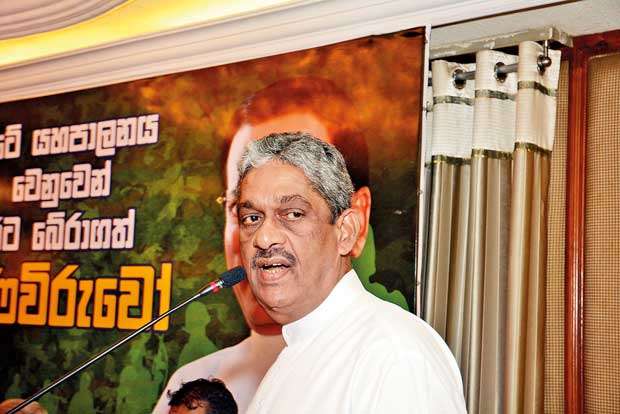
Former Defence Secretary Gotabaya Rajapaksa says that his intention was to provide houses for the low income people living in Colombo city in order to increase their quality of life.

Speaking during an event in Wellawatta, he said that the objective of the programme carried out by him during his time as the Defence Secretary was to remove the shanty homes and turn Colombo into an attractive city.

He stated that today Sri Lanka’s construction sector has completely collapsed and that directly and indirectly over 4-500,000 jobs have been lost due to this.

He said that the government shortsighted actions led to the halting of all development projects as soon as it came to power. The Colombo Port City project was stalled for 2 years and at the same time development projects across the country came to a standstill, Rajapaksa charged.

He said that the incumbent government took power without any proper plan. The former Defence Secretary said that currently there is no leader to take decisions and that nobody is taking responsibility to take decisions when a problem surfaces.

He stated that the underworld has raised its head once again and that some people are even afraid to talk about the underworld.

The ‘small car dream’ has truly become just a dream now – JO

August 2nd, 2018

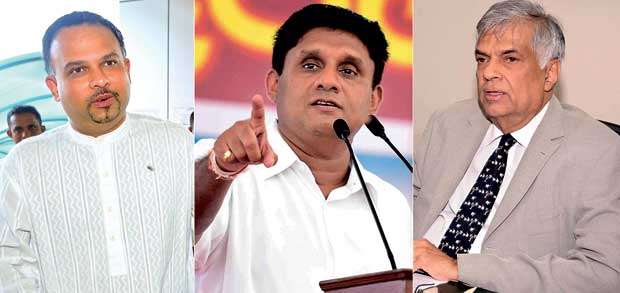
Joint Opposition MP Shehan Semasinghe says that there is absolutely no preparation to hold elections by the current government, which is attempting govern the country in a dictatorial fashion.

He stated that the ‘small car dream’ has truly become just a dream presently and the government has disregarded all the promises it had given to the youths.

Semasinghe also charged that the current government lacks a proper understanding regarding debt management.

Pope Francis declares death penalty inadmissible in all cases

August 2nd, 2018

Pope Francis has changed the teachings of the Catholic faith to oppose the death penalty in all circumstances, the Vatican has said.

The Catechism of the Church, which sums up the teachings, had previously stated that the death penalty could be used in some cases.

It now says it is inadmissible because it is an attack on the inviolability and dignity of the person”.

Pope Francis has in the past spoken out against executions.

Last October, he had said the Church’s policy on the death penalty was one area where teaching was not static and could change with modern concerns.

The text of the catechism was first set by Pope John Paul II in October 1992.

The teachings had earlier stated that the death penalty was an appropriate response to the gravity of certain crimes and an acceptable, albeit extreme, means of safeguarding the common good”.

However, the new text says there is an increasing awareness that the dignity of the person is not lost even after the commission of very serious crimes”.

It also argues that today’s more effective detention methods protect citizens and do not definitively deprive the guilty of the possibility of redemption”.

The Church will now work with determination for the abolition of the death penalty worldwide, a statement from the Holy See said.

Historically, the Church has mostly been unopposed to the death penalty, including into the 20th Century. In 1952, Pope Pius XII said it was not a violation of the universal right to life.

Pope John Paul II argued for imprisonment over execution wherever possible, although Joseph Ratzinger, who later became Pope Benedict XVI, wrote that the death penalty could be permissible.

Source: BBC

ගිවිසුම් ද පඤ්ඤං

August 2nd, 2018

උපුටාගැණීම  මව්බිම

“බණ්ඩාරනායක-චෙල්වනායක් ගිවිසුම සිංහල ජාතිය පාවාදීමක්”

බණ්ඩාරනායක-චෙල්වනායකම් ගිවිසුම ප්‍රකාශයට පත්කළේ 1957 ජූලි 26 දා ය. එදිනම රැස් වූ එජාප කෘත්‍යාධිකාරි සභාව ගිවිසුමට එරෙහිව පළමු වෙඩි මුරය පත්තු කළේ එහෙම ය.
උතුර සහ නැඟෙනහිර පළාත් ආවරණය වන ලෙස ස්වාධීන දෙමළ රාජ්‍යයක් දිනා ගැනීම සඳහා තබනු ලබන ඉදිරි පියවරකි. පුරවැසි පනත් අවලංගු කිරීමත්, ලංකාවේ වෙසෙන දශලක්ෂයක් වන ඉන්දීය නේවාසිකයන්ට ස්මපූර්ණ පුරවැසිභාවය ලබා ගැනීමත් සඳහා ෆෙඩරල් පක්ෂයත්, ඉන්දීය දමිළයන් නියෝජනය කරන පක්ෂත්, ඒකාබද්ධ ව්‍යාපාරයක් ආරම්භ කිරීම මීළඟ පියවර විය යුතු යැයි ඔවුහු අදහස් කරති.

මේ ගිවිසුමට පදනම් වී ඇත්තේ, මෑතකදී භාවිතයට ආ, හුදෙක්ම කෘත්‍රිම වූ, පළාත් මායිම් පිළිගැනීම මත ය. නැඟෙනහිර පළාත හෝ මුළු උතුරු පළාත හෝ පාරම්පරික වශයෙන් දෙමළ ජනතාවට අයත් ප්‍රදේශ හැටියට කිසිදාක පිළිගෙන නොතිබුණු බව ඓතිහාසික සත්‍යයකි. නැඟෙනහිර සහ උතුරු පළාත් එක් කොටසක් වශයෙන් ද සෙසු පළාත් හත අනෙක් කොටස වශයෙන් ද රට කොටස් දෙකකට බෙදීම මේ ගිවිසුමෙන් පිළිගනු ලැබ ඇති බව මේ කරුණුවලින් පැහැදිලි වෙයි.”

1957 අගෝස්තු 3වැනිදා යූඑන්පීය දෙවැනි වෙඩි මුරය පත්තු කළේ එහෙම ය. මේ වෙඩි දෙකටම වෙඩි බෙහෙත් කෙටුවේ ජේ.ආර්. ය.

1956 බණ්ඩාරනායක බලයට එන්නේ සිංහල බෞද්ධ බලවේගයේ ආවේගයෙනි. එහෙම බලයට ආපු බණ්ඩාරනායකට, යථාර්ථය තේරුණේ සිංහල භාෂාව රාජ්‍ය භාෂාව කරන්නට යද්දී ය. බණ්ඩාරනායක හිටියේ ගිරයට අහුවුණු පුවක් ගෙඩියක් මෙන් ය. දෙමළ නායකයන්ගෙන් ආපු විරෝධය හමුවේ බණ්ඩාරනායක නැවෙද්දී දේශප්‍රේමී බලවේග කුපිත වුණේ ය.

උතුරු සහ නැඟෙනහිර පළාත්වල පරිපාලන කටයුතුවලදී දෙමළ භාෂාවට ප්‍රමුඛ තැන දීම, රට සභා කෙටුම්පත සංශෝධය කිරීම, උතුර සහ නැඟෙනහිර වාරිමාර්ග ව්‍යාපෘතිවලදී සිංහල පදිංචි කිරීම් සීමා කිරීම, ඉන්දියානු සම්භවයක් ඇති අයට ලංකාවේ පුරවැසිකම ලබා දීම. යන යෝජනා බණ්ඩාරනායක-චෙල්වනායකම් ගිවිසුමෙ ප්‍රධාන කරුණු ලෙස පිළිගැනුණේ ය.

කොන්දේසි ටික එළියට ආපු ගමන් බණ්ඩාරනායක කඳවුරේ භාෂා ප්‍රේමීන් කුපිත වුණේ ය. ඒ වාසිය දුටු ජේ.ආර්. විසින් ආණ්ඩුව ගෙදර යැවීමේ මෙහෙයුම අතට ගත්තේ ය. බණ්ඩාරනායක-චෙල්වනායකම් ගිවිසුමට එරෙහිව ජේ.ආර්. මල්ටි බැරල් ගැසුුවේ ය. යූඑන්පී පත්තරයෙන් දිගට හරහට ගැසුවේ ය. දෙමළ පාලනයට යටත් වෙන ප්‍රදේශ නම් කොට සිතියම් පළ කළේ ය. ලංකාවෙන් භාගයක් දෙමළ පාලනයට යටත් වන බවට ප්‍රචාරය කළේ ය. පත්‍රිකා බෙදා හැරියේ ය. මහා සංඝයා එකතු කරගෙන රටටම අඬබෙර ගැසුවේ ය. ජේ.ආර්. ප්‍රමුඛ යූඑන්පිය ගෙන ගිය දැවැන්ත ප්‍රචාරයෙන් නැඟී ආ මහා සංඝයාගේ සහ ජනතාවගේ විරෝධය හමුවේ අගමැති බණ්ඩාරනායක ගිවිසුම ඉරා දැම්මේ ය. අන්තිමට ආණ්ඩුවත් පිරිහුණේ ය. කරුණු කාරණා සිද්ධ වුණේ එහෙම ය.

ජේ.ආර්. උෟරාගේ මාළු උෟරාගේ පිටේම තියලා කැපුවේ ය. බණ්ඩාරනායකලා බලයට ගෙනා සිංහල බෞද්ධ බලවේගයම බණ්ඩාරනායකලා බලයෙන් පහ කරන්න යොදා ගත්තේ ය.

1964දී යූඑන්පිය මෙහෙය වූ සාර්ථක පාර්ලිමේන්තු කුමන්ත්‍රණයකින් මැතිනිගේ ආණ්ඩුවේ බල බිඳුණේ ය. ඕනෑම මොහොතක ඡන්දයකට යෑමේ බලය විපක්ෂයට හිමි වුණේ ය. 1965 මහ මැතිවරණය පැවැත්වුණේ එහෙම ය. ඡන්දය පක්ෂ දෙකටම තීරණාත්මක විය. ඒත් ප්‍රතිඵල දෙපැත්තටම නැති විය. යූඑන්පිය දින්නේ ආසන 66ක් පමණි. බහුතරයට තව 7ක් ඕනෑ විය. ඩඩ්ලිලාට ජේ.ආර්.ලාට දෙලෝ රත් වුණේ එවිට ය. ප්‍රතිඵල නිකුත් වී දින දෙක තුනක් යන තෙක්ම වෙන දෙයක් හිතා ගන්නට බැරි විය. බණ්ඩාරනායක-චෙල්වනායකම් ගිවිසුම අල්ලගෙන රට ගිනි තියපු ජේ.ආර්. – ඩඩ්ලි ප්‍රමුඛ යූඑන්පිය අන්තිමට ලැජ්ජා නැතිව චෙල්වනායකම් පස්සේ වැටුණේ ය. චෙල්වනායකම්ගේ ෆෙඩරල් පක්ෂය සමඟ ගිවිසුම් ගසා කොහොමහරි බලය ගත්තේ ය. 1965 යූඑන්පී ආණ්ඩුව පිහිටුවූයේ එහෙම ය.

එහෙම ගේම ගහලා හදපු 1965 යූඑන්පී ආණ්ඩුවයි 2015 යහපාලන ආණ්ඩුවයි අතර වැඩි වෙනසක් පේන්නට නැත. ජේ.ආර්. ජයවර්ධන චරිතාපදානයෙහි පහත දැක්වෙන කොටස කියවන ඕනෑ අයෙක් එය හොඳින්ම තේරුම් ගන්නවා ඇත.

‘මේ වතාවේ ඔහු විසින් පිහිටුවා ගන්නා ලද සභාගය වෛවාරන්න කණ්ඩායම්වල එකතුවක් වූ අතර, බලයට ඇති කෑදරකමත්, බණ්ඩාරනායක මහත්මිය සහ ඇගේ සගයන් බලයෙන් වියුක්ත කොට තබා ගැනීමේ දැඩි වුවමනාවත් හැරුණු විට ඔවුන් අතර වෙනත් ආකාරයක පොදු අපේක්‍ෂා තිබුණු බවක් කිව නොහැකිය. එ.ජා. පක්‍ෂය මේ සභාගයේ අරටුව වූ අතර, ෆෙඩරල් පක්‍ෂයත් ඔවුන්ගේ දීර්ඝ කාලීන විරුද්ධවාදීන් වූ කේ.ඇම්.පී. රාජරත්නගේ ජාතික විමුක්ති පෙරමුණත් (පාර්ලිමේන්තුවෙහි එම පක්‍ෂය නියෝජනය වූයේ ඔහුගේ භාර්යාවගෙනි) පිලිප් ගුණවර්ධනගේ මහජන එක්සත් පෙරමුණත් එයට ඇතුළත් විය. ඩඩ්ලි සේනානායක පෞද්ගලිකව වගාකරගෙන තිබූ ප්‍රසාදය හා ගෞරවයත්, කෘතහස්ත දේශපාලනයත් නිසා විනා මේ සභාගය එක්තැන් කිරීමට නොපිළිවන් විය හැකිව තිබිණි. සභාගය ඇතුළත තිබුණු කලබලකාරී තත්ත්වය අනුව සලකන විට, ඉහත සඳහන් ගුණාංග ස්වකීය සභාගය ජාතික රජයක් වශයෙන් හැඳින්වීමට ඔහු පෙලැඹුණද ඇත්ත වශයෙන් පාර්ලිමේන්තුවේ නියෝජනය වුණු ඉතා විශාල කොටසක් අත්හැර තිබුණු නිසා, එය ඒ නමින් හැදින්වීම පැහැදිලි ලෙසම සාවද්‍ය විය.

එකිනෙකා පරස්පර විරෝධී වුවමනා එපාකම් ඇතිව සිටි කණ්ඩායම් තුලනයක් ඇති වන සේ අමාත්‍ය මණ්ඩලය සංයුක්ත කළ යුතු විය. එය අසාමාන්‍ය ලෙස දුෂ්කර කාර්යයක් වූ අතර මේ තුලනය පවත්වා ගැනීමේ අවශ්‍යතාව, නව පරපුරේ දේශපාලනඥයන්ගේ නියෝජිතයන් අමාත්‍ය මණ්ඩලයට ඇතුළත් කර ගැනීමේ අවශ්‍යතාව යටපත් කරමින් නැඟී සිටියේය.’

1965දී චෙල්වනායගම්ලා එක්ක සාකච්ඡාවට පෙරමුණ ගත්තේ රනිල්ගේ මාමා වන ජේ.ආර්. ය. අනුබල දුන්නේ තාත්තා වන එස්මන්ඩ් ය. 2015 ත් එහෙම ය. ඒ චෙල්වනායගම්ලා ය. මේ සම්පන්දන්ලා ය. ඒ මාමා ජේ.ආර්. ය. තාත්තා එස්මන්ඩ් ය. මේ බෑණා රනිල්. යහපාලන ආණ්ඩුව පිහිටුවන්න රනිල්ලා සම්පන්දන් එක්ක ගිවිසුම් ගැසුවේ ය. මහින්දලා එළවන්න රටේ සියලුම බලවේග එකතු කරගෙන ආණ්ඩුව හැදුව රනිල්ලාට දැන් බලය රැක ගන්න නම් සම්පන්දන්ලාගේ අවශ්‍යතා ඉටු කිරීමට සිදුව ඇත. සම්පන්දන්ලා පොරොන්දු ඉටු කරන තෙක් රනිල්ගේ පස්සෙන් පන්නනවා ඇත. අලුත් ව්‍යවස්ථාව සම්පන්දන්ලාගේ එකම බලාපොරොත්තුව ය.

එදා විපක්ෂයේ ඉඳන් ජේ.ආර්.ලා කරපු රෝල් එක අද විමල්ලා, ගම්මන්පිලලා කරති. ‘රට පාවා දෙන ව්‍යවස්ථා මර උගුල’ කියා ඔවුහු රට වටේ යති. දැන හෝ නොදැන මහා සංඝයා ඇතුළු රටේ සාමාන්‍ය ජනතාව බහුතරයකට මේ අලුත් ව්‍යවස්ථාව දැන් අරහං ය. 1949 සිටම මේ රටේ වුණේ ඕක ය. එදා චෙල්වනායකම්ලා ය. අතර මැද ප්‍රභාකරන්ලා ය. දැන් සම්පන්දන්, සුමන්තිරන්ලා ය. ප්‍රශ්නේ එතැනමය. යූඑන්පිය එදත් එහෙම ය. 1965 බලය ගන්න ඩඩ්ලිලා – ජේ.ආර්.ලා චෙල්වනායකම් ගාව දණින් වැටී ආණ්ඩුකාරවරයාට දෙන්න ඔහුගෙන් ලියුමක් අරන් ගිහින් බලය අතට ගත්තේ ය. අන්තිමේ ඩඩ්ලිත් රට සභා පනත ගේන්න ගිහින් නා ගත්තේ ය. “ඩඩ්ලිගේ බඩෙ මසල වඩේ” කියා මිනිස්සු පෙළපාළි ගියහ. ඒ ආණ්ඩුවත් ඒකෙන්ම ඉවර වුණේ ය. සම්පන්දන්ලාගේ ඕනෑ එපාකම් ඉටු කරන්න ගිහින් මේ ආණ්ඩුවත් ගෙදර යන දවස වැඩි අෑතක නොවේ ය. මේක බලය පිළිබඳ ප්‍රශ්නයක් ය. බලය ගන්නකම් ඕන දේකට ඔට්ටු ය. ඕන ගිවිසුමක් පඤ්ඤං ය. බලය ගත් දාට හැසිරෙන්නේ කුම්බලා මාළු කාපු බළලුන් මෙන් ය.

Yahapalana Democracy? Not even Procedural

August 2nd, 2018

By Kusal Perera Courtesy The Daily Mirror

For once Prof. G.L has said something worth discussing. He had told media last Monday, his party, the Sri Lanka Podujana Peramuna (SLPP) would file a petition in the Supreme Court requesting a Writ against the Elections Commission (EC) over its failure to hold elections for the dissolved Provincial Councils.
The Sabaragamuwa, North Central and the Eastern Provincial Councils stand dissolved for 10 months now, since September 2017.
In two months from now, the North, Wayamba and the Central Provincial Councils would stand dissolved.
He has told media, legal action would be instituted when the Court vacation comes to an end in late August.
Reason for not instituting legal action immediately as he says is because; it is only a week more for Court vacations to begin.
For a politically valid intervention, to stay mute for a month is too cheap a ploy to buy. For a legal luminary in fulltime politics, a week would be more than enough, if the statement made is firm and genuine.
Almost two months ago President Sirisena addressing his faction of the SLFP on June 2 had said the PC elections would be held before the year-end.
The UNP decided at its Working Committee last week to request the EC to hold the PC elections without delay” (!) either on the old or the new system of electing members.


By then, the Chairman of the Commission Mahinda Deshapriya had on April 25 (2018) told the media (CDN) the Commission would hold elections to PCs in December, once the legal and Constitutional hindrances are swiftly resolved”.
Neither had they been resolved swiftly” during the past three months. Nor has the Government chosen any of the four options Deshapriya told the CDN (Ceylon Daily News), Parliament could adopt, to have early PC elections.
Firstly, Parliament can approve the delimitation report as it is, with a two-thirds majority.
Secondly, MPs can opt to revise the report by a committee appointed by the Prime Minister. If not, they can change the 50-50 ratio and prepare an early and speedy delimitation report again.

Or they can go back to the previous Preferential Ratio (PR) vote system,”
He told the CDN, that if Parliament could decide on any one of those options, the EC could hold elections in December before the GCE O/L examinations began.
Now it is August and over three months after the options were spelt out by Chairman EC. No decision had been taken by the Government or by the two main allies in Government, the UNP and the SLFP of President Sirisena as to what option they would go with.
Instead, the UNP wants the EC to hold elections anyway it can and President tells his men they would be December.
In end June the same Minister, who kept tearing off calendar pages one after another for the LG elections, tells the new Delimitation Committee in the presence of Speaker Karu Jayasuriya, it would be December (2018) when the Government could be ready with a Road Map for holding PC elections.
He wouldn’t surely decide on a Road Map for December, on his own. He is definitely in consultation with the President and the PM, is playing it soft with President, while on a collision course on many issues.
As it goes, PC elections will not be held end 2018 with only a Road Map proposed.  The hurdle President Sirisena fears to hold PC elections is no doubt the MR Factor.

“Now it is August and no decision has been taken by the Government or by the two main allies in Government, the UNP and the SLFP of President Sirisena as to what option they would go with”

As Finance Minister Samaraweera’sGam Peraliya that’s rolled out with gusto to be given a fillip with a populist budget for the year 2019 in November indicates, the UNP is readying itself for the 2020 January Presidential Election and not for PC elections in December.
For Mahinda Rajapaksa, who has in his hands the political network at the local level after LG polls, needs to have with him the next level of political networking at the provincial level to push for Parliamentary Elections in mid or late 2019.
There certainly is a difference in calculations within the JO too. Loners like Weerawansa and Gammanpila would want the Presidential and Parliamentary Elections as constitutionally scheduled for 2020 January and anytime after 2020 February, respectively.
They need to be of importance in a Presidential poll to successfully contest Parliamentary Elections thereafter.
Yet, MR’s strategy that is worked on by Basil Rajapaksa is often heard through JO stalwarts like Dinesh Gunawardane and Vasudeva Nanayakkara, who also talk of Parliamentary Elections.

This Government cannot rule a country and that needs to be changed before it is too late, goes their main argument.
The Colombo protest last Wednesday led by the JO targeting the Government as anti-people is perhaps a beginning.
At the rate, the Government is fumbling with every issue without clear decisions made and then the two partners in Government getting into contradicting positions on almost all issues and mega corruption no less than during the Rajapaksas, the frustration building up in urban and semi-urban societies is what MR seems to be banking on.
He perhaps believes there will be the last straw on the camel’s back when people would want a change of Government before a change of presidency.
That’s when the PCs also become important for MR.
It would be a proverbial walk behind the goat, for MR to wait for his SLPP President Prof Peiris to go to Courts to provide him with the PC elections without any further delay.

  • Elections Commission should be held responsible for denying the people their right to elections

  • The EC that aids and abets the Yahapalana Government to further erode democracy

  • This makes the ground easy for Rajapaksa to run a totalitarian rule if he returns

It was this same Professor who was reported in the media a month ago on July 2 saying his SLPP would sue the FCID, the CID, the Rupavahini Corporation and the Associated Newspapers (Ceylon) Limited for a series of alleged defamatory stories that claimed China Harbour Engineering Limited had in 2014 provided US$ 07 million for Mahinda Rajapaksa’s Presidential Election campaign.
At the same media briefing, he was also reported as having said the SLPP would take legal action against the New York Times, for publishing similar defamatory allegations. He doesn’t seem to have done what he said he would, and taking time over Court vacations seems, he would go the same way with this proposed legal action against the EC as well.
In short, it would not be anything more than his statement to media.
Yet, the fact remains, for once, his argument is on solid grounds. Chapter I Article 03 of the Constitution is clear about the right of franchise being an inalienable right of people’s sovereignty.

It says”
In the Republic of Sri Lanka sovereignty is in the People and is inalienable. Sovereignty includes the powers of Government, Fundamental Rights and the franchise.”
That, therefore, is a basic, Fundamental Right of the people, the EC is constitutionally bound to protect and give validity to.
Read along with article 104B (1) of the Constitution, Article 104B (2) says,
It shall be the duty of the Commission to secure the enforcement of all laws relating to the holding of any such election or the conduct of Referenda and it shall be the duty of all authorities of the State charged with the enforcement of such laws, to co-operate with the Commission to secure such enforcement.”
But has the EC been living with the Constitutional mandate? Sadly not as an Independent Commission constituted under Amendment 19.
The role of the EC in holding elections to LG bodies proved it beyond doubt. According to the Constitution, the EC should treat franchise as an inalienable. Sovereign” Right of the people and thus should secure the enforcement of all laws relating to the holding of any such election”
It means ‘laws’ that are valid at the time an election should be duly held is what the EC has to abide by.

“The EC is playing with a vacillating and  hesitant Government through publicity stunts, proposing options to keep the PC elections postponed”

It more than implies the EC need not wait for new laws” the Government is contemplating in bringing or are still in the making.
Thus, if Parliament has not made required law to hold elections on the mixed system of PR (Proportional Representation) and FFP (First-Past-the-Post) with whatever gender representation and with the new delimitation report approved in Parliament at the time the PCs were dissolved, it only means the existing law that allows elections on the PR system is the law the EC has to hold elections to those PCs.
Instead, the EC is playing with a vacillating and hesitant Government through publicity stunts, proposing options to keep the PC elections postponed, violating its own mandate in the process.

It is the EC that should now be held totally responsible for denying the people their right to elect representative bodies.
It is the EC that aids and abets the Yahapalana Government to further erode democracy when it is there to safeguard democracy.
And thanks to this EC and Yahapalanaya, we don’t even have the procedural democracy there was under Rajapaksa. Perhaps they are making the ground easy for Rajapaksa to run a totalitarian rule if he returns.

Colombo cuts rates after India eases cabotage rules

August 2nd, 2018

P MANOJ Courtesy The Hindu Business Line

MUMBAI, AUGUST 2

Colombo port, which thrives on Indian cargo containers that passes through it, has cut transshipment rates by 9.5 per cent after India lifted cabotage restrictions in May, allowing foreign ships to operate on local routes to reduce the country’s dependence on the neighbouring hub to transport cargo.

The island nation, one of the major container transshipment hubs in the region along with Singapore, Port Klang and Jebel Ali, is taking the fight for containers to the Indian shores.

Transshipping containers through Colombo entails extra time and costs, hurting India’s competitiveness in the global market.

Transshipment fight hotting up

Lankan discount

After India relaxed cabotage, Colombo reduced the transshipment tariffs by offering a discount of 9.5 per cent,” said Deepak Tiwari, Chairman of the Container Shipping Lines Association (CSLA), adding that shipping lines were not in love with Colombo.”

Individual terminals must be offering volume-based rebates to shipping lines as part of their agreement, but on the general published rates, no revision was done recently. Customers bringing incremental volumes are offered volume discounts by terminals,” Upul Jayatissa, Chief Manager (Marketing and Business Development), Sri Lanka Ports Authority, told BusinessLine over phone from Colombo.

Jayatissa reckons that India’s decision to relax cabotage will have an impact on Colombo traffic. But, it will depend on the shipping lines; they are the ones who decide the routing of services. They have to decide what they really want to do. So far, we have not felt any impact on our transshipment business, but I don’t know what will happen in the future,” he said.

The transshipment volumes of Colombo, according to Jayatissa, have grown by 20 per cent in the first half of 2018 calendar year compared to last year. Colombo port handled 4.8 million twenty-foot equivalent units (TEUs) in 2017 from four terminals. Of this, about 45 per cent was India-bound or originating containers, underlining Colombo’s dependence on Indian cargo for its sustenance.

Marine charges

The vessel-related charges or marine charges at Indian ports are four times more than in Colombo, said VK Singh, Managing Director, Shreyas Shipping & Logistics Ltd.

For instance, the marine charges for a 24-hour stay for a 5,000-TEU capacity ship is about $40,000 in India and $10,000 in Colombo. This is a big attraction for the lines. That’s why they don’t want to stop calling Colombo,” said Suresh Amirapu, CEO, Bharat Mumbai Container Terminals Pvt Ltd, a unit of Singapore’s PSA International Pte Ltd.

The marine charges are low in Colombo because the Sri Lankan government funds basic infrastructure, including dredging, unlike in India.

The networking is already established in Colombo,” said Jibu Kurien Itty, CEO, India Gateway Terminal Pvt Ltd, the transshipment terminal-run by DP World at Vallarpadam in Cochin Port Trust. So, when you are looking to divert containers away from Colombo, you have to be actually two steps ahead in the game,” he said, stressing the need to rationalise marine charges in India.”

When you are competing with Colombo, you have to play to your strengths. India has the cargo; that’s what Colombo does not have,” Jibu added.

India concerned over China’s rising investments in Sri Lankan port projects

August 2nd, 2018

AMRITA NAIR GHASWALLA Courtesy BusinessLine

MUMBAI, AUGUST 2

As China rushes to invest in more ports in Sri Lanka, India views with concern the Asian neighbour’s bid to increase its footprint in the Indo-Pacific region. China also recently gifted a naval frigate to the island nation.

Sri Lanka has started to emerge as the new battleground for the two Asian super powers, India and China. China, Sri Lanka Ports Authority and India are to invest over $700 million for the development of three key ports over the next three years in Sri Lanka,” said a government official.

Though no details have been released about the recent frigate that was gifted to Sri Lanka, market observers believe it could be a Type 053 frigate, or even a Type C28A or C13B corvette, since these three classes are the most common Chinese warships exported to other countries.

The official pointed out that though China’s inroads into the Indian Ocean region need to be carefully monitored, vessels are regularly handed over as part of military aid packages, and that India, too, has done so in the recent past. Apart from ports in Sri Lanka, India has committed an investment of $500 million towards the management and operation of two dedicated berths at the Chabahar port in Iran, and has been assisting Myanmar with infrastructure improvement projects at the Sittwe and Paletwa ports.


Sri Lanka is said to have received an aid of $974 million for the Hambantota port project from China

Sources said China could gain exponentially” through extending financial aid for the development of Sri Lanka’s ports.

Though several of China’s projects in Sri Lanka have faced censure, concerns have been raised by the US, India and Japan that China might use Sri Lanka as a military base.

The next three years are set to see fresh investments in Sri Lanka, both from China and India. While India is to invest $40 million to upgrade the Kankesanthurai Port in northern Sri Lanka into a commercial port, and has extended financial assistance from the Export Import bank, the Sri Lankan Treasury has reportedly received aid of $974 million for the Hambantota port project from China, which has already invested $146 million for port development work.

In January, the Export-Import Bank of India (Exim Bank) approved $45.27 million in credit for the reconstruction of Sri Lanka’s Kankesanthurai Port, which was devastated by the December 2004 tsunami and Cyclone Nisha in 2008. Reports indicate that this brings India’s aid for various infrastructure projects in Sri Lanka to $1.4 billion. The Sri Lanka Ports Authority is to invest $100 million for the construction of the East Container Terminal, which is part of the master plan of the Colombo Port Expansion Project. Plans are also afoot for the conversion of Galle Harbour into a tourism port.

Sri Lanka’s maritime sector master plan, developed by Maritime and Transport Business Solutions, a consultancy firm from the Netherlands, and funded by the Asian Development Bank, is said to be nearing completion. As the government looks to promote Sri Lanka’s cruise liner business, more infrastructure facilities are also to be added to the Colombo Port, to get more cruise liners to dock there.

Germany arrests suspect over alleged Sri Lanka war crimes

August 2nd, 2018

By ASSOCIATED PRESS Courtesy Mail on line

BERLIN (AP) – German authorities have arrested a Sri Lankan man suspected of involvement in killing captured government soldiers as a member of the Tamil Tigers rebel group a decade ago.

Federal prosecutors said a judge ordered Thursday the 36-year-old, identified only as Sivatheeban B. because of German privacy rules, detained pending a potential indictment. He was arrested Wednesday in the Duesseldorf area, suspected of committing war crimes and membership in a foreign terrorist organization.

Prosecutors say he belonged to the Tamil Tigers from 2006-2009. They allege that, in 2008, he tied up 16 soldiers and guarded them as they were driven to a site where they were shot.

Sri Lanka’s civil war ended in 2009 when government forces defeated the rebels, who fought to create a separate state for ethnic minority Tamils.

Sri Lanka’s ‘new Dubai’: will Chinese-built city suck the life out of Colombo?

August 2nd, 2018

Courtesy  The Guardian

Iron cannons installed by the Dutch to ward off colonial rivals still line Galle Face Green, a grassy, mile-long promenade along the Colombo seafront. Further out to sea, within range of the guns, a new world power is leaving its mark on Sri Lanka’s capital.

Currently, Port City is just a flat expanse of blank land jutting out into the ocean, growing a fraction larger each day, as dredging ships pour what will eventually amount to 65 million cubic metres of sand.

The construction of Port Cityis being funded via the largest single foreign direct investment in Sri Lankan history.

The construction of Port Cityis being funded via the largest single foreign direct investment in Sri Lankan history. Photograph: Atul Loke/Bloomberg via Getty Images

Within a few years, however, Port City will be the site of glass skyscrapers, a busy financial district, hospitals, hotels and even a theme park. Across the world, Chinese companies are developing President Xi Jinping’s Belt and Road Initiative by building new roads, ports and bridges – but in Sri Lanka they are building a whole new metropolis.

Q&A

Cities of the New Silk Road: what is China’s Belt and Road project?

It is a completely new city that will nearly double the size of Colombo right now,” says Janaka Wijesundara, a former director at Sri Lanka’s Urban Development Authority. It is going to drastically change the entire landmass.”

Built on 665 acres (2.6 sq km) of land being reclaimed from the Indian Ocean, the city is designed to be a smaller Singapore, with its own business-friendly tax regime and regulations – and possibly a different legal system to the rest of Sri Lanka.

About 80,000 people are expected to live in the city, with another quarter of a million commuting in every day.

How will the burgeoning city affect the rest of Colombo?
Pinterest
 How will the burgeoning city affect the rest of Colombo? Photograph: Alamy

It is the largest single foreign direct investment in Sri Lankan history – a $1.4bn (£1.1bn) project by the state-owned Chinese engineering firm China Communications Construction Company (CCCC).

Artistic impressions of the future Port City show a brightly lit cityscape comparable to Dubai or London’s Canary Wharf. Developers say 1.5 million sq metres of office space will be available and private investment could reach $13bn. Dense high-rises give way to lower-slung residential areas, crisscrossed by parks and canals. A marina and beach line the city’s edges.

It is a world away from the fading bungalows, modest temples and low-slung towers of present-day Colombo. But designers say they have striven to have the new city reflect its roots, according to Daniel Ringelstein, a director at Skidmore, Owings and Merrill (SOM), the firm that created the masterplan for the city’s central business district.

We took inspiration from the colonial era,” he says, highlighting Colombo’s whitewashed colours, elegant arcades and individually expressed, vertically proportioned buildings” as key influences.

The mega-blocks initially favoured by the developers were subdivided by the firm, he says, to create more walkable public space, mimicking the vivid street life of Sri Lankan cities and including an emphasis on natural shade.

The idea to expand Colombo’s business district outward on to land reclaimed from the sea was first proposed in 2004. The city, located along key shipping routes across the Indian Ocean, had been a hub for trade for more than 2,000 years.

But a bloody, 25-year civil war was killing thousands of people each year. Around the time authorities were mulling an early version of Port City, Colombo was struck by its first suicide bombing since 2001. The plans were shelved for five years.

When complete, planners expect the city to have a population of 80,000, with another quarter of a million commuting there to work each day.
Pinterest
 When complete, planners expect the city to have a population of 80,000, with another quarter of a million commuting in each day. Photograph: © 2018 All Rights Reserved. CHEC Port City Colombo (Pvt) Ltd.

By 2009, the war had been brought to a close, thanks to ruthless offensives by the Sri Lankan army. Then-president Mahinda Rajapaksa declared Sri Lanka open for business – but the spectre of what the UN calls horrific” human rights abuses committed by both the army and the Tamil Tigers continued to ward off most investors.

One major country, however, was happy to fund Sri Lanka’s reconstruction. China offered political cover for Sri Lanka towards the end of the war and had already started to play more of a prominent role on the economic front,” says Dushni Weerakoon, the executive director at the Institute of Policy Studies in Colombo. After the war ended, it all just accelerated.”

In total, Rajapaksa borrowed about $8bn from China, much of which was spent on big-ticket infrastructure in his ancestral home district of Hambantota – which has since become a byword for the risks associated with Chinese loans. A major new airport in Hambantota receives just one flight each day. A new hospital serves as accommodation for Chinese guest workers. Attracting most scrutiny is a port that was upgraded using money borrowed from China. Earlier this year, unable to afford the repayments, Sri Lanka handed control of the port to a subsidiary of CCCC for at least 99 years.

The loans are part of a wave of Chinese investment in south Asia that has been described as the biggest game changer in 100 years”, posing a serious challenge to India, the traditional power in the region.

In 2014, concerns over Chinese loans and corruption played a key part in Rajapaksa’s shock election defeat. The new government promised to rebalance Sri Lanka’s relationship with India, Japan and the west. Though Port City was being funded by foreign investment, rather than a loan, it became a victim of the backlash: the new prime minister, Ranil Wickramasinghe, shelved the project, claiming the dredging would destroy Colombo’s coast.

Environmentalists have raised serious concerns about the impact of the extensive dredging required by the project.
Pinterest
 Environmentalists have raised serious concerns about the impact of the extensive dredging required by the project. Photograph: Dinuka Liyanawatte/Reuters

It was a win for environmentalists such as Hemantha Withanage, who heads the Colombo-based Centre for Environmental Justice (CJE). The project is totally harmful to tourism and totally harmful to fishermen,” he says.

W Jude Namal Fernando, a fisherman and trade unionist in Negombo, north of Colombo, says the excavation of sand along the coast is destroying aquatic life and affecting the livelihoods of approximately 8,000 people who make a living from fishing. The habitat belonging to various species has been demolished,” he says. Corals have been removed, disturbing the ecological balance. And the fisheries industry consists of many others apart from fishermen – the livelihood of those who are on the shore and those who transport the catch to the market are also affected.”

The CJE argues that building the new city will require more natural resources than Sri Lanka can sustainably provide. The necessary sand alone would quickly exceed 100 million cubic metres, it says, threatening a fragile marine habitat and the livelihoods of 15,000 fishermen who work in the mining area. The CJE prices the value of the sand at $3.2bn, which it says outweighs the $1.4bn invested by CCCC subsidiary China Harbour in building the city.

The environmental group also warns commutes into the new financial district will add 300,000 daily car journeys, increasing airborne pollution in a city already exceeding World Health Organisation guidelines.

Pinterest

Yet about a year after suspending Port City, in March 2016 the new government announced work would soon resume. CCCC had been claiming to be losing $380,000 each day the project was on hold, and was threatening to sue for compensation. The government says its amended contract with the Chinese firm includes new environmental protections. In an attempt to ease Indian concerns, 20 hectares of Port City originally slated to be given to CCCC in perpetuity was instead granted on a freehold basis. The trucks and dredgers returned. Within two years, Port City was back on schedule, with land reclamation expected to finish by the end of 2018 and the first buildings expected to appear within four years.

As the project takes shape, key questions about how Port City will operate remain unanswered. The new contract has not been released to the public. Sri Lanka has promised its Chinese investors favourable tax rates and business-friendly regulations, but it may be limited in what it can provide, thanks to an IMF loan the country took in 2016 to help pay its debts. Sri Lankan ministers have also said Port City will operate under a separate British-style” legal system – but what that will entail is unclear. Several requests were made to the government to clarify, with no response.

Sri Lankan activists have also raised questions about the power China Harbour will wield in the territory it leases in Port City, where it will effectively act as the landlord – a majority state-owned Chinese corporation deciding who can populate parts of a Sri Lankan city, and under what circumstances.

Port City is being constructed on land reclaimed from the Indian Ocean. The new city will nearly double the current size of Colombo.
Pinterest
 Port City is being constructed on land reclaimed from the Indian Ocean. The new city will nearly double the current size of Colombo. Photograph: Xinhua/Alamy Live News

Urban planners say another issue is unresolved: how the burgeoning city will affect the rest of Colombo. That was the missing piece to the brief,” says Ringelstein. How is this city connected to the historic city centre back to the east?”

SOM’s masterplan tried to resolve the problem by creating patches of green space in Port City that will provide views of Colombo. They also encouraged the government to regenerate the western edge of the old city, creating a frontage that looks out on the new one.

The idea is to use green space as a way to mediate between the old and the new,” Ringelstein says. You would hate for this new project to suck the life out of the existing city today.”

Wijesundara, the former Urban Development Authority director, says developers may not even want to establish links between the old and new cities. I will say that Port City will be a separate entity where only a certain class of people will live,” he says. Services may be provided by the local people, but the money coming to them is questionable.”

Additional reporting by Arthur Wamanan.

MATTALA AIRPORT,ACHELLES HEEL IN PUBLIC INVESTMENTS AND POSSIBLE CONSEQUENCES OF PRIVATIZING  (PART 1)

August 1st, 2018

BY EDWARD THEOPHILUS

It has been reported that Mattala airport would be privatized offering a larger stake (70% of initial capital) to Indian company and many people are of opinion that it would be led to a power play between China and India in Sri Lanka’s land.  When there were negative conjecture of the government decision, India and Sri Lanka deny that there was not a plan to the airport to Indian government but some reports bespeak that there is a plan to give Indian private company.   There is no doubt that when Mattala airport could manage at breakeven level securing the national interest of the infrastructure facility. why is the government of Sri Lanka having a keen interest in privatizing infrastructure facilities disregarding possible consequence?  There are opinions that the privatizing of public enterprises or government assets may generate economic benefits to a country depending on many factors such as the monitoring of operations and working out remedial strategies for the identified issues through the monitoring process. Mattala airport is an infrastructure facility, which supposed to provide services of a second international airport.  An international airport is infrastructure with a strategic interest and the current government has an irrevocable responsibility to safeguard vital infrastructure facilities in spite of the leasing of the airport will generate few millions of dollars to the country.

The historical evidence in Sri Lanka indicates that privatized public enterprises, as well as nationalized private enterprises, have been running with tremendous managerial problems and many developing countries have faced similar problems. Therefore, investigating possible consequences and planning alternative options to manage public assets at break even or lower profit margin is an erudite acumen. When the government gives a 70% of stake of Mattala airport to an Indian company, the majority power of the management of airport will go to Indian hands and Sri Lankans have no control over the company management and its business operations.  There may be legal implications in the future as a result of this type of careless decisions. The government should not make ad hoc decisions with a pure interest in making money. As far as the public concerns, the airport has a national interest and if the government considers it must lease out, the right option is to give 40% of stake to the Indian company and the government holds a 60 % of controlling power.  The other option is that there may be Sri Lankans, who are in the country and living overseas with interest in investing in shares, if it is performed by the way of initial public offering.  For this purpose, lots of work needed to do, but people are not aware of what sort of procedures have been followed by the government, when making decision to privatize, since the idea of coming to light. People of the country haven’t the financial statement of the airport but Mr Ranil Wickramasinghe assured in the parliament that the capital of the airport will be disclosed to the nation.

Next important point needs to be considered is why India wants to take over this airport, if it is running at a huge loss. People of Sri Lanka fully aware of the problems faced in the past leasing of oil tanks in Trincomalee during the administration of Mr. JR Jayawardena. A Singapore based dummy company was given oil tanks for development and later a part of tanks complex was given to India considering the Indian protest.  Ultimately, no company was done the development and later it was disclosed that leasing oil tanks were a gimmick or an international power play, eye washing people of Sri Lanka.  In this task, the government has to follow transparent procedures without making a hasty decision. It appears that the behaviour of the government and opposition members of parliament showed that they were acting like doltish or children without knowledge of possible consequences.

In regard to public asset leasing or privatizing, Sri Lanka has no clear policies and the Yahapalana government has not concentrated to develop essential policies and procedures for securing national interest. In fact, the Yahapalana government has been created to make more problems in the country with a view to satisfying Indian interest than solving the problems of the country.  Therefore, it is vital to understand the possible consequence of selling or leasing government assets comparatively looking at overseas experiences.

After the cold war, the global economic strategy was broadly focused on privatizing public enterprises in many countries with a view to relieving the burden of them to the government budget process.  Public enterprises in many countries mismanaged and as the owner of public enterprises, the government had to allocate a large volume of budgetary funds for the operations of public enterprises as they were making huge losses with the mismanagement.  In many times, the government had to take responsibility for the recapitalization of public enterprises when losses incurred. The accounting procedures and standards direct to set off the losses against the capital of the organizations.  Many government enterprises initiated with a small quantum of capital or with borrowings from domestic or foreign sources.  When accumulated losses are written off from the capital and reserves of the organization, it is subject to maintain a negative capital status and accounting standards do not permit run business organizations with negative capital and reserves.  For example, in the early 1990s, the recapitalization of government banks in Sri Lanka was a serious pressure to the fiscal process and the government had to create more debt issuing bonds to find funds for the recapitalization of banks rather than issuing shares to the public for finding capital.  The most disgraceful experience was that Treasury issued bonds to capitalize banks and same banks purchased issued the bond and financing for own capital structure.

The economic strategies applied during the cold war period did not permit to subscribe capital from the private sector. Many private investors attempted to get away from risky government investments as the state policy strived to control private business in order to satisfy the feeling of the general public, which was influenced by communist and socialist views of politics and there was a risk of nationalization.  For example, when Mr. TB Illangaratne and Mr Felix RD Bandaranaike were holding the Finance portfolio in the cabinet, nationalized the portion of private ownership of Bank of Ceylon and many other foreign companies such as CCC and BBC, Lakehouse, Bus Service and many others. In Sri Lanka too, socialism and communism were fascinated ideology in politics at that time and the responsibility of everything in the life pushed to the government hand.

During this period the world’s opinion on economic management visibly divided to capitalists and socialists.  The general public’s opinion appeared to be going along with the socialist politics and the government had a colossal pressure to make investments in business as well as in infrastructure development.  When unemployment was reported at a higher level, the government had to make a choice of investing money in the business for employing jobless people.  This idea indirectly expressed by JM Keynes in his general theory and his followers used the concept encouraging deficit budgets, however, Keynes view based on an economy which had an excess capacity and many developing countries including Sri Lanka used the Keynesian theory to reach full employment by public spending for government enterprises and infrastructure development disregarding the economic impact.

The other significant pressure to the government was supplying products and services of public enterprises at a subsidized price, despite the real cost of production and services.  When the government was in short of sufficient capital through domestic savings, the popular option was taxing rich or borrowing without considering the future debt service issues.  For example, when Dr. NM Perera was the Minister of Finance, he introduced 5% of Wealth Tax and 3% business turnover tax, which negatively impact on the economy.  This situation appeared in around the globe.  After 1950s Sri Lanka also encountered a similar situation because unemployment among educated youth was becoming an acute macroeconomic problem, which appeared to be leading to a social unrest.  In 1971 JVP insurrection was purely contributed by youth unemployment, thereby preventing the contribution of the young generation to economic development.  As a solution to the unemployment problem, elected governments of Sri Lanka determined to invest in business, in which the capital requirements were within the capacity of the private sector.  The socialist views of Sri Lanka forced the government to spend for investments in the business to provide employment to unemployed. In early 1970s Sri Lanka’s government established a public corporation to make gunny bags.

Governments in many countries encountered a serious problem with managing public enterprises.  The applying of effective management strategies used by the private sector was also rejected by the party politics and the trade union system as such techniques were believed to be associated with capitalism.  During the cold war period management of public investment was a burdensome task and compressing activity that managers were pushing into troubled water.  The minister in charge for the public enterprises was the sole authority and managers of the enterprises haven’t had the power to making the right decisions.  As reported in many instances, executive management of public enterprises was puppets, who were controlled by the strings of minister in charge.

Experience of Sri Lanka demonstrated that the management of public enterprises was a job of political henchmen, who had no knowledge, experience, and skills to successfully perform the job.  Why did this type of management use to perform complex management tasks, was a problem that needed to be investigated and taken actions to resurrect public enterprises? All elected government after 1950 purposely neglected the issue as they wanted to satisfy their henchmen rather than protecting public investments using efficient and capable management personnel.  Government banks were managed with less political influence, but after 1970, the bank management too influenced by ruling political parties and after 1977 many politicians of the government influenced to credit decisions forcing bank management to approve credits.

IBRD and International financial institutions advised many developing countries that public investments should be privatized using different formats to get away from the burden and to push responsibility to the private sector or share the responsibility of the government with private investors.  There was a highly merit in the advice as a short-term solution to fiscal problems, however, public investments in many developing as well as in developed countries were not in a condition that they could sale overnight or attract right price for investments

The management of public investments and developing different managerial options was an attractive debate in late 1980s and early 1990s.  In Sri left political parties directly opposed to privatize public investments and attempted to take reforming public investment as a political issue in the platforms disregarding national interest.  It was self-centred attitudes of left political parties.  Nationalist attitudes of the public also discouraged privatizing public investments with a clear understanding of potential consequences.  Trade unions opposed to retrenchment of excess staff under the restructuring strategies of public investments, which focused on cost effective management.  In this background management reforms in public investments was a coarse option and selected options were unacceptable to politics in Sri Lanka.

If it looks at international experience, Australian government had been carrying a large volume of investments in public enterprises and infrastructure facilities. Late 1980s, it was highly concerned on the management of public enterprises   Many public investments were owned by state governments.  Australia principally recognized the deregulation of financial and other markets and stimulated reforming government investments.  In 1990, the Department of Treasury in Canberra issued Treasury Economic Paper No 14 on financial Monitoring of the Government Enterprises and Economic Framework, which gave highly significant views on managing public entries and reporting system in support of public investments.  This paper must be read by Sri Lanka’s cabinet members and policy makers.  If they can understand the contents of the paper, I don’t think that Mattala airport should be leased out to India. It can be run at break-even level.

Next part of this article make attention to the consequences of privatizing public investments.  There are many strategic options.  I can see that government policy makers have no understanding of effective policy making and advising nationally interested policy advising whichever political party is in power, the national interest is a long-term desideratum than temporary indulgent selling or leasing out public investment. (TO BE CONTINUED)

MATTALA AIRPORT, ACHILLES HEEL IN PUBLIC INVESTMENTS AND POSSIBLE CONSEQUENCES IN PRIVATIZING (PART 2)

August 1st, 2018

BY EDWARD THEOPHILUS

The major management strategy proposed in the Treasury Economic Paper in 1990 of Australia was setting targets for public enterprises and monitoring the performance by an effective measurement.  This practice supports to identify the weakness of the management of public investments and rectifying the debility. Many public investments in Sri Lanka haven’t appreciated a norm or practice to set target performance.  There are inherent management problems in many public investments and performance measurement must be used to identify such inherent problems and correct the bottlenecks. There is no doubt that lack of wise management practices will open the way to go out of control.  As politicians in Sri Lanka except few are not educated and experienced people, so enterprise management needs educating them on management techniques. Creating such an environment would not force to privatize them.

Applying the capital asset pricing model and recent addendum to the model, it is possible to estimate the required returns from government investments, above the treasury bond rate.  In this way, the government can expect the good value to the public investments.  The pricing of products and services needs to recognize the market realities, which means that the price of products and services need to reflect the current operating costs plus depreciation of the associated assets and the opportunity cost of capital.  For example, operating cost of Mattala airport needs to calculate considering the entire cost associated with depreciation involved machinery, building and many others, the opportunity cost of capital which means, if the capital invested in an alternative project, government could have earned an additional volume of profit but due to investment in the airport, government lost a part of profits expected or opportunity, that is called opportunity cost of capital. Once all costs are added together, it is called the total cost of the investment. To manage the airport at a break-even level, the airport management requires to earn revenue equal to the calculated costs and that situation is called the break-even level. It is quite a difficult task but it is not impossible.  The airport is a fixed asset of Sri Lanka with social, cultural and economic values.

Under the financial reporting system of public investments, government as the owner of investments has similar responsibilities that private investors have, but there are some differences, the Treasury paper advice is to earn less commercial returns than shareholders of private companies anticipate. Sri Lanka’s anticipation is maintaining at a break-even level, where there is no profit no loss situation.

During the last decade of the 20th century, many government enterprises were privatized in Australia. The government aim was to use the proceeds of privatization to retiring government debt and to balance the budget.  The strategy was highly successful and is supported to maintain a higher value of Australian dollar against benchmark USD, increase foreign reserves, boosting new investments and many others.  Sri Lanka’s public enterprises have no quickly sellable status and obtaining a good price as they have monumental problems in relation to management and many others. however, currently, the Australian government has a pressure to privatize nationally interest assets or increase GST level from 10% to 15% as the current revenue inflow is not sufficed to finance for essential government services and infrastructure development. In this way when addicted to selling all assets, there wouldn’t be anything for sale in the country.  Sri Lanka needs to count if such a situation arises in the country what would be the alternative.

Economic management in the world appears that if any country uses a successful strategy, all other countries want to follow same and if one strategy successful, economic managers want to hang on it without diversification of strategies. It is like addicted to heroin.  The government economic strategy of Sri Lanka is like a person addicted to heroin. When there are many diversified economic strategies the current government is behaving like a person addicted to heroin.  The government asset privatization is last option and the certain asset cannot be privatized as they are containing national interest and the citizens of the country must share the cost of maintaining such assets. However, Mattala airport has tremendous opportunities for business, later we discuss what are the opportunities.

The late 1980s and early 1990s, Sri Lanka has been adopting market economic policies. agreed with international financial institutions to privatize or to implement management reforms in public investments as the public enterprises were making losses, which pressurized the government budget process.  However, the advice was not properly implemented by the government.  Politicians in the parliament have no idea about these complex issues, in fact, policy advisers need to educate politicians to take the country to the right pathway. Politicians are people with short-term interest to attract votes but dealing with an international airport, the country’s interest is long term.

The strategy of privatizing public enterprises has confronted several national issues. The first major national problem was the justification of handing over national assets to foreigners as many Sri Lankans had a feeling that national assets of the country should not be sold to foreigners. Such an exercise might negatively impact on the country’s independence and sovereignty.  When foreigners are controlling vital assets such as infrastructures of the country, it might negatively impact on the political administration and the public policy in relation to welfare, economic discretion and international relations of the country.

Next significant concern is that if the country’s vital and strategic assets sell to foreigners it would impact on the national security and the independence of the country.  Sri Lanka is situated in the South Asian, region, which has an especial interest of countries like India, China, Japan, and the USA. Since the Bandung conference in 1954, Sri Lanka has been able to maintain the non-align policy in relation to international matters. Would it be possible to stand on such a neutral status, when the country’s influential assets like airports and harbors are controlled by foreign hands?  People of Australia also have a similar feeling and the handling of traditional farmlands to Chinese investors is a genuine concern of Australians.  Mattala airport is an analogous case. Hambantota harbor and surrounding investment zone cannot be compared to Mattala airport. People have not seen a plan that India supposed to implement as an investor, but China has a clear plan for investment and development of Hambantota port because it is a part of Chines economic vision.  Hambantota port development has mutual benefits to Sri Lanka and China.  Let India submit an investment and development plan to Mattala airport. People of Sri Lanka have a right to see the plan.

Past experiences in Sri Lanka clearly indicated that the government and people of Sri Lanka were equally concerned on the management of many privatized public enterprises.  Especially textile factories, steel corporation, tire corporation and many other organizations were privatized but the management style did not reflect the satisfaction of the general public.    The government had to pass a new legislation to take back privatized organizations if it finds problems with privatized firms.  However, there is only clear evidence that the government attempted to take back privatized enterprises was the insurance business under the enacted legislation.  The common experience was that many privatized public enterprises were closed down on the private hands, especially creating problems to the community by job loss, losses of services.  It might be a valid reason that people of Sri Lanka dissatisfied with reengagement in privatization.  In this year people saw that what was going to happen Sevenagala sugar factory. It is a question to the public whether an Indian investor had a genuine interest to produce sugar to the country or the investor was planning to sell fixed assets of sugar factor at a higher profit and close down the industry.

Many public enterprises were in private hands before they become public enterprises.  They became nationalized organizations under the socialist policy.  For example, BBC, Colombo Commercial Company, CTB, Lake House, Plantation Industry and Insurance business was under the private hands and the government took over the problems of others through a nationalization program.  In fact, the government should have regulated and supervised the organizations instead of taking over the operations.

It seems that some countries are successfully managing public enterprises while other countries have failed, for example, China manages many public enterprises adapting right management and control measures. Similar to the private sector. Public enterprises in China are not influenced by politicians and they operate like independent organizations in the economy. Management is a uniform action whether the enterprise is owned by the government or private sector. The management supposes to do the right thing whoever own by the firms.

I believe that Sri Lanka has tremendous business opportunities to manage Mattala airport at a break-even level.  Another vital factor is Sri Lanka’s population is growing little higher and foreign relationships of ordinary people also growing the consistent increasing population. The second international airport must be needed.  The cost of Mattala airport was cheaper but after ten years’ time, Sri Lanka cannot build an international airport at such a cost. What kind of opportunities Mattala has? We look at in brief.

  • The original purpose of Mattala airport was to serve as the second international airport. It is the major business, however, until it is established as the second international airport (It might take more than 10 years), it can be used for many business purposes.  Sri Lanka is in a lower level of aviation business despite it has an excellent air force with sophisticated knowledge and skills. The more competitive aviation industry, Sri Lanka can negotiate with Russia to develop a variety of area of the industry., which include production and assembling of helicopters, light aircraft for export purposes and training of professional related to the aviation industry. If Sri Lanka commences the aviation industry with a joint venture with Russia. Sri Lanka will have a good market in Asia, Africa, and Latin American countries.  In addition to Russia, Sri Lanka can seek supports for joint ventures with Japan, China, Korea and Germany.
  • Sri Lanka needs a technical and university level for training aviation industry skills. Mattala airport has an excellent background for such a tertiary college and Russia can provide skilled personnel to run the college.  Such a business program would be helpful to all countries in the Asian region.
  • Mattala airport already demonstrated capabilities for fuel supply to logistic transporting aircraft and this business can be extended to passenger aircraft too.
  • If Mattala airport develops business as indicated above, it would be a centre for providing jobs for increasing population and retraining people

However, we can see that government MPs are talking bullshit in the state assembly as well as in outside the parliament.  It is an ocean of potential business. However, stupid politicians have skills to talk bullshit and mislead people.

Towards a Government without Political Parties; Key to a new home grown political culture in Sri Lanka Part 111

August 1st, 2018

Dr Sudath Gunasekara

(continued from 30.July 2018    )

Election of Members to Jatika Rajya Sabha, Rata Sabhas, Disa Sabhas, Upa Disa Sabha, Grama Sabhas. (The present Palath Sabha and Pradesiya Sabha system will be scrapped with this reorganization)

This will be done on an electoral basis as decided by the Election Commissioner General who will also function as the Chairman of the National Election Commission.

Qualifications to be a politician

The selection as well as election of persons under this system will depend solely on the overall qualities of candidates such as education, character and proven capacity for social service, ability and commitment to serve the people.

Selection and Election of Members to the Jatika Rajya Sabha and other Sabhas

Candidates at different levels shall be first selected by the respective Councils on public consensus by Nomination by voters or by application, from among qualified and distinguished persons permanently resident within such electorates. (They also can hold a primary election to selectees). They will be elected on a non-party basis as there will be no parties in this system, on the first past post basis on and electoral basis thereafter. The simple criterion for in details)

Since Elections to JRS, UMM and Rata Sabha are conducted at District level for the purpose of electing them, the District Council will submit two separate lists

One list for the 3 names for each electorate, for the JRS and Rata Sabhas candidates from among  whom the voters of the respective electorate will elect two for the JRS and the other for the Rata Sabha.

The other list of 3 names for the UMM for the whole Disava so that voters will have a wider choice.

Only persons with permanent residence within the electorate/District as the case shall be qualified to be nominated for any given electorate.

In the case of the UMM list the one who gets the highest number of votes get elected

At the conclusion of the Election the Commissioner of Election will announce the list of Jatika Rajya Sabha, UMM and Rata Sabha Members accordingly.

The timing of elections should be logically arranged in a sequential manner to ensure there is no disruption of public life in the country and smooth governance is maintained

Peripheral Government

Grama Sabha

At this level there will be two Sabhas one of elected members and the other of Officials.

The first called the Grama Sabha will function as an Administrative and executive body at Gramaseva level public officials. They will be in charge of the Execution of Central Government policies and coordination of village level departmental activities. The Gampathi will preside over this meeting The Chairman of the Gamsabha will also be an ex-officio member of the Grama Sabha

The elected body will be formed and function on the old Gamsabha model. Village level development activities like roads, water supply and public amenities deciding on petty disputes at village level under the M/Justice. The present Sama Mandala can continue as they are or merged with tis Sabha syste.

.*Referring to Sinhalese Village Council system even J. F. Dixon, one of the most renowned British Civil Servants, GA of CP in his Annual Administrative Report of 1872 has described the Village Council system that was there before 1815 in this country as ‘a remarkable system of self-government which under native rule was so strikingly developed in the Village Communities of the East’ He said so after reintroducing the system in the Central Province, they abolished in the wake of 1818 Independent Struggle.

At the Korale level also we can have the old type of Gamsabha and the Chairmen of these Sabhas should be made ex-officio members of the Upadisa Sabhas

I strongly recommend we should revive and re-establish this system at the grass root level as early as possible as a mechanism to effectively deal with village level problems. (Setting up of people’s committees consisting of 5 village elders including the village monk, GS, village School master and three other elders is suggested to deal with petty village disputes to promote harmony and  peace at each village level. I have experimented this system very successfully in 1966-1971 at Uda Dumbara when I was DRO and it proved a wonderful success in solving village level problems with no cost to poor villagers and also saving their time and money, to engage in their day to day work without resorting to cumbersome litigations)

2 Upa Disa Sabbha  – Divisional Secretary’s level (Administrative & Executive body )

3 Disa Sabha  –          District Level (Administrative & Executive body )

4 Rata Sabha              Regional level (an elected body)

5 Jatika Rajya Sabha  (JRS) National level ( elected body)

Nagara Sabha (Town Councils) and Mahanagara Sabha  (Municipal Councils) as local Government for urban centers.

The present system of TCC (Nagara Sabha) and MCC (Mahanagara Sabha)  will continue with suitable representations in the District and Rata Sabhas.

Election of Members of Disa Sabha (District Councils), Upadisa Sabha (Divisional Councils) Grama Sabha  to be conducted as follows.

We start here with the Grama Sabha

Grama Sabha at GS Divisions Level

There will be a Gam Sabha for each GS Division consisting all above 18 years in the village who are qualified for membership and it will function as a voluntary association of the village like a Grama Sanwardhana Samitiya. A Gam sabha   will have an elected Council of 15 members elected by the residents of the Gramaseva Division. An elected Member will function as Chairman and the Gam Sabha and the Grama Niladhari as the Secretary

The Gam Sabha will be elected for a period of five years by the voters of the Grama Seva Division at a Gam Sabha meeting summoned and presided over by the GS. At this meeting members will elect their Office bearers. The Village Monk, the Grama Seva Niladhari and the Village School Master will function in an advisory capacity.

The outgoing Grama Sabha at its last meeting at the expiry of its term of office   should select the list of candidates for the next council and submit to the Gam Sabha for the next election by general consensus.

At the conclusion of the election the Council at its first meeting presided over by the GS   they will elect the Chairmen of Committees and then elect one of them as the President/ Chairman of the Sabha.

The GS system has to be fully reorganized and re-structured   (including the scheme of recruitment, educational qualifications and salaries etc) to meet the demands of this new situation

The Chairman of the Gam Sabha will represent the Gam Sabah at the  Upa Disa Sabha

Upa Disa Sabha

Upa Disa Sabha will consist of all Chairmen of VCC and divisional Heads  of all government departments The Divisional Secretary will preside over the these committees.  The Chairman will represent it at the District council

Disa Sabham

Disa Level/District level. The main functions of the Disa Sabha will be execution, coordination and supervision of Govt work at the District level. If necessary you can have subcommittees at this level. Head of the public Service at that level that is the District will preside over these meetings and the Divisional Secretaries at Upa Disa Sabhas will preside.


Rata Sabhas

The Chairmen of the nine (9) Disa Sabhas in each Disava (District) will also represent their Districts at the Rata ex-officio, in addition to the 40, elected at the General election. In addition to this the representatives of the Mahanagara and Nagara Sabha will also represent their Sabhas in the respective Rata Sabhas

This scheme is expected to drastically reduce the number of parasitic politicians, excess public servants and enormous public expenditure and improve coordination and efficiency of delivery of services to people. The Government Officials like the Disapathi, Upa Disapathi and Gampathi will represent the interest of the Central Government and the elected will represent the people’s interest at these respective levels. Both will work together to deliver the services to the people but at the same time each will   act as a device of check and balance on the other to ensure the best service to the people.

(Details of powers and functions of each of these Sabhas, their officials, inter Sabha relations etc have to be worked out in detail as the above is only an outline of the proposal)

(I request you to read this along with my note on the Sinhalaye Avadi Sabha Concept)

Elections to all Positions at all levels except for the post of President of the Republic shall be conducted as follows according to a fixed time schedule to avoid overlapping and smooth operation of the Sabhas.

Day one

Gam Sabha, TCC and MCC

Day Two

Upadisa Sabha within one week after the day one

Day Three

Disa Sabha, within one week after the day Two

The election process described here will have no opposing propaganda meetings, no posters and cut outs or banners, no murders, no public demonstrations, no wastage of time, no disruption of public Services or any other Service and the cost will also  be minimum, perhaps the country want even feel that there is an election. However after selection the selected candidates can have a maximum of 3 joint meetings to enable the electors to have the best choice. There will also be no soliciting, back biting, bribing and infighting and above all politics in this country will, once and for all, cease to be a plundering business and get transformed in to a sacred mission  of service to man, I hope.

Finally, I appeal you all Patriotic people to go back to the following traditional Geopolitical system to achieve our targets of building a stable, strong, peaceful and prosperous country.

Kudos to Cassandra!

August 1st, 2018

By Rohana R. Wasala

KUDOS to Cassandra for her interesting and lightly entertaining feature article under the long title ‘People’s eternal grouses and profligacy of the past regime Cassandra Cry: A Woman’s Judgmental View of the Past Week’ (The Island/July 27, 2018). Her candid confirmation of a home truth (i.e., an unpleasant truth about herself) in the title itself is praiseworthy: her view is judgmental”. The adjective ‘judgmental’ is not positive; it is a negative one. It can mean a wide range or variety of negatives: too critical, subjective, prejudiced, silly, frivolous, capricious, eccentric, irresponsible, irrational, fanciful, offhand, supercilious, and other similar descriptions. Her article is full of assertions that illustrate most of these adjectival notions. (This article describes my personal point of view for what it is worth. Meaningful criticism is welcome.)

Her choice of ‘Cassandra’ as her nom de plume is appropriate in a twisted manner. The Trojan Cassandra was one of the many daughters of king Priam of Troy, hence sister to Priam’s eldest son  Hector, the foremost Trojan warrior who corresponded to the Greek Achilles on the enemy side during the Trojan War, which forms the background to the epic poem ‘Iliad’. It was another brother of Cassandra known as Paris, who abducted Helen, the most beautiful woman of the world at that time, who had been married to Menelaus, king of Sparta. What really happened was not an abduction, but an elopement. Helen ran away with Paris, a royal guest of her husband. The scandal caused the ten year armed conflict celebrated in Greek mythology as the Trojan War.

According to one story, Cassandra was given the power of prophecy by that model of male beauty god Apollo of no little machismo, who had ulterior designs on her. He wanted to seduce her, but she refused his advances. The humiliated Apollo, in his annoyance, cursed  her so that although she did prophecy correctly, no one ever believed her prophecies! That was her unhappy plight! The situation of the senior citizen Cassandra of The Island seems to be that she is a victim of a different kind of curse to that which afflicted the young Cassandra of Troy. The former’s predicament is this: Apparently a spell has been cast on her that stimulates her to make bona fide  assertions which are nevertheless economical with the truth about the relative merits or demerits of the previous and present regimes, and all these assertions without an exception are bound to be rejected by the majority of sensible, sufficiently well informed readers.

However, there is such a divergence between each one of her statements and the obvious reality it relates to that I wonder whether senior citizen Cassandra is having a laugh at the expense of those whom she apparently praises. For example, she has a grouse against the media. It is that though they are quick to point out the negatives of the present government, they try to suppress its positive achievements. But she may be saying the opposite. Referring to 9:00 o’clock news in English on an unnamed TV channel that gives prominence to the ‘Voice of the People’”, she writes:

…. Hearing them (ordinary people interviewed on the TV program) grouse, one would imagine the government just sat on its bum metaphorically, twiddled its thumbs, enjoyed perks and benefits and did nothing for the citizenry of this country. That just is not true. They, our elected representatives who hold Cabinet posts do work for us, often tirelessly, many of them. Consider the Finance Minister and his right hand Eran Wickremaratne, and Health Minister just to mention three such who work for us and have conferred benefits to us. Thus the justified annoyance amounting to disgust at every man and woman interviewed by a journalist holding a microphone giving vent to a volley of grouses ranging from no drinking water to no cheap vegetables to no tarred roads and bridges. There are of course short comings and large lacunae in providing basic amenities to people, but one thing that has to be stated strong and loud is that people are very reluctant to self help; they want the government to do everything for them expect imbibe in the evenings and have sex”.

If Cassandra is being sarcastic here, she is in good company. But she may well quite literally mean what she writes.  Her carping at the hoi polloi about being very reluctant to self help” and their alleged dependence on the government for everything except drink and sex reminds me of Marie-Antoinette’s quip Let them eat cake” when told that the French people were starving because they had no bread to eat just before the French Revolution (1789-99). The wife of king Louis XVI of France is an appropriate analogy for Cassandra because she tells us that she was sick to her eyeballs at seeing people, most looking ugly sorry to say, accusing the government of dire neglect of their personal needs”, which shows her callous insensitivity to the suffering of ordinary people.

Again, she writes:

They don’t complain about not having roofs over their heads. Is it that Ranasinghe Premadasa and now his son Sajith have seen to this need adequately or is the TV Channel that blares forth people’s complaints partial to the latter? Let us viewers, once in a way at least, hear some good words spoken about the government, an MP, a Minister, a successful project”.

Here too, Cassandra may be justifiably sarcastic or irrationally serious.

She is very angry about doctors taking legitimate trade union action as a last resort:

Cannot doctors express displeasure by shouting or throttling themselves with their stethoscopes, and negotiating their demands which may be negotiable and not absurdly protesting government decided economic moves. We’d better complain to the pigtailed Chinamen. We will certainly not find one among the sudden influx of Chinese who move around in cities, hamlets and even villages”.

It is true that medical strikes cause hardship to the poor patients. But we know that doctors and nurses take every precaution to minimize it, and usually ensure that emergency services are not interrupted during strikes. There could be exceptions due to unavoidable circumstances, though. It is the inescapable duty of the government not to wait until medical workers feel compelled to resort to trade union action. They do not go on strike because they enjoy doing so. Of course, there may be a few in the healing profession who are after money. However, moral perfection is not to be expected from human beings. It is the responsibility of the government authorities to create the right environment for providing  a good health service for the public. Cassandra is enamoured of the government’s decided economic moves” which people who are better informed about such things including these doctor activists know all about. Probably, Cassandra is unable to appreciate the fact that the innocent poor village people whom she calls ugly” are more understanding and more graceful than her towards striking doctors because they know they won’t do so if they could help it.

In a much more heartless silly comment in an earlier write-up in The Island (July 20, 2018) entitled Cassandra cry: A woman’s jubilant view of the past week”, Cassandra denigrates our war heroes. Actually her target is certain patriotic ex-military officers who are actively campaigning to defend the good name of our armed forces against false war crimes allegations raised in the world body, and also to defeat attempts currently in progress to deliver on a platter (by means of a fraudulent federalist constitution that does not reflect the popular will) to the minority of Tamils who are still dreaming of a separate state what they could not get through terrorism. Cassandra refers to herself in the third person:

Cassandra’s short comment, seconded by the opinion of women she spoke to is: they joined the armed forces knowing full well this was in line with duty; they had to serve the country, run personal risk and save the country at any cost when called upon to do so. So the eternally touted boast they saved the country risking their lives has to stop. It holds no water with thinking people. They did save the country from the LTTE menace and the civil war ignited by those northern terrorists, but they had to fight and do their utmost to save the country as they were trained and paid to do so. It was their job, in short.”

I don’t need to say anything about this to my fellow Lankaweb readers because Sugath Samarasinghe has given her a very good answer in his excellent article ‘O Cassandra………O Cassandra’ published in these columns on July 29, 2018.

ROLE OF MILITARY IN SUPPORT OF DEMOCRACY

August 1st, 2018

ALI SUKHANVER

God knows better what direction we all in Pakistan would be heading to, in the coming days but one thing is very clear if Imran Khan were not in the driving seat, certainly it would have been a very hazardous journey towards new democratic avenues in Pakistan.

Before 25th July, people had no idea that they would succeed in turning upside down the heavy weight stone tables of political kings and queens in such an easy way; they didn’t know that they had a very strong tool in their hands; the tool of vote, and they didn’t know that they had the authority of changing their rulers but now a new day has dawned; a day full of dreams, a day full of passions.

The recent elections nurtured another conclusion too; the people of Pakistan would never go with the elements hostile to the security forces and the intelligence agencies of Pakistan.

You see that people voted against those who had always been blaming the security forces of Pakistan for all that went wrong in Pakistan. From Balochistan to Gilgit Biltistan, things had not been very pleasant, particularly in the last few years. India and Afghanistan had been doing all their best to disturb the law and order situation there.

Arrest of Kalboshan from Balochistan is a very strong proof of this foreign interference. In spite of government’s best efforts and countless sacrifices of the law enforcement agencies and of the common citizens, situation could not be normalized on permanent grounds. Certainly the foreign elements succeeded in achieving their targets with the help of some local facilitators.

In the recent elections the voters simply rejected such facilitators when they tried to be a part of the election process throughout Pakistan. The hostile foreign elements were never in favour of free and fair elections in Pakistan. They simply wanted to distort the peaceful image of Pakistan with the help of suicide-bombers and other miscreants. Moreover they tried to spread a misconception that the elections in Pakistan are nothing more than a drama staged by the Armed Forces of Pakistan.

With the help of different write-ups, talk-shows and analysis based TV programs, they did their best to misguide the people that the election process in Pakistan was simply an eye-wash; things would be done as the Army had planned to do; they told the people.

The Indian media had been on the top of the list in this propaganda move against the free and fair electoral process. This blame game against the electoral process was simply a part of the fifth generation warfare being waged against Pakistan.

The brains behind this fifth generation war remained totally blind to the fact that so many neutral international organizations were there in Pakistan to monitor the election process closely and in all their reports and analysis they had expressed their complete satisfaction over the fairness of these elections. As far as the involvement of the Pakistan Army in the elections is concerned, Army’s involvement was limited to the maintenance of law and order situation by providing security to the polling staff.

From finalization of voters’ lists, scrutiny of the candidates, printing of the material to the final counting of ballot papers and announcement of results, everything was done by the Election Commission of Pakistan under the supervision of the honourable Judiciary.

The Armed Forces simply provided security to the process; and certainly it was their job to do so. Those who are continuously blaming the Army and the ISI of sabotaging the elections, must keep in their minds that Army has so many other important things to do regarding the security and safety of Pakistan; who wins, who loses in the elections; the Army has nothing to do with it. As far as the security and safety of the process is concerned, the Army did whatever was ordered by the Interim government.

The Interim government asked the Army to provide security to the process; Army obeyed the orders by deputing 3.6 lac jawans and officers and provided security to the democratic process.

Now one feels compelled to think something different rather suspicious about those who are raising slogans against the Pakistan Army with reference to the recent elections; whose agenda such people are following against their own army; the same agenda of the RAW and other foreign hostile agencies, the agenda of defaming the institutions which are safeguarding Pakistan’s interests at various fronts.

It is the proper time to reconsider and review the state of affairs. Certainly if blame game against the Army and ISI were started by some foreign hostile elements, no one would have been surprised at but why do we give liberty of defaming our very sacred institutions to the people who enjoy all benefits being Pakistani; this question needs serious concentration.

Such unfortunates must be taken to task whether they are from political scenario or from the media-hoses. Everyone knows that last year, a media group permitted one of its employees to ‘leak’ some baseless information regarding the security institutions of Pakistan and this ‘leakage’ gave birth to a new dawn of  blames and allegations against the security forces of Pakistan.

Unluckily that ‘leakage’ could not be rectified rather ‘mended’ properly. If we really desire to make Pakistan stronger and peacefully prosperous, we will have to take a serious action against such non-patriotic attitudes.

රැකියා විරහිත සියලූ උපාධිධාරීන්ට කඩිනමින් රැකියා ලබාදීම

August 1st, 2018

ජනමාධ්‍ය නිවේදනයයි රැකියා විරහිත උපාධිධාරි සංගමය

2018.08. 01

ගරු ජනාධිපති,
මෛත‍්‍රීපාල සිරිසේන මැතිතුමා,
ජනාධිපති ලේකම් කාර්යාලය,
කොළඹ 01.

ගරු ජනාධිපතිතුමනි,

ඉලක්කම් හරඹ නවතා රැකියා විරහිත සියලූ උපාධිධාරීන්ට කඩිනමින් රැකියා ලබාදීමට පියවර ගන්න.

මාස කිහිපයක් තිස්සේ රැකියා විරහිත උපාධිධාරීන්ට රැකියා ලබාදීම ඉලක්කම් හරඹවලට සීමා වී පවතින බවත් එවැනි තත්වයක් ඇතිවීමට ඉඩ නොතබා සම්මුඛ පරීක්‍ෂණ වලදී මූලික සුදුසුකම් සපුරා ඇති සියලූම රැුකියා විරහිත උපාධිධාරීන්ට රැකියා ලබාදීමට පියවර ගන්නා මෙන් අප මධ්‍යස්ථානය වගකීමෙන් ඉල්ලා සිටිමු.

වත්මන් ආණ්ඩුව බලයට පත්වීමෙන් පසු රැකියා විරහිත උපාධිධාරීන් බඳවාගැනීම සඳහා පියවර ගන්නා බවට ප‍්‍රකාශ කළත් මේ දක්වා බඳවා ගැනීම් සිදු නොකිරීම පිළිබඳව අපගේ කණගාටුව ප‍්‍රකාශ කරමු. ගෙවුණු කාලසීමාව ඇතුළත ආණ්ඩුව උපාධිධාරීන් 57000 න් 20000 ක් බඳවා ගන්නා බවත් පසුව එම 20000 , 5000 ක් දක්වා අඩු වූ බවත් පසුව එම 5000 අද වන විට 4000 දක්වා අඩු කර ඇති බවත් මාධ්‍ය මගින් දැකගන්නට ලැබුණි.

උපාධිධාරී 5000 ක නාම ලේඛණය එක්සත් ජාතික පක්‍ෂයට පාක්‍ෂික පිරිසක් ඇතුළත් කර ඇති බවට නැගුණු චෝදනාව අනුව එය ගරු ඔබතුමා විසින් අවලංගු කර යළි මූලික සුදුසුකම් පරීක්‍ෂා කිරීම සඳහා සම්මුඛ පරීක්‍ෂණයක් සිදු කරන ලෙස රාජ්‍ය බලධාරීන්ට උපදෙස් ලබාදෙන ලදී. කෙසේ වෙතත් අදාල සියලූ උපාධිධාරීන්ට රැුකියා ලබාදීම වෙනුවට 4000 කට පමණක් රැකියා ලබාදීමට පසුගිය අමාත්‍ය මණ්ඩලය මගින් ගෙන ඇති තීරණය අනුව එම 4000 ආණ්ඩුව නියෝජනය කරන කුමන පක්‍ෂයකට සම්බන්ධ ලේඛණයක්ද යන්න පිළිබඳව උපාධිධාරීන් අතර ගැටලූකාරී වටපිටාවක් නිර්මාණය කර ඇත.

ජාතික ප‍්‍රතිපත්ති හා ආර්ථික කටයුතු අමාත්‍යාංශයට රැකියා විරහිත උපාධිධාරීන් 57000 කගෙන් ඉල්ලූම්පත් ලැබී තිබුණි. එම ප‍්‍රමාණය 2016. 12. 31 දිනටය. 2018 ජූනි වන විට එම ප‍්‍රමාණය සංඛ්‍යාත්මකව වැඩිවිය හැකිය. කෙසේ වෙතත් 2018. 04. 16 සිට 30 දක්වා ජාතික ප‍්‍රතිපත්ති අමාත්‍යාංශයේ උපදෙස් මත උපාධිධාරීන්ව දැඩි අපහසුතාවයකට ලක් කරමින් සිදු කර තිබූ සම්මුඛ පරීක්‍ෂණය අවලංගු කිරීම ගැටලූවක් නොවේ. පසුව ගරු ඔබතුමාගේ උපදෙස් මත යළි රැකියා විරහිත උපාධිධාරීන්ගේ මූලික සුදුසුකම් පරීක්‍ෂා කිරීමේ සම්මුඛ පරීක්‍ෂණයක් දියත් වුණි. 1999 සිට 2012 දක්වා උපාධිධාරීන් බඳවා ගනු ලැබුවේ එවැනි මූලික සුදුසුකම් පරීක්‍ෂාකිරීමකින් පමණක් බව පෙන්වා දෙන්නෙමු.

ගරු ජනාධිපතිතුමනි, 2012. 03. 30 න් පසු විශ්ව විද්‍යාලවලින් උපාධිය ලබාගත් උපාධිධාරීන්ට ආණ්ඩුව රැකියා ලබාදී නැත. 2012. 03. 30 සිට 2018 ජූනි දක්වා සිටින සියලූම රැකියා විරහිත උපාධිධාරීන්ට රැකියා ලබාදීම අවශ්‍ය කඩිනම් කටයුත්තක් බව අප පෙන්වා දෙන්නෙමු. තවදුරටත් රැකියා ලබාදීම ප‍්‍රමාද වීම හේතුවෙන් බඳවාගැනීමේ වයස් සීමාව ඉක්මයෑමෙන් උපාධිධාරීන් පිරිසකට සිදුවන අසාධාරණයද වැළැක්විය නොහැක.

එම නිසා රාජ්‍ය හා පළාත් රාජ්‍ය සේවය සඳහා දැනට රැකිය විරහිත භාවයේ සිටින සියලූම උපාධිධාරීන් උපාධියේ භාහිර හෝ අභ්‍යන්තර වශයෙන් බෙදීමකට ලක් නොකර දේශපාලන හිතවත්කම් මත උපාධිධාරීන් ඛාණ්ඩ කිරීම වළක්වා 1999 සිට 2012 දක්වා උපාධිධාරීන් බඳවාගෙන ඇති පදනම සැලකිල්ලට ගනිමින් සියලූ උපාධිධාරීන් බඳවාගැනීමට අවශ්‍ය උපදෙස් හා නියෝග අදාල අමාත්‍යාංශ වෙත හා පළාත් සභා වෙත ලබාදෙන මෙන් අප මධ්‍යස්ථානය නැවතත් ඉල්ලා සිටිමු.

රැකියා ලබාදීම ප‍්‍රමාදවීම හේතුවෙන් උපාධිධාරීන් විසින් රටපුරා සිදු කරමින් තිබෙන විරෝධතා ක‍්‍රියාමාර්ග උත්සන්න වන අතර උපාධිධාරීන්ගේ අයිතීන් වෙනුවෙන් ගනු ලබන එවන් ක‍්‍රියාමාර්ග ශක්තිමත්ව ජයග‍්‍රහණයන් දක්වා කටයුතු කිරීමටද සිදු වන බවද කාරුණිකව දන්වා සිටිමු.

ස්තූතියි.

මෙයට,
චන්දන සූරියආරච්චි
කැඳවුම්කරු – 071 8178268
උපාධිධාරි ජාතික මධ්‍යස්ථානය

මහේෂ් විමුක්ති
රැකියා විරහිත උපාධිධාරි සංගමය
කැඳවුම්කරු – 071 3923194

නීති අධ්‍යයන වැඩසටහනක්

August 1st, 2018

ගාස්තු අයකිරීමක් නැත.

STF arrests Sarath Fonseka’s associate with heroin, ‘ice’

August 1st, 2018

By Norman Palihawadana and Hemantha Randunu Courtesy The Island

August 1, 2018, 11:52 pm 

Police commandos arrested a heroin dealer believed to be a close associate of Wildlife Minister and Field Marshal Sarath Fonseka during a raid carried out in the Minuwangoda police area in the early hours of yesterday.

The STF recovered eight grammes of heroin and two grammes of a banned substance known as ‘ice.’

A senior police official identified the arrested person as Aruna Shantha Attanayake alias ‘police.’

The police commandos apprehended the wanted man allegedly involved in heroin distribution in the Peliyagoda area in the wake of Minister Fonseka raising a privilege issue over a spate of media reports alleging that he associated with some underworld elements.

The STF said that the arrested person had been involved in several shooting incidents in the Peliyagoda area.

වංචනිකයන් ගැන තොරතුරු තිබියදී පරීක්ෂණ පවත්වන්නේ නෑ

August 1st, 2018

උපුටාගැණීම  මව්බිම

මෙම වසර අවසාන වීමට ප්‍රථම පළාත් සභා ඡන්දය අනිවාර්යයෙන්ම පැවැත්වීමට ආණ්ඩුවට සිදුවන බවත් කිසිදු අයුරකින් ඡන්දය නොපවත්වා සිටීමට ආණ්ඩුවට හැකියාවක් නැති බවත් පාර්ලිමේන්තු මන්ත්‍රි වාසුදේව නානායක්කාර ප්‍රකාශ කරයි.

ඒ මහතා මේ බව පැවැසුවේ පෙරේදා (30දා) කොළඹදී පැවැති සමාජවාදී ජනතා පෙරමුණේ මාධ්‍ය හමුවකදීය.
නානායක්කාර මහතා මෙසේද පැවැසීය.

මම පසුගිය 20 වැනිදා ලියූ ලිපියක සාරාංශය ඉදිරිපත් කරන්නට කැමැතියි. මා එහි සඳහන් කළ පළමු වැනි කාරණය වුණේ වෝටර්ස් ඒජ් නඩුව පිළිබඳයි. එහි වරද භාරගත් කෙනෙක් විදියට උසාවිය තදබල දෝෂාරෝපණයක් කළේ සුමල් පෙරේරා මහතාටයි. නමුත් එම පරීක්ෂණ ඉදිරියට කෙරීගෙන ගියේ නැහැ. ඒ වගේම ශ්‍රී ලංකා රක්‍ෂණ සංස්ථාව පිළිබඳව නඩුවත් මම එහි හඳුන්වා දී තිබෙනවා. මමයි ඒ නඩුව දැම්මේ. එහිදී උසාවියේ තීන්දු කරනවා හැරී ජයවර්ධන මහත්තයාව වංචනික ගනුදෙනුව පිළිබඳව වරදකරුවෙක් විදියට. ඔහුට ඒ වෙනුවෙන් රුපියල් මිලියන 6,000ක් ගෙවන්නත් කිව්වා. මෙම රක්‍ෂණ සංස්ථා සිද්ධියේදී හැටන් නැෂනල් බැංකුව ජිබේ‍රා්ල්ටාවල හැදූ සමාගමකින් මේ ගනුදෙනුවට මුදල් ලබාගත් බව පැවැසෙනවා.

මේවා වැදගත් ඓතිහාසික සිද්ධීන්. මේ රටේ වංචනික ගනුදෙනුයි මේවා.

නියෝජ්‍ය අමාත්‍ය හර්ෂද සිල්වා ගිහිල්ලා තිබුණා රක්‍ෂණ සංස්ථාවට එතුමා එහි අනාගත වැඩපිළිවෙළ ගැන සාකච්ඡා කරලා තිබුණා. නමුත් මේ නඩුව ගැන එයාට දැනුමක් තිබුණේ නැහැ. එතුමා ඒ ගැන කතා කළේ නැහැ.

වංචනික පුද්ගලයන් පිළිබඳව මේ තරම් තොරතුරු තිබියදී ඒ ගැන පරීක්‍ෂණ පවත්වන්නේ නැත්තේ ඇයි කියලා අපි අහනවා. මේවා මහජනයාගේ මුදල්.
ගම්පෙරළිය හා එන්ටර්ප්‍රයිස් ශ්‍රී ලංකා යටතේ බැංකුවලට ඉල්ලුම් පත්‍ර දාලා තිබෙනවා වගේම ව්‍යාපාර සැලසුම් පවා ඉදිරිපත් කරලා තිබෙනවා. බැංකු ඒවා අනුමත කරලත් තිබෙනවා. නමුත් ඒ අනුමත කරපු ණය යෝජනා මහ බැංකුව යවා තිබෙනවා. නමුත් මහ බැංකුවෙන් නිසි පිළිතුරක් ලැබී නැහැ. මෙය මට ලැබුණු තොරතුරක්. එය වැරැදියි නම් මා එය නිවැරැදි කරගන්නට සූදානම්.

වර්ජන ගණනාවක් පැවැත්වෙන බවක් පෙනෙන්නට තිබෙනවා. මේ ආණ්ඩුවේ අර්බුදයයි ඉන් පෙනෙන්නට තිබෙන්නේ. ආණ්ඩුව මේවා වැළැක්වීමට කටයුතු කළ යුතුයි. මත්තල ගුවන්තොටුපළ ඉන්දියාවට දෙනවා කියලාමයි ඇමැතිතුමා කියන්නේ. නමුත් ඉන්දියාවේ ලෝක් සභාවේ කියන්නේ අපි ගුවන්තොටුපළ ඉල්ලලා නැහැ කියලයි. ඉන්දියාවේ පෞද්ගලික සමාගමක් සමඟ තමයි මේ කාර්යය කරන්න හදන්නේ. එයයි පෙනෙන්නට තිබෙන්නේ. ඊට අදාළ වෘත්තීය සමිති මේ නිසා තැතිගැන්මෙනුයි ඉන්නේ. මොකද ඔවුන්ගේ රැකියා අහිමි වෙයි කියලා. මොකද මේ දේ කටුනායකටත් වෙන්න පුළුවන්.

දුම්රිය වර්ජනයක් කරන්නත් දැන් සූදානම් වෙලා. මීට හේතු වෙලා තිබෙන්නේ කැබිනට් පත්‍රිකාවේ ඇති කරුණු ක්‍රියාවට නොනැඟීමයි. මෙය බරපතළ වරදක්. මිනිස්සු වැඩ වර්ජන කරනවා තමයි එවිට. මේවාට කවුද වගකියන්න ඕනේ. දැන් හැම කුණු ගොඩක්ම ජනාධිපතිවරයාට භාර ගන්න වෙලා. අද ආණ්ඩුවේ විශාල කලබලෑනියක් තිබෙනවා. මේ අවුල් නිසා රටට වෙන්නේ විපතක්.

ලංකාවේ ලොකුම සමාගමක් කියලා තියෙනවා ඔවුන්ගේ ලාභය ශීඝ්‍ර ලෙස පහත වැටිලා කියලා. හේතුව පාරිභෝගිකයන් අතේ සල්ලි නැතිකමයි. මෙයයි රටේ තත්ත්වය.

සිංගප්පූරු ගිවිසුමට කැබිනට් මණ්ඩලය අනුමතිය දුන්නද නැද්ද කියලා රටට හෙළි කළ යුතුයි

August 1st, 2018

උදයන්ති මුණසිංහ ඡායා – සස්සඳ ලියනආරච්චි උපුටාගැණීම  මව්බිම

සිංගප්පූරු ගිවිසුම ගැන ‍ෙදාස්තරලා මොනවාද දන්නේ” කියන ලක්ෂ්මන් කිරිඇල්ල ඇමැතිවරයා, එම ගිවිසුම සම්බන්ධයෙන් මංගල සමරවීර අමාත්‍යවරයා පසුගිය 19දා නිකුත් කර ඇති ගැසට් නිවේදනය පිළිබඳව දන්නේ දැයි පාර්ලිමේන්තු මන්ත්‍රි බන්දුල ගුණවර්ධන මහතා ප්‍රශ්න කරයි.

මෙම ගිවිසුමෙන් භාණ්ඩ 182ක තීරු බදු නිදහස් කොට මුදල් ඇමැතිවරයා විසින් ගැසට් නිවේදනයක් නිකුත් කොට තිබෙන බවත් මෙයට කැබිනට් මණ්ඩල අනුමැතිය ලැබුණේදැයි යන්න රටට හෙළි කිරීම කැබිනට් ඇමැතිවරයෙක් ලෙස ලක්ෂ්මන් කිරිඇල්ල අමාත්‍යවරයාගේ වගකීම බවත් ඔහු පැවැසුවේය.


සිංගප්පූරු ගිවිසුම සම්බන්ධයෙන් වන අවදානම ජනතාවගේ බොක්කට පමණක් නොව ඊට පහළින් ඇති උණ්ඩුකපුච්ඡයටත් දැනෙන බවද ඔහු සඳහන් කළේය.
පුංචි බොරැල්ල පිහිටි වජිරාශ්‍රමයේදී ඊයේ (31දා) ඒකාබද්ධ විපක්ෂයේ ආර්ථික පර්යේෂණ ඒකකයේ පැවැත්වූ මාධ්‍ය හමුවකට එක්වෙමින් හෙතෙම මේ බව පැවැසීය.
මෙහිදී බන්ධුල ගුණවර්ධන මහතා මෙසේද පැවසීය.

පසුගිය ජූලි 19දා මුදල් ඇමැතිවරයා විසින් ගැසට් නිවේදනයක් නිකුත් කරලා තියෙනවා. මේ ගිවිසුමෙන් භාණ්ඩ 182ක තීරු බදු සම්පූර්ණයෙන් නිදහස් කළා කියලා. සිංගප්පූරු ගිවිසුම අනුව රේගු අධ්‍යක්ෂ ජනරාල්වරයාට නියෝග නිකුත් කරලා තියෙනවා මේ ගිවිසුම ගැන සඳහන් කරලා. මේ ගිවිසුමෙන් තීරු බදු නිදහස් කරලා තියෙන්නේ ගව ශුක්‍ර ධාතු, උෟරන්ගේ ශුක්‍ර ධාතු, එළුවන්ගේ ශුක්‍ර ධාතු, රූපලාවණ්‍ය උපකරණ, ලොම් ඉවත් කිරීමේ උපකරණ, කොණ්ඩ සැකසුම් උපකරණ, හිස කෙස් වේළීමේ උපකරණ, අත් වේළීමේ උපකරණ යන මේ භාණ්ඩ තීරු බදු රහිතව ලංකාවට ආනයනය කිරීමට ඉඩදිය යුතු බව මංගල සමරවීර අමාත්‍යවරයා ගැසට් නිවේදනයෙන් කියලා තියෙනවා.

මෙවැනි නිවේදනයක් මුදල් ඇමැතිවරයකුට නිකුත් කරන්න පුළුවන් වෙන්නේ කැබිනට් මණ්ඩල අනුමැතියක් ලැබුණට පස්සේ. අපි අහනවා මේකට කැබිනට් අනුමැතිය ලැබිලද තියෙන්නේ කියලා.

ඉංග්‍රීසි භාෂාවෙන් විතරක් සිංගප්පූරු ගිවිසුම අස්සන් කරලා දැන් භාෂා තුනෙන්ම මේ ගැසට් නිවේදනය නිකුත් කරලා තියෙනවා,

මේ ගිවිසුම ශේ්‍රෂ්ඨාධිකරණය හමුවේ තියෙන අවස්ථාවක කැබිනට් මණ්ඩලය අනුමත කළාද තීරුබදු නිදහස් කරන්න කියන ප්‍රශ්නය මෙතැන තියෙනවා. පාර්ශ්ව ගණනාවක් ශේ්‍රෂ්ඨාධිකරණයේ මේ ගිවිසුම ගැන නඩු පවරලා තියෙන වෙලාවක නඩු කටයුත්ත ඉවර වෙලා නැති අවස්ථාවක කැබිනට් මණ්ඩලය මේකට අනුමැතිය දුන්නාද නැද්ද කියලා රටට හෙළිදරව් කළ යුතුයි.

ඒ විදියට අහිතකර ප්‍රතිවිපාක ඇති වෙන නිසා තමයි වෛද්‍යවරුන්, බුද්ධිමතුන් මේ ගිවිසුමට විරෝධය පළ කරන්නේ. මෙවැනි ඇමැතිවරුන්ට රට කරගෙන යන්න පුළුවන්ද කියලා ශේ්‍රෂ්ඨාධිකරණය තීරණය කළ යුතු වෙනවා. අපි මේ සම්බන්ධයෙන් ශේ්‍රෂ්ඨාධිකරණයට යන්න බලාපොරොත්තු වෙනවා.

ඒ වගේම අපි ඊයේ දිනයේ මුදල් ඇමැති මංගල සමරවීරට එරෙහිව ශේ්‍රෂ්ඨාධිකරණයට පෙත්සමක් ගොනු කළා. මහින්ද රාජපක්ෂ යුගයට ප්‍රහාර එල්ල කිරීම සඳහා ලක්ෂ ගණන් මුදල් වියදම් කරලා මේ රටේ ජනතාවගේ බදු මුදල් විනාශ කරමින් මහින්ද රාජපක්ෂ මහතාට මඩ ගැසීම සඳහා සිදුකළ දැන්වීම් පළ කිරීමට එරෙහිව අපි මේ විදියට ශේ්‍රෂ්ඨාධිකරණයට ගියා.

දැන් ලංකාවේ ලොකුම ප්‍රශ්න දෙක හම්බන්තොට වරායයි, මත්තල ගුවන්තොටුපළයි වෙලා. ඒකේ වටිනාකම කියන්නේ මත්තල ගුවන්තොටුපොළ රුපියල් බිලියන 26යි. මේ මාස 16ට රත්රන් ගෙනාවා රුපියල් බිලියන 160ක. රත්රන් ආනයනය කිරීම නිසා රුපියල කඩාගෙන වැටුණා. ඒක බිලියන 160ක්. ඒ ගැන ආණ්ඩුවේ කිසිවෙක් හෝ ඩීල් විපක්ෂය හෝ හීලෑ විපක්ෂය වචනයක්වත් කතා කරන්නේ නැහැ. මත්තල ගුවන් තොටුපොළට වඩා මේ රත්රන් ජාවාරම ඉතා බරපතළයි. නමුත් කට්ටියම මත්තල ගැන විතරයි කිය කියා ඉන්නේ.

පාර්ලිමේන්තු මන්ත්‍රි සිසිර ජයකොඩි

මේ රටේ පොලිස්පතිවරයා තමයි අද මේ ආණ්ඩුවේ ප්‍රධාන ආදායම් උත්පාදන නිලධාරියා බවට පත්වෙලා ඉන්නේ. හැම තැනම දඩ ගහනවා. දවසකට නඩු 15ක් ඕනි මාර්ග වැරැදි සම්බන්ධයෙන්. පරිසර වැරැදි සම්බන්ධයෙන් නඩු 5ක් ඕනි. ඒ නිසා පොලිසියේ මහත්වරු හැංගිලා ඉඳගෙන අල්ලාගෙන කුමන හෝ වරදකට දඩයක් ගහනවා. කඩා වැටෙන බිඳ වැටෙන මේ ආණ්ඩුවට දැන් පොලිස්පතිවරයාගේ සරණ විතරයි තියෙන්නේ.

උදයන්ති මුණසිංහ
ඡායා – සස්සඳ ලියනආරච්චි

2005 මහින්ද ජනාධිපති වුණේ දිගාමඬුල්ලේ ඡන්ද ටික නිසයි

August 1st, 2018

දිගාමඬුල්ල – හෂිනි සචින්තා ඉදුවරි උපුටාගැණීම  මව්බිම

2006 ජනාධිපතිවරණයේදී මුළු රටම බලාගෙන හිටියේ මේ දිගාමඬුල්ලේ ඡන්ද ප්‍රතිඵලය එනකම්. දිගාමඬුල්ලේ ඡන්ද ප්‍රතිඵලයෙන් තමයි මහින්ද රාජපක්ෂ මහතා ජනාධිපති ලෙස තේරුණේ. තමුන්නාන්සේලා එදා ගත්ත නිවැරැදි තීරණය නිසා අවුරුදු තිහක් ඇදි ඇදී ගිය යුද්ධය අවුරුදු 3කින් අවසන් කරන්නට එතුමාට හැකියාව ලැබුණා. ඊට පස්සේ අවුරුදු 5ක් වැනි සුළු කාලයකින් ත්‍රස්තවාදයෙන් විනාශ වුණ අපේ රට ඉහළ ආර්ථික වර්ධනයක් කරා ගෙනියන්න එතුමාට හැකියාවක් ලැබුණා යැයි අම්පාර නගර සභා ශාලාවේ පැවැති එළිය සම්මන්ත්‍රණයේදී රැස්ව සිටි පිරිස අමතමින් හිටපු ආරක්ෂක ලේකම් ගෝඨාභය රාජපක්ෂ පැවැසීය.

ගෝඨාභය රාජපක්ෂ මහතා වැඩිදුරටත් මෙසේද පැවැසීය.

මහින්ද රාජපක්ෂ මහතා දකුණු පළාතට පමණක් නෙවෙයි උතුරු නැඟෙනහිර ප්‍රදේශවල විශාල සංවර්ධනයක් කළ බව නැඟෙනහිර ප්‍රදේශයේ ජීවත් වන තමුන්නාන්සේලා දන්නවා.

ඒ විතරක් නෙවෙයි එදා යුද්ධය අවසන් කළ පසු ආණ්ඩුවට අභියෝග රාශිකට මුහුණ දෙන්න සිදු වුණා. අවතැන්වූවන් ලක්ෂ 3ක් පමණ කඳවුරුවල සිටියා. බිම් බෝම්බ ඉවත් කරන්න සිද්ධ වුණා. අවතැන්වූවන් යළි පදිංචි කරන්න සිද්ධ වුණා. එල්ටීටීඊ සංවිධානයෙන් භාරවුණු පුද්ගලයන් පුනරුත්ථාපනය කරන්නත් ඔවුන් සමාජගත කරන්නත් සිද්ධ වුණා. ඒ සියලු දේ කරන අතරේ පළාතේ පාරවල්, දුම්රිය මාර්ග, පාසල් සංවර්ධනය, පානීය ජල පහසුකම් ලබාදීම ආදී සියල්ල කරන්න හැකියාව ලැබුණා. ඒ වගේම පළමුවැනි වතාවට නැඟෙනහිර පළාත් සභාවට සාධාරණ ඡන්දයක් තියන්න හැකි වුණා. සියල්ලම කරන්න පුළුවන් වුණේ අවුරුදු පහක් වැනි කාලයක් තුළදී. ඔහුගේ දර්ශනය වුණේ කොළඹ විතරක් සංවර්ධනය කරන්න නෙවෙයි, මුළු රටම සංවර්ධනය කරන්නයි. මහින්ද චින්තනය කියන්නෙ සමානව රටේ සෑම ප්‍රදේශයක්ම සෑම කොටසක්ම සංවර්ධනය කිරීමයි. ඒ නිසා තමයි මහින්ද රාජපක්ෂ ආණ්ඩුව මඟින් යටිතල පහසුකම් ඇති කරලා සෑම පළාතක්ම සංවර්ධනය කළේ.

එදා මහින්ද රාජපක්ෂ ආණ්ඩුව ණය ගත්තේ මේවා කරන්න. නමුත් මේ ආණ්ඩුව ඒ වාගේ තුන්ගුණයක් ණය අරන් තියෙනවා. එදා ගත්ත ණයවලින් තමයි හම්බන්තොට වරාය, මත්තල ගුවන් තොටුපොළ, අධිවේගී මාර්ග, ඔබේ ප්‍රදේශයේ පාරවල් සහ විශේෂයෙන්ම ඕමන්තේ සිට කන්කසන්තුරේ දක්වා මැදවච්චියේ සිට තලෙයි මන්නාරම දක්වාත් දුම්රිය මාර්ගත් උතුරු ප්‍රදේශයේ සෑම ප්‍රදේශයකටම සම්පූර්ණයෙන්ම විදුලි බලයත් ලබා දුන්නේ.

අද හම්බන්තොට වරාය විදේශිකයන්ට විකුණනවා. මත්තල ගුවන් තොටුපොළ විදේශිකයන්ට විකුණනවා. මේවායේ ප්‍රතිලාභ ලැබෙන්න තිබුණේ හම්බන්තොට, මොනරාගල, අම්පාර ජනතාවට. අපි සැලැසුම් කරලා තිබුණු ව්‍යාපාරික සැලැස්ම නිසි ආකාරයෙන් ඉදිරියට ගෙනැල්ලා මේ වරායට එන නැව්වලට භාණ්ඩ සපයන්නේ කවුද? එළවළු සපයන්නේ කවුද? වතුර සපයන්නේ කවුද? ඒවා සපයන්න හිමිවුණේ මෙම ප්‍රදේශයේ ව්‍යාපාරිකයන්ට, ව්‍යවසායකයන්ට. එහෙම නැතිව ඉහළ පෙළේ සමගාම්වලට නෙවෙයි.
අපි කරගෙන ගිය ජනතාව බල ගැන්වීමේ සංවර්ධන ප්‍රතිපත්තිය කඩා දැමීම නිසා තමයි අද සෑම ක්‍ෂේත්‍රයක්ම පරිහානියට පත්වෙලා තියෙන්නේ.

ඒ වගේම තමුන්නාන්සේලා දන්නවා අද පනවලා තියෙන බදු ක්‍රමය ගැන.

අද ගොඩනැඟිලි ක්‍ෂේත්‍රයේ විශේෂ කඩා වැටීමක් තියෙනවා. ඒ නිසා ලක්ෂ පහකට අධික ප්‍රමාණයකට විරැකියාවෙන් පීඩා විඳින්න සිදුවෙලා තියෙනවා. මේවා වහගන්න තමයි අද ව්‍යවස්ථා සංශෝධන නැත්නම් නව ව්‍යවස්ථාවන් ගේන්න හදන්නේ. ජනතාවගේ නියම ප්‍රශ්න නෙවෙයි අද විසඳන්නේ. උතුරේ අවුරුදු ගණනාවක් යුද්ධයෙන් බැට කාපු ඒ දෙමළ ජනතාවට අවශ්‍ය වන්නේ ඔවුන්ගේ ජීවන තත්ත්වය ඉහළට ගන්නයි.

අද මේ රටේ කිසිම නීතියක් නැති බව තමුන්නාන්සේලා දන්නවා. ව්‍යවස්ථා විරෝධී වැඩ කීයක් නම් මේ රටේ සිදුවෙලා තියෙනවාද?

පැපිලියානේ සුනේත්‍රා දේවි පිරිවෙනේ පරිවේණාධිපති මැදගම අභයතිස්ස හිමි,

එදා 87දී 13 වැනි සංශෝධනය ඉදිරිපත් කරන වේලාවේදී ඒකට විරෝධය ප්‍රකාශ කරමින් පිටකොටුවේදී 200ක් විතර මරණයට පත් වෙද්දී, 13 වැනි සංශෝධනයට විරුද්ධව එළියට බැහැලා හැට දහසක් මේ රටේ දේශප්‍රේමී තරුණ තරුණියන්ගේ ජීවිත විනාශ වුණු තැනට ඇදලා දාපු ජේ.වී.පී. එකේ කර පිටින් තමයි අද මේ 20 වැනි සංශෝධනය ක්‍රියාත්මක කරන්න හදන්නේ.

මේජර් ජෙනරාල් කමල් ගුණරත්න,

එදා අපේ අනාගත පරපුර වෙනුවෙන් ඉතිරි කරගත් රට නැත්තටම නැති කරන්නයි මේ හදන්නේ. එදා ප්‍රභාකරන්ට අවියෙන් කරන්න බැරි වුණු දේ වර්තමාන පාලකයන් බන්දේසියක දාලා දෙන්න හදනවා.

දිගාමඬුල්ල –
හෂිනි සචින්තා ඉදුවරි

Opinions wrapped in saffron robes

August 1st, 2018

By Ravi Nagahawatte  Courtesy The Daily Mirror

Did Ven. Athureliye Rathana Thera take a wise decision to vacate the post of presidential adviser?

Monks have played pivotal roles in shaping the political face of Sri Lanka. From the times of the great kings to the many prime ministers and presidents who ruled this island, the opinion, more than the advice, of the Buddhist clergy has carried weight.

  • Those country leaders who apposed the views of Buddhist monks or ignored their presence soon learned from their mistakes
  • But what must be taken note of is that these monks functioned in their roles in worldly affairs in an unofficial capacity
  • From the times of the British occupying Sri Lanka, monks clad in saffron robes have had a presence in almost all the struggles

Those country leaders who apposed the views of Buddhist monks or ignored their presence soon learned from their mistakes. One such leader was the late Ranasinghe Premadasa who initially ignored Ven Galboda Gnanissara Thera (fondly known as Podi Hamuduruwo) when he landed himself in the president’s seat.

When Premadasa observed that things weren’t going too well regarding his political work in Colombo the president forged important ties with the priest and temple.

One monk who has gone public with the displeasure he harbours because his views weren’t sought by the head of state is Ven. Athureliye Rathana Thera. The monk has conveyed that he no longer wishes to hold this post because he was never made use of in his capacity as presidential adviser. The monk is reported to have made this statement at the recent 30th Anniversary celebrations of the Sri Lanka Women’s Development Cooperative Society in Colombo.

The Late Ven Sobitha Thera

This island’s history reveals that a monk’s role was never restricted to the temple. From the times of the British occupying Sri Lanka, monks clad in saffron robes have had a presence in almost all the struggles which were carried out to build a better and safer nation. But what must be taken note of is that these monks functioned in their roles in worldly affairs in an unofficial capacity.

The monk must now start thinking whether his worldly views go well with the Yahapalana Government, which only wishes to work on its own ideas. This is despite seasoned politicians warning about where this Government is heading

Ven. Athureliye Rathana Thera was appointed officially to be the president’s adviser. Does all this indicate that the unofficial system works better for monks in Sri Lanka because the priests who functioned this way were powerful and got many tasks accomplished? One such priest who wielded much power was Ven. Seelankara Thera of Dimbulagala whose work was patronised by President Ranasinghe.

We also had firebrand monk Ven. Sobitha Thera who played a key role in the National Movement for a Just Society which toppled the dictatorial Government headed by Mahinda Rajapaksa, in 2015. The late monk, who possessed a degree in history from the Vidyodaya University, was renowned for his oratory skills and most importantly for the change he made in society through his non-violent movement.

But before the National Movement for a Just Society kicked off the ground, the Rajapaksa Government allowed a monk in the name of Ven. Galagoda Aththe Gnanasara to cause racial tension in the island through his activities. It was alleged that former Defence Secretary Gotabaya Rajapaksa was backing this monk to the hilt. Gotabaya has denied this claim repeatedly. This monk claimed that he was on a mission to keep a check on the work of Muslim extremists, Christian fundamentalists and many unauthorised constructions that existed close to Buddhist temples. What worried people was how the monk wielded so much power, in an unofficial capacity, when there is a law and a police force operating in the country.

This monk then was functioning as the Secretary of the Bodu Bala Sena, but that’s besides the point because according to the rules on discipline stipulated in the Buddhist order for monks, there is no provision for monks to engage in politics; a fact which questions Ve, Gnanasara’s journey in robes because he was a candidate for the Jathika Hela Urumaya at the 2014 Parliamentary Elections.

Monks have always preferred their unofficial roles in politics. Even at present politicians in the Government and the opposition make quick visits to the temples of of the Malwatte and Asgiriya Chapters when they get fresh appointments in ministries.

Monks have always preferred their unofficial roles in politics. Even at present politicians in the Government and the opposition make quick visits to the temples of Most Ven. Thibbotuwawe Sri Siddartha Sumangala Thera of the Malwatte Chapter and Ven. Warakagoda Gnarathna Thera of the Asgiriya Chapter when they get fresh appointments in ministries. This is because they need the blessings and approval of the clergy for their work.

Ven. Galagoda Aththe Gnanasara Thera

Ven. Athureliye Rathana Thera has impressed many with his views on economic matters. He very recently aired his views on the use of Glyphosate in Sri Lanka. The monk has called for an internationally accepted legal document to be formulated for the regulation of Glyphosate. This is a monk who could have been one of those rare members of the Buddhist clergy whose views were sought by the law makers while functioning in an official capacity. This didn’t happen. The monk must now start thinking whether his worldly views go well with the Yahapalana Government, which only wishes to work on its own ideas. This is despite seasoned politicians warning about where this Government is heading.

He very recently aired his views on the use of Glyphosate in Sri Lanka. The monk has called for an internationally accepted legal document to be formulated for the regulation of Glyphosate. This is a monk who could have been one of those rare members of the Buddhist clergy whose views were sought by the law makers

Ven. Rathana Thera must understand that monks have taken to entering parliament as the best option to air their views. He has also made an impact on the political platforms which feature representatives of Jathika Hela Urumaya. But it seems that the hierarchy in the Yahapalana Government don’t fancy what the priest can bring to the table at political discussions. It seems a wise move by this monk disembark from this ‘Yahapalana Ship’ which is right now looking into the Abyss.

Unrealistic to have higher ratio for direct taxation- Bandula

August 1st, 2018

By Kelum Bandara Courtesy The Daily Mirror

  • SL bound to face the worst debt-crisis in 2025
  • *The private sector even covers farmers, small and medium entrepreneurs, retailers, wholesale traders, importers and exporters
  • They all had a bitter attitude towards the private sector. They vented their anger against the private sector in that manner
  • Government has got everything confused. With only a tax revenue of one trillion, the Rajapaksa Government financed the war… against terrorism
  • The reports submitted by Prime Minister Ranil Wickremesinghe regarding debts are totally false.


Joint Opposition MP Bandula Gunawardane, in an interview with the Daily mirror , speaks on the economic situation of the country and the impact of recent tax reforms. 

Excerpts:

QThe Government has introduced a new tax policy. It is to increase the percentage of direct tax revenue for the State coffers. How do you view it?

It is an unfair strategy to raise revenue. According to my knowledge, Finance Minister Mangala Samaraweera lacks theoretical knowledge on direct and indirect taxation. In the countries such as those in the SAARC region, it is economically unrealistic to maintain direct taxation at 40 per cent and indirect taxation at 60 per cent.

QWhy do you say so?

There is a tax base. Direct taxation is done proportionate to people’s income and profit levels, and their properties. We do not have a large social segment here in Sri Lanka with a firm economic footing to pay direct taxes as a large percentage. Sri Lanka made an economic leap after the end of the war in 2009 under the Mahinda Rajapaksa rule and became a lower middle-income country. Until such time, our annual Gross Domestic Production (GDP) remained at less than the US $ 25 billion, be it under a closed economic system or an open economic system. In the post-war era, the GDP rose to US $ 82 billion by 2014 when the Rajapaksa era ended. Only in a higher middle-income country or a developed country, can 40 per cent ratio direct taxation be expected. It is realistically possible in countries such as the United States, the United Kingdom, Malaysia and Switzerland. These countries have their tax bases which are economically well-off. Our tax base is small. If we increase direct taxation, our industrialists and landed proprietors will be liable for taxes more and more. If the Government heaps them with a tax upon taxes, they will get a severe beating in the economic sense.

The private sector is the engine of growth in the economy. When we mention the private sector, a petty-minded JVP member would think of company giants. The private sector even covers farmers, small and medium entrepreneurs, retailers, wholesale traders, importers…

QIn contrast, the increase of indirect taxation will result in the price hike of food commodities and all. Isn’t it an advantage to have a higher ratio direct taxation?

If we levy Rs. 25 on a kilogramme of sugar, it will be a huge tax burden for someone earning Rs.1,000 per day, for example. Yet, for someone with a daily income of Rs.100, 000, it is not a burden. That is the end result of indirect taxation. There is a heavy tax burden on the lower-income groups and less burden on the high-income groups. If we exempt essential items from taxation altogether, we can avoid such impact. Another measure to mitigate the impact is high taxation on luxury items. Or else, subsidies should be given to low-income groups. In the developing countries, the increase of direct taxation is not economically advisable in the long run.
The private sector is the engine of growth in the economy. When we mention the private sector, a petty-minded JVP member would think of company giants. The private sector even covers farmers, small and medium entrepreneurs, retailers, wholesale traders, importers, exporters and service suppliers.

If you burden the private sector with large taxation, investment will be discouraged. It will reduce employment opportunities eventually. We have to implement the tax policy in a manner that will not discourage investments.

The United National Party (UNP), in a clear departure from their past attitude, launched a scathing attack on the private sector after assuming office in 2015.
The entire country was bustling with economic activities before 2015. Those, engaged in such private sector economic activities, were dubbed fraudsters by then Minister Ravi Karunanayake.

They were accused of having ill-gotten wealth. He imposed the Super Gain Tax with retrospective effect. Investment dropped by Rs. 50 billion as a result during that year. There were a few other similar taxes such as Mansion Tax imposed totally out of venom, targeting the private sector.

The directors of leading companies were hauled before the Financial Crimes Investigation Division (FCID).

The Government implemented the 100-Day-Programme. It is a programme worked out by JVP leader Anura Kumara Dissanayake, former President Chandrika Bandaranaike Kumaratunga, the NGO representatives and the UNP. They all had a bitter attitude towards the private sector. They vented their anger against the private sector in that manner.

QTaxation is needed to raise revenue for the Government. Yet, people are also burdened by taxation. What do you propose to reconcile both of them if you are opposed to tax reforms in this manner?

The management of expenditures as proportionate to the income level is what matters here in economics. That is the fiscal management that applies even to a family, individual or any company. It is macro-prudential economic management needed in this regard. There are families with a monthly income of Rs.40, 000. Yet, they manage their household incomes well. They sometimes do not borrow even a single cent from anyone.

They are very economical in their expenses. Many such families cannot afford to dine out. They do not consume bottled water. For a middle-income family with a monthly income of Rs.100, 000, it is different. Such a family can afford to do so many things. Yet, even if the family with such a high income is not frugal enough in its expenses, it will be compelled to make borrowings from friends and relatives to make ends meet.

There are persons with their monthly incomes running to the tune of millions of rupees. Yet, they sometimes are addicted to gambling and betting. Then, life will be more difficult for them than for the two income categories I mentioned now. So, what matters is striking a balance between the income and expenses.

If you burden the private sector with large taxation, investment will be discouraged. It will reduce employment opportunities eventually. We have to implement the tax policy in a manner that will not discourage investments

QFor the Government, it is different. It has to spend on essential services somehow or the other. What is your response?

This Government has got everything confused. With only a tax revenue of one trillion rupees, the Rajapaksa Government financed the war
against terrorism.

It successfully warded off the impact of the world fuel crisis at that time. Now, there is an increase in tax revenue due to the latest tax reforms. Alongside, the present Government has two advantages. There is no need to finance the war effort. Also, the fuel prices have dropped in the world market. Despite all these advantages, the Government cannot manage the economy today.

During the last three years, the Government was able to save only US $ 5.1 billion from its oil import bills because of low prices in the world market.

QThe Government says it has to spend a lot on debt-servicing. According to the Government, the repayment of some of the loans raised during your tenure has started only now. What do you say about it?

It is a fiction. The reports submitted by Prime Minister Ranil Wickremesinghe regarding debts are totally false. I never believed that the Prime Minister would tell such lies. The Prime Minister said the State revenue was insufficient to pay loan instalments.

In 2014, the State revenue accounted for Rs.1,195 billion. For debt-servicing, that Government spent Rs.1,076 billion. Under the new Government in 2016, the State revenue rose to Rs.1,454 billion. It costs Rs.1,317 billion only for debt servicing. The trend continued.

The State revenue in 2016 was Rs.1,686 billion. For debt servicing, Rs.1,352 billion was spent on the repayment of loan and loan instalments.

In 2017, the Government gained Rs.1,837 billion. Debt-servicing cost Rs.1,603 billion. It is incorrect to say that income was insufficient to pay taxes. It is clear that the Government imposed unfair tax hikes not to settle loans.

When the Rajapaksa Government assumed office, the total debt component stood at Rs. 2 trillion. When his term ended by 2015, it was Rs.7 trillion. There is an increase of five trillion rupees during the ten-year period.

The debt component is as high as Rs.11 trillion. It has shot up by Rs.4.5 trillion during the last three and half years under the new regime. Otherwise, there is an unrealistic fear whipped up by the Government about a debt burden. Debt burden is cited as the reason for all the economic ills of the country. Yet, it is not the real case.

Actually, Sri Lanka is bound to face the worst debt crisis in 2025 according to economic forecasts. We will be compelled to grapple with it.


The United National Party (UNP), in a clear departure from their past attitude, launched a scathing attack on the private sector after assuming office in 2015


QYou have been subjected to humiliation because of your remarks that Rs. 2,500 would suffice for anyone to live for one month. How can you support your remarks?

Actually, I put a Cabinet Paper asking for the increase of allowances being given to students of the National Colleges of Education from Rs.2,500 to 3,000.  What I said was that such a student was making a hand-to-mouth living with Rs.2,500 without dying.

Critics interpreted it in different ways. I was politically slandered.

QYou are critical of the Free Trade Agreement (FTA) with Singapore. It has already been signed as a bilateral agreement. How can it be reversed?

Professional groups have moved the court in this regard. It was worked out and signed with educating people and Parliament.

This has been signed without amendments being incorporated. It was done hastily. There are conditions stipulated by the World Trade Organization (WTO) to be fulfilled in signing a service agreement. There are six aspects. One is the mandate. Others include transparency, human rights, accountability, and interface. In this instance, there are no transparency, accountability and the employment of human resources. The service sector will be opened in this instance. This agreement is proposed to be valid for an indefinite period.


There is a heavy tax burden on the low-income groups and less burden on the high-income groups. If we exempt essential items from taxation altogether, we can avoid such impact

Factual Information Regarding ‘Moragahakanda Kalu Ganga’ Multipurpose Development Project

July 31st, 2018

Professor G.L. Peiris    Kirula Place, Off Kirula Road Colombo 05

31.07.2018  

REGISTERED POST

The Director General,

Department of External Resources,

Secretariat Building,

Colombo 01

Dear Sir,

Factual Information Regarding ‘Moragahakanda Kalu Ganga’ Multipurpose Development Project

I wish to invite your attention to the remarks made by His Excellency President Maithripala Sirisena at the ‘Moragahakanda Kalu Ganga’ multipurpose irrigation project ceremony held on 23rd July 2018. As a citizen of Sri Lanka and also as Chairman of the Sri Lanka Podujana Peramuna (SLPP) and Former Minister of External Affairs of the Government of Sri Lanka, I am keen to know the factual position regarding the implementation of ‘Moragahakanda Kalu Ganga’ multipurpose project in the backdrop of these remarks. His Excellency the President declared to the public at this ceremony that the project implementation and financing was not done by the Department of External Resources and that the benefit of having access to water, particularly to the people in poverty-stricken districts, had been denied by the previous government.

As you are aware, I myself was a member of the Cabinet of that Government since 2007. I recall that the Cabinet on several occasions discussed many matters connected with the implementation of this project along with several other irrigation projects carried out Islandwide. I also recall that Former President Mahinda Rajapaksa had directed the Treasury to provide budgetary provision for this project along with several irrigation projects to undertake preparatory work such as land acquisition, resettlement engineering designs consultancies etc. as irrigation development was a major priority under Mahinda Chinthana Development framework.

As part of my responsibility as Minister of External Affairs, I remember that I discussed foreign funding possibilities with the Ambassadors of Japan, China, Saudi Arabia, Iran and the respective Foreign Ministers of these countries at the request of then President Mahinda Rajapaksa to expedite implementation of the development project. I also recall that while the Government of Japan was not forthcoming with a positive response to ‘Moragahakanda Kalu Ganga’ multipurpose project, the Government of Saudi Arabia agreed to fund the ‘Kalu Ganga’ segment of this project. This was as far back as 2007. A positive funding response subsequently came from the China Development Bank with USD 300 million on 15-year term credit for the ‘Moragahakanda Kalu Ganga’ segment of the project together with a 30 MW hydro power project in 2012.

As I have actively participated in the national budget debates in Parliament and keenly followed documents and reports submitted by the Ministry of Finance and the Department of External Resources in terms of the Fiscal Responsibility Act of 2003, I remember this project had started well before 2010 along with several other projects such as  ‘Manik Ganga’ (completed in 2009) , ‘Kirama Oya’ (completed in 2010), ‘Uma Oya’ multipurpose irrigation scheme (commencing 2009 with Iranian Fund), ‘Deduru Oya’ (commencing 2006 and to be completed in 2012) and ‘Rambukkan Oya’ (commencing 2007), ‘Moragahakanda’ and ‘Kalu Ganga’ commencing 2007 and other preliminary work connected with ‘Kumbukkan Oya’, ‘Yaan Oya’, ‘Heda Oya’, ‘North Central Main canal’ and ‘Gin’ and ‘Nilwala’. These projects had been regularly listed in the Annual reports of the Ministry of Finance and Planning in these years.

As I observe from page 247 of the Annual Report of the Ministry of Finance and Planning for 2010 ‘Kalu Ganga’ development project had received USD 46 million from the Saudi Fund during 2010. According to the description of this project outline at page 272 of the same Annual report, the project was scheduled to be completed by 2014.  On page 265 of the Annual report of 2012 of the Ministry of Finance and Planning, it has been stated that government secured finance from China Development Bank (CDB) to implement ‘Moragahakanda’ development project in 2012. This project comprises construction of main dam, saddle dam, spillway, intake structure to power house, and power transmission line as stated in the same Annual report. Thus, it is clear that the project had started as early as 2007, funding had been secured from external sources, foreign loan agreements had been executed, contractors had been engaged and budgetary provision had been regularly made for successful conclusion of these projects. In fact, I am of the view that if not for the change of government in January 2015, Moragahakanda-Kalu Ganga multipurpose irrigation project could have been commissioned in 2016 and downstream work could now be in progress.

I am also aware that my former colleague, the Honourable Nimal Siripala de Silva, then Minister of Irrigation, was constantly updating the Cabinet and in Parliament debates regarding the progress of implementation of these various irrigation projects Islandwide. ‘‘Moragahakanda-Kalu Ganga’ multipurpose project received considerable attention in view of its multifaceted benefits to the Northern and Eastern areas of Sri Lanka.

It is in this background that I am bewildered by the remarks that His Excellency the President made regarding this important project, giving the impression that nothing has happened since 2006 under the previous government. This appears grossly misleading and factually incorrect. It is well accepted that this kind of complex project could take a much longer time to implement. Since the suspension of this project under the UNP government in the mid-1980’s and during the entire period of the Chandrika Bandaranaike Kumaratunga Presidency, there was no initiative to start this project. This project could not have been a reality today if the previous government of President Mahinda Rajapaksa had not initiated project implementation as soon as he assumed the Presidency in 2005 and gave priority to infrastructure development in this country despite the war which ended in 2009.

In these circumstances I request the External Resources Department to clarify  the factual position regarding external resource mobilization initiatives with respect to this project (including details of loan requests made by ERD and budgetary provisions made) in terms of the provisions of the Right to information Act. I am entitled to know the true position on this initiative to which I myself as a member of the previous Cabinet had contributed.

Yours faithfully,

Prof. G. L. Peiris,

Chairman,

Sri Lanka Podujana Peramuna

Former Minister of External Affairs

මොරගහකන්ද කළුගඟ බහුකාර්ය ව්‍යාපෘතිය සම්බන්ධයෙන් සත්‍ය තොරතුරු දැනගැනීම

July 31st, 2018

මහාචාර්ය ජී.එල්. පීරිස්    කිරුළ පෙදෙස, කොළඹ

අධ්‍යක්‍ෂ ජනරාල්තුමා,

විදේශ සම්පත් දෙපාර්තමේන්තුව,

ලේකම් කාර්යාල ගොඩනැගිල්ල,

කොළඹ 01.


හිතවත් මහත්මයාණෙනි,

මොරගහකන්ද කළුගඟ බහුකාර්ය ව්‍යාපෘතිය සම්බන්ධයෙන් සත්‍ය තොරතුරු දැනගැනීම

2018 ජූලි 23 වෙනිදා මොරගහකන්ද කළුගඟ ව්‍යාපෘතියේ සමාරම්භක උළෙලේදී අතිගරු ජනාධිපති මෛත්‍රීපාල සිරිසේන මහතා කළ කතාව කෙරෙහි ඔබගේ අවධානය යොමු කිරීමට කැමැත්තෙමි. ශ්‍රී ලංකාවේ පුරවැසියෙකු හා ශ්‍රී ලංකා පොදුජන පෙරමුණේ සභාපතිවරයා මෙන් ම ශ්‍රී ලංකාවේ හිටපු විදේශ කටයුතු පිළිබඳ ඇමතිවරයා හැටියටද ජනාධිපතිවරයා කී කතාවේ සත්‍ය අසත්‍යතාවය දැනගැනීමට කැමැත්තෙමි. මෙම උළෙලේදී ජනාධිපතිවරයා කියා සිටියේ මේ ව්‍යාපෘතිය වෙනුවෙන් විදේශ සම්පත් දෙපාර්තමේන්තුව ඉදිරිපත් නොවූ බවත්, ඒ අනුව පසුගිය රජය දරිද්‍රතාවයෙන් පෙළෙන දිස්ත්‍රික්ක වල ජනතාවට ජලය සැපයීම පැහැර හැරිය බවත්ය.

මා ද 2007 වසරේ සිට එම ආණ්ඩුවේ ඇමතිවරයෙකු විය. ඒ කාලයේදී මේ ව්‍යාපෘතිය ගැන අවස්ථා ගණනාවකදී ම කැබිනට් මණ්ඩලයේදී සාකච්ඡා කළ හැටි මට මතකය. හිටපු ජනාධිපති මහින්ද රාජපක්‍ෂ මහතා ඉඩම් අත්පත් කරගැනීම, නැවත පදිංචිකරවීම, හා ඉංජිනේරු සැලසුම් සැකසීම වැනි මූලික කටයුතු සඳහා මෙම ව්‍යාපෘතියට අවශ්‍ය මූල්‍ය ප්‍රතිපාදන ලබා දෙන මෙන් මහා භාණ්ඩාගාරයට උපදෙස් දුන් බවත් මට මතකය. වාරිමාර්ග ව්‍යාපෘති දියුණු කිරීම මහින්ද චින්තන වැඩපිළිවෙලේ ප්‍රධාන අංගයක් විය. විදේශ කටයුතු ඇමතිවරයා හැටියට මේ ව්‍යාපෘතිය ගැන මම ජපානය, චීනය, සෞදි අරාබියාව හා ඉරානය වැනි රටවල  තනාපතිවරුන් මෙන් ම විදේශ කටයුතු ඇමතිවරුන් සමඟ ද සාකච්ඡා කර ඇත.

ජපානය මේ ව්‍යාපෘතිය ගැන සුබවාදී ලෙස ප්‍රතිචාර නොදැක්වුවද, 2007 දී පමණ සෞදි අරාබියාව මෙහි කළුගඟ අදියර සඳහා මූල්‍ය ප්‍රතිපාදන ලබාදීමට එකඟ වූ බව මට මතකය. 2012 දී මෙගා වොට් 30 ක ජල විදුලි ව්‍යාපෘතියක්ද සමඟ මොරගහකන්ද කළුගඟ ව්‍යාපෘතිය සඳහා ඇමරිකානු ඩොලර් මිලියන 300 ක් අවුරුදු 15 ක දිගුකාලීන ණයක් හැටියට ලබාදීමට චීන සංවර්ධන බැංකුව එකඟ විය. පාර්ලිමේන්තුවේ අය වැය විවාද මෙන්ම, මූල්‍ය කළමණාකරන වගකීම් පනතේ විධිවිධාන යටතේ, මුදල් අමාත්‍යංශය හා විදේශීය සම්පත් දෙපාර්තමේන්තුව සපයන වාර්ථා කියවා බලා තිබෙන නිසා, මේ ව්‍යාපෘතිය ආරම්භ වූයේ 2010 ට බොහෝ කළින් බව මට මතකය. මෙයත් සමඟ ආරම්භ කරන ලද මැණික් ගඟ ව්‍යාපෘතිය 2009 දී සම්පූර්ණ කරන ලදී. කිරම ඔය 2010 දී සම්පූර්ණ විය. උමා ඔය 2009 දී ආරම්භ කරන ලදී. දැදුරු ඔය 2006 දී ආරම්භ වී 2012 සම්පූර්ණ විය. මොරගහකන්ද කළුගඟ ව්‍යාපෘතිය 2007 දී ආරම්භ වූ අතර එම ව්‍යාපෘති සමඟ කුඹුක්කන් ඔය, යාන් ඔය, හැඩ ඔය, උතුරු මධ්‍යම ප්‍රධාන ජල මාර්ගය, ගිං හා නිල්වලා වන ව්‍යාපෘතිද ආරම්භ වූ අතර එම වකවානුවේ පල වූ වාර්තා වල මේ ව්‍යාපෘති ගැන නිතරම සඳහන් විය.

මුදල් අමාත්‍යංශයේ 2010 වාර්තාවේ 247 වෙනි පිටුවේ සඳහන් වෙන පරිදි, 2010 දී කළුගඟ ව්‍යාපෘතිය සඳහා සෞදි අරාබියාවෙන් ඩොලර් මිලියන 46 ක් ලැබී තිබුණි. එම ව්‍යාපෘතිය 2014 වන විට සම්පූර්ණ කළ යුතු විය. මුදල් අමාත්‍යංශයේ 2012 වාර්තාවේ 265 වෙනි පිටුවේ සඳහන් වෙන පරිදි, මොරගහකන්ද ව්‍යාපෘතිය සඳහා චීන සංවර්ධන බැංකුවෙන් ප්‍රතිපාදන ලබාගෙන තියෙන බව සඳහන් වේ. මේ ව්‍යාපෘතිය වේල්ලක්, ඇල මාර්ගයක්, විදුලි බලාගාරයක් ඇතුලු අංගවලින් සමන්විත විය යුතු විය. ඒ අනුව මේ ව්‍යාපෘතිය 2007 දී ආරම්භ වූ බවත්, ඒ සඳහා විදේශීය ණය ලබා ගැනීමද සිදුවී තිබුණු බව පෙනේ. 2015 ආණ්ඩු පෙරළිය නොවන්නට 2016 වෙන විට මොරගහකන්ද කළුගඟ ව්‍යාපෘතිය සම්පූර්ණ කිරීමට ඉඩ තිබුණු බව මගේ විශ්වාසයයි.

එම කාල වකවානුව තුළ වාරිමාර්ග ඇමතිවරයා වූ නිමල් සිරිපාල ද සිල්වා මහතා, මේ ව්‍යාපෘති වල ප්‍රගතිය ගැන නිතරම කැබිනට් මණ්ඩලයට වාර්තා කළේය. මොරගහකන්ද කළුගඟ ව්‍යාපෘතිය තුළින් උතුරු හා නැගෙනහිර පළාත් වලටද ප්‍රතිලාභ ලැබෙන නිසා ඒ ගැන විශේෂ අවධානයක් යොමු විය. එම නිසා 2006 සිට මේ වැදගත් ව්‍යාපෘතිය සම්බන්ධයෙන් කිසිවක් සිදු නොවූ බවට ජනාධිපතිවරයා කළ චෝදනාව අසා මම මවිතයට පත් වුණෙමි. 1980 ගණන් වල එජාප ආණ්ඩුව මෙන්ම චන්ද්‍රිකා කුමාරතුංග ආණ්ඩුවද මේ ව්‍යාපාතිය අත්හිටුවා තිබුණේය. මහින්ද රාජපක්‍ෂ මහතා 2005 බලයට පත් වූ මොහොතේ සිට මෙවන් ව්‍යාපෘති වලට මුල් තැන දෙමින් කටයුතු කළ නිසා අද මොරගහකන්ද කළුගඟ ව්‍යාපෘතිය යථාර්තයක් වී ඇත.

මේ නිසා මෙම ව්‍යාපෘතිය සම්බන්ධයෙන් විදේශය සම්පත් දෙපාර්තමේන්තුව කර ඇති ණය ඉල්ලුම් පත්‍ර මෙන්ම අයවැය ප්‍රතිපාදන යනාදියද ඇතුළත් සම්පූර්ණ විස්තර මා හට ලබා දෙන මෙන් ඉල්ලා සිටිමි. මේ ඉල්ලීම මම කරනු ලබන්නේ තොරතුරු දැන ගැනීමේ පනතේ විධිවිධානවලට ප්‍රකාරවය.

මීට විශ්වාසී,

ජී.එල්.පීරිස්

සභාපති

ශ්‍රී ලංකා පොදුජන පෙරමුණ 

හිටපු විදේශ කටයුතු අමාත්‍ය 

Boat Building under National Expert Strategy (NES)

July 31st, 2018

Dr. Sarath Obeysekera

The Government of Sri Lanka today unveiled the National Export Strategy (NES), a blueprint for achieving increased exports, enhanced regional cooperation and job creation. Alongside other national initiatives such as Enterprise Sri Lanka and Vision 2025, the Strategy is an important addition to the country’s development agenda and its goal of becoming a leading Asian export hub driven by innovation and investment. Technical assistance for developing the NES was provided through the EU-Sri Lanka Trade Related Assistance project funded by the European Union.

The five-year Strategy aims to enable Sri Lanka to reach its goal of $28 billion in exports by 2022. It benefits from the input of more than 600 public and private-sector stakeholders across Sri Lanka to reflect their export ambitions.

The Strategy sets out specific priority actions and investments to address competitiveness constraints, modernise regulatory systems for improved efficiency, and boost Sri Lankan industries in order to increase exports. It also sets targets to improve opportunities for Sri Lanka’s micro, small and medium-sized enterprises (MSMEs) and exporters in regional and global trade.

One of the main objective within the proposed in the NES under manufacturing category is development of

Boat Building in Sri Lanka

In order to achieve above NES proposes to

  • To create an enabling environment for boat building industry development by updating regulations and infrastructure by formulating a more flexible investor friendly the regulatory framework for boat building industry and the navigation of recreational craft (registration, use of a boat, safety rules, navigation code, Sri Lanka Customs and port entry/leaving procedures, etc.) to attract visitors navigating the Indian Ocean to visit Sri Lanka or to use repairing/ refuelling services  (based on international regulatory standards).

This can be developed based on global best practice in collaboration with international partners.
Whilst the legislation is being drafted, during this period  action and measures should be taken to support the industry move forward.

  • Adopt a national recreational boat building standards based on internationally recognized technical standards to expand export capacities. National Technical Committee should be established for this.

When are we planning to appoint a National Technical Committee?

  • Allow the issuing of Certificate of Seaworthiness for the fishing boats and the pleasure craft (once a national boatbuilding regulation is adopted) by private conformity assessment body to accelerate the sales process

When are we planning to complete formulation of national boatbuilding regulation ?


  • Appoint an appropriate government agency or department (Ministry of Industry and Commerce) to be responsible for the boat building industry.


When Ministry of Industry and commerce will take over the respionsiblity ?

  • Implement a digitized information and registration system through a one-stop shop.

Department of Commerce has established a Digital Portal but does it have a section for boat building?

  • In setting up export processing zones and industry clusters, government to allocate and give priority to a new waterfront export-processing zone, whereby boat building and related export services can be provided to manufacturers, new investors and for international boat operators to obtain services. At the same time, study the possibility of expanding the existing Koggala Free Trade Zone to be immediately converted to a sea frontage export zone.

Except Koggala is there any other location  i.e in North and East ?

  • Develop in prioritised sequence fully fledged marinas infrastructures including facilities for super-yacht (with adequate power supply, longer jetty ) in following regions:
    • Galle;
    • Beruwala;
    • Koggala;
    • Trincomalee;

Chillaw;

  • Hambanthota;

Cabinet paper regarding above has been approved and Ministry Of fisheries has called tenders .What is the plan and time frame to implement above ?

  • Attract investors through a sector-targeted program and investment promotion activities to reinforce local production of inputs for boat building and increase the use of innovative manufacturing technologies.

What is the plan for such promotion by BOI and Ministry of Investment Strategy?

  • Hold an annual dialogue between the academia and boat building companies to identify the skills gap and to address the R&D needs of the industry, to develop and implement University programmes for specific boat building technical skills (coating applicators, fibre glass technicians, carpenters, welders, fitters). Include marine and boat building as optional subjects in the school curriculum.

Is there any plans by Ministry of Higher Education and University Grant Commission to achieve above ?

  • Promote and encourage opportunities for technicians to work in the boat building industry through awareness raising campaign and job fairs among college and university students and graduates.

Is there any plans by Ministry of Higher Education and University Grant Commission to achieve above ?

  • Develop a training program for boat and yacht crew members (including boat masters, boat engineers, skippers, stewards, engine operator/technicians, deckhands, chefs etc.) to provide full services with chartering companies.
    The programmes to be conducted by authorized/ accredited institutions.

Who are the accredited Institutions?

  • Establish R&D and training funding schemes for industry and research centre collaboration in following institutions:
    • Colombo International Nautical and Engineering College;
    • University of Moratuwa;
    • Kotelawala Defence University;
    • Lanka Hydraulic Institute Ltd.

When the dialogue with above institutions will take place ?

  • Establish model-testing facilities for new products development for boat building based on research centres of key universities and private institutions accredited by the Government of Sri Lanka.

What is the firm plan and where do we get funds ?

  • Sensitize public authorities about the economic importance of boat building industry through awareness-raising and capacity building training (including field visits, meetings with private sectors and promoting success stories in the media) including linking with international Grow Boating Campaign.

Who will coordinate this activity ?

  • Establish a Steering Technical Committee, relevant ministry/ institution to work directly with a private sector as a PPP to drive decision and action for strategic industry development.

Is there a plan by the ministry of finance under whom PPP implementation body is functioning ?

  • Empower Boat Building Technology Institute (BTI) to act on behalf of the industry by:
    – recognizing as the national apex boating industry representative body with reference to;
    – doing strategic planning for industry development;
    – increasing membership numbers of BTI;
    – applying membership fee;
    – building the capacity of BTI to collect, analyse and disseminate the data and information on market demand and trends.

When does the government plan to make BTTI a gazetted official body?

  • Adapt adequate HS-8 digits level codes for marine industry inputs to allow the accurate national classification for imported products for boat building production for non-BOI companies to be categorized under materials for boat building and not under construction materials.

Is Sri Lanka Customs involved in this ?

  • Build-up linkages between boat building and electrical and electronic machinery sector by connecting leading companies through B2B meetings to incentivize sourcing from domestics suppliers.

Who will organise this activity and the where do they get funds from ?

  • Encourage and promote FDI/JV to fully and partially manufacture boat engines and accessories

Will BOI make this a priority activity ?

  • Increase linkages with logistics entrepot trade by installing bonded warehouses to store materials required special conditions (resins, pains, coatings). This can be done by bringing investors to install warehouses and enlarging existing commercial hub facilities.

Has Ministry of Finance and SL customs taken any action ?

  • Build-up linkages between boat building and tourism sector by developing touristic itinerary around the island and by providing chartering services

Has Ministry of tourism included this feature in their promotional plan ?

  • Prioritize a number of international boating and marine related shows and events, based on the strategic targets of the companies (B2Bs are fundamental) and assist with their participation by developing marketing strategies, a conception of the stand, promotional campaigns (media, digital marketing) and supporting logistical coordination.

Has government provided adequate facilities and funds for this activity?

  • Organize boating festivals and an annual boat show in Sri Lanka.

Has government provided adequate facilities and funds for this activity to BTTI?

  • Assist with the development of a branding strategy for the boat building industry through joint efforts of boat industry consortium of companies by developing:
    • common industry logo,
    • marketing materials;
    • communication channels;
    • promotional campaign including;
    • engaging into promotion activities foreign trade missions and

What is the action plan and leading Institution to manage this function? 

  • Showcase success stories of boat building development and participation in international boat shows and events through various media and internet communication channels and international sectorial press
  • Enable yacht chartering and renting services by developing the chartering itinerary around the island, combined with inland touristic attractions.

Will the ministry of tourism coordinate this activity and when ?

  • Provide courses of seamanship in order to enhance the lacking sea and boating culture.

Which organization will take the lead ?

Advisory committee organized by the EDB and the Ministry should take due consideration to above questions and have concerted plan to make NES a reality

Enemies of free education

July 31st, 2018

Editorial Courtesy The Island

Minister of Higher Education Dr. Wijeyadasa Rajapakse seems determined not to give in to undergraduates on the warpath, who have caused the Peradeniya University to be closed indefinitely. Addressing the media on Monday, he fired a broadside at university student unions, accusing them of having their protests funded by certain political forces hell bent on disrupting universities.

Minister Rajapakse has got it right. External forces use university students as a cat’s paw to pull political chestnuts out of the fire. They handpick weak-willed undergrads, who are indoctrinated and made putty in the hands of anarchical elements. Ragging helps them instill fear into new entrants and force them into submission so that they will be free from resistance.

Interestingly, the yahapalana leaders, too, enlisted the support of university student unions to effect the 2015 regime change by making various promises including the allocation of six percent of GDP for education. The latter may have thought they would be able to have their own way under the new dispensation, but how mistaken they have been!

Politicians and university student unions would have us believe that they are the greatest defenders of free education. If the fiery passion they display when they talk about free education and the need to protect it is anything to go by, they seem to think they deserve to be placed on a higher pedestal than even the late visionary C. W. W. Kannangara.

If undergraduates are really keen to protect free education, they should make the best use of it, finish their studies and pass out without delaying others’ university admission. Frequent disruptions and violent clashes have made a huge contribution to the deterioration of the university system.

Students’ democratic right to engage in politics and protests cannot be questioned. But they must not cherish the delusion that they are above the law and have the freedom to act in violation of the rules and regulations governing universities. The biggest disservice student activists are doing to free education is to further their political agendas on the pretext of fighting for the rights of undergrads and, above all, having universities closed. Circumstances that led to the indefinite closure of the Peradeniya University may serve as an example.

Students who do not attend lectures run the risk of facing penal action. If those who fail to abide by the 80 percent attendance rule are debarred from sitting examinations by way of punishment, they have only themselves to blame; they can appeal to university authorities for leniency or even resort to legal action in case they think their rights have been violated. They must not be allowed to use strong-arm tactics to bend the university administration to their will.

It needs to be added in the same breath that university authorities are not without blame. They have earned notoriety for riding roughshod over students and are, in some cases, responsible for inviting trouble. They must not treat undergrads like the inmates of state pens. As for the attendance rule at issue, they should consider issuing warning letters regularly to undergrads who fail to attend lectures, with copies to their parents/guardians and student unions so that the absentees will be sufficiently warned and pressured by their family members and peers to mend their ways. University administrators should strive to be different from traffic cops who wait expectantly for offences to be committed so that punishment can be meted out to the offenders. Universities must not be closed for long periods because such action only serves the purpose of the disruptive elements behind student protests.

It looks as if free education had to be saved from the self-proclaimed defenders thereof.

‘Criminal liability cannot be avoided by private arrangement’ Jaffna UNP MP’s call for reviving LTTE:

July 31st, 2018

Criminal liability couldn’t be avoided by ‘private arrangement’ under any circumstances, top constitutional lawyer Manohara de Silva PC said yesterday.

There was inordinate delay on the part of the Attorney General in dealing with Jaffna District UNP MP and former State Minister for Child Affairs Vijayakala Maheswaran over her July 2 call for revival of the LTTE, De Silva said.

The previous government brought the war to a successful conclusion in May 2009.

The President’s Counsel said so when The Island asked him whether legal action was needed to be taken against the lawmaker in the wake of the UNP promising further disciplinary action in addition to Maheswaran’s resignation from her ministerial post.

Manohara de Silva said that the media, too, was responsible to a certain extent for its ‘poor’ reportage of the developments following Mrs. Maheswaran’s controversial speech at the Weerasingham Hall, Jaffna in the presence of several serving politicians, including Foreign Minister and former Attorney General Tilak Marapana and Public Administration Minister Vajira Abeywardena.

De Silva said that Mrs. Maheswaran quit her portfolio on July 5 following the uproar in parliament while Speaker Karu Jayasuriya sought the Attorney General’s opinion.

“Let me explain. The UNP taking action against Mrs. Maheswaran is an internal matter. But, such action cannot justify the Attorney General neglecting his responsibilities,” De Silva said.

Asked whether the Attorney General had to file an indictment in accordance with Article 157 A against Mrs Maheswaran within a stipulated time frame, the President’s Counsel said: “No specific time but within reasonable time.”

The senior attorney at law pointed out that a month had lapsed since Mrs. Maheswaran threw her weight behind the LTTE rump. Commenting on Speaker Jayasuriya seeking Attorney General’s opinion on Mrs. Maheswaran’ s statement, the President’s Counsel said the Attorney General could act on his own.

Vijayakala successfully contested the Jaffna electoral District on the UNP ticket after the LTTE assassinated her husband MP T. Maheswaran on January 1, 2008, at Kotahena.

Maheswaran’s LTTE assassin was sentenced to death by Colombo High Court Judge Sunil Rajapaksha on Aug 27, 2012.

Asked whether the Joint Opposition or some nationalist organization could intervene in this matter, Manohara de Silva said now that the Attorney General had refrained from acting in this regard, the Court of Appeal could be moved by anyone.

The Attorney General could be made to fulfill his obligations by filing a writ of mandamus, he said.

The constitutional lawyer pointed out that in accordance with Article 157 A, even indirectly supporting secession was also an indictable offence.

The police could not take action as only the Attorney had the power to indict a person.

President’s Counsel recently told The Island that as there was sufficient evidence that the primary objective of the LTTE was to divide the country on ethnic lines, reviving the terrorist group therefore amounted to encouraging terrorism.

He said that the government and the Opposition ignored previous attempts by Mrs. Maheswaran to incite people. In Dec 2017, the then State Minister alleged in Jaffna that 200,000 Tamils had been massacred along with their leader Velupillai Prabhakaran in the final phase of the war in 2009. Such a claim was meant to influence the Tamil electorate at Feb 10, 2018 Local Government polls, the National Joint Committee member said, asserting the battle among Tamil politicians shouldn’t be at Sri Lanka’s expense.

Manohara de Silva said that Mrs. Maheswaran’s conduct as a parliamentarian should have been scrutinized long before her July 2 speech. Once she compared President Sirisena and PM Wickremesinghe with terrorist leader Velupillai Prabhakaran at a government event in the northern province, the President’s Counsel said. Unfortunately, Mrs. Maheswaran escaped disciplinary action thereby paving the way for the ultimate challenge to the government.

තිබුන දේ මදි වී ඉල්ලන් කාපු හැටි

July 31st, 2018

ආචාර්ය නාලක ගොඩහේවා 

2005 දි නව ජනාධිපති මහින්ද රාජපක්ෂ මහතා බාරගත්තේ කෙබඳු රටක්ද යන්න අද බොහෝ දෙනෙකුට මතක නැත. එදා රට තිබුනේ බොහෝ අර්බූදකාරී තත්වයකය

ලංකාවේ නිවාස වලින් 27% කට විදුලිය තිබුනේ නැත. විදුලිය නැති නිවාස දස ලක්ෂයක් පමන තිබුනි.
මසකට දෙතුන්වරක් රට පුරා විදුලිය ඇනහිටීම් අරුමයක් නොවිනි.
නිවාස දස ලක්ෂයකට පානීය ජලය තිබුනේ නැත.
ලංකාවේ ජනගහනයෙන් 73% කට දුරකතනයක් තිබුනේ නැත.
ජනගහනයෙන් 99.5% කට පරිගනක සාක්ෂරතාවය තිබුනේ නැත.
ජනගහනයෙන් 8.3% කට රැකියා තිබුනේ නැත.
කොළඹ ප්‍රමුඛ බොහෝ නගර වල කුණු කසල ගොඩ ගැසී දුගඳ හමමින් තිබුනි.
පොඩි වැස්සකටත් නගරවල පාරවල් යටවීම සුපුරුදු දසුනක් විය.
අධිවේගී මාර්ග කියා දෙයක් ලංකාවේ තිබුනේ නැත. වසර 30 ක් පමන ප්‍රමාද කටුනායක අධිවේගී මාර්ගයේ නිමවී තිබුනේ පෑලියගොඩ අසල විශාල දැන්වීම් පූවරුවක් ලෙස භාවිත වුන කොන්ක්‍රීට් සැකිල්ලක් පමනි.
ප්‍රේමදාස හා චන්ද්‍රිකා රජයන් විසින් රාජ්‍ය දේපල විශාල ප්‍රමාණයක් විකුණා දමා තිබුනි
චන්ද්‍රිකා බන්ඩාරණායක ජනාධිපතිනියගේ වසර 11 ක පාලනය තුල රාගම ගුවන් පාලම සෑදීම හැරුනු විට කිසිම සංවර්ධන ව්‍යාපෘතියක් නිසියාකාරව නිම කර තිබුනේ නැත.
උද්ධමනය 11 % ක් පමන විය. මිනිසුන්ට ජීවන වියදම දරාගත නොහැකි තත්වයක් උදා වී තිබුනි.
අයවැය පරතරය 7.5% ක් විය .
රටේ ණය අර්බූදයක් තිබුනි. රාජ්‍ය ණය බර දලජාතික නිශ්පාදිතයෙන් 90 % ක් විය. කිසිවෙකු සාධාරණ පොලියකට ලංකාවට ණය දුන්නේ නැත.
උතුරු නැගෙනහිර විශාල භූමි ප්‍රමාණයක් තිබුනේ ත්‍රස්ථවාදින් යටතේය. සාමාන්‍ය ජනතාව ඕමන්තෙන් ඔබ්බට යාමට එල් ටී ටී ඊ යට දඩ ගෙවන්නට සිදු විය.
උතුරේ නඩු ඇහුවේ එල් ටී ටී උසාවි වලය
රටේ කොයි තැනක කොයි වෙලාවක බෝම්බයක් පත්තුවේදැයි කිසිවෙකුට කිව නොහැකි තත්වයක් තිබුනි.
.සුනාමිය නිසා රටේ විශාල ජීවිත හා දෙපල හානියක් සිදුවී තිබුනි. භෞතික සම්පත් හා ජීවනෝපාය මාර්ග යලි කඩිනමින් ගොඩනැගිය යුතුව තිබුනි.
මහින්ද රාජපක්ෂ ජනාධිපතිවරයාගේ පාලන කාලය තුල ලෝක ආහාර අර්බූදයක්ද ඇතිවිය. මෙවැනි තත්වයක් තුල ලංකාව තුල ආහාර අඟහිඟයක් නැතුව , මිල දැරිය හැටි මට්ටමක තබාගෙන පාලනය කිරීම විශාල අභියෝගයක් විය.

ලෝක මූල්‍ය අර්බූදයක්ද මේ කාලයේම ඇතිවිය. ලෝක ප්‍රකට මුල්‍ය ආයතන රසක් බිඳ වටුනි. එවැනි තත්වයක් තුල ලංකාවේ මුල්‍ය පද්දතිය ස්ථාවරව පවත්වාගැනීම තවත් අභියෝගයක් විය.

නමුත් 2015 ජනවාරි මස මහින්ද රාජපක්ෂ ජනාධිපතිතුමාගේ පාලනය අවසන් වන විට ලංකාව කෙබඳු රටක්ද ?

30 වසරක යුද්ධය නිමවී, පූර්ණ සාමය උදාවී, ඕනෑම කෙනෙකුට නිදහසේ බියකින් සැකයකින් තොරව රටේ ඕනෑම තැනක සැරි සැරිය හැකි යුගයක් උදා වී තිබුනි.

පාතාලය යන වචනය පවා ජනතාවට අමතක වී තිබුනි.

වරායවල්, ගුවන්තොටුපොලවල්, විදුලි බලාගාර, අධිවේගී මාර්ග , වාරි කර්මාන්ත හා තවත් විවිධ ඉදිකිරීම් සිදුවෙමින් රට කාර්ය බහුලව තිබුනි.

කුණු කසල වලින් තොර නගර , පිරිසිදු පදික වේදිකා, සක්මන් කිරීමට හා ව්‍යායාම කිරීමට පහසුකම් ඇති මංතීරු, සෑම පාරකට විදුලිය, කාපාට් දැමූ මාර්ග සුපුරුදු දසුන් විය. ගමේ අතුරු පාරවලට පවා කොන්ක්‍රිට් වැටුනි .

රටේ ජනගහනයෙන් 98% කට විදුලිය හා 90% කට පානීය ජලය ලැබී තිබුන අතර ජනගහනයමෙන් 120 % දුරකතන නිකුත්වී තිබුනි.

ව්‍යාපාර කරන්නන්ට, ස්වයන් රැකියාවක් කරන්නන්ට අඩු පොලී ණය පහසුකම් හා විවිධ දිරිමත් කිරීම් ලැබුනි.

සාමාන්‍ය ජනතාවට වාහනයක ලීස් කිරීමට, නිවසක් සාදා ගැනීමට, ඉඩමක් මිලදී ගැනීමට අඩු පොලියට ණය පහසුකම් ගත හකි විය

රැකියා වියුක්තිය 2005 දී තිබුන 8.3 සිට 2014 වන විට 4.3% දක්වා පහලට පැමිණ තිබුනි.

වසරක් පාසා බදු අඩුකිරීම් හා බදු ලිහිල් කිරීම් අසන්නට ලබුනි. රැකියාවලින් පමනක් ආදායම ලබන, උපයන විට බදු ගෙවන අයට තමුන්ගේ බදු ලිපිගොනු වසා දමන්නට පවා අවසර ලැබුනි.

සංචාරකයින් වැල නොකැඩී එන අතර විදේශ ආයෝජන සීඝ්‍රයෙන් ඉහල යමින් තිබුනි. 2014 ඇමෙරිකානු ඩොලර් මිලියන 1500 ඉක්මවා ආයෝජන ලැබී තිබුනි.

ආසියාවේ හොඳම කොටස් වෙළඳපොල හා ආසියාවේ වේගයෙන්ම දියුණු වන නගරය සඳහා සම්මාන ලැබී තිබුනි

සෑම ආර්ථික දර්ශකයකින්ම ලංකාව දකුණු ආසියාවේ පලමු හෝ දෙවන තැනට පැමින තිබුනි.

පුරවැසියන් සියලු දෙනාම රට ජාතිය ගැන ආඩම්බර වන පිටරට පදිංචියට ගොස් සිටි අය ආපසු පැමිණෙන රටක් බවට ලංකාව පත් වී තිබුනි.

නමුත් අපේ රටේ චන්දදායකයින්ගෙන් කොටසකට වෙනසක් අවශ්‍ය විය.

එවකට විපක්ෂයේ පොරොන්දු විශ්වාස කල ඔවුන්ට අවශ්‍ය වුයේ අමුතු දේවල්ය.

ඩොලර් කෝටි ගනන් තිබෙනවායැයි විපක්ෂය කී පිටරට බැංකු ගිනුම් අල්ලන්නට අවශ්‍ය විය 
යාපනෙන් පැන්නුවායැයි කී රත්තරන් කන්ටේනර් සොයාගන්නට අවශ්‍ය විය 
රොකට් එක, හෙලිකොප්ටරය හා ලැන්බොගිනිය රාජසන්තක කරන්නට අවශ්‍ය විය 
තාජුඩීන්ගේ, ලසන්තගේ, එක්නැලිගොඩගේ ඝාතකයින් අල්ලන්නට අවශ්‍ය විය 
මහාමාර්ග තාප බලාගාර ,වරාය, ගුවන් තොටුපොලවල් වැනි මෙගා ඩීල් හරහා කොමිස් ගැහුව කියන අය හොයාගන්නට අවශ්‍ය විය 
අලුත් රජයක් ලවා බඩු මිල අඩු කරවාගන්නට අවශ්‍ය විය 
රාජ්‍ය හා පෞද්ගලික අංශ දෙකටම පඩි වැඩි කරගන්නට අවශ්‍ය විය 
අධ්‍යාපනයට දලජාතික නිශ්පාදනයෙන් 6% වෙන් කරගන්නට අවශ්‍ය විය 
සෞඛ්‍යයට දලජාතික නිශ්පාදනයෙන් 3% වෙන් කරගන්නට අවශ්‍ය විය 
තරුණ තරුණියන්ට ෆ්‍රී වයි වයි ලබාගන්නට අවශ්‍ය විය 
උසස් පෙල සිසුන්ට කොම්පුටර් ටැබ් ලබාගන්නට අවශ්‍ය විය 
තිබුන කැසිනෝත් වසා ගන්නට අවශ්‍ය විය 
උකස් බඩු වල ණය කප්පවාගන්නට අවශ්‍ය විය 
ගොවි ණය කප්පවාගන්නට අවශ්‍ය විය 
සහතික මිලට හාල්, රබර්, තේ කොල, කිරි විකුණා ගන්නට අවශ්‍ය විය 
ගැබිනි මව්වරුන්ට රුපියල් 20,000 පෝෂණ මල්ල ගන්නට අවශ්‍ය විය රත්තරන්වලින් හදනවාදැයි එකල විපක්ෂය ඇසූ අධි වේගී මාර්ගවලට යන වියදම අඩු කරගන්නට අවශ්‍ය විය 
තරුණ පරපුරට අඩු මිලට වාහන ගන්නට අවශ්‍ය විය 
රට කුඩු උවදුරින් සහමුලින් මුදවා ගන්නට අවශ්‍ය විය 
ව්‍යාපාර දියුණු කරගන්නට, කොටස් වෙළඳ පොලෙන් තවත් අධික ලාබ ලබන්නට අවශ්‍ය විය

මේ බලාපොරොත්තු ඉටුවුනාද නැද්ද යන්න පැහදිලි කිරීමට අවශ්‍ය නැත. ඇත්ත තත්වය දන්නෝ දනිති.

බල පෙරලියෙන් වසර 3 1/2 කට පසු ලංකාවේ අද තත්වය කෙබඳුද ? ?

*යුද්ධයෙන් පසු ගොඩනැගෙමින් තිබුන සහජීවනය වෙනුවට පහැදිලිවම ජාතිවාදයේ ගිනි පුපුරු යලි මතුවෙමින් පවතී.

ආයුධ සන්නද්ධ කල්ලි විසින් කරන සොර කම් මංකොල්ල කෑම්, මහ දවාලේ වෙඩි තබාගැනීම්, මිනී මැරුම් වැඩි වී ඇත.

තරුණ පරපුර අනතුරේ දමමින් වෙන කිසිදු කලක නොවූ ආකාරයට රට පුරා මත්ද්‍රව්‍ය සුලබ වී ඇත.

පාර්ලිමේන්තුවේ ආසන 70 ක් හිමි විපක්ෂ කන්ඩායමට ප්‍රජාතාන්ත්‍රවාදී පිලිගැනිමක් නැති අතර ආසන 16ක් ඇති පක්ෂයකට විපක්ෂ නායකකමද, ආසන 6ක් පමනක් ඇති පක්ෂයකට විපක්ෂයේ ප්‍රධාන සංවිධායක කමද හිමිවී ඇත.

රට මොනතරම් අර්බූදයකට ගියත් පාර්ලිමේන්තුව වසර 4 1/2 කට විසුරවිය නොහැකි බවට 19 වන සංශෝදනය හරහා ව්‍යවස්ථා ගැටයක් ගසා ඇත.

ජාතික ලැයිස්තුවෙන් පාර්ලිමේන්තුවට ආ අය අතර ජනතාව අතින් චන්දයෙන් ප්‍රතික්ෂේප වූ බොහෝ දෙනෙකු සිටිති.

මැතිවරණ කල්දැමීම දිගින් දිගටම සිදුවේ. ජනතාවගේ චන්ද අයිතිය දරුණු අපහරණයකට ලක් වී ඇත.

පොලීසිය , අල්ලස් කොමිසම වැනි ආයතන දේශපාලනීකරණය කොට රජයට අවශ්‍ය ආකාරයට නීතිය අවභාවිතා කරමින් දේශපාලන ප්‍රතිවාදීන් දඩයම දරුණු ලෙස සිදු වේ.

රටපුරා උද්ඝෝෂන රැල්ලක් පැවතුනද ජනතා ඉල්ලීම් වලට රජයේ ප්‍රතිචාර ඉතා පහල මට්ටමක පවතී.

පසුගිය රජයේ අවසාන වසර 3 තුල දල වශයෙන් 7% ට ආසන්න වූ රටේ සංවර්ධන වේගය 2015 දී 5% ටත්, 2016 දී 4.5% ටත් 2017 දී 3.1% ටත් අඩු වී තිබුනි.

විදේශ ආයෝජන 2014 ඇමෙරිකානු ඩොලර් මිලියන 1500 ක් පමන ලැබුනද 2017 දි අලුතින් ලැබී තිබුනේ ඇමෙරිකානු ඩොලර් මිලියන 17 ක් පමනි. ඉතුරු විදේශ ආයෝජන 2015 පෙර ආරම්ඹ වූ ව්‍යපෘතීන්ට සම්බන්ධ මුදල්ය.

2014 හා 2017 කාලය තුල රටේ රැකියා ප්‍රමාණය ලක්ෂ 84 සිට ලක්ෂ 82 ට අඩු වී ඇති බව මහ බැංකු වාර්ථාවලින් පෙනී යයි.

පොහොර සහනාදාරය ඉවත් වී ඇත, පාසැල් දරුවන්ට නොමිලයේ දුන් නිල ඇඳුම් වෙනුවට වවුචර ක්‍රමයක් හඳුන්වා දී ඇත

කොටස් වෙළඳපොල ප්‍රාග්ධණීකරනය පසුගිය වසර 3 තුල රුපියල් කෝටි 21,000 කින් පමන 215 කින් පහත වැටී ආයෝජකයන් පාඩු ලබන තැනක් බවට පත් වී තිබුනි. 2014 දී ලබා දුන් 25.3 % ප්‍රතිලාබ වෙනුවට 2017 දී කොටස් වෙළඳ පොල ලබා දී තිබුනේ 1.3% ක පමන සුලු ප්‍රතිලාබයකි.

රුපියලේ අගය 2014 ට සාපෙක්ෂව මේ වන විඅට 20% කින් පමන පහල වැටී ඇත.

රාජ්‍ය ණයබර 2014 දී රුපියල් කෝටි 739,100 වූ අතර 2017 අග වන විට එය රුපියල් කෝටි 1,039,200 දක්වා රුපියල් කෝටි 300,100 කින් වැඩි වී තිබුනි. මේ අනුව වසර 3ක් තුල රාජ්‍ය ණය 40% කින් ඉහල ගොසි ඇත.

ලෝකප්‍රකට බ්ලූම්බර්ග් ආයතනය විසින් මේ වන විට ලංකාව විදේශ ආයෝජනවලට අනතුරු දායක රතු කලාපයක් ලෙස වර්ගීකරණය කර තිබේ.

ජාත්‍යයන්තර ශේණිගත කිරීමේ ආයතනයක් වන මූඩීස් ආයතනය කියන ආකාරයට ණය ආපසු ගෙවීමේ හැකියාව අතින් දැන් ලංකාව ආසියාවේ 24 වන ස්ථානයට පහල වැටී ඇත.

මහබැංකු බඳුම්කර හොරකමෙන් පමනක් රටට පාඩුව කෝටි ලක්ෂයට වැඩි යැයි රජයේම ඇමතිවරයෙක්ම කියා තිබුනි. .

ශ්‍රී ලාංකන් ගුවන් සේවයේ ගුවන් යානා ඇනවුම් අවලංගු කිරීමේ වන්දිය රුපියල් කෝටි 1700 කි.

හම්බන්තොට වරාය චීනට වසර 99 කට බදු දී අවසන්ය, මත්තල ගුවන් තොටුපොල ඉන්දියානුවන්ට දෙන්න සියල්ල සූදානම්ය

මේ අතර රජය ජනතාවගෙන් අයකර ගන්නා බදු විශාල වශයෙන් වැඩි කොට ඇත.

ව්‍යාපාර මත බදු විශාල වශයෙන් ඉහල දමා ඇති අතර අලුතින් බදුවර්ග රැසක් එකතු කර තිබේ.

වසරකට රුපියල් ලක්ෂ 5 කට වඩා ආදායමක් ඇති සෑම අයෙකුටම බදු ලිපිගොනුවක් විවෘත කල යුතුය. රජයේ ආදායම් බදු කොමසාරිස් යෝජනා කරන ආකාරයට වාහනයක් හිමි, පිටරට සංචාරයකට යා හැකි සෑම අයෙකුම බදු ලිපිගොනුවක් විවෘත කල යුතුය.

මසකට රුපියල් ලක්ෂයකට වඩා කුමන ආකාරයකට හෝ ආදායමක් උපයන සියලු දෙනෙකුම දැන් ආදායම් බදු ගෙවිය යුතු අතර එම බදු ප්‍රතිශතයන් ඉහල දමා ඇත.

බැංකුවේ තිබෙන තැන්පතු වල පොලියෙනුත් 5% ක් බදු අයකෙරේ

ගෙයක් කුලියට දුන්නත් ආදායමෙන් 20% ක් බදු ගෙවිය යුතුය

නිවසක්, දේපලක් හෝ වාහනයක් වික්කත් විකුණා ලැබෙන ආදායමෙන් 10% ක් රජයට බදු ගෙවිය යුතුය

යමෙක් ආදායම් බදු වලින් ගැලවුනත් කිසිම අයෙකුට රජයේ වක්‍ර බදු වලින් ගැලවිය නොහැක. ඒ සෑම භාන්ඩයක් හා සේවාවක්ම රජය විසින් බද්දට යටත්කොට ඇති බවිනි.

වෙළඳ පොලට ගියත්, බෙහෙත් ගන්න ගියත් හෝටලයකට කෑම කන්න ගියත් ජනතාවට වැඩි වී ඇති වක්‍ර බදු ගෙවන්නට සිදු වේ

2014 ට සාපෙක්ෂව 2018 වන විට රජය බදු වශයෙන් ලබා ගන්නට බලාපොරොත්තු වන ආදායම 100% කින් ඉහල දමා ඇත. ඒ වැඩිවීම බලපාන්නේ රටේ ජනතාවටය.

[Mawbima]

යුතුකම සංවාද කවය

Prof. G.L. Peiris to seek a writ of Mandamus against Election Commission

July 31st, 2018

RAVI LADDUWAHETTY Courtesy Ceylon Today

Chairman of the Sri Lanka Podujana Peramuna Prof. G.L. Peiris will seek a Writ of Mandamus in the Supreme Court, against the Election Commission and its Chairman Mahinda Deshapriya, ordering them to discharge their Constitutional duties by holding the Provincial Council Elections.

I will be filing the application when the Supreme Court meets again at the end of August,” Prof. Peiris told a news conference at Nelum Mawatha, Battaramulla yesterday (30).

He also said that there was an ‘unholy trio’ which was holding back the Provincial Council Elections. The first is Prime Minister Ranil Wickremesinghe, the second is Speaker Karu Jayasuriya and the third is Opposition Leader Rajavarothiam Sampanthan, who, he alleged, were acting in collusion to postpone the Provincial Council Polls indefinitely.

He said the Premier had said that the Provincial Council Polls would be held immediately prior to the Presidential Poll in 2019, while Jayasuriya has been in …breach of his duties and Sampanthan has said that the Provincial Council Elections should not be held until the new Constitution was enacted, which is a preposterous situation and it would be like waiting for ‘Godot’ as that will never happen, he said.

Jayasuriya was in breach of his duties to have the related debate,” he added.

Continuing, Prof. Peiris said: ”As we speak here, three Provincial Councils, namely Sabaragamuwa, North Central and Eastern have been defunct for the last 10 months and there will be three more, namely of the Northern, Central and North Western Provinces, which will also be defunct in October.

In this context, we have a letter from Deshapriya to say that he is powerless to do anything until the Parliament acts. This is completely incorrect and is not the law. The elections are set out under the Interpretations Ordinance and the electoral system is set out in the Provincial Councils Act of 1988. Then the Parliament enacted the Provincial Councils Amendment Act, No. 17 of 2017. However, that legislative process was not completed. That was not an oversight or negligence, but it was a deliberate effort of a fraudulent legislative scheme,” he alleged.

The mechanics of the relevant Section of the Interpretations Ordinance is that until the new law becomes operative, the old law continues to apply, Prof. Peiris explained.

POLITICAL ACME IN SRI LANKA: WOULD THERE BE AN EFFECTIVE SOLUTION

July 30th, 2018

BY EDWARD THEOPHILUS

The political stability in Sri Lanka appears to be a quite remote endurance. Although it is a great expectation of the ordinary people of Sri Lanka the political stability might not be achieved during the lifetime of the current generation. The historical evidence in relation to the political administration of the country clearly indicates that the political cannibalism was a common feature or a distasteful practice in the history before European invasions. It is also viewed that in many occasions in the country, the transfer of power from one king to other was eventuated by the killing of the predecessor.  Therefore, the political cannibalism had been a popular experience in Sri Lanka since the establishment of Sinhala state under the leadership of prince Vijaya.  We have no idea before Vijaya, how the political administration was operated in the country.  But it could be imagined that similar type of political cannibalism had been operated in that period because it is a historical truth that Kuveni betrayed her own people to Vijaya and his associates demonstrating a president of political cannibalism.

Naturally, political betrayals were a common experience in many countries, but South Asian political history provides more evidence that countries in the area were /are in a vulnerable situation and only a few dictators in the history were immune to the political cannibalism and successful in maintaining the political stability. The story of Mr Mahinda Rajapaksa in 2015 was a similar type of betrayal, in spite of Mr Rajapaksa’s great leadership to the country achieving a highly valuable liberation from cannibalistic terrorism.  That is what people should understand from the political history of South Asia that although the ordinary people wish to have a political stability in their countries, unexpected conspiracies eventuate in many instances.

People in modern society might have the interest to talk about the political crisis in Sri Lanka, which reflects that it has affected the entire life of the community and it also seems to be an issue related to the stability of the country as well as the prosperity of people in Sri Lanka.  There is no argument that during the colonial era, Sri Lanka had a political stability to a reasonable extent with many betrayals within the administration system, but the colonial administrators had the power to consolidate the authority despite the deceptions focusing firmly on the objectives.

People of Sri Lanka are still hearing that many elderly people who had been living before 1948 express that the country under the white men’s administration was better than the independent administration of Sri Lankans.  The statement is based on practical reality of political cannibalism, political nepotism, political betrayals, and corruption.  Many people of Sri Lanka, who are living in the country or living outside the country feel that politics in Sri Lanka is the most disgusting matter to be discussed or debated.  However, according to my experience, it seems that people of Sri Lanka, who are living in the country or in outside the country do enjoy talking politics of Sri Lanka and the major talking point of their gatherings is expressing opinions on the current political acme in the country. This means that the political crisis in Sri Lanka is a significant issue that should be resolved with a bipartisan approach.

The current political crisis cannot be in an easily definable status to Sri Lankan living in outside the country and the crisis has involved in international politics and sometimes, it is mixed with the behaviour of foreign agents living in Sri Lanka.  The current political instability is an issue that emerged with the presidential election held in 2015.  It does not mean that it was the beginning of the issue.  In fact, the political stability related issue has been remaining in the country since the first general election held in 1947, which conducted under the dominion status, opening the way for the independence of the country.  During the dominion period the country had an ad hoc unity of political parties, which were formed with different objectives and after a short period of the election there were serious explosions within major political parties and such divisions opened the way for political uncertainty or instability.

Many countries in Asian, Africa and Latin America gained independence from Western imperialism when Sri Lanka had been encountering the problem of dividing political parties.  For example, Pakistan faced to a grave political instability after independence and many national leaders sacrificed their lives for the sake of politics.  Only two leaders in Sri Lanka sacrificed their lives and the current political acme indirectly show that there are potential to many sacrifices.  India too faced with this issue and many international observers are looking at how India would response to Sri Lanka’s political crisis because if Sri Lanka’s political system is in an unstable condition, it would impact on India too.

When we talk about the political stability in Sri Lanka it is difficult to ignore the word hegemony.  Although the different ethnic groups in Sri Lanka are happy to live together, they are not allowed by large countries such as India and others because these countries have political differences and attempt to use Sri Lankans by force to align either one using different techniques such as economic assistance and international assistance for resolving internal ethnic issues.  This is not a situation that is expected by peace-loving people in Sri Lanka.

The other significant development is that China too involves with the issue of Sri Lanka.  Before the Rajapaksa administration, China did not directly put a hand to Sri Lanka’s politics.  However, during the Rajapaksa administration, China has developed an interest in Sri Lanka. The current trend clearly indicates that no government will elect in the country would be able to get out of Chinese involvement as no country in the world will be able provide economic assistance to Sri Lanka, in the way China provides.

After 2015 general election, Mr. Ranil Wickramasinghe faced to an acute problem, even Mr JR Jayewardene never faced with China and now Mr. Wickramasinghe is in a situation that he would not be able to get out of the problem.  In this situation, it seems that if any leader of the country is able to stay Non-Align between China and India like the way Mrs. Sirimavo Bandaranaike acted during her tenure, the leader of Sri Lanka might not be able to survive in the current situation.

Before 2015 presidential election, Western countries and India beguiled Mr Wickramasignhe against China giving impossible promises such as to provide US $ 4.0 billion supports to Sri Lanka.  Previously many time, America and Western countries gave false promises to Mr Wickramasinghe, but they did not fulfil the promises.  The promises given during 2015 election period were accomplished by India and West Collison.  Motivated Mr Wickramasinghe from false promises, made some improper statements against China in election platforms such as China is a beggar, I will stop Chinese assisted projects without knowing the truth about China. The total foreign assets of China are about US $ 3.0 trillion, which is higher than the combine total of foreign assets of USA, UK, Canada, EU, Australia, India and Japan.  Foreign assets of Taiwan, where the land area and population equal to Sri Lanka, is US $ 500 billion, which is higher than India.  Although China has differences with Taiwan on the basis of One China policy, it is economically depending on China.  Why did Mr Wickramasinghe make irresponsible statement in political platforms, if he was a wise politician.

Current Sri Lanka has a serious crisis in relation to economic management and corruption.  There is no difference between governing parties and the opposition, even non-government organizations are also equally corrupt in relation to resources management.  It seems that many non-government agencies use the current political instability and corrupt practices to attract funds from democratic countries such as America, Britain, and the European Union and also from India and China for their own corrupt purposes.

In addition to this trend, what we can observe is that religious organizations and devoted clergy too are corrupt in Sri Lanka; they love for money and wealth than the religious values.  This application could be made to all religious institutions operating in Sri Lanka. These religious institutions are heavily involved in politics, despite the philosophical beliefs of own religion and religions are working as a cover of believers for these corrupt activities.

The current political crisis in Sri Lanka was originated with the presidential election in 2015, which purely focused on defeating the Rajapakse regime rather than creating a good society in the country.  When Mr. Mahinda Rajapakse elected to presidentship in 2005, it was an unexpected political event in the country because political leadership after the independence in 1948 has been a power transferring from one family to other. These two families were clearly unable to control the ethnic war which has been developed to a bloodletting terrorism and killing innocent people.  Mr. Rajapakse was from the south had a trust from the ordinary people that he had the courage to control the war.  In the beginning, Rajapakse’s action was really disappointed but the courage of Mr Rajapaksa motivated to successfully face the problem.  His family members supported him and encouraged him to take the right decisions.  However, traditional ruling families and their own heirs worked against Mr. Rajapaksa who successful in controlling the war and people in the country without ethnic differences appreciated his courage.

After the civil war, Mr. Rajapaksa was able to unite the country to a certain extent and attract foreign supports for economic investments. He also was able to maintain economic growth at a reasonably higher level and growing foreign assets and lowering unemployment level in the country.  However, he was unable to control corrupt practices within his government and attract the political support from the minority as his stand appeared to be more supportive to Sinhala Buddhists. His actions did not reflect that his government was discriminating against the minority.  He did lots of work to North and East, however, at the presidential election in 2015, he could not attract votes from North and East as expected. Although he was not a racist, the propaganda machine of Tamil and Muslim community worked against Mr. Rajapaksa purely using votes as a revenge for defeating Tamil separatism.  In fact, after defeating Tamil separatism, North and East people were economically benefited and more opportunities for kids in North, East and Central provinces gained.

Current experience in Sri Lanka clearly indicates that the movement against Mr. Rajapaksa at the Presidential election in 2015 was a misleading campaign, which was run by foreign funds, which encompassed greedy opportunists. The campaign against Rajapakse haven’t had a common program and economic philosophy to the country and the elected president was unable to deliver what he promised or the benefits that people implied to gain from the president. Finally, what happened was that the President had to keep his one leg in UNP and other in SLFP indicating whichever leg was slip entire president’s body would be falling down.

The political acme obviously based on this unstable two legs and attitudes related to two legs.  When compared to President JR Jayawardene or R Premadasa current president is quite weak, not because he won the election with a small majority but also his policies and authority are undermined by foundations of two legs. As a result, new political party emerged with the support of the Rajapakse family and the joint opposition which attracts people supports, that never seen in the history.

The new party, Sri Lanka United People’s Front (Sri Lanka Podu Jana Eksath Peramuna) has also not declared the policy in which they would be involved in if they elected to the office.  The implied policy actions would be what Mr. Mahinda Rajapaksa involved in after the 2010 presidential election.  People of the country have a common idea that when there are many parties in the country it would not help to achieve the common dream that is regarded as speedy economic growth.  The hidden objectives of all political parties appeared to be opportunism and no political party promises that it would eliminate corruption and treat people equally without racial, religious or any other differences in relation to all matters of the country.  Sri Lanka does not want political parties based on races and religions and wants political parties that treat people equally without discrimination.

When considering the political strength of current political leaders in the parliament, Mr. Mahinda Rajapaksa is the only person who could convey this philosophy to people and unite people as human being to achieve the traditional dream.  Under the UNP administration, Mr. JR Jayewardane was a person who could convey this philosophy but Mr. Ranil Wickramasignhe has tremendous weaknesses and people have no trust in him as a leader or alternative to SLPP.


Copyright © 2026 LankaWeb.com. All Rights Reserved. Powered by Wordpress