Govt. borrows Rs. 4.7 trillion in 3 years: Wimal

November 15th, 2017

Ajith Siriwardana and Yohan Perera Courtesy The Daily Mirror

Joint Opposition MP Wimal Weerawansa said today the government had obtained Rs. 4.7 trillion as loans for three years whereas only Rs. 5.2 trillion was obtained as loans for nine years during the previous regime.

Speaking during the budget debate, he said the debt burden had gone up by 64% since the government came to power.

“The debt to GDP ratio was 77.6 per cent in 2014 when the present government came to power. But it was increased to 79.3 per cent in 2016 without the war and constructive development programmes,” he said.

MP Weerawansa said the government was planning to obtain Rs. 1,895 billion in 2018 as new loans.

He said the recurrent expenditure of the government had increased by 62 per cent when compared to the budget in 2014 where the recurrent expenditure was Rs. 868 billion.

“If the government claim that the debt burden should be borne by everyone, recurrent expenditure of the President, Prime Minister and the government should have been reduced,” he said.

Mr. Weerawansa said the government had no plans to implement the ‘Blue, Green’ budget which would be only a set of words.

He said the budget included a set of proposals which would not be able to implement in practice adding that it had intended for the foreigners than the local entrepreneurs. ()

Naseby statement will clear Sri Lankan security forces

November 15th, 2017

Yohan Perera and Ajith Siriwardene Courtesy The Daily Mirror

The statement made by Lord Naseby during the sessions of Britain’s House of Lords will help Sri Lanka to safeguard the dignity of its security forces to some extent, State Minister of Foreign Affairs Wasantha Senanayake told Parliament yesterday.

The State Minister made this remark in response to an allegation made by Joint Opposition Parliamentary Group Leader Dinesh Gunawardene that the government is ignoring this statement and is not making any effort to make use of this statement to create a favourable situation for the Sri Lankan security forces.

All parties should get together and thank Lord Naseby for backing Sri Lanka,” the Deputy Minister said while suggesting that all parties should get together and thank Lord Naseby. He said he had already sent a letter to him thanking him for the initiative he had taken on behalf of Sri Lanka. He said the information which Lord Naseby came out with makes it clear that Sri Lankan security forces have engaged in the war in a legitimate manner.

Sri Lanka has got an opportunity which it should not miss. We all should write a letter thanking Lord Naseby for taking an initiative to Help Sri Lankan security forces clear their names of the crimes they never committed,” he added

Mr Gunawardene who moved an adjournment motion on the issue said the following:

Since Lord Naseby, addressing Britain’s House of Lords, drew attention to the fact that the casualty figures for the last period of the civil conflict in Sri Lanka, which ended in May 2009, cited in the United Nations’ Darusman Report, were brought into question by the figures quoted by former UN spokesman Gordon Weiss, by former US Ambassador Blake, in the report by the UK’s Major General Holmes, and finally, by the heavily-redacted communications from the UK’s Lieutenant Colonel Anton Gash released to him by the British Government; and since he further stated that UK must recognize that this was a war against terrorism, so the rules of engagement are based on international humanitarian law, not the European Convention on Human Rights” and that the West, and in particular the US and UK, must remove the threat of war crimes and foreign judges that overhangs and overshadows all Sri Lankans, especially their leaders,” the Government should take action to pursue this matter with Britain’s Foreign and Commonwealth Office and with the UN Human Rights Commission to change their unjust positions in regard to Sri Lanka”.

Dual Citizenship Fiasco

November 15th, 2017

By Sarath Wijesinghe

(Solicitor, Attorney-at-law, former Ambassador to UAE and Israel)

It appears Geetha Kumarasinghe (GK) has given up the fight having exhausted all possible remedies after the nomination of Piyasena Gamage (PG) the next in line on the list to Parliament, despite unforeseen and unfortunate personal tragedies. An energetic and committed MR supporter was trapped on the bait set for the Rajapaksa Clan to keep them away from active politics by MS and RW killing many birds with one stone by the hurriedly passed 19th amendment to the Constitution. There appear to be no international conventions which determine the laws of states available provisions to streamline the complicated nationality laws.

The issue on nationality laws could be traced back to 1867 when ‘Fenin Rising’ an Irish American was charged with treason in Ireland. The British recognized perpetual obligations in a citizen issues and American Congress passed the ‘Expatriation Act’ in 1868 allowing Americans to freely denounce US citizenship. The British followed suit by formulating the British nationality law in 1948 removing restrictions on dual citizenship and Sri Lanka now follows British principles, models and allowed dual citizenship to qualify as Sri Lankans.

Dual citizenship is applicable to a person whose Sri Lankan citizenship has ceased under S 10/20/21 of the Citizenship Act. Other options are available for different categories in the Act with many uncertainties and grey areas. Today the granting of dual citizenship is liberalized unlike before.

Dual Citizenships in other countries

Dual Citizenship is applicable and allowed in Sri Lanka in special circumstance following USA, UK, Switzerland and other counties where it is allowed and some countries such as Japan, Nepal, China, and Malaysia are countries restricting this facility/privilege to their citizens. By international customs each sovereign country has a right freely to determine who it will recognize as its national citizens. Nationality law is the law in each jurisdiction and the manner in which citizenship is acquired as well as how citizenship may be lost. A person who has no recognized nationality or citizenship is regarded stateless, yet they are global citizens who’s rights are protected by the world community including the United Nations Organisation and world bodies. The Indian labour force in Sri Lanka was once stateless, but was granted Sri Lankan citizenship based on negotiations and agreements. Currently there are stateless global citizens in Myanmar, and African countries. States adopt different procedures, laws and practices in restricting immigration to non-nationals with strict border controls when the movement of immigrants take place continually despite restrictions and barriers. Most stringent and difficult border controls can be found in rich counties such as USA, Japan, UK, and EU countries with high economic levels. Border controls in almost all states are streamlined today. Unofficial reports show Sri Lanka has over a few hundred thousand Indian, Pakistani, and citizens of other third world countries employed under the protection of errant politicians and employers. The amount is to be increased due to underemployment and want of labour in Sri Lanka.

Citizenship Act

Citizenship Act (16/11/19480) of Sri Lanka was amended on 18/48, 4/50/13/55, 45/87/15/93/47/93/16/67 until incorporated on 22nd May 1972 with two categories of citizens based on descent and registration in order to determine the states of citizens in Sri Lanka.

British and states of English Law extended to the Commonwealth including Sri Lanka (Ceylon then) with the introduction of British Nationality Act 1948 until 1960 when UK tightened rules due to an influx of Commonwealth citizens to UK. The British Nationality Act of 1981 came into force with many restrictions to acquire British Citizenship. Sri Lanka being a colony followed English jurisprudence law and conventions until Sri Lanka became independent. One wonders whether Sri Lanka is still changed or settled to keep up with the changing world.

There was mass exodus of Indian labour brought by the colonial masters. Thereby, the traditional ethnic balance of the Up county was changed by the addition of 11% to the population and full citizenship was granted to almost all except few who left voluntarily under the ‘Sirima-Sharathi Pact.’

The differences between citizen by decent and registration were introduced by incorporating the change of law to the legislature.

Illegal immigrants have been a threat to Sri Lanka that changed the ethnic balance in the Upcountry and brought about changes to the citizenship act that needs immediate and drastic changes.

Citizenship and validity of laws

Citizenship has a direct bearing on the election procedure and franchise Sri Lanka is enjoying from 1935 as a colony and from 1948 after independence, embracing parliamentary democracy quite successfully despite long-term terrorism by LTTE and ruthless killings and attempts to overthrow the legally formed government by JVP who are now trying to be in the mainstream indirectly siding with the government in power. Election law is introduced to the already complicated Legal system with a mixture of English, Roman Dutch, English and personal laws of major communities with barrage of case laws and highly contested litigation. Writ of ‘Quo Warrantor’ against Geetha Kumarasinghe challenging the validity of the election to the Parliament from the Galle PA list and her unseating by the Supreme Court, has shaken Parliament with a number of uncertainties with fears of unseating the entire list of candidates and changing the balance of the Parliamentarians as UNP 106, UPFA 95, JVP 6, TNA 16, EPDP 1, and SLMC 1. Hastily passed 19th Amendment to the Constitution to prevent the ‘Rajapaksa clan’ contesting future elections and extend the life of Parliament by 4 ½ years is akin to the infamous referendum in 1982 to extend the life of Parliament by Lamp and Pot votes which resulted in two JVP insurrections and rise of the LTTE which has ruined the country by taking it decades backwards.

Now that Piyasena Gamaga is nominated in place of Geetha Kumarasinghe, it appears that the matter is resolved leaving many legal complications for the future. Is a dual citizen of Sri Lanka, a Sri Lankan Citizen in the eyes of law, declarations and affidavits? Maybe considered as a grey area. But the legal position is that scar on the dual citizen is applicable only to Rajapaksa brothers and future contenders to be elected to the Parliament with the impediment of being a dual citizen.

Citizenship and Election law

Most leading legal experts were involved in this highly contested case of GK of her eligibility to be a Member of the Parliament on the grounds she is a dual national of Switzerland and Sri Lanka. In nutshell, the court observed she has admitted at some stage to the facts of the nationality and tried to take back the Nationality in writing before nominations with her position that she never acquired Swiss citizenship though the host country allegedly have offered it to her based on her marriage. A case was fought in CAA and SC on facts with no impact on the Nationality Law or Election law. Thereby the arguments and views of all schools of thoughts are left unchanged with uncertain grey areas including the dangers of disqualifying the entire list of nominees on the grounds that the other political parties objected to her nominations rejected by the Election Commissioner’s agent, the Returning Officer, based on section 115 of the Act which according to him is not authorised to refuse the list of candidates.

Now that the SC has determined GK was a Dual Citizen, will the list be cancelled or the opportunity given to the next in line, is the issue before the Executive not decided on the matter yet but prevented GK from entering the Chambers of Parliament. There was no litigation demanding cancellation of the entire nomination list!

Unanswered and unresolved matters

There are unanswered and unresolved matters that require clarifications and decision as a result of this episode that has bombarded Parliament with accusations that there are over twelve members of Parliament holding dual citizenship or with other nationalities not known to the Election Commissioner. Had GK not mentioned somewhere of the issue she claims to have resolved before nominations, her case too would be at a dead-end as foreign countries are reluctant to give information on nationality matters unless requested by the state in question. There is expert opinion that the Speaker, Secretary General, Election Commissioner or even the Controller of Immigration can communicate with the respective Embassies and would have resolved the matter before going through all the complicated and comprehensive procedure.

Therefore, it is timely for the Speaker to write to Embassies or countries and make inquiries for clarifications. But whether the Speaker would take such a step is doubtful. For a citizen to initiate such an action, there should be facts to be submitted to the courts in a writ application.

This situation raises unfortunate and ambiguous situations for the country in need of well qualified expatriates who are productive and love the country and are ready to serve as in other countries. Under Israeli Nationality laws, a citizen has the right to return and serve the State as most of Israelis live in other parts of the world especially USA, UK, West and developed countries.

Way forward

It is time to rethink changes to the outdated, ineffective and complicated Nationality Act towards a more productive proactive piece of legislation to enable expatriates holding different nationalities to serve the country better and to get them engaged and involved in political economic development programmes with no or little restrictions maintaining the integrity of the country, they are prepared to serve clearing the different and difficult areas preventing them returning.

Complications in the Act are to be clarified and streamlined. Stigma and barriers based on political enmities are to be removed with freedom to enjoy unrestricted movement and return, as in Israel. Children of parents and grandparents of citizens by birth who was born due to fathers being academics in international service who want to get involved in serving the motherland, should be given the opportunity to be actively and deeply involved in local politics for development and prosperity of the nation, whilst taking a cautious approach in granting dual citizenship. It is time to rethink and reconsider the legal basis of citizenship law on the needs, current demands, aspirations and challenges for development and prosperity.

Author takes responsibility for the contents and could be contacted on sarath7@hotmail.co.uk

Sinhala  Buddhists have to re-assert Sinhala Buddhist Rights and Priviledges.

November 14th, 2017

By Charles.S.Perera

Let any one call the Sinhala Buddhists of Sri Lanka  Sinhala Chauvinists, racists or nationalists. The Sinhala should openly show their pride of being Sinhala, and should not hesitate to rise to defend their rights and priviledges as the people of their Island home.

The time has come for the Sinhala to shout loud  to drown the dissenting voices and assert our Sinhala Buddhist rights.

If any one is to write a Constitution to Sri Lanka it is the right of the Sinhala still a majority in the country to do so, and no one besides them has the right to say how it is to be written and what it should contain.

The whole Island from north to South and West to East belong to the Sinhala Buddhists and those Tamils and Muslims who the Sinhala have accepted as their fellow citizens.

For over 500 years the Sinhala Buddhist voice was  silenced by the advent of Colonialism. Our spiritual philosophy the Buddhism by far the greatest of all religions and religious philosophies, was pushed behind into the shadows of foreign religions invented by foreign conquerors for  political purposes to allow them to rule over conquered  people with guns and soldiers, legend and myth, and angels  and demons.

Hinduism is an old philosophy, but its spirituality had been mutilated  with idols of gods of human form and animal heads, multitude of arms and heads, and  male Lingam washed in milk, and bloody sacrifice of harmless animals to keep  the poor Tamils bound to the religion  through fear, and temptation for  rewards for macabre forms of worship.

The Bibles and the Testament are by those who have not seen the God, but said by the seventy odd prophets in the Bible to have only heard His voice.

Buddhism is a philosophy founded by a man who developed the mind to find a teaching to liberate all beings, human and animal from suffering , spread a teaching of universal love , compassion and peace to the world.

This civilised Sinhala  culture  based on the teachings of the Compassionate Buddha was drowned in the muddy waters of a strange  civilisation introduced through Christian missionaries who followed the conquerors with their guns.

It was only in 1956 that a revival of the Sinhala Buddhist culture was attempted by a brave man -SWRD Bandaranayake, but unfortunately the Indian Tamils who by then had become Sri Lanka Tamils called him a Nationalist, racist  and a Sinhala chauvinist, and all his good intention to create a one nation of Sri Lankans speaking the same language, singing the same national anthem, in the shade of one flag was dissipated  in the wake of the demoniac racist call for fifty- fifty and a federal constitution.

The Indian Tamils of Chola and Pandiyan origin won the day sounding the death knell of a Sinhala Buddhist emancipation.

The Independence of 1948 again buried the Sinhala Buddhist culture in the  mixture of an Indian Tamil race defined as  a Sri Lankan Tamil minority . For over 2500 years despite  the later mixture of the Indian Tamils of Chola and Pandiya dynasties, this Land remains largely the land  of the Sinhala Buddhists.

Since the first Tamil incursions into Sri Lanka to kill, plunder and ransack our country, Sri Lanka had been a doomed country.

The Buddhist culture had made Sinhala people tolerant, generous  and benign. The Tamils benefitted from this Sinhala National characteristic, but their political motivated leaders-the Tamil Politicians, put to test this  tolerant  Sinhala characteristic to demand equal rights and more political power in areas where they had settled down in large numbers.

The lethargy of successive Sinhala governments, giving into every demands made by the Tamil Politicians, made the Tamil politicians believe that the Sinhala were naïve and stupid( modayas). This culminated in a thirty years of terrorism by the Tamils to advance their demand for a separate Eelam State.

In this thirty year war of terrorism the people who suffered most were the thousands of innocent Tamil civilians, old and young men,  women, and children. They  were reduced to utter poverty, suffering  with no proper food to eat, dress to wear, without proper sanitary conditions,  forcefully driven like  cattle from place to place to be the human shields of the Tamil terrorists against the Sri Lanka Armed Forces.

The Armed Forces on the other hand  made great effort to end terrorism with least damage to civilians  whose lives were being held to ransom by the Tamil terrorists making of them  a human shield to protect them-selves.

Today the voice of those Tamils who suffered as a human shield of the terrorists, is not heard,  drowned by the loud voices of TNA politicians and the likes of Sivajilingam, Sumanthiran, Wigneswaran,  calling for devolution of  political power without  attending to the needs of  those Tamil civilians.

These Tamil civilians who really suffered under Tamil terrorism, continue to live with their psychological wounds and traumatism caused by the Tamil terrorists, which the Sinhala Soldiers greatly assuaged through their kind attention and helping the exodus of these poor civilians kept as captives by the Tamil terrorists who were using them as a human shield.

Hypocrisy of the USA , the West , the EU and the UN has not helped post-terrorist  Sri Lanka to settle disputes amoung Communities, create Communal unity , and establish permanent peace and security despite the suffering the people of  all Communities went through during the ruthless Tamil terrorism.

Today,  these  hypocrite, arrogant West are planning to divide Sri Lanka between Sinhala, Tamils and Muslims forcing the government to write a federal Constitution,  because a separated, weakened Sri Lanka is what they want to checkmate Chinese and Russian influence in the southern seas.

The change of regime in 2015,  actively supported by the Foreign forces, and the setting up of a UNP- and the right wing SLFP regime misnamed Yahapalanaya,  have only made matters worse. The development of the country economically, socially, and culturally has been bought to a standstill without  a definite plan for the  development of the country.

The Communities have been broken up and the Tamil Politicians and Tamil separatist movements have been encouraged  by the Western Forces, to make continuous  separatist demands, and the Government is being forced to give more and more political concessions to Tamil politicians  for a pseudo reconciliation with the Tamil Community giving them an advantage over the Sinhala majority Community for an eventual  setting up of a separatist  Tamil Eelam State.

The initiative taken by the so called Yahapalanaya Government to write a new Constitution to Sri Lanka would irreparably distort the sovereignty of Sri Lanka making it lose the Constitutional  protection provided to Buddhist religion, which is Sri Lanka’s  national identity.

The Tamil politicians taking advantage of the weakness of the Yahapalanay government and the allegiance of the Chandrika- Sirisena-Ranil trio of the Yahapalanaya  to the West are moving to destroy the hard won  rights and priviledges of the Sinhala Majority Community initiated by SWRD Bandaranayake with his  political vision of a united country,  giving  power to the five forces-sanga, guru, veda, govi, kamkaru, of which the country is comprised.

In the past we had our great patriotic leaders like H L.Mettananada, P de S. Kularatne , Dr.Malalasekar, Venerable Henpitagedara Gnanaseeha Maha thero , Venerable Madihe Pannasiha Maha thero and so on to fight for the revival of Sinhala Buddhist Culture.

They organised the Buddhist National Movement to fight against the enemies of  Buddhism.

http://www.lhmettananda.com/wp-content/uploads/2014/02/Buddhist-National-Movement.pdf

But today the Sinhala Buddhists have failed to build a sufficiently large and forceful Buddhist revival group. The Bodu Bala Sena was in a way such an effort to revive the Buddhist National Movement which has been discouraged in the farce of reconciliation”- a curse upon Sri Lanka.

Today anti Sri Lanka forces are harnessing the Sinhala writers,  academicians, and others under a shower of NGO freely distributed American dollars –a weapon of mass destruction,   to destroy the Sinhala Buddhist National Heritage in Sri Lanka.

Are we to watch this disaster taking place before our eyes doing nothing for fear of being called Sinhala Chauvinists, Nationalist or Racists, remaining  mere spectators  watching Sri Lanka this country of the Sinhala Buddhists sinking like a Titanic into a sea of political disaster ?

Budget aims to make Sri Lanka a dependency – Part II

November 14th, 2017

By :A.A.M.NIZAM – MATARA

(continued from Part I.)

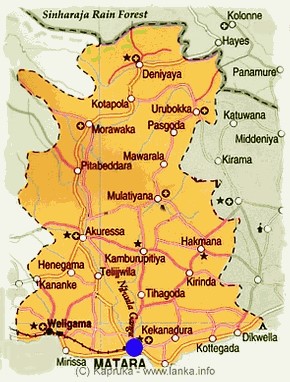
Just to digress from the main subject of Budget a bit, the shameless and ungrateful lingerie designer Mangala Samaraweera before commencing hid budget speech has ridiculed the former President Mr. Mahinda Rajapaksa for coming to Parliament with a group of JO MPs riding in bicycles.  This man who started his own political life by riding in a bicycle has completely forgotten his past.  During 1988, Madam Sirimavo Bandaraanaike (after describing to some people that Anura brought a pirimi vesiyek to her to appoint as SLFP organiser for the Matara electorate”) sent this guy to Matara as the SLFP joint organizer for the Matara electorate under the mentoring of her confidante Mr. Mahinda Rajapaksa.  This man by residing in the house of a relative did his electioneering in and around the Matara town in the only vehicle he had, a bicycle.   He depended on Mr. Mahinda Rajapaksa to come all the way from Tangalle on a daily basis to take him in Mr. Mahinda’s vehicle to Goigama chieftains in the district and canvass support for him as Mr. Mahinda was profusely loved by the majority of Goigama people in the Matara district and also because his mother was from Matara.  Mr. Mahinda’s support for him was very crucial because Matara district is a highly cast conscious district and his caste durawa’” was a minority caste in the district which was dominated by Mr. Mahinda Rajapaksa’s Goigama caste, followed by Mr. Mahinda Wijesekara’s Karawe caste and since the election was held on preference votes basis. He still gets less votes than Goigama caste Budhika Pathiranaa despite holding the most powerful ministerial portfolios. If it was not for Mr. Mahinda Raapaksa he would not have entered Parliament in 1989.

  • Karawe caste is majority in Weligama and Devinuwara electorates (coastal belt from Weligama to Dickwella excluding Matara Municipal Council and some Matara Pradeshiya Sabha areas)
  • Durawe caste is the majority only in the Matara electorate.
  • All other electorates in the district are Goigama majority electorates (Akuressa, Deniyaya, Hakmana, and Kamburupitiya electorates)

Now, back to our subject the Budget, analysts point out that for decades the economic policy of the country has been building of a strong Sri Lankan capitalist economy and protecting the Sri Lankan peasantry but this budget attempts to roll back this policy.  They say that the budget hopes to de-industrialize Sri Lanka and shift it to trading and commerce, rather than industrial and agricultural production as well as industrial production based upon agriculture

Opposition to the budget proposals are mounting and that latest to join the Anti-Budget wagon is the Sri Lanka Medical Association.  .The SLMA President Prof. Chandrika Wijeratne has urged all parliamentarians to defeat the efforts to promote alcohol consumption. She has said that the moves to reduce beer prices and introduce a new tax structure for alcohol were “misplaced and dangerous”. She has stated that while the government’s free health service was striving to reduce alcohol consumption and battle alcohol related diseases, the government itself was attempting to introduce a new policy which would increase alcohol consumption.

It must be remembered that with the establishment of the people’s government in 1956 Sri Lanka embarked on a national development policy and encouraged, assisted and induced Sri Lankans to establish manufacturing industries and farms and it was the key guiding principle of Madam Sirimavo Bandaraanaike and Mr. Mahinda Rajapaksa’s governments as well.  Wide implementation of this policy resulted in establishing many manufacturing industries such as Maliban, Dasa, Kelani Tyre, Tulhiriya, Fertilizer, Plywood, Steel, Mineral Sands, Paper, Sugar etc coming into being.  Unfortunately, many of these industries collapsed due to lack of assistance from the intermittent UNP governments and Chandrika’s pseudo populist government or got subjected to privatisations. It was reported in economic circles that when Madame Bandaranaike handed over the country in 1977 there were more than 100 large scale, medium scale and small scales locally owned industrial units in Sri Lanka.  Mr. Mahinda Rajapaksa had to re-acquire many of the State Enterprises that had been privatised and handed over to political cronies or foreigners between 1977 and 2004..  They included, Sri Lankan Airlines, Shell Gas, Insurance Corporation, Pelwatte and Sevanagala Sugar plants, Tulhiriya textile mills etc.  Act No. 43 of 2011 relating to acquiring minimum performance enterprises is among the acts intended to be repealed or amended, the UNP Minister Daya Gamage will get the Sevenagala Sugar Factory which vested with the government under reacquisition.

Supporting/establishing of local industries and growing our own essential food items is the inherent policy of the Sri Lanka Freedom Party.  As such no one calling himself/herself as SLFP and in the government has a moral right to support this budget which is all out to demolish local industries and make the country totally dependent on food imports.  Those in the government and calling themselves as SLFPers should be ashamed to call Gal Arakku John, Wig Nimal Siripala, Conductor Amaraweera, Amuda Duminda, Joker SB, Dilan Perera and Mutguhettigama who have praised the budget as their colleagues SLFPers.. It is this government’s abandoning of the highly successful self reliant Divi Neguma programme that has contributed to today’s sky rocketing vegetable prices as excess production under the programme used to be supplied to the nearby market outlets

A hidden factor evident in the budget is that the Tamil slavish Mangala has not forgotten to present some special proposals exclusively favouring the Tamil community.  These include

  • Establish a modern economic center in Jaffna which will be connected to the Dambulla Economic Center and Colombo, creating an economic triangle
  • Improveme`t to Myladi Fisheries Harbour will be improved.
  • Allocation of Rs. one billion to support small industries in the Northern Province
  • A Low interest loan scheme for those in debt in the North and North Central Provinces.
  • Allocation of Rs. 2.7 billion to construct 50,000 brick and mortar type houses to be built in the North and East for differently abled women in the North and the East.
  • Allocation of Rs. 2,000 million to construct 25,000 housing units for those in line houses.
  • Allocation of Rs. 3,000 million to construct housing units in the North and East provinces.

While appreciating this generosity being shown to the Tail people,  it warrants to ask why an economic centre is to be established only in Jaffna, and why no such centres are to be established in other local produce supply areas such as Embilipitiya, Welimada and Ampara,  Why no consideration is being given for construction of houses for landslide victims in Aranaayake, Meetotamulla, Saalawa, and other landslide hit areas where the people who lost their houses in these areas are languishing in tents, houses of relatives and in rented houses?

The veteran journalist C.A.Chandraprma in his weekly Sunday Island Political Column dated 12th November states that this is a budget designed to milk the people dry.   He says that apart from a huge increase in revenue expected from income tax, the government also hopes to increase revenue from indirect taxes on goods and services, import duties payable on cars and vehicles, widening of the VAT net, tax on mobile phone relay towers, tax on SMS advertising, and from the duty revision on liquor and from the proposed tax of 20 cents for every Rs. 1000 bank transactions called the ‘debt repayment levy’. He says that these over-ambitious revenue targets have been given just to keep the IMF happy.

In an another foreign servile move, the budget also proposes to establish VAT refund centres at airports and sea ports to refund VAT payments made by foreign visitors during their stay in the country..  If the government can manage without the VAT payments of foreigners why no arrangement can be made to completely waive the horrendous VAT charges which drastically affect the people of this country? What happened to the promise made last year saying that VAT will only be a short term measure?

The Island editorial of 13h November flaying the budget for many of its follies criticised the widening of VAT net to include sale of apartments as well and said that this move runs counter to the very principles of VAT. The Chairman of the Colombo Stock Brokers Association Mr. Ravi Abesuriya has also criticised VAT imposition on apartment sales.  He has told the Financial Times that the removal of 15% VAT exemption on the sale of condominium housing units is a regressive policy.”  He has pointed out that VAT, which is a service tax, is not charged on property transactions in almost all the countries, except a few,” and the new m0ve will have an impact on future developments as well as on the idea of promoting vertical living.

Former Media Minister Mr. Keheliya Rambukwella sarcastically states that this inept government has submitted 4 budgets and these budgets have presented about 400 promises but only about 26 promises have been fulfilled so far.  For instance one such false promise made in the last budget was providing Tabs to Advanced Level students. The former Minister said that what Mangala Samaraweera has presented is a basket full of fairy tales.

The budget speech also failed to mention about the prices increases of many items which included plants, plastic beads, woolen clothes, timber and timber products, dye, home appliances, cameras, projectors, wristwatches, and spectacles.

While the budget in general was criticised by all and sundry it has received much appreciation from Mangala’s Northern relatives.  A North website commenting on the budget writes even though many expected the Government to come up with an ‘election budget’, the maiden Budget of Minister Samaraweera had focused mainly on policy implementations. While many view the Budget 2018 as set of proposals that promises nothing major to anyone, yet implementing taxes for almost everything, there are some carefully drafted po licy measures, which any other government would have otherwise not paid much attention to. For instance, it had paid attention to the trap of micro credit entities, where rural people, especially those in the North and the East, fall prey to.”

The Website adds that The Government will support, by way of the provision of grants and the introduction of a low interest loan scheme, to facilitate those indebted and to move out the debt trap through co-operative rural banks and the thrift and credit co-operative societies. This will be implemented on a pilot basis in the Northern and the North Central Provinces and Rs 1,000 million has been allocated in this regard.”

Mangala’s terrorist Grandpa Sambandan has hailed the budget proposals.  He has commended Mangala for allocating Rs. 140 million for the welfare of LTTE cadres who had been rehabilitated. Another TNA MP Sivashakthi Anandan deviating from the budget debate has told the Parliament the importance of devolution for North and East and has said that Tamils should be appointed as District Secretaries in Tamil majority areas.  (niz)


The darkest hour is just before the dawn – II

November 14th, 2017

By Rohana R. Wasala

Something worth keeping in mind in this context is that the nationalism of the Sinhalese has always been territorial nationalism. (.) Sinhalese domiciled in a country other than Sri Lanka, will never ask to be recognized as a ‘nation’ in that second home country however large their numbers in that country may be. Their nationalism is not racism; it is not racially motivated, but is territorially based, as well known professor of archaeology Raj Somadeva correctly emphasized recently in the course of his guest lecture at National Freedom Front leader MP Wimal Weerawansha’s book launch (Yadamin baendi Akuru or ‘Characters in Irons’).

The writer (of this article) remembers that ‘maubima naethnam maranaya’ (Motherland or Death) and ‘palamuwa maubima – devanuwa waedabima’ (First Motherland  – Second Workplace) were among the main slogans of the Janatha Vimukti Peramuna (JVP) during both of its 1971 and 1988-89 insurrections. The membership of the JVP then entirely consisted of young Sinhalese Buddhists, but their struggle was on behalf of their social class/the dispossessed, the downtrodden, but not racial or religious ethnicity; and as Marxist materialists, they were not concerned with a religion. In their rebellion, more than 60,000 young men and women, a substantial number mere kids below the age of 15, laid down their lives for their cause.

They fought and died to prevent the country from being divided through federalism in terms of the 13th Amendment forcibly imposed on our country by India in 1987. Some 29,000 young soldiers died in the 30 year war, and 14,000 left permanently disabled. Terrorist bombings and massacres also claimed young lives as well as old. So, it is not an exaggeration to say that during the last half a century not fewer than 100,000 young people died in the name of our Motherland. Can we forget the thousands of young Tamils who laid down their lives for an unworthy cause, misled by a group of separatist terrorists, and other young Tamils opposed to them who were massacred by the same fratricides.

The territorial nationalism of the Sinhalese has not changed even today, contrary to prevailing negative views about Sinhalese as ethno-religious racists. Whereas Sinhalese are concerned for the country, others are only worried about racial matters: racist Tamil politicians always talk about Tamil interests to the exclusion or even at the expense of those of other communities; communalist Muslim politicians are not different. But there are Tamil and Muslim politicians who are of the national level, whom the majority Sinhalese sincerely respect.

The Sinhalese have never fought a communalist war. Anti-Sinhalese misconceptions have been created by false information disseminated abroad about them by federalists/separatists.

Some anti-Sri Lanka propagandists pretend that the Buddhasasana is the Maha Sangha. The monks are only a part of the Buddhist religious establishment, though an indispensable part. It is the community of monks as a united monolithic institution that has been a powerful force in the Lankan state. Of course, the reality today is that this institution has been weakened through the infiltration of politics.

The recent coming together of monks under the apolitical leadership of the traditional Mahanayake Theras of the various nikayas is a welcome development. There may be individual monks (there always have been) who are powerful with politicians in their own right, but they are also subject to the leadership of the Mahanayakes.

It is wrong to automatically assume that the Buddhist monks are not knowledgeable or competent or experienced enough to advise rulers in matters that they think come within their purview. (However, it must be added in the same breath, that monks usually prove themselves to be very naïve when they have to deal with politicians, because of their lack of familiarity with mundane matters. They have to guard against being duped by the latter, who are ever eager to exploit religion for their own pragmatic ends.

It is mandatory for monks to be above partisan politics.) Most monks who are today in the forefront of movements dedicated for national and religious service are university educated. To give a couple of examples, Ven. Medagama Dhammananda Thera, the Registrar of the Asgiriya Chapter of the Siyam Nikaya, is a PhD. He was educated in America and Taiwan; he is also equipped with a comprehensive knowledge of the secular law. Ven. Dhammananda Thera is an active researcher in the field of international and local political changes, and in poverty alleviation studies. He is active in the Jayagrahanaya Sri Lanka organization, and has done much work paving the way for Sinhala Tamil harmony in the Eastern province by restoring irrigation tanks and canals damaged in the war.

Sinhalese Buddhists are a minority in that province. So, his work benefited more Tamils and Muslims in that region than Sinhalese. Ven. Dr Dhammananda Thera says, Unlike certain NGOs, we are not extremists”. Another outspoken monk who is in the vanguard of these movements is the youthful Ven. Dr Medagoda Abhayatissa Thera. He is the head of the historic educational institution known as the Sunethra Devi Pirivena, Pepiliyana.

It was a university level centre of education and culture which had flourished in the 15th century before the fateful incursion of the Portuguese at the beginning of the next century. Ven. Abhayatissa Thera is also involved in social work helping all communities without any discrimination. Not long ago, he led a group of monks from Colombo who went to Jaffna for the express purpose of donating blood.

Apparently, there was a shortage of blood for transfusion in hospitals there. Monks do not engage in such charitable activities to promote someone or some ideology, though their biased critics might feel tempted to attribute political motives to this instance of practical expression of their genuine Buddhist altruism.

Regarding the Maha Sangha’s eligibility to get involved in this crucial matter, one or two more facts need to be emphasized. These leading monks have been in contact with the highest leaders of the government the president, the prime minister, and the speaker of parliament at least since January directly as well as by proxy regarding the constitution making program as can be inferred from a speech given by Ven. Dr Medagama Dhammananda Thera.

They have also been thoroughly briefed by non-political analysts of the proposed new constitutional reforms such as specialist doctors, and legal experts in the constitution making domain. So, the venerable monks, with their selfless patriotic commitment, are infinitely more eligible to express an opinion on the subject than the antinational NGO hirelings who are promoting this federalist constitution.

Incidentally, it was Ven. Dr Abhayatissa Thera who, according to a news report in The Island of October 25, 2017, urged the president and the prime minister to have a Tamil speaking president and a Tamil speaking prime minister without further delay, saying that such an arrangement was better than dividing the country on ethnic lines. He made these observations in a speech at the National Library and Documentation Centre, Colombo, on October 23, 2017 (Please see below). Though this proposal would immediately sound desperate and unrealistic, a Tamil speaking president or a prime minister or both  will surely be as acceptable to the majority Sinhalese Buddhist community as a Sinhalese speaking one, provided that they prove themselves to be non-communalist leaders who are genuinely committed to the preservation of the unitary structure of the Sri Lankan state and the protection and fostering of Buddhism as the foremost religion of the country.

The last four kings of the Kandyan kingdom, the Nayakkars, were Dravidian (not Tamil, though) were from South India. They were accepted by the Chiefs and the ordinary people of the Kandyan provinces as Sinhalese Buddhist kings, and they made popular rulers, too. They ruled here NOT because they were Dravidian, but because they were connected with the Kandyan royalty through marital relations. Sinhalese Buddhist citizens of modern times have never voted as racists or communalists.

After this unnecessary constitution making imbroglio is, hopefully, resolved, the UNP and the SLFP (if restored)/the SLPP (Sri Lanka Podujana Peramuna) should recognize the need to change their constitutions to accommodate Ven. Abhayatissa’s proposal, if they don’t already allow that, which of course is unlikely; any Sri Lankan citizen has the right of getting elected to the highest post in the country. The JVP which was deadly against Indian intervention in Sri Lanka in 1987 wholly rejected the 13th Amendment because of its federalist features.

Its leader Rohana Wijeweera was a severe critic of Indian expansionism in the region. The JVP’ers were concerned about the preservation of the unitary character of the state, but they were not anti-Tamil by any means. In his book RECOLONISATION – Foreign Funded NGO’s in Sri Lanka” (first published by Sage Publications New Delhi, California, and London, 2006) Dr Susantha Goonatilake refers to some confidential tape-recordings by a former minister (presumably of the UNP government of president Premadasa in the 1987-90 period) in refutation of the then JVP’s alleged exclusionism. (Prabhakaran’s LTTE regarded the JVP as an ultra-racist Sinhalese organization, though evidence suggested otherwise.) Dr Goonatilake writes on p. 179:

QUOTE ‘From these recordings it would appear that instead of being exclusivist and anti-cosmopolitan, the JVP was looking beyond its natural lower strata class base. In fact, it had wanted to suggest the name of Radhika Coomaraswami herself for the highest post in the island, that is, as its choice of presidential candidate (Ranasinghe 1996)’ END OF QUOTE

The entirety of the JVP comprised young Sinhalese, nearly all of them from a Buddhist background. No doubt, there were a few Catholics and Christians as well. The attitude of the JVP then was identical with that of the majority Sinhalese community. However, it is not only the communalist politics of  the few powerful politicians from the minority parties that would prevent the election of a president or prime minister from their ranks, but their power hungry counterparts among Sinhalese politicians.

If politicians behave in a manner that the democratic will of the ordinary people is asserted, then there will be no barrier to a person other than a Sinhalese being elected to the highest post in the country. It won’t remain an unrealizable dream in the future when the new thinking more liberal younger electorate begins to have the upper hand. If the writer’s memory doesn’t fail him, the JVP wanted Lakshman Kadirgamar to be prime minister towards the end of Chandrika Bandaranaike’s presidency (1994-2005), though it later appeared that they fell by the wayside due to influences from other quarters beyond their power to overcome.

An invaluable service that Chandrika Bandaranaike did to the country during her lackluster two terms was her choice of this noble Sri Lankan as her Foreign Affairs Minister. Actually, the late Kadirgamar was initially anti-left as his daughter Ajitha Kadirgamar says in her biography of her father ‘THE CAKE THAT WAS BAKED AT HOME’ (Vijitha Yapa Publications, Colombo, 2015). Though the JVP revolt of 1971 did not affect him directly, Kadirgamar felt that the advent of the JVP didn’t augur well for the country. It was going to make life in Lanka worse, and he felt he needed to go abroad. Following is Ajitha Kadirgamar from p. 189 of her book:

QUOTE ‘But ironically enough the very same Lakshman who left Sri Lanka due to the JVP found himself on the best of terms with the rathu sahodarayas” thirty three years later. The JVP found in Lakshman a sincere friend and guide while Lakshman recognized a like-mindedness” on some issues. ’END OF QUOTE

What provided the main cue for this article and prompted its title The darkest hour is just before the dawn”, were the hints that the writer found in Ven. Dr Abhayatissa Thera’s speech on the aforementioned occasion about the respective attitudes of president Sirisena and the Joint Opposition (JO) towards the controversial constitution making process.

The thera found fault with the JO for failing to take a tougher stand against the new constitutional reform proposals, thereby revealing its possible indecision regarding the issue. (However, the stand of the JO cannot be different from the stand of former president Mahinda Rajapaksa. His public statement of October 16, 2017 is the best critique of the envisaged new constitutional reforms that this writer has come across.

In his speech on November 2 during the parliamentary debate on the interim report of the Steering Committee, he argued convincingly and calmly how parliament will be redundant when powers are fully devolved to the provinces. He explained that what he had meant by 13+ was something that would hold the country together, but not something that would divide the country as would the proposed new constitution. Mahinda also pointed out the glaring injustice in the allocation of time for speeches in this debate.

More time was shared between the government speakers and those of the official opposition, i.e., TNA, JVP, etc., who were supportive of the proposed constitution because they were all stakeholders of the Yahapalana project of 2015, while members of the Joint Opposition were given much less time to express their views. He wanted the JO members to use their vote for or against these reforms according to their individual conscience; he appealed to the leaders of the government to allow their own members the same freedom.

In addition to these instances, his occasional cautious critical remarks in response to journalists’ queries suggest that he doesn’t believe that the constitution making enterprise will survive the united opposition of the Maha Sangha. Besides, Udaya Gammanpila MP, leader of the Pivithuru Hela Urumaya, a constituent of the JO, has explained that the point of their remaining in the constitution making process while opposing it was both to keep themselves informed of what was actually happening in it, and to disrupt its progress as much as possible, something, as he claims, they are already achieving.)

On the other hand, simply  depressing is what Dr Abhayatissa Thera reveals about the attitude of the president who had had consultations with a number of national civil organizations opposed to the peremptory constitution making exercise including the Jathika Sangha Sabhawa, the Federation of National Organisations, Patriotic National Movement, Mahajana Rajjya Sabhawa, the Global Sri Lanka Forum (GSLF) and Wimal Weerawansha’s National Freedom Front. (According to The Island news  report, Ven. Dr Abhayatissa Thera himself was representing the Eliya organization when addressing the media at the National Library and Documentation Centre {Independence Avenue, Colombo}.

Both Eliya and Viyathmaga organizations whose memberships comprise academics and professionals are led by former secretary of defence Gotabhaya Rajapaksa, whose unblemished reputation as an efficient, honest, and no nonsense government official under the previous government is still a force to reckon with.)

The monk told the media that the president had said that the people of the North were unhappy as they had been denied their rightful place (!). He believed that the president was unwilling to reverse the constitution making process. Having said what I have about Ven. Dr Abhayatissa Thera, I’d like to kindly remind the reader to be mindful of the factor of typical naivety that at least some Buddhist monks display, despite their educational background, when dealing with politicians.

(To be continued)


INTERNATIONAL RELATIONS AND YAHAPALANA Part 1

November 14th, 2017

KAMALIKA PIERIS

Yahapalana government   has   decided to move away from Sri Lanka’s much respected policy of ‘non-alignment’ and is showing a very clear pro-American tilt in its international relations. There have been three rounds of American influence in Sri Lanka, each more powerful than the one before, climaxing in today’s US-Sri Lanka relationship. Critics say that the Yahapalana government is a ‘fully pro-Washington regime’.

When Sri Lanka re-gained independence in 1948,   the UNP government shunned the socialist countries, like Russia and China and   maintained close relations with the west including USA.  In 1961  a deal was made with US to relay Voice of America progamme over Radio Ceylon which was then a popular radio station in the Indian subcontinent, in return for getting new and modern broadcasting equipment from the US for Radio Ceylon.VOA used this facility to broadcast to all of Asia including central Asia. USA did not like the Rubber-Rice agreement with China and made this known to Sri Lanka. That is the first round.

The second round came with the UNP government of 1977, under President J.R Jayewardene (1977-1989). JR was very pro-America and was known as Yankee Dickey.  JR followed an openly pro -US foreign policy. He paid an official visit to USA in 1984. An agreement was signed in 1984 between Voice of America and   the Government of Sri Lanka to establish a new relay station in Iranawila. US navy ships were allowed to enter Trincomalee for ‘rest and recreation’. The Colombo port was visited by ‘all types of US naval craft’ on a regular basis   during this period. USS Kitty Hawk, America’s primary aircraft carrier at the time, accompanied by other ships of the 7th fleet made a port call to Colombo in 1985.

USA is the only country in the world which has built a military empire, without first creating a territorial empire observed analysts. Instead of conquering countries, US    entered into military agreements with them. Presently US has military agreements with 130 countries and more than 20 Central Commands all over the world.   Similarly, in 2007, Sri Lanka    entered into a ten year Acquisition and Cross-Services Agreement (ACSA) with the US. It provided inter alia, for logistics, supplies and re-fuelling facilities.

The regime change of 2015 saw the arrival of USA, in its third round of influence, more powerful than before. John Kerry, US Secretary of State visited soon after the change of government to show that America was now in control of Sri Lanka.  US involvement in Sri Lanka increased. There were various government to government partnerships such as House Democracy Partnership, the U.S. Government’s Millennium Challenge Corporation compact and US- Sri Lanka Partnership Dialogue.

The first round of the US- Sri Lanka Partnership Dialogue was in February 2016.   The second was during the one day visit by Ambassador Shannon in November 2017. They discussed the need for economic, social, and military collaboration.  They examined the grave threats posed by terrorist groups like the Islamic State and North Korea’s ‘unlawful’ nuclear and ballistic missile programs. The two countries agreed that the security, stability, and prosperity of the Indian Ocean region should be safeguarded and that further cooperation and exchanges in maritime security and safety, were needed.

Yahapalana is now establishing military links with USA unlike anything ever seen before. There are regular military contacts between the US armed forces and Sri Lanka armed forces. Most of it is directed towards Sri Lanka navy but the Air forces of US and Sri Lanka conducted the Pacific Airlift Rally.    Several senior US naval commanders   have visited Colombo, including Head of the US Pacific Command Admiral Harry B. Harris Jr. Ships of the US 7th Fleet have been arriving in Sri Lanka. They include USS Blue Ridge, USS New Orleans, USS Frank Cable, USS Hopper, USS Comstoc, USNS Fall River, climaxing in the arrival of   nuclear-powered aircraft carrier USS Nimitz with its 5,000 personnel and its strike force. Before this, Sri Lanka did not permit naval vessels with nuclear weapons into its ports. There have been joint exercises between the US Navy and the Sri Lanka navy. Sri Lanka was inducted to Cooperation Afloat Readiness and Training exercise (CARAT) involving US and Sri Lankan naval elements. There were other joint exercises too, such as the Field Training Exercise (FTX), conducted jointly by the US Marines Forces, Pacific Command (MARFORPAC) and the Sri Lanka Navy (SLN) at the Welisara Naval Complex in 2017.

USA has made its future military plans clear to Sri Lanka. United States will continue to be an Indo-Pacific power, said Alice G. Wells, Acting Assistant Secretary of State for South and Central Asian Affairs speaking at the Indian Ocean Conference 2017 in Colombo. ‘This has been a long standing part of U.S. foreign policy and it will not change in the decades to come.’ This ‘Indo Pacific’ region was known earlier as ‘Asia Pacific’.   It combines Indian Ocean and Pacific Ocean.

Major General James Eifet of the USA speaking at the Colombo Air Symposium in October 2017 drew attention to US concerns in East Asia. The most urgent threat was North Korea’s intermediate and intercontinental ballistic missiles.  He pointed out that other countries in the region were also at risk from these missiles, only the US, South Korea and Japan. North Korea’s missile tests indicate that Sri Lanka too was in range of a possible attack by from North Korea.

Eifet also criticized China over its claims in the South China Sea. He said that the US considered China’s maritime claims as excessive and that it affected the ‘freedom of navigation in the ocean’. The US is watching China carefully and urges it not to continue to build, reclaim and militarize disputed territories,”

North Korea retaliated. ‘The entire U.S. mainland is within our firing range and if the U.S. dares to invade our sacred territory even an inch it will not escape our severe punishment in any part of the globe,’ said North Korea  North Korea issued a statement at the United Nations, in October 2017, warning states about joining USA against North Korea. We have no intention of using nuclear weapons against any other country, as long as that country does not take part in the U.S. military actions against North Korea, said North Korea.

US has made it clear that it expects Sri Lanka to join if US wages war against China and North Korea. Major General James Eifet said that as US flexed its muscles in the air and at sea it asked for support from its partner nations. ’Strong partnerships enable us to advance collective interest including security’.

Sri Lanka has responded positively. The US and Sri Lanka will stand together against the threats of North Korea’s nuclear weapons programme said Sri Lanka in a joint statement issued in November 2017. We are strong partners and today our relations are at an all-time high,” US under Secretary of State for Political Affairs Thomas Shannon said. Some said that Sri Lanka had no need to get involved in the politics of North Korea. North Korea is far away from Sri Lanka.   But others pointed out that is best to swing with the US. ‘US combine versus little Lanka?’ they asked.

Tamara Kunanayagam observed that Sri Lanka   today faces a determined United States, ready to coerce Sri Lanka to join the US in its confrontations with China in the Indian Ocean. US needs Sri Lanka to complete its defense ring around the Indian Ocean said other analysts. Sri Lanka ‘s  location is the cause for the  convergence in Sri Lanka  of the five powers, China, India, USA, Japan and Singapore, observed  Ladduwahetty. Sri Lanka is important because of its strategic location in the Indian Ocean. Also there is Trincomalee. Sri Lanka’s unique geographic position makes it a natural aircraft carrier as well.

Plans are afoot to set up a US base in Trincomalee harbor, said Tissa Vitarana in 2016. A bilateral agreement in this regard has been signed secretly between Sri Lanka and America, he said in 2017. Very soon the US 7th fleet will be in our waters, he warned. G.L .Pieris said that the government was planning to hand over Sri Lankan airspace to foreign powers. These growing military ties to the US are a threat to Sri Lanka said critics.  If military cooperation of this nature continues, and an American military base   is set up in Sri Lanka , Sri Lanka would become a puppet country of the US like Philippine’s, said Vitarana.  US interests will take precedence over the concerns of Sri Lanka.  Sri Lanka’s military will be transformed from a force protecting Sri Lanka’s independence, sovereignty and territorial integrity to one defending US global interests.  (CONTINUED)

Ranil’s  Hobby-Horses

November 14th, 2017

R Chandrasoma

While hammering away at a few overworked themes is a cardinal feature of the ‘discourses’ of politicians in general, it is surely a sign of intellectual vapidity when a political leader acts like a ‘repeating groove’ in an old-fashioned phonograph.

Let’s take some of his (RW’s) favourite themes that are repeated ‘ad nauseam’ in his political addresses. The first is the ‘enormity of the debt crisis – we owe the world ‘millions, billions, trillions of dollars – the great national challenge is the annulment of this fantabulous debt which will descend on the heads of future generation unless we act now’.

It is OK if this dangerous wisdom is proffered to financial experts but – its repetition at every vulgar political gathering is an indication of a rule-based mind – a failure to be innovative – resulting in what psychologists call ‘perseveration’ in thinking.

Another favourite theme is ‘the horrendous state of Sri Lanka  under MR’ and the ‘Herculean task’ facing him (RW) and the New Government  to set things right.

With this hallucinatory mind-set, he believes that his anointed task is to prove that what was earlier regarded as a National Asset  is really a burden passed on by an incompetent government.

Thus, an Airport is dismissed as a Domain of Peacocks until the Magician RW touches it. Men were routinely kidnapped on roads and hauled in White Vans until he came to power – when such outrages ceased.

A harbor is dismissed as a glorified swimming pool until the Magic Wand of RW touches it.

There is no need to go on. Let us conclude with a reference to a strange ideological  ‘fixation’ of RW – ‘we were only second to Japan at the time of the granting of Idependence’ .

As in his earlier prophetic announcements, this astonishing fact is repeated  ad nauseam. He believes that Pre-Independence Sri Lanka  – under the heel of the Colonial Overlord, ridden with Malaria, TB and sickly infections, where the poor natives had no rights while a Pariah-Class of Kalu-suddhas establish enclaves in the city that (supposedly) won the admiration of Lee Kwan Yu.

That a political leader of power and stature can make such idiotic statements is surely evidence of the terminal political decline of this ancient country.

BEER ,DAHL .DRY FISH ,COCONUT OIL  ……..WHICH ONE YOU PREFER .

November 14th, 2017

Dr Sarath Obeysekera

I remember the days we studied in Russia during Breshnew’s  time ,communism was in full swing , Vodka bottle of 40 Degree alcohol strength sold at 3 Roubles 50 Kopkes ans add another  12 kopeks  for the bottle .There were no screw caps which can be used to seal the ¾ litre Vodka bottle (If it is partly consumed)  but a flip top cap which should be tared  opened and use the whole bottle at once .It is hardly chilled but usually divided in to three glasses ,and gulped neat by three workers ( Rabbothiki ) and students. In the evening you may see a worker ( after hard days work) standing by the Gastronom where Vodka ( similar to cheap version like Gal Arrakku –They say made from Petroleum by product ) is sold .He will keep three extended fingers on his chest and show two fingers out of three to indicate he needs two more contributors to buy a bottle where each will dole 1 rouble 20 kopeks  to make 3,rouble 62 kopeks .Hardly anyone buyes Port Vine which in 1/3rd  of vodka price because it is of awful taste and you get  hangover .

Sometime they will have a peice of Pork Fat ( called Salo) and black bread wrapped in Pravda” news paper to use as a bite” which they call Sakuuska”

USSR was thriving on Vodka sales and government coffers need the income to pay salaries .I was working in an Oil /Gas field near Siberia in a town call Orenburg where we repaired oil well equipment .One week, State decided to not to sell Vodka to curtail alcohol consumption .and the Gatronom did not have money to deposit in State Bank to pay salaries.

All the substitute alcohol constraining bottles like Audi colon ( Perfumes) vanished from the shelves ,There was no boot legging as vodka was flowing freely .

Beer was so scarce commodity, and in Winter Fat Russian Middles aged tough woman will sell beer heated in a kettle on road side.

Al of a sudden people get to know of Bulgarian beer bottles in a Gatronom and  every one rush and buy cases of beer ( ½ Litre bottles) and take home ,On the way they may find Dry Fish ( small fish of 6-7 inches) and take for Sakusaka !

There was a beer bar in Central Moscow where we stood in the queue to get in to drink Daft Beer ( a Luxury) in heavy winter ,and all of them carried  dry small fish to use as Sakuusaka.

Wooden tables of the beer bar is full of somewhat smelly salty fish skin which we consumed with full satisfaction.

If I want to have a more refined Liquor ,Armenian Koniak was available at high prices or Stoleeshshnaya vodka for  4 Roubles 12 kopeks . If you want export quality Vodka made form potato ,can be bought in a Dollar Shop ,usually sold by Diplomats ( including Sr Lankans) who want to make a fast buck .Stoleshnaya Sold in Dollar shopes  foreign currency Coupons, have a screw type cap ,We made Screw Driver – a cocktail where tomato juice is poured in to glass and pour few ML vodka which floats on the juice like Oil .Then you gulp it followed by the Tomato Juice !

This was the life in such a growing country like USSR those days .

What I want to highlight is how popular beer an dry fish were during Good old days .

Today in our budget we have cheaper Dry Fish and cheaper Beer ,We can go back to an era equal to Communist Russia ,where people never complained .They lived  happily.

I also heard one Minister lamenting about Beer prices and the other one demanding cheaper Gal Arrakku” !

When we have more representation of women in legislature and a woman finance minister, I am sure that they will prohibit liquor sales and make this country like Gujarat where Mahatma Gabdhi was born –A Dry State-

Let us be an intoxicated country so that people will forget about everything including Saitm,Bond Fiasco ,Petroleum Shortages .Highway robberies ,and Hambantota …………..

Dr Sarath Obeysekera

We too oppose the handing over of Sevanagala to Daya Gamage – Amaraweera

November 14th, 2017

Crooked politicians blocking foreign investments

November 14th, 2017

PROF. O.A. ILEPERUMA Courtesy The Island


The letter by Fr. Augustine Fernando on “Corruption threatens all investments” (Island 3-11-2017) should be an eye opener to our President and the Prime Minister, as it gives vivid details of how corrupt ministers ruin our country. They only serve themselves rather than the people of this country. This letter particularly deals with ministers who demand fat commissions from potential foreign investors. The inevitable result is that, investors shy away from Sri Lanka resulting in many lost job opportunities for our youth.

Recently a news item highlighted the case of an investor who was willing to build a mass transit monorail system and some government politicians demanded big commissions, causing the investor to leave the country in disgust. Many misdeeds of the previous government have now surfaced, including many shady land deals. Such corrupt practices are not restricted to foreign investment, but also to development of local industries by Government owned corporations. Several years ago, when the then Chairman of Lanka Phosphate Ltd. planned to commence the production of phosphate fertiliser in Sri Lanka using our own Eppawela rock phosphate, he was unceremoniously removed from his post. A powerful minister in the previous government had other thoughts of selling this deposit to a foreign company. These ministers think that all our natural resources are their private property, and local manufacture of fertiliser was anathema to this minister, which will deprive him of handsome commissions from a foreign joint venture. Had this venture succeeded, we would have saved around Rs.1000 million in foreign exchange, which we now use to import phosphate fertilizer, provided farmers with fertilizer at half its imported price and created a number of job opportunities for our youth.

article_image

Privatisation of state assets has always been a failure. One example is the National Paper Corporation with factories at Valaichchenai and Embilipitiya, which have been non-functional for decades, depriving job opportunities to residents in these areas. There is a skeleton staff at Valaichchenai factory who are idling but drawing their salaries Again, politicians who promoted their privatisation have got their share of money leaving hapless citizens to suffer. Recently Lanka Mineral Sands Ltd. was listed as a loss making entity by our economic planners. On the contrary, this institution was making substantial profits and in 2014 earned a net profit of Rs. 1400 million, which went into the government coffers. What is required here is to commence value addition to the mineral sands through local expertise to produce commercially viable products.

Father Fernando has labelled the President, Prime Minister and the Finance Minister as honest politicians. However, their inaction on the relevant ministers and officials is inexcusable. Popular websites have exposed the misdeeds of some ministers, but there is no inquiry or any other visible action against them. It is not only the ministers who demand bribes, but all officials down to the peon are equally corrupt. Even at the provincial level, politicians make money out from various projects. Land developers who block out smaller plots from larger estates have to pay the Chairman of the Pradeshiya Sabha around Rs. 1000 per perch of the land in order to get the plans approved. This is not all, from the technical officers to clerks at the office, all have to be taken care of or otherwise the file will go missing!

There was an exiled Sri Lankan in Canada running a factory there converting waste polythene into heavy duty pipes, which are exported to USA. During a visit to Sri Lanka this young Sri Lankan businessman offered to set up a similar factory in Sri Lanka at a meeting with the minister. However, the minister later demanded 50% of the shares in the joint venture and that was the end of this project. This investor left Sri Lanka in disgust since Canadian law prohibits its citizens from offering bribes for overseas investments.

Is a parliament really necessary to run a country? Belgium ran without a government for a record 589 days in 2011. A caretaker government ran the administration without any hindrance. Even Netherlands, which had the elections in March 2017, is without a government run by a parliament, and the economy of Netherlands is booming compared to other EU countries under the present caretaker government with only 14 ministers. The question arises as to whether the Parliament of Sri Lanka is doing anything useful to the country except passing supplementary estimates – mostly to buy vehicles for ministers, furnishing their offices and repairing official residences.Even last week they passed a supplementary estimate of Rs. 1400 million, mostly for foreign junkets of ministers, secretaries and other officials. No wonder why Mr. Wimal Weerawansa threatened to bomb the Parliament!

The saddest thing of all is the deafening silence of the opposition who pursue their own political agendas. Many decisions taken by the government ministers are accepted without even a hum from the opposition. The opposition has a moral right to highlight the actions of ministers, which are detrimental to the country. One such example is a decision taken by a former petroleum minister to change the transport of petroleum fuel from trains to bowsers. A train can carry the load of over 50 bowsers and costs much less.At the present time these large bowsers take petrol from Kolonnawa to places such as Kurunegala and Kandy, and then the fuel is locally distributed using Ceypetco bowsers. These bowser rigs cause so much of traffic congestion and air pollution and are also much more expensive. Again, the minister may have got his share of money and finally the customer will have to pay the additional costs involved. Obviously, if train transport is used petrol could be sold at a cheaper price.

Recently Dr. Parakrama Waidyanatha (Island 8-11-2017) stressed the importance of having a non-political expert panel to determine national policies and priorities, similar to the National Planning Commission of India. It is inconceivable that our politicians will agree to implement any such proposal coming from an independent body detrimental to their vested personal interests. About a year back, an expert committee was appointed to look into the current state of affairs of four government undertakings: Lanka Mineral Sands, Lanka Phosphate Ltd., Paranthan Chemicals and National Paper Company Ltd, where I served as a member. This committee submitted the final report to the Presidential Secretariat nearly one year back. There were several recommendations such as the establishment of a sulphuric acid plant which can be used to manufacture our phosphate fertilizer requirement and also able to produce pigment grade titanium from our mineral sands. The lack of a response to this proposal is not surprising given the way in which our politicians act. Politicians are more involved in keeping their group happy and prevent crossovers from the ruling party to the opposition. The ministers in turn want to see that any project implemented should bring them substantial personal monetary benefits.

Development of local industries and opening of factories by foreign investors will generate employment for our youth. Sri Lanka experienced terrorism in the North and two major insurgencies in the South where many lives were lost. The fundamental cause of these is the lack of suitable employment opportunities, particularly for young people. Discouraging potential foreign investors and the development of local industry is a national crime, and I hope at least a few honest members in the Parliament, particularly those from the JVP, should address this issue and make their voices heard in Parliament.

PROF. O.A. ILEPERUMA

The cost of war

November 14th, 2017

Editorial Courtesy The Island


Yahapalana leaders declared, in the run-up to the 2015 presidential election, that there was no threat of war. They accused the Rajapaksa government of tilting at windmills, years after the conclusion of the war, and suppressing people’s democratic rights in the name of national security. True, the successful end of the country’s war on terror in 2009 figured prominently in the UPFA’s presidential election campaign five years later, but it did not have the desired impact on the electorate.

Interestingly, the yahapalana leaders themselves are now raising the bogey of war to advance their political agenda. They keep saying that unless more power is devolved to the provinces through the proposed constitutional reforms as a solution to the ethnic problem the country will experience war again. Curiously, at the same time, they keep reducing military presence in the North, claiming that the recurrence of war is beyond the bounds of possibility!

Higher Education and Highways Minister Lakshman Kiriella reminded Parliament of the ravages of war on Monday. He said he had got the cost of war calculated by the parliament research unit. (It is heartening that at least one MP is making use of library and research facilities available in Parliament!) He said the war which had lasted for nearly three decades had cost the state and the LTTE USD 200 bn each. This works out to USD 6.66 bn per year where the cost borne by the state is concerned.

Supposing the figures, given by Minister Kiriella, are in the ballpark, the conclusion of the war has helped the country save about USD 57 bn during the last eight and a half years. The present government has been able to save about USD 20 bn since the 2015 regime change.

Besides being basically economic, dividends of peace are psychological, social, cultural and political. People can now travel in buses and trains and gather at public events without fearing for their safety. They and their elected representatives can exercise their political rights in all parts of the country. They don’t have to pay protection money to terrorists either here or abroad. Their children go to school without fear of being abducted on the way and turned into cannon fodder.

However, the economic dividends of peace haven’t reached the people. The yahapalana leader kept telling us, while they were in the Opposition, that the big guns of the previous government and their cronies were helping themselves to public funds and, therefore, the conclusion of the war had not benefited the people. If so, why is it that the people haven’t received the dividends of peace under the present dispensation as well? Are the yahapalana bigwigs emulating their predecessors?

Minister Kiriella rightly pointed out in Parliament that immediately after gaining Independence, the country had been able to spend its own funds on development projects and present surplus budgets, but today it had become heavily dependent on foreign loans. His lament has, no doubt, struck a responsive chord with the public. The reason for the country’s predicament is obvious. In days of yore, we were blessed with statesmen who put the country before self. They did not amass ill-gotten wealth at the expense of the public. The country prospered. We have been burdened with a bunch of corrupt, greedy politicians for the last few decades. No wonder progress eludes us!

Government politicians who came to power, promising to adopt austere measures and share people’s suffering, are now living off the fat of the land. They don’t seem to care a damn about the country’s ever worsening debt burden. More than Rs. 2 billion has so far been obtained by way of supplementary estimates for ministers’ super luxury vehicles. Last year as much as Rs. 600 million was spent on two cars for a government leader! Present-day politicians generously give themselves pay hikes and allowances while wasting colossal amounts of foreign exchange on foreign junkets.

Thankfully, the costly armed conflict is a thing of the past, but it looks as if the hapless people had to wage another war of sorts to liberate themselves from the clutches of greedy politicians on both sides of the so-called political divide.

Budget 2018 noncommittal to Central Bank’s inflation targeting crusade

November 14th, 2017

By Prof. Sirimevan Colombage Emeritus Professor, Open University of Sri Lanka Courtesy The Island

It would be a suicidal mission for the Central Bank to undertake inflation target-based monetary policy without strictly enforcing budget discipline by the government as I cautioned in my article in The Island of November 1, 2017. Although I anticipated it would spark a heated debate, several writers have expressed similar sentiments favouring my argument in their subsequent newspaper articles.

The point that I have raised is that the Central Bank alone cannot tackle inflation whilst the fiscal authority, which is the Ministry of Finance, continues to fuel inflation by financing its budget deficit through bank borrowings. The problem becomes acute when such borrowing is obtained from the Central Bank, which is known as seigniorage. It causes an increase in the monetary base accompanied by new money printing and multiple expansion of the total money supply leading to speed up inflation. Hence, reduction of the budget deficit becomes crucial in inflation targeting.

article_image

From monetary targeting to inflation targeting

Since the 1980s the Central Bank has been conducting monetary policy with a targeted monetary aggregate. Globally, monetary targeting is found to be problematic due to the instability between monetary aggregates and goal variables such as inflation. As a result, monetary targeting frameworks have been downplayed or abandoned in several countries.

A number of monetary authorities have begun to use inflation targeting for the conduct of monetary policy following the success in New Zealand which launched inflation targeting in 1990. Accordingly, the central bank assumes the responsibility of maintaining a pre-announced inflation target using a monetary policy tool such as interest rates. In this case, the Central Bank is totally accountable to keep inflation within the target. The success of inflation targeting depends on several factors. In particular, fiscal policy considerations should not dictate monetary policy.

The Central Bank is to embark upon a monetary policy framework in due course with an inflation target of 4-6 percent envisaging a decline in the budget deficit to 3.5 percent of GDP by 2020.Leaving aside the practical difficulties in attaining such an optimistic fiscal target, a disturbing feature in the Budget 2018 is that it makes no reference to the critical need of adhering to strict fiscal discipline in the context ofthe envisaged inflation targeting framework.

Blue-Green economy vs. fiscal rules

The theme of the Budget 2018 is “Blue-Green budget; the launch of enterprise Sri Lanka”. In my opinion, fiscal rules aiming at inflation target-based monetary policy should have been the underlying theme of the present budget speech rather than peripherals such as ‘blue ocean’ and ‘green environment’ that are given prominence in the Budget speech, though they may be important in their own right.

But as far as macroeconomic stability is concerned, nothing is important than enforcing fiscal rules so as to bring down the budget deficit, which has given rise to multiple economic hazards –toname a few, inflation, high cost of living, low real interest rates, overvalued exchange rate, anti-export bias,import rise, balance of payments deficits,uncertain investment climate and asset bubbles.

Unattainable deficit targets

The projected budget deficit for 2018 is 4.8 percent of GDP, according to the Budget speech. It is doubtful whether the actual budget deficit could be retained within this target next year, given the poor track record in the past and the possible spending spree with the upcoming elections. The projected deficit for 2017 was 4.7 percent of GDP as per last year’s budget speech, but the actual deficit has gone up to 5.2 percent of GDP.

A major reason for overstepping the deficit target is the accommodation of a large number of supplementary estimates each year to cover up huge amounts of additional expenditure, which were not in the original budget estimates. The most recent example is the seeking of parliamentary approval for supplementary estimates just two days ahead of the budget speech to the tune of Rs. 11,206 million to cover up the contingent liabilities incurred by several Ministries for foreign trips, vehicle maintenance etc. A series of such supplementary estimates were approved this year for purchasing of new vehicles for parliamentarians and similar extravagant expenses.

Elections goodies

In order to satisfy the voters so as to retain power at each election, politicians have a tendency to offer various welfare benefits to households such as handouts, cash transfers and food subsidies, and also to create jobs for them in the public sector. Such populist policy preferences invariably lead to raise the government expenditure, budget deficit, public debt, money supply, inflation balance of payments deficits. The outcomes are high cost of living, food shortages, subsidy cuts and various other hardships. This is the kind of political culture nurtured in this country throughout the post-independence period.

By and large, the society has got accustomed to the habit of depending on such benefits provided by the government to meet their basic needs. This dependency syndrome has led to inefficiency, corruption and various other economic ills pulling down the economy over the decades.

This process is continuing even now in the midst of the local government elections to be held soon. Just two days ahead of the Budget speech, for instance, the government reduced import duties on selected food items – potatoes, big onions, dhal, dry fish and sprats.

Fragile revenue outlook

Tax revenue is the main source of government revenue accounting for 88 percent of the total receipts projected for 2018. The entire burden of fiscal improvement falls on indirect taxes imposed for goods and services consumed largely by the ordinary people. The additional tax revenue expected for 2018 is Rs. 285 billion, of which as much as Rs 218 billion or 77 percent is to be collected from indirect taxes consisting of taxes on goods and services and tariffs on foreign trade.

The increased revenue to be generated from income tax in 2018 is only Rs. 67 billion accounting for 23 percent of the tax revenue hike. The generous tax concessions granted to investorsand widespread tax evasion have restricted the growth of income tax revenue over the years.

As a result, the indirect tax component will continue to remain high at 82 percent of the total tax revenue in 2018, in contrast to the repetitive policy announcements made by the government to reverse the indirect to direct tax ratio to 60:40. The government expects that the ongoing inland revenue reforms including the newInland Revenue Act would raise the revenue in years to come facilitating fiscal consolidation.

Unmanageable expenditure outlays

The recurrent expenditure is expected to account for 75 percent of the total government expenditure (15.8 percent of GDP) in 2018 leaving the balance 25 percent for public investment (5.4 percent of GDP).

As in the previous years, the bulk of the recurrent expenditure in 2018 will go to interest payments, salaries and wages, subsidies and transfers. The interest payments on accumulated public debt will be Rs. 820 billion.The widening fiscal deficits have compelled the successive governments to rely on extensive domestic borrowings and foreign commercial borrowings augmenting the debt service burden to unsustainable levels.

The expenditure on salaries and wages will amount to Rs. 705 billion next year. The government’s wage bill has gone up mainly due to an unprecedented expansion of the public sector with a huge work force running into over 1.3 million employees. In other words, one person out of every 15 persons is a government employee.

Welfare subsidies to households and transfers to loss-making state-owned enterprises amount to Rs. 507 billion. The populist concessions introduced in successive budgets have contributed to augment the subsidies and transfers continuously.

Fiscal rules essential for inflation targeting

In 2018, the banking system will be compelled to finance as much as Rs. 120 billion accounting for 18 percent of the budget deficit. This figure is likely to go up further in the background of this year’s phenomenal increase in actual bank borrowings to the tune of 170 billion as against the original estimate of only Rs. 32 billion indicated in the Budget 2017.

A part of the anticipated bank borrowings will undoubtedly be raised from the Central Bank by way of printing new money causing a multiple rise in the total money stock. The expansionary financingby fiscal authoritiesgoes against the Central Bank’s transition towards inflation targeting.

Central Bank’s lonely battle

This brings us to the problem of fiscal dominance over monetary policy, in which the fiscal authority prepares the annual budget on its own compelling the Central Bank to finance the unbridged portion of the budget deficit by way of printing money so as to secure fiscal solvency. In such a situation, the space available to the Central Bank to conduct independent monetary policy is extremely limited, and as a result, inflation targeting becomes unviable.

The expansionary borrowing by the government from the banking system has been a major source of core inflation, which shows an increasing trend in recent years, as shown in the Chart. The core inflation, which is calculated by removing the temporary price effects of supply shocks from the headline inflation, reflects the underlying inflation caused by monetary factors.

The present fiscal consolidation initiatives are limited only to the revenue side leaving the expenditure side intact. Inflation targeting calls for robust fiscal policy reforms to reverse the fiscal deterioration not only by mobilizing more revenue but also by rationalizing the expenditure structure for which unwavering political commitment is imperative.

The Central Bank cannot fight a lonely battle against inflation. Its inflation targeting drive would become futile unless it is effectively supported by stringent fiscal rules with a long-term economic focus putting aside short-sighted political motives, as I reiterated in my previous columns. This approach is lacking in the present Budget speech too.

Who are ‘My people’?

November 14th, 2017

By Shivanthi Ranasinghe Courtesy Ceylon Today

Last week, for Ceylon Today, Mirudhula Thambiah interviewed leader of the newly-formed political party, Rehabilitated Liberation Tamil Tiger (RLTT)-and a former LTTE-Intelligence operative for Trincomalee, Kandaswamy Inbarasa. Inbarasa declared that they have not been defeated, but have entered the democratic path to serve their people. If Inbarasa is to succeed, he must seek the truth and be truthful. Otherwise, he will either lead his people to the death trap his former leader Prabakaran did, or become a hostage to international powers, as Sri Lanka’s incumbent Opposition Leader Sampanthan.

When Prabakaran was alive, Sampanthan was forced to acknowledge him as the supremo, and the Tamils’ only representative.

Inbarasa recalls, “In 1994, Sampanthan was under the influence of the Government, and he was given a house and a vehicle. Our organization was dissatisfied with his stance. He was a politician groomed by our leader. LTTE Leader Prabhakaran said that intellectuals like Sampanthan should be protected even if he was not on the correct path at that time. Our community should safeguard our intellectuals, the leader said. Prabhakaran influenced the formation of the Tamil National Alliance (TNA) as a coalition of some Tamil political parties like the ITAK.”

Emelda Sukumar refutes this statement in her interview with Sunday Observer. She was the first Tamil woman to be appointed as a Government Agent of Killinochchi and Mullaitivu. She served for more than eight years, and was the Mullaitivu GA when the LTTE was at its strongest and weakest. She explains that most of the LTTE leadership had only studied up to Grade 5 and none beyond Grade 8. She asserted that their fall was because they undermined the values of the educated people.

Indeed, among the noted intellectuals assassinated by the LTTE are:

– 27 July 1975: Alfred Duraiappah – former Sri Lanka Freedom Party MP for Jaffna District and former Mayor of Jaffna; 20 April 1980: M. Canagaratnam, former TULF MP for Pottuvil; 26 June 1985: C.E. Anandarajah, educationist and former principal of St. John’s College, Jaffna; 12 February 1988: S Nadarajah, lawyer, politician and former member of the Senate of Ceylon; 01 May 1989: VM Panchalingam, leading Tamil civil servant and former Jaffna District Secretary;

13 July 1989: A. Amirthalingam, former Opposition Leader; 13 July 1989: V. Yogeswaran, former TULF MP for Jaffna District;21 September 1989: Rajani Thiranagama, university lecturer, human rights activist and feminist; 9 May 1990: Sam Tambimuttu, former EPRLF MP for Batticaloa District; 19 June 1990: G Yogasangari, former EPRLF MP for Jaffna District; Abducted on 30 August 1991 and executed thereafter, Chelvy Thiyagarajah, founder of feminist journal Tholi, International PEN award winner in 1992; 5 July 1997: A. Thangathurai, former TULF MP for Trincomalee District; 17 May 1998: Sarojini Yogeswaran, former Jaffna Mayor; 15 July 1998: S. Shanmuganathan, former DPLF MP for Vanni District; 7 November 2000: Nimalan Soundaranayagam, former TULF MP for Batticaloa District; 16 August 2004: BalanadarajahIyer, Sri Lankan Tamil activist, writer and poet; 12 August 2005: Relangi Selvarajah, Tamil broadcaster and actress; 12 August 2006: Ketheesh Loganathan, Tamil political activist, human rights advocate and deputy Secretary General of the Secretariat for Coordinating the Peace Process.

Therefore, Prabakaran did not “protect” Sampanthan because he was an intellectual. The Tamil National Alliance got Prabakaran’s support to win 16 seats from the North and the East and became LTTE’s political proxy. Thus with Sampanthan’s face, Prabakaran managed to infiltrate our Parliament.

Prabakaran’s legacy continues to dominate Sri Lanka’s politics because Sampanthan is still in Parliament. While the hardcore LTTE are still under detention and others spent time in rehabilitation, Sampanthan’s role had never been judged.

It was a strange twist of fate that Sampanthan outlived the younger, more ruthless terrorist who had his head metaphorically on the block. When Sampanthan accepted the LTTE as Tamils’ sole representative, he did it to save his life. He did so when the LTTE forcefully conscripted thousands of children without once protesting against this despicable practice.

Today, Sampanthan continues the LTTE legacy for his political survival. If he was to move out of this political thinking line, no longer insist on a merger of the Northern and Eastern Provinces, refrain from demanding more power devolution for Tamils, desist the devious plot to hoodwink the Constitution to say ‘unitary’ but be ‘federal’, would he still be the Opposition Leader? Would the west-led international community recognize a man whose alliance has only 16 seats from two provinces out of the nine as the Opposition Leader? Would they still claim democracy has been restored? Would they continue to ignore the group whose alliance has won over 50 seats from almost all provinces?

Self focus

Sampanthan’s only focus has been his political career. The LTTE may have established Sampanthan’s political career, but Sampanthan knew exactly where he stood with the LTTE. Having outlived his hostages, he is not grateful to them and certainly will not care for them.

It is the same with the Tamil Diaspora. Their own importance lies with how much confusion they create in the country. When enough fuel is poured to a small community to continue a demand that no other reasonable citizen will support, that country is distracted from developing economically and socially. This creates the grounds for interference in the name of ‘assistance’.

The ex-LTTE cadres are ostracized in their own community. It is to them that the Tamil Diaspora injects hope, by forming a political party, only to discredit it and disband it. Thus, as Inbarasa explains, it is one man who is behind the three political parties formed to represent rehabilitated ex-LTTE cadres and the Tamil community. That very same person is engineering disharmony among the ex-LTTE cadres.

Inbarasa is fudging

However, Inbarasa himself is fudging the truth. First, he says that they struggled for 30 years for a political solution. They did not. They engaged in terrorism to forcibly make two provinces as their exclusive homeland. Each successive Government, often with the international community, tried to negotiate with the LTTE, but they wanted nothing less than an exclusive homeland for “their people”. As such, it was not a political struggle, but an illegal armed struggle. Therefore, those still under detention are not political prisoners, but terrorists who engaged in crimes against humanity.

Second, he claims that the fight was not against the Sinhala or Muslim community. Then, why were so many innocents killed?

Third, he accuses “the former Government did not treat us well with any livelihood assistance.” Factually, a unique scheme was launched after the war by the International Organization for Migration (IOM) with the support of international donors. The project provided assistance to those who fought for the LTTE to help them return to civilian life in a dignified and timely manner. This assistance provided grants, jobs, educational opportunities or vocational training. They also provided specialist services that gave the ex-LTTE access to health, psycho-social and legal support.

Then, he outlines his vision as “to obtain equal rights for our people similar to the majority community of this country”. There are no exclusive rights for the majority community. Vithya’s murder trial was conducted entirely in Tamil. One reason those convicted need to wait five years for the Supreme Court to hear their appeal is because of the time needed to translate the judgement that runs into 5,600 pages. This is a privilege a Tamil has anywhere in Sri Lanka but not in countries like India, Malaysia and Canada that have larger Tamil populations than in Sri Lanka.

The above list of lives destroyed by the LTTE is not comprehensive. The same day that Selvarajah was killed along with her husband, leaving their daughter who was less than a year old orphaned, former Foreign Minister Lakshman Kadirgamar was also assassinated by the LTTE.

Nine days after Tambimuttu was killed, his wife also died from the gunshot wounds received from the same gunman. Their only child incidentally happens to be the same age as Inbarasa. While Inbarasa is from Trincomalee, Tambimuttu is from Batticaloa.

Tambimuttu was 15 years old when he lost his parents. Ironically, Inbarasa joins the LTTE exactly four months later on 9 September 1990.

The difference between Tambimuttu and Inbarasa today is that Tambimuttu no longer sees only Tamils as his people, but all Sri Lankans. Well educated, widely travelled, Tambimuttu refuses to harp the same rhetoric that had cost him so much. He is back in Sri Lanka and is also keen to serve, but by “his people” he means every Sri Lankan.

ranasingheshivanthi@gmail.com

The March of Folly The sad death of liberal Karu

November 14th, 2017

By Rajiva Wijesinha Courtesy Ceylon Today

The saddest casualty of the Yahapalanaya Government determination to abandon all pretence of promoting democracy, let alone good governance, has been Karu Jayasuriya. I once thought of him as a decent man, weak but never doing dastardly deeds on his own. When he first started abusing the Office of Speaker, I made excuses for him, and even wrote to apologize for harsh criticism since I thought he must have been affected by the family bereavement he suffered.

But his latest chicanery has convinced me that he is the worst Speaker this country has had to endure, totally subordinating the Legislature to the Executive with no attention to parliamentary norms. Previously I had thought Bakeer Markar the worst, beginning from the days when he admitted a second member for Kalawana into Parliament. This little trick precipitated a crisis when the Jayawardene Government then brought legislation to perpetuate this. The Supreme Court said, obviously, that this required a Referendum, which worried Jayewardene since consulting the country on such a subject was obviously ridiculous. My father came to the rescue declaring that, if the obnoxious extra member whom Bakeer Markar had brought in by sleight of hand resigned, he would let the matter lapse. Jayewardene told my father that he was required to report any vacancy (for the Elections Commissioner to then work on filling it), the operative word being ‘shall’. My father noted that the operative word was ‘vacancy’ and that, if he thought there was none, he was entitled to keep quiet.

Jayewardene argued that that was going against the Speaker’s decision, but my father said that he was not responsible for the Speaker’s illegal rulings, and he could not be bound by them as opposed to the law. He added that, if a case were brought against his decision, he should be allowed to defend himself, without the Attorney General’s Department confusing matters. Jayewardene was relieved and accepted the advice, and so the additional member for Kalawana lapsed.

This time round, in what is an even worse ruling, Karu also brought in the Attorney General’s Department for good measure. This was I think to obscure his own responsibility for perverting the Constitution and the ruling of the Supreme Court. After all, he needs to consult the Attorney General only about new Bills, so indeed what he did was in effect an admission that this was a new Bill.

And then, when the Attorney General threw the ball back at him in citing Erskine May and saying the decision was up to Parliament, he shirked the responsibility and took refuge behind the Attorney General’s inconsistent claim that a two thirds majority was enough. Since that figure comes from the Constitution, the more important provision in the Constitution, upheld by the Supreme Court, that anything affecting the franchise requires a referendum too, should also have been taken into account.

But Karu sadly is hell bent only on hanging on in office, and to do this he has to please those in power. Some years back, when Sagarica Delgoda wanted to send someone from the UNP to a meeting of the Council of Asian Liberals and Democrats, and mentioned Karu, I welcomed this since I thought he understood the basic tenets of liberal democracy. Characteristically, for her main focus was Ravi (who even elevated her to chair the holding company of the Hilton Hotel), she then sent Ravi instead, and for years he masqueraded as a Liberal while his Party was firmly entrenched in the international association of Conservative Parties.

But Karu I thought belonged to the liberal wing of the party, which I associated with Dudley Senanayake. Unfortunately, having floundered when he might have provided leadership that would have revived the national standing of the party, he has now turned into a time server, anxious only to please those in power. As when the historian George Dangerfield diagnosed the death of Liberal England, so too it now seems that, with this entrenchment of Jayewardene style authoritarianism, the last hope of a revival of the Senanayake’s liberal UNP has vanished.

Sri Lankan Dairy Farmers Get US$21M

November 14th, 2017

Courtesy TheCattleSite News Desk

SRI LANKA – US Department of Agriculture through the Food for Progress Program announced a new US$ 21 million project to help increase the productivity of Sri Lanka’s dairy sector, and connect thousands of Sri Lankan farmers to local and regional markets, Under Secretary for Political Affairs Thomas A. Shannon, Jr. said.

Mr Shannon was speaking at the US-Sri Lanka Partnership Dialogue.

“Renewing our commitment towards strengthening the bond between Sri Lanka and USA, the United States Peace Corps will work with the Sri Lankan government to return American volunteers to Sri Lanka’s English classrooms.

“As we know, English language ability opens doors to greater economic and educational opportunities, and opens a window on to a wider world. We stand ready with the talents of our best and brightest Americans in recognition of the progress Sri Lanka has made towards ensuring peace and stability for its entire people.

The United States will also offer a second US Coast Guard cutter to the Sri Lankan Navy, pending completion of Congressional notification.

“As the government of Sri Lanka moves ahead with its reforms to promote justice, accountability, reconciliation, and human rights, the United States will continue to partner with Sri Lanka to foster economic development and advance equal rights and opportunities for all persons in Sri Lanka,” Mr Shannon concluded.

TheCattleSite News Desk

Incorporating Ayurvedic Treatments, Sri Lanka’s Spas Are Worth The Trip

November 14th, 2017

I cover drinks, travel and food, and the intersection of all three. Opinions expressed by Forbes Contributors are their own.

Sunset fishing off the southwest coast of Sri Lanka.

Over the last few years, this tear-drop shaped country off the tip of India has become a travel writer’s darling. Earning accolades for its ring of beaches, enduring ruins, distinct cuisine, vibrant culture, and wild game-viewing, this up-and-coming destination” for tourists seeking India Light” was pure, untouched and unspoiled” and ready for its close-up.” Sri Lanka sounded like a veritable Shangri-La. Encouraged by high expectations set by effusive media praise, I booked a two-week trip to see for myself.

The truth, I would discover, was murkier than the crisp images printed in travel mags. For example, game parks were burdened by hours-long entrance lines and competitive (dangerously so) racing to spot animals. Traffic congestion snarled for hours beyond the capital. Ugly Chinese construction proved Asian developers were already reimagining parts of the island. However, despite my frustration with the disputable adjectives lavished, notably pristine” and undiscovered,” I was also surprised at how little was written about one of the island’s most compelling distinctions: Ayurvedic medicine and the accessibility of treatments through some of the world’s loveliest spas.

Combing ayuh” (life) with veda” (science), Ayurveda is one of the world’s oldest holistic wellness systems based on restoring balance between mind, body and spirit. Ayurvedic medicine has been passed down from generation to generation for 5,000 years in Sri Lanka. It outlines a healing scheme that offers rejuvenating pathways: from purifying skin, balancing and grounding the emotions, alleviating stress and fatigue, to treating a wide range of specific ailments,” according to the description on the Anantara hotel spa’s website.

You might call it Ayurveda Light,” what was offered at the hotels. The full spectrum of Ayurvedic medicine, as opposed to spa therapies, was offered in Sri Lanka’s Ayurvedic hospitals. But I was told by our driver treatments there were reserved for serious medical patients, not tourists. Either locals with calamities like broken bones or the rare foreigner who had flown in to treat cancer, he said. But unless your ailment exceeded a stiff back from the long flight to Colombo, the spas would suffice in providing an enjoyable introduction to the concept, especially since most employed trained specialists to preside over their programs.

Lauren Mowery

Breakfast at Kalutara overlooks the lagoon.

Anantara Kalutara

Starting at the Anantara Kalutara, the upscale hotel brand’s latest property an hour south of Colombo, I discovered a wellness center setting a new standard in serenity. On a secluded beach near the Indian Ocean and Kalu Ganga River, this sprawling resort offered private lagoon frontage. The property, inspired by the architectural vision of the late Geoffrey Bawa, Sri Lanka’s most famous architect, felt a bit out of the way and disconnected from the island. But for a peace-seeking mission, it was perfect.

The spa employed a resident Ayurvedic Specialist, Dr. Nadeesha De Silva. She wasn’t available the day of my treatment, so I met with a different professional. He assessed my dosha (energies believed to circulate in the body and govern physiological activity) and current state of health. After, I was escorted to a room and instructed to climb atop a wooden table and relax.

Flat on my back, hair strewn around my shoulders, I felt the first rivulets of warm oil from a stream positioned above my forehead. It drew ticklish trails down my ears and scalp and pooled around my head mimicking submersion in water. Prior to the treatment, known as shirodhara, I’d been instructed by the doctor to focus on my third eye. He advised this form of meditation would calm my restless New York mind, but instead it reminded me of the time I was told not to move during an MRI. By the end of the treatment, however, I’d relaxed enough to feel I’d sunk into the floor.

Outside of the spa, I took advantage of the pavilion to practice yoga and meditation, disciplines deeply connected to Ayurveda’s holistic approach to wellness. For those with little experience, the hotel offered a calendar of classes led by local practitioners.

Lauren Mowery

The Tsunami Memorial can be viewed on the road from Kalutara.

While the hotel’s wellness offerings were my primary focus, the nearby village of Kalutara offered an afternoon’s worth of exploring — the 12th century Richmond Castle, the world’s only hollow Buddhist shrine and Kalutara Vihara, held vivid murals illustrating Buddha’s life. Lobster restaurants in ramshackle joints offered the first chance to eat off hotel premises, a feat I’d find difficult over the course of the trip outside of Colombo. (As advised by our driver, due to concerns over sanitation, we stopped just twice for street food.)

Surprisingly for a hotel, Kalutara boasted one of the best restaurants I dined at in two weeks – Spice Traders. And while the Ayurvedic doc might have shaken his head at alcohol consumption, the sophisticated cocktail program incorporating local spices and herbs occupied a few hours’ time in the quiet of night.

Lauren Mowery

The lighthouse in Galle is a prime attraction.

Amangalla in Galle

After Kalutara, I headed south to Galle. The former trading port popular with tourists for its Dutch-colonial architecture, replete with old mosques and churches and a romantic lighthouse, also housed the Amangalla. Home to a beautiful spa, pool, and grounds, the hotel seduced with its nod to a genteel time (for some of the population, anyway). Built in 1684, a careful restoration of the edifice preserved every architectural and decorative detail. It was nothing short of transporting, a signature effect of the Aman brand.

Flinging my windows open to reveal an ocean view had a restorative effect. The room decor evoked a bygone era resurrected with antiques, a porcelain claw-foot tub, and a four-poster bed neatly pintucked with crisp white linens. I sat at the spindly desk to scribble a version of wish you were here” on a postcard stamped with a vintage scene of the hotel from several centuries back.

Lauren Mowery

Morning at Amangalla.

Any Amangalla spa experience should start with the booking of a private complimentary hour in The Baths.” The website even advises guests take the waters as a restoration for body and mind.” After my scheduled soak, I padded silently through the shadows to the spa desk. Cloaked in darkness lifted only by the candlelight of lanterns, the hallway’s lighting produced a dreamy effect.

The spa had five treatment rooms plus two hydrotherapy suites containing hot and cold plunge pools as well as steam rooms and saunas. The menu proposed a range of therapies, any one of which could be personalized by the Ayurvedic doctor. Treatments included massages, anointments, reflexology and scrubs. I chose a massage with aromatherapy, hoping to ease the pinch in my neck and shoulder inflicted by flying.

In the gray light of early morning, grass still dewy, I met the yoga instructor for an hour of pleasant stretching. She offered daily classes in the wooden pavilion. Normal breathe, normal breathe, relax” she advised as we swept our arms to the sky then bent down in our dogs. Normal Breathe.” That would become my mantra for the rest of the week.

Lauren Mowery

The Anantara Tangalle is one of the most beautiful hotels in Sri Lanka.

Anantara Peace Haven Tangalle

The last stop on my coastal circuit was another Anantara Hotel called Peace Haven Tangalle. Located on a gorgeous patch of secluded sand on the southeastern tip of the island, it was the property that most lived up to the promise of paradise . Coconuts in the swaying trees, landscaping sympathetic to the environment, beach chairs equipped with sundries, plus another magnificent spa, made the stay a highlight of the trip.

I opted for another Ayurvedic treatment, this time a massage using medicinal herb-filled sachets called pindas. The benefits, I read, were numerous. The packets carried anti-inflammatory properties and would aid in relaxation, detoxification, muscle flexibility, and improve skin moisture and circulation, among other things.

Again, I climbed on to a teak platform, as distinguished from the soft, padded massage tables used in the West. Warm compresses were applied to various places on my back and legs, and left to work their magic. I rose an hour later feeling lighter, refreshed, and reinvigorated.

The aura didn’t last long, however, as I spent the latter part of the day tasting wine and grazing. I met the sommelier in the wine bar El Vino then indulged in pasta and seafood at the cliffside fine dining restaurant Il Mare. Under the stars, hair brushed by warm winds off the Indian Ocean, how could I resist a second (or third) glass of wine? Peace Haven boasted the best hotel list in the country.

Lauren Mowery

Welligama beach is a surfers’ haven.

As two weeks wrapped up with a final night in Colombo, I thought about how the island had missed or exceeded expectations. Had I spent enough time in Sri Lanka to make such a calculation? On the road I had seen a concerning mix of unchecked development projects, yet tasted fantastic curries; sat for hours in traffic, but enjoyed Ayurvedic treatments in gorgeous hotels; wept at the monument to the tsunami victims, then met welcoming locals. I discovered a surfer’s paradise, drank a coconut from the tree, experienced the backbreaking labor of tea-picking, discovered a people just trying to carry on with life after decades of conflict, and was introduced to Ayurveda’s notion of healing mind and body together –the former, perhaps, the most enduring lesson from the Sri Lankans.

Lauren Mowery

Tea pickers in the highlands work incredibly hard.

When she’s not in a vineyard or the ocean, Lauren Mowery covers drinks, food & adventure/luxury travel. Follow her around the world 

Convict in Rajiv assassination case seeks suspension of life term

November 14th, 2017

Courtesy Deccan Herald  News Service, New Delhi, 

The Supreme Court on Tuesday asked the Centre to respond to a plea by a convict in Rajiv Gandhi assassination case to suspend his life term until the CBI probed the role of the man who prepared the improvised explosive device (IED) for the LTTE.

 The convict, A G Perarivalan, contended he has been jailed for 26 years for supplying nine-volt batteries, while the CBI had not investigated the role of the explosive maker.
 Advocate Gopal Sankaranarayanan, representing Perarivalan, submitted that the CBI’s Multi-Disciplinary Monitoring Agency (MDMA) has so far not conducted an investigation into the role of that man, who is lodged in a jail in Sri Lanka.
Rajiv Gandhi. DH file photo.
 “The MDMA, till date, has not questioned him while the man who supplied batteries has spent 26 years of his prime in solitary confinement,” he submitted before a bench of Justices Ranjan Gogoi and Navin Sinha.
 The convict, now 46, urged the apex court to use its power under Article 142 (orders passed to do complete justice) under the Constitution to suspend his sentence. He claimed that one of the suspects as per CBI’s MDMA, Kumaran Padmanaba alias KP, was the chief arms procurer for Liberation Tigers of Tamil Eelam (LTTE) at the relevant time and was presently in the custody of the Sri Lankan government.
 The court asked the Centre to file its response within two weeks. It posted the matter for further consideration on December 6.

Origin of Self-determination for Tamils is Tamil Nadu: Homeland for World Tamils is Tamil Nadu  

November 13th, 2017

Shenali D Waduge

We must first understand the premise that the same ethnic group cannot evolve in 2 different countries and both cannot seek self-determination separately in the two different countries. If we agree to this fundamental theory, we can move forward to see which country Tamils first birthed in for it is that country that must have the right to seek self-determination. Were Tamils born in Tamil Nadu FIRST or in Sri Lanka is a question no one has asked or even cared to answer. The answer is crucial to the solution. In terms of timeline the original demand for self-determination for Tamils was in 1938 in Tamil Nadu and not Sri Lanka.

Madras Province consisted of Tamil Nadu (Tamil speakers) parts of Andhra Pradesh (Telugu speakers), Karnataka (Kannada speakers), Kerala (Malayalam speakers) and ruled by British. Other parts of Andhra, Karnataka & Kerala were ruled by kings who were ‘subservient’ to the British. In 1947 with Indian independence, Madras Province was renamed Madras State.

It is important to note that the independence of Tamil Nadu movement started FIRST before it drew the interests of non-Tamil but Dravida language speaking others who wanted independence for states of Dravida Nadu. The Tamil Nadu Independence movement is very clear that its independence from Indian rule began far before the Dravida Munneta Kazagam in 1949 (DMK) or Dravidar Kazahagam (DK) were formed.

In the mid 1950s India divided itself along linguistic states and with that ended the Dravida Nadu demand. 17 September 1949 was celebrated as ‘Dravida Nadu Liberation Day”.

Dravidar Kazahagam (DK) became an offshoot of the Self-Respect Movement / Justice Party formed by Periyar E V Ramaswamy in 1925.

Dravida Munnertra Kazhagam (DMK) founded on 17 September 1949 by C N Annadurai after splitting from Dravidar Kazhagam (DK).

Justice party members Periyar E V Ramaswamy and C N Annadurai initially called for Tamil Nadu independence in 1938. Periyar also headed the Self-Respect Movement. Periyar went on to head the Dravidar Kazhagam (DK) and Annadurai the Dravida Munnetra Kazhagam (DMK)

Addressing a meeting in October 1938, Periyar declared

The best way to preserve the liberty of Tamils is to agitate for separation from the rest of India and the proposed All-India Federation”.

Periyar went on to become elected President of the Justice Party in December 1938 declaring its aim was the separation of Tamil Nadu from the rest of India. A few months before T P Vedachalam of the Justice Party founded Tamil Nation Liberation Association in August 1938.

The Justice Party was renamed Dravidar Kazhagam (DK) in 1944.

The Dravida Munnetra Kazhagam (DMK) was formed in 1949 by C N Annadurai. The same year Chelvanayagam formed the Tamil Nation party ITAK in Sri Lanka.

T M Parthasarathy on the DMK History says Tamil Nadu, Kerala, Karnataka, Andhra should each SEPARATELY become independent countries and THEN the four should join to form a ‘Dravidian Federation”.

Again what needs to be understood is that the terminologies of self-determination

Tamil Nadu’s bid for self-determination follows these argument:-

  • British India” was formed putting together independent princely kingdoms and territories.
  • Tamils lost their sovereignty with the fall of the 3 major kingdoms of Chera, Chola and Pandya around 1311 by Sultans, Nayaks, Maharaashtrians & Nawabs followed thereafter by arrival of Europeans – all of Tamil Nadu was ruled by colonial Britain while Pondycherry was ruled by the French.
  • 1947 – At independence Muslims in northwest and northeast objected to the creation of one country and so Britain created 2 countries – Pakistan & India. Tamil Nadu objected to this though Britain ignored this.
  • 1938 August – Formation of Tamil National Liberation Association (Tamil Desa Viduthalai Sangam) by T P Vedachalam of the Justice Party became the 1st Tamil Nadu independence movement.
  • 1938 October – E V Ramaswamy (Self-Respect Movement & later leader of Justice Party which became DK in 1944) declared the best way to preserve the liberty of Tamils is to agitate for separation from the rest of India and the proposed All-India Federation”.
  • 10 December 1939 C N Annadurai (founder of DMK) demanded independence –  ‘Tamil Nadu for Tamils’
  • 17 December 1939 Periyar of DK raised slogan Dravida Nadu for Dravidians” changing his earlier Tamil Nadu for Tamils’ but changed again to Tamil Nadu for Tamils’ in 1960s evidenced in the Viduthalai magazine. Periyar died in 1973.
  • 27 December 1939 – Provincial Tamil Conference in Vellore discussed Tamil Nadu independence.
  • 24 August 1940 – Justice Party State Conference in Thiruvarur passed a resolution that to protect Dravidian culture, arts and economy Dravidian homeland of Madras Province needed. Thus the Tamil Nadu Independence Movement transgressed into Dravida Nadu Independence Movement. (refer article on DMK & the Tamil Nadu Independence Movement”) From 1940 – 1962 calls for Dravida Nadu by DMK. The reason for this is said to be due to Telugu leaders A C Parthasarathy Naidu, Ragavaiah Naidu, K V Reddy Naidu all striving for Dravida Nadu independence.
  • The British delegation (Cripps Mission) that came in 1942 refused the request for a separate Tamil state upon Indian independence.
  • 1944 – C N Annadurai at DK Conference in Trichi India is a continent and it should be divided into separate nations(countries).”  There is no need for it to be under a single government”. India should be divided according to racial lines to prevent future bloodsheds”. Aryan dominance grows under a single Indian country. Other races are destroyed”. Dividing India into separate countries would allow for each to develop its economy according to its circumstances and prevent one region taking the wealth of another”.
  • 14 October 1947 – Dravida Nadu Separation Conference held in Cuddalore, Tamil scholar V Kalyana Sundaram speaking about Aryan-Dravidian problem. Resolution calling for Dravida Nadu independence passed.
  • V Kalyana Sundaram unveiled a map of Dravida Nadu at Dravidar Kazhagam Conference in Erode.
  • 8 November 1950 – Madras State DMK Students Conference passed resolution for the independence of Dravida Nadu.
  • 12-16 December 1951 – DMK State Conference called for ‘Dravida Nadu for Dravidians’
  • DMK leaders demanded independent Dravida Nadu during 1952, 1957 and 1962 election campaigns.
  • 13-16 July 1961 – DMK General Conference in Madurai called for ‘Dravida Nadu for Dravidians’
  • 16-17 December 1961 – DMK Special Election Conference in Coimbatore ahead of February 1962 General Elections called for ‘Dravida Nadu for Dravidians’. DMK won 50 seats at the State Legislative Assembly & 7 seats in the Indian Parliament. DMK founder C N Annadurai was elected to the Rajya Sabha in 1962 and in his May 1st maiden speech he reiterated demand for ‘Dravidians demand the right of self-determination….we want a separate country for Southern India’ His response to Indian President Dr. Radhakrishnan who said India was one country because Rama & Krishna are worshipped from Kanyakumari to Himalayas was Jesus is worshipped throughout Europe, yet there are many countries in Europe”.
  • 11 August 1962 – What is noteworthy is that when a by-election was held in Thiruchengodu following the resignation of Dr. Subarayan of Congress Party, Congress leaders campaigned asking people not to vote for DMK as it was a separatist party but the DMK candidate won leading to DMK leaders claiming it was a victory for ‘independence’.
  • 22 September 1962 – DMK celebrated ‘Dravida Nadu Independence Festival’ in Chennai with over 200,000 participating.
  • 1963 – Bids for separate independent Dravida Nadu & Tamil Nadu had to be abandoned when Indian Centre passed 16th amendment prohibiting anyone to advocate separatism.
  • 13 November 1963 – DMK abandoned independence for Dravida Nadu after Indian Centre threatened to ban it from contesting elections if it continued with the independence demand.
  • However, the 1967 election manifesto of DMK included the demand for increasing the devolution of powers of state governments. It won them a landslide victory no different to how TULF in SL won following the racist/separatist Vaddukoddai Resolution in 1976.
  • 1994 – Poet Pavalareru carried sentiment of freedom for Tamil Nadu till his death in 1994.
  • However, Thamizaharasan formed the Tamil Nadu Liberation Army (TNLA) in the mid-1980s though he was killed by the Indian Army though the group remains active.

What is noteworthy is that both Tamil Nadu and later Sri Lankan Tamils changed tactics – when the direct attempts to cede looked bleak they adopted the next strategy of asking for more devolutions without interference by the Centre to build the grounds to prepare to eventually cede. The present constitutional demands being made by racist Tamil leaders connected to the LTTE are very much aligned to this tactic & strategy. Even the call for a referendum in the North & East Sri Lanka is a copied version of the same call asked by Tamil Nadu far earlier.

However the quest for a separate Tamil state undeniably began in Tamil Nadu and not Sri Lanka. Open advocacy for it began in Sri Lanka only in 1976 with the Vaddukoddai Resolution

Some answers are certainly needed

  • Did Tamils seek self-determination when British was decolonizing? Yes & Tamil Nadu made this request before India was given independence but was rejected. It must be remembered that there was never a nation called India until 1947 when the British cobbled independent territories and kingdoms to declare independence as India. This means that every state that artificially turned into an Indian state has the right to argue for self-determination and this is what will lead to the eventual balkanization of India by the West as they did to the Soviet Union and Yugoslavia. There was no such demand for self-determination by Tamils at the time of independence in Sri Lanka – the Tamil elite were only worried about losing what they were disproportionately enjoying under British rule.
  • Where did the ethnic group Tamils originate? Where did the Tamil culture, language originate – it is where all these originated that can seek right to self-determination. The golden rule is – the same ethnic group cannot use the same arguments for self-determination in two separate and independent countries. In short it means – One & the same ethnic group cannot demand several mono-ethnic-homelands in different continents and countries – this is likely to create an ugly precedence globally, the UN and the West must NOT ignore this fact.
  • Isn’t it because Tamils in Sri Lanka descend from Tamil Nadu that both Tamil Nadu leaders & even the Indian Government are eternally interfering in Sri Lanka’s internal affairs to look into the ‘grievances of the Tamil people’. How do we differentiate Tamils who were either brought from Tamil Nadu or came as illegal immigrants from Tamil Nadu to Sri Lanka over the past centuries?
  • If the Tamils in Sri Lanka has no link to Tamils in Tamil Nadu why would they call themselves Tamils and why would India and/or Tamil Nadu keep interfering in Sri Lanka claiming the Sri Lankan Tamils to be their brothers/sisters?! Similarly, Sri Lankan Tamil leaders have themselves like Ponnambalam etc openly claimed they are proud Dravidians than Sri Lankans (Ceylonese). Again showing where the root allegiance lies.

So the place where the first calls initiated for self-determination is where the real Homeland of the Tamils is and that place is nowhere else but Tamil Nadu as can be seen from the examples and demands given above.

Therefore, it is very clear that the real Eelam or Homeland of Tamils is and should be in Tamil Nadu and nowhere else. Those claiming homeland in Sri Lanka must argue their case not as Tamils but in another name. The moment calls for a Tamil Homeland emerges it automatically rests in Tamil Nadu not Sri Lanka where all the ingredients for self-determination prevails.

It is possible that even Tamils in Sri Lanka and even Tamils in Tamil Nadu may not be aware of these ground realities. But its about time they did as should the Sinhalese leaders and citizens as well.

Independence for Tamil Nadu is our Birthright! We will ask for it! We will fight for it! We will achieve it!!

TamilTribune

http://www.tamiltribune.com

Shenali D Waduge

Further reading : https://www.spur.asn.au/2012/10/22/shouldnt-tamil-eelaam-be-in-tamil-nadu/

Canada, Transpacific Deal and the national interest

November 13th, 2017

Ranjith Soysa

Justin Trudeau did not sign the TPP, the trade agreement  which was the central issue of the recent APEC meeting held  in Vietnam.

He stated ” Let me remind everyone  Canada will not be rushed into a deal that is not in the best interest

of Canada and Canadians. I have always been very clear that I will stand up for Canadian jobs, Canadian

values, that is exactly what we will do here.”

The protection of the national economy should be the primary consideration of any policy maker

negotiating “liberal’ trade arrangements especially when such discussions are between a giant of

 a country and a small nation like Sri Lanka. Even to those who rush into invite  the unbridled

foreign capital the words of the Canadian Prime Minister should serve as a useful guideline unless

the decision  makers are keen on destroying purposely the Sri Lankan Nation State

Ranjith Soysa

Budget aims to make Sri Lanka a dependency – Part I

November 13th, 2017

By :A.A.M.NIZAM – MATARA

The lingerie designer Mangala Samaraweera who in his  eagerness to demonstrate his American and western slavishness signed without any hesitation the U.S sponsored UNHRC resolution No, 30/2015 against Sri Lanka betraying the sovereignty and the territorial integrity of the country and subjecting the country obligatory to implement malicious allegations against the country which included that our war heroes have committed war crimes and these allegations should be investigated by foreign judges and prosecutors, despite the commendable rescue operations carried out by our war heroes to rescue around 300,000 innocent Tamils who were held by the ruthless inhuman tiger terrorists as human shields, has submitted his maiden budget in his new capacity as the Minister of Finance.

This lingerie designer budget has completely transgressed from the usual norms of budgets which were tailored to focus on the expenditure/revenue aspects covering the ensuing year.  The critics point out that this lingerie designer budget’s strategic policy intends to cause a tragic shift in Sri Lanka’s economy and its destiny from autonomy to irretrievable dependency. They point out that the budget is intended to shift ownership, power, preferences and resources from national to foreign, from medium and small capital to big capital mainly foreign, from the working people including the middle classes to big capital, and from the peasantry to the comprador capitalists.

In his budget speech, Mangala claims our laws are archaic and emphasizes the urgent need to revamp our treasured laws such as Paddy Lands Act, The Excise and Customs Ordinance, Rent Act, Agriculture Lands Act, Shop and Office Employees Act, Labour laws and bankruptcy laws in order to induce and encourage foreign participation in building the country.   Critics also point out that the budget continues with the policy of robbing the ordinary people and making the rich richer. They say that the budget bears all the hallmarks of unbridled capitalism with curtailment of relief and burdening the people, and instead of increasing national production the budget has increased taxes. Some critics brand the budget as the Sale of Lanka budget” and say that it totally revisits to the open economic policy of 1977 which was proved an utter failure.

Critics resident overseas have pointed out that the lingerie designer is attempting to do through the budget the same complete abdication of the economy that he did with Foreign Policy where Pablo de Greiffs ,  Zeid al-Husseins, and Atul Keshaps can legitimately come to Sri Lanka to set the framework for judging, devolving, dissolving  and auctioning the country. They say that opening up all boarders via the budget goes parallel with closing  of borders between the so-called traditional homeland” of the Tamils and the rest of the country.

The agnostic Mangala who some months ago advocated to keep wine and liquor shops opened on Poya days and public holidays to facilitate the foreign tourists has placed much emphasis in his budget to his beer promotion policy.  He expects a major portion of the government revenue for the next year through alcohol sales. Addressing media in the parliamentary complex, he said that the government had introduced a price formula based on the alcohol percentage of liquor in the budget proposals and according to the global trends, majority of people of many countries consumed soft liquor such as beer and wine instead of hard liquor. But, in Sri Lanka, only 13% of alcohol users consumed soft liquor. He said.49% of alcohol consumers here are addicted to moonshine and we should save the general public, especially our youth from moonshine.  He said that drinking beer is healthier than drinking fizzy soft drinks which cause obesity and diabetes.

The budget has introduced a new tax structure for soft and hard drinks.  Accordingly all soft drinks will get its prices increased by about Rs. 50 per litre.  The price of a 2.2 litre CocaCola bottle will get increased to Rs. 350 from Rs. 250. The price of a bottle of GingerBeer will get increased to Rs. 320 from Rs. 220. The price of a bottle of Elephant House soft drinks will get increased to Rs. 75 from Rs. 50.  Meanwhile, there will be a drastic reduction of Beer prices.  The price of an imported Beer-Can will get reduced to Rs. 400 from the current price of Rs. 800.  The price of a bottle of Lion Larger beer will get reduced to Rs. 250 from the current price of Rs. 390.

In a ruse to show that he is against the beer price reductions the spineless Eunuch Sirisena is reported to have criticised the beer price reduction. This is another act of Sirissena’s baba-hukum” (I do not know but I came to know only through newspapers/TV) shows whereas it is reported that the matter has got the tacit approval of the cabinet before the budget was presented.  If Sirisena is genuinely against it why can’t he, as the President of the country, order to expunge the whole section related to liquor taxes from the budget? This cheat may be thinking that all Sri Lankans are stupid damn fools! Where the so-called Mathata Thitha policy had gone to? As per the latest reports in the grapevine there is speculation that Moonshine producers in the North Central Ptovince area (Sirisena’s area) have attempted to bribe Mangala Rs. 50 Million to get the beer prices increased again as this reduction would drasticall affect their business.  Is Sirisena’s  antipathy for reduction too a part of this game?

The Government Medical Officers Forum has, meanwhile, severely criticized Mangala’s claim that drinking beer was better than drinking sweetened soft drinks. The President of the Forum Dr. Roshna Bellana has said that the sugar content in beer is high and the beer promotion could have disastrous impact on the population. Warning that that the country would become a laughing stock if an attempt was made to promote beer as a healthy drink Dr, Bellana has emphasized that drinking of hard liquor, beer as well as smoking shouldn’t be promoted by any government under any circumstances. The President of Sri Lanka Diabetes Association Dr. Prasad Katulanda has also criticized Mangala’s beer promotion saying that the promotion of beer would cause a catastrophic health situation. He has pointed out that beer contains a certain percentage of alcohol and therefore a vast majority of beer consumers invariably end up taking to liquor consumption.

The convenor of the Joint Opposition Parliamentarian Prasanna Ranunga severely criticising the government said that the agnostic Mangala was trying to make this country blessed by the Lord Buddha by making three historical visits a country of drunkards and destroy the younger generation and said that all those who love this country should oppose the budget.

The leader of the National Freedom Front addressing the JO meeting at Anuradapura on 12th Sunday referred to Mangala’s Budget as Nalla Maley” budget and said the budget while imposing taxes on all possible fields has introduced measures to repeal all laws that protected the farmers, the working masses, small traders and local industrialists. He said that this  Nalla Maley” budget expects to double the amount of tax income next year.  He said that when the people of this country will become powerless due to extensive poverty the Indians and foreigners will creep into the country to buy our lands, industries and other properties and make this country a dependency


The Budget has allowed the import of cigarettes and cigars.

This proposal may have been made to facilitate foreign tourists.

In the run-up to the 2015 elections there were full page newspaper advertisements and TV ads by the vicious misinformation and mud-slings gangs saying that with the change of government even the poor segments of the people will be able to go in vehicles and become proud owners of cars.  The racist JHU also claimed that it is their objective to facilitate each and every family to own a vehicle.  Fooled by these advertisements, misinformation and campaign rhetoric many people unsuccessfully dreamed for this opulence during the last two years but only Ministers/State Ministers/Deputy Ministers and government MPs who get recurrent back aches got the most expensive luxurious vehicles. They thought at least this budget will allow them to realize their dream. Shattering all their dreams and hopes the exorbitant vehicle price increases in the budget have made their dreams illusory and never achievable. The vehicle importers in the meantime have exposed the idiocy of the budget proposal relating to slashing taxes on imported brand new electric vehicles.  At a news conference attended by Mangala and Finance Ministry officials it has been pointed out to this ignorant Minister and the officials that Japan does not export to Sri Lanka brand new electric vehicles, coming under the category of tax reduction, but export only reconditioned electric vehicles for which tax reduction is not applicable..

(To be continued on Part II)

SMALL COUNTRY LIKE MALDIVES IS FAR AHEAD SRI LANKA IN FISHING INDUSTRY LESSONS TO  LEARN-Part 2

November 13th, 2017

Dr Sarath Obeysekera

SUPPLY OF  MOTHER VESSELS  TO COLLECT AND STORE THE FISH  CAUGHT BY THE MULTI DAY LONG LINE BOATS AND TRANSPORT TO SHORE IN SRI LANKA

Purpose

In the light of GSP concessions granted to Sri Lanka by European Union,Sri Lanka expects a boom in Fishing Industry .Therefore the country needs to improve fish collecting method with enhanced quality of fish to be exported .

Current practice by fishermen in Sri Lanka where multiday vessels goes out to sea for a period of over 2-3 weeks to catch fish such as tuna ,store them in Ice boxes and transport back to the harbour .Most of the owners carry large amount of ice in holds and depend on the low temperature to be maintained in the fish holds with Ice .In the event of ice being melted harvest get rotten and high percentage of catch may have to disposed. Salt stcoks maintained on board will be used to make dry fish ,using the catch reaching the state of losing the freshness suitable for human consumption .

Over 21 days are spent by the fishermen in their multi-day boats. Once they leave the shore due to slow speed  ( 7-8 knots) of the boats to reach catchment  areas .They tend to spend 7days to sail to location, seven days to catch and another seven days to reach home ,They carry large amount of water ,fuel and ice in the boat thus depriving the fishermen in storing more fish.

Notes

Sri Lankan fishermen will carry ice made out of fresh water.

This can only bring down the fish temperature to + 2 deg C at it’s best.

Fresh water ice temperature at best will be at -1deg C.

Fresh water ice will remove heat from fish faster as it melts faster, it will melt by removing heat.

At this temperature keeping fish for more than 4~5 days will not maintain fish quality.

If properly bleeding and flushing are done and remove GUT and Gill and put in proper ratio they can maintain Tuna for about 7 days. But fishermen must remove water from melted ice from fish box or fish hold and keep adding fresh ice sufficiently to maintain quality of fish and temperature constant, variation of temperature will deteriorate fish condition.

Sea water Ice can bring down fish back bone temperature to about – 1 degree.

At this temperature fish will stay in in good condition for 10 days

If proper bleeding is done and remove GUT and Gill and put in proper ratio they can maintain Tuna for about 10 days. But fishermen must remove water from melted ice from fish box or fish hold and keep adding fresh ice sufficiently to maintain quality of fish and temperature constant, variation of temperature will deteriorate fish condition

Sea water ice will remove heat from fish slower than fresh water ice as it melts slower, it also will melt by removing heat. Due to density it takes more energy and longer time to freeze too, it will take longer time than fresh water ice to melt..

Sea water ice temperature at best will be – 4 deg C.

At this temperature fish will stay in in good condition for 8~10 days.

If properly bleeding is done and flush the blood circuit of the fish with fresh clean sea water or fresh water and remove GUT and Gill they can maintain Tuna for about 10 days. But fishermen continuously must drain water from molten from fish box and keep adding fresh ice sufficiently to maintain quality of fish and temperature constant, variation of temperature will deteriorate fish condition.

For flushing boats must carry a pressure pump with nozzle fixed to a hose to inject water into the water into the blood veins of the fish.

The mother vessel which is  proposed shall have an efficient Refrigerated Sea Water system. Refrigerated sea water must be adjusted to cool to – 4 degrees C

If one try to bring temperature below – 2 deg C, water in the sea water will start freezing inside the fish forming crystal like ice drops that will spoil the tuna fish. In fresh water it will be more.

Tuna fish of Ä” grade chilled to 0 ~ 2 deg C, within first 4 day if landed on shore can be consumed as Shashimi.

If require to bring temperature lower than – 2 deg C  one must freeze fish below- 12 deg C at back bone straight, best will be to bring down the temperature to – 14~14.7 degrees. This can be achieved only by means of brine freezing or blast freezing. After that immediately this fish must be stowed in cold room or refrigerated fish hold and achieve -18 deg C or below as a stowage temperature. Best stowage temperature for this kind of product will be between -20 – 25 deg C. if lower than that fish will become too dry and loose fresh taste when thawed, or become light when weigh for sale.

Next is Super blast freezing, as fish is caught to bring temperature below – 55 degree C and stow at – 60 degrees to consume as Shashimi, or sell to Japan.

The mother vessel  proposed shall have an efficient Refrigerated Sea Water system. Refrigerated sea water must be adjusted to cool to – 4 degrees C. Fish from the catcher boats to be preserved as explained above ( instantly kill the fish by hitting the brain spot on the head with a wooden hammer of batten not to allow the fish to struggle due to suffocation, remove gut and gill and put in ice in proper ratio 1 kilo fish to 1.5 kilo ice and maintain ice properly and until deliver to the mother vessel within 4~5 days, as soon as deliver to the mother vessel, the people on immediately put the fish pre chilled refrigerated sea water tanks in proper ratio -3 ~ 4 deg C temperature sea water maintain till the fish is lands on shore for butchering and loining them and deliver to the consumers with ice, if delivery will take longer than 1 day add packs of 100 grams of gel ice to each 1 kilo of normal ice with 1 kilo chilled fish

1)         If fishermen can afford you can fix slurry ice machine or horizontal drum slice ice (flake ice) machine on the catcher boats. There are small units that can produce 3 tons of ice of sea water daily consuming only  10 KW per hour,. Buy one or two of them from Korea, bring to Colombo open up and copy and start producing same in Sri Lanka. They use very simple components in those machines. Like 8 KW hermetic refrigeration compressor (like what you have in a domestic fridge in the houses), one small condenser receiver and a shell and tube chillier and two small pumps and small electronic controls. A simple slurry ice machine for catcher boats

2          recommend to buy a 1200 GT second hand reefer vessel built with 1 hold (250 Cubic meter) super freezing to stow and carry fish in 55 ~ 60 degrees C temperature for shashimi grade of tuna fish. Other two holds to maintain at -18 ~ 25 deg C. ( to carry material for canning or domestic use to cook curry or make other eatables) this fish will fetch at present 1800 ~2000 USD per ton if you maintain quality and sell to canneries in Bangkok as frozen light meat tuna for canning.

This vessel will have capability to carry 400 tons of fuel, 150 tons of fresh water, lot of space for provisions.

Suggest to install a 50 ton Sliced Ice (Flake ice) or Tube ice fresh water/sea water on shore with a 200 ton ice storage.

Suggest to build two blast freezers on board the 1200 ton vessel. 1 for super freezing,1 for normal blast freezing. Select a ship that has enough refrigeration capacity to operate blast freezers in her, if not install one additional compressor to cater for blast freezing.

Put a good quality controller (Marine Biologist) and an experienced fish grader on the 1200 Gt ship.

Produce Sliced ice or tube ice two full load for one hold on shore in the above said ice plant onshore. Produce ice for full store capacity prepare and put ice in normal gunny bags what we use now (not hessian cloth bags) and load and stow in one of the holds other than the super freeze hold.

The vessels of this kind will have a hospital room with lot of facilities on board, employ a doctor to stay on the ship to treat the sick in the hospital room of the vessel. Most of the vessels will have lot of utensils and other requirement for sick in the hospital room and ship’s medical chest to treat the sick crew. If any crew is sick on any vessel transfer his to the big vessel for treatment. If hospitalization is require transfer him to commuter boat and send to shore for further treatment.

Send and keep the 1200 GT vessel in the fishing ground and broadcast her GPS position to let the catcher boats to track her. Keep her fully stocked all what will require by the fishermen, provisions and fresh water fuel oil and ice, medicine and all else to supply to the fishermen. .

Let the catcher boats come to the 1200 GT vessel, deliver their catch once they have enough fish to deliver. The operator of the mother vessel and 1200 GT vessel can pay cash to fishermen buy and process on board if they wish..

For fresh fish trade you may put insulated FRP boxes stow ice and send to shore. On shore you can have a small EU approved packing facility for fish, you can employ tuna butchers who are experts to cut and loin fish, you process and vacuum pack them in sallow fin bags of about 125 micron thick put them in Styrofoam or Regiform boxes with ice and gel ice and export to Europe.

Through the grader and quality controller on board select A and B grade fish either freeze them to -55 deg C and stow them in ships super freezing fish hold or put them in above said Insulated FRP box with ice and transfer to mother vessel  and send to Colombo every week to export to EU after processing. The fish will fetch a price between 15/= to 20/= USD per Kg depending on the quality. Fish catcher boat people and people on 1200 GT ship and commuting mother vessels must be trained and teach them to maintain fish as explained above.

This way Sri Lanka can benefit very well from the tuna fish resources

1) A” grade fish in ice in FRP boxes to land every week.

2) A/B” grade fish to super freeze stow in the freezer hold of 1200 GT vessel, when full bring the ship to port to ship in super freeze transport containers (FCL or TEU). Or ship them on a Reefer Carrier.

3) Normal frozen fish when the ship’s  holds are full bring the ship to port transfer into reefer containers (FCL or TEU) or transfer into a carrier and export.

4) C” grade fish lowest quality fish transfer to the commuter mother vessel’s RSW tanks and send to the fish market for sale.

All spoiled fishes sell to make fish meal producers to make fish meal, this also fetches about 800/= Per ton.

Next, introduce pole and line fishing  .We  have enormous lot of bait fish around Sri Lankan waters Anchovies (Haalu Messa)  one of the fishes use as live bait for skipjack and tuna fishing. Or can aqua culture milk fish on shore to sell to the fishermen to use as live bait.

World catch is 3,500,000 tons year. Maldives catch about 125,000 tons and export as frozen fish about 55,000 tons a year. MIfco ( Maldivian fishing Company) 75,000 ton of skipjack and tuna a year were caught. And also produced and exported 40 TEU of canned tuna to European union every month. We had about 1100 Sri Lankan beautiful ladies in our employment in the cannery.

Maldives has only 30,000 fishermen and 6000 fishing boats.

Sri Lanka has 4,000,000 fishermen and 250,000 fishing boats.

Maldives earn close to 800 million dollars from fish exports.

Ministry of Fishery and Aquatic Resources and Ceylon Fishery Corporation intends to find a long lasting solution to assist the fishermen by deploying  Fish  Collector Vessels ( Mother vessels )  to facilitate the Multi Day Long Line Boats to store their catch at large thus enabling the fishermen to save time and energy to invest on enhancing the productivity thereby boosting the profitability along with an easy life at sea.

The proposal detailed below provides the methodology to implement the program.

Proposed Fish collector ( mother ) vessel shall carry sufficient amount of fresh water fuel and Ice an ice making machine and make them available to fishermen and be equipped with first aid and medicines and also with communication system to contact the shore and the navy in case of an emergency..

Number of boats the proposed mother vessel will serve is important to know  that there are hundreds of boats out there to get the services of the facility proposed.

In the event of a seriously sick fisherman on board fishing boat ,emergency medical attention shall also be provided and transport the sick person back to shore by the mother vessel.

Current practice incurs a considerable amount of money unnecessarily on fuel, other consumables, wear & tare and also results in losing their precious time that could have invested in maximizing the productivity at sea.

A separate company   with equity allocated to each party depending on financial and other type of input shall be formed

A Maldivian Company which has extensive experience in Fish Collecting and processing has also expressed their willingness to provide expert knowledge and join the Joint Venture as the Operator.

Dr Sarath Obeysekera

“Dual Citizenship Fiasco”

November 13th, 2017

Sarath Wijesinghe (Solicitor, Attorney-at-law, former Ambassador to UAE and Israel)

Restrictions on Dual Citizenship

It appears GK has given up” the fight having exhausted all possible remedies after the nomination of PG the next in line in the list to the Parliament, despite unforeseen and unfortunate personal tragedies. An energetic and committed MR supporter was trapped on the bait set for Rajapaksa Clan” to keep them away from active politics by MS and RW resulting killing many birds with one stone by the hurriedly passed 19th amendment to the constitution. There appear to be no international conventions which determine the laws of states available provisions to streamline the complicated nationality laws. The issue on nationality laws could be traced back to 1867 when Fenin Rising” an Irish American was charged with treason in Ireland. The British recognized perpetual obligations in a citizen issues and American Congress passed the Expatriation Act” in 1868 allowing Americans to freely denounce US citizenship. The British followed suit by formulation the British nationality law in 1948 removing restrictions on dual citizenship and in Sri Lanka now follows British principles, models and allowed dual citizenship to qualified Sri Lankans. Dual citizenship is applicable to a person whose Sri Lankan citizenship has ceased under S 10/20/21 of the citizenship act and other options are available for different categories in the act with many uncertainties and grey areas. Today grant of granting dual citizenship is liberalized unlike before.

Dual Citizenships in other countries

Dual Citizenship is applicable and allowed in Sri Lankan in special circumstance following U S A, UK, Switzerland and other counties where it is allowed and some countries such as Japan, Nepal, China, and Malaysia are countries restricting this facility/privilege to their citizens. By international customs each sovereign country has a right freely to determine who it will recognize as its national citizens. Nationality law is the law in each jurisdiction and the manner in which citizenship is acquired as well as how citizenship may be lost. A person who has no recognized nationality or citizenship is regardless stateless, yet they are global citizens who has rights are protected by the world community including the United Nations Organisation a world bodies. Indian labour force in Sri Lanka was once stateless who were granted Sri Lankan citizenship based on negotiations and agreements. Currently there are stateless global citizens in Myanmar, and African countries. States adopt different procedures laws and practices in restricting immigration control to non-nationals with strict border controls when the movement of immigrants’ takes place takes place continually despite restrictions and barriers. Most stringent and difficult border controls can be found in rich counties such as USA, Japan, UK, and EU countries with high economic levels when border controls in almost all states are streamlined today. Unofficial reports show Sri Lanka has over few hundreds and thousands of Indian, Pakistani, and other labour from other third world countries employed under the protection of errant politicians and employers. The amount is to be increased due to underemployment and want of labour in Sri Lanka with lazy attitudes of Sri Lankan labour.

Citizenship Act

Citizenship act (16/11/19480) of Sri Lanka was amended on 18/48, 4/50/13/55, 45/87/15/93/47/93/16/67 until incorporated on 22nd may 1972 with two categories of citizens based on descent and registration in order

to determine the states of citizens in Sri Lanka. British and states of English Law extended to commonwealth including Sri Lanka (Ceylon then) with introduction of British Nationality act 1948 until 1960 when UK tightened rules due to influx of the commonwealth citizens to the United Kingdom Citizens as of right as a member of the member of the commonwealth citizens until British Act of 1981 came into force with many restrictions to acquire British Citizenship. Sri Lanka being a colony followed the English jurisprudence law and conventions until Sri Lanka settled to be independent. One wonders whether Sri Lanka is still changed or settled to keep in pace with the changing world. There was mass exodus of Indian Labour brought by the colonial masters thereby the ethnic balance of the traditional up county was changed by the addition of the 11% population and full citizen was granted to almost all except few left voluntarily under the Sirima Sharathi pact”. Differences between citizen by decent and registration were introduced by incorporating the change of law to the legislature. Illegal immigrants have been a threat to Sri Lanka that changed the ethnic balance in the upcountry and brought about changes to the citizenship act that needs immediate and drastic changes.

Citizenship and validity of laws

Citizenship has a direct bearing on the election procedure and franchise Sri Lanka is enjoying from 1935 as a colony and from 1948 after independence embracing parliamentary democracy quite successfully despite long term terrorism by LTTE and ruthless killings and attempts to overthrow the legally formed government then- by JVP now trying to be in the mainstream indirectly siding with the government in power. Election law is introduced to the already complicated Legal system with a mixture of English, Roman Dutch, English and personal laws of major communities with barrage of case laws and highly contested litigation. Writ of Quo Warranto” against Geetha Kumarasinghe” challenging the validity of the election to the Parliament from the Galle PA list and unseating her by the Supreme Court, has shaken the Parliament with number of uncertainties with fears of unseating the entire list of candidates and changing the balance of the Parliamentarians as UNP 106, UPFA95, JVP6, TNA 16, EPDP1, and SLMC 1. Hastily passed 19th Amendment to the Constitution to prevent Rajapaksa clan” contesting future elections and extend the life of Parliament by 4 ½ years akin to the infamous referendum on 1982 to extend the life of Parliament by Lamb and Pot votes which resulted two JVP insurrections and rise of LTTE which has ruined the country taking decades backwards. Now that Piyasena Gamaga is nominated in place of Geetha Kumarasinghe ,It appears that the matter is resolved leaving many legal complications for the future. Is dual Citizen a Sri Lankan Lankan Citizen in the eyes of law declarations and affidavits? – may be considered as a grey area. But the legal position is that scar on the dual citizen is applicable only to Rajapaksa brothers and future contenders to be elected to the parliament with the impediment of being a dual citizen.

Citizenship and Election law

Most leading legal experts were involved in this highly contested case of GK of her eligibility to be a member of the Parliament on the grounds she is a dual national with Switzerland and Sri Lanka. In nutshell the court observed she has admitted at some stage on the facts of the nationality and tried to take back the Nationality in writing before nominations with her position she was never acquired a Switzerland citizenship though the host country allegedly have offered it to her based on her marriage. The case was fought in CAA and SC on facts with no impact on the Nationality Law or Election law thereby the arguments and views of all schools of thoughts are left unchanged with uncertain grey areas including the dangers of disqualifying the entire list of nominees on the grounds that the other political parties objected to her nominations rejected by the Election Commissioner’s agent the returning officer based on section 115 of the Act which accursing to him is not authorised to refuse the list of candidates. Now that the SC has determined GK has been a Dual Citizen will the list be cancelled or the opportunity is given to the next in line is the issue before the Executive not decided on the matter yet but prevented GK from entering the Chambers of Parliament. There was no litigation demanding cancellation of the entire nomination list!

Unanswered and unresolved matters

There are unanswered and unresolved matters that require clarifications and decision as a result of this episode that has bombarded the Parliament with accusations that there are over twelve members of Parliament holding dual or with other nationalities not known to the Election Commissioner. Had GK not mentioned somewhere of the issue she claims to have resolved before nominations her case too world be at a dead end as foreign countries are reluctant to give information to nationality matters unless requested by the state in question. There is expert opinion that the Speaker, Secretary General, Election Commissioner or even the Controller of Immigration can communicate with the respective Embassies would have resolved the matter before going through all the complicated and comprehensive procedure. Therefore it is timely for the speaker to write to the Embassies or states making inquiries for clarifications which amount to writing to the State but whether the speaker would take such a step is questionable and doubtful. For a citizen to initiate such an action there should be facts and materials to be submitted to the courts in a writ application.

This situation raises unfortunate and ambiguous situations for the country in need of expert expatriates productive and love the country and ready to serve as in other countries. In Israel Nationality law the citizen has the right to return and serve the state when most of the Israelis live outside motherland bu powerful in other parts of the world especially UAA, UK, West and developed countries.

Way Forward

It is time to rethink for changes to the outdate ineffective and complicated Nationality act towards more productive proactive peace of legislation to enable the expatriates holding different nationalities to serve the country better and to get them engaged and involved in political economic development programs with no or little restrictions maintaining the integrity of the country they are prepared to serve clearing the different and difficult areas preventing them return. The complications in the act are to be clarified and streamlined. Stigma and barriers based on the political enmities’ are to be removed with freedom to enjoy freedom of movement and return as in the Israel. Children of parents and grandparents of citizens by birth who was born due to fathers’ been academics international services who wants to get involved in serving motherland should be given opportunity to actively and deeply involved in local politics for development and prosperity of the nation whilst taking a cautious approach in granting dual citizenship. It is time to rethink and reconsider the legal basis of citizenship law on the needs current demands aspirations and challenges for development and prosperity.

Author takes responsibility to the contents and could be contacted on sarath7@hotmail.co.uk

Article titled ‘Sri Lanka’s military aren’t ready to be peacekeepers’ published by the Toronto Star on 3 November 2017

November 13th, 2017

High Commissioner for Sri Lanka in Canada

11th November 2017

The Editor
Toronto Star
1 Yonge Street
Toronto, ON

M5E 1E6

Dear Editor,

Article titled ‘Sri Lanka’s military aren’t ready to be peacekeepers’ published by the Toronto Star on 3 November 2017

I write with reference to the article titled Sri Lanka’s military aren’t ready to be peacekeepers by Member of Parliament Gary Anandasangaree, published in the Toronto Star of 3 November 2017.

Unfortunately, the content of the article does not portray the factual position regarding Sri Lanka’s contribution to UN peacekeeping missions, or the progressive developments in the country under the National Unity Government. Therefore, I would appreciate if you could kindly publish this response.

Sri Lanka values its membership in the UN which spans over 60 years, and is committed to contributing positively to its work. Sri Lanka’s contribution to the work of the UN, for long years, is well acknowledged. Since the election of President Maithripala Sirisena in January 2015, and the formation of the National Unity Government, Sri Lanka’s engagement with the UN has been renewed, reflecting the vision of the Government and the people of the country to re-engage with the international community and contribute to the UN’s multifaceted agenda including peacebuilding, peacekeeping, and sustainable development.

The Government’s commitment to the promotion and protection of human rights; ending impunity; upholding the rule of law; strengthening good governance and democracy; fostering reconciliation and sustainable peace; and ensuring equitable and inclusive development, for the benefit of all citizens, is firm.

Sri Lanka has contributed to UN peacekeeping missions for more than 50 years, and is committed firmly, to ensuring the best possible training and assessment for peacekeepers from Sri Lanka, in order to uphold the highest standards of peacekeeping. In keeping with this commitment, Sri Lanka works closely with the UN, and has put in place stringent vetting procedures for military personnel who are deployed to UN peacekeeping missions. Most recently, in order to ensure that all possible steps are taken to ensure the effectiveness of the screening procedure, the National Human Rights Commission of Sri Lanka was invited to also be part of this process. In September 2015, Sri Lanka endorsed the Kigali Principles on the Protection of Civilians; in August 2017, Sri Lanka pledged a contribution of US $ 10,000 to the UN Trust Fund in support of Victims of Sexual Exploitation and Abuse; in September 2017 Sri Lanka joined an initiative of the UN Secretary-General to sign a Compact to eliminate sexual exploitation and abuse; and demonstrating firm commitment, Sri Lanka also joined the Secretary-Generals ‘Circle of Leadership on the prevention of and response to sexual exploitation and abuse in UN operations’. This month, Sri Lanka endorsed the ‘Vancouver Principles on Peacekeeping and the Prevention of the Recruitment and use of Child Soldiers’.

Regrettably, Sri Lanka, similar to several other member states contributing troops to UN peacekeeping, has had to face situations where some of its troops had committed acts of sexual misconduct. The Government of Sri Lanka maintains a strict zero tolerance policy on sexual exploitation and abuse and accordingly, any such allegations of transgression by its troops, have been properly investigated, and the UN kept informed of the progress and the results of such inquiries and action taken.

When allegations of sexual exploitation and abuse having taken place in 2006 and 2007 implicating some members of the Sri Lanka military contingent deployed to MINUSTAH were brought to the notice of the Government of Sri Lanka by the UN at the time, prompt action was taken for their immediate removal from MINUSTAH. Two separate Courts of Inquiry were conducted by the Sri Lanka Army and the Sri Lanka Navy, and disciplinary action taken against any breach of discipline. The UN, as per due procedure, was informed of the processes followed, and the UN Secretariat has acknowledged in writing, action taken by the Government, and informed that the UN Secretariat, as of 29 September 2014, considers the matter closed.

In addition, the Government arranged for a one-off ex gratia child support payment to a lady in Haiti. The Under-Secretary-General for Field Support of the UN has, in a letter to the Government, conveyed the appreciation of the UN for this action taken and Sri Lanka’s communications and engagement with the UN on this matter, which not only serves as a best practice, but as exemplifying the spirit of the commitment and partnership between the UN and Member States.  Therefore, the accusation in the article, that victims in Haiti are still awaiting answers is incorrect.

Following the allegation of the rape of a Haitian lady in 2013, the Government extended the fullest cooperation to the UN investigation team in Haiti to inquire into the complaint. The Army also appointed a Court of Inquiry comprising senior officials who travelled to Haiti and met with a number of witnesses, including the alleged victim. They also examined medical and legal reports provided by the UN investigating team in Haiti and concluded at the end of the Inquiry that the allegation of rape was false.

It is regrettable that the errant actions of a few, which the Government condemns in the strongest terms and does not condone in any way, are being used to tarnish the good work carried out by a large number of dedicated and devoted Sri Lankan troops in UN peacekeeping missions.

The National Unity Government is determined to work with all the citizens of Sri Lanka and the international community including the United Nations in realizing its vision of a reconciled, peaceful, stable, and prosperous nation. It is with this sincerity of purpose that the Government proceeded to co-sponsor resolution 30/1 titled Promoting Reconciliation, Accountability and Human Rights in Sri Lanka”, in September 2015, and resolution 34/1 in March 2017 at the UN Human Rights Council, and work towards their adoption by consensus.

This vision is not one that can be realized in a hurry, no matter however much we desire to do so. But we are determined to achieve the best for all the citizens of the country and we are committed to processes of truth-seeking, justice, reparation, and guarantees of non-recurrence.

Since the matter of land was addressed in the article, I wish to state that nearly 82% of all the civilian land held by the security forces have been released. With regard to the Mullativu district of Sri Lanka, which is specifically referred to, the military has released a total of 20,784.16 acres of land as at 31 October 2017. A total of 6,704.87 acres of land is currently held by the military in Mullativu district, out of which 5,679 acres is state land and 1,025.87 acres is civilian land. A comprehensive plan is being worked on for the release of remaining land and for the payment of compensation. The accusation in the article that the army occupies as much as 60,000 acres of civilian land just in the Mullativu district”, is untrue.

Sri Lanka is presently at a historic moment when the two main political parties in the country are working together with a common vision for strengthening democracy, reconciliation and economic development, and to take steps to guarantee non-recurrence of conflict. This is the time when Sri Lanka requires the support of the international community to ensure that the lives, especially of those affected most by conflict, are restored, and they are given every opportunity required to rebuild their lives.

It is our fervent hope that all persons of Sri Lankan origin overseas would join hands at this time to support the people of Sri Lanka realize their long-cherished dream of peace, stability, and prosperity in a reconciled nation. .

Yours sincerely,

Ahmed A Jawad

High Commissioner for Sri Lanka in Canada


Rectify error of postponing PC polls: Wijeyadasa to Speaker

November 13th, 2017

Yohan Perera and Ajith Siriwardana Courtesy The Daily Mirror

MP Wijedasa Rajapakshe today has in a letter dated November 11 requested Speaker Karu Jayasuriya to abolish the Constitutional Assembly and take steps to rectify the error made by Parliament to postpone the provincial council elections by violating the Supreme Court verdict.

The former minister in his letter said the decision to appoint a constitutional assembly on March 9 2016 was illegal.

He the people had not given a mandate to set up a constitutional assembly because no party had secured a majority at the 2015 general elections. The traditional concept adopted by the whole world is that pledges given by a political party at an election does not hold true when that party had not secured a majority in the legislature,” he said.

Mr. Rajapakshe said a new constitution has to be approved by the people at a referendum and by a two-thirds majority in Parliament taking into account the MPs who were absent during the voting and that it was not possible to form another institution to exercise legislative powers under Section 76 of the Constitution.

He said it was possible to appoint a select committee if the legislature requires assistance of such a committee under Standing Order 94. However, he said it only provides provisions to appoint a special select committee comprising MPs with expertise on a particular sector pertaining to the drafting of the document.

Mr. Rajapakshe recalled that the Sirimavo Bandaranaike government had to appoint a committee which had no connection to the legislature to draft the Republican Constitution because there was provision to set up another body with legislative powers. He also said the 1978 Constitution was presented to Parliament because of the same reason.

“The people expected the government to follow a transparent process in enacting a new constitution but what had taken place today is that a number of NGOs, international advisers and pro-federalism idealists held the Steering Committee of the Constitutional Assembly to ransom,” Mr. Rajapakshe said in his letter to the Speaker.

Referring to the 20th Amendment, he said it was passed in Parliament by neglecting the Supreme Court verdict that the amendment could be approved only through a special majority in the House and through a referendum.

“You have the power to rectify matters whenever wrong decisions are made by the legislature and therefore it is your responsibility to do so. If not it is you who will be held responsible in the event of an unrest,” Mr. Rajapakshe said.

ඒකාබද්දයට එරෙහි අලුත් අවලාදකාරයන් ටිකක් මහින්ද පිලෙන්ම කුලියට ගනී- විමල් වීරවංශ

November 13th, 2017

අනුරුද්ධ බණ්ඩාර රණවාරණ මාධ්‍ය ලේකම් ජාතික නිදහස් පෙරමුණ

පළාත් පාලන ඡන්දයත් සමඟ ආණ්ඩුවේ මහින්දවාදීන්ට එරෙහි පරණ අවලාදවලට පණ එමින් ඇති බවත් ඒ අතර අලුත් අවලාදකාරයන් ටිකක් මහින්ද පිලෙන්ම දැන් කුලියට හොයා ගෙන ඇති බවත් පෙන්වා දෙන ජාතික නිදහස් පෙරමුණේ නායක විමල් වීරවංශ මහතා ඒ ජවනිකා බලමින් ඡන්දය දිනයේ දී ආණ්ඩුවට නිසි පිළිතුරක් ලබා දෙන ලෙස ජනතාවගෙන් ඉල්ලා සිටියි.

ඊයේ (12) අනුරාධපුරයේ දී පැවති දැවැන්ත ජන රැලිය අමතමින් ඒ මහතා මෙසේ ඉල්ලා සිටියේය.

එහිදී වැඩිදුරටත් අදහස් දැක්වූ විමල් වීරවංශ මහතා මෙසේ ද සඳහන් කළේය.

ක්‍රිස්තු පූර්ව 1-2 සියවස්වල තට්ටු නවයක ගොඩනැගිල්ලක් වූ ලෝවාමහාපාය ඉදිකිරීමට තරම් වූ ඉංජිනේරු දැනුමක් සහිත මිනිසකු බිහි කළ, ලෝකයේ පැරණිම රෝහල වූ මිහින්තලා රෝහල ඉදිකළ, ඊට අදාළ වෛද්‍ය විද්‍යාත්මක දැනුම සහිත මිනිසකු බිහි කළ, විස්මිත වාරි තාක්ෂණ දැනුමෙන් ‘සැතපුමට අඟලක් වන සේ’යෝධ ඇළ නිර්මාණය කළ මිනිසකු බිහි කළ භූමිය මතයි අපි අද මේ සිට ගෙන ඉන්නේ.

ඒ විතරක් නොවෙයි සාගත, නියඟ අතොරක් නැතිව ආවත් ශ්‍රී මහා බෝ සමිඳුන් රැකගත්, මහරජ ගැමුණුගේ සේනාවන්ගේ පා පහසලත් පුණ්‍ය භූමිය මේ අනුරපුරයයි. එවැනි උතුම් පුණ්‍ය භූමියක සිටයි අද අප මේ පරගැති ආණ්ඩුව ගෙදර යවන සටනේ මුල් අදියර එනම් පළාත් පාලන ඡන්ද සටන අරඹන්නේ. වාසුදේව සහෝදරයා පැවසුවා වගේ මේ ආණ්ඩුවට බොහෝ කලක් තටමමින් ඉඳලා අවසානයේ පළාත් පාලන ඡන්දයට අදාළ ගැසට් නිවේදන දැන් නිකුත් කිරීමට සිදුව තිබෙනවා. මේ බලවේගය සීසීකඩ විසුරුවා හරින්න, අපිව හිරේ දාලා දණ ගස්වන්න පුළුවන් වෙයි කියලා හිතලා තමයි ආණ්ඩුව මේ පළාත් පාලන ඡන්දය කල් දැමුවේ. නමුත් ඒ බලාපොරොත්තු සියල්ල සුන් කර ගෙන ආණ්ඩුවට දැන් පළාත් පාලන ඡන්දය දෙන්න වුණා. දැන් අපි අපේ වැඬේ හරියට කරමු. මේ ඡන්දයෙන් විජයග්‍රහණයක් ලබමු.

‘රටේ ලෙවල් එක පහත දැම්මා’

මහින්ද රාජපක්ෂ පාලනය මේ රට එක ලෙවල් එකකට ගෙනාවා. ආර්ථිකය, දේශපාලන ස්ථාවරභාවය, සමාජීය සංහිඳියාව යන සියල්ල යම් ලෙවල් එකකට ගෙනාවා. ඒ ලෙවල් එකෙන් පහළ ලෙවල් එකකට මේ රට ඇද දැමීම තමයි මේ ආණ්ඩුව කළ එකම වෙනස. මේ ද්‍රෝහී ආණ්ඩුව මේ රටට කරන්න පුළුවන් උපරිම විපත කරන්න දැන් පටන් අරන් තිබෙනවා. දෙමළ ජාතිවාදී බෙදුම්වාදයට උවමනා ආකාරයට මේ රට බෙදන වැඬේ මේ ආණ්ඩුව පටන් අරන් තිබෙනවා. අද ඇමෙරිකාවේ USAID සංවිධානය විකල්ප ප්‍රතිපත්ති කේන්ද්‍රයට රට පුරා ෆෙඩරල්වාදය පිළිබඳ දේශන පවත්වන්න සල්ලි පොම්ප කරමින් තිබෙනවා. එක්සත් ජාතීන්ගේ සංවිධානය මේ ෆෙඩරල් ව්‍යවස්ථාව හදන වැඬේට රනිල්ගේ ගෝලයන්ට පඩි ගෙවමින් සිටිනවා. ඇමෙරිකා එක්සත් ජනපදය හෝ එක්සත් ජාතීන්ගේ සංවිධානය ලෝකයේ කවර රටකට හෝ හිතවාදී ආණ්ඩුක්‍රම ව්‍යවස්ථාවක් හදලා දීලා තිබෙනවා ද?

එදා මේ බටහිර බලවේග තමන්ගේ කුලී සේනාංකයක් ලවා මේ රට යුද්ධයෙන් බෙදන්න හැදුවා. මහින්ද රාජපක්ෂ මැතිතුමන් ඇතුළු රණවිරුවන් එහි දී ඔප්පු කර පෙන්නුවා ‘මේ රට යුද්ධයෙන් බෙදන්න බැහැ’ කියලා. රනිල් සටන් විරාම ගිවිසුමක් ගහලා, චන්ද්‍ර්‍රිකා සුනාමි සහන මණ්ඩල පනත ගෙනල්ලා බෙදන්න ගිය රට ඒ සියල්ලෙන් රැකුණා. දැන් රනිල් වික්‍රමසිංහ බලනවා ඒ සියල්ලෙන් බෙදන්න බැරි වුණු රට නීතියෙන්, ව්‍යවස්ථාවෙන් බෙදන්න. මේ රටේ ඒකීයභාවය අවසන් කරලා දෙමළ ජාතිවාදී, බෙදුම්වාදයට උවමනා ආකාරයට දෙමළ ඊළම නිර්මාණය කර ගැනීමට පාර කපා දීම තමයි යමකුට මේ රටට කළ හැකි ලොකුම ද්‍රෝහීකම, ලොකුම පාවාදීම. මේ ආණ්ඩුවේ අයියලා අද ඒක තමයි කර ගෙන යන්නේ. එදා මහරජ ගැමුණු දිවි දීලා මේ රටේ ඒකීයභාවයට පණ දුන්නා. රටේ සිව් දිසාවේ ඒකම නීතියක් ක්‍රියාත්මක වන ආකාරයට කටයුතු කළා. ජාතියක් ලෙස අපි එකට නැගිට්ටා.

‘ආණ්ඩුවට තවදුරටත් ඉඩ දෙනවා ද?’

අද බලනවා, පළාත් ආණ්ඩුවට සියලු බලතල දෙන්න. පරමාධිපත්‍ය බලය නියෝජනයට ඉඩ ලබා දීම, ආණ්ඩුකාරවරයාගේ බලය බෙලහීන කිරීම, විධායක ජනාධිපතිගේ අතපය ගැටගහලා පළාත් සභාවක් මධ්‍යම ආණ්ඩුවෙන් ගැලවෙන විට ඒක නතර කරන්න බැරි කිරීම ආදිය ඒ යටතේ සිදු වේවි. එකට ඉඩ දෙනවා ද? ඒ දෙය කිරීමට මේ ආණ්ඩුව තවදුරටත් තබාගත යුතු නැහැ. පාර්ලිමේන්තුව තුළත්, ඉන් පිටතත් මේ ආණ්ඩුවේ බලය අවම කළ යුතුයි. පාර්ලිමේන්තුවෙන් පිටත, ජනතාව අතර මේ ආණ්ඩුව කුජීත වෙලා ඉවරයි. ඡන්දය තිබ්බාම මේක හොඳට බලා ගන්න පුළුවන් වේවි.

‘දැන් බස් එක ගිහින් ඉවරයි’

ළඟදී මේ රටට ආපු එක්සත් ජාතීන්ගේ සංවිධානයේ නියෝජිතයෙකු කුමක්ද කීවේ? ‘දේශපාලනඥයන් කුමක් කීවත් යුද අපරාධ චෝදනා එල්ල වන මේ රටේ හමුදා නිලධාරීන් මේ රටේ හෝ විදේශ රටවල අධිකරණ හමුවට පමුණුවනවා’ කියලයි කීවේ. මංගල සමරවීර විදේශ අමාත්‍යවරයා ලෙස ‘බලහත්කාරයෙන් අතුරුදහන් කිරීම්වලින් වැළැක්වීමේ ජාත්‍යන්තර සම්මුතියට’ අත්සන් කළාට පසු එම ජාත්‍යන්තර සම්මුතියට අත්සන් කරපු ඕනෑම රටක උසාවියකට, අපේ රණවිරුවකුට එරෙහිව පැමිණිල්ලක් ලැබුණාම ඔවුන්ට එරෙහිව නඩු පැවරිය හැකියි. ඒ අනුව තමයි බ්‍රසීල උසාවියක හිටපු හමුදාපති ජෙනරාල් ජගත් ජයසූරියට එරෙහිව නඩු පැවරුණේ. ජනාධිපති මෛත්‍රීපාල සිරිසේන මහතා අවංකවම හිතා ගෙන හිටියත් ‘රණවිරුවාව යුද අපරාධ අධිකරණ ග්‍රහණයෙන් මුදා ගන්නවා’ කියලා ඒත් වැඩක් නැහැ. දැන් බස් එක ගිහින් ඉවරයි. ජනාධිපතිවරයා මැදිහත් විය යුතුව තිබුණේ මංගල පින්සිරි විදේශ ඇමති ලෙස ජාත්‍යන්තර ප්‍රඥප්තියට අත්සන් කිරීම වැළැක්වීමටයි. එහෙම නොකර, එම ජාත්‍යන්තර ප්‍රඥප්තිය ශ්‍රී ලංකාව තුළ බලාත්මක කෙරෙන පනත් කෙටුම්පත විවාදයට ගැනීම දෙවතාවක් කල් දැම්මාට වැඩක් නැහැ. අපේ දරුවන්ට නිදහසේ හුස්ම ටිකක් ගන්න පුළුවන් රටක් හදලා දුන්නු රණවිරුවන් යුද අපරාධ අධිකරණ ඉදිරියට ගෙන යන්න ඉඩ දීලා බලා ඉන්නවා නම් අපි පණ ඇති ජාතියක් වෙන්න බැහැ. ඒ නිසා ඒ අපරාධය වෙන්න ඉඩ දෙන්න බැහැ. ඒ විදිහට අද රට දේශපාලනිකව අසරණ කරලා ඉවරයි. ආර්ථිකයත් හතරගාතෙන් ඇද වට්ටවලා.

‘ජාත්‍යන්තරය ජය ගෙන ඇත…’

වාහනවලට තෙල් ටිකක්වත් හරියට ගහගන්න බැරි ආණ්ඩුවක් තිබියදී විදේශ ආයෝජකයන් මේ රටට ඒවි ද? ‘ජාත්‍යන්තරය නම් ජය ගෙන ඇත. එහෙත් තෙල් ස්ටොක් එක සතියකටවත් ප්‍රමාණවත් නැත. හදිස්සියකට තෙල් ටිකක් ඉල්ලා ගැනීමට මොනම ජාත්‍යන්තර මිතුරෙකු ද නැත. ඉන්දියානු IOC සමාගම බාල තෙල් ගෙනැවිත්, ත්‍රිකුණාමලයෙන් ගොඩබාමින් ඇත. ඒවා නවත්වන්නත් මේ කොන්ද පණ නැති ආණ්ඩුවට නොහැක. (ජනතාවගේ හූ හඬ) අම්මපා මේ ජාතියේ බෙලහීන මඤ්ඤං ආණ්ඩුවක්. මෙහෙම ආණ්ඩුවක් ආපු නිසා තමයි අද තරුණ පරපුරට හිතෙන්නේ ‘මහින්ද මහත්තයාගේ ආණ්ඩුව මාර ස්මාර්ට් නෙ’ කියලා. පසුගිය දිනවල ‘නෙවෙස්කෝ ආර්යාවට’ ජනාධිපති ආර්යාවටත් වඩා තැනක් තිබුණා. එයා ආවේ නැත්නම් අපට තෙල් නැතිව අද අනුරාධපුරයටවත් එන්න වෙන්නෙ නැහැ. ‘බලය බෙදන්න කලින් තෙල් ටික හරියට බෙදපල්ලා’ කියලයි එදා මුහුණු පොතේ තරුණයෝ කීවේ.

‘මොකුත් නැති මංගලගේ අය – වැය…’

මෙහෙම ආණ්ඩුවකට රට ගෙනයන්න බැහැ. රජරට ගොවියා අසරණ වෙලා. උතුරේ ජනතාවගේ ආර්ථිකය කඩාවැටිලා. කිලිනොච්චියේ පවුලක අම්මත් වහ කාලා දරුවන් තුන්දෙනාටත් වහ දුන්නා. මේ ආණ්ඩුවට ඒවා වැඩක් නැහැ. උතුරට බෙදන්න හදනවා බලය. පසුගිය දිනවල මංගල පින්සිරි අය-වැයක් ගෙනාවා. ගොවියාට, රාජ්‍ය සේවකයාට, විගාමික ශ්‍රමිකයාට මේ අය-වැයෙන් මොකුත් නැහැ. ඇත්තේ බියර් බීමට අනුග්‍රහයක් පමණයි. මොකුත් නැති මංගලට හැක්කේ මොකුත් නැති අය – වැයක් ගෙන ඒමට පමණි.

‘ගණ දෙවියන්ට බිරිඳක් ගේනවා වගේ’

දෙමළ කියමනක් තිබෙනවා ‘ගණ දෙවියන්ට බිරිඳක් ගේනවා වගේ’ කියලා. ගණ දෙවියන්ගේ අම්මා පාර්වතී. ඇය ඉතාමත් රූමත්. ගණ දෙවියන්ගෙන් ඇය අහනවා, ‘ඇයි ඔබ විවාහයක් කර ගන්නෙ නැත්තේ?’ කියලා. ‘පාර්වතී වැනි රූමත් කෙනෙකු ලැබුණොත් විවාහයක් කර ගන්නවා’ කියලයි ගණ දෙවියන් කියන්නේ. මේ කතාව අහලා කෝප වුණු පාර්වතී ‘පාරක් පාරක් ගාණේ ගිහින් බිරිඳක් සොයාගෙන එන්න’ කියලා ගණ දෙවියන්ට කියනවා. ඒකයි ගණ දෙවි කෝවිල් තුන්මං හන්දිවල තිබෙන්නේ. පාර්වතී වගේ කෙල්ලක් එනකන් තමයි ඒවා තුන්මං හන්දියේ සිට බලා ඉන්නේ. මට පෙනෙන්නෙ අද මේ රට පාලනය කරන ගොඩක් එවුන්ට වෙලා තියෙන්නෙත් ගණ දෙවියන්ට වුණු වැඬේ. පාර්වතී ගණ දෙවියන්ට කියන්නේ ‘විවාහයක් කර ගන්න’ කියලා අර්ථයක් ඇතුවයි. දරුවෙක් මල්ලෙක් ඉන්න විටයි බරක්, පතලක්, අනාගතයක් ගැන සිතෙන්නේ. මේ නායකයනුත් ගණ දෙවියන් වගෙයි. නමුත් ගණ දෙවියන්ට නුවණ තිබුණා. මේ හාදයන්ට මොළයකුත් නැහැ.

‘බදු බර’

2014ට වඩා මෙවර අය අය-වැයෙන් රුපියල් කෝටි 98,400කින් බදු බර වැඩි කර තිබෙනවා. එදා රතු අලි පැටියා කට උල් කර ගෙන කිව්වා ‘බදු බර පටවලා රාජපක්ෂ පවුල රජ සැප විඳිනවා’ කියලා. ඒත් අද ඒ රතු අලි පැටියා මහන්සි වෙලා ගෙනාපු ආණ්ඩුව එදාට වඩා අද රුපියල් කෝටි 98,400ක් වැඩියෙන් බදු අය කරලා තිබෙනවා. මේ රටේ බදු ගෙවන අයෙක් 2014ට වඩා 2018 වසරේ දී වැඩිපුර රුපියල් එක්ලක්‍ෂ විසිදහසක බද්දක් ගෙවනවා.

‘2018 අප්‍රේල් 01 වැනිදා සිට…’

ඒ විතරක් නොවෙයි, 2018 අප්‍රේල් 01 වැනිදා සිට නව දේශීය ආදායම් පනත ක්‍රියාත්මකයි. ඒක ක්‍රියාත්මක වීමත් සමඟම මේ රටේ මැද පන්තිය නැත්තටම නැති වෙනවා. එමගින් අය කරන අලුත් බදු ප්‍රතිශත නිසා කර්මාන්ත, ව්‍යාපාර කඩා වැටෙනවා. මේ රටේ ආර්ථිකය ගැඹුරු ආගාධයකට ඇද වැටෙනවා. මහින්ද රාජපක්ෂ මැතිතුමා මේ රටට සාමය, ස්ථාවරභාවය හා ආර්ථික වර්ධනය ගෙනාවා. එහෙම ගියානම් දිගටම මේ රට නැගිටිනවා. ඒක වළක්වන්නයි මේ දෙන්නා බලයට ගෙනාවේ. මේ දෙන්නගේ එක කොන්ත්‍රාත්තුවක් තමයි මේ රටේ ආර්ථිකය බෙලහීන කරලා විදේශිකයන්ට එය ගිල ගැනීමට අවශ්‍ය ඉඩ හදලා දීම.

‘කිසිම වැඩක් නොකර ගත්තු ණය ට්‍රිලියන 4.7යි’

මේ ආණ්ඩුව බලයට ආවට පස්සේ රටේ ණය බර 64%කින් ඉහළ දමා තිබෙනවා. මහින්ද රාජපක්ෂ පාලනය සිය දසවසරක පාලනය තුළ (යුද්ධයකුත් කරල මහා මාර්ග නවීකරණය ඇතුළු දැවැන්ත සංවර්ධන ව්‍යාපෘති රැසක් අරඹලා) ගත්තු සම්පූර්ණ ණය ප්‍රමාණය ට්‍රිලියන 5.2යි. නමුත් කිසිම වැඩක් නොකරපු මේ ආණ්ඩුව මේ වසර තුන තුළ ගත්තු ණය ප්‍රමාණය ට්‍රිලියන 4.7ක්. ඇමති සැප විඳින්න, කාර්යාල, වාහන ගන්න, මේ පරපුටු ඇමති මණ්ඩලය වෙනුවෙන් තමයි මේ මුදල් වියදම් කරන්නේ.

‘මේකත් හරියට ලොතරැයිකාරයා වගේ’

මෙහෙම ණය ගත්තු මේ ආණ්ඩුවේ අයියලා ණය ගෙවන විටත් බද්දක් අය කරනවා. ඒකට නම දාලා ‘මැදමුලන බද්ද’ කියලා. මේකත් හරියට ලොතරැයිකාරයාගේ කතාව වගේ. ලොතරැයිකාරයා හැම තිස්සෙම කියන්නේ ‘අදිනවා, අදිනවා, අදිනවා’ කියලා. රෑට නින්දට ගියාමත් කියන්නේ ‘අදිනවා, අදිනවා’ කියලයි. රෑට නෝනත් බලන් ඉන්නවා. ඒත් අදින ඇදිල්ලක් නෑ. ඊට පස්සේ උදේට නෝනා ලොතරැයිකාරයා එළවා ගන්නවා. ‘පල යන්න උඹ ඇදපු ඇදිල්ලක් නැහැ’ කියලා. මේ ආණ්ඩුවත් ඒ වගේ හැම එකටම ‘රාජපක්‍ෂ, රාජපක්‍ෂ, රාජපක්‍ෂ’ කියනවා. වැඩක් වෙන්නේ නැහැ. දැන් අවුරුදු තුනයි. දැන් ජනාධිපතිවරයාත් ඇමැතිවරුන්ට කියනවා ‘මේ අවුරුදු තුන නිකම්ම ගියා. ඉතිරි අවුරුදු දෙක එහෙම යන්න දෙන්න එපා!’ කියලා. ‘මෙහෙම ආණ්ඩු දකින්න හරි වාසනාවන්ත වෙන්න ඕන බ්‍රෝ’ ෆේස්බුක් භාෂාවෙන් නම් එහෙම තමා කියන්න වෙන්නේ.

අපේ ආණ්ඩුව කාලයේ 2014 මුළු බදු ආදායම රුපියල් බිලියන 1050යි. 2018 මුළු බදු ආදායම බිලියන 2034යි. ඒ අනුව 2014ට වඩා 2018 දී ගන්නා බදු ආදායම දෙගුණයකින් වැඩියි. මේ පරපුටු පාලන තන්ත්‍රය නඩත්තු කරන්න විතරක් නොවෙයි දෙමළ ඩයස්පෝරාව සතුටු කරන්න දාපු අතුරුදහන් වූවන් පිළිබඳ කාර්යාලය නඩත්තු වෙන්නෙත් අපෙන් මේ විදියට ගන්න බදු මුදලිනුයි. රණවිරුවාට තොණ්ඩුව දාන අලුත් උසාවි හදන්නෙත් අපෙන් මේ අය කරන බදු මුදල්වලින්.

ජාත්‍යන්තර මූල්‍ය අරමුදලට ඕනෙ විදියට රටේ ආර්ථිකය නට්ටං කරන අතරේ විදේශිකයන්ට දෙනවා සහන. මේ අය – වැයෙන් සුද්දාට මේ රටේ ඉඩම් ගන්න තිබුණු බාධා ඉවත් කරනවා. චීන්නු, ඉන්දියානුවන් ඉඩම් ගනියි. මේ රට උන්ගේ කොලනියක් වෙයි. ජාතියේ අවසානය ඒකෙන් ලියැවේවි. මේ අපරාධය සිදු වන තුරු අපට නිහඬව බලා සිටීමට බැහැ.

තවත් දෙමළ කියමනක් තිබෙනවා ‘ගස් නඟින්න ආසා නම් ඝානාර් කුලයේ ඉපදෙන්න’ කියලා. ඝානාර් කුලය කියන්නේ රා මදින කුලයටයි. ඒ කුලයේ නම් තමයි ආසා වුණත් ගස් නගින්න වෙන්නේ. ඒ වගේම තමයි ‘යූඑන්පී කුලයේ’ ඉපදුනොත් තමයි මේ වගේ ආණ්ඩු බලන්න පුළුවන් වෙන්නේ. 2013 දී සිංගප්පූරුවේ දී දකුණු අප්‍රිකාව සහ තවත් යුරෝපා රටවල් දෙකක් එකතු වෙලා දෙමළ ඩයස්පෝරාව සහ මේ යහපාලන කල්ලිය අතර ඇති කරවපු එකඟතාව අනුවයි අද මේ ‘ෆෙඩරල් ව්‍යවස්ථාව’ හැදෙන්නේ. ‘පුංචි කාර් අඩු ගාණට දෙනවා’ කියපු පොරොන්දු ඉටු නොවුණාට 2013 දී සිංගප්පූරුවේ දී කොටියාට රනිල් වික්‍රමසිංහ දුන්නු පොරොන්දු තමයි අද ක්‍රියාත්මක වෙන්නේ.

‘අලුත් අවලාදකාරයෝ’

දැන් පළාත් පාලන ඡන්දයට පිට්ටනිය සකස් වී තිබෙනවා. ආයෙත් තාජුඩීන්, ලැම්බෝගිනි, රත්තරන් අශ්වයෝ ගැන අවලාද තොග පිටින් වපුරාවි. ආණ්ඩුවේ නාලිකාවලින් මේ සුපුරුදු අවලාද ගහන අතරේ අපි අතුරින්ම අලුත් අවලාදකාරයෝ හොඳ කුලියක් ගෙවලා ළඟට ගනිවී. මුන් මොන පිල්ලි – ජවුසං නැටුවත් පළාත් පාලන මැතිවරණය අවසානයේ අපි අපේ ශක්තිය පෙන්වමු. එක අරමුණකට – ඉලක්කයකට වැඩ කරමු. චිත්‍රපටයක් ඉවර වෙන්න විනාඩි දෙක තුනකට කලින් ගහන ‘එලාම් එක’ වගේ අපිත් මේ ‘පළාත් පාලන ඡන්දය’ ආණ්ඩුවට ගෙදර යන්න කලින් ගහන ‘එලාම් එක’ බවට පත් කර ගනිමු. රජරට, මැදරට පමණක් නොවෙයි මුළු රටම ඒ ‘එලාම් එක’ ගහලා ‘දැන් ගෙදර පලයල්ලා’ කියන පණිවිඩය මේ ආණ්ඩුවට ලබා දෙමු!”

අනුරුද්ධ බණ්ඩාර රණවාරණ
මාධ්‍ය ලේකම්
ජාතික නිදහස් පෙරමුණ

Residents of Perbál mistake Sri Lankan volunteers for migrants, call police

November 13th, 2017

Courtesy The Budapest Beacon

Police were called in the Pest County town of Perbál on Friday after local residents spotted three students from Sri Lanka and mistook them for illegal migrants, mno.hu reports. The three young Sri Lankans had come to work as volunteers in a home for injured and mentally disabled people in Perbál, and had scarcely been in Hungary one day before attracting police attention.

According to a Facebook post from a resident, the students, who have dark hair and skin, were spotted waiting for a bus to Budapest when police were called. The students are participating in a six-week volunteer program under the auspices of AIESEC, a UN-related global youth non-profit, where they assist at the Tovább Élni Egyesület (Live Longer Association), a Perbál home for injured and disabled children and adults.

Residents of Perbál mistake Sri Lankan volunteers for migrants, call police 1
Home for families with injured or disabled children in Perbál | Photo: Facebook/Tovább Élni Egyesület

In the local man’s Facebook post, he assures everyone that they are not migrants. They have passports, visas, student cards and plane tickets back home. So you don’t have to call the police again, once was enough for them.”

AIESEC also commented on the incident, writing that They came here to work as volunteers without pay with injured children and adults for the benefit of Hungarian society. They aren’t doing any harm, but rather giving to us. They aren’t taking our opportunities but creating them for the people they work with.”

‘Ethnic Frost’ Staring At Sri Lankan Tamils – OpEd

November 13th, 2017

By N. Sathiya Moorthy  Courtesy eurasiareview.com

With the three-day Constitutional Assembly session recently ending without any breakthrough, Sri Lanka seems heading for yet another era of ‘ethnic chill’ leading to a possible frost. The ‘long-ago exit’ of the LTTE may be a saving grace as the much-delayed, nation-wide local government (LG) polls, set for January, can challenge the pyrrhic stability at the Centre, carefully managed over near-three years of the Sirisena-Ranil government’s five-year term, ending 2020.

At the Constitutional Assembly session and outside, political stake-holders and their civil society backers have been reiterating their decades-old positions with boring repetition and practised ease. Even the timing of each move, starting with the promise of a new Constitution ahead of the historic presidential polls of January 2015, was well choreographed, as if by a hidden hand, as the various players were daggers drawn, both on the large stage for public-viewing and the small green-rooms where they respectively belonged.

The crescendo was again reached when the majority Sinhala-Buddhists’ Maha Sangha declared that the nation had to prioritise corruption, price rise and larger economic issues over a new Constitution. It was all well known that the prelates and other Buddhists monks held the key to any major decision on power-sharing with the minority Tamils, and that they would hit when, and only when, the iron was hot.

Confidence from the past that they could count on the latter to hit and halt any progress made on the ethnic front that seemed to have encouraged to commit themselves to a new constitutional formulation that was not to be, almost from the start.

Shadow-boxing

For the long years he has been in politics, observers of the Sri Lankan scene have known Sirisena only as a ‘silent torpedo’ ready to burst at the right time. Like on other issues en route to becoming President and afterwards, he has been waiting for the (Sinhala) public mood to set in, before striking back.

Even while going along with majority-partner UNP in the Government of which he is the head, President Sirisena has been having his last laugh on all matters administration after the Ranil camp had pushed itself to a corner. The ‘Central Bank bond scam’ and the ‘Hambantota equity-swap’ are only two of the more prominent ones.

On the very eve of the Constitutional Assembly session, called to discuss and debate draft proposals of the steering committee, Sirisena talked about setting up an all-party committee to go into the issues and concerns flagged, especially by the Maha Sangha. PM Ranil’s on-floor commitment to talk to the prelates and the rest before finalising the draft Constitution could not restore credibility and seriousness to the debate, which anyway was absent even without Sirisena’s declaration.

Through the past years since coming to share power, the Sirisena faction of the SLFP and the unified UNP have been indulging in a great game of shadow-boxing, trying to outsmart the other at every turn, even as they proclaim unity against the strong common enemy in the name of former President Mahinda Rajapaksa. The two are declared to contesting the LG polls on their own, with the UNP hoping to show the Sirisena faction its place in the nation’s electoral scheme, and re-negotiate the unsettled political terms of the past from a position of proven strength.

Without being able to delay it beyond now, the Government side has handed over to Rajapaksa, the Constitution issue, where he excels for reasons of contemporary history and traditional imagery.

During his post-war term as President, Rajapaksa delineated contested issues like primacy of Buddism, ‘Unitary State’ and ‘Executive Presidency’ and directed political negotiations with the Tamil groups, exclusively on attainable goals on the ethnic front. By promising a new Constitution even before coming to power, the present leadership bit more than the nation could chew, and deliberately so, with the result, the ethnic issue has also been allowed to be lost in the melee.

Tamil predicament?

Western sympathisers of the post-war Tamil community and political leadership may not have understood the in-built scenario-building already on in the majority Sinhala arena, all along. They also did not provide for the vertical split in the TNA leadership post-LTTE, though it was/is an elementary rule in politics that a strong leadership has to find its opposition only from within.

On the one hand thus, the TNA leadership in Parliament, where R Sampanthan is the Leader of the Opposition, is battling for the Tamil rights, both within the Constitutional Assembly and outside. Inside the party and the community, they are busier, trying to stave off the hard-liner challenge spearheaded Northern Province Chief Minister, C V Wigneswaran, identified and promoted by the Sampanthan leadership.

At issue was the demand for the immediate release of around 200 Tamil prisoners, retained from among the 12,000 ‘LTTE cadres’ taken into custody when ‘Eelam War IV’ concluded in May 2009. Truth be acknowledged, through the post-war years, the hard-liners, operating mostly as legitimate citizens in the West, have carefully repositioned themselves as the extra-constitutional authority back home, by adding on more recipes to their political fare to the international community.

It had started with the launch of the ‘trans-national government of Tamil Eelam’ (TGTE) only weeks after the conclusion of the war, sending jitters down the spine of the Sri Lankan State and Sinhala polity, and confusing the moderate TNA leadership even more after the exit of the LTTE. When the TNA and the Rajapaksa leadership began shedding mutual suspicions and were focussing on substantial issues in their negotiations, came the demand for ‘war-crimes probe’.

More recently, the Tamil concerns were focussed on ‘missing persons’, about which the present Government promised much to the international community but did precious little (as was only to have been gauged, given the complexities involved). The international community that backed the present team when in the Opposition, blaming the Rajapaksa regime for ‘shifting the goal-posts’ constantly either has not understood the present happenings or does not want to acknowledge it, as yet.

‘Nimitz’ parallel

The options before the international community are even more limited. It would look as if the Ranil leadership has got the West where he wanted, rather than the other way round. Should the dual-leadership experiment fail the nation ultimately, none of the stake-holders involved would have a place to go. Besides the international community, this includes the moderate TNA leadership, whose campaign for the Tamil vote against Rajapaksa alone got the present leadership to power.

If nothing else, citing economy and foreign debt as the reason, the Ranil leadership agreed to China’s debt-for-equity swap on Hambantota Port. Sirisena could project himself as the ‘saviour of the Sri Lankan cause’ in public but could not deny the Chinese their due, he having been part of the Team Rajapaksa that had entertained them in the first place.

Understanding the Government’s predicament and the internal divisions even more, sections within the JO have drawn a parallel to the Indian concerns over the Rajapaksa regime offering berthing facilities for Chinese nuclear submarines and the neighbour’s purported silence over the recent port-call by US nuclear-powered aircraft-carrier group under ‘USS Nimitz’. Some defence experts have also chipped in their views, which can have consequences in political, electoral and strategic terms, all over again.

LG polls and after

For now, the nation is tuning for the LG polls, with the Constitution-making taking a deliberate back-seat all over again, though it cannot be avoided as an electoral issue. The Ranil camp seems wanting it this way, as if to reverse the current drift in governance and head a coalition on their terms or fashion another one in its place. They hope that the continued SLFP-split will put them on the top in the LG polls and that which follow.

The Rajapaksa camp has set down conditions for working with the Sirisena SLFP, the long and short of it being snapping ties with the UNP, after blaming the latter for larger corruption than under their regime, state of the economy and even law and order situation. The Sirisena camp continues to be confused, hoping for yet another miracle to save the day.

The Rajapaksa camp also seems going by the numbers from the twin polls of 2015, when they got 47 per cent for the presidency and 45 for Parliament. They calculate that even with the Muslim votes but without the overwhelming Tamil backing, the rivals cannot win back the presidency.

Within the Tamil community, the hard-liners met with unprecedented post-war success on their call for boycotting Sirisena during his Northern sojourn. This has since been followed by the mercurial Jaffna University students returning to their old ways, this time over the ‘Tamil prisoners issue’, leading to an indefinite shut-down that has since been lifted.

In all these, the Constitution-making and power-sharing were never ever the issue. Instead, Catalonia-like referendum in the future in the Tamil areas could well assume the centre-stage, both in the Tamil and Sinhala communities, with the Muslims left in the lurch and hardening their own stand on the re-merger of the North and the East, all over again.

In between, horse-trading for power at the Centre could take the centre-stage, post-LG polls, with no one still talking about the need for an anti-defection law, a la the Indian neighbour. Leave aside the international community’s ‘growing concerns’ about the ethnic issue, and past promises of this Government on the war-crimes probe and the like, they may not even know whom to talk, and make sense out of it all.

Sri Lanka detains top Rajapakse aide on fraud allegations

November 13th, 2017

Courtesy MailOnline 

Sri Lanka Monday detained a senior aide to former strongman president Mahinda Rajapakse on allegations of fraud, the second official close to the ex-leader swept up in a blitz on corruption.

Gamini Senarath turned himself in to authorities on Monday and will face court over allegations of fraud involving the construction of the Hyatt Hotel in Colombo.

Police told a court last month that Senarath was wanted in connection with the disappearance of $27 million in state funds earmarked for the hotel building.

“He surrendered to the Colombo Fort magistrate’s court and was remanded till Wednesday when another hearing will take place,” a court official said.

In September another close aide of Rajapakse was jailed for three years for redirecting $4 million of government money toward Rajapakse’s unsuccessful 2015 re-election bid.

Lalith Weeratunga (3L) is escorted from the Colombo High Court in September after being convicted on corruption charges

The former top civil servant, Lalith Weeratunga, has since appealed the conviction.

Current President Maithripala Sirisena has vowed to investigate allegations that Rajapakse’s family and friends siphoned billions from Sri Lanka’s coffers during his nearly 10-year rule.

Two of Rajapakse’s three sons, including legislator Namal, have been charged with money-laundering. Those cases are still pending.

Other family members face allegations of corruption. The former president himself is not under investigation.

Finance Minister Mangala Samaraweera recently announced the freezing of $33 million in bank deposits belonging to members of the former regime, pending money-laundering investigations.

Supreme Court grants six weeks to Centre to clarify stand on Ram Sethu

November 13th, 2017

Courtesy The Economic Times

The Supreme Court today granted six weeks to the Centre to clarify its stand on the mythical Ram Sethu, a chain of limestone shoals between Indian and Sri Lankan coasts.

A bench of Chief Justice Dipak Misra and Justices A M Khanwilkar and D Y Chandrachud asked the Centre to file its reply in six weeks on a plea filed by BJP leader Subramanian Swamy.

Also known as the Adam’s bridge, the Ram Sethu is a chain of limestone shoals between Pamban or Rameswaram Island off the south-e ..

Read more at:
//economictimes.indiatimes.com/articleshow/61631394.cms?utm_source=contentofinterest&utm_medium=text&utm_campaign=cppst

Copyright © 2026 LankaWeb.com. All Rights Reserved. Powered by Wordpress