French, UN troops accused of horrendous abuse in CAR

April 5th, 2016

Courtesy PressTV

French troops and UN peacekeepers in the Central African Republic (CAR) are facing extremely troubling” allegations of abusing the local population.

The United Nations said in a statement on Wednesday that a UN team has received accounts that French troops, known as the Sangaris, forced girls to engage in sexual acts with animals in return for a small amount of money.

We’ve received reports of cases of bestiality involving French troops but we have not confirmed them at this point,” an unnamed UN official said.

The exact number and nature of these extremely troubling allegations are still being determined,” the statement added.

According to the statement, the victims were abused between 2013 and 2015 in the Kemo Prefecture of the country.

A UN team was sent to the area this week to interview victims and gather information on the latest wave of allegations hitting the UN Multidimensional Integrated Stabilization Mission in the Central African Republic (MINUSCA) force.

This picture, taken on February 18, 2014, shows French troops at a checkpoint in Bangui, the Central African Republic (CAR). (By AFP)

The statement further said that UN troops from Burundi and Gabon will be confined to their bases during the probe.

This file photo shows residents as they walk near the United Nations Square in Bangui, the Central African Republic (CAR). (By AFP)

Advocacy group AIDS-Free World, a non-governmental organization that has been monitoring cases of sex abuse by peacekeepers, described the latest allegations as shocking.”

The advocacy group said in a press that three girls told a UN rights officer that in 2014 they were tied up and undressed by a Sangaris military commander inside a camp and forced to have sex with a dog.

The UN Security Council is due to hear a report on the latest allegations during a closed-door meeting on Thursday.

On Monday, the UN reported two new cases of sexual abuse, including that of a 14-year-old girl, by Burundian and Moroccan troops in the African state.

In August, UN Secretary-General Ban Ki-moon fired the mission chief in the CAR over increasing allegations of sexual abuse of children by the forces under his watch.

France has thousands of troops in the CAR, 14 of whom are under investigation over the allegations.

The CAR plunged into crisis in December 2013, when anti-balaka militia began coordinated attacks against the Seleka group, which had toppled the government in March that year.

France effectively invaded the CAR, a former French colony, after the UN Security Council adopted a resolution giving the African Union and France the go-ahead to send troops to the country.

Catholic Church against progress in Sri Lanka – Blessed are the Meek!

April 5th, 2016

Ratanapala

5 Apr 2016

Time and time again the Catholic Church comes to the forefront against any work of progressive nature in Sri Lanka. First it was the Norochcholai Coal Power Plant in Puttlam. Now it is the Port City Project!

Against the Norochcholai Coal Power Project the Catholic Church had many misgivings, similar to what they are expressing against the Port City Project, mainly environmental concerns. None of the concerns that they bring forward are those that cannot be mitigated using modern technologies. The benefits that can accrue to the city of Colombo and thereby to Sri Lanka are immense. Singapore will not be what it is today if they did not reclaim land from the sea. So goes for Hong Kong, South Korea and many others.

All over the world there are Coal Power Plants, some old, very old and some new operating in the midst of population centers. With modern technologies it is possible to minimize most of the environmental issues. If not for the Catholic Church, Sri Lanka would have received all island electrification almost 30 years ago when the first Coal Power Plant was suggested and presented. For almost that time the Catholic Church was at the forefront protesting as they are now against the Port City project. They have their agenda to balkanize Sri Lanka and thereby to Christianize the island. They aim to have their own Kristu Rajaya in the North Western Province of Sri Lanka and this effort is part of that project. The end result according to sources –  Sri Lanka missed the opportunity to have a state of the art Coal Power Plant from Japan!

coalfiring

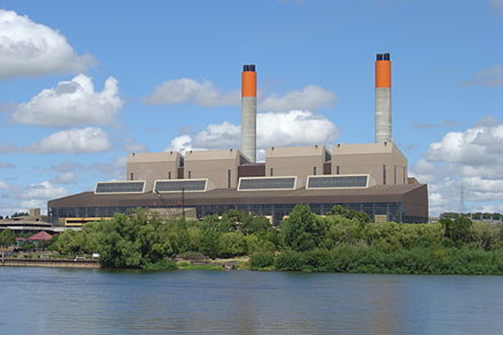
Coal Powered Power Plant  situated in close proximity to the city of Huntly in New Zealand

Today the Chinese made 900 MW Norochcholai Coal Power Plant, in spite of many misgivings about its performance, provides almost 50% power to the national grid at Rs 7.00 per KW Hr. If not for this power plant most of Sri Lanka will be in the dark and the loss of production alone would have cost Sri Lanka Billions of Rupees in terms of lost revenue.

It is difficult to imagine why the average Sri Lankan is taking these lies and damn lies, lying down. Yesterday’s protest against the Port City Project in Colombo spearheaded by a Catholic Priest is another occasion where the Catholic Church’s opposition to progress in Sri Lanka comes to the fore. Where are the Engineers, patriots and Buddhist Priests who can see through this Catholic Church masquerade? They should be on the streets to hound out these bogus environmentalists. This attempt to keep Sri Lanka poor is part of their strategy to evangelize and Christianize the country – for it is easy to convert the poor and get them to serve the Christian West and the rich, corrupt and immoral Catholic Church.  This is part of the project initiated by Pope John Paul II when he said that 21st Century is for the evangelization of Asia – the project to bring Asia into subservience of the Christian West and of the Catholic Church!

Yes according to them the Blessed are the Meek! The poor and meek are their foot soldiers!

They bring innocent, poor and ignorant Christian fishermen on to the streets for this immoral exercise. They also bring brain dead environmentalists and deluded and naïve Buddhist Priests of the Palli Nikaya to help with these protests. Instead of directing their wholehearted environmental efforts against the Tamil Nadu fishermen bottom trawling the sea around the Jaffna peninsula they are out to prevent progress of the city of Colombo. This never happens for that does not advance the hidden agenda of the Catholic Church for Sri Lanka.

The pathetic Catholic Priest Sarath Iddamalgoda has the gall to say that the Port City project in Colombo –  will ‘destroy the whole country’ – ‘disturb fishing, destroy nature, not benefit ordinary citizen and will have a severe impact on the country’s marine resources and livelihood of fishermen’. It is difficult to imagine how less than one square mile of land reclamation from the sea can destroy the whole country! What a load of hog wash reverend father”!

This excuse for a human being should be going and preaching to his own church for what they have done for the last 500 years around the world. How many countries, cultures, and peoples the Catholic has destroyed. Think of Galeleo’s fate for telling that the Earth is not at the center of the Universe! Think of the inquisitions – the Spanish, the Portuguese, the Italian, the French and the Goan! Think of the genocide in Rwanda, which the Catholic Church orchestrated! Think of collaborating with the Nazis and collusion with the Jewish holocaust! Think of utter devastation of the North and South American cultures! Think of devastation brought to Black Africa! Think of the utter devastation in Sri Lanka from 1505 CE onwards! Think of the Catholic Churches now constructed over Buddhist Temples! Think of all lives of the young boys and girls destroyed by pedophile priests now given sanctuary in the Vatican. After all think of the hypocrisy of the Catholic Church!

Yes Rev Sarath Iddamalgoda you can think – all the way to hell for the crimes committed by your church against humanity! So stop this masquerade for Sri Lankans will not be meek!

Sri Lankan protest Chinese funded port city project

Mon, Apr 4, 2016, 11:43 pm SL Time, ColomboPage News Desk, Sri Lanka.

Apr 04 (AP) COLOMBO- Hundreds of people, including priests, environmental activists and fishermen, protested in Sri Lanka’s capital on Monday, demanding the government halt a $1.5 billion Chinese-funded port city project.

The city, to be built on reclaimed land off Sri Lanka’s west coast, is to include a golf course, marinas, apartments, hotels and malls. About 500 people demonstrated in Colombo, shouting slogans and displaying placards reading,

We urge the government to stop this immediately.”

Chinese President Xi Jinping inaugurated the project in 2014 during the tenure of former President Mahinda Rajapaksa, who relied heavily on China for infrastructure projects. It was suspended after Rajapaksa lost an election in January 2015, with the new government saying it wanted to review all projects to ensure they were environmentally viable and corruption-free.

The government decided to allow it to proceed last month, in a move seen as an effort to reassure China. Prime Minister Ranil Wickremesinghe is to visit China this week.

CHEC Port City Colombo, which is constructing the project, said a supplementary environmental impact study has been completed to “understand and fully assess the project’s impacts and mitigation measures in developing a comprehensive plan to maximize the benefits.”

Sri Lanka sandwiched between reconciliation – separatism – terrorism & now economic collapse

April 4th, 2016

Shenali D Waduge

 Rajapakse is not Sri Lanka and Sri Lanka is not Rajapakse. No Government can function on the foundation that it is in power to bring justice against the Rajapakses. It is a ludicrous idea and objective. The citizens expect far more than this from a government elected to office. The reality of this we can now see 15 months after the toppling of the Rajapakse government. In 15 months Sri Lanka has stooped to a new low never fathomed by most. The rupee is now more than Rs.150 against the dollar, we have a budget that offers no income, we are selling all assets to foreigners without safeguards, Indians are slowly devouring all national choke points to its advantage, the country’s citizens are kept busy fighting to survive with spiralling cost of living, LTTE hardcore cadres are being released and now the discovery of suicide vests and ammunition is making 20million citizens to wonder whether the solution to hiding one’s inability to govern is to return to a dark period we all thought was a thing of the past. We find ourselves in a miserable predicament.

Reconciliation

Can someone offer explanations to these simple questions?

  • Did Sri Lanka’s military take on civilians or an internationally banned terrorist organization banned by 32 nations?
  • Is Sri Lanka’s conflict defined as a non-international armed conflict?
  • If so it means that the Sri Lankan state was fighting not civilians (nullifying claim Sri Lanka had an ethnic problem) but an armed movement in uniform with a command structure using acts of terror against the State of Sri Lanka and its citizens. This makes LTTE the common enemy of all except those who sided with the LTTE indirectly/directly covertly/overtly. Funnily enough those who had links to LTTE are in powerful places calling the shots.
  • Can LTTE be defined as enemy combatants? No because the term is used only in international armed conflict. LTTE are not enemy combatants and do not enjoy provisions under law given to combatants.
  • Can LTTE enjoy prisoner of war status? No because under NIAC LTTE are neither combatants or prisoners of war which raises why LTTE cadres now in custody are being released without legal actions taken against them. Either we are going to the wrong advisors or we are being given wrong advice.
  • Where in the international law books or the UN does it say that a country has to reconcile with terrorists?
  • Why is a terrorist problem being used to ignore justice to all victims and concentrating on only one ethnic group and creating a framework to legally cut up a small island leading to separatism that was the goal of those that created the LTTE through a new constitution?
  • Do we need reconciliation when the communities have no issues against each other? We all live harmoniously together. We do however have a problem against people promoting separatism (TNA) and elements still involved with LTTE (LTTE diaspora/LTTE fronts, those that sided with LTTE like the Church & clergy, foreign envoys, foreign governments and foreign intelligence as well as local politicians and local NGOs) None of these links have been investigated. Without investigating these the citizens should refuse to accept anything new on the table especially a new constitution.
  • Anyone that says Sri Lanka’s conflict is an ethnic problem must first explain why India secretly took jobless Sri Lankan Tamil youth to India and clandestinely trained them in armed warfare by Indian intelligence and retired Indian army personnel and then sent them back with arms, ammunition and funded them to destabalize Sri Lanka. Unless this question gets an answer we cannot accept Sri Lanka is having or had an ethnic problem because the LTTE and other armed militants were all initially created and trained by India. To add to the injury India even saved a cornered Prabakaran whisked him off to India and saved him from being captured by the Sri Lankan forces. What friendly nation would do that? India cannot pretend to ignore this ugly chapter of Sri Lanka’s conflict because Sri Lanka’s 30 year conflict was started by India and has been fuelled by India ever since. LTTE and all others became just tools to fulfil India’s agenda. LTTE became tools of others too, over the years.

Separatism /Terrorism & National Security

  • Have TNA’s links to LTTE been investigated – why is this not taking place when their aims & objectives for a separate state remain the same as the LTTE?
  • TNA politicians have been regular guests at LTTE front events abroad and have openly advocated separatism violating article 6 of Sri Lanka’s constitution. TNA’s manifestos are virtually the same demands as the LTTE.
  • TNA’s role in politics must be allowed only if it nullifies the Vaddukoddai Resolution and legally testifies it will not advocate separatism of Sri Lanka
  • TNA Chief Minister is also violating Sri Lanka’s constitution by declaring Sinhalese cannot live and work in the North when historically Sinhalese had been living in the North far before Tamils arrived as immigrants from Tamil Nadu. Moreover, when his own two sons have married Sinhalese, he is prohibiting Tamils from marrying Sinhalese which is another violation of people’s fundamental rights. The Chief Ministers’ open racism is not even highlighted by local politicians or UN and other human rights groups quick to point fingers at Sinhalese only.
  • Why are there no UN and other rights organizations coming forward to defend the Sinhalese villagers and the Buddhist temples in the North who are being threatened by the TNA parliamentarians and public officials are being used to impose restrictions on these villagers and Buddhist monks who have been living in the north for many many years. Every citizen has a right to live and work in any part of the country. It’s a constitutional right.
  • When TNA and its main constituent party ITAK continue to have a constitution that pushes the Vaddukoddai Resolution of separatism it is baffling why any government or even opposition are not highlighting that this separatism aspect needs to be first dealt with and removed before drafting any new constitution. How can a country trust a political party that has as its aims and objectives the goal to cede and form a separate nation ruled by themselves demanding all other ethnic groups to leave the area but reserve right for them to buy land and live in all other parts of Sri Lanka as well. Are our politicians insane to allow this farce to go on any longer?
  • Has the GOSL confirmed whether IDPs being given land rights actually had title deeds in the first place to be demanding state land allocation? Has the GOSL thought of the repercussions in giving land in high security zone areas removing military camps/installations when the GOSL is well aware that LTTE through TNA is still peddling separatism and LTTE cadres are still out there? Has the GOSL also realized the dangers arising when after giving land to these IDPs and then bringing legislation on foreigners owning land this invariably means lands falling into hands of foreigners and in high security areas too. Is this not a national security risk?
  • The late Lalith Athulathmudali was to say there are only some 50 LTTE terrorists and they could be easily dealt with. By 1990s that number had risen to over 5000. His response echoes the recent response of the present defence secretary who has said finding a few handguns and arms is no threat to national security. Taking things lightly in the 1980s proved detrimental and led to 30 years of bloodshed that had to sacrifice 30,000 military lives to save the nation. Are we going to knowingly commit the same mistake?

Economic collapse

  • Rajapakse government gave up office leaving the SL rupee at Rs.131 against the dollar and USD8billion in foreign reserves. What is the status now?
  • Return to full privatization of all (following temasek model of Singapore) ignoring grievances of farmers inducing them to once again return to export oriented cash crops, outsourcing to India leaving service sector to be manipulated by India are some of the alarming realizations that the Sri Lankan populace are now having to deal with.
  • Do we have a policy? For whom are these condominiums being built causing catastrophic environmental damage, raising concerns for water and electricity and other hazards? Is there such a requirement to allow foreign passport holding diaspora to dump their money at a future risk of crippling the economy with the fluctuation of prices? Are these decisions healthy for the country and is there no one watching these developments? Should policy makers not think of uplifting the status of the citizens rather than only a few? If someone who has worked 25 years cannot afford to buy a plot of land hasn’t society failed such a person? Should we not be thinking of ways to improve the citizens first?
  • What will going behind IMF mean to the Sri Lankan polity? Is this why state employees are now fearing being made redundant, why voluntary retirement schemes are now being offered, the IMF handouts will not come without sacrifice and IMF delights in watching the poor suffer because IMF always insists that governments given loans first cut social welfare schemes, reduce aid to education, cut health benefits to the poor. It is always the poor that the IMF attacks by forcing a Government to remove whatever benefits they enjoy.
  • The UNP that declared throughout its campaign that China is not welcome in Sri Lanka and closed down the Port City Project incurring the wrath of having to pay compensation for the closure of a bilateral project is now going with begging bowl to China to not only seek reopening of the project they closed but beg for China’s financial assistance. This brings new meaning to beggars can’t be choosers! In a new bid to renew broken ties it looks as if present government is likely to outdo the former in giving anything and everything in the country so long as China can save it from collapsing. What has happened to all the newly made friends in the West? Why are they not coming to save the present government? It is good for the present government to realize that there are no permanent friends in politics but permanent interests and there is all possibility that they may renew friendships with the joint opposition too now that the West is feeling the pulse of the people. Generally when the West feels the pulsse of the people their preferred choice becomes the first casualty. These are good lessons taken from pages of ruined nations!

Shenali D Waduge

45 පැන්නත් ‘නොමියෙන’ 71 අප්‍රේල් කැරැල්ල – මහ නඩුවේ විත්තිකරුවන් 41 පැටිගිරිය මෙන්න! ‍

April 4th, 2016

ධර්මන් වික්‍රමරත්න

ජනතා විමුක්ති පෙරමුණ(ජවිපෙ) ලංකීය සම්ප්‍රදායික දේශපාලන ගමන්මඟ වෙනස්කල තීරණාත්මක සන්ධිස්ථාන ලෙස හැඳින්විය හැකි කැරළි දෙකකට නායකත්වය දුන්නේය. ජවිපෙ උපත 1965 මැයි 14 වෙසක් පොහෝ දින අක්මීමනදී සිදුවූ අතර ප්‍රථම කැරැල්ල 1971 අප්‍රේල් 5වැනිදා රටපුරා පොලිස් ස්ථාන 92කට එකවර පහරදීමෙන්ද, 2වැනි කැරැල්ල 1986 සිට 1990 දක්වාද සිදුවූ අතර එම කැරළි 2කටම නායකත්වය දුන්නේ පක්ෂයේ නිර්මාතෘ රෝහණ විජේවීරය. නිදහසින් පසු සන්නද්ධ අරගලයක් මගින් රාජ්‍ය බලය ලබාගැනීමට දැරූ ප්‍රථම උත්සාහය 1971 අප්‍රේල් 05 කැරැල්ලවූ අතර එය සිදුවී 2016 අප්‍රේල් 5වැනිදාට වසර 45කි.

අප්‍රේල් කැරැල්ලේදී පහර දුන් පොලිස් ස්ථාන 92ක අතරින් 57ක් විනාශකල අතර දෙනියාය, ඌරගහ, රාජාංගනය, කතරගම සහ වරකාපොල යන පොලිස් ස්ථාන 5 යටත්කර ගත්තේය. තවත් පොලිස් ස්ථාන 43ක් තාවකාලිකව ඉවත් කරගෙන තිබිණි. මෙම ප්‍රහාර වලදී පොලිස් නිලධාරින් 37ක් සහ හමුදා නිලධාරින් 26ක්  කැරළිකරුවන් අතින් ඝාතනයට ලක්විය.  කැරළිකරුවන් විසින් මරාදමන ලද සිවිල් වැසියන් සංඛ්‍යාව 41කි. ශ්‍රිලනිප, කොප, ලසසප පක්ෂ ඇතුලත් සමගි පෙරමුණ ආණ්ඩුව මගින් ප්‍රකාශකල දත්ත අනුව ඝාතනයට ලක්වූ කැරළිකරුවන් සංඛ්‍යාව 1,200කි. එහෙත් මරාදමන ලද කැරළිකරුවන් සංඛ්‍යාව 5,000කට ආසන්නය. අත්අඩංගුවට ගත් සංඛ්‍යාව 18,000කට පමණ වූ අතර ඉන් 4,200ක් පමණ පොදු දේශපාලන සමාව යටතේ භාරවූ අය වෙති. ජවිපෙ 2වැනි කැරැල්ල 1986න් ඇරඹී 1990 සැප්තැම්බර් මස අවසානවූ අතර එහිදී එජාප ආණ්ඩුව මගින් ඝාතනයට ලක්වූ හෝ අතුරුදහන්වූ පිරිස 41,813කි. නිල නොවන වාර්තා කියන්නේ එය 60,000කට ආසන්න බවය. ජවිපෙ 2වැනි කැරැල්ලේදී භාරවූ සහ අත්අඩංගුවට ගෙන පුනුරුත්ථාපනය කරන ලද සංඛ්‍යාව 11,650කි.

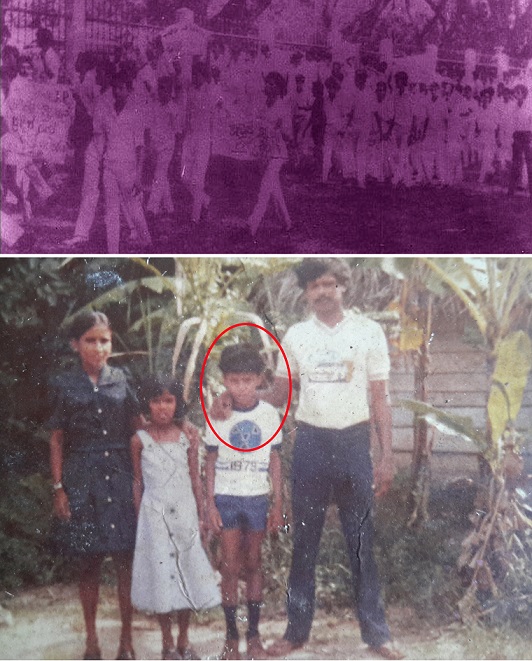
dharman04041602A71 අප්‍රේල් මහ නඩුවේ විත්තිකරුවන් 41 දෙනා නඩුවේ අංක පිළිවෙලින්. 1.පියතිලක, 2.බෝපගේ, 3.උයන්ගොඩ, 4.අනුර රංජිත්, 5.සුනන්ද 6.ලොකු අතුල, 7.වික්ටර් අයිවන්, 8.නිමල් මහරගේ, 9.කුමානායක, 10.වසන්ත කනගරත්න, 11.ඩී.ඒ ගුණසේකර, 12.ටී.ඩී සිල්වා, 13.විජේවිර, 14.සිසිල් චන්ද්‍ර, 15.පියසිරි කුලරත්න, 16.සුනිල් රත්නසිරි, 17.විරාජ්, 18. විජේපාල, 19. නිහාල් ආනන්ද, 20.එස්.ඩී. බණ්ඩාරනායක, 21.ඔස්මන්ඩ්, 22.ධනපාල, 23.තඩි ලක්ෂ්මන්, 24.සුසිල් සිරිවර්ධන, 25.මහින්ද විජේසේකර, 26.කෙලී සේනානායක, 27. බටපොළ අතුල, 28.ඇලඩින් සුබසිංහ, 29.කළු ලකි, 30.ලක්ෂ්මන් මුණසිංහ, 31.මෙරිල් ජයසිරි, 32.චුකී ප්‍රේමරත්න, 33.සනත්, 34.සුසිල් වික්‍රම, 35.සරත් විජේසිංහ, 36.මිල්ටන්, 37.කරුණාරත්නෙ, 38.ප්‍රේමපාල හේවාබටගේ, 39.නයනන්ද, 40.විමලගුණේ, 41.ජයකොඩි(ඉහළ වමේ සිට)71 අප්‍රේල් මහ නඩුවේ විත්තිකරුවන් 41 දෙනා නඩුවේ අංක පිළිවෙලින්. 1.පියතිලක, 2.බෝපගේ, 3.උයන්ගොඩ, 4.අනුර රංජිත්, 5.සුනන්ද 6.ලොකු අතුල, 7.වික්ටර් අයිවන්, 8.නිමල් මහරගේ, 9.කුමානායක, 10.වසන්ත කනගරත්න, 11.ඩී.ඒ ගුණසේකර, 12.ටී.ඩී සිල්වා, 13.විජේවිර, 14.සිසිල් චන්ද්‍ර, 15.පියසිරි කුලරත්න, 16.සුනිල් රත්නසිරි, 17.විරාජ්, 18. විජේපාල, 19. නිහාල් ආනන්ද, 20.එස්.ඩී. බණ්ඩාරනායක, 21.ඔස්මන්ඩ්, 22.ධනපාල, 23.තඩි ලක්ෂ්මන්, 24.සුසිල් සිරිවර්ධන, 25.මහින්ද විජේසේකර, 26.කෙලී සේනානායක, 27. බටපොළ අතුල, 28.ඇලඩින් සුබසිංහ, 29.කළු ලකි, 30.ලක්ෂ්මන් මුණසිංහ, 31.මෙරිල් ජයසිරි, 32.චුකී ප්‍රේමරත්න, 33.සනත්, 34.සුසිල් වික්‍රම, 35.සරත් විජේසිංහ, 36.මිල්ටන්, 37.කරුණාරත්නෙ, 38.ප්‍රේමපාල හේවාබටගේ, 39.නයනන්ද, 40.විමලගුණේ, 41.ජයකොඩි(ඉහළ වමේ සිට)

හැටේ දශකය මුල්භාගයේදී ලෝක වාමාංශික ව්‍යාපාරය තුළ හටගත් මහා කුණාටුව ලාංකීය වමේ ව්‍යාපාරය කෙරෙහිද ගැඹුරු බලපෑමක් ඇති කළේය. එය 1948 නිදහසින් පසු තරුණයින්ගේ දේශපාලන හැඩගැස්ම මුළුමනින් කණපිට පෙරළීමට සමත්විය. සන්නද්ධ අරගලයකින් පවතින පාලනක‍්‍රමය පෙරළා දැමීමට කැපවූ කොමියුනිස්ට් පක්ෂවලට චීනය නායකත්වය දුන් අතර පාර්ලිමේන්තුව තුළින් සමාජවාදයට යෑමට යෝජනා කල ප‍්‍රතිවිරුද්ධ පාර්ශවයන්ට සෝවියට් සංගමය නායකත්වය දුන්නේය. ශ‍්‍රී ලංකාවේ කොමියුනිස්ට් පක්ෂය මෙන්ම බොහෝ රටවල කොමියුනිස්ට් පක්ෂ මෙම මතවාදී සහ දේශපාලන රේඛාව ඔස්සේ දෙපිළකට බෙදිණි.

 නිර්ධන පන්තීය මාක්ස්වාදී විප්ලවකාරි දේශපාලන පක්ෂයක් ලෙස හැදින්වූ ජවිපෙ ජනප‍්‍රිය පන්ති 5  මගින් දේශපාලන අධ්‍යාපනය ලබාදුන් අතර සාමාජිකයන් සීඝ‍්‍ර වශයෙන් බදවා ගන්නා ලදී. එම පන්ති අතර ආර්ථික අර්බුදය, නිදහස, ඉන්දියානු ව්‍යාප්තවාදය, ලංකාවේ වාමාංශික ව්‍යාපාරය සහ ලංකාවේ විප්ලවය ගතයුතු මඟ යනුවෙන් දේශන ඇතුළත් විය.පන්ති 5ට අමතරව ආයුධ පුහුණුවද ඇතුළත් අධ්‍යාපන කඳවුරක් සාමාජිකයින් 30ක් සදහා අක්මීමනදී ප‍්‍රථමවරට ආරම්භ වූයේ 1968දීය. පසුව එය රටපුරා පැවැත්විණි. විජේවීර විසින්ම 1966/69 කාලය තුළ වැඩබිම් 80කදී දේශපාලන පන්ති පවත්වන ලදී. වසර 1969 අවසානය වන විට ජවිපෙට සාමාජිකයින් සහ හිතවතුන් 3,000ක පමණ පිරිසක් එකතුකර ගැනීමට හැකිවිය. මෙම අධ්‍යාපන කඳවුරු ජවිපෙ සාමාජිකයින් තුළ දැවැන්ත පිබිදීමක් ඇතිවිය. එමගින් විප්ලවවාදී අදහස් ඇති අක‍්‍රීයව සිටි තරුණ පරපුර සියළු කුලෑටිකම් පසෙකලා කඩියන් මෙන් ක‍්‍රියාකාරි විය. ජවිපෙ වේගවත් ව්‍යාප්තිය හමුවේ ඇදී ආ දක්ෂ නවකයින් සහ අදක්ෂ පැරණි නායකයින්  අතර ප්‍රතිරෝධතාද ඉස්මතු විය.

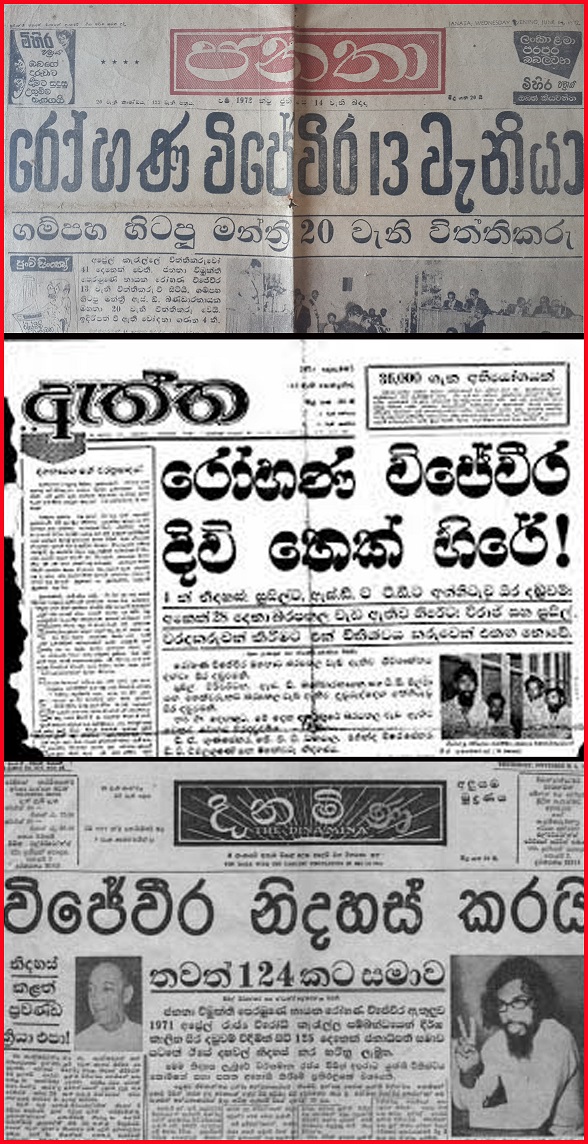
dharman04041603Aඅප්‍රේල් කැරැල්ලේ මහ නඩුවේ විත්තිකරුවන් නම්කල පුවත ඩබ්ලිව්.ජී. ගුණරත්න විසින් ජනතා පුවත්පතට 1972 ජුනි 14වනදාද, 71 මහ නඩුවේ තීන්දුවේ පුවත ස්ටැන්ලි සමරසිංහ සහ දයා ලංකාපුර විසින් ඇත්ත පුවත්පතට 1974 දෙසැම්බර් 20වනදාද, විජේවීර ඇතුළු සිරදඬුවම් විඳමින් සිටි ජවිපෙ 125ක් ජනාධිපති සමාව යටතේ නිදහස් කල පුවත ඩී.සී. කරුණාරත්න විසින් දිනමිණ පුවත්පතට 1977 නොවැම්බර් 3වනදා වාර්තාකල අන්දම මෙහි දක්වේ.(ඉහළ සිට)මෙය වාර්තා කල ඩබ්ලිව්.ජී, ස්ටැන්ලි, ලංකාපුර සහ ඩී.සී වර්තමානයේද දෙටු ප්‍රවීණ පුවත්පත් කලාවේදීන් වශයෙන් පුවත්පත්වල කටයුතු කිරීම විශේෂයකි.

අපේ‍්‍රල් කැරැල්ල තීන්දුකලේ 1971 අපේ‍්‍රල් 2වැනිදා ගංගොඩවිල සරසවියේ සංඝාරාමයට රැස්වු දේශපාලන මණ්ඩලයේ 9 දෙනෙකුගේ තීරණයෙනි. එය 6ට 3ක් වශයෙන් බෙදුණු තීරණයකි. පියතිලක, ලයනල් බෝපගේ, ජයදේව උයන්ගොඩ, රංජිත් කුරුකුලසූරිය, සුනන්ද දේශප්‍රිය, සුසිල් වික්‍රම අප්‍රේල් 5 පහරදීමේ තීන්දුවට පක්ෂවත් සනත්, කරුණාරත්න, ලොකු අතුල එයට එරෙහිවද ඡන්දය දුන්හ. එම තීන්දුව ගැනීමට පෙර එයට සහභාගිවූ කිහිප දෙනෙක් එක්වී සටන් කිරීමට තීන්දුවක් නොගන්නේනම් අපේ‍්‍රල් 4වැනිදා රාත‍්‍රී 10ට එකවර පොලිස් ස්ථානවලට පහරදීමට රහසිගත තීන්දුවක් අරගෙන තිබූ බව පසුව හෙළිවිය.ඒ අනුව තවදුරටත් පහරදීම ප්‍රමාද වන්නේ නම් 1971 අප්‍රේල් 4වැනිදා රාත්‍රී 10.00ට පොලිස් ස්ථානවලට එකවර පහරදීමය. ඒ අනුව එම තීරණය දින කිහිපයකට පෙර රටපුරා දිස්ත්‍රික් ලේකම්වරුන්ට දැනුම් දෙමින් තිබිණි. අප්‍රේල් 5වැනිදා උදේ වැල්ලවාය පොලිසියට පහර දෙන්නේ වැරදි විදුලි පණිවිඩයකින් ‍නොව මෙම අලුතින් ගත් තීරණය ඔවුන්ට සන්නිවේදනය කර නොතිබීමෙනි. එහෙත් 1971 අප්‍රේල් 5වැනිදා රාත්‍රී පහරදීමට ගත් තීරණය අනිකුත් සියළු ස්ථානවලට ගොස් තිබිණි.

අප්‍රේල් 3 වැනිදා සවස බටපොල අතුලගේ නිවසේදී ලාල් සෝමසිරිට කැරැල්ලේ දෙවනි නායක සනත් නියම කළේ අම්පාර උහනට ගොස් මොණරාගල දිස්ත්‍රික් නායක දොඩම්ගහවෙල ප්‍රේමසිරි වහාම හමුවී පහරදෙන්නේ අප්‍රේල් 4වැනිදා රාත්‍රී 10 නොව අප්‍රේල් 5වැනිදා රාත්‍රී 11.30ට වෙලාව වෙනස් වී ඇති බවය. පණිවිඩය ලබාදීමට අප්‍රේල් 4වැනිදා හිමිදිරි පාන්දරම නුවර හරහා අම්පාරට යෑමට ගිය ලාල් සෝමසිරිට නුවර බස් නැවතුම්පොලේදී නිශ්ශංක ප්‍රේමරත්න හමුවිය. එවිට වේලාව දවල් 12.30 විය. ප්‍රේමරත්න විසින් සෝමසිරිට එහිදී කියා සිටියේ වහාම යළිත් විද්දෝදය සරසවියට ගොස් පියතිලක හමුවන ලෙසට පියතිලක දන්වා ඇති බවත් තමා වහාම මොණරාගල දිස්ත්‍රික් නායක දොඩම්ගහවෙල ප්‍රේමසිරි හමුවීමට ගොස් පහර දෙනේනේ 4 රාත්‍රී නොව 5වැනිදා රාත්‍රී බවට දැනුම් දෙන බවත්ය. කැරැල්ලට සහභාගි නොවී එදිනම සැඟවුණු ප්‍රේමරත්න එම පණිවිඩය මොණරාගල නායකයාට දැනුම් දුන්නේ නැත. 1971 අප්‍රේල් 4 රාත්‍රී  වැල්ලවාය පොලිස් ස්ථානයට එල්ලකල ප්‍රහාරය එහි ප්‍රතිඵලයකි.

අප්‍රේල් කැරැල්ලේ පරික්ෂණ කොමිෂන් සභා 4ක් මගින් 1972 අගෝස්තු 10 සිට 1976 නොවැම්බර් 4 දක්වා 1971 අප්‍රේල් කැරැල්ලේ මහ නඩුව ඇතුළු පරික්ෂණ 140ක් පවත්වන ලදී. එයට චෝදනා ලැබූ චූදිතයන් සංඛ්‍යාව 3,908කි. ඉන් 3,014 කොමිෂන් සභා හමුවට ගෙන ආ අතර 894 දෙනෙකු අත්අඩංගුවට ගතනොහැකි විය. මහ නඩුවේදී 41 දෙනෙකුට එරෙහිව නඩු පැවරිණි. අත්හිටවූ සිරදඬුවම් මත නිදහස් කල සංඛ්‍යාව 2,492කි. බරපතල සිරදඬුවම් ලැබූ කැරළිකරුවන් ගණන 390කි. ජවිපෙ නායක විජේවීර ඇතුළු 5 දෙනෙකුට ජීවිතාන්තය දක්වා සිරදඬුවම් නියම විය. නිදොස් ‍කොට යැවූ කැරළිකරුවන් ගණන 104කි.

මෙම කැරළි දෙකේදීම ඇතැම් නායකයෝ සිය වගකීම් පැහැරහැරියද කැරළිකරුවෝ සත්‍ය, යුක්තිය සහ සාධාරණත්වය වෙනුවෙන් සටන් කළහ. අනේකවිධ දුක් පීඩාවන්ට මුහුණ දුන්හ. දඩුවම් ලැබූහ. දිවි පිදූහ.පාලකයින් විසින් තරුණයන්ගේ එම නිර්භීත සහ සාහසික උත්සාහයන් අනුකම්පා විරහිතව තලා පොඩිපට්ටම් කර දැමීය. අප්‍රේල් මහ නඩුවේ තීන්දුව 1974 දෙසැම්බර් 20වැනිදා ලබාදුන් අතර විත්තිකරුවන් 41 දෙනාගෙන් 4ක් නිදහස්වූ අතර සුසිල් සිරිවර්ධන, එස්.ඩී බණ්ඩාරනායක සහ ටී.ඩී. සිල්වාට අත්හිටවු සිරදඬුවම් නියම විය. විජේවීර දිවි ඇති තෙක් හිරේය. 28දෙනෙකු බරපතල වැඩ ඇතිව සිරදඬුවම් නියම විය. විජේවීර ඇතුළු සිරදඬුවම් විදමින් සිටි 71 අප්‍රේල් කැරළිකරුවන් 125 දෙනෙක් ජනාධිපති සමාව යටතේ 1977 නොවැම්බර් 2වැනිදා නිදහස් කරන ලදී. ජවිපෙ 1971 කැරැල්ල මහ නඩුවේ විත්තිකරුවන් 41 දෙනෙකු සිටි අතර ඔවුන්ගේ විස්තර, අප්‍රේල් 5 කැරළි දිනයේදී ඔවුහු ක්‍රියාත්මකවූ ආකාරය සහ වර්තමාන ජීවන තත්ත්වය පහත පරිදිය.

මහ නඩුවේ 1වැනි විත්තිකාරයාවූ සමරරත්න විතානආරච්චිගේ පියතිලක දෙමටගොඩ ගාමිණී විද්‍යාලයේ සහ කොළඹ නාලන්ද විද්‍යාලයේ අධ්‍යාපනය ලත් අතර පියා නැව්වලට බඩු බාහිර ආදිය සපයන්නෙකි. චීන පිළේ ප‍්‍රාදේශීය නායකයින්වූ පියතිලක සහ ලොකු අතුල, විජේවීර සමඟ එක්වන්නේ  1965 අවසානයේදීය. ශිෂ්‍ය අංශය භාරව සිටි පියතිලක 1971 අප්‍රේල් 5 කැරැල්ලේ සටන් තීන්දුව ගැනීමට 1971 අප්‍රේල් 2වැනිදා ගංගොඩවිල සංඝාරාමයේදී රැස්වූ  9දෙනාගේ නායකත්ව මණ්ඩලයේ මුලසුන දැරීය. යාපනය සිරගෙදරින් විජේවීර මුදවා ගැනීම සඳහා එක්වන බව කියමින් අප්‍රේල් 5වැනිදා අළුයම 1.00ට කොළඹින් විලච්චියේ අනෝමදස්සී හිමි සමඟ අනුරාධපුරයට ගියේය. පසුව පුලියන්කුලම කැලෑවට ගොස් හිස මුඩුකොට සිවුරක් දමා මහණ වෙස්ගෙන අනෝමදස්සි හිමි සමඟ පුලියන්කුලමේ වැලිමලු විහාරයේ සැඟවිණි. පසුව කොළඹ ප්‍රදේශයේ කඩයක සැඟවී සිටියදී 1971 ජුලි මස අත්අඩංගුවට ගන්නා ලදී. නිදහස ලැබීමෙන් පසු සිය ව්‍යාපාර කරගෙන ගිය පියතිලක දේශපාලනයෙන් සමුගත් අතර පෙම්රජ දහන චිත්‍රපටයේ නිෂ්පාදකද විය. දෙදරු පියෙකුවූ ඔහු 1995දී සාහසිකයෙකුගේ පිහිපහරකට ලක්ව අකල් මරණයකට ගොදුරු විය.

බෝපගේ ලයනල් නොහොත් ලයියා 2 විත්තිකරු වූ අතර ඔහුගේ පියා වැලිගම සුළු ව්‍යාපාරිකයෙකුවූ වල්ලිවල ජෙරමියෙස්ය. දරුවන් 5 දෙනෙකුගෙන් යුත් පවුලේ 1944දී උපන් බෝපගේ මාතර රාහුල සහ ගාල්ල රිච්මන්ඩ් විදුහලෙන් අධ්‍යාපනය ලැබීය. පේරාදෙණිය සරසවියේ ඉංජිනේරු පීඨ සිසුවෙකු වශයෙන් සිටියදී 1968දී සරත් විජේසිංහ මගින් විජේවීර හදුනාගත්තේය. කොළඹ සටන් මෙහෙයවීම භාරගත් ලයනල් බෝපගේ පානදුර පරත්ත සරික්කාමුල්ලේ පිහිටි කඩවැද්දුවේ සුමංගල හිමිගේ පන්සලේදී ජයදේව උයන්ගොඩ සමඟ සැඟව සිටියදී බෝපගේ අප්‍රේල් 19වැනිදා පානදුර පොලිසිය මගින් අත්අඩංගුවට ගත්තේය. සිරගෙදර සිටින සමයේදී ඉංජිනේරු උපාධියට ලියා සමත් විය. වසර 12ක දිගුකාලීන සිරදඬුවම්වලට යටත් කලද පසුව 1977දී නිදහස් විමෙන් පසු ජවිපෙ ගොඩනැගීම සඳහා දායක විය.  ගාල්ල දිසා සංවර්ධන මැතිවරණයට 1981දී ඉදිරිපත්වී එහි සභිකයෙක් ද විය. විමුක්ති ගී ගායිකාවක් වශයෙන් කටයුතු කල කතෝලික සභාවේ තිඹිරිගස්යාය පල්ලියේ කන්‍යා සොහොයුරියක්වූ චිත්‍රා මුදලිගේ(ඇය විමල් ප්‍රනාන්දුගේ බිරිඳගේ නැගෙනිය වේ. සමඟ අවාහවු බෝපගේ 1980 සිට 1983 ජුලි 29වැනිදා ජවිපෙ තහනම් වන විට ප්‍රධාන ‍ලේකම් වශයෙන් සිටි අතර පසුව අක්‍රීයවී 1984 මුල්භාගයේ ඉවත්විය. පසුව පළල් වාම සංවාද වලදී ජවිපෙට ප්‍රහාර එල්ල කිරීම සඳහා බෝපගේව ජවිපෙ විරෝධී පිරිස් විසින් පාවිච්චි කරන ලදී. සර්වෝදයේදද කලක් සේවය කල අතර ජවිපෙ 2වැනි කැරැල්ලේ ජීවිත තර්ජන හමුවේ විදේශගතවූ බෝපගේ සිය දරු පවුල සමඟ වර්තමානයේ ඔස්ට්‍රේලියාවේ ජීවත් වේ.

උයන්ගොඩ මහරදාගේ ජේමිස් නොහොත් ඌ මහත්තයා නොහොත්  සෙනෙවිරත්න 3 විත්තිකරුවූ අතර 1969දී පේරාදෙණිය සරසවියේ පළමු වසරේ සිටියදී ලොකු අතුල මගින් විජේවීර හඳුනාගෙන පක්ෂයට බැදිණි. අප්‍රේල් 5 කොළඹ ප්‍රහාරවල වගකීමක් දැරුවද ඒවා ක්‍රියාවට නැගීමට නොහැකිවූ අතර  1971 අගෝස්තු 2වැනිදා ‍බ්‍රිටිෂ් කවුන්සිලයට යෑමේදී කොල්ලුපිටියේදී පොලිස් අත්අඩංගුවට පත්විය. වර්තමානයේ කොළඹ සරසවියේ මහාචාර්යවරයෙක් වන ජයදේව උයන්ගොඩ සමාජ ප්‍රජාතන්ත්‍රවාදී මතවාදයන් ප්‍රචලිත කිරීමේ විද්වතෙකු ලෙසින් ප්‍රකටය. ලබන මස බ්‍රිතාන්‍යයේ පදිංචියට යෑමට අපේක්ෂිතය.

සිව්වන විත්තිකරුවූ බුසබදුගේ අනුර රංජිත් කුරුකුලසූරිය අම්බලන්ගොඩ පෝරමේ උපන් අතර ගාල්ල ශාන්ත ඇලෝෂියස් සහ අම්බලන්ගොඩ ධර්මාශෝකේ අධ්‍යාපනය ලැබීය. පියා දුම්රිය ස්ථානාධිපතිවරයෙක්වූ අතර සුනන්දගේ බලපෑම මත ව්‍යාපාරයට 1969 මුලදි එක්විය. අප්‍රේල් 5 ප්‍රහාරයේදී නුවර භාරව සිටි රංජිත් එදින රාත්‍රී 11ට නුවර දුම්රියපොල අසළට ගියද කිසිවෙකු නැති බැවින් පසු බැස්සේය. එහෙත් ජයතිස්සගේ නායකත්වයෙන් කඩුගන්නාව පොලිසියට ප්‍රහාරයක් එල්ලවිණි. රංජිත් අප්‍රේල් 6 වැනිදා පන්විලදී බසයෙන් යමින් සිටියදී පොලිස් අත්අඩංගුවට පත්වන අතර අප්‍රේල් 12 දක්වා වත්තේගම පොලිසියේද මාස එකාමාරක් නුවර පොලිසියේද රඳවාගෙන බෝගම්බරට ගෙන යන ලදි. කැරැල්ලෙන් පසු දේශපාලනයෙන් සමුගත් ඔහු විවාහ වූයේ කළු ලකීගේ නැගෙනිය වූ මානෙල් සමඟය. සංචාරක ව්‍යාපාරයේ නිරතවන රංජිත් අව්‍යාජ මිනිසෙකු වශයෙන් ප්‍රකටය.

වඩුගේ මිත්‍රසිරි සුනන්ද දේශප්‍රිය නොහොත් අශෝක 5වැනි විත්තිකරුවූ අතර අම්බලන්ගොඩ පදිංචිකරුවෙකි. ධර්මාශෝක ආදි ශිෂ්‍යයෙකි. සිව්දරු පවුලක දෙවැන්නාවූ සුනන්දගේ නැගනිය කමණිද ජවිපෙ පූර්ණකාලීනයෙකු විය. පියා කෙන්තොට විදුහල්පතිවරයෙකු විය. ජවිපෙ 2වැනි නායක සනත් හරහා ජවිපෙට එක්වූ සුනන්ද බදුල්ල දිස්ත්‍රික් නායකයා වශයෙන් කටයුතු කළේය. සුනන්ද දේශප්‍රිය අප්‍රේල් 5 රාත්‍රී හපුතලේ තේ වත්තක ඇදිරි නීතියට කොටුවී සිටි බැවින් ප්‍රහාරයට සහභාගිවීමට නොහැකි විය. එහෙත් බදුල්ලේ කණ්ඩායම වැලිමඩ පොලිසියට පහරදී තිබිණි. පසුව සුනන්ද කැරළිකරුවන් සමඟ උඩුපුස්සැල්ලාව හරහා වලපනේට ගොස් සැඟව සිටි අතර අප්‍රේල් 23වැනිදා අම්බලන්ගොඩදී පොලිස් අත්අඩංගුවට පත්විය. ජනතා සංගමයේද මුල් පෙලේ ක්‍රියාකාරිකයෙකුවූ සුනන්ද මර්ජ් ආයතනයේ ප්‍රකාශනයක්වූ යුක්තිය සතිපතා පුවත්පතේ හිටපු කතුවරයාය. නිදහස් මාධ්‍ය ව්‍යාපාරය ඇතුළු සිවිල් සංවිධාන රැසකට නායකත්වය දෙන ඔහු අවාහවූ 71 කැරැල්ලට සම්බන්ධවූ කුරුණෑගල රෝහලේ රසායනාගාරයේ සේවය කල රත්නායකගේ නැගණියවූ බණ්ඩාර මැණිකේ සමඟය. වර්තමානයේ ස්විස්ර්ලන්තය කේන්ද්‍ර කරගනිමින් මානව හිමිකම් ක්‍රියාකාරකම්වල නියැලේ.

විජේමුනි දේවගේ නිමලසිරි ජයසිංහ නොහොත් ලොකු අතුල 6වැනි විත්තිකරු වශයෙන් රජයේ සාක්ෂිකරුවෙකු විය. කඩවත ගෝනහේනේ උපන් ඔහු 5 දෙනෙකුගෙන් යුත් පවුලක වැඩිමලාය. පියා ලංගම රියදුරු පුහුණු උපදේශකයෙකි. කිරිල්ලවල සහ ගම්පහ රාහුල විදුහල්වලින්ද, මරදානේ ස්ටැෆඩ් විද්‍යාලයෙන්ද අධ්‍යාපනය ලැබූ අතර 1965දී පියතිලක මගින් ජවිපෙට බැදිණි. ජවිපෙ දේශපාලන මණ්ඩලයේ විජේවීර ඇතුළු ඉහළම නායකයින් 4 දෙනාගෙන් එක් අයෙකුවු අතර ආයුධ අංශය භාරව සිටියේය. ලොකු අතුල අප්‍රේල් 5වැනිදා රාත්‍රී කෑගල්ල පොලිසියට පහරදීමට ගියද පැවති තත්ත්වය අනුව පසුව එය අවලංගු කොට අප්‍රේල් 29වැනිදා බලපත්තාවට එක්වී විල්පත්තුවට පසු බැස්සේය. අවාහ වූයේ කැරැල්ලේ ක්‍රියාකාරිනියකවූ ධම්මිකා සමඟ වන අතර ඇය 12වැනි විත්තිකරුවූ ටී.ඩී. සිල්වාගේ වැඩිමහල් දියණියයි. මහජන පක්ෂයේ පළාත් සභා මන්ත්‍රීවරයෙකුව සිට 1994  පාර්ලිමේන්තුවට පත්වු ලොකු අතුල කලක් චන්ද්‍රිකා රජයේ විදුලිබල නියෝජ්‍ය ඇමතිවරයා වශයෙන්ද කටයුතු කල ලොකු අතුල 2014 නොවැම්බර් 29දා ජීවිතයෙන් සමුගත්තේය.

මාජුවාන කංකානම්ගේ වික්ටර් අයිවන් නොහොත් පොඩි අතුල 7වැනි විත්තිකරුවූ අතර ගාල්ලේ අක්මීමන උපන්නේය. තිදෙනෙකුගෙන් යුත් පවුලක වැඩිමහල් දරුවා වූ ඔහු ගාල්ල ඇලෝසියස් විදුහලේ ආදි ශිෂ්‍යයෙකි. සිග්මා කම්හලේ සිටියදී වැඩවර්ජනයට සහභාගිවිමෙන් රැකියාව අහිමිවූ ඔහු 1967 අගභාගයේදී ජවිපෙට බැදී ආයුධ අංශයේ කටයුතු කල අතර බෝම්බ නිෂ්පාදනයේදී අතක් අහිමි විය. අයිවන් ප්‍රතිකාර ගනිමින් සිටියදී 1971 අප්‍රේල් 4වැනිදා අත්අඩංගුවට ගෙන පැලියගොඩ පොලිසියට ගෙන එන ලදී. නිදහසින් පසුව සමසමාජයට බැදි ගාල්ල අතුරු මැතිවරණයටද තරඟ කල අයිවන් රාවය සඟරාවේ සහ පුවත්පතේ සමාරම්භක කර්තෘවරයාය. ප්‍රකට ලේඛකයෙකි. චන්ද්‍රිකා රජය 1994 බලයට පත්කිරීම සඳහා පුරෝගාමි සේවාවක් කල ඔහු පසුව ඇය පිළිබඳව චෞර රැජින නමින් ග්‍රන්ථයක්ද ප්‍රකාශයට පත් කළේය. වර්තමානයේ රාවයේ උපදේශක කර්තෘවරයාය.

අටවැනි විත්තිකරුවු මහරගේ දොන් නෙවිල් නිමලරත්න නොහොත් නිමල් මහරගේ නුගේගොඩ ගංගොඩවිල උපන් අතර නුගේගොඩ ශාන්ත ජොන් විද්‍යාලයෙන් සහ හොරණ නාලන්දා විදුහලෙන් අධ්‍යාපනය ලැබීය. ඩී.ඒ. ගුණසේකර මගින් ජවිපෙට එක්වූ ඔහු ප්‍රහාරයේදී කෝට්ටේ කණ්ඩායමේ නායකයා විය. අප්‍රේල් ප්‍රහාරය ක්‍රියාවට නැගීමට  නොහැකිවීමෙන් පසු නිමල් මහරගේ හොරණ දොඩං‍ගොඩ නිවසක සැඟවී සිටියදී 1971 ජුලි 17වැනිදා පොලිස් අත්අඩංගුවට පත්විය. අවාහ වුයේ කැරැල්ලේ සිටි කාන්තා නායිකාවක්වූ විදුදය උපාධි අපේක්ෂිකා චන්ද්‍ර ජයන්ති පෙරේරා සමඟය. ඇයද 1971 මැයි 18 අත්අඩංගුවට පත්වි 1977දි නිදහස් විය. මහරගේ පසුව එස්.බී දිසානායක ඇමතිවරයා යටතේ සමෘද්ධි අමාත්‍යාංශයේද සේවය කළේය.

මහ නඩුවේ 9වැනි විත්තිකරුවූ සෝමසිරි කුමානායක ඇල්පිටියේ උපන්නෙකි. 5 දෙනෙකුගෙන් යුත් පවුලක වැඩිමහල් වූ ඔහු ජවිපෙට එක්වූයේ 1967 පේරාදෙණියේ උපාධි අපේක්ෂකයෙකු වශයෙන් සිටියදීය. පියා වත්තක කංකානම්වරයෙකි. ජනතා විමුක්ති පුවත්පතේ මුල් කලාප තුනම කළේ ඔහු විසිනි. අප්‍රේල් 5 රාත්‍රී 11.30ට 30 දෙනෙකු සමඟ ගොස් කඩවත පොලිසියට ප්‍රහාරය එල්ල ‍කළේය. එහිදී මාබෝලේ එච්. මිල්ටන් මිය ගියේය. රහස් පොලිසියේ ජෙගදාසන්ගේ නිවසටම ගොස් 1971 අ‍ගෝස්තු 8වැනිදා කුමානායක භාරවිය. සමාව අයැදීම නිසා වසර 3ක සිර දඬුවමකින් පසු 1975 ජනවාරි 10 නිදහස් විය. 1976දී අවාහ වූයේ ලොකු අතුලගේ නැගණියවු බ්‍රියට්‍රිස් සමඟය. තිදරු පියෙකි.

වසන්ත ද සිල්වා කනගරත්න 10වැනි විත්තිකරුවූ අතර ගාල්ල ඉමදූව උපන්නෙකි. මව කොළඹ නගර සභාවේ වින්නඹු සේවිකාවකි. ඉසිපතන විද්‍යාලයේ අධ්‍යාපනය ලැබූ අතර ජවිපෙට බැදුනේ ප්‍රේමපාල මගිනි. කැරැල්ලේදී දකුණු කොළඹ වැල්ලවත්තේ සිට මොරටුව දක්වා  නායකයාවූ ඔහු අප්‍රේල් 4වැනිදා රාත්‍රී 9.30ට ගාල්ල ඉමදු‍වේ සිය ආච්චිගේ නිවසට ගොස් අප්‍රේල් 26 දක්වා එහි ගතකල අතර අප්‍රේල් 30වැනිදා ප්‍රවේශ පත්‍රයක් නොමැතිව බසයෙන් යෑමේදී අසුවී කොන්දොස්තර විසින් පානදුර පොලිසියට භාරදෙන ලදී. වසන්ත කනගරත්න බිල්ලෙකු බවට පත් කරමින් පොලිස් නිල ඇදුමක් අන්දවා පසුව පොලිස් කොස්තාපල්වරු පිරිසක් සමඟ ඔහු යාපනයේ හැමන්හිල් බන්ධනාගාරයට ගෙන ගියේය. බන්ධනාගාරයේ තාප්පය උඩ සිටි වසන්ත කනකරත්න ගෙන ආ සැකකරුවන්ගේ ව්‍යාජ නම් වෙනුවට සත්‍ය නාමයන් පොලිසියට ලබාදෙමින් කැරළිකරුවන් පාවාදුන්නේය. මහ නඩුවේදී ආණ්ඩුවට පක්ෂව සාක්ෂි දුන් අතර පසුව සර්වෝදයට සම්බන්ධ විය. රත්මලානේ පදිංචිව සිටියදී ජීවිතයෙන් සමුගත්තේය. 

මහ නඩුවේ 11වැනි විත්තිකරුවූ ඩේවිඩ් අබේවික්‍රම(ඩී.ඒ) ගුණසේකර 43 හැවිරිදි අත්දැකීම් සහිත කලක් සමසමාජයේ සිටි වෘත්තීය සමිති ක්‍රියාකාරිකයෙකි. හයිඩ් පාර්ක්හි 1970 අගොස්තු ජවිපෙ රැස්වීමේ මුලසුන දැරීය. අප්‍රේල් 5වැනිදා නියමිත කාර්යභාරයක් ඔහුට නොවූ අතර දඩිබිඩි කැරැල්ලට ඔහුගේ මනාපයක්ද නොතිබිණි. කට්ටි පනිමින් සිටියදී මැයි 3 වැනිදා වැල්ලවත්ත රෙදිමෝල අසළදී පොලිස් අත්අඩංගුවට පත්විය. පළමුවෙන්ම නිදහස්වූ විත්තිකරු වශයෙන් 1974 නොවැම්බර් 20වැනිදා නිදහස් විය. සක්‍රීය දේශපාලනයේ නොයෙදුනු අතර 2014දී ජාඇලදී දිවියෙන් සමුගත්තේය.

දේවහන්දි(ටී.ඩී) දිනිඳුමිත්‍ර සිල්වා 12වැනි විත්තිකරු වූ අතර ප්‍රහාරයේ වේලාව සනත් විසින් ඔහුට දැනුම්දුන්නේ අප්‍රේල් 4 සවස 2ට බාලතම්පෝගේ නිවසේදීය. කුමානායක අප්‍රේල් 5 ප්‍රහාරයට ටී.ඩී  සිල්වා කැඳවාගෙන යෑමට එඩේරමුල්ලේ නිවසට නොපැමිණි බැවින් අම්බලන්ගොඩ කහවේ අප්‍රේල් 18 තෙක් ගතකර මැයි 16වැනිදා කොළඹ දිසාපතිට ඔහු භාරවිය. නිදහසින් පසුව සක්‍රිය දේශපාලනයට යොමු නොවූවද සිය බෑනාවූ ලොකු අතුල සමගින් අවස්ථාවට උචිත පරිදි දේශපාලනයේ නිරත විය. දැනට ජීවතුන් අතර නොමැත.

දහතුන්වැනි විත්තිකරුවූ පටබැඳිගේ දොන් නන්දසිරි(රෝහණ) විජේවිරට 1971 අපේ‍්‍රල් 5වැනිදාවන විට වයස අවුරුදු 28කි. තංගල්ලේ දිළිඳු පවුලක 1943 ජුලි 14වැනිදා උපන් විජේවීර ගේ පියා කොමියුනිස්ට් පක්ෂයේ ක‍්‍රියාකාරිකයෙකි. කෝට්ටේගොඩ ගොඩඋඩ විද්‍යාලයෙන් මූලික අධ්‍යාපනය ලබා 1959දී අම්බලන්ගොඩ ධර්මාශෝක විද්‍යාලයට ඇතුල්වූ විජේවිර පසුව කොමියුනිස්ට් පක්ෂයේ දොස්තර එස්.ඒ. වික‍්‍රමසිංහගේ අනුග‍්‍රහය මත ශිෂ්‍යත්වයක් ලැබ 1960 සැප්තැම්බර් 25වැනිදා රුසියාවේ මහජන මිත‍්‍රත්ත්ව සරසවියට (පසුව ප‍්‍රැට්රික් ලූලූම්බා සරසවිය) වෛද්‍ය විද්‍යාව හැදෑරීම සඳහා ඇතුල් විය. මහ නඩුවේදී වැරදිකරු වී ජීවිතාන්තය දක්වා සිර දඬුවම් නියම වූවද සෙසු අය සමඟ 1977දි නිදහස් විය. ජවිපෙ කැරළි දෙකේම නායකයාවූ විජේවිර 1989 නොවැම්බර් 13 වැනිදා අළුයම 1.13ට ඝාතනය වනවිට සයදරු පියෙකුවූ අතර 46වැනි වියේ පසුවිය.

වඩුතන්ත්‍රිගේ සිසිල් චන්ද්‍ර 14වැනි විත්තිකරුවූ අතර අම්බලන්ගොඩ ධර්මාශෝක විදුහලින් 1964දී උසස් පෙළ සමත් විය. අම්බලන්ගොඩ පොලිසියට පහරදිමට මාදම්පේ පන්සලේ කණ්ඩායමට එක්වූ ඔහු පසුව බටපොල කඳවුරේ සනත්ගේ නායකත්වය යටතේ ක්‍රියාත්මක විය. ඔහු 23 වැනිදා සිංහරාජ කැලයට පසු බැසීමෙන් අනතුරුව මැයි 6වැනිදා ආරකඩේ ග්‍රාමසේකට භාරවිය. නිදහසින් පසුවද එජාප විරෝධියෙකුවූ සිසිල් වාම ක්‍රියාකාරිකයෙකු වශයෙන් පෙනී සිටියෙකි. රන් භාණ්ඩ නිෂ්පාදකයෙකු වශයෙන් කටයුතු කල අතර 2006දී ජීවිතයෙන් සමු ගත්තේය. ඔහුගේ පුත්‍රයෙකුද ජවිපෙ දෙවැනි පරපුර නියෝජනය කරමින් වාම දේශපාලනය පිළිබඳව උනන්දුවක් දක්වන්නෙකි.

මහ නඩුවේ 15වැනි විත්තිකරුවු හෙට්ටිආරච්චිගේ කුලරත්න බණ්ඩා පියසිරි නොහොත් හෙක්ටර් නොහොත් ගුණරත්න බංඩා නොහොත් ආර්.ඒ. ගුණරත්න වර්ත‍මානයේ භාවනායෝගියෙකුවූ පියසිරි කුලරත්නය. ධර්මාලෝක විදුහලේ ඉගෙනුම ලබමින් සිටියදී මිල්ටන් මගින් 1968දී ජවිපෙට එක්විය. ජවිපෙ ශිෂ්‍ය අංශයේ දෙවැනි නායකයාය. කැරළිකරුවන් 5වැනිදා රාත්‍රී විසිර ගොස් තිබූ බැවින් එහි නායකයෙකු වූ පියසිරි අප්‍රේල් 6වැනිදා  කොටහේනේ නවාතැනට එන විට එය වටලා බණ්ඩාරනායක මැතිණියට ප්‍රහාරයක් එල්ල කිරිමට සිටි සාමාජිකයින් අත්අඩංගුවට ගෙන තිබිණි. නුවර පාර භාරව සිටි ප්‍රේමසිරි සමඟ ගම්පහ බැලුම්මහර හන්දියේදී ‍අප්‍රේල් 16වැනිදා ඔහු අත්අඩංගුවට ගනු ලැබූවද නිදහස් විය. පසුව 1971 ජුනි 18වැනිදා උදෑසන මරදාන කාර්මික විද්‍යාලයේදී අත්අඩංගුවට ගන්නා ලදී. පියසිරිගේ බිරිඳ සුජාතාවු අතර ඔහු, නයනානන්ද විජේතිලක සහ සුනිල් රත්නසිරිගේ විවාහයන් සිදුවූයේ සිරගෙදර සිටියදි 1976 දෙසැම්බර් 30වැනිදාය. 

සුනිල් රත්තසිරි ද සිල්වා 16වැනි විත්තිකරුවා වූ අතර ඔහුට නියමිතව තිබුණේ තුම්මුල්ල හන්දියේ නිවසේදී 25 දෙනෙකු සමඟ ගොස් හමුදාපති සේපල ආටිගලව අත්අඩංගුවට ගැනීමය. ඔස්මන්ගේ පණිවිඩයක් අනුව අප්‍රේල් 5 රාත්‍රී 6ට පිරිස එය සිදු නොකර විසිර ගිය අතර ඔහු මහරගම නිවසක සිට මැයි 2වැනිදා දිවුලපිටිය ගාන්ධිගේ කඳවුරට එක්විය. අම්බන්ගොඩ නිවසට යළි මැයි 16වැනිදා ගිය සුනිල් රත්නසිරි මැයි 18වැනිදා අම්බන්ගොඩ පොලිසිය මගින් අත්අඩංගුවට ගන්නා ලදී. සුනිල් 1968 ජවිපෙට එක්වූයේ විදුදය සරසවියේ දෙවැනි වසරේ සිසුවෙකු වශයෙන් සිටියදිය. කලක් නිවාස සංවර්ධන අධිකාරියේ ව්‍යාපෘතියක කලමණාකරුවෙකු ලෙස සේවය කල අතර වර්තමානයේද ප්‍රගතිශීලි ව්‍යාපාරයේ සක්‍රිය ක්‍රියාකාරිකයෙකි.

විරාජ් ප්‍රේම ලක්ප්‍රිය ප්‍රනාන්දු 17වැනි විත්තිකරුවූ අතර ගොවිජන සේවා පර්යේෂණ සහ පුහුණු කිරිමේ ආයතනයේ පර්යේෂණ සහකරුවෙකු විය.  පියා රජයේ ලිපිකරුවෙකුවූ අතර විරාජ්ට සොහොයුරු සොහොයුරියන් 7 දෙනෙකු විය. ආයුධ විදේශ රටවලින් ලබාගැනීම සඳහා දූත මෙහෙවරක යෙදුනද එය සාර්ථක නොවීය කලක් කුමාර් රූපසිංහගේ ගිණි පුපුර කණ්ඩායමේ ක්‍රියාකාරිකයෙකි. වර්තමානයේ  බ්‍රිතාන්‍යයේ ජීවත් වේ. මහමරක්කල විජේපාල සිල්වා නොහොත් සුමිත් රාජපක්ෂ 18වැනි විත්තිකරුවූ අතර වරාය සේවය කළේය.  බෙන්තොට මුහන්දිරම්ගේ නිහාල් ආනන්ද පෙරේරා 19වැනි විත්තිකරුවූ අතර වර්තමානයේ ලෙසකෝ රජ්‍යයේ ගණකාධිකාරිවරයෙකු වශයෙන් සේවය කරයි.  සැමුවෙල් ඩයස්(එස්.ඩී) බණ්ඩාරනායක 20වැනි විත්තිකරුවූ අතර ශ්‍රිලනිප ජේෂ්ඨතම සාමාජිකයෙකුවූ 1952දී ගම්පහින් ප්‍රථම වරට පාර්ලිමේන්තුවට තේරි පත්විය. ඔහු පරාජයට පත්වූයේ 1970 මැතිවරණයේදී පමණි. ජවිපෙ කටයුතු වලට විජේවීරගේ ඉල්ලීම මත උදව් කල අයෙකි. ශ්‍රිලනිප හිටපු මහලේකම්වරයෙකු සහ තරුණ සංවිධානයේ හිටපු සභාපතිවරයෙකුවූ අතර වසර 2කට ප්‍රථම ජීවිතයෙන් සමුගත්තේය.

වික්‍රමආරච්චි ඔස්මන්ඩ් ද සිල්වා 21 වැනි විත්තිකරුවූ අතර ඔහුගේ මව පක්ෂයේ අම්මා ලෙස සැලකෙන 2007 අප්‍රේල් 12වැනිදා ජීවිතයෙන් සමුගත් සීලවතී ද සිල්වාය. ලංගම සේවය කල ඔහු වනාතමුල්ලේ පදිංචිකරුවෙකුවූ අතර අප්‍රේල් 4 වැනිදා සවස පැමිණි උයන්ගොඩ ඔහුට කියා සිටියේ කොළඹ පහරදෙන තීරණය අතහරින ලෙසය. අප්‍රේල් 5වැනිදා රාත්‍රී වන තෙක් වනාතමුල්ල ප්‍රජා මණ්ඩලය අසළ කණ්ඩායමක් සමඟ පණිවිඩයක් ලැබෙන තෙක් ඔහු සීරුවෙන් සිට පසුව විසිර ගියේය.  ඔස්මන් ජවිපෙ හිතවතෙකු වශයෙන් වර්තමානය දක්වාම කටයුතු කරයි. ජයකොඩි පතිරනනැහැලාගේ ප්‍රේමදාස ධනපාල 22වැනි විත්තිකරුවූ අතර නිදහසින් පසු ශ්‍රිලනිපයට උදව් කල අයෙකි. අවසාන කාලයේ සිහි විකල්ව සිටි අතර දියේ ගිලී මරමුවට පත්විය. 23වැනි විත්තිකරුවූ ලක්ෂ්මන් ගුණරත්න මහදූවගේ නොහොත් තඩි ලක්ෂ්මන් ඇල්පිටියේ සටන්වලට සහභාගිවූ අතර කලක් විජේවිරගේ ආරක්ෂකයෙකු විය. දැනට ප්‍රංශයේ ජීවත්ව සිටින ඔහු අවාහ වී සිටින්නේ මහින්ද විජේසේකරගේ සොහොයුරියක් සමඟය.  සුසිල් සිරිවර්ධන 24වැනි විත්තිකරුවූ අතර  මතුගමදී 1938දී උපන්නේය. සුසිල්  නිදහසින් පසු නිදහස් මතධාරියෙකු වශයෙන් කටයුතු කල අතර ප්‍රේමදාස රජයේ නිවාස අධිකාරියේ සභාපති වශයෙන්ද සමෘද්ධි අධ්‍යක්ෂ ජනරාල් වශයෙන්ද කටයුතු කළේය. 

මහින්දපාල විජේසේකර 25වැනි විත්තිකරු වූ අතර 1971 මාර්තු 19වැනිදා රක්වානේදී උයන්ගොඩ සමඟ ජවිපෙ පන්තියක් පවත්වමින් සිටියදී පොලිස් අත්අඩංගුවට පත්වී බන්ධනාගාරයේ රඳවා තබන ලදී. උයන්ගොඩ පැන යෑමට සමත් විය. පසුකලෙක එක්සත් ජනතා නිදහස් සන්ධානයේ ඇමතිවරයෙකු වශයෙන් සිටියදී දෙමළ බෙදුම්වාදීන්ගේ බෝම්බයකට හසුව වර්තමානයේද සිටින්නේ ගිලන්වය. නන්එදිරි කෙලී මැගිලියන් සේනානායක 26වැනි විත්තිකරුවූ අතර  කැරැල්ලේ නායක විජේවීර  1971 මාර්තු 13වැනිදා පස්වරුවේදී අම්පාරේදී අත්අඩංගුවට ගනු ලැබීය. පසුව මඩකලපු බන්ධනාගාරයට දමා මාර්තු 15වැනිදා උදෑසන 7.30ට කොළඹ වැලිකඩ බන්ධනාගාරයට ගෙනඑනු ලැබුවේ පොලිස් අධිකාරි රංජිත් සේනානායක විසිනි. ජවිපෙ 1977 පසු ගොඩනැගීමට සුවිශේෂි කැපකිරීමක් කල කෙලී ජවිපෙ දේශපාලන මණ්ඩලයෙන් 1978දී ඉවත් කරන ලදී. පසුව ජවිපෙ විරෝධියෙකු බවට පත්වූ අතර වර්තමානයේ බංගලාදේශයේ රැකියාවක නිරත වේ. 27වැනි විත්තිකරුවූ පානියන් දේවගේ තේමිස් සිල්වා නොහොත් බටපොළ අතුල 1968දී ජවිපෙට පූර්ණකාලීනව එක්විය. අප්‍රේල් 5වැනිදා මීටියගොඩ පොලිසියට පහරදීමට යද්දී පසුබැස ගිය අතර පසුව අප්‍රේල් 27වැනිදා පොලිස් අත්අඩංගුවට පත්විය. නිදහසින් පසුව උග්‍ර ජවිපෙ විරෝධියෙකුවූ අතර 88/89 කාලයේදී දේශපාලනයෙන් නිෂ්ක්‍රීය විය. බිරිඳ චිත්‍රා සමඟ කිරිවත්තුඩුවේ වර්තමානයේ පදිංචිව සිටී. 28වැනි විත්තිකරුවූ  ඇලඩින් සුබසිංහ නිදහසින් පසු නීතිපති දෙපාර්තමේන්තුවේ කලක් සේවය කල අතර වර්තමානයේ බලපිටිය, ඇල්පිටිය යන උසාවිවල සේවය කරන නීතිඥයෙකි.

ලක්ෂ්මන් චන්ද්‍රෙස්න ප්‍රනාන්දු නොහොත් කළු ලකි 29වැනි විත්තිකරුවූ අතර කෝට්ටේ කණ්ඩායමේ නායකයෙකු විය. විජේවීර 1965 මුණ ගැසීමෙන් පසු ජවිපෙ සමඟ එක්වූ ඔහු අප්‍රේල් 5 කොළඹ පොලිසිවලට පහරදීමට තිබූ ප්‍රහාරය අසාර්ථකවීමෙන් පසු පසු බැස්සේය. නිදහසින් පසු ගෝනවල සුනිල් සමඟ සමීප සම්බන්ධතාවයකින් කටයුතු කල ඔහු එජාපයට හිතවත්ව විනිසුරුන්ගේ නිවසට ගල් ගැසිමේ සිද්ධියට නායකත්වය දීමෙන් ආන්දෝලනාත්මක චරිතයක් විය. 30වන විත්තිකරුවූ ලක්ෂ්මන් ජයම්පතී මුණසිංහ නොහොත් පොඩි ලකී නිදහසින් පසු දේශපාලනයෙන් ඉවත්ව ගණකාධිකාරිවරයෙක් වශයෙන් සේවය කළේය. දැනට නුවර පදිංචිය. කාරියවසම් ගෝනපිනුවල ගමගේ මෙරිල් ජයසිරි 31වැනි විත්තිකරුවූ අතර ගොනපීනුවල පදිංචි තැපැල් දෙපාර්තමේන්තුවේ සේවකයෙකි. 1971 අගොස්තු 8වැනිදා මිත්‍රයෙකුගේ නිවසේදී අත්අඩංගුවට ගත් අතර නිදහසින් පසු දේශපාලනයේ නියැලුනේ නැත. එන්. ප්‍රේමරත්න නොහොත් චුක්කි 32වැනි විත්තිකරුවූ අතර 1968දී ජවිපෙට එක්විය. කටුනායක ගුවන්තොටුපොල ප්‍රහාරයට එක්වීමට සිටියද අනපේක්ෂිත ඇදිරිනීතිය නිසා පසුබැස ගිය අතර ජූනි මසදී අනුරාධපුරයට ගොස් විල්පත්තුවේ සිටි කණ්ඩායමට එක්විය. වර්තමානයේ ඉංජිනේරුවරයෙකි.

ජවිපෙ දෙවැනි නායකයාවූ විජේසේන ජී. විතාරණ නොහොත් සනත් 33වැනි විත්තිකරුය. විදුහල්පතිවරයෙකු වූ හික්කඩුවේ පදිංචි ඔහු කැරැල්ලේදීම මරණයට පත්විය. සිංහරාජයට පසු බසින විට යට්ටපාත හරහා නෙළුව කන්ද අසළ හිතවංශගේ බාප්පාගේ නිවසට යෑමේදී බටුවන්ගල ගම්වැසියන් ඔහු අල්ලාගෙන උඩුගම පොලිසියට බාර දුන්නේය. ඔවුන්ටම කියා වලවල් කපාගෙන සනත් ඇතුළු තිදෙනාම වෙඩිතබා මරා එය වලටම දැමීය. මාතර දිස්ත්‍රික් නායකයාවු 34වැනි විත්තිකරු සුසිල් වික්‍රම මාතර කොටුවේ තිබූ හමුදා ගැමුණු කඳවුරට පහරදීමට ගිය ප්‍රහාරයේදී අත තිබූ බෝම්බයට හමුදා භටයින් තැබු වෙඩිල්ලක් වැදීමෙන් බෝම්බය පිපිරී මරුමුවට පත්විය. 35වැනි විත්තිකරුවූ සරත් විජේසිංහ කෑගල්ල දිස්ත්‍රික් නායකයාවූ අතර කැරැල්ල පවතින අවස්ථාවේදී කැරළිකරුවකුගේ අතින් අත්වැරදීමකින් තැබූ වෙඩිල්ලක් නිසා මරුමුවට පත්විය. මාබෝලේ එච්. මිල්ටන් 36වැනි විත්තිකරුවූ අතර 1971 අපේ‍්‍රල් 5වැනිදා කඩවත පොලිසියට පහරදීමෙන් මිය ගියේය. අප්‍රේල් කැරැල්ලේ ප්‍රධාන නායකයින් 5දෙනාගෙන් අයෙකුවූ අක්මීමන ඩබ්ලිව් ටී. කරුණාරත්න 37වැනි විත්තිකරුය. කැරැල්ලෙන් පසු පළාගොස් සිටියදී රත්නපුරයේ තිරිවාණකැටිය ප්‍රදේශයේදී රහස් පොලිසියේ ඇන්ටන් ජෙගනාදන් විසින් අත්අඩංගුවට ගත් ඔහු වසර 8ක සිරදඬුවමකින් පසු නිදහස ලැබීය.

මහ නඩුවේ 38වැනි විත්තිකරු වූ ප්‍රේමපාල හේවාබටගේට 1964දී සරසවි ප්‍රවේශයට ඉගෙන ගනිමින් සිටියදී විජේවීර හමුවිය. කොමියුනිස්ට් පක්ෂයට සම්බන්ධව සිටි ප්‍රේමපාලට වඩා මාස 11කින් විජේවීර වැඩිමහල් විය. හම්බන්තොට, මොණරාගල දිස්ත්‍රික්කවල ජවිපෙ අධ්‍යාපන පන්ති පැවැත්වීමේ ප්‍රධානියෙකුවූ ප්‍රේමපාල වැලිසර නාවික සහ හෝමාගම හමුදා කඳවුරුවල සාමාජිකයින්ටද පන්ති පැවැත්වූවෙකි. කැරැල්ලේ පරාජයෙන් පසු 1971 අප්‍රේල් 8වැනිදා මාතලේ ලෙනදොර කඳවුරට එක්වූ ඔහු විල්පත්තුව ඇතුළු රටපුරා සැඟවී සිටි ජවිපෙ සාමාජිකයින් සම්බන්ධීකරණය කරමින් සිටියදී 1972 නොවැම්බර් මස 3වැනිදා ගාමිණී බාස්ගේ ඔත්තුවක් අනුව ගෙලිඔයේදී අත්අඩංගුවට පත්විය. මහ නඩුවේදී වසර 5ක සිර දඬුවමක් ලැබූ අතර පසුව 1977දී සියළු සිරකරුවන් සමඟ නිදහස් විය. නිදහසින් පසු ජනතා සංගමයේ නියමුවෙකුද විය. ප්‍රේමපාල අවාහවී සිටියේ ජවිපෙට සම්බන්ධවී සිටි විජිතා සමඟය. තිදරු පියෙකි.  ජාතික ඉඩම් සහ කෘෂිකර්ම ප්‍රතිසංස්කරණ ව්‍යාපාරයේ 2011 දක්වා නායකයෙකු වශයෙන්ද කටයුතු කළේය.

නයනන්ද විජේකුලතිලක 39වැනි විත්තිකරුවූ අතර චිත්‍ර ශිල්පියෙකි. නිදහසින් පසු නව සම සමාජයේ ක්‍රියාකාරිකයෙකුවූ අතර පසුව ඉන් ඉවත්වී නිදහස් මත දරණ වාම ක්‍රියාකාරිකයෙකු විය. බිරිඳ ශෂීය. 40 වැනි විත්තිකරුවූ ඩී.ජී. විමලගුණ මාතර උපන් අතර මහනඩුවේ චෝදනා රහිතව නිදහස් කරන ලදී. ජවිපෙට ලැදිව සිටි ඔහු අවසාන කාලයේදී මාතරදී ඉතා දුක්ඛිත අන්දමින් මියගොස් තිබිණි. ධර්මසේකර කණ්ඩායමේ ක්‍රියාකාරිකයෙකුව සිට දිගටම ජවිපෙ සමඟ එක්වී සිටි  ජේ.ඒ. පී. ජයකොඩි මහ නඩුවේ 41වැනි විත්තිකරුය. බෝල සමරේ සමඟ කුරුණෑගල පොලිසියට කල ප්‍රහාරයේදී සහ කුරුණෑගල දිස්ත්‍රික්කයේ සටන්වලදී සක්‍රීයව එක්වී සිටි ජයකොඩි 1990 ජීවිතයෙන් සමු ගත්තේය.

අප්‍රේල් කැරැල්ලේ ඇතැම් ප්‍රධාන නායකයින් අප්‍රේල් 5වැනිදා සිය වගකීම් නිවැරදිව ඉටු ‍නොකලද කැරළි ගැසූ තරුණයෝ නොවැ‍හැරෙන රණකාමයෙන්ද, පරිත්‍යාගශීලිත්වයෙන්ද නිර්භයවද ජීවිතය පරදුවට තබමින් සටන් කළහ.ජවිපෙ 71 කැරැල්ලෙන් පසු පක්ෂයේ කටයුතු නිළ වශයෙන් ආරම්භ කිරීමේ පලමු සැසිය පැවැත්වූයේ 1976 නොවැම්බර් 16 සහ 17 යන දෙදින තුළය. ලේකම්ධූරයට උපතිස්ස ගමනායක පත්වූ අතර හිරගෙදර සිටි විජේවීර සභාපති තනතුරට පත්විය. මධ්‍යම කාරක සභාවේ තීරණය අනුව 1977 මැතිවරණයේදී අනුරාධපුර බටහිර, හොරොව්පතාන, හක්මන සහ තංගල්ල ආසන 4ට ජවිපෙ වෙනුවෙන් ස්වාධීන අපේක්ෂකයින් ඉදිරිපත් කරන ලදී. විජේවීරගේ නිදහසින් පසු ජවිපෙ ප‍්‍රථම මංගල සමුළුව 1979 ඔක්තෝබර් 18 සිට සිව් දිනක් මුළුල්ලේ කුරුණෑගල ගල්ගමුවේ  ඕමාරගොල්ලේදී පැවැත්විණි. ජවිපෙ 1983 ජුලි 31වැනිදා රජය මගින් තහනම් කිරීමට පෙර අවසන් මධ්‍යම කාරක රුස්වීම පැවැත්වූයේ 1983 ජුලි 21වැනිදා සිට සිව්දිනක් තංගල්ල විතාරන්දෙණිය විජිත රණවීරගේ නිවසේ පැවති පක්ෂ පාසැලේදීය.

ජවිපෙ 52 වසරක ඉතිහාසය තුළ ප‍්‍රථම ප්‍රථම කැරැල්ල නිමාවට පත්වූයේ 1971 අපේ‍්‍රල් 5වැනිදා දිවයින පුරා පොලිස් ස්ථාන 92කට පහරදීමෙනි. එහි 2වැනි කැරැල්ල නිමාවට පත්වූයේ පරාජයත් සමඟ 1990 සැප්තැම්බර් මසදීය. රෝහණ විජේවීර විවරකල මංපෙත් ඔස්සේ ඉන්දියානු සහ ඇමරිකානු අධිරාජ්‍යවාදයටත්, දෙමළ බෙදුම්වාදයටත් එරෙහිව යළි නිවැරදි මගට අවතීරණවීම 45 අප්‍රේල් සැමරුම පවත්වන මොහොතේ අප්‍රේල් කැරළිකරුවන්ට කලහැකි ඉහළම උපහාරය වේ. බොහෝ ජාතික ප‍්‍රශ්න කල්තියා අවබෝධ කරගැනීමට සමත්වු රෝහණ විජේවීරගේ දෘෂ්ඨිය සහ දේශපාලනයද එයයි. අප්‍රේල් 5 කැරැල්ලට දැන් වසර 45ක් ගෙවී ගියද ඉතිහාසයට පාඩම් උගත හැක්කේ එය නිවැරදි දේශපාලන කියවීමක් බවට පත්කර ගැනීමෙනි.(The writer is a senior journalist who could be reached at ejournalists@gmail.com OR 011-5234384)

ගස්ලබු බෙහෙත, විද්යාත්මක ක්‍රමය සහ මිනිසුන්ගේ හා සතුන් ගේ  අසමතාව.

April 4th, 2016

බෝධි ධනපාල, කිබෙක්, කැනඩාව

ගස්ලබු කොල බෙහෙතකින් ඩෙංගු රෝගය සුව කිරීමට හැකි යැයි “වෙද හාමිනේ කෙනෙක්’ සොයාගෙන ඇතිමුත් එයට දොස්තර වරු විරුද්ධ වන බවද, දොස්තරවරුන්ට ඕනෑ ඔහේ වැජඹෙමින් සීටීමට යැයි ද ධර්මසිරි සෙනෙවිරත්න නැමති ලේඛකයෙක් පවසා ඇත. ඔහුගේ මතය අනුව එක පැත්තකින් ලෙඩුන්ගේ සුවය සොයන දේශීය සංස්කෘතියේ වෙද වරු ඇත. අනිත් පැත්තට ඔහේ වැජඹෙන්නට පමනක් සොයන බටහිර දොස්තර වරු ඇත. මෙම ඉතාම  ලාමක විග්‍රහය ට හේතුව අත්තන කොල මැල්ලුම් ආහරයට ගත්තෙක් ගැන සිතේ. ධර්මසිරි මහතා වැන්නෝ සැකසහිත ව්‍යාපාර වලට රුකුල් දීමට තරම් බොලඳ වී ඇත්තේ ඉසිවරයන් සහ හින්දු දෙවියන් කෙරේ ඔවුන්ගේ ඇති අන්ද භක්තිය නිසා බව පහදා දීමට මෙම ලිපියෙන් තැත් කරමි. අන්ද භක්තිය වෙනුවට බුදු රජුන් ඉගැන්වූ විද්‍යාත්මක ක්‍රමය ද පැහැදිලි කිරීමට තැත් කරමි.

පොඩි ඉඩමක් වගා කිරීම්  සහ වෙදකම් කල අපේ බාප්පා බෙහෙත් ගුලි වලට ඇස්ප්‍රින් වර්ගයක කුඩු මිශ්‍ර කල ආකාරය මම කීවෙමි. අවුරුදු දොලහක් විතර වූ මගේ කාර්‍යය වූවේ අරත්ත මුල්, නෙල්ලි, මුද්දරප්පලම්,  තිප්ප්ලි, ගිතෙල්, සහ ඇස්ප්‍රො කුඩු  ආදිය අඹරා ගුලි හැදීමය. ඉහලගමේ සිටි  “ගොඩගම වෙදමත්තයා” ද බටහිර බෙහෙත් පෙති ඔහුගේ ගුලි වලට දමන බව මම ඇසුවේ මා සරසවි සිසුවෙක් ව සිටි කල ය. “ටෙට්‍රසයික්ලින්, ප්‍රෙඩ්නිසෝන්” වැනි සැර බෙහෙත් කුඩු පවා බොහෝ “දේශීය” වෙදුන්ගේ බෙහෙත් ගුලි වල අඩංගු වන බව නාවින්න ආයුර්වේද ආයතනයට බැඳී වැඩ කල මගේ සගයෙක් මට කිව්වේය. නමුත් ගුලි වල ඇත්තේ මොනවාදැයි ගුලිය විකුනන වෙද මහතා හෝ වෙද හාමිනේ කියන්නේ නැත, ලිඛිතව දක්වා ද නැත. බෙහෙත හෙලි කොට පේටන්ට් බල පත්‍රයක් ගන්නවා වෙනුවට ගුරු කුලයේ රහසක් ලෙස තියා ගැනීම ඉන්දීය සහ ලාංකික සම්ප්‍රදාය වේ. එම සම්ප්‍රදායම 17 වන සිය වන වනතෙක් යුරෝපයේ ද තුබුනි. 17 වන සිය වස තුල දී එංගලන්තයේ රාජකීය සංගමය වැනි විද්‍යා සංගම් යුරෝපයේ නොයෙක් රටවල පටන් ගත්තායින් පසුව ටිකෙන් ටික “ගුරු-රහස්” ක්‍රමය එම රට වල මැකී ගියේය.

කිතුනු සංස්කෘතියේ අන්ද භක්තියෙන් මිදී විවෘත ලෙස අදහස් ප්‍රකාශ කිරීමට 17 වන සියවසෙන් පසු යුරෝපයේ ඇති වූ ඒ විද්‍යා සභා වලින් ක්‍රියාත්මක විය. එසේ බට හිර රටවල විද්‍යාව දියුනු වූ මුත්, ඉන්දීය සහ ලාංකික සමාජ වල අලුත් අදහස් සහ අනාවරන වැඩි දියුනු වී විද්‍යාතමක සමාජයක බිහි නොවීමට එක බලවත් හේතුවක් වූයේ අලුත් අදහස් ගුරුකුලයේ රහස් ලෙස සඟවා තබාගැනීම නිසාය. නුමුත් ලංකාවේ අපි තවම එම මධ්‍යකාලීන චින්තනයටම යට වී සිටිමු. එම ගුරු මුෂිටි  ක්‍රමය අනුව බෙහෙතට බටහිර බෙහෙත් කුඩු පවා රහසින් මිශ්‍ර කිරීමට හොර අවස්ථාවක් ලැබේ.

මගේ බාප්පා කපටි වෙදෙක් හෝ සල්ලි ගරන වෙදෙක් නොවීය. දේශීය වෛද්‍ය ක්‍රමය සහ සංස්කෘතයෙන් එන ආයුර්වේදය තරමක් දැන සිටියේය. නුමුත් බටහිර බෙහෙත් මිශ්‍ර කරමින් කල “අත්හදා බැලීම්” වල ආදිනව  ඔහු  නොදැන සිටියේය. සිරුරේ ක්‍රියා කාරීත්වය, රුදිරය, අක්මාව, පීකුඩුව, බොක්ක සහ බඩවැල, පෙනහැලි ආදිය ගැන නොව වායු, සෙම්, පිත් වැනි විග්‍රහයක් පමණක් ඔහු දැන සිටියේය. බෙහෙත ශරීරයේ ක්‍රියා කරන්නේ බෙහෙතේ බලයෙන් පමනක් නොව දේව බලයෙන් සහ කර්මයට ද යැයි ඇදහූ ඔහු ලෙඩුන්ට බෙහෙත් දුන්නේ නැකැත් සලකමිනි. පාචන රෝගයට බෙහෙත් දී ලෙඩුන් මැරුනු පසු ඔහු   සුලු ලෙඩ වලට පමනක් බෙහෙත් දීමට පටන් ගත්තේ තමාට දේව වරම නැතැයි කියමිනි. හෘදයාබාදවලින් මැරුනු අය මහසෝනා ගේ පහරින් මැරුනු අය ලෙස සැලකුනි. නලින් ද සිල්වා මහතා තමාගේ හෘදයාබාධයට බෙහෙත් ගැනීමට සහ සැත් කම් කර ගැනීමට  බට හිර “පට්ටපල් බොරු” වලට ගියේ එම ඊනියා පට්ටපල් බොරු දේශීය පට්ට පල් බොරු ව්ලට වඩා හොඳයි සිතාගෙන විය හැක.

පරම්පාරික ලෙස ප්‍රත්‍යක්ෂ නොවූ,  හිතුවක්කාර  “බෙහෙත්”  අසරන රෝගීන්ට දීම වංචාවක් පමනක් නොව නීති විරෝධී ක්‍රියාවකි. “වෙදහාමිනේ” ගේ නමවත් ප්‍රකාශ නොකරමින් දුසමාන ආරංචි ධර්මසිරි මහතා පතුරන්නේ එම නීති විරෝධී වැඩ කල අය ඉඳුරාම ප්‍රකාශ කිරීමට මැලි වන හෙයින් විය හැක. අසංග නැමත්තෙක් ඉදිරීපත් වෙමින්, වෙදහාමිනේට ඉස්සෙල්ලා මැලේසියාවේ අයෙක්ද  ගස්ලබු ප්‍රතිකාර්ය හොයාගෙන ඇතැයි කීය. ගස්ලබු කොල (හෝ වෙනත් කොල ) යම් යම් රෝග වලට යම් යම් අය පාවිච්චි කල මුත් එය සනාථ දැනුම්ක් නොවේ. වර්ෂ 2005 සිට පැපොල් කොල පමනක් නොව, වෙනත් කොල වල යුෂ ඩෙංගු රෝගය සුව කරන්නේ ය යන මතය විකුනමින්  සල්ලි ගරන ඉන්දියන් සමාගම් කිහිපයක්ම ඇත.  යම් ද්‍රව්‍යයක් හෝ පිලිවෙත් ක්‍රමයක් පිලිගත්   බෙහෙත් වන්නේ එක්තරා ක්‍රම පරිපාටියක් අනුගමනය කොට එය සනාථ කිරීමෙන් බව ද, ඊට අදාල, රෝගීන් දෙකොටසක් ගෙන එක කොටසකට බෙහෙත දීම සහ අනෙක් කොටස ට නොදීම මාර්ගයෙන් ප්‍රතිකාරයේ අගය තීරනය කිරීම ගැන ද  මම පලමු ලිපියකින් කිව්වෙමි.

සිරුරේ හෝ හිසේ කැක්කුමකට අපේ බාප්පා ගේ ගුලි ගත් විට, අස්ප්‍රින් මගීන් රිදුම අඩු කරයි. එහෙත්, රිදුම අභ්‍යන්තර ලේ ගැලුමකින් ඇති වූවක් නම්, ඇස්ප්‍රින්  පහසුවෙන් ලේ  ගැලීම ට උදව් දෙන රස ද්‍රව්‍යයක් හෙයින්, රෝගය අසාධ්ය වෙනු ඇත. නාවින්න ආයුර්වේද පර්යෙෂනාගාරයේ වාර්තා අනුව, බටහිර බෙහෙත් මිශ්‍ර නොමැති සමහර පරම්පාරික බෙහෙත් වල  පවා  රසදිය, ඊයම්, මෙතනෝල්, ප්‍රපනෝල්, ගෙන්දගම්   වනි නපුරු විෂ ද්‍රව්‍ය ඇත.  පාරිභෝගිකයා බේරා ගැනීම සඳහා දේශීය බෙහෙත් වල අන්තර්ගත වට්ටෝරුව බෙහෙත් පැකට් එකෙහි හෝ බෝතලයෙහි ලිඛිතව දැකිවිය යුතුය. ගුරුමුෂ්ටි රකිනවා වෙනුවට පේටන්ට් බලපත්‍ර ලබා ගත යුතුය.

ධරමසිරි මහතා ධන්වන්තරී ගැන සඳහන් කොට ඇත.

“ධන්වන්තරීක්ෂ ප්‍රන කාමර සන්ඛූ……වේතාල භඨ්ඨ  ඝට  කර්පර කාලිදාසහ්”

යනුවෙන් කියවෙන    සංස්කෘත ස්ලෝකයක් අපේ බාප්පා ලෙඩුන්ට ඇසෙන ලෙස කියා එම ඉසිර්වරුන්ගේ බෙහෙත් තමා ද පාවිච්චි කරන බව ද පැවසීමට පුරුදු වී සිටියේය.  කාලිදාස නෘත්‍ය කවියෙකි. මෙම ශ්ලෝකයේ සඳහන් වන අය ඉසිවරු න් නොව, රජු වටා සිටි පඬි වරු සහ කලා කරුවන් ය. ධර්මසිරි මහතා මෙන්ම ඉසි වරුන් කෙරෙහි අන්ධ භක්තියක් බොහෝ ගැමියෝද දැරීය. විෂ්නු දෙය්යන්ගේ ගේ අවතාරයක් ලෙස හින්දු භක්තිකයන් සලකන ධන්වන්තරී කෙසේ වූවත්, වික්‍රමාදිත්‍ය රජ කාලයේ ඉන්දියාවේ සිටී ධන්වන්තරී කාසිරාජ නම ඇති වෙද බමුනෙක් සහ ඔහුගේ ගුරුකුලය සඳහන් වී ඇත. ධන්වන්තරී කාසිරාජ බමුනා “සුස්‍රැත සම්හිතා” නැමැති පොතක් ලියා තුබුනි. ඔහු ප්‍රතිකාර සොයා ගැනීම සඳහා, “අනුමාන, උපමාන, පමාන” සහ “පත්‍යක්ෂ” යන ක්‍රම වේදයක් ඔහුගේ ආයුර්වේදයට ද ඇතුල් කලේය. පැරැන්නන් කී පලියට එය පිලිගත යුතු නැති බව ද ඔහු කියා තුබුනි.

ලොව පහල වූ පලමු වැනි නවීන විද්‍යාඥ‍යා වූ බුදු රජුන් වහන් සේ   ඥාන සූත්‍රයෙහි සහ කාලාම සූත්‍රයෙහි පැරැන්නන් කී පලියට එය පිලිගත යුතු නැති බව කියා ඇත. නොයෙක් ජාතක  කතා වලද, කරුනු පරීක්ෂා කොට තීරන වලට බැසිය යුතු බව භාග්‍යවතුන් කියා ඇත. බ්‍රාහ්මනයන්ගේ ජාල වලට නොවැටිය යුතු බව බ්‍රහ්මජාල සූත්‍රයෙහි කියා ඇත. නුමුත් “එහිපස්සිකො” අමතක කොට “දේවපස්සිකො” සහ “ඉසිවරු-පස්සිකො” වැනි මත දරන ධර්මසිරි සෙනෙවිරත්න සහ නලින් ද සිල්වා මහතුන් වැන්නෝ විද්‍යාවේ ක්‍රමය වන බෞද්ධ ක්‍රමයෙන් පිට ගොස් ඇත. වරින් වර වියරු වැටෙන ගැහනියක් රජරට ජලයෙහි සහ පසෙහි ආසෙනික් නැමැති විෂ වර්ගය ඇතැයි නාථ දෙයියො කිව්වා යැයි අන්ද භක්තියෙන් පිලිගත් සිල්වා මහතා සහ ඔහු ගේ සගයනට පුදුමයක් වී තිබෙන්නේ රජරට පසෙහි හෝ   ජලයෙහි බිලියනයකින් කොටස් දහයක් වත් ආසෙනික් සොයා ගැනීමට  කාටවත්  නොහැකී වීමය! දන් ඔවුන් තැටිය මාරු කොට ග්ලයිපොසෙට් ගැන කතා කරති. ප්‍රබල ශාක සහ පෙඳ නාශකයක් වන ග්ල්ය්පොසේට් ද රජරට නොමැති බව පෙනෙන්නේ එහි ඇති වැව්, ඔය, ඇල, කුඹුරු සහ ලිං වල පෙඳ මොනවට ඇති හෙයින් ය.

ධර්මසිරි මහතා මෙසේ ලියයි.

අයුර් වේදයේ බෙහෙත් බොහෝසෙයින් සොයා ගත්තේ ඉසිවරයන් විසිනි . එක අයෙක් නම්

“ධන්වන්ත රී” ය . සමත භාවනා වැනි ක්‍රමවලින්  ඔවුහු ප්‍රයෝජන ගෙන ඇත.

ධන්වන්තරී ගේ “සුසෘත සම්හිතා”  වේ “සමත භාවනා” වලින් බෙහෙත් සෙවිය හැකි බවක් කියා තිබෙන්නේ කොයි ශ්ලෝකයේ ද? ඉතින් “වෙද හාමිනේ” ගස්ලබු ප්‍රතිකාරය හොයා ගත්තේ ඉසිවරයෙකුගෙන් ද?  සමත භාවනා වකින් ද?

කූඩැල්ලන් ලවා සර්ප හෝ කෘමි දඨ්ඨනය නිසා විෂ වූ ලෙය උරා ගැනීමේ දී කූඩැල්ලා මැරේ. එය ලාංකික සහ ඉන්දීය වෛද්‍ය ක්‍රමයට අයත් බව නොදන්න ධර්මසිරි මහතා

“බෙලහීනයන් පර්යේෂණ මගින් මරා දමා බලවත් මිනිසා ජීවාත් කරවීම වර්ණනා කරන

ධනපාල මහතා තව ටිකකකින් කියය …..”

යනාදී අමූලික චෝදනා ඉදිරි පත් කරයි.

සතුන් ට බෙහෙත් දී එයින් ලැබෙන ප්‍රතිඵලය සැලකීම “ප්‍රත්‍යක්ෂය” ට කලින් එන “උපමානයේ” කොටසක් ලෙස ධනවන්තරී කරමයට අයිතිය.   බුද්දදාස වැනි රජවරු ද ධන්වන්තරී පරිචයටම සම්බන්ද අයෙක් යැයි මම සලකමි. එම අන්දමින් සතුන් ට බෙහෙත් දීම ගැන මම සඳහන් කල විට දර්මසිරි මහතා එය බෞද්ධ ක්‍රියාවක් නොවන බව කියමින් බක තපස් වැඩීමට පටන ගත්තේය. බුදු දහම අනුව පව සහ පින යන්න චේතනාව අනුව මිස ක්‍රියාව අනුව තීරනය වෙන්නේ නැත. රෝග නිවාරනය ට තැත් කිරීම හොඳ චේතනාවකි. ගස්ලබු යුෂ ටිකක් රෝගී සතෙකුට දී, එයින් යහපතක් ලැබේදැයි විමසීම අබෞද්ධ නොවේ. දර්මසිරි මහතගේ මත නිගන්ඨයන්ගේ අන්තගාමී මත මෙන් ම හිංදු ආගමේ කර්මයට දෙන අර්ථය මත පිහිටා ඇත.

නලින් ද සිල්වා මහතා මාර්තු 31 වැනි දා ලංකා වෙබ් හි ලිපියක් ලියමින් මිනිසුන් ගේ සමාන කම් ඇත්තේ කොහි දැයි අසමින්, ඔවුන් සමාන නොවන බව කියයි. දුටු ගැමුනු රජු දමිලයන් මැරූ නිසා සංවේග වූ විට ඔවුන් මැරීමේ පව අල්ප බව ධර්මය දත් භික්කූ වරු රජු ට වැදෑරූ බව මහාවංශය කියයි. එසේම, මිනිසුන් මැරීම සතුන් මැරීමට වඩ නපුරු චේතනා මූලක  පවකි. ඇතෙක් මැරීම කුහුඹුවෙක් මැරීමට වඩා විශාල නරක චේතනා අවශ්‍ය ක්‍රියාවකි. එහෙයින්, වෙද හාමිනේ කරන අන්දමට මනුෂ්‍ය රෝගීන් මත අත්හදා බැලීම වෙනුවට සතුන් පාවිච්චි කොට අත් හදා බැලීම වඩා යොග්‍ය බව පෙනේ.

මිනිසුන් මත අත් හදා බැලීම වඩා නරකය.  ධර්මසිරි මහතා මේවා නොසලකා නිගන්ඨයන්ගේ දර්මයක් බුදු දහමයයි වරදවා එල්බගෙන සිටී.

වෙද හාමිනේ ඉසිවරයෙකුගෙන් හෝ සමත භාවනාවෙන් ගස්ලබු පිලියම සොයාගත්තා යයි ධර්මසිරි මහතා කියන්නේ නම් ඔහුගේ ප්‍රකාශය කී දෙනෙක් පිලි ගනී ද? ගස්ලබු කොල ඩෙංගු වලට පිලියමක් ලෙස පාවිච්චි කොට මිය ගිය යාස් චොප්‍රා ගැන ධර්මසිරි මහතා හෝ වෙද හාමිනේ තවම අසා නැත් ද?

http://www.dnaindia.com/mumbai/report-doctors-caution-against-chain-mails-on-miracle-cures-1756615

යාස් චොප්‍රා ප්‍රසිද්ධ පුද්ගලයෙක් හෙයින් ඔහුගේ මරනය සහ ගස්ලබු කොල බීම ගැන පත්තර වල පල විය. සුලු මිනිසුන් කී දෙනෙක් ඩෙංගු වලට ගස්ලබු කොල පාවිච්චි කොට අසාධ්‍ය වූ වා දැයි අපි නොදනිමු.

වර්ෂ 2005 සිට පැපොල් කොල පමනක් නොව, වෙනත් කොල වල යුෂ ඩෙංගු රෝගය සුව කරන්නේ ය යන මතය විකුනමින්  සල්ලි ගරන ඉන්දියන් සමාගම් කිහිපයක්ම ඇත. පැපොල් කොල වලින් සාදන ලද පෙත්තක් රුපියල් 5 කට ඉන්දියාවේ  දී  මිල දී ගත හැක. මෙය පරම්පාරික පිලියමක් නොවූවද, ශාක ඔසුවයක් යැයි කියමින් පාලනයෙන් එහාට කොට ඇත. විශේෂයෙන් ම ඉන්දියාවේ මේ අන්දමේ “බෙහෙත්” සඳහා බටහිර බෙහෙත් වලට මෙන් පාලනයක් නැති හෙයින් මහජනයාට විකුනා මුදල් ගරන කපටියෝ ඔනෑ තරම් ඇත. දර්මසිරි මහතා වැන්නෝ එවැනි සැකසහිත ව්‍යාපාර වලට රුකුල් දීමට තරම් බොලඳ  වී ඇත්තේ ඔහු ගේ ඇති ඉසිවරයන් සහ හින්දු දෙවියන් කෙරේ ඇති අන්ද භක්තිය නිසාය.

නලින් ද සිල්වා මහතගේ “මිනිසුන්ගේ සමානකම ඇත්තේ කොහේ ද?” යන ලිපිය මම  සඳහන් කල හෙයින් එය ගැන යමක් කිව යුතු ය. මිනිසුන් සමාන නැති බව කවුරුත් දනිති. ඔවුන් සමාන යැයි කියන කිසිවෙක් නැත. සිල්වා මහතා පුරුදු පරිදි බොරු පඹයෙක් මවා ගෙන එයට බැට දේ. නවීන විද්‍යව අනුව එක් එක් අයට එක් එක් ජනුක සංයුක්ත වී පුද්ගලික අනන්‍යතාවයක් ඇති DNA  වෙලු ඇති වෙයි. ඉන් ඇති වන ප්‍රෝටීන DNA  වෙලුම මත පමනක් නොව, පුද්ගලයා වැඩෙන පරිසරය මත ද රඳා පවතී. එහෙයින් පුද්ගලයෝ සමාන නැත. සිල්වා මහතාට පොට වැරදී ඇත්තේ, කවුරුත් කියන්නේ කුමක් දැයි වත් විමසන්නේ නැතිව ලිපි ලිවීමය. වෝල්ටෙයර්, රූසෝ ආදී 18 වන සිය වසේ චින්තකයන් පල්ලියට අභියෝග කරමින් කියා සිටියේ සැම මිනිසෙක් ම සමාන බව නොවෙ, සෑම කෙනෙකුටම සමාන අවස්තාවක් දිය යුතු බවය. උපදින විට අබ්බ ගාතයෙක් වූවද, ඔහු මහා ප්‍රාඥයෙක් ලෙස ලොකු විය හැකිය. එහෙයින් ප්‍රභූ වරුන් ගේ ලමයින් ට පමනක් නොව, වහලෙක් ලෙස උපන් දරුවාට වුව ද, සැමටම සුදුසු අධ්‍යාපනයක් ලබාගැනීමට සහ සෞඛ්‍ය පහසු කම්, රක්ෂා ලබා ගැනීමේ අවස්ථා තිබිය යුතුය.  එහෙයින්, “සැම කෙනෙක් ම සමාන” යැයි කියන්නේ සැම දෙනාටම  එක සමාන මානව අයිතිවාසිකම් ඇති බව පමනකි.

මෙම මිනිස් අසමානත්වය අස්සේ සිල්වා මහතා ඔහු මහාචාර්‍ය සමරනායක මහතා ආදීන් සමග ගැටුන ආකාරය ගැන කියා ඇති මුත්, සිල්වා මහතා උසාවි තුනකින්ම වරද කරු ලෙස තීරන ලැබුනේ කුමන චෝදනාවකට ද යන්න කියා නොමැත. මා ඉගෙනගත්තේ මෙම සිද්ධීන්ට ඉහතව, විද්‍යෝදය සරසවියේය. ආචාර්ය සමරනායක මහතා ටික කලක් එහි විද්‍යා පීඨාදිපති වරයා ලෙස ද, ගනිතය පිල්බ්ඳ ආචාර්ය වරයෙක් ලෙස ද කටයුතු කලේය. එහෙයින් එතුමා මම දැන සිටියෙමි. උපාධි ලබා අවුරුදු කිහිපයකට පසු එතුමා හමු වූ විට කොලඹට ගිය පසු ඇති වූ මෙම ගැටුම ගැන ඇසීමි. එතුමා කිව්වේ සිල්වා මහතා ඔහුගේ චින්තන කන්ඩායමේ ලකුනු අඩුවෙන් ලැබී තිබුනු සිසුවන් පාස් වන ලෙස පාස් ලකුනු මට්ටම පාත් කරන ලෙස ඉල්ලූ බවය. මෙය ප්‍රතික්ෂේප වූ විට ඔහු කන්ඩායමක් සමඟ ඇවිත් සමරනායක මහතාට සහ තවත් අයටත් තර්ජනය කල බවය. ඉතා ජ්‍යෙෂ්ඨ ඈපාසිංහ මහතාටද තර්ජනය කල බවය. සිල්වා මහතා පීඨයෙන් ගිය පසු විනය ගරුක අලුත් ලෝකයක් බිහිවූ බවය. මෙම සිද්ධියට කලින් ද සිල්වා මහතා නිසා ගනිත අංශයේ නිතරම කැලඹිලි තුබුනු බවය. මෙහි සත්‍ය අසත්‍යතාවන් මම නොදනිමි. එහෙත් නඩු තීන්දුව සිල්වා මහතාට පක්ෂ නොවීමෙන් මිනිසුන් ගේ සම අසම තාව ගැන යම් දර්ශනයක් සිල්වා මහතා හුවා දැක්වීමට තැත් කරයි.

සිල්වා මහතා ඒ ගැන මෙසේ ලියයි.

“මේ සියල්ල සාපේක්‍ෂ ය. චෝදනා ද නඩු තීන්දු ද සාපේක්‍ෂ ය. නීතිය ද සාපේක්‍ෂ ය. මගේ ලෝකයෙහි

මා වරදක් කර නැත. එහෙත් ජී එල් පීරිස්ගේ, ඇපාසිංහගේ හා සමරනායකගේ (ඔහු දැන් ජීවතුන්

අතර නැත) ලෝකවල මා වරදක් කර ඇත. එහි වූයේ චින්තන හා සංස්කෘතීන් දෙකක ගැටුමක් හා

විශ්වවිද්‍යාල ගුරුවරුන්ගේ පුරාජේරු ආධිපත්‍යය හා ශිෂ්‍යයන්ගේ දුක්ගැනවිල්ලක් අතර වූ ගැටුමකි.

පුරාජේරු ආධිපත්‍යයක් මගේ ලෝකයෙහි නැත”.

උසාවි ද   “ජී එල් පීරිස්ගේ, ඇපාසිංහගේ හා සමරනායකගේ (ඔහු දැන් ජීවතුන් අතර නැත)  ලෝකයේ”  ම ඇති බව පැහැදිලිය. සිල්වා මහතා ඉන්නේ වෙනත් ලෝකයකය.

පෙරදිගට ගමනක් 8 —ෆෝ-ඉන්-වන් සිංහලයෝ …

April 4th, 2016

වරුණ චන්ද්‍රකීර්ති

මෙයට පෙර ලිපිය අවසානයේ සඳහන් කළ ආකාරයට අද අපේ සමාජය හඳුනාගත යුත්තේ කලවම් සංස්කෘතික පදනමක් මත. මෙය ඕනෑ ම සමාජයකට පොදු කාරණයක් කියා කෙනකුට කියන්න පුළුවන්. ඒක ඇත්ත. මේ කියන්නේ ඒ ඇත්ත අපේ සමාජයට අදාළ වෙලා තියෙන ආකාරය ගැන. එහෙම නැතිව මේ ඉස්මතු කරන්නේ නිර්මල” සිංහල – බෞද්ධ සංස්කෘතියක අවශ්‍යතාව පිළිබඳ කන්නලව්වක් නම් නෙවෙයි. අද මේ ඉන්න අපි කවුද? අපේ කලවම් සංස්කෘතිය මේ විදිහට සැකසුනේ කොහොම ද? අපි මේ ගැන සැකෙවින් විමසා බලමු. හැබැයි මේ ගැන කියන්න කලින් එක දෙයක් අවධාරණය කරන්න ඕන. ඒ තමයි, මේ කියන්නේ අපේ සිංහල සංස්කෘතිය ගැන කියන එක බව. මේ නිර්මල” සිංහල – බෞද්ධ සංස්කෘතියක් ගැන කීමක් නොවනවා වගේ ම බහු ජාතික – බහු වාර්ගික” සංස්කෘතියක් ගැන කරන විමසීමකුත් නෙවෙයි. මම නැවතත් කියන්නම්. මේ විමසා බලන්නේ අපේ කලවම් සිංහල සංස්කෘතිය ගැන!

පසුගිය ලිපි කිහිපයෙන් පෙන්වා දුන් ආකාරයට අපි අපේ ම අනන්‍යතාවක් තියෙන ජාතියක්. මම මේ ලියන සිංහල භාෂාව ඉන්දු-ආර්ය පවුලට ඇතුළත් කරලා සැළකුවාට ඒ තුළත් විශේෂිත අනන්‍යතාවක් ගොඩනඟාගන්න අපි සමත්වෙලා තියෙනවා. වාග්විද්‍යාඥයින් පෙන්වාදෙන විදිහට මේ වෙනස ක්‍රිස්තු පූර්ව හතරවැනි සියවස වෙනකොටත් සිදුවෙලා ඉවරයි. සිංහල කියන්නේ වාක්‍යාංශයක මූල වචනයෙන් වම් අතට විහිදෙන විදිහට පද සැකැසෙන භාෂාවක් – ඒ කියන්නේ වම් ශාඛා භාෂාවක්. ජපන්, චීන වගේ භාෂාත් ඒ වම් ශාඛා රටාව අනුගමනය කරන ඒවා විදිහට සැළකෙනවා. හැබැයි ඉංග්‍රීසි කියන්නේ වාක්‍යාංශයක මූල වචනය දකුණට විස්තර කරන භාෂාවක් – ඒ කියන්නේ, දකුණු ශාඛා භාෂාවක්. මේ කාරණය උදාහරණයකින් විස්තරකරන්න පුළුවන්. මේ කඩේ වැඩකරපු අර මනුස්සයා ගිය මාසේ අස්වෙලා.” මේ වාක්‍යයේ මූල වචනය තමයි මනුස්සයා.” ඒ ගැන විස්තර කරන්නේ ඒ වචනයට වම්පැත්තෙන්. ඒත් ඉංග්‍රීසි භාෂාවේ දී මෑන්” කියලා කියන්නේ මුලින් ම. ඊට පස්සේ තමයි ඒ මෑන්” ගැන විස්තරයක් එතැනින් දකුණට කරන්නේ. ඉන්දු-ආර්ය ගොනුවේ අනෙකුත් භාෂා බොහෝ දුරට මේ දකුණු ශාඛා රටාව පෙන්නුම්කරන ඒවා. ඒත් සිංහල කියන්නේ ඉතාමත් දැඩි විදිහට වම් ශාඛා රටාව පිළිපදින භාෂාවක්.

ඒ විතරක් නෙවෙයි. සිංහල කියන්නේ වචන – උක්තය, අඛ්‍යාතය වගේ වැදගත් වචන; විශාල වශයෙන් අත් ඇරලා හසුරුවන්න පුළුවන් භාෂාවක්. ඒ වගේ වැදගත් වචන හැලුවා කියලා වාක්‍යයෙන් කියැවෙන අදහස් වෙනස්වෙන්නේ නෑ. ජපන්, චීන වගේ භාෂාත් එහෙමයි. ඉංග්‍රීසි වගේ භාෂාවල මේ හපන්කම කරන්න බෑ. සිංහල අයිතියි කියලා කියන ඉන්දු-ආර්ය ගොනුවේ අනෙකුත් භාෂාවලටත් මේ වැඩේ මේ විදිහට කරන්න බෑ. අපේ සිංහල භාෂාවේ තවත් විශේෂත්වයක් තියෙනවා. ඒ තමයි, වාක්‍යයක පද පිළිවෙල ගැන – උක්තාඛ්‍යාතාදිය යෙදෙන පිළිවෙල ගැන, වැඩි තැකීමක් නොකරන එක. අපි කතා කරන වෙලාවට හිතිච්ච හිතිච්ච විදිහට වචන පාවිච්චිකරනවා. මං මේ ගැන හැම වෙලාවේ ම කල්පනාකරනවා” කිව්වත් එකයි හැම වෙලාවේ ම මං කල්පනාකරනවා මේ ගැන” කිව්වත් එකයි. වාග්විද්‍යාඥයෝ පෙන්නලා දීලා තියෙන විදිහට මේ අනන්‍යතාව අපේ භාෂාව ලබාගෙන තියෙන්නේ මීට අවුරුදු දෙදාස් හාර පන්සීයකට කලින්.

අපේ මේ අනන්‍ය බව භාෂාවට විතරක් සීමාවෙච්ච එකක් නොවන බව අපි දන්නවා. ඒ ගැන කොච්චර නම් පම්පෝරි කතා අපි කියලා තියෙනවා ද? ඒ නිසා, ඒ දේවල් නැවත නැවතත් කියන්න ඕන නෑ. ඒත්, එක දෙයක් නම් නො කියා බෑ. ඒ තමයි, ඒ කාලේ අපි ළඟ තිබුණු නිර්මාණශීලි බව. අනුරාධපුර යුගයේ සිංහල මිනිස්සු ගැන කියන හැම වර්ණනාවකට ම පදනම්වෙච්ච කාරණය තමයි ඒ අය සතුව තිබුණු නිර්මාණශීලි බව. වැව්, දාගැබ්, පෙති පිළිම ආදියේ විතරක් නෙවෙයි අපේ භාෂාව ඇතුළේ පවා ඒ නිර්මාණශීලි බව දකින්න පුළුවන්. අපි අපේ ම කියලා වචන හැදුවා. ඒ වචන හදන්න ඕන විදිහ පවා හොඳින් දැනගෙන හිටියා. ඊලියන් ද සිල්වා මහත්තයා හැම වෙලාවේ ම කියපු දෙයක් තමයි අලුතෙන් වචනයක් හඳුන්වලා දෙනකොට මුලින් ම කරන්න ඕන ඒ වචනයට අදාළ ක්‍රියාපදය හදාගන්න එක කියලා. ඒක තමයි සිංහල සම්ප්‍රදාය. කනවා” කියන ක්‍රියාපදය හදාගත්තාට පස්සේ කන්නේ, කෑවේ, කාපු දේ” මොනවා ද කියලා තීරණයකරන්න පුළුවන්. ඒ තමයි කෑම.” එහෙම නැතිව ආහාර” කියන නාමපදය මුල් කරගත්තා නම් අපට සිද්දවෙන්නේ දැන් අපි වචන හදන විදිහට ආහාරකරනවා” වගේ අපභ්‍රංසයක් හදාගන්න. මේ සම්බන්ධයෙන් දක්වන්න පුළුවන් හොඳ ම උදාහරණය තමයි පානයකරනවා” කියන ක්‍රියාපදය. බොනවා” කියන ක්‍රියාපදයෙන් තමයි බීම” සම්බන්ධ බොහෝ දේ අපි කිව්වේ. ඒත් පාන” කියන ආගන්තුක වචනයට මුල්තැන දුන්නා ම ඒක කරන්න බැරිවුනා. මේ ක්‍රියාපද හැදිල්ල දැන් අවුරුදු දාහක විතර ඉඳලා නැවතිලා තියෙනවා. හරිශ්චන්ද්‍ර විජයතුංග මහත්තයා පෙන්නලා දීලා තියෙන විදිහට දැන් අපේ භාෂාවේ විශාල ක්‍රියාපද හිඟයක් තියෙනවා. දැන් සෑහෙන්න තියෙන්නේ කරනවා-කරනවා ක්‍රියාපද. ඒ කියන්නේ අපේ නිර්මාණශීලි බව ඒ පැත්තෙනුත් කඩා වැටිලා. දැන් අපි සෑහෙන දුරකට වඳ ජාතියක් බවට පත්වෙලා. ඒ හින්දා තමයි දැන් අපි පුද්ගලිකකරණය කරනවා” වගේ ක්‍රියාපද හදන්නේ.

මේ සම්බන්ධයෙන් තවත් දෙයක් කියන්න ඕන. ඒ තමයි, තියෙන ක්‍රියාපද වෙනුවට වෙනත් භාෂාවලින් ක්‍රියාපද ඈඳන විට සිද්ද වෙන දේ. අපේ සමහරු කැමැතියි නටනවා” කියන එක ඩාන්ස්කරනවා” කියලා කියන්න. ඒ වගේ ම, වාහන ඩ්‍රයිව්කරනවා,” සංගීත උපකරණ ප්ලේකරනවා” වගේ ඒවත් කියනවා. මෙතෙන් දී, කරනවා” කියලා කියන්නේ නැතුව ඒ ඈඳගත්ත ක්‍රියාපද සිංහල ක්‍රියාපද බවට පෙරලන්න බෑ. ඉතින් දැන් අපි සෑහෙන්න ක්‍රියාපදත් කරනවා.

මෙහෙම වුනේ ඇයි? මේක අද ඊයේ වෙච්ච දෙයක් කියන්න බෑ. ඇත්තෙන් ම මීට අවුරුදු පන්සීයකට විතර කලින් සිදුවුනු පරංගි ආගමනයට පස්සේ අපේ භාෂාවට පෘතුගීසි, ලංන්දේසි, ඉංග්‍රීසි වචන සෑහෙන ප්‍රමාණයක් එකතුවෙලා තියෙන බව ඇත්ත. ඒත් ඒ විදිහට එකතුවෙලා තියෙන්නේ චවන විතරයි. අපේ භාෂාවේ ආකෘතික ස්වරූපය ඒ බලපෑම්වලින් වෙනස්වෙලා නෑ. මේ ෂොප් එකේ වර්ක්කරපු අර යං එක්කෙනා ලාස්ට් මන්ත් එකේ රිසයින්වෙලා අනේ” වගේ කතා එෆ් එම් නිවේදක භාෂාවෙන් කියනවා අපිට දැන් නිතර ම ඇහෙනවා. ඒත් ඒ අය වුනත් කතාකරන්නෙත් ලෙෆ්ට්-බ්‍රාන්චිං” සිංහල. ඒ අය කරන්නේ එහෙන් මෙහෙන් අහුලගත්ත ඉංග්‍රීසි වචන ටිකක් අපේ ආකෘතියට දාලා කතාකරන එක විතරයි.

අපි දන්නවා දඹදෙණි යුගය වෙනකොට අපේ භාෂාවට සෑහෙන්න – ඇත්තෙන් ම, නො සෑහෙන්න; සංස්කෘත වචන එකතුවෙලා තිබුණු බව. මහාචාර්ය හේමපාල විජේවර්ධනයන් පෙන්වා දී ඇති විදිහට අනුරාධපුර යුගයේ අග භාගය වෙනකොට අපේ ගී කාව්‍ය රචනාවලට සංස්කෘත අලංකාර ශාස්ත්‍රයේ හෙවනැල්ල වැටෙන්න පටන් ඇරන්. විශේෂයෙන් ම, චෝල ආක්‍රමණයෙන් රට නිදහස් කරගත්තාට පස්සේ ලියැවුණු මුවදෙව්දාවත, සසදාවත, කව්සිළුමිණ වගේ ගී කාව්‍යවල මේ ලකුණ අඩුවක් නැතිව දකින්න පුළුවන්. චෝල ආක්‍රමණයෙන් පස්සේ සඳකඩපහනින් ගොන් රූපය අයින් වුනාට අමතර ව තවත් බොහෝ වෙනස්කම් අපේ සංස්කෘතිය තුළ සිදු වූ බව ඒ අනුව තේරුම්ගන්න පුළුවන්.

චෝල ආක්‍රමණයෙන් රට මුදාගත්තාට පස්සේ ඇතිවුණු තවත් විශාල වෙනසක් දකින්න පුළුවන් අපේ දේව ඇදහීම් තුළ. වෛශ්‍රවණ, ධ්‍රතරාෂ්ඨ, විරූඪ, හා විරූපාක්ෂ කියන සතර වරම් දෙවිවරු අද පොතට විතරක් සීමාවෙලා. දැන් ආටානාටිය සජ්ඣායනා කරන්නේ නිකම් චාරිත්‍රයට වගේ. අපි අදහපු දෙවිවරු පළවා හැරලා ඒ අයට හිමිවෙලා තිබුණු තැන් හින්දු දෙවිවරුන්ට ලබාදීලා. කෝට්ටේ යුගයේ ලියපු කෝකිල සංදේශයේ තමයි පත්තිනි ඇදහිල්ල ගැන විස්තරයක් මුලින් ම දකින්න ලැබෙන්නේ. පත්තිනි නමින් කණ්ණගිය දේවත්වයට පත්කළ උත්සවයට ගජබා රජ්ජුරුවෝ සම්බන්ධ වුනා කියලා දෙමළ සීලප්පදිකාරම් පොත කීවත් මේ රටට පත්තිනි ඇදහිල්ල ලැබිලා තියෙන්නේ චෝල බලපෑමෙන් පස්සේ බව පැහැදිළියි. දඹදෙණි යුගයේ හරි ඊට පසුව හරි ලියැවුණා කියලා සැළකෙන ධාතුවංශය කියන විදිහට කාචරගාමයෙහි කිරිවෙහෙර හදලා තියෙන තැන සමවත් සුවයෙන් වැඩ හිටිය බුදුරජාණන්වහන්සේ ඒ භූමිය ආරක්‌ෂා කරන්න කියලා පවරලා තියෙන්නේ මහාඝොෂ කියන දෙවියන්ට. ඒත් අපි දැන් කතරගම භාරදීලා තියෙන්නේ ස්කන්ධ (මුරුගන්) දෙවියන්ට. මේ හින්දු දෙවියන්ට තමයි අද මේ රටේ ජනතාවගෙන් වැඩි ම පිරිසක් පුද පූජා තියන්නේ. මේ ආදේශය කළේ අපේ රටේ පාරවල් හදන්න ආපු දෙමළ කම්කරුවන් විසින් බවට මතයක් තියෙනවා. චෝල බලපෑම නිසා පත්තිනි දේවාලයක් බවට පත්වුනු මුන්නේශ්වරම පුදබිම ඒ විදිහට ම කාලි දේවාලයක් බවට පත්වෙලා තියෙනවා.

ගණදෙවියන් ගේ ආගමනය සිද්දවෙලා තියෙන්නේ නුවර යුගයේ දී. පැරැණි යුගවලට අයත් කිසි ම පුරාවිද්‍යා ස්ථානයකින් මේ දෙවිවරුන්ට අපේ රටේ මිනිස්සු පුද පූජා පවත්වපු බවට කිසිදු සාධකයක් හමුවෙලා නෑ. පසුගිය සියවසේ මැද භාගය වෙනකොට සරස්වතියත් මේ රටට ඇවිල්ලා. අන්තිමට ම අපේ රටට ගෙනාවේ ලක්‍ෂමි වන්දනාව. ඒකට මුල් වුනේ අලුතින් පටන්ගත්ත ජ්‍යෝතිෂ්‍ය පත්තරේක කර්තෘ කෙනෙක්. ඒ, 1994 අවුරුද්දේ ජනාධිපතිවරණයට ටික කාලයකට කලින්.

අපේ සංස්කෘතිය තවත් ආකාරයකින් වෙනස්වෙන්න පටන්ගත්තේ මෙයට අවුරුදු පන්සීයකට පමණ පෙර සිදු වූ පෘතුගීසින් ගේ ආගමනයෙන් පස්සේ කියන එක අපි කවුරුත් දන්නවා. පෘතුගීසි, ලන්දේසි සහ ඉංග්‍රීසි යටත්විජිත පාලන කාල තුළ සිදු වූ සංස්කෘතික වෙනස්කම් විවිධාකාරයෙන් විග්‍රහකරලා තියෙනවා. කොහොමත් මේ වෙනම ම කතා කළ යුතු කාරණයක්. ඒ කටයුත්ත වෙනුවෙන් ඊ ළඟ ලිපිය වෙන්කරන්නම්.

අවසාන වශයෙන් අපි අපේ දේවල් බවට පත්කරගත්තේ ඉන්දියාව” කියන රට හැදුවාට පස්සේ ඒ හරහා ගලාගෙන ආපු, දිල්ලි සුල්තාන් – මූගල් උරුමය මත ගොඩ නගාගත්ත සංස්කෘතික අංග. මේ ගැන දීර්ඝ විදිහට මේ ලිපි පෙළේ මුල් ලිපිවලින් විමසා බැලුවා. මේ ඔස්සේ අපි කරගෙන තියෙන්නේ අපේ සමාජ පිළිවෙල එක්තරා ආකාරයකින් මුස්ලිම් සංස්කෘතික ආකල්පවලිනුත් සරසවාගැනීම. අපේ බොහෝ දෙනෙක් වික්ටෝරියානු සදාචාරය විදිහට වැරැදියට විග්‍රහකරන්නේ මේ සංස්කෘතික සැරසීම්. වික්ටෝරියානු සදාචාරයත් යම් ප්‍රමාණයකට අපේ සංස්කෘතියට බලපාලා තියෙන බව ඇත්ත. ඒත් අද අපි අපේ ම උරුමයක් විදිහට විශ්වාසකරමින් වැළැඳගෙන ඉන්නේ වික්ටෝරියානු සදාචාරයෙන් උරුමකරගත් ඇවැතුම් පැවැතුම්වලට වඩා ඉන්දියාව” කියන රට හරහා උකහාගත් හැසිරීම්. ඉන්දියාව” අපේ ළඟ ම නෑදෑයා කියන අදහස ඇතිකරගන්න මේ විශ්වාසයත් හේතුවෙලා තියෙනවා. මෑතක ඉඳලා අපේ අය තමන් ගේ දරුවන්ට හින්දි නම් යොදන්න පවා පුරුදුවෙලා. 1993 අවුරුද්දේ විතර ඉඳලා මේ රටට ගලාගෙන එන හින්දි චිත්‍රපට රැල්ල, මේ මෑතක ඉඳලා දවල් රෑ නැතුව එක දිගට පෙන්නන ජෝදා-අක්බාර් වගේ ටෙලි නාට්‍ය මේ අලුත් ම සංස්කෘතික බලපෑම ඇතිකරන්න හේතුවුන බවට සැකයක් නෑ.

කොහොම හරි අපි දැන් ප්‍රධාන වශයෙන් ම ෆෝ-ඉන්-වන් ජාතියක්. අපේ අනන්‍ය බව, අභිමානවත් බව ගැන කියන කොට අපි පෙන්වන්නේ ඈත අතීතයේ ඉඳලා ගොඩනගාගත්ත ශාක්‍ය ලකුණුවලින්” පිරිච්ච සිංහලකම. ඊට අමතර ව අපේ සිංහලකමට චෝල අනුපානත් එකතුවෙලා. යූරෝපීය යටත්විජිත උරුමය ඔස්සේ ලබාගත් දේත් සුළුපටු නෑ. අන්තිමට අපි ඉන්දියාව” කියලා හදලා තියෙන රට හරහා දිල්ලි සුල්තාන් – මූගල් සංස්කෘතික ආභාෂයත් ලබාගනිමින් ඉන්නවා.

වරුණ චන්ද්‍රකීර්ති෴

මහින්දට හා ඒකාබද්ධ විපක්‍ෂයට වචනයක්

April 4th, 2016

නලින් ද සිල්වා

මේ ලිපිය ලිවිය යුතු දැයි කිහිප වරක් ම කල්පනා කෙළෙමි. මා කියන කිසිවක වටිනාකමක් නැතැයි දේශපාලනඥයන් ද ජනමාධ්‍යවේදීන් (රිවිර හැර) ද තීරණය කර ඇතැයි මට සිතෙයි. ඒ එතරම් දෙයක් නො වේ. තව ටික කලකින් මිය යන මට ඔවුන්ගේ පිළිගැනීම යන්න කිසිම වටිනාකමක් ඇති කරුණක් නො වේ. එවැනි පිළිගැනීමක්, කීර්තියක්, ධනය හෝ වස්තුව හෝ මෙන් ම මට පරලොව ගෙන ගිය නො හැකි ය. එහෙත් ජාතිය තව කලක් පැවතිය යුතු ය, පවතිනු ඇත.  ජාතියේ පැවැත්ම සඳහා උපකාර වේ යැයි මා සිතන කරුණු කිහිපයක් ලියා පළකළ යුතු යැයි මම සිතමි. මේ ලිපි කාලය වෙබ් අඩවියෙහි ද මා නමින් ඇති මුහුණු පොතෙහි ද පළකරමි. මහින්ද සවන් දෙන්නේ සිංහල බෞද්ධ විරෝධී දයාන් ජයතිලකට, තමාට විරුද්ධ වූ සරත් සිල්වාට, තම කැබිනෙට්ටුවේ සිටි පැකේජ්වාදී ඇමතිවරුන්ට බව දැන දැන ම මේ ලිපි ලියමි.  ඔවුන් නිසා මහින්ද වරද්දා ගත් තැන් ඇත. එහෙත් මම ද සර්වනිර්දෝෂි නො වෙමි. සියල්ල කල් තබා කී සර්වනිර්දෝෂි පුද්ගලයකු ගැන නො දනිමි. 

අප නිතර කියන ආකාරයට ශ්‍රී ල නි පක්‍ෂයක් දැන් නැත. බටහිරයන්ගේ හා ඉන්දියයන්ගේ අවශ්‍යතාව පරිදි මෛත්‍රිපාල සිරිසේන තම පෞද්ගලික අභිලාෂ ඉටුකර ගැනීම සඳහා ඒ මරා දැම්මේ ය. අද තවදුරටත් ශ්‍රී ල නි පක්‍ෂයේ නායකත්වය දිනීම සඳහා කාලය මිඩංගු කිරීම නිරර්ථක ය. විජාතික බලවේග මෛත්‍රිපාල සිරිසේන මගින් ඒ නොකෙරෙන බවට වග බලාගනු ඇත. අද කළ යුත්තේ සිංහල ජාතිකත්වය නියෝජනය කිරීම සඳහා නව පක්‍ෂයක් නිර්මාණය කිරීම ය. බණ්ඩාරනායක මහතා 1932 දී පමණ සිංහල මහා සභාව පිහිටුවූයේ ඒ අරමුණෙන් ය. 1951 පිහිටුවන ලද ශ්‍රී ල නි ප මුල දී ලිබරල් පක්‍ෂයක් වුව ද 1952 වන විට ජාතිකත්වයේ මගට පිවිස තිබිණි. නව පක්‍ෂයක් බිහි කර වත්මන් ඒකාබද්ධ විපක්‍ෂයේ (ඒකාබද්ධ විපක්‍ෂය යනු මන්ත්‍රීවරුන්ගේ සංසදයක් පමණකි) මන්ත්‍රීවරුන් එහි සාමාජිකයන් වුවහොත් ඔවුන්ගේ මන්ත්‍රීධූර අහෝසි කර මෛත්‍රිපාල හිතවතුන් මන්ත්‍රීන් ලෙස පත්කිරීමට ඉඩ ඇත. අනෙක් අතට මැතිවරණ කොමසාරිස් නව පක්‍ෂය දැනට නොපිළිගනු ඇත. එබැවින් අද කළ යුතුවන්නේ මහින්දගේ නායකත්වයෙන් නව සිංහල සභාවක් පිහිටුවීම ය. යථා කාලයේ දී එය පක්‍ෂයක් ලෙස ලියාපදිංචි කරගත හැකි ය. කිනම් නමකින් පිහිටුවුවද සභාව  සිංහල ජාතිකත්වය (සිංහල බෞද්ධකම) මත පදනම් විය යුතු ය. එය මූලික ව ම සිංහලයන්ගේ සංවිධානයක් විය යුතු ය. එයින් කියැවෙන්නේ ඒ දෙමළ විරෝධී හෝ මුස්ලිම් විරෝධී හෝ බව නො වේ. ඒ ජනතාවගේ ද ආරක්‍ෂාව හා පැවැත්ම සහතික කළ හැක්කේ සිංහල ජාතිකත්වය මත පදනම් වූ පක්‍ෂයකට ය. බටහිර ගැති යුදෙවු ක්‍රිස්තියානි සංස්කෘතියේ එ ජා පක්‍ෂයට ආරක්‍ෂා කළ හැක්කේ එහි නායකයන් කිහිප දෙනකු පමණ ය. 

වත්මන් රනිල් සිරිසේන ආණ්ඩුව තරම් සිංහල බෞද්ධ විරෝධී ආණ්ඩුවක් 1948න් පසු මෙරට තිබී නැත. මේ ආණ්ඩුව රටේ ඉතිහාසය, සංස්කෘතිය පමණක් නොව බටහිර ක්‍රමයට සකස් කරන ලද ව්‍යවස්ථාව ද සත පහකට මායිම් නො කරයි. එය මූලික වශයෙන් ම බටහිර හා ඉන්දීය ගැති ආණ්ඩුවක් පමණක් නොව වෛරීත්වය මත පදනම් වූ ද වැඩ බැරි ටාසන්ලගේ ද ආණ්ඩුවකි. එයට කළ හැක්කේ පළිගැනීම හා සිංහල ජාතිකත්වයට විරුද්ධව කටයුතු කිරීම පමණකි. මේ ආණ්ඩුව රාජ්‍ය විරෝධී ය. රාජ්‍යය ආරක්‍ෂා කිරීමට සිටින බුද්ධි අංශවල විරුවන් සිරකරන අතර දෙමළ ත්‍රස්තවාදීන් නිදහස් කරයි. නීති විරෝධීව ජාතික ගීය දෙමළෙන් ගයයි. භික්‍ෂූන් වහන්සේ සිරගත කරයි. ගොවියන් පාරට බස්සවයි. සිංහල වෙදකමට කිසිම තැනක් නො දෙයි. සිංහල විරෝධී ආණ්ඩුව තම නොහැකියාව වසා ගන්නේ රාජපක්‍ෂලාට, විශේෂයෙන් ම මහින්දට වරද පටවමිනි. විදුලිය දී ගන්නට බැරි වූ විටත්, ඩොලරයේ අගය ඉහළ ගියත් වරදකරු මහින්ද ය. පසුගිය වසරේ දරු උපත් සංඛ්‍යාව වැඩි වී ද අඩු වී ද යනු දැනගැනීමට නො හැකි ය. ඒ කුමක් වුවත් එයටත් වගකිව යුත්තේ මහින්ද විය යුතු ය. 

විජාතික බලවේග පසුගිය ජනාධිපතිවරණයෙ දී ද මැතිවරණයේ දී ද මහින්දට විරුද්ධව බොරු ප්‍රචාරක කටයුතුවල නිරත විය. අදත් නිරත වෙයි. එහෙත් දැන් එහි සීමාවට පැමිණ ඇත. මහින්දට විරුද්ධව කරගෙන ගිය බොරු ප්‍රචාරවලට සමාජ මාධ්‍ය ද යොදා ගැණිනි. එහි දී මෛත්‍රිපාලවත් එ ජා පෙරමුණවත් විරුද්ධ නො වී ය. අද සීමාව ඉක්මවා ගොස් ඇති බැවින් තවදුරටත් සමාජ මාධ්‍ය මහින්දට විරුද්ධව යොදාගත නො හැකි ය. ඒ මාධ්‍යය අද මෛත්‍රිපාලට විරුද්ධව පෙළ ගැසී ඇත. මෛත්‍රිපාල අද නම් ඒ ගැන කියවයි. ඇතැම් විට විජාතික බලවේග එකතු වී බැළයන් ලවා නැවතත් මහින්ද විරෝධී ප්‍රචාර සමාජ මාධ්‍ය මගින් ගෙන යැමට හැකි ය. එහෙත් එමගින් තවදුරටත් ජනතාව රැවටිය නොහැකි බව අවමංගල ගොබෙල්ස්ලා දැනගත යුතු ය. 

මේ තත්වය යටතේ මහින්දට (එනම් නව සංවිධානයට) සිංහල බෞද්ධ ඡන්දවලින් 85%ක් පමණ ලබාගත හැකි යැයි සිතමි. අන්තිම අවාසි සහගත අවස්ථාවේ දී ද ඔහුට සිංහල බෞද්ධ ඡන්දවලින් 60%කට වඩා ලැබිණි. පසුගිය වතාවල නායක පූජකවරුන් විසින් නොමග යවනු ලැබූ සිංහල ක්‍රිස්තියානි ජනතාව යම් ප්‍රමාණයක් නැවතත් මහින්දට ඡන්දය දීමට ඇති ඉඩකඩ වැඩි ය. සිංහල ක්‍රිස්තියානිහු වැඩි දෙනෙක් ආගමෙන් ක්‍රිස්තියානි/කතෝලික වුව ද සංස්කෘතියෙන් සිංහල බෞද්ධ වෙති. ඒ අනුව මහින්දට සිංහලයන්ගේ ඡන්දවලින් 80%ක් පමණ ලැබනු ඇතැයි අපේක්‍ෂා කළ හැකි ය. සිංහලයන්ගේ ජනගහන ප්‍රතිශතය 75%ක් බැවින් ඒ මැතිවරණයක් ජයග්‍රහණය කිරීමට ප්‍රමාණවත් ය (ජයග්‍රහණය සඳහා අවශ්‍ය වන්නේ 66%ක් පමණ ය). මහින්දට සැමදාමත් ඉතා වැඩිපුර ලැබුණේ  සිංහල බෞද්ධ ඡන්ද ය. මහින්ද ඒ බව මතක තබාගන්නේ නම් ඒ රටේත් ජාතියේත් අභිවෘද්ධියට ම හේතු වෙයි. එහෙත් මහින්දට අප කලින් සඳහන් කළ පරිදි සිංහල ක්‍රිස්තියානි ඡන්ද ද යම් ප්‍රමාණයක් ලැබෙනු ඇත. වෛරයට පදික මංතීරු කඩන්නෝ අවසානයේ දී  සිංහල ක්‍රිස්තිියානි ජනතාවට විරුද්ධ වෙති.

මහින්ද දෙමළ හා මුස්ලිම් ඡන්ද අමතක කළ යුතු යැයි මෙයින් නොකියැවෙයි. යාපනයේ ඉතිහාසය තවමත් ලංකාවේ ඇසකින්  ලියැවී නැත. මේ ඒ ගැන කෙරෙන කෙටි හැඳින්වීමක් පමණකි. යාපනයට (අලිමංකඩින් උතුරට) කෝරමණ්ඩල වෙරළෙන් වෙල්ලාලයන් ගෙන එනු ලැබුයේ ලන්දේසීන් විසිනි. ඒ වන විට එහි වැඩි ජනතාව සිංහල විය. වෙල්ලාලයන්් දකුණු ඉන්දියාවේ අයත්වූයේ බමුණු කුල ක්‍රමයට අනුව නම් ශුද්‍ර ගණයට ය. එහෙත් යාපනයේ දී ඔවුන්ට ලන්දේසීන්ගේ අනුග්‍රහය ලැබිණි. 1707 දී ලන්දේසීහු තේසවලාමේ නීතිය සංගෘහිත කිරීමෙන් වෙල්ලාලයන්ගේ තැන ආරක්‍ෂා කළහ. (තේසවලාමේ යනු සාම්ප්‍රදායික දෙමළ නීතියක් නොව දකුණු ඉන්දියාවේ මුස්ලිම් ජනකොටසකගේ නීතියකි). දකුණු ඉන්දියාවේ දී ඊනියා අඩු කුලයක් වූ වෙල්ලාලයන් ලන්දේසීන්ගේ ආධාරයෙන් යාපනයේ දී ඊනියා උසස් කුලය බවට පත්වූයේ එහි සිටි සිංහලයන් ඊනියා අඩුකුල බවට පත්කර දෙමළ හින්දු (ශෛව) සංස්කෘතියට අවශෝෂණය කරමිනි. පසු කලෙක කුලවාදී ආරුමුගම් නවලාර් වෙල්ලාලයන් බ්‍රාහ්මණ තත්ත්වයට ද පත්කර ඊනියා පහත්කුල තවත් පීඩනයට ලක් කෙළේ ය. සිංහල බෞද්ධයන් අතර ඇති කුල ක්‍රමය ගැන කතා කරන ඊනියා මානව හිතවාදීහු දෙමළ හින්දු සමාජයේ කුල පීඩනය ගැන මුනිවත රකිති. මහින්ද කළ යුත්තේ දෙමළ ඊනියා අඩුකුල ජනතාව සංවිධානය කිරීම ය. අද දෙමළ සමාජය බටහිරයන්ගෙන්, ඉන්දීයයන්ගෙන් පමණක් නොව වෙල්ලාල හා ක්‍රිස්තියානි සංස්කෘතික පීඩනයෙන් ද මුදාගත යුතුව ඇත. 

අද නැගෙනහිර පළාතේ වෙසෙන මුස්ලිම් ජනයාගේ මුතුන් මිත්තන් එහි පදිංචි කරවනු ලැබුයේ සිංහල රජවරුන් විසින් ඔවුන් පෘතුගීසි කතෝලිකයන්ගේ පීඩනයෙන් ගලවා ගැනීමට ය. (සිංහල රජවරු සිංහල කතෝලිකයන් ලන්දේසි රෙපරමාදු පීඩනයෙන් ගලවාගැනීම සඳහා වහකෝට්ටේ වැනි ප්‍රදේශවල පදිංචි කළහ) අද මේ සියළු පදිංචිකිරීම්වල උරුමය ඇත්තේ මහින්දට ය. සිංහල විරෝධී මුස්ලිම් නායකයන් විල්පත්තුව වනසමින් එහි මුස්ලිමුන් පදිංචි කිරීමට විරුද්ධ විය හැක්කේ ද ජාතිකත්වය මත පදනම් වන මහින්දට ය. ඒ අතර ලෝකයේ යුදෙවු ක්‍රිස්තියානි සංස්කෘතිය හා මුස්ලිම් සංස්කෘතිය අතර කෙරෙන සටනෙහි දී පලස්තීනය වෙනුවෙන් (ජිහාඩ්, අයිඑස්අයිඑස් වෙනුවෙන්  නොව) මහින්ද මෙරට ඊනියා මුස්ලිම් නායකයන්ට ද වඩා පෙනී සිට ඇත. මහින්ද මේ සියල්ල මත පදනම් වී මුස්ලිම් ජනයා ආමන්ත්‍රණය කර ඔවුන්ට ඇත්ත කිව යුතු ය.

අද අපට අපේ රට  බටහිර, ඉන්දීය ආධිපත්‍යයෙන් මුදාගැනීමට සටන් කිරීමට සිදු වී ඇත. යටත්විජිතවාදී ආණ්ඩුව එහි දී බටහිර හා ඉන්දීය ආධිපත්‍යයට (එක්ටා වැනි ගිවිසුම්) හිස නමයි. මේ ආණ්ඩුව රාජ්‍ය විරෝධී ය. (ආණ්ඩුව හා රාජ්‍යය අතර වෙනසක් ඇත. ඒ බව පඬියකු වුව ද කියනු ඇත). යටත්විජිතවාදයට විරුද්ධව හැමදාමත් සටන් කර ඇත්තේ සිංහල බෞද්ධයන් ය. මහින්ද මේ සටනේ නායකත්වයට පත්කර ගැනීමට සිංහල බෞද්ධයන් සූදානම් ය. ඒකාබද්ධ විපක්‍ෂය රාජ්‍ය විරෝධී ආණ්ඩුවට කිසිම සහායක් දිය යුතු නො වේ. ඊනියා ව්‍යවස්ථා මණ්ඩලයට විපක්‍ෂය සහභාගිවීමෙන් කරන්නේ බලවත් වරදකි. ආණ්ඩුව සූදානම් වන්නේ රාජ්‍ය විරෝධී ව්‍යවස්ථාවක් අධිකරණය ද මගහැර ගොස් ව්‍යාජ ජනමත විචාරණයක් පවත්වා සම්මත කර ගැනීමට ය. එමෙන් ම ඒකාබද්ධ විපක්‍ෂය අපේ සතුරා හඳුනාගත යුතු ය. කතානායකට විරුද්ධව ජෙනීවාහි  අන්තර්ජාතික පාර්ලිමේන්තුවට යෑම බටහිරයන්ගේ ආධිපත්‍යය හා ඊනියා සාධාරණත්වය පිළිගැනීමකි. එයින් එතරම් දෙයක් සිදු නෙවේ. 1987- 1990 අවධියේ භිෂණයට විරුද්ධව මහින්ද ජෙනීවා ගියේ ය. ඉන් ඇති වු සෙත කුමක් ද? විජේවීරගේ හා රන්ජන් විජේරත්නගේ භීෂණයෙන් මිදීමට මම එකල මාස නවයක් පමණ එංගලන්තයේ විසුවෙමි. එහි දී ආණ්ඩුවේ භිෂණයට විරුද්ධව ජාත්‍යන්තර ක්‍ෂමා සංවිධානයේ (ඇම්නෙස්ටි ඉන්ටනැෂනල්)්  ලංකාව භාරව සිටි ලේකම්වරිය ද, විශේෂයෙන් ම ශිෂ්‍යයන්ට එල්ල කරන ලද භීෂණයට (ත්‍රිමාවිතාණ) විරුද්ධව එංගලන්තයේ විශ්වවිද්‍යාලයීය ආචාර්යවරුන්ගේ සම්මේලනයේ ලේකම් ද, කිහිප වතාවක් හමු වී මෙරට විශ්වවිද්‍යාලයීය ආචර්ය සමිති සම්මේලනයේ හිටපු ලේකම්වරයකු ලෙස කරුණු කීවෙමි. ඔවුන්ගෙන් කාරුණික වචන හැරෙන්නට වෙනත් කිසිවක් නො ලැබිණි. බටහිරයන් හා ඉන්දීයයන් ලංකාවේ දී සංවිධානය කර උපකාර කරන්නේ සිංහල බෞද්ධ විරෝධී සංවිධානවල ඊනියා විමුක්ති සටන්වලට පමණ ය. බටහිරයන්ට හා ඉන්දියාවට කරුණු කීමෙන් පලක් නැත. ඔවුන් සිංහලයන් වරදකරුවන් නොවන බව නොදන්නවා නො වේ. එහෙත් ඔවුන්ට අවශ්‍ය හැකිනම් සිංහල බෞද්ධ සංස්කෘතිය විනාශ කිරීම ය. ඔවුන් අපට සවන් දෙනු ඇත, අපට විරුද්ධව ආයුධ දෙනු ඇත. 

මේ ලිපිය මුහුණු පොතෙන් ද කියවිය හැකි ය.

https://www.facebook.com/Nalin-de-Silva-188511888194878/

නලින් ද සිල්වා

2016 මාර්තු 31

A solution burning in the sky

April 4th, 2016

The Editorial Courtesy The Island

The Ceylon Electricity Board (CEB) has reportedly unveiled an ambitious plan to double the buffer stock of electricity to ensure a reliable power supply. The feasibility of this project may be in doubt, but such action is urgently required if the economy is not to suffer a paralysing blow. The government is also said to have resorted to emergency power purchases to meet the current shortfall in power generation.

The CEB is faced with a double whammy; the prevailing drought has not only greatly reduced its hydro power generation capacity but also led to an uptick in the electricity consumption due to unbearable heat. Power cuts are a worrisome proposition for any government given their political and economic costs.

It is heartening that the government has stopped tilting at CEB grid substations and decided to grasp the nettle. The power crisis, which manifests itself from time to time, is not of recent origin though the incumbent dispensation has to carry the can, so to speak. Successive governments have neglected the power sector and sought to evolve solutions the way the hapless public gropes for candles during a power cut. The power crisis has become something like the chronic kidney disease; none of the many proposed remedies have worked all these years and the situation continues to worsen.

Bernard Shaw has famously said all professions are conspiracies against the laity. This is true of the venal professionals in Sri Lanka’s power sector. They are in the pay of various racketeers who profit from the CEB’s inability to meet the increasing demand for power. They thrive on commissions from power projects and the supply of electricity at exorbitant prices to the CEB.

Macro-level solutions, no doubt, need to be sought to the power crisis. But, the focus of the government needs to be on the micro-level solutions as well. Why there has been no serious attempt on the part of the state to incentivise more and more people to switch to solar power as well as emission free vehicles defies comprehension. Minister Ranjith Siyambalapitiya has announced a government plan to enable one million households to switch to solar power. This move should be commended, but proof of the pudding, as they say, is in the eating.

What prevents the ordinary people from tapping solar energy is the prohibitive installation cost, which the government ought to step in to bring down drastically. Subsidies to promote the generation of solar power are a worthwhile investment; they will help the country cut down on thermal power generation and the oil imports, to a considerable extent.

The late President J. R. Jayewardene, at his wits’ end, unable to remove the scourge of terror and ensure public safety, once declared that the people had to look after their own security—thamange arakshawa thamanma balaganna ona. Now, it looks as if the people had to meet their energy requirements themselves.

There seems to be a sinister campaign against moves to reduce the country’s dependence on fossil fuel based power generation in spite of what Minister Siyambalapitiya tells us. No less a person than Minister Daya Gamage recently lashed out at the CEB, during a TV debate, for an inordinate delay on its part in granting approval for a solar power project at one of his garment factories in Ampara. This is a damning indictment on the CEB and why the government has not ordered a probe into the minister’s complaint is the question. There must be hundreds of entrepreneurs like Minister Gamage willing to switch to solar power and they must be enabled to launch their projects so that the CEB will also benefit from surplus power fed to the national grid. Is it that some CEB panjandrums and politicians in the pay of private power suppliers and diesel, coal, furnace oil and hydro lobbies are trying to discourage the solar power generation?

Japan’s bombing of Colombo on April 5, 1942 advanced the date of independence of Sri Lanka from British Colonial rule  – Time for a new narrative

April 4th, 2016

By Senaka Weeraratna

After the guns fell silent in 1848 with the crushing of the Matale rebellion (a battle for independence on the part of the patriotic people of the country) it took another ninety four years for guns to be fired in a planned effort to end British occupation of Sri Lanka. This time the trigger on the guns was pressed not by locals but by a foreign power – Japan.

Japan’s bombing of British occupied Colombo on April 05, 1942 is a landmark event in Sri Lanka’s long march for freedom since the entry of the Portuguese to this country in 1505. Within six years of this bombing raid Sri Lanka was granted independence.  Though portrayed in negative terms by colonial and pro – western writers new narratives are now emerging from independent Asian commentators who refuse to look at Japan’s entry to the war from the perspective of a colonial or surrogate mind set.

In fact, Sri Lanka like much of the rest of Asia owe a huge debt to Japan for advancing the dates of independence of Asian nations from western colonial rule.

The people of Sri Lanka were dragged into this war as well as the First World War by the occupying power without consultation or consent. The British Government merely informed the people that they were at war. Hundreds of local people died fighting as soldiers for causes that were foreign to their bones.

Nevertheless Sri Lanka has benefited immensely from the blood sacrifices of Japanese and fellow Asians though our leaders and mainstream media have yet to concede this fact in public. Public discussions in the mass media are tightly orchestrated and usually one sided. Today the excitement and diversity of views come from mainly the social media and not the print media which have hardly much to offer in terms of editorial content and leadership. De – colonization of the media would be in the best interests of every one rather than clinging on to and mindlessly pushing the western discourse  on Human Rights which is unconvincing to say the least and has lost its public appeal, given  the glaring hypocrisy and double standards of the leading proponents. 

It must be said categorically that the British Empire would have clung on to its colonial possessions in Asia for a much longer time, if Japan did not make aggressive war against the West in Asia with the support of the colonized people of Asia, and drive fear into the colonial west of the dangers of continuing with european colonial rule East of the Suez Canal. 

This was the only language that the imperial west understood and grudgingly respected. At the beginning of the Second World War in 1939 almost all of Asia and the whole of Africa were under the jack boot of western colonialism except for two countries, namely Japan and Thailand. 500 years of colonialism had de – formed and demoralized people all over the world. They were yearning for independence from foreign control and occupation.

When Jawaharlal Nehru was asked in the late 1930s, how long he thought it would take for India to gain its independence from British colonial rule he had expressed the hope that it might be achieved in the 1970s. That is long after the time of Gandhi, Nehru and other pioneering freedom fighters of India.

But independence came much before that time i.e. in the late 1940s a) India in 1947, and b) Burma and Ceylon in 1948.

What was the factor that triggered the hastening of independence for both South East Asia and South Asia?

The simple answer is Japan’s entry into the Second World War.

On December 7, 1941 Japan bombed Pearl Harbour triggering a chain of events that ended the dream of western colonial nations to occupy large parts of Asia for an indefinite period of time.  

Had Japan minded its own business the spin doctors of the West would have then given a self – serving interpretation to the ground situation, saying that people of Asia were grateful to the West for bringing notions of civilization to the East and therefore they were quite content to allow things to continue i.e. the West to rule, without a major challenge.

Japan had a clear cut war cry  ‘Asia for Asians’ and was the only country in the world that had openly said that ‘We will liberate Asia from Western colonial domination’ and fought unreservedly under that banner.

Awakened by the example set by Japan, the peoples of Asia then rose up and fought valiantly to achieve independence from the British, Dutch and French.

Japan’s decision to wage war to liberate Asia had a simple logic and rationale.

If it was correct and in order for Britain and France to declare war on Germany because of its attacks on Poland in Sept. 1939 which triggered the second world war, why would it be wrong if Japan were to declare war on western countries illegally occupying Asian countries? The goal is the same – to drive out the foreign invader from occupied territories.

Japan had another rationale – a more deep seated one. To prevent Western and Christian expansionism in Asia under the misguided belief of ‘Manifest Destiny’ which originally provided the ideological framework for the decimation of Red Indian races and forced occupation of their lands in North America.

Sri Lanka’s independence obtained without a people centred military struggle

Of all the significant countries in Asia perhaps the only country that did not have a liberation army or militant group to fight for the country’s independence was Sri Lanka. The last shot for independence was fired in Matale in 1848. Once the guns fell silent and effective resistance ended the subject people of the country had to wait for the creation of an appropriate external environment and entry of a foreign power to dislodge the pre –existing foreign occupier.

The external environment conducive to achievement of independence came in the form of the Second World War and the foreign power was Japan.

Japan struck the greatest decisive blow ever by any non – white country or non – white people to European power in Asia with the attack on Pearl Harbour.  In about 90 days beginning on 8 December 1941, Japan in a series of lightening strikes similar to Hitler’s Blitzkreig in France and the Low Countries of Europe i.e. Belgium, Netherlands, Luxembourg,  in May 1940, overran the possessions of Britain, the US and the Netherlands in east and south-east Asia, taking the Philippines, Singapore, Malaya, Hong Kong, the Dutch East Indies, much of Siam and French Indochina, and Burma with bewildering swiftness to stand poised at the borders of India by early 1942.

Sinhale or Sinhaladipa (Island of Sinhala people) was the historical name prior to the entry of the Portuguese in 1505.

The Portuguese era ended in 1658 when the King of Kandy King Rajasinghe II successfully obtained the assistance of a foreign power i.e. Dutch, to expel the Portuguese. The Dutch ruled the coastal areas of Sri Lanka from 1658 to 1796 until they in turn were succeeded by another foreign power i.e. Britain, at the invitation of the King of Kandy.

Independence from foreign rule can never be won on a platter. There are enough examples from foreign countries to substantiate this point. In USA George Washington led an army of liberation to free the country from British Colonial rule. In Italy the anti – papal Garibaldi has a legendary status largely because of his involvement in wars of liberation on behalf of Italy.  Closer to home, India had a non – violent movement led by Gandhi and Nehru, and a national liberation movement i.e. Indian National Army, led by Netaji Subhas Chandra Bose which fought as an Ally of Japan in the Second World War.

Ho Chi Minh (Vietnam), Aung San (Burma), Sukarno (Indonesia) are revered figures in Asia for the heroic and courageous stand they took in leading insurgent movements against foreign occupation. There is no such comparable figure in Sri Lanka’s contemporary history. The closet figure to such legendary status is Anagarika Dharmapala, a global icon reputed largely for his worldwide Buddhist missionary work. He was the first Global Buddhist missionary in the world.

Sadly the people we project as national heroes are not comparable to the great leaders of Asia, for the simple reason that they (the former) happen to be people who also sought favours, titles, high level employment from the colonial Government. They always had one foot in both camps.  The extent of self – sacrifice for a larger national cause was conspicuous by its absence. The colonial administration never felt threatened by their campaigns.

Japan in the eyes of Asia at the beginning of the 20th century

Gandhi

Left to right 

Mahatma Gandhi and Netaji Subhas Chandra Bose.

Netaji Subhas Chandra Bose formed the INA—the Indian National Army. Bose fought in battle as a commander unlike the leaders of the Indian Congress e.g. Gandhi who campaigned against British colonial occupation using Ahimsa and Satyagraha, a non-violence philosophy.

Bose collaborated with both Germany and Japan and he arrived in Japan in May 1943.  In a public speech given in Japan he summed up the feeling of Asian people at that time.

He said, When I started going to elementary school, a country of Asian race fought against one of the world’s largest white empires, Russia. This Asian country defeated Russia completely. And this country was Japan. When this news reached all across India, a wave of excitement covered the entire land. At every corner of my country, people enthusiastically talked about the Battle of Port Arthur, the Battle of Mukden, and the thrilling story of the Battle of Tsushima.”

Adding further he said Indian children honestly adored Admiral Togo and General Nogi. Parents competed to buy the pictures of Admiral Togo and General Nogi in vain. Instead, they bought something Japanese from the market and ornamented their houses with Japanese things”

Bose emphatically said, Japan was the ‘Light of Hope’ for Asia.”

He further continued, This time, Japan declared war against Britain, long time enemy of India. Japan has given us the best opportunity to be independent. We realize its significance and thank Japan from the bottom of our hearts.  Once we miss this opportunity, we would not be able to have the same opportunity for another 100 years or more.”

In 1943, the Greater East Asia Conference was held from November 5 for 6 days in Tokyo. This was the first International Summit of colored races in the long history of human beings. As a matter of note the Bandung Conference held in Indonesia in 1955 under the watch of President Sukarno was the second such Conference.

Prime Minister Hideki Tojo of Japan met leaders from other Asian countries: Ahang Jinghui (Prime Minister of Manchuria), Wang Jingwei (Chairman of the Nanking Government), Jose P Laurel (President of Philippines), Ba Maw (Prime Minister of Burma), Prince Wan Waithayakon (Acting Prime Minister of Thailand) gathered together. Subhas Chandra Bose attended as a representative of India.

Unfortunately there was no representative from Sri Lanka to attend this first International Conference of Asians focused on winning freedom for subject peoples.

At the Conference, the Great East Asian Joint Declaration was adopted unanimously.

In a historical context, it is important to note that it was Japan that first proposed the abolition of racial discrimination at the Paris Conference held shortly after the end of WWI.

When a proposal for abolition of racial discrimination was tabled the then Prime Minister Hughes of Australia had left the conference room saying he would reject signature and return home.

Britain, America, Poland, Brazil and Rumania had opposed it.  However 11 countries, mostly minor, out of 16 countries attending voted for the Japanese proposal. Thus the proposal won a majority and was approved.

In Indonesia, colonial rule began when the Dutch occupied Indonesia in 1596.

Nearly 350 years of colonial rule by the Dutch ended in 1942 when the Japanese army advanced to Indonesia. The Dutch Army surrendered within 7 days. These outcomes had tremendous impact and enhanced the self – confidence and motivation of fellow Asians to fight for freedom from foreign domination.

Senaka Weeraratna

Eastafricaconference

Participants of the Greater East Asia Conference (1943)

Left to right : Ba MawZhang JinghuiWang JingweiHideki Tōjō,

Wan WaithayakonJosé P. LaurelSubhas Chandra Bose.


Sources

1)    The Greater East Asian Conference which I remember

by

Watanabe Shoichi

           http://www.sdh-fact.com/essay-article/361/


2)    Henry Stokes Address

Japan was the Light of Hope in Asia”


       http://www.sdh-fact.com/essay-article/344/

African Union Chair Robert Mugabe address: 26th AU Summit

April 4th, 2016

President Mugabe’s speech in African Union. Very relevant to Sri Lankan situation

The 26th AU Summit is called to discuss Human Rights in Africa focusing mainly on the Rights of Women. But Africa’s security concerns will dominate the two day meeting. AU Chair President Robert Mugabe thanks Ban Ki Moon got helping Africa tackle Malaria and all calamities. He also says migration of Africans is a concern and Africa will hold a summit to address the issue. However Pres. Mugabe could not stop pointing his views about the West, asking them to ‘shut up’ over his long rule.

West is ‘dishonest,’ pursues policy detached from intl law – Assad

April 4th, 2016

Courtesy RT

That the West can’t be trusted is the most important lesson Syria has learned during five years of civil war, Syrian President Bashar Assad said in an exclusive interview with Sputnik.

“The most important lesson we have learned, but I suppose we knew it all along, is that the West is not honest. Western countries are dishonest,” Assad stressed.

The US, EU and their allies are pursuing a policy far removed from the principles of international law and the United Nations” and because of that it is impossible to rely upon the West to solve any issue,” he said.

We live in a world where there is no international law or morality in politics at present. Anything can happen anywhere on our planet,” the Syrian president added.

In such conditions, every leader should be able to choose friendly states that will stand by him during crises,” Assad said, hinting at the support his country received from Russia.

He stressed that during the war Syria endured inhumane suffering,”which he wouldn’t wish on any other state.

According to Assad, the country faced terrorist aggression, which was accompanied by atrocities in their essence and form, unprecedented in recent decades, and maybe even in the past centuries.”

Syria’s president warned against fanaticism, saying that it should be avoided in building societies, for which not only the state, but all citizens must be responsible.

What I want to say, based on our experience in Syria, is that, first of all, any manifestation of fanaticism, either religious, political, or obsession with any idea – is destructive for society,” he stressed.

READ MORE: Palmyra mass grave: Tortured women & children among dozens of ISIS victims unearthed by Syrian Army

The Syrian president said that in time of crisis every leader must realize that the people are the country’s defenders.”

And when choosing a plan of action to resolve the crisis it is necessary that it meets the customs and traditions of the nation, its history and its essential aspirations. The solution cannot come from overseas,” he stated.

Friends can come to you from abroad to help, as it has happened today: from Russia and Iran. However, if there is no internal will and good relations between the people and the state, it is impossible to find a solution,” Assad added.

The Syrian president expressed confidence that after peace is achieved in the country Syria will become a key state in the region.”

I think that if we are able to overcome this crisis, Syrian society will be improved from a social point of view. And Syria will be better able to play its historic role in this regionThis role, open to the public, will influence other nations, because it is a single region, the same people with similar traditions. We influence each other as Arab states, as Islamic countries. In this regard, Syria should have a very important role [to play],” Assad said.

The civil war has been raging in Syria since 2011 as the government fought armed opposition and various terror groups, including Islamic State (IS, formerly ISIS/ISIL) and the Al-Nusra Front.

The conflict saw more than 250,000 killed, over 6.5 million internally displaced and over 4.8 million fleeing the country, according to UN estimations.

A ceasefire was announced in Syria in late February after a five-month bombing campaign by Russia helped Syrian forces fight IS which occupied swaths of territory.

The next round of intra-Syrian talks between the government and opposition is scheduled to take place in Geneva, Switzerland on April 9.

85th BIRTH ANNIVERSARY OF LATE GENERAL RANJAN WIJERATNE

April 4th, 2016

Sri Lankan News

The late General Ranjan Wijeratne was a first amongst equals, a Political and Military colossus that strode aggressively and arrogantly in the corridors of Sri Lanka’s political sphere. Unlike the party that he sacrificed his life for, he was impeccably honest, diligently very protective towards our Motherland. The present day party is no longer the independent unit that all of us real UNPers knew.

Ranjan6

No longer able to stand up on its own two feet It now consists of flotsam and jetsam cast off from other parties and even sleeping with the traditional anti-Motherland charlatans belonging to some minorities, camouflaged in the guise of Unity and bunkum reconciliation! The once great party who defended the country and the Sinhala people is today is acting as pansies to the very people who were out to destroy us via the channel of Elam. The warrior leaders of yore are sadly having to make somersaults in their graves because of the imbeselic antics of has been due to pathetic leadership.

To prove the real patriotism of our departed hero, I shall to proceed to narrate a heartwarming story. In the 1989 JVPs attempts at decimating the Sinhala race, a young Lt. Colonel Gotabaya Rajapakshe volunteered to stay back and defend Matale as it was close to be overrun by the desapreme Sahadorayas,Brigadier ‘Jungle’ Wimalae  who was responsible as D/Ops, joint operations command in Colombo, insisted that Gen Wijeratne retains Lt Colonel Gotabaya Rajapskshe as Co-coordinating Officer Matale and quoted his professionalism in the Vadamarachi as a reference point.

Ranjan1

The late General who was overseeing the anti JVP operations informed his cabinet colleagues some of whom were vehemently opposed to his retention, just because h was the brother of Hon Mahinda Rajapakshe their sworn political enemy.( Typical of some Sinhalese who are even willing to sacrifice their mothers tto satisfy their perverted egos! The late General gave those perverts a tongue lashing in his usual striking manner saying his Commanding Officer says that he has earned the command of his Battalion, and all of you can go to hell.

Ranjan2

Later, he was met the Lt Colonel and spoke thus” I dont want to change you get on with your job and if any politician dares to give you trouble just tell me’. This proves beyond any doubt here was a man of real patriotism forsaking stark political differences for the protection of our Motherland. Today for some odious horrendous political fetish, those who acted as the late Gen Wijeratne are today being harassed and the terrorists like the Tigers who killed innocents are being set free.

Thus it is a pathetic sight for us traditional UNPers to see the wasting away of principles laid out by the late General being destroyed by elements who have crept in to the ranks of the UNP, WHOSE ONLY CONCERN was to further their greedy ambitions for power and position.

Ranjan3

The result is that some dirty minorities and treacherous Sinhalese ( Not unusual in the long annals of  our history going far beyond 1815). Contrary to the act of late general, there are instances of bigotry by the gay new entrants who tried to demoralize our Armed Forces by dancing to the tune of Sudu nelun saga. There was then as a present incumbent there was one perfidious individual making a vile attempt of selling of our Motherland without even informing its citizenry. All of the hard work and foundation laid by the late General came to naught as our country rejected the UNP for almost 20 long years.

Ranjan4

Today the sad part of the story is that those who killed innocent civilians and armed services personnel are being released whilst those who saved the country from the spectra of terrorism, are being coarsely humiliated and harassed   continuously, whilst those duly convicted by our courts are being released by salivating to the demands of the LTTE Diaspora and their local counterparts.

The UNP of today is earning the obvious contempt in small doses, not only by traditionalists like us but a growing number of Sinhalese patriots who are regretting the state of a once great party. It is indeed tragic that we can no longer cooperate as children of a single mother. The concept of greed and power is very over powering

Ranjan5

The name Ranjan Wijeratne will soon run in to oblivion as in the natural order of events. However we must be grateful that once there were men of such stature and we hope that sometime in the future he may be reborn to rescue us from the machinations that are going on from the refuge of scoundrels,

Proud patriotic son of our soil, may you find the supreme bliss of nibana

Consul General and Mano Ganesan cross swords

April 4th, 2016

Bandula Jayasekara Courtesy The Island

There were many ‘Sri Lankans’ who bad mouthed the country at the time of the terrorist conflict in Sri Lanka. Sri Lanka fought two fierce wars , one on the ground and the other a well oiled LTTE propaganda war worldwide. LTTE and its supporters managed to bait many from INGO/NGOs, and even politicians which was no secret. The anti LTTE Democratic Tamil Forum, in Toronto was well informed and they told me that MP Mano Ganesan was coming to Toronto, to attend a pro-LTTE meeting in Canada. Together we got into action.

Mano was to address several meetings, in Canada, to honour the so called ‘Heroes Week’ of the LTTE. However, with the cooperation of the Canadian Intelligence officers in Toronto and Anti – LTTE Tamils , the Consulate General was able to stop a Tamil Tiger front meeting to be addressed by Ganesan, at the University of Oshawa (Durham College) It was booked under ‘Tamil Students Associaton’ for a cultural show. I managed to speak to the Assistant to the President of the school , Cathy Pitcher, and the Security Supervisor Steve Mairs in the morning and informed them about the Pro LTTE groups plan. Sri Lankan Canadians were asked to send email and to call the University to educate them. Intelligence in Toronto was fully aware of the situation that the Sri Lankan MP was going to address the meeting. They even informed me that he was staying with his sister in Toronto and asked me as to why he was issued with a diplomatic passport and questioned ” How could we act against him since your government has sponsored him?” ( meaning the diplomatic passport ) Obviously the MP was using his privileges as a MP to discredit his own country , like many others at the time.

article_image
However, Mano addressed the main meeting which its poster read ‘SRI LANKA- TAMIL REGION OF WANNI IS UNDER SEIGE’ ( we are reproducing the poster here for our readers to get the truth and for our readers to understand what Ganesan had come to do in Canada)

As a defensive measure , Ganesan got the LTTE mouthpiece ‘Tamil Net’ to publish a news item on Monday the 24th November , 2008, under the heading ‘Mano Ganesan blames Sri Lankan Consulate in Canada for fabricating stories on his visit’ It read;

“Western Province People’s Front (WPPF) parliamentarian and the convener of the Civil Monitoring Committee (CMC) in Colombo, Mano Ganesan, who returned to Colombo last Friday after a visit to Canada on the invitation by a Canadian organisation, blamed the Sri Lankan Counsel General in Toronto for fabricating a story in Sri Lankan Defence Ministry website on his trip to Canada. The story had alleged that Mr. Mano Ganesan was invited to Canada by the LTTE to attend a meeting “to give boost to LTTE fund raising.” “The fallacious tale says that I was to attend a LTTE- sponsored meeting at University of Oshawa in Toronto on 18 November (Tuesday) when I was actually at meetings with Canadian federal foreign ministry officials and Hamilton East-Stoney Parliamentarian Hon. Wayne Marston miles away in Ottawa on the identical day,” Mr. Ganesan said in a press release issued from Colombo on Monday. The author of the story, Bandula Jayasekara, the Sri Lankan counsel general in Canada who was a former correspondent of the Sinhala nationalist English daily ‘The Island’, “exposed his credibility by the fabricated story posted in the Defense Ministry’s website,” Mano Ganesan said. “I was invited to Canada by the Canadian Forum for Justice and Peace in Sri Lanka convened by Mr. Jim Davis and Mr.S.Loganathan.” “The name of the forum speaks for itself. It is a Canadian organization dedicated for the protection of human rights and equality of all Sri Lankan ethnic groups. I participated as a guest speaker in the meeting titled as ‘Ending the war and bringing justice and peace to Sri Lanka’ in Toronto at the Steelworkers Union hall on 16th Sunday,” Mano Ganesan said. “The meeting was moderated by Khaled Mouammar, the president of Canadian Arab Federation. Co speakers with me were Ms. Amina Sherazee, Barrister and Human Rights Activist and Professional Lawyer and Activist Mr. Rocco Galati and Co-Convener of the Forum Mr. Jim Davis. I know nothing about any other meeting.”

“Bandula Jayasekara, the Sri Lankan Counsel General in Toronto cooked up this story and got it loaded in the defense.lk on Thursday 20, 2008.” Jayasekara’s story also said that a ‘large number of Lankan Tamils living in Canada’ sent emails to Oshawa University and got this ‘meeting’ canceled. “This is laughable when the only repeated complaint to me in Canada was that I did not stay longer more than six days,” Mano Ganesan said adding that he was given a warm welcome by the diaspora Tamils in Canada. “The meetings arranged by the Canadian Forum for Peace and Justice in Sri Lanka and discussions arranged by Canadian Tamil Congress were very successful,” he said

However, the Democratic Tamil Movement in Canada which was battling the LTTE in Canada issued media statement to a Sri Lankan newspaper. Exposing Ganesan, the release said ” Member of Parliament Mano Ganesan continues to discredit Sri Lanka and its people not only in Sri Lanka but in Canada, a member of the Democratic Tamil Forum in Toronto said today. “We were saddened the way he attacked the Government and the People of Sri Lanka after having used privileges offered to all MP,” the member told the ‘Daily Mirror”

Though Ganesan issued a statement that he left Sri Lanka to attend a joint conference held by Tamils and Sinhalese it was evident to us that the event was organized by the LTTE and some of its front organizations” the member of the Democratic Tamil Forum added.

“All he said was that the Government was bombing north. He did not mention a word on how the Sri Lankan Tamils are suffering under the jackboot of the LTTE. Ganesan is in the pocket of the Tigers. He does not know how the Tigers are harassing the Tamils in Toronto and elsewhere in Canada” said the member who did not want his name mentioned due to fear for his life. Democratic Tamils and other organizations have declared this week as “Terrorism Free Week’ in Canada . In a release at the time , I said that the Consul General was not in the business of fabricating stories like Ganesan and it was a shame to discredit ones own country in foreign soil , that too whilst holding a diplomatic passport issued by the Government of Sri Lanka. What he did in Canada was giving a voice to a banned terrorist organisation. Ganesan goes on to say that I was a former correspondent of The Island. Yes. I was and am very proud of the fact I worked for a newspaper such as The Island. I am not sorry Mr Ganesan that I did not work for the LTTE mouthpiece Tamilnet you chose to send your release to. Many Sri Lankan Tamils living in Canada got the courage to stand up against the LTTE. As a mark of protest they even declared a ‘Terrorism Free week’ in Canada the day Ganesan arrived in Toronto. These courageous people had defied the LTTE here; they have gathered strength and let me tell you that they are not pleased with the actions of Mano Ganesan in Toronto. As for the meeting in Oshawa,Ganesan knows better what happened. I salute all those Sri Lankan Tamils who stood up and saw to it that it was a non event. Canadian authorities are well aware of what happened.

Don’t insult your country Mano Ganesan at least when you are away from your country. Canadians and Sri Lankans living here do not like such acts especially when you are carrying a diplomatic passport with the emblem of Sri Lanka. Only the LTTE act that way and of course some money making NGO’s

CID warned of legal action

April 4th, 2016

By Shamindra Ferdinando Courtesy The Island

Former External Affairs Minister Prof. G.L. Peiris has told the Criminal Investigation Department (CID) that he reserved the right to take legal action against its refusal to furnish a certified copy of Acting IGP S.M. Wickremesinghe’s directive that he be summoned to record a statement pertaining to the recent detection of explosives in the Chavakachcheri police area.

Prof. Peiris has requested a certified copy thrice. Subsequently, Prof. Peiris told the CID to include his request in the statement recorded in connection with the Chavakachcheri detection.

Prof. Peiris called for a copy of Acting IGP’s directive after the CID admitted the absence of first information to pave the way for the former Minister to be summoned.

A team headed by an ASP recorded former Law Professor’s statement on Saturday morning at the CID headquarters regarding him accusing the government of suppressing information and declaration that the explosives were meant for Wellawatte.

Prof. Peiris has inquired from the CID whether first information in respect of Chavakachcheri was available in accordance with Section 109, Sub section 1 of the Criminal Procedure Code. When the CID declared that Prof. Peiris had been summoned on a directive given by Acting IGP S.M. Wickremesinghe, the police were reminded that according to Section 74 of the Evidence Ordinance, it (Acting IGP’s directive) was a public document.

Prof. Peiris said that he had been taken aback by the government’s response to the Chavakachcheri detection. Having expressed shock and dismay at the government’s reaction, Prof. Peiris compared recent statements attributed to Northern Province Governor Reginald Cooray and Defence Secretary Karunasena Hettiarachchi.

Prof. Peiris has pointed out that NP Governor Cooray asserted that explosives had been brought there to cause destruction whereas Defence Secretary Hettiarachchi ruled out any threat to national security even before the launch of an inquiry.

Prof. Peiris has recalled immediately after recent fracas in Embilipitiya involving residents and police leading to the death of a father of two, police spokesperson ASP Ruwan Gunasekera declaring that he committed suicide by jumping from a building. Subsequently, the police spokesman had been proved wrong and a thorough inquiry started in the wake of public protests, Prof. Peiris said.

In his statement, Prof. Peiris strongly condemned Prime Minister Ranil Wickremesinghe’s reaction to the Chavakachcheri detection. The former Minister said that the PM had been concerned about his experience in lighting crackers and knowledge of explosives whereas he neglected the country’s security.

Prof. Peiris told the CID: “I still have shrapnel in my lungs as a result of a suicide blast in Dec 1999.”

Prof. Peiris accused Prime Minister Wickremesinghe of trying to make the lethal find at Chavakachcheri a joke.

Referring to a recent statement made by Northern provincial Council member M.K. Sivajilingham, Prof. Peiris has asked the CID whether he, too, would be summoned to record a statement pertaining to the ongoing inquiry.

Sivajilingham recently declared that the recovered explosives didn’t belong to the LTTE.

In response to Prof. Peiris query, the CID said: “We’ll study your statement when considering the next step.”

Prof. Peiris submitted a set of news items on the Chavakachcheri detection to the CID.

Prof. Peiris told The Island that the government had been making a silly attempt to deceive the public. The former minister cited a recent media report that the explosives were meant to carry out underwater explosions to catch fish. The government couldn’t ignore the need to conduct a comprehensive investigation into the explosives find without further delay, he said.

Has President Maithripala Sirisena got a moral right to be the chairman of the SLFP?

April 3rd, 2016

By Raj Gonsalkorale

Maithripala Sirisena is the President of Sri Lanka today because he was elected to this high office largely by UNP voters and not voters from his own party, the SLFP. The constitutionality of his position as the Chairman of the SLFP is also in question as he was not elected by a majority of SLFP voters who opted to vote for the official presidential candidate of the SLFP, Mahinda Rajapaksa.

Although the SLFP constitution reportedly states that an SLFP member who is elected the President of the country becomes the Chairman of the SLFP, Mr Sirisena’s appointment as the chairman is not in the spirit of the constitution considering he was not the official candidate of the party for the Presidency.

While Mahinda Rajapaksa has stated publicly many times that he handed over the chairmanship of the SLFP to Mr Sirisena upon his victory at the Presidential election, and Mr Sirisena and his supporters within the SLFP have claimed there was no handing over” as it was the constitutional position for the President of the country to become the SLFP Chairman if he or she was an SLFPer, there is now an opinion developing that Mr Rajapaksa need not have relinquished the chairmanship when he was defeated.

Whatever the legal and constitutional position is regarding Mr Sirisena’s appointment as chairman of the SLFP, there is certainly a point of view gathering momentum that he has no moral right to be the chairman of a party when he openly defied the party in opposing the official SLFP candidate of the party.

Mr Sirisena’s morality is further questioned as he publicly endorsed the official candidate of his party just the day before he decided to oppose the party candidate. This volte face is certainly not a quality of a man of principles and morality.

Mr Sirisena’s election as the President of the country has no attendant constitutional issues. There is certainly an issue with him being the chairman of the SLFP and it is a matter for the general membership of the SLFP to resolve as after all, they constitute the SLFP.

Mahinda Rajapaksa has a greater right, constitutionally, and morally, to be the chairman of the SLFP as he was the official candidate of the party although he lost, albeit narrowly, to Mr Sirisena, who in effect could be considered more the candidate of the UNP than the SLFP.

Had the SLFP decided to expel Mr Sirisena from the SLFP for opposing party discipline when he decided to defy party rules, and he no longer was a member of the SLFP when he contested the Presidency, and subsequently won the election, Mr Sirisena would not have had any legal, constitutional or a moral right to be the chairman of the SLFP.

It appears that the meaning of morality may have to be redefined as a SLFP member who should have been sacked from the party for opposing the single most important decision of the party, and who gets elected with votes from the party that opposed the official candidate of the SLFP, and who is now in a cohabiting arrangement with the party that opposed the SLFP, and who is also trying to wrest control of the party that is cohabiting with its political enemy, possibly in order to undermine the party that helped to elect him to the highest office in the country, for selfish reasons.

One is entitled to question where morality has gone in Sri Lanka.

As to how such a person who is now the chairman of the party he openly defied, and who is cohabiting with its political enemy who helped to get him elected as the President of the country, could lead the party to victory at a future election against its political enemy to whom he owes his twin positions as President of the country and effectively the chairmanship of the SLFP, is indeed material for a magic show, as such a scenario is or should be unfathomable and untenable for the membership of the party.

If it is Mr Sirisena’s ambition to wrest control of the SLFP and oppose UNP after his term of office in order to vie for the Prime Ministership, his tactics are understandable and they are consistent with his questionable morals.

It maybe his intention is to prevent Mahinda Rajapaksa regaining the chairmanship of the SLFP and from becoming the next Prime Minister as that would deprive him the opportunity of remaining in power after his one term Presidency.

Another possible scenario is that Mr Sirisena’s real desire is to prevent  any Rajapaksa from taking control of the SLFP, and possibly leading the party to victory at a future general election, in order to  ensure the UNP remains in government, as Mr Sirisena is for all intents and purposes, appears to be more a UNPer that an SLFPer.

Whatever his intentions are and his ambitions are, his tactics will ensure the SLFP does not regain power for a very, very, long time. On the other hand, if he is a true SLFPer at heart, he should resign as the chairman of SLFP and let the SLFP membership elect its next chairman who could let the party decide its future direction.

Either this, or he should withdraw SLFP support for the government and give Mr Ranil Wickremasinghe the opportunity to garner enough support within the Parliament to continue in government without SLFP support.

A democracy needs a strong opposition, and Mr Sirisena is going against a very basic tenant of democracy by not allowing the SLFP to function as the opposition or the alternate government in the current parliament. An opposition does not, and does not have to oppose everything a government does or proposes. They can be a constructive opposition that should support the government on mutually acceptable national policies.

The current Parliament, and the governing arrangements are not advancing the national interest as the priority appears to be self-interest rather than the national interest.

Courtesy Asian Tribune

සදා සමරමු සොහොයුරෝ! අප්රේල් විරුවන් සමරමු! 1.

April 3rd, 2016

චන්ද්‍රසේන පණ්ඩිතගේ විසිනි.

මෙයට වසර 45 කට පෙර, ශ්රී ලංකා ජනසමාජය, අන්තර්ජාලය, කොම්පියුටරය, සෙල්ෆෝනය හා රූපවාහීනී වලින් තොරව පැවති නිහඩ නිශ්චලව, හෙමින් ගමනේ යෙදුන ජන සමාඦයක් විය. මේ නිසලව සෙමින් ඉදිරියට ඇදුන සමාජය තුල කුහුඹුවන්සේ කඩිමුඩියේ දිව යමින් කඩිසරව, කිසියම් කාර්යභාරයක යෙදුන තරුණ තරුණියන් කණ්ඩායමක්ද විය. ඔවුන් වයස 18 සිට අවුරුදු 35 අතර වයස් පරතරයක් තුල ජීවිතය ගත කල, ජීවිතයේ‌ රසවත්ම, කාල පරිච්ඡේදයේදී, රසවත් භාවය බුක්ති විදිනවා වෙනුවට, එය පැහැර හරිමින් ඒ සම්බන්ධව කිසිදු උනන්දුවක්ද නොදක්වමින් අමුතුම ආකාරයේ කටයුත්තක යෙදී සිටිය බවක් දක්නට ලැබුණි.

මේ තරුණ තරුණියන් තමන් ජීවත්වෙන සමාජයේ, තමන් මුහුණ දෙන ගැටළු, හදුනා ගනිමින්, ඒවා ඇති වීමට හේතු සොයමින් හා ඒවා නැති කරගැනීමේ මාර්ගයන් සොයමින්  මහා එෙතිහාසික ගමනක යෙදෙමින් සිටියහ. ඔවුන් තමන් මුහුණ දෙන සමාජ ගැටළු මනාව හදුනා ගත් අතර, ඒවා ඇතිවීමට හේතු ලෙස ඉතිහාසය පුරාම පැවති,

1. ඉන්දීය ආක්රමණයන් හා නූතන ඉන්දීය දේශව්යාප්තවාදයද
2.වර්ෂ 1505දී මෙරටට පැමිණි, බටහිර අධිරාජයවාදය හා නූතන ඇමරිකන් අධිරාජ්යවාදය බවද අවබෝධ කර ගත්හ.

තවද ඒවා විසදා ගැනීමට නම් තමන්ට අනිවාර්යෙන්ම,දකුණු ආසියානු‌ කලාපය තුල ඇති ඉන්දීය දේශ ව්යාප්තවාදයට එරෙහිව ඇති අරගලයේ කොටස් කරුවෙකු වීමට සිදුවන බවත් ලෝකය පුරා අධිරාජ්යවාදීන්ට එෙරෙහිව සටන් වදින ජනතාව හා අත්වැල් බැදගැනීමටද සිදුවන බව පසක්කර ගත්හ. ඒ අනුව ඔවුන් තම සටනේ තේමාව,

1.”අධිරාජ්යවාදයට විනාශය – ජනතාවට විමුක්තිය”
2.”ඉන්දීය දේශ ව්යාපතවාදයට විනාශයද ජනතාවට විමුක්තිය” යයි නම් කලහ.

ශ්රී ලාංකීය ජනතාවට විමුක්තිය ඇවැසි නම් “අධිරාජ්යවාදය,” හා “ඉන්දීය දේශව්යාප්තවාදය” විනාශ කලයුතුය. මෙය කළු ගලේ ඔළුව හප්පා ගැනීමට සමාන කාර්යයකි. නමුත් මේ තරුණයින් අභියෝගයට මුහුණදීමට තීරණය කලහ. ඒ සදහා මෙරට සමාජවාදී සමාජයක් ගොඩනැංවීම අරමුණු කරගත් අතර, ඊට උචිතයයි ඔවුන් විශ්වාස කල වැඩපිලිවෙලකට අනුව  දේශපාලන පංති පහක් සම්පාදනය කරන ලදී

  1. ආර්ථික අර්බූදය.

2.ඉන්දීය දේශව්යාප්තවාදය.

3.නිදහස.

  1. වාමාංශික ව්යාපාරය

5 ලාංකීය විප්ලවය ගත යුතු මග.

වශයෙන් ඒවා සමාඦ‌ගත කරන ලදී.

මෙහි වැදගත්කම වන්නේ තමන් සතුව කිසිත් නොමැති තරුණ කැලක් තම බුද්ධිය උපයෝගී කරගෙන රටක් අල්ලන්නට සාකච්ඡාවක් ආරම්භ කිරීමයි  උපාධිධාරීන් රැකියා ඉල්ලා බෝඩ් උස්සා ගෙන මහපාරේ බෙරිහන් දෙමින් ජනතාවට දෙෙනික ජීවිතයටද බාධා කරමින් කටයුතු කරන වර්තමානය හා සසදන විට, එදා ඒ තරුණයින් උපාධිය ගැනීම පසෙකලා රටේ රාජ්ය බලය සියතට ගැනීමට තීරණය කිරීමට තරම් ධෙෙර්ය සම්පන්න පරපුරක් විය.

ඔවුන් මේ දේශපාලනය සිදුකර ගෙන යනවිට, එක්සත් ජාතික පක්ෂ රජයක් බලයට පත්විය. එක්සත් ජාතික පක්ෂ රජයෙහි නායක ඩඩ්ලි සේනානායක මහතා වූ අතර, උප නායක ජේ. ආර්. ජයවර්ධන මහතා විය. පැවති රජය ඥාති සංග්රහ කරන ලද රජයක් විය. එමෙන්ම බලය පාවිච්චි කරමින් ජනතාව මර්ධනයට ලක් කරන රජයක්ද විය. එමෙන්ම දූෂණයන්ද පිරි, ලෝක බැංකුට ඇවැසි ආකාරයට රට මෙහෙයවන රජයක්ද විය. නමුත් මේ සංවිධානයේ තරුණයින්ට ඒ කිසිත් එතරම් වැදගත් කරුණු නොවිණි. ඩඩ්ලි සේනානායක මහතාගේ ඥාති සංග්රහයන් ගැනවත් වෙනත් දේශපාලඥයින්ගේ මැරකම් ගැනවත් පුද්ගලයින්යින් හා පවුල් ඉලක්ක කරගෙන පරිභව කරමින් කිසිදු දේශපාලන ක්රියාවලියක නිරත වූවෝ නොවේ, ඔවුන් හැම විටම පහර ගසන ලද්දේ දේශපාලන ප්රතිපත්ති හා තීන්දු වලට පමණි. තවද  ඔවුන් අලුත් දේශපාලන සංස්කෘතියක් මෙරටට හදුන්වා දුන්හ. ඒ ස්වයං විවේචනයයි. ස්වයං විවේචනය ඉතා ප්රභල අවියක් විය. ඒ තුලින් තමා විසින් තමාව සමාජය ඉදිරියේ විවෘත කර පෙන්වීමේ වගකීම බාරගත් අතර, තමා සිදු කරන වැරදි දකිමින් තමාව දේශපාලනිකව පිරිසිදු චරිතයක් බවට පත්කර ගැනීමට මේ ස්වයං විවේචන ක්රියාවලිය මහෝපකාරී විය. මත් පැන් නොබොන, දුම් පානය නොකරන, මිනිසුන්ට නිකරුනේ ගැරහීම නොකරන, බොරු නොකියන මහා සරල කමකින් හෙබි අල්පේච්ඡ ජීවිත ගත කරන තරුණ තරුණියන් කොට්ඨාශයක් බිහිවන්නට විය.

තමා තුල සිටින සතුරා හා සටන් කොට, ඌව පලවා හැර, පිරිසිදු දේශපාලන චරිතයක් බවට පත්වූ මේ තරුණ, තරුණියන්ට අපිරිසිදු දේශපාලනයට පහරදීමට ශුද්ධවූ අයිතියක් ඔවුන් විසින්ම නිර්මාණය කර ගත්හ.


Ranil is an insult to Prime Minister post – GL

April 3rd, 2016

Ranil is an insult to Prime Minister post – GL

පළමුව මව්බිම – දෙවනුව ඉගෙනුමයැ’යි කියූ ‘රතු ගැටව්’ගේ ශෝකාන්තය

April 3rd, 2016

ධර්මන් වික්‍රමරත්න

එජාප ආණ්ඩුව 1977 ජුලි පත්වීමෙන් පසුව බුද්ධිමතුන්ට, වැඩකරන ජනතාවට, සරසවි සිසුන්ට, සිවිල් සමාජයට සාමකාමීව ප්‍රජාතන්ත්‍රවාදිව ස්වකීය අයිතීන් දිනා ගැනීමට සහ ඒවා ආරක්ෂාකර ගැනීමට සඳහා අරගල කිරීමට තිබූ අයිතීන් මර්ධනකාරීව පැහැරගනු ලැබීය. එජාප ආණ්ඩුව තම ක්‍රියාකාරිත්වයට එරෙහිව නැගුණු සෑම ජනතා අරගලයක්ම මර්ධනය කලා පමණක් නොව ස්වකීය බලය සදාකාලිකව පවත්වා ගැනීම සඳහා ක්‍රම සහ විධි ක්‍රියාවට නගනු ලැබීය. මහා මැතිවරණයකින් ආණ්ඩුවක් ඇතිකර ගැනීමේ අවස්ථාද අහිමි කළේය. මෙහිදී වෘත්තීය සමිති ව්‍යාපාරය පසුබෑමකට ලක්වූවද අධ්‍යාපන කප්පාදුවට සහ ශිෂ්‍ය මර්ධනයට එරෙහිව සිසුහු නොබියව සටන් වැදුනාහ. සරසවි සිසුන් එහි ගාමක බලවේගය වූ අතර පාසල් සිසුන් එහි සටන් සගයන් බවට පත් විය.

ජනතා විමුක්ති පෙරමුණ(ජවිපෙ) සමාජවාදී ශිෂ්‍ය සංගමයට අමතරව ශිෂ්‍ය සටන්කාමීන් ග්‍රහණය කරගැනීම සඳහා රතු ගැටව් සංවිධානය ආරම්භ කරන ලද්දේ 1980 දෙසැම්බර් 31 සහ 1981 ජනවාරි 1වැනිදා යන දිනයන්හි පැවති සමුළුවකදීය. රතු ගැටව් සංවිධානයේ ලේකම්වරයා වාස් තිලකරත්න වූ අතර නියෝජ්‍ය ලේකම්වරයා වූයේ සමාජවාදී ශිෂ්‍ය සංගමයේ 1981 ප්‍රධාන ලේකම්වරයාද වූ ශාන්ත බණ්ඩාරය. සමාජවාදි ශිෂ්‍ය සංගමය 60 දශකය අවසාන භාගයේදී ආරම්භ කලද එහි ප්‍රථම මංගල මහා සමුළුව පැවතියේද 1981 පෙබරවාරි 25 සහ 26 යන දිනයන්හි කොළඹ නගරශාලාවේදීය. ජවිපෙ  1983 ජුලි තහනමින් පසු රතු ගැටව් සංවිධානය වාෂ්පවූ අතර එය යළිත් කරලියට ආවේ දේශප්‍රේමී ශිෂ්‍ය ව්‍යාපාරය ලෙසින් 1986 ජුනි 20වැනිදා පිහිටුවීමත් සමඟය. දේශප්‍රේමී ශිෂ්‍ය ව්‍යාපාරයේ නිල නායකයා ආනන්ද ඉඩමෙගමවූ අතර අදිසි නායකයා වූයේ කැළණි සරසවියේ උපාධිධාරියෙකුවූ රංජිත් වීරවංශය. එහි නාමික නායකයින් වූයේ සභාපතිවූ ජයවර්ධනපුර සරසවියේ රනිල්(රෝයල්) කාරියප්පෙරුම  අතුකෝරාලගේ සහ ලේකම්වූ ‍කැළණි සරසවියේ තාරපේරියේ රතනජෝතිය. වර්තමානයේ රනිල් ගම්පහ නීතිඥයෙකුවන අතර  රත්නජෝති හිමි උපැවිදිවී සිරිවර්ධන නමින් බ්‍රිතාන්‍යයේ ජීවත්වන දෙදරු පියෙකි.

Dharman03041602Aජවිපෙ රතු ගැටව් සංවිධානය 1980 දෙසැම්බර් 31 සහ 1981 ජනවාරි 1 පිහිටුවා ගැනීමේදී එහි නියෝජ්‍ය ලේකම්වරයාවූ ශාන්ත බණ්ඩාර, 1988 ජුනි 14 ආරම්භවූ ජාතික ශිෂ්‍ය මධ්‍යස්ථානයේ පුරෝගාමී සමාරම්භකයින් 12 අතරවූ ජවිපෙ මධ්‍යම කාරක සභිකයින්වූ උපාලි ජයවීර සහ ආනන්ද ඉඩමෙගම, දේශපාලන මණ්ඩල සභික ලලිත් විජේරත්න, පේරාදෙණිය ඉංජිනේරු සිසු රත්නපුරේ එස්.එම්. නිෂ්මි, අන්තරේ කැඳවුම්කරුවූ කොළඹ වෛද්‍ය පීඨයේ සිසු මාරවිල වෙනුර එදිරිසිංහ, කැලණි සරසවි මානව ශ්‍රාස්ත්‍ර පීඨයේ 1983/84 කණ්ඩායමේ කුරුණෑගල හුණුපොල ගාමිණී නවරත්න සහ ජයවර්ධනපුර සරසවියේ ශිෂ්‍ය ක්‍රියාකාරි කමිටුවේ 1985/86 සභාපති ලෙස කටයුතු කල ව්‍යාහාරික විද්‍යා පීඨයේ 1982/83 කණ්ඩායමේ සිසු කන්තලේ සුනිල් ජයරත්න(ඉහළ වමේ සිට).

2වැනි කැරැල්ල ව්‍යාප්ත වනවිට සමස්ථ කැරැල්ලේ දිශානතිය වෙනස්වන විට දේ‍ශප්‍රේමී ශිෂ්‍ය ව්‍යාපාරය මගින් උද්ඝෝෂණ මෙහෙයවීම වඩාත් පුළුල් පදනමකින් පවත්වා‍ ගැනීමට සහ පොදුවේ සිසුන් වැඩි පිරිසකට එකඟවිය හැකිවන පරිදි ජවිපෙ දේශපාලන මණ්ඩලයේ තීරණයක් අනුව දේශප්‍රේමී ශිෂ්‍ය ව්‍යාපාරය අහෝසිකර ඒ වෙනුවට ජාතික ශිෂ්‍ය සටන් මධ්‍යස්ථානය 1988 ජුනි 14වැනිදා පිහිටුවන ලදී. ‘පළමුව මව්බිම – දෙවනුව ඉගෙනුම’ යන සටන් තේමාව යටතේ දේශප්‍රේමි අරගලයේ ඕනෑම හදිසි තත්ත්වයකට මුහුණදීම සඳහා කේඩර්වරුන් පුහුණු කිරීම ජාතික ශිෂ්‍ය සටන් මධ්‍යස්ථානයේ අරමුණ විය. ඒ අනුව අන්තර් කාර්මික විද්‍යාල ශිෂ්‍ය බල මණ්ඩලය, අන්තර් පිරිවෙන් ශිෂ්‍ය බල මණ්ඩලය, සමාජවාදී ශිෂ්‍ය සංගමය යටතේ සියළුම පාසැල්වල ක්‍රියාත්මකවූ ද්විතීක අංශයේ ශිෂ්‍ය කමිටු එක්කර ජාතික ශිෂ්‍ය සටන් මධ්‍යස්ථානය ස්ථාපිත කරන ලදී. පුළුල් අන්දමින් සිසු අරගල මෙහෙයවීම සඳහා බහුතර සිසුන්ට එකඟවිය හැකිවන ලෙසට ජාතික ශිෂ්‍ය මධස්ථානයේ ව්‍යූහය සකස් කර තිබිණි. එතෙක් දේශප්‍රේමි ශිෂ්‍ය ව්‍යාපාරය මගින් 1986 ජුනි සිට මෙහෙයවූ සියළු උද්ඝෝෂණ මෙහෙයවීමේ බලයද එයට පැවරිණි.

Dharman03041603Aශිෂ්‍ය ප්‍රජාවගේ අරගලයට කතෝලික ශිෂ්‍ය ව්‍යාපාරයේ ආශිර්වාදය පුදකරමින් සිසුන්ගේ ජීවිත ආරක්ෂා කිරීමට කටයුතු කල ක්‍රිස්පීන් ලියෝ පියතුමා, ජාතික ශිෂ්‍ය මධ්‍යස්ථානයේ ප්‍රා‍දේශීය නායකයින්වූ කොළඹ සරසවියේ උපාධිධාරි කොබෙයිගනේ මධ්‍ය මහා විද්‍යාලයේ ඉංග්‍රීසි ගුරු පූජ්‍ය රුක්අත්තනේ ගුණරත්න හිමි(කොබෙයිගනේ විහාරස්ථානයේදී 1989 දෙසැම්බර් 11දා පැහැරගෙන යෑමෙන් පසු ඝාතනයට ලක්විය), කෝට්ටේගොඩ හුන්නදෙනියේදී 1967 පෙබරවාරි උපන් ගාල්ලේ මහින්ද විදුහලේ ආදි ශිෂ්‍ය මොරටුව සරසවියේ ඉංජිනේරු සිසු එස්.එච්.පී. වසන්ත ද සිල්වා(1989 සැප්තැම්බර් 7 මාතලේ නාඋලදී පැහැරගෙන යාමෙන් පසු ඝාතනය විය), නාත්තණ්ඩිය බෝතලේගම පදිංචි පේරාදෙණිය ‍වෛද්‍ය සිසු චම්පා සෝමරත්න නොහොත් මයුරි(වර්තමානයේ ඔස්ට්‍රේලියාවේ වෛද්‍යවරියකි), පේරාදෙණිය සරසවියේ ශිෂ්‍ය ක්‍රියාකාරි කමිටුවේ භාණ්ඩාගාරික සහ විද්‍යා පීඨයේ සිසු නුවර අංකුඹුර පදිංචි යූ.එච්. කිංස්ලි ජයන්ත(කඩුගන්නාවේදී 1990 පෙබරවාරි 15වැනිදා පැහැරගැනිමෙන් පසු ඝාතනයට ලක්විය), පේරාදෙණිය ශ්‍රාස්ත්‍ර පීඨයේ සිසු මුල්කිරිගල උපන් නුවර මුල්ගම්පොල සේනක වනිගසේකර(කලින් පැවිදි නම මුල්කිරිගල ධර්මරතන හිමිවන අතර 1990 ජනවාරි මස අවිස්සාවේල්ලේදී පැහැරගෙන යාමෙන් පසු ඝාතනයට ලක්විය), ජාඇල ගුරුවරයෙකුවූ නිව්ටන් ජයලත් ප්‍රනාන්දු නොහොත් අයිවන්ද, වර්තමානයේ ජවිපෙ ඉතාලි මිලානෝ කමිටුවේ නායකයා වශයෙන් නිව්ටන් 2012 ජවිපෙ සමුළුව කොළඹදී ඇමතූ අවස්ථාව(ඉහළ වමේ සිට).

ලාංකීය අධ්‍යාපන ක්‍රමය  ප්‍රාථමික(1 සිට 5 වසර), කනිෂ්ඨ(6 සිට 9වසර), ජේෂ්ඨ(10 සිට 13වසර) සහ උසස් අධ්‍යාපන ආයතන වශයෙන් හැදින්වේ. වසර 15 සිට වසර 19 දක්වා වයසැති සිසුන් ජවිපෙ විසින් හඳුන්වනු ලැබුවේ ‘රතු ගැටව්’ ලෙසය. මෙම රතු ගැටව් ගෙන් බහුතරයක් කිසිම ප්‍රශ්න කිරීමකින් තොරව ඉහළ අණ පිළිගනු ලැබීය. මෙම පාසැල් සිසුවෝ 9වැනි ශ්‍රේණියේ සිට මිතුරන් මගින් හෝ මගදී කොක්කකට අසුවී හෝ ජවිපෙට බැදී තිබිණි. පන්ති 5 නිම කිරීමෙන් පසු අධ්‍යාපන ධවල පත්‍රිකාවටද, රාගම වෛද්‍ය විද්‍යාලයටද, පළාත් සභාවලට එරෙහිවද උද්ඝෝෂණයන්හි නියැලුනේය. පාසැල් වර්ජන සංවිධානය කලහ.

ජාතික ශිෂ්‍ය සටන් මධ්‍යස්ථානය පිහිටුවීමේ සමාරම්භකයින් 12 දෙනෙකි. ඒ අතර ජවිපෙ මධ්‍යම කාරක සභිකයින්වූ උපාලි ජයවීර සහ ආනන්ද ඉඩමෙගම, දේශපාලන මණ්ඩල සභික ලලිත් විජේරත්න, පේරාදෙණිය ඉංජිනේරු පීඨයේ එස්.එම්. නිස්මි, අන්තරේ කැඳවුම්කරුවූ කොළඹ වෛද්‍ය පීඨයේ වෙනුර එදිරිසිංහ, මරදාන කාර්මික විද්‍යාලයේ ජනිතා සිරිදේව, කැලණි සරසවි මානව ශ්‍රාස්ත්‍ර පීඨයේ 1983/84 කණ්ඩායමේ කුරුණෑගල හුණුපොල ගාමිණී නවරත්න, පිරිවෙන් ශිෂ්‍ය ගොඩකන්දේ මංගල හිමි සහ ජයවර්ධනපුර සරසවියේ ශිෂ්‍ය ක්‍රියාකාරි කමිටුවේ 1985/86 සභාපති ලෙස කටයුතු කල ව්‍යාහාරික විද්‍යා පීඨයේ 1982/83 කණ්ඩායමේ සිසු කන්තලේ සුනිල් ජයරත්න සහ සමාජවාදී ශිෂ්‍ය සංගමය නියෝජනය කරමින් පාසැල් ශිෂ්‍යයින් තිදෙනෙක්ද එක්ව සිටියහ.

Dharman03041604Aජාතික ශිෂ්‍ය මධ්‍යස්ථානයේ ක්‍රියාකාරකම්වලදී ඝාතනයට ලක්වූ සිසුන්වන 1989 අගෝස්තු 12වැනිදා අත්අඩංගුවට ගැනීමෙන් පසු ඝාතනයවූ දෙබරවැව මධ්‍ය මහා විද්‍යාලයේ ජීව විද්‍යා අංශයේ එම්.එස්.කේ මුතුකුමාරණ, 1990 ජනවාරි 06 ගාල්ල පොලිසිය මගින් අත්අඩංගුවට ගැනීමෙන් පසු අතුරුදහන්වූ ගාල්ල මහින්ද විද්‍යාලයේ විරාජ් විරෝෂ සෝනාදර, ගාල්ල පොලිස් පරික්ෂක චාල්ස් වන්නිආරච්චි ඇතුළු කණ්ඩායමක් විසින් පැහැරගෙන යාමෙන් පසු අතුරුදහන්වූ ගාල්ල මහින්ද විද්‍යාලයේ ගනේෂ ගමගේ, 1989 අගෝස්තු 13 පැහැරගෙන යාමෙන් පසු ඝාතනයට ලක්වූ මොරටුව වේල්ස් කුමාර විද්‍යාලයේ බී. අනුර, 1989 නොවැම්බර් 10දා හොරණ පොලිසිය මගින් පැහැරගෙන ගොස් පුළුස්සා මරාදැමූ හොරණ රාජකීය විද්‍යාලයේ පෝරගේ ජනිත් කුමාර, 1990 ජනවාරි 24වැනිදා යෝධකණ්ඩිය රණකෙලියේදී තිස්ස පොලිස් ස්ථානාධිපති බණ්ඩාර හීන්තැන්න ඇතුළු කණ්ඩායමක් මගින් අත්අඩංගුවට ගැනීමෙන් පසු අතුරුදහන්වු යෝධකණ්ඩිය විද්‍යාලයේ කලා අංශයේ කේ.එච්. ගාමිණී, ඝාතනයට ලක්වූ දොන් පුෂ්පකුමාර, පැහැරගෙන යාමෙන් පසු ඝාතනයට ලක්වූ පැල්මඩුල්ල මහින්ද විද්‍යාලයේ රම්‍ය ප්‍රේමතිලක, 1989 දෙසැම්බර් 19වැනිදා තංගල්ල යුධ හමුදා කඳවුරේ සාජන් මේජර් සොයිසා විසින් අත්අඩංගුවට ගැනීමෙන් පසු අතුරුදහන්වූ තංගල්ල මහා විද්‍යාලයේ නීල් රොෂාන් වර්ණකුලසූරිය, ඝාතනයට ලක්වූ කේ.එල්.සී ඉනේෂ් පෙරේරා, 1988 මාර්තු 23වැනිදා පැහැරගෙන යාමෙන් පසු ඝාතනයවූ තංගල්ල මහා විද්‍යාලයේ වසන්ත වීරසිංහ, ඝාතනයවූ ආර්.එම්. රාජකරුණා රත්නායක(ඉහළ වමේ සිට)

ශිෂ්‍ය මධ්‍යස්ථානයේ ව්‍යූහය සකස් කිරීමේ ප්‍රථම රැස්වීම මොරටු සරසවියේද දෙවැන්න මරදාන කාර්මික විද්‍යාලයේද පැවැත්වීමෙන් අනතුරුව 1988 ජුනි 14වැනිදා ජාතික ශිෂ්‍ය සටන් මධ්‍යස්ථානය ආරම්භ වූයේ රටපුරා පාසැල් 2,500කට ආසන්න සංඛ්‍යාවක සහභාගිත්වයෙන් පැවති දැවැන්ත එක්දින උද්ඝෝෂණයකිනි. ජාතික ශිෂ්‍ය විරු දිනය එමගින් ප්‍රකාශයට පත්කල අතර 1988 ජුනි 20 සිට වාර්ෂිකව එය ඉහළින්ම සැමරිණි. ශිෂ්‍ය මධ්‍යස්ථානයේ අදිසි නායකයා උපාලි ජයවීර වූ අතර ප්‍රථම කැඳවුම්කරු වූයේ පේරාදෙණිය සරසවියේ එස්.එම්. නිස්මිය. එහි දෙවන කැඳවුම්කරු ලෙස වෛද්‍ය පීඨයේ වෙනුර එදිරිසිංහද කටයුතු කරනු ලැබීය. ආරම්භයේ සිට අවසානයේ දක්වාම සෑම කැඳවුම්කරුවෙකුගේම නම ලෙස  ප්‍රකාශයට පත්වූයේ ‘කමල් දේශප්‍රිය’ නම්වූ අන්වර්ථ නාමයකි.

ජවිපෙ අනුබද්ධ සංවිධානයක් හරහා පක්ෂයට එක්වීමටනම් පළමුව මූලිකව සාකච්ඡා ‍කර ඊළඟට පන්තිවලට සහභාගි විය යුතුය. පසුව ජනතාව අතරට ගොස් කටයුතු කිරීම, උද්ඝෝෂණ පෙළපාලිවලට ආදිය සහභාගිවීම ආදී බොහෝ ප්‍රායෝගික ක්‍රියාකාරකම්වල යෙදී අර්ධකාලීනව හෝ පූර්ණකාලීනව ජවිපෙ සාමාජිකයෙකු විය හැකිය. එසේ ‍නොවන අයෙක් ජවිපෙ හිතවතෙකු පමණි. එහෙත් ජාතික ශිෂ්‍ය මධ්‍යස්ථානය වැනි සංවිධානවලට එවැනි සබඳතා අතවශ්‍ය නොවන අතර උනන්දුවක් දක්වන ඕනෑම අයෙකුට ඒවාට එක්විය හැක. එහෙත් එහි නෂ්ටිය මෙහෙය වූයේ ජවිපෙ දේශපාලන මණ්ඩලය මගින් වගකීම් පැවරූ  මෙහෙයුම් කමිටුවකිනි. 

ජය අපිටයි, හීසර වැනි පත්‍රිකාද ශිෂ්‍ය මධ්‍යස්ථානය මගින් නිකුත්කල අතර ජවිපෙ මගින් විකාශනය කල රණහඬ ගුවන්විදුලිය යටතේ සතියට දෙවරක් ශිෂ්‍ය අංශයේ කටයුතු පිළිබදව විනාඩි 15ක වැඩසටහනක්ද ප්‍රචාරය විය. ශිෂ්‍ය මධ්‍යස්ථානයේ මූලස්ථානය ජයවර්ධනපුර සරසවියවු අතර එය වසාදමන අවස්ථාවලදි මරදාන කාර්මික විද්‍යාලය ඒ සඳහා යොදා ගැනිණි. ජාතික ශිෂ්‍ය මධ්‍යස්ථානයට සිසුන් දහස් ගණනක් රටපුරා පූර්ණකාලිනව කටයුතු කිරීමට බඳවා ගනු ලැබීය. පළමුව මව්බිම දෙවනුව ඉගෙනුම යටතේ සිසු සිසුවියන් තමන් මව්බිම බේරාගැනීමට සටන් කිරීමට යන බව ලිපි ලියා නිවෙස්‍ අතහැර පූර්ණකාලීනව රටපුරා වැඩකටයුතු වලට එක්වූහ. එසේ එක්වූ ශිෂ්‍ය සංඛ්‍යාව 2,500කට ආසන්නය. කොළඹ රාජකීය, තර්ස්ටන්, ආනන්ද, නාලන්ද, ඉසිපතන, වේල්ස් කුමාර, විශාකා, ගෝතමී, දේවි බාලිකා, යශෝධරා, ආනන්ද බාලිකා, අනුලා වැනි ප්‍රධාන පෙළේ පාසැල් වලින්  පාසැල් අධ්‍යාපනය සහ නිවස අතහැර ජාතික ශිෂ්‍ය සටන් මධ්‍යස්ථානයට පූර්ණකාලිනව එක්වූ සිසු සිසුවියන් සංඛ්‍යාව 63ක් පමණ වන අතර ඉන් කිහිප දෙනෙක් වනුයේ සනත් ගමගේ, ධම්මික(වර්තමානයේද ජවිපෙ මුල් පෙළේ ක්‍රියාකාරිකයෙකි), රණවක, ප්‍රමිතා, හේමමාලි, නිරෝමි, මල්කාන්තිය. මින් රාජකීය විද්‍යාලයේ ශාන්ත උදයකුමාර, මහේන්ද්‍ර කුමානායක ඇතුළු කිහිප දෙනෙක්ම ඝාතනයට පත්වූහ.

පාසැල් අරගල අඛණ්ඩව පැවැත්වූ අතර දහස් ගණන් සිසුන් ජාතික ශිෂ්‍ය සටන් මධ්‍යස්ථානයේ නායකත්වය යටතේ රටපුරා වීදි පෙළපාලි පැවැත්වූ අතර ආරක්ෂක හමුදා ඒවාට ඇතැම් ස්ථානවලදී වෙඩි තැබූ අතර එහිදී සිසුන් සිය ගණනක් මරණයට පත්විය. දෙවැනි කැරැල්ලේ නායකයින්ගේ ඉහළ අණින් පාසැල් සිසුන් විරෝධතා ව්‍යාපාරවලට කැඳවීම ශිෂ්‍ය මධ්‍යස්ථානය මගින් නිරතුරුව සිදුකල අතර ඇතැම් පාසැල් සිසු නායකයින්ගේ අති ධාවනකාරි ක්‍රියාමාර්ග නිසා සිසු නායකයින් මර්ධනයට පත්වීමද වේගවත් විය.

Dharman03041605Aඝාතනයට ලක්වූ ජාතික ශිෂ්‍ය මධ්‍යස්ථානයේ ක්‍රියාකාරිකයින්වූ දික්වැල්ල විජිත විදුහලේ නිශාන්ත ජයවර්ධන 1988 ජුනි 20 උදේ 10ට සිසු උද්ඝෝෂණයකදී ආරක්ෂක අංශ මගින් වෙඩිතබා ඝාතනයකර තිබූ අන්දම, ආරක්ෂක අංශ මගින් ඝාතනය කල නුගවෙල මහා විද්‍යාලයේ නන්දන බණ්ඩාර අබේකෝන්ගේ දේහය ඔහුගේ නිවසේදී තැන්පත් කර තිබූ අයුරු සහ ගාල්ලේ අක්මීමන ඝාතනය ලක්වූ සිසුවෙකුට විප්ලවීය ආචාරය පුදකරමින්(වමේ සිට)

පළමුව මව්බිම – දෙවනුව ඉගෙනුම යනුවෙන් එහි තේමාව වූ අතර රට පුරා ගිවිසුමට එරෙහි සහ ආණ්ඩු විරෝධී සිසු විරෝධතා ඇරඹිණි. මුළු මහත් පාසල් පද්ධතිය මාස කිහිපයක්ම එමගින් අකර්මන්‍ය විය. රටේ ගෞරවනීය සාමයක් ප්‍රතිෂ්ඨාපනය කරන තුරු පන්ති වර්ජනය කරන්නැයි එමගින් සිසුන්ට කියා සිටියහ. කොළඹට කිරි – ගමට කැකිරි,  ජේ.ආර්. මරමු දේශදෝහී ආණ්ඩුව පන්නමු, පළා බබා අපිට එපා යනුවෙන් පුවරු ඔසවා ගත් පාසල් සිසුන් දහස් ගණන් ප්‍රධාන නගරයන් ගණනාවක වීදි පෙළපාලි පැවැත්වූහ. පාසල් ඇතුළත සහ ඒ අවට පෝස්ටර්ද සටන් වැකිද ප්‍රදර්ශනය කර තිබිණි.

පාසල් සිසුන් බහුතරයම වාගේ 2වැනි කැරැල්ලේදී යොදා ගෙන තිබුණේ උද්ඝෝෂණ සංවිධානය කිරීම, පෝස්ටර් ඇලවීම, තුවක්කු සහ පතරොම් නිවෙස්වලින් එකතු කිරීම, ඔත්තු බැලීම, පක්ෂයේ දෝහින් ලෙස හැදින්වූ පුද්ගලයින්ට දඬුවම් පැණවීම සම්බන්ධීකරණය කිරීම, කීර්ති විජයබාහුගේ නියෝග බෙදා හැරීම, තහනම් ප්‍රකාශන කියවන සහ රූපවාහිනී නරඹන අය පිළිබඳ තොරතුරු ලබාදීම, රාජ්‍ය දේපල ගිනි තැබීම, ජවිපෙ ඇඳිරි නීතිය ඇති ජාතික විරෝධතා දිනවල ඒවා ක්‍රියාත්මක කිරීමට සක්‍රීයව දායකවීම ඇතුළු කටයුතුවලටය.

ජවිපෙ ‍2වැනි කැරැල්ලට එක්වූ රතු ගැටව් දේශපාලන දැක්ම අතින් දුර්වල වූවද දක්ෂතාවයන් සහ හැකියාවන් සහිත නව බලවේගයක් විය. එහෙත් එහි වාසිදායක තත්ත්වයට වඩා දිගුකාලීනව තහවුරු වූයේ පිරිහීමේ ලක්ෂණයි. අත්දැකීම් සහ දේශපාලන පරිනතභාවය සහිත තරුණ සහ වැඩිහිටි බලවේග වල තිබූ වගකීම් රතු ගැටව් ගෙන් දැකිය නොහැකි විය. ආරක්ෂක අංශවල අත්අඩංගුවට පත්වීමෙන් පසු බොහෝ රතු ගැටව් විප්ලවවාදීන්ට උචිත නොවන දුර්වල පෞරුෂයකින් වූ අතර බිල්ලන් සහ පාවාදෙන්නන් බවට ඉක්මනින් පත්විය. පුද්ගල ත්‍රස්තවාදයේ ප්‍රාදේශීය ක්‍රියාකාරකම් වලදී ව්‍යාපාරය මගින් පෙරමුණට යැවුවේද ඔවුන්ය.

Dharman03041606Aජාතික ශිෂ්‍ය මධ්‍යස්ථානයේ ක්‍රියාකාරකම්වලදී ඝාතනයට ලක්වූ සිසුවියන්වන (ඉහළ වමේ සිට) ගාල්ල සංඝමිත්තා විද්‍යාලයේ මාලා මල්කාන්ති, සිසු උද්ඝෝෂණයකදී ඝාතනයවූ මාතර විලයාය මහා විද්‍යාලයේ වී.ජී. සුමනසීලී, මාතර සුජාතා බාලිකා විදුහලේ මානෙල් විජේවීර, මොණරාගල ගල්ලබ විද්‍යාලයේ එච්.එම් ධනවතී, ජම්බුගහපිටිය බෝගහකුඹුර දමයන්ති ස්වර්ණලතා සහ 1988 ඔක්තෝබර් 10වැනිදා සිසු උද්ඝෝෂණයකදී වෙඩිවැදී ඝාතනයවූ රම්‍යා ප්‍රියදර්ශනී.

පාසැල් වැසුනු අතර ජාතික විමුක්ති අරගලය හරහා බලය ලබාගැනීමට ආරම්භ කල ජවිපෙ 2වැනි කැරැල්ල 1989 තීරණාත්මක කඩඉමකට යොමුවූ අතර එයට සහාය දැක්වීමක් ලෙසින් ජාතික ශිෂ්‍ය සටන් මධ්‍යස්ථානයේ න්‍යය පත්‍රයේ මුලට දේශපාලන බලය ලබාගැනීමේ අදහස ස්ථාපිත විය. ආණ්ඩුවට එරෙහිව ශිෂ්‍ය මධ්‍යස්ථානය 1989 මැයි 19වැනිදා යුධ ප්‍රකාශ කිරීමත් සමඟම ශිෂ්‍ය මධ්‍යස්ථානය වටා එක්රොක්වූ සිසු සිසුවියන්ට ඛේදජනක ඉරණම අත්වීම ආරම්භ විය. ජවිපෙට එරෙහිව දියත්වූ බරපතල මර්ධනයට මුහුණදීම සඳහා ආරක්ෂක ක්‍රමවේදයන් නිරතුරුව වෙනස් කිරීමට ඔවුනට තිබූ සම්බන්ධකම් ප්‍රමාණයද ඉතා සීමිත විය. සම්බන්ධකම් ගිලිහීයාමත් සමඟම රතු ගැටව් හුදකලාවූ අතර මතුවූ අරාජික තත්ත්වය තුළ බරපතල පාවාදීම්වලට ගොදුරු විය. එහෙත් ජාතික ශිෂ්‍ය සටන් මධ්‍යස්ථානයේ ක්‍රියාකාරිකයින් අතර සදාචාරමය සහ විනයේ බිඳ වැටීම් අවසාන කාලය දක්නට නොලැබිණි.

ඇතැම් පාසැල් සිසුනට පවුල් සමාජය තුළින් නිසි සමාජ ඇසුරක් නොලැබුණ බැවින් එවන් අය තිරස්චින වධකයින් බවට පත්වූ අවස්ථා නැත්තේද නොවේ. ජවිපෙ මෙහෙයවීමෙන් මසක් පුරා පැවති මහා බස් වැඩ වර්ජනයේදී වර්ජනයේ අණ කඩකල බස් රියදුරෙකු ගිරිඋල්ලේදී ඝාතනය කළේ වයස අවුරුදු 15ක් පමණ වන පාසැලේ 9වැනි ශ්‍රේණියේ සිසුන් දෙදෙනෙකි. මෙවැනි හද කකියන මේලේච්ඡ සිදුවීම් කිහිපයක්ද වාර්තා විය. වසර 1971 අප්‍රේල් කැරැල්ලේදී පබිලිස් නැමැත්තා මරාදැමූ තෝලංගමුව විද්‍යාලයේ 16 හැවිරිදි පාසැල් සිසුවෙකුවූ කෑගල්ලේ ජයතිලක ගැනද, කඩුගන්නාව පොලිසියට පහර දී නිලධාරියෙක්ද මරා දැමූ පාසැල් සිසුවෙකුවූ ජයතිස්ස කුමාර ගැනද 1971 කැරැල්ලේද අසන්නට ලැබිණි.

Dharman03041607Aජාතික ශිෂ්‍ය මධ්‍යස්ථානයේ ක්‍රියාකාරකම්වලදී ඝාතනයට ලක්වූ සිසුන්වන ඇල්පිටිය ආනන්ද මධ්‍ය මහ විදුහලේ සමන් ප්‍රියන්ත ඒකනායක, ගාල්ල ඇලෝසියස් විදුහලේ සමන් කුමාර, නුවර විද්‍යාර්ථ විද්‍යාලයේ සිසු මාතලේ කුඹියන්ගොඩ පදිංචි කුමාර, 1989 සැප්තැම්බර් මස 3වැනිදා අත්අඩංගුවට ගැනීමෙන් පසු ඝාතනයවූ මොණරාගල බඩල්කුඹුර නිශ්ශංක මහ විදුහලේ ආර්.එම්. අනුර, හුංගම පොලිසිය මගින් 1989 පෙබරවාරි 25 අත්අඩංගුවට ගැනිමෙන් පසු අතුරුදහන්වූ ප්‍රියන්ත අමරකෝන් දිසානායක, ගාල්ල ඇලෝසියස් විදුහලේ සිසු අහංගම පදිංචි තිලක් ගුණරත්න, බදුල්ල මහා විද්‍යාලයේ ඝාතනයවූ සිසු ප්‍රදීප් කරුණාරත්න සහ තවත් සිසුන් 5 දෙනෙක්(ඉහළ වමේ සිට)

අත්අඩංගුවට ගත් ජාතික ශිෂ්‍ය මධ්‍යස්ථානයේ ක්‍රියාකාරිකයින්වූ රතු ගැටව්ට අනේක වධබන්ධනවලට මුහුණපෑමට සිදුවිය. පැන්සල් පෑන් වලින් ඇණ කණ් අඩි පසාරු කරන ලදී. අත්පා වල නියපොතු උගුල්ලුවේය. පුරුෂ ලිඟුව මේස ලාච්චුවලට දමා වසා අධෝමුඛයට එස්ලෝන් බටයක් යවා පසුව කටු කමිබියක් බස්සා බටය ඉවතට අදින අවස්ථාද වාර්තා විය. මිරිස් ගෝනි, වතුර ටැංකිවල හිස ඔබා හුස්ම හිරවෙන්ට හරින ලදී. නිරුවතින් එල්ලා යටි පතුල්වලට පහරදී අත්පා බැද ධර්ම චක්‍රයේ ගැසීම සිදුවිය. සිසුවියෝ සිය ගණනක්ද ඝාතනයට ලක්වූ අතර ඉන්පෙර ඔවුහු දූෂණයටද නිරතුරුව ලක්විය. එස්ලෝන් බට සහ මහත වයර් පටි වලින් පහර දෙනු ලැබීය. පොතක් හිස මත රදවා තබා සිටියදී එය අල්ලා ගැනීමට නියමකර හිසට බැටන් පොල්ලකින් පහර දෙනු ලැබීය. මේ වධකාගාරවල ඔවුනට අත්විදීමට සිදුවූ ඉරණමේ එක් පැතිකඩක් පමණි.

ජවිපෙ දෙවැනි කැරැල්ල 1989 ‍නොවැම්බර් ඇද වැටීමෙන් පසු ජාතික ශිෂ්‍ය සටන් මධ්‍යස්ථානයට අනුගතවී සිටි රතු ගැටව් 1990 මුල්භාගය වනවිට නන්නත්තාර වූහ. පාසැල් අධ්‍යාපනයෙන් පිටමන්වී පැමිණි ඔවුනට පාසැල තහංචි විය. එහෙත් ජවිපෙ, අන්තර් විශ්ව විද්‍යාල ශිෂ්‍ය බල මණ්ඩලය(අන්තරය) ඇතුළු අනෙකුත් දෙවැනි කැරැල්ලට සම්බන්ධව සිටි ඝාතනය නොවූ සරසවි උපාධි අපේක්ෂකයෝ දහස් ගණනක් පෙරළා සරසවියට ගොස් නිදහසේ කල්ගෙවමින් ඉගෙනුම ලබා උපාධියද සමත්ව විවිධ කේෂේත්‍රවල රැකියාවලට ගියහ. එපමණක් නොව ඉන් කිහිපදෙනෙකු ජවිපෙ 1994 මහ මැතිවරණයෙන් පසු සාර්ථකව ඉදිරියට යන බව ඇඟට දැනුණු පසු යළිත් ජවිපෙට එක්වී පාර්ලිමේන්තුව වැනි කඩඉම්ද පසුකර ඉහළටම ගියෝය. රතු ගැටව් වු පාසැල් සිසුන් ගෙන් බහුතරයක්ම අවම වශයෙන් අපොස උසස්පෙළටවත් ඉදිරිපත්ව නොසිටි හෙයින් අධ්‍යාපන ඩිප්ලෝමාවක් හෝ හැදෑරීමට නොහැකි විය. අන්ත අසරණ තත්ත්වයට පත්වු සිසු සිසුවියන් බොහෝ දෙනෙකු අත්අඩංගුවට පත්වූයේ බිල්ලන් සිය නිවෙස්වලටම ආරක්ෂක අංශ සමඟ පැමිණ කොටුකර දීමෙනි. 

Dharman03041608Aපළමුව මව්බිම දෙවනුව ඉගෙනුම යැ’යි කියමින් කොළඹ රාජකීය සහ තර්ස්ටන් විදුහල්වල සිසුන්ගේ නායකත්වයෙන් කොළඹ පාසැල්වල සිසු සිසුවියන් දහස් ගණනකගේ සහභාගිත්වයෙන්  1989 මැයි මස කොළඹ නගරය පුරා විදී පෙළපාලි පැවැත්වූ අවස්ථාවක්(ඉහළ), ජාතික ශිෂ්‍ය මධ්‍යස්ථානයේ කොළඹ ක්‍රියාකාරිකයෙකුවු 1969 ජාඇල උපන් රාජකීය විදුහලේ 13 විද්‍යා අංශයේ රොෂාන් ප්‍රනාන්දු සිය පියාවූ ඩැනී, මව ලලිතා සහ නැගණිය රෝෂනී සමඟින් කුඩා කාලයේ ගත් ඡායාරූපයක්. රතු පාටින් රවුම්කර ඇති රාජකීය විදුහලේ සිසු රොෂාන් බටලන්ද වධකාගාරයේදී තිරස්චින ලෙස ඝාතනයට ලක්වූ අතර ඔහුගේ පියාවූ ඩැනීද අත්අඩංගුවට ගැනීමෙන් පසු මරණීය තුවාල ලබා දිවි බේරාගැනීමට සමත්විය(පහළ).

වධකාගාරවලදී දරුණු තාඩන පීඩන වලට ලක්ව ජීවිතය බේරාගැනීමට වාසනාව ලැබූ රතු ගැටව් වරින් වර හැදෙන හිසේ කැක්කුම් වලින් පෙළිණි. කායික ශක්තිය දුර්වල විය. ලිංගික ආකර්ශනයට නිසි ප්‍රතිචාරයක් නොවීය. අධ්‍යාපනය කඩාකප්පල්වීම රැකියාවක් කිරීමට සුදුසුකම් නොලැබීම නිසා ජාතික ශිෂ්‍ය මධ්‍යස්ථානවල සාමාජිකයින් අවසානයේදී දරුණු විශාද අවපාතයන්ට ගොදුරු විය. තමාගේ දිවිය දේශපාලනය නිසා විනාශවූවා යන අදහසක් ඔවුන් තුළ වර්ධනය විය. එහි ප්‍රතිඵලයක් ලෙස ඉච්ඡා භංගත්වයට පත්වූ අතර කිහිප දෙනෙක් සියදිවි නසාගත් බවටද වාර්තා විය. ජවිපෙ 2වැනි කැරැල්ලේදී රජයට භාරවු සහ අත්අඩංගුවට ගැනීමෙන් පසු 1990 පුනරුත්ථාපනයට යොමුකල 11,658ක් අතරින් වයස අවුරුදු 15ට අඩු සංඛ්‍යාව 171වූ අතර වයස අවුරුදු 15 සිට 25ත් අතර වු සංඛ්‍යාව 5,508කි.

ජාතික ශිෂ්‍ය සටන් මධ්‍යස්ථානයේ සිටි පාසැල් සිසුන් ජවිපෙ 2වැනි කැරැල්ලට මහා ජවයක් සපයනු ලැබීය. ජවිපෙ 2වැනි කැරැල්ල අවසාන වනවිට ජාතික ශිෂ්‍ය සටන් මධ්‍යස්ථානයේ ඇතැම් නොමේරූ සහ හදිසි අතිධාවනකාරී තීරණවල ප්‍රතිඵලයක් ලෙස අවසානයේ පාසල් සිසුන්  2,327කටද ජීවිතයෙන් වන්දි ගෙවිමට සිදුවිය. මින් බහුතරයක් ජාතික ශිෂ්‍ය සටන් මධ්‍යස්ථානයේ ක්‍රියාකාරින් වූහ. මෙම සිසු විරුවන් සියළුදෙනා පටු පෞද්ගලීකත්වය තුළ සිරවූ මිනිසුන් නොවේ. ඔවුන්ගේ කෙටි දිවිය තුළ තබාගොස් ඇති මතකය යනු යෝධ ධෛර්යකින් සහ විනයකින් පිරි ජීව ගුණයකි. ඔවුහු ඉගෙනුමෙන් ලැබෙන සුඛ විහරණ වෙනුවට ජනයාගේ අභිලාෂයන් දිනවීමේ සටනට පිවිසුන අය වේ. ප්‍රසිද්ධ සහ අප්‍රසිද්ධ වැඩ කටයුතු අතර දෝලනය වෙමින් නිවැරදිව බොහෝ දුෂ්කර කර්තව්‍යයන්ට උරදුන් අභියෝග ජයගත් සටන් සගයන්ය. මෙම සිසු සටන් සගයන් ඇතැම් විට යම් යම් වැරදි සිදුකලද මව්බිමේ ඉරණම වෙනස් කල පිරිසකි. උපන් බිමට ණය නැති සුවහසක් සිසු සිසුවියන්ට අත්පොත් තැබූ පිරිසකි. දිදුලන හදවතින් පරමාදර්ශී සටහන් ඔවුහු තබාගොස් තිබේ.(ජවිපෙ 2වැනි කැරළි සමයේ එනම් 1986 සිට 1990 දක්වා ඝාතනයට සහ අතුරුදහන්වූ  පාසැල් ශිෂ්‍ය ශිෂ්‍යාවන් පිළිබඳව ඔබ සතුව ඇති ඡායාරූප සහ තොරතුරු පහත ආකාරයට යොමුකල හැකිය. ධර්මන් වික්‍රමරත්න, තැපෙ 26, ශ්‍රී ජයවර්ධනපුර. දුරකථනය: 011-5234384 විද්‍යුත් තැපෑල: ejournalists@gmail.com)  (The writer is a senior journalist who could be reached at ejournalists@gmail.com OR 011-5234384)

Chawakatchcheri ammunition, explosives aren’t old – Mahinda

April 3rd, 2016

Courtesy Adaderana

The authorities must not hide the truth” about facts surrounding the reports on ammunition and explosives that found from a house in Chawakatchcheri, former President Mahinda Rajapaksa stressed.

The observation was made during an event held in Bulnewa area in Anuradhapura. The former President went on to say the silence of the Government would mislead the public and, therefore urged the authorities to disclose the true situation.

Some say these explosives had been there for several years. Some say it isn’t. However according to what I heard, explosives and ammunition were brought there recently,” he added. Police officers had discovered a suicide jacket, 4 Claymore mines, 3 parcels containing around 12kg of TNT, 2 packets of 9mm ammo (100 bullets) and 2 battery packs used to detonate the claymore mines.

It is suspected that the explosives and other equipment had been hidden in the area during the war. Police had reportedly raided the house on a tip-off that the owner had in his possession drugs and marijuana and during the raid the suspect had fled the area.


Vigilance key for peace Experts advise govt

April 3rd, 2016

By Arthur Wamanan Courtesy The Nation

Terrorism experts last week warned that the dismantling of the security installations in the North and the East sans proper prior security assessment, at a time when the Liberation Tigers of Tamil Eelam (LTTE) was still active internationally, could help dormant cells of the organization to re-emerge.

In response to recent incidents in Chavakachcheri and Mannar, where the Police seized suicide jackets and a stock of ammunition, events which raised concerns about threats to the national security, once again triggering speculation of LTTE resurgence in the country, the experts called on the Government to upgrade the provisions of the Prevention of Terrorism Act whilst taking measures to promote moderation, toleration and coexistence.

The government had also released certain areas which were previously demarcated as High Security Zones (HSZ) and had handed over lands back to the original owners.

However, international terrorism expert, Prof. Rohan Gunaratna said that it was too early for the government to relax security measures when the LTTE ideology was still prevalent.

The Defence Ministry, however, denied Gunaratna’s claims and said that every aspect pertaining to national security was assessed prior to dismantling security installments and before releasing lands to the owners.

A spokesperson for the Ministry said that special investigations had been conducted by the Terrorism Investigation Division (TID) concerning the discovery of explosives and suicide jackets.

In addition, Gunaratna also voiced his opposition over calls to repeal the PTA, adding that calling for its removal would only invite trouble. He instead called for the upgrading of the PTA and to make it a criminal offense for anyone to advocate, support or participate in separatist activity at home, overseas, and in the cyber space.

The Sri Lankan Government should pass a Harmony Act to promote moderation, toleration and coexistence; and empower the authorities to investigate charge and prosecute those who incite and spread hatred,” he said.

Meanwhile, the Tamil National Alliance (TNA) had called on the Government to conduct proper investigations into the recovery of suicide jackets and ammunitions. We need to find out if there are people who want to disrupt harmony and normalcy. We will not tolerate any moves that would create problems in this country,” General Secretary, TNA, Mavai Senathirajah said.

NATO role in failed Norwegian Peace bid & costly propaganda projects

April 3rd, 2016

Shamindra Ferdinando Courtesy The Island

ProfJonatha Chr. Michelsen Institute (CMI) and School of Oriental and African Studies, University of London, launched Pawns of Peace: Evaluation of Norwegian peace efforts in Sri Lanka, 1997-2009 in Nov. 2011. The team comprised Gunnar Sorbo, Prof. Jonathan Goodhand, Bart Klem, Ada Elisabeth Nissen, Hilde Selbervik. The Norad-funded report asserted that India strongly backed Sri Lanka’s war against the LTTE though New Delhi worked closely with Norway and Peace Co-Chairs namely US, EU, Japan and Norway. The report also highlighted crucial US and Indian intelligence making a significant contribution to the war effort, as well as China and India throwing their weight behind Sri Lanka, simultaneously. The report revealed wrong assessments made by Norway in respect of crucial matters, such as the capabilities of the Sri Lankan military. Unfortunately, the previous government didn’t even bother to peruse the best foreign evaluation of the 2001-2009 period.

Successive Norwegian governments spent lavishly in support of their peace efforts in various countries, including Sri Lanka.

The Norwegians believed decision making process, as well as the public opinion in any conflict-affected country, could be influenced through well-funded propaganda projects.

Sri Lanka experienced a series of such projects during the conflict, particularly in the wake of the Feb. 2002 Ceasefire Agreement (CFA).

The failure of costly propaganda projects, also, immensely contributed to the collapse of the Norwegian project in Sri Lanka. An ambitious Norwegian peace initiative suffered an irreparable setback due to their inaccurate assessment of the ground situation. Norway operated on the premise that the Sri Lankan government lacked the wherewithal to defeat the LTTE militarily (Pawns of Peace: Evaluation of Norwegian peace efforts in Sri Lanka (1997-2009) page 63.

Those who had been receiving Norwegian funding, in addition large sums of money made available by various other countries, and international NGOs, turned a blind eye to what was happening on the ground. They painted a rosy picture in spite of the LTTE causing mayhem.

The then UNP-led United National Front (UNF) suppressed the media in a bid to prevent the reportage of the actual ground situation. The government directed Army Headquarters not to issue daily situation reports. Subsequently, the government explored the possibility of issuing situation reports through the Norway-funded Secretariat for Coordinating the Peace Process (SCOPP). The project was meant to cover up LTTE activities inimical to the peace initiative (Incidents continue in east but no situation report-The Island of April 5, 2002). The LTTE prohibited the distribution of Thinamurasu, a newspaper published by the rival Eelam People’s Democratic Party as it flexed its muscles (LTTE bans EPDP’s Thinamurasu-The Island of April 5, 2002). The Norwegians failed to take tangible measures to discourage the LTTE from causing trouble. Then, much to the dismay of the military the government also closed down Wanni Sevaya, a special Sri Lanka Broadcasting Corporation (SLBC) managed radio station situated in Vavuniya that catered to the military (Wanni Sevaya closed down-The Island of April 7, 2002). The government ignored requests made by the military to restore the special SLBC service (Military wants Wanni Sevaya restored-The Island of April 19, 2002).

On the one hand Norwegian-funded NGOs engaged in a propaganda blitz in support of the CFA and on the other hand the government suppressed reportage of incidents which it considered could undermined the peace process.

The degree of Norwegian funding came to light over two years after the conclusion of the conflict, in May 2009. Unfortunately, successive governments, including President Mahinda Rajapaksa’s war-winning administration, lacked the foresight to closely examine foreign-funded projects.

Pawns of Peace: Evaluation of Norwegian peace efforts in Sri Lanka (1997-2009) discussed the contentious issue of Oslo funding in support of various peace initiatives. Norway released its evaluation in September 2011. It would be pertinent to study the funding factor in the wake of the recent launch of Mark Salter’s To end a civil war: Norway’s peace engagement in Sri Lanka in Colombo. Salter’s response (http://www.island.lk/index.php? page_cat=article-details&page=article-details&code_title=142225) to The Island report ‘Failed Norwegian peace bid in SL: Different perspectives, glaring omissions’ (http://www.island.lk/index.php? page_cat=article-details&page=article-details&code_title=141647) in March 9 edition on the book launch at the International Centre for Ethnic Studies (ICEC) was carried in the March 19 edition of The Island.

When Norway called for tenders from prospective persons/organizations to examine her wartime role in Sri Lanka, the Norwegian Foreign Ministry revealed that of about NOK 2.5 bn development aid made available during the 1997-2009 period, NOK 100mn had been allocated for projects in support of the peace process. The recipients of Norwegian funding included the Sri Lanka Monitoring Mission (SLMM), comprising five Nordic countries, as well as Peace Secretariats of the government, as well as the LTTE.

Pawns of Peace: Evaluation of Norwegian peace efforts in Sri Lanka (1997-2009) dealt with the issue of funding in a chapter titled Norwegian Peace Diplomacy. Let me reproduce the relevant section verbatim: “The policy of engagement includes development policy, humanitarian aid, peace and reconciliation efforts and international work to promote human rights and democracy. This is significant, not only because of the steady increasing share of Norwegian aid, provided in politically challenging contexts, but also because humanitarian and other aid funds have been used in a targeted and flexible fashion, often quite lavishly, to support peace diplomacy.”

Having squandered Norwegian taxpayers’ money here, Pawns of Peace: Evaluation of Norwegian peace efforts in Sri Lanka (1997-2009) acknowledged the futility of the exercise. “During the peace process aid was simultaneously used by donors as a vehicle to promote peace and economic liberalization, in the belief that the two were mutually reinforcing. However, in practice, the pursuit of such policies in tandem proved inimical to peace. Aid had very limited leverage and it proved impossible to short circuit complex political processes through the provision of economic incentives,”(page 137)

The authors of Pawns of Peace: Evaluation of Norwegian peace efforts in Sri Lanka (1997-2009) discussed pro-peace projects undertaken by various members of the civil society on behalf of Norway and several other countries (page 89). The National Peace Council (NPC), the International Centre for Ethnic Studies (ICES) and the Centre for Policy Alternatives (CPA) had been key players in the Oslo-led projects. The report credited Germany, the Netherlands, Canada, UK, Switzerland and the US for setting up what the report called dedicated programmes and activities to shore up the Norwegian effort. The Berghof Foundation and the Foundation for Co-Existence played pivotal roles in the overall campaign. They had been tasked with having dialogue with relevant parties, peace advocacy as well as conflict early warning systems. The report revealed the role played by one-time darling of the Norwegians, Dr. Kumar Rupesinghe, in a failed attempt to secure the support of the Sinhalese. Let me reproduce the relevant section verbatim: “The funding for the Foundation for Co-Existence and the National Anti-War Front, both led by Kumar Rupesinghe, constituted a deliberate attempt by Norway to support an individual and wider organization that could engage with Sinhala politics and society.” The report also dealt with projects undertaken by One-Text initiative, the Consortium of Humanitarian Agencies (CHA), Facilitating Local Initiatives for Conflict Transformation (FLICT), UNDP and USAID. However, such projects had failed to achieve desired results in spite of foreign donors lavishly spending millions of USD here.

The Pawns of Peace: Evaluation of Norwegian peace efforts in Sri Lanka (1997-2009) identified Dr. Kumar Rupesinghe as the largest recipient of Norwegian finding during 2001-2004 period (page 113). Colombo-based NGO community had received a staggering NOK 210 mn (approximately USD 28mn) during this period. However, the report named Kumar Rupesinghe as the largest recipient of Norwegian funding during the 2004-2008 period to the tune of NOK 35 mn (USD 6 mn).

Rupesinghe earned the wrath of Norway for switching his allegiance to the then President Mahinda Rajapaksa at the onset of eelam war IV after having received Norwegian funds. Although, the report identified all major NGOs benefited by Norwegian grants, the report conveniently refrained from naming individuals. Among those named recipients are Milinda Moragoda Institute, Sarvodaya, Sewalanka, the Sareeram Sri Lanka National Foundation, Hambantota District Chamber of Commerce CPA, the Forum of Federations and the People’s Peace Front. Milinda Moragoda Institute received Norwegian funding for de-mining operations to facilitate resettlement of the displaced. Moragoda’s initiative brought relief to war-weary communities. Norway should be commended for funding mine clearing operations carried out by Indian firms, Horizon and Sarvatra.

Norway also provided funds to the Tamil Rehabilitation Organization (TRO) affiliated to the LTTE. The TRO funding was in addition to funds received by the LTTE Peace Secretariat. The Norwegian peace team obviously believed that the LTTE’s support could be secured by providing large cash grants. Norway had no way of examining how various recipients spent monies received. Other donors, too, experienced the same problem.

Over six years, after the conclusion of the war, Sri Lanka is still unaware of the total amount of funds received by various NGOs during the war. Parliament was recently informed of the unavailability of records pertaining to funds received by various NGOs. Minister of National Co-existence, Dialogue and Official Languages, Mano Ganesan, recently revealed that the National Secretariat for NGOs hadn’t received the required information for 2000-2010 period.

The Minister was responding to a query raised by UPFA Matara District MP Dallas Alahapperuma.

The former Minister sought details as regards funds received by NGOs since 2000.

Minister Ganeshan said: “Records pertaining to funds received by NGOs since 2000 haven’t been submitted. Only the records from the year 2011 to 2013 are available.”

The NGOs received Rs. 13.9 bn (Rs 13,926,619,942) in 2011, Rs. 11. 4 bn (Rs.11,488,308,761) in 2012 and Rs. 10.8 bn (Rs.10,840,293,929) in 2013.

The Minister said that there were 1,065 NGOs and 381 International Non Governmental Organizations (INGOs) registered in the Sri Lanka as of Jan. 1, 2015.

The role played by Norway in installing a FM radio station, in LTTE-held Kilinochchi, in late 2002, or early 2003, highlighted Oslo bending backwards to appease LTTE terrorists. Bradman Weerakoon revealed in an article titled Initiating and Sustaining the Peace Process: Origins and Challenges Norwegians with the knowledge of the then government using diplomatic privilege to import radio equipment, including FM transmitter, back-up transmitter and FM antenna, on behalf of the LTTE. Having imported the equipment, the Norwegians had handed them over to the SCOPP for onward transfer to the LTTE. Subsequent to the transfer of equipment, the SCOPP became liable to the payment of duty to the tune of Rs 3 mn. The SCOPP utilized funds made available by Norway to pay the duty. Weerakoon placed the annual Norwegian grant received by SCOPP at Rs 12 mn. Interestingly, Weerakoon’s essay was included in Negotiating Peace in Sri Lanka: Efforts, Failures and Lessons (Volume II) edited by Dr. Kumar Rupesinghe. Dr. Rupesinghe’s effort had been funded by the Norwegian government, Foreign Ministry and the Berghof Foundation. The NGO guru launched the book in February 2006 amidst rapidly deteriorating situation. At the height of eelam war, Oslo suspended financial support to Dr Kumar Rupesinghe over serious differences with him. An irate Rupesinghe made an abortive bid to move the District Court of Colombo against Norway with the support of the then President Rajapaksa though he lacked the External Affairs Ministry support.

Plaintiff Dr. Rupesinghe accused Norway of violating a tripartite agreement involving his Foundation for Co-Existence, Norway and the UK. Rupesinghe alleged Norway owed him funds to the of millions of rupees.

The then Norwegian Ambassador Tore Hattrem had signed the agreement on behalf of Norwegian Ministry of Foreign Affairs, Tom Owen–Edmunds, Head of Political and Development Section of the British High Commission, on behalf of British High Commission in Colombo and Dr. Kumar Rupesinghe, on behalf of the Foundation for Co-Existence.

Under the agreement, the Foundation for Co-Existence was to implement projects in support of the peace process with funds received from Norway and the UK. The agreement was finalized at the height of the war on the Vanni front. There hasn’t been any previous case similar to the legal dispute involving a local NGO and its foreign partners.

Interestingly, Norway was to fund the project to the tune of 75 percent with the remaining funding from the UK.

Having made some payments, in accordance with the agreement, Norway suspended further payments, in early, May 2009, just weeks ahead of the conclusion of the conflict. However, the UK met its full commitment in keeping with the agreement.

Although various interested parties portrayed Norway as a lightweight facilitator spearheading the peace process in Sri Lanka, it had the backing of the world’s solitary superpower, the US, as well as the North Atlantic Treaty Organization (NATO). Pawns of Peace: Evaluation of Norwegian peace efforts in Sri Lanka (1997-2009) confirmed the US readiness to deploy landing vessels to evacuate LTTE cadres, trapped on the Vanni east front, to Trincomalee. The US naval deployment was in support of the Norwegian effort to work out a four-point plan to arrange an organized LTTE surrender. (page 66). The report also revealed Norwegian envoy Hanssen-Bauer urging EU to apply pressure on Sri Lanka in October, 2008 against the backdrop of some EU member states calling for suspension of preferential trade agreement with Sri Lanka (GSP plus) (page 66). Tremendous pressure was brought on Sri Lanka as the army surrounded Kilinochchi. However, Western powers couldn’t derail the offensive until the LTTE was brought to heel in May 2009. Finally, the EU withdrew suspended GSP plus in February 2010. The lightweight facilitator obviously had the wherewithal to take punitive action. Furious Western powers, during 2009, made an abortive attempt to block the International Monetary Fund (IMF) from rescuing the Rajapaksa administration with USD 2.6 stand-by-arrangement. Western powers sought to plunge Sri Lanka to financial turmoil in the post-war period.

The much touted assertion that NATO member Norway is a lightweight facilitator does not hold water.

Recently, an expert on Norwegian initiative here sought an explanation when the writer referred to the Norwegians involving NATO in their project here. Obviously, the expert hadn’t perused Pawns of Peace: Evaluation of Norwegian peace efforts in Sri Lanka (1997-2009). According to the report, as the five-nation Nordic Sri Lanka Monitoring Mission (SLMM) had received intelligence from NATO, it didn’t require intelligence provided by India’s Research and Analysis Wing (RAW) (page 100). It would be pertinent to examine the level of NATO support to the Norwegian-led mission. Obviously both the Sri Lankan military as well as the LTTE had been under NATO scrutiny. The report quoted the Head of the SLMM as having said that the mission could never fully trust Indian intelligence as they reached the Nordic mission only through informal channels. The HOM said: “They were not giving it to us to be nice. We would always ask ourselves: why do they want us to know this? Intelligence provided by NATO only confirmed what they already knew.”

NATO intelligence would have had a significant impact on the decision making process. Norway’s participation in the US led bombing of Libya, several years ago, highlighted her military capability amidst peace efforts in various parts of the world.

To be continued on March 30


බහුසංස්කෘතික බහුබූතය 2

April 3rd, 2016

නලින් ද සිල්වා

සිංහලයන් ජාතියක් වීම ඇරඹුණේ පණ්ඩුකාභය රජු දවස ය. එතුමා මුළු ලංකාවේ ම රජකළ බවට සාක්‍ෂි නැත. කෙසේ වෙතත් අනුරාධපුරය අගනුවර කරගෙන එතුමා රාජධානියක් ගොඩනැගුවේ ය. එය එක් වංශයක හෝ ජනකොටසක හෝ රාජධානියක් නො වී ය. එහි නොයෙකුත් ආගමිකයන් විසූ බවට ද රජතුමා ඔවුන්ට තම ආගමික කටයුතු සිදුකිරීම සඳහා ආගමික මධ්‍යස්ථාන (සිද්ධස්ථාන) පිහිටුවූ බවට ද මහාවංශය සාක්‍ෂි දරයි. මෙහි දී නොකියාම බැරි දෙයක් ඇත. ඒ මහාවංශයෙහි එකල බෞද්ධ සිද්ධස්ථාන ද තිබූ බව නො කීම ය. අඩුම තරමෙන් තපස්සු භල්ලුක ගොඩ නැගූ චෛත්‍යයක් එකල ද ලංකාවේ තිබූ බවට මහාවංශය ම සාක්‍ෂි දරයි. කෙසේ වෙතත් එය අනුරාධපුර රාජ්‍යයෙන් බාහිර ව තිබූ බව ද පැහැදිලි ය. එකල අනුරාධපුර රාජධානියේ තිබූ රුවන්වැලිසෑය (ගැමුණු රජුගේ චෛත්‍යකර්මයට පෙර) ද ඇතුළු බෞද්ධ සිද්ධස්ථාන ගැන දැනගැනීමට යක්‍ෂ ජනතාවගේ කෘතියක් වන වර්ගපූර්ණිකාව කියවිය යුතු ය. මිහිඳු හිමියන් මෙරටට වැඩම කිරීමට පෙර මෙහි බෞද්ධයන් සිටි බවක් හා බෞද්ධ සිද්ධස්ථාන තිබූ බවක් සඳහන් නොකිරීමට මහාවංශ කතෘන් ප්‍රවේසම් වී ඇත්තේ මන්දැයි සිතා ගැනීම අපහසු නො වේ.
 
අපට මෙහි දී වැදගත් වන්නේ පණ්ඩුකාභය රජු දවස සිංහලයේ අත්තිවාරම වැටීමත් අනුරාධපුර සිංහල රාජ්‍යයේ විවිධ ආගමිකයන්ට තිබූ නිදහසත් ය. එහි යම් ආකාරයක සංස්කෘතික විවිධත්වයක් විය. අද ව්‍යවහාරවන වචනයක් යොදාගන්නේ නම් එහි සංහිඳියාවක් විය. එහි යක්‍ෂ, නාග, දේව හා රාක්‍ෂස ජනතාව මෙන් ම විජයගෙන් සංකේතවත් වන සිංහ වාංශිකයෝ ද සිටියහ. අනුරාධපුර ගොඩනගනු ලැබ ඇත්තේ අනුරාධ නම් සිංහ වාංශික කුමරකු විසිනි. පණ්ඩුකාභය කුමරුගේ පියා කවුරුන් වුවත් ඔහුට සිංහ වාංශික කුමරුන් පරාජය කිරීමට යක්‍ෂ සේනාපතියන්ගේ සහාය ලැබී ඇති බවත් රාජ්‍ය උත්සවවල දී චිත්‍ර කාලවේල සෙනෙවියන් රජු සමග අසුන් ගත් බවත් මහාවංශයෙන් ද පැහැදිලි වෙයි. පණ්ඩුකාභය රජුගේ රාජ්‍යයෙහි විශේෂිත සංස්කෘතිය යක්‍ෂ සංස්කෘතිය බවත් පැහැදිලි වන්නේ මේ සඳහන් උත්සව යක්‍ෂ සංස්කෘතික උත්සව බව පෙනී යන බැවිනි. 
 
සංහිඳියාව ගැන අපට අමුතුවෙන් ඉගැන්විය යුතු දෙයක් නැත. යක්‍ෂ සංස්කෘතිය පසු කලෙක අශෝක සංස්කෘතියකට ඉඩක් දී ඇති බවත් එහෙත් සිංහල බෞද්ධ සංස්කෘතියේ ප්‍රධාන සංරචකය යක්‍ෂ සංස්කෘතිය වී ඇති බවත් අද පවා අපේ සංස්කෘතිය ගැන විමසිලිමත් වන විට පෙනී යයි. මේ සියල්ලෙන් මා පැහැදිලි කිරීමට උත්සාහ කරන්නේ දැනට අවුරුදු අටසියයකට පමණ පෙර මෙරටට අද දකුණු ඉන්දියාව නමින් හැඳිනේවෙන ප්‍රදේශයෙන් පැමිණි දෙමළ කතාකළ මුස්ලිමුන්ට සිංහල සංස්කෘතියෙහි ඉඩ දීම ද සිංහල බෞද්ධ සංස්කෘතියෙහි ලක්‍ෂණයක් බව ය. 
 
සෙනරත් රජු ප්‍රමුඛ සිංහල රජවරුන් කතෝලික පෘතුගීසි තාඩන පීඩනවලින් මුස්ලිමුන් මුදාගෙන රුහුණු රටේ කොටසක (වත්මන් නැගෙනහිර පළාතෙහි) පදිංචි කිරීම අපට ආගන්තුක දෙයක් නොවී ය. එහෙත් අද වන විට විශේෂයෙන් ම අෂ්රොෆ්ගේ දේශපාලනයෙන් පසු මුස්ලිමුන් සිංහලයන්ට හිරිහැර කිරීම, සිංහලයන්ගේ ඉඩම් පැහැර ගැනීම, සිංහලයන් ආරක්‍ෂා කළ වනවගාව (කැලෑ ප්‍රදේශ) තම ආගමිකයන්ගේ ව්‍යාප්තිය වෙනුවෙන් විනාශ කිරීම ආදිය නම් ඊනියා සංහිඳියාවක නමින් ඉවසා සිටීම රාජ්‍යයට ප්‍රශ්නයක් විය යුතු ය. සංහිඳියාව යනු ඕනෑම ආක්‍රමණයකට ඉඩ දීම නො වේ. බටහිර හා වෙනත් මුස්ලිම් නොවන රටවල මුස්ලිමුනට ඇති නිදහසට වඩා නිදහසක් මේ සිංහල බෞද්ධ රටේ තිබීමෙන් ම පෙන්නුම් කරන්නේ සිංහල බෞද්ධ සංස්කෘතියෙහි ඇති සහනශීලීත්වය ය. 
 
මුස්ලිම් ජනයා අතර සිංහල වාසගම් ඇති අය වෙසෙති. ඒ කරුණු දෙකක් නිසා සිදු වී ඇති බව පෙනී යයි. එක් අතකින් සිංහල යම් පිරිසක් ඉස්ලාම් ආගම වැළඳ ගෙන ඇත. විශේෂයෙන් ම විවාහවල දී එසේ සිදුවන්නට ඇතැයි සැලකිය හැකි ය. අනෙක් අතට සිංහල රජවරුන් නිලතල දීමේ දී සිංහල නාම යොදාගෙන ඇති බව පැහැදිලි ය. අදත් සිටින කාරියප්පර්ලා යනු අන්කිසි අය නොව සිංහල රජවරුන්ගෙන් කාරියකරවන නිල ලත් උදවියගෙන් පැවත එන්නෝ වෙති. ලෝකයේ වෙනත් මුස්ලිමුන් අතර මොහොමඩ්ලා ඇතත් කාරියප්පර්ලා නො වෙති. (මතු සම්බන්ධයි) 
 
මේ ලිපිය මුහුණු පොතෙන් ද කියවිය හැකි ය.
 
https://www.facebook.com/Nalin-de-Silva-188511888194878/
 
 
නලින් ද සිල්වා
 
2016 අප්‍රේල් 03

NO EVIDENCE FOR MURDER CHARGE 9 WAR HEROS ARE IN REMAND CUSTODY

April 3rd, 2016

බලධාරිනි තොපිලගෙ ඇස් පොට්ටද රටක ජාතියක ආරක්ෂාව වෙනුවෙන් සියල්ල කැපකර සටන් වැදුනු රණකාමින් වෙනුවෙන් මේ විරුවා හඩක් නගන්නේ තොපිලට නොහැගෙන දේ තොපිලට නොපෙනෙන දේ තොපිලගෙ පපු කැවුත්තට හේත්තු ගන්වන්න මිසක් වෙන අහවල් එකකටද, තොපිලට ජීවිත දානය දුන් දැයේ මුර දේවතාවන් ආරක්ෂා කරනු, බුද්ධි අංශ නිළධාරින් වහාම නිදහස් කරනු, මේ සාපයම උබලට ඇති නැවත මිනිස් ආත්මයක් නොලබන්න

warheros warheros2


The ‘Whys’ and the ‘Wherefores’ of Sri Lanka – One ‘Son of the Soil’s’ reading of the Past and the Present

April 2nd, 2016

By J.B. Müller

The Sri Lankan Diaspora overseas (mainly in Australia, Britain, Canada, New Zealand and the USA) eagerly and indiscriminately absorbs everything appearing about their Motherland in the international print and electronic media.  All what is done is done in the naïve belief that there isn’t a spin on the news and that it is completely unbiased and objective.  Nothing could be further from the truth!  Of course, expatriates would like to believe that the BBC, VOA, Deutsche Welle, CNN, Al Jazira and others are feeding their hungry and even curious minds with the unadulterated truth.

It might be useful for those in the Diaspora to know, understand and acknowledge that Sri Lankans are no longer Eurocentric Anglophiles having at long last seen through the various Anglo-Saxon-Celtic ploys to continue their domination and exploitation by other, indirect means.  No longer are Sri Lankans willing to regard their erstwhile masters as ‘superior’ beings with a ‘higher’ civilization to which they should slavishly defer.  Those ‘good old days’ are gone and good riddance!

Sri Lanka is a very old country with a long history of civilization and a matured polity unlike some ‘Johnny-come-lately’ countries with hardly 500 years of history.  The latter period of its history was marred by 443 years of European exploitation, each European power building on its predecessors to refine its instruments of exploitation.  The British were the worst and the bloodiest when it came to merciless brutality as is evidenced by the manner in which it quelled the uprising of the Kandyans between 1818 and 1822.  It committed genocide before that word was coined by slaughtering every man, woman, and child (including babes suckling at the breast!) in the Uva Province.  That province comprised of the present Badulla and Moneragala Districts is yet to recover and is just now being developed by government.  The Colonial Office 54 series of documents available at the Public Records Office in London holds all the General Orders issued by Lt. Gen. Sir Robert Brownrigg, governor and c-in-c, to Maj. General Hay McDowall and the correspondence with the Colonial Secretary, the Earl of Bathurst. (The Great Rebellion of 1818 by Prof. Tennekoon Vimalananda, Five Volumes, Gunasena Historical Series, Colombo, 1970)

In 1823 the British began selling Crown Land at two shillings an acre to British entrepreneurs—first, to cultivate cinchona [from which quinine is obtained], then coffee, then tea and rubber—from which they made huge profits for 149 years—and Mincing Lane and the members of the London Stock Exchange prospered beyond the dreams of avarice. (Land Reform Commission Report by Colvin R. de Silva, tabled in Parliament)

They created a huge ethnic and social problem by transporting indentured labour from the Ramnad district of Madras Presidency (present day Tamil Nadu).  These helpless people were auctioned off at Matale like the African slaves at Charleston, SC, and families were cruelly torn apart.  They reached Matale walking over 100 miles from Talaimannar along a route that came to be known as the ‘Skeleton Road’ because of the numbers that had perished by the wayside from hunger, thirst, snakebite, attack by wild beasts, cholera, dysentery, and what-have-you.  Their tragedy has been carefully documented by Donovan Moldrich in his ‘Bitter Berry Bondage’—the story of the 19th century coffee workers in Sri Lanka.  Another Burgher author, Lorna Ruth Wright, OAM, wrote Just another shade of Brown” which graphically details the sexual exploitation of the women plantation workers and the creation of the Eurasian Community (disowned by their very prim and proper British fathers!)   Many authors domestic and foreign have written about what colonialism did to Sri Lanka (Ceylon up to 1972) and it is a wonder that the people of this country tolerated what was done to them for so long, so patiently. (‘Bitter Berry Bondage’ by Donovan R. Moldrich and ‘Just another shade of brown’ by Lorna R. Wright)

Father Paul Caspersz, SJ, head of Satyodaya, Kandy, has been labouring amongst the Tamil plantation workers of Indian origin for decades and has written extensively about how these human beings have been mercilessly exploited.  They have lived in sub-human conditions for over one hundred years and their emancipation has been a long and hard struggle to restore to them their intric dignity as human beings. (Satyodaya Centre, Kandy, sri Lanka)

When I was working at the then Ceylon Broadcasting Corporation as a Relief Announcer on the Commercial Service I distinctly remember reading a sign affixed to the gate of a British Club facing the Dutch Burgher Union headquarters which said: Natives and dogs NOT allowed.”  This was in 1969!  I phoned friends working on the ‘Ceylon Daily News’ and they sent a photographer round to snap a picture.  It was published and shortly thereafter the Government ordered the Club to take down the offending notice.  Do any self-respecting people endowed with inherent dignity have to tolerate such barefaced arrogance?

Britain was one of the most ‘successful’ imperial powers on earth and they created a worldwide empire (on which the sun never set because it was everywhere on the globe) and bled its colonies.  London is such a magnificent city despite its foul weather because it has risen, literally, on the blood, sweat and tears of countless millions in Asia, Africa, Latin America, the Caribbean, and Australia.  In their imperial schema of things Australia produced the wool, New Zealand the milk, Malaya the rubber, Ceylon the tea, Rhodesia the tobacco, South Africa the diamonds and gold, Mauritius the sugar, West Africa the cocoa and so on—to the great delight of those who sat in London and counted their pounds, shillings and pence.  They didn’t mind exploiting their own in the textile mills of Lancashire and the coal mines of Scotland. [Charles Dickens]. The exported their poor Scots, Irish, and Welsh to all these colonies to supervise the black, brown and yellow natives [and the ‘half-caste’ Eurasian offspring known as Burghers, Anglos and even bastards].  The slightest rumble from their workers and the Redcoats (now Khakied) were there to shoot their b***s off!

Look at the Burghers.  The British looked down on them with great disdain classifying them as ‘half-castes’ and included them amongst the indigenous population.  In 1796 they issued the Burghers an ultimatum—learn English or leave.  Many who had the means went to Batavia (modern Jakarta).  The others stayed and learned the new tongue.  Very soon, these Burghers knew better English than the British themselves and were therefore enlisted in that great corps of clerks that they employed.  These Burghers also learned how to play cricket and challenged the British to a one-day on Galle Face Green.  They were superciliously asked what the name of their ‘club’ was to which a Burgher sharply retorted:  Nondescripts Cricket Club, Sir!”  The name stuck.  The club still exists (from 1889).  So do the ‘nondescript’ Burghers. The entire British establishment including the ‘shoppies’ turned out one fine Sunday morning to watch these half-caste upstarts being licked.  The imperial governor himself came and occupied the clubhouse that now stands before the Taj Samudra Hotel.  Well, to cut a long story short, the Burgher ‘nondescripts’ beat the British who were ‘hoist with their own petard!’  They were learning, ever so painfully, that other people were not only their equals but could also better them in many spheres and they learned this lesson on this Island.(People Inbetween by Michael Roberts, Ismeth Raheem, Percy Colin-Thômé, Sarvodaya, Ratmalana, 1989).

There is no land on the globe that the British touched that has not been left with a wholly untenable legacy of problems:  India with Pakistan have Kashmir; the Holy land has Jewish Israel contending with Arab Palestine; the Cypriots are divided between the Greeks and the Turks; Africa is an indescribable mess.  Glaring problems were created on the North American continent with the marginalization of the native Amerindian and Inuit peoples not to mention the stand-off between Blacks and Whites.  In Australia the original inhabitants, the aborigines were decimated and then marginalized whilst their land was robbed from them by white colonists.  It is a despicable record of man’s inhumanity to man carried forward on the specious premise that ‘White is Right’ and because they had a head-start in the practice of barbarism!  What is even more despicable is that their so-called ‘Christianity’ condoned their barefaced discrimination and unfettered brutality.

Today, these Anglo-Saxon-Celts pontificate o the whole world about human rights—yes, fundamental human rights which they denied millions from the 16th to the 20th centuries of the Common Era.  They sanctimoniously presume to interfere in the internal affairs of countries that attempt to stand-up to their bullying (amply exposed by Wiki-Leaks).  The ongoing bloodletting in Afghanistan and Iraq demonstrate their manifest hypocrisy.

They left behind what were basically alien concepts, structures, systems, and constitutions that have confused and confuted the peoples they formerly ruled.  They uprooted and deliberately destroyed indigenous systems that had endured for millennia and which the indigenous people were comfortable with.  Today, the peoples of these lands are divided into innumerable factions and cliques contending bloodily for command and control in the name of the ‘democracy’ they left behind.  They are happy with what they see because it is a continuation of their ‘divide et imperia’ or ‘divide and rule’ policy.  It is easy to manipulate and exploit those who are divided!

Sri Lanka’s problems which some expatriates gleefully point out (as a justification for their living overseas) is a damaging inheritance bequeathed by the departing British to a class of indigenous people brainwashed and nurtured by them in their own image:  the English-speaking Middle Classes represented by several leading families of Low-country upstarts and Up-country traitors.  These families have lick-spittle hangers-on who have attained some upward social mobility and the privileges that go with that mobility and occupy the second and third tiers of governance.  Whether they inhabit the governing party or the Opposition or their sundry and various coalition cohorts they have become the ‘corrupt of the earth.’

The decent and law-abiding majority are a patient, tolerant and hospitable people (sometimes referred to as the ‘broad masses’) who have taken much abuse. If you believe the many travellers who passed through, they are a giving and forgiving people.  If we are to trust the historical record, these gentle, hard-working people have been driven to and fro by the Pandyans, Cholas, Cheras, Pallavas and Javakas; then, by the Portuguese, the Dutch and the British—each, in turn, more subtly brutal than the previous.  Ever since 1186, when the indigenous polity began disintegrating with the breakdown of central authority [and fissiparous tendencies manifested themselves], there has been a traumatic crisis that is yet to come to a conclusion.  We know that history works in cycles and that that conclusion will come, perhaps unobtrusively or dramatically to sweep away the detritus of several centuries.

True civilization does not consist of the worship of science & technology or the tinsel and glitter of modernity or of roads, railways, harbours, airports, and the frenzied rush one might be bemused by.  It consists of the maturity and wisdom gained through the practice of virtue, the development of good moral character, to decent family life and values, the unswerving commitment to social justice and equity.  This also means and implies the practice and active pursuit of harmlessness and a belief in the sacredness of all life—all mankind is of one blood.  The serene tranquility of spirit thus attained is a universal norm that needs no sectarian labels.  This is the civilization that grew and was nurtured on this Island for centuries until rudely and repeatedly disturbed.  It is yet the goal of those who appreciate the intrinsic beauty of Nature rather than that of soulless concrete, glass and steel.

Let’s discuss this further if you are minded to,

jb.muller@gmail.com

HOW TO DO BUSINESS WITH CHINESE?  CHINESE WILL TWIST RANIL’S  ARMS CARRING A BEGGING BOWL

April 2nd, 2016

By M D P DISSANAYAKE

Since grabbing power through unconstitutional methods,  Mr Ranil Wickremasinghe  government tried to find out corrupt deals between Chinese Government and the former government of President Mahinda Rajapakse.  Headlines after headlines were given front page banner lines attacking Chinese Projects in Sri Lanka.  Since coming into power Ranil and his government did everything at their disposal to bring Chinese Government into disrepute.  The government pleased Americans and Indians to such an extent, an atmosphere  was created that Chinese were Enemies of Sri Lanka.

Now, suddenly, our Rt Hon Prime Minister Mr Ranil Wickremasinghe is on a voyage of discovery with a begging bowl to resurrect the diplomatic relationships and re-start the chinese funded major projects that were put in place by President Mahinda Rajapakse.

The way Chinese Government had been treated by Ranil  since becoming Prime Minster, have been reported to the Chinese High Command,  by the  Chinese Embassy in Sri Lanka.

Ranil will be taught several lessons during his proposed trip to China.   He will not come back with bag full of good news.  Chinese will put Ranil in his proper place.

Ranil will learn several tips of how to do business with Chinese.  Some of them are:

  • Chinese do not make quick decisions
  • Chinese do not make quick friends
  • Chinese generally are not friendly people
  • Chinese generally do not trust you
  • Chinese will drag on business negotiations
  • If Chinese says YES, it means NO
  • If Chinese says NO, it could mean YES
  • Chinese business deals are extremely complicated
  • Chinese calculate projects costing to the Nth degree, with minute details;
  • Chinese deal at micro level at the base line details, not at macro level top of the tree;
  • Chinese business negotiation style will annoy you as their tactics are changed constantly
  • Chinese will reverse the decisions made yesterday during negotiations and impose new conditions the day after
  • Chinese do not talk too much
  • Chinese dislike those who criticise them one day, praise another day
  • Chinese dislike those who praise Americans and Indians whilst attacking Chinese
  • Chinese hate being used, when reach them as the last resort after failing to seek financial injections from Americans, Westerners and Indians
  • if you are playing games and try to use Chinese when you are in trouble, Chinese will prolong your agony
  • Chinese can stand alone
  • Chinese don’t need Sri Lanka
  • Sri Lanka need Chinese
  • Americans, Europeans need Chinese
  • Chinese are proud
  • Chinese are rich with 2.5 times gross domestic productivity compared to Americans and Westerners,
  • Chinese can make Americans poorer by a stroke of pen
  • if you are a friend of Chinese, then you are a Chinese friend.
  • Chinese will only help a true friend.

Chinese Proverb:

You can’t expect both ends of a sugar cane are as sweet”

Sarath Fonseka–Yahapalanaya hitman.

April 2nd, 2016

By Charles S. Perera

Every one who voted this disastrous government calling itself  the Yahapalanaya into power may now be regretting,  except  of course the Tamils, Muslims the Civil Society  Organisations bought over by the government and those who exist as ministers , administrators  in some way connected in supporting  this ambiguous Yahapalanaya Government.

Its calamitous existence is complete with its latest recruit as a most unlikely Minister Sarath Fonseka.  He has been recruited  to carry out ani-Rajapakse hate speeches in Parliament in the presence of the former  President Mahinda Rajapakse who is a Parliamentarian.   Sarath Fonseka is a scandalous appointment, a man  having no intelligence to make an acceptable  political speech in the Parliament. He and his Party were unceremoniously  rejected by the people at the General election of the 17 August.

Back in Sri Lanka travelling to Jaffna in a bus I met a young man. He was  tall,  strong  and handsome wearing  army fatigue carrying a heavy back pack . He sat by my side . I spoke to him.  He was a Soldier returning to Camp after  leave. I asked him about the war .  He said that he had fought face to face with the terrorists.  He was in Army Commander Sarath Fonseka’s platoon.

He spoke to me about the Army Commander Sarath Fonseka with fascination.  He told me how he gave precise instructions,  and planned strategies, the formation in which the platoon should proceed , what precautions to take when they  feel the presence of the enemy.  He said he was a good Commander a good military man, but he said  out side his Army role he was a bad man  very cruel and too strict with those who worked for him outside Army duties.

He told me how Foneka had ordered his  cook to prepare milk rice and a good lunu Miris”, but when he came to the table for his breakfast  he  found the lunu miris” not to his liking.  He had called the cook and  when he came Fonseka  had taken   dish full of lunu Miris” and rubbed it on  the cooks face.  The poor man had run out screaming.  He said that he had heard even to his family he sets  unimaginable punishments.  He said  that he had heard,  that he punished his wife by  making her kneel down on the floor until he orders her to get up.

From the way he speaks in the Parliament disparaging the former President Mahinda Rajapakse  who made a hero of him.,  there is the possibility of these anecdotes of his cruelty  not  untrue.

There are many who try to take credit for the elimination of terrorism, even Athureliya Ratana Thero minimises the role played by the former President Mahinda Rajapakse in the elimination of  terrorism, he says that it was he  who was responsible  for the  end of terrorism in Sri Lanka.

Sarath Fonseka who brags that elimination of terrorism is his work does not say why he could not have eliminated terrorism before  Mahinda Rajapakse was elected President,  Sarath Fonseka was in the Armed Forces  long before Mahinda Rajapakse was elected President.

Sarath Fonseka  made a  venomous maiden speech as a new member of the Parliament salivating poison to  attack the former President Mahinda Rajapakse,  ranting the most stupid speech you could  ever  expect as a maiden speech of a new Parliamentarian. It is like the speech of a street ruffian paid to insult an opponent. Did Ranil Wickramasinghe appoint him a Minister for that very purpose ?

The former President Mahinda Rajapakse against whom Sarath Fonseka salivated  remains a knight in a shining silver armour untouched by putrid venom spat by the worst  kind of scum in today’s Parliament.  Of course the UNP Yahapalanaya Ministers were happy and clapped and encouraged  Sarath Fonseka to spit more venom.

It was during the Presidential election of 2010, that he demanded his opponents meaning Gotabhaya and Mahinda Rajapakse to prepare floor mats to lie on the Bogambara prison floor. He spilled in his  hate speeches drab uncouth  words of his limited vocabulary to please the  unrefined  fans. His speeches were a disgusting show of shamelessness, calling  by  names of  animals every one he disliked .  The  strange speeches he made during his political campaign showed his dislike for others, and  his inappropriateness to be a politician.

Sarath Fonseka wanted to be a Pinochet sort of a President in Sri Lanka. It was a great fortune of Sri Lanka that Sarath Fonseka was defeated at the Presidential election of 2010. He was crying out from roof tops that he was defeated because of a computer jilmart.  Sixyears after  at the August, 2015 General elections  Sarath Fonseka and his Political Party was  rejected by the people.

They  managed to get only 28000 votes  in  the whole Island. People do not care any more for what he had been during the terrorist military operations, People detest his ego centricity in trying to get the credit for wining the war against terrorism for himself. Field Marshal means nothing to the people of Sri Lanka. Those badges and insignias are not what people respect. They respect a man for his human qualities.

It is not money, past heroic deeds, or  presidential support that matter for people to like  a parliamentarian. The words a person uses are important measurements of his quality.  People judge individuals from what he says. Sarath Fonseka  is no more a person  liked by the people for his part in terrorist war.  Now it is forgotten,  the people see him in Parliament  without his uniform in a  new role  in which  he is a square peg in a round hole.

But his uncontrolled  words of hatred he dribbles  out in parliament against a very much loved  former President Mahinda Rajapakse have  made him an object of hatred of the people.  He should see around and learn lessons. Donald Trump a rich businessman who  began his USA Presidential campaign as a likely Republican Candidate to be the next President,  is  beginning to be loosing his place in the campaign because of  his uncontrolled use of words.

Sarath Fonseka is an extremely ambitious man.  He may perhaps have contemplated  a military take over of the government. What he was planning to do immediately after the end of the terrorist war  remains  an enigma.  It has been said that he wanted to recruit more soldiers and purchase more  arms and ammunitions when the terrorist war was over.

It had been said that he had summoned  retired army officers who were his close associates and accommodated them in  hotel rooms he had reserved in Colombo. It was after investigation of these  that it is said that the army had got the police to arrest him.

Therefore, it appears that  there had been some secret illegal activities that had required the arrest of Sarath Fonseka, his imprisonment and subsequent legal actions being taken against him. There may have been a secret preparation for a military coup.  Therefore, those who blame the former President Mahinda Rajapakse as responsible for the imprisonment of Sarath Fonseka , should consider whether  there had been other valid reasons for that unfortunate incident.

The then President Mahinda Rajapakse was a kind man, he may not have wanted to make a public issue of Sarath Fonseka’s plans.  He may have instead let legal action follow any revelations of doubtful activities of the Army Commander.  Even Sarath Fonseka’s  son-in –law had been  some how connected with the army, in whatever was his business activities.

There was also a talk of a cache of   bundles of new dollar notes found in the cupboard of a member of his family.   There was then no FCID like that of Ranil Wickramasinghe to make investigations public, even before accusations are made.  Therefore, one has to take these into consideration to understand why Sarath Fonseka  is now using all his energy in the character assassination of Mahinda Rajapakse and Gotabhaya Rajapakse. Was it because of a failed attempt of a military coup ?

It was Rajapakse’s  who made a great hero of him, and he was grateful and gave interviews praising both the President Mahinda Rajapakse and Defence Secretary Gotabhaya Rajapakse.

https://www.youtube.com/watch?v=NXz2UdUwu9c

To-day he is sitting with the people who ridiculed his role as the Commander of the Sri Lanka Armed Forces. Lakshaman Kiriella said any donkey can fight a war, Ravi Karunanayake  said he was not fit to be even in the Salvation Army, Ranil Wickramasinghe said there were no terrorists in Toppiagala etc. These very same people  have now  given Sarath Fonseka a  new uniform, medals and a hat calling him a Field Marshal.

We see the UNP Parliamentarians hanging onto every word of Sarath Fonseka clapping and encouraging him, in his mudslinging speeches in Parliament.  Sarath Fonseka is unable to make an intelligent political speech, therefore every speech of his in Parliament would be  a verbal attack against Rajapakses, the only subject he seems to know.

Today Field Marshal Sarath Foseka  has become a propaganda officer  for Yahapalanaya and mudslinger at the former President Mahinda Rajapakse, which has become his full time job. In this he joins the rest of theYahapalanaya  UNP crowd led by  Maithripala Sirisena and Ranil Wickramasinghe.

Sarath Fonseka is the Yahapalanaya Minister of  UNP Smear Campaign against Mahinda Rajapakse, Slander, Denigration , Defamation  and Calumny.

Eliminate threats to National Security

April 2nd, 2016

By  A.A.M.Nizam – MATARA

A few years ago our beloved motherland was a country more dangerous to live in than the contemporary Syria or Iraq due to terrorist threats that loomed all over the country from Kebbitigollawa in the North Central to Moneragala in the Uva and Godapitiya in the South.

Five leaders of this country miserably failed to eliminate the 30 years of terrorist menace.  One of them gave arms, ammunition, funds and made over 600 security service personnel (Police officers) to surrender in the hope of bribing Prabhakaran to give up terrorism  and two of them yet alive made every efforts to bow down to the terrorists by offering them more than what they demanded.

It was in a country where people had lost all hopes of a tomorrow, people refrained from undertaking any form of community or family travel and even travelling alone to distant places even when the death of a close relative occurred, parents were highly worried until the safe return of their schooling children, husbands and wives restrained from travelling together with the hope of at least one of them being alive for the sake of their children, that people elected Mr. Mahinda Rajapaksa as the President of the country in the year 2005 trusting in his pledge to rid the country of 30 years of the terrorist menace. He gave this pledge despite the entire coastal areas of the country being devastated by the 2004 Tsunami disaster, and the whole world being drastically affected by the global economic, banking, and financial crises and the local economy being ruined by the old hag bandit queen with a commode face.

As it was pledged the former President vanquished terrorism from the soil of this country within a short period of 3 ½ years freeing us from terrorism, and established a peaceful atmosphere making it possible for anyone to travel to any part of the country at any time of the day without any form of fear and suspicion.

The accidental finding of a new suicide jacket and a cache of arms and ammunition from a house in Chavakachcheri and another cache of ammunition including an RPG from the Mannar area show that the terrorists have not given up their terrorist objectives despite this government’s shameless genuflecting before the TNA who were proxies of the terrorists during the war time, more or less similar to the three former rulers mentioned above.  It is reported that there are more than 4,000 former terrorists who have escaped the rehabilitation mechanism.

It is highly appreciable that the former President who considers safety and security of the motherland and its people more important than his own life and anything in the world became highly alarmed about the new findings and immediately called Prime Minister Ranil Wickremasinghe and cautioned him about the new findings and urged him to take immediate appropriate action to thoroughly investigate about these findings.

Despite that the government seems to be making jokes about the findings, and politicize the matter instead of handling it as a serious security issue. The myopic Prime Minister belittling the gravity of the issue has said that it is normal to find such cache of arms in countries where there were wars and even a bundle of World War II love letters have been found in a European country.  It has been found during the preliminary investigation that the suicide jacket and the cache of arms and ammunition were destined to be transported to Wellawatte in Colombo and when this fact was mentioned by the former Minister Prof. G.L.Peiris in a media conference in Colombo, the myopic Prime Minister has ridiculed the former Minister and we understand that he is to be grilled in this connection.

At the same time the pro-devolutionist and the lapdog of Eunuch Sirisena, Governor of the Northern Province Reginald Cooray has made a statement saying that the suicide jacket had been destined to attach the President.  He has also attributed that those who could not stomach the reconciliation process had been engaged in a campaign to sabotage the process, and implied that this issue is one such attempt. Therefore he should be thoroughly interrogated on the authenticity of this statement.

The terrorist proxy TNA and the red elephant JVP hooligans remain silent on this issue but megalomaniac Prabhakaran’s Brother-in-Law, Northern Provincial Councillor Sivajilingam has attempted to attribute that the suicide jacket and the cache of arms belong to an undisclosed party in the South.          

The Defense Secretary Mr. Karunasena Hettiarachchi, who is grossly unfit to hold this highly responsible post, even before the commencement of investigations, has said that the Chavakachcheri cache poses no threat to national security, although it has been pointed out that the arms cache had been moved there recently by the suspect in custody. He has irresponsibly said that such findings are being made on and off.

The Former Defence Secretary Mr. Gotabhaya Rajapaksa has also called for a comprehensive investigation into the detection. He has said those who hadn’t surrendered to the military at the conclusion of the conflict hadn’t undergone rehabilitation and they could pose a serious threat to National security.  It should also be recalled that the Mahinda Rajapaksa government in early April, 2014 thwarted an attempt to revive the LTTE. In this incident troops killed three LTTE operatives, including Kajeepan Ponniah Selvanayagam alias Gopi and Sundaralingam Kajeepan alias Thevian during a skirmish in a jungle area at Nedunkerny in the Vanni.

Commenting on the current situation, Defense analysts claim what is needed is not a war of words and not politicizing the issue but a concerted effort to get to the bottom of it and take action to preempt possible threats to national security.

It is a matter of prime importance that all peace loving people of this country should join together to demand the government to conduct a thorough investigation on this matter, as it has been emphasized the former President and the former Defense Secretary, eliminate all forms of threats to national security, and ensure that the country will not fall once again to terrorist threats.(End)


දේශපාලනය තුල සඟවන රටේ ආරක්ෂාව

April 2nd, 2016

තේජා ගොඩකන්දෙආරච්චි

චාවාකච්චේරි ප්‍රදේශයෙන් පසුගිය දා හමුවූ මරාගෙන මැරෙන ඇඳුම් කට්ටලය සහ පැති බෝම්බ ආදිය පිලිබඳව මේ දිනවල රට තුල පැතිර පවත්නේ මහත් ආන්දෝලනයකි.

රජය පාර්ශ්වයෙන් මුලදී පැවසුවේ යම් බඩු මුට්ටු වගයක් හමුවූ බවත්, මෙය සාමාන්‍ය දෙයක් බවත්, මෙවැනි දේ පසුගිය කාලය පුරාම ඕනෑ තරම් හමුවී ඇති නිසා එමගින් ජාතික ආරක්ෂාවට කිසිදු බලපෑමක් සිදු නොවන බවත්ය.ඒ අගමැති රනිල් වික්‍රමසිංහ, රාජිත සේනාරත්න සහ ආරක්ෂක ලේකම් වරයා ඇතුලු පිරිසගෙන් සිද්ධිය වූ විගස පලවූ මතයයි. මේ පිලිබඳව ඒකාබද්ධ විපක්ෂයෙන් මීට ප්‍රතිවිරුද්ධ අදහස් පලවූ අතර ඉන් කියැවෙන්නේ ජාතික ආරක්ෂාව අනතුරේ බවයි. හිටපු ජනාධිපති මහින්ද රාජපක්ෂගේ ආරක්ෂාව ලිහිල් කර ඇති තත්වය සහ ඔහුගේ වෙඩි නොවදින රථය පවා අලුත්වැඩියා කර නොදෙන තත්වය මත මෙම සැක කිරීම් ද සාධාරණය.

ඊලඟට විපක්ෂ නායක සම්බන්ධන් සහ උතුරු පලාත් සභා මන්ත්‍රී සිවාජිලිංගම් පවසන්නේ උතුරේ ජනතාවට දැන් මෙවැනි දේවල් කිරීමට වුවමනා නැති බවත්, මෙය දකුණේ සිටින ජාතිවාදීන් ඇටවූ උගුලක් බවත්ය. ඒ ජාතිවාදීන්ගේ අරමුණ වී ඇත්තේ උතුරේ හමුදා ඉවත් කිරීමේ වැඩ පිලිවෙල නවතාලීම බවත් ඔවුන්ගේ අදහසයි.

සියල්ලටම පසුව උතුරු පලාත් ආණ්ඩුකාර වරයා වන රෙජිනෝල්ඩ් කුරේ පවසන්නේ මෙය ජනාධිපති මෙෙත්‍රීපාල සිරිසේන ඉලක්ක කරගෙන තනන ලද්දක් බවය.

රජයේ ස්ථාවරය නම් මේ පිලිබඳ චෝදනාව මහින්ද රාජපක්ෂ ඇතුලු පිරිස පිට පැටවීමය. 2008 මුද්‍රිත සිංහල පුවත්පතක පිටුවක මෙම ජැකට්ටුව ඔතා තිබීම තුල එය තහවුරුවන බව අගමැතිවරයා පවසයි. ඔහුට නම් මෙය හැමදාම මෙන්ම විහිලුවක් බවට පත්ව ඇති බව පෙනේ. දෙවන ලෝක යුද සමයේ වලදැමූ බෝම්බ තවම හමුවන බව පවසමින් ඔහුගේ සුපුරුදු විනෝද සමය පර්‍දර්ශනය කරයි.

කවුරු මොනවා කිව්වත් ආරක්ෂක අංශ සාමාජිකයන්ගේ අදහස මෙය සුලුවෙන් තැකිය යුතු දෙයක් නොවන බවය. මෙම පුපුරණ ද්‍රව්‍ය තොගය සොයාගෙන ඇත්තේ නිවසක තිබීය. නිවසේ ගෘහ මූලිකයා පලා ගියේය. මේ දිනවලම අර ආරක්ෂක ලේකම්වරයා පැවසුවාක් මෙන්ම මන්නාරම ප්‍රදේශයේ වලලා තිබූ තවත් පුපුරණ ද්‍රව්‍ය තොගයක්ද ගොඩගෙන ඇත. නමුත් ඒවා ගොඩ ගත්තේ පරීක්ෂණ වල නිරත වූ ආරක්ෂක අංශ විසිනි.

ප්‍රශ්ණය නම් මේ කතාබහට ලක්ව ඇති බෝම්බ ජැකට් එක සහ අනිකුත් ‘බඩු මුට්ටු’ ආදිය ගොඩගෙන ඇත්තේ සිවිල් පුද්ගලයෙකු වීමය. ඔහු පුනරුත්ථාපනය නොවූ එල්ටීටීඊ සාමාජිකයෙකු බව මුලදී කියවුනත් මේ පිලිබඳ තොරතුරු විස්තර කිරීමෙන් වැලකී සිටින තත්වයක් පෙනෙන්නට තිබේ. මෙම වසන් කිරීම කුමන අරමුණකින් සිදුවන්නේදැයි දන්නේ ඔය ආරක්ෂක ලේකම්වරයා සහ රජයේ මැති ඇමතිවරුන්ගේ හෘද සාක්ෂිය ( එහෙම එකක් තිබෙනවානම් ) පමණි.

මේ තත්වය තුල රෙජිනෝල්ඩ් කුරේගේ සැකයද ඉවත ලන්නට නොහැකිය. 1993 දී එවකට සිටි ජනාධිපති ආර්. ප්‍රේමදාස එල්ටීටීඊ බෝම්බ ප්‍රහාරයෙන් මියගිය විට එවකට සිටි අගමැති නිතැතින්ම ජනාධිපති බවට පත්විය. එදා ජනතාවගේ මොකක්දෝ පිනකට ඩී. බී. විජේතුංග යනු වචනයේ පරිසමාප්ත අර්ථයෙන්ම මහත්මයෙකු වූයේය. ඔහුට බල තණ්හාවක් නොතිබුන අතර, වාසනාවට පාර්ලිමේන්තුව හා පලාත් සභා විසිරුවාලීමේ කාලය ද ඉතා ලංව තිබිනි. එබැවින් ඒ කෙටි කාලය තුල සාමකාමී අහිංසක පුද්ගලකු වූ විජේතුංග මහතාට ජනාධිපති බලතල පාවිච්චිය පිලිබඳව බලපෑම් කරන්නට කිසිවෙකුට ඉඩක් ලැබුනේ නැති නිසා එවකට තිබූ එජාප රජයේ කාලය අවසන් වීමට කරුණු යෙදුනි.

නමුත් අදද, 1993 මැයි මස 1 දා සිදුවූ දෙයම යම් යෙහෙකින් සිදු වුවොත් රටට අත්වන ඉරණම සිතාගන්නටවත් නොහැක. අද වන විට දේශපාලන පිටියම 1994 දී තිබුනාට වඩා තවත් දහස් ගුණයකින් ජරාජීර්ණ වී ගොසිනි. ඊට හොඳම උදාහරණය නම් 2015 ජනවාරියේ සිදුවුනායැයි කියන ‘විප්ලවයත් ‘ එහි අතුරු ඵලයක් ලෙස 2015 අගෝස්තුවේදී ජනාධිපති සහ ශ්‍රීලනිප මහ ලේකම් ඇතුලු පිරිස එජාපය දිනවන්නට, සතුටුකරන්නට ක්‍රියා කල අන්දමත්ය. ඒ අනුව දැන් රට තුල මතුවී ඇති අවුල් ජාලාවකි. මේ ක්‍රියාදාමය තුල මෙෙත්‍රීපාල සිරිසේන ජනාධිපතිවරයා එජාපයේ අතකොලුවක් වී ඇති අයුරු පැහැදිලිය.

ඉතින් බැරි වෙලාවත් එවන් අභාග්‍ය සම්පන්න සිදුවීමක් සිදු වුවොත්, රනිල් වික්‍රමසිංහ ඉබේම ජනාධිපති පදවියට තල්ලු වී යනු ඇත. ඔහු අගමැතිව සිටි 2001-2004 කාලය තුල සිදුවූ දේ දෙස නැවත හැරී බැලූවිට, හමුදා බුද්ධි අංශ පාවා දීම, එල්ටීටීඊ සංවිධානය සමග ඇති කරගත් අවබෝධතා ගිවිසුම, යලි පිබිදෙමු ශ්‍රී ලංකා වැනි පරිණත භාවයෙන් තොර ක්‍රියා මාර්ග තුලින් රටට අත්වන්නට ගිය ඉරණම සිහියට නැගෙනු වැලැක්විය නොහැක.

රනිල් ගේ මාමා වූ ජේ ආර් ට කුමරුවකු සහ ඒ කුමරුගේ පුත් කුමරුවන් සිටියද, අද සිටින දේශපාලකයින් බහුතරයකගේ දරුවන්ට මෙන් ඔවුන්ට එම ඔටුන්න හිමි කර ගැනීමේ ව්‍යාධියක් නොතිබිනි. එබැවින් තමන්ගෙන් එහාට සිතීමේ වුවමනාවක් ජේ ආර් ට නොතිබුනා විය හැක. මේ රනිල්ට නම් එහෙමවත් තමා නැති කලෙක රටට අත්වන ඉරණම ගැන කරදර වීමට වුවමනාවක් නැත. ඔහුගේ වටේ සිටින පිරිස වැඩ කරන්නේත් හරියට ‘ කාගෙ අම්ම කවුරු ගත්තත් මොකද පල්ලියෙ මහත්තයගෙ පතා පහ හම්බ වෙනව නම් ‘ යන න්‍යාය ඔස්සේ මෙනි.

රජය මේ පැත්තෙන් තම මතය මෙසේ කියාපාන විට, එම කතාවටම මුක්කු ගසමින් යන යන කුණු බේරුවල් බොක්කටයැයි කියන්නාක් මෙන් මෙම ආයුධ පිලිබඳ වගකීමත් දකුණේ මහින්දවාදීන්ටම පටවා ‘ තම මිනිසුන්’ නිදහස් කරගැනීමට උතුරේ ද්‍රවිඪ මන්ත්‍රීවරුන්හට ඒ ඔස්සේම පොටක් පෑදී ඇත.

මේ සියලු කරුණු සලකා බැලූ විට සිවිල් වැසියෙකු ලඟ තිබී පුපුරණ ද්‍රව්‍ය හමුවීම, එම කරුණ මෙසේ ලඝුකොට සලකමින් කල ආරක්ෂක ලේකම් වරයා, අගමැති සහ රජයේ වගකිවයුතු මැති ඇමතිවරුන්ගේ කතාවන් ආදිය සලකා බලන කල්හි, උතුරු පලාත් ආණ්ඩුකාරවරයාගේ චෝදනාවේ ඇඟිල්ල ඔවුන් වෙතටම දිගු වීමටත් ඉඩ තිබේ. එමෙන්ම මීට සති කිහිපයකට උඩදී අනුරාධපුර ප්‍රදේශයේදී මෝටර් රථයක ගෙන යමින් තිබුනු පුපුරණ ද්‍රව්‍ය තොගයක් අල්ලාගත් කතාවක්ද පුවත්පත්වල පලවී තිබෙනු දුටිමි. මෙම පුවත ඉක්මනින් මැකී ගිය අතර, වැඩි දෙනෙකුගේ අවධානයට ලක් වූයේද නැත. මෙවන් පුවත් සැඟවීම සිදුවුනේ තොරතුරු දැනගැනීමේ පනතේ වගන්ති වලට අනුකූලවදැයි සැකයක් අප වැනි සාමාන්‍ය ජනයාගේ සිතෙහි මතුවීම වැලකිය හැකිද?

අද වන විට සියලුම පාර්ශ්වයන් අමු කැවුනා සේ එකිනෙකාට චෝදනා කර ගනිති. මේ පිලිබඳව ආරක්ෂක අංශයන්හි මතය නොවැදගත් තැනකට වැටී ඇති බව පෙනේ. නමුත් මෙවන් දෑ සම්බන්ධව වඩාත් ප්‍රවීනයෝ ඔවුහුය. බොරුවට බෝම්බ ජැකට් අල්ලා දී උතුරේම පැලපදියම් වී සිටීමට ඔවුන්ට ආශාවක් තිබෙනවා යැයි සිතිය නොහැකිය. යමක් සිදු වුනොත් පළමුවෙන්ම අවදානමට වැටෙන්නේ ඔවුන්ගේ ජීවිතයි.

තමා ජනාධිපති වීමෙන් පසුව, 2008 දී තමා ඉලක්ක කරගෙන බොරලැස්ගමුවේදී පිපුරූ බෝම්බය පිලිබඳ සිද්ධියේ වරදකරු වූ තරුණයා නිදහස් කිරීමට මෙෙත්‍රීපාල සිරිසේන ජනාධිපතිවරයා කටයුතු කලේ නමේ අර්ථයටම සරිලන පරිදි මෙෙත්‍රීය පෙරදැරි කරගෙන විය යුතුය. සරත් ෆොන්සේකා ඇමති තනතුරට පත්වූ පසුව තමා ද ජනාධිපති ගිය මග යමින් තමන් මරන්නට බෝම්බකාරිය එවන්නට කටයුතු කල පුද්ගලයා නිදහස් කිරීමට කැමති බව ඔහු පැවසීය.

මේ මිනිසුන් අත්අඩංගුවට ගන්නට හමුදා, පොලිස් බුද්ධි අංශයන් කෙතරම් වෙහෙසෙන්නට ඇත්ද? ඊලඟට ඔවුන් මෙසේ මෙෙත්‍රීය, කරුණාව පතුරවන්නේ තමන් මිය නොගිය නිසාය. මේ බෝම්බ පිපිරීම් වලදී මියගිය පිරිසක්ද ඇත. ජනාධිපතිලා අගමැතිලා නොවුනත් ඒ මියගිය මිනිසුන්ගේ ජීවිතයේ, හුස්ම පොදේ වටිනාකම මිනිසත්කමේ මිම්මෙන් එක හා සමානය. මේ අපරාධවලට වගකිව යුතු උන් නිදහස් කරන විට නිදහස් කරනවිට මේ සිද්ධීන් වලින් මියගිය වුන්ගේ ජීවිත වලට තැබෙන අඩු ලංසුව තබා, එසේ මිනිසුන් මිය ගියාද කියාවත් ඔවුන්ට මතක් වූවාද යන්න සැක සහිතය. ඒ තබා, මේ වන විට, පසුගිය වසර 30 ක යුද සමයේ ඊට ගොදුරු වී වැනසුනු අසරණ මිනිසුන් පිලිබඳ යන්තමින් හෝ හැඟීමක් වත්මන් රජයේ වගකිවයුත්තන්ට තිබේ නම් මේ තරම් නරුම ආකාරයට රාජපක්ෂ රජයට ගරහන්නේ නැත. ඒ ගැරහීම තුල පැහැදිලිව පිලිබිඹු වන්නේ රට දෙකඩ කරදීමේ වුවමනාවය.

වරක් උතුරේදී විදේශ ඇමති මංගල සමරවීර සහ ආරක්ෂක ලේකම්වරයා, යුද ජයග්‍රහණයේ බල කණුවක් වූ මේජර් ජෙනරල් චාගි ගාල්ලගේට සැලකූ ආකාරයෙන්ම මෙය හොඳටම පැහැදිලිය.

එබැවින් අද මේ රජය, ඊනියා ජාත්‍යන්තරය සතුටු කිරීම තම ප්‍රධාන අරමුණ කරගෙන යන ගමන දෙස බලා සිටිනු විනා ජනතාවට කල හැකි දෙයක් නැත්තේ, මැතිවරණ බලහත්කාරයෙන් කල් දැමීමේ එජාප පරණ පුරුද්ද ද යලි මතුව ඇති හෙයිනි.

ඉතින අප කල යුතු වන්නේ කුමක්ද? වරක් ජේ ආර් ම පැවසූ පරිදි තමන්ගේ ආරක්ෂාව තමන්ම බලා ගැනීමයි.


Sri Lanka to borrow another USD 3bn as govt runs out of options to bridge fiscal deficit.

April 2nd, 2016

Courtesy Gradient Alliance Monthly Bulletin: March 2016

The Central Bank of Sri Lanka (CBSL) is to issue sovereign bonds of about USD 3bn in the international capital markets, as the government attempts to bring a worsening fiscal situation under control.

Sri Lanka is impacted by a widening fiscal deficit caused by spiraling public sector wages, discovery of about Rs.1.1 trillion in unpaid bills and low tax revenue. Thus increasing reliance on debt to meet such expenses, and also to also pay down almost USD 4bn of loan obligations falling due in 2016.

Issuing a statement CBSL says The issuances in single or multiple tranches would be in US dollar and Chinese Renminbi (Panda/Dim Sum) with a fixed coupon and medium to long term maturities where non-resident investors will be eligible to invest at the primary issuance.”

These funds are in addition to the government trying to obtain USD 1.5bn from the International Monetary Fund (IMF) to avert a possible balance of payment crisis. It was only in late last year that the new government raised USD 2.15bn to pay off loan obligations and meet recurring expenses.

Taxes galore as govt. struggles to make ends meet.

In April 2016 the government is likely to increase Value Added Tax (VAT), re-impose Capital Gains Tax (CGT), and double Nation Building Tax (NBT) to boost state coffers. A dire situation was made worse by the discovery of about Rs.1.1 trillion in unpaid bills at state-owned entities, which were supposedly accumulated during the previous government. Mr. Ranil Wickramasinghe, Prime Minister, noted that VAT would be increased to 15% from 11%, while CGT will be reintroduced.

The VAT increase is not imposed on electricity bills and essential goods. Previously VAT exempt sectors, telecoms, private education and the health sector are now liable. He further noted;

• The government now owes Rs. 9.5 trillion (USD 65.6bn) or 74.9% of GDP. The former regime had not included Rs. 1.04 trillion.

• Rs. 1.21 trillion debts to be paid this year.

• CPC is in Rs. 365bn of debt, Sri Lanka Ports Authority owes Rs. Source: Ministry of Finance and Gradient Alliance Analysis 5.6% 5.7% 5.8% 5.9% 6.0% 6.1% 6.2% 6.3% 6.4% 6.5% (1,000.0) – 1,000.0 2,000.0 3,000.0 2012 2013 2014 2015 2016E Summary of the budget (Rs.bn) Total revenue and grants Total expenditure Budget deficit Budget deficit as a % GDP 260bn and SriLankan Airlines Rs. 211bn.

• Sri Lanka Transport Board has failed to pay Rs. 23bn of provident funds while state departments and ministries have tacked up debt of Rs. 58.4bn. The Highways Ministry alone is Rs. 24 bn in debt. According to Mr. Anushka Wijesinha, Chief Economist of the Ceylon Chamber of Commerce, The government is responding to an urgent revenue need. But ad hoc tax policy changes like these will hurt investor sentiment. The credibility of the Budget is lost.” On CGT, Vajira Kulatilaka, Chairman, CSE told the Daily FT

• People will definitely have a negative perception of this and that impact is going to be larger than the real impact of the tax and how much people will be taxed due to this,”

• It was quite a surprise for us actually. They should not keep us in the dark and we cannot expect the CSE to calm down and trade as they are already distressed with the way markets are behaving. They should have also publicised the rates and the duration for which capital gains will be taxed.”

Sri Lankan economy grows a slow 4.8% in 2015.

According to the Department of Census and Statistics the economy grew 4.8% year over year (YoY) in 2015.

Perhaps more significantly GDP in the fourth quarter of 2015 increased a paltry 2.5% YoY (vs. 9.9% in 4Q14) as tepid growth in services (+2.7% YoY) and industries (+1.9% YoY) offset a continuing decline in agriculture (-0.5% YoY).

For the full year 2015, the services sector (~62% of GDP) grew 5.3% YoY driven by (i) Wholesale and retail trade, (ii) Transportation of goods and passengers including Warehousing and (iii) Financial Service activities and auxiliary financial services.

Significantly Accommodation, Food and beverage service activities, a wide barometer for tourism sector (domestic and foreign) declined 1.3% YoY. Meanwhile industries (~26% of GDP) grew 3.0% YoY (vs.3.5% YoY in 2014) driven by Manufacture of food, beverages & Tobacco products offsetting a 0.9% YoY decline in construction.

Agriculture sector in 2015 grew 5.5% YoY (vs. 4.9% YoY in 2015) with rice and vegetable production increasing 23.3% YoY and 24.9% YoY offsetting a 1.5% YoY decline in Marine fishing and Marine Aquaculture. Agriculture sector’s contribution to GDP continued to decline and is now is only 7.9% of GDP with GDP per agriculture sector worker persistently underperforming the national average.

In 2016 as fertiliser subsidies the government will provide over Rs.37bn to paddy farmers, Rs.4bn to vegetable farmers and about Rs.2bn to tea and rubber farmers.


Port City back on, its official.

The government officially informed the CHEC Port City Colombo of its ability to resume construction of the Port City. The USD 1.4bn project has been suspended since March 2015 following accusations of non compliance to regulations and lack of a detailed environmental assessment.

Construction company, China Communications Construction Company, estimated that the suspension to result in losses of more than USD 380,000 a day and sought permission from the Government to build a protective breakwater to maintain the already-reclaimed land.

Mark Salter’s remarkably lop-sided view of the failed “Peace process” and Tigers.

April 2nd, 2016

Chandre Dharmawardana, Ottawa, Canada.

Mark Salter is a person who has come forward to write a book entitled “To End a War”,dealing with the “failed Norwegian Peace process” and related matters. In his second comment (March 30, 2016) on Ferdinando’s column, Salter writes that :

“First, Ferdinando asserts that the ‘Norwegians believed decision making process (sic), as well as the public opinion in any conflict-affected country, could be influenced through well-funded propaganda projects.’ This strikes me as a tendentious interpretation of Norwegian strategy in Sri Lanka. As I understand it their view was that, in Sri Lanka as in other post-conflict countries, there was a real need to assist the building up of a critical constituency that both understood and supported the peace process, in particular within the majority Sinhala community”.

That is, according to Mark Salter, there was a real need to assist the building up of a critical constituency … in particular within the majority Sinhala community. Are we to read from this that the Norwegians, and perhaps Salter as well, believed that the people under the Tamil Tigers, the TNA which supported them, as well as the pro-LTTE NGOs in Colombo were so completely committed to peace that no such need for “promoting peace in general, and support for the Ceasefire Agreement (CFA) in particular” were needed in the North?

The Norwegian monitors themselves reported an order of magnitude more CFA aviolations by the Tigers, as compared to the figures for government forces. The Sri Lankan politicians, from Premadasa to Chandrika Kumaratunga and Wickremasinghe had gone to great lengths to meet with the Tigers at peace talks. Even a proposal for a federal solution was accepted at Oslo and it was Prabhakaran who took Balasingham to task for agreeing to any such thing. Balasingham had famously said that the “talks” should really be to demarcate the border of Eelam and nothing else.

So why did the Norweigians, and Mark Salter think that “promoting peace in general, and support for the Ceasefire Agreement (CFA) in particular”, were mainly needed, according to Salter, “in particular within the majority Sinhala community”?

Does Salter, and the Norwegians think that there was no need to meeting with the people living in the areas under the Tigers, explaining to them the need for supporting the CFA, and that they should bear upon the Tigers to respect the CFA that they had violated so frequently? It seems that the Norwegians, and individuals like Mark Salter, think that one can end a civil war when Norway acts to “support a wide range of civil society initiatives” only on one side of the conflict! The so-called “Sud-Nelum” program was also directed only at the Sinhala community!

We must not forget that Norway supplied powerful radio transmission equipment etc., to the Tigers, and that these were used to broadcast the bellicose speeches of the Tiger high command, and manned by controversial “journalists” like Issipriya. Was this in the interest of peace? Mark Salter can read more about Issipriya as this case was discussed by the Human Rights committee of the Canadian Government of Prime Minister Steven Harper: http://dh-web.org/hrsits/cansl1-HRW.html#Issipriya

The Sri Lankan Foreign minister Kadirgamar was assassinated by the Tigers during the CFA. Many members of the diaspora had lighted crackers and celebrated it. The TNA refused to condemn it. Can one say that there was only a need to preach peace “particularly to the Sinhala community”?

I am afraid that Mark Salter’s book is highly one-sided and remarkably silent about many extremely important matters that pertain to the “war” that he attempts to discuss!

A shorter version of this article appeared in the Island newspaper on April 1st, 2016.

(www.island.lk/index.php?page_cat=article-details&page=article-details&code_title=142988)


Copyright © 2026 LankaWeb.com. All Rights Reserved. Powered by Wordpress