JVP chides PM for coming up with lame excuses for economic woes…… 

March 12th, 2016

Dr Sarath Obeysekera

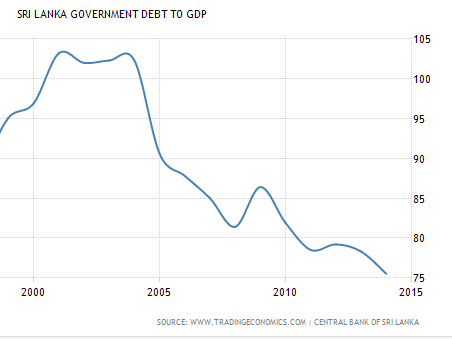
I see these type of statements issued by both JVP and Opposition, Government also keep talking about loans taken by the state and inability to pay back 29 Billion Us Dollars by 2019

Who are we to believe?

Can the state organize a Interparty conference like  the Sangha Conference proposed by the President and discuss how to come out of this economic downfall” as stated by various parties .

As I wrote before we need to expedite mega project development in Colombo Port .Hambantota and Tricomalee  and of course Jaffna .

Sadly neither government nor opposition talks about Investment in the North

Everyone keep blaming Wiggy” the CM of NPC and no one wants to sit with him in a round table and discuss a faster development program

Jaffna and the shallow sea front is ideal for  Tourism and fish culture ,but not a single investment forum has been initiated by the state and NPC

CM of EPC has been an example of forward thinking with no intention of asking for self determination organized a well-attended investment forum

Hopefully he will get some investments

We wonder what JVP can offer and how they intend to resurrect >Nationalization< ,or quasi -socialistic investment friendly state like Vietnam or extreme state like North Korea or a Single Party state like in middles east ?

There are no more communist countries left other than repressive,isolated  North Korea as China is semi capitalistic state .

On whose support they want to ride on  ?

OR

Shall we go back to N M Perera,s doctrine and live with Haal Pollu –restricted movement of rice !!!!!!

I would believe JVP and even vote for them if they can tell how to come out of this mess other than locking up the corrupt elements and locking up horns with the PM !


Dr Sarath Obeysekera

Why Sri Lanka’s hybrid court cannot become another farcical Nuremberg Tribunal

March 11th, 2016

Shenali D Waduge

 Robert Jackson, Chief US prosecutor & former US Attorney General said that the Nuremberg Trials were a continuation of the war effort of the Allied nations” how true is the same when the effort to separate Sri Lanka seems very much the goal now taking place through a new constitution for Sri Lanka. If the Nuremberg Tribunal was the brainchild of the World Jewish Congress as reported by Nahum Goldmann in his memoirs (president of the World Jewish Congress and World Zionist Organization) isn’t Sri Lanka’s hybrid court the brainchild of all those players that are angry & jealous that the LTTE was annihilated by the Sri Lankan military. The hybrid court being created is a justice of revenge & vengeance.

Only German leaders were put on trial as ‘major war criminals’. Like the Sri Lankan armed forces they were guilty even before the trials started. The Germans were called ‘Nazi conspirators’ the mainstream media slaps ‘war criminals’ of our soldiers. Nothing gets said or relayed about LTTE, their crimes or the countries and people that support(ed) the LTTE.

If the Allies acted as prosecutor, judge and executioner of the Germans, the LTTE fronts & others that funded and lived off the LTTE are regular visitors to the UNHRC to frame charges against Sri Lanka. Both trials created for political purpose. British judge Sir Norman Birkett says the trial is only in form a judicial process and its main importance is political’. We are likely to see similar statements once the gavel declares Sri Lanka’s heroes as war criminals for no reason and with no evidence!

If Germans were accused of exterminating 6million Jews. Sri Lanka is being accused of a figure between 40,000 and 200,000 but not even 100 names of the dead has been produced. If the trials were to legitimize the holocaust story the same is likely to happen for Sri Lanka.

If the World Jewish Congress made sure that Germany’s persecution of the Jews was the primary focus of the trials, are the reports/articles/statements of numerous local/foreign players not gearing up for the same task against Sri Lanka though with little or no evidence except that they have the propaganda channels and the power to relay lies.

If Jewish officers like Lt. Col. Murray Bernays, Col David Marcus played key roles in persuading US War Secretary Henry Stimson to accept the idea of putting the Germans on trial, is the same role not been done by an opportunist bunch of Sri Lankan leaders in harmony with LTTE fronts and their heads all of whom were proscribed under UNSC Resolution 1373 in April 2014?

If Col. David Marcus serving as America’s head of War Crimes Branch selected judges, prosecutors & lawyers for Nuremberg is the same not taking place where the India-LTTEfronts-Church & other lobbies are today deciding how they would use the hybrid court to declare Sri Lanka’s military as war criminals.

Hopefully there are more people like Chief US prosecutor Robert Jackson who privately acknowledged that the Allies who were conducting the trials were guilty of the same crimes they accused the defendants of committing. The same sentiments were echoed by President Truman…Allies ‘have done or are doing some of the very things we are prosecuting the Germans for”. This same injustice is going to happen again exactly 70 years later through the hybrid court for Sri Lanka.

If the Nuremberg Tribunals standards had been applied to the victors of the 2nd world war the supreme Allied commander Dwight Eisenhower should have been hanged! He declared the German POWs in US custody were not privy to Geneva Convention on the treatment of POWs and these Germans faced slow death by disease & starvation.

If the victors seized German documents/papers to use whatever against Germany is the same not happening in the manner that the current puppet regime is opening every paper/document and even security facility to foreign envoys, their representatives & the UN? There are said to be 1million documents in the US National Archives alone! Will the US, UK, France or any other superpower allow their top secret files to be selectively used to embarrass and incriminate them?

If despite the seizer of documents not a single document could be found to refer to extermination program by the Germans is it not the same case about the hyped genocide of Tamils by the Sinhalese? All hot air and nothing to showcase as evidence.

If the Tribunal accepted as valid dubious ‘evidence’ including hearsay and unsubstantiated reports from ‘investigative’ commissions by the Allies what music this is like in realizing how the same is taking place against Sri Lanka. The same teams of people are forming forums, panels, writing reports, books and even holding tribunals and canvassing petitions preparing the groundwork to hang Sri Lanka as war criminals completely ignoring that it was to stop the crimes of LTTE that a military solution was sought after 30 years of suffering.

If the Tribunal accepted unsubstantiated reports is it any different to how the UNSG’s panel quotes from LTTE sources or when LTTE cadres are projected as victims?

If the Tribunal accepted the US congressional report that ‘proved’ gas chamber killings at Dachau, and a Polish report submitted by the US also ‘proved’ killings by steam at Treblinka, is it any difference to the hyped massacre & genocide stories being campaigned through well-funded organizations by the same sets of individuals? Why should our war heroes face trial and be falsely sentenced and be told years later that they were innocent?

When after 70 years it emerges that the ‘evidence’ presented by the prosecution has been fraudulent are we not correct to object to a hybrid court for Sri Lanka with foreign judges who will attempt to do the same because they are going to be appointed by the very entities seeking vengeance against Sri Lanka for ending LTTE terror.

If the Israeli archives director Shmuel Krakowski confirmed in 1986 that more than 10,000 of the 20,000 ‘testimonies’ of Jewish survivors” on file are unreliable”. He says that some survivors wanting ‘to be part of history’ had let their imaginations run away with them. Quite a lot of that is happening in the Sri Lankan scene as well.

What is striking when Krakowski says many were never in the places where they claimed to have witnessed atrocities while others relied on second-hand information given them by friends or passing strangers’ is the manner that victim-friends of the OHCHR are helping compile these witness testimonies & the OHCHR witness protection scheme is an attempt to keep the lies capped for 20 years. This information is important and needs to be quoted at all times by Sri Lankans in response to the hybrid court on Sri Lanka.

Do we need to go through another Nuremberg to confirm decades later that Sri Lanka’s hybrid court gave false testimonies, witnesses were never in places they claimed they were, evidence was fabricated, exaggerated and unreliable, witnesses were trained to lie, witnesses were paid to lie just as Charles Kremer who went in search of victims of supposed German massacre in World War 2 found out in 1981 that people were willing to give him any story for money! Is this not the case in Sri Lanka?

This clearly reiterates the farce behind the manner UN/OHCHR and linked entities are attempting to frame ‘witnesses’ ‘evidence’ and ‘testimonies’ against Sri Lanka. Mr. Krakwski is acknowledging the lies after 40 years and the current witness protection scheme devised by OHCHR is purposely to keep these lies and liars officially hidden.

We do not wish to see our armed forces suffer like Frank Walus who was charged of killing Jews after 11 Jews testified under oath that they personally saw Walus murder Jews including children. It took 4 years for Walus to prove he was a teenager during the war years and was working on a German farm! Such is the international justice that prevails with international judges & OHCHR head has the audacity to laugh at Sri Lanka’s judges.

The parallels in allegations against Nazis and Sri Lanka are striking. Herman Goring, Hitler’s second-in-command denied knowing any extermination plans ordered by Hitler. This was collaborated by General Alfred Jodl, Armed Forces High Command Chief of Operations & Hitlers closest military advisor. In the case of Sri Lanka unfortunately, political motivated white-flag story has blown up a pandora’s box of unnecessary lies & controversies. What is similar is the rumors and foreign reports of mass killings in both Germany & Sri Lanka in the case of Jews in 1945 and Tamils in 2009.

All German leaders on trial steadfastly denied any extermination program. However, the world claims millions of Jews were massacred. A handful of Germans on trial for their own defense accepted the extermination story and denied their involvement. The ‘Auschwitz’ trials in 1963 was difficult because there were only witness ‘testimonies’ and nothing to verify and in some cases the dead turned up alive. By law it is illegal to challenge the holocaust story. The same slap may occur for Sri Lanka using the excuse of ‘reconciliation”!

Some noteworthy quotes

  • US Senator Robert Taft the trial of the vanquished by the victors cannot be impartial no matter how it is hedged about with the forms of justice” …………this whole judgement there is the spirit of vengeance and vengeance is seldom justice”. That same vengeance is taking place against Sri Lanka because the monster created by India was defeated and all those who made hay using the LTTE were left high and dry accept frothing mad with vengeance & revenge. The hybrid court is that opportunity.
  • Milton Konvitz (Jewish specialist of law & public administration/New York University) Nuremberg Tribunal defies many of the most basic assumptions of the judicial process”….”our policy with respect to the Nazis is consistent with neither international law nor our own State Departments policy”
  • William O Douglas (US Supreme Court Justice) I still think that the Nuremberg Trials were unprincipled. Law was created ex post facto to suit the passion and clamour of the time”. With the hyped propaganda built about 40,000 more killed or still missing, this forms the basis for war crimes when no one is able to produce the names of the supposed dead or missing and this question is conveniently brushed under the carpet by the UNSG & the OHCHR as well as the nations that supported LTTE terror!
  • Rear Admiral H Lamont Pugh (Navy Surgeon General) I thought the trials in general bordered upon international lunacy. I thought it particularly unfortunate, inappropriate, ill-conceived and dupably injudicious that the US should have been cast in the leading role as prosecutors and implementators of the Trials of the German participants or principals”. Same is happening – the LTTE heads & all those involved in LTTE terror/separatism are steering justice and accountability against Sri Lanka. The Nuremberg trials were a trial of the vanquished by the victors when the victors themselves committed the same or worse crimes than those they were accusing. Not a single word is being told about who in the LTTE will be held accountable other than the cadres who surrendered.
  • Robert Jackson (US Chief Prosecutor) in letter to President Truman wrote that the Allies have done or are doing some of the very things we are prosecuting the Germans for. The French are so violating the Geneva Convention in the treatment of German prisoners of war that our command is takng back prisoners sent to them for forced labor in France. We are prosecuting plunder and our Allies are practising it. We say aggressive war is a crime and one of our allies asserts sovereignty over the Baltic States based on no title except conquest”. Isnt India trying to do the same by using every diplomatic and economic leverage to turn Sri Lanka into an Indian colony?
  • Werner Maser (Historian) thousands of documents which seemed likely possibly to incriminate the Allies and exonerate the defendants suddenly disappeared… there is much evidence that documents were confiscated, concealed from the defense or even stolen in 1945”.
  • Von Ribbentrop (Foreign Minister) the defense had no fair chance to defend German foreign policy. …half of the 300 documents which the defense prepared were not admitted. Witness and affidavits were only admitted after the prosecution had been heard; most of them were rejected…..only the prosecution not the defense, had access to German & foreign archives. The prosecution only searched for incriminating documents and their use was biased.” Is the same not happening throughout the calls for submissions to the OHCHR & OISL investigations much of the evidence against LTTE, its fronts and players that supported LTTE has obviously gone into the dustbin without even an acknowledgement.
  • American judge, Edward L. Van Roden, one of the three members of an American Army Commission “all but two of the Germans, in the 139 cases investigated, had been kicked in the testicles beyond repair. This was standard operation procedure with our American investigators.” ….”Torture with burning matches driven under the prisoners’ fingernails; knocking out of teeth and breaking jaws; solitary confinement and near-starvation rations. The statements which were admitted as evidence were obtained from men who had first been kept in solitary confinement for three, four, and five months …”Low rank prisoners were assured that convictions were being sought only against higher ranking officers, and they had absolutely nothing to lose by co-operating and making the desired statements. Such ‘evidence’ was then used against them – when they joined their superiors in the dock. The latter were told on the other hand that by ‘confession’, they would take all responsibility onto their own shoulders, thus shielding their men from trial.” (how familiar this sounds)
  • “In my Judgment, the procedure by which the Nuremberg Tribunal was created and the criminal trials thereunder conducted, was completely fraught with illegality.” – William L. Hart, Supreme Court of Ohio (we continue to say the UNSG Panel of Expert is illegal and the foundation on which Resolutions against Sri Lanka has been drafted)
  • “I am glad our real military men had nothing to do with the travesty of justice that the lawyers and ‘statesmen’ conducted on Nuremberg.” – Rear Admiral Dan V. Gallery. U.S.N. (Ret.)
  • “Hearsay evidence was admitted indiscriminately and sworn statements of witnesses were admissible regardless of whether anybody knew the person who made the statement or the individual who took the statement.” – George McDonough, American Lawyer, New York Times (this very newspaper today is part of the lie machine against Sri Lanka)
  • “… a fantastic desecration of the ideals of Western Civilisation, and appalling miscarriage of justice… a misuse of evidence for vicious ends, all of which will someday be exposed as a shocking travesty of high legal and moral principles.” – Henry M. Adams, Ph.D. Professor of History, University of California (why should we wait for decades later to be told Sri Lanka’s hybrid court was illegal & all judgements illegal as well)
  • “…wholly unjustified and a disgrace to the national governments sanctioning it.” – Rear Admiral Reginald R. Belknap, U.S.N. Atlantic Fleet (If international laws are to be applied it cannot mean that powerful nations can violate them and hold only smaller nations accountable for crimes. Justice and not vengeance must take place.

The travesty of justice in the Nuremberg Trials is clear. The crimes of the victors were conveniently brushed aside. The victor’s self-righteousness never thought of applying the standards to their own conduct and crimes  and these crimes continue unabated.

Nuremberg Trials saw the marriage of wicked minds coming together to deliver warped justice, yet saner voices did emerge in the form of a US Supreme Court judge Charles Wennerstrum who declared If I had known seven months ago what I know today, I would never have come here’. …”most of the evidence in the trials as documentary, selected from the large tonnage of captured records. …the defence had access only to those documents which the prosecution considered material to the case”.

Another judge, Chief Justice Harlan Fiske Stone wrote …I wonder how many of those who preside at the trials would justify some of the acts of their own governments if they were placed in the status of the accused”…..”if we had been defeated the victors could plausibly assert that our supplying Britain with fifty destroyers was an act of aggression”.

Will India be ever put on trial as state sponsor of terrorism for creating the LTTE, will the Church accept accountability for its role in terrorism, or will US, Canada, UK and EU nations be held responsible for harbouring LTTE fronts & their leaders some nations actually gave safe have to LTTE cadres even after the conflict ended?

When US Representative Lawrence Smith says the Nuremberg Trials are so repugnant to the Anglo-Saxon principles of justice that we must forever be ashamed of that page in our history… the Nuremberg farce represents a revenge policy at its worst’. Should these same nations not ask themselves why they are setting out to repeat the same mistake against Sri Lanka 70 years after the Nuremberg Trials?

 Shenali D Waduge

Whither law & order in Sri Lanka since 2015

March 11th, 2016

Shenali D Waduge

Prior to January 2015 the propaganda was directed at ‘white van kidnappings’ but names of the kidnapped kept conveniently omitted. Fear psychosis propaganda sufficed. Lack of a police commission became the reason for all ills. Now even after the establishment of a police commission the citizens of Sri Lanka are awestruck by the complete failure of law & order in Sri Lanka. Rapes, murder, return of thugs, goons and the underworld, and errant ministers knocking people on the roads have become every day experience for people and neither the UN, foreign envoys nor even human rights groups are bothered to highlight the status quo.

  • Rape – police say 80% of rape victims in 2015 were below 18 years. 1854 rape cases reported in 2015 of which 1501 were females. https://www.youtube.com/watch?v=-3hcw8q-ygA
  • Rape of children – rape of teenage girl in Kayts,
  • Revenge killing – 10year old boy in Athurugiriya
  • Rise in robberies – mostly drug-related crimes, bank heists – Kekirawa, Dambulla, Pasyala, Gelioya town Peradeniya, Piliyandala
  • Teenagers in possession of firearms – Kalutara
  • Rise in road accidents & fatalities – Five presidential Security Division (PSD) officers were killed and several others injured when a defender vehicle and two private buses crashed – See more at: http://www.dailymirror.lk/86791/four-psd-officers-killed-several-injured-in-accident#sthash.DTN2D5MY.dpuf
  • Illegal immigration on the rise – Sri Lanka’s cannot give even an estimate of the number of illegal immigrants in the country most of whom are arriving from India and remaining without going or arriving on tourist visa and even engaged in employment.
  • Bribes/corruption – numerous police, principals and even state officials have been caught for corrupt practices including bribe taking. How has this been tackled?
  • Arrest of Buddhist monks – the targeted arresting of Buddhist monks and the emphasis on elephants while ritual/animal sacrifice takes place questions the real objective and seriously makes any to wonder whether the real motive is to gag the Buddhist priests from defending the nation has had historically happened and the removal of elephants from the Buddhist religious pageants carrying forward the objective from the time of colonial invaders to destroy Buddhism and its reach amongst the majority populace.
  • Sri Lanka a hub for drug trade Sri Lanka is a now a transit point for drugs coming mostly from Pakistan, Afghanistan and India headed to Europe and beyond. Heroin is smuggled into the island in sea containers and fishing boats. The use of ATS, including methamphetamine and MDMA (ecstasy), and of other synthetic drugs, such as LSD and ketamine, is reportedly on the rise
  • 175 underworld gangs now operating in Sri Lanka – what must be clearly stated is that most of these gangs had fled the country and were living overseas and returned after January 2015 and questions who are patronizing them. Is it not because the scale of crimes associated with the underworld has risen to drastic climes that the Special Task Force has been called in to deal with the menace. But how many of these gangs have political patronage. It is strange that the local and foreign upholders of human rights are mum now on collapse of law & order when under the previous government even if a dog was knocked down a statement would be issued by the UNHRC head. The behaviour of the international community became such a laughing matter at that time and now their silence highlights the hypocrisies that prevail when inspite of the lawlessness the UNSG is issuing statements on how wonderful Sri Lanka is.
  • Government crimes not investigated :Rs 2billon loss from Central Bank Bond scam (insider trading), how all of a sudden the case against Finance Minister was dismissed on technicality, no action against Govt MPs bashing up people, knocking them down on the roads, inaction on rape of forests (Wilpattu) by Government MPs, sale of lands to foreigners without any restrictions or checks & balances, pretext of returning lands to IDP when these IDPs never owned land and whether they are Sri Lankan natives is being questioned. Note LTTE said 33% of its cadres were from Tamil Nadu.these people are not entitled to land or homes in Sri Lanka.
  • Democracy a farce : organizations/individuals whose objective is to create a federal structure is given the task of drawing consensus for a new constitution! The citizens of the country must seriously question how governments that are elected for a term of office can change a country’s constitution as soon as they come to power influenced by those that backed them to come into power. We cannot have a situation where every time a government is formed a new constitution gets drafted. The PM is misusing parliamentary privileges to call people pimps, donkeys, gypsies, monkeys and beggars and laughing at his own jokes while his party joins in. It now appears the journalist that the entire world has been mourning for and doling out money is not even a journalist! What a laugh this has become! Not a single person is highlighting the dictatorial situation in how the country is being governed. A UNSC Resolution banning LTTE fronts was simply removed without any solid reasons given and questions the legalities of these decisions.
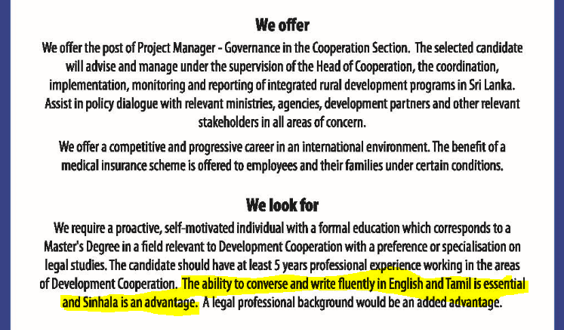
  • West’s discrimination: The illegality of the UN panel of expert report, subsequent resolutions and actions are yet to be investigated & yet the govt is agreeing to hybrid courts when even the FCID’s legality is being questioned in court. The recent EU job advert displays the level of racism and discrimination prevalent where Sinhalese are marginalized openly through paid advertisements. We are unnecessarily antagonizing powerful nations. A former President recently referred to the gift by China as resembling a toilet commode little forgetting that it is only this country that has gifted Sri Lanka with monumental buildings to honor their strong ties and relationship with Sri Lanka. Can she name a single free building that we have got from UK, US, or India?
  • Justice : a good look at the arrests that have taken place since January 2015 it is clear that these are all politically motivated and directed at silencing political opponents and their supporters. The government that accused previous MPs of crimes are now in government holding portfolios when the people did not even vote for them. No foreign or local body have even complained about this. Investigations, arrests are taking place only for opposition MPs but none of the crimes committed in the past by MPs in government are being even investigated. This becomes a mockery of justice as anyone is innocent until proven guilty and arrests must take place with evidence not arresting people and then searching for evidence. These actions make us a laughing stock globally and eventually good investors will walk away while con-investors will come enjoy all the tax breaks/holidays and then make off with the profits.

A Buddhist priest is arrested. Is looking after an elephant the only crime taking place in Sri Lanka?

uduwedhammaloka

Isnt helping terrorists/terrorism and separatism a bigger crime?

Cathelicpriestwithterrosts

https://www.tamilnet.com/art.html?catid=13&artid=15499 Rev. Dr. Kingsley Swampillai, Bishop of Batticaloa and Trincomalee, Rev. Dr. Rayappu Joseph, Bishop of Mannar and the Rev. Dr. Thomas Savundranayagam, Bishop of Jaffna met with LTTE’s Pollitical Head Mr. S. P. Thamilchelvan in Kilinochchi (July 2005)

http://www.defence.lk/new.asp?fname=20060703_04

http://www.chrsrilanka.com/_Mannar_Bishop,_TNA_resurrect_LTTE%E2%80%99s_ISGA_demand______-5-3267.html (Mannar Bishop Rt. Rev. Rayappu Joseph and a group of Tamil MPs and civil society representatives have reportedly urged a group of visiting Indian Parliamentarians to press the Sri Lankan government towards establishing a self-governing mechanism for Tamils in the North and East.)

http://www.defence.lk/new.asp?fname=The_Devils_Advocate_A_response_to_Rt_Rev_Rayappu_Josephs_letter_to_Australian_Government_20121506_11 Rt. Rev. Rayappu Joseph is one such controversial character who is being working hard to promote LTTE separatist agenda. His actions and utterances have come under criticism by one and all.

We suffered 30 years of terrorism. No UN or foreign body provided solutions throughout these 30 years to end terror. All of us – Sinhalese, Tamils, Muslims and even foreigners were victims of LTTE terrorism/separatism. 4 Presidents did not provide a solution to end terrorism. The 5th President did with the support of the armed forces, police and civil defense force and we have been enjoying peace that other nations of the world do not have as their countries are plagued with terrorism. We can walk out of our homes without fearing bombs, suicide missions and LTTE attacks. Those that openly and indirectly supported LTTE are still out there and these people are today coming out with more venom promoting their ideology in a different song. The separatist ideology has not been eliminated and this is why lawlessness continues to prevail because these elements are the one’s now indirectly influencing the country. It is time locals and foreign players not party to this open their eyes once and for all

Shenali D Waduge

UNHCR Vote in Geneva – India opens a can of worms

March 11th, 2016

By Senaka Weeraratna

In calling for accountability for alleged war crimes on the part of Sri Lankan military personnel in the closing phase of operations against LTTE terrorism which were combined with humanitarian rescue of thousands of civilians trapped in LTTE controlled areas, India has opened a Pandora’ s Box.

It is unlikely that any investigation of alleged war crimes can be confined only to a particular period of time lying at the end of a continuum of hostilities covering a period of a nearly thirty years.

Exposes operations of IPKF in Sri Lanka to criminal investigations and possible indictment for war crimes

Sri Lanka’s Constitution does not permit it.

In Chapter III of the Constitution which guarantees Fundamental Rights, Article 12 places a heavy emphasis on the right to equality before the law. Sub – Article 12(1) stipulates that ‘All persons are equal before the law and are entitled to the equal protection of the law’.

If the law were to provide a mechanism say only for victims (or relatives of victims ) of alleged war crimes committed in May 2009 to gain relief either through punishment of the alleged perpetrators or payment of reparations or both, and deny a mechanism say to victims (or relatives of victims ) of alleged war crimes committed by members of a foreign peace keeping force during the period from 1987 – 1990, to gain relief through the law, in a context where both local and foreign armies fought against a common foe i.e. LTTE, then such a course of action of arbitrary selection of personnel for investigation and indictment and thereby denying the victims equal access to law, would clearly be in breach of Article 12 of the Constitution.

It would tantamount to a mockery of Justice if the investigation of War crimes is selectively compartmentalized focusing only on one group to the exclusion of another group when both armies ( local and foreign ) were locked in combat against a mutual enemy though at different periods of time but nevertheless within a contemporary time frame.

The implications of Liyanage v Queen (1965) case

Privy Council Appeal No. 23 OP 1965 Trial-at-Bar No. 2 of 1962

This case involved the among other things the discussion of the Validity of criminal legislation passed ad hominem and ex post facto, and the Competence of Parliament to pass laws which offend against fundamental principles of justice

The eleven appellants, who were tried with thirteen other persons, were each convicted of three offences in respect of an abortive coup d’ etat which occurred on 27th January 1962. They were convicted and sentenced under section 115 of the Penal Code (as amended by section 6 of the Criminal Law (Special Pro-visions) Act No. 1 of 1962) for conspiring (1) to wage war against the Queen, (2) to overthrow by means of criminal force or the show of criminal force the Government of Ceylon, and (3) to overthrow otherwise than by lawful means the Government of Ceylon by law established. They were not tried by a judge and jury in accordance with the normal criminal procedure, but by three judges of the Supreme Court sitting without a jury.

It was submitted on behalf of all the appellants that, whatever were the details of fact or evidence, their convictions must be quashed owing to the invalidity of certain legislation in 1962 passed especially in order to deal with those who partook in the coup and affecting their arrest, detention and interrogation before trial, the mode of their trial, the offences alleged against them, the admissibility of evidence and the sentences. It was common ground that, if this legislation was invalid, the convictions could not be sustained.

The legislation consisted of two statutes, viz., the Criminal Law (Special Provisions) Act No. 1 of 1962 and the Criminal Law Act No. 31 of 1982 which amended the former Act in certain respects. The Acts referred mainly to the trial and punishment of the defendants only. Section 21 of the former Act provided that, save and except Part I and Section 17, the provisions of the Act “shall cease to be operative after the conclusion of all legal proceedings connected with or incidental to any offence against the State committed on or about 27th January 1962 . .’

The first contention for the appellants was that the two Acts were contrary to fundamental principles of justice in that they not only were directed against individuals but also ex post facto created crimes and punishments and destroyed their safeguards by which those individuals would otherwise have been protected. It was argued that inasmuch as the Constitution of Ceylon was laid down by an Order in Council of the Crown and not by an Act of Parliament of the United Kingdom, the Parliament of Ceylon had no power, by virtue of the judgment in. Campbell v. Hall (98 E. B. 1045), to pass laws which were contrary to fundamental principles.

A second contention wag that the Acts offended against the Constitution in that they amounted to a direction to convict the appellants or to a legislative plan to secure the conviction and severe punishment of the appellants and thus constituted an unjustifiable assumption of judicial power by the legislature, or an interference with judicial power, which was outside the legislature’s competence and was inconsistent with the severance of power between legislature, executive, and judiciary which the Privy Council held that the impugned Acts were ultra vires and invalid in so far as they constituted a grave and deliberate interference with the judicial power of the judicature.

Although criminal legislation which can be described as ad hominem and ex post facto may not always amount to an interference with the functions of the judiciary, in the present case there was no doubt that there was such interference that it was not only the likely but the intended effect of the impugned enactments. Such usurpation or infringement of the judicial power was contrary to the Constitution and, to that extent, fatal to the validity of the Acts.

Conclusion

The Privy Council is no longer a part of the Court System of Sri Lanka. 

Nevertheless its ruling that criminal legislation directed against a particular group of people and enactment of retrospective legislation with a view to secure punishment against a defined group of people may have some resonance if the witch hunt directed from overseas by powerful countries against Sri Lanka were to result under coercion in new legislation leading to creation of new offences i.e. war crimes, and special trials and new punishments.

Courtesy : Asian Tribune

http://www.asiantribune.com/news/2012/03/27/unhcr-vote-geneva-india-opens-can-worms

රාජපක්ෂලාට ඇති වෛරයට රට පාවාදීම

March 11th, 2016

රත්තනදෙණියේ මේධානන්ද හිමි යුතුකම සංවාද කවය

සරත් ෆොන්සේකා පිලිබඳ මා තුල අද වෙනතෙක් කිසියම් ගෞරවයක් තිබුණි. යුධ හමුදාපතිව සිට තීරණාත්මක කාර්යභාරයක් කළ ඔහු කවර තත්වයක් යටතේ වුවද සිරගත කිරීම පවා මා අනුමත කලේ නැත. එය පැහැදිලිවම දේශපාලන පලිගැනීමක් බව මා තුළ පැවති විශ්වාසයයි. එහෙත් ඔහු අද පාර්ලිමේන්තුවේ කළ කතාව ඇසූ විට මේ ෆොන්සේකා ගැන ඇති වුයේ දැඩි අප්‍රසන්න සහගත පිළිකුලකි. දේශපාලන අනාථයකු වූ ඔහු සැබවින්ම මේ ඔප්පු කරන්නේ තමා තරම් ජඩයකු මේ ලංකා ඉතිහාසයේම පහළවී නැති බව විය යුතුය.

ඔහු කියන්නේ කුමක්ද ? යුධඅපරාධ පිලිබඳ කෙරෙන ජාත්‍යන්තර පරීක්ෂණය අනිවාර්යෙන් කළයුතු බවය. ඒ සඳහා විදේශීය නිරීක්ෂකයින්ට විදේශීය උපදේශකයින්ට සහය දී ජාත්‍යන්තරයේ මනදොල පූරණය කළයුතු බවය. සුදු කොඩි පරීක්ෂණයත් අනිවාර්යෙන්ම පැවැත්විය යුතු බවය. තමන් යුද්ධය මෙහෙයවුයේ ජිනීවා සම්මුතීන්ට අනුව බවත් ඒවා කඩකළ අතලොස්සක් සිටී නම් අනිවාර්යෙන් දඩුවම් කළයුතු බවය. ඔහු කියන මේ අතලොස්ස කව්ද ? මහින්ද ,ගෝටාභය ඇතුළු තමන් සමග පසුගිය කාලයේ අත්වැල් බැඳ නොගත් හමුදා නිලධාරීන්ය. වසර 40ක හමුදා දිවියේ එදා මෙදාතුර තමන්ට කීකරු නොවූ සෙසු නිලධාරී ටිකය. ශවේන්ද්‍ර සිල්වා ,කරන්නාගොඩ වැනි තමාගේ පරම සතුරන් සේ සලකන අයත් ඔහුගේ මේ අතලොස්සක් වූ සතුරු ලයිස්තුවේ ඉහලින්ම සිටී. ජිනීවා සම්මුතීන්ට අනුකූලව සටන් කිරීමට අප දන්නා පරිදි ඔහුටම කියා වෙනම රාජ්‍යක ස්වායක්ත බලයක් තිබුනේ නැත. ඔහුද ආණ්ඩුවේ එක උපකරණයකි. ඔහුට සිදු වුයේද සේනාධිනායක හා ආරක්ෂක ලේකම්ගේ නියෝග පිළිපැදීමය. එත් දැන් ඔහු රාජ්‍ය යාන්ත්‍රණයෙන් විනිර්මුක්ත වූ වෙනම ශීලයක් ආරක්ෂා කළ එකම සුදනා තමන් බව කියමින් ජාත්‍යන්තර පරීක්ෂණයකට ආරාධනා කෙරේ. ප්‍රභාකරම් නන්දිකඩාල් කලපුවේ ගිල්වා තැබූ වරදට පරවේණි ගත වෛරයකින් පෙලෙන විකල්ප ගෝත්‍රයේ මෘග්ධයින්ට හැරෙන්නට ෆොන්සේකාගේ කතාවේ ඇති කැකෑරෙන වෛරය කොතෙක්දැයි සාධාරණව බලන ඕනෑම මනුෂ්‍යකුට වටහා ගැනීම අමාරු නැත.

ෆොන්සේකාගේ වර්තමාන කියුම් කෙරුම් හරහා ඔහුට හිමිවන්නේ ඉතිහාසයේ යුධ වීරයකුගේ භූමිකාවක් නොව රාජපක්ෂලා සමග ඇති පෞද්ගලික වෛරයක් නිසා රටම පාවා දුන් ද්‍රෝහීයකුගේ තත්වයයි. රාජපක්ෂවරු සමග ඇති වෛරී කෝන්තරය සමස්ත රට ජාතියකින් පිරිමැසිය යුතු නැත. ඔහු අද ඒ තැනට තිරස්චීන වී ඇත්තේ එජාප පිළිකන්නේ ළගිමින් ඉදුල් බුදින්නෙකු ලෙසය. තමන් ගැලවීමේ හමුදාවටත් සුදුසු නෑ කියූ, ඕන ගොනෙකුට යුද්ධ කරන්න පුළුවන් කියූ, තොප්පිගල මුදාගැනීම කජ්ජක් නොව කැලෑවක් කියූ, අලිමංකඩ වෙනුවට පාමංකඩ යනවා කියූ, කරන්න පුළුවන් හැම නින්දාවක්ම හැම අපහාසයක් ම කල මිලේනියම් සිටි බුද්ධි අංශ පවාදුන්, එජාපය සමග සම අසුන් ගනිමිනි. මෙවැනි නීච පුද්ගලයකුට හිටපු හමුදාපති යයි කලකට හෝ අපට කීමට සිදුවීම ගැන ලජ්ජා විය යුතුය.

රත්තනදෙණියේ මේධානන්ද හිමි
යුතුකම සංවාද කවය
www.yuthukama.com

ඉන්දියන් සාම සාධක හමුදා කළ භික්ෂු ඝාතනය

March 11th, 2016

මතුගම සෙනෙවිරුවන්

එක්දහස් නවසිය අසූහත වර්ෂයේ ජූලි 29 දිනය ලංකාවට අඳුරු දිනයක් විය. ලංකාව සහ ඉන්දියාව අතර ගිවිසුමක් අත්සන් කලේ එදිනය. ගිවිසුමේ වගන්ති ප්‍රකාරව ලංකාවේ හමුදා බැරැක්කවලට සීමා කෙරිණ. පොලිසියේ සිවිල් රාජකාරි පවා ඉන්දියානු සාම සාධක හමුදා අතට පත් විය.සුප්‍රකට වඩමාරච්ච මෙහෙයුමේදී පහසුවෙන් එල්.ටී.ටීඊ. සංවිධානය පරාජය කල හැකිව තිබියදී ඉන්දිය රජය මැදිහත් වීමෙන් ගුවනින් ආහාර හෙලීමත් ජේ.ආර්. ජයවර්ධන ජනාධිපතිවරයා හිර කොට ගිවිසුම අත්සන් කිරීමත් සිදු විය.මේ ගිවිසුම ඉතා බරපතල ලෙසට ලක්රජයේ ස්වභාවය  දුර්වල කල ලියවිල්ලකි. ලංකාව බහුවාර්ගික බහුභාෂාමය බහු ආගමික රාජ්‍යයක් ලෙසට එහිදී පිළිගෙන තිබුණී. බලය බෙදාහැරීම සඳහා එහි සඳහන් කළ ප්‍රතිපාදන මගින් උතුර සහ නැගෙනහිර පළාත් ඒකාබද්ධ කළයුතුව තිබුණි. ඒසඳහා ජනමත විචාරණයක් පැවැත්වීම සුදුසු යයිද තීරණය විය. පැය හතලිස් අටක් යන්නට ප්‍රථමයෙන් ලංකාවේ හමුදා බැරැක්ක වලට සීමා  කරන ලදී. එ නමුත් දෙමල කොටි ත්‍රස්තයන්ගේ  කණ්ඩායම් වලට එවැනි තහංචියක් නොවැටුණි. එහි ප්‍රතිඵලය වූයේ  නැගෙනහිර පළාත් තුළ ඔක්තෝබර් මාසය තුල අතිමහත් භිෂණයක් මතු වීමයි. ඉන්දියන් සාම සාධක හමුදාවේ මදුරාසි සේනාංක ත්‍රිකුණාමලේ සහ අම්පාර යන දිස්ත්‍රික්ක වල ස්ථානගත වීම නිසා තත්ත්වය බරපතල විය.ශ්‍රීලංකා හමුදාව සහ පොලිසිය මෙන්ම සිවිල් පරිපාලනයද අක්‍රීය කිරීම නිසා කැලෑ නීතිය යටතේ කොටි සංවිධානය ක්‍රියාත්මක විය. කරන දෙයක් කරන්නට ඉඩදී ඉන්දියන් හමුදාව බලා සිටින්නට විය. මේ නිසා ගෙවල් ගිනී තැබීම මංකොල්ල කෑම් විශාල වශයෙන් ව්‍යාප්ත  විය. 1987 ඔක්තෝබර් මස 03 දිනට උදා විය. එදින ත්‍රිකුණාමල පහේ කණුව සහ හතරෙ කණුව අතර සිංහලයන් උපවාසයක් ආරඹන ලද්දේ තමන්ට එල්ල වූ පීඩා ඉවසා දරා ගත නොහැකි බව ප්‍රකාශ කරන්නටයි.

මේ අනාථ තත්ත්වය එකළ දිවයින ප්‍රවෘත්ති පත්‍රය වාර්තා කරන්නේ මෙසේය.අපට කරදර ඇති වෙන්නට පටන් ගත්තේ 1984 වර්ෂයේ සිටයි.අපිට ජනපදයේ ඉන්ඩ බැරිව ගිය අවස්ථා තිබෙනවා.එහෙම අවස්ථාවක  කඳවුරක සිටි අපට තුවක්කු 45 ක් දුන්නා. රුපියල් 500 කුයි පොල් අතුයි දීලා රිසිවේෂන් ඉඩම් වල පදංචි වෙන්න කීවා. අපි පොල් අතු වලින් ගෙවල් තනා ගෙන ජීවත් වුණා. මෙහෙම ගෙවල් හදා ගෙන ගොවිතැන් කරගෙන ඉන්න විට අපේ තුවක්කු ආපහු රජයට ගත්තා. ඒ ටික දවසකින් ත්‍රස්තවාදීන් ආවා. ඒ ආවේ ඉන්දියන් හමුදාවත් එක්කයි. ඒ ඇවිත් කීවා එහෙන් පිට වෙන්න. නැතිනම් මරා දමනවා කියලා.අපිට යන්න තැනක් නැති නිසා ජයපුර ග්‍රාම ආරක්ෂක මහත්වරුන් සමග හමුදා කඳවුරකට ගියා.චීන වරායෙන් හතරේ කණුවෙන් අපිව පැන්නුවේ එහෙන් නොගියොත් මරල හම ගලෝල යුනිෆෝම් මහනවා  කියලයි.අභයපුර විදුහලේ ගුරුවරියක් වන එම්.ඒ.කරුණාවතී මහත්මිය කියූ කතාව පත්‍රය වාර්තා කරන්නේ මෙසේය. පසුගිය කාලයේ හදිසි තත්ත්වය නිසා සැරෙන් සැරේ අපේ පාසල වසා තැබුවා. ඒ අතරතුර ත්‍රස්තවාදීන් ගේ ප්‍රහාර අපට එල්ල වුණා. අපි අවුරුදු පහක් තිස්සේම ඔය පරිසරයෙහි ජීවත් වුණේ. ඒත් මෙහෙම දාලා එන්ඩ වුණ පළවෙනි අවස්ථාව මෙයයි. සාම ගිවිසුමෙන් පස්සෙ තත්ත්වය දරුණු වුණා. සැත්තැම්බර් 30 දා සිට මේ අයගේ ප්‍රහාර වැඩි වුණා. අපට පාරේ බැහැල යන්න බැරි වුණා. ඔක්තෝබර් 5දා ත්‍රිකුණාමලේ සෑම ගමකටම එකවර පහර දුන්නා. ඉතින් හැමෝම කඳවුරු වලට රොක් වුණා. පසුදා පාන්දර ඉඳල මිනිස්සු ගහන්ඩ පටන් ගත්තා. හවස හය වන විට ත්‍රිකුණාමලයම හිස් වුණා.අපි කන්තලේ කඳවුරේ දවස් පහක් හිටියා.එතැනින් දඹුල්ල කඳවුරට ආවා. එතනත් ඉඩ නෑ. ඊට පස්සේ ගලේවෙලට ගියා.

හතරේ කණුවේ ඇරඹි උපවාසය රජයට පීඩනයක් එල්ල කිරීමට සමත් විය. චීනවරාය පොලිසියේ ස්ථානාධිපතිව සිටි ජයන්ත ප්‍රනාන්දු මහතා මේ තත්ත්වය  ගැන චීන වරයා නායක ස්වාමීන් වහන්සේට පැහැදිලි කර දෙන ලදී. පොලිසියේ හඬට කන්දුන් රඹුකන සද්ධාලංකාර නායකහිමියන් පොලිස් ස්ථානාධිපති සමග වහා හතරේ කණුවට වැඩම කරන ලදී.උපවාසය නැවැත්වීමට උපදෙස් දුන් නායක හිමියන් ආපසු වැඩම කිරීමට පය ඉක්මන් කළ විගසම මෙම ස්ථානයට පැමිණි ඉන්දීය හමුදාව දිගින් දිගටම වෙඩි තබන්නට වූ අතර ස්වාමීන් වහ්නසේටද වෙඩි වැදුණි.මේ තත්ත්වය ඇසින් දුටු ත්‍රිකුණාමලේ හතරෙ කණුවේ සිටි එම්. මැගිනෝනා එය විස්තර කලේ මෙසේය.

ත්‍රස්තවාදීන්ගේ අකටයුතුකම්වලට විරුද්ධව හතරේ කණුවේ සහ පහේ කණුවේ උපාසකම්මලා එකතුවෙලා උපවාසයක් ආරම්භ කලා 4 කණුවේ හන්දියේ. අපිට හොඳින් ආරක්ෂාව ලබා ගන්නයි ග්‍රාමාරක්ෂකයන්ට තුවක්තු ලබා ගන්නයි අපි එහෙම උපවාස කලේ. පස්සේ ගුවන් හමුදාවේ විස්සක් පමණ දෙනා ආරක්ෂාව ලබා දුන්නා ඒ අතරතුරේදී ඉන්දියන් හමුදාව ඇවිත් ඒ අය දණ ගස්වලා  ගුවන් හමුදාවේ අයට වද දුන්නා. වද දීලා ඒ අය ඉන්දියානු හමුදා විසින් අරගෙන ගියා. ඊට පස්සේ ඒ අය ඉල්ලලා අපි උපවාසයක් කලා. හැන්දෑවේ හයට විතර චීන වරායේ හාමුදුරුවන් ආවා. ඇවිත් බණ කතාවක් එහෙම කරලා උපවාසය නවත්වා විසිර යන ලෙසට උන් වහන්සේ අපෙන් ඉල්ලීමක් කලා. එහෙම කියලා හාමුදුරුවන්ට බඹ දෙකක් යන්ඩ ලැබුණේ නැහැ. ඉන්දියන් හමුදා ට්‍රක් හතරක් ආවා. අපි වාඩි වලා සිටියා. යකඩ තොප්පි දාපු කීප දෙනෙක් දණ ගසා ගෙන අපිට තුවක්කු එල්ල කර ගෙන සිටියා. තවත් කීප දෙනෙක් සිංහලෙන් කතා කලා. පිටිපස්සේ සිටි පිරිමි ළමයින්ට ඉදිරියට එන්න කීවා. අපි පුදුම වුණා මේ මොකද සිංහලෙන් කතා කලේ කියලා. අප මොනවවත් පැමිණිල්ලක් කරන්න ගියාම දෙමළත් සිංහලත් බැරි ඉන්දියන් හමුදාවේ අය මේ වෙලාවේ සිංහලෙන් කතා කරන්නේ කොහොමද කියලා අපි පුදුම වුණා. කොහොම වුණත් ඒ අයගේ නියෝගයට කීකුරු වූ අපේ පිරිමි ළමයි ඉදිරියට ආවා. ඒ ආවායින් පස්සේ තොප්පි දමාගෙන සිටි එක් අයෙක් මැෂින් තුවක්කුවක් පට පට ගාලා වටේට එල්ල කලා. අපි බිම දිගා වුණා. හාමුදුරුවන්ට වෙඩි වැදුණා.හාමුදුරුවන් ළඟට ආ තරුණයෙකුටත් වෙඩි වැදුණා. හාමුදරුවෝ එතැනම වැටුණා.ඒ වෙලාවේ එතැනට ඇවිත් හිටිය චීනවරායේ පොලීසියේ ලොකු මහත්තයා ඉන්දියන් හමුදාව අල්ල ගත්තා. එහෙම අරගෙන පොලිසියේ ලොකු මහත්තයාගේ පටි බොත්තම් කඩලා දැම්මා.පස්සේ අත් දෙක පිටි  පස්සට කරලා කෝට් එක පැන්නුවා. එහෙම කෝට් එක පන්නලා දන ගැස්සුවා. එහෙම කරලා අත්දෙක පස්සට කරලා දම්වැලක් දැම්මා. එහෙම දාලා පොලිසියේ ලොකු මහත්තයවයි හාමුදුරුවොයි ඇද ගෙන ගියා. පිරිමි ළමයි අසූවක් විතර ට්‍රක් වලට නග්ගා ගත්තා. ඒ ළමයින්ට අද වෙනකන් මොකද වුණේ කියලා දැන ගන්නට ලැබුණේ නැහැ.

තමන් වහන්සේගේ නායක හමුදරුවන් ඝාතනය කළ ආකාරය වර්තමාන චීනවරාය විහාරාධිපති පූජ්‍ය දෙහිඕවිට පියතිස්ස නායක ස්වාමීන් වහන්සේ විස්තර කරන්නේ මෙසේය. ඉන්දියන් රජයත් ලංකා රජයත් ගිවිසුම් ගහලා සාම සාධක හමුදාවට නැගෙනහිර බාර කලා. පසුව දිගට හරහට සිංහල ගම්මාන විනාශ කරන්නට කොටි සංවිධානයට ඉඩකඩ ලැබුණා. මේ අසාධාරණයට විරුද්ධව තමයි උපවාසය ආරම්භ කලේ ඒ කාලේ දිසාපති වරුන්ගේ බලයත් තිබුණේ ඉන්දියන් හමුදාව අතේ. මේ නිසා වෙඩි වැදී අපවත් වූ හාමුදුරවන්ගේ මිනියවත් ගන්න ඉඩ දුන්නේ නැහැ. මිනිය ඇදගෙන ඇවිත් ට්‍රක් එකේ දාලා පෑගුවා. පස්සෙ මෝචරියට ගිහින් දමා තිබුණා. හාමුදුරුවන්ගේ ආදාහන උත්සවය ගන්න දුන්නේ නැහැ. ඒ නිසා පන්සල් වත්තේම දර සෑයක් හදලා දර කෑලි අඩුක් කරලා රෙදි සිවුරු පොරවලා තමයි ගින්දර තිබ්බේ. හාමුදුරුවන්ගේ පාංශකූලෙට පළාතේ භික්ෂූන් වහන්සේලා ගෙන්න ගන්න දුන්නෙ නැහැ. කන්තලේ වෙළුන්න රජමාහාවිහාරාධිපති ස්වාමීන් වහන්සේ කැලෑ පාරකින් පන්සලට ආවා. ඉන් පස්සේ තමයි අවසන් කටයුතු කලේ.

අපකීර්තිමත් ඉන්දු ලංකා ගිවිසුම නිසා ලංකාව ඉන්දියාවේ දේශපාලන හස්තයට නොනිල වශයෙන් යටත් වුණි.තිලීපන්ගේ මාරාන්තික උපවාසය විසින් මේ ගිවිසුම ඇති කරන්නට අවශ්‍ය පරිසරය නිර්මාණය කරන ලදී. එයට අමතරව පේදුරුතුඩුවට ඔබ්බෙන් මුහුදේදී උත්අඩංගුවට පත් එල.ටී.ටී.ඊ. ක්‍රියාකාරීන් ගේ සිය දිවිනාසාගැනීමත් විසින් ප්‍රබල බලපෑමක් ඇති කරන ලදී. උතුර සහ නැගෙනහිර පළාත් වල කලබල ඇති කිරීම සැබවීන්ම ඉන්දීය රෝ ඔත්තුකරුවන්ගේ ක්‍රියාදාමයක් විය. එවැනි කලබල කාරී අවස්ථාවක් උදාකර ජේ.ආර්.ජයවර්ධන ජනාධිපතිවරයා හිර කිරීම අවසාන අරමුණ විය.එය සාර්ථක විය. ඉන්දියාවේ මෙහෙයවීම මත 13 වන් ආණ්ඩුක්‍රම සංශෝධනය මගින් ඒකීය රාජ්‍ය දුර්වල කොට බලය බෙදා හැරීමේ මුවාවෙන් දෙමල ප්‍රදේශ වෙන් කොට දක්වන ලදී. එපමණක් නොව දෙමල භාෂාවටද රාජ්‍ය භාෂා තත්ත්වයක් ඇති කොට සිංහලයාගේ බලය අඩපණ කරන ලදී. 1987 වර්ෂයේ දී නැගනෙහිර හා උතුරේ කරන ලද සිංහල සංහාරයෙන් සනාථ වූයේ ගිවිසුමෙන් බලාපොරොතු වූ අරමුණු බව පැහැදිලිය. වයඹ පළාතේ නයිනමඩමේ සිට නැගෙනහිර පළාතේ කුමන දක්වා  මුහුදු තීරය බද ඉඩම් ඊලාම් රාජ්‍යය ලෙසට සළකුණු කොට එකළ බෙදා හරින ලද පත්‍රිකා සුළභ විය. මේ මගින් බලාපොරොත්තු වූයේ සිංහල ජනතාවගේ මානසික බලය බිඳ දැමීමයි. ඉන්දියන් සාම සාධක හමුදා මගින් වාර්ගික පවිත්‍රකරණය ආරම්භ කරන ලදී.

1987 වර්ෂයෙන් පසු වර්තමානය දක්වා වසර විසිනවයක් ගතව ඇත. මේ කාලවකවානුව තුළ ලක් රජය කොටි ත්‍රස්තවාදය සහමුලින්ම අතුගා දමා ලංකාව පුරා සාමය ඇති කරන්නට කටයුතු යෙදුවහ. නමුත් අවසාන වශයෙන් රට තුළ බෙදුම් වාදය ඇති කළ පළාත් සභා අහෝසි කරලීමටත් වාර්ගික පවිත්‍රකරණය මත පළවා හරින ලද සිංහලයන් නැවත පදිංචි කරලීමටත් වැඩපිළිවෙලක් නොයෙදූහ. අතීතයෙන් පාඩම් ඉගෙන නොගැනීමේ ප්‍රතිඵලය නම් ඉතිහාසයේ සිදු වීම් නැවත පසු පසින් පැමිණීමයි. වසර විසිනවයකට පසු නැවතත් භීෂණ සමයේ ග්‍රහචාරය එළඹෙමින් ඇත.කුජට සතුරු රාශිය වූ සෙනසුරු වෘශ්චිකයේ තැන්පත්ව ඇත. නව ව්‍යවස්ථාවක් ඇති කරලීමට රජය බලහත්කාරයෙන්ම කටයුතු යොදමින් තිබේ.ජනතාව විසින් ප්‍රතිකෂේප කරන ව්‍යවස්ථා වෙනස ඉටුකොට බෙදුම්වාදය නැවතත් ශක්තිමත් කළහොත් යටකී ඊලාම් සිතියමේ තිබෙන සිංහල ගම්බිම් සියල්ලෙන් සිංහලයන් පළවා හැරීමට කටයුතු කිරීම සිදුවනු ඇත.විග්නේශ්වරන් මහඇමතිවරයා පාරම්බාන්නේ මේ සඳහාය. සම්බන්ධන් ගේ උද්දච්ඡ  ප්‍රකාශ මගින් ගම්‍ය වන්නේ එයයි.උතුරේ රජයේ ඉඩම් දෙමළ ජනතාව සඳහා පමණක් බෙදා දෙන්නේ මේ සඳහාය. මේ අනතුර නොදකින්නන් බහුතරයක් සිටින රටක් නිර්මාණය කිරීම වත්මන් යහපාලනයේ අරමුණ බව පෙනේ.

වර්තමාන කෝට්ටේ මහනායක අති පූජ්‍ය ඉත්තෑපානේ ධම්මාලංකාර නා හිමියන් 1987 වර්ෂයේ ඔක්තෝබර් මස 28 දින දිවයින පත්‍රයට සැපයූ උපන් බිමේ අනාථයෝ නම් ලිපියකින් උපුටා ගත් කොටසක් දක්වමින් මේ ලිපිය අවසන් කරමි. උතුර හා නැගෙනහිර ප්‍රදේශ වල සිංහල බෞද්ධ පිරිස සංඛ්‍යා වශයෙන් අනෙක් අයට වඩා අඩු විය හැකිය. එහි ඇති වරද කුමක්ද. නමුත් ඔවුන්ට මේ රටේ කොතැනකත් කොහේ වුවත් ජීවත් වීමට ඇති අයිතිය එක සමානය.සුළු හෝ කොටසකට එම අයිතිය අහිමි වන්නේ නම්.එය සුරක්ෂිත කරදීම රටක පරම යුතුකම වන්නේය. මේ පුංචි දිවයිනේ ඓතිහාසික වශයෙන් බහුතරය වූ සිංහලයන්ට ඇති අයිතිය තහවුරු කිරීමෙන් පසුව නේද අනෙක් සියල්ලම කල යුත්තේ. නමුත් මේ විසිවන සියවසේ නව වන දශකයේ අරුම පුදුම සිද්දිය වන්නේ ඒ සිංහල යයි කියා ගන්නා පිරිසට රටේ එක් පැත්තක ජීවත් වීමට ඇති අයිතිය අහිමි වීමයි. අහිමි කිරීමයි. අද මේ වන විට තත්ත්වය කුමක්ද උතරේ සිටි සිංහලයන් කලකට පෙර අනාථයන් ලෙස දකුණ බලා පැමිණියද තවත් සිය ගණන් දහස් ගණන් පිරිස ත්‍රස්තවාදී ප්‍රහාරයන්ට ලක්වී නැවත ආපසු නොඑන ගමන් වූ පරලොවක් බලා ගියහ. එක් අතෙකින් බලන විට ඒ දෙවනුව කී පිරිස වාසනාවන්තයෝ වෙති. ඊළඟට නැගෙනහිර සිංහලයන්ද ටිකින් ටික දකුණ බලා එමින් සිටියහ. ඒ අතර සාම යයි කියාගන්නා ගිවිසුමක් අත්සන් කළහ. භීම සමය ආරම්භ විය.ගිවිසුමෙන් පසු නැගෙනහිර පළාතේ ඉතරි වී සිටි සිංහලයන්ගේ වැඩිම පිරිසක් ත්‍රස්තවාදීන් ගේ දරුණු ප්‍රහාරයට ලක්වී වාසනාවන්තයයි කිව හැකි ඒ මරණය උරුම කර ගත්හ.

බහු ජාතික බහු ආගමික බහු භාෂා හා බහු සාහිත්‍ය බහු සංස්කෘතීන් යයි කියමින් බහු බූත නීති රීති සම්මත වී රාජ්‍ය සම්මත වී ඇති රටක සිංහලයන් හා සිංහල ජාතිය ගැන කතා කිරීම ලිවීම එක් අතෙකින් බරපතල දඬුවම් ලැබිය හැකි නීති විරෝධී ක්‍රියාවක් වන්නට පිළිවන. එසේ කතා කිරීම හා ලිවීම නිසා යම් දවසක නිදහසට කරුණු කියන්නට උසාවියක් හමුවට වුවත් යෑමට සිදු විය හැකිය. කමක් නැත. කලක් එසේ කියා ගෙන ආ නිසා අන්තිම වරට හෝ මේ රට සිංහල බෞද්ධ රටක් යයි කියමි.

මතුගම සෙනෙවිරුවන්

Mitirigala Vanaya as seen from the camera lens of Dr.Schwarz – Homburg in 1980 

March 11th, 2016

Senaka Weeraratna 

In this remarkable series of photos captured with a high tech camera by Dr. Schwarz – Homburg accompanied by his wife (both from Germany) the serene scene within and the natural landscape that surrounded the Mitirigala Nissarana Vanaya in 1980 is vividly seen.

Dr. Schwarz – Homburg and his wife visited Mitirigala Nissarana Vanaya on an invitation from Ven. Mitirigala Dhammanisanthi Thera ( formerly Asoka Weeraratna the founder of the Mitirigala Nissarana Vanaya ) who is also shown in some of these photos.

The value of these pictures lie in offering a glimpse of the natural rural setting particularly the narrow strip of gravel road in the midst of an undulating countryside and beckoning paddy field that had to be crossed by foot to reach the Forest Hermitage. This was the scene in 1980.

Much of the natural attraction and tranquil atmosphere at Mitirigala Nissarana Vanaya conducive to deep contemplation and stilling the mind still remains with innovative training programs on meditation, both Vipassana and Samatha. now being offered to select groups of laity under the stewardship of Most Ven. Uda Eriyagama Dhammajiva Maha Thero ( Chief Preceptor). 
senaka1
senaka3

senaka4

ග්‍රාමීය රෝහලකදී

March 11th, 2016

 වෛද් රුවන් එම් ජයතුංග 

මුල් පත්වීම ගෙන ස්ථාන භාර වෛද්‍ය නිලධාරී ලෙස කොලොන්ගොඩ ග්‍රාමීය රෝහලට පැමිණි මා හට   විශාල දුෂ්කරතා වලට මුහුණ දීමට සිදු විය​. කොලොන්ගොඩ යනු  මිනිපේ දිස්ත්‍රික්කයේ තිබූ නොදියුණු ගමකි. රෝහල ගරා වැටී තිබේ. දුරකථන පහසුකම් නැත​. පිරිසිදු වතුර නැත​. බෙහෙත් හිඟය​. හරි හමන් කඩයක් හෝටලයක් නැත​. පාරවල් චන්ද්‍රයාගේ ආවාට වැනිය​. 

මගේ සමහර සමකාලීනයන් දුෂ්කර සේවය මග හැර සෞඛ්‍යය දෙපාර්තමේන්තුවේ උසස් නිලධාරීන් මාර්ගයෙන් කොලඹ මහනුවර වැනි  නගර වල රෝහල් වලට මාරුවීම් ලබා ගත්හ. විශ්ව විද්‍යාලවල අම්මා , තාත්තා , බාප්පා , නැන්දා පුංචි අම්මා ආදී ඥාතීන් සිටි කොටස් විශ්ව විද්‍යාල වලට හේත්තු වූහ​.  මෙවැනි වරප්‍රසාද නොතිබූ මා දුෂ්කර සේවයට සූදානම් වූයෙමි. 

මෙම ගම්මානයේ ඉතා කුඩා කඩයක් තිබුනේය​. වරක් පෑනක් මිලදී ගැනීමට මම එම කඩයට ගියෙමි. මැදි වියේ මුදලාලි මාව සාදරයෙන් පිළිගත් අතර කඩය පුරා තිබෙන දිළිඳුකම මම නිරීක්‍ෂනය කලෙමි. එහි වූ එක් මැස්සක ලොසිංජර අඩංගු වීදුරු බෝතල් කීපයක් විය​. එම කඩයේ තිබූ   එකම බෝල්පොයින්ට් පෑන මම මිලට ගත්තෙමි. යළි රෝහලට පැමිණි මම බෝල්පොයින්ට් පෑනේ කතාව රෝහලේ කම්කරුවෙකුට කීවෙමි. “අපෝ සර් ඕකා ධනපතියා” කියා රෝහල් කම්කරුවා මුදලාලිව හෙලා දැක්කේය​. කොලඹට දිලිඳු කඩ හිමියා ගමේදී ධනපතියන් ලෙස සැලෙකෙන බව මම එදින වටහා ගත්තෙමි. 

gramiya

රිංගෝ සමග කොලොන්ගොඩ වැවේ ඔරු පදින මා 

මට නිල නිවාසයක් නැත​. පසුව අසීරුවෙන් උළු හෙවිල්ලන ලද නිවසක් කුලියට ගත්තෙමි. එසේම මගේ නිසාන් මාච් දොර දෙකේ මෝටර් රථය මේ ගමේ පාරවල් වලට ඔරොත්තු නොදේ.  පාරවල් සේදී තඩි ගල් මතුවී තිබේ. මේ ගල් වාහනයේ යට වැදී ඔයිල් සම්ප් එක පවා පැලී යා හැකි බැවින් මම කුරුණෑගලට ගොස් යමහා ට්‍රේලර් වර්ගයේ මෝටර් සයිකලයක් මිලදී ගත්තෙමි. 

මගේ බිරිඳ සහ තවමත් දණ ගාන දරුවා කොලඹය. මගේ තනියට සිටියේ රිංගෝ නම් ජර්මානු ශෙපඩ් බල්ලාය​. මම මේ බල්ලා පැටියා කාලයේදී 1994 දී මාතලේ රෝහලේ සේවය කල කාලයේදී  මිලට ගත් අතර ඌ පුරා වසර අටක් මගේ සෙවනැල්ල මෙන් සිට 2002 වසරේ මිය ගියේය​. මමත් රිංගෝත් විවේක අවස්ථා වල ගමේ ඇවිද්දෙමු, ඇළ දොල වල නෑවෙමු. 

බොහෝ වෛද්‍යවරු සේවා කාලයෙන් පසුව (සමහරු සේවා කාලයේත්) පුද්ගලික සේවයේ යෙදෙති. පීපී එකක් හෙවත් ප්‍රයිවෙට් ප්‍රැක්ටිස් එකක් කලේ නම් කාන්සිය මග ඇරෙනු ඇතැයි මගේ මිතුරෙක් කීවෙන් මම කඩ කාමරයක් කුලියට ගෙන  පීපී එකක් පටන් ගත්තෙමි. නමුත් සති කීපයක් යන විට මට පීපී එක එපා විය​. බෙහෙත් ගන්නට එන්නේ අන්ත දුගී ගොවීන් වෙති. සමහරු බෙහෙත් ගැනීම සඳහා වී බුසලක් දෙකක් කඩයකට විකුණා මුදල් ගෙන එති. කුඹුරු නොකැපෙන අහේනි කාලයේ මේ මිනිසුන් කන්නේ මයියොක්කා කොල මළවා  බත් සමග ය. මේ නිසා මට මහා වරදකාරී බවක් දැණුනි.  මේ දුගීන් ගේ රීරි මාංශය හූරා කෑමට මට අවශ්‍ය නොවීය​. 

මාසයක් පමණ ප්‍රයිවෙට් ප්‍රැක්ටිස් එක කොට එය නවතා දමා ඉතිරි බෙහෙත් රෝගීන්ට නොමිලේම දුන්නෙමි. ඉන් පසු මම කොලොන්ගොඩ ග්‍රාමයේ පමණක් නොව මිනිපේ සෞඛ්‍ය සේවා අධ්‍යක්‍ෂක / සෞඛ්‍ය වෛද්‍ය නිලධාරී ලෙස සේවය කරන කාලයේදීවත් පීපී නොකලෙමි. මම මිනිපේ සෞඛ්‍ය සේවා අධ්‍යක්‍ෂක / සෞඛ්‍ය වෛද්‍ය නිලධාරී ලෙස සේවය කරන විට මට අළුත් නිල නිවාසයක් තිබූ අතර නිල නිවාසයට බෙහෙත් ගැනීමට එන රෝගීන් මම හරවා යැව්වෙමි. මම පුද්ගලික සේවයේ යෙදුනේ කොලඹට පැමිණි පසුවය​. ඒ සති අන්තයේදී පමණි. 

නව පත්වීම් ගෙන ග්‍රාමීය ප්‍රදේශ වලට එන වෛද්‍යවරු ඉවක් බවක් නොමැතිව පීපී කරන්නේ වාහනයක් ගැනීමට බව මම අත්දැකීමෙන් දුටුවෙමි. බොහෝ වෛද්‍යවරු සීමාවසික පුහුණුවට එන්නේ බස් එකේය​. ඉන් පසු පළමු පත්වීම ගන්නට යන්නේත් බස් එකේය​. පළමු පත්වීම ගැනීමෙන් පසු දිවා රෑ නොබලා පීපී කරති. රෝහලේ සේවය කරන වේලාවෙත් හොරෙන් පීපී කරති. සමහරු රෝහලේ බෙහෙත් ද සොරකම් කොට පීපී කරන අයුරු මට නිරීක්‍ෂණය වී තිබේ. එසේම සිරප් වලට වතුර හාමු කොට විකුණති.ලාබෙට ගන්නා බෙහෙත් කරල් වලට අධික මුදලක් ගනිති. කිසිම තෙතමනයක් නොමැතිව දුප්පත් රෝගීන් හූරාගෙන කති. මුදල් සොයා ගැනීමට රෝහලේ කෑම කොන්ත්‍රාත්තුවද අතට ගනිති. නැතහොත් කෑම කොන්ත්‍රාත්කරු ගෙන් අත යට ගානක් මාසිකව ලබා ගෙන රෝගීන්ට කුණු කවති.  (වරක් මට මහනුවර සෞඛ්‍යය සේවා අධ්‍යක්‍ෂක කාර්‍යාලයේ තෙන්නකෝන් නම් නිලධාරියෙක් කොලොන්ගොඩ රෝහලේ කෑම කොන්ත්‍රාත්තුව ලබා ගැනීමට උපකාර කල හැකි බව කීවේය​. නමුත් මම එය එක හෙලා ප්‍රතික්ශේප කලෙමි).

එසේම පීපී වෙනුවෙන් තම සහෝදර වෛද්‍යවරු සමග ගහ මරා ගනිති. වෛද්‍ය චර්‍යා ධර්මයන් කඩ කරමින් අනෙකුත් වෛද්‍යවරු රෝගීන් ඉදිරියේ  හෙලා දකිති. තම රෝහලේ කාර්‍ය මණ්ඩලයේ සේවකයන් යොදවා අනෙක්  වෛද්‍යවරු ගැන අගුණ ප්‍රචාරය කරවති. රෝහල් කාර්‍ය මණ්ඩල භේද කරවති. තම පීපී එකටනොඑන රෝගීන් හරි හැටි නොබලති. ඔවුනට ඇඳන් පවා නොදෙති. මේවා සත්‍ය සහ මම දෑසින් දුටු දේවල් ය​. 

මේ සියල්ල කරන්නේ තමන්ට වාහනයක් සහ ගෙයක් දොරක් තනා ගැනීමටයි. දොස්තර කෙනෙකු වීමෙන් පසු පන්තිය මාරු කිරීම සඳහා වාහනයක් සහ තමන්ගේ ම නිවසක් අවශ්‍ය කෙරේ  විශ්ව විද්‍යාලයේදී නිදහස් සෞඛ්‍යය සේවය වෙනුවෙන් මිනී පෙට්ටි කර තබාගෙන යමින් උද්ඝෝෂණය කලවුන්  පත්වීම් ලැබීමෙන් පසු ශයිලොක්ලා වන අයුරු මම දුටුවෙමි. මිනිසුන්ට මුදල් අවශ්‍ය කෙරේ. එහෙත් මුදල් වෙනුවෙන් සදාචාරාත්මක වටිනාකම් වූවද ඉවතලිය හැකි වෛද්‍යවරු මේ කාලයේදී මට හමු විය​.    

පී.පී කිරීම නවතා දැමීමෙන් පසු මට මහත් නිදහසක් දැනුනේය​. රෝහලේ සේවය කිරීමෙන් පසු මම බල්ලාත් සමග ගමේ ඇවිදිමි,  මිනිසුන් සමග කතා කරමි. වැව් වල ඔරු පදිමි නාමි. කුඹුරු කොටනවා බලන්නට යමි. එසේම ගම් වදින අලි බැලීමටද යමි. වර්තමානයේ සියළු සැප පහසුකම් සමග පළවන ලෝකයේ ජීවත් වූවද දුරකථන පාරවල් නොතිබූ නොදියුණු ගමක ඒ ගත කල කාලය මම මහත්සේ අගය කරමි. ඊට ඇළුම් කරමි. එකම අපහසුව තිබුනේ සුරතල් වියේ සිටි පුතා ලඟ නොසිටීමයි. එහෙත් මසකට වරක් මම කොලඹ ගියෙමි.  

රෝහලේ වතුර නැති ප්‍රශ්නය නිසා රෝහල් කාර්‍ය මණ්ඩලයටද බොහෝ අපහසුතා ඇති විය​. බොහෝ දෙනෙකු යළි මාරුවක් ගෙන ගියේ වතුර ප්‍රශ්නය නිසාය​. මට පෙර මෙම රෝහලේ සිටි වෛද්‍යවරු වතුර  ප්‍රශ්නය ගැන සෞඛ්‍යය දෙපාර්තමේන්තුවට ලියුම් තොග ගනන් ලියා තිබුනද ඒවා හමස් පෙට්ටියට යන ලදි. සෞඛ්‍යය දෙපාර්තමේන්තුවෙන් මීට පිළියම් නොලැබෙන බව මට පසක් විය​. මේ නිසා ලිඳක් කැපිය යුතු බව මම සිතා ගත්තෙමි. 

රෝහල් කාර්‍ය මණ්ඩලයේ සහ ගම්වාසීන් ගේ සහායෙන් මම රෝහල් භූමියේ ලිඳක් කැපීම ඇරඹුවෙමි.  මුලදී මේ සඳහා අනුග්‍රහයක් ගම් වාසීන් ගෙන් නොලැබුනද පසුව ගම්වාසීන් ලිඳ කැපීම සඳහා ආවා පමණක් නොව ලිඳ කපන්නන්ට තේ වතුර පවා ගෙන ආවේය​. මෙසේ මාස කීපයක් වෙහෙසවී අඩි 29 ක  ලිඳක් අප කැපුවෙමු. එසේම  ලිඳ බැඳීම සඳහා අපට බොහෝ දෙනෙකු උපකාර කලහ​.  බාස්ලා කීප දෙනක් නොමිලේ  තම සේවය ලබා දුන්හ​.  

මෙලෙස වසර ගනනාවක් පුරා කොලොන්ගොඩ ග්‍රාමීය රෝහලට මහත් ප්‍රශ්නයක්ව තිබූ ජල ගැටළුව විසඳීමට අපට හැකි විය​. එහෙත් මෙම ගැටළුව රෝහල් කාර්‍ය මණ්ඩලයේ සහ ගම්වාසීන් ගේ සහායෙන්  විසඳූ බව සෞඛ්‍යය අමාත්‍යාංශය තවමත් නොදන්නවා විය හැකිය​. 

වර්තමානයේ කොලොන්ගොඩ ග්‍රාමීය රෝහලේ නව වෛද්‍ය නිල නිවාසයක් තිබේ. හොඳ රෝහල් කාර්‍ය මණ්ඩලයක් ද සිටිති. එය සතුට දනවයි. නමුත් එදා අප ජල ගැටළුව නොවිසඳුවේ නම් මෙම වර්තමාන දියුණුව  තවමත් සිහිනයකි. 

 වෛද් රුවන් එම් ජයතුංග 

 “Whole-some agriculture” for a “toxin-free nation” ?

March 10th, 2016

By Chandre Dharmawardana, Ottawa, Canada.

The President unveiled a three-year program put forward by the  agriculture minister,  promising a toxin free nation” based on ”wholesome agriculture”. The minsters as well as Ven. Ratana are acting with what they believe are the best interests of the people. That modern agriculture” is responsible for an alleged  deterioration of public health is a common belief  among  the more affluent concerned individuals”  all over the world, and not just in Sri Lanka. This is often coupled with  proposals to return to  traditional ways” of doing things, and opposing genetically modified foods at all costs”!

What are the most important toxins consumed by the public? The very day that the  Toxin-free nation” was heralded, a newspaper reports that  Mountain-Dew” has been approved for Sri Lanka. We already have Coke, Pepsi, etc., and local carbonated drinks, all containing  at least five table spoons of sugar per cup! They contain high amounts of phosphates and other additives.   Sugar  is a major toxin that causes innumerable illnesses like diabetes, cardio-vascular diseases, cancer, allergies etc. But no one is ready to ban  sugar. It is traditional” to consume whole-fat buffalo curd and palm treacle” and  other traditional” Sri Lankan deserts based on treacle. In ancient times, ordinary people lived at subsistence level and ate  rich food rarely. Thus  corpulence and a big belly, known as a ping bandiya”  were signs of aristocratic bearing and high status!

Another class of ubiquitous toxins is spewed all over the country by diesel and motor engines and even by kerosene cookers.  These are class-I carcinogens in the World Health Organization list, i.e.,  they definitely cause cancer.  These toxins accumulate in the fatty layers of the body and cause chronic diseases. But we use the largest fraction of the national income to import these toxins and vehicles, instead of using electric vehicles and trains. We are even going  to use coal-fired power in this toxin-free nation” and please the Indians who sell coal!

Having spent millions for  petroleum and vehicles, we create huge traffic jams on highly polluted roads. The people in these vehicles and outside breath the fuel tainted-air while in  traffic jams. They become impatient and generate adrenaline, an anger hormone that shuts off insulin and pumps up the blood sugar. Even those who only drink  plain tea and Kola-Kaenda (leafy-broth)  eventually get their diabetes from the traffic, even without sugar!  The minister’s plan to create a Toxin-free nation” ends right inside his super-luxury Mercedes Benz!

Even  the tobacco industry accepts that tobacco and even second-hand smoke are  class-I carcinogens.  Shouldn’t one ban tobacco outright,  and destroy the tobacco plantations? Instead we  put  horror-show pictures on cigarette cartons  and sell  them with ghoulish glee to collect big taxes!  Some five trillion tobacco butts saturated with toxin are tossed out the world over annually,, and Sri Lanka’s contribution per head is outstanding!

It is not only cigarette butts that are thrown out with such little thought. What happens to the flash-light batteries (torch” batteries), used batteries as well as old  cell phones, computers, toys, watches, hearing aids, fluorescent bulbs,  medical gadgets and a myriad other electronic devices? What about dead computers and monitors, TV sets printers etc? They are ultimately tossed into the garbage. But they contain Cadmium, lead, gallium, indium, antimony, arsenic, mercury, transformer oils,  old paint cans, and a whole host of dangerous toxins. All used up batteries, dead computers and dead electronic equipment, unused paint etc should be returned to the seller who should arrange for the technically correct disposal at the wholesale ware house.  Until then, you can forget about a Toxin free nation”.

The English invader opened taverns in every village in the late 19th century to subdue  the natives”. The natives had observed temperance or consumed weak-alcoholic drinks like toddy. But today, taverns have been replaced by ubiquitous drinking holes and night clubs. They sell not just alcohol, but narcotics and  mind-altering Crystal-meth, K2, Spice, Flakka etc. The country is awash with such toxins. So an intoxicated nation” talks of  getting rid of agro-chemicals” while drunkenly hitting at an imagined  fly when  it is  already  in the tiger’s mouth.

It is easy to blame agro-chemicals”, and Big Business than cut off  sugar, petroleum, alcohol, tobacco, and drugs.  However, do we have a case for cutting agro-chemicals? Agro-chemicals are most used  in the mono-culture of the tea plantations where the soil has become acidic enough to have a pH of five!  However, we are importing artificial fertilizer and exporting tea;  and it makes some sense as long as it makes a clear profit, employs people, and makes no one sick. No one has found significant levels of toxins like Cadmium, Lead  or Arsenic in tea, although tea uses the same fertilizers and herbicides (like glyphosate)  as used for vegetables and paddy. But eventually nothing  will  grow in such abused soil.

Ven. Ratana’s campaign was triggered by the rise of chronic kidney disease of unknown origin (CKDU) in the Rajarata. The irresponsible Naatha-Deiyyo myth”, put out by a so-called Dean” of science who claims that science is in fact an unmitigated fraud, claimed that the Rajarata is poisoned by Arsenic from imported fertilizers”.  CKDU was identified around 1992 and the number of patients has steadily increased.  Doctors and scientists have not been able to unequivocally  link CKDU to known medical causes, or agro-chemicals, petrochemicals, geological or other contaminants.   However, they have proved that there is no toxic arsenic in the Rajarata water, soil or food. It has also been tentatively identified that residents who consume house-hold well water (rather than flowing water in canals, rivers or water from reservoirs) contract the disease, and programs to provide clean water have been launched.

Chemical analyses of the soil, water and food  have NOT revealed any relevant toxins  from agrochemicals. An outcry against the herbicide glyphosate has been created, but the presence of green algae in tanks, rivers and even in shallow wells shows that even traces of the herbicide glyphosate are absent. Yet  the herbicide has been banned  by the Sirisena government, the only government in the world that has heeded such  hysteria (first launched in California!). Canada reviewed its Glyphsate policy recently  and re-confirmed its release as a very safe herbicide. The European food safety agency concluded that even a daily intake of 39 mg by an ordinary person (70 kg weight) would be a safe maximum. A very instructive discussion of glyphosate and agor-chemicals may be found in the TV-Ontario  broadcast:  https://www.youtube.com/watch?v=pE_vjC0z-z4

The claim that imported fertilizers” contain dangerous  toxins like arsenic, cadmium, etc., has been rejected by the import controllers. The locally produced Eppawala phosphate  has more arsenic ( 23-27 parts/million of arsenic) than the  maximum allowed limits (MAL).  If the final concentration of, say arsenic, in the soil AFTER the fertilizer is spread  is less than the MAL, then the so-called contaminated”  fertilizer can be safely used. The public does not often realize that the environment naturally contains a certain amount of toxins and that is one reason why we have MALs.

Organic fertilizers made by repeated composting of leaves can have  dangerous amounts of metal toxins like Cd and As as plants bio-accumulate them.  The ancients solved this by chena cultivation” where the plantation is moved from place to place and used large amounts of water for weed control. Such  practices are no longer possible in a densely populated country. Even in ancient times the county lurched from one famine to another, and even the writing of the Buddhist scriptures at Alu Vihara was prompted by the fear that even the monks will be exterminated by the famine that had prevailed in the country. There has has been an occasion when Sri Lanka exported some rice recorded in the historical records, but most of  the time feeding the people had been a struggle. Today we have largely acquired self-sufficiency in food, but the policies of this government will rapidly destroy our capacity to feed our people.

The Dadabbha Jathaka  tells of a hare hit by a falling fruit. The hare cries that the earth at its end, the sky is falling, and starts a stampede of animals.  But a lion halts them, and investigates the cause of the panic. The Jathaka story  teaches the need  for rational  investigation. The Toxin-free Nation” policy directed at agro-chemicals under the anusaashana” of Venerable Ratana is an effort that  misses the major toxins affecting the public. It is not the traces of agro-chemicals that even chemists find hard to detect, but the tankers  of petrochemicals burned in the country, the kilos of sugar burnt in the body, the alcohol, drugs tobacco and meat that are freely consumed  that poison us.

By Chandre Dharmawardana, Ottawa, Canada.

 [The author was instrumental in launching the first food chemistry programs in  Sri Lanka,, four decades ago, at Vidyodaya University. Today it is known as the Sri Jayawardenapura University, and boasts of a full-fledged department of food science and food technology.]

Ranil Wickramasinghe  a circus clown  in Parliament is not fit to be  Prime Minister of Sri Lanka.

March 10th, 2016

By Charles.S.Perera

Ranil Wickramasinghe miserably  failed as the Prime Minister of Sri Lanka under President Chandrika Kumaratunga during  2002-2004,   handing over parts of the North to terrorists under a CFA which he had himself not understood.

He showed his characteristic penchant to act if Sri Lanka is his heritage, and that he takes orders from no body. He  acts without foresight or without the wisdom of a man who is called upon  to  lead the government of  a nation. He not only failed as the Prime Minister  in 2002-2004, but also  put Sri Lanka in great danger of being divided forcibly by a group of ruthless terrorists,  with a terrorist leader  far more intelligent and capable than Ranil Wickramasinghe himself .

With that experience no sensible person elected as the President of Sri Lanka should have made Ranil Wickramasinghe his Prime Minister.

Today, Sri Lanka is economically and in all other respects in ruins.  The principal preoccupation of the Prime Minster Ranil Wickramasinghe, and his cabinet of UNP Ministers is hunting for thieves under the previous government of Mahinda Rajapakse.  Even that is a complete failure as they cannot catch real thieves and take in all and sundry with any connection to the previous government of the  President Mahinda Rajapakse  or his  family.

There had never been a government even in the African continent as inefficient and utterly corrupt as the government of the Prime Minister Ranil Wickramasinghe.  Under the previous government of Mahinda Rajapakse every week saw a new project declared open or  declaring open already constructed building , road, hotels, schools and so forth.  But under Ranil Wickramasinghe’s government we only hear, practically every day of arrests and accusations against persons for probable acts of corruption.

One is sick about Yahapalanaya, which is not yahapalanaya at all,  but ways and means  to destroy  Sri Lanka that was raised from ruins of thirty years of terrorism to be  a vastly developed and a progressively developing country, by  a visionary leader Mahinda Rajapakse.

That period of changes taking place in Sri Lanka in its march towards progress and development has been made to be forgotten by the Ranil Wickrmasinghe’s taking Sri Lanka in to the fold of USA and the former Colonialists, as a subordinate satellite state.

More than one years after 8th January, 2015 since the unfortunate political change took place givng power to a decidedly destructive, undeserved  UNP leader Ranil Wickramasinghe Sri Lanka languishes in the shade of  gloomy storm clouds of  coming political , economic and social disaster,  like a ship without its motor tossed up in waves of uncertainty without  a destination  in view, to be wrecked and  sink deep into the sea..

UNP with its erratic capitalist and pro Western pseudo-democratic policies is without a capitalist class within  to promote Sri Lanka in to  any sort of development.  In the absence of a local capitalist class to promote its political system UNP has to look for the capitalist countries of the West for its  political system to exist.

That is what UNP had been doing from its inception  without any success and continue to do today with Ranil Wickramasinghe as the UNP Prime Minister.   Ranil Wickramasinghe  has no political vision for the development of the country and turns to USA, India , Germany and UK for inspiration.  The systems are poles apart and Sri Lanka as a result  is being strangled into suffocation without an outlet for its potential development.

Capitalist system has failed every where in the world, with financial crisis after crisis, nevertheless, with the  rich getting richer and the poor remaining poor. In the latest Exposition of Motor Vehicle is Geneva five hundred latest models  of a car had  all been sold at a cost of 2.6 mllion dollars each even before the opening of the show. Yet the west says it is facing a financial crisis

The rich countries of the West even with their continuous financial crisis  can fall back on  its basic capital earned by robbing the countries they colonised or conquered.

It is only when there is even a small change from hard core  capitalism that countries show progress.  Socialism is a natural system of management, where as capitalism is artificial.  Even in USA it is Democratic Party which  is politically different if not socialist,  and more progressive than the Republican Party which in recent times took USA to war with Iraq.

But Sri Lanka is a poor country, which   Ranil Wickramasinghe and his Foreign Minister buddy Mangala Samaraweera are trying to take it by the scruff of its neck to throw it  into the den of the monstrous Western capitalist regimes.  Sri Lanka will naturally be eaten up by these monsters and Ranil Wickramasinghe  would not rescue Sri Lanka from being mangled ad devoured by Western capitalism.

Unfortunately the President Maithripala Sirisena, born an ungrateful man, and proved to be so chose the wrong man to be the Prime Minister of Sri Lanka.

Chandrika Kumaratunga had the guts to kick  Ranil Wickramasinghe out of power in 2004, but the President Maithripala Sirisena  weak and  dependent on Ranil Wickramasinghe dares not mind playing the second role to the Prime Minister. Maithripala Sirisena suffers the same ignominy Chandrika Kuamratunga suffered under Ranil  Wickramasinghe from 2002 to 2004.

Chandrika has been blinded by hatred and desire for vengeance, she seems to have forgotten the de facto position she was pushed into by Ranil Wickramasinghe  who was acting as the President , even going to meet President Bush in the White House.

Ranil Wickramasinghe does not maintain the dignity of his office  as a Prime Minister.  He behaves like a circus clown  in the Parliament calling its members  pimps, monkeys, gypsies, donkeys and beggars, laughing at the same time at his jokes moving backwards and forward  to see that his UNP cohorts are enjoying his joke.

Ranil Wickramasinghe  is unable to make a decent speech in parliament. He looses his temper and abuses the members of the parliament.  When the  President asked  Prime Mnister Ranil Wickramasinghe to remove the Governor of the Central Bank after the Bond Scam, he turned a deaf ear and transferred the Central Bank Employees who raised their voices against the bond scam.

Ranil Wickramasinghe  speaks of democracy, but he acts as a dictator.  When the ETCA agreement with India is being heavily criticised he  does not consent to discuss the agreement in parliament nor is he willing to present it for a public debate. He instead says that he will pass it by June, this year. He refused to discuss the ETCA agreement with the Medical Officers Association.

Ranil Wickramasinghe’s government is facing a serious financial crisis , but his way out of it  is not consulting the Parliament to find a solution  together, but to immediately blame the former President Mahinda Rajapakse as the cause of the present financial problem, which is certainly not true, as it is his government that lost  2 billion Rupee in the Central Bank Bond Scam.  

His continuous existence as the Prime Minister depends on to what extent he can blame the former government for every problem he faces.  He  refuses to understand that his problem arises from his hatred towards the former President Mahinda Rajapakse, his  continuous efforts to take revenge from him and his family.

These negative thoughts make him blind to finding correct solutions to the  problems which are of his own making. If he can clear his mind of the debris of hatred he may be able to see thing better,  and even consult the Previous President Mahinda Rajapakse to find a solution to present day problems.

He should not have antagonised China to please USA and India.  China is the only country which can help developing countries as they give unconditional loans along with technical aid.  USA or any other country of the West hasn’t got the  money to help developing countries, but instead they will get its multimillionaires, and companies to invest in acquiring  large extents of land to set up fruit farms and build their industrial plants to  control  developing countries economically, and politically.

Ranil Wickramasinghe takes decisions  without foresight to solve immediate problems, but does not consider future damage his  decision may cause to Sri Lanka. Ranil Wickramasinghe  expecting Saudi Arabian financial aid to overcome the present financial debacle of Sri Lanka allows Saudi Arabia  to set up Shariah Banks.

The activities of Ranil Wickramasinghe’s government are not transparent.  He does not allow public debate of his proposals that seriously affect the country.  According to statements made by some Indian Ministers  the Indian Government has already allocated funds and the construction work for  a bridge between India and Sri Lanka has  already begun at  Indian end, but Ranil Wickramasinghe  ignores concerns of the people of Sri Lanka with regard to the building of the bridge to connect South India and North of Sri Lanka.

It is because of the mistakes of Ranil Wickramasinghe’s UNP policies that Sri Lanka is facing problems which cannot be settled without selling Sri Lanka to the West.  The country had neither financial problems nor serious political problems under Mahinda Rajapakse.  But as the USA with its experts on regime change carefully studied  solution to  change Mahinda Rajapakse Government, every body fears to deny the falsity of accusations that led to regime change.

The solution they found was to accuse  Mahinda Rajapakse his Government  his family and all connected to Mahinda Rajapakse as thieves who had made money from all development projects, took bribes, earned commissions and stole gold,  killed journalists, and started a white van culture of kidnapping and killing opponents.

What has happened as a result is that every one is ready to accept that  argument without any  proof of the accusations. In a recent TV Debate a former Deputy Governor of the Central Bank when he was asked, why the former Government of President Mahinda Rajapakse had managed to develop the country  without  encountering any financial problems for five years after the elimination of  terrorism, said that the figures quoted by the previous government were in correct.  He was obviously someone who was discontent that he could not replace the Governor of the Central Bank Mr. Cabral.

But reality , though the hard core UNP sympathisers and those who are prejudiced against Mahinda Rajapakse and his family for some reason or other , is that Mahind Rajapakse and his family had not been benefitting from the development of Sri Lanka.  There was no reason for him or his family to resort to misappropriation or stealing of funds as, as the President he was entitled to  a salary, allowances and other necessities that come along with his position  for him to and his family to live in comfort and in respect.

Mahinda Rajapakse would have never resorted to any mean ways of earning as he knew that once he is out of office  his enemies will not leave any stone unturned to find material  to tarnish  his image.  That is what is happening now and his enemies have not found any thing  but nevertheless tarnishing  his image by finding fault with him for everything they have been unable to do, they continue to paint him as  dark as they can do.

But with all accusation the fact remains that Mahinda Rajapakse  is the only political leader of ourt time who developed Sri Lanka after eliminating a ruthless terrorism. As it is with Maithripala Sirisena and Ranil Wickramasinghe at the helm  one can be assured that  nobody after Mahinda Rajapakse  will raise Sri Lanka to what it was  before 8th January, 2015.

Ranil Wickramasinghe was so intent on  eliminating Rajapakses from politics that he even created his own FCID to investigate people he wanted.  He was all out to please the West to the extent that,  as he did in the case of signing the CFA with Terrorist Prabhakaran, Ranil to sponser the USA Resolution against Sri Lanka presented at Geneva UN Human Rights Counciil, without consulting the Parliament. He is high handed arrogant and unable to think of the possible consequences of his acts.

Ranil Wickramasinghe keeps every one under his control, even the Speaker of the House Karu Jayasuria cannot take an independent decision in the House.  The Speaker  does not call to order the Prime Minister when he does not use parliamentary language when referring to the Members of the Parliament.

Ranil Wickramasinghe’s appointment of Sampanthan as the leader of the Opposition was irregular, and far from  yahapalanaya government’s assertion of respect to democracy.  The Prime Minister Ranil Wickramasinghe does not respect the culture  of Sri Lanka and its historical past. His allowing the National Anthem to be sung in two language is unconstitutional and disrespectful to Sri Lanka with  its Sinhala Buddhist sentiments infused into it.

Ranil Wickramasinghe is not suitable to be the Prime Minister of Sri Lanka because his short term decision are  a long term  danger to the Sovereignty of Sri Lanka.  Ranil Wickramasinghe is not a patriot like Mahinda Rajapakse. Ranil Wickramsinghe wants to rebuild Sri Lanka on the model of Sigapore, Malaysia and South Africa.

Mahinda Rajapakse wanted  develop and build Sri Lanka as Sri Lanka with its unique Sinhala Buddhist back ground.  He further wanted to maintain the unitary state of Sri Lanka and bring together the communities without giving into political pressure by  the Tamils and the Muslims.

That was the reason  why Mahinda Rajapakse lost the Presidential election. Mahinda Rajapakse was  a Sinhala Buddhist patriot. The teachings of the Buddha emanated from the Temple Trees the then residence of the President of Sri Lanka.

Under Ranil Wickramasinghe’s government the Buddhist monks  are arrested and detained in jail.

Jungle Law to Politically Blackmail India

March 10th, 2016

By Afshain Afzal

New Delhi behaved courteously by merely confining to refusal of Indian visa to the members of United States Commission on International Religious Freedom (USCIRF). In the same regard, Indian Foreign Office has played diplomatically and did not offend Washington for its misdeed as New Delhi could have announced sending reciprocal fact-finding team to Washington to access grave violations of religious rights of American citizens and immigrants. It is on record that US has past history of grave violation of religious and human rights, not only against its own citizens but the people around the world including orthodox Christians, Davidians, Muslims, Jews, Hindus and Sikhs. Reportedly, USCIRF team was tasked to investigate, negotiate and access the condition of religious freedom under the ruling government of Prime Minister Narendra Modi. In a statement, Indian Foreign Office representative said that it does not see the need for allowing a foreign entity to pass judgment on the state of religious freedom in India. One wonders under which authority a commission of another country can be graded as fact-finding mission and without the approval of that country can be sent to that country on the grounds that discrimination of religious minorities have been reported.

If we recall, on account of 2002 riots in the Indian state of Gujarat that killed more than 200 people, mostly Muslims, Washington denied visa to then Chief Minister Mr. Narendra Modi to enter US. His visa of B-1/B-2 categories granted to him, were revoked on the grounds of foreign government official violating religious freedom. Ironically, Mr. Modi, who was banned to travel to US under Section 212 (a) (2) (g) of Immigration and Nationality Act (INA) and International Religious Freedom Act (IRFA) was invited to visit US as state guest in September 2014. In is pertinent to mention here that the charges against Mr. Modi, Indian Supreme Court appointed a Special Investigation Team, which found no evidence and cleared him from all charges. One wonders for mere hidden self-interests Washington issued a waiver to a so called terrorist. In the past, US violated all rules and previous announcements and did not honour public opinion of American tax payers and pressure groups like US-based Collation Against Genocide (CAG), which drew attention to the Gujarat riots and pledged to continue ban of Mr. Modi irrespective of his victory  in the elections and becoming Prime Minister of India. The fact cannot be denied that when diplomatic and non-diplomatic interferences and pressures from Washington failed to defeat Mr. Modi in Indian election, US President Mr. Barack Hussain Obama personally telephoned Mr. Modi to congratulate and extent invitation to visit White House as a state guest.

As a matter of fact, all the countries of the world have to abide by the International Law, the Statutes and the Conventions that prevent them from interfering in the internal affairs of other sovereign countries. As far as the religious rights in India are concerned, an Indian constitution guarantees religious freedom to its entire citizen. The United Nations Organization (UNO) Charter clearly bans all countries and organizations from interference in the internal affairs of the other countries. Thus, Article 2 (7) states that the UNO has no authority to interfere in matters which are within the domestic jurisdiction of any state. Again, Article 2 (4) of the Charter prohibits the threat or use of force and calls on all members to respect sovereignty, territorial integrity and political independence of other states. It is a matter of concern that how can Washington interfere in others internal religious affairs when the First Amendment in US Constitution states, Congress shall make no law respecting an establishment of religion, or prohibiting the free exercise thereof; or abridging the freedom of speech, or of the press; or the right of the people peaceably to assemble, and to petition the Government for a redress of grievances.

In the latest development, US’ State Department spokesman John Kirby, while expressing disappointment over New Delhi’s refusal to grant visa to United States Commission on International Religious Freedom (USCIRF) said, “We are supportive of the commission and the important role they play in reviewing facts and circumstances of violations of religious freedom around the world.” He said, “Every person has the right to practice their faith how they choose, or to practice no faith at all and to do so free of persecution and fear of discrimination.” One would ask worthy so called seculars if such is the case which Muslims are graded as extremists and their families hunted like wild rabbits. It is now a high time to stop Washington and other countries from interfering in the internal affairs of other countries and allow democratic process to take its own course. The UNO must play its due role to ensure implementation of UNO Charter and International Laws. afshain@hotmail.com

PORT CITY PROJECT TO GO AHEAD

March 10th, 2016

Dr Sarath Obeysekera

By Ishara Gamage Ceylon Finance Today: Sri Lanka will move forward with Chinese funded projects without any hassle, Development Strategies and International Trade Minister Malik Samarawickrama said yesterday (9th).

Amidst fear generated after the speech by the Prime Minister to tighten our belts as they intent to increase VAT, impose capital gain tax and most probable imposition of VAT on Health Care, and the news   above was a blessing in disguise

I myself as a ship builder ,  provided much needed information to the Chinese company to build dockyard to build super tankers and carry out ship conversions to oil rigs and they are in the process of preparing a financial proposal

I took some Indian delegation from the Ministry of s Shipping Trincomalee and showed the best area to build ships near  Sampur  closer to the upcoming Indian  coal power plant

We ourselves have started smaller shipyard in Mutal ,Beruwla and Galle with the investment from Walkers Engineering Ltd

If god helps us both China and India can be our saviours , but not the West and USA

Of course MR was on right track though we criticize him but his grave mistake was keeping closed eyed over nepotism and corruption by his own kind !!

JVP and Joint Opposition should be more sensible and realistic and look at  such proposed actions with positive mind and give some support to Maithree and Ranil and allow breathing time

PORT CITY will surely enhance Yacht Marina Industry if we convert the area to little Monaco”

With hotels, pubs and clubs in that isolated area rich clientele can generate much needed income and the Highway connection from the Airport via Kelaniya  and Port boundary wall to Fort will draw many foreigners

Ship Building Industry   in Hambnatota and Trinco may bring both Chinese Indian and workers who can undertake jobs which our young generation do not want to do as they prefer driving Indian Three wheelers and peddle drugs !!!!!

All construction companies in Sri Lanka, who are now idling after the government stalled the construction projects will have the opportunity to undertake  work and we will generate the 1 million jobs promised by PM

Mr Pringes –The Belgian who made a compulsive presentation during the ongoing Investment Forum  has also mentioned that Yacht and Marina Industry should develop as he is a Yacht Builder

I am sure all three mega projects such as Colombo Port City ,Hambantota Dockyard and 1000 acre Chinese Industrial Zone with an International Airport in Trinco with a Indian Ship Building Project may be the only survival to the Yahapalanaya  government  and for Sri Lanka

I wish them Good Luck wholeheartedly providing that Implementation Mechanism at high gear is in place like during Premadasa time but in a bigger scale

Dr Sarath Obeysekera

SHIP BUILDING AND STATE BUREAUCRACY,  CUSTOMS AND  SRI LANKA STANDARD INSTITUTE

March 10th, 2016

Dr Sarath Obeyseketa

ETCA is generating fear psychosis among Sri Lankans, elite unions like GMOA  ,FUTA etc. (Only FARMERS UNION is not complaining of Indians coming to Sri Lanka to take over their 2G” sting uniformed trade )

.We will not be surprised that someone will raise the fear that farming trade may also be taken over as the barbers job by Indians

Good old days we go to barber in the small town and villages ,and he is not a fashionable jeans clad ,bisexual male or a female ( we cannot remember any female barber –now they call them hair dressers or fashion experts ).The name of the barber shop is now called with a suffix kes” and or with some exotic name like salon where the  salon was written and pronounced as saloon” those days .

Like take away Kottu” shops and liquor shops  ,”salons” have sprung up every where and men go there to not only cut their hair but also for nail chipping and face lift !

Back to my story about the subject of the heading .we are also feared about Indians coming to Sri Lanka to take over ship building jobs as we started few ship building yards,

Workers and Engineers union in Colombo Dockyard recently held a demonstration inside the port         ( press  does not know as it was held inside  the port) claiming that ETCA should not be implemented as their jobs may be taken over by Indians .

But the irony is that today chappati and Dhal” eating malnourished Indian welders are working and building their ships in dockyard and number exceeds 300

I wonder how these engineers and workers go on strike against those  Human beings” and ask the government to chase away the Indians or not to allow them

We have started building some ships in our yards .As we do not have shipbuilding grade ship building steel ,it is imported from many countries and the quality Is ensured by obtaining Material Certificate to prove that they are manufactured to ship building code and also British ,American.Japanese or Indian standards

When the steel arrives in Sri Lanka ,Sri Lanka customs has imposed a rule that many types of steel like angles and beams should be checked to ensure that thEy are manufactured to Sri Lanka Standard ( SLS)

No where in the world these steel profiles are built to SLStandard

What customs do  ( as empowered by a special Gazette) is they impose a condition that Sri Lanka Standard Institute ( SLSI) visits the harbour and cut pieces of the steel and take them to a laboratory and check whether they are manufactured to SLS!

Even though we submit original steel certificate they do not believe it

Process of, visiting the harbour ,cutting samples .taking them to a lab and approving or disapproving takes a week or more

When they were contracted to expedite the process or evEn waive off on the basis that they were imported for ship building but not for trading in Galwala” to make gates for home etc .bureaucratic SLSI refuses to budge

Claiming that they are audited by Audit Bureau and fear of being dragged to FCID perhaps” ! they tell us the keep the consignment unused until they approve.

MY final resort was to write to Ease of doing Business who promised to take the matter up at next forum on 30th March

Am I wait three weeks and stop building the ships ??

When I made a call  to Director General of SLSI ,the call was connected by his secretary to him after mentioning  my name he took my call

First greeting answer to me  (as a investor in this country  ) was ”what is your problem” ?? in a very irritated voice #

I explained  my problem and he wants me to send another letter as he does not have it with him thru someone after refusing to hear my claim that it may not be needed to retest as no steel mill in the world makes steel to SLS !

He also said that we have to follow procedure until Finance Minister changes the rules

I am stuck with my steel to build ships and may be until 30th March ,thus delaying delivery for 20 days?

My contention is as I have written before, that  State Institutions and customs  should identify Rogue Traders from genuine investors and apply rules with much more care and every rule can have an exception ?

One  last thing  which amazed me was when the lady Inspector from SLSI came to visit  the harbour where the steel containers  located ,told my clearing agent that  time of the day was 3.30 pm and she had to rush back to office to catch the office transport bus ,otherwise she will miss it and without checking the consignment bolted leaving us dumb founded

For god sake we need to put our house in order before we invite some more Indians or any other nation  to invest or work in our country


DEAD MAN’S SPIRIT ON THE STAIRCASE

March 10th, 2016

By Dr. Tilak S. Fernando

Whether one likes or not, personal experiences of many people with the spirits account for its existence. Buddhists believe that once a person dies, the creature’s jiva (‘living essence’ or the ‘soul’) wanders about for three months in a limbo situation before it enters into another life in the process of reincarnation! Christians call it the ‘ purgatory‘. This belief leads Buddhists to perform the three-month’s alms giving to transfer merit to the departed soul to help it move into a state of tranquility or an advanced spiritual station.

House at West Hampstead

 West Hampstead is a beautiful hamlet in London surrounded by a woody environment called the Hampstead Heath. Those who are familiar with English literature will recall a poem by Alfred Noyes called the Highway man, where the horse- ridden robber stops at the window of the Hampstead Heath Inn to flirt with the Barman’s daughter Bess!

At Hampstead Heath lived a Sri Lankan family migrated to the UK some years ago. After the husband’s sudden death the wife brought up their only daughter single-handed affording her all the creature comforts. When she grew up mother became ambitious to find a cultured, educated wealthy professional Sri Lankan to give her in marriage.

The children born and/or bred in England, who are not used to Sri Lankan backgrounds and culture, adopt a different attitude when it comes to deciding on their marriage partners. They believe the choice should be given to them rather than getting subjected to parents’ demands like winding toys!

This turned into a conflict situation, but finally ended up the mother having to bow down to daughter’s wishes. When her choice was introduced her mother realised the young man was in his mid twenties and hailed from a rich Indian family.

Finally the wedding took place majestically. After two weeks or so, the young couple decided to leave the mother’s house and live separately on their own. With the passage of time they were blessed with a boy, who initially showed signs of having mysterious in built extrasensory powers but the boy’s mother paid no heed to such attributes but discarding them as ‘utter nonsense’.

Mixed marriages

 Mixed marriages do not always blend one hundred per cent due to minor irritations arising out of cultural differences, habits and religious monopolies! Over a period of time however, some undetectable hairline cracks began to appear which later developed into gaping holes between the husband and wife, the result being one morning the wife left the husband and went back to her mother with her son who was 4 years old at the time. Subsequently, a final decree of dissolution of marriage from a Family Court separated them permanently.

The little boy, who was very much attached to the father, missed him badly. According to the Court Order father could visit the son by prior arrangement that gradually turned into a routine. However, one fine morning the man decided to bring all his wife’s jewelry and handed over to her saying there was no use by keeping gold with him.

On that occasion he appeared to be exceptionally calm, friendly and spent all his time playing with his son. In the afternoon a friend phoned his ex-wife to break the sad news that the young man had committed suicide by hanging from the ceiling using bed sheets!

It was the end of a valuable young life and a tragic death followed by a broken marriage! Within weeks of the funeral, the little son, who had exhibited some mystical perceptions in the past, started seeing his ‘ dead father’ standing on the landing of the staircase at the Hampstead Heath house and gazing at him adoringly.

At first he became petrified, but seemingly got accustomed to the scene. He could not however confine this information to himself much longer but simultaneously he was afraid to tell the mother. So, he waited for a suitable opportunity and explained in detail to his grandmother about his father standing on the stairway looking very sad, especially after the dark.

The grandmother did not want to frighten the young lad, neither did she give him the impression about her disbelief on what the boy uttered but became rather worried simultaneously. The mother-in law one day unexpectedly spotted ‘the dead son-in-law’ standing on the stairway while climbing the stairs. He appeared to her in drab, filthy clothes and looked sad.

Out of fear more than being brave, she involuntarily screamed at the spirit: “Aren’t you dead, and what the hell are you doing here“? Instantly the spirit disappeared. In the night, once again he appeared in her dream in a very sorry state of affairs looking melancholy. He had told her in her dream how he ‘regrets’ very much having committed suicide, and as a consequence he is continuously suffering and having to undergo horrific experiences. His pleading to the mother-in law had been ‘not to breathe a word to his wife’ but to transfer some good merit on his behalf to get himself released from the trap.

A week later the mother-in-law organized an alms giving on his behalf at the Kingsbury, Buddhist Temple in NW London with the participation of some of their family and friends and conferred merit to the departed soul in a ritualistic manner.

Subsequently ‘he’ had appeared once again in her dream wearing a shiny golden colour outfit and thanked her for helping the soul to elevate to a better spiritual station. After all that only, her daughter was briefed on her encounter. This goes to prove how departed souls can enter this ecosphere similar to one enters a room!

tilakfernando@gmail.com

කුමාර් ගුණරත්නම් හට ‘ද්විත්ව පුරවැසි භාවය‘ සදහා අයදුම් කිරීමේ අවස්ථාව ලබා දෙමු.දහස් ගණනකට ලබා දුන් ද්විත්ව පුරවැසි භාවය කුමාර්ට අහිමි ඇයි?

March 10th, 2016

කීර්ති තෙන්නකෝන් විධායක අධ්‍යක්ෂ/ශ්‍රී ලංකා මානව හිමිකම් කේන්ද්‍ර‍ය

කුමාර් ගුණරත්නම් මහතා හට ද්විත්ව පුරවැසි භාවය සදහා අයදුම් කිරීමට ඇති අවස්ථාව හිමිකර දීමට රජය වහා කටයුතු කළ යුතු බව ශ්‍රී ලංකා මානව හිමිකම් කේන්ද්‍රයේ විධායක අධ්‍යක්ෂ කීර්ති තෙන්නකෝන් නිවේදනයක් නිකුත් කරමින් පවසයි.

පෙරටුගාමී සමාජවාදී පක්ෂයේ නායකයෙකු වන කුමාර් ගුණරත්නම් මහතා මේ වන විට දින 100 කට වැඩි කලක් කෑගල්ල රිමාන්ඩ් බන්ධනාගාරයේ බන්ධනාගාරගත කොට ඇත.  ලෝකයේ කිසිදු රටක සිදු නොවන ආකාරයෙන් ආගමන විගමන වරදකට ඔහු මෙලෙස දීර්ඝ කාලයක් රදවා ගෙන සිටී. 

කුමාර් ගුණරත්නම් සම්බන්ධයෙන් ඇත්තේ ආගමන – විගමන නීති ප්‍ර‍ශ්ණයක් නොව ‘දේශපාලන ප්‍ර‍ශ්නයකි.  එය දේශපාලන නායකත්වයේ මැදිහත්වීමෙන් විසදිය යුතු ගැටළුවකි. 

මේ වන විට නව රජය හාර දහසකට ආසන්න පිරිසකට ‘ද්විත්ව පුරවැසි භාවය‘ ලබා දී හෝ ඒ සදහා අවශ්‍ය මුලික කටයුතු අවසන් කොට හෝ ඇත.  කුමාර් ගුණරත්නම් අර්බුදය දිග් ගැසෙන්නේ දහස් ගණනක් ලාංකිකයින්ට හිමිවන නමුත් කුමාර් ගුණරත්නම් ට පමණක් අහිමිවන ද්විත්ව පුරවැසි භාවය සදහා වන අයදුම්පතක් ඉදිරිපත් කිරීමට නීතිපති දෙපාර්තමේන්තුව විසින් අවහිර කිරීමේ පරිසරය තුලය.

ත්‍ර‍ස්තවාදය වැලැක්වීමේ පනත යටතේ රදවා සිටින පිරිස හැරුණු කොට අද වන විට සිරගතව සිටින වැඩිම අවධානයට ලක් වූ දේශපාලන සිරකරුවා කුමාර් ගුණරත්නම් ය.  ඔහු තවදුරටත් රිමාඩ් බන්ධනාගාර ගත කර තැබීමෙන් රටට සිදුවන සෙතක් නැත.  රජය මේ අර්බුදයට විසදුම් සෙවීම සදහා නිර්මාණාත්මක ප්‍රවේශයක් ලබා ගත යුතුය.  දේශපාලන උත්තරයක් ලැබිය යුතු ප්‍ර‍ශ්නයකට නීතිමය විසදුමක් තිබිය නොහැකිය. 

ජනාධිපතිවරයා ද අගමැතිවරයා ද මැතිවරණයට පෙර මේ රටේ සියලු ජනතාවට දේශපාලන නිදහස ලබා දෙන බව නැවත නැවතත් ප්‍ර‍කාශ කරනු ලැබීය.  නමුත්, අද කුමාර් ගුණරත්නම් හැර අනෙක් බොහෝ දෙනෙකුට පමණක් දේශපාලන නිදහස ලැබී තිබේ.  මෙය වහා නිවැරදි කළ යුතු තත්වයක් බව ශ්‍රී ලංකා මානව හිමිකම් කේන්ද්‍ර‍ය දැඩිව අවධාරණය කරයි.

කීර්ති තෙන්නකෝන්

විධායක අධ්‍යක්ෂ/ශ්‍රී ලංකා මානව හිමිකම් කේන්ද්‍ර‍ය

2016 මාර්තු 10

Allow Kumar Gunaratnam an opportunity to apply for ‘dual citizenship’

March 10th, 2016

Press Statement-Executive Director of the Sri Lanka Centre for Human Rights and Research (CHR – Sri Lanka)

When thousands have been given dual citizenship, why is Kumar being denied dual citizenship?  AG’s role in ‘most talk about Political Prisoner’

Executive Director of the Sri Lanka Centre for Human Rights and Research, Keerthi Tennakoon issuing a statement said that the Government needed to take urgent action to grant Kumar Gunaratnam the opportunity to apply for dual citizenship.

Kumar Gunaratnam, a leader of the Frontline Socialist Party, has presently been remanded at the Kegalle remand Prison for over 100 days. In an unprecedented fashion, virtually unheard of and hitherto unseen in other parts of the world, he has been detained for a lengthy period for a violation of the immigration and emigration law.

It is not an immigration and emigration law related issue that is there in relation to Kumar Gunaratnam but a political problem. This issue can be solved through the intervention of the political leadership.

At present and as of now, the new Government has granted dual citizenship to approximately 4,000 persons or either has completed the basic aspects necessary to give dual citizenship to these persons. Thousands of Sri Lankans are being granted dual citizenship. Only Gunaratnam is being denied this. The crisis surrounding Gunaratnam is dragging on because the Attorney General’s Department is blocking opportunities for Gunaratnam to apply for the dual citizenship status. (letter by AG attached)

Aside to the group detained under the provisions of the Prevention of Terrorism Act, the political prisoner who is at present in the most vulnerable situation is Kumar Gunaratnam. The country gains nothing by continuing to keep him in remand custody. The Government must take a creative approach to solve this crisis. There cannot be a legal solution to a problem which requires a political solution.

Both the President and the Prime Minister repeatedly told the people of the country prior to the election that all people of the land will be given political freedom. Yet, except for Kumar Gunaratnam, many have received political freedom. The Sri Lanka Centre for Human Rights and Research is of the firm conviction that this situation must be immediately rectified.

Sign. Keerthi Tennakoon

Executive Director of the Sri Lanka Centre for Human Rights and Research (CHR – Sri Lanka)

2016 March 10


T20 World Cup: Batting Order Should Follow Strike Rate Highest to Lowest

March 10th, 2016

Dilrook Kannangara

Current Sri Lankan T20 team lacks players who are both fast and furious (high strike rate and high average). In this case, it makes sense to send big hitters early despite their lower average. Let them face as many balls.

As things are Team Sri Lanka has little chance of winning the T20 World Cup. Although it held the top rank in T20 cricket longer than any other team, Lankans have fallen by the wayside in innovation. Only a few batsmen are capable of hitting more than two sixers in a game and most batsmen, especially experienced batsmen, want to avoid batting under pressure towards the latter overs. This is a sure recipe for failure. Experienced batsmen play at the top order at a strike rate below the required rate which puts pressure lower down the order. A big hitting bowler cannot score winning runs in today’s game as all good teams know this tactic and save their best bowling to the end. The surest way to win is to bring the required run rate to six (6) or below for the last few overs. This can be done by sending in the big guns first.

As batting was revolutionized in 1994-95 with Sanath and Kaluwitharana coming on top ahead of seasoned openers, this change can propel Sri Lankan batsmen get the most runs they possibly can. Proposed batting order is (with their rough strike rate in brackets) Milinda (135) and Matthews (120) to open batting followed by Dilshan (120) and Thisara (145). They will be followed by Kapugedara (120) and Kulasekara (120, if playing). Thirimanne (115, if playing), Dinesh (100) and Dasun after them.

This plan will also give good exposure to fast scoring batsmen to improve their average and force slow scorers to up their game or get out of the team. Slow scorers mustn’t be allowed to play at a comfortable pace without pressure at the top. It is good for their career but bad for the team. There are only 120 balls to face and the most must be made from them.

When fielding, it pays to place a fielder or two (deep fine leg, third man or long stop) to stop boundaries beating the keeper as this is a popular region to score runs under pressure. Bowling must be regimented to bowl only to each opposing batsman’s weak spots. Bowlers must be advised not to experiment without regard to the field in place. In 1996 Sri Lanka beat many teams that were far better on paper by maximizing limited capabilities.

Trouble in Sri Lankan Paradise

March 10th, 2016

By Andy Mukherjee Courtesy Bloomberg

Sri Lanka has had peace for seven years, and a new president and prime minister have been in office for the past 15 months, but the much-awaited dividend from an end to more than two decades of civil war seems to have disappeared somewhere in the South Asian island’s sandy beaches. The tea- and tourism-driven economy is heading for a rescue by the International Monetary Fund, and its top companies are struggling to earn the cost of now-expensive capital:

It’s the government’s refinancing risk that’s starting to hurt companies. Between now and the end of 2019, Colombo needs to repay $28 billion in bonds and loans, of which $9 billion is due this year, according to data compiled by Bloomberg. Fitch cut its rating on Sri Lanka last month to B+ — the same level as Angola, Rwanda and Uganda — and has pegged the government’s external debt-servicing requirement for the rest of this year at $4 billion. That’s more than three-fifths of the country’s foreign-exchange reserves in January.

The Colombo All-Share Index has lost 15 percent in dollar terms so far in 2016, which makes it the world’s second-worst performing benchmark index after the Shanghai Composite as of Wednesday’s close. The yield on the 10-year government bond has soared from under 8 percent a year ago to about 11.6 percent now. The Sri Lankan rupee has weakened 24 percent over the past five years, yet tea exports last year fetched the country $1.34 billion. That’s about 5 percent less than in 2012.

On the positive side, the end of the Tamil separatist insurgency has brought tourists back — visitors from China jumped almost 68 percent last year. That means consumption demand is strong. For John Keells, Sri Lanka’s dominant conglomerate, revenue from food and retail grew 21 percent in nine months to December. But weak global demand is hurting trade and manufacturing. Most bank shares are trading below the book value of their assets, or barely above. Credit growth is slowing, and at least some lenders don’t look to have built adequate buffers to deal with loan losses.

Maybe an IMF program will persuade the government to put its own finances back on track, which will help lower borrowing costs for companies and individuals. But that’s some ways off. Business confidence is sliding, and if global oil prices rise, Sri Lanka’s import costs would shoot up. For investors, that could make the economy’s peace dividend even more difficult to discern.

Standard & Poor’s cut Sri Lanka’s outlook to negative on Funding Pressures

March 10th, 2016

Courtesy Bloomberg

Standard & Poor’s cut Sri Lanka’s outlook to negative from stable citing worsening external and fiscal indicators, less than two weeks after Fitch Ratings lowered its credit ratings.

S&P affirmed the island nation’s B+ long-term and B short-term sovereign ratings, saying robust economic growth prospects are countered by high government debt at 72 percent of gross domestic product. It predicts Sri Lanka’s trade deficit will balloon to 11.4 percent of GDP in 2016 from 10.2 percent over the previous two years as remittances slow and investor outflows are seen reversing only in 2017.

“The authorities face significant challenges in effectively addressing the rising imbalance due to institutional constraints and a fragmented political landscape,” S&P analysts led by Kyran A. Curry wrote in a statement on Thursday.

Prime Minister Ranil Wickremesinghe this month announced a plan to boost revenue by as much as 0.5 percent of GDP citing a mountain” of hidden debt left by the previous government. The central bank last year allowed the rupee to float against the dollar as propping it up became too expensive, and analysts predict Sri Lanka’s benchmark stock index will continue to lag its regional peers.

Pressure may ease if Wickremesinghe wins a loan from the International Monetary Fund, S&P said. With few alternative funding sources, the nation’s ruling coalition partners will probably cooperate to implement proposed tax increases, political risk analysts at Eurasia Group said this week.

කෙමරූජ් භීෂණය -කර්තෘ : වෛද්‍ය රුවන් එම් ජයතුංග  -සරසවි ප්‍රකාශනයකි

March 9th, 2016

ගාමිණී වියන්ගොඩ

ඔබ ව ජීවත් කැරැවීම වාසියක් නො වේ. ඔබ ව විනාශ කිරීම ද අවාසියක් නො වේ.˜  නූතන ශිෂ්ටාචාරය මහා මිනිස් සංහාර තුනක් අත්දැක තිබේ. එකක්, හිට්ලර් විසින් යුදෙව් වැසියන්  හැට ලක්ෂයකට අධික සංඛ්‍යාවක් ඝාතනය කරනු ලැබීම යි. දෙ වැන්න, කාම්බෝජයේ බලයට පත්  පොල්පොට් එම රටේ මුළු ජනගහනයෙන් කාලකට ආසන්න පිරිසක් විනාශ කිරීම යි. තුන් වැන්න,  රුවන්ඩාවේ දී හත් ලක්ෂයක වැසියන් පිරිසක් මාස පහක් වැනි කෙටි කාලයක් ඇතුළත සංහාරයට ලක්  වීම යි.  පළමු ව කී සංහාරය සහ අවසානයේ කී සංහාරය ගැනෙන්නේ ජාතිය, වර්ගය සහ ගෝත්‍රය මුල්  කරගෙන සිදු කළ ම්ලේච්ඡ ක්‍රියාවන්ට ය. කාම්බෝජය හෙවත් කම්පුචියාවේ දී එය සිදු කෙරුණේ,  ජාතියක් වර්ගයක් හෝ ගෝත්‍රයක් වෙනුවෙන් නො ව, ඊට වඩා සංකීර්ණ යුතෝපියානු සමාජ  අභිලාෂයක් වෙනුවෙන් ය. එය හැඳින්වෙන්නේ සමාජයීය යාන්ත්‍රික කළමණාකරණය  යනුවෙනි.  

ලෝකය මේ දක්වා දුර ඇවිත් තිඛෙන්නේ, පුද්ගල මැදිහත්වීම් හරහා සමාජය පරිවර්තනයන්ට  භාජනය වීමේ ප්‍රතිඵලයක් වශයෙනි. එ වැනි පුද්ගල මැදිහත් වීම් බොහෝ විට යොමු වී ඇත්තේ, සමාජ  ප්‍රගතියට යි. එහෙත් කලාතුරකින්, සමාජයක් සහ රටක් ප්‍රපාතයට හෙලීමට ද එ වැනි පුද්ගල  ක්‍රියාකාරකම් දායක වී ඇත. කම්පුචියාවේ දී අප අත්දුටුවේ එ වැන්නකි.  මිනිසා යනු සමාජ සත්වයෙකු නිසා ම, සමාජ ප්‍රගතිය වෙනුවෙන් ඔහු වෙනස් කිරීමේ අභියෝගය  ජයගත යුතු ව ඇත්තේ සමාජ බලවේගවලට ඉහළින් ගොස් යාන්ත්‍රික කළමණාකරණයකට සමාජය යටත්  කිරීමෙන් නො ව. මිනිසා මෙහෙයවන සමාජ බලවේග නිවැරදි ව හඳුනා ගැනීමෙනි. එහෙත් යන්ත්‍රයකින්  නිමැවෙන භාණ්ඩයක් සේ මිනිසුන් වත් සකස් කළ හැකි යැයි පොල්පොට් විශ්වාස කෙළේ ය.  

Khmer-Rouge-Bhishanaya-Book-Cover

පොල්පොට් සැළකුණේ මාක්ස්වාදියෙකු වශයෙනි. මාක්ස්ගෙන් පසු බිහි වූ බොහෝ මාක්ස්වාදීන්  ඉතිහාසය වෙනස් කිරීමට යාමේ දී වැටුණු බොරු වළවල් අපමණ ය. එ වැනි පුද්ගලයන් ගේ ඒ  අත්හදාබැලීම් සිදු කෙරුණේ බලයෙන් පිටස්තර ව, හුදෙක් දෘෂ්ටිවාදී තලයක නම්, ඒ මගින් ඇති  කෙරුණු දුර්විපාක බලපෑවේ ඔවුනොවුන්ගේ මතවාදීමය දේශපාලනයට පමණි. එහෙත් එම  අත්හදාබැලීමේ දේශපාලනය ක්‍රියත්මක කෙරුණේ රාජ්‍ය බලයක ආවරණය යටතේ නම්, ඒ වෙනුවෙන්  සමාජයකට ගෙවන්නට සිදු වූ වන්දිය අපමණ බව විසි වන සියවසේ ඉතිහාසය පුරා අප අත්දැක තිබේ.  මෙය මාක්ස්වාදීන් ගේ වරදක් මිස මාක්ස්වාදයේ වරදක් නො වේ.  එ සේ හෙයින්, පොල්පොට් සහ මාක්ස්වාදය අතර සම්බන්ධය භයානක ව්‍යාජයකට වැඩි දෙයක් නො  වු බව සැළකිය යුතු ය. උපැස් යුවළක් පැළඳීම, විදේශ භාෂාවක් දැන සිටීම සහ අත්ඔරලෝසුවක් වැනි   සුඛෝපභෝගී භාණ්ඩයකට හිමිකම් කීම මරණ දඩුවම ලැබීමට වරදක් යැයි ගත් දෘෂ්ටිවාදයක් මනෝ  ව්‍යාධියක් වශයෙන් මිස විසි වන සියවසේ කුමන දෘෂ්ටිවාදයක් වශයෙන් වත් ගිණිය නො හේ.  

පසු කලෙක, මහජන අධිකරණය˜ නම් වූ රැවටිලිකාරී නඩු විභාගයකින් ජීවිතාන්තය දක්වා  සිර  දඩුවමකට˜ ලක් වූ පසු පොල්පොට් මෙ සේ කීවේ ය:  —මගේ හෘද සාක්ෂිය පිරිසුදු ය˜.  ඕනෑ ම අපරාධකාරයෙකුට හෘද සාක්ෂියක් තිබිය හැක. එහෙත් ජීවිතයේ අවසාන භාගයේ පවා එය    පිරිසුදු˜ එකකැ යි ඔහු අවංකව ම අදහන්නේ නම්, එයින් ගම්‍ය වන්නේ, මිනිස් නපුර පරාජය කිරීම කෙ  තරම් දුෂ්කර ද යන්න යි.  

 විද්‍යාවෙන්, තාක්ෂණයෙන් අසීමිත දියුණුවකට පත් ව ඇති නූතන ශිෂ්ටාචාරය  තව මත් මේ අරගලය ජයග්‍රාහී නිමාවකට පත් කොට නැත. පරිසමාප්ත මිනිසෙකු කිසි දිනෙක  නිර්මාණය නො වනු ඇතත්, පරිසමාප්ත නොමිනිසෙකු බිහි වීම වළක්වාලනු වස්, එ වැන්නන් බිහි  කරනු ලබන තත්කාලීන සමාජ බලවේග වටහා ගැනීම නිරන්තර අවශ්‍යතාවයක් බව නො කිවමනා ය.  ඉතිහාසය එහි නග්න ස්වරූපයෙන් දැක බලා ගැනීමට සැළැස්වීම තරම් සාර්ථක ක්‍රමවේදයක් මේ  අවබෝධය ලබා ගැනීම සඳහා මෙ තෙක් සොයාගෙන නැත. රුවන් ජයතුංග වෘත්තියෙන්  වෛද්‍යවරයෙකු වුව ද, ඉතිහාසය කෙරෙහි ඔහු දක්වන්නේ අසීමිත භක්තියකි. හෙට දවස වෙනුවෙන්  කළ යුතු සූදානමකට අවශ්‍ය අමුද්‍රව්‍ය ඔහු එම ඉතිහාසය පිරික්සා සොයා බලනු පෙනේ. එය ගෞරව  කටයුතු, ප්‍රශංසනීය වෑයමකි. —ඔබ ව ජීවත් කැරැවීම වාසියක් නො වේ. ඔබ ව විනාශ කිරීම ද අවාසියක්  නො වේ˜ යැයි කියන පොල්පොට්ලා ලංකාවේ බිහි නො වනු වස්, රුවන් ජයතුංග ගේ මේ වෑයම  සිංහල පාඨකයන් කෙරෙහි සාධනීය අයුරින් දායක වනු ඇතැ යි උදක් ම අපේක්ෂා කරමි.       

ගාමිණී වියන්ගොඩ

Country at a crossroads

March 9th, 2016

By Rohana R. Wasala

Let’s go invent tomorrow rather than worrying about what happened yesterday.Steve Jobs

The political stability that Sri Lanka enjoyed for a brief five years after the conclusion of the civil conflict in 2009 brought about tangible economic development and social progress in a nationally secure, peaceful environment. Of the economic growth achieved there was statistical proof; Sri Lanka reached middle income country status. To anyone who looked on the social scene with an unprejudiced mind it was obvious that the general lot of the masses was steadily improving; fast infrastructure development was taking place, with new roads, bridges, schools and hospitals being built across the country and  rural electrification projects extended to cover the entirety of the remote regions hitherto devoid of a power supply; major housing schemes and mega construction programmes building  seaports and airports and fisheries harbours were launched  and completed with assistance from friendly nations. National unity that had been seriously threatened by many decades of divisive politics indulged in by a few communalist minority politicians in contemptuous defiance of the innocent wishes of the sensible majority of ordinary masses was gradually being restored and reinforced. But  what is the status of the country today in economic, social and political terms? We all know the answer to that.

The leadership of the non-communalist, independent-spirited  Mahinda Rajapaksa, admirably dignified for all his natural humility, was the single most important factor behind the impressive achievements that Sri Lanka made under his rule. However, a little more than a year ago, the internal and external anti-Rajapaksa (i.e., anti-Sri Lanka) forces managed to derail and destroy his visionary nation building plans, and put paid to his dreams of turning Sri Lanka into the Wonder of Asia. They did this mainly through  relentless anti-Rajapaksa propaganda  in which exaggerated allegations of corruption and misgovernment with little or no basis of truth formed the principal mode of attack. This is a strategy routinely used by the US to bring about ‘regime change’ in countries that follow independent policies that don’t serve its geopolitical interests in a particular region.

Mahinda is currently being charged by those who betrayed the SLFP in the past with attempting to divide that party at present. But the common people are well enough informed not to waste time debating about the subject. With the defection of Maithripala Sirisena the powerful SLFP which Mahinda had built up and which he led suffered a severe blow. Maithripala’s victory as the ‘common’ candidate was paradoxically facilitated by his reputation as one of the closest colleagues and the eleventh hour challenger of his erstwhile boss the popular Mahinda. From a realistic point of view, there is now no question about the SLFP being divided, because the party is already divided and its vital components taken apart, and it is now in a chaotic state. Its vibrant engine has been forcibly removed and is waiting to be installed into a new vehicle, in which the authentic SLFP will eventually re-establish its identity in due course (unless there is some magical change of heart among the estranged leaders at this critical hour). For the time being, the best scenario that may be imagined for that new vehicle, if circumstances allow it to be assembled, is one where it will be able to assume the role of a strong parliamentary opposition. Confronted by the growing authoritarianism at the centre, the common people of democratic Sri Lanka are eagerly waiting for such a credible opposition to emerge quickly.

It will be in the fitness of things if a strong SLFP-led opposition under the leadership of Mahinda emerges as soon as possible. In default of this, a Mahinda-led new party, alliance, front, or whatever it is called, must be launched (though with the 50 or so MPs who are with him now, such a grouping will have little chance of mounting any meaningful challenge against the government – yet, something is better than nothing). The SLFP-led UPFA won only 95 seats and were not in a position to muster enough numbers to form a government; it would have pleased everyone if they unanimously decided to lead the opposition, leaving the UNP to form its government with those parties that helped it win. The SLFP need not be in the government to save itself and serve the country at this time of need. A powerful opposition led by the SLFP and its allies will be able to restrain the UNP-led government if it resorts to misrule. With their 95 seats they can deny the governing UNP-led alliance its two thirds majority in parliament when dealing with important legislative matters. But will the 45 or so UPFA stragglers be so patriotic as to give up the perks they are illegitimately enjoying and the personal agendas they are treacherously pursuing and resume the positions to which they were assigned by the voting public at the August elections and perform their duty by the nation?


European Union’s Racial Discrimination – Sri Lanka Job Advert prime example

March 9th, 2016

Shenali D Waduge

Racial discrimination is when a person is treated less favourably than another person in a similar situation because of their race, colour, descent, national or ethnic origin or immigrant status. Indirect discrimination is when a rule or policy that should be the same for everyone is purposely unfair to a particular race, color, descent, national or ethnic origin. This is what has taken place in the EU job advert recently published calling for a Project Manager – Governance. The EU job advert is intentionally marginalizing the Sinhalese. It says fluency in English and Tamil is essential and Sinhalese is an advantage. Essentially what it implies is that anyone who does not speak Tamil is not qualified to apply but those who don’t speak Sinhalese can. This job advert is coming from the European Union where 28 states continuously find fault with other nations of the world for racism, discrimination, human rights abuses etc. By this advertisement we can only tell the EU ‘practice what you preach’ first. Does the 507million populace of the 28 EU member nations agree to such racial and discriminatory employment policies?

http://observerjobs.lk/jobseeker/view_job_description?uid=31103

shenali090316shenali0903162shenali0903163

What is the EU?

  • EU traces origins to the European Coal & Steel Community (led by French Foreign Minister Robert Schuman in 1950) and the European Economic Community formed in 1951 and 1958 by Belgium, France, West Germany, Italy, Luxemburg and the Netherlands
  • EU under the current name emerged in 1993 following the Maastricht Treaty
  • EU has 28 member states. 22 of these member states belong to Schengen Area (comprising 26 European countries that have abolished passport & border controls at common borders) Bulgaria, Croatia, Cyprus and Romania are not part of this and UK and Ireland have chosen not to be part.
  • The 28 EU members are : Austria, Belgium, Bulgaria, Croatia, Cyprus, Czech Republic, Denmark, Estonia, Finland, France, Germany, Greece, Hungary, Ireland, Italy, Latvia, Lithuania, Luxembourg, Malta, Netherlands, Poland, Portugal, Romania, Slovakia, Slovenia, Spain, Sweden & UK
  • The European Economic Area include EU countries and Iceland, Liechtenstein and Norway enabling them to be part of EU’s single market
  • Switzerland is not a member of the EU or the EEA though it is part of the single market (Swiss nationals still have rights to live and work in UK as other EEA nationals)
  • Single market means EU members allows free movement of goods, capital, services and people between member states
  • The population of EU is 507.4million
  • The economy of the EU is GDP €14.303 trillion (IMF)
  • Europe Day is celebrated on May 9

We may not be able to stop EU’s discriminatory/racism practice in the interview stage but at least on public announcements EU should set an example by functioning as a fair employer.

The EU is bound to retract this advert, make a public apology and re-advertise the job abiding by the policy of equal opportunity without racism or discrimination.

Shenali D Waduge

Is Sri Lanka the 30th state of India?

March 9th, 2016

Press release National University Teachers Association of Sri Lanka

We wish to register our vehement protest against the statements made by Mr. Y.K. Sinha, HE the Indian High Commissioner, recently at the Taj Samudra Hotel in the presence of members of the Sri Lankan business community and Indian officials.

Reading Mr. Sinha’s remarks, we were left wondering whether this country is ruled today from Colombo or from New Delhi.  He has the effrontery to make offensive remarks and to cast aspersions on political parties and personalities in our country.  Mr. Sinha enjoys the hospitality of this nation, as a guest, only so long as he acts within the limits of diplomatic propriety and with due respect for the host nation.

We denounce his conduct as preposterous. We would like to know whether the External Affairs Minister of India would tolerate similar behaviour on the part of foreign diplomats accredited to India and, if not, whether she endorses the conduct of her country’s High Commissioner here.

What we find especially worrying is the total disregard of mutual respect, which is the mainstay of international relations.

We as patriotic university academics oppose the blatant violation of Sri Lankan sovereignty and dignity by the Indian High Commissioner. Sri Lankan government should consider declaring him persona non-graata.

National University Teachers Association of Sri Lanka


Dr. Channa Jayasumana

Secretary,

National University Teachers Association Sri Lanka (NUTA)

The signatories to the letter are:

  Name University
1 Prof. Iduragare Dharmarathana Thero Kelaniya University
2 Prof. Wawwe Dhammarakkhitha Thero Buddhist and Pali University
3 Prof. Therele Dhammarathana Thero Kelaniya University
4 Dr. Bamunugama Shanthawimala University of Peradeniya
5 Dr. Maduruoye Dhammissara Thero Kelaniya University
6 Dr. Moragollagama Uparathana Thero Buddhist and Pali University
7 Dr. Kapugollawe Anandakiththi Thero Kelaniya University
8 Dr. Pitigala Vijitha Thero Buddhist and Pali University
9 Ven. Walapane Gnanasena Thero Kelaniya University
10 Prof. Ranjith Senaratne Ruhuna University
11 Prof. Upali Amarasinghe Kelaniya University
12 Prof. Sisira Siribaddana Rajarata University
13 Prof. Krishantha Abeysena Kelaniya University
14 Prof. M.D.Lamawansa University of Peradeniya
15 Prof. Vijitha Nanayakkara  University of Peradeniya
16 Prof. Ranjith Premalal de Silva University of Peradeniya
17 Prof. S. Subasinghe University of Ruhuna
18 Prof. Gamini Fonseka University of Ruhuna
19 Prof. P. Hewage University of Ruhuna
20 Prof. Sudantha Liyanage Sri Jayewardenepura
21 Prof. Mala Amarasinghe University of Kelaniya
22 Prof. Priyani Paranagama University of Kelaniya
23 Prof. Deepika Amarasinghe University of Kelaniya
24 Prof. Wimaladharma Abeyewickreme University of Kelaniya
25 Prof. Kshanika Hirimburegama University of Colombo
26 Prof. Janitha Liyanage University of Kelaniya
27 Prof. Thilak Attanayake University of Wayamba
28 Prof. Yasanjalee Jayathilake Sri Jayewardenepura University
29 Dr. Ravindra Lokupitiya Sri Jayewardenepura University
30 Dr. Prasad Jayaweera Sri Jayewardenepura University
31 Dr. Wasantha Devasiri University of Ruhuna
32 Dr. Suneth Agampodi Rajarata University
33 Dr. Lakshman Jayaratne University of Colombo
34 Dr. Achala Jayathilake University of Colombo
35 Dr. C. Pushpakumara Moratuwa University
36 Dr. W.P. Wijewardhana Rajarata University
37 Dr. J.M.S.B. Jayasundara Rajarata University
38 Dr. Channa Jayasumana Rajarata University
39 Dr. Buddhika Abeyrathna Rajarata University
40 Senior lecturer Madhavi Herath University of Peradeniya
41 Dr. Nayana Liyanaarachchi University of Ruhuna
42 Dr. Pushpika Jayawardena University of Ruhuna
43 Dr. Chandana Wickremarathna University of Ruhuna
44 Dr. Champa Wijewickrema University of Ruhuna
45 Dr. Eisha Waidyarathne University of Ruhuna
46 Dr. Dimuthu Piyaratne University of Ruhuna
47 Dr. Saman Ediriweera University of Ruhuna
48 Dr. Jeewanie Jayasinghe Arachchige University of Ruhuna
49 Dr. Abhaya Balasuriya Rajarata University
50 Senior lecturer Mahendra Gunawardane Kelaniya University
51 Senior lecturer Nemsiri Jayathilake Open University
52 Senior lecturer Raja Gunaratne Open University
53 Senior lecturer Sumedha Weerawardhana University of Peradeniya
54 Senior lecturer Mahinda Pathirana Sabaragamuwa University
55 Senior lecturer Jayaprasad Welgama Sabaragamuwa University
56 Senior Lecturer R.K.D. Randeni Rajarata University
57 Senior Lecturer M.H.J.P.Gunaratne Rajarata University
58 Senior Lecturer Sudath Senarath Kelaniya University
59 Senior Lecture Harsha Darmapriya Kelaniya University
60 Senior Lecturer Gunapala Ratnesekara Sri Jayewardenepura University
61 Senior Lecturer S. Amarasekara Buddhist and Pali University
62 Lecturer Nilantha Dissanayaka Buddhist and Pali University
63 Lecturer Vindhya Weerawardana Kelaniya University
64 Lecturer D. Gunatilake Buddhist and Pali University
65 Dr. R.M Abhayarathne University of Peradeniya
66 Senior lecturer Nandana Wijesinghe University of Peradeniya
67 Senior lecturer Shantha Wanninayake University of Peradeniya


Will the next UN Secretary – General be a non – Christian?

March 9th, 2016

By Senaka Weeraratna 

As the symbolic head of the UN, the Secretary-General serves as both its top diplomat and its chief administrative officer. The UN Charter postulates, that he / she is responsible for performing various functions entrusted to him/her by UN bodies, and also for “bring[ing] to the attention of the Security Council any matter which in his opinion may threaten the maintenance of international peace and security.”

The term of office of Ban Ki – Moon as UN Secretary – General ends on Dec. 31. Names of potential candidates for the next Secretary – General  have already begun to circulate. Some UN member states are calling for a female successor.

Since the inception of this office in 1946,  the UN Secretary-General has been selected based on an informal system of regional rotation. GA Resolution 51/241 states, due regard shall continue to be given to regional rotation and shall also be given to gender equality.”

Regional distribution of the post of Secretary-General to date has taken the following order:

1) Trygve Lie

Region:  Western Europe

Country : Norway
Religion: Lutheren Christian

Term of Office: 1946 – 1952

2) Dag Hammarskjold

Region: Western Europe
Country: Sweden
Religion: Christian
Term of Office: 1953 – 1961

3) U Thant

Region: Asia
Country : Myanmar ( formerly known as Burma )
Religion: Buddhist
Term of Office: 1961 – 1971

4) Kurt Waldheim

Region: Western Europe
Country: Austria
Religion: Roman Catholic
Term of Office: 1972 – 1981

5) Javier de Perez de Cuellar

Region: Latin America and the Caribbean
Country: Peru
Religion: Roman Catholic
Term of Office: 1982 – 1991

6) Boutros Boutros – Ghali

Region: Africa ( Middle East )
Country: Egypt
Religion: Coptic Christian
Term of Office: 1992 – 1996

7) Kofi Annan
Country: Ghana
Religion: Christian
Term of Office: 1997 to 2006


8) Ban Ki – Moon

Region: Asia

Country – South Korea

Religion – Christian

Term of Office: 2007 – 2016
Breaking it down to regional representation, the post of Secretary-General has been held by three Europeans, two Asians (U Thant and Ban Ki Moon), one Latin American (Javier de Perez de Cuellar), and two from the African continent (Boutros Boutros – Ghali and Kofi Annan ) primarily on the basis of geographical rotation.

Further breaking it down to religious representation, It is disappointing to note that seven of the eight holders of this high post have been Christians, though drawn from different continents. Only one non – Christian ( U Thant ) has held this post. Not a single Hindu,Muslim,Jain or Sikh has been deemed fit to occupy this position.

The Members of other Global Religions such as Buddhism, Islam and Hinduism should also be allowed to serve in this position to give balance and diversity. Such a change will also instill confidence in the integrity and non – discriminatory nature of the UN and the office of the UN Secretary – General.

It is generally expected of the UN Secretary – General to give some representation through his person to the moral authority, beliefs and values of the dominant religious civilizations of the world.

Major Religions have the following numbers

Size of Major Religious Groups, 2012
Religion Percent
Christianity   31.5%
Islam   23.2%
Unaffiliated   16.3%
Hinduism   15.0%
Buddhism *   7.1%
Folk   5.9%
Other   0.8%
Judaism   0.2%
Pew Research Center, 2012[1]

https://en.wikipedia.org/wiki/List_of_religious_populations

On a combined basis the Eastern Dharmic Religions which have their origins in India namely, Hinduism, Buddhism, Jainism, and Sikhism have followers globally that represent about 23% of the world’s religious population.

Hindu and Buddhist civilizations have been pre-dominant on the Asian continent for more than two millennia. There are more than ten Buddhist states in Asia, namely Sri Lanka, Myanmar, Thailand, Laos, Kampuchea, Vietnam, Taiwan, Bhutan, Korea, Singapore, China, Japan and Mongolia. In these countries the primary civilization is Buddhist running to more than a millennium. There are two Hindu states i.e. India and Nepal. The total population of Buddhists and Hindus in Asia exceed 2.5 billion.

The total population of the world is 7.167 Billion. The total population of Christians is 2.2. Billion (31.5 %). The total population of non – Christians is 4.9 Billion ( 68.5%).

The latter figure is staggering and it should be taken into account when filling the post of the UN Secretary – General.

Though the world is diverse it would be thought necessary that the personal values of the office holders of this high post fit well with the orientation of the United Nations and the Organisation’s charter. In other words, personal values and charter ideals may need to be seen to be ‘entwined’ in the incumbent of this office.

In a remarkable study on former UN Secretary – General U Thant entitled ‘ U Thant: Buddhism in Action’  the author A. Walter Dorn points out that the appointment of U Thant was a novelty in international relations. U Thant was the first non – European Secretary – General  in the United Nations or League of Nations, and the first from a newly independent or developing country. Dorn also shows in a Table ( Table 5.1) drawn that the UN Charter provisions mesh well with Buddhist Concepts.

Table 5.1. Comparison of the principles of Buddhism and those of the UN Charter

Buddhist Concept UN Charter Provisions
Metta (good will or kindness)

– practiced “to all, without distinction”

– “to practice tolerance and live together in peace with one another as good neighbours” (Preamble)

– “to develop friendly relations among nations” (Art. 1.2)

– “promoting and encouraging respect for human rights and for fundamental freedoms for all without distinction as to race, sex, language, or religion” (Art. 1.3)

Karuna (compassion)

–  the “duty to mitigate the suffering of others”

– “to save succeeding generations from the scourge of war, which twice in our lifetime has brought untold sorrow to mankind” (Preamble)

– “to unite our strength to maintain international peace and security” (Preamble and Art. 1.1)

– “to employ international machinery for the promotion of the economic and social advancement of all peoples” (Preamble)

– “to achieve international cooperation in solving international problems of an economic, social, cultural, or humanitarian character” (Art. 1.3)

– “the interests of the inhabitants of [non-self-governing] territories are paramount, and [administering nations] accept as a sacred trust the obligation to promote to the utmost … the well-being of the inhabitants of these territories” (Art. 73)

Ahimsa (non-violence)

– respect for all

– “all Members shall refrain in their international relations from the threat or use of force against the territorial integrity or political independence of any state” (Art. 2.4)

– “to ensure … armed force shall not be used, save in the common interest” (Preamble)

– “to reaffirm faith in fundamental human rights, in the dignity and worth of the human person, in the equal rights of men and women and of nations large and small” (Preamble)

– “respect for the principle of equal rights and self-determination of peoples” (Art. 1.2)

– encouraging respect for human rights and for fundamental freedoms for all without distinction as to race, sex, language, or religion (1.3)

Karma (law of cause and effect)

– “law of reciprocal action”

– cosmic justice

– “as you sow so you reap” (Christian equivalent)

– consequently, “hurt not other in ways that you yourself would find hurtful”, hence practice metta,karunaahimsa

– “all Members shall settle their international disputes by peaceful means in such a manner that international peace and security, and justice, are not endangered.” (Art. 2.3)

– “to establish conditions under which justice and respect for the obligations arising from treaties and other sources of international law can be maintained” (Preamble)

http://walterdorn.net/163-u-thant-buddhism-in-action

The prestige and moral authority of both the United Nations and the World’s No. 1 Bureaucratic job would be greatly diminished if the latter is seen to be a niche only for candidates belonging to one religious belief system, namely Christianity.

It is time for reform to end this discriminatory practice.

Senaka Weeraratna

………………………….

Senaka Weeraratna is an Attorney at Law. Holds an LLB degree (University of Sri Lanka), and Master of Laws (Monash University, Australia).


ETCA: Separating Wheat from the Chaff.

March 9th, 2016

PATHFINDER FOUNDATION: CENTRE FOR INDO – LANKA INITAITIVES

In assessing the proposed ETCA, it is important to place any analysis within the overall context of the options for accelerated development available to a country like Sri Lanka. The need to prioritise faster growth and employment generation is reinforced by the fact that: (i) Sri Lanka has slipped from being second to Japan in Asia on most socioeconomic indicators at the time of independence to a position much further down in the ranking of countries in this region; and (ii) tens of thousands of young people have been killed in the two Southern insurrections largely due to a mismatch between opportunities and expectations. This was also an important causal factor for the separatist movement in the North and East. Given this legacy, it is imperative that the highest priority has to be given to growth and employment creation. During the last 10-years, the public service has increased by 700,000 persons. The current budget and debt dynamics mean that such a course of action can no longer be continued. Similarly, the previous external commercial borrowing financed growth model has also run out of headroom. This means that growth and employment will have to be driven by private investment. The savings and investment gap in Sri Lanka is such that FDI, as a non-debt creating inflow, will have to play a crucial role in filling this gap and generating the desired growth and employment.

In a country of 21 million people, sustained increases in employment and incomes of the people on the basis of balanced and inclusive growth of the economy can only be achieved by supplementing the domestic market with a sharp focus on external demand i.e. exports. The transformative successes achieved by several Asian countries demonstrate this vividly. It is noteworthy that countries varying in size from China to Singapore have gone down this route.

In a context where multilateral trade negotiations (the Doha Round) have stalled and South Asian regional integration is constrained by tensions between India and Pakistan, there is a robust case for attaching high priority to bilateral agreements. Furthermore, there is a global tendency towards increased bilateral and regional trade agreements. It would be unwise for Sri Lanka to be left behind. In this connection, given the significant competitive advantages associated with proximity, Sri Lanka needs to deepen and extend the existing FTA with India, by common consent the fastest growing large economy in the coming years. Priority should also be attached to completing the FTA with China and making greater use of the agreement with Pakistan. FTAs with other countries should also be pursued in a systematic way to support diversification of export markets.

One should also recognize that while bilateral trade agreements are important for increasing market access for existing Sri Lankan exporters, they are even more important for the benefits that are generated through the nexus between trade and investment. Preferential access to larger markets can incentivise foreign investment into Sri Lanka. This not only attracts FDI to fill the savings – investment gap but also provides access to technology, know-how and markets. In the process, competitive pressures also assist Sri Lankan enterprises to increase productivity and enhance their overall performance.

This is the big picture within which one should locate the discussion on the proposed ETCA with India. One needs to assess the ETCA in terms of whether it is beneficial for increasing growth, employment, incomes, FDI and exports. The debate on the merits of the ETCA, as a means of taking advantage of our proximity to the fast-growing Indian economy, to meet these objectives divides the protagonists on the basis of whether India is seen as an ‘opportunity’ or a ‘threat.’ Some of the antipathy to the ETCA is based on primordial fears and insecurities as well as narrow insularity. These are not evidence – based or rational. However, there is also more considered opposition based on the following arguments, which require careful consideration.

  • The asymmetry of the two economies means that the ETCA would inevitably be detrimental to Sri Lanka’s interests resulting in a loss of output (growth) and employment.
  • The current Indo – Lanka FTA has been a failure with more costs than benefits for Sri Lanka.
  • The problems with the existing FTA should be addressed before embarking upon the ETCA.
  • Questions have been raised as to what the draft framework agreement entails in relation to the final ETCA.
  • The ETCA would inevitably lead to greater Indian intrusion into the domestic affairs of Sri Lanka leading to an erosion of sovereignty.
  • The fisheries issue should be resolved before entering into an ETCA.
  • Why should an ETCA be signed early?
  • Sri Lanka does not have the quality of negotiators needed to deal effectively with their Indian counterparts.
  • Our regulatory house should be put in order first.

Asymmetry between the two economies

There is clearly a very large asymmetry between the economies of Sri Lanka and India. However, there are well known mechanisms for addressing this. A combination of judicious negative/positive lists, safeguards and transitional arrangements can result in an ETCA, which provides a framework for taking advantage of the proximity to the growing Indian economy in a predictable and stable environment. Furthermore, one can argue that there is a strong case for putting the increasingly asymmetrical trade and investment relationship between Sri Lanka and India within a rules – based framework. It is generally recognised that it is in the interests of smaller countries to negotiate a rules-based regime to manage bilateral relations with much larger economic partners. The challenge is to ensure that the rules serve to maximize Sri Lanka’s interests and that there is a robust dispute settlement mechanism in place. The prospects of achieving this are increased by the fact that both sides have accepted the principles of non-reciprocity and special and differential treatment.

The Indo – Sri Lanka Free Trade Agreement

It has been argued that the existing FTA has been a failure. The negative experiences regarding Vanaspati Oil and Copper, as well as a number of non-tariff barriers have been cited to make this case. The FTA has certainly had a number of problems associated with it. However, it is also important to recognise that it has served to improve the trading environment in goods and some sources of friction have already been addressed e.g. the issues regarding entry through a single port,  processed food, etc.

Furthermore, the sharp increase in Sri Lanka’s trade deficit with India has been used as a reason for concluding that the FTA has been inimical to Sri Lanka’s interests. The facts are that our exports to India increased from $55 mn in 2000 to $ $624.65 mn in 2014. Furthermore, there has been the emergence of new items such as animal feed, electrical appliances and accessories, vessels, paper products, glass and plastic products. This has meant that there has been both an increase in the value and diversification of exports. At the same time, imports from India have increased from $600 mn in 2000 to $4023 mn in 2014. The major imports from India include petroleum products, iron and steel, cotton, motorcycles and motor vehicles.

As a result, Sri Lanka’s trade deficit with India has grown from $ 544 mn in 2000 to $3353 in 2014. However, the overall trade flows are misleading. In assessing the Indo – Lanka FTA, it is important to focus only on the trade, which takes place on preferential terms under its provisions. In this respect, in any given year 65 % – 80% of Sri Lanka’s exports to India take place on preferential terms. At the same time, only 20% – 25% of imports from India enter the Sri Lankan market under the preferences provided by the FTA. A significant majority of imports from India come into this country simply because they are internationally competitive i.e. the most cost-effective sources of supply. Hence, one can conclude that: (i) the trade deficit on preferential items is far smaller than the total bilateral trade deficit; and (ii) Sri Lanka’s overall trade deficit would have been higher if the non-preferential imports from India were obtained from other more expensive sources.

It is also important to point out that there has been an increase in Indian investment in Sri Lanka. This may be partially attributed to the FTA. Much of this investment has been in services, such as health, education, fuel distribution, hotels, tourism and computer software and professional services.

Problems with the existing FTA should be addressed before embarking upon the ETCA

It has been reported that the government has already initiated action to obtain an ‘Early Harvest’ in addressing non-tariff barriers, which have been impediments to Sri Lankan exports into the Indian market. The recent visit of a group of senior Indian officials to conduct a workshop to assist Sri Lankan exporters to understand Indian non-tariff measures (not barriers), such as customs procedures, standards, labelling requirements, etc. was part of the effort being made to address some of the problems confronted by Sri Lankan exporters. Steps are also being taken to negotiate a mutual recognition agreement and establish a nodal point in the Indian system to assist Sri Lankan exporters. 

The process of negotiating the ETCA and Transparency Issues

Questions have been raised as to the relationship between the Draft Framework Agreement, which is expected to be signed shortly and the final ETCA, which is to be negotiated over the next six months. The Framework Agreement merely sets out the scope of the proposed ETCA. The current FTA is an agreement in goods. The Framework Agreement indicates that this is to be extended by widening and deepening the agreement in goods; and extending it to include services, investment, technology and training.

The main focus on the goods front should be reducing the Indian negative list (however, it should be noted that Sri Lanka’s negative list is significantly longer than India’s). A case can also be made that it is in Sri Lanka’s interest to extend the existing agreement to cover services as this is the sector, which offers the greatest promise for this country.

Within services, there has been a great deal of controversy and emotion regarding the opening up of professional services (i.e. the natural movement of persons: Mode 4). The government has indicated that it would not be opening up Mode 4. However, it is in Sri Lanka’s interest to open up very specific categories of skills which are in short supply and are thereby constraining growth in sectors with considerable potential e.g. IT – enabled services and specialized skills for ship-building. In such instances, the industry concerned should be permitted to specify the skills it requires along with detailed specifications regarding qualifications, experience, etc. It is noteworthy that in 2008 while Sri Lanka offered to open up 2 items under Mode 4 (IT – enabled services and ship building), India had close to 80 items on its positive list.

As mentioned above, accelerating investment is crucial for growth, employment and higher incomes. Hence, strengthening the investment agreement between the two countries will create a more conducive environment for enabling higher levels of investment from India.

India can play a significant role in building capacity and enhancing the competitiveness of Sri Lankan businesses, particularly SMEs and human capital. There is, therefore, a case that can be made to incorporate technology and training into the ETCA.

As for the whole process of negotiation, there often seems to be a misunderstanding between the Framework Agreement and the final ETCA. It is important to differentiate between the two and to ensure that there is transparency in the entire process. It is understood that the government has made the Draft Framework Agreement available to all the political parties in the parliament as well as business associations and professional organizations. This is to be welcomed. However, there is merit in making the document available more widely through the media, including though a dedicated website. The government has also indicated that the negotiations on the final ETCA would be a transparent process involving all stakeholders. It is crucial that the government abides by this commitment. In addition, parliament should also be included in this process.

ETCA would lead to Indian intrusion into Sri Lankan Domestic Affairs

It has been argued that ETCA will result in Sri Lanka coming under increasing Indian dominance. India is undoubtedly a rising global power. It is a member of the G20 and has received support from some major countries for a permanent seat on the UN Security Council. This means that the Indo – Lanka power relationship will become even more asymmetric in the future. It is important to recognise that India’s strategic geopolitical interests vis-à-vis Sri Lanka are based on a geographical reality that is immutable. Hence, India can well intervene if it perceives that its geopolitical interests are threatened. It is likely to do so regardless of whether or not there is an ETCA in place. The ‘Parippu’ drop is a vivid example of this. In such a context, understanding India’s geopolitical sensitivities would serve to protect and strengthen Sri Lanka’s sovereignty. In this context the ETCA can serve to deepen economic ties and strengthen mutual interest in a stable and prosperous bilateral relationship.

The fisheries issue should be resolved before entering into an ETCA 

It is extremely clear that India has failed to live up to its obligations under international law on the fisheries issue. It is disappointing that neither the current government nor its predecessor has been able to prevail upon the Indian authorities to prevent illegal fishing in Sri Lankan waters. It is important that the Sri Lankan government attaches the highest priority to resolving this issue, which adversely affects poor fisher folk, particularly in the conflict – affected areas.

However, it is difficult to understand the logic of linking the fisheries issue with the ETCA. They are separate issues. The ETCA should be assessed on its own merits. If it’s beneficial to the interests of Sri Lanka and its people, the agreement should be finalized. The negative effects of the fisheries problem should not be compounded by foregoing the potential benefits of the ETCA as well.

Why should an ETCA be signed early?

As mentioned above, India has now become the fastest growing large economy in the world. It is likely to maintain this position in the coming years. There is growing global interest in the Indian market. Preferential access to it can be leveraged to attract investment, create jobs and increase income.

Delaying the process would allow others to steal a march over us. India has already signed a number of FTAs. More are under negotiation. The more that are signed before us the greater will be the erosion of potential benefits. Others including our competitors, are pressing ahead. They are not going to wait for us to get over our irrational, primordial fears and insecurity.

There are further factors which make the current landscape propitious for completing the ETCA. First, the ‘Make in India’ strategy can create opportunities for Sri Lankan companies to plug into new value chains of domestic companies and multinationals operating in India. Secondly, in the past, poor infrastructure in both India and Sri Lanka made it difficult to take advantage of geographical proximity due to high transport / transaction costs. The improving infrastructure in both countries is creating a better enabling environment for taking advantage for our proximity to a large and increasing market.

Another positive development would be the introduction of a goods and services tax. It has

currently stalled in the Indian parliament. If it is implemented, the results will be the

elimination of a number of state level taxes and tariffs. This will create better enabling

conditions for the emergence of a common market in India, which will reduce transaction costs and significantly improve the prospects for our exporters doing business in that economy.

Weakness of our negotiators

It has been argued that Sri Lanka does not possess adequate capacity among its negotiators to deal effectively with their Indian counterparts. Even if one accepts this as a valid argument, it is not sufficient to derail the negotiating process. As mentioned above, the entire process should be transparent and involve relevant stakeholders. This would mean that the hand of our negotiators would be strengthened considerably through consultations drawing upon the collective wisdom of all relevant sectors. It is difficult to understand how Sri Lanka’s position cannot be developed to advance its national interest if such a course of action is pursued.

Putting our House in order

It has been argued that Sri Lanka’s regulatory environment is too weak to enable the signing of Free Trade Agreements with much larger countries. In this connection, the government has already initiated the enactment of anti – dumping legislation, which is expected to be presented to parliament in the near future. In addition, it is reported that it has also offered professional associations support to introduce formal registration mechanisms as a means of maintaining the standards of persons operating in these fields. These are positive initiatives. It is important that the concerted action is taken to ensure that they are brought to a conclusive fruition as early as possible.

Conclusion

The debate on the proposed ETCA should be focused on a hard-nosed assessment of potential benefits and costs rather than on emotion and primordial fears. This article argues that economic asymmetry can be addressed through negative and positive lists, safeguards and differential transitional arrangements. Furthermore, it is in the interest of small countries to seek a rules – based regime to manage relations with much larger economic partners. In the absence, of a disciplinary framework, everything would have to be negotiated on a case – by – case basis with a much more powerful partner.

There are a number of other legitimate issues, which have been raised in the debate on the ETCA. This article has sought to address a number of the more considered concerns. Of course, emotion and irrational thinking cannot be countered through rational discussion. The article also points out that a transparent process, which involves key stakeholders and mobilizes technical expertise, both within and outside the government, can increase Sri Lanka’s capability to achieve favourable outcomes, which are beneficial to the country and its people through effective negotiations.

This is issued by Pathfinder Foundation: Centre for Indo – Lanka Initiatives, Comments are welcome at pm@pathfinderfoundation.org

යුද හමුදා රෝහලේදී

March 9th, 2016

වෛද් රුවන් එම් ජයතුංග

2002 වසරේ සිට 2006 දක්වා මම කොලඹ යුද හමුදා රෝහලේ මානසික රෝග අංශයේ විශේෂඥ මනෝ වෛද්‍ය නීල් ප්‍රනාන්දු මහතා යටතේ සේවය කලෙමි. මේ කාලය තුලදී ලංකාවේ යුද හමුදා සොල්දාදුවන් අතර පැතිරී ගිය යුද ආතතිය පිළිබඳව අධ්‍යනය කිරීමට මට හැකි විය​. 

මේ කාල සීමාව තුලදී  තුලදී මෙම අත්දැකීම් අලලා මම පොත් කීපයක් ලිව්වෙමි. එවා අතරින් Shell Shock to Palali Syndrome  ප්‍රධාන වේ. ලංකාවේ යුද හමුදා සොල්දාදුවන් අතර PTSD යනුවෙන් හඳුන්වන පශ්චාත් වියසන ක්ලමථ අක්‍රමතාවය අප දුටුවෙමු. මෙකී සොල්දාදුවන් සඳහා අප ඖෂධ මෙන්ම මනෝ ප්‍රතිකාරයන් යොදා ගත්තෙමු. එසේම යුද ආතතියට සාර්ථකව ප්‍රතිකාර කිරීමට විශේශ ඒකකයක් විශේෂඥ මනෝ වෛද්‍ය නීල් ප්‍රනාන්දු මහතාගේ ප්‍රධානත්වයෙන් ස්ථාපිත කලෙමු. 

armyhospital

මෙම ප්‍රතිකාර මධ්‍යස්ථානයේදී ඊලාම් යුද්ධය විසින් කායිකව මානසිකව භක්‍ෂනය කරන ලද සොල්දාදුවන් අප දුටුවෙමු. එක් ලුතිනන්වරයෙකු පශ්චාත් වියසන ක්ලම්ථ අක්‍රමථාවයට ගොදුරු වී තිබුනේ ඔහුගේ දෙනෙත් ඉදිරියේ ඔහු සමග සිටි සොල්දාදුවන් සත් දෙනෙකු අර්ටිලරි ප්‍රහාරයක් නිසා කැබලී වලට විසිවී යනවා දැකීමෙනි. මෙම අර්ටිලරි ප්‍රහාරය නිසා ඔහුට කායිකව හානියක් නොවීය​. ඒ ඔහු ලිඳක් අසල සිටි නිසාවෙනි. කොන්ක්‍රීට් ලිං බැම්ම නිසා මෙම ලුතිනන් වරයාගේ දිවි ගැලවිනි. එහෙත් මෙම ක්‍ෂිතිමය අත්දැකීම නිසා ඔහු මානසික වශයෙන් කම්පනයට පත් විය​. ඔහු තුල ඇම්නීසියාව හෙවත් විස්මෘතිය ඇති වූයෙන් පරන්තන් සිට කොලඹ යුද හමුදා රෝහලට ඔහුව ගෙන ආ අයුරු පිළිබඳ මතකයක් නොවීය​. මේ සිද්ධියෙන් පසු ඔහුට එකී සිදුවීම සිහිනයෙන් පෙනීම​, සමහරක් විට භ්‍රාන්තියක් ලෙසට දර්ශනය වීම​, එම අද්දැකීම් ලැබූ ස්ථාන පුද්ගලයන් මඟ හැරීම​, විශාදය​, සුළු ශබ්දයකටත් තිගැස්ම , ජීවිතාශාවෙන් තොර වීම වැනි බොහෝ කාංසාමය ලක්‍ෂණ මතු විය​. අප වසර කීපයක් නොකඩමා මෙම නිලධාරියාට ප්‍රතිකාර කලෙමු. 

එක් සොල්දාදුවෙකු තදබල විශාදයට ලක්ව සිටියේ ඔහුගේ මිතුරා ක්‍රියාන්විතයේදී මිය යාම නිසාවෙනි. ඔහුගේ මිතුරා මිය ගියේ ස්නයිපර් ප්‍රහාරයක් නිසාය​. එහිදී මිය ගිය සොල්දාදුවාගේ මෘත ශරීරය ක්‍රියාන්විත භූමියේදී වලලා දැමීමට ඔහුට නියම කෙරුණි. මිතුරාගේ මිනිය පොරෝනාවක එතීමේදී ඔහුට මෘත ශරීරයේ උණුසුම දැනුනි. මෙය උතුරුකරයේ තිබෙන උෂ්ණ බව නිසා වන්නට ඇත​. එහෙත් මිතුරා වල දැමීමෙන් පසුව ඔහුට අහේතුවාදී සිතුවිල්ලක් ඇති විය​. එනම් මම මගේ මිතුරාව පණ පිටින් වැලලූවෙමි කියාය​. මේ සිතුවිල්ල නිසා තදවල වරදකාරී බවත් ඔහු තුල තිබුණි. මේ නිසා උක්ත සොල්දාදුවා විශාදයට ගොදුරු විය​. අප මේ සොල්දාදුවාව උපදේශන ප්‍රතිකාර මගින් සුවපත් කලෙමු. 

තවත් සොල්දාදුවෙක් යුද ආතතිය නිසා විඝටන  ආබාධයකට (Dissociative Disorder)  ලක් විය​. මේ නිසා ඔහු තුල මතකයේ අඩු වීම , සමහරක් අවස්ථා වලදී තදබල විස්මෘතියට ලක් වීම වැනි ලක්‍ෂණ දක්නට ලැබුනි. නමුත් ක්‍රියාන්විතයේදී ඔහුට නිසි ප්‍රතිකාර නොලැබුනේය​. එම නිසා මෙම විඝටන  ආබාධය තීව්‍ර විය​. වරක් මේ සොල්දාදුවා තම ගිනි අවිය විසි කොට සතුරු භූමියේ ඉබාගාතයෙන් ඇවිදිමින් සිටියේය​. ඔහුගේ වාසනාවකට  යුද මෙහෙයුමකට ගිය විශේෂ බලකායේ සොල්දාදුවන් කණ්ඩායමකට ඔහුව හමුවී තිබුණි. ඔවුන් මෙම රෝගී සොල්දාදුවා යළි කඳවුරට ගෙන එන ලදි. මොහුව අප වෙත යොමු කිරීමෙන් පසු රෝග නිර්ණය මෙන්ම මනෝ ප්‍රතිකාරද ලබා දෙන ලද්දේය​. 

යුද ආතතියට අමතරව සේවා ස්ථානයේ පීඩනයන්ට ලක් කිරීම නිසා ආතතියට පත්ව සිටි සොල්දාදුවන්ට අප ශක්ති ප්‍රමාණයෙන් පිහිට වූයෙමු. වරක් පනාගොඩ කඳවුරේ සේවා ආතතියට ලක්ව සිටි  සොල්දාදුවෙක් මා හමු වීමට පැමිනියේය​. ඔහුව ඉහල නිලධාරීන් විසින් බොහෝ අසාධාරණයන් ට ලක් කිරීම නිසා හෙතෙම සමායෝගී ආබාධයකට (Adjustment Disorder)  ලක්ව සිටියේය​. මෙම සොල්දාදුවා මම වාට්ටුවේ නවත්වාගෙන ප්‍රතිකාර කලෙමි. ඔහුගේ දුක් ගැනවිලි වලට සවන් දුන්නෙමි. එසේම මම හඳුනන බ්‍රිගේඩියර්වරයෙකුගේ සහායෙන් ඔහුට වෙනත් සේවා ස්ථානයක් ලබා දුන්නෙමි. 

මෙම සෙබලාගේ ටිකට් කපන අවස්ථාවේදී ඔහු මට හුදු විශ්වාසය නිසා රහසක් එළි කලේය​. එනම් මෙම සේවා ස්ථානයෙන් එල්ල වන පීඩනය නිසා ඔහුට වෙනත් සැලසුමක් තිබුනේය​. එය නම් ඔහුගේ කථාව ලිපියක ලියා එය සාක්කුවේ දමාගෙන  ඔහුට නිකුත් කර තිබෙන තුවක්කුව ගෙන පනාගොඩ ජනාකීර්ණ හංදියකට ගොස් සතර අත මිනිසුන්ට වෙඩි තබා අවසානයේදී තමනුත් සිය දිවි නසා ගැනීමය​. ඔහු පැවසූ පරිදි ඔහුගේ සාක්කුව තුල තිබෙන ලිපිය පොලිසිය විසින් සොයා ගනු ඇත​. එහිදී ඔහු මේ බිහිසුණ ක්‍රියාවට පොලඹවන ලද හේතුව හෙලිවේ. නමුත් මෙම සැලැස්ම ඔහු විසින් ක්‍රියාත්මක කරන නොලද්දේ අපගේ මැදිහත්වීම නිසාය​. 

අවසානයේදී ඔහු මට මෙසේ කීවේය​. ” සර් නොහිටින්න මම නිරපරාදේ මිනිසුන් ගොඩාක් දෙනෙක් මරපු මිනීමරුවෙක් වෙනවා. සර් බේරුවේ මගේ ජීවිතය විතරක් නොවෙයි පනාගොඩ හන්දියේ මගෙන් මැරුම් කන්න හිටපු අහිංසක මිනිසුන් ගේ ජීවිතත් සර් බේරුවා ” 

මෙම මැදිහත්වීම් තුලින් විශාල විපත්තියක් නිශේදනය කිරීමට හැකි වීම නිසා  මම සතුටු වූයෙමි. 

වෛද් රුවන් එම් ජයතුංග 

ශ්‍රි.ල.නි.ප.යේ අනාගතය?

March 9th, 2016

-අනුර බාලසූරිය උපුටා ගැන්ම දිවයින

මැතිවරණ පරාජයකින් පසු ඊළඟ මැතිවරණයකදී ජයග්‍රහණයක්‌ දක්‌වා දේශපාලන පක්‍ෂයක්‌ මෙහෙයවීමට නම් පක්‍ෂයේ තිබෙන මතගැටුම් අභ්‍යන්තර අර්බුද සමනය කරගෙන එක අරමුණක්‌ ඔස්‌සේ සියලුදෙනා භේද පසෙකලා ගමන් කළ යුතුය. නමුත් ශ්‍රී ලනිපය තුළ දැන් සිදුවෙමින් පවතින්නේ ඊට හාත්පසින් වෙනස්‌ වූ ක්‍රියාදාමයකි.

මහින්ද හිතවාදී ශ්‍රී ලංකා නිදහස්‌ පක්‍ෂ ආසන සංවිධායකවරුන් ආසන සංවිධායක ධුරවලින් ඉවත් කිරීම පක්‍ෂ ප්‍රතිසංවිධාන ක්‍රියාවලියේ ආරම්භය ද?

එය ආරම්භය නම් එහි අවසාන ප්‍රතිපලය අපට සිතාගත හැකිය. මහින්ද හිතවාදීන් මෙලෙස පක්‍ෂ සංවිධායක ධුරවලින් ඉවත් කිරීම පක්‍ෂ කොඳු නාරටිය බිඳ දැමීමක්‌ වැනි දෙයක්‌ බව බොහෝ පාක්‍ෂිකයන්ගේ මතයයි.

මේ තුළින් පක්‍ෂය දෙකඩ වීම වැළැක්‌විය නොහැකි මහින්ද හිතවාදීන් කියා වැඩි ජනතා විශ්වාසයක්‌ දිනාගනිමින් ලක්‍ෂ තුනකට අධික මනාප සංඛ්‍යාවක්‌ ලැබූ ප්‍රසන්න රණතුංග, මහනුවර දිස්‌ත්‍රික්‌කයේ වැඩිම මනාප ලැබූ දිලුම් අමුණුගම වැනි ජයග්‍රහණ මනාප ලැයිස්‌තුවල ඉහලින් සිටින ජනප්‍රිය දේශපාලන චරිත පසෙකට දමා ජනතාව විසින් ප්‍රතික්‍ෂේප කරන ලද පුද්ගලයන් ආසන සංවිධායක ධුරවලට පත් කර ගැනීමෙන් පක්‍ෂය බලාපොරොත්තු වන අරමුණ ඉටු කර ගත හැකිද යන්න ශ්‍රී ලනිප නායකකාරකාදීන් නැවත සිතා බැලිය යුතුය.

මැතිවරණ පරාජයකින් පසු ඊළඟ මැතිවරණයකදී ජයග්‍රහණයක්‌ දක්‌වා දේශපාලන පක්‍ෂයක්‌ මෙහෙයවීමට නම් පක්‍ෂයේ තිබෙන මතගැටුම් අභ්‍යන්තර අර්බුද සමනය කරගෙන එක අරමුණක්‌ ඔස්‌සේ සියලුදෙනා භේද පසෙකලා ගමන් කළ යුතුය. නමුත් ශ්‍රී ලනිපය තුළ දැන් සිදුවෙමින් පවතින්නේ ඊට හාත්පසින් වෙනස්‌ වූ ක්‍රියාදාමයකි. සමගියෙන් ඉදිරියට ගමන් කරනවා වෙනුවට භේද භින්න වී පාක්‍ෂිකයන් අතරමං කිරීමේ ක්‍රියාවලියකට ගමන් කරන ආකාරයක්‌ පක්‍ෂයේ මෙම තීන්දු තීරණවලින් පෙනී යයි. මැතිවරණ පරාජයකින් පසු දේශපාලන පක්‍ෂයක බලයේ සිටියදී යට ගැසී තිබූ මත ගැටුම් ඉස්‌මතු වී එය පක්‍ෂයේ අර්බුදයක්‌ දක්‌වා නිර්මාණය වීම ශ්‍රී ලංකා දේශපාලනයේ දක්‌නට තිබෙන අලුත් දෙයක්‌ නම් නොවේ.

එක්‌සත් ජාතික පක්‍ෂය මැතිවරණ ගණනක්‌ එක දිගටම පරාජය වීම තුළ මෙවැනි අර්බුද හටගැනුණි. එය සාමාන්‍ය ස්‌වභාවයකි. මෙම අර්බුද ජයග්‍රහණයකදී යටගැසී පරාජයකදී ඉස්‌මතු වේ. එහෙත් ශ්‍රී ලංකා නිදහස්‌ පක්‍ෂය එක දිගට වසර 20 කට ආසන්න කාලයක්‌ රට පාලනය කොට මැතිවරණ එකක්‌ දෙකක්‌ පරාජය වීමෙන් පසු පක්‍ෂයේ අර්බුද මෙතරම් දුරදිග යාම පාක්‍ෂිකයන්ට නම් වේදනා සහගතය.

2015 ජනවාරි ජනාධිපතිවරණයේදී ශ්‍රී ල.නි.ප. ප්‍රමුඛ එක්‌සත් ජනතා නිදහස්‌ සංවිධානයෙන් තරග කළ මහින්ද රාජපක්‍ෂ මහතා පරාජයට පත්වී පක්‍ෂය හැර ගොස්‌ එ.ජා.ප. ය සමග එක්‌ව වෙනත් පක්‍ෂයකින් තරග කළ මෛත්‍රිපාල සිරිසේන මහතා ජනාධිපති ධුරයට පත්ව පක්‍ෂයේ නායකත්වය ගැනීම ශ්‍රී ලංකා නිදහස්‌ පක්‍ෂයේ අර්බුදයේ ආරම්භක අවස්‌ථාව ලෙස දැක්‌විය හැකියි.

අනතුරුව පසුගිය පාර්ලිමේන්තු මැතිවරණයේදී එ.ජා.ප. ය ජයග්‍රහණය කිරීමෙන් පසු එක්‌සත් ජනතා නිදහස්‌ සන්ධානයෙන් තරග කළ ශ්‍රී ලනිප මන්ත්‍රීවරු කණ්‌ඩායමක්‌ ජාතික ආණ්‌ඩුවකට එක්‌ව තවත්a කණ්‌ඩායමක්‌ විපක්‍ෂයේ සිට ඒකාබද්ධ විපක්‍ෂයක්‌ ලෙස කටයුතු කිරීමත් සමග අර්බුදය තවත් මෝරන්නට විය.

මෙලෙස දිනෙන් දින මෝරමින් පැමිණි මෙම අර්බුදය පක්‍ෂයට කැපවීමෙන් ක්‍රියා කළ ආසන සංවිධායකවරුන් නෙරපා හැරීම දක්‌වා දුරදිග ගොස්‌ තිබේ.

මෙලෙස ඒකාබද්ධ විපක්‍ෂය නියෝජනය කරන මන්ත්‍රීවරුන් මහින්ද හිතවාදීන් ලෙස හඳුන්වා ඔවුන් මර්දනය කිරීම මෙමගින් බලාපොරොත්තු වන්නේ නම් එසේ මර්දනය කිරීමට නොහැකි යෑයි ඉවත් කළ ආසන සංවිධායකවරු කියා සිටිති. ආණ්‌ඩුවට හීලෑ නොවන ඒකාබද්ධ විපක්‍ෂ මන්ත්‍රී කණ්‌ඩායම මෙලෙස මර්දනය කිරීම තුළින් සිදුවන්නේ එක්‌සත් ජාතික පක්‍ෂය ශක්‌තිමත් කිරීමක්‌ පමණක්‌ බව පක්‍ෂයේ ජ්‍යෙෂ්ඨයන් පිරිසකගේ මතය වී තිබේ.

ශ්‍රී ල.නි.ප.යට නව සංවිධායකවරුන් පත්කර ඉදිරි මැතිවරණය ජයග්‍රහණය කිරීමට පක්‍ෂයේ නායකයන් කටයුතු කරනවා විය හැකිය. පක්‍ෂයේ නායකයන් සිතන පරිදි අලුතින් මෙවැනි පරාජිත අපේක්‍ෂකයන් පත්කර ඉදිරි මැතිවරණය ජයග්‍රහණය කිරීමට හැකිවේ යෑයි සිතනවා නම් ඒ ගැන නම් දෙවරක්‌ සිතා බැලිය යුතු වේ.

එය කෙතරම් ප්‍රායෝගික ද යන්න සිතා බැලිය යුතු කරුණකි. මන්ද පක්‍ෂයක්‌ ජයග්‍රහණය වෙනුවෙන් කැප වූ වැඩිම මනාප ඡන්දවලින් ජයග්‍රහණය කළ ජනප්‍රිය සංවිධායකයන් එළියට දමා ක්‍රියාකාරිත්වයෙන් ද ඈත් කර ජනතාව විසින් එක්‌වරක්‌ නොව කිහිපවිටක්‌ම ප්‍රතික්‍ෂේප කළ අය ආසන සංවිධායකවරුන් ලෙස පත් කිරීමෙන් ඒ බලාපොරොත්තු අරමුණු ඉටු වේවායි කිව නොහැක. ඒකාබද්ධ විපක්‍ෂය නියෝජනය කරන ශ්‍රී ලංකා නිදහස්‌ පක්‍ෂ මන්ත්‍රීවරු කණ්‌ඩායම කියා සිටින්නේ තමන් විරුද්ධව ක්‍රියා කරන්නේ ජනාධිපතිවරයාට එරෙහිව නොව එජාපය ආණ්‌ඩුවේ වැඩපිළිවෙළට එරෙහිව යන්නයි.

පාර්ලිමේන්තුවේ විපක්‍ෂ කණ්‌ඩායමක්‌ ලෙස කටයුතු කරන්නේ ජනාධිපති ප්‍රධානත්වයෙන් රැස්‌වූ පක්‍ෂ මධ්‍යම කාරක සභාවේ තීරණයක්‌ මත බවත් එහිදී කොටසක්‌ ආණ්‌ඩුව සමඟ කටයුතු කිරීමත් අනෙක්‌ කණ්‌ඩායම විපක්‍ෂයේ සිට කටයුතු කිරීමටත් තීරණය වූ බවයි.

ඒ හැරෙන්න ඔවුන් ශ්‍රී ලංකා නිදහස්‌ පක්‍ෂයේ වෙනම කණ්‌ඩායමක්‌ ලෙස කටයුතු නොකරන බවයි. එවැනි තත්ත්වයක්‌ තුළ කටයුතු කරන ඒකාබද්ධ විපක්‍ෂයේ මන්ත්‍රී කණ්‌ඩායම මර්දනය කිරීමට මෙවැනි අත්තනෝමතික තීන්දු ගන්නේ එ.ජා.ප ය ශක්‌තිමත් කිරීමට බව ඔවුහු පක්‍ෂයට චෝදනා කරති.

මෙම චෝදනාවේ සත්‍යතාවයක්‌ තිබේ. ආණ්‌ඩුවේ වැඩපිළිවෙළ අනුව බහුතර පාක්‍ෂිකයන් කියන්නේ ආණ්‌ඩුව නියෝජනය කරන ශ්‍රී ලනිප කණ්‌ඩායම සමඟ නොව ඒකාබද්ධ විපක්‍ෂය නියෝජනය කරන ශ්‍රී ලනිප මන්ත්‍රී කණ්‌ඩායම සමඟ බව මේ පොළවේ දක්‌නට තිබෙන යථාර්ථය බවයි.

පක්‍ෂයක හදවත වන්නේ තම කේන්ද්‍ර කරගත් පළාත් පාලන ආයතනවල මහජන නියෝජිත පිරිසයි. ශ්‍රී ල.නි.පයේ මේ පිරිසෙන් බහුතරය සිටින්නේ හිටපු ජනාධිපති මහින්ද රාජපක්‍ෂ මහතා සමඟය. එය. එසේ නොවෙයි කියා කිසිවකුට තර්ක කළ නොහැක. නමුත් ආණ්‌ඩුව නියෝජනය කරන පාර්ලිමේන්තුවේ සිටින ශ්‍රී ලනිප මැති ඇමැතිවරු නම් ඒ පිළිබඳ විවිධ කතා කියති. නමුත් අප දන්නා යථාර්ථය නම් පළාත් පාලන නියෝජිතයන්ගෙන් බහුතරය මහින්ද හිතවාදීන් බවය.

පක්‍ෂයක හදවත බඳු මෙම පිරිස ඈත් කරගෙන ශ්‍රී ලනිපය ඉදිරි පළාත් පාලන මැතිවරණය ජයග්‍රහණය කරනවා කීම විහිළුවකි. පක්‍ෂය ජයග්‍රහණය කිරීමට නම් කළ යුත්තේ මෙම පිරිස්‌ මහින්ද හිතවාදීන් ලෙස හඳුන්වා පක්‍ෂයෙන් නෙරපා හැරීම නොව ඔවුන් ලංකර ගැනීමට පක්‍ෂය වැඩපිළිවෙළක්‌ ක්‍රියාත්මක කිරීමයි. එසේ නොවන්න ඔවුන් මර්දනය කරන්න පක්‍ෂය බොඳ වී යැමේ අවදානම වැළැක්‌විය නොහැක්‌කක්‌ බව මතක්‌ කර දෙමි. පාර්ලිමේන්තුව, පළාත් සභාව නියෝජනය කරන හා පළාත් පාලන ආයතන නියෝජනය කළ ශ්‍රී ලනිප මහජන නියෝජිතයන් කිසිවකු පක්‍ෂය හැර නොයන බවත්, තම පාක්‍ෂිකයෝ වෙනුවෙන් පෙනී සිටින සැබෑ ශ්‍රී ලංකා නිදහස්‌ පාක්‍ෂිකයා ඔවුන් බවත් ඔවුහු කියා සිටිති. එසේ කියන එම පිරිස මර්දනය කර පක්‍ෂයෙන් ඈත් කිරීමෙන් ඉටු කරන්නේ කාගේ වුවමනාවක්‌ ද යන්න බොහෝ දෙනකු ප්‍රශ්න කරති. පක්‍ෂයේ අනන්‍යතාවය රැක ගැනීමට පාර්ලිමේන්තුව තුළත් ඉන් පිටතත් විශාල කාර්යභාරයක්‌ ඉටු කරන පාර්ලිමේන්තු මන්ත්‍රීවරුන් ආසන සංවිධායක ධුරවලින් ඉවත් කිරීමට පක්‍ෂ නායකත්වය ඉටු කරන්නේ කාගේ වුවමනාවක්‌ දැයි හිටපු ජනාධිපති පක්‍ෂයේ ජ්‍යෙෂ්ඨ උපදේශක මහින්ද රාජපක්‍ෂ මහතා මෙම සිදුවීම සම්බන්ධයෙන් නිවේදනයක්‌ නිකුත් කරමින් කියා තිබිණි. පක්‍ෂය කඩාගෙන ගොස්‌ දේශපාලන පක්‍ෂ පිහිටුවීමට ගිය කිසිවකුට එය සාර්ථක කර ගැනීමට නොහැකි බව ආණ්‌ඩුව නියෝජනය කරන ඇමැතිවරු වහසි බස්‌ දෙඩුවත් සියලු තීන්දු තීරණ ගන්නේ ජනතාව නිසා දේශපාලනඥයන් විකාර කතා නොකර ජනතා මතයට සවන් දී කටයුතු කිරීම නුවණට හුරුය. පක්‍ෂය කඩාගෙන ගොස්‌ නව පක්‍ෂ බිහි කිරීමට ගිය අයට වූ දේ කියමින් අතීත සිදුවීම් පෙන්වමින් බණ දේශනා කරන දේශපාලනඥයන් තමන්ට තිබෙන ජනතා ශක්‌තිය මැන බලා ගැනීමට දැන් තිබෙන හොඳම අවස්‌ථාව පළාත් පාලන මැතිවරණය පැවැත්වීමයි. එමගින් තම තම පක්‍ෂවලට තිබෙන ජනප්‍රියතාවය උරගා බැලීමට හැකියාව ලැබෙනු ඇත.

ඉදිරියටත් මේ අයුරින් විටෙන් විට විවිධ කරුණු ඔස්‌සේ පක්‍ෂයේ ප්‍රබල සංවිධායකයන් ආසන සංවිධායක ධුරවලින් ඉවත් කළ හොත් පක්‍ෂය ජයග්‍රාහී ගමනකට ගෙන යනවා කීම බොරුය. ඕන කෙනකුට පක්‍ෂය හැර යන්න පුළුවන් ඉන් පක්‍ෂය වැටෙන්නේ නැති බවට වහසි බස්‌ දොඩවන පිරිස්‌ ඒවා නවතා සියලු දෙනා සමගි කරගෙන පක්‍ෂය ජයග්‍රාහී මාවතකට ගෙන යැමට පාක්‍ෂිකයන්ගේ හිතසුව පිණිස හේතු වන්නේය. නැතිනම් පක්‍ෂයේ කැඩී යැම වැළැක්‌විය නොහැක්‌කක්‌ වනු ඇත.

[Divaina]

“රනිල්ට බෑ” – දෑස් ඉදිරිපිට ඔප්පු වේ…

March 9th, 2016

-ජ්‍යේෂ්ඨ කතිකාචාර්‍ය මහින්ද පතිරණhttp://www.mahindapathirana.com/

මහින්දට හැකි පොළොවේ රනිල්ට නටන්න බැරි ඇයි?

අද පාර්ලීමේන්තුවේ දී රනිල් වික්‍රමසිංහ කීවේ එක් දෙයක් පමණි. එනම් මංගල සමරවීර වරක් කීවා සේ ‘රනිල්ට බෑ’ යන්න පමණි. ආසියාවේ හොඳම මොළය යැයි සිය ගෝලබාලයින් විසින් තැකූ රනිල්ගේ කතාවෙන් උපුටා ගත් පහත එන කොටස ඔහුට ද නොදැනීම ඔහුගේ සමස්ත කතාවට ම- එනම් රාජපක්‍ෂලා ආර්ථිකය විනාශ කළාය යන චෝදනාවට ම එරෙහි දැවැන්ත ප්‍රතිතර්කයක් ගොඩනගනවා. අලුතින් ප්‍රාග්ධන බද්දක් හඳුන්වා දීම සාධාරණීකරණන රනිල් මෙහෙම කියනවා.

1987 වසරේ සිට ශ්‍රී ලංකාවේ ප්‍රාග්ධන වර්ධනය ඉපැයීම් මත බදු අය කිරීම සිදු කළේ නෑ. කෙසේ වෙතත් පසුගිය දශකයේ දී රට තුළ විශේෂයෙන් සමාජයේ ඉහළ ස්ථරයන් තුළ පෞද්ගලික ප්‍රාග්ධනයේ අතිවිශාල වර්ධනයක් දැකිය හැකි වුණා. ඉඩම් මිල ඉහළ යෑම සහ කොටස් මිල ඉහළ යෑම මෙම විශාල ප්‍රාග්ධන වර්ධනයට හේතුවක් ලෙස සැලකිය හැකියි. මේ තත්ත්වය පසුගිය වසර 10 පුරා පැවැතුණා.”

යු‍රෝපය, ඇමරිකාවේ හා සෙසු ලෝකය දරුණුත ම ආර්ථික කඩා වැටීමක තිබිය දී ලොව දරුණුතම ත්‍රස්ත සංවිධානයට එරෙහි යුද්ධයක් ද කරන අතර තුර රටේ දළ දේශීය නිෂ්දිතය ඩො. බිලියන 24 සිට 2014 දී ඩො.බිලියන 76කට තුන් ගුණයකින් වැඩිකළ මහින්ද යුගය ගැන රනිල් කියන්නේ ඇත්තක්. පහුගිය කාලේ රටේ ප්‍රාග්ධය පදනම විශාල ලෙස පුළුල් වුණා. මුළු සමාජ දේහය පුරාම මෙය විහිදුනා. මේක තේරුම් ගන්න ආර්ථික දැනුමක් අවශ්‍ය නැහැ. බලන්න අද රට පුරා අඩියෙන් අඩිය සුපිරි වෙළඳසැල් කීයක් හැදිල තියෙනව ද කියල. කොච්චර තිබ්බත් ඒ එකකින් භාණ්ඩයක් මිළඳී ගන්න අප‍ට සෑහෙන වෙලාවක් පෝලිමේ ඉන්න වෙනවා. මිනිස්සුන්ට සල්ලි තිබ්බෙ නැතිනම් මේවා මෙහෙම ඇරෙයි ද? ඒවා නොවැසී ති‍යෙයි ද? බලන්න පහුගිය කාලේ කී දෙනෙක් රෝද 2 හා 3 හා 4 වාහන ගත්ත ද කියල. වාහනයක් කියන්නේ සුඛෝපභෝගී භාණ්ඩයක් යන අදහස සමාජයෙන් තුරන් වෙනකං මිනිස්සු වාහන ගෙනාවා. අද රනිල්ට තමන්ගේ දුබලතාව වහගන්න බදු ගහන්න ඉතිරි වෙලා තියෙන්නෙත් මේ පුළුල් වූ ආර්ථිකය. ඒත් ප්‍රශ්නය ම ඒකයි. සුපිරි ධනවතුන් වන රනිල්ලටත්, ලංකාවේ දුප්පතා දුප්පත් ලෙස තියාගන්න උත්සාහ කරන ජවිප වැනි සුළු ධනේශ්වර පක්‍ෂවලටත් එක අතකින් ඉවසන්න බැරී මේක, අනිත් අතින් පවත්වාගෙන යන්න ප්‍රඥාව නැත්තෙත් මේක.

ණය බර දළ දේශීය නිශ්පාදනයේ ප්‍රතිශතයක් ලෙස පසුගිය දශකය පුරා අඩු වී ඇති අයුරු

අද රනිල් මෙහෙම කියනවා; රාජපක්‍ෂ කළේ අපේ රට ණය උගුලක සිර කිරීම පමණයි. රාජපක්‍ෂ රෙජීමයේ හිතුවක්කාරී ක්‍රියා පිළිවෙත නිසා මේ වන විට අපේ රට රුපියල් ට්‍රිලියන 9.5 ක ණය උගුලක හිරවෙලයි ඉන්නේ. අපේ ණය දළ දේශීය නිෂ්පාදිතයෙන් සියයට 74.9 ක්.” රනිල් කියන්නේ ඇත්ත ද? මෙන්න දත්ත. 2001 දී අපේ ණය දළ දේශීය නිෂ්පාදනයට සාපේක්‍ෂව සියයට 103.2 යි. 2006 දී 87%යි. 2008 දී 81.4%යි. 2010 දී 81.9%යි. 2012 දී 79.2%යි. 2014 දී 75.5%යි. දැන් ඔබට පේනවා නේ ද රාජපක්‍ෂල ණය බර අඩුකරල ද වැඩි කරල ද කියල. 2001 දී සියයට 103 ක් වෙච්ච ණය බර ඔවුන් යන්න ගියේ වාර්තාගත ලෙස සියයට 75ට අඩුකරල.

දැන් තියෙන ප්‍රතිශතය මහලොකු එකක් නෙමෙයි. ජපානය සියයට 226ක් ණයයි. සිංගප්පූරුව 111ක්. ජර්මනිය 76ක්. ඇමරිකාව 102ක්. ණය නෙමෙයි ප්‍රශ්නය. කැපවීම, දැනුම හා කළමනාකරණය. අපට ජනවාරි 08 අහිමි වුණේ රාජපක්‍ෂල විතරක් නෙමයි ඒ සියල්ල. මෙන්න මේකයි අපි ඒ කැරැල්ලට මෝඩයාගේ කැරැල්ල කියන්නේ.

-ජ්‍යේෂ්ඨ කතිකාචාර්‍ය මහින්ද පතිරණ


http://www.mahindapathirana.com/

INVESTOR FORUMS, CHAMBER OF COMMERCE, BOI, CENTRE FOR INVESTMENT.CUSTOMS AND IRD  – MANY PLAYERS AND NO GOALS ?

March 9th, 2016

Dr Sarath Obeysekera

I beg reader’s apology for writing this rather blunt opinion.

Sri Lanka is trying desperately lure our big brother –India to invest by almost chasing away the Silk Route pioneers China .We begged  UK,USA ,Austria ,Germany to help us out who just promise a meagre infusion of foreign funds to resurrect the  economy which is ailing due to over borrowing by the previous regime

Whoever’s fault, it is reality the that  we need to have a visionary thinking to revive the economy .We have to believe in foreign investment as our labour export can be retained to produce.

Public should be given the information about how much we have borrowed for each projects and for also for filling the budget deficit .

Then we can Beg” foreign governments whom we owe  to defer the loan payment for few years until we stand on our feet  or offer equity in these projects in lieu of loans .

Let us talk about investment promotion .

Last month we had an Invest in East forum and I met many Arabs and Indians who watched the belly dancing during the break and during evening of cocktail  ( sans liquor)

We still do not know how many of those visitors managed any investment in Sri Lanka with an heroic-overcoming the disastrous bureaucracy ,particularly in getting environment  and local authority approvals .

Then we had many world leaders visiting us the like milking partner” of our nation, Newzealand .

What did we get ?

Boosting business of Nestle and no new big investment.

They could have asked 10,000 Ha of land in the fertile East and promote farming

They could have brought investors ( white as we listen to them than browns) to invest

Now we heard about a Centre for Investment under the Minister dedicated for the task working in tandem with few other ministers in a committee chaired by the Prime Minister

Recently government announced that Chinese Built Bunkering Tank farm in Hambantota will be privatised .SLPA  issued a RFP to some  selected companies ( with no basis) and ask for the moon” with the investment proposal with a 100.000 $ bid bond .

Now they found that nobody may submit proposals to meet their demands and loan repayment scheme to China at exorbitant interest rates

Then there was another RFP calling investors to submit proposals for Garbage Disposal and Processing, and UDA asked for $50,000 as a non -refundable processing fee !! ( not a refundable bid bond)

All the prospective investors protested and they brought it down to $10,000

Who will bid?

Useless having all these forums like the ones currently going on right now with many foreign companies participating, unless we have a clear mind on how to implement the projects.

There may be big publicity, about various intentions but I doubt that nothing can be materialised.

UNLESS………..

An apex body is appointed and headed by the prime minister and able fiancé minister ( for execution ) and take each project one by one and order  state agencies expedite approvals .

All top managers of those agencies listed in the heading of this opinion should attend the coordination meeting with  answers

Few examples ……..

CEA is a big stumbling block ,UDA and Pradesheeya Sabha create retardation to the implementation and ,of course BOI playing the role of only  collecting information from investors regarding the amount of FDI ( foreign Direct Investment ) and boast every now and then .

Local Development Committees chaired by area MP’s and minister also keep blocking development proposals unless there is a vested interest, and Prime Minister’s committee should be able  to over-rule the objections

Recently an investor  got a land next to the harbour from GA on temporary lease and planned to haul large boats for inspection and minor maintenance, work and after struggling for 6 over months  CEA  issued a permit letter with a condition prohibiting us in applying any paint ( If they tell the investor  not to pollute air by releasing surface blasting of rust I do not mind ,but even applying paint by a brush is prohibited?? )

Another investor  also started a ship yard to build and maintain fishing vessels in an area of not more than 200 perches facing the harbour ,and a young over ambitious politician  publicly claimed that the private company was given the harbour with 40 acres of land .Intelligence officers came to investigate the press release and left claiming that the papers should publish such information after a proper  investigation.

There was another  small time investor who wanted to start a manufacturing plant some  electrical parts waiting an approval from SLLRDC,UDA  and Agrarian Services as the Land which bear many coconut trees of 10-15 years is called with a suffix Kumbura”-means paddy field  ( Almost all the lands in Ceylon have  KUMBURA’ as a suffix  during our Kingdom  days  when we were the granary of south Asia ! )

He brought this problem up at the Ease of doing Business Forum and UDA officer was adamant not to allow the investment.

Another Investor who wanted to organize a musical event  (which was in the mid of a controversy due to throwing of ladies upper underwear )such as the one performed by a singer from abroad, has been told by CMC to pay 4 million rupees in advance before even selling the tickets on the ground that previous organizers have not paid dues to CMC after the event.

We know that intentions of the Prime Minister and the Government are sincere and they want to develop the country.

But we need a vigorous implementation strategy and a mechanism like the programme the country had for developing 100 garment factories (JVP called it the jungy” (underwear) project  ,where President got involved directly during approval and implementation process  at that time and phenomenal results

I again apologize the administrators of the state organizations for being straight forward ,but they need to change their attitude  and support the nation in these difficult times

Dr Sarath Obeysekera

ප්‍රභාකරන්ගේ සීයලා 3

March 9th, 2016

නලින් ද සිල්වා

x ඊළඟ ප‍්‍රතිසංස්කරණ වලින් තත්ත්වය වෙනසක් වුණා ද ?

නැවත ප‍්‍රතිසංස්කරණයක් වූයේ 1924 වසරේ දීයි. එහි දී නිල ලත් මන්ත‍්‍රී සංඛ්‍යාව 12 දක්වා අඩු වුණු අතර නිල නොලත් මන්ත‍්‍රී සංඛ්‍යාව 37 දක්වා වැඩි වුණා. එම 37 දෙනා ගෙන් 34 දෙනකු ම ඡුන්දයෙන් තෝරා පත් කර ගත යුතු ව තිබුණා. ආණ්ඩුකාරයා පත් කළ යුතු ව තිබුණේ 3 දෙනකු පමණයි. එහෙත් ඡුන්දයෙන් තෝරාගැනීමට සිටි 34 දෙනා ගෙන් ඡුන්දයෙන් තෝරා පත් කරගැනුණේ 29 දෙනෙකු පමණයි. ඉතිරි පස් දෙනා ඡුන්දයෙන් පත්කර ගැනීමට අවස්ථාව ලැබෙන තාක් ආණ්ඩුකාරයා පත් කළා. ඉන් තුන් දෙනකු මුස්ලිම් ජනයා වෙනුවෙන් හා දෙදෙනකු ඉන්දීය දෙමළ ජනයා වෙනුවෙන් පත් කෙරුණා. මෙවර උඩරට සිංහලයන් වෙනුවෙන් කිසිවකු පත් කෙරුණෙත් නැහැ. ඔවුන් තව දුරටත් මෑතක දී වතුවල වැඩට ගෙනා ඉන්දීය දෙමළ ජනයා සමග සන්සන්දනය කෙරුණේ නැහැ. 

x අවසානයේ දී ඡුන්දයෙන් තෝරා ගත් කරගැනුණු 29 දෙනා ජනවර්ග පදනමක් මත තෝරා ගැනුණා ද ?

එය මිශ‍්‍ර ව සිදුවූවක්. ඉන් 23 දෙනෙකුතෝරා ගැනුණේ භූමිය මත පදනම් වූ ඡුන්ද කොට්ඨාස මත. එය බෙදී ගියේ මේ ආකාරයටයි. බස්නාහිර 5, උතුර 5, දකුණ 3, නැගෙනහිර, මධ්‍යම, වයඹ, සබරගමුව වෙනුවෙන් දෙදෙනා බැගින් උතුර මැද හා ඌව වෙනුවෙන් එක්කෙනා බැගින්. මෙහි බස්නාහිර හා උතුර එක සමාන මට්ටමකින් ගැනුණු බව සැලකිය යුතුයි. ඉතිරි 6 දෙනා තෝරා ගැනුණේ යුරෝපීයයන් සඳහා තුන් දෙනෙකු, බර්ගර්වරුන් සඳහා දෙදෙනෙකු හා බස්නාහිර පළාතේ ලාංකික දෙමළ සඳහා එක් අයෙකු වශයෙනුත්. මෙම දත්ත අයි. ඞී. එස්. වීරවර්ධන, එල්. ජේ. එම්. කුරේ මහත්වරුන් ගේ කෘතිවල හා සෝල්බරි කොමිසමේ වාර්තාවේ දක්වා තිබෙනවා. 

x ඒ කියන්නේ බස්නාහිර පළාතේ ලාංකික දෙමළ උගත් අය සඳහා මන්ත‍්‍රී ධූරයක් ලැබුණු බවයි ?

ඔව්. 1920 දී බැරි වූ දේ 1924 දී ලබා ගත්තා. එය විශේෂිත ආසනයක්, 1920 දී උඩරට සිංහලයන් සඳහා දුන් ආසන දෙකත් සමග එය සන්සන්දනය කරන්න බැහැ. උඩරට සිංහලයන්ට ආසන දුන්නේ ඉන්දීය දෙමළ ජනයාට දුන් ආකාරයටය. බස්නාහිර පළාතේ දෙමළ අය සඳහා ආසනයක් ලැබෙන්නේ ඒ පදනමින් නොව විශේෂිත වූ වරප‍්‍රසාද ලත් කොටසක් සඳහා අසුනක් දිය යුතු ය යන පදනමින්. බස්නාහිර පළාතේ දෙමළ අය සංසන්දනය වූයේ යුරෝපීයයන් හා බර්ගර්වරුන් සමගයි. 

අද වගේ ම එදත් දෙමළ ජාතිවාදී නායකයන් තමන්ට ලබා ගැනීමට අවශ්‍ය වූ දෙය කල් පසු වී හෝ ලබා ගත්තා. 1920 දී බැරි වූ දේ 1924 දී ලබා ගත්තා. අවුරුදු සියයක් පමණ කාලයක් දෙමළ නායකයන් ක‍්‍රියා කර ඇත්තේ එක ම රටාවක් තුළයි. 

මේ සියලූ ඉල්ලීම්වලට පදනම් වූයේ තම වරප‍්‍රසාද රැුකගැනීමට හා බලය බෙදා හදාගැනීමට දෙමළ නායකයන් සිංහල ජනතාව බහුතරයක් බව පිළිගැනීමට තිබූ අකැමැත්තයි. ව්‍යවස්ථාදායක සභාවේ ඡුන්ද සංඛ්‍යාව වශයෙන් ගත් කල සිංහල මන්ත‍්‍රීවරුන් ගේ සංඛ්‍යාව සිංහල නොවන්නන් ගේ සංඛ්‍යාවට වඩා අඩු වුණා. 

x 1918 සිට 1929 දක්වා දෙමළ නායකයන් කටයුතු කෙළේ සිංහලයන්ට ව්‍යවස්ථාදායක සභාව තුළ වැඩි බලයක් නොදීමට ද ?

මේ කාලය තුළ දෙමළ නායකයන් උත්සාහ කෙළේ ව්‍යවස්ථාදායක සභාවේ වැඩි ඡුන්ද බලයක් සිංහලයන්ට නොදීමටත්, සිංහල හා දෙමළ මන්ත‍්‍රී අනුපාතය 3:2 හෝ අඩුතරමින් 2:1 වශයෙන් තබා ගැනීමටත් ය. මෙහි තේරුම මන්ත‍්‍රීන් 100 දෙනෙකු සිටියහොත් සිංහල මන්ත‍්‍රී සංඛ්‍යාව 50 ට අඩු විය යුතු බවත් දෙමළ මන්ත‍්‍රී සංඛ්‍යාව අඩු ම තරමින් 25 ට වැඩි විය යුතු බවත් ය. ඉතිරි මන්ත‍්‍රීවරුන් දෙමළ හා අනෙක් ජනවර්ගවලට අයත් විය යුතු වුණා. මේ දෙමළ මන්ත‍්‍රීවරුන් ලෙස ඔවුන් බොහෝ විට සැලකුවේ යාපන අර්ධද්වීපයෙන් පැමිණි මන්ත‍්‍රීවරුනු යි. ජනගහනය වශයෙන් ගත් කල නම් සිංහල හා යාපන අර්ධද්වීපයේ දෙමළ අනුපාතය 12.1 පමණ ලෙස ගත හැකියි. සිංහල හා මුළු ලාංකික දෙමළ ජනගහනය අනුපාතය වුව ද 6:1 පමණ වුණා. දෙමළ නායකයන් එදා ව්‍යවස්ථාදායක සභාවේ බලය බෙදා හදාගැනීමට කටයුතු කෙළේ ඒ අයුරිනුයි. 

x නමුත් ඔවුන් කවදාවත් මන්ත‍්‍රී සංඛ්‍යාව 1:1 අනුපාතයෙන් විය යුතු යැයි කීවේ නැහැ නේ ද ? 

සිංහල හා ලාංකික දෙමළ මන්ත‍්‍රී අනුපාතය 1:1 ලෙස තිබිය යුතු බවට ඔවුන් මුලින් අදහස් කළා. ඔවුන් ගේ අදහස තිස් ගණන්වලින් පසු ව ඇති වූ පනහට පනහේ ප‍්‍රතිපත්තියෙන් ද පැහැදිලි වෙනවා. පනහට පනහ යනුවෙන් ඔවුන් ඉල්ලූවේ  ඕනෑ ම ජනවර්ගයකින් තේරී පත්වන මන්ත‍්‍රීවරුන් සංඛ්‍යාව 50% ට අඩු විය යුතුයි කියායි. ඒ ආකාරයෙන් ම එක් ජන වර්ගයකින් 50% ට වඩා වැඩි ඇමතිවරුන් සංඛ්‍යාවක් පත් නොකර ගත යුතු ය කියාත් ඉල්ලූවා. එම ප‍්‍රතිපත්තිය අනුව සිංහලයන් සාමාන්‍යයෙන් 70% ට වැඩි ය සිටියත් ඔවුන්ට ලැබෙන මන්ත‍්‍රී සංඛ්‍යාව හා අමාත්‍ය සංඛ්‍යාව 50% ට අඩු විය යුතුයි. මෙයින් බලාපොරොත්තු වූයේ සිංහලයන් බහුතරයක් වීම වැළැක්වීමට යි. වෙනත් වචනවලින් කියන්නේ නම් දෙමළ නායකයන් සිංහලයන් බහුතරය බව නොපිළිගත් බවයි. එය සංඛ්‍යාත්මක ව ප‍්‍රකාශ කිරීමට පනහට පනහේ සූත‍්‍රයක් යොදා ගත්තා. සිංහල නොවන මන්ත‍්‍රීවරුන් ගෙන් ඉතා වැඩි පිරිස දෙමළ විය යුතු යැයි ඔවුන් කියා සිටියා. මේ මූලධර්මය එක්දහස් නවසිය දහඅටෙන් පසු දෙමළ නායකයන් කළ ඉල්ලීම්වලින් පැහැදිලි වෙනවා. සිංහල, ලාංකික දෙමළ මන්ත‍්‍රී අනුපාතය 3:2 යනුවෙන් තබාගැනීමට ඔවුන් උත්සාහ කළා. එහි පදනම වුණේ 1918 දක්වා සිංහල ලාංකික දෙමළ මන්ත‍්‍රී අනුපාතය 1:1 හෝ 3:2 මට්ටමින් තිබීමයි. එය එසේ සිදු වූයේ බිරිතානින් මන්ත‍්‍රීවරුන් පත් කෙළේ ඒ ආකාරයට නිසා බව ඔවුන් අමතක කළා. ඒ වගේ ම 1912 දී හා 1917 දී ඡුන්දයෙන් පත් වූ පොන්නම්බලම් රාමනාදන් මහතා සියලූ ම උගත් ලාංකිකයන් නියෝජනය කළ බවත් ඔවුන් අමතක කළා. ඔවුන් රාමනාදන් මහතා දෙමළ මන්ත‍්‍රීවරයකු ලෙස සලකමින් මන්ත‍්‍රී අනුපාතය ගණනය කළා. 

බිරිතානින් ඇති කළ මූලධර්මය අද ද ක‍්‍රියාත්මක වෙනවා. ආණ්ඩුව විසින් මෑතක දී ඉදිරිපත් කරන ලද රට බෙදීමේ යෝජනාවලියේ පොදු සේවා කොමිසම ආදියට සාමාජිකයන් පත් කරන්නේ සිංහල දෙමළ මුස්ලිම් එක් අයකු බැගින්. සිංහලයන් ගේ 74% නිකම් ම 33% ක් බවට පත් කරනවා. 

x එහෙත් මේ එකකින්වත් පෙඩරල් ක‍්‍රමයක් හෝ රට බෙදීමක් ඉල්ලූවේ නෑ නේ ද ?

 ඇත්ත. රට බෙදීම ආවේ පස්සෙ. මුල් කාලයේ දී ඔවුන් සිංහල බහුතරයකට විරුද්ධ වුණා. 1928 දී තම වාර්තාව ඉදිරිපත් කළ ඩොනමෝර් කොමිසමෙන්, දෙමළ නායකයන් භූමිය මත වෙනුවට ජනවර්ගය මත මන්ත‍්‍රීන් තෝරන ලෙස ඉල්ලූවා. නමුත් එය කොමිසමෙන් ප‍්‍රතික්ෂේප වුණා. එතැන දී දෙමළ නායකයන් ඒකට ප‍්‍රතිචාර දැක්වුයේ 1931 දී ඩොනමෝර් කොමිසමෙන් ඇති කළ රාජ්‍ය මන්ත‍්‍රණ සභාවට මන්ත‍්‍රීන් තෝරන මැතිවරණය වර්ජනය කෙරීමෙනු යි. කොමිසමෙන් තමන්ට අවශ්‍ය දෑ ඉටු නොවුණු විට ඔවුන් මැතිවරණය වර්ජනය කළා. 1918 සිට තිස්ගණන් දක්වා කරපු ඉල්ලීම්වල පසුබිම වූයේ ව්‍යවස්ථාදායක මණ්ඩලයේ හෝ රාජ්‍ය මන්ත‍්‍රණ සභාවේ හෝ සංඛ්‍යාත්මක ව වැඩි බලයක් සිංහලයන්ට නොදීමයි. ඒ කියන්නේ බිරිතානින් ගෙන් සීමිත ව හෝ ලැබුණු ව්‍යවස්ථාදායක බලය බහුතරය සිංහලයන් වූ මධ්‍යයකට ලබා දීමට ඔවුන් අකැමැති වුණා. මධ්‍යයෙහි ම බලය තමන් යම් ආකාරයකට හැසිරවිය යුතු ය යන්න දෙමළ නායකයන් ගේ මතය වුණා.  

ඩොනමෝර් කොමිසමේ යෝජනා අනුව 1931 වගේ ම 1936 මැතිවරණවල දීත් ජනතාවට සර්වජන ඡුන්දය ලැබී තිබුණා. ඒ වගේ ම භූමිය මත පදනම් වී මන්ත‍්‍රීවරුන් තෝරාගැනීම දෙමළ නායකයන්ට විශාල ප‍්‍රශ්නයක් වුණා. ඔවුන් ගේ බලාපොරොත්තු ඉටු නොවන තත්ත්වයක් ඇති වුණා. සර්වජන ඡුන්දය ලැබෙන්නට පෙර කොහොම වුණත් දෙමළ නායකයන්ට, විශේෂයෙන් ම යාපනයේ නායකයන්ට වාසියක් තිබුණා. එයට හේතුව එකල ඡුන්ද බලය තිබූ අය ගෙන් විශාල අනුපාතයක් දෙමළ වීමයි. ඒ ඔවුන් ලත් අධ්‍යාපනය හා වෙනත් වරප‍්‍රසාද නිසායි. උදාහරණයක් හැටියට 1921 දී මධ්‍යම පළාතේ ජනගහනය 7,17,739 ක් වුණත් ඡුන්ද බලය තිබුණේ 2,427 දෙනාටයි. මේ මුළු ජනගහනයෙන් 3,16,142 ක් පමණයි සිංහලයන් සිටියේ. කොළඹ නගරයේ ජනගහනය 2,44,163 යි. එහි සිංහල ජනගහනය 1,10,470 යි. ඡුන්ද බලය හිමි සංඛ්‍යාව 4,325. මේ සංඛ්‍යා ලේඛන උතුරු පළාත සමග සන්සන්දනය කළාම විෂමතාව හොඳින් වැටහෙනවා. එහි මුළු ජනගහනය 3,74,829 යි. ලංකා දෙමළ ජනගහනය 3,52,322 ඡුන්ද බලය හිමි සංඛ්‍යාව 13,937 එනම් කොළඹ වගේ තුන් ගුණයකටත් වැඩි යි. අනෙක් අතට නැගෙනහිර පළාතේ 1,92,823 දෙනෙකු ගෙන් ඡුන්ද බලය තිබුණේ 806 දෙනෙකුට පමණයි. වරප‍්‍රසාද ලත් දෙමළ අය උතුරු පළාතේ, විශේෂයෙන් ම යාපන අර්ධද්වීපයේ වැසියන්. එම මැතිවරණයේ දී උතුර මැද පළාතේ ඡුන්ද සංඛ්‍යාව 385 යි. ඒ ආසනයට පත් වූ මන්ත‍්‍රීවරයා දෙමළ. 

දෙමළ නායකයන් එවැනි වූ 1921 ක‍්‍රමයට විරුද්ධ වයි සිටියේ, සර්වජන ඡුන්දයත් සමග තමන් ගේ බලය එනම් ව්‍යවස්ථාදායක බලය සිංහලයන් බහුතරයක් සිටින ආයතනයකට පැවරෙන බව දෙමළ නායකයන් දැන සිටියා. සමහර දෙමළ නායකයන් ඩොනමෝර් කොමිසම ඉදිරියේ සර්වජන ඡුන්දයට විරුද්ධ ව සාක්ෂි දුන්නා. පොන්නම්බලම් රාමනාදන් මහතා ද ඉන් එක් අයෙක්. ඇතැම් සිංහල නායකයන් ද සර්ව ජන ඡුන්දයට විරුද්ධ වුණු බව ඇත්ත. ඔවුන් විරුද්ධ වුණේ සාමාන්‍ය ජනයාට ඡුන්ද බලය ලැබෙනවාටයි. දෙමළ නායකයන් විරුද්ධ වුණේ බලය සිංහලයන් අතට යාවී ය කියායි. 

x 1931 දී රාජ්‍ය මන්ත‍්‍රණ සභා මැතිවරණය වර්ජනය කෙළේ එම ව්‍යවස්ථාවෙන් පූර්ණ නිදහස නොලැබුණු නිසා නේ ද ? ඒ වගේ ම 1936 දී සම්පූර්ණ අමාත්‍ය මණ්ඩලය සිංහලයන් වීම පෙඩරල් ඉල්ලීමට හේතුවක් වුණේ නැද්ද ?

යාපනයේ එක් කොටසක් 1931 මැතිවරණය වර්ජනය කෙළේ ඩොනමෝර් ව්‍යවස්ථාවෙන් පූර්ණ නිදහස නොලැබීම නිසා ය කියන එක ඇත්ත. ඒ යාපනයේ තරුණ කොන්ග‍්‍රසයයි. එය කොළඹ තරුණ කොන්ග‍්‍රසයත් සමග යම් සම්බන්ධතාවක් ඇති කරගෙන හිටියා. ඔවුන් සිටියේ ටික දෙනකු පමණයි. යාපනයේ පැවති ඒ ව්‍යාපාරය ඉතා ම කෙටි කාලයකට සීමා වුණා. එහෙත් දෙමළ නායකයන් ඉතා වැඩි දෙනෙකු 1931 යාපන අර්ධද්වීපයේ මැතිවරණය වර්ජනය කෙළේ පූර්ණ නිදහස නොලැබුණු නිසා නොවෙයි. ඔවුන් එය වර්ජනය කෙළේ ඔවුන්ට අවශ්‍ය වූ ආකාරයට ජනවර්ගය මත පදනම් වී මන්ත‍්‍රීවරුන් තෝරා ගැනීමට අවස්ථාවක් නොලැබුණු නිසයි. ඔවුන්ට අවශ්‍ය වී තිබුණේ සිංහලයන් බහුතරය වන මධ්‍යස්ථානයක් ඇතිවන මැතිවරණය වර්ජනය කෙරීමයි. 

1931 මැතිවරණයෙන් පසු අනෙක් පළාත්වලින් පත් වූ දෙමළ මන්ත‍්‍රීවරුන් ද සමගින් අමාත්‍ය මණ්ඩලයක් පිහිටුවා ගත්තා. මේ අමාත්‍ය මණ්ඩලය 1947 න් පසු ඇති වූ කැබිනට් අමාත්‍ය මණ්ඩලයට වඩා වෙනස්. 1931 දී රාජ්‍ය මන්ත‍්‍රණ සභාවේ මන්ත‍්‍රීවරුන් කමිටුවලට බෙදුණා. ඒ කමිටුවල සභාපතිවරුන් තමයි අමාත්‍යවරුන් ලෙස ක‍්‍රියා කෙළේ. 

ආණ්ඩුක‍්‍රම ප‍්‍රතිසංස්කරණ ඉල්ලීමේ දී 1931 පත් වූ අමාත්‍යවරුන් ගේ මණ්ඩලයට බොහෝ විට සාමුහික තීරණවලට එළඹෙන්න බැරි වුණා. දෙමළ අමාත්‍යවරුන් හා සිංහල අමාත්‍යවරුන් ලෙස බොහෝ විට වෙනස් මත ප‍්‍රකාශ කළා. දෙමළ අමාත්‍යවරුන්ට අවශ්‍ය වූයේ ආණ්ඩුක‍්‍රම ප‍්‍රතිසංස්කරණ තුළින් බහුතරය සිංහලයන් වූ මධ්‍යස්ථානයක් ඇතිවීම වැළැක්වීමටයි. බිරිතානි අධිරාජ්‍යවාදීන් මේ තත්ත්වය හොඳින් ප‍්‍රයෝජනයට ගත්තා. ප‍්‍රතිසංස්කරණ ඉල්ලූ විට ඔවුන් කීවේ අමාත්‍ය මණ්ඩලය පළමු ව එකඟ විය යුතු ය කියා ය. 1936 මැතිවරණයෙන් පසු සිංහල අමාත්‍ය මණ්ඩලයක් පත් කරගැනීමට ප‍්‍රධාන හේතුවක් වූයේ ඒ එකඟතාව ඇති කර ගැනීමට ඉන් ඉඩක් ලැබීමයි. අනෙක් කරුණ වූයේ දෙමළ මන්ත‍්‍රීවරුන් ඩොනමෝර් ක‍්‍රමය තුළ දෙමළ ඇමතිවරුන් ඇතිවීම නොවැළක්විය හැකි දෙයකැයි වරදවා තේරුම් ගනිමින් කැබිනට් ක‍්‍රමයක් වැනි වෙනත් ක‍්‍රමයක් ප‍්‍රතික්ෂේප කෙරීමයි. පූර්ණ නිදහස ලැබීමෙන් වෙනත් ක‍්‍රමයක් ඇතිවුව හොත් බහුතරය තව තවත් සිංහල විය හැකි යයි ඔවුන් නිගමනය කළා. එබැවින් පූර්ණ නිදහස නොලබා ඩොනමෝර් ක‍්‍රමය තබා ගැනීමට ඔවුන්ට විශේෂ වුවමනාවක් ඇති වුණා. 1936 සිංහල අමාත්‍ය මණ්ඩලයක් ඇති වන අයුරින් මන්ත‍්‍රීවරුන් කමිටුවලට බෙදා දෙමළ මන්ත‍්‍රීවරුන්ට ඩොනමෝර් ක‍්‍රමයකට තිබූ විශේෂ කැමැත්ත නැති කෙරීම සිංහල අමාත්‍ය මණ්ඩලයක් ඇති කෙරීමේ දී බල පෑ දෙවැනි සාධකය වුණා. 

නලින් ද සිල්වා 

මෙය 1995 දී පළ වූ ප්‍රභාකරන් ඔහුගේ සීයලා, බාප්පලා හා මස්සිනාලා පොත් පිංචෙනි. නන්දිකඩාල් ජයග්‍රහණය එයට ම පමණක් සීමා වී දෙමළ ජාතිවාදය පැරදවීමට ක්‍රියා නොකෙරුණේ ප්‍රභාකරන් ත්‍රස්තවාදියකු ලෙස පමණක් සැලකීම හේතුකොට ගෙන ය. ප්‍රභාකරන් යනු දෙමළ ජාතිවාදයේ විකාශයක් බව තේරුම් නොගත් සිංහලයෝ නන්දිකඩාල් ජයග්‍රහණයෙන් පසුව නැවතත් ප්‍රභාකරන්ගේ මස්සිනාලාට හිස එසවීමට ඉඩ දුන්හ.  

සම්පූරණ පොත  www.kalaya.org වෙබ් අඩවියෙන් බාගත හැකි ය.

Copyright © 2026 LankaWeb.com. All Rights Reserved. Powered by Wordpress