‘PEACE AND RECONCILATION – DEVELOPMENT AS A VEHICLE’

April 18th, 2022

Article jointly by Sarath Wijesinghe President’s Counsel, former Ambassador to UAE and Israel, President Ambassador’s Forum  and Thumilan  Sivarajah –  Chair Blue Ocean group of companies (international) (Construction)

Peace is valuable and rare but easy to achieve in realization

Peace is valuable pleasant and rare. Freedom from war and disturbances bring peace, calmness, and Loving kindness, in a non – violent situation as a by – product of peace. Sri Lanka is bestowed with rare natural beauty and pleasant nature of the people with a smile willing to help needy – especially when you are in need of help and assistance. Peace and development are synonymous as the other part of the coin working hand in hand. Development and productivity brings economic benefits that minimises the causes of conflicts due to wants and shortages. Peace is a state of mind with no violence, in harmony and less or no confrontations and conflicts. Peace brings political stability, and cohabitation among different groups and religions. Economic stability, prosperity   is a main requirement for development in all kinds which includes human development, industry, agriculture and many other. In agriculture peace is needed to the famer to grow peacefully with no disturbances from man and other creators small or large. Industry and construction will prosper only in peaceful atmospheres. In Sri Lanka Road networks and construction was booming during peaceful situation with stability of economic peace and strength indicating that many are interconnected and interwoven in the state and private machinery. Booming road industry is resulted in an excellent network of roads right round Sri Lanka linked to highways. Peace is a main requirement and an ingredient to development as there is no room for development and productivity in a violent society. Except in ideal and utopian society the conflicts and differences are common among living beings controlled by restrictions religions and culture with love and affection in communities. Animals have conflicts for food, protection for themselves and children, and territory they defend such as tigers. Disputes are more in developed multicultural human communities for more and more wealth, controlled and restricted by religions and culture enhanced with the material development and developments on consumerism of goods and money in circulation. Conflicts escalate to various levels up to world wars that has resulted the loss of millions of human beings with destruction of private and public property. Development is an essential ingredient in a developed society for the needs of the members of the society, with the conflicts and differences when the provisions are limited and in short supply which is the main cause of the conflicts. Post war and conflicts may be an ideal field to breed peace and reconciliation in the battered society with conflicts and aftermaths of wars leaving aside the causes of wars and conflicts. After settlements of conflicts people realise the values of humanity and peace with peaceful living. We went through bitter periods and experiences of war during number of conflicts and disturbances having learnt lessons for the future educated by ourselves by experience and realization how valuable peace is to the human being and the world. Peace is an essential ingredient for economic and political stability, and peace will be the main partner in the process of economic and political stability, with the reputation from world over on diplomacy and foreign relations. Peace is a state of mind and one can have peace by developing himself physically as well as in mind in development of mind on realisation of the truth and reality as preached by Buddha that ‘All that we are is the result of what we have thought. It is founded on thoughts. It made up of our thoughts. If one speak or acts with an evil thoughts a pain follows one as follows the feet of the OX that drives the wagon’. ‘Dhammapada’ on Peace is that what matters is the thoughts and acts to follow so that is the self-control and discipline that matters for inner and general peace that spreads to the society at large which echoed in other religions on peace and love to the neighbours and mankind. In regularizing the thought process with education the society will be transformed to the just society with peace and reconciliation in places of war or disturbances before. Front line LTTE confronted with security forces in the South and North when Muslims were ordered to vacate north within hours. Luckily the reconciliatory peace process in ongoing in South and North with the North South dialogue with a successful momentum with development process in the entire country as one workshop unfortunately now retarded due to the current political and economic crisis expected to be resolved by easing the pressure exerted by unidentified and unknown pressure groups heading at Galle Face Green freely. Whoever is behind the Galle Face celebrations have brought about peaceful friendly and enjoyable atmosphere among the Colombo residents after the pressure and isolation of pandemic front that has devastated the economy of the country in shatters.

Reconciliation

Reconciliation is technically defines how the friendly relations restore after differences or arguments on given issues in an aggravated form. According to the traditional definition It is how to make it compatible persuade to accept something unwelcome. It is no exaggeration that in Sri Lanka during peacetime the different groups are so integrated and friendly especially in villages too is nearly an integrated exemplary communes of love and friendship. Colombo is a commune of a mixture of Tamil majority with Muslims and Sinhalese being the minority in the capital of Sri Lanka with valuable property and leading businesses owned by Muslims and Tamils a minority in the country as a whole is a wonderful situation. Tamils/Muslim and Sinhalese are integrated in Kandy, ‘Hambantota’, ‘Nuwara Eliya’, and many villages and townships in an exemplary way peacefully which is an example to other nations worldwide. In Sri Lanka situation the UNHCER is urging Sri Lanka to take steps on reconciliation especially after the events and the aftermath of the end of the war that ended in 2009 to meet justice and reparations to the suffered and victims of war when the communities are living together in love and affection to different groups and communities. Peace and reconciliation will be a main topic in at the deliberations of the periodic review process starting from 28th February till 4th April in Geneva full house the High Commissioner of Human rights taken the centre stage. But there are schools of thoughts that Sri Lanka is a nation that is already a country where the citizens are living in harmony in a peaceful atmosphere in a peaceful atmosphere, though there were certain incidents at the end of the 2009 war where steps were taken on reconciliation in small and large scales and healing process having taken steps to punish the wrongdoers. 

Sri Lanka went through most difficult times and currently the most difficult time

Sri Lanka went through the unfortunate war on terror the world rated unwinnable with the initiation of a misguided bunch of youth in the NE of Sri Lanka led by leader of LTTE who won over the minds of the Tamil Youth demanding a separate state carving North and East of ‘Sri Lanka’ – a highly illogical concept when 60% of the Tamil population happily settled with the Sinhalese and Muslims in the rest of the country. The group was assisted  by a misguided a part of the Tamil community living in Sri Lanka and mostly abroad who assisted the group in cash, kind and encouragement with the hopes given to them that they will achieve the gaols by an armed struggle when the armed struggle continued nearly three decades with the human cost and destruction of the resources taking the country back to over 5 decades of irreparable and wanton destruction in all kinds leaving the current generation to suffer in addition to the other war in 1987/88 waged by the JVP another  group  of  misguided Sinhala youth now appear to be reformed and entered into the mainstream of politics unfortunately the same ideology and concepts of the founder  whose fate was decided at ‘’’Borella’’ Cemetery under most tragic circumstances. Currently the UNHCER is urging justice and reparation to those who suffered human rights at the last stages of the wining of the war in 2009 alleging war crimes and /or deal with the security officers conducted the war ending the LTTE terror regime. JVP that went underground has come to the mainstream politics today with the other political parties in the opposition. Today there is a silver lining on peace reconciliation and peace co-existence among communities based on realizations realised in a hard way and it is the duty of all to adhere to it.

UNHCR and Procedure on member states on Human Rights Issues

According to UN procedure council sessions held  on 28th February to 1/4/2022 for periodic review and the presentations from the concerned parties in the present of Ministers of Foreign Affairs and the Diplomats countries taking part. Current Human Right High Commissioner ‘Michelle Bachelet’ is in the centre who will submit the report and observations of the proceedings to the necessary parties for consideration. One of the main aims of the entire exercise of the UNHCR is peace and reconciliation aiming at stable peace and prosperity and to lay the foundation for the stable peace is the main aim with reconciliatory affects by the necessary parties. The other main hurdle for peace and prosperity is the world pandemic that has engulfed as other parts of the world and to our credit we have successfully completed the vaccinations to a sizable majority to the citizens with the assistance of the health workers and the security forces having performed their duties in a satisfactory manner setting an example to the rest of the world still lagging behind in the vaccine schemes. International recognition and goodwill is needed for internal stability. Sri Lankan government is always under stress and many improvements are expected on human rights areas.

Developments to continue despite wars and Pandemic and the unfortunate wars and disturbances

Developments take place at a rapid phase in all sectors and different magnitudes most notable being the Port City project initiated in a land carving out sea filled in a most strategic situation in the Indian Ocean, which is nearing completion aiming to be the maritime and a business hub of naval and business centre in Asia on the famous and traditions silks route. Road network is of highest quality akin to the network in UK that connects all corners of the country and it is a happy news that tourism has started booming and Covid 19 has ended soon and people will be adjusted to live with it in future as has been done on the Flu in UK where every citizen is annually vaccinated as a preventive measure. Sri Lanka was at some stage led Asia in construction sector with high rising buildings and apartments for affluent local regional and foreigners in business. Now that the difficult period is nearing to be competed it is time to start business ventures and construction sector with the new boom on tourism and the impending business boom to expect when there is a demand for apartments linked to temporary business visa. There is a shortage of expert skilled labour in Sri Lanka when the remaining unskilled labour are attempting to leave the country. Rest are aspiring for easy jobs such as ‘Uber’ and three wheel drivers which is a waste of valuable labour that should have been exploited by construction trade and it is time for the leading industrialists and those in the construction trade to lead training projects with state sector. Sri Lanka is in need of foreign exchange as foreign labour is one of the main resources of foreign exchange or Sri Lanka.. Developing the country is another form of establishing peace and reconciliation as stable economy and comfortable life will ease the stress and the tension of the average citizen in need of directions and assistance in the current difficult situations, with so any hardships and shortages including gas, electricity, food and financial shortcomings which are rampant on door steps of many. Time has now reached for the Chambers of Commerce, Business leaders and establishments, Industrialists, food Chains, to organize themselves in various ways and means to find solutions to generate jobs and much needed foreign exchange from exports, to the issues as concerned groups and leaders as it appears the state machinery is incompetent and incapable to handle the situation due to lack of vision strategy and leadership. It is  high time the business community and the concerned groups with educate and intellectuals to get themselves organized with the industrial/development  sector including the construction and IT fields (with international connections), as construction and IT will muster the long needed foreign exchange for a new chapter in Sri Lanka now battered with shortages and lack of resources when development in all kinds and sectors being the only way out to the citizen for a better and peaceful life with better economic conditions. -Sarath Wijesinghe PC could be contacted on sarath28dw@gmail.com whats app 0094777880166 active in UK- 
Ron Nixon on US nurturing Arab Uprisings

April 18th, 2022

International

Ron Nixon writing to the New York Times in April 2011 says that the US democracy-building campaigns played a bigger role in fomenting protests” than was previously known. They key words here is than previously known. Which means we only come to learn of the involvement much later. By that time the expected damage is done.

Ron Nixon says that ‘key leaders of the movements’ were ‘trained by the Americans in campaigning, organizing through new media tools & monitoring elections”.

Note what he says next a number of the groups & individuals directly involved in the revolts & reforms sweeping the region, including the April 6 Youth Movement in Egypt, the Bahrain Center for Human Rights and grass-roots activists like Entsar Qadhi, a youth leader in Yemen, received training and financing from groups like the International Republican Institute, the National Democratic Institute and Freedom House”.

Ron Nixon says that some Egyptian youth leaders attended 2008 technology meeting in New York where they were taught to use social networking & mobile technologies to promote democracy – the meeting was sponsored by Facebook, Google, MTV, Columbia Law School & US State Dept.

Bashem Fathy, a founder of the youth movement that kicked started the Egyptian uprisings says  We learned how to organize and build coalitions,” 

Fathy, attended training with Freedom House, 

Fathy says This certainly helped during the revolution.”

Oadhi, the Yemeni youth activist attended American training sessions in Yemen.

However, activist groups complained in interviews that the United States was hypocritical for helping them at the same time that it was supporting the governments they sought to change” – do we not see this happening elsewhere too.

The Egyptian government even appealed to groups like Freedom House to stop working with local political activists and human rights groups”

Middle Uprisings undoubtedly were home grown – but they were helped & fanned by external forces. Isn’t this the same blueprint happening elsewhere too.

Here is another important statement by Stephen McInerney, Executive Director of the Project on Middle East Democracy 

We didn’t fund them to start protests, but we did help support their development of skills and networking,” ….. That training did play a role in what ultimately happened, but it was their revolution. We didn’t start it.”

https://www.nytimes.com/2011/04/15/world/15aid.html

POLITICS IN SRI LANKA Part 3 K

April 18th, 2022

KAMALIKA PIERIS

JR’s rule   was a period of lawlessness and corruption. Elections commissioner Punchihewa listed 3 elections as having the worst abuses in Sri Lanka’s electoral history. Two of these were held during the time of JR, the 1981 Jaffna District Development Council polls and the 1982 referendum.  His ministers were corrupt. Critics were beaten up, said critics.

It was when JR Jayewardene was head of state that thuggery and corruption in politics became entrenched in the central government for the first time in Sri Lanka’s political history. JR’s successors welcomed this and continued the good work, but   it started under JR.

There had been party thugs before, but they were active mainly during elections. There was the village “chandiya” as well. This time it was different. Party thugs were criminal elements used by the government and given protection in return. They came on to the political arena, after the landslide victory of the UNP Government on July 1977.  Despicable underworld characters never before seen in government now emerged,” observed Dharman Wickremaratne

  Ruling party thugs openly attacked meetings of the opposition parties. They were provided with guns. They killed on contract.  They were allowed to engage in narcotic drug peddling, extortion and armed robbery to maintain themselves.

The majority of those recruited as university security personnel in Jayewardenepura University were underworld criminals.  They regularly attacked university students who were opposed to the Government.

Each President and Prime Minister who came after JR was associated with a leading thug. The J. R. Jayewardene regime was responsible for the rise of Gonawala Sunil. There was also Nawala Nihal.

The Gonawala Perera family were active supporters of the UNP.  Gonawala Sunil worked for the UNP and had known the UNP leaders for a long time. He used to welcome UNP bigwigs at the Katunayake airport whenever they returned to Sri Lanka.  His house was regularly used for UNP small group meetings, said Dharman Wickramaratne.

Sunil had carried out attacks on Opposition politicians and stuffed ballot boxes. The thugs who regularly attacked Kelaniya University’s leftwing and other anti-UNP students from 1978 onwards were Gonawala Sunil’s men led by UNP Minister Cyril Mathew.  Gonawela Sunil had been the bodyguard of Ranil Wickremasinghe, Minister of Education in the J.R. Jayawardene government.

Gonawela Sunil was involved in the massacre of 53 prisoners at Welikada Prison in 1983 and raping a 14-year-old girl in 1982. He was convicted of  murder, and was serving in prison when he was released on a presidential pardon given by  JR  just before the 1982 presidential election. Subsequently, he was made an all-island Justice of the peace   and Chairman of the Gramodaya Mandalaya of his area.  Sunil was killed at his residence by two assassins in 1987. He was killed because his masters realized he knew too much and may get out of control.

Thuggery was used for suppressing strikes.  The General Strike of July 1980 was brutally put down. The UNP Government crushed a countrywide strike with the help of underworld thugs. The stinkers were only asking for an increase in salary.

400,000 public and private sector employees staged a lunch-hour demonstration on July 5, 1980 demanding a monthly pay increase of Rs. 300. Two armed gangs which emerged from the direction of the Government Supplies Department at Chittampalam Gardiner Mawatha, and Lake House started attacking the protesters with stones. The thugs included underworld gangster Aluthkade Paala.

They also threw a bomb killing a trade union member D. Somapala, who was a Supplies Department Employee. Somapala’s death shocked the working class. Lake House photographers had taken photos of battered blood-soaked strikers, who were attacked near Lake House, but the newspaper was more worried about publishing them and antagonizing JR than reporting the act.

Stinkers were deemed to have vacated post and a number lost their jobs. The Government suspended the payment of July salaries to the strikers. All trade union offices in State-owned buildings were closed and sealed. The strikers were given an opportunity to report for work under certain conditions. Many were able to get their jobs back claiming that they were seriously ill due to various reasons during the strike period.

This General strike caused 40,356 persons to lose their jobs, causing over 300,000 of their dependants to end up in utter misery. Some strikers who had lost their jobs committed suicide, being unable to maintain their families. Family lives were disrupted. Some became mental patients. Children were orphaned. The jobless strikers were forced to vacate the houses where they were living on rent. 

Hundreds of them became beggars. In 2013, a national newspaper carried the story and photo of a striker begging in Borella. A few managed to survive by their own effort and with the help of relatives. Others became pavement hawkers, drivers and bus conductors.

This was reversed in 1989. All July strikers who were employees in Government and Local Government Services were reinstated, given pension rights with bonuses Steps were also taken to provide each of them with a monthly allowance of Rs. 5,000 for the rest of their lives.

Thuggery was used for suppressing demonstrations. Up to the end of 1986 thugs armed with bicycle chains were seen together with the police outside the Colombo University during student demonstrations. There was also a pro-UNP Eksath Samawadee Students Front. These students unofficially resorted to thuggery in the Kelaniya and Moratuwa Universities from 1978 to 1984. 

On March 16, 1978 about 40 underworld gang members who arrived armed with clubs at the Kelaniya University attacked students who were demonstrating.  The attackers were instigated by the pro-UNP Samawadee Students Front. (Continued)

අග්‍රාමාත්‍යතුමාගෙන් ව්‍යවස්ථා සංශෝධන යෝජනාවක්

April 18th, 2022

අග්‍රාමාත්‍ය මාධ්‍ය අංශය

ජනතාවට වග කියන රජයක් බිහි කිරීම සඳහා විවිධ පාර්ශවයන්ගෙන් ලැබෙන ඉල්ලීම් ගරු අග්‍රමාත්‍යතුමාගේ අවධානයට යොමු වී ඇත.

විධායකය, ව්‍යවස්ථාදායකය සහ අධිකරණයට අදාළව, සාධනීය කරුණු ඇතුළත් ව්‍යවස්ථා සංශෝධනයක් කිරීමේ යෝජනාවක් කැබිනට් මණ්ඩලයට ඉදිරිපත් කිරීම සඳහා අග්‍රාමාත්‍ය මහින්ද රාජපක්ෂ මහතා බලාපොරොත්තු වේ.

එම සංශෝධිත ව්‍යවස්ථාව මඟින් ජනතාවගේ අපේක්ෂාවන් සාක්ෂාත් කර ගැනීමට හැකි වනු ඇති බව අග්‍රාමාත්‍යතුමාගේ බලාපොරොත්තුවයි.

ව්‍යවස්ථාව පිළිබඳ අවබෝධයකින් තොර විරෝධතා හේතුවෙන් රටට සිදුවන අගතිය පිළිබඳ නීතීඥවරු අග්‍රාමාත්‍යතුමාට පැහැදිලි කරති

April 18th, 2022

අග්‍රාමාත්‍ය මාධ්‍ය අංශය

රජයට සහය පළ කරන නීතීඥවරුන් සහ ගරු අග්‍රාමාත්‍ය මහින්ද රාජපක්ෂ මහතා අතර හමුවක් අද (18) දින පෙරවරුවේ අරලියගහ මන්දිරයේදී පැවැත්විණි.

මේ වන විට රටේ උද්ගතව ඇති ගැටලු නිරාකරණය කිරීම සහ රජයට විරුද්ධව පවත්වන අරගල හේතුවෙන් රටට සිදුවන අගතිය පිළිබඳව මෙහිදී සාකච්ඡා විය.

ව්‍යවස්ථානුකූලව ජනාධිපතිවරයා ඉවත් කිරීම ඔවුන් පවසන පරිදි සිදු කළ නොහැකි බවත්, ව්‍යවස්ථාව පිළිබඳ පැහැදිලි අවබෝධයකින් තොරව, වර්තමානයේ ජනතාව මුහුණ දෙන ගැටලු මුල් කර ගනිමින් කිසියම් සංවිධානාත්මක පිරිසක් විසින් මෙම අරගල මෙහෙයවමින් තිබෙන බව පෙනෙනන්ට ඇති බවත්, මෙහිදී නීතීඥවරු පෙන්වා දුන්හ.

88-89 කාල වලදී පැවති අරගලවලදී ද එවකට රටේ නායකයා  වූ ජේ.ආර්.ජයවර්ධන මහතා ඝාතනය කළ යුතු බවට, ගෙනගිය විරෝධය අවසාන වූයේ රටට විශාල විනාශයක් සිදු කරමිනි.

අතීතය සහ පවතින නීති පිළිබඳ අවබෝධයකින් තොරව මේ වන විට තරුණ තරුණියන් යොදා ගනිමින් ජනාධිපතිවරයාට, අග්‍රාමාත්‍යවරයාට සහ රජයට එරෙහිව ක්‍රියාත්මක කරනු ලබන අරගලය, රටපුරා ක්‍රියාත්මක කිරීමට කටයුතු කරමින් සිටින්නේ නැවතත් රට ව්‍යසනයකට ගෙන යෑමට විය හැකි බවද නීතීඥවරුන් සඳහන් කළේය.

වර්තමාන අරගලවලට මුදල් ලබාදීම සහ පහසුකම් සැලසීම වෙනුවෙන් සාමාන්‍ය ජනතාව මුදල් ලබා දෙන බවක් නොපෙනෙන අතර, කිසියම් සංවිධානයක් විසින් සංවිධානාත්මකව මේ සඳහා මුදල් වියදම් කරමින් රට අරාජික කිරීමට කටයුතු කරමින් සිටින බවට සැක මතුවී ඇති බවත් නීතීඥවරුන් මෙහිදී පැවසීය.

මෙරට ජනමාධ්‍ය ද දැනුවත්ව හෝ නොදැනුවත්ව රට අරාජික කිරීමේ අරගලයට විවිධ අයුරින් සහයෝගය ලබාදීම නොකළ යුතු බවත් මෙවැනි අවස්ථාවක ජනමාධ්‍ය වගකීම් සහිතව කටයුතු කළ යුතුව ඇති බවත් නීතීඥවරු පෙන්වා දුන්හ.

මහජන නියෝජිතයින්ගේ වත්කම් විගණනය කිරීම කාලීන බවත්, එය රාජ්‍ය ආයතන සහ රාජ්‍ය නිලධාරීන්ගෙන් ආරම්භ කළ යුතු බවත්, මහජන නියෝජිතයින් කලින් කලට වෙනස් වුවද රාජ්‍ය නිලධාරීන් මාරු නොවීම සහ රාජ්‍ය ආයතනවලත් නිලධාරීන්ගෙත් දූෂණ සහ වංචා අද දේශපාලඥයින් මත පැටවී ඇති බවත් නීතීඥවරු කියා සිටියේය.

සංවිධානාත්මක කල්ලි ජනතාව උපයෝගී කර ගනිමින් රජය අපහසුතාවයට පත් කිරීමටත්, ජනාධිපතිතුමන් සහ අග්‍රාමාත්‍යතුමන් ඉවත් කර ඔවුන්ගේ පටු අරමුණු ඉෂ්ඨ කර ගැනීමට කටයුතු කරමින් සිටින බවත්, එබැවින් මෙම අර්බුදය, මනා අවබෝධයකින් යුතුව ජනතා අවශ්‍යතා ඉටු කර දෙමින්, ජනාධිපතිතුමන් සහ අග්‍රාමාත්‍යතුමන් ධෛර්ය සම්පන්නව කටයුතු කිරීම අත්‍යවශ්‍ය බවත් නීතීඥවරුන් මෙහිදී වැඩිදුරටත් පැවසීය.

රටේ උද්ගතව ඇති අර්බුදය  විසඳීමට රජය කටයුතු කරමින් සිටින බවත්, ජනතාව යොදා ගනිමින් වෙනත් සංවිධාන කරගෙන යනු ලබන දේශපාලන කුමන්ත්‍රණ ගැන ජනතාව  අවබෝධයෙන් සිටිය යුතු බවත් අග්‍රාමාත්‍ය මහින්ද රාජපක්ෂ මහතා මෙහිදී ප්‍රකාශ කර සිටියේය.

ජනාධිපති නීතීඥවරුන් වන ඩබ්ලිව්.දයාරත්න, රෂික් ෂාරුක් යන මහත්වරුන් ඇතුළු නිතීඥවරුන් පිරිසක් මෙම අවස්ථාවට සහභාගී වූහ.

WHY SHOULD HEALTH AUTHORITIES INCLUDING DR. HEMANTHA HERATH EXPLAIN TO THE GOVERNMENT THAT IT IS NOT ADVISABLE TO GO AHEAD WITH VACCINATION CARD RESTRICTIONS?

April 18th, 2022

Politics

1) SRI LANKANS HAVE BEING EXPERIENCING TOO MUCH RESTRICTIONS AND TOO MUCH DEFICIENCIES FOR SOME TIME NOW.

2) WILL THEY ACCEPT NEW RESTRICTIONS NORMALLY?  WILL THERE BE ANY CLASHES FOR NOT ADHERING TO THESE RESTRICTIONS ?  VERY LIKELY. IF THE AVAILABLE STATISTICS ARE CORRECT, MORE THAN HALF OF THE POPULATIONS MAY BE INVOLVED IN SUCH CLASHES. WHICH MEANS EVEN THOSE WHO ARE NORMALLY LAW ABIDING, ARE LIKELY TO HAVE CLASHES WITH AUTHORITIES.

3) THE INTENTIONS OF SUCH RESTRICTIONS SEEM TO BE GOOD. IF THE COUNTRIES SITUATION WAS NORMAL THE IMPLEMENTATIONS OF SUCH RESTRICTIONS WOULD HAVE PRODUCED SOME RESULT. SOMETHING LIKE MORE AND MORE PEOPLE SEEK TO HAVE BOOSTER DOSE.

BUT COUNTRIES SITUATION IS NOT NORMAL. THE MINDSET OF MAJORITY OF PEOPLE ARE SUCH THAT THEY ARE NO LONGER READY TO ACCEPT ANY MORE RESTRICTIONS. THEY ARE ALREADY ON THE STREET PROTESTING AGAINST THE GOVERNMENT. IT IS NO SECRET THAT THE GOVERNMENT IS ALREADY  IN DIFFICULT POSITION.

IS NOT IS POSSIBLE THAT VACCINATION CARD RESTRICTIONS ADD MORE DIFFICULTIES TO THE GOVERNMENT? VERY LIKELY. SPECIALLY SUCH RESTRICTIONS ARE LIKELY TO AFFECT MORE THAN HALF OF THE POPULATION.

4) ALL AUTHORITIES WHETHER HEALTH OR OTHERWISE, SHOULD AVOID ANY ACTION MAY CAUSE EVEN SLIGHTEST INCONVENIENCE TO PEOPLE AS THEY ARE ALREADY FED UP WITH THE GOVERNMENT. THEY HAVE  ALREADY HURT TOO MUCH AND ARE NOT READY TO TOLERATE SUCH ACTIONS ANY MORE.

Creating Employment and Incomes- the need of the hour

April 18th, 2022

by Garvin Karunaratne

I enclose a write up of my Youth Self Employment Programme in Bangladesh, written by me in 2016, which details  how the Programme came into being. It is hoped that this writing detailing  how Bangladesh succeeded in employment creation may offer ideas to our leaders to get out of the problems that beset our economy today. 

Starting from scratch, without any subsidies or grants whatsoever, we had only our voices to convince the 40,000 youths who were being trained to commence some activity to get into production.  I trained the youth officers that had hitherto attended to only welfare oriented youth work to get down to economic development. Today(2022) the number of youths that have been guided to become self employed is well over three million. 

 It is hoped that this true story will encourage our leaders to create an employment creation programme that can settle the poverty and  deprivation that has beset our Motherland today. The current lack of employment  and incomes, and the increases in prices due to devaluation merits a series of similar programmes creating employment to emerge immediately.

Not a dollar or a single cent is required to commence a similar programme. That is how Bangladesh has succeeded even to get to a position to help Sri Lanka with $ w20 million.  

If any detail is required I am available on garvin_karunaratne@ hotmail.com.  It will be a pleasure to provide details.

The Youth Self Employment Program of Bangladesh.

The Ministry of Youth Development where I was working as a two year consultant from the Commonwealth Secretariat was attending to traditional youth work and providing skills training to 40,000 youths annually. The Military Government that took over in 1982 expressed dissatisfaction with the programmes and at an Evaluataion, presided over by Air Vice Marshall Aminul Islam, the Minister for Labour and Manpower, I was questioned as to what contribution I could make for Bangladesh.

I replied that it would be ideal to have a Self Employment Program which will guide and train the youths undertaking skills programs to become self employed. I was told blankly that this was something that can never be achieved because The ILO had miserably failed to establish a self employment program in Tangail in the earlier three years. The Secretaries of the Finance and other Ministries strongly objected, stating that it would end up in a waste of funds and also that the Youth Ministry shoulod not be entrusted with the task of creating employment opportunities. I argued that though the ILO failed, I had the ability to assure that I would succeed because I had established many employment projects in my work in Sri Lanka. I also argued that youth work should concentrate on skills training and guiding the trained to establish enterprises. The Hon Minister listened carefully to an easy two hours’ arguments between me and the Secretaries of some Line Ministries. He ordered all of us to shut up and asked the Secretaries for the number of drop outs of the education system in any one year, those who would be searching for employment without any qualification. The answer was in the millions. Then he asked for the number of youths who would be guided to become self-employed through Government Programs. The answer was none. He immediately ruled that I should be allowed to establish a youth self employment program. The Secretary to the Treasury immediately vetoed it by stating that there were no funds. I immediately said that I needed no funds, but authority should be granted for the Ministry to re deploy officers, redraft their work remits and to find savings within the skills training budgets for expenses on holding workshops to train and guide youths to become self employed. The Hon Minister granted that request.

The Ministry of Labour and Manpower got cracking the very next day, identifying key areas where the work will commence, drafting training schedules to train the staff who attended to skills training on how to guide the youths to make their own assessment of how they can be self employed in their habitat. The Ministry took over elements of national planning, in identifying areas where there was a potential for youths tpo become self employed. I with a core of officials addressed the 40,000 youths in training on identifying areas where they could generate incomes, and how they should draft plans to be self employed. It was to be a family basis where the parents and elders of the youths were also consulted. All skills training institutes were activated till late at night to enable youths to uitilize the machinery to make something that could be sold. What they made was evaluated at the next days training and this took on a process of training to make marketable products. The three Livestock and Poultry Training Institutes of the Ministry established an extension service to help youths who commence farms in their homes. The Deputy Directors of Youth Development in charge of Districts took on the mantle of guiding the youths to establish income generation activities and guiding them on a day to day basis. In short the Ministry of Youth Development became in facto a Ministry creating employment and providing training for that purpose/.

In 1982 I commenced training the staff in economics and techniques of community development and non formal education where the thrust was to enable youths to make their own decisions and develop their abilities to makew them become successful entrepreneurs. I was training 2000 youths and also training the staff to continue the program when I leave.

The design of the program and my accomplishment is recorded in the certificates issued by the two Secretaries with whom I worked.

Mr Ayubur Rahaman, The Secretary to the Ministry wrote on 5/10/1983:

His contribution towards successful launching of a number of skills development training programsto promote employment of youths deserves special appreciation. His role as formulator of the self employment project has been particularly commendable. Dr Karunaratne applied his initiative, skills, expertise and energy on training of youth officers, preparation of business profiles for encouraging self employment and guding youths to formulate small projects. It was mainly through his dedication and hard work that the pilot program for self employment has now been formally accepted as one of the most important development projects to be implemented by the Youth Development Department.”

Mr Md. Asafuddowlah, Joint Secretary on 28/8/1983:

Dr Karunaratne’s significant contribution has been in the field of self employment to the drop out youths. This Programme was not only designed by him but also guided by him. This activity which was initially launched as a pilot experimental project has been a great success and has now been adopted as a full fledged programme of the Youth Development Department. This is a non subsidy programme in which the youths are subjected to non formal education inputs while they are engaged in viable bur small scale commercial ventures. The Government has been successful in providing meaningful employment to age number of youths on this programme”.

Mr Md Asafuddowlah, Secretary to the Ministry, on 20/2005

“You will be happy to learn that the Self Employment Program of the Youth Development Department has expanded across the country and attained great success. I have not forgotten your valuable contribution to the success of this programme.”

The Programme has been expanded apace. On 19/2/2011, the Government of Bangladesh, in its Report to the 34 th Session of the IFAD(FAO) stated that two million youths have found self employment on this Programme.

Today this is the largest employment creation program the world has known.

Garvin Karunaratne

Commonwealth Fund Advisor on Youth Development. to the Ministry of Labour and Manpower, Bangladesh in 1981-1983

Lankan President holds out an olive branch to the opposition 

April 18th, 2022

By P.K.Balachandran Courtesy NewsIn.Asia

Colombo, April 18: The beleaguered Sri Lankan President, Gotabaya Rajapaksa, on Monday held out an olive branch to the opposition parties and people wanting him to quit for the economic mess he has allegedly created. But he firmly stated that he will not quit yielding to extra-constitutional methods of removal, including the continuous  demonstrations in front of his office in Colombo for the last ten days calling for his resignation.

In a statement, the President reiterated his call to the opposition to join him in solving the grave problems the country is facing. He asked them to suggest constitutional reforms that can help tone up governance which he admitted is replete with flaws. Indeed, at his instance, there is an on-going constitutional reform process.

On its part, the opposition is utterly confused and disunited. While some want him to quit, others want a total abolition of the Executive Presidency. Yet others want the powers of the Executive Presidency clipped and parliament’s powers strengthened. The President did not indicate his preference in this regard in his statement, but he invited suggestions for reform. Prime Minister Mahinda Rajapaksa, his elder brother, has also called for ideas on constitutional reforms.  

Instead of speaking with one voice on this crucial issue, each opposition party is busy touting its own formula with no effort to reach common ground from where they can talk to, or take on, the President.

Admits Mistakes

However, to smoothen the path to an understanding with the opposition and the demonstrators outside his office, the President admitted the mistakes that his government had made.

In this connection, he mentioned the total ban on chemical fertilizers which hit farmers below the belt during the pandemic, and created shortages of essentials. The President has since removed the ban on chemical fertilizers.  And the Prime Minister has said that farmers would continue to get chemical fertilizer subsidies.  

The President admitted that his government should have gone to the IMF for help much earlier. He pointed out that he has changed his financial team completely by having a new Finance Minister, a new Governor of the Central Bank, and a new Finance Secretary and has appointed three internationally known economists to help Sri Lanka  negotiate with the IMF and other donors.

Together with this group, we have taken a number of important decisions in the last few days to re-establish the country’s economy. We have already informed the creditors of our difficulty in repaying short-term foreign loans. Accordingly, a debt restructuring program has commenced,” the President said.

We have received credit facilities from India for the importation of fuel, pharmaceuticals and other essential commodities. In addition, the World Bank has offered to support the import of gas, fertilizer, milk powder and pharmaceuticals,” he added.

Tough Decisions

The President warned that the government would have to take some tough decisions now – decisions could not be taken earlier for political reasons.

We have a responsibility to steer the economy in the right direction at least now and build a country that fulfills the aspirations of our future generations. We need the support of international organizations such as the International Monetary Fund as well as friendly countries to overcome the serious challenge that we are facing today. That support can only be obtained if there is political stability in the country,” the President said.

He then added that he is inviting all political parties to unite for the betterment of the country. They still have the opportunity to accept my invitation and work with us,” he assured.

Youth Addressed

Addressing the youthful demonstrators outside his office, he said: The youths who are to take the reins of the future of the country have complete freedom to express their views, organize protests and agitate today. You are aware that I have granted freedom to conduct protests and demonstrations in the last two and a half years. I did not take any measure to disperse the protesters who arrived near my office. I believe that the majority of these protesters are young people who truly love their country. I also see their coming forward on behalf of the country as a positive sign for the future.”

I believe that most people who love the country, regardless of race, religion or political affiliation, want to rectify the mistakes of the current governing system to build the country, instead of destabilizing the country. Therefore, I urge these young people not to allow opportunists to move your democratic protests towards a violent path.” he said.

However, the Police are uneasy over the continuous youth demonstration. The Fort area police filed a report in a local court on Monday saying that the mass protest has caused severe traffic congestion near the Galle Face Green area and disturbance to pedestrians. Police also reported to the court that unauthorised loudspeakers are causing noise pollution.

Plea for Constitutionalism  

Indicating his resolve to stay on in office, President Gotabaya Rajapaksa said: Sixty-nine lakhs of people exercised their right to vote and handed over the responsibility to me with great confidence. I am committed to fulfilling those expectations during my tenure. Therefore, I take the current crisis as an opportunity to bring about the change that the people expect. As the President elected by the people, I have always acted within the Constitution and the framework of democracy.”

The legislative power of the country lies with the Parliament. Therefore, there is an opportunity to discuss in Parliament the views expressed by various political parties on the upcoming changes in the Constitution and to approve the necessary amendments. I am ready to extend my full support to Parliament at any time in this regard.”

Accordingly, I pledge to respect the supreme Constitution of the country and to make necessary changes in the future and to salvage the country from this crisis. I earnestly request all of you to extend the necessary support in this regard,” the President said.

New Cabinet

On Monday, the President appointed new cabinet and State Ministers. There were no Rajapaksas other than Prime Minister Mahinda Rajapaksa in the new cabinet. Several key former cabinet ministers including Johnston Fernando, Rohitha Abeygunawardena, Bandula Gunawardane, Mahindananda Aluthgamage, Dullas Allahapperuma, Gamini Lokuge, Pavithra Wanniarachchi and Keheliya Rambukwella were not included.

Among former ministers included were Prasanna Ranatunga, Dilum Amunugama, Dr. Ramesh Pathirana, Douglas Devananda and Dinesh Gunawardena. Ali Sabry and G.L.Peiris had been sworn-in earlier.  Pramitha Bandara Tennakoon was appointed as a minister. The Sri Lanka Muslim Congress (SLMC) MP Naseer Ahamed was appointed Minister of Environment.

State Ministers Nalaka Godahewa,Channa Jayasumana,Kanchana Wijesekera,Thenuka Vidanagamage,Kanaka Herath, Vidura Wickramanayake, Janaka Wakkumbura, Shehan Semasinghe,Mohan Priyadarshana De Silva, Wimalaweera Dissanayake and Kanchana Wijesekera received Cabinet portfolios in the new government.

PM absent

Prime Minister Mahinda Rajapaksa was absent at the swearin-in of the new cabinet of ministers, triggering speculation of a rift in the Rajapaksa camp. It was said that the Prime Minister was unhappy with the exclusion of seniors from the new cabinet. However, he met the new cabinet at a separate meeting at his official residence.

More ministers are likely to be appointed as and when MPs cross over from the opposition with the economic situation set to improve in the next few weeks thanks to the help being extended by India and the international community.

Sri Lanka’s President Says Ready to Review Executive Powers

April 18th, 2022

Anusha Ondaatjie, Courtesy Bloomberg News

(Bloomberg) — After weeks of defiance Sri Lanka’s President Gotabaya Rajapaksa said he’s open to changes in the nation’s constitution to appease protesters calling for his ouster, likely setting the stage for curbing the executive’s sweeping powers as the nation’s deepening economic crisis has boiled over into political turmoil.

To take the economy on a right direction, to meet the expectations of the younger generation is the duty of the government,” the president said at a ceremony swearing in new cabinet members Monday, adding that while respecting the supreme constitution” he was ready if necessary to make changes in the future, and save the country from the economic crisis.”

Sri Lanka is seeking up to $4 billion this year to help it import essentials and pay creditors amid a downward economic spiral of dwindling foreign reserves and soaring inflation. The crisis has triggered political unrest, with the president losing the support of his own coalition partners and facing growing street protests calling for his resignation.

Rajapaksa’s latest comments mark a softening in his defiant stand. Last week, he had called for unity and better understanding” from citizens while greeting them for the Sinhala and Tamil New Year. 

On Monday, the president swore in 17 new cabinet ministers. While his brother Prime Minister Mahinda Rajapaksa retained his position. two other Rajapaksa siblings and a nephew — all ministers in the earlier cabinet that resigned en masse earlier this month — didn’t receive any portfolios. Protesters have called for the entire Rajapaksa family to quit the government.

The opposition and protesters want the country’s constitution changed to limit the president’s wide-ranging powers, which include calling for elections mid-way through a five-year parliament term and appointing and firing government officials and judges.

Sri Lanka’s main opposition Samagi Jana Balawegaya party plans to introduce motions for a no-confidence vote and impeachment proceedings against the president in parliament. Gotabaya’s opponents, and coalition partners that have distanced themselves from him, have also called for the abolition of the sweeping executive powers of the presidency through constitutional amendments.

The parliament has legislative powers. Various political parties are making statements about constitutional changes. There is an opportunity to discuss these in parliament and pass them,” said a statement from the president’s office.

President accepts not providing chemical fertilizer was a mistake

April 18th, 2022

Courtesy The Daily Mirror

President Gotabaya Rajapaksa admitted today that he made a mistake by banning chemical farming, and therefore he decided to re-introduce it. He also said the government should have reached out to the International Monetary Fund (IMF) for a programme much earlier.

Making his remarks to the newly appointed Cabinet ministers, the president said the public wrath over long queues for purchasing essentials is well understandable to him.

He said the government made mistakes, and they should be corrected to press ahead for the greater good of the country.

Ceypetco increases fuel prices

April 18th, 2022

Courtesy Adaderana

The Ceylon Petroleum Corporation (CPC) has announced an increase in its fuel prices with effect from midnight today (18).

Accordingly, the new CPC fuel prices are as follows:

Petrol Octane 92  – Rs. 338 per litre
Petrol Octane 95  – Rs. 373 per litre
Auto Diesel          – Rs. 289 per litre
Super Diesel        – Rs. 329 per litre

Meanwhile Lanka IOC had also hiked fuel prices from midnight yesterday (17). 

LIOC had increased the price of all types of petrol by Rs. 35 per litre and diesel by Rs. 75 per litre.

Six sentenced to death in Priyantha Kumara lynching case

April 18th, 2022

Courtesy Adaderana

An anti-terrorism court in Pakistan awarded death sentences to six accused over their role in the lynching of Sri Lankan national Priyantha Kumara at a Sialkot factory, Pakistani reported on Monday.

As per details, the verdict was announced after hearing of the high-profile lynching case concluded at the Kot Lakhpat prison. Statements of more than 60 suspects were recorded in the lynching case.

ATC in its verdict in the Priyantha Kumara case awarded death sentences to six, 14-year-jail to seven others and two years of punishment to the other 76 accused of their alleged role in the case.

The Punjab government and the prosecution team in December decided to conduct the jail trial of the high-profile case due to security concerns.

The anti-terrorism court (ATC) initiated the Sialkot lynching incident’s trial at Kot Lakhpat Jail in early March and judge Natasha Naseem led the proceedings into the case.

Priyantha Kumara, a 49-year-old Sri Lankan national, was lynched by a mob of workers at a factory on December 3, where he was working as a manager.

The incident led to outrage and then prime minister Imran Khan had condemned the vigilante violence and vowed to bring the perpetrators to justice.

A first information report (FIR) was registered against hundreds of unidentified men, including workers of the factory.

A total of 89 men were indicted in the murder case, of which nine are minors.

Both the prosecution and the defence had concluded their arguments in the case heard on a daily basis.

The statements of the investigation officers and eyewitnesses had also been recorded. The prosecution had brought to court 46 eyewitnesses. 

It submitted as evidence the CCTV footage of 10 cameras installed at the site of the murder and videos taken from the mobile phones of 55 accused men. 

The investigation and trial were completed by a five-member team headed by public prosecutor Abdul Rauf Wattoo.

–Agencies

Sri Lanka should have gone to IMF much earlier – President

April 18th, 2022

Courtesy Adaderana

President Gotabaya Rajapaksa says he believes that Sri Lanka should have gone for an IMF programme much earlier and that not providing chemical fertilizer to farmers was a mistake which is being rectified.

The President made these remarks today (18) addressing the newly appointed Cabinet Ministers.

He stated that during the last two and a half years the country has had to face vast challenges. The COVID-19 pandemic, as well as the debt burden, and some mistakes on our part. They need to be rectified.” 

We have to correct them and move forward. We need to regain the trust of the people,” he said. 

I believe that we should have gone for a programme with the International Monetary Fund earlier. Also, I think the decision not to provide chemical fertilizers to farmers was an error. We have taken steps to revive that practice.” 

Today, people are under an immense pressure due to this economic crisis, the President said. I deeply regret about this situation.”

He said that the pain, discomfort and anger displayed by the people for having to spend time in queues to get essential items at a high price that cannot be afforded due to cost of living is justified. 

Whatever the shortcomings occurred in the past, it is my responsibility as the people-elected President to manage the present challenges and difficulties.” 

I promise the people who have elected me, I will not abdicate that responsibility in the midst of any difficulty or challenge,” he said.

The Ministerial post is not a privilege. It is a great responsibility,” the President said requesting the new Ministers to commit themselves to build honest, efficient and clean governance without using any additional privileges.

He said the institutions under the purview of respective Ministers should be transformed into institutions free from corruption and dedicated to delivering the service to the public. 

The President further said that as many state-owned enterprises are in dire financial crisis and the ministers should refrain from filling those institutions by providing job opportunities. It is the responsibility of the Minister to transform them into job-generating institutions, the President added.

The people are suffering from a number of issues caused by the economic crisis. The President expressed regret over this and said that he would not abdicate his responsibility to manage the current challenges and difficulties.

A number of racketeers who are taking advantage of the hardships faced by the people have also emerged, he said. The President said the government is intervening to manage this situation. 

The President pointed out that some decisions that have been delayed for decades due to political reasons have to be made no matter how difficult they may be.

He said the legislative power of the country lies with the Parliament. There is an opportunity to discuss in Parliament the views expressed by various political parties on the required changes in the Constitution and to approve the necessary amendments. The President said that he is ready to extend full support to Parliament at any time in this regard, the PMD reported.

The government has a responsibility to steer the economy in the right direction and build a country that fulfills the aspirations of future generations, he said. 

The President said that necessary changes will be made in the future to salvage the country from the crisis while respecting the supreme Constitution of the country and requested all the people to extend the necessary support in this regard.

Address by President Gotabaya Rajapaksa to the Newly Appointed Ministers After Swearing In by Adaderana Online on Scribdhttps://www.scribd.com/embeds/570460251/content?start_page=1&view_mode=scroll&access_key=key-ZlLdfx8MkZCxQ9cMWbNF

President appoints 17 new Cabinet ministers

April 18th, 2022

Courtesy Adaderana

The new Cabinet Ministers have sworn in before President Gotabaya Rajapaksa at the President’s House in Colombo this morning (18).  

Accordingly, the President has appointed 17 new cabinet ministers.

However, the President’s Media Division stated there were no changes in the portfolios held by the President, Prime Minister Mahinda Rajapaksa, Foreign Minister Prof. G.L. Peiris and Finance Minister Ali Sabry.

Meanwhile the PMD said that the President’s address to the new Cabinet will be telecast at 7.30 pm today (18) on all television and radio channels.

See the full list of new ministers below: 

  1. Dinesh Gunawardena – Minister of Public Administration, Home Affairs, Provicnial Councils and Local Government 
  2. Douglas Devananda – Minister of Fisheries 
  3. Dr. Ramesh Pathirana – Minister of Education and Plantation Industries 
  4. Prasanna Ranatunga – Minister of Public Security and Tourism 
  5. Dilum Amunugama – Minister of Transport and Industries 
  6. Kanaka Herath – Minister of Highways 
  7. Vidura Vickramanayake – Minister of Labour
  8. Janaka Wakkumbura – Minister of Agriculture and Irrigation 
  9. Shehan Semasinghe – Minister of Trade and Samurdhi Development 
  10. Mohan Priyadarshana de Silva – Minister of Water Supplies 
  11. Wimalaweera Dissanayake – Minister of Wildlife and Forest Conservation 
  12. Kanchana Wijesekara – Minister of Power and Energy 
  13. Thenuka Vidanagamage – Minister of Sports and Youth Affairs 
  14. Dr. Nalaka Godahewa – Minister of Mass Media
  15. Prof. Channa Jayasumana – Minister of Health 
  16. Naseer Ahamed – Minister of Environment 
  17. Pramitha Bandara Tennakoon – Minister of Ports and Shipping 

Sri Lanka – People’s Protest – the planners behind the protests

April 17th, 2022

Shenali D Waduge

In Sri Lanka a series of protests are taking place with central location set up in Galle Fact Green. The original grievances have got diluted in a plethora of other slogans automatically questioning a possible covert game plan in operation. Having taken out the textbooks and gone through similar protests choreographed by US in strategically important countries, it is quite clear that there is some mischief at play. While the protestors may not like or may not know these hidden hands & the funding that goes into protests & given that they are unlikely to want to accept that they have been turned to pawns in a larger game, it is however important to take stock of the similarities & thereafter seek answers to how we are to resolve the crisis.

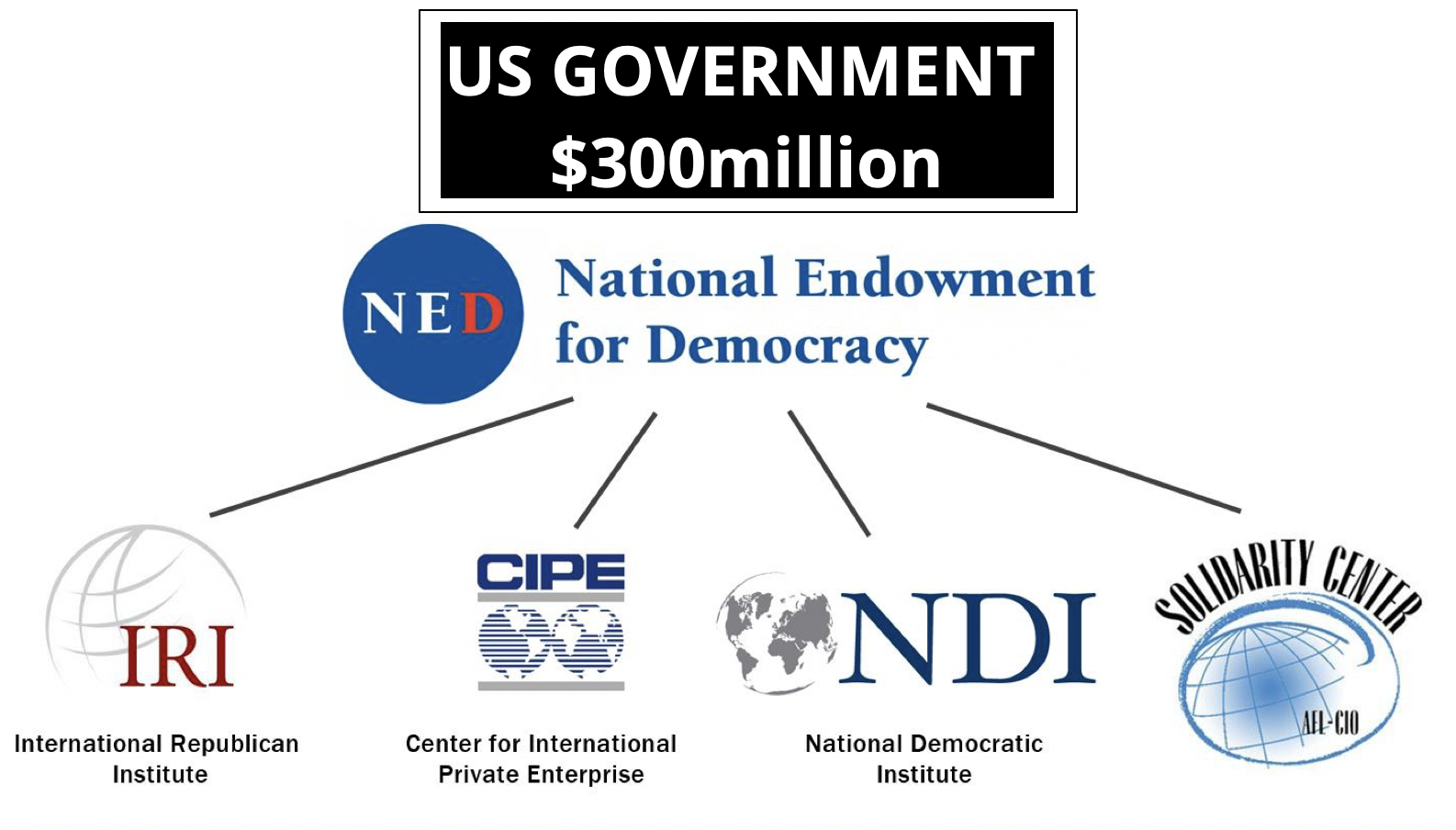
National Endowment for Democracy is the covert arm of US-funded regime change. NED is the Trojan Horse carrying democracy” human rights” freedoms” to advance US hegemony – to divide, destroy & destabilize nations with disinformation.

It is no secret that US supported the Hong Kong protests. Senior US diplomats even held meetings with the ‘pro-democracy’ activists. $640,000 was given to these protestors.

National Endowment for Democracy (NED) is alleged to have bankrolled the protests via local entities that included National Democratic Institute (also located in Sri Lanka) NED is said to have given $155,000 in 2018 alone with $200,000 given to the NDI.

NED created in 1983 replaces the role carried out by CIA. This is what NED Founder Allen Weinstein declared in 1991 – A lot of what we do today, was done covertly 25 years ago by the CIA”.

Funds are sent to destabilize countries first & then stage coup-d’etat. The modus operandi is to fund independent” groups & use them to create the system ‘change’ drumming ‘human rights’ ‘democracy’ to camouflage their objectives.

NED is funded by the US State Department & is aligned to US geopolitical goals. NED President is required to appear before the US Senate Foreign Relations Committee every year to brief them of their progress”. With US pivot to Asia, NED plays a major role.

Democracy as per US definition is hardly the will of the People & is all about US hegemony & fulfilling its corporate self-interest.

1964 – Coup in Brazil & overthrowing President Goulart

1973 – Coup in Chile & overthrowing President Allende

1990 – NED manipulated elections in Nicaragua (William Blum)

1990 & 1992 – NED overthrew democratically-elected governments in Bulgaria

1996 – NED manipulated elections in Mongolia (William Blum)

2004 – $65m given by NED to Ukraine’s opposition forces. In 2013 NED funded 65 NGOs in Ukraine & even paid wages” for every person taking to the street.

2017 – Cambodia shut down NDI (National Democratic Institute) & ordered the foreign staff to leave & alleged the NED & IRI for planning to topple the government.

2018 – NED funded think tanks, news agencies, political parties to the tune of $1,000,000 in Bolivia because President Evo Morales nationalized Bolivia’s gas

2020 – NED spent over $2m for so-called human rights movements in Kazakhstan to commence disruptive news”

2020 – More than $10m for nearly 70 anti-China projects in Taiwan

2022 – President of NED visited Taiwan to ‘strengthen solidarity’ via ideology” – main aim to incite separatism.

NED has linked itself to every separatist force in China, sponsoring protests & producing lies & exaggerations. NED used World Uyghur Congress to disseminate false genocide” & detention of more than a million Uygurs” in China’s Xinjiang no different to the false genocide” drummed by LTTE fronts.

NED has also provided French groups $1.4m to campaign against former President Mitterand

NED was involved in overthrowing elected governments in Haiti & Nicaragua, Cuba, Venezuela, Bolivia & Belarus.

Denigrating the leaders of targeted countries through NED funded NGOs is part of the plan.

NED invites separatists/fugitives to Washington & they teach these radical how to escalate tensions. NED also teaches how to disseminate disinformation. NED hires so-called observers to use social media to influence general elections.

NED also funds Human Rights Watch, Reporters Without Borders.

NED is also behind the colour revolutions in Europe, Africa & Middle East. Is the yellow democracy” in Sri Lanka part of NED modus operandi as we notice the anti-majority attacks coming from anti-corruption protestors?

Late Hassina Leelaratna’s article CIA/NED/IRI in Sri Lanka – Now targeting local government, political parties” https://srilankaexpress.org/cia-ned-iri-in-sri-lanka

presents some startling pointers. She says that US foreign policy of Democrats & Republicans don’t vary as the aim is to expand American Exceptionalism. They use supposedly ‘non-partisan’ entities that are led by prominent US politicians – International Republican Institute was led by John McCain, National Democratic Institute for International Affairs by US Secretary of State Madeline Albright.

Both IRI and NDI are funded by NED.

IRI has an office in Sri Lanka & is given an annual budget of $300,000. IRI has got itself linked to the caretakers of the local government system – in Hambantota, Akkaraipattu, Jaffna Municipalities. IRI is assisting with external communication strategies & communication techniques as well as use of social media – how many of the people in these areas actually have sophisticated IT or smart phones to be operating digitally? Who gave IRI access to electoral registers & why? A tweet by IRI CEO in August 2017 says IRI is traveling to North Central Province to work with political party members

What is IRI really up to? Is IRI a registered NGO? Is the intelligence agencies aware of this & what is the National Secretariat for NGO doing about its covert activities? Hassina says that the IRI is listed as a partner/funder of the Federation of Sri Lankan Local Government Authorities , an NGO which receives funding from USAID, British & Canadian Governments. IRI is strategically operating among Mayors & local government officials without any accountability.

NED has provided over $2m to Sri Lankan NGOs in 2016.

In December 2019, the US Congress approved & increased annual funding for NED from $180m to $300m.

NED (National Endowment for Democracy) & its 4 core grantees – NDI (National Democratic Institute)IRI (International Republican Institute), Solidarity Center & Center for International Private Enterprise (CIPE)

The funding will mean over 1500 NGOs across 90 countries will be receiving aid for covert operations under the guise of promoting democratic values. The areas they will be asked to target include (elections, trade unions, private sector, media, human rights, rule of law)

NED Sri Lanka alongside its associate entities operate in Sri Lanka

NDI in Sri Lanka

NDI head was former US Secretary of State Madeline Albright who died in March 2022.

NDI partners with Sarvodaya

Involved in 2000,2005,2010,2015 & 2019 elections.

NDI signed Sri Lanka to become the 1st South Asian member of Open Government Partnership in 2015 to develop an Open Parliament Plan in partnership with civil society.

NDI & IRI conducted a pre-election assessment mission in Nov 2019 (Presidential Elections)

Thusitha Pilapitiya is the Country Director of NDI in Sri Lanka

Funding in Sri Lanka by NED to:

  • Solidarity Centre – $708,323 (2016) – empower new generations of workers to engage more directly with the labor movement, center will collaborate with select unions, encourage effective use of social media by local partners, and engage recently trained activists and leaders in advocating for worker rights.
  • International Republican Institute – $300,000 in 2016 / $100,000 + $242,000 in 2017 / $430,000 in 2018 / – provide Sri Lanka’s elected officials and civic actors access to credible public opinion research, encourage newly elected municipal councilors to adopt enhanced standards of democratic governance, institute will conduct workshops for local officials and their staff
  • Center for International Private Enterprise (CIPE) – $219,872 (2016) / $242,216 (2017) /$190,013 in 2018 / $311,355 in 2019 / $669,607 in 2020 / – encourage the private sector’s proactive role in formulating public policy, support Sri Lanka’s transition back toward a market-based democracy.
  • NDI Sri Lanka – $325,000 to support grassroot youth leadership & political engagement, Preparing youth to engage with power holders (interesting)
  • Tracking Transnational Economic Crimes – $106,556 – Accountability. Documenting & raising awareness on corruption & economic crimes, identifying individuals & institution involved in Sri Lanka.
  • Freedom of Expression – $100,000 – independent journalism, independent media network,
  • Verite Research Pvt Ltd – $75,000 – parliamentary tracking for accountability & good governance – applying web-based parliamentary tracking tool. Online platform that documents political activities of MPs & connect to media & civil society.
  • Centre for Human Rights & Development – $70,000 – redress victim communities through legal assistance & public awareness campaigns to repeal PTA.
  • Human Rights Advocacy – $60,000 – women’s experiences. Gather data & stories about women’s experience in the North & East, catalog and analyze the information.
  • Viluthu – $60,000 – strengthening civil society, networks for active political participation. Target audience – youth, university students, women’s network leaders.
  • Law & Society Trust – $50,000 in 2021 / $20,000 in 2019 – improving legal literacy & land rights. Managing a nation-wide network of organizations focused on land rights, convene govt officials, citizens on land laws & policies.
  • Janawaboda Kendraya – $41,500 – civic engagement for sustained collective action. Street theatre being promoted.
  • Centre for Environmental Justice (Guarantee) Limited – $36,,000– citizens participating in monitoring economic development.
  • Centre for Justice & Change – $30,000 to promote leadership development of community leaders & protect human rights in East Sri Lanka (transitional justice)
  • Aham Humanitarian Resource Centre – $30,000 – Develop Democratic actors in Eastern Province.
  • Uva Shakthi Foundation – $29,500 – promoting citizenship participation & enhancing capacity in Estate Tamil communities.
  • Families of the Disappeared – $18,000 – mobilize families of the disappeared” & support transitional justice.
  • The International Working Group on Sri Lanka Ltd – $50,000 annually (2017 /2018 /2019) – human rights protection, justice, reform, reconciliation.

Look at the target audiences & the subject areas that the funding covers. Understand where the agitations take root. US will not pump $3billion annually to NGOs for nothing!

If Sri Lankans think what they are going through has nothing to do with NED, then they should be in for more surprises.

Shenali D Waduge

POLITICS IN SRI LANKA Part 3 J

April 17th, 2022

KAMALIKA PIERIS

JR meddled in appointments. He engaged in nepotism. Brother HW was sent to the UN where he did excellent work for Sri Lanka on the UN Convection on the Law of the sea.   Brother RP was appointed as Chairman Nation Science Council.  JR’s sister in law, Dr. Gladys Jayewardene was appointed Chairman, State Pharmaceutical Corporation, replacing Senaka Bibile who had done valuable pioneering work there on the rationalization of drugs.

JR interfered with the judges of the Supreme Court, their powers and their judgments. Judges were appointed afresh when the1978 Constitution came into force. JR overlooked the sitting judges and appointed a senior lawyer,’ Neville Samarakoon as Chief Justice.  Samarakoon was the first Chief Justice to be appointed directly from the unofficial bar

Then things went sour. Chief Justice Samarakoon   disliked what JR was doing as President and criticized him heavily at speech at Raja Sinnathurai Tutory in 1984. JR wanted him removed from office.

During the attempted impeachment it was argued that the investigation and determination by Parliament of the allegations against Samarakoon was unconstitutional.  Summoning of judges of the Supreme Court before select committees of Parliament, with a view to disciplining or removing them, was something new, said critics. It had never happened before in independent Sri Lanka.

The First amendment of 1978 was brought to subvert the courts, said critics. The Amendment provided that the jurisdiction conferred on the Court of Appeal with regard to some cases shall be exercised by the Supreme Court and not by the Court of Appeal.

Then JR turned to the public service. JR made a radical change in the appointment of Permanent Secretary and this was continued by his successors.

Until JR, the Permanent Secretary to a ministry came from the senior cadres of Sri Lanka Administrative Service. The Permanent Secretary to a Ministry was responsible for the efficient function of that Ministry. He needed to be an experienced administrator, who knew the ropes, could assess situations, take sound decisions and give good advice to the Minister. SLAS officers were highly educated, with much experience in the field.

J. R. Jayewardene broke this tradition and appointed Ananda Tissa De Alwis as Secretary to the Ministry of State.  Ananda Tissa was the first Permanent Secretary appointed from the private sector. Anandatissa was a journalist, who then went on advertising. He went to the post of Permanent Secretary straight from advertising.  Anandatissa had been a long standing supporter of the UNP.

Merril Gunaratne, former Deputy Inspector of Police said that the deterioration of the once proud Police Service began in 1977. The year 1977 was a watershed         in the fortunes of the police. I saw a huge difference in the days following 1977 when compare with the 1960s, he said.

The Police Service became politicized in 1977. UNP MPs dictated to the police.   Senior police officers had to take orders from them. There arose links between police, politicians and lawbreakers, said Merril.

UNP interfered in appointments and promotions. The cadre of DIGs was once expanded to included one person. He got the cadre inflated to include him.

 UNP MPs interfered with appointments of police officers to key positions. Most ASPs and OICs of police station then shifted their loyalties from police superiors’ to politicians. The police high command became mute. The junior ranks lost respect for their superiors.

A major cause for decline in the police was the violation of seniority. This started in 1977. This seriously demoralized the police force. The good officers were over looked and favorites of the politicians were given recognition. Pliant officers were promoted over senior officers, thought they did not have the necessary qualifications.The police at the high levels did nothing to stop this. Officers in line of seniority who had been overtaken lost enthusiasm, and were thrown into a state of despair and frustration.

Thanks to politically inspired promotions, politicians on the other hand were able to get what they wanted done. Police started to look to those outside to succeed, rather than the IGP.

Politicians in high power expected the police to be complicit when the MPs instigated an attack. UNP politicians incited violence against political rivals with police watching passively, or not arriving on the scene in time. 

Merrill speaks of an encounter with Minister Cyril Matthew in Kelaniya in 1977-78. In 1978, Matthew had called Merrill, who was senior superintendent of Police, Kelaniya, and asked him to come with a police squad to Dasa Industries at Dalugama, Kelaniya.

 Dasa was a supporter of Sirimavo. Cyril was also there with a set of supporters, about 50. Dasa workers came out and were attacked by Mathew’s thugs. Merrill arrested the thugs. Matthew vanished. This   was the typical tactic after UNP victory in 1977. Police were summoned to protect the politician’s thugs and police did so in many instances.

Merrill observed however that mobs and thugs were not prepared to confront police if police stood firm. There was a fabricated clash at University of Kelaniya   in March 1978. An external student who was also a reserve constable arrived at Peliyagoda Police station and reported that he had seen a large body of thugs of the UNP invading the campus and assaulting students with sticks.

Merrill went there, and found Mathew at the entrance of the road leading to the campus, with 3 or 4 buses with his supporters inside. A large mob had been assembled by Mathew with more reinforcements to invade the campus and exact revenge. Mathew asked Merrill, who asked you to come there. He wanted police withdrawn.  Merrill refused.

Merrill took charge and the Minister left but the busload of thugs remained.  Had I not intervened, many undergrads of Kelaniya may have been seriously injured since the lorry load of thugs was poised to invade the campus at that moment, said Merril.

There was an investigation. Merrill saw to it that the inquiry went through. Mathew sent two witnesses with a fabricated story. Merrill got the constable who had been there to give the genuine version. That constable was then dismissed from his post.

Merrill was transferred to Kurunegala in 1978. Kurunegala police district covered 14 electorates. Merrill praised DB Welagedera of Kurunegala, S.B. Herath of Hiriyala, Sirisena of Bingiriya, and three members from Pannala for non-interference in police matters.

But he named MP Ratnayake of Panduvasnuwara, GM Premachandra of Mawatagama,                                                        Abeyratne of Yapahuwa, DM Jayatilake of Kuliyapitiya and Ranjan Jayakody of Polgahawela as MPs who expected the police to dance to their tunes. (Merril Gunaratne. Perils of a profession. P32-38) 

MP Abeyratne of Yapahuwa used to call up police including ASP and abuse them in public. MP Ratnayake has wanted Panduvasnuwara electorate which was under Kurunegala brought under Hettipola police station.

Merril objected. Panduvasnuwara electorate was at the time covered by 4 police stations. It was impossible for one police station to cover such a vast area. Even four were not enough, said Merrill. Ratnayake wanted Panduvasnuwara brought under Hettipola as OIC Hettipola was weak. Ratnayake wanted to make life uncomfortable for his political rivals within the district.

MP Sunil Ranjan Jayakody of Polgahawela had been a private in the army serving as a dispatch rider before entering politics. He won at the 1977 election. He wanted police to do as he said.  He tried to create a confrontation at a Hindu Kovil. Several soldiers had died the previous day at Batticaloa, due to LTTE landmine. He had wanted the Sinhalese to storm the kovil and create backlash.

 Merrill had received an anonymous phone call about this. When he went to deal with the matter, he found the   ASP and OIC in the office of the MP.  He later requested the transfer of OIC Polgahawela.  Merrill was transferred instead.   (Continued)

The Partition of India – A Betrayal of Hinduism

April 17th, 2022

Senaka Weeraratna

Both Gandhi and Nehru betrayed the Hindus at the time of partition of India. When Mohammed Ali Jinnah sought a separate nation for Muslims by partitioning India, the leaders of the Hindu community should have demanded likewise for the Hindus.

All Muslims in one part and the Hindus in the other part, would have ensured an India free of religion related conflict, which has now become a plague in India.

Islam and Hinduism are like chalk and cheese.  Two irreconcilable thought processes.

Muslims are entitled to have their Sharia law in predominant Muslim countries, but not in countries which are predominantly non – Muslim.

Mahatma Gandhi unfortunately had to sacrifice his precious life for letting down the Hindus at critical moments. Nehru was more a free thinker or an agnostic. Nehru’s writings do not reflect unlike that of Gandhi a deep belief in Hinduism.

Sanatana Dharma is the oldest religion of the world. Hinduism is the key component of Sanatana Dharma. Yet,

India which is Bharat, is prevented by so called secularists from calling itself officially as a Hindu Republic in as much as Pakistan calls itself in its Constitution as a Islamic Country. 

The current Govt. of India under Modi with the able assistance of his heir apparent Yogi, the popular Chief Minister of Uttar Pradesh, has a huge challenge on their hands – to rectify this monumental blunder of Gandhi and Nehru. Modi must now endeavour to give leadership internationally to all Dharmic countries which have their spiritual roots in India. He must not leave this important task to another. Take a leaf from the page of Emperor Ashoka of India –  now globally recognized as the greatest Monarch ever. 

H.G. Wells said that amid tens of thousands of names of monarchs, Ashoka shines, shines almost alone, a star”. 

Jinnah was Oxbridge educated. But he remained steadfastly loyal to his religion, Islam. Nehru was Cambridge educated. But he had no religion or was not loyal to Hinduism as much as Jinnah was loyal to Islam. 

Gandhi with sincere intentions tried appeasement of minorities earning the wrath of Hindus. When he passed the limit of tolerance which dedicated Hindus could no longer bear at the time of partition, they ended his life. 

Secularism leads to betrayal of one’s  own religion. Secularism in practice is a sham. Its ulterior purpose is to destroy one’s loyalty to one’s primordial identity i.e., race and religion, and destroy the inbuilt defences of every individual in a sovereign nation state. 

Muslims hardly betray their religion Islam, by and large.  Why? Because they do not  subscribe to secularism and hypocrisy. 

Senaka Weeraratna

POLITICS IN SRI LANKA Part 3 H

April 17th, 2022

KAMALIKA PIERIS

JR tried to appear interested in agriculture. I recall a photo in the Daily News at the time, of JR bare bodied and dressed in an amude, inexpertly holding a plough at a Vap Magula.

During JR’s period of rule, the Guaranteed Price Scheme for rice was scrapped and the farmers had to sell their goods to traders at low prices.  The Floor Price Scheme and the Fertilizer Subsidy Scheme were withdrawn. Vegetables such as chillies, potatoes, onions were imported when there was plenty in the country.  The Paddy Marketing Board was abolished and was re-established in 2005. CWE shops were disbanded and brought back later.

However, JR’s government did set up Pelawatte Sugar Company. The government imposed an import tax on sugar so that sugar produced in Pelawatte could be sold competitively in the local market. The Moneragala district was selected for sugarcane cultivation because it was not possible to carry out paddy cultivation in that district.

JRs Accelerated Mahaweli Programme built new reservoirs and large hydropower projects such as the Kotmale, Victoria, Randenigala, Rantembe and Ulhitiya. Several Trans Basin Canals were also built to divert water to the Dry Zone. 

Kotmale was funded by  Sweden, Victoria (UK) Maduru oya (Canada) Randenigala (Germany)  and their supplementary  Rantembe, Ratinda, and Minipe right bank canals ( USA)  and Maduru oya left bank ( USA) . This resulted in a large number of foreign funds pouring in. I recall inflation going up to 20%, said a critic.

Accelerated Mahaweli was heavily criticized, from start to finish. ‘Mahaweli scheme brought in tilapia fish and all the indigenous fish disappeared, said Laki Senanayake https://www.youtube.com/watch?v=JO4TY0zmic0

 The Mahaweli development Board which was the predecessor to the Accelerated Mahaweli did a magnificent job. It was set up to carry out feasibility studies, evaluate options and design the hardware of the structure required for irrigation and power. It was staffed by professionals, and their expertise was treated with respect. The project was designed to be implemented in 30 years, said Gamini Seneviratne.

Then came JR’s accelerated Mahaweli. Professionalism vanished.  There were many missteps in the Accelerated Mahaweli. What it delivered apart from fat commissions all round was much misery for people who were forcibly evicted from their ancestral lands around Kotmale, Teldeniya and such places.  Farmers from these areas which were wet zone were sent to the Dry zone, like in the time of the British. The areas they were sent to were not provided with schools or roads.

System H work was a disgrace. People who were walking along or traveling in a tractor by the MASL outposts were asked to get down and dig a canal.  No professional traces were prepared; they were indicated by finger and eye measurement.

In Accelerated Mahaweli the constructions were scandalous, both from engineering and financial standpoint. The technology employed included concrete double curvature arch dam, to rock fill with clay core and the traditional earth fill with a new clay core. Some of the technology was new to the foreign contractors as well.

The new constructions did not make provision for supporting the small human settlements that existed along the canals. The planners were looking the other way towards large commercial farms to feed an export market.

In the traditional system which you could see in the Minipe yoda ela, there was provision for sluicing out for farming, for washing, bathing other domestic needs, to provide wallows for the cattle, water holes for other animals. The new canals   were lined with concrete slabs that minimized seepage loss but made the water inaccessible to the people on either side.   Deer and pig that fell in could not claw their way out, as in the traditional canals.

Kotmale was funded by Sweden. All they required was that their contractor be employed on the project. However, we went for Skanska, the biggest construction company in the world. No tenders were called. Skanska engineers were given on request air conditioned housing, swimming pools and so on. The negotiating with them went on for months, but was over turned in five minutes by JR. JR’s personal accountant was the agent for Skanska. And Skanska got double the agreed figure and walked away with 2.5 billion.

  Later Skanska kept adding to the cost. They had misassesed the scale of grout required for the reservoir bed. They had not noticed a tiny stream above the projected axis of the dam that in season became a torrent. That adjustment alone cost 250 million rupees. They screwed up the power tunnel, due to ignorance. All this coast money and we paid. Questions were raised in Stockholm but not here.

I recall listening in on a conversation in Kandy, which took place I think, at Kandy Club, among a few of its members, regarding the Kotmale dam.  The local engineers had pointed out that that if we followed the engineering calculations of Skanksa, the area from Kotmale right into Kandy town would get inundated some day, because the dam or whatever construction,  was sure to break. The location selected by Skanska was on a fault line or something like that. Skanska engineers had refused to listen and one local engineer had nearly fainted at the discussion.  He was so alarmed when he saw the Skanska plan. My recall is that the local engineers had had to force their way into the discussion.

 Then the tender for Randenigala, said a critic.  Mahaweli authority had disqualified a firm. A radio ham had accidentally got on to a set of phone calls. The voices were of the Ministry Secretary, the agent for the firm we had disqualified, and the spokesman for the firm in Zurich. They had spoken of ‘our man’ a VVIP, who was in the cabinet. (Continued. next essay PT 3J)

SL to raise $ 8 bln by selling valuable assets

April 17th, 2022

By Bandula Sirimanna Courtesy The Sunday Times

The Government is hoping to raise US$8 billion from the lease or sale of valuable public assets to bolster rapidly dwindling foreign reserves, the report of a newly-appointed economic advisory committee has revealed.

Among the main items in the list were the long term leases of Katunayake International Airport for $2 billion, Mattala Airport for $300 million and Ratmalana Airport for $400 million.

Arrangements have been made to hand over the Colombo North Port Development Project for an investment of $600 million while Colombo Port City lands will be leased out at a total of $4 billion.

Accordingly, Sri Lanka Ports Authority has planned to do a feasibility study for the Colombo North Port Development Project focused on expanding capacity of container handling while serving all other port services expected from industry.

Further shares of Sri Lanka Telecom will be sold at a price of $500 million and Sri Lanka Insurance Corporation shares for $300 million.

Divestment of non-strategic state-owned assets has been suggested as a part of the government’s multi-pronged plan in the short-term to improve their operational and financial efficiency while increasing the country’s reserves position.

ශෝක පණිවුඩය

April 17th, 2022

මහින්ද රාජපක්ෂ ශ්‍රී ලංකා ප්‍රජාතාන්ත්‍රික සමාජවාදී ජනරජයේ අග්‍රාමාත්‍ය

ප්‍රවීණ ජ්‍යොතිෂවේදියෙක්, පුවත්පත් කතුවරයෙක්, කවියෙක් හා සාහිත්‍යධරයෙක් මෙන්ම හිටපු විදුහල්පතිවරයෙක් වූ පියසේන රතුවිතාන මහතාගේ අභාවය අසා මම බලවත් ශෝකයට පත්වූයෙමි.

සමාජයේ වැඩිදෙනෙක් ජ්‍යොතිෂවේදියෙකු ලෙස හඳුනාගෙන සිටි පියසේන රතුවිතාන මහතා, කවිය, භාෂාව හා සාහිත්‍ය ආදී සෑම ක්ෂේත්‍රයකම විශිෂ්ටයෙකි.

කළුතර කොහොලාන ගම්පියසේ උපත ලැබූ රතුවිතාන මහතා, කොහොලාන විදුහලෙන් මූලික අධ්‍යාපනය ලබා නිට්ටඹුව ජාතික අධ්‍යාපන පීඨයට ඇතුළත් විය.

උප ගුරුවරයෙක් ලෙස කොළඹ නාලන්දා විද්‍යාලයට මුල්ම පත්වීම ලබමින් සිය වෘත්තීය ජීවිතය අරඹන පියසේන රතුවිතාන මහතා සිය සේවා කාලය තුළ පාසල් 27 ක සේවය කරමින් දරුවන් දහස් ගණනක නැණස පෑදූවේය.

 සංඝාරම මද්දුම බණ්ඩාර” කණිෂ්ඨ විද්‍යාලයේ විදුහල්පති ලෙස ගුරු සේවයට විශ්‍රාම දෙන පියසේන රතුවිතාන මහතා පාසල් 17 කම විදුහල්පති තනතුර හෙබවීය.

සිය උපන් දිනය යෙදෙන දාට සමාජයට තමා විසින්ම රචිත ග්‍රන්ථයක් දායද කරමින් ආදර්ශයක් එක් කළ  පියසේන රතුවිතාන මහතා, ජ්‍යොතිෂ ශාස්ත්‍රය ඇතුළු  කවි, නව කතා සහ කෙටිකතා ග්‍රන්ථ 100කට අධික සංඛ්‍යාවක් රචනා කළේය.

සුබසෙත සහ මිහිර පුවත්පත්වල කර්තෘවරයා  මෙන්ම පෙරමග සඟරාවේ නියෝජ්‍ය කර්තෘ සහ කර්තෘ මණ්ඩල කළමනාකරු ලෙස මාධ්‍ය ක්ෂේත්‍රයට සම්බන්ධ වූ පියසේන රතුවිතාන මහතා, රූපවාහිනී සංස්ථාවේ  ප්‍රවෘත්ති සංස්කාරකවරයෙක් ලෙසත් කලක් කටයුතු කළේය.

මධු සිහිනය”, ආත්මා”, සිස්ටර් මේරි”, විත්‍රපට තේමා ගීත ද, රණබිම මැරුණේ සිංහලයෙකු නම් – පපුවෙහි වෙඩි සළකුණ ඇත්තේ” නම් ජනතා හදවත් තුළ අමරණීය වූ රණවිරු ගීතය ද ඇතුළු ගීත විස්සක් පමණ පියසේන රතුවිතාන මහතාගේ ගේය පද රචනයට දැක්වූ සමත්කම විදාපායි.

කොළඹ කවි සමාජයේත්, අගනුවර තරුණ  කවි සමාජයේත් කැපී පෙනෙන සාමාජිකයෙක් වූ පියසේන රතුවිතාන මහතා කාව්‍ය කලාවට කළ සේවය අගයමින් 2021 වසරේ පැවති ශ්‍රී ලංකාවේ ප්‍රථම අස්පර්ශ උරුම රාජ්‍ය සම්මාන ප්‍රදානෝත්සවයේදී කාව්‍ය කලා කීර්ති” සම්මානයෙන්ද පුද ලැබුවේය.

මා ඇතුළු විධායක ජනාධිපතිවරු රැසක් ඉතා කිට්ටුවෙන් ඇසුරු කළ පියසේන රතුවිතාන මහතා එක්සත් ජාතික පක්ෂයේ මතුගම ආසන සංවිධායක ධුරය හොබවමින් 1989 දී  මහා මැතිවරණයට තරග කරමින් ක්‍රියාකාරී දේශපාලනයේද නිරත විය.

ගොඩනැගිලි ද්‍රව්‍ය සංස්ථාවේ මහජන සම්බන්ධීකරණ නිලධාරියා ලෙසත්, ජාතික ජලසම්පාදන මණ්ඩලයේ ක්‍රියාකාරී අධ්‍යක්ෂකවරයකු ලෙසත් කලක් කටයුතු කළ පියසේන රතුවිතාන මහතා, සිය ජීවිත අත්දැකීම් ඇසුරෙන් පරිණතයින් රැසක් රටට දායාද කළ උදාර මිනිසෙකි.

1931 වර්ෂයේ ඔක්තෝබර් 15 වෙනිදා උපත ලබා අවුරුදු 91ක් ආයු වළඳා අභාවප්‍රාප්ත වූ පියසේන රතුවිතාන මහතාට නිවන් සුව අත්වේවා! යැයි ප්‍රාර්ථනා කරන අතර ඒ මහතාගේ අභාවයෙන් ශෝකයට පත් කිත්සිරි රතුවිතාන, අරවින්ද රතුවිතාන පුතුනුවන් සහ ලංකා රතුවිතාන, ගංඟා රතුවිතාන දියණිවරුන් ඇතුළු පවුලේ සමාජිකයන්ටත් ඥාති හිතමිත්‍රාදීන් ඇතුළු  හිතවතුන් හා ප්‍රදේශවාසී සැමටත් මාගේ බලවත් ශෝකය පුද කරමි.

මහින්ද රාජපක්ෂ ශ්‍රී ලංකා ප්‍රජාතාන්ත්‍රික සමාජවාදී ජනරජයේ අග්‍රාමාත්‍ය

SL delegation leave for USA for IMF discussion

April 17th, 2022

Courtesy The Daily Mirror

A delegation including Finance Minister Ali Sabry, Central Bank Governor Dr. Nandalal Weerasinghe and Finance Ministry Secretary Mahinda Siriwardene left the country this morning to participate in discussions with the International Monetary Fund (IMF).

Accordingly, they will hold discussions at IMF headquarters in Washington DC, USA.

The talks are scheduled to take place from April 19 to 24.

If the IMF talks succeed, Sri Lanka will receive close to US $ 4 billion.(DSB)

විරෝධතාකරුවන් ජනාධිපති කාර්යාලයේ කුණුහරුප පින්තූර මවයි..

April 17th, 2022

උපුටා ගැන්ම ලංකා සී නිව්ස්

ජනාධිපති ලේකම් කාර්යාලය ඉදිරිපිට විරෝධතාවයේ යෙදෙන විරෝධතාකරුවන් විසින් අද රාත්‍රියේ ජනාධිපති ලේකම් කාර්යාලයට ලේසර් එළි එල්ල කරමින් විරෝධතාවය අලුත් මුහඑුණුවරක් එක් කර ඇත.

ගෝඨාභය ජනාධිපතිවරයාට ඉල්ලා අස්වන්නැයි සදහන් පාඨ ආලෝක ධාරාවන් මගින් නිරූපනය කර ඇත.

එමෙන්ම සාටක පැලදාගත් රාජපක්ෂ පවුල ඇතුළු විවිධ නිර්මාණ එමගින් නිරූපණය කරන අතර ඇතැම් අසත්‍ය සංකේත ද ඒ අතර දක්නට තිබේ.

ලේසර් කිරණ යොමු කරන ප්‍රොජෙක්ටරය ආරක්ෂක අංශ විසින් වැලැක් වීමටද කටයුතු කර තිබේ.

මහින්ද උගන්ඩා සමාගමක බිලියන 10ක් දාලාද.. සමාගමේ නිවේදනය මෙන්න..

April 17th, 2022

උපුටා ගැන්ම ලංකා සී නිව්ස්

අගමැති මහින්ද රාජපක්ෂ මහතා උගන්ඩාවේ සෙරනිට් ගෲප් නැමැති සමාගමක ඩොලර් බිලියන 10 ක් ආයෝජනය කර ඇතැයි පලවන වාර්තා සම්බන්ධයෙන් එම සමාගම ප්රතිචාර දක්වයි.

නිවේදනයක් නිකුත් කරමින් ඔවුන් සඳහන් කරන්නේ විවිධ පාර්ශව විසින් එල්ල කරන චෝදනා සම්පූර්ණයෙන්ම අසත්‍ය බවයි.

නොමඟ ගිය පිරිසක් විසින් එම චෝදනා එල්ල කරන බවත් පවසන ආයතනය තම ආයතනය ආරම්භයේ පටන්ම උගන්ඩා සහ ශ්‍රී ලංකා පුද්ගලික බැංකු ණය සමග ක්‍රමයෙන් දියුණු වූ බව චෝදනා කරන අය නොදන්නා බවද කියා සිටී.

Sri Lanka seeks bridging finance from India till IMF bailout

April 17th, 2022

Courtesy The Times of Oman

Colombo: While India plays a prominent role in helping its neighbour Sri Lanka come out of a deep economic crisis, it was learnt from reliable sources that Colombo has asked New Delhi to provide bridging finance for the crisis-ridden country till the International Monetary Fund (IMF) provides adequate funds, which may take another three to four months.

Notably, this comes after Finance Minister Nirmala Sitharaman held several rounds of discussions with her Lankan counterpart and High Commissioner. Sri Lanka, sources added, has also asked India to use its influence on friendly countries like Japan to help Colombo with a line of credit and also reach out to multilateral organisations for assisting the island nation.Oman Customs Busts Cigarette Smuggling Attempthttps://cdn.speakol.com/widget/html/speakol-appends.html

A source familiar with the development said that the Indian Finance Minister was positive about this proposal and is expected to reach out to other friendly countries to mobilise assistance for the economic crisis-affected Sri Lanka.

Meanwhile, Sri Lankan Finance Minister Ali Sabry is expected to meet Sitharaman in Washington DC in the coming week, according to sources.

In the shape of the line-of-credit for food, fuel, medicine, currency swap and deferment of payment at the Asian Clearing Union, India has already provided assistance to the tune of USD 2.4 Billion to Sri Lanka. However, for the next four months, till the IMF deal is worked out, the island nation will be needing much bigger financial backing for imports.

Technical talks are also taking place between members of the Sri Lankan Presidential Advisory Group on Multilateral Engagement and Debt, with India’s Chief Economic Advisor V Anantha Nageswaran.

Sri Lanka will begin talks with the IMF on Monday and the process is likely to take around four months to operationalise. Thus, Colombo is looking for bridging finance for this period from India and other countries.

Sources familiar with the developments said India is the first and only country that is coming forward to bring Sri Lanka out of its financial mess, and Colombo sees it as a new chapter in the bilateral relationship with New Delhi. Sri Lanka sees this as long term, beyond crisis, and hopes to play a prominent role in India’s energy aspirations for the future, they said.

India’s southern neighbour Sri Lanka is battling a severe economic crisis with food and fuel scarcity affecting a large number of its people, resulting in massive protests over the government’s handling of the situation.

The country’s economy has been in a free-fall since the onset of the Covid pandemic following the crash of the tourism sector.

Was the regime change part of the US Indo-Pacific strategy? 

April 17th, 2022

ByKomal Khan Courtesy Pakistan Today

Pakistan joined those countries where de-dollarisation was followed by regime change

The geopolitical and geoeconomic competition in theIndo-Pacific is specified by the intense US-China competition to secure their national interests, however, at the cost of national security and stability of the other states in the Indo-Pacific. The ongoing political crises in the Indo-Pacific neighbouring states of Afghanistan, Myanmar, and more recently Pakistan and Sri Lanka, can be identified as the resurgence of ‘fait accomplis’ as a viable tactic of strategic competition adopted by the USA to construct a shared networking and deterrence at the expense of China’s preference in the Indo-Pacific.

Fait accomplis make gains unilaterally, imposing a change to the status quo without the adversary’s consent. Fait accomplis can be military or non-military, coercive or non-coercive in practice. These are basically crisis-bargaining compulsions that induce decision paralyses in states that are targeted. Biden’s Free and Open Indo-Pacific Strategy, announced by the White House on February 11, is one such compulsion that is based on the policy of integrated deterrence and shared networking as ‘fait accomplis’ for the Indo-Pacific states with the objective of constructing creative collaborations that anchor the USA firmly in the Indo-Pacific.- Advertisement –

The recent constitutional crisis accompanied with regime change in Pakistan may be analysed as resurgence of the ‘fait accompli’ once again since 9/11 under the creative collaboration policy of the Biden Administration. Washington’s alleged intervention in Pakistan’s sovereignty by funding the regime change against Khan’s government in Pakistan by investing in rival democratic institutions has been claimed by outgoing Prime Minister Imran Khan. Nonetheless, it is a fact that the no-confidence movement against a democratic government in Pakistan was also carried out in the name of democracy.  Moreover, Khan’s claims have been based on a lettergate which is under probe and is allegedly claimed to be from the Biden administration, enforcing the USA’s regional and global interests in a growing multilateral world order; however, at the cost of Pakistan’s sovereignty.

Pakistan’s multilateral approach has been evident in Khan’s foreign policy which has seen an unwelcoming response from the USA. Pakistan’s growing ties with Russia are seen as a major cause of regime change in Pakistan. The event of Khan’s visit to Russia despite pressure from the USA and its coincidence with the Russian invasion of Ukraine has also been recognized as the immediate happening linked to the ouster of Prime Minister Khan from government, which has been described by Maria Zakharova, the spokesperson of the Russian foreign ministry, as  ‘punishment to the disobedient Khan.’

Describing retreat in the USA’s relationship with Pakistan, which served as its ally during and in the post-Cold War decade; former JCSC Committee chairman Adm Mike Mullen holds the USA responsible for distancing itself from Pakistan in the last decade which made Pakistan fall into China’s strategic camp. Cashing in on the realisation, at the event of the Islamabad Security Dialogue, Pakistan’s COAS Gen Qamar Javed Bajwa proposed ‘counter investment’ as the only mechanism by which the USA culd counter the intense Chinese influence in Pakistan. This proposal exhibits the state’s intention to partner with the USA in its ‘Indo-Pacific economic framework’ while benefitting from the Chinese camp simultaneously. On the other hand, the National Security Policy by the Khan administration also underlines the openness of Pakistan for such regional creative collaborations, but in the economic domain, while preserving neutrality in the US-China Indo-Pacific competition.

Furthermore, Pakistan’s partnership in the de-dollarization drive supported by China, Russia and Turkey is another major cause of the regime change in Pakistan. Pakistan initially signed the Currency Swap Agreement with China back in 2011; however its extension by the State Bank in 2018 under the CPEC dynamics with the rationale of easing the dollar pressure over Pakistan’s stock exchange proved to be a major development attracting US concern. Since then, there has been significant increase in the bilateral currency swap value from Rs 475 billion in 2020 to Rs 731.7 billion in 2021. Pakistan had also signed a currency swap agreement with Turkey back in 2011, while another with Iran has been in process since 2018.

The Indo-Pacific is witnessing a revision by China’s extending influence there. Relating Graham Allison’s analysis of the USA’s decline in world affairs to Indo-Pacific dynamics, his argument is based on the facts stated by the CIA factbook and the IMF that it is China which provides the most critical links in the supply chain. Hence China has been legitimising its influence through geo-economic partnerships which the USA aims to counter via resilient allies, partnerships and regime change in the other states of the Indo-Pacific as manifestations of ‘fait accompli’, with Pakistan being a significant one.

Pakistan is not the only partner in the de-dollarization initiatives. On Dec 11, 2017,Thailand, Indonesia, Malaysia also entered into a local currency settlement framework that was further extended in 2021. Followed by Pakistan, Sri Lanka has also signed a #1.5 billion currency swap deal with China in March 2021; consequently falling victim to a constitutional crisis and regime change against Mahinda Rajapakshaled by an opposition coalition;hence, presenting a case similar to that of Pakistan. De-dollarization movements have a history of consequential regime change, with the toppling of Saddam’s regime in Iraq being a significant one.

Hence, Asia in general and the Indo-Pacific in particular present an emerging de-dollarization axis.   The United States Department of Defence Indo-Pacific strategy 2019, and the Indo-Pacific Strategy February 2022 identify Indo-Pacific as the primary consequential region for the USA’s future and the established world order based on the facts that the region accounts for 60 percent of world GDP, two-thirds of the world economy, and two- thirds of global economic growth. It supports three million US jobs, and provides $900 billion in FDI to the USA.The  Indo-Pacific holds seven of the largest militaries in the world.- Advertisement –

While analyzing China’s grand narrative of its inexorable rise and the USA’s irreversible decline, Graham Allison states that as per the current trajectory, China’s GDP would stand at twice the size of the USA’s and thrice by 2040, based on reports of China’s quadrennial add up of economy that is equivalent to India’s entire GDP. The USA is accustomed to the correlation between GDP and its impact on world order which is significantly different.

It accounted for half of the world’s GDP post World War II, a quarter of the global GDP during the Cold War, and 1/7th today. With a transformational increase in China’s GDP from $191 billion in 1980 to $14.7 trillion today, China is rightly countered by the USA as the potential stakeholder in world order.

The Indo-Pacific is witnessing a revision by China’s extending influence there. Relating Graham Allison’s analysis of the USA’s decline in world affairs to Indo-Pacific dynamics, his argument is based on the facts stated by the CIA factbook and the IMF that it is China which provides the most critical links in the supply chain. Hence China has been legitimising its influence through geo-economic partnerships which the USA aims to counter via resilient allies, partnerships and regime change in the other states of the Indo-Pacific as manifestations of ‘fait accompli’, with Pakistan being a significant one.

Implausibility of impeachment

April 17th, 2022

By Sugeeswara Senadhira Courtesy Ceylon Today

There is a major economic crisis in the country which has led to political instability and a constitutional stalemate. With the resignation of the Cabinet of Ministers barring the Prime Minister, there is an urgent need to appoint a Cabinet in addition to the four Ministers already appointed. There are serious discussions to reach a consensus on some of the proposals submitted jointly by the group of MPs who announced last week about their independent status in Parliament.

Meanwhile, some parliamentarians raised the possibility of a No-Confidence Motion (NCM) or an Impeachment Motion in Parliament. An NCM will not solve the issue of a constitutional impasse as the executive president cannot be removed by an NCM. It is not clear if the Opposition will be able to get the support of 113 MPs to win a NCM as the ruling SLPP has the majority in Parliament. Even if the Government loses its simple majority in Parliament, there is no constitutional provision for a resolution in Parliament to remove the incumbent President by a simple majority. 

Impeachment Motion

The only way a President could be removed is by passing an Impeachment Motion by a 2/3rd majority in Parliament. Under Article 38(2) of the Constitution, the President can be impeached on a number of grounds including the intentional violation of the Constitution”, and misconduct or corruption involving the abuse of powers of his office”. The first step of the Impeachment process is providing notice of a resolution to initiate an Impeachment to the Speaker signed by a majority of Parliamentarians. Such a notice must be signed by at least half of the total number of MPs, and the Speaker must be satisfied that such an allegation merits inquiry, before the notice of such Resolution can be placed on the Order Paper of Parliament.

If the Speaker is satisfied with the charges listed in an impeachment motion, he will have to submit it to the Supreme Court to verify its Constitutional validity following which the Supreme Court is required to conduct an inquiry and forward a report of its conclusions to Parliament. If the Supreme Court concludes that the President is guilty of the allegations, then two-thirds of Parliament must again support a Resolution to oust the President. Given the current arithmetic in Parliament, it is rather impossible that such a process would be successful.

Impeachment conspiracy

The past experiences of impeachment attempts show clearly that it is almost impossible to garner enough strength for such a Motion in Parliament where the Opposition is divided. There were two instances in Sri Lanka when a section of Parliamentarians considered impeaching the President. The first occasion was a strong attempt to impeach President Ranasinghe Premadasa in 1991, but he wriggled out by using his wits and deceptive strategies. Three stalwarts of his own party, Ministers Gamini Dissanayake, Lalith Athulathmudali and G.M. Premachandra were the architects of the conspiracy to impeach President Premadasa. Initially Speaker M.H. Mohammed was also suspected of being aligned with the move and he was given the Impeachment Motion signed by around 140 MPs. Premadasa came to know of the impeachment move and nipped it in the bud with the support of Ministers including Ranil Wickremesinghe, Sirisena Cooray and Weerasinghe Mallimarachchi. It was rumoured that some of the signatories were offered perks and bribes to change their mind. Finally, Speaker Mohammed announced that he was not entertaining the Impeachment Motion amidst accusations that he took a huge bribe to do so. One MP accused Mohammed of a treacherous act like betrayal of Jesus Christ by Judas and said, In this instance Judas did not get the proverbial 13 gold sovereigns, but Rs 95 million (the alleged bribe paid by a Premadasa loyalist business tycoon).”

Constitutional crisis

The other occasion when some MPs toyed with the idea of an impeachment was in 2018 when the Supreme Court decided that President Maithripala Sirisena’s action to appoint Mahinda Rajapaksa as the Prime Minister was a violation of the Constitution. The sacking of Ranil Wickremesinghe as Prime Minister resulted in a grave Constitutional crisis and Wickremesinghe continued to assert that he was the country’s duly appointed Prime Minister, and refused to vacate Temple Trees, his official residence. President Sirisena turned down a request from Wickremesinghe to convene an Emergency Session of Parliament and then prorogued Parliament for a month.

After the Supreme Court verdict, some UNP leaders examined the possibility of impeaching President Sirisena, but the move was later dropped after realising the impossibility of obtaining a 2/3rd majority in Parliament at the time.

The contrasts between President Premadasa and President Rajapaksa are so wide. The former managed to become President with a mere 50.43% or 2.5 million votes while the latter got a comfortable 6.9 million votes (52.25%). Premadasa’s UNP initially had 125 MPs in Parliament but the numbers got drastically reduced when Athulathmudali, Dissanayake and Premachandra left the Government with their supporters. Despite heavy odds, Premadasa managed to defeat the impeachment move and the Motion could not even be presented to the then Parliament.

The SLPP had 157 MPs in Parliament initially and now even with 42 MPs remaining independent, the ruling party has a clear majority in Parliament. Furthermore, those who remain independent too have not extended any support to an impeachment proposal.

Hence, what is needed is not to chase impossible dreams of an impeachment, but to look for a pragmatic consensual arrangement so that a collective effort could be made to ensure political stability and restore public normality by procuring products and services essential for day-to-day lives of the people. Such restoration of normality is essential to prevent the further degeneration of the economy.

Protests have woken up politicians, but further economic harm must be avoided

April 17th, 2022

by Gnana Moonesinghe Courtesy The Island

People have demonstrated their opposition to the way the affairs of the country have been conducted bringing the economy to near collapse. To curb the growing tide of protest, curfews were declared but disregarded. What next? Not a state of anarchy surely.

Chaos and total disarray is bound to follow if no remedial action is taken. The people themselves will not want a state of chaos. The protests are intended to pressure the authorities to pull the country out of one chaotic situation and not to get into another. It is therefore now time to stop these protests too. The point has been made; it does not matter if the desired results are not altogether obtained if the rulers are pushed in the right direction.

The President and the Prime Minister are determined to carry on despite protests demanding their exit; the SLFP has moved out of the ruling coalition and some government MP’s have moved out of the government.It is obvious that the people’s elected representatives let their supporters down carrying on as if they had no responsibility to the voters who elected them. Apart from their lavish lifestyles and inept governance, they have also resorted to the tampering with people’s legitimate right to information, especially in the social media, which gave space for people’s grievances to be aired.

It is obvious nothing can be achieved at this juncture by referring to the deprivations suffered by the people. What is vital is a solution to get out of this prison of shortages of essential goods and services, the basic needs of the average Lankan.

Appointment of credible officials

It is time to retrieve whatever is possible at this juncture. A step in the right direction would be to appoint independent and capable officials to man the existing institutions. Appointing authorities should not limit their choices to friends, political contacts, kith and kin, and the ‘yes’ men around them. The fact that we did not have informed and capable men and women at the helm of affairs to guide the country away from the pitfalls we have fallen into is the tragedy we face today.

Covid pandemic

How did we as a nation get to this point of impoverishment? Many are the imputations about Covid’s impact on the economy. Perhaps tourism was affected but the downward trend of the economy has been gradually occurring over the years and it had remained more or less stagnant over too log a period. Development efforts have been minimal except in the construction sector with suspicion that this is due to kickbacks being common. Parlor gossip has it that concentration on this segment is inbuilt corruption.

Communal divisions in society

Yet another obvious reason for our predicament is the communal division existing in society. We divided on the basis of race and religion for political advantage of various parties. The ethnic and cultural infighting took a large toll on the manpower and the finances of the government from 1956 onward. So did the three decade war between the government and the LTTE.

By the time the war ended the government was exhausted and had no inclination to plan for the development of the nation or revival of the war ravaged areas. Development planning was not on the political agenda. All were busy with triumphalism and preoccupation was compulsorily diverted to human rights concerns of liberals at home and challenges before the UNHRC. None of these concerns have been yet resolved.

Provincial councils and power politics

The Indian prescription for communal peace was the 19th Amendment. Colombo accepted it and establishing provincial councils was an olive branch proffered to the Tamil community. Instead of a separate state, regional autonomy via provincial councils was granted. To date the government and the Tamils have not been able to achieve a satisfactory methodology for effectively managing the provinces as legislated.

This situation has prevented both government and the PCs from using the councils as a means of meeting the needs of the people and focusing on development activities of the provinces. Power politics subordinated development activity and the creation of PCs islandwide, including in areas with no demand for devolution created additional problems. This was due to thinking that you ‘you can’t give Jaffna what you won’t give Hambantota.’ PCs became a training ground for aspirants to Parliament. Individual ambitions took precedence over development needs of the provinces and the people it would benefit. Administration costs were far too high diverting funds from development projects.

Authoritarianism in governance

Alongside such developments, the tendency towards authoritarianism grew especially with the installation of the presidential system. Appointments and dismissals were in the hands of an all powerful president. This system also created the feeling that the executive was above the law and could dispense justice at his own discretion. The rule of law was no longer applied equitably.

The government gave its members too many privileges and it became commonly understood that entering Parliament was a passport to privilege with duty free limousines, subsidized meals, taxpayer paid overseas travel and many other perks. National development became secondary to personal privilege which had priority over the public weal. Politicians became separated from their electors and uncaring of the travails of the ordinary man. The ensuing poverty level was shocking. The politician stood aloof, estranged from the voter and unaware of the suffering of ordinary people.

Exporting for development

The reality was that we were not exporting enough to pay for our essential imports. Then the ill-thought ban on chemical fertilizer imports was slammed with little notice deeply hurting domestic agricultural production including that of rice and imposing untold hardship on the rural farmer.This is a good time for course correction and placing experts in charge of vital economic segments to ensure optimum results. Benefit from the country’s limited expert resources must be maximized with inter-disciplinary knowledge and experience sharing. It is time we thought beyond the boundaries of party politics and kith and kin.

There have been complaints that vital information supplied to government for remedial action has been ignored. For example the President of the College of Medical Labratory Technicians had told a newspaper that they had warned almost a year ago that hospitals would run out of medicine by March and April of 2022. Even letters sent to the President in this regard remained unacknowledged. As a result of this omission the whole country is paying for an act of negligence.

Tariffs and remittances

Realistic tariffs must be worked out to attract investment for export and domestic market production. This is an important strategy to attract capital for development.The remittances of our workers in the Middle East in particular and elsewhere has to be harnessed for investment purposes. This source has dried up recently as a result of an unrealistic exchange rate that had incentivized transactions outside the banking system. Informal markets gave far better returns to overseas workers sending money home and these opportunities were obviously seized. This is a problem that must be urgently addressed for the country’s benefit.

Tamil expatriates have expressed a wish to invest in their home districts and this is an opportunity that must not be ignored. Although the whole country needs to be developed, it must be appreciated that an affinity to one’s birthplace is natural. We cannot be choosers at this time and must take best advantage of investments on offer and be satisfied that funds are flowing into our country, wherever it is invested.

The absolute necessity at this time is to identify the development needs of the country, our export production potential, import substitution possibilities and many more and set about addressing national needs outside the confines of party politics. The protests have been a good wakeup call but continuing them sine die may have economic repurcussions. Extending them too long will blunt their effectiveness. The political class has been shaken up. We have to ensure that it rises to meet the country’s most urgent needs giving up its sloppy ways including personal aggrandisement at tax-payer cost.

Catholic Church backs Galle Face protests

April 17th, 2022

Courtesy The Island

The Catholic Church has decided to extend its fullest support to the Galle Face protest demanding the resignation of the President, said Rev. Fr. Cyril Gamini Fernando, Director, National Catholic Center for Social Communications and spokesman for the Church.

Addressing a press conference at Bishop’s House in Colombo on Thursday he said that the Catholic Church is also of the view that the President should resign.

Fr Cyril Gamini said that the many members of the Catholic Church were already on the sidelines of the protest.

Asked whether there were any preparations for religious activities in the protest, he responded in the negative.

He noted posts on social media platforms that there are plans to conduct religious programs on Easter Sunday at the Galle Face protest site. None of these were true with no such arrangements made by the Catholic Church.

Bandula, Dullas and Thondaman also refuse Cabinet posts

April 17th, 2022

Courtesy Adaderana

Former Minister of Mass Media Dullas Alahapperuma says he will not accept a position in the new Cabinet of Ministers. 

In a twitter message posted today, the SLPP parliamentarian said he believes that a government consisting of all the political parties represented in Parliament will be the best option at this critical juncture.

Alahapperuma also extended his best wishes to the soon to be appointed youth-heavy” new cabinet. 

I stand by my decision (made on 3rd April) not to accept a cabinet position. I believe a government consisting all parties in Parliament will be the best option at this critical juncture. History bears witness to it. Wish my best to soon to be appointed youth heavy new cabinet,” the tweet said.

Meanwhile former Trade Minister Bandula Gunawardena also says that he will not accept a ministerial post in a future government. 

The SLPP MP said that he met President Gotabaya Rajapaksa on the 15th of April and submitted in writing a lengthy explanation of the situation in the country and a series of measures to be taken to alleviate the problems of the country’s economy and living standards.

Gunawardena said he further requested that a new Cabinet of Ministers consisting of no less than 15 young, educated, efficient ministers be appointed as the previous Cabinet has already resigned.

Accordingly, at a meeting of former Cabinet Ministers held yesterday, a group of former Ministers also agreed to my proposal and pledged that they would not take over the posts of the new Cabinet and would continue to support the Government’s program, he said.

In addition to this, the General Secretary of the Ceylon Workers’ Congress (CWC) and former State Minister of Estate Housing & Community Infrastructure, Jeevan Thondaman says that he too will not be taking up any Cabinet ministry.

He stated that upon his resignation as a state minister, he had communicated to the ruling party that he will not be taking up any portfolio till solutions are provided and changes are made”.

In a twitter message, he said the CWC had decided, for now”, to abstain from voting on the motion of no confidence to be brought forth by the opposition.

The reasoning behind the decision was that we have not been intimated by the Opposition as to what their road map is and if in case no party/coalition can show simple majority then the question arises on how to proceed,” he said.

He added: The CWC is not the only party as there are other parties that share the similar view and are seeking answers from the opposition. I do understand that as a long standing organisation, the CWC does have a principle of neutrality but I, personally, believe that circumstances must be taken into account and a collective and sensible decision is necessary which is why we have called for a party meeting where all views will be shared, discussed and, hopefully, the right decision is taken.” 

However, it is also my responsibility to deny the claims of, me, taking a cabinet ministry as I have communicated, upon my resignation as a state minister, to the Ruling Party that I will not be taking up any portfolio till solutions are provided and changes are made.”

I won’t accept any post in new Cabinet – Sarath Weerasekara

April 17th, 2022

Courtesy The Daily Mirror

Former Minister of Public Security Sarath Weerasekera said he had decided not to take up any post in the new Cabinet.

“I have always stood for the unity of the country, the Buddha Sasana and the people and I will continue to do my duty for the nation and for the people. Due to the current crisis in the country, i have decided not to take up any post in the new cabinet, ” he said


Copyright © 2026 LankaWeb.com. All Rights Reserved. Powered by Wordpress