KAMALIKA PIERIS
Norway was the second country to enter Sri Lanka to deal with
Eelam. Norway operated as a sole mediator in Sri Lanka. MichelsenInstitute,
in its review ‘Pawns for Peace ‘said that Norway did not work in collaboration
with any powerful state. However, Michelsen
records that Norway felt it had to consult the US and India, regarding Sri
Lanka, US was consulted as the world’s superpower and India as the regional
hegemon.” This means that Norway was not working alone in Sri Lanka.
It is suggested that Norway accidentally stumbled into the Eelam
issue. It is difficult to accept this.
Norway was selected for the role. The Norwegian selected was Erik
Solheim, a Member of Parliament. His entry has been dishonestly publicized as
purely fortuitous” said Kamal Wickremasinghe.
The story is that Solheim spent
two months (January-February 1998) in the home of Arne Fjørtoft’ in Colombo, writing his autobiography. Arne
Fjortoft had been living in Sri Lanka
for several decades, during which he had been involved in all sorts of projects
with various Sri Lanka governments. He was the founder of Worldview
International Foundation (est. 1979). Solheim’s visit was sponsored by this
Foundation.
Through Fjørtoft, Solheim had met a number of prominent
politicians and developed a personal interest in the ethnic conflict. After
returning to Oslo, Solheim got in touch with Tamils living in Norway. Solheim
then went to Paris to meet with the LTTE.
In October
1998, LTTE approached Solheim with a request to help Anton Balasingham out of
Sri Lanka for a kidney operation. This was achieved after lengthy, top secret
discussions with Sri Lankan officials. Balasingham
left through Katunayake. Norway was then
asked by Balasingham to take on the role of facilitator.
In 2000 Solheim was granted a leave of absence from Parliament to
serve as special advisor on Sri Lanka to the Norwegian Ministry of Foreign
Affairs. Solheim attempted to mobilize
US pressure on the Sri Lankan government in 2001 Solheim helped negotiate the
Ceasefire Agreement of 2002. In 2005, he was appointed Minister of
International Development in Norway. In this position, he was able to continue
his work on the Sri Lanka issue.
Solheim was
joined by Jon Westborg who served as the Norwegian ambassador to Sri Lanka from
1996 to 2003. Westborg should not have been accepted as ambassador in this
country, said diplomat Bandu de Silva. Westborg was earlier the head of Redd
Barna where it is alleged he took Tamil estate labor and settled them in
north.
Equipment for
the clandestine LTTE run Voice of Tiger radio was imported in a consignment
addressed to Norwegian ambassador in Sri Lanka, Jon Westborg. The Sri Lanka government
did not expel the ambassador. Ranil Wickremesinghe who was Minister of Foreign
affairs shielded him, said Bandu de Silva.
Norway was
never neutral. Norway was always on the side of the LTTE. Norway supported LTTE
in many ways. Karuna said in an interview, Solheim always told Prabhakaran in
my presence that Norway was with LTTE. Solheim instructed Prabhakaran, showed
us military bases and gave us transmitters, said Karuna. LTTE political leaders
were sent round the world courtesy Norway, said critics. Norway
helped to set up LTTE office abroad.
Norway tried unsuccessfully, to take Sri Lanka before the Un Security Council.
Norway encouraged Tamil
immigration into Norway. Today, Norway had around 10,000 – 13,000 Tamils most
of whom are Sri Lankan refugees. Around 7,000 Tamils live in the capital Oslo. Bergen has about 400 Tamil families and is the centre for Tamil
activity. A Sri Lanka NGO network was
established in Norway.
In 2011 Norwegian embassy had secretly helped 12 LTTE cadres reach
Norway. The embassy had bought the tickets, driven them to the airport, said
the Norwegian newspaper “Aften Posten.” The action was defended by
Erik Solheim, who said that Norway had a long tradition of helping people at
risk.
Norway had strong links with the two LTTE international negotiators,
Anton Balasingham and KP. LTTE has consulted the Norwegian government about appointing
KP, (Shanmugam Kumaran Tharmalingam known also as Kumaran Pathmanathan) as international negotiator, on the death of
Balasingham in 2006.
KP has been supplying arms to LTTE since 1984. He lived Thailand
and was married to a Thai . He managed the LTTE ships, procured supplies and
provided guidance to the finance network..,
KP was wanted by Interpol, for the
murder of Rajiv Gandhi, and Interpol had placed a red notice on him.
Norway ambassador to Sri
Lanka, Tore Hattrem (2007-2010)
undertook a clandestine visit to Malaysia to meet KP, in order to facilitate a meeting between KP
and UN’s Undersecretary for Humanitarian affairs, Sir
John Holmes. That did not materialize.
Karuna said that Norway
gave Balasingham 16 million Kroner in London, in his presence. LTTE bought arms with the money. ‘Norwegians Against
terrorism’ (NAT) said that Karuna’s
statement was correct. LTTE received
funds from the government of Norway as
well as Norway’s municipal governments .
Norway helped
LTTE to obtain weapons. Norway had set
up the LTTE –Eritrean network after the China- North Korea route was exposed. Norway
had helped the LTTE to establish relations with Eritrea. Eritrea allowed LTTE to
purchase arms from China on Eritrean end
user certificates. Norway flatly denied
this, but KP confirmed it.
A chance
detection made by Tamilnadu authorities in Oct 2007 exposed a secret Norwegian
supply route which enabled the LTTE to obtain urgently needed weapons for the
Vanni front. The route lay from Norway
via Tamilnadu.
In June 2000
Thai police stumbled on a shipyard making submersibles for the LTTE. The key man was a Norwegian national Lawrence , a
Tamil from Sri Lanka . He was he arrested together with all sorts of
sophisticated equipment meant for LTTE. His so called tourist operation was a
cover up for smuggling arms via the Andaman Islands to the LTTE. He was
convicted by Thai authorities but mysteriously disappeared from Thailand. He had
been deported to Norway on the intervention of Norway. Bandu
de Silva said Norway had helped to improve the LTTE navy.
Under cover
of diplomatic immunity Norway brought into
Sri Lanka in 2002, a total of six tons
of electronic equipment, consisting of
VSAT high frequency equipment use in modern satellite communications and other
sophisticated hi-tech communications equipment.
VSAT is software
driven earth station used for the transmission of data, video or voice via
satellite. In the hands of the LTTE it would enable them to transmit voice,
pictures or video films without any interception from Sri Lanka or abroad
compromising the security of Sri Lanka and India. This came without a prior
license from the government , and was
handed over to LTTE via SCOPP, reported the media.
The
transmitter had already been purchased in Singapore and was on the way by sea. The letter dated
1.10.2002 requested customs clearance and duty free importation and no delay.
Norway stepped in at the right moment to have the equipment delivered to the
LTTE, observed Shamindra Ferdinando. Government paid the taxes. Treasury used funds received from Sweden for
this purpose.
A media report had said that on 27.11.2002 a container with
sophisticated communication equipment form Colombo escorted by a police
inspector in a Defender jeep crossed the Omanthai security checkpoint and moved
onto the LTTE controlled areas without any checking.
Ven. Walpola Piyanandana stated in an
interview with Daily News that when he visited Sela Pabbata vihara in Toppur,
he found twin radio towers on the top of the hill. A self contained radio
broadcast station had been set
up, on the vihara site, complete with twin radio towers, used by the LTTE. The equipment had been imported from Norway in a large sea container. It had been smuggled into the area. No customs duties,
nothing declared, the container came by truck from shipyard to the
LTTE in Trincomalee, said Ven. Piyanandana.
LTTE also had an unauthorized radio station, Voice of Tigers, at
Kilinochchi. After the Cease fire Agreement, master minded by Norway, they obtained a broadcast license from the
government and upgraded its Voice of Tigers transmission. The UNP had taken immediate action to issue the licence at the request
of the LTTE. LTTE was then
able to set up its own high powered broadcasting and TV relay station in Vanni.
This beamed out to Europe and North America.
Norway helped
train LTTE in warfare. LTTE cadres were taken to a Norwegian Special Forces Training
camp at Rena in 2003. All expenses were paid by Norway. A video showing the LTTE receiving
instruction at Rena on weapons, tactics and military strategies was circulated.
This was not contested by the authorities. LTTE
was also able to watch sophisticate military exercises and demonstration and to
video highly skilled military operations at Rena.
Norwegian
Special Forces had trained LTTE sea
tigers in underwater demolition in
Thailand’s Tran Province. Canadian Intelligence had confirmed this, said
Norwegians against Terrorism. Another LTTE group was taken to Northern Ireland
for community police training.
Norway was very generous in giving funds to the LTTE and to NGOs
working for Eelam. Norway had given NOK 2.5 billion (about US$ 320 million) to
Sri Lanka during 1997 -2009, reported Michelsen Institute. Michelsen said Norway
had spent NOK 210 million kroner, approx 28 million USD , between 2001 and 2004
. 99% of this was received by ten organizations.
Between 2004-2208, the most funds were given to Kumar Rupesinghe’s
Foundation for Co-Existence NOK 35
million (about USD 6 million), said Michelsen. Followed by Milinda Morogoda
Institute (MMIPE), Centre for Policy alternatives, National Peace council,
Tamil Rehabilitation Organization(TRO), and Transparency International.
Funds were
also given to National Anti-War Front ( led by Kumar Rupesinghe), National
Christian Council, Redd Barna, Tamil Women’s
Organization, Tamil Health Organization, and World view Foundation. Norway also
provided initial funding for the government’s Secretariat for Coordinating the
Peace Process (SCOPP) and helped fund the Peace Secretariat of the LTTE (2003).
Annual donation received by SCOPP from Norway was Rs 12 million.
In 2007
‘Norwegians Against Terrorism’(NAT) gave a list of local organizations funded through NORAD which included Tamil Rehabilitation Organization (TRO) LTTE, several pro LTTE NGOs, a leading opposition politician and a Sinhala
journalist.
TRO got about USD 2.3. million and LTTE Peace Secretariat got USD
900.000 (around Rs 30 million). The
politician in question had received over
8.4 million NOK (1.2 million USD) National Peace Council had been paid
the equivalent of USD 300,000.
Sri Lankans were suspicious about Norway’s
activities in the country. Norwegian People’s Aid, a Norwegian
Government-funded NGO said its heavy earth-moving vehicles, trucks &
tractors had been stolen” by the LTTE. Sri Lanka did not believe this. NPA had been
implicated in smuggling arms to the Sudan People’s Liberation Army. . Jatika Hela Urumaya said Norway supported terrorism in East Timor, Indonesia,
Sudan and Sri Lanka and played to the agenda of the US and the west.
Norway tried to please the suspicious Sinhalese by supporting Buddhist activities..
Norway funded the establishment of a Buddhist academy in Kandy (2009), and
supported the reconstruction of Buddhist temples destroyed by the tsunami on
the south coast. The inauguration of the temples after reconstruction was
attended by Erik Solheim.
in April 2009
Sri Lanka removed Norway from its role as peace facilitator between the
government and the LTTE. Reacting angrily over its mission coming under attack
by Tamil protesters in Oslo, Sri Lanka’s Foreign Ministry summoned Norwegian
Ambassador Tore Hattrem, lodged its “official protest” and informed
him that it “deeply regretted that the Norwegian government has failed in
discharging of its obligations under international law to provide adequate
security to the Sri Lanka Mission in Oslo”. “In these circumstances,
the government of Sri Lanka perceives that it is no longer feasible for Norway
to act as facilitator in the peace process,”.
The Eelam war
ended soon after, but Norway’s efforts
to create the state of Eelam did not come to an end. Norway is still in the Eelam game. Norway had
discussions with the Global Tamil
Forum in Geneva before the UNHRC session
of 2012.
Rajiva Wijesinha said that Norway founded Bodu Bala Sena. Since 2012, certain groups with shady links to
Norway hit on the idea of using monks to destabilize the country, observed
Chandraprema, referring to Bodu Bala Sena and its leading monks.
This is an unusual situation ,one that had not been faced by any government
in the entire history of the island, Chandraprema said. Monks can get away with
much, due to the yellow robe. Authorities are reluctant to arrest or baton
charge them. The BBS monks, uttering
uncouth language, breaking the law in
full view of the public, are engaged
in subversion and are trying to incite. These monks are a Trojan horse, Chandraprema said.
The moment the government changed in 2015, Chandraprema continued, there was a sudden decrease of activity of
these the mad monks who were around in the 2014. The fact they went suddenly quiet showed who their master was. If this was a genuine patriotic group then the activity
should have increased.
Norwegian
State Secretary Tore Hattrem visited Sri Lanka in May 2016 . He was to meet Foreign Minister Hon. Mangala
Samaraweera, speaker Karu Jayasuriya, other Yahapalana government ministers, and representatives
of civil society. He was also to meet the leader of the opposition, Hon.
Sampanthan, as well as the Governor and Chief Minister of the Northern
Province, and the Commander in Jaffna. In the Northern Province, Hattrem was to
make a field visit to recently released
land areas in Valalai, which is part of a Norwegian supported project.
The Norwegian Ambassador visited Jaffna and
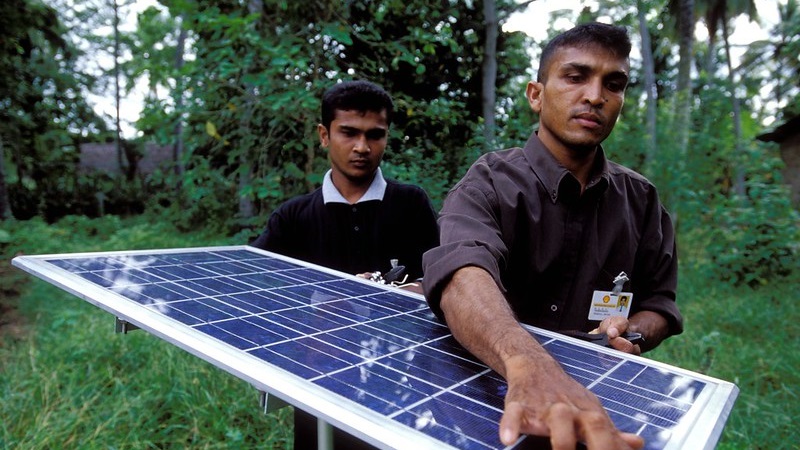
Kilinochchi in January 202O. She was there for the opening of Sri Lanka’s
first-ever floating solar plant with a capacity of 42KW located at the
Kilinochchi Campus of the Jaffna University. The project is a result of the
research collaboration since 2017 between the University of Jaffna and the
Western Norway University of Applied Sciences supported by the Norwegian Embassy in Colombo. ( continued in 23C)