Did Abraham Sumanthiran lure Alponso Ranjan to his Orumitthanadu den? – part 1.

January 23rd, 2021

C. Wijeyawickrema, LL.B., Ph.D.

Sweet dreams are made of this
Who am I to disagree
I travel the world and the seven seas
Everybody’s looking for something.

Some of them want to use you
Some of them want to get used by you
Some of them want to abuse you
Some of them want to be abused….

Sweet dreams are made of this

Who am I…

                                       Eurythmics,1983 (written for future Ranjan/s?)”

I was sent to jail for 19 years on false charges. If you see the Video tape recording of what happened between me and the magistrate on that unfortunate day, you can see how I was framed.”- February, 2019.

Ven. Galagodaatte Gnanasara (Bodu Bala Sena).

Note: I get no pleasure by writing this two-part essay, in this fashion and tone. But Ranjan R’s trademark/slogan has been the phrase, Bitter Truth, which was neither truth, half-truth nor naked truth. A sick society made him sicker making him an emperor in new clothes. The yahapalana agents, especially, Sumanthiran must take full responsibility for the crime and sin of destroying him. Their (RanilW/SajithP/TNA/JSB) shameless behavior in and outside the Diyawanna restaurant, reminds, the proverbial cat on the rock. Hence, the good, the bad, and the ugly of this sin deserves to be recorded; one has a moral duty to bell these cats.

Introduction

The question asked in the title above came to my mind after seeing the spontaneous outburst of sympathy for Ranjan (R) when he was convicted for abusing the court system. While what R did to judges in this case was clear cut with no doubts at all, his supporters are outraged that the law was interpreted so harshly, and this law must be changed ASAP. Some even proposed ways to make conviction nullified by giving a presidential pardon to both R and Duminda Silva simultaneously! In this one-sided, R is a saint blind alley, where judges, laws and politics are all mixed, the only sane opinion I saw was by the famous criminal law attorney, Tirantha Walaliyadda, who said that the right thing that should happen is for Duminda to ask for a full bench re-hearing of his case so that the previous five-bench decision would be re-examined. He says if president Gotabhaya does anything else it would be political suicide because then there is no point having a separate judiciary, good or bad.

I compared this outrage with the petition signed by ex-PM Ranil’s wife Maithree against any presidential pardon to Ven. Galabodaatte Gnanasara from a framed” conviction, about which part 2 of this essay will discuss. The swing of opinion from keeping a socially engaged monk in the Welikada hell, to salvaging at any cost, a bull-in-a-China shop politician R from prison, I felt was due to the sting the black-white crowd got from the court, unmasking their lurking in the dark dreams. The court decision is a blessing in disguise for the Sinhala Buddhists in the country because, it exposed how two projects (1) the anti-Mahavamsa and (2) the Orumitthanadu, operate together, behind the scene, to balkanize real estate called  Sinhale, and to dynamite the 2,600- year-old civilizational foundation of the Sinhala Buddhist nation.

From this perspective, it is not difficult for a Sinhala Buddhist to see how an unfortunate panchaskandaya (a collection of flesh and bones made of elements- earth, water, fire, and air), known as Ranjan/Alponso (R) ended up as a victim of the 2015-19 yahapalana international project.

Is <4-RI> in 2021 greater than <19-RI> in 2018?

In this Corona infested world where King Pasenadi Kosol’s Sixteen Dreams have come true, Sumanthiran (S) was able to mesmerize, mostly useless MPs in the Diyawanna restaurant, that his client Ranjan (R), was given a historically unprecedented punishment by the SC. Even Ali Sabri has given his silent accent to this theory of S.  Not a single panchaskandaya was there to refresh S’ dishonest brain, that only a few years back, a Buddhist monk who engaged in a dialogue with a magistrate about yahapalanakaraya’s hunt of soldiers (rana viru dadayama) was given 19 years of RI, by a combination of three or four judges, two lawyers and the AG’s department (the Court of Appeal judgement had at least one fatal error, and a critical analysis of that judgement printed at that time will be reproduced in part 2 of this essay). The SC decision denying an appeal request was a gross violation of the principles of Natural Justice.  Any way, it was a case of ripening or fulfilling of the prophesy made by Mrs. Chandrika, before a Muslim gathering that, Balu sena will be sent to balu kuuduwa (dog cage) soon.”

Pro bono Sumanthiran

In an adversarial system of justice, where lawyers thrive like sharks, it was S’ free of charge court appearances that emboldened and blinded R in his bitter truth crusade with a mini Rasputinian cloak. His sex advisory was free of charge like S’ services for him. He displayed with confidence on the wall of his government subsided apartment the long list of cases pending against him. It was next to many film acting awards he received. R was living in a delusion-fill world. Perhaps, Hirunika was the hardest hit victim of his fantasy machine. R failed to understand the American slang that there is no free lunch in this world, though he was a proud owner of the business cards of the American ambassador and her political deputy that he kept in his pocket.

For the larger Eelam project of S, R was a bundle of raw flesh, a wet clay figure to mold, delivered directly by Jehovah or by some other, not Mother Theresa. Both S and R, are Christian souls who could compare their salvation notes. R was an asset to S from another front. Due to his popularity in the cinema industry, he got elected as an MP, following the Upeksha Swarnamali syndrome of politics: if you are a popular actor/actress you are in for politics with wisdom). So, R became the ideal candidate to be used and abused in the Orumitthanadu project, which comes under the larger, buried but not dead, anti-Mahavamsa project.

Anti-Mahavamsa project

The word Orumitthanadu denotes the Eelam project which began initially in 1921/24 culminating with the 2015-2019 Orumitthanadu Drafted by S, RanilW and JayampathiW who escaped to Geneva. S was so sure of reaching his Nirvana (heaven), but then President Sirisena exploded an anti-yahapalana bomb derailing almost 100 years of separatists’ labour.  The anti-Mahavamsa project on the other hand had been a colonial desire to civilize Sinhale people by Christianizing them, so that they will be faithful lambs guided by priestly shepherds. But beginning with governors North and Brownrigg, white rulers realized that the village temple was the major obstacle to their civilizing efforts for the colony. The temple and the village are attached to each other like a tree with its bark. The Sanga functioned as the Guardian Angles of the land, language, and the religion of Sinhale for the past 2,600 years. The two political parties” then, monks and Villagers, are so intertwined, that during WW-II, war admiral Layton entertained a plan to arrest all the monks and keep them in internment camps, in case the Japanese army lands in Ceylon.


Kind-hearted women

In 1948 people of Sinhale were not given back, at least a reasonable or justifiable portion of the rights and heritage they lost in 1815. When communal representation, anchored on the colonial policy of divide and rule started in 1832, changed to territory-based representation in 1931, the Sinhala black whites, who quickly became Donoughmore Buddhists (identified as O! my God Buddhists by Ven. Elle Gunawansa), were thoroughly Europeanized to even discuss the need for correcting, reasonably, adverse effects of genocidal treatment, humiliation, and discrimination, people of Sinhale had undergone for over 400 years.

Whatever bitter truths that Ranjan (R) was talking about, the naked truth has been the game of treating Sinhala Buddhists as kind-hearted women until the 2020 general election. After 1948, several adjustments attempted to remedy Sinhala Buddhist grievances, but the black-white establishment aided and abetted by foreign agents, obstructed, sabotaged, and derailed each of them one after the other. Such actions fall under the umbrella called the Anti-Mahavamsa project. The expectation of Sinhala Buddhists and poor Christians is that President Gotabhaya will be able to usher an era of a society based on the Buddhist Middle Path, which in its political manifestation means, all beings (which includes animals, plants and trees) be free of sorrow, healthy, and happy.” This could create a Corona-free world than all UN and Geneva Human Rights Declarations together! 

Gotabhaya: a pain in the neck!

The arrival of a non-politician to the political scene became an obstacle to black whites operating within the false democracy of partisan politics. Therefore, unknowing to the country the Eelam project and the anti-Mahavamsa project joined hands. Ranjan Alponso was handpicked by S and RanilW as the one-man demolition crew.

Just like John F. Kennedy (1961) had to appoint his younger brother Robert as his Attorney General as ‘demanded’ by his father, helped John F. Kennedy to avoid a 3rd world war, MahindaR’s decision in 2005 to bring his brother Gotabhaya from USA as his defence secretary, resulted in ending a 30-year war in just 3+ years. No wonder Prabakaran tried to assassinate Gota on December 1, 2006. Ranjan became the yahapalana prostitute to use every word he can to sling mud at the president copied by Harin Fernando who fears the word Gotabhaya.

Ranjan’s two job assignments


*1 War crimes and foreign judges – Both RanilW and S wanted to bring foreign judges to adjudicate tiger cases. This was what they wanted all along and promised to deliver to Geneva after 2015. For this some idiot must be willing to be used and abused, to take a missionary-like path to ridicule the Sri Lankan courts and judges as corrupt, biased puppets. R’s strategy was to utter this as many times as possible using his popularity as an actor, and then approach all kinds of judges for corrupt deals, secretly recording conversations to use them as evidence. As time goes may be, he thought that such recordings would help in defending the contempt case against him! When the country is one huge triangle of evil, there is no doubt that the judicial system needs an overhauling as proposed by Nagananda Kodituwakku or revealed by Victor Ivan’s Court is Silent documentary, or by Sugandhika Fernando’s eyewitness evidence. Judges and lawyers are panchaskandas full of Lobha-Dvesa and Moha (greed, jealously and delusion). But label them all as thieves with one stupid mud brush is like throwing a spanner into a running machine, well-oiled or half-oiled. The whole system is sure to collapse. Did S or RanilW not know this?

*2 Attack Buddhist monk using abnormal cases as a side support for the robe-hunting work of the yahapalana crowd, while making disparaging comments about the DNA defects of prince Siddhartha and princess Yashodara, the heart of Buddhist lore! This was like Abdul Razik’s comments about the Triple Gem in Buddhism, or Mangala S dropping one gem from the Triple. R’s assigned task was to demoralize Buddha Sasanaya, already facing issues due to the operation of White Man’s Law. While Muslims are given religious courts as far back in 1951, suggestions made by white judges in colonial days to have separate jurisdictional system for monks was ignored by Sinhala Buddhist politicians.

There are enough evidence showing that RanilW was behind R, supplying him much needed oxygen. R went on rampage like the proverbial woodpecker until he hit his fateful banana tree. Sinhale is protected not by Vigneswaran’s five lingams that he says brought from pre-historic India to bless this island, but by Four guardian gods (Satarawaram Devivaru). Otherwise, who could think this island would not have become a Palestine, Lebanon, or a Syria in South Asia, despite 72 years of destruction by the selfish Sinhala politicians. So, R’s bitter truth project died with a new life, where he will be sitting on top of pinnacles of hundred years of human excreta on a daily basis, separated only by a thin concrete slab. It is one toilet pit for 80 prisoners, as revealed by attorney, major Ajith Prasanna who just came out on bail from remand prison after 360 days. His sin was talking on behalf of unjustly imprisoned war connected soldiers! There were no NGOs, no you tube bloggers, no Kishani Pintos, no Basil Fernandos or Asanga Welikalas from Aberdeen to utter a word about him. This is the cruel world we live in fighting for a non-existing rule of law and a bogus representative democracy.

Limitless idiosyncrasy

R was such an idiot, with either low self-esteem or inferiority complex, that even after he was handcuffed as a convict, within the court premises, shouted at the top of his voice calling the judges thieves, and he will never withdraw his opinion about them. This means, Harin Fernando, MP, a new Ranjan in the making, will have to wear his black shoal for at least 10 years. Sumanthiran, who says that under the new ICCPR Act, a convict should be given at least one opportunity to appeal against his/her punishment, will have a hard time in getting a sympathetic second hearing from a court unless his client plead insanity.

A human tragedy!

I feel sorry for Ranjan. As Gamini Fonseka once said, R was a young actor growing up with no fear to tell the truth. Arundika Fernando, minister gave 3 incidents of what young Alponso (R) did in the past. For example, he was caught carrying a safe robbed from a jewelry shop during the 1983 riots. May be, he was able to get himself reformed. But his lying before a national TV, as if he saw how the child Seya was molested cannot be excused under any grounds. He thrived in a corrupt society, high and low in status. The tape revealing how Dilrukshi Dias was probing him enthusiastically for the truth, whether the rumor that he (R) and (the late) Soma Edirisinghe had an illicit affair, was evidence for the Rasputinian image he earned among women, married or not.

His popularity was used by UNP politicians in elections. Gradually, he drifted toward dishonest politics, each step on the way getting immoral boost of approval from his masters. If he were the reformist that he said he was, he could have done lot of work to remedy the bitter truths he revealed. Instead, all of it became empty noise and no voice. He was incapable of developing a single project deserving public credit. Distribution of foods and goods is OK, but Palitha Thevarapperuma did a better politically neutral, sincere service in this regard. In R’s work one could always see a fine anti-government propaganda coming out of his mouth.

Within the Yahapalana international project, there was perhaps one soul who could have saved R from his predicament. It was Sumanthiran. Knowing that R had no escape route from his debacle, S should have used his psychic power to save him from ‘hell’, by threatening to withdraw from appearing for his cases, because S was R’s God on earth. He placed his heart and brain on S’ hands. Instead, he was led an abyss. Why S failed to psychologically salvage R from self-destruction is puzzling. Perhaps, Sumanthiran wanted R to become a basket case of pain in the neck in a sick, corrupt society, a kind of sadistic pleasure for his Eelam ilk. If only, R had seen the Singalovada Sutra, at least once, instead of reading bogus books on Buddhism, he would not have fallen into this human trap. Kiriella who once said, any idiot can win wars if there is money,” and Sajith should have warned R to change his behavior then, instead shedding crocodile tears before the Speaker to let R come to parliamentary sittings. This is not to protect R, but to continue to use R and abuse parliamentary privileges for the cheap political game Sajith is playing again an abuse of his position as LoO (PM in waiting in UK tradition).

Despite the R debacle, SJB and TNA continue to scratch each other’s backs secretly, and inside parliament by coming to help each other in heated or irrational debates or otherwise. The efforts to salvage R by hook or by crook, is due to a mutual guilt and defeat of the yahapalana international project. It is now clear, this project did not originate in Singapore in 2003/2006 with a secret meeting of Mangala Samaraweera, dean Colombo law faculty (a Tamil Eelamist?) and some agents of the global Tamil government in exile as we previously thought. It is but, revamping of the buried (but not dead), larger anti-Mahavamsa project aimed at balkanization of Sinhale. It is an irony that the statement Ven. Gnanasara was found fault with, that we do not want white mans’ law anymore,” is now repeated by Sumanthiran and Ali Sabry both, in a sugarcoated fashion, careful enough to not upset the supreme court!

Part- 2: How six lawyers framed and convicted Ven. Gnanasara on a contempt of court charge.
Dammika Bandara claims no responsibility for Pavithra contracting COVID-19

January 23rd, 2021

Courtesy The Daily Mirror

Ayurvedic practitioner Dhammika Bandara said he was not responsible for Health Minister Pavithra Wanniarachchi contracting COVID-19, as she had failed to follow his advice on taking the syrup made by him.

In a Facebook post, he said when taking his herbal syrup, people should avoid smoking, consuming  alcoholic liquor and avoid eating meat.

Minister Pavithra Wanniarachchi did two things which I advised her to avoid.  Therefore, I cannot take responsibility for she had fallen ill now,” he said in the post.

සෞඛ්‍ය ඇමතිනි පැණිය බීපු විදිහ වැරදියි.. ඒකයි කොරෝනා හැදුනේ..- ධම්මික බණ්ඩාර

January 23rd, 2021

උපුටා ගැන්ම ලංකා සී නිව්ස්

කොරෝනා වෛරසය සඳහා තමන් විසින් හඳුන්වා දුන් ඖෂධය සෞඛ්‍ය ඇමතිනි පවිත්‍රා වන්නිආරච්චි මහත්මිය භාවිතා කළ ආකාරය වැරදෙන්නට ඇතැයි කෑගල්ලේ ධම්මික බණ්ඩාර මහතා සඳහන් කරයි.

තමන් විසින් නියම කරන ලද මාත්‍රාව අනුව හරියටම ඖෂධය භාවිත කලේ නම් වෛරසය ආසාදන නොවන බවද ඔහු පවසයි.

නියමානුකූල පිළිවෙතට මෙම ඖෂධය පානය කළ අය මෙතෙක් වෛරසය ආසාදන වී නැති බවද ඔහු පැවසීය.

තමන් සෞඛ්‍ය ඇමතිනියට ඖෂධ ගෙනිහින් දුන් බවත් එම අවස්ථාවේ හැන්දකින් එය පානය කළද පසුව කෙසේ භාවික කලේ දැයි තමන් නොදන්නා බව ද ඔහු සඳහන් කළේ ය.

සෞඛ්‍ය ඇමතිනී පවිත‍්‍රා වන්නිආරච්චි මහත්මියට කොරෝනා වෛරසය ආසාදනය වීමෙන් පසු ඒ පිළිබඳව මාධ්‍ය වෙත අදහස් පල කර ගෙන ඔහු මේ බව කීය.

Sri Lanka to receive first batch of Covid-19 vaccines on Jan. 27 – President

January 23rd, 2021

Courtesy Adaderana

President Gotabaya Rajapaksa says the first batch of Oxford-AstraZeneca Covid-19 vaccines manufactured in India is expected to arrive in Sri Lanka on the 27th of January.

Accordingly, Sri Lanka will be receiving the 500,000 vials of doses with the first vaccine consignment.

The President’s remarks came during the ‘Gama Samaga Pilisandara’ programme held in Walallawita, Kalutara today (January 23).

He noted that Covid-19 jabs will be first administered to medical officers, Public Health Inspectors (PHIs) and other health sector workers who are on the front line of coronavirus outbreak in the country.

Officers of tri-forces who work closely with medical staff and people who are more vulnerable to virus infection will be given the jabs subsequently, the President added.


The National Medicines Regulatory Authority (NMRA) yesterday approved the emergency use of Oxford-AstraZeneca Covid-19 vaccines in Sri Lanka.

Indian High Commission in Colombo later said the Sri Lankan government has conveyed that approval was granted for the emergency use of COVISHIELD vaccines.

COVISHIELD is the local name for the Oxford-AstraZeneca vaccine developed in the United Kingdom.

The shots developed by UK-based drugmaker AstraZeneca and Oxford University are being manufactured at India’s Serum Institute – world’s largest vaccine manufacturer.

The vaccine, which is known as COVISHIELD, is developed from a weakened version of a common cold virus (known as an adenovirus) from chimpanzees.

It is administered in two shots – the second dose must be taken four to six weeks following the first.

Unlike the Pfizer-BioNTech jabs, which require 70C temperature for storage, COVISHIELD can be safely stored at temperatures of 2C to 8C, which is about the same as a domestic refrigerator.

India on Wednesday (January 20) began supplying Covid-19 vaccines to six neighbouring and key partner countries. Thereby, Bhutan, Maldives, Bangladesh, Nepal, Myanmar and Seychelles became the first recipients of India-manufactured vaccines.

The vaccines supplied to neighbouring countries are sent as grants and India’s External Affairs Ministry said the vaccines were not part of COVAX – the United Nations-backed global effort aimed at lower-income nations to obtain the jabs.

Two more deaths bring COVID-19 fatality count to 280

January 23rd, 2021

Courtesy Adaderana

Sri Lanka has reported two more coronavirus related deaths today (January 230, the Director-General of Health Services confirmed.

One of the deceased is a 69-year-old male from Mount Lavinia who had passed away at the Homagama Base Hospital yesterday (January 22). He had been transferred from the Colombo National Hospital upon being diagnosed with COVID-19. The cause of his death has been determined as COVID-19 pneumonia and a kidney infection.

The other victim is an 82-year-old woman from the Ranala area who succumbed to COVID-19 pneumonia and kidney disease. She had also passed away yesterday at the Homagama Base Hospital from the Colombo National Hospital upon being identified as a COVID-19 patient.

Accordingly, Sri Lanka has reported 280 deaths from the coronavirus pandemic thus far.

724 more coronavirus cases reported today

January 23rd, 2021

Courtesy Adaderana

Sri Lanka’s Covid-19 numbers saw another surge today, as 371 more persons were tested positive for the virus.

Department of Government Information confirmed that all 371 of the newly-identified patients are close contacts of earlier cases linked to the Peliyagoda fish market.

Accordingly, a total of 724 new cases have been reported within the day.

As per statistics, the total number of Covid-19 infections confirmed in the country to date now stands at 57,587.

Recoveries from the virus meanwhile climbed to 49,261 earlier today, as more patients regained health.

However, 8,048 active cases are still under medical care at selected hospitals and treatment centers located across the island.

Sri Lanka has also witnessed 278 deaths related to Covid-19.

Health Minister under medical care for Covid-19

January 23rd, 2021

Courtesy Adaderana

Covid-19 positive Health Minister Pavithra Wanniarachchi is currently receiving treatment at an intermediate hotel quarantine centre in Hikkaduwa, the minister’s media secretary said.

Minister Wanniarachchi was tested positive for Covid-19 yesterday (January 22) in a rapid antigen test.

She is the fifth Member of Parliament to contract the virus after State Ministers Dayasiri Jayasekara and Piyal Nishantha, MP Rauff Hakeem and Minister Vasudeva Nanayakkara.

UK coronavirus variant ‘may be more deadly’: What now for the UK?

January 23rd, 2021

BBC Newsnight

Early evidence suggests the variant of coronavirus that emerged in the UK may be more deadly, UK Prime Minister Boris Johnson said. How does this affect the road out of lockdown?

However, there remains huge uncertainty around the numbers – and vaccines are still expected to work. The virus’s reproduction rate is estimated to be at or below one for the first time since early December – which means the epidemic is shrinking in the UK. So what does this mean for the UK? Could we see travel restrictions imposed due to the new transmissibility of the new variant? How does this affect the road out of lockdown? Newsnight’s Policy Editor Lewis Goodall reports.

Coronavirus: On shift in intensive care –

January 23rd, 2021

BBC Newsnight

Some viewers may find this film distressing
As the UK coronavirus death toll reaches record levels, Newsnight returns to Salisbury District Hospital joining the ITU staff for a full 12 hour shift as they struggle to cope with the relentless influx of patients.

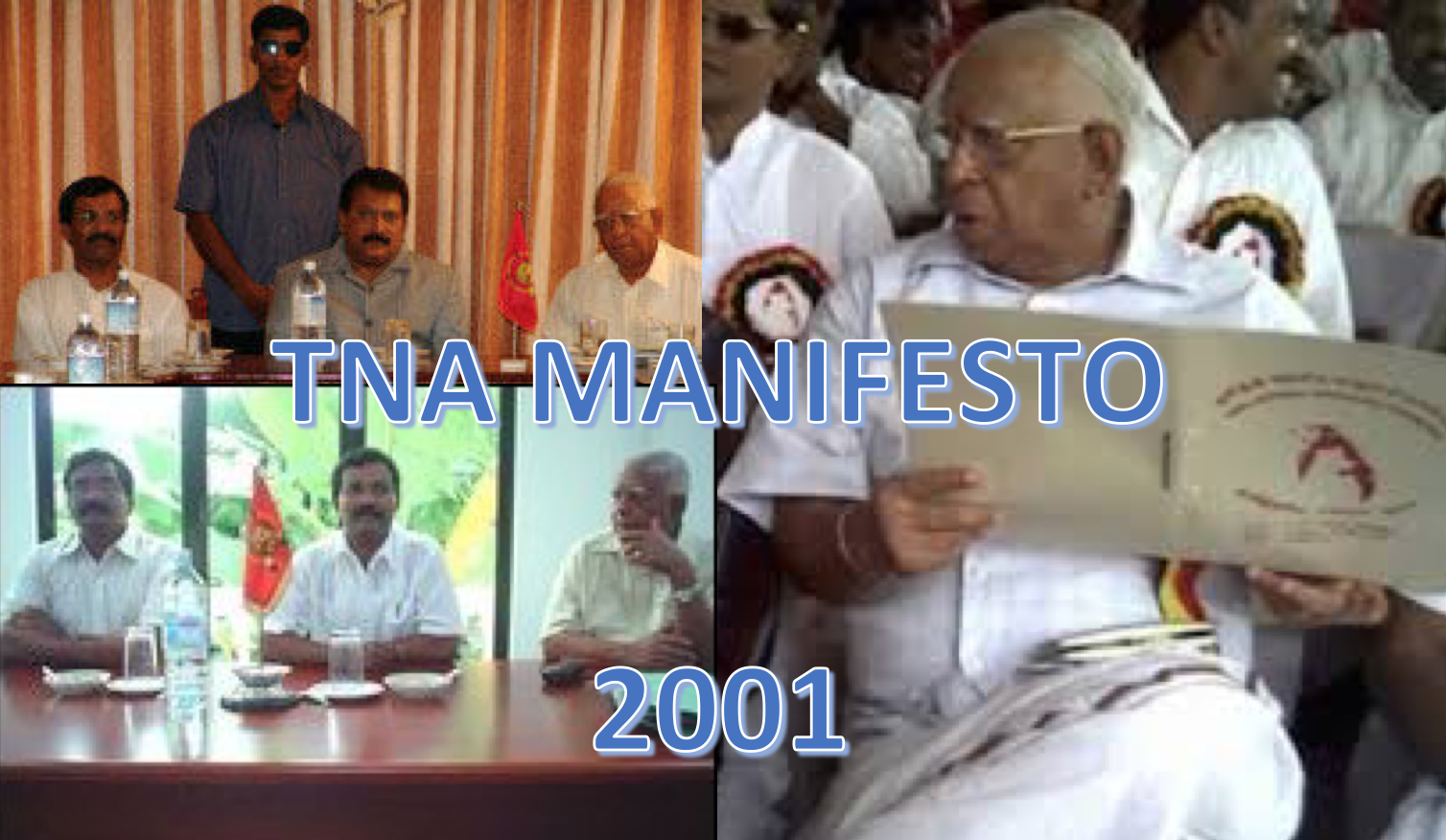
TNA was formed by LTTE & contested December 2001 elections

January 23rd, 2021

Was TNA created by the LTTE in 2001? Yes.Press release on 22 Oct 2001 was signed by Sampanthan for TULF, N.Kumarakuruparan  for ACTC, N. Srikantha  for TELO & K.Premachandran for EPRLF. Why was TNA formed by LTTE in 2001? 9/11 sparked fears of actions against terrorist movements so TNA as LTTE’s political wing came into being. TNA issued its election manifesto on 12 November 2001 ahead of the 5thDecember 2001 elections.

TNA’s manifesto goes out to explain the history to the Tamil nationality covering past 52 years.

TNA uses ‘Citizenship & Franchise Laws’claiming it deprived hundreds and thousands of Tamils of recent Indian origin their citizenship & franchise rights.

TNA is referring to the ‘hundreds and thousands of South Indian indentured laborers brought by the Dutch and the British to work on plantations during colonial rule. 

TNA must explain why it only makes reference to these Estate Tamils but never includes Estate Tamils in their demands and does not even contest in areas where these Estate Tamils live! 

TNA next refers to ‘state aided colonization of the Tamil homeland with Sinhala people from the time of independence’ 

Again, TNA ignores that the Constitution of Sri Lanka guarantees the right of any citizen to live and reside where they like and no political party can prevent this. At the same time, TNA must also respond to how LTTE in late 1980s and 1990 evicted in a virtual ethnic cleansing the Sinhalese & Muslims who were living in the North even prior to independence. Affidavits of these thrown out Sinhalese were even sent to the OISL investigators. TNA has no right to declare any area as its ‘homeland’ or ‘habitat’ or deny Sinhalese or Muslims from living in the North. When statistics can showcase that 59% of Tamils have bought land and property outside of the North and East and live without issues is this not ‘Tamilization of Sinhala areas’ as per TNA’s same argument?

There is continued reference to the Official Language Act 1956 erroneously called Sinhala Only Act” which completely ignores that Tamil was never an official or language of administration before independence or during independence to claim grievance. The demand for reversal of discrimination the Sinhala majority from the British had nothing to do with Tamils or against Tamils, it was only to demand the return of rights that the Sinhalese were denied under colonial rule. The divide and policy objectives of the colonials evaded correcting the historical wrongs & injustices to the Sinhala majority by falsely creating a notion that the Sinhalese demands were against Tamils which were fueled by the brown sahibs that the British had nurtured via their education system. 

The Sinhalese demand of the British was never to deny Tamils but to give to the Sinhalese as well what the British was unfairly and disproportionately giving to the Tamils. 

TNA next quotes STANDARDIZATION in university education. Again this too is a falsely drummed notion and this issue needs to also be linked to the 1957 Social Disabilities Act in which the then PM – SWRD Bandaranaike enabled low-caste Tamils to obtain education and enter university. This was fiercely objected to by the Tamils higher classes far more than the 1956 Official Language Act. In fact, after this Act was passed, the high caste Tamils did not allow the Tamil low caste children to sit on school chairs and they were made to sit and study on the floor. This was the Tamil caste system showing its true colours. The objection to the STANDARDIZATION was also because with low caste Tamils able to gain education, it meant they could also gain university entrance. This was a blow to the elite who were the only one’s enjoying university education. Standardization meant quotas given to the various districts and more low castes able to apply. Anyone wanting to know more about this argument unfairly used by the high caste Tamils must do a bit more research to find out the truth for themselves. Even the high class Sinhalese were not too much in favor of many Sinhalese also benefiting from university entrance. Standardization meant the privileged lot had to make way for others to also gain university education. 

TNA makes reference to in-equal education facilities– completely ignoring that the best of missionary schools throughout colonial rule were in minority majority areas in particular North Sri Lanka. This was how minorities (who converted and studied in English) obtained colonial jobs and why at independence they secured more jobs than the Sinhalese. This was no fault of Tamils per se but part of the colonial divide and rule system. The question at independence was the continuance of the disproportionate and unfair system or to rectify the system to be fair by all. Obviously, it was natural that those who were unfairly benefitting by the colonial system would get annoyed.

TNA also claims Tamils suffer deprivations and economic impoverishments.

This argument can easily be dismissed by statistical proof of the roles held by Tamils in Public and Private sector, the businesses they own, the properties in the most exclusive areas around Sri Lanka. Completely false propaganda by TNA.

TNA also alleges discrimination in the public sector for Tamil youth  

This is another myth but with a background. It was the LTTE that instilled fear in Tamils who were working in the public sector by shooting them dead. LTTE killed 3 Tamil mayors, LTTE assassinated Tamil politicians and public servants including principals, LTTE shot dead Tamil policemen on duty. As for Tamil youth, during LTTE heyday these young children were kidnapped and turned into child soldiers while affluent Tamils managed to go to foreign shores on asylum and as refugees. Naturally, Tamils could not join the public sector during this period because of fear of LTTE not because of any policy by the government not to induct them. 

It is interesting that TNA refers to the Vaddukoddai Resolution of 14 May 1976 claiming it is to restore the ’sovereignty of the Tamil nation’. It was this resolution that called for Tamil youth to take up arms and which LTTE used as a catalyst to do so having rechristened itself from Tamil New Tigers formed in 1972 (22 May – Sri Lanka Republic Day) to LTTE.

TNA justifies LTTE militancy in its 2001 manifesto

Tamil youth left with no alternative were driven to resort to an armed struggle”

TNA goes on to merge the quest for Tamil National rights with the LTTE’s armed struggle –virtually aligning LTTE’s armed movement to the Tamil National quest.

There is repeated reference by TNA to a ‘just solution to the Tamil national question’before solving anything, can TNA first clearly state what the PROBLEM IS.

TNA next refers to the demands by LTTE during the Thimpu Talks in Bhutan on 13 July 1985.

In so quoting LTTE’s demands in TNA’ manifesto, TNA is acknowledging the demands of the LTTE.

LTTE’s demands in 1985 were

  1. Recognition of the Tamils of Sri Lanka as a distinct nationality
  2. Recognition of an identified Tamil Homeland & guarantee its territorial integrity
  3. Based on the above, recognition of the inalienable right of self-determination of the Tamil Nation
  4. Recognition of the right to full citizenship & other fundamental democratic rights of all Tamils who look upon the island as their country.

Questions arising from the 4 LTTE demands

  • Tamils like all other nationalities are distinct, but there can’t be 2 sets of Tamils with same distinct features. Tamil Nadu Tamils also claim to be distinct – so how can the same Tamils be distinct in two different countries. Let us not forget the Tamils in Tamil Nadu sought self-determination first.
  • Tamil Homeland demand in Sri Lanka also brings the question of inability to have 2 different Tamil homelands in 2 different countries for the same ethnic group. 
  • Tamils in Tamil Nadu want a Tamil homeland and Tamils in Sri Lanka want a Tamil Homeland. Why do Tamils in Tamil Nadu refer to Sri Lankan Tamils as ‘Our People’ and India is also using this as a slogan to interfere in Sri Lanka’s internal affairs if Tamils in Sri Lanka are distinct from Tamils in Tamil Nadu? 
  • The 4thdemand is irrelevant as all Tamils born in Sri Lanka are automatically citizens.

LTTE’s demand for an ‘identified Tamil Homeland’ (though not mentioning where it is, how big or its boundaries) is linked with TNA’s own statement in the 2001 election manifesto ‘we have demanded and struggled for an independent Tamil state as the answer to this problem’This statement by TNA naturally answers the solution to the Tamil National Question which is a quest for an independent Tamil state.

It is also interesting that TNA mentions the ‘tardiness of the Sri Lankan state’ to accept an international third party role in solving the conflict. In fact India arrived with a peace keeping force claiming to disarm LTTE 78 hours and proved a failure. Norway mediated the 2002 Cease Fire and the presence of a Nordic monitoring mission, which also proved a failure. So the foreign formulas did not bring any relief to the innocent victims of LTTE.

TNA’s 2001 manifesto was by an alliance of 4 Tamil parties

  1. Tamil United Liberation Front (TULF),
  2. All Ceylon Tamil Congress (ACTC),
  3. Tamil Eelam Liberation Organization (TELO)
  4. Eelam People’s Revolutionary Liberation Front (EPRLF)

TNA’s  2001 manifesto made the following demands

  1. Immediate lifting of economic embargo in parts of the North East province (obviously this was to facilitate LTTE’s movement)
  2. Withdrawal of the residential & travel restrictions on Tamils
  3. Immediate cessation of war in the North East (a request made on behalf of LTTE)
  4. Immediate commencement of negotiations with the LTTE with involvement of an international third party

Another instance TNA associating itself with LTTE in the 2001 manifesto is when TNA states unless meaningful negotiations are held with the LTTE no just solution can be found to the Tamil national question & that such negotiations should be held immediately only with the LTTE”.

TNA goes on to add that in order to ensure that the negotiations are properly focused and are purposeful and successful, no parallel negotiations should take place with any other Tamil political formation”.

TNA goes on to demand in its 2001 manifesto that to facilitate the start of negotiations the GoSL should ‘lift the proscription imposed on the LTTE in Sri Lanka and thereby ensure such proscription does not constitute an impediment to the free and full participation of the LTTE at such negotiations on behalf of the Tamil nationality”.

TNA in November 2001 made this statement even after LTTE attack on Katunayake Airport & Air Force base on 24 July 2001 damaging aircrafts and injuring many.

TNA in its manifesto claims that it is contesting the general elections ‘in order to achieve the aims and objectives, outlined above’ and affirms that TNA will ‘campaign both nationally and internationally for the achievement of the said aims and objectives”.

TNA goes on to say that its alliance (TULF, ACTC, TELO & EPRLF) would ‘mobilize the Tamil-speaking people of the North East in order to achieve the said aims and objectives’.

Thus, even in 2001, the reference to Tamil-speaking people to link Muslims to the separatist quest was part of a bigger plan.

TNA 2001 manifesto asked voters in 5 districts (Jaffna, Vanni, Trincomalee, Batticoloa & Ampara) to vote for the Tamil Alliance symbol the rising sun.

https://www.tamilnet.com/img/publish/2010/03/TNA_Election_Manifesto_2001.pdf

This is the party that the diplomats, UN officials and others are holding discussions with!

Shenali D Waduge

How representative of the Tamils is the ITAK/TNA?

January 22nd, 2021

The Tamil National Alliance was formed in 2001 by the LTTE and became known as LTTE’s political wing. The rationale to create a political wing was probably the outcome of 9/11 and the US steered global ‘war against terror’. The TNA has contested 2 Parliamentary elections with backing of LTTE in 2001 and 2004 while the remaining 4 elections were post-LTTE defeat (2010, 2013, 2015 and 2020). Interestingly, TNA while claiming to be the representative of the Tamils contests only in Jaffna, Vanni, Trincomalee, Batticoloa & Ampara in all the 6 elections. Why has TNA ignored or refrained from representing all areas where Tamils live in particular the Estate Tamils.Given that the TNA in all of its manifestos refer to disenfranchisement of Tamils at independence and since this reference is to Indian Tamils brought to work on plantations by the colonials, TNA must explain why it does not represent them. Even Colombo where a large population of Tamils live, TULF/ITAK has never been able to get more than 13,000 Tamil votes! The diplomatic community are visiting TNA when they have just 2% of Tamil mandate!

TNA constituent parties

2001 – TULF, ACTC, TELO, EPRLF

2004 – TULF, ACTC, TELO & EPRLF

2010 – ITAK, TELO & EPRLF – TULF and ACTC no longer in TNA

2013 – ITAK, TELO & EPRLF

2015 – ITAK, TELO, EPRLF & PLOTE

2020 – ITAK, TELO & PLOTE (TULF, ACTC, EPRLF – no longer in TNA)

TNA open support for LTTE 

TNA 2001 

  • ‘it was inevitable, that the armed struggle gained in strength and the Liberation Tigers of Tamil Eelam came to occupy a paramount position, and play a pivotal role in the struggle of the Tamil nationality to with their rights’
  • We have also consistently asserted that any attempt to draw a distinction between the LTTE and the Tamil people was meaningless’…
  • ‘unless meaningful negotiations are held with the LTTE no just solution can be found to the Tamil national questionand that such negotiations should be held immediately ONLY with the LTTE’
  • ‘no parallel negotiations should take place with any other Tamil political formation’.
  • TNA comprising TULF, ACTC, TELO, EPRLF in 2001 demanded that the GOSL ‘lift the proscription imposed on the LTTE’ and that such ‘proscription does not constitute an impediment to the free and full participation of the LTTE at such negotiations on behalf of the Tamil nationality’.
  • Demanded lifting of economic embargo in NE provinces against LTTE
  • Cessation of war
  • Commencement of negotiations with LTTE & a 3rdparty

In 2001 TNA says national solution is based on LTTE-GoSL proposals at Thimpu in July 1985 where LTTE demanded

  1. To recognize Tamils of Sri Lanka as a distinct nationality
  2. To recognize the identified Tamil Homelandand guarantee its territorial integrity
  3. To recognize the inalienable right ofself-determination of the Tamil nation.
  4. To recognize the right to full citizenship and other fundamental democratic rights of all Tamils who look upon the island as their country.

This clearly implies TNA demands what LTTE demanded

TNA 2004

  • ‘in order to safeguard the life and liberty of the Tamil race and to establish its birthright for self-determination, the Tamil Nation having being pushed to the unavoidable state of armed conflict, as the only way, the war not only broadened but advanced under the generalship of the Tiger’s leader Hon.Pirapaharan’(Note TNA politicians for fear of LTTE lived with the Sinhalese in Colombo and cared not what happened to the Tamils living in LTTE controlled areas)
  • Sinhala Nation has to accept ISGA excellent” proposals by LTTE to rebuild Tamil country
  • The LTTE has for the past two years put up with the violent, surly behavior of the armed forces without impairing the conditions for peace and observing the ceasefire and acting steadfastly and firmly towards the path of peace’.
  • international community should remove restrictions on LTTE because it is the ‘authentic sole representative of the Tamil people’
  • ‘accepting LTTE’s leadership as the national leadership of the Tamil Eelam Tamils and the Liberation Tigers as the sole and authentic representatives of the Tamil people’
  • ‘let us devote our full cooperation for the ideals of the Liberation Tigers struggle with honesty and steadfastness’…‘let us work side by side with the LTTE’.

TNA 2010

  • ‘sole military outfit that fought for a separate homeland for the Tamils’ 

Now let us look at how Tamils have voted for TNA over the 6 elections held since 2001 

2001 TNA Results

2001PartyVotesPercentageSeatsTotal Polled
JaffnaTULF / TNA102,32454.84%6197,279
VanniTULF / TNA41,95044.39%3102,361
TrincomaleeTULF / TNA56,12134.83%1169,567
DigamadullaTULF / TNA48,78917.41%1297,440
BatticoloaTULF / TNA86,28448.17%3192,383
ColomboTULF / TNA12,6961.20%01,099,382
All-IslandTULF / TNA348,1643.88%14 + 12,058,412

Inspte of such open allegiance to the LTTE, the TNA comprising TULF, ACTC, TELO & EPRLF secured only 348,164 votes (3.89% of Tamil votes polled) but because of Sri Lanka’s PR system, TNA managed to get 15 seats.

TNA contested only in 6 districts yet Tamils live across all 25 districts of Sri Lanka.

2004 TNA Results

2004PartyVotesPercentageSeatsTotal Polled
JaffnaITAK / TNA257,32090.60%8305,259
VanniITAK / TNA90,25274.68%5130,513
TrincomaleeITAK / TNA69,08737.77%2191,79
DigamadullaITAK / TNA55,53319.13%1308,625
BatticoloaITAK / TNA161,01166.71%4254,023
All-IslandITAK / TNA633,2036.84%20 + 2998,420

In 2004 TNA comprising TULF, ACTC, TELO & EPRLF secured 633,64 votes (6.84% of the Tamil votes polled) and secured 22 seats in Parliament due to the PR system. 

2010 TNA Results

2010PartyVotesPercentageSeatsTotal Polled
JaffnaITAK / TNA65,11943.85%5168,277
TULF / TNA2,8921.95%0
VanniITAK / TNA41,67338.96%3117,185
TULF / TNA1,0731.00%0
TrincomaleeITAK / TNA33,26823.81%1
DigamadullaITAK / TNA26,89510.47%1272,462
BatticoloaITAK / TNA66,23536.67%3195,367
TULF / TNA4,4242.45%0
ColomboTULF / TNA8340.09%-0989,729
All-IslandITAK / TNA233,1902.90%13 + 18,630,689
All-IslandTULF / TNA9,2230.11%0

From 8.6m voters in the areas that ITAK contested ITAK secured only 233,190 votes just 2.9% of votes polled but thanks to PR system TNA secured 14 seats in Parliament. The TULF/Anandasangaree contested separately in 2010 received just 9223 votes.

ITAK votes in 2004 were 633,203 in 2010 ITAK votes were 233,190 (400,013 Tamils had given up on ITAK – virtually saying ‘NO’ to their manifesto

2013 TNA Results

2013 NPCPartyVotesPercentageSeatsTotal Polled
JaffnaITAK / TNA213,90784.37%14273,821
KilinochchiITAK / TNA37,07981.57%350,194
MannarITAK / TNA33,11862.22%356,215
VavuniyaITAK / TNA41,22566.10%466,781
MullaitivuITAK / TNA28,26678.56%138,802
All-IslandITAK / TNA353,59578.48%30 members485,813

Elections to the Northern Provincial Council was held after 1990 when merged-NE was taken back to the State after declaration of universal independence by Indian-puppet Varatharaja Perumal. 2013 NPC elections was held 4 years after defeat of LTTE. TNA contested under ITAK and secured 353,595 votes which was 120,405 votes more than what ITAK secured in the 2010 General Elections. It was nothing for TNA/ITAK to feel proud about.

2015 TNA Results

2015PartyVotesPercentageSeatsTotal Polled
JaffnaITAK / TNA207,57769.12%5325,805
TULF / TNA1,5150.50%0
VanniITAK / TNA89,88654.55%4181,930
TULF / TNA5960.36%0
TrincomaleeITAK / TNA45,89425.44%1190,938
TULF / TNA3800.21%0
DigamadullaITAK / TNA45,42113.92%1344,618
BatticoloaITAK / TNA127,18553.25%3252,397
TULF / TNA9590.40%0
ColomboTULF / TNA7230.06%01,252,271
All-IslandITAK / TNA515,9634.62%14 + 2  11,684,098

In 2015 January regime change took place. TNA was a key player in change of Govt. In August 2015 General Elections was held – TNA/ITAK secured 515,963 votes – 4.62% of votes polled gaining 16 seats. This was just 162,368 more than what TNA secured in 2013. Again nothing much to boast about.

2020 TNA Results

2020PartyVotesPercentageSeatsTotal Polled
JaffnaITAK / TNA112,96731.46%3394,136
TULF / TNA1,3180.37%0
VanniITAK / TNA69,91633.64%3224,856
TULF / TNA4240.20%0
TrincomaleeITAK / TNA39,57018.58%1227,117
DigamadullaITAK / TNA25,2556.54%0402,344
BatticoloaITAK / TNA79,46026.66%2314,850
TULF / TNA8,1132.72%0
All-IslandITAK / TNA327,1682.82%1012,343,302
All-IslandTULF / TNA9,8550.08

In 2020 TNA votes was 327,168 as against 515,963 in 2015. TNA received just 2,82% of votes. This meant 188,795 Tamils had lost faith in TNA. It also means the diplomatic community and other international dignitaries are visiting TNA to hold talks when they hardly represent the Tamil people or even what the Tamils want. This is something the diplomatic community and the UN need to seriously look at.

Tamil votesPercentage
2001348,1643.88%
2004633,2036.84%
2010233,1902.90%
2013353,59578.48%
2015515,9634.62%
2020327,1682.82%

LTTE supported 2 elections TNA took part in – 2001 and 2004. Even with LTTE support TNA secured 633,203 votes only. Even after supporting regime change in 2015, TNA secured only 515,963 votes. In fact, percentage wise TNA has received the lowest as per 2020 results gaining just 2.82% vote.

The takeaway from this is that TNA is not the representative of Tamils. The international community and the diplomats should seriously relook at who they are chaperoning. Courtesy calls to TNA is not going to win the Tamils as TNA does not stand for what Tamils truly want. The election results speak for themselves. Contesting just 5 districts since 2001, TNA is hardly representative of the Tamils!

Shenali D Waduge

COVID 19 Variant in South Africa Exposes Ineffectiveness of COVID Vaccines? As reported by Julia Belluz and Umair Irfan for Microsoft News and reproduced

January 22nd, 2021

By The Sri Lanka Study Circle 

https://www.msn.com/en-xl/northamerica/top-stories/why-scientists-are-more-worried-about-the-covid-19-variant-discovered-in-south-africa/ar-BB1d02fQ?ocid=msedgdhp

Why scientists are more worried about the Covid-19 variant discovered in South Africa 

On January 15, US public health officials warned that a more contagious variant of the coronavirus that causes Covid-19 could dominate infections in the United States by March. That grim warning referred to B.1.1.7, a variant that was first identified in the United Kingdom. 

But now, one week later, scientists are increasingly concerned about another variant that emerged in South Africa. 

There’s evidence from several small, and not-yet-peer-reviewed, studies that mutations in the South Africa variant — known as 501Y.V2 and already present in at least 23 countries — may have a higher risk of Covid-19 reinfection in people who’ve already been sick and still should have some immunity to the disease. 

a close up of a hand: The major concern is that Covid-19 mutations could undercut the effectiveness of the vaccines  

a close up of a hand: The major concern is that Covid-19 mutations could undercut the effectiveness of the vaccines.

.© Emmanuel Dunand/AFP via Getty Images The major concern is that Covid-19 mutations could undercut the effectiveness of the vaccines. 

Scientists haven’t confirmed that this variant is more contagious, though evidence is pointing in this direction. They’re also concerned that 501Y.V2 could have implications for treatments for Covid-19. Regeneron, a company that has developed a cocktail of two monoclonal antibodies as a therapy for patients with the illness, reported that 501Y.V2 may be able to evade one of the antibodies in its mix. The drug is still effective, but subsequent mutations could render it less so. 

But perhaps most alarming is the prospect that the mutations in the variant could limit the effectiveness of existing vaccines, one of the best tools we have for controlling the pandemic. 

The results of these recent studies are a serious indication we have to look hard at how well vaccines might work,” Penny Moore, a virologist at the National Institute for Communicable Diseases in South Africa, told Vox. Taken together, they highlight the dangers of letting Covid-19 spread unchecked and also portend the challenges that lie ahead as the virus continues to evolve. 

What the 501Y.V2 coronavirus variant might mean for Covid-19 vaccines 

Moore is the lead author of a new study on 501Y.V2, out Tuesday as a preprint on BioRxiv. She and her team in South Africa took blood plasma samples from 44 people who had been infected with the coronavirus during the country’s first wave of infections last summer and then checked how their existing antibodies responded to 501Y.V2 as well as older variants. 

The researchers sorted the plasma samples into categories — high and low antibody concentrations. Though antibodies can wane after infection, that doesn’t necessarily mean that protection fades completely. Another recent study showed that immunity stemming from infection lasts at least five months in most people, so the antibodies in those who’ve had the virus should still shield against earlier versions of the virus if someone is infected again. 

In 21 cases — nearly half — the existing antibodies were powerless against the new variant when exposed in test tubes. This was especially true for plasma from people who had a mild previous infection, and lower levels of antibodies, to begin with. 

The findings suggest immunity from previous versions of the virus might not help individuals fend off the new variant if they’re exposed, particularly if their prior case was mild or symptom-free. 

For Fred Hutch Cancer Research Center scientist Trevor Bedford, who was not involved in the research, the study also came as a possible warning sign about the vaccines. As early as autumn this year, manufacturers may need to begin reformulating their shots to respond to the changes in the virus’s genetic code, he wrote on Twitter: 

“The Historical and Philosophical Background of Buddhist festivals in Sri Lanka“-Ven. Dr. Rambukwelle Devananda

January 22nd, 2021

Book Review Dr. Sudath Gunasekara B. A.  (Hons) (Geography) Peradeniya, Sri Lanka. Ph. D. (Agriculture)

Book Review Dr. Sudath Gunasekara B. A.  (Hons) (Geography) Peradeniya, Sri Lanka. Ph. D. (Agriculture)

Peradeniya, Sri Lanka. Visiting Lecture Univ. Peradeniya, Retired Permanent Secretary to Prime

Minister Sirimavo Bandaarnaayaka (SLAS) 21.1.2021.

Ven. Dr. Rambukwelle DevanadaThera Chief incumbent of Sri Sambhodi Vihaara, Berlin, was awarded

a Ph.D. (Dr. Phil) magna cum laude” with First Class Honours by the prestigious Berlin Humboldt

National University of Germany for a Dissertation written in German on the Historical and Philosophical

background of Buddhist Festivals in Sri Lanka. He was registered as a post graduate student of the World

Religions and Philosophy Faculty of the University of Humboldt. This is the first time a Sri Lankan has

received a First Class with a magna cum laude” for a Ph.D. by the University of Humboldt.

This is a brief resume of the thesis written in German.

He begins his Dissertation with a brief introduction on Sri Lanka focusing attention on the close relationship between Lord Buddha and Sri Lanka with a short account on the pre-historic period as well.

With a short discussion on Theravada, (The Great Vehicle) Mahayana (The Lesser Vehicle) and Vajrayana Diamond Vehicle”) traditions in Buddhism he has pointed out the historicity and the authenticity of Theravaada tradition very clearly.

The author extensively make use of works like Mahavansa and Chulavansa by Wilhelm Geiger (1953) edition first published in (1912) History of Ceylon by K.L.M. De Silva (1981 Edition) printed in Los Angeles, The history of Buddhism in Ceylon WalpolaRahula and Deepavansa by Hermann Oldenburg (printed in Delhi and Madras reprinted in Berlin (1879) to trace back authenticity of historical events like the arrival of Vijaya in 543 BC coinciding with the passing away of Lord Buddha; the founding of the Anuradhapura Kingdom; The advent of Buddhism in Sri Lanka in 307 BC with the arrival of MahindaThera and the conversion of the whole Island to Buddhism and the Tambapanni being called the Dhramadweepa ((The Land of Righteousness) in the backdrop of this Island being sanctified thrice by Lord Buddha’s visits. With these events occurring in this manner the author traces back the origin of Sri Lankan art of Stupa building tradition, Festival of the Tooth Relict and other Buddhist festivals like the Poson festival also to a period as early as the 3rd Century BC.

Then he goes on to give a brief account of all important religious events from Anuradhapura period to the beginning of the Kandyan Kingdom. It is followed by a detailed narration of important religious events starting from the committing to writing of the Tripitaka in 103 BC at Matale at Aluvihaara for the first time in world history, the decline of Buddhism since then up to the Kandy period (1460-1753), and the religious revival that took place during the Kandy period among which the most important events were the introduction of Higher Ordination from Siam in 1753 and the inauguration of the Siamese Sect and thereby re-establishment of Buddhism in this country. The changes and decline of Buddhist festivals over time during this period are also well documented.

Thereafter he gives special attention to document the national, religious and cultural destructions and devastation done by the Western colonial invaders like Portuguese (1505+ 1658), Dutch (1658-1796)  and the British (1796 -1948) He has clearly documented the revival of Buddhist traditions during the Kandyan period that were dormant due to restrictions and bans imposed by the Portuguese during their time. The lifting of the ban on the Vesak Holiday that continued up to the British times, the restarting of the Kandy Esala Perahera and the Buddhist resurgence is well documented. He devotes the first Chapter to show the destruction the Western colonial invaders had continuously done for 443 year to this country.

The author who delves on an analysis of the manner in which the living beings transmigrate in sansara being born continuously in realms with form and without form , the possibility of being born in the 136 great hells and in the same way in the four fold worlds of goblins, and the six heavens after death and how Buddha had gained the supreme position in all these realms as the Buddha, is succinctly explained to the Germen readers with the help of a graph in a manner that could be easily understood them. In the same manner he explains how Amisa Puja (material offering) could help to be born in realms of pleasure without vileness. Similarly he has explained the subtle points of the fundamental concepts such as Karma, the Doctrine of Patichchasamuppaada, Trilakshana, Punarbhavaya, Chaturaryasatya (The Four Noble Truths), AryaAsthaangikamarga (The Exalted Eightfold Path), Sila, Sansara, Sataramanga (Sovan, Sakurdaagaami, Anagaami and Arihat) and Sataraphala (linked with Nivan in detail, pointing out how merit making is closely related to the Buddhist dispensation..

While narrating the life of Buddha to trace back the fundamentals of worship practices to the life and time of Buddha the author also uses it to educate the readers on the Buddha’s life story which has helped to dispel certain misconceptions that prevailed among the Germens on Buddha’s life and connected matters. In the same way he has made use of the Thripitaka literature (The Three Baskets) to prove that there are valid reasons behind the origin and practice of Buddhist worship practices and the Buddha himself had approved the worship practices such as the worship of the threefold Saririka, Paribhogika and Uddesika relics as worship worthy objects. The author has succinctly attributed the origin, development and expansion to these objects and practices to other areas for these reasons.

In the chapter dealing on the historical development of Buddhist festivals in Sri Lanka he has discussed Buddhist and Sinhala festivals separately, though they are interconnected and indivisible except for core emphasis. He points out that Hunting and Bathing ceremonies were there in this country even before the arrival of Arahat Mahinda and the Aesala Festival had got inspiration from the practices prevailed in Ancient India that were there even before the 3rd  century BC. He has added value to his Thesis by quoting from works of Authorities like Wilhelm Geiger and Edmund Hardy. Describing naming ceremonies and ploughing festivals and offering of Vihaara and monasteries during the time of the Buddha he has moved on to give details of cremation that were there after Buddha attained  Parinibbaana and gives a vivid account on the cremation ceremonies that were there during the time of the Buddha, using quotations from Maha Parinibbaana Sutta, Mahavagga in DighaNikaya thus, Bhagavato sariran Dibbehica Manussehica naccehica, giitehica vaaditehica, maalehi ghandehi sakkaranto, garukaranto, maanento, pujento” by the humans and devas Thus he gives a fascinating account of such festivals during the Buddha’s time in ancient India. Thereafter he focus his attention to all festivals and ceremonies that prevailed in Sri Lanka starting from Giribhanda festival that was there in 67-69 AD and abandoned later, AriyavansaDesana held in Anuradhapura that was again abandoned during the Polonnaruwa period and Anagatavansa Desanava, MaitriiVannana that were started during the Kandy period and were abandoned later and Suvisi Puja that could be seen even today being conducted in village temples in the Kandyan area and Ganagarohana Puja practiced during the Dambadeniya (1220-1293) period.

He has shown how different types of Amisa and Dharma puja traditions as approved by the Buddha got transformed into religious festivals, particularly the Vesak and Daladaa festival came to be recognized as historical events and how they have undergone ups and downs from time to time. He has pointed out that according to MahavansaVesak Festival had been celebrated for 28 years by King Bhatikaabhya (38-66) AD and 44 years by Vasabha (127-171) AD and Maha Parakramabahu (1153-1186) declared VesakPoya as a National Holiday and also as the National Day of the Sinhala Nation. He also has pointed out as to how bans and proscriptions imposed on VesaK celebrations and discriminations against Sinhala Buddhists by foreign invaders since 1505 (Portuguese) Dutch (1665=1796) and British (1796-1948) affected the progress of Sinhala Buddhist activities. He has extensively used the works of authorities on these subjects like Wilhelm Geiger (Chula vansa), Tennakoon Vimalananda (The State and religion In Ceylon since 1815) Henry Olcott (Der Buddhistische Kattechismus) to prove his conclusions. Delving in details on the subject of Buddhist renaissance emerged with the new lease of life given to Vesak Festival he has made a deep analysis and has shown how the Sinhala culture had become one with the Buddhist Culture. Tracing the festival of Katina Chivara puja that has assumed the most important place, second only to Vesak the author also has pointed out how the Fivefold grievous sins lead the way to hell, the Eightfold Meritorious Deeds lead the way to Nibbana. He has also given details of traditions such as invocations for the Rainy season, offering of robes for the rainy season, beginning of Vas period, ending of Vas and offering of Katina robes, quoting extensively from the Tripitaka. Making an excellent interpretation on preaching of Dhamma he has pointed out as to how preaching the Dhamma had become a Great meritorious event with examples from history. For example how King Devanampiyatissa (247-207)) and King Dutugemunu (161-140) on their own had gone to listen to Bana preaching, and King Agbo the 5th(711-717) AD, preached Bana himself to the people. At the same time he has given 16 occasions when monks should not preach Dhamma, using mahavansa, Sekiya Heranasikha, and Praatimoksha. At the same time he has shown the development of a wealth of B  uddhist literature in the country by compiling hundreds of books on Dhamma from Anuradhapura period  to the present time. He also has shown the historical and philosophical background of different variances of Bana preaching like Mangul Bana, Avamangul Bana, Pohoya Bana, Maranaasanna Bana, Mataka Bana, Kavi Bana, Bhuktaanumodana Bana, Yugaasana Bana and other Bana preaching types that have gone in to disuse. Based on PirithDesana, how they were converted to merit making events, how the Pirit Pota (Book of Protection) came in to being how Pirit Mandapas were constructed incorporating the meaning embodied in sutras and how Buddhist art and musical instruments such as Davula (Large Drum), Tammetama (Kettle Drum), Getaberaya, Hakgediya (Conch) and Horaneva (Flute) and accompanying music developed around these practices giving rise to a unique Buddhist art. He also has shown how different types of ailment both physical and mental including those caused by physical causes, evil spirits and famines and natural calamities and various other difficulties faced by humans both from the visible and un-visible forces were cured by using religious methods like Pirith for thousands of years, in an age when modern medical systems were not developed. The historical and philosophical background is also clearly explained on practices and traditions like Seth Pirit, Varu Pirith, Tunwel  pirith, Pasvel and Hath wel pirith, Tistun Paye  Pirith and Sati Pirith. He has pointed out the philosophical meaning of Saangika                                                              Daana (Daana offered to a group of minimum of five monks together with the relics casket representing the Buddha) including how it confers benefits as preached by the Buddha, how it benefit all those in the Three Worlds, the meaning of Daana and how it should be prepared and offered. Referring to Netraa Pratishthaapanaya (inserting eyes in an image) is one of the greatest meritorious acts, he says. From the discussion he has had with Suranga Rajawardhana a reputed vihaara artist in the District of Kandy the author has revealed many a rare secret on Netra pratishthaapana festival including how an image is converted to the status of a living Buddha.

The historicity of all these offerings and ceremonies, their development, and changes taken place over time like a links of a chain and how all of them are interconnected with the Buddha’s teaching, the Author has displayed in a very fascinating style.

Glossary:

He has made use of this section to explain in detail, many a knotty point. Among them he has included 108 terms used to name the Buddha; 94 terms to Nibbana: with Germen translations of Pali and  Sanskrit terms displaying his familiarity with both oriental and occidental languages

Bibliography:

The number of texts author has referred in pursuit of this great feat are as follows Sinhala 30: Pali 16; English 32; Germen 22, Sutras in Tripitaka 80 and 21 Websites. This Thesis is generously illustrated with rare and relevant Photographs. Each Chapter is meaningfully linked to the other in a manner that keeps the reader interested and spell bound to read it. In addition this work includes valuable information on subjects such as history of Sri Lanka, Buddhism, Buddhist Philosophy, and 04 Buddhist social style, methods of Buddhist meditations, Sinhala culture and Buddhist Civilization. Scholarly and academic distinction:

The awarding of a First Class Honours Degree by a prestigious University one of the best in the world on Oriental studies alone is enough proof to warrant the scholarly and academic distinction of this work. Among the many eminent and distinguished scholars whose works referred to by the author include Revs Polwatte Buddhadatta, Balangoda Ananda Mayitriya, Gnanaponika, Profs. Senarat Paranavitana, Tennakoon Wimalananda, Gunapala Malalasekara, Robert Knox, Henry Parker, Henry Olcott, Wilhelm Geiger, H.C. Norman, Richard Gombrich, Herman Oldenburg, Ramachandara Rao and Ananda K.Coomarasmy.

 Professor Dr. Dr. Bertram Schmitz writes in his forward to this book Ven Rambukwelle Devananda has presented a new aspect of Theravada Buddhism to Europe that is more familiar with Mahayana. While making use of his personal experience he has explained the reasons for these Theravada ceremonies beautifully documenting every stage of these ceremonies and festivals.

 Anyone reading this work will feel that he is witnessing this experience in person. At the same time his presentation of this work within a research framework and his connectivity of Theravada Buddhism with the Western philosophy also has heavily contributed to its success”

This Thesis written in Germen running in to 488 pages was printed by Tectum at Baden-Baden. It has already been distributed to all National Universities and to over 200 Libraries and also to countries like Switzerland and Austria where Germen is used. The Price is Euro 88.00 Euro (Rs.20, 592).The interest of Germen people in this book is evident by the fact already the first print is over within one month.

This rare and extraordinary Academic achievement of Dr. Rambukwelle Devananda could be taken as an end product of his success as a Buddhist monk engaged in missionary work following the Buddha’s Path. Needless to say that this masterpiece achievement of the author by coming first among 54 International scholar candidates is an honour not only to Sri Lanka the Home of Theravada in particular and to the Malwatta Chapter of Sri Lanka to which he belongs but also to Theravada school of Buddhism in general all over the world. Born and bred as a Buddhist in a Sri Lankan Buddhist family, having entered the Order at the age of 12 years old and lived the life of a Buddhist Monk, observed and practiced  the religious rituals vigorously, his, is first hand personal experience and therefore it is an insider’s view   and this Thesis therefore is an Actors model” different from an Observers Model’ which reflects an                  outsiders view sans personal experience.

The value of this Thesis is, thus, more than anything else, the end product of long process of learning, living and reflections, reinforced by both extraordinary academic and practical competence and dedication and commitment to his religion and motherland. Even at Home, way back in Sri Lanka, in his early life both at High School / Pirivena levels and at baccalaureate at University he has demonstrated the potentials of an outstanding future scholar when he scored the highest marks in the Island in public examinations. It was Walpola Rahula’s What the Buddha Taught” (1959) that opened the doors to new dimensions in authentic Buddhism in the Western World. Reading through this Thesis made me feel that in Rambukwelle Devananda, a new Walpola Rahula is in the making. Rahula’s work of cause is an encyclopedia on Buddhism as a Doctrine, Philosophy and a Way of life where as Devanada’s work has taken a different path focusing on it as a living religion that keeps the adherents deeply attached to a refined human civilization call ed Buddhist Civilization in the world that opens the doors to happiness, peace, prosperity and contentment in life in this world.

I see no wonder on his achievements, dedication and commitment to Sasana and Buddhist religious practices in Sri Lanka, being the chief incumbent of the Sri Sumantindarama Rajamaha Viharaya, Sadananda maha Pirivena of Doranegoda, a leading Pirivena in Sri Lanka that Rajamaha  Viharaya was started during the time of King Devanampiyatissa by one of his Ministers by the name  Sumantri. Making use of his scholastic talents and deep knowledge and intuition, I invite him to undertake similar studies on Sri Lanka Buddha Statues and Stupa Art both of which are unique to Sri Lanka so that his name will be ever immortal and glitter in high heavens in the galaxies of Sri Lankan scholars.

An Englishman calls the Sinhalese ‘ a very highly civilized race ‘

January 22nd, 2021

Senaka Weeraratna

Sinhala Buddhists are the most demonized ethnic group in South Asia, despite their tolerance of other races and religions.

The following is an account written by an Englishman named Campbell in 1932, on his trip to Australia from Ceylon, accompanying a group of about 500 (largely Sinhalese), on the ship SS Devonshire, in 1882:

” The Cingalese were a very highly civilised race…They have  deep pride of the Island’s  historical and spiritual continuity.   They burn with enthusiasm in their religious devotion and live up to it.. they are a race of  primitive simplicity, know no malice,  are hospitable, peaceful and cheerful  minded.  The rich  Cingalese  in Ceylon can say as Job said I was eyes to the blind and feet was I to the lame; I was father to the poor, and the cause which I knew not I searched out “

Every traveller to Ceylon cannot help but notice the friendliness of the natives; everything looks clean and bright  as if to  show off before strangers that they felt it was good to be alive…They have  left their footsteps in sands of time over a century as loyal British  subjects.

Over 50 years ago,  the  hymn from Greenland’s icy mountains was composed by Bishop Heber, the suffragan bishop of Madras, India, after paying a short visit to Colombo.  The hymn contains the two following lines: ”Where every prospect pleaseth, but only man is vile”  As a matter of fact, the native of Ceylon was never vile” to any one, in any way.  It is a subject on which extreme exaggerations have prevailed.  It is an obvious criticism that if they were as bad as some writers imagined they never could have subsisted if this view of their human nature had been a just one.  Ceylon would have been like a cage full of wild beasts, and the inhabitants would have soon perished in constant internecine war.  

Vile” was in the spirit of poetry” in rhythm with Isle” but lacked the spirit of truth and piety”.  Evangelists use the hymn in their so-called missionary services and Sunday Schools composed of white people in the fervent hope it will give nourishment to the spiritual life of those who sing it and enlarge the collection of the Almighty Dollar”.  

According to the most recent statistics there are no fewer than 187 sects of Christians, and they all more or less, bear very strange names.  Some must flout the Bible in their numerous complex faiths. Some make a religious taboo of the Lord’s Supper, some of infant baptism, some of mixed marriages, and they are all  antagonistic  to each other theologically and overlap each other with churches, therefore the heathen in his blindness” is not safe getting into theological holts with their would-be saviours.”

See

Memoirs of a Pioneer – 50 years ago

http://www.worldgenweb.org/lkawgw/acampbell.html

Senaka Weeraratna

ECT and CDL in the Colombo Harbour -an analogue

January 22nd, 2021

Dr SARATH OBEYSEKERA Ex CEO Colombo Dockyard 

Colombo dockyard previously a part of the port commission was owned by Sri  Lanka Ports Authority which was offered to a Japanese company called Onomichi Dockyard where 51 % ownership was transferred lot stock and barrel with two docks and fully equipped and skilled workforce with fully-fledged workshops  in the eighties to a close to 3.5 million dollars by then UNP government 

When the share transfer took place, there was no lease agreement for the 13-acre portland with assets which was later given at 2 million Rs per month by the government of CBK when Ashcroft was the minister, for 30 years extendable to 60 years 

It was a real bargain for the Japanese investor but Sri Lanka benefited by having a pioneer shipbuilding industry developed to an unprecedented  scale under Sri  Lankan Top management with the Japanese overseeing the operations 

The property belonging to SLPA was never sold neither ownership transferred to the Japanese but a simple lease agreement with the port is in place similarly the Government should first form a private-public partnership for ECT and offer shares to port workers like the same way  Colombo dockyard did during the tenure of DBW as the President  when the writer was the CEO /MD who met him personally with the leader of UNP led trade union 

Similarly, Adani group can be given 49% with a management contract like Onomichi which is  charging around 400000$ per month to pay salaries of Japanese staff -four in full

During DBW’s time, the writer met him personally and convinced that the 10% of the shares of the Dockyard shall be vested to workers as stipulated in the investment agreement which was carried out using shares owned by banks 

Today Dockyard has become an internationally known efficiently run shipbuilding yard placing them in an envious position in Asia

As far as I know, there were no irregular transactions underhand though there were speculations 700 million  dollars to be paid by Adani Group to be transferred which can be called either a Premium or Key Money  to the treasury for national needs during these difficult times where 10 % shares can be offered to port workers free of charge and some more to local investors Adani can manage like dockyard does and take away their 49% profit without deducting initial 700000 $ investment  but they can bring much-needed transshipment business from India SAGT and CICT are run in the same way but Port workers are protesting against ECT privatization because they will lose additional income usually earn by underhand methods like the way they carry out every operation in the port today where in 10 or more locations where containers of goods pass thru at the checking points, the  drawer of side cupboard of the tally clerk or security is left  open where they expect 100 rs to be dropped by clearing agents Buddhist monks should only get involved in meditation rather than mediation and also they should do the propagation of religion instead of holding press conferences where they offer to die.

TV stations should spend more time and money rather than show press conferences by monks and trade unions like they now they run programs like Lakshapathi for people to enjoy during this Corona times 

Dr. SARATH OBEYSEKERA

Ex CEO Colombo Dockyard 

Health minister test positive for covid?

January 22nd, 2021

Courtesy Hiru News

Unconfirmed reports state that Health Minister Pavithra Wanniarachchi has tested positive for COVID19.

This was based on a rapid antigen test conducted.

Health+minister+test+positive+for+covid%3F+

However, the minister who was subject to a PCR test is awaiting results.

False negative results tend to occur more often with antigen tests than with molecular tests. 

This is why antigen tests are not favored as a single test for active infection. 

There has been no official statement made regarding the test results at present.

No official announcement has been made regarding the health condition of the Minister as well.

Meanwhile, the BBC Sinhala news has reported stating  that Health Minister Pavithra Wanniarachchi has tested COVID19 positive following rapid antigen test and awaiting PCR results.

Health Minister Pavithra Wanniarachchi was reported to have taken the Dhammika syrup. If she is tested positive for covid through the PCR test she will join several others in the political fraternity who have taken the syrup and ended positive for the virus. 

It has been observed that the public is still going after the syrup in spite of regular warnings issued by those in the health sector stating very clearly that this syrup is not confirmed or accepted as a cure for covid or a vaccine against covid

India welcomes emergency use approval of COVISHIELD vaccines in Sri Lanka

January 22nd, 2021

Courtesy Adaderana

The Government of Sri Lanka has conveyed that approval was granted for the emergency use of COVISHIELD vaccines, says the Indian High Commission in Sri Lanka.

In a tweet posted today (January 22), the High Commission said this clears the way to schedule the delivery of vaccines from India to the island nation.

Welcome emergency use approval of COVISHIELD vaccines by Government of Sri Lanka. This clears the way for scheduling delivery of the vaccine from #India to #lka. #VaccineMaitri #AffordableVaccine4All”

COVISHIELD is the local name for the Oxford-AstraZeneca vaccine developed in the United Kingdom.

The shots developed by UK-based drugmaker AstraZeneca and Oxford University are being manufactured at India’s Serum Institute – world’s largest vaccine manufacturer.

The vaccine, which is known as COVISHIELD, is developed from a weakened version of a common cold virus (known as an adenovirus) from chimpanzees.

It is administered in two shots – the second dose must be taken four to six weeks following the first.

Unlike the Pfizer-BioNTech jabs, which require 70C temperature for storage, COVISHIELD can be safely stored at temperatures of 2C to 8C, which is about the same as a domestic refrigerator.

India on Wednesday (January 20) began supplying Covid-19 vaccines to six neighbouring and key partner countries. Thereby, Bhutan, Maldives, Bangladesh, Nepal, Myanmar and Seychelles became the first recipients of India-manufactured vaccines.

India stated that it was still awaiting the confirmation of necessary regulatory clearances from Sri Lanka, Afghanistan and Mauritius.

However, State Minister of Production, Supply and Regulation of Pharmaceuticals Prof. Channa Jayasumana confirmed earlier today (January 22) that the National Medicines Regulatory Authority (NMRA) has approved the emergency use of Oxford-AstraZeneca vaccine jabs in Sri Lanka.

External Affairs Ministry (MEA) of India noted that several requests were received regarding the supply of Covid-19 vaccines manufactured by them.

India’s drug regulator recently gave the green light to roll out COVISHIELD and COVAXIN, locally-made by pharma company Bharat Biotech.

India kicked off its own massive inoculation drive on the 17th of January, with a goal of vaccinating 300 million of its nearly 1.4 billion people.

The vaccines supplied to neighbouring countries are sent as grants and India’s External Affairs Ministry said the vaccines were not part of COVAX – the United Nations-backed global effort aimed at lower-income nations to obtain the jabs.

Coronavirus: 787 positive cases in total confirmed today

January 22nd, 2021

Courtesy Adaderana

Sri Lanka’s Covid-19 numbers saw another surge today (January 22), as 441 more persons were tested positive for the virus.

Department of Government Information confirmed that 438 of the newly-identified patients are close contacts of earlier cases linked to the Peliyagoda cluster.

The remaining 03 were identified as arrivals from foreign countries; 02 from Tunisia and 01 from the United Arab Emirates (UAE).

Accordingly, a total of 787 new cases have been reported within the day.

As per statistics, the total number of Covid-19 infections confirmed in the country to date now stands at 56,638.

Recoveries from the virus meanwhile climbed to 48,617 earlier today, as 633 more patients regained health.

However, 7,968 active cases are still under medical care at selected hospitals and treatment centres located across the island.

In the meantime, Covid-19 pandemic has claimed 278 lives in Sri Lanka to date.

Two more people fall victim to Covid-19

January 22nd, 2021

Courtesy Adaderana

Two more Covid-19 related fatalities have been confirmed in Sri Lanka, the Ministry of Health says.

Following the new development, total lives claimed by the novel coronavirus outbreak in the country has reached 278.

One of the victims was identified as an 82-year-old man from Colombo 08. He had been transferred to the National Institute of Infectious Diseases (NIID) after testing positive for the virus while receiving treatment a private hospital in Colombo. He was suffering from Covid-19 pneumonia at the time of his passing earlier today (January 22).

In the meantime, a 51-year-old woman from Homagama area also fell victim to the virus today (January 22). She had been transferred from Colombo National Hospital to Homagama Base Hospital after testing positive for the virus. The cause of death was cited as Covid-19 pneumonia, blood poisoning and kidney failure.

Some Questions regarding Sinhala & Tamil language

January 22nd, 2021

There is much ado about the claims that the 1956 Official Language Act was responsible for the present ‘ethnic conflict’. The advocate of this notion must explain how ITAK formed in 1949 sought to create a Tamil Nation as per translation of its name? They must also explain how grievance over Sinhala language could be solved by giving into a demand for ‘federalism’ as sought via Bandaranaike-Chelvanagayam Pact. What does Sinhala language have to do with federalism?

Let us simply ask some questions, find the answers and think about the false notions being spread

  • What was the language spoken during the rule of the Kings that ruled Sri Lanka?
  • Were the kinglets that the Kings established ‘independent’ and ‘sovereign’ or were they under one ruler who ruled the entire island?
  • Is there any evidence to show Tamil as an official language at any time in our island’s history?
  • What was the language of administration during colonial rule?
  • John D’Oyly learnt Sinhalese, did he also learn Tamil? Why didn’t’ he?
  • If Jaffna was a separate kingdom, why didn’t British sign a separate treaty with the Tamils similar to the Kandyan Convention signed in 1815?
  • The colonials set up the best of missionary schools in minority areas as part of divide and rule policy, giving the best of education to minorities and enabling them to secure the best jobs thereafter – didn’t Sinhalese suffer the greater discrimination during colonial rule as a majority? – their language rights, cultural rights, religious rights were all earmarked to be vanquished.
  • The ‘elite’ that the British nurtured through their education system in English language, converting to Christianity meant that Sinhalese & Tamils who converted only could obtain English education. Were these not the one’s who preferred to remain the chosen elite continuing to think and act like the British even after independence? Were these not the brown sahibs the British wanted to hand over powers to on their behalf?
  • Wasn’t the demand to reverse the discrimination to Sinhalese manipulated into showcasing a majority-minority rift, again part of colonial divide and rule policy?
  • The demand to reverse the discrimination suffered by the Sinhalese had nothing linked to Tamils nor did Sinhalese demand any rights to them denying anything to Tamils. But, the media campaign was tasked to show this simply to deny the rights that was due to the Sinhalese. 
  • The publicity was quickly directed to showcase that the demand for reversing the discrimination to Sinhalese was actually a demand to deny Tamils their rights which they were enjoying in excess of their population ratio. Statistics will reveal the jobs enjoyed by Tamils in state sector on account of Tamils being given better education opportunities. The Sinhalese demand was not to deny what the Tamils were given but for the Sinhalese to be also given with the same spoon. 
  • Did Tamil language enjoy official language status in any time of the islands’ history? 
  • Did Tamil language enjoy official language/administrative status during Portuguese, Dutch or British rule– if not, how can the 1956 Official Language Act making Sinhala the Official language and ‘reasonable use of Tamil’ become a grievance to Tamils? To claim that anything is purposefully denied, anyone has to be enjoying that right first. So the question returns to ask – was Tamil an official language at any time to claim a grievance?
  • It was only via a bogus and intrusive Indo-Lanka Accord in 1987 demanding passing of the 13thamendment that Tamil was made an official language. The same country does not even afford Tamils who have a virtual Tamil state (Tamil Nadu) official language status. Tamil is not a National Language even in India inspite of over 72million Tamils living in it. Tamil is spoken by around 6% of Indian population and barely outside Tamil Nadu.

Please share your thoughts on this discussion too.

For too long, false notions and lies have been spread in a campaign to divert people from thinking about true facts and asking rationale questions and seeking answers to them.

Shenali D Waduge

COVID-19 Pandemic has been brought to near full control in Andalucía, Spain within two months, as the result of a public health initiative using Vitamin D.

January 21st, 2021

Sunil Wimalawansa Professor of Medicine 

Why such has not been adopted or implemented in Sri Lanka and other counties?

This is very similar to what Professor  Wimalawansa recommended to the SLGo in mid-March 2020 to effectively control COVID?

A great example is summarized int the following website by one of our colleagues, from the U.K., Dr David Grimes.

http://www.drdavidgrimes.com/2021/01/covid-19-and-vitamin-d-miracle-in.html

If implemented S/L would have carried out normal functions and economic activities, with no loss of jobs, no excess deaths, disruption of the supply chain, and avoid near bankruptcy.  The country would have continued all economic and business activities and no need to shut down schools and universities.  And would have avoided a single day of (worthless) curfew or even CPVID-related deaths.  That was what he recommended in mid-March to SLGo and rejected by authorities in March 2020.  

Now ten months later, a handful of countries just begun to adhere to that; the resulting benefits are astonishing.  An exceptionally cost-effective way to prevent the disease, preventing complications, need for ICUs admission and hospitalizations, and deaths. 

Unfortunately, it still chasing the “tiger’s tail,” that is impossible to win (control COVID-19) with the current blinded approach by the department of health and the COVID task force.  Neither seems to have valid and achievable objectives, method of achieving the said target and a vision OR an effective strategy to control COVID-19.  

In fact, the U.K governmental approach is even worse than the SL approach (see data below); both approaches are ineffective in controlling OCVID-19.  Relying on COVID-vaccine(s) to control COVID is also unwise and is simply insane.  Moreover, the current approach will not enable achieving the intended goal of heard immunity nor prevent the current community spread.

I will upload an illustrative video early next week, into my UTube channel, summarizing the latest data on highly cost-effective approach in controlling COID-19.  Like proposed in 2020 mid-March, which was rejected outright by “pandits,” with little knowledge or experience in preventing and controlling a severe viral epidemic.   

Sunil Wimalawansa 

Professor of Medicine 

Academic activities and research contributions: 

Prof. Sunil Wimalawansa ─ Google Scholar 

Information/data on COVID:

http://www.researchgate.net/profile/Sunil_Wimalawansa/publications

https://www.researchgate.net/profile/Sunil_Wimalawansa/research

LinkedIn Posts and Articles on COVID-19: 

https://www.linkedin.com/in/sunilwimalawansa/detail/recent-activity

Hi Ambassador Teplitz , the Black living in the USA too matter

January 21st, 2021

Ranjith Soysa

The US Ambassador patronizingly speaks of 1955 UDHR and advise Sri Lanka to respect the dead. But, in USA the black living are subjected to ridicule and at times violence as screened to the world especially during the last 12 months Black Lives Matter demos.

It was reported in December 2020 how a black US doctor died due to alleged racist hospital care. Dr Moore who died due to the racism said this is how black people get killed. When you send them home and they do not know how to fight for themselves”. It is said that the virus has disproportionately affected black minority communities in the US and Black Americans are three times more likely to die than White Americans.

US Ambassador, heal thyself FIRST

Ranjith Soysa

PCR, Antigen testing methodology twisted at private hospitals: Army Chief

January 21st, 2021

Courtesy The Daily Mirror

While saying that attempts are made by certain private sector hospitals to carry out PCR and antigen tests at regional testing places and mini laboratories without the authorization from the Health Ministry, General Shavendra Silva, Commander of the Army said testing methodology has been twisted in some private Hospitals.

He expressed this during a meeting held with representatives of private sector laboratory technicians to discuss the possibility of implementing a common regulatory mechanism to conduct antigen and PCR tests.

“Only 30 technically-equipped such laboratories are authorized by the Health Department to carry out such tests in accordance with approved provisions and guidelines because concerns have been expressed as regards the reliability and accuracy of such tests by certain affected parties since they sometimes provide contradictory results. Only yesterday alone, 18,000 PCR tests were performed although the private sector charges, i.e Rs 6750 for BOI company employees remain unchanged,” the Army Commander said.

It is much better if those existing price ranges for such tests can be further reduced for the benefit of the masses,” he pointed out. Army Commander also urged them not to misuse the authority that has been given to them.

He also told the gathering that Health authorities allowed the private sector hospitals to conduct PCR tests on the tourists from Ukraine as a pilot project.

Meanwhile, Dr Asela Gunawardena requested those top management technicians to strictly adhere to guidelines and regulations to this effect and ensure credibility of the testing methodology at their highest levels without resorting to wrong practices.

Sri Lanka decided to use Indian vaccine made by Indian vaccine maker Bharat Biotech for Sri Lanka

January 21st, 2021

Sri Lanka news

Sri Lanka decided to use an Indian vaccine COVAXIN™ made by Indian vaccine maker Bharat Biotech for Sri Lanka while the AstraZeneca vaccine developed by Oxford University and manufactured locally in India under British license will not available for export to Sri Lanka.

Indian regulators gave the nod for emergency use to two vaccines earlier this month: the AstraZeneca vaccine and another one by Indian vaccine maker Bharat Biotech. 

COVAXIN™, India’s indigenous COVID-19 vaccine by Bharat Biotech is developed in collaboration with the Indian Council of Medical Research (ICMR) – National Institute of Virology (NIV). This indigenous, inactivated vaccine is developed and manufactured in Bharat Biotech’s BSL-3 (Bio-Safety Level 3) bio-containment facility, one of its kind in the world.

These vaccines being sent to neighboring countries are being sent as grants and India’s Foreign Ministry said the vaccines were not part of COVAX, the U.N.-backed global effort aimed at helping lower-income countries obtain the shots.

India kicked off its own massive vaccination drive on Jan. 17, with a goal of inoculating 300 million of its nearly 1.4 billion people.

Bharat Biotech has in January 02, 2021: announced successful recruitment of 23,000 volunteers, and continued progress towards achieving the goal of 26,000 participants for Phase-3 clinical trial of COVAXIN™ across multiple sites in India. The Phase III human clinical trials of COVAXIN™ began mid-November, targeted to be done in 26,000 volunteers across India, this is India’s first and only Phase III efficacy study for a COVID-19 vaccine, and the largest phase III efficacy trial ever conducted for any vaccine in India. COVAXIN™ has been evaluated in approximately 1000 subjects in Phase I and Phase II clinical trials, with promising safety

with 873 new cases Sri Lanka’s total number of coronavirus cases crosses 56,000

January 21st, 2021

Courtesy Adaderana

The Health Ministry says that 536 new cases of coronavirus have been reported increasing the today’s tally of positive cases to 873.

Seven new cases reported today are from the prisons cluster while the remaining are all close contacts of patients from the Peliyagoda cluster. 

This brings the total number of cases from the Minuwangoda, Peliyagoda and prisons clusters to 52,202.

Meanwhile the total number of novel coronavirus cases reported in the country thus far has increased to 56,076.

Total recoveries stand at 47,984 while the number of infected patients currently under medical care is 7,816.

Two more Covid-19 deaths takes total to 276

January 21st, 2021

Courtesy Adaderana

The Director General of Health Services today confirmed two more COVID-19 related deaths, increasing the death toll in the country due to the virus to 276.

One of the deceased is a 71-year-old woman from Peliyagoda who had been transferred from Colombo National Hospital to Mulleriyawa Base Hospital after being identified as Covid-19 positive. 

She had passed away at that hospital on January 20 due to acute diabetes pneumonia. 

The other patient is a 46-year-old from Athurugiriya who was also identified as Covid-19 positive while being treated at the Colombo National Hospital. He was then transferred to the Homagama Base Hospital, where he had passed away on January 19.

The cause of death is cited as multiple organ dysfunctions due to nervous system infection with Covid-19 pneumonia. 

AG’s approval sought to obtain Covid-19 vaccines from India

January 21st, 2021

Courtesy Adaderana

The Director General of Health Services says that necessary documents have been forwarded to the Attorney General’s Department for legal approval to obtain Covid-19 vaccines from India.

India on Wednesday began supplying Covid-19 vaccines to six neighbouring and key partner countries. Bhutan, Maldives, Bangladesh, Nepal, Myanmar and Seychelles are the first recipients to acquire the India-manufactured vaccines. 

However, India had said it is still awaiting the confirmation of necessary regulatory clearances from Sri Lanka, Afghanistan and Mauritius.

The Ministry of External Affairs (MEA) of India had said the country has received several requests for the supply of Covid-19 vaccines manufactured in India.

India said it will continue to supply countries all over the world with vaccines, in keeping with the ongoing efforts.

Indian regulators gave the nod for emergency use to two vaccines earlier this month: the AstraZeneca vaccine and another one by Indian vaccine maker Bharat Biotech. 

India kicked off its own massive vaccination drive on Jan. 17, with a goal of inoculating 300 million of its nearly 1.4 billion people.

These vaccines being sent to neighboring countries are being sent as grants and India’s Foreign Ministry said the vaccines were not part of COVAX, the U.N.-backed global effort aimed at helping lower income countries obtain the shots.

Man who spat at PHIs in Atulugama sentenced to 6 years RI

January 21st, 2021

Courtesy Adaderana

The individual who spat at health officials in Atulugama has been sentenced to 6 years rigorous imprisonment by the Panadura Magistrate’s Court and also imposed a fine of Rs. 10,000. 

The incident was reported on December 02, 2020 in Atulugama police area when two Public Health Inspectors (PHIs) and two public servants had visited the area to perform their duties. 

However, they were obstructed by a person, who had been identified as Covid-19 infected, who had proceeded to spit on the face of one of the PHIs. 

Thereafter police had initiated investigations and after the treatment period of the accused was completed, he was charged in the Panadura court.

Police had filed 08 charges in respect of the offences such as criminal intimidation, criminal force on a government servant, disobeying quarantine orders and disobeying the orders given by a public servant.

Police Spokesman DIG Ajith Rohana said that 08 charges had been frames against the suspect who pleaded guilty of the charges. 

Thereafter the court convicted him and imposed a punishment in respect of the offences. The suspect has been imposed 2-year rigorous imprisonment punishment for 03 charges, which means he will serve 6 years of rigorous imprisonment in total.

In addition to that the court has fined the individual Rs. 10,000.

He added that the investigations have revealed that this particular person had been involved in various crimes previously and that one case is pending in High Court. He had also been convicted for an offence on a previous occasion and had been given a suspended sentence. 

The Police Spokesman stated that at the inception they have informed the general public to obey at all times the health regulations and instructions given by health authorities and government servants, who perform heir duties to protect the people and to prevent the spread of Covid-19.

Therefore, we need your fullest support and cooperation in order to control the pandemic. Otherwise if any person is going to disturb or obstruct government servants, they are dealt with the law,” he stressed.  

Interdicted HC Judge Gihan Pilapitiya reinstated

January 21st, 2021

Courtesy Adaderana

Steps have been taken to reinstate the interdicted Embilipitiya High Court Judge Gihan Pilapitiya, sources say.

Reportedly, the Judicial Service Commission is due to issue a letter regarding his reinstatement.

While he is reinstated to his duties, Pilapitiya will still be subjected to an investigation, according to sources.

Embilipitiya High Court Judge Gihan Pilapitiya was interdicted on January 22, 2020, over a controversial phone conversation he had with Ranjan Ramanayake who is currently subjected to 4-years of rigorous imprisonment.

Subsequently, the Attorney General instructed the Colombo Crime Division (CCD) to obtain a warrant and arrest the interdicted Judge Gihan Pilapitiya for conspiring to fabricate false evidence” along with then-MP Ranjan Ramanayake.

However, the Nugegoda Additional Magistrate declared that an arrest warrant could be issued for the High Court Judge only after obtaining a statement from an investigating officer through an affidavit.

Subsequently, Judge Pilapitiya filed a writ application before the Court of Appeal seeking an interim injunction order preventing his arrest. On February 20, the Appeal Court ordered the Attorney General not to arrest the High Court judge without a proper court order.

On June 08, 2020, the Court of Appeal issued an interim order suspending the hearing of the case of the interdicted judge.

ASPI crosses 8,000 points mark for first time in history

January 21st, 2021

Courtesy Adaderana

The All Share Price Index (ASPI) of the Colombo Stock Exchange has surpassed the 8,000 points mark for the first time in history.

The ASPI closed 8,131.25 points at the end of trading today (January 21), gaining 246.80 points from the previous day or 3.13%.

The ASPI had reportedly crossed the 8,000 points mark during trading on several previous occasions, however this is the first time that it crossed the mark at the end of trading. 

The Colombo Stock Exchange’s turnover for the day was Rs. 14.20 billion, the highest daily turnover recorded so far this year. 


Copyright © 2026 LankaWeb.com. All Rights Reserved. Powered by Wordpress