Five accused in the Avant-Garde floating armoury case have been released from the case by the Permanent High Court-at-Bar.
Accordingly the judge bench decided to release Avant Garde Maritime Services (Pvt) Ltd, Rakna Arakshaka Lanka Ltd, former Rakna Lanka Chairman Major General (Rtd) Palitha Fernando, Major General (Rtd) K.B. Egodawela and former Senior Additional Secretary to the Ministry of Defence D.M.S. Damayanthi Jayaratne.
This was due to the fact that only 19 out of the 7,573 total charges filed can be carried forward, the court declared.
Meanwhile the court also granted bail to the former Chairman of Avant-Garde, Nissanka Senadhipathi, who was arrested at the BIA on October 17, 2019 upon returning to the country.
Senadhipathi, who is the seventh defendant in the case, was ordered released on a cash bail of Rs 500,000 and two personal bonds of Rs 2.5 million each.
He was also ordered to handover his passport to the court, Ada Derana reporter said.
The case filed by the Attorney General’s Department over the illegal possession of firearms and ammunition inside the M.V. Avant Garde vessel anchored off the Hikkaduwa coast near the Galle Harbour, without a proper license, was taken up before the court today.
An indictment comprising 7,573 charges had been filed against the defendants of the case.
The Sri Lanka Freedom Party (SLFP) has removed former President Chandrika Bandaranaike Kumaratunga from the post of SLFP Organiser for Attanagalla Electorate.SLFP General Secretary Dayasiri Jayasekara says that State Minister Lasantha Alagiyawanna has been appointed as the Acting SLFP Attanagalla Organiser.
This essay carries the Ezhuga Thamizh ( Tamils
Arise) Declaration of 2016 in Full.[1]
Ezhuga Thamizh 2016” is a Tamil national event, organized in Jaffna, by the Tamil People’s Council (TPC), with the
participation of civil society movements and political parties. The Tamil
nation which has been subjected to oppressive Sinhala- Buddhist majoritarian
ideology on the island of Sri Lanka for several decades, would like to– through
this Ezhuga Thamizh” event– stress to the Government of Sri Lanka and
international stakeholders that it would never give up its political
aspirations.
The Ezhuga Thamizh 2016” held on 24 September
2016 at Mutraveli, Jaffna declares the following:
1.Sinhala colonies, Buddhist temples and
Buddha statues are being aggressively constructed with military sponsorship and
the tacit approval of the government of Good Governance”, with the sole
purpose of Sinhala- Buddhisization of the North- Eastern Tamil homeland,
alteration of the demography of the North and East and the bifurcation of Tamil
speaking areas. This rally demands that the government immediately halt all
efforts to alter the demography of the North and East through Sinhala-
Buddhisization and settler colonialism.
2.Seven years after the end of the war, the
North and East remains heavily militarized. Not only has this occupying
military appropriated thousands of acres of land in the North and East, but it
continues to appropriate more land, even under this regime. Further, the Army
substantially disrupts the civilian economy by engaging in tourism,
agriculture, and other businesses. The security forces continue to intervene in
the day to day civilian administration of the North and East. This has resulted
in the Tamil nation having to depend on the Army to sustain its nascent
economy. Further, the social fabric of the Tamil nation continues to be eroded
by heavy militarization and deep surveillance of the North and East, and has
disrupted the Tamil people from collectively exercising their freedom of
assembly to demand that their political aspirations be heard. Sexual violence
perpetrated against women and children has placed the most vulnerable of community
at the mercy of the occupying forces. This rally demands that the occupying
forces immediately leave the North and East and that a genuine and fully
fledged civilian administration is enabled in the North and East.
3. The Tamil people have repeatedly and
firmly rejected a domestic accountability mechanism to investigate crimes
perpetrated on them. In his statement of September 2015, the UN Human Rights
Commissioner, Zeid Hussein categorically stated that Sri Lanka’s judiciary is
incapable of investigating crimes committed during the war. Against this
backdrop, the resolution passed in September 2015 at the United Nations Human
Rights Commission suggested a hybrid
mechanism to investigate these crimes. Yet,
the Government of Sri Lanka, which co- sponsored this resolution with other
international stakeholders has now reiterated that it would not be amiable for
the participation of foreign judges in the accountability mechanism. It has
rejected a hybrid mechanism and has suggested a domestic accountability
mechanism. This rally unitedly and unreservedly calls for an international
investigation to investigate crimes perpetrated on the Tamil people and rejects
a domestic accountability mechanism.
4. For 35 years, thousands of
Tamil women and men have been arbitrarily detained under the Prevention of
Terrorism Act (PTA). Some have been detained without any charges for 15- 20
years. Although the present government assured the international community that
it would repeal the PTA in September 2015, it has failed to act on its promise.
Tamil women and men continue to be detained under the PTA to this day. This
rally calls for an unconditional and immediate release of political prisoners
and the immediate repeal of the PTA.
5. This rally demands that the
whereabouts and the fate of Tamils who disappeared after surrendering to the
military at the end of the war in 2009, and those forcibly disappeared and
abducted be made public and justice delivered to their kith and kin.
6. Fisherfolk of the North and East lost
access to their seas and their livelihoods during the war due to a blockade by
the Armed Forces. Seven years after the end of the war, they continue to be
deprived of their livelihood through other means.
Traditional fishing waters of North- Eastern
fishermen continue to be lost to Southern fishermen, who continue to
arbitrarily drive Tamil fishermen away by their capturing boats and illegally
establishing permanent dwellings on the North Eastern shores. Further, these
fishermen from the South engage in illegal fishing methods, which have harmed
the marine resources of the North and East, resulting in the loss of livelihood
of Tamil fishermen. This rally demands that the government take immediate
measures to ensure that Tamil fishermen of the North East securely engage in
their livelihood.
Similarly, Tamil fishermen of the North and
East also continue to lose their livelihoods to fishermen from South India, who
too engage in illegal fishing methods. This rally vehemently condemn the
poaching of marine resources of North Eastern fishermen and demands that the
rights of Tamil fishermen, who earn a daily wage, be protected.
7. History has taught us that that
oppressor States and their governments introduced and spread drugs, narcotics
and alcohol to dismantle and distract the march to freedom of an oppressed
people, especially among its youth. Despite deep surveillance in the North and
East, the occupying military has been unable to prevent the smuggling of
hundreds of kilos of cannabis into the peninsula in recent years or prevent the
fast spread of narcotics such as heroin in the North and East. Instances of the
military plying Tamil youth with alcohol at military- organized sports
festivals have been well documented after the end of the war in 2009. We are
therefore forced to conclude that the lethargy, and even connivance, shown by
the security sector in preventing narcotic smuggling in the North and East is
deliberate. We demand that the government take urgent steps to immediately halt
such activity.
On the political solution:
1. This rally declares that a federal
solution based the constitutional proposals submitted by the Tamil People’s
Council (TPC) be adopted to ensure non- recurrence of the direct and indirect
repercusssions described above, of the war, and as a solution to the Tamil
National question.
2. Although this government has assured
the international community that the proposed 3rd Republican constitution of
Sri Lanka will bring about a resolution to the Tamil National question, the
President and Prime Minister of Sri Lanka continue to stress that unitary
character of the Sri Lanka and the pride of place afforded to Buddhism will not
be altered in the constitution. We strongly believe that this government is
attempting to force minimal power devolution within a unitary State on the
Tamil people. We also believe that the government is attempting to hurriedly
pass the proposed constitution in Parliament and win the approval of this
minimalistic constitution at a referendum, with the support of the majority of
the Tamil people. This strategy, we believe, will enable the government to
proclaim that it has solved the Tamil National question through the proposed
3rd Republican constitution.
We demand that the proposed constitution
reflect the political aspirations of the Tamil people. We also condemn attempts
made to malign and discredit attempts made by the Tamil people to air their
genuine political aspirations through democratic means. Hence, this rally would
wish to declare the following;
We firmly believe, from lessons learnt from
the implementation of the 13th Amendment to the present constitution and from
the Sinhala- Buddhist majoritarian State structure, that a Unitary State
structure would never be the solution to the Tamil National question.
We believe that a viable solution to the Tamil
National question could only be achieved by establishing a soverign federal
unit through recognizing the Tamil people of the North and East as a distinct
nation, while also acknowledging and respecting their right to self-
determination, as proposed in the constitution proposals submitted by the Tamil
People’s Council (TPC).
3.We further state that recognition the
Tamil nation and thereby its right to self-determination could only be
institutionally established through a federal structure.
4.This rally further stresses that a
solution that is unclear and one which does not recognize the distinctness of
the Tamil nation and its right to self-determination can never be accepted as a
final solution to the Tamil National question.
5. It is disconcerting to the Tamil people
that the new constitution is being drafted in utmost secrecy. The report which
followed the consultations for the new constitution also completely failed to
include the genuine political aspirations of the Tamil people. An open, public
and democratic consultation process should be allowed before the drafting of
the proposed constitution. Discussion for a new constitution cannot be held
under the present oppressive structures. We stress that the Prevention of
Terrorism Act should be repealed and
demilitarization carried out immediately for
an open dialogue on the constitution to be held in the North and East.[2] (
continued)
Balasooriya, S., Munasinghe, H., Herath, A. T., Diyabalanage, S., Ileperuma, O. A., Manthrithilake, H., Daniel, C., Amann, K., Zwiener, C., Barth, J.
A. C., & Chandrajith, R. (2019). Possible links between groundwater geochemistry and chronic kidney disease of unknown etiology (CKDu): an investigation from the Ginnoruwa region in
Sri Lanka. Exposure and Health, Expsoure and Health. doi:10.1007/s12403-019-00340-w.
බලන්න:
Wasana, H. M. S., Perera, G. D. R. K., Panduka De S. Gunawardena, P. d. S., Fernando, P. S., & Bandara, J. (2017). WHO water quality standards vs synergic effect(s) of fluoride, heavy metals and hardness in drinking water on kidney tissues. Nature-scientific reports, . doi:10.1038/srep42516.
Dharma-wardana, M. W. C. (2018). Chronic kidney disease of unknown etiology and the effect of multiple-ion interactions. Environ Geochem and Health,40 , 705–719.
doi:10.1007/s10653-017-0017-4. ]
he Millennium Challenge Corporation (MCC) is a US government entity established by Congress in November 2002 (then referred to as the Millennium Challenge Account). It is a component of the George W Bush administration’s US National Security Strategy introduced after the terrorist attacks of September 11, 2001, linking economic development with defense and diplomacy. The MCC states its mission as reducing poverty through growth” and chooses countries to receive funding based on MCC criteria on economic freedom, good governance, and social investment. Eligible countries must apply to the MCC with specific proposals showing their ownership” of the compacts they propose.
However, critics claim that there is little deviation of country proposals from the MCC blueprint”: every single country independently identified agribusiness, rural entrepreneurial development, and transport infrastructure as their key priorities.” They argue that the MCC’s primary commitment is not to poverty reduction but to reshape the legal, institutional, infrastructural and financial contexts of poorer countries to better suit US economic interests.” Thus the MCC is seen as an instrument of the new imperialism” pursuing economic hegemony through the extension and ever-deepening penetration of neoliberal capitalism.”
Sri Lanka compact
Sri Lanka was selected to develop an MCC compact in December 2016 and the MCC board approved a five-year Compact for Sri Lanka on April 25, 2019. A November 2017 Constraints Analysis” completed by the Center for International Development at Harvard University for the compact identified policy uncertainty; poor transportation and inadequate access to land, especially the difficulty of the private sector in accessing state-owned land for commercial purposes” as the major constraints to ‘private investment and entrepreneurship” in Sri Lanka. According to the Harvard Constraints Analysis:
Access to land is a binding constraint to growth and economic transformation as well. The state reportedly owns approximately 80% of the land in the country and it is held by multiple ministries. Government coordination is poor and the process of acquiring rights to develop land is slow and unclear, resulting in an inability of the government to meet the demand for land needed for new private-sector investment, including for export-oriented FDI [foreign direct investment]…. Problems with land use and titling are prevalent throughout the country and affect manufacturing, agriculture, construction, residential and commercial development, and tourism. Restrictions on land parcel size, the absence of land titles, and long-standing laws affecting rural land use all reduce agricultural productivity and rural well-being.”
The MCC Compact would offer US$480 million to Sri Lanka to undertake transportation and land management. Article 1 of the draft compact states the objective of the Transport Project as to facilitate the flow of passengers and goods between the central region of the country and ports and markets’ and the objective of The Land Project as to ‘increase the availability of information on private land and under-utilized State Lands in order to increase land market activity.’”
MCC funding is to be used to change Sri Lanka’s land policy through the creation of a state land inventory based on a Parcel Fabric Map,” the conversion of paper deeds into electronic titles and a computerized mass appraisal system” for land valuation. MCC funding would support the creation of a digital folio for each land parcel that includes the legal records on land transactions and a linkage to spatial data that identifies the location of each land parcel where possible.” The goal is to speed up land privatization and commoditization giving easy digital access to investors including foreign corporations.
According to the draft agreement between the MCC and Sri Lanka’s Ministry of Finance, MCC funding would be used to provide titles to state-owned land held by individuals, mostly smallholder farmers, thereby facilitating the sale of their lands to any buyer.
Conversion of state lands to the private domain, creating a marketable and bankable title to this land in the name of the land holder. The Government shall register the absolute land grants in the title registration system, allowing the use of land as collateral for loans and the free transfer of this land without excessive government restrictions. The Land Special Provisions Act (LSPA) is expected to define the process the Government shall use for this conversion of land rights. The availability of MCC Funding for this Activity is dependent on the enactment of the LSPA.”
Colonial land expropriation
The MCC compact brings to mind the early stage of capitalist development in Sri Lanka when the British colonial state introduced legislation, infrastructure and other measures to establish the plantation economy. Those measures opened up the hitherto isolated Kandyan Highlands, bringing a fundamental social and economic transformation that benefited the colonizers and a small stratum of local entrepreneurs and administrators. The infamous Ordinance No 12 of 1840: to Prevent Encroachments upon Crown Lands” was introduced to provide the juridical and administrative framework to expropriate land from local people who had customary rights but could not prove ‘ownership’ and titles to their land as required by the British.
As noted by this author in Colonialism in Sri Lanka, Appendix 4, the ordinance stated: Whereas divers persons, without any probable claim or pretense of title, have taken possession of lands in this Colony belonging to Her Majesty, and it is necessary that provision be made for the prevention of such encroachments.”
Another controversial ordinance, No 1 of 1897, the so-called Waste Lands Ordinance,” overlooked traditional sustainable cultivation practice of letting land in fallow to maintain the natural productivity. Seeking commoditization and calling uncultivated lands waste land,” the ordinance introduced a policy that any land or lands … in respect of which no claim is made … be deemed the property of the Crown and may be dealt with on account of the Crown” (The Legislative Enactments of Ceylon, Vol II, AD 1889-1909).
British colonial policymakers and their latter-day apologists have argued that colonial policies helped advance peasant proprietorship by giving land titles to peasants that previously lacked them. However, as demonstrated in this author’s book Colonialism in Sri Lanka, the long-term results were great confusion and conflict over land rights, large-scale dispossession from ancestral land and impoverishment of the Kandyan peasantry. Subsistence agriculture and local self-sufficiency were undermined and the natural environment was disrupted.
Now, US and Sri Lankan proponents of the MCC agreement are claiming that the distribution of 1 million deeds granting outright ownership to individuals holding state land under the Compact is a poverty-alleviation measure. Moreover, the draft agreement states, without any elaboration, that its Land Project is unlikely to have adverse environmental and social impacts.”
However, MONLAR (Movement for Land and Agricultural Reform), the National Joint Committee and many other Sri Lankan and diaspora organizations see a set-up for a massive modern-day land grab, displacement and peasant pauperization: large multinational companies have made small time farmers bankrupt and are buying off their agricultural land…. By giving desperate people an asset that they can sell, the government has ensured that these lands will be sold off.”
Under the MCC compact, there are plans to hand over the task of drawing land survey maps and creating the streamlined digital database of 3.6 million parcels of state owned land to Trimble Inc, a US-based geological information and mapping firm, for a period of 15 years. Survey Department trade unions have gone on strike opposing this move which they see as a threat to their employment, national security and a wasteful expenditure. Again, these plans bring to mind the early stage of colonial plantation development when a single British planter-official class” determined rules on land ownership, surveyed and accessed land from the colonial state, employed cheap labor and developed highly profitable plantation companies producing exports for the global market.
The Sri Lanka Physical Plan (2018-2050) and a projected Physical Spatial Structure Map for 2050 upon which the compact is based have also raised alarm. There is concern that the proposed economic corridor” and highway from Trincomalee to Colombo, reported to cover more than 485,000 hectares, could splinter” Sri Lanka into two separate entities. Given the relationship of the MCC to the US National Security Strategy, there is fear that the compact could facilitate greater US control undermining Sri Lanka’s sovereignty, unity and territorial integrity.
In response to persistent public demands for transparency, a draft of the MCC agreement was at last published on the website of the Sri Lankan Ministry of Finance last November 5, just 11 days before presidential elections. It reveals a range of questionable clauses that severely impinge on the rights of Sri Lankan people and the independence of the country. Only a few of the clauses can be mentioned here.
According to Annex 1, after the compact’s signing, a new company called MCA-Sri Lanka is to be established (under the Sri Lanka Companies Act of 2007) as the Sri Lankan government’s primary agent responsible for exercising the Government’s right and obligations to oversee, manage, and implement the Program and Projects.” In other words, the democratically elected Sri Lankan government is asked to voluntarily abdicate its powers and responsibilities to a yet-to-be created private company thereby contravening its constitutional mandate to protect the country’s sovereignty, territory, security and the well-being of its people.
Section 6.4 states that the compact will be governed by international law and Section 6.8 states that the MCC and the United States Government or any current or former officer or employee of MCC or the United States Government shall be immune from the jurisdiction of all courts and tribunals of Sri Lanka for any claim or loss arising out of activities or omissions under this Compact.” This affirms that the compact and all its activities will be above the Sri Lankan law and Sri Lankan citizens would not be able to seek legal assistance from their country’s judicial system. Moreover, Sri Lanka could be taken to international court if it backs out of the compact or contravenes any of its clauses.
Section 3.9 states that ‘The [Sri Lankan] Government grants to MCC a perpetual, irrevocable, royalty-free, worldwide, fully paid, assignable right and license to practice or have practiced on its behalf … any portion or portions of Intellectual Property as MCC sees fit in any medium, now known or hereafter developed, for any purpose whatsoever.” Does this mean that the MCC can claim intellectual-property rights over any information or intellectual goods that Sri Lankans create in any area where the MCC Compact operates?
Article 5.1 states that either party may terminate the compact without cause by giving 30 days’ notice, but it specifies that only the MCC can terminate the compact and withdraw funding in whole or in part when it wants.
Section 5.4 states, If the Government fails to pay any amount under this Compact or the Program Implementation Agreement when due … the Government shall pay interest on such past due amount.” This contradicts the statement made by the US ambassador to Sri Lanka that the $480 million is a A gift, not a loan … from the people of the United States.”
Article 7.3 requires the compact to be submitted to and enacted by the Parliament of Sri Lanka,” which would mean that once the compact became law, it would be exceedingly difficult to make changes to land and other polices it introduced.
Struggle over the compact
The struggle over the MCC compact brings to mind the long history of popular resistance against colonial land policies in Sri Lanka. The rebellion of 1848, for example, was a nationalist revolt against policies, such as, the Ordinance of 1840 which helped expropriate peasant lands to develop the plantation economy. Today, Sri Lankan activist groups, such as, the National Joint Committee and Sri Lanka Diaspora groups are demanding that the Sri Lankan government withdraw from the MCC Compact. They are encouraged by the decision taken by the Sri Lankan Supreme Court on the State Land Special Provisions Act (LSPA) in July 2019 referring the Act to the Provincial Councils, as it would impact passage of land provisions envisaged in the MCC Compact.
Anticipating the electoral defeat of the US-backed Sri Lankan government and in a hurry to seal the MCC Compact, the US Embassy in Sri Lanka issued a statement last November 6 stating that the United States anticipates working toward grant signing and parliamentary approval with the Government of Sri Lanka after November 16, 2019.” Also on November 6, the Government Medical Officers Association (GMOA) filed a Fundamental Rights petition seeking to stay all approvals and decisions in respect of the MCC Compact as well as the ACSA (Acquisition and Cross Services Agreement) and SOFA (Status of Forces Agreement) military pacts with the United States. The petitioners state that if signed or executed, the MCC Compact would violate the fundamental tenet of sovereignty of the country, which the constitution expressly upholds to be free, sovereign and independent.”
Gotabaya Rajapaksa, Sri Lanka’s former defense secretary who led the armed victory over the Liberation Tigers of Tamil Eelam (LTTE) in 2009, was elected as the president of Sri Lanka on November 16, 2019. His massive victory was a response to growing concern over national security and widespread opposition to external interventions represented by the MCC Compact, ACSA, SOFA and other measures undertaken by the previous US-backed Sri Lankan government.
President Rajapaksa promised to discard the MCC compact during his election campaign. However, upon coming into office and under pressure from the US to sign it, his government has appointed a cabinet subcommittee to study the Compact and has informed the Sri Lankan Supreme Court that the MCC Compact would be revisited and reviewed.” Meanwhile the charges of nationalist forces that the MCC Pact is a tool of new imperialism” and neoliberal capitalism” and the demand to discard the pact, are escalating.
Asoka Bandarage PhD is the author of Sustainability and Well-Being, The Separatist Conflict in Sri Lanka, Women, Population and Global Crisis, Colonialism in Sri Lanka and many other publications. She serves on the boards of the Interfaith Moral Action on Climate and Critical Asian Studies and has taught at Yale, Brandeis, Mount Holyoke, Georgetown, American and other universities.
Newly appointed Chairperson of the National Science and
Technology Commission (NASTEC) Prof.(Mrs.). Shanika Hirimburagama, assumes
dutie
The newly appointed Chairperson of the
National Science and Technology Commission (NASTEC), the apex policy
formulating and advisory body on science and technology matters, functioning
under the purview of the Ministry of Higher Education, Technology and
Innovation, Prof.(Mrs.) Shanika Hirimburagama assumed duties, today (16th)
amid Pirith chanting of maha sangha. This event was attended by the
Thilanga Sumathipala, State Minister of Technology and Innovation, Mr. S.
Amarasekara, Secretary to the Cabinet of Ministers, Mr.Chinthaka Lokuhetti,
Secretary to the State Ministry of Technology and Innovation, University
Professors, Scientists and government officials. Prof.(Mrs.). Hirimburagama who
previously held the post of Vice Chancellor of the University of Colombo and
Chairperson of University Grants Commission has made significant contributions
towards the advancement of the S & T sector
Media
Unit, – State Ministry of
Technology and Innovation
There are some important
clauses in the May 2009 Resolution passed which are noteworthy in the context
of all the successive resolutions on Sri Lanka & behoves the new Government
to return to it & quote from it.
A/HRC/S-11/2 was the
Resolution passed at the 11th Special Session on 27th May
2009 less than 10 days after Sri Lanka ended a 3 decade terrorist conflict
militarily.
Title
of Resolution:
S-11/1 Assistance to Sri
Lanka in the promotion and protection of human rights
Vice-President
and Rapporteur:
Mr. Elchin Amirbayov
(Azerbaijan)
How
can a Special Session be held?
When a member of the
Council with support of 1/3 of the membership of the Council requests
(paragraph 10 of GA Resolution 60/251 & Rule 6 of HRC Procedure)
Who
requested a Special Session?
Germany in a letter dated
19 May 2009 to the President of UNHRC (A/HRC/S-11/1)
(the very day Sri Lanka
declared end of LTTE)
Who
supported this request by Germany? 17 members of UNHRC
Argentina, Bosnia &
Herzegovina, Canada, Chile, France, Germany, Italy, Mauritius, Mexico,
Netherlands, South Korea, Slovakia, Slovenia, Switzerland, Ukraine, UK, &
Uruguay.
Who
else supported the request by Germany & 16 other countries? 20 Observer
States
Austria, Belgium, Bulgaria,
Cyprus, the Czech Republic, Denmark, Estonia, Finland, Greece, Hungary,
Ireland, Latvia, Lithuania, Luxembourg, Malta, Poland, Portugal, Romania, Spain
and Sweden.
Questions
for Germany & all others who wrote to UNHRC on 19th May 2009
seeking a special session on the very day LTTE was eliminated – Where you
when LTTE were killing innocent babies, children, men, women, public servants,
politicians, world leaders?
A/HRC/S-II/2 GUIDED BY:
UN Charter
UN Declaration
of Human Rights
International
Covenants on Human Rights
Other relevant
human rights instruments
A/HRC/S-II/2 BEARS IN MIND:
General Assembly Resolution
60/251 of 15 March 2006
welcoming UN member states
to protect HR, fundamental freedoms & obligation of states to respect Human
Rights Law and International Humanitarian Law while countering terrorism
A/HRC/S-II/2 WELCOMES:
Conclusion of hostilities
Liberation by
the GOSL of tens of thousands of its citizens that were kept by the Liberation
Tigers of Tamil Eelam against their will as hostages
The efforts by the GoSL to ensure safety & security
of all Sri Lankans
To bring permanent peace to the country.
Recent
reassurance by President of Sri Lanka that he does not regard a military
solution as a final solution
His commitment to a political solution with
implementation of 13th amendment to bring lasting peace &
reconciliation in Sri Lanka.
Successful
rehabilitation of reintegration of former child soldiers after conflict ended
in Eastern Province of Sri Lanka
Note: The insertion of 13a brought about much
debate in Sri Lanka and the insertion that it was the commitment of the
President in power (which does not necessarily mean it is a policy of another
government needs to be reiterated)
A/HRC/S-II/2 CONDEMNS:
All attacks
that LTTE launched on civilian population & its practice of using civilians
as human shields.
A/HRC/S-II/2 ACKNOWLEDGES:
Continued
engagement of the GOSL in regularly & transparently briefing & updating
the Council on human rights situation on the ground & measures taken
A/HRC/S-II/2 RECOGNIZES:
Promotion &
protection of human rights should be based on principle of cooperation &
genuine dialogue to strengthen capacity of Member States to comply their human
rights obligations for benefit of all human beings.
A/HRC/S-II/2 EMPHASIZES:
After conclusion
of hostilities, priority remains human rights to ensure relief &
rehabilitation including IDPs as well as reconstruction of the country’s
economy & infrastructure.
A/HRC/S-II/2 ENCOURAGED:
Provision of
basic humanitarian assistance – safe drinking water, sanitation, food &
medical & health care services to IDPs by GoSL with assistance of UN
Agencies.
By announcement
of GoSL to resettle bulk of IDPs within 6 months.
Thus
A/HRC/S-11/L.2
COMMENDED
measures taken by GOSL to address urgent needs of IDPs
WELCOMED
continued commitment of SL to promote & protect HR and uphold human rights
obligations & norms of IHRL
ENCOURAGED GoSL
to continue its existing cooperation with relevant UN organizations to provide
– basic humanitarian assistance, safe drinking water, sanitation, food &
medical & health care services to IDPs
WELCOMED proposal to safely resettle bulk of
IDPs within 6months
ACKNOWLEDGED commitment of GOSL to provide
access as appropriate to international humanitarian agencies for humanitarian
assistance to IDPs
ENCOURAGED GoSL to continue to persevere
efforts towards disarmament, demobilizaton & rehabilitation of former child
soldiers, their physical and psychological recovery & reintegration into
society through educational measures in cooperation with relevant UN
organizations
URGED GoSL to ensure no discrimination against
ethnic minorities in human rights
WELCOMED continued cooperation between GoSL
relevant UN agencies & humanitarian organizations in providing humanitarian
assistance
ALSO WELCOMED recent visits to Sri Lanka by
Under-Secretary General for Humanitarian Affairs & Representative of the
Secretary General on human rights of IDPs
FURTHER WELCOMES
visit to Sri Lanka of the UNSG and endorsed joint communique at the conclusion
of visit
WELCOMED resolve
of Sri Lankan authorities to begin a broader dialogue with all parties to
enhance process of political settlement & bring lasting peace &
development in Sri Lanka based on consensus.
URGED
international community to cooperate with GoSL in reconstruction efforts –
increasing provision of financial assistance including official development
assistance to help country fight poverty & underdevelopment
Thus the UNHRC President
decided to convene a special session (11th) on 26 & 27th
May 2009.
Cuba made a statement on
behalf of Non-Aligned Movement.
On 27th May
2009, Sri Lanka presented a draft Resolution A/HRC/S-11/L.1 sponsored by Sri
Lanka and co-sponsored by Bahrain, Bolivia, China, Cuba, Egypt, India,
Indonesia, Malaysia, Nicaragua, Pakistan, Philippines, Saudi Arabia
Representatives of Germany
on behalf of EU with Bosnia & Herzegovina, Canada, Mauritius, Switzerland
& Ukraine introduced amendments to draft resolution.
Sri
Lanka must appreciate Cuba for invoking Rule 117 of the rules of procedure of
General Assembly to close debate on amendments proposed by Germany which was
objected by Mexico and Switzerland
The motion by Cuba went for
a vote and 22 voted in favour – 17 against & 7 abstained.
In favour: Angola, Bahrain,
Bangladesh, Bolivia (Plurinational State of), Burkina Faso, Cameroon,
China, Cuba, Djibouti, Egypt, Ghana, India, Indonesia, Madagascar, Malaysia,
Nicaragua, Pakistan, Philippines, Qatar, Russian Federation, Saudi Arabia,
South Africa;
Against: Argentina, Bosnia and
Herzegovina, Canada, Chile, France, Germany, Italy, Japan, Mauritius, Mexico,
Netherlands, Republic of Korea, Slovakia, Slovenia, Switzerland, United Kingdom
of Great Britain and Northern Ireland, Uruguay;
Eventually A/HRC/S-11/L.2
presented by Sri Lanka went for a vote and 29 voted in favour of Sri Lanka, 12
voted against and 6 abstained.
In favour: Angola, Azerbaijan, Bahrain, Bangladesh,
Bolivia (Plurinational State of), Brazil, Burkina Faso, Cameroon, China,
Cuba, Djibouti, Egypt, Ghana, India, Indonesia, Jordan, Madagascar, Malaysia,
Nicaragua, Nigeria, Pakistan, Philippines, Qatar, Russian Federation, Saudi Arabia,
Senegal, South Africa, Uruguay, Zambia;
Against: Bosnia
and Herzegovina, Canada, Chile, France, Germany, Italy, Mexico, Netherlands,
Slovakia, Slovenia, Switzerland, United Kingdom of Great Britain and Northern
Ireland;
Abstaining: Argentina, Gabon, Japan,
Mauritius, Republic of Korea, Ukraine.
What then is behind this call for a Special Session? It doesn’t require
decoding Mr President, Excellencies. It is very clear from the proceedings that
started yesterday. From high officials who should be above the fray, making
statements which presume guilt on the part of Sri Lanka, and which could lend
itself to misperceptions of bias of one sort or the other, to Special
Rapporteurs who clearly exceeded the code of conduct, to a handful of countries
which kept on mentioning war crimes, war crimes and war crimes, over and over
again, presuming guilt just one week after a thirty year war was over. Mr
President, these are the same people who told the world that Iraq had weapons of
mass destruction, so I wouldn’t buy a used car from these people, let alone
allegations of war crimes. We tried but the people who are criticising us
today, Mr President, didn’t even bother to sit down and have a cup of coffee
with the other countries in our region and ask them what they thought of the
Sri Lanka situation and the call for a Special Session. So much for
inclusivity, which is supposed to animate the behaviour of us all in the Human
Rights Council”
If in 2009 UNHRC reaffirmed its respect for Sri Lanka’s
sovereignty & territorial integrity and its right to protect its citizens
& combat terrorism – why did UNHRC interfere in Sri Lanka thereafter?
If in 2009 UNHRC condemned LTTE for attacking
civilian population and using civilians as human shields, why have resolutions
since 2012 omitted this?
If in 2009 UNHRC acknowledged the continued engaged
by the GOSL in regularly & transparently briefing & updating the
Council on the HR situation on the grounds & measures taken WHY is UNHRC
making subsequent unwarranted allegations?
If in 2009 UNHRC welcomed end of hostilities and
accepted that GoSL liberated ‘tens of thousands of its citizens’ kept by LTTE ‘against
their will as hostages’ why has UNHRC subsequently made allegations only
against GoSL and SL Army?
Sri Lanka has statistically
shown all of its assurances made since 2009
Rehabilitating
& reintegrating child soldiers
Helping find
livelihood for rehabilitated combatants – some even married off sponsored by
the SL Army
Helping child soldiers
to complete their education
Majority of demands made
with every resolution since 2012 have nothing to do with Sri Lanka’s terrorist
conflict but making demands interfering into the internal affairs of Sri Lanka
which violates UN Charter.
Much of the allegations
made since 2009 have no evidence but plenty of hype and propaganda.
The bi-weekly consultative meetings
to which UN and associated bodies were invited to discuss the ground situation
with GoSL representatives and Armed Forces heads was the best forum where
diplomats and UN agencies could demand answers if there had been any issues
related to giving aid, excesses committed by the army, high civilian deaths as
a result of hostilities etc..however these meeting minutes do not have any such
questions raised. How come figures of ‘dead’ are getting inflated annually?
The absurdity of this claim should be realized looking at this 1 photo of 2500 dead Iraqi’s & imagine how much space 40,000 dead Tamils would need. The Sri Lankan Army would have to be some magicians to make all these dead disappear.
Military
personnel, stationed in the North, are often perplexed when told that their
continued presence is objectionable to the local population. Their experience
is different. When they ask the people about their presence, the answer they
receive is a positive one whether in term of preserving law and order or in
terms of providing material assistance. No civilian population in a post-war
setting would be willing to tell uniformed military personnel that their
continued presence is objectionable, but in this case, they may be telling the
truth, observed Jehan Perera.
Over 200 Police officers, who had received
their annual transfers in 2019 having served in the Jaffna Peninsula over the
past two years, asked that their transfers be cancelled and they be allowed to
continue in the North. The transfers were cancelled. Another 53 had also wanted
their transfers cancelled.
Earlier, 177 police officers who had completed
their two year service tenure in the North and had received transfers had written
to DIG requesting that their transfers be cancelled and they be allowed to
serve further.
Altogether, around 220 police officers serving
in the North have expressed their desire to continue serving in the North, once
their two year service period was over, said DIG. This is a great change from
previous years when no one wanted to serve in the North,” This is a result of
the growing cordiality between the people of the North and those from the
south, DIG said.
A
television journalist had told Jehan Perera in 2018 that he had gone to Jaffna
on a private assignment to cover a wedding. Jaffna people had welcomed him and said that they
preferred the Sri Lankan army stationed in the north rather than the police. The
army sets up a system of checkpoints and criminals stayed away as they risked
being shot at by the army. On the other hand, now that the lightly armed police
have replaced the army the criminals are no longer afraid.
In December 2018, the residents of Tirukkovil
(Ampara district) held a protest opposite the kovil against moves to remove the
army camp in the area. TNA MP K.Kodeeswaran has requested President Sirisena to
dismantle the army camp for the construction of a playground. The residents
handed over a memorandum to the Brigadier in charge, requesting the army to
continue the camp. The presence of the army had deterred the drug addicts. By
removing the camp there was a possibility of drug menace spreading further.
Lt. Col. Ratnapriya Bandu, commanding officer
of the Civil Defence Force in Mullaitivu, Kilinochchi and Jaffna was transferred
from Jaffna in 2018. Mano Ganesan said that ex-LTTErs from these districts had
met him and tearfully pleaded with him to delay the transfer of Lt Bandu, who had already served five years
in the area. He delayed the officer’s
transfer by a few months.
When Lt Bandu departed, he was given a moving
farewell by the people in Vishvamadu, a former LTTE stronghold in Kilinochchi. Young
and old, men and women, including rehabilitated ex-LTTE cadres had become
emotional when he bid adieu, reported the media. Former LTTE cadres carried Lt. Col. Bandu on
their shoulders up to the reception hall.
The TNA was very critical of this
farewell. They had in any case objected
to the army trying to enlist former rehabilitated members of the LTTE to the CDF.
The project was in addition to the recruitment of Tamil speaking youth to the
Army. They realized the danger in the government project and reacted strongly
to former LTTE combatants joining the CDF.
N.A. de S Amaratunga
said that If the people in the north
had believed that the armed forces
committed war crimes against their people they would not shed tears and react
the way they did when they bid farewell to Lt Bandu. They would not have
cooperated with him, either.
Lt. Col. Bandu commanded the CDF in three
districts for over five years, starting in 2012.He was given two weeks to
recruit 100 people, men and women, to the CDF to solve the severe unemployment
problem in the three districts. At that time no one was willing to join the
CDF. One hundred eventually grew to a
force of 3,500 CDF personnel, turning it into the most sought After state
institution for employment with a waiting list of over 15,000 people from the
three districts.
When I first assumed duties in
September 2012, people, especially those in Kilinochchi and Mullaitivu, didn’t
have a leadership. They were a neglected lot and left astray. They looked at
me, a uniformed man, very suspiciously. But, I changed my style of command, Lt.
Col. Bandu said. I studied about their culture, lifestyles, food habits,
behaviour, religion, rituals and even the leadership styles of their former
leaders including V. Prabhakaran. As he
wanted them to feel that he also belonged to the Tamil society in those areas,
he had changed his outfit to match a South Indian and wore dark glasses.
Lt. Col. Bandu said that when their own
society rejected the ex-LTTE cadres, they turned to the CDF or army for help.
Unemployed, uneducated and with no skills, most of the rehabilitated
ex-LTTEers didn’t get respect, trust and help from the people around them. We
helped them to stand on their own feet by recruiting them into the CDF.
Over 90% of the people, especially in
Kilinochchi and Mullaitivu were strongly connected with the LTTE but we never
dug into their past. They were struggling to forget their past and need help,”
he noted. Eventually, lots of people
came to the CDF office seeking support for various issues even for marital
issues.
ARMY ASSISTANCE
After the Eelam
war was won, the military was made to carry out development projects for the
defeated citizens. We had to show the Tamils that we were the protectors of
the people, though we fought the LTTE,” said Major General Haturusinghe in
interview in 2013. We have given
priority to the Tamils in the resettlement programme. Resettlement of Sinhalese
came second.
While the rest of
the country has resumed their lives and have left the pain of war far behind,
being nine years since it ended, some are still suffering in IDP camps, which
is definitely not fair, said Jaffna
Security Force Headquarters Commander Maj. Gen. Dharshana Hettiarachchi in 2018.
Some of these
innocent people have been living in IDP camps for over 28 years and they too
have a right to return to their lands and rebuild their lives and live a normal
life. It is not fair to allow them to suffer any further while the majority of
the country has long forgotten the effects of the war.”
“They
are poor and innocent people and I felt that I should do my utmost best for their
welfare as a Buddhist, let alone being the Northern Commander, it was my duty
to dispense my duties to keep them happy,” said an emotional Major General
Darshana.
Defence Secretary
Kamal Gunaratne pointed out in 2019 that
the Security Forces assist people in the Northern and Eastern Provinces in many ways, such as providing them
transportation and educational services.
Here are
some services provided by the armed
services.
The army
built houses using funds from local
and foreign donors. By 2013 the army had built 17,878 houses using NGO funds. Each house was worth Rs 370,000. Where it
was not possible to build on the original land, the houses were built close to
it.
In 2017, a
new housing complex, an extension of the Keeramalai Housing Project, was
completed in 60 days by the armed forces who ‘toiled day and night’. Each house
was constructed on a 20-perch land block, it consists of two bed rooms, living
and dining area, kitchen, toilet and a bathroom and cost Rs 1 million.
In 2018 army completed
and handed over25 houses at Keeramalai, 30 on lands purchased by the
Resettlement Minister in Wanatha villu. At the request of the kovil authorities
army also constructed six residential houses for kurukkal (priests) in
Karaingar, Jaffna.
In 2019 Gajaba
regiment of the Vanni security forces
provided 10 houses in Kilinochchi. In 2019, Army also handed over the 699th and
700th house at Karaveddi and Point Pedro. Soldiers of Jaffna HQ
handed over a house to a poor family
The army also
assisted persons to build their house. Troops in Jaffna had helped those in
Tellippalai to build their houses. The assistance by troops gave a great relief
to the families to save their money and spend on purchasing building materials.
The army did much
for secondaryeducation. The army built three storied new building for Telippalai
Mahajana College, costing around 25 million, funded by Ken Balendra, also a school in Kopai with money from Uva
Provincial Council.
Urani Primary
School, occupied for over 27 years by the military for security reasons, was
returned to the school in 2017. A block
of 2.75 acres, belonging to the Kalaimagal Vidyalayam, Myliddy North was also
returned. The Jaffna Commander pledged
assistance to completely renovate the school and distributed gift parcels of
books to more than 200 students of the school.
We gave scholarships to school children, using
personal contacts and well-wishers. We have given more than 5000-6000 scholarships;
the army said in 2013. At Christmas 2013,
the army gave scholarships to 689 students in Kilinochchi. Three imported
professional racing bicycles, 250 school bags, and 500 solar energy CFL bulbs were
distributed among school children. In 2014, the Army had a scholarship
programme in Kilinochchi; to which companies and individuals contributed, army personnel
also contributed a little amount monthly.
The
Security Force Headquarters – Jaffna (SFHQ-J had distributed more than 400
bicycles to students to help those who lived in remote areas get to school. These
were funded by local and expatriate well-wishers such as Mast Industries Far East Ltd. On
two occasions, parents accompanying the students receiving these bicycles were given jak, coconut, and breadfruit
saplings as a part of the SFHQ-J’s ongoing tree-planting drive in the
peninsula.
In 2019 army helped to take flood marooned O
level students from Kilinochchi to exam centers elsewhere by tractors and
boats.
Navy
completed 13 delayed health projects
within a period of 10 months in 2017. The Army was the major blood donor in Jaffna.
There was a monthly requirement of around 300 pints of blood. About 80% of this
was met by the army soldiers. Army
Troops organized an eye clinic in Jaffna
in Selvapuram, at the Selvapuram Church and gifted eye glasses in 2017.
In 2013 that a
patient with the serious heart condition was treated in India for an operation,
at the cost of two lakhs, she was airlifted there. Two other children of LTTE
families were airlifted to Colombo for treatment, all three are fine now.
In 2019, the
army saved the lives of three Tamil
children having heart disease ,Kajnthini, Sathos and Apisha, from Erlali,
Urumpirai, and Puttur east respectively,. In the case of Santhos the parents
contacted the army despite the strong protest of their neighbors. For Kajnthini, the 511 brigade obtained
funds from a Tamil engineer who had helped them before. The surgeon did
not charge and the hospital only charged for the valves for Kajnthini. All
other expenses were borne by 511 brigade.
Army assisted with livelihood projects such as poultry, home gardens. Soldiers also helped
to cultivate and prepare the land. The army donated 15 sewing machines
to female ex-combatants to assist them in self-employment opportunities. They
constructed trade stalls in Sathurukondan area. Palmyra Ingenuity, 2017’ exhibition was
organised by the Jaffna Security Force Headquarters in collaboration with the
Ministry of Technology and Research.
Soldiers from Gemunu Watch cleaned up
Nedunkulam and Vettikulam tanks. Soldiers helped reconstruct tank Periyakulam
irrigation tank in Araly North which has been abandoned for decades.It is the
largest tank in Jaffna, and provides water for about 800 acres in Araly North. The
bund of Pudukulam tank in Kulikuttikulam, Vavuniya
was destroyed by rain. Vavuniya army had rushed there and placed sand bags.
Abus halt was constructed by Sri Lanka Navy
in front of the Roman Catholic Tamil School at Pier in Talaimannar with the
financial assistance provided by Saku and Ann Nagendran residing in USA.
Troops of
Security Forces Headquarters -Jaffna (SFHQ-J) started a project to provide
relief to people facing water
shortage in the Jaffna Peninsula covering the Navatkuli and Kovilkandi areas. Troops
placed water storage tanks in several locations in the drought-hit areas
and supplied water by using bowsers. This benefitted over 10,000 people in the area.
The navy helped in the annual Festival of Sri Nagapoosani Amman Temple in Nainativu Island. Navy assisted in
numerous ways providing sea transportation for VIPs, coordinating the ferry
service between Kurikadduwan and Nainativu, providing drinking water for
devotees, arranging safe bathing locations, life-saving assistance for
devotees, and providing pier security and security checks.
In 2013 the
media announced that the largest Christmas
tree in Asia will be installed at Kilinochchi. Over 75 soldiers were at work on
it. Christmas celebrations will be conducted in a grand scale there by the
armed forces. In 2018 Christmas was celebrated in grand style in the North
under the organizing efforts of the Jaffna Security Force Headquarters. The
Jaffna Bishop and several other dignitaries participated in the Christmas
celebrations.
Security
Force Headquarters – Jaffna (SFHQ-J) launched several community-oriented projects in collaboration with the Daham Pahana
programme Daham Pahana was founded by Rev. Bro. Charles Thomas. Under the programme,
100 bicycles, 2,000 coconut seedlings and four artificiallimbs were distributed, cornerstones were laid for the
construction of two new houses for low-income families in Kayts.
The army pointed out the services provided by the
Mullikulam army camp, situated in the
Wilpattu reserve belonging to the Wildlife Conservation Department. There is a
Roman Catholic Church as well as a Roman Catholic Tamil school in the area
coming under the purview of the navy and 87 acres have been released for the
school and the church. The police and the Navy have provided access roads,
electricity, transport and clean drinking water for the residents using the
school and the church. The navy took the initiative to recruit six teachers for
the school. For the use of those resettled in the area, 27 houses have been
built by the Navy, 134 more houses under the Indian Credit line, 26 houses for
the Ministry of Resettlement.
A food festival
was organised in Jaffna under the Army’s
reconciliation promotion drive, including various dishes from every region of
the country. This gave the Jaffna residents a chance to taste food from every
other region in the country. (continued)
By P.K.Balachandran/Daily Express Courtesy NewsIn.Asia
Prime Minister Mahinda Rajapaksa is Minister for Finance, Economy and Policy Development, and India is focused on economic cooperation
Colombo, January 15: Sri Lankan Prime Minister Mahinda Rajapaksa, who is to visit New Delhi in early February at the invitation of the Indian Premier Narendra Modi, will be discussing economic cooperation more than anything else, according to informed sources.
The reason cited for this is that Prime Minister Mahinda is also Minister for Finance, Economy and Policy Development, and India is focused on economic cooperation with Sri Lanka, besides, of course, strategic and defense cooperation.
Mahinda’s visit, precise dates for which are yet to be finalized, is part of an on-going bilateral dialogue which began with the visit of the newly elected President Gotabaya Rajapaksa to New Delhi on November 29, 2019, days after he got elected.
Given the critical nature of India-Sri Lanka relations in the context of the growing presence of China in the South Asian region and the Indian Ocean, New Delhi had sought meetings with other top Sri Lankan government leaders too in order to firm up ties with the new Lankan Establishment.
Following President Gotabaya’s visit, Foreign Minister Dinesh Gunawardena was in New Delhi from January 8 to 10. After talks with External Affairs Minister S.Jaishankar, Gunwardena met the Indian Skills Development and Entrepreneurship Minister Mahendra Nath Pandey and State Labor Minister Santosh Kumar Gangwar also. This was because Gunawardena holds the Skills development and Labor portfolios also. Additionally, both Sri Lanka and India are keen on cooperation in skills development, a field in which India can fill gaps that exist in Sri Lanka.
Gunawardena’s concentration on skills and entrepreneurship development could be explained also by the fact that the main foreign affairs issues had already been discussed with the Indian leaders by President Gotabaya Rajapaksa during his visit in November last. Parameters for cooperation in foreign affairs, security and defense had already been agreed upon. Being a directly elected Executive President, Gotabaya has the supreme and over-riding authority to speak and take decisions on these matters. Therefore, Foreign Minister Dinesh Gunawardena’s discussions in New Delhi were substantively over cooperation in skills and entrepreneurial development rather than foreign affairs per se.
Gotabaya had also discussed with Modi the question of devolving power to the provinces to meet a long standing demand of the minority Tamils. Modi had raised the issue keeping Tamil Nadu in mind, but Gotabaya made it clear to him that he proposed to bring about ethnic reconciliation through equitable development rather than through devolution of power as the latter is anathema to the majority Sinhalese.
Since Prime Minister Mahinda Rajapaksa agrees with his younger brother and President Gotabaya in toto on these issues, these are not expected to be taken up in the February talks. What will be taken up are the fate of India’s development projects in Sri Lanka, many of which were initiated in April 2017 but had not been followed up by the Sirisena-Wickremesinghe regime.
The Indian projects in question were in a variety of fields including energy (LNG and renewable), industrial economic zones, ports and airports development and natural gas supply for domestic use.
There is an understanding that the Colombo port’s Eastern Terminal will be completed and run by a consortium comprising the Sri Lanka Ports Authority, Japan and India. But Ports Minister Johnston Fernando recently threw a spanner in the works by saying that the government is trying to get the terminal back. Modi would certainly want to know from Mahinda, the Lankan government’s actual position on the terminal, which Indian wants to keep an eye on the Chinese who already have a terminal in the port.
The other ticklish issue is the development of the giant oil storage tanks in Trincomalee. During Mahinda’s earlier regime and also during the last regime headed by President Maithripala Sirisena and Prime Minister Ranil Wickremesinghe, issues which put India on the mat were raised. The Lankan complaint was that India had taken the 99 tanks in 1987 but had refurbished, and was using, only a few of them. The Sri Lankan government wanted to use some of the tanks but India said that the tanks were handed over to it by a bilateral agreement and cannot be surrendered just like that. During the last government, an agreement was worked out, but further development of the tanks is yet to take place.
Given the plan to develop the Trincomalee harbor and its hinterland, further development of the oil storage facility would be in order and India would certainly want to participate in it in cooperation with Japan, which is the other interested party.
India has been trying to get the Chinese-built but still unused Mattala airport in South Sri Lanka, but President Gotabaya said that his government is not talking to India on this matter. However, it appears that India might be allowed to develop Palaly airport in Jaffna as an international airport, especially to link Jaffna with towns in Tamil Nadu.
India is very much interested in reinforcing cultural and Hindu and Buddhist ties with Sri Lanka, and fortunately for it, Mahinda Rajapaksa is also Minister of Buddhasasana, Cultural and Religious Affairs. He is also Housing Minister, and India has been involved in Sri Lanka’s housing sector since the end of the war in 2009 and would like to do more. It had built 50,000 houses for the war displaced people in the Northern and Eastern provinces and has been building houses for the plantation Tamils of Indian origin. Under the model villages program of the Wickremesinghe government, India had built houses in South Sri Lanka also. India would certainly want Mahinda to continue cooperation in this grassroots-level project.
India and Mahinda Rajapaksa had fallen out in 2014 when the latter, as President, allegedly allowed a Chinese nuclear” submarine to dock at Colombo harbor around the time the Chinese President Xi Jinping was on a visit. Rajapaksa blamed India for his defeat in the January 2015 Presidential election and kept aloof from India and Indians. However, there was a thaw in relations in 2017 due to a change of guard in the Indian High Commission in Colombo.
Mahinda and his brother Gotabaya sought a meeting with Modi when the latter was on an official visit to Sri Lanka. The meeting proved to be cordial but it was not sufficient to convince the Indian Establishment that the Rajapaksas were trust worthy. However New Delhi’s attitude underwent a swift change when Gotabaya won the November 16 Presidential election convincingly.
India’s Foreign Minister S.Jaishankar was the first foreign dignitary to visit the newly elected President, congratulate him personally, and invite him to visit India. Gotabaya’s visit to India on November 29 was also his very first official overseas visit as President.
In the Gotabaya-Modi talks in Delhi, a wide measure of agreement was reached which led to the visit of the Sri Lankan Foreign Minister. An invitation was extended to the Lankan Prime Minister also. According to reports, during his February visit to Delhi, Prime Minister Mahinda Rajapaksa will personally extend an invitation to Modi to visit Sri Lanka to further strengthen Indo-Lankan ties.
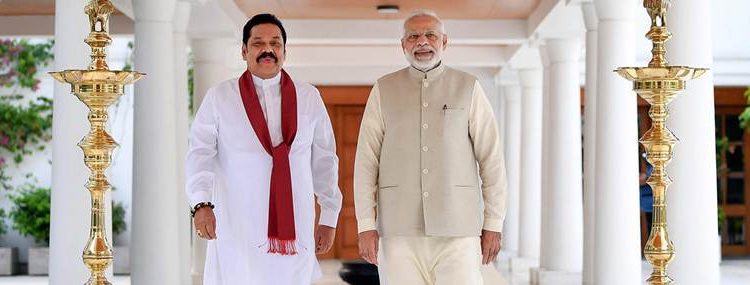
(The file picture at the top shows Mahinda Rajapaksa with Narendra Modi)
The Cabinet of Ministers has approved the proposal for implementation of a national program to eliminate poverty from the country.
This decision was taken during the Cabinet meeting held yesterday (14).
The proposal, tabled by President Gotabaya Rajapaksa, seeks the implementation of several programs on priority basis:
Implementation of programs to ensure food security by providing essential food items to low income people
Program of providing 100,000 employment opportunities for 100,000 poor families
Prompt implementation of housing program for poor families under one house, one village program
Implementation of 100,000 km Rural Road Development Program
Provide with quality roads to at least one million households and providing easy access to loans giving priority to the development of small enterprises, self-employment, household needs and household livelihood programs.
The President’s Media Division (PMD) said that the program for ensuring food security will provide essential food items to low-income families through an Electronic Card (E-Card).
Under the National Policy framework Vistas of Prosperity and Splendor”, the Government has identified the elimination of poverty in the country as a high priority for an appropriate large scale development in the country.
The development goals identified by the National Policy Framework ‘vistas of prosperity and splendor’ are compatible to the 17 sustainable development goals of the United Nations. Accordingly, with the intention of eliminating poverty in the country, the Cabinet of Ministers has given its nod for the proposal presented by the President.
Arrested MP Ranjan Ramanayake has been remanded until January 29.<br /><br />He was produced before the Nugegoda Magistrate this noon. Ramanayake was arrested in connection with the interference of the functions of some judges yesterday.
Meanwhile, the Magistrate has ordered the Prison Commissioner to produce MP Ramanayake before the Government analyst for a voice test.
(A Paper published by the Sri Lanka Geo-Political Study Circle)
On 16th November 2019, a 6.9 Million people overwhelmingly voted Gotabaya Rajapaksa into office, sincerely believing that he would give Sri Lanka leadership to face her biggest danger in 200 years, a brazen attempt by the US to physically take over the Country.
Leaders of Gotabaya’s alliance-parties, like Vasudeva, Weerawansa and Gammanpila, vociferously supported Gotabaya, in the run-up to the Presidential Election, in a collective show of political force against the MCC and the insidious American ‘invasion’.
With Wickramasinghe hell-bent on handing over the country on a platter to the Americans, the US ‘invasion’ of Sri Lanka became one of the prime issues at the 2019 Presidential-Elections.
The MCC is the smartpower tool of the US Government. In the overall ‘Indo-Pacific Command’ Operational Plan to achieve the stated US strategic objective of establishing US hegemony over the Indian Ocean (described as Pivot-to-Asia), the MCC Plan for Sri Lanka is the Sri Lankan Phase of that Indo-Pacific Operation.
Gotabaya purportedly gave up his US citizenship to give his valuable leadership experience to the Sri Lankan people albeit his spouse did not give up her citizenship; she has the dubious distinction of being the first American woman to be categorised, in the words of some, as Sri Lanka’s First Lady.
The first hint that some skulduggery was afoot came when Chandrasena, in his ‘immediate-post-Ministerial-appointment-interview’ chortled witlessly, in front of the cameras, with a, ‘I-will-be-issuing-loads-of-land-deeds-come and-get-yours’ boast.
This insidious tremor was followed by a major shock. On 10 December 2019, less than a month to Gotabaya being elected into office by the people, Chandrasena presented to the Cabinet, a detailed proposal of what is described as a ‘Plan to accelerate the ‘Management of State Land’.
Accelerated Programme for State Land Management– The Minister of Lands & Land Development presented to the attention of the Cabinet, information in respect of 11 programmes planned to be implemented from the month of December 2019 up to the month of March 2020 by the institutions coming under the purview of the Ministry of Lands & Land Development. Accordingly, the Minister informed the Cabinet further that the programmes such as issuance of permits, Grants and Leases, in terms of the Land Development Ordinance and the State Land Ordinance after holding Land Kachcheries, conducting Mobile Days and Field Day programmes, issuance of Title Certificates under the Title Registration Act, regularizing of Land Data System, Launching of the New Edition of the Road Map and the preparation of Land Manual etc. are anticipated to be implemented. The Cabinet also decided to appoint an Officials’ Committee to make recommendations to prepare a simple and a convenient method in respect of the lands given under lease basis enabling the lessees to make their payments without causing much inconvenience to them.
It would have taken a great deal of work and time, even for professionals with greater capacity than Chandrasena, to formulate such an elaborate Plan in such a short space of time as three weeks.
The Cabinet approved the Plan and tasked Chandrasena to start on the Project immediately and have it completed by March 2020, before the anticipated General Election.
This Project, approved by the Cabinet, has 11 programmes and include, the issuance of Land Grants and Leases and the issuance of Title certificates under the Title Registration Act (Bim Saviya) of 1998.
Suspicions of what is being planned were compounded when on 29 Dec 19 Chandrasena, visiting Padaviya, declared that he would be issuing 200,000 Land deeds and that he would be establishing a land Secretariat system. (https://www.newsfirst.lk/2019/12/29/land-secretariat-system-to-resolve-land-ownership-issues/)
It is an extraordinary coincidence that Chandrasena’s proposal, approved by the Gotabaya Cabinet, is exactly what the MCC has instructed Sri Lanka to do, and that too, as laid down by the MCC, prior to signing the MCC Agreement.
Chandrasena’s proposal is the crux of the MCC Plan for America’s takeover of Sri Lanka. The accelerated Plan for ‘Management of State Land’ is the Accelerated MCC Plan for Sri Lanka.
The Objective of the MCC plan, is indicated in the ‘Constraints Analysis’ (https://assets.mcc.gov/content/uploads/constraints-analysis-sri-lanka.pdf)
and also, in the ‘Execution Phase’ of the MCC Plan leaked out unwittingly by Steve Dobrilovic and, which mistake, was acknowledged by MCC Country Director Edelman as ‘a big blunder’.
The objective of the MCC is ‘To make all of Sri Lanka’s Land (80% Government Land and 20% Private Land) accessible to the Americans, for outright purchase or lease. Vide the URL given below
The main obstacles, at present, to the Americans buying up the Country are: (a) SL Law does not permit foreigners to own land: (b) Government Land (viz 80% of the Country) is under the protective care of the Executive President who is not empowered to sell this Land; he, and only he, may lease out this land or issue Land Grants of limited extent; (c) Land ownership is restricted to 50 acres: (d) The absence of a mechanism to grant Absolute Title to State Lands held by people who are holders of Land Grants: (e) Some of the State Lands are under the purview of State Organisations: (f) The Constitution which safeguards the Fundamental Rights of the unborn generations to this Land.
The MCC demands that Sri Lanka dismantle all these impediments to the US take-over of the Country, before it parts with even a dime of the 480 Million US Dollars dangled before her.
The Sirisena-Wickramasinghe Government obliged: (a) The ‘State Land-Bank’ Bill was drafted (reportedly by the Americans) to remove the 50-Acre limitation on ownership and also, to enable State Lands, under the purview of State Departments and Corporations, to be sold to any potential buyer showing interest. This embryonic Law, waiting to be presented in Parliament, was alluded to by Sirisena in his infamous TV soap-opera performance in September 2018: (b) The Project of ‘Issuing-a- Million-Land-Grants’, was initiated, to release the protective hand of the President over State Land; by issuing a ‘Million’ Land Grants – to many who already have leasehold ownership of these Lands – over two Million Acres of Land in the Country are being initially privatised. These numbers are calculated on the basis of 2 acres per Land Grant to each beneficiary. (To deviate for a moment from the construct being placed before the readers, the MCC offer of 68 M USD for ‘Land’ – the balance of the 480 M USD being allotted to Transport – for a 200-year lease works out to Rupees 2/50 per acre per month or One and a half Cents per perch per month!): (c) ‘The Land (Special Provisions) Bill’ was drafted (reportedly once again by the Americans) to grant Absolute Title to those citizens holding State Land Grants: (d) Foreigners were permitted to lease Land for 99 years and renew a further lease for another 99 years.
The Land (Special Provisions) Bill ran into flak; concerned citizens challenged the Bill in the Supreme Court. The Court determined that the Bill was in violation of the Constitution and resolved that the Bill needed to go through the Provincial Councils which owe their existence to Amendment 13 of the Constitution; the controversial Amendment to the Constitution has given Sri Lanka a brief respite from the MCC invasion.
All obstacles to the US control of our Land have been done away with, save three; these are, the two draft Bills, adduced to earlier, which have to be passed in Parliament , the need to continue the programme of ‘Issuing a Million Land Grants’ until the Corridor from TCO – CBO is covered completely. The MCC has laid claim to this Corridor stating that this Corridor is its special focus of interest.
The special focus of MCC interest, the TCO – CBO Corridor, is enlarged below
It is quite evident that Gotabaya and Chandrasena, have picked up from where Sirisena and Wickramasinghe stopped; they are continuing the programme of issuing a Million Land Grants.
Gotabaya has given Chandrasena a deadline. “Complete the task before March this year”.
The last major task yet to be done, as required by the US, is putting in place a new Constitution.
The tragedy that is unfolding is criminal. Land Grants are being granted to a ‘Million’ people and, together with their families, the numbers that are being cold-bloodedly trapped into a deadly web could be conservatively estimated at 4 Million people.
The MCC anticipates these poverty-stricken people to apply for distress loans and thereafter default on these loans issued on the collateral of their newly gifted 2-Acre Land Grants.
When that happens, the Lending Agencies would seize the Land and resort to ‘distress’ sales/leases to the Americans waiting in the side lines to grab the Land as planned. As per the MCC Agreement, the Americans would be controlling the Land Secretariat which would control the ten Land Registries in the TCO-CBO Corridor.
By duplicity, a Four-Million farmers are being made landless overnight by a mafia of traitorous politicians who are exceeding and abusing their powers, acting in contempt of the Constitution and the Supreme Court and trampling the Fundamental Rights of the unborn generations of this Land.
Sadly, all this is being done without even a proper geological survey of the Land; a detailed survey would reveal the diversity, the extent, the quantity, the quality of wealth beneath the Land and the environmental impact that would be created in extracting these resources and the necessary precautions that have to be followed when extracting theses resources. The Corridor which the Americans demand is rich with divergent minerals and resources.
The people in the meantime, in this initial phase of the MCC Plan, are being disingenuously lured into a debt trap and thereafter evicted from the Lands of their forefathers.
Phase 1 of the MCC Plan would be achieved. The Americans (and their military allies from the Pacific) would pivot into the Lands made vacant by deceit and which makes up the American Corridor of Special Interest from TCO – CBO.
It appears that Gotabaya’s accelerated programme for the Management of State Land is an accelerated Plan for the division of Sri Lanka along the TCO-CBO Corridor.
What becomes of these Four Million Farmer families? They have been dispossessed of their Land and they have lost their means to earn an income.
What employment will they engage in to keep their families from starving? Where will they sleep? What happens to their health? Where will their children study?
Massive migration of a four Million people to cities, in this initial phase of the MCC, can be anticipated; With this massive urban migration, Sri Lanka would be reduced to a Haiti where beggary, prostitution, Narcotics, murder, robbery, ghettos, contract killings will be the order of the day.
In the meantime, Gotabaya has appointed a Committee to do a ‘Comprehensive study on the Millennium Challenge Corporation Project and submit recommendations to the Government’.
It certainly does not reflect well on Gotabaya. His actions suggest that he went into an Election with a promise to lead the people without even studying or identifying the biggest security threat that faces our Country because of the MCC -Plan of the Indo Pacific Military Command.
What are the terms of reference of this Gunaruwan-Committee which is required to do a comprehensive study of the MCC Project? Are the members of the Committee fiercely independent or are they a group of persons who could be influenced by the MCC? Are the public permitted to address the Committee? Will Gunaruwan and his committee be independent enough to submit their report for Public viewing before the General Elections?
Sri Lanka’s experience has been that many previous Committees, Commissions etc have not acted with a sense of responsibility; they have excluded some vital evidence and included evidence bordering on the nebulous. Since the MCC is a matter of life and death for Sri Lanka, would Gunaruwan and his Committee members take responsibility to allow themselves to be held culpable and liable for prosecution for any glaring sins of omission and/or commission on their part?
Would the Committee invite members of the MCC for a live televised debate to comprehensively discuss the MCC issue; there are several members in this Study Circle who would like to exchange views with the MCC.
Will Gunaruwan and his Committee, commissioned to do a comprehensive study, examine the entire MCC Agreement which consists of the ‘Constraints Analysis’ Report, the ‘Execution Plan’ and the ‘Administrative Plan’? The MCC disingenuously describes the Administrative plan as the ‘MCC Agreement’. The links to the three documents have already been given afore in this paper.
The view that Gotabaya is sailing with the Americans is bolstered when, without a blush, he surrounds himself with advisers who are known American agents, when he, without the peoples’ authority, attempts to change Sri Lanka’s Foreign Policy from Non-Alignment to Neutrality (the MCC would not be permitted under Non-Alignment while Neutrality would not pose problems for the MCC) and when, it has been reliably reported that instructions have been issued for all Madrasah Schools to be registered.
The 6.9 Million voters are hoping that the alarm bells that are ringing and the danger-lights which are blinking are ‘false alarms.
Gotabaya can reassure all of them and rebut his critics if he, in Parliament, decries the MCC and the Parliament takes a vote on that statement; Gotabaya is assured of a majority. Premadasa has assured Gotabaya, UNP support for such a move; the JVP too has latterly expressed its antipathy to the MCC.
Furthermore, such a move would assure Gotabaya of an overwhelming victory at the General Elections.
If Gotabaya does not take a firm stand against the MCC now, it would be a great disappointment to the people of Sri Lanka. It would signal the self-destruction of a present-day icon and would indeed be a bitter pill for the Sri Lankans to swallow.
If swallowing a bitter pill is the fate of the Sri Lankans they must then swallow that pill. With a bitter taste in the mouth and with the sheer anguish of betrayal running through their bodies, the minds of the Sri Lankans will not permit them, at the General Elections, to vote for any one of Gotabaya’s candidates; neither would they vote for the UNP or anyone in the recognised political parties who dance to the tune of the MCC.
The people would vote instead for some Independent Candidates whose Election Slogan is, MCC Never! Stop USA!
This is a reply to the opinion piece under the heading ‘Separating
Religion from Politics’ sent in by George Braine (The Island/January 13, 2020).
According to Braine ‘The various Mahanayakes and other Buddhist leaders must
act quickly before the deterioration of the Sangha hits rock bottom. Another
danger is to the state; when the monks begin to opine on and influence all
aspects of national affairs, they cross the line between religion and
politics’. After reading his scurrilous comments on the Maha Sangha, unworthy
of a scholar of his stature, I would like to draw his attention to the wisdom
of the following verse (158) from the Dhammapada:
‘One should first establish oneself In what is proper; Then only should one instruct others; Thus the wise man will not be reproached.’
Or let me quote the same idea put more strikingly in the Bible
(Matthew 7.5) that came later thus:
‘You hypocrite! First take the log out of your own eye, and then
you will be able to see clearly to take the speck out of your brother’s eye’
(from the Good News Bible/The Bible Society in Australia).
Braine’s criticisms (even if well meant, frivolous though they
really are) acquire some significance in Sri Lanka’s current politically
charged atmosphere. There is overwhelming evidence to show that the
Buddhasasanaya (the Buddhist religious establishment), which has been part and
parcel of the Sri Lankan polity for over two millennia, is under siege by
various foreign funded fudamentalist groups, apparently without enjoying any
patronage from the traditional mainstreams of the Abrahamic religious
communities in Sri Lanka. Today, the fundamentalist onslaught is at its most
virulent. Prime Minister Mahinda Rajapaksa made an explicit public assertion of
this fact recently. This is something unprecedented in his case, considering
the fact that he is very prudent and politic when he speaks as a politician He
is not the kind of political leader to make such statements without concrete
evidence.
This response to someone’s ill supported opinion is not an
important enough context to dwell on the matter. But I wish to refute all the
indiscriminate allegations that Braine makes against the Maha Sangha.
Allegations against individual bhikkhus who are human and fallible and those
against bhikkhus as a single organized community are two different
things. It is a fact that there is no more peaceful, no more nonviolent, no
more spiritual, no more democratic, and no more altruistic body of men and
women than the Maha Sangha, which literally means ‘The Community’ (of Buddhist
monks).
Contrary to what Braine asserts without evidence, Buddhist monks
are in the news for all the right reasons. It appears that the few monks who
are active (out of a total of some 30,000) have been forced to talk loudly and
agitatedly (which is out of character, but justified in the prevailing
circumstances) about various controversial subjects do so because the
traditional Buddhist leaders (Ven. Mahanayakes) have been sadly remiss in
attending to their duties until very recent times. The issues broached by the
monks affect all Sri Lankans in general, and the majority Sinhalese Buddhist
community in particular as a ‘targeted’ or victimised group of people. However,
circumstances are now emerging that are conducive for positive changes to be
effected in this respect, with a high level of awareness rising among the new
generation of Sri Lankans about this and other matters.
The professor monk who criticised the sex education book written
for early teenagers (of Grade 7) substantiated his objections by referring to
the inappropriateness of the language used, the explanations and examples
given, etc. in terms of their apparent insensitivity to local Buddhist cultural
values. He mentioned how mothers in the traditional Buddhist society educated
their daughters in the past about sexual matters without violating cultural
norms. Monks do not disapprove of or object to sex education for school
children in accordance with modern trends; but they want it done in a
culturally acceptable way. We have enough sociologists, scientists and
educators equipped with the necessary knowledge and linguistic competence who
can collectively produce proper sex education textbooks for school children.
The other issues raised by the monks (Shafi, Rajitha, Champika,
and Duminda cases) appear to be based on sound verifiable evidence, contrary to
what people have been led to believe. They are not imaginary allegations
designed to harm the reputation of some individual or group for some personal gain,
which is the last thing that Buddhist monks would choose to do. Why can’t
educated Buddhist monks express their opinions about such matters as
agriculture, and foreign policy, etc.? Is it only the preserve of benighted
religious fanatics, foreign NGO mercenaries, and Diaspora parasites? One young
monk started a fast unto death at the Independence Square protesting against
the MCC agreement. He had read the original document before he did so.
Those who habitually and maliciously underestimate the knowledge and
intelligence of the Bhikkhus need some education and moral
rehabilitation.
Braine
further writes: ‘Their tirades, sometimes leaden with obscenities, pollute TV
channels and social media. Essentially, these militant monks are out of
control. When added to their dubious financial dealings, religious and racial
intolerance, drunk driving, sexual liaisons, abuse of minors and other
escapades, there is little doubt that the Sangha is facing a rapid decline.’
There
are a couple of monks who do sometimes use obscenities. But they have expressed
their personal regret about having had to do that. However, had the Ven.
Mahanayakes had intervened at the appropriate time/beforehand, those monks
wouldn’t have resorted to such language. They will certainly return to their
accustomed ministerial duties in their respective viharas and monasteries once
these problems are sorted out by the state. If necessary, persons interested in
the welfare of the Buddhasasanaya and the Sri Lankan people, may study the case
of the famous/notorious Madakalapuwe Hamuduruwo, who was shown recently
slapping a drunken evangelist who dared question him about his knowledge of
Buddhism in order to insult him. Ven. Galaboda-aththe Gnanasara underwent a lot
of persecution at the hand of the police and NGO types, even imprisonment, as
result of his relentless attempts to reveal the unlawful activities of
religious fundamentalists. His warnings were ignored by the authorities for
seven years. The Easter bombing by Islamic terrorists happened killing 270+
innocent men, women and children at prayer in Catholic churches, and leaving
over 500 injured, while the monk was still in prison, a few days before his
release. He shed tears of sorrow over the perishing of those innocent people,
and over the failure of his attempts to convince the authorities and help
prevent such mayhem. That monk is not a demon. It was his violently prejudiced
critics who created that image through the media.
Braine
also quotes from an article by Dr Sarath Amunugama in The Island (“Bonds
of friendship: Sri Lanka and Thailand”, Nov. 24, 2018), where the latter,
according to him, had written to the effect that ‘…. the Sangha faced a
crisis in the 16th century. Monks had become landowners, promoted demon
worship, and kept concubines These women and their children even lived on
temple premises. These “monks” were called Ganninanses, not
Swaminwahanse, which was the common Sinhala term for pious Buddhist monks. Even
upasampada had been abandoned and had to be restored with the help of Thai
monks.’
This
is a misinterpretation or an uninformed misreading of Dr Amunugama’s
‘presentation’ as Dr Amunugama calls it in that particular article. When the
Portuguese came to the island in 1505, the country was passing an advanced
stage of its economic and cultural achievements, although it was an unstable
period of internecine political rivalry and fratricide. Still, the Portuguese
recognized the king of Kotte as the ‘emperor’ of the island. The native
population were at a higher stage of civilization than the invading Portuguese.
(In this connection, one may read Dr Susantha Goonatilake’s ‘A Sixteenth
Century Clash of Civilizations: The Portuguese Presence in Sri Lanka’, 2010.)
The degradation and the corruption of the Buddhist Order – this happened, not
in the 16th century, but in the 17th and 18th centuries; it was was mostly an
indirect result of the depredations of the rapacious Portuguese and Dutch
intruders. The system of ganinnanses, which Dr Amunugama calls ‘lapsed
monkhood’ in his biography of Anagarika Dharmapala ‘The Lion’s Roar’ (2016) was
actually a temporary device to tide over that period in which the
Buddhasasanaya and the Maha Sangha were faced with unprecedented trials and
tribulations, that threatened their very existence. The ganinnanses did yeoman
service to sustain the learning and practice of the Dhamma. However, the Dutch
later assisted the King of Kandy – king Kirti Sri Rajasinghe – to bring by ship
monks from Siam (Thailand) to restore the Upasampada or Higher Ordination
ritual in the country, which had lapsed due to difficult circumstances, not
voluntarily ‘abandoned’ as Braine irresponsibly claims. There are no
militant monks. The handful of monks who, on behalf of the whole Maha Sanga,
volunteer to fulfill their historic duty of protecting the country, the people
and the Buddhasasanaya when they are threatened – this obligation of theirs is
2300 years old – may feel forced to sometimes assume unexpectedly threatening
(but ultimately nonviolent) postures to achieve their legitimate ends. Braine
mentions some exceptional allegations such as drunk driving, sexual crimes,
which, whether true or false, need to be investigated, as isolated cases, not
reflecting on the whole Sangha Order, and the culprits punished according to
the common law of the land.
That
would be in agreement with what Thomas Jefferson said about ‘the wall
separating the church from the state’: ‘The
legitimate powers of government extend to such acts only as are injurious to
others. But it does me no injury for my neighbor to say there are twenty gods
or no god. It neither picks my pocket nor breaks my leg.’ That, however, better
applies to the Christian nation that America was then and still is. As Buddhism
is not a religion, Braine’s strictures on Buddhist monks’ alleged intrusion
into politics do not hold water. Don’t worry about GR. He knows how to use the
lessons he learnt as a distinguished military officer and as an efficient senior
government functionary, and also to draw on the social and professional
experience he gained in America to serve our Motherland in the way he has
pledged to. He is a man of his word.
It
is a pleasure to hear that Prof.W.D.Lakshman, the governor of Central Bank
publicly announced that a new banking act will be enacted in 2021. According to news reports, the following
areas would be the major consideration in the proposed legislation. However,
the governor’s statement did not give clear information on whether the proposed
act would be an admixture of all enactments since the establishment of Central
Bank on the advice of John Exter and the law relating to negotiable instruments
will be included to the proposed legislation.
Central Bank has accounts of government departments with cheque books
and if the funds transferring of the treasury continue, it would be useful
enacting of law relating to the negotiable instrument in Sri Lanka.
I
have recently published several articles regarding banking operations in the
Lanka web and pointed out significant issues in banking operations in the
country.
Approval for
establishment of branches and banking outlets –
This is a vital activity in the trading banks with the approval of the central
bank and it is subject to the regulation of Central Bank. It is observed that the Central bank of Sri
Lanka permitted many banking outlets for domestic and foreign-owned without
considering capital requirements consistent with the dynamic economic
environment and in this process, the regulatory authority has less emphasized
the possibility of insolvent threats. The proposed banking act should focus to
incorporate regulations rationally thinking about this area. What would be the future regulation regard to
capital requirements? It is essential to cover the proposed legislation and it
shouldn’t be too flexible and rigid as the change in the economic environment
needs direct involvement of the central bank and changing regulation from time
to time.
In the Western countries, population
density also considers in opening branches of banks as people in the rural area
needs banking services. Foreign banks
may not involve in the area and domestic banks should concern and be regulated
by the banking act and should not allow opening branches like emerging
mushrooms.
Did
foreign banks bring enough capital to operate in Sri Lanka as a registered bank
in the country or they operated as a branch in Sri Lanka covering or showing
the capital structure of the head office overseas? BIS regulations regard
capital adequacy concerns on this matter.
Foreign banks or branches need to maintain risk-weighted capital
regulation of Bank for International Settlements. In this connection think about the experience
of Bank of America branch in Sri Lanka and later the business operations of BA
took over by Mercantile credits which also bankrupted. The capital adequacy of domestic banks, which
were emerged like mushrooms after 1978 seems a question and practical
experience shows that they have not maintained adequate capital and this area
must be strictly covered by the proposed act. Credit demand and quantity
rapidly increase due to four main reasons, inflation, increase in business cost
and government promotion for business investment and expansion of the existing
business.
When a person visits a rural town, it
is seen that so many bank branches from various banks and they compete without enough
business to distribute among branches. Resulting allowing many bank branches,
non-bank finance institutions it seems that an intense competition between each
other and competition is good environment which generates benefits to
customers, but in Sri Lanka, it is not happening because branch managers have
no authority to give benefits to customers regarding the price of loans and
charges relating to non-credit business and other transactions Bank managers in Western countries have
limited power and electronic technology supported to reduce staff in rural
branches and reduce the delegated authority of rural managers to perform such
functions by regional managers and officers in head office.
Head Office authorities scare to
delegate more power to branch managers, one reason is it may encourage credit
frauds and other malpractices. The cost of branch management has skyrocketed
and this situation has created to implement weak regulation or neglecting
regulation of the Central Bank especially in exchange, credit and other
restrictions. The power to make strict regulations is needed for the central
bank to control unnecessary competition and rigid regulation also needed for
the approval of the establishment of branches and banking outlets.
The Central bank also needs to
regulate the operation procedures of trading bank branches although it is the
role of trading bank head office. When opening branches by trading banks should
not allow opening branches of several trading banks in small townships, like in
the Western countries trading banks can agree with banks open one branch in
small rural towns to provide the services to the community in the area. This
practice doesn’t appear working in Sri Lanka despite it is a good policy to be
adopted.
Central bank regulation should direct
trading bank branches to maintain branch liquidity requirements as a strategy
for the effective management of banks. Bank liquidity management is the
responsibility of individual trading banks and many bank executives have no
clear understanding of this strategy and branch managers have not been trained
by the training department how to manage the money base of a branch. Liquidity
management is a broader concept in foreign countries, but simply, it could
consider that the money base of a trading bank shows management stewardship of
branch managers and the reconciliation of money base with financial assets
minus liabilities of the branch would be easily supported to successful
liquidity management of the entire bank. The weak bank liquidity management has
forced many trading to borrow from overseas pushing the indebtedness of the
country. Therefore, Central Bank should
concern about this matter as regulatory authority and prudence controls will be
a useful measure to play a good regulatory role.
Strengthening Consumer
Protection – Foreign countries have banking
ombudsmen for this purpose and customers can make direct complaints to the
office of banking ombudsmen if individual banks disregard customers’
complaints. Customer complaints might be a pain to the head office and the
credibility of a bank. The culture of
Sri Lanka is the bank executives show the public that they are superior in
knowledge and practice. It is not a truth.
Sri Lanka has no such an institution for consumer protection purposes.
If anyone investigates the history of consumer protection it could be found
that many banks disregarded in practice and acted like a bull in a clay utensil
shop. In addition to this office, the
Western countries appoint commissions for banking inquiry and in Australia
investigations made on several occasions by banking commissions. The proposed banking act needs to considered
for establishing a Banking Ombudsman Office and giving authority to Central
Bank to appoint a banking Inquiry Commission to investigate issues from time to
time.
Deposit Insurance
– This is a good idea but the problem that needs to consider is who will pay
the insurance premium. It shouldn’t be
like a credit insurance system, which creates counterfeit obligations to
compensate deposit owners and liability to make profits to insurance companies
out of hard earn money from poor people. Go back to the case of the Leeman
Brothers. Sometimes banks can take the balance of deposit holder until the
account gets nil balance and in the case of current accounts or cheque accounts
banks may get insurance premium overdrawing accounts. If the bank pays
insurance premium it would cost to the bank and impact on the profitability of
banks. If it shifts the cost to customers it would be an additional cost to
customers like debit tax and the cost of collecting premium may be an
additional cost to the bank.
The deposit insurance program has a
positive aspect and if banks work like custodians of customers to protect
customer deposits, especially banks make good decisions in the process of
lending business considering they lend their own money, it will protect
customer deposits. The experience of Sri Lank has proved that bank executives
have not worked as custodian of customer deposits and made bad lending
decisions without protecting customer deposits.
Will
deposit insurance promote bank employees to cheat customer deposits with an
expectation that insurer will pay for damages when they cheat customer
deposits. What would be the answer? (Continue in Part 2)
Governance –
It is not clear governance refers to the management of the Central bank or
other trading banks. I believe that
Central Bank has own policy and procedures manuals, which are updated
amalgamating internal circulars. However, governance of the Central Bank should
consider appointing members to the Monetary Board and heads of departments and
other matters. As the regulatory
authority of the financial system of Sri Lanka, which consists of trading
banks, Non-bank financial markets, the Development Banking market, the Leasing
market, the Stock Market, the Insurance Market, the Superannuation market and
other the monetary board of the Central Bank should be consist of
representatives from all markets. Central Bank should have the authority to
control and regulate all markets. The
Central Bank should not be a market player doing market business such as EPF
management, rural credit operations, and development lending, etc. When the regulator becomes a market player it
creates more negative impacts on the regulatory role.
The amalgamation of Off-show Banking Units and
Domestic Banking operations into a Single Banking Business –
This is also a controversial aspect of bank management. This idea is not clear
and since the 1980s this idea has been in the banking circle. The amalgamation
of off-shore banking units (FCBU units) might be a good policy action, however,
individual banks will object to it. In
this connection, the Central Bank needs to think about risk factors. Many trading
banks in Sri Lanka shows profits from exchange earning (For example X bank has
the US $ 1000 balance in Off-shore banking unit and the accounting standard of
Sri Lanka insists that this deposit needs to record in Sri Lanka rupees and if
a US $ 1= Rs 175.00, it will record in the balance sheet Rs 175000 asset and Rs
175000 liabilities to customers. If the
foreign value of Sri Lanka Rupee depreciates and become the US $ 1.00 = Rs
180.00, the end of the month provision records the Rupee value of US $ 1000
increased by Rupees 5000, which treats as exchange earning or profit. When there are millions of the US dollar
balance in a bank, automatically exchange earning goes an upward trend but it
is not liquid earning to the bank It is paper profit and the government banks
transfer to .the treasury as earning and finally the government uses such book
entries for fiscal spending, which supports inflation in the country. One day a bank chairman asked me although the
bank has so much of profits they made by the change in or depreciating value of
Sri Lanka rupee, but not real earning from the business. There is nothing wrong
with accounting provision, the impact of the increase in exchange profit would
be creating more money supporting to inflation. Central Bank should talk with
FCBU owned trading banks and should come to regulate the accounting system.
In Western countries, trading banks
treat exchange earning as bank profit, however, in those countries, there is a
trend of exchange rate going up and down.
In such a situation, treating exchange gains would not be negative to
the economy, but in Sri Lanka, it would be negative to the economy when there
is a continuous depreciation of the foreign value of Sri Lanka rupee. Originally, the legislation to establish the
Central bank aimed at stablishing the domestic and foreign values of Sri Lanka
rupee and the stabilization of the economy, despite these aims the central
failed to achieve aims.
Amalgamation of off-shore banking
units and domestic business such as export and import business is good policy,
however, Sri Lanka has a trend in boosting international business, in such a
trend, it is better to allow international business to major banks with
standards and small banks and non-banking financial institutions should give
only retail international business such as providing services to tourists, and
making inward and outward remittances. Exchange contracts (forward) for export
and import businesses should do only major banks. This idea needs a broad
debate, which should be participated by customers, banks and government
policymakers.
Improving Resolution,
Enforcement and Supervisory Actions
– The Central has a major role as the banker to banks and the nation. This role needs to expand covering non-bank
financial markets, which creates many problems in the financial system. The
regulatory role is the priority of reserve banks in all countries and supervisory
actions also have become vital as an aspect of the role and many banks and non-
financial institutions need well supervision and good advice to remain as
solvent institutions. Banks and non-bank
financial institutions have no policy and procedures manuals. These institutions don’t conduct risk asset
reviews once in two years and classify credit portfolio and make credit loss
provisions. Bad credit decisions will
increase in non-performing credits and finally, institutions should go courts
to recover loans and exercise para te execution regarding fix or floating
mortgage charges which might not appropriate in a democratic society. Credit loss may create unexpected loss to
banks and when the loss cut off from the capital the balance sheet many reflect
negative net worth. To avoid this
situation, the regulation and the supervisory acts of the central bank must
effective. banks and non-bank financial institutions must need risk acceptance
criteria for customer and industry-wise.
The central bank must guide banks and non-bank financial institutions to
do these works.
Capital ratios are
expected to increase – What is capital of
trading banks and non-bank financial institutions is a broader area and
financial text writers outlined that capital functions as the provision of
funds for the development and expansion of finance organization’s
infrastructure, to provide buffer against unexpected credit losses so to
protect depositors’ balances and work as contributor to the profitability. Balance
sheet items such as ordinary shares that should be called or paid up shares and
not uncalled shares or unpaid capital, preference shares, convertible notes
that began as debts instrument such as bonds or treasury bills, retained
earnings, general or special reserves, minority interests in subsidiaries,
provisions, which don’t represent permanent commitment such as credit loss
provisions, subordinated debt, and perpetual floating-rate notes are considered
as capital. In the prudential supervision process, capital ratios expected is
given in BIS regulations.
Capital
ratios are considered as capital to some balance sheet measures. The widely applied capital ratios are the
ratio of capital to total assets, which is also called the gearing ratio. The other important capital ratio is the
ratio of capital to risk-adjusted assets.
This ratio is an attempt to relate the risk associated with the bank’s differing
assets portfolios to its ability to absorb unexpected losses. Risk weighting to
different kinds of assets in Sri Lanka is a quite difficult task. In the risk weighting process, my experience
is temporary overdrafts, Bills Receivable and investments in subsidiaries
contain very high risks. Bank of England has published many articles on this
matter in its Quarterly Bulletin. The Central Bank of Sri Lanka can use a
risk-weighting system advised by Bank for International Settlements.
As
I mentioned before Law of Negotiable instruments has been changed by many
countries and the central banks as the regulatory authority and the banker to
banks need to consider modernizing the law relating to negotiable instruments
and laws of banking operations. From time to time the central bank issued
instructions and Weerasooriya (1974), Banks and Banking Law in Ceylon have
summarised the law and it should be updated by the central bank. Merchant
banking is a new area of development and electronic banking has created many
problems creating liabilities to banks and customers. Many countries have taken steps; however, the
actions or response of Sri Lanka is slower and there should be regulations to
spend at least 5% profits for staff training purposes, which is the direct way
to enhance productivity, preventing frauds, improvement of credit quality and
many areas. Banks, which spend 5% or above annual profits for staff training
should be given tax concession and for double deductions like in some
countries.
Banking
is a highly dynamic business, which has a trend to change policies and
procedures. Many bank executives in Sri
Lanka have poor knowledge and practical experience in this area
The media
said in 2011 that the security forces had hundreds of acres under cultivation
in Mannar, Kilinochchi, Mullaitivu, Vavuniya and Jaffna districts.
In 2014 it
was reported that the Civil Defence Force ‘is engaged in agriculture at
Kebetigollewa’ .They have cultivated
over 812 acres, of paddy, maize, kurakkan, gingelly, urad dhal, cowpea, green
gram, fruits and vegetables. They use compost fertilizer only, produced through
their compost fertilizer manufacturing plants in each sub zone. There is a new paddy warehouse at
Kebetigollewa. The rice is offered to the military camps at Medawachchiya,
Kebetigollewa, Colombo and Padaviya.
The Army also
had farms at Vellankulam, Udayarkattukulam and Nachcchikuda in Mullativu, and two farms of 360 acres and 11,130 acres
at Kantale and Kandakuda. Kandakuda farm was earlier abandoned after its
workers were killed by the LTTE.
Kandakuda was now exporting Cavendish plantains. Its dairy farm had 120
cows.
The continued
presence of the military and its expanded role in non military sphere of daily
life had created a serious concern internally and internationally said Gamini
Keerawella. UN Human Rights Council
resolution 30/1 of October 2015, also spoke of ending the role of the military
in commercial enterprises in the North.
The issue of the
military running civilian businesses, such as hotels and farms, is an issue
that is often brought up by human rights and political activists. But to the
local population and the Diaspora community who may be less politically
motivated, the army is providing a quality service at a reasonable price and
from which they wish to benefit, said Jehan Perera.
TNA did not care about that. We don’t want the
military to run farms on our lands we want them out of these commercial
activities which hinder the livelihoods of our people, TNA said.They wanted the
farms handed over. Defence secretary agreed to release farm lands to the
Provincial Council if they could pay salaries for the 11,000 people who work in
the farms. The farms were running under the Civil Defence Force and salaries
were paid by the Defence ministry.
Army ran
three farms in Mullaitivu, Vellankulam,
Udayarkattukulam and Nachcchikuda, providing
employment to around 117 Tamil workers, both rehabilitated ex-LTTE members and
civilians. These farms were handed
over but Army had retained 100 acres at
the Vellankulam farm, handing over the balance 500 acres. Vellankulam farm generated around Rs. 20
million in profit. Army also ran a farm close to the Palali runway in Jaffna,
where around 150 rehabilitated ex-cadres were given employment.
Daily News visited Vellankulam farm in January 2019. The
workers were not elated regarding the releasing of lands held by the military.
On the contrary, almost all of the Tamil workers employed at these farms were
worried and unhappy about these farms being released.
26-year-old S. Damayanthi, a resident of
Ganesapuram, Vellankulam, has been
working on the farm for the past four-and-a-half years. She joined the farm with the first 25 recruits
and has been working there since.When we joined, there were only a few
females, but today there are 10 females and 21 males. We have to tend to the
vegetables, and during the cashew season, we have to pick the cashew. We pick
over 300 kg of cashew per day during the season. Each of us is given different
duties. We grow pumpkin, beans and other vegetables here too. The farm spans
around 600 acres. For me, I live nearly two kilometres away from the farm and
it is easy for me to travel here.” .
Niluka, who
is an injured ex-LTTE member, had lost a leg during the war and now, an
artificial leg supports her as she gets about her work. Most of us employed
here are recruited by the Army to work in these farms and are paid by the Army.
After the war, I was rehabilitated and thereafter I started my life. Now, both
my husband and I are employed at this farm and we take home a good salary.”
Many of these
farm workers have obtained loans for constructing their houses and purchasing
necessities. According to some of these workers, they have to pay as much as
Rs. 25,000 as repayment for their loans. With the salaries they receive by
working in these farms, they are able to manage their loans. Many of these farm
workers live in the vicinity of the farms making it easier for them to work in
the farms and keep an eye on their children as well.
Daily News
also spoke to Rajive Ghandi, Jeromeson, Manivanan, Sri Kala, Padmajayanthini
and Maniwanan who work at the Udayarkattukulam farm, which was also scheduled
to be handed over by the Army. They too have the same fear and uncertainty as
those in the Vellankulam farm and fear the loss of their source of income. All
these farm workers were recruited to work on these farms on the promise that
they would have their jobs throughout their service period. However, now they
face an uncertain future, as they do not know what would happen once they lose
these farms. There is no clear decision as to what the land would be used for
thereafter.
The
Udayarkattukulam farm is around 120 acres in extent, and there are around 50
Tamil farm workers employed here, who claim that they have worked happily at
the farm all these years, but now their entire future is again shrouded in
uncertainty.
There has
been much controversy about the Sri Lanka Army engaging in farming activities
in the North, especially in Jaffna. However, despite the outcry of the Tamil
politicians about the army engaging in farming activities, the Tamil youth,
especially those rehabilitated ex-rebel cadres who are given employment at
these farms feel that it has given them an opportunity to earn a decent living
and live with dignity in society. The benefits they enjoy does not merely mean
their salaries, they are also entitled to all the medical and welfare
facilities enjoyed by the rest of the army and even their families are provided
with free medical assistance, which according to them, is a great blessing.
The
ex-combatants who are employed on the Palaly farm were appreciative of the fact that the Army
had given them back their dignity by providing them with the opportunity to be
productive citizens of the country and a steady source of income for their
families.
Speaking to
the Daily News, Rasiah Lochana, who had been employed by the Army for the past
five years said she was a teacher previously and had served in the LTTE during
the war and after the conflict ended, she had not received the acceptance of
her people. In a family of four, she is now married and is the mother of two
children. Lochana noted that initially, she and her family had reservations
about joining the army and her parents were scared. However, after I joined, I
realised that the army personnel are not bad at all and they, in fact, accepted
us and treat us better than our own people.”
Sudhakaran
Navaneethamalai, another employee engaged in farming activities on the Army
farm in Palali said, I have also been in the army for the past five years.
They have treated me well and I am happy. My family is also accepting of my
job. I have four children and the oldest son is 14. My husband does not provide
for us and I run my family with what I earn from this job. When I am at work my
sister looks after my children and since I get to go home every evening, it is
easier for me to take care of them. I am originally from Kilinochchi and as an
active member of the LTTE, I know how much we suffered as we were the ones who
had to go to war. Both my parents were killed during the war and all I want is
to ensure that my children never have to undergo the same hardships as I did.”
Kirindika
Jeganathan who had joined the army just three months ago said she was still
adjusting to the work. At 21 years, she was initially employed elsewhere but
had later decided to join the army as she could earn better and the army
provides better facilities. Her family was initially afraid to send her to the
army. However, having seen the progress of those already in the army and
hearing their stories, she too had eventually decided to join. Now, she says
she feels safer with the army than with civilian organizations.
Earlier, we
were scared to death of the army after the stories we had heard. However, now
that I am with them, I realize that all that we were told are not true. I feel
very safe here and even the Sinhala soldiers and superiors are very kind to us
and we don’t face any discrimination or harassment. We work together on the
same farm as brothers and sisters, share our meals and work happily. Now I see
that they are no different to any of us, but we were initially scared because
of all the wrong impressions that we had about them,” she added.
Nidharshan a
24-year-old youth had joined the army just two months ago. I worked in a lathe
workshop earlier. My friends who were in the army told me of the many benefits
they receive and I too decided to join. When I first came, I was sceptical, but
now that I am here with the army, I have a totally different opinion of them. I
have lost all that suspicion and I am comfortable working with the Sinhalese
soldiers and I see no difference among us.
Now when we go out, I always tell the people
that army treats us well. Hence I personally would encourage anyone among my
people to join the army without any fear of all the negative things we have
heard about them are all fabricated lies. There is no issue working with the
army and it is a safe and secure place to work in. We never ever want a war
again and all I want is to educate my sisters and see a free and safe society
once again in the North,” he said.
Rahul said,
there are some who try to ridicule us that we are with the Sinhala forces. It
is the army that has given us the opportunity and I am grateful for it.” Karan said all these people who criticise us
for joining the army did not come forward to help us. Now that they see that we
are living well, they are coming behind us asking us to help them get
employment within the army too.
There are
about 120 Tamils working within the army farm. These females need to serve for a period of just 15 years
in order to be entitled to a pension. This, they say, is a great blessing for
them. Despite what is being said by the Tamil politicians, for these Tamil
civilians recruited by the army, life for them has changed dramatically and so
has their perception of the army and the Sinhalese people, concluded Daily News.
It is alleged
that the army-run farms are posing a threat to the local farmers and that they
have to compete with the military-run farms. However, the Jaffna Security Force
Headquarters Commander Maj. Gen. Dharshana Hettiarachchi, vehemently denied
these allegations and added that the produce from these farms are not sent to
the open market, but instead they are solely for the consumption of the
military establishments and the military personnel.
The army says
that their intention is to help these people manage their daily lives and these
farms and gradually, they would step back from these civilian activities and
hand them over to the people of the North to carry on these activities.
The army
also runs coconut plantations in collaboration with the
Coconut Development Board, Palmyra plantations in collaboration with the
Palmyra Development Board, and does reforestation, in collaboration with the
Forest Department.
Fifty
unemployed Jaffna youths, including
rehabilitated former LTTE combatants, were recruited by the Sri Lanka Army for the coconut cultivation project in the
Army farm in the Palaly Army Cantonment.
These
recruits are entitled to a monthly salary of Rs. 40,000 in addition to many
other privileges. They are provided with meals, transport, medicine and pension
rights in the Army on retirement. Their family members including parents have
access to Army medical facilities depending on their marital status. They were required to work a regular
8.5-hour work shift and were able to
travel from their homes daily.
These
ex-combatants, who were actively engaged during the war, have found it very
hard to be accepted into society once the war ended. As much as they were
hailed and feared during the rule of the LTTE, once the war ended these very combatants
were shunned by the general public. As a result of it, they were not given
employment by society as they were perceived to be violent. This situation left
many of these ex-combatants unemployed.
( Continued)