Gnanasara Thera spoke up for the country: Kotte Maha Sangha Sabha

August 20th, 2018

Courtesy The Daily Mirror

In a letter to President Maitripala Sirisena with regard to the imprisonment of Bodu Bala Sena general secretary Ven. Galagodaathte Gnanasara Thera, the Mahayanayake of the Kotte chapter of the Siyam Nikaya, the Most Ven. Ittapane Dhammalankara Thera has highlighted several points including the one that if monks who speak on behalf of the people and the country were imprisoned, it would pose a challenge to the entire Bhikkhu community.

The letter states: “It is our responsibility to express some sentiment with regard to Ven. Galagodaathte Gnanasara Thera since he belongs to the Kotte Sri Kalyani Samagri Maha Sangha Sabha. Since the court proceedings regarding him are not over we would not delve into it. Therefore our Sangha Sabha has decided to bring the following points to the attention of the President.

The offence that is said to have been committed by the Ven. Galagodaatte Gnanasara thera at the Homagama Courts was not committed to achieving a personal benefit. The incident took place because of the deep concern that arose within the venerable thera towards the members of the military intelligence who contributed immensely to rid the Sri Lankan society from the cruel war.

From ancient times the Sri Lankan Bhikkhu was a character that always stood and fearlessly spoke for the country and for the benefit of the wider society.

If the Buddhist monks who speak on behalf of the country and the people are imprisoned it would pose a challenge to the entire Bhikkhu community.

We would like to further state that the Kotte Sri Kalyani Samagri Maha Sangha Sabha stands for the country as well as for all communities and religions and highly values justice and fairness.”

මහින්දට ස්තිරවම යලි පුළුවන්.. හිටපු අගවිනිසුරු ව්‍යවස්තාව කොටා පොවයි.. මහා ප‍්‍රාඥයා කියාගන්නා විජේසදාසගේ තර්ක ඉවරයි..

August 20th, 2018

lanka C news

හිටපු ජනාධිපති මහින්ද රාජපක්ෂ මහතාට මීළඟ ජනාධිපතිවරණයට ඉදිරිපත්වීම සඳහා නීතිමය වශයෙන් කිසිදු බාධාවක් නැති බව සරත් නන්ද සිල්වා මහතා පවසයි.

ඔහු පෙන්වා දෙන්නේ 19 වන ආණ්ඩුක්‍රම ව්‍යස්ථා සංශෝධනය මගින් බිහි කර ඇති ජනාධිපතිවරයා නව ජනාධිපතිවරයෙක් බවයි.

එබැවින් එම නව ජනාධිපතිවරයා වෙනුවෙන් පවත්වන මැතිවරණයකට තරග කිරීමට 78 ව්‍යවස්තාව යටතේ හා 18 වන සංශෝධනය යටතේ සිටි ජනාධිපතිවරුනට කිසිදු බාධිවක් නැතැයිද ඔහු පෙන්වා දෙයි.

ඒ අනුව මහින්ද රාජපක්ෂ මහතාට පැහැදිලිවම එම අවස්ථාව හිමි වන බවත් ඔහු සදහසන් කරයි.

මහා ප්‍රඥයා යයි කියාගන්නා ඇමති විජේදාස රාජපක්ෂ මහතා ව්‍යවස්ථාව වැරදියට අර්ථ නිරූපණය කරන බවත් ඊට පෙර ඔහු සම්පූර්ණ ආණ්ඩු ක‍්‍රම ව්‍යවස්ථාව නිවැරදිව කියවා ගත ආ යුතු බවත් හිටපු අගවිනිසුරු කියා සිටී.

ජනාධිපතිවරයා සහ ඔහු පත්වන ආකාරය සම්බන්ධයෙන් ව්‍යවස්ථාවේ තනි වාක්‍යකින්, පරිච්ඡේදයකින් හෝ සංශෝධනයකින් අර්ථ නිරූපණය කළ නොහැකි බවත් එය සමස්ත ව්‍යවස්ථාව සලකා බලා තීන්දු කළ යුතු බවත් පවසන ඒ මහතා මෙහි අවසාන තීන්දුව ශ්‍රේෂ්ඨාධිකරණය විසින් ගනු ඇතැයිද පවසයි.

චන්ද‍්‍රිකාට යලිත් මාධ්‍යට පුප්පා යන්න යයි..

August 20th, 2018

lanka C news

හිටපු ජනාධිපතිනි චන්ද්‍රිකා කුමාරතුංග මහත්මිය කොළඹ පැවති උත්සවයකදී මාධ්‍යවේදීන්ට උත්තර නොදී මග හැර ගියේය.

කොළඹදී පැවැති ලංකා මහිලා සමිතියේ ජාත්‍යන්තර සමුළුවේ ප්‍රධාන ආරාධිත අමුත්තිය ලෙස ඇය පැමිණ සිටියාය.

උත්සවය නිමා වී ඇය පිටත් වූ මාධ්‍යවේදීන් ඇගෙන් ප්‍රශ්න කිහිපයක් විමසූ අතර ඊට ප්‍රතිචාර දැක්වූයේ කේන්ති ගිය ආකාරයෙනි.

ඇය කියා සිටියේ තමන්ගෙන් ප්‍රශ්න ඇසීමට ඇත්තේ නම් ඒ සඳහා වෙලාවක් වෙන් කරගෙන වැදගත් ලෙස පැමිණෙන ලෙසයි.

පසුගියදා අත්තනගල්ල ප‍්‍රාදේශීය සම්බන්ධීකරණ කමිටු රැස්වීමට පැමිණ සිටි මාධ්‍යවේදීන් ද හිටපු ජනාධිපතිනිය විසින් එලවා දමන ලද අතර ඒ සම්බන්ධයෙන් දැඩි විරෝධයක්ද එල්ල විය.

Concealed Risk of Multiculturism

August 19th, 2018

Kanthar Balanathan DipEE (UK), GradCert (RelEng-Monash), DipBus&Adm (Finance-Massey), CEng. MIEE

 This article discusses the issues/shortfalls, that will generate disharmony and create ethnic conflicts on a 25 to 50-year horizon in a multi-cultural society if migrants do not take integration and cohesion seriously. This is on the basis of different ethnic groups stay rigid with their culture and language and do not take any initiative to integrate with the country where they are domiciled. I predict these points only for the future. I have lived in various countries where such conflicts have generated disproportionately in the growth and development of the country by making the governance to spend more time on the treatment of such conflicts but not on economic growth. Some ethnic groups place more emphasis on their language, religion, and culture. For example, in Sweden, the Islamic fundamentals have rejected entry to the law & Order Officials stating that it is their town and not Sweden. Ref: http://allthatstreaming.com/media/ats/video/sweden-multicultural-utopia.mp4. This is because of the openness and tolerance of the Swedish government. Australia is of the same as Sweden in treating people. Open, kind-hearted and have a wide tolerance.

Australian Culture embrace, honesty, courtesy, integrity, friendliness, cultural sensitivity, respect people, conscious, gallantry, good manners, cultural competency, and several of the human specification. Australians are quite specific in maintaining harmony, good mannerism, effectiveness and efficiency at workplace. Australians social and business culture is of high quality. This is why all people from the third world scud into Australia.  It is the same with most of Europe. The UK preached and taught democracy to people around the world. Although they were tough when making a certain decision in the process, they made the people come to the outside world from their jungle living. Australian values are highly appreciated.

Multicultural

Culture has different camps. Social Culture, Business Culture, Professionalism, Technical culture and cultural competency.

Cultural Competency, Quote: A set of behaviors, policies, and attitudes which form a system or agency which allows cross-cultural groups to effectively work professionally in situations. This includes human behaviors, languages, communications, actions, values, religious beliefs, social groups, and ethnic perceptions. Individuals are competent to function on their own and within an organization where the multi-cultural situation will be present. Ref: http://www.businessdictionary.com/definition/cultural-competency.html

Australian Culture:

Australian Culture embrace, honesty, courtesy, integrity, friendliness, cultural sensitivity, respect people, conscious, gallantry, good manners, cultural competency, and several of the human specification and with open arms they welcome people. Australians are quite specific in maintaining harmony, good mannerism, effectiveness and efficiency at workplace. This is why all people from the third world scud into Australia.

Multi-culture:

This is a composition of various culture. E.g. Nigerian, Somalian, Ethiopian, Sudanese, Indian, Pakistan, Middle East etc.

With due respect, all of us know the cultural background of the African, Asian, middle eastern culture. Foreign people have been taught very less social sciences and managerial science in their own country.

The objective of a migrant is to integrate with the Australian culture and not force their own culture into the Australian way of life. However, eventually, all culture should converge to the Australian culture, not show any difference and claim superiority over one another. If not, over a 15-50-year horizon, cultural and ethnic conflicts will generate to disturb the harmony in the Australian values. Well, what is said here is people to change their life to the Australian culture, not by force, but by their own goodwill.


Although every Australian is said to observe cultural sensitivity and reduce cultural barriers, we expect the migrants to converge to embrace the Australian Culture and embrace Australian values eventually. Preston in Victoria is an example of a strong multicultural and refugee claim area wasting their own time. Most migrants, Sri Lankans waste significant time in multicultural affairs. How many hours do thee people work and contribute to the nation?

My experience in Australia unravels several disturbances in the social and business culture. Business culture in Australia has gone twisted to a questionable size. Honesty, integrity, customer focus, intent to provide customer satisfaction, and courtesy etc are questionable. Most migrant shops and business are conducting business within their own cultural barrier.

Government Grants

Australian government gives grants to promote multi-culture. Even building temples, senior citizens association, for every event the state government gives a grant. If I want to build a temple, I should provide my own money to do it. It may be considered that providing grants may be a threat of promoting cultural and ethnic conflicts in the future. Recommend Government of Australia (GOA) should slash grants over a period of five years and the GOA should consider giving the grants to public schools for education.

Parents of migrants who come to Australia receive a pension. However, they may not have paid one cent tax to the GOA to be qualified to get a pension. GOA should address this issue. All migrants who enter Australia should seek employment in Northern states and they could be debarred from getting income support for ten years. Parents definitely shall be deferred from getting income support/pension for ten/fifteen years as they may not have paid one cent income tax to the GOA. Migrants are clustered in NSW and Victoria. GOA, whichever party is or comes to power shall enact laws to treat these deficiencies.

Education

Australian children should be directed not to leave school, but to finish a good University education with an objective and a goal. Every Australian kid should be taught to have an objective and a goal in their life.

Citizenship

Australia is an English-speaking country. All migrants should have the competency to understand, read, write and speak in the English language. Approval of permanent residence and citizenship should be granted only to a person having such faculties. The current situation is that in the business sector migrants cannot speak the English language in most cases. If we walk into a shopping complex, we can only hear African, Asian and middle eastern languages.

Government is spending money on translation services to refugees. Some migrant citizens are living on income from translation services to the refugees. We can see some promotional efforts in libraries to teach the English language. Australian Government (GOA) should promote the learning of the English language more and more. Migrants should make an effort to learn the language.

Entry to Australia on Permanent Residency status should be only given to applicants having the competency to speak, read and write the English language.

In some places, some migrants did display name boards, notices for vacancies & jobs in their own language which may be considered discrimination and HR violation.

The intent of migrants and their children shall be to be cohesive, integrate and promote practicing Australian values.


Hotel prices in Sri Lanka and in New York City

August 19th, 2018

By A Traveller

Our son, his wife and two children (14 and 10) spent a week, including July 4th, Independence Day, on holiday in Manhattan. July 4th week is when most tourists come to Manhattan, mainly to see spectacular fireworks on the East River, to see the Statue of Liberty and to visit museums and galleries and to go to the theatre. Consequently, that is the week when hotel rooms in Manhattan are most expensive. They stayed in a spacious family room in a hotel on Wall Street and Water Street in lower Manhattan. This is in the thick of the financial district where commercial real estate is highly expensive. This is in lower Manhattan, away from the entertainment district. Yet train D, F, 2 or 9 on the Subway will carry one to Times Square in 15 minutes. That room for four in the most expensive part of Manhattan during the busiest tourist week in the year cost them $150 a night, for a week. Sure, this is not Waldorf Astoria or Helmsley Palace, neither do I need one such as a comparator.

article_image

His sister, was here and wanted to spend a few days in a seaside resort. To reduce travel, we booked a hotel about 35km south from Colombo. It is on a spectacular site and the layout and the buildings have been marvellously designed. The room was spacious. However, the thermostat did not work and had to be attended to after we complained about it. The toilet smelled foul incessantly, due, I suspect, to a design flaw in plumbing. A candle was lit 24 hours a day after we complained. There were roaches in the room. Meals offered little choice, except at breakfast. The view of the Indian Ocean from the balcony was breathtaking. Thick clouds in the evenings spoiled probable colourful sunsets. Service was exceptionally good. There was a small gymnasium into the bargain. The hotel told us that they could not offer a lower price for half-board. There was little choice as reasonable restaurants were quite a way off. Even at that price there was a measly limited choice menu for lunch and dinner. The price for a three person room on the second floor was Rs.60,000 per night, full board for three nights, including service charges and taxes, roughly $400, a night. And this was in July, off season for hotels on the Western seaboard in contrast to Manhattan in July. Indeed, we did not see more than a score or so of guests at meals. As taxes and other charges normally add up to about 15 (another 10 percent in service charges) percent of the total bill, revenue to the hotel was probably $340 per night. This price was described as a ‘discounted price for locals’!

Colombo hotel

At Sinhala New Year when all our staff took a week off, we decided to check into a hotel in Colombo city. I checked on the internet and there was an attractive offer in one of the older hotels and before booking in, we decided to get a better idea of the room and that ‘check in’ paid off handsomely. Yes, it had a small balcony facing the Indian Ocean, the view of the ocean now irretrievably spoilt by the breakwaters of the Colombo Port City. But the room was crowded with a large tub in the middle of the room. It was no place where we could stay a week. Anyway, the price half board was $ 300 a night. It made no sense and we decided to make do with whatever provisions we could find at home.

Back to the comparison. The minimum wage in Manhattan is $9 per hour. Eight hours of work would earn $72 per day. Most hotel employees including plumbers, electricians, cooks, waiters and managers are skilled workers and would earn much higher wages, when the unemployment rate nationally is less than 4 percent. I would guess that the average monthly cost, including insurance costs, of a regular employee to a hotel in Manhattan is about $ 4,000, about Rs. 600,000.

I have no information on wages paid to employees in large hotels in Sri Lanka. (However, the quality of food served in hotels outside Colombo does not tell me that they secure the services of skilled cooks. In consequence, I rarely order a meal other than curry and rice, of even which, they at times, make a mellum. ) In The Island, a few weeks ago, a sous-chef with 18 years of experience complained that his monthly wage was Rs. 18,000. In addition to their regular wages, hotel workers share in the service charges collected (mercifully) for them by the hotel. With those additions he may receive Rs.80,000 per month, not the Rs.275,00 that a railway engine driver earns nor the Rs. 40,000 that a school teacher earns.. The average employee may earn perhaps Rs. 40,000 a month. (The complaint by owners and managers of hotels that they cannot get employees is simply another way of saying that they pay low wages. When you say that goods produced in China are cheap, you are in fact saying that, given the same technology, wages in China are lower than in another place. When you drive down the price of a handicraft you are driving down the craftsman’s wages. Those workers hoteliers miss in Sri Lanka, one meets in any good hotel in West Asia.) Let us assume that hotels in Sri Lanka employ two for each in Manhattan. Then the equivalent cost of a worker in Sri Lanka is about Rs.80,000 a month (2 x 40,000).

I argued earlier that the cost of real estate in Manhattan must be several times that in the area of the hotel, even in Colombo. I have argued that wage costs in Manhattan must be 7-8 times that in Sri Lanka. Food in these hotels in Sri Lanka, has a larger component of imported items than in the average home in Sri Lanka. Yet, the fish is from the ocean below, the chicken is local, and so are greens and the fruits. Having lived long in New York City I know prices for fish, meat and produce there. They are much cheaper in Colombo here than in Manhattan.

Beach hotels in SL

Still hotel prices are three times as high in towns by the sea side in Sri Lanka as in the financial district of Manhattan! Little wonder that accommodation in ‘informal hotels’ gives good competition to these large hotels. The wonder is that small hotels and home accommodation have not competed away more business from large hotels. I suggest that government encourage banks to lend funds for home owners to add two rooms and two good bath rooms in their present homes to compete away the huge profit margins that these hotels now collect. These ‘profits’ are in reality rent collected for the exceptionally beautiful locations that hotels rest in. Go back to the first principle that prices are not high because rents are high but that rents are high because prices are high. Then if competition drives down prices, so will rent collected by large hotels. These locations belong to the public commons, believers might say, ‘gifts of God’ and the rent on them must go to Caesar, the government.

Because of these rents earned by nature but now collected by large hotels owners, these hotels must be profitable even at 35-40 percent occupancy. Consequently, in large hotels, all that capital in unoccupied rooms lies idle, a heavy cost in a capital scarce economy. (Today 4 August, one hotel in Colombo announced that they had closed for guests one whole wing of the hotel: so much idle capital.)

There is another source of income to these hotels. Rich Indians, long have had a habit of celebrating weddings expensively (recall Monsoon Wedding), the more expensively the higher the prestige of the families. One part of this extravagance now is to hold the parties overseas. In this instance 300 guests (full capacity) were to stay in the hotel for five days to celebrate a wedding. Let us assume that the parties bargained for a tariff of $300 per night full board. That would bring in $ 210,000 (300x5x140). Six of these in a year $ 1,260,000.That bashes of this nature are not uncommon, I reckon from experience in another similar hotel in the South, where such celebrations took place the week after we had left it, last year.

Does this price and what subsequent occupancy rates give a reasonable rate of return on capital? Would a substantially lower price raise occupancy rates to ensure better use of capital, whilst making the hotel affordable to more people and earning the hotel higher profits? If they receive USD 1.26 million a year from that source, what is the occupancy rate, assuming a flexible pricing policy, that will give the hotel a reasonable rate of return on the capital?

Another business model

Let us imagine another business model, because the model that this hotel seems to follow results in a huge outlay of capital lying idle for a good part of the year. Government at the local level or a firm that can raise the capital builds infrastructure in suitable sites along the coast. The infrastructure includes roads, water supplies, sewage disposal, electricity supplies and so forth. Sites so supplied will be rented out long term to small scale entrepreneurs to build and operate chalets on demarcated sites. These chalets could operate the same way as ‘boutique villas’ along the road from Galle to Matara, whose owners mostly live overseas. Owners can organize themselves to provide common services such as security, lifeguards, gardening and so on. We spent happy three days in such a villa in spring in another country and the price was quite reasonable and a fraction of the $400 a night. Chalets of this nature can compete away some of the abnormal profits now earned by large hotels and avoid the waste of capital, I have pointed to earlier. They can be flexible with prices. Then rent paid to government would catch some good part of the ‘rent’, generated by nature and which now accrues to hotel owners. I can see an objection that this would provide opportunities for crooks and cronies to collect large bribes etc. That is a common affliction, like filariasis infection in some parts of our country, that disfigures the entire body politic of this country and this is not where we can discuss it.

There is a still more capital saving business model at work: Airbnb. This is where a household may rent out a bed with breakfast and nothing else. The booking and paying is all on line. The word ‘air’ in Airbnb, legend has it, stands for an airbed which was all that was offered in the first instance. It has spread in many countries from US and there has been no hue and cry against it on account of vulgarity or criminal behaviour of guests. Well, our country is unique: Loken utum rata lankavai, siri lankavai!

Iran researchers design, build power plant in Sri Lanka

August 19th, 2018

Tehran, Aug 17, IRNA – For the first time in the world, Iranian researchers from Sharif University of Technology have designed, built and commissioned Uma Oya power plant in Sri Lanka.

The robotic complex of this project, which is one of the key and the most effective part of it, was completely designed and built in Iran and sent to Sri Lanka, said Sharif University professor Mohammad Dour Ali.

Sharif University of Technology is a prestigious public research university in Tehran and is widely considered to be the nation’s leading institution for engineering and physical science disciplines.

Permanent High Court Trial at Bar: The case against Gamini Senarath et al.

August 19th, 2018

Courtesy: Island

The Permanent High Court Trial at Bar which was set up recently, is to commence hearings with a case involving former President Mahinda Rajapaksa’s Chief of Staff Gamini Senarath. The first B report in this case bearing No. 788/15 was filed before the Colombo Fort Magistrate on 17 April 2015 by the FCID. The title of the case as given in the original B report was “The financial fraud that took place in the transfer of the Hyatt Regency project which belonged to the Ceylinco Group of Companies to the Sino-Lanka Hotels Company”.  At the initial stages, the FCID indeed appears to have been looking for a financial fraud that took place in the transfer of the land at No; 116 Galle Road Colombo 3. The first B report stated that Mr Lalith Kotelawala the head of the Ceylinco Group had said in his statement that in 2003, his Company had obtained this land on a 99-year lease but it had been ‘illegally’ re-acquired by the previous government by a special Act of Parliament and handed over to a Company called Sino-Lanka Hotels and Spa run by the former President’s cronies.

article_image

Chief of Staff Gamini Senarath

After the first B report of 17 April 2015, the FCID filed further reports on this case on 6 July 2015, 16 July 2015, 27 July 2015, 11 August 2015, 23 September 2015 and 17 February 2016. Some of these were for the purpose of obtaining court orders for the release of information about the Directors of Sino Lanka Hotels and Spa from the banks, the Exchange Controller, the Colombo Stock Exchange, the Inland Revenue Department, to obtain the Directors’ assests and liabilities declarations and to prevent those named in the case from leaving the country. The facts of the case which emerge from the proceedings of the Fort Magistrate’s Court are as follows:

Investigation draws a blank

In 2003, the land of an extent over one acre and two roods located at No. 116 Galle Road Colombo 3 had been given on a 99-year lease to Ceylinco Homes International Ltd. The latter company had initiated a BoI approved project to build a hotel called ‘Seylanco Celestial Hyatt’ on this land. Due to various reasons, this project had not been completed and in 2011, the government had reacquired this property under the Revival of Under-performing Enterprises or Underutilized Assets Act No 43 of 2011. On 12 March 2012, the Cabinet had approved a paper to give this property on a 99-year lease to Sino Lanka Hotels and Spa. This was a company that had been formed under the aegis of the Sri Lanka Insurance Corporation (SLIC) in December 2011. The Sri Lanka Insurance Corporation had several subsidiaries which included well known entities like Lanka Hospitals and Litro Gas.

In December 2011, the SLIC formed three new companies – Canwill Holdings as the holding company and two fully owned subsidiaries – Sino-Lanka Hotels and Spa which was to build the Grand Hyatt in Colombo and Helanco Hotels and Spa which was to build the Hyatt Regency in Hambantota. Canwill Holdings received investments of Rs. 8.5 billion from the Sri Lanka Insurance Corporation and Rs. 5 billion from Litro Gas. The Employees’ Provident Fund had through a specially negotiated arrangement invested a sum of Rs. 5 billion exclusively in the Colombo Grand Hyatt project through Canwill Holdings. The Hyatt Regency in Hambantota under Helanco Hotels and Spa, was financed only by the SLIC and Litro Gas which invested Rs. 3.5 billion and Rs. 500 million respectively in that project.

The FCID investigation relating to this case floundered from the very beginning. On 2 May 2016, more than one year into the FCID investigation, when Neil Bandara Hapuhinna one of the Directors of Sino Lanka Hotels and Spa who had been banned from overseas travel, applied for permission to travel abroad, the Magistrate’s Court granted permission on the grounds that even though his name has been mentioned in the case, no evidence of any wrongdoing in the transfer of this property has yet been revealed to Court and since no evidence of wrongdoing on the part of Neil Bandara Hapuhinna has surfaced either, it would be unjust to deprive him of his right to travel overseas.

On 16 June 2017, more than two years after the investigation had commenced, when Piyadasa Kudabalage another director of Sino-Lanka Hotels and Spa who had been banned from travelling overseas sought permission to go overseas, the Fort Magistrate observed that this case was filed in the process of an investigation as to whether any financial fraud had taken place in transferring a land on a 99-year lease to Sino-Lanka Hotels and Spa but it has not yet been revealed how the named person is connected to any offence in this regard. Furthermore the Court observed that investigations had not yet revealed any offence at all related to this case. Therefore the court held that it would be unjust to suspend the foreign travel of this individual for an indefinite period on account of these proceedings.

The pivotal breakthrough

After more than two and a half years since the case began, the FCID filed a further B report on 31 October 2017 with what looked like a breakthrough. The Board of Canwill Holdings had transferred Rs. 500 million worth of shares to Helanco Hotels and Spa on 24 February 2014, and a further Rs. 3,500 million worth of shares on 29 December 2014, bringing the total investment in Helanco Hotels and Spa to Rs. 4 billion. The FCID discovered that Canwill Holdings had credited the money for these shares to the Helanco bank account BEFORE the Board had allocated the shares; in the following manner – Rs. 50 million on 11 February 2014 (ie., 13 days earlier), Rs. 450 million on 19 February 2014 (ie., five days earlier) and Rs. 3,500 million on 26 December 2014 (ie., three days earlier).

The FCID reported to Courts that the Attorney General’s Dept. had informed them that on perusal of these details, the suspects appear to have committed an offence coming under Section 5(1) of the Offences Against Public Propterty Act No. 12 of 1982 which should be read together with Sections 113A, 102 and 388 of the Penal Code. On this basis, the FCID requested the Court to declare Gamini Senarath, Piyadasa Kudabalage and Neil Bandara Hapuhinna as suspects in this case. Thus, the suspects were formally named in this case more than two and a half years after the first B report was filed on 17 April 2015.

Section 388 of the Penal Code is about ‘criminal breach of trust’ when a person who is in any manner entrusted with property, dishonestly misappropriates or converts to his own use that property, or dishonestly uses or disposes of that property in violation of any direction of law prescribing the mode in which such trust is to be discharged. Sections 102 and 113A of the Penal Code are about aiding and abetting and conspiring in the commission of an offence. Under Section 5(1) of the Offences against Public Property Act, No. 12 of 1982, any person who dishonestly misappropriates or converts to his own use any movable public property or commits the offence of criminal breach of trust of any movable public property could be punished with imprisonment up to twenty years, and a fine of up to three times the value of the property in respect of which the offence was committed.

The Sri Lanka Insurance Corporation is the sole owner of Litro Gas. SLIC and Litro Gas are the sole shareholders of Helanco Hotels and Spa. The Directors of Canwill Holdings and Helanco Hotels and Spa were the same individuals. To a reasonably well informed ordinary person, it does not appear that a serious offence like criminal misappropriation can occur merely because money was transferred from a holding company to a fully owned subsidiary a few days before the Board of the holding company formally allocated the shares for which that money was paid. Besides lawyers familiar with company law say that in any case, the money has to be paid first before the shares are allocated and that it can’t happen the other way about.

Consequences of the ‘original sin’

The FCID’s attempt in this case from day one was to find an offence coming under the Offences Against Public Property Act. After typing the first 20 lines of the very first B report filed on 17 April 2015, the FCID stated that an offence coming under the Public Property Act had been committed. Yet as we saw earlier, more than two and a half years after the FCID investigation began, the Fort Magistrate’s Court in granting permission for Piyadasa Kudabalage to travel overseas, was saying that there is no evidence of any offence at all that has been committed in this case let alone an offence coming under the Offences Against Public Property Act.

Be that as it may, on the strength of the Attorney General’s opinion that an offence coming under Section 388 of the Penal Code and Section 5(1) of the Offences Against Public Property Act had been committed because Canwill holdings had credited the money to the Helanco Hotels and Spa bank account before the shares were allocated, the CID moved to arrest Gamini Senarath, Piyadasa Kudabalage and Neil Bandara Hapuhinna. The suspects surrendered to Court on 14 November 2017 and were remanded. In considering their bail application, the question before the Magistrate’s Court was whether an entity that is registered as a company under the Companies Act can be considered public property if all or most of its shares are owned by the state.

The Attorney General’s Dept argued that such companies fell into the category of ‘government property’ (anduwe depola). However, the conclusion of the Magistrate’s Court was that though the state had provided the capital for the Sri Lanka Insurance Corporation Ltd, it does not fall into the category of State property because it was registered under the Companies Act. The next question the Court had to consider was that as the Employees’ Provident Fund had invested in Canwill Holdings Ltd, whether the EPF investment fell into the category of State property. The Court observed that in terms of the agreement between Canwill Holdings and the EPF, the Rs.5 billion belonging to the EPF had been invested only in Sino-Lanka Hotels and Spa which was building the Grand Hyatt in Colombo and not in Helanco Hotels and Spa which was building the Hyatt Regency in Hambantota.

Since an alleged impropriety in the transfer of money for shares had been found only with regard to Helanco Hotels and Spa and since the EPF was not involved in that company, the Offences Against Public Property Act did not apply to the suspects. All the suspects were therefore granted Bail by the Magistrate’s Court. Following that episode, the FCID filed another B report on 30 January 2018 stating that they are now conducting investigations into the money that had been spent on the Hambantota project under Helanco Hotels and Spa and requested the Court to issue an order for the banks to release the relevant details.

Readers should note that when this case first began on 17 April 2015, it was about “The financial fraud that took place in the transfer of the Hyatt Regency project which belonged to the Ceylinco Group of Companies to the Sino-Lanka Hotels Company.” But by January 2018, nearly three years after the investigation began, there is no more talk about the Ceylinco Group, or Sino-Lanka Hotels and Spa, or even the land at No. 116 Galle Road Colombo 3 in relation to which the complaint was first made. The investigation now is about the Hambantota project of Helanco Hotels and Spa which never featured in the original investigation.

Moving to Hambantota

Pursuant to this new investigation into Helanco Hotels and Spa transactions, the FCID filed a further B report on 11 May 2018 stating that they had received instructions from the AG’s Dept. to obtain further statements from the suspects into the following: a) Providing a flat at Barnes Place for the Finance Manager of Helanco Hotels and Spa, and obtaining a Dialog TV connection to the flat at the total cost of Rs. 1.9 million. b) Issuing bank drafts amounting to Rs. 48 million through the Helanco Hotels and Spa account to obtain the services of Jaysons Realty on 13 October 2014, and the money being repaid into the Helanco Hotels and Spa account by Piyadasa Kudabalage from his personal funds. c) The issuance of a Credit Card from the Bank of Ceylon to Piyadasa Kudabalage by Helanco Hotels and Spa and whether this was used for personal purposes and why Piyadasa Kudabalage paid Rs. 248,611/= personally towards settling the credit card bill.

The final B report filed in the Fort Magistrate’s Court on 13 June 2018 stated that Board approval had not been obtained when the sum of Rs. 48 million was spent through the the Helanco Hotels and Spa bank account on 13 October 2014 to obtain the services of Jaysons Realty Ltd. This money had been used to purchase a house and two blocks of land in Nuwara Eliya and Piyadasa Kudabalage had reimbursed the Rs. 48 million into the Helanco account in two instalments by 30 December 2014. Even though the credit card issued to Piyadasa Kudabalage by Helanco Hotels and Spa was supposed to be used only for official expenditure it was revealed that on some occasions (yam awasthawaldee) this card had been used to pay for personal expenses as well.

It was also reported that on the instructions given by the AG’s Department, K.L.Lasantha Bandara the Finance Manager of Canwill Holdings and Helanco Hotels and Spa had committed an offence coming under Sections 113A, 102 and 388 of the Penal Code and therefore he should be named as the fourth suspect in this case. That was where the process in the Magistrate’s Court ended.

Any further investigation into this case will no doubt be based mainly on the new allegations that have come up in the investigation into the transactions of Helanco Hotels and Spa. Since the Attorney General’s Dept. holds that the transfer of Rs. Rs. 50 million on 11 February 2014 and Rs. 450 million on 19 February 2014 from Canwill Holdings to Helanco Hotels and Spa, was illegal and punishable under Section 388 of the Penal Code as well as Section 5(1) of the Offences Against Public Property Act; it follows that everything will now be based on this ‘original sin’. Even though a sum of Rs. 3,500 million was transferred in a like manner on 26 December 2014, Helanco Hotels and Spa did not spend any of that money before the government fell. Any money that was spent out of the Helanco Hotels and Spa bank account was therefore a part of the Rs. 500 million that had been transferred in two tranches earlier.

Flat and credit card investigation

Most private companies issue credit cards to their top executives and they are allowed to spend out of this up to a certain limit. Many companies also lease residential properties for the use of their staff and these are hardly matters that should be the subject of a criminal investigation. However, since the money in the Helanco Hotels and Spa bank account is supposed to have been credited to it ‘unlawfully’, the total expenditure of around Rs. 700,000 made through the official credit card issued to Piyadasa Kudabalage and the renting of a flat from Barnes Place at the rate of Rs. 135,000 a month (a total of Rs. 1.8 million for 14 months) could be portrayed as an offence.

However, we learn that this flat was originally taken on rent for the use of foreign experts visiting Sri Lanka to advise on the hotel projects. As the Finance Manager of Canwill Holdings Lasantha Bandara who normally resided in Kurunegala had requested accommodation in Colombo, he had been allowed to use this flat but it had not been assigned to him exclusively.

The sum of Rs. 48 million that had been released from the Helanco Hotels and Spa bank account and used to purchase a property in Nuwara Eliya could also be portrayedn as an offence because this was supposed to be money that had come into the Helanco account ‘unlawfully’. What had happened here is that in 2014, Canwill Holdings held discussions with the UDA about obtaining 15 acres of land in Nuwara Eliya for another Hotel project. On 24 August, a letter was written by Canwill Holdings to the UDA formally requesting land for this purpose. By the third week of September 2014, a meeting was held at the UDA to discuss this project which was by now being referred to as the ‘Oakley Cottage’ project.

On 7 October 2014, Canwill Holdings wrote to the UDA stating among other things that they intend to develop the concept for the hotel in keeping with the existing environment and the UDA Master Plan in Nuwara Eliya together with the needs of upscale leisure accommodation, and that the entirety of the 14 acres of the proposed land would need to be utilized. Canwill Holdings therefore requested the UDA to take the necessary steps to obtain the required valuation, complete the legal process and to hand over the property. On October 14 the UDA wrote back to Canwill Holdings asking for among other things, the development proposal with primary architectural designs, proof of funding arrangement and source of funding, cost estimate of the project etc.

An advance for a House built by Jasons Realty in Nuwara Eliya in close proximity to the intended project site was paid on 14 October 2014 with the intention of making it the project office for the Oakley Cottages development. Oakley Cottages would have been an extension of Helanco Hotels and Spa. After the completion of the project the same premises was to be used to accommodate the senior foreign staff of the hotel. However, it later turned out that the UDA was not able to provide the land for the project and it was put off indefinitely. The Rs. 48 million paid as an advance for the house was reimbursed to the company on 19 and 30 December 2014 in two instalments by Piyadasa Kudabalage who took over the property from the company and the Company did not suffer any loss on account of the advance paid.

The first B report of 17 April 2015 relating to this case states that this investigation was started by the FCID on the basis of a complaint referred to it by the Secretariat of the Anti-Corruption Committee. This Anti Corruption Committee was a Cabinet Sub Committee made up of the following persons: Prime Minister Ranil Wickremasinghe, Ministers Mangala Samaraweera, Champika Ranawaka, Rauff Hakeem and Malik Samarawickrema; parliamentarians Anura Kumara Dissanayake, R. Sampanthan, M. A. Sumanthiran and Democratic Party Leader Sarath Fonseka, Dr. Jayampathy Wickramaratne, and J. C. Weliamuna.

MR says it was only ‘yes-no’ session

August 19th, 2018

By Norman Palihawadana Courtesy: Island

Former President Mahinda Rajapaksa says he had to give the CID officials who questioned him over the abduction of journalist Keith Noyahr in 2008, only yes or no answers as they themselves provided answers.

“I was not questioned. I was asked questions which were followed by statements that were akin to answers. If I thought a statement was correct, I said yes or no.

It was a strange interview,” Rajapaksa told The Island.Rajapaksa said that the questioning him over the abduction of journalist Keith Noyahr was an attempt to harass him. “The government has no plan. It is becoming more and more unpopular. It has been making allegations against me for years now and so far nothing has been proven.”

Shortly after being questioned by the CIC, Rajapaksa told reporters, at his home that the CID, had asked him about two telephone calls he had received from Speaker Karu Jayasuriya, who was then a minister in the Rajapaksa administration and Lalith Alahakoon, the then chief editor of The Nation.

Investigators believe a group of military officials behind the abduction of Noyahr was also responsible for the assassination of The Sunday Leader editor Lasantha Wickrematunge.

The big American mistakes with Russia

August 19th, 2018

By Jonathan Power Courtesy Tha Daily Mirror

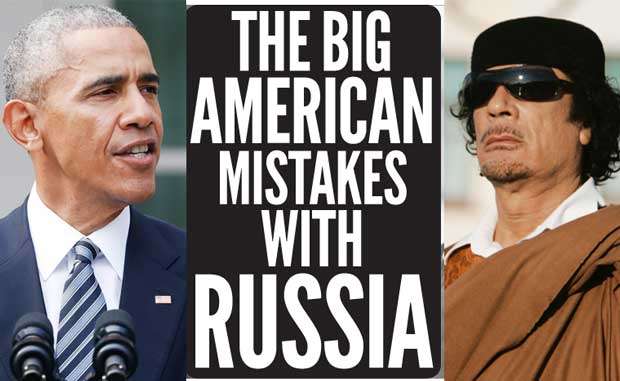
Two mistakes, committed on President Barack Obama’s watch, were the triggers for the end of the long post-Cold War period of good relations with Russia. They were the attack on Libya by the US, France and the UK and the subsequent killing of its long-time dictator, Muammar Gadhafi. The second was the crisis in Ukraine.

Russia was very angry about the first. Having been persuaded by Western diplomacy that the reason for their would-be intervention was essentially humanitarian to forestall any more mass killing in the Libyan civil war, the US and Nato double-crossed Russia. After having gained Russia’s abstention in a UN Security Council vote on a resolution authorizing military intervention the Western powers set about hunting Gadhafi.

As Zbigniew Brezinski, a pre-eminent foreign policy advisor to  presidents, told me, if George H.W. Bush had not been replaced by Bill  Clinton these bad mistakes would not have been made and Russia probably  would be firmly attached to the West

With the second, Ukraine, Russia felt undermined. This was the result of the twin policies of Nato expansion up to Russia’s border-which the US, Germany, France and the UK had promised would never happen- and EU enlargement. Nato declared that Ukraine would be a Nato member. For its part the EU had pushed too early and too hard for an association agreement with the corrupt government of President Viktor Yanukovych. When demonstrations erupted in Kiev the US and the EU lent support and assistance to revolutionary elements and to endorsing a clearly illegal oligarch-ultranationalist revolt in February 2014, despite an agreement made by some of the European powers and Russia that essentially ensured Yanukovych’s departure from the presidency in ten months’ time.
Obama has confessed that Libya was his biggest foreign policy mistake. At least it helped lead him not to try and do the same thing in Syria.


But there are no mea culpas over Ukraine. The crisis continues into a fifth year with no end in site. The West appears to have ignored President Vladimir Putin’s suggestion of the deployment of a UN peacekeeping force in eastern Ukraine.  Gone are the fashioning of benign policies America created before- a new nuclear arms reduction treaty, agreeing at the UN to impose tough sanctions on Iran, which led to the denuclearization accord, jointly negotiated, managing Russia’s entry into the World Trade Organisation, the coordinated action to defuse violence in Kyrgyzstan, and Russia supplying engines for the US’s space rockets. There was also a vast expansion of the network used to transport American soldiers and supplies across Russia to Afghanistan.

But there are no mea culpas over Ukraine. The crisis continues into a  fifth year with no end in site. The West appears to have ignored  President Vladimir Putin’s suggestion of the deployment of a UN  peacekeeping force in eastern Ukraine

Under Obama the spirit of cooperation had nearly all gone. But President Donald Trump wants to bring the era of goodwill back again. Unfortunately, because of his erratic leadership, no one is quite sure whether to trust him. Moreover, he says one thing about friendship with Russia while his Administration increases sanctions and does a go-slow on arms control. This leads to wondering who’s in charge. Is it the so-called Blob, i.e. the senior people in the National Security Council, the State Department, the CIA and the Pentagon who seem to be able, together with their allies in the press and academia, to out-fox their commander in chief?

It’s hard to believe that not very long ago Putin was entertaining the possibility of joining Nato. As Zbigniew Brezinski, a pre-eminent foreign policy advisor to presidents, told me, if George H.W. Bush had not been replaced by Bill Clinton these bad mistakes would not have been made and Russia probably would be firmly attached to the West.

An influential member of the Blob is Obama’s ambassador to Moscow, Michael McFaul. In a new book, From Cold War to Hot Peace”, he pulls Putin to pieces. Although he confesses that before he joined the Administration he knew not much about the history of Russia nor about Cold War interactions with the country, he engaged in a campaign to persuade Obama to take a hard line with Putin.

The book is extremely one-sided. There are important omissions, such as Obama’s confession over the Libyan imbroglio. The Russian media is presented as monolithic and in Putin’s pocket. In fact in Russia if you want to know a different point of view, including Western ones, there are a couple of TV stations, a radio station and an up-market newspaper, all with nation-wide reach, who will give it to you. Russian bookshops have everything. The universities are fairly open-minded. The internet has free, uncontrolled, access. McFaul doesn’t mention that Obama didn’t have on his staff people who were knowledgeable enough to argue a counter point of view, for example the Harvard professor of international affairs, Stephen Walt, whose own book, The Hell of Good Intentions” which will be published in October, provides that. Walt argues that Few states have caused more harm to others in recent years that the US has, but not very many.” Finally, McFaul gives no space to the arguments of those who advocated staying friendly and engaged with Russia, whatever happened.

Let’s hope Trump means what he says about making Russia a friend again.   jonatpower@aol.com
For 17 years the writer was a foreign affairs columnist and commentator for the International Herald Tribune/New York Times. See his new website: www.jonathanpowerjournalist.com.

A ‘SMART’ Court System: Modernises judicial capacity

August 19th, 2018

What Sri Lanka can learn from the Australian legal system?

Delivering the keynote address at the ‘Lawbiz Symposium’, Supreme Court Justice Prasanna Jayawardena – President’s Counsel shared an impressive method to improve Sri Lankan economy. He contemplated establishing ‘an effective and reliable legal system’ which could attract investors and traders to our economy. However, he was of the view that such an effort would require careful study of a comparable jurisdiction, which has achieved a reduction in court time.  In search of such new ways and strategies, which could be adopted to the Sri Lankan Judiciary from a comparable legal system, Daily Mirror conducted an interview with a Barrister of Australia, Alan Moyle (LLB, BEc, GDLP, LLM, DipIPL), who has forty years of professional experience and was also a guest speaker at the ‘Colombo Lawbiz Symposium’ organised by the Colombo Law Society.Following are the excerpts.

Q What is your basic understanding about the legal knowledge that the Australian general public have?

They have a confidence in the legal system. But, sometimes people criticize judges too.

Q If I may disturb you, in order to criticize a judge those people need to have a sufficient knowledge on their legal system and law. So, does your education system in schools provide sufficient legal knowledge to students?

There is education and awareness to a considerable level about how our constitution and legal system are structured. Australia is a federation and each state has its own constitution and a parliament, and at the top of them, there is a federal parliament and a federal constitution, therefore, children learn about those basic things in schools.

Every year, lawyers in Australia will have to get a practicing certificate. There is also a compulsory professional indemnity insurance, which means that if lawyers get sued by a client then everybody has professional indemnity insurance

There are law reform bodies to look into issues in prevailing laws in Australia

Q From where do children start learning them?

Their learning of legal studies initially start primary school and gradually in high school and those who prefer legal studies for higher education, they get a lot of time to study about the court structure and how it works.

Q That means in general, they have a fair knowledge on their legal system, right?

Yes. I suppose they have an idea about how it works.

‘Delaying of cases did happen in the past in Australia, where we had cases dragged for years. But now the Australian legal system does not really let that happen’

The documents are filed in Australian courts electronically. There is a case management system so that the case can be heard quickly. Even in some cases, if the witness cannot be present in court judge might be prepared to hear them online through video call.

Q There is a saying that ‘no other place like Sri Lanka for a lawyer to practise’. May be people say that because of the freedom that lawyers in Sri Lanka actually have or perhaps for the reason that there is no independent body to scrutinize the practice of the lawyers? Can you say anything on that?

I think I am not in a position to comment on that since I don’t have a very good knowledge about the Sri Lankan legal system.

Q Tell us about that situation in Australia…

In Australia there is a legislation that lawyers have to comply with, in order to regulate the legal profession. Every year, lawyers will have to get a practising certificate. This certificate has to be renewed every 12 months and we pay a fee for that. There is also the compulsory professional indemnity insurance, which means that if lawyers get sued by a client then everybody has professional indemnity insurance. Level of that insurance varies but there should be at least a minimum level of insurance.


“The clients can complain to an independent body (like an ombudsman) and it will look into it and see whether the lawyer’s charge is disproportionately high. Then that could be a subject for a court action against the particular lawyer by the client or the regulatory body will take actions against that lawyer “

Q Are there any restrictions in your country on how lawyers should charge for their services?

There is no restriction on what lawyers can charge except for market forces such as more experienced people tend to charge more and less experienced people charge less. Some areas in law, there is a lot of competition among lawyers, while some areas don’t have such competition.

Q Is there a payment scale for the lawyers?

There was such thing before, but now there are no set fees or scale of fees anymore, because it was said that it was anti-competitive for lawyers to compete with each other and therefore the previous fixed scales of fees was abolished. Now people are charged on hourly base and or a set fee for a particular case of work. Lawyers can also charge based on time if they want to (monthly or for a particular milestone in the case).
Those are the two ways that lawyers mainly charge and sometimes there might be a success fee for winning the case while there could be some cases that lawyers carefully enter into the ‘no fee no win’ cases as well.
Even though, there is no restriction on how lawyers should charge on clients, certainly clients can complain to an independent body (like an ombudsman) and it will look into it and see whether the charge is disproportionately high. Then that could be a subject for a court action against the particular lawyer by the client or the regulatory body will take actions against that lawyer.


“If you fail to fulfil procedural requirements on time, then judge can made a ‘cost order’ against the lawyer personally to prevent delaying of cases”


Q With the technological advancement in the modern world, can you educate us on how the Australian legal system has evolved over time?

We have a British based legal system, where we have constitutional monarchy, that queen of England is the queen of Australia even though not actively doing anything. Each state in Australia has a court system while there is a federal court system because the federal constitution divides on the responsibilities of states and the commonwealth of Australia. So, over the time the court system has evolved with technological advancements.
The documents are now filed in courts electronically. There is a case management system so that the case can be heard quickly. Even in some cases, if the witness cannot be present in court judge might be prepared to hear them online through video call. And also for some procedural hearings, rather than solicitors coming to the court, judge might say let’s have a telecommunication conference to smooth up the process. The Australian legal system uses these technological advancements to speed up the process. Even, barristers are allowed to use their i-pads, laptops and phones in the court.

Q How about the freedom of press for the legal sector in Australia?

Actually, the press is allowed for most matters that are taking place in open court, but recording is completely prohibited. And also sometimes there are ‘suppression orders’ on media preventing coverage of certain cases. Even though usually media oppose that these suppression orders are there because sometimes, for instance, in a rape case, when news reports carry that news during the trial it might have a negative effect on the minds of the public since they will assume that he is guilty even thought there is a saying ‘one is innocent until proven guilty’, so that can do a lot of damage to that person’s reputation. If that person is found guilty at the end of the case then normally the suppression order will be lifted so that media can report about it.


“There is also compulsory mediation to try and settle cases before they get to trial. Even though, cases may not necessarily settle in mediation, it will help to quicken the court process by reducing listed court cases”

Q When it comes to the aspect of delay of cases in Sri Lankan legal system, many people accuse lawyers as responsible since they come up with various reasons to drag the case. Is that the same scenario in Australia?

This delaying of cases did happen in the past in Australia, where we had cases dragged for years. But now the Australian legal system does not really let that happen. There are procedural requirements to speed up the resolution of cases. One of the things that the legal system does is that if you do not comply with the procedural orders that are made by the judge then the court will cost against the lawyer not against the client.
If the judge in a procedural stage says that you have to file these documents within a certain time period and you fail to file them on time, then judge can make a ‘cost order’ against the lawyer personally. That compels lawyers to go through that procedural stage quickly without further unnecessary delay.
There is also compulsory mediation to try and settle cases before they get to trial. Even though, cases may not necessarily settle in mediation, it will help to quicken the court process by reducing listed court cases.
In the court trial, firstly the two parties usually get together and decide on their witnesses in the case and how long it will take to conclude proceedings with them. Then, they go before the judge and reveal the approximate time period that they will take for trial. Then judge will usually ask them how many days that the trial may take place and accordingly judge may fix extra days within a certain time period in order to maintain the continuity of the trial.

Q  How does the Australian legal system play its role in the context of policy making?

Sometimes judges make comments on the cases if the law needs to be reformed. There could be cases where the judge may think the outcome of the law is unsatisfactory even though it is the prevailing law.


“Australia is a federation and each state has its own constitution and a parliament, and at the top of them, there is a federal parliament and a federal constitution”

Q So, are you saying that those opinions of judges are being heard by the politicians?

Not always, but sometimes politicians respond to them. On the other hand, there are law reform bodies in each state, which look into bringing new laws as well as the need of reformation to the prevailing law. There are actually some laws that came out from these law reform bodies and public agitation like environmentalists. Sometimes these law reform bodies will look into existing laws that have expired.

Q Can you contemplate how the young generation of Australia see the field of legal studies?

It is interesting. Actually I always get asked by young people that whether they should study law or not. I respond to them, saying don’t do law just because parents tell them or the students think that they can make a lot of money or to pursue a job with status in the society. I ask them to do law if you are passionate about law.


“There is a case management system so that the case can be heard quickly. Even in some cases, if the witness cannot be present in court judge might be prepared to hear them online through video call”

Q Is there an authority or any kind of an institution that conducts productive researches on the Australian legal system in a statistical nature?

The law reform bodies do that. If there is an institution of judicial administration, which looks into a lot of statistical details about cases such as how quickly cases are resolved, how long the trials have gone, etc.

Q Very recently Daily Mirror reported about two famous suspects, who were in remand custody, over the controversial financial scam. After being brought to the courts in morning by the Prison officers to produce for the magisterial inquiry, the suspects were not given water or food until 3.00 p.m. The Prison moved as reasons saying the delivery of lunch packets was late. Any comments on that?

As Justice Prasanna Jayawardena mentioned, in his speech at the ‘Lawbiz Symposium’, about the reforms that were brought in to the Pakistan legal system recently, I can tell you a story in Pakistan. When the new Chief Justice was appointed a few years ago in Pakistan, he got a letter from a prisoner who was in remand. Letter said Dear Chief Justice, I have been in jail since several years and I am just wondering when my case might come to the court”. The new Chief Justice thereafter immediately ordered this guy to be produced in the court. Then the judge asked what the case was against him and subsequently found out that this person was in remand longer than the maximum punishment for what he was charged for, despite whether he was guilty or not. Then the Chief Justice immediately ordered to release him. That shows how some legal systems were in a napoleon state, which really should not have happened.

The Guard Post 19A – Constitutional confusion!

August 19th, 2018

By Udaya P Gammanpila

What has the Government done so far? When we pose this question to the Ministers they are speechless. After being in a thinking mode for a while, they come out with a common answer. That is enacting the 19th Amendment . Hence, it is the ideal time to review the much-flaunted 19A when the Government celebrates its third anniversary.

President Sirisena’s biggest electoral promise was abolishing the Executive Presidency. His rival, Mahinda Rajapaksa promised to ‘reform’ the Executive Presidency. President Sirisena with his electoral victory received a mandate to abolish the Executive Presidency.

However, the 19A neither abolished nor ‘reformed’ the Executive Presidency. Instead, it created two power centres in the government by vesting certain powers of the President with the Prime Minister. Nobody promised such a situation! As a result, the President and Prime Minister are always at loggerhead in their attempt to dominate each other. This constitutional confusion is the main cause for the failure of the Government.

The 19A caused two fatal attacks on democracy. After 18A, there was no restriction for presidential terms. The people decided whether the President should continue in office or not. Any person can stick to his office as long as people want him to be there. The UNP claimed that no President in office cannot be defeated at a presidential election. As a result, there is a possibility of having a dictatorial lifetime President. Hence, the 19A grabbed that opportunity from the people and restricted the number of terms to two. However, the UNP’s argument proved wrong when the people defeated the President in office in 2015, at the very first presidential election after the 19A.

no legal bar

In this backdrop, the 19A has denied the right of choice to the people. Dr. Mahathir Mohamed had continuously been Prime Minister of Malaysia for 22 years when he retired in 2003. When the Malaysian people wanted him back in 2018, at the age of 92, there was no legal bar to elect him again as Prime Minister. Similarly, Sri Lankans are now desperately in need of electing former President Mahinda Rajapaksa back in power. Unfortunately, they have now been disappointed by the two-term restriction introduced by the 19A.

The worst impact of the 19A was witnessed by the nation after the Local Government election held in February 2018. The Prime Minister’s party secured victory at the Local Government polls throughout post-independence history. However, the present PM not only lost the election, but also was able to only obtain 30% of the votes. In other words, his government has been rejected by 70% of the nation. The world tradition is to resign as PM soon after such a humiliating electoral defeat.

Unfortunately, the PM opted to ignore the public’s rejection and to continue to be in office.

If the PM does not accept the people’s verdict, the President has the power to remove the PM and appoint another. However, the 19A had removed this power too, from the President. Further, the President’s power to dissolve Parliament has also been removed for four-and-a-half years.

Hence, the President is unable to take any action to remove the PM who refuses to accept the people’s verdict.

The 19A established a Constitutional Council (CC) to recommend persons for high posts such as members of the independent commissions, Superior Court Judges, IGP and the AG. The objective of setting up the CC is to ensure independence of the high posts from political interference.

Unfortunately, the CC has miserably failed in achieving this objective. The CC has so far failed to publish their selection criteria for these posts. In the absence of such criteria, it should have considered seniority as the basis for selection. If the senior most person is not suitable for the post because of his incapacity or on disciplinary grounds, it should be disclosed before appointing the next senior most person. The CC failed to recommend the senior most persons for the posts of AG and IGP. Further, it failed to disclose any reason for ignoring the senior most persons. Hence, it was obvious that political favouritism was rampant in these appointments.

political witch-hunt

The IGP publicly acknowledged that he ‘bent’ the law as he wished. The IGP and the AG actively involve in political witch-hunt of the governing party. The politically biased conduct of these two senior officers is unprecedented in Sri Lankan history.

The CC has no criteria to promote Judges. It has promoted junior High Court Judges to the Court of Appeal, repeatedly ignoring senior most Judges. This situation may compel Judges to form an opinion that they cannot expect promotions without joining the Government’s witch-hunt.

In the absence of objective criteria, the CC has the opportunity to appoint judges to superior courts from the AG’s Department and unofficial bar until the retirement of the disliked Judge.

Although there is a so-called independent Police Commission, the IGP refuses to implement its orders. Recently, the IGP refused to promote an SSP to the post of DIG although the Police Commission had order him to do so. The Commission could not do anything in response. Hence, it has now turned to be a dog without teeth that can bark but not bite.

Similarly, Secretaries harass government officers who refuse to follow illegal or unethical orders of politicians, although there is a so-called independent Public Service Commission.

In the light of the above, it can be concluded that the 19A is an utter failure although the Government praises it as being the most democratic constitutional amendment in history!

Bring the perpetrators to book

August 19th, 2018

By Arjuna Ranawana Courtesy Ceylon Today

It is not surprising that we have dozens of mass graves, full of undocumented human remains in many parts of the country,because, in the short span of 38 years we have had multiple armed civil conflicts which were put down with overwhelming brutality by the State.In each case, of course, the State had every right to defend itself, but even nine years after the last conflict, Eelam War IV, ended we are still disinclined to thoroughly investigate these mass graves and find and punish the perpetrators of these massacres.
The only exception was the investigation into the Chemmani mass grave in Jaffna which began after Army Lance Corporal Somaratne Rajapakse, who was sentenced to death for the rape and murder of a Jaffna schoolgirl, revealed details of the site in 1998. Investigations were conducted under international observation and several Security Forces personnel were arrested but none were prosecuted.
Perpetrators
The Asian Human Rights Commission records 28 known mass graves in the country connected to conflicts. (There are other mass graves from natural disasters such as the tsunami.)  Those from conflict alone range from sites found on the Jaffna Peninsula and to the East of the country and in the South such as Matale and Sooriyakanda. It is suspected that the alleged perpetrators of these acts could be the Sri Lankan Armed Forces, the Police or the LTTE. The numbers buried range from the 25 or so found at the Duraiappah Stadium in Jaffna to the 300 plus found in the Sooriyakanda mass grave which contained some 30 schoolchildren allegedly killed at the behest of their Principal.
The site currently occupying Media space is the mass grave found in urban Mannar which has been under archeological excavation for nearly 50 days.  The grave was discovered in December 2013 by construction workers and has been under intense scrutiny since then. Two weeks ago the site was closed off to the Media and non-Governmental Organizations but later the Courts lifted the ban against the Media. Quite rightly, the Office of Missing Persons is currently providing support for the excavations.
Last Sunday’s CeylonToday ran an interview with Professor Raj Somadeva an internationally-trained expert in Archaeology and Ancient History who is in charge of the excavation. In this interview Somadeva revealed that there are two types of burial sites in the Mannar site, one a ‘formal’ burial site and the other an ‘informal’ one.
In the formal site, the Professor says the bodies are laid out very straight, each body was intact and separated from each other. Artefacts recovered from this area indicate that they may have been Hindus who were buried there, in keeping with their rituals, many years ago.
In the informal site he said, We can see a very chaotic distribution of skeletons with no directions followed in burial, it’s looked like bodies were dumped.” His associate, Judicial Medical Officer, Dr.Saminda Rajapaksha was quoted in the Media as saying the bodies appear to have been dumped informally on top of each other.” That is a classic sign that these are most probably victims of extra-judicial executions.
In the 48 days of excavation, 71 bodies have been recovered from the site.Among them are six women and a similar number of children below 12 years of age, according to Prof. Somadeva. At least three of the kids are believed to be below seven years of age as their milk-teeth have been found to be intact. Dating the burials is essential to find out who the perpetrators were, as control of this area changed hands during the war between the Government security forces and the LTTE. Samples taken from the remains of the children have been sent to a specialized laboratory in the United States for accurate dating.
Another mass grave site that has been excavated in recent times is the one found in Matale, where work was carried out in 2013. Somadeva who also led that dig says he produced a report on the excavations and what he found but does not know what happened to the report.
Somadeva said that in his report he proposed it was a crime. There were 154 human skeletons and most of the skeletons were subject to testing and found to be of young people.  I compiled the events and artefacts and I provided the relative date to the events.”Somadeva found that some of the skeletons were bundled or tied together. One human skeleton was attached to a metal noose to the lower part of the leg, he said. There were also both men and women of the same age group buried there.
Somadeva said the investigation went nowhere. You know at that time there was political interference to that case. So ultimately they (the Government) transferred the Magistrate and the police officers involved in the case.” This effectively stymied the investigation.
Somadeva dated the skeletons as being from bodies buried between 1986 and 1990 when the last JVP uprising was at its height. Inquiring Magistrate into the Matale massacre, Chathurika de Silva told a Matale Court that a parallel investigation by a Judicial Medical Officer reached the same conclusion on the dates, the Associated Press reported at the time.
Speculation
But after the investigations no action was taken and a subsequent presidential inquiry also yielded no prosecutions. There has been much speculation as to why no action was taken. One of the theories is that the United National Party which was in the Opposition at the time the site was discovered, didn’t want a probe because they would have been held responsible as they were governing at the time the killings allegedly took place. The Government in power during the discovery also discouraged action, because it was reported that Gotabaya Rajapaksa who was Secretary Defence had been a Lt. Colonel in the Army and was the Officer-in -Charge of the region around that time the killings allegedly took place.
Commentator Lionel Bopage writing in the Sri Lanka Guardian earlier this year observed that while certain mass atrocities can be classified as war crimes and crimes against humanity under international law the application of international law has become so much more problematic and hindered by those who seek to protect their economic, political and ideological interests. Often this has been related to establishing, maintaining, or consolidating power of a certain bloc or regime.”
That maybe why successive regimes in Sri Lanka have balked at digging deep into atrocities behind the mass graves, finding out who was responsible and punishing the guilty, because they know their hands are bloodied as well, and would have to share the blame. Politicians will briefly highlight these atrocities for short-term gain, but not go the whole hog because they don’t want to ruffle the feathers of their friends or antagonize Security Forces whom they may want to call on to carry out this type of act sometime in the future.
These delays and obstructions to justice take a heavy toll on the tens of thousands of Sri Lankans who are still seeking answers and closure about their missing kith and kin. They need to know whose bones are buried without name or number in these mass graves, as they seek in vain for loved ones in the detritus of Sri Lanka’s various battlefields.
We Sri Lankans carrying the burden of anguish we have suffered in conflict should make a decision. Let’s       a conclusive end and punish the wrongdoers. The mothers’, fathers’ spouses, siblings and children of those lying in those mass graves must be able to have closure, and not keep searching in vain.  The perpetrators and those who give the orders for such crimes must be held accountable if we are to move forward as a nation that has healed.

Dayan Jayatilleke – The treacherous, pro-separtist Anti Sri Lankan RAW Agent – Part II

August 18th, 2018

By : A.A.M.NIZAM – MATARA

Many of the scribes, local and foreign including N.Satyamoorthy, P.K.Balachandran, Meera Sri Nivasan et al who write to English newspapers in Sri Lanka hold the opinion that Sri Lankans are damp squibs who still hold a white skin glotifying amglophile mindset.  This vicious phenomenon has been erased to a great extent by scholarly Sinhala language writers who flood our newspapers and social media with articles inspired with patriotism.

Dayan Jayatilleke who is an extremely treacherous, anti Sri Lamkan, pro tiger terrorist amd RAW agent used to write more than one article a week quoting some extremely irrelevant world history promoting divisions among Sri Lankans, devolution of unlimited powersto provinces, neo liberalism and the urgent need to implement more than what is stupilated in the ignominous 31st Amendment. This is part II of the article exposing this treacherous wwriter who has beern appointed as our Ambassador to Russia by arrogant egoist President Sirisena

Comments on Janatha Vikurthi Peramuna’s 20th Amendment

Eiting extensively Jayatilleke said that we have not seen the 20th Amendment to the Constitution weannot just do whatever the JVP wants. The powers of the Executive Presidency are vested in many areas of the Constitution, and therefore cannot simply abolish it and if they do abolish it, they’ll have to bring in at least another 2,000 provisions in its place. He added that the JVP has never won an election and do not have the development of the country at heart and what they just want is to dismantle the order and create chaos in the country,.He stated that in the 1980s when he was working as a political advisor to President Premadasa the JVP waged a barbaric war to destroy the Sri Lankan State and today it is trying to do the same by means of a constitutional Cold War, by annulling the executive Presidency instead of Victor Ivan hand bonbs, Gal Cutters Ak477 and  T-56, it is using the 20A.

Our generation went through two civil wars, and civil wars within civil wars—in the South and the North and East. In the 1980s we had to defend the state as the bulwark against barbarism and anarchy, against the JVP onslaught. Today we are called upon to do the same in the political, constitutional and ideological arenas.

The JVP tends to excuse its massacres of the late 1980s by saying it was fighting against Indian intervention. This is a lie. Daya Pathirana was killed before any Indian set foot on Sri Lankan soil. The JVP’s bigger issue was devolution. Wijeweera’s magnum opus on the Tamil Eelam problem was a report he presented to the Central Committee, worked up into a book which he published while underground. It contained (in its concluding part) a blistering critique of every single form of autonomy/devolution whatsoever, including the modest district development councils (for  which the JVP had contested). So the JVP massacred people in a civil war against devolution; a war it lost.

The JVP had no real antagonism towards the Executive Presidential system, because if it did, Rohana Wijeweera would not have contested the executive presidency in December 1982

He staqted what’s happening now is that the JVP proposes to abolish the executive Presidency which it did not oppose and actually sought election for it in 1982, and uncage the power devolved to the Northern and Eastern (and other) provinces against which it waged a Pol Pot like civil war of extermination in the late 1980s.

Comments about the abolition of the Executive Presidency

Writing about The abolition of the Executive Presidency, Jayatilleke said that in actuality, it as a vital part of an agreement between Mangala Samaraweera, MA Sumanthiran, Jayampathy Wickramaratne and representatives of the Global Tamil Forum (GTF), arrived at in Singapore in 2013. Quoting TamilNet he said that onThursday, 22 January 2015 itreleased the text. Which sais “Mangala Samaraweera came as a ‘beggar’ urging Tamil support for regime change and abolition of the executive presidency. It was 2013,” said one of the participants, reflecting on the Singapore meeting.’ revealed the TamilNet report. He explained that the new AAnura kumara Dissanayake (AKD) proposal clearly reflects the agreed upon 10-point Singapore text, and reproduced the crucial line:

“The Executive Presidency shall be abolished and the form of government shall be Parliamentary.”

“Mangala Samaraweera came as a ‘beggar’ urging Tamil support for regime change and abolition of the executive presidency. It was 2013,”.

Comments on pro-western liberalism

He said the people are poised to bid a long goodbye to the pro-western liberalism and its socially decadent elite.They want a strong, determined, patriotic, populist leader who will reverse the national decline—a Putin or Erdogan. Contemporary history will shape the backlash which will naturally turn to and draw from the defining social and national experience of our lifetime: the Great War and the successful management of a classic victory.   He said that under no conceivable circumstances whatsoever should the JO-SLPP be on the same side of the barricades as the UNP, in Parliament or outside, calling for a YES vote at a referendum on any issue! If it does so, the JO-SLPP will be switching places with candidate Maithripala Sirisena of January 2015 and providing a progressive mask for a UNP-TNA project. It would also be repeating the sad betrayal by the ex-progressive Maithripala Senanayaka at the Dec 1982 Referendum. The JO-SLPP must call for a NO vote at a referendum on any Constitutional reform, go flat out in the campaign and use the massive rejection of the proposal as a method of ousting the UNP-led Government and its SLFP puppets from office.

Commnts on the dangers of an Alt-Right driven Presidential candidacy

Jayatilleke wrote in an article to Island on 29th April 2018 as for the dangers of an Alt-Right driven Presidential candidacy and its aftermath as regime, the solution is to launch the dynamic, anti-Establishment political candidacy firmly under Mahinda Rajapaksa’s leadership; anchored, locked-in and contained within the parameters of a bloc of the JO-SLPP-SLFPRebels. He said tht Mahinda must be the Prime Minister that Putin was, not what Madam Bandaranaike was in 1994. That is the only way to reshape a fraught historical conjuncture and risky configuration of forces in which the government and Presidency may be boxed in by an extremist Sinhala Alt-Right constituency and project which will drive us beyond the prudent limits of geopolitical and geostrategic Realism.

Comments on death being faced by the SLFP

Writinf to Daily Mirror on 9th April, 2018 DJ sad that the SLFP is dying electorally because it has contracted electoral AIDS through its relationship with the UNP led by Ranil Wickremesinghe. It would have been affected by any coalition with the UNP, but it is terminally affected because the UNP is led by Ranil, who is also the PM. He said that no personality in the UNP represents everything that the SLFP voter viscerally opposes, more than Ranil does. Ranil is ‘The Other’ in the eyes of the SLFP voter, because of his persona and his policies.

Ge poinrs out that the SLFP declined to 13% of the vote because it had abdicated its traditional role and function of a moderate nationalist alternative to the center-right United National Party. It played the role of an adjunct, a prop of the UNP.

The SLFP declined to 13% of the vote because it had abdicated its traditional role and function of a moderate nationalist alternative to the center-right United National Party. It played the role of an adjunct, a prop of the UNP.He said that the split in the SLFP has been a boon not only for the JO but perhaps more so for the SLFP. Had the anti-UNP struggle been virtually monopolized by the JO with some wildly anarchic support from the JVP, while the entire SLFP abstained, then the anti-UNP voter would have switched almost completely to the JO, with a small percentage accruing to the JVP. However, thanks solely to the SLFP’s 16 courageous dissenters, the SLFP voters can retain some measure of faith in their traditional party he said.

Comments on Mr Gotabhaya Rjapaksa

Unirially this treacherous writer overwhwlmingly supported Mr. Gotabhaya Rajapaksa (GR) and said that GR is the most suitqable candidate to stand for the post of Executiye Presidency and he even volunteere to address GR’s Eliya and Viyath Maga initial meetings.   Writing to Island on 28th November this treacherous writer said that Gotabhaya must also, and equally, be defended and saved from the folly of his obscurantist, socially destructive Sinhala Alt-Right friends and allies. He said that his current supporters obliterate his technocratic profile and obstruct his meritocratic modernist potential as a second JR or Premadasa, with their backward ideology. They paint a target on his back, misdirecting him away from the mainstream and the moderate center into the ‘kill-zone’ of the Far Right, making the job of his enemies easier by isolating him fromthe progressives, pluralists and moderates (JO, SLFP) as well as the discontented center-right UNP voters, and of course the minorities. He said that the three characteristic components of the Sinhala Alt-Right are ignorance, irrationality and backwardness, but what are their three sources? The wisdom of the greatest US President, Thomas Jefferson point to one: “History, I believe, furnishes no example of a priest-ridden people facing a free civil government. This marks the lowest grade of ignorance, of which their civil as well as religious leaders will always avail themselves for their own purposes.” he pointed out and remained silemt abount his promotion of  GR.

Comments on the Unit of devolition

Writing several articles to Island in October 2017 this federalism fanatic DJ argued that the unit of devolution in Sri Lanka should be the Province and that the rising tide of Sinhala fundamentalist opposition will damage not only the progressive patriotic Joint Opposition (JO) and the cause of a patriotic, modernizing presidential candidate, but will play into the hands of the Government and what is worse, into the hands of Sri Lanka’s external enemies and lead within our lifetime, to the (avoidable) dismemberment of this country.

He said that the recent rise of the Sinhala New Right, which is at least part funded and propelled by the Sinhala Diaspora with a blue–collar mindset, stems from and thrives on two phenomena: (a) the absence of elections and (b) the cognitive dissonance in the Sinhala psyche caused by the triple assault of constitutional federalization, Geneva accountability and economic foreignization Strongly refuting this self propelled argument the erudite Professor G.H.Peiris wrote a series of articles to the same newspaper said DJ is  aware that, following the curtailment of Presidential powers through the 19th Amendment in 2015, alongside the practice of foreign agents including diplomatic personnel bypassing the Colombo government in their transactions with the ‘Northern PC’ emerging an unofficial ‘convention’ in Sri Lanka’s external relations, his prescription would actually entail the creation of a more autonomous network of PCs than what was envisioned at the promulgation of the 13th Amendment thirty years ago. The Professor also cited historical evidence and sayings of Lord Buddha in support of his arguments..

Criticism of Civil Socieirs

Sternly criticising the Civil Societies for petitioning against him to te High Post Committee said that these groups denounces those like him who fight fascist ideology whether it comes from North or South, because or him,fascism is fascism and is plain wrong, plain evil, whoever and wherever it comes from. He accused that Rear Admiral Sarath Weerasekara, former head of the Civil Defence Force (CDF) for tellimg the Irida Lakbima that he wasn’t fit even for the post of a “peon” in an embassy. He described the Rear Admiral is a GLSF star at the Geneva sessions and a paper presenter at the Foreign Policy workshop of the recent Viyath Maga daylong session at the Shangri-La which served as an Alt-Right coming-out ball as his ire was roused because of his support for the implementation of the 13th amendment. He said, the neoliberal civil society activists criticize him because he opposes a move beyond the 13th amendment and the unitary state towards federalism, while Sinhala ultranationalists ex-military brass denounce him because he is for devolution within a unitary state (13A). He descrbed Pajyasothy Saravanamuttu and his CPA as western funded pro west anto Sri Lankan outfits. DJ said that on the morning after the UNHRC vote in which Sri Lanka won 29-12, he was criticized from these same two quarters. The civil society neoliberals denounced him for preventing an inquiry into accountability for alleged war crimes, while Dr. Gunadasa Amarasekara criticized him for a reference to the Presidential promise to ” proceed with the implementation of the 13th amendment” in our victorious Resolution. Thus do the extremes mirror each other; complement to each other.

He said the so-called civil society petition against his designation as Sri Lanka’s ambassador to Russia does not provoke him into a personal defense of his record. As his performance in Geneva had been mentioned in The Economist (UK), The Times (UK) and dealt with in (non-Sri Lankan) PhD theses, post-doctoral monographs, academic journal contributions and book chapters, sufficient to comprise a modest bibliography, and the local “civil society” charges against him only make him smile and shrug.

Comments on UNP

This ne time staunch UNPer said that with the UNP’s crisis having triggered boycotts from within the parliamentary group, ghettoized its May Day in the Sugathadasa Indoor Stadium, and manifested disaffection from supporters outside the stadium, Sajith Premadasa (son of his former boss) emerged clearly as the most popular personality in the UNP and the only hope – and outside chance at best– of avoiding a catastrophe at the Presidential election next year He said that already the UNP’s rightwing elite has begun to counterattack in the mainstream and social media, arguing that the UNP does not need a “duplicate Mahinda”. HEe said that if  the UNP does not repeat the  move of the maestro, President Jayawardene, in 1988 when the party and government’s back was to the wall, and play the Premadasa card, then, as Sajith said, to the assembled party loyalists in his Sugathadasa stadium May 7th speech (referring to the need for total change and radical democratization of the party and its policies): “May God help us!”

Let us conclude the article withy reality

Thiws treacherous DJ said that the SLPP-JO is the sole formation among the serious national contenders for state power next year, to have a May Day procession and rally, signaling that it is still the largest political formation in the island. The JO parliamentarians as a bloc are loyal to Mahinda and no one else. Any aspiring candidate will not only have to secure MR’s fullest support but also earn the trust of the JO parliamentarians. And today’s UNP would be lucky to produce anyone who could be credibly compared with the country’s most loved personality who will doubtless become a folk deity when he is no more.

(Concluded)

මේජර් ජාලිය ඈපා සමග සංවාදයක්

August 18th, 2018

සාකච්ඡා කලේ   වෛද්‍ය රුවන් එම් ජයතුංග

මේජර් ජාලිය ඈපා ශ්‍රී ලංකා යුද හමුදාවේ සිටි නිලධාරියෙකි. ඔහු 1988-89 භීෂණ කාලයේදී  ඇඹිලිපිටිය ප්‍රදෙශයේ සේවය කලේය. ඔහු ලොව පුරා ආන්දෝලනයට ලක්වූ ඇඹිලිපිටිය  පාසල් සිසුන් පැහැරගෙන ගොස් අතුරුදහන් කිරීම පිලිබඳ  සිද්ධියේ එක් චූදිතයෙකු වූ අතර  ඒ සඳහා අධිකරණයෙන් වරදකරුවෙකු වී සිරදඞුවම් ද ලැබීය. වර්තමානයේ  සිරෙන් නිදහස්ව නිහඞ ජීවිතයක් ගත කරන මේජර් ජාලිය ඈපා ප්‍රථම වතාවට  ඇඹිලිපිටිය සිසු ඛේදවාචකය පිලිබඳව මාධ්‍යකට  අදහස් දක්වයි. ඔහුටද ඇඹිලිපිටිය සිදුවීම පිලිබඳව කීමට කතාවක් තිබේ. මේ එම කතාවයි. 
1) මේජර් ජාලිය ඈපා ඔබගේ හමුදා ජීවිතය ගැන යමක් කිවහොත් ? මොන ක්‍රියාන්විත වලද ඔබ සිටියේ  
ඔව් මා කොතලාවල ආරක්ශක විද්‍යාපීඨයට බැදුනේ 1981 සැප් මාසයේ. එවකට එය විශ්වවිද්‍යාලයක් නොවන නිසා කළමනාකරණය උපාධිය (BA (Mgt)) හැදැරීමට කොලඹ විශ්වවිද්‍යාලයට ඇතුලත් වුනා. උපාධිය අවසන් කර වැඩිදුර හමුදා පුහුනුව දියතලාව හමුදා ඇකඩමියට ඇතුලත්ව දෙවන ලුතිතන් වරයෙක් ලෙස 1985 සැප්තැම්බර් මාසයේ කාලතුවක්කු රෙජිමේන්තුවට බැදුනා. මාගේ හමුදා ජිවිතයේන් වැඩි හරියක් ගෙවුනේ ක්‍රියාන්විත රාජකාරි වල. 
මාගේ මුල්ම deployment එක වුයේ ඔඩුසුඩාන්. ඉන් අනතුරුව මුරුන්කන්, මන්නාරමෙ තල්අඩි, මාන්කුලම්, කිලිනොච්චි හමුදා කදවුරු වල සේවය කලා. 87 සාම සාකච්ඡා වලින් පසු දේණියාය, වෙඩිතල්තිව්, මොණරාගල සහ ඇඹිලිපිටියෙත්, නැවත යුද්ධය ඇරඹිමත් සමග යාපනයේ මාවඩිපුරම්, මන්නාරමේ, වවුනියාව , වැලිඔය, අම්පාර. වැනි කදවුරු වල ක්‍රියන්විත රාජකාරියේ යෙදුනා. එ වගේම නැවතත් වවුනියාව , මන්නාරමේ, මඩකලපුව , ත්‍රිකුනාමලය, කල්පිටිය හමුදා කදවුරු ආශ්‍රිතව ක්‍රියාන්විත වල යෙදුනා. ප්‍රධාන ක්‍රියාන්විත නම් බලවේගය, අස්සක සේනා, වන්නිවික්‍රම 1,2,3, හයේ පහර, අකුනු පහර, සහා නැගෙනහිර පලාත මුදාගැනිමේ මෙහෙයුම්, වවුනියාවෙ FDL එක expand කිරිමේ මෙහෙයුම්, මාවඩිපුරම් FDL ආරක්ශා කිරිමේ මෙහෙයුම්, තලෙයිමන්නාරම දූපත clear කිරිමෙ මෙහෙයුම්, මඩු පල්ලිය මුදා ගැනිමේ මෙහෙයුම්, සහා convoy ආරක්ශා කිරිමේ මෙහෙයුම් වලට සහභාගි වුනා. මා ඒකකයේ විධායක නිලධාරි (Adjutant) බතරොයි දේකක් අලුතින් පිහිටවලා එහි පලමු බතරොයි නිලධාරි අණදෙන ලෙසත්, ඒකකයේ දෙවන අණදෙන නිලධාරි ලෙසත් රාජකාරි කොට තිබෙනවා. 
 
ඒවගේම දියතලාව අධුනිකයි පුහුනු පඨමලා කන්ඩ භාර නිලධාරි ලෙසත්, දියතලාව කෙඩෙට් නිලධාරි පසැලේ Intake 36 හි course officer ලෙස පුහුනු කිරිම් අංශයෙනුත්, රත්නපුර සම්බන්ධිකරණ මුලස්ථානයේ දෙවන ශ්‍රේනියේ මාංඩලික නිලධාරි ලෙසත්, පාබල බ්‍රිගේඩ් ගෘප් කිහිපයක බ්‍රිගේඩ් මේජර් ලෙසත් පනාගොඩ පලමු සේනාංකයේ ජෙනරාල් මාංඩලික නිලධාරි 11 ( GSO II ) ලෙසත් මාංඩලික රාජකාරි කර තිබෙනවා. 
මා මිමි 130 කාලතුවක්කුව specialize කර තිබෙනවා. පිටරට පාඨමලා හතරකුත්, දේශිය පාඨමාලා අටක් පමනත් කර තිබෙනවා. එයට බුද්ධි පාඨමාලා දෙකක් සහා නිළධාරින් සදහා ICRC වලින් මෙහෙයවන ලද Law of War for Officers පාඨමාලාවත් ඇතුලත්.
 
2) ඇඹිලිපිටිය සිසු ඛේදවාචකයට ඔබ සම්බන්ධ  වන්නේ කෙසේද ?  
මා එම කාල වකවානුවෙ 6 වන කාලතුවක්කු රෙජිමේන්තුවෙ ලුතිනන් වරයෙක්. මා විසින් ආරම්භ කරන ලද 16 වන කාරක බතරොයියේ පලමු බතරොයි නිළදාරි අනදේනයි. මා යටතේ කුට්ටිගල කදවුරත් රත්නපුරේ නීලපොල වත්තත් ( කුඩා කදවුරක් වත්තේ ආරක්ශාවට ) තිබ්බා. ඒ අතරෙම ඇඹිලිපිටිය මහවැලි නිවාඩු නිකේතනයේ පිහිටුවා තිබු රත්නපුර සම්බන්ධිකරණ කාර්‍යාලයේ දෙවන ශ්‍රේනියේ මාන්ඩලික නිලධාරි ලෙස සම්බන්ධිකරණ නිලධාරිතුමා යටතේ සේවය කලා. සම්බන්ධිකරණ තුමා (Coordinating Officer) ගේ වගකීම තමයි සියලුම රජයේ ආයතන ප්‍රධානින්ට නිසි ආරක්ශාව සහ නායකත්වය ලබා දී එම ආයතන පවත්වාගෙන යාමයි.
 
 දිසාපතිගේ ගේ පටන් රත්නපුර දිස්ත්‍රික්කයේ සියලුම රාජ්‍ය ප්‍රධානීන් ඔහුගේ අණ්ට යටයි. එයට අමතරව ඔහු 6 වන කාලතුවක්කු රෙජිමේන්තුවෙත් අණදෙන නිලධාරි තුමා. මා ඔහුගේ මාන්ඩලික නිලධාරි ලෙස ඔහුගේ රාජකාරි කටයුතු වලට සහය වුනා. මා ස්ථාන ගතවි සිටියේ එම මහවැලි කදවුරෙයි.  ඔහු යටතේ දිස්ත්‍රික්කයේ සියලුම හමුදා කදවුරු ( 16-17 පමණ්) සියලුම පොලිස් ස්ථාන ( 10 ක් විතර ) තිබුනා. ඉතිං ප්‍රදේශයේ මහජනයා තම පැමිනිලි කිරිමට මෙම සම්බන්ධිකරණ කාර්‍යාලයට පැමිනෙනවා. මේ සේවන කදවුරට වගෙම අන් කදවුර බල ප්‍රදේශ වල හමුදා පොලිස් ක්‍රියාමාර්ග සැබැදිවයි මේම පැමිනිලි. සැම විටම සම්බන්ධිකරණ නිලදාරි තුමා හමු වීමට ප්‍රතම ඒම ජනයා මා හමු වෙනවා. ඒ නිසාම මා මේ සේවන කදවුරට බල ප්‍රදේශයට අයත් ජනයාත් මා මහවැලි කදවුරෙදි හමුවී තිබෙනවා.
3) ඇඹිලිපිටිය මධ්‍ය මහා විද්‍යාලයේ සිසු පිරිසක් හමුදා අත් අඩංගුවට පත් වන අතර ඔවුන් පසුව අතුරුදහන්  වනවා. මේ සිද්ධියට ඔබ වග කිය යුත්තෙක්ද ? 
එය මෙසේයි. මා ඒ මුලුකාලසීමාවටම අණ දුන්නේ කුට්ටිගල හමුදා කදවුරට සහා නීලපොල වත්ත හා සැබැදිවයි. මොකද වගකීමෙන් බැදෙන්නේ අනුකන්ඩ බාර නිලධාරි හෝ/ සහා නිලධාරි අණ්දේණ (බතරොයි නිළධාරි අණදේන) හෝ/සහා අණදේණ නිළධාරි තුමයි. මේකට කියන්නේ Chain of Command. මේ සිදුවීම සිදුවුනේ ඇඹිලිපිටිය නගර සීමා බලප්‍රදේශය භාර සේවන හමුදා කදවුරේ. මා රාජකාරි කලේ ඊට මිටර් 500-800 ඇතින් පිහිටි මහවැලි කදවුරේ පිහිටි සම්බන්ධිකරණ කාර්‍යාලයේ. මාගේ රාජකාරි ස්වභාවය වුයේ සම්බන්ධිකරණ නිලධාරි තුමාගේ උපදෙස් අනුව සම්බන්ධිකරණ කටයුතු ඉටුකිරීමයි. ඒ කියන්නේ pen to paper work. මා අණදෙන රාජකාරි කුට්ටිගල ප්‍රදේශයේ හැර රත්නපුර දිස්ත්‍රික්කයේ වෙනත් කිසිම ප්‍රදේශය කලේ නැහැ. ඒ අනුව මා මේ සිදුවීම් වලට කිසිම අණදීමක් කර නැහැ.
4) ඇඹිලිපිටිය මධ්‍ය මහා විද්‍යාලයේ විදුහල්පති  දයානන්ද ලොකුගලප්පත්ති ඒ කාලයේ ඔබගේ මිතුරෙක්ද ?  ඔහුට මොකක්ද හමුදාව සමග තිබ්බ ගණුදෙනුව 
මා රාජකාරි කරන ප්‍රදේශවල කිසි කෙනෙක් සමග ( රජයේ නිලධාරින් හෝ වේවා ) රාජකාරි මට්ටමෙන් පමනයි සම්බන්දතාවන් පවත්වන්නේ. ඇත්තෙන්ම මා හමුදාව තුලත් batch mates ලා හැර ජේෂ්ඨ/ කනිෂ්ඨ නිළධාරින් සමග රාජකාරි කාලය තුල පැවැත්වුයෙත් රාජකාරි සබදතා පමනයි. ඒ මා එතරමටම impersonal. ඉතිං මා ගලප්පත්ති විදුහල්පති සමග රාජකාරි මට්ටමෙන් එපිට කිසිදු සබදතාවක් තිබුනේ නැත. රාජකාරි මට්ටමේන් පවා තිබ්බේ ඉතා අඩු සබදතාවක්. ඔහු සෙවන කදවුර, විදුහල අසල නිසා, සමග සබදතා පැවැත්වු බව මා දනිමි. ඒ නිසාම එදා ඔහු මගේ මිතුරෙක් නොවේ. නමුත් නඩුව පැවතුන කාලයේ ඉදන් අද දක්වා අන් අයට වඩා මා සමග ඔහු වඩා හිතවත්. 
අන් රජයේ ආයතන, උසාවිය හැර GA කාර්‍යාලයේ සිට පහලට, අත්‍යවශ්‍ය සේවා( ජල, විදුලි, බස් ගමනාගමන මෙන් පාසැල් පැවැත්වීමද අපගේ ප්‍රධානම රාජකාරි වලින් එකක්. ඒ වගෙම රජයේ නිළධාරින් හට අරක්ෂාව දීමත් අපේ රාජකරියක්. ඒ අනුව ගලප්පත්ති පර්ශද විදුහල්පති ( ඔහුගේ පර්ෂදය යටතේ තවත් පාසැළ් කිහිපයක් තිබුනා. ඒවා administratively පාලනය කලේ ඔහුයි) හට පාසැළ් පවත්වාගෙන යාම නිසා ජනතා විමුක්ති පෙරමුනෙන් මරණිය තර්ජන තිබ්බා. එක් අවස්ථාවක් පිස්තෝලයෙන් ඔහුට පසු පසින් පැමින වෙඩි තිබ්බා. ශිෂයෙක් කෑ ගහපු නිසා ඔහු මුවා වීම තුල වෙඩි නොවැදි බේරුනා. ඉන් පසුව සම්බන්ධිකරණ නිළදාරිතුමාගේ උපදෙස් අනුව සෙවන කදවුර විසින් පාසැළටත් ඔහුගේ නිළනිවසටත් ආරක්ෂාව සැපයුවා.
5) ඇඹිලිපිටිය සිසු ඛේදවාචකය යට සිටි බුද්ධික කුලතුංග නම් ජවිපෙ ක්‍රියාධරයා ගැන කවුරුත් දන්නේ නෑ ඔහු පිලිබඳව සඳහනකුත් නෑ. ඔහුගේ භූමිකාව මොකක්ද ? 
ඔහු ඇඹිලිපිටිය මධ්‍ය මහා විද්‍යාලයේ තරුන ගුරුවරයෙක්. ඔහු ම.ම.වි ඉඩමන් කොටසක් පැට්‍රොල් ෂෙඩ් එකක් අලුතින් හදන්න දේන්න ගත් තීරනයට විරුද්ධව ශිෂයන් උසිගන්වා ශිෂයන්ගේ උද්ඝෝෂණය යටින් සිට මෙහෙය වුවා. මේ කාලයේ අප ඇඹිලිපිටියේ නොවෙයි හිටියේ. ඒ වගේම ගලප්පත්තිත් හිටියේ අධ්‍යාපන අධ්‍යක්ෂ කාර්‍යාලයේ. හිටපු විදුහල්පති තුමාට මෙය පාලනය කර ගත නොහැකි වූ නිසා ඔහු ඉන් ඉවත් කර ගලප්පත්ති එහි විදුහල්පති ලෙස පත් කර එවලා තියෙනවා. ඒ සමගම තමයි අප රෙජිමේන්තුවෙ මොනරාගල සිට ඇඹිලිපිටියට එව්වේ. මේ සිදුවීම් දෙකම එකම කාලයක සිදුවුයේ. මා කුට්ටිගල ස්ථාන ගත වුවා. සේවන කදවුරේ ස්ථාන ගත භඨ පිරිස් වලට අණ දුන්නේ මේජර් රන්ජිත් රූපසිංහ. පසුව කර්නල් නිලයෙන් හමුදාවෙන් විශ්‍රාම ගියා. ඔහුත් සම්බන්ධිකරණ නිලධාරි තුමා වන බ්‍රිගේඩියර් පැරි ලියනගේත් ඇඹිලිපිටිය ම. ම. විද්‍යාලයට ගොස් ගුරු, ශිෂ්‍යයන් ඇමතුවා. මතකද ඒ කාලයේ ශිෂ්‍ය සටන් පාඨය වුයේ ” පලමුව මව්බිම දෙවනුව පාසැළ” කියායි. ඔහු ඉතා තදින් කතාකලා. ඇත්තටම ගලප්පත්ති විදුහල් පති නැවිලා හිටියේ ජවිපේ පැත්තට. ඒ මරණීය බයට.අප කලේ ඊටා වඩා වැඩි භිතියක් රාජ්‍ය නිලධාරින්ට දීමයි. 
ඉතිං මේ ගුරුවරයා ම.ම. විද්‍යාලයේ පටන් ගත්තා කෙඩෙටින් ප්ලැටුන් එකක්. එසේ ශිෂ්‍යයන් තම ග්‍රහණයට නතු කර ගත්තා. මේ ශිෂ්‍යයන් අත් අඩංගුවට පත්වෙන්නේ ඇඹිලිපිටිය කඩදාසි කම්හල ගිනි තැබිමෙන් පසුවයි. මා මේ කියන්නේ ඊට පෙර සිදුවීම්. ඔහු මේ ශිෂ්‍යයන්ව පන්ති පහ කරවීම අවි පුහුනු කදවුරු වලට යැවීම් ආදිය කලා. මේ අය ජවිපේ ශිෂ්‍ය සන්නද්ධ අංශ්‍ය ලෙස කටයුතු කරා. අප මොහුව දේපාරක් අත් අඩංගුවට ගත්තා. පලමු වර ගලප්පත්ති විදුහල්පති තුමා මැදිහත්වී ඔහුව බේරා ගත්තා. ඒ පාසැලේ ශිෂ්‍යයන් පාලනය කර ගන්න වෙන්න ඇති. දෙවැනිවර අර මා කියු කර්නල් රුපසිංහ බේරලා ඇරියා. කියන්නේ ඔහුත් ආගමේ බුද්ධිකත් ක්‍රිස්තියානි ආගමේ කියලයි. ඉතිං පෙහෙකම්හල ගිනි තැබිමේ සිද්ධියට ( සේවන කදවුර බලප්‍රදේශයේ පිහිටි) ශිෂ්‍ය සන්නද්ධ අංශයත් සහභාගි වෙලා තිබ්බා. ඒ ගැන පරික්ෂණ කරනවිට බුද්ධික ප්‍රදේශයෙන් පලා ගොස් හිටියා. අපට සොයා ගන්න බැරිවුනා. ඔහු පල්ලියේ අධාරයෙන් රට ගොස් ඇති බව පසුව අප දැන ගත්තා.

6) අතුරුදහන් වූ සිසුන් ජවිපෙ ශිෂ්‍ය සන්නද්ධ අංශයේ සිටියාද ? ඔබට එසේ සිටි සිසුන් නම් වශයෙන් කිව හැකිද ?  
එක් කෙනෙක් හැර අන් සියලු දේනාම අවි පුහුනු කදවුරු වලට සහභාගි වෙලා අවි පුහුනුව ලබා තියෙනවා. උදේෂ් කාවින්ද, ප්‍රසන්න හදුවල, සුසිල් කුමාර, රසික කලුගම්පිටිය, සිසිල්, අන් අයගේ නම් මට මතක නැහැ. උදේෂ්, හදුවල සුසිල් වගේ අය මිනිමැරුම් පවා කර තියේනවා. මොකද ගොඩක් මිනිමැරුම් සිදුවුනේ පැය 17.45-18.45 වගේ හවස සහ රාත්‍රිය අතර. ඒ කියන්නේ last light එකේදි. එය කර මේ අය ගෙදර එනවා. ගෙදර අය සැක හිතන්නේත් නැහැ. මේ සියල්ලන්ගෙන් කොටසක් රාජ්‍ය දේපල ගිනිතබා විනාශ කර තිබෙනවා. 
7) මෙතන කිසිම රාජ්‍ය විරෝධී ක්‍රියා නොකරපු අහිංසකයොත් සිටියාද ? ඔවුන් කවුද ?  
ඔව්. ඔහු තමයි මල්වත්ත කියන ශිෂ්‍යයා. මා ඒ ගැන සම්බන්ධිකරණ නිළධාරි තුමාට නිදහස් කරන්න කියා කියා තියෙනවා. මොකද මා සම්බන්ධිකරණ නිළධාරි තුමාට සැම කදවුරකින්ම එන සැම introgation report එකක්ම බලනවා. මා සැම විටම big picture එකේ සිටියේ. එය මාන්ඩලික නිළධාරි කෙනෙකුගේ පරම රාජකාරියක්. හමුදාවේ කෙනෙකුගෙන් අසා බලන්න පුලුවන් එය එසේමද කියා. මල්වත්තව නිදහස් නොකෙරුනේ ඔහුව අන් අය සමගමයි රදවා හිටියේ. නමුත් එයට මා එකග වුයේ නැහැ. මා අණදෙන නිළධාරිවරයෙක් නොවන නිසා ( මාන්ඩලික නිලධාරියෙක් පමනක් වු නිසා ) මා හට ඉන් එහාට කල හැකි දෙයක් වුයේ නැහැ. 
 
මහාධිකරණ නඩු විභාගය කාලයෙදි ස්ටිවන් වැනි නිදහස්. කල එදා රැදවියන් සාක්ශි දෙන විට බ්‍රිගේඩියර් මා හට ඔච්චමට කියුවේ ජාලිය කොහොමද අපි මල්වත්තව නිදහස් කල තිබුන නම් කියා. නමුත් ඒ වෙනවිට මා reform වෙමින් සිටි බැවින් මනුශ්‍ය ජිවිතයක වටිනාකම හොදින් වටහා ගෙන ( මට එතකොට වයස 34-35 වගේ) සිටි බැවින් ඔහු කී දේ මාගේ එක් කනකින් ඇතුලත් වී අනෙක් කනේන් පිටවුනා. අදටත් මා එ ගැන දුක් වෙනවා ඒ අහිංසකයෙක් නිසා. ඔහු පංති කර ඇති බව මට මතකයි. හැබැයි එවැනි අය අප කලේ බූස්ස කදවුරට ඇරිමයි. අන් අය ගැන. අන් අය ගැන මා හට ඒ කෝණයෙන් දුකක් නැහැ. හේතුව අවි පුහුනුව ලබා තිබේනම්, අවි සමග අත් අඩංගුවට පත්වි ඇත්නම්, මීනි මරා ඇත්නම් සහා රාජ්‍ය දේපල විනාශ කර ඇත්නම් ඒ අය විනාශ කිරිමටයි රාජ්‍ය ආරක්ශක ඇමති රන්ජන් විජේරත්න මැතිතුමා වාචික උපදෙස් ලබා දී තිබුනේ. කෙසේ වෙතත් මල්වත්ත වෙනුවෙන් මා කතා කරන්න ශක්තියක් තිබිම ගැන මා කුඩා සතුටක් ලබනවා. ඒ එම අපරාධයේ කොටස් කරුවෙක් නොවීම නිසයි.
8) ජවිපෙ ශිෂ්‍ය සන්නද්ධ අංශයේ  සිටි සිසුන් විසින්  සිදු කල කඩාකප්පල්කාරී ක්‍රියා මොනවාද ? 
1. ඇඹිලිපිටිය පෙහෙකම්හල ගිනිතබා විනාශ කිරිම
2. ඩිපෝවේ ලංගම බස් රථ ගිනිතබා විනාශ කිරිම
3. මහේස්ත්‍රාත් උසාවිය ගිනිතැබිම
4. ඇඹිලිපිටියේ චන්ද්‍රිකා වැව අසල තිබෙන ජනාධිපති නිල නිවස ගිනි තැබීම
5. කඩ වැසීම සදහා චිට් දීම
6. ජනයා විශේෂයෙන්ම රාජ්‍ය නිලධාරින් බිය වැද්දීම සහා එක් ග්‍රාම සේවකයෙක් මැරිම. කතරගම රූපසුන්දරි ඝාතන නඩුවෙ සිරදඩුවම් විද නිදහස් වු හමුදා සමාජිකයෙක් නිදහස් වී සතියක් ඇතුලත මිනිමැරිම. 
7. පාසැල් අධ්‍යාපනය කඩාකප්පල් කිරිම.
8. ජන ජීවිතය මුලුමනින්ම අඩාල කිරිම.
 9) මෙම නඩුව පිලිබඳ ඔබගේ අදහස් මොනවාද ?
නඩුවිභාගය පැවති කාලයෙදිත්, මා සිර දඩුවම් විදපු කාලයේදිත්, අදත් හෙටත් මා දකින්නේ ඒ දේමාපියන්ගේ පරම අයිතියක් කියායි. මොකද අප ජීවත් වන්නේ ශිෂ්ඨ සමාජයක නිසා. හැබැයි මෙයට දේශපාලන මුහුනුවරක් චන්ද්‍රිකා, පවිත්‍රා, S.B දිසානායක වගේ අය දුන්නා 94 බලයට එන්න. ඒ වගේම UNP රජයේ අවසාන කාලයේදි ලංකාවේ Human Rights රෙකෝර්ඩ් එක පහල මට්ටමක කියා විදේශ ආධාර ලැබි නොතිබුන තත්වයක් තිබුනේ. ඒ නිසාම චන්ද්‍රිකා ප්‍රමුඛ විපක්ෂය රාජ්‍ය බලය ලබාගැනීම සදහා දේශපාලන විදේශ පරිත්‍යාග මත මෙවැනි අතුරුදහන් වීම් සම්බන්දයෙන් ක්‍රියා කරනවා යයි රටේ ජනතාවට වගේම විදේශයට පොරොන්දු දුන්නා. ඒ අනුව 94 අගෝස්තු බලයට ආ චන්ද්‍රිකා 94 ඔක්තෝබර් මුල අප පස්දෙනෙක් CID මගින් අත් අඩංගුවට ගෙන ඇඹිලිපිටිය මහෙස්ත්‍රාත් උසාවියට ඉදිරිපත් කොට දින 14 කට රිමාන්ඩ් භාරයට පත් කරා. කොමිසනුත් දැම්මා. හැබැයි 1992 සිට වගේ මේ එක් එක් අය වෙනුවෙන් Heabeascopes නඩු අපට තිබ්බා.
 
 පසුව 1995 අග  අප සියලු දේනාට චෝදනා 80 කින් ( eighty counts ) යුත් අධිචෝදනා පත් රත්නපුර මහාධිකරණයේන් භාර දුන්නා. චෝදනා තිබුනේ ශිෂ්‍යයන් 25 ක් සදහා පමනයි.අප නිර්දෝශයි කියු නිසා ජුරියකින් තොරව 1996 ජනවාරි මස සිට නඩුව විභාග කලා. චෝදනා 80 කින් යුත් අධිචෝදනා පතක් මීට පෙර කිසිම චුදිතයෙකුට ලංකා මහාධිකරණයකින් මීට පෙර නඩු පවරලා නැහැ. 1999 පෙබරවාරි 10 වැනි දින මා වරද කරු කරනා විට දින 200 කට ඉතා අසන්න කාලයක්, ඒ අවු 3 කට මදක් වැඩි කාලය තුල විභාග කර පිටු 15,000 ක ආසන්න නඩුවාර්තාව මත චෝදනා 8 කට වරද කරු කොට ඉන් 4 කට අවු 10 බැගිනුත් ඉතිරි 4 ට අවු 5 බැගිනුත් මුලු අවුරුදු 60 ක බරපතළ වැඩ සහිත සිරදඩුවමක් එකවර ගෙවී යන සේ ලබාදුන්නා.
 
10) ඔබ සාධාරණ නඩු විභාගයකට මුහුණ දුන්නාද? 
ඔව්. විභාගය සාධාරණව පැවැත්වූවා. නමුත් වරදකාරිත්වයේ තින්දුව අසාධාරණයි. හැබැයි දඩුවම් තීන්දුව සාධාරණයි.

11) සිර දඞුවම පිලිබඳ තීන්දුව ලැබූ අවස්ථාවේදී ඔබ තුල ඇතුවූ සිතිවිළි මොනවාද ?
තීන්දුව කියවීම පැයක් හමාරක් ගතවුනු කාලයක්. මා වරදකරුවෙක් යයි මුලින් කියන විට මාගේ කකුල් දෙක පන නැතිව ගියා වගේ හැගීමක් ඇතිවුනා. මට අම්මා තාත්තා මතක් වුනා. ඒ අය කවරදාකවත් පොලීසියකටවත් නොගිහිපු අය. ඊට පස්සේ සිර දඩුවම් වසර ගනන් කරන්න පටන් ගත්තා. එය හරියටම කරන්න පුලුවන් වුනේ නැහැ. අම්මා තාත්තා කවරදාකවත් උසාවියට ඇවිත් නැහැ. එදා ආවෙත් නැහැ. ඒ වෙනුවට මාගේ classmate කෙනෙක්, තවත් නුගේගොඩ යහලුවෝ පස් හය දෙනෙක් ඇවිත් සිටියා. කා දෙසවත් කෙලින් බලා කතාකරන්න ශක්තියක් තිබුනේ නැහැ. ඩොක් එකේ සිටගෙන සිටියේ මොළය වැඩ කරන්නේ නැතිව. පසුව උසාවියේ සිර කූඩුවට දැමු පසු සිගරට් හත අටක් එක දිගටම පත්තු කරා. කලිසමත් පිච්චුනා. ඇදලා හිටියේ ලා කොල කලිසමක් සහා ඊටත් වඩා ලා කොල අත්දිග ෂර්ට් එකක් කොල දුඹුරු පාට ටයි එකක් පැලද. මගේ classmate ට මගේ රත්තරන් බ්‍රේස්ලට් එකයි චේන් එකයි ගලවලා දුන්නා පෙම්වතියට දෙන්න කියා.   කූඩුවෙ පැයක් හමාරක් ඉන්න කොට මට පියවී සිහිය ආවා. මා සිර ජීවිතය පටන් ගන්නත් පෙර සිත හදාගෙන සිර ජිවිතය වැලද ගත්තා. ඇත්තට මාගේ ශක්තිමත් පෞර්ශත්වය නැවත මට ලැබුනා.

12) ඔබගේ සිර ගෙදර ජීවිතය ගත වුනේ කොහොමද ? 
ඔව් මගේ සිර ජිවිතය අවු 7 කට ආසන්නයි. ඒ කියන්නේ 1999 පෙබරවාරි 10 දින සිට 2005 සැප්තැම්බර් 23 දින දක්වා. ඒ කාලය තමයි මාගේ ජිවිතයේ වටිනාම කාලය. මා ජිවිතය අවබෝධ කරගත්තේ මේ කාලය තුලදියි. ඒ කියන්නේ අවිහිංසක මිනිස් හැගීම් මා වර්ධනය කර ගත් කාලයක් මේක. ජන සමාජය අවබොධ කර ගත් කාලයක් මේ කාලය.නැවති මා ආ ගමන්මග දෙස, ඒ කියන්නේ වැල්ලේ පිය සටහන් දෙස නැවති හැරි බලන්න පුලුවන් වු කාලයක් මේ කාලය. ධර්ම පොත පත එ කියන්නේ තුනේ පංතියේ හතරේ පහේ ඔය ආදි වශයෙන් දහම් පාසැළ් පොත් පරිශිලනය ( මා දහම් පාසැළ් ගොස් නැත ) ලැබිච්ච කාලයක් මේක. වඩා වැදගත්ම වන්නේ රේරුකානේ චන්දවිමල ස්වාමින්වහන්සේගේ බෞද්ධයාගේ අත්පොත, චතුරාය්‍ය් සත්‍ය වැනි පොතුත්, බලංගොඩ ආනන්ද මෛත්‍රි ස්වමින් වහන්සේගේ පොතුත්, අචන් චා හිමියන්ගේ භාවනා සම්බන්ධ පොත්පතුත්, තව තව බෞද්ධ පොත්පත් සමග ඩේල් කානජිගේ සහා තවත් අයගේ මනෝවිද්‍යාව, මනස සැබැදි පොත් පත් සහා නෙල්සන් මැන්ඩෙලාගේ long walk to freedom, බිල් ක්ලින්ටන්ගේ My life, ලලිත් ඇතුලත්මුදලිගේ autobiography එක වැනි පොත්පතුත් තවත් විශාල පොත්පත් ප්‍රමානයක් කියවන්න මට වාසනාව ලැබුන කාලයක් තමා මේ කාලය. දින පතා සිංහල පත්තර 2 ක් සහ Daily News පත්තරයත්, සති අන්ත සිංහල පුවත්පත් තුනක් සහා ඉංග්‍රිසි පුවත්පත් තුනක් බලන්නත් හැකි වෙච්ච කාලයක් මේක. ඒ වගේම දුම් පානයෙන් සහා මත්පැන් පානයෙන් තොර වු කාලයක් මේ කාලය. දිනපතා වියායාම ( cell එක තුල) කරන්න පුලුවන් වූ කාලයක් මේක. ඒ වගේම healthy food ( සිරබත ) ඒ කියන්නේ less sugar, No fat, No spices, No acid etc etc ගන්න ලැබිච්ච කාලයක් තමයි මගේ සිර ජීවිතය. 
ඒවගේම MS Office න්‍යාත්මකව ඉගෙන ගන්නත්, ඇදුම් මහන්නත් ( මා ටේලර් පාටියේ හිටියේ) ඉගෙන ගන්න පුලුවන් වු කාලයක් තමා මේ කාලය. අවු 18 ක පමන හමුදා කාලය තුල අන් අය supervise කර ඔවුන්ගෙන් වැඩ ගත් මා, මා විසින් ඉදිකටුවට ඇගිලි තුවාල කරමින්, දාඩිය දමාගෙන මැෂිම පාගනින් task එකට වැඩ කරන්න හිත කය පුරුදුකර ගත් කාලයක් තමා මේ කාලය. ඒ වගේම දිනපතා පන්සිල් ගන්නත්, පෝයදින වැඩ සටහන් වලට සහභාගි වෙන්නත්, දින 3 ක් හෝ 5 ක භාවනා වැඩ සටහනකටත් සහභාගි වෙන්න වාසනාව තිබ්බ කාලයක් තමා මේ කාලය.  ඒ වගේම පරවියන් ඇතිකරන්නත්, පුසියෙකුටත් ආදරය දක්වන්නත් හැකිවෙච්ච කාලයක් තමා මේ කාලය. ඒවගේම සහෝදර සිරකරුවන්ගේ ජීවිත වලට එබිකම් කරන්නත් හැකියාවක් ලැබුනු කාලයක් තමා මේ කාලය.  එ කියන්නේ මරණීය දන්ඩනයට ලක්වු අය, දවල් හොරු, රාත්‍රි හොරු, මංකොල්ලකාරයො, වංචා කාරයො, ස්ත්‍රි දූශකයො, පාතාලයෝ, චන්ඩියො, කුඩු මුදලාලිලා, කුඩ්ඩො, අරක්කු සික් කාරයො, පිස්සො, අල්ලස් කාරයෝ, වැරදි කරපු පොලීස් නිළධාරින්, SB වැනි දේශපාලකයින්, සමාජයේ වැදගත් යයි සැලකෙන යම් ප්‍රභුන් වැනි අයගේ ජීවිත සහ අත්දැකීම් කියවා ගන්නත් ලැබිච්ච අනගි අවස්ථාවක් තමයි මේ කාලය. මොකද විශ්වවිද්‍යාලයේ මාගේ ප්‍රියතම විෂය තමයි Psychology. මට B pass එකක් තියෙනවා. පසුකාලීනව psychology සැබැදි ගොඩක් පොත්පත් මා එවකට කියවා තිබුනා. ඒ දැනුම මා ප්‍රායෝගිකව අත්හදා බලන්න පුලුවන්වු කාලයක් තමා මේ කාලය.  එවගේම Chess ඉගෙන ගන්නත්, අප විසින්ම organize කල Chess tournament එකකින් දිනන්නත් පුලුවන් වු කාලයක් තමා මේ කාලය. ඒ වගේම කුඩා fight දෙකකටත් මැදිහත් වෙලා අත්දැකිම් ගත් කාලයක් තමා මේ කාලය. එ වගේම ඇපිල් නඩුවට අදාළව සියලු facts සහා law මාගේ ජනාධිපති නීතීඥ ශ්‍රිනාත් පෙරේරා මහත්‍තයාට (President Council Srinath Perera) ලබා දීම සදහා විශාල home work කරන්නත් ලැබිච්ච අවස්ථාවක් තමයි මේ අවුරුදු හත. ඉතිං මේ කී සහා නොකි ක්‍රියාකාරකම් නිසා මාගේ අවු 7 ක සිර දඩුවමට මා අදටත් ආදරය කරනවා. එහි ප්‍රතිඵල භුක්ති විදිනවා. ඒකයි මා කියන්නේ මේ කාලය මාගේ ජිවිතයේ වටිනාම කාලය කියා. තව විදිහට කිවහොත්, ඇතුලට ගිය මේජර් ජාලිය ඈපාට වඩා එලියට ආපු නිකන් ජාලිය ඈපා වඩා ශක්තිමත්, ගුණගරුක, ධර්මයට ලැදි, ධර්මානුකුලවම ජීවත්වන්න උත්සහා කරන වඩා යහපත් පුද්ගලයෙක් කියා.
13) වර්තමානයේ ඔබ මොනවද කරන්නේ ? ඔබගේ මිතුරන් සමාජය ඔබ දෙස දැන් බලන්නේ කොහොමද ? 
ඇත්තම මාගේ batchmates ලා මාව හොදින්ම පිලිගන්නවා. මා ඔබට කියු ලෙසම කලකට පෙර batch get togatger එකකදි කියා තිබෙනවා. එයාලා එයාලට වඩා අත්දැකීම් වැඩි කෙනෙක් ලෙස මාව පිලිගන්නවා. හමුදාවෙ මාගේ ජේෂ්ඨ නිලධාරින් වගේම කනිෂ්ඨ නිලධාරින්  මා හට විශේෂ ගරුත්වයක් දක්වනවා. හේතුව එකක් මා command material එකක් වීම සහා මා මෙයට වග කිව යුතු කෙනෙක් නොවීම. අදටත් intake 20 සහ පහල මේජර් ජෙනරාල්ලා පවා මට Sir කියා තමයි කතාකරන්නේ. හැබැයි මා හමුදාව සමග සම්බන්ධතාවයන් පවත්වන්නේ නැහැ. ඒක එක compartment එකක්. සිර ජිවිතයත් තවත් එක compartment එකක්. මා දැන් ඉන්නේ වෙන compartment එකක. මගේ මේ පෙට්ටිවල ඇතුලෙන් යන්න බැහැ. Journy එක ඉවරවෙලා station එකෙ නැවතුමේදි තමයි යන්න පුලුවන්. මා අලුතින් යාලු හිත්වත් කම් පටන් ගන්නේ නැහැ. දන්නා අය සමග විතරයි ඇගැලුම් කම් පවත්වන්නේ. හැමෝම දන්නවා මෙය දේශපාලන case එකක් කියලා. ඒ නිසා අප්‍රසාදයක් නැහැ. නමුත් මා නොදන්නවාට ගොඩාක් පිරිස් මා ගැන දන්නා බව මට අනන්තවත් තේරිලා තියෙනවා. මා නොදන්නවා වාගේ ඉන්නවා. 
මා ගිය අවුරුද්දේ සියලු වියාපාර කටයුතු වලින් විශ්‍රාම ගත්තා. ඒ මට අවු 55, ඔක්තෝබර් 26 ට පිරිච්ච නිසා. තැන්පත් ධනයෙන් මට ජීවත්වෙන්න අවශ්‍ය බැංකු පොලිය ලැබෙනවා. මාසයට බිල් හතරයි ( SLT ADSL PEO TV බිල, වතුර බිල, ලයිට් බිල සහ මොබයිල් බිල ) ගෙවන්න තියෙන්නේ. Car, cab and the motor bike are free of lease. No loans to pay. ඉතිං මා අද නිදහස් පුද්ගලයෙක්. අද මා ඉන්නේ දොම්පෙ. අක්කරයකට අසන්න ඉඩමක් තියෙනවා. එහි තිබුන වලව්ව මම (restore) ප්‍රතිශ්ඨාපනය කරා. මා එහි තනියෙන් ඉන්නවා. වැඩට වයසක් මනුස්සයෙක් ඉන්නවා. ගිය අවුරුද්දෙ වත්තේ පොල් පැල 30 ක් දැම්මා. රඹුටන් පැල 12 , වෙනත් පලතුරු වර්ග 15-20 ක් විතර සහා අඩි 40×40 ක ගෙවත්ත තිබෙනවා. ඒ කටයුතු කරමින් විවෙකීව ඉන්නවා. පසුගිය දවස්වල පෝර දැම්මා. ලබන අවුරුද්දට පසු අවුරුද්දේ පලදාව ගන්න බලා පොරොත්තු වෙනවා.

14) ආපසු හැරී බලන විට ඇඹිලිපිටිය සිසු ඛේදවාචකය ගැන ඔබ සිතන්නේ මොනවාද ?
මුලින්ම කියන්න තියෙන්නේ එය සිදු නොවිය යුතු තත්වයක්. මේකට මේ අතුරුදහන් වු ශිෂ්‍යයන් වත්, අප වත්, හමුදාවවත්, එදා රජයවත් වග කිව යුතු නැහැ. වගකිව යුත්තේ මීට පෙරත් 1971 විශාල විනාශයක් කල විජේවිර ප්‍රධාන ජවිපේ දේශපාලන මංඩලය සහා මධ්‍යම කොමිටිය. මේ අය රටේ යමක් කල හැකි තරුන පරම්පරාව විනාශ කරා. අද සිංහල ජන සමාජය යම් නිවට කමක් ඇත්නම්, එයට හේතුව මේ නැතිවුන තරුන පරම්පරාවයි. මේ ශිෂ්‍යයන් ලව් ලෙටර් වැනි පුද්ගලික කාරනාවක් නිසා හෝ ප්‍රතිවිරුද්ධ දේශ්පාලන ( SLFP, LSSP වැනි) මතයක් දැරිම නිසා හො නොවෙයි දැයට අහිමි වුයේ. ඔවුන්ව නොමග යවා, ඔවුන් ලවා අපරාධ කරපු නිසාවෙන්මයි මේ දේවල් සිදු වුනේ. මේ සියලු ශිෂ්‍යයන් අද්දැකිම් නොමැති තරුන අය නිසා, නැත්නම් නොදරුවෝ නිසා ඔවුන් හදාගැනිමේ වගකීමත් එයාලගේ දෙමාපියන්ට තියෙනවා. එතකොට එයාලටත් තම වගකීම් ඉටු නොකල අය නිසා වරදකාරිත්වයක් පැටවෙනවා. 
ප්‍රසන්න හදුවලගේ පියා ( ඔහු කනිෂ්ඨ විද්‍යාලයක විදුහල්පති සහ 71 කැරැල්ලේ NIB ලිස්ට් එකේ නම තිබෙන කෙනෙක්) දැන දැනම තමා, තම පුතා මේකට යොමු කරේ. ඒ බව මා දන්නේ හදුවල ඉන්නේ කුට්ටිගල බල ප්‍රදේශයේ නිසා සහා මුලින්ම කුට්ටිගල කදවුරේ නිලධාරි අණදෙන ලෙස මා විසින් ප්‍රසන්න හදුවල අත්අඩංගුවට අරන් නිදහස් කල නිසායි. Lack of supervision by parents too caused this vandetta. හමුදාවකට හෝ පොලිසියකට කොහොමද ලමයි හදන්නේ?  රජයටත් වෙන කරන්න කිසිම දෙයක් තිබ්බේ නැහැ. ප්‍රේමදාස ජනාධිපති තුමා කිහිප සැරයක් සාක්ච්චා මේසයට එන්න කියා අරාධනා කරා ආයාචනා කරා, ඇවිත් එකට ආන්ඩු කරමු කියා. නමුත් ජනතා විමුක්ති පෙරමුන ගනන් ගත්තේ නැහැ. මොකද එදා සති දෙකක්, දින 10 ක් වගේ කාලයක් තිබ්බා ( 89 අගොස්තුවේදී හො සැප්තැම්බර් මාසේ ) රටේ ආන්ඩුවක් නැතිව. ගොඩක් අය මේක දන්නේ නැහැ. ඉතින් එහෙම තත්වයකදි ප්‍රජාතන්ත්‍රවාදීව පත් වු රජයකට කල හැක්කේ supression පමනයි. ඒ නිසා එදා පැවති රජය මීට වගකිව යුතුයි කියා කියන්න බැහැ. අනික පසු කාලින ආ රජය LTTE එකට කරෙත්, ඉදිරි කාලයක ඇතිවෙන රජයක් කරන්නෙත් ඕකම තමා.
15) ඇඹිලිපිටිය සිසු ඛේදවාචකය ගැන අපගේ සමාජය ඉගෙන ගත යුතු පාඩම් මොනවාද ? 
පලමු පාඩම තමයි තම නොදරුවන්, වීශේෂයෙන් වයස 15 16 සිට 20 21 දක්වා ඉතා සැලකිල්ලෙන් සොයා බැලීම. මොකද දුෂ්ඨ මිනිසෙකුට මේ වයසේ ලමයි නොමග යවන්න ඉතා පහසුයි. මේ සිද්ධියේ ඒ දුෂ්ඨයා තමයි ඔවුන්ගේ තරුණ ගුරුවරයා බුද්ධික.  අනික මේ ලමයි සම්බන්දයෙන් අපට ලැබි තිබුනු තොරතුරු අනුව අප ඒ ඒ ගෙවල් වලට ගොස් ඒ ඒ දේමාපියන්ට දැනුම් දුන්නා. කුට්ටිගල පැත්තේ අයට සෙවන කදවුරේ අය මා සමග ගොස් දැනුම් දුන්නා. හදුවල, උදේශ් , සහ තව කිහිප දෙනෙකුගේ. ඒ නිසාමයි මා කියන්නේ මේ දෙමාපියන් බුද්ධික ගුරුවරයාට පසු ඊලගට වග කිව යුතුයි කියා.  රජයත් මීට වඩා දුර දිග කල්පනා කොට තීරන ගැනීමත් වඩා වැදගත්. හේතුව පුනුරුත්ථාපනය යන සංකල්පයෙ ආවේ ගොඩක් කල් ගිහිල්ලා. අපි බලාගෙන ඉන්න ඔනේ vecanncy එනකන්. ඒ කියන්නේ ස්ථාන පහසුකම් අවම මට්ටමේ තිබ්බේ. නමුත් ජවිපේ රජයට වඩා වග කිව යුත්තේ ඔවුන්ගේ සටන් පාඨය වුයේ, ඉංදීය හමුදා ලංකාවට ඒමයි. එදා එයට කල හැක්කක් ලංකා රාජ්‍යයට තිබුනේ නැහැ. එය තනිකරම බලය ප්‍රජාතන්ත්‍රවාදී නොවන ආකාරයෙන් ලබාගැනිමට තරුනයන් නොමග ඇරිමක්. පාසැල් ලමුන්ගේ අතට දුන්නේ ” පළමුව මව්බිම, දෙවනුව පාසැල” කියායි.  
මේ සමාජයේ කුහකත්වය ඉතා වැඩියි. නැති එකා ඇති එකා වට්ටලා හරි, වෙන කොහොම හරි ඇති එකෙක් වෙන්නයි උත්සහා ගන්නේ. මේ ලමයිනුත් මා දැක කතාබස් කල මධ්‍යම කාරක සහාවෙ අය තුලත් මා දැක්කේ අධික කුහකත්වය. එය සමානාත්මතාවය කියන පිරුවටයෙන් තමයි වහන්නේ. මෙය ඇති කරන්නේ ගෙවල් තුල. සමහර විට පහේ ශිෂ්‍යත්වයත් මීට හේතු වෙනවා. අනිකා පරයා යන ගුනය අපේ කාලේ තිබ්බේ නැහැ. ලමා සිතට ඒ පීඩනය ඇතුල් කරන්නේ දෙමාපියන්. ඉන් මව ප්‍රධානයි.  
හමුදාව පැත්තෙන් බ්‍රිගේඩියර්ට මීට වඩා මානුශීය හැගිම් තිබ්බා නම් වඩා හොදයි. ඔහුට මිනිස් ජීවිතයක අගයක් තිබ්බේ නැහැ. මොකද මේ හැම දෙයම සිදුවුනේ under his nose. නමුත් ඔහුට පහල හිටිය සෙවන අනුකන්ඩය ඇතුලු අනුකන්ඩ ගනනාවක් බාරව හිටිය මේජර් රන්ජිත් රුපසිංහ බ්‍රිගේඩියර්ව නොමග ඇරිය කියා කියන්නත් පුලුවන්. ඔහු කොහොමටත් අවස්ථාවාදි නිලධාරියෙක්. 

සාකච්ඡා කලේ   වෛද්‍ය රුවන් එම් ජයතුංග

Reply to Grusha Andrews’ rant on glyphosate.

August 18th, 2018

By Chandre Dharmawardana, Canada

I am glad that Grusha Andrews (GA) has given me another opportunity to discuss agrochemicals and the scientific approach to the elucidation of causative factors of ill health and disease. The readers may  note Grusha Andrews’  tone of the holy Inquisitor, nay of the Nazi Sturmabteilung in dealing with  myself, Dr. Padeniaya,  Ven. Ratana, Dr. Jayasumana and others. Did she wake up from a glyphosic dream after reading my article in the Colombo Telegraph entitled Can A California Jury Decide If A Pesticide Caused Gardener Johnson’s Cancer?”, on 13th August 2018.

Goebblesian Invective.

I am labeled a a specimen of a ‘scientist’ who is using scientific jargon to advocate cancer, chronic kidney disease and death to Sri Lankans. I am said to be a descendant of the Nazis who performed trials on captured Jews, the Caucasians who trialled gynaecological instruments on Negro women without anaesthesia or their consents – (sic) – having the immoral audacity to consistently advocate to ‘lesser humans’ what they protect themselves from in their countries of residence”. I am also said to be a `quasi scientist’.

Grusha Andrews is the very opposite of all that. She is the White American or Shining knight who came to defeat the Nazis and save the free world. The female Chevalier-Garter of the Thistle- is also called a Knight.  Having whipped herself into a lather of righteous indignation befitting an  executioner of the Holy Inquisition about to  torch heretics, Grusha Andrews goes for more victims. Calling names may have been the war cry of barbarians.

Dr. Padeniya is declared a noncompoop-hood”.  Lady GA turns to Ven. Athureliye Ratana and present him   (without the Ven.”)  as an extremist Buddhist monk defecating in a pit in  Lady GA’s  mind. She  is the very epitome of moderation. She upends this verbal diarrhea claiming that the idiocy of Padeniya , Jayasumana et al.   (sic) does not absolve Chandre Dharmawardana and his team of devil’s advocates from their criminality towards the human beings of Sri Lanka”- she forgot the earthworms!

Indeed, this crusader  now moves to reveal what she thinks is the  miserable motive of this devil’s team – filthy lucre! They  risk generations of humans to fatten the pockets …  the likes of Dharmawardana till a 20 year  prospective study is completed?” However, before burning the agents of Satan,  Lady GA  must  right the realm of her fellow Knight, Sir Bradford Hill!

I disagree completely with Venerable Ratana, Dr. Jayasumana, Dr. Padeniaya and others, but  have never used such contemptible language against them in my writings. They, like Grusha Andrews, are all part of the frightened public who believe that they are fighting a holy war against rapacious global agricultural giants and their agents. They think that their plate of food, and their glass of water are poisoned by agrochemicals and see the mote of glyphosate residues but not the toxic beam of fossil fuel residues. They hang on fake science or Natha Deiyyo to rationalize their fear.  If medieval people believed that evil spirits caused disease, today’s bogey bugs  are the agrochemicals said to be present everywhere”! Scientists who  favour any use of agrochemicals are tar-brushed as paid agents of agro-companies” as in Dr. Jayasumana’s scurrilous book  Wakugadu Hatana”.

This discourse is  increasingly fascist,  insinuating  those who hold opposite opinions to be  ‘dirty jews working for big business and against the Fatherland’. Today in Sri Lanka, there are Shining Knights hurling unsubstantiated accusations from every corner.  They judge others by their standards. Indeed, how can one sleep, when this type of  crude discourse is more and more current, with Jayasumana and Grusha Andrews as common bedfellows.

Bradford Hill criteria for identifying causative agents of diseases.

When I discuss environmental science, food technology etc. with colleagues and students, ‘what is healthy’, and what causes what” invariably come up. In physics, the concept of cause is obsolete, but not in epidemiology. The Bardford Hill approach is best for students without much mathematics. Those with a mastery of mathematics can construct a mathematical model, and  immediately discover the redundancies and errors in the Bradford Hill criteria [these are exposed by a factor-group analysis, also called an eigenvector analysis – indeed, we need the ‘jargon’ to be precise ]. But GA has failed to see these and reproach  my alleged cunning”.

The so-called biological gradient  criterion falls logically under my very first item, i.e., Strength of association between so called ’cause and effect (disease)’. That is, when the dose of the causative agent increases, the chance of developing the disease, or the strength of the epidemic,  increases proportionately.

Thus countries which use a very large amount of agrochemicals and pesticides should show proportionately higher incidence of cancer, kidney and liver diseases if agrochemicals are involved. However, what is seen is a NEGATIVE CORRELATION. I gave the figures for several countries. The figures for New Zealand and USA are 1717 and 137 kg/hectare (2015 World bank data) respectively, while Qatar uses  over 7100 kg/hectare. Data for over 150 countries verify this negative correlation. Even within Sri Lanka, the highest use of glyphosate is in the Tea Estates, while the lowest  is in the paddy fields. Yet it is the paddy farmers who   contract a kidney disease of unknown aetiology (CKDu), and in only certain Dry-Zone villages. In spite of this, the anti-industry lobby jumps to link CKDu with glyphosate use, although what we see is an ANTI-CORRELATION.

A strong correlation with CKDu is found for people who drink stagnant water from household wells, many of which are high in fluoride, and contain  hard  water (i.e., having magnesium and calcium ions). A correlation does not establish a cause, but an anti-correlation  eliminates a proposed cause. It is fluoride and magnesium together that  satisfy the criteria for causing CKDu. For more details, see my research paper published in the Journal of Environmental Geochemistry, volume 40, p 705  (2017), https://doi.org/10.1007/s10653-017-0017-4 and references therein.

All such science is  irrelevant to our  Crusader.   Lady GA  draws me over the burning coals claiming I cunningly neglected temporality” in my list. She elucidates temporality” for the uninitiated by saying that  the longer a person is exposed to the causative agent the higher the chance of developing the disease”. Contrary to Bardford Hill’s position, I recommend that the first seven tests be applied first, and then, if  successful one  moves to the time dependent tests (temporality”) as toxico-kinetic studies are more difficult and expensive.  That is why I skip it from my  initial list for the evaluation of an aetiology.

After  unleashing  high dudgeon GA asks a question about the length of the studies taken to establish the safety of Glyphosate formulations. Here is the question, written in Lady GA’s  adaptation of the  Goebbels invective:

Quasi scientists of the inhuman calibre of Dharmawardana” who scream for long prospective studies to assert the causality between cancer and Glyphosate before its ban don’t seem to question the ‘800 studies ‘that ‘prove’ glyphosates are safe. Were they prospective cohort studies? How many years were the exposed subjects followed up to arrive at the conclusion that Glyphosphates are safe? Who funded such study? …(sic)…Are we to risk generations of humans to fatten the pockets of the industry giants and the likes of Dharmawardana till a 20 year prospective study is completed?

If Lady GA had simply Googled for long-term studies (chronic toxicity studies) on glyphosate she could have found out the needed answers without fattening pockets or resorting to uncivilized invective. Most advanced countries have their own cohort studies, while US studies are the most comprehensive. I gave the answers in my article in the Colombo Telegraph.

Giant  health study of nearly a lakh of farmers for almost a quarter century.

I had repeatedly alluded to the long study  of 90,000-farmer that lasted nearly 25 years (Bradford Hill’s temporality criterion), and not just 20 years. The study was funded  by the Dept. of Health of the US government, and conducted by independent scientists. It was reported in The Journal of the  National Cancer Institute., 2017, DOI: 10.1093/jnci/djx233., published on 17th November, 2017. There had also been many earlier studies of  shorter durations.  Many of these farmers had used glyphosates before the study, and hence their exposure was possibly longer than 25 years.  They were exposed to glyphosate containing all the usual adjuvants (i.e., ~5% of wetting agents, used also in shampoos). The health, body fluids and physiology of the farmers were monitored in detail,  compared with control samples and the data analyzed mathematically instead of simplistic Bradford Hill criteria (but of course including them more correctly).  David Spiegelhalter, a professor at Britain’s Cambridge University, an FRS and an expert in analyzing statistical risks (with no stake in this research), said the results were from a very large and careful study” and showed no significant relationship between glyphosate use and any type of cancer including non-Hodgkin Lymphoma.

But the California jury  incorrectly affirmed  that gardener Johnson’s  Lymphoma was caused by Glyphosate use! Fools rush in where angels fear to tread.

The main adversaries of Glyphosate are the NGOs and health-food chains that oppose GMO foods. Does  Lady GA believe that the 107 Nobel Laureates who wrote to the Washington Post (30th June 2016) blasting Green” NGOs for their Luddite anti-science position are nothing but  paid agents of agrochemical companies, or  descendant of the Nazis who performed trials on captured Jews, the Caucasians who trialled gynaecological instruments on Negro women without anaesthesia or their consents ?

The Precautionary Principle.

GA’s chivalry” and humanity have no bounds. She asserts that ‘when scientists, epidemiologists and oncologists want Glyphosphate controls on the precautionary principals of medicine, the likes of Dharmawardana ask for evidence from prospective cohort studies’. Ga wants to act before doing the studies in true Mikado style. Indeed, first the execution and then the trial”!

The precautionary principle is incorrectly used when you ban a dangerous substance. Societies have evolved sophisticated precautionary principles improving on primitive ban and  banish” (BB) approaches. The modern approach is to control and constrain” (CC) instead of BB. Even strong narcotics (e.g., opioids) are available to physicians when they need them – they are not banned. All pharmaceuticals are more dangerous than glyphosate, but they are available through trained pharmacists by prescription. Radioactive materials are similarly controlled and constrained. An agrochemical subject to a precautionary principle  should NOT be sold in the open market, but made available to farmers only through  licensed technicians who apply the optimal amount in a farm or in a school yard. Then, clumsy gardeners like Johnson who admit to getting fully doused with Glyphosate, not once but at least twice, will not  access the material.

Banning a coveted substance creates a black market, producing a more dangerous situation. Smuggled glyphosate was easily available in Sri Lanka during the  ban. That is why the modern application of the precautionary principle is to use CC instead of BB. Glyphosate should be available to all users and not just Tea and Rubber planters, or else the unjust law will be breached.

Those concerned with precaution cannot ignore more serious dangers  perhaps a factor of million stronger. Petroleum and diesel fumes, burnt-garbage emissions, and dust carrying urban toxins are class-1 carcinogens. These are everywhere, in large amounts in the ecosystem and in food. Pharmaceuticals in urine flushed down  go into water ways. These toxins are ignored, and we are told that traces of glyphosate, a mere class-II hazard, are present everywhere”. So what, and indeed, by how much? A French beekeeper has filed a case because there are 16 parts per billion of glyphosate in some samples of honey. Given that the JCPR which is an arm of the WHO allows 1 mg/kg of body weight (i.e., one part per million) per day of glyphosate, the alleged contamination from glyphosate is  nearly a million times smaller than accepted chronic toxicity levels. That is, if the ban-and-banish” style precautionary principle is to be applied, then we should first ban all fossil fuels, paints and industrial solvents, toilets running into sewers etc., before banning a virtually non-existent hazard which is  measurable only by the power of modern analytical chemistry. This hazard is grossly exaggerated by green-food” vendors and fear-mongering NGOs.

Is Glyphosate carcinogenic?

Glyphosate was deemed a probable (but not a definitely established ) class-II carcinogen by the IARC of the WHO only in 2014. The IARC identified a hazard, and not a health risk. Even this is disputed, ironically enough by another arm of the WHO and the FAO named the Joint committee on pesticide residues (JCPR). Their communique of May 16th, 2016 implies that glyphosate is not a chronic agro-toxin. A daily intake of even 1 mg per kg of body weight is deemed safe!

Johnson claims he was not warned of the dangers of gyphosate when the accidental dousing with glyphosate happened. That happened before 2014, prior to its classification in class-II. So how does the California jury conclude that the gardener had been misled? May be the Jurors were like Grusha Andrews in their mindset.

Monsanto documents are alleged to prove that they knew it to be a carcinogen”. What the Monsanto internal documents prove is that their scientists were considering the possibility that Glyphosate is carcinogenic, and were investigating that. However, no one has concluded that it is truly carcinogenic even today.  The Jury erred in linking  Johnson’s Lymphoma to  glyphosate. It could have justly taken Monsanto and the US regulatory bodies to task  for their too cozy relationship.

Is glyphosate bad for the environment?

Many websites run by Organic Food chains etc.,  claim that glyphosate kills bacteria and earthworms. The internet is full of fake news. If you consult research journals maintained by learned societies or universities, or standard textbooks, a different picture emerges. Glyphosate is broken down by bacteria into amino acid derivatives and phosphates which are food for bacteria. So, most types of bacteria thrive in the presence of small amounts of glyphosate, which are what the soil gets (parts per billion) as the glyphosate is sprayed in dilution as an aerosol.  Similarly, earthworms thrive better as glyphosate binds to toxic metals like cadmium and make them insoluble. For instance, regarding the beneficial effect towards earthworms, see e,g,:  Zhou et al, Environmental Toxicology and Chemistry, vol. 33, p 2351-2357 (2014). Also, see Lane et al, Peobiologia, vol. 55, pages 325-342 (2012) regarding the effect of glyphosate on the bacterial biomass. In contrast, organic farmers  should note that many common substances can be toxic,  e.g.,  used ground coffee if added to garden soils  kill earthworms and bacteria as it is acidic and  has sufficient caffeine to be toxic to such organisms.

The public is worried about the alleged persistence” of glyphosate in the environment. In tropical climates glyphosate is broken down in a few days, or gets firmly attached to metallic elements like calcium, aluminum, cadmium etc., and from insoluble substances rendering them harmless. Here a French jury  erred gravely in  its judgment on the bio-degradability of glyphosate.

In Sri Lanka, the WHO study [Jayatilleke et al. BMC Nephrology, vol. 14, p 160  (2013)] found that 97% of CKDu  patients had no significant detectable amounts of glyphosate in their body fluids. The waterways of Sri Lanka have no traces of glyphosate, because, if such glyphosate exists, then there cannot be green algae or green weeds (e.g., Water Hyacinth) in the water. Hence Dr. Ranil Senanayake’s concern  about monitoring leakage of glyphosate into rivers is trivially solved by looking at the presence of algae in our water ways.

The belief that the Mahaweli river brings down agricultural toxins from the hills is completely false.

The extremely high rainfall dilutes any washoff to parts per billion or trillion (as shown in the research journal, Environmental Geochemistry and Health, 23 June 2018: DOI: 10.1007/s10653-018-0140-x , ) and hence becomes environmentally inconsequential.

Water analysis by the Geologists at Peradniya University (Prof. Chandrajith et al 2016), by the WHO team in 2013 (Jayatilleke et al), by a team from the University of Tokyo (Kawakami et al, Nanayakkara et al, 2014), and also from the national water board (Dr. Jayasinghe et al) have shown that the amounts of cadmium, arsenic, lead etc., found in the Mahaweli and other waterways are miniscule and hundreds of times smaller than the WHO specified danger levels. These in fact correspond to naturally occurring amounts present in the soil.

Grusha Andrews’ list of countries that allegedly banned” Glyphosate.

This list is completely misleading, and reports the scum that collects to the top of the internet, rather than looking at  what has been gazetted by these countries. Various politicians in these countries  have promised to  ban” glyphosate to appease individuals like Grusha Andrews and Ven. Ratana, but they do not ban the product. In Canada, Glyphosate is available in most Home & Garden sections of Home Depot, Canadian Tire etc. Only two countries banned glyphosate outright, viz., Sri Lanka and San Salvador. Both have now reversed the ban and glyphosate is  available for agricultural use. It is available in over 190 countries the world over, for use in agriculture, golf courses, school grounds , city parks, railway tracks etc.. These include  the countries listed by GA where some of them  seek to introduce a CC-type precautionary principle rather than a ban.  A  more detailed account of such fake news is given in my article:  http://dh-web.org/green/NatuNewsFake.html.

Grusha Andrews’ Libelous charge.

The author Gursha Andrews  has accused the present writer of receiving money from agrochemical multinationals and fattening pockets”. This is a very serious libelous and unsubstantiated charge that can be taken up through the proper channels to seek justice, unless the author withdraws them forthwith and clarifies her position, or provides evidence to substantiate her claims.

Gearing Hambantota Port to be number one in the region

August 18th, 2018

Just about six months into its operations, and the Hambantota port is gearing up to become the No. 1 port in the region. A combination of factors, carefully designed and put together is set to propel this port to the top slot in the maritime world map; a place well deserved considering the port’s unique location

The location factor itself is not new; as Cpt. Ravindra Jayawickreme, CEO of Hambantota International Port Services (HIPS) says, “We in Sri Lanka have all been aware of the advantages of this location for centuries now; it being just a little less than half a nautical mile from the sea lanes itself makes it obvious. But what was necessary to push this into the limelight, was the right partnerships and this is what CMPort brings to the table.”

The CEO says that Hambantota is being developed into a multipurpose port, which will provide a variety of services such as handling containers, break bulk, RORO, passenger, oil, bulk terminal, gas and project cargo. The port is slated to become one of a kind, as it will be the only port in the country, designed to handle the full gamut of services in the maritime and logistics area

The port will take full advantage of its location; with a plan to attract and service ships which are not currently calling in Sri Lanka. This means providing off port services including the supply of ship stores, provisions, and facilitating crew changes etc., says Tissa Wickramasinghe, COO of Hambantota International Port Group (HIPG). By implementing this Ship Supply Services at off port limits of Hambantota, the port also intends handling the refueling of vessels while they are on the move on the sea lanes. All of these service are being introduced in planned phases and the port has already commissioned Atkins Limited a firm specialised in designing globally renowned ports, to fast track the masterplan of the port.

Soon after they took over, HIPG began Dry Bulk / Break Bulk operations in the port, whereas previously the port handled only RORO operations. Another important change that took place was the considerable increase in RORO volumes under HIPG management. In the first half of 2018 alone, HIPG handled 106,135 vehicles and 153 ships, whist showing an year on year growth of 85% and 17% respectively.

Security Enhancement

The company has also installed CCTV systems to increase security in the port especially to ensure the safety of valuable cargo such as vehicles that are being handled at the Hambantota port. The secure systems in place, have brought down pilferage to zero and a system to lodge formal complaints in the event of any missing items or parts in vehicles has also been implemented. In the case of missing items, the company has established a compensation scheme against losses, provided there is actual proof that items are missing.

Customer Services

At the time HIPG took over the port, wharf clerks who entered the port for vehicle clearance did not have proper facilities, which the company took immediate steps to remedy, installing air-conditioned rest areas with washroom facilities. Vehicle clearance procedures have also been streamlined to provide a more efficient service overall.

Other facilities the Hambantota port would offer includes bonded warehousing for related businesses, ship repairs/urgent ship services inside the port by providing sheltered piers for the vessels and bunkering which would be ready to commence by the end of 2018. The port has already invested in two modern bunker barges to develop this business.

HIPG under their ‘Energy Hub’ concept, has plans to develop and increase facilities for LPG handling, for which they intend partnering with companies such as Litro and Laugfs gas. Tissa Wickramasinghe says this will vastly benefit LPG users in the country and also enable the port to be a distributor of LPG to the region. The proposed LNG plant will provide leadership for the whole region to support the IMO 2020 rule of limiting global sulfur emissions for marine fuels up to 0.5% by 2020.

Service Delivery Enhancement

HIPG has just implemented a Bulk Terminal Operating System (BTOS), in the Hambantota port to further improve service levels and efficiency which has brought system to the port’s operation process. A first for Sri Lanka, the implementation of BTOS will ensure accurate information flow, do away with manual documentation through e-data exchange, reduce manual work for agents involved in RORO and bulk operations, ensure smooth operation and quick turnaround of vessels, real time updating of operations, details and monitoring enable customers to extract necessary details of operations and cargo status, and help prevent invoicing omission due to un-recorded miscellaneous operations. There would be shorter waiting time, better transaction/ operation status tracking and the Port will provide web inquiry interface to customers to check their vehicle’s status online i.e. information on the discharged or delivered date, when demurrage would apply etc.

The system will also allow the monitoring of productivity and remaining move count, from anywhere in the world.

The Hambantota Port is managed by Hambantota International Port Group (HIPG) and Hambantota International Port Services (HIPS), two new companies set up by China Merchant Port Holdings (CMPort) and the Sri Lanka Ports Authority (SLPA).

China Merchants Port Holdings Company Ltd. (CMPort) owns 85% and Sri Lanka Ports Authority (SLPA) owns 15% of the stake in Hambantota International Port Group Ltd. (HIPG), which will undertake the project identified to restructure the Hambantota Port development and transform it to become a commercially-viable national asset.

BUREAUCRACY WILL HINDER NATIONAL EXPORT STRATEGY

August 18th, 2018

Dr Sarath Obeysekera

Walkers Colombo Shipyard using 1200 ton Shiplift and 60 ton Boat lift

Sri Lanka recently declared that by 2022, export earnings should reach staggering 22 billion US dollars .Out of six main areas to be developed, boat building is taking priority.

Sri Lanka will lose the chance of becoming a boat/ship-building hub in the region due to the rules and regulation imposed by the Directorate of Merchant Shipping ( DMS)    pertaining to the industry . If the government genuinely wants to develop this industry ,in order to reach the goal of earning 22 billion $ ,utmost attention should be paid to get rid of the bureaucracy and time taking cumbersome approval procedures imposed by DMS

If and when a new boat is built with dimensions less than 25 meter long , ( small commercial vessels) SCV code is applied .That means ,in addition to the approval granted by Classification societies  like Lloyds ,DNV /GL ,ABS and IRS ,DMS will exercise their powers to issue a licence to register the boat in Sri Lankan Waters .

A second shipyard has been commissioned in the premises of abandoned fishery harbour in Mutwal .Colombo 15 by a company  known as  Walkers Colombo Shipyard (Pvt) Limited , a subsidiary of MTD Walkers PLC and  is a fully equipped shipyard with advanced facilities to facilitate vessel repairs, ship-building and other marine engineering capabilities.

Dr Sarath Obeysekera, a pioneer ship builder and a shipyard manager, who was the CEO of one and only shipyard previously is heading development of the new shipyard.

He said that at present the company is manufacturing 300 ton landing craft for the Maldives in addition to the landing craft which can carry 100 tons .With the NES in the backdrop , shipyard which possess all the facilities, including the technology, will take a leading role  in developing the industry.

Dr Obeysekera said that the government is not giving proper support for this industry to grow as  it has enormous potential to attract foreign orders into the country. Unfortunately, the Sri Lanka Ports Authority, most of the time, in calling for tenders gives preference to foreign companies, he said.

A recent cabinet paper submitted by the Minister of Ports and Shipping shows that, Sri Lanka Ports Authority proposes to lease tugs from a overseas agent  for a period of three years at a cost of over 15 million US dollars.

After the lapse of three years Tugs will be returned to the owners .What SLPA can do is request Colombo Dockyard and Walkers Shipyard to submit offers with financing from local or foreign banks to build the tugs in Sri Lanka. At the cost of around 6 million US dollars a tug can be built ,where cost of three tugs may  be in the range of 18 million US Dollars .Both companies can obtain financing facility from the banks subject to  an undertaking from SLPA that they  will pay interest and the capital for over 5 years, Banks may request a treasury guarantee for the financing facility .At the end of five years tugs will remain as SLPA property ,and if the management decides to build new ones again ,used tugs can be sold at 30 % of the value.

It is sad that government does not encourage local companies to develop the industry initially for local requirements, so that more export orders can be pursued on a sound track record.

Walkers Colombo   shipyard has just commissioned a hydraulic ship lift as shown above, can be used for maintenance docking ,and Colombo Dockyard can do the same in their graving docks .

“This is a multi-billion dollar business but needs to get duty free facilities and a simplified regulatory framework to boost the boat/ship building industry as a life style development or leisure sector industry, he explained. Recent rule imposed by DMS under SCV code ,stipulates that all small vessels should ve built to Class Rules with additional safety requirements which can be provided by Sri Lankan companies during construction .Where as a foreign built vesseles already built and used in a foreign country like China will not be manufactured in accordance with SCV rules .

Walkers shipyard recently built a tug for their own use under Indian Register of Shipping –IRS

( like Lloyds) and submitted application to DMS to register the same to be used in coastal areas.

It is over three to four weeks since submission of the application, but DMS and their staff who are not geared to work to the speed and  culture of a private company ,has been sending the company from post to pillar asking for many details repeatedly .IRS has also become very frustrated with the attitude  of DMS ,and watched helplessly with the Shipyard management .

Shipyard Management requested many face to face meetings with DMS with a view of expediting approval but it was in vain.

This matter was raised with Export Development Board ( EDB ) which has appointed an advisory board to develop boat building Industry (which is one of the components of NES ) ,consist of the members of government and private sector.

CEO of the shipyard as a member of this gazetted advisory board has requested an audience with DMS ,but there was no response .

Due to above  delay , Company lost many opportunities to generate foreign exchange by using the tug in out harbour operations

National export strategy 2018 of the government has identified the fishing vessels and leisure craft manufacturing sector as a potential export sector in the country. ‘This is an excellent move by the government.

Unless the lethargy and the bureaucracy of the government organization Sri Lanka  will never see the growth of boat building to fulfil aspiration to generate 22 billon US $ in 2022.

If the performance Government of the government officers can be evaluated using a yard stick indicating  extent of customer satisfaction achieved ,it  is positive that more efficient officers can replace such personnel in DMS

Foot Note

‘Walkers will give special concessionary rates for multi-day fishing boat owners  ,small boat/tug  owners and yacht owners for docking and undocking since we need to promote the fisheries industry of the country , provide high standard reliable repair services for them, that could ultimately cause to uplift the quality of fish which goes to the local and foreign market, Dr Obeysekera added.

එදා රට රැකලා මෙදා මාළු විකුණන කොමාන්ඩෝ සෙබළා

August 17th, 2018

Lankadeepa

2018 ජුලි 14 වන සෙනසුරාදා

ඇසිපිය හෙළන වේගයෙන් ක්රියා කරන පිහියෙන් තෙප්පිලියාගේ සිරුරේ කොටස් පිළිවෙළකට කැපී යයි. මුලින්ම වරල්ය. පසුව කරමල්ය. ඉනික්බිතිව කොරල, බඩවැල්, නහරය ඒවා පිළිවෙළින් ඉවත් කර දමා අවසන වල්ගය කපා තෙප්පිලියා මස් කිරීමට උක්කුටිකයෙන් හිඳ සිටින සාගරට ගත වන්නේ විනාඩියකටත් අඩු කාලයකි. දිනකට තෙප්පිලි කිලෝ දහ දාහක් හෝ කැපීම තමන්ට කජ්ජක් නොවන බව සාගර කියයි.

කේ.බී. රත්නායක විදුහල ඉදිරිපිට දහ පහළොස් දෙනෙකු රැස් වී සිටියේ සාගරගෙන් මාළු මිලට ගැනීමටය.

කපන මාළු සියල්ලම දමන්නේ ප්ලාස්ටික් බේසමකටය. එයින් අවැසි ප්‍රමාණය ගෙන ෂොපින් කවරයක දමා ​ෙදන්නී ප්‍රියංකාය. ඇය සාගරගේ ජීවන සහකාරියයි.

ඇය වරින් වර අසල ඇති ත්‍රිරෝද රියේ අසුනට එබී බලන්නීය. අවුරුදු තුන හමාරේ සිඟිත්තියක මුණින් අතට නිදන්නීය. ඒ ඔවුන්ගේ අාදර බර දියණියයි. අපට සාගර ගැන ලියන්නට විශේෂත්වයක් තිබේ.

රණවිරුවකු මාළු විකුණන ආරංචියක් අප සවණට වැකිණ. ‘ගලේවෙල ලොන්ග් සාගර’ නමින් කොමාන්ඩෝ බළකායේ එදා හැඳින් වූ රණවිරුවකු අනුරාධපුරයේ මෙදා මාළු විකුණන බව සවන් වැකුණේ දිනක් චාරිකාවක් අතරතුර මාතලේ හන්දියේ නැවතුණු විටකදීය. ඒ තොරතුරු ඔස්සේ ගිය විට දී මෙදා ‘මාත​ෙල් හන්දියේ මාළු සාගර එදා ගලේවෙල ලෝන්ග් සාගර’ ලෙස හැඳින් වූ රණවිරුවා ම බවට අපට හෙළි විය. ඉඳින් අපි ඔහු සොයා කුරුන්දන්කුලම සාගර පුර නිවසට පැමිණ සිටිමු. ඔහු සිය රණකාමී ජවාධික අතීතය අප හමුවේ සීරුවට මුදා හැරියේය. එය උණුසුම් මතක ධාරාවකි.

අමෘත හස්ත නවරත්න අබේකෝන් මුදියන්සේලාගේ සාගර නුවන් බණ්ඩාරගේ ගම ගලේවෙල වටගලය. මුල් අකුරු හත අටක් තිබූ නිසා රෙජිමේන්තු සගයන් අතර ඔහු ‘ඉනිසියල් බණ්ඩාර’ විය. අසාමාන්‍ය උසත් අසාමාන්‍ය හැකියාවත් නිසා ලෝන්ග් බණ්ඩාර හෙවත් ගලේවෙල සාගර වූයේද ඔහුය. මෙසේ අන්වර්ථ නම් රැසකින් ප්‍රචලිතව සිටි කොමාන්ඩෝ බළකායේ ලාන්ස් කෝප්‍රල් සාගර නුවන් බණ්ඩාරට වර්තමානයේ දී අන්වර්ථ නාමයන් හිඟ නැත. ‘මාළු සාගර, මාළු කොමා, මාතලේ හන්දියේ කොමා, මාතලේ හන්දියේ මාළු සාගර’ ද ඉන් සමහරකි.

ගමේ දඩබ්බරයා කොමාන්ඩෝ බළකායට 

ගලේවෙල බුදුගේහින්න මහා විද්‍යාලයෙන් දහය වසර දක්වා සිප් සතර හැදෑරූ සාගර ප්‍රදේශයේ දේශපාලනාධිකාරිය සේය. අද මෙන් නොව එදා ඔහු දඩබ්බරයකු වූයේය. විසි දෙවැනි වියේදී කොමාන්ඩෝ බළකායට එක්වීමට තීරණය කරන ලද්දේ ද ඒ නිසාම විය හැකිය.

2004 දෙසැම්බර් 25 වැනි දින ශ්‍රී ලංකා යුද හමුදාවේ 22 නිත්‍ය බළ සේනාවේ ගැමුණු කාණ්ඩයේ සෙබළෙකු ලෙස එක්ව බූස්ස රෙජිමේන්තු පාසලින් මාස හයක මූලික පුහුණුව ඔහු ලැබීය.

පසුව කුඩා ඔය කොමාන්ඩෝ පුහුණු පාසලෙන් කොමාන්ඩෝ පුහුණුව ලැබීමට ගිය ඔහු ඉන් පිට වූයේ 2006 සැප්තැම්බර් දෙවැනි දිනය. අටසියයකට අධික සෙබළුන් පිරිසක් එයට සහභාගී වුවත් පුහුණුව අවසන් කර පිටවූයේ 138 දෙනෙකු පමණි. කොමාන්ඩෝ ​ෙසබළෙකු වීම කොතරම්ම බැරෑරුම් දැයි කිව යුතු නැත.

පුහුණු පාසලේ අතිදක්ෂතමයන් අතර සාගර ද පෙරමුණේ සිටියෙකි. වැඩි දිනක් යන්නට පෙර ඔහු ‘ඉනීෂියල් බණ්ඩාර’ විය.

ලෝන්ග් බණ්ඩාර යුද පිටියට

​තොප්පිගල මෙහෙයුමට මුලින්ම සම්බන්ධ වූ ඉනීෂියල් බණ්ඩාර පළමු යුද අද්දැකීම ලැබීය. යුද්ධය නිසා තමා සුළු තුවාලයක් හෝ ලද්දේ එම මෙහෙයුමේදී බවද ඔහු අපට කීවේය.

තොප්පිගල එල්.ටී.ටී.ඊ. පාලන ප්‍රදේශයට ඇතුළු වී සිටි කොමාන්ඩෝ සෙබළුන් අට දෙනෙකුගෙන් සමන්විත 8 මෑන් හි නායකයා වූයේ සාජන් පතිරණය. සාගර ද එම කණ්ඩායමට ඇතුළත් විය.

ඔවුන් ඇම්බුෂ් දමාගෙන සිටියේ සමාන්‍ය දමිළ මිනිසුන් සහිත ගම්මානයකය.

​ෙමහෙයුමක් අතරතුර දී දිනක් ඔවුන්ගේ කණ්ඩායම සීසීකඩ විසිරුණේ සියලු සබඳතා ඇණ හිටිමිනි. හත් දෙනෙක් ආපසු ආවද සාජන් පතිරණ ආවේ නැත. ඔහු එල්ටීටීඊය විසින් අල්ලා ගනු ලැබ ඇත. එදින සවස් ජාමයේ ගම පුරා සිහින් බෙර හඬක් ඇසිණි. කිසිත් නොදත් සෙබළු නින්දට ගියහ. මුර සේවයේ සිටි සෙබළාට හදිසියේම වයර් කපන ශබ්දයක් ඇසුණි. ඔහුගේ දැනුම් දීමෙන් කඳවුරම අවදි වෙද්දී සතුරන් මුළු කඳවුරම වටලා තිබුණි.
සාගර මුහුණ දුන් පළමු ප්‍රහාරය සිතාගත නොහැකි තරම් බිහිසුණුය.

ඔවුහු නිදි ඇඳුම් පිටින් කඳවුර සිසාරා දිව ගියහ. නිදිමරගාතේ සිටි ඇතැම් සෙබළුන් නිලධාරීන්ගේ විධාන වලින් පියවි සිහියට එළැඹුණහ. එසේ දිව යන විට මොකක්දෝ පැටලී සාගරටද සුළු සීරීමක්‍්‍විය. විධාන වලින් සිය එඩිය තර කර ගත් කොමාන්ඩෝ සෙබළු තමන් වට කර සිටි සතුරන්ට ප්‍රබල ප්‍රහාරයක් නිකුත් කළහ.

ප්‍රතිඵලය ලෙස තුන් හතර දෙනෙකුට තුවාල සිදු වුවත් සතුරන් 13 දෙනෙකුගේ සිරුරුද ආයුධ ද කඳවුර සිසාරා තිබුණි. මුලින් අන්දුන් කුන්දුන්ව ගියත් පළමු මෙහෙයුම ඉතා සාර්ථක වූ බව සාගර සිහිපත් කරයි.

බණ්ඩාරගේ අතින් සාජන් නමට පාරක්

පසුව දැන ගත් පරිදි සාජන් පතිරණ එල්ටීටීඊය විසින් අත්අඩංගුවට ගෙන ඔහුට දස වද දී ​ෙකාමාන්ඩෝ සෙබළුන් සිටින ස්ථානත් ඉදිරි සැලසුම් ගැනත් තොරතුරු වමාරාගෙන ඇත.

ඉන් පසු වෙන් කරන ලද සාජන් පතිරණගේ අත පය කොටස් ට්‍රැක්ටර්වලින් ඇඳ ගෙන ගම පුරා ගෙන ගිය බවද සැලවිය. බෙර හඬක් මගින් දැනුම් දී තිබුණේ රාත්‍රී ප්‍රහාරයක් සිදු වන බැවින් ගම්මානවලින් දමිළ සාමාන්‍ය වැසියන්ට ඉවත් වන ලෙසටත්ය. එය හමුදාව නොදැන සිටි කරුණකි. සියල්ල එළිවන විට පෙරහර බොහෝ දුරක් ගොස් ඇති බව නවක සෙබළුද වටහා ගත්හ. එය සිය දිවියේ ඉදිරි මෙහෙයුම්වලට අත්දැකීම් තර කර ගන්නට හේතුවක් විය. අලුත විවාහ වී සිටි සාජන් පතිරණගේ ඉරණම පසුව සැල විය.

සියල්ල දැනගත් කල සාගරගේ සිත වේදනාවෙන් අැඹරිණි. එකට සිටි සගයාගේ ස්මරණයන් ඔහු සිතට වද දුණි. කඳවුරේ තිබූ රතු ලැකර් ටින් එකකින් ලැකර් ටික ටික ගෙන ලෑලි කෑල්ලක සාජන් පතිරණගේ නම ලියා දැමුවේ ඔහුට අත්වූ ශෝක ජනක ඉරණම ගැන සිහි කරමිනි. එය ලියා අවසන් වන විට ඔහුගේ නමින් මාර්ගයක් නම් වුව හොත් සාජන් පතිරණට වූ අවනඩුව එම ප්‍රදේශවල ජනයා අතර පවතිනු ඇතැයි ඔහුට සිතුණි.
එ් නිසාම පතිරණගේ නම අගට මාවත යන්න ද යෙදූ එම ලෑලි කෑල්ල අසල තිබූ පොත් කඩයේ ලෑලි බිත්තියේ එල්ලුවේය. එතනින් තොප්පිගලට යන මාර්ගය ද සමග සිවු මංසල වූ බව සාගර සිහිපත් කළේය.

‘The Broken Promise anniversary’

August 17th, 2018

Courtesy: Island

There was a big party at the Yahapalana Medura, –Home of the Disunited Coalition at Maga Petalunu Mawatha.

Everyone was happy at this Third Anniversary of the Coalition of So-called Good Governance. Cabinet Ministers, State and Deputy Ministers and MPs – elected or pushed crookedly into parliament after poll defeat, were comparing the profits gained since August 2015. Commissions was the unmentioned word of the event. The word used was ‘Success”.

article_image

“How much of success have you had” asked one Yahapal from another.

“Plenty, plenty,” was the quick and happy response.

“What do you mean, plenty, I asked how much?”

“Come on, you must know it is in millions, many millions, just like your success”.

There was a big cheer when the Prime Leader Ranil came in. Many were shouting “Heta Nayaka”. Some were not so sure, but gave him an applause. A few began shouting ‘Arjuna Keliyata Jayawewa”. They knew his strong links with Arjuna Mahendran of Central Bank ill fame. Many of the celebrants knew how the elephantine profits of the Central Bank Scam enriched the Green Party.

As the Prime Leader moved around there were shouts of Port City and Hambantota among those celebrating three years of crooked green profit.

The party had special stands of decorated highway models, high rise make-dos, and decorative pages of Free Trade Pacts. There were plenty of food and drink here, beyond the dreams of those who voted for the Yahapal Government three years ago.

There were some of the Green celebrants having chats about a new leadership. Sajith and Navin were two names heard. Both remained very close to Ranil who was talking more of the latest “Gamperaliya” – Village Struggle of the trapped jumbo type.

Sajith was moving closer to the Colombo Greens than the Hambantota Greens, with indications of plans for a big political leap to his late father’s central vote base.

As the spirits went deeper there was singing, with a new baila, ‘Gam Peraliya – Maha Peraliya,

Api Okkoma – Yak Peraliya, Paga ganna – dola peraliya’. Ranil picked up the words and joined the singers.

There were new cheers heard at the entrance. The Maha Maithri had just walked in, and the Blue Brigade was shouting ‘Jayawewa – Polon Raja – Jayawewa”.

Maha Maithri was very cheerful, although his blue cheer team was much smaller than the greens. As many celebrants gathered round him, MM began speaking.

He said this is a Porondu Kadana Uthsavaya – a Celebration of Broken Promises, getting an instant cheer.

He told the celebrants that the success of Yahapalanaya was in broken promises. “Look how those we defeated are also celebrating today. This is the democracy of broken promise equality.” Shouts of Jayawewa.

The biggest cheer came from the Duminda guy, who must be holding the world record for commissions on the rent for a ministry premises.

“We must know how to give promises that can be broken. That is the path to success, to leadership. I said I would not seek the presidency again. That decision is mine; it is my plan and action that matters. Not my promise. Those who believe political and vote catching promises, are fools, just like those who believe the promises of a new president”. There was another round of Jayawewa.

As the cheering continued he said, “We are celebrating three years of Podujana Prodava” – Jayawewa. “See how I fooled the railway strikers. See how I gave hope to hopeful hangmen of the future,” that is the stuff of Yahapal leadership.

A group that came from Polonnaruwa came up to garland Maha Maithri. He thanked them and said,” I give you a new promise. Polonnaruwa will not be the next Hambantota. It will be better than that. The Silk Road of the Chinese will be going right through Polonnaruwa. I promise you that we will take the Parakrama Samudra, to the real Maha Samudra, and there will be a Polon Varaya, bringing ships from the world.

There was a big drum beat as he gave this Maha Poronduva.

MM saw Ranil smiling and coming up to him. He moved forward, embraced Ranil and both moved to the centre.

He asked Ranil to join him in the Broken Promise Dance – the Kadavunu Porondu Natuma. Ranil was hesitating. “Come on, you have also broken so many promises to the people and the country. It is time to celebrate,’ said Maha Maithri. He soon held Ranil by his shoulders, Ranil also held him like that, and the dance began.

They were well gripped at the shoulders. But the feet were moving in two directions. It was a strange dance, the stuff of political opportunism. Pulling in different directions, but well tied at the top. They were moving to the new beat of the Kadavunu Porondu Rythmaya – Broken Promise Rhythm.

Everyone was soon dancing to the Broken Promise Rhythm, the music of the Yahapalana Keliya, with Maithri and Ranil the best performers.

ඥානසාර හිමිගේ සිර දඬුවම පිළිබඳව රාමඥ්ඥ මහා නිකායේ මහනායක හිමි දැක්වූ අදහස්

August 17th, 2018
රාජකීය පණ්ඩිත   පූජ්‍ය ගලගොඩඅත්තේ ඥානසාර හිමිට ලබාදුන් අධිකරණ තීන්දුව පිළිබඳව කරුණු පැහැදිලි කිරීම සඳහා බොදුබල සේනා සංවිධානයේ ස්වාමීන්වහන්සේ පිරිසක් ඊයේ (14)  ශ්‍රී ලංකා රාමඥ්ඥ මහා නිකායේ මහනායක අති ගෞරවාර්හ නාපාන ප්‍රේමසිරි මහනායක හිමිපාණන් වහන්සේ හිමි බැහැ දකින ලදි.

එහිදී අදහස් දක්වමින් මහනායක හිමි සඳහන් කර සිටියේ,

“නඩුවේ තීන්දුව ගන්නකොට විනිශ්චයකාරතුමා ඥානසාර හිමි ඔය ප්‍රකාශය කරන විට චින්තනයේ තිබුනේ කුමක්දැයි සලකබැලිය යුතුයි. ගරු විනිශ්චයකාරවරු පැහැදිලිකර ගත යුතුයි ඥානසාර හිමි ප්‍රකාශය කරන අවස්ථාවේදී උන්වහන්සේගේ අදහස තිබුනේ කුමක්ද කියලා. ඒ අවස්ථාවේ ඥානසාර හිමිගේ අදහස උසවියාවත් විනිශ්චයකාරවරුවත් නොවෙයි. උන්වහන්සේගේ හදවතේ තිබුනේ ජාතියට විපත්තියක් වෙන අවස්ථාවේදී  මා ඉදිරිපත්වෙනවා කියන හැගීමයි. අපේ විනය පොතේ සඳහන් වෙන්නේ භික්ෂුන් වහන්සේ නමකට ඒ ඒ අවස්ථාවේදී ඇතිවන තත්වය මතයි දඬුවම් දෙන්නේ. මම අදහසේ හැටියට විනිශ්චයකාරවරු තව ටිකක් හිතුවනම් හොදයි කියන එකයි.

දැන් තියෙන්නේ අවස්ථාව අනුව කල යුත්තේ කුමක්දැයි විමසා කටයුතු කිරීමයි. ඊළඟට මේක පුර්වාදර්ශයක් වෙයි. මීළඟට මහා සංඝයා ඔක්කොම හිරේ ගිහින් තියෙයි. සංඝ සභා එක් වෙලා ඒකාබද්ධ ප්‍රකාශයක් නිකුත් කල යුතුයි.”

සියලූම විද්‍යුත්, මුද‍්‍රිත, වෙබ් අඩවි සහ සමාජ ජාලා ක‍්‍රියාකාරි මාධ්‍යවේදීන්ගේ අවධානයට

August 17th, 2018
ආණ්ඩුවේ, විපක්ෂයේ මෙන්ම විවිධ කල්ලි කණ්ඩායම් වල වරප්‍රසාද ලබන අය අසත්‍ය පතුරුවමින් විකල්ප මාධ්‍ය  අවහිර කිරිමට පාර කපනවා…
පාසල් නිවාඩු මාසවලදී ගුරුවරුන්ගේ වැටුප් නතර කරන බවට අධ්‍යාපන ඇමැතිවරයා ප‍්‍රකාශ කළ බව සඳහන් ව්‍යාජ ප‍්‍රවෘත්තියක් සමාජ ජාලා වෙබ් අඩවි ඔස්සේ ප‍්‍රචාරය කිරිමත් එ හරහා රටේ සියළුම ගුරුවරුන් ඇතුළු බහුතරයක් රාජ්‍ය සේවකයන්   කැළඹීමකට ලක්කිරිමට කිසියම් කණ්ඩායමක් උත්සහ දැරීමත් සම්බන්ධයෙන් වෙබ් මාධ්‍යවේදීන්ගේ ජාතික ව්‍යාපාරය අවධානය යොමුකර තිබේ.
ඉරිදා පුවත්පතක පළ වූ ප‍්‍රවෘත්තියක් ලෙස හුවා දක්වමින් එම අසත්‍ය කරුණු කිසියම් පිරිසක් විසින් වෙබ් අඩවි සහ මුහුණුපොත ආදී සමාජ ජාලාවල පළකර තිබුණ අතර උසස් පෙළ විභාගයක් පවතින අවස්ථාවකදී ගුරුවරුන් සම්බන්ධයෙන් මෙවැනි කරුණු පළවීම මහජන කැළඹීමකට හේතුවිය හැකිය. එසේම එම පුවත් නිර්මාණය කළ පිරිසේ ප්‍රධාන අරමුණ වූයේද එවැනි මහජන කැළඹීමක් ඇති කිරීම බව අපගේ විශ්වාසයයි.
කෙසේවෙතත් අදාළ අසත්‍ය වාර්තාව සම්බන්ධයෙන් නීතිමය පියවර ගන්නා ලෙස දන්වමින් අධ්‍යාපන ලේකම්වරයා අපරාධ පරීක්ෂණ දෙපාර්තමේන්තුවට අගෝස්තු 16 වෙනිදා ලිඛිත පැමිණිල්ලක් ඉදිරිපත් කර ඇති අතර ඒ සම්බන්ධයෙන් සිදුවන පරික්ෂණ සම්බන්ධයෙන් අපිද අවධානයෙන් පසුවන බව පැවසීමට කැමැත්තෙමු.
රටේ මාධ්‍ය නිදහසට සaජු මෙන්ම වක්‍රව බලපෑම් එල්ල කරමින් සමාජ ජාලා සහ වෙබ් අඩවි ඉලක්ක කර දියත් කළ විවිධ ප්‍රහාර හා බලපෑම් පසුගිය ආණ්ඩුව සමයේ මෙන්ම වත්මන් ආණ්ඩුවේ ගෙවුනු වසර කිහිපය තුලදි දකින්නට ලැබුණි.එම බලපෑම් එල්ල කිරිමට ප්‍රධානතම හේතුව වි ඇත්තේ රටේ දේශපාලකයන්ගේ හොරකම්,මැරකම්,මුල්‍ය වංචා මෙන්ම ඝාතනයන් සම්බන්ධයෙන්ද සමාජ හමුවේ අනාවරණය කිරිම ට වෙබ් අඩවි ඇතුළු සමාජ මාධ්‍ය ජාලාක්‍රියාකිරීම නිසා බව නොරහසකි.
විද්යුත් සහ මුද්‍රිත මාධ්‍ය දේශපාලන අතකොලු බවට පත්ව විවිධ කල්ලි කණ්ඩායම් වෙනුවෙන් පෙනී සිටිමින් රටේ ජනතාව හමුවේ සිය විශ්වාසය බිඳගෙන ඇති අවස්ථාවක සමාජ ජාල සහ වෙබ් මාධ්‍යවේදීන් හරහා රටේ ජනතාව අතට පත්වන සත්‍ය තොරතුරු වල ඇති විස්වාසනීත්වය බිද දැමිම සදහා අවස්ථා ගණනාවකදිම විවිධ කුමන්ත්‍රණයන් දියත් වු බව දක්නට තිබුණි.
අවස්ථා ගණනාවකදි හිටපු ජනාධිපතිවරයා සිය පරාජයේ වගකිම සමාජ ජාලා සහ වෙබ් අඩවි මත පැටවු අතර වත්මන් ජනාධිපතිවරයා ද සිය නොහැකියාව වසා ගැනිමට ඇති අසමත්කම හේතුවෙන් අවස්ථා ගණනාවකදිම සමාජ ජාලා සහ වෙබ් අඩවි ඉලක්ක කර තර්ජනාත්මක ප්‍රකාශ නිකුත් කළ අවස්ථාද මෑත ඉතිහාසය තුළ සුලභ විය. ඊට අමතරව සමස්ථයක් ලෙස ජනාධිපතිවරයා ඇතුළු ආණ්ඩුවේ අසමත් කම හේතුවෙන්  මහනුවර ඇති වූ සිද්ධියට අදාළ ව ෆේස්බුක් වෙබ් අඩවිය තහනම් කිරීම දක්වා ද එම තර්ජනයන් ගමන් කළෝය.
එවන් තත්ත්වයක් රටේ සමාජ ජාලා සහ වෙබ් අඩවි සම්බන්ධයෙන් උද්ගතව ඇති අවස්ථාවක රටේ හිටපු පාලකයින් මෙන්ම වත්මන් පාලකයන්ගේ හෙංචයියන් විසින් මේ අකාරයට අසභ්‍ය සහ අසත්‍ය තොරතුරු සමාජ ගත කිරිමට කටයුතු කරනුයේ පාලකයන්ට එය දඩමිමා කරගනිමින්  සමාජ ජාලා සහ වෙබ් අඩවි වලට පහරදිම සදහා අවකාශ නිර්මාණය කිරිමට බව අපගේ අදහසයි.
එය තවදුරටත් තහවුරු වන්නේ සමාජ ජාලා සහ ඇතුම් වෙබ් අඩවි හරහා අසත්‍ය පතුරවන අදාළ කණ්ඩායම් ආණ්ඩුවේ, විපක්ෂයේ මෙන්ම විවිධ කල්ලි කණ්ඩායම් වල වරප්‍රසාද ලබන අය බව අනාවරනය විම හරහාය.
සමාජ ජාලා මෙන්ම අන් කවර වර්ගයක වුවද මාධ්‍යයක් හරහා රටේ සෑම පුරවැසියෙකුටම අහිතකර තත්ත්වයක් උදා වන්නේ නම් ඒ සදහා නීතිමය ක්‍රියාමාර්ග ගැනිමට ඇති අයිතියට අපි කිසිදු මොහොතක අභියෝග නොකරමු. නමුත් සිදුවෙමින් පවතින මේ ක්‍රියාමාර්ගය තුළින් විද්‍යාමාන වන්නේ විවිධ වර්ගයේ හෙංචයියන් යොදවා ගනිමින් රටේ මාධ්‍ය නිදහසට සaජු මෙන්ම වක්‍රව බලපෑම් එල්ල කරමින් සමාජ ජාලා සහ වෙබ් අඩවි මර්දනය කර ආණ්ඩුවේ නොහැකියාවන් වසා ගැනිමට හා රටේ ජනතාවට දැනගැනිමට ඇති අයිතිය උදුරා ගැනිමට දරනා උත්සහයයි . එය එසේ නම් එයට එරෙහිව සටන් කිරිමට වෙබ් මාධ්‍යවේදීන්ගේ ජාතික ව්‍යාපාරය සුදානම් බවද තරයේ අවධාරණය කර තබමු.
ස්තූතියි,
මෙයට,
චතුරංග ද අල්විස්
සභාපති

Dayan Jayatilleke – The treacherous,pro-separtist Anti Sri Lankan RAW Agent – Part I

August 17th, 2018

By : A.A.M.NIZAM – MATARA

Many of the scribes, local and foreign who write to English newspapers in Sri Lanka hold the opinion that Sri Lankans are damp squibs who still hold a white skin glotifying amglophile mindset.  This vicious phenomenon has been erased to a great extent by scholarly Sinhala language writers who flood our newspapers and social media with articles inspired with patriotism.

Dayan Jayatilleke who is an extremely treacherous, anti Sri Lamkan, pro tiger terrorist amd RAW agent used to write more than one article a week quoting some extremely irrelevant world history promoting divisions among Sri Lankans, devolution of unlimited powersto provinces, neo liberalism and the urgent need to implement more than what is stupilated in the ignominous 31st Amendment. Suddenly his articles ceased to appear and may believed that he has attained RIP which some people jokimgly refer to as rise if possible” but to find that he had been clandestinely courting ignoramus inept and foreign slavish වැඩ බැරි. පරගැති,Aappaya Sirisena to jump intp his band wagon and Sirisena nominating him as Sri Lanka’s Ambassador to Russia. Despite High Post Committee’s rejection of his nomination, the first time a nomination by the Preesident has been rejected Sirisena in his arrogant and dictatorial attitude has gone ahead with the appointment. Comments said that Jayatilleke represents the national interests” that is more close to the President Maithripala Sirisena than the West-leaning foreign policy of Wickremesinghe.

Historical facts point out that this Dayan Jayatilleke (DJ) like his father Mervyn de Silva well known as Andayaa has a chequered history behind him, becoming involved in extremist politics, founded with the Vikalpa Kandayama” (Alternative Group) In the 1980s. His group supported the Tamil militancy and maintained that their actions were a war of national emancipation, and not terrorism. Vikalpa Kandayama” formed a close relationship with the EPRLF of Vartharajah Perumal, DJ serving as a Minister in his government fully endorsed his declaration of Tamil Elam” in the North and East. Having being elected as Chief Minister Perumal said that Sri Lanka Army is not required in his Elam. Vikalpa Kandayama was banned in 1986 and DJ, was indicted  in absentia, by the Colombo High Court on 14 counts comprising conspiracy to overthrow the state through violence. In the meantime, DJ gone into hiding, spenT two years underground in Sri Lanka and one year in India. He was then pardoned by President J. R. Jayewardene. Perumal fled to India.

At Peradeniya he was a member of two radical groups – the Lanka Samaja Adhyayana Kavaya (Lanka Social Studies Circle) and Samaja Adhyayana Kavaya. Later,. whilst at Binghamton he was involved with solidarity movements in support of El Salvador, Guatemala and Nicaragua. Jayatilleka has been married three times.. He first married a Burgher woman called Margreet and then Pulsara Liyanage.  He is currently married to an accountant and writer Sanja de Silva. He returned to Sri Lanka in 1982 to observe the presidential election but, having gotten involved in militant Sri Lankan politics, never returned to Binghamton and dropped out.

He then joined the Sri Lanka Mahajana Pakshaya and after its leader Vijaya Kumaratunga was assassinated became a member of the party’s central committee. Chandrika Kumaratunga whom he now calls federalist was the leader of the party after Vijaya’s assassination. She adopted the same policy on devolution even at that time. After that this multi tongued chameleon became a prominent supporter of President Premadasa, serving him as his advisor from 1989 to 1993.. He then abandoned his radical beliefs and became a prominent and docile supporter of Premadasa serving as his advisor from 1989 to 1993. It was reported that this chameleon extensvely assisted Premadasain his honeymoon with LTTE terrorists and also played a major role in suppressing youth rebellion in the South during 1987 1989 period which resulted in more thn 60,000 deaths.  He was Director of Conflict Studies at the Institute of Policy Studies (1990–94) and executive director of the Premadasa Centre (1994-2000). When the funeral of Lt.General Hector Kobbekaduwa, whose death is believed to have been stage managed by Premadasa through LTTE, was held at Colombo Kanatte people attending the funeral pelted Dayan with stones and he saved his life by running away naked.He was also editor of Lanka Guardian, the journal founded by his father, from 1996 to 1998.. He received a PhDdegree from the Griffith University in 2007 after writing a thesis titled The Moral Sierra Maestra: The Moral-Ethical Dimension of the Political Thought of Fidel Castro.

His crowning glory was shielding Sri Lanka from denunciation by the UNHRC for alleged human rights violations during the final stages of the War in 2009, due to the backing he received from the socialist bloc countries.. He had been appointed for a two-year term but when his contract expired in June 2009 President Mahinda Rajapaksa extended his contract until June 2010.  His glory was short lived, when on 17 July 2009 the Foregn Ministry told him by fax to relinquish duties and return to Colombo on 20th August”. According to him no reason was given for his sacking but he claimed that it was because of his extensive support for the implementation of the 13th Amendment.

Comments made against him by various publications and organizations and his criyicisms and comments on various organizations and individuals follows:

Condemnation by Lanka E News, the pro UNP website

Lanka E News (LEN) reprted on 20th July 2018 that for the first time , the parliamentary committee on  high posts  decided to question   President Sirisena an appointment made by him , in respect of the appointment of notorious political opportunist cum infamous traitor Dayan Jayatileke ( a confirmed  traitor because , when Varatharaja Perumal who was the Northeast Chief Chief Minister declared a separate government , Jayatileke who was in that cabinet  most shamelessly accepted and acknowledged  it)   being appointed as  ambassador to Russia by the president.

LEN said that when the parliamentary committee by virtue of the powers vested in the select committee Jayatileke was summoned before it members of the select committee explained the objections raised by the organizations and the charges against Jayatileke when the   ‘nutty Jayatilleke of a rare obnoxious breed dismissed it saying‘ what is told by the civil organizations cannot be taken into consideration’


DJ’s comments on Mr. Mahinda Rajapaksa

In his Daily Mirror article WHAT’S NEXT & WHO’S NEXT AFTER YAHAPALANAYA, dated 35th April, 2018 he said that Mahinda Rajapaksa himself is easily the most outstanding, mature and experienced political and national leader we have —  a truly historic and appealing figure. As do most voters I would dearly like to see him as the leader of the country once more, and I definitely think he is the safest choice

Writng to Island on 13th April 2018, he said that Mahinda is the head of a formation which not only has the largest number of seats in the opposition but more importantly, beat both the UNP and the SLFP to emerge the island’s largest political entity at its electoral debut under a new symbol. His formation even did better than SWRD Bandaranaike’s SLFP/MEP did in 1956, which was the second, not the first, election it faced!

Comments on Chandrika

The biggest loser in Sri Lankan politics is Chandrika Bandaranaike Kumaratunga. The daughter of two Prime Ministers and a former two-term President, she was on top of the world when she succeeded in ousting her arch rival Mahinda Rajapaksa in January 2015. And look where she and Mahinda are now.

Chandrika not only failed to prevent the SLFP-UPFA from soliciting and accepting Mahinda’s leadership at the parliamentary election campaign of August 2015, she also failed to prevent the majority of SLFP MPs from staying with Mahinda and rejecting her brainchild, the so-called national Unity government in the aftermath of that parliamentary election.

Now she has scored a hat-trick of political failure. She has failed to prevent a second split in the SLFP, this time in the minority faction that had remained in government; a split that has carried the overwhelming number of seniors in the party’s Central Committee into Opposition, turning their face against CBK’s line. She has failed to convince even her nominee President Sirisena who had rebutted her line of argument about January 2015. What an utterly dismal performance for the heiress of the Bandaranaike political real estate and fortune!

Worse still she is an unsuccessful prop of a UNP under a rightwing neoliberal leadership, while she was earlier a bitter opponent of the UNP under President Premadasa, a populist who was the closest to the line of SWRD’s SLFP ever to emerge within the UNP—and a man with whom Chandrika’s charismatic and progressive husband, Vijaya Kumaratunga had a political dialogue and an equation! So Chandrika rejected the UNP when it was under progressive, patriotic leadership but embraced it when it came under the most rightwing, pro-imperialist leadership ever! It is as if SWRD Bandaranaike supported a coalition government with Sir John Kotelawela’s UNP, instead of overthrowing it!

(Isand on 13th April 2018)

Self imposed Security threat

As a part of his hypocratic bluffing and in order to project himself as a person with security threats he wrotethat the the iconic father of Sri Lanka’s Special Forces and the LRRP, Gen Gamini Hettiarachchi, sent VVIP commando security for him on those annual occasions where he was a designated lecturer at the joint programme between the US Special Forces and a selected 40 men of the Sri Lankan Special Forces. He said that when he asked Gen Hettiarachchi who was the Commandant of the institution that hosted the programme, why he had wasted VVIP Commandos on his security, his answer was that the military has a good assessment of the LTTE’s assessment of him and that whatever he does in his own time was his business but when he was a guest of the Sri Lankan armed forces, he was their responsibility and had to be accorded a degree of security that was commensurate with the threat assessment. Hefurther stated that US Charge d’Affaires at the Permanent Mission in Geneva, later US Ambassador to Kenya, Mark Storella walking him to his official car in Geneva, opening the door graciously and asked him the vehicle was bullet-proofed, and when h laughingly said “no”, he said “but it should be…you are under a greater threat than any one of us here…you have a security threat from the Tigers!”

On Sinhala Nationalist Civil Societies

The increasing ascendancy– not the coming into being–of Sinhala ultranationalist civil society is due precisely to the disgustingly anti-national stands of the cosmopolitan liberals. Just as Sinhala Only was enthroned in the context of social revulsion towards the culture (and foreign policy) of the UNP of Sir John Kotelawela, today’s ultranationalist civil society groups surf the broad revulsion among the masses to the unpatriotic postures of the neoliberal democrats. It is a classic backlash.

He said that he us accused by the civil society ‘activists’ of being opposed to Reconciliation and added tha he is certainly opposed to a lop-sided policy of reconciliation which has resulted in Black Tiger Day, the day of the suicide terrorists who blew up Rajiv Gandhi, Ranasinghe Premadasa, Gamini Dissanayake and Neelan Tiruchelvam to name just a few, being openly commemorated in the North! He said that no society anywhere in the world which would tolerate the open commemoration of a terrorist suicide bomb squad within its own internationally recognized and legitimate borders. This brand of appeasement pushed by civil society has derailed the necessary project of reconciliation, and instead resulted in a burning desire in the Sinhala majority areas to see a leader who will crack down decisively on the theatrics of terror. With the ban on Mahinda Rajapaksa running for the Presidency, this has resulted in the default option of an Alt-Right candidacy.

Continued on Part II

Prime Minister’s Dictatorship.

August 16th, 2018

By Charles.S.Perera

Ranil Wickramasinghe foresaw the outcome of the 8th January,2015 Presidential election, and prepared the background with the help of America and the West and India for the establishment of a UNP Government.  The UNP  treasury was empty and it needed funds and RanilW arranged for the means to fill the UNP treasury with enough funds to buy supporters and manipulated  others to disarm the President.

19th Amendment conveniently took away the powers of the President, making him only a clever speech maker without power to stop  the Prime Minister do what he wants. The same thing happened under ex President Chandrika Kumaratunga when the same  man became the Prime Minister.  He  turned his back to President and signed an important agreement without even the consent of the Parliament with the terrorist leader Prabhakaran , which was to decide the future of Sri Lanka.

Fortunately for Sri Lanka Mahinda Rajapakse became the President  and reversed the situation.

The ex President Chandrika Kumaratunga had the guts to remove the Prime Minister RanilW when he was visiting President Bush in America, and take away the Ministries which were under the Prime Minister, which consequently resulted in the dissolution of the Parliament.

Unfortunately,  in the case of the President Maithripala Sirisena, he  dares not speak a word against the Prime Minister,  suffering from  a fear psychosis which he himself admitted  when he said that if  he had lost the Presidential election on the 8th January,2015,  he may have been six feet under ground.  An intelligent man would not have thought as he did, as such a thing would not have been possible.

Mahinda Rajapakse who Maithripala Sirisena feared, is a peaceful man. As President of Sri Lanka Mahinda Rajapakse,   before he started  the military operations against terrorists,  invited the terrorist leader to meet him for  a negotiated settlement of the issue.

That fear seems to be still reining the President’s mind today. Therefore, he is satisfied making speeches and appointing Commissions. But in reality  nothing seem to happen after the Commissions report their findings to the President.

Every thing goes as usual, giving  the Prime Minister more strength to continue his unconcerned destruction of Sri Lanka Examples are many,  first the Bond Scam, then the selling( long lease) of Hambantota Port to China, signing a trade Agreement with Singapore,  and preparing the sale of Mattala Air Port and the Trincomalee Habour to India. Only the Prime Minster knows , what more is to come? The President has to wait until the announcements are made in the press.

The people see that there is no consultation what so ever between the  President and the Prime Minister. But yet slowly and surely the Prime Minister and  UNP  continue selling off Sri Lanka to West, molding  old Sri Lanka, to a modern Western model.. The Secretary of the UNP as Minister of Education has signed a contract to resume getting down American Peace Corp to Sri Lanka.

The Prime Minster pays his UNP MPs a gift of two lacks each to keep them satisfied. Most of the UNP Ministers and MPs participating in TV debates have the same arguments  which they fashioned  from the time of their emergence as member of the  government  labelled Yahapalanaya.

The modus operandi of the UNP participants in TV Debates is coming out with same arguments against the previous government of Mahinda Rajapakse, referring to the shooting at strikers , and a white van culture  and  recuperating the democracy which they say was absent during the previous regime, allowing people to strike and manifest against the Government ‘(even if the Yahapalanaya pays no attention to strikers or manifestations).

There is no one, no public or private sector in Sri Lanka which is independent and out of the control of the Dictator – the Press-( the editorials criticise the Yahapalanaya , but in the same tone it  criticises the former Government of President Mahinda Rajapakse),  the legislature- (Speaker is the yes man of the Prime Minister.The Speaker does not recognize 70 members of  the joint opposition as the Parliamentary Opposition),  the Judiciary- most of the judgments are with an eye to please the Yahapalanaya, the executive- the police and CID are completely under the control of the Prime Minister,  and the three Buddhist Nikayas –the Mahanayakas do not criticise the Yahapalanaya. Hence every thing in Sri Lanka is  under the control of the Big Brother”  the Dictator and his UNP.

The Speaker of the Parliament says he is democratic, but takes decisions  to please  the Dictator,  a Judge despite being perhaps a Sinhala Buddhist condemns  a Buddhist Monk  for imprisonment for an alleged contempt of Court…the Judge follows the letter of the rule , and his concept of respect for religious and social etiquettes  is lopsided, the Army falls in line with the Dictator to fulfil his desire for reconciliation with Tamils.

A Buddhist Monk  is condemned for imprisonment for contempt of a still British Court, and the whole population of  Buddhist Monks seem to be in fear of the Dictator and no one of the Buddhist Monks has come forward to protest against this  humiliation of the Buddha Ratna in this still Sinhala Buddhist Country.  The President is silent on the issue perhaps because of his gratitude to he who made him President , or he fears the Dictator.

The President has been made a lame duck as the Dictator has decided that his term of Office ends in 2020, and the President  would be without the support of the UNP or the SLFP the senior members of which –Nimal Siripala de Silva, Sarath Amunugama, Mahinda Samarasinghe, Duminda Dissanayaka, Mahinda Amaraweera et al are UNP at heart and will abandon Maithripala Sirisena to stand with Ranil W in 2020.

The West panders to the Tamils and ignores the majority Sinhala. UK Government gives one million sterling pounds to build houses in the North and East. Canada helps improve human rights in Sri Lanka by supporting the implementation of Sri Lanka’s official language policy. This policy helps minority groups to access social services such as health and police protection  in their own language.” These are the Western means of implementing their communal separation policies to weaken the unitary status of Sri Lanka, pitting minorities against the majority community.

Even the President does not know the contents of the Trade Agreement signed  with Singapore  under the initiative of the Prime Minister. It was never presented to the Parliament before it was signed, because the Big Brother-the Dictator had decided it be so. The agreement contains  more than thousand pages and it is in English. Even the UNP Ministers who participate in TV debates on the Singapore agreement seem to be ignorant of the effects of the agreement, let alone whether  they know the whole of the contents of it.

They promise to the listening public that there would not be negative effects, but it is like the CFA that Prime Minister in an earlier occasion signed with the terrorist Prabhakaran, and the 13 Amendment  his uncle accepted from India. The ill effects of the Singapore Trade Agreement  will begin to be seen only after its implementation.

It is surprising the  confidence and the attachment  the UNP Dictator has for Singapore. He installed the Singapore citizen Arjun Mahendran as the Governor of the Central Bank praising him as a man with great knowledge an equal for him cannot be found in Sri Lanka, and the experience turned out to be the worst for Sri Lanka.

And now with the Trade Agreement with Singapore highly praised by the Prime Minister and the UNP may certainly turn out to be  worst than what Sri Lanka got with the a man they imported  from Singapore and  installed as the Governor of the Central Bank.

Ranil W the Prime Minister has no great affection for the Sinhala Buddhist Culture. He  wants the Western Culture implanted in Sri Lanka, and for that Buddhism is an obstacle. He goes round saying that all religions should be treated equally for the sake of his sacrosanct reconciliation with the Tamils. His first step in Westernising Sri Lanka culture was the first Independence Day celebrated by the Yahapalanaya . There he got an Opera Singer to sing a Sinhala Buddhist  song in the Western Opera style. It is said that he even wants to start a Sri Lankan Symphony Orchestra.

The new trend of Musical Festivals with foreign Singers and Musicians as the one that is being organised by National Trust Banks of America with local Agents also affects our traditional culture, and this seems to be allowed by the Yahapalanaya Government despite a number of deaths at a previous such festival. The Prime Minister enjoy the support of several NGOs and there is no control of the activities of the NGOs in Sri Lanka.

JVP is also supporting the Prime Ministerial Dictatorship, by seeking to introduce  the 20th Amendment with an eye to elect a President  by the Parliament, instead of by a peoples’ vote. This is to assure that the Prime Minister who had lost 30 elections, will instead of presenting himself to a Presidential election  be appointed instead by the Parliamentarians. This stands favourable to JVP as well as hey could present their Presidential Candidate  as well for a Parliamentary election.

The Prime Minister of Sri Lanka is not a Prime Minister of the people, as the Presidential election was won by 62 lakhs of votes, and the President selected RanilW as his Prime Minister unconstitutionally  when 58 lakhs of voters opposed the election of the President. Therefore through respect to the people of this country the President should dismiss the Prime Minister who continues to put Sri Lanka’s culture, and its communal unity in danger and call for new elections.

YAHAPALANA GOVERNMENT IN ACTION   Part 2

August 16th, 2018

KAMALIKA  PIERIS

The Yahapalana government has meddled in the  energy sector and  has created problems for the future provision of electricity to the country. Firstly, Yahapalana cancelled the proposed Sampur Coal Power Plant, planned to start operations in 2018. It took ten years to clear the hurdles of land ownership, relocate residents, obtain approval and so on for Sampur, complained the  experts. It was scrapped as soon as Yahapalana came to power. Cancellation of Sampur at the last moment, will cost Sri Lanka Rs. 200 billion in the next five years,   CEB said in May 2018.

Our main problem today is the lack of power plants said CEB. After Norochcholai, no low cost power plants have been added to the system, although each year the demand went up by 200 MWS. A major low cost (coal-fired) power plant is an urgent necessity, said CEB. The CEB is now running at a loss. And this will go on till we commission another low cost power plant. Further, after Sampur was cancelled, all our plants are running full time, and we cannot do repairs’.

In 2017, there arose a tussle between the CEB and Public Utilities Commission of Sri Lanka (PUCSL) over inclusion of coal in the ‘Least Cost Long-Term Generation Expansion Plan-2018-2037’ (LCLTGEP) prepared by the CEB in 2017. The base case plan recommended by the CEB contained a mixture of coal, Liquefied Natural Gas (LNG) and renewable energy plants.  It included multiple coal power plants generating 500 MW of coal power.

The PUCSL had scrapped the proposed coal-fired power plants  and replaced them with LNG. The plan approved by PUCSL contained no coal power plants. PUCSL  said they were simply following the decision  given to it by the Cabinet Committee on Economic Management (CCEM)  headed by Prime Minister Ranil Wickremesinghe, that ‘there will be no more coal power plants in the country. We submitted the plan in 2017. How could we have submitted a plan in 2017 based on policies that were declared in 2018, asked CEB. CEB opposed the PUCSL and sought Cabinet approval to go ahead with its original plan.

CEB said it was firmly for coal. Modern coals plants have indoor storage and closed emission of coal dust. Even Norochcholai is now functioning well, the breakdowns are over. Coal is the single largest source of electricity generation in the world, providing 40% of power even in 2016.  Environmentalists wish to see an end to coal plants, agreed CEB,  but producing energy from wind and solar is far more expensive at present than coal. Wind and solar energy will get cheaper as the technology develops but not now, said CEB. CEB said that what is urgently needed now is an  affordable uninterrupted power supply.

There developed an ongoing tussle between the two authorities. The CEB said that the PUCSL could not tamper with its plan, and the PUCSL said, yes it could. PUCSL is the authority tasked with ensuring uninterrupted electricity supply to the country said PUCSL. PUCSL has the mandate to review, amend and approve the plan.” We can use powers vested with us by the Act at anytime.  Analysts in the meantime, observed that CEB’s long term planning report, is a comprehensive one, issued regularly from 1990. It is unique and unparallel among all utilities in south Asia and perhaps the entire developing world. (CCI Bulletin 15( 39) of 28.6.18 issued with Daily News )

The matter went back and forth, with the CEB calling on President, Cabinet, Ministry of Power, and Renewable Energy to support their cause. The delay in implementing the long term power generation plan had caused Rs 50.8 billion loss as at November 2017 and since then has been incurring Rs.3.43 billion in losses per month, said PUCSL.

Finally, Cabinet approved coal plants using clean coal technologies using super critical or ultra-super critical coal. Coal remains the best least cost electricity generation option, according to energy sector experts (Cabinet paper no 21/2018/PE). This was based on a Joint Cabinet Memorandum submitted by the Power and Renewable Energy Ministry and the Special Assignments Ministry. PUCSL was asked to include multiple coal power plants. The President’s Office  also  asked PUCSL to approve the CEB plan. It has been over two weeks since PUCSL had received the letter,” said CEB in May 2018. But  they are delaying even after a directive was given by the President himself.” The problem between the Engineers Union and the PUCSL has been dragging on for about a year and there has been no solution beside the intervention of the President and the Prime Minister,”  observed critics.

The CEB issued a  list of demands and threatened to strike. They wanted approval be granted to the CEB’s LCLTGEP 2018-2038 plan, immediate action be taken to allocate lands to build low-cost power plants,  and a proper mechanism to provide a government subsidy to the CEB for incurring losses as a result of no new power plants being built. They  also called for the amendment of the Sri Lanka Electricity Act No 20 of 2009 to remove impediments for the proper functioning of the CEB.

The CEB also demanded the removal of the PUCSL Director General saying he was  acting on behalf of powerful groups who stood to benefit from LNG and renewable energy. The DG was transferred to the Ministry of Economic Affairs.  CEB also wanted ‘professionals with high integrity and an unblemished record  appointed to key posts in the PUCSL. Some of the officials at the PUCSL are unprofessional and are attempting to thwart what the CEB is trying to do. When there are power cuts you will see the results of their action,  said CEBEU. The tenure of the PUCSL is to end shortly. We hope they appoint independent and professional individuals the next time.

CEB Engineers’ Union said the country was in dire straits due to the failure to set up new power plants. After 2015 when the Norochcholai plant was opened, not a single power plant was started. The demand for electricity grows by 200 MW a year and at present we have a shortage of around 500 MW, they said in  March 2018.  The new projects  included liquid natural gas (LNG) and thermal power plants. These were expected to generate about 1000 MW and were to begin n 2018 or 2019, but may now be delayed till 2020.

In February 2017 CEB called tenders to procure brand new gensets ( machines used to generate electricity) of a total 50 MW capacity to create its own fleet, ready to be dispatched to counter any shortages in any emergency situation. The 50 MW tender was won by an Indian company, Sterling & Wilson (Pvt) Ltd.  The contract has not been awarded up to now, reported the CEB in December 2017.  If the  gensets   had been bought, country would now have a national asset of 50 MW emergency power, ready to be dispatched. In April 2018 CEB announced  instead  , ‘we are looking at the possibility of using generators owned by the government and government owned entities in emergencies. There are more than 150 MWs of government owned generators in various government institutions’.

The tender for the proposed 300 mw LNG Kerawalapitiya power plant was delayed in 2016  for over for 18 months, due to haggling among politically backed interest groups.  In the first round, the Technical Evaluation Committee (TEC) had recommended 6 bidders for financial evaluation.  But only Samsung C&T, Korea Midland Power Co (KOMIPO) and GS Energy consortium qualified. The other bidders could not come up to the minimum functional specifications, which said that the plant must be geared to operate on both liquid fuel and regasified LNG.

But Samsung got knocked off. At the opening of the financial bids in August 2017, the Tender Board was unable to access the pendrive that had been submitted by the consortium. And officials refused to peruse the contents of the pen drive using the laptop computer of the consortium’s  representative. Our price bid was not opened as they brought a dud computer,” this agent alleged. They have to open our bid to arrive at the price. Knowing all this, they sabotaged our bid.. Samsung   was the only technically qualified offer, said analysts.

With Samsung out, the contest then narrowed down to two parties, CEB’s LTL Holdings (Pvt) Ltd  (Lakdhanavi) and China’s Golden Concord Holdings (GCL) with its local partners WindForce & RenewGen. Before a decision could be taken, the SCAPC dealing with the tender (Standing Cabinet Appointed Procurement Committee)  was disbanded on the instructions of the CCEM(Cabinet Committee on Economic Management) which is headed by Prime Minister Ranil Wickremesinghe. The Prime Minister claimed that the SCAPC had not acted according to the recommendations of the  TEC.

A new SCAPC was appointed with instructions  to open the financial bids of  all those shortlisted by the TEC. This was, therefore, the second SCAPC and the second tender opening, observed analysts.  Changing a Tender Board during the course of an ongoing tender is political interference, charged  critics.

In April 2018, the TEC recommended the award of the tender to Lakdhanavi. SCAPC backed this decision.  The CEB trade unions  added, As a union, we supported the idea of doing this power plant through the CEB but the Government said it did not have sufficient funds,” Even when we had issues with regard to the PUCSL (Public Utilities Commission of Sri Lanka) and we were boycotting tender boards and TECs, we supported this project to avoid a power shortage in 2018-19.”

Protests were made to the  Procurement Appeals Board (PAB) by GCL and Samsung. Samsung complained to the PAB that it was the only bidder who qualified after the second stage of technical evaluation. Secretary, Ministry of Power and energy, Dr Batagoda,  wrote to the Procurement Appeals Board (PAB) supporting GCL’s tender.  The private power supplier, ACF complained to the Bribery Commission that Dr Batagoda had from the start conspired to have the tender awarded to the Chinese GCL Company.

Batagoda said  During this tender evaluation, M/s Lakdhanavi Ltd has sent various letters to Prime Minister , CCEM ,  SCAPC and the Ministry making many representations. Lakdhanavi also sent legal opinions from their lawyers during the tender evaluation. This indicated that  Lakdhanavi is getting inside information during the tender evaluation from members of the TEC, SCAPC or others. SCAPC entertained some of these letters.  Batagoda also thought the financing of the Lakdhanavi proposal is highly risky”.

This project shows how tender processes in Sri Lanka, even when they are open competitive bids, are blatantly manipulated, said  critics. Both GCL and LTL have used their political and institutional muscle so  much that this can never be seen as a clean process. Haggling by powerful parties backed by political interests has held up an urgent electricity project that should have been up and running by January 2019.

Kerawalapitiya tender was  deliberately delayed because Yahapalana  government  wants to  encourage private investors to establish high-cost power plants charged CEB . In December 2017  CEB called for tenders to establish expensive 100 MW emergency power plants in the country. ‘Those proposed plants will be set up in the Hambantota, Habarana, Galle, Matugama and Pallekele areas and these 100 MW tenders are intended and designed for Aggreko, said  a  CEB  trade union. Aggreko,  is the world’s largest temporary power generation company,

Aggreko was awarded similar 100 MW tenders for power installations at Hambantota, Habarana, Galle, Naula and Kurunegala in early  2017 for a unit price of Rs. 28 per KWH, which ultimately incurred a Rs. 12 billion loss for just 6 months for the CEB, the union complained. The equipment of Aggreko are still in Sri Lanka in those sites, despite repeated notices given by CEB to demobilize and evacuate from the country within 30 days of its contract expiring in August 2017, If Aggreko is retained in the country, CEB will incur a further loss of Rs. 2.2 billion just to pay a fixed charge for an asset not owned by them.Aggreko  stayed. Aggreko International Projects Limited and a unit of Sri Lanka’s Hayleys group won a tender to supply 100 MW of emergency thermal power to the national grid in March 2018. .Aggreko will supply 56 MW at the rate of Rs.28.063 per kilowatt hour,

The prolonged delays in introducing new low-cost, long-term power plants has led to dependence on independent power producers (IPPs) Electricity from IPPs is very  expensive and IPPs are not  a preferred alternative. Electricity from IPPs is typically expensive. While it should be relied upon only in emergencies, prolonged delays in introducing new low-cost, long-term power plants has led to dependence on IPPs to bridge the gap, said critics.

In March 2018 Ministry of Renewable Energy  submitted a Cabinet paper requesting Rs. 2.5 billion to purchase 100 mw supplementary electricity from private power generating sources for six months with the option to continue for a year. The ministry admitted  that  this was due to the delay in constructing new power plants. CEBEU said that such a private purchase would cost a staggering Rs 9 billion for six months. Also that buying 100MW would not be sufficient if there was a breakdown at Norochcholai or any other power plant,  If this situation continues for two more years and we have to buy power in this manner, it will be the consumer who will have to bear the costs,” they  warned.

In July 2018 the Cabinet  approved the extension of CEB’s ‘expensive” power purchase agreements ‘  with three retired” IPPs whose contracts had  ended .They are Ace Power (Pvt) Embilipitiya (100 mw), Heladanavi Ltd (100 mw), and Ace Power Generation Matara (Pvt) Ltd (20 mw).

These are the same plants that the Cabinet in 2016 granted approval for the CEB to buy outright. But the purchases have not materialized even more than two years after the decision,  said CEB, thereby necessitating several extensions of costly PPAs to meet energy shortfalls.These agreements have caused serious losses  to CEB. CEB has to purchase power at a higher price. All  because CEB  has not taken steps to build new power plants since 2014.

Secretary, Ministry of Power and Energy, Batagoda  explained in detail. CEB had  allowed the contracts with Heladanavi , (Puttalam), ACE Power, (Embilipitiya) and ACE Power Generations Company, (Matara) to expire, between 2014 and 2015 as the Rajapaksa administration wanted to produce electricity only through CEB.

However, with the change of government  , the policy changed. The Yahapalana government has decided to procure power from the private sector and the CEB will not invest in power generation projects,” he  said. Sri Lanka will be dependent on these plants till 2020, when new power plants, LNG and solar, are expected to be built declared critics.

Only Ace Embilipitiya  a 100 megawatt thermal power station running on heavy fuel oil, has so far signed  on. In April , 2018 CEB extended its short term power purchase agreement with ACE Power Embilipitiya, for another three years,  despite the objections of Deputy General Manager, Energy Purchases, Abeywickrama and without approval from the PUCSL.. In July  2018, the CEB paid ACE Power Embilipitiya ,Rs. 840 million,  calculated as Rs 700 million for energy and Rs 140 million for capital cost,  for generating a months’ worth of emergency power.

But the CEB’s Deputy General Manager (DGM) Energy Purchases refused to pass the payment. While Cabinet may have approved the contract,   Electricity Act states that power procurement should be carried out through competitive bidding , he said. The law requires, too, that the selection of a power producer is on the basis of technically acceptable tenders”. PUCSL permission has not been granted and no tenders were called.  Abeywickrama was interdicted for alleged insubordination and Secretary, Power and Energy Ministry authorized the settlement.

These payments have been roundly criticized. The Ceylon Electricity Board (CEB) is set to pay the owner of ACE Power, Embilipitiya over Rs. 2.73 billion in the next three years as capital costs alone, said critics, bringing the total amount that will be paid to ACE Power by the CEB, between 2016 to 2020, to Rs 4.56 billion, which is almost twice the value of the power plant. This is without calculating what CEB will pay as energy costs, fixed and variable costs and operation and maintenance costs. . The government assessor has valued the power plant at only Rs. 2.3 billion,

When the Cabinet agreed to purchase power from ACE Power in 2016, the CEB signed an agreement, according to which it still continued to pay a monthly payment of Rs.76 million to the IPP as capital costs The CEB has already  paid over Rs 1.8 billion for 2016 and 2017 as capital costs for ACE Power,” said COPE . And this amount covers the entire investment costs of the IPP, observed critics.In the ten years that it was in operation, did ACE Embilipitiya not recover its start-up capital with a margin? Why, then, is the company continuing to bill the utility for this component? .

Are the Ceylon Electricity Board’s (CEB) agreements with private power companies structured to earn independent power producers (IPPs) towering profits? And are we, the electricity consumers, footing the bill, asked Sunday Times. Worse, there is a complete avoidance now of the competitive bidding process charged critics.

CEB  also alleges that an LNG mafia” is controlling  the PUCSL. Focus now is LPG  certain interested parties are behind the pro LNG anti coal lobby. Unless we are very careful now, unknowingly, we may be creating an LNG demon, which would have enough money at hand even to decide who our future political leaders are ,  experts warned

CEB says it is not totally against LNG. We have proposed to convert diesel power plants in Colombo to LNG,  said CEB, but LNG needs  oil and oil prices are high.  CEB was conducting a study to determine the Liquid Natural Gas (LNG) requirement of Sri Lanka, the government must wait until the study was over before entering into agreements to procure LNG, said CEB in April 2018.

However, in April 2018 The Cabinet of Ministers   authorized Sri Lanka Gas Terminal Ltd to enter into agreements with the Indian and Japanese partners to establish a pubic private partnership for Sri Lanka’s first LNG terminal. CEB Engineers Union (CEBEU) said that Minister of Development Strategies and International Trade, Malik Samarawickrama   was pushing this.

Sri Lanka Gas Terminal Ltd will hold a 15 per cent stake in this joint venture while 47.5 per cent of the stake will be with the India’s Petronet LNG Ltd 37.5 per cent  jointly in Japan’s Sojitz Corporation and Mitsubishi. LNG terminal is to be located within the Colombo Port and pipelines from the port will transport the gas to two dual-fuel power plants in Kerawalapitiya expected to be completed around 2021.

The  capacity of the floating LNG receipt facility is 2.6-2.7 million tonnes per year. We only need between 0.3 and 0.8 million tons of liquid gas per year. So why agree to purchase 2.7 million tons of LNG per year? What are we going to do with thisasked  CEBEU

In June 2018 CEB announced, that all long term projects have been cancelled.  The  country is drifting towards the use of more diesel not renewable energy, said experts. We have already spent USD       160 million for diesel and various forms of oil. In the first four months of 2018, 42% of electricity has come from oil. ( continued)

Open Letter to the President, PM and the MPs regarding the Proposed New Constitution

August 16th, 2018

 From Daya Madawita

Dear Mr. President, Prime Minister and Members of Parliament,

Please Amend the Constitution Instead of a New One

I am writing this, as a patriotic Sri Lankan, with the hope that the President of Sri Lanka and the Members of Parliament including the PM will get the chance to read it and think seriously about implementing my proposals given below. If the President and the Prime Minister implement my proposals, the ethnic, religious and other problems of discrimination or perceived discrimination in our country can be solved while ensuring the unitary status of the country and in doing so, become the most respected statesmen of Sri Lanka. It is also a good chance for the Prime Minister and most of the MPs to do something worthwhile for the country for which they will be remembered.

My proposals along with the reasons why they are necessary are given below:

  • All ethnic problems, Tamil, Muslim or any other problems can be solved easily by enshrining a Bill of Rights in the constitution which guarantees equal rights to every citizen of Sri Lanka irrespective of race, religion, caste, gender, disability or sexual orientation. Although the present constitution mentions about equal rights, it does not guarantee its implementation.
  • It is also important to ensure in the constitution that all laws are applicable equally to every citizen, such as, land ownership, marriage and divorce laws etc. irrespective of race or religion. There shouldn’t be different laws for different ethnic or religious groups or for different parts of the country.
  • Bring in anti-discrimination legislation criminalising discrimination based on religion, race, caste or gender etc. Australian anti-discrimination legislation can be an example to be considered. Then the Tamil politicians will have no legs to stand on, but ordinary Tamils, especially the low caste Tamils, will like it.
  • Appoint an independent and powerful commission to oversee this legislation with offices in provinces with Assistant Commissioners with judicial powers to solve any problems of discrimination.
  • Get rid of the 13th amendment and abolish the Provincial Council system, which then becomes superfluous. The demands of Tamils for devolution of power to provinces and the colossal waste of money and corruption due to provincial councils can be eliminated.
  • Amend the constitution to change the preferential voting system so that the highest vote getter in each electorate is elected as in the 1972 constitution, which will eliminate in-fighting and minimise corruption. If you are keen to have proportional representation, restrict the number of such MPs to about 20-25%. This is the most important thing to eliminate corruption. Defeated candidates should never be allowed to enter the Parliament through the national list. The national list should be restricted to about 5-10 eminent citizens and not political stooges. This will ensure the election of educated, capable and honest men and women.
  • Amend the 19th amendment to the constitution restoring some of the powers of the president, such as, his ability to dissolve the parliament and removing the 4 year time limit to dissolve the parliament.
  • Do not allow the 20th amendment, before the parliament now, to be adopted, which will be disastrous to the country.

If these proposals are implemented, there is no need for a new constitution which would need a referendum. You will only need a 2/3rd majority in the parliament to amend the existing constitution. I am sure that the President and the PM will be able to convince most MPs, except some Tamil Vellala MPs, to vote for these proposals and at the same time take the wind out of the sails of former President Mahinda Rajapakse and his followers.

Background to the Ethnic Problems

Some Tamil politicians have been clamouring for a Tamil homeland amalgamating the Northern and Eastern Provinces and a federal constitution which would effectively divide the country. Their argument for this is that they are discriminated against, even though they have the same rights as the Sinhalese. Any Tamil can aspire to reach any position in government service or in the private sector as present and historical records show. There have been Tamil Commanders of the three Forces, IGPs, Attorney Generals, Chief Justices, Heads of Departments and Governors of the Central Bank etc. Making Sinhala the only official language was a big mistake which was later corrected. I think the main reason for their grouse is that they lost the privileged positions they held before 1960 and their loss of control of the Government and semi-Government institutions due to competition from educated Sinhalese and Muslims. When asked about discrimination, apart from the official language issue, the only thing my Tamil associates could come up with was the standardisation of marks for the University entrance. It applied, not only for students from Jaffna, but for all other students from major cities where the facilities were better than in rural schools. Anyway, they overcame the problem by sitting for the exams the second time around from rural schools.

Recently, they have been bringing up the argument of ethnic riots in late 1950s, in the 70s and July 83, to buttress their argument of discrimination. These riots were carried out by uneducated thugs, especially the 1983 riots, mostly by thugs of politicians and aided by the inaction of JR. This was in retaliation to the killing of 13 army personnel by Tamil militants. However, the majority of Sinhalese never condoned these acts of retaliation and did their best to hide and protect their Tamil neighbours. This was the most shameful and regrettable chapter in our recent history. These ethnic riots can’t be considered as discrimination of Tamils by the majority community, but as barbaric, retaliatory acts by a few uneducated thugs, just like the many atrocities committed by the LTTE and other Tamil militants.

Since President Premadasa’s time and specially, after the end of the war, the Tamils have been living among the Sinhalese in harmony without any problems.

The Muslims have been living in harmony with other ethnic groups until about the late 1980s, after which the Muslims became radicalised which led to recent riots. Hopefully, the proposed amendments will prevent such happenings.

Conclusion

I have no doubt that our President would love to be remembered as the Statesman who saved the country from foreign influences and unified the country without dividing it on ethnic lines. People, especially the Sinhalese, will hail him as the saviour of our country if he repeals the 13th amendment, which Mahinda Rajapakse could not or did not do. As everyone knows, this is the only country the Sinhalese have and we all want the President, as the Head of the State, to save the unitary status of the country and preserve it for future generations. If he allows a new constitution to devolve power to the provinces or let things to go on as it is now, people will call him, along with Mr. Ranil Wickremasinghe, traitors of Sri Lanka, manipulated by India and the Tamil diaspora and puppets of the Western countries. I hope and pray that our President has the wisdom and the backbone to implement my proposals. This is also the last chance for Ranil Wickramasinghe to do something to remember him by and worthwhile for the mother land.

If the President does not implement my proposals to amend the present constitution and pave the way to bring in a new constitution granting all the powers to the provinces, he will be considered as the greatest traitor we ever had. I hope and pray that President Sirisena will realise the dangers in the proposed new constitution and see to it that it will never be adopted.

If this government does not implement my proposals, the former President and his new party, SLPP, should consider these proposals and include them in their manifesto for the next election.

May the Gods that protect our country bless our President, PM and the MPs and guide them to do the right thing by implementing my proposals and not pass the 20th amendment or bring in a new constitution to divide the country!

Yours sincerely,

Daya Madawita


The land fraud -Colombo 7 -August 12 2018 -Times newspaper

August 16th, 2018

K.S.Gunasekara

An elderly couple  found that a tenant  of their premises   forged and transferred the deed in their favour

Are you the next victim –Enforce the internationally recognised   land transaction /owner identification laws to prevent fraud and forgery.    They are-

1] photograph of the owner and buyer duly certified  after face to face interview and consultation   to be affixed to the   copy of every  transaction  and retained

2] thumb impressions of owner and witnesses    to be affixed to every transaction  and retained

3] two identifications to be retained –ID  , driving license or Birth certificate copy .  [ copies ]

 BUYING LAND –Retain the above identification documents of owners to prove that you purchased  from  a genuine owner

OWNING LAND –Obtain  certified  copy of the extract and the copy of the Duplicate   from the land registry fraudsters destroy your evidence from the registry –Deed in your hand is not sufficient.

Sri Lankans must volunteer to maintain the Rule of Law –we cannot depend on the law makers

ශ‍්‍රී ලංකා ටෙලිකොම් කොටස් සියයට 4.74  ක් විකිණීමට කටයුතු කිරීම හා ඊට විරෝධය පෑම

August 16th, 2018

ශ‍්‍රී ලංකා ටෙලිකොම් කොටස් සියයට 4.74  ක් විකිණීමට කටයුතු කිරීම හා ඊට විරෝධය පෑම

ශ‍්‍රී ලංකා ටෙලිකොම් ආයතනයේ රජයේ සතු කොටස් සියයට 49.5 න් සියයට 4.74 ක් කොළඹ කොටස් වෙළඳපලට නිකුත් කිරිමට සූදානම්කර ඇති බව දැනගන්නට ලැබී තිබේ. රාජ්‍ය පංගුවෙන් මෙම කොටස් ප‍්‍රමාණය විකිණීමෙන් මෙතෙක් ආයතනය සතුව පැවති රාජ්‍ය හිමිකාරත්වය මෙන්ම රාජ්‍යය වෙනුවෙන් කේවල් කිරිමේ හා අධ්‍යක්ෂ මණ්ඩලයේ සංයුතියට ද බලපෑම් සිදුවෙයි. එය ශ‍්‍රී ලංකා ටෙලිකොම් ආයතනයේ පැවැත්මට හා මෙතෙක් ආරක්ෂාකරගෙන ආ සේවක අයිතීන් හා වරප‍්‍රසාදවලටද මෙන්ම පාරිභෝගික විශ්වාසයටද බලපෑම් ඇතිකරනු ඇත. එවගේම තර`ගකාරි වෙළඳපල තත්වය අනුව මෙතෙක් පාලනාධිකාරිය විසින් ක‍්‍රියාත්මක කිරිමට නොහැකි වූ ඇතැම් තීරණ ක‍්‍රියාත්මක කිරීමේ නිදහස හා බලයක්ද නිර්මාණය කරගනු ඇත.

එබැවින් ශ‍්‍රී ලංකා ටෙලිකොම් ආයතනයේ රාජ්‍ය පංගුව සතු කොටස් සියයට 4.74 ක් කොටස් වෙළඳපලට විකිණීමට ශ‍්‍රී ලංකා ටෙලිකොම් පාලනාධිකාරිය හා රජය විසින් ගනු ලැබු තීරණයට ඉහත කී කරුණු පදනම්කරගනිමින් අප සංගමයේ විරෝධය පළකර සිට්න බවත් මේ සම්බන්ධයෙන් ඔබ මාධ්‍ය ආයතනයේ මාධ්‍ය හරහා පුළුල් ප‍්‍රචාරයක් ලබාදෙමින් ලාංකීය ජනතාව මෙන්ම ශ‍්‍රී ලංකා ටෙලිකොම් පාරිභෝගිකයින් හා කොටස් හිමියන් දැනුවත් කරන ලෙස කාරුකව ඉල්ලා සිටිමු.

ස්තූතියි.

මිට විශ්වාසි,
පී.එස්.බි. ජයසුන්දර
ප‍්‍රධාන ලේකම්

ජපන් ශිෂ්‍යත්ව ලබා දීම සඳහා තොරා ගන්නා ලද සමෘද්ධි ප‍්‍රතිලාභී පවුල්වල තරුණ තරුණියන් සඳහා එම අවස්ථාව අහිමි කිරීමෙන් සිදුව ඇති අසාධාරණයට විසදුමක් ඉල්ලා සිටීම.

August 16th, 2018

චාමර මද්දුම කළුගේරධාන ලේකම්.Samurdhi Development Officers Union

ගරු අමාත්,
පී හැරිසන්,
සමාජ සුභ සාධන අමාත්යාංශය
සෙත්සිරිපාය

ජපන් ශිෂ්යත්ව ලබා දීම සඳහා තොරා ගන්නා ලද සමෘද්ධි රතිලාභී පවුල්වල තරුණ තරුණියන් සඳහා එම අවස්ථාව අහිමි කිරීමෙන් සිදුව ඇති අසාධාරණයට විසදුමක් ඉල්ලා සිටීම.

හිටපු අමාත්‍ය එස්. බී. දිසානායක මහතාගේ මුලිකත්වයෙන් සමෘද්ධි ප‍්‍රතිලාභී පවුල්වල තරුණ තරුණියන් සදහා ජපන් භාෂාව සහ තාක්ෂණික නිපුණතාවය ලබාදීම සදහා ජපන් රටෙහි ජපන් ශිෂ්‍යත්වයක් ලබා දීම සදහා සම්මුඛ පරීක්ෂණයෙන් තෝරා ගන්නා ලද දරුවන් හට එම අවස්ථාව මෙතෙක් ලබා නොදී ඔවුන් වෙත සිදු කර ඇති අසාධාරණය සම්බන්දව ඔබගේ විශේෂ අවධානය මෙයින් යොමු කරවමු.

සමෘද්ධි සංවර්ධන දෙපාර්තමේන්තුවේ අධ්‍යක්ෂ ජනරාල් විසන් සමෘද්ධි ප‍්‍රතිලාභී පවුල්වල තරුණ තරුණියන් සදහා ජපන් භාෂාව සහ තාක්ෂණික නිපුණතාවය ලබාදීමේ ජපන් ශිෂ්‍යත්ව වැඩසටහන මැයෙන් 2017 පෙබරවාරි 13 දින පල කරන ලද පුවත් පත් දැන්වීම් පල කර පවත්වන ලද සම්මුඛ පරීක්ෂණයකට  අනුව ජපන් රටෙහි උක්ත ශිෂ්‍යත්වය ලබා දීම සදහා දරුවන් 25 දෙනෙකු තෝරා ගෙන ඇත. එසේ තෝරා ගන්නා ලද දරුවන් 4 දෙනෙකු අදාල ශිෂ්‍යත්වය සදහා ජපන් රටට යවා ඇතත් තෝරා ගත් සෙසු දරුවන් 21 දෙනාහට නැවත අවස්වක් නොමැති බව සමෘද්ධි සංවර්ධන දෙපාර්තමේන්තුව විසින් මේවන විට ඔවුන් වෙත දැනුම් දී ඇත.

අඩු අදායම් පවුල් වල අ.පො.ස. උසස් පෙළ සමතුන් පමණක් අයදුම් කල යුතු බවට එම පුවත් පත දැන්වීමේ අයදුම්කරුවකු සපුරා තිබිය යුතු මුලික අධ්‍යාපන සුදුසුකම වී තිබිණ. ඒ අනුව විශ්ව විද්‍යාල ප‍්‍රවේශ හිමි දරුවන්, රැකියාවන් වල නිරතව සිටි දරුවන් හා වෙනත් උසස් අධයාපන අවස්ථාවන් වල නිරතව සිටි දරුවන් එම අවස්ථාවන්හි ඉවත්ව මෙම ශිෂ්‍යත්වය අපේක්ෂාවෙන් සිටි අතර මේ අනුව එම දරුවන්ගේ අනාගතය මුළුමනින්ම අදුරු කර ඇත.
 
රාජ්‍ය ආයතනයක් පුවත් පත් දැන්වීමක් පල කර මෙවැනි අසාධාරණයකට ලක් කිරීම බරපතල තත්වයක් වන අතර මෙවැනි කටයුතු හේතුවෙන් සමෘද්ධි සංවර්ධන දෙපාර්තමේන්තුවේ කීර්ති නාමයට බලවත් කැලලක් සිදුවන බව මෙයින් අවධාරණය කරන්නෙමු.. අප විසින් පෙන්නා දෙන සියලූ කරුණු සම්බන්දව අවධාණය යොමු කර අසාධාරණයට පත්ව ඇති දරුවන් සඳහා පොරොන්දු වු පරිදි අදාල ශිෂ්‍යත්වය ලබා දීමට මැදිහත් වන මෙන් අප සංගමය මෙයින් ඉල්ලා සිටිමු.
 
ස්තූතියි.

මෙයට,
චාමර මද්දුම කළුගේ,

රධාන ලේකම්.


නාලක ගුණවර්ධන සමග සංවාදයක්

August 16th, 2018

 සාකච්ඡා කලේ   වෛද්‍ය රුවන් එම් ජයතුංග,

1) නාලක ඔබ මගේ සමකාලීනයෙක් කාලේ ඔබ ඉතා දීප්තිමත් සිසුවෙක්. බොහෝ දෙනාගේ ප්රාර්ථනය වූයේ ඔබ උසස් පෙළ විභාගයෙන් පසු  නියත ලෙසින්ම වෛද්  විද්යාලයට යනු ඇත කියායි. එහෙත් දේ එලෙස සිදු නොවූයේ ඇයි

මට ලාබාල වියේ පටන් මා යම් දිනෙක කරන්න කැමති කුමක්ද යන්න ගැන දැක්මක් තිබුණා. උසස් පෙළට ජීව විද්‍යා විෂයයන් හැදෑරුවේ විද්‍යාවට තිබූ ලැදියාව නිසාම මිස වෛද්‍යවරයකු වීමට නොවේ.

මා කුඩා කල සිටම විද්‍යාව හා තාක්ෂණය ගැන බොහෝ සෙයින් උනන්දු වුණා. ඒ සමගම මට ලිවීමේ හා කථා කිරීමේ කුසලතාවන් ද තිබුණා. මේ දෙක එකතු කිරීමෙන් මා වයස 12 පමණ පටන් විද්‍යා මාතෘකා ගැන ගවේෂණය කරන්න, සොයා ගන්නා දැනුම අන් අයත් සමබ බෙදා ගන්න ක්‍රියා කළා. මුලදී එය කළේ ‘විජය’ ළමා පත්‍රය හා එවකට (1980 දශකයේ) තිබූ එකම රේඩියෝ සේවය වූ රජයේ ගුවන්විදුලියේ වැඩසටහන් හරහා. ගුවන්විදුලියේ ‘සරස්වතී මණඩපය’ නම් ළමා වැඩසටහනට මා පිටපත් ලියුවා වගේම කටහඬින් ද දායක වුණා. සාමන්‍ය පෙළ පන්තියට එන විට ජාතික පුවත්පත්වලත් මගේ ලිපි නිතර පළ වුණා.

උසස් පෙළ සිටියදී එවකට තිබූ ‘නුවණ’ හා ‘කල්පනා’ වැනි ජාතික සඟරාවලට මා ගවේෂණාත්මක විද්‍යා ලිපි ලියුවා. මේ ලිපිවල රචකයා පාසල් සිසුවකු බව කලක් යන තුරු කතුවරුන් දැන සිටියෙත් නෑ. මා ඒ කිසිවකු පෞද්ගලිකව හඳුනන්නෙත් නෑ. තැපෑලෙන් තමයි සියලු ගනුදෙනු කළේ. මාධ්‍යවල සන්නිවේදනයට අමතරව මා දැනුම මිනුම තරග, විවාද තරග, පරිසර සුරැකීමේ වැඩ ආදියේ නිරත වුණා. මා බෙහෙවින් ප්‍රීතිමත් හා තෘප්තිමත් පාසල් කාලයක් අත් වින්දා. පාසලෙන් නික්ම ගිය පසු ඒ කිසිවක එල්බ නොසිට, පසුතැවීම් හෝ දෙගිඩියාවෙන් තොරව මගේ හැකියාවන් හා ලැදියාවන් ඒකරාශී කරන මාවතකට පිවිසුණා.

2) වෛද්යවරයෙකු වීමට සිටි ඔබ මාධ්යවේදියෙකු වීම ගැන ඔබ සිතන්නේ කුමක්ද

ඉහත කී පරිදි මා වෛද්‍යවරයකු වීමට සැළසුම් කරමින් සිටියේ නෑ. මා වෛද්‍ය විද්‍යාලයට නොයාම ගැන මගේ සමහර ගුරුවරුන් කම්පා වූ බව නම් මතකයි. ඒත් මගේ පාසලේ විබාග ප්‍රතිඵල ‘නම්බුව’ රකින්නට අශ්ව රේස් දුවන්නට මා සූදානම්ව සිටියේ නෑ. මගේ දෙමවුපියෝ ඒ වන විට මා ස්වාධීන මනසක් ඇත්තකු බව දැන සිටියා. ඒ නිසා යම් මට්ටමකින් ඔබ්බට ඔවුන් දැඩි බලපෑම් කළේ නැහැ.

වෘත්තීය විද්‍යාඥයෙක් වීමේ ආසාව නම් මට තිබුණා. එහෙත් එක් විද්‍යා ක්ෂේත්‍රයක ගැඹුරට හදාරනවාට වඩා පුළුල් විද්‍යා ක්ෂේත්‍ර ගණනාවක දැනුම සොයන හා ලබන විද්‍යා ලේඛක වෘත්තිය මා තෝරා ගත්තා. ඒ හරහා මා ජීවිත කාලය පුරා ශිෂ්‍යයකු හෙවත් ශාස්ත්‍රකාමියකු වනවා (learner for life). එය මා ලද භාග්‍යයක්. තමන් ආසා කරන දේ ජීවිකාව ලෙස කිරීමට ලැබීම කෙතරම් අපූරුද?

3) ඔබ අන් මාධ්යවේදීන්ට වඩා වෙනස් මාධ්යවේදියෙක්. ඔබ ලියන්නේ යම් විෂයක් ගැන ගැඹුරින් හදාරලා. මේ සංයමය ඇති වූයේ කොහොමද

උඩින් පල්ලෙන් හෝ ආවාට ගියාට කිසිම වැඩක් කිරීමට මා කැමති නෑ. මා ජීවිතය ජය ගත් හා දැනුමෙන් පරතෙරට ගිය අයගේ ජීවන චරිත මහත් ඕනෑකමින් හදාරනවා. ඔවුන් බොහෝ දෙනකු සාවධානව, පිළිවෙලට කොයි දෙයත් කළ අයයි. ‘යමක් කරනවා නම් එය ඉතා හොඳින් කරන්න’ [If a thing is worth doing, it’s worth doing well] යැයි මා පාසල් සිසුවකුව සිටියදීම මාධ්‍ය සම්මුඛ සාකච්ඡාවකට ගොස් දැන හඳුනාගත් මහාචාර්ය කාලෝ ෆොන්සේකා 1985දී දුන් අවවාදය මට අදටත් ඉතා ප්‍රයෝජනවත්.

හැබැයි මා තව දුරටත් මාධ්‍යවේදියකු නොවෙයි. දැන් මා නිදහස් විද්‍යා ලේඛකයෙක් හා නව මාධ්‍ය විශ්ලේෂකයෙක් (freelance science writer and new media analyst). මගේ වයස 20 ගණන්වල (එනම් 1987 සිට 1994 දක්වා) මා වසර කීපයක් මුද්‍රිත මාධ්‍යවල නිතිපතා වැඩ කළා. එසේ කළේ මා නොයෙක් දේ උගන්නා අතර freelancer කෙනකු ලෙසයි. කිසිදු ආයතනයකට පූර්ණ කාලීනව සීමා නොවීමට මුල සිටම මා ප්‍රවේශම් වුණා. නමුත් මා වැඩිපුරම වැඩ කළේ උපාලි පුවත්පත් සමාගම සමගයි. එහි The Island ඉංග්‍රීසි පත්‍රයේ විද්‍යා වාර්තාකරුවා හා පසුව විද්‍යා පිටුව භාර කතුවරයා ලෙස මා කළ වැඩ නිසා විද්‍යාභිවර්ධන සංගමයෙන් (SLAAS) වසරේ හොඳම විද්‍යා ලේඛකයාට පිරිනමන සම්මානය (ඉංග්‍රීසි මාධ්‍යය) දෙවරක්ම මට ලැබුණා (1988, 1989). තවත් ජාතික මට්ටමේ විද්‍යා සන්නිවේදන සම්මාන දෙකක් 1990-1992 වකවානුවේ මට පිරිනැමුණා.

බාහිරින් ලැබුණු මේ ඇගැයීම් නිසා පත්තර කන්තෝරුව තුළ සමහරුන්ට ඉරිසියාවක් මතු වන්න ඇති. මට වඩා බෙහෙවින් දෙටු මාධ්‍යවේදියෝ එළිපිටම මට කෙනහිලිකම් කරන්න ගත්තා (හැමදෙනාම නොවෙයි). උපාලි පුවත්පත් සමාගම ‘විදුසර’ සතිපතා පුවත්පත ආරම්භ කළේ 1987 අගදී. එයට උපදෙස් දීමට පත් කළ කමිටුවට කළමණාකාරිත්වය මාවද සම්බන්ධ කර ගත්තා. එහෙත් එහි සිටි එකම ද්විභාෂික මාධ්‍යවේදියා වූ මගෙන් හරිහැටි වැඩ ගන්නවා වෙනුවට නොයෙක් කොන් කිරීම් සිදු වුණා.

මේ නිසා මා වැඩි කලක් විදුසරට ලිව්වේ නැහැ. සිත් කම්පා වී ඉවත් වුණා. නමුත් The Island පත්‍රය සමග දිගටම වැඩ කළා. මෙරට මාධ්‍ය ආයතන තුළ තිබෙන කුහකකම්, කුලල්කා ගැනීම් හා ඉතා පහත් වෘත්තීයභාවය සමීපව නිරික්සූ මා, කෙමෙන් සමස්ත මාධ්‍ය ක්ෂේත්‍රයෙන් දුරස්ත වුණා. 1994-1999 වකවානුවේ මා සංරක්ෂණයට කැපවූ ජාත්‍යන්තර ආයතන දෙකක සන්නිවේදන විශේෂඥ ලෙස සේවය කළා. 2000න් පසු වසර ගණනාවක් විදේශ වාර්තාකරුවකු හා මාධ්‍ය පුහුණුකරුවකු ලෙස ආසියානු කලාපය පුරාම වාගේ වැඩ කළා.  තායිලන්තය, චීනය, ඉන්දියාව, පාකිස්ථානය, මාලදිවයින, මැලේසියාව, ඉන්දුනීසියාව වගේ රටවල් රැසක මා පුහුණු කළ මාධ්‍යවේදියෝ සිටිනවා.

2012දී විදුසර 25 වන සංවත්සරයට මගෙන් සම්මුඛ සාකච්ඡාවක් ඉල්ලූ විට මා එය නොපැකිල ලබා දුන්නා. මෙරට විද්‍යා සන්නිවේදනයේ වත්මන් අභියෝග ගැන මා එහි විග්‍රහ කළා. එය කියවන්න මෙතැනින්. https://nalakagunawardene.com/2012/11/07/vidusara-at-25-my-interview-on-science-communication-in-sinhala/

4) ඔබ ඉංග්රීසි මාධ්යයෙන් සන්නිවේදනයට යොමු වුණේ ඇයි? වැඩිපුර මේ දැනුම සමාජගත විය යුත්තේ දේශීය භාෂාවලින් නේද?

මගේ මවුබස ඉංග්‍රීසි නොවෙතත් බොහෝ කලෙක පටන් එය මගේ වෘත්තීය බසයි. අපි පාසලේ උගත්තේ සිංහල මාධ්‍යයෙන්. එකල මවුපියන් සිංහල නම් එබසින් පමණයි දරුවන්ට රජයේ පාසලක උගන්නට ඉඩ දුන්නේ. (අද මෙන් ඉංග්‍රීසි මාධ්‍යයෙන් ඉගැනීමට අපට වරම් තිබුණේ නෑ). එහෙත් මගේ දෙමවුපියන් පේරාදෙණිය සරසවියේ 1950-1960 ගණන්වල උගත් ද්විභාෂිකයෝ. කුඩා වියේ පටන්ම මාත් ද්විභාෂික වීමට මහත් උත්සාහ කළා.

මා ඉංග්‍රීසි උගත්තේ ස්වොත්සාහයෙන් හා ධෛර්යයෙන්. මුලදී මගේ ඉංග්‍රීසි එතරම් ප්‍රශස්ත වූයේ නැහැ. 7 වෙනි පන්තියේදී ආනන්දයේ මා සමග සිටි, කොළඹ ප්‍රභූ පසුබිමකින් ආ මගේ සගයෙක් මට ‘ගොඩයා’ කියා විහිලු කළා. එයින් එයින් මොහොතකට සිත රිදුනත් සිදු වූයේ මා දිරිමත් වීමයි. කෙටි තරංග හරහා ආ BBC, Voice of America විදෙස් රේඩියෝ විකාශවලට සවන් දෙමින්, TIME, Newsweek, Reader’s Digest වැනි ජාත්‍යන්තර සඟරාවල පරණ පිටපත් සොයා ගෙන කියවමින් මා ලියන හා කියන ඉංග්‍රීසි දියුණු කර ගත්තා. උසස් පෙළට එන විට මා බොහෝ දුරට ද්විභාෂිකයි.

පුවත්පත් ආයතනයක වැඩ කරන්න පටන් ගත් විට භාෂා දෙකෙන්ම ලියන්න මා ඉතා කැමැත්තෙන් සිටියා. ඒත් මා වැනි අයකුගෙන් ප්‍රයෝජන ගන්න දිවයින හා විදුසර පරිසරය සූදානම් වූයේ නැහැ. 1990 වන විට මා සිංහලෙන් ලිවීම මුළුමනින්ම නතර කළේ විදුසරේ අමිහිරි අත්දැකීම් නිසා හට ගත් කළකිරීමෙන්. වසර 20කට වඩා මා සිංහල මාධ්‍ය ලොවින් සම්පූර්ණයෙන්ම ඈත්ව සිටියා.

ආපසු ආවේ 2011දී එවකට ‘රාවය’ නියෝජ්‍ය කර්තෘ කේ ඩබ්ලියු ජනරන්ජන සතිපතා තීරු ලිපියක් ලියන්නට මා පොළඹවා ගැනීමෙන් පසුවයි. මට ඇත්තේ සාමන්‍ය පෙල දක්වා පමණක් විධිමත්ව උගත් සිංහල පරිචයක්. මා ලියන්නේ කථා කරන භාෂාවෙන්. මට සිංහල පණ්ඩිතකමක් කොහෙත්ම නෑ. මා හැමදේම ප්‍රශ්න කරන, ඒ හරහා උත්තර සොයා ගෙන යන්නෙක්. මුලදී චකිතයෙන් වගේ පටන් ගත් ‘සිවුමන්සල කොලුගැටයා’ කොලම මේ වන විට වසර හත හමාරක් නොකඩවා සතිපතා ලියා තිබෙනවා. (මේ කාලය තුළ ‘රාවය’ කතුවරුන් තිදෙනකු යටතේ මා ලියූ අකුරක්වත් වෙනස් නොකොට පළ කොට තිබෙනවා. මට පූර්ණ ප්‍රකාශන නිදහස් තිබෙනවා. මා ලියන දෙයට ගරුසරු ඇතිව සළකනවා. මෙය මෙරට මාධ්‍ය ක්ෂේත්‍රයේ දුර්ලභ දෙයක්.) මේ වන විට කොලම් 400කට ආසන්නයි. ඒවායෙන් තෝරා ගත් එකතු පොත් 3ක් හැටියට පළ කොට තිබෙනවා. සිතන පතන රාවය පාඨකයන් දක්වන ප්‍රතිචාර මා බෙහෙවින් දිරිමත් කරනවා.

5) නමුත් ඔබ මතභේධයට ලක් විය හැකි මාතෘකා හෝ දේශපාලන මාතෘකා ගැන ලිවීම අඩු ගතියක් පේනවා. ඊට යම් හේතුවක් තිබෙනවාද ?

මා නොදන්නා විෂයයන් ගැන ලියන්න තැත් කරන්නේ නෑ. පක්ෂ දේශපාලනය හා ක්‍රීඩා ගැන මගේ උනන්දුවක් නැති නිසා දැනුමත් අඩුයි. ආයතනගත වූ ආගම් සියල්ල මා එක සේ බැහැර කරන නමුත් ආගම්වල සාපේක්ෂ හොඳ නොහොඳ ගැන විවාද කිසිවකට එලඹෙන්නේ නැහැ. ඒවා ගැන විවෘතව කථා කිරීමට තරම් පරිනත බවක් අප සමාජයේ නැති නිසා.

නමුත් ආන්දෝලනාත්මක සමාජ ප්‍රශ්න ගැන මා සාක්ෂි සහිතව, දත්ත මත පදනම් වී කරන විග්‍රහයන් ‘සිවුමන්සල කොලුගැටයා’ තීරු ලිපියන් ඕනෑ තරම් හමු වනවා. ලක් සමාජයේ කිඳා බැස තිබෙන ලොකු කුඩා මිථ්‍යාවන් මා සෘජුවම අභියෝගයට ලක් කරනවා. රාවණා ප්‍රවාදයේ සිට නවීන ‘ලෝක විනාශ’ භීතිකා දක්වාත්, සිංහල ජාතිය හා භාෂාව ‘වඳ වී යනවා’ යැයි ජාතිවාදීන් පතුරු වන කුමන්ත්‍රණවාදී ප්‍රලාපයනුත් මා තර්කානුකූලව නිෂ්ප්‍රභ කරනවා.

ජාතිකවාදියා මානසික රෝගියෙක්ද? දිවි නසා ගැනීම්වල සමාජ විද්‍යාත්මක පසුබිම කුමක්ද? වස විසෙන් තොර ගොවිතැනකට කඩිමුඩියේ මාරු විය හැකිද? පරිසර සුරැකීමේ අරමුණු විකෘති වී අන්ත හරිතවාදයක් මෙරට පැතිරෙමින් තිබේද? අපේ දේශපාලකයන් සමාජ මාධ්‍යවලට මෙතරම් බිය ඇයි? ලිංගික සුලුතරයන්ගේ මානව අයිතීන් තහවුරු කරන්නේ කෙසේද? මෙවැනි බොහෝ කාලීන මාතෘකා මා විවෘතව සාකච්ඡා කරනවා. දේශපාලන නායකයෝ හා මාධ්‍ය කතුවරුන් රටම මුලා කරන බොරු බේගල් සමාජගත කරන සැටි මා උදාහරණ සහිතව පෙන්වා දෙනවා.

මේවා පක්ෂ දේශපාලනය නොවූවත් දේශපාලනිකයි. අතිශයින් කාලීනයි. පොදු උන්නතියට අදාලයි. තවමත් බෙහෙවින් ගතානුගතික හා අර්ධ වැඩවසම් වන ලක් සමාජයේ මෙවන් දේ තර්කානුකූලව කථා කරන විට ප්‍රතිරෝධයන් එනවා. ලේබල් ඇලවෙනවා. එහෙත් මා සැලෙන්නේ නැහැ.

6) ඔබ ආතර් සී ක්ලාක් මහතා දැන හඳුනගෙන සිටි අයෙක්. පුද්ගලයෙකු ලෙස ඔහු කෙබඳු අයෙක්ද ?

ඔහු සමඟ වසර 20ක් සමීපව වැඩ කටයුතු කළ මගෙන් ඇතැම් දෙනා විටින් විට අසන ප්‍රශ්නයක් මෙය. මගේ කෙටි උත්තරය: බොහොම සැහැල්ලු හා විනෝදකාමී චරිතයක්. පොඩියක්වත් පණ්ඩිතකම නොපෙන්වා ඕනෑ ම කෙනකු සමඟ කථාබහ කළ කෙනෙක්. උගත්කමේ බොරු මාන්නයක්, උද්දච්චකමක් හෝ දෙබිඩි පිළිවෙත් නොතිබුණු සංවේදී මිනිසෙක්. මේ ගතිගුණ විදහා දක්වන උදාහරණ හා සිදුවීම් රැසක් මා අත් දැක තිබෙනවා.

පොතපතින් පමණක් ඔහු හඳුනාගත් බොහෝ දෙනා දන්නේ ඔහුගේ චින්තනය හා බුද්ධිය ගැනයි. එහෙත් ගැඹුරු අදහස් සරල හා ව්‍යක්ත ලෙසින් සන්නිවේදනය කරන්නට ඔහුට උපකාර වූයේ ඔහු තුළ සහජයෙන් ම තිබූ හාස්‍යය හා උපහාසාත්මක ගුණයයි. සමච්චලය හෝ අවඥාව වැනි සෘණාත්මක අංග ඔහුගේ කථා කරන බසෙහි හෝ ලියන බසෙහි තිබුණේ නැහැ. ඉතා අභව්‍ය මතවාදයන් හා දැඩි උද්දච්ච මතධාරීන් හමුවේ පවා ඔහු ඉවසීමෙනුත්, සංයමයෙනුත් වාද විවාද කළා.

ක්ලාක් වචන හරඹයෙහි හා තර්කනයෙහි ගජ සමතෙක්. සමහර අවස්ථාවල යම් ප්‍රශ්නයක එක් කොණක් පමණක් අල්ලාගෙන දිගින් දිගට වාද කරන පණAඩිතයන්ව ඔහු නිරුත්තර කළේ ආචාරශීලීව හා සිනාමුසුවයි. විද්‍යා, තාක්ෂණය හා සාහිත්‍යය ගැන පුඟල් වූත් ගැඹුරු වූත් දැනුමක් තිබුණත් ආතර් සී. ක්ලාක් එයින් හිස උදුම්මාගත්තකු වූයේ නැහැ. හැම දෙයක් ම සමබරව විග්‍රහ කිරීමට, නිරවුල්ව තේරුම් ගැනීමට හා සැහැල්ලුවෙන් ගැනීමට ඔහුට හැකියාව තිබුණා.

20 වන සියවසේ පහළ වූ මහ මොළකාරයකු යයි විද්වත් තලයන්හි ලෝක මට්ටමින් පිළිගැනීමට පාත්‍ර වූවත් තමා බුද්ධිමතකු යයි ඔහු කියා ගත්තේ නැහැ. (‘බුද්ධිමතා’ යනු තමාගේ බුද්ධිය ඉක්මවා යන අධ්‍යාපනයක් ලැබීමෙන් පිම්බී ගිය කෙනකු යයි ඔහු නිතර කීවා.) කුඩා දරුවකු මෙන් කුතුහලය හා දැනුම් ගවේෂණයේ නොතින් ආශාවෙන් ජීවිත කාලය ම ගත කළා. මෙකී චරිතගති නිසා ක්ලාක් සමඟ එකට වැඩ කිරීම පහසු මෙන් ම විනෝද ජනකයි. ‘අපේ වැඩ ඉතා බැරෑරුම් ලෙස කරන අතරේ අප ගැන එතරම් බැරෑරුම් ලෙස සිතීම හොඳ නැහැ’ යයි ඔහු නිතර කී දෙයක්.

කාර්ය මණ්ඩලයේ අප දෙතුන් දෙනා සමඟ මෙන්ම මුණ ගැසීමට එන අමුත්තන්ගෙන් ද ඔහු බොහෝ දේ විමසනවා. විවිධ සංස්කෘතික, අධ්‍යාපනික පසුබිම්වලින් එන අය සිතන පතන ආකාරය ගැන ඔහු උනන්දු වුණා. තේරවිලි, ප්‍රහේලිකා හා බුද්ධි පරීක්ෂණ ආකාරයේ ගැටලුවලට ඔහු ඉතා ලැදියි. එමෙන්ම ඉංග්‍රීසි බසෙහි පද පෙරළි (puns) කරන්නටත්, සම්භාවය හා නූතන ඉංග්‍රීසි කාව්‍ය ඛණ්ඩයන් මතකයෙන් නිවැරදිව උපුටා දක්වන්නටත් ඔහු සමතෙක් වුණා.

පර්යේෂන සහායකයකු ලෙස මා ඔහු සමග අර්ධ කාලීනව වැඩ කළේ ඔහුගේ වයස 70 සිට 90 දක්වා වකවානුවෙයි. පශ්චාත් පෝලියෝ රෝගය නිසා ඔහු ටිකෙන් ටික ගතින් දුබල වෙමින් සිටියදීයි මා ඔහුගේ කොළඹ කාර්යාලයට සම්බන්ධ වූයේ. එහෙත් ඔහුගේ මානසික හා චිත්ත හැකියාවන් වයස 90 පසු වන තුරුත් තීක්ෂණව පැවතියා. ඔහු 2008 මාර්තුවේ මිය ගියේ හවුලේ ලියූ අවසන් විද්‍යා ප්‍රබන්ධ නවකථාව අනුමත කළාට පසුවයි.

7) මාධ්යවේදියකු වීම සඳහා ඔබට මහත් සේ බලපෑම් ඇති කල පුද්ගලයන් කවුද ?

ජාත්‍යන්තර පිළිගැනීමට පාත‍්‍ර වූ ලාංකික පත‍්‍ර කලාවේදියකු හා කතුවරයකු වූ ටාසි විට්ටච්චි (Tarzie Vittachi, 1921-1993) ඒ අතරින් ප්‍රධානයි. 1950 දශකයේ ලේක් හවුස් ආයතනයේ පත්‍ර කතුවරයකු ලෙස අදීනව ක්‍රියා කළ ඔහු 1960 පටන් ලෝක මට්ටමින් ක්‍රියා කළා. වෘත්තීය ජීවතයේ අවසාන දශකයකට වැඩි කාලයක් ජාත්‍යන්තර මට්ටමින් සංවර්ධනය සන්නිවේදනයට කැප කළා. ඒ සඳහා ඔහු එක්සත් ජාතීන්ගේ විශෙෂිත සංවිධාන දෙකක සේවය කළා.

ටාසි ඉංග‍්‍රීසියෙන් චතුර ලෙස සන්නිවේදනය කළ නිසාවත්, දශක ගණනක් බටහිර රටවල විසූ නිසාවත් ඔහු ‘කඵ සුද්දකු’ වූයේ නැහැ. ඇත්තට ම ජාතිකත්වය කර තබා ගෙන චින්තනය මොට කර ගන්නවා වෙනුවට ඔහු කළෙ දියුණු වන ලෝකය ම වෙනුවෙන් අදීනවත්, සත්‍යවාදීවත් කථා කිරීමයි. මෙබදු අයට globalists යයි කියනවා. ලෝකවාදීන් නැතිනම් විශ්ව-වාසීන් යයි සිංහලෙන් කිව හැකියි.

ලෝකයේ විවිධ රටවල සන්නිවේදකයින්, චින්තකයන් හා විද්වතුන් සංවර්ධන සන්නිවේදනයේ (Development Communication) ටාසි විට්ටච්චි සළකුණ ගැන ඉතා ගෞරවයෙන් කථා කරනු මා අත් දැක තිබෙනවා. මා ටාසිට මුල් වරට සවන් දුන්නේ 1986දී ආනන්ද විද්‍යාලයයේ සියවස් සමරු දේශනයක් කළ අවස්ථාවේ. ලෝකයේ සංවර්ධන අභියෝග ගැන කාටත් තේරෙන බසින් විග‍්‍රහයක් කළ ඔහු, ලෝකයේ බලවත් ජාතීන් නියැලී සිටි යුධ අවි තරගයේ හා සීතල යුද්ධයේ ඔලමොට්ටල බව ගැන විවෘතව අදහස් පළ කළා.

මෙබදු යෝධයන්ගේ උරහිස මත සිට යම් දේ කරන්නට ලැබීමත් මගේ භාග්‍යයක්. මීට අමතරව විද්‍යා සන්නිවේදකයන් ලෙස මහාචාර්ය කාලෝ ෆොන්සේකා, මහාචාර්ය නන්දදාස කෝදාගොඩ, ආතර් සී ක්ලාක් වැනි අයගේ ආදර්ශයන් ද මට බෙහෙවින් මග පෙන්වූවා.

8) වර්තමානයේ මාධ්යවේදියෙකු ලෙස ඔබ තෘප්තිමත්

නව මාධ්‍ය හා ප්‍රධාන ධාරාවේ මාධ්‍ය යන දෙකෙහිම ස්වාධීන සන්නිවේදකයකු ලෙස මා උද්‍යෝගිමත්ව හා තෘප්තිමත්ව ක්‍රියා කරනවා. මගේ සමකාලීනයන් බොහෝ දෙනකුට මෙන් මට (ජීවිතයේ කර ගන්නට බැරි වූ යම් දේ ගැන) ‘ඇරියස්’ නැහැ. මට පාසලේදී ‘ගොඩයා’ කියා විසුලු කළ සගයාටත්, මා තරුණයකුව සිටියදී මට වෘත්තීය හිරිහැර කළ දෙටු මාධ්‍යවේදීන්ටත් මා පසු කලෙක ස්තුතිවන්ත වූවා. ඔවුන් නොදැනුවත්ව මා දිරිමත් කළ නිසා. මට මා ගැන හීනමානයක් හෝ අධිතක්සේරුවක් ද නැහැ. මා තරග දුවන්නේ පෙර දිනයක සිටි මා සමග පමණයි.

අඩු වැඩි වශයෙන් මා ද අයත් වන ලාංකික මාධ්‍ය කර්මාන්තය ගැන නම් මට බරපතල විවේචන තිබෙනවා. අපේ ප්‍රධාන ධාරාවේ පුවත්පත්, රේඩියෝ හා ටෙලිවිෂන් ආයතන තුළ ප්‍රබල ලෙස ගතානුගතිකත්වය හා අධිපතිවාදයන් ක්‍රියාත්මකයි. දේශපාලනික හෝ ව්‍යාපාරික අරමුණු වෙනුවෙන් පොදු උන්නතිය පාවා දෙන්න අපේ සමහර කතුවරුන් හා දෙටු මාධ්‍යවේදීන් පැකිලෙන්නේ නෑ. මේ හැම විසමතාවකටම වරද මාධ්‍ය හිමිකරුවන්ට පමණක් පවරන්න අමාරුයි. මාධ්‍යවල වෘත්තියභාවයේ පිරිහීමට ප්‍රධාන වශයෙන්ම වග කිව යුත්තේ ක්ෂේත්‍රයේ ප්‍රවීනයන්. මේ ගැන මා රාවය තීරුලිපියෙන් දීර්ඝ ලෙස විග්‍රහ කොට තිබෙනවා.

9) මාධ්යවේදියෙකුගේ සමාජ වගකීම ගැන ඔබ දරන මතය ?

පොදු උන්නතිය (public interest) වෙනුවෙන් පෙනී සිටීම, හා සියලු අධිපතිවාදයන්ට එරෙහි වීම මාධ්‍යවේදීන්ගේ මෙන්ම බුද්ධිමතුන්ගේ ද වගකීම යයි මා විශ්වාස කරනවා. එහෙත් මේ විපරීත කාලයේ බොහෝ මාධ්‍යවේදීන් මෙන්ම බුද්ධිමතුන් ද කල්ලි ගැසී, ගුරුකුල හදා ගෙන, අධිපතිවාදයන් ප්‍රවර්ධනය කරමින් සිටිනු අප දකිනවා.

රට, ජාතිය හා ආගම පෙරට දමා බඩ වඩා ගැනීමත් ජයට කැරෙනවා. ජන දුක මාකට් කරන, පීඩිතයන්ගේ පෞද්ගලිකත්වයට ගරු නොකරන,  ජනයා රවටන මිථ්‍යා ව්‍යාපාරවලට උඩ ගෙඩි දෙන ආකාරයේ මාධ්‍ය කලාවක් අද තිබෙන්නේ. එයින් අත් මිදී, ඩිජිටල් මාධ්‍ය හරහා තරුණ තරුණියන් සමග නව සන්නිවේදන කලාවක් බිහි කළ හැකි යයි මා සිතනවා. දැන් මගේ කාලය වැඩිපුර වැය කරන්නේ කුරුවල් වී හා කාලකන්නි වී ඇති මහා මාධ්‍ය යළි හරවත් කරන්න නොව, අලුත්ම ඩිජිටල් මාධ්‍ය පරපුරක් දිරි ගන්වන්නයි. අයාලේ ගිය අපේ මහා මාධ්‍ය ‘ඩයිනොසෝරයෝ’ වඳ වී ගියාවේ!

10) ආධුනික මාධ්යවේදීන්ට ඔබ දෙන අවවාදය කුමක්ද?

ලෝකයේ සිටි විශිෂ්ඨතම විද්‍යා සන්නිවේදකයකු වූ ආචාර්ය කාල් සේගාන් දුන් උපදෙසක් මට සිහිපත් වනවා. මා ගරු කොට ගන්නේ මෙයයි. “හැම දෙයක්ම තර්කානුකූලව විමසා බලන්න. නමුත් සංශයවාදී  වීමේත් (being sceptical) සීමා තිබෙනවා. හැම දේ ගැනම උවමනාවට වඩා සැක උපදවන්නට ගියොත් කිසිදු නව අදහසකට ඔබේ මනසට ඇතුල් විය නොහැකි වනවා. විවෘත මනසකින් ලොව දෙස බැලීමත් වැදගත්. එහෙත් මනස සීමා විරහිතව හැම දේටම විවෘත කළොත් වැදගත් හා නොවැදගත් අදහස් තෝරා ගන්නට නොහැකි වනවා. අපට අවශ්‍ය වන්නේ සංශයවාදී බවෙහි හා විවෘත මනසකින් යුතු වීමෙහි මනා තුලනයක් පවත්වා ගැනීමයි.”

 සාකච්ඡා කලේ   වෛද් රුවන් එම් ජයතුංග,

PROPAGANDA EXPLOITATION

August 16th, 2018

ALI SUKHANVER

The thoughts we express through the words we utter and the pictures we paint for others always have an immortal effect on the global society. This tiny world of us has confined itself to the android cellular toy in our pocket. Nothing is secret and nothing covert. Soon our dictionaries would be missing the word ‘secrecy’. The fact of the matter is that we all are standing in the very centre of a market-place where shoulders are touching shoulders. Just say something and see it spreading on and on. So we have to be very much careful even when whispering.

The other side of the picture is that the mischief mongers, whether they are in media or in politics or in any other social set-up, exploit this closeness for their own vested interests. Usually this exploitation is termed as ‘propaganda-exploitation’ and the exploiters commonly use it for negative motives. Unfortunately the countries like Pakistan are the worst victim to this ‘propaganda-exploitation’ and the worst example of this exploitation, one could see at different Indian TV channels and in Indian newspapers.

The diseased brains behind this exploitation seem in a state of pain and agony after the peaceful and successful completion of election process in Pakistan. Seems they were ‘hoping’ for something like semi-martial-law in the country or they thought they would get an opportunity of maligning the pro-democratic face of the Pakistan Army if the terrorists succeeded in delaying the election process but luckily nothing like that could happen.

Now those mischief-mongers are in search of new avenues of their own desires. With the help of their facilitators in Pakistan they are trying to float an idea that the relationship between Imran Khan and the Pakistan Army would soon end up in fiasco because Imran Khan has started talking about friendship between Pakistan and India. These mischief-mongers are simply trying to spread an impression that the Pakistan Army is always in a capacity of creating hurdles in the way to democracy. Spreading this type of disinformation about the Pakistan Army and other security institutions of Pakistan, including the ISI, is nothing new.

Particularly the ISI has ever been the most favourite target for the Indian media. On 4th of this August, a report was published in different Indian newspapers which said, While Pakistan prime minister-elect Imran Khan talks about friendship with India, the country’s spy agency, the Inter-Services Intelligence, is building up elaborate plans to embarrass India during 71st Independence Day functions in London”.

The report blamed that the ISI is using discredited Khalistani groups to further its agenda and backing them to organize pro-Khalistan rally in London during India’s Independence celebrations. The report alleged that a team from Pakistan, headed by Abas Rana is visiting Surrey and meeting pro-Khalistani groups to hold anti-India protests and raise Khalistan issue on the occasion. Now fact of the matter is that Pakistan’s no institution has ever tried to interfere in India’s internal affairs.

If the Kashmiris or the Sikhs are planning to register their protest in London, it is purely a personal issue of them. They along-with so many others from the Naxalites, from the Dalits and countless from the low-caste Hindus have been facing the worst kind of human-rights violation at the hands of narrow-minded Hindu extremists. To raise their voices in protest against these atrocities is their basic right and certainly they do not need any support from the ISI. If a pro-Khalistan group ‘Sikhs for Justice’ plans to hold a joint press conference with Kashmiri freedom seekers in London, what has the ISI to do with this activity?

It is the right of the Sikhs to get support of the other crushed ones of India for the success of their expected Khalistan Referendum2020. Even last year, in the same days, the Sikhs and Kashmiris had registered their protest in London and same was the blame game played by the Indian media against the ISI and Pakistan. Instead of blaming Pakistan and instead of searching the links of ISI in every matter, the Indian media must try to tell the Indian government that human rights’ violation is the actual reason which compels the crushed ones to raise their voices of protest at international forums.

Just give the Kashmiris, the Sikhs and the Naxalites their right of self determination and shower honour and respect onto the Dalits and other low-caste communities, the storm of protest and remonstration would simply settle down.

For a peaceful tomorrow, the world around us demands from us a social and economic boycott of all those who are involved in human rights violations, in any shape and in any form.


Copyright © 2026 LankaWeb.com. All Rights Reserved. Powered by Wordpress