A’pura killing

November 3rd, 2015

Editorial The Island

The police have, at long last, arrested the main suspect in the Anuradhapura nightclub killing. A Special Forces deserter known as SF Lokka, he is alleged to have been involved in underworld activities.

Now that almost all wanted suspects have been taken into custody, it is hoped that they will be prosecuted expeditiously and justice done. Besides, drastic action is called for to neutralise the underworld and put an immediate end to the Wild West style attacks.

There are lessons that need to be drawn from the Anuradhapura incident. It is not only political power which goes to a person’s head and brings about his downfall; delusions of grandeur and vanity are also capable of driving one mad. The owner of the Panorama nightclub, Wasantha Zoysa who died at the hands of thugs apparently thought no end of his brawn as a karate champion and allegedly rode roughshod over even some of his own customers. The recent attack which snuffed out his life is believed to have been over a personal dispute.

Under the previous government a minister with underworld links and his equally notorious son used to smash up nightclubs at the drop of a hat. The police chose to look the other way even when their anti-narcotics sleuths conducting raids on nightclubs were assaulted. Perhaps, the Anuradhapura incident, too, would not have been taken seriously but for the attendant killing. How more than two dozen men armed with clubs, iron rods and sharp weapons carried out an attack in a city with a considerable police and security forces presence and fled the crime scene so easily boggles the mind. Perhaps, the area needs to be better policed.

One of our readers has, today, given an interesting answer to a query a letter writer posed recently: Did President Mahinda Rajapaksa lose the presidency because he had incurred God Kataragama’s wrath by building an airport in Mattala and causing peacocks to be killed in their numbers? (The peacock is believed to be the vehicle of that deity.)

Similar questions have been raised in the social media as regards the Panorama nightclub as well. The Anuradhapura karate exponent would perhaps have lived longer but for his club located in a sacred area. It catered to the likes of those who smashed it and put him to a violent death. The police previously raided it but its owners carried on regardless presumably because he was shielded by some politicians.

The Anuradhapura nightclub has drawn a lot of adverse criticism. Prominent religious leaders of the area and other concerned citizens vehemently objected to it on the grounds that it desecrated the sacred city, but the previous government, true to form, ignored their protests. The new government, too, has opted to turn a blind eye to the clubs in the sacred city though its leaders, before the presidential and parliamentary elections, promised to get rid of bordellos and rotgut dens in sacred areas.

Whether gods really mete out penalties to humans one may not know; but one is convinced that there is absolutely no need for divine or satanic interventions to bring about the downfall of anyone intoxicated with power and blinded by greed and hubris. For, he destroys himself, unaided.

The tragic death of narcissistic gladiator wannabe of Anuradhapura came as no surprise. It had been waiting to happen regardless of the location of his nightclub. The military deserter and his confederates are also in serious trouble for allegedly killing him in what looked like a battle for supremacy. The mastermind of the operation must have been cocky that he could get away with what he did; he was mistaken.

If the serious charges against the assailants and their ringleader are proved in courts of law, they may have to spend the rest of their lives behind bars. This is the fate that awaits conceited men and women with massive egos and disposition towards violence seeking personal aggrandisement.

පොලිසියට අසුවන්නට පෙර ‘SF ලොකු’ ගෙන් ආන්දෝලනාත්මක වීඩියෝවක්..

November 3rd, 2015

November 3, 2015 at 9:20 am | lanka C news

පොලිසියට අසුවන්නට පෙර ‘SF ලොකු’ ගෙන් ආන්දෝලනාත්මක වීඩියෝවක්..

කරාටේ ශූර වසන්ත සොයිසා අනුරාධපුරයේ ඔහුගේම සමාජ ශාලාවේ කපා කොටා ඝාතනය කර තිබූම සම්බන්ධයෙන් අත්අඩංගුවට ගෙන සිටින ඉරෝෂන් රණසිංහ හෙවත් ‘SF ලොකු’ අත්අඩංගුවට පත් වන්නට පෙර පටිගත කරන ලද වීඩියෝවක් අන්තර්ජාලයට මුදා හැර තිබේ.

47,072 Viewers

හමුදාවට එරෙහි තවත් විභාග අනවශ්‍ය ය

November 3rd, 2015

නලින් ද සිල්වා 

පරණගම කොමිසමේ වාර්තාව ප්‍රසිද්ධ කෙරී ඇත. පරණගම වාර්තාව කොමිසම් වාර්තාවකි. එය විනිශ්චය සභාවකින් ඉදිරිපත්වූ තීරණයක් නො වේ. පරණගම කොමිසම යනුවෙන් ජනතාව අතර ප්‍රචලිත මෙම කොමිසම පත්කරනු ලැබුයේ උගත් පාඩම් හා සංහිඳියා කොමිසමේ නිර්දේශයක් මත එකි වාර්තාවේ ඇතුළත් සමහර කරුණු ගැන ද විභාග කිරීමට ය. 
පරණගම වාර්තාවෙන් නැවතත් නිර්දෙශ ඉදිරිපත් කෙරෙයි. වාර්තවෙන් ඒ නිර්දේශ ක්‍රියාත්මක කිරීමට මෙරට නීතිය යටතේ ක්‍රියාත්මක වන විනිශ්චය සභාවලට පැවරෙයි. පරණගම වාර්තාවෙන් ජාත්‍යන්තර උපදේශකයන් සහභාගි කරගැනීම නිර්දේශ කෙරෙන මුත් ජාත්‍යන්තර විනිශ්චයකාරයන් සහභාගි කරවා ගත යුතු යැයි නිර්දේශ නො කෙරෙයි. ඒ අර්ථයෙන් ගත්කළ පරණගම වාර්තාව ආණ්ඩුව ද සහභාගි වී ඇමරිකාව හා එංගලන්තය සමග ඉදිරිපත් කළ ජෙනීවා යෝජනා මෙන් බරපතළ නැත. 
පරණගම වාර්තාවෙන් දරුස්මාන් වාර්තාව තදින් විවේචනය කර ප්‍රතික්‍ෂෙප කෙරෙයි. එමෙන් ම කොටි සංවිධානය 3,00,000 ජනතාවක් මිනිස් පළිහක් ලෙස යොදාගත් බව ද රෝහල් තම කඳවුරු ලෙස යොදා ගනිමින් ශ්‍රි ලංකා හමුදාව උභතෝකෝටිකයට පත්කළ බවත් සඳහන් වෙයි. කෙසේ වෙතත් පරණගම වාරතාවෙන් දෙමළ ජනයා සමූලඝාතනය කළ බවට කියැවෙන ප්‍රකාශ ප්‍රතික්‍ෂෙප වෙයි. පරණගම වාර්තාවට අමුණා ඇති ජෝන් හෝම්ස් වාර්තාව මේ සම්බන්ධයෙන් වඩාත් ප්‍රබල නිගමනයකට එළඹෙයි. ඒ වාර්තාවෙන් කියැවෙන්නේ හමුදාව අවිචාරවත් ලෙස පහර නුදුන් බවත් හමුදාවේ පහරදීම් තම අරමුණ සම්බන්ධයෙන් ගත්කල මනා සංකලනයකින් යුක්ත වූ බවත් ය. කෙටියෙන් කියන්නේ නම් හෝම්ස් හමුදාව යුද්්ධාපරාධ කෙළේ ය යන චෝදනාවෙන් නිදහස් කරයි. මෙහි දී සඳහන් කළ යුත්තක් නම් ජෝන් හෝම්ස් හිටපු මේජර් ජෙනරල් වරයකු බවත් ඔහුට ජාත්‍යන්තර ව බහුල අත්දැකීම් තිබෙන බවත් ය.
ජෝන් හෝම්ස් විදේශිකයකි. එසේ විදේශිකයන් සහභාගි කරවා ගැනීමට හැකිනම් විදේශීය විනිසුරුවන් යොදා ගැනීමේ වරද කුමක් දැයි ආණ්ඩුවේ වගකිව යුත්තන් ප්‍රශ්න කරනු දැකිය හැකි ය. කිරඇල්ල ඇමතිවරයාගේ බසින් නම් ඕනෑම ගොනකුට ප්‍රශ්න කළ හැකි ය. මේ ප්‍රශ්නය අසන්නේ උපදේශකයන් හා විනිසුරුවන් අතර වෙනස නොදන්නා අය ය. ඔවුන් සියල්ලන් ම ගොනුන් යැයි මම නො කියමි. එහෙත් කොහේ නමුත් පටලැවීමක් සිදු වී ඇති බව පැහැදිලි ය. විදේශීය නීති උපදේශකයන් පත්කරන ලෙස ඉල්ලා සිටියේ පරණගම කොමිසම ම  ය. ඒ බව වාර්තාවේ 54 වැනි ඡෙදයෙහි සඳහන් වෙයි. ඒ අනුව ශ්‍රීමත් ඩෙස්මන්ඩ් ද සිල්වා (නුවර විසූ සුප්‍රසිද්ධ ජොර්ජ් ද සිල්වා මහතාගේ මුණුබුරෙකි, කීර්තිමත් නීතිවේදියෙකි, යුද්ධාපරාධ පිළිබඳ පරීක්‍ෂණ ගණනාවකට සහභාගි වී ඇත, යුද්ධාපරාධ නීතිය පිළිබඳ විශාරදයෙකි), ශ්‍රීමත් ජෙෆ්‍රි නයිස්, මහාචාර්ය ඩේවිඩ් ක්‍රේන් ආදී පිරිසක් පරණගම කොමිසමේ ජාත්‍යන්තර උපදේශකයන් ලෙස පත්කරනු ලැබූහ. ඔවුන් විසින්  ඉදිරිපත් කරන ලද වාර්තා ද වෙයි. හෝම්ස් වාර්තාවෙන් මෙන් ම අනෙක් වාර්තාවලින් ද  ඉදිරිපත් කෙරෙන්නේ ඒ ඒ අයගේ මතය බව අවධාරණය කළ යුතු  වන්නේ වාරතා යැයි කී විට වෙනත් අදහස් ගම්‍ය විය හැකි බැවිනි. පරණගම කොමිසමේ වාර්තාවට හෝම්ස් වාර්තාව අමුණා ඇති නමුත් අනෙක් වාර්තා අමුණා නැත්තේ ඇයි ද යන්න ප්‍රශ්නයකි. මේ වාර්තා ඔක්තෝම්බර් 18 වැනි දා අයිලන්ඩ් පුවත්පතෙහි පළවිණි. ඒකාබද්ධ විප’ක්‍ෂය ඒ වාර්තා සියල්ල සිංහලට පරිවර්තනය කර ප්‍රසිද්ධ කරන්නේ නම් මැනවි. 
ශ්‍රී ලංකා හමුදාවට විරුද්ධව ජාත්‍යන්තරයේ ඇමරිකාව ප්‍රමුඛ ඇතැම් රටවල් චෝදනා ඉදිරිපත් කරන බැවින් ඒ සම්බන්ධයෙන් ජාත්‍යන්තර උපදේශ (නෛතික, හමුදාමය ආදී වශයෙන්) ගැනීමේ වරදක් නැත. පරණගම වාර්තාවෙන් හා උපදේශන වාර්තාවලින් පැහැදිලි වන කරුණ නම් කොටි සංවිධානය වුවමනාවෙන් තුන්ලක්‍ෂයකට අධික මිනිස් පළිහක් යොදාගෙන ඇති බවත් ඔවුන් වුමනාවෙන් ම රෝහල් වැනි ස්ථාන තම යුද්ධ කටයුතු සඳහා යොදාගත් බවත් ය. කොටි සංවිධානයේ මෙම සැලැස්මට මුහුණ දීම හමුදාවට උභතෝකෝටික ප්‍රශ්නයක් විය. ඕනෑම ගොනකුට යුද්ධ කළ නොහැකි බව ඕනෑම ගොනකුට වුව ද තේරුම් ගිය යුත්තේ මෙවැනි අවස්ථාවලට ද හමුදාවන්ට මුහුණ පෑමට සිදුවන බැවිනි. 
මෙවැනි අවස්ථාවක හමුදාව කළ යුතතේ කුමක් ද? අපි ඒ ප්‍රශ්නය විවෘතව සලකා බලමු. කොටි උපක්‍රම හමුවේ හමුදාව කුමක් කළ යුතුව තිබිණි ද? ඔවුන්ට ඉලක්කයක් තිබිණි. ඒ කොටි පරාජය කිරීම ය. ඒ ඉලක්කය මහින්ද රාජපක්‍ෂ මහතාගේ දේශපාලන නායකත්වයෙන් හමුදාවට ලැබුණු එකක් විය. හමුදාවට කොටින්ට ජයග්‍රහණය ලබා දී පසුබැසිය නො හැකි ය. ඒ අතර සිවිල් වැසියන්ට ඉලක්ක කර පහර දීමට ද නොහැකි ය. හමුදාවක් එවැනි අවස්ථාවක දී කළ යුත්තේ සිවිල් වැසියන්ට අවම හානියක් සිදුවන සේ සතුරාට පහර දිය යුතු ය. අපේ හමුදාව කර ඇත්තේ එය බව ඉහත කී වාර්තාවලින් සනාථ වෙයි. ඉතා පැහැදිලිව ම හමුදාව තම අභිමානයත් ගෞරවයත් ආරක්‍ෂා කර ගනිමින් ආචාර ධර්මවලට එකඟ සටන් කර ඇත. පරණගම වාර්තාවෙන් හා අනෙක් වාර්තාවලින් කියැවෙන්නේ අපේ හමුදාව යුද්ධාපරාධ චෝදනාවලින් නිදහස්වන බව ය. තවත් විභාග කිරීමට ඇත්තේ කුමක් ද? සුදු කොඩි කතාව මත පදනම් වී අගමැති අභූත චෝදනා ව්‍යංගයෙන් ඉදිරිපත් කරයි. අගමැතිට තමා 2005 දී ජනාධිපතිවරණයෙන් පැරදුණු බව පිළිගැනීම ප්‍රශ්නයක් වී ඇත. සුදු කොඩි කතාව පදනම් වන්නේ පුලිදේවන් විදේශීය වාර්තාකාරියකට කෙළේ යැයි කියන ප්‍රකාශයක් මත ය. අද පුලිදේවන් නැත. අප විදේශීය වාර්තාකාරිය විශ්වාස කළ යුතු ද?  
හමුදාව පිළිබඳ ව යුද්ධාපරාධ විනිශ්චය කළ යුතු යැයි අද කියන්නෝ කවරහු ද? ඔවුහු එක්කෝ කොටි සංවිධානයට ආධාර කළ අය වෙති. සම්බනධන්ලා සුමන්දිරන්ලා කොටි වෙනුවෙන් පෙනී සිටියහ. ආනන්දි වැන්නෝ් කොටි සංවිධානයේ සාමාජිකයෝ වූහ. රාජ්‍ය නොවන සංවිධානවල සාමාජිකයෝ හා ඊනියා සිවිල් සමාජයේ අය කොටි වෙනුවෙන් ආවැඩූ අය වෙති. එක්සත් ජාතික පක්‍ෂයේ නායකයෝ, වත්මන් අගමැති (තොප්පිගල), මුදල් ඇමති (කිලිනොච්චි), ආණ්ඩු පක්‍ෂයේ ප්‍රධාන සංවිධායක (ඕනෑම ගොනකුට සංවිධායක විය හැකි ද) ආදීහු, හමුදාවට සමච්චල් කළහ. 
මේ කිසිවෙක් හමුදාවේ ජයග්‍රහණය නො පැතූහ. ඔවුන් කියා සිටියේ ප්‍රභාකරන් පැරදවිය නොහැකි බවත් ඊනියා සාම සාකච්ඡා මගින් ප්‍රශ්නය විසඳීය යුතු බවත් ය. කෙටියෙන් කිවහොත් ඔවුහු දෙමළ ජාතිවදයට දොළ පිදේනි දීමට සූදානමින් සිටියෝ ය. හමුදාවට අවමන් කළ අගමැති ප්‍රධාන අයට අද අවශ්‍ය කිනම් ක්‍රමයකින් නමුත් හමුදාවට දඬුවම් කිරීම ය. අපේ ව්‍යවස්ථාවට පිටින් ගොස් ජාත්‍යන්තර විනිසුරුවන් නීතිඥයන් ඇතුළුව අධිකරණ විනිශ්චය සභා පිහිටුවීමට ඔවුහු ඇමරිකාව සමග අත්වැල් බැඳගත්හ. ඒ පසුපස එංගලන්තය ද වෙයි. හමුදාාවට එරෙහිව දැඩි ක්‍රියා මාර්ගයක් ගැනීමට ඉන්දියාවට අවභ්‍ය නැතැයි සිතිය හැක්කේ එ ජා ප නායකයන්ට මෙන් නොව ඔවුන්ට ප්‍රභාකරන් ඝාතනය කිරීමට අවශ්‍ය වූ නිසා ය. (2014 අප්‍රේල් 16 හෝ එ ආසන්න දිනයක හෝ ටයිම්ස් ඔෆ් ඉන්ඩියා පුවත්පතෙහි පළවූ වාර්තාවක් අනුව ඉන්දියන් හමුදා මෙරටින් යෑමෙන් පසුවත් කොටි පැරදවීමට සටන් කර ඇත). හමුදාවට දඬුවම් කිරීමේ දොළදුකක් ඇති ආණ්ඩුව ජාත්‍යන්තර විනිශ්චයකාරයන් පත්කිරීමට එකඟ වීමෙන් මෙරට අධිකරණයට අපහාස කර ඇත් ද යන්න සොයා බැලිය යුතු ය. 
කොමිසමකට විදේශීය නීති උපදේශකයන් ලබා ගැනීම එකකි. මෙරට ව්‍යවස්ථාවේ 105 (1) ඡෙදයෙහි සඳහන් නොවන අධිකරණයක් පිහිටුවා විදේශීය විනිසුරුවන් පත්කිරීම තවත් එකකි. ඒ දෙකම එකක් යැයි කියමින් එ ජා ප නායකයෝ ජනතාව මුළා කරති. ආණ්ඩුව තම ජීවිත පූජාවෙන් සටන් කළ හමුදාව යුද්ධාපරාධ නොකළ බව ජාත්‍යන්තරයට ජෙනීවාහි දී හෝ තූත්තුකුඩියේ දී හෝ කිව යුතු ය. තම තනතුරු රැකගැනීම සඳහා ඇමරිකාවට හා එංගලන්තයට හිස නැමීම නිවටකමක් මිස රාජ්‍යතාන්ත්‍රික ජයග්‍රාහිකත්වයක් නො වේ.  

Supreme Court issues notices on President, PM ජනපති-අගමැති-ඇමතිලා ඇතුළු 75 ට ශ්‍රේෂ්ඨාධිකරණයෙන් නොතීසි

November 2nd, 2015

Adaderana

ජනාධිපති මෛත්‍රීපාල සිරිසේන, අග්‍රාමාත්‍ය රනිල් වික්‍රමසිංහ සහ අමාත්‍ය මණ්ඩල සාමාජිකයන් ද ඇතුළු 75 දෙනෙකුට ශ්‍රේෂ්ඨාධිකරණය අද (02) නොතීසි නිකුත් කර තිබේ.

ඒ නොරොච්චෝලේ ලක්විජය බලාගාරය සඳහා ගල්අඟුරු සැපයීමේ ටෙන්ඩරය පිරිනැමීමේදී අක්‍රමිකතාවක් සිදුව ඇති බව සඳහන් කරමින් ඉදිරිපත් කළ මූලික අයිතිවාසිකම් පෙත්සමකට අදාළවයි.

නොරොච්චෝලේ ලක්විජය බලාගාරය සඳහා ගල්අඟුරු සැපයීමේ ටෙන්ඩරය පිරිනැමීමේදී අක්‍රමිකතාවක් සිදුව ඇති බව සඳහන් කරමින් මෙම මූලික අයිතිවාසිකම් පෙත්සම ඉදිරිපත් කර තිබුණේ නෝබල් රිසෝසර්ස් පුද්ගලික සමාගමයි.

එම සමාගම තම පෙත්සමින් පෙන්වා දී ඇත්තේ ගල්අඟුරු මෙට්‍රික් ටොන් 01 ක් සඳහා ඇමරිකානු ඩොලර් මිලියන 90 ක් වශයෙන් ගල්අඟුරු සැපයීමේ අවම ටෙන්ඩරය ඉදිරිපත් කරනු ලැබුවේ තම සමාගම විසින් බවයි.

එසේ තිබියදී අදාළ ටෙන්ඩරය පිරිනමා ඇත්තේ ගල්අඟුරු මෙට්‍රික් ටොන් 01 ක් සඳහා ඇමරිකානු ඩොලර් මිලියන 101 ක් වශයෙන් ඉහළ ටෙන්ඩරයක් ඉදිරිපත් කළ ස්විස් සිංගප්පූර් සමාගමට බව පෙත්සම්කාර සමාගම පෙන්වා දී ඇත.

තම සමාගමට පෙත්සම පිරිනමන මෙන් රජයේ තාක්ෂණ ඇගයීම් කමිටුව ද නිර්දේශ කර තිබූණ ද එම නිර්දේශය පසෙක ලා අමාත්‍ය මණ්ඩලය මගින් පත් කළ ටෙන්ඩර් කමිටුව වගඋත්තරකාර සමාගමට ටෙන්ඩරය ලබා දීමට පියවර ගත් බව ද පෙත්සම්කාර සමාගම මෙම පෙත්සමෙන් පෙන්වාදෙයි.

මේ තුළින් රජයේ ටෙන්ඩර් පටිපාටිය බරපතළ ලෙස උල්ලංඝණය වී ඇති බවත් ඒ තුළින් සිය මූලික අයිතීන් කඩ වී ඇති බවටත් තීන්දුවක් ලබා දෙන ලෙස පෙත්සම්කාර සමාගම ශ්‍රේෂ්ඨාධිකරණයෙන් ඉල්ලා සිටියි.

ඉදිරිපත් වූ කරුණු සලකා බැලූ අගවිනිසුරු කේ.ශ්‍රී .පවන් මහතා ඇතුළු ත්‍රි පුද්ගල විනිසුරු මඩුල්ල පෙත්සම දෙසැම්බර් මස 15 වනදා විභාගයට ගැනීමට අවසර ලබාදෙන ලදී.

එමෙන්ම පෙත්සමේ වගඋත්තරකරුවන් ලෙස නම් කර ඇති ජනාධිපති මෛත්‍රීපාල සිරිසේන ,අග්‍රාමාත්‍ය රනිල් වික්‍රමසිංහ සහ අමාත්‍ය මණ්ඩල සාමාජිකයන් ද ඇතුළු 75 දෙනෙකුට එදින ශ්‍රේෂ්ඨාධිකරණ හමුවේ පෙනී සිටින ලෙසටද  නොතීසි නිකුත් කර තිබේ.

මෙ අතර අද  සිට සති 03 ක් ඇතුළත විරෝධතා ඇත්නම් ගොනු කරන ලෙස ද වගඋත්තරකාර පාර්ශ්වයට නියම කළ ශ්‍රේෂ්ඨාධිකරණය ඊට එරෙහි ප්‍රතිවිරෝධතා ඇත්නම් සතියක් ඇතුළත ගොනු කරන ලෙස නියම කර ඇත.

කෙසේ වෙතත් මෙම පෙත්සමට අදාළව කිසිදු අතුරු තහනම් නියෝගයක් නිකුත් නොකරන බව ද ශ්‍රේෂ්ඨාධිකරණය විසින් ප්‍රකාශ කර තිබේ.

කෙසේ වෙතත් අදාළ ටෙන්ඩර් පිරිනැමීමෙන් රුපියල් බිලියන 2.2 ක වංචාවක් සිදුව ඇති බවට  වගඋත්තරකරුවන්ට චෝදනා එල්ල වී ඇති බව අද දෙරණ වාර්තාකරු පෙන්වාදෙයි.

The Supreme Court today (02) issued notices on 75 persons including the President, the Prime Minister, and several Cabinet Ministers.

The notices were issued, after considering a petition which indicated irregularities when awarding tenders for the supply of coal to the thermal power plant in Norochcholai, was taken up for hearing before a bench headed by Chief Justice  K. Sri Pavan, Ada Derana reporter said.

The Fundamental Rights (FR) petition has been filed by the Nobel Resources Pvt. Limited, according to the reporter.

The petitioners have argued the tender has been awarded to a company called Swiss Singapore” which demanded Rs. 101 million for each metric ton of coal, while the Nobel Resources Pvt. Limited had issued a tender for Rs, 90 million for each metric ton

යහපාලන ගල්අඟුරු මගඩියට සම්බංධ ජනපති ඇතුළු කැබිනට් මණ්ඩලයටම ශ්‍රේෂ්ඨාධිකරණයෙන් නොතීසි

November 2nd, 2015

හෙළබිම සිංහල පුවත්

නොරොච්චෝලේ ලක්විජය බලාගාරය සඳහා ගල්අඟුරු සැපයීමේ ටෙන්ඩරය පිරිනැමීමේදී ගල්අඟුරු මෙට්‍රික් ටොන් 01 ක් සඳහා ඇමරිකානු ඩොලර් මිලියන 90 ක අවම ටෙන්ඩරයක් නෝබල් රිසෝසර්ස් පුද්ගලික සමාගම විසින් ඉදිරිපත් කර තිබියදී ගල්අඟුරු මෙට්‍රික් ටොන් 01 ක් සඳහා ඇමරිකානු ඩොලර් මිලියන 101 ක් වශයෙන් ඉහළ ටෙන්ඩරයක් ඉදිරිපත් කළ ස්විස් සිංගප්පූර් සමාගමට කැබිනට් අනුමැතියෙන් ටෙන්ඩරය පිරිනැමීම සම්බංධයෙන් ජනාධිපති මෛත්‍රීපාල සිරිසේන, අග්‍රාමාත්‍ය රනිල් වික්‍රමසිංහ සහ අමාත්‍ය මණ්ඩල සාමාජිකයන් ද ඇතුළු 75 දෙනෙකුට ශ්‍රේෂ්ඨාධිකරණය අද (02) නොතීසි නිකුත් කර තිබේ.

තම සමාගමට ටෙන්ඩරය පිරිනමන මෙන් රජයේ තාක්ෂණ ඇගයීම් කමිටුව ද නිර්දේශ කර තිබූණ ද එම නිර්දේශය පසෙකලා අමාත්‍ය මණ්ඩලය මගින් පත් කළ ටෙන්ඩර් කමිටුව වගඋත්තරකාර සමාගමට ටෙන්ඩරය ලබා දීමට පියවර ගත් බව ද පෙත්සම්කාර සමාගම මෙම පෙත්සමෙන් පෙන්වාදී ඇති අතර මේ තුළින් රජයේ ටෙන්ඩර් පටිපාටිය බරපතළ ලෙස උල්ලංඝණය වී ඇති බවත් ඒ තුළින් සිය මූලික අයිතීන් කඩ වී ඇති බවටත් තීන්දුවක් ලබා දෙන ලෙස පෙත්සම්කාර  නෝබල් රිසෝසර්ස් පුද්ගලික සමාගම ශ්‍රේෂ්ඨාධිකරණයෙන් ඉල්ලා සිටියි.

ඉදිරිපත් වූ කරුණු සලකා බැලූ අගවිනිසුරු කේ.ශ්‍රී .පවන් මහතා ඇතුළු ත්‍රි පුද්ගල විනිසුරු මඩුල්ල පෙත්සම දෙසැම්බර් මස 15 වනදා විභාගයට ගැනීමටත්  පෙත්සමේ වගඋත්තරකරුවන් ලෙස නම් කර ඇති ජනාධිපති මෛත්‍රීපාල සිරිසේන ,අග්‍රාමාත්‍ය රනිල් වික්‍රමසිංහ සහ අමාත්‍ය මණ්ඩල සාමාජිකයන් ද ඇතුළු 75 දෙනෙකුට එදින ශ්‍රේෂ්ඨාධිකරණ හමුවේ පෙනී සිටින ලෙසටත් නියෝගකරමින්  නොතීසි නිකුත් කර තිබේ.

මේ අතර අද  සිට සති 03 ක් ඇතුළත විරෝධතා ඇත්නම් ගොනු කරන ලෙසද වගඋත්තරකාර පාර්ශ්වයට නියම කළ ශ්‍රේෂ්ඨාධිකරණය ඊට එරෙහි ප්‍රතිවිරෝධතා ඇත්නම් සතියක් ඇතුළත ගොනු කරන ලෙසද නියම කර ඇත.

කෙසේ වෙතත් මෙම පෙත්සමට අදාළව කිසිදු අතුරු තහනම් නියෝගයක් නිකුත් නොකරන බව ද ශ්‍රේෂ්ඨාධිකරණය විසින් ප්‍රකාශ කර තිබේන අතර  අදාළ ටෙන්ඩර් පිරිනැමීමෙන් රුපියල් බිලියන 2.2 ක වංචාවක් සිදුව ඇති බවට වගඋත්තරකරුවන්ට චෝදනා එල්ල වී ඇති බව වාර්තා වේ.

මන්ත‍්‍රී ගම්න්පිලව අත්අඩගුංවට ගැනීමට සූදානම්.. කුමන්ත‍්‍රණය පසුපස ඇමති චම්පික රණවක..

November 2nd, 2015

November 3, 2015 at 12:01 am | lanka C news

මන්ත‍්‍රී ගම්න්පිලව අත්අඩගුංවට ගැනීමට සූදානම්.. කුමන්ත‍්‍රණය පසුපස ඇමති චම්පික රණවක..පිවිතුරු හෙළ උරුමයේ නායක පාර්ලිමේන්තු මන්ත‍්‍රී උදය ගම්මන්පිල මහතා එම පක්‍ෂ මූලස්ථානයේ පැවති මාධ්‍ය හමුවකදී මෙසේ අදහස් පල කලේය.

පොලිස් මුලස්ථානයේ පිහිටි විශේෂ විමර්ෂණ එකකය කුට ලේඛනයක් සැකසුවාය කියමින් තිස්ස අත්තනායක මැතිතුමා අත් අඩංගුවට ගත් ආකාරයෙන් මාවත් අත් අඩංගුවට ගන්න යන බව පොලිසියේ විශ්වාසනිය තොරතුරු හරහා අපිට දැන ගන්න ලැබුණා. මේ කතාවේ පසුබිම කියුවහොත් තමුන්නාසේලා දන්නවා ඡන්දේ කාලේ මට විරුද්දව දැවැන්ත මඩ ව්‍යාපාරයක් ගියා  ජාතික හෙළ උරුමය විසින් බ්‍රයන් ෂැඩික් නැමැති ඔස්ට්‍රේලියානු ජාතිකයෙක් සතු කොටස් වානිජ බැංකුවක කොටස් මම කුට ලේඛනයක් හරහා මම විකුණුවා කියලා.

බ්‍රයන් ෂැඩික් කියන්නේ මිට වසර 20කට ‍පමණ පෙර මම අධ්‍යක්ෂක දුරයක් දැරු සමාගමක අධ්‍යක්ෂක දුරයක් දැරු කෙනෙක්. ඔහු විසින් සිදු කරන ලද දැවැන්ත වංචාවක් නිසා සමාගම බංකොලොත් භාවයට පත්වෙනවා. අපි ඔවුන් සමග අමනාපයි සමාගම බංකොලොත් කලාට. මේ කාරනය අපේ පා.ච රණවක ඇමතිතුමා හොදටම දන්නවා මොකද එතුමා මා සමග කිට්ටු සම්බන්දයක් තිබුණු නිසා. එක නිසා අපේ රටේ සම්ප්‍රධායක් තියෙනවා සුද්දෙක් ඇවිත් දෙයක් කියුවම ලංකාවේ කෙනෙක් කියනවාට වඩා විශ්වාසනීයව  පිළිගන්නවා. ඒ නිසා මේ මා සමග අමනාපයෙන් සිටින බ්‍රයන් ෂැඩික් නැමැති පුද්ගලයා ඔස්ට්‍රේලියාවේ දී ව්‍යාපාර සියල්ල බංකොලොත් වෙලා වයස 71යි සැදැ සමය මුල්‍ය දුෂ්කරතා එක්ක ජිවත් වෙමින් සිටියේ. රණවක ඇමතිතුමාගේ මිත්‍ර‍යෙක් වෙන බර්ටි විදානපතිරණ හරහා මේ බ්‍රයන් ෂැඩික් නැමැති පුද්ගලයා නිව් සවුත් වෙස්ට් ප්‍රන්තයේ ඉන්නවා කියලා සොයා ගෙන ඔහුව සම්බන්ධ කර ගන්නවා. ඒ අනුව පසුගිය ආගොස්තු මාසේ පළමුවැනිදා බ්‍රයන් ෂැඩික් ඔහුගේ පුතා හා බර්ටි විදානපතිරණත් ලංකාවට ඇවිල්ලා හතරටවෙනිදා වෙනකන් කොලොම්බු සිටි හොටෙල් කියන ස්ථානයේ නතර වෙනවා. ඒ හොටලට වෙන් කලේත් හොටලයේ විදයම් තමන්ගේ මාස්ට කාඩ්පත භාවිතා කරමින් පියෙවුවෙත් ජාතික හෙළ උරුමයේ කොලොන්නාව හිටපු සංවිධායක කාවින් කොඩිතුවක්කු මහතා. සියළුම සාක්ෂි මාගාව තියෙනවා.

ඊට ප්‍රථම කාවින් කොඩිතුවක්කු මහතා විසින් බ්‍රයන් ෂැඩික්ට විද්‍යුත් ලිපියක් යවනවා ඔබ ලංකාවට ආවට පස්සේ සි.අයි.ඩි එකේ නිලධාරින් එනවා ඔබ හමුවෙන්න. ඔවුන්ට ඔබ කළ යුතුයි පැමිණිල්ලක් ඒ පැමිල්ලට දැමිය යුතු ආකාරය මේ සමග අමුණා එවා ඇත. (Email Attachment එකක් විදිහට) එකත් මගේ ලග තියෙනවා. ඊට පසු හිල්ටන් හොටලේ දී තියෙනවා මාධ්‍ය හමුවක් ඒ මාධ්‍ය හමුවේ දී කියන්න ඔනේ කරුණුත් මේ සමග අමුණා එවා ඇත. ඒ අනුව මේ අය ඡන්දේ කාලේ එනවා. මේ අතරේ බ්‍රයන් ෂැඩික් අපරාධ විමර්ෂණ කොමිසමට කුට ලේඛන සැකසුවාය කියලා මට විරුද්දව පැමිණිල්ලක් කරනවා. ඒ අනුව සි.අයි.ඩි එක ඉස්සෙල්ලාම යන්නේ ආදාල බැංකුවට ගිහිල්ලා අහනවා මෙහෙම කොටස් හිමියකු සිටියා ද කියලා. පිළිතුර නැත. නැති කොටස් කිසිසෙත්ම මට කුට ලේඛනයක් හදලා මට විකුනන්න බෑ. එක නිසා අපරාධ පරික්ෂණ දෙපාර්තුමේන්තුව එම පැමිණිල්ල එතනින් නතර කරනවා. එතකොට පා.ච රණවක ඇමතිතුමන් අපරාධ පරික්ෂණ දෙපාර්තුමේන්තුවෙන් ඉල්ලීමක් කරනවා අත් අඩංගුවට ගන්න ඔනේ නෑ ඡන්ද කාලේ පොලිසියට ගෙනල්ලා ප්‍රශ්න කිරීමක් විතරක් කරන්න. ඊට පස්සේ මාධ්‍ය සංදර්ශනය පවත්වන්න පුළුවන්නේ. හැබැයි අපරාධ පරික්ෂණ දෙපාර්තුමේන්තුව එක බෑ කියනවා මොකද ප්‍රශ්න කරන්නවත් පදනමක් නැති නිසා. කොටස් තිබුණේ නැති කෙනෙක් කොටස් හොරෙන් අරන් කියුව එක හරියට රත්තරං මාලයක් තිබුණේ නැති කෙනෙක් පොලිසියට ගිහින් කියුවම මගේ මාලේ කඩන් ගියෝ කියලා පොලිසිය හොයා ගත්තතොත් එයාට මාලයක් තිබුණේ නෑ කියලා අපහු හොරා හොයන්න යන්නේ නැ. එච්චරට සරලයි.

ඊට පස්සේ ඇමතිවරයා මැදිහත් වෙලා සි.අයි.ඩි එකෙන් මේක විශේෂ විමර්ශන එකකයට මේක මාරු කරනවා. හේතුව තමයි මාව ගෙන්නලා ප්‍රශ්න කරන්න මේක විශේෂ විමර්ශන එකකය කැමති වීම. තමුන්නාසේලාට මතක ඇති ඡන්ද කටේ මාව ගෙන්නලා ප්‍රශ්න කරන්න හැදුවා මැතිවරණ කොමසාරිවරයාගේ නියමයෙන් ඡන්දයේ අවසන් දවස් කිහිපයේ ප්‍රශ්න කරන බෑ ඡන්දයෙන් පස්සේ ප්‍රශ්න කරන්න කියලා කියනවා. ඒ නිසා බලාපොරොත්තු වුන විදිහට වාසියක් ගන්න මැතිවරණ කොමසාරිවරයාගේ මැදිහත් වීමෙන් නොහැකි වුණා.

හැබැයි බොරු පැමිණිලක් ඉදිරිපත් කලාට බ්‍රයන් ෂැඩික්ට එරෙහිව පොලිසිය කටයුතු කල යුතුව තිබුණත් එහෙම දෙයක් සිද්ද වුණේ නෑ. දැන් මේ වන විට ඩිජිටල් නොමිනීස් නමැති ඔස්ට්‍රේලියානු සමාගමේ රුපියල් කෝටි 11ක් වටිනා වාණිජ බැංකුවක කොටස් ව්‍යාජ ඇටර්නි බලපත්‍රයක් කූට ලෙස සකසා මා විකුණු බවට තමයි දැන් කතාව හදා ගෙන යන්නේ. කෝටි 11ක් කියන්නේ දැවැන්න මුදලක් පොලිසියෙන් අහන ප්‍රශ්න වලට නම් උත්තර දෙන්න පුළුවන්. කෝටි 11කට මොකද කළේ කියලා ගෙදර නෝනා අහන ප්‍රශ්න වලට තමයි උත්තර දෙන්න අමාරු. මේ වන විට කරලා තියෙන පැමිණිල්ල වන කුට ලේඛන හදලා එම සමාගමේ කොටස් විකුණුවා කියන මම එක තරයේ ප්‍රතික්ශේප කරනවා. කිසිම කුට ලේඛනයක් හදලත් නෑ කිසිම නීතිවීරෝධි වැඩක් කරලත් නෑ.

වැදගත්ම වැඩේ තමයි මේ පිළිබද කිසිම කෙනෙක් ඔස්ට්‍රේලියාවෙන් ඇවිත් පැමිණිලි කරලා නෑ. මේ බලපෑම මත තමයි පොලිසිය මේ පැමිණිල්ලේ කටයුතු කරන්නේ. බැවින් මහජන මුදල් වියදම් කර පොලිස් නිළධාරින් ඔස්ට්‍රේලියාවට යැවීමට ද පොලීසිය කටයුතු කරන බව විශ්වාසනීය තොරතුරු ලැබී තිබේනවා. සමහර විට මේ මාධ්‍ය හමුවෙන් පස්සේ ඒ ගමන අවලංගු කරන්නත් පුළුවන්.

අපිට තියෙන ප්‍රශ්නය තමයි මේ සමාගම 2005 දී බංකොලොත් වෙලා වහලාදානවා. දැන් ඒ අය කියන ආකාරයට ව්‍යාජ කුට ලේඛනයක් හදලා ඒ අයගේ කොටස් විකුණුවා කියලා ඒ අය දන්නේ නැත්නම්. ඇයි ඒ අයගේ වාර්ෂික ගිණුම් වල බැංකුවේ මෙහෙම කොටස් අපිට තියෙනවා කියලා දක්වල නැත්තේ. 2005 දී සමාගම ඇවර කරලා වසාදාද්දී සමාගමක් සියළුම වත්කම් හා වගකීම් උසාවියට ඉදිරිපත් කරන්න ඔනේ. ඒ අනුව තමයි වත්කම් විකුණලා වගකිමෙන් නිදහස් කරනවා ඇවර කරුවා විසින්. සමාගම ඇවර කරන වේලාවේ ලංකාවේ වානිජ බැංකුවක කොටස් තියෙනවා කියලා දක්වල නෑ. ඒ අනුව ඔවුන් හදන්නේ සුරංගනා කතා හදලා මාව රිමන්ඩ් බන්ධනාගාර ගත කරන්න. ඔවුන් දන්නවා නඩුවක් විමර්ශනය කරන්න. අවසානයේ මම නිදහස් වේවි. මේකේ අරමුණ තමයි අපිව බිය වැද්දිම හා අපිට පිඩවක් එල්ල කිරීම.

මම ඉතාමත් වගකීමෙන් කියනවා මේක පිටු පස ඉන්නේ ජාතික හෙළ උරුමයේ ප්‍රධාන ලේකම් පා.ච රණවක ඇමතිතුමන් කියලා. එතුමාන්ට ලොකු ප්‍රශ්නයක් තියෙනවා පසුගිය මැතිවරණයේ දී ජාතික හෙළ උරුමයෙන් අපේක්ෂකයන් හතර දෙනෙක් ඉදිරිපත් වුණා. ඒ අපෙක්ෂකයන් හතර දෙනාගෙම මානාප එකතු කරත් මං තනියම ගත්ත මනාප ගාණට වඩා විසිදාහක් පමණ අඩුයි. ඒ නිසා මගේ ප්‍රතිරුපය විනාශ කරන්න ඒ අය උත්සාහයක යෙදිලා ඉන්නවා. මාධ්‍යවේදින් විදිහට තමුන්නසේලා දන්නවා පසුගිය වසර 16කට ආසන්න දේශපාලන ජීවිතය තුල හා මාධ්‍ය ඉදිරියේ ඉන්නවා ඒ කාලය තුල දී මම හොරකම්, මැරකම් හෝ සල්ලාලකම් පිළිබඳ මට චෝදනා එල්ල වී නැත. අවසනාවට එතුමන්ලා එහෙම නැති නිසා මමත් ඒ තත්වෙට ඇදලා දමා දැනිමේ උත්සහායක යෙදිලා ඉන්නවා.

මේ ආණ්ඩුවෙන් ප්‍රශ්න කිහිපයක් අහන්න කැමති මේ ආණ්ඩුවෙන්

  1. 1996 සිට 2000 දක්වා වූ කාල පරිච්ඡේදයක සිදුවුණු ගනුදෙනුවක් පිළිබඳව වසර 15ක් වගේ මෙතරම් දිගු කල් පැමිණිලිකරුවන් නිහඬව සිටියේ ඇයි?
  2. මීට පෙර බොරු පැමිණිල්ලක් කළ බ්‍රයන් ෂැඩික්ට එරෙහිව නීතිමය ක්‍රියාමාර්ග නොගන්නේ ඇයි?
  3. එම සමාගම විසින් රුපියල් කෝටි 11ක් ලංකාවට මුදල් එවූ බවට බ්‍රයන්ට සාක්ෂි තිබේ ද?
  4. කුට ලේඛන භාවිතා කර තමන්ගේ කොටස් විකුණූ බව නොදන්නේ නම් තමන්ට එම කොටස් තිබෙන බව සමාගමේ වාර්ෂික ගිණුම්වල නොපෙන්වූයේ ඇයි?
  5. 2005 දී ඩිජිටල් නොමිනීස් සමාගම වසා දමන විට ලංකාවේ බැංකුවක කොටස් තිබෙන බව වත්කම් ලේඛණයේ නොදැම්මේ ඇයි?
  6. 2005 දී වසා දැමූ සමාගමක් වෙනුවෙන් පුද්ගලයකුට පැමිණිල්ලක් ඉදිරිපත් කිරීමට නීතිමය බලයක් ලැබුණේ කෙසේද? (එජන්ත නීතිය නැතහොත් agency lowe කියන එකේ තියෙන ඉතා වැදගත් සධකයක් තමයි ප්‍රධානියා මිය ගියහොත් නියොජිකත්වය එතනින්ම අවසන් වෙනවා. සමාගම නැත්නම් සමාගම වෙනුවෙන් පුද්ගලයෙකුට කිසිම විටක ඉදිරිපත් විය නොහැක. ලංකාවේ නෙවෙයි ලොකයේම තියෙන වානිජ නීතිය අනුව)
  7. 19 වන සංශෝධනයෙන් පසු පොලීසිය ස්වාධීන වූයේ නම් දේශපාලකයින් මෙසේ පොලීසියට ඇඟිලි ගසන්නේ කෙසේද?
  8. මා අත්අඩංගුවට ගැනීමට යන්නේ කූට ලේඛණ සැකසූ බවට චෝදනා කර නම් ඊට පෙර ලෙස්ටර් ජේම්ස් පීරිස්ගේ රුවට කුමාරන් පද්මනාදන්ගේ රුව යොදා කූට ලේඛණයක් සැකසූ රණවක ඇමතිතුමාව අත්අඩංගුවට නොගන්නේ ඇයි?
  9. රණවක ඇමතිතුමාට එරෙහිව පොලීසිය තුල යට ගසා ඇති පැමිණිල්ලක් තිබිය දී පොලිස් කොමිසම පත් කරන ව්‍යවස්ථාදායක සභාවට ඔහුව පත් කිරීම යහ පාලනය ද?

අපි ආණ්ඩුවට හිසරදයක් තමයි. අපි මේ ආණ්ඩුව රටට කරන හානි විනාශය පෙන්වලා දෙනවා. එදා නන්දා මාලිනිය ගායනා කරපු, සුනිල් අරියරත්නයක් රචනා කරපු, පවන ගීත සමුච්චියේ එක තැනක අහනවා අලුත් ලොවක් ගැන සිතීම දඩුවම් දෙන වරද නම් කුමට එරට අධිකරනය සහ විනිසුරන්”. මේ යමපාලන ආණ්ඩුවෙනුත් අහන්න තියෙන්නේ එමපණයි.

– අරවින්ද අතුකෝරල

Medical Camp by Old Anandians’ Group of 99

November 2nd, 2015

Press Release by – Old Anandians’ Group of 99

Old Anandians’ Group of 99 recently carried out a Medical Camp in a rural village in Anuradhapura District called Konakumbukwewa.

Over 650 people were benefitted from this medical camp while 130 villagers were given free spectacles.

Pregnant women were given with a bag of nutritious food and relevant scanning services were also carried out. All villagers went through a free medical checkup. It included advanced services such as ECG scans and ultra sound scans. Free medicines were also provided. Children were provided milk packets.

Many sponsors supported the project while medical officers supported free of charge. Some of the doctors were old Anandians.

Ananda 99 Group Medical Camp (002)

The group embarked on a new journey earlier this year with the theme of Anandaya Apa saha Samajaya” focusing on three main pillars; What more can we do for the development of our school Ananda College”, What can we do for ourselves” and What can we do for the welfare of the society” which constituted the framework for the 2015 year plan. This project looked at the societal aspect of the groups’ service.


NEXT POLITICAL PLATFORM OF PRESIDENT MAHINDA RAJAPAKSE

November 1st, 2015

By M D P DISSANAYAKE

The emergence of a new political organization with the blessings of President Mahinda Rajapakse has been long overdue.  During February through  May this year, pro-Mahinda Group was fully geared to the formation of a new political organization, but was fooled and foiled  by Messrs Nimal Siripala De Silva, Susil Premajayntha and Anura Priyadarshana Yapa.   President MR trusted these three crooks and the end result is now clear.

In our article under the title of  “POLITICAL FROGS OF UPFA – NEED TO PUBLISH A LIST OF PRO MAHINDA CANDIDATES IMMEDIATELY” published in the Lankaweb on August 10, we pre-warned the dangers of untrustworthy elements entering into the movement.  We republish below  some sections of the article for easy reference: ” The average voter is likely to identify anyone with the logo of betel leaf as a   Pro MR candidate.     Therefore  media campaign should be undertaken by the UPFA organisers, to publish a list of Pro MR candidates, excluding the   names of those candidates whose names have been included at the instigation of President Sirisena.

We have seen candidates such as Wijethamuni Soyza, Nandimithra Ekanayake, Janaka Bandra Tennakoon already publicly apologising to the President Mahinda Rajapakse.  But how about others, such as Mohanlal Grero, Thilanga Sumathipala, Duminda Dissanayake, Upeksha Swarnamali, Pavithra Wanniarrachchi, Mahinda Samrasinghe?

How many more others?”

NEVER TRUST THOSE WHO DEFECTED:

The Prime Minister Mr Ranil Wickremasinghe is marginalising the SLFP Ministers to create a dissatisfaction with them by the voters.  The SLFP Ministers as well as other MPs in MS camp are increasingly feeling the heat.   MS has no power to  provide funding for  the projects  that are being recommended by the SLFP Ministers and MPs.  Consequently, these MPs are publicly offering numerous explanations to the general public to explain the situation.

It will not be too long, these disgruntled MPs will be looking for an opportunity to jump the ship and join MR camp once again.

WHOM TO TRUST?

Following the loss of Presidential Election, massive crowds gathered at Medamulana at their own initiative.   Most of them visited the President MR on repeated occasions, offering their participation in any future political movement.

Amongst them, there were no popular names.  Amongst them, there were no Drug Barons.  Amongst them,  there were no rich businessmen.   But they were true believers in Mahinda Chinthana.

In any future election campaign, nominations should be given to new comers and refrain from accommodating defeated candidates at the next elections.

The new movement should give pride of place to these new blood, under the guidance of Wimal Weerawansa, Udaya Gammanpila, Vidura Wickremanayake, Prasanna Ranatunga. Namal Rajapakse etc.  Apart from President Mahinda Rajapakse, the legendary Gotabaya Rajapakse, Dinesh Gunawardene, Vasudeva Nanayakkara, Dr Gunadasa Amerasekera, Prof G L Pieris, Sarath N Silva,   should provide the back-up.  If DEW Gunasekera is unhappy of participating in a Nationalist  Movement, he could join Yahapalanaya as well.  Athureliya Rathana, Dharmasiri Bandaranayake, Somawansa Amerasinghe etc need to be regarded as dormant products.

UNP AND SLFP VOTE BASE:

Unlike in the past, the volume of UNP and SLFP votes will be largely UNP votes, with the SLFP vote base fast disappearing.  The new political force will be able to capture all anti UNP votes, if it consist of leaders with true Nationalist Agenda.

The Right and Honourable D S Senanayake – Wrapped Around in the Noble Eightfold Path was He

November 1st, 2015

By Prof Suwanda H J Sugunasiri  (writing from Canada)

(in Commemoration of his  131st Birth anniversary that fell on October 21st,  2015)

It may not be election time in Sri Lanka, but I’m voting for the Rt. Hon. D S Senanayake! That’s right, the honourable thing to do. Birth Anniversary falling on October 21 (1884), it’s election time of a special  sentient being,  the Buddha declaring, ‘Rare is birth as a human’ (manussatam dullabham).

I’m no history buff. In fact, the only time I enjoyed the subject was at the University Entrance class at Nalanda Vidyalaya when the freshly minted graduate, the handsome Mr K M P Rajaratna in a national dress brought dynamism to it. It was not who killed whom which year but making history come alive. But even then was I not to stumble upon what I’m going to write about.

It was browsing through the  Sri Lankan collection in our home library   that I was inducted to the Hall of History. The eye-catcher was the   D. S. Senanayake Memorial Number of The  Ceylon Historical Journal, edited by S D Saparamadu. Likely purchased by my wife Swarna as a University Entrance student, it had sat on our shelves all these many years but, sorry,  rarely got attention from my academic busybody. So shall we say that retirement has its benefits, ha…!

So why am I voting for DSS  (no disrespect intended but simply to save space)? THAT he’s the ‘Father of the Nation’  we knew, basically understanding that he steered the country towards Independence from British colonial rule in 1948. But HOW? Now a ray of insight was  beginning to shine on me when I read that most of the agitation from 1932 to 1942 may have been on the wrong lines.” (Sir Ivor Jennings, Former Vice Chancellor of University of Ceylon, writing on D S Senanayake and Independence”,  (p.16)).

So what did Rt Hon. Senanayake do right? Let’s count.

Political Wisdom

A colony can obtain Independence by force or persuasion”. But effective non-cooperation leads necessarily to force, as Mahatma Gandhi discovered ” (Jennings).  So DSS’s   strategy was to be co-operative, and use   persuasion. Now I know how Ceylon gained Independence without shedding a drop of blood”.

There could not be a better example of cooperation than in relation to the Soulbury Commission.  The British getting the fullest support for the war effort from the State Council headed by DSS,  Dominion status had been promised soon after the war. Yet, breaking the word, well, what else is new, huh, there came to be appointed the  Soulbury Commission.   The Ministers held aloof from us…,” writes Viscount Soulbury the boycotted party  (and Governor-General of Ceylon, 1949-54, writing on Senanayake the Man”),  and there was the  possibility that  we might be deprived of the opportunity to carry out our terms of reference. That such a step was not taken was largely due to the strength and wisdom of DS” (p. 62). And .. if he had not lived, the history of Ceylon would have been very different”.

In a word,  then, it is the   QUALITY of the man  that   that   got results  where  others failed.  And  that in short was the story for me.

Wisdom DSS had, it was said. Sir Andrew Caldecott (one of those who had never understood DS”) once asked one of his advisors if he found Mr Senanayake intelligent””(Jennings, 20). Mr. Senanayake made a great impression in London because he was so utterly unexpected. Whitehall was used to the slick, England-educated, graduate politician. It had not expected a  bluff old farmer with a sense of humour. What is more, he knew  his stuff””.  S D Saparamadu, Editor of the Special Issue, points to  DSS’s knowledge of constitutional niceties that would do honour to a pundit” (97).    Jennings corroborates.  ‘Soulbury Constitution’ it was called, but the fact is that it was produced by Mr Senanayake” (17)! Thanks to his leadership skills,  Ceylon was able to play a leading part at these [Commonwealth] Conferences, far beyond the influence which  her size granted.” (Hon J R Jayawardena, writing on D S Senanayake’s Foreign Policy”, 52). Intelligent enough?

So if using persuasion and working in cooperation as well was wisdom,  it is only part  of the story. So let me recount.

He had not only the fire of a complete conviction, but also the sense of  strategy of a great general.” (Jennings, 22).  DSS and his  Ministers may have boycotted the Soulbury Commission, but DSS made sure he met with the Commissioners informally. With the kindliness and hospitality typical of his people, DS made extensive arrangements for the Commissioners to see the Island” (Soulbury, 62).

Here’s the man of wisdom himself  talking: My government  reiterates its firm faith in the democratic way of life in which  the rule of the moral law holds sway” (52). And it clearly touched the hearts of world leaders.  Leading personalities of different countries become symbols of change. .. [DSS] was such a personality, who impressed himself not only in Ceylon, but on a wider sphere” (Shri Jawaharlal Nehru, Prime Minister of India (8)). Many are those who agree: very wise and well balanced leader”  (Clement Atlee, Prime Minister, Great Britain (9)); man of enormous breath of vision” Great Statesman of the Commonwealth” (Rt Hon. R G Menzies, Prime Minister of Australia) (10); … a man of sterling worth with a broad outlook, a mature wisdom and a great determination” (Ghulam Mohammed, Governor General of Pakistan (14)).

Economic Wisdom

Mr Senanayake’s  Economic wisdom was not far behind  his Political wisdom.   What he brought in was  an effective agricultural revival – productive, egalitarian, and would you believe, scientific.

It may perhaps be  the ‘Kundasale girls’ in western pants doing paddy farming that may be what’s lodged in your memory.  If this  speaks to his attempts at modernizing farming, and introducing it to the younger generation, it, however,  can be said to be  a marginal s(l)ideshow. The wider contribution was the reforms he introduced as Minister of Agriculture and Lands. In the words of R L Brohier, (Member of the Gal Oya Development Board,  and Author, Ancient Irrigation Works in Ceylon), In the first half-century of the British period there were sown the seeds that diverted agriculture to an industry which commanded money rather than means of sustenance” (69). By contrast, DSS’s policy focussed itself on the peasant farmer needs” …(70),  promoting a prosperous self-supporting multitude of peasant proprietors” (74). But  in equal measure [it was] emphasizing the dignity of labour and the value of cooperation” (70).

His self-sufficiency promotion thrust in relation to agriculture was guided by three interrelated considerations:  first,  as a technology based on science, second,  as an industry based on tradition and thirdly, a   business to be founded on economics and not merely a way of life” (70).    So many an idea of the Minister, novel as they were” writes Brohier,     were, surprise surprise,   repugnant to the official disciples”!

One important detail that receive special consideration is the system on which  colonists were to be selected.” Under this, all applicants were to be divided into three classes: peasants or small-holders, middle class Ceylonese, and others”. The small-holders were to be of a  restricted tenure preventing alienation or mortgage” (73). This was to ensure that the land was not abandoned or left uncultivated. And for preventing the land becoming subject to multiple individual ownership.”   While the individual allotment to the small holder was limited to five acres of paddy,   his well-being was not totally abandoned to him.  Not only were two additional acres of ‘high land’    allotted for dwelling purposes”,  but   a cottage would be erected at government  cost” as well!      While the middle class was given 50  acres, it was under the same conditions as for the peasant. The third category, capitalists” were offered land only if available after distributing to the peasant and the middle class, but still only on a 99 year lease (74).

This system of land distribution was in stark contrast to the practice in British times. Government  policy in the colonial regime was to sell the land to  perpetuity, and to  the highest bidder (D S Senanayake doing the First  reading of the Land Development Bill in the State Council in 1933 (Hansard) (83)).

Land distribution was not the only detail worth noting. There were the other dimensions built into it  to ensure success and keeping the peasant off the indebtedness wagon. Thus did  his  policy include  providing financial assistance in the form of loans. This was to ensure that the peasant would not be in eternal indebtedness, more often than not  resulting in the land being divided into uneconomical lots, with the lender appropriating the land.

Doing my doctoral studies in Canada in the mid seventies, a running theme in developmental research was the widening gap between the rich and the poor, metropolis and hinterland, West and East. Forty years later, the gap continues. If nothing else, DSS’s approach needs to be considered a significant if small measure going against the grain.

His Economic wisdom also lay in having the necessary research done not only as to the extent of land available for distribution, but also the quality of the soil before land was allotted, so that the gift would not end up a white elephant to the allottees. Within half a century of British occupation, many of [the rain forests of the mountain zone] were felled” (71). Afforestation, therefore came to be  a dimension of DSS’s Economic wisdom.

Pointing to increasing unemployment that was sure to follow with a growing population, he was convinced that this would only be solved  by increasing the amount of land under cultivation and providing careers for much larger numbers on the land” (76). Minneriya, the two colonies – Kahagama and Minipe, and  Gal Oya, his last colonization scheme” (76) would amply speak to this strategy and wisdom.

The crowning achievement .. in his role of rebuilder of ancient irrigation works and reclaimer of the dry zone, is the .. scheme he initiated in the plains around … Polonnaruwa… The primary requirement in this undertaking was the restoration of the Parakram Samudra.” (75).

Another dimension of the Senanyake  Economic wisdom was the promotion of animal husbandry as part of agriculture reform (79). He  …educated the country in the methods of housing,  breeding and feeding stock through country-side  live-stock farms….”. Within reason, he also introduced protective measures for agriculture and animal husbandry produce, by prohibiting the importation of eggs, vegetables and animals, from time to time as necessary” (79).

Hands-on Wisdom  

Political and Economic wisdom was not all the Rt. Honourable had. A hands-on Practical wisdom, too. Attention to administrative efficiency was primary among them.

I remember once  publishing an article in the Ceylon Daily News, writing from Canada, under the title, Do we get the Best Administrators”. So I was happy to see the Father of the Nation on the same wavelength. Mr S was not liked by some of those who worked under him, because he could not tolerate inefficiency, procrastination and bombast” (21).  He liked people who could work quickly, efficiently and cheerfully.” A  Convocation Address by the Prime Minister given at University of Ceylon in 1947 (Oct. 17) was on the topic of Qualities required of public servants” (106). His interest was The establishment of a disciplined, efficient and contented public service.” (106).  He outlines several desirable personal qualities” of such a public servant (107):  high academic standard which  is evidence of ability and power of concentration”,  interest in his job”,  energy and enthusiasm ..”,  a  high sense of duty”, character and personality”, self-discipline” and  physical fitness”. But who would expect a Mao Zedong in a horse-riding aristocrat? Believe you me, another desirable quality of a public servant he saw was a knowledge of the people of the Island”.

He chides those who, posted to a rural area,  dare not go into the jungle in case he meets a mosquito”! (109). Sarcasm it may be, but a knock out punch it was, wouldn’t you say? Of the women graduates, he points to the many avenues of employment in the Public Service … where the special qualities of … gentleness and tenderness can be made use of to the best advantage of the community.” (109).

The future of the country lies not with the birds of passage who have been elected to Parliament but with the young men and women of the country of whom you are a highly selected example”. And it is your duty to devote your talents to the public benefit.” (110).

Realism  was another dimension of his Hands on Pragmatism.   I did not get all what I asked”, he says in the State Council in 1945, recommending acceptance of the White paper on Constitutional Reform. But the question is whether to keep the  Donoughmore Constitution [of 1941] or whether  we jump nine-tenths of the way.” Soon  the knock-out punch, my favourite: A  man should not refuse bread because it is not cake” (103-4)!

Russia was no favourite of DSS: Enslavement of the world is what we believe to be  their attitude…. We will never be with Russia until she gives up her policy” (J R Jayawardhena writing on DSS’s Foreign Policy, quoting the Hansard (54)).   Yet, when questioned in Parliament, he says, If Russia wants our rubber, let her become another competitor.. [They] can buy in the open market.” (Hansard) (58). His approach then seems to be irrespective of … political views and ideologies” (58). Simply put, realism. 

Personal Qualities

If we have seen the Rt. Honourable’s right and honourable Political, Economic,    Administrative and Pragmatic wisdom by the bushel,  what is behind it all can be said to be his personal qualities.

  • A man of singular personal attraction”,   pursuing  his objectives with sincerity and forcefulness”, yet always with due regard for the rights and feeling of others” (Robert Menzies, Prime Minister of Australia, 10).
  • His personal qualities will always earn him a place of warm regard in the hearts of those who had the honour to know him” (Menzies, recalling his friendship with warm pleasure”).
  • ..man of very great personal charm” (Clement Atlee, Prime Minister of Great Britain, 9).
  • If he had been born and bred in my country, I should  have described him as the best type of English country-gentleman – able, shrewd, practical, good humoured, kindly and modest” (Soulbury,  62) He brought into my office the fresh air of the countryside, the breezy cheerfulness and good humour of a charming friend. He never seemed worried or stressed and I still seem to hear his hearty chuckle” (66).
  • Courage, moderation and modesty” (Soulbury, 67).          

            Gratitude was another personal quality DSS brought to the table. Gratitude must be accorded especially to those of the past generation who saw the vision of Free Lanka far off among the hills, who strove to make the first breaches in the bureaucratic  wall that surrounded us (Senanayake, 99). He was  grateful for Britain’s good will and co-operation”  (Menzies). He never failed to support   his Catholic alma mater, St Thomas College, Mt. Lavinia.

Humility: I put my case for Lanka in all its strength and with all my force. Possibly there might have ben a better advocate. Certainly there could not have been a fairer or patient judge” (98). In a self-mocking, he tells the university graduates,  I do too much talking myself to have much faith in talkers” (108).

Then there was his  sense of humour, seeing it in others, too.

Sentiment was not absent in his heart either.  Going against the advice of his engineers that greater advantage would be achieved by damming the Amban Ganga at the Sudukanda Gap” than  the Parakrama Samudra,, he permitted sentiment to stand in the way of practical utility” (76). But it was not sentiment without reason:   he explained it in terms of the time saved by utilizing an existing bund and merely filling in a breach” (76).

Going on  a limb here, with apologies,   the two protagonists in my novel Untouchable Woman’s Odyssey (available on Kindle, or in print at Vijita Yapa and Namel-Malini Punchi Theatre) are sitting in the open verandah of a rest house in an ancient capital, facing a vast ocean of water. Later moving on to  a bund,   dangling their feet,  the female protagonist Tangamma, in  a surge of insight, and changing history,  proposes  a name change of her dear husband, from Milton to Milinda. Brohier talks about discussing DSS  letting sentiment reign in,  while lounging in the open verandah of the quiet Polonnaruwa Rest House”.

Soulbury captures the personal qualities of DSS  as if in summary  …those who lived in his time were lifted up by the example of courage, kindliness, moderation and modesty ..” (67). Adds Brohier (80),  …cultivating the great gift of appreciating his own capabilities, he learnt to tactfully handle men of far greater brilliance than himself. Therein lay the key to the power, prestige and greatness he later achieved”.

No other man had so many political enemies”, says Sir John Kotelawala, in politics  with DSS over 25 years, writing A Tribute…” (11).  And few others lived to make those same enemies come round to at least to grudging admiration”.  Soulbury confirms: .. we did not always agree., and yet looking backwards I think that when we differed he was much more often right than wrong.” (66).

Hands on Compassion

To let Mr Senanayake’s compassion go unnoticed  would be to provide  an incomplete picture. The love he had for all living animals… was nowhere manifested to greater degree than in his property, Koulwewa Estate, where he farmed poultry, ducks, pigs, turkeys, goats, sheep, deer, buffaloes and … cattle of many breeds.” (Brohier, 79).

Recounting his invitation to DSS   to his country farm in the UK, and  taking him to the Whipsnade zoo, Soulbury recalls, By a happy chance, the first elephant he saw had been brought from Ceylon .. DS went up to him and spoke a few words in a language incomprehensible to me but obviously understood and relished by the elephant” (65). Communication is not just in language (vacī viññatti) but also in body language ((kāya viññatti). I should add, telepathically, too, British  biologist Rupert Sheldrake’s research providing some scientific evidence.

Running the family estate,  as DSS did, may have been by way of looking after family interests. But what we also see here is an elephantile heart in relation to quadrupeds. Multipeds (insects) and nullpeds (my term) (snakes), as in the Metta Sutta, would have no doubt gotten their fair share of compassion in the company of DSS.

His compassion, of course, goes beyond the animal kingdom. The  principles of fairness and justice in the context of land alienation,  and all the other things done for the welfare of the citizens of a free Ceylon,  would amply speak for it in the biped  kingdom.

Charm, chuckle and compassion he had. But … don’t be taken by surprise if he wrestles you down, with  alacrity! As in the mug shot of him in the issue, beware, he is  a wrestler!  I don’t know how much of the skill he took to the political ring, but what his interest tells me is that he paid as much attention  to   his physical health as also to his psychological health.  For, isn’t ‘good health the greatest gain’ (ārogyā paramā lābhā) (Buddha)? It is only good health that would have allowed him to go about all the things he did, for over a quarter of a century. Whenever he had a big problem on hand, he broke away from his busy life in Colombo, and sought self-expression in his hereditary home in the village of Botale, or in the quietness of Koulwewa Estate.(Brohier, 80). In other words,  he has not forgotten self-compassion.

His emphasis on self-care he shares with his university audience:  Muscle and brawn are no substitute for intelligence, but there is no need to ignore the claims of physical education.”   And his continuing care for the other is well reflected in the wish he shares with his university audience:  I wish it were possible to compel every student to spend a year  in a village as a villager” (110).

The Rt. Honourable’s compassion, however,  was not an all namby-pamby. He fails not to give the occasional punch when needed. The international aristocracy of [Western] Sovereign States, jealous of their special positions, carefully choose their colleagues in the charmed circle. International peace was necessary not for the greater happiness of humanity, but to impose their own domination of the world.” (113) (BBC speech).

We consider India to be one of the greatest nations … but we do not expect India to play the role of trying to establish rights where they have no rights, … or to deprive other countries of their rights” (57) (Hansard).

When it comes to his own people, in addressing the university audience, says he, .. our objective is not to raise the standard of living in Cinnamon Gardens”, of the rich (110).

So it was a critical compassion that DSS had.

Buddhist Praxis

Adroit politician, insightful economist,  five star administrator, compassionate human being. Guess  what I see in  all this.  A Buddhism in praxis, i.e., theory in action, for the well-being  of the many, for the comfort of the many, out of compassion for the world / sentient beings (bahujana hitāya, bahujana sukhāya,  lokānukampāya).   In contemporary language, who we have is a socially engaged Buddhist.

But is this     a far-out theorizing of a dry-bone Buddhist academic? Hardly! You may be surprised that it is very much based in the  warm breath of, are you ready, a  practicing Buddhist Rt Honourable Senanayake. Sure he did not wear  his Buddhistness  up on his sleeve, any more than he sought to enthrone Buddhism in the Constitution. But would you believe, or did you know, that unknown to us the public, he was a devout Buddhist?  A practicing one, too, taking to the ata sil (Eight Training Principles (sikkhāpada), popularly, Precepts). How often don’t ask me. But observe he did, donning the white Sil attire.

Evidence of his Buddhist praxis  is that his attitude, behaviour, action – politics, economics, administration, are   all conditioned by   a compassion  instructed by wisdom, and of course,  vice versa,  the  ideal well exemplified by the Buddha.

We have   recorded   examples of his  Mettā ‘friendliness’ and Karunā ‘compassion’ in international relations: My government’s relations with other countries continue to be extended on the basis of friendship” (53). Ceylon feels that peace cannot be established… by hatred or revenge…” (60). Thus it is that Mr Senanayake came out very strongly on the side of complete freedom” for Japan, America ultimately taking the same view (J R Jayawardhena 60). And he also urged that Japan be not   asked for  reparation.  Talking about the colonizer he had fought, and who had imprisoned him (52), DSS only has kind words for the British public who has shown by their commonwealth idea  .. an unrivalled genius for compromise…”(113).

A prime example of his personal Buddhist praxis is noted by Jennings. Dominion status  promised,  but word broken,      Oddly enough, Mr. Senanayake was not at all angry”.  Wouldn’t it take a Bodhisatta  to not   get   hot all over?  He never seemed worried or stressed”, notes   Soulbury (66). So not just a one time marvel.

Not getting angry can also  be seen as being reflective of  another Buddhist praxis – upekkhā ‘equanimity’, instructed by  the Eight-fold World Reality Wheel (aṭṭhaloka dhammacakka) – gain n’ loss, infamy n’ fame, blame n’ praise, comfort n’ dukkha (lābho  alābho ayaso yaso ca nindā pasasā sukhañca dukkham).

Then there was his breezy cheerfulness and good humour of a charming friend” (Soulbury).

Beyond his personal practice, he seems interested in having Buddhist values imbibed in university students. Just as his contribution … towards the establishment of a residential university is not so well known” (Sir Nicholas Attygalle, Vice Chancellor, U ofCeylon, 81), by facilitating, as Minister of Lands,  the acquiring of the New Peradeniya Estate, his interest in the University  Sangharama and Vihara role is not known either. He laid the foundation stone to the vihara.

His speech on the BBC on the Middle Way” of Moderation as a path to peace (110)   clearly  speaks to another Buddhist praxis.  He talks of spirituality, too: we are convinced that only through clearer knowledge of the fundamental spiritual values of existence can international understanding be reached” (114).

The Rt. Honourable  also well represented the national Buddhist ethos with the kindliness and hospitality typical of his people” (Soulbury, 63).

A Noble Eightfold Path in Action

A man of enormous breath and vision”, says Menzies of DSS (10).   Along with it, his punditry and conviction may then be seen as an example of ‘Right view’ (sammā diṭṭhi) in him,  the first benchmark of  the Noble Eightfold Path. The strategies he used  could be seen as   ‘Right conceptualization’ (sammā samkappa). He had a wonderful faculty for defining them [objectives] precisely”.

Whenever DSS disagreed with someone, he  would express it with an  opener such as  I mean to say”,  As a matter of fact” and  Actually” (Jennings, 18), never  putting up an oppositional front. If they were unable to convince him, they were told, in the nicest possible way, that they had better go away and think again”. His humour,   charm  and  chuckle added,  we have Excellent Speech  (sammā vācā), the third link in the Path. It is not only strategy that  shows  ‘Right Action’ (sammā kammanta), but also his approach that impressed others, and drew them over to him if in the long term. His ‘Excellent  Livelihood’ (sammā ājīva) was written all over the landscape. It was to do his best to serve the people, both at home and abroad that fits the bill.

‘Excellent Mental Exercise’ (as I translate it) (sammā vāyāma) in the Noble Eightfold Path  entails avoiding the bad (nivārana), getting rid of the bad (pahāna), cultivating the good (bhāvanā) and protecting the good  one already  has (anurakkhana). Did he avoid the bad? We’ve read how the efforts made for Independence under earlier leadership failed. So  he took a new tact – of cooperation and accommodation. So how’s that for avoiding the bad, eh? We don’t know what badness there was in him personally – and I’m sure there was,  as everyone who is not an Arahant does, but there is little doubt that he sought to cultivate the good in himself (as e.g.,  not getting angry),  as well as in others when he demanded a self-disciplined, efficient  and contented   public service. And, did he ever protect the qualities he possessed! The record of 25 plus years of work in the field should speak loudly  for itself.

Part of observing the Eight Training Principles (ata sil) is to cultivate mindfulness. I don’t know how often DSS took to it on Full Moon Days, but there is little doubt that he was into ‘Excellent mindfulness’ (sammā sati) in  whatever he did in his public life. Meditation, never mind ‘Concentration’  (samādhi) was certainly not part of the practice of Sinhala Buddhism at that time unlike  today. But it was with pleasant surprise in his address to the graduates that I read him  talk of the value of  ‘concentration’. ‘Excellent concentration’ (sammā samādhi) in the spiritual sense of watching the breath may not be what he himself practised, but it was  undoubtedly in excellent concentration that he went about his business.

Though attired in a vest and tie, and not  a white wrap around,  the   Rt. Hon DSS can then be said to have had the ongoing wrap of the   Noble Eightfold Path around his mindbody   in all his adult political life.

His Legacy, Tusita Heaven and My Respects

But we humans have an uncanny skill at pulling down the pillars of goodness, don’t we,  as soon as the architect is out of sight. It didn’t take long for King Asoka’s Dharmarajya to come tumbling down after his passing away. DSS may not have set up physical pillars across the country as Asoka did, but build  tall pillars he did – in politics, economics, administration and personal example.

In his Foreword, Sir Oliver Goonetilleke hoped that the Journal Issue  may serve to reveal to the people this vision of a great leader .. so that future generations may trod the path he trod”  (7).  I will let the people of the country, and my readers, make up their own minds as  to what extent the country has maintained the legacy of DSS . But there is nothing  in my mind that doesn’t lend credibility to the Buddha’s words, The body of mortals  does  go  to decay; but the name goes on” (rūpam jiarati maccānam, nāmagottam na jīrati).

If anyone has  earned the accolade Rt Honourable, it would be DSS, even though he had turned down all British honours earlier, and now accepting it only so Ceylon will earn respect alongside other Commonwealth countries.   Nationally  he has earned it for all his contributions in the  Political,  Economic,  Administrative and other spheres. Internationally, for all his contributions to peace and democracy.  But he earns it equally by being literally Right   and literally Honourable in relation to moral and spiritual standards: the rule of the moral law holds sway” (52).

So why am I writing about the Rt. Hon. Senanayake?  It is to share with my dear readers what I have learned about him,  thanking     Editor Saparamadu for keeping history recorded for posterity.  It may also be for educational reasons. This is not the Senanayake we had ever known as students or adults. To this average onlooker of society and politics, there was nothing honourable about a horse-back riding aristocrat! Our schools didn’t teach us of the great leader, other than as the ‘Father of the Nation’, which to us apolitical brats, meant nothing.

But I’ll admit to having a more selfish motive: to practice my mudita, i.e., altruistic joy, at discovering a goodly sentient being. It is also to introduce a  kalyāna mitta ‘beautiful friend’ we didn’t know about. Says the Buddha, a kalyāna mitta is the whole spiritual life, not just half of it as Ven Ananda had said. Sorry I was not one of the ‘fortunate ones’ to benefit personally and directly from the company of this great sentient being.  But at least I’m happy that I have benefited from this historical relationship with a sentient being at his best in the context of social living.

If my memory serves me right,  I was a dot among an estimated million gathered   at Independent Square  (on March 29, 1952, as the record shows) where the  body of the Troop (Sena) Leader (Nayaka) was cremated. It was as  a tiny trooper of the Nalanda Junior Cadet Platoon.   Sixty two years of water under the bridge, and two oceans and 10,000 miles away,  I’m happy to be able to do better, and pay my personal respects to a rare human being and an example par excellence of goodliness, with all the ingredients to do still better spiritually.

The student  of Buddhism in me tells me that the late leader would have inevitably ended up   in the Tusita Heaven for all the merits accrued through his good deeds. Queen Mahamaya ended up there, and the future Prince Siddhartha came to us from there. But may I    hope that upon the completion of his life in Heaven, the Rt Hon Senanayake will  work out his liberation from samsara.

‘Hatred’, based in ‘anger’ is one of the three Blemish Roots (akusala mūla) that keeps one in Samsara. Oddly enough”, we have been told, you Sir, were not angry in a situation demanding a justifiable anger. So we could say then that you’re well on your way to a ‘jettisoning of anger and hatred’ (dosakkhaya) (dvesha, in Sanskritized Sinhala), one of the characteristics of Nibbāna.   Compassion feeding on Wisdom, Wisdom feeding on Compassion, in a Conditioned Co-origination (paticcasamuppāda) reciprocal relationship, you Sir,   are close to making it ‘across to the other shore’ as in the Dhammapada line.

May you attain the peace of Nibbāna!

Saadu Saadu Saadu Sā…!

(This was originally published in the Sunday Island in two parts (Oct. 25 & 31, 2015) under the title, I’m Voting for the Rt. Hon. D S Senanayaka!”)

(US Fulbright and Canadian Buddhist scholar Suwanda H J Sugunasiri  is the author of Evolution and Devolution in the Aggañña Sutta”, and Arahant Mahinda as Redactor of the Buddhapujava in Sinhala Buddhism.  His latest research is titled TRIUNE MIND FINDS HOME IN TRIUNE BRAIN: An Exercise in Buddhianscience & Westernscience” <https://tspace.library.utoronto.ca/handle/1807/69843>).

Is Mahinda Courageous Enough to Leave the Dead SLFP and Form a New Political Party?

November 1st, 2015

Dilrook Kannangara

The SLFP is dying, if not already dead. The nation is in dire need of a progressive political party unburdened by dynasties and their handpicked appointees. In another four (4) years, this time, the presidential election campaign will be in full swing. Unless a new political force is formed, the next president will be either Ranil or Vimukthi Kumaratunga (if Sirisena doesn’t contest). There is absolutely no way Mahinda or any other progressive politician can get nominations from a SLFP-led coalition. With all senior SLFPers opposed to Mahinda and other nationalists, they will not allow them in. Last general election saw Sirisena allowing Mahinda to contest from the UPFA to garner maximum political clout for the election. Once the required momentum was achieved, Mahinda was kicked out. SLFP lost not just the election but also the opposition leader post. Had Mahinda contested from a new party, that party would have secured the opposition leader post and posed a credible opposition to the circus that is underway today. A Mahinda supporter cannot win the next presidential election by parachuting into the race then. The momentum and party infrastructure must be put in place now onwards.

Despite these facts, Mahinda was very reluctant to join the Nugegoda Campaign”. He avoided it and made only a cameo appearance towards the end. He has a lesson or two to learn from SWRD Bandaranaike in 1951. Within just five (5) years, Bandaranaike had won a landslide. He took the hard way, formed his own party and won power. To an extent even Sirisena did so (with the backing of the established UNP)! Unless Mahinda is as courageous, his political dynasty will be history. That’s not all; those who trusted Mahinda and stood by him will also be in the political rubbish bin.

Unfortunately, Mahinda has started to act similar in the run up to local government elections. Despite a few MPs trying to form a party, Mahinda has not put himself into it. Inability to learn from past mistakes will condemn the whole lot into political oblivious sooner than they expect.

The right strategy is to form a new party and contest every district the SLFP contests. This will give UNP a tremendous advantage in the short run, however, the strong bargaining position in creates will be useful in getting things done from the SLFP and its leader. At a future date members of the mainstream SLFP will realise the futility of remaining under Sirisena and join forces with the new party. That will help it capture power in grassroots level and launch its national campaign. The defeat of the SLFP to UNP will also force SLFP seniors to challenge its lousy leadership. If Mahinda worries he cannot get back to the SLFP if he leaves, he has little to worry. He will be anyway sidelined by the SLFP whatever he does.

Short term difficulties for long term gain. Has Mahinda the required courage to leave the dead SLFP and form a live new party? Only time will tell. If he doesn’t, voters will not stand by him as voters demand a courageous leader not a follower of Sirisena and Ranil.

ප්‍රේමජයන්ත්ගේ (නල්ලමලේ) හෘදසාක්ෂිය..

November 1st, 2015

 -කෝට්ටවත්තේ ගුණසේන පෙරේරා යුතුකම සංවාද කවය

පසුගියදා කඩුවෙල ශ්‍රීලනිප මැතිවරණ මෙහෙයුම් කාර්යාලයක් විවෘත කරමින් පැවති ජනාධිපති සිරිසේන මහතා ද සහභාගී වූ උත්සවයේදී අදහස් දැක්වූ එක්සත් ජනතා නිදහස් සංධානයේ හිටපු මහ ලේකම් සුසිල් ප්‍රේමජයන්ත මහතා අපූරු අදහසක් පල කළේය.

හදිසියේ අවදි වූ සුසිල්ගේ හෘද සාක්ෂිය

අද අපට ජාතික ලැයිස්තුව ආදිය ගැන චෝදනා කරන සමහරක් දෙනා දන්නේ නෑ පසුගිය අවුරුදු 10 අපි සංධානය පවත්වාගෙන ගියේ කොහොමද කියල. සමහරු දන්නේ නෑ එදා සමහර අවස්ථාවල ජාතික ලැයිස්තු හිස් වෙච්ච ආසනයට මන්ත්‍රීවරු පත් කළේ කොහොමද කියලා. ලැයිස්තුවේ වත් නොසිටිය සමහරු පත් කරද්දි හෘද සාක්ෂියට එකඟව නොවෙයි අපි කටයුතු කළේ. ඒ කාලේ පක්ෂයේ මහ ලේකම් හැටියට මෛත්‍රීපාල ජනාධිපතිතුමත් මමත් දෙන්නම ඔය තත්වෙට මුහුණ දුන්නා.”
-සුසිල් ප්‍රේමජයන්ත : 2015- 10-29

ජනවාරි 8 ජනාධිපතිවරණයේදී ප්‍රේමජයන්ත මහතා නියෝජනය කළේ මහින්ද රාජපක්ෂ පිලයි. රාජපක්ෂ මහතා සමග වැඩ කිරීමේදී හෘද සාක්ෂිය සමග ඔය තරම් ගැටලුවක් තිබුණේ නම් ඒ මොහොතේ ඉතාමත් පහසුවෙන් වඩා කිට්ටු දේශපාලන සබඳතාවයක් ඇති තමාගේ අතීත නායිකාව සමගම සිරිසේන මහතා වෙනුවෙන් පෙනී සිටින්නට ප්‍රේමජයන්ත මහතාට තිබිණ. එදා මහින්ද රාජපක්ෂ මහතා පරාජය වෙතැයි යාන්තමින් හෝ සිතුනේ නම් සුසුල් ගේ හෘදසාක්ෂිය ඒ මොහොතේ ‘යහපාලනය’ වෙනුවෙන් අවදි වන්නට ඉඩ තිබිණ.

කෙසේ හෝ පරාජයෙන් පසු ශ්‍රීලනිප යේ මධ්‍යම කාරක සභාවේ බලය තමා යටතට නතු කර ගැනීමට සිරිසේන මහතා පෞද්ගලිකවම මැදිහත් වෙමින් ගෙන ගිය යටිකූට්ටු ක්‍රියාවලියේදී මුලින් මහින්ද රාජපක්ෂ මහතා වෙනුවෙන් පෙනී සිටි ප්‍රේමජයන්ත මහතා අවසානයේ අනෙකුත් ජ්‍යේෂ්ඨයන් සමගම සිරිසේන මහතා පක්ෂ සභාපතීත්වයට පත් කරගැනීම එකඟ විය . ශ්‍රීලනිප යට විරුද්ධව කටයුතු කර ශ්‍රීලනිප ආණ්ඩුව පරාජය කර එක්සත් ජාතික පක්ෂ අගමැතිවරයෙක් පත් කරගත් පක්ෂයේ ද්‍රෝහියෙකු පක්ෂ සභාපතීත්වයට පත් කරගනිද්දී ප්‍රේමජයන්ත මහතාගේ හෘද සාක්ෂිය තිබුණේ කොහිද? [පක්ෂ සභාපතීත්වය සිරිසේන මහතාට බාර දුන්නේ මහින්ද රාජපක්ෂම නොවේදැයි දේශාපානයේ යටි පෙළ කියවා නොගත් දේශපාලන ළදරුවන් (විශේෂයෙන් සමාජ ජාලා – ගොසිප් අඩවි හරහා දේශපාලනය ඉගෙන ගන්නා ළදරුවන් ) අසන්නට ඉඩ ඇතත් ඒ සඳහා තිරය යට සිරිසේන මහතා ගෙන ගිය කුප්‍රකට මෙහෙයුම පිළිබඳව හොඳින් දන්නා අය සිදුවූයේ කුමක්දැයි දනිති. ]

තත්වය එසේ තිබියදීත් නැවත මහ මැතිවරණය අබියසදී මහින්ද රාජපක්ෂ මහතාට සංධානයෙන් අපේක්ෂකත්වය දී සංධානයෙන්ම තරඟ කරවීමට ක්‍රියාත්මක වූ කණ්ඩායමේ සුසුල් ප්‍රේමජයන්ත මහතා සිටියේ ඇයි? ඒ ප්‍රශ්නයට පිළිතුරු ප්‍රේමජනත මහතාම පසුගියදා ලංකාදීප පුවත් පතට ලබා දුම් සම්මුඛ සාකච්චාවක සඳහන් වේ.

එහිදී ඔහු පවසන්නේ මහින්ද රාජපක්ෂ මහතා නොමැතිව මහ මැතිවරණයට ශ්‍රීලනිප ය තරඟ කළේ නම් ඔවුන්ට හිමි විය හැකිව තිබුණේ ආසන 30 කට ආසන්න ගණනක් බවයි. එසේ වූවේ නම් 2010 දී මහමැතිවරණයේදී මනාප පනස් දහසකට ආසන්න ගණනක් ලබා ලැයිස්තුවේ අගින් එල්ලී පාර්ලිමේන්තු ආ ප්‍රේමජයන්ත මහතාට බොහෝ දුරට මෙවර ගෙදර නවතින්නට ඉඩ තිබිණ. (2010 දීද ඔහු පාර්ලිමේන්තු ගියේ චන්දන කත්‍රිඅරච්චි මහතාගේ මනාප ගොඩ තමන්ට දා ගැනීමෙන් යැයි එකල මාධ්‍යවල චෝදනාද එල්ල විය.) ප්‍රේමජයන්ත මහතා බොරු රාජපක්ෂ හිතවාදී වේශයක් මවා ගත්තේ තමන්ට අත්වන ඒ ඉරණම පිළිබඳ කලින්ම ගණන් හදා තිබූ බැවින් වන්නට පුළුවන.

කෙසේ වුවත් සිරිසේන මහතාගේ අල්ලජ්ජී මැදිහත්වීම මත රාජපක්ෂ මහතා අතේ තිබූ ජයග්‍රහණය ගිලිහී ගියේය. එහිදී සිරිසේන මහතා තමාගේ මෛත්‍රිය” ප්‍රදර්ශනය කරමින් ශ්‍රීලනිප පක්ෂ මූලස්ථානය ඉබි යතුරු දමා සීල් කර , අධිකරණය හරහා මධ්‍යම කාරක සභාව කැඳවීම ප්‍රජාතන්ත්‍ර විරෝධී ලෙස අත් හිටුවා , කුප්‍රකට ගරිල්ලා ප්‍රහාර වැනි මාධ්‍ය නිවේදන දෙක හරහාත් එලෙස ශ්‍රීලනිප නායකයා ලෝක ඉතිහාසයේ පළමු වරට තම විරුද්ධ පාක්ෂික ජයග්‍රහණය වෙනුවෙන් ලැජ්ජාසහගත මැදිහත්වීමක නිරත විය. ඒත් සමගම මැතිවරණයට දින දෙකක් තිබියදී ශ්‍රීලනිප හා එක්සත් ජනතා නිදහස් සංධාන ලේකම්වරුන් එම තනතුරුවලින් දොට්ට දමා තමාගේ හෙන්චයියන් දෙදෙනෙකු ඒ තනතුරුවලට පත් කර ගත්තේය. නමුත් ඒ මොහොතේ (ලේකම් ධූරය අත් හිටවූයේ සිකුරාදා හවසයි. ඒ සති අන්තයේ අධිකරණයට හමුවට යමට ඇති ඉඩ අහුරුවමිනි. ඒ සිරිසේන මහතාගේ ප්‍රජාතන්ත්‍රවාදය හැටිය. නමුත් මැතිවරණය පැවති සඳුදා දිනයේ) අධිකරණය හමුවට ගොස් ඒ ප්‍රජාතන්ත්‍රවිරෝධී ඒකාධිපති තීරණයට එරෙහිව වාරණ නියෝගයක් ගැනීමට ප්‍රේමජයන්ත මහතාට ඉඩ තිබිණ. බොහෝ දෙනා ඒ වෙනුවෙන් ඉල්ලීම් කල බවද වාර්ථා විය. නමුත් ප්‍රේමජයන්ත මහතා එය මග හරිමින් මැතිවරණ ප්‍රතිඵල නිකුත්වන තෙක් කල් මැරීය.

මහින්ද රාජපක්ෂ මහතා ජයග්‍රහණය කළේ නම් ඒ පිළටත් පරාජය වූයේ නම් මෛත්‍රී පිලටත් හේත්තු වන්නට ප්‍රේමජයන්ත මහතා ඉඩ තබා ගත්තේ එසේය.

ඒ අර හෘද සාක්ෂියේ හැටිය.

2010 දී මනාප පනස් දහසකට ආසන්න ගණනක් ගත් ප්‍රේමජයන්ත මහතාට මෙවර මනාප 175000 ක් ලැබුනේ පසුගිය අවුරුදු 5 ඔහු කල අමුතු ජනතා සේවයක් නිසාවත් විශ්ව කර්ම ඇමති මෙහවරක් නිසාවත් නොවේ. ඒ මොහොතේ මහින්ද රාජපක්ෂ මහතා වෙනුවෙන් පෙනී සිටිනවා ය යන්න සමාජයට දුන් පණිවිඩයට ලැබුණු ප්‍රතිචාරයයි ඒ. ඒ බොරු රාජපක්ෂ හිතවාදී වෙස් මුහුණ නොවන්නට සිරිසේන මහතා වෙනුවෙන් පෙනී සිටි අනිත් කෙරුම්කාර පණ්ඩිතයන්ට මෙන්ම ඔහුටද බොහෝ දුරට ලැයිස්තුවේ අගට වී ගෙදර නවතින්නට ඉඩ තිබිණ.(හැබැයි එසේ වූවත් බය වෙන්නට දෙයක් නැත. සිරිසේන මහතාගේ නල්ලමලේ ප්‍රජානත්ත්‍රවාදය ධාරරණත්වය යටතේ ජාතික ලැයිස්තුවෙන් යළි දියවන්නාවට ගොඩ වෙන්නටද තිබිණ. ජනතාව පස්සට පයින් ගසා ගෙදර යැවූ දුසිම් භාගයක් පමණ සිරිසේන මහතාගේ විලිලැජ්ජාසහගත මැදිහත්වීම හරහා නැවත පාර්ලිමේන්තුවටත් එතනින් නොනැවතී කැබිනට්ටුවේ හොඳම පුටුවලටත් පත් විය. )

සිසිල්ලාගේ හෘදසාක්ෂිය ගොළු වූ සිරිසේනලාගේ ජාතික ලැයිස්තු මංකොල්ලය

රාජපක්ෂ මහතාගේ පාලන සමයේ ජාතික ලැයිස්තු මන්ත්‍රීධූරයකට (බොහෝ දුරට ඒ ඩලස් අලහප්පෙරුම හෝ බැසිල් රාජපක්ෂ මහතා මන්ත්‍රීධූරයට පත් කිරීම වන්නට පුළුවන ) පත්කිරීමේදී කම්පා වූ බව පවසන ප්‍රේමජයන්ත මහතාගේ හෘද සාක්ෂිය මෙවර මුලු ජාතික ලැයිස්තුවම මහ දවල් මංකොල්ල කද්දී මදක් හෝ සසල නොවූයේ ඇයි?

මහින්ද රාජපක්ෂ මහතා සහභාගී නොවූයේනම් මෙවර මැතිවරණයේදී ශ්‍රීලනිප යට අත්වන ඛේදජනක ඉරණම ප්‍රේමජයන්ත මහතාම පෙරකී සම්මුඛ සාකච්චාවේදී පිළිගෙන තිබිණ. එසේ නම් ඒ ආසන ප්‍රමාණයට හිමි ජාතික ලැයිස්තුව පත් කරගැනීමේදී එයට අකුල් හෙලූ සහ ලැජ්ජා සහගත ලෙස ප්‍රජාතන්ත්‍රවාදය – සාධාරණත්වය මහ දවල් නිරුවත් කරමින් කටයුතු කළ සිරිසේන මහතාට ඇති අයිතිය කුමක්ද? එස් බී, ජියමුණි, තිලංග ,ලක්ෂ්මන් යාපා වැනි ජනතා විරෝධී තම හෙංචයියන් රොත්ත ඇතුලට ඔබා ගත් ඒ ලැජ්ජා සහගත තක්කඩි ක්‍රියාදාමයට නිල මුද්‍රාව තැබුවේ සුසිල් ප්‍රේමජයන්ත මහතාය. ඔහුගේ අත්සන නොවන්නට බොහෝ දුරට ඒ නිර්ලජ්ජිත පත් කිරීම අධිකරණය හමුවේ අභියෝගයට ලක් වන්නට තිබිණ.

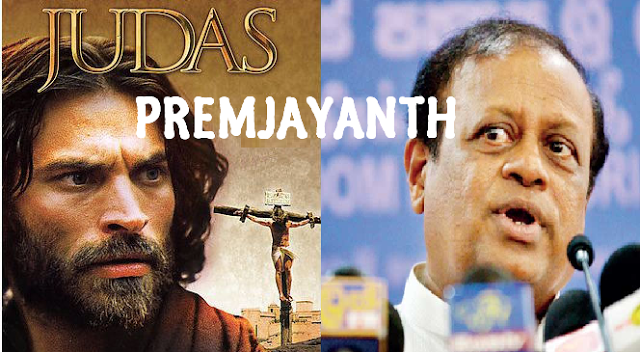
ලංකා දේශපාලන ඉතිහාසයේ ජඩම පාවාදීමට තම අත්සන ගැසූ ප්‍රේමජයන්ත මහතා , එදා ඩලස් හෝ බැසිල් ගේ ජාතික ළැයිස්තු පත්වීම හෘද සාක්ෂියට විරුද්ධව සිදු කලා යැයි පවසන්නේ රෙද්දක් ඇඳගෙනද? “ජුදාස් සහ ප්‍රේමජයන්ත” මැයෙන් යුතුකම වෙබ් අඩවියේ ටික කලකට පෙර පළ කළ මේ ලිපිය කියවන්න. එදා ජුදාස්ට ජේසුතුමා පාවාදීමට සැනසිලි ලෙස ලැබුණු රිදී කාසි 30වෙනුවට අද ප්‍රේමජයන්තට ලැබී ඇත්තේ ඇමති කට්ටකි. එහෙව් ප්‍රේමජයන්තලා අද මහත්වරුන් සේ ඇවුත් හෘද සාක්ෂිය ගැන බයිලා ගසයි .
නල්ලමලේ හෘද සාක්ෂිය කියන්නේ මේවාටය.

-කෝට්ටවත්තේ ගුණසේන පෙරේරා
යුතුකම සංවාද කවය

යහපාලන සංදර්ශන හා තිරෙන් පිටුපස

November 1st, 2015

 -විදුර ක්‍රිෂාන්ත [යුතුකම පාඨකයෙක්] යුතුකම සංවාද කවය

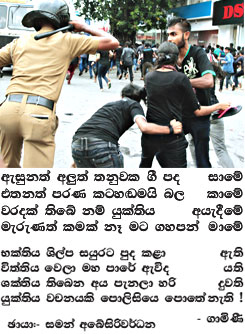
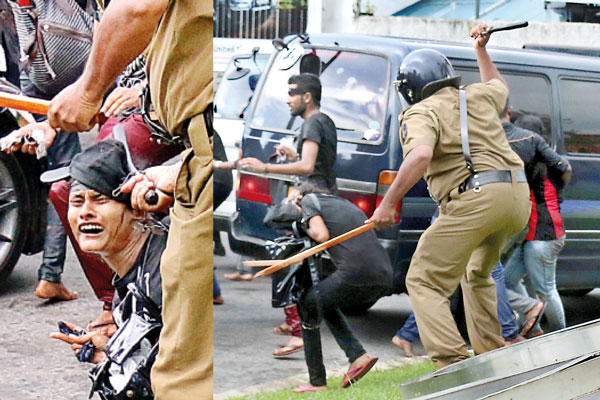
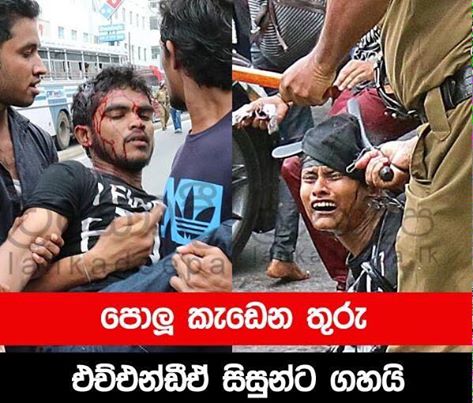
අද මෙරට මාධ්‍ය බොහොම කාර්යබහුලය. ඒ අන් කිසිවක් නිසා නොව ආණ්ඩුව විසින් ඔවුන්ට නියමයෙන් හෝ අනියමින් පවරන කොන්ත්‍රාත්තු නිසාය.මේවාට අප මාධ්‍ය සංදර්ශන යැයි කියමු. අද වන විට සතියක් සතියක් පාසා විවිධ සංදර්ශන දැකිය හැක.විද්‍යුත් මාධ්‍යද ,මුද්‍රිත මාධ්‍යද, සාමාජ ජාලාද ඉතාම උණුසුම් ලෙස මේවාට ප්‍රචාරයන් දෙනු ලැබේ. එක් සතියක ගණිකා වෘත්තිය නීතිගත කිරීම ගැනත්,ඊළඟ සතියේ භූගත බංකර් සොයාගැනීම ගැනත්,මේ සතිය වන විට අන්තරය විසින් කැඳවන ලද එච් එන් ඩී සිසුන්ගේ ඊනියා උද්ඝෝෂණයට පොලීසිය විසින් පහර දීම ගැනත් විශාල ප්‍රචාරයක් දී ඇත.මේ පුවත් දකින අසන බොහෝ දෙනා ඒ පිළිබඳ තම තමන්ගේ අදහස් උදහස් හා විරෝධයන්ද නොඅඩුව දක්වන බව ද සත්‍යයකි.එකක් එකිනෙකට නොගැළපෙන ලෙස සතියක් සතියක් පාසා මතුවන මෙවැනි සිදුවීම් එකට ගත් කළ අපට තේරුම් ගත හැක්කේ කුමක්දැයි කිසිවෙක් හෝ කල්පනා කර ඇත්ද?එසේ කල්පනා කරන කෙනෙක් හට නම් දැනෙන්නේ අනාගතේ අපට,අප රටට මුහුණ දීමට සිදුවන ව්‍යසනයක් ගැන නොවේද? ඉතා පැහැදිලිවම දැවෙන ප්‍රශ්න බොහොමයක් තිබියදී කිසිම වැඩකට නැති යල් පැනගිය සටන් පාඨ හරහා කරළියට මතුවන මේ මාධ්‍ය සංදර්ශන වලින් වසා දැමීමට උත්සහා කරන්නේ ලහි ලහියේ සිදුවන දෙමළ ජාතිවාදයේ මනදොළ පිනවන බෙදුවාදී න්‍යාය පත්‍රය නොවේ යැයි කිසිවෙකුට කිවහැකිද? විශේෂයෙන් ජාතිකවාදීන් විසින් විටින් විට කතාබහට ලක් කරන බෙදුම්වාදී න්‍යාය පත්‍රය එසැණින්ම ජනතාවගේ මනස් වලින් දුරස් කිරීමට නිර්මාණය කරන වැඩ පිළිවෙලක් නොවේද මේ මාධ්‍ය සංදර්ශණ.අවාසනාවකට බොහෝ ජාතිකවාදීන් පවා මෙවැනි සංදර්ශන වලට වහල් වී ඒවා ගැන අනවශ්‍ය ලෙස සංවාද ඇති කිරීමට යත්න දරයි.මෙය පැහැදිලිවම ආණ්ඩුවේ ගැටයකි.

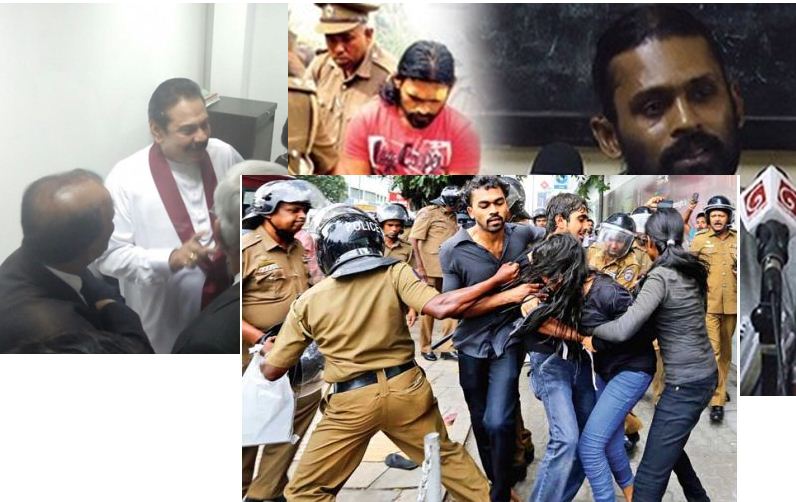
ආණ්ඩුව පත්වූයේ වසර 5කටය. ළඟදී පැවැත්වෙන ප්‍රධාන පෙළේ මැතිවරණයක්ද නැත. එබැවින් මෙවැනි සංදර්ශණ හරහා ආණ්ඩුවට යම් අපකීර්තියක් ඇතිවුවද වසර 5ක් යනතුරු ජනතාවටද කළ හැකි දෙයක් නැත. බෙදුම්වාදීන්ගේ අරමුණු ඉටුකිරීමට වසර 5ක් හොඳටම ප්‍රමාණවත්ය. එක් පැත්තකින් රටේ ස්වෛරී භාවය ,ඒකීයභාවය පිළිබඳ ප්‍රශ්නයකි.මේ අතර රණවිරුවන්ට එරෙහිව ඊනියා යුධ අපරාධ පිළිබඳ උසාවි ,නීති හැදෙන වකවානුවකි.තවත් පැත්තකින් උපාධීධාරීන්ට රජයේ රැකියා ලබාගැනීමට ඇති ප්‍රශ්නයකි.අනිත් පැත්තෙන් වී ගොවියාට,වැවිලි කරුවන්ට සිය වගාවන් විකුණාගත නොහැකිව ලතවෙත්.මේ සියල්ලෙහිම චෝදනාව එන්නේ පවතින ආණ්ඩුවටය.නමුත් මේ ආණ්ඩුව පත් වී ඇත්තේ ඒවාට විසඳුම් දීමට වඩා දෙමළ ජනතාවට සිදුවුණා යැයි කියන ඊනියා අසාධාරණයකට විසඳුම් දීමටය.එබැවින් අනෙක් දැවෙන ප්‍රශ්න යටගසා වැඩකට නැති යල්පැනගිය ප්‍රශ්න කරළියට ගෙන එයි.පසුගියදා සිදු වූ ඊනියා උද්ඝෝෂණයට සිසුන් බහුතරය පැමිණ ඇත්තේ යම් යම් බලකිරීම් මතය.අන්තරේ වැඩ කරන්නේ කාටදැයි අනුර කුමාර අපට කියා දිය යුතු නැත.අනුර කුමාර වැඩ කරන්නේ කාටදැයි රනිල් වික්‍රමසිංහ අපට කියා දිය යුතු නැත.ස්වාධීන කළා යැයි කියන පොලීසිය වැඩ කරන්නේ කාගේ අණටදැයි තවමත් නොදන්නේ යහපාලන ටොයියන් පමණකි. සිදු වූ ප්‍රහාරයට පොලීසිය වගකිව යුතුමුත් එහි අවසාන වැරදිකරුවා ආණ්ඩුව බව පිළිගැනීමට ඊනියා මහින්ද රෙජිමයට විරුද්ධ යහපාලන ටොයියන් කැමති නැත.ඔවුන් කියන්නේ පොලිසිය ස්වාධීන වුවද මහින්ද යුගයේ පොලීසිය ඇතිකරගත් නරක පුරුදු තවමත් පහව නැති බවය.ජනවාරි 8 වෙනිදා රටට ලැබුණු අපමණ අගයත් සමඟ පොලීසිය සතු පරණ පුරුදු අත්හරින්න මාස 9 කටත් වඩා කාළයක් අවශ්‍ය වීද?දින සීයෙන් අලුත් රටක් හැදුනට අලුත් පොලීසියක් හැදුණේ නැතිද?

කෙසේ වෙතත් මේ සියලු සංදර්ශණ අවසානයේ ආණ්ඩුවේ නිරුවත වසාලන සළුපිළි බව අප තේරුම්ගත යුතුය.මේවාට අනවශ්‍ය ලෙස මැදිහත් වී සංවාදයන් ඇති කරවනවාට වඩා ජාතිකවාදීන් උත්සහා කළ යුත්තේ ආණ්ඩුව විසින් යටගැසීමට හදන ජාතික ප්‍රශ්න ගැන නැවත නැවත ජනතාව අවදි කරවීමයි.සමහරවිට මේ ලිපිය කියවන මොහොතේත් ෆෙඩරල් ව්‍යවස්ථාව කෙටුම්පත් වීමට අදාල වැඩ කටයුතු සිදුවනවා විය හැක.මේ අප කවුරුත් නිවැරදි කල්පනාවෙන් සිටිය යුතු කාළයකි.ඊළඟ සතියෙත් තවත් සංදර්ශනයක් බලාපොරොත්තුවන්න.

-විදුර ක්‍රිෂාන්ත
[යුතුකම පාඨකයෙක්]
යුතුකම සංවාද කවය

අවම බලය යොදා මරන්නත් පුළුවන්.. වෙඩි තියන්නේ දෙපාවලට නොව මරන්නමයි.. – පොලිස් මාධ්‍ය ප‍්‍රකාශක [Video]

November 1st, 2015

November 1, 2015 at 12:01 am | lanka C news

අවම බලය යොදා මරන්නත් පුළුවන්.. වෙඩි තියන්නේ දෙපාවලට නොව මරන්නමයි.. – පොලිස් මාධ්‍ය ප‍්‍රකාශක [Video]අත්අඩංගුවට ගැනීම සඳහා පොලීසිය යොදන බලය මරණය දක්වා වුව පැතිරවිය හැකි යයි පොලිස් මාධ්‍ය ප‍්‍රකාශක සහකාර පොලිස් අධිකාරී රුවන් ගුණසේකර මහතා පවසයි.

වෙඩි තැබීමකදී දෙපාවලට වෙඩි තැබීමට නීතියක් නැති බවත් වෙඩි තබන්නේ ඝාතනය කිරීමටම බවත් ඔහු සඳහන් කරයි.

41 Comments to අවම බලය යොදා මරන්නත් පුළුවන්.. වෙඩි තියන්නේ දෙපාවලට නොව මරන්නමයි.. – පොලිස් මාධ්‍ය ප‍්‍රකාශක [Video]”

  1. ආ……………..
    මේ… වැරදීමක්. මේ කොටි පොළීසියේ මාධ්‍ය ප්‍රකාශකනෙ.

    • janaka says:

      ටොයියනි හුජ්ජ කොල්ලනි UNP පාලනයකට ඔබව සාදරයෙන් පිළිගනිමු

      හිතන්න එපා මේ කතා අහම්බෙන් මෙයාගේ මෝඩකමට වැරදිලා කියන කතා කියල
      මේ කතා මෙයා කියන්නේ ආණ්ඩුවේ ඉගැන්වීම මතයි .
      මේ තමයි unp පාලන ක්‍රමය .
      මේකතා කියන්නේ මිනිසුන්ට අනතුරු අගවන්න .”එන්න එපා පාරට රට පාවල දුන්නත් එන්න එපා පාරට උද්ගෝෂණය කරන්න කියලා මිනිසුන්ට මරණ බය ඇතිකරලා ආණ්ඩුවේ පාවාදීම් වලදී ජනතාව පාරට බහින එක නවත්වන්න .
      මේ එන්ජිඕ කාරයෝ මොන බයිලා කිව්වත් ඒ වෙලාවට මුන් ඔක්කොම හැඟෙනවා

      • Cham says:

        Kanagatuwen unath kiyanna thiyenne oba 100% n correct kiyalai. Hithata dukai rata gana.

        • කුවේණි says:

          1815 ඉතිහාසය ආයේ නැවත සිදුවෙනවා වගේ…එසේම අවුරුදු තිහකට කලින් සිදුවූ දේ ආයේ නැවත වෙනවා වගේ… යහපාලනයේ බලයෙන් LTTE කොටින්ට පන දෙන විට අපේ පොලෝසිය මාරු විකල්ලෙන් දගලනවා පොලෝසියේ ලොක්කෝ කළු සුද්දන්ය ලංකාව කියන රටේ දැන් තියෙන්නේ පට්ට පොලීසියක්ය
          මොකෝ එයාලා ඉස්තාලය වහන්නේ…,අස්සයා පැන ගියායින් පස්සේය.

        • RATA wenuwen says:

          ඔය එන්නේ හොද හොද කතන්දර. අනේ මසුරන් වගේ නේද

      • MP says:

        100% agreed with your comment.

      • Axtra says:

        100% agreed with your comment.

    • Champa says:

      This is no joke. The Police Spokesman is issuing a warning to the public. Assaulting students seems to be well planned to make people scared to come to the road in protest. The way the Police justified assaulting students gives away their ulterior motive. Both ‘Yahapalanaya” and the Police are getting ready to receive” the protesters against Geneva Report. Our Police is trying to stage American horror shows in Sri Lanka.

      The statement of the Police Spokesman is not correct. The Police has no right to kill citizens when they can avoid it. They can kill someone if the person shoots at the police, killed somebody, injured somebody or carries a lethal weapon in hand. The Police can’t justify killing as a measure to disperse a protest.

      • SARA says:

        පොලීසිය ගැන මහජනතාව නරක විදිහට, වැරදි විදිහට හිතන්නේ බහුතර පොලිස් නිළධාරීන් පිරිසක් සාධාරණව රාජකාරිය ඉටුකරන අතර වැරදි කරන සුළුතර පිරිසක් ඉන්න නිසා කියා එයට එකඟ වීමට නොහැක . අද මුළු පොලිස් සේවයම එක්තරා ග්‍රහනයකට හසුව තිබෙනවා. ඒ නිසා පොලීසිය අචේතනිකව හා යාන්ත්‍රිකවයි ක්‍රියාකරන්නේ.පොලීසිය ගැන මහජනතාව නරක විදිහට, වැරදි විදිහට, හිතන්නේ, බහුතර පොලිස් නිළධාරීන් පිරිසක් සාධාරණව රාජකාරිය ඉටුකරන අතර, වැරදි කරන සුළුතර පිරිසක් ඉන්න නිසා ,ඒ නිසා පොලීසිය අචේතනිකව හා යාන්ත්‍රිකවයි ක්‍රියාකරන්නේ. ඒ හේතුව නිසාමයි අවනීතිය පිලිබඳ මහජන දෝෂාරෝපණ වැඩිවී තිබෙන්නේ. පොලිස් කාරයා අද ජෝකරයකු කර තිබෙන්නේ, දේශපාලුවන්ගේ වරදාන භුක්තිවිඳින ලොකු පොලිස්කාරයන් විසින්මයි. මේ පොලිස් මාධ්‍ය ප‍්‍රකාශක සහකාර පොලිස් අධිකාරී තුමාගේ ප්‍රකාශය එයට හොද නිදසුනක්

      • Kathriya says:

        Good explanation. Police state is no joke indeed. But people can’t be scared by that. The matter is, people can resist to police when they kill and it would be self defense. There are methods to prevent harm from gas. Plus there are plenty of police officers who are not content with this situation. At an important time they could side with the protesters. Such draconian measures are bound to backfire and it would be harder than they expect.

      • Champa says:

        After this incident there is tension in the society and a strong disapproval of the manner in which the Police handled the student protest.

        The duty of the Police Spokesman is not making irresponsible statements which only escalates the tension, but calm down people and students and try to diffuse the tension.

  2. dasaya says:

    Hutaaaaa…police ya lankawe police ya…..LOL

    • ගිරවා says:

      අවම බලය යොදා මරන්නත් පුළුවන්.. වෙඩි තියන්නේ දෙපාවලට නොව මරන්නමයි.. – පොලිස් මාධ්‍ය ප‍්‍රකාශක – නරකද හයිබ්‍රිඩ් උසාවී දාලා මේ රට විනාශ කොරන්න හදන බටහිර ක්‍රමන්ත්‍රණ කරුවන්ගේ ලීඩර්ස්ලා.ට…. . ඔබේ යහපාලන නායකයින්ට ඔය දඩුවම දුන්නානම් …ජනතාවට නොදී

  3. kgr kumara says:

    ???????????????

  4. wikum says:

    LANKAWE THIYENNE POLIS THRSTHAWADAYAK.ATTHATAMA KANAGATUI.

    • ගුරුළු says:

      තේ මිල එකට එකක් බැහැලාය. රබර් ගැන කතා කොරලා වැඩක් නැතිය. වී ගොයියෝ මේ පාරත් මහ පාරේමය. ගොයියෝ එහෙම කට්ට කද්දි පාලකයා උතුරේ කොටි ඩිස්කෝ ඩාන්ස් දන්න සිහින මවනවාය (ගෝලීය දෙමල ඩයස් පෝරාවට ආරාදනා කර ඇත ) පොලිසිය දැන් කාකි කොට් වල බලය පෙන්වමින් ජනතාව බය කිරීමට හදනවාය මේවා පෙන්වා දෙන්න ඉන්නේත් අපරාදේ කියන්නේ සුළු පිරිසකි ඔවූන් හදුන්වන්නේ සිංහල ජාතිවාදීන් ලෙසය ජඩමාධ්‍ය යන්නේ වාසි පැත්තටය ඔවුන්ට රට ජාතිය ගැන ආදරයක් නැත අපේ රටේ මාධ්‍යවේදීන් ඔවුන්ගේ රැකියාව හරියට කරනවානම් රටේ පාලකයින්ගේ නිලධාරීන්ගේ දුෂිත වැඩ අවම කල හැක කරුමය කියන්නේ එය සිඳු නොවීමය පොලිසිය මෙන්ම රට බල්ලාටම යනවාය.
      අනේ සිංහලයෙනි , මේ බව උබලාට කවදා වැටහේ විද ???

  5. LAS says:

    මේකෙන් පෙනෙන්නේ පොලිසියට නීතිය පිළිබද තියෙන දැනුමයි. ආකල්පමය බංකොලොත් භාවයයි තමයි. මරණ දඩුවම නියම වුවෙක් අත්අඩංගුවට ගන්නකොට යොදන බලය මරණය දක්වා පැතිරවිය හැකිය කියන්නේ මරණ දඩුවම ක්‍රියාත්මක කිරීම පොලිසියට බාරදිලද අළුගෝසු වැඩෙත් පොලිසියම කරන්න යනවද? බොහෝ දියුණුරටවල වගේ අපෙපොලිසියත් නිරායුද කරානම් හරි.

    • SALMAL says:

      වෙඩි තියලා මිනිමරලා බයකරලා ඊට පස්සෙ මොකද වෙන්නෙ දන්නවද ? මේකද යහපාලනය ?

  6. HELAYA 1 says:

    මේ පොලිස් මාධ්‍ය නිවේදකයා අවම සහ අවශ්‍ය බලයක් ගැන කථා කරන්නේ අඩුම තරමේ පොලිස්” යන වචනයේ තේරුමම වත් දැන නොවේ. පිස්සෙක් වගේ මොකකද මේ පොලිසය බට ලන්දේ බලයද?

  7. යමපාලනේ = මැරපාලනේ says:

    සමාවෙන්න මට මොහුව පෙන්නේ යමපල්ලෙක් වගේ ! බොරු තර්ක ගොඩ නගන කළු කෝට් කාරයෙක් ! මේ වගේ උන්ට බලය ලැබුනම මොනවා නොකරයිද ? හඳුනාගන්න යහපාලනය !!!!

    • යමපාලනේ = මැරපාලනේ says:

      88/89 කාලෙත් මේගොල්ලෝ අවම බලය යොදල තරුණයෝ 60000 ක් පමණ ටයර් සෑය වල් වල යැව්වා ! ඒකලත් බටහිර ගැති යහපාලනයක් තිබ්බේ ! පුවත්පත් ඇතුළු මාධ්‍ය සියල්ල පාලනය කරන ! ඔය රාජපක්ෂ මැරයෙක් , හොරෙක් ” කිව්ව ඊනියා සිවිල් සමාජ පුරවැසියෝ ” ” කලාකාරයෝ ” ” මහනායක වරු ඇතුළු ආගමික නායකයෝ ” නිහඬව සිටිය ! විජේවීර ඇතුළු JVP නායකයෝ අනිත් පැත්තෙන් තරුණයෝ අවුස්සලා වලව් වලට වෙලා සැප ගත්ත ! ඒ තුලින් ඝාතන වලට වලංගු භාවයක් ලැබුන ! ඒ කාලේ බටලන්ද ඇතුළු වදකාගාර මෙහෙයවපු (UNP) අය අද බබාලා වගේ රට පාලනය කරනවා ! මිනීමැරීම වරදක් වෙන්නේ නීති පද්ධතියට විතරයි ! ඊට මුවා වෙලා ඕනෑම අපරාධයක් කල හැකියි ! හැබැයි ඒවාට යුධ අපරාධ අධිකරණ නෑ ! සිංහල (බෞද්ධ) වහලුන්ට එරෙහිව යුධ අපරාධ කිරීම වරදක් නොවේ !

      • MELCOM says:

        ඒ කාලෙ ඉඳලා කියන කතාවක් මේ..
        අපිට කොරනවා කියලයි කියන්නේ..
        දින්න නිසා පොලිසියේ ඒ කට්ටිය උඩින් යයි..
        දුන්නු ඈයො කොර ඇණ ඇණ බිමින් යයි..

        • OLU says:

          යම් ප්‍රජාතන්ත්‍රවාදී රටක දේශපාලඥයන් අවස්ථාවාදීන් හා කපටියන් නම් ඡන්දදායකයන් මෝඩයන් නම් එවැනි රටක බිහිවන රාජ්‍ය තරම් භයානක රාජ්‍යයක් මුලු ලෝකයේම නැත්තේය.”

      • Shelton says:

        Absolutely true.

    • saradial says:

      පොලිස් පොලිස් මාධ්‍ය ප‍්‍රකාශක තුමාට ට නිතිය පිලිබදව වැටහීමක් නොමැති බවත් ඔහුට බුද්ධියක් නොමැතිවා පමණක් නොව. තමන්ට බලය තිබුනද එය භාවිතා කරන්නේ කෙසේදැයි කියා නොදන්නා බව මේ කතාවෙන් පැහැදිලිව පෙනේ මෙවැනි නිලධාරින් පොලිස් දෙපාර්මෙන්තුවටම නිගාවකි

  8. CHAMINDA says:

    Yahapalanayata jaya wewa.

  9. Sihala Yaka – සිහල යකා says:

    This is called Beta Landei theory in Indian sub continent.

    Founded and implemented by most capable economic guru Hon. She Ann W Ram Singh in 1989 when he/she ran ill due to actions of Jathikam Vinasam Paksam.

  10. ray says:

    Very good yahapalaya

  11. යහපාල says:

    ඉදිරියේදී යහපාලනයට විරුද්ධව ඇතිවන උද්ගෝෂණ මැඩ පැවැත්වීම සඳහා බය කරන්න කරනලද මෙම ප්‍රකාශයට විරුද්ධව නීතිමය තත්ත්වයක් අැතිකල යුතුයි.

    • විමර්ශක says:

      අනිවාර්යයෙන්ම . නැත්නම් ආයෙ ඇස් බැදගෙන ගිහින් ටයර් දාල පුච්චන යුගයක් එයි.

      • john says:

        ඔළුවට වෙඩි තියන නිසා ෆුල් ෆේස් හෙල්මට් දමා පාරට බැසීමට දැන් රට වැසියාට සිදුවී ඇත ලංකාව කියන රටේ තියෙන්නේ පට්ට පොලීසියක්ය

  12. සැමුවෙල් says:

    තේරුම් ගනිල්ලා! ඔය කියන්නේ ඊලගපාර ඔලුවටම තියනවා කියල…. පොලොසියත් දැන් හැමදේකින්ම චාටර්වෙලා නැති බන්ගස්තාන් වෙලානිසා උන්ට තවත් නැති වෙන්න දෙයක් නෑ. ඒක නිසා ඊලගපාර නම් එකෙක් දෙන්නෙක්ව මරන්නත් ඉඩ තියෙනව!

  13. amaraweera says:

    What does AID to CIVIL power instructions says, You select identify the proper culprit firt. Has it changed now?

  14. විමර්ශක says:

    ඇත්තටම එහෙම භයානක බලතල පොලීසියට තියනවද . එහෙම තියනවනම් ඒව අයින් කරන්න ඕන. එහෙම නැත්නම් සමාජය ඉන්නෙ ගිනිකන්දක් උඩ. සමාජයට තිබෙන භයානකම තර්ජනය පොලීසිය . මම එහෙම කියන්නෙ ඇත්තටම එහෙම බලතල තියනවනම්. මේ ගැන නීති ක්ශේත්‍රයෙ ප්‍රවීනයන් යම් අදහසක් පළ කරන්න ඕන. පොලිස් නිළධාරීන් හිතන්නෙ තමන්ට ඕනම දෙයක් කළ හැකියි කියා. හොඳ පොලිස්කාරයො කියල පිරිසක් නෑ.

    පුද්ගලයෙක් පැහැරගෙන ගිහින් මරල පොලීඉස්යට පුළුවන් තර්ක කරන්න පොලීසිය තුලදි රාජකාරියට බාධා කළා කියල. මේ මං ගොසිප් සයිට් එකක දැක්ක කොමෙන්ට් එකක්.

    ” එක පොලිස් ලොක්කෙකුගෙ ගෙදරහෝස් පයිප් එකක් නැති වුනාලු. ඒකාට් ගෙදරට එන මාලුකාරය සැක කරල ඌව අල්ලගෙන ගිහින් කකුල් දෙකම කැඩුවලු. මාළු කාරය බයික් එක විකුනල හෝස් පයිප්පෙ අරන් දුන්නලු. පස්සෙ පොලිසගෙ ගෑනිට අමතක වෙලා කොහෙ හරි දාල තිබිල පස්සෙ හමුවුනාලු. ”

    පොලිස්කාරයො හිතන්නෙ සිවිල් ජනතාව කියන්නෙ බල්ලො බලල්ලු කියල. කවදාවත් පොලිස්කාරයෙක් කරන වැරැද්දකට දඩුවම් ලැබෙන්නෙ නෑ. උඩුගම්පොල කියන කුප්‍රකට පොලිස්කාරය උසාවියෙ වැරදිකාරය වුනාම ආන්ඩුවෙන් දඩේ ගෙවල ඌට ප්‍රොමෝෂන් එකක් දුන්න.ඒ කාලෙත් තිබුනෙ යහපාලන ආන්ඩුවක්. ප්‍රජාතන්ත්‍රවාදී රටක මෙහෙම නම් හමුදා ආන්ඩුවක් තියන රටවල ජනතාව මොන තරම් පීඩනයක් ඇද්ද

    පොලිස්කාරයො නීතිය උන්ගෙ වාසියට අර්තකථනය කර කර මිනී මරනව.

  15. Hitan says:

    nodakin mekada yako api chande deela path koragaththu yahapalae? hari puluwan nam danna ekek kiyahalla balanna MR paalanei MY3+Ranil+CBK paalanei athare wenasa? mata matama aeraganna hithenawa ooi

  16. don karolis says:

    කටමැත දොඩන්නට මේ නිලධාරියාට රජයෙන් පඩි ගෙවන්නේ මොන පොලිස්පතිද? ඔලුවේ උඩින් දෙපැත්තේ ඉදිමීමක් වගේ පේනවා. අයනු බින්දුව දෙකක් ඇවිල්ලද?

  17. Cham says:

    Kanagatuwen unath kiyanna thiyenne oba 100% n correct kiyalai. Hithata dukai rata gana.

  18. somapala says:

    පොලිස් පොලිස් මාධ්‍ය ප‍්‍රකාශක කටමැත දොඩන්නටඇත්තටම එහෙම භයානක බලතල පොලීසියට තියනවද මේ නිලධාරියාට රජයෙන් පඩි ගෙවන්නේ

  19. s says:

    police yata tiana balatala helikaranu,munta erahiwa udgoshana karana wawuruth nadda appa..

‘ආයුබෝවන්, පොලිස්‌ රාජ්‍යයක්‌ සඳහා ඔබව සාදරයෙන් පිළිගනිමු…’

November 1st, 2015

මනෝඡ් අබයදීර උපුටා ගැන්ම දිවයින

 සේයා ඝාතනය සහ අපරාධ රැල්ලේ වැඩිවීම, යළිත් භීෂණ යුගයක්‌ කරා රට ඇදගෙන යමින් තිබෙන බව පෙනේ. ඒ සමගම අවසාන වගකිව යුත්තෙක්‌ නොමැති පොලිස්‌ වියරුවක්‌ ද රට අරක්‌ගෙන තිබෙන බව පැහැදිලිව පෙනී යයි. ත්‍රිවිධ හමුදාපති තනතුරු දැරූ ප්‍රධාන කිහිපදෙනෙකු මූල්‍ය අපරාධ කොට්‌ඨාසයට කැඳවීම පිළිබඳව තමා නොදන්නා බව ජනාධිපති මෛත්‍රීපාල විසින් ප්‍රකාශ කිරීමෙන් පෙනී යන්නේ, සමහර ක්‍රියාදාමයන් සිදුවෙමින් යන්නේ, ජනාධිපතිවරයාට ද පිට්‌ පොකට්‌ ගසමින් බවය. එක්‌ අතකින් බලන විට තත්ත්වය තමාට ද පාලනය කළ නොහැකි තැනක ජනාධිපතිවරයා සිටින බව පෙනී යන අතර, පොලිසිය විසින් වෙනත් හස්‌තයක බලය උපයෝගී කර ගනිමින් තමනට අවශ්‍ය ආකාරයකට කටයුතු කරන බව ද පෙනී යයි.

ජනවාරි අට වැනිදා බලයට පත් වූ හංස රෙජීමය විසින්, පාර්ලිමේන්තු ප්‍රජාතන්ත්‍රවාදය තමන්ට රිසි ලෙස බෙදා හදා ගන්නා කෑම මේසයක්‌ බවට පත් කර ගත් අතර, එහි ප්‍රධාන ඉලක්‌කයක්‌ බවට පත් වූයේ ප්‍රතිවිරුද්ධ දේශපාලන අදහස්‌ සඳහා මර්දනය දියත් කිරීමය. ද්විත්ව පුරවැසි භාවය හිමි පුද්ගලයන්ට ඡන්ද බලය අහිමි කිරීම වැනි අණ පනත් ගෙන එන ලද්දේ, තමන්ට එරෙහිව සටනට බසිනා සියලුදෙනා දේශපාලන පිටියෙන් අතුගා දමනට මිස විදේශීය විරෝධතාවක්‌ මත නොවේ. රටේ යුක්‌තිය පසිඳලීමේ ක්‍රියාවලිය සඳහා දෙමුහුන් අධිකරණ පිහිටුවමින් ඇමරිකාව සමග එ.ජා. මානව හිමිකම් කොමිසමේදී කරට අත දමාගෙන, විදේශීය විනිසුරුවන්හට අවස්‌ථාව පාදා දෙන අතරේදී, ද්විත්ව පුරවැසිභාවය ලබා සිටින පිරිසට ඡන්ද බලය අහිමි කරන්නේ, ස්‌වාධිපත්‍යය පිළිබඳව ඔද වැඩුණු මනසක්‌ හංස රෙජීමයට තිබෙන නිසා නොව, රාජපක්‌ෂලා කිහිපදෙනෙකු සහ කුමාර් ගුණරත්නම් වැනි තමන්ට අභියෝගයක්‌ විය හැකි කිහිපදෙනෙකු එක්‌ නෛතික වෑයමකින් කනෙන් අල්ලා එළියට දමා ගැනීම සඳහා බව පැහැදිලිය. ශ්‍රී ලංකාවේ පුරවැසිකම කිසිසේත් හිමි නැති අර්ජුන මහේන්ද්‍රන් මහ බැංකුවේ අධිපති ධුරය දැරීම ප්‍රශ්නයක්‌ නොවී, ද්විත්ව පුරවැසි භාවය පමණක්‌ම, හංස රෙජීමයට ප්‍රශ්නයක්‌ වන්නේ ඒ නිසාය.

යහපාලනය යන වැකිය ලොකුවට සඳහන් කරමින් මේ මාස කිහිපයේදී හංස රෙජීමය ගොස්‌ තිබෙන ගමන, බුදු සරණයි යන බෝඩ් එක ගසා ගෙන හොර හරක්‌ ප්‍රවාහනය කරනා ලොරියක්‌ වැනිය. රාජපක්‌ෂ ආණ්‌ඩු කාලයේදී කෝප් කමිටුවේ, සභාපතිත්වය විපක්‌ෂයට නොදීම ප්‍රජාතන්ත්‍රවාදයට කරන ලද ගැරහීමක්‌ යෑයි පෙන්නා දුන් උදවියම, මහ දවාලේ රටේ විපක්‌ෂ නායක තනතුර, ආණ්‌ඩුවට අවශ්‍ය ආකාරයට කොල්ලකෑම යහපාලනය තුළ ප්‍රජාතන්ත්‍රවාදයට තිබෙනා ස්‌ථානය මනාව ලකුණු කර දී තිබේ.

මේ සියල්ල අතරේ රට පොලිස්‌ රාජ්‍යයක්‌ බවට පත් කර විරුද්ධ දේශපාලන අදහස්‌ සහ ක්‍රියාකාරකම් යටපත් කරමින් තිබෙන ආකාරය විසින් සිහි ගන්වන්නේ හිට්‌ලර්ගේ ගෙස්‌ටෝපා පොලිසියමය. 2009 මාර්තු 17 වැනිදා සිය කවරයේ කතාවෙන් නිව්ස්‌ වීක්‌ සඟරාව කියා සිටියේ පොලිස්‌ රාජ්‍යය – ඇමරිකාවේ නව ජීවන මාවත” ලෙසය. තමනට බලයට ඒම සඳහා මඟ හසර කියා දුන් ඇමරිකානු ස්‌වාමියාගේ මාවතේම ශ්‍රී ලංකාව ද ගමන් කරවීම හංස රෙජීමයේ අවශ්‍යතාව වී තිබෙන බව කෙරීගෙන යන වැඩ කටයුතු වලින් පැහැදිලිය. සේයා දියණිය දූෂණය කර ඝාතනය කර දැමීම කලකින් අසන්නට ලැබෙනා බිහිසුණු අපරාධයක්‌ වූවා සේම, එහිදී පොලිසිය විසින් අනුගමනය කරන ලද තගරි යාන්ත්‍රණය ද ඒ සමානම අපරාධකාරී තත්ත්වයක පවතී. පරිපාලන යාන්ත්‍රණයේදී එවැනි සිදුවීම් කලාතුරකින් විය හැකි වුවත් ඒ සඳහා කිසිදු අවසාන වග උත්තරකරුවකු නොමැති වීමෙන් පෙනී යන්නේ, එය ඉවසා ගැනීමට තරම් රාජ්‍යය, පොලිස්‌කරණය වී ඇති බව නොවේ ද…? යම් හෙයකින් මෙවැනි තත්ත්වයක්‌ රාජපක්‌ෂ ආණ්‌ඩු කාලයේ ඇති වූවා නම් පොලිසිය පැත්තක තබා, ආරක්‌ෂක ලේකම් ගෝඨාභය රාජපක්‌ෂගේ කලිසම, ඔලුවෙන්ගැලවීම සඳහා අද ආණ්‌ඩු කරන පිරිසම කෙතරම් වේගයෙන් පෙරට එනු ඇද්ද…? අනෙක්‌ අතට ‘යුද අපරාධ’ සෙවීම සඳහා පුදුමාකාර මහන්සියක්‌ දරනා හංස රෙජීමය, අතිශයින් පැහැදිලි මේ පොලිස්‌ අපරාධය සඳහා කට වසාගෙන සිටින්නේ, යහපාලනය තුළ ස්‌ථාපිත කර තිබෙනා පොලිස්‌ රාජ්‍යයට ඉන් අභියෝගයක්‌ වේ යෑයි සිතාගෙනද…?

රාජපක්‌ෂ ආණ්‌ඩු කාලයේදී මිලිටරිකරණය පිළිබඳ චෝදනාව නිරන්තරයෙන් එල්ල විය. සුදු වෑන් සංස්‌කෘතියක්‌ පවතින බවට උදේ හවා මන්තරයක්‌ සේ ජප කරනු ලැබීය. වෙනෙකක්‌ තබා, හදිසි අනතුරකින් සරසවි ශිෂ්‍ය නායකයන් දෙදෙනකු මියයැම ද ඝාතන කුමන්ත්‍රණයක්‌ බවට කතා පතුරුවනු ලැබීය. ජවිපෙ නායක අනුර කුමාර දිසානායක මුහුණ දුන් රිය අනතුර වාසනාවට බරපතළ තත්ත්වයක නොතිබිණි. අවාසනාවට එය බරපතළ තත්ත්වයකට පත් වූවානම්, එහි නිසැක වගකිව යුත්තා වන්නේ, රාජපක්‌ෂ ආණ්‌ඩුවය. ඒ තරමටම සියල්ල රාජපක්‌ෂගේ කුමන්ත්‍රණ බවට පත් කර තිබුණි. නමුත් සාමාන්‍ය ජන සමාජය විෂයෙහි සුදු වෑන් හෝ මිලිටරිකරණයක්‌ ක්‍රියාත්මක වනු දැකිය නොහැකි විය. ත්‍රස්‌තවාදය මර්දනය සඳහා සහ එය යළි කරලිය වෙත එළඹීම වළක්‌වනු සඳහා හමුදා ක්‍රියා මාර්ග අනුගමනය කරන ලද බව පෙනී ගිය මුත් රාජපක්‌ෂ යාන්ත්‍රණය අතිශයින්ම විවේචනය කරන ලද කිසිවකු උසාවි කූඩු ගානේ රැගෙන යැමක්‌ හෝ ඔවුන් විෂයෙහි භීතිය පතුරුවා හැරීමක්‌ රහසිගත ලෙස ක්‍රියාත්මක නොවීය. යමක්‌ වූවානම් ඒ එළිපිටය.

සරත් ෆොන්සේකා වෙත දියත් කරන ලද මර්දනය රාජපක්‌ෂ ආණ්‌ඩුව දේශපාලන පලි ගැනීමක්‌ සඳහා යොමු වූ එකම අවස්‌ථාව වුවත් එහිදී විපක්‌ෂය ක්‍රියා කරන ලද්දේ දියාරු තැනක සිට වීම නිසා, එය වළක්‌වාලීම සඳහා තිබූ අවස්‌ථාව ගිලිහී ගියේය. පොදු අපේක්‌ෂක වශයෙන් 2010 දී ඉදිරිපත් වෙලා සිද්ධ වුණු දේවල් ගැන මතක්‌වෙද්දීත් ඇඟේ මයිල් කෙළින් වෙනවා. පොදු අපේක්‌ෂක වශයෙන් ඉදිරිපත් වෙන කෙනාට ජීවිතයත් මරණයත් අතර සටනක යෙදෙන්න බලාගෙනයි, සටනට එන්න වෙන්නේ. මැතිවරණ කාලෙට කවුරුත් ළඟ ඉඳියි. හැබැයි බැරිවෙනකොට සේරම දාලා යාවි. හිරබත් කන්න වෙන්නේත් තනියමයි. මේ දේවල් දැනගෙන, පොදු අපේක්‌ෂක එනව නම් හොඳයි….” යනුවෙන් සරත් ෆොන්සේකා විසින්, නාවල සෝලිස්‌ ශාලාවේදී, සාධාරණ සමාජයක්‌ සඳහා වූ ජාතික ව්‍යාපාරයේ මාධ්‍ය හමුවකදී පැවසුවේ, පොදු අපේක්‌ෂක ලෙස මෛත්‍රීපාල සිරිසේන පිල් මාරු කරන්නට සතියකට පෙරය. සරත් මේ ප්‍රකාශය සිදු කරන විට, ඒ මේසයේම එක තැනක රනිල් වික්‍රමසිංහ ද වාඩි වී සිටියේය. සරත් ෆොන්සේකා තමන්ගේ බිලි බෝයි ලෙස සලකනවාට වඩා වැඩි දෙයක්‌ ඔහු පොදු අපේක්‌ෂක ලෙස පත් කිරීමෙන් විපක්‌ෂය බලාපොරොත්තු නොවීය. තමන්ට ජය ගත නොහැකි අභියෝගය සඳහා බිල්ලක්‌ ලෙස විනා, ඉන් එහාට සරත් ෆොන්සේකා පිළිබද සෙවීම, විපක්‌ෂය විසින් අත හැරීම විසින් රාජපක්‌ෂ පාලනය ඔහුගෙන් පලිගැනීම ද විශාලනය විය. සරත් ෆොන්සේකාගෙන් රාජපක්‌ෂ ආණ්‌ඩුව ගත් වාඩුවේ, කුඩා පංගුවක්‌ සඳහා, එවකට සිටි විපක්‌ෂයේද වගකීමක්‌ තිබෙන බව පෙනේ.

මේ හැරුණු විට මිලිටරිකරණය ලෙසින් එම කාලයේදී ගර්හාවට ලක්‌වූයේ, නාගරික සංවර්ධන විෂයේදී රාජපක්‌ෂ ආණ්‌ඩුව විසින් කරන ලද කැපී පෙනෙන සේවවාවය. බ්‍රිතාන්‍ය යුගයෙන් පසු අත්හැර දමා අයාලේ යමින් තිබූ නාගරික සංවර්ධනය වේගවත් සහ මනා සංවර්ධනයකට එම කාලයේදී ලක්‌ වූ අතර ඒ සඳහා පුරෝගාමී දායකත්වයක්‌ ලබා දෙන ලද්දේ හමුදා යාන්ත්‍රණය මගිනි. ඒ නිසාම යම් විනය සීමාවක්‌ තුළ ඒවා පරිහරණය කිරීමට සිදුවීම, මිලිටරිකරණය ලෙස සමහරුන් අර්ථ දක්‌වන්නට විය. 2009 වසරේ සිට, සීග්‍ර දියුණුවක්‌ පෙන්වන නගර 132 ක්‌ සැලකිල්ලට ගෙන මාස්‌ටර් කාඩ් Êආයතනය විසින් සිදු කළ 2015 වාර්ෂික සංචාරක සමීක්‌ෂණය අනුව කොළඹ නගරය ලෝකයේ වැඩිම වේගයකින් සංවර්ධනය වන නගරය ලෙස පළමුවැනි ස්‌ථානයට පත් වූයේ 21% ක දැවන්ත වර්ධන වේගයක්‌ ලබා ගනිමින්ය. මෙවැනි සංවර්ධනීය පිළිවෙත් සහ ත්‍රස්‌තවාදය සඳහා නිරානුකම්පිතව, හමුදාවන් විසින් කරන ලද සේවය මිලිටරිකරණය ලෙස හඳුන්වා දුන් පිරිස, වර්තමානයේ දී පොලිස්‌ රාජ්‍යයක ආරම්භක අවස්‌ථාව සනිටුහන් කරමින් ප්‍රතිවිරුද්ධ දේශපාලන මත සඳහා බැටන් පොල්ල දික්‌ කිරීමත්, අතට අසුවෙන සියල්ල පොලිස්‌ බලයෙන් ප්‍රශ්න කිරීමත් සමාජ ව්‍යසනයක්‌ දක්‌වා වන දුර ගමන් කර තිබේ. විපක්‌ෂයට පාර්ලිමේන්තුව තුළ හිමි තැන විපක්‌ෂ නායක තනතුරේ සිට පක්‌ෂ නායක තත්ත්වය දක්‌වාම අහෝසි කර තිබේ. පාර්ලිමේන්තුවෙන් පිටතදී, තමනට අභියෝගයක්‌ වන ඕනෑම අයෙකු පොලිසියේ ‘දත් තිස්‌ දෙක’ මැද්දේ තබා තිබේ. එවැනි චරිතයක්‌ පාරේ වමෙන් ගිය ද රිමාන්ඩ් කරන තත්ත්වයක්‌ මතු කර තිබෙන්නේය.

මාධ්‍යවේදී සමන් ගමගේ මුහුණ පා සිටින තත්ත්වය ද තිබෙන්නේ එවැනිම අන්තයකය. බන්ධනාගාරයේ සිදු වූ වෙඩි තැබීමකින් සිරකරුවන් මිය යැම පිළිබඳව සමන් විසින් දක්‌වන ලද අදහස හේතුවෙන් මේ වන විට ඔහු පසු වන්නේ ශරීර ඇප තැබූ තත්ත්වයකය. ඔහුගේ ලිපිය සඳහා නඩු පවරා තිබෙන්නේ, දණ්‌ඩ නීති සංග්‍රහය යටතේය. පෑනට මෙවැනි කල දවසක්‌ උදාවී තිබෙන්නේ, නිදහස්‌ මාධ්‍ය සඳහා කිසිදු වැටක්‌ නැතැයි සපථ කරමින් බලයට පැමිණි ආණ්‌ඩුවක්‌ යටතේ වීම විශේෂත්වයකි. පුදුමය වන්නේ කිසිදු මාධ්‍ය සංවිධානයක්‌ විසින් තවමත්, සමන් ලක්‌ව සිටින ඉරණම අවම වශයෙන් සාකච්ඡාවටවත් ලක්‌ කර නොතිබීමය. මේ සියල්ලෙන්ම පෙනී යන්නේ, ‘ආයුබෝවන්, පොලිස්‌ රාජ්‍යයක්‌ සඳහා ඔබව සාදරයෙන් පිළිගනිමු’ යන නාම පුවරුව අප විසින් පසු කර ඇති බවය.


Prairie Awards to Wijewardene Clan for Fostering Lankan Journalism–Focus on Ranjith S. Wijewardene (Part 1)

November 1st, 2015

By Shelton A. Gunaratne

 Professor of communication emeritus, MSUM, and lead author of Gunaratne, S. A., Pearson, M., & Senarath, S. (Eds.). (2015).  Mindful Journalism and News Ethics in the Digital Era: A Buddhist Approach. New York & London: Routledge.

A ‘Chip’ Off the ‘Old Block’

Am not I a child of the same Adam…

 a chip of the same block, with him?

— Bishop (of Lincoln) Robert Sanderson’s Sermons (1621)

[Note: In this essay, I use this old saying a chip of the same block” to mean someone who resembles his/her parent, especially in character. In Buddhist thinking, however, no namarupa can be identical because of bhava (becoming) that engenders the three marks of cyclic existence: anatta (no selfness), anicca (inconstancy) and dukkha (unsatisfactoriness).]

MOORHEAD, MN — Although Ranjith Sujiva Wijewardene, 78 (b. 30 June 1937), is only a couple years older than I, the dynamics of the Five Aggregates that make up him and me, which the Buddhist theory of paticcasamuppada (dependent co-arising) says conditioned our respective state of dukkha (unsatisfactoriness) in our current bhavacakra (wheel of becoming), invariably worked out in his favor. The karma (intentional action) etched into his sankhara (dispositions) aggregate apparently had a great impact in shaping his namarupa by scuttling many of the defilements that afflict most of the hoi polloi.

The proverb like father, like son” fits well with Ranjith’s obsession with newspaper business. While his father Don Richard Wijewardene (DRW) dominated Lanka’s journalism and newspaper publishing industry in the first half of the 20th century, Ranjith and his cousin Upali Wijewardene (1938-1983), son of Don Walter, the youngest brother of DRW, dominated the island’s newspaper scene in the last two decades of the same century with the launching of two successful publishing houses to compete with the Associated Newspapers of Ceylon Ltd. (ANCL), the venerable publishing company that DRW had meticulously built up, only to be taken over by the state in 1973  as political vengeance.

In retrospect, however, from Ranjith’s current perspective, The takeover was not all political vengeance. Revenge must have been sweet, but there was much cold calculation between 70 and 73 as to who would control ANCL eventually. This contention kept the wolves from the door, until the Dudley Senanayake funeral in Ap6il 73.”

These three companies (ANCL, Upali Newspapers Ltd. and Wijeya Newspapers Ltd.) reflect the indisputable immersion of the Wijewardene clan in fostering Lankan print journalism. The three marks of cyclic existence are clearly discernible in the history of newspapers and journalism. No newspaper can withstand dukkha because everything in existence has to go through the process of becoming, old age-death and re-becoming. The styles of journalism also go through the same process.  We cannot predict with any certainty what kind of news outlets and news styles will dominate the local journalism scene by the mid-century.  Thus, we have to concede that the Wijewardene clan has so far succeeded” in newspaper publishing by adjusting their products to suit the ongoing social and political changes.

Based on the foregoing materialistic reasoning, I offer this month’s PRAIRIE ROSES award to the Wijewardene clan for its unsurpassed service to foster journalism on the island for more than a century from 1914 when DRW in collaboration with his younger brother Don Charles (DCW) purchased the goodwill and name of the influential Sinhalese newspaper Dinamina that H. S. Perera had founded in1908. It was financially doddering upon Perera’s death in 1914, just a couple years after DRW returned from Cambridge, where he studied law. DRW was determined to found a newspaper-publishing house that could canvass for Ceylon’s independence.

When he officially formed his newspaper publishing business as the Associated Newspapers of Ceylon Ltd. (ANCL) in 1926, Dinamina became his first buyout on the way to becoming a media baron.  It became ANCL’s flagship Sinhalese language newspaper, which was able to up its circulation to 70,000 copies. Its formidable dominance remained unchallenged until the country’s independence in 1948, when D. B. Dhanapala (1905-71), a Tissamaharama-born journalistic genius educated in Allahabad, joined the rival Times of Ceylon (ToC) group to unleash the innovative Sinhalese daily Lankadeepa and its Sunday issue Irida Lankadeepa. (Dhanapala who defied the ToC’s policy of pro-UNP partisanship quit the editorship of Lankadeepa in1960 to become the chief editor of the now defunct Dawasa and Rividina, the Sinhala flagships of the new Independent Newspapers (Sun) group started by Sepala Gunasena in 1960. Dhanapala died in 1971 at age 66. Although the new company started with SLFP’s blessings, it did not support the press control measures of the left-of-center Bandaranaike coalition’s 1965 election campaign. The Bandaranaike coalition sealed the Independent Newspapers Ltd. on 20 March 1974 under Emergency Regulations resulting in the group’s virtual demise after 13 years. Dissensions in the ownership and mismanagement killed the Independent/Sun group in 1990.)

Although it is hard to say whether DRW modeled himself on British newspaper barons like Northcliffe and Beaverbrook, he certainly adopted the strategies they used to weed out competition by purchasing their trade names, goodwill, advertising base, and plants. However, DRW’s Buddhist background enabled him to discipline his dispositions (sankhara) aggregate to follow the middle path (magga).  His was a noble intention to set up a nationalist publishing house commanding the respect of the colonial administration, which favored the two oldest English language newspapers in Ceylon set up by the British–the Times of Ceylon (founded in 1846) and the Observer (founded in 1834).

The competition included two other daily newspapers: the Ceylon Morning Leader (owned by the family of W. A. de Silva, a Sinhalese novelist, with J. L. C. Rodrigo as its last editor who followed Armand de Souza, the man who started it as the organ of the Planters Association) and the Ceylon Independent (run by Sir Hector van Cuylenberg as the voice of the Burgher community’s representation in the Legislative Council). In 1914, Ponnambalam Ramanathan (later Sir) launched another daily, the Ceylonese, to promote his candidature for the educated Ceylonese seat in the Legislative Council against H. Marcus Fernando, who had the backing of the Morning Leader.  But the group supporting Ramanathan did not know how to run a newspaper. DRW, who knew that in the newspaper business money alone could not buy success, found the opportunity he was looking for in 1918, when he acquired the goodwill and plant” of the bankrupt newspaper, the Ceylonese, with a disappearing circulation” of about 2,000 for the bargain price of Rs. 21,000. He let the Ceylonese go through its decay and death (jaramarana), but used its old plant at Tichborne Hall in Maradana to facilitate its re-becoming (punarbhava) as the Ceylon Daily News (CDN).

Biographer H. A J. Hulugalle, the longtime CDN editor from 1931-1948, asserts that DRW in due course bought the Independent, and put the Morning Leader out of business” between 1928-32. DRW made the Daily News a mass circulation newspaper of more than 55,000 copies by drastically reducing its price and improving its editorial matter and advertising revenue. (Its estimated current circulation is 88,000.)

Originally, both the Dinamina and the Daily News were housed at the unsatisfactory Tichborne Hall facility in Maradana until 1923, when DRW took the bold step of making a bid for the Ceylon Observer,” which had its office and plant on Baillie Street in Fort. The Ferguson dynasty had passed on the Colombo Observer to a syndicate headed by the European Association of Ceylon, which agreed to accept DRW’s bid for Rs. 100,000 with Rs. 30,000 borrowed from DRW’s older brother Don Lewis (DLW). He changed the name of the country’s oldest newspaper from Colombo Observer to Ceylon Observer, and moved the editorial and administrative offices of the CDN and Dinamina to the building he rented next to the Observer.  In 1928, he started a Sunday edition of the Observer; and in 1930 a Sunday Sinhalese newspaper, the Silumina (with an estimated current circulation of 265,000). In 1932, he added a Tamil newspaper, the Thinakaran, and in 1934 its Tamil Sunday edition.

These astute moves made DRW the most successful newspaper baron in Ceylon with only the ToC as his main competitor. Hulugalle wrote, Before he was fifty, D. R. Wijewardene had established several flourishing newspapers, built up a great business and influenced the course of the island’s history. Perseverance, courage and a high sense of public duty were the main elements of his success.”

Following the successes of all his acquisitions, DRW began making plans to build a palazzo for his newspapers” on the present site of Lake House leased from the Government on very advantageous terms.” He shifted all the personnel and equipment of ANCL to Lake House by October 1929. He owned Rs. 600,000 worth of shares in ANCL while other members of the Wijewardene clan owned Rs. 100,000 worth of shares.  Another younger brother of DRW, Don Edmund (DEW), a skillful obstetrician, took control of the financial affairs of the company.

However, DRW’s success in establishing his newspaper empire” was not driven by his lust (tanha) for making unconscionable profits. Unlike the Australian media baron Rupert Murdoch who violated the moral/ethical (sila) principles of the middle path (magga) to make a fast buck, DRW ploughed back most of his earnings to strengthen the ANCL to fulfill the needs of all of the nation’s ethnic groups to free themselves from the colonial yoke.

Ranjith acted very much like his father when he established the Wijeya Publications/ Newspapers in 1979 after the Lake House Law of 1973 deprived him of his of ANCL ownership, the silver spoon” he inherited.

I was so fed up with newspapers after 1973, that a return to publishing in 1979 was [mainly] for periodicals and magazines,” he told me in recent correspondence.  But the desire to continue his father’s immersion in fostering the country’s print press drew him back to newspaper business when the ideal opportunity arose in the mid-1980s.

When it came to newspapers again, I wasn’t very quick at ‘grabbing the opportunity.’ I sort of drifted into it (with diffidence and trepidation), via a series of fortuitous circumstances. Kammic volition? Could be.”

By then, he had learned the hazards of depending on a mega newspaper business alone.

The opportunity he was seeking arose when the defiant ToC group, which DRW failed to conquer during his lifetime, when the state took over the ToC under the Business Acquisitions Act following boardroom battles” after the Sangarapillai Trust sold its 40 percent shareholding. As his dad would have done under similar circumstances, Ranjith purchased the titles and the library of the defunct ToC when the UNP returned to power in 1977 under J. R. Jayewardene (Ranjith’s cousin and son of Agnes Helen, one of DRW’s two sisters).

This was a shrewd move because it enabled Ranjith to obviate the massive cost of introducing new titles to compete with the established titles of ANCL, the tottering Independent Newspapers (Sun) Ltd, and the new Upali Newspapers Ltd started by his flamboyant cousin as a political tool rather than a profit-making commercial venture, and re-enter the newspaper business.

Success in the business was due to my good fortune in a dedicated staff of some exceptional people. They were not handpicked through some special intuition of mine, but they happened to be there,” Ranjith revealed.

(Part 2 of this essay will tell the story of the conversion of Lake House into a political institution, the Esmondsization” of Lake House after the death of its founder, my connections with Lake House, and the who’s who of the Wijewardene clan and their political clout.)


Mailgram Study, Stanford Prison Experiment and Hammond Hill to the ‘K’ (Killing) Point

November 1st, 2015

Dr. Ruwan M Jayatunge

Sometimes this whole world

is just one big prison yard. 

Some of us are prisoners, 

the rest of us are guards. 

 — Bob Dylan

The Psychologist Albert Bandura once said “Our ability to selectively engage and disengage our moral standards helps explain how people can be barbarically cruel in one moment and compassionate the next.”. Indeed man is capable of committing atrocities and derives satisfaction. Contrary to that man is capable of love and care. But our past experiences in Nanking, Guernica, Gulags, Auschwitz- Birkenau, Buchenwald, My Lai, Killing Fields in Cambodia, Rwanda, Abu Ghraibprison etc indicate the destructive and torturous dynamism inside the Homo sapiens.

mailgram

In 1929 with the publication of ‘Civilization and Its Discontents’ Sigmund Freud concluded that the conflict between sexual needs and societal mores is the source of mankind’s propensity for dissatisfaction, aggression, hostility and ultimately, violence. Freud saw the savage and destructive part of the human psyche.

Man’s inhumanity to man has been noticed since the dawn of civilization. There have been numerous theories and elucidations to explain why man commits atrocities against another man. In the past few decades researchers like John Dollard, Stanley Milgram , Philip Zimbardo etc tried to find answers to these age old questions.

Stanley Milgram’s Obedience Experiment

Stanley Milgram’s obedience to authority experiment countered the participant’s moral beliefs against the demands of authority. His Experiment was created to explain some of the horrors committed by the Nazis during the WW2. Thisexperiment measured how far people would go in electric-shocking others as part of a learning project. After this experimentStanley Milgram stated that a substantial proportion of people do what they are told to do, irrespective of the content of the act, and without pangs of conscience, so long as they perceive that the command comes from a legitimate authority. In 1974Milgram wrote…

It is ironic that virtues of loyalty, discipline, and self-sacrifice that we value so highly in the individual are the very properties that create destructive organizational engines of war and bind men to malevolent systems of authority. The aftermath of the Holocaust and the events leading up to World War II, the world was stunned with the happenings in Nazi Germany and their acquired surrounding territories that came out during the Eichmann Trials. Eichmann, a high ranking official of the Nazi Party, was on trial for war crimes and crimes against humanity. The questions is, “Could it be that Eichmann, and his million accomplices in the Holocaust were just following orders? Could we call them all accomplices?”

 Milgram’s experiment explored the degree to which people could be persuaded to obey an authority figure blindly and perform cruel acts although it conflicted with their conscience.

Stanford Prison Study

A world renowned social psychologist Philip Zimbardo conducted a prison simulation study in 1971 at the StanfordUniversity with his student volunteers. He randomly divided these volunteers into guards and inmates and then placed in a mock prison environment. This study continued for six days and Zimbardo observed radical behavioural changes in guards and prisoners over time. He noticed sadistic abuse in prison guards and abject submissiveness among the prisoners.   Professor Zimbado’s Stanford prison experiment uncovered the manifestation of deindividuation, vandalism and dehumanization when ordinary people were put in to specific authoritative figures with unlimited power and control over others. He showed that ordinary people could be led to engage in anti-social acts by putting them in situations where they felt anonymous. This simulation study demonstrated how ordinary people sometimes turn evil and commit atrocities.

The Stanford Prison

The Stanford prison experiment narrates the power of roles, rules, symbols, group identity and situational validation of behaviour. When the prison experiment was continuing the prisoners demonstrated symptoms of depression   and extreme stress while the guards had become more and more sadistic. This research revealed the psychological impact of becoming a prisoner or prison guard. Many years after this research Philip Zimbado expressed his thoughts thus.

“It does tell us that human nature is not totally under the control of what we like to think of as free will, but that the majority of us can be seduced into behaving in ways totally atypical of what we believe we are,” 

The Lucifer Effect: Understanding How Good People Turn Evil

Professor Philip Zimbardo’s 2007 book ‘The Lucifer Effect: Understanding How Good People Turn Evil’ argues that people are not born good or born evil. He gives numerous case examples how the situational forces and group dynamics affect people to commit atrocities.

……..the idea that an unbridgeable chasm separates good people from bad people is a, source of comfort for at least two reasons. First, it creates a binary logic, in which, Evil is essentialized. Most of us perceive Evil as an entity, a quality that is inherent, in some people and not in others. Bad seeds ultimately produce bad fruits as their destinies unfold. We define evil by pointing to the really bad tyrants in our era, such as Hitler, Stalin, Pol Pot, Idi Amin, Saddam Hussein, and other political, leaders who have orchestrated mass murders. We must also acknowledge the, more ordinary, lesser evils of drug dealers, rapists, sex-trade traffickers, perpetrators of fraudulent scams on the elderly, and those whose bullying destroys the, well-being of our children………….

………… War engenders cruelty and barbaric behavior against anyone considered the, Enemy, as the dehumanized, demonic other. The Rape of Nanking is notorious, for the graphic detail of the horrific extremes soldiers went to degrade and destroy innocent civilian “enemy non-combatants.” However, was it a singular incident and not just another part of the historical tapestry of such inhumanities, against civilians we might think it an anomaly. British troops executed and raped civilians during the U. S. Revolutionary War. Soviet Red Army soldiers raped an estimated 100,000 Berlin women toward the end of World War II and between, 1945 and 1948. In addition to the rapes and murders of more than 500 civilians, at the My Lai massacre in 1968, recently released secret Pentagon evidence describes 320 incidents of American atrocities against Vietnamese and Cambodian, civilians. (The Lucifer Effect: Understanding How Good People Turn Evil )

The Untold Story of the Hammond Hill Prison

The Stanford Prison experiment immensely helps us to understand the dynamics of the Hammond Hill Prison in Sri Lanka. Originally Hammond Hill was not a prison and it was a fortress that was under the control of the Archaeological department. With the 1971 youth uprising it was converted in to a prison. The prisoners were young Sinhala youth and the guards were mostly Tamils. The prison guards had no prior experience of handling the Sinhalese rebels and they never had any training. It became a form of an unplanned massive experiment under intense situation.

In 1971 a rebel group known as the JVP attacked the democratically elected Mrs. Sirimavo Bandaranaike’s regime in Sri Lanka. The rebel group was mainly consisted of unemployed Sinhalese youth. Soon the insurrection was crushed and a large number of young rebels were taken as prisoners. The authorities decided to send hundreds of hardcore members to the JaffnaHammond Hill Prison Island.

The Hammond Hill fortress was built by the Dutch in the late 17th Century and they had large nine dungeons to store gunpowder. These dungeons were turned in to prison cells in 1971. At the Hammond Hill prison, the prisoners had to face inhuman conditions. The dungeons had no ventilations and it was infested with rats. The air inside the dungeons was not breathable. The heat was intolerable and due to poor ventilation almost every prisoner became sick. Many prisoners had anxiety and panic reactions. A number of claustrophobic attacks were reported within the first few weeks of their arrival.

After nearly 37 years a former prisoner recalled the situation thus: It was like living in hell. We had a feeling that we were trapped inside a huge concrete barrel. We could not breathe. We could not move. We were jam-packed inside the dungeon. This experience was like Pinocchio Inside the belly of the whale. But it was not a fun, extremely horrible. We slept on each other and at night rats freely walked over us. We had no human contacts. No visitor came to see us.  We were locked up most of the time”

The condition became worse when a 16 year old prisoner named Arnuna Shantha Lamahewa died as a result of savage beatings by the Police and poor sanitary facilities in the prison cell. He was a school boy who was arrested by the Police and then transferred to the Hammond Hill. We was sick for a number of days and never received any medical treatment. The inmates were helpless and sadly observed his worsening condition. Although they cried for help no guards came to open theprison doors. When the boy died the guards took his body and later buried near the Elara Naval base.

The Hammond Hill Prison was not suitable for human habitation. This small island had no fresh water supply. There was no waste management system and dungeons were filled with urine and excrement. The sanitary condition was extremely poor and most of the prisoners suffered from skin diseases. The Hammond Hill prison had no medical facilities. The food rations were limited and it was almost impossible to eat unpalatable food with low nutrition. Often the prisoners starved. Malnutrition and chronic dehydration were common among the prisoners.

The prisoners of the dungeon number 6 made an unsuccessful attempt to dig a secret cave. They knew it was impossible to penetrate the thick and hard lime stone. But they kept on digging the dungeon wall with primitive tools. As revealed by a former Hammond Hill prisoner, although this attempt was insane this effort gave the detainees some hope and preserved their sanity.

The Hammond Hill experience reminded them Dostoevsky’s the house of the dead. The prisoners had no way of getting any information from the outside world. They were totally cut off from the civilization. The relatives were not allowed to visit them. For a long period they had no legal representatives. Without knowing what’s happening in the outside world the prisoners believed that their comrades were fighting the government forces and they would be victorious and soon the Red guards were coming to release them from this awful prison. Most of the inmates believed this myth for a long time. Eventually they realized the truth about the uprising. When the hope was lost the prisoners became more and more depressed and aggressive.

After a few months the prisoners started analyzing their situation and ideological differences emerged. The friendly bunch of comrades who fought the government forces together risking their lives began to criticize each other. The comrades found traitors among their inner circle. It was an excruciating experience for them who were ready to sacrifice their lives for each other.

Following these ideological clashes some inmates were branded as traitors and violently beaten by the hard core members. There was an assault team that consisted of hard-line members. This team was called ‘Poriyal Hamudava (assault brigade). They instigated physical beatings of their fellow comrades. The victims pleaded the prison guards and the Naval Officers to save them from savage beatings.

Severe restrictions were imposed on so called the traitors. They were excommunicated by the other prisoners. When the prisoners had no control over their situation they tried to control it by using an ideological framework. The hardliners proclaimed that communist rules prevail in the Hammond Hill prison island and later this was known as Hammond HillSocialism. They abolished the ownership of private property although they had very limited personal items. Even the prisoners were not allowed have their own pair of slippers as private property.

Following the ideological confrontations some victims became detached from the main group and lived in isolation. They renounced the common ideology that made unit cohesiveness before the uprising. Some collaborated with the prison guards and their interrogators. Mistrust and culture of silence could be observed among the inmates.

Many of the prisoners had negative feelings about their future. The young inmates had no outlet to reroute their biological needs at the Hammond Hill Island. Most of the detainees were in their early twenties and unmarried. They were dedicated to a political cause. But when their revolution became a fiasco and some of the trusted comrades collaborated with guards and the Police many became desolated, confused and disconnected.

According to Mr. Wilfred Peris (alias Kegalle Peris) a former Hammond Hill prisoner, homosexual relations began to emerge among some of the young prisoners. These heterosexual young men who dedicated their lives to a Marxist philosophy now found a bizarre emancipation in gay relationships. Stress anxiety and unpredictability totally changed their sexual orientation. There were graffiti of naked females on the toilet walls and some prisoners used to achieve temporary satisfaction by observing these images and performing masturbation. Despite all these drastic changes some hardliners did not trade their ideology and stayed unchanged. They constantly discussed Karl Marx’s theories and the Communist Manifesto.

Hammond Hill Prison Guards

Most of the rebels were arrested after their unsuccessful attack on the April 5th 1971 at the Jaffna Police station and theprison complex. Several of the prisoners were shot by the security forces during the attack and some Sinhalese Police officers had an urge to kill the Sinhala rebels who surrendered to the security forces. But their attempt became ineffective when the Assistant Superintendent of Police Mr. R. Sunderalingam (who was a Tamil Officer) intervened. Mr. Sunderalingam ordered the men to disperse and to give medical treatment to the wounded suspects. Even today the former Hammond Hill prisoners remember this Tamil Police Officer who saved their lives with absolute respect.

Before transporting the prisoners to the Hammond Hill Prison they were savagely beaten at the Jaffna Police station and at the Jaffna prison. They were then taken to the Hammond Hill island by boats.

The prison guards were very harsh on the prisoners at the Hammond Hill. There was no supervision by senior officers. For long hours the prisoners were locked inside the dungeons that filled with extreme heat. It was so dark inside the dungeons even during the day time.  The prisoners had no sense of orientation. Even for a life-threatening medical emergency the guards never opened the doors. The tension went up to such a point on one occasion the inmates broke the iron doors and set themselves free. The prisoners gathered under a Bodhi tree that was near the dungeons. But they had no intention of fleeing the island. Soon the Naval guards surrounded the prisoners and ordered them to surrender. The Naval guards said that they would open fire if any prisoner tries to escape. One of the educated and respected prisoners among the group explained the Naval guards that the inmates had no war with the Navy and they were only fighting injustices committed by the prisonguards. Their aim was not to escape but to have fresh air which is a basic human right. Later this prisoner was identified as Mr. S. D Somarathna.

Although the prison guards of the Hammond Hill were cruel to the inmates on most occasions the prisoners still recall some guards who had humane qualities. Mr. Vallipuram and Mr. Pasupathi were two Tamil prison guards who were very sympathetic to the young Sinhalese rebels who were held at the Hammond Hill prison in 1971. Mr. Vallipuram felt exceedingly sorry for these youth and often told the prisoners that one day they would be released and never to abandon the hope. Within several years his prediction became a reality and the Government released all of the Hammond Hill Prisoners.

Hammond Hill After 40 Years

The Hammond Hill is not a prison any more. It has become a tourist detonation. The Sri Lanka Navy is running a tourist hotel in the island with all the luxuries. It has become Sri Lanka’s Alcatraz prison attracted by locals and foreign tourists. People have forgotten the 1971 insurrection and the former prisoners of Hammond Hill.

All the 1971 prisoners were released by the President J.R Jayawardene when he came to power in 1977. Although theHammond Hill prisoners became free many are still trapped in their ruminations. Some were able to move on with their lives forgetting the emotional wounds. But for some Hammond Hill has become a nightmare.  Today these men are in their sixties and a large percentage is still hounded by the reminiscences of the Hammond Hill Prison.

It is evident that majority of the former inmates had abandoned their radical political ideology and now lead politically inactive lives. Vasantha alias Mabole Rexy was one of the very few remaining members of the JVP who stayed with the movement. He was an active JVP member from 1971 to 2005.

Mr. Atlas Bandara who was a wealthy businessman in 1971 and volunteered to rescue Rohana Wijeweera from the JaffnaPrison now living his life in poverty. He has severe disappointments about the 71 events. He spent a number of years at theHammond Hill facing copious difficulties. His driver Sirisena Alwis alias Baldhi Sira too had to spend several years at the Hammond Hill with his master. After his release Sirisena Alwis started drinking heavily and died several years ago.

Young Lal Somasiri was attracted to the movement as a school boy. He abandoned his higher education and joined the 1971 uprising. Lal Somasiri had a tough time at the Hammond Hill when he gave his statement to the Criminal Investigation Department revealing the rebel leader Rohana Wijeweera’s message after his arrest at Ampara on the 13th of March 1971. At the CJC (Criminal Justice Commission) Rohana Wijeweera denied delivering such a message to Lal Somasiri. Soon the hardliners at the Hammond Hill prison denounced him as a traitor. Today he is politically inactive and for a number of years he was forced to spend an undercover life.

Mr. Wanigabadu now a practicing lawyer has repressed his memories of the Hammond Hill saga. He does not want to remember about the events that occurred at the Hammond Hill Prison. I saw the real human nature at the Hammond HillPrison, Mr Wanigabadu says

Mr. Jayathilaka once an active and dedicated member now runs a small business and living a simple life. He has no connections with his former radical political party. Mr. Piyumasena Kannangara who participated in the Jaffna prison attack no longer connected with any political party and does not believe in political movements.

Mr. Birty Ranjith masterminded the Jaffna prison attack in 1971. He organized the attack to rescue the rebel leader Rohana Wijeweera who was held under tight security at the Jaffna prison. The attack went for several hours but ended in failure. Birty Ranjith was arrested and then severely beaten. His attackers broke his leg. He suffered heavily physically and mentally. At the Hammond Hill Birty made an unsuccessful attempt to reanalyze the events that occurred on the April 5th 1971. The JVP leaders refused to accept his conclusions. After sometime Birty became disappointed in the 71 events. He felt that he had been used and then betrayed. He left the movement while he was still at the Hammond Hill. Today Birty Ranjith lives in exile in Germany. He is a political writer and had published his experiences in 1971 uprising and subsequent prison life at theHammond Hill.

Mr. Wilfred Peris (alias Kegalle Peris) remained a loyal member and worked with the Movement for a number of years. However ruminations of the 71 saga impacted him profoundly. He has had suicidal ideations and sense of foreshortened future. During 1988 he left the party and worked with paramilitary groups. He later documented his 71 experiences and disturbed political events that occurred in 1988 2nd JVP Uprising. According to these disclosures Wilfred had helped the Government and Paramilitary forces to capture the undercover JVP activists. He writes that he had participated in interrogations and witnessed a number of killings. Today he is living overseas under  political asylum.

The psychological impact of the Hammond Hill prison was never been studied although it was a dark part of Sri Lanka’s political history. Hammond Hill signifies a beginning of a gloomy era- political detention system and gross violation of human rights. Although Hammond Hill was an eye opener the society never learned anything from this tortures experience. The young generation who witnessed the social violence in 1971 launches another uprising in 1988 causing deaths of nearly 60,000 people.

Despite all odds Hammond Hill shows us human behaviour in extreme conditions. Unusual human relationships under extreme circumstances. It narrates the wickedness of the prison guards and also humane qualities that some possessed.Hammond Hill story described sadistic hearts as well as the kind warmth feelings under the uniform.

Hammond Hill recounts group dynamics, collective behaviour of youth who became united under one political ideology. They were ready for extreme sacrifices in the name of this ideology. When the political attempt became unsuccessful disagreements surfaced. The comradeship was shifting to the opposite pole – the traitor. The rebels denounced their fellow comrades in a tiny isolated island. Those who fought for one common political aim started fighting with each other. For some detainees the prison guards and interrogators became their new saviours. Some had radical behavioural changes at the prisonsometimes accepting changes in their sexual orientation. Some sustained permanent emotional scars after facing horrors of the Hammond Hill.

The inmates at the Hammond Hill prison underwent severe environmental and manmade stressors. Apparently a large number of prisoners suffered from depression and anxiety   related ailments that were never diagnosed or treated. Perhaps time healed many emotional wounds. But for some victims time didn’t. Two of the former inmates Rev Morawaka Badhhiya and Susil Galgamuva committed suicide less than 15 years after their release from the Hammond Hill Prison. Therefore posttraumatic impact of the Hammond Hill prison cannot be underestimated.

The Devipuram Torture Chamber 

The LTTE or The Liberation Tigers of Tamil Eelam had their torture chambers in a secret location at Devipuram in the North of Sri Lanka. For many years the outside world had no clue about this slaughter house. The Devipuram torture chamber was the Tuol Sleng (or S-21) of Sri Lanka. This torture chamber was under the direct command of Pottu Amman (Shanmugalingam Sivashankar ) who was the chief of TOSIS (Tiger Organization Security Intelligence Service). He was also known as the Heinrich Himmler of the LTTE.

Many of the Devipuram Torture Chamber guards were LTTE child soldiers who were trained in torture.  Often the prisoners were viciously beaten, humiliated and sometimes killed. The senior leaders constantly taught the child soldiers not have compassion or show no mercy to the prisoners since they were traitors and the enemies of the people.

The LTTE child soldiers had power and authority over the elders in their community just like the Pol Pot’s Khemer Rouge child soldiers. These young soldiers could arrest or detain any civilian if they though he or she was against the LTTE.

When the Sri Lankan armed forces advanced in 2009 the prison guards of the Devipuram Torture Chamber killed all the prisoners and burnt their bodies to hide the evidence. The buildings and chambers were dismantled or set on fire. Still the little information is known about Devipuram Torture Chamber and its victims. But according to the reports thousands of LTTE opponents were made to suffer and eventually killed at the Devipuram Torture Chamber. The escapees and the other witnesses coincide that brutal methods such as forced starvation, controlled drowning, electrocution, vicious beatings were frequently used by the guards at the Devipuram Torture Chamber.  According to the official estimations the LTTE killed over 20,000 Tamil civilians who they thought as traitors. Many perished at the Devipuram after undergoing unspeakable horror.

The POWs of the Eelam War

The psychological impact of being taken as a prisoner of war is devastating. Former POWs of the Eelam War still undergo a range of mental health problems. The words can hardly explain the physical and mental agony experienced by the former POWs. For instance Lance Corporal P’s story would be a distressing narrative about war captivity.

Lance Corporal P joined the Sri Lanka Army in 1991 as a signalman. After his basic training he was sent to the operational area. In 1993 he was posted to Welioya Senapura camp and he was employed in the signal room. During this period the LTTE launched a massive attack against the Senapura camp. He was wounded and captured as a prisoner by the LTTE in 1993. For nearly five and half years he spent his life in the LTTE prisons. During this period he was physically and mentally tortured.

Lance Corporal P reveals his horrendous experience thus.

When the LTTE attacked our Camp I was in the signal room with a Lieutenant. We wanted to send an urgent message and call for reinforcement. The signal room was attacked by a RPG. Our radio and other equipment were destroyed by the attack. Then a group of LTTE members broke in to our signal room. They grabbed the Lieutenant and killed him with a mammoty. His eyes were taken out in front of me. They attacked me too.

I was wounded and lost my consciousness. When I opened my eyes I was in a LTTE vehicle blindfold and my arms and legs were tightened. Then I realized that I was a prisoner. I was anxious about my future. A number of times I asked from myself are they going to kill me? I could not escape and I was helpless.

The first few weeks they interrogated me. They thought that I was an officer in disguise. They wanted to get our classified signal cords. They tortured me and threatened to kill me. The first few months I was unbreakable and told them nothing. Then they put me in isolation. For seven months I was in a small dark room. My biological clock was disrupted. I did not know it was day time or night. I was given food three times a day. That was the only time I saw a human being. I was sleeping on the dirty rough prison cell floor fearfully waiting for my tormentors.

This was the worst part of my POW experience. That was a frightening and disorienting event.  After seven months I was daily taken for interrogations and every day they asked same set of questions. For any slightest incompatibility I was savagely beaten and sometimes electrocuted. They crushed my genitals, also used to put Chili powder in to my foreskin. I was in pain and agony. No one was there to save me. I was abandoned by my people and I knew this was my end.

They threatened to kill me a number of times. Each time I was oozing with fear and helplessness. I was praying for my life. Several times I was taken for mock executions. Each time I was in shock. Once they took me to a deserted area where they execute prisoners. They shot an EPRLF prisoner who was belonged to a different militant group. But they did not kill me that day perhaps they wanted to bargain my freedom with the Government.

The Guards were extremely brutal in their handling of prisoners of war. Interrogators as well as the prison guards administered torture. I was tied up for interminable periods into painful positions. The tormentors used to beat me with clubs. Sometimes the senior LTTE cadres encouraged the child soldiers to beat us.

I was a POW for nearly five years. All these years I was tortured and humiliated continuously. I underwent horrifying physical and psychological pain. All these years I was by myself and there was no one to comfort me.

Every single day I prayed for my life. Finally my freedom came unexpectedly. I was released in 1998 September after the intervention of the ICRC. I came home. There was no welcome ceremony. I went on leave for a few weeks. My family members were happy to see me. But I could not feel the happiness. I was always on guard. I had fear feelings that the LTTE might capture me again. Some nights I was troubled by nightmares and I could not sleep”

Lance Corporal P was deeply traumatized and his psychological wounds were a direct result of his being in the LTTE prisoncamp. He is a casualty of war, strained by the emotions that had haunted since 1993. Following the long term repressive conditions, the torture and degradation under which Corporal P suffered resulted PTSD.

Lance Corporal U became a POW in July 1991 during the Balawegaya operation. He was wounded during the battle and taken as a prisoner. Until his release in March 1995 he was subjected to inhuman treatment. He was deprived of sanitation, light and proper medical treatment. He was kept in a small cell with 40 other prisoners. They had no enough space and practically every prisoner developed skin infections. The sick and wounded were left in their own excrement for many days. Some days they were given rotten food and while they were having meals the guards used to disturb them with loud noises etc. They were not allowed to take baths for months.

Lance Corporal U describes the nature of the LTTE Prison Guards in a distinctive manner. Some guards were extremely brutal and poisoned with racial hatred. They used to administer torture on the POWs. They maintained authoritative status and often humiliated the POWs. In addition they were suspicious of the POWs and their movements.

After a few months of his captivity Lance Corporal U decided to do physical exercises to regain his muscle strength. One of the guards became apprehensive when he saw a POW was doing exercises and lashed him.

Lance Corporal U states that there were LTTE Prison Guards with kind nature. Some of them taught him Tamil words and even gave extra food. They spoke to him kindly. But when the Sri Lanka Army or the Air Force attacked the LTTE targets these guards became hostile towards him.

The K Point alias the Eliyakanda Torture Chamber

In 1988 the JVP launched its 2nd insurrection against President Premadasa’s regime. The rebels and the security forces were responsible for gross violation of human rights during this period. The JVP insurrection claimed more than 60,000 lives. A large number of youth were arrested in connection with anti-government activities. The suspects were kept in numerous detention centers.

Eliyakanda camp (in Matara District) became one of the detention centers and it was well-known for its inhuman handling of the detainees. It was also known as the K (killing) point. Mr. Rohitha Munasinge’s book titled ‘Eliyakanda wada kandawura (Eliyakanda Torture Camp the Killing Point) published in 2000’ gives firsthand narration of torturing methods and merciless behaviour of the K point guards. Mr. Rohitha Munasinge who was a detainee in this center underwent torture and also witnessed horrific events. He is now living in France.

According to Rohitha Munasinge the guards of the K point unleashed extreme brutality on the suspects. They used sledge hammers to beat prisoners. When a prisoner was hit on the head with a sledge hammer he falls down and then goes in to seizure with violent body movements says Rohitha Munasinge who witnessed such events. For sadistic amusement the guards named two of such sledge hammers as ‘Loku Molaya’ (Large Brain) and ‘Podi Molaya’ (Small Brain). If a detainee was found with a relatively minor offence he was hit with the small brain or the small sledge hammer on the occipital region of the skull. For a big offence they used Large Brain or the big sledge hammer to hit on the parietal region of the skull. When a victim falls and starts convulsions the guards became very excited and gathered to observe it. They called it ‘break dance’.

The inmates were kept for long hours without giving water. When they were given food the detainees had to eat everything within ten seconds. If any food were remained on the plate after the 10th second the victims were beaten with clubs.

The Guards of the K Point

The K point guards were under educated youth who joined the Army low ranks during the height of the Eelam War. In 1989 the JVP issued an announcement to the armed forces members to resign from the military and they further said that those who disobey the order would suffer heavily. Several family members of the soldiers were killed after this notification and the soldiers became extremely hostile towards the rebels. They hated the JVP suspects and tortured them repeatedly.

Mr. Rohitha Munasinge says that many of the K-Point guards sexually molested the under aged suspects mostly the school boys those who were arrested for pasting JVP posters. Some guards openly talked about their atrocious acts and killings and boasted in front of others. However he describes on one remarkable guard who was kind to the prisoners. He had a minor disability in his right arm following a burn injury and he was less cruel to the suspects. When he was on guard he allowed the prisoners to have their meals without pressing for time. Once another guard tried to torture the prisoners unnecessarily he became so annoyed and pointed his gun at him. But on one occasion when he saw prisoners were talking to each other disobeying orders he became angry and flogged the prisoners with his leather belt.

According to another detainee there was a senior K –Point guard who was fond of cutting throats of the prisoners with a sharp razor blade. Often he behaved like a savage and inflicted pain on prisoners. When he was in a joyful mood he used to play music and dance.

The K Point Guard Who Suffered from Malignant PTSD

Private xx2 worked as a guard at the K -Point during the 88/89 insurrection period. He used to physically beat the inmates, used to burn them with lighted cigarettes, pushed the genitals of the victims inside the drawer of a table then close the drawer causing them enormous pain, and sometimes conducted executions. He worked in the K -Point for about a year and half then got a transfer.

From 1992- 1993 his mental health started fading. He could hear the voices of his victims, their shouting in pain. Private xx2 had intense rage and as a result of repeated physical abuse, his wife and children left him. Several times, he tried to commit suicide. In 2002, he was diagnosed with PTSD after a series of psychological assessments and detailed clinical interviews.

Private xx2 had intrusions, nightmares, phobias, ideas of reference, hallucinations and various other trauma related symptoms. He was severely abusing alcohol in order to forget the events that occurred at the K -Point.  His recollections of the K -Point concurred with many descriptions given in the book ‘Eliyakanda Wada Kandawura (The Eliyakand Torture Camp)’ by Mr. Rohitha Munasinge. When Private xx2 was asked the color of the double cab vehicle in which they disposed dead bodies he gave the correct answer. This yellow color vehicle was vividly described in the book by the author.

The story of Private xx2 and his brutal experience as a guard at the K -Point recounts that the torture is a doubled edged sword that can harm not only the victims but the perpetrators too.

Conclusion

Stanley Milgram’s Obedience Experiment, Philip Zimbardo‘s Stanford Prison study demonstrated how average people could be turned in to evildoers. We ought to understand the power of social situations that can work as catalysts for ordinary people to rise above others and then perform cruel acts. From Stanford Prison study to Abu Ghraib prison, Guantanamo Bay detention camp, Hammond to the K -Point we see the situational dynamics, deindividuation, dehumanization, anonymity, diffusion of responsibility etc played as crucial roles. These experiments and factual situations showed that human psyche is not totally pure or evil. Perhaps good and evil are part of the human condition.

Today the societies are full of religious, ethnic and racial tensions. Politicians like Hitler, Stalin, Pol Pot etc and religious fanatics like Jim Jones, Asahara   could bring extreme carnage in to the society once again. Therefore people are not totally safe from evil. Economic recessions, mass unemployment, social unrests always welcome pseudo Messiahs and forcing people to find scapegoats. As Professor Zimbardo states all evil begin with an ideology. We have to find the root causes and social vectors of these social evils and how decent educated people turn in to un-empathetic monsters and banish their fellow human beings due to ethnic, religious or ideological differences or do nothing when wicked people are initiating gross human right violations.

Talking about good and evil the Great Russian novelist Fyodor Mikhailovich Dostoyevsky once said “nothing is easier than to denounce the evildoer: Nothing more difficult than understanding him”. Dostoyevsky was absolutely correct.

Guwahati to host Tibet support groups meet

November 1st, 2015

By NJ Thakuria

The next all India Tibet supporting groups’ conference is beginning at Guwahati of  northeast India  on Monday, where over 180 representatives from various Tibet supporting groups of India are expected to participate. The two-day conference starting on 2 November

2015 in the capital city of Assam is poised to provide an unique platform for the participants ‘to deliberate, discuss and strategize on strengthening the Tibetan movement in India’ for a peaceful resolution to China-Tibet issue.

We are pleased to inform you that the Core Group for Tibetan Cause, an apex coordinating body of Tibet Support Groups all over India is convening the 5th All India Tibet Support Groups Conference at Guwahati this time in celebrating the 80th birthday of His Holiness the 14th Dalai Lama,” said RK Khrimey, chairman of the conference organizing committee.

Addressing the media persons at Guwahati Press Club, the former Indian lawmaker from Arunachal Pradesh elaborated that the purpose of the conference is to highlight the dim, ever growing repressive implementation of Chinese policies and the worsening situation of human rights situation inside Tibet.

The conference will also focus upon the intense security between India and China in keeping view of Tibet’s vital existence. Despite New Delhi’s regard to bilateral relationship with the Beijing authority the latter has tried every effort to derail the virtues of this relationship with countless incursions in recent times,” added Khrimey.

JigmeyTsultrim, a member of the organizing committee, pointed out that the Chinese excessive exploitation of Tibetan natural resources and environmental destruction causing a serious threat to the Asian ecology would also be highlighted in the meet.

In the 1960s there were only dozen of dams (over Brahmaputra river inside Tibet) but now more than 22,000 hydro projects and dams have been constructed,” stated Tsultrim adding that being Tibet as third pole of world, it provides water to 3.1 billion population of India, China, Bangladesh with other neighboring countries.

This means, around 46,000 glaciers which is extended over 1.5 lakh square meter and because of Chinese policy of destruction has now resulted in melting of more than 8740 glaciers and formed in lakes.

Out of this, 204 lakes are in great danger of getting burst in any coming circumstances which may prove fatal to India more than any other countries,” elaborated Tsultrim.

The issue of recent environmental disasters in Assam from the Brahmaputra flood water is nothing but the result of China’s individualistic approach of gaining profit by harming other’s benefits and resources, asserted the India Tibet Coordination Office activist.

Sonam Lhundup, another member of the organizing committee informed that Dr Lobsang Sangay, the democratically elected political head of Central Tibetan Administration at Dharmashala would also grace the event.

Our effort would also be highlighting the significance of Tibet’s history and culture with India while expressing gratitude towards His Holiness Dalai Lama for his vision, leadership and achievements in the field of secular ethics and human values, inter-faith dialogue and harmony, universal responsibility, peace of mind and happiness,” added Lhundup.

British TV chefs are clever but do they apply science in energy saving and smell avoiding while cooking?

November 1st, 2015

Dr Hector Perera     London

It is possible that anyone can cook but cannot gain the experience just like that. I can remember back home in Sri Lanka they employed rural poor people as servants because they do not have any other way to earn a living so they become domestic servants. To have a servant or two in a house is not an unusual thing. Now the things have changed and the servants are gold dust. Those people are employed in different jobs such as in cooking, baby sitting or even as drivers. They know cooking because they normally cook at their houses than getting any takeaway food. Now plane loads of so called kussi ammas gone abroad for better paid jobs to Middle East and similar countries.

British TV cooking demonstrations

Nearly on daily basis they show cooking programmes and demonstrations in British TV but I have my doubt if any of them really apply any science in cooking. All the food we eat and drink are nothing but very complicated chemicals. Some chemicals cannot be mixed together in certain conditions. You might add some coconut oil to a curry but one cannot allow the oil to be heated to the flash point and add even a drop of water, it will be too dangerous.  I am sure some people know what I mean. When we warm some oil in order to fry something like papadams or dry red chillies soaked in salt water, you must have seen the reaction with hot oil and red chillies. The initial reaction is so much it gives out some chemicals in chillies in the frying pan and gives you cough, make you sneeze, watering the eyes then drool comes out of the nose, sometimes smelly gases leak out from the other end. This is a part of cooking some servants have to do while cooking. Now who would like to cook that way? What about frying dry sprats or dry fish? Very likely any British do not understand what this is about but any Asian such as from Sri Lanka quite understand what that is about. Have I got to describe the smell given out while frying these things? The chemicals move in a globular fashion than in a straight line. If one controls the fire while frying these things then one can control the size of that chemical globe that means fry them in a controlled fire in order to reduce the chemicals. These chemicals move at the double the speed of jumbo jets and hit anything around or nearby due to this speed. If anyone fry that kind of things then certainly the smell is likely to deposit first on the hands then on any open places such as the face then on the clothes. Any way don’t worry, I got the solution and this is the problem. Unless you know the problem cannot find a solution.

Plenty of celebrity chefs cooking

I have seen most of the so called celebrity chefs or cooks do not care about the amount of fire used in cooking or frying. If you do not believe me, just watch any cooking programme, may be on a weekend when you have some free time to watch the morning TV. Quite often there are guests as invited to the show. Sometimes one person sitting next to the chef who cooks so many things then keep on talking. If the show is about cooking why not talk about something relevant to cooking than jabbering something else. The audience have to imagine what’s going on cooking then listening to the guest and to his or her history and life style.

I was a secondary school chemistry teacher where I had to teach, control and listen to about 25 students. Only some students are prepared to listen while others do not pay any attention. Imagine if I talked something else than explaining anything in chemistry, would it be relevant? Even if I explained and talked about the subject, sometimes still difficult to control the whole class. I am sure most of you know the situation when they were students. If all the students listened accordingly, the things would have been different.

The situation can be different if the class was limited to about 5 or even less then they pay more attention. Nearly for five years I volunteered to help one of the primary school children in the science. I mentioned to the headmaster that I was not there to baby sit but to teach for that reason, I wanted to select only the students who really wanted to learn. I am pleased to see their results and that small class ended up in top grades. I found out some are University graduates.

The TV celebrity chefs know exactly what do but most of the times do not give any explanations. Their cooking and frying give out plenty of smoke and fumes but they do not care. The people who watch these programmes get the wrong impressions. They think cooking is a tedious job where one has to virtually shower with cooking aroma and fumes. No wonder many people tend to eat takeaways including the University students.

The fire used for cooking can be controlled as required but most of the times in TV cooking they leave the fire at full pressure and cook. Actually that is a real wastage of energy. You must have witnessed in one of the programmes where they make omelettes. They pour the omelette mixture to a very hot cooking pan in order to make it, sometimes it even catches fire. Do they not understand that any food is a bad conductor of heat? One must allow a reasonable time to heat to get through. This is one point where one has to reduce the fire, the excess is just a wastage of energy. May be not to TV chefs but to rest of us, energy is money, we all have to pay for them. How many people even in England find it difficult to pay the energy bills, especially in this winter period? That is why I am asking the people who cook, not to waste energy, make the most it than wasting.

In order to understand the efficiency of energy, one must apply simple science in cooking. Even though I understood this energy saving very difficulty and now I in a position to explain and demonstrate in simple terms. I have already done this demonstrations to small crowds of people in Colombo and they wrote to me that they apply my method to save energy. Please let me remind again, I am not a cook but a chemistry teacher and apply science in order to save energy then to stop any cooking aroma depositing on them while cooking. I didn’t keep this method as a secret but demonstrated to some small crowds of people then demonstrated even in TVs in Sri Lanka so the public would benefit. If anyone thinks that my method is a fake or a scam then I put forward a sum of money as a challenge. If the so called energy saving experts in England are prepared to take up my challenge or even these British TV celebrity chefs are prepared to come forward and disprove my scientific energy saving idea is a fake or a scam then there is £50,000 yes fifty thousand sterling to be given away. My method depends and based on science, some laws I apply are established even two centuries ago. If those scientific laws are accepted even today from Harvard University in Massachusetts in America to Oxford University in England, my method cannot be wrong. I practically demonstrated only in Sri Lanka to the public in ITN TV then in Sirasa TV for 45 minutes.

Let me raise a small question why not these TV shows in England are not given me a chance to demonstrate the technique to general public in England. If the so called energy saving experts in England and even the so called TV celebrity chefs disproved that my method does not save energy then please don’t forget the challenged money as mentioned above. Use energy efficiently in cooking than burning money because wastage of energy means burning money that is how I think. Your comments are welcomed perera6@hotmail.co.uk

25 years of agony suffered by Muslims of the North

October 31st, 2015

By : A.A.M.Nizam – Matara

30th October marke 25 years of expulsion of Muslims from the North by the ruthless and inhuman Tiger Terrorists

The Muslims who inhabited the Northern Province for several centuries are the most discriminated people of Si Lanka. This week marked 25 years since they were forcibly evicted by the LTTE terrorists in a matter of hours that ranged from two hours to two days. Their treatment in Jaffna, the seat of Tamil civilization, was extremely harsh as they were given only two hours to leave. They lost heavily, their moveable properties, their jewelry and their traditional homes and villages.

There are many complications attached to their return although six years have passed since the elimination of the LTTE and liberation of this country. However, the majority of the Muslim people who were displaced remain in a state of frustration and distress over their fate, which spills over into the larger Muslim community of being unjustly treated. The problems faced by this section of the Sri Lankan population and finding a just solution have not been given either the governmental attention or priority that it duly deserves.

The government has agreed to set up a judicial mechanism with international participation to investigate the past violations of human rights and international humanitarian laws, and prosecute those found guilty of those offenses. On the other hand, the UN investigation report on which the resolution of the UN Human Rights Council is based covers only the period 2002 to 2009. Therefore since the expulsion of Muslims of the north which took place more than a decade earlier in 1990 falls outside of its scrutiny.

Although the expulsion of the northern Muslims took place 25 years ago, and not in the last phase of the war, it too needs to be investigated and the circumstances under which it took place need to be known to the world. It also needs to become a part of Sri Lanka’s history that is remembered and never again repeated.

Is the Yahapalana regime which speaks of justice and accountability and redress for all forms of discrimination is only concerned about taking an extra mile to please the Tamils despite the majority of whom in some form or the other were responsible for collaborating with the tiger terrorists in their blatant destruction of Sri Lanka for three decades.

The UNHRC resolution covering to investigate the so-called criminal activities only from 2002 to 2009 and permitting foreign elements to involve in these investigations and closing the door for investigations covering the whole period of massacres and destructions carried out by the terrorists in their entire period of aggression clearly demonstrates that the government has shamelessly succumbed to pressure exerted by Tamil Diaspora and the international elements (the Maiocca eaters) who attempted to stop the war and save the terrorists from annihilation.  It is vital to give the Truth and Reconciliation Commission the power to recommend prosecution of crimes that took place prior to 2002 as well.

About 25 years ago, on October 30, 1990, the Tamil Tigers evicted the Muslims from the Sri Lanka’s Northern Province. A politically marginal population of about 75,000 people, constituting five per cent of the Northern Province, was subjected to ethnic cleansing with military precision; the Muslims were given between two and 48 hours to leave with just their clothes and a meagre 500 rupees in some areas and with only Rs. 150 in other areas.

Having lost all that that they owned, most of them languished in refugee camps in districts outside the North, mostly in Puttalam in Sri Lanka’s North Western Province. The end of the war in May 2009 brought some hopes for a return, but the absence of a resettlement policy, an unwelcoming Tamil bureaucracy and severed relations with the Tamil community have effectively crippled the process.

In the Jaffna peninsula, over 2,000 families — out of the nearly 8,000 Muslim families originally from there — returned and registered for resettlement soon after the end of the war. However, only about 600 of them remain amidst immense social and economic difficulties.

It was in October 1990 that the tiger terrorists forcibly expelled the Muslim people from the Northern Province in an atrocious act amounting to ethnic cleansing. Within a few days the Muslims were chased out of their homeland where they had lived for many, many centuries

The mass expulsion of Muslims from the North in 1990 was a humanitarian catastrophe. Uprooting a people from their habitat at gun point and driving them away after depriving them of their cash and jewelry was despicable and unpardonable.

Given below is a graphic short account of events that took place in Black October” of 1990.

Black October” 1990 began in the Jaffna peninsula with the expulsion of Muslims of Chavakachcheri on October 15th and ended with the Muslims of Jaffna town on Oct 30th. The mass eviction of Muslims on the Northern mainland began a few days before it commenced in Jaffna town and concluded a few days after the peninsula was cleansed” of Muslims.

The bulk of Northern Muslims were then living in the Mannar district. Apart from Jaffna and Mannar , the Muslims of Mullaitheevu and Kilinochchi districts were also expelled. The Muslims in Vavuniya were luckier as most of their villages were in the Government controlled areas. More than 50,00 Muslims were expelled from the northern mainland by the LTTE. Together with those of the peninsula the Muslims driven out from the Northern Province numbered around 75,000 in 1990.

According to the 1981 census the Muslims in the Mannar district comprised 26% of the district’s population. They were 46% of the Mannar Island linked to the mainland by the Thalladdy causeway .The premier and relatively prosperous Muslim village on Mannar Island was Erukkalampitty. Around 300 tiger cadres encircled Erukkalampitty on Oct 21st 1990 and robbed the Muslims of cash, jewelry and valuable electronic goods. Around 800 – 850 houses were targeted.

On Oct 22nd some Muslims from Marichukkatty village near the Mannar – Puttalam district border were arrested by the LTTE alleging that they were having clandestine dealings with the armed forces. On Oct 23rd the villagers of Marichukkatty were ordered to leave the place. This was followed by an eviction order on Oct 24th to all Muslims in the Musali AGA division where Marichukkatty is situated. Musali was a Muslim majority AGA division.

On Oct 24th the LTTE announced by loudspeaker that all Muslims living in Mannar Island should go out by Oct 28th and that they should report to the local LTTE office to finalize the procedures of expulsion. On Oct 26th the LTTE invaded” Erukkalampitty again and seized all the packed belongings of Muslims.

On October 28th evening the LTTE sealed off Erukkalampitty and other Muslim areas on Mannar Island. The Muslims of Mannar Island from the town and areas like Erukkalampitty, Tharapuram, Puthukkudiyiruppu, Uppukulam, Konthaipitty etc were forced to assemble enmasse on selected spots on the beach. They were left there without food or water or proper facilities for personal care.  And then the Muslims of Mannar Island were forcibly sent 60 miles south by sea to Kalpitiya in the North Western province. Boats owned by Muslims in Mannar and Puttalam were used for this purpose. The entire exercise took more than three days. Some infants and elderly people passed away soon after reaching Kalpitiya.

The plight of Muslims in the Mannar district mainland was equally wretched. The Muslims from the Muslim majority Musali AGA division as well as Muslims living in other areas such as Vidathaltheevu, Periyamadhu, Sannar, Murungan, Vaddakkandal, Parappankandal etc were ordered by the LTTE on Oct 25th to surrender their vehicles, bicycles, fuel and electronic goods at selected locations..

On October 26th they were ordered to report to the local LTTE office for instructions on how to leave” the district. The Muslims were checked in three places –Madhu,Pandivirichaan and a location near Vavuniya town. At Madhu and Pandivirichaan ,people carrying more items than they were allowed” found those being confiscated. This segment of Muslims arrived on foot to Vavuniya.

The expulsion went on in other parts of the Northern Wanni mainland. On October 22nd morning a few Muslims in Neeravippitty in Mullaitheevu district were arrested on suspicion” that they were supplying information to the armed forces. The same evening all Muslims in Mullaitheevu district were ordered to leave within a week’s time. The following day on Oct 23rd all Muslims living in Kilinochchi district were ordered to go out within five days. According to the 1981 census Muslims comprised 4.6% of Mullaitheevu and 1.6% of Kilinochchi districts respectively.

Muslims in Vavuniya district comprised 6.9% of the district according to 1981 census. The bulk of these people were living in Govt controlled areas. However the few Muslims living in LTTE controlled areas were also ordered to leave by November 1st.

According to the 1981 census Muslims in the Jaffna district were 1.66% of the total population. A portion of these in Chavakachcheri had been already chased out. The LTTE was more harsh on Jaffna Muslims than the others. They were given an incredibly short deadline to leave Jaffna. This may have been due to the LTTE deciding that Jaffna be cleansed” of Muslims by November. Comparatively the tigers came last” to the Jaffna Muslims. The LTTE D-Day for them was October 30th.

Many Jaffna Muslims left Sri Lanka after their expulsion and sought refuge in Western countries including Canada.

It was about 10.30 am in the morning that the LTTE vehicles with loudspeakers began plying the roads and lanes of the Jaffna Muslim residential areas. A terse announcement was repeated incessantly that representatives of each Muslim family should assemble at the Jinnah stadium of Osmania College by twelve noon. Armed tigers began patrolling the streets. Some began a house to house announcement in the thickly populated lanes and by – lanes.

The people abandoned whatever they were doing and hurried to the grounds. At 12. 30 pm a senior tiger leader Aanchaneyar addressed them. Aanchaneyar later went by another name Ilamparithy. Aanchaneyar or Ilamparithy had a brief message. He said that the LTTE high command for reasons of security had decided that all Muslims should leave Jaffna within two hours. Failure to do so meant punishment. No further explanation was given.

When people started to question him Ilamparithy lost his cool. He barked loudly that the Muslims should simply follow orders or face consequences. He then fired his gun several times in the air. A few of his bodyguards followed suit. The message was clear. The people thought initially that the army was going to invade Jaffna and that the LTTE was asking everyone to leave. Only belatedly did they realize that only the Muslims were being ordered to leave.

The Muslims streaming out of their homes were now given a fresh order. They were asked to queue up at the Ainthumuchanthi” junction. As the hapless people lined up they were in for a terrible shock. Male and female cadres of the LTTE began demanding that the Muslim people hand over all their money, belongings and jewelry to them. Each person was allowed to take only 150 rupees each. Each person was allowed only one set of clothes.

The suitcases with clothes and other belongings were confiscated. They were opened first and selected clothes taken out. If a person wore trousers an extra set of trouser and shirt was given. If a person wore a sarong an extra sarong and shirt was given. All the money and documents including title deeds to property, cheque books and national identity cards were confiscated.

Women and girls were stripped of jewels. Some women cadres were brutal even pulling out ear studs with blood spurting in the ear lobes. The children were not spared. Jaffna Muslims reported later that Karikalan from Batticaloa was supervising the entire operation.

At least 35 wealthy Muslim businessmen were abducted and detained by the LTTE. Some Muslim jewellers were tortured for details of hidden gold. One jeweller was killed by the beatings in front of the others. Later huge sums of money were demanded for their release. Some paid up to 3 million. The abducted persons were released in stages over the years. 13 people however never returned and are presumed dead.

The LTTE was particularly cruel in the case of Jaffna Muslims. The Jaffna Muslims were concentrated in two or three densely populated wards of the Jaffna Municipality. Sonaka theru, Ottumadam and Bommaively etc were their areas. They were an integral part of Jaffna society. There was a time when the Jaffna new market built by Mayor Alfred Duraiappah was virtually dominated by Muslims. Two of the three blocks were monopolized by Muslims. The hardware, lorry transport, jewellery and meat trades in Jaffna were dominated by Muslims. The Muslims of Jaffna like the Jaffna Tamils had also built up a proud educational tradition. Former civil servant and Zahira Principal AMA Azeez, Supreme Court Judge Abdul Cader, Appeal Court Judge MM Jameel. Education Director Munsoor etc being some leading lights of the Jaffna Muslims. There were Municipal Councillors and two MMCs Basheer and Sultan had been deputy – mayors and acting mayors of Jaffna.

Most of the Muslims expelled from the North were temporarily re- settled in the Puttalam district. Many found their way to Vavuniya, Negombo and Colombo districts. Others relocated to the Anuradhapura, Kurunegala, Gampaha , Matale and Kandy districts. Quite a lot of Jaffna Muslims went abroad as refugees.

The largest concentrations of displaced Muslims from the northern mainland are in Kalpitiya and Pulichakulam areas. The largest concentration of displaced Jaffna peninsula Muslims are in the Thillaiyaddy area of Puttalam. More than 20,000 Muslims are still languishing in camps set up for Internally displaced persons.

Meanwhile the LTTE looted almost all possessions left in the Muslim houses. Many houses were stripped of tiles, wooden frames, doors, windows, etc. Much of the looted furniture was sold to Tamils through the LTTE Shops or Makkal Kadai”. Some Muslims returning to the North after the ceasefire recognized their possessions in other houses and businesses. Many Muslim houses, lands and vehicles were sold illegally to Tamils by the LTTE.

The regaining of Jaffna peninsula in 1995 -96 and the Wanni in 2009 after the military defeat of the LTTE in May 2009 has resulted in furthering Muslim re-settlement in the Northern Province. Despite the end of war the resettlement pace leaves much to be desired.

The total Muslim population of the Northern Province according to the 1981 census was 50,991 or 4.601%. Muslim community leaders say the Northern province Muslim population at the time of expulsion in 1990 numbered about 81,000. This consisted of about 20,000 in Jaffna , 45,000 in Mannar,7000 in Mullaitheevu,8000 in Vavuniya and around 1000 in Kilinochchi. Of these about 75,000 barring those in Vavuniya and Nainatheevu were forcibly expelled. 67,000 Muslim people were registered at IDP camps immediately after the mass expulsion. The remainder stayed outside camps with relatives and friends.

After 25 years this population is expected to have almost doubled due to natural increase. After the war ended, bout 75 % of the Northern Muslims registered their willingness to go back to the North and be resettled. But the 2012 census indicates that only a small number of Northern Muslims have returned permanently to their homelands despite consenting to do so.

The Muslim population in the Northern Province and their percentage in the respective districts according to the 2012 census is as follows. Mannar 16,087 -16.2%; Vavuniya 11,700 -6.8; Jaffna 2139 -0.4% ;Mullaitheevu 1760 – 1.9% ; and Kilinochchi 678 -0.6%. When compared to the estimates at the time of expulsion in 1990, the Muslim population has shown a marked decrease except in Vavuniya which was not totally affected then. The Muslim population in the Northern province according to the 2012 census was only 32,396 or 3.061%.

Many of the displaced Muslims who returned are yet to put down firm roots in their places of origin. They remain a floating population” still. There are many social, cultural, economic and political reasons for this poor performance in Northern Muslim resettlement.

It is the duty and the responsibility of the government to address this issue expeditiously if they are genuinely concerned about impartial and equal treatment for all communities. (niz)

You Can’t solve student problems by attacking them with clubs and bathing them with tear gas

October 31st, 2015

Dr Sudath Gunasekara, First Secretary to the Ministry of Technical Education 1994

I myself saw this savage attack by police on University students on the TV. In fact it was a shame to have treated these boys and girls who had come to meet the authorities to seek redress to their burning problems in that manner. Instead of beating them like animals the authorities should have first listen to their grievances and tried to sort them out.  That is why people of this country have elected their politicians and got these officials placed in those positions at high cost. After all they are children of the people who pay the taxes to maintain all these irresponsible bunch of idiots. I was wondering whether these police officers who attacked these boys and girls in that brutal manner have children of their own at their homes. I don’t think they do. I also don’t think there is any difference between these students and your own children. This is the age of recent and adolescence of these children, which all of us, including those who attacked and ordered them to do so, have passed not long ago.

However much one tries to justify the attack, I don’t think any sensible man or woman will ever agree with such foolish treatment on students in that age group. For me it was nothing short of a battle field, an advancing killer army chasing after the enemy after their blood. Only thing missing here was shooting, beheading and killing, although it was very close to that when you watch. The way police officers madly charging and hammering the defenseless, the way helpless unarmed students running, falling,  bleeding  and were getting trampled on the highway (which also now belong to the M/Higher education under the present government) is real drama on the highway. No one could see it as an innocent attempt by a trained and disciplined set of police officers to disperse a boisterous set of students who had gathered there to ask for a glass of water to quench their immediate juvenile thirst.

I am sure these students have not come to declare war against anybody there. Nor were they at war with anyone. According to papers they have come to seek redress for few of their problems like recognition for HNDE, Enhancement of Mahapola payments, Issue of Private Universities and Student victimization. So why were they hammered like this and under whose orders the police carried out that ugly and merciless beating. As for me as a father, one time teacher cum Principal of a school and a Secretary of an Education Ministry and above all as a human being with common sense I cannot approve this kind of behavior either by police, officials or politicians at all.

As I was watching this rather uncivilized attack, my mind went back to 1994 when I had to face a similar situation as the newly appointed Secretary to the Ministry. That day also there was a similar demonstration outside the gates of the M/of education. We never summoned the police and asked them to disperse them as enemies. We though it is our bounded duty to listen to  them and to settle their grievances. A delegation of 5 0r 6 were invited in for a discussion. Mr M.D.D.Pieris who was the Secretary to the M/Higher Education was in the chair. Other participants were Prof Luxman Jayatilaka (Chairmen Education Commission and former VC Peradeniya), Acting Director Institute of HNDE Moratuwa and Principal Maradana Tech College. After initial talks with the Chairman the President of the Students body said that they have had127 similar meetings with officials and met the Minister 27 times previously with no results in spite of the promises made. Then he said they are walking out as they don’t see any difference between that meeting and the previous ones.

The same day at 2.30 PM I met those boys and girls at Moratuwa in the company of Luxman and was able to sort out the 3 year old dispute in about 20 minutes. The students return to their classes from next day and I was told there was no problems at Moratuwa thereafter for  about 3 years though I left the ministry to take up my new position as the Secretary to Mrs Bandaranaike’s Ministry few days thereafter.

I do not propose to go in to details as to how I resolved that here. If you are interested to know the magic formula I adopted (it it was no magic at all, but simple common sense only), I invite you to read Pages 156-162 of my book Deyata Ahimivana Ran Akara (A Godage Publication 2013) to find out as to how I sorted out that long standing problem within such a short time to everybody’s satisfaction. I have given a full description of the event from A-Z within those few pages for the benefit of posterity.

See how easily these problems could be resolved if you apply common sense. Of course one must address these problems with an open mind. Ministers and officials must realize that they are there to solve people’s problems. The irony is these problems are not created by the students. If you carefully look at them, finally you will find that all these problems have been created by none other than the politicians and the officials who now get the police to baton charge the innocent students. If these Governments continue to adopt this policy all our men will end up in Korea as labourers and women in the Middle East as domestic labour and  Sri Lanka will end up as the country in the Indian Ocean that supplies the cheapest human labour before long. I don’t think we need to have a Central Government with 225 Ministers,  an Executive President and a Prime Minister, nine Provincial Councils with 9 Governors, 9 Cheap Ministers, 45 Ministers and nearly 900 provincial Councilors’ and a gigantic public service with1 public Official to every 16 people in this country at such enormous cost and inconvenience to the general public.

In a civilized democratic society this incident alone is enough for the Minister and those who are vested with the responsibility of the subject of HNDA/E to resign immediately, of course if they have an iota of self respect and shame including who gave orders to baton charge the students that day. In my opinion the Minister should immediately tender his resignation taking full responsibility for this incident without trying to find any more lame excuses.

Finally it reminds me of a golden saying the Editor Island had penned few days back at this moment.

A monkey with a straight razor is less dangerous that a Politician”. Having watched this incident, I would add the word police Officer too to this adage.

කෑගල්ලේ ජයතිලකට සිදු වූයේ කුමක්ද​?

October 31st, 2015

Dr Ruwan M Jayatunge M.D.

කෑගල්ලේ ජයතිලක යනු 1971 වසරේදී තෝලංගමුව ම.ම විද්‍යාලයේ 16 හැවිරිදි පාසල් සිසුවෙකි. ඔහු ජවිපේ සාමාජිකයෙකු විය.   ජයතිලක   71 කැරැල්ලේදී උදැල්ලකින් පහර දී පබිලිස් නම්  පුද්ගලයා මරා දමන ලදි. එකල මෙවැනි ලාබාල සිසුන් ව්‍යාපාරය විසින් හඳුන්වන ලද්දේ රතු ගැටවු වශයෙනි. මෙම රතු ගැටවු කිසිම ප්‍රශ්න කිරීමකින් තොරව ඝාතන කළහ​. එවැනි රතු ගැටයෙකු වූ ජයතිස්ස කුමාර 71 දී කඩුගන්නාව පොලිසියට පහර දී නිලධාරියෙකු මරා දැමුයේය​. මෙම රතු ගැටවු ලංකාවේ මුල්ම ළමා සොල්දාදුවන් ලෙස නම් කල හැකිය​. 

කෑගල්ලේ ජයතිලක පබිලිස් ඝාතනය කිරීම  පිළිබඳව  71 කැරැල්ලේ කැරලිකරුවෙකු වූ  විල්ෆ්‍රඩ් රංජිත් පීරිස් හෙවත් කෑගල්ලේ පීරිස් ගේ  පණ ඇති දෙවිවරු අත් පිටපතේ සඳහන් වන්නේ මෙසේය​. 

childsoldier

ජනතාවගේ නිශ්කරිය කාලය අවසන් වෙමින් පැවතුණි. ඔවුන් රතිවිප්ලවය දෙසට අකර්ෂණය වෙමින් සිටින අයුරු නන් දෙසින් විද්යාමාන විය. පිටාර ගලා යමින් පවතින රතිවිප්ලවීය චණ්ඩ මාරුතයෙන් ආරක්ෂා වීමට, අපි දහසක් දේ කළෙමු.  රතිවිප්ලවවාදීන් ලෙසින් සංවිධානය වෙමින් පැවති ජනතාවට, අනතුරු හැඟවීම බෙහෙවින් කාලෝචිත උපකරමයකි. අනතුරු හැඟවීමට අප රථමයෙන් තෝරා ගත්තේ, පරගම්මන ගමේ පැරණි පොලිස් ඔත්තුකරුවා වූ පබිලිස්ය. ඔහු තෝරා ගත යුතු යැයි යෝජනා කොට සිටියේ සෝමෙ අයියා විසිනි

සෝමෙ අයියා පක්ෂයට සම්බන්ධ වීමට පෙර නීති විරෝධි අරක්කු පෙරමින්, අලෙවි කරමින් ජීවත් වූවෙකි. ඔහු පබිලිස් සම` උරණ වී සිටියේ ඉතා දිගු කාලයක සිටය. පොලීසිය ඔහු ලූහු බැඳ ආවේ පබිලිස්ගේ ආධාරයෙනි.  සෝමෙ අයියා පබිලිස් ගේ නම යෝජනා කරන විට, එයට එරෙහි වීමට හැකි මනෝභාවයක් හෝ ශක්තියක් කිසිවෙකුට නොතිබිණි. ඔහු අප සේනාංකය මෙහෙයවූ එක් සටන්කාමී නායකයෙකි.  පබිලිස් මේ කාලය වන විට ( පූර්ව විප්ලවීය සමයේ ) නොවැදගත් පොලිස් ඔත්තුකරුවෙකු වී සිටියේ, සාම්පරදායික සමාජයේ ඔත්තු හැරුණු කොට, විප්ලවවාදී ව්යාපාරයකට සූක්ෂ්ම ලෙස ඇතුලූ වී ඔත්තු බැලීමට ඔහුට හැකියාවක් නොතිබූ බැවිනි. පොලීසියට තවදුරටත් සාම්පරදායික ඔත්තු ( කසිප්පු කරුවන් ඇල්ලීමට අදාල තොරතුරු වැනි දේ)අවශ්යව නොතිබීම හේතුවෙන්, පබිලිස් නොවැදගත් පුද්ගලයෙකු බවට පත් වී සිටි අතර හේතුව නිසාම, ඔහුට මෙතෙක් පැවති පොලිස් රැකවරණයද අහිමි වී තිබිණි.

 ගරු විනිසුරුතුමනි

 ජයතිලක එක් උදෑසනක රබෝධයෙන් යුතුව පැවසුවේ පෙරදින රාතරියේ පබිලිස් මරා දැමූ ආකාරයයි. අපි යනකොට මිනිහ හිටියේ ලෙඩ ඇඳේ. පැපොල හැදිල. ගෙදර අය කීව සනීපවුනහම ගෙනියන්න කියල. ඒක ඉක්මනින් සනීප වෙන අසනීපයක්ද කියල සෝමෙ අයිය ඇහැව්ව. උන් උත්තර දුන්නෙ නැහැ. අපි පබිලිස් ගෙනෙන කොට ගෙදර අඳෝනා තිබ්බ. අපි තුවක්කු එල්ල කරල අය නිහඬ කළා. පාලූ තැනක පබිලිස්ට කියල අපි වළක් හෑරුවා. මිනිහ බොහොම වෙලා අරගෙන, කුඩා වළක් හෑරුවා. හරියට මරණය රමාද කරන්න වගේ. ඊට පස්සෙ අපි කීව වළ ඉස්මත්තෙ ඉඳගන්න කියල. මිනිහ පොලීසියට වගේම, අපටත් කීකරු වුණා. සෝමෙ අයිය ඇහැව්ව මේ වළ හෑරුවෙ මොකටද කියල. පබිලිස් උත්තර දුන්නෙ නැහැ. එතකොට සෝමෙ අයියාම ඒකට උත්තර දුන්නා. පොලිස් ඔත්තුකාරයො වළලන්න කියල. පබිලිස් අවසාන උත්සාහයත් දැරුව, තමන් නිදොස් කියල කියන්න. ඒත් ඒකට අවසරයක් ලැබීමට පෙර මගේ උදලූ බඳ පහරෙන් හිස්කබල ගලවලා ගියා. ඒත් මැරුණෙ නැහැ. අපි පබිලිස් පණ පිටින් වළට තල්ලූ කළා. පබිලිස් මොනවදෝ කියනව වගේ ගොර ගොර ගාල පැහැදිලි නැති ශබ්දයක් පිටකළා. පබිලිස් හෑරුව වළේ, උගේ ශරීර කූඩුව ඔබන්න මදි. ඒක හින්ද ආයෙත් මම දණිස් පොල්කටු වලට උදැල්ලෙන්, ගහල කකුල් ඉස්සරහට නැමුවා, එතකොට කුරු මිනිහෙක්ගෙ තරමට පබිලිස් කොට උනා. ඊට පස්සෙ ගෙදර හදපු බල්ලෙක් මැරුණහම වළලනව වගේ, වැඩි ගැඹුරක් නැති වළට දමල පස් දැම්ම.

 ගරු විනිසුරුතුමනි

 පරපීඩක කාමුකත්වයෙන් ආවේශ වූ අපි ජයතිලකගේ විප්ලවීය කැපවීම අගය කළෙමු. තෝලන්ගමුව මධ් මහා විද්යාලයේ ඉගෙනුම ලබමින් සිටි ශිෂ්යත්වලාභි දහසය හැවිරිදි ශිෂ්යයා, අප අතර නමක් දිනා ගත්තේ එලෙසය. ඔහු අනුව යමින් විප්ලවයේ උපරිම හැකියාව රදර්ශනය කිරීම සඳහා තවත් බොහෝ දෙනෙකු ස්වකීය පංති වෛරය නිදහසේ මුදා හැරියෝය.     (පණ ඇති දෙවිවරු  –විල්ෆ්රඩ් රංජිත් පීරිස් හෙවත් කෑගල්ලේ පීරිස්)

2009 වසරේදී 71   කැරැල්ලේ අත්දැකීම් පිළිබඳව විල්ෆ්‍රඩ් රංජිත් පීරිස් හෙවත් කෑගල්ලේ පීරිස්  මා හට සම්මුඛ සාකච්ඡාවක් දුන්නේය​. එහිදී ඔහු මෙසේ පවසයි. 

බෝගම්බර සිර ගෙදර සිට මාව අම්පාරේ දඩයම්තලාව ප්රදේශයේ අත්අඩංගුවට පත් අවුරුදු 18 අඩු කැරලිකරුවන් සඳහා පවත්වාගෙන ගිය සිර කඳවුරකට ගෙන ගියා. මෙහි පහසුකම් පවා හොඳයි. ක්රීඩා කිරීමට පවා ඉඩ පහසුකම් සපයා තිබුනා. මේ කඳවුරේ සිටියදි මම පළා යාම සඳහා උපක්රම අධ්යයන කළා. මගෙ සහායට ජයතිලක හා කරුණාදාස එකතු වීම වඩාත් පහසුවක් වූ බව කිව යුතුයි. ජයතිලක කැරැල්ල අවස්ථාවේ දී පබ්ලිස් නම් සිවිල් පුද්ගලයා ඝාතනය කිරීමට හවුල් නිසා ඔහුට මෙම කඳවුරින් පැන යාමට තිබුනෙ විශාල උවමනාවක්. එම නිසා එක් රාත්රියක අපි තිදෙනා සිරකඳවුරේ මරුවැල පොටක් ආසන්නට ගියහොත් වෙඩි තැබීමට බලය දී තිඛෙන කම්බි හරහා ගොස් කඳවුර අසල වන ලැහැබේ සැඟවී සිටියා.

මුලූ දහවල හා හවස් වරුවේ අපි සැඟවී සිටියේ කුඩා වන රොදේ. හවස අඳුර සමග අපි ගම හරහා ගමන් කළා. ගැමියන් අප ලූහුබැඳ ඒම නිසා කරුණාදාස අපේ කන්ඩායමෙන් මඟ හැරීම මට විශාල ගැටළුවක් උනේ කරුණාදාසට බාහිර සබඳතා ගනණාවක්ම තිබ්බ නිසයි.

අන්තිමට මම හා ජයතිලක අම්පාරේ සිට ධාවනය වූ ගෝනාගොල්ල බස් රථයට නැග්ගා. උහන නගරයේ පිහිටි මගේ නැන්දා කෙනෙකුගේ ගෙදරකට යාම තමයි මගේ අදහස වුයේ නැන්දාගෙන් මග වියදමට මුදල් ලබා ගත් මා ජයතිලක සමග මිණිපේ ඔහුගේ ඥාතියෙකුගේ ගෙදර ගියා. එහි දවසක් පමණ ගත කල අපි යළි මහනුවරට පැමිනියේ කරුණාදාසගේ ගෙදරට යාමටයි.

ගම්මානයේදි අපි දෙන්නාගෙන් දුරස් වූ කරුණාදාස වෙනත් පාරකින් පැන ගොස් තිබ්බා. ඔහුව හමුවූ පසු මම යළි දෙමව්පියන් බැලීිමට ගෙදර ගියා. මා දැකීමෙන් දෙමාපියන් සතුටු උනත් මොහොතකදි සතුට භීතියක් බවට පරිවර්තනය උනේ මා පසු පස පොලිසිය හා හමුදාව ලූහු බදින නිසා. එබැවින් මම වැඩි වෙලාවක් ගෙදර ගත කලේ නැහැ. සමාජයෙන් හා තමන් හදා වඩාගත් දෙමාපියන්ගෙන් ප්රතික්ෂේප වීමට බල කෙරුණු මම තීරණය කළා කාගම අවසන් නොකරපු ඉලක්කය, විල්පත්තු ගමනට යළි යන්නට. මෙවර මම එහි යන්නේ නිරායුධ වෙස් වලාගත් කැරලිකරුවකු ලෙස.

මම හා ජයතිලක පොල්ගහවෙලට ගියේ ගනේවත්තට යාමටයි. ඒත් අපිට වැඩි දුරක් යන්නට ලැබුනේ නැහැ පොල්ගහවෙල පොලිසිය අපිව අත්අඩංගුවට ගත්තා. මෙවර අපිව දැම්මේ මඩකලපු බන්ධනාගාරයට. බන්ධනාගාරයේ ෙජ්ලර්වරයෙක් හිටියා සාතන් වගේ ඔහු පරපීඩකයෙක් පහර දෙන විට සිරකරුවන් නඟන ලතෝනිය ඇසීමෙන් ඔහු විශාල වින්දනයක් ලැබුවා. අපිව මඩකලපුව බන්ධනාගාරේ රඳවා තිබුනෙ මාසයක් වගේ කාලයක්. මේ කාලය තුලදි මේ පරපීඩක නිලධාරියා අපට හිතේ හැටියට පහර දුන්නා. වරක් ඔහු අපේ ගුද මාර්ග වලට බැටන් පොළු එබුව නිසා දින ගණනක් නොකඩවා රුධිර වහනය උනාඅපි වැසිකිලි ගියේ වේදනාවෙන් මිරිකෙමින්

මේ සිදුවීම් වලින් පසු  විල්ෆ්‍රඩ් රංජිත් පීරිස්  හැමන්හිල් සිර කඳවුරට ගෙනයනු ලැබීය​. කෑගල්ලේ ජයතිලකට සිදු වූයේ කුමක් ද යන්න විස්තර කෙරෙන්නේ නැත​. 2009 වසරේදී කෑගල්ලේ ජයතිලක පිලිබඳ විමසූ විට ඔහු සිටින්නේ කොහේද යන්න  විල්ෆ්‍රඩ් රංජිත් පීරිස්  දැන සිටියේ නැත​. 

අධ්‍යාපනයද කඩාකප්පල් වූ කෑගල්ලේ ජයතිලක අද අවුරුදු 60 ක තලත්තෑනි පුද්ගලයෙකි. ඔහු කොහේ හෝ අප්‍රකටව ජීවත් වෙනවා විය හැක​.ඔහු ගැන කිසිම තොරතුරක් දැනගන්නට නැත​. නමුත්  දේශපාලන මතවාදයක් නිසා තමාගේ පියාටත් වඩා මහළු මිනිසෙකුට උදැල්ලකින් පහර දී මරා දැමීම පිළිබඳව ඔහු රහසින් පසුතැවිලි වෙනවා විය හැකිය​. 

ප්‍රාඥ යානෙනි  ඔබට    දිගායු වේවා

October 31st, 2015

ධර්මසිරි   සෙනෙවිරත්න

මහාචාර්ය  නලින් ද  සිල්වා  ශූරීන්ට   ඔක්තෝබර්  20 දින  වයස  71    පිරුණේය  . තමා   උපන් රට  වෙනුවෙන්  හිතට  එකඟව අභීතව කිවයුතු දේ නොවලහා   කියමින් ලියමින්  මෙතෙක්  ඔබ   විසින්   කල  සේවය ධර්මපාල තුමාගේ     සේවයට කොහෙත්ම දෙවෙනි  නොවේ . ධර්මපාල තුමා   ගිය  මගටත්  එහා  යමින් ඔබ  ඉතිහාසය  සමාජ විද්‍යාව      බටහිර   විද්‍යාව   බුදුදහම  වැනි විවිධ විෂයයන්  ගැන  අපව දැනුවත් කළේය . එසේ    කරන්නට කරන්නට  ගොස්  රැකියාවද    අහිමි වුවත් ඔබ සැලුනේ  නැත . ඔබ ජාතිවාදයත්   ජාතිකවාදයත් අතර  වෙනස   පෙන්වා දුන්නේය . මාක්ස්  වාදයේ වාදයේ දරිද්‍රතාව   පෙන්වා දුන්නේය. ඔබ  56  දරුවන්  ගැන කල  දේශනය අපේ ඇස්  ඇරවුයේය.  ජී  එල්  පීරිස් .  සහ  දයාන් ජය   තිලක  වැනිඅ    ය  දැන් නැතත්  ඔබට  90 දශකයේ පමණ සිට  කෙනෙහිලිකම් කලේ ඔබේ  ජාතික චින්තනයට  එරෙහිවය  . මාදුළුවාවේ සෝභිත හිමි එදා හිටියේ ඔබ සමගය . එහෙත්  අද වෙනතනකය  ඒ හිමියන්ට  වෙනස සැප  ඇති . එහෙත් ඔබ පමණක්  ප්‍රතිපත්ති මුදලට පාවා දුන්නේ නැත  . මහා චාර්ය පට්ටම  වත් ඔබ තුට්ටුවකට  මායිම් කරන්නේ නැත . එය භාවිතා කරන්නෙත් නැත . තවමත් තියෙන්නේ 8 ශ්‍රී  වාහනයම  නේද  ඉන්නේ පරණ පුංචි ගෙය්මනේද  යන්නේ බස් එකේ හා දුම්රියේ නේද  .ඔබේ  නිර්වාණය  ටිකකට කල්දමාඅනෙක් යට ඒ සඳහා ඉඩ ලබා දීමට  පතිරූප  දේශයක්  නිර්මාණය කරන්නට ඔබේ කැපවීම නිසාම  ධර්ම පාල තුමාටත් වඩා මම ඔබට ගරු කරමි . මහින්ද නියම මගට ගන්නට ඔබදැරූ  උත්සාහය පලදරුවානම්  අද අපට ඒ පතිරුප දේශය  ගොඩ නැගිය හැකිව තිබුනේය . මහින්ද ගියේ පීරිස් ලාගේ පාරේය..  ඔහුටබොදු නාථ  දෙවියන්ට වඩා ‘ හින්දු  තිරුපති දෙවියන්  ලොකුවිය . ඒ අතර බිරියගේ දෙවියන්ද ඇත . එනිසාදෝ ජාතික චින්තනය කප්පාදු කොට  මහින්ද චින්තනයක්  බිහි කළේය
                        ප්‍රාඥයා නෙනි   ඔබේ අරමුණ ඉටුවෙන තුරු  මගේ ආයුෂත් ගෙන  දිගුකල් ජීවත් වෙන්න  ඔබට තෙරුවන් සරනය් 

Yahapālanaya At Work: Brutal Police Attack

October 31st, 2015

PM requests report

Prime Minister Ranil Wickremesinghe had requested a report from Law and Order Minister Tilak Marapana on the police crackdown of the Higher National Diploma in Accountancy (HNDA) students protest in front of the University Grants Commission (UGC) yesterday.

– See more at: http://www.dailymirror.lk/93283/est-pm-requests-report#sthash.5iQBrmKl.dpuf

Govt. action shows suppression of people’s rights: NFF

National Freedom Front (NFF) MP Jayantha Samaraweera said yesterday the police attack on students of the Higher Diploma in Accountancy showed the government’s suppressive reaction to the people’s demands.

The government has proved it was not interested in good governance but in ‘Yama Palanaya’ in the country,” Mr. Samaraweera said adding that instead of assigning such a vital portfolio to the minister of highways the government should have appointed a Higher Education Minister who would be sensitive to the demands of students.

– See more at: http://www.dailymirror.lk/93297/govt-action-shows-suppression-of-people-s-rights#sthash.MuXnf9UK.dpuf

Can probe police if complaint is made, says NPC

The National Police Commission (NPC) can investigate if police had behaved in an improper manner when they broke up yesterday’s (29) protest by Higher National Diploma in Accountancy (HNDA) students, Acting Secretary to the Commission N. Ariyadasa Coorey stated.

The secretary said this in answer to a query raised by The Nation on whether the NPC, which has been empowered under the 19th Amendment to Constitution, would investigate allegations of police brutality during yesterday’s protest by students in front of the University Grants Commission (UGC).

‘ඒක සුළු අතපසු වීමක්‘ පොලු දෙකකින් පහරදීම ගැන එස්එස්පී කියයි

‘පිරිස විසිරුවා හැරීමේ දී සිසුවිය පාගාගෙන ගොස් තිබුණා. පොලිස් නිලධාරියා ඇය එම ස්ථානයෙන් ඉවත් කිරීමට පියවර ගත්තා මිසක ඇයට පහර දීමක් සිදු කළේ නෑ. මා එතැන හිටියා. මා මේ ප්‍රකාශය කරන්නේ වගකීමෙන්.‘ යි කොළඹ මධ්‍යම කොට්ඨාස භාර ජ්‍යෙෂ්ඨ පොලිස් අධිකාරී චම්පික සිරිවර්ධන මහතා අද පැවැති මාධ්‍ය හමුවක දී කීවේය.

කිසිම තරහක් නැහැ. අපි කරන්නේ රාජකාරිය. එම රාජකාරිය කරන අවස්ථාවේ සුළු අතපසු වීමක් මේ ආකාරයෙන් හුවා දක්වන්න එපා කියා එම මාධ්‍ය ආයතනයෙන් ඉල්ලා සිටිනවා.‘ යැයි ද සිරිවර්ධන මහතා කීවේය.

IMG_0471 IMG_0476 IMG_0477 IMG_0478 IMG_0480 IMG_047800

http://www.lankadeepa.lk/index.php/top_story/357677

”ඕගොල්ලෝ එහෙම නම් අපිත් එහෙමයි” – පොලිසිය මාධ්‍යයට කියයි


උසස් ජාතික ගණකාධිකාරි ඩිප්ලෝමා පාඨමාලා සිසු විරෝධතාවට ඊයේ ප‍්‍රහාර එල්ල කිරීම සම්බන්ධයෙන් කොළඹ නියෝජ්‍ය පොලිස්පති කාර්යාලයේ විශේෂ මාධ්‍ය සාකච්ඡවක් පැවැත්වී ය.

වෙනදා පැවැත්වූ පොලිස් මාධ්‍ය සාකච්ඡ සඳහා පැමිණියේ පොලිස් මාධ්‍ය ප‍්‍රකාශකවරයා පමණක් වුවද අද දිනයේ හිටපු පොලිස් මාධ්‍ය ප‍්‍රකාශවරුන් ද ඇතුළුව 5 දෙනකු විසින් මාධ්‍ය හමුව මෙහෙයවී ය.

මේ සඳහා සහභාගි වූ මාධ්‍යවේදියකු මෙහිදී අසා සිටියේ මෙවැන්නකි.

‘අද මොකෝ මේ එන්ජින් 5ක් සෙට් කරලා වගේ තියෙන්නේ. 5 දෙනෙක් ඇවිත්. වෙනදට එන්නේ පොලිස් මාධ්‍ය ප‍්‍රකාශක විතරයි. අද ඉන්නවා හිටපු මාධ්‍ය ප‍්‍රකාශක වගේම තවත් උසස් පොලිස් නිලධාරීන්. ඇයි මේ විශේෂත්වේ?”

මේ අවස්ථාවේදී බස්නාහිර පළාත භාර ජ්‍යෙෂ්ඨ නියෝජ්‍ය පොලිස්පති පූජිත ජයසුන්දර මහතා මෙසේ පිළිතුරු දුන්නේ ය.

”පහුගිය කාලේ ඔයාලා හැසිරුණු විදිය මතකනේ. එ් නිසා අපිත් මෙහෙම ආවා. ඔයාලා එහෙම නම් අපිත් මෙහෙමයි. එ් නිසා අපි එ් කතාව මෙතැනින් නවත්තමු” යනුවෙනි.

මෙම අවස්ථාවේදී මාධ්‍ය විසින් පළකරන ලද විරෝධතාවේදී පොලිසිය විසින් සිසු සිසුවියන්ට එල්ල කරන ලද ප‍්‍රහාර පිළිබඳ ඡයාරූප පෙන්වමින් පොලිසිය සඳහන් කළේ එම ඡයාරූපවල දැක්වෙන්නේ තුවාල ලැබූ හා සිසු සිසුවියන් බේරාගත් අවස්ථා බවයි.

මාධ්‍ය පළ කරන තරමේ බිහිසුණු තත්ත්වයක් නොතිබුණු අතර සිසු සිසුවියන්ට පොලිසිය උපකාර කරන ලද අවස්ථා වැරදි සහගත අයුරින් පෙනෙන පරිදි මාධ්‍ය පළකොට ඇතැයි එහිදී අදහස් පළකළේ ය.

පොලිසිය මෙහිදී භාවිත කළේ ‘අවම බලය’ යැයි ද මාධ්‍ය හමුව මෙහෙයවූ නිලධාරීහු පැවැසූහ.

මෙම මාධ්‍ය හමුව සඳහා බස්නාහිර පළාත භාර ජ්‍යෙෂ්ඨ නියෝජ්‍ය පොලිස්පති පූජිත ජයසුන්දර, කොළඹ දිසාව භාර නියෝජ්‍ය පොලිස්පති ගාමිණී මතුරට, කොළඹ මධ්‍යම කොට්ඨාශ භාර ජ්‍යෙෂ්ඨ පොලිස් අධිකාරි චම්පික සිරිවර්ධන, හිටපු පොලිස් මාධ්‍ය ප‍්‍රකාශක ජ්‍යෙෂ්ඨ පොලිස් අධිකාරි අජිත් රෝහණ සහ පොලිස් මාධ්‍ය ප‍්‍රකාශක සහකාර පොලිස් අධිකාරි රුවන් ගුණසේකර ද සහභාගි විය.

චාමර අමරසූරිය

police IMG_8821 copy

IMG_8931 copy


http://www.rivira.lk/online/2015/10/30/%E0%B6%95%E0%B6%9C%E0%B7%9C%E0%B6%BD%E0%B7%8A%E0%B6%BD%E0%B7%9D-%E0%B6%91%E0%B7%84%E0%B7%99%E0%B6%B8-%E0%B6%B1%E0%B6%B8%E0%B7%8A-%E0%B6%85%E0%B6%B4%E0%B7%92%E0%B6%AD%E0%B7%8A-%E0%B6%91/

අපි භාවිතා කලේ අවම බලයයි.. පින්තූරවල ඇත්තේ අපි සිසු-සිසුවියන් බේරාගන්නා ආකාරයයි.. – පොලීසිය

උසස් ජාතික ගණකාධිකාරි ඩිප්ලෝමා පාඨමාලා සිසු විරෝධතාවට ඊයේ ප‍්‍රහාර එල්ල කිරීම සම්බන්ධයෙන් කොළඹ නියෝජ්‍ය පොලිස්පති කාර්යාලයේ විශේෂ මාධ්‍ය සාකච්ඡවක් පැවැත්වී ය.

වෙනදා පැවැත්වූ පොලිස් මාධ්‍ය සාකච්ඡ සඳහා පැමිණියේ පොලිස් මාධ්‍ය ප‍්‍රකාශකවරයා පමණක් වුවද අද දිනයේ හිටපු පොලිස් මාධ්‍ය ප‍්‍රකාශවරුන් ද ඇතුළුව 5 දෙනකු විසින් මාධ්‍ය හමුව මෙහෙයවී ය.

මේ සඳහා සහභාගි වූ මාධ්‍යවේදියකු මෙහිදී අසා සිටියේ මෙවැන්නකි.

‘අද මොකෝ මේ එන්ජින් 5ක් සෙට් කරලා වගේ තියෙන්නේ. 5 දෙනෙක් ඇවිත්. වෙනදට එන්නේ පොලිස් මාධ්‍ය ප‍්‍රකාශක විතරයි. අද ඉන්නවා හිටපු මාධ්‍ය ප‍්‍රකාශක වගේම තවත් උසස් පොලිස් නිලධාරීන්. ඇයි මේ විශේෂත්වේ?”

මේ අවස්ථාවේදී බස්නාහිර පළාත භාර ජ්‍යෙෂ්ඨ නියෝජ්‍ය පොලිස්පති පූජිත ජයසුන්දර මහතා මෙසේ පිළිතුරු දුන්නේ ය.

”පහුගිය කාලේ ඔයාලා හැසිරුණු විදිය මතකනේ. එ් නිසා අපිත් මෙහෙම ආවා. ඔයාලා එහෙම නම් අපිත් මෙහෙමයි. එ් නිසා අපි එ් කතාව මෙතැනින් නවත්තමු” යනුවෙනි.

මෙම අවස්ථාවේදී මාධ්‍ය විසින් පළකරන ලද විරෝධතාවේදී පොලිසිය විසින් සිසු සිසුවියන්ට එල්ල කරන ලද ප‍්‍රහාර පිළිබඳ ඡයාරූප පෙන්වමින් පොලිසිය සඳහන් කළේ එම ඡයාරූපවල දැක්වෙන්නේ තුවාල ලැබූ හා සිසු සිසුවියන් බේරාගත් අවස්ථා බවයි.

මාධ්‍ය පළ කරන තරමේ බිහිසුණු තත්ත්වයක් නොතිබුණු අතර සිසු සිසුවියන්ට පොලිසිය උපකාර කරන ලද අවස්ථා වැරදි සහගත අයුරින් පෙනෙන පරිදි මාධ්‍ය පළකොට ඇතැයි එහිදී අදහස් පළකළේ ය.

පොලිසිය මෙහිදී භාවිත කළේ ‘අවම බලය’ යැයි ද මාධ්‍ය හමුව මෙහෙයවූ නිලධාරීහු පැවැසූහ.

මෙම මාධ්‍ය හමුව සඳහා බස්නාහිර පළාත භාර ජ්‍යෙෂ්ඨ නියෝජ්‍ය පොලිස්පති පූජිත ජයසුන්දර, කොළඹ දිසාව භාර නියෝජ්‍ය පොලිස්පති ගාමිණී මතුරට, කොළඹ මධ්‍යම කොට්ඨාශ භාර ජ්‍යෙෂ්ඨ පොලිස් අධිකාරි චම්පික සිරිවර්ධන, හිටපු පොලිස් මාධ්‍ය ප‍්‍රකාශක ජ්‍යෙෂ්ඨ පොලිස් අධිකාරි අජිත් රෝහණ සහ පොලිස් මාධ්‍ය ප‍්‍රකාශක සහකාර පොලිස් අධිකාරි රුවන් ගුණසේකර ද සහභාගි විය.

– රිවිර

‘පොලිසිය විහිළු සපයනවා‘

 ශිෂ්‍යයන්ගේ පෙළපාළියට පහර දීම ඉතා වැරදි බව පුරවැසි බලය ව්‍යාපාරයේ ගාමිණී වියන්ගොඩ මහතා කියයි.

‘ශිෂ්‍ය සටන්වලට කාලයක් තිස්සේම පාලකයන් ගැහුවා. එකයි අපි වෙනසක් කළේ. ප්‍රජාතන්ත්‍රවාදය ගේනවායැයි කියන අලුත් පාලනය යටතේ මෙවැනි පොලිස් පහරදීම් කිසි සේත් බලාපොරොත්තු වෙන්න බැහැ.

ශිෂ්‍යයන්ගේ ඉල්ලීම් සාධාරණ ද අසාධාරණ ද, ඔවුන් මෙහෙයවන්නේ කවුද කියාත් සොයා බැලිය යුතුයි. ඒ කුමකින්වත් සිසුන්ට පොලිසියෙන් පහරදීම සාධාරණී කරණය කරන්න බෑ.‘

ලංකා ගුරු සංගමයේ ලේකම් ජෝසප් ස්ටාලින් –

‘පොලිසිය අවම භලය භාවිත කළා කිව්වා.  පසුගිය ආණ්ඩුව කළෙත් ඕකයි. මුලින් බැටන් පොල්ල, කඳුළු ගෑස්, ජල ප්‍රහාර, රබර් උණ්ඩ ඉන් පස්සේ වෙඩි උන්ඩ. පසුගිය ආණ්ඩුවක් නිදහස් අධ්‍යාපනය වෙනුවෙන් අරගල කරද්දි පහර දුන්නා.

මේ පහර දීම සාධාරණී කරණය කරන්න උත්සාහ කිරීමම හොඳම විහිළුවක්. සිසුන් ආයුධ සන්නද්ධව හිටියේ නෑ. ඉල්ලීම් වෙනුවෙන් පාගමන් යන පිරිසට පහර දීම දැඩි ලෙස හෙළා දකිනවා.‘

නීතීඥ ප්‍රතිභා මහානාමහේවා –

‘1978 ආණ්ඩුක්‍රම ව්‍යවස්ථාවේ තුන් වැනි පරිච්ඡේදයේ 14 වැනි වගන්තිය අනුව පුරවැසියන්ට භාෂණයේ නිදහස තිබෙනවා. සාමකාමීව රැස්වෙන්න පුළුවන්.

ශ්‍රේෂ්ඨාධිකරණ නඩු තීන්දුවක් තිබෙනවා විවියන් ගුණවර්ධන එදිරිව හෙක්ටර් පෙරේරා කොල්ලුපිටිය ස්ථානාධිපති. විලිවියන් ගුණවර්ධන ඇතුළු පිරිස පෙළපාළියක් යද්දි කොල්ලුපිටිය පොලිසිය ළඟින් පෙළපාළිය නවත්වනවා. ඉදිරියට යන්න දෙන්නේ නෑ. පහර දී පෙළපාළිය විසිරවනවා. ඒ ගැන නඩු තීන්දුවේ සඳහන් වෙනවා සාමකාමී පෙළපාළි යා හැකි බව.

පෙළපාළිය සාමකාමී නැති නම් විසිරුවා හරින්න පොලිසියට බලයක් තිබෙනවා. එම බලය අවම බලය විය යුතුයි. අවම බලය අවස්ථාවෝචිතයි.

වැටුණු පසුත් පහර දෙන්න බෑ. එළවා එළවා ගහන්න බෑ. එසේ වී තිබෙනවා නම් මූලික අයිතිවාසිකම් නඩුවක් ගොනු කළ හැකියි.

http://www.lankadeepa.lk/index.php/articles/357652‘


මැරුනත් කමක්නැ මටගහපන් මාමේ යුක්තිය වචනයකි පොලිසියේ පොතේ නැති

October 31st, 2015


Brutality

policebrutality1 policebrutality2

‘වැටුණට පස්සෙත් පහර දුන්නා’ විරෝධතාවයේදී පහරකෑ සිසුවිය කියයි

October 31st, 2015

උපුටාගැණීම Lankadveepa

බ‍්‍රහස්පතින්දා පැවති විරෝධතාවයේදී පොලිසිය තමන්ට නැවත නැවතත් පහර දුන් බවත් එසේ සිදුනොවූ බව පවසන ජ්‍යෙෂ්ඨ පොලිස් අධිකාරීචම්පික සිරිවර්ධන ව්‍යාජ අදහස් දැක්වීමක නිරත වන බවත් මාධ්‍ය මගින් ප‍්‍රසිද්ධ කෙරුණු ඡායාරූප වල සිටින තරුණිය වන සසිනි සන්දීපනී (21) පවසයි.

ඇය උසස් ජාතික ගණකාධිකරණ ඩිප්ලෝමා පාඨමාලාවේ පළමු වසර සිසුවියකි.

‘ මගේ කොන්දට වැදුණු පහරවල් කිහිපයක් නිසා මම බිමට ඇදගෙන වැටුණා.ඒ වුනත් එයාලා මට ගහන එක නැවැත්වුවේ නැහැ.’  ඇය කියයි.

පොලිස් නිලධරයෙක් ඇයට පහර දෙන අයුරු පැහැදිලිව දැක්වෙන ඡායාරූප කිහිපයක්ම ඊයේ (30) පුවත්පත්හි පළව තිබිණ.

නමුත් මෙයට ප‍්‍රතිචාර දක්වමින් ජ්‍යෙෂ්ඨ පොලිස් අධිකාරී චම්පික සිරිවර්ධන මහතා මාධ්‍ය හමුවකදී පවසා සිටියේ ඇයට පහරදීමක් සිදුනොකළ බවත් එතැනදී සිදුවූයේ ඇයව එම ස්ථානයෙන් ඉවත් කිරීම පමණක් බවත්ය.

නමුත් තමන්ව එතැනින් ඉවත් කිරීමට එම පොලිස් නිලධාරීයා කිසිදු උත්සාහයක් නොදැරූ බවත් ඒ වෙනුවට ඔහු කළේ තම හිසට නොනවත්වාම පහර එල්ල කිරීම බවත් සන්දීපනී පවසයි.

‘ කදුළු ගෑස් සහ ජල ප‍්‍රහාරයෙන් පස්සේ අපි ඔක්කොම වටරවුම ළඟ තිබ්බ ජල විදිනය ළගට දුවලා ගියා.එතැනට වෙලා මුහුණ සෝදාගනිමින් ඉන්නකොට එක සැරේට පොලිසියයි කැරලි මර්ධන ඒකකයේ කට්ටියයි කඩා පැනලා අපිට ගහන්න ගත්තා.මගේ කොන්දට වැදුණු පහරවල් කිහිපයක් නිසා මාව බිමට ඇදගෙන වැටුණා.ඒ වුනත් එයාලා මට ගහන එක නැවැත්වුවේ නැහැ.ඊට පස්සේ එයාලා මගේ ඔලූවට පහර දුන්නා.දැන් මට ඔලූව හොලවන්නවත් බැරි තරම් වේදනාවයි.’ ඇය කියයි.

‘ අපි වැරැද්දක් කළේ නැහැ.ඒ අයටත් අපි වගේ ළමයි ඇති.මට හිතාගන්න බැහැ කොහොමද ඒ අය මෙච්චර දරුණු විදිහට අපිට පහරදුන්නේ කියලා.’  ඇය පවසයි.

සිසුන් පහරකෑමට ලක්වන අයුරු දැක්වෙන ඡායාරූප ප‍්‍රසිද්ධවීමත් සමග පොලිසිය හා රජය මහජනතාවගේ දැඩි විවේචනයට ලක්වුනි.

ජ්‍යෙෂ්ඨ පොලිස් අධිකාරී සිසුවියට පහර නොදුන් බවත් එතැනදී සිදුවූයේ ඇයව එතැනින් ඉවත්කිරීමට ගත් උත්සාහයක් බවත් කීවේ මෙසේ නැගුණු විවේචනයන්ට පිළිතුරක් ලෙසය.ඇයව බිම ඇද වැටී තිබෙන්නේ සෙසු සිසුන් හා දිවයෑමේදී බවද ඔහු කීවේය.

තමන් මෙම දේවල් පවසන්නේ ඉතාම වගකීමෙන් බවද අවධාරණය කළේය.මෙම ඡායාරූප ප‍්‍රසිද්ධ කිරීමෙන් මාධ්‍ය පොලිසියට එරෙහිව ජනතාව නොමග යවමින් සිටින බවටද ඔහු චෝදනා කළේය.

මෙවන් විරෝධතාවයකට එක්වුනු පළමු අවස්ථාව මෙය වන බව සන්දීපනී පවසයි.

වේදනා දෙන බැවින් හිසෙහි තත්ත්වය පරීක්ෂා කර බැලීම සදහා සී.ටී ස්කෑන් පරීක්ෂණයක් සිදුකළ යුතුයැයි ජාතික රෝහලේ වෛද්‍යවරුන් නිර්දේශ කර ඇතැයි ඇය කියයි.

තවත් සිසුන් කිහිපදෙනෙක් රෝහල් ගතව ප‍්‍රතිකාර ලබන බව අන්තර්විශ්වවිද්‍යාල ශිෂ්‍ය බලමණ්ඩලය පවසයි.විරෝධතාවය ආවරණය කිරීමට ගිය ඇතැම් මාධ්‍යවේදීන්ටද පොලිසිය පහරදී ඇතැයි වාර්තා පළව තිබේ.

The politicisation of human rights – An interview with Kalyanada Tiranagama

October 31st, 2015

Courtesy Island

In this interview, Kalyananda Tiranagama the head of Lawyers for Human Rights and Development speaks to C.A.Chandraprema about the politicisation of human rights both locally and internationally. Among the matters discussed are several contentious operative paragraphs of the recent American sponsored UNHRC resolution against Sri Lanka.

article_image

Q. You have been a pioneering human rights activist in this country. To what extent are you really satisfied about the work you do? We see human rights being used not as a way of bettering the lot of the ordinary man but as a political tool both at the local as well as the international levels.

A. Yes I too am of that view. As for me, I am doing things that nobody else wants to do. Though we tend to find fault with politicians all the time, the law is openly flouted by lawyers and even judges. They do not do their duty and they are not concerned about the plight of their clients. The only concern seems to be about earning money. We have situations where jail sentences are imposed on people which are not justified and which they cannot legally impose. The Attorney General’s Department instead of taking steps to rectify these things, remain indifferent. One example is the enforcement of concurrent sentences as consecutive sentences. When a judge hands down three year sentences for each count, he assumes that these sentences will run concurrently. But when you go to prison you have to spend each jail term consecutively. This is because of a wrong interpretation given by the Attorney General’s Department that is being followed in the prisons. I have been trying to get this rectified from 2010 but I have not yet succeeded. There are a large number of prisoners undergoing this injustice.

Q. What you just mentioned can be categorised as a genuine human rights issue relating to the functioning of the legal system. But what we see happening in this country most of the time is the use and manipulation of human rights for political purposes even by local NGOs. When you talk of human rights, it’s supposed to be something noble. But very often, human rights issues both real and imagined are manipulated in a cynical manner, applied selectively, used shamelessly as a political tool. When you look at the international human rights scenario, what is your opinion of the UN Human Rights Council?

A. They are using it as a political tool supporting the Western powers. They do not inquire into any violations of human rights bordering on Genocide committed by these powers. As a result of the sanctions imposed on Iraq, nearly half a million women children and elderly people died due to the non-availability of medicinal drugs. That clearly qualifies as an act of genocide. But nobody seems to be concerned.

Q. After the end of the second world war, there was a genuine concern about human rights in the world both at the level of individuals and at the level of governments because of all the atrocities that had occurred during the conflict. At some point did the Western powers begin using this as a political tool?

A. This was used as an instrument of the cold war. They used this as a tool to bring down the communist system in Soviet Russia. The Western countries were portrayed as democracies and the communist camp comprising of Russia, China, North Korea, Vietnam and Cuba as dictatorships. No doubt the campaign about human rights issues in Soviet Russia was carried out by people genuinely concerned about human rights. But they did not realise that they were being used as a tool by some interested agencies.

Q. There is no question about the fact that there are people genuinely interested in human rights. But this whole industry has earned a bad name due to politicisation. However, we don’t see real human rights activists doing anything about it.

A. It may be that they have not realised the gravity of the situation, To a certain extent they are also helpless at the individual level.

Q. Is it also the case that even the genuine human rights activists are dependent on their funding and their survival on the very countries that are using human rights as a political tool?

A. Yes, to a great extent because other wealthy countries are not interested in taking up these issues. China is not taking up this issue. Maybe they have their own reasons for not wanting to do so because they don’t want to undermine or change the political system in other countries. But the Western countries do have an interest in that kind of thing.

Q. So essentially, the genuine human rights activists and the countries that want to cynically use human rights as a political tool are on the same continuum?

A. Not always. In India, there are large number of organisations like the People’s Union for Civil Liberties which is a huge organisation. I have met its general secretary who is a Professor in the Delhi university. He still uses a manual typewriter and has no staff. He told me that on many occasions western countries had wanted to assist him but he had turned down such offers saying that they want to maintain their independence. India, there is another factor because the flow of funds to NGOs is strictly monitored by the government.

Q. Do you feel that the field of human rights in this country is tainted with Western money?

A. To a great extent yes. If you look at the issues they take up, you’ll see that they are almost always political matters. They are not concerned about real human suffering.

Q. In other words, talking about the rights of prisoners and that kind of thing does not bring in big money but political issues are more lucrative?

A. Yes.

Q. When that kind of thing happens, everybody gets tainted. If you ask the man on the street today what he thinks of a Non Governmental Organisation, they think these are people who’ll do anything for foreign money.

A. I agree. I personally know that. In my case, I don’t dabble in politics. I take up matters like the rights of people in custody, illegal arrests and instances of gross abuse of human rights. There is for example a case that I have taken up where a man has been sentenced to a 72 year illegal sentence. He has now been in custody illegally since May 2010. I have brought this to the attention of all the concerned institutions in the country, the Attorney General, the Human Rights Commission, the Supreme Court but nothing has happened yet.

Q. There is obviously a need for that kind of human rights activism. But when the man on the street hears the term ‘human rights activist’, the image that comes to his mind may well be that of someone who speaks against Sri Lanka in the UN Human Rights Council. That kind of image can’t be very helpful to people in your line of work can it?

A. I have never gone to Geneva myself. My own opinion is that there are enough local mechanisms to deal with any situation. If you have to make use of the existing tools you can go a long way. Another thing I know is that some of these people are propagating deliberate lies. There was a report submitted around 2010 to the Human Rights Council which said that that lesbian, gay and transgender individuals are not given treatment in government hospitals! That is an absolute lie.

Q. They actually said that?

A. Yes! And not only that but such people do not have access to the education system as well. They had also said that in the plantation areas, women are being forced to undergo abortions. It’s not just one organisation doing this but many. I have nothing to do with such organisations.

Q. Obviously, the bigger the horror story, the more the money coming in?

A. Finally, that is what it is.

Q. From 1948, the human rights body in the UN was the Human Rights Commission. Then that became dysfunctional because complaints began to multiply to the effect that human rights was being used as a political tool, that cases were being taken up selectively, and that some countries were being targeted so on. Then they formed the Human Rights Council to rectify those shortcomings. The criticisms of UN members about the way the earlier Human Rights Commission functioned was specifically mentioned in UN General Assembly resolution that instituted the UN Human Rights Council. In your view, have things improved after the Human Rights Council was set up to replace the Human Rights Commission?

A. I don’t think so. Now it has become worse in my opinion. Human rights are now being even more forcefully used against selected countries. As regard the resolutions that were passed against Sri Lanka in the UNHRC, our government should have replied to them both theoretically as well as practically. There are many lapses on our part. When those five youths disappeared in Trincomalee, the government should have immediately taken action. They didn’t do that. They waited until this issue was raised in various other countries. These lapses are being used for various political agendas.

Q. If you take the latest resolution passed against Sri Lanka in the UNHRC, operative paragraph 8 of the resolution requires that the government should remove through an administrative process any member the armed forces suspected of having violated human rights even if there isn’t enough evidence to take him before a court of law.

A. How can you do that? That is against all basic norms of human rights.

Q. But this was demanded not just in the UNHRC resolution but by the UH Human Rights Commissioner personally in his speech to the 30th Session of the UNHRC.

A. Our government should have responded immediately. This is a violation of the Human Rights Charter itself. What happens most often is that the people sent from Sri Lanka to attend these fora end up agreeing to their unfair and unjust demands. Then they say your representative has agreed to this so implement it! I have heard it being said that rape has been used as a weapon of war. That too is a deliberate lie. If that was happening, it would have been taken up at that time by Tamil NGOs and the embassies and other such agencies.

Q. Haven’t any such instances come to the notice of your organisation?

A. No. There was one case in Mannar but was dealt with by the police and the perpetrator has been arrested.

Q. Operative paragraph 4 of the American sponsored resolution welcomes the decision already made by the government of Sri Lanka to allow all the proposed mechanisms including the judicial mechanisms to obtain funds from the Western countries. How do you view that proposal?

A. That will affect the independence of those institutions. They will have to please the Western powers in order to survive. That is a very dangerous thing.

Q. Operative paragraph 6 says that a separate judicial set up has to be formed to try war crimes and foreign judges, prosecutors, investigators and lawyers have to be a part of this mechanism. What do you think about this proposal?

A. I am totally opposed to it. Our institutions are capable of handling any justice related issue if they are allowed a free hand. Our police can solve any crime if it is assigned to the right officers. Our judges already function as members of foreign judicial bodies. Some officers of the Attorney General’s Department have served as prosecutors even in the Hague. Judges of the court of appeal and supreme court have experience in working in foreign judicial systems. So there are people in Sri Lanka who can handle any issue of that nature.

Betrayer……. Betrayed

October 30th, 2015

By Charles.S.Perera

Ranil Wickramasinghe is not a patriotic leader who is prepared to make any sacrifice for the safety of the country. He would do any thing for his own long term plan to be the President of Sri Lanka in 2020.

In 2002 Ranil Wickramasinghe signed the CFA without consulting either the then President Chandrika Kumaratunga or the Parliament .  It was an affair between him and Prabhakaran with the intermediary of Eric Solheim. But Chandrika Kumaratunga had some guts to remove Ranil Wickramasinghe by taking over  three Ministries.

Ranil Wickramasinghe has re-enacted his betrayal of the country once again  by sponsoring USA Resolution in Geneva without consulting either the President Maithripala Sirisena or the Parliament. But Maithripala Sirisena’s plan being to destroy the Rajapakses, is least concerned with the outcome of the Geneva resolution. Ignorance being bliss Maithripala Sirisena is quite satisfied with whatever action of his Prime Minister for whom he is grateful for providing him with the seat of President.

Ranil wants to be the boss. For Ranil,  Sirisena is only the President in name.  The functions of  the Government and redirection of the country to adhere to Western Agenda, have been taken over by him. He acted similarly with Chandrika Kumaratunga when he was her Prime Minister.  At that time when  he was meeting with George W.Bush in the White House, Chandrika removed him from office.  Unfortunately before that he had  signed the disastrous  CFA which opened the country for the destructive  terrorism, and the assassination of Lakshman Kadirgamar which  was also the result of the signing of the CFA with the terrorists.

Ranil Wickramasinghe lives with this desire to become the President since he lost being the Leader of the Opposition to Gamini Dissanayake  in 1994 a more popular UNP leader. Late Mr.Gamini Dissanayake was assassinated  under doubtful circumstances of an involvement of someone politically close to him.

When Ranil Wickramasinghe signed the CFA, there was an immediate sense of a peaceful period . Tourism increased.  A9 highway was opened upto Kilinochchi . But, a sense of foreboding and disaster was in the air.

Today  in 2015, after Ranil Wickramasinghe sponsored the evil Geneva Resolution, while  apparent satisfaction is shown by the UNP Parliamentarians, Maithripala Sirisena and a section of the self-interested individuals who do not understand the implications in the Geneva Report, the same  sense of foreboding that existed when Ranil Signed the CFA  is already in the air.  It could only be avoided if Maithripla Sirisena comes to sense like Chandrika Kumaratunga at that time and does what she did.

In July, 2002 when Ranil met George W Bush the selfsame UNP and its supporters thought that everything was going to be fine, secure, and fruitful  with America and the West on their side. But America’s friendship is superficial only up to a point and USA will never go all out to help Sri Lanka rise above underdevelopment.

J.R.Jayawardhane who was of the same opinion that American friendship would strengthen Sri Lanka’s development and security, learnt his lesson, when India flew into Sri Lanka airspace to drop dry ration to terrorists and forced him to sign the Indo Sri Lanka pact, America was nowhere to help JR Jayawardhana, America only asked him to settle matters with India.

Maithripala Sirisena does not understand what is going on in the minds of Ranil Wickramasinghe and his UNP coterie. Sirisena is only happy as long as he is left alone and Ranil does the work.   Ranil Wickramasinghe and the UNP Ministers  have plans for themselves and not for the country. Ranil wants Rajapaksas removed from the political field so that path will be clear for him in 2020 to be the President. All his actions seem to be with that idea foremost in his mind.

Ranil Wickramaasinghe had absolutely no reason to sponsor the USA Resolution with the UNReport in Geneva if it is not for him  to be in the best terms with America and have its support to realise his dream of becoming the President of Sri Lanka himself.  He is different from other Sri Lanka national leaders .  Ranil imbibes the West to the extent of being a coat and tie  Sahib to be adulated by the west and sit with them like one of them. He is after all a remnant of the brown sahibs class  of  D.S.Senanayake clan that took over the ruling of the Independent Sri Lanka in 1948.

Hybrid Courts or International Courts does not matter much to him, as long as he can settle a problem in whatever way possible. For Ranil the end result matters not how one arrives at it. The disasters that may follow his decisions do not seem to bother him much. Matters of National interest that should be kept secret and confidential are not safe under Ranil Wickramasinghe.  His Milinium city affair ended  in utter disaster. Now it is the existence of bunkers and Avantguard affairs .  These are also matters that should be kept as matters of national importance without bandying their existence. But does he or his UNP coterie cares a least about it ?

Maithripla Sirisena is unimaginative. He may be intelligent to promote himself, but he is not a wise leader.  He does not seem to know that he is being manipulated. Betraying a friend and one time leader is different, but going all out to destroy him politically is low and bestial-lacking human sensibility, showing a lack of a Buddhist cultural development within him, without a least sense of gratitude.

His actions during the August elections was most undemocratic, distasteful not in keeping with a civilized wise leader. He was sacking General Secretaries of his political party sending letters to the Candidate.  He was acting as he really believed that victory of the leader he betrayed would result in  he and his family being buried in an unknown cemetery.

What a pathetic leadership he gives to Sri Lanka ?

USA and the West must be laughing from every part of their stinking bodies congratulating themselves that they have at last  met with  a gullible leader with whom they could play their cards the way they want, and pave the way for  their favourite Tamils against genocide”, to establish their Tamil Eelam.

Maithripala Sirisena has said nothing about the Geneva resolution.  Perhaps he thinks that if it would bring Rajapaksas to an end it should be good enough. He is already a ceremonial President unable to take decisions of his own.

Geneva resolution if implemented will end the sovereignty of Sri Lanka, and will be reduced to a Banana State.  Our army will have to act according to rules and regulations set and supervised by the UNHuman Rights Office  in Sri Lanka run by its own staff.  They may also set up a representation of the NATO Forces in Sri Lanka.

There is already an attempt to redefine  Sovereignty,  with UNHRC getting more power in interfering into internal affairs of countries with the resolution passed against Sri Lanka sponsored by Sri Lanka itself.

They may interfere into the legal system of Sri Lanka, and make it adopt foreign laws. They will supervise and put into effect the Tamil Eelam State. They will setup a separate Police force in the North.  They will see to it that Sri Lanka will be a subjugated Island run by the American Sate Department and the UNHR Council.

Maithripala Sirisena will make his brilliant speeches in Sinhala and will be received every where as King” of Sri Lanka with his son and daughter accompanying him.  Ranil Wickramasinghe will be in the forefront  with Mangala Samaraweera and Wijedasa Rajapakse meeting their USA and Western Administrators to run the government and plan development of the country etc. Ranil Wickramasinghe will enact his comic scenes in the Parliament calling names to fellow Parliamentarians.

What role  will Champika Ranawaka play in that bizaar set up ?

Why did Mahinda Rajapakse call for an election before his time  was up ?

Sri Lanka is today lost to its people.

The betrayer too has been betrayed

WHERE IS WAR CRIME TRIBUNAL AGAINST  UNITED STATES AND “COALITION OF THE WILLING”? –  THESE CRIMINALS MUST BE PUNISHED, NOT PRESIDENT MAHINDA RAJAPAKSE!

October 30th, 2015

By M D P DISSANAYAKE

President Mahinda Rajapakse declared war against the Tamil Terrorists on the basis of valid evidence.  He did not simply declare the war on the basis of recommendations received from front line Commanding Officers of the Army, Navy and Police.   As the Chief Commanding Officer, President Mahinda Rajapakse made the decision after thorough evaluation and successfully defeated the terrorist outfit of Sri Lanka.

On the contrary, the so called “Coalition of the Willing” led by the USA declared the war against President Saddam Hussein on the false evidence received that he had developed Weapons of Mass Destruction.   It has now proven beyond all doubts, that there had been no proof of the existence of WOMD in the possession of Saddam Regime.

One of the culprits of the “Coalition of the Willing” outfit, former Prime Minister of England Mr Tony Blair had partially apologised on October  26th for his decision to declare war stating   that he had acted on the basis of ” inaccurate intelligence briefings” from the Armed Forces.  This was a bizarre revelation despite the fact that an exhaustive investigation conducted by Hans Blix.  At the request of the United Nations, Hans Blix came out of retirement to conduct the extensive investigation into WOMD. At the end, in his report he declared that  “There were about 700 inspections, and in no case did we find weapons of mass destruction”.  In spite of these credible findings,  the Coalition actioned War without a mandate from the United Nations and brutally killed President Saddam Hussein, his family and hundreds of thousands of innocent civilians.   Does an apology from Tony Blair justify these assassinations?

President Mahinda Rajapakse saved a Nation by eliminating terrorists.  He did not defeat LTTE to capture power in North and East.  He did not defeat LTTE  to exploit oil and other economic resources, if any,  in North and East. He did not defeat LTTE to eliminate Tamils from Sri Lanka.  Instead he did defeat LTTE  to save Tamils in Sri Lanka who were brutally murdered by  Prabhakaran’s crew. In fact, after the War, President  Mahinda Rajapakse conducted Provincial Elections , even though he knew  his own Party will not be able to capture power.  But United States and  its Allies killed the  leader and its people in bright day light and destroyed the economy of Iraq.  They have now stationed an American Puppet Regime in Iraq extracting economic benefits, instead of providing grass root level for democracy.  Several years after the War, Iraq is now  in a much worse position than pre Saddam era.

All democratic nations must push the United Nations to set up a War Crime Tribunal to serve the natural justice against the politicians with criminal history.

I was only repeatedly beaten’

October 30th, 2015

 Courtesy The Daily Mirror

When asked by Daily Mirror about Senior DIG Champika Siriwardene’s claim that the HNDA student was not beaten by the Police but was only being removed from the location, the student Sasini Sandeepani said she was not assisted by the policemen to remove but was only repeatedly beaten on the head.

A first-year HNDA student the 21-year-old Sasini Sandeepani was clearly seen in the photographs being beaten by a policeman during the HNDA protest at Ward Place.

She said this was the first time that she had participated in a protest.

Colombo National Hospital doctors had recommended her to undergo a CT scan, also called an X-ray computed tomography (X-ray CT) due to her constant head pains, she said.

After the photographs were published, the attack on the students came in for severe criticism by the people. (Piyumi Fonseka)


Pix by Lahiru Harshana

– See more at: http://www.dailymirror.lk/93327/i-wasn-t-assisted-t#sthash.St9HI8TX.dpuf

Fight The Power

October 30th, 2015

Dayan Jayatilleka

And that’s why it’s so encouraging that, at the same time it’s confronting some of the darkest and most painful chapters in its country’s past, the Sirisena administration is also pursuing initiatives…”  US Ambassador Samantha Power

The Ambassador/Permanent Representative of the United States to the United Nations in New York and the UN Security Council, Samantha Power, holds cabinet rank. She was formerly the National Security Advisor to President Obama. Though her influence has waxed and waned, she is a leading policy intellectual and the closest that the Obama foreign policy team came to an ideologue (of humanitarian interventionism” one might add). She was also the highest ranking US official to interface with the Rajapaksa administration and is regarded as the one who drove the most hawkish anti-Rajapaksa regime change” line within the Obama administration; a line, which, it must be added has achieved success, however transitory that may turn out to be.

Despite her formidable credentials, Ambassador Power suffered a humiliating defeat at the hands of a relatively small developing country just this week. When the annual Cuban resolution against the US embargo came up for a vote in New York, there were zero abstentions and of the 193 member states of the UN, only two voted with the US: Israel and the US itself. All others, 191 to be exact, voted with Cuba against the US (and Israel). That’s how a Third World country with a highly intelligent, principled foreign policy and diplomacy can beat the US. Except for a brief moment, Sri Lanka isn’t such a country, either under the previous administration or most certainly under the present one.

An evaluation of the recent remarks on Sri Lanka made by Samantha Power in Mexico tells us about the failure of the Rajapaksa administration’s foreign policy and diplomacy, the even more abject performance of the UNF government and perhaps most importantly, why there is a wide gulf between the national interest of Sri Lanka on the one hand and the policy and perception of the US on the other, as well as the reasons why US policy towards Sri Lanka, if unaltered, will fail—leaving Sri Lanka to return to its more natural, compatible allies.

Samantha Power was a journalist, author and teacher at Harvard. The Rajapaksa administration’s frontline team pitted against this highly intelligent, opinionated and articulate woman was the troika of SL’s ambassador to the US, Jaliya Wickremasuriya, utterly unimpressive and inadequate for the task, the unlettered, thuggish Sajin de Vaas Gunawardena, and the scheming, shrewish Kshenuka Seneviratne. This was the period of Sri Lanka’s Diplomacy of the Absurd. The encounters that Samantha Power had with the Sri Lankan leadership were not only those with the pragmatic and affable President, but also with powerful insiders who were still living in the era of George W Bush and the Global War on Terror, hoping for Benyamin Netanyahu to effect electoral ‘regime change’ in Washington DC, and working with a motley crew of ‘Tea Party Movement’ type desiccated Sinhala expat activists with tenuous contacts to the Jewish lobby.

Samantha Power has said at a conference in Mexico that the Sirisena administration is confronting some of the darkest and most painful chapters in the country’s past”. Now, what is she referring to? Could it be the entirety of the Rajapaksa presidency? That is hardly likely because (a) that could hardly be one of the darkest and most painful chapters of the past of a country that was ravaged by thirty years of suicide bombing terrorism and (b) the Sirisena administration is undertaking no such confrontation”. Could it be the episodes of bad governance in the Rajapaksa second term? It is doubtful, since these too pale into relative insignificance when viewed against the backdrop of decades of war and terrorism.

The closest then that one can come to is the Wickremesinghe-Samaraweera commitment made at the UNHRC in Geneva, in the form of co-sponsorship of the US resolution, to ‘confront’, and welcome external participation in the ‘confronting’ of, the closing stages of the war’. So it is logical to assume that Ambassador Power is referring to the closing stages of the war when she talks of one of the darkest and most painful chapters of the country’s past. Now what were the closing stages of the war? Precisely that: the closing stages of a thirty year war; the ending of it. Therefore the closing stages of the war were not the darkest and most painful chapters of our country’s history, it was the ending of a dark and painful volume in our history during which a suicide bombing, secessionist, terrorist army ran amuck throughout the island.

Certainly the closing stage of the war saw massive bloodshed and even crimes. But in comparison to what: World War II, which ended with the needless atomic bombing of civilian population centers? Would Samantha Power define the end of WW II as one of the darkest and most painful chapters of Western history or the bringing to an end, precisely such a chapter, characterized by the rise of fascism, fascist aggression and occupation? Just as the liberation from fascism cannot be considered the darkest and most painful chapter of world history and indeed is regarded as a victory to be commemorated; just as the closing stage of the US Civil War, with its used of scorched earth tactics, to defeat the secessionist Confederacy cannot be regarded as a dark and painful chapter but precisely as a progressive outcome, so too must the closing stage of Sri Lanka’s war be seen as a glorious chapter of liberation and national reunification, marred as it may have been by certain excesses.

One notes that in her remarks, Ambassador Power does not have a word of denunciation of Tiger terrorism. She does not commend the previous (elected) administration for having prevailed over it. By contrast to her implicit characterization of the war on Mahinda Rajapaksa’s watch, has no negative characterization of the period in which the Tamil Tigers terrorized our country.

One further notes that in the days preceding the Geneva Resolution, Ambassador Power granted an appointment to MA Sumanthiran, the TNA MP. It is not usual that the US Ambassador to the UN Security Council meets, not with a representative of the Government of Sri Lanka, but with an Opposition representative of the country’s main minority, at the time that the US is moving a resolution on a given country. Media reports tell us that Mr. Sumanthiran stressed the need for international participation in any Sri Lankan war crimes inquiry. His effort to leverage the Zeid report seems to have had a sympathetic hearing from Ambassador Power, because the agreement that Asst. Secretary Nisha Biswal and Ambassador Athul Keshap had arrived at with Colombo, namely that of a credible domestic mechanism” was qualitatively sharpened and ratcheted upwards when the US resolution was drafted, to include the language of the Zeid report with regard to foreign judges, prosecutors, counsel and investigators.

Samantha Power’s interpretation of our country’s contemporary history would be applauded by those who mourn the defeat of the Tigers. Her verdict would correspond with the sentiments of all those who march under the Tiger flag in demonstrations throughout the world. Her views would have resonance among Sri Lanka’s Tamil community, the citizens of Tamil Nadu and the Tamil Diaspora. There would be hurrahs in the ranks of the Transnational Government of Tamil Eelam, the Global Tamil Forum and the British Tamil Forum. However, the majority of this country’s citizens would vehemently disagree with her. Indeed her notion of one of the darkest and most painful chapters of our country’s history is precisely the closing chapter of a saga in which the good guys won and the light finally broke in after decades of Black Tiger over-lordship.

This is not just a matter of competing ethnic or ethnocentric narratives, though it is inescapably that as well, because Ambassador Power has taken sides with one of the contending discourses. This is symptomatic of a pronounced Western tilt towards the Tamils and against the Sinhalese.

There is another, wider, more universal dimension. In his expert opinion which forms Annexure 1 of the Paranagama report, Sir John Holmes, OBE, a former commander of the British SAS and former Director of UK Special Operations, says that the Tigers were the leading users of suicide bombers in the post WW2 era; were the most formidable asymmetric warfare entity in the world because it had mastered three forms of warfare which it used simultaneously– terrorism, guerrilla war and semi-conventional war; that the challenge facing the Sri Lankan military in 2009 would have been daunting for the best trained and equipped military machines in the world and that the SLA could have looked around and found no precedent for that challenge.

How can Ambassador Power, a leading personality of the West, regard as one of the darkest and most painful chapters, the defeat of so formidable a terrorist enemy by the legitimate armed forces of a democratic state? Can the authoritarian excesses and gross governance practices of an elected government of a democratic state, overshadow the decade’s long depredations of a formidable terrorist force, to such an extent that either such flawed governance or the concluding offensive which finally defeated that evil force is considered a darker”, more painful” chapter than the long period of terrorist dominance?

This then is the challenging question that Russia’s President Putin and Foreign Minister Sergei Lavrov posed the West’s leaders and diplomats at the UNGA this year: where do you stand in the battle between legitimate, established states and their armed forces on the one hand, and fanatical terrorist armies on the other?


Copyright © 2026 LankaWeb.com. All Rights Reserved. Powered by Wordpress