President Calls Sajith to Form Govt

May 8th, 2022

Courtesy Ceylon Today

President Gotabaya Rajapaksa has asked the Prime Minister-led Cabinet to resign and pave the way to form a national programme to stabilise the country ending the current crises, Mass Media Minister,
Dr. Nalaka Godahewa told the media yesterday.

He also said, the Prime Minister’s decision to resign would either be made today or in the coming few days.

Once the Prime Minister resigns the Cabinet stands automatically dissolved. The President requested us to resign to end this political stalemate,” he added.

Meanwhile, President Rajapaksa has phoned Opposition Leader Sajith Premadasa and invited him to form a Government. The latter on Saturday told a group of youth that he was not in favour to follow the request.

However, following the meeting with the Bar Association of Sri Lanka last morning, Premadasa said the party too had a national responsibility in the public interest and therefore was willing to consider the invitation to form an All-Party Government.

The BASL, on the other hand, met President Rajapaksa last morning and Prime Minister Mahinda Rajapaksain the afternoon.

Discussions went smoothly and both responded favourably,” the BASL spokesman said.

President Rajapaksa had informed the BASL that action to be taken constitutionally on the proposals presented by the Association will be taken into account.

PM hooted at by group of protestors in Anuradhapura

May 8th, 2022

Courtesy The Daily Mirror

Prime Minister Mahinda Rajapaksa was in for a surprise when he was hooted at by a group of protestors during a visit to Anuradhapura today morning. 

The protestors who had gathered close to the Temple since morning, hooted at the Prime Minister when his motorcade was leaving the premises. 

The protestors had called on the Prime Minister and his family to step down and even went to the extent of asking if the Prime Minister was wearing his clothes. 
The protestors were prevented from going close to the motorcade by the police who were deployed outside. 

Rajapaksa is likely to step down from his post this week after he was asked to leave by President Gotabaya Rajapaksa last Friday. 

It is still unsure what the political developments will be thereafter if Mahinda Rajapaksa steps down.

Sajith sets conditions for supporting an all-party govt

May 8th, 2022

Courtesy Adaderana

Opposition Leader Sajith Premadasa says the decision on supporting the establishment of an all-party government will be based on the response of the President after his audience with the Bar Association of Sri Lanka (BASL).

He made these remarks following a meeting with the BASL members this morning (April 08).

Speaking further, Premadasa stressed that executive presidency and the 21st constitutional amendment must be revoked in order for the country to move forward. The main reason for the ongoing crisis is the dictatorial executive presidency,” he added.

He also noted that the proposals presented by the BASL with regard to forming an interim government and the constitutional amendments proposed by the Opposition contain many similarities.

The BASL recently proposed the establishment of an interim government of national unity consisting of 15 Cabinet Ministers.

The association also suggested that the Prime Minister should be a Member of Parliament who is able to establish a consensus among all political parties recognized by the Speaker in Parliament on the national economy and to enact necessary reforms.

Breach of peace by protestors

May 8th, 2022

Sri Lanka News

The following vialations of peace reported by the Sri Lankan press today 8th May 2022

Protest blocks traffic at Slave Island Junction (adaderan)

A protest is obstructing vehicular movement at the Slave Island Junction in Colombo.

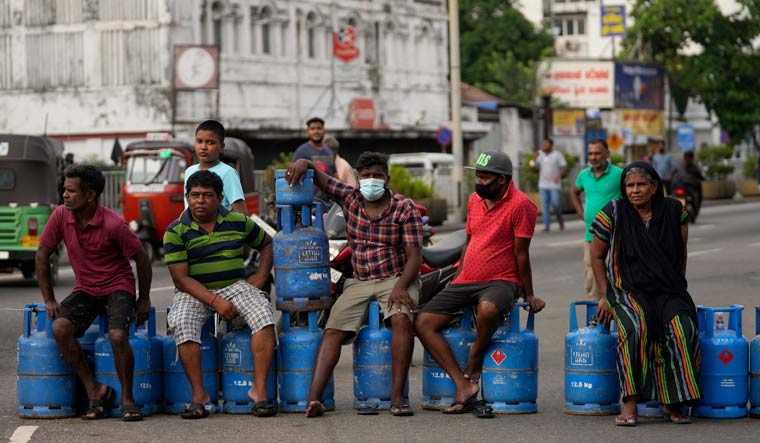
As per reports, the demonstration is staged by a group of people demanding domestic gas.

Part of High Level Road blocked by protesters reopened for traffic (adaderana)

The part of High Level Road which was blocked by protesters in Nawinna area has been reopened for vehicular movement after nine long hours, says Ada Derana correspondent.

Earlier today (May 08), people who queued up at the Nawinna filling station to purchase LP gas had staged a protest on the High Level Road blocking the traffic at Nawinna.

A tense situation ensued after a group of individuals who identified themselves as residents of the area clashed with the protesters and attempted to reopen the blocked road.

However, the protesters managed to carry on their demonstration after closing off the stretch of the road again.

Later, the demonstration was called off this evening after the police assured the protesters that they would be delivered LP gas cylinders.

Protest on High-Level Road demanding LP gas (adaderan)

The residents of Nawainna area staged a demonstration this morning (May 08) on the High-Level Road demanding liquefied petroleum gas.

According to Ada Derana correspondent, the vehicular movement on the 138 bus route has been blocked at Nawinna as a result.

Gas crisis : Tense situation in Colombo -02 (Video) – Hiru News

Two persons have been arrested for stealing gas from a lorry at Armor Street, Colombo.<br /><br />This resulted in a tense situation in the area.

Godahewa says PM agreed to step down

May 8th, 2022

Courtesy Adaderana

Cabinet Spokesperson Dr. Nalaka Godahewa says Prime Minister Mahinda Rajapaksa, at the meeting of Cabinet of Ministers, agreed to step down from his position.

He stated this during ‘Mokada Wune’ programme on TV Derana on Sunday (May 08).

Speaking further, Dr. Godahewa pointed out that the President and the Prime Minister are of the same opinion that the country should be saved.

On Saturday (May 07), political sources revealed that PM Rajapaksa has decided to resign from his post during a special Cabinet meeting held at the President’s House on the day before.

According to political sources, President had stated that the Prime Minister and the government should resign because it is no longer possible to act in the face of the crisis that has arisen.

President to consider BASL’s proposals for restoring political, economic stability

May 8th, 2022

Courtesy Adaderana

President Gotabaya Rajapaksa has told the Bar Association of Sri Lanka (BASL) that he would take into account acting constitutionally with regard to the proposals put forward by the BASL.

This was conveyed during a discussion held between the President and BASL member earlier today (May 08).

The management committee of the BASL called on President Rajapaksa at the President’s House this morning, at the association’s secretariat at their request to discuss the proposals of the BASL to restore political and economic stability in the country.

The committee also met Prime Minister Mahinda Rajapaksa at his invitation at Temple Trees this afternoon.

The BASL has drawn the attention of the President and the Prime Minister to the urgency in establishing political stability in the country and explained its proposals including the formation of a government of national unity.

The President of the BASL also informed the President that the association is concerned about the declaration of the State of Emergency in Sri Lanka.

AIIB considering a grant of USD 100 million to Sri Lanka

May 8th, 2022

Courtesy Adaderana

The Asian Infrastructure Investment Bank (AIIB) has stated that it is considering the granting of USD 100 million to Sri Lanka in principle, the Ministry of Finance says.

This was mentioned by the AIIB President Mr. Jin Liqun during a virtual meeting between the senior management of AIIB and Finance Minister Ali Sabry yesterday.

Sri Lanka’s ambassador to the People’s Republic of China Dr. Palitha Kohona and Secretary to the Treasury Mr. Mahinda Siriwardena along with Finance Ministry officials also took part in the meeting.

A discussion was held on the current areas of cooperation and also the managing of the present situation.

At the outset, Mr. Liqun reiterated AIIB’s commitment to support Sri Lanka and stated that he was confident Sri Lanka will overcome the current issues that it is facing.

A discussion was held regarding immediate emergency support to Sri Lanka. Mr. Liqun has stated that in AIIB was considering the granting of USD 100 million to Sri Lanka in principle and that he would discuss it further with the Board.

A discussion was also held regarding medium- to long-term support to Sri Lanka. Minister Ali Sabry discussed the need for forex liquidity support for state banks of Sri Lanka and requested if such can be provided by AIIB. 

Mr. Liqun assured that AIIB will continue to work with Sri Lanka and support Sri Lanka in overcoming its present issues.

Express dissent peacefully – State of emergency to protect peace : Defense Ministry (Video)

May 8th, 2022

Courtesy Hiru News

Protests were organized in various areas against the state of emergency.&nbsp;The State of Emergency was declared in the country effective from midnight on May 06

Meanwhile, the Ministry of Defense has issued a statement clarifying matters regarding the state of emergency.

The Ministry of Defence has urged the general public to act as responsible citizens with utmost intelligence and patience during this difficult period to maintain law and order in the country stating that&nbsp;the government respects the democratic right of the people of Sri Lanka to peacefully express their agitations and protests within the democratic framework.

The Defence Ministry, calling for the assistance of the general public in managing the current economic and social crisis and unrest, requested them to extend their support to the armed forces and the police department who are committed to the safety of the people in such emergencies.

අටමස්ථානය වදින්න ගිය අගමැති – අගමැතිතුමනි ඔබගෙන් හෙට සුබ පණිවිඩයක් අපි බලාපොරෙත්තු වෙනවා 

May 8th, 2022

Hiru News

Minster Prasanna Ranatunga refused treatment (Video)

May 8th, 2022

Courtesy Hiru News

circulating on social media recently stated that a doctor at a private hospital in Colombo had refused to treat&nbsp; Minister Prasanna Ranatunga who had come to him for treatment.

Several parties expressed their views regarding the refusal of a doctor to attend to the Minister.

The Sri Lanka Medical Association says this should not be a precedent at all.

A news item circulating on social media recently stated that a doctor at a private hospital in Colombo had refused to treat&nbsp; Minister Prasanna Ranatunga who had come to him for treatment.

An audio recording of Dr. Ranil Jayawardena explaining the incident is circulating on social media.

Situation in Sri Lanka – are we returning to Dutch-East-India Company rule?

May 7th, 2022

Shenali D Waduge

On one side of the spectrum protests are calling for the stepping down of entire Parliament, amidst this are a bevy of piggy-bank protestors while the more important question should be where do we go from where we are now – an economic & political crisis. Is there light at the end of the tunnel.

What led to the protests?

No Gas – No Petrol – No Milk Powder – Power cuts & rising cost of living were the triggers that built the mental framework to garner support of people against the government. How come the government did not fathom what was unfolding before their eyes?

If it was downright ignorance, the government does not deserve to be in power. If government & officials were part of a bigger plot to suppress the nation for their political survival, then too they do not deserve to be in power. It is important to dissect what led to the debacle to understand what the next plan is.

Always ask

  • who benefits
  • what are their targets

The protests were meant to simply send a message plus sub-messages.

There is little point now in identifying the who’s who at Galle Face Green.

What is more important is where these protests are leading to.

Even the Opposition are now worried.

Economic collapse peddling collapse of political system –

The key target was the PM who is able to command the majority votes. Sending him home sends entire vote base astray with no alternate options. 

The next message was to blame the politicians & justify need to get rid of the entire political system. The flip-side of the jungi-brigade was to make people accept that the protestors” were also not the alternate option.

Who are they” planning to put on the throne?

The architects of the economic & political collapse has made Sri Lanka vulnerable & disabled Sri Lankans to make choices or have a say in any of the decisions to be soon announced.

The enemies have encircled the nation. The local faces outsourced for this exercise are only a smokescreen. No local will self-destruct his/her own nation unless there were benefits for them. They will be rewarded for turning their people to slave hood.

Though we may think the bail out coterie are the solution, they were essentially part of the problem. It is unfortunate that the intelligentsia in Sri Lanka have failed to decipher the situation.

Who serves to benefit from the situation?

Sri Lanka is virtually bankrupt.

Who benefits if Sri Lanka is economically bankrupt

Who benefits if Sri Lanka is politically in doldrums?

Who brought us to this stage – was it only the politicians?

Who forced economic policies on Sri Lanka

Who drafted the budgets that we thought were locally made?

What has happened to Sri Lanka is a carry forward of a well-planned socio-economic collapse aligned to the ulterior & ultimate objective of securing Sri Lanka as a geopolitical & trade hotspot.

But who is controlling this?

The scenario was choreographed to affirm notion that Parliamentarians are unable to ‘develop’ Sri Lanka – anymore.

Colonial Britain always viewed Sri Lanka as the best nation to use as guinea pigs for its initiatives. We have to now wonder what this next experiment is.

A pro-IMF team is now making the decisions. Just count the pro-IMF parties now tasked to turn Sri Lanka’s economy around – turn around to whose benefit? Certainly not the people of Sri Lanka. The people are yet to feel the pinch. The bourgeois class will always get their piece of cake – as they have done under every government (colonial & post-colonial).

Delivering us out of bankruptcy means printing money & giving to Sri Lanka on interest while taking over our resources & assets though we have to payback that money taken with interest but we have lost the resources & assets.

People do not think. They have been programmed to be busy screaming hora hora. They think their problems are solved by sending the horu to prison or chasing them all out of Parliament. The doors are now wide open.

Does this mean we are saying cherio to representative parliamentary system?

Notice the rise in calls for people to take back power from the politicians – where is this power to be transferred to? They are also giving the answers – to civil-society” (foreign controlled & funded) to NGOs also foreign controlled & funded to CBSL Governor & team (also under US/IMF control) or under corporate control (citing Sri Lanka has to be Singapore) – how representative is this?

Will people have a say as they are able to do now if corporates govern the country?

Are we going full circle to return to the days of the Dutch East India Company rule?

Sri Lanka does not need to be like Singapore. Sri Lanka has all the ability to be Sri Lanka if patriotic people are allowed to roll out an indigenous development plan. Will this ever be allowed to happen? Every attempt to do so is swiftly suppressed by those that continue to want Sri Lanka to be reliant on external/foreign control/agenda. Who actually controls decisions in the CBSL, Foreign Ministry, Finance Ministry & other key areas? Every area of importance is under foreign domination. They have strategically placed pawns from top to bottom who have been following strategic & tactical actions that have led to where Sri Lanka is right now. This has been a well-planned and well-choreographed program happening since bogus ‘independence’.

What has happened to Sri Lanka is a ducks-in-a-row strategy outsourced to agents & penetrated every likely threat & neutralized them playing on their weaknesses.

This should show that those that are in control of these entities do not wish Sri Lanka to develop on national terms but as per international political agenda & to suit them.

If we are returning to the days of corporate control sans the political system – it would mean returning to the manner Dutch-East-India-Company ruled the world. Acquisition of Sri Lanka as a client-state. US government is controlled by Corporate America. Congressmen are inducted to corporate roles no sooner their terms are over. Sri Lanka’s former CJ is now Chairman of a corporate bank.

If Sri Lankans, thought Politicians were bad – when reality hits them it would be too late. State of Emergency will start ball rolling.

Shenali D Waduge

The British Govt. has a moral responsibility to help the save the Elephants of Sri Lanka.

May 7th, 2022

Senaka Weeraratna

The British decimated the elephants and their habitats to plant cash crops and made resounding profits at the expense of the local Kandyan Sinhalese and the wild animals.

The wild animals especially the Elephants who were well protected by the Sinhalese Rulers in their natural habitat in the hill country of Ceylon, were hunted down as game by Professional hunters like Samuel Baker, and the British Settlers. More than 10, 000 wild elephants were killed and their natural habitat destroyed by the British. 

Today the dwindling elephant population in shrinking reserves invade human settlements. Every year more than 400 elephants die in the human elephant conflict. There will come a time sooner than later that only elephants in the Zoo or Replicas of Elephants in the Museum will be there to remind visitors how elephants in Sri Lanka looked like.

The British Govt. must also take responsibility for making destitute the Kandyan Sinhala peasantry whose lands were grabbed under unjust waste lands laws (based on Enclosure laws in England) and denied employment by the import of thousands of Indentured labour from South India to work in tea and coffee plantations of the British.

Many of the Kandyan Sinhalese died out of hunger when their traditional lands used for Chena cultivation were unlawfully appropriated by the British for Coffee and later Tea planting, without payment of adequate compensation.

The British Govt. must address this issue as a matter of moral obligation, with funds to sustain the remaining elephant population of Sri Lanka.

Without accounting for its wrongdoing during colonial rule in British occupied Ceylon and paying compensation, it is sad to see the British Govt. adopting a vicious policy to hound Sri Lanka and table Motions against Sri Lanka at the UNHRC in Geneva. 

There must be a Catharsis and a sincere effort to help save the Elephants in Sri Lanka which are dying at a rapid rate.

Posterity will hold Britain responsible for the destruction of the natural habitat of the Elephants that has led to the sad plight of the Elephants with no homeland to freely roam in modern day Sri Lanka.

Senaka Weeraratna

ගෝල්පේස් වනාන්තරය, ගෝඨාභයගේ දෙවන යුද්ධය හා බෞද්ධ මධ්‍යම ප්‍රතිපදා විසඳුම –  (4 කොටස)

May 7th, 2022

චන්ද්‍රසිරි විජයවික්‍රම, LL.B., Ph.D.

ගෝල්පේස් අරගලකරුවන්ගෙන් පැහැදිලි කරගත යුතුවූ කාරණා/ගැටළු කීපයක් මෙම ලිපි පෙලේදී මුල සිටම මතුවිය.

1. මෙම <අරගලය> 2019 දී තාප්පවල චිත්‍ර ඇන්ඳ හා පුරන් කුඹුරු වගාවට ගිය ගම් වල සිංහල බෞද්ධ 69 ලක්ෂයට අයත් තරුණයින්ගේම අහිංසක අදහසක්ද?

2. එසේ නැත්නම් එය, රාසමාණික්කම් කොල්ලා විසින් පාර්ලිමේන්තුවේදී ඉල්ලා සිටි පරිදි, කොළඹ ජනතාව විසින් හයිජැක්කල, රට කැඩීමේ ව්‍යාපාරයේ සැඟවුණු ඇමක්ද?

3. යම් පොදු කටයුත්තකදී ඊට නායකයෙක් නැතිවීමත්, බොහෝ නායකයින් සිටීමත් යන දෙකම අයෝග්‍ය බව බුදුහාමුදුරුවන් විසින්ද සඳහන් කර ඇත. මෙම අරගලයේ නායකයෙක් හෝ නායක මණ්ඩලයක් සිටිනවාද? මෙහි ඇති වදගත්කම නම් සංවිධානයක ක්‍රියාවලට වගකිව යුතු කෙනෙකුගේ අවශ්‍යතාවයය. එකඟවූ එක අරමුණක් නැතිව, නොයෙක් අරමුණු ඇති අය නොයෙක් වැඩ කරමින් වැඩේ අවුල් කිරීම සමාන කල හැක්කේ රුවලක්, හබලක් නැති ඔරුවක් ඔහේ මුහුදේ පාවෙනවා වැනි ක්‍රියාවකටය. ඉහල අහසින් දුර ගමන් යන කුරුළු රංචු වල ඉදිරියෙන් පියාඹන කුරුල්ලෙක් හා කුරුල්ලන් කීපදෙනෙක් සිටින්නේය, ත්‍රිකෝණයක උලක් මෙන්ය.

4. තවත් වැදගත් ප්‍රශ්ණයක්වූයේ ගොටාගෝහෝම් වැඩේ හරිගියොත් අරගලය විසින් ඉන්පසු කරන්නේ කුමක්ද යන්න රටට ඉදිරිපත්කල යුතුව තිබීමය. සජිත් විසින් <මට රට භාර දෙන්න> හා අනුර කුමාර විසින් <මම රට භාරගන්න සූදානම්> යයි කරණ ප්‍රකාශ දෙන්නම් කාසි ගනයට වැටේ. රට භාරගෙන කරණ දේ කීමට මේ දෙන්නාම අසමත්වී සිටී. එය පුස්ස බින්ඳා වැනි නිෂ්ඵල ප්‍රකාශයකි. අරගලයත් මේ ගනයට වැටීම අරගලය කෙරෙහි මහජන විශ්වාශය බංගවීමට හේතුවේ.

ගෝල්පේස් මහමොලකරු

සේපාල් අමරසිංහ, සන්නස්ගල, brother charles Thomas, දර්ශන් හඳුන්ගොඩ හා ඔහුගේ ගෝල අභිශේකා ප්‍රනාන්දු කෙළී, සුදත්ත තිලකසිරි හා නාගානන්ද කොඩිතුවක්කු යන මේ පංචකන්ධ ගෝල්පේස් නිල නොලත් න්‍යායාචාරීන්ද නැත්නම් එඬේරුන්ද? සුදත්ත නම් මේ වනවිට ලවුඩ්ස්පීකර් දෙකක්ද සමඟ කෙළින්ම අරගලයට එකතුවී සිටී. නායකයෙක් හෝ නායක මණ්ඩලයක් හෝ නැතිව සිටින ගෝල්පේස් පිරිසට මැදිහත් වීමට එන <මහමොලකාරයෙක්> ගැන සේපාල් අනතුරු අඟවන්නේ සුදත් ගැන සිතාද? එසේ නැත්නම් සන්නස්ගල ගැනද? පසුගිය අප්‍රේල් 25 දා  කිත්සිරි ආනන්ද නම් පුද්ගලයා විසින් සන්නස්ගලට කල දෙහිකැපීම අවසානවූයේ සන්නස්ගල ඔහුට අමු තිත්ත කුනුහරපයෙන් බැණ ටෙලිෆෝනය විසන්ධි කිරීමෙනි (ඔහු විසින් ඩෑන් ප්‍රසාද් නම් තැනැත්තාටද මෙවැනිම දෙකැපීමක් කලත් ඩෑන්, සන්නස්ගල මෙන් කුණුහරුප නොකියා ටික වේලාවකින් පසු  දුරකතනය විසන්ධි කලේය). මෙවැනි අයෙකුට <අරගලයට> උපදෙස් දිය හැකිද? නාගානන්දට නම් සිදුවී තිබෙන්නේ ගිණිපෙල්ලෙන් බැටකෑ මිනිහා කණා මැදිරි එලියටත් බය වගේ වැඩක්ය. ඒ නිසා ඔහු නිවසේ සිට නිව්ස් බුලටින් නිකුත් කරයි. වැටෙන් පිට සිට ජේවීපී මොළකරුවෙකුවන හඳුන්නෙත්ති කෙඳිරිගාන්නේ ගෝටගෝ කිව්වාට විතරක් වැඩක් නෑනේද කියමිනි. පිටිය තුල යාමට ආරාධනාවක් නැතිකම ඔවුන්ට ඇති ලොකුම මදිකම නොහොත් පරාජයය.

නාගානන්ද සිය වියදමින් දූෂිත ක්‍රියාවලට විරුද්ධව දිගින් දිගටම පෙනී සිට නඩුකාරයින්ගෙන් හිරිහැරයට ලක්වූ කෙනෙකි. එහෙත් ඔහු නායකයෙක් හෝ උපදේශකයෙක් ලෙස අරගලකරුවන් විසින් මෙතෙක් ප්‍රකාශකර නැත. දැන් නොමිලයේ ඉදිරිපත්වන දුසිම් ගණන් බාර් ඇසෝසියේෂන් නීතීඥ පිරිස් නාගානන්දගේ පොදු සටන්වලට උදව් කරණවා තබා උසාවියේදී ඔහු ලඟින් මේසයේ ඉඳගැනීමටවත් ආවේ නැත. ඒ නිසා දැන් අරගලයට නොමිලේ උසාවියට යන මේ අය ඉදිරියේදී මෙතෙක් කලා මෙන් තම සේවාදායකයින් සූරාගෙන නොකෑමට සිතනවා යයි රට බලාපොරොත්තුවීම සාධාරණය (ඉහතින් නම් සඳහන් කල පංචස්කන්ධ විසින් කරණ  කියන සමහර කතාවල, ක්‍රියාවල යම් රටට පිළිගත හැකි අදහස් ඇති බව නිහතමානීව පිළිගත යුතුය).

අරගලයේ හඬ සේ පෙනී සිටින පංචස්කන්ධ

ලිපි මාලාවේ මෙම කොටස ලියන අතරතුර අරගලය හා සම්බන්ධ පංචස්කන්ධ කීපයක් ගැනම දැනගැනීමට ලැබුණි. පැතුම් කර්නර් හා යොහාන් සෙනෙවිරත්න යන දෙන්නා අතරින් යොහාන් යනු බොරුකාරයෙකි. ඔහු බෝන් අගේන්කාරයෙක් මිස ඔහු කියන අයුරු බොදු බල සේනාවට ඔහුගේ සම්බන්ධයක් නැත. කලින් චතුර අල්විස්ගේ සාකච්චාවට සහභාගීවු ලාබාල තරුණයින් තුන් දෙනා හා තරුණියට වඩා බලවත් ලෙස රතිඳු සේනාරත්න, නුවන් බෝපගේ හා දුලීකා මාරපන යන තුන් දෙනා අරගලය වෙනුවෙන් දෙරණ සළකුණ වැඩසටහනට (මැයි 5 දා, EP335) සහභාගී විය. මේ තුන් දෙනාටම අරගලය විසින් වහාම හෝ දිගුකාලීන වශයෙන් යෝජනාකරණ විසඳුම් හෝ සැලැස්මක් ගැන හෝඩුවාවක් වත් දීමට නොහැකිවිය. ඔවුන්ගේ හැසිරීම ඉඟිකලේ ඔවුන් වෙනත් කාගේ හෝ න්‍යාය පත්‍රයකට අනුව පාවෙන රූකඩය යන්නය. හැමෝම අරගලයේ මහමොළකරයා යයි සිතන රැට්ටා උත්තර දුන්නේ බලවත් අපහසුතාවයෙනි.

සිස්ටම්ස් ඇප්‍රෝච් නැතිව සිස්ටම් චේන්ජ් කිරිමේ හීනය

මොවුන් තිදෙනා රටේ ඉතිහාසය හා භූගෝල විද්‍යාව (ඉතිහාසය කියන්නේ රටේ අතීත භූගෝල විද්‍යාවටය) නොදන්නා බව පැහැදිලිවම ප්‍රදර්ශණය විය. හෙලිකොප්ටරයකින් උඩට නැග්ගවිට එකිනෙකට සාපේක්ෂ්ව පහල පොලොවේ සිදුවනදේ පෙනෙන අයුරු, මෙවැනි බරෑරුම් අරගලවලට හොට දමන අයට සමස්තය ගැන දැණුමක්, අවභෝධයක් තිබිය යුතුය. (holistic/systems approach) ගසුත්, කැලයත් යන දෙකම දැකිය යුතුය. සිස්ටම් එක චේන්ජ් කරන්නට සිස්ටම්ස් ඇප්‍රෝච් එකක් අවශ්‍යය. ඔවුන් ගෝටාගෝහෝම් යන මන්ත්‍රයම ජපකරන්නේ මෙම දැනුමේ අඩුව නිසාය.

දැන හෝ නොදැන ඔවුන්ගෙන් සමහරෙක්වත් හිරවී සිටින, මේ ගෝල්පේස් අරගලයේ යටි අරමුණ විදේශ බලවේග විසින් මෙහයවන රෙජීම් චෙන්ජ් (යුද්ධය දිනූ ගෝටාගේ මස් රාත්තලම ඉල්ලීම ) එක නොවේ නම්,  සිස්ටම් චෙන්ජ් එකට අදාල බොහෝ පියවරවල් ගෝටා සිටියදීම ශාක්ෂාත් කරගත හැකිය. උදාහරණයක් වශයෙන්, උමංදාවේ සමන්තභද්‍ර හිමියන් විසින් මල්වතු මහනාහිමියන්ට සංඝ ආඥාවක් නිකුත් කරණ ලෙස ඉල්ලා සරල යෝජනා තුනක් ඉදිරිපත් කලේය. ඒවා නම්: (1) රටේ ලොකු කුඩා සියළුම දේශපාලකයින් හා නිලධාරීන්ගේ වත්කම් විගණනය කීරීම (2) බලයට එන ආණ්ඩුවලට වෙනස්කල නොහැකි ජාතික සංවර්ධන වැඩපිලිවෙලක් (සැලස්මක්) ක්‍රියාත්මක කිරීම හා (3) දේශපාලකයින්ට ලබාදී ඇති සියළුම දීමනා, වරප්‍රසාද, ඉවත් කිරීම (මන්ත්‍රීලා ඇත්තවශයෙන්ම මහජන සේවකයින් කිරීම).

පෙරටුගාමීන් හා අන්තරේ වහළුන්

මෙම යෝජනාව සැසඳිය යුත්තේ කුමාර් ගුණරත්නම්ගේ බලාපොරොත්තුව සමඟය. කලින් ජේවීපීකාරයිනුත්, දැන් පෙරටුගාමීකාරයිනුත් විශ්ව විද්‍යාලවලට ගම්වලින් එන දුප්පත් ශිෂ්‍යයින් මානසික වහළුන් බවට පත්කලේය. යම් තරුණියකට තමන් කැමති සායක්, ගවුමක් අඳින්නට නොහැකි අන්තරේ බල්ලට දැමිය යුතුය. මේ නිසා පාරේ ජලය හා කඳුළුගෑස් නාන කොණ්ඩ වවාගත් හාමුදුරුවරුන් විශ්ව විද්‍යාලයෙන් නෙරපිය යුතුය. රජයේ වියදමින් හා මහපොල දීමනාව දෙන්නේ මෙසේ පිස්සු නටන්නද? අධ්‍යාපනය සඳහා බැංකු ණයක් දී ටියුෂන් ගාස්තුවක් අයකල යුතුය. එවිට පාරට එන්නේ රටේ ටැක්ස් ගෙවන්නාගේ මුදලින් නොව තමන්ගේම මුදලිනි.

යම් තරුණයින් පිරිසක් විසින් අහිංසක ලෙස ඇරඹූ අරගලයක් දැන් පෙරටුගාමීන් විසින් උදුරා ගෙන තිබේ. මෙය කෙළවර වන්නේ විශාල ජීවිත හානියකිනි. කුමාර් ගුනරත්නම් කියන්නේ නියම විසඳුම නම් <ජනතාව බලගන්වන> ක්‍රමයක් බවය. ජන සභා සංකල්පය යටතේ මෙය කිරීමට යෝජනාවී මේ වනවිට දශක ගණනක්ම ගත්වී ඇත. ගෝටාගේ සෞභාග්‍යයේ දැක්මේ පවා මෙම අදහස ජනමූල සභා වශයෙන් සටහන් කර ඇත. එසේ නම් කුමාර් ගුනරත්නම් අන්තරේ නායකයින් පිස්සන් ලෙස යොදවනවා වෙනුවට කල යුතු  ගෝටාට මෙම ජනමූල සභා පිහිටුවන ලෙස බල කිරීමය. අනිත් කාරණය නම් අන්තරේ  පොලිස්බරියර් කැඩීමේ ව්යායාමය ඉදිරියේ සිටිය යුතු ව්‍යායාමය ඉදිරියේ සිටිය යුතු කුමාර් හා දුමින්ද නාගමුව යන දෙන්නා යන්නය. චේ ගුවේරා කලේ එයය.

සිස්ටම් චේන්ජ් ප්‍රමුඛතා/ප්‍රායෝගික ලැයිස්තුව කෝ?

නායකයෙක් හෝ නායක කමිටුවක් හෝ තවමත් රටට ඉදිරිපත්කර නැතත්, සිස්ටම් චෙන්ජ් එක යටතේ ඔවුන් බලාපොරොත්තුවන කාරණා වල ලැයිස්තුවක් සදා රටට ප්‍රසිද්ධ කිරීමට දැන්වත් <අරගලයට> ශක්තියක්, දැණුමක් හෝ දැකුමක් තිබිය යුතුය. එවැනි ලැයිස්තුවක් ජනාධිපතිට ඉදිරිපත් නොකිරීම, ඔවුන් පිටුපස සැඟවී ඉන්නා ප්‍රොපෙසර්ලාට, වෘත්තිකයින්ට හා අරගලයට ජයවේවා කියන දේශපාලක ඉත්තන්ටද එල්ල වන අභියෝගයකි. ජේවීපී මෙන් දෙන්නන් කාසි උඩ සිටීමෙන් වෙන්නේ අරගලය පුස්ස බින්ඳා වගේ වී දියාරුවී යාමය.

දැන් දැන් එලිදරව් වෙමින් යන්නේ පෙරටුගාමීන් හා ජේවීපිකාරයින් අරගලයට රිංගා ගෙන විශාල ලේ වැගිරීමක් සඳහා කැසකවමින් ඉන්නා බවය. පැතුම් කර්නර්ලා අතරමංවී සිටිනා ආකාරයක්ය. මෙහි මීට ඉහතින්ද පෙන්වා දුන් අයුරු රට අරාජික නොකර, සිස්ටම් චෙන්ජ් එක පියවරෙන් පියවරට බෞද්ධ ප්‍රතිපත්ති අනුව ලබාගන්නට ඇති අවස්ථාව පාවා දෙන්නේ ඇයි?  ජේවීපී-පෙරටුගාමි-සජිත්-ටී.එන්.ඒ- පිරිස්, මේ අස්සේ හර්තාල් හා ස්ට්‍රයික් කිරීම අනුමත නොකරණ බව, අරගලයේ නායකයින් විසින් ප්‍රකාශ කිරීම අරගලයේ පිරිසිදු චෙතනාව රටට පෙන්වා දීමක් හා අරගලයේ දිගු ගමනට රුකුලක් වන්නේය

එවැනි ලැයිස්තුවක් ප්‍රමාදවන දවසක් පාසා ඔප්පු වන්නේ 1995 සිට චන්ද්‍රිකා- නීලන්-ජී ඇල්- රනිල්-දැන් ජීනීවා වල සඟවී සිටින ජයම්පති- සජිත් හා ඔහුගේ නායාචාරී දයාන් ජයතිලක- සුමන්තිරන්ලාගේ රට කැබලි කිරීමේ ව්‍යාපාරය මෙම <අරගලය> යටින් දුවන බවය. එවැනි පසුබිමක් යටතේ තම අරගලය <නිර්පාක්ෂික> යයි පුන පුනා කීම, මේ තරුණයින් විසින් තම තමන්වම දැන හෝ නොදැන රවටා ගැනීමකි. එයට හේතුව ගෝටාගෝ කතාව හරිගියොත් ඉන් වන්නේ අරාජිකවූ වියවුල්වූ රටකට U.N. සාම හමුදා පැමිණ mcc ට්‍රෝජන් අශ්වයා පිටේ නැග රට කඩා දැමීම වීමය. එවැනි දෙයකට දිල්ලියේ සිට මිලින්ද මොරගොඩගේ පාත් ෆයින්ඩර්කාරයින් තලුමරමින් සිටී. ඒ මිසක් තෙල්, බෙහෙත් හෝ ආහාර ප්‍රශ්ණයවත් ගෝටාගෝ හරහා විසඳෙන්නේ නැත.

පාන් ගෙඩිය රුපියල් 500 වීම ශක්‍රයාගේ පුතා වයිමාටවත් නවත්තන්නට  නොහැකිය. 1978 ට පෙර සිටම සිදුවූ ණයට කෑමේ, කැවීමේ රඟ එසේය. මිනිසුන් අල බතල වලට ආපසු යායුතුය. දර ලිප, කෘමීන් ගෙන් තොරව වියළි ආහාරද්‍රව්‍ය රැකදෙන ඊට උඩින් ඇති දුම් මැස්ස හා වත්තේ ලිඳ, යළි මතක් කරගත යුතුය. රටෙන් සියේට 60 කට එය කල හැකිය. අමාරුවේ වැටෙන්නේ ගෝල්පේස් එන කොළඹ ජනයාය.

සිස්ටම් එක යටතේ දුක් විඳින ස්ත්‍රීන් තුන් කොටස

*(1) ලංකාවේ ඈත ගම්වල අන්ත අසරණ ස්ත්‍රීන් අරාබිකරයට ගොස් වැසිකිළි සෝදා රටට එවන ඩොලර් වලින් කළුසුද්දෝ ජොලිකලේය. ඔවුන් සඳහා විශ්‍රාම වැටුප් ක්‍රමයක් හෝ වෙනත් ශුභ සාධන ක්‍රමයක්  ඇතිකලේ නැත. දැන් ඔවුන් පස්සේ හිඟන්නන් මෙන් පාලක හොරු හඬා වැටේ. (2) ගාමන්ට් බොරුව ගමේ කෙල්ලන් විනාශකලේය. පිටරටින් සියළුම අමුද්‍රව්‍ය ගෙන්නා, ජංගි මසා යවා රටට ලැබෙන ශුද්ධ ඩොලර් ප්‍රමාණය කීයද? සිදුවන්නේ ගමේ අහිංසක කෙල්ලන්ගේ ශ්‍රමය සූරාකා ගාමන්ට් අයිතිකාරයින් ලාභ ලැබීමය. සුපවයිසර්ලා අනංගයින්සේ හැසිරීමය. ඔවුන් ප්‍රේමදාසට සදා ණය ගැතිය! තම තරුණ ජීවිතය අනාථ කර ගන්නා මේ සේවිකාවන් සඳහා යම් ශුභසාධන ක්‍රමයක් තිබේද? මොවුන් විඳින දුක සිහිකරන්නේ එංගල්ස් විස්තර කල මැන්චෙස්ටර් වැනි නගරවල 1840 ස් ගණන් වල පැවති රෙදි පැක්ටරි නමැති මරු කටවල්ය. දරු ප්‍රසූති අවස්ථාව දක්වාම වැඩට ආ ගෑණු, දරු ප්‍රසූතියෙන් පසු  සතියකින් පමණ ආපසු වැඩට ගියේ රක්ෂාව නැතිවේය යන භිය නිසාය. ඒ වෙනුවට, අවුරුදු පහකින් මන්ත්‍රීලාට, ඔවුන්ගේ ලේකම්වන බිරිඳට පෙන්ෂන් දෙන රටකට දේවසාපයක් කවදාහෝ ලැබිය යුතු නැද්ද? අරගලකරුවන්ගේ ඉල්ලිම් ලැයිස්තුවට මේවාද ඇතුලත් විය යුතුය. (3) තලාක්, තලාක්, තලාක් යනුවෙන් කියා කසාදය කටුගෑම, කාති උසාවි හා ගෑණු හතරක් තබා ගැනීමේ මුස්ලිම් ක්‍රමය යටතේ වහළුන්වී සිටින කාන්තාවන් ඉන් මුදවා ගැනීම අරගලයේ ලැයිස්තුවට දැමිය යුතුය. තලාක් කීමේ අයිතිය මුස්ලිම් කසාදයේ ස්ත්‍රී පාර්ශවයටද තිබිය යුතුය.

ගෝල්පේස් අරගල කරුවන් විසින් එක රටක් එක නීතියක් බලකායේ වැඩ පිළිවෙල අගය කල යුතු මේ නිසාය. ඊට විරුද්ධනම් ඒ බව රටට ප්‍රකාශ කල යුතුය.

<සිස්ටම් චේන්ජ්>, <රෙජීම් චේන්ජ්> පටලැවිල්ල

2019 දී පාරේ තාප්පවලවල චිත්‍ර ඇන්ඳ, පුරන් කුඹුරු යළි අස්වද්දන්ට වෙලට බැස්ස තරුණයින් බලාපොරොත්තු වූයේ සිස්ටම් චේන්ජ් එකක්ය. සිස්ටම් චේන්ජ් එකකට විරුද්ධවන කිසිවෙක් නැත. 1967 දී පේරාදෙණියෙන් පිටවූ කාලයටත් පෙර සිටම රටට සිස්ටම් චේන්ජ් එකක් අවශ්‍යබව මට ප්‍රත්‍යක්ෂ විය 1971 දෙසැම්බර් මස ජේවීපී රැඳවියන්ගේ ශාක්ෂි ලියාගත් සිවිල් නිලධාරීන් 200 දෙනාගෙන් එක් අයෙක් වශයෙන් මේ සිස්ටම් චේන්ජ් එක සඳහා අවංකව කැපවී මිය ගිය තරුණ තරුණියන් ගැන මට දැන ගැනීමට ලැබුණේය.

1971 දී රටේ සිංහල තරුණ-තරුණියන් විනාශ වුනේත්, 1988/89 දී එය නැවතත් සිදුවුනේත්, රෙජීම් චේන්ජ් කිරීම හා සිස්ටම් චේන්ජ් කිරීම අතර ඇති සම්බන්ධය හා වෙනස යන කාරණා දෙක, ඒකාලයේදීත්, දෑන් 2022 දීත්, රට වැසියන්ටත්, චන්දදායකයින්ටත්, දැන් අරගලකාරයින්ටත් (විප්ලවකාරයින්ටත්?) හරිහමං ලෙස අවභෝධ වී නොතිබීමය. වංක දේශපාලකයාට අනුව බලයේ සිටි පක්ෂය පරදවා බලය ලබාගැනීම  සිස්ටම් චේන්ජ් නොව රෙජීම් චෙන්ජ් විය. එහෙත් චන්දදායකයා සිතුවේ යම් තරමකින් හෝ සිස්ටම් චේන්ජ් (පවතින පරිපලන- පරිපාලන-සමාජීය-දේශපාලන සංස්කෘතිය වෙනස් කිරීමක්) එකක් සිදුවේවිය යනුය. සුද්දාගේ බෙදා පාලනය කිරීමේ උපක්‍රමය සුද්දාටත් වඩා දක්ෂ ලෙස කළු සුද්දා පාවිච්චි කලේය.  කොල, නිල්, රතු වශයෙන් බෙදී,  ගම, ලඟ ඥාතීන්, පවුල, නිවස, මට්ටමටම මරා ගන්නා  තරමට චන්දදායකයා අන්ධවූ අතර, දේශපාලකයා රහසින් හා එලිපිටම කරේ අතදාගෙන වැජඹුණේය.  අන්ධ චන්ද දායකයාට එය නොවැටහුණේ, පොදු යහපත වෙනුවට පුද්ගලික වාසිය තකා සිය චන්දය භාවිතා කිරීම නිසාය.

මෙම පටලැවිල්ලේ ඉතිහාසයක් ඇත. සිස්ටම් චේන්ජ් එක <පොදු යහපත> උදෙසා ලඟාකර ගන්නට සිතන යහපත් අරමුණක් වන අතර, රෙජීම් චේන්ජ් යනු පුද්ගලික ලාභ ප්‍රයෝජන තකා පක්ෂ දේශපාලක හොරුන් විසින් බොහෝ විට විදේශ බලවේග එහි පිටුපසින් සිට මෙහයවන චන්ද දායකයා රවටන

සුද්දගෙ සිස්ටම් එක හා කළු සුද්දගෙ සිස්ටම් එක

1815 දී සුද්දා මුළු රටම අල්ලාගත් පසුව 1948 දක්වා පැවතියේ සුද්දාගෙ සිස්ටම් එකය. එම සිස්ටම් එක යුදෙව්-ක්‍රිස්තියානි චින්තනය උඩ ගොඩ නැඟුණකි. ඊට ඉහළින් තිබුණු පැරඩයිම් එකක්වූයේ පෘතුවිය වටේ ඉර කැරකෙනවා යන ඇදහීමය. සූර්යා වටේ අපේ ග්‍රහයා කැරකෙනවා යයි එය වෙනස්වූයේ දැඩි ක්‍රිස්තියානි විරෝධයක් පරදවාය.  සුද්දාගේ සිස්ටම් එකට අනුව බුද්ධාගම යනු බොරුවක්ය. රටේ හාමුදුරුවරු හා වැසියා අතර ඇති ගහට පොත්ත වැනි බැඳීම කඩා දැමිය යුතු විය. බෙදා පාලනය කිරීමේ උපක්‍රමය යටතේ රටේ මහජාතියට විරුද්ධව සුළු ජන වර්ග වලට තැනක් ලබා දිය යුතුය.

මේ අනුව සුද්දගෙ සිස්ටම් එක යටතේ සිංහල බෞද්ධයාට බලවත් අසාධාරණකම්,  සමූල ඝාතනවලට ලක්වීමට පවා සිදුවිය. 1947 නිදහස ලැබුණා යන්නේ අර්ථය විය යුත්තේ මෙම සුද්දගෙ සිස්ටම් එක වෙනස් කිරීමය. එහෙත් කළු සුද්දන් එය දිගටම ගෙන ගියේය. 1956 දී සිංහල ජනයා සිතුවේ මෙම සිස්ටම් චේන්ජ් එක සිදුවේය කියාය. එහෙත් ඇත්තටම සිදුවූයේ රෙජිම් චෙන්ජ් එකක් හා පවතින සිස්ටම් එක  දෙදරුම් කෑම පමණය. සිස්ටම් චේන්ජ් එකක් සඳහා ඉදිරිපත්වූ SWර්‍RDB අගමැතිට වසදීමට තැත්කර පසුව 1959 දී ඔහුව මරා දැම්මේත්, 1962 කුමණ්ත්‍රනය කලේත් සිස්ටම් චෙන්ජ් එකකට විරුද්ධවූ කළු සුද්දන් පිරිසය.

වරද පිළිගත් එකම ජනාධිපති

<අරගලයේ> අරමුණ තාප්පවල චිත්‍ර වලින් සංකේතවත්ව අභිලාෂ ඉටුකර ගැනීම නම්, එය ලබාගත හැක්කේ, <ගොටාගෝහෝම්> කියමින් අශෝභන ප්ලැකාඩ් උස්සාගෙන ජනාධිපති, අගමැති යන රටේ උත්තර්‍රිතර ධූර වලට නිග්‍රහ කිරීමෙන් නොව, තමන් කල වැරදි ප්‍රමාදවී හෝ පිළිගෙන, තමන්ව නොමඟ යැවූ නෑයින් හා යර්ස් මෑන්ලා ගෙන් නිදහස් වීමට, ගැලවීමට, ක්‍රියාකරමින් සිටිනා බව පෙනෙන, ගෝඨභය හරහාම නොවේද යන්න පහදා දෙන කිසිවෙක් ගෝල්පේස් රඟහලේ නැත්තේ ඇයිද යන්නය.

අගමැති ඉවත්කරණ ලෙස පහසුවෙන් ලබාගත හැකි ඉලක්කය වෙනුවට ගෝටාගෝ කියා රාජ්‍යය අරාජික කිරීම, අත්තේ අග සිට ගහ ලඟින් අත්ත කැපීමක් වැනිය. සබන් වතුර බේසම සමඟ බබාවද විසිකිරීමය. ඉල්ලිම් ලැයිස්තුවක් දීමේ උපක්‍රමය නම් ලේසියෙන් ලබාගත හැකිදේ මුලින් සඳහන් කිරීමය.

ගෝඨාභයගේ මස් රාත්තලම ඉල්ලමින් කරණ මෙම අදූරදර්ශී හා උපක්‍රමශීලි නොවන <අරගලය> යටින් දුවන්නේ රට අරාජික කර U.N. සාම හමුදා ගොඩබස්සවා ගෙන mcc ට්‍රෝජන් අශ්වයා හරහා රට දෙකට තුනට කැඩීමේ චන්ද්‍රිකා-රනිල්-සජිත් ප්ලෑනය. එසේ නොවේ නම් මෙම <තරුණ> පිරිස් කල යුතු දියවන්නා හෝටලයේ පාරවල් තුන අවහිරකර 225 හිර අඩස්සියට ගැනීමය. එසේ කර අගමැති කෙනෙක් පිටින් පින් ලැයිස්තුව හරහා ගෙන ඒමය. ඔහු ලංකාව සිංහල බෞද්ධයින්ගේ රට බව පිළිගන්න අයෙක් විය යුතුය. ඒබ්‍රහම් ලින්කන් ජනාධිපති චන්දය ඉල්ලුවේ පවතින වහල් ක්‍රමයට පක්ෂවය. එහෙත් පසුව ඔහු වහල් ක්‍රමයට විරුද්ධව යුද්ධ කලේය. 1958 කුඹුරු පණත ගෙනා වේලේ මිසිස් බී ඊට විරුද්ධව කුස්සියේ සිට අරගලයක් දියත් කලේය. නමුත් ඇය පසු කලෙක ඇමෙරිකන් හා බ්‍රිතාන්‍ය තෙල් සමාගම් ජනසතු කිරීමට එඩිතර පියවරක් ගත්තා පමණක් නොව තමන් සතු ඉඩම් අක්කර 2500 ක් පමණ ඉඩම් ප්‍රතිසංස්කරණ පණත යටතේ රජයට දුන්නේය.

කුඹුරු පණත සිස්ටම් චේන්ජ් කිරීමේලා ගත් එක් පියවරක් වුවත්, ගොවියාගේ ප්‍රශ්ණ හෝ ගොවියා දරිද්‍රභාවයෙන් මුදා ගැනීමට අදාල අනිත් සිස්ටම් චේන්ජ් සිදුවූයේ නැත. නිෂ්පාදනයට සාධාරණ මිලක්, නිෂ්පාදන  වෙළදපොලට ගෙනයාමේ ක්‍රම හා විධි ඒ සමඟ සිදුවූයේ නැත. පෝර ප්‍රශ්ණයෙන් ජනාධිපති අමාරුවේ වැටී අද පවතින උද්ඝෝෂණ වලට හේතුවූයේද මෙසේ සිස්ටම් පද්ධතියක්  පෝර භාවිතය සමඟ ඇති බව වටහා නොගෙන, එය තනි සිද්ධියක්සේ සැළකීමය.

තෙල්, ගෑස් හා විදුලිය නැතිවීමෙන් AC, Fan හා කාර් නැතිව දාඩිය දාගෙන ඉන්නට සිදුවී තිබෙන්නේ කොළඹ ක්‍රවුඩ් එකටය. පරණ හා අළුත් UNP බලකොටුවද කොළඹය.  සිංහල බෞද්ධ ජනයා අඩුමද කොළඹ ප්‍රදේශයේය. රාසමාණික්කම් කොළුවා අරගලය දිගටම ගෙන යන ලෙස පාර්ලිමේන්තුවේදී  ඉල්ලා සිටියේ කොළඹ මනො ගනේෂන්, මරික්කාර්ලා ගෙන්දය. සිස්ටම් චේන්ජ් ඉල්ලීම දේශීය හා රටේ ඉතිහාසය හා භූගෝල විද්‍යාව දන්නා ඇත්ත වශයෙන්ම ගමේ අයගේ ඉල්ලීමක් නම්  ලංකාවේ අගනුවර රජ රටට ගෙන යායුතුයයි 1940 ස් ගණන්වල සිට ආ යෝජනාවේ වටිනාකම දැන් 2022 දී කෙතරම් කාලෝචිතදැයි සළකා බැලිය යුතුව ඇත. මේ පිළිඹඳව මා ලියූ දීර්ග ලිපියක් අප්‍රියෙල් — අයිලන්ඩ් පුටත් පතේ පලවිය.

මේ ගෝල්පේස් පිටියට එන අයට 1978 දී ජේ.ආර්. විසින් රටට ගෙන ආ විනාශය ගැන යම් තරමක හෝ දැණුමක් තිබිය යුතුය. එම විනාශයෙන් ගොඩ ඒමට මා වැනි රටෙන් පිටව සිටි බොහෝ අය නොයෙක් යෝජනා 2005 දී සිට ඉදිරිපත් කලේය. මෙම යෝජනා අද තරුණයින් ඉල්ලා සිටින් සිස්ටම් චේන්ජ් එකට අදාල විය. මේ නිසා සැබෑ තරුණ අරගලයකට විරුද්ධවන්නේ කළු සුද්දන් පිරිස් පමණය.

මෙම ලිපි පෙලේ මාතෘකාවේ සඳහන් බෞද්ධ විසඳුම ලිවීමට තවත් කොටසක් ලිවිය යුතුව ඇත. අරගල කරුවන් විසින් සළකා බැලිය යුතු යයි සිතන ඉල්ලිම් ලැයිස්තුවක්ද එයට ඇතුලත් කිරීමට අදහස් කරමි. මෙහි පහතින් ඇත්තේ <ලංකාවේ කළු සුද්දන්ගේ පාලන සමය-1948-2020> යනුවෙන් මා එකතුකල කෘතියේ පටුනය. සිස්ටම් චේන්ජ් ගැන සිතන අයෙකු කියවිය යුතුම එය pdf කර අරගලයේ නිලලත්, නිල නොලත් යනාදී පුදගලයින්ට දැන ගැනීමට මීලඟ ලිපියෙන් පැතුම් කර්නර් ගේ ඊමේල් ලිපිනයට යවමි. මීට අමතරව, < සුද්දගෙ නීතිය අපිට එපා> යනුවෙන් දැනට මාස කීපයකට පෙර එකතුකර කුඩා පොතක් ලෙස මුදාහල ලිපි රැසක් මෙම ලිපියට අමුණා ඇත. 

ලංකාව: කළු සුද්දන්ගේ පාලන සමය-1948-2020

පටුන

2. කළුසුද්දන්ගේසම්භවයහාආධිපත්යය

1.බමුණු කුලය බිඳ වැටීම                               

2.වළාකුළක් ලණුවකින් බැඳගත හැකිද?

3.විදේශ අමාත්‍යාංශයට අබසරණයි

4.බුද්ධාගම කොට උඩ යවන්න හිතන තිසරණී

5.හින්දු-බෞද්ධ මිත්‍රත්වය

6.දොස්තර මහත්තයා හා වෙද මහත්තයා

7.රෙදි ගැලවීම නිසා යට ගවුමෙන් ඉන්නා කඳු

8.හාමුදුරුවරුන්ට 13 සංශෝධනය අමතකවීම

9.සිවුරු පොරවා ගත් කළුසුද්දෝ

3. ප්රජාතන්ත්රවාදයනමැතිනාස්ලණුවෙන්ගැලවෙමු

1.ලිප්බොක්කේ හිරවුණු බෝධිසත්ව නාගයා

2.බුදු දහම හා ප්‍රජාතන්ත්‍රවාදය

3.කොරෝනා-තන්ත්‍රවාදය

4.ඕ මයිගෝඩ් ලංකාව හා බුදු අම්මෝ ලංකාව

5.වැව් බැඳි රාජ්‍යය

4. කළු සුද්දන් නැටූ නාඩගම් හා ඒවාට මුහුණ දීම

          1. ඒකීය ශිරි ලංකාව මොන බම්බුවටද?

          2.දෙමළ බෙදුම්වාදය මතවාදයෙන් පැරදවීම

3. ලංකාවේ මුස්ලිම් වෙළෙන්ඳන් අරාබි ශාරියා මිණීමරුවන් කිරීම

4.මැකියාවේලි ශාස්ත්‍රය අනුගමනය කල මුවර් නායකයින්

5. ශාරියා/ඉකුවාන් ආක්‍රමණයඅගමැතිලා ජනාධිපතිලා නාස්ලණු දමා ගැනීම

6.සිංහලයා ශ්‍රී ලාංකික කිරීමේ ව්‍යාපාරය හා ගර්‌භාශ යුද්‌ධය

7. කළු සුද්දන්ගේ රට කැබලිකිරීමේ රහස් ප්ලෑන

8.ඉංග්‍රිස් පාරුව කරට ගැනීම

9.බල්ලට ගිය නීතියසුප්‍රීම් උසාවිය හා පක්ෂ දේශපාලනය

10.ලංකාවේ දුෂ්ඨ ත්‍රිකෝණය

5.  අපට මඟක් ඇතබුදු දහම හා තිරසර සංවර්ධනය

          1. ධර්මපාලතුමා ලොවට දුන් දායාදය: Why nations fail?

2.ඉතිහාසඥ මයිකල් රොබට්ස්ට අනාගාරික ධර්මපාලතුමා මුණගැසීම

3.පොසොන් ආක්‍රමණය

4.පන්සල් අතරමංකල ලංකාවේ හා දකුණු ඉන්දියාවේ දෙමළ බෞද්‌ධයා

5. බෞද්ධයින් ප්‍රචන්ඩත්වයට ඇයි මෙච්චර ලොල්!

6.පරසුද්දාපර කළු සුද්දා-පර මන්ත්‍රී

7. රට ගොඩගන්නට වෙහෙසුණු කළුකොඳයාවේ මහනාහිමි

කඩුවෙල මහේස්ත්‍රාත් තුමියගේ නිල නිවසේ ආරක්‍ෂාව ඉවත් කිරීම සම්බන්ධව

May 7th, 2022

අග්‍රාමාත්‍ය මාධ්‍ය අංශය

උක්ත කරුණ සම්බන්ධයෙන් අධිකරණ සේවා සංවිධානය විසින් කර ඇති සන්නිවේදනය හා මේ පිළිබඳව යුක්තිය උදෙසා නීතිඥයෝ සංවිධානයේ නීතිඥවරුන් විසින් ගරු අග්‍රාමාත්‍යතුමාගේ අවධානය අද දින (2022.05.07) යොමු කිරීමෙන් පසු ඒ ගැන වහාම ක්‍රියාත්මක වූ ගරු අග්‍රාමාත්‍ය මහින්ද රාජපක්‍ෂ මැතිතුමා කඩුවෙල මහේස්ත්‍රාත් තුමියගේ ආරක්‍ෂාව මෙන්ම රට පුරා සියළු අධිකරණ වල විනිශ්චයකාරතුමන්ලාගේ ආරක්‍ෂාව වහාම තර කරන ලෙස පොලිස්පතිවරයාට උපදෙස් ලබාදී ඇත.  

හදිසි නීතියෙන් සාමකාමී අරගලවලට බාධාවක් නෑ – විශේෂ අතිරේක බලයක් ආරක්ෂක අංශ වෙතට

May 7th, 2022

Courtesy Hiru News

Sri Lanka government defends imposition of emergency

May 7th, 2022

By PTI  Courtesy The Week

Govt faces criticism from Oppn parties and foreign envoys

Sri Lankans block an intersection demanding cooking gas cylinders in Colombo | PTISri Lankans block an intersection demanding cooking gas cylinders in Colombo | PTI
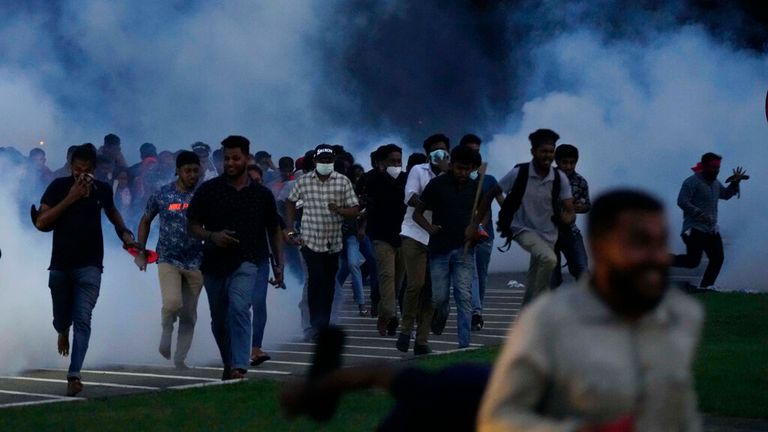
The Sri Lankan government on Saturday defended imposing a state of emergency, saying it was required to tackle the unprecedented economic crisis plaguing the country, even as President Gotabaya Rajapaksa faced flak from the Opposition and foreign envoys for his decision which gives security forces power to crack down on peaceful protests.

In a special Cabinet meeting on Friday, the embattled president declared the state of emergency with effect from Friday midnight. This is the second emergency declared in just over a month.

The announcement came as student activists kept the Parliament under siege since Thursday night.

The students blocked the main entrance to the complex demanding the resignation of the government for its inability to handle the ongoing economic crisis marked by shortages of essentials.

In a statement on Saturday, the Government Information Department said, “Sri Lanka is currently facing the worst economic crisis and political instability ever after Independence due to manifold reasons both short and long-term. The common perception is that several reforms in the sectors of political, economic and social fabric should be carried out in-depth to escape from this grave situation.”

“Priority among them is to manage the shortage of foreign exchange within the shortest possible time and restore the supply of goods and services, the statement added.

The government said discussions are ongoing with the multi-lateral institutions, including the International Monetary Fund, to obtain financial assistance and restructure outstanding debt.

“Political stability and peace in society are two major conditions that are demanded in building confidence and strength to make such programs a success,” the statement said, explaining the need for the emergency.

Sri Lanka is currently in the throes of unprecedented economic turmoil since its independence from Britain in 1948. The crisis is caused in part by a lack of foreign currency, which has meant that the country cannot afford to pay for imports of staple foods and fuel, leading to acute shortages and very high prices.

Thousands of demonstrators have hit the streets across Sri Lanka since April 9, as the government ran out of money for vital imports; prices of essential commodities have skyrocketed and there are acute shortages in fuel, medicines and electricity supply.

Despite mounting pressure, President Gotabaya Rajapaksa and his elder brother and Prime Minister Mahinda Rajapaksa have refused to quit office.

Commenting on the ongoing negotiations, the IMF’s Colombo mission chief Masahiro Nozaki said, “The IMF team will engage with the economic team of Sri Lankan authorities from May 9 to May 23 in a virtual mission and continue discussions on the authorities’ request for an IMF-supported programme.”

According to IMF assessment, Sri Lanka’s debt is unsustainable. Therefore, approval for IMF financing, including through a Rapid Financing Instrument, would require adequate assurances that debt sustainability will be restored.

Last month, the Sri Lankan government said it would temporarily default on USD 35.5 billion in foreign debt as the pandemic and the war in Ukraine made it impossible to make payments to overseas creditors.

The present state of emergency gives the police and the security forces sweeping power to arbitrarily arrest and detain people.

The country’s human rights body, the main lawyers’ body, the Opposition and even some members of the diplomatic community criticised the government for its move.

The Human Rights Commission of Sri Lanka said it was deeply concerned about the promulgation of an emergency. We urge the government to explain to the public the reasons for this proclamation since protests have been largely peaceful and within the ambit of normal police operations, it said in a statement.

We hope that freedom of speech and assembly, the rights associated with arrest and detention as well as other fundamental rights and freedoms will not be affected or derogated from during the period of the emergency, said the statement.

The Bar Association of Sri Lanka (BASL) in a statement issued said it was “gravely concerned” about the declaration of a State of Emergency by the President.

‘Legal action against misleading information about procurement of rice for Sri Lanka’

May 7th, 2022

Courtesy The Hindu

40,000 tonnes of rice and other essential commodities to be shipped to Sri Lanka, says Sakkarapani

Minister for Food and Civil Supplies R. Sakkarapani on Saturday warned of legal action against those who disseminate misleading information on social media about the initiatives to ship essential commodities such as rice to Sri Lanka.

According to a press release, the State government will ship 40,000 tonnes of rice and other essential commodities to Sri lanka. Fifty-one rice mills have been identified for packing and supplying the rice in 10 kg bags. Good quality rice varieties that have been exported to Sri Lanka have been procured by the State government at ₹33.50 a kg, which includes transport cost to ports such as Thoothukudi and Chennai. However, a few individuals have shared misleading information on social media, claiming that the rice should have been procured at ₹20 from the Food Corporation of India.

Pointing to the challenges in sending rice meant for the public distribution system from the Food Corporation of India to other countries, the Minister said the social media posts comparing the rice procured by the Tamil Nadu Civil Supplies Corporation with the product in the public distribution system was misleading.

Protest outside Ranil’s house, Ranil says meet me at Sirikotha

May 7th, 2022

Courtesy The Daily Mirror

A protest broke out, outside UNP Leader Ranil Wickremesinghe’s house in 5th Lane in Colombo this morning, with protestors calling on the former prime minister to ‘Go Home’ and ‘Stay Home’.

The protestors gathered outside after a statement made by TNA MP Shanakiyan Rasamanickam in Parliament this week, saying that Ranil was seen persuading opposition MPs to vote for SLFP’s Ranjith Siyambalapitiya in the Deputy Speaker election. 

The protestors gathered outside Ranil’s house and carried out a peaceful protest calling on Ranil to allegedly stop his ‘deals’. 

Security was deployed outside the former prime minister’s house.

An hour into the protest, a group of Ranil’s supporters also gathered at the site and began a protest saying the only solution to the ongoing crisis was to appoint Ranil as a leader. An argument then erupted between the pro and anti Ranil protestors and the police had to calm the situation.

A message was later sent to the protestors by the former prime minister saying if they wished to meet him, they should come to the Sirikotha on Monday where he will discuss their concerns with them. The protestors eventually dispersed. (Jamila Husain)

SJB to support BASL’s proposals to restore political and economic stability

May 7th, 2022

Courtesy Adaderana

Sri Lanka’s main opposition, the Samagi Jana Balawegaya (SJB) says it has decided to extend support to the proposals brought forward by the Bar Association of Sri Lanka to restore political and economic stability in Sri Lanka, which includes the abolishment of the Executive Presidency.

The party said in a statement that it would support a national program based on a series of proposals put forward by the Bar Association of Sri Lanka to resolve the serious national crisis in the country.

The statement said that the SJB considers the program proposed by the Bar Association to abolish the Executive Presidency as a primary need to resolve the existing national crisis.

Accordingly, the Samagi Jana Balawegaya said it has decided to support a national program to resolve the existing crisis, based on the set of proposals presented by the Bar Association to find immediate solutions to the serious issued faced by the people and bring stability to the country.

The brief statement was read out by SJB parliamentarian Harin Fernando during a press briefing held in Colombo today (07).

The Bar Association proposes the establishment of an Interim Government of National Unity consisting of 15 Cabinet Ministers. 

The Prime Minister to be a Member of Parliament who is able to establish a consensus among all political parties recognized by the Speaker in Parliament on the national economy and to enact necessary reforms, the BASL proposes. 

If there is no Member of Parliament who meets this criteria due to the exigencies of the situation a vacancy created by the resignation of a National List MP may be used to facilitate the entry into Parliament of an individual who meets this criteria where there is bi-partisan consensus to appoint a person who is not presently a Member of Parliament as the Prime Minister, even if such individual’s name did not appear in the original List submitted to the National Elections Commission.”

It further says the Government of National Unity will be for a maximum period of eighteen (18) months and a further 6 weeks as a caretaker Government to oversee elections. 

At the conclusion of eighteen (18) months Parliament will be dissolved and a General Election will be held at the expiry of 6 weeks. The Government of National Unity will cease to exist at the conclusion of the General Election.”

The Bar Association’s proposal also includes the abolition of the executive presidency, the introduction of the 21st Amendment to the Constitution to remove the provisions of the 20th Amendment and reinstate the 19th Amendment.

Proposals of the Bar Association of Sri Lanka to restore political and economic stability in the country:https://www.scribd.com/embeds/573167538/content?start_page=1&view_mode=scroll&access_key=key-UXZJBh1DbgeOExCCRaCY

Proposals of the Bar Associ… by Adaderana Online

Prime Minister likely to resign on Monday?

May 7th, 2022

Courtesy Adaderana

Prime Minister Mahinda Rajapaksa has decided to resign from his post during the special cabinet meeting held yesterday (06), according to political sources.

The source claimed that the resignation of the Prime Minister is scheduled to take place next Monday.

A special cabinet meeting chaired by President Gotabhaya Rajapaksa was held at the President’s House yesterday.

The President had pointed out that in the face of the economic and political crisis that has arisen in the country and the continuous strong opposition from the people, a serious problem has arisen in maintaining the economy.

The President also pointed out that the current crisis has led to a decline in tourist arrivals and the closure of factories, which has led to a serious economic crisis.

Political sources say that the President had stated that the Prime Minister and the government should resign because it is no longer possible to act in the face of the crisis that has arisen.

The Prime Minister has stated that the resignation of the government is not a solution to the problem.

Ministers Dinesh Gunawardena and Wimalaweera Dissanayake had reportedly endorsed the Prime Minister’s view.

Ministers Prasanna Ranatunga, Ramesh Pathirana and Prof. Channa Jayasumana have explained that the government should be handed over to those who can find a solution to the current crisis and that they should all resign.

Afterwards, Prime Minister Mahinda Rajapaksa had allegedly stated that if the solution to the current crisis is his resignation, he is ready to step down as Prime Minister and sit in the opposition.

Political sources said that with the resignation of the Prime Minister, the current cabinet will also be dissolved automatically and the process of resignation will likely take place next Monday.

20 වෙනුවට 21 වැනි ව්‍යවස්ථා සංශෝධනය පාර්ලිමේන්තුවට

May 7th, 2022

Courtesy Hiru News

පෞද්ගලික මන්ත්‍රී යෝජනා ලෙස ඉදිරිපත් කර ඇති 21 වන සහ 22 වැනි ආණ්ඩුක්‍රම ව්‍යවස්ථා සංශෝධන පනත් කෙටුම්පත් ඇතුළත් ගැසට් අතිරේකයක් නිකුත් කර තිබෙනවා.

ඒ සමගි ජන බලවේගයේ මහලේකම් මන්ත්‍රී රංජිත් මද්දුම බණ්ඩාර සහ ජනාධිපති නීතිඥ ආචාර්ය විජයදාස රාජපක්ෂ යන අය විසින්.

මෙම පනත් ප්‍රකාශය පාර්ලිමේන්තුවේ දී ඉදිරිපත් කිරීම පිණිසයි නිකුත් කර ඇත්තේ.

ඒ අනුව 20 වැනි ව්‍යවස්ථාව සංශෝධනය කරමින්, 21 වැනි ව්‍යවස්ථා සංශෝධනය සිදු කිරීම අරමුණු කරගනිමින් 05 (02) යටතේ ‘අ’ කොටසේ මෙසේ සඳහන් කර තිබෙනවා.

4 වන ව්‍යවස්ථාවේ (ආ) ඡේදයේ ”ජනතාව විසි තෝරා පත්කරගනු ලබන ජනරජයේ ජනාධිපති විසින් ක්‍රියාත්මක කළ යුත්තේය.” යන වචන වෙනුවට ”ආණ්ඩුක්‍රම ව්‍යවස්ථාවේ විධිවිධාන සලස්වා ඇති ආකාරයට ජනාධිපතිවරයා සහ කැබිනට් මණ්ඩලය විසින් ක්‍රියාත්මක කළ යුත්තේය.” යන වචන එයට ආදේශ කර තිබෙනවා.

මේ අතර ආචාර්ය විජයදාස රාජපක්ෂ විසින් ඉදිරිපත් කරන ලද සංශෝධනයේ පළමුකොට පුරවැසි නිදහස තහවුරු කර තිබෙන අයුරු දැකිය හැකියි.

වර්ෂ 1972 පළමු ජනරජ ආණ්ඩුක්‍රම ව්‍යවස්ථාවෙහි හිමිකර දී ඇති ජීවත් වීමේ අයිතිය 1978 දෙවැනි ජනරජ ව්‍යවස්ථාවෙන් ගිලිහී යාමේ ප්‍රතිවිපාක යළි ඇති නොවීම වස්, මන්ත්‍රී විජයදාස රාජපක්ෂ විසින් ගෙනහැර දක්වන පළමු සංශෝධනය අතිශය වැදගත් යැයි පෙන්වාදීම උචිත වෙනවා.

ඒ අනුව 5 (2) ආණ්ඩුක්‍රම ව්‍යවස්ථාවේ 12 වැනි ව්‍යවස්ථාවේ (1) වන අනුව්‍යවස්ථාවට පසුව ‘අ’ යටතේ ” සෑම තැනැත්තෙකුටම ජීවත් වීමේ සහ පුද්ගලික නිදහසේ අයිතිය ඇත්තේය.” යනුවෙන් හිමිගන්වා තිබෙනවා.

https://drive.google.com/file/d/14UqsjPwoT1w3FyiWhh5oqLUJo1nPu03m/view

Post of President

May 6th, 2022

Sugath Kulatunga 

It was a pleasure to see Field Marshal Sarath Fonseka defending the post of President against the popular will of the party of which he is the Chairman. His argument was based on the significance of the post in national security on which his expertise cannot be questioned. The demand for the abolition of the President has come mainly from parties, which miserably failed in the attempt to capture the post. The present cry of Gotago appears to be more againster the holder than on the post of the President.

The presidential system (PS) is the dominant form of government in the mainland Americas, with 19 of its 22 sovereign states being presidential republics. In the world approximately 5 out of 8 billion people are ruled by presidential or semi presidential systems. The most recent much researched and unhurried and universally acclaimed Constitution of South Africa, under Nelson Mandela opted for a Presidential system. India the largest democracy in the world is moving towards a Presidential system which Shashi Tharoor says ‘ Never has the separation of powers between executive and legislative organs been more necessary than today.  Only a truly presidential system could keep the excesses India has been subjected to in check.” 

In the 1980s and 1990s, all the new aspirant democracies in Latin America and Asia (Korea and the Philippines) have chosen pure presidentialism and out of approximately twenty-five countries that now constitute Eastern Europe and the former Soviet Union, only three- Hungary, the new Czech Republic, and Slovakia-have chosen pure parliamentarianism. Most countries which have retained parliamentary systems are Kingdoms or remnants of the British colonial regime.

It is noted that no country which had adopted a presidential system has opted out of the presidential system

 If at all the fault is not in the system but in the holders of the powerful post..

1. PS ensures the Sovereignty of the People and their right of Franchise. It is the best measure of the popular will of a nation. Sovereignty of the people implies the sovereignty of all the people of the nation. It cannot be fragmented. A President is elected by all the people of the country whereas a Prime Minister is elected as a member of Parliament from  a particular constituency and then chosen as the Prime Minister by a majority of the elected members of the Parliament. The election of a President is the only test of the popular will. For example a Prime Minister elected from an urban constituency cannot claim to represent the popular will of the nation. The selection process of a President is more rigorous than the selection process of a Prime Minister or Cabinet Ministers. He or She has to be of a person of exceptional skills with a national appeal. A President has to be conscious of the needs of the minorities and minorities can become the deciding factor as experienced in Sri Lanka in the past. The probability of a President being a more effective leader is higher than that of a Prime Minister.

2. PS Guarantees Stability:Presidential elections are held on a fixed date whereas in the Parliamentary system elections are held at the will of the Prime Minister and the party in power. A fixed period of governance ensures the stability of the state. Fringe parties, which dictate terms to governments, have less destabilizing space in a Presidential system. In a Parliamentary system the Prime Minister is only primus inter pares. Especially in coalition governments, like what we have had in Sri Lanka the Prime Minister has to yield to minority demands that are not in the interest of the nation. This could lead to conflicting and destabilizing outcomes. A President has to watch only major political trends whereas a Prime Minister in a coalition government has to appease fringe parties in order to hold power. This is a typical feature in Sri Lanka politics. A President who is elected by all of the People can prevent special interest groups or ideologues from diverting public policy into immoderate or non-public-interested directions.   

3. PS ensures Separation of Powers.:The Montesquieu principle of separation of power asserts that, to most effectively promote liberty, executive, legislative and Judicial powers must be separate and act independently. Separation of powers prevent the concentration of power in one branch of government by providing for “checks” and “balances” to avoid, over-reaching by one branch over another, and governing by one actor without regard to the others.

In the Constitution of Sri Lanka the principle of separation of power is recognized and the separate powers are assigned to the Executive, Legislature and the Judiciary. A weakness in the SL scheme is that the executive cabinet is formed with members of the legislature. This also prevents the best talent in the country to be harnessed for the development of the country.

In the Parliamentary system the executive is selected by the legislature and acts closely with the legislature. There are hardly any checks and balances between the two powers.

4. Legitimacy: The Prime Minister as mentioned earlier, a Prime Minister is elected by a single constituency which may not reflect the interests of the wider population. This is a very significant issue where Prime Ministers represent urban constituencies. A Prime Minister who is normally the leader of his party has only to exercise his party leader position to be accepted as the prime ministerial candidate. This requires manipulative skills more than national leadership qualities. There is a legitimacy deficit in the selection of a Prime Minister. Direct election by the people is vital for legitimacy. Even the strongest parliamentary regimes lack this prerequisite.

5. Two Party Systems and Presidential Government

A presidential system tends to engender a two party system reinforcing stability and enhancing democracy. The advantage of a two party system is that it results in a high degree of moderation in a political system. When there are only two political they are inclined to be usually moderately left of center and moderately right of center. When there are many small parties as we have in Sri Lanka the small parties, based mainly on ethnicity they exploit racial, ethnic, linguistic, and religious differences to try to gain popularity and power.

The presidential system tends to bipolarize elections, so that the system is one that has “two principal poles, each composed of several separate parties forced to cooperate with each other in order to win the presidential election and to govern with a parliamentary majority which reflects that cooperation.” We can observe this development in the many Sandanayas formed to contest the forthcoming Presidential elections.

6. Speed and Proficiency in decision-making: A strong Presidency is capable of making prompt and radical decisions than a cabinet led by a Prime Minister. It is doubtful if the open market policy, poverty alleviation and more importantly the successful war effort against the Tamil separatists could have been made other than a strong Presidency. A President is more effective in a crisis situations, which demand swift and decisive action. The role played by the President in Corvid pandemic control is a good example.

In Sri Lanka the President plays an indispensable role in the devolution of powers to the Provinces. Presidency becomes the anchor which firmly holds the link between the Provinces and the Center. This unique status of the President was clearly stated in the following wording in the Supreme Court determination on the 13th Amendment to the Constitution.”

The Governor is appointed by the President and holds office in accordance with Article 4(b) which provides that the executive power of the People shall be exercised by the President of the Republic, during the pleasure of the President (Article 154B(2)). The Governor derived his authority from the President and exercises the executive power vested in him as a delegate of the President. It is open to the President therefore by virtue of Article 4(b) of the Constitution to give directions and monitor the Governor’s exercise of this executive power vested in him. Although he is required by Article 154F(1) to exercise his functions in accordance with the advice of the Board of Ministers, shall be on the President’s directions and that the decision of the Governor as to what is in his discretion shall be final So long as the President retains, the power to give directions to the Governor regarding the exercise of his executive functions, and the Governor is bound by such directions superseding the advice of the Board of Ministers and where the failure of the Governor or Provincial Council to comply with or give effect to any directions given to the Governor or such Council by the President under Chapter XVII of the Constitution.”

The Yahapalana government did its utmost to whittle down the powers of the President and transfer most executive powers to the Prime Minister. To their dismay the Supreme Court held that it cannot be done without a referendum on the argument that transfer, relinquishment or removal of power attributed from one organ to another organ or body would be inconsistent with Article 3 of the constitution read with Article 4 of the Constitution . However on the same grounds the SC did not consider the reduction of powers given in the Constitution to the President a violation of the Sovereignty of the People.

Presidency is not without criticisms. But most of the criticism  apply to Prime ministerial governments as well. A major complain is that presidency produces authoritarian governments. This has been the chief objection to the former Presidents of Sri Lanka as well. In Asia Indira Gandhi of India and Lee Kuan Yew of Singapore were considered highly dictatorial. Mugabe of Zimbabwe and Hun Sen of Cambodia were considered despots. Margaret Thatcher of the mother of parliaments was an autocrat.

1.     When the President is from a different party from that of the Prime Minister there can be friction similar to what has happened during the tenure of the present government in Sri Lanka. This would not take place if the President is an independent candidate or the President after elections leaves his party.

2.     While an errant Prime Minister can be removed with a vote of no confidence (in Sri Lanka even by suspending standing orders) a President cannot be removed from his post without following the exact practice laid down in the Constitution, including an inquiry by the Supreme Court. While this may not be meet desperate situations (like the no confidence motion on Premadasa) this practice provides stability to the post of President. As  he/she is elected by the people his/her removal should rightly be approved at a referendum.

3.     An accusation frequently levelled is that a President enjoys immunity from prosecution. The provision that the President is responsible to the Parliament is not supported by modes of execution. 19 th Amendment to the Constitution has corrected the anomaly of immunity of non-prosecution. In addition to his responsibility to the Parliament the President should be made directly responsible to the people who elected him. It can be done through a national referendum, but it is an expensive device for use in specific instances.  In Sri Lanka there are close to 9000 members in 340 local authorities and 275 Pradeshiya Sabha. This 9000 members who are elected representative of the people can be the constituency for the conduct of a referendum to decide on the will of the people on important decisions. The approval for a decision by a referendum should be on a majority vote of the Parliament. The voting should be under the direction of Election Commission and the counting of votes should be done at the district level. A referendum could also be called by a majority vote by the same constituency.

1.    
The success of a President depends largely on the quality of the holder. He/she should be of high intellect, ethical, professional and gifted with a high degree of emotional intelligence.  Let Sri Lanka not be a country which has backpedaled to a Parliamentary system from a Presidential system. We are good at backpedaling or not pedaling at all.

‘For forms of Government let fools contest. Whate’er is best administered is best.’ Alexander Pope.

Sugath Kulatunga

Summary of Recommendations to Revive Sri Lankan Agriculture

May 6th, 2022

The Academics’ Movement to Safeguard Agriculture in Sri Lanka (AMSA-Sri Lanka)

The Academics’ Movement to Safeguard Agriculture in Sri Lanka (AMSA-Sri Lanka) proposes the
following short-, medium- and long-term measures to address immediate and medium- to longterm
threats faced by Sri Lankan Agriculture.
Immediate threat:
An imminent threat of widespread crop failure in the next two seasons leading to widespread
food shortage requiring food imports using a colossal sum of foreign exchange.
Immediate solutions:

  1. Allocate limited stocks of fertilizer and pesticides to selected crops on a priority basis giving
    top priority to paddy, tea and maize
  2. Provide 50% of the recommended nitrogen fertilizer for each crop and aim to fulfill part of the
    shortfall with available locally-produced organic fertilizer
  3. Purchase urea and hybrid seeds using the loan facilities from World Bank and India
  4. Promote technologies that minimize nutrient losses and achieve high nutrient use efficiency
    I. Good Agricultural Practices (GAP)
    a. Integrated Nutrient Management (INM)
    b. Integrated Pest Management (IPM)
    II. Precision Agriculture (PA)
  5. Provide guidance to farmers with the well-coordinated extension services of the mandated
    governmental agencies
  6. Provide a partial-subsidy for nitrogen fertilizer and a full-subsidy for high-quality organic
    fertilizer
  7. Initiate community garden and home garden programmes at the provincial level
    Medium-term threat:
    Limited availability of agricultural inputs (e.g. fertilizer, fuel) in the next 3-4 years leading to
    reductions in the cropped area, thus requiring to produce more food with less land.
    Medium-term solutions:
  8. Establish a centrally-controlled agricultural extension system in mandated institutions
  9. Strengthen and expand the resource-efficient technologies proposed as immediate solutions
  10. Design and update GAP and PA technologies for all crops
  11. Establish a mechanism to encourage the adoption of the GAP-certification process
  12. Promote research and local development of granular nano-fertilizer, biofertilizer and
    biopesticides
    Long-term threats:
    Climate change and declining soil fertility endangering long-term food security, sustainability of
    farming systems and farmer livelihoods, Slow infusion and adoption of modern technology
    Page 2 of 2
    Long-term solutions:
  13. Position Sri Lankan agriculture within the context of a broader integrated land management
    policy to develop along a physically- and environmentally-sustainable pathway
  14. Strengthen research to adopt modern, appropriate technology in Sri Lanka agriculture
    Names of Signatories, on behalf of the AMSA-Sri Lanka:
    Senior Professor Buddhi Marambe Faculty of Agriculture, University of Peradeniya
    Senior Professor Janendra de Costa Faculty of Agriculture, University of Peradeniya
    Professor Devika de Costa Faculty of Agriculture, University of Peradeniya
    Senior Professor Aruna Kumara Faculty of Agriculture, University of Ruhuna
    Professor T. Sivananthawerl Faculty of Agriculture, University of Peradeniya
    Professor Saman Dharmakirthi Faculty of Agriculture, University of Peradeniya
    Professor Meththika Withanage Faculty of Applied Sciences, University of Sri
    Jayewerdenepura
    Professor Nalika Ranathunge Faculty of Agriculture, University of Ruhuna
    Professor Warshi Dandeniya Faculty of Agriculture, University of Peradeniya
    Professor Nilantha Liyanage Faculty of Agriculture, University of Ruhuna
    Professor Ewon Kalidasa Faculty of Animal Science and Export Agriculture, Uwa
    Wellassa University
    Professor Gangani Samaraweera Faculty of Agriculture, University of Ruhuna
    Dr. Pradeep Gajanayaka Faculty of Technology, University of Sri
    Jayewerdenepura
    Dr. Chammi Attanayaka Faculty of Agriculture, University of Peradeniya

Recommendations to Revive Sri Lankan Agriculture

May 6th, 2022

The Academics’ Movement to Safeguard Agriculture in Sri Lanka (AMSA-Sri Lanka)


The Academics’ Movement to Safeguard Agriculture in Sri Lanka (AMSA-Sri Lanka) proposes the
following short-, medium- and long-term measures to address immediate and medium- to longterm
threats faced by Sri Lankan Agriculture.
Immediate Threat:
There is an imminent threat of widespread crop failure in the current (2022) Yala season because
of the shortage of agrochemicals (inorganic fertilizer and synthetic pesticides). A failure of the
Yala rice crop could lead to a shortage of seed paddy for the next (2022/23) Maha season, thus
creating the possibility of a substantial food shortage in 2023. Food imports to fill-in such a
shortage will require a colossal sum of foreign exchange.
Proposed immediate actions towards short-term solutions:
It is clear that during the next two seasons, sufficient quantities of inorganic and organic fertilizer
will not be available to fulfill the nutrient requirements of any of the major crops. The same is
true for pesticides, both synthetic and biological.
Therefore, crop management practices in the next two seasons should aim to obtain the highest
possible yield with limited fertilizer and pesticides while minimizing the threat to food security and
increasing the net foreign exchange earnings.
AMSA proposes an immediately-implementable action plan based on the following guidelines:

  1. Prioritized allocation of limited stocks of fertilizer and pesticides to selected
    crops
     High priority: Paddy (staple food), Tea (main foreign exchange earner), Maize
    (animal feed). In paddy, a higher priority should be given to seed paddy in
    allocating fertilizer. The total seed paddy requirement for the next two seasons
    (Maha 2022/23 and Yala 2023) will be 6.4 million bushels.
     Medium priority: Vegetables (widespread local consumption), chilli and onions
    (widespread local consumption), pulses, export-oriented crops other than tea
     All other crops: Allocation of fertilizer and pesticides based on availability after
    fulfilling the requirements of high- and medium-priority crops
  2. Prioritized allocation of limited foreign exchange (including donor funding) to
    import nitrogen fertilizer (preferably Urea) with a limited quantity of potassium fertilizer
    (preferably Muriate of Potash)
     Limited foreign exchange should not be used to import ineffective and expensive
    fertilizer types such as liquid nano-fertilizer, amino acids, biofertilizer etc.
     Foreign exchange to be allocated for importing only the key pesticides for which
    there are no non-chemical alternatives to control major pests, diseases and weeds
    on a ‘need-to-use’ basis
    Page 2 of 8
  3. Use part of the 600 million US Dollar loan facility from the World Bank to
    purchase the following essential inputs:
     260,000 Metric Tons of Urea for rice, maize and tea for the year as estimated by
    the National Fertilizer Secretariat (Appropriate quantities for each crop to be
    decided based on the estimated cultivated extent for rice and maize for Yala 2022
    and Maha 2022/23 seasons, separately, and the current extent of tea)
     Hybrid seeds of maize, exotic vegetables and seed potato
     Explore the possibility of obtaining part of the Urea requirement from the Indian
    Credit Line
  4. Provide 50% of the recommended nitrogen fertilizer for each crop and aiming to
    fulfill part of the shortfall with available locally-produced organic fertilizer
  5. Promote technologies that minimize nutrient losses and achieve high nutrient
    use efficiency
    A list of technologies along with their essential features is given later in this document.
  6. Provide guidance to farmers via the extension services of the mandated
    governmental agencies such as the Department of Agriculture (DOA), Department of
    Agrarian Development (DAD), Department of Animal Production and Health (DAPH),
    Provincial Departments of Agriculture (PDOA), and Animal production & Health (PDAPH),
    Tea Small Holding Authority (TSHDA), Tea Research Institute (Advisory Division) etc.
     Ensure that recommendations made by the Departments and Institutions under
    the Ministries and State Ministries of Agriculture, Plantation, and Irrigation shall
    only be based on proven and scientifically-valid experimentation
     The Head of the Institutions under the Ministry and State Ministries of Agriculture,
    Plantation, and Irrigation shall be responsible and accountable for the
    recommendations made for implementation at the farm level in Sri Lanka
     Extension services for paddy and other field crops (OFCs) to be coordinated
    centrally by the Department of Agriculture (Extension & Training Division)
     Task forces appointed so far to be dissolved immediately or to work under the
    authority and direction of the mandated governmental agency
     Establish a mechanism for farmers to access essential climate information for the
    cultivation of different crops provided by the Natural Resources Management
    Centre of the Department of Agriculture
  7. Introduce regulatory measures and mechanisms to ensure quality for all types of
    fertilizers (including those produced and marketed as biofertilizers, organic fertilizers and
    natural mineral fertilizers) that are produced in Sri Lanka
  8. Provide a partial-subsidy for nitrogen fertilizer and a full-subsidy for high quality
    organic fertilizer
    Page 3 of 8
  9. Initiate community garden and home garden programmes at the provincial level
    to support nutritional security with careful identification of requirements, without affecting
    the existing market mechanisms and commercial cultivation of crops (e.g. vegetables and
    fruits)
    Proposed technologies that use limited fertilizer with greater efficiency
    (A) Good Agricultural Practices (GAP)
    GAP is a collection of ‘good practices’ at all stages of the production, processing,
    transport and marketing process of a crop. This represents the most feasible and
    readily-available and immediately-implementable technology at the present moment.
    o Promote the adoption of the already available GAPs in all possible crops via farmer
    awareness programs using a range of available methods coupled with effective
    market linkages (e.g. GAP-certified products to be sold at super market chains)
    o Design GAPs using the existing knowledge base by DOA-appointed teams of
    experts with assistance from universities
    The GAP technologies are recommended for immediate implementation:
    A1. Integrated nutrient management (INM)/ Integrated Plant Nutrient
    Management Systems (IPNMS)
     Provide a combination of inorganic and organic fertilizer in accordance with the
    nutrient requirement of the crop and the fertility of the soil
    o Use an appropriate % of the DOA recommendation of inorganic
    fertilizer requirement depending on the availability
    o Supplement the crop’s nutrient requirement with organic fertilizer
    produced locally through government-sponsored programs
    o Coordinated by the Central DOA and the provincial DOAs and carried
    out via Agrarian Services Centres and for the tea smallholders via
    TSHDA
    o A separate program of distribution to the tea plantation sector after
    consulting the RPCs and depending on their available stocks of
    inorganic fertilizer
    o Facilitate the local production of biofertilizers that have been
    recommended by the DOA
    A2. Integrated pest management (IPM)
     Promote the limited use of essential synthetic pesticides (for which there are
    no non-chemical alternatives) for major crop diseases, pests and weeds in
    combination with available biological and cultural methods of control
    o Farmer awareness programs of currently-feasible IPM packages for
    major crops to be conducted by the central and provincial DOAs
    o Identify the most critically-needed pesticides and expedite their imports
    o Facilitate the local production of biopesticides that have been approved
    by the Registrar of Pesticides
    Page 4 of 8
    (B) Precision agriculture (PA)
     Promote precision agricultural practices that are tailor-made to specific crops
    grown under specific soil and climatic conditions with flexibility for real-time
    adjustment
     Promote the already-developed PA packages for selected crops via farmer
    awareness and training programs of the DOA
     Facilitate adoption of available PA packages recommended by the DOA and
    other commodity research institutes
     Promote the use of soil test kits to determine the site-specific nutrient
    requirements
    All above INM/IPNMS, IPM, PA practices/technologies,
     Involve an appropriate combination of synthetic and natural inputs while taking in
    to consideration the existing soil fertility, climate and the socio-economic
    conditions
     Aim to achieve an economically-viable crop yield with the minimum usage of
    inorganic fertilizer and pesticides while addressing the concerns of food security,
    food safety and environmental safety
     Are designed to reduce the reliance on chemical methods of nutrient and pest
    management by using a range of non-chemical, agronomic and biological methods
     Are aimed at long-term improvement of soil fertility and reduction of pest
    populations which could lead to more eco-friendly agricultural practices in the
    medium- to long-term
    Immediate Specific Technological and Policy Interventions
     Facilitate seed paddy production to support cultivation in the 2022/23 Maha season
    o About 6.4 million bushels of seed paddy are required for the whole year to cultivate
    around 1.3 million ha of paddy fields. Of this, 1/3rd is required for Yala season
    (mainly obtained from the cultivation done in the previous Maha season) and 2/3rd
    for the Maha season (obtained from the cultivation done in Yala season). Hence,
    immediate interventions are required to encourage the research stations and
    farming community in selected areas to produce good quality seed paddy during
    this Yala season (e.g. by cultivating around 450,000 ha) to be used in cultivation
    in the next Maha season (to cultivate around 830,000 ha)
     Initiate negotiations immediately with the Government of India to include agricultural
    inputs such as fertilizer, pesticides (only those registered in Sri Lanka) and required seeds
    (except seed paddy and other prohibited items by statute) to be included in the recently
    adopted Indian Credit Line to have quick access to such inputs to support the agriculture
    sector
    Page 5 of 8
    Medium-term threats:
    The measures described above are aimed at achieving yield levels sufficient to avert a nationwide
    food shortage in the next two years, with a very limited stocks of agrochemicals while facing
    many other constraints such as fuel shortages.
    It will take another 3-4 years before the Sri Lankan economy will be in a position to purchase the
    full complement of essential agricultural inputs (i.e. inorganic fertilizer, essential pesticides, hybrid
    seeds, fuel for farm machinery and post-harvest processing) to use them on crops at the
    recommended levels. As a result, Sri Lanka’s agriculture and food security will continue to be
    vulnerable to the volatilities of the global political and economic forces.
    Furthermore, because of the higher input costs and their reduced availability, it is likely that the
    cultivated extents of most annual crops will decrease in the next 3-4 years. Therefore, achieving
    the national production targets of rice, maize and other field crops will require measures to
    produce a higher crop yield from a reduced cropping extent (i.e. an increase in productivity).
    In view of this scenario, AMSA recommends the following medium-term measures:
    Medium term solutions:
  10. Develop annual and/or seasonal cultivation planning of crops and production-oriented
    planning in animal sectors with the participation of the state, private sector and lead
    farmer organizations
  11. Establish a centrally-controlled agricultural extension systems with a well-coordinated
    information flow through the National Agriculture Information and Communication Center
    (NAICC) of the DOA involving DOA, PDOAs, Mahaweli Authority of Sri Lanka, and private
    sector using ICT for effective communication
  12. Strengthen and expand the resource-efficient technologies proposed as immediate shortterm
    solutions
  13. Design GAP and PA technologies for crops for which they are not currently available and
    update the current GAP program packages using the existing knowledge base by a DOAappointed
    team of experts, with the assistance from universities
  14. Establish a mechanism to encourage adoption of the GAP-certification process for selected
    crops (e.g. Rice) across the country, with the participation of Department of Agriculture
    (DOA), Provincial Departments of Agriculture (PDOA) Private Sector and farming
    community, while facilitating an effective market mechanism for the GAP-certified
    products
     Initiate activities to promote of GAP-certification programs in all possible crops via
    farmer awareness programs using a range of available methods
    Page 6 of 8
  15. Introduce field-tested and validated recommendations for the application of organic
    fertilizer to supplement the nutrient requirements of specific crops when a fraction of the
    recommended inorganic fertilizer is used
  16. Invest in research programs on organic fertilizer production and their field evaluations
  17. Import limited quantities of phosphorus and potassium fertilizer (preferably Triple Super
    Phosphate, TSP, and Muriate of Potash, MoP) after importing the full national requirement
    of nitrogen (preferably Urea)
  18. Upscale the granular nano-fertilizer that has been developed by the Sri Lanka Institute of
    Nanotechnology (SLINTEC) for it to be used within Sri Lanka
  19. Promote the development of biofertilizers and biopesticides locally with the coordination
    and regulation by a national authority while providing financial assistance when required
  20. Establish green manure crops in uncultivated arable lands for the green manure to be
    used both in-situ and ex-situ as an amendment to increase nutrient retention and reduce
    losses
  21. Improve local and international marketing channels by converting the current ‘open loop’
    strategy in to ‘closed loop’ strategies with the aim of establishing proper and efficient
    coordination among all the actors involved
    These measures are designed to:
    (a) Achieve stability in the Sri Lankan agriculture sector in the next 3-4 years through
    introduction of resource-efficient technologies (e.g. GAP, INM/IPNS, IPM, PA etc.)
    (b) Steer Sri Lankan agriculture back on track to achieve national food security
    (c) Restore farmer confidence and trust
    (d) Establish a foundation to address the long-term issues facing Sri Lankan agriculture
    Long-term threats
    Sri Lankan agriculture faces several long-term threats which could endanger long-term food
    security, sustainability of farming systems and farmer livelihoods. Some of the major threats are:
    (a) The absence of a national framework harmonize agriculture with the availability of
    natural resources, environmental protection and biodiversity conservation
    (b) Decreasing soil fertility and crop productivity
    (c) Climate change and increased vulnerability to climate change
    (d) Agricultural expansion being in conflict with environmental protection and biodiversity
    conservation
    (e) High postharvest losses
    (f) Absence of value addition
    (g) Non-uniform distribution of revenue among stakeholders in the value chain resulting in
    the primary producers receiving lower share of the revenue and the consumers having to
    pay a higher price
    Page 7 of 8
    (h) Slow infusion of modern, resource-efficient technology
    Long-term solutions
    AMSA proposes the following macro-level policies and initiatives to address the above-mentioned
    key long-term issues and challenges faced by Sri Lankan agriculture and the farming community:
    (1) Positioning Sri Lankan agriculture within the context of a broader integrated
    land management policy
     This will involve a process that will ultimately evolve in to establishment of
    sustainable crops and cropping systems which matches the resource availability
    (physical, human and economic) of the lands in different parts/regions of Sri Lanka
     Such a policy will be essential to meet some of the key future threats such as
    climate change, input scarcity and rising energy costs
    (2) Developing Sri Lankan agriculture along a more physically sustainable path
    This will involve practices to arrest and regenerate declining soil fertility
    (3) Developing Sri Lankan agriculture along a more environmentally sustainable
    path
    This will involve practices to reduce the reliance on and usage of inorganic fertilizer and
    synthetic pesticides
    Establishing facilities to analyze pesticide residues in agricultural commodities and in
    environmental samples to ensure food and environmental safety and build consumer trust
    in food safety
    (4) Evolving towards an agriculture system where new technologies are infused
    This will involve the incorporation of new technologies such as precision agriculture with
    new resource-efficient crop varieties and animal breeds
    (5) Improving the uniformity of economic returns to the producers, processors,
    marketers and consumers in the value-chain of SL agriculture (i.e. food system approach)
    (6) Development of local industries for producing essential inputs such as seeds,
    biofertilizers and biopesticides that have proven impacts based on sound scientific
    experiments
    (7) Strengthening of the research and extension network with the engagement of key
    stakeholders (involving state, private sector, non-governmental organizations, and lead
    farming communities)
    Page 8 of 8
    Names of Signatories, on behalf of the AMSA-Sri Lanka:
    Senior Professor Buddhi Marambe Faculty of Agriculture, University of Peradeniya
    Senior Professor Janendra de Costa Faculty of Agriculture, University of Peradeniya
    Professor Devika de Costa Faculty of Agriculture, University of Peradeniya
    Senior Professor Aruna Kumara Faculty of Agriculture, University of Ruhuna
    Professor T. Sivananthawerl Faculty of Agriculture, University of Peradeniya
    Professor Saman Dharmakirthi Faculty of Agriculture, University of Peradeniya
    Professor Meththika Withanage Faculty of Applied Sciences, University of Sri
    Jayewerdenepura
    Professor Nalika Ranathunge Faculty of Agriculture, University of Ruhuna
    Professor Warshi Dandeniya Faculty of Agriculture, University of Peradeniya
    Professor Nilantha Liyanage Faculty of Agriculture, University of Ruhuna
    Professor Ewon Kalidasa Faculty of Animal Science and Export Agriculture, Uwa
    Wellassa University
    Professor Gangani Samaraweera Faculty of Agriculture, University of Ruhuna
    Dr. Pradeep Gajanayaka Faculty of Technology, University of Sri
    Jayewerdenepura
    Dr. Chammi Attanayaka Faculty of Agriculture, University of Peradeniya

Sri Lanka ‘risks running out of food and fuel’ and could descend into ‘anarchy’, former energy minister says

May 6th, 2022

Paul Kelso Courtesy Sky News

Udaya Gammanpila has issued the warning after being sacked for criticising government policy that has taken the country to the brink of bankruptcy.

Sri Lanka could run out of fuel and food in the next month, according to the former energy minister.

Udaya Gammanpila was sacked earlier this year for criticising government policy that has taken the country to the brink of bankruptcy.

The former energy minister told Sky News the economic crisis in his country is reaching a tipping point that could lead to the collapse of agriculture, medical services and industrial production, leading to “anarchy”.

He issued the warning before Sri Lanka’s President Gotabaya Rajapaksa declared a state of emergency across the country on Friday evening effective from midnight.

It comes amid widespread protests calling for the resignation of Mr Rajapaksa and his brother Mahinda, who is prime minister, as Sri Lanka faces its worst economic crisis in recent memory.

The government notice said the state of emergency has been declared in the interests of public security.

It is the second time in five weeks the president has declared a state of emergency, which gives him sweeping powers and allows him to control protests.

MORE FROM WORLD

The latest move comes as a general strike across Sri Lanka has brought business and transport in the capital Colombo to a halt, and saw police use water cannon and tear gas against demonstrators.

Gotabaya and his brother Mahinda Rajapaksa are accused of nepotism, and blamed by many for a crisis that has seen Sri Lanka’s usable foreign currency reserves dwindle to less than $50m (£40m), leaving it reliant on the World Bank and International Monetary Fund, and major creditors India and China, for credit required to import fuel, food and cooking gas.

Sri Lankans are calling for the resignations of their prime minister Mahinda Rajapaksa, left, and their president Gotabaya Rajapaksa, right
Image:Sri Lankans are calling for the resignations of their prime minister Mahinda Rajapaksa, left, and their president Gotabaya Rajapaksa, right

The Rajapaksa brothers have faced protests for more than a month amid fuel shortages, soaring medicine and food prices, and rolling blackouts imposed to ration power supplies.

Earlier this week the finance minister admitted the country has barely enough money to buy a single tanker load of fuel, leaving it almost entirely reliant on a credit line from India for petrol, diesel and kerosene.

Sri Lanka students run from tear gas during a protest outside parliament in the capital
Image:Sri Lankan students run from tear gas during a protest outside parliament in the capital Colombo

Sri Lanka is in negotiations with the World Bank and International Monetary Fund, and with its major creditors India and China.

Mr Gammanpila, who was sacked in March for speaking out against government monetary policy, said the consequences of the economic crisis could be dire.

“Basically, Sri Lanka right now has no foreign currency reserves whatsoever,” he said.

“There is a risk of fuel shortages in the near future because in the last three months we have had the benefit of India’s credit line, which supplied Sri Lanka with $500m worth of petroleum products

“That’s now being fully utilised, so we have a risk of running out of all kinds of fuel. It’s like a man without blood, the body dies. The situation is terrible.”

Udaya Gammanpila was sacked earlier this year for criticising government policy
Image:Udaya Gammanpila was sacked earlier this year for criticising government policy

Read more:
Sri Lanka has never defaulted on its debt – is that about to change?

He also warned of food shortages, caused in part by a disastrous decision to ban chemical fertiliser imports last year. Relying only on organic products saw crop yields plummet, leaving an abundant island no longer self-sufficient in fruit and vegetables, and causing dramatic price rises for staples including rice.

“In the near future Sri Lanka will have to import vegetables, fruits and grains such as rice and maize for consumption. But because of the foreign currency shortage, we are not in a position to do that right now. In the coming months, definitely, there will be a food shortage.”

Following an emergency cabinet meeting it was reported that the president has asked his brother to resign as prime minister.

IMF and the Sri Lanka bailout drama

May 6th, 2022

By Kandaswami Subramanian Courtesy The Indian Express

How many more International Monetary Fund programmes will Lanka need to put itself through to reach that manna of economic stabilisation?

IMF

This is not the first time that Sri Lanka has come out of a battle with the International Monetary Fund (IMF). It is sufficiently battle-scarred over the years since the sixties. As one study in Financial Times reported, …. Since 1965 Sri Lanka has been a ‘repetitive client’ of the IMF. The country has entered into 16 economic stabilisation programmes during 1965–2000. Macroeconomic management of the country has been under IMF programmes for approximately 33 of the 55 years.” It may raise a valid question: How many more programmes will Sri Lanka need to put itself through to reach that manna of economic stabilisation?  

Over the years of Sri Lanka’s tango with the IMF, we observe the same elements: drama, tension, reluctance to approach the IMF for succour and, lo and behold, failure to comply with the IMF conditions or conditionalities and, at times, the cancellation of the programme due to political upheavals. We may observe the same pattern whether it is Argentina, Brazil, Pakistan, Greece, Spain or Sri Lanka. The scenario is familiar. For some months when the crisis looms in the horizon, countries are reluctant to seek redress from the IMF as they are apprehensive about the hardships that flow from its austerity prescriptions. Once the crisis deepens and foreign lenders seek their pound of flesh, it becomes unavoidable to knock on the doors of IMF. The ratings agencies foretell the doom. There is also an advice that the pundits offer: The earlier you reach the IMF, the better the terms will be. Be aware.”  

For Sri Lanka, what was negotiated last week was the 17th programme. By early 2020, it was evident that the country was on the brink of economic bankruptcy and turmoil. Reputed economists and bankers began to warn about the forthcoming crisis. For instance,

Dr W A Wijewardhana, a former Deputy Governor of the Central Bank of Sri Lanka, wrote that the country was sitting on a volcano that could erupt at any time. According to his estimate, Lanka’s total foreign debt was a staggering $56 billion, which was  66% of the country’s GDP. The reserves were too low to take on the servicing burden. Rather, Lanka had to borrow to pay off the older debt. The Covid-19 pandemic too played a role in devastating the economy.

Though Lanka is classified as a middle income” country, it is not rich, diversified or resilient to manage a crisis. The tsunami took its toll and now it is the turn of the pandemic. Civil conflicts with the Liberation Tigers of Tamil Eelam (LTTE) had sapped the human and financial resources. Lanka’s foreign exchange earnings are from tourism, tea and a few agricultural products. According to estimates, tourism earned 10% of GDP and the earning reported was around $455 million a month in the earlier years. It shrank to $3 million in July 2021. Tea and agricultural exports shrank precipitously. The foreign exchange reserves were declining fast and Lanka’s ability to service the foreign debt came into question. The grim situation faced by the people of Lanka was described by the press and media. Long queues were seen around shops for rice, fuel and essentials. Lanka had to import many of the items and pay in dollars even as the foreign exchange reserves were dwindling and getting inadequate to foot the recurring payments. In October 2021, Jeevathan Selvachandran of The Asia & Pacific Policy Society wrote that the economic crisis is endangering Sri Lanka’s future”.

What was the government’s response? By January 2022, there were reports that Lanka was unlikely to seek IMF bailout and the Cabinet had failed to reach a consensus. Heroic statements were made by Finance Minister Basil Rajapaksa that Lanka would not default on debt and offered relief packages valued at one billion dollars. These could not stem the tide as the situation was getting out of control. In fact, the government had to stop all repayment of debt for the first time in its history. Bread riots erupted in major cities and in protest meetings, people demanded the resignation of the government. Driven to the wall, some members still hoped that China would come to their rescue with a sizeable relief package. The government’s ploy of pitting China against India didn’t seem to work. Perhaps, China’s own financial problems caused by the meltdown in the housing sector could have caused a setback. Moreover,  the Belt and Road Initiative (BRI) itself was under review. China’s hesitation at a crucial juncture was intriguing. In a belated announcement on Monday, the Chinese Ambassador to Lanka said that Beijing was unhappy that Colombo had approached the IMF when the former was negotiating for a loan-cum-grant of $2.5 billion.  

India played its limited role by extending lines of credit. These will facilitate purchase of essential supplies, fuel, medicine, etc. These are temporary sops that offer breathing space and do not promote growth. More like giving a lifeboat to save the country from sinking. Indian FM Nirmala Seetharaman claimed to offer full support to Lanka. One statement she made was that Lanka would need to be treated as a low income” country and allowed longer horizon for financial stabilisation. 

Is there a lesson from all these negotiations and parleys? Yes, the fault is in the IMF’s notion of stabilisation. This is an old debate and has been well settled. Unfortunately, while the need for change in the mindset is accepted, the message has not been driven home. The IMF seems to be too eager to ensure repayment of debt. Many development economists have drawn attention to its preoccupation with short-term stabilisation and its failure to safeguard the welfare of the people. No wonder that they abhor IMF programmes. Equally, programmes get repeated.

Kandaswami Subramanian

Served in the Ministry of Finance, GOI, and retired as Joint Secretary

(subrabhama@gmail.com)

President declares state of emergency in Sri Lanka

May 6th, 2022

Courtesy Adaderana

A state of emergency will be declared by the President with effect from midnight today (May 06), the President’s Media Division said. 

The PMD states that the state of emergency will be declared in accordance with the powers vested in the President by the Constitution to safeguard the well-being of the country and to maintain the essential supplies and services to the people.

The president invoked the tough laws after trade unions staged a nationwide strike Friday demanding his resignation over a worsening economic crisis.

The move comes in the wake of protests across the island demanding the resignation of the President and the entire government over the severe economic crisis in the country. 

Meanwhile an island-wide strike and Hartal campaign was staged by a large number of trade unions and association today, also calling for the resignation of the government. 

President Gotabaya Rajapaksa had similarly declared a state of emergency last month.

On the 01st of April, a special gazette notification was issued declaring a public emergency in Sri Lanka with immediate effect, and the move was said to be in the interests of public security, the protection of public order and the maintenance of supplies and services essential to the life of the community as it is expedient, the gazette read.

The public emergency had been declared just a day after the mass protest staged near the presidential residence in Mirihana on March 31 which sparked a series of demonstrations across the country, as people took to the streets against the government.

However, the President later revoked the proclamation pertaining to the declaration of public emergency in Sri Lanka with effect from midnight on April 05.

The government had claimed that emergency regulations and curfew were invoked with the sole intention of ensuring peace and safety of public life and public and private property.

President requests PM to resign at cabinet meeting – sources

May 6th, 2022

Courtesy Adaderana

President Gotabaya Rajapaksa, with the backing of several Cabinet Ministers, has requested Prime Minister Mahinda Rajapaksa to resign from his position, during the special Cabinet meeting today (06), sources told Ada Derana.

It is reported that several cabinet ministers had backed the request made by the President.

However, it is also reported that certain cabinet ministers have not responded positively to the request made for the Prime Minister to resign.  

President Rajapaksa had called for a special meeting of the Cabinet Ministers this evening (06) to discuss the current situation of the country. 

Ranjith Siyambalapitiya to resign as Deputy Speaker again

May 6th, 2022

Courtesy Adaderana

MP Ranjith Siyambalapitiya, who was re-elected as the Deputy Speaker of Parliament yesterday, says he has decided to once again resign from the position. 

It is reported that he is expected to officially tender his resignation to the President shortly. 

The SLPP parliamentarian was re-elected as Deputy Speaker of Parliament yesterday (May 05) in a secret ballot held in Parliament.

Nimal Siripala de Silva of the Sri Lanka Freedom Party (SLFP) had recommended the name of Kegalle District MP Ranjith Siyambalapitiya for the post while MP Lakshman Kiriella of the main opposition Samagi Jana Balawegaya (SJB) had recommended MP Imthiaz Bakeer Markar as a candidate for the seat.

Securing a majority of 83 votes, MP Siyambalapitiya had received 148 votes in his favour while 65 votes were cast in favour of MP Imthiaz Bakeer Markar.

The vote came after Siyambalapitiya resigned as Deputy Speaker on April 30. After the parliamentary group of the SLFP opted to sit in the House separately, he stood down as Deputy Speaker of Parliament.

Mahinda Rajapaksa plotted with LTTE and defeated me in the elections – Ranil (Video)

May 6th, 2022

Courtesy Hiru News

Former Prime Minister Ranil Wickremesinghe says that he has never had deals with the Rajapaksa family.

MP Wickremasinghe said that Mahinda Rajapaksa had plotted with LTTE leader Prabaharan to defeat him in the elections.

The former Prime Minister made these comments in Parliament today (06) in response to the allegations made by MP Shanakiyan Rajaputhiran Rasamanickam against Ranil Wickremesinghe yesterday (05).


Copyright © 2026 LankaWeb.com. All Rights Reserved. Powered by Wordpress