By : A.A.M.NIZAM – MATARA
Anyone who is indulging in politics should have
dignity and integrity and should not be shameless and a backboneless
individual. Mangala Samaraweera lacks
all these noble qualities and is an incorrigible shameless and jaundiced
hypocrite we have never had in this country among our politicians. In the last series of articles, we outlined
in detail how ashamedly he licked the boots of Chinese leaders and genuflected
before them. This series is devoted to highlight how he became enslaved before
the American officials in a gross undignified manner which would have never
done even by an ordinary street vendor in Sri Lanka.
Addressing an audience, American docile audience, at
the Lakdshman Kadiragsmar Institute for International Studies, at a function
held to introduce United States’ Foreign Service Officer Thomas A. Sjhanmon
Jr., this reprehensive chameleon giving a full detailed account odf this
American official said that 2015 was a milestone year in US – Sri Lanka
relations, and Ambassador Shannon’s visit follows a series of important visits
from the US including two members of President Obama’s Cabinet: the Secretary
of State, H.E. John Kerry, and Ambassador Samantha Power his new found LGBT
colleague.
He said that Secretary Kerry, during his
visit announced that the US and Sri Lanka will establish a Partnership Dialogue
and his discussions with Ambassador Shannon they decided that the Partnership
Dialogue will be launched in Washington DC in February 2016 and it will be a
remarkable development in relations between Sri Lanka and the United States
to institutionalize the renewal of our
centuries-old friendship and he is happy that their Partnership Dialogue will
benefit from Ambassador Shannon’s wisdom and experience.
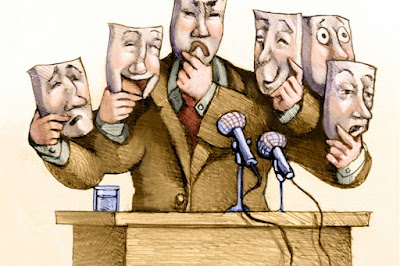
Just remember that this shameless
multi-faced immoral hypocritic Gobnlin made this statement while continuing his
boot licking of Chinese leaders through various visits to China.
Continuing his speech, he said that the Partnership between Sri
Lanka and the United States” is what Ambassador Shannon has
chosen as the topic to address that meeting.
I know that all of you hear me often
almost on a daily basis on television and radio and read what I have said
sometimes quoted correctly, and sometimes wrong. I will spare you now from
having to listen to me further and invite our guest speaker, Ambassador Thomas
Shannon to speak to you on ‘The Partnership between Sri Lanka and the
United States’.
I am sure that his thoughts will be a
precursor and a guide to broadening and deepening both people-to-people contact
and government-to-government relations between our two countries.
Delivering his speech on The Partnership between Sri Lanka and
the United States” the U.S. official said thalt your nation’s
journey down that long road is well underway. In January, and again in
August, the world witnessed your resolve to move beyond the acrimony of the
past and towards a future that is inclusive, peaceful, just, democratic, and
prosperous.
Sri Lanka is an example of the power of
citizens to reinvigorate their democracy, to retake control – through the
ballot box – of their country’s trajectory, and to set a course to a brighter
future. We now look to Sri Lanka to also provide inspiration to others
around the world, to show them how justice and compassion can overcome a
difficult past and help create a stable and prosperous future, and strengthen a
nation’s security, prosperity, and prestige.
The United States wants to see a strong
Sri Lanka, one that is a leader in the international community, contributing to
the global economy, promoting human rights, justice, and democracy abroad, and
helping to uphold international law. With its entrepreneurial people,
abundant resources, and strategic location, Sri Lanka is uniquely positioned to
do so.
The maritime importance of Sri Lanka, stretches
far back into history. Ships from ancient Greece, Rome, Arabia, and China
sailed through Sri Lankan waters and docked at its ports. Yesterday, I was in
Trincomalee and took a tour of Fort Frederick, which the Portuguese built
nearly 400 years ago, and which was long a site of strategic rivalry between
European powers. The Portuguese soon lost it to the Dutch, and it then
changed hands with the French several times before the British captured it in
1795, fortifying and defending it through two World Wars until 1948, the year
that Sri Lanka gained independence. Trincomalee is still one of the
world’s finest natural deep-water ports, and its beautiful city has tremendous
growth potential. (This bloke displayed his lacuna about the actual history
as the British imperialists continued to keep Katunayake and Trincomalee under
their control and it was the late Prime Minister SWRD Bandaranaike after coming
to power in 1956 who got these two strategic locations liberated from their
control)
I would add that I also visited the Temple
at the top of Fort Fredrick and I was struck by the power of faith and the
resilience of faith. One that overcame the years of conquest and
subjugation and showed the ability of the Sri Lankan people through its
faithfulness. Let me put it this way – it was humbling for me to be in
such a place and recognize that a commitment to a faith was at the end of the
day able to overcome so many years of conflict.
While I was in Trincomalee, I also toured
an ice factory that’s partly funded by USAID, and helps small-scale fisherman
preserve their daily catch. But before it had factories to make ice, Sri
Lanka had to import it. And, believe it or not, it was in the early 1800s
that an entrepreneur from Boston, Massachusetts, started shipping blocks of ice
– cut from frozen New England ponds – all the way to Colombo.
In fact, our countries have a long and
fruitful history of commercial relations, going back centuries.
Today, the United States is Sri Lanka’s
largest single-country market, which accounted for over 20 percent of your
exports in 2014, worth nearly two and a half billion U.S. dollars.
As I flew into Colombo two days ago, I saw
below me the busiest port in South Asia and one of the top 30 in the world – an
operation that moves over five million containers every year. And that
number, I predict, is only going to go up.
Your nation sits at the crossroads of
Africa, South Asia, and East Asia. By the middle of this century,
economists predict that Asia will account for 50 percent of the world’s
GDP. Over the next few decades, the supply and demand generated by the
billions of people who call this region home will become increasingly central
to the world economy and to global stability. We share your vision of Sri
Lanka as a hub for trade and investment, and support this effort through our
Indo-Pacific Economic Corridor initiative. Majority of the docile listeners may
have not known what the Indo-Pacific Corridor was?
(This was a plan launched by the
Americans in their resolve to control the countries in the Asia-Pacific region
with emphasis on critical areas
such as military planning, foreign policy and economic and trade policies
launched in late 2011/early 2012. Under this strategical plan the United States
would continue to engage and play both `a larger and long-term’ role primarily
conditioned upon three tenets – first, that international law and norms were to
be respected; second, issues relating to free passage and the freedom of
navigation were not hindered or blocked. Third, where emerging powers – a clear
reference to China – and their neighbours conflicted over unresolved
territorial claims, the US to get involved in their resolution)
Continuing his speech this bloke stated our
wonderful U.S. Ambassador here, his good friend Atul, has recounted to me his
amazement at seeing, from the old Dutch fort in Galle, the countless ships that
sail past Sri Lanka along the sea lanes between the Straits of Hormuz and
Malacca. Forty percent of all seaborne oil passes through the former, and
half the world’s merchant fleet capacity sails through the latter. To put
it simply, stability and prosperity of the entire world is dependent on the
stability of these vital energy and trade routes. And Sri Lanka is at the
center of this.
(It is the reason that these former
slave trader nations and the current white-skin discriminators are so keen to
get Sri Lanka subdued so that they even can launch a war against China and
destroy the massive development of that country and that country helping other
nations in the region. Why these war
mongers look after people in their own countries and their own region instead
meddling in the affairs of Asian-Pacific countries uninvited and which is
unwelcome?)
Through your relationships with other
nations and active engagement in multilateral organizations, including, for
example, the Indian Ocean Rim Association – where, it’s worth noting, Minister
Kadirgamar once held a position – you can help lead regional efforts to
strengthen economic ties and support maritime security and safety.
In the decades ahead, the economics,
politics, and security of the Indian Ocean region will be a central focus of
the world. We are hopeful Sri Lanka will continue to contribute to the
development of a regional consciousness – one that promotes the values of
democratic governance and respect for human rights, freedom of navigation,
sustainable development, and environmental stewardship.
You have already accomplished much:
ratifying the UN protocol to combat human trafficking, as well as supporting
civil society through your voice and vote at the U.N., and, importantly,
agreeing to host next year’s Asia-Pacific consultations for the Special
Rapporteur of the UN Human Rights Commission. By these actions, you have
demonstrated a commitment to improving human rights not just within Sri Lanka,
but throughout the world.
(As His Eminence Cardinal Dr.
Malcolm Ranjith explained that Human Rights” as a new religion these inhuman
western rulers have embraced. Our people
have their own religions and under which they upheld peace, stability, and good
neighbourly relations for the last several centuries and no one in this country
except the modern slaves of the western countries living here wants this
oppressive religion called Human Rights”.
That is why that shameless Mangala continues to promote LGBT culture and
undermine all religions)
Your military has also demonstrated
regional leadership – you were one of the first nations to arrive in Nepal with
critical relief supplies after its terrible earthquake this past April.
Members of your Engineering Corps cleared several kilometers of roads,
allowing for ambulances and relief materials to reach areas devastated by that
disaster.
(This bloke should understand that
helping the needy in their distress is a culture that Sri Lankans have
inherited for the last several centuries.
It was because of this noble and inherent qualities of Sri Lankans our
gallant war heroes rescued nearly 300,000 Tamil Civilians who had been shepered
from place to place on the front lines of LTTE bandits during the last stages
of the war, which had been blind to the so-called American and western
prevaricators)
The need for these efforts will only
increase as your region grapples with the impact of climate change and an
increase in extreme weather events. The United States looks forward to
working with Sri Lanka to help strengthen our abilities to provide humanitarian
assistance and respond to natural disasters.
Your armed forces are also stepping up to
contribute to global security challenges, sending peacekeepers to some of the
world’s toughest spots – including Lebanon, the Central African Republic, and
South Sudan. We welcomed President Sirisena’s pledge of several
additional vetted battalions at the recent peacekeeping summit of world
leaders, and we look forward to working with you to ensure future participation
reflects the best of Sri Lanka’s professionalism and honor.
The United States welcomes all of these
efforts, and we believe that your armed forces can also play a constructive
role in ensuring a bright future. As the resolution that we co-sponsored
at the Human Rights Council stated: a credible accountability process for
those most responsible for violations and abuses will safeguard the reputation
of those, including within the military, who conducted themselves in an
appropriate manner with honor and professionalism.” We strongly support
these statements, and are willing partners to help you implement them.
As Secretary Kerry and Ambassador Samantha
Power both made clear during their visits to your country: we have long worked
with Sri Lanka to help it further strengthen democratic institutions, reconcile
multi-ethnic and religious communities, and accelerate economic growth.
(How can you call your illegal
involvement in the regime conspiracy spending several million dollars and your
notorious coordinating and mapping out those activities as help, what you call
to further strengthen democratic institutions, reconcile multi-ethnic and
religious communities, and accelerate economic growth?)
We are now working to expand trade flows,
increase foreign direct investment, and, together, show the world the bright
possibilities of Sri Lanka’s future. We
are forging partnerships with the private sector, especially in under-developed
regions.
We are supporting small- and medium-sized
enterprises in creating jobs, promoting investment, and improving the business
climate. Those initiatives help provide the financial assistance, tools,
training, and market access that can help bring economic stability to all Sri
Lankans, including war widows, the disabled, resettled families, and
ex-combatants.
We are working with Sri Lanka’s economic
ministries to help ensure competitive and transparent procurement processes. We
are helping to improve law enforcement capabilities and support anti-corruption
task forces that seek to uncover and prosecute large-scale financial fraud,
breach of trust, misuse of public funds, and money-laundering crimes.
The partnership between Sri Lanka and the
United States continues to grow, and with Sri Lanka’s continued progress, we
plan to expand and strengthen our relationship in the years to come. In fact,
one big reason I came here this week was to spend some time with my friend,
Minister Samaraweera, who, to my great honor, will lead Sri Lanka’s
participation for the first U.S.-Sri Lanka Partnership Dialogue. When we
meet for this dialogue in February in Washington, D.C. our discussions will be
organized around four main pillars.
First – governance, development cooperation,
and people-to-people ties. That will include everything from steps on justice
and reconciliation to educational exchanges.
Second – economic cooperation, including
topics like women’s empowerment, investment climate, and clean energy.
Third – security cooperation, in
particular peacekeeping and security-sector reform, to support Sri Lanka’s
military preparedness to address current and future challenges.
And fourth – international and regional
affairs, including efforts to combat climate change and ensure maritime
security.
As we continue planning for this inaugural
dialogue, both the Foreign Minister and I will have much more to share with you
about the details and what we hope to accomplish.
But as you can see, our partnership spans
virtually all fields of endeavor, and the people of both our nations can expect
to reap the benefits.
(This shameless and spineless
Foreign Minister will have nothing to share with you but wkill agree to
whatever you propose like a man of deaf, blind and mute person. It is unfortunate that Sri Lanka has such a
goblin as its Foreign Minister)
After having seen the tremendous potential
of this island nation, I know that the future holds great promise. The United
States will work with you to achieve that promise – we are with you as a fellow
democracy, as a long-time friend, and as a strong and dedicated partner.
Across my 31 years in the United States
Foreign Service, I have worked in many countries in transition. From Central
America, to Colombia to South Africa, I have seen countries grapple, with the
kind of conflict Sri Lanka has faced. I have seen these countries grapple
with the problems of reconciliation, of transitional justice, of social and
economic development.
I can tell you that while Sri Lankans look
out into the world and try to find examples or experiences that might be
relevant to Sri Lanka, I can assure that your success here will make Sri Lanka
a reference point for the rest of the world. And for those countries that
are facing conflicts today, in the Middle-East, in Africa and elsewhere, if you
get deeper into this century and people look for a model of reconciliation,
when people look for hope in dark moments, Sri Lanka will be the point of
reference.
What you are dealing with here has global consequence.
I recognize that it is important to Sri Lanka, I recognize that it is a work in
progress, I recognize that there is much to be done but I can assure you the
solidarity of the world with Sri Lanka is strong, the solidarity for the United
States with Sri Lanka is strong. We want you to be successful, for your
own benefit, for our benefit and for the benefit of the world. So I
congratulate you all, I thank you for your patience today and listening to me
and I am delighted to be here and I look forward to coming back.
(So, good bye for you. under the
new GR government your hidden agenda will not get materialised.)
To be continued…………………
******