MADAM BANDARANEIKA’S CHARM BUT FIRM DIPLOMACY AND SUCCESSFUL FOREIGN POLICY

April 16th, 2016

Sarath Wijesinghe – Former Ambassador to UAE and Israel – Solicitor-Attorney – at-Law-

Madam Bandaraneika’s Unique Position in the Golden Book on International Arena

Madam Bandaranaike’s place in the world international arena is engraved in gold as the first women Prime Minister and the longest serving Prime Minister living in the minds of Sri Lankans as the “Mother of the Nation” won for our  motherland  many unthinkable achievements with her inherent  Charm but Firm Diplomacy” and diplomatic skills in managing foreign policy and  organizing the non-alignment summit during the height of the cold war while maintaining friendship with all but angry with none” theory which is the motto in Sri Lankan foreign policy. She led a full life as stateswomen, world leader, Loving mother of three out of whom one became the President and son the Speaker which is a rare achievement. Other daughter is serving the nation in a different capacity as a social worker and Ambassador on culture and a social reformer. Lot is written on her in various angles, but we intend discussing her inherent powerful diplomatic skills with great restraint and patriotism in leading the non-alignment movement by giving leadership to 118 nations and 17 observer countries. Books have been written and volumes could be compiled of her honesty, integrity and great qualities as a mother figure for the family and the Nation setting standards and examples. Undoubtedly she is the best Foreign Minister Sri Lanka ever had and one of the best Foreign Ministers the world has had. There is lot to learn from her and her foreign policy to the present when the current foreign policy is in complicated unmanaged maize with no vision or aim. Foreign policy should target the economy, development, security, and the future of the country. Good news is these are correctible matters by managers of this weeping Nation demanding want of honest and competent Trustees” to manage the beautiful Island, despite grave danger in planning to connect it to the more corrupt world via bridges and tunnels. Current U-TURN policy on China is a good move in the long term security, development and success of the bleeding Nation. Having realized West” is not helping and not competent to help us and we had to proceed to China with a begging bowl! For assistance and re activate the projects suspended previously. They were nice diplomatic to our powerful delegation and considered to help us due to our past friendship and glory. Late is better than never and good to be realistic and practical though at a colossal loss of billions of funds belonging to the citizen. Europe and west is in trouble looking for outside help. They too seek assistance from Chine on Economy and Technology. One should realize that China is a world power and an economic giant keeping pace with the modern world developments and trends. China has invested heavily in major powers currently limping on the economic front, and it is good news that we have though late have  realized the reality in geo- politics on economic and development strategies. Madam Bandaraneika has set precedents, examples and   framework to work on and built in the area of international relations and diplomacy. Madam Chandrika Bandaraneike too followed her footsteps on Peace Diplomacy” and H. E. Mahinda  Rajapaksa on War Diplomacy” until the end of thirty year war on terror following the same foreign policies with slight adjustments. Strategy of H.E. Mitripala Sirisena, Hon Ranil Wickramasinghe, and Hon Mangala Samaraweera appear to be still in the formative stages until the foreign Policy of the Good Governance Regime” is put to the test and  forwarded with one word based on Economic Diplomacy” and Reconciliation Diplomacy”. It is to their credit that the pressure mounted by the West on Sri Lanka is less- most probably on the Regime Change process- on the political front though with no financial and economic benefits expected and the questions at what short and long term price? Madam Bandaraneuka laid the foundation for close relationships mainly with India, China, SAARC , Non alignment Zone,  and the rest of the world. She was friendly with all and angry with none as the foreign policy motto of Sri Lanka. The Foreign Ministry during her time has been a bee- hive” on activities on International law and relations. We still reap the harvest of good work by SWRD and Madam since 1930s in developing close friendship with China from Rice/Rubber pact and helping her during difficult periods in the UN system during the highest of the cold war. Do we maintain a proper and effective foreign Policy depends on the behaviour of the leader of the country and impacts on our economy and the future. Madam Bandaraneika gave leadership and pride to the country with effective and productive foreign policy. Is it the time to overhaul the Ministry and the diplomatic service to meet the global challenges, without seeking advice and directions from Singapore and appointing outside politicians as monitoring personalities as has been previously messed up by previous regimes. They got into difficulties tarnishing the image and historical pride of the Ministry and the leader of the State then. Madam Bandraneika has set precedents to follow in future deliberations in the sphere of management of foreign policy through the Ministry and the Ambassadors.

Foreign Policy

Foreign Policy as the Name implies, is administrative in nature. Foreign Policy of a country is the government’s policy pertaining to it relations and interactions with other nations and inter-governmental organizations. Foreign Policy of a country is dynamic as it is guided and influenced by the national aspirations, domestic and political cultural economic commercial financial and social environment international conventions treatises and global issues. Foreign policy being an extension of the domestic policy national aspirations and domestic issues play the primary role in shaping the Nation’s foreign policy which reflects economic political and future ambitions and aspirations. On 23rd January 1964 Madam Bandaraneika declared at the Senate that “underlying the policy of non- alignment is the belief that independent nations, although small ad militarily weak have a positive role to play in the world today. This attitude is completely different from that of washing our hands of these matters, which was perhaps the idea behind the classical theory of neutralism. There is a world of difference this and then on alignment.” Whilst giving leadership to the non-alignment movement both Hon S W R D Bandaranieka and Madam Bandaraneika maintained close and warm relations with the West, the western leaders and international organizations in an act of balance whilst being active in international affairs as the leader of the non-alignment group. It is evident that Hon S W R D Bandaraneika’s thinking and policies have been implemented by Madam Bandaraneika during her successful regime similar to the implementation of the Marxist theory by Lenin, at a later stage. Today we are witnessing the dangerous shift of foreign policy contrary to the needs and the internal political confrontations/realities especially on China and the socialist block which is dangerous and disastrous. Our neighbour has a firm and stable foreign policy unchanged on change of regime. In my country there should be unanimity and coconscious among the political rivals and the different sects of the ruling clan at least on international affairs in the interest of the Nation leaving aside political differences. SWRD declared that neutralism is not cowardice and running away from trouble but to exert pressure and active in international affairs using diplomatic channel.  Madam did not want to be either to be in the capitalist block or the communist block till a system is found which suits us. Rulers who are Trustees and temporary Guardians” of the Nation do not speak with one word- at least to the world contrary to the Lichchavi” theory they promised to implement. In India Governments may change but not the foreign policy. When father of the Nation Rt Hon D S Senanayaka continued the defence treaty with the Colonial Rulers all agreed upon as it was the need of the day for security for an Unarmed newly born Nation”. Hon D S Senanayaka during the transitional period said I cannot accept  the responsibility of being a Minister of defence unless I am given the full authority to take decisions on defence and perused  the defence agreement with UK was the best option then which SWRD got rid of depending on the  safety and protection on the strength of the non-alignment policy. SWRD followed the 3rd way who declared  – For havens sake be friendly with England or anyone else, but do not commit ourselves to anyone of them.” In 1957 Embassies of USSR and China were started followed by many East Europe and Latin American Countries. Bandaraneika’s neutralism coupled with pragmatism paid dividends by world leaders such as Harold  Machmilan od Britin, Menzies of Australia, Peter Nash of New Zealand, Prime Minister of Cananada, Chie En Lai of China, Suhartho if Indusnia, Narue o f Indiaa, we some of the frequent visiters to Sri Lanka with the entire nonaligned block. During H.E. Jayawardena’s rule the friendship with India was on the lowest web and the 13th amendment consisting of Provincial Councils – a white elephant creating havoc today-was forced on us with Parippue”. H. E. Chandrika Bandaraneika and H. E. Mahinda Rajapaksa attempted to follow SWRD and Sirimvo” Policies in the International arena with adjustments based on circumstances.

Settlement of contentious International issues with diplomatic skills

Madam Bandaraneika telephoned from the Indian Prime Minister’s office to Hon Dudly Senanayaka for his consent at the last stages of the settlement of the Indo Sri Lanka dispute on the Indian Labour issue showing the great statementship qualities of both Prime Minister and then leader by seeking opinion of Hon Dudly Senanayaka on the issues, who promptly agreed to the formula proposed by Madam Bandaranaike’s team which is a rare happening in current political personalities and trends. Attitude and the applicability of policies towards Sri Lanka by the successive Indian leaders in the recent past has been always pro -Indian. Nations consist of human beings and obviously any leader will be selfish for the benefit of their Nation unless others are cautious. The current trends are worrying on moves and direct/ indirect threats on imposing trade agreements and construction of roads and bridges connecting the two friendly Nations existed thousands of years in peace and harmony due to peaceful secured location as a protected Island.  H. E. Mahinda Rajapaksa was brave to face arms twisting threats” during the last stages of the war which is a classic example for the current day polite. Madam Bandaraneike and the group took all the precautionary measures to defend and protect this wonderful Island during her time armed with the personal Charm and Goodwill developed by” SWRD and Sirimavo” for decades for the Motherland she loved so much. Indian foreign ministry is behind their successive Prime Ministers and foreign ministers protecting their interests and guiding as one of the most professional and stable foreign ministries. Madam Bandaranaike was always armed and determined to safeguard the interest of her motherland. Therefore it is to our advantage that we resolve to follow firm Non Alignment with fear or favour. It is fondly remembered with credit to H. E. J R Jayawardena – an ardent supporter of the West who was always spoke in favour Non Alignment at lease on the book on realization of the safety and the value to be neutral in the complicated world politics.

Madam Bandaranaike’s Legacy and Strength in the world politics

Madam Bandaraneikas main strength in her success story has been her vision coupled with the dedicated experienced and seasoned international civil servants, such as Dr Vernon Mendis,  Arther Basnayaka,  Shirley Amarasinghe,   Glannie Peiris ,  N Q Dias,  Tilak Gunartna,  Manal Abeyasekara, Jayantha Dhanapala and the colleagues who masterminded the foreign policy with Non Alignment Summit to be one of the Sri Lanka’s greatest triumphs in foreign Policy. She strengthened and gave teeth and power to the Foreign Ministry established in 1949 injecting officers not second to any in the globe for global matters. It is time for the current Trustees/Guardians of the Nation to follow Madam Bandaraneika’s vision and footsteps go get out of the mess we are in on mis – management of foreign policy.  The group led by Madam Bandaraneika helped her in the success of the geopolitical and international affairs coupled with excellent personal and family relations with many world leaders who often visited Sri Lanka on friendship visits with pleasantries to the Madam Bandaraneika and the Nation followed by the subsequent successful achievements with ripple effects on performed diplomacy as a result of the implementation of correct foreign policy of the day. One  main challenge on foreign policy then was the outbreak of the  Sino- Indian war of 1962 when she was deeply distressed as both were close and good friends. Fortunately Zhou En-Lai declared ceasefire providing space for diplomatic efforts for Egypt, Burma, Cambodia, Sri Lanka, Ghana and Indonesia met in Colombo on 10th December 1962 and Madam Bandaraneike was requested by all the parties to visit countries with proposals. The mediation effect, bold and unique it was, led by Madam Bandaraneika and colleagues, failed to bring the warring Asian Giants to the negotiating table at the time. More than five decades later the boundary issue between India and China remains unresolved, but that circumstances have not prevented the two countries from forging a flourishing bilateral relationship with economic component setting an example to the rest of the world. Hon S W R D Bandaraneika’s opening diplomatic relations with China in 1957. Her other achievement is the declaration of the Indian Ocean a zone of peace by resolution 2832   (10710) by the General Assembly. She maintained close relationships with Indian Prime Ministers Narue,  Lal Bahadur Sharathi, and Indira Gandi whilst holding firm to Sri Lanka’s national interest. The issue of statelessness-the citizenship of Indian origin was settled with Indian counterparts to the satisfaction of both.   A firm group of the implementation of Sri Lanka’s geo- political context together with close relationships between Bandaraneike and Nerue families as far back as 1930s helped to settled the maritime boundary, settlement of the states of uninhabited but strategically important Island Kathchitive agreement in March 1976 demarcation of the maritime boundaries in the Gulf of Manner and the Bay of Bengal are her achievements on quite, subtle and friendly diplomacy”. Correct and firm foreign policy by the leader of the Nation, his approach and charisma will diminish the irresponsible one sided statements published local and international media, by Indian Minister of State Radhakirishnam that India is firm on Bridge across Palk Strait which will be disastrous to Sri Lanka protected over millions of years as an Island. It is time the country is united as one on these issues of national importance and facing grave danger. Will such a leader emerge or mould from the existing lot is a million dollar question. Sri Lankans are flabbergasted with the dead silence on our side as having accepted the suggestion.

Historical Current and Future factors in International Relations

We are going through the most decisive era in International law and relations in the annuals of our great history. Sri Lanka’s foreign relations with other countries could be traced back to 3rd century BC when King Devenampiyatissa” of Sri Lanka, had close friendship with unseen neighbour, Emperor Asoka of India who sent his son and daughter as emissaries to introduce Buddhism to Sri Lanka. 245 BC Emperor Asoka was instrumental in dispatching noble teachings of Buddha which introduced a new culture with Buddhist concepts. This is how we maintained our foreign relations from time immemorial with the rest of the world when the rest of the world preaching us diplomacy was still developing. Madam Bandaraneika continued and strengthened close existing bonds with ruling world families and the governments brought glory, safety strength and peace. Now that economy, security is linked to diplomacy on international law and relations, it is time for us to be extra cautious on international issues.  Today Nations are giving Priority for Economic Diplomacy” replacing the traditional trends on Traditional Diplomacy” of only attending wine and dine parties. It is the duty of the Ambassadors to promote business and trade bringing investments and prosperity. It is time for us to build on the past glory and experiences to lay down foundations for the future. Whether we are living up to the expectations and fulfilling the needs and aspirations is a matter for the citizen to decide. It is necessary that the President, Prime Minister and the Minister of foreign affairs MUST” speak with one word as the statements made by any one of them is considers as part of common  international law and quoted and used in international deliberations. We reiterate current diplomats and the Foreign Ministry Officials to study the precedents and legacies left for us by Madam Bandaraneike and other foreign ministers of the calibre of Hon Laxman Kadigrmer.

Iron Lady with a Soft and Kind Heart

Sri Lanka is located strategically in the Indian Ocean on the famous silk route traditionally and historically used by Arabs and Chinese for trade with South Asia. The Indian Ocean is now the primary focus internationally politically and strategically as a hot spot. Its geo – political prominence makes it a pivotal factor in the global balance of power as the Ocean of the Future”. Regional and Global powers wish to rub – shoulders with Sri Lanka for future trade and political benefits. Therefore we should be careful in dealing with others on international trade, commerce, and political bonding short or long term. Foreign Policy should be productive to the people and effective to the economy and future of the nation. Our country needs Sri Lanka Friendly Foreign Policy” aiming at the development and the prosperity not following any group / ideology West East or North. We must always think of developing Sri Lanka in the real and unique  Sri Lankan way assimilation the world trends and developments on technology, based on the visions of the  our visionaries lifted the country to the above from time to time historically. We have made mistakes due to hurriedly concluded agreements from the 1815 agreement with British which still unimplemented but in in force, India Sri Lanka Accord of 1987, which is still in force partly implemented not fulfilling of one party agreed to eradicate terrorism, led to Provincial Councils – a white elephant–, 2002 Cease fire agreement forced on us, when we had the opportunity to dictate terms in our favour due to the impact of 9/11. We need a   vision and visionaries to take our country to the correct tract and lift above others. Israel with no water 70 years ago is a world power, and Singapore and Dubai were sandy dry lands uplifted with vision and visionaries brought their nations to the limelight with sheer hard work and dedication with honesty and integrity.   Madam Bandaraneike had a vision for International Relations and full authority to take decisions with power and authority to speak with one word with full control over any situation with an iron fist. She is incorruptible figure with financial integrity beyond approach with unblemished personal conduct which strengthened her starter among her people and the international arena. It is our pride to be a part of the commemoration of the birth centenary that falls on 17th April 2016 and closely associate this great figure. We are indebted to her for what we are today in the diplomatic arena in the regional and international global world in international politics riddled with uncertainty on economic and political fronts, lacking leaders with of qualities of  honesty competency  and integrity. Currently the President, Prime Ministry and the Foreign Minister do not speak with one word on policy procedure and future which is unsafe and undiplomatic which has to be corrected in the interest of the future of the Nation. Sri Lankans are fortune to have her services as the Prime minister and the Minister of Foreign Affairs who had set standards for the future rulers to follow. Her Legacy as the Best Foreign Minister in Sri Lanka and a permanent Glittering Star in the world International arena will be ENGRAVED IN GOLD FOR EVER!” in the books and legacy of foreign relations Policy and International Law.

Sarath Wijesinghe

Former Ambassador to UAE and Israel

Sarath7@hotmail.co.uk (0777880166)

අධිරාජ්ය විරෝධී නූතන අරගලයේ, බලගතුම කාර්යභාරය ඉටුකල, ගරු අග්රාමාත්ය සිරිමාවෝ බණ්ඩාරනායක මහත්මියගේ අවුරුද 100යේ උපන් දිනය ගෞරවයෙන් යුතුව සිහිපත් කරමු.

April 16th, 2016

චන්ද්‍රසේන පණ්ඩිතගේ විසිනි

ක්රිස්තු වර්ෂ 1916යේ, අප්රේල් මස 17 වෙනිදා, බටුගෙදර පුස්සැල්ලියද්ද වලව්වෙන් වාතලයට නිකුත්වූ ඒ පුංචි බිලිදු හඩ,  මුලු මහත් ලෝකයම තමන් වෙත අවදානයට ලක්කර ගන්නා වූ මහා බලවත් හඩක් බව කිසිවෙක් නොසිතන්නට ඇත. ඇගේ උපන් වේලාව බලා නැකත් සෑදීම සදහා කැදවන ලද්දේ, බලංගොඩ උඩුමුල්ලේ පදිංචිව සිටි,ගිරගා නම් දෙෙවඥ මහත්මයෙකි. නැකත් සාදා කේන්ද්රය බැලූ දෙෙවඥ ගිරගා, කේන්ද්රය දෙස විශ්මිතව බලා සිටින ආකාරය දුටු රත්වත්තේ දිසාපතිතුමා
 
“මොකද ළමයට අපලවත්දැයි?” ඇසූවිට

“නැහැ දිසා හාමුදුරුවනේ! මේක මහා පුදුම කේන්දරයක් ඒකයි මම නැවත වරක් ගනන් හදලා බැලුවේ” යයි ප්රකාශ කලහ.
“මහා පින‌් ඇති කෙනෙක් දිසා හාමුදුරුවනේ; මේ අප්පො ලොකු උනාම ලංකාව ආණ්ඩු කරන  කෙනෙක් වෙනවා ඒක නම් සත්යයි”

“නිකම් බොරු කියන්න එපා බං ඔය වගේ බොරු කිව්වොත්, නක්ෂත්රය බාල්දු වේවි. ඉංග්රීසිකාරයා යටතේ සිංහලයින්ට ඒජන්ත කමක් වත් ලැබෙන්නෙ නැති කොට, ආණ්ඩුකාර කමක් ලැබෙන්නෙ කොහොමද?

“දිසා හාමුදුරුවනේ, වේලාව නම් හරි, මේ අප්පො ආණ්ඩු කරනවාමයි. නැත්නම් විවාහ වෙන්නේ ආණ්ඩුකාරයෙක් එකක. ඒක සත්තමයි”

පසුව, බලංගොඩ වලව්ව අසලම ඇති පුචි සිංහල පාසලෙන් නැකතට අකුරු කරවූ මේ ළදැරිය, පසුව, ක්ලැරන්ස් බාලසූරිය මහත්මිය විසින් පවත්වාගෙන යන ලද, ළදරු පාසලට ඇතුලත්ව, පසුව, රත්නපුර ෆර්ගියුෂන් උසස් බාලිකා විද්යාලයේ බාලාංශ පන්තියට ඇතුලත් කරන ලදී, ගොන්බැදි බක්කි කරත්තයේ පාසල් ගිය මේ ගමන ඇයට ජීවිතයේ කිසිදා අමතකව නොකිය සුන්දර යුගයක් විය.  වයස අවුරුදු හතේදී මේ සොදුරු දිවිය අවසන් කර, කොළඹ ශාන්ත බ්රිජට් කන්යාරාමයට ඇතුලත්වූ ඇය, අලුත්පරිසරයට හුරුවන්න‌ට විය, බුදුන්වැද කටයුතු කිරීමට පුරුදුව සිටි ඇයට, කතෝලික පරිසරයට හුරුවන්නට සිදු විය. ඇය ඉතා දක්ෂ ලෙස නව පරිසරයත්; තමාට උපතින් ලද සිංහල බෞද්ධ පරිසරයත් තුලට් ජීවත් වෙන ආකාර සම්බන්ධ මනා අත් දැකීම් රාසියක් මේ කාලය තුලදී ලබා ගත්තාය.

පාසලේ බාල දක්ෂ ව්යාපාරයේ උද්යෝගීමත් සාමාජිකාවක් වූ ඇය. 1934දී බේඩ්න් සාමිවරයා බාල දක්ෂ ව්යාපාරයේ ජම්බෝරියකට පැමිණි අවස්ථාවේදී, ගෝල්ෆේස් පිටිය ශාන්ත බ්රිජට් කන්යාරාමයේ අනුඛණ්ඩ කොඩිය රැගෙන විත් වර්වත් කල ඇය, බාල දක්ෂ මූලස්ථානය විවෘත කරන මොහොතේදී උඩරට ළමා සාරියෙන් සැරසී සිටි එකම දැරියද ඇය විය. බාල දක්ෂ දැරියන් සදහා එවකට සිටි මහා ලේකම්වරයාවූ ටිලර් මහතාගේ ආරධනාවකට අනුව, තේ පැන් සංග්රහයකට අරලිය ගහ මැදුරට ගිය ඇය, මේ මැදුර තම වාස භවනය වන බව නොදත්හ

සිංහල කමත්, බෞද්ධකමත් දායාදය කරගෙන උපන් ඇය, සිය මෑණියන්ග‌ෙන් උගත් දේ අති විශාලය. දක්ෂ සිංහල අක්ෂි වෙෙද්යවරියක්වූ සිය මව, මේ වෙදකම තුලින් සමාජය තුල සිදුකරන මහජන සත්කාරය ඇය මැනවින් දුටුවාය. තමාද ඇය සමග එකතුව මේ සමාජ සත්කාරයටද දායකත්වය සැපයුවේ, මහත් සතුටකිණි.

වර්ෂ 1934 ඇය ශානත බ්රිජට කන්යාරාමයේ සිටි අවසන් වසර විය. බලංගොඩට ගිය ඇය බලංගොඩ සමාජසේවා සංවිධානය හා බද්ධව සුවිශේෂී කාර්යභාරයක් ආරම්භ කරන්ංනට වූයේ සැබෑ ලෙසම රටට හා ජනතාවට සේවය කරන්නට ඇවැසි නම් ඔය කියන රාජ්ය බලය උවමනාම නැත යන්න පසක් කරමිණි ඒ වනවිට මැලේරියාව රටපුරා ව්යාප්තව පැතිරෙන යුගයක, ඇයත් ඇගේ ඥති සොහොයුරියක්වූ සීතාජයවර්ධන මෙනෙවියත, වෙෙද්ය මාරසිංහ මහතාද එක්ව මහත්වූ සමාජ සත්කාරයක් ආරම්භ කලහ.

1934දී එස්. ඩබ්ලිව්. ආර්. ඩී. බණ්ඩාරනායක මහතාගේ සභාපතිත්වයෙන් ඇරඹි සිංහල මහා සභාව එහි 24 වෙනිශාඛාව, බලංගොඩ පිහිටුවන ලදී.‌වර්ෂ 1940දී, බලංගොඩ සමාජසේවා,සංවිධානය සිදුකරන සේවාවන‌්‌,සම්බන්ධව අධ්යනයක්ද සිදු කරන ලද අතර, එදා දිවා ආහාරය සදහා, බාන‌්ස් රත්වත්තේ, දිසාපතිතුමාගේ නිවස තෝරාගෙන තිබුණේ කටයුතු දෙකක් සදහාය. එදා පලාත් පාලන ඇමතිව සිටි බණ්ඩාරනායක මහතාට සහකාරියක් බැලීමද මෙහිදී සිදුවිය.

එහි අවසන් පලය වූයේ, මෙවැනි ආරාධනා පත්රයක් පසු කලෙක ඥාතීන් අතට පත්වීමයි.

බලංගොඩ බාන්ස් රත්වත්තේ දිසාපති

සහ

මහවලතැන්නේ රත්වත්තේ කුමාරිහාමි

යන අපගේ, ප්රිය ජේෂ්ඨ දියණිය වන

සිරිමාවෝ කුමරිය

පලාත් පාලන ඇමති තැන්පත්

එස්. ඩබ්ලිව්. ආර්. දියෙස් බණ්ඩාරනායක මහතා

සමග

සිරිත් ප්රකාර ශුභ සරණ බන්ධනයට ඇතුලත් වීමේ ප්රීතිය සදහා

වර්ෂ 1940 ඔක්තෝම්බර් මස 3 වෙනි දින පස්වරු 12.30ට

බලංගොඩ රත්වත්තේ වලව්වට පැමිණෙන මෙන් සාදරයෙන් ආරධනා කරමු.

පෝරුවේ සිටුවීම පස්වරු1.03 සිදු කරනු ලැබේ.

මෙම මංගල්ය නිකම්ම නිකම් මංගල්යක් ලෙස සලකා කටයුතු කිරීමට ඉතිහාසය අපට ඉඩ ලබා දෙන්නේ නැත. මෙය ඉතිහාසය හා බැදුණු මහා මංගල්යක් විය. ‌ රත්නපුර බලංගොඩ නගරපුරා සරසා තොරන් බැද සෑම ගෙයකම කුමන හෝ සැරසිල්ලකින් අලංකෘතව තිබූ ජනතාව හදවතින්ම බද්ධව පවත්වන ලද මංගල්යක්විය. සැබවින්ම උදේනීපුර සැනකෙළි සිරිගත් රත්නපුර හා බලංගොඩ නගරයන් තුල යලි කිසිදා එවන් මංගල උත්සවයක් සංවිධානය වන්නේවත්, එසේ කිරීමට හැකි කිසිවෙක් ඉදිරියේදී බිහි වෙන්නේවත් නැත. එබැවින් මේ මංගල්ය සම්බන්ධව කථා‌ නොකර,සිරිමා බණ්ඩාරනායක නම් වූ උදාර චරිතයේ ජන්ම ශත සංවත්සත්සරය සැමරිය නොහැක.

ලංකාවේ ජනතාවට බද්ධ ඇමතිවරයකුගේ පලමු මංගල උත්සවය එය විය. 1940 ඔක්තෝබර් මස 5 වෙනිදා නිකුත් වූ “ස්වදේශ මිත්රයා” පත්රයේ ශීර්ෂ පාඨය වූයේ, “මල් වර්ෂාවෙන් ආශිර්වාද ලත් සරණ මංගල්ලය” යනුවෙණි. මෙම මංගල්ය තුලින් බෙදී සිටි සිංහලයා ඒකරාශී කිරීමක් කල බව සියල්ලන්ගේම මතය විය. උඩරට හා පහතරට වශයෙන් බෙදී සිටි සිංහලයා, උඩරට සිංහල රදල පවුලක කුල කුමරියක් පහතරට මහා ප්රභූ පවුලක කුමරෙකු හා සරණ මංගල්ය සැබෑ ලෙසම සිංහල එකමුතුවක එක් අවස්ථාවක්විය. මෙහි විශේෂය වන්නේ, සිංහල ප්රභූ කුමරා සිංහල මහා සභාවේ සභාපති වීමයි.

විවාහයට අත්සන් තබා නිමවීමත් සමග ආරම්භවූ අනපේක්ෂිත මල් වරුසාව, මේ දෙපලගේ විවාහයට ස්වභාව ධර්මයා විසින් පලකල උපහාරයක් බදු විය

මේ මංගල උත්සවයේදී සිදුකරන ලද කථා තුල අන්තර්ගත දේශපාලනය වර්තමානය විසින් මැනවින් හැදෑරිය යුතුය,  ප්රතිගාමීන්ට මේ සැබෑ ඉතිහාසය වහ කදුරු මෙන් අප්රසන්න බැවින්, ඒවා ඉතිහාසයෙන් මකා දැමා ඇත. අපේ යුතුකම වන්නේ, සැබෑ සිරිමාවෝ බණ්ඩාරනායක චරිතය තුල ගැබ්ව තිබූ සැබෑ දේශපාලනය ඉස්මතුකර සමාජගත කිරීමයි.

ඉංග්රීසි පාලනය පැවති යුගයේදී, එම යටත් විජිත ස්වාමීන්ගේ ඉතා විශ්වාසීවූ පවුල් දෙකක් අතර සිදුවූ මෙම මංගල්යේ දේශපාලනයේ සැබෑ මුහුණුවර විය යුතුව තිබුණේ ඉංග්රීසි පාලනයේ ශක්තිය වැඩිවීමයි. මංගල සභාව පලමුව ආමන්ත්රණය කරනු ලැබුවේ, ආණ්ඩුකාරතුමා විසිනි. එතුමා මෙම නව යුවලට තම පවුල මෙන් සමගි සම්පන්න පවුලක් ගොඩනැංවීමට වරම් ලැබේවායි ආශිර්වාද කලේය.

ඊට පසු සභාව ඇමතූ සර් ඩී. බී ජයතිලක මහතා සිංහලෙන‌්කථාව ආරම්භ කලේ , ආණ්ඩුකාරතුමා පැතූ ආකාරයටම ඉතා සාර්තක පවුලක් ගොඩනංවන්නට ශුභ පතමින්ය. මෙය ලංකා ඉතිහාසයේ සිදුවෙන විශිෂ්ඨ සිදුවීමක් බව පලකල එතුමා. මෙම විවාහයෙන් පසු බණ්ඩාරනායක මහතා මැතිණියගේ සහයෙන් තවත්ශක්තිමත්ව රටට විශාල සේවයක් කිරීමට හැකිබව පල කලේය.

එහිදී පිලිතුරු කථාව සිංහලෙන් හා ඉංග්රීසි යන භාෂා දෙකෙන්ම සිදුකරගෙන යන ලද්දේ, මනාල මහත්මයාවූ,එස්. ඩබ්ලිව්. ආර්. ඩී. බණ්ඩාරනායක මහතාය. එතුමා මංගල සභාව අමතා මෙසේ සිය මතය පල කලහ.

අද අපේ මංගල උත්සවයට පැමිණි සියළු දෙනාටම ස්තුථි කරමි. විශේෂයෙන්ම අප සිංහල වර්ගයාගේ, පොදු යහපත පිනිස විශාල සේවයක් කල යුතුව තිබේ. එබැවින් මීට පෙර සිදුකලාට වඩා හොදට අප දෙදෙනාගේ සමගියෙන්, සිංහල වර්ගයාට මීට වඩා හොද සේවයක් කරන්නට බලාපොරොත්තු වෙමි. තවද මේ සතුටුදායක අවස්ථාවට සහභාගිවූ ඔබ සැමට අපි ගෞරවයෙන් ස්තුථි කරමු.”

Sinhala Tigers in sheep’s clothing

April 16th, 2016

Janaka Perera

It is amusing to see ‘Comrade’ Surendra Ajith Rupesinghe pontificating on Constitutional reforms after years of supporting LTTE separatism in Sri Lanka and abroad.  To him the Tigers were a political organization that represented the national-democratic aspirations of a nation”. Like hell!

We suppose he is still a Tiger sympathizer because he has never said he no longer believes in the LTTE ideology or that he regrets supporting them.

Rupesinghe’s April 12 article to Lanka Web exposes the sanctimonious humbug he is. Of course in the present context he cannot directly say he is backing the Tamil separatist cause.  But when one reads between the lines one will not fail to miss the real objective couched in the usual rhetoric of the dubious ‘human rights’ lobby.

One wonders what he mean by saying …. A democratic political solution that respects the right of internal self-determination of oppressed nationalities….”

There is little doubt his idea is to promote the creation of ethnic enclaves or if possible a Sri Lanka-Tamil Eelam confederation.

As always Rupesinghe is trying to have one foot in Sri Lanka and other in the mythical Tamil Eelam. He has been playing this ‘constitutional’ game for the past 16 years. On August 24, 2000 he organized seminar at the BMICH, Colombo under the themes, ‘An Honorable Peace,’ ‘A United Country’ and ‘A Liberated World’.

Five months later in December 2000 he convened a so-called Citizens Initiative for Constitutional Change at the Bogambara Grounds, Kandy. It was one of several meetings the CIFCC held in the country since mid-2000.  A ‘peace procession’ from and back to Bogambara Grounds preceded the meeting where a ‘Citizens’ Resolution for Constitutional Change’ was adopted.  The crux of the arguments of the speakers was that as long as the Tamils’ right to self-determination and the Tamil Homeland” in the North and East was not recognized, the LTTE was justified in waging war.

I was among several journalists who covered this meeting. When one of them recalled how the LTTE reportedly threatened a group which called for non-violence and peace in the then Tiger-infested Wanni, Convener Rupesinghe said that the LTTE had every right to do so.

His response: They need the war until their rights are met.”

When asked why the LTTE massacred innocent Sinhala and Muslim civilians he gave an evasive answer and made a weak attempt to defend the Tigers’ image by blaming the Indian Intelligence Agency RAW (Research and Analysis Wing) as being responsible for the atrocities.  (That the RAW initially trained the LTTE and other Tamil militant groups is a different issue).

Rupesinghe was more preoccupied with the ‘justice’ of the LTTE’s war rather than its injustice. Apparently he believes that justice is a government’s responsibility and not of insurgents or rebels no matter what the latter’s avowed objective and what their methods are.

If the CIFCC organizers hoped that day to get the message of peace across to the Sinhala majority in Kandy it was the last thing they achieved. When this writer asked an old friend, a Kandy resident, for his views on the meeting at Bogambara, his response was:

That’s a LTTE meeting, isn’t it?”

I reported the event in the Daily News of January 10, 2001 under the headline: HOW NOT TO PROMOTE PEACE.

Over decade later ‘Comrade’ Rupesinghe was in the news again – this time as Secretary, ‘Ceylon Communist Party (Maoist)’ to castigate Sinhala Buddhists in Marxist jargon following the condemnable mob attack on a disputed Islamic prayer centre near the historic Dambulla Rock Temple.  The whole incident was blown out of proportion by sections of the media.

He wrote in the Colombo Telegraph of May 1, 2012:

What exists as Buddhism as a Sinhala (Aryan) supremacist political ideology that has been nurtured by the British colonialists and which serve the class interests of the dominant status quo and politics of the Comprador Capitalist ruling classes.”

It was a case of devil quoting the scriptures.  The whole world knows what happened to religious freedom in China when Mao’s Red Guards went on the rampage during the so-called Cultural Revolution, though Rupesinghe pretends to be unaware of it.

Likewise he must be thinking people have short memories and have forgotten his track record in serving Velupillai Prabhakaran’s agenda.  Both Ajith and his brother Kumar figured prominently in the ‘peace campaign’ aimed at weakening the opposition to the LTTE at all levels.

In September 2007 Kumar Rupesinghe’s ‘Foundation for Co-existence’ jointly with the Indian High Commission organized an exhibition in Colombo to mark the centenary of Mahatma Gandhi’s Satyagraha against the British colonial rule.

According to Kumar the exhibition was to stress the need for Sri Lankan citizens to be imbued with values of non-violence….”

In an article I wrote on the subject in the now-defunct Lake House weekly ‘Friday’ I asked why not get the same Gandhian message across to the LTTE-dominated Wanni. Since in an armed conflict one or more groups are involved it is imperative all parties involved should get the same message.  The onus for this noble task I stressed rested on the Foundation and not on the Indian HC because Indian domestic and foreign policy is not based on Gandhian principles.

Since it is now seven years since the LTTE was militarily crushed we see intellectual frauds exploring other ways and means of destabilizing Sri Lanka.

ජවිපෙ කැරළිකරුවෙකුගේ එක් සත්‍ය කථා‍වක්

April 16th, 2016

ධර්මන් වික්‍රමරත්න

ලෙයින්, යකඩින් සහ ගින්දරින් මර්දනය කළ 1986-90 භීෂණ යුගයේ සත්‍ය කථා – 94කොටස

මෙතෙක් කථාව : ලාංකීය දේශපාලන ඉතිහාසයේ සම්ප්‍රදායික ගමන්මග වෙනස්කල සන්ධිස්ථානයක් ලෙස අසූව දශකය අවසානයේදී ඇතිවූ ජවිපෙ 2වැනි කැරැල්ල හැදින්විය හැකිය. එය 1986දී ඇරඹුණු අතර 1990 සැප්තැම්බර් මස නිමාවට පත්විය.  එම කාලය තුළ ඝාතනයට ලක්වූ සහ අතුරුදහන් වූ සංඛ්‍යාව 41,813 වේ. නිල නොවන වාර්තා කියන්නේ එය 60,000කට ආසන්න බවය. ජවිපෙ දෙවන කැරළි සමයට පාදකවූ මෙම ලිපි මාලාව ඉදිරිපත් කරන ධර්මන් වික්‍රමරත්න එම බොහෝ සිද්ධීන් සියසින් දුටු  අදාළ කථා නායකයින් සමීපව ඇසුරුකල සහ වාර්තාකල කර්තෘ මාණ්ඩලික පුවත්පත් කලාවේදියෙකි. මෙම ලිපි මාලාව ඉදිරිපත් කරනුයේ ඉතිහාසය කිසිවෙකුට වැලලිය නොහැකි බවට පසක් කරමින් පමණක් නොව දත්ත සහ  ඓතිහාසික කරුණු රැසකින්ද එය පොහොසත් බැවිනි. එමෙන්ම වර්තමානයේ වයස 40 අඩු සියළු පුරවැසියන්ට කිසිදා නොදුටු එහෙත් අසන්නට ලැබුණු අසම්පුර්ණ ඒ අතීත සිදුවීම් මාලාව පිළිබදව පැහැදිලි චිත්‍රයක් මවාගැනීම සඳහාය.

 සමාජය විසින් කුමන නිර්වචනයන් ලබාදුන්නද ජවිපෙ 2වැනි කැරැල්ලේ කැරළිකරුවන් පවසන පරිදි ඔවුන් සටන්කළේ යහපත් අරමුණක් වෙනුවෙන් අනේක විධි මර්ධනයන්ට මුහුණ දෙමින් ජීවිතයද කැප කරමිනි. ඇතැම් නායකයින්ගේ අරමුණු කුමක්වුවද කැරළිකරුවන්‍ ගේ සටන්කාමි හැසිරීම්වල භාවිතය පිළිබඳ ඉතිහාසයේ වැලලීගිය දත්ත සම්භාරයක් වසර 25කට පසු දැන් යළි කථාබහට ලක්වෙමින් තිබේ. මලගිය ඇත්තන් පිළිබඳව සැමරුම් පැවතියද කැරළිකරුවන්ගේ චරිත කථා බොහෝමයක් කාලයේ වැලිතලාවලට සැඟවගොස් ඇත. මේ එක් කැරළිකරුවෙකුගේ සැබෑ කතාන්දරයයි. එය බොහෝ කැරළිකරුවන්ගේද කථාව වනු ඇත. 

”බසවක්කුලම වැවෙන් හමාඑන සිසිල් සුලං රැල්ලේ පහස විඳිමින් තිසා වැව ඉස්මත්තෙන් පියමන් කරන විට රුවන්වැලි සෑකොත් වහන්සේ දිස්වේ. පෙර රජ දවස වැව් දාගැබ් සැදූ රජුන්ගේ පුරය, අනුරාධපුරයට පිවිසෙන්නෙකුට තමන් ඈත අතීතයකට ගමන් කරන්නේනැයි හැ‍ඟෙනු ඇත. විජයාගමනයෙන් ඇරඹි ලංකා රාජවංශයේ ස්වර්ණමය යුගය සනිටුවහන්වී ඇත්තේ අනුරාධපුර යුගයේය. මා උපන්නේ එවැනි පෞඬ ඉතිහාසයක් ඇති අනුරාධපුර දිස්ත්‍රික්කයේ තලාව ග්‍රාමයේදීය.

dharman16041602A

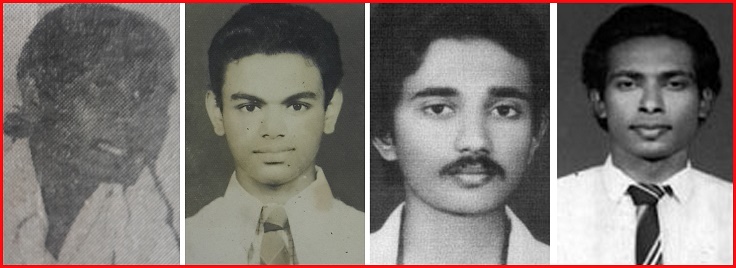
ජවිපෙ ප්‍රධාන ලේකම් උපතිස්ස ගමනායක, සන්නද්ධ අංශයේ ප්‍රධානි සමන් පියසිරි ප්‍රනාන්දු, අවි පුහුණු කඳවුරේ විසිරයෑමේ අවස්ථාවට එක්වු දේශපාලන මණ්ඩල සභික එච්.බී හේරත්, අධ්‍යාපන පන්ති පැවැත්වූ මධ්‍යම කාරක සභික උපාලි ජයවීර, සන්නද්ධ පුහුණුව ලබාදුන් මධ්‍යම කාරක සභික ඊස්ව‍රගේ ආරියසේන, ‘අංශයේ  වැඩකාරයින්’ වූ ගුණසේන වර්ණපටබැදි සහ දිලිප් ප්‍රනාන්දු නොහොත් පතී, ජාතික අධ්‍යාපන කඳවුරේදී හමුවු පසුව ගාල්ල දිස්ත්‍රික් කාන්තා ක්‍රියාකාරිනියක්වූ සමන්මලී නොහොත් දීපිකා මුතුහෙට්ටි නොහොත් අප්පුකුට්ටි දේවගේ ස්වර්ණලතා.(ඉහළ වමේ සිට).

අප පවුලේ 6 දෙනෙකි. මා තෙවැන්නාය. අක්කා සහ අයියාද, නැඟණියන් තිදෙනෙක්ද විය. පියා ගොවියෙකි. මව කුඹුරු වැඩට උදව් කළාය. අයියා වඩු කාර්මිකයෙකි. අක්කා විවාහ වී සිටියේ දඹුල්ලේ එළවළු සිල්ලර වෙළෙඳසැල් හිමියෙකු සමඟය. පහේ ශිෂ්‍යත්වයෙන් ඉහළින් සමත්වීමෙන් පසු මා ගියේ අනුරාධපුරයේ ප්‍රධාන පාසැලකටය. අපොස උසස් පෙළ වානිජ අංශයෙන් 1981දී අධ්‍යාපනය හැදෑරූ මා එම පාසැලෙන් සරසවියට තේරුණු තිදෙනා ගෙන් එක් අයෙකි. පවුලේ අයට ඉහේ මලක් පිපුණා වැනිය. අම්මා අසළ ගම් හතටම වාගේ ජයග්‍රහණය පැවසුවේ සොම්නසිනි. රජයේ ඉහළ රැකියාවකට යෑම මාගේ පැතුම විය.

ශ්‍රී ජයවර්ධනපුර සරසවියේ කළමනාකරණ සහ වාණිජ විද්‍යා පීඨයේ 83/84 කණ්ඩායමේ සාමාජිකයෙක් බවට පත්විය. සෑම සරසවියකම මෙන්ම නවක සිසුන් සඳහා නවකවධය එහිද ක්‍රියාත්මක විය. එහෙත් මසකට ආසන්න කාලයක් තුළදී අපි මුහුණු දුන් නවකවධය ඉතා දරුණුය. නවකවධය දීමේදී ජෙප්පෝ(ජනතා විමුක්ති පෙරමුණ) සහ ජුන්ටෝ(එක්සත් ජාතික පක්ෂය) අත්වැල් බැඳ ගනිති. ඇතැම් අවස්ථාවල උදෑසන 8 සිට රාත්‍රී 12 දක්වා නවකවධය ලැබූ අවස්ථාද විය. දන්තාලේප ටියුබයක් ලුණු වතුරට දමා දියකර එය බොන්නට දුන් අතර පැයක් පමණ ගියවිට මරුවා සමග වාසේය. සරසවිය එපා වීමෙන් එය අතහැර යන්නට සිතූ අවස්ථාද බොහෝමය. එහෙත් හදිස්සියේම මාවෙත ආ අයෙක් මා බේරා ගත්තේය. එසේ බේරාගත් ජේෂ්ඨ උත්තමයා රාජපුර බව පසුව හඳුනා ගත්තේය(ජ’පුර සරසවියේ ජවිපෙ සමාජවාදී ශිෂ්‍ය සංගමයේ 1985/86 සභාපති වූයේ රාජපුරය). ඔහු මට ජ’පුර ආදි ශිෂ්‍යයෙකුවු මයිකල් නැමති පුද්ගලයෙකු හදුන්වා දුන්නේය(මයිකල් යනු ජවිපෙ දේශපාලන මණ්ඩල සභිකයෙකු බවට පසුව පත්වූ එච්.බී. හේරත් බව දැනගතිමි). හේරත් මගේ අතින් අල්ලාගෙන පුටුවක වාඩිවී ආගිය තොරතුරු කථාකළේය. සියල්ල විෂම සමාජ ක්‍රමයේ ප්‍රතිඵල යැයි කියූ හේරත් ජවිපෙ වෙනුවෙන් මට කොක්ක ගැසු‍වේය.

dharman16041603Aඅත්අඩංගුවට ගෙන ඇති සරසවි සිසුන් නිදහස් කරන තුරු විභාග වර්ජන විරෝධතා ව්‍යාපාරයකට සහභාගිවන්නැයි අන්තරේ නියෝජිතයෙක් 1988 මැයි සරසවි සිසුන් පිරිසක් දැනුවත් කරන අයුරු. මේ අනුව විභාග පැවැත්වු කොළඹ, රුහුණ, පේරාදෙණිය සරසවි තුනේම සිසුහු විභාග වර්ජනය කළහ.

මාස කිහිපයකට පසු මා ඇතුළු නවක සිසුන් 7 දෙනෙකුට ජවිපෙ පන්ති 5 පැවැත්වූයේ උපාලි ජයවීර(පසු කාලයේ මානෙල් මහත්තයා ලෙසින් හැදින්වූ) විසිනි. ඔහු දක්ෂ කථිකයෙකි. ධනපති ක්‍රමයේ අර්බුද, පැරණි වමේ ව්‍යාපාරය, විප්ලවීය ව්‍යාපාරය ගත යුතු මග ආදිය එම පන්තිවලට ඇතුලත් විය. ජවිපෙ වෙනුවෙන් සරසවියෙන් බාහිරව අප සම්බන්ධවූ පළමු වැඩේ තිබුණේ කැලණි සරසවියේය. උපාලි‍ගේ ඉල්ලීමක් අනුව කැලණි සරසවියට ගිය අපි කිහිප දෙනෙකුට පැවරී තිබුණේ එජාප ආණ්ඩුවේ මහපොල උත්සවයක් කැලණි සරසවියේ පැවැත්වීම සදහා පරිපාලනය සමඟ සාකච්ඡා කිරීමට එන ලලිත් ඇතුළත්මුදලි ඇමතිවරයාගේ ඉහළ පෙළේ නිලධාරින් පිරිසක් පලවා හැරීමේ ‘රාජකාරියකි’. ඒ සඳහා කැලණි සිසුන් කිහිප දෙනෙකු සමඟ එක්වී ඔවුන් පැමිණි වාහනයෙන් බස්සවා වාහනය කුඩුකර පල්ලමට තල්ලු කර ගිනි තබන ලදි. කැලණි සරසවි මහපොල උත්සවය පැවැත්වීම එතැනින්ම ඇණහිටි අතර අප කණ්ඩායමේ ප්‍රථම ප්‍රහාරයද සාර්ථක විය.

අන්තරේ නායකයා ලෙස 81/82 වසරවල කටයුතු කළේ ජයවර්ධනපුර සරසවියේ මහා ශිෂ්‍ය සංගමයේ සභාපති මහින්ද පුෂ්පකුමාරය. ජයවර්ධනපුර සරසවි ශිෂ්‍ය අංශය ජවිපෙ වෙනුවෙන් භාරව සිටියේ 1983/84 දක්වා ලලිත් විජේරත්න සහ 1985/86 දක්වා ආනන්ද ඉඩමෙගමය. ජ’පුර සරසවියේ දරදඬු සහ හිතුවක්කාරි පාලනයක් ගෙනගිය උපකුලපති කරුණාසේන‍ කොඩිතුවක්කුට එරෙහිව විවිධ ක්‍රියාමාර්ග සංවිධානය කළෙමු. අර්ධකාලීනව ජවිපෙ කටයුතු වලටද එක්විය. මාගේ 83/84 කණ්ඩායමේ ජවිපෙ මිතුරන් අතර විද්‍යා පීඨයේ බන්දුල, තංගල්ලේ මහින්ද, කමල් ප්‍රනාන්දු ඇතුළු පිරිසක්ද දෙවැනි කැරැල්ලේදී ඝාතනයට පත්වූ ජ’පුර සරසවියේ උපාධි අපේක්ෂකයින්වු නිකවැරටිය මුදියන්සේ, බණ්ඩාරගම චන්ද්‍රසිරි, ජයසිංහ රාජු, පස්සර ධනපාල ඇතුළු කිහිප දෙනෙක්ම විය. ජවිපෙ සාමාජිකයන් වශයෙන් බොහෝ ක්‍රියාකාරකම්වලට සරසවිය තුළදී සහ බාහිරව දායක විය.

dharman16041604අන්තරේ 81/82 කැඳවුම්කරු වශයෙන් කටයුතු කල ජ’පුර සරසවියේ මහින්ද පුෂ්පකුමාර, 1985 මාර්තු නුවර අධ්‍යාපන කඳවුරට එක්වූ පේරාදෙණිය සරසවි වෛද්‍ය පීඨයේ ගිණිගත්හේනේ උපන් ජයශ්‍රී ගුණසේකර, 1986 ජුලි අවි පුහුණු කඳවුරට එක්වූ ජ’පුර සරසවියේ අනුරාධපුර උපන් උපුල් නානායක්කාර නොහොත් ලෙනෝරා සහ කැලණි සරසවියේ කෝට්ටේගොඩ උපන් උපාලි සමන්කුමාර නොහොත් ගිනි උපාලි(වමේ සිට).

ජවිපෙ 1983 ජුලි පක්ෂ තහනම නිසා ප්‍රථම විධිමත් අධ්‍යාපන කඳවුරකට සහභාගි වූයේ 1985 මාර්තු 11 සිට 18 දක්වා දින 7ක් නුවර දුම්රිය නිවාස සංකීර්ණයේ නිවසක කඳවුරකටය. 19 දෙනෙකු එයට එක්වි සිටියහ. දේශන පැවැත්වූයේ අධ්‍යාපන ‍ලේකම් ගුණරත්න වනසිංහ(සේන), එච්.බී. හේරත්, කුසුමා බුද්ධිකෝරාල(මධ්‍යම කාරක සභික ප්‍රේමචන්ද්‍ර මුණසිංහගේ බිරිඳ), උපාලි ජයවීර ඇතුළු කිහිප දෙනෙකි. සහභාගිවුවන් අතර මා කලින් හඳුනන අය සිටියේ තිදෙනෙකි. ඒ ජ’පුරේ මට වඩා ජේෂ්ඨ කණ්ඩායමක සිටි කෑගල්ලේ රත්නසිරි, පේරාදෙණිය වෛද්‍ය පීඨයේ ජයශ්‍රී ගුණසේකර සහ නුවර විදුහලක සිසුවෙකුවූ රුවන්ය. උපාලි ජයවීර 1985 මාර්තු 24 වැනිදා කැලණිය දළුගමදී රහස් පොලිසිය මගින් අත්අඩංගුවටගත් අතර ඒ පිළිබඳව කඳවුරට සහභාගිවූ කැලණි සරසවියේ සිසුවෙක් පිළිබඳව සැක ‍කෙරිණි.

ජාතික අධ්‍යාපන කඳවුරකටද මට සහභාගිවීමට හැකිවූයේ 1985 නොවැම්බර් 3වැනිදාය. එය දින 15ක් පුරා පැවැත්වූ අතර කළුතර ප්‍රදේශයෙන් කිලෝමීටර් 8ක් පමණ පයින් යෑමෙන් පසු සිංහරාජ කැලේ එය පැවැත්විණි. සරම සහ කමිසය යනවිට ඇදගෙන සිටි අතර කුඩා බෑගයක කොට කලිසමක් සහ කමිසයක් විය. යන විට සෑම අයෙක්ම හාල් කිලෝ 2ක්, පරිප්පු ග්‍රෑම් 500, කවුපි කිලෝ 1, සීනි 500, ටවුමේදී මිලදී ගෙන උපදෙස් අනුව කඳවුර කරා ගෙන යන ලදී. කඳවුරේ ආහාර පිසීම සහ සම්බන්ධීකරණය සඳහා තරුණයින් තිදෙනෙකු පමණ දැකගන්නට හැකිවිය. එයට 31 දෙනෙකු සහභාගිවූ අතර එක් අයෙකු කාන්තාවක් විය. ඇය රුහුණු සරසවියේ ශිෂ්‍යාවක් බව කියූ අතර හැදින්වූයේ සමන්මලී යන නමිනි.(පසු කාලයේදී ඇය සමඟ එක්ව වැඩකිරීමට සිදුවූ අතර රුහුණු සරසවියේ ශිෂ්‍යාවක් නොව ජවිපෙ පූර්ණකාලින ක්‍රියාකාරිකාවක්වූ ස්වර්ණලතා නොහොත් දීපිකා මුතුහෙට්ටි බව දැන ගතිමි. රූමත් තරුණියකවූ ඇය කොටිගල වධකාගාරයේ 1988 අවසානයේ අතවර කර මරාදා තිබිණි). මෙවැනි කඳවුරු වලදී පෞද්ගලික වතගොත ඇසීම තහනම්ය. එමෙන්ම පක්ෂය මගින් දී ඇති ආවරණ නාමය භාවිතා කල යුතුය. එබැවින් ඕනෑම අවස්ථාවක අවස්ථානුකූලව මුහුණදිය හැකි පිළිවෙලක් අප සැවොම සතු විය. කිනිතුල්ලන්, කූඩැල්ලන් සහ මදුරුවන් ගෙන් බේරීම සඳහා අත්බෙහෙත් උපකාරි විය. ජාතික අධ්‍යාපන කඳවුරේ දේශන පැවැත්වූයේ ගමනායක, පියදාස රණසිංහ, සුමිත් අතුකෝරාල ඇතුළු කිහිප දෙනෙකි. දවසකට පැය 18ක් දේශන පැවැත්වූ අතර සමාජවාදී භික්ෂු සංගමයේ සාමාජිකයින් 2 දෙනෙක්ද සිවිල් ඇදුමින් සැරසී සහභාගි වූවන් අතර විය.

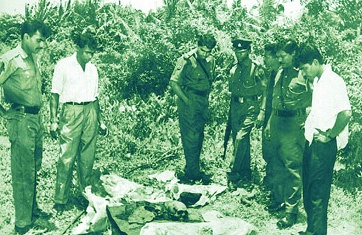
dharman16041605ජවිපෙ කැරළිකරුවන් පිරිසක් ප්‍රහාරයකින් පසු අත්හැර දමාගොස් තිබුණු නිල ඇදුම් සහ උපකරණ කිහිපයක් පොලිස් නිලධාරින්ගේ විමර්ශනයට ලක්වන අයුරු.

ජවිපෙ 2වැනි කැරැල්ල සඳහා සන්නද්ධ පුහුණුව ලබාදෙන අවි පුහුණු කඳවුරු පැවැත්වීම ආරම්භ කළේ 1986 ජනවාරි සිටය. එවන් පුහුණු කඳවුරක් සඳහා 1986 ජුලි මස විල්පත්තුවේ කලාඔයට යෑමට සිදුවිය. තඹුත්තේගමින් බැස කිලෝමීටර් 9ක් පයින් ගියවිට එම කඳවුර පිහිටා තිබු අතර එය දින 15ක අවි පුහුණු කඳවුරකි. කඳවුරට 38ක් සහභාගිවූ අතර ජලය තිබුණේ මූලික අවශ්‍යතාවයන් සඳහා පමණි. එබැවින් එම කාලයේදී ස්නානය සිදුකිරීමට කිසිවෙකුට නොහැකි විය. අවි පුහුණුව ලබාදුන්නේ හමුදාවේ කලක් සේවය කල රාලහාමි නොහොත් ඊස්වරගේ ආරියසේන, මහින්ද(දක්ෂ සටන් නායකයෙකුවූ ඔහු ත්‍රි’මලේ කල්ලාර් හමුදා කඳවුරෙන් ආයුධ පැහැරගැනීමේදී 1987 අවසානයේදී ඝාතනය විය) ඇතුළු පිරිසකි. ටී. 56 සහ ෂොට් ගන් පරිහරණය එම අවියකින්ම පහදා දෙන ලදී. කඳවුරට කිලෝමීටර් 15ක් එපිටින් ආරක්ෂක හමුදා කඳවුරක් ඇති බැවින් සියළු කටයුතු සැලසුම්ගතව සිදුවිය. අවි පුහුණු කඳවුරට සහභාගිවූ 6 දෙනෙකු මා කලින් දන්නා හඳුනන අය අතර ඉන් ජ’පුර සරසවියේ උපුල් නානායක්කාර, කැලණි සරසවියේ විද්‍යා පීඨයේ ගිනි උපාලි ඇතුළු කිහිප දෙනෙක්ම පසු කාලයේදී ඝාතනයට පත්වී තිබිණි.

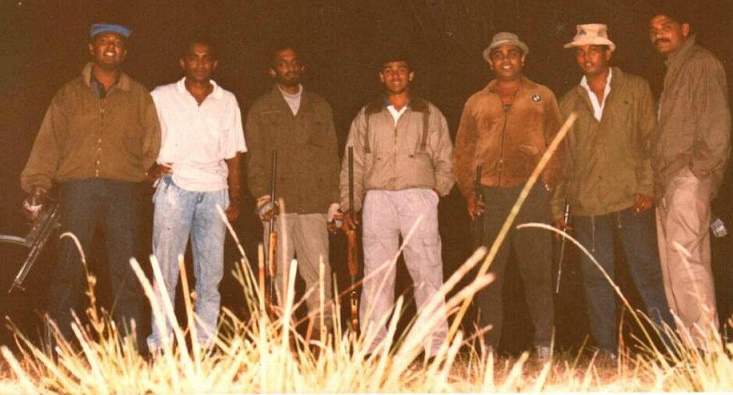
dharman16041606කැරැල්ල අවසාන භාගයේ 1989දී සැඟවී සිටින ජවිපෙ කැරළිකරුවන් සොයා වැලිමඩ-නුවරඑළිය ප්‍රදේශයන්හි රාත්‍රියේදී කැලෑ පීරන ආරක්ෂක භටයින් පිරිසක්.

කඳවුරේ කටයුතු උදෑසන 5ට අවදිවීමෙන් පසු ආරම්භ වන අතර 8 දක්වා ව්‍යායෑමය. උදෑසන ආහාරයෙන් පසු දහවල් 1 දක්වා තාප්ප වැනි වැට ඉනිවලින් පැනිම. බිම කපපු උමං  දිගේ යෑම, කඹ දිගේ ඉහළට පහලට ඒම වැනි ප්‍රායෝගික ක්‍රියාකාරකම් වේ. දිවා ආහාරයෙන් පසු පස්වරු 6 දක්වා විවිධ සටන් ක්‍රම, කරාටේ, අවි පුහුණුව උගන්වනු ලබයි. රාත්‍රී 6 සිට 8 දක්වා මහන්සි ඇරීම සහ රාත්‍රී ආහාරය වේ. රාත්‍රී 8 සිට 9 දක්වා විමුක්ති ගී සාමූහිකව ගායනා කරනු ලබයි. උදෑසන ආහාරය මං‍ඤාක්කා හෝ කුරක්කන්ය. ඇතැම් අවස්ථාවල රොටි හෝ කවුපිද ඇත. දිවා සහ රාත්‍රී ආහාරය බත් සමඟ මස් සහ වට්ටක්කාය. මස් දඩයමින් ලැබුණු මුව මස් කීවද ඒවා රිලා මස්ය. ටවුමෙන් ආදා මාළු ගෙනවිත් ‍පිසූ බව කීවද ඒවා ගැරඬි මස් බව දැන ගත්තේ ආපසු එන දිනයේ හමුවූ කැලෑ රොදක ගැරඩි හමවල් රැසක් දක්නට ලැබුන බැවිණි.

කඳවුර මුරකිරීම සඳහා රාත්‍රී කාලයට පවා සතර දෙසට මුරකාවල් යොදවා තිබිණි. එක් වැඩ මුරයක් පැය 4ක් වූ අතර සියල්ලටම එය මාරුවෙන් මාරුවට කිරීමට සිදුවිය. ගස්වල නැගී එම ආරක්ෂාව සිදුකල අතර එයට බාහිරව වෙනම සංනිවේදන ජාලයක්ද කිලෝමීටර් 3ක දුර ප්‍රමාණයේ සිට තහවුරු විය. මහන්සිය නිසා කොතරම් මදුරුවන් කෑවද නින්දට එය බාධාවක් නොවීය. කඹේ යන්නට ගොස් බිම වැටී එක් අයෙකුගේ කකුල බිදිණි. ඔහුගේ බරපතල තත්ත්වය නිසා ගොනි දෙකක් ලී වලින් ගැටගසා ගෙන පුත්තලමේ නිවසක ප්‍රතිකාර කල බවට වාර්තා විය. කඳවුරේ අවසානයට පෙරදින විසිරයෑමේ අවස්ථාවේද සාමාප්ති දේශනය දිමට පසුව දේශපාලන මණ්ඩල සභිකයෙකුවූ එච්.බි. හේරත්ද පැමිණ තිබිණි. කඳවුර අවසාන දින උදෑසන පිටවුයේ 5 පමණ උදෑසන ආහාර ගැනීමෙන් පසුවය. උදෙන්ම පිටවීමට හේතුව වූයේ විල්පත්තු කැලේ හොරෙන් ලී ඉරන අය උදෑසන කාලයේ කැලෑවේ ගැවසෙන බැවිණි. තිදෙනාගේ කණ්ඩායම බැගින් පුත්තලම් පැත්තෙන් පාරට ඒමට පැය 7ක් පමණ ගිය අතර එය සැතපුම් 12ක පමණ දුරක් විය. දිවා ආහාරය සඳහා මං‍ඤාක්කා සහ සම්බල් පාර්සල් දුන් අතර ඒවා විල්පත්තුව මැදින් එනවිට හමුවන මල්වතුඔයෙන් නෑමෙන් පසු ආහාරයට ගන්නා ලදී. කඳවුරට ගිය සියළු දෙනාම නෑමට හැකිවූයේ දින 15කට පසුවය. අනුරාධපුර හලාවත පාරට පැමිණ බස් රථයෙන් කණ්ඩායම් වශයෙන් කොළඹ සහ වෙනත් ස්ථානයන්ට වෙන්ව යන ලදී.

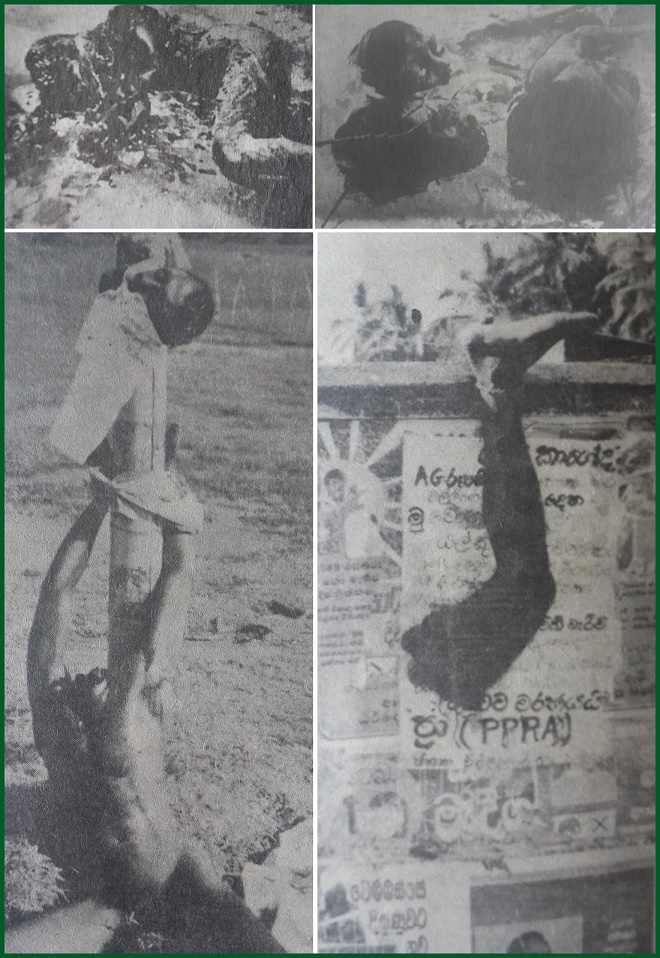
dharman16041607කැරැල්ල හේතුවෙන් 1989 අවසාන භාගය වනවිට ඝාතනයකර පුළුස්සා දැමූ අයෙක්, ගංගාවල පාවූ මිනිස් හිස් කිහිපයක්, ලයිට් කනුවක බැඳ ඝාතනයකර හිස වෙන්කර එය වෙනම රඳවා තිබූ අවස්ථාවක්, ඝාතනයකල කැරළිකරුවෙකුගේ වගකීම භාරගනිමින් නිවේදනයක්ද සමඟ මිනිස් පාදයක් නගරයක එල්ලා තිබූ අවස්ථාවක්.(ඉහළ වමේ සිට).

වසර 1986 අගෝස්තු මුලදී පැපිලියාන සුනේත්‍රාදේවි පන්සලට උදේ 9ට එන ලෙසට අප තිදෙනෙකුට පණිවිඩයක් කලින් දින ලැබිණි. ජවිපෙ දේශපාලන මණ්ඩල සභික සහ සන්නද්ධ අංශයේ නායක සමන් පියසිරි සමඟ ගුණසේන වර්ණපටබැදි එහි විය. ඉදිරිපස කඩයකට ‍‍ගොස් වඩේ එකක් කා පේන්ටියක් බී කථා කෙළෙමු. පුහුණුවට විශාල කැපකිරීමක් පක්ෂය කර ඇති බැවින් ජාතික තලයේ වැඩ කොටසක් සඳහා පුර්ණකාලීනව පක්ෂයට ලබන සතියේ සිට එක්වන ලෙසට ඉල්ලීමක් ක‍ළේය. ජාතික විමුක්ති අරගලයක් තුළින් සමාජවාදය ගොඩනැගීමේ සිහිනය සැබෑ කිරීම අරමුණවූ බැවින් එය පිළිගතිමු. පැමිණෙන  බ්‍රහස්පතින්දා විදුසර පුවත්පතක්ද අතැතිව ගාල්ලේ සිඩ්නි හෝටලය අසලට උදේ 9ට එන මෙන් දන්වන ලදී. සෙසු දෙදෙනාද කෑගල්ල සහ ‍පුත්තලමේ ‘අංශයේ’ පූර්ණකාලීන වැඩවලට යොමුකර තිබිණි. පසුව ගාල්ලේදී අයෙකු පැමිණ මා ගෙන ගියේ එදින 10ට මාගල්ලේ නිවසක රැස්ව සිටි ගාල්ල දිස්ත්‍රික් කමිටුවේ සාකච්ඡාවකට වන අතර පසුව එහි එක් කලාපයක නායකයා වශයෙන් වගකීම් භාරගතිමි. පසුව එහි සාමාජිකයෙකු සමඟ නෙළුව ප්‍රදේශයේ නිවසකට ගොස් ක්‍රියාකාරිකයින් හමුවී ඉදිරි වැඩ සැලසුම් කෙරිණි. පන්ති පැවැත්වීම වේගවත් කල අතර අංශය සඳහා පුහුණුවීම්වලට කේඩර්වරුන් බඳවා ගැනීමද, ප්‍රචාරක කටයුතුද සැලසුම් කළේය.

ගාලු දිස්ත්‍රික්කයේ එක් කලාපයක සංවිධානය කරන අතරතුර පක්ෂය විසින් කැදවීමක් කල විට ලොකු වැඩවලට ගිය අතර 1987 සිට රටපුරා විවිධ වැඩවලට එක්විය. අපගේ එකම පැතුම වූයේ මෙම අරගලය තුළින් මිනිසෙකුට මිනිසෙක් ලෙසින් නිදහසේ ජීවත් විය හැකි සමාජ සහ ආර්ථික සාධාරනත්වය රජයන ආර්ථික ක්‍රමයක් ගොඩනැගීමය. ඒ සඳහා උපක්‍රමික ප්‍රවේශයක් ලෙස විවිධ ක්‍රියාමාර්ග වලට අවතීරණය විය. විමුක්ති අරගලයට අරමුදල් රැස්කිරීමටද විවිධ කටයුතු වලටද දායක විය. මරදගහමුල  බැංකුවෙන් ලක්ෂ 40ක පමණ මුදලක් කොල්ලකෑවේ 1987 මැයි මාසයේදීය. එයට ව්‍යාපාරය වෙනුවෙන් නායකත්වය දුන්නේ චන්ද්‍රරේය. සියල්ල නිමවූ පසු කොල්ලකන ලද මුදල් සහ රත්තරං සමඟ වාහනය එලවන ලද්දේ කැස්බෑවේ මහීපාලය. මහිපාල 1989 අවසානයේදී ඝාතනයවූ අතර එයට පෙර ඉසුරුපායේ වධකාගාරයක බිල්ලෙකුද විය. මරඳගහමුල ‘රාජකාරිය’ නිමකර  එක් අයෙකු ති‍යා ගත්තේ රුපියල් 1000ක් පමණ වන අතර සියළු මුදල් ‘අංශයේ’ ආදාල අංශයන්ට යොමු කෙරිණි. නානායක්කාර ලෙසින්ද හැදින්වූ චන්ද්‍රරේ 71 කැරැල්ලටද සහභාගිවූ අවංක ජවිපෙ මධ්‍යම කාරක සභිකයෙකි. අවසාන වරට ඔහු හමුවූයේ කොළඹ සන්නද්ධ නායකයාව සිටි වව්නියාවේ තිලක්, සමන් පියසිරි, පතී නොහොත් සොයිසා, රාගම ‍සෝමේ  සමඟ 1989 නොවැම්බර‍යේ විජේවීර ඝාතනයට පසු හෝමාගම නිවසකදීය. චන්ද්‍රරේ අත්අඩංගුවට පත් පුවත දැනුම් දුන්නේ ඔහුගේ බිරිඳ ස්වර්ණා නොහොත් විනීතාය. ඉහත සියළුම සන්නද්ධ නායකයින් අවසානයේදී ඝාතනයට පත්විය.

කටුනායක ගුවන් හමුදා කඳවුරට 1987 ජුනි 6 පහරදීමට පෙර කණ්ඩායම් වශයෙන් එක්වු අතර එක්වූයේ මීගමුව සිරගෙදර අසළ ක්‍රීඩාපිටියට දින දෙකකට පමණ පෙරය. ගුවන් හමුදා කඳවුරට කඩාවැදී එය යටත්කර ආයුධ පැහැරගැනීම චිත්‍රපටියක් මෙන් සිදුවිය. 4ක් පමණ කැරළිකරුවන් එහිදී ඝාතනයවූ අතර කඳවුරට කඩා වැදුණේ ලණු කැරළි සහ කිනිසි රැගෙනය. පතී ඇතුළු කිහිප දෙනෙක් එහිදී අත්අඩංගුවට පත්විය. වත්තල නිවසකදී සතියකට පසු අත්අඩංගුවට පත්වූ අතර තිරස්චින වධ බන්ධනවලට ලක්විය. පසුව දීර්ඝ කාලයක් අත්අඩංගු‍වේ පසුවූ අතර අගමැති ප්‍රේමදාස ජනාධිපතිවරණයෙන් 1988 දෙසැම්බර් 15වැනිදා ජය ගැනිමෙන් පසු 1989 ජනවාරි මස ජවිපෙ මැදිහත්වීමෙන් 1,800ක් පමණ රිමාන්ඩ් සිරකරුවන් ජනාධිපති සමාව යටතේ නිදහස් කල අතර එහිදී නිදහස ලැබුවෙමි. හදිසි නීතිය කෙටි කලකට ලිහිල් විණි.

රිමාන්ඩ් බන්ධනාගාරයෙන් 1989 ජනවාරි මස නිදහස ලැබීමෙන් පසු එක් දිනක් නිවසේ සිටි අතර කොළඹට පැමිණ යළි සම්බන්ධකම් ගොඩනගාගෙන සමන් පියසිරි නොහොත් කීර්ති විජයබාහුගේ උපදෙස් අනුව කොළඹ දිස්ත්‍රික් ‘අංශයේ’ නායකයා වශයෙන් අලුතින් පත්වූ පතී සමඟ එක්ව වැඩ ‍කලෙමි. ඒ වන විට පතී 1988 දෙසැම්බර් මස තවත් සිරකරුවන් 200ක් පමණ සමඟ මැගසින් බන්ධනාගාරය කඩා පැනවිත් තිබිණි. කොළඹ සහ කළුතර දිස්ත්‍රික්කයේ බොහෝ කටයුතුවලට සම්බන්ධ වූයෙමි. මේ වන එනම් 1989 ඔක්තෝබර් වන විට හද කකියන පුවතක් මවෙත ලැබිණි. අනුරාධපුරයේ නිවසට පැමිණ මට භාරවන ලෙස කල ඉල්ලීමට යහපත් ප්‍රතිචාරයක් නොලැබුණෙන් මාගේ පියා සහ වැඩිමහල් සොහොයුරා පැහැරගෙන ගොස් නිවස මුළුමනින් ගිනිතබා තිබිණි. එයට කලින් මව ඇතුළු සෙසු සියළු දෙනා ආරක්ෂාව පතා ඥාති නිවෙස්වල සැඟවි සිටියහ. පියාට පහරදී පසුව නිදහස් කලද සොහොයුරා පසුව මරාදැමූ බව වාර්තා විය. පවුල සීසීකඩ විය.

මර්ධනය ඉතා උග්‍ර අතට 1989 ඔක්තෝබර් අවසාන වනවිට පත්වූ අතර මා ඒ වන විට ක්‍රියාකාරි වූයේ ගම්පහය. විජේවීර ඇතුළු පක්ෂ නායකයින් ඝාතනයෙන් පසු පසුබැසිය යුතු බව බොහෝ දෙනාගේ අදහසවූ අතර සන්නද්ධ නායකයාවූ සමන් පියසිරිට අවශ්‍යවූයේ 1989 දෙසැම්බර් මස 13වැනිදා විජේවීර ඝාතනයෙන් මසකට පසු රටපුරා මහා ප්‍රහාරයක් එල්ල කිරීමය. අප කිහිප දෙනෙක්ම ඒ මතයට එකඟනොවූ අතර පසුබැස ගොස් නිහඬ විය. එහෙත් 1989 දෙසැම්බර් 13 ප්‍රහාරය ස්ථාන කිහිපයක පමණක් සිදුවූ අතර රණකාමයෙන් මත්වූ එම අනුචිත තීරණය නිසා අත්අඩංගුවේ සිටි දහස් ගණනකට ජීවිතයෙන් වන්දි ගෙවීමට සිදුවිය.

අවසානයේ ඉන්නට තැනක් නොමැති වීමෙන් 1989 දෙසැම්බර් අවසානයේදී කුරුණෑගල දිස්ත්‍රික්කයේ කුලියාපිටියේ පොල්වත්තක වැඩකිරීමට යාළුවෙක්ගේ මග පෙන්වීමකින් එක්වූවෙමි. එය අක්කර 150ක පමණ පොල් වත්තක්වූ අතර පොල් ගෙඩි 1000ක් ලෙලි  ගැසුවොත් රුපියල් 100ක් දෙනු ලැබේ. දිනකට පොල්ගොඩි 1,600ක් පමණ ලෙලි ගැසු අතර අතේ දිය පට්ටා රැසක් විය. පොල් වලක් කැපුවොත් රුපියල් 15ක්ද හනසු පැටවුහොත් සහ පොල් පැටවුහොත් වෙනම ගානක්ද ලබා දුන්නේය.

ඒ දවස්වල හුරුල්ලෝ හෝ දැල්ලෝ මාළු කූඩයක් රුපියල් 150ක්වූ අතර ඉන් කුඩයක් ගත්තාම සතියකට ප්‍රමාණවත්ය. එයට ලුණුදා තම්බා තබා පසුව ඇඹුලට හෝ බැද බත් සමඟ කෑමට ගනු ලබයි. ඒ වත්ත අයිතිව තිබුණේ හෝමාගම පවුලකටය. ඒ පවුලේ දුව ජපුර කැම්පස් එ‍කේ කණිෂ්ඨ සිසුවියෙකි. මාස 2කට පසු වත්තට පැමිණි ඇය මා ගැන සැකයෙන් බැලූ අතර පසුව මා කැරළිකරුවෙක්දැයි විහිළුවට මෙන් ඇසුවාය. වත්තේ හිමිකරුගේ දියණිය මා පිළිබඳව කල්පනාවෙන් සිටින ලෙස මුරකරුට පවසා ඇත. එම වත්තේ මුරකරු අවුරුදු 60ක පමණ වයසැති දෙදරු පියෙකි. ඔහුගේ බිරිඳ වයස 35ක පමණ කාන්තාවකි. පලාතේ ග්‍රාමසේවක ඇය සමඟ අනියම් සම්බන්ධයක් පවත්වාගෙන ගියේය.  මුරකරු විසින් එය සිය බිරිඳට පවසා තිබේ. ඇය සිය අනියම් සැමියාවූ ග්‍රාමසේවකට ඒ පිළිබඳව දන්වන අතර ග්‍රාමසේවක මුරකරු ගෙන් ඒ පිළිබඳ විමසීමක් කර ඇත. කන බොන හිත හොඳ මිනිසෙකුවු මුරකරු ඒ බව මට දැනුම්දී කල්පනාවෙන් සිටින ලෙස පියෙකු මෙන් අවවාද කළේය.

‍වත්තේ මුල්ලේ ඇති මාර ගහක අඩි 12ක පමණ උඩින් පැලක් සාදා තිබූ අතර ඉන්පසු රාත්‍රියන්හිදී මා එහි නිදා ගත්තේය. වත්තේ ගේට්ටුව සහ පැල අතර දුර මීටර් 400ක පමණ වේ. තෙදිනකට පමණ පසු රාත්‍රී 10ට පමණ බල්ලෝ බුරන හඩක් සහ ආරක්ෂක අංශ ජිප් රථයක් වත්තට ඇතුළුවන ගේට්ටුව අබියස විය. හොර පාරකින් වත්තෙන් පැන ගොසින් කැලේ හැංගිලා සිට පසුදා උදේ 6ට පැමිණි බස් එකෙන් කුරුණෑගලට පැමිණියේය. ඒ 1990 පෙබරවාරි මසය. කුරුණෑගලින් දඹුල්ලට ගොස් ඥාතියෙකුගේ කුඹුරු වැඩට උදව්වූ අතර පසුව 1990 මාර්තු අවසානයේදී සරසවියට දෙදිනක් පමණ ගිය අතර බිල්ලන් සහ පාවාදෙන්නන් ගෙන් බේරිසිටීම අතිශය දුෂ්කර විය. පසුව සරසවි ගමන නවතා දෙමාපියන් ගේ ඉඩමක් ඇපයට තබා වෙනත් නමකින් ගුවන් බලපත්‍රයක් ගෙන මැදපෙරදිග රටක ගොඩනැගිල්ලක් පිරිසිදු කිරීමේ කම්කරුවෙකු ලෙස සේවයට ගියෙමි. පසුව 1990 අවසානයේදී දුෂ්කර ප්‍රයත්නයකින් පසු වෙනත් යුරෝපීය රටකට පලාගොස් වර්තමානයේ ඉතාලියේ සාර්ථක ජීවිතයක් ගතකරන දෙදරු පියෙකි. ඉකුත් වසර 25 තුළ ලංකාවට තෙවරක් පැමිණියේය.

ජවිපෙ 2වැනි කැරැල්ලේ කැරළිකරුවන් බහුතරයම වාගේ සටන්කළේ ප්‍රභාෂ්වරවූ සමාජවාදි දේශයක් පතාගෙනය. උත්තරීතර පන්ති හැඟුමෙන් සැදී පැහැදී යුක්තිය සාධාරණත්වය වෙනුවෙනි. කුරිරු වධයන්ට ලක්ව දහස් ගණන් කැරළිකරුවන්ගේ රුධිර ධාරාවන් ධරණීතලය සිපගත්තේය. ඔවුන් ජවිපෙට එක්වූයේ ප්‍රභාමත් හෙට දවසක් බිහිකරන්නට ස්ථීර අධිෂ්ඨානයෙන් සහ කැපවීමෙනි. වර්තමානයේ ඒ සියල්ල උඩු යටිකුරු වී ඇත.”

ජවිපෙ 2වැනි කැරළි සමයවූ 1986 සිට 1990 දක්වා පළවන මෙම ලිපි මාලාව ලබාගැනීම පිළිබද විස්තර පහත ලිපිනයට ඔබගේ ලිපිනය යොමු කිරීමෙන් ලබාගත හැකිය. ධර්මන් වික්‍රමරත්න, තැපෙ 26, ශ්‍රී ජයවර්ධනපුර. දුරකථනය: 011-5234384 විද්‍යුත් තැපෑල: ejournalists@gmail.com

තව කොටසක් ලබන සතියේ…       

බුදු හිමිගේ  ”එහි පස්සිකෝ – එව  බලව ”’ ක්‍රමයට බැලුවා නම් ආකිමිඩීස් පාරදිගේ හෙළුවෙන් දුවන්නේ නැත

April 16th, 2016

ධර්මසිරි සෙනෙවිරත්න

පළමුවෙන්ම ධනපාල මහතා මුල් ලිපියකින් නලින් ගැන කියූ දෙයකට පිළිතුරු දිය යුත්ය් . නලින්වරදිකලනිසා  සරසවියෙන් නෙරපූවේ නැත නම් අනෙක් සරසවි වලට පත්වීමක් ලබා ගැනීමට නොහැකිවූ යේ අය්දය්  ඔහු ඇසුවේය. කොලබින්  අස්  කළා තමය් . එහෙත් එය වැරදි නිසා වන්දි ලබා දුන්නා .unp  රජයක් පවතී නිසා හැමදේම  ඇද ඇද  හිටියා නලින් අභියාචනා කළා SC  එකත් වන්දි අනුමත කළා .එහෙත් රජයට ගති ය සරසවි පාලනය කල නිසා අනෙක් සරසවි වලට යැවු ඉල්ලුම්පත්‍ර  සලකා බැලුවෙත් නැහැ අස්කරපු පුද්ගලයෙක් යන හේතුව ඉදිරියට දමා  ඔවුන් කල් මරුවා රජයට බියෙන්  දිනේෂ්   රජයට බලපෑම් කරන්න බහ විරුද්ධ පක්ෂයේ අයෙක් නිසා  දිනේෂ් කලේ එක පාර්ලිමේන්තු කමිටුවකට කියන එකය් ඉල්ලුම් පත්‍ර සලා බැලීමට  වත් කටයුතු කරන්න කියල ඒ අනුව .සරස වී වලින් ඉතා මන්දගාමීව හෝ  ඉල්ලුම් පත්‍ර සලකා බලු පසු නලින්  නොගෙන බැරිවුනා සුදුස්සා ඔහු නිසා .රුහුණු   ජයවර්ධන පුර හා කැලණිය යන තුනෙන් ම ඔහුව ගත්තා . මුලින්ම කැලණියේ පත්වීම බාරගත් නිසා ගෙදරට ළඟ ජපුරය පවා ප්‍රතික්ෂේප කරන්න සිදුවුනා රුහුනටත් ගියේ නැහැ .  මේවාට වසර දහයක් ගියේ දේශ පාලන බලය එදා රජකළ නිසා ..එජාපයට පන්දම් අල්ලුවානම්  රට ජාතිය ගැන නොසලකා මේවා මෙහෙමා වෙන්නේ නැහැ  අද    සරත් විජේසුරිය කරන දේවල් නලින් කවදාවත් කලේ නැහැ දුක් විදිමින් තියෙන හැටියට කාල අන්දලා හිටිය  මිසක් …………… ධනපාල මහත්තයෝ මොනවා කෙරුවත් කමක් නැහැ     නලින්ගේ  මේ ගතිගුණ වලටවත්  හිසනමා ආචාර කරන්නඔබවැනි බටහිර ගැත්තන් මිස නලින් වැනි දේශ ප්‍රේමීන් රටට හරි හිගය් .
                                                     
                                            බුදුහිමි ”එවබලවය් ‘ කිව්වේ  ”සනාතන ධර්මයක් බැලීමටය ”’ විටින්විට වෙනස්වන සුළු  බටහිර ලෞකික  නවීන විද්‍යාව  හා අනෙකුත්  ලෞකික විද්‍යාවන් ගැන   කිවහැක්කේ ”””’ මේක නැත්නම් අරක බලව ”” කියාය . ගුරුත්වා කර්ෂණය   ගනකියා එවබලවය් කිව්වාට  ගෙඩි වැ ටේ නවා මිස ආකර්ෂණය අපට නොපෙනේ . ඉහින් ඇවිත් බලන්නේ මොනවාද   අයින්ස්ටයින්ද   නිව්ටන් කියූ දෙය ඇවිත් බැලුවේය එහෙත්  ඒ කෙන්ගෙඩිය දැක්කේ නැත . එනිසා ඇපල්  වැටෙන්නේ  ‘ අවකාශයේ වක්රතාව ”නිසායය් ඔහු කීවේය . ඉතින් අපි ‘ මේක නැත්නම් අරක බලමින් ”’ ඉන්නවා
 බෞද්ධයාගේ  අරමුනාවූ නිවනට බාධා පමුණුවන්නාවූ  අනෙක් සියලු  විද්‍යා ශිල්ප ශාස්ත්‍ර  ක්‍රම හා විධි    නිවනට සාපේක්ෂකව     ””’  තිරශ්චීන  විද්‍යා ””’   බව බුදුහිමි දේශනා කල අතර එවැනි දේ බොහෝ ඇතිබවත් පවසා ඇත .    නලින් ද සිල්වා    මේවාට අලුතෙන් කටට හුරු වචනයක් වූ දවහරේ ඇති වචනයක් වුද  ”’පට්ටපල් බොරු ”නම් වචනය යොදය් .  .මේ  කියනදේය කියන්නේ මේ අරමුණින් යය නලින් දහස් වර කියා ඇතත්   සමහරු නොඅසුනාසේ  අනෙකක්ම කියති  ඔවු හු කෙවට්ටය මෙන් නං දොඩවති එවැන්නන්ට නැවතත් පිලිතුරුනොදිය යුතුයය් පාඨ කයන්ද දැන් තී රනයකට ඇවිත් ඇත ගෙයක් හදන්නෙත් යම් විද්‍යාවකට අනුවය   වස්සාන කාලයේ බුදු හිමිත් ගෙවල් ප්‍රයෝජනයට ගෙන ඇත එසේ සිටිමින්ම සියලු ලෞකික විද්‍යා තිරශ්චීන විද්‍යා බව එතුමා දේශනා කළසේක   ..නලින්  ද ගෙවල් දොරවල් යානවාහන  ආදරයෙන් ප්‍රයෝජන ගනී  . ධනපාල මහතා වැනි ජාතිකවිරෝධීන්ට නොතේරුනාට මේවා ඕනෑම ගොනෙකුට තෙරෙය් නලින් උත්සාහ ගන්නේ  ජීවිතය පවත්වා ගන්නට තමන් මෙන්ම අනෙක් යද භාවිතා කරන මෙවන් නොයෙක් දේ පිටුපස  මන්මත්වී යන අ  යට නිවන ඈත්වෙන බව පෙන්වාදී  මටය . මේ වචනය එසන්දහාය .   DHAM   ආසා ඇති පරිදි  බට හිරයෝ  බුදුහිමිගෙන් ගත්තේ    ” ගලේ උරගාන  ක්‍රමය විතරද .”’ ගලේ උරගා මැදුම් පිළිවෙත සොයා නොගත්තේද  ආත්මය සොයා ගත්තේ ගලේ අතුල්ලාද   බුදුහිමිගේ   ”එහි පස්සිකෝ ”  අනුව බලු කිසිවෙක් පාරදිගේ හෙළුවෙන් දුවන්නේ නැත  පොඩි දෙටත්  කලබලවී  අ සි හියෙන් දුවන්නේ නැත ..   .
             ” ගලේ අතුල්ලන ”’  පර්යේෂණ හා    ”’අරිය පරියේෂණ ”’ යන දෙක වෙනස්ය .  නලින් කියන්නේ  බොරුව බොරුවක්ම බව දන ගෙන  අපේ අරමුණ  ඉටුවන තුරු  ඒ බොරු  ”’පදමට ””’ පමණක් ගෙන  භාවිතා කරන ලෙසය්  .. එකය් අවශෝෂණය  කරගන්නා ලෙස කියන්නේ
       සසර ලේඩ ටත් ඇඟේ  ලෙඩ ටත්  බෙහෙත් සොයන්නේ  එකම ක්‍රමයටයය් ධනපාල තුමෝ කියය් ‘ බටහිර ”ගලේ උලන එක ‘  ඇඟේ  ලෙඩට නම් සමරවිට ඔහු  අත්හදා බලා ඇතුවා විය හැක ‘ අරි පරියේෂණය   ඒවා බලව ඇත්තේ   අධ්‍යාත්මික දේ බලන්නටය
                             ”’රාජ් ස්තන්නේ  මිනිසාගේ ඉන්ද්‍රියයන්ට ගෝචර දේවල් තිබීම මට  තේරෙන්නේ නැති බවය ”””’ යනුවෙන් ධනපාල මහතා කීවත් රාජ් කියා ඇත්තේ  ”’ගෝචර නොවන ””යනුවෙනි  රාජ්ට  පිස්සු නැත  පරමාණු ශුද්‍ර ජීවීන්  පියවි ඇසට නොපෙනෙන නිසා අන්වීක්ෂ මගින් බැලිය යතය   එහෙත් පෙනෙන්නේ තමගේ අස නැත්නම් එය නොපෙනේ . අරිය පරියෙෂණයෙන් මනස නමැති උපකරණය දියුණු කලවිට   අන්වීක්ෂ අන්නවශ්ශ්යය ” සියල්ල වෙනස්වන බව වසර 2600 කට පෙර  බුදුහිමි පැවසුවේ  මනස  දියුණු කිරීමෙන් මිස ගල්වල අතුල්ලා නොවේ  එසේ අතුල්ලනේ ලෞකික දෙය ය් . පරමාණුව බිඳෙන බව  බටහිරයන් දැනගත්තෙත්  මෑතදීය    බෙහෙත් අත්හදා බැලීම් විධිමත්ව කලයුත්යය්  ධනපාල තුමා කීවද   මෙතෙක් එසේ කර තිබෙද කරන බවක් පෙනේද බටහිරයන්ගේ ආආණා සමාජයේ එවැන්නක් වෙයදා
                                   බුදු හිමිගේ  ”එහි පස්සිකෝ – එව  බලව ”’ ක්‍රමයට බැලුවා නම් ආකිමිඩීස් පාරදිගේ හෙළුවෙන් දුවන්නේ නැත
  ධර්මසිරි සෙනෙවිරත්න

පරණ සිංහල පත්තරයක ඔතා තිබුණු බැවින් මෙය පත්තුවන බෝම්බයක්‌ නොවේ ගෙනාවේ  මාළු අල්ලන්නමයි හහ්…හහ්…හා..

April 16th, 2016

සමන් ගමගේ උපුටා ගැන්ම දිවයින

ඉතිං කොහොමද ජාතික ආරක්‍ෂාවට තර්ජනයක්‌ වෙන්නේ

සිංහල – හින්දු අලුත් අවුරුද්ද උදා වී අවසන්ය. එහෙත් වෙනදා මෙන් සුපුරුදු කෝකිල නාදය නම් ඇසුනේම නැති තරම්ය. මේ පරිසර වෙනසට කුමක්‌ හේතු වී තිබෙනවා විය හැකිද? පවතින ග්‍රීෂ්මය හේතුවෙන් එළියට එන්නට බැරිව කොහා සැඟව සිටින්නේද? එසේත් නැතිනම් අද රටේ සිදුවන දේ හමුවේ මේ එළැඹ ඇත්තේ තමාගේ වාරය නොව කණ කොකාගේ වාරය බව කොහාට හැඟී ගොසින්ද?

ඒ කුමක්‌ වුවත් අපට නම් සිතෙන්නේ ආණ්‌ඩුව අද ජාතික ආරක්‌ෂාව සමඟ නටන ඩෙඟා නැටිල්ල හමුවේ කොහා දැන් තමන්ගේ වාරය ස්‌වේච්ඡාවෙන්ම කණ කොකාට භාර දී ඇතැයි කියාය.

බොහෝ දේ සිදු වෙමින් ඇත. එහෙත් ආණ්‌ඩුවට අනුව නම් කිසිවක්‌ම සිදු වන්නේ නැත. සියල්ල සාමකාමීය. යහපත්ය. සංහිඳියාව හා සහජීවනය උස්‌මූරුත්තා වී ඇත. නමුත් ආණ්‌ඩුවේ දැක්‌ම එය වුවද තිරය පිටුපස ඇත්තේ ඉකුත් 2009 දී වළ දැමූ මුල්ලවයික්‌කාල් යක්‌ෂයා යළිත් උත්තාන වීමට දරන උත්සාහයේ දර්ශන පෙළ බව නම් පැහැදිලිවම පෙනෙන්නට ඇත.

අද ජාතික ආරක්‍ෂාව පිළිබඳ රටට වැදි බණ කියන ආරක්‍ෂක ලේකම්වරයා ඇතුළු කවුරුන් කුමක්‌ කීවත් ඉකුත් දා යාපනය චාවාකච්ෙච්රියෙන් මතු වූ එඩ්වඩ් පුලියන්ගේ බෝම්බ කතාව එයට ඇති එක්‌ පැහැදිලි උදාහරණයකි. තිස්‌ අවුරුද්දක්‌ පුරා මරණයේ බය දැන සිටි මිනිසුනේ අහන්න, 2009 දී මුල්ලවයික්‌කාල් අවසන් සටන නිමාවේ සියල්ලට තිත තැබීමෙන් පසු මෙවර එඩ්වඩ් පුලියන් කතාව හෙවත් යක්‍ෂයාගේ යළි පිබිදීමේ බියකරු හඬ චාවාකච්ෙච්රියෙන් මතු වූයේ තුන්වන වරටය.

2016 අලුත් අවුරුද්දේ කොහා වෙනුවට කොටි පුලියන් හෙවත් රමේෂ් මෙසේ චාවාකච්ෙච්රියෙන් මතු වෙද්දී මීට පෙර අවස්‌ථා දෙකකදීම එල්ටීටීයේ නැවත මතුවීම මේ අකාරයෙන් කරළියට පැමිණුනි. ඒ කවදා කොතැනකදීද?

මුල්ලවයික්‌කාල් අවසන් සටන නිමවී වසර තුනක්‌ ගෙවී ගිය තැන එළැඹි ඉකුත් 2012 වසරේදී එහි පළමු සිද්ධිය වාර්තා විය. මානුෂීය සටනේදී යුද හමුදා සන්නද්ධ බුද්ධි බළකාය හා එක්‌ව ත්‍රිකුණාමලය කේන්ද්‍ර කරගනිමින් එල්ටීටීඊයට එරෙහිව ක්‍රියාත්මක වූ දෙමළ ජාතිකයෙක්‌ එදා යුද හමුදාව සමඟ විය. ඔහු මුත්තු නම් විය. ඔහුගේ දේශපාලන බැඳීම තිබුණේ ඩග්ලස්‌ දේවානන්දා නායකත්වය දරන ඊපීඩීපීය සමඟිනි.

2009 මැයි මස 18 වැනිදා යුද්ධය නිමාවට පත්විය. කාලය ඉදිරියට ගෙවී යමින් තිබිණ. මේ අතරේ 2012 මාර්තු මස 20 වැනි දින හිටිහැටියේම මෙකී දෙමළ ජාතික හමුදා ඔත්තුකරුවා වූ වෙලායුදන් රගුනාදන් හෙවත් ඊපීඩීපී මුත්තු ත්‍රිකුණාමලය නිලාවේලිහි පෙරියකුලම් වැව් බන්ට්‌ එක මතදී අමානුෂික ලෙස කපා කොටා ඝාතනය කරනු ලැබිණි.

මෙම සිද්ධියත් සමඟ එදා හමුදා බුද්ධි අංශ වහා ක්‍රියාත්මක විය. ඝාතනයේ සුලමුල සොයා ගැනීමට නාවික හමුදාවද විශේෂ බුද්ධි මෙහෙයුමක්‌ ආරම්භ කළේය. එය නම් කරනු ලැබුවේ “ඔපරේෂන් බ්ලැක්‌ ෙµdක්‌ස්‌” ලෙසිනි. අවසානයේ මුත්තු මැරූ ඝාතකයෝ ඉම්බන්, ගෝපි (පසුකලක නෙදුන්කර්නි කැලයෙදී මියගිය ගෝපි නොව) සහ දිනේෂ් නමැති හිටපු කොටි ත්‍රස්‌තවාදීන් තිදෙනකු බව හඳුනාගත් එවකට නාවික හමුදා බුද්ධි බළකාය ඔවුන් කොටු කර ගැනීමට සමත් වූහ. පසුව ඝාතකයන්ගෙන් ප්‍රශ්න කෙරිණි. එහිදී අනාවරණය වූයේ කුමක්‌ද?

අවසන් සටනේදී ඉන්දියාවට පැන ගිය එල්ටීටීඊයේ සන්නද්ධ සටන් නායකයන් දෙදෙනකු වන දේවන් සහ සිරංජි මාස්‌ටර්ගේ උපදෙස්‌ මත එල්ටීටීඊ ත්‍රස්‌තවාදය නැවත පණගැන්වීමේ අදහසින් හමුදා ඔත්තුකරුවන් ඝාතනය කිරීම සඳහා කොටි කණ්‌ඩායම් කිහිපයක්‌ යළි ලංකාවට පැමිණ සිටින බව ඔවුන් හෙළි කළේය.

නමුත් ඉම්බන් ඇතුළු පිරිස නාවික හමුදාවට කොටු වීමත් සමඟ එදා ඔත්තුකරුවන් ඝාතනය සඳහා පැමිණි අනෙකුත් සියලුම ත්‍රස්‌තවාදී කණ්‌ඩායම් යළි ඉන්දියාවට පැන යැම හේතුවෙන් ඔවුන් අල්ලාගැනීමට ආරක්‌ෂක අංශවලට නොහැකි විය.

එසේ වුවද එල්ටීටීඊය ගනු ලැබූ ඒ පළමු උත්සාහය සාර්ථකව ව්‍යර්ථ කිරීමට නාවික හමුදා බුද්ධි අංශ ක්‍රියාත්මක කළ “ඔපරේෂන් බ්ලැක්‌ ෙµdක්‌ස්‌” මෙහෙයුම නිසා එදා අපට හැකි විය. යහපාලනයේ ආරම්භයත් සමඟ අසත්‍ය චෝදනා එල්ල කර ඉකුත් කාලයේ සීඅයිඩීය මගින් අත්අඩංගුවට ගැනීමට සැරසුණු නාවික හමුදා බුද්ධි බළකායේ කමාන්ඩර් රණේ (අපි ඒ විරුවාගේ ආරක්‌ෂාව පතා ඔහු රණේ ලෙස හඳුන්වන්නෙමු) එකී බුද්ධි ක්‍රියාන්විතයේ නියමුවා විය.

මෙසේ ඉම්බන්, ගෝපි සහ දිනේෂ් කොටුකර ගැනීමෙන් පසු ඔවුන්ගෙන් දිගින් දිගටම ප්‍රශ්න කිරීම් සිදු කෙරිණි. එහිදී අවසන් සටනේදී ප්‍රභාකරන් අතහැර මෙරටින් පලා ගිය එල්ටීටීඊ බුද්ධි අංශ සහ සන්නද්ධ අංශ ප්‍රබලයන් කිහිප දෙනකු ඉන්දියාව ඇතුළු බටහිර රටවල රැඳී සිටිමින් එල්ටීටීඊයේ ජාත්‍යන්තර ජාලය හා එක්‌ව ත්‍රස්‌තවාදය යළි මතු කිරීමට දැඩි වෙහෙසක්‌ ගනිමින් සිටින බවද හෙළි විය. එහි ප්‍රධානියා වූයේ අවසන් සටනේදී සියල්ල හැරදා පැන ගොස්‌ අද ප්‍රංශයෙන් මතුවී සිටින විනයාගම් නමැති එල්ටීටීඊ බුද්ධි නායකයා බවද අනාවරණය විය.

මෙම අනාවරණයත් සමඟ එහි වූ බරපතළකම වටහාගත් ආරක්‌ෂක බුද්ධි සේවා එදා එල්ටීටීඊයේ එකී ජාත්‍යන්තර ජාලය පිළිබඳ දැඩි අවධානය යොමු කරමින් කොටින්ගේ ඉදිරි ක්‍රියාකාරකම් හඳුනා ගැනීම සඳහා ජාලගත ක්‍රියාන්විතයක්‌ ආරම්භ කරනු ලැබිණි. අද පාවාදීමට ලක්‌ව තිබෙන “ඔපරේෂන් ඩබල් එඡ්” යනු ඒ ක්‍රියාන්විතයේ තිබූ එක්‌ අති විශේෂිත මෙහෙයුමක්‌ විය.

ලොව අන් රටවල් සිදු කරන පරිදිම ඉකුත් කාලයේ අපේ හමුදා නිලධාරින් එක්‌සත් ජාතීන්ගේ සිට ලොව පුරා පිහිටි ශ්‍රී ලංකා තානාපති කාර්යාලවල ආරක්‌ෂක උපදේශකයන් ලෙස පිටත්ව යන්නේද එම ක්‍රියාන්විතයේ ප්‍රතිඵලයක්‌ ලෙසිනි.

‍ෙඑදා කිසිවකුත් නොදැන සිටි මේ කතා දැන් අකැමැත්තනේ වුව හෙළිකරන්නට අපටද සිදුව ඇත. මන්ද වසන් කරන්නට දෙයක්‌ අද ඉතිරිව නැති නිසාය. වෛරයෙන් පිරුණු තුට්‌ටු දෙකේ දේශපාලනයක්‌ විසින් සෑම සියලු දේ විනාශ කර හමාරය. ප්‍රභාකරන්ගේ මරණයෙන් පසුවත් එල්ටීටීඊය විටින් විට අපට දැමූ වේග පන්දුවලින් බේරෙන්නට අප කළ ඉදිරි පාදයේ ක්‍රීඩාව “ලෙග් බිෙµda ද විකට්‌” (එල්බීඩබ්ලිව්) කර අවසන්ව ඇත. පක්‌ෂපාතී වූ ඒ තීන්දුව නිවැරදි නැත. එහෙත් අපි දැන් දැවී ගොස්‌ ඇත්තෙමු.

අපේ ඒ දැවී යැමේදී ඇමරිකාව ප්‍රධාන බටහිර කඳවුර තරග තීරකයෝ වූහ. ඉන්දියාව සිටියේ තෙවැනි විනිසුරුගේ තැනය. කණගාටුදායකම කරුණ වන්නේ තරගයේ වැරදි තීන්දුව හෙවත් හොර අවුට්‌ එක දුන් විනිසුරුවන් අපේම උන් වීමය. මෙහිදී උන්ට ඕනෑ වූයේ රටේ සහ අපේ ජය නොව, උන් ජයගන්නටය. එසේ ජයගෙන ඊනියා සහජීවනයක්‌ සහ සම්මුතිවාදයක්‌ පෙන්වා ලක්‌මාතවගේ රෙදි ගලවා ඇය නිරුවත් කර ආතල් ගන්නටය.

ඉතින් දැන් “ලොවේ සැමා අපේ තමා” කියමින් මෝඩ චූන් ගන්නා ඔවුහු ලක්‌ මව අපූරුවට නිරුවත් කරමින් සිටින්නාහ. මේ හමුවේ “හත්වලාමෙ වෙච්ච දේට මක්‌කොරන්නද” කියනු හැර වෙන කියන්නට කිසිත් අද කාටත් ඉතිරිව නැත.

ලබන සතියට

Why are non-Tamil Tamil Nadu leaders promoting Tamil Eelam?

April 15th, 2016

Shenali D Waduge

 Tamil Nadu translated means State for Tamils. It has all the ingredients that self-deetermination seekers espouse for. Its own language, own culture, own indigenous race except it had not been granted independence. It is the original state where demands for self-determination took place with calls to be separated from the Indian state. What is amusing is that since 1969 the calls for Eelam or a greater eelam encompassing Sri Lanka of late has been made by non-Tamils. Why?  DMK leader Karunanidhi is from Andhra Pradesh, MGR Ramachandran was a Sri Lankan-born Keralite whose mother tongue was Malayalam, Jayalalitha Jeyaram is from Mysore and mother tongue is Kannada, Vijayakanth, the DMDK leader, is a Telugu, hardcore Tamil nationalist Vaiko (original name Vayapuri Gopalasamy) is a Telugu born to Andhra parents, Congress Party’s Tamil Nadu representative Khushboo, is a Punjabi Muslim, Rajnikanth, the Tamil matinee idol is a Mysore born Marathi, Napoleon too is a Telugu  Reddiar & EV Ramasamy Naicker, the founder of the Dravida movement in Tamil Nadu was also from Andhra Pradesh. Surely it is Tamils who would be the first to want any separate state of their own, we don’t expect non-Tamils to be wanting a separate state for Tamils, but if they do should we not wonder whether it is really for Tamils that they seek a Tamil state or are they using Tamils as a camaflage for some other cause or agenda? Now is a good time to ask the question and search for the answers.

Janata Party president Dr Subramanian Swamy says Karunanidhi is not Tamil but had migrated from Andhra Pradesh. He is a Telugu born in Tirukkuvalai in Thiruvarur district. The official language of Andhra Pradesh is Telugu. DMK leader served as Chief Minister of Tamil Nadu on 5 separate occasions. Karunanidhi took over leadership of the DMK following the death of its founder C N Annadurai in 1969. Following the assassination of Rajiv Gandhi in Tamil Nadu, the Jain Commission interim report said, the LTTE was getting its supplies, including arms, ammunition, explosives, fuel and other essential items from Tamil Nadu with the support of the DMK Government. The report said that soon after the DMK Government took over the reins of power in Tamil Nadu, “the LTTE slowly began to consolidate itself in the State and their clandestine activities, heretofore dormant, became more and more pronounced. All the activities of the LTTE at this stage towards resource mobilisation, propaganda and treatment of their wounded cadres, had taken an anti-national dimension.” The Commission noted the visit of the then DMK MP, Mr. V. Gopalaswamy (Vaiko), MP (DMK) to Northern Sri Lanka and his reported meeting with Prabhakaran between February 8, 1989, and March 3, 1989. The interim report said that credible reports existed of “active connivance of some DMK leaders with the LTTE. The LTTE was in continuous interaction with Mr. Karunanidhi, primarily to ensure that their activities continue unhindered even after the Padmanabha killing.”. Karunanidhi mounted an aggressive campaign against Ramachandran by calling him a Malayali, an outsider who should not be allowed to rule Tamil Nadu.

Jayalalithaa Jayaram was born on 24 February 1948, at Melukote, in Pandavapura taluka, then in Mysore State (now Karnataka) She served as Chief Minister from 1991 to 1996, in 2001, from 2002 to 2006, and from 2011 to 2014. In 2007 the Indian authorities beefed up her security following death threats by a Canadian based LTTE front via a letter which stated “stop its criticism against Chief Minister M. Karunanidhi”. http://archive1.english.news.lk/news/22-foreign-news/2229-india-tightens-jayalalithas-security-after-alleged-death-threat-letter-from-ltte.html

MGR Ramachandran is from a Malayali Nair caste family. He was born in Nawalapitiya near Kandy to Indian immigrant couple (plantation workers) in 1917 in Sri Lanka. MGR was chief minister when the LTTE and other Tamil militants were being trained in Tamil Nadu. J.R.[Jayewardene] labeled the LTTE as ‘the private army of Mr.M.G.Ramachandran’.  Tamil eelam ‘cause’ has become a baby for people’s personal and political goals. In the case of MGR he wanted to project himself internationally as a politician and fighting for the eelam cause he knew would achieve that goal. This is relevant to many others who claim to fight on behalf of the ‘Tamil cause’ too. It is alleged that he gave Rs.110million to bankroll the LTTE initially.

Vijayakanth (Vijayaraj Naidu) another film actor politician. He is born into a Telugu family in Madurai. is the founder of Desiya Murpokku Dravida Kazhagam. Telugu Naidu is not an electoral asset. In Cuddalore district where he was a candidate suggestion was made that he would continue the Naidu exploitation of the lower caste Vanniars.

Vaiko Vayapuri Gopalasamy He belongs to Telugu speaking Kammavar Naidu’ ancestry. He is the founder of the MDMK, a political party that espouses the cause of the Tamil people and Tamil nationalism. He is known to be a supporter of the LTTE which is banned as a terrorist organisation in 32 countries including India. He was arrested under the Prevention of Terrorist Activities Act (POTA) in 2002 and once-again on 23 October 2008 for sedition. When the Indian army was battling it out with the Tigers, Vaiko made a secret journey for a rendezvous with LTTE leader Velupillai Prabhakaran. We was arrested under Prevention of Terrorism Act (POTA) by the Jaya regime in 2002 for supporting the LTTE. MDMK leader and candidate Vaiko says Tamil Nadu will not give rice and vegetables if enough water will be supplied by Kerala. 

In the meanwhile there is also the question of Tamil Nationalism turning against Telugu Speakers of Tamil Nadu http://swarajyamag.com/politics/when-tamil-nationalism-turned-against-telugu-speakers-of-tamil-nadu

The state that claims it is for Tamils is highly divided by caste. Advertisements for ‘Brahmins-only’ apartments, CBSE schools with preferential treatment for Brahmin male boys studying Vedas etc. One of the charges made by the so-called upper castes in Tamil Nadu against the inter-caste marriages is that the girls who marry Dalits ask for their share of inheritance which mainly includes the land resources. “Dalits and indigenous peoples (known as Scheduled Tribes or adivasis) continue to face discrimination, exclusion, and acts of communal violence. Laws and policies adopted by the Indian government provide a strong basis for protection, but are not being faithfully implemented by local authorities.” (HRW). In 2015 12-year-old Dalit boy in Jodhpur was beaten up by his teacher for allegedly taking a plate from a stack meant for upper castes. Schools of Tirunelveli, about 650 km south of Chennai children have to wear colored wrist-bands (yellow-red band is for upper caste, red and yellow for Thevars, blue and yellow for Nadars, saffron for Yadavs students of the Dalit community of Pallars wear wrist bands in green and red and the Arundhathiyars, also Dalits, wear green, black and white.  

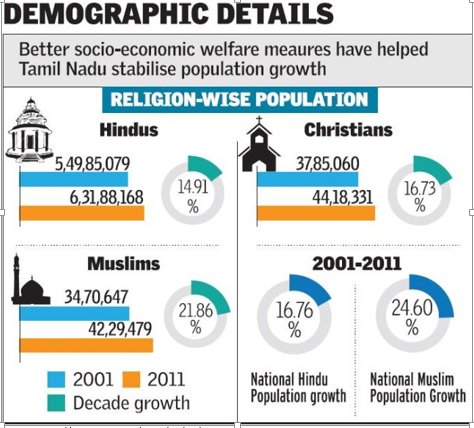
As per, 2011 Census of India , Scheduled Castes constitute 20.01% of Tamil Nadu’s 72 million population. 1.10 per cent of the population belonged to Scheduled tribes (ST). Other Backward Classes(OBCs) form 68% of Tamil nadu population. The top three castes by numbers in Tamil Nadu are Thevar (also known as Mukkulaththor), Vanniar and Kongu Vellalar (also known as Gounder). Among the Dalits, Paraiyar and Pallar are the most dominant. When Jayalalithaa formed her cabinet in 2011 after winning the Assembly elections, around 20% of the ministers (6/33) were from Thevar caste.

We are told and promoted about a notion of Tamils for Tamils but obviously the caste and class factors that divide Tamils have been kept well-guarded or have not been brought out into the open. Does UN, the Rights Activists and foreign governments understand these dynamics when they are using their favoured terminologies of ‘reconciliation’ ‘peace in unity’ is another question never answered and one of the key reasons why these entities end up creating bigger issues though they believe they are providing the solutions by simply taking out a pen and drawing a line and demarcating one group to live on one side in ‘peace’ they have learnt little from the damage they did in dividing Africa during the scramble for Africa.

This is one factor that has not been properly brought into the open regarding the Tamil LTTE TNA factor in Sri Lanka too. It is important that this comes out before any wrong constitutional proposals are made and another bigger blunder is made by Sri Lanka agreeing to a rail and road linking India and Sri Lanka which will end up becoming a paradise for Dalits to escape to and the ETCA will become another foolhardy move that would seal Sri Lanka’s fate as an Indian colony forever. Sri Lanka’s leaders must not make political blunders that even the kings of Sinhale did not commit and managed to over thousands of years safeguard Sri Lanka from being invaded and occupied by India.

Shenali D Waduge

 shenali150416

§  http://www.island.lk/2008/12/13/news36.html – Karunanidhi not a Tamilian, says Swamy

§  http://www.dailypioneer.com/print.php?printFOR=storydetail&story_url_key=no-real-tamil-speaking-leaders-in-tn&section_url_key=nation

§  http://www.sinhaya.com/dmk.htm

§  http://www.sundaytimes.lk/000514/edit.html

§  https://www.youtube.com/watch?v=0pcUG-7xmC0Karunanidhi Jayalalithaa and Vijayakanth Are Not Tamils

§  http://indianexpress.com/article/india/india-news-india/wearing-caste-on-my-wrist-green-for-dalits-red-for-thevars/

§  http://www.dnaindia.com/india/report-even-doctors-face-caste-discrimination-in-tamil-nadu-1696543


යුද සිරකරුවෙකුගේ කතාව

April 15th, 2016

වෛද් රුවන් එම් ජයතුංග 

විශේෂඥ මනෝ වෛද්‍ය  නීල් ප්‍රනාන්දු මහතා විසින් මනෝ ප්‍රතිකාර සඳහා මා වෙත යොමු කරන ලද සෙබලා හිටපු යුද සිරකරුවෙකි. ඔහු 1993 දී එල්.ටී.ටී.ඊ සංවිධානය විසින් වැලිඔය කඳවුරට පහර දීමේදී අල්ලා ගන්න ලද ශ්‍රී ලංකා යුද හමුදාවේ සංඥා බලකායට අයත් සෙබලෙකි. ඔහුව එල්.ටී.ටී.ඊ සංවිධානය විසින් පුරා වසර පහක් සිරගත කොට තබාගන්නා ලදි. එම කාලය පුරා ඔහු විඳි ගැහැට අප්‍රමාණය​.   ඔහු අත් අඩංගුවට පත් වන්නේ යුද ගැටුමකදීය​. ඔහුගේ ඇස් ඉදිරිපිටම කොටින් ඔහුගේ ඉහල නිලධාරියෙකු වූ ලුතිනන්වරයෙකුට උදැල්ලෙන් ගසා ඔහුගේ දෙනෙත් ගලවා මරා දමන ලදි. ඉන්පසු ඇස් බැඳ තුවක්කු මිට වලින් පහර දෙමින් ඔහුව ගෙන යන ලදි.

මුලින්ම ඔහුව මාස අටක් පමණ කරුවළ සිරමැදිරියක හුදකලා කොට  තැබුවේය​. මෙමගින් සිරකරුවාගේ ජීව විද්‍යාත්මක ඔරලෝසුව කඩනු ලබයි. ඉන්පසු ඔහුට දිවා රාත්‍රී පිළිබඳ සංවේදනය ක්‍රමක් ක්‍රමයෙන්  ක්‍ෂය වේ. මාස අටම ඔහුව ඉතා පීඩාකාරී ඉරියව් වලින් මාංචු දමා තබන ලදි. ඉන්පසු ඔහුව යොමු කරන්නේ ප්‍රශ්න කිරීම් වලටයි.

මෙම සෙබලා අත් අඩංගුවට ගන්නා අවස්ථාවේ එල්.ටී.ටී.ඊ කේඩරයන්ට අතපසුවීමක් සිදු විය​. මෙම සෙබලා සිටියේ සිවිල් ඇඳුමින් නිසා ඔවුන් සිතන ලද්දේ මොහු  සංඥා බලකායේ උසස් නිලධාරියෙකු කියාය​. එම නිසා මෙම පුද්ගලයා වධයට ලක් කරමින් හමුදාව විසින් සන්නිවේදනයේදී භාවිතා කරන කේත  පිළිබඳ විස්තර මොහුගෙන් අසන ලදි. තමන් සාමාන්‍ය සෙබලෙකු බව පුන පුනා කීවද ටොසී ඔත්තු සේවයේ කාඩරයන් එය විශ්වාස නොකරන ලදි. ඔහුට තව  තව වද දෙමින් ඔවුන් ප්‍රශ්න කලහ​.

මෙම සෙබලාගේ විස්තර ප්‍රකාශය අනුව  ඔහුගේ ලිංගේන්ද්‍රියට කරන්ට් අල්ලන ලදි . මේ වධ බන්ධනය නිසා ඔහු කිහිප විටක්ම සිහිසන් විය​. එසේම දිනපතා ඔහුට පහර දෙනු ලැබීය​. කිහිප විටක්ම වෙඩි තබා මරා දැමීම සඳහා ගෙන යමින් ඔහු තුල මරණ බිය ඇතිකරවන ලදි. වරක් ඔහු ඉදිරියේ ඊ පී ආර් එල් එෆ් සංවිධානයේ සාමාජිකයෙකු රත්වූ යකඩ වලින්ම මැරෙන තුරු පුළුස්සන ලදි.  එසේම තවත් දෙමල සිරකරුවෙක්ව ඔහුගේ දෑස් ඉදිරිපිට මරා දමන ලදි.

මෙලෙස බොහෝ කාලයක් ඔහු යුද සිරකරුවෙකු ලෙස දුක් වින්දේය​. අවසානයේදී රතු කුරුස සංවිධානයේ මැදිහත් වීම නිසා ඔහු සාමාන්‍ය සෙබලෙකු බව සනාත විය​. ඉන් පසු තියුණු වධයන් වලට ලක් නොකෙරුනද අවිනිශ්චිත තත්වය​, නිදහස පිලිබඳව කිසි බලාපොරොත්තුවක් නොලැබීම නිසා ඔහු කාංසාවට ලක් විය​. අවසානයේදී වසර පහකට පසුව 1998 දී රතු කුරුස සංවිධානයේ  බලවත් ඉල්ලීම මත මෙම සෙබලාව නිදහස් කරන ලදි.

නිදහස් වීමෙන් පසු ඔහු තම ඒකකයට ගියේය​. සති දෙකක නිවාඩුවක් ඔහුට දෙන ලදි. කොටි අත් අඩංගුවෙන් නිදහස් වූවද ඔහුගේ සිත බියෙන් පෙලුනි. යළිත් තමන්ව එල්.ටී.ටී.ඊ  සංවිධානය විසින් අල්ලාගනු ඇතැයි අනවතර බියක් ඔහුට ඇති විය​. මේ අතර මීලඟ හමුදා කිර්‍යාන්විතයට යාමට සූදානම් වන ලෙස ඔහුට දන්වන ලදි. තමාගේ අසනීප තත්වය ගැන කීවද ඔහුට සහනයක් නොලැබුනි. එක් උසස් නිලධාරියෙක් ඔහු වියාජ ලෙස රෝගයක් පෙන්වන බව කියා පරුෂ වචනයෙන් බැන ඔහුව දැන් පලාලි වලට යවන බව කියා තර්ජනය කලේය​.

මේ බලවත් පීඩනය නිසා ඔහුගේ හිස තුල කම්පනය  අධික විය​. හෙතෙම විසංඥව ඇද වැටුනි. සිහිය එන විට ඔහු මනෝ මූල කටහඞ නැතිවීමකට (psychogenic aphonia)  ලක්ව සිටියේය​. ඔහුගේ කථනය අතුරුදහන් විය​. මෙලෙස 1998 සිට 2000 වසර දක්වා ඔහුව  විවිධ පීඩනයන්ට ලක් කෙරුණි.

2000 වසරේදී යුද හමුදා රෝහලට යොමු කරන ලද මෙම   සෙබලා පශ්චාත් වියසන ක්ලම්ථ අක්‍රමතාවයෙන් (PTSD) පෙලෙන බවට රෝග නිර්ණය කරන ලදි. ඒ වන විට සිහිනෙන් බියවීම , තිගැස්ම , යුද සිරකරුවෙකු ලෙස ගත කල අත්දැකීම්   නිතර ආවර්ජනය වීම , තදබල විශාදිය​, කට හඞ රහිත බව​, ජීවිතාශාවෙන් තොර වීම වැනි ලක්‍ෂණ ඔහු තුලින් දක්නට ලැබුනේය​.විශේෂඥ මනෝ වෛද්‍ය  නීල් ප්‍රනාන්දු මහතාත් මමත් නොකඩවා මෙම රෝගියාට ප්‍රතිකාර කලෙමු.

මෙම සෙබලා එල්.ටී.ටී.ඊ  සංවිධානය යටතේ යුද සිරකරුවෙකුව සිටි කාලයේ ඔහුට හිමි වැටුප් සහ දීමනා තවමත් ලැබී තිබුනේ නැත​. මා විසින් කරන ලද ඉල්ලීමක් නිසා මේ පිලිබඳව සොයා බැලූ මානුෂික ගුණාංගයන් ගෙන් සපිරි නිලධාරියෙකු වූ බ්‍රිගේඩියර් සිරි රණවීර මහතා (මෙතුමා පසුව ජෙනරාල්වරයෙකු වී විශ්‍රාම ගියේය​) මෙම සෙබලාට හිමි විය යුතු ලක්‍ෂ හතරකට ආසන්න මුදලක් ගෙවනු ලැබීය​. එසේම තවත් යහපත් නිලධාරියෙකු වූ සංඥා බළකායේ බ්‍රිගේඩියර් රොහාන් කඩුවෙල මහතා (මෙතුමාද පසුව ජෙනරාල්වරයෙකු වී විශ්‍රාම ගියේය​)  මෙම සෙබලාට සහන සැලසීමට අපට උපකාර වූයේය​.

පශ්චාත් වියසන ක්ලම්ථ අක්‍රමතාව නිසා උක්ත සෙබලාගේ කායික මානසික සෞඛ්‍ය පිරිහී තිබුනි. ඔහු යුද ආබාධිතයෙකු  ලෙස සලකා යුද හමුදාවෙන් වැටුප් සහිතව ඉවත් කල යුතු බවට විශේෂඥ මනෝ වෛද්‍ය  නීල් ප්‍රනාන්දු මහතාත් මමත් යුද හමුදා රෝහලේ එවකට සිටි අණදෙන නිලධාරියාගෙන් ඉල්ලා සිටියෙමු. එහෙත් මානසික සෞඛ්‍ය හේතූන් මත මීට ඉහතදී කිසිම සෙබලෙකු යුද ආබාධිතයෙකු  ලෙස සලකා යුද හමුදාවෙන් වැටුප් සහිතව ඉවත් නොකර තිබෙන බව පෙන්වා ඔහු තර්ක කලේය​. ඔහුට අනුව ආබාධිත විය හැක්කේ ශරීරය පමණි. මනස ආබාධිත නොවේ. නමුත් අප අපගේ ඉල්ලීම ඉහලටද යොමු කලෙමු.  හමුදාවේ සෙබලුන් ගේ දුක තේරුම්ගත නොහැකි වූ ඔහු  දිගින් දිගටම ඊට එරෙහි විය. නමුත් අපද සටන් කලෙමු.

අප සටන් කලේ කිසිම ලාභ ප්‍රයෝජනයක් නොබලා  කිසිම සිවිල් බලයක් නොමැති ඊලාම් යුද්දය නිසා ආබාධිතවූ  දුප්පත් සෙබලෙක් වෙනුවෙනි. අවසානයේදී 2005 වසරේදී මෙම සෙබලාට වැටුප් සහ දීමනා සහිතව හමුදාවෙන් ඉවත් වීමට ඉඩ දීමට ඉඩ ලැබුණි. එය ඊලාම් යුද්දය බලපෑමෙන්  පශ්චාත් වියසන ක්ලමථ අක්‍රමතාවයෙන් (PTSD) මානසිකව ආබාධිත වීම නිසා ඉවත් කල ප්‍රථම සෙබලා විය​.  එය ලංකාවේ මානසික සෞඛ්‍ය සේවයේ සන්ධිස්ථානයකි.

මෙම ජයග්‍රහනයෙන් පසු අපට විඳින්නට වූ ගැහැට විශාලය​. අණ දෙන නිලධාරියා මාව හමුදා රෝහලේ ශ්‍ල්‍යාගාරයට මාරු කිරීමට තැත් කලේය​. එයට විශේෂඥ මනෝ වෛද්‍ය  නීල් ප්‍රනාන්දු මහතා තදබල ලෙස විරුද්ධ විය​. එසේම මාව සතියට දින දෙකක් රාත්‍රී සේවයට දැම්මේය​. 2002 සිට 2006 දක්වා මම කිසිම අතිකාල දීමනාවක් නොගෙන යුද හමුදා රෝහලේ සේවය කලෙමි.

සතියට දින දෙකක් රාත්‍රී සේවය කලද මම අතිකාල දීමනා නොගත්තෙමි. තවද ඒ වන විට ලන්ඩන් විශ්ව විද්‍යාලයෙන් මට මනෝ විද්‍යාව සම්බන්ධයෙන් MSc උපාධියකට ඇරයුම් ලැබී තිබුණි. හෙතෙම යටින් එය කඩාකප්පල් කලේය​. මම අධ්‍යන කටයුතු වල​ට ඇමරිකාවට යන විට මගේ වැඩ බැලීමට වෛද්‍යවරයෙක් අවශ්‍ය බවට බල කොට ඇමරිකා ගමනද බකල් කිරීමට උත්සහ ගත්තේය​.  අවසානයේදී මගේ පිහිටට ආවේ කර්නල් වෛද්‍ය ටී. ඒ දයාරත්න මහතාය​. එතුමා ” පුතා උඹ ඇමරිකාවේ ගිහින් ඉගනගෙන වරෙන් මම වාට්ටුව බලාගන්නම් ” කියා මාව දිරිමත් කලේය.

​කෙසේ නමුත්  විශේෂඥ මනෝ වෛද්‍ය  නීල් ප්‍රනාන්දු මහතාත් මමත් කොලඹ යුද හමුදාවේ 2002 වසරේ සිට අරඹා තිබූ යුද ආතති ප්‍රතිකාර මධ්‍යස්ථානය වසා දැමීමට මෙම නිලධාරියා උත්සුක වූයේය​. වරක් ජෙනරාල් වෛද්‍ය තිලක් ජයවීර මට කැඳවීමක් කලේය . අණ දෙන නිලධාරියා ඔබට අනවතරයේ කරන හිරිහැර මම දනිමි කියා ඔහු කීය​.  මම කිසිවක් නොකීවෙමි.

යුද ආතති ප්‍රතිකාර මධ්‍යස්ථානය වසා දැමීමට උක්ත නිලධාරියාට ස්වර්ණමය අවස්ථාවක් උදා විය​. ඒ හමුදාපති සරත් ෆොන්සේකාට හමුදා මූලස්ථානයේ එල්ල වූ මරාගෙන මැරෙන බෝම්බ ප්‍රහාරයත් සමග හමුදා රෝහල නාරාහේන්පිටට ගෙන යනු ලැබීය​. ඒ සමගම ඒ පිට දමා යුද ආතති ප්‍රතිකාර මධ්‍යස්ථානය වසා දැමින​. යුද ආතති ප්‍රතිකාර මධ්‍යස්ථානය නාරාහේන්පිට ස්ථාපිත කිරීම වැලැක්වීම සඳහා ඔහු සියළු දේ කලේය​. එසේම වෛද්‍ය නීල් ප්‍රනාන්දු විසින් කල සේවයට කිසිදු ස්තූති කිරීමක්වත්  නොකොට ඔහුට යන්නට දුන්නේය​.

මෙම පුද්ගලයා සමග සීමාවාසික පුහුණුවේ නිරතවූ වෛද්‍යවරයෙකු පැවසූ පරිදි ඔහු එන්නේ ඉතාම ආර්ථික වශයෙන් දුෂ්කර පවුලකිනි. එසේම කුල පීඩනය නිසාම ඔහු තම ගමෙන් ද කොන් වූ අයෙකි . මේ හේතු නිසා හමුදාවට බැඳී තමට කිසිදා නොතිබූ ගරුත්වය සොයාගෙන යයි. අහේතුවකට මෙන් මෙවැනි සමාජ දුෂ්කරතා වලට මුහුණ දුන් පුද්ගලයෝ බොහෝ විට සමාජ සාධාරණතාව වෙනුවට පෙනී සිටින්නේ තමන් ගේ උදර පෝෂණය වෙනුවෙනි.  එසේම තමා අයත් වූ පන්තියේ මිනිසුන් කෙරෙහි පසුකාලීනව (පන්තිය මාරු කිරීමෙන් පසුව​) කිසිම සංවේදිතාවක් නොදක්වති. මොවුන් නරුම මිනිසුන් ලෙස මම දකිමි. මේ හේතුව නිසාදෝ අතීතයේ සුද්දා නිලධාරීන් ලෙස හමුදාවට බඳවා ගත්තේ තම ප්ලැටූනයට මසක් පුරා තම වියදමින් කෑම දීමට හැකියාවක් තිබෙන ප්‍රදේශයේ වැදගත්කමක් දැරුවා වූ පුද්ගලයන්‍ය​. වැඩවසම් චින්තනයක් ලෙස මෙය නිර්වචනය කල හැකි වූවද පසු කාලීනව හමුදාවේ ලී පවා හොරකම් කල නිලධාරීන් දකින විට සුද්දා නිවැරදි බව සිතේ.

යුද ආතති ප්‍රතිකාර මධ්‍යස්ථානය වසා දැමීම නිසා මේ වන තෙක් දළ වශයෙන් සොල්දාදුවන් 400 කට ආසන්න සංඛ්‍යාවක් දිවි නසාගෙන තිබේ. එසේම  යුද කම්පනය නිසා නිරවුල් මනසකින් තොරව අපරාධ  කිරීම නිසා පෝරකය දෙස බලා සිටින සොල්දාදුවන් ද මෙම ප්‍රතිකාර මධ්‍යස්ථානය  වැසුනු නිසා ප්‍රතිකාර අහිමි වූ පිරිසක් වෙති. ඔවුන් ද යුද්දයේ වින්දිතයන් ය. මේ සමාජ වියසන ගැන මෙම නිලධාරියා නිහඞය​. මෙම කරුණු ඕනෑම උසාවියක වාද කිරීමට මම  බිය නොවෙමි.

අවසානයේදී  දුප්පත් සෙබලෙකුට පිහිට වීම නිසා අපට අහිමි වූ දේ බොහෝ වෙතත් මම එම ක්‍රියාව ගැන පසු නොතැවෙමි. යුද්ධය නිසා මානසික වශයෙන් ආබාධිත වූ විශාල දුක් කන්දරාවක් විඳි ශ්‍රී ලංකා යුද හමුදාවේ සංඥා බලකායට අයත් පුෂ්පකුමාර නම් මෙම සෙබලා දැන් අවම වශයෙන් කාටත් අත නොපා ජීවත් වේ. එය විශේෂඥ මනෝ වෛද්‍ය  නීල් ප්‍රනාන්දු මහතා සහ මා විසින් කල සද් ක්‍රියාවකි. එසේම එය මට විශාල සතුටක් ගෙන දෙයි.

චූන් පාන් වලින් චූන් වන දේශපාලනය

April 15th, 2016

මතුගම සෙනෙවිරුවන්

රට පුරා අස්සක් මුල්ලක් නෑර ගම් දනව් ඔස්සේ විසිල් ගසමින් පැමිණෙන පාන්බේකරි රථයට වශීකෘත ව සිටින සමාජයකට රටේ ස්වාධීනත්වය මෙන්ම ජාතික ආරක්ෂාවට තිබෙන අනතුර ගැනද පවසන්නට නොහැකිය. කීවත් එය නෑසුනා මෙන් සිටිති. නමුත් හෙක්ටයාර් සියයක් ලක්ෂයක් මෙදා යල්කන්නයේ වී ගොවිතැන තහනම් කරන බවට රජය කියන කල්හි මේ පාන් කන ගොවීන් ගේ බඩ පපුව දාගෙන යති. නගර බද චූන් පාන් කන ඇත්තන් ගේද ඇඟ මයිල් කෙලින් වෙති. ඒ බඩට වදින බැවිනි.

චූන් පාන් හදන්නට ලංකාවට තිරිඟු පිටි මෙට්රික් ටොන් දහතුන් ලක්ෂයක් පමණ වාර්ෂිකව ගෙන්වති.මේවා ගෙන්වීමට රුපියල් මිලියන හතළිස්දාහක් පමණ  වැය වන්නේ යැයි ගණන් බලා තිබේ. සැබවින්ම ලංකාවේ තිරිගු පිටි පරිභෝජනය සියයට හැත්තෑවක් පමණ වේ.මිලියන දෙසිය පණහක ජනගහනයක් තිබෙන ඉන්දුනීසියාවේ ඒක පුද්ගල තිරිඟු පිටි පරිභෝජනය කිලෝ 23 කි. තායිලන්තයේ විසිදෙකකි. වියට්නාමයේ 20කි. මියන්මාරයේ 6.5 කි නමුත් ලංකාවේ එය 56 අගයක් ගනී. එය මේ අසියාකරයේ වී වගා කරන රටවලට සාපේක්ෂව පමණක් නොව බොහෝ රටවලට සාපේක්ෂය ඉහළ අගයකි. සැබවින්ම එස් වන්නේ ඇයි.

ලංකාවේ කෘෂි වගා බිම් අතරින් විශාල ප්‍රමාණයක් වී ගොවිතැන් කළ හැකි කුඹුරුය. ඒවා ගණනින් හෙක්ටයාර් 772626 කි.(2014 ) ඒ මාස් කන්නයටයි.යල කන්නයේදී එය හෙක්ටයාර් 429091 (2015 ) බවට පත් වේ. වසර තිහක් පමණ ඇදී ගිය යුද්ධ සමයේ දී මෙම සමස්ත වගා බිම් ප්‍රමාණය විශාල ප්‍රමාණයක් අහිමිව තිබුණද සාමය උදා වීමෙන් පසු සමස්ත කුඹුරු ප්‍රමාණයම වගා කෙරෙමින් ඇත. ඒ අනුව මාස්කන්නයට වී මෙට්රික් ටොන් 2876987 ක දළ අස්වනු ප්‍රමාණයක්( 2014 ) ද යල කන්නයට වී මෙට්රික් ටොන් 2000000 කට ආසන්න ප්‍රමාණයක්ද නිපදවා ඇත. එයට අමතරව ගණනයට බඳුන් නොවන ගෘහස්ථ වී ප්‍රමාණයක්ද තිබෙන බව මෙහිදී පෙන්වා දිය යුතුය.ඒ අනුව වාර්ෂිකව වී මෙට්රික් ටොන් ලක්ෂ පණහක් පමණ ලංකාවේ නිෂ්පාදනය වේ.  ලංකාවේ ප්‍රධාන ආහාරය බත් බැවින් මෙම අස්වනු ප්‍රමාණයට සාපේක්ෂ වශයෙන් දෛනික ආහාරයට මෙයින් ලැබෙන සහල් ප්‍රමාණවත් බව කෙනෙකුට පෙන්වා දිය හැකිය.ඒක පුද්ගල සහල් පරිභෝජනය පසුගිය කාලයේදී නිලෝ 155 දක්වා වර්ධනයව තිබුණි.මෑතකදී නැවතත් තිරිඟු පිටි පරිභෝජනය ඉහළ යෑම නිසා එය  කිලෝ 104 දක්වා පල්ලම් බැස ඇත.

සාමාන්‍යයෙන් බත් වෙනුවට ධාන්‍ය  වලින් සැකසූ ආහාර සහ තිරිඟු පිටි වලින් සැකසූ ආහාර පරිභෝජනයක් ලංකාවේ සිදු වේ. විශේෂයෙන් තිරිඟු පිටි මගින් සාදන පාන් බනිස් සහ කෙටි කෑම විශාල වශයෙන් නාගරිකව සහ ගම්බදව අලෙවි වේ. එයට එක් හේතුවක් වන්නේ තිරිඟු පිටි වල පවතින ග්ලූටන් නම් ඇදෙන සුළු ද්‍රව්‍ය නිසා පහසුවෙන් ඒ මගින් සැකසූ ආහාර  නිෂ්පාදනය කරගැනීමට හැකි වීමයි.අතීතයේදී මෙන් නොව වර්තමානය වන විට ආහාර සකස් කරලීමට තිරිඟු පිටි ලැබෙන්නේ එහි තිබෙන බොහෝ පෝෂණීය ද්‍රව්‍ය ඉවත් කිරිමෙනි. කහ පැහැයට හුරු තිරිඟු පිටි සුදු පැහැ වර්ණයට හැරීම සිදු වන්නේ මෙලෙස එහි තිබෙන බොහෝ ද්‍රව්‍ය ඉවත් කිරීමෙනි. ඒ නිසා මෙයින් සැකසූ ආහාරයන්ද පෝෂණීය අගයෙන්  පහළ ස්ථානයක පවතී. නමුත් තිරිඟු පිටි පරිභෝජනය දිනෙන් දින ඉහළ යයි.

ලංකාවට වාර්ෂිකව ආනයනය කරන  තිරිඟු   සඳහා බද්දක් අයකෙරේ. මෙම තිරිඟු වල වාර්ෂික වටිනාකම රුපියල් මිලියන හතළිස්දාහක් පමණ වේ. එනම් ඇමරිකන් ඩොලර් 323.2 ක ප්‍රමාණයකි. ( 2014 ) නමුත් ඩොලරයට සාපේක්ෂව රුපියලේ විචල්‍යතාවය අනුව මෙම වටිනාකම වෙනස් වන බව වටහා ගත යුතුය. කෙසේ වෙතත් වාර්ෂිකව ලංකාවේ නිපදවන  වී ප්‍රමාණයේ සහල් අස්වැන්නේ සමස්ත වටිනාකම රුපියල් මිලියන 211125000 ක් පමණ වේ.. නමුත් වී මිළ වරින් වර පහළ දැමීමෙන් සහ සහල් වල මිළ අඩු කිරීමෙන් එම වටිනාකම සම්පූර්ණයෙන්ම ජාතික ආදායමට නොලැබේ. ලංකාවේ සමස්ත මුළු ආනයන වියදම ඇමරිකන් ඩොලර් 19416.8 කි. මෙම ප්‍රමාණයෙන් සියයට 2ක් ප්‍රමාණයක් තිරිගු පිට වලට අයත් වේ. මෙම තත්ත්වය තුළ ලංකාවේ නිපදවන  වී වලට සාපේක්ෂව පහෙන් එකකට මදක් වැඩි තිරිඟු පිටි ප්‍රමාණයක් ලංකාවේ පරිභොජනයට ගැනේ. වී වලින් ස්වයංපෝෂණය වෙමින් තිබෙන රටකට මේ ආනයනය බරකි.

විස්කෝතු වැනි ආහාර  වලට අමතරව ආප්ප රොටි සහ ඉදි ආප්ප සෑදීමටද තිරිඟු පිටි යොදා ගැනේ. මෑතකදී හෙල්තිෆ්ලා යන නමින් සහල් පිටි වර්ගයක් වෙළෙඳ පළට පැමිණියේය. ඒ මගින් යටකී ආහාර සියල්ල පහසුවෙන් සකස් කර ගත හැකි බව අනාවරණය විය. ඒවා ස.තො.ස. මගින් ලංකාව පුරා බෙදා හැරීමට සැපයුම් කරුවන් සූදානම් වුවද මුදල් නොගෙවීමෙන් සහ වෙනත් බාධක දැමීමෙන් එම සැපයීම අඩාල කර ඇත.රජයේ වී සංචිත ලබාගෙන සහල් පිටි නිපදවීමට මෙම සැපයුම් කරුවන්ට කැබිනට් අවසරය ලැබී  තිබුණද එයටද බාධා එල්ල කොට ඇත.මෙවැනි තත්ත්වයන් නිර්මාණය වන්නේ සහල් පිටි වලින් පාන් ඇතුළු බේකරි නිෂ්පාදන සියල්ල නිපදවීමට අවශ්‍ය තාක්ෂණය දැනට ලංකාවේ රාජ්‍ය ආයතන තුළ මෙන්ම පෞද්ගලික නිෂ්පාදකයන් අතද තිබියදීය. එම තාක්ෂණික පහසුකම් තවත් වර්ධනය කොට සහල් පිටි පරිභෝජනය වැඩිකළහොත් සියයට හැත්තෑවක් පමණ වන ලංකාවේ තිරිඟු පිටි පරිභොජනය සියයට විස්ස දක්වා අඩු කල හැකි වන බව විද්වතුන් ගේ අදහසයි.

ලංකාවේ නිෂ්පාදනය වන වී රජයේ සංචිත වශයෙන් පවතින්නේ මෙට්රික් ටොන් ලක්ෂ තුනකට ආසන්න සංඛ්‍යාවකි. වී මිළ රුපියල් විසි හතරට පමණ අඩුකර ගැනීමෙන් පසු මෙම සංචිත සෑම වර්ෂයකම සත්ත්ව ආහාර වශයෙන් සහ බීර නිෂ්පාදනයට රජය මගින් ලබා දෙන බව දැන් පැහැදිලි වී තිබේ.එයට හේතුව වී අතිරික්තයක් තිබෙන බවට නිළධාරීන් විසින් ඒත්තු ගැන්වීමයි. තිරිඟු පිටි ආනයනය සලකා බලන කල්හි මේ අතිරික්ත කතාව බොරුවකි. සිදුව ඇත්තේ විවිධ ආනයනික සමාගම් වී මොල් හිමියන් සහ දේශපාලකයන් සිය ජාවාරම් තර කර ගැනීම උදෙසා මේ රටේ පාරිභොගිකයන් දඩමීමා කර ගැනීමයි.ඇතැම් විට සිය කළු සල්ලි පිට කරගැනීම උදෙසාද ආනයනික දත්ත වෙනස් කොට පෙන්වා දෙනු ලබන්නේ යැයි අසන්නට ලැබේ. මේ නිසා මේ රටේ ජාතික ආර්ථිකයට වැදී ඇති පහරද සුලු පටු නොවේ. ආනයනය වැඩි වන විට රුපියලේ අගය පහළ බැසීමට හේතු වන සාධකද එයින් නිර්මාණය වේ. එ නිසා විශාල ණය උගුලක ශ්‍රී ලංකාව අසු ව තිබේ. මේ අතර වී හෙක්ටයාර් ලක්ෂයක් වගාවෙන් ඉවත් කිරීමට ප්‍රතිපත්තිමය තීරණය ගන්නා ගොන් තකතීරුවෙකු මිසක් බුද්ධිමතෙකු නොවේ. සෝයා සහ බඩ ඉරිඟු බීජ ගෙන්වන එක්තර බහුජාතික සමාගමක වුවමනාවට මෙලෙස වී නිෂ්පාදනය අඩාල කරන බව අපට පැහැදිලිය. දැනටමත් එම සමාගම මේ බීජ ගබඩා කිරීමට විශාල ගබඩා සංකීර්ණයක් රජරට ප්‍රදේශයේ ඉදි කරමින් ඇත. මේ තත්ත්වය තවත් වර්ධනය වුවහොත් තිරිඟු පිටි ආනයනය තවත් වැඩි වනවා නිසැකය. කුඹුරු ගොඩකර ඒවායේ වෙළෙඳ පළවල් ගොඩනන්වනවා කියූ නායකයෙකු සිටින රටකට මේකතාව බෙහෙවන්ම සාධාරණ විය හැකිය.

මතුගම සෙනෙවිරුවන්

යමරජු ඉදිරියේ විභාග වෙන රටකඩනගොඩ ඝාතන නඩුව

April 15th, 2016

චන්ද්‍රසේන පණ්ඩිතගේ විසිනි

මොනවද අද විසදන්න තියෙන්න තියෙන්නේ?

රජතුමණි, අද විශේෂ නඩුවක් තියෙනවා පැමිණිල්ල පකිස්ලන්තයේ “යහපාලන රජයෙන්” ගොනු කරලයි තියෙන්නේ, රටකඩනගොඩව ඝාතනය කිරීම සම්බන්ධව හමුදා බුද්ධි අංශ සාමාජිකයින්ට එරෙහිවයි මේ නඩුව ගොනු කරල තියෙන්නේ

හමුදා බුද්ධි අංශ සාමාජිකයින්ට එරෙහි නඩුවක් කොහොමද අපි විභාග කරන්නේ?

ඒක කරන්න ඕනි හමුදා අධිකරණයේදීයි. මේක පකිස්ලන්තයේ, යුධ හමුදා අධිකරණයට කරගෙන යන්න භාර කරන‌්න. මේක හමුදා අධිකරණයට කරන මහා විශාල අපහසයක්නේ!

රජතුමණි, යුධ හමුදා සාමාජිකයින්ට එරෙහිව පවතින නඩුවක්, යුධ හමුදා අධිකරණයකින් විසදන්න යාම තුලින් යුධ හමුදා සෙබලුන්ට පක්ෂපාතීව අධිකරණය කටයුතු කරාවියයි පකිස්ලන්තයේ යහපාලන ජනාධිපතිතුමා විශ්වාස කරනවා. එසේ කිරීම යහපාලනයේ‌ සංහිදියා වැඩපිලිවෙලට බරපතල හානියක් බවත් එතුමා පවසනවා, ඒ නිසා නඩුව ඇසීම සදහා, ඔබ වහන්සේ වෙත යොමුකර තියෙනවා.

එතකොට ඔය යහපාලන රජය යටතේ, යුධ හමුදා අධිකරණයෙන් අහන්නේ සිවිල් නඩුද? යුධ හමුදා අධිකරණයෙන් සිදුකල යුත්තේ හමුදාවට සම්බන්ධ අයගේ නඩු විසදන එකයි. ඒක පකිස්ලන්තයේ ජනාධිපතිට ගිහින් පැහැදිලි කරන්න.

රජතුමණි, පකිස්ලන්තයේ ජනාධිපතතුමාට මෙහෙම නීති රීති කියල දෙන්න බැහැ.ඒයා නීත්යාණුකූල ආණ්ඩුව වාෂ්ප කරල හැරල අලුත් ආණ්ඩුවක් කවුරුත් දන්නෙම නැතිව පිහිටවපු එක්කෙනෙක්, ඒ නිසා අපි මේ නඩුව විභාග කරමු නේද?

හොදයි අපි මේක  විභාග කරමු. ඉතින් මේ රටකඩනගොඩව ඝාතනය කරල තියෙන්නේ කවදාද?

යමරජතුමණි 2010දී බවයි සැක කරන්නේ

මේ මොකක්ද කථාව? 2010 මරා දැමූ බව සැකකරන්නේ කියල කියන්නේ, මරා මදැම්මයි කියල විශ්වාස නැතිවද?

නැහැ රජතුමණි, පකිස්ලන්තයේ ජනාධිපතිතුමා හොදටම විශ්වාස නිසා තමයි මේ ඝාතන නඩුව දාල තියෙන්නේ.

මට එහෙනම් මරණ සහතිකය බලන්න දෙනවද?

එහෙම එකක්නැහැ මලකද හමුවෙලා නැති නිසා අධිකරණ වෙෙද්ය පරීක්ෂයක් තියන්න බ්හැනේ රජතුමණි. ඒ නිසා මරණ සහතිකයක් සත්ය වශයෙන්ම ඉදිරිපත් කරන්න බැහැ.

කියන්නේ මේ පකිස්ලන්තෙ යහපාලන ආණ්ඩුව‌බැරිද මරණ සහතිකයක් නිකුත් කරන්න?

එහෙම බැහැ.

මරණයට හේතුවක් දක්වල මරණ සහතිකයක් නැත්නම්; මම කොහොමද පුද්ගල ඝාතන නඩුවක් අහන්නේ?
අනික මිනියක් නැති ඝාතන කොහිද තියෙන්නේ?
මේක හරි විශේෂිත නඩුවක්, වහාම පකිස්ලන්තයේ අගමැතිවරයට උසාව‌නියෝගයක් යවන්න, වහාම එහි ජනාධිපතිතුමාව මෙහාට එවන්න කියල. මේ නඩුව විභාග කරන්න අපි තීරණය කලා.

විල්පත්තුවේ අරාබි ආක්රමණය සහ වහාබ්වාදයේ විසකුරු සෙවණැළි

April 15th, 2016

Sri Lanka, Watch out…Amongst other things, Qatar and Saudi  Arabia are responsible and sponsors of ISIS ‘for Caliphate’.  

යුද්ධයෙන් අවතැන් වූවන් යළි පදිංචි කිරීමට ආධාරදෙන මුවාවෙන් පුණ් ආයතනයක් ලෙස පෙනී සිටින කටාරයේ ෂෙයික් හමාඩ් බින් රාජ් නොවන සංවිධානයේ අරමුණ කුමක්ද?

asad03

ඔවුන්ගේ වෙබ් අඩවි වල සහ ගිවිසුම් ප්රතවල සදහන් කරන පරිදි පළමු අදියරේදීසුන්නි මුස්ලිමුන්සදහා නිවාස ඒකක 514 සහ දෙවන අදියරේ නිවාස ඒකක 1000 ක් සෑදීමට නියමිතය. මුස්ලිමුන් විසිදහසක් අත්පත් කරගත් නව ඉඩම්වල පදිංචි කිරීම ව්යාපෘතියේ අරමුණ බවද සදහන් කරයි. නිවාසලාබීන් පොදුවේ මුස්ලිම් ලෙස හදුන්වනවා වෙනුවටසුන්නි මුස්ලිම්ලෙස විශේෂණය කර සදහන් කිරීමට කටාර් රාජ් නොවන සංවිධානය වගබලා ගනී. ඇයි.

asad02

වහාබ්වාදය නම් වූ අතිශය ප්රචන්ඩ ඉස්ලාමීය මුලධර්මවාදය ගොඩනැගෙන්නේද වර්ථමානයෙත් ක්රියාත්මක වන්නේද සුන්නි මුස්ලිම් ගෝත්රය පදනම් කරගෙනය. කටාරය යනු ඉස්ලාමීය සුන්නි වහාබ්වාදය පෝෂණය කරන ප්රධානතම ඉස්ලාම් රාජ්යයයි. අයිසීස් ත්රස්ත (ISIS) සංවිධානයට ආධ්යාත්මික සහ මූල්යමය අනුබලය සපයන ප්රධානම රට ලෙසද කටාරය සැලකෙයි. කටාරයේ ඉස්ලාමීය ආධ්යාත්මික නායකයෙකු ලෙස සැලකෙන යුසෆ් අල් කර්දාවී නම් වූ බිහිසුණු ත්රස්තවාදියාගේ උපදෙස් මත ලංකාවේ වහාබ්වාදය ප්රචලිත කිරීම සදහා රාවූෆ් හකීම්ගේ මූලිකත්වයෙන් ක්රියාත්මක වූ කුමන්ත්රණය සහ හිටපු අමාත් බදිඋද්දීන් මහමුද්ගේ පුත්රයාගේ ප්රධානීත්වයෙන් කටාරයේ ආගමික උපදෙස් මත අටවාගෙන ඇති ජාතික ශූරාහ් සභාව නම් වූ වහාබ්වාදී කල්ලිය ගැනද පසුගිය සමයේ කතා බහට ලක්විය.

asad01


එසේනම් වහාබ් අන්තවාදයේ ප්රධාන වාහකයා වූ කටාරයේ ස්ථාපිත වූ වහාබ්වාදී රාජ් නොවන සංවිධානයක් පුන්යආයතන නමින් බැටළු හම් පොරවාගෙන සුන්නි මුස්ලිම් ජනපද කලාප බිහි කරමින් විල්පත්තුවට අතපෙවීමේ අරමුණ පැහැදිළිය. ශ්රී ලංකාවේ සාම්ප්රදායික මුස්ලිම් සමාජය යටකරමින් සුන්නි වහාබ්වාදී රැල්ලක් ගොඩනැගෙමින් පවතින බව රහසක් නොවේ. පිටුපස ක්රියාත්මක වන්නේ කටාර්,සෞදිය ඇතුළු මැදපෙරදිග රටවලින් රාජ් නොවන පුණ් ආයතන මුවාවෙන් රටට ඇතුළු වී සිටින ඉස්ලාමීය මූලධර්මවාදී කල්ලි කණ්ඩායම්ය. සදහා පහසුකම් සපයන්නේ හකීම්, බදිඋද්දීන්, සාලි, අතාවුල්ලා ඇතුළු මුස්ලිම් දේශපාලකයන්ය. කාත්තන්කුඩිය, කල්මුණේ කෙන්ද්රකරගෙන ලංකාවේ නැගෙනහිර වෙරළබඩ කළාපය මේ වන විටත් සුන්නි වහාබ්වාදය විසින් ගිලගෙන අවසානය. විල්පත්තුව සමතලා කරමින් සුන්නි වහාබ්වාදී අංකුර පැළ කරමින් මේ ක්රියාත්මක වන්නේ වයඹදිග වෙරළබඩ කළාපයද සුන්නි වහාබ්වාදයට යට කිරීමේ ජාත්යන්තර ඉස්ලාම් අන්තවාදී සැලසුමය. මෙම ප්රශ්නයට අවස්ථාවාදීව දේශපාලන අර්ථකතන දෙමින් සහ පාරිසරික වැදගත්කම පමණක් සලකමින් අප වාද විවාද කරගනිද්දී වයඹදිග සෆිස්ථානය බිහි කිරීමේ පදනම දැනටමත් ඔවුන් දමාගෙන අවසානය.

කඩු

පෙරදිග හෝ අපරදිග හෝ ක්‍රමයන් නොදැන වෙදකම සහ විද්‍යාතමක ක්‍රමය ගැන මනස්ගාත කියන්නෝ.

April 14th, 2016

බෝධි ධනපාල, කැනඩාව

පෙරදිග වෙදකම් වලට ගරහමින් බටහිරට පමණක් ආවඩ න්නෙනි”,  සහ “පෙරදිග වෙදකම් වලට ගරහමින් බටහිරට පමණක් ආවඩ න්නෙනි” නම් මාතෘකා යටතේ ධර්මසිරි සෙනෙවිරත්න මහතා “ලිපි”  දෙකක් ලියා ඇත. ඩෙංගු රෝගයට පැපොල් කොල බෙහෙතක් විකුනන වෙද හාමිනේ කෙනෙක් ගේ ඒජන්ත කෙනෙක් මෙන් ලිපි ලියන මේ ලේඛකයා කියන දේවල් පාවිච්චියට ගෙන, අපේ සමාජයේ අරක් ගෙන තිබෙන,  “බ්‍රාහ්මණයන්ගේ ජාල” ලෙස බුදු රදුන් නම් කල  දුර්මත සාකච්ඡා කිරීමට අවස්ථාවක් ලැබී ඇත.  එවැනි දුර්මත වලට ඊනියා දාර්ශණික පදනමක් දුන්නේ යැයි කියන ඊනියා පට්ට-පල් බොරුවක් උගන්වමින් සිසුන් ලිං මැඩියන්  බවට හැරවීමට තැත් කල නලින් ද සිල්වා මහතා ගේ අනුගාමිකයන් වන වන්සපුර මහතා, රාජ්, දහම් ආදීන් ද කියා ඇති කරුණු සලකා බැලීමට මෙහිදී අව්ස්ථාවක් ලැබී ඇත.

විද්‍යාත්මක ලෙස ගවේෂණය කිරීමේ ක්‍රමය මුලින් ම ලොවට පහදා දුන් බුදු රදුන් “ලෝහයක් ඊයම් ද, රත්තරන් දැ”  යි උර ගලේ ඇතුල්ලා බලා එම අත් දැකීමෙන් තීරණය කල යුතු බව කිව්වේය. ඉසිවරු කිව් නිසා හෝ, දේව ප්‍රකාශයක් යැයි යමෙක් කිව් නිසා හෝ, පැරණි පොත් වල තුබුනු නිසා හෝ පරම්පාර්ක පිලිගැනීම් තුබුනු නිසා හෝ, මතයක් තහවුරු නොවෙන බව බුදු රදුන් වදාලේහ. කාලාම සූත්‍රය ආදී අනෙක් සූත්‍ර වලින් ද එම කරුණම නොයෙක් අන්දමින් පැවසීහ. එම විද්‍යා ක්‍රම්යම ක්‍රි පූර්ව 5 වන් සිය වසෙහිදී ග්‍රීසියට ද ගොස්, එහි චින්තනයන්ට ඇතුල් වී, ආකිමීඩිස් ආදීන් පාවිච්චියට ගත් හ. එම ඒහිපස්සිකො ක්‍රමය පෙරදිගටත්, අපරදිගටත්, මුලු සකලටත් පොදු බුදුන් දැක්වූ ක්‍රමය යි. සත්‍යය හොයන එම එකම ක්‍රමය අමතක කොට ධර්මසිරි මහතා සහ තවත් නලින්-සිල්වා අනුගාමිකයෝ දේව-පස්සිකෝ ඉසිවර-පස්සිකො  ක්‍රමයේ අන්ද විශ්වස කාරයන්  බවට හැරී ඇත. සසර ලෙඩට හෝ ඇංගේ ලෙඩට හෝ බෙහෙත් හොයන්නේ එම් එකම ක්‍රමයෙනි.

නුමුත් ධන්වන්තරී ඉසිවරයා බෙහෙත් කියා ඇතැයි ද, සමත භාවනාවෙන් ද බෙහෙත් ලබා ගත හැකියයි ද දර්මසිරි මහතා ඔහුගේ මූලාශ්‍ර නොමැති  අන්ධ විශ්වාස ප්‍රකාශ කලෙය. ධන්වන්තරී ගේ සුසෘත සංහිතාවෙන් මම කරුනු ඉදිරිපත් කොට, ධන්වන්තරී ද විද්‍යානුකූල “ඒහිපස්සිකෝ ක්‍රමය”  මිස, දර්මසිර්-නලින්සිල්වා වැන්නන්ගේ අන්ද-විශ්වාස කරමය අනුගමනය නොකල බව දැක්වීමි.

වෙද හාමිනේ ඉසිවරයෙකුගෙන් හෝ සමත භාවනවෙන් පැපොල් කොල ගැන අව්සුවා දැයි විමසූ  විට, ධර්මසිරි මහතා අලුත් බෙරයක් ගහමින්  මෙසේ කියයි:

“දෙන්ගුරෝගයට ගස්ලබු බෙහෙත් හැදු වේද හාමිනේ එය හොයා ගත්හේ තමන්ගේ වේද පියා ඇතුළු පරම්පරාවේ බෙහෙත් ගැන  අලුතෙන් සොයාබ්ලීමෙන් පසුවය .නුවන මෙහෙයවය . දෙවි පිහිටෙන් නොවේ …එහෙත් අද්යාසය හොඳ නිසා උසස් ගුණවත් වෙනත් ප්‍රාණීන් පවා පිහිටවන්නට අතුවාද වියහැක .  කොහොම හරි බෙහෙත් ගුනදායකවී ලෙඩ සුව වීම ප්‍රචාරය කිරීම පාපයක් නොවේ”.

මෙයින් පෙනී යන්නේ කිසිම අත් හදා බැලීමක් නොමැතිව ඊනියා “බෙහෙත” ලෙඩුන් මත වෙද හාමිනේ පැටවූ බවය. ලෙඩුන් කී දෙනෙකුට බෙහෙත දුන්නා ද?, කී දෙනෙක් සුව වූවා ද?, බෙහෙත් නොදී තුබුනා නම් කුමන ප්‍රති ශතයක් ශරීරයේ ඇති ශක්තියෙන් ම සුව වූවා දැයි ධර්මසිරි මහතා වත්, වෙද හාමිනේ වත්, නොදනී. “උසස් ගුණවත් ප්‍රාණීන්” පිහිට වූ බවක් ද කියයි. එම බව ධරමසිරි මහතා දන්නේ කොහොමද? උසස් ප්‍රාණීන්ට ගුණ කිරීමට පැපොල් කොල අවශ්‍ය වන්නේ ඇයි ද? අප්‍රේල් 12 වෙනිදා අයිලන්ඩ් පත්තරය අනුව මේ අවුරුද්දට ඩෙංගු වැලඳුන ලෙඩුන්14,204 බවද සංදහන් විය. ඉන්දියාවේ ඩෙංගු රෝගීන් 700,200 ක් ඇත. ඉන්දියාවේ දැන් අවුරුදු ගණනක ට පෙර ගස්ලබු කොල පිලියෙම ගැන ප්‍රචාරය  සහ බෙහෙත විකිනීම හයියෙන් තුබුන් නමුත්, දැන් අඩු වී ඇත.  අසාද්‍ය ලෙඩුන්ට ගස් ලබු කොල දුන් මුත් බොහෝ දෙනෙක්  මරණයට පත් වූ බව ද, වැඩි දෙනෙකුගේලෙඩය වඩා අසාධ්‍ය වූ බවද  පැහදිලිවම හෙලිවෙන්නට පටන් ගත් නිසා මෙවැනි බොරු පිලිවෙත් වලින් මහ ජනයා හැමදාම රැවටෙන්නේ නැත. වෙද හාමිනේ තවම එම කරුනු අසා නැද්ද?  උසස් ප්‍රාණීන් ඉන්දියාවේ වැඩ කරන්නේ නැද් දැයි ධර්මසිරි මහතා එම ප්‍රාණීන් ගැන කිව් තැනැත්තාගෙන් ඇසිය යුතුය. නිකම් හිතු පලියට මනස්ගාත නොලිය යුතුය. බුදු රදුන් කියා දුන් ඒහිපස්සිකෝ මාර්ගය ගත යුතුය. අත් හදා බැලීමක් නොකර, ඉන්දියාවේ පැපොල් කොල බෙහෙතෙන් වූ ආදිනව නොසලකා වෙද හාමිනේලාගේ ආදායම තර කිරීම හෝ, “මෙය දේශීය ක්‍රමය වේ, අනෙක බටහිර ක්‍රමය වේ” යනුවෙන් මුලා වී ක්‍රියා කිරීම හෙලා දැකිය යුතුය. බෙහෙතක හොඳ නරක තීරණය වෙන්නේ එයින් ලෙඩා ට  හොඳක් වන්නේ ද යන කරුණ අනුව මිස එය බටහිර ක්‍රමයෙන් එන්නේ ද, “දේශීය” ක්‍රමයෙන් එන්නේ ද යන්න මත නොවේ .

රාජ් නම් අයෙක්ගේ පරිකථනයක් මෙසේ ය.

“බොධිපාල බටහිරට ආවඩන රසායන විද්‍යාව තරමක් දුරට හැදෑරූ කෙනෙකි. ඔහුට කිසි දවසක මේ බවයේදී තේරුම් ගතනොහැකි කරුනක් නම් මිනිසාට ඉන්ද්‍රියගෝචර නොවන දෙයක් තිබිය හැකිය යනුයි. ඔහුගේ මනසට අරූපී ලෝක වැනි සංසිධි beyond his comprehension වේ. නලීන් කියන දේ මොහුට තේරුම් ගත නොහැකියි”.

රාජ් සිතන්නේ මිනිසාගේ ඉන්ද්‍රයන්ට ගෝචර දේවල තිබීම මට තේරෙන්නේ නැති බවය. පරමාණු, ක්ශුද්‍ර ජීවීන් හෝ රේඩියෝ තරංග ඉන්ද්‍රය ගෝචර නොවේ. නුමුත් ඒවා ගැන පරීක්ෂා කොට නවීන් විද්‍යාව අනුගමනය කරන, එහෙත් අවුරුදු 2600 පරණ “ඒහිපස්සිකෝ” ක්‍රමය අනුව කරුණු සොයා ගැනීමට හැකි වී ඇත. ඩෙන්ගු රෝගයට හේතු වනනේ මදුරුවා ම නොව, උගේ මාර්ගයෙන් ඇංගට ඇතුල් වන ඉන්ද්‍රිය ගෝචර නොවෙන ඩෙංගු වයිරසය ය.

වයිරස්, මයික්‍රෝබ, බැක්ටීරියා, ආදී විශ බීජ ඉන්ද්‍රිය ගෝචර නොවෙන ක්ෂුද්‍ර ජීවීන් වේ. ඔවුන්ගේ ජීවන කාලය සමහර විට විනාඩි දහයක් තරම් කෙටි විය හැක. එහෙයින් අවුරුද්දක් තුල දී විශ බීජයේ පරම්පරා මිලියන ගණනක්ම ඇති වේ. එහෙයින්, මෙම අවුරුද්දේ ඇති ඉන්ෆ්ලුවන්සා වයිරසය, හෝ ඩෙන්ගු වයිරසය ගිය අවුරුද්දේ සිටි වයිරසයට වඩා වෙනස් වූ, සත්ව පරිණාමයට වේගයෙන් යටත් වූ සතෙකි. වෙද හාමිනේ ගේ පැරණි පැපොල් කොල වෙදකමක් උන රෝගයට  දුන්නා නම්, අද ඉන්නා වයිරස් වලට එයින් පලක් නැත. පැපොල කොල වයිරස් තරම් වේගයෙන් විකාශණය වෙන්නේ නැත. අපේ වෙද බාප්පා පාචන රෝගයට බෙහෙත් දෙන්නට තැත කල නුමුත් එයින් වූයේ ලෙඩුන් තවත් අසාද්‍ය වී මරු මුවට වැටීමය.

අත්හදා බැලීම් කිසිවක් නොමැතිව හිතුවක්කාර මතයක් අනුව  ලෙඩුන්ට  පැපොල් කොල පෙවීම සුදුසු යැයි කරු ගහන්නට ධර්මසිරි මහතාට අව්ශ්‍ය වී, නොයෙක් අත් හදා බැලීම් වලට යට කරණ ලද බටහිර බෙහෙත් නිකුත් කිරීමෙන් පසුව ද  පරිභෝගයට ගැනීම තහනම් කල අවස්ථාවන් දක්වා ඇත. එයින් ගත යුතු පාඩම වන්න්නේ, අත්හදා බැලීම් වලින් පලක් නොවන බව නොවේ. අත් හදා බැලීම් වලදී කිසිම බුරුලක් නොකොට, විධිවත් ලෙසම කල යුතු බවය. දර්මසිරි මහතා ගේ “පෙරදිග සියල්ල කෙරෙහි අන්ද-විශ්වාසී ” කල්ලියේ  මහදැන මුත්තෙකු වන නලින් ද සිල්වා මහතා අන්තිමේ දී තමාගේ හෘද්යාබධය සඳහා වෙද හාමිනේ ලඟට නොගොස් ඊනියා “පට්ට පල් බොරු” යයි හංවඩු ගහන ලද බටහිර  ප්‍රතිකාර ලබාගෙන ඇත!

Quake jolts eastern India

April 14th, 2016

By NJ Thakuria

Guwahati: A modest earthquake measuring around 7 magnitudes in Richter scale was experienced in eastern India on Wednesday (13 April 2016).

The tremor for two minutes was experienced at 7.26 pm.

Epicenter of the earthquake was in Myanmar-India border at Latitude

230 N & Longitude 94.90 E at the depth of 134 km below the surface of Earth,” said a statement issued by Assam State Disaster Management Authority.

As the epicenter was at Indo-Myanmar border area, more damaging reports may come from eastern Assam. Meanwhile, cracks appeared in many buildings of Guwahati because of the tremor.

Unconfirmed report said that one person died in north Guwahati locality as a live electricity wire fell on him. Reports from remote areas of Assam confirm that many people got wounded because of the quake.

Panic gripped the State of Assam, which was celebrating the spring festival called Rongali Bihu. In Guwahati many Bihu functions were delayed. Many trains were also halted in the region as a precautionary measure.

Vellahlas escalated caste wars under British rule

April 13th, 2016

H. L. D. Mahindapala

After the Dutch it was the British who had to police Vellahla violence erupting in Jaffna. Caste wars escalated to a new level. Jaffna under the British was a battleground for mini-wars waged by the Vellahlas against the oppressed Tamils. The British annual administration reports for the Northern Province document faithfully the Vellahla violence for the year under review. Each report  gives a glimpse of the violence and oppression faced by the non-Vellahlas.  All the caste wars were to oppress the non-Vellahla, low-caste Tamils and deny them any degree equality, self-respect or dignity due to them as human beings. The systemic cruelty and oppression of the Vellahlas amounts to crimes against  humanity. No other society has been as oppressive and cruel as the Vellahlas humiliating their fellow-Tamils.

The mini-war recorded in the Administration report of 1905 reveals the fate of the non-Vellahlas at the hands of the powerful Vellahlas. In this case the Vellahlas go to war with the Karaiyar (fisher) caste. What is significant in this case  is that the caste war is waged not by Hindu Vellahlas but by Roman Catholic Vellahlas. Casteism had gone beyond the original boundaries and infected all layers of society. This indicates the extent to which casteism had poisoned Jaffna culture. The account  in the 1905 Administration Report tells the tale :

There were three caste riots in Jaffna during this year. There was a fourth in which rioting was threatened if the caste privileges to which the Vellalas set up an excusive claim were not  interdicted to a lower caste by the  authorities, but this course was not taken and nothing happened.

The worst of these took place at Matakal on 25th June, 1905, between the Roman Catholic Fishers on the one  side of the Roman Catholic Vellalas and others on the other side. One  of the Fishers, who was beaten with a club, died. One of the opposite  faction was shot and injured with a pistol by the fishers. The riot  arose in consequence of a dispute in regard to beating tom-toms at a novena at one of Roman Catholic churches of Matakal. Cases  and counter cases were filed. The charge of murder ended in the conviction of the accused, a Koviar (usually those who worked for the Vellahlas) of manslaughter, and he was sentenced to fifteen years rigorous imprisonment…….In consequence of  this riot and of a previous riot a punitive police force has quartered on Matakal for six months.” (Ceylon Administration Report for 1905 – Part 1, C 18 –19).

The Catholic Church (Vellahala diocese) which embraced casteism set up separate seats in the front rows for  the Vellahlas and reserved the seats in the rear for the low-castes. The power  of the Vellahlas to impose their casteist  will was greater than that of Jesus whose love and compassion cut across race, caste, and creed. Setting up separate seats for Vellahlas was a  modified Christian version of reserving the inner  courts in Hindu Kovils exclusively for the Vellahlas. In Matakal the  riot was about the fisher caste beating tom-toms. – a privilege reserved only for the Vellahlas. In Maviddipuram it was about the refusal of the Vellahlas to share God’s sacred territory inside with the low-castes. Even in God’s open space the Vellahlas claimed a separatist territory for their tribe. God put all men together in his sacred earth. But the Vellahlas resorted to violence to keep man separated from man in God’s sacred space. Violent Vellahla villainy was a disgrace to Catholicism. The separatist  politics of the Vellahlas was a disgrace to man and God.

Caste riots were becoming a regular  feature threatening peace, law and order in Jaffna that the Government Agent of the Northern Province thought it fit to tabulate the caste  riots for  the previous years in his Administration Report of 1904 :

1895…..2                                    1900…..3

1896…..1                                    1901…..5

1897…..2                                    1902…..7

1898…..2                                    1903…..3

1899…..2                                    1904…..

When there was no rioting in 1904 the government Agent made a special note saying: There was not a single case of a caste riots in the Province during the year under review.” But it was only a rare  exception. It started again and continued even as late as the sixties.

In these internecine  caste wars, no Vellahla raised (a) the Tamil nationalist” flag (none existed), or (b) the cry of discrimination”, or (c) the fears of the Sinhala-Buddhist bogeyman. The  Vellahlas identified their enemy as the non-Vellahlas and went for them ruthlessly in their mini-wars against the non-Vellahlas. It was home-grown, Jaffna centric violence generated by the Vellahlas against  the non-Vellahlas.

At the peak of feudalistic casteism  Vellahla violence was confined to the peninsula. Vellahla violence leapt out from its peninsular borders and targeted the Sinhala south, with the greater ferocity than against the non-Vellahlas, only when they shifted from casteism to racism. The racist cry, cloaked as Tamil nationalism”, came later when Vellahla casteism had lost is power to hold the Tamil community together.  Cracks in the concrete foundations of casteism were threatening the supremacy of the Vellahlas in the peninsula. Saivite Vellahlaism was no longer valid as a political force to mobilise all layers of the Tamil community. The low-caste Tamils were beginning to look outside the Vellahlas for leadership. For instance, P. Kandiah from the Moscow Wing of the Communist Party had won the Point Pedro seat – an ominous event that signposted the future threats to the monolithic power of the Vellahlas.

And this sign of power slipping out of their hands was something that the Vellahlas dreaded most.  This was a serious threat to the power-hungry Vellahlas. Holding the political power in their hands was their ultimate aphrodisiac. They would not give that up for anything in the world. It was in the declining years of casteism that the Vellahlas switched from casteism to racism to hold divided Jaffna under the Vellahla umbrella. In incremental stages, casteism turned into racism and racism turned into nationalism” / separatism. Simultaneously, the Vellahlas were mutating into a class. The new class had to slough the old skins of casteism. After that they to put on the new clothes of racism / nationalism / separatism to make them presentable to the post-Donoughmore, vote-wielding Tamil electorate. Each transitional stage was manipulated and managed by the Vellahlas, the only caste/class in a commanding position to initiate and direct the political agenda of the peninsula. Mutating from caste to class, and from casteism to racism to nationalism”/separatism were the only means of broadening the political base to include all layers of Jaffna society under a united political formation to consolidate the electoral clout.

After the introduction of universal franchise under the Donoughmore Commission in the thirties it was obvious that the Vellahlas could not advance within Jaffna and outside under  the casteist banner. The voting rights gave a degree of political power to the lower-castes which they had never enjoyed before. The Vellahlas had to win their votes if they were to retain power. It was at this stage that they were forced to adopt an alternative political ideology. They replaced casteism with anti-Sinhala-Buddhist racism = nationalism = separatism. This cry was first raised in its most crude and virulent form by G. G. Ponnamblam in the thirties. This opened the door for the Vellahlas to divert attention away from their internal failures, as leaders who had monopolised power  in the peninsula, to the external other” – the Sinhala-Buddhist bogeyman. The oppressor  and the oppressed could unite only against an external enemy. Demonising the Sinhala-Buddhist gave the Vellahla manipulators the expedient means to unite the divided Jaffna community and divert attention to a common external enemy”. The rest, of  course, is history.

Under the colonial rulers the Vellahlas had the upperhand because the Dutch and the British ruled only through the Vellahla elite. It was also the declared policy of the Dutch and British to give their patronage to the Vellahlas to keep the natives quiet. The Dutch learned it the hard way by trying to break up the monopoly of government jobs held by the Vellahlas. The Vellahla Moddely Tambi led the revolt to prevent his  job from going  over to a Madapalli, a rival caste. There was a symbiotic relationship in which both the colonialists and the Vellahlas depended on each other for their separate survival. The colonialists absorbed the Vellahlas into their administration which kept the Vellahlas as obedient servants of the Dutch and British regimes. But in the post-Donoughmore period, and particularly after Independence, the critical centre of power shifted from colonial  patronage to grass root forces.

The universal franchise introduced by the Donoughmore empowered the non-Vellahlas forcing  the elitist Vellahlas to embrace mass politics to retain their power. They could no longer depend on the Colonial Office / Governor to allocate extra seats for them in legislature. The rise of voter-based mass politics forced the Vellahlas to woo the non-Vellahlas and take them along to serve the Vellahla agenda.The strategy of the Vellahlas at this stage was to mutate from caste to class and from outdated Saivite ideology to secular racism=nationalism=separatism. Universal franchise was the first big blow to the Vellahlas who, as a protected species of the British, were relying on colonial patronage. The voting power in the hands of the low-castes compelled the Vellahlas to go down to  their people instead of looking up to the colonial masters for  protection.

In his analysis of Jaffna  society, Neville Jayaweera, Government Agent, Jaffna,     (1963 – 1966), wrote  : Vellalar dominance rested on what had seemed an indestructible tripod : 1. One leg of the tripod was the patronage of the British’ 2. The second leg of the tripod was access to government service. 3. The third leg was the ownership of land in the  peninsula and elsewhere in the North……The British gave the initial impetus to the Vellalar class in their ascent to power. To gauge the extent of that impetus, one has to read, as I have done, the daily diaries of Ackland Dyke, Government Agent  of Jaffna for 38 years and of William Twyneham, for 28 years. Their patronage of the Vellalars was fulsome, and it enabled the Vellalar young men who passed out from mission schools in Jaffna to gain speedy entry into government service. (pp. 160 –161 – Jaffna Exorcising  the Past and Holding  the Vision, Ravaya Publishers, 2014)

It was the common practice of the enlightened colonialists to absorb the native elite into their administration to keep the mass of natives below them quiet. As seen in the 1815 Kandyan Convention  winning over the native elite was a necessity for  the imperialists to overthrow native regime and capture power. The native collaborators were also needed to retain power. It was the native elite who knew best how  to keep a tab on the restive masses and prevent  them from running berserk.  After the revolt of Moddely Tambi the Dutch too were careful not to upset the natives. Zwardecoon suggested studying  the native customs and laws to  understand the inner social mechanisms which could be manipulated and controlled for more efficient governance of Jaffna. It was  this  recommendation  which resulted in the Teswalamai. And they made it a point to consult the local Modeliyars before making  it a part  of the law of the land, along with the laws of Netherlands wherever applicable.

In fact Neville’s strategy as GA Jaffna was somewhat similar. To defuse tensions and to keep the peace he went all out to study Saivite Hinduism and its casteist structures. Armed with that he went as far as he could to appease the Vellahla leadership, one of whom, Dr. E. M. V. Naganathan, threatened to bash his head with glass paperweight.  By pursing  non-confrontational and non-provocative politics Neville steered his  way through the Jaffna minefield. His hands were full. On the one hand he had to face the wrath of the Vellahla leadership coming at him aggressively because he was the representative of the Sinhala Government”. And, on the other, the non-Vellahlas were  on his back urging  him to implement  the Prevention of Social Disabilities Act of 1957 which was aimed at dismantling the Vellahla caste fortress.

The entrenched Vellahlaism was a formidable force for which he had no answer, though he managed adroitly and diplomatically to handle the politics facing him. Vellahlaism was the Bastille of Tamil feudalism and it  had to go. But the resistance of the ancien regime was formidable. Even in the late sixties Vellahla casteism was as aggressive and entrenched as it was in the time of Dutch. He decided to take on Vellahlaism  by studying the subject to challenge the casteists intellectually. His study led him to the following conclusions:

Even in the mid-1960s, the following principles defined what it meant to be a non-Vellalar: 1. Regardless of natural endowments, anyone born a non-Vellalar was frozen into his particular station for all of his life, be it fishing, tree climbing, road sweeping or whatever. Heredity was a cast iron frame from which there was no escape. 2. They dared not marry anyone from the Vellalar caste. 3. They were not allowed into premises occupied by the Vellalars, except for doing the tasks they were born into. 4. They did not have access into temples owned or managed by Brahmins or Vellarlars. In other words, they were non-persons. 5. They did not have access to Hindu schools or opportunities to proceed for  higher education. This barrier was breached effectively when missionary schools began to proliferate, much to consternation of Hindu leaders. 6. They could not reside outside their villages. 7. They could not drink at the village well nor use any other public  amenity outside their own village. 8. They could not wear jewellery, nor ride in carriages, nor use drums at any ceremony. 9. When they died they could not  be cremated or buried on land reserved for  the Vellalars.” And he concludes by saying that in the 60s, the Tamil caste system was nearly as oppressive as  it had been in India for over 4000 years.” (pp. 147 – 148  — Ibid).

And he was right. Jaffna, unlike the multi-cultural and cosmopolitan south, was a closed society. It never opened  its doors for  liberalism, Marxism, Gandhism, humanism or any other ism”, other than Vellahlaism to gain a foot hold in Jaffna. Vellahlaism remained as a powerful force even in the post-independent era that none of the leading lights  of the Tamils, all of whom were Vellahlas, dared to dismantle it. Everyone, including S. J. V. Chelvanayakam, the trousered Gandhian”, found it too sensitive to touch it.  Vellahlas switched from one ideology to another, from casteism to racism, from racism to nationalism / separatism without giving up its essential characteristic of being a dominant ruling force.

Jaffna and Vellahlaism are like Rome and Catholicism : one does not exist without the other. They were inseparable twins. When the Vellahla man says that Jaffna is the heartland of the Tamils he means that it is the only land where the writ of the Vellahlas reigned supreme. It was the only haven where he could enjoy the powers, privileges, and perks that were reserved exclusively for the Vellahlas. It was the only locality where Tesawalamai – the legal Bible of the Vellahlas — had any validity. There was no place for Vellahlaism outside Jaffna. Naturally, the Vellahla man was bent on preserving it as a separate entity only for the Vellahlas.

It was the Vellahlas who ran the political agenda of the peninsula from the womb to the tomb. Until the rise of Prabhakaran there wasn’t an inch of space for non-Vellahlas to initiate, direct or  implement non-Vellahla politics. Even though the non-Vellahlas were oppressed  they had no alternative but to vote for their oppressors, may be Ponnambalam Ramanathan  or may be G. G. Ponnambalam, although they knew that these leaders were the champions of the Vellahlas. Neither of them stood up for the oppressed people of Jaffna. The Jaffna Tamils went along with the subhuman oppression and humiliation, even the forcible abduction  of their children, because there was no alternative leadership to turn to. Take, for instance, the landmark Vadukoddai Resolution. Though it was initiated, endorsed and launched by the Vellahlas it was implemented by the non-Vellahlas. Even the oppressed Tamil worked within the ideological framework defined by the Vellahlas in the Vadukoddai Resolution. There was no alternative leadership or ideology. Besides, the new Vellahlaism, disguised as nationalism”, fighting a common enemy”, (i.e., the Sinhala-Buddhists), could not be opposed  without  being  stigmatised as traitors to the cause of the Tamils. In essence, the new Tamil nationalism was old Vellahlaism. It was like old wine  in new bottles. The essence was the  same. Only the label was new.

Everything that came  out of Jaffna was hand made by the Vellahla. Even Velupillai Prabhakaran was the first born child of the Vellahla Vadukoddai Resolution. It was the Vellahla Resolution that legitimised the subhuman violence unleashed by Prabhakaran. He became the iconic  boy” of the Vellahlas who had no other hero in their history. His photo adorned the mantelpieces and the walls of the Vellahlas both abroad and at home. That was only because the unwritten law, running as an undercurrent in Tamil politics, understood that Prabhakaran was the proxy of the Vellahlas who fought on behalf of the Vellahlas to eventually bring the Vellahlas back into power. Prabhakaranists would not agree with this. They would consider him as an autonomous force. But the Vellahlas knew it better. Besides, the financial, political, diplomatic and the brokering came primarily from the Vellahlas. Only they had the resources to keep Prabhakaran floating. Without them Prabhakaran would not have lasted as long as he did. He was their bargaining chip.

Only the misguided and the deluded would  believe that the Vellahlas have reformed after Nandikadal and would settle for  less than what is in the Vadukoddai Resolution. That Resolution enshrined and encapsulated the spirit and the force of the battle that took place at Maviddipuram – a separate territory exclusively for them, leaving out even the unwanted Tamils. Earlier at Matakal they fought bitterly for the exclusive right to beat tom-toms which no other Tamil could. Separatism became an integral part of  Vellahla Hinduism and Vellahla Catholicism. The Churchmen were even planning a Vellahla theology exclusively for the Vellahla supremacists.

If God’s creation was intended for man and man to live  together why is it that the Vellahlas have laboured for  over five centuries to put them asunder?  Their inveterate history confirms that they are not likely to change now because some aap-payas think that they can be appeased by offering constitutional hoppers. Like the original aap-paya they will take the hopper given to them and go home  and stab the constitution-makers in the back.

Where  will that leave the nation? Who is going to pick up the pieces? And at the end of it all, where will the constitution-makers be – in Alimankada or Pamankada?

Is the TNA-India-Federalists planning to deliver ISGA through Sri Lanka’s new Constitution?

April 13th, 2016

Shenali D Waduge

Sri Lanka already has a federal constitution following the 13th amendment. The provincial council system was introduced with arm-twisting by India. The TNA-controlled Northern Provincial Council already has 36 subjects devolved to it except land and police powers. So what is the TNA-India and federalists really demanding? Is the real plan to slyly insert elements of the ISGA (Interim Self Governing Authority) into Sri Lanka’s new constitution? The relevance of the ISGA comes in the commissioning of Shiva Pasupathy by TNA NPC Chief Minsiter Wignewaran to advise on constitutional reforms. Pasupathy (now 87years) was the former Attorney General of Sri Lanka who went on to become LTTE’s constitutional advisor. It was Pasupathy who heldp draft the ISGA proposals for the LTTE which envisaged a virtually independent ‘Tamil Eelam’. Coincidentally it was also Pasupathy who helped draft the 1978 Constitution as well.

It is imperative that we now bring to the open all the agreements, discussions and proposals of the past. These will provide clues to what the new proposals by those drafting the new constitution will aim to achieve.

Lets also not forget that the Ranil Wickremasinghe 2002 cease fire agreement allowed LTTE to control territory in the North & East that it controlled at the time of the agreement.

The GOSL was thrown a carrot of USD$4.5billion for its acceptance of the ISGA. It was however a loan package to be paid back with interest.

The ISGA was to comprise members of the LTTE (Tamil), members of the Muslim community in the N-E, members of the GOSL (Sinhalese representation left out). ISGA would have an Executive (virtual head of state),

What are the ISGA proposals by the LTTE on 31 Oct 2003 during the ceasefire.

Claiming to drop their demand for an independent Tamil Eelam they were demanding the same ‘eelam independence’ by another name! That the ISGA proposals specifically thanked Norwegian government which shows the role Norway played in helping draft the document. LTTE also mentions that it is mandated to make these proposals from the Vaddukoddai resolution.

http://www.satp.org/satporgtp/countries/shrilanka/document/papers/LTTE_northeast.htm

  • To create 8 districts in the North & East provinces
  • LTTE would have absolute majority in the ISGA (replace LTTE with TNA)
  • ISGA will have powers that cover resettlement, rehabilitation, reconstruction, development, raising revenue, imposing taxes, levies, duties. TNA will cite example of Australia where federal state governments have powers to raise indirect taxes via stamp duty, levy, motor vehicle registrations and land taxes. The Neelan-Peiris proposals of 1995 also included provisions.
  • ISGA will control law & order (to have its own police force – LTTE did have its own police force, its own judiciary, its own law college and its own banking and currency & coins),  The TNA will quote from the Bougainville Peace Agreement signed between Papua New Guinea Government & Bougainville rebels that established a police force in the conflict region as an example. TNA will also cite the agreement between Palestinians and Israelis that allowed a local police force in the Palestinian area. The GL-Neelan proposals of 1995 also featured a separate police force. GLP may like to explain further now that he has turned coat.
  • ISGA will control land in north-east. Once again TNA will cite the Bougainville agreement and the Sudanese agreement and GLP will need to once again explain why he and Neelan included such provisions in their 1995 proposals.
  • ISGA will control all expenditure in the north-east
  • ISGA will have powers to borrow internally and externally, to provide guarantees and indemnities, receive aid directly, engage in or regulate internal and external trade
  • ISGA will direct and control all administrative structures and personnel in the north-east
  • ISAL will have power to alienate and determine use of land in north-east
  • GOSL must vacate all lands occupied by the armed forces and compensate
  • ISGA will resettle and rehabilitate displaced civilians and refugees
  • ISGA will control marine and offshore resources of adjacent seas and regulate access to it
  • ISGA will control natural resources in north-east. All monies due under existing agreements must be paid by the GOSL to ISGA.
  • ISGA will appoint independent election commission to conduct elections.
  • ISGA will provide people of north-east all rights under international human rights law.
  • ISGA will have an independent human rights commission and liaise with international human rights bodies
  • ISGA will not give any religion foremost place in north-east.
  • ISGA promises no discrimination on grounds of religion, race, caste, national or regional origin, age or gender in north-east.

Can anybody reading above say that these proposals have nothing to do with separating or obtaining independence for every line gives sole authority in a virtual separate state which is eelam without the name being used.

How the world reacted to LTTE’s proposals in 2003

  • “the first time I have seen such a comprehensive delineation of the aspirations of the LTTE…it is significant” (Richard Armitage – US Deputy Secretary of State) http://www.island.lk/2003/11/05/news03.htm Though America welcomed LTTE ISGA proposals Armitage however emphasized that it went beyond the Oslo & Tokyo Declarations.
  • “important step forward in the peace process” – EU Colombo Head of Mission
  • “The ISGA proposal..bears historical importance in the political history of Tamils in the island. The ISGA provides a base to find a permanent political solution to the Tamil national question”. TNA leader R Sampanthan & Opposition leader
  • “it will never be a party to robbing the people of Sri Lanka of their sovereignty” (Sri Lanka Freedom Party)
  • Proposals contain all powers required for a separate state in the island (JVP)
  • The Sihala Urumaya appealed to the UNF government to terminate the peace talks with the LTTE on the basis of the contents of the proposals which the party said would lead to the formation of a separate state.
  • Retired Col. Hariharan http://www.southasiaanalysis.org/paper1115 expressing India’s concerns over ISGA proposals would mean that LTTE/TNA would control Indian business deals (IOC in Trinco), LTTE/TNA would control territorial waters stretching almost 500 nautical miles, Indian Navy would have to deal with LTTE/TNA sea tigers rather than Sri Lanka Navy and Indian shipping/fishing would be subjected to sea tiger jurisdiction,
  • UNF would back the government fully if it began peace talks with the LTTE based on the ISGA proposals (UNF MP Dr. Rajitha Senaratne)
  • The ‘peace doves’ – Jehan Perera comments With its proposals for an Interim Self Governing Authority, the LTTE has given concrete form to its expectations in a manner that is essentially compatible with peaceful coexistence in a united Sri Lanka.” (2003)
  • TULF leader V. Anandasangaree has urged the LTTE to drop its ISGA demand as it wouldn’t be acceptable to most of the people including Tamils http://www.island.lk/2005/01/10/news9.html
  • Late Foreign Minister Kadiragamar during a speech at Brookings Institute Washington said the LTTE’s ISGA proposal would pave the way for a separate state. Chandrika removed him from peace talks with LTTE.

What is noteworthy is that the ISGA proposals were put forward on 31 October 2003 and on 4 November 2003 while PM Ranil W was out of the country, President Chandrika suspended Parliament and took control of the ministries of defense, interior and information and ordered troops to key installations. She declared a state of emergency on 5th November and on 7th February 2004 dissolved Parliament and called for elections which the SLFP-JVP alliance won.

What is also noteworthy is that the Centre for Policy Alternatives (CPA) organized a seminar on 7 November 2003 on the ISGA and R Sampanthan spoke on behalf of the TNA. The same CPA is working overboard on the new constitution!

Same players that promoted separatism are now involved in the same game but under a different name and the fools who are napping without picking up the clues will get caught. Their napping however will cost an island nation their sovereignty and lead to immeasurable catastrophes for the people in the future!

What exactly is itching the TNA, Chief Minister Wigneswaran and the LTTE supporters as well as stake holders like India, the Church, Norway et al?

They want federalism – they already have it

They want devolution – they have that too. Except for land and police powers all 36 subjects under the 13th amendment have been devolved to the provincial councils.

They want to have federalism, devolution in a unite Sri Lanka – well they have that too.

Obviously they are not being honest and upfront about what their real plans are. The politicians are not being upfront either. They are not elected to Parliament to compete with each other on who is willing to give a bigger piece of Sri Lanka for separatists to cut and win some sort of Nobel prize for it. The people are beginning to realize that much of the woes suffered by the nation today has been directly due to the petty politics that politicians have played with no sense of nationalism or patriotism to their nation. We are an island nation. We are a small nation. We do not need separation of powers along the lines of nations that can’t rule them because they are too large. We are not a haven for new notions and political experiments simply to get a pat on the back for appeasement by forces dangling carrots because they have comprehended the psyche of our politicians. This shameful practice needs to stop and proper leadership needs to take place. Public officials, advisors and consultants also need to buckle up and function more than ‘yes’ men/women.

The country is now in a very pitiful state primarily because greed for power has overtaken one’s ability to think straight.

Shenali D Waduge

Will India topple Ranil’s government too?

April 13th, 2016

Upul Joseph Fernando  Courtesy Ceylon Today

India maintained strict silence on Ranil’s visit to China. Only India is aware of the secret behind that silence. Subsequent to Mahinda’s defeat, his brother former Defence Secretary Gotabaya said at a conference that Indian Defence Adviser Ajit Doval had told him to halt the Colombo Port City (Chinese) Project. Gotabaya said, his brother’s government got involved in problems with India because of the decision the government took not to halt this project. If Doval had told Gotabaya to halt the Colombo Port City Project then there is no reason for them not to tell the same thing to either Maithri or Ranil. However, during his tour of India it was reported that India had given their approval for the project.

The maintenance contract for the roundabout close to the Colombo Port City Project at the Galle Face had been handed over to the Kingsbury Hotel located nearby during the period of the Rajapaksa Government. Recently when the Kingsbury Hotel expressed their willingness to hand over the maintenance to another institution, the Indian Oil Company (IOC) expressed their desire to take over the contract of maintenance.

IOC is also in charge of the project of renovating fuel tanks in Trincomalee. At the same time IOC is in charge of the Trincomalee Port Development Project as well. We do not know how China interprets the taking over of maintenance of the park near the Chinese Port Project by IOC. The government has not yet agreed to hand this over to the IOC. Maintaining a silent policy about Ranil’s Chinese Tour and the Chinese Port Project and remaining silent on the IOC taking over maintenance of the park near the Chinese Port Project depicts the secret behind India’s silence. During Mahinda’s Government, India wanted to establish an Indian Consul General Office near the Hambantota Port. It is not that Ranil is unaware of India’s fear regarding his visit to China and the Chinese Port Project. Ranil says that he pointed out to India that the Chinese Port Project will not be a threat to the security of India.
However, India had a keen eye on the manner in which Ranil’s agenda for his trip to China was prepared. We do not know whether Ranil was aware of that. He took preparation of his agenda for his trip to China to Temple Trees from the Foreign Ministry. The agenda was prepared secretively at Temple Trees. Therefore, India found it difficult to obtain information on it. The other thing is that when Ranil went to China, President Maithripala Sirisena met a group of German parliamentary representatives in Sri Lanka. Here Maithri said, that Sri Lanka will not act in a manner that will cause a threat to the security of another country because of a relationship with a certain country. Maithri gave that message to India. Germany is a country that is interested in the Chinese impact on Sri Lanka. When Maithri visited Germany, German Chancellor Angela Merkel was more interested in the topic of Lanka-Chinese relations. She showed that during Mahinda’s Government Germany was not happy regarding Lanka-China relations.
America
It is no secret that Western countries led by India and America helped to bring the Maithri-Ranil Government to power. The main reason for this was that Sri Lanka was under the influence of China. However, we do not know how they will analyze Maithri-Ranil getting close to China. The Bandaranaikes had close ties with India. However, in 1962, during the Indo-China war, Prime Minister Sirimavo acted as a peacemaker depicting that she was working towards an attempt to halt it, but there was an accusation that she acted in a manner that was advantageous to China. There was a suspicion that a secret agreement had been reached by her to hand over the Trincomalee Port to China if an Indo-China war took place. In 1964, India supported the UNP in overturning her government. That was against her government’s preference to China. In 1970, when Madame Sirimavo came back into power, she was accused of having helped the JVP in their 1971 uprising. Although she had a very close relationship with then Prime Minister of India, Indira Gandhi during the Indo-Pakistan war she allowed Pakistani Aircraft to refuel in Sri Lanka. However, India did not fall out with her.
During Ranil’s visit to China, Chinese media reported pleasant news to India. That is that when the Chinese Silk Route Port Plan is being implemented, China will not depend on or have any hopes regarding Pakistan harbours or about Pakistan itself. Chinese media had stated that it was due to threats of terrorism in Pakistan. This was a very auspicious message for India. India is most fearful of this Chinese Port City Project due to the possibility of China getting together with Pakistan. Just as the Chinese media have given the message that Pakistan is not secure, it has given a signal to India as well. A signal has been given that the Chinese Colombo Port City Project will not be a threat to the security of India by Maithri-Ranil changing the agreement on the Port Project. How will India accept these signals? It is difficult to say whether India will renew its ties with the Rajapaksa’s to teach the Maithri-Ranil Government a lesson.

දාගැබ් බැඳීමේ අනුසස්

April 13th, 2016

බෞද්ධයා – The Buddhist

වැව,දාගැබ සංකල්පය යටතේ ගමයි පන්සලයි ගොඩනැඟුණි. එය මේ රටේ රාජ්‍ය කරවන සංකල්පය තරමට බලවත් විය. සිරිලක වැව් බැඳි රාජ්‍යය, දාගැබ් බැඳි දිවයින ලෙස ලෝක ප්‍රකට විය. නිවන සංකේතවත් කළ දාගැබ ගත සිත නිවන මනස්කාන්ත දර්ශනයක් විය.

අතීතයේ රුවන්මැලිසෑය බඳවන විට එහි ඉදිකිරීම් කටයුතු සඳහා මහජනයාගෙන් කිසිවක් ලබා ගැනීම තහනම් කළ දුටුගැමුණු රජතුමා ඒ සඳහා මුරකාවල්ද යොදවා තිබිණි. මෙම මුරකාවල් බිඳගෙන තමා විසින් සාදන ලද ගඩොලක් රැගෙන වැඩම කළ සිතුල්පව්වේ වැඩවිසූ ස්වාමින් වහන්සේ නමක් පෙදරේරු මහතකු මිත්‍රකරගෙන රහසින් එම ගඩොල දාගැබට තබවා බැන්දවූ අයුරු කියැවෙන රසවත් කතා පුවතක් අපේ බණ පොත්වල ඇත. ලක්දිව පමණක් නොව ලෝකයේම මුල් දාගැබ වූ මහියංගණය දාගැබ ඉදිවීමට හේතුවූ දාගැබේ කතාව සහ දාගැබ් බැඳීමේ අනුසස් පිළිබඳව මේ ලිපියෙන් විස්තර කෙරේ.
චෛත්‍යය, දාගැබ, ස්ථූපය යන වචන ත්‍රිත්වයෙන්ම හඳුන්වන එකම නිර්මාණයට මෙම නාමයන් හිමිවූයේ මේ අයුරින් යැයි විවිධ පොතපතෙහි සඳහන් වේ. යමකු මළ පසු දවා අළු කිරීමට ගනු ලබන දර සෑය හඳුන්වන වදනකි. චිතකය” යන්න, චිතකය තුළ අවසානයේ තැන්පත් වනුයේ දවන ලද පුද්ගලයාගේ අළු හෙවත් භෂ්මාවශේෂයි. රහතන් වහන්සේ පසේ බුදුන් වහන්සේ, සර්වඥයන් වහන්සේ යන ත්‍රිවිධ තත්ත්වයන්ට පත්වූ නික්ලේශී ඇත්තන් ආදාහනය කළ පසු ඉතිරිවන සියලු කොටස් ධාතුන් වහන්සේලා ලෙස හඳුන්වනු ලබයි. එසේ චිතකයේ ඉතිරිවන ධාතුන් වහන්සේලා රැස්කර ගොඩනඟන ලද මෙම නිර්මාණය චිතකය අර්ථයෙන් චෛත්‍යය ලෙස නම් ගැනිණ.

දෙවැනි නාමය වන දාගැබ යන්න නිර්මාණය වී ඇත්තේ එම ධාතූන් වහන්සේලා නිදන් කරනුයේ විශාල ගර්භයක නිසා ධාතු ගර්භය යන අදහස පෙදැරිව දාගැබ යනුවෙනි. තෙවනුව ඇති නාමය වූ ස්ථූපය යන්නෙන් අර්ථ ගන්වන්නේ ථූප” ගොඩ මුදුනක් සහිතව ගොඩනැඟුණ උස් ස්ථානය ලෙසයි. මේ අනුව මෙම නාමය හිමිවී ඇත.

බුදුරජාණන් වහන්සේ ස්ථූප හෙවත් දාගැබ් ගොඩනංවා ගෞරවය කළ යුතුª පුද්ගලයෝ සතර නමක් අනුදැන වදාළහ. ඒ සතර දෙනා වහන්සේ මෙසේය.

1.ලොව්තුරා බුදුරජාණන් වහන්සේ, 2. පසේ බුදුරජාණන් වහන්සේ 3. මහ රහතන් වහන්සේ 4.සක්විති රජු යන සිව්දෙනාට පමණක් නියමවූ මෙම දාගැබ හෙවත් ස්ථූපය අද අපවත්වන සියලුම හිමිවරුනට නියම වූවක් වශයෙන් සලකා පන්සල් ආරාමවල ඉදිකිරීම ප්‍රඥා ගෝචර නොමැත. බුදුරජාණන් වහන්සේගෙන් ආනන්ද හිමියන් විමසුවේ පිරිනිවන්පාන බුදුරජාණන් වහන්සේ නමකගේ ශ්‍රී දේහයට කෙසේ පිළිපැදිය යුතුද යනුවෙනි. මෙහිදී බුදුපියාණන් වහන්සේ දේශනා කරනු ලබන්නේ එම බුද්ධ ශරීරය සක්විති රජකු ආදාහනය කරන අයුරින් ආදාහනය කර සතර මංසන්ධියක සිව් දෙස ජනයාට පෙනෙන සේ භෂ්මාවශේෂ නොහොත් ධාතුන් වහන්සේ තැන්පත්කර දාගැබක් බැඳිය යුතු බවයි.

අද ලෝකයේ බොහෝ බෞද්ධ රටවල දාගැබ් නිර්මාණය කර ඇත. එසේ නිර්මාණය කරන ලද චෛත්‍ය වර්ග රාශියක් ඇත. එයින් වර්ග අටක් ඉතා ප්‍රසිද්ධ චෛත්‍යය නිර්මාණ ශෛලීන්ය. ඒවා මෙසේ ය.
1.බුබ්බුලාකාර – දිය බුබුලක හැඩය 2. ධාන්‍යාකාර – වී ගොඩක හැඩය 3. ඝණ්ඨාකාර -ඝාණ්ඨාරයක හැඩය 4. ඝඨාකාර – කළයක හැඩය 5.පද්මාකාර – නෙළුම් මලක හැඩය 6.ආමලාකාර – නෙල්ලි ගෙඩියක හැඩය 7.චතුරස්‍රාකාර – හතරැස් හැඩය 8.අෂ්ඨාකාර – අට පට්ටම් හැඩය යනුවෙනි.
තවත් විවිධ හැඩවලට අනුව චෛත්‍ය ගොඩනැඟී ඇත. පොළොන්නරුවේ සත්මහල් ප්‍රාසාදය ලෙස හඳුන්වන ඉදිකිරීමද චෛත්‍යයක් ලෙස හඳුන්වයි. දැදිගම කොටවෙහෙර, පොළොන්නරුවේ දෙමළ මහ සෑයද එසේ වෙනත් ශෛලියක් ගත් චෛත්‍ය ලෙස හැඳින්වීමට හැක.

පොදුවේ ගත් කල චෛත්‍යයක් නිර්මාණය කිරීමේදී එය කොටස් දහයකින් සමන්විත ය. (පින්තූරයේ සඳහන්ය )

1. චූඩා මාණික්‍යය
2. කොත
3. කොත් කැරැල්ල
4. හතරැස් කොටුව සහ ඊට ඉහළින් දේවතා කොටුව
5. ගර්භය
6. වාහල්කඩ
7. පේසා වළලු
8. සලපතල මළුව
9. වැලි මළුව
10. සඳකඩ පහන

මෙම කොටස් නවයන් සත්ත්වයා නිවන් මඟට පිවිසෙන ආකාරය පිළිබිඹු වන බව අදහසයි. මෙම අයුරින් තනවන චෛත්‍යවල දේවතා කොටුවේ ඉරහඳ සලකුණු කර ඇති අතර දේවතා කොටුවේ ගර්භයට සම්බන්ධ කොටසේ බෝ පත් හතරක්ද සටහන් කරනු ලබයි. මේ සියල්ලෙන්ම විවිධ අර්ථයන් ධර්මයට අනුව ලැබී ඇත.

මේ අනුව ලොව පළමුව ඉදිවුන දාගැබ වන්නේ ඌව දනව්වේ මහවැලි ගඟ අසබඩ ගොඩනැඟුණු මියුගුණ දාගැබ විය හැක. සමහරුන් ලොව පළමු දාගැබ තිරියායේ ගිරිහඬු සෑය ලෙස හඳුන්වනු ලබයි. එය පිළිගැනීමට අපහසු කරුණු කිහිපයක් ඇත. කෙසේ වෙතත් ශ්‍රී සම්බුද්ධ පරිනිර්වාණයෙන් පසු ශ්‍රී සර්වඥ ධාතුන් වහන්සේලා නිදන් කර ඉදිවුණ මහාදාගැබ් අටක් ගැන සඳහන් වේ. දඹදිව විවිධ ප්‍රදේශවල ඉදි වූ එම චෛත්‍ය අට සහ ඉදිකළ අය මෙසේය.

1.අජාසත්ත රජු විසින් – රජගහනුවර දාගැබ 2. ලිච්ඡවි රජදරුවන් විසින් – විශාලානුවර 3.ශාක්‍යයන් – කපිලවස්තුපුර 4.බුලිවරුන් – අල්ලකප්ප රට 5.කෝලියවරුන් – රාමග්‍රාම 6.බ්‍රාහ්මණයන් – වේඨදීප 7.මල්ල රජ දරුවන් – පාවානුවර 8.මල්ල රජදරුවන් – කුසිනාරා නුවර මෙම චෛත්‍යයන් වහන්සේලා අට හැර තවත් චෛත්‍ය දෙකක් නිර්මාණය විය. එම චෛත්‍ය තුළ නිදන් කළේ සර්වඥ ධාතුන් වහන්සේලා නොව වෙනත් දේවල්ය. එම චෛත්‍යය දෙක සහ ඒවා බැඳ වූ අය මෙසේය.

1.ද්‍රෝණ බමුණා විසින් ධාතුන් වහන්සේලා බෙදූ භාජනය නිදන් කරමින් ගොඩනැඟූ තුම්භ දාගැබ
2.මෞර්යයන් විසින් බුදුපියාණන් වහන්සේගේ ශ්‍රී දේහය ආදාහනය කළ දර සෑයේ අඟුරු තැන්පත් කර තැනවූ අංගාර චෛත්‍යය
මේ දාගැබ් දෙක සමඟ බුද්ධ පරිනිර්වාණය සමඟ ඉදිවූ දාගැබ් ප්‍රමාණය දහයකි. නමුත් ධාතුන් වහන්සේලා තැන්පත් කර දාගැබ් හදන්නට පෙර සරභූ මහ රහතන් වහන්සේ විසින් ගිනිගෙන දැවෙන චිතකයෙන් බුදුපියාණන් වහන්ස්ගේ ගී‍්‍රවා ධාතුව රැගෙන ලක්දිවට වැඩම කර මහියංගන දාගැබේ නිදන් කළ බව පැවසේ.ලෝකයේ ඉතා ලස්සනටම හා විශාලතම දාගැබ් පිහිටා ඇත්තේ අප රටේය. ලෝකයේ සියලුම දාගැබ් අතර අග රජිඳු වන අනුරාධපුර රත්නමාලී චෛත්‍ය රාජයා අසමසම මහා දාගැබයි. එම දාගැබේ අගසව් දෙනම ලෙස තිබෙන ජේතවනය හා අභයගිරිය දාගැබ් ලොව මවිත කළ අසම සම නිර්මාණයන්ය. ලංකාව පුරා චෛත්‍යය දහස් ගණනක් ඉදිවී ඇත. කිතුනු පියතුමකු වූ මර්සලින් ජයකොඩි පියතුමා තමන් ලියූ කවියකින් කීවේ දාගැබ් ගැන කදිම අදහසකි.

ගිය ගිය තැනදි මට වෙහෙරක් පෙනීයන්
වෙහෙරක් නොමැති තැන වෙහෙරක් බැඳීයන්
යනුවෙනි. අපි දැන් දාගැබ් කරවීමේ ආනිශංස මොනවාදැයි විමසා බලමු.

1.ශරීරයේ විවිධ රෝග හට නොගනී.
2. ශරීරයේ කිසිම කැළලක් හටනොගනී
3.දිව්‍ය මනුෂ්‍ය දෙගතියෙහි උත්පත්තිය ලබයි
4.රන්වන් බැබළෙන ශරීරයක් සියලු භවයන්හි ලබයි
5.අපි‍්‍රයයන් එක්වීමක් සිදු නොවේ. පි‍්‍රයයන් හා එක්වේ
6.මිනිස් ලොව රජ, මැති, ඇමැති පදවි ලැබේ
7.සක්විති රජ පදවිය හිමි වේ
8.සක්දෙව් පදවිය ලබන්නට සුදුසු වේ
9.ප්‍රඥාවන්ත වේ. ගුණයෙන් ධනයෙන් පොහොසත් වේ
10.අර්හත් පදවියට අපහසුවෙන් තොරව ළං වේ
11.නිර්වාණය අවබෝධ වේ
12.එතෙක් කිසිදු දුගතියක නූපදී

යමෙක් චෛත්‍යය බිඳී නම් එහි තිබෙන දේවල් පැහැර ගැනීම සිදු කරයි නම් ආනන්තරිය පාප කර්මයකට ආසන්න පාපයක් කරගත් බව වටහාගත යුතුය. ඔහු අනිවාර්යයෙන්ම අපායගාමී වීම වැළැක්වීම අපහසු කටයුත්තකි.

ඔබත් චෛත්‍යයක් බඳවන්නට බැරි අයෙක් නම් එවන් කටයුතු කරන තැනකට ශ්‍රමයෙන්, ධනයෙන් උදව් උපකාර කරන්න. එය එවැනි කුසල ධර්මයකට හවුල් වීමකි.

චීනය ඉදිරියේ යහපාලකයින්ට දන නැවීමට සිදුවීම ගැන මහින්ද මැතිඳුන් අදහස් දක්වයි.

April 13th, 2016

චීනය සමග සාකච්ඡා කොට පෝට් සිටි වරාය ඉදිකිරීම් කටයුතු නැවත ආරම්භ කිරීමට වත්මන් රජය පියවර ගැනීම අගය කරන බව හිටපු ජනපති මහින්ද රාජපක්ෂ මැතිතුමා පවසයි.

හම්බන්තොට වරාය කේන්ද්‍ර කරගනිමින්, ඒ අසළින් කර්මාන්ත පුරයක් ආරම්භ කර, ඊට අධිවේගී මාර්ගය, දුම්‍රිය මාර්ගය සම්බන්ධ කර සිදුකිරීමට ඇරඹූ ආර්ථික සංවර්ධන සැලැස්ම ගැනත් ඒ මහතා ඉතා සංෂිප්තව පැහැදිළි කළේය.

හෙළිකොප්ටර් දුන්නේ මෛත්‍රීපාල නොවෙයි. බොරු තොගයක්ම ආයිත් මාට්ටු.

April 13th, 2016

mahinda.info වෙබ් අඩවිය

හිටපු ජනාධිපති මහින්ද රාජපක්ෂ මැතිතුමාට දී ඇති ආරක්ෂාව සම්බන්ධයෙන් ජනාධිපති මෛත්‍රීපාල සිරිසේන මැතිතුමා පසුගිය දා බිබිලේදී දැක්වූ අදහස් සියල්ලම පාහේ සත්‍යයෙන් තොර ය. ඒ සම්බන්ධයෙන් mahinda.info වෙබ් අඩවිය මගින් ඔබ වෙත සිදුකරන පැහැදිළි කිරීමයි මේ.

එහිදී මෛත්‍රීපාල සිරිසේන මහතා පවසන ප්‍රධාන තර්ක දෙස බලමු.


[1]. [[කාලය 00:40 – මහින්ද රාජපක්ෂ මහත්මයාට 2015 ජනවාරි මාසෙ 10 වැනිදා උදේ තංගල්ලට යන්න හෙළිකොප්ටර් 2 ක් දුන්නා මම.]]

(i). ජනාධිපතිවරණ පරාජයෙන් පසුව මහින්ද රාජපක්ෂ මැතිතුමා තංගල්ලට ගියේ ජනවාරි 10 වෙනිදා නොව ජනවාරි 9 වෙනිදා දහවල් කාලය තුළදී ය. ජනාධිපතිවරණය පැවැත්වුණ ජනවාරි 8 වෙනිදාට පසු 9 වෙනිදා ප්‍රතිඵල ලැබෙමින් තිබූ අවස්ථාවේදී මහින්ද රාජපක්ෂ මැතිතුමා අරලියගහ මන්දිරයෙන් පිටවී තංගල්ල නිවසට ගිය බව රටම දැනගත් කාරණාවකි. විශ්වාස නොමැතිනම් පහත පින්තූරයේ දක්වා ඇති පරිදි මෙම වීඩියෝවේ දිනය බලන්න, යුටුයුබ් වීඩියෝ වල දින වෙනස් කිරීමට නොහැකි බවත් මතක් කරන්නෙමු.

The President then met the SLFP Central Committee and bade farewell to them. He concluded his final official assignment around 11.00a.m. and readied himself for the departure to his ancestral house located at Medamulana. He boarded a helicopter of the State for the last time to head towards his hometown having served the office of President for nearly a decade. source: www.ceylontoday.lk

එම ලිපිය වැඩිදුර කියවීමෙන් එහි සඳහන් වන්නේ 2015 ජනවාරි 9 වෙනිදා බව ඔබට පැහැදිළි වේවි.

එසේනම් රටම දන්නා කාරණාවක් වන, තම දිවුරුම් දීමට සෘජුවම සම්බන්ධ සිදුවීමක දින වකවානු නොදැන සිටීම මගින් පෙනෙන්නේ ජනාධිපති මෛත්‍රීපාල සිරිසේන මහතා කිසිදු වගකීමකින් තොරව ප්‍රකාශ සිදුකරන බවයි. එසේ නොමැතිනම් දැන දැනම බොරු රට හමුවේ පවසන බවයි.

(ii). මෛත්‍රීපාල සිරිසේන මහතා ශ්‍රී ලංකාවේ ජනාධිපතිවරයා ලෙස දිවුරුම් දුන්නේ 2015 ජනවාරි මස 9 වෙනි දින සවස 6:20ට එළඹුන නැකතිනි.

Sirisena was sworn in as the sixth Executive President before Supreme Court judge K. Sripavan in Independence Square, Colombo at 6.20pm on 9 January 2015” Source: en.wikipedia.org/wiki/Maithripala_Sirisena

(iii). ඒ අනුව 2015 ජනවාරි 9 වෙනිදා සවස 6.20 වෙන තුරුත් ශ්‍රී ලංකාවේ ජනාධිපතිවරයා වූයේ මහින්ද රාජපක්ෂ මැතිතුමා ය. ආණ්ඩුක්‍රම ව්‍යවස්ථාවේ 30 ව්‍යවස්ථාවේ 4. ආ” වගන්තියේ පහත උපුටනයෙන් එහි නීතිමය වලංගුභාවය පැහැදිළි වෙයි.

(iv). ජනාධිපති ධූරයේ දිවුරුම් දී සේනාධිනායකවරයා වීමට පෙර ශ්‍රී ලංකා ගුවන් හමුදාවට අයත් හෙලිකොප්ටර් මෙහෙයවූවා යැයි පැවසීම ඒ අනුව මෛත්‍රීපාල සිරිසේන මහතාගේ ප්‍රකාශයේ දෙවැනි බොරුව යි.


[2]. කාලය 00:28 – තමුන්නාන්සේලා අහලතියෙනවාද ලෝකයේ කොහෙ හරි රටක මැතිවරණයකට ගිහිල්ලා මැතිවරණය පැරදුනාට පස්සේ ආණ්ඩුවේ හෙලිකොප්ටරයකින් ගෙදර යන්න දුන්න කියල අහල තියෙනවාද?
කාලය 00:54 මේ රටේ කවුරු හරි මට ඉදිරිපත් වෙලා කියන්න ලෝකයේ රාජ්‍ය නායකයෙක් පරාජයට පත් වුණාට පස්සේ රජයේ ආරක්ෂක හමුදා රජයේ යුධ හමුදාව තමන්ට ඕනෑ පරිදි නිලධාරීන් තෝරගෙන තමන්ගේ ආරක්ෂාවට ගෙදර යන්න දේශපාලනය කරන්න ඉඩ දීපු රටක් කියන්න.
කාලය 01:45 – මට ටෙලිෆෝන් කෝල් එකක් දීල ගේන්න තිබුණනේ, මම හමුදාපතිට කිව්වනම් ගිහිල්ල අර හමුදාව ඔක්කොම අරන් එනව කියල, ගේනවනෙ.
කාලය 01:59 මගේ ආරක්ෂාවට එකම හමුදා භටයෙක්වත් නෑ.

(i). මෛත්‍රීපාල මහතාගේ ඉහත ප්‍රකාශ වලට පිළිතුරු දෙනවා වෙනුවට එතුමාගෙන් ඇසිය යුත්තේ ත්‍රස්තවාදය නිසා බෙදී වෙන් වී තිබූ රටක් යුධමය ක්‍රියාමාර්ගයක් තුළින් එක්සේසත් කර රට තුළ ත්‍රස්තවාදය අවසන් කළ ජීවමාන ලෝක නායකයෙක් තවත් සිටීනම් දක්වන්න” යනුවෙනුයි.

(ii). ජීවිත තර්ජන තිබෙන්නේ කොටි ත්‍රස්තවාදය අවසන් කළ මහින්ද රාජපක්ෂ මැතිතුමාට මිස, කොටි ත්‍රස්තයන්ව හිරෙන් නිදහස් කර හමුදා භටයින්ව සිරගත කරන මෛත්‍රීපාල සිරිසේන මහතාට නොවේ.

(iii). එසේම ප්‍රේමදාස යුගයේ සිටම මහින්ද රාජපක්ෂ මැතිතුමාට හමුදා ආරක්ෂාව ලැබුණි. හමුදා ආරක්ෂාව යනු කවරෙක් හෝ පිනට ලබා දෙන්නක් නොවන බව ඉන් පැහැදිළි වෙයි.


[3]. මීට පෙරද මෛත්‍රීපාල සිරිසේන මහතා අතේ පැලවෙන බොරු චෝදනා සිදුකර ඇත.
(i). රාජපක්ෂවරුන් සතුව හෙළිකොප්ටර් 6 ක් තිබෙනවා කීම (විස්තර මෙතනින්),
(ii). රත්තරං අශ්වයෙක් ඇති බව පැවසුවත් ඌව තාමත් හොයානොගැනීම (විස්තර මෙතනින්),
(iii). මහ මැතිවරණය ආසන්නයේ නිකුත් කළ බොරු පිරුණ ලිපිය (විස්තර මෙතනින්),
(iv). පවුල් පාලනය නැති කරනවා කීම (විස්තර මෙතනින්),
(v). පසුගිය කාලයේ රට ජාත්‍යන්තරයේ පරාජය වුණා කීවද රට ජයග්‍රහණ ලැබූ බවට ඊට පෙර පවසා තිබීම (විස්තර මෙතනින්),
(vi). ආරක්ෂකයෙකුගේ වතුර බෝතලය පිස්තෝලයක් ලෙස පෙනීම (විස්තර මෙතනින්),
(vii). ප්‍රේමදාස මහතා ගම්මුදාව සමයේ හැදූ ජනාධිපති මන්දිර මහින්ද මහතා හදපු ඒවා ලෙස දැක්වීම (විස්තර මෙතනින්)
ඉන් කිහිපයක් පමණි.


අනිත් අයටත් බලන්නට SHARE කරන්න.

Will India wrap-up ETCA?

April 13th, 2016

Gagani Weerakoon Courtesy Ceylon Today

The Yahapalana Government lead by President Maithripala Sirisena and Prime Minister Ranil Wickremesinghe, seems to have taken a complete U-turn in its foreign policy adopted over a year ago, with the latter taking up his maiden visit to China last week to negotiate inking several strategic economic agreements.
Upon reaching China, Prime Minister Wickremesinghe received a right royal welcome by Chinese counterparts on Wednesday after which the two countries signed few strategically important agreements.
Sri Lankan delegation that arrived in China was warmly welcomed at the Beijing International Airport by Chinese Deputy Foreign Minister Kon Suang Yu of the Chinese Foreign Ministry and the Sri Lankan Ambassador in China Dr. Karunasena Kodithuwakku. Thereafter, they were carried in a special motorcade to the China World Hotel, where they stayed.
Prime Minister Wickremesinghe during his tour conducted talks with Chinese President Xi Jinping, Prime Minister Li Keqiang and Chairman of the Chinese National People’s Congress Committee Yang Jan.
In what seemed to be an attempt to clear the air between the two countries, Chinese President Xi Jinping spoke highly of the long-term friendship between the two countries, and their support to each other on issues of core interests and major concern.
Expressing China’s willingness to work with Sri Lanka to consolidate traditional friendship, expand reciprocal cooperation, and push forward strategic partnership of cooperation to a new high, Chinese President Xi urged the two countries to integrate development strategies, maintain high-level exchanges, strengthen strategic communication, handle bilateral relations from a long-term and strategic perspective, and map out top-level designs for bilateral ties and cooperation in various fields.
Wickremesinghe on the other hand appreciated the positive role played by China in promoting global economic stability and growth, and thanked China for its long-term assistance to Sri Lanka.
With regard to bilateral cooperation, China insisted that the two countries should take the Belt and Road Initiative as an opportunity to deepen cooperation in terms of trade, infrastructure, industrial parks, manufacturing, production capacity, technology and the ocean.
Prior to Prime Minister’s much talked-about visit to China the Cabinet approved several decisions relating to the visit when the Cabinet of Ministers met last week including:
Rehabilitation of roads under China Development Bank funded priority roads Project 3 – Phase II.
To sign a MoU as proposed at the 7th meeting of the China-Sri Lanka Joint Committee on Economic Cooperation.
An MoU was signed between the Ministry of Commerce of the People’s Republic of China and the Ministry of Development Strategies and International Trade on comprehensive implementation of investment, economic and technological agreement.
The signing of the above MoU was to encourage Chinese investors to promote investments in Sri Lanka, through non-traditional financial methods, by directing the relationship between the two countries on a new path.
Another MoU was signed between the Central Bank of Sri Lanka and the China Development Bank in view of maintaining financial stability of the country, enhancing liquidity of the market and promoting the development of agriculture and infrastructure in Sri Lanka.
However, it is expected President Sirisena will be invited to visit China in the next few weeks, as China is contemplating that two Heads of State should ink all these pivotal agreements in order to enact them.
India worried
Even though the practice is that the agenda of the tour and other diplomatic affairs are handled by the Ministry of Foreign Affairs when the President or Prime Minister is undertaking an official visit to a foreign land, all details were kept well-guarded from everyone else with the role of Ministry of Foreign Affairs limiting to protocol duties.
The complete tour was handled by a Hong Kong based private company of which involvement was justified by Deputy Minister of

Foreign Affairs
Dr. Harsha de Silva who told media that the firm was hired only to seek technical and political assistance in China.
He said this in response to MP Namal Rajapaksa who claimed that the Hong Kong based private consultant firm was hired to facilitate the Prime Minister’s visit to China, and to patch-up the relationship between the two sides.
However, with Prime Minister’s office taking measures not to leak the details of the tour, India, too, received detailed information on the tour, just about five days before the visit.
Though Sri Lanka’s diplomatic relations with China goes back to the 1950s, it grew into a worrisome affair for both United States of America and India after 2010 under President Mahinda Rajapaksa’s tenure with China taking a step further from being ‘just friends’.
By 2013, China was already showing its interest in building strategic relations with Sri Lanka, with the inauguration of USD 1.4-billion-Colombo Port City Project, an alarming affair for India.
India’s National Security Advisor Ajit Doval, as admitted later by then Defence Secretary Gotabaya Rajapaksa, even once told him to halt the project on the grounds of India’s security, a statement which has not been disputed by the Indian government so far.
This column previously revealed that, in fact, India was willing to give the green light for the Colombo Port City Project under strict conditions in order to bar Sri Lankan Government from purchasing JF-17 fighter jets from Pakistan.
As expected, China too had not completely written-off its interest on the Indian Ocean, as the bi-lateral talks involved trade and security matters of the Indian Ocean region.
According to experts in foreign affairs, India is unlikely to let Sri Lankan Government’s new found love for China unnoticed or be taken lightly. It is expected India will send a strong message to the Sri Lankan Government in the coming weeks with Sri Lanka agreeing to give a lion’s share of the management of Chinese ventures including Hambantota Harbour and Mattala Airport to China in a bid to revive them as profit making establishments. This was in addition to the planned mega industrial zone to be established in Hambatota by giving lands to Chinese industrialists on a 99-year lease.
According to sources, New Delhi will announce its withdrawal from the planned Indo-Sri Lanka Economic and Technology Cooperative Agreement (ETCA) as a warning.
Thus, the Sri Lankan Government, especially President Sirisena and Prime Minister Wickremesinghe will have to think about strategies to prevent India from reciprocating in a strong manner.
USA to strengthen security ties
Though, still not finalized, Prime Minister Wickremesinghe is expected to undertake an official tour to the USA, either to New York or Washington DC days after his China visit is over, in a bid to douse any doubts, if there would be any, and to balance relations with the West.
It is expected that the two countries will work-out a plan to establish security of Indian Ocean with both recently issuing statements in this regard.
Though many neighbouring countries, including India may find it difficult to believe the possibility, it is expected that US will station its Pacific Command in the Indian Ocean with the assistance of Sri Lanka. The first sign of this was US Navy’s Seventh Fleet Flagship, USS Blue Ridge, arriving in Colombo on 26 March for a five-day port call, with 900 sailors on board.
As Vijith Samarasinghe writing to World Socialist Website precisely points out, in a display of the Colombo government’s willingness to align itself with the US, President Maithripala Sirisena visited the warship as part of the official welcome. Later, Foreign Minister Mangala Samaraweera and Speaker Karu Jayasuriya boarded the Blue Ridge and participated in a reception with the naval officers and the US Ambassador to Colombo, Atul Keshap.
“A strong relationship between United States and Sri Lanka will help foster greater stability, security, prosperity, and a rules-based order for the Indo-Pacific region and around the world,” said US Ambassador Atul Keshap at the occasion while adding, “This US Navy-ship-visit demonstrates the US commitment to partners such as Sri Lanka.”
The USS Blue Ridge has been forward deployed to Yokosuka, Japan for 36 years. As the command and control flagship for the US 7th Fleet, under Commander, Vice Admiral Joseph Aucoin, the USS Blue Ridge is committed to strengthening and fostering relationships within the Indo-Asia Pacific region, US Embassy announced at the time.
This is the very first visit by a United States ship in five years. We are thrilled to have them here and hope this will be the first of many to come, Ambassador Keshap said indicating the visit was far from being a symbolic gesture of goodwill between the two nations.
“So, if you will permit me, I would like to offer a toast on behalf of all the folks on the podium and all of you: I would like to propose a toast to the future of US and Sri Lanka friendship for the good of our two countries and for the entire world,” was his remarks that evening.
In November 2011, Hillary Clinton, the then Secretary of State, in her Foreign Policy article ‘America’s Pacific Century’ has defined the Asia-Pacific as “stretching from the Indian subcontinent to the western shores of the Americas, the region spans two oceans – the Pacific and the Indian – that are increasingly linked by shipping and strategy.
In his 17November, 2011 address to the Australian Parliament, President Obama said that the future being sought in the Asia-Pacific was “security, prosperity and dignity for all”.
On the other hand, the Strategic Guidance Document published by the US Department of Defence in 2012 stated that, “US economic and security interests are inextricably linked to developments in the arc extending from the Western Pacific and East Asia into the Indian Ocean Region and South Asia, creating a mix of evolving challenges and opportunities”.
It did not take long for Sri Lanka to respond when Prime Minister Wickremesinghe said Sri Lanka Navy will have to play a huge role in protecting international sea routes which are necessary in international trade in creating a strong economy.
“Creating a strong economy in the country within next five years will involve international trade along the main sea routes. As such the Sri Lanka Navy will have to play a big role in protecting international (sea) trade routes throughout the Indian Ocean and beyond, without restricting it to the Sri Lanka Economic Zone only,” Prime Minister said addressing a Commissioning Parade held at the main parade ground of the Naval and Maritime Academy in Trincomalee on Sunday (03), where 44 Midshipmen belonging to the 29th (Technical) and 30th intakes of General Sir John Kotelawala Defence University (KDU) passed out as Commissioned Officers of the Sri Lanka Navy.
Explaining how Sri Lanka had engaged in world trade via the Indian Ocean and action taken by the government to acquire new vessels realising the importance of safeguarding that sea area, he called upon the naval personnel to be ready to face such tasks with honed competencies.

Current Constitutional Reform Process: Periodic Replay Or New Beginnings?

April 12th, 2016

By; Surendra Ajit Rupasinghe:

The present constitutional reform is of interest since it comes after the end of a bitter protracted war that bled us all morally and spiritually. Instead of the values of love, peace, coexistence and solidarity, based on a way of life of sharing and caring, we were led to slaughter each other for territory, geography, power, dominance and supremacy. Each side promoted forms of chauvinism where the other was demonized, and the whole social order became permeated and infused with the ideology and politics of chauvinism- on all sides of the barricades. Innocent civilians and whole communities paid the price for indiscriminate shelling and bombing, being played and preyed upon, and by the widespread devastation and irreparable loss of life and livelihood. This war gruesome, at times barbaric, was a result of a violent fault-line fracture in the very foundations of our State and political order, flowing from  the dominant values and the way of life that it imposes and demands.

The people of Lanka have paid the ultimate price for a Constitution and a Political Order that have led them to an unceasing spiral of multiplying crises, indebtedness, poverty and insecurity. Most importantly, this process of State and constitutional building has robbed them of their sovereignty. It has left them without the power to enforce their will and determination, their decisions and aspirations, upon their political representatives, and upon the laws, policies, rules and practices of the State that fatally affect their lives and future. They only have the power to vote for the best candidate who can delude them most and promise them heaven and lead them to hell, repeatedly, while accumulating their own power, privilege and fortunes. This has been the bitter reality. But, after repeated betrayals and false promises, the people are awakening to the reality that for them to be free, they would have to take effective collective control and command of their State and society and so guide the ship towards the shores of universal  peace, solidarity, prosperity and happiness. The current constitutional reform process will be most crucial. It is like a laboratory for educating and illuminating the people as to the path of ignorance and illusion and a scientific path of achieving democratic freedom, independence and liberation, with truth and justice for all.

The Constitutional reforms so far have served to centralize political power in the hands of a ruling class elite that takes turns in operating this highly centralized and monopolized hegemonic State, as opposed to empowering, advancing and consolidating the democratic power and will of the people to exercise effective and collective control over their Land, their society, their community, their lives and their future. This sovereign and supreme principle and most fundamental right of the people to be the conscious architects of their life and future, has been effectively robbed by accumulated violations of human rights and democratic freedoms, and gross abuse of power. The Sri Lankan State is on trial internationally and internally for its failure to honour human and democratic rights and basic civilized norms of decency. It is in this context that the current constitutional reform process is unfolding.

Is the present constitutional reform process aimed deliberately, willingly and consciously towards a new beginning?  Of a radically thoroughgoing, systematic and systemic process of democratic transformation? Will it be a process of uprooting and reversing this historical trajectory of the State? A State and a Political Order that has become fatally infected by individualism, egoism, competition, corruption, abuse of power, based on perpetuating and proliferating ideologies and practices of religious intolerance, polarized class and caste hierarchies, of racial supremacy, national chauvinism and patriarchal bigotry and authority?

So, should we hope and pray that the present constitutional reform process shall result in a radical restructuring of the State, based on a program of structural transformation that would unite our people as the one indivisible Family of Mother Lanka. For this vision to be realised we would have to overcome all illusions, all misconceptions and ingrained prejudices that we have been nurtured by mother’s milk and ingrained deep into our sub-consciousness. Overcoming the roots and structures of violent division should be the top most priority, and the guiding spiritual principle of the constitutional reform process. Securing the accessible and enforceable right of all citizens, nations, nationalities, ethnicities, religious communities and social groups to enjoy a life of peace, unity, and solidarity, with dignity, equality, and justice- as the people of Lanka should be the transcending, overarching vision, principle and objective of any constitutional reform process worthy of its name. A house divided shall fall. A house united shall stand. Are we to build a new State on new democratic foundations and principles? Or simply patch up the fault-lines, repair the cracks, add new paint and curtains, while the old house is made to stand upon the same tottering, crisis-ridden and sinking foundation?

A radical reform process would yield a Constitution that would enshrine the fundamental right and  empower the people of Lanka to have effective and immediate control over their political representatives, guided by a code of conduct and ethical-legal practices deliberated by their own independent representative bodies. These independent bodies, directly elected and supervised by their respective constituencies, shall have the sovereign power and capability to hold their political representatives, and the State accountable and recallable for any and all violations of their human and democratic rights, and for violations of their life, dignity and security. Such  collectives of people’s independent interest group lobbies and constituencies should be accorded constitutional recognition and supplied with the means and facilities to carry out this function. I would suggest that a bi-cameral legislature be set up with an upper house to represent all marginalized and vulnerable groups, such as suppressed nationalities and national minorities, workers, farmers, fishing community, suppressed castes, and certainly women, with a veto power for each such collective advocacy lobby. This could balance the preponderant Sinhala majority and the self-seeking parasitical needs reflected in the lower house. Devolution of power must be coupled with sharing power at the Centre. Only then, can we begin to think about constructing a radically new and vibrant people’s democratic constitution as the backbone of a democratic State and a democratic political order worthy of its name. At the very minimum, religion should be kept out of the State. The PTA rescinded. Justice and reparations delivered to all victims of war. Transparent and credible accountability ensured for alleged war crimes and atrocities, including for those claimed to have disappeared. Release of all political prisoners. End to militarization and land grabbing. A democratic political solution that respects the right of internal self-determination of oppressed nationalities. The basic question is, who shall exercise political power and govern the State? The people, through exercising their own autonomous organized collective will, power and capacity? Or, by the wealthiest, most powerful clans who have a monopoly of power, wealth, status and privilege, to command the will and the fate of the country and the people? The current constitutional reform process would be a litmus barometer of the limits of democratic transformation that can be expected from the Lankan State and its governing ruling class.

Whatever it is, we should all be alert and conscious as to whether the new constitution would be a real break and a step to the future, or a yet another regular drama enacted to clean up the act, wash away the blood stains and scars, sweep all criminal violations under the carpet, inject the people with more illusions, and just do business as usual? Someone had inquired from a book seller whether he had a copy of the Sri Lankan Constitution for sale. He had replied, ‘sorry, I don’t sell periodicals’. Time will tell !

SUPERNATURAL EXPERIENCES DANCE OF POTS AND PANS

April 12th, 2016


By Dr. Tilak S. Fernando

Supernatural experiences of the people which I have highlighted in Ceylon Today and their reappearance in two London-based websites have inspired some of the readers who, in turn  have encouraged me to dwell in such stories. Although some do not believe in such theories, still they write and say how they enjoy reading other’s experiences. This has given me enough ammunition to continue with different experiences of the supernatural.

Man in national dress

 Susantha Wijesinghe says a few moons ago he returned from Padiyapelella, after work, towards Hanguranketha quite late in the evening. It was a winding road through coconut estates with the river below with rapids on to his right. He had suddenly spotted a man adorning a similar attire to that of the late S.W.R.D. Bandaranaike with a blue Satake around his shoulders at a corner.”

 The man was apparently playing a flute facing the river. The flute is a beautiful sounding woodwind instrument which can be played as part of an orchestra, band or enjoyed on its own. The flute is also the oldest known musical instrument that dates back to 3,000 years found originally in parts of Western Europe.

Susantha had reduced the speed of his moving vehicle thinking it was a mentally disturbed person and continued his journey home.  Upon reaching home he met with a friend, who worked at Ceylon Tobacco Company in Hanguranketha, Hewahata , and his wife who were paying a social visit to his  house in the evening.

During their social intercourse Susantha revealed his experience on his way home a little while earlier about the mad fellow in a national dress playing a flute.” To his amazement his friend had burst into laughter exclaiming, Ah! Then you also saw the flute man!”

Later Susantha learnt from his friend that it was a common occurrence where all lorry drivers, including a number of people who have passed that particular spot had seen this ‘flute man’ in the same pose. He maintains that it had to be an apparition because had it been an optical illusion, surely there was no way for so many people seeing the same thing over and over again in the same spot and in the same pose!

He also describes how the pots and pans in the house they lived in at the time made a big din. The house had been definitely haunted. When he and his family were relaxing in the afternoons in the garden they could hear the falling sounds of pots and pans on to the kitchen floor. He would then rush inside only to see every utensil in its proper place as stacked before in the kitchen pantry.

This unusual unnerving horror had  been taking place daily exactly at a specific time of 5.30 p.m. When such turbulences became overbearing, Susantha had approached their neighbour (‘the late Anuruddha’s girlfriend’s family’) seeking some solace. Regrettably the news had appeared to the neighbours as something comical, laughable and wacky. However, he had later come to realize that even their previous inmates of the house had experienced similar grisly events with the haunted spirits or boothayas, which forced them to leave the place. It made matters worse when he learnt how the previous tenants of the house had shot and killed a cobra right in front of the main door

Myths on cobras

There are many beliefs and superstitions about snakes, which vary from culture to culture. Some believe that a snake’s entry into a house means a peaceful and a blessed omen for inmates. Such a cobra is never killed.  Others consider the cobra as a peace patroller sent by the family’s ancestors. In any event to kill a cobra is generally regarded as inviting disaster. When a cobra is killed some people believe that it may affect the health of the head of the family or an unexpected disaster will befall on the family of the killer.

Finally, when Susantha contacted the local manager of the grocery shop with his problem of numinous experiences, the Mudalali had arranged a Bhikku with two of his friends and some of Susantha’s friends to gather outside the house sharp at 5.30 p.m.

When they heard the tumbling noises of pots and pans coming rolling down they rushed inside the house to see none of the utensils had moved an inch! Naturally he was subjected to some cynical looks and every one stared at him in a suspicious manner and doubting him whether he was staging a sensational spectacle.

Overnight Pirith

However, he had managed to prove all the sceptics wrong when he organised a religious ceremony to bless the house with an overnight Pirith chanting by Bhikkus which ended in the morning with the process of invoking blessings and protecting the house by burying holy Pirith water and Pirith Nool (put inside four pots) at the four corners of the house, as well as hanging another set of blessed pots from the four corners of the roof. Attaching Pirith Nool on their wrists protected all family members and those who attended the ceremony.

Once Susantha took the bhikkus back to the temple and returned home, lo and behold! There were no more noises of pots and pans falling from heights, and all the spooky ‘goings-on’ virtually had come to a full stop and the family was able to settle down to a trouble free life thereafter.

This goes to show whether one likes to accept or discard such occurrences as falsehood, optical illusions or hallucinations where the human brain plays games at times on the weak minded individuals, there has to be a spiritual world unseen by man for people to hear and experience unnatural or ghostly encounters.

Christians call it the purgatory.  Having said so, it is equally known that Christian priests do exorcism. Buddhists generally seek the assistance of exorcists (Kattadiyas) and perform thovile; bhikkus chanting overnight Pirith is believed to be the sober way to protect a dwelling without involving boothayas from the spiritual world.

tilakfernando@gmail.com.

Tilak S. Fernando 


China wants unsolved issues on Port City project to be resolved

April 12th, 2016

Courtesy adaderana

The Chinese Government hopes some unsolved issues on the Port City project will be resolved soon in a bid to pave the way for the resumption of the project.

As you have noted, the Sri Lankan cabinet has recently approved the environment evaluation report of the Colombo port city project, basically clearing the way for resuming the project. We also hope that the two sides will maintain communication and reach agreement on unsolved issues at an early date to pave the way for the resumption of the project,” China Foreign Ministry Spokesperson Lu Kang said.

He also added the cooperation between China and Sri Lanka has always been based on equality, mutual benefit and win-win situation. We also believe that the Sri Lankan side will actively discuss with the Chinese side on how to deepen pragmatic cooperation based on its own needs of social and economic development.

China and Sri Lanka released a joint statement when Sri Lankan Prime Minister visited China. The two countries agree that relevant maritime issues should be properly resolved by parties concerned through friendly negotiation and constructive dialogue.

This is in line with China’s consistent policy and position. As you know, for issues that are in their nature sovereignty and maritime rights and interests disputes such as the South China Sea issue, certain country’s attempt to solve it through forceful arbitration is not helpful to regional peace and stability nor international practices in the long run. Therefore, China is strongly opposed to that.

During Sri Lankan Prime Minister’s visit to China, the two sides had an in-depth discussion on how to expand mutual cooperation including trade and investment cooperation following the principles of equality and mutual benefit. The Sri Lankan side did express their welcome to Chinese companies to extend their investment in various fields including infrastructure in Sri Lanka, and the two sides are also exploring specific ways of cooperation. Specific information will be released timely if there is any,” he added.

 – See more at: http://adaderana.lk/news/34888/china-wants-unsolved-issues-on-port-city-project-to-be-resolved#sthash.XO4MFrnM.dpuf

එම් ඕ එච් හෙවත් සෞඛ්‍යය වෛද්‍ය නිලධාරී

April 12th, 2016

වෛද් රුවන් එම් ජයතුංග 

එම් ඕ එච් හෙවත් සෞඛ්‍යය වෛද්‍ය නිලධාරී ජනතාවගේ සෞඛ්‍යය රැක්ම සඳහා වැදගත් රාජකාරියක් කරයි. එසේම එය  අභියෝගාත්මක  රාජකාරියකි. මිනිපේ සෞඛ්‍යය වෛද්‍ය නිලධාරී ලෙස සේවය කල කාලයේදී මම විවිධ අත්දැකීම් ලැබුවෙමි.

මිනිපේ දිස්ත්‍රික්කය විශාලය එහි බොහෝ ග්‍රාමසේවා වසම් තිබුනේය​. මේ සෑම ග්‍රාමසේවා වසමක්ම ආවරණය වන සේ පවුල් සෞඛ්‍යය සේවා නිලධාරිනියන් සේවය කලහ​. ඔවුන් ගර්භණී  මව්වරුන් ගේ සුවතාවය , ළමුන් ගේ ප්‍රතිශක්තිකරණ වැඩසටහන් , පාසල් ළමුන් ගේ සෞඛ්‍ය වැනි විශාල වපසරියක් තුල තම දායකත්වය ලබා දුන්හ​.

moh

මා යටතේ පවුල් සෞඛ්‍යය සේවා නිලධාරිනියන් මෙන්ම මහජන සෞඛ්‍ය පරීක්‍ෂකයන් , මැලේරියා මර්ධන ඒකකයේ නිලධාරීන් සිටි අතර අපගේ ප්‍රධාන කාර්‍යාලය පිහිටියේ හසලක නගරයේය​. ළමුන් ගේ ප්‍රතිශක්තිකරණ වැඩසටහන් වලදී මිනිපේ සෞඛ්‍යය වෛද්‍ය නිලධාරී ඒකකය විසින් විශාල වැඩකොටසක් කරන ලදි. ගලමුදුන උඩගල දෙබොක්ක වැනි වාහනයකින් යාමට පාරවල් පවා නොවූ අලින් ගෙන් ගහන වූ ප්‍රදේශ වලටද මේ සේවාවන් ලබා දෙන ලදි.

වරක් වන ජීවී කාර්‍යාලයෙන් ආරක්‍ෂකයෙකු ලබාගෙන මම සෞඛ්‍යය සේවා නිලධාරිනියන් සහ මහජන සෞඛ්‍ය පරීක්‍ෂකයන් කිහිප දෙනෙකු සමගින් පයින්ම පුරා පැය තුන හතරක් දුෂ්කර මාර්ගයක ගමන් කොට ගලමුදුන ගම්මානයට ගොස් එහි සිටි ගම්වාසීන්ට සෞඛ්‍ය සායනක් කලෙමි.  දුප්පත් ගැමියන් අපට කොස් සමග බත් උයා දුන්හ​.තේ දුන්නේ ප්‍රණීත නැවුම් කිතුල් හකුරු සමගය.  අප ඔවුනට සැමන් ටින් සහ බිස්කට් ගෙන ගියෙමු.  සෞඛ්‍ය සායනය නිම කිරීමෙන් පසු අප සවස් වරුවේ නමෝ විත්තියෙන් පල්ලම් බැස්සේ අලියන් ගෙන් බේරීමටය​. වන ජීවී කාර්‍යාලයේ ආරක්‍ෂකයා ලඟ තුවක්කුවක් ද අලි වෙඩිද තිබුන නිසා සහනදායි හැඟීමක් පිරිසට දැනුන මුත් ඊට මාස කීපයකට එපිටදී අලියෙකු විසින් පහර දී ගම්වාසියෙකු මරු දැක තිබුනි.

අප සමග කොලොන්ගොඩ ග්‍රාමයේ ගැමියන් කිහිප දෙනෙකුද ගමන් කල අතර හින්නි මුදලාලි නම් ගැමියා නොයෙකුත් විනෝද කතා කීමෙන් ,සීපද කීමෙන් අපගේ වෙහෙස දුරු කලේය​. මෙම දුෂ්කර ගමන දැන් අගනා සිහිවටනයකි.  මේ අත්දැකීම දිගාමඩුල්ල ගැන ලියූ මායා රන්ජන් ගේ අත්දැකීම් වලට සමාන වෙයි.

වාර්ශිකව පෝලියෝ ප්‍රතිශක්තිකරණ වැඩසටහන් අප ඉතා ආශාවෙන් සහ උනන්දුවෙන් කලෙමු. ප්‍රජා වෛද්‍ය චාන්දනී ගල්වඩුගේ මිය අපට මනා සහයක් දුන්නාය​. එසේම මේ වැඩසටහන් සඳහා පවුල් සෞඛ්‍යය සේවා නිලධාරිනියන් විසින් ස්ව කැමැත්තෙන්ම කිසිම මැසිවිල්ලකින් තොරව කරන ලද වැඩ කොටස ගැන සිතන විට අද මා විමතියට පත් වෙමි. වාහන පහසුකම් , ශීතතකරණ පහසුකම් නොතිබූ නොදියුණු පසුගාමී දිස්ත්‍රික්කයක ඔවුන් සැතපුම් ගනන් පයින් ගොස් ළදරුවන්ට පෝලියෝ ප්‍රතිශක්තිකරණය ලබා දුන්හ​.

පෝලියෝ වැක්සීනය නිරන්තරයෙන්ම අයිස් සමග ගැටෙමින් තිබිය යුතු අතර ශීතතකරණ නොමැති ප්‍රශ්නය අප නිරාකරනය කලේ ඉතා ගොරහැඩි නමුත් එලදායී ක්‍රමයක් මගිනි. අප උපත් පාලන කොපු වලට වතුර පුරවා ඒවා හසලක නගරයේ තිබූ ඉතා සීමිත ශීතතකරණ වල තබා අයිස් වන්නට හැරියෙමු. ඉන්පසු මේ   අයිස් කොපු කුඩා කන්ටේනර් වල බහා ඒ මධ්‍යයේ පෝලියෝ වැක්සීන වයල් තබා දිස්ත්‍රික්කය තුල අදාල ග්‍රාම සේවා වසම් වලට ප්‍රවාහනය කලෙමු.

අපට තිබුනේ එකම එක ඩබල් කැබ් රථයකි. එහෙත් මා සමග මිතුරු කමින් සිටි  මිනිපේ  වාරිමාර්ග දෙපාර්තමේන්තුවේ  ඉංජීනේරුවරු වූ අබේරත්න සහ සිරිල් නානායක්කර යන මහතුන් වාරිමාර්ග දෙපාර්තමේන්තුවේ කැබ් රථය  පෝලියෝ ප්‍රතිශක්තිකරණ දිනයේදී අපට දුන්නෝය​. එසේම  ජාතික ශිෂ්‍යභට බලකායේ රන්ටැඹේ කඳවුරේ මේජර්  සූරියකුමාර සහ කපිතාන් මිල්ලවාන ද අපට වාහන ලබා දීමෙන් මෙම වැඩසටහනට උපරිම සහයක් දුන්නෝය​. මේ හැර හසලක ප්ලෑන් ආයතනයද අපට උදව් කලහ​.

විවිධ දෙපාර්තමේන්තු ප්‍රධානීන් සමග මා විසින් පවත්වාගෙන ගිය මිතුදම් නිසා එක දුරකථන පණිවිඩයක් මගින් බොහෝ දේ කර ගැනීමට හැකි විය​. පෝලියෝ ප්‍රතිශක්තිකරණ දිනවලදී මිනිපේ සෞඛ්‍යය වෛද්‍ය නිලධාරී කාර්‍යාලයේ රියැදුරු පුංචි  බණ්ඩා මහතා සහ අනෙකුත් නිලධාරී මහතුන් වූ මිල්ලගස්පතන , හේරත් (සමහරෙකුගේ නාමයන් මට අමතකය​) නොනිඳා සර්ව රාත්‍රිකව පෝලියෝ ප්‍රතිශක්තිකරණ වැඩසටහනට අවශ්‍ය දේවල් පිලියෙල කලෝය​. මේ සියලුමදෙනා සේවය කලේ වැටුපට නොව ආත්ම තෘප්තියටය​.

මේ වැඩසටහන් වලදී විනෝද ජනක දේවල් ද සිදු වූ බව මතකය​. මමත් මිනිපේ සෞඛ්‍යය වෛද්‍ය නිලධාරී කාර්‍යාලයේ රියැදුරු පුංචි  බණ්ඩාත් අපගේ කැබ් රථයේ ලවුඩ්ස්පීකරයක් බැඳ පෝලියෝ ප්‍රතිශක්තිකරණ වැඩසටහන ගැන ගමින් ගමට යමින් ගැමියන් දැනුවත් කලෙමු. එක් පණ්ඩිත ගැමියෙකුද අපගේ වාහනයට නැග කවි බසින් ඒ මහා භයානක පේලියෝ රෝගය​ට  (ඔහු පෝලියෝ රෝගයට කිව්වේ පේලියෝ රෝගය කියාය​) ප්‍රතිශක්තිකරණ අහවල් දිනයේ අහවල් තැන තියෙන බව කියා අවසානයේ සාදුකාරයක් දුන්නේය​.

තවද අපගේ පවුල් සෞඛ්‍යය සේවා නිලධාරිනී කෙල්ලකගේ ගේ අතපසුවීමකින් ප්‍රතිශක්තිකරණ වැඩසටහන අවසානයේදී කොන්ඩොම්වල බහාලූ අයිස්  දියවීමෙන් පසු ඉතිරි වූ කොපු ඇය කසල ගොඩකට විසි කරන ලදි. මෙම ප්‍රතිශක්තිකරණ වැඩසටහන මොරයාය ප්‍රදේශයේ පන්සලක තිබූ අතර පන්සලේ කසල ගොඩේ උපත් පාලන කොපු විසිරී තිබීම නිසා විහාරාධිපති අපගේ ඇඟට ආ සේක​. මෙම අයිස් දමා තිබූ  ඉතිරි වූ උපත් පාලන කොපු  යළි හසලක සෞඛ්‍යය වෛද්‍ය නිලධාරී කාර්‍යාලයට ගෙනවිත් එහිදී බැහැර කරන ලෙස මා උපදෙස් දී තිබුනද මෙම මධ්‍යස්ථානයේ සිටි පවුල් සෞඛ්‍යය සේවා නිලධාරිනියන් දෙදෙනාට එය අමතක වීමෙන් මේ ගැටුම හට ගත්තේය​. අවසානයේදී අප විහාරාධිපතිගෙන් සමාව ඉල්ලා කසල ටික සිලි සිලි මළු වලට  පුරවාගෙන ගෙනැවිත් බැහැර කලෙමු.

එම් ඕ එච් ලෙස සේවය කිරීමේදී වරක් මම හසලක නගරයේ අපිරිසිදු හෝටල් වැටලුවෙමි. එක් හෝටලයක කක්කුස්සිය අසලම ගැසූ නල ලිඳක් ද විය​. මේ අපිරිසිදු තත්වයන් සතියක් තුලදී වෙනස් කරන ලෙස මම ඔවුනට දැන්වූයෙමි. එසේම මේ හෝටල් වල අරක්කැමියන් ගේ නිය කැපීමටත් මාස හයක​ට වරක් ඔවුනට පණු බෙහෙත් ද ලබා දුන්නෙමු.

සමහර වෛද්‍යවරු එම් ඕ එච් තනතුර   සායනක අත්දැකීම් වලින් තොර ඉතා කාන්සිජනක එකක් ලෙස සලකති. නමුත් ප්‍රජාව සමග සම්බන්ධ වෙමින් සෞඛ්‍යය වැඩසටහන් කරන අයුරු මා ඉගන ගත්තේ මිනිපේ සෞඛ්‍යය වෛද්‍ය නිලධාරී ලෙස සේවය කල සමයේදීය​. පසුකාලීනව පුත්තලම් දිස්ත්‍රික්කයේ මානසික සෞඛ්‍යය සම්බන්ධීකරණ නිලධාරී ලෙස සේවය කරන කාලයේදීද , කැනඩාවේ යෝක් විශ්ව විද්‍යාලයට අනුබද්ධිතව මහාචාර්‍ය ජිම් ඇල්කොක් යටතේ මානසික රෝගී තත්වයන් නිසා නිවාස  රහිත ( homeless )  ප්‍රජාව ගැන අධ්‍යනයේදීද මෙම මිනිපේ අත්දැකීම බොහෝ සෙයින් ප්‍රයෝජනවත් විය​.

වෛද් රුවන් එම් ජයතුංග 

71 කැරැල්ල ආරම්භයේ සිට අවසානය දක්වා පුර්ණ සමාලෝචනයක්

April 12th, 2016

ආචාර්ය ලීල් ගුණසේකර 71 කැරැල්ලේ පුනරුත්ථාපනය පිළිබඳ අතිරේක ලේකම්

වෛද්‍ය රුවන් එම්. ජයතුංග  විසින්  71 කැරැල්ල පිළිබඳව අධ්‍යයනයක් කොට කැරළිකරුවන් සම්මුඛ සාකච්ඡාවලට ලක් කරමින් ඉතිහාසයේ සැඟව පැවති සාධකයන් ඉස්මතු කරමින් ඉතා අගනා සමාජ විද්‍යාත්මක හා ඓතිහාසික වශයෙන් වටිනා කෘතියක් පාඨකයාට ලබා දීම ප්‍රශස්ත කරුණක් ලෙස මම දකිමි.

වෛද්‍ය රුවන් එම්. ජයතුංග මට මුලින්ම හමු වූයේ 1986 වැනි ඈත කාලයේදීය. කොළඹ නාලන්දා මහා විද්‍යාලයේ උසස් පෙළ නිම කළ සිසුවෙකුව සිටියදී ඔහු අර්ධකාලීනව ශ්‍රී ලංකා ගුවන් විදුලි සංස්ථාවේ ඉංග්‍රීසි අංශයේ බාහිර නිෂ්පාදකයෙකු ලෙස සේවය කළේය. එහිදී වැඩසටහන් වලදී අප මුණගැසී තිබේ.

71 Book coverA

71 කැරැල්ල මතුවූ අවස්ථාවේදී මම එවකට පැවති රජයේ කැබිනට් මණ්ඩලයේ ලේකම්වරයා වූයෙමි. කැරැල්ල මැඩපැවැත්වීමෙන් පසුව රඳවා සිටි කැරළිකරුවන් පුනරුත්ථාපනය කොට ඔවුන් යළි සාර්ථකව සමාජගත කිරීම සඳහා අගමැතිනි සිරිමාවෝ බණ්ඩාරනායක මැතිණියට අවංක අභිලාෂයක් තිබූ අතර එම පුනරුත්ථාපන කාර්යය මා වෙත පවරනු ලැබීය. මෙම අභියෝගය මම භාර ගත්තෙමි. අප කරුළිකරුවන්ගේ පුනරුත්ථාපන කටයුතු ඇරඹුවේ විවිධ ක්ෂේත්‍ර වල ප්‍රවීණ උපදේශකයන්ගේ සහායද ලබා ගනිමිනි. වඩාත්  ගුණාත්මක සේවයක් ලබාදීමට අපට හැකිවූ බව පවසන්නේ නිහතමානී සතුටක් සිතේ රඳා ගනිමිනි.

71 කැරැල්ලටසහභාගිවූවන්ගේ පුනරුත්ථාපනය හා යළි සාර්ථක සමාජගත කිරීමේ කර්තව්‍යයේ ප්‍රතිඵල අද අපි දකිමු. බහුතරයක් කැරළිකරුවන්අද ඵලදායි යහපත් පුරවැසියන් ය. 88 දෙවන කැරැල්ලට ඔවුන්ගෙන් 1% ක් හෝ සහභාගි වූයේ නැත. 71 පශ්චාත් කැරළි පුනරුත්ථාපනය සාර්ථක කර ගැනීම සඳහා සහාය දුන් නිලධාරින්ටද එහි ගෞරවය ලැබිය යුතුය.

71 කැරැල්ලෙන් දශක හතරකට ආසන්න කාලයකට පසුව කැරැල්ලේ විවිධ පාර්ශ්ව හරහා තොරතුරු ගවේෂණය කාලෝචිත පියවරකි. 71 කැරැල්ල සම්බන්ධයෙන් ලියැවී ඇති සීමිත පොත් අතරට මෙම වටිනා ග්‍රන්ථයද එකතු වීම සතුටට කරුණකි. විවිධ විෂයයන් යටතේ සිංහල හා ඉංග්‍රීසි භාෂාවලින් පොතපත ලියා ඇති වෛද්‍ය රුවන් එම්. ජයතුංග  වැනි ලේඛකයකුගෙන් 71 කැරැල්ල පිළිබඳව සමබර කෘතියක් ලියැවීම ප්‍රශස්ත කටයුත්තකි.


British occupation altruistic?

April 12th, 2016

George Rupesinghe Sydney, Australia 

Wijeratne appears to be starstruck and nostalgic in his lavish praise for the British occupation of Sri Lanka (‘Conquering the paradise isle’ on March 31 Daily News).

An unsuspecting reader, with little knowledge of the country’s history, will be forgiven for thinking that the aim of the British occupation was altruistic. The truth is very ugly. The discord they sowed with their divide and rule policy is still evident in the social and political legacy they left behind, not only in Sri Lanka but in all their other colonies in Asia and Africa.

Yes, the construction of railways, roads and an administrative system were put in place. But all these were primarily to serve their own purposes. Growing tea, for example, filled their coffers, while rice, the staple food of the people, was imported from Burma and India.

Let us also not forget the problems caused by importing hundreds of thousands of indentured labour from South India to work in the tea plantations.

With the exception of the Colombo Academy, later Royal College, how many schools did the British build?

None. This task was left to the Catholic and Protestant Christian missionaries to the utter neglect of the majority Sinhala Buddhists.

If not for the efforts of patriots and visionaries like C. W. W. Kannangara, Sri Lanka would have been in a similar position to India when Jawaharlal Nehru became prime minister of India in 1947: 99 per cent illiteracy and crushing poverty. A situation that India is still grappling with despite great strides in education and economic development.

A system of occupation that alienated some 80 per cent of the population who could not gain access to education, the administration and the legal system because nothing was conducted in the local language is not a system to admire but a recognition of the jackboot of British oppression.

The social and political revolution of 1956 was a manifest expression of the democratic will of these people to rectify this injustice. Their aspirations were thwarted by those Anglophobes, the militant leftist political groups and of course, the Tamils, who refused to accept the democratic will of the majority peoples. This in itself is ample testament to the cancerous British divide and rule policy.

I also take grave exception to Mr. Wijeratne referring to his countrymen as natives – a perjorative term that conveys such people are of a lower social state. And it brings to mind how such people were also referred to as sarong johnnies” by those who were schooled in the Christian and British puiblic school tradition and thought they were a cut above the rest.

George Rupesinghe
Sydney, Australia 


Courtesy:  Daily News

Audio CD Sangbadik released at press club

April 12th, 2016

 By Our Correspondent

Guwahtai: An audio compact disc titled as Sangbadik (journalist) was released at Guwahati Press Club on 12 April 2016. The CD comprises a chorus narrating the glory of journalism, which is penned by Assam’s senior administrative officer Pawan Kumar Barthakur. It has music by Tapan Kakoti where PK Barthakur, Parashmani, Bidyut Bikash, Shahrukh Ahmed, Beby Kuin, Kankana Das, Sumi Kakoti lent their voices.

Launching the CD, senor journalist Samudra Gupta Kashyap appreciated the effort of  Barthakur to dedicate a song for the media fraternity.

He also described the challenges ahead of journalists in present days.

Popular author Anuradha Sarma Pujari, who edits Sadin newsweekly, highlighted the power and influences of the media.

The function was also graced by filmmaker Chandra Mudoi, administrator Thaneswar Malakar, Dhruabajyoti Sarma, journalists Nava Thakuria, Gautam Sarma with many others, where everyone pointed out that the song by  Barthakur was a rare Bohag Bihu gesture for the media persons of the region.

Demonstration in London by Sri Lankan Solidarity Movement in UK – 31st March 2016

April 12th, 2016

Press Release

Following on from their last demonstration in Central London, where the group of Sri Lankan expatriates showed their dismay with the current political situation of the country, it was decided that more was needed to be done to get their message across.

The new strategy would take them all the way to the doors of Whitehall Court to make their voices heard. Reconvening once again with their previous group, including new faces who were eager to join the fold, the Sri Lankan Solidarity Movement brought their fervent demonstration to the UN offices in Central London to rectify a newer and more pressing issue.

Concerns had arisen after a recent OHCHR report and a resolution sponsored by the US given at the UNHRC, the United National Human Rights Council, which made biased and unlawful allegations against Sri Lanka, giving rise to potential threats of intervention by outside governments.

The resolution is in itself against the United Nations Charter, which was something that needed to be brought to the attention of Western governments. Rejections were primarily made to the hybrid courts and foreign judges to be utilised in the country’s affairs, as proposed by the resolution.

Many in Sri Lanka had felt, including those present in the days events, that they were not treated fairly and that no personal acknowledgement was shown to them in the face of regular atrocities carried out by the LTTE terrorists in Sri Lanka. During a day of solidarity, with a group of Sri Lankan men and women united by their common ground, they stood firm on the views they preached.

A petition was composed for the UNO and Prime Minister of the U.K, to view and see the true reality of what Sri Lanka faces at the present moment and has faced during a brutal 26-year civil war with the terrorist faction the LTTE, which had cost thousands of lives and left key regions in disrepute, with many religious sites, financial/economic centres and leisure mainstays left in ruin, costing the lives of thousands of Sri Lankan people in its wake.

Such topics they felt needed to be brought to the attention of a higher authority if any changes could be implemented. After a day of stern viewpoints and camaraderie amongst the Sinhala community, some were holding placards envisioning the ideal, “One Nation, One Sri Lanka”.

As the stoic Sri Lankan community came together in defiance of their country’s civil rights, the petition was eventually passed onto the relevant authorities, in which the Sri Lankan community waits with baited breath for a dutiful response to be made to their country

කිරුළුපන මැයි රැලියට මං එනවා.. එය ස්ථිරයි.. – මහින්ද

April 12th, 2016

මැයි පළමුවැනිදා ඒකාබද්ද විපක්‍ෂය විසින් කිරුළුපනදී පවත්වන මැයි රැළියට තමන් ස්ථිර වශයෙන්ම සහභාගී වන බව හිටපු ජනාධිපති මහින්ද රාජපක්‍ෂ මහතා පවසයි.

How India influenced Nepal’s constitution: Lessons for Sri Lanka

April 11th, 2016

Shenali D Waduge

India punishes any country that doesn’t take orders from India. Nepal experienced this in 2015. Nepal is a landlocked nation. Its petroleum supplies come from India (300 fuel trucks per day). When Nepal didn’t listen to India, India blocked all imports to Nepal and created a crisis when petroleum, medicines, earthquake relief material and even food were stopped from reaching Nepal. Some 2000 factories had to shut down. The blockade was because India wanted Nepal to make specific changes to Nepal’s constitution. India did the same in 1989 when it closed 19 of the 21 border crossing over a dispute regarding renegotiation of lapsed trade and transit treaties primarily due to Nepal’s increasing cooperation with China.  The question is with India going to such extremes is it really safe for Sri Lanka’s leaders to pass all key requirements of the Sri Lankan public into the hands of India knowing what India is capable of doing and that India will not think twice about even denying humanitarian aid if India’s demands are not met?

It was the Indian Express that published the connection in the blockade and the constitution and despite the Indian government denying, the reporter stood by his original report stating that ‘these amendments/changes were communicated by New Delhi to Kathmandu’. The Economic Times ‘confirmed that at least till the third week of September they had orders from above to intercept fuel shipments to Nepal’. Nepali social media vehemently protested. There were even talk that Nepal was infiltrated with Indian protestors posing as Nepalis (a most likely scenario in Sri Lanka as well with Tamil Nadu Tamils posing as Tamils of Sri Lanka).

Nepal passed its new constitution on 20 September 2015 after 7 years working on it.

The supposed India-Nepal open border treaty means that citizens of both countries can move freely, work and live across borders without passports. It would be exactly the same if ETCA is signed leaving a flood of Indians crossing to Sri Lanka.

If India influences the Madheshis of Nepal is it not the same thing India is doing with the Sri Lankan Tamils and the Estate Tamils? If Nepal says the Madhesi movements have been backed by India, isnt what India did in creating armed militancy in Sri Lanka the same? When Nepali’s feel the Indian plan is to ultimately attempt to absorb Nepal into India in whole or in part citing the case of Nepali-dominated Sikkim, isnt the same happening to Sri Lanka?

Nepal’s old constitution did not allow children of Nepali women to obtain Nepali citizenship in order to stop trafficking of Nepali women as brides (both parents had to be Nepali for children to gain citizenship).  However Indians made sure this clause was removed. (every child found in Nepal wherabouts of whose paternity and maternity is not known, shall until the mother or father is traced, be deemed a citizen of Nepal descent). (a very slow but definite demographic change of Nepal by India” / a person born to a Nepali citizen mother whose father is not traced shall be Nepali citizen by descent” ) You can bet that India will do the same if Sri Lanka addresses Indian illegal immigration to Sri Lanka in the new constitution.

Nepal borders Bihar and Uttar Pradesh which have a combined population of over 300million against Nepal’s population of just 28million. This again is no different to 76million Tamil Nadu Tamils against 20million Sri Lankans.

The overwhelming presence of Indian Oil in Sri Lanka should make people now think about how Nepal fell into trouble during the Indian blockade in 2015. Nepal Oil Corporation like Sri Lanka’s CPC was the only state owned company which distributed petroleum in Nepal. With India not allowing petrol, diesel, cooking gas, kerosene into Nepal it was the innocent Nepalese people who suffered. It will be the innocent Sri Lankan public who will end up suffering when India does the same in time to come because our leaders have simply sold us out. The price of petrol per litre was Rs.104 before the blockade, thereafter Nepalis had to buy it for Rs.300-450 per litre. The Nepali government had to even sell firewood to meet the shortage of cooking gas. This was in 2015 all sectors were hit – economy, tourism, transport, agriculture! India did not even care that 3m children under 5 years were at the risk of death/disease during the winter due to shortage of fuel, food, medicines and vaccines. Do we need any more lessons for Sri Lankans to open their eyes? In October 2015 the Nepali Oil Corporation and PetroChina signed an agreement to import fuel from China.

Madhesi movement in Nepal is said to be supported by India which again calls to mind how India clandestinely trained, armed and financially supported 35 militant groups from Sri Lanka including the LTTE to destabalize Sri Lanka. India’s support for the Madhesi’s and Tharus is because both form bulk of population of Terai, and Terai region constitutes 1/5 of Nepal’s landmass but accounts for over half of Nepal’s population. Link this to Tamil Nadu and Sri Lanka’s North and East and India has a greater eelam extending from India to Sri Lanka. It is based on this that India is pushing for the rail, road bridge, the ETCA allowing Indians to live and work in Sri Lanka and Indians to own land in Sri Lanka as well.

The Madhesi’s have opposed the new constitution and this is a clear sign of the scenario likely to prevail in the LTTE-TNA camp. Madhesi’s in Nepal and the LTTE-TNA have been demanding the fulfillment of their ‘aspirations’.

If Madhesi’s have opposed the clause in the new constitution “religious and cultural freedom, with the protection of religion and culture practiced since ancient times” it is most likely that the foremost place to Buddhism in Sri Lanka’s constitution and the 2600 civilizational heritage and history will also be in for changes unless the public begin opposing.

Both movements in Nepal & Sri Lanka have sought Indian support. Isnt that a coincidence!

http://timesofindia.indiatimes.com/india/Madhesis-seek-Indias-support/articleshow/49307403.cms

India had even officially conveyed to Nepal of 7 amendments India wished Nepal to make in its constitution!  Look at the extent of interference by India

The proposed amendments are:

  • Article 63 (3) of the Interim Constitution provided electoral constituencies based on population, geography and special characteristics, and in the case of Madhes on the basis of percentage of population”. Under this provision, Madhes, with more than 50 per cent of the population, got 50 per cent of seats in Parliament. The latter phrase has been omitted in Article 84 of the new Constitution. It needs to be re-inserted so that Madhes continues to have electoral constituencies in proportion to its population,” a government source told The Indian Express.
  • In Article 21 of the Interim Constitution, it was mentioned that various groups would have the right to participate in state structures on the basis of principles of proportional inclusion”. In the new Constitution (Article 42), the word proportional” has been dropped — Delhi wants it re-inserted.
  • Article 283 of the Constitution states that only citizens by descent will be entitled to hold the posts of President, Vice-President, Prime Minister, Chief Justice, Speaker of Parliament, Chairperson of National Assembly, Head of Province, Chief Minister, Speaker of Provincial Assembly and Chief of Security Bodies. This clause is seen as discriminatory for the large number of Madhesis who have acquired citizenship by birth or naturalisation. Delhi says this should be amended to include citizenship by birth or naturalisation.
  • Article 86 of the new Constitution states that National Assembly will comprise 8 members from each of 7 States and 3 nominated members. Madhesi parties want representation in National Assembly to be based on population of the Provinces. This, Delhi says, should be done to address concerns.
  • Five disputed districts of Kanchanpur, Kailali, Sunsari, Jhapa and Morang: Based on the majority of the population, these districts or parts of them may be included in the neighbouring Madhes Provinces.
  • Article 154 of the Interim Constitution provided for delineation of electoral constituencies every 10 years. This has been increased to 20 years in Article 281 of the new Constitution. Echoing the Madhesi parties, India wants this restored to 10 years.
  • Article 11(6) states that a foreign woman married to a Nepali citizen may acquire naturalised citizenship of Nepal as provided for in a federal law. Madhesi parties want acquisition of naturalised citizenship to be automatic on application. This also finds favour with Delhi.

The Indian Ministry of External Affairs denied the report as incorrect. However the Indian Express reporter stood by the report claiming that India did demand the changes.

http://indianexpress.com/article/world/neighbours/make-seven-changes-to-your-constitution-address-madhesi-concerns-india-to-nepal/

Has India violated UN General Assembly Resolution A/RES/25/2625 declaring the principles on international law concerning friendly relations and cooperation among States?

  • Has India violated clause that stipulates all States to refrain from using threat or force against the territorial integrity or political independence of any State? Such a threat or use of force constitutes a violation of international law and the Charter of the UN. A war of aggression constitutes a crime against the peace, for which there is responsibility under international law. India’s neighbors will certainly have a long list of woes on India’s bullying
  • Duty not to intervene in matters within the domestic jurisdiction of any State”
  • Every state has the duty to refrain from organizing or encouraging the organization of irregular forces or armed bands including mercenaries for incursion into the territory of another State” (India did clandestinely train and arm Tamil militancy in Sri Lanka. Jain Commission report is evidence of this)
  • Every State has the duty to refrain from organizing, instigating, assisting or participating in acts of civil strife or terrorist acts in another State or acquiescing in organized activities within its territory directed towards the commission of such acts, when the acts referred to involve a threat or use of force”.  Tamil Nadu used as a logistics hub for Sri Lankan militants and Tamil Nadu politicos encouraging & supporting eelam in Sri Lanka. http://www.tamilguardian.com/article.asp?articleid=7427
  • No State or group of States has the right to intervene, directly or indirectly for any reason, whatever, in the internal or external affairs of any other State. Consequently, armed intervention and all other forms of interference or attempted threats against the personality of the State or against its political, economic and cultural elements are in violation of international law”
  • No State may use or encourage the use of economic political or any other type of measures to coerce another State in order to obtain from it the subordination of the exercise of its sovereign rights and to secure from it advantages of any kind. Also, no State shall organize, assist, foment, finance, incite or tolerate subversive, terrorist or armed activities directed towards the violent overthrow of the regime of another State, or interfere in civil strife in another State”
  • Every State has an inalienable right to choose its political, economic, social and cultural systems, without interference in any form by another State”
  • Sovereign equality including in the above Resolution
  1. States are judicially equal;
  2. Each State enjoys the rights inherent in full sovereignty;
  3. Each State has the duty to respect the personality of other States;
  4. The territorial integrity and political independence of the State are inviolable;
  5. Each State has the right freely to choose and develop its political, social, economic and cultural systems;
  6. Each State has the duty to comply fully and in good faith with its international obligations and to live in peace with other States.

The extent of violations committed by India upon its neighbors can be drawn by listing the manner India has violated the UN Charter and international laws by interfering in the internal affairs of sovereign nations.

It would be a good time to present all violations committed by India upon its neighbours to the UN though we can but wonder whether anything constructive would come out of it because India is behaving no different to the manner the US, West and NATO functions in bulldozing their way forward.

Nepal’s constitution was definitely not of their own making. USAID and numerous other NGOs played a key role no different to how foreign-funded organizations are playing the same role in Sri Lanka. The monarchy rule of Nepal was changed into a secular state. The Hindu identity was also changed. In the meanwhile the British High Commissioner in Nepal has been accused of supporting Christian missionaries. He has even promoted the inclusion of the right to convert in the new constitution.

http://www.christiantoday.com/article/british.ambassador.to.nepal.accused.of.supporting.christian.missionaries/44777.htm / http://therisingnepal.org.np/news/568

USAID too played a key role in Nepal Bar Association just like in Sri Lanka (strengthening rule of law). The changes to Nepal came having tapped its media, legal structure, youth, professional bodies, local NGOs under a US-Indian plan. If we cannot pick the similarities taking place in Sri Lanka we really are doomed.

None of what Nepal went through should surprise us as these developments are identical to what is now taking place in Sri Lanka. If we do not learn from these lessons and take appropriate counter measures/actions we deserve what we are likely to be dished out.

Shenali D Waduge


Copyright © 2026 LankaWeb.com. All Rights Reserved. Powered by Wordpress