පෙරදිගට ගමනක් – 9 කොළඹ හැදුවේ කවුද?

April 11th, 2016

වරුණ චන්ද්‍රකීර්ති

දහතුන්වැනි සියවසේ ලියැවුණු සිදත් සඟරාව” කියන විදිහට කොළඹ” කියන්නේ සිංහල අපේ ම වචනයක්. ඒ කියන්නේ ඉන්දු-ආර්ය භාෂාවකින් හරි ද්‍රවිඩ භාෂාවකින් හරි යුරෝපීය භාෂාවකින් හරි ලබාගත්ත චවනයක් නෙවෙයි. අපි ම හදාගත්ත වචනයක්. කොළඹ” කියන වචනයේ තේරුම තමයි තොටුපොළ” කියන එක – වරාය” කියන එක. ඒත් පෘතුගීසි එන්න කලින් කොළඹ කොළඹක්” විදිහට ප්‍රසිද්ධ වෙලා තිබුණේ නෑ. ඉතිහාසයේ අපේ රටේ වරායවල් විදිහට නිතර ම සඳහන්කරලා තියෙන්නේ ගෝකණ්ණ, මාංතොට, ගාල්ල, වැලිගම වගේ තැන්. ඒත් දැන් කොළඹ තමයි මේ රටේ ප්‍රධාන වරාය තියෙන්නේ. ඒ කියන්නේ කොළඹ දැන් සැබෑවට ම කොළඹක් වෙලා. කොළඹ” කියන වචනය හැදුවේ අපි වුනාට කොළඹ හැදුවේ අපි නෙවෙයි.

අපේ කොළඹ ප්‍රධාන පෙළේ වරායක් බවට පත්කරන්න මුල්වුනේ පෘතුගීසින්. පස්සේ මේ වරාය ලන්දේසි සහ ඉංග්‍රීසි පාලකයෝ වැඩි දියුණුකළා. කොළඹ නගරය කියන එකේ තේරුම තමයි වරාය නගරය කියන එක. කොහොම වුනත්, දැන් තියෙන කොළඹ නගරය හදන්න මුල්වුනේ පෘතුගීසි, ලන්දේසි සහ ඉංග්‍රීසි පාලකයෝ. මේ නගරය කොහොමටත් සැලසුම්කරලා තියෙන්නේ වරාය මුල් කරගෙන. රටේ හැම පැත්තෙන් ම කොළඹට එන පාරවල් යොමුකරලා තියෙන්නේ වරාය පැත්තට. වරායට අල්ලපු වත්තේ තමයි රජගෙදර – ඒ, කියන්නේ දැන් ජනාධිපති මන්දිරය විදිහට නම්කරලා තියෙන ගොඩනැගිල්ල; හදලා තියෙන්නේ. අනිත් හැම දෙයක්මත් තියෙන්නේ මේ වරාය වටේ. තොග වෙළෙඳපොළ, සිල්ලර වෙළෙඳපොළ, රජයේ කාර්යාල, රෝහල්, පාසල් වගේ හැම දෙයක් ම. මේ නගරයේ නැත්තේ පන්සල් විතරයි. ගංගාරාමයයි, රිසවේෂන් ඉඩම් ටිකක් අල්ලගෙන හදපු පන්සල් ගණනාවකුයි තියෙනවා තමයි. මේ නගරයෙන් අපේ සිංහල සංස්කෘතිය නීරූපණය වෙන්නේ නැති බවට චෝදනාවක් තියෙනවා. ඇත්තෙන් ම එහෙම දෙයක් මේ නගරයෙන් බලාපොරොත්තු වෙන්න බෑ. මේ නගරය හදලා තියෙන්නේ අපි නෙවෙයි.

මේ නගරයේ දැනට ජීවත්වෙන බහුතරය සිංහලයන් නෙවෙයි. ඒක අපි කවුරුත් දන්නවා. ඒත් මේ නගරයෙන් අපේ සංස්කෘතියේ එක පැත්තක් නිරූපණය වෙනවා. ඒ තමයි, අපි පෘතුගීසි, ලන්දේසී සහ ඉංග්‍රීසි පාලකයන්ගෙන් අත්පත් කරගත්ත දේවල්. කොළඹ කියන්නේ බටහිර යටත්විජිත පාලනයට එක දිගට ම නතුවෙච්ච නගරයක්. ඒ විදිහේ යටත්විජිත පාලනයට නතුවෙලා තිබිලා රටේ අගනගරය බවට පත්වුනු තැන් කීයක් තියෙනවා ද කියලා අපේ අයට හොයලා බලන්න පුළුවන්. සමහරු කරුණු හොයලා බලන්නේ නැතිව කියනවා ඉන්දියාව කොච්චර නම් යටත්විජිත පාලනයෙන් දුක් වින්දා ද” කියලා. ඒත් දිල්ලිය ඉංග්‍රීසි යටත්විජිත පාලනයේ අගනගරය විදිහට තිබුණේ අවුරුදු 36 ක කාලයක් විතරයි. ඒ, 1911 ඉඳලා 1947 වෙනකල්. ඊට කලින් කොල්කතාව මුල් කරගෙන රට” පාලනය කළත්, 1793 වෙනකල් ම බෙංගාලය තිබුණේ මූගල් අධිරාජ්‍යය යටතේ. ඒ ප්‍රදේශය පාලනය කළේ මූගල් අධිරාජ්‍යයේ බෙංගාල සහ මුර්සිදාබාද් කලාප භරදීලා තිබුණු නවාබ්ලා විසින්. පෙරදිග ඉන්දියානු වෙළෙඳ සමාගමේ හමුදා ප්‍රහාරවලින් මේ නවාබ්ලා පැරදුනා. කොල්කතාව කොම්පැනි රාජ් පාලනයට නතුවුනා. ඒත් ඒ වෙනකොට, කොළඹ නගරය පෘතුගීසි පාලනය යටතේ අවුරුදු 150 ක් විතර කාලයකුත් ලන්දේසි පාලනය යටතේ තවත් අවුරුදු 150 කට ආසන්න කාලයකුත් පාලනය වෙලා අවසන්.  ඒ කියන්නේ අවුරුදු 300 කට ආසන්න කාලයක්. ඊට අවුරුදු තුනකට පස්සේ 1796 පෙබරවාරි 14 වැනි දා – ඒ කියන්නේ වැලන්ටයින් දවසේ; කොළඹ නගරය ඉංග්‍රීසි පාලනයට නතුවුනා. එදා ඉඳලා තවත් අවුරුදු 152 ක් කොළඹ නගරය ඉංග්‍රීසි පාලනය යටතේ ලොකු මහත්වුනා. ඉතින් කොළඹ කියන්නේ එක දිගට ම අවුරුදු 450 කට වැඩි කාලයක් යුරෝපීය පාලනය යටතේ හැදිච්ච වැඩිච්ච නගරයක්.

මේ විදිහට හැදුණු වැඩුණු නගරයක් ඉන්දියාව කියන රටේ” තියෙනවා ද? ඇයි, ගෝව?” කියලා කාට හරි අහන්න පුළුවන්. ඇත්තෙන් ම ගෝව කියන්නේ 1510 ඉඳලා 1961 වෙනකම් එක දිගට ම අවුරුදු 451 ක් පෘතුගීසි පාලනය යටතේ තිබුණු ප්‍රදේශයක් තමයි. ඒත් ඉතින් ගෝව කියලා කියන්නේ ඉන්දියාව කියන රටේ” අගනුවර නෙවෙයිනේ. ඉන්දියාව කියන රට” පාලනය කරන්නේ ගෝවේ දී – එහෙම නැතිනම්, ගෝව ප්‍රදේශයට අයිති වස්කෝ ද ගාමා නගරයේ දී; ගන්න තීරණවලින් නෙවෙයිනේ. ඉන්දියාව කියන රට” පාලනය කරන්නේ 1543 දී ගොඩනගපු ඒ වස්කෝ ද ගාමා නගරයේ සංස්කෘතියෙන් පෝෂණය වෙච්ච මිනිස්සු නෙවෙයිනේ.

කොළඹ කියන්නේ එහෙම තැනැක් නෙවෙයි. කොළඹ තමයි මේ රටේ ප්‍රධාන නගරය. කොළඹ ඉඳලා තමයි මේ රට පාලනය කරන ක්‍රමය තීරණය කරන්නේ. පාර්ලිමේන්තුව දියවන්නාවට ගෙනියලා තිබුණාට ඒකට යන මිනිස්සු ඉන්නේ කොළඹ. ඇත්තෙන් ම, දියවන්නාව කියන්නෙත් කොළඹ ම තමයි. මේ රට පාලනය කරන අය අතර – එහෙම නැතිනම් මේ රටේ උගතුන් අතර, නිලධාරීන් අතර; ඉන්න බලවත් අය හැදිලා වැඩිලා තියෙන්නේ කොළඹ. එහෙම නැතිව ඒ අය පිටින් ආපු අය නම්, අඩු ගණනේ ඒ අය ගේ දරුවෝ ඉගෙනගන්නේ කොළඹ. මොකද කොළඹ කියන්නේ දැන් මේ රටේ තියෙන වැදගත් ම තැන. කොළඹට වැඩි තැනැක් මේ රටේ වෙන කොතැනකවත් නෑ. කොළඹ ඉඳලා රට පාලනය කරන රජවරු” අර රජ කාලේ රජවරු වගේ වෙහෙර විහාර හදන්න මහන්සි වෙන්නේ නෑ. මොකද එහෙම වෙහෙර විහාර හදන සංස්කෘතියක් කොළඹ නෑ. එහෙම එකක් බලාපොරොත්තු වෙන්නත් බෑ. මොකද කොළඹ කියන්නේ සිංහල අපේ වෙනත් සංස්කෘතික පැත්තක් නියෝජනය කරන නගරයක්.

මොකක්ද මේ වෙන පැත්ත? ඒ තමයි, අපි යූරෝපීයයන්ගෙන් උරුමකරගත්ත ලිබරල් සංස්කෘතිය. මේ තියෙන්නේ ඇමෙරිකා එක්සත් ජනපදයේ තියෙන ලිබරල් සංස්කෘතිය නෙවෙයි. යුරෝපයේ තියෙන ලිබරල් සංස්කෘතියත් නෙවෙයි. කාට හරි කියන්න පුළුවන් මේ තියෙන්නේ ඒ සංස්කෘතියේ එක්තරා ආකාරයක විකෘතියක් කියලා. එහෙම හිතන එකේ වැරැද්දකුත් නෑ. හොෆ්ස්ටඩ්, ට්‍රොම්පනාස්, ඉංග්ල්හාට් සහ ස්වාර්ට්ස් කරලා තියෙන සංස්කෘතික අගයයන් පිළිබඳ අධ්‍යයනවලින් හඳුනාගෙන තියෙන කරුණුවලට අනුව පුද්ගලාන්තික අගයයන් සහ සමූහාන්තික අගයයන් මුල් කරගෙනත් සමාජ සංස්කෘතීන් වෙන්කරලා හඳුනාගන්න පුළුවන්. ඊට අමතරව තව තවත් අගය මානයන් ගේ වෙනස්කම් පවා ඒ අය පෙන්නලා දීලා තියෙනවා. මේ අධ්‍යයනවල යම් යම් අඩුපාඩු තියෙන බව ඇත්ත. ඒත්, මේ හැම දෙනෙක් ම වගේ අඩු වැඩි වශයෙන් පුද්ගලාන්තික සහ සමූහාන්තික අගයයන් සහිත සමාජ ගැන කරුණු කියනවා. මේ දැනුම සහ ඒ සම්බන්ධයෙන් අපේ තියෙන නිරීක්‍ෂණ පදනම් කරගෙන සළකා බැලුවා ම අපිට පේනවා අපේ සහ අපිට සමාන සංස්කෘතීන් තියෙන සමාජවල මිනිස්සු සමූහාන්තික අගයයන් මත පදනම් වූ හැසිරීම් පෙන්නුම්කරනවා. ඒත්, බටහිර – විශේෂයෙන් ම, ඇමෙරිකා එක්සත් ජනපදයේ සහ බටහිර යුරෝපයේ; සමාජවල මිනිස්සු පුද්ගලාන්තික අගයයන් මත තීන්දු තීරණගන්නවා.

ලිබරල් අදහස් ගොඩනැගිලා තියෙන්නේ එක්තරා ආකාරයකින් පුද්ගලාන්තික අගයයන්ට මුල් තැනැක් දීලා. ඒත් අපේ සිංහල සමාජය මූලිකව ම සමූහාන්තික අගයයන් උඩ සැකසිලා තියෙනවා. බටහිර යටත්විජිත පාලනය, දැන් තියෙන අධ්‍යාපන ක්‍රමය, ජනමාධ්‍ය, බටහිර චිත්‍රපට වගේ දේවල් හරහා අපේ සමාජයට පුද්ගලාන්තික අගයයන් මත පදනම් වූ ලිබරල් අදහස් එකතුවෙලා තියෙනවා. තව තවත් එකතුවෙමින් තියෙනවා.

බටහිර ආභාෂය නිසා අපි දැන් සෑහෙන්න ලිබරල් අදහස් වැළැඳගෙන ඉන්නේ. ඒ එක්කම පුද්ලාන්තික අගයයන් සෑහෙන ප්‍රමාණයකුත් අපේ සංස්කෘතියට එකතුවෙලා. හැබැයි මේවා එකතුවෙන්නේ අපේ සංස්කෘතික අගයයන් ඒ විදිහට ම තියෙද්දි. සංස්කෘතික අගයයන් සදාකාලික ව ඒ විදිහට ම තියෙන්න බැරි බව ඇත්ත. ඒත් ඒවා කෙටි කාලයක දී වෙනස්වෙන්නේ නෑ. ඒ හින්දා, අපේ සමූහාන්තික අගයයන් බරපතල විදිහට ලිබරල් අදහස්වල බලපෑම හින්දා වෙනස්වෙලා නෑ. අපි තවමත් පවුල් විදිහට – පවුල් මුල් කරගෙන හිතනවා. තීරණගන්නවා. ඒ අනුව හැසිරෙනවා. පවුල්වාදය ගැන චෝදනාවක් අපේ දේශපාලන ලෝකයේ හැම වෙලාවේ ම නැගෙන්නේ මේ හින්දා. බටහිරින් අපිට ලැබුණු ප්‍රජාතන්ත්‍රවාදය කියන්නේ පුද්ගලාන්තික අගයයන් උඩ ගොඩනගපු දෙයක්. ඒ ඇතුළේ පවුල්වාදයකට ඉඩක් තියෙන්න බෑ. ඒත් එහෙම කියලා, අපේ සමූහාන්තික අගයයන් අමතකකරන්න අපිට බෑ.

අපි අතර ඉන්න පුද්ගලාන්තික අගයයන් උස්ස උස්ස පෙන්වන අය තුළ පවා සමූහාන්තික හැසිරීම් ඉතිරිවෙලා තියෙනවා. රෝයලිස්ට්ලා රෝයලිස්ට්ලාට සළකනවා. විසාකියන්ස්ලා විසාකියන්ස්ලාට සළකනවා. ආනන්දියන්ස්ලා ආනන්දියන්ස්ලාටත් සළකනවා. ඒ විතරක් නෙවෙයි. රෝයලිස්ට්ලා විසාකියන්ස්ලාටත් සළකනවා. සිංහල මිනිහෙක් තව සිංහල මිනිහෙක්ට උදව්කරන්නේ නෑ කියලා චෝදනාවක් තිබුණාට යම් යම් සීමාවන් ඇතුළේ ගමේ, කොළඹ කියලා වෙනසක් නැතිව අපේ අය එකිනෙකාට සළකගන්නවා. ඉතින් ඒ නෑදෑකම්” මුල්කරගෙන හොඳ හොඳ රැකි රස්සා, තානාන්තර, මැති ඇමැතිකම් පවා බෙදා හදාගන්නවා. ඉතින් හොඳ යමක්” බලාපොරොත්තුවෙන් අපේ ගම්වල අයත් තමන් ගේ දරුවන් ව කොළඹ පාසල්වලට යවන්න දඟලනවා.

මෙහෙම දේවල් වෙන්නේ සාමූහිකත්වය අගයකරන සංස්කෘතියක පුද්ගලිකත්වයත් අගයකරන්න යෑම තුළ බව පැහැදිළියි. අපි අපේ පුද්ලිකත්වය ඉස්සරහට ගෙනියන්නේ පවුල්වාදය, ඉස්කෝලවාදය, ක්ලාස්-මේට්”වාදය විදිහට. රාජ්‍ය පාලන කටයුතුවල දි මෙහෙම වෙන එක වළක්වන්න ඕන කියලා දැන් දැන් නිතර ම කියනවා. ලිබරල් උපක්‍රමවලින්, ඒ ඇගැයීම් උඩ පිහිටුවන ස්වාධීන” ආයතනවලින් මේවා වළක්වන්න පුළුවන් කියලා හිතන්න අමාරුයි. මේවා වළක්වන උපක්‍රම අපේ සාමූහික ඇගැයීම්වලට ගැලැපෙන විදිහට හදාගන්න ඕන. සාමූහිකත්වය ඇතුළේ හෑල්ලුවට පත්වෙන්න අපි කවුරුවත් කැමැති නෑ. ඒ, අපි සාමූහිකත්වය අගයකරන හින්දා.

පුද්ගලාන්තික අගයයන් කොළඹින් ඔබ්බටත් පැතිරිලා තියෙනවා. ඒත් ඒ පැතිරෙන්නෙත් සමූහාන්තික අගයයන් අස්සේ ම යි. ඉතින් ඒ හින්දා යම් යම් ගැටුම් පවුල් ඇතුළේ පවා ඇතිවෙනවා. අපි තරුණ කාලේ ඇතිකරගන්න ප්‍රේම සම්බන්ධතා සහ විවාහ ආවාහ සම්බන්ධ කාරණාවල දී මේ වගේ ගැටුම් නිතර ම ඉස්සරහට එනවා. අපි ප්‍රේම සම්බන්ධතා ඇති කරගන්නේ පුද්ගලාන්තික අගයයන්, නිර්ණායක පදනම් කරගෙන. ඒත්, කසාදයක් කරගන්න ගියා ම සමූහාන්තික අගයයන් ඉස්සරහට එනවා. සිංහල අපේ කසාද සිද්ද වෙන්නේ ස්ත්‍රියක සහ පුරුෂයකු අතර විතරක් ම නම් නෙවෙයි. දෙපාර්ශ්වයක පවුල් අතර. ඉතින් අපි කරගන්න කසාදය පවුල්වලට ගැලපෙන්න ඕන. එහෙම නොවුනා ම සෑහෙන්න ප්‍රශ්න, ගැටුම් ඉස්මතු වෙනවා. දික්කසාදයක් කරගන්න ගියත් හතර වටේ ම හිතන්න ඕන. ළමයි ඉන්නවා නම් තමන් අතර මොන ප්‍රශ්න තිබුණත් ඒ තීන්දුව ගන්න අදිමදිකරනවා.

අද තියෙන අධ්‍යාපන ක්‍රමයෙන් සහ මාධ්‍ය ඔස්සේ – එහෙම නැතිනම් අපි කියමු අර ගෝලියකරණය කියලා හඳුන්වන කාරණය හින්දා; ලෝකය පුරා ම පුද්ගලාන්තික අගයයන් මත පදනම් වෙච්ච ලිබරල් අදහස් පැතිරෙමින් තියෙනවා. අවුරුදු 450 ක විතර කාලයක් එක දිගට ම බටහිර බලපෑමට නතුවෙලා හිටපු හින්දා ඒ අදහස් වැළැඳගැනීමට වැඩි නැඹුරුවක් අපි ගාව තියෙනවා. ඒත් අපි අපේ සමූහාන්තික අගයයන් මත පදනම් වෙච්ච හැසිරීම් වෙනස්කරන්නත් සූදානම් නෑ. ඉතින් දැන් අපේ සමාජයේ හැම තැනැක ම වගේ දකින්න පුළුවන් එක්තරා ආකාරයක සංස්කෘතික ආරවුලක්.

මී ළඟ ලිපියෙන් මේ ආරවුල ගැන යමක් කියන්නම්.

වරුණ චන්ද්‍රකීර්ති෴

Govt. tactically accepted frm Govt.’s development strategy – Wimal

April 11th, 2016

Courtesy The Island

As the others” turned a blind eye on requests on aid for development projects, the Government had to seek the assistance of China, National Freedom Front (NFF) leader and Parliamentarian Wimal Weerawansa says. The observation was made at a press conference held in Colombo this afternoon (11). Weerawansa pointed out that the Government has tactically” accepted the development projects of the former regime, with its initiative to strengthen ties with China in a bid to expand the Hambantota Port and Mattala Airport. Before, they identified China as the economic hitman, but now they have changed the stance” Weerawansa added.

Why is there proposals for a federal solution when both Sri Lanka & India already have Quasi-Federal Constitutions?    

April 10th, 2016

Shenali D Waduge

Why is the TNA & similar thinking others propagating demands for Sri Lanka’s new constitution to be federal when they are well aware that it is federal? All the features of the Indian constitution is very much embedded in our present constitution after the signing of the 13th amendment and introduction of the provincial council system. What we need to be alert about is that TNA & similar thinking others including India harbour other bigger plans. TNA which does not even utilize the budget allocation given to develop the North is not bothered about the welfare of Tamils. Their aim is separatism as clearly established in their election manifestos. India has been historically aiming at annexing Sri Lanka. ITAK constitution is being challenged in court for confederacy aims (another word to separate and create a new state). With all these realities it is baffling why Sri Lanka’s policy makers are ignorantly walking into traps.

What is a federal government?

A federal state has 2 governments. You have the federal or central government and provincial or unit governments. Powers are distributed except for subjects that have common interest which is in the charge of the central government (foreign affairs, defence, currency & coinage, etc) One constitution prevails for both Central and Provincial Governments. All laws created by the provinces are subordinate laws and valid within the authority conferred by the constitution. If they go beyond limits the centre can deem it a violation.

What exactly is a quasi-federal government or system?

Instead of individual governments of separate states, a quasi-federal government has a central government and a union of states.

What is a unitary state?

All powers are vested in one central government. Local governments exist but operate on instructions of central government. These local governments are only administrative units and their powers are derived on the wishes of the central government which has the power to change the features. France, Japan, China, Italy and Britain are unitary states.

Federal aspects of India’s constitution

  • Dual system of government with a union government (federal) and state governments. Distribution of powers.
  • Constitution is Supreme – Central Government & State Governments derive powers from one constitution. There is one Supreme Court to interpret the Constitution. Supreme Court can decide where an act by the Central Government or State Governments violates the constitution or not and declare that act a violation.

Unitary aspect of Indian constitution:

  • Single citizenship
  • Single judicial system. Highest court is the Supreme Court.
  • Powers under Union Government
  • Limitations on autonomy to State Governments
  • The Union Parliament can reorganize States / alter boundaries by a simple majority vote even without consent of legislature of that state.
  • During a national emergency, union government can take over decisions of subjects under state list and control them the state’s executive powers)
  • Union law will prevail over State law in any conflict.
  • The President appoints state governors.
  • State governments do not have separate constitutions of their own – their powers are derived from the Constitution of India.
  • No state has independence source of income and are dependent on Centre for administration, finance and policy.
  • Single administrative system – entire administrative system is one India police and administrative is controlled by the Centre.
  • Single election commission for supervising and conducting general elections.
  • Article 3 & 4 empowers the Union Government to form new states and alter boundaries and names of existing states.

The Indian constitution has distributed powers into 3 lists

  • Union List – 97 powers (gives
  • State List – 66 powers
  • Concurrent List – 47 powers

All these features are seen in Sri Lanka’s current constitution.

Note: the use of ‘federation’ or ‘confederation’ is not used in the Indian constitution.

On paper the federal or unitary aspects aspired often ends up not delivering. The fact that Telagana state was created from Andhra Pradesh is a good example of what Sri Lanka should not agree to on whatever grounds that racist elements linked to terror are now promoting using the language factor to emotionally win over the ethnic Tamils. You give into one state the others will make similar demands. Lesson here is precedents that would create trouble should not be created. This factor needs to be taken head on and nullified before the language factor reaches out to be relevant to cover Tamil Nadu as well. This will seal the end of the sovereign status of Sri Lanka.

Let us take the example of another quasi federal government – Canada

Quebec wanted to cede from Canada in the 1960s. Others too showed similar sentiments. The Supreme Court gave a very clear verdict especially in regard to self-determination which is very relevant for the TNA promoting a similar case.

Canada has been quasi-federal between 1867 and 1896 under Macdonalds leadership with decisions made by Ottawa and not the provinces. Canada became federal between 1896 and 1914 and provinces given more power. Canada’s constitution deviates from federal principles. The Centre holds residuary powers unlike in USA and Australia. The Centre also legislates over State subjects in an emergency. Canada’s parliament can also veto provincial legislation. Provincial governors and judges are also appointed by the Centre just like India and Sri Lanka.

If we already have a federal constitution what are we wasting time on?

If under the 13th amendment and the provincial council system all powers listed to be devolved have been devolved to all the provinces (except land and police powers) what is the TNA complaining about.

Why does TNA want land and police powers when it has not proved it can run the province effectively attending to the 36 subjects devolved to the provinces?

Why is the TNA continuously insisting on land and police powers when it has enough of devolved powers to care for the people living in the North?

Statistics will reveal that in the years 2013, 2014, 2015 TNA has not utilized the budget it requested from the Centre to develop the North while the Centre used funds from its allocation to attend to development work in the North. A perfect example of TNA fooling the entire world with stories (no action talk only)

The Parliament now converted to a Constitutional Assembly cannot be ignorant to these facts. They cannot be foolish enough to accept foreign drafted proposals that sheepishly aim to corner Sri Lanka’s sovereignty and promote separatism as they did to Kosovo. We all know the sad state of affairs for the people of Kosovo today. They are independent in word only. They lead miserable lives but US & NATO have established a base in Kosovo and the drug lords are using Kosovo as a transit point for illegal narcotic trade. LTTE is also a world leader in narcotic smuggling, human smuggling and many other notorious crimes which continue still unabated.

TNA has never looked after the Tamil people and it is good if the Tamil people themselves wake up to this fact. The new constitution should not create more problems than we can presently handle. The present government has shown its inability to lead in many fronts and creating a catastrophic constitution should not add to its already failed list of achievements. When we know that TNA & associated others have aims and objectives to separate and India aspires to annex Sri Lanka, we would be foolish if we do not include strict constitutional safeguards to protect the sovereignty of Sri Lanka and ensure that no break up of the country happens or is allowed to happen under any provision in the new constitution. This is what needs to take precedence over all matters. No bogus liberty and freedom slogans should be allowed to break up a small island nation into pieces just because it is beneficial to the agendas of external parties and players.

Shenali D Waduge

http://hanumant.com/NatureofConstitution.html


බලය යොදවා ජයගැනුමට සරසවි ඇඳුරන් 21ක් ප්‍රාණඇපයට

April 10th, 2016

ධර්මන් වික්රමරත්න

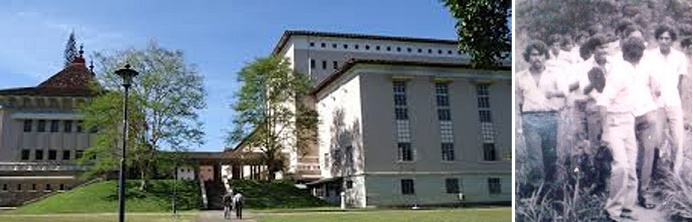
කම්කරු දිනය පැවති 1987 මැයි 1දා නාරහේන්පිට අභයාරාමයේදී පොලිසිය වෙඩි තැබීමෙන් දෙදෙනෙකු මරණයට පත්වූ අතර ඉන් එක් අයෙකු වූයේ ශ්‍රී ජයවර්ධනපුර සරසවියේ ව්‍යාවහාරික විද්‍යා පීඨයේ තෙ‍වන වසරේ සිසු පානදුර පදිංචි කිත්සිරි ‍මෙවන් රණවකය. මෙම ඝාතනයන්ට විරෝධය දක්වමින් රටපුරා සරසවි සිසුහු මැයි 3 සහ 4 විවිධ ප්‍රදේශවල උද්ඝෝෂණ, දැනුවත් කිරීම් සහ ප්‍රචාරක කටයුතු සිදුකල අතර මෙහිදී ආරක්ෂක අංශ මගින් එම දින දෙක තුළදී සිසුන් 73දෙනෙකු අත්අඩංගුවට ගෙන තිබිණි. ඔවුන් අතර පේරාදෙණිය 52ක්ද ‍කොළඹ 12ද ජයවර්ධනපුර 9ක්ද වශයෙන් සරසවි සිසුන් පොලිසි මගින් රඳවාගෙන සිටි අතර එම සිසුන් නිදහස්කර ගැනීමට 1987 මැයි 5දා සරසවි ඇඳුරන් 21ක් සහ කාර්ය මණ්ඩල නිලධාරින් 13ක් ප්‍රාණඇපකරුවන් කරගනිමින් එම ශිෂ්‍ය ශිෂ්‍යාවන් 73 නිදහස් කරගැනීම සඳහා මහා මෙහෙයුමක් ක්‍රියාවට නැගිණි. මෙසේ සිසුන් රඳවාගෙන සිටි පොලිසිය වූයේ කොහුවල, මිරිහාන, කුරුදුවත්ත, මරදාන, බොරැල්ල, මහනුවර, ගලගෙදර සහ හඟුරන්කෙත ඇතුළු පොලිසි කිහිපයකය.

Dharman Wickremaratneධර්මන් වික්‍රමරත්න විසිනි.

ඉරානයේ ටෙහෙරානයේ ඇමරිකානු මහ කොමසාරිස් කාර්යාලය 1979 නොවැම්බර් 4වැනිදා අත්පත්කර ගනිමින් ඇමරිකානුවන් 52ක් දින 444ක් ප්‍රාණඇපකරුවන් ලෙස රඳවා ගනිමින් ඉස්ලාම්වාදී ශිෂ්‍යයින් දියත්කල මෙහෙයුම සහ පේරාදෙණිය උපකුලපති ලෙස්ලි පණ්ඩිතරත්න විසින් පත්කල ශ්‍රේෂ්ඨාධිකරණ විනිසුරු නිශ්ශංක උදලාගම කොමිසමේ තීරණයක් අනුව මහා ශිෂ්‍ය සභා‍වේ ක්‍රියාකාරික‍යින් 6 දෙනෙකුගේ ශිෂ්‍යභාවය 1983 මුල්භාගයේදී සදාකාලිකව අහෝසි කිරීමට එරෙහිව සිසුන් පේරාදෙණිය සනාතන මන්දිරය අසල සිසුන් 7ක් කල මාරාන්තික උපවාසය මෙයට පෙර ජාත්‍යන්තර සහ ජාතික මට්ටමින් සිදුවූ නිදසුන් ඔවුනට පූර්වාදර්ශයක් වූවාට සැකයක් නැත.

dharman10041602පේරාදෙණිය උපකුලපති ලෙස්ලි පණ්ඩිතරත්න විසින් පත්කල ශ්‍රේෂ්ධාධිකරණ විනිසුරු නිශ්ශංක උදලාගම කොමිසමේ තීරණයක් අනුව මහා ශිෂ්‍ය සභා‍වේ ක්‍රියාකාරික‍යින් 7 දෙනෙකුගේ ශිෂ්‍යභාවය 1983 සදාකාලිකව අහෝසි කිරීමට එරෙහිව සිසුන් පේරාදෙණිය සනාතන මන්දිරය අසල මාරාන්තික උපවාසය කළ කොන්ක්‍රීට් වහල(වමේ), උපවාසයේ 5වන දින සිසුන් විසින් ප්‍රාණඇපකරුවෙකු බවට පත්කරගත් විද්‍යා පීඨාධිපති මහාචාර්ය ඩයස් විද්‍යා පීඨයෙන් සනාතන මන්දිරයට ගෙන එන අවස්ථාව(දකුණේ). ඡායාරූපය හෙන්රි වර්ණකුලසූරිය ගෙනි

පේරාදෙණිය සරසවියේ 1983 ආචාර්යව‍රයෙක් ප්‍රාණඇපකරුවෙක් කිරීමේ සිද්ධියට පාදක වනුයේ 1982 පේරාදෙණිය ශිෂ්‍ය සභා නිලවරණයෙන් ජවිපෙ සමාජවාදී ශිෂ්‍ය සංගමය ජයගත් පසු උපකුලපති ලෙස්ලි පණ්ඩිතරත්න එජාප අනුබද්ධ සමවාදී ශිෂ්‍ය පෙරමුණට වක්‍රව සහාය දෙමින් ශිෂ්‍ය ක්‍රියාකාරිත්වය මැඩලීමට ගත් උත්සාහය වේ. නිලවරණයෙන් පසු ජයග්‍රාහි පෙළපාලියට එජාපයේ ශිෂ්‍ය ක්‍රියාකාරිකයින් විසින් පහර දෙන අතර උපකුලපති කැකිල්ලේ තීන්දුවක් දෙමින් ශිෂ්‍ය සභා සාමාජිකයින් 7කගේ ශිෂ්‍යභාවය අහෝසි කළේය. එයට එරෙහි ශිෂ්‍ය උද්ඝෝෂණයේදී ඒ පිළිබඳව සොයා බැලීමට නිශ්ශංක උදලාගම කොමිසම පත්කල අතර එහි නිර්දේශයක් අනුව 6දෙනෙකුගේ ශිෂ්‍යභාවය අහෝසි විය. එයට එරෙහිව සිසුන් විසින් 1983 මාරාන්තික උපවාසයක් එයට එරෙහිව සිදුකල අතර උපවාසයේ 5වන දින වැඩබලන උප කුලපති වශයෙන් කටයුතු කල විද්‍යා පීඨාධිපති මහාචාර්ය ඩයස් ප්‍රාණඇපකරුවෙකු ලෙස පත්කර ගනිමින් සිය ඉල්ලීම් ඉදිරිපත් කලහ.  ඉල්ලීම් දෙන බවට ලිඛිත පොරොන්දුවකින් පසු පැය 3කින් මහාචාර්ය ඩයස් නිදහස් කරගන්නා අතර සරසවිය වසා දැමේ. වසා දැමූ සරසවිය නැවත ඇරඹුවේ ලිඛිත පොරොන්දුව කඩකිරීමෙන් පමණක් නොව සිසුන් 117ක් පන්ති තහනමකටද ලක්කරමිනි. පසුව ලොව ප්‍රථම සරසවි පොලිසිය 1983 දෙසැම්බර් 27වැනිදා පේරාදෙණිය සරසවි භූමියේ ආණ්ඩුව මගින් ස්ථාපිතකල අතර එතෙක් නීත්‍යානුකූල පැවති ශිෂ්‍යසභාද තහනම් කරන ලදී. එහිදී ශිෂ්‍යභාවය අහෝසිවූ 6 දෙනාගෙන් ලලිත් විජේරත්න, ආනන්ද ඉඩමේගම, රංජිතම් ගුණරත්නම් පසුව ජවිපෙ පූර්ණකාලීන දේශපාලනය තෝරාගත්හ.  

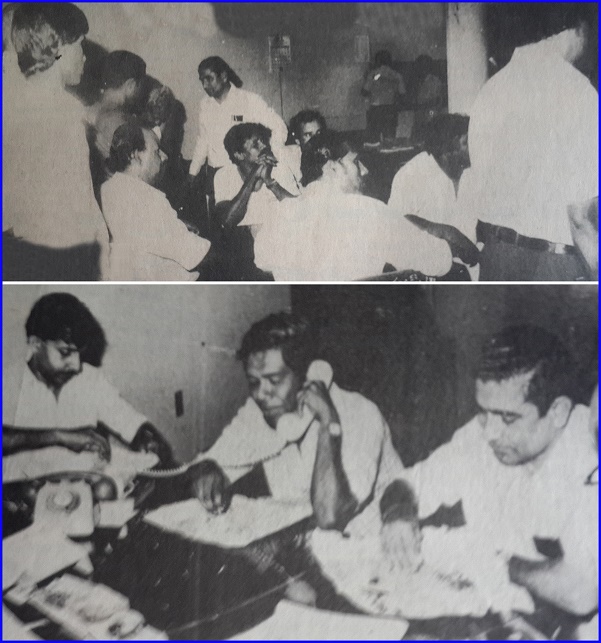
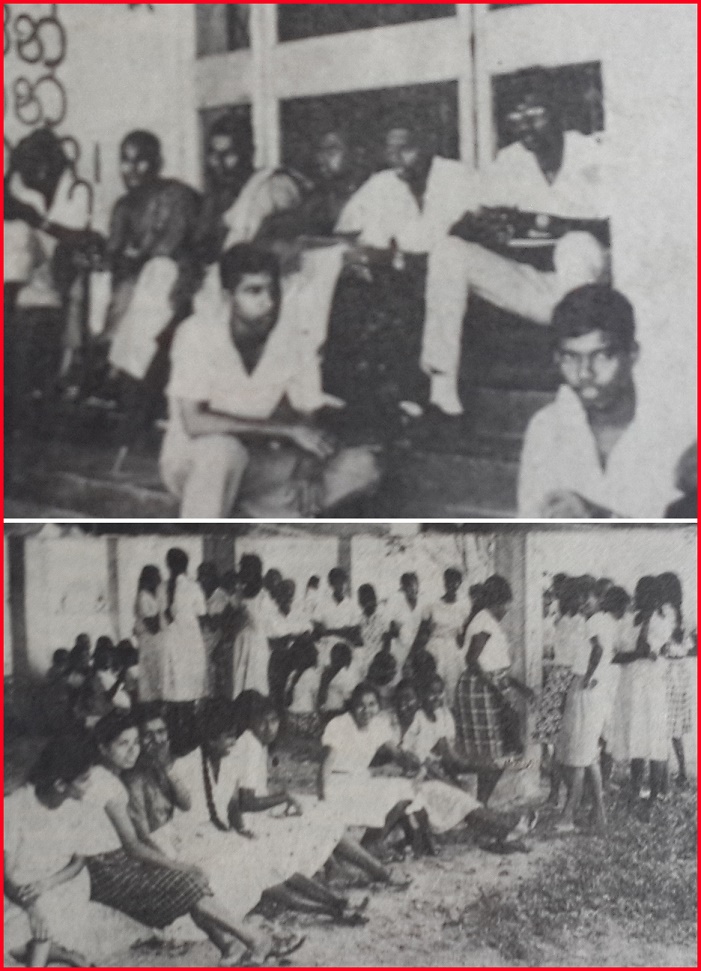
dharman10041603සිසුන්ගේ ප්‍රාණඇපකරුවන් බවට 1987 මැයි 5වැනිදා පත්වූ ජයවර්ධනපුර සරසවියේ ආචාර්යවරුන් 13 දෙනා සුමංගල ශාලාවේ කාමරයක පැය 14ක් සිරකරගෙන සිටි අවස්ථාව(ඉහළ), ප්‍රාණඇපකරුවන් බවට පත්වු සරසවි ඇදුරන් 3දෙනෙකු එදින රාත්‍රී බත් පාර්සල් ආහාරයට ගන්නා අවස්ථාව(පහළ). කොළඹ සහ ජ’පුර සරසවිවල මෙම සිද්ධීන්ද ලියුම්කරු එදින මාධ්‍යයට ආවරණය කළේය.

ජවිපෙ 2වැනි කැරැල්‍ලේදී 1987 මැයි 5වැනිදා ප්‍රාණඇපකරුවන් සේ සිසු අඩස්සියට ගත් ආචාර්යවරුන් බේරා ගැනීමට පොලිසිය සහ හමුදාව ඇතුළු ආරක්ෂක අංශ බලහත්කාරයෙන් සරසවි බිමට ඇතුල්වී ප්‍රාණඇපකරුවන් බේරාගෙන යනු ඇතැයි ඇතිවූ සැකය නිසා ජයවර්ධනපුර සහ කොළඹ සරසවි තුළ අදාල ස්ථානයන්ට අවතීරණ විය හැකි සියළු මාර්ග අවහිර කොට බාධක යොදා  සිය අණසකට ගැනීමට සිසුන් සමත්ව සිටි අතර ගේට්ටු වසා මුර දමාගෙන පිටස්තර කිසිවෙකුටත් ඇතුල්වීමට සහ එළියට යැමට ඉඩ නොදිණි. සෑම සරසවියකම එයට නායකත්වය දුන් සිසු කණ්ඩායම් පැමිණ තිබුණේ පිටස්තර සරසවි වලිනි. ඒ ඔවුන් එම සරසවියේම නම් අදාල ආචාර්යවරුන් හඳුනාගන්නා බැවිනි. එබැවින් සරසවි පාලකයින්ට ‘බණ්ඩක්කා න්‍යායෙන්’ ප්‍රශ්නවලින් මඟහැර යාමේ ඉඩ ප්‍රස්ථාද අඩුවන බව සිසුන්ගේ ආකල්පය විය.

ශ්‍රී ජයවර්ධනපුර විශ්ව විද්‍යාලයේ මෙසේ අත්අඩංගුවට ගෙන සුමංගල ශාලාවේ කාමරයක රඳවාගෙන සිටි සරසවි ආචාර්යවරුන් සහ සේවක මණ්ඩලයේ 17දෙනා අතර පහත සඳහන් අය විය. රාජ්‍ය පරිපාලන පීඨාධිපති එච්.ඒ. චාර්ල්ස් ප්‍රනාන්දු, පරිපාලන පීඨාධිපති ඒ. ඒකනායක, පුස්තකාලයාධිපති ඩබ්ලිව් බී. දොරකුඹුර, සත්ව විද්‍යා අංශයේ අධිපති මහාචාර්ය ඩබ්ලිව් ඊ. රත්නායක, භූගෝල විද්‍යා අංශයේ අධිපති මහාචාර්ය එම්. කරුණානායක, පාලි හා බෞද්ධ අධ්‍යයන අංශයේ අධිපති ආචාර්ය චන්ද්‍ර වික්‍රම ගමගේ, ආර්ථික විද්‍යා අංශයේ අධිපති එස්. එම්. සත්කුමාර, සමාජ විද්‍යා අංශයේ අධිපති එඩ්වින් ගනිහිගම, රාජ්‍ය පරිපාලන අංශයේ අධිපති චාල්ස් ප්‍රනාන්දු, ව්‍යාපාර පරිපාලන අංශයේ අධිපති ආනන්ද ගුණවර්ධන, ශිෂ්‍ය උපදේශක අබේරත්න බණ්ඩාර, ශිෂ්‍ය සහකාර ලේඛකාධිකාරි(ශිෂ්‍ය සුබසාධන) ඒ.කේ. රුවනි හේවරත්න, උප කුලපතිගේ පෞද්ගලික සහායක එස්. වී. සී නිලමේ හා ලිපිකාර සේවයේ ඩබ්ලිව් එම්. හේරත් බණ්ඩා ඇතුළු පිරිසකි. ජ’පුර සරසවියේ සිසුන් 9දෙනාගෙන් 8දෙනෙකු නිදහස් කිරීමෙන් පසු රඳවාගෙන සිටි ආචාර්යවරුන් නිදහස් වූයේ ඉන් පැය 14කට පසුවය.

dharman10041604

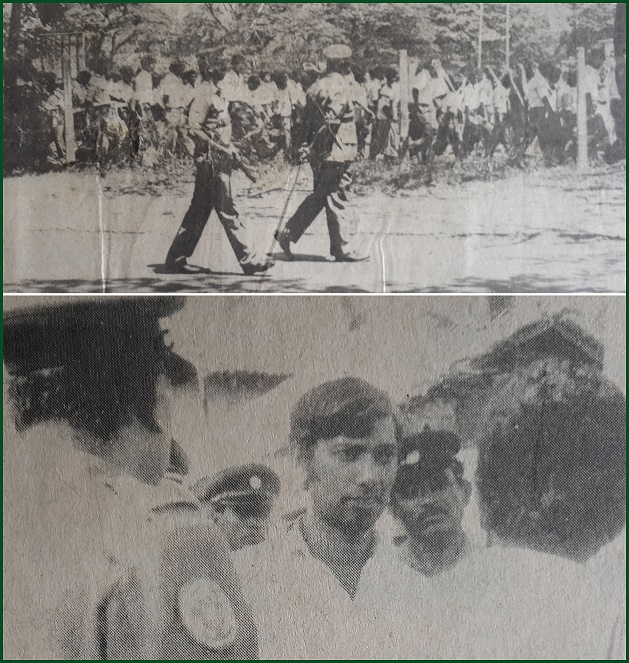
ප්‍රාණඇපකරුවන් බවට පත්වූ කොළඹ සරසවි ආචාර්යවරුන් බේරාගැනීම සඳහා පොලිස් විශේෂ කාර්ය බලකායේ 300ක පමණ පිරිසක් කොළඹ සරසවිය 1985 මැයි 5 වටකල අතර එම කඩාපැනීමේ ප්‍රයත්නයට එරෙහිව සිසුහු සරසවි පිටිය වටා විරෝධය පළකරන අන්දම(ඉහළ) සහ සරසවි බිමට ඇතුළුවන සහ පිටවූවන් පරික්ෂා කරන පොලිස් නිලධාරින්(පහළ)

කොළඹ සරසවියේදී ප්‍රාණඇපකරුවන් සේ රඳවා ගත් ආචාර්වරුන් සංඛ්‍යාව 7කි. ඒ අතර ජේෂ්ඨ ශිෂ්‍ය අනුශාසක අනුර වික්‍රමසිංහ, නීති පීඨයේ වැඩබලන පීඨාධිපතිනිය ඇතුළු කිහිප දෙනෙක් විය. ඔවුහු සිසුන් විසින් ප්‍රාණඇපකරුවන් සේ රඳවා තැබුවේ විද්‍යා පීඨයේ ඉහළ මාලයේ කාමරයක් තුළය. අත්අඩංගුවට ගත් සිසුන් නිදහස් කරන ලෙස ඉල්ලා 1987 මැයි 5 උදෑසන උද්ඝෝෂණයක්ද පැවති අතර පසුව අන්තරේ මෙහෙයවීමෙන් සහ රොනී කුමාරගේ නායකත්වයෙන් සරසවි ආචාර්යවරුන් බලහත්කාරයෙන් රැගෙන ගොස් සිරකරන ලදී. මෙහිදී පැය කිහිපයකට පසු පොලිස් විශේෂ කාර්ය බලකායේ 300ක පමණ පිරිසක් කොළඹ සරසවි භූමිය වටලා එක්වර කඩාවැදී ප්‍රහාරයක් මගින් ඔවුන් බේරා ගැනිමට සැලසුම් සකස් කලහ. එහෙත් සිය ජීවිත ආරක්ෂාව සඳහා එසේ නොකරන්නැයි අත්අඩංගුවට ගත් ආචාර්යවරු කොළඹ සරසවි උපකුලපති මහාචාර්ය ස්ටැන්ලි විජේසුන්දරට දුරකථනයෙන් දැනුම් දෙනු ලැබීය. ආරක්ෂක අංශ මගින් අත්අඩංගුවට ගෙන සිටි කොළඹ සරසවියේ සිසුන් 12දෙනා නිදහස් කිරීමෙන් පසු රඳවාගෙන සිටි ආචාර්යවරුන් නිදහස් වූයේ ඉන් පැය 8කට පසුවය.

මහාචාර්ය ස්ටැන්ලි විජේසුන්දර උපකුලපතිවරයා වශයෙන් සිටියදී ජවිපෙ කැරළිකරුවන් විසින් 1989 මාර්තු 8වැනිදා පෙරවරු 10.10ට කොළඹ සරසවි කොලේජ් හවුස්හි සිය කාර්යාලය තුළදී  වෙඩිතබා ඝාතනයකර තිබිණි. අධ්‍යාපන ධවල පත්‍රිකාව 1981 ආරම්භ කල අවස්ථාවේදී විශ්ව විද්‍යාල ප්‍රතිපාදන කොමිසමේ සභාපතිවරයාද ස්ටැන්ලි වි‍ජේසුන්දර වූ අතර ඒ පිළිබඳව අන්තරේ සමඟ කල සාකච්ඡාවකදී ‍කේන්ති ගොස් ශාන්ත බණ්ඩාරද වරෙක එළියට දමන ලදී. එදා 1981 ධවල පත්‍රිකාව පිළිබදව එම සාකච්ඡාවට අන්තරේ වෙනුවෙන් මහාචාර්ය ස්ටැන්ලි විජේසුන්දර සමඟ සාකච්ඡා කළේ ජ’පුර එච්.බී. හේරත් සහ පියසේන සමරතුංග, පේරාදෙණියේ ඩී.එම්.ආනන්ද සහ ධර්මවර්ධන මුණසිංහ, කොළඹ වයි.පී. සිරිසේන, රුහුණේ රණසිරි, කැළණිය වීරසිංහ සහ පොල්ගොල්ලේ ධර්මදාසය.

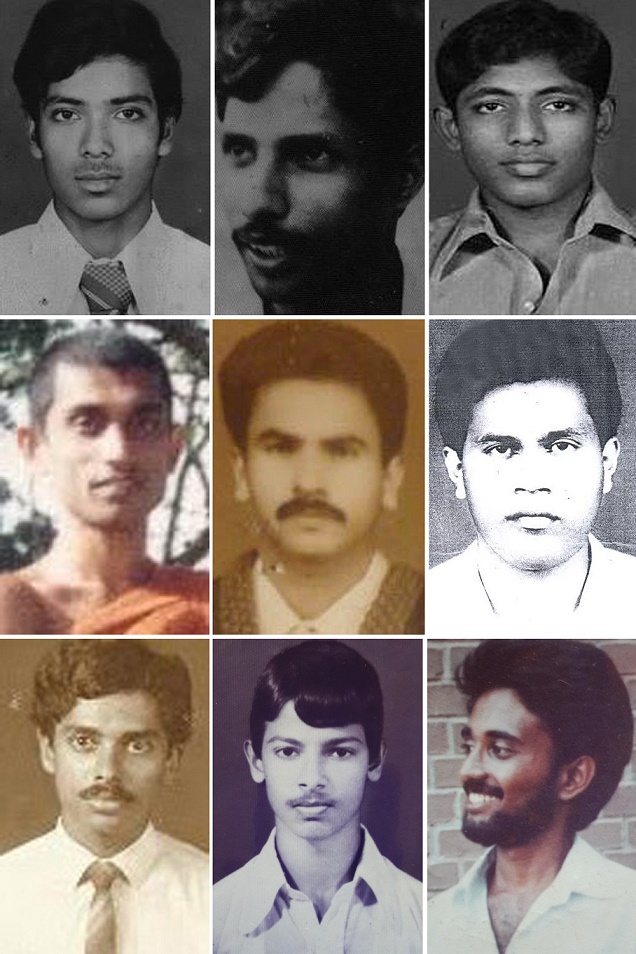
dharman10041605සරසවි ඇඳුරන් 21ක් සහ කාර්ය මණ්ඩල නිලධාරින් 13ක් ප්‍රාණඇපකරුවන් කර ගනිමින් ශිෂ්‍ය ශිෂ්‍යාවන් 67ක් නිදහස් කරගත් 1987 මැයි 05 සැලසුම ක්‍රියාවට නැගූ අන්තරේ කැඳවුම්කරු කැලණි සරසවියේ බණ්ඩාගේ මච්චාගම සේනාරත්න, ජ’පුර සරසවියේ ආචාර්යවරුන් ප්‍රාණඇපකරුවන්සේ රඳවාගත් මෙහෙයුමේ නායකයාවූ මොරටු සරසවියේ ඉංජිනේරු සිසු නිමල් බාලසූරිය, කොළඹ සරසවියේ ආචාර්යවරුන් ප්‍රාණඇපකරුවන්සේ රඳවාගත් මෙහෙයුමේ නායකයාවූ කැළණි සරසවියේ 83/84 කණ්ඩායමේ විද්‍යා සිසු රොනී කුමාර, පේරාදෙණි සරසවියේ අත්අඩංගුවට ගෙන ඇති සිසුන් සාකච්ඡා මගින් නිදහස්කර ගැනීමට නායකත්වය දුන් එම සරසවියේ ශ්‍රාස්ත්‍ර පීඨයේ තෙවන වසරේ අතුරලියේ රතන හිමි සහ පශු වෛද්‍ය පීඨයේ එම්.පී. කීර්ති කුමාර, කොළඹ සරසවි සිසුන් නිදහස්කර ගැනීමට පුරෝගාමී සේවයක් කල විද්‍යා පීඨයේ හේමන්ත අජිත් චන්ද්‍රසිරි සහ වානිජ පීඨ‍යේ සමන් කපුගමආරච්චි, ජයවර්ධනපුර සරසවියේ සිසුන් නිදහස් කරගැනීමට පුරෝගාමී සේවයක් කල ජ’පුර සරසවියේ කළමනාකරණ හා වාණිජ විද්‍යා පීඨයේ ප්‍රියංකර විජේමුණි සහ උපුල් කිත්සිරි නොහොත් ලෙනෝරා(ඉහළ වමේ සිට)

පේරාදෙණිය සරසවියේ සිසුන් 52 දෙනෙකු අත්අඩංගුවට ගත් අතර සිසුන් 1,500ක පමණ පිරිසක් විරෝධය  පලකරමින් ඔවුන් නිදහස් කරන ලෙසට ඉල්ලා සනාතන මන්දිරියේ ලේඛාධිකාරිවරයා ඇතුළු කාර්ය මණ්ඩලයේ 9 දෙනෙක්ද ඇදුරන් තිදෙනෙක්ද සිරකර ගත්හ. පැය 6කට ආසන්න කාලයක් ඔවුහු සිසු අඩස්සියේ සිටියදී නුවර සහ ඒ අවට පොලිසිවල අත්අඩංගුවට ගෙන සිටි සිසුන් 52දෙනාගෙන් 47 දෙනෙකු නිදහස් කරන ලදී. එම වකවානුව වන විට ජවිපෙ සමාජවාදී ශිෂ්‍ය සංගමයට අයත් සිසූහු පේරාදෙණිය සරසවියේ සිටියේ රහසිගත අන්දමින්ය. එයට හේතුව පල්ලකැලේ හමුදා කඳවුරට 1987 අප්‍රේල් 15වැනිදා ආයුධ ලබාගැනීමට ජවිපෙ කල මෙහෙයුමේදී පේරාදෙණිය සිසුන් රැසක් සම්බන්ධ වී සිටීමය. ඔවුන් අත්අඩංගුවට ගැනීමට රහස් පොලිස් නිලධාරින් සරසවි‍යේ අවට රැදී සිටියහ. පසු කාලයේදී පල්ලකැලේ ප්‍රහාරය සම්බන්ධයෙන් පේරාදෙණියේ ඉංජිනේරු සිසු ප්‍රේමකුමාර ගුණරත්නම්, වෛද්‍ය සිසුන් වන සිසිර කුමාර සහ බී කොස්තා ඇතුළු කිහිප දෙනෙක්ම අත්අඩංගුවට ගත් අතර ඔවුහු පසුව 1988 දෙසැම්බර් 12 මැගසින් බන්ධනාගාරයෙන් තවත් ජවිපෙ සාමාජිකයින් 221ක් මුදවා ගැනිමටද ජවිපෙ සමත් විය.

එවකට පේරාදෙණිය සරසවියේ උපකුලපති වශයෙන් කටයුතු කල එම්.පී පානබොක්කේ විසිනි 1987 මැයි 5 දින විශ්ව විද්‍යාල සනාතන ගොඩනැගිල්ලට බලහත්කාරයෙන් සහ නීති විරෝධී ලෙස ඇතුළුවී එහි කාර්යාලවල තම රාජකාරි කටයුතු වල නිරතවී සිටි නිලධාරින්ට සහ කාර්ය මණ්ඩලයේ අනිකුත් සේවකයින්ට අඩන්තේට්ටම් කරමින් කාර්යාලය තුල  අඩස්සියේ තබාගැනීම, රාජකාරි කටයුතු වලට බාධා කිරීම, නීතිවිරෝධී ඉල්ලීම් කිරීම, විශ්ව විද්‍යාලයේ සාමය, ආරක්ෂාව සහ ක්‍රියාකාරිත්වය කඩා කප්පල්වන සේ ක්‍රියා කිරීම සහ විශ්ව විද්‍යාලයේ විනය නීති උල්ලංඝනය වන පරිදි නොයෙකුත් ක්‍රියාවන්හි යෙදී ඇති බව පවසමින් සිසුන් 17දෙනෙකුගේ ශිෂ්‍යභාවය තාවකාලිකව අත්හිටවු බවට 1987 මැයි 21වැනිදා ලිඛිතව දැනුම් දෙන ලදී. එහෙත් පසුව පේරාදෙණිය ශිෂ්‍ය ක්‍රියාකාරි කමිටුවේ උද්ඝෝෂණයක් මත පාලනාධිකාරිය විසින් ඒකපාර්ශිකව සමාවදීමක් සිදුකර එම ශිෂ්‍යභාවයන් අත්හිටුවීම ඉවත්කර ගන්නා ලදී.

dharman10041606ඇඳුරන් 21 ප්‍රාණඇපකරුවන් කරගත් සිද්ධිය වන විට විශ්ව විද්‍යාල ප්‍රතිපාදන කොමිසමේ සභාපති වශයෙන් සිටි මහාචාර්ය ස්ටැන්ලි කල්පගේ, කොළඹ සරසවියේ උපකුලපතිව සිටි මහාචාර්ය ස්ටැන්ලි විජේසුන්දර, ජ’පුර උපකුලපතිව සිටි ආචාර්ය කරුණාසේන කොඩිතුවක්කු, සරසවි ආචාර්ය සමිති සම්මේලනයේ සභාපතිව සිටි විවෘත විශ්ව විද්‍යාලයේ මහාචාර්ය එච්. ශ්‍රියානන්ද, එහි ලේකම්ව සිටි කොළඹ සරසවියේ ආචාර්ය නලින්ද සිල්වා, සිසුන් විසින් කොළඹ සරසවියේ ප්‍රාණඇපකරුවන් ලෙස පත්කරගත් ‍එම සරසවියේ ආචාර්යවරුන් 5 දෙනා අතර සිටි ජේෂ්ඨ ශිෂ්‍ය අනුශාසක ආචාර්ය අනුර වික්‍රමසිංහ(ඉහළ වමේ සිට)

සිසු අඩස්සියෙන් නිදහස්වූ ‍කොළඹ, ජයවර්ධනපුර සහ පේරාදෙණිය සරසවි වල ආචාර්යවරු 1987 මැයි 7 කියා සිටියේ සුදුසු වටපිටාවක් ඇතිවී සිසුන් තමන්ගෙන් සමාව ගන්නා තුරු දේශන නොපවත්වන බවත්, ශිෂ්‍ය උපදේශක හෝ ශිෂ්‍ය කටයුතු වලට අදාළ සියළු තනතුරුවලින් ඉල්ලා අස්වීමටත් වහාම තීරණය කල බවය. සරසවි භූමිවලට අනවසර පුද්ගලයින් ඇතුළුවීම වැලැක්වීමට උපකුලපතිවරුන් පියවර ගතයුතු බවද ඔවුහු කියා සිටියහ. සරසවි ආචාර්ය සමිති සම්මේලනය කියා සිටියේ ශිෂ්‍යයින් විසින් ආචාර්යවරුන් හට මෙවැනි නොමිනිස් සැලකිලි දැක්වීම කෙසේවත් අනුමත ‍කල නොහැකි බවය. එවකට ආචාර්ය සමිති සම්මේලනයේ සභාපතිවරයා ඔස්මන් ජයරත්නවූ අතර ප්‍රධාන ලේකම්වරයා වූයේ කොළඹ සරසවි ගණිත අංශයේ ප්‍රධානියාවූ ආචාර්ය නලින්ද සිල්වාය. රජය ප්‍රකාශ කළේ එවැනි ප්‍රචණ්ඩ බවට වාර්තා ලැබී ඇති සිසුන් 1,600කට පමණ මහපොල ශිෂ්‍යාධාර අහෝසි කිරීමට කටයුතු කරන බවය.

විශ්ව විද්‍යාල ප්‍රතිපාදන කොමිසමේ එවකට සභාපති මහාචාර්ය ස්ටැන්ලි කල්පගේ උත්ගතවී ඇති තත්ත්වයට විසදුමක් අපේක්ෂාවෙන් රජය සමඟ සාකච්ඡා පැවැත්වීමේ  ප්‍රතිඵලයක් ලෙස ආරක්ෂක අංශ මගින් අත්අඩංගුවට ගෙන සිටි සිසුන් 73දෙනාගෙන් සිසුන් 67 දෙනෙකු එදිනම රාත්‍රී වන විට නිදහස්කර තිබිණි. ඉතිරි සිසුන් 06 දෙනා චෝදනා විමර්ෂණය කිරීමෙන් අනතුරුව තීරණයක් දෙන බව දැනුම් දුන්නේය. මෙම සිදුවීමෙන් මාස 7කට පසු මහාචාර්ය කල්පගේ ශ්‍රී ලංකා විද්‍යාභිවර්ධන සංගම‍යේ විශේෂ සැසියක් 1987 දෙසැම්බර් 12වැනිදා කොළඹ සරසවි නව කලාගාරයේ පැවති අවස්ථාවේදී ප්‍රධාන අමුත්තෙකු වශයෙන් සහභාගිවූ අතර එය නිමවීමෙන් පසු කොළඹ සරසවි සිසුන් ප්‍රධාන ශාලාවට කඩා වැදී ඔහුව පැය 2කට අධික කාලයක් රඳවා තබා ගන්නා ලදී. එහිදී එම දිනයන්හි පොලිස් අත්අඩංගුවට ගෙන සිටි කලා පීඨයේ සිසුන් 6 දෙනෙකු නිදහස් කරන තෙක් එම විභාගය කල් දැමීමට විශ්ව විද්‍යාල ප්‍රතිපාදන කොමිසමේ සභාපති කල්පගේ එකඟවිය.  පසුව 1989දී මහාචාර්ය කල්පගේ ඉන්දියාවේ ශ්‍රී ලංකා තානාපති වශයෙන් පත්ව ගිය අතර 1991දී එක්සත් ජාතින්ගේ සංවිධානයේ ශ්‍රී ලංකාවේ නිත්‍ය ‍නියෝජිතයා වශයෙන්ද කටයුතු කල අතර 2000දි මිය ගියේය.

dharman10041607ඇඳුරන් සිරකර සිටි සුමංගල ශාලාවේ දොරටුව අභියස විරෝධතා වැකි ලියමින් සිටින ජ’පුර සිසුන් පිරිසක්(ඉහළ) අත්අඩංගුවට ගත් සිසුන් නිදහස් කරන ලෙස ඉල්ලමින් රැස්ව සිටින සරසවි සිසුවියන් පිරිසක් 1987 මැයි 05වැනිදා(පහළ)

ආචාර්යවරුන් ප්‍රාණඇපකරුවන් සේ රඳවා ගැනීමේ සැලසුම ක්‍රියාවට නැගූවේ  අන්තර් විශ්ව විද්‍යාල ශිෂ්‍ය බල මණ්ඩලය(අන්තරේ) කැඳවුම්කරු වශයෙන් 1987 ජුනි සිට 1988 පෙබරවාරි දක්වා කටයුතුකල කැලණි සරසවියේ මානව ශ්‍රාස්ත්‍ර පීඨයේ 83/84 කණ්ඩායමේ බණ්ඩාගේ මච්චාගම සේනාරත්නය. අනුරාධපුරයේ මැකිච්චාවල සිප්පුකුලම ග්‍රාමයේ උපන් සේනාරත්න හබරණදී 1989 ජුලි මස අත්අඩංගුවට ගත් අතර ඔහුගේ සිරුර 1989 අගෝස්තු මස මොරටුව ගඟේ දක්නට ලැබුණු බව කියති. ඔහුගේ පෙම්වතිය වූයේ ශ්‍රාස්ත්‍ර පීඨයේ මරදන්කඩවල වලගම්බාහු පදිංචි චන්දිය.

ජයවර්ධනපුර සරසවියේ ආචාර්යවරුන් ප්‍රාණඇපකරුවන්සේ රඳවාගත් මෙහෙයුමේ නායකයා වූයේ මොරටු සරසවියේ ඉංජිනේරු පීඨයේ දෙවන වසරේ සිසුවෙකුවූ නිමල් බාලසූරියය. පසුකලෙක අන්තරේ කැඳවුම්කරු ලෙසද 1988 මාර්තු 01දා ඔහු පත්විය. බෝම්බයක් රැගෙන අදාල ඉලක්කයක් පෙන්වීමට තවත් කැරළිකරුවෙකු සමඟ යෑමේදී එය පිපිරීමෙන් 1988 මැයි 8 වැල්ලවත්ත කුරේ මාවතේදී එම ස්ථානයේදිම ජිවිතක්ෂයට පත්වූ බාලසූරියගේ අවසන් කටයුතු බොරැල්ල සුසාන භූමියේදී 1988 මැයි 10 සිදු කරන ලදී. කොළඹ සරසවියේ ආචාර්යවරුන් ප්‍රාණඇපකරුවන්සේ රඳවාගත් මෙහෙයුමේ නායකයාවූ කැළණි සරසවියේ 83/84 කණ්ඩායමේ විද්‍යා සිසු රොනී කුමාර කැලණිය විද්‍යා පිඨයේ 83/84 කණ්ඩායමේ සාමාජිකයෙකි. මාරවිල කටුනේරියේදී 1962 නොවැම්බර් 17වැනිදා උපන් රොනී සිංහල කතෝලිකයෙකුවු අතර ගරාජ් හිමියෙකුවූ පියා වර්ණකුලසූරියගේ ජෝෂප් ප්‍රනාන්දුය. ගුරුවරියකවූ මවවන පල්ලියරාලලාගේ දෝන රීටා මියගි‍යේ 2014දීය. රොනීට නැගණියක් සහ සොයුරන් තිදෙනෙකුවූ අතර වැඩිමහලාවූ විරාජ් ශ්‍රී ජයවර්ධනපුර සරසවියේ උපාධිධාරියෙකි. රොනීගේ සමීපතම සරසවි සගයන් අතර අශෝක හදගම, සේන නානායක්කාර ඇතුළු කිහිප දෙනෙක්මවූ බව මතකය. රොනී කුමාර මියගියේ කටුනායක ගුවන් හමුදා කඳවුරින් අවි පැහැර ගැනීමට 1988 අප්‍රේල් 22වැනිදා ජවිපෙ කල මෙහෙයුමේදී ගරිල්ලා භටයෙකු ලෙසය.

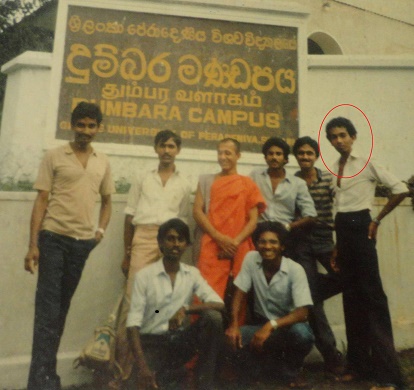
dharman10041608දුම්බර මණ්ඩපයේ සිසුන්ද පේරාදෙණිය සිසු උද්ඝෝෂණයට සහභාගිකරවා ගැනීම සඳහා ශිෂ්‍ය ක්‍රියාකාරි කමිටුව වෙනුවෙන් එහි ගොස් සාකච්ඡාවක නිරතවූ තිදෙනෙක් දුම්බර මණ්ඩපයේ සිසු නායකයින් සමඟ. රතු රවුමකින් දක්වා ඇත්තේ පේරාදේණිය පශු වෛද්‍ය පීඨයේ 83/84 කණ්ඩායමේ අම්පාර ඉඟිනියාගල ලක්ෂ්මන් රංජිත් අබේරත්න(ටොමා) වන අතර ඔහු 1987 අප්‍රේල් 15 පල්ලකැලේ හමුදා කඳවුරට කඩාවැදී අවි පැහැරගැනීම සම්බන්ධයෙන් පසුව අත්අඩංගුවට ගෙන කොළඹ මැගසින් බන්ධනාගාරයෙන් 1988 දෙසැම්බර් 12 වැනිදා ජවිපෙන් මුදවාගත් රැඳවියන් 224දෙනා අතර විය. ලක්ෂ්මන් 1989 මැයි 21 කුලියාපිටියේදී ඇත්අඩංගුවට ගත් අතර පසුව ඝාතනයට පත්විය.

පේරාදෙණි සරසවියේ අත්අඩංගුවට ගෙන ඇති සිසුන් සාකච්ඡා මගින් නිදහස්කර ගැනීමට නායකත්වය දුන්නේ එම සරසවියේ ශ්‍රාස්ත්‍ර පීඨයේ තෙවන වසරේ අතුරලියේ රතන හිමි, පශු වෛද්‍ය පීඨයේ එම්.පී. කීර්ති කුමාර සහ කෘෂි පීඨයේ නන්දන ගුණතිලක ඇතුළු පිරිසකි. කොළඹ සරසවි සිසුන් නිදහස්කර ගැනීමට පුරෝගාමී සේවයක් කල විද්‍යා පීඨයේ හේමන්ත අජිත් චන්ද්‍රසිරි  1989 ඔක්තෝබර් 13දා මිනුවන්ගොඩ නිවසින් පැහැරගෙන ගොස් කොළඹ සරසවි නීති පීඨ වධකාගාරයේදී බෙල්ල කපා මරාදැමූයේද වානිජ පීඨ‍යේ සමන් කපුගමආරච්චි 1989 ඔක්තෝබර් 19දා වෙඩිතබා පිහියෙන් ඇන ඝාතනය කළේද කොළඹ සරසවි‍යේ ස්වාධින ශිෂ්‍ය සංගමයේ නායක කේ.එල්. ධර්මසිරි ඇතුළු පිරිසක් විසිනි.

ජයවර්ධනපුර සරසවියේ සිසුන් නිදහස් කරගැනීමට පුරෝගාමී සේවයක් කලේ ජ’පුර සරසවියේ කළමනාකරණ සහ වාණිජ විද්‍යා පීඨයේ 84/85 කණ්ඩායමේ එන්.බී. උපුල් කිත්සිරි නානායක්කාර නොහොත් ලෙනෝරා සහ එම පීඨයේම 84/85 කණ්ඩායමේ මතුගම පදිංචි ප්‍රියංකර විජේමුණිය. මහරගමදී 1989 නොවැම්බර් 2 පැහැරගෙන ගිය ප්‍රියංකර පසුව ඝාතනයට ලක්විය. ජවිපෙ සමාජවාදී ශිෂ්‍ය සංගමයේ 1989 ඔක්තෝබර් සිට 1990 ජනවාරි දක්වා ප්‍රධාන ලේකම් තනතුර දැරූ අනුරාධපුර මධ්‍ය මහා විද්‍යාලයෙන් අධ්‍යාපනය ලත් උපුල් කිත්සිරි රාජගිරිය නිවසකදී 1990 ජනවාරි අවසානයේදී අත්අඩංගුවට ගත් අතර පසුව නීති පීඨ වධකාගාරය, තිඹිරිගස්යායේ මෙහෙයුම් මධ්‍යස්ථානය, හෙන්ද්‍රි ප්‍රේදිරිස් උද්‍යානයේ පිහිටි වධ කඳවුරටද ගෙනයනු ලැබීමෙන් පසු 1990 පෙබරවාරි 16වැනිදා ඝාතනයට ලක්විය.

අන්තර් විශ්ව විද්‍යාල ශිෂ්‍ය බල මණ්ඩලයේ කැඳවුම්කරු බී. සේනාරත්න 1987 මැයි 9වැනිදා නිවේදනයක් නිකුත් කරමින් කියා සිටියේ සරසවි කිහිපයක ඇදුරන් එකම තැනකට එකතුකරන ලද්දේ පරිපාලනයට බලපෑම් කිරීමට මිස ආචාර්යවරු ප්‍රාණඇපකරුවන් ලෙස රඳවා ගැනීමට නොවන බවය. හඑදා ගත් එම තීරණය අදාළ සරසවිවල ශිෂ්‍ය ක්‍රියාකාරි කමිටුවල පෞද්ගලික තීරණයක් බවය.

අනේක විධි  ක්‍රියාකාරකම් හා දේශපාලන නොමේරුකම්ද, සීමාන්තික හැසිරීම්ද දිස්කළ මේ දේශපාලන භූමිකා අවසානයේ කෙලවර වූයේ විනාශයෙන්ය. ඒ උපායමාර්ගයන්හි නොගැලපීම් හේතුවෙනි. එබැවින් ජීවිතවලින් ගෙවීමට සිදුවූ වන්දියද අපමණය. බලය ලබාගැනීමට ප්‍රචණ්ඩභාවය යෙදිය යුතුය යන නිගමනය මර්ධනයේ බීජයවන අතර දිගුකාලීන සංස්කෘතියෙන් හික්මුණු සමාජයක් ප්‍රචණ්ඩභාවයට එකඟ නොවේ. ඉතිහාසයේ සිදුවූයේ එයයි. සංවිධානය සහ නිවැරදි එල්ලයේ මැදිහත්වීමේ භූමිකාවක් නොමැතිව අරගල සම්ප්‍රදායන් ගැන හැදෑරීම පමණක් ප්‍රායෝගික නොවන බව එය පසක් කළේය.(ජවිපෙ 2වැනි කැරළි සමයවූ 1986 සිට 1990 දක්වා පළවන මෙම ලිපි මාලාව ලබාගැනීම පිළිබද විස්තර පහත ලිපිනයට ඔබගේ ලිපිනය යොමු කිරීමෙන් ලබාගත හැකිය. ධර්මන් වික්‍රමරත්න, තැපෙ 26, ශ්‍රී ජයවර්ධනපුර. දුරකථනය: 011-5234384 විද්‍යුත් තැපෑල: ejournalists@gmail.com)

Prat-Fallen Ranil rescued by China

April 9th, 2016

By : A.A.M.Nizam – MATARA

During the run-up to the Presidential Election in 2015 and in the post election period at the instigation of the Western war mongers and the hegemonic India the United National Party ruffians including Western puppet Ranil Wickremasinghe blatantly and profusely ridiculed and demonized the Chinese funded projects in Sri Lanka and said that the projects are being built with substandard and outdated material, below international standards, technically inferior,  over prized, environmentally disastrous, and they are being built by offering attractive commissions to certain politicians.  They also said that Sri Lanka will soon become a Chinese colony and the Chinese will surpass the Sri Lankan population in certain areas.

They also claimed that a chain of western countries, India and the world’s prominent investors are waiting in a queue to come to Sri Lanka to assist in rebuilding the country soon after the election and after their imminent victory.  .

Immediately after the election they suspended all the Chinese funded projects including the prestigious and iconic 1.4 Billion US$ Port City Project claiming that building of this project will not only be environmentally disastrous for Sri Lanka but to the whole Indian Ocean region as well. This was undoubtedly a meticulous Indian initiated move to contain China in the region.

After the election the western governments as usual showered only their verbal hosannas on the new government saying that democracy has been restored in the country and the region and they will assist the new government to consolidate democracy and promote what they called reconciliation and human rights indirectly implying that Sri Lank all these years was an inhuman barbaric country.

Immediately after establishing the new government Prime Minister Ranil Wickremasighe presented many economic proposals and held several Economic Forums inviting the notorious George Soros and several other characters of his caliber to address these economic Forums and make investment proposals.  Former Malaysian Prime Minister Dr. Mahathir Mohamad, President Vladimir Putin and China have banned the Hungarian born Soros from visiting their countries and condemned him as responsible for economic downfall of many countries including Britain.  Another boasting made by Prime Minister Ranil Wickremasinghe and his office was that for the first time in the history of Sri Lanka the Prime Minister had been invited to attend the Davos economic summit in Switzerland.  He addressed the economists and investors in a special meeting in Davos but there was no one there to give ear to his investment offers.

Economic analysts point out that Sri Lanka’s all economic ills emerged with the illegal bond issue made by the Governor of the Central Bank Singaporean Arjun Mahendran to his Son-in-Law’s company, the steep fall of the rupee value against the dollar, haphazard issue of sovereign bonds and the steep collapse of the stock market due to massive withdrawals of funds by foreign investors, and taking short term loans at high interest rates from the hegemonic India and taking further Indian loans to repay the previous loans..

Meanwhile the Finance Minister Ravi Karunanayake, who has made numerous uneconomical moves, said that an investor from Belgium would be investing one billion USD in Sri Lanka at 2% interest to shore up our sagging foreign currency reserves. This investment too never materialized forcing Sri Lanka to seek for a relief package from the IMF.

Some other economic analysts point out that the Balance of Payment difficulties the country is facing are due to several factors and the large trade deficit of about 8 billion US dollars is a core reason. They say that it has been caused by the large fiscal deficits that increased imports, the fall in exports owing to global conditions, and a flight in capital owing to domestic and international reasons and the slowdown of workers’ remittances owing to the falling of international oil prices. They also state that Sri Lanka is finding it extremely difficult to raise fresh funds from the world market after international ratings firms Fitch and Standard & Poor’s reduced the country’s credit rating in February and March.

It was under these circumstances, and with no other alternative in sight, the prat-fallen Prime Minister Ranil Wickremasinghe was forced to lead a high level ministerial delegation to China begging forgiveness for his past mistakes and utterances against China and bowing down at the heels of Chinese leaders in order to get Sri Lanka rescued economically.

Despite what was said and done by the UNP ruffians including Ranil Wickremasinghe about them Chinese leaders were magnanimous in forgiving them and making generous offers which would have even surprised Ranil Wickremasinghe. This is the second time that China has come forward to rescue a UNP government, the first being during the 1953 rice crisis, despite their stern anti-Chinese outlook.  If it happened to be a western government they would have snubbed Ranil Wickremasinghe and urged him to dissolve his government and seek a fresh mandate.

The generous facilities granted by China include

  • A grant of 500 Million Yuan which is equivalent to Rs. 11180 Million and amounted to Rs. 559 for each and every Sri Lankan.
  • Seven agreements including ETCA-type deal on investment  
  • Fresh agreement for Chinese companies to present proposals on investment including new highways rail and integrated infrastructure projects.
  • LNG power plant, oil refinery, dockyard, 20 new roads, Mattala, tourism development among projects    
  • Joint task force to be established to oversee engagement, and
  • An MoU with China Development Bank

Chinese President Xi Jinping who met Ranil Wickremasimnghe on Friday has said China is willing to work with Sri Lanka to consolidate traditional friendship, expand reciprocal cooperation, and push forward strategic partnership of cooperation to a new high. He has said the two countries should take the Belt and Road Initiative as an opportunity to deepen cooperation in terms of trade, infrastructure, industrial parks, manufacturing, production capacity, technology, and ocean and China will positively consider helping Sri Lanka build health projects and is ready for more cooperation in areas such as tourism, education and culture.

In response Ranil Wickremasinghe has said that Sri Lanka will actively participate in the Belt and Road Initiative, strengthen cooperation with China in port and airport construction, trade, investment, transportation and technology, and increase cultural and people-to-people exchanges.

However it is not yet clear that Sri Lanka was able to clear the US$ 125 Million penalty payment being demanded by the Chinese company handling the port city construction to compensate the losses they have incurred for stalling the project.

The reactionary United National Party should at least learn from this visit that it is not the West and hegemonic India that they worship that genuinely help countries like ours but it is China and the other socialist countries including Russia.

POWER SYSTEMS – KNOWLEDGE VACUUM IN SRILANKA

April 9th, 2016

By Kanthar Balanathan

DipEE (UK), GradCert (Rel Eng.-Monash), DipBus&Admin (Finance-Massey), CEng. MIEE, MIE (Aust), CPEng (Ret)

Former Director and Specialist Power Systems Engineer (Australia)

In the month of March 2016, two transformer explosions struck at Biyagama and Kotugoda CEB Grid sub-stations. Media reports state that the German specialists, after investigations revealed the explosion was in the diverter switch, which is the On Load Tap Changer (OLTC). The load throw off (LTO) of the capacity of this Biyagama transformer also cause stability issues and tripped the generators at the Lakvijaya (Norocholai, Puttalam) power plant. Capacity of the generators at Lakvijaya Power Station (LPS) is 3 x 300MW. Transformer at Biyagama is rated for 220/132/33kV. Media information state that feeder lines tripped after the transformer caught fire at Biyagama.

A report by Maheesha Mudugamuwa in the island state that the power station trip was caused by a lightning strike. http://www.island.lk/index.php?page_cat=article-details&page=article-details&code_title=141040.

This statement cannot be true. May be the first incident of trip. During the period when this disaster occurred at about 2.15 p.m. there was no lightning or rain. The environment too was normal.  Indeed, there was no rain at all in the region. Ref: http://lankaenews.com/news/1203/en

Another transformer explosion at Kotugoda caught fire similar to the explosion at the Biyagama Grid Sub-station. Both transformers are similar single phase auto-transformers. It could be a Type Fault” on these type of transformers. Type: Takaoka Autotransformer (1983) 132//33kV (secondary), 200/3, 250/3, 60/3 MVA, YNa0d1, ONAN/ONAF with 13 taps on both. There are three of this type one on each of the phase. Are these transformers made in Germany or Japan?

  1. Possible cause: Diverter switch may have contained excessive amount of combustible gases.
  2. The contacts of the tap changer may have been pitted causing generation of sparks while moving from one tap to the other.
  3. Oil may have had exceeded levels of moisture.
  4. Oil condition may have been as sludge, brown oil.
  5. May be a Type Fault”.
  6. What about the Buchholz relay in the diverter switch. Did it operate to trip?
  7. What about the Buchholz relay for the Transformer? Did it operate?
  8. Analysis should be carried out on identifying what relays tripped.

Root cause of failure therefore, has to be generation of sparks in the diverter switch, subject to excessive level of combustible gases. Primary cause of failure is nothing other than, lack of condition monitoring, and maintenance practice. Speculating about sabotage in the media, is an irresponsible statement, and kind of pass the monkey in a way.

Tripping of feeders:

It was observed from photographs, smokes were released in high volumes, due to the explosion.

It is possible that the smoke clouds, if concentrated under the power lines could ionise and trip on earth fault. Reason being dielectric breakdown of the air as a result of Carbon soots/ionisation. This could be verified from the operated relays. If E/F relays has operated on lines then it should be investigated. (Take note, the air was dry and no rainfall at the time of line trip)

  • The author of this paper has experience on 132kV lines trip due to lack of wayleaves clearance, and bush fire.
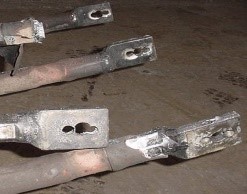
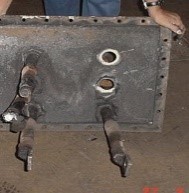
  • [An example of an explosion of the 6.6 kV terminal box of a 20 MVA transformer.
kanther01 kanther02 kanther03


The bolt holes of the lug is self-explanatory. The engineer who approved the connection had not thought of the risk of the connection. This was prior to me joining the 6 x 280 MW thermal station. The terminals were tightened without locknuts. When 6.6 kV, 900 HP Pulveriser SC motor was started, this explosion ripped open the terminal cover, cut the oil line and caught fire. Cause: The terminals have become loose, and the starting current of the motor caused the cables to move and initiate sparks, ionise the chamber, flashover, and explode (L-E, L-L, 3 phase short). Root cause of failure: Improper lug connection becoming loose with time.  The survey cycle was placed at 6 years for major and 3 years for minor. Transformer survived but had to replace the cables. Relays tripped: E/F, Diff, O/C. Author carried out the investigation and the committee accepted the analysis and conclusion.]

  • g. a 275 MVA transformer failed and caught fire as a result of partial discharges in the EHV bushings and was on fire for 3 days in New Zealand.
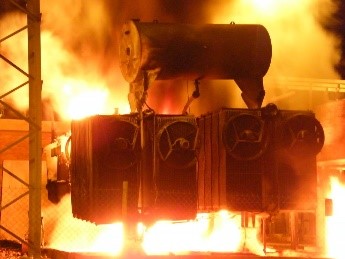
  • A 400 kV transformer on fire at ESKOM

kanther04

Chief Engineer of Biyagama Grid sub had already requested action sometimes back. Quote: The Chief Engineer, who was in charge of the transformer at the Biyagama Sub-Station, has reportedly informed the Ceylon Electricity Board (CEB) several times that it needed to be repaired, but no steps had been taken to heed his advice. It is also learnt that the government has decided to hold an inquiry into why the General Manager of the CEB had not taken any action regarding the transformer, though he was informed about the need to do so”. Ref: http://lankalightnews.blogspot.com.au/2016/03/biyagama-ce-warned-ceb-often.html

It is beyond doubt that the transformers were beyond operable condition, and non-electrical people should refrain from making statements about the failures. The Chief Engineer is in a better position to give accounts of the failure and the pre-failure condition of the transformers.

This sought of act is not new to SriLanka: The boss is always right, and engineers and managers at every level are controlled by the politicians, who do not understand the difference between DC and AC. The Public Relations Officer, (PRO), if one available at the CEB, should release information on failure, subject to approval by the CEB management. The Chairman of CEB, Mr. Anura Wijepala, is a qualified competent electrical engineer, and it is sure that his hands may have been tight, controlled by the politicians and non-technical administrators.

There may be several transformers which may not have been condition monitored and maintained. Condition of the oil should be checked every 6 to 12 months. Colour and flashover voltage.

  1. Diverter switch has to be checked and maintained regularly. Survey cycle should be fixed.
  2. Contacts get pitted due to frequent operation. Pitted contacts have to be replaced.
  3. Gas evolution such as Methane, Carbon Monoxide etc.
  4. DGA analysis should be carried out yearly.
  • It is possible that the pitted contacts would have generated sparks in the diverter switch, and the contents of combustibe gases would have ignited, thus creating the explosion OR
  • Winding failure due to cellulose Degree of Polymerisation (DP) becoming too low.

However, as the German engineers have concluded that the failure was due to diverter switch failure, the author assumes that the diverter switch have become beyond operable condition. It is possible to check in the SCADA whether the OLTC operated at the time of the explosion. I.e. change taps.

Standards and Limits

IEC 60599:1999 stipulates the following values for sealed Instrument transformers.

H2 CO CO2 CH4 C2H6 C2H4 C2H2
300 300 900 30 50 10 2


IEC 60599:1999 suggests the following causes for various levels of energy.

Fault Examples
Partial discharges Incomplete impregnation results in discharges in cavities plus high humidity in paper, oil super saturation or cavitation.
Discharges of low energy Sparking or arcing between bad connections, or shielding rings, adjacent disks or conductors of winding, broken brazing.
Discharges of high energy Flashover, tracking or arcing of high energy or with power follow-through
Thermal fault  <300C Overloading of transformers, restriction of oil flow
Thermal fault 300C< t <700C Defective contacts between bolted connections, connections from cable and draw rod of bushings
Thermal fault > 700C Large circulating currents in tank and core, Minor currents in tank walls created by high uncompensated magnetic field, shorting links in core laminations


Determination of Breakdown Voltage

AS1767.2.11999 States the following method for determining the break down voltage:

Apply voltage to the electrodes and uniformly increase voltage from zero at the rate of 2.0 kV S-1 ±0.2 kV S-1 until breakdown occurs. The breakdown voltage is the maximum voltage reached at the time the circuit is opened either automatically or manually. Carry out six breakdowns on the same cell filling allowing a pause of at least 2 minutes after each breakdown before re-application of voltage. Check that no gas bubbles are present within the electrode gap”

A breakdown voltage of 30 kV (gap of 2.5mm, ±0.05mm) may be acceptable and normal value of Shell Diala M is >70kV.

Lakvijaya (Norocholai) Power Station

The power station has 3 x 300MW turbo-alternator units driven by steam turbine and fuelled by pulverised coal.

The generators should have been tested for 50%-100% Load Throw Off at the time of commissioning. Generally a resistor bank of 50 MW is installed at the step up station to be used for load throw checks. May be this was not tested.

Power System Stabiliser

Power systems stabiliser (PSS) is a control system that is installed with the AVR to improve stability of the generators. PSS is a supplementary excitation controller used to damp generator electro-mechanical oscillations in order to protect the shaft line and stabilise the grid.

The basic types of tests usually performed. Ref: http://www.geenergyconsulting.com/practice-area/global-power-projects/power-system-stabilizers

  1. Step test in AVR reference (base load – without PSS).
    2. Gain margin test to determine the PSS gain to be used.
    3. Step test in AVR reference (base load – with PSS).

Optional additional testing for new design units or per customer requirements are:

  1. AVR uncompensated transfer function.
    2. PSS transfer function

Present day thermal units have digital AVR + PSS installed on large units to improve power systems stability.

About the author:

The author joined the then DGEU in December 1965 as a Foreman Apprentice, and on completion was posted to Inginiyagala power station as a shift officer. Resigned in Sept. 1967 and proceeded to UK to further studies, and returned with a job to work for Ceylon Cement at KKS, and rose to Works Engineer (Elect). Left SL in Feb 1977 and since then has worked on sub-transmission line construction and has over 30 years’ experience in large turbogenerators, GT, CC plant, and heavy electrical equipment. Have worked in UK, Nigeria, Zimbabwe, NZ and Australia. Could reach on email: pengsol@bigpond.net.au. Retired after a position of Director/Specialist Power Systems Engineer with Power Engineering Solutions Pty Ltd. Currently a freelance journalist.


Violent Vellahlas despised and oppressed the Tamils

April 9th, 2016

H. L. D. Mahindapala

Hendri Zwaardecoon, the Dutch Commander of Jaffna, and R. Sunderalingam, Superintendent of Police, Jaffna, lived and worked in Jaffna overseeing the Tamil society, its security and all its law-and-order issues. Though they lived and worked in two different worlds  – separated by around 300 years – they faced the identical crisis that threatened the peace and security of Jaffna : the casteist politics of the violent Vellahlas. Both officials were fighting for the restoration of human dignity and equality denied to the Tamils by the Vellahlas. Both fought for the rights of the oppressed Tamils, and for the removal of historical injustices and imbalances caused by the entrenched forces of oppressive Vellahlas. And both had to face the violent politics of the Vellahlas – the most powerful force within the overarching power of the ruling state,  in colonial and post-colonial times.

It is this overdeterminig force that was holding Jaffna back. Tradition-bound Jaffna was the last enclave of feudalism. It was the comfort zone of the Vellahlas and they resisted any change that would undermine or destabilise their safe haven. Besides, the Vellahla leadership found legitimacy essentially within that anachronistic socio-political framework. Their supremacy did not go beyond the borders of the peninsula. The Vadukoddai Resolution was to extend their powers beyond the borders of Jaffna.

The Vellahla leadership aimed at keeping both feet in feudalist past while dipping one foot occasionally in modernity, from time to time, to gain whatever advantages it could get from the advancing  ticks of time. The progressive march of modernity, however, was a serious threat to its supremacy. Colonial and post-colonial administrators of Jaffna discovered that the Vellahlas, the ruling caste, stood in the way of reforms needed to liberate Jaffna from outdated feudalism and fascist casteism. Since Vellahlas lived and thrived by casteism they found advancing modernity unbearably intrusive and undermining their casteist power and privileges. Consequently, reformists like Zwaardecoon and Sunderalingam had to face the hostile reactions of the aggressive Vellahlas fighting back to preserve their feudal fortress in Jaffna.

The Vellahlas, who controlled the commanding heights of socio-economic establishment of Jaffna, from land to temples, readily accepted the material goods and services that enhanced and reinforced their power and privileges. Officials records have established that schools, English-education, hospitals, roads and railways, irrigation works, and commanding positions in the state administration and private sectors went a long way to uplift the quality of life of the Vellahla elite in particular. But they resisted any move to change the systemic fundamentals of their feudal structures that would grant equality and dignity to the oppressed Tamils. The Vellahlas reacted sensitively and aggressively each time reforms were introduced to improve the living conditions of the oppressed Tamils. The administrators bent on reforming Jaffna society ran into the  impenetrable Chinese Wall of Vellahlaism that ringed round the peninsula.

Delving deep into the politics and power of Vellahlas, Neville Jayaweera,  Government Agent of Jaffna (1963 – 1966), reveals the hostile reaction of the Vellahlas resisting reforms in his memoir, Jaffna, Exorcising the Past and Holding the Vision, An autobiographical reflection  on the ethnic conflict. Armed with the Prevention of Social Disabilities Act of 1957 – the only bit of radical legislation available to alleviate the misery of the oppressed castes of Jaffna – he was hoping to mobilise the local forces to uplift the Tamils oppressed by the evil” forces of Vellahlaism. But he found that the 11 MPs, the key power-brokers of Jaffna which included S. J. V. Chelvanayakam, the great champion of the Tamils, were very backward in coming forward to implement the reformist laws. Reason: All MPs were Vellahlas! Even at the administrative level he could not go very far.  The 14 District Revenue Officers of Jaffna, who were administrative  officers  working under Jayaweera, too had poured cold water” over his plans for reform. No surprise there either because they too were all Vellahlas. (Ibid — p.142). The available evidence proves that from the time  of the Dutch to the time of Sunderalingam, and even later, the Vellahlas ganged up against the other castes to preserve their supremacy.  The Vellahlas were committed primarily to protect the interests of the Vellahlas and not  the Tamils who were oppressed by them from feudal times. It was against the political culture of the Vellahlas to let the non-Vellahlas be  their equal.

It was Zwaardecoon who first revealed this vicious casteist undercurrent that underlined the politics of his day and the days to come. He said: Changes are necessary so that many thousands of people should no longer suffer by the oppression of the Bellales, who are very proud and despise all  other castes.” (Memoirs of Zwaardecoon, 1697 – p. 27). This underscores the fact  that the Vellahlas were not only the dominant power of Jaffna but also the oppressors” of the non-Vellahla Tamils. Zwaardecoon identifies the two main characteristics of the proud Bellales” – 1) the despising of the  non-Vellahla Tamils as subhuman pariahs unfit for their superior company and 2) the permanent political culture of oppression that reduced the non-Vellahla Tamils to subhumans. Both go hand in hand to buttress each other. It was this oppressive culture of the Vellahlas that reigned supreme in Jaffna.

A typical symbol of this oppressive culture was Prof. C. Suntheralingam, Oxford Tripos in Mathematics, CCS, and a ex-Cabinet Minister. When he stood at the entrance of the Maviddipuram Temple, flailing his walking stick to keep the low-castes out of the inner courts reserved as a sacred space only for the elitist Vellahlas, he displayed his ingrained Vellahla fanaticism that turned Jaffna into a casteist gulag.  If a Tamil coming out of Oxford can despise a section of his own people as a subhuman race and keep them out of their inner circle because of an imagined sense of superiority, endorsed, of course, by the ruling religious ideology, then it means that 1) the evils of casteism had dug deep roots into the political culture  of Jaffna poisoning  the minds at the highest levels and 2) its inhuman consequences had stripped the basic rights of the ordinary Tamils to live as human beings with dignity. Denial of dignity and equality by the upper layers of Jaffna to its lower layers laid the foundations for the fascist culture that dehumanized Jaffna society. The Tamil victims of the insufferable indignities and inequalities tragically found no escape from the karmic hell created by their Vellahla masters.

There are, of course, castes and castes. The Sinhalese too had their own castes but scholarly consensus confirm that Buddhism had humanised the caste system in the south. Vellahlaism,  on the contrary, turned Saivite casteism into a fascist cult in which human beings were religiously deprived of their right to be a human being with even a modicum of dignity. The Vellahlas dehumanised the oppressed Tamils by reducing them into invisible zeroes that did not count in any respect, except to serve them as obedient servants. They despised their fellow-human beings to the point of denying them even the right to walk in daylight. They were kept out of sight to protect the purity of the Vellahla eyes. By forbidding the turumbas, a low-caste, to walk in daylight the Vellahlas cast the hapless Tamils into a darkness at noon. In poverty it is the loss of dignity that aches more than the stomach without bread. In oppression it is the despising and degrading of a fellow-human being that causes more pain than the crack of a whip. The obscenity that condemns the Vellahlas is their inhuman denial of the basic right of Tamils to drink even a drop of water from their ultra-superior wells. The vast majority of the non-Vellahlas lived in a Kafkesque nightmare outside the forbidden castle of the casteist  Vellahlas.

The casteist passions, political intransigence, the despising of non-Vellahla Tamils and the humiliating oppression of the non-Vellahlas coagulated into a mass of self-destructive extremism. The suffering of the many thousands of Tamils” was caused by this oppressive political culture. The contradictions and the tensions of the peninsular political culture arose from the intransigent refusal of the Vellahlas to face the necessary changes for the good of all. The diminishing and/or the elimination of the feudal powers of the Vellahlas was a sine qua non for the welfare of all Tamils. Therein lies the rub. The Vellahlas resisted any changes to their casteist status quo. Their politics focused  on increasing their share of power and reinforcing it and not on democratising power to let all Tamils share it as equals. Sir Ponnambalam Ramanathan and G. G. Ponnambalam opposed the granting of universal franchise to the low-castes because it would force the Vellahlas to share power with the low-castes. Though they were opposed to sharing power with their people their overall political agenda was based on demanding a disproportionate share of power from the centre to consolidate Vellahla power, both in the north and in the centre. They resisted democratisation and liberalisation that flowed from the Donoughmore Commission reforms fearing that it would undermine their supremacy.

The Vellahlas were obsessed with grabbing an undue share of power from the colonial and the post-colonial regimes to make sure that the  power to retain their supremacy does not  slip out of  their hands. It began with the first revolt of Moddely Tambi against the Dutch. It was a revolt to  oust the rival Madapalli caste from getting their share of power in the Dutch administration. Colonial politics and the post-colonial politics ran into direct confrontations with the Vellahlas mainly on this issue  of power  sharing. The Vellahlas fought back tooth and nail with the other castes even on issues of burying the dead or wearing jewellery because they viewed any infringements of their customs and laws as a threat to their  supremacy. Consequently, any proposed reforms to change or diminish entrenched Vellahla power resulted inevitably in a violent reaction from the Vellahlas. This explains why the other two Tamil-speaking communities were able to resolve their differences with the majority Sinhalese non-violently, within the democratic framework. Resolving issues non-violently with the Muslims and the estate Tamils was possible because they were focused on specific issues that were negotiable and not intransigent and insatiable issues like power sharing which were intractable and highly volatile.

Muslim and estate Tamils raised issues that granted them their place as citizens sharing a common territory and destiny within a democratic framework. They were not demanding territorial power bases to establish a separate state. The Vellahlas, on the other hand, were out to get a separate political enclave to maintain their feudal/casteist supremacy. The cries of 50-50”, federalism, Eelam were raised by the Vellahlas for the Vellahlas. It was, of course, disguised as a demand of the minorities opposed to discrimination by the majority Sinhalese. This anti-Sinhala-Buddhist story of discrimination” is another one of the tall tales that should be told in detail on another day. But separatism” developed as a primary force of the Vellahlas, by the Vellahlas, for the Vellahlas to maintain their exclusive and elitist identity, rising above the rest to consolidate their powers and privileges. Internally, the main thrust of peninsular politics of the Vellahlas was separatism” from the non-Vellahlas to maintain their casteist supremacy. Internal separatism” was an elitist cult to differentiate and maintain their  superiority. Casteist separatism, blessed by Saivism, gave the Vellahlas the upper hand in Jaffna.  It was the cruelty of the separatist / casteist regime, alienated from the average Tamils, that led to intermittent caste wars throughout the colonial and post-colonial periods. Vellahlas went to war with the other castes to  keep their purity, superiority, distance, and separateness.

Externally, separatism took a different complexion. When separatism transited into the national arena it dropped the regional casteist characteristics and took on the racist colouring (they disguised it as a minority vs. majority issue) to broaden the political base. Casteism divided communal entities into fragments. Racism united divided communities and pitted them against  the other communities. The ultimate expression of Vellahla racism was wrapped in the Vadukoddai Resolution. It was a declaration of war to divide the nation on racist lines. S. J. V. Chelvanayakam, the leader of Tamil racist separatism, took it  to the extreme when he refused to buy a house in Colombo fearing that the liberal / cosmopolitan culture of the south will pollute the Tamil purity of his children. In the absence of colonial  patronage and protection separatism became a protective cult in the  minds of the Vellahlas to maintain  their feudal powers and privileges.

Besides, the religious, legal, social and political ideologies and institutions were structured to keep the Vellahlas apart from the rest, as the superior rulers / masters / oppressors. The Vellahla political culture was based essentially on defining and maintaining their separateness to emphasise their superiority over the rest.  Political, cultural, religious, legal, social, ideological separateness was an essential requirement for the Vellahlas to retain their  supremacy. Vellahlaism threatened by invading forces of modernity could find  refuge only in carving out a separate political entity. Separatism was going to be the  Chinese Wall that would keep the invading  forces  out  of their so-called Tamil homeland”.  It was similar to the futile mud walls that Prabhakaran put up to halt the forces advancing from air, land and sea.

The tragedy in all this that the Vellahlas built the wall and  fled to greener pastures abroad leaving the Tamils they despised to fight their Vadukoddai War. They were hoping to ride into power on the backs of the low-caste poor fighting on their behalf. Their tactic was to remote control their Vadukoddai War from London, Toronto, Paris, Oslo and Melbourne etc. They were not willing to risk their lives. As usual the Vellahlas were getting their dirty work done by the non-Vellahlas. Were they really committed for a state of their own like ISIS fighting for their caliphate? The New York Times ( Sept. 27, 2015) reported that 30,000 Muslim expats from Western nations, from Australia to America, slipped into Syria and joined the ISIS forces with a self-sacrificing commitment to establish their caliphate. How many Tamils from  abroad left  their Chardonnay and Chivas Regal, their second  car, their universities and holiday homes to fight shoulder-to-shoulder with the local Tamil cadres in the Vanni?

Loud-mouths like Dr. Sam Pari, a middle-aged Tamil activist from Sydney, went to Vanni, signed up to be a card-carrying member of the LTTE, took some pictures with the LTTE high command and flew back to her air-conditioned home in New South Wales, Australia to boast about her contribution to the victims of the Sinhala-governments” – the primary source that was feeding and caring for the Tamils held as hostages by her Suriya Devan”. Pompous propagandists like Paki” Saravanamuttu was crying into his beer at the American Embassy cocktails, railing against the violations of the human rights by the Sinhala governments” without caring a hoot about the root causes of the suffering of the Tamils down the ages. The late Kumar Ponnambalam had thirteen Mercedes Benzes in Colombo and  he was complaining about the lack of transport for the Tamils in the Vanni.  His father, G. G. Ponnambalam, would not  let  a low-caste constituent from his electorate in Jaffna cross his gate in Colombo. He would chase them away telling them to go to his office in Jaffna, according to one of the lawyers in his chambers, Sunil Rodrigo, former Chairman of Lake House.

Their total contribution was to perpetuate the suffering of the Tamils which began  in feudal times and continued to this day by the Vellahla villains of Vadukoddai. They put all their political eggs in the one  basket of separatism which led them to Nandikadal. Clearly, over the years,  casteism, racism and separatism latched on to each other as the political agenda of the north transited from one phase to another. In incremental stages, casteism morphed into racism and racism morphed into separatism. Each stage was determined exclusively by the Vellahlas. Regional separatism of the Vellahlas on a caste basis and separatism on a national scale based on racism caused irreparable damage mainly to the Tamils who had to face the brunt of the purblind Vellahla leadership that led the Tamils all the way to Nandikadal.

Neither the Dutch nor the British records indicate that the Vellahlas had espoused the cause of the Tamils either as a bonded Hindu community or as a Tamil-speaking collective in Jaffna sharing common values. If they cried for Hinduism it was for  the Saivism of  the Vellahlas and not that of the Tamils who were kept out of Vellahla temples. If they cried for Tamil culture it meant the elitist cult of the Vellahlas, decked mainly with the imported products of S. India, without any creative or original input from a Jaffna-centric culture.

This explains why the concept of nationalism was late in coming to the Vellahlas. They were primarily a self-centred, insular, navel-gazing collective focused only on the immediate threats to their power and positions. In the colonial period, Tamil nationalism”, which could have united all layers of society in a common front against alien regimes, was never a part of the political agenda of the Vellahlas. Sir. Ponnambalam Ramanathan went to London to urge the colonial masters to legalise casteism. But he never pressed for Tamil nationalism”. It didn’t exist. The only ideology that moved them was Vellahlaism. In  fact, they were cosying up to the colonial masters to reinforce their  power to rule the other” Tamils. They were quite content with colonialism as long as they were allowed to rule the other” Tamils. Tamil nationalism” was a latter day construction manufactured by the Vellahlas to  cover-up the evils and failures of their casteist leadership.

As Vellahlaism began to lose its legitimacy they put on the Emperor’s clothes of nationalists” to make them look respectable and acceptable in the eyes of the world.  Tamil nationalism” was a fashionable disguise to market Vellahlaism as a new political force that would be acceptable to all layers of Jaffna divided on casteist lines. Nationalism was also the only alternative ideology to anachronistic Vellahlaism which had gone past its use-by-date. It was the most convenient political means of bringing the divided Tamil community under the Vellahla  umbrella. Tamil nationalism” helped to swell the numerical strength of Vellahla politics.

Apart from adopting the white verti of nationalists” they also posed as Gandhians to clean the image of oppressors. In the post-colonial period they went for optics in a big way to remake their image as nationalists” mainly to wipe out the five centuries of oppressive feudal memory.  As stated by Zwaardecoon, the Bellales” acted as the oppressors” of the non-Vellahla Tamils.  By and large, the history of Jaffna consisted of  the colonial rulers and the oppressed Tamils battling the Vellahlas. It was only when the Vellahlas feared that the post-colonial governments would be a threat to them, particularly without the  patronage of the colonial masters, that they took to Tamil nationalism. It also served as an alternative ideology to out dated Vellahlaism.

In short, the history of Jaffna has been a history of perennial caste struggles. If you take out the Vellahla mini-wars waged to keep the low-castes under their jackboots the history of Jaffna  would be as flat and dry as its landscape. The tragedy, however, is that it is the poor, despised and oppressed people  of Jaffna who had to pay with their blood, sweat and tears for all the wars launched by the Vellahlas, including the one that ended in Nandikadal.

Peddling linguistic division of Sri Lanka : India-TNA bogey

April 9th, 2016

Shenali D Waduge

Are we seeing a re-enactment of the bullying policies of India against Sri Lanka? The first instance was under UNP ruled JR Jayawardena when India forced Sri Lanka to sign the Indo-Lanka Accord in 1987, change its constitution to add a 13th amendment and introduced a federal system via the provincial councils. Under another UNP ruler the new constitution which the citizens of Sri Lanka never demanded is another Indian bogey now pushed through the opportunistic TNA and its racist politicos. India is divided along linguistic lines but does Sri Lanka also need to be? India is federal for a reason, does a small island nation need a copycat version of India. Does India planning to create a Telagana state scenario in Sri Lanka with the eventual goal to annex the North and slowly progress downward?

If the UN & international community agree to influence a division of a very small island nation along linguistic lines, it puts to the dustbin all the time wasted on promoting communication, unity people through diversity and blah blah blah…

India is now going overboard in its influence over Sri Lanka partly due to lack of leadership and political will or vision of our own leaders.

We should all know by now that there was never a nation called India until the British came and brought separate princely kingdoms and territories under one name – India. India became divided by language. Understandably so, India by size was 3.288 million km² and a present population of 1.252 billion

Andhra Pradesh was for Telugu’s, Gujarat was for Gujarati’s, Tamil Nadu for Tamils. When the Sikhs asked for a state for themselves they were denied.

There are said to be 225 district languages. Sri Lanka has just 2 with Sinhala being the majority language spoken by over 70% of the population. States were divided according to language in 1956 and Hindi became the national language. When that occurred many states opposed it in particular Tamil Nadu.

Dividing India by language was an idea peddled by colonized English educated Indians. Nevertheless years down the line the problems are clear. Regional differences have made people more divided. Where is the national integration when a man travelling from Tamil Nadu to Delhi is like a foreigner unable to even ask for a cup of tea in Hindi? People in one state cannot converse with people in another state. They don’t know the language. So where is this ‘unity in diversity’ that is being preached?

Language has become the politicians tool. We see how it is working well in Northern Provincial Council with Wigneswaran and coterie peddling the Tamil card at all times and spurring emotional and psychological encirclement of the Tamil masses. The same exists in Tamil Nadu. This is why Tamil Nadu politicians end up a nuisance and though the Indian Centre is well in control of the situation the Centre too enjoys using Tamil Nadu politicos to influence Sri Lanka. Language has become meddlesome in internal and external affairs.

Language is diminishing national feeling because politicians are able to focus the attention of the people in a particular state through language only to what concerns them and only them. What the nation needs is undermined. We see that in the NPC – the Tamils in the North know all film stars in Tamil Nadu but are clueless about anyone in Sri Lanka except their own racist NPC members. This gone unchecked will lead to political instability in future.

When an area under racist politicians ruling people by only the language factor is allowed to go too far, what eventually happens is conflicts and the demand for a separate state which is what we see Wigneswaran, Sambanthan and coterie now demanding openly. These politicians are ready to go all the way for they see benefit for themselves personally for they will become kings in a new terrain that will be declared ‘independent’. How they can run the state, whether they can sustain the state is never thought of not even how the people will suffer thereafter.  We can see how Kosovo independent state is now suffering without any means of exporting, without countries recognizing its independence, without jobs and the people today live in squalor or have had to turn to prostitution to make a living.

India as big as it is with over 200 languages had no choice but to divide it according to language. India is realizing the fault and the chaos that prevails. Not only is there no unity, people don’t connect, politicians of states have taken an upper hand even in the basic administration process problems have arisen because one state doesn’t know the language of the other. All this clearly shows how Sri Lanka erred in allowing 2 official language policy in Sri Lanka when the 3.8million minority Tamils and Muslims should have been told that every citizen must know basic Sinhala and Sinhala remains the official language. How much of paper is being wasted to print a simple circular in all 3 languages? The learning of Sinhala by all should have been a criteria in education for all school types. Had this been done the promotion of minority ethno-lingual racism would not have gone this far.

In India R S Sarkaria headed Commission in 1983 recommended that India follow a 3 language formula –regional language, Hindi and English at school level. English would remain official language but states that were divided according to language would instead be divided by administrative units and all political parties promoting linguism should be banned. This was certainly a good formula.

Andhra state became the first state divided on the basis of language into two Telugu-speaking states in 1952. Kurnool became its capital. In 1956 the Telugu-speaking areas in Hyderabad State merged with it and Andhra Pradesh was formed and capital became Hyderabad not Kurnool. In 1969 the state began to agitate for a separate Telangana in 1969 and separate Andhra in 1972. President’s Rule had to be declared no different to how Sri Lankan President Premadasa annulled the merged N-E province when Indian stooge Varatharaja Perumal declared unilateral declaration of independence.  Demands for a separate Telangana continued even in 2001 with demands getting more violent until eventually the Indian government had to give it and declare a Telagana state bifurcating the existing State of Andhra Pradeshvwith a population of 3.5million in 2014 (12th largest and 12th most populated State in India).
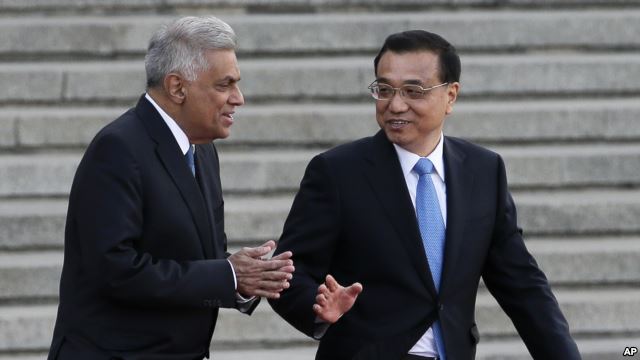
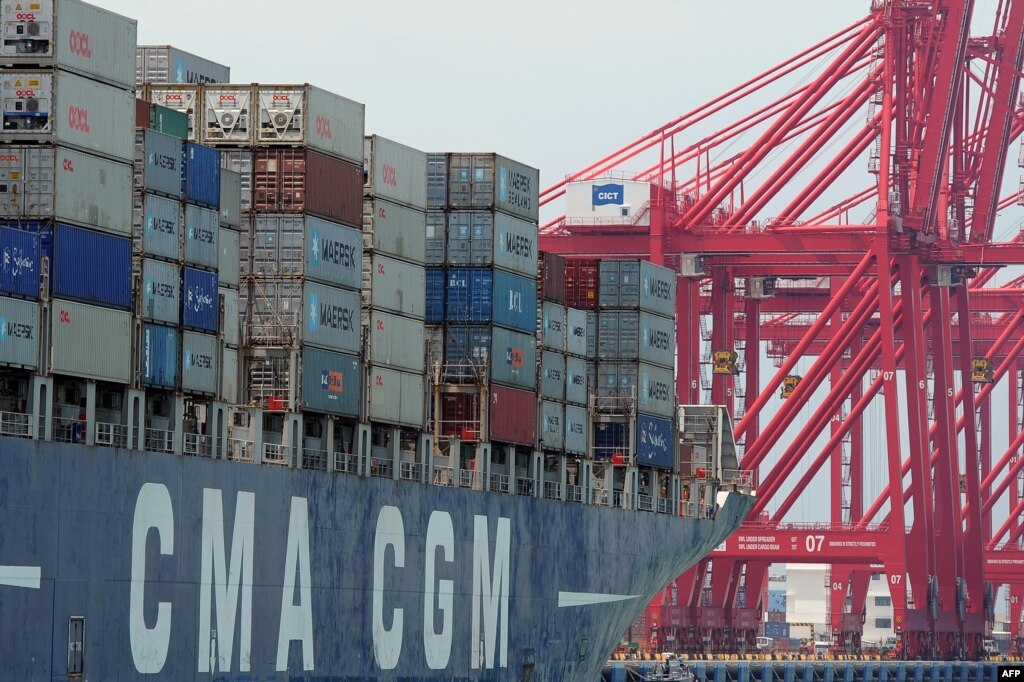
http://www.thehindu.com/news/national/andhra-pradesh/first-linguistic-state-gets-split/article6072332.ece

http://www.firstpost.com/politics/from-1948-to-2013-a-brief-history-of-the-telangana-movement-998093.html

http://www.historydiscussion.net/history-of-india/linguistic-reorganization-of-indian-states-after-independence/684

When India failed to achieve unity via linguistic divisions why is India promoting the same for Sri Lanka and why are Sri Lanka’s leaders illiterate to these realities?

Let’s take another example from the West.

http://www.theguardian.com/world/2010/may/09/belgium-flanders-wallonia-french-dutch

In Belgium in an area called Mechelen, all messages are in Dutch (language of Flanders) and no mention of Belgium. But there is no country called Flanders. Politicians like Wigneswaran exist in Belgiums’ parliament too ‘Long live free Flandes’ may Belgium die’ which resulted in Belgium going without a government for 6 months in 2007 causing resignations by the PM too. Like Wigneswaran and Sambanthan there are Mayors who say ‘I’m Flemish, not Belgium’ obviously there is no loyalty to the country called Belgium. Same story in Sri Lanka.

This is another example how language has become a fundamental flaw creating conflict-driven societies.

Putting things into perspective we need to first realize that terrorism in Sri Lanka was not home grown. It was created by India. Tamils became the scapegoat to be used by India that found it a piece of cake to raise Tamil Nadu Tamil sentiments for their brethren in Sri Lanka to kickstart an ideological emotional cum terror mechanism that lasted 30 years and lost many lives while also contributing to tweaking Sri Lanka’s Unitary Constitution to making it Quasi-Federal virtually identical to India. We have to face upto and acknowledge these realities. That terror is over does not necessarily mean the ideology has stopped. That ideology has or never had anything to do with LTTE or Tamil politicians in Sri Lanka except they have been ready surrogates to deliver what India aspires – historical goal to annex Sri Lanka to India. LTTE simply used homeland sing song which had been generating momentum from Tamil Nadu and pillow passed on to Sri Lanka’s racist Tamil politicians to take over thereafter.

The entire drama is choreographed by India.

The separate homeland song is birthed by India and birthed in India.

Notice how India sheepishly included homeland provision in the Indo-Lanka Accord, notice too how India worded the same accord to encircle North and East by using ‘Tamil speaking people’, notice too how Muslims have been frequently referred to as Tamil-Muslims. All these were with the sole intention of acquiring both areas and drilling a reason to acquire both areas therefore the ‘homeland’ myth became the perfect tool which Sri Lanka’s politicians were slow or illiterate to pick up or simply did not care to nullify politically.

India influenced the drafting of the cease fire agreement in 2002. India influenced the resolutions against Sri Lanka at the UN, India is using Tamil Nadu fishermen to ensure it has relevant issues to keep Sri Lanka choked. India has used locals and politicians to gain stakes in every sphere of polity – socially, culturally, economically and now even politically in Sri Lanka. Our politicians are clueless and unable to put the picture together to understand the ramifications and the dangers at stake.

Our Sinhale kings did not have legal degrees, doctorates, they were not educated but they managed to keep the small island nation from being taken over by India for thousands of years. In just over 68 years post-independent leaders have made a mess of the entire country virtually selling every nook and corner of the country for their own power and political survival.

Wigneswaran, Sambanthan and coterie are now putting the tigers out of the bag and not a single politician seems to bother about it to highlight the dangers to the nation. They are all more interested in getting cabinet portfolios, amassing wealth, commissions or returning to power. Even the media stands exposed for their silence. Apart from a handful no one is showing the larger picture for the people to realize the impending dangers especially when those tasked to draw the new constitution are either separatists or federalists who will do anything for their own personal gain.

colombotodayreport

Shenali D Waduge

Sri Lanka to use China’s Maritime Silk Road for infrastructure development

April 9th, 2016

Source: Xinhua

China and Sri Lanka on Saturday issued a joint statement to demonstrate their commitment to enhancing bilateral cooperation in various fields.

The statement was issued before Sri Lanka’s Prime Minister Ranil Wickremesinghe concluded his four-day official visit to China.

During the visit, Wickremesinghe called on Chinese President Xi Jinping, held talks with his Chinese counterpart Li Keqiang and met with Zhang Dejiang, chairman of the Standing Committee of the National People’s Congress.

The two sides shared the view that China and Sri Lanka relations have withstood the test of time and the two sides will work for an all-weather friendship, the statement said, stressing they will remain committed to their friendship to deepen their mutually beneficial cooperation and to extend mutual support in various regional and international fora.

The two sides reaffirmed their mutual support on issues of common interest. China supports Sri Lanka’s efforts in maintaining national unity, peace and reconciliation and in promoting economic development, said the statement, noting Sri Lanka reaffirmed its commitment to the one-China policy and support to the efforts by the Chinese government to safeguard its national unity.

The two sides stressed the importance of maintaining peace and stability in the South China Sea. Sri Lanka calls for the settlement of disputes and differences through constructive dialogue, consultation and cooperation by the parties concerned in accordance with international laws and practices, according to the statement, adding Sri Lanka also appreciates China’s efforts and readiness to promote such dialogue in order to maintain peace and security in the region.

On pragmatic cooperation, the statement said that Sri Lanka reiterated its active participation in the Belt and Road Initiative put forward by China. The two sides will use the development of a 21st-Century Maritime Silk Road as an opportunity to further advance infrastructure development, the China-Sri Lanka FTA negotiations, promote joint ventures and expand cooperation in the areas of economy, culture, science and technology, and people-to-people contacts.

Sri Lanka welcomes the positive engagement of Chinese enterprises in the country’s economic development, said the statement, stressing Sri Lanka also welcomes further investment from Chinese enterprises and will continue its cooperation with Chinese companies by creating a favorable investment climate and business environment for Chinese enterprises.

China will continue to encourage competitive Chinese companies to invest in Sri Lanka, to cooperate with a view to achieving mutual benefits, it noted, adding the Chinese side will encourage its financial institutions to provide financial support to the construction of infrastructure in Sri Lanka.

Both sides agreed to enhance their cooperation in the fields of transport, power and other infrastructure, industrial parks and manufacturing industry. Sri Lanka announced the resumption of work of the Colombo Port City Project and expressed the willingness to facilitate and support the implementation of this project and to cooperate with Chinese companies to promote other major projects.

Both sides agreed to hold the third round of the China-Sri Lanka Free Trade negotiations as early as possible and work toward concluding the negotiations at an early date with a view to enhancing the bilateral trade and economic cooperation, said the statement.

The Chinese side pledged to continue its assistance to Sri Lanka’s economic and social development, improvement of people’s livelihood, and on projects particularly in areas of public health services, agriculture and water conservancy, the statement noted.

The joint statement also covered bilateral coastal and marine cooperation, relations in the area of defense, technology and agriculture, tourism, people-to-people exchanges and cultural cooperation, as well as coordination and cooperation at the United Nations, the ASEAN Regional Forum and in other regional and multilateral fora.

During the visit, the two sides signed agreements covering areas of trade and investment, science and technology, health, judiciary and others, according to the statement.

Source: Xinhua


නව යුගයේ දේශපාලන කුලය

April 9th, 2016

තේජා ගොඩකන්දෙආරච්චි

මන්ත්‍රණ සභාව හෝ පාර්ලිමේන්තුව මෙරට පාලන තන්ත්‍රයට එකතු වන්නට පෙර 1815 දක්වා ශ්‍රී ලංකාවේ පාලනය තිබුනේ රජෙකු හෝ රජවරුන් කිහිප දෙනෙකුගේ පාලනය යටතේය. එදා සමාජ රටාව, රජ වාසල කේන්ද්‍ර කරගෙන එහි ඇති අවශ්‍යතාවන් අනුව කාර්යභාරයන් බෙදී යාම ඔස්සේ සැදී තිබිනි. ඒ ඒ කාර්යයන්හි නියැලි ජන කොටස්, තමන්ට පැවරුන කාර්යයන් අනුව කුල වලට බෙදී සිටි අතර අද මෙන් පාසල් අධ්‍යාපන ක්‍රමයක් නොවීය. කුල පරම්පරාව අනුව තමන්ට උරුම වන කාර්යභාරය ඊලඟ පරපුර භාරගත යුතු විය. ඒ වැඩවසම් යුගයයි.

වසරේ අප්‍රේල් 5 වනදාට යෙදෙන ජවිපෙ 71 අප්‍රේල් නැගිටීම අනුස්මරණ උත්සවයේදී,  71 කණ්ඩායමේ ප්‍රබල කොටස් කරුවකු වූ ලයනල් බෝපගේ මහතා එදා තම විප්ලවයේ අරමුණු පිලිබඳව පැහැදිලි කිරීමක් සිදු කලේය.

ඔවුන්ගේ මූලික අරමුණ වී තිබුනේ, සෑම මිනිසෙකුටම මිනිසෙකු ලෙස නිදහසේ ජීවත් විය හැකි සමාජ හා ආර්ථික සාධාරණත්වය රජයන සමාජ ක්‍රමයක් ගොඩ නැගීමයි. එහිදී ඔවුන්ගේ එක් ඉලක්කයක් වූයේ ‘ශ්‍රී ලාංකික සමාජයේ ධනේශ්වර පන්තියේ ආධිපත්‍යය සහ ධනේශ්වර ක්‍රමය තහවුරු කර ගැනීම සඳහා වැඩවසම් නශ්ඨාවශේෂ යොදා ගන්නා ආකාරය හෙලිදරව් කිරීම සහ ඒවා අහෝසි කර දැමීමේ ක්‍රියාවලියට දායක වීමය.

වැඩවසම් ක්‍රමය තුල වූ විවිධ ලක්ෂණ අතර රජ වාසල කේන්ද්‍ර කරගෙන බිහි වූ වෘත්තීන් පරපුරකින් ඊලඟ පරපුරට ගෙන යාමේ ලක්ෂණය අද වඩාත් පැහැදිලිව දක්නට ඇත්තේ දේශපාලන ක්ෂේත්‍රය තුලය. දේශපාලන පියවරු තම දරුවන් පුහුණු කරන්නේ මේ අරමුණ සිතේ දරාගෙනය. වරක් හිටපු අමාත්‍ය එස්. එම්. චන්ද්‍රසේන කලාවැව ආසනය තුල යම් සමාජ සත්කාරක කටයුත්තක නිරත වූ විට එවකට එහි සංවිධායකව සිටි අමාත්‍ය බර්ටි ප්‍රේමලාල් දිසානායක ඊට එරෙහි විය. ඒ ගැන විමසූ මාධ්‍යවේදීන්ට ඔහු පවසා තිබුනේ ‘ මගෙන් පස්සෙ කලාවැව ආසනය මගේ පුතාට. නැතුව වෙන කාටද?’ කියාය.

මෙසේ තම දේශපාලන බල ප්‍රදේශය, තම දරුවනට නිල නොවන ඔප්පුකින් පවරා දෙන්නට ක්‍රියා නොකරන දේශපාලකයන් ඇත්නම් ඒ ඉතා අතලොස්සකි. ඒ හැර රටේ දේශපාලන ව්‍යූහයන් තුල තම පවුලේ සාමාජිකයන් බලයට රැගෙන ඒම තුල මෙම දේශපාලන බල ප්‍රදේශ වඩාත් සවිමත්ව, පරවේණිගත නින්දගම් ලෙස තබා ගන්නා ආකාරය දෙස බලන විට එදා වැඩවසම් යුගයේ ලක්ෂණ ඉතා පැහැදිලිව විද්‍යමාන වේ. දැන් බලන විට එම කුල ක්‍රමය තුල ‘දේශපාලන කුලය’ පමණක් ඉතිරිව තිබෙන්නේ වෙනත් ඕනෑම වෘත්තියක් සඳහා යම් අධ්‍යාපන සුදුසුකම් සැපිරිය යුතු වුවද, දේශපාලනයට එවැන්නක් නුවුවමනා බැවිනි. සමහර විට පුතාට හෝ දුවට එවන් පලපුරුද්දක් නැතිවා වෙන්නත් පුලුවන. ‘අපේ ගෙදර මම පොඩිකාලෙ ඉඳන් දේශපාලන වටපිටාවක් තිබුනා.’ යි සමහරු පවසනු ඔබ අසා ඇත. ප්‍රශ්ණය වනුයේ ඒ ‘දේශපාලන වටපිටාවේ’ ප්‍රමිතියයි.

1948 දී නිදහස් ශ්‍රී ලංකාවේ ප්‍රථම අග්‍රාමාත්‍යවරයා වූ ඩී. එස්. සේනානායක මහතාගේ පුත් ඩඩ්ලි සේනානායක මහතා ද , ගිරුවාපත්තුවේ රාජපක්ෂ පවුල ද මෙසේ පරම්පරාගත දේශපාලනයේ අත්පොත් තැබූවන්ය.

අතීතයේ සිටි දේශපාලකයින් පිලිබඳ විවිධ තොරතුරු අපි අසා ඇත්තෙමු. අපේ වැඩිහිටියන් කියූ, අප විසින් කියවූ පුවත් වලට අනුව එකල දේශපාලකයින් දේශපාලනය කලේ තම දේපොල, වස්තු සම්පත් විකුණමිනි. 1956 දී බණ්ඩාරනායක මහතා තම මැතිවරණ ව්‍යාපාරය සඳහා වියදම් කරනු පිනිස රොස්මීඩ් පෙදෙසේ තම නිවස රු. ලක්ෂ අටකට උගස් කල බව පැවසේ. එනම් ඔහු වෙනුවෙන් වියදම් කරන්නට, මුදල් විසිකරන්නට පිරිසක් සිට නැත. යමෙකු තම මුදල් එසේ තවෙකෙකු වෙනුවෙන් වැය කරන්නේ නිකම් ඇඟේ අමාරුවට නොවේ. එහෙයින් එදා දේශපාලනයේ ස්වභාවය වටහා ගන්නට එයම ප්‍රමාණවත්ය. ඊලඟට ඔවුන්ගේ ගමන් බිමන් ගැන කිවහොත් 1977 දක්වා පාර්ලිමේන්තු මන්ත්‍රීවරුන්ට පොදු ප්‍රවාහන සේවාවල ගමනා ගමන අවසර පතක් දී තිබුනි.

අද මේවා කල හැකිදැයි යමෙකුට විමසිය හැක. නමුත් දේශපාලකයෙකුට පොදු ප්‍රවාහන සේවයක ගමන් කරන්නට නොහැකි වී නම් සමාජය ඒ තත්වයට වෙනස් වීමට බල පෑ හේතු සාධක මොනවාද යන්නත් සිතුව හොත් අපට කතාව යලි මුල සිට අරඹන්නට සිදුවනු ඇත. 1977 න් පසු ශ්‍රී ලාංකික දේශපාලන ක්ෂේත්‍රය ක්‍රම ක්‍රමයෙන් දූෂිතව ගිය අයුරු අප ඕනෑ තරම් කතාකර ඇත. එදා රොස්මිඩ් පෙදෙසේ නිවහන උගස් කර චන්දය කල බණ්ඩාරනායක මහතාගේ දියණිය ‘චෞර රැජිණ ‘ වීම ඊට හොඳම උදාහරණයයි.

එම දූෂිත පරපුරේ දූ පුතුන් ද මේ වන විට ක්‍රම ක්‍රමයෙන් දේශපාලනයට පිවිසෙමින් සිටිති. මුලින් මුලින් පටන් ගන්නේ තම පියවරුන්ගේ බලපුලුවන්කාර කමේ හයිය, සමාජ ශාලාවල හෝ වෙනත් සමාජ රාශි ගතවන තැන්වල පෙන්වීමෙනි. ඊලඟට තම පියවරු හම්බ කරගත් මුදලින් ඉතා පහසුවෙන් පිටරටකට ගොස් වසර කිහිපයක් ගතකර, යමක් ඉගෙන ගෙන හෝ නොගෙන ආපසු ශ්‍රී ලංකාවටම ගොඩ බසිති. ඊලඟට පියාගේ ආශීර්වාදය ඇතිව මේ දූෂිත දේශපාලන පිටියට බසින්නේ මේ තමාගේ උරුමයයි යන පණිවුඩය සමාජයට දෙමිනි. වැඩිහිටියන් ධනය උපයාගන්නට කල හරියවත් කිරීමට ඔවුන්ට කරදරයක් නැත. ඒ අනුව තම හෘද සාක්ෂිය පිලිබඳ කුමන බියක්ද? මේ තමාගේ උරුමයයි. ඒ තමයි ක්‍රමය. ඔවුන් කල යුත්තේ තම පියවරු නැවතුන තැන සිට ඉදිරියට යාම පමණි.

දැන් තිබෙන දේශපාලන න්‍යායයන් ගැන සිතුවහොත්, රජය පාර්ශ්වයේ සිටින අයෙකුගෙන් තමන් අතින් සිදුවන නොකටයුත්තක් හෝ අතපසුවීමක් ගැන ඇසුවහොත් ලැබෙන්නේ  පසුගිය රජයේ වැරදි සම්බන්ධ පිලිතුරකි. මේ අනුව අපට සිතාගත හැක්කේ කුමක්ද?

දේශපාලන දැනුම තිබෙන බවට පම්පෝරි ගසමින් අපේක්ෂකත්වය ලබාගන්නා මොවුන් අරමුණු කරගෙන ඇත්තේ තම ජයග්‍රහණය පමනක්ම නොව්ද? ඒ ඉටුකර ගැන්මට යොදාගන්නේ පසුගිය රජයේ වැරදිම සොය සොයා මිනිසුන්ගේ ඉස් මොල පිරවීමේ ක්‍රමවේදයයි. ඉතින් ඔවුන්ට තම ජයග්‍රහණයෙන් පසු, ජනතාව වෙනුවෙන් මේ කාර්යභාරය ඉටු කරනවායයි කීමට පැහැදිලි න්‍යාය පත්‍රයක් නැත.කවුරුන් හෝ විසින් සකසා දුන් ප්‍රතිපත්ති ප්‍රකාශන තිබුනද, ඒවා නිකමට ඒ වෙලාව අනුව පාවිච්චි කර ඇතැයි පැහැදිලි වන්නේ ජනතාව වෙතින් නැගෙන වත්මන් ප්‍රශ්ණ වලට ඔවුන් ලඟ තිබෙන්නේ පසුගිය රජයේ වැරදි සම්බන්ධ පිලිතුරු පමනක් වීම නිසාය. මෙයින් ගම්‍ය වන්නේ මේ පුද්ගලයින් ක්‍රියා කරනුයේ තම ‘දේශපාලන කුලයේ’ ප්‍රතිරූපය ගොඩනගා ගැන්මේ ආත්මාර්ථකාමී අරමුණෙන්ම පමනක් බවයි.

මේවා මෙසේ නම් ජවිපෙ හි වත්මන් නිද්‍රාශීලී ප්‍රතිපත්තිය මත, 71 දී පක්ෂයේ නිර්මාතෘවරුන්ගේ කාලෝචිත අරමුණක් වූ වැඩවසම් යුගයේ නශ්ඨාවශේෂ අහෝසි කිරීම ඉතාම අසීරු වනු ඇත. ඇත්තෙන්ම මේවාට ‘නශ්ඨාවශේෂ’ කියන්නට නම් නොහැකිය. මේවා යලි ඉදිකිරීම් හෝ ප්‍රතිසංස්කරණය කිරීම් වේ.

සාමාන්‍ය පුද්ගලයෙකු තම කැමැත්ත අනුව දේශපාලනයට පිවිසේ නම්, එම තැනැත්තාගේ අපේක්ෂාව වන්නේ ද යා හැකි උපරිම දුර යාමයි. ඊට එම තැනැත්තා නොසෑහෙන වෙහෙසක් දැරිය යුතුය. ඒ අතරම බලයේ සිටින තවත් අයෙකු තම දූ පුතුන් කරලියට ගෙන එන විට ඒ අයට කිසිම කරදරයක් නැතිව මග විවෘතව තිබේ. එවිට මේ තැනට කට්ට කාගෙන පැමිනෙන තැනැත්තාගේ සිතේ අර උරුම කම් මත නිකම්ම කඩා පාත්වෙන අය කෙරෙහි කෝපයක්, ඉරිසියාවක් ඇතිවීම ස්වභාවිකය. ඉතා බරපතල දේශපාලන ගැටුම් ඇති වන්නේ මේ හේතුවෙනි.අනික මේ ඒකාධිකරය තිබෙන තුරු එම පවුල් දාමයන්ගෙන් පිටතින් කෙනෙකුට යහපත් චේතනාවෙන් දේශපාලනයට අවතීර්ණ වී මේ කුණුවුන සමාජ ක්‍රමය පිටු දකින්නට ඇති හැකියාව සිහිනයක්ම වනු ඇත.

එදා 71 දී රෝහණ විජේවීරලා වෙනස් කරන්නට පැතූ  සමාජ ක්‍රමය අද වන විට ඒ යුගයටත් වඩා දස දහස් ගුණයකින් දූෂිත වී ගොසිනි. ඉතින් මේ තත්වය තුල ජනතා විමුක්ති පෙරමුණ ප්‍රජාතන්ත්‍රවාදී බිම්කඩක සිටියත්, සෑම මිනිසෙකුටම මිනිසෙකු ලෙස නිදහසේ ජීවත් විය හැකි සමාජ ආර්ථික වටපිටාවක් ගොඩ නගන්නේ කෙලෙසද ???

ධනේශ්වර ක්‍රමය තහවුරු කරන, පාර්ලිමේන්තුව කේන්ද්‍ර කරගත් ‘දේශපාලන කුලයේ ‘ වැඩවසම් ක්‍රමය තුල ජනතාවගේ ප්‍රශ්ණ දිනෙන් දිනම සංකීර්ණ වනවා විනා විසඳුමක් අත පොවන මානයක නැති කල එවන් සමාජ ක්‍රමයක් සිහිනයක්ම පමනි.

පෙරදිග වෙදකම් වලට ගරහමින් බටහිරට පමණක් ආවඩ න්නෙනි

April 9th, 2016

ධර්මසිරි සෙනෙවිරත්න

යුසුෆ්  නම් වය්ද්යවරයෙකුගේ ගවමුත්‍ර බෙහෙත් ගැන පින්තුර සහිතව තිලක් ප්‍රනාන්දු  වය්ද්යවරයා විසින්  පලකල ලිපිය ගැන  ඔහුට පින් .මේ ගැන විස්තර දන්වන්නය් මම මීට පෙර ඔහුගෙන් ඉල්ලා සිටියෙමි   . කකුල අහිමි වීමට සිටි ලෙඩා දැන් හොඳ සුවයෙන් සිටින්නේ පෙරදිග වෙදකමේ අනුහසිනි .මේවා ගැන ජනතාව දැනුවත් කිරීම මහා අපරාධයකය් ද ජනතාවට  වසවිස  කවීමකය්ද  කියමින්  බටහිර ගැ ත්තෝ ආඩපාලි කියති මොකකින් හොඳ වුනාම අපට මොකද බටහිරයන්ට පමණක් සේවය කරන්නේ  මොන කරුමයකටද .හැම සින්හලදෙකටම ගරහමින් ජනතාව තව ත වත් බටහිරට යොමුකරන  ගැත්තන් කරනඅ  යට ජාතිකවාදී ලන්කාවෙබ්  ඉඩ වෙන්කළ යුතුද . අපි දැන් මුන්ගෙන් බේරිය යුතුය .
                                               ඉංග්‍රීසින් තමන්ගේ කුලීවැඩ ට ඉන්දියානු ශුද්‍රයන් වන වෙල්ලාලයන් ලංකාවේ උතුරේත් තවත් කොටසක් උඩරටත් පදිංචි කර පාහින පත් කරවා ගත්තාක් මෙන්  පෙරදිගින් බටහිරට ගොස් සිටින  සමහරුන්ගෙන් දැන් බටහිරයෝ  තමන්ගේ   පහිනපත් කරවා ගනිති . පෙරදිගින් ගිය ටිකදෙනෙක් පමණක් තමන්ගෙන් ඉංග්‍රීසින් විසින් සුරාගත් ධනයෙන් කොටසක් හෝ ආපසු ලබාගැනීමට උත්සාහකලත් අනෙක් බාලයෝ   ‘බටහිරයන්ට ”’සක්කිලිකම් ”’ කරති   ලංකා අගමැති   පාවිච්චිකළ මේ වචනය දැන් තහනම් නැතිනිසා  ලියු බව මතක් කරන්නේ හුදී ජන පහන් සංවේගය සඳහාය .
                                     දෙන්ගුරෝගයට ගස්ලබු බෙහෙත් හැදු වේද හාමිනේ එය හොයා ගත්හේ තමන්ගේ වේද පියා ඇතුළු පරම්පරාවේ බෙහෙත් ගැන  අලුතෙන් සොයාබ්ලීමෙන් පසුවය .නුවන මෙහෙයවය . දෙවි පිහිටෙන් නොවේ …එහෙත් අද්යාසය හොඳ නිසා උසස් ගුණවත් වෙනත් ප්‍රාණීන් පවා පිහිටවන්නට අතුවාද වියහැක .  කොහොම හරි බෙහෙත් ගුනදායකවී ලෙඩ සුව වීම ප්‍රචාරය කිරීම පාපයක් නොවේ   ඒවාට මඩ  ගැසීම නම් පාපයකි .මාගේ දේශය සුවපත්වෙත්වා    DHAM  ගේ අවවාද පිළිගැනීම  එවැනිඅ  යට ගුණදායකය .

Sinhalese New Year, generally known as Aluth Avurudda (Sinhalese: අලුත් අවුරුද්ද) in Sri Lanka

April 9th, 2016

Dr Hector Perera     London

Sinhalese New Year, generally known as Aluth Avurudda (Sinhalese: අලුත් අවුරුද්ද) in Sri Lanka, is the new year of the Sinhalese and Tamil people in Sri Lanka. It is a major anniversary celebrated by not only the Sinhalese people but by most Sri Lankans. The timing of the Sinhala New Year coincides with the New Year celebrations of many traditional calendars of South and Southeast Asia. The festival has close semblance to the Tamil New year and to a few other nationalities. It is a public holiday in Sri Lanka. It is generally celebrated on 13 April or 14 April.

According to Sinhalese astrology, New Year begins when the sun moves from Meena Rashiya (the house of Pisces) to Mesha Rashiya (the house of Aries). It also marks the end of the harvest and spring.

In month of Bak (represents prosperity) in the Sinhala calendar (or the month of April according to the gregorian calendar), when the sun moves (in an astrological sense) from the Meena Rashiya (House of Pisces) to the Mesha Rashiya (House of Aries) in the celestial sphere; Sri Lankan people of Sri Lanka begin celebrating Sinhala New Year or Aluth Avurudu (in Sinhala). It marks the end of the harvest season and also coincides with one of two instances when the sun is directly above Sri Lanka. The good old traditional things are well respected in Sri Lanka.

Around the world including in England, the New Year begins on 31st night of December. However the Sri Lankans who live in those countries still celebrate Sinhalese New Year with great respect. However, unlike the celebration of the new Gregorian calendar year at midnight on December 31, the Sinhalese traditional New Year begins at a time determined by astrological calculations. Also unlike 31st night celebrations, where old year ends at midnight and new year begins immediately afterwards; the ending of the old year, and the beginning of the new year occur several hours apart from one another (this span of time is usually 12 hours and 48 minutes, which starts when the sun, as a disk, starts to cross the astrological boundary between ‘House of Pisces’ and ‘House of Aries’ and ends when the crossing is complete. The halfway point is considered as the dawn of the New Year). This period is, referred to as the Nonagathe (or the ‘neutral period’ or ‘Auspicious Time’). During this time Sri Lankans are, according to tradition, encouraged to refrain from material pursuits, and engage solely in either religious activities or traditional games.

Cultural rituals begin shortly after the beginning of the Sinhala New Year with the cleaning of the house and lighting of a coconut oil lamp. In some communities, women congregate to play upon the Raban (type of a drum) to announce the incipient change in the year. These kinds of celebrations are still given a prominent place in Buddhist temples in England where thousands of Sinhalese people get together to celebrate Sinhalese New Year. Again Tamil people celebrate the occasion in their Kovils and one such Kovil is there in Wimbledon. All the families as one carries out variety of rituals in exact timings of which are determined by astrological calculations – from lighting the fire to making the Kiribath (milk rice) to entering into the first business transaction and eating the first morsels. The rituals vary slightly based on the locale. However the core of the celebrations remains the same.

The approach of the each auspicious time for various rituvals is heralded by the unmistakable sign of very loud firecrackers. Although loud firecrackers are an environmental concern, and a safety hazard, especially for children, this remains an integral part of the celebrations throughout Sri Lanka.

Once the important rituals are done, the partying begins as families mingle in the streets, homes are thrown open and children are let out to play. The ubiquitous plantain is dished out alongside celebratory feasts of Kavum (small oil cake) and Kokis (crisp and light sweetmeat, originally from the Netherlands). However, the extent of outdoor activities depends largely on the neighbourhood. The suburban communities tend to have such social gatherings than urban or city dwellers.

Aluth Aurudu is an important national holiday for both the cultures of the Sinhalese people and the Tamil people of Sri Lanka. The celebrations are given wide coverage and patronage from state owned media as well as private media.

The date upon which the Sinhala New Year occurred, while determined by astrological calculations, also tends to coincide with one of the paddy harvest seasons. For farming communities, the traditional New Year is a festival of harvest as well.

Once I had an interview with ITN TV studio about my scientific energy saving cooking and that day there was this Awurudu Kumari selections as well in the studio. They all dressed in the traditional way with Sari for the occasion.

Cuckoo bird

A type of cuckoo bird, the Asian koha, has a strong association with the New Year celebrations in traditional literature around the festival cuckoo bird is also a sign of New Year. The mating season of the bird roughly coincides with the festival season. The mating call of the male is regarded as a heralding sign of the traditional New Year. This bird is known as the Koha (කොහා) in Sri Lanka by the Sinhala language. The melodious call Koo-ooo of the male bird is heard throughout Sri Lanka during the breeding season of the bird that roughly spans from March to August.

Foods in Sri Lanka can be hot or very mild or can be combination being very much a question of individual preference. Sri Lankan food is unique for their Culture. Many Sinhala food items are derived from Chena cultivation. Sri Lankan cuisine plays a vital role in the islanders’ life from the most auspicious Sinhala/ Hindu New Year to normal day-to-day practices. They make milk rice and special sweets with coconut milk, floor and Honey at cultural festivals. It is recognized as one of the sixty- four types of art, Siu Seta kalawa”. The curries come in many verities of colours and flavours blended in Sri Lankan Hot Spices has a great ayurvedic value when used in curries.

Most of the Sri Lankans generally eat vegetables. With a large community of farmers the Rice and curry is the main food in Sri Lanka. Sri Lanka curries are known for their fiery hot spicy flavours and coconut milk is very distinct feature of Sri Lankan cuisine that different regions of country specialize in different types of dishes. The specialty in Sri Lankan food is that same food is differently made in different regions. Dishes from the North region of Sri Lanka have distinct south Indian flavours.

Dishes from the South region of Sri Lanka can be Spicy, Hot or Mild. The meals of the southern region of Sri Lanka are known for their variety and fishing village though the coastal strip. Ambulthiyal a unique spicy fish preparation with thick gamboges Goraka” paste. Now these are available in bottled form even in England and Canadian supermarkets. This is a very popular dish of a fish steak of Balaya and Kelawalla in a sour curry sauce. Sri Lanka has a great selection of delicious fish. Best accompaniment if you want to bring down a few blocks of milk rice or a few hoppers and pittu as well.

Foods in Sri Lanka

Certain types of fish Balaya, Kelawalla are native to Southern seas. Lunu dehi” (lime pickle) and jaadi (Pikled fish) are food items made from methods of preserving since they could dry them in sun during rainless days. Western region of Sri Lanka has foreign influence much more than other regions. Many items made using wheat flour always had made Sri Lankan dishes foreign. Since upper western coastal region is dry, fish is dried with salt as a preservative. This is called Karawala” (dry fish). Even the Western countries have them in Asian shops as well as in supermarkets.

Lunches, dinners and desserts

Spices such as Cloves, Cardamoms, nutmeg and pepper are found in abundance throughout Kandy and Matale District in Central region of Sri Lanka. Eastern province constitutes three major ethnic groups. Sinhala, Muslim and Tamil, Chena cultivation and Game meat from nearby forests. Weather have influenced many food items. Staple diet of Sri Lanka is ‘Rice and curry’ the word ‘curry’ converting a multitude of dishes which are made according to different methods of cooking from Soups, meat, Sea food, Lentils, Vegetables, pol Sambols, Mallums to Achcharus. The desserts are also very traditional for example Curd and Treacle and Sweetmeats made from Rice flour and palm treacle, juggery along with various types of fruits are additions to the meal as the dessert. They get treacle from the Palm, Coconut trees, Kithul trees, Palmyra trees from which the treacle is made will vary accordingly. Sometimes kithul treacle and Ruhunu Mee Kiri” or curd from down south taste totally different. Sri Lankans also like several sweetmeats like Kavum, kokis, Halape, Thalaguli and Wattalapam etc. Sri Lankans also like to have drinks like tea and coffee. Apart from that they have local whiskey called arrack then another drink called Ra made out of coconut flower and Kithul flower.

Rice is the staple food of the Sri Lankans. Almost every household in Sri Lanka takes rice and curry as its main meal. Meat, fish and vegetables are prepared as curries. I am sure Sri Lankans know exactly what they add to curries such as sliced onions, green chilies, black pepper, cinnamon, cardamom, cloves, nutmeg and saffron are used to add flavours. A basic rice and curry requires one fish (or beef or chicken) curry, two different vegetables, one portion of fried crispy stuff like ‘papadam’, a ‘mallum’ of chopped leaves and coconut, and a gravy or ‘ kiri hodda’ of spiced and cooked with coconut milk. Boiled potatoes well cooked on thick coconut milk is the basic recipe of this particular food item. Selected as one of the favourite curries among the local citizens, Potato curry can be accompanied with almost any main course and nutritious wise the curry itself stands on a stable stage.

Sri Lanka has lavishly aromatic and spicy cuisine. If you are visiting Sri Lanka you should try these popular Sri Lankan dishes.

This list includes following types of food:

Main meals such as Rice and Curry, Those, Pol Sambol (coconut sambol), Mallum – Gotukola sambal, Dhal or Lentil currry (Parippu Hodi), and Fish Ambul Thiyal (Sour fish curry).
CULINARY TRADITION – The rice is always put on to the plate first and then the curries are selected from the other dishes to mix with it so you have a collection of minor meals around the plate. You eat by mixing the rice with something forming it in to bite sized ball and consuming by hand not usually using fork, knife and spoon. Is generally consumed with a range of vegetables or meat, parripu, dhal and Mallung. If happened to eat these in hotels and in restaurants then you get fork, knife and spoon so no finger balls are required to wash your fingers after meals. Rice and milk rice can be easily cooked by saving around 60% energy if anyone followed my scientific energy saving cooking as demonstrated in Sirasa TV cooking demonstration. Additionally you can cook curries without getting Curry cologne” on you. Well if you get those curry smell on you and on your clothes, then you can cat walk like Tandoori Chicken”, would you like that? Your comments are welcomed perera6@hotmail.co.uk

බටහිර”’ මහා  පර්යේෂණවලින් ””’ පසු  නිපදවන  ”දිව ඔසු ”””  ගැන කරන වර්ණනා

April 9th, 2016

ධර්මසිරි සෙනෙවිරත්න

 සිංහල වෙදමහත්වරු කිසිදු විද්යාත්මක පදනමකින් තොරව ලෙඩුන්ට බෙහෙත් දී  වින කරන බවත් බෙහෙත් දීමට පෙර නවීන විද්යානුකුලාව  පර්යේෂණ කර  ඉන් පසුව පමණක් බෙහෙත් දිය යුතු බව සමහරු කියති . මේ අනුව ආයුර්වේද  හා සිංහල වයිද්යවරු වසර දහස් ගණනක් කර ඇත්තේ මිනිස  සංහා රයක්  විය හැක
කෙසේ වුවද ඔය කියන බටහිර මහා පර්යේෂණ වලින් පසුව අනුමත කර භාවිතා කල ඔසු   පසුව තහනම්  කර න්නේ  කුමක් නිසාද .
ඇමරිකාවේ  2014 දී  තහනම් කල  ඔසු 35 කින්  සම හරක් 1930 සිටත් භාවිතා කල ඒවාය
ACCUTANE  27
වසරක් භාවිතාවිය විකල් දරු උපත් වලට හේතු විය මෙයට විරුද්ධව නඩු 7000 පවරා තිබුනේය  මිලියන 10 .5 වන්දියක් හා  මිලියන 9 වන්දි දෙන්නට සිදුවූ නඩු 2 කි .—-BAYCOL  වසර 3ක් භාවිතාවිය මේ ඔසුවෙන්  USA  වල මරණ 31කි සියලු මරණ 52කි මින් වකුගඩු විනාශවෙන බව පිළිගැණුනි .—–BEXTRA  වසර 3.6 හර්දයාබ්හාද ඇතිකරය් ..—– CYLERT  30 වසරක්..  අක්මාව හානිකරවීම —— DARVON  55වසරක්මේ නිසා  මරණ 2110 — SELACRYN වසර 3ක්  මරණ 36 වකුගදී හා අක්මා හානිවීම්  500—
තවත් දහස් ගණනක් උදා හරණ ඇත .
AVASTATIN
අසාද්  පියයුරු පිළිකා  අවස්තාවටත්  සුවදෙන  බෙහෙතක් බව පිළිගනී තිබුනත් එහි මිල අධික වීම නි සා  එය තහනම් කෙරිණි මිල වසරකට උස ඩොලර්  88000 කි  සල්ලි ඉතුරු  වේනම් ලෙඩුන් මැරුණත් කමක් නැති ප්රති පාත්තියක්  වාගෙය්
FDA 
වෙබ් අඩවිය අනුවම අනුමත බෙහෙත් නිසාම 100 000මරණ බවත්  මිලියන 2ක් ස්ට්රෝක්  හා හදවත් රෝග  මෙන්ම ස්නායු රෝගවලට බිලිවෙන බවත්  කියවේ  නිව් ඉංග්ලන්ඩ් ජර්නල්  ඔෆ් මෙඩිසින් සංස්කාරක මෙසේ කියය ”” මේ පර්යේෂණ ගැන තවත් විශ්වාස කල නොහැක ප්රසිද්ධ ෆිසිෂන් ඈගේ වාර්තා  ගැන සක ඇතිවේ ..””
මේවා මෙසේ තිබියදී  සිංහල වෙදමහතුන් මිනී මරනවායය් සමහරු අන්දොනා දෙන්නේ  කුමක් නිසාද .බටහිර රටක බඩවඩා ගත මනින් සිංහල කමට ගරහන මිනිසුන ගැන සිංහලයන් අවධානය යොමුකලයුතුය

ඊ අබේකෝන් මිය -ප්‍රාථමික ගුරුවරියන් අතර සදාතන පරමාදර්ශී ගුරුවරිය

April 9th, 2016

වෛද් රුවන් එම් ජයතුංග 

1973 වසරේ සිට 1985 වසර දක්වා මම කොලඹ නාලන්දා මහා විද්‍යාලයෙන් අධ්‍යාපනය ලැබුවෙමි. ප්‍රාථමික ශ්‍රේණි වලදී මට ඉගැන්වූ ගුරුවරියන් අතර සුවිශේශ ගුරුවරියක් ලෙස මට ඊ අබේකෝන් මිය මතකයට නැගෙයි. ඇය පාසලට පැමිණියේ කළු පැහැති ෆෝඩ් ඇඟ්ලියා රථයකිනි. සිංහල සහ ඉංග්‍රීසි භාශාව මනා සේ හැසිරවූ ඇය ඉතා මනහර ලෙස පියානෝවද වාදනය කළාය​. ලංකාවේ මෙන්ම පිටරට ලෝකය පිළිබඳ මනා දැණුමක් තිබූ ඇය අපට ඊජිප්තුවේ පිරමීඩ , ඇමරිකාවේ උස් ගොඩනැගිලි , ඕස්ටෙ‍්‍රලියාවේ කොරල් පර , ඉතාලියේ ගිනිකඳු , එංගලන්තයේ මාලිගා යනාදිය ගැන තොරතුරු කීවාය​. 

අබේකෝන් මිය යනු ප්‍රාථමික ගුරුවරියන් අතර සදාතන පරමාදර්ශී ගුරුවරිය බව මට අද දිනයේ වැටහේ. ඇය විශ්‍රාම ලැබුවේ අප තුන්වන පන්තියේ සිට හතරවන  වන පන්තියට සමත් වූ  1975 වසර අග විය යුතුය​.  ඉන් වසර විස්සකට පසු 1995 දී මම  අබේකෝන් ගුරු මාතාව හමු වීම පිණිස ගියෙමි. ඒ කාලයේ ඇය තමන් ගේ එක් දියණියක් සමග වාසය කලාය​. වයෝවෘධ වූවද ඇයට තමන් ඉගැන්වූ දඟකාර සිසුවා අඳුනා ගැනීමට අපහසු නොවුවාය​. අබේකෝන් ගුරු මාතාව අද ජීවතුන් අතර නැත​. නමුත් ඇය උගන්වන ලද සිසු දරු පරම්පරා කීපයක් සිටිති. ඔවුන් ද අබේකෝන් මිය යනු ප්‍රාථමික ගුරුවරියන් අතර සදාතන පරමාදර්ශී ගුරුවරිය බව විශ්වාස කරනු  නොඅනුමානය​.

2002 වසරේ මා විසින් ලියන ලද අධ්‍යාපන ප්‍රතිකාර නැමැති පොත මා පිළිගන්වන ලද්දේදිවංගත අබේකෝන් ගුරුතුමිය වෙතය​. අබේකෝන් ගුරුතුමිය වෙනුවෙන් පොත පිළිගන්වනුලැබුවේ එතුමියගේ දියණියක් වූ රෝහිනී වීරසිංහ මහත්මියටය​.

China’s long-term strategy: One Belt One Road

April 9th, 2016

 JESA Investment and Management Co., Ltd / JESA Capital

Currently, China is one of the strongest economies in the world. At the end of 2014, the total values of import and export were respectively US$1.960 trillion and US$2.343 trillion. These numbers put China on top of the list of trading nations around the world. However, the Chinese Government realized soon that in order to support its economic growth and massive industrial overcapacity it would have to look beyond China boundaries and design a long-term strategy.

From 2013, China started to promote the so-called One Belt One Road (OBOR) initiative, a development plan focused on connectivity and cooperation among countries. The OBOR would include overland roads and rail routes, oil and gas pipelines and other infrastructure projects. It will stretch among 65 countries –mainly in Eurasia but it would include Oceania and West Africa as well, and will concern 4.4 billion of people.


Two are the main components of OBOR, the land-based Silk Road Economic Belt” and the oceangoing Maritime Silk Road”. Beside these two macro projects, the initiative scope has been broaden by adding two more networks, the China-Pakistan economic corridor and the Bangladesh-China-India-Myanmar economic corridor.

This huge initiative would bring several geopolitical and economical advantages to China. Of course, high quality infrastructures would increase the efficiency of transportation cost-wise and time-wise. Most of the infrastructure projects would run through some of China’s poorest and least developed regions. Beijing is hoping that, by improving connectivity between its underdeveloped southern and western provinces and its richer seacoast, the Belt would improve China’s internal economic integration and competitiveness and incentive a more homogeneous growth.
Moreover, the initiative is intended to reduce the enormous overcapacity of Chinese industrial sector making easier for Chinese goods to enter foreign markets. Massive industrial overloading is a big concern for the country since the domestic demand is no more able to absorb it.

Beside these reasonable points, other considerations have to be added. The size of this initiative would likely change the structure of the Eurasian economy and would bring strategic advantages to China. For instance, the China-Pakistan economic corridor reflects China’s new attitude toward long-term vision. The China-Pakistan economic corridor (CPEC) is a developing mega-project, which aims to connect Gwadar Port in south-western Pakistan to China’s north-western autonomous region of Xinjiang. Beijing invested around US$ 46 billion in this project making it its biggest overseas investment.

This project would make Pakistan a richer and stronger entity than ever before but at the same time, it would bring new opportunities for China. Currently, 60 percent of China’s imported oil comes from the Middle East and 80 percent of that is funneled to China through the Strait of Malacca, a high-risk area. Pirates are common in this zone and in case of any tension breaks out in the region, US or India could easily block the channel. Thus, energy security is a key concern for China. Oil pipelines and all the infrastructures included in CPEC would cut ocean travel through the Southeast Asia. As a result, Beijing will be able to reduce the high risk that characterizes almost half of the whole country’s oil supply.

Moreover, the Gwadar port would have a high importance because of its strategic location. Gwadar is located in Pakistan’s western province of Balochistan, at the mouth of Persian Gulf just outside the Strait of Hormuz. It has a direct access to the Arabian Sea.

According to the expert, the completion on Gwadar port would make it the economic hub of Balochistan and would generate billions in revenue. It would provide links from the Caspian See to the Strait of Hormuz and enable Gwadar to compete with Persian Gulf.
Of course, China would enjoy this opportunity. Indeed, according to the agreement, the port will remain propriety of Pakistan but it would be operated by the state-owned Chinese enterprise China Overseas Port Holding Company” (COPHC).

The Gwadar projects is not an isolate case. China’s maritime trade ambitions are bringing Chinese state-enterprises to invest billion into port-building projects across the Indian Ocean rim, Sri Lanka and Kenya.

Since China proposed its OBOR strategy three years ago, it has made significant headway. The Gwadar port has been completed and 10 over the 26 projects included in the CPEC are already under construction. The main part of the Silk Road Economic Belt” is currently operational and the Yiwu-Madrid railway has been completed at the end of last year. The route has a length of 8,111 miles and passes through Kazakhstan, Russia, Belarus, Poland, Germany and France before arriving at the Abronigal terminal in Madrid. The train takes just three weeks to complete a journey that takes up to six weeks by sea.

China is entertaining the idea of spreading its economical power well beyond its boundaries. The strategic alliances that Beijing is making lead us to believe that new opportunities and sweeping changes are afoot in the global economy.

By Saro Capozzoli, Enrico Borsari, Stefania Bianco and Tommaso D’Amico- Jesa Investment and Management Co., Ltd.

China must lead the Buddhist World

April 9th, 2016

by Senaka Weeraratna

The current visit of the Prime Minister of Sri Lanka Mr. Ranil Wickramasinghe to China draws attention to the strong Buddhist cultural ties between the two countries. The historical relationship between China and Sri Lanka dates back to the early centuries of the Common era, and was based on shared religious and cultural values, The visit to Sri Lanka in the 5th, Century A.D. by the famous Chinese Buddhist monk and scholar, Fa Hsien, to study Buddhist scriptures is undoubtedly the most significant aspect of this relationship.

According to the Chinese text Biqiuni Zhuan, the biography of the bhikkhuni compiled by Shi Baochang in 526 AD, and the biography of Gunavarnam and Sanghavarnam, the Sinhala Buddhist nuns gave the second Upasampada, or higher ordination, to the Chinese nuns. According to another Chinese source, in 426 AD, eight Sinhala nuns arrived in Nanjing, the capital of the Liu Song dynasty (420–77 AD), on a merchant ship owned by a Sinhalese named Nandi. Consequently, three more nuns, headed by Tissara, arrived in Nanjing. Thus in the year 434, over three thousand nuns received their higher ordination for the second time in the presence of more than ten Sinhala nuns headed by Tissara at the Nanjing Temple in China. Therefore it can well be said that these Sinhala Bhikkhunis from the Abhayagiri Vihara in Anuradhapura, were responsible for the establishment of an Order of Buddhist Nuns in China.

In as much as two global religions Christianity and Islam are given leadership today by powerful countries based in the West and Middle East respectively, the time has come for the oldest of the three global religions namely Buddhism to be backed by a powerhouse to dispel the widely circulated myth that it is a weak religion sustained by relatively weaker countries in Asia despite Buddhism’s unmatched contributions to the sustaining of world peace, unqualified respect for the natural environment including reverence for the lives of all living beings and promotion of Ahimsa and non – violence as the basis of resolution of conflict.

No other country today fits the description of a powerhouse with a close association with Buddhism lasting for more than two millennia than China.  It has re-discovered the priceless value of Buddhism and the role it must play in the dissemination of Buddhism worldwide.

The 27th General Conference of the World Fellowship of Buddhists that was held in Baoji, Shaanxi Province, China from the 16th – 18th October , 2014, being the first occasion a WFB Conference was held in mainland China, was a clear indication of the   new role that China has embarked upon. It was meant to send a strong message to the rest of the world that the China of the future will not only be a supplier of goods and services but also a source of enlightened thinking based on Buddhism.

Though there have been major upheavals from time to time in Chinese history e.g. the Great Proletarian Cultural Revolution ( 1966 – 1969), there is no gain saying that Buddhism is deeply rooted in China and is very much a part of the Chinese culture and civilization. Chinese Buddhism together with Confucius values will be a major export in the very near future. Using the country’s spectacular advancements in science and technology, Chinese Buddhism can be expected to  blend with modern technology and re- focus on social engagement within China leading to its emergence as a major force in China with the support of both Provincial Governments and local government i.e. Municipal authorities.

China’s new leadership is no longer doctrinaire Communist.   China’s President Xi Jinping has been quoted in the world press as saying that he believed China was losing its moral compass and therefore he wanted the ruling Communist Party to be more tolerant of traditional faiths in the hope these will help fill a vacuum created by the country’s breakneck growth and rush to get rich.

Xi, who was raised in Chairman Mao Tse Tung’s puritan China, is dismayed by what he sees as the country’s moral decline and growing obsession with money. Xi has expressed the hope that China’s “traditional cultures” or faiths – Confucianism, Buddhism and Taoism – will help fill a spiritual void that has allowed corruption to flourish.

The WFB Conference held in Baoji, Shaanxi Province and for the first time in mainland China, may well be considered as a  new starting point for both Provincial Governments and the Central Government of China to foster Buddhism and it will not be a surprise if the world were to see Buddhist missionaries from China emerging very soon to spread the teachings of the Buddha all over the world in a manner similar but more ethical than evangelists from USA and other western countries that are engaged in spreading Christianity in former colonies.

China must claim the leadership of the Buddhist world to better project its image and Chinese culture, which is rooted in Buddhism, and in addition to effectively counter aggressive foreign religious evangelism in many parts of the world.

Furthermore If there is any cultural and spiritual base that can unite Asia that is Buddhism primarily because the other two great Asian nations namely India (birthplace of Buddhism) and Japan are both heirs of a great Buddhist civilization that spread to the far corners of Asia long before the entry of foreign political and religious influences from the west.

On the day of the inauguration of the WFB Conference at the magnificent Famen Temple in Shaanxi Province i.e. October 16, 2014, China’s major television network CCTV broadcast a news item worldwide showing the grand opening ceremony and an interview with a Sri Lankan appealing to China to lead the Buddhist world and then quoting him as saying that if that were to happen Sri Lanka will fully support such a claim by China.

Please click on the web links below to watch the interview ( in English) at the tail end of this short news item broadcast in Chinese.

Duration: 2.05 minutes

http://search.cctv.com/playVideo.html?detailsid=743155617fd4421fb6fdd61417694424&ad_maima=860010-1102013400&title=%E4%B8%AD%E5%9B%BD%E6%96%B0%E9%97%BB

http://search.cctv.com/playVideo.html?detailsid=743155617fd4421fb6fdd61417694424&ad_maima=860010-1102013400&title=%E4%B8%AD%E5%9B%BD%E6%96%B0%E9%97%BB

Chinese Buddhists01A

Representatives from 30 countries and regions at Wufu Square, Famen Temple Cultural Scenic Zone.

Chinese Buddhists02A

Delegates heading for the opening ceremony at Famen Temple.

The Proposals submitted to the Committee on the constitutional Reforms

April 9th, 2016

Dr Sudath Gunasekara

Sudath Gunaseka - Society - Covering Lett_Page_1sudath page2
sudath01sudath02sudath03sudath04sudath05sudath06sudath07sudath08sudath09sudath10Sudath11Sudath12Sudath13Sudath14Sudath15

‘කඩවුුනු පොරොන්දු’

April 9th, 2016

සේනක සේරසිංහ

සියලු බලාපොරොත්තු සුන්වෙමින් පවතී. යථාර්තය නම් එවැනි බලාපොරොත්තු නොතැබිය යුතු බවය. මෙය රෝහන විජේවීරයන් 70 දශකයේදී කිරි ගහට ඇන්නා සේ කීවේය. ඔහුගේ නිගමනයන් ඉර හඳ සේ සත්‍යය බව නැවත නැවතත් පසක් වෙමින් පවතී. කනගාටුව නම් එවැනි දුර දක්නා විචක්ෂන බුද්ධියක් සහිත පුද්ගලයන් දැන් නැති වීමය.

බේරේ වැවේ දුර්ගන්ධය පාර්ලිමේන්තුවෙන් වහනය වීමට පටන් ගත්තේ දශක හතරකට පමණ කලින්ය.  එහෙත් එය අවබෝධ කර තුන්කල් දැක්මෙන් එයට පිලියම් සෙවීමට සමතෙක් හෝ අවශ්‍යතාවයක් කිසිවකුට නොවීය. දැන් අප ගිලී සිටින්නේ කරවටක් නොව මුලු ශරීරයෙන්මය. බහුතරයකගේ බලාපොරොත්තුව ගිලෙන නැවේ ඉතිරිව තිබෙන කුමක් හෝ ජරාවක් අනිකාට  පෙර අනුභව කර නැවේදීම සියදිවි නසා ගැනීමය.

ක්‍රි. ව. 67 වැනි ඈත අතීතයකදී   රජ පැමිණි වසභ රජු විසින් ආරම්භ කර පසුව වැඩි දියුනු වී ලෝකය විස්මිත කල වාරි කර්මාන්තයන්ද විශිෂ්ඨ නිර්මානයන්ද බිහිකල ජාතියක් අද වන විට අග මුල අමතකවූ නපුන්සක ජාතියක් බවට පත් කිරීමේ වගකීම විශේෂයෙන් 1978 පසු පහල වූ සියලුම දේශපාලුවන් බාර ගත යුතුය. එහෙත් උන්ට වගේ වගක් නැත. හුදී ජනතාවද  හැසිරෙන්නේ අම්බරුවන් ලෙසය. දේශපාලකයින් ජනතාවගේ ධනය සුරාකමින් ඌරන්  සේ තරවී සුදු රෙද්දෙන් සියලු පව් වසාගෙන මාධ්‍ය සාකච්ඡාවලදී දත් විරිත්තමින් නන් දොඩවද්දී ඒවාට හූමිටි තලන ජාතියක් ලෝකයේ කිිසියම්ම කොනකින් තවත් සොයා ගන්නට හැකිනම් එය කලුනික සොයා ගන්නවාටත් වඩා දුෂ්කර විය හැක.

පාර්ලිමේන්තුවේ ඇමතිවරුන්ගේ සංඛ්‍යාව විමසීමේදී එය 92 වේ යැයිද  තව ඇමතිකම් අවශ්‍ය නම් ඉඩ තිබේ යැයි ආඩම්බරයෙන් කීමට තරම් ශක්තියක් ඇති දේශපාලකයන් අප රටේ සිටින්නේ රටේ ජනයා මුග්දයින් සේ හැසිරෙන නිසාය. මේ රට එජාපයේ , ශ්‍රීලනිපයේ හෝ ජවිපෙ හෝ බූදලයක් නොවේ. මේ නොමසුරු ලෙස වීසිකරන්නේ රටේ ජනතාවගේ මුදල්ය. දහසකුත් ප්‍රශ්න මැද්දේ එදිනෙදා ජීවිතය සරිකර ගැනීමට ජීවිතයත් මරණයත් අතර දෝලනය වන සටනක යෙදෙන බහුතර ජනතාවකගේ අනන්තවූ දුක් කන්දරාවන් සමනය කිරීම සඳහා වෙන්වූ මුදල්ය. රටකට ඔරොත්තු නොදෙන අධි සුඛෝපභෝගී වාහනත් විවිධ නම් වලින් ඇති දීමනාත් සඳහා කිසිදු හිරිකිතයකින් තොරව මුදල් වෙන් කර ගන්නේත් ඉන් පසු ඒවා සාධාරනීය කරන්නේත් උන්ට අභියෝග කිරීමට සමතෙක් ධරනීතලයේ නැති බව ඉත්තේරුවෙන්ම දන්නා නිසාය. රටේ සංවර්ධනය නොව තමුන්ගේ ප්‍රදේශයේ සංවර්ධනය වෙනුවෙන් කිසියම් සරල කටයුත්තක් වත් විද්‍යාත්මක පසුබිමකින් සැලසුම් කර ගත නොහැකි දේශපාලකයින් තොග ගණනේ විවිධ නම් වලින් හැඳින්වෙමින්  ජනතාවගේ මුදලින් නඩත්තු වෙයි. බලය පාවිච්චි කරමින් විවිධ ව්‍යාපාර කටයුතු වල යෙදේ. පවුල් පිටින් පිටරට සවාරි යයි. විද්වතුන් විසින් සැලසුම් කර ක්‍රියාත්මක කල යුතු ජාතියේ තීරනාත්මක ප්‍රවේශයන් හුදෙක් පහලම මට්ටමේ කලමනාකරණ දැනුමෙන් විිවිධ නම් වලින් ක්‍රියාත්මක වන්නේ මේ පසුබිම තුලය. මෙවැනි බාලාංශ මට්ටමේ වැඩ සඳහා කෝටි ගණන් මුදල් නිකරුනේ වියදම් කරන්නේත් පම්පෝරි ගසන්නේත් රැස්වීම් පවත්වා ඒවා සාධාරනීය කිරීමට ගොස් ජනතාවට විහිලු සපයන්නේත් මේ අනූවය. අවාසනාවක මහත!

මැතිවරණය ආසන්න වෙද්දී විිවිධ නම් නම් වලින් සංවිධාන බිහිවිය. එකක් දූෂනය පිටු දැකීමටය. තවකෙක් නැතිවී ගිය ප්‍රජාතන්ත්‍රවාදයරට තුල ස්ථාපිත කිරීමටය. අනෙකෙක් නාස්තිය අවම කිරීමටය. ඒ  සමගම පිරිවර පිරිවරා ගිවිසුම් අත්සන් කිරීම ආරම්භ විය. මැතිවරනය අවසාන වී සෑහෙන කලක් ගතවී ඇත. දැන් මේ සංවිධාන වල කිසි හාවක් හූවක් නැත. පැහැදිලි ලෙසම පෙනෙන්නේ මේ සියලුම පෙරලි කිහිප දෙනෙකුගේ පෞද්ගලික අයිතිවාසිකම් නැතිවී ගිය නිසාය. පොදු ජනතාවගේ අයිතිවාසිකම් වෙනුවෙන් නොවේ. සමහරවිට ඔවුන්ගේ අවශ්‍යතාවයන් ඉටුවී  ඇති නිසා සියලු ජනතාවටම එම අයිිවාසිකම් ලැබී රටම කිරියෙන් පැනියෙන් ඉතිරී ගොස් ඇතැයි මොවුන් දැන් සිතනවා විය හැක. මහා බැංකු වංචාව සිදුවන විට මොවුන් නිහඬය. පැරදුන දේශපාලකයන් නැවත පාර්ලිමේන්තුවට ගෙන ඇමති වරදාන වලින් පුද දෙද්දීත්, එක් තෝරාගත් කොටසක් පසුපස හඹාගොස් නීතිය ක්‍රියාත්මක වෙත්දී අනිකෙකුට නීතිය ක්‍රියාත්මක නොවදේදීත්, මැතිවරණ කල් දමද්දීත් මොවුන් මර නින්දේය. අනුගමනය කලයුතු රජයේ රැකියා බඳවා ගැනීමේ ප්‍රතිපත්ති අමු අමුවේ උල්ලංගනය කරමින් මට ඡන්දය දුන් පාක්ෂිකයන්ට සලකන්නට මට අයිතියක් නැත්දැයි මාධ්‍ය රැස්වීම් වලදී වහසි බස් දොඩන ඇමතිවරුන් සිටිත්දීත් මේ සිවිල් සංවිධාන වලට වගේ වගක් නැත.

අවබෝධ කරගත යුතු සත්‍ය නම් ව්‍යවස්ථාව වෙනස් කිරීමෙන් හෝ  කොමිෂන් සභා ඇති කිරීමෙන් හෝ තොරතුරු දැන ගැනීමේ පනත සම්මත කිරීමෙන් හෝ සාමාන්‍ය ජනයාට ඇතිවන සුගතියක් නැති බවය. මෙය තවත් භයානක දේශපාලන ක්‍රීඩාවකි. බලය රැක ගැනීම සහ පවත්වා ගැනීම සඳහා ජනතාව ගොනාට ඇන්දීමේ ක්‍රියාදාමයකි. මෙහි අවසානය වනුයේ පසුගිය දශක හතරක පහක කාලයක  සිදුවූ පරිද්දෙන්ම තිබෙන ප්‍රශ්න වලට අමතරව තවත් ප්‍රශ්න ගණනාවකට විසඳුම් සෙවීමේ පසුබිමක් නිර්මානය වීමෙන්ය. එහි කරුමයද ජනතාව පිට පැටවීමෙන්ය.

ආණ්ඩු වෙනසින් ජනතාවට ලැබුනු කිසිම දෙයක් නැත. එකම වෙනස යම් පමනකට නම් මාරු වීමය. ජනතාව කබලෙන් ලිපට වැටීමය. ඒත් කම් නැත. ශ්‍රී ලාංකික ජනතාවට කබලත් එකය ලිපත් එකය.


බලනු මැනවි අවුරුදු සිරි

April 9th, 2016

ධර්මන් වික‍්‍රමරත්න

සරුසාර කෙත්බිමිවලට යල සහ මහ කන්න දෙකෙන් වැඩි අස්වැන්නක් ලැබෙන්නේ මහ කන්නයටය. මහ කන්නය අවසානයේ සිංහල අළුත් අවුරුද්ද උදාවේ. අතු අග මල් පිපී ඵල බරවී අටුකොටු එදා පිරී තිබිණි. සිය සංවාස කාලය වෙනුවෙන් කොහාගේ කන්කළු කුහු කුහු ගී නාදයද කුරුළු කොබෙයියන්ගේ කිචි බිචියද සමගින් මුළු මහත් පරිසරයම අවුරුදු සිරියෙන් ඇලලෙයි. වසන්ත සමය නිසා සියළු ගස්වැල්, මලින්, ඵලින් බරවේ. එරබදු ගස් රතු පාට මලින් වැසී යන්නේ අලුත් අවුරුද්ද උදාවන බවට ඉගි කරමිනි.

සූර්යයා මීන රාශියේ සිට මේෂ රාශියට ගමන්කරයි. දින 365ක ගමනකින් පසු මීන රාශියේ ගමන කෙලවර කරන හිරු මේෂ රාශියට හෙවත් තම නිජබිමට සැපත්වන සුභ මොහොත අප සමරන්නේ අලුත් අවුරුද්ද වශයෙනි. සූර්යයා අපට දෙවියෙකු නොවේ. හිරු දෙවියෙකු හෝ හිරු දේවාල හෝ හිරු වන්දනා හෙළයන්ට නොවීය. හිරුට ගරු කිරීමක් පමණක් සිදුවූයේ අපගේ පැවැත්ම සූර්යයා මත සිදුවනබව දත් නිසාය.

හේනෙන් සහ කුඹුරෙන් ලැබෙන අස්වැන්න පරිභෝජනය සඳහා සූදානම් කරන, මුළුතැන්ගෙය මූලික කරගෙන අවුරුදු චාරිත්‍ර පැවැත්වීමෙන් සංකේතවත් වන්නේ නව නිෂ්පාදන වර්ෂයක ආරම්භයයි. කන්නෙට, කයියට, අත්තමට වැඩකල සාමූහිකව ක්‍රියාත්මකවූ කෘෂිකාර්මික සමාජයකට අවශ්‍ය ජනමූල සහජීවනය මෙන්ම කලට වේලාවට නියමිත නැකතට වැඩ ආරම්භකර හිරුගෙන් මෙන්ම සඳුගෙන් වැඩගත් ජීවන රටාවේ හර පද්ධතිය මෙමගින් ශක්තිමත් විය.සිංහල සහ හින්දු අලුත් අවුරුද්ද සමරන මේ මොහොතේ අවුරුදු සිරිතට මුළු ගෙදරම කලඑළිය කරන්නටද අවුරුදු ජනක්‍රීඩා පවත්වන්නටද චිරාත් කාලයක් මුළුල්ලේ ජනතාව පුරුදුවී සිටිති. මේ ඒ සඳහා විකල්ප යෝජනාවලියකි. එය හුදෙක්, හුදී ජනයාගේ පහන් සංවේගය සඳහාය.

dharman08041601

අලුත් අවුරුදු උදාවත් සමඟ තමනගේ ලග්නවලට හිමිවන පලාඵල තත්ත්වයන් පිළිබඳව ජ්‍යෝතිෂ්‍යවේදීන් ලියන විග්‍රහයන් පුවත්පත්, ගුවන්විදුලි සහ රූපවාහිනියෙන් අසා කියවා බලා අවස්ථානුකූලව තමන්ට අදාල කරගත හැකිය. ඔවුහු රාජ්‍ය සම්මානලාභී, ඉන්දියානු උපාධිධාරි, ජ්‍යෝතිෂ්‍ය ශිරෝමණී, දේශාභිමානි, අධ්‍යාත්මවේදී, ප්‍රවීණ ජ්‍යෝතිෂ්‍යෙව්දී, ආචාර්ය හෝ මහාචාර්ය යන ගෞරව නාමයන් ස්වකීය නම් ඉදිරියේ ඇත්නම් කිසිවෙකු බියවිය යුතුද නැත. මන්ද ඉන් බහුතරයක් කලක් රජගෙදර අනාවැකි කියා විපක්ෂයේ කැරපොත්තා සම්මානයෙන් පුදලද වැඩ බැරිවුනත් ගම ගාල්ලේ හාදයා මෙන් කශේරුකාවක් නොමැති එම වර්ගයාට අයත් අය බැවිනි.

අලුත් අවුරුද්දට පසු මැයි දිනය සහ පළාත් පාලන මැතිවරණයද එන බැවින් මෙවර අලුත් අවුරුදු සමය දේශපාලන වශයෙන් සංක්‍රාන්තියකි. සැබෑ රාජ්‍ය සහ ජනතා නායකයින් සිය ගමේ අවුරුදු සිරිත් ඉටු කරද්දී ඒවා නොදිරවන අය රට පැනීම සිදුකලද කිසිවෙකු ඒවා අවුලක් කරගත යුතු නැත. අවුරුද්දට පුණ්‍ය කාලය උදාවීමේදී රටපුරා ඇති විහාරස්ථානවලට යන අය තමනට හිතැති විහාරස්ථානයකට ගියාට කම් නැත. නිදසුනක් ලෙස අගනුවර සිටින අයට නුගේගොඩ නාලන්දාරාමයට ගොස් කීනියාවල පාලිත හිමි හෝ නාරාහේන්පිට අභයාරාමයට ගොස් මුරුත්තෙට්ටුවේ ආනන්ද හිමි බැහැදැක ආශිර්වාද ලබාගත හැකිය. එකම පිලේ අය සමඟ පරණ අවුරුද්දට තරහ මරහ අමතක කරගැනීමේ සුදුසු අවස්ථාව පුණ්‍ය කාලය බැවින් එවැනි අයට පොඩි හාමුදුරුවන් වැඩ සිටින හුණුපිටියේ ගංගාරාමයට ගොස් එක ගලෙන් ප්‍රතිඵල දෙකක් ලබාගත හැකිය. ගිහියන් ‘අප්පමාදෝ අමතපදං’ කියමින් එම විහාරස්ථානවලින් නික්මෙන විට උන්වහන්සේලා ‘අභිවාදන සීලිස්ස’ කියා ගෙදර සැමටම ආශිර්වාද කරනු ඇත. පිනට දහමට බළලෙකු හෝ සුනඛ පැටියෙකු නොව ඇත් පැටවෙකු අපල දුරුකිරීම සඳහා අභයදානය දීමට ස්ථානයක් සොයන්නේනම් ඒ සඳහා කිරුළුපන ඇලන්මැතිණියාරාමය ඉදිරිපිට භූමිය වඩාත් සුදුසුය. 

අවුරුදු නැකතට ලිපි ගිනි මොලවන්නේ අම්මා හෝ ඥාති වැඩිහිටි කාන්තාවකි. ඉදිරියේදී කුඹුරු අක්කර ලක්ෂ 2ක් ලක්මවට අහිමිවූවද ගොවින්ට කන්න 17ක් නොමිලේ ලැබුණු පොහොර සහනාධාරය අහිමිවූවද ගොවි රජුන් ඊයේ පෙරේදා මන්දිරයට කැඳවා රුපියල් ලක්ෂ 308ක වැයකර රාජ්‍ය උත්සවයක් පැවැත්වූ බැවින් හිතේ කහටක් ඇතිකර ගතයුතු නැත. අලුත් කැකුළු සහලින් අලුත් නෑඹිලියකින් සහල් ගරා ඔරලෝසුව දෙස ලිප ගිනි මොලවීමේ සුභ නැකත එනතෙක් බලාසිටීමට බියවිය යුතු නැත. ඒ හිටපු ජනාධිපතිනිය චන්ද්‍රිකා කුමාරතුංගගේ කාලය මෙන් ඉන්පසු කිසිවෙකු කාලය එහාට මෙහාට වෙනස් නොකල බැවිනි.

ඊලඟට සූදානම් වන්නේ වැඩ ඇල්ලීමේ නැකතටය. කෘෂිකර්මයට ආදරයක් ඇත්තෙක් නම් උදැල්ල ගෙන පැලයක් සිටුවිය හැකිය. පාසැල් දරුවෙක්නම් පතපොත ගෙන පාඩම් කල හැකිය. අලුත් පරපුරේ එකෙක් නම් මුහුණු පොතට එබී රුවන්වැලි සෑය හෝ නිදහස් චතුරශ්‍රය පිළිබද තොරතුරු සෙවිය හැකිය. පුරවැසි පෙරමුණේ අයෙක් නම් ඉදිරියේදී ආත්මය බේරාගැනීම සඳහා ෂොපින් යෑමේ අලුත්ම ක්‍රම සහ විධි මෙනෙහි කල හැකිය. සාධාරණ සමාජයක් වෙනුවෙන් පෙනී සිටින අයටනම් පොතක් කියවමින් අනෙකාට පොත් පෙරලිය හැකි වැඩපිලිවෙලක් ගැන මූලාරම්භයක් තැබිය හැක.

බුලත් කොලයක හුවමාරු කරන ගනුදෙනුවක් මගින් සාම්ප්‍රදායික ලෙසින් ගනුදෙනු කල හැකිය. නැතිනම් දේශපාලන කටුස්සන් මෙන් ඇමති, කංකානම් හෝ භාගේ ඇමති පට්ටමක් ලබාගැනීම සඳහා ඔලු හෝදනවායැයි කියූ ගාල්ලේ නොමිනිසා මෙන්ද ගණුදෙනුවක් කල හැකිය. තාක්ෂණ රාජ්‍ය ඇමතිකම සීනි වැඩිකිරීමට යොදා ගත හැක. දැන් ඇමතිකම් 92කි. දෙන අයටත් ලැජ්ජාවක් නැත. ගන්න අයටද ලැජ්ජාවක් නැත. දැන් කැබිනට් ඇමතිවරුන් 46කි. රාජ්‍ය ඇමතිවරුන් 20කි. නියෝජ්‍ය ඇමතිවරුන් 26කි. විද්‍යාත්මක ක්‍රමවේදයක් අනුව යහපාලන ඇමති මණ්ඩලය දෝරේ ගළනවාය.

නිවසේ ආහාර අනුභව නැකතට කිරිබත, ලුණුමිරිසත්, මාළුවත් ඇත. කැවුම්, කොකිස්, අතිරස, මුංකැරලි, අලුවා, දෝසි වර්ග ආදියත් ඉදුණු කෙසෙල් ඇවරියත් අවුරුදු මේසය හැඩ ගන්වනු ඇත. අලුත් තාලේ කේක් ගෙඩියක් ඇතැම්විට ඇත්නම් පවුලේ අය හෝ සමීප හිතවතුන් නිසා අතින් කැවිය යුතුය. එතරම් දිරවන අයෙක් නොවේනම් කේක් හැන්දෙන් කැව්වාට අවුලක්ද නැත.

තෙල්ගාන නැකතේදී පන්සලෙන් නානු සාදා පිරිත්වලින් ආශිර්වාද කල තෙල් ඇත්නම් හොඳය. එසේ නැත්නම් පොල් තෙල්, බෙහෙත් තෙල්වලට, කහ සහ පොල්කිරි මිශ‍්‍රණයක් යොදා නානු ගෙදරදීම සාදා ගත හැකිය. ‘සබ්බිතියෝ…’ යනුවෙන් නිරෝගිවීම සඳහා ආශිංසන පණිවුඩයක් සමඟ හිසේ තෙල් ගැල්විය හැකිය. තෙල් ගෑමෙන් පසු දියනෑමට ගමේ අයට දැන් යාමට පොදු ලිඳක් නැති නිසා  ඇලේ, දොළේ සහ ගඟේ ඒ කාර්යය කර ගත හැක. ගමේ පොදු ලිඳ ප්‍රතිසංස්කරණය සඳහා ග්‍රාමසේවා වසමේ ව්‍යාපෘතිවලට හැමදාම ආණ්ඩුවෙන් ලැබෙන රුපියල් ලක්ෂ 10 ඉකුත් 2015 සිට මේ දක්වා නොලැබුණ බැවින් එය ලැබේවාදැයි කියා ස්නානය කරන ගමන් ප්‍රාර්ථනාවක්ද කල හැකිය.

රැකී රක්ෂා සඳහා පිටත්වීම අප්‍රේල් 18 සිදුවන බැවින් සුදු වර්ණයෙන් පමණක් සැරසී පිටත්වයාම මැනවි. ඒ කොයි මොහොතේ හෝ හවුල අවුල් වුවහොත් ඕනෑම පැත්තකට සෙට්විය හැකි බැවිනි. වැල යන අතට එවිට මැස්ස ගැසිය හැක. තීරණාත්මක දේශපාලන තීන්දුවකට දෙපිලම සූදානම් බැවින් එය ඇගට ගුණය. හැට පැන්න විශ්‍රාම වියේ පසුවන අයටනම් එය අදාල නැත. එයට හේතුව ඒ බොහෝ දෙනාගේ ලැජ්ජා නහර කපා ඇති බැවිනි.

අලි ඩොං, තුන් හුලස්, අහස් ගුංඩු, චීන පටස් ආදී නම් වලින් හැඳින්වූ විවිධ රතිඤ්ඤා වලින් හාත්පස දෙදරුම් කයි. ඒ සමගින් ඇසෙන්නේ අවුරුදු උත්සවයි. අලුත් අවුරුදු සමඟ බැඳුණු විශේෂිතම ක්‍රීඩාව ලෙස රොබට් නොක්ස් හඳුන්වාදී ඇත්තේ පොර පොල් ගැසීමය. ඒ හැරෙන්නට අං ඇදිමද ජනප්‍රිය බව නොක්ස් කියා තිබේ. වළ කජු ගැසීම, කැට ගැසීම, තාච්චි පැතිම, අඹ කොටු පැනීම, චක්ගුඩු පැනීම, හොරා පොලිස් කී‍්‍රඩාව, හැංගි මුත්තන් සෙල්ලම, කඹ ඇදීම, එල්ලේ ගැසීම, පන්දු ගැසීම වැනි කී‍්‍රඩා එදා ජනප‍්‍රිය කී‍්‍රඩා අතර විය. කුඩා දරුවෝ ඒ කාලයේ සෙල්ලම් ගෙවල් සෑදීම, පෙරහරවල් යාම, ගැමි තොවිල් වැනි භූමිකා රංගන ද, නාට්‍ය පුරුදු පුහුණු වීම් වලද නිරත වූහ. ගෘහස්ථ කී‍්‍රඩා ලෙස පංච දැමීම, දාන් ඇදීම, ඔළිඳ කෙළිය වැනි කී‍්‍රඩා විය.

වර්තමානයේ නවතම ක්‍රීඩා රැසක් මේවාට එක්වී ඇත. මෙම ක්‍රීඩාවලට සුදුසුකම් ඇති ‘යහපාලන’ ඇත්තෝ රැසක් සිටී. ඒ පිළිබඳව ඉදිරිපත්වීමට ඔවුන්ගේ රුචි අරුචිකම් නොදන්නා නමුදු සලකා බැලීම සඳහා ලැසිස්තුවක් මෙසේ යෝජනා කළ හැකිය. කඹ ඇදීමේ තරඟයේ දෙපිලේ නායකත්වයන් සඳහා සරත් ෆොන්සේකා සහ විජේදාස රාජපක්ෂය. ලිස්සන ගහ හරීන් ප්‍රනාන්දුට උචිත අතර කොට්ටා පොර සුජීව සේනසිංහටය. කණා මුට්ටිය බිඳීම පමණක් නොව කොටු පැනීමටද ජෝන් අමරතුංග දක්ෂයෙකි. කලක් පුංචි තිරයේ දේශපාලන සංවාදවල නිරතුරුව දක්නට ලැබී දැන් වාෂ්ප වී ඇති අජිත් මානප්පෙරුම සැඟවුන අමුත්තාය. රවී කරුණානායකට අන්දයාට කිරි කැවීමට එක්විය හැකිය. වොයිස් කට්වලට මිනිසුන් නොමැතිව කියන කථාවලට පෙනී සිටින පී හැරිසන් ජනකවි ගායනාවට කදිමය. ඉරාන් වික්‍රමරත්න තනි කකුලෙන් දුවන විට අජිත් පී පෙරේරාට පැපොල් ගොඩියේ ඇට ගණන් කල හැකිය. අධිවේගී මාර්ගයේ නොයා ගම හරහා දීවීමට ලක්ෂ්මන් කිරිඇල්ල සුදුස්සෙකු වන අතර නිදහස් චත්‍රරශ්‍රයේ සිකියුරිටි නිලධාරියා ගෙන් ලබාගත් පුහුණුවක්ද ඇති නිසා  හර්ෂ ද සිල්වාට ගෝනි පැනීම පහසුය.

රංජන් රාමනායක බැලුම් පුපුරවන අතරේ නලීන් බණ්ඩාරට හාවා පැනීම කල හැකිය. විකට ඇදුම් තරඟයේ සුදු රෙදි හොරා චරිත නිරූපනයට අකිල විරාජ් කාරියවසම් පංකාදුය. අර්ජුන රණතුංග අලියට ඇහැ තැබීමේ ප්‍රවීණයෙකි. අවශ්‍යනම් ඒ සඳහා සහායට රූපවාහිනී මාධ්‍යවේදියෙකුට සද්දේ දැමූ සොහොයුරා ධම්මික සහ පුවත්පත් මාධ්‍යවේදීයෙකුට ගෙජ්ජි සද්දේ දැමූ මාධ්‍ය ලේකම්ගේ රියදුරාද අර්ජුනට එක්කර ගත හැකිය. බනිස් කෑමේ තරඟයට නවීන් දිසානායකද, කෝච්චියේ සීට් තිබියදී හිටගෙන ගොස් අත්දැකීම් ඇති නිසා ගෝනි රේස් යාමට ගයන්ත කරුණාතිලකද, දෙහි ගෙඩිය හැන්ද මත තබාගෙන යෑමට මොහාන් ලාල් ග්‍රේරුද නුසුදුස්සන් නොවේ.  සාගර රත්නායකට ඕනෑම සංගිත තොප්පියක් හරිය. ආනන්ද බෝඩිමේ සිටි නිසා රංජිත් මද්දුම බණ්ඩාරට බිත්තර ඇල්ලීමේ තරඟයට ඉදිරිපත්වීමට අපමණ සුදුසුකම් ඇත.

අවුරුදු උත්සවවලට එන අයට කැවිලි අල්ලන්නේ කෙහෙල් කොලේ හෝ නෙළුම් කොලේ තබාය. මත්තල එයාර්පෝට් එකේ වී ගබඩා කරපු අයටද, වත්තල ඇවිදින මංතීරුව ගලවපු අයටද ගඟෙන් දියබී මුහුදට ආවඩනා අයටද ඕනෑම තරඟයකට ඉදිරිපත්වීමේ හැකියාව ඇත. මෙවර අවුරුදු උත්සවයේ තේමාව වනු ඇත්තේ සිනහවෙන් හෝ කතාවෙන් බෑ මනින්නට මිනිසාය යන්නය. ‘යහපාලන’ ආණ්ඩුව පවසන පරිදි ජනතාවගේ අතට මුදල් ගලාඑන ඇහැට පෙනෙන-ඇඟට දැනෙන සංවර්ධන ඇරඹෙන්නේ 2017 මුලදීය. එබැවින් දැන් අපි සැවොම එකතුවී අවුරුදු ජනගී ගයමු.(The writer is a senior journalist who could be reached at ejournalists@gmail.com OR 011-5234384)


ධර්මන් වික්‍රමරත්න

ejournalists@gmail.com

ඩෙන්ගු රෝගය ට බෙහෙත් කියන්න ගිය තැනැත්තා පැරණි නඩු ගැන අලුත් කථා කියයි.

April 8th, 2016

බෝධි ධනපාල, කිබෙක්, කැනඩාව.

ඩෙංන්ගු රෝගයට ගස්ලබු කොල විකුනනන්ට තැත් කැල ධර්මසිර් සෙනෙවිරත්න මහතා දැන් එය අමතක කොට , නලින් ද සිල්වා මහතා අනුගමනය කරමින් පරණ කථා කිහිපයකට පණ දැමීමට තැත් කොට ඇත. සමහරවිට ඩෙංගු රෝගී ශාශ් චොප්‍රා ආදී කිහිප දීනෙක් ගස්ලබු යුෂ බී අසාධ්‍ය වී මල ගිය බව ගැන මා කිව් කරුණු නිසා ඒ මහතා අලුත් මාර්තුකාවක් සොයනවා විය හැකිය. තවද, වෙද හාමිනේ බෙහෙත හොයාගත්තේ ඉසි වරයෙකු ගෙන් ද, නැත්නම සමත භාවනාවෙන් දැයි ඔහු නොකියන්නේ වෙදා කෙරෙහි ව්ශ්වාසයක් තැබූ ලෙඩුන්ගේ විශ්වාසය කඩමින් ඔව්න් අත් හදා බැලීම් වලට යට කරන ලද බව හෙලි වූ හෙයින් ද විය හැක.

ධර්මසිරි මහතා මෙසේ ලියයි

“මේ අරගලයේ මුල මෙසේය .සරසවි කලබල නිසා වසාතබීමෙන් පසු විවුර්ත කල වහාම සිදුවූ

පාඩු පිරිමහන්නට කෙටිකාලීන පාඨමාලා ආරම්භ කරන ලදී  මේ අතරවාරයේදී  විභාග

ප්‍රතිඵල සඳහා නව නිර්ණායක හඳුන්වාදී  තිබුනේය කෙටිකාලීන පාඨමාලාවකින් පසුව නව

නිර්ණායක අනුව ප්‍රතිඵලා නිකුත් කිරීමෙන් තමන්ට අසාධාරණයක් වෙන නිසා  පැරණි

නිර්ණායක අනුව ප්‍රතිඵල නිකුත් කරන ලෙස සිසුහු ඉල්ලා සිටියහ .නලින්  හා තව

කීපාදෙනෙක් ඒ සිසුන්ගේ ඉල්ලීම වෙනුවෙන් පෙනී සිටියේයයසමරනායකලා ආපාසින්හලා ඒ

සිසුන්ට විරුධ්ධාවිය .ඇදුරන්ගේ ලොකුකම් මහන්තත කම්  රැකීමට  වඩා සිසුන්   කෙරෙහි

අනුකම්පාවක්  දැක්විය යුතුබව නලින්ගේ මතය විය .වාදාභිමුකවීමෙදී නලින්  සුපුරුදු පරිදි

උධ්ධච්චයන්ගේ  පතුරු ගැලෙව්වේය”.

පාඨමාලා සහ නිර්ණායක පිලිබ්ඳ  ප්‍රශ්නයක් නම්, පීඨ සභාවේ සහ ගණිතය දෙපාර්තමේන්තුවේ සභිකයෙක් වූ සිල්වා මහතාට මෙම ප්‍රශ්නය එම සභා වල සාකච්ඡාවට ඉදිරි පත් කොට පැරණි නිර්නායකයකම පාවිච්චි කිරීමට  අවශ්‍යතාව පිලිබඳ යෝජනාවක් ඉදිරි පත් කොට, සම්මත කරගෙන ඉදිරියට ගෙන යෑම පිලිගත් ක්‍රමයයි. එසේ නොරක, තර්ජන ක්‍රමයකින් සිල්වා මහතා  කටයුතු කලේ ප්‍රශ්නය වෙන එකක් වූ නිසා යැ යි මම  අසා ඇත. සිල්වා මහතා සමග කැම්පස් දේශපාලන කටයුතු කරන “චින්තන කාරයන්” පාස් කර ගැනීමට සිල්වා මහතාට අවශ්‍ය වී තුබුනු නිසා, එය සම්මත ක්‍රම වලින් නොකල හැකි නිසා, ගණිත අංශයේ  ප්‍රධානියා වූ සමරනායක මහතාව අන්තිමේදී  අඩන්තේට්ටමින් වත් මාට්ටු කිරීමට සිල්වා මහතා තැත් කලේ යැයි මා අසා ඇත. අනිත් ආචර්ය වරුන් ද තර්ජනයට යට කර ගත් නුමුත් ආචාර්ය ඈපාසිංහ නිර්භයව සිටී හෙයින් මෙම උපාය වැරදුන බව මම අසා ඇත. ආචාර්ය සිල්වා මහතා කියන දෙය මෙන් නොව, මහාචාර්‍ය සමරනායක කියන දෙය විශ්වාස කිරීමට මට හේතු ඇත.

සිල්වා මහතා නිවැරදි කාරයා නම් ඔහුව පදවියෙන් පහකිරීම  උසාවිය විසින් නිෂප්‍රභ කරන්නන්ට තුබුනි. උසාවි තුනම එය කලේ නැත. පදවියෙන් පහ කිරීම  පිලිගත් බව  පෙනේ. පේරදෙනියේ හෝ ජයවර්දන පුරයේ හෝ මොරටුවේ හෝ කැලණියේ හෝ ඔහුට ඉන්පසු පදවියක් ලබාගැනීමට නොහැකි විය. යම් සිද්ධියක් නිසා පේරාදෙනියෙන් ද පහ කර තුබූ සිල්වා මහතාට පේරාදෙනියට යෑමට කොහෙත් නොහැක.   දිනේෂ් ගුණවර්ධන මහතාගේ දේශපාලන බලපෑම් වල ආධාරයෙන්, අන්තිමේ දී කපුගම මහතාගේ කාලයේ දී කැලණියට පත්වීමක් ගත් බව ද මා අසා ඇත.

සුපුන් පෙරේරා නැමැති ලේඛකයෙක් Lanka Web  හි ලියූ පරිදි:

“ශ්‍රී ලංකාවේ විශ්ව විද්‍යාල ගුණාත්මක බවින් පහළ‍ට වැටීම පිළිබඳව අදහස් දක්වන කොළඹ විශ්ව

විද්‍යාලයේ ජ්‍යෙෂ්ඨ මහාචාර්යවරයෙක් ප්‍රකාශ කරන පරිදි මේ සඳහා ප්‍රධාන හේතු වන්නේ විශ්ව

විද්‍යාල ආචාර්ය වරුන් බඳවා ගැනීමේ දී සුදුසුකම් නොව ඥාති සබඳතා, මිත්‍රකම් බැලීම නිසා දක්ෂයන්

විශ්ව විද්‍යාල වලින් ඉවත් වී යාමත් අදක්ෂයන් කථිකාචාර්යවරුන් වීමත් ය. එසේම “දේශීය චින්තන”

ලේබල් ගසා සරසවි සිසුන් ලිං මැඩියන් කිරීමේ ව්‍යාපාරයත් ලංකාවේ සරසවි වලට රිංගා ඇති

අන්තවාදී දේශපාලනයත් නිසා ශ්‍රී ලංකාවේ විශ්ව විද්‍යාලවල ගුණාත්මකභාවය සීඝ්‍රයෙන් පිරිහී ගිය

බව ඔහු වැඩි දුරටත් පවසයි”.

ධර්මසිරි මහතා දක්වන්න තැත් කරන්නේ සිල්වා මහතා “දේශ මාමකයෙක්” නිසා ඔහුට විරුද්ධව පලිගැනීම් වූ බවය. ආචාර්‍ය සමරනායක අපට ද උගන්වා ඇත. ඔහු කවදාත් සිසුවන් ගේ පැත්ත සහ සුබ සාදනය ද රටේ යහපත ද  සැලකූ බව මම කියමි. ඔහු ඉතා නිහතමානී රටට මහත් සේවයක් කල දේශ මාමකයෙක් විය. සිල්වා මහතා කැලනියට බැඳී නොබෝ කලකින් පසු එහි ආචාර්ය වරුන් බහුතරය ද ඔහුට විරුද්ධව නැගී සිටිය බව  Lanka Web හි අතීතයෙහි පල වී තිබෙන ලිපි වලින් ම බලගත හැක.

චාල්ස් දහනායක, ඈපාසිංහ, ආරියරත්න, චන්ද්‍ර ධර්මවර්ධන, සමරනායක,  නීල් ජයසූරිය, ටියුලි සිල්වා, නන්දදාස කෝදාගොඩ, ආදී සිංහල බෞද්ධ ආචාර්ය වරු යන කවුරුත් සිල්වා මහතා ට රුස්සන්නේ නැත. තමා යමක් ඉගෙනගත්තේ දෙමල ක්‍රිස්තියානි ගුරුවරුන් ගෙන් පමණක් යැයි ද සිල්වා මහතා එදා පමණක් නොව, 2015 දී පවා ප්‍රකාශ කොට ඇත. දෙව් පිලිම වීසිකරන්නයයි කිව සෝම හාමුදුරුවෝ පවා සිල්වා මහතා අනුව නියම සිංහල බෞද්ධයෙක් නොවේ!

ධර්මසිරි මහතා මෙසේ ලියයි

.”නලින් ද සිල්වා වැනි විශිෂ්ට දේශප්‍රේමියෙකුට මද ගසමින් ඔහුගේ චරිතය ඝාතනය කිරීමට  ධන

පාල මහතා අර අ දින්නේ .නලින්ගේ අභියෝගයට මුහුණදෙන්නට බැරිව ඇතිවූ ලැජ්ජාව වසා

ගැනීමටය . ගජයෙක් මෙන් මුලින් පැනගෙන  ආවත්  මුහුණට මුහුණලා විවාදයකට ගියොත්

ප්‍රශ්නෙන් ප්‍රශ්නෙට පැහැදිලි පිළිතුරු දෙන්නට සිදුවෙන බවත්  එවිට එකමදේ හමආම කියමින්

බේරුනා මෙන් බේරෙන්නට නොහැකි බවත්  තේරුණා පසුව ඔහු විවාදයෙන් ලිස්සාගියේ

කේවට්ටයා මෙන් අනන් මනම් දොඩවමිනි “.

දැන් ජීවතුන් අතර නැති අපේ ගුරුවරයෙකු වන  (දර්මසිරි මහතා ගේ වචන වලින් ම කියනවා නම්)  සමරනායක “වැනි විශිෂ්ට දේශප්‍රේමියෙකුට මද ගසමින් ඔහුගේ චරිතය ඝාතනය කිරීමට ” ඉඩ නොදිය හැක්කේ ඔහු ජීවතුන් අතර වත් නැති හෙයින් ය. මල ගිය ඔහුට ප්‍රති උත්තර දීමට නොහැක.  එහෙත් සිල්වා මහතා ඔහුගේ ලිපියකට එය ද ඇද ගත්තේ ඇඟට නොදනින ලෙසින් ය.

මම කේවට්ටයා වන අතර තමා මහෞෂධ යැයි සිතන  ධර්මසිරි මහතා,  සිල්වා මහතා මා සමග කරන්නට තැත් කල වාදය ගැන ද ලියා ඇත. චුල්ල හත්ති පදුම සූත්‍රයෙහි කියන අන්දමට ඇතා කවදාවත් නොදැක එවැනි සතෙක්  ඇතැයි විශ්වාස කිරීම නොයුතුය. නාථ දෙවියෝ සැබැවින් සිල්වා මහතා දැක ඇති දැයි මා ඇසූ විට, සිල්වා මහතා ගේ යෝජනාව වූවේ ඔහු නාථ දෙවියන් දක්වා ලුවහොත්  “ගුරුත්වාකර්ෂණය  නැමැත්තක් තිබෙන බව දක්වන්නට මට පුලුවන් ද” ? යන්නය. ගුරුත්වාකර්ෂණය කිසිම ඉන්ද්‍රියකින්  නොදැනෙන  දෙයක් බව ද, එවැන්නක් නොමැති බවද,  සිල්වා මහතා ඔහු ගේ ලිපි රැසක ලියා ඇත.

නාථ දෙවියෝ සිල්වා මහතා ගේ මඩිස්ස්ලයෙහි ඇති ගැජට එකක් මෙන් ඔහුට ඕනෑ විට පෙන්නන්නට හැකියැයි කීම පවා දෙවියන් ට කරන අපහාසයකි. එහෙයින් ඔහු ගේ යෝජනාව කපටි රඟයක් බව පෙනුනු මුත්, ලංකාවට පැමිණ ඔහුට ගුරුත්වාකර්ෂණයක් ඇති බව දැක්වීම මම පිලිගත්තෙම්. එවිට ඔහු වහාම තව ලිපියක් එවමින්, ඔහු මගෙන් බලා පොරොත්තු වන්නෙ “ව්‍යුක්ත” ගුර්ත්වාකර්ෂණය ඇති බව යැයි ලියමින් පළමු කී දෙය වෙනස් කිරීමය. මා කවදාවත් ව්‍යුක්ත ගුරුත්වාකර්ෂණයක් ගැන කියා නැත. එවැන්නක් පෙන්නන්න පොරොන්දු නොවූ බව එම ලිපි හුවමාරුවෙන් පෙනේ. ගුරුතවාකර්ෂණය ඉන්ද්‍රයන්ට සහ මුලු ශරීරයටම දැනෙන දෙයකි. එම විවාදය සිදු වූවා නම් මම අදහස් කරගෙන සිටියේ සිල්වා මහතා ගේ පිට උඩ පිටි ගෝනියක් තබා, එතකොට “ගුර්තවාකර්ෂණය දැනෙනෙවා ද, නැද්ද ? යන්න විමසීමය. ගුර්ත්වාකර්ෂණය  නොදැනෙන්නේ නම් පිටි ගෝනිය ද කර තබා ගෙන අංගොඩ පැත්තට ටිකක ඇවිද්ද විට ගුරුත්වාකර්ෂණයක් ඇති බව පැහැදිලි වනු ඇත. නුමුත් ලිඛිතව ප්‍රකාශ කල දෙය පවා සහාසිකව වෙනස්කිරීමට සිල්වා මහතාට හැකිනම්, වදන් වලින් වාද කිරීමේදී සැමවචනයක් ම ලියා අත්සන් ගෙන වාද කලයුතුය. එවන්නන් සමග වාදයට යන්නෝ වටිනා කාලය නැස්ති කර ගනී.

ධර්මසිරි මහතා මෙසේ ලියයි:

මුහුණට මුහුණලා විවාදයකට එන තුරු  ධනපාලගේ කිසිම ලිලිප්යකට පිලිතුරුනොදෙන බව

නලින් සහසුද්දෙන්ම කියා ඇතිනිසා  පිළිකනු  වල  කහි න්නේ නැතිවධනපාල මහතා විවාදයට

සුදානම් විය යුතය .

එසේ ගැබ් සා වී ගිය එම වාද යෝජනාව සිදු වූ යේ  ජූලි 2015 දීය. ඉන් පසු මුහුණට මුහුණ වාදයක් නැත්නම් මම ලියන දෙයට ප්‍රති උත්තර දෙමින් ලියුම් නොලියන බව සිල්වා මහතා කී මුත්, ඉන් පසුව මම විදුසර සංගරාවට සහ ලංකා වෙබ් වලට සැපයූ ලිපි වලට සිල්වා මහතා උත්තර දුන්නේ ය.  සිල්වා මහතා ඔහු ගේ ලිපි වල ඔහු ගේ හිතට එන ඕනෑම එකක කියා, පසුව එය වැරදුන විට බොරු දාර්ශනික උත්තරයක් දෙන්න්නට තැත් කරයි. එහෙත් විද්‍යාත්මක කරුණු ගැන ලියන්න ගිය විට බොරුවෙන් හෝ පට්ට-පල් බොරුවෙන් වත් ගැලවීමට නොහැක. 2013 ඔක්තෝබර් මස අයිලන්ඩ් පත්තරේ ලියූ ලිපියකින් තමා රසායනය සහ ජීව විද්යාව කිසි සේත් නොදන්නා බව ආඩම්බරයෙන් කීය. නමුත් එතුමා භෞතික විද්‍යාව සහ ගණිතය අතින් ද උපාධි අභිලාෂික සිසුවන් ගේ මට්ටමින් ඉන්නා බව හෙලි වෙන්නේ ඔහු ලියන දේවල් කියවා බලූ විට ය. 2015 මාර්තු මස සිට ජූනි මස ඔහු ලියූ ලිපි විග්‍රහ කොට සාවද්‍ය ප්‍රකාශ 40 ක් පමණ පෙන්වා දෙමින් මම Lanka Web  හි ලිපියක් පල කෙලෙමි. සිල්වා මහතා විද්‍යාව පට්ට පල් බොරුවක් යැයි කියන්නේ අර සිවලා මිදි වල්ල තිත්ත යැයි කී ආකාරයෙන් මය.

Sri Lanka Accepts Chinese Demands to Avoid Debt Trap

April 8th, 2016

VOA

Sri Lanka has agreed to resume work on a Chinese-funded $1.4 billion Colombo Port City project that had stalled a year ago.

Ranilinchina4

The decision to restart work on the project was announced Thursday during Sri Lankan Prime Minister Ranil Wickremasinghe’s visit to Beijing. The move opens the door for additional Chinese investments, and helps China forward its goal of getting access to the Indian Ocean.

The Sri Lankan leader signed several other deals during his trip for railway, road, port and airport projects that would be constructed by Chinese companies in his country.

FILE - A ship loaded with containers ready for departure is seen berthed at the Chinese-majority owned Colombo International Container Terminal (CICT) in Colombo on March 30, 2016.

FILE – A ship loaded with containers ready for departure is seen berthed at the Chinese-majority owned Colombo International Container Terminal (CICT) in Colombo on March 30, 2016.

The project has been the main point of contention between the two countries since March of last year, when Wickremasinghe stalled the project soon after coming to power. “We welcome the resumption of the Colombo Port City project, and stand ready to work with Sri Lanka to push forward the construction steadily,” Chinese Premier Li Keqiang said, underlined the importance of the decision.

Debt trap

Analysts said the Sri Lankan leader’s decision to resume work on the project is a desperate measure to stop his country from heading towards a debt trap. Sri Lanka is finding it extremely difficult to raise fresh funds from the world market after international ratings firms Fitch and Standard & Poor’s reduced the South Asian nation’s credit rating in February and March.

Sri Lanka wants China to reschedule past loans amounting to about $5 billion, and extend fresh loans. This includes Chinese finance for $1.6 billion to spend on a seaport and an airport in Hambantota, the home region of former Sri Lankan President Mahinda Rajapaksa, who was known to be close to China.

Financial problems and the need for infrastructure funding were the main reasons behind Wickremasinghe’s decision to restart the Colombo Port City project, according to Weerakoon Dushni, deputy director at the Institute of Public Policy in Colombo. Managing loan repayments is a major problem. Nearly half of Sri Lanka’s external debt has been raised on non-concessional and commercial terms,” she said adding, We need to engage with China both in political and economic terms.”

Sri Lankan Prime Minister Ranil Wickremesinghe (2nd L) and Chinese Premier Li Keqiang review an honor guard during a welcome ceremony outside the Great Hall of the People in Beijing on April 7, 2016.

Sri Lankan Prime Minister Ranil Wickremesinghe (2nd L) and Chinese Premier Li Keqiang review an honor guard during a welcome ceremony outside the Great Hall of the People in Beijing on April 7, 2016.

Some experts believe Sri Lanka has approached China for help because India and the United States failed to provide assistance. The major task for Sri Lanka’s current government is economic development. Yet after its attempt to reduce its reliance on Beijing, Colombo has realized that there is no alternative,” Zhao Gancheng, director of South Asia Studies at the Shanghai Institute for International Studies told the Global Times newspaper. Over the past year, neither India nor the U.S. has provided it with attractive mega-projects that China did. It is therefore natural for Sri Lanka to turn around and embrace China again,” Zhao said.

Indian Ocean connectivity

He also said Sri Lanka is trying to use its location on the Indian Ocean to attract Chinese investments. Apart from the already existing cooperation, including the construction of Hambantota Port, Sri Lanka is now expecting to use its own geographical position to ink more new joint programs with China,” said Zhao.

China needs Sri Lanka to get access to the Indian Ocean, which has an heavy presence of Indian and U.S. navies, for both military and commercial reasons. It is pouring $46 billion on a corridor project that would connect the Chinese border in Xinjiang to the Gwadar port on the Arabian Sea in Pakistan, 1200 kilometers away.

Sri Lanka is in the midst of important sea routes. China is engaging with Sri Lanka partly because of strategic reasons. Besides, it is focused on the ‘One Belt, One Road program,’ in which Sri Lanka can have an important role,” said the Institute of Public Policy’s Dushni.

Important question

An important question is whether Sri Lanka really needs the China backed projects.

works at a construction site of an apartment complex in Colombo March 8, 2016. Sri Lankan Prime Minister Ranil Wickremesinghe, saying his country must break out of a debt trap, on Tuesday announced a rise in value added tax (VAT) and said the government will impose a capital gains tax.

works at a construction site of an apartment complex in Colombo March 8, 2016. Sri Lankan Prime Minister Ranil Wickremesinghe, saying his country must break out of a debt trap, on Tuesday announced a rise in value added tax (VAT) and said the government will impose a capital gains tax.

The Chinese funded airport in the Hambantota area has been used to store gains. The Hambantota seaport, which was also financed by China, has remained largely unused,” Smruti Pattanaik, research fellow at the Institute of Defense and Strategic Studies in New Delhi, said.

Chinese backed projects, including the airport and sea port in Hambantota and the Colombo Port City plan, have been a matter of raging political controversies in Sri Lanka in recent years. During the 2014 elections, opposition leaders accused the associates of then-president Rajapaksha of taking bribes from Chinese companies. Those critics are now in power.

“The Sri Lankan government is in a real dilemma. It is almost bankrupt and needs money to run the economy,” Chaminda Hettiarachchi, lecturer and researcher at the Colombo University, said. Sri Lanka needs Chinese money at least in the short term. But Chinese projects are not useful to the Sri Lankan people.”

Chinese president meets Sri Lankan PM on relations

April 8th, 2016

China Daily

BEIJING — Chinese President Xi Jinping met with visiting Sri Lankan Prime Minister Ranil Wickremesinghe in Beijing on Friday.

Xi spoke highly of the long-term friendship between the two countries, and their support to each other on issues of core interests and major concern.

China is willing to work with Sri Lanka to consolidate traditional friendship, expand reciprocal cooperation, and push forward strategic partnership of cooperation to a new high, Xi said.

He urged the two countries to integrate development strategies, maintain high-level exchanges, strengthen strategic communication, handle bilateral relations from a long-term and strategic perspective, and map out top-level designs for bilateral ties and cooperation in various fields.

Wickremesinghe echoed Xi saying the strategic partnership of cooperation featuring sincere mutual support and long-lasting friendship is in the interests of both Sri Lanka and China. It is also a consensus of all political parties in Sri Lanka.

He appreciated the positive role played by China in promoting global economic stability and growth, and thanked China for its long-term assistance to Sri Lanka.

With regard to bilateral cooperation, Xi said the two countries should take the Belt and Road Initiative as an opportunity to deepen cooperation in terms of trade, infrastructure, industrial parks, manufacturing, production capacity, technology, and ocean.

China will positively consider helping Sri Lanka build health projects and is ready for more cooperation in areas such as tourism, education and culture, Xi said.

He also vowed to strengthen communication and coordination with Sri Lanka under the frameworks including the United Nations, the ASEAN Regional Forum and the South Asian Association Regional Cooperation (SAARC).

Wickremesinghe said Sri Lanka will actively participate in the Belt and Road Initiative, strengthen cooperation with China in port and airport construction, trade, investment, transportation and technology, and increase cultural and people-to-people exchanges.

He said Sri Lanka is willing to strengthen cooperation with China within the SAARC.

Arriving in Beijing on Wednesday night, Wickremesinghe will conclude his official visit to China on Saturday.

Hambantota project talks with Sri Lanka should be speeded up: China

April 8th, 2016

BEIJING: China has called for fast-tracking negotiations with Sri Lanka over the USD 750 million second phase of the Hambantota port which in the past caused unease in India over concerns that the project is part Beijing’s ‘string of pearls’ strategy to contain it.

Chinese Premier Li Keqiang, during talks with his Sri Lankan counterpart Ranil Wickremesinghe, said both sides should speed up the negotiations on the second phase operation of the Hambantota Port in the southern part of Sr ..

Read more at:
http://economictimes.indiatimes.com/articleshow/51740601.cms?&utm_source=contentofinterest&utm_medium=text&utm_campaign=cppst

PORTUGUESE ENCOUNTER

April 8th, 2016

Chandani Kirinde reports

500 years after the arrival of the Portuguese, a group of Sri Lankans has come together to make right what went wrong during those years of colonial occupation. 

It is the high point in more than two and half years of tedious and painstaking work for a group of local historians, archaeologists and intellectuals, the end result of which is an international conference on the Portuguese Encounter in Sri Lanka. The conference, to be held on December 10 and 11 will seek to create awareness on this much neglected period of history and make a case for an apology and compensation from the Portuguese for atrocities committed during their nearly 160-year stay in the island.

The 500th anniversary of the arrival of the Portuguese in Sri Lanka fell on November 15, but the day went by almost unnoticed with people too wrapped up in the political changes taking place in the country with a presidential election just two days away. Thus the historical significance of the week was swamped by the present-day political turmoil.

But for a small group of people who have made it their mission to make this particular time in Sri Lanka’s history not become a forgotten cause, the conference, to be held in Colombo next weekend will be only the beginning of a continuous process, which they hope will become an eye-opener to the relevant authorities both in Sri Lanka and Portugal for the need for an admission of, and an apology for the atrocities committed during the period of Portuguese rule in Ceylon.

The idea to put together the Portuguese Encounter Group was the brainchild of Dr. Susantha Goonatilake, who was spurred into initiating such a group after the former United National Front (UNF) government announced in 2002 that it hoped to celebrate the 500th anniversary of the arrival of the Portuguese.

I have been studying colonial history for over 30 years but it was this announcement that made me take a special interest in the subject. How can we celebrate our own destruction? This is the slavish mentality of some of our leaders going on bended knees to the occupiers,” Dr. Goonatillake said.


And it is this same slavish mentality” that he hopes the conference will help to banish as almost all other countries that were under foreign occupation have managed to do. India, Malaysia and even the Philippines have moved ahead of us in this aspect. The fault (in Sri Lanka) lies with the supine products of this period. That is why we have never had a real ruling class in this country unlike in India,” he explained.

The Group has, over the past two years, been conducting extensive research and study into the Portuguese period in Ceylon. They have visited and documented over 50 sites destroyed by the Portuguese from Jaffna to Devundara, from Kotte to Kelaniya and Batticaloa.

We have studied the historical documentation of these religious places of worship – Buddhist, Hindu and Muslim – that existed in the maritime provinces before the arrival of the Portuguese and compared them during and after the Portuguese left the country by gathering information from all available sources,” Dr. Goonatilake said. The unfortunate truth is that in their overzealous eagerness to convert people to Catholicism, these sites were razed to the ground and churches put up in place of many of them, he says.

Around 50 presentations will be made during the technical sessions of the conference covering various aspects of life in Ceylon before the Portuguese arrived and how things changed during their occupation. ”We want to try and answer several questions like what kind of society existed in Ceylon before 1505, how advanced they were in various fields such as warfare, how people interacted, their marriage customs and how these were influence by the arrival of the Portuguese,” Dr. Goonatilake said.

Another interesting presentation of the conference will be on the Portuguese jewellery”, much of which now adorns museums across Europe in cities ranging from Lisbon to Vienna to Munich and London. Some of these items were gifted to the Portuguese by the Ceylonese Royalty of that time and others sold to them. It was a time when Ceylon jewellery became a fashion in Europe.

Writings by Portuguese authors clearly illustrate large amounts of valuable gems and jewellery that were taken to Portugal for the pleasure of Queen Catherine of Portugal. In 1551, in a letter to the Queen of Portugal, the Viceroy of Goa- who represented the King of Portugal – wrote, The Viceroy sends to Your Highness ninety one points of gold and gems, which Doigo Vaz brought from Ceylon and likewise thousand more small rubies and five hundred emeralds and a piece of not having more of those, which your Highness ordered him to send for, and nine marked three ounces of amber and a collar and a bracelet of gold and stones, which the King of Ceylon has sent as a present.”

These were in turn gifted by the Portuguese royalty to other royal families in Europe and now occupy pride of place in museums across these European capitals. Given the controversial as well as sensitive nature of this subject, there are various opinions on how Sri Lanka can find resolution” for the colonial hangover.

Senaka Weeraratna, another member of the Encounter Group will be presenting three papers at the conference including one on the Portuguese reign of terror against Buddhism, Don Juan Dharmapala – the donation of a kingdom and its legal validity and a claim for compensation from Portugal.

One of Mr. Weeraratna’s papers will examine the precedents set by Dharmapala in transferring his kingdom to a foreign sovereign and its implications in influencing the conduct of the ruling polity of post-independence Sri Lanka.

He will also discuss if Sri Lanka has a tenable claim for compensation based on the principle of international law and contemporary precedence such as the judgments of the Nuremberg war crimes tribunal.

The compensation does not have to be in terms of money but by way of scholarships or assistance to rebuild what has been destroyed by them and other similar ways,” said Mr.Weeraratna, a lawyer by profession. He also proposes sending a Theravada Buddhist delegation to open a Buddhist Centre in Lisbon.

Courtesy:  Sunday Times http://www.sundaytimes.lk/051204/plus/1.html

Amazing Healing Process “UROPATHY AND GAU MUTRA” Posted on April 5th, 2016

April 8th, 2016

Dr. Tilak. S. Fernando

 With reference to my article captioned Uropathy and Gau Mutra”, which was posted on Lankaweb site, on 5th April 2016, I am attaching herewith two pictures of the ‘ Kalutara South’ man’s infected leg’, before and after of one month’s treatment with urine. This is specifically done to accede a request by a reader in the ‘ feed back’ section of the Lankaweb, who has shown willingness to read about the progress of the ‘Kalutara patient’ mentioned in the article.

Readers will observe the gravity of the infested wound of this diabetic patient, which had been a miniature laceration at first, but has developed into a massive spiral graze over a period of 30 years, while the patient has been spending a lot of money on various kinds of treatment.

I met up with this ‘ Kalutara Mudalali,’ through my driver, during a visit to Kalutara.  Having seen with my own eyes the infested wound, I advised him to contact my friend Dr. Mass R. Usuf in Pita Kotte as I have helped another friend (also diabetic) from London (who is settled down in Sri Lanka now) with a similar wound of verse condition with secreting puss.  He too was spending money weekly to get the wound dressed at a cost, while and taking 12 pain strong pain killers (Ibuprofen) a day, due to severe pain. Finally doctors advised him to amputate the leg stating there was no hope of a cure as but circulation to the area had been blocked due to blockages of capillaries in the leg; antibiotics could only to stop any germs getting into the wound!

At that stage I approached my friend and persuaded him to go to Dr. Usuf, as there was no other choice left for him. Although he did not believe in the therapy he had no option. Within two months of treatment the wound healed and the man whose leg was due to be amputated is now enjoying life by driving and leading a normal life after a complete healing process.
After Urine treatment for one monthAfter Urine treatment for one month1With that  previous  experience I immediately recommended Kalutara Mudalali to contact Dr. Usuf.  Today he is over the moon about the progress and says he has no words to thank  for helping him.

I shall end this short note with Dr. Uusuf’s  quote:

Every new fangled therapy or old fangled therapy has been cut and chopped and its innate essence questioned – NOT urine therapy with ‘cogent’ facts!!

Dr. Tilak. S. Fernando


හර්ෂාගේ බොළද බොරුවලට වෘත්තිකයන්ගෙන් පිළිතුරු

April 8th, 2016

යුතුකම සංවාද කවය

එට්කා ගිවිසුම පිළිබදව කොළඹ දී පැවති සම්මන්ත්ර්ණයකදී අදහස් දැක්වු තොරතුරු තාක්ෂණ වෘත්තිකයන්ගේ සංසදයේ ලේකම් ලසන්ත වික්රමසිංහ මහතා විසින් ඉන්දියානු චේතනාව සහ හර්ෂ ද සිල්වා නියෝජ්ය ඇමති තුමා විසින් පැවසූ බොරු කිහිපයක් පිළිබද විග්රහ කළේ මෙසේය.

ඉන්දියාවේ ආසන්නතම ආර්ථික චේතනාව කුමක්ද?

ඉන්දියාව වැදියෙන්ම ගනුදෙනු කරන්නේ චිනයත් එක්ක. 2014 වසරේදී චීනය විසින් ඉන්දියාවට ඇමරිකානු ඩොලර් බිලියන 50 ක පමණ භාණ්ඩ අපනයනය කරන විට ඉන්දියාව විසින් චීනයට අපනයනය කරන්නේ බිලියන 15 ක භාණ්ඩ පමණයි. එනිසා ඉන්දියාවට චීනය සමඟ ගනුදෙනුවේදී ඇමරිකානු ඩොලර් බිලියන 35 ක පමණ සෘණ වෙළඳ පරතරයක් තිබෙනවා. 2014 දී චීන අගමැති ජින්පින් මහතා ඉන්දියාවේ සංචාරය කළ අවස්ථාවේදී ඉන්දීය අගමැති මෝදි විසින් ඉල්ලීමක් කරනවා මේ වෙළඳ පරතරය අඩු කරගන්න ඉන්දියාවට උදව් කරන්න කියලා. ඉන්දියාවට මේක ගැටළුවක්. ඉන්දියාව විසින් ඒ පාඩුව පියවා ගැනීම සඳහා වටේ තිබෙන රටවල් වලට වෙළද ගිවිසුම් සහ සේවා ගිවිසුම් යෝජනා කරනවා. එයින් ඔවුන් බලාපොරොත්තු වෙන්නේ ඒ රටවලින් විදේශ විනිමය ඉපැයීම. එමඟින් ලංකාව සහ ඉන්දියාව අතර දැනට අපට අවාසි සහගත ලෙස පවතින ඩොලර් බිලියන තුනහමාරක පමණ වන සෘණ වෙළද පරතරය තවත් වැඩි කිරීමට ඉන්දියාව ක්‍රියා කරනවාට නොඅනුමානයි.
 
අවාසනාවකට මෙහේ ඉන්න පිරිසක් ලංකාව උගසට තියලා ඉන්දියාවේ වුවමනාව වෙනුවෙන් ක්‍රියා කරනවා. මේ ඊනියා උපදේශකයෝ කියන්නේ මේ ගිවිසුම් win-win ගිවිසුම් කියලා. හැබැයි මේගොල්ලා කල්පනා කරලා බලන්නේ නෑ ඉන්දියාව තමන් වැඩියෙන්ම ගනුදෙනු කරන චීනයත් එක්ක ඔය කියන Win-win ගිවිසුමකට යන්නේ නැත්තෙ ඇයි කියලා. ඉන්දියාව, චීනය සමඟ කිසිදු වෙළද ගිවිසුමකට යන්නේ නෑ. එහෙම ගිවිසුමකට ගියොත් දෙරට අතර වෙළද පරතරය ඉන්දියාවට අවාසි සහගත විදියට වැඩිවෙන බව ඉන්දියාව දන්නවා.

මේ ගිවිසුමේ මෝඩ් 4 (නිදහස් පුද්ගල සංචරණය) නැතැයි පැවසීම බොරුවකි

 
මේ රාමු ගිවිසුමේ මෝඩ් 4 හෙවත් දෙරට අතර නිදහස් පුද්ගල සංචරණය නෑ කියලා රජය කියනවා. නමුත් මේ අපට ලබා දුන්නු පිටපත බැලුවහම මෝඩ් 4 නෑ කියලා නෑ. පළමු මෝඩ් තුන පමණයි තියෙන්නේ කියලත් නෑ. රටවල් දෙක වසර ගාණක් තිස්සේ සාකච්ඡා කළේ මෝඩ් 4 තිබෙන ගිවිඩුමක් ගැන. දැන් මේකේ මෝඩ් 4 නැත්නම් අපි ඉන්දියාවට යවන කෙටුම්පතේ ඒක විශේෂයෙන් සදහන් කළ යුතුයි. එහෙම සඳහන් කරලා නෑ. මේක වෘත්තිකයන් ගොනාට අන්දන්න කියන කතාවක්. මේකේ මෝඩ් 4 තියෙනවා කියන එක ඉතාම පැහැදිලියි. මෝඩ් 4 නැත්නම් මෝඩ් 4 නෑ කියලා මේ කෙටුම්පතට දාලා ඉන්දියාවට යවලා පෙන්නන්න.
 

වෘත්තිකයන් සඳහා අවම වැටුපක් යෝජනා කරන ආචාර්ය හර්ෂා

 
ළඟදී හර්ෂ ද සිල්වා නියෝජ්‍ය ඇමති තුමා මේ ගිවිසුම සම්බන්ධයෙන් තවත් බොරු කිහිපයක් කීව්වා. එතුමා පැවසුවා තොරතුරු තාක්ෂණ වෘත්තිකයන් සඳහා අවම වැටුපක් පනවනවා කියලා. ඒක ඉතාම බොලද කතාවක්. එහෙම අවම වැටුපක් පනවන එක ප්‍රායෝගික නෑ වෘත්තිකයන්ට. අනෙක මේ ද්විපාර්ශවික ගිවිසුම් කියන ඒවා එන්නේ ගෝලීයකරණය කියන සංකල්පය තුළ දේශසීමා අභිබවමින් භාණ්ඩ සහ සේවා පුළුල් කළ යුතුයි කියන දර්ශනය ඇතුලේ. මේ ගිවිසුම් එම දර්ශනය ක්‍රියාවට නැංවීම සඳහා භාවිතාවන උපාංග. මේ දර්ශනය විශ්වාස තබන්නේ නිදහස් වෙළදපල ආර්ථිකය ගැන, එතනදී රාජ්‍ය මැදිහත් වීම අවම විය යුතුයි. ඉතින් එහෙම තැනකට රජය මැද්දට පැනලා වෘත්තිකයාගේ වැටුපත් නිර්ණය කරනවා කියලා ආර්ථික විද්‍යාඥයකුට නම් කියන්න පුළුවන් කතාවක් නෙමෙයි. අපට හොයලා බලන්න වෙනවා හර්ෂ ද සිල්වාත් ආචාර්ය උපාධියක් ගත්තේ මර්වින් සිල්වා ගත්තු විදියටමද කියලා.
 

මේ ගිවිසුම නිසා මැදපෙරදිගට අම්මලා තව වැඩිපුර යවන්න සිද්ධ වෙන ආකාරය

 
හර්ෂ ද සිල්වා නියෝජ්ය ඇමතු තුමා බොහොම හැගීම්බරව ප්‍රකාශ කළා අපි හැමදාමත් මැදපෙරදිගට අම්මලා යවනවා විතරද අපි කවදද භාණ්ඩ සහ සේවා වෙළඳාම් කරන්නේ කියලා. අපිත් කියන්නේ බොරුවට හැඟිම්බර වෙලා වැඩක් නෑ. මැදපෙරදිගට අම්මලා යැවීම අඩු කරන්න කියලා තමයි අපිත් කියන්නේ. හැබැයි මේ ගිවිසුමෙන් මැදපෙරදිගට අම්මලා යවන එක අඩු වෙනවාද? නෑ. මේ ගිවිසුමෙන් මැදපෙරෙදිගට අම්මලා යන එක වැඩි වෙනවා. අද අම්මලා මැදපෙරදිග යවන්න එක හේතුවක් තමා අපේ ගෙවුම් ශේෂයේ වෙනස අවම කරගන්නට ඒ අය උපයන විදේශ විනිමය වුවමනා වීම. දැන් මේ ගිවිසුමෙන් පස්සේ මොකද වෙන්නේ. අනිවාර්යයෙන්ම ඉන්දියාව සහ ලංකාව අතර වෙළඳ පරතරය තව තවත් වැඩි වෙනවා. එතකොට ඒක අපේ රටේ ගෙවුම් ශේෂයට සෘජුවම බලපානවා. එතකොට මේ හිඟය පියවන්න තියෙන පහසුම ක්‍රිමය තමයි මේ මවුවරුන් රට යවන එක. හර්ෂ ඇමතිතුමා අවම වැටුපක් යෝජනා කිරීම මඟින් එතුමා පිළිගන්නව මේ ගිවිසුම නිසා වැටුප් අඩුවන බව. ඒ කියන්නේ සමස්ථ ශ්‍රමයේ මිල පහත යනවා. එතකොට අර අම්මාට මෙහේ ඉදන් ලැබෙන මුදල අඩු වෙනවා. ඇයට පේනවා මැදපෙරදිග ගියොත් ඇයට මෙහෙදි ලැබෙන මුදලට වඩා සැළකිය යුතු මුදලක් උපයාගත හැකි බව. ඒ නිසා ඇයගේ පෞද්ගලික ජීවිතයෙනුත් වැඩි පෙළඹමවීමක් ලැබෙනවා මැදපෙරදිග යන්න. අන්න ඒ පෞද්ගලික අවශ්‍යතාවය ගැට ගැසෙනවා මේ ගිවිසුම නිසා වැඩිවන ගෙවුම් ශේෂයේ හිඟය පියවීමේ සාර්ව ආර්ථික වුවමනාව සමඟ. ඒ විදියට මෙ ගිවිසුම නිසා රටේ මවුවරුන් මැදපෙරදිගට විකිණීම වැඩිවෙනවා. හර්ෂ ඇමතිතුමාටත් පුළුවන්නම් බොරුවට හැඟීම්බර වෙන්නේ නැතුව ආර්ථික විද්‍යානුකූලව පහැඳිලි කරන්න කොහොමද මේ ගිවිසුමෙන් මව්වරුන් රට යවන එක අඩුවෙන්නේ කියලා අපි ඒක අගය කරනවා.

මාළු සහ එට්කා

මේ ගිවිසුමට වෙනුවෙන් කටයුතු කරන ලංකාවේ උපදේශකයෝ තුන්දෙනා ක්‍රියා කරන ආකාරය බැලුවහම මටනම් හිතෙනවා මේ ලංකාවේ උපදේශකයෝ තුන්දෙනා පත් කරන්නෙත් ඉන්දියාවේ කැමැත්ත අනුව කියලා. ඉන්දියානු ධීවරයෝ ඇවිත් අපේ මත්ස්‍යය සම්පත ඩැහගෙන යනවා. කොටියෙක් නිදහස් කරගන්න කොළඹ දුවන්න ගරු විපක්ෂ නායක ආර්. සම්බන්ධන් මහත්තයට තියෙන උනන්දුව නෑ ඒ උතුරු ප්‍රදේශයේ ජනතාවට අයිති මත්ස්‍ය සම්පත කොල්ල කාගෙන යන එක ගැන. දැන් මේ ගැන සාක්ච්ඡාවක් හෝ නැවත තිබෙන්නේ මැයි මාසේ. අපට අයිති මත්ස්‍ය සම්පත කොල්ල කාගෙන යන එක ගැන කතා කරන්න ඉන්නවා මැයි මාසේ වෙනකම්. හැබැයි මේ භයානක එට්කා ගිවිසුම අත්සන් කරන්න බොහොම හදිස්සයි. දැනට තිබෙන ඉන්දු ලංකා වෙළඳ ගිවිසුමේ ගැටළු බොහොමයක් තිබෙනවා. ඉන්දියාවේ ප්‍රාන්ත මඟින් නොයෙකුත් සංකීර්ණ බදු පනවනවා. ඇතැම් විට ඔවුන් වරායන් නම් කරනවා ඒවට විතරයි අපේ බඩු යවන්න පුළුවන්. ඉන්දියාවේ සිටින ලංකාවේ භාණ්ඩ ගැනුම්කරුවා ඒ සඳහා ආනයන බලත්‍රියක් ලබා ගත යුතුයි. ඒක දෙන්න ඔහුව සෑහෙන්න රස්තයාදු කරවලා ලංකාවෙන් භාණ්ඩ ගෙන්වන එක එපා කරවනවා. ඒ ප්‍රශ්න ගැන කතා කරාම ඉන්දියාව නෑ කියන්නේ නෑ. ඔවුන් පිළිගන්නවා මේ ගැටළු තිබෙන බව. ඒ සදහා ඔවුන් හරි අපූරු විසදුමක් යෝජනා කරනවා. ඒ තමයි තව මේ ගිවිසුම පුළුල් කරමින් සේවා ගිවිසුමක් අත්සන් කරන එක. ඒක තමයි එදා සීපා දැන් එට්කා කියලා එන්නේ. මේකට මැදිහත්වන ලංකාවේ ව්‍යාපාරික පුද්ගලයන් එදා ඉදලම කියන්නේ මේ ගැටළු මුලින්ම දැනට තියෙන නිදහස් වෙළද ගිවිසුමේ වපසරිය තුළම විසද ගන්න කියන එක. ඉතාම සාධාරණ ඉල්ලීමක්. ඊට පස්සේ පුළුවන් අළුත් එකක් ගහනවද නැත්ද කියන එක ගැන හිතන්න පටන් ගන්න. අපිත් රජයට කියන්නේ මුලින් මේ තියන ගැටළු ටික විසදලා ඉන්න. උතුරේ ධීවරයන්ගේ ගැටළුව ගැන ඉන්දියාව එක්ක කතා කරලා ඉන්න. දැන් ඉන්න කිසිම කෙනෙක්ගෙ විශ්වාසය දිනා ගැනීමට අසමත් වෙච්ච රජයේ උපදේශකයින් තුන්දෙනා මේ වැඩෙන් අයින් කරලා රටට හිතැති උපදේශකයන්ගෙන් උපදෙස් ගන්න.

එට්කා ගිවිසුමේ එන ගැටළු වලට දෙන අපූරු ඉන්දියානු විසඳුම

ඊළඟ කාරණය තමයි මේ ගිවිසුම අත්සන් කළොත් මේ ගිවිසුම නොයෙකුත් අර්බුද එනවා. ඒවා ගැන ඉන්දියාව එක්ක කතා කර්න්න ගියොත් ඉන්දියාව මොනවා යෝජනා කරයිද? වෙළඳ ගිවිසුමේ ගැටළු වලට විසඳුම ලෙස සේවා ගිවිසුමක් ඉදිරිපත් කළ මේ ඉන්දියානු ලොකු අයියා අපිට කියාවි මල්ලි ධන්ස්කොඩි ඉදලා මන්නාරමට පාලමක් ගැහුවම ඔය ප්‍රශ්න ඔක්කොම විසදෙනවා කියලා. ඒ දවස වැඩි ඈතක නෑ. මෑතකදී අපේ අගමැති තුමා ඉන්දියාවේ ගිය වෙලාවේ මේ ගැන කතා කළා කියල ඉන්දියානු මාධ්‍ය වාර්තා කළා. එදාට ලංකාපදීපය, දිවයින වගේම ‘ද අයිලන්ඩ්’ කියන පත්තරවල නම් පවා වෙනස් කරගන්න වෙනවා. එහෙම ටික දවසක් යනකොට “ද නේෂන්” කියන එකත් නැතිවේවි. ඒ නිසා මේ එට්කා රාමුව අප පරාජය කළ යුතුයි. රට පුරා වපුළන බොරු වෙනුවට මේ සත්‍යය ඔබ ගෙන යන්න. ඔබේ කෑම මේසයට, තේ මේසයට මේ සත්‍යය අරගෙන යන්න. අපට මාධ්‍යයේ ඉඩ අඩුයි. සමාජ ජාලා වෙබ් අඩවි ඔස්සේ අසත්‍යයට එරෙහිව සත්‍යය වපුරන්න.
 
එට්කා ගිවිසුමට එරෙහි සත්‍යයේ වාහකයෙක් බවට ඔබ පත් වන්න.

-තොරතුරු තාක්ෂණ වෘත්තිකයන්ගේ සංසදය


යුතුකම සංවාද කවය
www.yuthukama.com

The Sri Lankan premier visits China: a timely rapprochement

April 8th, 2016

By Tim Collard Courtesy China.org.cn

Sri Lankan Prime Minister Ranil Wickremasinghe is paying a visit to China on April 6-9. He has met with Chinese Premier Li Keqiang and some other senior officials for talks on a variety of subjects including security matters, economic cooperation and the Maritime Silk Road project. It is Wickremasinghe’s first visit as prime minister to China, since the new Sri Lankan government was formed in January of last year. In 2015, bilateral trade between the two countries amounted to over US$4.5 billion.

The background to this visit is especially positive for the Chinese side. When the new government of President Maithripala Sirisena took office in January 2015, relations with China were overshadowed by suspicion. A plan, inaugurated in September 2014 by Chinese President Xi Jinping, to establish a new port city project in the Sri Lankan capital of Colombo was put on ice by the new Sri Lankan government, even though China was providing the funds. The prime minister’s visit took place in the context of a Sri Lankan decision to reverse the suspension and give the green light to the project.

The Chinese-backed consortium CHEC Port City Colombo has welcomed the “positive step,” and Wickremasinghe’s visit to China will serve to nail it down. It is hoped that the meeting between the Chinese and Sri Lankan premiers will also give a boost to the proposals for a special economic zone (SEZ) in Hambantota, southern Sri Lanka, where a US$1.7 billion Chinese-built seaport and airport has as yet failed to fulfil their potential; new Chinese investment would be most welcome. Sino-Sri Lankan relations are thus clearly back on course after a temporary setback.

This rapprochement clearly benefits both sides. Sri Lanka’s finances are in a parlous situation, as their central bank has announced that a major loan, US$1.5 billion, is being sought from the International Monetary Fund. The newly unblocked Chinese investment would be on a similar scale, so it may alleviate the necessity. The Port City project aims to build offices, hotels and shopping centres on 233 hectares of reclaimed land. Further Chinese investments in ports, airports and industrial zones may follow.

Trump and Clinton: Censoring the Unpalatable

April 8th, 2016

A virulent if familiar censorship is about to descend on the US election campaign. As the cartoon brute, Donald Trump, seems almost certain to win the Republican Party’s nomination, Hillary Clinton is being ordained both as the women’s candidate” and the champion of American liberalism in its heroic struggle with the Evil One.

This is drivel, of course; Hillary Clinton leaves a trail of blood and suffering around the world and a clear record of exploitation and greed in her own country. To say so, however, is becoming intolerable in the land of free speech.

The 2008 presidential campaign of Barack Obama should have alerted even the most dewy-eyed. Obama based his hope” campaign almost entirely on the fact of an African-American aspiring to lead the land of slavery. He was also antiwar”.

Obama was never antiwar. On the contrary, like all American presidents, he was pro-war. He had voted for George W. Bush’s funding of the slaughter in Iraq and he was planning to escalate the invasion of Afghanistan. In the weeks before he took the presidential oath, he secretly approved an Israeli assault on Gaza, the massacre known as Operation Cast Lead. He promised to close the concentration camp at Guantanamo and did not. He pledged to help make the world free from nuclear weapons” and did the opposite.

As a new kind of marketing manager for the status quo, the unctuous Obama was an inspired choice. Even at the end of his blood-spattered presidency, with his signature drones spreading infinitely more terror and death around the world than that ignited by jihadists in Paris and Brussels, Obama is fawned on as cool” (the Guardian).

On March 23, CounterPunch published my article, A World War has Begun: Break the Silence”.  As has been my practice for years, I then syndicated the piece across an international network, includingTruthout.com, the liberal American website.  Truthout publishes some important journalism, not least Dahr Jamail’s outstanding corporate exposes.

Truthout rejected the piece because, said an editor, it had appeared onCounterPunch and had broken guidelines”.  I replied that this had never been a problem over many years and I knew of no guidelines.

My recalcitrance was then given another meaning. The article was reprieved provided I submitted to a review” and agreed to changes and deletions made by Truthout’s editorial committee”. The result was the softening and censoring of my criticism of Hillary Clinton, and the distancing of her from Trump. The following was cut:

Trump is a media hate figure. That alone should arouse our scepticism. Trump’s views on migration are grotesque, but no more grotesque than David Cameron. It is not Trump who is the Great Deporter from the United States, but the Nobel Peace Prize winner Barack Obama … The danger to the rest of us is not Trump, but Hillary Clinton. She is no maverick. She embodies the resilience and violence of a system … As presidential election day draws near, Clinton will be hailed as the first female president, regardless of her crimes and lies– just as Barack Obama was lauded as the first black president and liberals swallowed his nonsense about hope”.

The editorial committee” clearly wanted me to water down my argument that Clinton represented a proven extreme danger to the world.  Like all censorship, this was unacceptable. Maya Schenwar, who runs Truthout, wrote to me that my unwillingness to submit my work to a process of revision” meant she had to take it off her publication docket”.  Such is the gatekeeper’s way with words.

At the root of this episode is an enduring unsayable. This is the need, the compulsion, of many liberals in the United States to embrace a leader from within a system that is demonstrably imperial and violent. Like Obama’s hope”, Clinton’s gender is no more than a suitable facade.

This is an historical urge. In his 1859 essay On Liberty,” to which modern liberals seem to pay unflagging homage, John Stuart Mill described the power of empire. Despotism is a legitimate mode of government in dealing with barbarians,” he wrote, provided the end be their improvement, and the means justified by actually effecting that end.” The barbarians” were large sections of humanity of whom implicit obedience” was required.

It’s a nice and convenient myth that liberals are the peacemakers and conservatives the warmongers,” wrote the British historian Hywel Williams in 2001, but the imperialism of the liberal way may be more dangerous because of its open ended nature – its conviction that it represents a superior form of life [while denying its] self righteous fanaticism.” He had in mind a speech by Tony Blair in the aftermath of the 9/11 attacks, in which Blair promised to reorder this world around us” according to his moral values”. The carnage of a million dead in Iraq was the result.

Blair’s crimes are not unusual. Since 1945, some 69 countries — more than a third of the membership of the United Nations – have suffered some or all of the following. They have been invaded, their governments overthrown, their popular movements suppressed, their elections subverted and their people bombed. The historian Mark Curtis estimates the death toll in the millions. With the demise of the European empires, this has been the project of the liberal flame carrier, the exceptional” United States, whose celebrated progressive” president, John F Kennedy, according to new research, authorised the bombing of Moscow during the Cuban crisis in 1962.

If we have to use force,” said Madeleine Albright, US secretary of state in the liberal administration of Bill Clinton and today a passionate campaigner for his wife, it is because we are America. We are the indispensable nation. We stand tall. We see further into the future.”

One of Hillary Clinton’s most searing crimes was the destruction of Libya in 2011. At her urging, and with American logistical support, NATO, launched 9,700 strike sorties” against Libya, according to its own records, of which more than a third were aimed at civilian targets. They included missiles with uranium warheads. See the photographs of the rubble of Misurata and Sirte, and the mass graves identified by the Red Cross. Read the UNICEF report on the children killed, most [of them] under the age of ten”.

In Anglo-American scholarship, followed slavishly by the liberal media on both sides of the Atlantic, influential theorists known as liberal realists” have long taught that liberal imperialists – a term they never use – are the world’s peace brokers and crisis managers, rather than the cause of a crisis. They have taken the humanity out of the study of nations and congealed it with a jargon that serves warmongering power. Laying out whole nations for autopsy, they have identified failed states” (nations difficult to exploit) and rogue states” (nations resistant to western dominance).

Whether or not the targeted regime is a democracy or dictatorship is irrelevant. In the Middle East, western liberalism’s collaborators have long been extremist Islamists, lately al-Qaeda, while cynical notions of democracy and human rights serve as rhetorical cover for conquest and mayhem — as in Iraq, Afghanistan, Libya, Syria, Yemen, Haiti, Honduras. See the record of those good liberals Bill and Hillary Clinton. Theirs is a standard to which Trump can only aspire.

A Response from Truthout and a Letter from Truthout’s publisher.

http://www.truth-out.org/speakout/item/35422-on-regrettable-and-false-accusations-of-censorship

Dear Jeffrey,

I’m writing in response to Counterpunch’s publication of a highly misleading and factually inaccurate article by John Pilger today regarding Truthout and our editor-in-chief Maya Schenwar, Trump and Clinton: Censoring the Unpalatable.

The idea that Truthout is stifling criticism of Hillary Clinton holds no water, and this takes very little time to verify – I’ve appended below a few of the many uncompromisingly critical articles we’ve published about her.

John Pilger’s history of excellent journalism is without question. However, the reality of this situation is that each and every writer who submits work to Truthout for publication or republication need to work with our editors, and treat them with some basic professional courtesy. That did not happen in this case.

It has long been Truthout’s policy that for articles to be featured as Truthout originals, they need to either be exclusive content or to be very substantially revised and rewritten versions of content that has appeared elsewhere. This was communicated to John Pilger, and his refusal to acknowledge this or to engage in civil discussion with our editors led to our decision not to republish this piece.

As Pilger states, the article had already been published elsewhere. Calling the decision not to run it again censorship is inaccurate – Truthout makes judgment calls as to what to republish every day, and a decision not to republish an article does not mean we are damning that piece by implication, let alone censoring it. Calling the decision politically-motivated censorship stemming from a desire to protect Hillary Clinton is wildly, maliciously inaccurate and easily demonstrable as false.

This article is a misrepresentation of Truthout, a misrepresentation of Maya Schenwar, and a misrepresentation of what censorship” entails that does a disservice to the concept. It calls Counterpunch’s credibility into question for as long as this story remains on your site in its current form.

With thanks for your prompt attention to this matter,

Joe Macaré

Publisher, Truthout

www.truthout.org

Appendix:

John Pilger can be reached through his website: www.johnpilger.com

පැනමා පත‍්‍ර වලින් මෙගා ඞීල් හෙලි වෙයි.. ලංකාවේ ලයිස්තුව මෙන්න…

April 7th, 2016

lanka C news

පැනමා පත‍්‍ර වලින් මෙගා ඞීල් හෙලි වෙයි.. ලංකාවේ ලයිස්තුව මෙන්න…ලෝකය පුරා විවිධ පුද්ගලයින් විසින් සඟවා ඇති අයථා වත්කම් හෙලි කර ඇති පැනමා පත‍්‍ර මඟින් මෙරට විවිධ ක්‍ෂෙත‍්‍රයන් නියොජනය කරන පුද්ගලයින් 46 දෙනෙකුගේ නම් හෙළි දරවු කර ඇත.

මෙහි දැක්වෙන්නේ පැනමා පත‍්‍ර මගින් හෙළි කර ඇති එම නාම ලේඛණයයි. (Link)

https://offshoreleaks.icij.org/search?country=CE&q&ppl=on&ent=on&adr=on

මෙම නාම ලේකනයේ සිටින අවසාන පුද්ගලයා වන විද්‍යා දිල්රුක් අමරපාල ලංකා විදුලි බල මණ්ඩලයේ හිටපු සභාපතිවරයෙක් වන අතර වසර 20කට වැඩි කාලයක් තිස්සේ ඇමති චම්පික රණවකගේ සමීප මිතුරෙකි. ධර්මපාල විදුහලේ ආදිසිසුවෙකු වන මෙම පුද්ගලයා 1997 දී පිහිටුවන ලද ත‍්‍රස්ත විරෝධී ජාතික ව්‍යාපාරයේද ආරම්භක සාමාජිකයෙකි. එකල්හිද චම්පික රණවක මහතාට යාන වාහන සැපයීම ඇතුළු මුල්‍යම උපකාර අමරපාල මහතා විසින් කරන ලදී.

පසුගිය රජය සමයේ විදුලි බල ඇමතිවරයා ලෙස චම්පික රණවක පත් කලක පසු ලංකා විදුලි බල මණ්ඩලයේ සභාපතිවරයා ලෙස පත් කරන ලද්දේද විද්‍යා අමරපාලයි. ලංවිම විදුලි ඉංජිනේරුවන් විවිධ අවස්ථාවන්හිදි සභාපතිවරයාට එරෙහිව විරෝධතා දැක්වුවද සභාපතිවරයාට කිසිදු ගැටළුවක් සිදු වූයේ නැත.

එකල ආරම්භ කරන ලද නොරොච්චෝලේ විදුලි බලාගාරය ඉදි කිරීමට පැමිණි චීන සමාගමෙන් ඩොලර් මිලියන දෙකක මුදල් ජාතික හෙළ උරුමයේ පක්‍ෂ අරමුදල සඳහා ඉල්ලා තිබූ බවද එම පක්‍ෂයේ අභ්‍යන්තර ආරංචි මාර්ග වාර්තා කලේය.

ජාතික හෙළ උරුමයේ ඉහල සාමාජිකයන් අතර එකල්හි පැවති මතයක් වූයේ ඇමති චම්පික රණවකගේ මුදල් ඇත්තේ විදයා අමරපාල ලඟ බවයි. ‘චම්පිකගේ බැසිල්’ ලෙසද එකල ඔහුට රහස් නමක් පටබැඳ තිබින.

උපුටා ගැනීම – ෆේස්බුක්

WHAT IS THIS NATIONAL PROBLEM? Identifying the misconceptions before drafting Sri Lanka’s New Constitution

April 7th, 2016

Shenali D Waduge

There are 7 fundamental steps to decision making. Identifying the problem, gathering information to help make the right decision, analysing the information, developing options, evaluating alternatives, selecting a preferred alternative & acting on the decision. However, it is obvious that none of Sri Lanka’s policy makers are following these key fundamentals. In so doing, the country is likely to commit itself to irreversible and irreparable damage. The most important of the mistakes we are making is not to identify that the country suffered a terrorist problem, that the country’s military defeated terrorists not Tamils, that Sri Lanka’s conflict is not ethnic but an armed conflict and more importantly that we are already saddled with a federal constitution following the 13th amendment and the introduction of the provincial council system and that all powers have been devolved except land and police powers which rightly belong under the control of the Central Government.

Mistake 1: Sri Lanka’s conflict was not against Tamils but Terrorists. Sri Lanka’s conflict was not Ethnic but against Armed Non-State Actors.

This is so because

  • LTTE terrorists killed scores of Tamils. LTTE’s killing spree started in 1975 with the killing of a Tamil Mayor – Alfred Duraiappah, thereafter LTTE began killing Tamil policemen on duty, then Tamil politicians who did not tow LTTE line of thinking. It was only thereafter LTTE started attacking the Sri Lankan army and thereafter civilians.
  • If Sri Lanka’s Military fought against Tamils why has 32 nations proscribed LTTE as a terrorist organization and continues to keep the ban?
  • If Sri Lanka’s conflict is ethnic why has the Ban Ki Moon Panel of Experts categorized Sri Lanka’s conflict as a Non-International Armed conflict?
  • If so why are we foolishly confusing a NIAC with an ethnic element and using that to push for a new constitution granting only one ethnic group privileges ignoring equality of status to all other citizens?

Mistake 2: Not only Tamils suffered but all the communities in Sri Lanka even foreigners

  • Why is there only reference to the grievances of Tamils. What about the other communities who also suffered. Tamils only cannot be given special treatment especially in drafting a new constitution
  • Why has no one demanded investigation into the ethnic cleansing of Sinhalese & Muslims from the North who were forcibly evicted by the LTTE and Indian army?
  • Why is there no global efforts to help resettle these Sinhalese & Muslims into their original homes in the North. Some of these IDPs have sent submissions to the OISL UNHRC giving evidence that they had been living in the North well before 1948.
  • https://www.lankaweb.com/news/items/2016/02/08/prince-zeid-why-have-you-forgotten-the-sinhalese-muslim-victims-of-ltte-terror/

Therefore, news reports are wrong to claim Sri Lanka’s Parliament launched a process to draw up a new constitution aimed at preventing a return to ethnic war by granting minority Tamils greater autonomy”. (Financial Times). Similarly, Karu Jayasuriya is also wrong to say This is an historic occasion ….to implement the very radical political reforms needed”. It is also wrong for the Prime Minister to pledge to devolve more political powers to Tamils and reduce the military presence in the former war zone….two key demands of the ethnic minority”. Why should a country’s military be pruned at the behest of minority parties that have had direct links to LTTE? Where in the world have you heard of nations allowing minorities to dictate where the country’s military should be stationed and how many should be stationed?

Mistake 3: Not investigating parties linked to LTTE

  • LTTE ran its terror machine with assistance from global and local players. Unless these are investigated not only is the ideology still alive but separatist elements still prevail.
  • Crucial to this is investigating the origins of terror. India’s role in being a state sponsor of terror has to be investigated. It was in the 1970s that India took unemployed Tamil youth and clandestinely trained them in various districts of Tamil Nadu and even provided arms, ammunition, monthly payments and approved the use of Tamil Nadu for Tamil militants for their logistical requirements (medicine, medical care, fuel, food, training etc)
  • The foreign links to LTTE need also to be investigated
  • The LTTE diaspora has already been named by UNSC Resolution 1373 however countries have not shown genuineness to investigate these entities named and their individuals who hold foreign passports and are steering terror from abroad.
  • The Church, foreign government  funded NGOs (foreign and local employees) linked to LTTE have also not been investigated.
  • Foreign MPs and even locals also linked to LTTE have not been investigated either.
  • The role of the Church aligned to LTTE makes us now wonder whether constitutional reforms part of the agenda to Christianise Sri Lanka. http://www.asiantribune.com/news/2005/03/28/ltte-and-churches-protect-each-other

This is a major lapse particularly because some of these very entities and individuals are now playing a key role in drafting the constitution and have had funds disbursed to promote separatism under another name.

https://www.lankaweb.com/news/items/2016/04/01/india-gave-birth-to-ltte-tamil-militancy-in-sri-lanka/

Mistake 4 : Identifying the lies from the truth

  • Efforts to save Prabakaran and LTTE from facing military defeat by the very sources linked to terror is a perfect example of the hypocrisy that prevails.
  • the regime of former president Mahinda Rajapakse faced repeated UN censure over his failure to investigate allegations that at least 40,000 Tamil civilians were killed by troops in 2009” is just another example of how media lies and distorts. the UN made no such allegation, the UNSG’s privately commissioned panel of experts said that ‘there may have been as many as 40,000 dead – which says nothing about 40,000 being killed, or that the army killed them. The onus is on those that make the allegations to prove with evidence. So far we are into the 7th year and no one has provide 40,000 names even the Presidential Commission on Missing has not received even half of this number for periods covering from 1983 to 2009.
  • The case filed against the UN & the legality of the Ban Ki Moon panel report being used as a basis for successive resolutions & investigations against Sri Lanka is another good example of the lies that prevail
  • The UN through the UNHRC has already conducted 2 investigations but seem to still be groping in the dark to prove 40,000 were killed. No names, no skeletons but plenty of fairy tales and witness accounts that will be shredded to bits in a court of law. Most of the stories are all third-party sourced and a case of ‘I heard from him’ ‘someone told me’ these accounts do not match against doctors, ICRC, UN country team, US satellite imagery, photos taken by team that accompanied Ban Ki Moon days after the war ended

https://www.lankaweb.com/news/items/2016/03/24/un-before-asking-sri-lanka-to-investigate-does-oisl-have-substantial-evidence-for-a-case-against-sri-lanka/

https://www.lankaweb.com/news/items/2016/03/13/sri-lanka-should-not-agree-to-any-type-of-tribunal-if-crimes-by-ltte-india-are-omitted-from-trial/

https://www.lankaweb.com/news/items/2016/02/13/7-years-after-ltte-defeat-unhrcohchr-still-desperately-seeking-war-crimes-evidence-against-sri-lanka-or/

Mistake 5: What does Tamils not have that only Sinhalese have been given?

Mistake 6: No minority homelands in Sri Lanka existed

  • If Tamils that originated from Tamil Nadu can claim self-determination in Sri Lanka why are the Sinhalese not coming forward to claim their right to the entire island? Afterall the Sinhalese have a better legal case for self-determination. The Sinhalese language, the Sinhalese ethnic/race, the Sinhalese customs, traditions etc are all indigenous to Sri Lanka and found only in Sri Lanka. Tamils and Muslims cannot argue this because their roots are found elsewhere.

Mistake 7: Sri Lanka has a federal constitution already: Powers have been devolved

  • The NPC Chief Minister and the TNA have been sheepishly claiming to want a federal constitution when they are all well aware that Sri Lanka following the introduction of the 13th amendment and devolution to the provinces through the provincial council is virtually following a quasi-federal constitution.
  • If we already have a federal constitution why is ITAK & TNA and the Chief Minister Wigneswaran pushing for more federalism? Is it because they are trying to include land and police powers with powers to directly have international links and relations (similar to what the ISGA demands) in the new constitution?
  • Are our MPs in Parliament literate on these key clauses and demands and realize the impending dangers without simply nodding their heads approving to anything being tabled?
  • A case filed by a petitioner demands ITAK the main constituent party to disclose whether its aims and objectives are federal or confederal is a crucial case at this juncture.
  • The 13th amendment to the constitution followed the signing of the Indo-Lanka Accord in 1987. 36 subjects under List 1 (except land and police powers) have been devolved to the provinces. Police & land powers have not been devolved for national security reasons and given the TNA-LTTE links the government has every right to be cautious especially when the TNA continues the separatist ideology by actions and words. http://www.onlanka.com/news/sri-lanka-who-says-13th-amendment-is-not-implemented.html
  • The NPC CM Wigneswaran has shown that they are not concerned about looking after ‘their’ people. The 2013, 2014, 2015 budget allocations to the Northern Province have not been fully utilized. Without wasting time the Chief Minister should be utilizing the money his Council requested from the Centre for development. Instead he has all the time to write letters, travel overseas, complain to the UN, pass resolutions on genocide and colonization but not a single minute is spent to use his legal knowledge as a supreme court judge to respond to why his ‘people’s livelihoods is being stolen by Indian fishermen who are violating an international maritime border and stealing fish that belong to Sri Lanka’s waters while also destroying the marine bed. There is much that the NPC Chief Minister can do but is not doing but he has all the time to complain. This is what has not been internationally highlighted enough!

https://www.lankaweb.com/news/items/2016/04/05/wigneswaran-puts-tiger-out-of-the-bag-warnings-for-the-constitutional-assembly/


http://www.onlanka.com/news/why-sri-lankas-government-should-not-give-land-and-police-powers-to-pcs.html

http://www.onlanka.com/news/tnas-genocide-claim-violates-section-120-of-penal-code-sri-lankans-are-hurt-by-attempts-to-create-ill-feeling-amongst-communities.html

http://www.eyesrilanka.com/2015/10/14/chief-ministershould-focus-on-managing-the-council-instead-of-causing-enmity-with-the-government-and-the-un/

Mistake 8: Reconciliation cannot be a bogey for separatism

  • The word reconciliation has become everyone’s battering ram. Just use the word and everyone is silenced into accepting any idiotic notion
  • Reconciliation cannot be used as a stepping stone to separatism.
  • Reconciliation cannot compromise the country’s national security or sovereignty.
  • Reconciliation cannot expect to release hardcore LTTE cadres or give them international status as POWs or combatants when they are a designated terrorist organization and have to face trial for their crimes.
  • Reconciliation cannot imprison military personnel on bogus charges without proof and well-funded media campaigns used as scare tactics against the government. Military personnel have military courts to take action against them.
  • https://www.lankaweb.com/news/items/2016/02/16/reconciliation-cannot-divide-or-break-up-sri-lanka/

Mistake 9: Minorities cannot become a political scapegoat for parties

  • It is obvious that over the years to obtain the minority vote political parties have stooped to a new low by claiming to deliver minority rights without weighing how genuine these grievances are. In so doing bogus grievances have been internationally relayed and a false picture of Sri Lanka has been projected. Politicians are solely to blame for this. They are also to blame for not correcting these errors diplomatically through their missions and through mission staff.

Mistake 10: A new constitution cannot be drafted without answering any of the above

  • No new constitution can be drafted without first identifying some key elements.
  • Some elements on the present constitution cannot be changed. That is the national identity of the country and the honor that must be given to the Buddhist identity of Sri Lanka that has been protected by Sri Lanka for over 2600 years. The place of the Sinhalese who ruled and built the civilization and history of the country cannot also be changed because of liberal multicultural or multireligious slogans advanced by people who have no roots anywhere. Histories of countries cannot be erased just to satisfy people who represent ideologies of other religions and nations that are out to expand their imperialism. Therefore Parliament has to have a no-negotiation list of items that cannot be changed at all.
  • There is nothing to deny that minorities have not been given equal rights. We are all treated equally before the law (except politicians of all ethnic and religions) There are enough of examples to showcase that minority religions have enough freedoms. Count the numbers of mushrooming churches, prayer centres, kovils, madrassas, mosques and how residences are being transferred into prayer centres and these examples amply nullify false propaganda. If equality is the name of the game the UN must first explain why only the Catholic faith has been given a state (Vatican) and why UN is run to Christian agenda? Multifaith is only a farce to neutralize Dharmic religions and subjugate them under the rule of Abrahamic expansionist agenda. We must not fall for these tricks.

Tragically the 21 steering Committee drafting the new constitution is made up of 5 eelamist/separatists while the others are described as federalists. We wonder how many of them realize that we already have a federal model and why none of them are bringing out this factor. What else are the eelamists actually after or should we now say what do the forces that steered the eelamists now want by peddling a new constitution to their advantage.

http://www.sinhalanet.net/13-federalists-and-5-eelamistsseparatists-selectedappointed-for-committee-to-draft-federal-constitution-to-sri-lanka

IT IS NOW TIME FOR EVERYONE TO WAKE UP. OPEN THEIR EYES TO REALIZE SOME HARD FACTS…WE FOUGHT TERRORISTS NOT TAMILS. WE DID NOT HAVE AN ETHNIC PROBLEM. WE ALREADY HAVE A FEDERAL CONSTITUTION WHERE ALL POWERS EXCEPT LAND AND POLICE POWERS HAVE BEEN DEVOLVED…WHAT IS THE TNA/ITAK AND OTHERS UPTO?

Shenali D Waduge

http://www.ft.lk/article/535264/Constitutional-Council-sits-in-Parliament

https://in.news.yahoo.com/sri-lanka-starts-moves-grant-113542264.html

https://www.lankaweb.com/news/items/2016/03/27/demands-of-the-sinhala-buddhists-2/

https://www.lankaweb.com/news/items/2016/02/15/did-tamil-language-have-official-status-under-british-rule/


Copyright © 2026 LankaWeb.com. All Rights Reserved. Powered by Wordpress