Daily COVID infections count hits 3,152 today

August 13th, 2021

Courtesy Adaderana

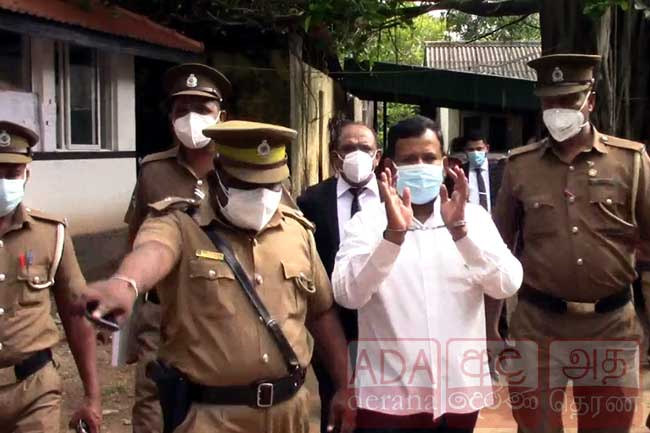
A total of 770 more people were tested positive for COVID-19 today (August 13), increasing the daily count of positive cases to 3,152.

According to the Government Information Department, 3,142 cases reported today have been associated with the New Year cluster. The remaining 10 were identified as arrivals from foreign countries.

The latest infections and delayed reported cases for the last week have brought Sri Lanka’s confirmed coronavirus cases tally to 348,270, the Epidemiology Unit said.

Official data showed that as many as 304,628 patients who were infected with the virus have regained health so far. Meanwhile, the death toll now stands at 5,775.

More than 38,000 are currently under medical care at selected hospitals and treatment centres across the country.

Majority of Kalutara, Colombo districts’ population aged above 30 fully vaccinated

August 13th, 2021

Courtesy Adaderana

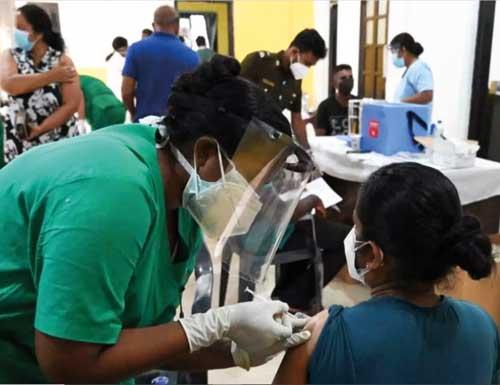
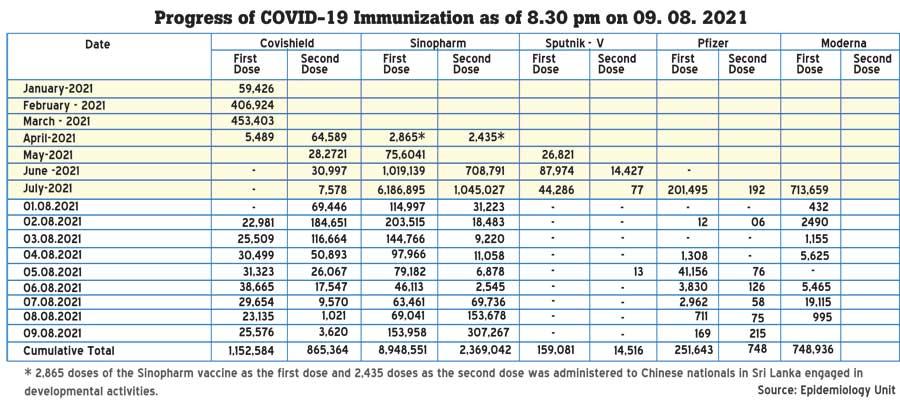
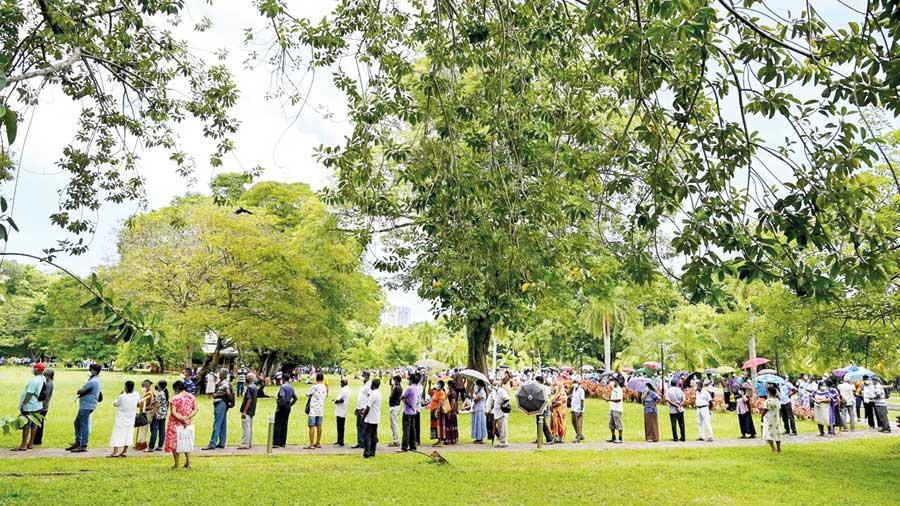
More than half of the population in Colombo and Kalutara districts, aged over 30 years in have now been fully vaccinated against COVID-19, says General Shavendra Silva.

According to the army commander, 51% adults in Colombo District and 55% in Kalutara Districts have received both doses of coronavirus vaccine.

Reportedly, 48% of Gampaha District’s population has also been fully vaccinated.

Officials directed to pay special attention to senior citizens with long-term illnesses

August 13th, 2021

Courtesy Adaderana

President Gotabaya Rajapaksa has informed the health officials to pay special attention to people above the age of 60 and are suffering from chronic non-communicable diseases.

A study carried out into the deaths reported during the last few days has revealed that majority of them were from the Western Province. It has been identified that a higher percentage of this group were persons aged over 60 years who suffer from non-communicable diseases and have not been vaccinated against COVID-19.

Hence, the President emphasized the need to devise a special mechanism by paying special attention to such senior citizens.

The President’s remarks came during the Special Committee on COVID-19 Control held at the Presidential Secretariat this morning (August 13).

The President said the priority should be given to those who are over the age of 60 and suffer from various diseases when conducting PCR and Rapid Antigen Tests. He also pointed out the need to isolate the patients who have undergone kidney transplants and those who are receiving dialysis.

The need to obtain information of the patients registered at the clinics in hospitals to receive treatment for non-communicable diseases, and bringing them to the special attention of Medical Officers of Health and the Public Health Inspectors was also discussed.

People over the age of 60 in the Western Province who have not yet been vaccinated due to various diseases have been identified. Chief of Defence Staff and Army Commander General Shavendra Silva said that steps have been taken to vaccinate them all over the next few days.

Having received just one dose is not enough to be safe against the virus, the medical specialists who are members of the COVID Committee, pointed out. People should act in a responsible manner after receiving both doses, until the immunization period is reached, they added.

Speaking further, the medical specialists emphasized that it was the duty and responsibility of the people to prevent mass gatherings, to stay home – unless they are called for essential services and duties – and to help prevent the spread of the disease by adhering to the health guidelines.

Minister Pavithra Wanniarachchi, State Ministers Sisira Jayakody and Prof. Channa Jayasumana, Principal Advisor to the President Lalith Weeratunga, Health Secretary Major General (Retd.) Dr. Sanjeewa Munasinghe, Chief of Defence Staff and Army Commander General Shavendra Silva, Director General of Health Services Dr. Asela Gunawardena and other members of the Committee also attended this meeting.

ERASING THE EELAM VICTORY Part 23 A

August 13th, 2021

KAMALIKA PIERIS

REVISED 15.8.21

Scratch below the surface of any civil war and there is usually a foreign sponsor to be found, said analysts.   Almost all civil wars have an external dimension. It is necessary to be alert to such interventions.

These interventions hide under the   term ‘Terrorism”. Terrorism is the perfect tool to exert pressure upon government. It provides the perfect cover up for hidden agendas, said analysts. Terrorists are armed and supported by foreign countries. Nothing is done against the terrorists but international humanitarian laws are used against sovereign states that challenge these terrorists.

 The Eelam wars of Sri Lanka clearly fall into this category. The Eelam war was not a local war, if so it would have only lasted a couple of years.  Eelam wars were initiated by a liberation movement” that was powerful enough to take on the elected government, said analysts.  The LTTE possessed powerful weapons and good combat training. They had enough funds. How did they acquire all this? It is obvious that the international community gave them arms, motivation and funds and watched the scene for 30 years, analysts said.

The first foreign country to support the Eelam movement was India. India’s Intelligence  branch, known as  Research and Analysis Wing (RAW), which was directly under the Prime Minister Indira Gandhi,  ,provided arms, training and money to six Sri Lankan Tamil insurgent groups including the LTTE.

Thirty two camps were set up in India from August 1983 to May 1987    to train 495 LTTE insurgents, including 90 women. They were trained in 10 batches. The first batch of Tigers were trained in Uttarakhand. The second batch, including LTTE intelligence chief Pottu Amman, trained in Himachal Pradesh.  Eight other batches of LTTE were trained in Tamil Nadu. Instructors included retired Indian Army officers and non-commissioned officers   RAW had earlier trained the Mukti Bahini of Bangladesh.

Then in 1987, the Indian army came into Sri Lanka to settle the Eelam issue.  Indo Lanka Accord of 1987 made provision for an Indian Peace-Keeping Force (IPKF) to monitor a cease-fire in the north. But instead of peace keeping, the IPKF became embroiled in war with the LTTE. The IPKF took Jaffna in Operation Pawan using tanks, helicopter gunships and heavy artillery. Since the LTTE had been trained by the same army, IPKF did not have an easy time in Pawan. The IPKF was heartily disliked and eventually became the common enemy of both sides.  IPKF left Sri Lanka in 1990. Critics called it India’s Vietnam moment.

Then it was the turn of Norway. Norway had a presence in Sri Lanka long before the Eelam wars started and were using this to push Eelam. The Cey-Nor Development Foundation, funded by, Norges Godtemplar Ungdoms Forbund (NGU) an NGO, had established a fishing boat project in Jaffna in 1967.This gave Norway a foot hold on the northern seafront.

 It appears that in 1967 a group of Sri Lankan, youth living in Norway got in touch with a Norwegian youth organization Norges Godtemplar Ungdoms Forbund (NGU) in order to start a fisheries development project in Karainagar, Jaffna. With the monies raised by NGU through a fund raising campaign and supplemented by NORAD, the Sri Lankan youth purchased .land in Karainagar. They began their boat building operations at Karainagar around 1968/69.  This was closely watched by the rest of the country. Cey-Nor was taken over by the government later on and made to expand beyond Karainagar.

Then there was Redd Barna, the Norwegian Save the Children fund. Redd Barna, was active in the 1980s in Sri Lanka. Instead of helping children it was helping Eelam. Redd Barna was directly involved in settling estate Tamils, who were to be sent to India, in the border areas round Vavuniya, said critics.  This colonization project was successful. Those estate Tamils are today settled in the Vanni, they are not in India.

Norwegians were surreptitiously helping the LTTE to settle Tamil families of Indian origin in the strategic area of Weli Oya, in order to link the Northern Province to the Eastern Province with a continuous land mass inhabited by Tamils. The funding for this project was made available through Redd Barna by its head, Jon Westborg, analysts said.

 Vijitha Herath, Chairman, the Select Committee of Parliament for Investigation of the Operations of NGOs and their Impact said in 2008 that Redd Barna has carried out a programme of resettling estate Tamil people   in Vavuniya in 1985, to alter the ethnic composition in the Wanni.

Lalith Athulathmudali told Anil Ameresekera how it was done.  one or two families of estate Tamils  who were being deported to India under the Sirima-Shastri Pact , were off loaded at the Madu Road Railway Station each time the train made its journey from the upcountry to Mannar, (from where they were taken by ferry to India.)

The off loaded Indian Tamil families were smuggled to the Manik Farm in Cheddikulam and kept there for a week or two. If the police failed to locate the missing families, they were next transported to Weli Oya, where Tamil businessmen had taken a massive stretch of land on lease, under the pretext of helping the government in its food production drive. The Dollar, Kent, Ceylon Theatre and other farms owned by Tamil entrepreneurs were on this massive stretch of land in Weli Oya.

Athulathmudali later got these special leases cancelled. The farms owned by these Tamil entrepreneurs were taken over by the state and handed over to the Prisons Department to run open prison camps.

Norway fancied itself as a skilled peace facilitator. Norway    fondly said it was a small power without geo-strategic interests and colonial baggage. They were not   motivated by self-interest, and were not seen as a threat.  However, Norway is known internationally for its high profile meddling in peace negotiations. .

Norway has been actively engaged in promoting peace and reconciliation in dozens of countries, said the government of Norway, very proudly. These countries are Afghanistan, Colombia, Guatemala, Israel, Myanmar, Nepal, Philippine, Somalia, Sri Lanka, Sudan and Venezuela.

 In addition, Norway has also provided financial and technical support for peace processes in Aceh, Burundi, the Democratic Republic of Congo, Kenya, Mozambique, Syria and Uganda.  Norway has also been engaged in dialogues in several other countries, including Haiti, the Dominican Republic and Timor-Leste, the Government of Norway concluded.

Norway was not always successful in these efforts. The best known failure is the Oslo agreement between Israel and Palestine. Negotiations for Israel and Palestine were conducted secretly in Oslo, Norway, hosted by the Fafo institute and the agreement was signed in Washington.  Israel and Palestine are fighting even harder today.  Oslo is forgotten.

The second best known failure is that of Sri Lanka ,where  the  government  crushed the  LTTE militarily, and decisively won the war, leaving no room for Norway to negotiate and create Eelam.

Norway had offered its services to Sri Lanka as a peace facilitator, as soon as the IPKF quit Sri Lanka in March 1990.   In June 1990 President Premadasa sought Norwegian help to establish contact with the LTTE. Norway started to function as a facilitator in 1991.

In 1994 President Chandrika invited Norway to help monitor a truce agreement. In 1995 LTTE also invited Norway to act as a  go between. The LTTE wanted a powerful mediator, not just a facilitator,   observed Michelsen Institute when in 2011, it reviewed Norway’s performance.

In May 1999, the Kumaratunga government confidentially provided Norway with a
formal mandate to initiate a dialogue with the LTTE, still a banned organization
under Sri Lankan law. Norway had several secret meetings with President Chandrika, where the President had asked Norway to bring the LTTE back to the negotiating table.    Norway had also met with Kadirgamar and GL Pieris, mostly in Switzerland.  

 In 1999 President Chandrika had asked the LTTE the third parties they wanted, for the  peace talks and of the list of five countries they gave, Chandrika selected Norway.   In the mean time, Erik Solheim, Norway’s Minister for Foreign affairs had initiated several secret talks with LTTE through the Norway ambassador in Sri Lanka. He said he was acting on representation made to him by Tamils in Oslo.

Norway’s role in Sri Lanka has been criticized in  Norway by Norwegian National Assembly, the Norwegian media and by academics.  These groups have been critical of the Norway peace keeping role in general. Critics point out that positive results seem few and far between. Norway’s idealist intentions are not matched by achievements in terms of lasting peace, said critics, citing the Middle East and Sri Lanka as examples.

Thorbjørn Jagland former PM of Norway had said in 2008 that nearly all the peace processes that the Norway had been involved in lay in ruins. Also that some studies have shown that wars that end in military victory produce a more stable peace than negotiated settlements.

It is Sri Lanka’s good fortune that Norway failed as a facilitator as they may have created another South Sudan, said Gomin Dayasri. The credit goes to the people of Sri Lanka who did not allow its government to be manipulated by a foreign hand. (Continued in 23B)

FOREIGN POLICY FOREIGN RELATIONS DIPLOMACY AND TOURISM

August 13th, 2021

Sarath Wijesinghe President’s Counsel, former Ambassador to UAE and Israel, President Ambassador’s Forum and Jeff Goonawardena-Former Counsel General, Managing Director Thilanka Group of Hotels (International) and Joint Secretary Ambassador’s Forum

Foreign and Domestic Policies

These are some topics interconnected and interwoven for a country to prosper in tourism and economy. The world today is interlinked to communicate with the rest of the world in few seconds with a click of a button from the modern technology and digitalization which is fast spreading worldwide. Today tourism has become a major income in many parts of the world, with the natural resources and modern developments linked to innovations. Foreign Policy is a set of pre-established strategies designed and implemented systemically to manage countries relationship with other nations. They are structured guidelines that regulates international and political dealings. Foreign Policy is prepared by governments to deal with international affairs adequately for the benefit and prosperity of the country, which will guarantee the domestic affairs and proper safeguards from outside and foreign goals. It protects countries core values and interests, national security and economic prosperity. Foreign policy is supposed to be an extension of domestic policy and it is the duty of the governance to formulate the domestic policy in compatible with the foreign policy concepts worldwide. Obviously progress success developments, industries and tourism has direct effect on a proper and effective foreign policy and relations which deals with the rest of the world. Domestic policies of a country are administrative decisions that one directly related to all issues and activities within the states boarders. It differs from the foreign policy, which refers to the way a government advances its interests in external political spectrum. Way government advances external policies, business, education, foreign policy, tourism, business, agriculture, developments, law and order and other factors are maters in the preview of the Executive and Legislature to function and perform. Sri Lanka is in need of a correct and foreign policy able network of Ambassadors and Embassies to meet the modern trends and challenges.

Foreign Policy Diplomacy tourism Interlinked

Foreign Policy, foreign Relations and Diplomacy are interlinked to tourism as the success of tourism depends on the goodwill and friendship with the rest of the world. The most important economic features of activities related to tourism sector is that they contribute heavily on the GDP of a country, hence high priority goals are given in developing countries. It generates high income and foreign exchange to the earnings to the nation. Best natural resources are in our possession to be a best destination if not the best, with sea right round the country with beautiful shallow parts with beautiful corals, network of rivers springs and beautiful water falls, deferent climatic condition with few miles away, finest wildlife, natural beauty, historical religious and archeologically monuments and ruins of great historical significance are a few attractions, in addition to the friendly people always with full of smile. Educated experienced and a professional touch is required to uplift the tourism in Sri Lanka to the world standard.

House must be in order

Due to economic and political pressure exerted globally, regionally and locally, it is time we place our household in order at any cost in the resolution of the ongoing disputes. Tourists expect the destination to be peaceful and safe to stay with moderate expenditure of living with reasonably expenditure for consumer items of quality including hotels and other facilities. Is Sri Lanka truly independent on the political and economic fronts to take independent decisions on economic issues in relation to dealings with the member nations, international organizations, and monetary institutions on domestic or international issues, is a question difficult to answer in the debt ridden economy and pressure from world powers demanding our land and resources. We are strategically and geographically placed in the main sea/air routes, next to a major regional power, competing with China. Powerful neighbour is a  powerful economic capable of exerting  direct ripple effect on Sri Lankan foreign and economic policymaking, which is to be seriously considered by the Sri Lankan policy framers and the governance. Tourist industry should be manned and managed by professionals without political interference and politicians.

Foreign Policy

Foreign policy is the set of rules or practices followed by a nation as a member of the global forum linked by the UN today as guidelines to the international organisations and the member states. This is the simplest definition in addition to detailed academic definitions. A set of rules could be written, direct, and indirect or in the form of speeches or declarations of the head of the state, generally the policy’s formulator implemented by the Foreign Minister or the group of ministers. In any event, any state enters into agreements, conventions and treatises which are part and parcel of foreign policy which is intact in the system on foreign policy. Some countries give special attention and emphasise foreign policy, and some are not. USA, UK, Russian Federation, and China prioritise foreign policy and sensitive to other countries’ foreign policies due to their interests in different countries and their policies. One of the first duties of the new USA President perform was to revamp, reform and reactivate the foreign policy of the USA, in line with his policies of other countries, especially in dealing with the rest of the world and other nations by taking a complete U-turn from that of the policies of the predecessor on human rights and war. He put the foreign policy in order as has been done by his predecessors, which has a bearing on Sri Lanka and the Geneva process. Member nations today are giving top priority on economy connecting directly to the foreign policy giving full power and responsibility to the network of Ambassadors who are guided and trained on promoting economic and financial needs of respective countries, giving targets and strict guidelines. Unfortunately, this trend has no ripple effect on our network of Ambassadors around the globe enjoying the perks at the cost of the tax payer, and the cradle of the network of the representatives of the country expected to showcase the country to the world, which is so easy as Sri Lanka is one of the most beautiful countries in the world with human resources, water in abundance and excellent climatic conditions unappalled as an ideal tourist destination. Foreign policy is the strategy, and the future line of action of a nation on other nations and the world at large is a broader definition in terms of economic, defence, and all other areas which are so important and sensitive to the world over. This brief explanation shows how important it is for a country like Sri Lanka desperately in need of good friends and backers considering the weak economic structure deteriorating gradually in need of FDIs, and other economic backings including the goodwill of friends in need when the economy is in bad shape, debt-riddled and in need of foreign reserves when acing the covid 19 crisis, just next to India one of the most affected. No nation can live in isolation in the new world interconnected digitally with physical barriers not taken seriously when interrelations and interconnections are essential for existence. Showing foreign policy is a necessity for a nation connected through the network of the United Nations. The statement of Henry Kissinger that powerful nations have only national interest may apply to many countries as the interest of any government is their own country giving top priority is a reality all the other states must remember. This is a classic example and a lesson for those countries that are aligned to groups or clicks based on various considerations. There are theories and pronouncements and suggestions on look Asia, India first, Asia first, and Sri Lanka first etc., from multiple sources without the direct attention of the head of the state, the formulator and creator of the policy. Any country’s leaders and governance consist of human beings with human weaknesses when the human qualities are suppressed with power due to greed, power and pride. The quotation indicates how selfish they are as any other human being vested with power! The interests of the respective country are what matters other than other considerations for a member of the nations in the world family Sri Lanka as mostpopular tourist destination. Interests of major powers groups and international organizations play a main rile in the formulation and exercise of foreign policies and relations in smaller nations seeking assistance form rich and powerful. Economic power and independence matters a lot for the small nations to be independent and take independent decisions on foreign policy and relations.

Popular destination for centuries

For centuries, Sri Lanka has been a popular place of attraction for foreign travellers, for various reasons. It is a world renowned destination for historical and archaeological significance, Buddhism linked with culture and historical sites of significance, natural beauty with forests plants and wild life of most rare species of world heritage sites and monuments, beautiful waterfalls and the network of rivers and historical water tanks spring from the beautiful hill country namely little England akin to climate in England, varied climatic condition within hours in the developed network of roads reminding of the roads in Wales and Ireland are only few attractions in addition to smiles of the ever friendly villager with a broad smile always. Despite the geographical and many other advantages Sri Lanka is slow in leapfrog uplifting the tourist industry which remains static for long stagnating awaiting rejuvenations of the trend to reach upwards.

Many visited and spoke of Sri Lanka for generations

Chinese traveller ‘Fa-Hian’ – Buddhist monk visited Sri Lanka as early as 410s AD and in the 12th contrary with a group of other minks and stayed in Sri Lanka on a study mission where he made many noted on Sri Lanka and Buddhism. Italian explorer Marko Polo claimed Sri Lanka to be the best destination for tourists and tourism. In 2015 Sri Lankan capital Colombo was the world’s fasted growing tourist city in the world. King Asoka’s friendship with King ‘’Devanampiystissa’’ (247BC -207BC) and sending son ‘’Arath Mahinda’’ and daughter ‘’Sangamitta’’ in is a remarkable historical event in annuls of the history of Sri Lanka on foreign policy and relations continued since then.

Well documented

Sri Lanka and tourism is well known and well documented, lonely planet selecting as the best destination on the globe for tourism, despite adverse comments and clarifications required to eradicate misinformation Sri Lanka on steps taken to wipe off  the most fearful and dangerous terrorist outfit for ever, thereafter introducing law and order, peace, creating a haven for tourists and tourism with comparatively reasonable consumer items and excellent network of hotels and restaurants and guest houses to cater all strata of tourists. 

We are still lagging behind

When compared to our other competing destinations with less glamour beauty and resources, we are still lagging behind due to various reasons we are able to take corrective measures and improve on. For example the UAE with less natural beauty resources and ingredients for tourism, she is a leading world tourist destination and a Hub in the Middle East attracting a large influx of tourists. Fortunately they have oil explored in 1960 which they vey wisely invested using the geographical situation creating a Naval, Air and Business Hub linked to tourism providing facilities but with meagre natural beauty and resources as ours. Same is mentioned in many other destinations flourishing in successful tourism. It is time for us to learn from mistakes, others, and our own experiences to aim to be the best global destination with a new vision, plan and vigour fighting the challenges of corona and world downward trends on draw backs on economy and other issues against forward trends. Next best example is Thailand which has a booming tourist industry maintain religious and cultural values.

Must draw up a plan

We must draw up a plan and a strategy considering, the challenges, drawbacks and the future needs exploiting our resources and competence as a group to promote tourism to lift it to the 21st century as it is going to be our future and future hopes to promote tourism we have been gifted with our own free resources when other competing destinations are compelled to create artificial environments and needs for tourists and tourism. It is not only the hotels and other facilities that are needed to attract tourists to a country. We as hosts will have to look into and after all the needs of the visitors to their liking from the time the visitor plans to find a destination. It is essential on our part to publicise our destination to the best based on the modern digital age. Our publicity is on some standard and the internet and the media is fairly well equipped requiring final touches and fine tuning to face the digital age. Let us draw up a modern publicity platform with innovative novelties giving all the details in modern and attractive novel way. We must develop a tourism regime like the employment programme in Philippine where 30% population is overseas in employment where the country has planned the population for future employment worldwide. Philippine young is trained during young ages to foreign employment with language abilities that has captured the employment potential in many areas such as hospitality sector. In the same way we have to train and develop our talents on tourism and transform the system to adopt to new trends of tourism without disturbing our culture, way of life and outlook which is a tourist attraction. Singapore is taking attempts to create artificial waterfalls and greenery due to the geographical situation when Sri Lanka is so fortunate to possess the best natural and gifted environments. The new trend of the digitalization with 110% mobile penetration, 60% access to internet via mobile and computers must be utilized for developments and tourism, as a way forward on economic and developments in other areas, as a part of the master plan.

Situation in the country is not so satisfactory

Situation of the country should be to the liking and satisfaction of the visitor who has chosen the destination for some reason of is choice. It could be media, publicity, culture, religion, scenery and beauty of the country and many more one or more reasons. We must have proper and trained tour assistances who will identify the needs and cater the needs to the satisfaction till the end of the tour and thereafter to narrate the good news to the word over. Tour guide is to be trained, pleasant, knowledgeable honest and registered guided and supervised by the tourist authorities and the tourist police which is set up for safetyman confidence. Tourist schools to be streamlined monitored and have full supervision from the government and the tourist ministry based on the criteria adopted by other competing nations. The state must give special emphasis and attention on the law and order situation in the country to give protection and confidence to the visiting friends we are bound protect and look after. Media must be careful on reporting the matters regarding tourists and tourism always considering the good name and good will of the country and the reputation of Sri Lanka and world over.

Resources of countries

Many countries have own resources of income for them based on natural resources, ability of the citizen, or sources of income with always tourism is given prominence as a main or a subsidiary income of the nation. For example our friendly nation Israel is an agricultural country as a leader on agriculture and an innovative nation with leaders on modern technology, fighting with neighbours right round yet promoting and giving tourism top priority as an income generating process. Tourist arrive as it is a historical country with historical background, the country has exploited careful to promote the nation as a tourist destination. This is only an example many other countries worldwide promoting their countries tourism as a main or a subsidiary income. Israel is concerned and careful of their safety and safety of the visitors in addition to providing the services as hosts of the tourists. We are in a learning process rom others whilst improving ourselves. Port city as the International Financial Centre will be useful as a major and main FDI, which takes time to reap the harvest. But the fact that it is in the process will give confidence and strength to the tourist industry always connected to the development and economy of the host country.

Needs of/for tourists

Let us consider the needs and requirements of a tourist visited to our country, having spent a substantial sum. It could be to see the beauty such as water falls as described in broachers, to visit the sites of historical significance having heard from books or libraries, enjoy the beautiful beaches seen in books and images connected to swimming, surfing, fishing, or whale watching, learn on Buddhism and seeing the historical temples such as the temple of tooth, or any other one or more reasons known to himself and the group. Majority of tourists plan out the visit either by himself or a tour agent finding the most wanted and loved attractions of their choice and liking. Finding a reliable tour agent, places of stay, travel advice on sites, security, and the budgeting are main feathers of planning making arrangements on the explorations. There are so many areas and aspects to be looked into such as medical conditions of the hosts and their needs, making preliminary arrangements of sightseeing on meeting people making prior appointments, are list of issues to be looked into. We need genuine tourists who are not parasites such as some who visit to exploit the goodwill of the people and sometime engaged in illegal trades. The state must be careful in monitoring tourist influx and it is a good idea to maintain proper and detailed records.

Safe and friendly environment

Hosts expects a safe and friendly environment from the arrival and the officers including immigration, airlines, and support staff should be with a smiling face and ever prepared to assist in all the areas of need. Broachers should be in English and preferable in many other languages in detail educating the hosts on the visiting country, culture, way of life, and places of interest in detail. In Singapore the brother consists of basic laws including consumer law and procedure, all details on health and precautionary measures, I n detail in simple language and the guidance and procedure is so simple with friendly nature of the staff in the visiting country. In Sri Lanka the visiting friends are troubled by taxi drivers, touts and many others pleading and pressurising them with requests, demands in the guise of assistance discouraging the visiting tourists at the entry with fear physics and sense of danger and uncomfortable feeling which has to be avoided in the name of tourism and goodwill of the country. There are horrifying stores of taxi drivers harassing foreign and Sri Lankan passengers on return, with no proper remedy despite many unpleasant and dangerous incidents published on the media often gives drastic effects to the industry and the image of the country  appear to  be simple but complicate in terms of reputation and goodwill of the country. These are not unknown to the administration which has been given a blind eye for reasons one cannot understand other than sheer ignorance inefficiency and bad management. The environment has to be please clean attractive and orderly. Is it so in the Airport? In the eye of a frequent traveller entering the airport with lot of hopes and pleasant feelings. Advertisements and notices must be meaningful understanding and attractive. Some time ago there was a massive notice at the entrance of the immigration entry, exhibiting fine for an offences on drugs when it could have been done in a ore gentile way.

Duty of the host country

It is the duty of the host country to look into all aspects of the visitor in detail whoever is the invitee and the guardian or the guide as the host country is expected to supervise the professional work expected to be performed by the private or the state sector, as the blame always on the host country for mismanagement. There should be a separate tourist police and officers for the safety of the visitors, who are in the hands and custody of the local staff never mind who they are with. In many other tourist countries the tourist police seems to be active and do not seem function in Sri Lanka at all. These are not matters something new to the industry, but the blame is on leaders of industry who are responsible, and if they cannot perform they must honourable leave leaving a more efficient person to manage. It looks that the leaders of the industry are not innovative and earn form the mistakes and other countries, in many simple and practical innovations.

Consumer Items

Standards of Consumer items food and restaurants and hotels the visitors used must be of the highest quality or if this cannot be maintained we must give up tourist trade as failures. Tourist heads must agree with the Consumer Authority, Standards Bureau, Local Authorities, Public health Inspectors, and all chains of hotels and restaurants  countrywide to give  healthy food at a price may be difference of prices to visitors with a more strong buying power prepared to pay more. Implementation of these regulations will help even the local citizens awaiting the law and order to be implemented. Campaign against junk food, cola and unhygienic drinks, and generally junk food available mostly in leading sophisticated food chains must be monitored protecting visitors and locals equally in terms of long term prevention and protection health of all is a paramount necessity especially when we are in the most dangerous era on Covid-19 Pendulum leading the nation and the world nowhere with o hopes or an end in the near future and living on hopes. But the fact remains that we have to live with it for an unknown unlimited period and we must get ready to love with it with necessary adaptations and adjustments. Consumer items do not mean the goods alone. Services including hospitals and other organizations and services are included in the category under the consumer law that should be rigorously implemented to the benefit of the tourist and tourism.

Environment disasters

It is sad we are destructive and destroy our environment on sand mining, deforestation, in many other ways in small an large scale sometimes with patronage from the errant government servants in the parole of the perpetrators’ on destroying our environment. For us to be on top in tourism we must give priority to environment but informational it is not given priority like in other countries which is sad to note. How could we prosper when our forest is destroyed and sand mining is taking place at a terrible rate destroying our river banks and damaging the forests on high lands which is the source of water? Tourists love environment which is our wealth we must preserve protect and enhance without allowing the mischief makers to destroy. Environmental destructions taking place in a large scale and it is the duty of the governance to put an end to it if tourism is to be developed.

Live with Covid 19

Covid situation is aggravating daily with the large number of deaths increasing number of new cases all over the country, which is disturbing. It seems that we have to live with covid 19 for an unknown period and it is time to get used to and learn with it giving priority to tourism as well as our income is day by day declining in all sectors in the state. The situation in the world including the world powers and our immediate neighbour  India and many countries counties are day by day attacked by the virus,  with increase of deaths and number of patients to the highest  levels uncontrolled by all measure as sadly shown on the TV images in India with the warning to Sri Lanka to be careful reaching us across boarders and via other media such as cargo, import export and the movement of human with no order and restrictions as seen on the images and warnings by the security forces ever struggling with the unruly bombs disobeying the basic instructions so easy to follow.

Religion, Culture, crafts and such traditional trades and arts

Sri Lanka is full of cultural, religious places and full of traditional learnings will be an attractive and a productive areas in promotion of tourism and promotion of traditional skills especially in rural areas. ‘’Tovil’’ (devil dancing) and traditional plays are well known to the world and there is a demand and need to learn the process by cultural groups worldwide linked to tourism. Religious tourism will have a main role on sightseeing of religious places of worship and learning the religion Buddhism being the most fast spreading religion in Europe and many parts of the world.

The Law and Procedure on Tourism

Tourist board act no 10 of 1966, and tourist development act no 14 of 1968 are followed by the act no 38 of 2005 in force is to be amended in due course with current proposals. Do we need change of law and whether change of law will improve tourism are matters to be considered by the Minister in charge and the governance considering tourism is going to be the main source of income and the image building we are desperately in need of. Following entities are set up under the current legislature for the management of the tourist industry. SLTDA Sri Lanka Tourism Development Authority SLITHM Sri Lanka Institute of tourism and hotel management, SLTPB SLCB Sri Lanka tourism Promotion Bureau SLCB Sri Lanka Convention Bureau. More than change of law we must change the lethargic attitude and lack of new ideas and innovations, learning form mistakes and success of others.

Tourism Development Fund will consist of 1/3 of airport embark

Let levies collected from the industry with voluntary payments too and the income be dispersed among four institutions. Fourteen years of existence of the act has not shown improvements and there are opinions of duplication of matters among the institutions, and there are fears that the act is not properly implemented with the feeling that the private sector participation is minimal. There are improvements which are minimal such as increase of 24,451 rooms of 5.6 billion investments with 6% GDP of the country. There should be prize matches and uplift of standards. Our Zoological Gardens in one of the best in the world not maintained with world standards. It will be an ideal distinctions for the tourist linked to wild life parks spread countrywide, at a price to the tourists with good standards.

Embassies international community and tourism

Sri Lankan Embassies are the forerunners of the nation and it is the duty of the Ambassadors and staff to take charge of tourism along with the developments based on economic diplomacy which other countries have given priority to. Every embassy must have a tourist desk and all other sectors should come under the preview of the Ambassador as the representative of the President and the nation. Needless to say it is the duty of the Ambassador’s forum to help the process and the nation in all sectors. Ambassadors and Embassies have a pivot role in promoting tourism trade and commerce for the country they serve giving top priority to trade commerce business and image building for which as a new trend with almost all the countries are giving priority today.

Way forward

Where have we gone wrong, and what should be our way out of this mess to emerge victorious on tourism and the general crisis, with which we can go forward to the highest echelons on tourism and productivity as a part of the world economy. Let us be frank and realistic in our dealings and future strategy. We have gone wrong badly in strategy, management, and absence of proper way forward full of corruption.  Inefficiency is the other evil surrounding us to be eradicated as a matter of urgency. Leadership on tourism should realise that they have failed and in return the country has failed due to corruption and inaction. If the  tourist leadership feels they have failed it is the duty of the head or heads to vacate forthwith to avoid leaving a group of dedicated educated and committed group to manage with new vigour and strength. In the competing industry with many competitors in the world reminding us of the adage that we are not the only beautiful girl on the beach when other competitors are working round the clock. Thailand, Vietnam, UAE, Israel, are some who have bypassed us with less or no resources and beauty that we possess. These statements may not be palatable but the truth is to be said for the betterment of all and the nation. Israel has no resources except the human resources. We have resources not second to any other nation in the globe which we have not exploited. UAE is sandy land using desert for sand safari. Vietnam Israel and Japan make use the tragedies’   they have undergone to attract tourists. Nepal uses Himalaya, Bhutan religion and simplicity, India vast places of interest, Maldives shallow sea, Israel places of historical and religious significance, UK the developments and historical aspects including the Royals, France ‘’Ifal Tower’’ and places of historical significance, and Sri Lanka – What haven’t we got to show the world of tourism?. It is sheer incompetence, lack of innovativeness, lack of strategies, planning and exploration of novelties. The words may not be palatable but may be productive and useful in the long run for the betterment of the nation. The will determination and the vision of the leadership in governance is a major factor that is lacking and it is time to make adequate changes and adjustments in the direct direction. In the circumstances foreign policy, foreign reactions, diplomacy and tourism should work together with a same and similar aim towards tourism. It is encouraging that the governance is giving priority to tourism today. 

වරද කොතැනද?

August 13th, 2021

වාගිස ප්‍රනාන්දු විසිනි.

ඊයේ (12 වනදා) ලංකාවේ ආසාධිතයින් ගණන 3039කි. (රජය විසින් නිකුත් කරන දත්තවල නිරවද්‍යතාවය පිළිබදවද ප්‍රශ්ණයක්ද මේ වනවිට මතුව තිබේ) ඒ කෙසේවෙතත්, එම දත්ත නිවරැදියැයි උපකල්පනය කිරීම හැර වෙනත් විකල්පයක්ද අපට මේ මොහොතේ නැත. මන්ද? පසුගියදා ඇතැම් රජයේ රෝහල්වල කොරෝනා ආසාධිතයින්ගේ ධාරිතාවය ඉක්මවාගොස් ඇතැම් ආසාධිතයින් රෝහල් භූමියේ පවා වැතිර සිටින ඡායාරූප මාධ්‍යයේ පලවූ විට ඊට පිළිතුරු වශයෙන් රජයේ එක්තරා උසස් සෞඛ්‍ය නිලධාරියෙකු පැවසූයේ ආසාධිතයින්ට අවශ්‍යවිටෙක එළිමහනට පැමිණ හොදින් වාතාශ්‍රය ලබා ගැනීම සදහා බාදාවක් නොමැති බවකි. නමුත් ඊට දින දෙකකට පමණ පසුව රාජ්‍ය ඇමතිවරයෙකු එම රෝහලේ සංචාරයක නිරතවූ අතර ඒ මොහොතේනම් වාතාශ්‍රය ලබාගැනීමට පැමිණි කිසිදු ආසාධිතයෙක් එළිමහනේ දක්නට නොලැබිනි.ඒ, එම අවස්ථාව වනවිට ඒ සියළු ආසාධිතයින්ව ඔක්සිජන් ටැංකිවලට සම්බන්ධ කර තිබුනු නිසාද විය හැක.

ඒ කෙසේවෙතත්, ඊයේ දවසේ මරණ සංඛාව 156කි. එය ඊයේ දිනයේ හමුවූ ආසාධිතයින් ප්‍රමාණයෙන් ප්‍රතිශතයක් ලෙස ගත්කල 5% කට වඩා තරමක් වැඩිය. එම මරණ වලින් 121ක්ම වයස අවුරුදු  60 ට වඩා වැඩි පුද්ගලයින්ගේ බවටද වාර්තාවිය. එම තත්වය ඊයේ දිනයට පමණක් නොව සමස්තයක් ලෙස ගත්විට මේ දක්වා වාර්තාවූ කොරෝනා මරණ වලින් බහුතරය වයස අවුරුදු 60 ඉක්මවූවන්ගේ බව දැනගන්නට ඇත.  ඒවාගේම මේ දක්වා වාර්තාවුනු මරණවලින් අතිබහුතරය එන්නත් එකක් හෝ ලබා නොගත් අයගේ බවට සෞඛ්‍ය අංශ පුනා පුනා කියමින් එන්නත්කරණය සදහා පුද්ගලයින් පොළඹවන ආකාරයද අප විසින් පසුගිය කාලය පුරාවටම දැක ඇත.

ලෝකයේ බොහො රටවල් කොරෝනා වෛරසයෙන් බේරීම සදහා ආරම්භකරන ලද එන්නත්කරණ වැඩසටහන්වලදී සෞඛ්‍ය අංශවලට, ආරක්ෂක හමුදාවන්ට මූළික ප්‍රමුඛතාවය දුන් අතර ඉන්පසුව ප්‍රමුඛතාවය ලබාදුන්නේ ඒ ඒ රටවල විවිධ රෝගාබාධ සහිත හෝ රහිත වයෝවෘද්ධ රටවැසියන්ට බව රහසක් නොවේ.

නමුත් ලංකාවේඇතැම් ප්‍රභූන් සහ වරප්‍රසාදලත් පැළැන්තිය හැර සාමාන්‍ය ජනතාව සම්බන්ධයෙන් එම ප්‍රමුඛතාවය එළෙසින්ම දුන්නේදැයි සැක සහිතය. එසේවූවානම්, මේවනවිට ලංකාවේ වයස අවුරුදු  60ට වැඩි ජේෂ්ඨ පුරවැසියන් සැළකිය යුතු පිරිසක් සදහා එන්නත් ලබාදීමට හැකිවනු ඇත. එන්නත්කරණය එළෙසින් සිදුවූවානම්, රටේ වර්තමානයේ සිදුවන කොරෝනා මරණ අතුරෙන් අතිබහුතරයක්වන වයස අවුරුදු 60ට වැඩි පුද්ගලයින්ගේ මරණ සැළකිය යුතු මට්ටමකින් අඩු කරගත හැකිව තිබිනි. නමුත් රටේ අවාසනාවකට මේ දක්වා සිදුනොවූ ඇතැම් දේ මෙන්ම එයද එසේ සිදු නොවිනි. 

A GLOOMY FUTURE OF AFGHANISTAN

August 13th, 2021

ALI SUKHANVER

Definitely US’ decision of pulling out its forces from the Afghan land is going to change the whole future scenario of the war-torn Afghanistan, might be in a positive way and might be negatively. But one thing is very much clear that things would take a long time in permanent settlement. At present a tug of war between the Afghan government and the Taliban is simply making the situation over there more horrible and more atrocious. The Taliban have to fight not only the Afghan government but also the veiled supporters of US in Afghanistan. Agents of the R&AW are also there to counter Taliban with all their zeal and zest, even the Ashraf Ghani government is doing all the best possible for its survival.  In short, situation there is not very favourable for the Taliban but not in control at the Ashraf Ghani government at the same time. And no doubt this was the situation desired by the US policy makers.

Experts are of the opinion that the Taliban could be successful but not in blinking of an eye; things could take time. There is expected a long tug of war in which it would be very difficult to defeat the Taliban as they are enjoying a very strong support of the local people. Moreover after US withdrawal, they would be having no strong military opposition as the Afghan Army has no professional skill to compete the Taliban. There are reports that many soldiers of the Afghan Army are joining Taliban troops as they think it is in better interest of their country. The Ashraf Ghani government is also aware of the fact that the Afghan Army lacks professional skills and it won’t be a wise step to instigate the Taliban by showing closeness to India at this crucial time. That is the reason that recently on 26 July Afghan Army Chief Gen. Wali Mohammad Ahmadzai cancelled his planned visit to India just because of the possibility of offending the Taliban leadership. The purpose of his the three-day visit to India was to explore ways to deepen bilateral military ties in the backdrop of the Taliban carrying out offensive operations across Afghanistan following the withdrawal of foreign forces but according to an official of the Afghan Embassy, The visit by our Army Chief has been postponed due to intensity of war and Taliban’s increased assault and offensive.” Reports say that Gen Ahmadzai had plans to hold wide-ranging talks with top Indian military brass including his counterpart Gen. MM. Naravane and National Security Advisor Ajit Doval.

However there is another question too; would the Taliban-control be fruitful for the people of Afghanistan?  It is a bitter fact that for the last three decades, Afghanistan has been ‘misused’ rather exploited as a battlefield of interests for so many western countries. In the name of war on terror, a very fertile and minerals-enriched country has been changed into debris. No doubt India had always been a facilitator to all those who joined hands together with one another in ‘excavating’ the Afghan lands. It has been in media-analysis that the Taliban being ‘sons of the soil’ could never forget the atrocities and cruelties of the NATO forces and the US troops, done against the real land-owners. Apprehending the ‘danger’ of Taliban’s coming into power after US’ withdrawal from Afghanistan, India has already started planning to bring a shift in its policy towards the Taliban. According to Aljazeera, ‘in early June, the Indian media reported that New Delhi has started talking to certain factions and leaders of the armed group against the backdrop of the withdrawal of the United States forces from Afghanistan. A few days later, India’s Ministry of External Affairs also confirmed these reports, stating that they were in touch with various stakeholders.’ India is well aware of the fact that the Taliban regime could never be very pleasant and encouraging for India as the Taliban claim to struggle for supremacy of the Muslim community. In case, the Taliban come into full power with all authority, the ball would not remain in India’s court. The Taliban would never honour the deals already done between the Ashraf Ghani government and India. It is also a fact that India has invested a lot in Afghanistan specifically in the last ten years. This investment is mainly in construction of roads, dams and infrastructure projects. Other than an economic activity, this investment provides India an opportunity of sending terrorists to Afghanistan in guise of laborers and other technical staff. Control of Taliban on Afghan affairs would simply deprive India of this golden opportunity. The fact of the matter is that Afghanistan could never move to a better direction unless foreign interference in Afghan affairs is not eliminated. Peace and prosperity in Afghanistan could be a desire of countries like Pakistan, Iran, Russia and China but for US and India the desire might be otherwise.

PLAN YOUR REBIRTH

August 12th, 2021

By Dr. Tilak S. Fernando

Without accepting a religion, but simply developing a realisation of the importance of compassion and love, with more concern and respect for others, a kind of spiritual development is possible for those persons who are outside of religion”- Dalai Lama.

Peter Kalu, who lives in Hertfordshire, UK, was intrigued by Nadi Astrology after two readings, once as a teenager and for the second time, when he was 52 years old. He comes out with some fascinating stories based on his personal experiences and considers himself a scientist.

 He was teaching science and mathematics in the UK colleges at various levels. Upon retirement, he delved into rebirth, meditation, Buddhism, Hinduism, and other religions. Such exploration drove him into research and his book – Plan your next rebirth.’ He believes the idea of rebirth will also persist in the future due to the exceptional data emerging from digital Media. 

He knows all ancestors believed in reincarnation, irrespective of their religions. In the modern world, around 69 per cent believe in an afterlife. Some may have a preference to be born in a separate part of the world, but the idea of choosing the next life’s parents sounds dubious possibility. It is a known fact that some communities have practised this idea for a long time. 

What the author wants is for readers to think logically and scientifically. Many Buddhists aspire to reach Nirvana. It is a state where there is neither suffering nor desire! Any person who attains this state will never be born again, according to Buddhism and Hinduism. The author believes some are inclined not to aspire to reach Nirvana if one feels that he has not led a virtuous life, and as a result he might not be allowed into Nirvana. Nevertheless, one may feel he needs more time and opportunity to correct himself by being reborn as a human being. 

Therefore, it will be a case of voluntarily joining a swim in the ocean of Samsara (being continually reborn), where one will be able to correct himself and engage in more humanitarian deeds in the form of service to humans and animals. The author emphasises that it is a rare opportunity to be born as a human being and states that during the evolution process, the ‘soul’ constitutes two aspects: Nama (part of the being) and Rupa (physical body). The purpose of publishing a book on a complex nature has resulted from the author himself deliberating upon his next birth! Religion, he says, is inherited from birth (as a birthright!). He was influenced by reading the book titled The Tibetan Art of preventing from before conception.

 The book examines the Buddhist, Hindu and Abrahamic religions and compares each religion’s similarities and differences. The author confirms that every religion accepts an afterlife. Buddhists and Hindus believe in a continuous cycle of death and rebirth, which ends in Nirvana or Moksha, respectively. In the chapter devoted to Karma, the author considers Karma as a driving force for the human being to travel through the cycle of rebirth. Good deeds always give noble consequences – even in the present life or in future births. 

Non-Buddhists often question why someone who is engaged in evil deeds has good luck, while others who engage in meritorious deeds end up being losers.” The answer to this question lies in the accumulation of Karma during past lives. If bad Karma is in excess, a person who performs meritorious deeds would still have to face misfortunes to negate the bad Karma in his past life! 

Nadi Astrology 

It is a form of fascinating astrology where Indian saints or Rishis in Southern India had scribed many individuals’ past, present and future on Palm Leaves around 2000 to 3000 years ago, under Devas (Deities). Books written on Ola leaves Nadi were stored by King Serfoji of Tanjore in South India. The scripts are also available in Bambalapitiya. 

The author’s readings have been a memorable experience. The author advises every reader of his book to experience it and gives the Bambalapitiya house address in the book. When someone visits the Bambalapitiya abode, the volunteer places his right thumb impression (ladies left thumb) and registers their date of birth on a piece of paper. 

That is the only requirement needed. After enrolling all who are present, an official will call out, one by one, according to one’s date of birth. Later, a date is fixed for the reading. On the day of the assignment, the recipient will have to select the appropriate leaf out of the bundle of ola leaves. The father’s name and mother’s name will be read out from the ola leaf and verified. The reader will then ask several questions to ascertain the accuracy of the right person before the reading commences. 

The recipients must answer ‘yes’ or ‘no’ basis and nothing more. If the father’s and mother’s names are wrong, that ola leaf gets discarded and the reader picks up a new leaf. The process of elimination goes on until the reader comes up with the right ola leaf. The process can last up to 30 minutes. The person who gets the reading does not have to elaborate on any answer. There are 12 to 13 chapters, but chapter one is compulsory to identify the recipient. At the end of the reading, each one gets a recorded tape for future reference. 

Mediums 

The author describes Kanthi, a 40-year woman operating from a Devale in Dambulla, Sri Lanka (her address is mentioned in the book). Anyone visiting her Devale gets called into her shrine room. In front of her is an ‘Anjanam Anduna’ with an oil lamp. She stares at the screen for a moment and starts shaking her head frantically. Her normal voice changes and addresses the recipient in a changed tone: Whatever you want from me, just keep it in your mind, but do not tell me”, She would say. 

Then she focuses on the recipient’s mind and utters some words in a peculiar language. It is supposed to be her Deva’s speech, but she translates it into Sinhala. The author enquired after his neighbour’s young daughter Zoe, who suddenly was down with CRPS – Complex Regional Pain Syndrome. She said to Peter Kalu: You are asking about a pretty foreign girl!” Then Kanthi’s medium (deva) had divulged to Peter Kalu, They have already found a suitable doctor for treatment for the girl, and there is no need for me to do anything. 

Take this Talisman and give it to her.” Peter Kalu explains in the book how Zoe’s right leg became motionless suddenly, and later, her entire leg became dysfunctional. Doctors in Harley Street, London, and the Royal Hospitals in Bath, reiterated that there was no treatment for her condition” and gave up treating the girl. When Peter Kalu returned to Maidenhead, after his holiday in Sri Lanka and contacted Zoe’s family, they told him that they found a practitioner in Dublin, who would treat her using a machine called Calamare. 

They were taking Zoe the following morning to Dublin. It coincided with what Kanthi said in Sri Lanka. Peter Kalu was flabbergasted. Zoe wore the Talisman given by Kanthi until she completely recovered. Since then, she has got married and has a child. There was no sign of CRPS for six years until the author recorded this incident in his book. 

Change of Karma 

Another school of thought is that a persona may remove his Karma if he sincerely regrets it, yet what is impossible to delete is accumulated from past lives. Therefore, the author’s advice for readers of his book is to change one’s life by eschewing negative traits. These are greed, hatred, violence, anger, envy, conceit, dishonesty, pride, stubbornness; one needs to be generous and help others, especially those born less fortunate. The author’s view is that there is only one way to lead a sensible life – practise vipassana meditation, which is very popular among Buddhists. 

Reincarnation 

The Virginia University-based Dr. Ian Stevenson worked for 50 years on reincarnation with Professor Carlson until Carlson’s death in 2007. In the USA, the word ‘reincarnation’ is taboo yet accepted globally in Buddhist and Hindu communities. The book also discusses many rebirths both in Europe and Eastern countries. There is a special request from the author to readers to have a Google search on Purnima Ekanayake on reincarnation. She was a male incense stick vendor in her previous life, now reincarnated as a woman. 

Finally, the author states that humans have evolved since they appeared on Earth with their thinking ability to think. Humans are more developed than any other animal, which is why some people can comprehend more than others. According to Buddhist cosmology, there are thirty-one planes of existence. Buddhists and Hindus believe deities occupy twenty realms, ten realms by Devas and one domain by humans.

 tilakfernando@gmail.com

ඩයලොග්, තරුණ හා ක්‍රීඩා අමාත්‍යාංශය සමගින් එක්ව ශ්‍රී ලාංකේය තාරුණ්‍යය බලගැන්වීම සඳහා Youth Can වැඩසටහන දියත් කරයි

August 12th, 2021

තරුණ හා ක්‍රීඩා අමාත්‍යාංශය

ශ්‍රී ලාංකික තාරුණ්‍යයට තම කුසලතාවයන් ඔප්  නැංවීමට මඟ පෙන්වීම හා සහයෝගය  ලබා දීම අරමුණකර ගනිමින්, අන්තර්ජාතික තරුණ දිනයට සමගාමීව ඩයලොග් ආසිආටා සමාගම විසින් තරුණ හා ක්‍රීඩා අමාත්‍යාංශය සමගින්  එක්ව Youth Can වැඩසටහන දියත් කරන ලදී

මෙම වැඩසටන තරුණ හා ක්‍රීඩා අමාත්‍යාංශය  හා ජාතික තරුණ සේවා සභාව සමගින් එක්ව, මිනිස් බල හා රැකියා දෙපාර්තමේන්තුවේ, කුඩා ව්‍යවසාය සංවර්ධන අංශයේ සහ ක්‍රීඩා සංවර්ධන දෙපාර්තමේන්තුවේ සහයෝගය ඇතිව, ශ්‍රී ලංකාවේ සැඟවුණු කුසලතාවයන්  සෙවීමට කටයුතු කරනු ඇති අතර , මෙමගින් සුවිශේෂී හැකියාවන් සහිත තරුණ තරුණියන්ට ඔවුන්ගේ කැමති ක්ෂේත්‍රයන්හි, ඔවුන්ගේ සිහින සැබෑ කර ගැනීමට අවස්ථාව උදා  වේ.

මෙම  තුන් අවුරුදු වැඩසටහන වයස අවුරුදු 14 ත් 35 ත් අතර වයස් සීමාවන් තුළ සිටින තරුණ තරුණියන් ගේ හැකියාවන් සහ දක්ෂතාවයන් ක්‍රීඩා, නව ව්‍යාපාර අදහස්, ශිල්ප කලා, මෝස්‌තර නිර්මාණකරණය, සූප වේදය සහ කෙටි චිත්‍රපට යන අංශයන් 6ක් ඔස්සේ  තරඟකාරීව එළිදැක්වීම කෙරෙහි අවධානය යොමු කෙරේ. තෝරාගත් අයදුම් කරුවන් සඳහා වැඩමුළු, අදාළ මෙවලම් හා පුහුණුව ලබා දී , දැනුමින් සහ හැකියාවන්ගෙන් බලගැන්වීමත් සිදුවනු ඇත. ජාතික තරුණ සේවා සභාව, මිනිස්බල හා රැකියා දෙපාර්තමේන්තුව, කුඩා ව්යවසාය සංවර්ධන අංශය සහ ක්රීඩා සංවර්ධන දෙපාර්තමේන්තුව  මගින් පත්කළ ඒ ඒ ක්ෂේත්‍රයන්ගේ ප්‍රවීණයන්ගෙන් තේරීම් කමිටුව සමන්විත වනු ඇති අතර, තරුණ හා ක්රීඩා අමාත්‍යංශයේ අධීක්ෂණය යටතේ තේරීම් සිදුවනු ඇත. මේ පිළිබඳව වැඩි විස්තර ලබාගැනීම සහ අයදුම්පත් යොමු කිරීම www.youthcan.lk  වෙබ් අඩවිය ඔස්සේ සිදුකල හැකිය.

මෙම වැඩසටහන සම්බන්ධයෙන් ඩයලොග් ආයතනය අත්වැල් බැදගැනීම පිළිබඳව තරුණ හා ක‍්‍රීඩා අමාත්‍ය සහ ඩිජිටල් තාක්ෂණ හා ව්‍යවසාය සංවර්ධන රාජ්‍ය අමාත්‍ය ගරු නාමල් රාජපක්‍ෂ මහතා සඳහන් කළේ තරුණ සුභසාධනය, තරුණ සහභාගීත්වය ඉතා වැදගත් ලෙස දකිමින් අප සමඟ සහයෝගයෙන් කටයුතු කිරීම සඳහා ඉදිරිපත්වීම පිළිබඳව  තරුණ හා ක්‍රීඩා අමාත්‍යාංශය වෙනුවෙන් ඩයලොග්  ආයතනයට ස්තූති කිරීමට මා මෙය අවස්ථාවක් කර ගන්නා අතර, මෙම හවුල්කාරිත්වය තුළින් අප තරුණ තරුණියන්ට තම හැකියාවන් එළිදැක්වීමට වේදිකාවක් සක්‍රීය කර ඇති අතර ඉදිරි වසර කිහිපය තුළ ලංකාවෙන් බිහිවන අනාගත ගෝලීය තරුණ නායකයින් සඳහා මෙය තුලින්  විශාල  පිටිවහලක් සැපයීමට අපට හැකියාව ලැබෙනු ඇත” යනුවෙනි.

එමෙන්ම තරුණ හා ක්‍රීඩා අමාත්‍යාංශයේ ලේකම් අනුරාධ විජේකෝන් මහතා මේ පිළිබඳව වැඩිදුරටත් කියා සිටියේ” ඩයලොග් ආයතනය විසින් මෙම වැඩසටහන ක්‍රියාත්මක කිරීමට  අත්වැල් බැදගැනීම සම්බන්ධයෙන් තමා ස්තූතිවන්ත වන අතර, රටේ තරුණ හා ක්‍රීඩා ක්‍ෂේත්‍රයේ අනාගත දියුණුව සඳහා වූ වැඩසටහන ඉදිරියට ගෙන යාමට මෙම සහයෝගිත්වය තුලින් සහායක් ලැබෙනවා. අප ඉදිරියෙහි ඇති දීර්‍ඝ කාලීන නමුත් මහඟු ප්‍රතිපල ලබාදෙන සාර්ථක  ගමනකට මෙම හවුල්කාරිත්වය මනා පදනමක් වනු ඇති අතර, ඉදිරි වසර කිහිපය තුළ ඩයලොග් ආයතනය  සමඟ මෙම ව්‍යාපෘතිය ක්‍රියාවට නැංවීමට  සහ අනාගත සහයෝගිතාවයද  ලබා ගැනීමට සුබවාදීව අප  බලා සිටිනවා” ලෙසිනි.

එමෙන්ම ඩයලොග් ආසිආටා සමාගමේ ප්‍රධාන විධායක නිලධාරී සුපුන් වීරසිංහ මහතා මේ වැඩසටහන මගින්  තරුණ හා ක්රීඩා අමාත්‍යංශය සමග එක්ව හෙට ලොව අනාගතය අද දින ජය ගැන්මට ශ්‍රී ලංකේය තාරුණ්‍ය සවිබල ගැන්වීමට අප  ලද අවස්ථාව පිළිබඳව ඉමහත් සතුටට පත් වන්නෙමු” ලෙස දැක්වීය.

අලි මිනිස් ගැටුමට කිලෝමීටර 482.2 ක විදුලි අලි වැටක්

August 12th, 2021

තිසර සමල් – අනුරාධපුර

අනුරාධපුර දිස්ත්‍රික්කයේ ගම්මාන රැසක  පවතින අලි මිනිස් ගැටුමට විසදුමක් ලෙස සූර්ය පැනල භාවිතයෙන් 2021 වර්ෂයේ  අනුරාධපුර දිස්ත්‍රික්කයේ ගම්මාන රැසක් ආවරණය වන ලෙස කිලෝමීටර 482.2 ක  ක්‍රියාත්මක කිරීමට නියමිත විදුලි අලි වැට සම්බන්ධයෙන් සාකච්ජාවක් රාජ්‍යය අමාත්‍යය දුමින්ද දිසානායක මහතාගේ ප්‍රධානත්වයෙන් පැවැත්විණි.

අනුරාධපුර දිස්ත්‍රික් ලේකම් ආර්.එම් වන්නිනායක, අනුරාධපුර සහකාර වනජීවි අධ්‍යක්ෂ ඩබ්ලිව්.එස් වේරගම යන මහත්වරුන් ඇතුළු නිළධාරීන්ගේ  ප්‍රධානත්වයෙන් මෙම සාකච්ජාව අමාත්‍යයතුමන්ගේ අනුරාධපුර කාර්යාලයේදී පැවැත්විණි.

අනුරාධපුර දිස්ත්‍රික්කයේ ගම්මාන විශාල ප්‍රමාණයක ජනතාව වන අලි ගම්වැදීම හේතුවෙන්  පීඩාවට පත්ව ඇත. අලින් ගම්වැදීම හේතුවෙන් සිදු වන අලි මිනිස් ගැටුම් හේතුවෙන් පසුගිය කාළය පුරා  මිනිස් ජීවිත ප්‍රමාණයක් මෙන්ම වන අලින්ගේ ජීවිතද විශාල ලෙස  අහිමි වී ඇත.

වන රක්ෂිත තුළ සිටින වන අලින් රක්ෂිත මායිම් වල පිහිටි ගම්මාන වෙත පැමිණීමෙන් මෙම අලි- මිනිස් ගැටුම ඇති වේ.මෙම ගැටුම පාලනය සඳහා රක්ෂිත වටා විදුලි වැට ඉදි කිරීම්, වන අලින් රක්ෂිත තුළට පලවා හැරීම, දරුණු වන අලින් අල්ලා අලි රැඳවුම් මධ්‍යස්ථානයන්හී ගාල් කිරීම වන ජීවි දෙපාර්තමේන්තුව සිදු කරනු ලබයි.

නමුත් තවමත්  අලි වැට ඉදි කර  නොමැති ප්‍රදේශ අනුරාධපුර දිස්ත්‍රික්කයේ පවතින බැවින් එම ගම්මානයන්ට නිරන්තරයෙන් වන අලින් කඩා වැදීම සිදු වේ.තවද  පවතින විදුලි වැටවල් ප්‍රමිතියෙන් තොර වීම හා නිසි නඩත්තුවක් නොමැති වීම හේතුවෙන්ද  වන අලින් අලි වැට කඩා  ගම්වැදීම සුලභව සිදු වේ.

අලි- මිනිස් ගැටුමට කඩිනමින් විසදුම් ලබා දීම සඳහා දැනට ඇති සාර්ථකම ක්‍රමවේදය වන්නේද ප්‍රමිතියෙන් යුතු විදුලි අලි වැටයි.

 ඒ අනුව අනුරාධපුර දිස්ත්‍රික්කයේ  තවමත් ස්ථිරව අලි වැට ඉදි නොවු කිලෝ මීටර 1000 ක ප්‍රමාණයකට විදුලි අලි වැට ඉදි කළ යුතුව ඇතැයි ගණන් බලා ඇත  . ඉන් 2021 වර්ෂය තුළ කිලෝ මීටර 482.2 ක් විදුලි වැට ඉදි කිරීමට නියමිත එම විදුලි වැට අනුරාධපුර වනජීවි කළාපයේ පලුගස්වැව, නාච්චාදූව, ඉපලෝගම, මහවිලච්චිය, නොච්චියාගම, ගලෙන්බිදුණුවැව, කැබිතිගොල්ලෑව, හොරොව්පතාන, කහටගස්දිගිලිය හා මැදවච්චිය යන  ප්‍රාදේශීය ලේකම් කොට්ඨාශයන්හී ගම්මාන කීපයක් ආවරණය වන පරිදී ඉදි කිරීමට නියමිය.

එහිදී පලුගස්වැව ප්‍රාදේශීය ලේකම් කොට්ඨාශයේ කුඹුක්වැව -මඩවල-එප්පාවල හරහා නැවත  කුඹුක්වැව දක්වා කිලෝ මීටර 31 කුත්, නාච්චාදූව හා ඉපලෝගම ප්‍රාදේශීය ලේකම් කොට්ඨාශ ආවරණය වන ලෙස නල්ලමුදාව සිට සන්ගට්ටෑව දක්වා කිලෝ මීටර 16 කුත්, මහවිලච්චීය ප්‍රාදේශීය ලේකම් කොට්ඨාශයේ  තන්තිරිමලය සිට රුවන්මඩුව දක්වා කිලෝ මීටර 8.5 කුත් , කිරල්පැටියාව සිට ඔයාමඩුව දක්වා කිලෝ මීටර 15 කුත්, මහවිලච්චිය හා නොච්චියාගම ප්‍රාදේශීය ලේකම් කොට්ඨාශයන්හි ඔයාමඩුව සිට ඉට්ටිකුළම දක්වා කිලෝ මීටර 35 කුත්, ගලෙන්බිදුණුවැව හා පලුගස්වැව ප්‍රාදේශීය ලේකම් කොට්ඨාශ ආවරණය වන ලෙස  කිව්ලේකඩ සිට වන්නම්කුළම දක්වා කිලෝ මීටර 104 කුත්, කැබිතිගොල්ලෑව හා හොරොව්පතාන ප්‍රාදේශීය ලේකම් කොට්ඨාශ යා කරමින් වත්තේවැව සිට වෙලන්ගහඋල්පත දක්වා කිලෝ මීටර 94 කුත්, හොරොව්පතාන, කහටගස්දිගිලිය හා ගලෙන්බිදුණුවැව ප්‍රාදේශීය ලේකම් කොට්ඨාශයන් යා කරමින් වෙලන්ගහඋල්පත සිට කුඹුක්වැව දක්වා කිලෝ මීටර 61 කුත් කැබිතිගොල්ලෑව හා මැචවච්චිය ප්‍රාදේශීය ලේකම් කොට්ඨාශයන්හී වත්තේවැව හා ඇතාකඩ යා කරමින් කිලෝ මීටර 109.7 කුත් ලෙස සම්පූර්ණ කිලෝ මීටර 484.2 ක අලි වැටක් ඉදි කිරීමට නියමිතය.

ඒ අනුව මෙම අලි වැට අනුරාධපුර වනජීවි කළාප කාර්යාලය මගින් විදුලි වැටවල් 11 ක් ලෙස යුධ හමුදා නිළධාරීන්ගේ සහයද ඇතිව මෙම විදුලි වැට ඉදි කිරීමට නියමිතය.මෙම සියලු විදුලි වැටවල් සූර්ය පැනල භාවිතයෙන් ක්‍රියාත්මක වන අතර, මෙවායේ නඩත්තු කටයුතු සඳහා නඩත්තු ඒකකයන්ද ඉදි කර ඒවායේ නඩත්තු කටයුතුද යුධ හමුදාව මගින් සිදු කිරීමට නියමිතය.තවද මෙම අලි වැට ඉදි කිරීමේදී යකඩ කණු භාවිතය සිදු කරන අතර, අලි වැට කණු  වන අලින් කඩා දැමීම හේතුවෙන් කණු සඳහා කොටු දැල් සහිත කණු ආවරණයන්ද සවි කිරීමට නියමිතය.

අලි වැට ඉදි කිරීමේදී ප්‍රමිතිය සම්බන්ධයෙන් වඩා සැලකිල්ලක් දක්වා, වන අලින්ට කඩා ගම්වැදීමට නොහැකි වන ලෙස ඉදි කරන ලෙසත්, අලි වැට ඉදි කිරීමේදී ගොවි බිම් හා මහජනතාව පරිහරණය වැව් හා ඇළවේලී ජනතාවට පරිභෝජනයට ගත හැකි ලෙස මෙන්ම වන අලින් ඇතුළු අනෙකුත් සතුන්ට පානීය ජල අවශ්‍යතා සපුරා ගත හැකි ලෙස ඉදි කරන ලෙසත් අමාත්‍යයවරයා එහිදී වනජීවි නිළධාරීන්ට උපදෙස් ලබා දුන්හ. අලි මංකඩවල් අහුරා අලි වැට ගසා ඵලක් නොමැති බැවින් අලි මංකඩවල් සම්බන්ධයෙන් වැඩි අවධානයක් යොමු කරන ලෙසද අලි වැට ඉදි කිරීම් කඩිනමින් සිදු කරන ලෙසද  අමාත්‍යයවරයා නිළධාරීන්ට උපදෙස් දුන්හ. 

More Than 125,000 People Join The Ahmadiyya Muslim Community

August 12th, 2021

By A. Abdul Aziz

55th Annual Convention (Jalsa Salana) UK concludes with an inspirational address by Hazrat Mirza Masroor Ahmad

If governments and leaders do not understand their responsibilities, particularly with regards to warfare and conflicts, and if they do not fulfil the rights of others, I fear the onset of an unthinkable global war, the destruction of which will be beyond all comprehension.” – Hazrat Mirza Masroor Ahmad

On 8th August 2021, The World Head of the Ahmadiyya Muslim Community, the Fifth Khalifa (Caliph), His Holiness, Hazrat Mirza Masroor Ahmad concluded the 55th Annual Convention (Jalsa Salana) of the Ahmadiyya Muslim Community.

More than 8,800 people from across the UK attended the Convention, which took place at Hadeeqatul Mahdi in Alton, Hampshire.

Prior to last year’s global pandemic, over 35,000 people from all over the world attended the last full Convention, held in 2019. This year, only UK residents aged 18 to 65 who had been double vaccinated were permitted to enter the ballot to attend this gathering.

In addition to the thousands of Ahmadi Muslims who attended the site physically, provisions were also made in regional hubs across the country and worldwide for people to attend the Convention virtually. The entire event was also broadcast live on MTA International.

In his concluding address Hazrat Mirza Masroor Ahmad enlightened the attendees on the rights owed to different groups within society including friends, the sick, orphans, those with whom covenants are made and those against whom war is fought, all in light of the teachings of Islam.

His Holiness stated that his address was a continuation of his concluding address of Convention (Jalsa Salana) 2019 in which he focussed on the rights of other groups in society including parents, children, spouses, widows, the elderly, non-Muslims, neighbours and others.

Speaking about the concept of gratitude and the fulfilment of one another’s rights, Hazrat Mirza Masroor Ahmad said:

It is a matter of fact that the rights of the different groups within society cannot be truly established until and unless it is realised that we are all created by One Supreme Creator and that we must also fulfil His rights.”

Hazrat Mirza Masroor Ahmad continued:

Gratitude to Allah the Almighty who is All Powerful, The Provider and Sustainer of the whole world is essential. Further, the Holy Prophet (peace and blessings be upon him) has stated that if someone does good by you, and you do not show them gratitude, then you are also ungrateful to Allah the Almighty. So, Allah has told us at every instance that, ‘You must fulfil one another’s rights and that only then can you fulfil My (God’s) rights’. So, this is the beautiful teaching of Islam, and this is the God of Islam, Who admonishes us to fulfil the rights of one another.”  

His Holiness also shone light on the true significance of ‘friendship’ and explained the lofty standards required to fulfil the rights of those we call our friends.

Hazrat Mirza Masroor Ahmad said:

True friends can only be those whose hearts are pure and who are sincere. If one’s heart is not pure then what kind of friendship can it be? Once you make friends with those people whose hearts are pure, you must also fulfil the rights due to them.”

Hazrat Mirza Masroor Ahmad continued:

Fulfilling the rights of friendship should be for the sake of God and this alone can maintain true friendship. Friendships that are void of the love of Allah the Almighty are but temporary friendships.”

 His Holiness narrated a saying of the Holy Prophet (peace and blessings be upon him) who said:

Whichever Muslim prays for his brother in his absence, an angel says, ‘may it be so in your case as well.’”

His Holiness also reiterated the immense importance of fulfilling the rights of a friend, regardless of the situation that they may find themselves in.

Quoting the Promised Messiah (peace be upon him), Hazrat Mirza Masroor Ahmad said:

The Promised Messiah (peace be upon him) states, ‘Our principle is such that even if one of our friends has become intoxicated with alcohol and is lying on the ground in the marketplace and there is a crowd of people around him, we would go to his aid and bring him back without any fear of criticism or reproach…’ This is the standard required of real friendship, that once you have declared someone to be your friend then you must fulfil his rights and be loyal with them till the very end, through thick and through thin.”

During his address Hazrat Mirza Masroor Ahmad also discussed the importance of visiting and caring for the sick, as well as the significance placed on fulfilling the rights of orphans in society.

His Holiness quoted Chapter 93, verse 10 of the Holy Quran, So the orphan, oppress not” and explained that protecting and safeguarding the vulnerable is a fundamental requirement for being a true believer.

His Holiness went on to speak about the conditions of warfare and the shining example in this regard set by the Holy Prophet (peace and blessings be upon him) and the four Rightly Guided Caliphs who succeeded him.

Comparing their noble example with the hypocrisy of many modern-day leaders and governments, Hazrat Mirza Masroor Ahmad said:

The state of the major governments of the world – who declare themselves to be the standard bearers of justice and fairness and whose existence is considered to be the guarantor of world peace – is such that they are perpetually (whether openly or covertly) threatening to destroy any nation that opposes them with nuclear weapons. In fact, in the last world war, nuclear bombs were dropped on the people of Hiroshima and Nagasaki, killing hundreds of thousands of innocent Japanese men, women and children. Moreover, even in the present time so many wars and unjust attacks take place – for example the war in Iraq, the cruelties inflicted in Palestine, in Syria and the brutalities taking place currently in Yemen. Yet, these abhorrent cruelties are being extolled proudly as a grand achievement for the sake of world peace!”

Towards the end of the address, His Holiness reiterated the need for world leaders to fulfil the rights of others and warned that if this advice was not heeded, the world may very soon once again come to witness a catastrophic global conflict with unfathomable ramifications.

Hazrat Mirza Masroor Ahmad said:

It is through the fulfilment of these rights that I have spoken about that we can establish peace in society and the world. Otherwise, there can be no guarantee of world peace. If governments and leaders do not understand their responsibilities, particularly with regards to warfare and conflicts, and if they do not fulfil the rights of others, I fear the onset of an unthinkable global war, the destruction of which will be beyond all comprehension.”

Hazrat Mirza Masroor Ahmad continued:

Thus, we should all pray that may Allah the Almighty grant sense to these worldly people and governments so that they recognise the folly of their ways and satisfying their own egos and instead focus all their energies upon protecting and safeguarding humanity.”

Reminding Ahmadi Muslims of their responsibility in this regard, Hazrat Mirza Masroor Ahmad said:

Today, it is the responsibility of every Ahmadi Muslim to pray that the world is safeguarded from chaos and destruction and comes to believe in the One True God and comes to understand and implement the teachings of the Holy Prophet Muhammad (peace and blessings be upon him). For this is the true salvation, the guarantor of salvation of mankind and indeed the guarantor of the salvation of the future generations.”

Over the course of the Convention, His Holiness delivered five addresses, including the Friday Sermon, an address at the Lajna (ladies) side of the Jalsa and an annual report of the Ahmadiyya Muslim Community.

During the Friday Sermon on 6th August, His Holiness spoke about the immense blessings of attending the Convention and explained that although many would not be able to physically attend due to COVID related restrictions, those participating virtually could still benefit from the blessings.

On Saturday 7th August His Holiness delivered an address to the Ladies side of the Jalsa Salana in which he expounded upon the honour and great status and high rank afforded to women in Islam. Throughout his address, His Holiness advocated, according to the teachings of Islam, women’s rights, including the right to education for all girls.

Hazrat Mirza Masroor Ahmad said:

If a woman attains good education for the purpose of safeguarding the future generations, then this in itself gives her glad tidings of entering heaven as it is also mentioned in the Hadith, ‘heaven lies beneath the feet of one’s mother’. So, the good upbringing of children and attaining a good education does not only serve as a means for the mothers to enter heaven but for the children too. How grand is this honour and station, which is reserved for women and not given to men!”

Speaking to the women of the Ahmadiyya Muslim Community about their role and responsibilities in this regard Hazrat Mirza Masroor Ahmad said:

Every Ahmadi Muslim woman and girl should recognise and understand her status and should beautify her life by adhering to the teachings of Allah the Almighty and as shown by the Holy Prophet Muhammad (peace and blessings be upon him) as opposed to blindly following worldly people under their hollow claims of ‘freedom’ and ‘rights’.”

Hazrat Mirza Masroor Ahmad continued:

Today it is the responsibility of every Ahmadi Muslim woman and girl to tell the world about the true status, honour and rank of women. Each and every individual should endeavour for this purpose without any sense of inferiority complex. May Allah the Almighty enable us all to do so.”

On Saturday afternoon Hazrat Mirza Masroor Ahmad presented the annual progress report of the Ahmadiyya Muslim Community.

A few key points from the report of His Holiness are as follows:

§  The Ahmadiyya Muslim Community over the past year has been established in 403 new locations.

§  Despite the pandemic which restricted outreach activities, with the Grace of God, 125,221 new converts from across the world entered the Community. This is an increase of over 13,000 from the previous year.

§  In total, the Ahmadiyya Muslim Community has acquired and built 211 mosques this year, with Ghana (31) leading the way.

§  Raqeem Press in Farnham, UK has printed more than 315,000 books and pamphlets.

§  MTA International is now running 8 channels – 24/7.

§  A total of 27 Ahmadiyya Muslim Radio stations around the world have been established, with the most in Mali (17) and a new internet radio in the Turkish language.

§  The various international language desks are continuing to translate the Holy Qur’an and the books of the Promised Messiah (peace be upon him).

§  Through the Nusrat Jahan Scheme, 37 hospitals and clinics of the Ahmadiyya Muslim Community are running in 12 countries. In these facilities, 49 Markazi (Central) and 14 local doctors are serving. 593 school are being run with 21 Markazi teachers serving along with local teachers.

§  Majlis Ansarullah (Ahmadiyya Elders’ Association)  UK have built an eye clinic in Burkina Faso – the Masroor International Eye Clinic – which will be ready soon to treat patients.

After presenting the report, His Holiness quoted the Promised Messiah (peace be upon him) who said:

Day by day, you [the opponents of the Ahmadiyya Muslim Community] are diminishing. Do you not see that your numbers are reducing and yet we are ever increasing?”

Hazrat Mirza Masroor Ahmad continued:

May Allah the Almighty grant sense to the opponents [of the Ahmadiyya Muslim Community] and enable the people of the world to recognise and understand the message of the Promised Messiah (peace be upon him) and the true message of Islam.” 

The Annual Convention UK 2021 concluded with a silent prayer led by His Holiness.

(The word ‘Promised Messiah’ refers to Hazrat Mirza Ghulam Ahmad – Founder of the Ahmadiyya Muslim Community in Islam.)

Source: www.alislam.org

The extraordinary way in which China coped with COVID-19

August 12th, 2021

Courtesy NewsIn.Asia

The extraordinary way in which China coped with COVID-19

Beijing, August 12 (Xinhua):  China on Thursday released a White Paper titled Moderate Prosperity in All Respects: Another Milestone Achieved in China’s Human Rights” in which it had a chapter on how it coped with the COVID-19 pandemic.

The White Paper said: The Covid-19 pandemic is the most serious global health emergency in a century. Facing this crisis, China has put the people’s interests first – nothing is more precious than people’s lives. It has adopted thorough, rigorous and effective prevention and control measures, regardless of huge economic and social costs. It has turned the tide in the battle against the virus and safeguarded people’s lives and health.”

In the early days of the epidemic, China mobilized the whole nation and carried out a campaign to save lives on an unprecedented scale. It pooled the best doctors, the most advanced equipment, and critical supplies from across the country to aid Hubei Province, especially its capital city of Wuhan.”

From January 24 to March 8, 2020, it rallied 346 national medical teams, consisting of 42,600 medical workers and more than 900 public health professionals to the immediate aid of Hubei; it mobilized 40,000 construction workers and a huge array of machinery and equipment to build the 1,000-bed Huoshenshan Hospital in 10 days, the 1,600-bed Leishenshan Hospital in 12 days, and 16 temporary treatment centers providing more than 14,000 beds in just over 10 days. Across Hubei, more than 3,000 patients over the age of 80, including seven centenarians, were cured, with many of them brought back to life from the verge of death. This fully demonstrated that the state respects and protects each and every life.”

China did everything possible to treat all patients. The government promptly adopted policies to subsidize medical expenses for Covid-19 to ensure that patients could receive timely treatment and that medical institutions could proceed smoothly with admission and treatment. They proved to be very effective in raising the cure rate and lowering the fatality rate.”

China has combined ongoing targeted control and local emergency response, and consolidated the gains in its fight against Covid-19. It is making every effort to vaccinate its people and moving faster to form nationwide immunity.

Equitable and Accessible Health Services

Prosperity for all is impossible without health for all. China gives top priority to improving its people’s health. It is carrying out the Healthy China initiative and has worked out action plans to ensure that basic public health services are inclusive and efficient, and to make health and medical services more equitable, accessible, convenient and affordable.”

A basic public health services system is in place. The number of medical and health institutions in China, including hospitals, grassroots medical institutions and specialized public health institutions, increased from 170,000 in 1978 to over 1 million in 2020. A public health services system consisting of various specialized institutions has taken shape, providing disease prevention and control, health education, maternal and child health care, mental health care, emergency response, blood collection and supply, health inspection, and other services.”

The range of public health services is expanding. Free basic public health services increased from nine categories in 2010 to 12 categories in 2020, spanning the entire life cycle. The state promotes many preventive services, such as screening for stroke and cardiovascular disease risk, comprehensive oral disease prevention and intervention, and early screening and treatment of cancer. China’s capacity to prevent and control chronic illnesses has improved remarkably. Major infectious diseases have been effectively contained. By raising the vaccination rates under the national immunization program, China eradicated polio in 2000 and neonatal tetanus in 2012. It eliminated malaria in 2020 and was awarded a malaria-free certification from the World Health Organization (WHO) in 2021. The spread of HIV remains at a low level, and the cure rate of tuberculosis is maintained at over 90 percent.”

China’s medical services system has been improving. The country is committed to building an integrated medical services system of high quality and efficiency and improving the availability and accessibility of medical resources. As a result, public satisfaction with medical services is rising notably.”

In 2020, the number of beds in medical institutions across the country reached 9.1 million, including 7.1 million beds in hospitals and 1.4 million in township-level health centers. There were 10.7 million health professionals, including 4.1 million licensed doctors and assistant doctors and 4.7 million registered nurses. That year recorded 7.8 billion medical visits. The rate of prenatal care was 96.8 percent, and the rate of hospital deliveries reached 99.9 percent.”

China provides a reasonable distribution of medical resources. It is building a tiered treatment system featuring primary treatment at the community level, flexible inter-hospital patient transfer, differentiated treatment for acute and chronic illnesses, and coordination across different levels. It has put an end to the practice of hospitals subsidizing their medical services with drug sales and established a system of essential medicines. All government-funded medical institutions across the country are supplied with essential medicines, which are guaranteed to meet priority health care needs and sold with zero markup.”

Public health indicators are steadily improving. The core health indicators of the Chinese have generally surpassed the average level of middle- and high-income countries. The average life expectancy in China rose from 67.8 years in 1981 to 77.3 years in 2019. Infant mortality declined from 37.6 per 1,000 in the early days of reform and opening up to 5.4 per 1,000 in 2020; and maternal mortality dropped from 43.2 per 100,000 in 2002 to 16.9 per 100,000 in 2020. In recognition of its achievements, China has been hailed by the WHO as a role model for developing countries and a fast-track country in improving maternal and child health.

The Law on the Promotion of Basic Medical and Health Care has been adopted and implemented, providing a legal guarantee for comprehensive health care for the full life cycle and for the Healthy China initiative. With steady social and economic improvement, the state devotes itself to helping citizens develop healthy lifestyles. A social atmosphere has taken shape where both urban and rural residents do regular exercise in their spare time and pay attention to a healthy diet.”

Tusker walks 10 days to join Buddhist festival in Sri Lanka

August 12th, 2021

Courtesy NewsIn.Asia

Tusker walks 10 days to join Buddhist festival in Sri Lanka

Colombo, August 12 (Xinhua): A tusker, escorted by the Special Task Force is on a 10-day journey to participate in the Kandy Esala Perahera, which is scheduled to be held from Aug. 14 to 24 in Kandy.

The festival is one of the grandest Buddhist festivals in Sri Lanka, with an elephant parade being one of the biggest attractions.

Tusker escorted by Special Task Force.Photo: Ajith Perera/Xinhua
Tusker passes through Kadugannawa market place. Photo:Ajith Perera/ Xinhua

Detained Sri Lankan ‘treated like a dog,’ says family after seeing video

August 12th, 2021

Courtesy Japan Today

TOKYO

The family of a Sri Lankan woman who died in March following mistreatment at a Japanese immigration center said she was “treated like a dog” after the government disclosed Thursday security camera footage of her final days.

Two weeks’ worth of video footage showing Ratnayake Liyanage Wishma Sandamali, 33, before her death was edited to around two hours, but her family members, shocked by the content, could only get through around half of it after saying they felt unwell.

“Our sister was murdered. Anyone could see that her condition was deteriorating. She was not treated like a human being. We want to see the whole video, not just a part of it,” Wishma’s younger sister Wayomi, 28, told reporters as she wept loudly.

Wishma’s other younger sister Poornima, 27, said at a press conference that officials had treated Wishma “like a dog,” adding that “she could have been cured if they had hospitalized her temporarily.”

According to Shoichi Ibusuki, a lawyer for the family, both Justice Minister Yoko Kamikawa and Shoko Sasaki, head of the Immigration Services Agency of Japan, had met with the family and apologized earlier in the day.

“I pray her soul will rest in peace. I am sorry she was not able to return home to her mother,” Sasaki was quoted as saying.

The agency said Sasaki also explained an investigative report released Tuesday to the family, who had protested that officials at the Nagoya Regional Immigration Services Bureau in Aichi Prefecture, where Wishma was detained, had gotten off too lightly with only reprimands.

Selected parts of the security camera footage of Wishma’s last days were then disclosed to the family, including scenes of her talking with other detainees and being mocked by immigration officers.

Ibusuki had requested that the agency release the whole video, but the agency responded it would be “logistically difficult” to show two weeks’ footage, adding it would consider requests to view specific parts.

The agency had at first refused to disclose the footage to the family citing security but later changed its policy for humanitarian reasons out of consideration for the family.© KYODO

How a Death Exposed a History of Sexual Assault at a Rich Politician’s Home

August 12th, 2021

Kris Thomas & Pallavi Pundir Courtesy VICE.com

Sri Lanka’s court says the politician’s family is powerful enough to influence the investigation.

SRI LANKAN PARLIAMENTARIAN WAS NOT AT HOME WHEN THE 16-YEAR-OLD DOMESTIC AIDE AT HIS HOME SUFFERED FROM BURN INJURIES IN JULY 2021. PHOTO BY LAKRUWAN WANNIARACHCHI/ AFP VIA GETTY IMAGES

Before she burned to death last month, Jude Kumar Ishalini spent her days in a small, dingy room outside the palatial private residence of Rishad Bathiudeen. Ishalini, 16, was a domestic aide at the house of the parliamentarian and member of a major opposition alliance in the island nation of Sri Lanka.

It was a dark room, with no power and electricity,” recalled Suren Perera, the lawyer for Ishalini’s family. She didn’t have a mobile phone with her either. She wasn’t allowed to use phones or communicate with her family regularly.”

She spent her time after work alone in the room where it is now believed she was abused by the perpetrators,” Perera told VICE World News.  

The death of a domestic worker drawing so much public outrage is rare and has lifted the lid on Sri Lanka’s ambiguous child labour laws and the scale of child abuse that thrives under them. The National Child Protection Authority of Sri Lanka recorded 12,165 child abuse complaints in the last 18 months. However, cases of abuse involving marginalised children from tea plantations like Ishalini usually go undocumented. ADVERTISEMENT

On July 3, Ishalini was hospitalised for burn injuries. Despite 16 CCTV cameras watching over Bathiudeen’s house, the police claimed they didn’t find any footage to suggest who set her on fire.

Image

Ishalini succumbed to her burn injuries on July 15. In the following weeks, amid protests, gory details emerged about long-term sexual abuse of the girl in Bathiudeen’s house. 

The death of a domestic worker drawing so much public outrage is rare and has lifted the lid on Sri Lanka’s ambiguous child labour laws and the scale of child abuse that thrives under them.

Employment brokers brought Ishalini to work in Bathiudeen’s property in November 2020. Her mother is a plantation worker – among the most marginalised labourers in Sri Lanka – while her father is unemployed. Perera said Ishalini told her parents about being assaulted by a male co-worker. 

Police interrogated at least 11 women who used to work at Bathiudeen’s estate. One of them alleged sexual abuse by Bathiudeen’s brother-in-law, prompting the police to suspect a pattern of abuse. ADVERTISEMENT

Ishalini also said it was difficult to work at the parliamentarian’s house,” said Perera.

Ishalini’s death has triggered a national scandal over the last month. As it is, Bathiudeen is a controversial politician. He was not at his house at the time of her attack, because he’s been in jail since April, as police investigate his involvement in the 2019 Easter bombings, which led to 250 deaths. Bathiudeen has not been formerly charged for the bombings, he denies any involvement and claims the allegations are politically motivated. Bathiudeen is a Muslim minister in a Buddhist-majority country. News of Ishalini’s death on social media has been rife with anti-Muslim sentiments.

Sri Lanka police’s special investigation team promptly arrested Bathiudeen’s wife, brother-in-law and father-in-law. They also arrested the broker for what they suspected to be child trafficking in the plantation estate. News

In his statement to the court, Anil Silva, Bathiudeen’s wife’s lawyer, said the family did their best to get Ishalini medical help when they found her on fire. Last week, Bathiudeen appealed for an independent investigation and denied the allegations of mistreatment lodged by Ishalini’s family.

At the court proceeding on August 9, VICE World News learned that a police chief inspector is also being investigated for allegedly destroying and concealing evidence in connection with Ishalini’s death. Perera, the lawyer, said the police officer told Ishalini’s older brother who visited the house not to pursue the matter.

In his court statement, Anil Silva, Bathiudeen’s wife’s lawyer, said the family did their best to get Ishalini medical help when they found her on fire. Last week, Bathiudeen asked for an independent investigation while denying allegations of abuse.

The investigation has put Ishalini’s family under immense public pressure amid what they said was the politicisation” of her death. 

“Last month, the family found out that certain groups claimed that the daughter killed herself because she couldn’t pay back her loans,” said Perera. “All they want right now is justice, and simply to understand what happened to their daughter. That is all.”ADVERTISEMENT

Ishalini was from Sri Lanka’s central province of Nuwara Eliye, a district known as tea country” where large tea plantation estates contribute massively to the economy. 

CENTRAL PROVINCE IN SRI LANKA IS FAMOUS FOR ITS TEA PLANTATION ESTATES. THE INDUSTRY THAT IS ONE OF THE COUNTRY’S MAIN SOURCES OF FOREIGN EXCHANGE ALSO HAS A HISTORY OF BEING ECONOMICALLY AND SOCIALLY BACKWARD. PHOTO: THIERRY FALISE/LIGHTROCKET VIA GETTY IMAGES

Most of the plantation workers are Tamils who were brought to Sri Lanka from southern India in the 19th century to provide cheap labour in the Sinhalese-majority country. Sri Lanka is the world’s fourth-largest tea exporter, but its landless workers are the most economically and socially depressed in the country, with a history of exploitation

At the other end of the class divide are Sri Lanka’s rich. One estimate found that Sri Lanka will have 13,000 millionaires by 2026. 

Early this week, Colombo’s magistrate court denied bail to Bathiudeen’s family, and ordered their detention until August 23. Bathiudeen is ordered detained until August 18. 

There is no public record of Bathiudeen’s assets or net worth, but in 2019, a Sri Lankan parliamentarian demanded a probe into his assets after allegations emerged that Bathiudeen owns an island valued at 240 million Sri Lankan Rupees ($1.2 million).

In rejecting the bail plea, the Additional Magistrate stated that the Bathiudeens were individuals with power in the society and therefore can exert influence on the investigations and witnesses.”

Bathiudeen’s arrest of over 100 days under the Prevention of Terrorism Act, which allows authorities to arrest and detain suspects without a formal charge, is triggering unrest. There is no public record of Bathiudeen’s assets or net worth, but in 2019, another Sri Lankan parliamentarian had demanded an investigation into his assets after allegations emerged that Bathiudeen owns an island valued at 240 million Sri Lankan Rupees ($1.2 million). Bathiudeen denied those claims. Tech

Lawyer and rights activist Nimalka Fernando told VICE World News that it’s very common for children from plantation communities to move to cities in the hopes of escaping severe poverty and the lack of job opportunities, only to face abuse at their new workplaces. 

General indicators of development such as health and education in Sri Lanka are high, but these areas are the most underdeveloped,” said Fernando. The adult literacy rate (15 years and above) in Sri Lanka is over 95 percent, but Fernando says 90 percent of children of plantation workers are illiterate. Finding work outside plantation estates is often the last resort for many families. 

“All they want right now is justice, and simply to understand what happened to their daughter. That is all,” said Suren Perera, the lawyer for Ishalini’s family.

This case is just the tip of the iceberg,” said Fernando, adding that there is no data on children from the plantation sector. 

To hide the reality, the state hides the numbers,” she said. 

Last week, the country’s media division put out a statement saying a majority of children employed as labourers are from the estate sector, although no data was released. 

ST Ganeshalingam, the convenor of the Movement for Plantation People’s Land Rights (MPPLR), told VICE World News that many times, children themselves don’t report what happens in their workplaces. This is also because the plantation communities are isolated and it’s difficult for them to use government services,” he said, noting a wide disconnect between existing child protection laws and their implementation. 

Ishalini’s case triggered protests across the country, as well as calls to ban domestic child labour. Sri Lankan law identifies 51 jobs that are unsuitable for children, but it excludes domestic labour. The Labour Ministry and the Ministry of Women and Child Development are currently drafting labour law reforms, which include a longer list of 76 hazardous jobs for children, and a ban on domestic work for children under 18 years. 

Ishalini’s first salary was paid to a broker named Shankar, who is currently in police custody on charges of trafficking child labour. As the middleman, it was Shankar who sent Ishalini’s salary to her family. 

It often takes decades for survivors of sexual assault to get justice. It’s in the hands of the police and judiciary to lead the community and give justice in a fair manner,” said Lawyer and rights activist Nimalka Fernando.

“It was revealed in court that the parliamentarian’s family had paid a large sum at first to continue to get work out of her. Until the day of the incident, she had been paid LKR 200,000 ($1,005), a figure well over her salary,” Perera revealed. 

T Roshani, a women’s rights activist with MPPLR, told VICE World News that brokers having control over bodies of young children is a dangerous trend in an already broken system. There have been instances where the brokers have sold children without the parents even knowing,” she said. Tech

Late last month, in response to Ishalini’s case, Sri Lankan police media spokesperson Senior Deputy Inspector General Ajith Rohana announced a pilot project to track children under the age of 16 employed as domestic workers, and to punish those employing them. 

But activists say justice is often slow for the families of victims and survivors. Recent official data recorded 78 incidents of rape and 34 child abuse cases just in the first 15 days of 2020. Sri Lanka is one of the signatories to the UN Convention on the Rights of the Child, and has pledged to eliminate child labour by 2022. 

Fernando, the rights lawyer, said the Sri Lankan government prides itself in being progressive on many fronts, but issues of violence and hidden exploitation are rarely discussed openly. 

I’m worried about accountability in the country,” she said. It often takes decades for survivors of sexual assault to get justice, and such cases are often projected as isolated incidents. It’s in the hands of the police and judiciary to lead the community and give justice in a fair manner.”

Is another lockdown the answer?

August 12th, 2021

Courtesy The Daily Mirror

How did we get here?

Sri Lanka is in crisis. Since April 2021, Sri Lanka saw a sharp increase of Covid-19 positive cases and deaths. Despite health authorities warning the public to limit celebrations and shopping sprees during the traditional new year festival, large gatherings and cross border travels resulted in a deadly spike of Covid-19 cases. However the dominant disease variant at the time was the Covid-19 variant also known as the UK variant. It must be noted that this variant was also considered a highly contagious variant before the Delta variant began to wreak havoc in India, where it was first detected.  

“The WHO last week urged nations worldwide to halt programmes to give third booster shots to their already vaccinated citizens”

On June 17, 2021 Director of Operations and Clinical Services at Allergy Immunology and Cell Biology Unit, University of Sri Jayewardenepura Dr. Chandima Jeewandara tweeted Worst we could have imagined. B.1.617.2 was detected in Colombo. Remember it’s 50% faster than B116; more severe and evades one dose vaccine.” True to Dr. Jeewandara’s warnings by August, hospitals across the island are incapacitated with Covid-19 patients with the rapid spread of the Delta variant across the country. 

Why is Delta deadly?

According to an internal document of the United States Centre for Disease Control (CDC) the Delta variant is much more contagious and more likely to break through the protections given by the vaccines. It also said that Delta may cause more severe diseases than all the other known variants of the virus. 


While much of the world had an idea of how dangerous this variant is, the CDC document gave a clear idea about how transmissible this virus is. According to the CDC, the Delta variant is more transmissible than the viruses which cause MERS, SARS, Ebola and the smallpox. Frighteningly the report also compared its transmissibility to chickenpox, which is as easily contagious as the Delta variant of Covid-19. 


What’s worrisome however is that the CDC, according to a Washington Post article said that ‘the war has changed”. It indicated the struggle of a wealthy nation such as the United States and its depicted its top public health agency’s struggles to stay with the Covid-19 prevention measures and to encourage vaccination. Several months earlier this year, the US health agencies relaxed it’s advice on mask-wearing as numbers began to decline with accelerated vaccines. However with the emergence of the Delta variant, the CDC document reveals the urgency to renew its response to a virus strain which acts almost as a novel virus.  It also reveals how wealthy nations struggle with this variant and that countries such as India or Sri Lanka are not alone in the battle against Delta. 


Meanwhile Dr. Chandima Jeewandara citing recent CDC guidance noted how the response to Covid-19 Delta variant has changed. Recent CDC guidance: If you are a close contact: you should get tested 3-5 days after exposure. Previous recommendations for close contacts was to test 5-7 days after exposure. If symptomatic – Rapid tests should suit in Sri Lanka and if asymptomatic PCR would be more sensitive” Dr. Jeewandara said taking to twitter. He also highlighted that this was his personal opinion — not the Sri Lankan official guideline. Dr. Jeewandara added that many undergo testing for Covid-19 soon after exposure and get a false sense of reassurance. 


Head of the Department of Immunology and Molecular Medicine at the University of Sri Jayewardenepura Prof. Neelika Malavige also taking to twitter said that given the highly transmissible nature of the virus indoor gatherings must be stopped immediately. Fine aerosols produced by talking and singing contains more SARS-CoV-2 copies than coarse aerosols and may play a significant role in SARS-CoV-2 transmission,” Prof. Malavige said. This is precisely why large indoor gatherings should be stopped right now, until a large proportion of the adult population are fully vaccinated (2 weeks after the second dose),” she added.

“The Delta variant is more transmissible than the viruses which cause MERS, SARS, Ebola and smallpox. The report also said the variant is as contagious as chickenpox”

Do lockdowns work?

Sri Lanka responded early to the initial wave of the pandemic early in 2020, with islandwide lockdowns which had varied impacts on different segments of society. As the curfews were lifted various strains began to emerge and gradually spread across the country since then.  


While several medical and healthcare professionals urge an immediate and temporary lockdown or travel restrictions to be imposed, certain professionals disagree that it would aid the current situation in any way. It is almost certain that yet another lockdown will bring economic activities in Sri Lanka to a halt, will it really help curb the rapid spread of the virus? Senior Professor Sudantha Liyanage believes otherwise. Professor Liyanage is also the Vice-Chancellor of the University of Sri Jayewardenepura, which has contributed immensely in the country’s battle against the deadly COVID-19 pandemic. The university was tasked with carrying out the most vital research and studies on SARS-CoV-2 and its variants. 

“Local data have already shown that decades of hard work and capital accumulation have been lost for some”

What will keep the pandemic at bay?

Several months ago, harsh measures were warranted by the government to abate the virus spread. However, after the restrictions were eased, the number of Coronavirus-positive cases and deaths skyrocketed. Despite this backdrop, Prof. Liyanage stressed that what works in the battle against this pandemic is nothing but vaccines.We tried lockdowns. We tried travel restrictions, but the numbers did not change that much. What Sri Lankans need right now is increased vaccination rates to keep this fatal pandemic at bay,” Prof. Liyanage opined.


As the World Health Organization specifies, herd immunity, also known as ‘population immunity’, is the indirect protection from an infectious disease that happens when a population is immune either through vaccination or immunity developed through the previous infection. The WHO supports achieving ‘herd immunity’ through vaccination, but not by allowing the disease to spread uncontrolled through any segment of the population, as this would result in unnecessary deaths. Prof. Liyanage stressed that herd immunity against COVID-19 should be achieved by protecting people through vaccination, not by exposing them to the virus or keeping them indoors for prolonged periods of time. Achieving herd immunity with safe and effective vaccines makes the diseases rarer and saves lives.”


In the Sri Lankan context, according to Army Commander General Shavendra Silva who leads the state’s COVID-19 task force, preparations were being made for a third dose booster following a discussion with President Gotabaya Rajapaksa on August 06. However, only about 50 percent of the population have been vaccinated but with one dose. About 13.8 percent with two doses by August 08, 2021, have received a vaccine. Meanwhile the WHO last week urged nations worldwide to halt programmes to give third booster shots to their vaccinated citizens. 


The WHO’s Chief Dr. Tedros Adhanom Ghebreyesus said that as the gap between vaccinations in wealthy and poor countries widen, wealthy nations need to support lower income countries in securing the vaccines needed for their citizens. 
“I understand the concern of all governments to protect their people from the Delta variant. But we cannot accept countries that have already used most of the global supply of vaccines using even more of it,” Tedros said in the strongest statement the WHO has offered in support of vaccine equity. 

“While several medical professionals urge an immediate lockdown to be imposed, certain professionals disagree that it would aid the current situation in any way”

On the brink of bankruptcy?

Due to the negative impact caused by the pandemic-related restrictions on the Sri Lankan economy and especially small businesses, questions have arisen about the viability of many sectors. Will the workers remain with the previous firms as lockdowns persist or will they move on to other jobs? Will the firms themselves survive? Will there be a string of bankruptcies? Local data have already shown that decades of hard work and capital accumulation have been lost for some.


Let’s be honest about the lockdowns and curfews. With the crushing social and economic costs that lockdowns bring, we now know just how catastrophic lockdowns are. Small businesses didn’t survive at all. It only adds up to economic misery and affects the livelihoods of many who barely survive with wages,” Prof. Liyanage explained. He is of the view that if another lockdown comes, the citizens will have to pay a heavy price both in terms of life and livelihood.


Shedding light on the economic downfall, Prof. Liyanage said lockdowns are perceived as temporary solutions for a national crisis like COVID-19. We can tell people to stay home and mask-up, but government demands don’t necessarily result in compliance. If new lockdowns were to be ordered, compliance would largely depend on the people. We know how our people violate travel restrictions and health guidelines. We should remember it was the countries and localities with high vaccination rates that have shown low numbers of hospitalization and death.

The global picture speaks a thousand words

The global picture supports Prof. Liyanage’s opinion. The countries with wider vaccination coverage are reporting slower infections and fewer deaths, paving the way for their faster return to normalcy. A recent McKinsey report has said that the success in the vaccination drive boosted the confidence in developed countries, where fewer executives now see Covid-19 as the number one threat for economic growth.
Bangladesh media and their experts have also linked the country’s recovery until mid-March to business and consumer confidence boosted by the launching of vaccination. Countries see success in taming infections and deaths by pacing up vaccination.


Our closest neighbor India has vaccinated 4.1% of its population, which helped the country to bring down daily infections to 45,699 and deaths to 816 just in a month from their May peaks of over 4 lakh and 4,896.
The USA, though tops the global chart of infections and deaths, now sees a steady fall in both counts as the country heightened its vaccination drive, inoculating more than 46% of its population. Daily infections dropped to 11,427 on 29 June from a peak of 3 lakh on 8 January this year. Daily deaths came down abruptly to 294 on June 29 from a whopping 4,463 on 12 January.


In contrast, Vietnam, which was so far able to keep Covid deaths as low as 80 by non-pharmaceutical measures, now sees a rise in infection due to its lower rate of vaccination, just 0.2% coverage. 

Health authorities strongly advise the public to strictly adhere to the instructions given below

  • First of all, get vaccinated against coronavirus. Most of the infected people worldwide survived due to vaccination.
  • Do not leave home unless it is essential.
  • Do not participate in weddings, funerals, and other similar events where people gather in large numbers.
  • Remember to wear a face mask when visiting public places.
  • Do not stay in closed spaces such as rooms, halls, elevators, vehicles, etc. when crowded.
  • Wash your hands using soap from time to time.
  • Stay away from others keeping a distance of more than two metres.
  • If you have a chronic illness, do not leave home except for work.
  • Do not entrust your and your family’s safety to others and take that responsibility into your hands.

Over 260 vaccination centres operational countrywide

August 12th, 2021

Courtesy The Daily Mirror

About 263 Community Vaccination Centres manned by tri-forces and health authorities will be operational countrywide today.

Accordingly, vaccination centres are operational in 22 locations in the Colombo district, 17 in the Gampaha district, 33 in the Kalutara district while remaining vaccination centres operational in the Kurunegala, Kandy, Nuwara Eliya, Matale, Badulla,MOneragala, Galle, Matara,Hambantora, Ratnapura, Kegalle, Anuradhapura, Jaffna,Kilinochchi, Mullaitivu, Mannar, Trincomalee, Batticaloa and Ampara Districts.

https://www.scribd.com/document/519844015/Vaccination-Centers-on-12-08-2021#from_embed

Tougher travel restrictions over the weekend?

August 12th, 2021

Darshana Sanjeewa Balasuriya Courtesy The Daily Mirror

Another crucial meeting will held this morning between President Gotabaya Rajapaksa and the Presidential Task Force on Prevention of COVID-19 to decide if travel restrictions will be imposed over the weekend to combat the spread of the COVID-19 virus.

Army Commander General Shavendra Silva told Daily Mirror that the meeting will be held with the participation of ministers, Director General of Health Services and several other experts to discuss the current developments and further decisions to be taken related to the coronavirus pandemic in the country.

The meeting will take place after the country recorded it’s highest ever daily COVID-19 deaths on August 11. Also the daily COVID-19 cases surpassed the 3,000 mark on Thursday after a few weeks.

Following the surge in cases and exceeded capacity in the hospitals, health experts, several organizations and the opposition has urged the government to impose an immediate lock down for at least 14 days to contain the rapid spread of the virus.

Earlier, Professor of Community Medicine, Rajarata University of Sri Lanka Suneth Agampodi claimed that an immediate imposition of curfew will prevent at least 1,200 additional deaths within the next 20 days.

The Army Commander said though experts had made statements to media over a lockdown, not a single formal request had been made to the COVID-19 Task Force. However, the matter is likely to be noted at the meeting today.

The previous meeting held with the President and the Covid-19 Task Force had taken several decisions to prevent the spread of the virus.

156 COVID deaths confirmed yesterday – reported deaths exceed 100 for fourth day

August 12th, 2021

Courtesy Hiru News

Another 156 Covid-19 related deaths for 11 August have been confirmed by Director General of Health Services.

This has increased the total number of deaths in Sri Lanka to 5,620.

956 deaths were reported in the first 10 days of this month.

Therefore, with the deaths reported today, the total number of deaths reported this month has increased to 1,112.

Accordingly, this is the highest number of deaths reported in a day so far.

3,039 COVID patients identified today

August 12th, 2021

Courtesy Hiru News

Another 619 persons tested positive for COVID-19.

With 2,420 cases reported earlier today, the daily total of COVID cases increased to 3,039.

Accordingly, the total number of COVID patients in the country increased to 345,118

Partitioning water between agriculture and hydro-power to maximize Sri Lanka’s clean energy output.

August 11th, 2021

By Chandre Dharmawardana.
National Research Council of Canada, Ottawa and Department of Physics and Astronomy Université de Montreal.

The largest drain on Sri Lanka’s foreign exchange earnings is in purchasing  fossil fuels for power and transport,  and in feeding  the 22 million people who depend on a mere million hectares of arable land, as compared to 44 million hectares  in Canada with a population of just 37 million. Much of agricultural land  in the dry zone”  depends on irrigation water. This  is provided by a network of reservoirs that tap the heavy rains of the hill country to deliver the water to the agricultural regions via rivers and irrigation canals.  

In  previous articles (e.g., Island 7-Aug-2021, Island: https://island.lk/clean-energy-without-foreign-exchange/; Colombo Telegraph: https://www.colombotelegraph.com/index.php/clean-practical-solutions-to-sri-lankas-energy-crisis/)  I had restated what I had stated in many articles extending back into two decades, namely, that just by CUTTING DOWN EVAPORATION  from our hydro-electric tanks, we can boost our clean energy production to such an extent that the targets of 70% production of clean energy become  completely  possible.

Here I point out the possibility of  boosting power production EVEN FURTHER by optimal partitioning of water between agriculture and hydro-power production, by shielding the water in the IRRIGATION tanks from EVAPORATION, and in NOT USING WATER to control weeds in paddy fields.

    
Figure 1.  Schematic of the main Mahaweli hydro-power and agricultural irrigation network.

In ancient times, small manually built tanks (weva”) supplied water to small hamlets (gama”) where people lived at a precarious subsistence level (see Prof. Siriweera’ study of ancient food security).  The  temple or Kovil was the only spiritual, cultural and educational resource. That ancient hydraulic system held pride of place in the ancient world. But it did not tap the heavy rainfall of the hill country.  The total population  sustained by the whole Land even at its best times was probably less than today’s population in  Colombo.

In contrast, today’s hydraulic system not only provides irrigation water, but also electric power that drives modern technologies, hospitals, electrified transport, and every aspect of daily life at levels of culture and leisure that were not available even to elites of the ancient world.

The attached figure (Figure 1, credits: Thushara de Silva et al., 2019, Vandebilt  University, USA) shows how hydro-power stations (red squares) of the Mahaweli system are also  associated with the various irrigation schemes (green hexagons)  denoted by  A, B, C, … H, MH etc.  The head water of the Mahaweli is diverted at Pollgolla towards the north” via Bowatenna mainly for agriculture, while another branch supplies the Minipe agricultural regions via Randenigala and Rantambe power stations.

However, if more water is sent to irrigated agriculture, there is less available for power production. Agriculture needs water in large amounts at specific times, while power production uses water far more steadily. The water that is used for hydro can be used in agriculture when stored downstream and released at the required time.

Figure 2.  Agricultural water requirements in various Mahaweli Systems in millions of metric tons per hectare.  [Credits: Thushara de Silva et al.,

                          Vanderbilt University, USA, 2019]

Figure 2 shows the monthly water use  in the two planting seasons. The upstream reservoirs have to provide enough water to the irrigation reservoirs at a time to be  ready to supply the irrigation water as soon as needed.  I find that it quite sufficient to model the water-requirement by a sum of just two Gaussians. Similar simplifications can be done, when analytic calculations can be carried out as the differential equations become quite tractable. Such analytic models enable one to establish more reliable asymptotic behaviour of these systems, and determine upper and lower bounds to the critical indices and carry out critical path anlayses and other evaluations far more conveniently than with purely numerical “brute-force” computer simulations popular with Engineers and those who write glossy “proposals”.

More importantly, exploring such analytic models mathematically  enables one to obtain an intuitive physical familiarity with the system.  We find that water requirement can be cut down by beyond a FATOR OF TWO implementing two simple provisions:

(A) the irrigation tanks are covered by floats to prevent evaporation. This also prevents algae and water weeds, and improves the aquatic environment. The floats may also carry solar cells and connected to the central grid using smart switching technologies that are now standard, even in small islands like Hawaii. So if the CEB claims that Sri Lanka’s power grid is “too small” to handle power fluctuations easily or introduce smart grid approaches, such a claim is simply not valid.

(B) WATER IS NOT USED for weed control in paddy planting.  

Instead, weeds should be controlled using safe herbicides like glyphosate.  There is of course socio-political resistance to “chemicals” entrenched in occult beliefs in revelations by God Natha”, or due to baseless propaganda against agro-chemicals”.  To meet that challenge, the  so-called System Rice Intensification” (SRI) methods  may be used.

SRI has been tested out in India and Madagascar.  It  is said to increase yields by over 30%, i,e.,  4-5  tonnes per hectare instead of at most three tonnes per hectare obtained with reduced use of chemical” fertilizers, while also using 40% LESS water than conventional methods. If chemical fertilizers and humus are used together, the yields become 8-10 tonnes per hectare, with even less soil erosion. However, a pilot project  to test a new idea is needed before extensive adoption.

The steps (A) and (B) or similar ideas are not included in the usual studies on optimizing water management in multipurpose reservoir  systems even though quite complex models like RIBASIM, WEAP (e.g., see,  Louckes and van Beek 2017) etc., have been used  by engineering researchers. Such models, though complex, are only as good as the ideas incorporated into them. Ideas can be tested more transparently using simpler analytic models of the sort used in theoretical physics. There are also losses in seepage that are not included in standard engineering models, or in my calculations, as no simple engineering approach is currently available to reduce seepage from the bottom of the reservoirs.

All this suggests  that if reservoir capacity permits, the water available for hydroelectricity can be easily doubled while providing more than adequate irrigation water to the agricultural schemes of  Lanka and providing ALL THE NEED POWER using only hydro power, for at least the next decade. If so  much water can be saved, it makes good sense to expand reservoir capacity or bring into service the abandoned small tanks that are found in many parts of the dry zone – but they too will need evaporation shields. Furthermore, the possibility of raising the Kothmale dam to increase capacity by 20% has been proposed by Engineer Kenderagama (5-Nov-2020, Island newspaper). If this is in fact  feasible, the hydro-power output will also increase by almost 20%. Thus we see that  lack of a power research Institute” similar to, say, the TRI for the eta sector, hampers in the evaluation and analysis of new ideas in such a vital national endevour like power production, as the CEB alone is not equipped to deal with such matters.

Kendaragama has also drawn attention to the question of the long-term safety of the hydro-power dams.

The projections of power needed by Sri Lanka given by the CEB are INCORRECT and are a gross under-estimate as the CEB does not seem to have considered that most motor vehicles will use electric power within a decade.

In any case, the proposed steps are a means of establishing a solid shield against global warming and persistent drought that will be part of the future weather patterns. Then the mechanisms put in to prevent evaporation or deal with sudden excess water will become  God Sent” provisions.

The technology that is needed for the main proposal made here to save water, i.e.,  by introducing floating evaporation shields on reservoirs,  does not need modern technology or “foreign exchange”. Adding solar cells on to the floats, and using smart grid switching technology of course will bring us to the 21st century techniques, but at very little cost.

By Chandre Dharmawardana.
National Research Council of Canada, Ottawa and Department of Physics and Astronomy Université de Montreal.

REGULATING MICROFINANCE (CREDITS) AND ENHANCEMENT OF PRODUCTIVITY OF MICRO BUSINESS PART 1

August 11th, 2021

BY EDWARD THEOPHILUS

Microfinance for various small businesses (including agriculture) has been a vital support for the economic development and the growth of Sri Lanka since the beginning of the economic activities of the country. Microfinance helped non-economic purposes such as giving dowry, spending for weddings, funerals, and many other purposes helped in the management of human affairs. In history, how microfinance had been operated cannot clearly state, however, it was a private business and the government regulation did not apply. It is difficult to identify a fixed beginning of credit support for the variety of small businesses and services, however, microfinance is informally operated in the country in various names or formats, and the publication of Robert Knox carries a picture and little details of microfinance (Knox, Robert (1681), A Historical Relation of the Island of Ceylon, translated by David Karunaratne in 1959, Page 260-262), that reflects the truth about microfinance in history. The Mahavamsa describes that the 13th King of Sri Lanka spent three hundred thousand (pieces of money) to free Buddhist bhikkus (Monks) from indebtedness so microfinance had been in the country and no doubt that since before Christ (The translation of Mahavamsa by Wilhelm Geiger 1912, PP 258-259) microfinance had been operated in Sri Lanka.  

Historical experience in the management of microfinance invites the attention of the government to develop policies and regulations for the operation of microfinance. It was an indispensable role of the government. The Central Bank of Sri Lanka is the regulatory authority for the financial system, which includes microfinance, too. However, the Central Bank has not done a complete job. Why the authority has neglected, the role is known by Gods, not any others.

Commercial credits were known by people through the operation of trading banks and other financial institutions, however, the operation of Gramin Bank in Bangladesh, was known to the world about microfinance operation, and when Noble Price was awarded to the leader of the Gramin Bank in Bangladesh, it was developed world. Now people of the world know what is microfinance and how it is important for lower-income earners to get rid of poverty. 

The explanation of Knox shows the management of microfinance in history was cruel when customers defaulted the repayment the modern management and if it can go back to history, it might seem that the open market system would not work supporting small businesses. The example of Mahavamsa shows that the release of borrowers from indebtedness was done by the government. The regulation and laws in the history of the applied that are effective today, it could be seen people are carrying heavy stones on the back everywhere. This means many defaulters of repayment today are in the country and will be subject to punishments. Therefore, today needs regulation and when the Central Bank cannot do so, it needs political leadership to consider while educating the public about the repercussion of the operating of microfinance.

Microfinance operates in a broader area that involves many lenders and borrowers for many purposes and is essential to small business operations, as business needs working capital frequently. Dr.N. M. Perera, when he was the Minister of Finance, explained in a budget speech the major reason for the failure of microfinance in the country and identified two reasons, when people borrow money for a business purpose, they would use such money for consumption if they have not income to spend for consumption, and when borrowed money used for consumption expected cash inflow would be weakened and repayment of the loan would be a failure.

When logically thinks 80% of the population associates with the microfinance field and identifying all coliseum of borrowing relate to microfinance and regulating and policymaking may be a complicated task. Usually, microfinance is related to production activities in history, but in the modern era, it is applied for various purposes such as wedding spending, giving dowry, and many others. In developed countries, microfinance is called personal loans that operate in a broader area.

I do not know how many researches have been conducted on the matter and making regulation covering all aspects of micro-financing may not be successful or possible either, and when deeply analyse the effort of the state minister it might be a reason to lose votes to the government and when submitting the bill to the parliament, many slogans and rallies outside the parliament would be incurred as a protest against the bill.

Mr. Shehan Semasinghe has not disclosed so far what contents they include in the proposed bill. Most probably, the bill has been drafted by persons who have no practical experience of micro-financing. The borrowing small quantum of money incurs in Sri Lanka in the way of mortgaging pieces of jewelry to informal lenders at a higher rate of interest. Sometimes, these informal lenders charge 15% monthly interest, which means the annual rate of interest could be 180%. Later, Peoples’ bank began micro-financing scheme called Athamaru” how far it was successful or was a failure is unknown to people.

Micro-credits contain a broader area and feel like bacillus in Sri Lanka because it operates many areas and regulating entire micro-credit is a complex task. Many credits relate to informal borrowers and lenders. Sometimes, microfinance may deal with the illicit drug business. How to identify these informal businesses. The identification of their issues for regulating purposes may difficult.  

Multi-purpose cooperatives and rural banks had been operating in Sri Lanka to provide microfinance for members, the establishment of Peoples’ Bank as an initiative of Mr. Philip Gunawardane and Mr. Ronnie de Mel took over many microfinance businesses to the Peoples’ Bank. Later, after the JVP insurrection in 1971, the government introduced two major acts, which were land reforms and supports for reforms in the agricultural sector. The authority in acts permitted establishing Agricultural Service Centres. These two laws supported the Bank of Ceylon to embark the market operating branches in Agricultural Service Centres. However, they were closed down when Mr. Felix R.D Bandaranaike was the minister of finance. Microfinance in the Bank of Ceylon was called cultivation loan and later I found that the total volume default of agricultural credits in the country was less than the default of a single corporate customer in Colombo.

When regulating microfinance operations the government should take some responsibilities as in the way King Siri Naga or Voharika Tissa played, when Dr. N. M. Perera was the minister of Finance there was a Credit Guarantee and Re-finance schemes, later the credit guarantee scheme was abandoned by the Central Bank.

REGULATING MICROFINANCE (CREDITS) AND ENHANCEMENT OF PRODUCTIVITY PART 2

August 11th, 2021

BY EDWARD THEOPHILUS

The major areas of regulating microfinance should be included. Before regulating the operation process of microfinance, it requires identifying the lender and the business format of lenders that may be a sole proprietorship, partnership or a private company, or public company. Many micro-financing businesses are not identified as business owners due to tax reasons. Therefore, regulating them to register in a recognised format of business ownership is essential. In Colombo, there may be more than a hundred lenders, and in each regional town, over five lenders are operating. The regulating process would generate additional revenue for the government.

  • Purpose of lending
  • Amount of lending
  • Collateral of lending
  • Supervision of lending
  • Repayment of Lending
  • Restructuring and monitoring of finance
  • Remedial management
  • Management of past due and legal actions
  • Considering for borrowers who were past due

PURPOSE OF LENDING

The central bank authority may know that the total lending of Sri Lanka is formidable to identify and the disaggregated data with the purposes cannot reconcile with the total portfolio, because many lenders are reluctant to disclose the volume of lending, and many dislike identifying as lenders. It is not a problem getting data from organized financial institutions, such as banks, finance companies, and others. Informal lenders are averse to the disclosure and the central bank needs to explain and give an ultimatum for registration. Under the proposed regulation, the name of the lender, the amount lent and other information should be compulsory to provide. Finally, the central bank should be able to calculate disaggregated figures according to the purposes and reconcile them with total lending volume.

AMOUNT OF LENDING

Microfinance should be limited to an amount that is small size and if any person or organisation lends more than a limited amount, it should be considered as either retail or medium market or corporate lending. Microfinance could be granted against collateral or the expected cash flow of the business project that microfinance is expected to be used. This is called cash flow lending, and microfinance should be subject to cash flow lending. The amount of loan that could be granted to a customer needs to decide by the lender and regulation regarding this area should be focused on various factors, such as the borrower’s ability to pay back or creditworthiness, current obligations to other lenders, and other factors. Banks and financial institutions have credit policy and operation manuals are there and the regulation relating to the amount of loan should be subject to the borrowing purpose and the injection for the purpose. When borrowers didn’t get sufficient funds, it would be a cause to default. 

COLLATERAL OF LENDING

The term collateral is used in the USA and it says in Sri Lanka security. Clean loans could be granted, signing a promissory note. Late Dr. Wickrema Weerasooria expensively did researches on this subject and published several books. Obtaining securities for microfinance is a grey area to talk about because there is a conflict between the aspect of commercial lending and micro-credits. Granting clean loans is a highly risky task and helps to default as recorded in history.

Getting a land mortgage is an arduous task as it needs to ensure the ownership of the land. The floating charge is not relevant for fixed securities. Inter-se-guarantees, indemnity bonds, and personal guarantees, Paripasu bonds, and parate execution are complicated legal concepts, and regulating microfinance needs to consider all these concepts and it cannot be done ad hoc ways. Many customers in the SME sector have no assets to keep as security.

MONITORING OF CREDITS

The major reason to default micro-credit is a weak monitoring process. Monitoring of granted credit is a broader and complex process and many lenders (formal and informal) do not successfully monitor how credit is used and how credit affects borrower’s life. The monitoring process should be associated with related organizations and should be more organized to classify the credit until they payback. The classification of granted credit is not done by lenders, and this has been the major reason for defaulting credit.

Management of microfinance is a costly exercise and when grant credits monitoring should be explained to customers and lender needs arranging such activities. 

REMEDIAL MANAGEMENT

Remedial management should be organized while monitoring granted credit, and there are many strategies for the remedial process. Sometimes, customers may need additional credit facilities or advice, or any other supports. Monitoring and remedial management should be regulated, and lenders and borrowers should be educated on this matter.

As I mentioned before, regulating microfinance is not a simple task the way politicians think. The bill needs broadly discuss and different concerned people may propose changes and the political authority needs listening to all aspects.

කොටියාව හඩවපු කර්නල් රත්නප්‍රිය බන්ධු කියන කතාව

August 11th, 2021

WANESA TV

ජාත්‍යන්තර තරුණ දින සුබ පැතුම් පණිවුඩය

August 11th, 2021

නාමල් රාජපක්ෂ තරුණ හා ක්‍රීඩා අමාත්‍ය

තාරුණ්‍යයේ වටිනාකම ලොව සියලුදෙනාගේ අවධානයට පාත්‍ර කරමින් සෑම වසරකම අගෝස්තු 12 වැනිදා සමරනු ලබන ජාත්‍යන්තර තරුණ දිනය  – 2021” නිමිත්තෙන් සුබාශිංසන පළ කරනුයේ ඉමහත් සතුටිනි.

”මානව හා ගෝලීය සෞඛ්‍ය උදෙසා ආහාර පද්ධති පරිවර්තනයට තරුණ ප්‍රජාවේ නවොත්පාදනයන්” යන්න මෙවර එක්සත් ජාතීන්ගේ ජාත්‍යන්තර තරුණ දින තේමාව වී තිබේ.

කොවිඩ් වසංගතය හේතුවෙන් මුළු ලොවම පීඩාවට පත්ව සිටින මෙවැනි වටපිටාවක අනාගත ලෝකයේ සෞඛ්‍ය සම්පන්න හා නිරෝගී මිනිසකු නිර්මාණය උදෙසා තරුණ දායකත්වය මෙවැනි තේමාවක් යටතේ පෙළගැසීම ප්‍රශංසනීය වේ.

අතිගරු ජානාධිපති ගෝඨාභය රාජපක්ෂ මැතිතුමා සහ ගරු අග්‍රාමාත්‍ය මහින්ද රාජපක්ෂ මැතිතුමා ඇතුළු රජයේ ආශිර්වාදය මත තරුණ හා ක්‍රීඩා විෂය ක්ෂේත්‍ර ඒකාබද්ධ කරමින් තාරුණ්‍යයේ අධ්‍යාපනය, ව්‍යවසායකත්වය සහ නවෝත්පාදනය වැඩි දියුණු කිරීමට හැකිවීම අප ලැබූ භාග්‍යයකි.

විවිධ ක්ෂේත්‍ර ඔස්සේ සිය නිර්මාණශීලි දක්ෂතාවන් එළිදක්වමින් පෙරට ආ ශ්‍රී ලාංකේය තාරුණ්‍ය කොවිඩ් වසංගත තත්ත්වයට මුහුණ දීම උදෙසා අඛණ්ඩව මේ දක්වා දක්වන දායකත්වය ජාත්‍යන්තර තරුණ දිනයේ දී ඇගයීමට ලක්විය යුතු බව මාගේ විශ්වාසයයි.

2030 වසරේ දී ගෝලීය තිරසර ඉලක්ක සපුරා ගැනීමේ දී තාරුණ්‍යය එහි ප්‍රබල සාධකයකි. අපේක්ෂිත ඉලක්ක වෙත පිවිසීමේ දී ආහාර පද්ධතිවල බලපෑම නව ප්‍රවේශයකින් සාකච්ඡා කළ යුතුව ඇත. නිර්මාංශ ආහාර වේලක ඇති වටිනාකම මෙන්ම දේශගුණික විපර්යාස පීඩාවන් අවම කර ගැනීමට එමගින් ලැබෙන දායකත්වය ආදිය ගැන තරුණ ප්‍රජාව දැනුවත් වීම ඉතා වැදගත්ය.

සෞභාග්‍යයේ දැක්ම අනුව යමින් රජය කාබනික කෘෂිකර්මාන්තය පිළිබඳව සමාජ කතිකාවක් නිර්මාණය කරමින් එය ක්‍රියාවට නැංවීමට පියවර ගනු ලැබුවේ ද අනාගත පරපුරේ ආහාර සුරක්ෂිතතාව සහ පෝෂණය සහතික කිරීම සඳහා බව සිහිපත් කළ යුතුය.

නව නිපුණතාවලින් හා කුසලතාවලින් රටක ජවය හා ජීවය වන තාරුණ්‍යය සන්නද්ධ කළහොත්, හෙට දිනයේ ශ්‍රී ලංකාවේ අනාගත අභිවෘද්ධිය සාක්ෂාත් වනවා මෙන්ම ඒ තුළින් අලුත් ශ්‍රී ලංකාවක් ගොඩනැගිය හැකි බව මාගේ විශ්වාසයයි. 

මෙවන් දුෂ්කර සමයක තරුණ ප්‍රජාවේ අනාගත අපේක්ෂාවන් තේරුම් ගෙන ඔවුන් අධ්‍යාපනයෙන් සවිමත් කරමින් විරැකියාව තුරන් කොට තාරුණ්‍යය උදෙසා නව ලොවට ගැළපෙන රැකියා අවස්ථා හා ව්‍යවසායකත්ව හැකියාවන් වර්ධනය කිරීම මාගේ අපේක්ෂාවයි.

ඒ සඳහා රට පුරා විසිරී සිටින තරුණ තරුණියන්ගේ නව අදහස්වලට සවන් දෙමින් ඔවුන්ගේ දැක්ම, රටේ දැක්ම සමඟ යාවත්කාලීන කිරීමට හැකිවීම ජීවිතයේ මා ලැබූ භාග්‍යයකි.‍

ශ්‍රී ලංකාව ඇතුළු ජාත්‍යන්තර තරුණ දිනය සමරන ලොව පුරා සියලුම තරුණ තරුණියන්ට අභියෝග හමුවේ නොසැලෙමින් එහි අභිමතාර්ථ ජගැනීමට අවශ්‍ය ශක්තිය ලැබේවා! යැයි සුබ ප්‍රාර්ථනා එක් කරමි.

අපි එක්ව ජයගමු”

නාමල් රාජපක්ෂ

තරුණ හා ක්‍රීඩා අමාත්‍ය

New Zealand first resident High Commissioner to Sri Lanka calls on the Prime Minister Mahinda Rajapaksa.

August 11th, 2021

Prime Minister’s Media Unit

New Zealand first resident High Commissioner to Sri Lanka  – Mr Michael Edward Appleton –  together with Mr. Andrew Traveller the Deputy High Commissioner  called on Hon. Prime Minister Mahinda Rajapaksa at Temple Trees this morning (11th August 2021).

NZ’s first resident High Commissioner to Sri Lanka calls on PM Rajapaksa

The Ambassador conveyed his pleasure to be the New Zealand first resident High Commissioner to Sri Lanka and expressed his keen interest in growing collaboration between the both nations. As one of the world’s largest milk producers, The Ambassador mentioned that New Zealand is pleased to share dairy industry technology and know-how with Sri Lanka. Referring to his previous discussions with  Mr. Namal Rajapaksa, Sports Minister in Sri Lanka , the Ambassador  is optimistic  on bridging the two nations through sports and games.

Thanking for opportunity the Ambassador said he is looking forward to working together with the Government to enhance bilateral relations with Sri Lanka.

Thanking the Ambassador for the visit the Prime Minister stated that he is also looking forward to working together with the Government of New Zealand to enhance the friendship between both nations and wished the Ambassador a very successful tenure in Sri Lanka.

Prof. G. L. Peiris, Minister of Education, Hon. Ajith Nivard Cabraal, State Minister of Finance, Capital Markets and State Enterprise Reforms and Mr. Yoshitha Rajapaksa, Chief of Staff of the Hon. Prime Minister and Mr Senaka Silva, former New Zealand Honorary Consulate in Sri Lanka were also present at the meeting.

අය-වැය 2022 සඳහා පොදුජන පෙරමුණේ පසුපෙළ මන්ත්‍රී යෝජනා ලබාගැනීම අග්‍රාමාත්‍යතුමාගේ ප්‍රධානත්වයෙන්

August 11th, 2021

අග්‍රාමාත්‍ය මාධ්‍ය අංශය

අය-වැය 2022 සම්පාදනය කිරීම සඳහා ශ්‍රී ලංකා පොදුජන පෙරමුණේ පසුපෙළ මන්ත්‍රීවරුන්ගේ යෝජනා ලබා ගැනීම වෙනුවෙන් වන පළමු සාකච්ඡාව අග්‍රාමාත්‍ය මහින්ද රාජපක්ෂ මහතාගේ ප්‍රධානත්වයෙන් අද (11) දින අරලියගහ මන්දිරයේ දී පැවැත්විණි.

මුදල් අමාත්‍ය බැසිල් රාජපක්ෂ මහතා සංවිධානය කළ මෙම හමුවේ දී ග්‍රාමීය, ප්‍රාදේශීය සහ දිස්ත්‍රික් මට්ටමින් ඉටුකළ යුතු කාර්යයන්, ජාතික මට්ටමින් අවධානය යොමුකළ යුතු කාර්යයන් සහ ජාතික ආර්ථිකය ශක්තිමත් කිරීම යන අංශ සඳහා පසුපෙළ මන්ත්‍රී යෝජනා ලබා ගැනීම සිදුවිය.

දේශීය කාබනික කෘෂිකර්මාන්තය නගා සිටුවීම, අපනයන නිෂ්පාදනය ඉහළ දැමීම, කර්මාන්ත සහ සේවා අංශය වෙත ග්‍රාමීය ප්‍රජාවගේ දායකත්වය ලබා ගැනීම සහ සාම්ප්‍රදායික කර්මාන්තකරුවන් නගාසිටුවීම, සංචාරක ක්ෂේත්‍රය නගාසීටුවීම, ධීවර ක්ෂේත්‍රය පුළුල් සංවර්ධනයකට ලක් කිරීම, මල් සහ විසිතුරු පත්‍ර වගාකරුවන් නගාසිටුවීම,  සත්ත්ව නිෂ්පාදන අංශය වර්ධනය කිරීම ඇතුළු විවිධ ක්ෂේත්‍ර නියෝජනය වන පරිදි පසුපෙළ මන්ත්‍රීවරු මෙහි දී යෝජනා ඉදිරිපත් කළහ.

අග්‍රාමාත්‍ය මහින්ද රාජපක්ෂ මහතා, ජනාධිපතිවරයා මෙන්ම මුදල් අමාත්‍යවරයා ලෙස එවකට රටේ විවිධ අංශ නියෝජනය වන පරිදි ඊට අදාළ පිරිස් වෙතින් අය-වැය යෝජනා සකස් කිරීමේ දී අදහස් ලබා ගැනීමට කටයුතු කළ බවත් එය ඉතා සාර්ථක ප්‍රගතියක් පෙන් වූ බැවින් මෙවර අයවැය සම්පාදනයේදීත් හැකි උපරිමයෙන් විවිධ අංශ නියෝජනය වන පරිදි යෝජනා ලබා ගැනීමට කටයුතු කරන බවත් මුදල් අමාත්‍ය බැසිල් රාජපක්ෂ මහතා මෙහි දී අවධාරණය කළේය.

මෙම අවස්ථාවට ශ්‍රී ලංකා පොදුජන පෙරමුණේ සභාපති සහ අධ්‍යාපන අමාත්‍ය මහාචාර්ය ජී. එල්. පීරිස්, මහ ලේකම් නීතිඥ සාගර කාරියවසම්, ආණ්ඩුපක්ෂයේ  ප්‍රධාන සංවිධායක සහ මහා මාර්ග අමාත්‍ය ජෝන්ස්ටන් ප්‍රනාන්දු මහත්වරු ඇතුළු ශ්‍රී ලංකා පොදුජන පෙරමුණේ පසුපෙළ මන්ත්‍රීවරු පිරිසක් සහභාගි වී සිටියහ.

ලෝක අලි සුරක්ෂිතතා දිනය

August 11th, 2021

අග්‍රාමාත්‍ය මාධ්‍ය අංශය

2011 වර්ෂයේ අගෝස්තු මස 12 වන දින කැනේඩියානු ජාතික චිත්‍රපට නිෂ්පාදිකාවක් වන ප්‍රිටිසියා සිටි මයිකල් ක්ලාක් සහ අලි නැවක හඳුන්වාදීමේ පදනමේ ලේකම් වන සිවපෝන් ධර්දරානන්ද යන මහත්ම මහත්මීන් මූලිකත්වයෙන් අලි නැවත සිහි කිරීමේ පදනම” මඟින් සෑම වසරකම අගොස්තු මස 12 වන දින ලෝක අලි දිනය (World Elephant Day) ලෙස නම් කරන ලදී.

ලෝක අලි සුරක්ෂිතතා දිනයේ තේමාව වනුයේ අරුම පුදුම සතුන්ගේ ආරක්ෂාව හා සංරක්ෂණය සොයා දැනගන්න හොඳම කාලයය” යන්නයි. වන අලින්ගේ රැකවරණය සහ කළමනාකරණය වෙනුවෙන් වූ සුභදායි විසඳුම් ලෙස දැනුවත් කිරීම සඳහා නිර්මාණශීලී දැනුම බෙදා හැරීම ලෝක අලි දිනයේ ප්‍රධාන ඉලක්කය මෙන්ම මෙහෙවරයි. 

ලොව පුරා සිටින මිනිසුන් හා සංස්කෘතීන් විසින් මහත් ආදරයට හා ගෞරවය පාත්‍ර වූ ගොඩබිම වෙසෙන විශාලම සත්ත්වයා වන, අලි ඇතුන්ගේ ආරක්ෂාව හා සංරක්ෂණය වෙනුවෙන් අප රජයක් ලෙස සැමදා පෙනී සිටියෙමු. ඔවුන්ගේ සුරක්ෂිතතාව වෙනුවෙන් සුවිශාල කාර්යය භාරයක් අප ඉටු කර ඇත්තෙමු.

එසේම අනාදිමත් කාලයක සිට ශ්‍රී ලාංකේය සංස්කෘතිය මෙන්ම පෞඩත්වය ලොවට කියා පාන්නා වූ සංස්කෘතිකාංග වන පෙරහැර හා බැඳුණු මෙම ගෞරවනීය සත්ත්වයා ශ්‍රී ලාංකේය සංචාරක ව්‍යාපාරයට ද සිදු කරන්නා වූ මෙහෙය අතිමහත්ය.

දඩයම් කිරීම, වාසස්ථාන අහිමි වීම, මිනිස්-අලි ගැටුම සහ වහල්භාවයේ අයුතු ලෙස සැලකීම අප්‍රිකානු සහ ආසියානු අලි ඇතුන්ට ඇති තර්ජන කිහිපයකි. වන අලි සඳහා වඩා හොඳ ආරක්ෂාවක් ලබා දීම, ඇත්දළ නීතිවිරෝධී ලෙස දඩයම් කිරීම හා වෙළඳාම් කිරීම වැළැක්වීම සඳහා නීති බලාත්මක කිරීමේ ප්‍රතිපත්ති වැඩිදියුණු කිරීම, අලි වාසස්ථාන සංරක්ෂණය කිරීම, අල්ලා ගත් අලි ඇතුන්ට වඩා හොඳ ප්‍රතිකාර කිරීම සහ ආරක්ෂිත අභයභූමිවලට නැවත ලබාදීම අලි සංරක්ෂණය කිරීමේ අරමුණු වේ. අලි ඇතුන් සංරක්ෂණය කිරීමේ සංවිධාන විසින් ද ලොව පුරා මේ පිළිබඳව වැඩි අවධානයක් යොමු කරයි.

ශ්‍රී ලංකාව තුළ වැඩි වශයෙන් කතා බහට ලක්වන මෙන්ම, ජනතාව දුෂ්කරතාවයට පත්ව ඇති  අලිමිනිස් ගැටුම සමතයකට පත් කිරීම සඳහා ද වත්මන් රජය මේ වන විට විවිධ ක්‍රියා මාර්ග රැසක් ගෙන ඇති අතර, අලි වදවීමේ තර්ජනයට ලක්ව ඇති මෙවැනි කාල වකවානුවකදී, අලි ඇතුන් සුරක්ෂිත කිරීම ද රජයක් ලෙස අප සැමගේ වගකීමකි.

එමෙන්ම, ඒ සඳහා ජාතියක් ලෙස පෙළගැසීමට කාලය එළඹ ඇති බව ද ලෝක අලි සුරක්ෂිතතා දිනය යෙදී ඇති අද දිනයේ අප තරයේ සිහිතබා ගත යුතු සේම ඒ සඳහා අප කටයුතු කළ යුතුය.

කාගේ බොක්ක පිරුණාද?

August 11th, 2021

ලංකාවේ වෙනදේ

ලෝක වෙළඳපොලේ කිරිපිටි කිලෝ එකක මිල අද ඩොලර් 3.6කි. එනම් රු. 720කි. මේ වන විට හිතාමතාම ෆොන්ටෙරා සමාගම විසින් වරායේ ගුදම් තුළ රඳවාගෙන සිටින ප්‍රමාණය මෙට්‍රික් ටොන් 4200කි. එනම් කිලෝ මිලියන 4.2කි. මේවා මෙට්‍රික් ටොන් 28 බැගින් වූ කන්ටේනර් 150ක ඇත.

මේ සඳහා දැනට අයකරන කිලෝවකට රුපියල් 15ක් වන බද්ද ඉවත් කළහොත් රජයට අහිමිවන මුදල රුපියල් මිලියන 63කි. වැට් බද්ද ඉවත් කළහොත් අහිමිවන මුදල මිලියන 242ක. පැල් ඉවත් කලහොත් මිලියන 302ක් අහිමිවේ.

[8/10, 10:59 PM]  කිරිපිටි සමාගමට කිරි උතුරුවමින් කැබිනට් මණ්ඩලය, ජනතාවගෙන් මුදල් එකතුකර නවසීලන්තයට පටවයි. ගුදම් ගාස්තු චීනයට! අහිමිවන බදු මුදලේ අලාභය පමණක් ලංකාවට!!

ෆොන්ටෙරා සමාගම පසුගිය සති දෙකක් පුරාවට තමන් ⁣ආනයනය කළ කිරිපිටි වරායෙන් නිදහස් කර ගත්තේ නැත. හිතාමතාම චීන ජැටියේ ගොඩ ගසාගෙන සිටියේ ගුදම් අධිභාරයක් ලෙසද රුපියල් කෝටි දහයකට ආසන්න මුදලක් චීනයට ගෙවමිනි. ඒ අතර තම බෙදාහැරීම් නතර කරමින් වෙළඳපොලේ කිරිපිටි හිගයක් ද ඇති කළේය. මේ කුරුමානම් ඇල්ලූවේ මිල වැඩිකිරීමක් හෝ බදු සහනයක් ලබාගැනීමේ කූට අරමුණ ඇතිවය.

අවසානයේ හැටනමලක්ෂයක් සහ පනස් හතර ලක්ෂයත් ඔවුනගේ ඡන්දය අහිමි තවත් මිලියන ගණනකුත් පරදා ෆොන්ටෙරා ජයගත්තේය. කිරිපිටිවල ආනයන බදු සම්පූර්ණයෙන්ම ඉවත් කළ බව  කැබිනට් ප්‍රකාශක විසින් නිල වශයෙන් ප්‍රකාශ කළ බව කියැවිනි.  කාගේ බොක්ක පිරුණාද කියා තවමත් හෙළිදරව් වී නැති නමුත් කවුරුන් හෝ ඒ පාවාදීම කළ බව නම් තවදුරටත් රහසක් නොවේ. මහදවල් මංකොල්ලකෑම් හෙවත් day light robbery යනු මේවාය. සීනි, පොල්තෙල් පෝලිමට මෙලෙස අලුතින්ම එකතු වූ කිරිපිටි ගනුදෙනුවේ සම්පූර්ණ ලාභය ගලායන්නේ නවසීලන්තයට ය. අධිබර ගුදම් ගාස්තුව පවා ගලා යන්නේ ජැටියේ අයිතිය හිමි චීනයටය. සසිරිබර මෙසිරිලකට උරුම වන්නේ බදු අහිමි වීමේ පාඩුව පමණකි. මේ සහගහන අපරාධය වෙනුවෙන් ලබාදුන් දොළ පිදේනියද පැනමා පත්‍රිකාවල හෝ ස්විස් ගිණුම්වල හෝ තැන්පත් වනු ඇත.

රටේ ඩොලර්ං නැති බවත් ඩොලර් ඉතිරි කරගතයුතු බවත් ජනතාවට කියන මේ ආණ්ඩුව ජනතාවගේ මුදල් වැඩි වැඩියෙන් එකතුකර පිටරට පටවන්නේ කිසිදු හිරිකිතයකින් තොරව මහ දවාලේ ය. මේ කැබිනට් පත්‍රිකාව ඇමතිවරුන්ට කලින් ලබාදෙන කැබිනට් පත්‍රිකා අතර නොතිබුනු විශේෂ වර්ගයේ එකකි. රෝහලේ තුන්ඩු දෙනවිට කාර්ය මණ්ඩලයේ අය වෙනුවෙන් මුල් තුන්ඩු කිහිපය පැත්තකට කරන්නා සේ 1සිට5 දක්වා හදිසි පත්‍රිකා වෙනුවෙන් වෙන්කර තිබූ අංකයක් මීට අදාල කැබිනට් පත්‍රිකාවට හිමිවූ  බවටද අරාංචි වේ. මේ බළධාරියා කවුද? මේ අල්ලස තමා නොගත් බවට ජනාධිපතිවරයා ඇතුළු කැබිනට් මණ්ඩලයේ සාමාජිකයන්ට වෙන වෙනම ජනතාවට සහතික කළ හැකිද? මේ ගබඩා කරගෙන සිටි කිරිපිටි තොගයට, මේ ලබා දී ඇති බදු සහනය හිමි නොවන බවට නියෝගයක් කරන්නැයි ඉල්ලා උසාවියට යන්නේ කවුරුන්ද? මේ මංකොල්ලය ගැන ගුදම් සඳහාම පත්කළ රාජ්‍ය ඇමතිවරයා ජනතාවට සත්‍යය හෙළි කරන්නේ කවදාද?  ජනතාවගේ මුදලින්ම කමින් බොමින් යමින් එමින් සැප විඳිමින් ගත කරන ජීවිතවලට හෘදය සාක්ෂියක් උනන්නේ කවදාද? මේ කාලකන්නි හිඟාකෑම් නොකරන පාලක පංතියක් ලක්මව බිහි කරගන්නේ කවදාද?

Hambantota port to manufacture yachts for a Maldivian company

August 11th, 2021

Courtesy NewsIn.Asia

Hambantota, August 10 (Xinhua/HIP): Sri Lanka’s Hambantota International Port (HIP) signed a 58-million-U.S. dollar deal with Maldivian company Sea Horse Yachts on Monday to assemble and export yachts from HIP’s industrial park.

Namal Rajapaksa, minister of youth and sports and state minister of digital technology and enterprise development, told Xinhua that the project would be a stepping stone for bigger investments in the local maritime industry, and for establishing Sri Lanka as a yacht-building nation.

He later tweeted that the project is expected to generate 500 jobs.

Rajapaksa said that the Hambantota Port was fully equipped with all the infrastructure needed to attract investment, and that the government was working on improving the ease of doing business and expanding technical and vocational training for the maritime sector.

The objective of our government is to promote Sri Lanka as a maritime and aviation hub in South Asia focusing on transshipment and manufacturing. This project is a landmark for the Yacht industry and for Yacht manufacturers as Sri Lanka has a rich history in boat building dating back to the times of our kings. Island nations such as Sri Lanka and the Maldives have always built their economies around trade and our proximity to ancient maritime routes which are still used to this day. We look forward to strengthening these and developing them to cater to the needs of a modern world. Ventures such as this will pave the way for the next generation of youth, providing them with the knowledge and the tools to build an entirely new industry and a new era of boat building! I hope it will serve as a catalyst to spark in our youth the entrepreneurial drive to take Sri Lanka to the next level,” Namal Rajapaksa said.

Signing ceremony at the Hambantota port

High Commissioner of Maldives to Sri Lanka Omar Abdul Razzak who was at the ceremony said it was noteworthy to mention that according to history, the first connection between Sri Lanka and Maldives made hundreds of years ago was through maritime relations.

 I understand  this new collaboration to build state of the art, modern, luxury, high-speed passenger boats & yachts would have the highest standards, and would use advanced composite materials and innovative technologies in boat building,” he said, adding that this initiative further cements strong trade bonds between the two countries,” Razzak said.

Johnson Liu, CEO of HIPG, speaking at the ceremony, said the Hambantota Port Industrial Park is an international trade zone. We are rapidly moving to diversify HIP’s industrial zone portfolio and at the same time we are widely promoting the location internationally. We have signed with more than 30 investors from across the globe i.e. UK, Singapore, Japan, Sri Lanka, China and now the Maldives. We provide on ground logistical and operational support for these new ventures so that they will be up and running within a short space of time. This is done under our new operational blueprint ‘HIPG Speed’. Our port industrial park team has assisted Sea Horse Yachts to obtain the necessary approvals from BOI, CEA, MEPA & CCD, and we will continue to provide further support, with land levelling, construction and operations etc.”


Copyright © 2026 LankaWeb.com. All Rights Reserved. Powered by Wordpress