Colombo, July 23 (newsin.asia): The UK Government launched a consultation on new trading rules on July 19. The UK Developing Countries Trading Scheme (DCTS) is a major opportunity to grow free and fair trade with 70 qualifying countries including Sri Lanka.
The proposed scheme will mean more opportunity and less bureaucracy. This includes improvements such as lower tariffs and simpler rules of origin requirements for countries exporting to the UK, allowing countries to diversify their exports and grow their economies, the British High Commission said in a release.
The British High Commissioner in Sri Lanka H.E. Sarah Hulton said: The proposed DCTS scheme signals the UK’s appetite to promote global free and fair trade, as well as demonstrating our commitment to Sri Lanka, by enabling Sri Lankan businesses to access the UK market more easily. Bilateral trade between the UK and Sri Lanka stood at GBP1.2 billion in 2020, and there is room for growth. I encourage people here in Sri Lanka to contribute to this important consultation, which is open to all”.
The consultation on the UK’s new scheme runs for eight weeks and seeks the view of all sectors of society, including businesses, the public, civil society groups, consumers, associations, partner governments and any other interested stakeholders. Currently the UK operates a similar scheme rolled over from the EU, but as an independent trading nation can now take a simpler, more generous, pro-growth approach to trading with developing countries.
The UK’s International Trade Secretary Liz Truss said: Trade fundamentally empowers people and has done more than any single policy in history to lift millions of people around the world out of poverty. Now the UK is an independent trading nation we have a huge opportunity do things differently, taking a more liberal, pro-trade approach that leads to growth and opportunity. Countries like Bangladesh and Vietnam have proven it’s possible to trade your way to better living standards, and our new Developing Countries Trading Scheme will help others do the same.”
Responses to the consultation can be given via GOV.UK until the closing date of 12 September 2021.
Additional Points:
The UK Developing Countries Trading Scheme will apply to 47 countries in the Least Developed Country Framework (LDCF) and 23 additional countries classified by the World Bank as low-income and lower-middle-income countries. Other low-income and lower-middle-income countries are not included in the scheme because they benefit from preferential terms offered by free trade agreements with the UK.
• Bangladesh and Vietnam reported changes in poverty are based on the international poverty line of $1.90 and $3.20 respectively per person, per day in 2011 Purchasing Power Parity dollars.
• Growth in exports to the UK reported for Bangladesh and Vietnam are in nominal terms.
• Sources of statistics: ONS UK trade in goods and services, non-seasonally adjusted, Q4 2020; World Bank World Development Indicators, May 2021; World Bank Macro Poverty Outlook: April 2021; World Bank Bangladesh: Reducing Poverty and Sharing Prosperity” (published 2018).
The consultation will offer respondents the opportunity to provide views on:
• Simplifying rules of origin requirements for least developed countries;
• Reducing tariffs for low income and lower middle-income countries;
• Amendments to the approach to goods graduation, which suspends preferential rates on particular goods from certain countries on the basis of their competitiveness;
• Amendments to the conditions and reporting requirements that enable a low-income or lower-middle-income country to benefit from more generous provisions through the values-based incentivised arrangement;
• and simplifying the conditions that could lead to variation or suspension of preferences for any beneficiary country.
Sri Lanka has recorded 30 more fresh cases of the Delta variant in 14 areas in the country, the Health Ministry said.
The patients have been identified in areas such as Kotte, Kolonnawa, Angoda, Nawagamuwa, Mahabage, Katunayaka, Negombo, Ratmalana, Beruwala, Galle, Matara, Dambulla, Vavuniya and Mullaithivu.
Accordingly, this takes total number of cases of the delta variant to 68.
Though total number of cases is at 68, there may be more such cases which are undetected in the community,” Deputy Director-General of Health Services Dr Hemantha Herath told Daily Mirror.
“What should be done is to strictly adhere to health practices. It is apparent that many more cases of Delta variant would be found in future too,” he added.
The first case of Delta variant was detected in Aramaya place in the Dematagoda area on June 21.
Sri Lanka’s COVID-19 death toll surpassed the grim milestone of 4,000 today (July 23) with 43 more victims confirmed by the Director-General of Health Services.
According to official data, new fatalities have moved the total to 4,002.
Data released by the Department of Government Information showed that the latest victims confirmed today include 26 males and 17 females.
Among the victims are 08 people aged between 30-59 years and 35 others aged 60 and above.
A total of 475 more people tested positive for COVID-19 today (July 23), raising the daily count of positive cases reached 1,785.
According to the Government Information Department, the new cases reported today have been associated with the New Year cluster, which has recorded a total of 284,770 virus infections since mid-April this year.
The new development has brought Sri Lanka’s confirmed coronavirus cases tally to 293,083.
Epidemiology Unit’s data showed that as many as 265,708 patients who were infected with the virus have regained health so far. Meanwhile, the death toll now stands at 4,002.
More than 23,000 are currently under medical care at selected hospitals and treatment centres across the country.
The brother-in-law of MP Rishad Bathiudeen has been arrested on charges of allegedly sexually abusing a young woman, the Police Spokesman Senior DIG Ajith Rohana says.
The incident was brought to light amidst the probes carried out into the death of a 16-year-old domestic worker at the parliamentarian’s private residence.
https://youtu.be/NpAfJcltpvA
Investigating officers have learned that the brother-in-law of MP Bathiudeen had sexually abused a female who worked as a domestic helper at the parliamentarian’s official residence between 2015 and 2019.
The girl, who is now 22 years of age, had shed light on the matter during police interrogations.
The 44-year-old suspect is reportedly a residence of Medawachchiya area.
In the meantime, three including MP Bathiudeen’s wife, her father and the intermediary who brought the teenage girl to the Bathiudeen residence were taken into custody earlier today.
Suspicions were rife after a 16-year-old girl, who was serving as domestic help at the Bathiudeen residence, succumbed to severe burn injuries on July 15 while receiving treatment at the Colombo National Hospital.
Reports revealed that she had been under medical care for 12 days since her admission to the hospital on July 03.
The post-mortem on the girl’s death had concluded that she had been sexually exploited.
‘The boss has said it loud and clear that he will contest a second time! Now the other side (opposition) would have to nominate Basil. If not, even someone from the tuk-tuk party could also do the job!’
The above is the rough English translation of an FB post by someone who has essentially backed individuals and parties opposed to the Rajapaksas and the SLPP (i.e. Maithripala Sirisena and Sajith Premadasa, the UNFGG and the SJB). He’s obviously referring to President Gotabaya Rajapaksa’s statement intimating that he would see re-election. He’s essentially saying ‘lost cause.’ He may be implying that the SLPP would have a better chance if it was someone other than the President.
Speculation. Speculation. Speculation. Ifs and buts. What ifs and if nots. Entertaining in its own right of course. Predicting political outcomes is sometimes about positioning preferred outcomes. It has a role in campaigns and this is why we see lots of ‘polls’ when elections are at hand. That said, predictions say more about predictors than about relevant candidates, parties and political realities. Let me elaborate.
Way before the SLPP announced that Gotabaya Rajapaksa would be the party’s candidate for the 2019 Presidential Election, there was an intense back and forth in social media which could be captured as a debate titled ‘Gota or Basil?’ Obviously the participants sided with the SLPP. Most of the more vocal of the debaters pointed out the positive attributes of one as well as the negatives of the other. There was a lot of exaggeration as well. Fun banter, anyway.
It was essentially a battle between Gotabaya-loyalists and Basil-loyalists. Now this is speculation, but I couldn’t help but wonder along the following lines. It made every sense for Gotabaya-backers to want him to contest. Gotabaya contests and if he wins, they profit one way or another. At the very least they have the satisfaction of backing the winner. If it was Basil, they would get nothing, unless he lost and they could say ‘We told you so; Gota would have won.’ Flip names and you get the flip-side.
Now let’s switch to the other camp, i.e. the UNP-SJB or let’s say ‘the anti-Rajapaksa bloc.’ They revelled. For them it was a case of a Rajapaksa split. They believed that once a candidate was announced the ‘hopeful’ who lost out and his backers would back away from the campaign. This was interesting because they were also among those who ranted and raved about pavulvaadaya (familism?) and insisted that the power should not fall into the hands of a single family. If indeed the Rajapaksas had a clan mentality then it probably meant that they would resolve their disagreements one way or another, decide on the more ‘winnable’ and back him to the hilt.
We don’t even know if this ‘spat’ flowed from the two individuals — neither mentioned anything of the kind. In fact Basil, in an interview, quashed such speculation and jokingly said ‘Gota has less experience than Mahinda; so if he is the President I could have a bigger role than before.’
It was a wish, nothing more. The spat narrative and extrapolations, I mean. Didn’t pan out. Previously, they had speculated that Gotabaya would be stopped by none other than Mahinda. Here’s the ‘logic’ in brief:
‘Mahinda wants to be in control. This is why he got his people to vote for the 19th Amendment. He knows he can’t contest, but he felt that if power is wrested from the Ranil-Maithri combine, he could, as PM, call all the shots.’ [Note: obviously they hadn’t read the 19th Amendment carefully — Patali Champika Ranawaka had done so; he knew all about how much of the presidential powers had been clipped and moreover had a stake in the whole matter given his own presidential ambitions].’
Of course they didn’t address the obvious question: ‘If not Gotabaya then who?’ Anyway, it was the same mind-set that spun these scenarios. Wishes. Preferred outcomes. Extrapolations. Glee.
What happen next? Well, the SLPP picked Gotabaya. And then? Up came the citizenship issue. But why? Simple. They had to find some way to block Gotabaya. Why? Isn’t it obvious? The implication is that if Gota did get to contest, he would win. He did.
So what now? Will the President win a second term? If not, could we conclude that, say, Basil would have had a better chance? Well, whether or not he wins, we can never know if his brother could have bested him, either by securing more votes in a defeat or a greater margin of victory. All that’s speculation. Good entertainment in the main possible but not probably framed by ‘campaign strategy’ as alluded to above.
What should we make of this decision? Power nourishes greed? We don’t know. We could talk however about realities. The President would have had to make an announcement either way, sooner or later and probably sooner rather than later. If he ended speculation by going the other way, reiterating that he would not seek reelection, a scenario that would probably be followed quickly by the ‘emergence’ of an SLPP front runner, that would be a signal to one and all to line up next to him or if not at least behind him.
What would that do to governability? Wouldn’t help, that much can be said. Structures will remain but the people within them would not be as stable — they would move around, there could be foot-dragging and much time and effort will be expended by those who are tasked to get things done to secure their futures. That’s the political culture we live in, isn’t it?
This, then, is about the lame-duck factor. Typically the ‘decline’ in this sense begins the moment after re-election. If ‘no-show’ was announced, the decline begins right there. Then and there. That’s decline in terms of backing from within. It might impact the track-record of the regime negatively, but then again, that does not necessarily translate into an inevitable defeat in the next major election.
It must also be understood that the Opposition is in disarray, moving from one issue to another as though punch-drunk. No talk of Lankagama now. No talk of deforestation. No talk even of provincial council elections. No talk of constitutional reform. No talk of mishandling the pandemic (after all, those who got the jab, especially after saying ‘there won’t be jabs’ and ‘Sinopharm won’t work’ can’t really afford to complain).
Even angst regarding the fertiliser policy is not exactly translating into the rant-rave that is, sadly, the best that oppositions in this country do. A war-analogy would help explain, I believe. Back in the day the so-called peace activists said ‘war is bad’. They then said ‘the LTTE cannot be defeated’. Then they stopped saying ‘cannot’ and instead toned down to ‘do it right.’ Took years. In the case of the fertiliser issue it has reached ‘do it right’ in less than two months!
Back to the beginning. Could someone from a tuk-tuk party defeat the President? Let’s not get into the prediction game. It shows angst at best; says more about the sayer. What’s politically relevant at this point is that it strengthens the President. Loyalists won’t look for another pohottuwa hopeful at this point and unless there’s a significant change in the fortunes of the opposition and/or a series of significant blunders by the government, they won’t look outside the party either. malindasenevi@gmail.com
[Malinda Seneviratne is the Director/CEO of the Hector Kobbekaduwa Agrarian Research and Training Institute. These are his personal views.]
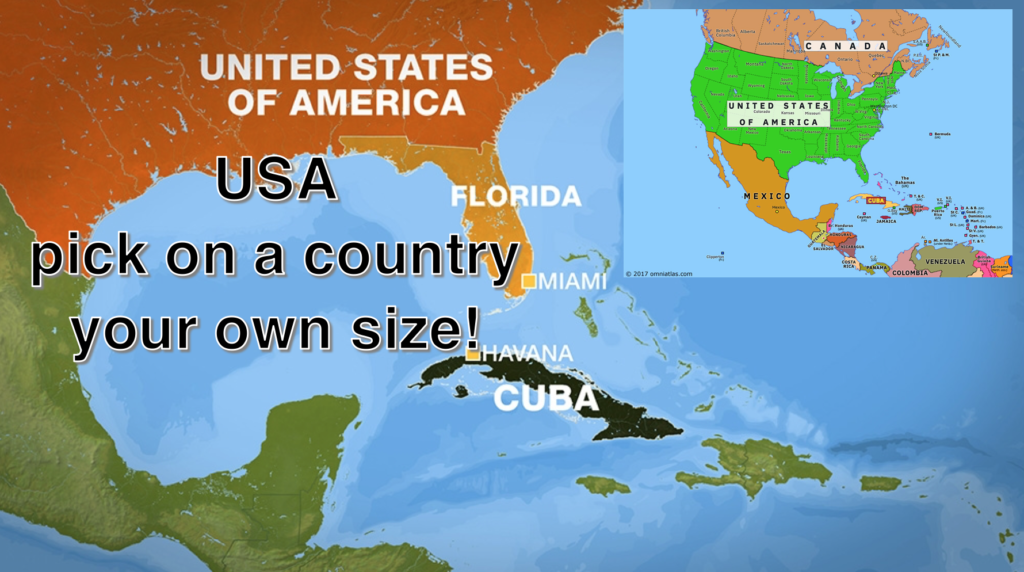
Have
you ever wondered why the most powerful nation in the world with 328m people is
so obsessed with Cuba a tiny island with 11million people? The quest to annex
Cuba to US has been taking place since 1820. In 1840s the US offered $100 million
to Spain to buy Cuba. This little island has been withholding pressures for
over 200 years and Cuba & Cubans must be commended & nations facing
similar threats must take inspiration from the Cuban people.
Manifest Destiny – US in Cuba
Cuba
is a former Spanish colony. The British captured & temporarily occupied the
capital Havana in 1762. The American Revolution was in 1776. It was the same
year that Spain opened Cuba’s ports to trade with North America. It is a habit
of the US to want to acquire any country that can secure profit and thus from
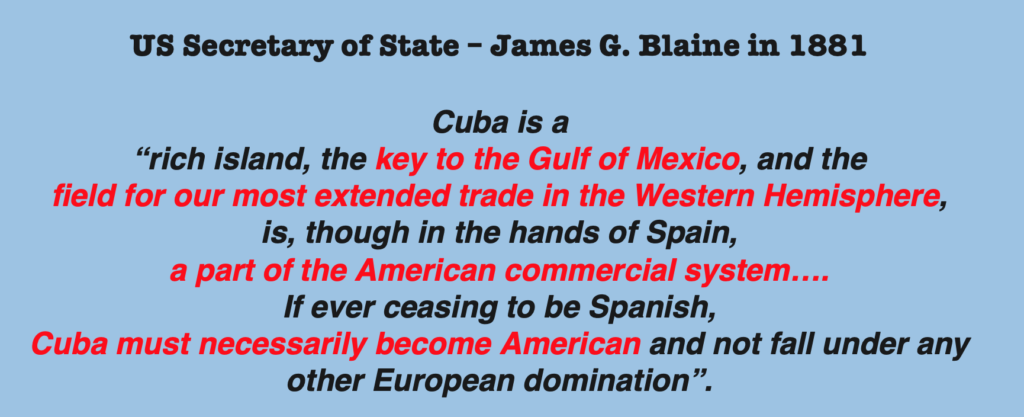
1820 US Presidents have been eyeing to take over Cuba. So much so the Americans
despatched were even executed by the Spanish.
In
1854 the US offered $130 million to Spain to buy Cuba via a proposal known as
Ostend manifesto or threatened war. By 1897 the US offered $300m to buy Cuba
(119 years later in 2016 US offered $480m for MCC/Sri Lanka) The US offer was
rejected & kickstarted the US-Spanish War. In 1898 the Treaty of Paris was
signed with Spain renouncing rights to Cuba and US commencing its dominance in
the region. Immediately following the treaty US began selling Cuban land to
Americans via Cuba Real Estate Company. US military rule in Cuba ended in 1902.
Yet US ensured Cuba remained committed to leasing Cuban land for US naval
bases. This is how US controls Guantanamo Bay since 1898. Guantanamo Bay was
leased to US in 1903 as part of Platt Amendment. Cuba claims that the lease
violates Article 52 of 1969 Vienna Convention on the Law of Treaties (Coercion
of a State by the threat or use of force) – can’t Sri Lanka apply same against
India for the signing of Indo-Lanka Accord of 1987 under similar coercion.
Cuban Rebellion against Spanish
occupation
The Cubans rebelled against Spain in 1868 which lasted 10 years.
Beneath the scenes the US was making its own plans and as usual playing both
sides! The 2ndattempt
by Cuba for independence was in 1897.
In
fact, the 1990 Republican Party election campaign poster in fact depicted US
rule over Cuba.
US-Cuba trade
Trade
that began under Spanish occupation resulted in 83% Cuban exports going to US
by 1877. By 1926 US companies owned 60% of Cuban sugar industry & imported
95% of total Cuban crops.
President
Kennedy continued trade restrictions by President Eisenhower & banned all
trade with Cuba. Travel & financial transactions by US citizens with Cuba
was also prohibited.
Cubans rebel against Cubans
Cubans
overthrew the government of G. Machado in 1933 & successor Ramon Grau
immediately nullified the Platt amendment – immediately US militarily
intervened sending 29 warships. The rule of Gen. Fulgencio Batista from
1940-44/1952-59 saw increase in US corporations in Cuba and Cuba became a
sanctuary for organized US crimes. It was against this that an armed conflict
broke out in 1953 led by Fidel Castro against the Batista government which was
overthrown in 1959.
Batista
can best be described in the words of US State Department advisor William
Wieland
I
know Batista is considered by many as a son of a bitch… but American interests
come first… at least he was our son of a bitch”.
Castro
ended US influence in Cuba. Castro visited US and even held meetings with
President Nixon.
If
US did not like Cuba’s agrarian reforms, nationalization of industries that
were owned by US companies – it should show other countries how the US
political psyche works. This was how US initiated trade restrictions against
Cuba. It should show countries that once anything is given to the hands of US –
there is no returning it or no taking it back. Yet Castro proceeded to take
over privately-owned businesses. US response was to stop buying Cuban sugar and
attempts to devastate Cuban economy. These are good lessons for all countries –
for short term gains, the long term repercussions of dealing with US!
US
behavior soon led Cuba closer to Soviet Union. Soon the nod was given to the
CIA to organize, train & fund Cuban rebels to overthrow Castro. Isn’t this
how JVP & LTTE emerged in Sri Lanka? Mrs Bandaranaike’s nationalization
initiatives that impacted US resulted in the birth of JVP.
The
model is replicated repeatedly – any US interest compromised by a nation, they
can expect ‘democracy’ in the form of insurgents trained by US & allies.
Castro
held his ground & even arrested US diplomats charging them with encouraging
terrorism and expelled them. US closed down its embassy in Havana in 1961
followed by an armed invasion by 1500 CIA trained Cuban exiles at the Bay of
Pigs (Operation Mongoose)
How
important Cuba is to US can be seen by the manner the US attempted to take over
Cuba – hijackings, assassinations, terrorist attacks, sabotage & numerous
psy-ops. Between 1960-1965 (5years) there had been 8 attempts to kill President
Castro. This is the nation preaching human rights.
US-Cuba in UN
It
has become customary for the US to vote against Cuba in the UNGA.
For
24years US has been voting against Cuba at UNGA. In 2016 US abstained under
former President Obama.
US
& allies in the UN & associate agencies began using ‘human rights’
against Cuba in addition to the sanctions and embargoes against Cuba. In 1984 a
US-NGO lobbied to have Cuba’s representative removed from the UNHRC and US went
on to appoint a Cuban refugee in US as US ambassador to UNHRC.
At
the 2000 UN Millennium Summit President Clinton & President Castro spoke
& shook hands and in 2001 US companies began selling food to Cuba.
President Bush reversed the changes by imposing travel restrictions. In 2003
the US Commission for Assistance to a Free Cuba was formed to bring ‘democracy’
to Cuba. The transition coordinator” (the same McCarry who engineered
overthrow of President Arstide in Haiti) was given a budget of $59million – we
all know what this would be used for! It was no surprise when Cuba was accused
of possessing biological weapons was alleged against Cuba in 2009.
In
2006, the US Congressional auditors accused USAID of channeling tens of
millions of dollars through exile groups in Miami – is USAID continuing this
modus operandi elsewhere including Sri Lanka?
Pope
Francis in 2013 brokered secret talks between Cuban & US officials
resulting in normalizing diplomatic relations in 2014. Noteworthy is the
lifting of restrictions by Americans travelling to Cuba and export of US
computer & telecommunications technology to Cuba in 2015. Is there a link
to the hacking that ensued recently? The Cuban government claims they have
traced the origin of the attacks with IP addresses that generated the attack
located in Florida/USA, UK, France & Turkey. This was also
linked up with protests naturally funded by the same culprits and relayed across
the world to showcase Cubans against its government. This was the same module
used to overthrow Iran’s democratically elected leader Mossadegh. However,
pro-Government rallies showed Cubans still supportive of Cuba.
In
April 2015 US removed Cuba from its list of State Sponsors of Terrorism” &
diplomatic relations were formally established in July 2015. President Obama
visited Cuba in 2016 & direct commercial flights resumed months later &
the first commercial flight from Miami landed in Havana after over 50 years. Then
came President Trump & more restrictions followed. In January 2020 US State
Dept returned Cuba to its list of state sponsors of terrorism.
Cuba’s
iconic leader Castro passed away on 27 November 2017 at the age of 90 having
bravely stood up to 10 US Presidents but able to keep Cuba’s flag flying!
Take lessons from Cuba
There
are many lessons for smaller nations to take from Cuba despite suffering
decades of embargoes, restrictions, terrorism and assassination attempts &
more.
Cuba’s literacy rate (youth & adult) is 100% (UNICEF)
Life expectancy parallels first world nations despite limited
funding/supplies
Cuba has enviable health & education systems – excellent
medical care & ability to sustain itself in times of natural and medical
emergencies despite the odds
Despite serious shortages of food & drugs, Cuba has
consistently kept its 11m population healthy into old age.Almost all Cuban
medical residents do family medicine.
Cuba’s life expectancy is 81 years for women & 77 years for
men
Cuban doctors go into medicine to treat people in their
communities and make a fraction of what most doctor make in the U.S. but most
Cubans aren’t going into medicine to earn money. They’re going into it to treat
people in their communities.
In 1999, Cuba created a school of medicine for Latin America.
They bring students in, train them for six years, give them room and board and
a stipendthe students are required to go home and practice in poorer areas.
It’s a remarkable program, with 10,000 students now from 33 countries.
Why
is such a super power hell bent on Cuba? Why does the US want to dismantle all
that the Cuban people believe in? Is it only the ideology of Capitalism vs Communism?
If communism stood for nationalist interests securing a socialist state for
near equal status for all, why would US wish to force capitalism down Cuba?
Does America fear the example that Cuba is showing the world regarding
self-sustenance? Is Cuba downplaying and highlighting the imperfect western
democratic system? Is America afraid that the Cuban example will get replicated
across the world and bring about the collapse of the capitalist system which is
creating more disparities than equal opportunities.
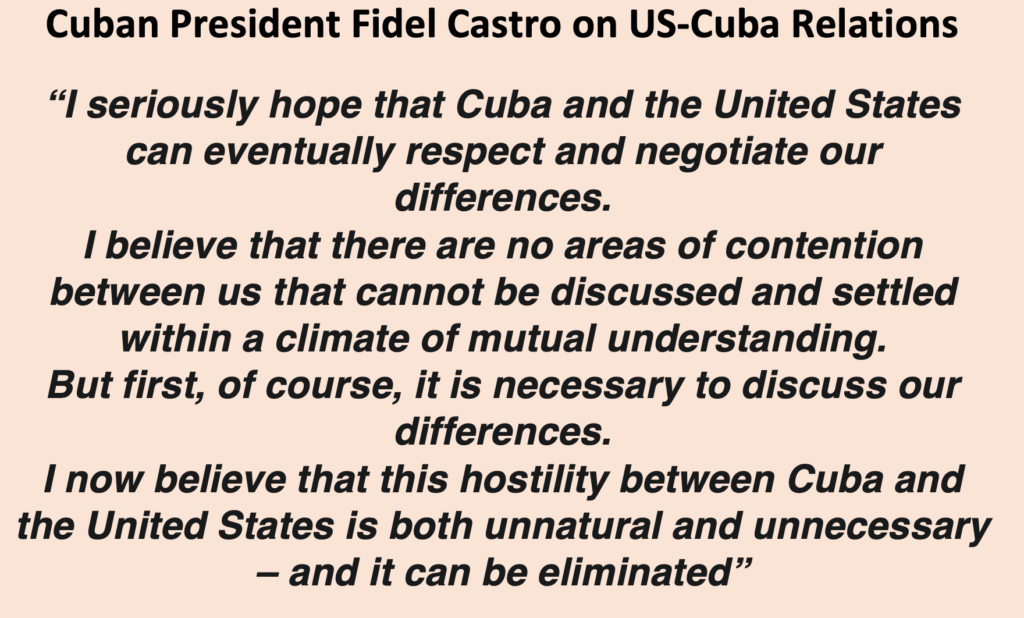
Quoting
Fidel Castro Cuba is the only country in the world which does not need to
trade with the United States”
There
is no oil in Cuba. Cuba is not a major political power globally? Cuba is not a
major economic power centre yet US is fixated with Cuba? Why?
Castro
will always be remembered because he was a leader to the people. He was not
controlled by global corporates and he was not shy to stand up to 10 US
Presidents. Countries & their leaders have much to learn from Cuba and the
Cuban people who know their nation has shortcomings but they also know that
those that bring promises & gifts to Cuba do so not for any love for Cuba
or Cubans.
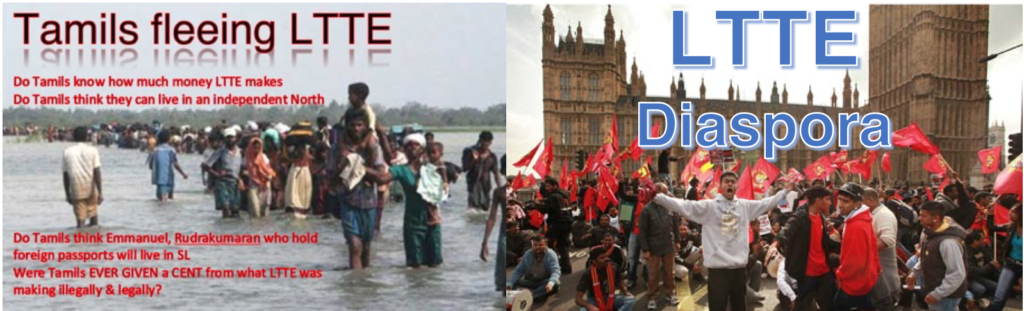
While
all LTTE were Tamils but all Tamils are not LTTE, it is important to also
differentiate who are the non-LTTE Tamils from the LTTE Tamils and the non-LTTE
Tamil Diaspora from the LTTE-Tamil Diaspora. The LTTE, LTTE-supporting Tamils
in Sri Lanka as well as the LTTE Diaspora made their millions from the war
manipulating & sacrificing the lives of even Tamils for this objective. This
same bandwagon of opportunists should not be allowed to walk away with the
dividends of the post-conflict benefits as well. The GoSL must ensure that
they cater to the needs of the victims of LTTE before looking after any LTTE
and their remnants.
If
the Government is enabling and facilitating life in the conflict-torn areas it
should be for non-LTTE Tamils FIRST.
If
the Government is giving state land for development or agricultural purposes on
lease as well as supporting via other state mechanisms it should be to non-LTTE
Tamils first. GoSL must ensure LTTE & LTTE families are NOT RULING
over non-LTTE Tamils & their families.
While
there will be a bandwagon of others screaming why” the discrimination to LTTE
and holding posters infamously known as ‘reconciliation’, the question asked of
these poster boys is was there no discrimination during LTTE rule towards
Tamils? How many Tamils ended in their graves by LTTE bullet? How many Tamil
children lie in their graves because of LTTE? How many mothers and fathers and
siblings are weeping the loss of their loved ones because of LTTE? Have
the foreigners weeping for LTTE Tamils ever wondered what LTTE did to the
Tamils?
When
the former UNSG female head arrived in Sri Lanka – she wept only for LTTE &
their families. She saw only them. She spoke to only them. Did she visit a
single Tamil family member of the Tamil leaders killed by LTTE? Today, she is
ridiculing her international position by making mullaivaikkal LTTE-mourning
speeches. This just proves how biased she was!
No
doubt the LTTE illegal combatants, their family members and others supporting
them need to be assimilated into society BUT they cannot be given preferential
or privileged positions over the non-LTTE Tamils who suffered, caught between
the LTTE and the armed forces. These people simply wanted to get on with their
lives but they could not because they had no money to migrate to other parts of
Sri Lanka, they had no money to fly overseas and they were too poor for any
LTTE diaspora to be bothered about them via the bogus charities that they
operated simply to channel money and equipment to LTTE. A good audit of
the charities that these LTTE Diaspora operated and how much they channeled to
Sri Lanka and for what purposes will disclose the nature of their ‘charity’.
Isn’t
this why Jane’s Intelligence declares LTTE annual profits to be $300m – this
was back in 2004-5 and profits after spending for LTTE arms & ammunition,
feeding and clothing combatants and other logistics. Now imagine how big this
kitty is now that the expense for LTTE combatants is no more and most living
combatants are of no use to the LTTE tie coat diaspora unless they hold high
profile positions in the LTTE fronts that are operating.
The
largess of this kitty is now being used to lobby and when the British
Parliament is lit for a few seconds to weep for Prabakaran – that should show
how pockets can be filled. It should also put to shame those stiff upper lips
of the Brits. These opportunists are no better than the handful of people who
end up plugging themselves to whatever political party that comes to power
& enjoying perks & privileges and love to appear on every photo
grinning to glory.
Thus,
it is extremely important to also realize that the non-LTTE Tamils and the
non-LTTE Tamil Diaspora number far more than the handful of people who have
found a new hobby carrying ‘genocide slogans’ and creating youtube videos with
heavy foreign accents by youth who have never set foot in Sri Lanka to even
know where a single town they quote are located.
The
foreign ambassadors are guilty of showing ‘concern’ for only LTTE-combatants
& their families. Is this out of ignorance or is this purposely done? If it
is out of ignorance, the GoSL must have a mechanism to clearly state the need
to differentiate the needs of non-LTTE Tamils vis a vis post-conflict
development rather than concentrate only on LTTErs & their families.
As
is clear, even the Tamil political parties concentrate or prefer to articulate
mostly in favor of LTTE Tamils & their families. This is probably due to
the lobbying of the LTTE Diaspora and course nothing much can be expected from
these political parties who spew hatred in public against the Sinhala
politicians and then go to their homes to have tea & a hearty tete a tete!
The
GoSL must listen to the pulse of the people. Whatever funds or lobbying happens
from LTTE Diaspora, any breakthrough for better relations comes from mending
ties of miscommunication. There is no hatred between any community in Sri Lanka
but there are plenty of miscommunications to purposely divide so that the
opportunists can bear the fruit. The Sinhalese having travelled North
immediately after the conflict ended and the Tamils travelling South learnt
that they are no different, they all suffer the same problems and they all had
been fooled.
The
task is to identify who fooled them and to ensure they are not fooled again.
Though there is a tiger in tie & coat calling himself ‘prime minister’ and
thinking he can reign Tamils from yankee land while his outfit remains banned
as a LTTE front.
GoSL
we are waiting for you to go after the money trail of the LTTE international
money making racket which is the backbone of the LTTE Diaspora’s powerbase
& should be exposed and dismantled. If 32 countries continue to ban LTTE
even after 12 years of its demise, why is diplomatic pressure not exerted for
the countries that house these LTTE fronts to investigate their sources of
income & legality of their operations.
No
doubt all credit of keeping Jammu-Kashmir Independence movement alive even
after seventy two years goes to the illegally deputed Indian troops there. If
those troops had not behaved brutally rather callously, situation would have
been all together different. The injustice directed by the government of India
and acted upon by the Indian troops has simply added more fuel to the fire. Be
it the 13th July 1931 or the 8th July 2016 or any other
day commemorated as the Black Day in Kashmir, is just a reaction to the
atrocities of the Indian soldiers in the valley. 8th July is the
death anniversary of young Kashmiri student Burhan Wani who was brutally
murdered by the Indian troops defamed as a Liberation Leader rather terrorist.
The fact of the matter is that Wani was neither a terrorist nor commander of any
militia; he was simply a 22 year old boy popular among the Kashmiri youth as a
social media activist with a large number of followers on social media. The
Indian government blamed him as the leader of a Kashmiri militant group; Hizbul
Mujahidin and on the basis of this baseless blame, he was killed in a fake
encounter with the Indian security forces. His death made him immortal and now
the people of Kashmir worship and praise him like a hero because he fought for
them with his words. His death anniversary is observed every year not only in
Jammu Kashmir but also in every part of the world where lives even a single
Kashmiri. Every year a very remarkable increase could be noticed in the number
of those who participate in his death anniversary processions all over the
world. From July 2016 to July 2021 the graph of his popularity is continuously
soaring high and high.
13th
July 1931 had another more pathetic tale to narrate. According to the details, on 21 June 1931, a public meeting was convened
at Khanqa-e-Mualla to choose the representatives of Kashmiri Muslims. At the
end of the meeting, a young Muslim, Abdul Qadeer, delivered a speech against
the Maharaja and was arrested on 25 June for agitation. On 13 July 1931,
Kashmiris gathered in front of Srinagar Central Jail to show solidarity at the
time of his trial. As the time for obligatory prayers approached, a young
Kashmiri stood up for Azaan (call for
prayer); that young man was killed by the Dogra police at the spot. Another
youth came forward to continue the Azaan
and was also shot dead. In this way, 22 Kashmiris embraced martyrdom during the
process of completion of the Azaan.
Since then, 13th July is commemorated as Martyrs’ Day every year.
The incident ignited a chain of protests for which Muslim notables were
arrested and Srinagar was given under military control while civil
administration was suspended. Increase in violence by Dogra Forces led to ‘No
Tax Campaign’ in districts Mirpur, Poonch, Rajuri and Bhimber from January
1932. To calm down the Muslim protesters and to inquire into their grievances the
Galancy Commission was formed which published its fact-finding report in April
1932. The Maharaja accepted the Commission’s recommendations to give adequate
representation to Muslims in state services but never implemented them. Same
behavior of bias and injustice is still in practice. People say that
time always keeps on changing but in the valley of Kashmir, time seems
paralyzed as nothing ever changes there with the passage of time; same pains
and same troubles, the same agony and the same distress for the people of
Kashmir.
The
wretched people of Occupied Kashmir have been a victim to the Indian atrocities
and cruelties for the last many decades. Countless mothers waiting for their sons;
numerous daughters waiting for their fathers but the local police authorities
say ‘The missing ones are the militants; they are the terrorists; we too are
searching for them; we have their names in the list of the Most Wanted’. But
the facts are otherwise; the missing ones and the disappeared ones are neither
the terrorists nor the militants; they are the murdered ones. The Indian
security forces are the murderers. If some day the international peace-keepers
start excavating the valleys of the Indian Occupied Kashmir, they would find
thousands of unmarked graves and unidentified dead bodies hidden under the
rotten leaves and in the depths of stagnant water ponds.
The
most pathetic thing is that the Indian intelligence agencies and Hindu
extremists groups are doing all possible for degrading anyone having any
linkage with Islam or Kashmir. In a recent incident, on 4th July
2021, a 23-year-old Muslim girl Afreen Fatima participated in an online forum
about the persecution of Muslims in India. No sooner had she wrapped up her
session than she found her mobile phone flooded with obnoxious messages,
informing her that she had been ‘put up for sale’ on a fake online auction.
According to media details her photographs had been uploaded on an app called
Sulli deals” and it all was done without her permission and without bringing
it to her knowledge. Same complaint was launched by 80 other Muslim women also;
those women included students, activists and journalists. Such degrading
behavior of the Indian intelligence agencies would certainly give birth to more
Wanis.
The government has issued a gazette notification
on 20/07/2021, amending the Universities Act of 1978 to include universities
for a specific purpose” within the purview of the University Grants Commission
(UGC). This sudden and ad-hoc amendment to the Universities Act appears to be a
calculated move to bring the Kotelawela National Defense University (KNDU)
within the purview of the UGC. Reacting to the major public opposition building
against the KNDU Bill, it appears that the government is attempting to push
ahead with its distorted project of mixing military and civilian education
through this amendment. The government and its advisors are meddling with the
higher education regulatory framework of this country either with malicious
intent to destabilize the entire university system or in absolute ignorance of
the far-reaching consequences of their actions.
In our last statement FUTA highlighted its
opposition to ad-hoc changes to the Universities Act of 1978. This amendment
realizes our worst fears. By surreptitiously attempting to bring the KNDU
within the purview of the UGC the government hopes to achieve the same
objectives contained in the KNDU Bill. The University Grants Commission is an
entity that regulates civilian university education in the country. It has
neither the expertise nor the capacity to regulate a defense establishment. If
the KNDU is brought within the purview of the UGC, it will result in a
situation where the UGC’s authority is undermined and questioned. Time and
again we have witnessed how the military hierarchy is unwilling to submit to
civilian authority. This is understandable. Within a military structure there
is no consultative decision making. A military decision-making system by
default follows a command and execute model. However, the Universities Act of
1978 and the UGC follow a completely oppositional model. They work through a
democratic model based on consultation and compromise. These are values deeply
enshrined within the Universities Act of 1978. Therefore, this amendment, if
passed in parliament, will result in a direct conflict between civilian and
military spheres of authority – an unwelcome and unnecessary conflict created
by the hasty bull-in-the-china-shop attitude towards regulatory reform adopted
by this government.
In addition, there is another major contradiction
in this amendment, which the government’s advisors appear to have missed in
their haste. If KNDU is to be brought under the UGC as a ‘specific purpose
university’, which would naturally mean a university set up for the ‘specific
purpose’ of educating military officers, how can civilian programs of study be
a part of this university? The classification of KNDU as a ‘specific purpose
university’ will automatically invalidate and render illegal all the civilian
programs currently operating without regulatory sanction in the university. It
is apparent, therefore, that through its hasty, non-consultative tinkering with
the Universities Act of 1978 the government has created a situation that can
result in further confusion, uncertainty and instability in the higher
education and university sector in this country.
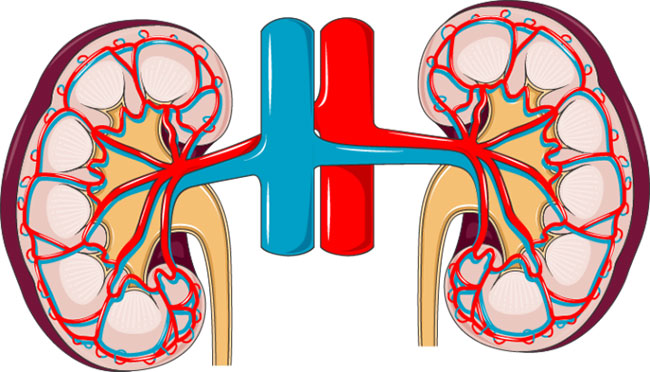
I have heard the Minister of Agriculture, speaking in Parliament, defending the ban on importing inorganic fertilisers, say that fertilisers are one of the causes of the increased incidence of Chronic Kidney Disease (CKDu), reported mainly in the North Central Province.
Cadmium, which is nephrotoxic, is found in Eppawala Apatite (rock phosphate- EP). Rock phosphate is used to manufacture phosphate fertilisers such as Triple Super Phosphate (TSP).
Although EP, and TSP contain cadmium, it is present in insoluble complex forms. When these phosphatic fertilizers are applied to soils, only a very small percentage of cadmium, in the fertiliser gets into water as cadmium ion (Cd ++). The balanced cadmium is not easily available and remains as an insoluble complex. Hence, Cd is not available for plants to be absorbed. A number of soil factors, such as soil pH, determine Cd availability. TSP is used as a fertiliser in all agricultural areas in the country including upcountry, but CKDu is reported mainly in the Anuradhapura and Polonnaruwa districts.
The exact cause of the disease is not known. A number of seminars/symposia on CKDu have been held during the last few years. Results of studies carried out by a number of Sri Lankan scientists were presented at these seminars, and CKDu was attributed to a toxic element/s or compound/s in drinking water. However, there is no conclusive evidence on what causes CKDu.
The Ministry of Health, in collaboration with the World Health Organisation, carried out a multidisciplinary research study during 2010-2012. This study, costing nearly Rs. 100 million, was assisted by around 40 Sri Lankan scientists. There was no conclusive evidence from this study as to what causes CKDu. A recent review by the International Water Management Institute (IWMI) (ref. IWMI Working Paper 158) indicates that no specific substance/compound has been proved to cause CKDu.
Some, including the Minister of Agriculture, attribute CKDu to fertilizers. If so, it is not possible to explain why CKDu is not prevalent in many other districts such as Kalutara, Kandy, Nuwara Eliya , Hambantota, etc., where TSP is applied in large amounts. Even in the NCP, the occurrence of CKDu is considerably higher in some DS divisions than in others.
It is very important that those who attribute CKDu to fertilisers, including the Minister of Agriculture, refrain from citing unconfirmed unscientific views/ideas, which tend to give wrong information to the general public and to policymakers.
The Director General of Health Services has confirmed another 42 coronavirus related deaths for July 21, increasing the death toll in Sri Lanka due to the virus to 3,959.
The deaths reported today includes 25 males and 17 females with one of them below the age of 30.
Six victims are between the ages of 30-59 years while 35 are aged 60 and above.
The Ministry of Health says that another 586 persons have tested positive for the novel coronavirus today, increasing the daily count of Covid-19 cases to 1,714.
This brings the tally of Covid-19 positive cases confirmed in Sri Lanka to 291,298.
22,646 infected patients are currently under medical care while total recoveries stand at 264,755.
Health Minister Pavithra Wanniarchchi stated that a majority of patients that succumbed to COVID-19 have not received even one dose of the COVID vaccine.
The Minister requested the people over the age of 60 and others with various complications to take part in the vaccination rollout and to get vaccinated to protect themselves and others.
She reiterated that the main objective of the vaccination rollout is to save the lives of people.
At present, the Government has implemented priority vaccination programmes throughout the island. The Minister of Health stated that the required quantities of vaccines have been received and will continue to be provided.
Despite the successful implementation of the vaccination programme by the Government in the last few days, there has been a slowdown in the number of people coming for vaccinations.
Minister Pavithra Wanniarachchi stated that the health authorities have pointed this out with data and information.
The data and information show that people who have died of Covid infection and are in the intensive care unit have not received a single dose of the vaccine.
The incident took place during the final debate in the House of Commons before MPs leave Westminster for the summer.
Ms Butler used her speech to attack the prime minister for “misleading this House” during the pandemic.
The Brent Central MP cited past statements on economic growth, nurses’ bursaries and investment in the NHS as proof of the prime minister’s dishonesty.
The rules governing behaviour in the Commons state that MPs are not allowed to use abusive language or accuse another MP of either being drunk or a liar.
Acting Deputy Speaker Judith Cummins interrupted Ms Butler and asked her to “reflect on her words and perhaps correct the record”.
Ms Butler replied: “At the end of the day, the prime minister has lied to this House time and time again and it’s funny that we get in trouble in this place for calling out the lie, rather than the person lying.”
Ms Cummins again urged the MP to take back her comments but Ms Butler said, “I have reflected on my words and somebody needs to tell the truth in this House that the prime minister has lied.”
The Deputy Speaker then ordered Ms Butler to withdraw from the Commons for the rest of the day’s sitting.
After listening to the news from Sri Lanka I could not believe how disgusting the behaviour of some people, especially some selfish politicians, trade unions, and health workers unions.
Only in Sri Lanka did doctors and nurses organized strikes demanding pay hikes and solutions for other job-related matters during a pandemic. These problems may have existed for many years before the pandemic started. Miraculously they woke up suddenly and jumped into action during this pandemic not limited to Sri Lanka, but all over the world. It is shameless behaviour obviously backed by some of the political parties who want to disrupt government efforts to control the situation. I have read about some countries’ retired nurses volunteering in hospitals where help is needed. These nurses are called travelling nurses. They work expecting nothing in return.
Somehow when hospital strikes are over again backed mainly by opposition parties teachers started the same thing. One of the leaders who have the same name as a Russian dictator acts like a mad fox. What I have heard is that he is not even a teacher. He seems to be handled by some NGO. Among protestors are monks. Nowadays monks behave like madmen. Why do they need money? If they are real Buddhists they must help people not participating in rallies during the pandemic. If these teachers are really concerned about their students they never participate in treacherous activities. I am sure these rallies definitely create Corona hot spots.
It is so sad to see none of the opposition parties has given a modicum of support to combat the pandemic. They looked like vultures to see any misstep taken by the people working to combat the pandemic.
Another disruptive activity is trying to stop vaccination. Public health officials started a strike in the middle of vaccination efforts. Fortunately, our army took charge of vaccination and they do a fantastic job and continue to do so. At the same time, some doctors and other health officials spread bogus claims highlighting the unfounded ill effects of some vaccines. Someone even tried to stop importing Chinese vaccines. These people do not care how many died during the pandemic. Their priority is to grab the power.
On the political front, I saw a gathering of opposition parties to create a common front to rescue the country. I am not going to make anything more than people who were very vocal about how to rescue the country. One guy was a crook who imported expired medicine and gave it to cancer patients, and another one was who tried to hide from a hit and run road accident and he also destroyed Avangrad company stopping foreign exchange to Sri Lanka. Another one was a racist Tamil politician talking about the Tamil problem. He should talk to Mr Sidhartahan, who is a community activist trying to help underprivileged Tamil people. He can get a good answer from Mr Sidhartahn: what are the real Tamil problems?
It is so pathetic these selfish politicians’ behaviour. My suggestion to the government is to stop paying salaries to striking government workers. Why in the world do these morons get paid during these disruptive activities. Also, the army should take the front line in vaccination projects. This is the only way we can have a successful vaccination programme.
Writing an essay
titled A country without values or
principles about the situation in Colombia in January
2019, Carlos Alberto Palacio
Acosta, Director of Revista Colombiana
de Psiquiatría, wrote that quote, Analysing
the root of the problem brings us face-to-face with individuals who lack the
most basic values: loyalty, solidarity, honesty and empathy, to name but a few.
The social distortion that led us to live for decades in a mafia culture” that
upheld and introduced concepts such as the end justifies the means”, money
represents success as both a goal and symbol of power”, power is achieved by
walking over people” and survival of the fittest”, unquote.
Carlos Alberto Palacio Acosta wrote about Colombia. He
could very well have written about Sri Lanka as all of what he wrote about
appears to ring a bell in Sri Lanka as well. In a country where an Executive
President pardons convicted rapists and murderers without at least adhering to
Constitutional provisions, where such a pardoned rapist is appointed in one
instance as a Justice of the Peace and where in a another instance a murderer
is appointed to a top government position, where perpetrators of major financial
scams roam the world without any accountability, where the buck for major
crimes such as a bombing of churches on Easter day and killing hundreds of
worshippers does not stop with those constitutionally responsible, where no one
is held accountable for a pogrom organised by a government against its own
minority community, where bribery & corruption cascades from the highest
levels to the lowest, and flows on as a way of life, who would be able to
discern which country Carlos Alberto Palacio Acosta was writing about?
Despite this, very little concern or objection has
been expressed by political, religious and civils society leaders to the
pardoning of criminals facing death sentences, indicating possibly that the
leaders as well as the people are all walking around without clothes and
admiring each other’s invisible clothing while the nakedness of broader
society’s values is as stark as the nakedness.
This is not the first occasion when Parliamentarians and
others were silent when Presidents pardoned convicted rapists and murderers serving
death sentences, and without following constitutional requirements.
There is anecdotal information that the latest recipient
of a presidential pardon, Duminda Silva, had been targeted by high level law
enforcement officials as well as some in the Justice system, in collusion with
some politicians, and that his conviction had been stage managed to lead to an
inevitable conviction. There have been several social media YouTube clips that
have been doing the rounds showing the involvement of a leading politician of
the Yahapalanaya era, a senior police official and a judge of the highest court
allegedly targeting Duminda Silva.
While what Mahatma Gandhi said is very much
what all founders of religions would have said, it is not easy for the ordinary
common man and woman to be as positive when confronted with dishonesty, deceit,
inhumanity, discrimination and the misuse of power by those in power to degrade
and dehumanise ordinary folk.
Pardoning criminals without providing reasons
for such pardons and not adhering to constitutional requirements in granting
such pardons does not encourage positivity. Pardoning only those who have
influence, money and perhaps even incriminating knowledge that could be
embarrassing to high level politicians, law enforcement officials and members
of the Judiciary, is nothing but a prostitution of values and principles.
Miscarriage of justice does occur and it is
likely that innocent people without the right connections, money and/or valuable
information as bargaining tools, have also been convicted of crimes they never
committed. There needs to be a mechanism for such people to seek justice
as they have no recourse to seeking a
pardon from the President.
Pardoning convicted criminals without reason
emboldens the recipients of pardons while it demeans the grantor of the pardons,
the Executive President of the country, the highest elected official of the
country. This leads to a loss in confidence in the Executive President and the
Presidency itself, and a further erosion of societal values and
principles.
However, if people are to overcome this sense
of despair, they need to think positive and act positive, and be more proactive
in guarding what makes a human being a human, a value system and a set of
principles enunciated by all religious leaders.
A proliferation of rituals and mindless
adherence to rituals, is not an indication that the society is adhering to any
values and principles.
It appears that rituals have become the
invisible clothing for the Emperors and the people and the pretence to cover
their nakedness of individual and societal values. Amongst all religions,
rituals practiced in the name of Buddhism have become political propaganda
demonstrations with the State taking a leading role in setting an example to
the general populace. These rituals have become tools to safeguard the
institutions and not Buddhism as professed by those promoting more and more
ritualistic practices. Yet, very few religious and civil society leaders extol
anything different, and their inaction perpetuates the mindless rituals in the
name of Buddhism.
Will the Sri
Lankan society wake up to the fact that they are in very shallow waters when it
comes to values and principles? Which direction will the country’s political,
religious and civil society leaders head now?
There must be a total ban on Animal Sacrifice as it hurts
the sentiments of a vast majority of people of this predominantly Buddhist
country.
No one in Sri Lanka has a Constitutional Right to kill an
animal under the guise of freedom of religion.
The State is the Guardian of all Animals in Sri Lanka.
This is part of Buddhist Customary Law.
The trusteeship power of the State was extended to protect
animals, birds and other living creatures of the land pursuant to a moving plea
made by Arahant Mahinda to King Devanampiyatissa in their very first encounter
at Mihintale about 2300 years ago, in the following words:
“Oh! Great King, the birds of the air and the beasts
have an equal right to live and move about in any part of this land as thou.
The land belongs to the peoples and all other beings and thou art only the
guardian of it”.
The Buddhist Customary Law in Sri Lanka was also heavily
influenced by
the Buddha’s discourse in the Cakkavatti Sihanada Sutta
(Digha Nikaya of the Sutta Pitaka) where the Buddha in spelling out the duties
of an ideal ruler declared:
” The Cakkavatti King (Righteous King) will give protection,
shelter and ward both to the different classes of human beings, and also to
birds and beasts”
Emperor Asoka of India (3rd Century BC) accepted state
responsibility for animals and granted them protection via edicts inscribed on
rocks all over India (the Asokan Edicts). These edicts were legal
pronouncements based on ethical teachings.
Arahant Mahinda’s declaration at Mihintale set the tone for
the creation of an Asokan model of benevolent state in Sri Lanka, which
protected animals, accepted State Responsibility for animals, and prohibited
Animal Sacrifice.
King Devanampiyatissa established the world’s first wild
life sanctuary in Mihintale following his acceptance of Arahant Mahinda’s life
affirming advice.