Controversy about Islamophobia: a brief review of literature

June 8th, 2017

By Rohana R. Wasala

The argument that there is no Islamophobia as such seems to be gaining credence.  If, as Muslims claim, theirs is the world’s fastest growing religion (Wikipedia), how can there be any? But it is a fact that many people, particularly non-Muslims, make negative comments on some central aspects of Islam. The internet is awash with such criticisms. There is a fair amount of print literature also about the subject. Not all criticisms of Islam are credible, but most apparently merit attention. Instead of flatly dismissing all these criticisms as manifestations of Islamophobia (which is a demonstrable myth, and a bit outdated one at that), won’t it be good to meet those criticisms rationally and try to dispel misconceptions, if any, that at present threaten humanlike peaceful co-existence between Muslims and non-Muslims? Who are the most eligible to contribute to such debates? Muslims themselves, of course, including former Muslims.

TROP (thereligionofpeace website) says: It’s far easier to act as if critics of Islam have a problem with Muslims as people than it is to accept the uncomfortable truth that Islam is different” (where, I think, ‘people’ should be stressed, and where ‘different’ should not be read as ‘bad’ or ‘inferior’).  Similarly, it seems far easier for defenders of Islam to create a chimera named Islamophobia as a quixotic target for evasive attacks than to try to explain away the elements in their faith that non-Muslims find strange if not exactly fearful, or find it difficult to square with reason, through rational debate. The common humanity of Muslims and non-Muslims is an incontrovertible fact. It is also equally certain that humanity is older than any religious faith.

A phobia is an irrational fear of something.  There are hundreds of different phobias that people could succumb to. The English language has specific names for them. For example, some people may have a fear of washing or bathing, and this is called ablutophobia; if someone is unnecessarily fearful of going up or down a lift as it involves being in an enclosed space, they may be suffering from claustrophobia or the baseless fear of confined places; the pointless fear of travelling by air is named aerophobia; arachnophobia is the fear of spiders, and so on. Phobias are unhealthy, and are worth trying to overcome if possible. But fear itself is not necessarily unhealthy. Fear is a natural emotional response to real or perceived danger, that induces behavioral changes in us that are required so as to ensure our self-protection. It works at the rational conscious level as well as the instinctive level. Fear of being attacked by wild animals, for example, encourages us to be particularly watchful when we are walking through a jungle known to be infested with predators. Fear of terrorist attacks in a locality where there is a likelihood of such attacks is not irrational; neither is fear of terrorism itself. So, if we adopt certain behaviours  that exhibit fear of something that we have reason to dread, for example dengue, we should not be criticized as being afflicted with a particular kind of phobia. Fear of contracting dengue is useful besides being rational, because it leads us to devise ways to protect ourselves and others from the disease. The difference between a phobia (an unfounded fear of something)  and a natural  healthy fear (of something harmful or threatening) is that whereas a phobia may be reasoned out, or successfully  treated, the other cannot.

‘Islamophobia’ is a word coined on the analogy of the phobia concept explained above. So, it may be broadly interpreted as an irrational fear of Islam. The term Islam primarily refers to the religion of Muslims established by their prophet Muhammad (570-632 CE). But, in the context in which we are applying it here, it also implies the global Muslim community, their culture, and the countries where

they dominate. Islamophobia must therefore be seen as an irrational fear of the religion of Islam and its followers. However, if there really is such a thing as ‘Islamophobia’ as alleged, we should hope that it would stand a good chance of being reasoned out, or otherwise overcome, and that those allegedly afflicted with it – the ‘Islamophobes’ – would be cured of their phobia to their benefit. However, the problem is not that simple. Any religion is invariably viewed as a force for peace, compassion, hope, humanity, and morality. Why would a religion, in this case Islam, induce a so-called phobia among people outside its pale (assuming for a moment that it is real)? (It is reasonable to assume that any ‘fear’ of Islam, whether rational or irrational, could arise only among people who are non-Muslims or  Muslims who are contemplating leaving Islam, an unlikely event, though, given that apostasy is a capital offense in that religion).

World’s major religions are of two types: faith-based Abrahamic religions (e.g. Judaism) and intellect- based Dharmic religions (e.g. Jainism). Abrahamic religions are so called because they can all be historically traced to the same spiritual source, the prophetic figure called Abraham, the ancestor of Israelites.  Judaism is the oldest Abrahamic religion which probably originated in the 7th century BCE. Christianity emerged in the 1st century CE, the youngest Islam had its beginnings in the 7th century CE, that is, about a millennium and a half after its oldest ancestor.  Numerically, the  three Abrahamic religions of Judaism, Christianity and Islam dominate the religious world today. Judaism is the oldest known version of Abrahamism (which is belief in the God of Abraham ‘the one God, creator of the universe’). It is the same God of Abraham, Jesus and Muhammad (respectively Yahweh of the Jews, God of the Christians, and Allah of the Muslims). According to the Wikipedia, in terms of the 2005 estimates, 54% of the world population (3.6 billion) were followers of the three major Abrahamic religions, whereas only 32% (2.2 billion) were of other religions; another  12% (800,000) were without any religion, and the rest others ; Judaism claimed a megre 0.2%. The same source indicates that 33% of the world community were Christian to 21% Muslim in 2005. So, these two faith-based Abrahamic religions are professed by more than half of the world population.

All religions are essentially  philosophical, that is, they are based on characteristic conceptions of the world/universe that shape the basic assumptions of the pioneers of those religions about such things as the nature of human  knowledge, life, reality, and existence, etc.; religions  also derive, from their philosophies, moral principles for the guidance of their adherents’ ethical conduct, whose ultimate aim is the achievement of a particular ‘spiritual’ end/highest state of happiness/summum bonum.  ‘Spirituality’ is the raison d’être of any religion. However, religions differ among them both in terms of their specific worldviews and their ethical teachings and practices. People who profess different religions are divided on the basis of their different religious beliefs and prescribed modes of conduct. It is also usual for adherents of the same religion to create internal divisions based on different interpretations of its important concepts. These are facts of common knowledge and I think there is no need to give examples to illustrate them.

The monotheistic religion of Muslims is based on the principle of absolute submission to Allah, the one supreme god. They believe that the main Islamic scripture the Quran contains the direct word of Allah as revealed to their prophet Muhammad through the angel Jibreel (Gabriel in the Christian Bible). Sunnah is the orally transmitted record of his teachings, deeds and sayings or collectively called ‘al ahadith’ (plural of the Arabic noun ‘hadith’)  of the Islamic prophet (sometimes translated into English as ‘traditions’). The Arabic word sunnah literally means habit or usual practice. The Quran and the Sunnah are the two main sources of the Islamic ideology and the Islamic law. The Islamic law is called the sharia (‘the pathway to be followed’). For Muslims, the sharia (al sharia/assharia) embraces the totality of their religion. Muslims believe that prophet  Muhammad set the example of a perfect Muslim. Following is a very brief dispassionate look at this vital aspect of Islam:

By reading the Quran and the Sunnah from which the Islamic legal system derives, we may get some idea about why non-Muslims may find many of its aspects different from their own concept of what legal principles should be that claim divine sanction. Of course, devoted Muslim believers find the same tenets quite normal and justifiable. It is possible that the severity of the punishments meted out under sharia  for specified offences is meant to deter such offences, so the need for inflicting the same punishment is minimized. For example, sharia’s punishment for theft is for the thief to have his or her right hand cut off at the wrist. Probably, this worked as an effective deterrent in medieval times. But  many civilized societies today do not accept a cruel punishment like that for theft as humane. Blasphemy (criticizing any part of the Quran) is punishable by death, as is apostasy. Denial of Muhammad’s prophethood is also a capital offence. From the point of view of non-Muslims who believe in gender equality, the sharia law that says that at a trial a woman’s evidence carries only half as much weight as a male’s does not represent justice. When, under sharia, a charge of rape is brought against a man, the victim woman must produce four male witnesses to prove her case. It is her voice against the four males’. In non-Islamic societies, this would be generally condemned as misogynistic discrimination against women.

One of the many unique features of Islam that make it so different from other faith systems is the close identity between it and its founder: His character, words and deeds are the perfect embodiment  or the normative example of the doctrine. The limits of interpretation possible or permissible of the ethical content of Islam have for ever been decided by  Muhammad. Muslims believe that the things written in the Quran are the unalterable word of Allah revealed to Muhammad. It is said that Winston Churchill used to refer to Muslims as Mohammedans (followers of Mohammed). It is an accurate description. The close mutual identity between the prophecy and the prophet, and the unshakeable belief in the divine origin of the Quran mean that the religion of Islam has remained unchanged and unchangeable over time unlike other Abrahamic religions.

From a neutral point of view, it appears that Muslims are not obliged to be perfectly honest to non-Muslims whom they call kafiroon (Arabic: plural of kafir, meaning  infidel or unbeliever/disbeliever) in circumstances that are detrimental to the Islamic cause. The complex principle of taqiyya (prudence, fear, caution in Arabic) is criticized by non-Muslims because, they say, it allows the Islamic faithful to tell lies to non-Muslims (the infidels) in order to serve the goal of advancing Islam/the cause of Allah. But Muslim scholars tell us that ‘taqiyya’ is not as simple as that.

Surah III.54 of the Quran is:

And (the unbelievers)

Plotted and planned,

And God too planned,

And the best of planners

Is Allah.


Surah XVI.106:

Anyone who, after accepting

Faith in God, utters unbelief,-

Except under compulsion,

His heart remaining firm

In Faith – but such as

Open their breast to Unbelief, –

On them is Wrath from God,

And theirs will be

A dreadful Penalty.

Both verses above  are from the late Pakistani Quranic scholar Abdullah Yusuf Ali’s authoritative English translation of the Quran, whose first edition came out in 1934. In his commentary on the Arabic word ‘makara’ in the original of the first verse (Surah III.54), he says: ‘The Arabic makara has both a bad and a good meaning, that of making an intricate plan to carry out some secret purpose. The enemies of God are constantly doing  that. But God – in whose hands is all good – has His plans also, against which the evil ones will have no chance whatever’. To explain the meaning of the second verse (Surah XVI.106) Abdullah Yusuf Ali refers to the case of a Muslim who recanted his faith while being subjected to torture at the hands of enemies, but he never wavered in his belief; he came to Muhammad at once and told him what had happened. The prophet consoled him and confirmed his faith. Abdullah Yusuf Ali points out that there is no permission in this for a believer for weakness or dissembling when tortured or persecuted. But a commentator representing the research oriented website (TheReligionofPeace) quoted at the top of this essay, says about the same verse that it ‘establishes that there are circumstances that can “compel” a Muslim to tell a lie’.

Another example of the practice of Taqiyyah quoted in the same site is from Hadith and Sira :

The Prophet said, War is deceit”. The context of this is thought to be the murder of Usary ibn Zarim and his thirty unarmed men by Muhammad’s men after he guaranteed him safe passage.

Taqiyyah makes it difficult for a non-Muslim to have a fair debate with a Muslim even about a mundane topic, unless the latter decides not to gain an ‘undue’ advantage over his opponent by misapplying the taqiyya principle. (The problem in this context is that there’s hardly likely to be any agreement between the two debating sides about what is due or undue.) Yet this is what usually happens, for example, in TV debates between Muslim and non-Muslim antagonists. I have never seen a Muslim minister accepting defeat  or moderating his stance in an argument with a Buddhist monk, even when confronted with overwhelming evidence against his  position.

Abdur-Rahman Muhammad is a former member of the International Institute for Islamic Thought  based in Northern Virginia, a front organization of the Muslim Brotherhood, which itself was founded by the Egyptian Hasan Al-Banna in 1928. Al-Banna was an admirer of Adolf Hitler. The motto of the Muslim Brotherhood is: Allah is our goal. The Prophet is our leader. The Quran is our law. Jihad is our way. Dying in the way of Allah is our highest aspiration.” Abdur-Rahman  Muhammad was present when the neologism ‘Islamophobia’ was proposed and adopted. However, following is how he characterizes the concept of Islamaphobia now, according to Claire Berlinski, Moderate Muslim Watch: How the Term ‘Islamophobia’ Got Shoved Down Your Throat,” Ricochet, November 24, 2010: This loathsome term is nothing more than a thought terminating cliché conceived in the bowels of Muslim think tanks for the purpose of beating down critics”. This is quoted by David Horowitz and Robert Spence in their book ISLAMOPHOBIA – Thought Crime of the Totalitarian Future”, Sherman Oaks, US, 2011. Such a judgment from an ex-Muslim (of Abdur-Rahman Muhammad’s caliber at that) needs special attention, but need not be accepted as final. The best thing for us to do is to read the Quran and the Hadith for ourselves and also evaluate what others say about these, and finally try to make up our minds about the issue.

FOREIGN INVESTMENT IN PAKISTAN

June 8th, 2017

ALI SUKHANVER

Terrorism directly damages all type of trade and business activities in a country. For a terrorism-stricken country like Pakistan, it becomes very difficult to keep its economy stable on long-term basis. Business and trade activities bring prosperity not only to the investors or traders at individual level but to the whole society. Increase in exports, construction of new roads and motor-ways, plans of running bullet-trains, erection of new shopping malls and plazas, establishment of new factories and above all the projects like CPEC, internationally all such development projects are considered positive indicators of growing business activities. Moreover such projects provide new prospects of employment to the youth also but without foreign investment this business activity could never be a speedy process in countries like Pakistan. When we talk of foreign investment in Pakistan, we find our old friend China topping the list of foreign investors in Pakistan. According to data released by State Bank of Pakistan the inflows of investment from China had been 56 percent of the total foreign investment into Pakistan during July – April 2016/2017. The report says that total foreign investment into Pakistan during first ten months was recorded $1.345 billion out of which inflows from China had been recorded at $754.3 million in the same months of the current fiscal year. Analysts are of the opinion that the inflows towards projects under China Pakistan Economic Corridor were the prime reason for this increase. However ups and down in foreign investment badly affect the trade and business activities. According to a recent survey, the Foreign Direct Investment in Pakistan averaged 2651.26 USD Million from 2010 until 2016, reaching an all time high of 3184.30 USD Million in 2010 and a record low of 2099.10 USD Million in 2012. Such up and down in foreign investment mars the development graph of the country’s economy.  Punjab, being the largest province of Pakistan, plays a very important role in the economy of the country. In 2009, feeling the increasing need of foreign investment in the country and particularly in Punjab, the government of Punjab established a department with the name of the Punjab Board of Investment & Trade commonly known as PBIT. The actual responsibility of the PBIT is to urge and motivate the foreign investors to invest in different development projects in Punjab as much as possible. Since its inception, PBIT has been striving hard towards achieving the vision of a prosperous Punjab under the magnificent command of Mr. Shehbaz Sharif, the Chief Minister of Punjab. The PBIT focuses on three areas relevant to economic development: facilitating new and existing businesses; creating a mutually beneficial business environment through proactive policy advocacy both at the provincial and federal level and, promoting Punjab as the ultimate investment destination. Mr. Muhammad Haroon Shaukat, a seasoned diplomat, is the Chief Executive Officer of PBIT. Before his appointment as the C.E.O PBIT, he had served as Pakistan’s ambassador to Turkey, Bolivia, Columbia, Paraguay and Suriname. PBIT is doing marvelous efforts to invite more and more foreign investors to Punjab. In pursuance of this pro-investment approach and to promote potential investment opportunities, Government of the Punjab conducted a two day International seminar on Business Opportunities in Punjab 2017 on 22 & 23 May 2017 in Lahore. Investors from 400 countries attended this seminar. Various stalls were held to brief the overseas investors regarding investment plans in various sectors. The speakers at the seminar told the audience that there are very bright prospects for the foreign investors in the field of communication, import and export, education as well as in the field of agriculture. It was also told to the audience that Pakistan owns a very fertile and blessed type of land that can cultivate huge outcomes for the investors. In short this seminar was a success story on the credit of the PBIT and the Chief Minister of Punjab Mian Mohammad Shehbaz Sharif.

We must keep in mind while discussing flourishing economic activities in Pakistan that no business activity could be possible without flawless law and order situation. The security agencies including the army, the rangers, the police and the intelligence agencies play a very important role in maintenance of law and order situation. Punjab is lucky enough that here circumstances pertaining to the safety and security of the foreign investors are far better than other provinces though situation is getting better there too. Unfortunately Pakistan had been an undeclared battle-field of interests for so many countries in previous years. Countless hostile intelligence agencies had been trying to destroy the whole social and economic structure of Pakistan with the help of suicidal attacks, bomb blasts and kidnapping of foreigners working on different development projects. Pakistan had to face severe losses as a result of these terrorist activities. A lot of local and foreign investors shifted their business projects to the Gulf States; Bangladesh also became one of their choices. Feeling the gravity of the situation, the security forces of Pakistan did all their best to give the terrorists and their god-fathers a very tough time and to shun them out of Pakistan. Arrest of an Indian intelligence officer from Balochistan was also a very important mile-stone in this regard. Though we cannot say that Pakistan has succeeded in wiping off the dirt of terrorism completely but Pakistan has done a great job in this reference. Cleaning up of terrorists is still in process; our nation is very much confident that soon Pakistan would be a ‘Terrorism Free Country’. With its limited resources Pakistan is trying to do the difficult job of controlling terrorists and terrorism. Now it is the responsibility of the world-around to co-operate with Pakistan in doing this difficult job.

අනුර දිසානායකගේ පුත‍්‍රයාට ජයසිරි මංගලම්.. අනුර-බිරිද සතුටින් විවාහ උත්සවයේ..[Photo]

June 8th, 2017

ලංකා සී නිවුස්

ජනතා විමුක්ති පෙරමුණු නායක අනුර කුමාර දිසානායක මහතාගේ පුත‍්‍රයා වන කැළුම් දිසානායක අද පස්වරුවේ විවාහ දිවියට ඇතුලත්ව ඇති බවට ෆේස්බුක් ජාලයේ පින්තූර සහිතව විසතර පලවෙයි.

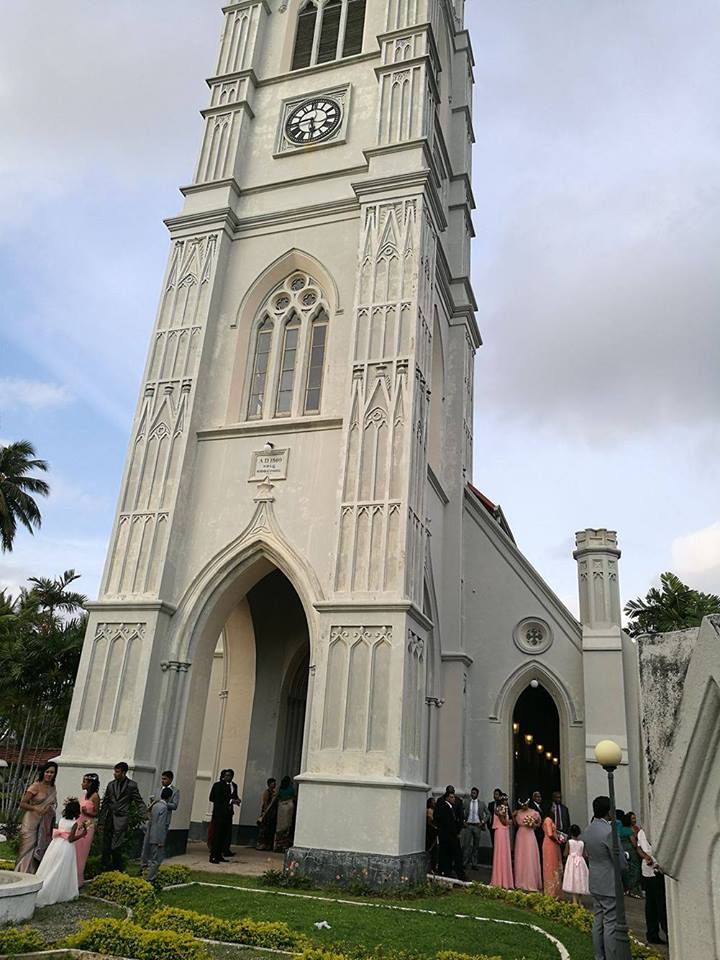
කතෝලික ආගමික චාරිත‍්‍රානුකූළව මෙම විවාහය සිදුකෙරුනේ රාවතාවත්ත ශුද්ධ වූ එමානුවෙල් පල්ලියේදී බවත් විවාහය වෙනුවෙන් වූ සාදය ඉන් පසුව පැවැත්වුනේ මොරටුව තොටුපල හෝටලයේදී බවත් වාර්තාවන්හි දැක්වෙයි.

එම විවාහය සදහා ජවිපෙ නායක අනුර දිසානායක සිය බිරිද සමග සහභාගී වූ අයුරු දැක්වෙන්නේ මෙසේය. ගල් ඇල්ලූ මෙරූන් පැහැ සාරියක් ඇද සිටින්නේ ජවිපෙ නායකයාගේ බිරිදයි.

අනුර දිසානායකගේ පුත‍්‍රයාට ජයසිරි මංගලම්.. අනුර-බිරිද සතුටින් විවාහ උත්සවයේ..[Photo]

What is diabetes?

June 8th, 2017

Dr Hector Perera       London

Diabetes is a serious life-long health condition that occurs when the amount of glucose (sugar) in the blood is too high because the body can’t use it properly. If left untreated, high blood glucose levels can cause serious health complications. There are two main types of diabetes: Type 1 and Type 2. They’re different conditions, caused by different things, but they are both serious and need to be treated and managed properly.

There are two types of diabetes, type 1 and type 2

 Type 1 diabetes is a lifelong, autoimmune condition. Type 1 diabetes can affect anyone, at any age. It isn’t caused by poor diet or an unhealthy lifestyle. In fact, it isn’t caused by anything that you did or didn’t do. There was nothing you could have done to prevent it.

In Type 2 diabetes, the body doesn’t make enough insulin, or the insulin it makes doesn’t work properly, meaning glucose builds up in the blood. Type 2 diabetes is caused by a complex interplay of genetic and environmental factors. Up to 58 per cent of Type 2 diabetes cases can be delayed or prevented through a healthy lifestyle. About 90 per cent of people with diabetes have Type 2.

Your immune system – which is meant to protect you from viruses and bacteria attacks and destroys the cells in your pancreas, called beta cells that produce insulin. We don’t yet fully understand why this happens.

What is insulin?

Insulin is crucial to life. When you eat, insulin is what moves the energy from your food, called glucose, from your blood into the cells of your body. When the beta cells in your pancreas fail to produce insulin, glucose levels in your blood start to rise and your body can’t function properly. Over time this high level of glucose in the blood may damage nerves and blood vessels and the organs they supply.

Is it hereditary?

Around 90 per cent of people with type 1 have no family history of the condition, and although other family members may carry the same ‘at risk’ genes, the overall risk of the condition for multiple family members is generally low.

What causes type 1 diabetes?

More than 50 genes have been identified that can increase a person’s risk of developing type 1, but genes are only part of the cause. Scientists are also currently investigating what environmental factors play a role. What is known is that, destruction of insulin-producing beta cells is due to damage inflicted by your immune system. Something triggered your immune system to attack your beta cells. Certain genes put people at a greater risk of developing type 1 diabetes, but are not the only factors involved. While there are no proven environmental triggers, researchers are looking for possible culprits, such as viral infections and toxins within our environment and foods.

 Sugary drinks are such sweet sorrow

A study in the last issue of Diabetologia contributes further evidence to the harms of consuming to much sugar sweetened drinks. Using data obtained in the prospective EPIC-Norfolk study, Laura O’Connor and colleagues from Cambridge University show that for each 5% increase of a person’s total energy intake provided by sweet drinks including soft drinks, the risk of developing type 2 diabetes may increase by 18%. Conversely, replacing the daily consumption of one serving of a sugary drink with either water or unsweetened tea or coffee can lower the risk of developing diabetes by between 14% and 25%, so there is hope for those who see the error of their ways.

ONE MILLION PEOPLE IN UK UNAWARE THEY HAVE TYPE 2 DIABETES

More than one million people in the UK are now thought to have undiagnosed Type 2 diabetes, double the previous estimate.

New figures from Diabetes Health Intelligence, a strategic programme of Yorkshire and Humber Public Health Observatory, suggest 820,000 adults in England with diabetes are undiagnosed. Based on this model, Diabetes UK estimates that the figure rises to just over a million (1.1 million) when applied to the UK.

Truly alarming

Douglas Smallwood, Diabetes UK Chief Executive, said: “This new estimate of a million cases of undiagnosed Type 2 cases in the UK is truly alarming. Whilst screening of at risk groups has started, notably through the NHS Health Checks programme, it is clear there needs to be greater emphasis on successful delivery throughout the country.

“We urgently also need to improve diabetes prevention and awareness programmes around the country, coupled with vastly improved support for people to change their behaviours. Avoidable in so many cases, the Type 2 diabetes epidemic is a clear example of where the new government’s rhetoric of tackling health problems through prevention must be turned into action. Failure to act now means a bleak future of spiralling NHS costs and worsening public health.”

Over 40% of people unaware diabetes can lead to blindness

Over 40 per cent of British people do not realise that blindness is one of the major complications of diabetes, according to a survey published by Diabetes UK.

The survey of 1,994 adults aged 15 and over, conducted by Ipsos Mori, found that 41 per cent of people are unaware that diabetes can lead to blindness, as diabetes can lead to blood vessels to the retina of the eye becoming blocked, leaky or growing haphazardly.

This is despite the fact that, actually, diabetes is the biggest cause of preventable blindness among working age people in the UK and diabetes also puts people at increased risk of developing glaucoma (a build-up of pressure in the eye) and cataracts.

This is worrying because if people are unaware of the potentially devastating health complications among people with diabetes, they may not realise how important it is to make the healthy lifestyle changes that can reduce their risk of Type 2 diabetes (Type 1 diabetes, which accounts for about 10 per cent of diagnosed cases, is nothing to do with weight or lifestyle).

Nearly four Million Diabetics in Sri Lanka

The Diabetes Association of Sri Lanka (DASL) statistics reveals that there are nearly four million diabetics in Sri Lanka. The worst thing is some people are unaware that they have diabetic. The best thing is to get your blood and urine tested at a hospital or with a medical centre.

Almost one-fifth of the world’s people with diabetes live in South-East Asia Region, DASL said.  According to the association, more and more young persons were being afflicted by the disease and though the number of people affected by diabetics was ever-increasing, the country had not yet taken serious steps to reduce the risk of diabetes. The prevalence of diabetes in the country had dramatically increased from around 16 per cent in 2009 to 20 per cent in 2014.

According to DASL, the prevalence of diabetes among urban population had increased from 12.1 per cent in 1996 to 16.4 per cent in 2008. Overall prevalence of some form of dysglycaemia had increased from 6.87 per cent in 1987 to 30 per cent in 2006.  In 2011, 71.4 million people (8.3%) in South East Asia were affected by diabetes and 23.8 million people (2.8%) were affected by Impaired Glucose Tolerance (IGT).

 Something to prevent diabetics 

Overweight and lack of exercise were the main causes of diabetes among children, while family history, food habits and obesity were the main causes among adults.  Adopting a healthy diet and increasing physical activity can prevent the development of Type 2 Diabetes up to 80 per cent.

PREVENTING TYPE 2 DIABETES

There is nothing we can do to prevent Type 1 diabetes. But around 3 in 5 cases of Type 2 diabetes can be prevented or delayed by maintaining a healthy weight, eating well and being active.

Do you know your risk of getting Type 2 Diabetes?

Did you know that 11.9 million people in the UK are at increased risk of developing Type 2 diabetes?

Anyone can get it. Type 2 diabetes is a serious health condition. It starts gradually, usually later in life, and because the symptoms may not be so obvious it might be years before you learn that you have it.

What is Insulin?

Insulin is a hormone made by the pancreas that allows your body to use sugar (glucose) from carbohydrates in the food that you eat for energy or to store glucose for future use. Insulin helps keeps your blood sugar level from getting too high (hyperglycaemia) or too low (hypoglycaemia).

The cells in your body need sugar for energy. However, sugar cannot go into most of your cells directly. After you eat food and your blood sugar level rises, cells in your pancreas (known as beta cells) are signalled to release insulin into your bloodstream. Insulin then attaches to and signals cells to absorb sugar from the bloodstream. Insulin is often described as a key,” which unlocks the cell to allow sugar to enter the cell and be used for energy.

If you have more sugar in your body than it needs, insulin helps store the sugar in your liver and releases it when your blood sugar level is low or if you need more sugar, such as in between meals or during physical activity. Therefore, insulin helps balance out blood sugar levels and keeps them in a normal range. As blood sugar levels rise, the pancreas secretes more insulin.

If your body does not produce enough insulin or your cells are resistant to the effects of insulin, you may develop hyperglycaemia (high blood sugar), which can cause long-term complications if the blood sugar levels stay elevated for long periods of time.

Insulin Treatment for Diabetes
People with type 1 diabetes cannot make insulin because the beta cells in their pancreas are damaged or destroyed. Therefore, these people will need insulin injections to allow their body to process glucose and avoid complications from hyperglycaemia.

People with type 2 diabetes do not respond well or are resistant to insulin. They may need insulin shots to help them better process sugar and to prevent long-term complications from this disease. Persons with type 2 diabetes may first be treated with oral medications, along with diet and exercise. Since type 2 diabetes is a progressive condition, the longer someone has it, the more likely they will require insulin to maintain blood sugar levels. This not all about diabetics but for the time being, I think this is sufficient. Your comments are welcomed perera6@hotmail.co.uk

SRI LANKA: Yet again Polpithigama Police torture an innocent man, and concoct a fabricated charge

June 8th, 2017

ASIAN HUMAN RIGHTS COMMISSION – URGENT APPEALS PROGRAMME

Dear Friends,

The Asian Human Rights Commission has received information regarding the arrest, detention and torture of Mr. D V Jeevan Kumara Gunasinghe from Thambuwa, Ma-Eliya in the Kurunegala District. On 2nd January 2017, he has been illegally arrested, detained, tortured and brought to the Polpithigama Police Station after failing to assist the police obtain information regarding the brewing of illicit liquor in the area. He claims that he was arrested and tortured without a reason, and as revenge for failing to collude and assist the police. He was later produced before the Mahawa Magistrate’s Court on a fabricated charge. The victim states that police acted arbitrarily outside their powers, violating the law. He states further, that despite repeated complaints to relevant authorities, including senior police officers they have all turned a blind eye, in order to protect the police officer involved in the act of illegal arrest and torture.

Case Narrative:

D V Jeevan Kumara Gunasinghe from Thambuwa, is 32 years old and a resident of Ma-Eliya in the Kurunegala District, he is planning to be married in October this year (2017) . He earns his living as a sculptor and specializes in sculpting and carving of Buddha statues and other Buddhist historical statues, and he has been involved in this vocation for the past 15 years.

On 2nd January 2017, around 8.30 – 9 p.m. Jeevan was at his friend Kumaradasa’s home in Thambuwa, Ma-Eliya in the Kurunegala District when suddenly, they noticed an unknown person entering their house. Both Kumaradasa’s house and Jeevan’s houses are situated in close proximity in the village. When Kumaradasa, his friend, had accosted the stranger and inquired about his identity, he had informed them that he is a police officer attached to the Polpithigama Police Station.

He had told them that he is there investigating illicit liquor breweries in the area and that he had received a tip-off from a personal source that there is such illegal activity being carried out in that location. Kumaradasa had assured the police officer that there were no such persons or illegal liquor brewing taking place at his home and that he does not engage in such illegal activities. The officer was not satisfied with this response and therefore had approached Jeevan and questioned him too, asking him why he is at Kumaradasa’s place. Jeevan had indicated to the police officer that he lives nearby and that he is visiting his good friend at the time. The officer being clearly unsatisfied with these answers had approached Jeevan and accused him of being under the influence of liquor. Jeevan had vehemently denied the accusations and informed the officer that he never consumes alcohol. The officer had then started to assault Jeevan and beat him with his hands, and fists – hitting him on his face and shoulder many times. The officer had informed them that he is arresting Jeevan, he was immediately put in hand cuffs and brought on his motorbike to the Polpithigama Police Station and detained in a holding cell.

During the night, Jeevan’s brother D V Susantha had come to the police station, along with another neighbour Sanjeewa bringing him food and drinks. At the time, Jeevan was in pain inside the cell due to the torture he suffered at the hands of the said police officer. When his brother and the neighbour visited him, he explained to them about how he was tortured him by the police officer.

Next day, the police brought him to the Mahawa Magistrate’s Court and produced him before the Magistrate on a false charge for the possession on a bottle of illicit liquor. But Jeevan vehemently denied the charge in Court. Before he was produced before the magistrate, the police officers insisted upon him to plead guilty for the charge and promised him that if he did, he would be released from the charge by imposing a small amount as a fine. However, Jeevan openly denied the charge in the court. When the magistrate questioned him whether he is guilty of the charge, Jeevan openly told the Magistrate that he is innocent upon which the Magistrate had granted bail and postponed the hearing of the case till 4th September 2017.

After coming home, Jeevan made a complaint to the Assistant Superintendent of Police (ASP) against the violation of his rights by the said police officer and had requested for an impartial, independent, efficient and a prompt investigation into this incident where his rights were grossly violated by the officer attached to the Polpithigama Police. Following the complaint, on several occasions teams of police officers had visited Jeevan’s home and recorded statements from Jeevan, his brother D V Susantha and his neighbour Sanjeewa. However, even after several months following the incident, to date, no action whatsoever has been taken against the police officer.

Jeevan states that that he was illegally arrested, detained and produced before the Courts under fabricated charges concocted by the Police to cover up their illegal acts of arrest , torture and detention of an innocent person disregarding his rights as a citizen. He further states that as he was not co-operating with the police officer when he was questioned at Kumaradasa’s house, this had angered the officer and he arrested him, and maliciously prosecuted him, merely to take revenge. He states that police officer attached to the Polpithigama Police, violated his fundamental rights guaranteed under the Constitution of Sri Lanka and HE SEEKS JUSTICE.

Suggested Action:

Please send letters to the authorities listed below expressing your concern about this case. Request an immediate investigation into the allegations of illegal arrest, detaining, torturing and the filing of fabricated charges by the Police. Those proven to be responsible under criminal law for misusing the powers of the State should be prosecuted. All officers involved must be scrutinized by an internal investigation for breach of Police Departmental Orders. Finally, please appeal to the National Police Commissioner and the Inspector General of Police for a special investigation into the malpractice of police officers who abuse their powers.

To support this case, please click here:


SAMPLE LETTER:

Dear ________,

SRI LANKA: Yet again Polpithigama Police torture an innocent man, and concoct a fabricated charge

Name of Victims: 1) R.M Padmasiri Bandara
Alleged perpetrators: 1) OIC of the Polpithigama Police Station
2) Several officers and Officers Dissanayake and Gunaratne attached to the Polpithigama Police Station

Date of incident: 2 January 2017
Place of incident: Polpithigama Police Division

According to the information I have received D V Jeevan Kumara Gunasinghe from Thambuwa, is 32 years old and a resident of Ma-Eliya in the Kurunegala District, he is planning to be married in October this year (2017) . He earns his living as a sculptor and specializes in sculpting and carving of Buddha statues and other Buddhist historical statues, and he has been involved in this vocation for the past 15 years.

On 2nd January 2017, around 8.30 – 9 p.m. Jeevan was at his friend Kumaradasa’s home in Thambuwa, Ma-Eliya in the Kurunegala District when suddenly, they noticed an unknown person entering their house. Both Kumaradasa’s house and Jeevan’s houses are situated in close proximity in the village. When Kumaradasa, his friend, had accosted the stranger and inquired about his identity, he had informed them that he is a police officer attached to the Polpithigama Police Station.

He had told them that he is there investigating illicit liquor breweries in the area and that he had received a tip-off from a personal source that there is such illegal activity being carried out in that location. Kumaradasa had assured the police officer that there were no such persons or illegal liquor brewing taking place at his home and that he does not engage in such illegal activities. The officer was not satisfied with this response and therefore had approached Jeevan and questioned him too, asking him why he is at Kumaradasa’s place. Jeevan had indicated to the police officer that he lives nearby and that he is visiting his good friend at the time. The officer being clearly unsatisfied with these answers had approached Jeevan and accused him of being under the influence of liquor. Jeevan had vehemently denied the accusations and informed the officer that he never consumes alcohol. The officer had then started to assault Jeevan and beat him with his hands, and fists – hitting him on his face and shoulder many times. The officer had informed them that he is arresting Jeevan, he was immediately put in hand cuffs and brought on his motorbike to the Polpithigama Police Station and detained in a holding cell.

During the night, Jeevan’s brother D V Susantha had come to the police station, along with another neighbour Sanjeewa bringing him food and drinks. At the time, Jeevan was in pain inside the cell due to the torture he suffered at the hands of the said police officer. When his brother and the neighbour visited him, he explained to them about how he was tortured him by the police officer.

Next day, the police brought him to the Mahawa Magistrate’s Court and produced him before the Magistrate on a false charge for the possession on a bottle of illicit liquor. But Jeevan vehemently denied the charge in Court. Before he was produced before the magistrate, the police officers insisted upon him to plead guilty for the charge and promised him that if he did, he would be released from the charge by imposing a small amount as a fine. However, Jeevan openly denied the charge in the court. When the magistrate questioned him whether he is guilty of the charge, Jeevan openly told the Magistrate that he is innocent upon which the Magistrate had granted bail and postponed the hearing of the case till 4th September 2017.

After coming home, Jeevan made a complaint to the Assistant Superintendent of Police (ASP) against the violation of his rights by the said police officer and had requested for an impartial, independent, efficient and a prompt investigation into this incident where his rights were grossly violated by the officer attached to the Polpithigama Police. Following the complaint, on several occasions teams of police officers had visited Jeevan’s home and recorded statements from Jeevan, his brother D V Susantha and his neighbour Sanjeewa. However, even after several months following the incident, to date, no action whatsoever has been taken against the police officer.

Jeevan states that that he was illegally arrested, detained and produced before the Courts under fabricated charges concocted by the Police to cover up their illegal acts of arrest , torture and detention of an innocent person disregarding his rights as a citizen. He further states that as he was not co-operating with the police officer when he was questioned at Kumaradasa’s house, this had angered the officer and he arrested him, and maliciously prosecuted him, merely to take revenge. He states that police officer attached to the Polpithigama Police, violated his fundamental rights guaranteed under the Constitution of Sri Lanka and HE SEEKS JUSTICE.

I request the intervention of your good offices. Ensure that the authorities listed below open an immediate investigation into the allegations of violations of fundamental rights of the victim by officers of the Sri Lankan Police Department. All officers involved should be subject to an internal investigation for breach of Police Departmental Orders.

Yours sincerely,

———————
PLEASE SEND YOUR LETTERS TO:

1. Mr. Pujith Jayasundara
Inspector General of Police
New Secretariat
Colombo 1
SRI LANKA
Fax: +94 11 2 440440 / 327877
E-mail: igp@police.lk

2. Mr. Jayantha Jayasooriya PC
Attorney General
Attorney General’s Department
Colombo 12
SRI LANKA
Fax: +94 11 2 436421
E-mail: ag@attorneygeneral.gov.lk

3. Secretary
National Police Commission
3rd Floor, Rotunda Towers
109 Galle Road
Colombo 03
SRI LANKA
Tel: +94 11 2 395310
Fax: +94 11 2 395867
E-mail: npcgen@sltnet.lk or polcom@sltnet.lk

4. Secretary
Human Rights Commission
No. 36, Kynsey Road
Colombo 8
SRI LANKA
Tel: +94 11 2 694 925 / 673 806
Fax: +94 11 2 694 924 / 696 470
E-mail: sechrc@sltnet.lk

Thank you.

Urgent Appeals Programme

Asian Human Rights Commission (ua@ahrc.asia)

මගේ කවි පොත – Rhythm of Life

June 8th, 2017

වෛද්‍ය රුවන් එම් ජයතුංග  Dr Ruwan M Jayatunge

මිත්‍රවරුනි මම කවි පොතක් ලිව්වා.: Rhythm of Life පෙරවදන කපිතාන් එල්මෝ ජයවර්ධන ගෙන් ; මේ වසර ඇතුලත එලියට දාන්න පුලුවන් වෙයි කියා හිතනවා

Foreword Rhythm of Life’

Dr Ruwan M Jayatunge has written many books. I have read one, wish I had read more. ‘71 Karella’ was class. Obviously he had done a great service to history in Sri Lanka by placing on record all those who stood up to change the tide in the ‘71 uprising. They deserved their stories to be archived in print. Three cheers to Ruwan for writing the truth.

Now he is onto poetry. ‘Rhythm of Life’ is simple. It has loneliness, love and people, all expressed in words that do not chase Whitman or Emily Dickinson. Nor is Ruwan a Rod McKuen. He is just Ruwan, medicine man, writer and a searcher for truth in a world of abstract values. I have never met him, know him only by his words. That is enough if one cares to read deep.

‘Fiddler’ was great, ‘Monika Bay’ I love, ‘The Alien’ and ‘Street Walker’ tug at heart strings. Many poems are on a romantic platform; is he writing poetry or his own story? How would I know?

Ali Bumaye takes us to Kinshasa, Woody Allen fights Marciano and Stallone runs in Philadelphia. All this intermix with Lennon, Andy Gibb and the Gambler Rogers. This is poetry for melancholy moods to see some light. Maybe in some philosophical ways to understand life.

Capt Elmo Jayawardena

මේ ඒ කවි පොතේ එන කවියක්

Electronic Civilization and Its Discontents

Electronically plugged in life

Connected with invisible wires

Millions of fake connections

While surfing for true one


Happily connected and being together

While unhappily not being together

Connected but isolated

Attached but feels helpless


Who said ; No man is an island

Electronically separated in tiny islands

Live in a plugged universe

Being alone together


Falling in love with an online avatar

Facing each other mechanically

But hiding from each other

Walking towards an unknown destiny


Eradicating the human touch

Eliminating human relationships

Establishing robotic empathy

Lost souls in a cyber world


Expecting more from technology

Expecting less from each other

Becoming more and more isolated

Anyway I Share, Therefore I Am

(Rhythm of Life)

Qatar Crisis and Sri Lanka’s role

June 7th, 2017

By ; A.A.M.NIZAM – MATARA

In a sudden diplomatic crisis, on Sunday 4th Jun, Saudi Arabia, the United Arab Emirates, Egypt and Bahrain have broke off diplomatic relations and closed all land sea and air contacts with fellow Gulf Arab state Qatar.

Saudi Arabia said the move was necessary to protect the kingdom from terrorism and extremism. The kingdom also pulled all Qatari troops from the coalition fighting the ongoing war in Yemen. Saudi Arabia also urged all brotherly countries and companies to cut off relations with Qatar. Yemen, Mauritania, Libya and our neighbour Maldives have heeded this call and cut off relations with Qatar.

The decision comes after Qatar alleged in late May that hackers took over the site of its state-run news agency and published what it called fake comments from its ruling emir about Iran and Israel. Its Gulf Arab neighbours responded with anger, blocking Qatari-based media, including the Doha-based satellite news network Al-Jazeera.

It isn’t clear whether the decision against Qatar would affect American military operations as Qatar is home to the sprawling al-Udeid Air Base, which is home to the US military’s Central Command and some 10,000 American troops. The air base is crucial for operations against Islamic State group jihadists,

Qatar is also set to host the 2022 football World Cup and several high standard football stadiums are under construction in the country..

Qatar has face. The latest move comes only about a month after U.S.President Donald Trump’s visit to Saudi Arabiaa in which he called upon Arab countries to rise against Islmist Terrorism”.

Previously Gulf countries led by Saudi Arabia fell out with Qatar over its backing of then-Egyptian President Mohammed Morsi, a Brotherhood member, and Saudi Arabia financed the Egyptian military sponsoring the removal of President Morsi. In March 2014, Saudi Arabia, the United Arab Emirates and Bahrain recalled their ambassadors from Qatar over this rift.

Meanwhile, Qatar repeatedly and strongly denied it funds extremist groups. However, it remains a key financial patron of the Hamas-controlled Gaza Strip and has been the home of exiled Hamas leader Khaled Mishaal since 2012.

Western officials also have accused Qatar of allowing or even encouraging funding of Sunni extremists like al-Qaida’s branch in Syria,  known as the Nusra Front.

Bahrain has asked all Qatari citizens ib that country to leave Bahrain within two weeks and has said that air and sea traffic between the two countries would be halted. Bahrain blamed Qatar’s media incitement, support for armed terrorist activities and funding groups linked to Iranian groups to carry out sabotage and spreading chaos in Bahrain” for its decision.

It is not clear how this situation would affect Qatar Airways, one of the region’s major long-haul carriers. Some 37 million passengers cross through Doha each year. But Qatar Airways now has to fly through Iranian, Iraqi and Turkish airspace to reach Europe. Aviation officials have said that if the situation persists the UAE owned Emirates Airways will likely order a huge bunch of new planes.

The UAE has given Qatari diplomats 48 hours to leave the country while Egypt has announced the closure of its airspace and seaports for all Qatari transportation to protect its national security. Egypt also accused Qatar of supporting terrorist organisations including the Muslim Brotherhood..

Half of the food in Qatar comes via Saudi Arabia through Qatar’s only land border. The border closure has prevented 600-800 trucks per day entering Qatar from Saudi Arabia. The 19 flights per day between Doha and Dubai have also been called off.

The American political analyst Moon of Alabama reported on 5th June 2107 that the GCC States Led by Saudi Arabia will collapse into oblivion and said that all GCC states are financing various terrorist groups. He said that Qatar is financing various al-Qaeda aligned groups in Libya, Syria and Afghanistan. The Taliban have their only diplomatic mission in Doha. Until recently the Saudis have been financing ISIS. They are now mainly back at financing various other Jihadi groups in Syria under CIA control. The UAE is sponsoring the Libyan general Hiftar who is fighting Qatari supported al-Qaeda aligned groups. The Saudis are making nice with Israel and have no interest in the Palestinian cause which Qatar supports.

Reuters’ Middle East Analyst Ted Regencia reports that deep in the Gulf waters between Qatar and Iran lie the world’s largest gas field, a 9,700-sq-km expanse that holds at least 43 trillion cubic metres of gas reserves. Qatar’s southern portion is known as North Field, while Iran’s slice to the north is called South Pars. As per him the two countries share exploration rights in the area, and it is one of many ties that bind them.

He says that Doha’s relationship with Tehran was put to a new test on Monday, after Iran’s regional rival Saudi Arabia led four other countries in cutting diplomatic ties with Qatar, accusing its fellow Gulf Cooperation Council (GCC) member of undermining security in the region by siding with Iran, among other action

Hwe adds that there are diverting interests in hydrocarbons. Qatar is the world’s biggest exporter of natural gas – a serious competition to Saudi oil exports and it has  recently intensified its relations with other producers and customers in the Gulf region and beyond.

Ted Regencia also states that more local and personal dimensions of the spat include many intermarriages and competitions between Saudi and Qatari tribes and families. He says that there are rumors that significant tribal groups in the Saudi’s Najd desert, especially the al-Tamim, have recently renewed their ties to Qatar under its current emir Prince Tamim Bin Hamad al-Thani. This was an “in your face” for the al-Sauds.

Oman and Kuwait have taken no position in the fight and try to mediate. Turkey is allied with Qatar but has stayed suspiciously quiet. There is a new defence agreement between Qatar and Turkey promising Turkish support if Qatar is attacked. The Turkish military has a base in Qatar with some 600 soldiers. A huge share of foreign investment in Turkey has come from Qatar. The Turkish and Qatari government coordinate tightly in their common support for al-Qaeda and other groups in the war on Syria.

The Reuter reporter also states that Trump fell into a Saudi-Israeli trap ad the Pentagon hawks have dreamed of an “Arab NATO” to fight Iran. The envisioned “Arab NATO” may soon have its first war but it will be against one of its members. .

Reports from Washington also states that an intense Saudi and UAE lobbying campaign against Qatar had been ongoing for months and a Saudi lobbyist threatened the Qatari ruler with the “same fate as Egypt’s Morsi”. It also said that the Zionist lobby organization “Foundation for the Defense of Democracy” is advising the dictatorship of the UAE on how to fight the dictatorship of Qatar.

Washington reports also stated that Qatar had tried to calm the situation down. It announced that six of its soldiers had been wounded while fighting for the Saudis near Yemen, expelled a few Hamas leaders from the country and amediator was sent to Kuwait – so far to no avail.

Reports from Washington qlso indicate for Iran this is a chance to further blow up the GCC by intensifying its relations with Qatar, it could increase its food exports to the country and host Qatar airline flights in exchange for a Qatari retreat from Syria and then the U.S./Saudi plan of confronting Iran through the GCC would then be in complete jeopardy.

Qatar’s Foreign Minister Sheikh Mohammed Bin Abdulrahman Al Thani has told  Al Jazeera News Agency that they regret and were surprised over the escalations against Qatar and has said that if there were real reasons for this crises it could have been discussed at the GCC meeting that took place a few weeks ago, and also nothing was said during the American-Islamic-Arab summit in Riyadh and they had no indication that the crisis was about to erupt.

In 1996, there was an attempt to place Khalifa b. Hamad Al Thani back on the Qatari throne allegedly with some level of Saudi and Emirati support. It could be that Riyadh is attempting once more to engineer a political change in Doha

When the diplomatic rupture with Qatar occurred in 1996 it took eight months to repair relations. But this rupture seems more serious than that since more countries are involved, and the countries in question have also cut off all physical contact with Qatar in addition to diplomatic contact. In the near term, it may be difficult for the Qataris to move around, to export their natural gas, and even to obtain food since much of Qatar’s imported food comes overland via the Saudi border.

In the longer term, it will be difficult for the Saudis and others to completely isolate Qatar internationally. The Qataris have good relations with several international and regional powers, including the U.S., but also Russia, the European Union, and Turkey.  And if things really get rough, Doha has a diplomatic nuclear option,” which is to place itself under Iranian protection. Tehran has already called for a peaceful resolution to the dispute and has offered to send food to Qatar if needed.

The ultimate Saudi goal is as yet unknown. Riyadh may want Qatar to sever its relations with Iran altogether and/or take tangible steps to divest itself of any ties to the Muslim Brotherhood. It may want Qatar to shut down Al Jazeera. Or it may want something more drastic.

As per our Ambassador in Qatar there are about 140,000 Sri Lankans employed in Qatar.  There are similar numbers in Saudi Arabia and U.A.E with potential to increase these numbers.  The remittance being sent by them has become the main foreign exchange for this cash strapped government in the lack of much boasted foreign investment from the so-called friendly western nations not forthcoming.  Therefore the government should exercise all restraints not to get involved in this crisis which may be instigated useless western embassies, and maintain Sri Lanka’s much admired Non Aligned policy. (end)

The OIC announces solidarity with the Muslims in Sri Lanka, who will show solidarity with the Sinhala Buddhists?

June 7th, 2017

Shenali D Waduge

The Organization of Islamic Cooperation (OIC) has issued a statement pledging solidarity with the Sri Lankan Muslims. The announcement comes in the backdrop of a wave of terror attacks unfolding globally. Islamic terror is striking UK, Europe, Australia and other parts of the world where Western law enforcement are taking stern actions yet the same extremism happening in the Asian hemisphere finds Western envoys taking the side of the Islamic groups. In the light of these scenarios we really have to question the position of the Buddhist associations who are acting as ostriches. In the least they should tabulate the grievances of the Buddhists taking place globally. In the absence of no institutional backing for Buddhists and their grievances their ancient history is being marked for annihilation and replacement.

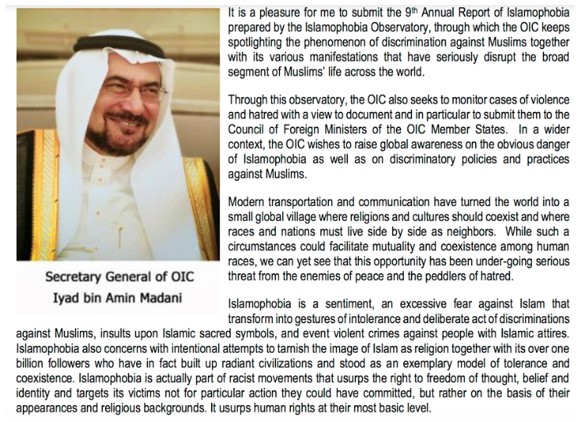
This is the message from the OIC Secretary General http://www.oic-oci.org/upload/islamophobia/2016/9th_islamophobia_annual_report_en.pdf – the 9th observatory report covering May 2015-September 2016.

From the opinion of the Muslims, they have a podium to list out what they feel to be grievances against them. That is only one side of the version. Why is it that the other side is never portrayed?

Is it not time that a pro-active Buddhist entity representing the Buddhist world emerged to put on record the wave of incursions Buddhists are suffering too? It is because of this essential other version that international bodies are using the only reports available to hound and denigrate Buddhists.

The Dalai Lama is not representative of the Buddhist world – he is dependent on America which uses him to embarrass China which has tarnished his credibility and integrity. Having not spoken a word when Buddhist places of worship had been attacked the Dalai Lama is not accepted by Buddhist majority countries as representing their grievances.

Similarly, why should we need to depend on people of other faiths coming forward to defend Buddhism when we have Buddhist leaders – politicians, heads of Buddhist associations/organizations, Maha Sangha etc tasked to that job? Why are they not coming forward to defend Buddhists/Buddhism? Why are they watching the denigration taking place through well planned and well-funded programs? Not even a single statement is being issued by them.

How many Muslims have been killed by Sinhalese? What about all the Muslims killed by LTTE during 30 years of terror? Why are the Muslims not taking cudgels against the West? Who are killing Muslims in the Middle East? Who are bombing and droning Muslim countries and completely destroying all that they have protected with pride? Kit O’Connell claims 4million Muslims have been killed as a result of US-NATO wars while the U.S. National Counterterrorism Center – the United States government organization reported in 2011 that Muslims are the victims of Between 82 and 97% of Terrorism-Related Fatalities”

http://www.globalresearch.ca/four-million-muslims-killed-in-us-nato-wars-should-we-call-it-genocide/5470424

http://www.globalresearch.ca/muslims-are-the-victims-of-between-82-and-97-of-terrorism-related-fatalities-us-government/5516565

When half of all mosques have been attacked in the UK since 9/11 and when 91 mosques have been attacked in Germany in 2016 alone, a single isolated incident in Sri Lanka gets EU and non-EN envoys to show solidarity and issue statements which are politically intentioned to prepare people for the newest wave of troubles unless the people are smart enough to recognize what the scheme is all about.

The Sinhalese are not going to Muslim countries and bombing them to the Stone Age. Finger pointing if any should be to the countries that are responsible for millions and millions of deaths without cherry picking isolated cases to blow issues out of proportion simply because there are parties that seek to benefit by creating chaos in Sri Lanka. Sri Lanka has accommodated minorities as no other majority has not even European countries that boast of human rights can produce a record of what Sri Lanka has offered to the minorities. It is good for the minorities to take stock of these realities and appreciate what they enjoy.

https://www.lankaweb.com/news/items/2016/03/06/name-a-single-country-that-has-given-ethno-religious-minorities-privileges-as-sri-lanka-has-done/

Media in Sri Lanka must take the blame for any tensions that are being manufactured and rolled out between Sinhalese & Muslims of late by the unfair manner it is reporting while politicians will prostitute themselves for votes.

The basis of any situation of any criminal act must be to take action against the wrong doers and the wrong doing.

The silence and inaction of authorities with regard to incursions in Muhudu Maha Vihara, the Kuragala sacred sites, the falsification of deeds, the attempts to build mosques higher than the Dalada Maligawa, the subtle manner ethno-religious ghetto areas are being created and in turn influencing others to change residence, the demands for one religious groups eating habits to rule over the majority, the settlements inside Wilpattu forests…all these should have been dealt and nipped in the bud because these were all against the supposed peaceful coexistence and one law for all that is being projected. These are areas that need to be factually highlighted and presented just like how the OIC is regularly coming out with annual reports giving their side of the story.

The actions and not the reaction that has to be dealt with. It is the actions that create the reaction.

The messenger highlighting the actions cannot be demonized by focusing attention away from the message which is what the modus operandi is whenever Buddhist grievances are highlighted. If those tasked to protect and preserve Buddhist heritage of Sri Lanka did their job, there would be no room or need to have others coming as spokespersons for Buddhist grievances especially if they are being promoted and used with hidden intent which ultimately does no service to Buddhism/Buddhist grievances at all.

A government that is put together by groups of leaders holding extreme demands and views will naturally be in no position to take stands boldly. With a questionable vision to protect the heritage of Sri Lanka, immense pressures is being brought upon the government politically to compromise the place of Buddhism in exchange for their survival. Therefore, it is at this juncture that the UN International Vesak Day (Mahanuwara Declaration) becomes poignant wherein the first two points must be immediately fast-tracked into reality to create a powerful Buddhist entity that would be on par with the OIC and the World Council of Churches.

  1.  In realizing the long felt need to have an aligned organization among Buddhist Communities underpinned by solidarity, solemn initiatives shall be taken to form such an organization with minimum delay in furtherance of our objectives and aspirations based on values and principles of the teachings of the Buddha.
  2.  In consideration of the challenges faced by Buddhist communities all over the world plausible methodology shall be evolved to address and encounter them as one community.

https://www.news.lk/fetures/item/16727-the-kandy-mahanuwara-declaration

It is therefore time that Sri Lanka’s Buddhist associations and Buddhist leaders if they are any (not the cosmetic ones pretending to be Buddhists for votes only) come forward to seriously address issues in Sri Lanka and show solidarity with the remaining majority Buddhist nations like Myanmar and Thailand who are also undergoing unprecedented pressures all of which are attempting to usurp the historical place these countries give to Buddhism while at the other end these countries are geopolitical important.

All that is asked is that the truth is factually presented devoid of the gains issued to some and the agendas upon which the incursions are part of.

Ideally, China must take lead role in leading the Buddhist world just as it is good for Pakistan to steer the Muslim world, with the traditional friendship that China-Pakistan and Sri Lanka hold, many of the issues can be effectively resolved sans petty politics.

Shenali D Waduge

PERAHERA ELEPHANTS AND YAHAPALANA

June 7th, 2017

KAMALIKA PIERIS

12.9.18 , rev   5.11.18, 23.11.18

The elephants in the Esala Perahera got star billing in an entertaining piece published by two animal rights NGOs in August 2016.  The essay is full of howlers and is probably the silliest piece ever written on the subject.

Are you planning to go and see the Kandy Esala perahera, the NGOs wrote, if so, think of the poor elephants in it. They usually reside in the jungles and only come to Kandy once a year, to take part in the Esala perahera. They have to walk miles to get to Kandy on searing tar roads in the blazing heat, with crazed motorists coming at them all the time. Coming straight from the jungle, it was very unpleasant to be dressed up in robes and battery powered lights, for the perahera, especially with the ears covered.

Taking part in the perahera year after year is an absolute night mare. The noise is awful with drums, whips, trumpets, loud speakers and ice cream vendors.  The mahouts either climb on and sit on the neck and spine (sic) poking and prodding or walk by the side jabbing away with their ankus. Sometimes three people get on an elephant’s back for a ride. ‘Even a horse only carries one.’ It is difficult for an elephant to like the crowds on the pavements because  they are the same ones who cultivate chenas in the jungles, chasing  elephants away from their homeland.

The tradition of including elephants in processions needs to be rethought, continued  the NGOs. Elephants must be wild and free (sic) not sent on parades to please watching crowds. Sri Lankans living in other countries have begun to celebrate such traditions using artificially constructed, beautifully decorated elephants on wheels. That is much better than real elephants. The NGO ended their song with a plea. When you go to the Perahera, please,  If you observe any cruel treatment of the elephants before, during, or after the Kandy Esala Perahera,  take photos and report such instances to  the Department of Wildlife Conservation and also tell us,  Concerned Citizens of Sri Lanka”  and the Sentinels Against Wildlife Crime” (Island 8.8.16)

Instead of sending  photos of cruelly treated elephants in the Esala perahera, as the NGOs hoped, readers offered to send photos of the slaughter of the pigs, cows and chickens. Why  are these animal rights people  not concerned about the daily slaughter of lambs, cattle, pigs, goats, chickens for food, they asked. This was said by every person who responded to this essay . They particularly noted that pig rearing for pork in Sri Lanka was not mentioned by these two NGOs. They    also drew attention to horse racing, greyhound racing, bull fighting, bear baiting, cockfighting,   fox hunting, deer hunting, and camel rides. They pointed out that in horse racing,  horses are made to run with a human rider three quarter its weight. The horses are whipped to make them run faster and  put down when they are  of no further use.

Rohana Wasala, Cecil Dharmasena and Palitha Kohona  responded to this NGO statement.  The elephants used in the perahera are not wild animals, they pointed out. They are tame elephants. Not every domesticated elephant can be used in a perahera either. They are trained for the task. The elephants are familiar with the perahera drill and they only need a few verbal commands. The mahout is rarely called on to use the ankus. The elephants are conditioned to flashing lights, deafening sounds, crowds and copra torches.  An elephant can march with two, three or more on his back very easily. Elephants walk over 20 to 30 km per day in the wild.  In a  perahera elephants only walk about 2 kilometers.

Elephants used in the perahera are looked after very well by their owners and keepers, they said. Perahera elephants are fed with fruits and sweets, offered by spectators,  even while they are marching. They are washed daily. The inconveniences caused to these animals before, during, and after perahera are minimized as far as possible. They are rewarded with special treats at the end the event. The temple elephant enjoyed an elevated status in Sri Lanka. Without the elephants the perahera will not be the same,   and  a decorated  elephant looking truck carrying the relic is absurd, they   said.

The difference between the ‘wild’ elephant and the  tame one,  were outlined by these writers,   so that these elephant loving NGOS could get it  right in their next essay. They pointed out that ‘wild’ elephants are ‘wana ali’ not ‘wal ali’. One ‘wild’ elephant , after being rescued from a water hole, turned toward the people who saved her, curled her trunk in salute, before leaving. Wild elephants find it difficult to find food in the jungle. The dry and hard jungle surfaces are worse than the tarred roads. ‘Idealists who think jungle life is romantic should try it for themselves’,  said Kohona. The three hour slow walk in the cool climate of  Kandy at  night is a cakewalk in comparison. And there are delicious eats at the end of it.

Domestic  elephants are prized possessions of their owners and are cared for meticulously, continued Kohona. Today domesticated elephants are kept more for prestige than for any useful work. The domestic elephants rarely do heavy work. Once tamed an elephant is as affectionate as a large dog.   Those who are familiar with elephants know how affectionate they can be.  They are well looked after. An elephant in captivity gets more opportunity to walk than a dog in a backyard.  They do not remain tied to trees all the time. They walk reasonable distance each day for the bath, and to collect half a ton of edible leaves for its food. They enjoy the bath and being scrubbed by the mahout.

We who grew up among these animals know that animal abuse is kept to a minimum, said Rohana Wasala.  The elephant goad(ankus)   is used by the mahout to apply strong, clear pressure to  particular control points to make the elephant respond  to commands, stop, turn left, turn right, kneel, stand still,  and so on. An ankus jab causes little or no actual pain. Elephants are huge pachyderms. In some places their skin is about 4 centimeters thick. They hardly feel a mild ankus jab from a tiny human. Causing pain can be lethal for the mahout. Elephant minders know this and rarely treat their charges unkindly.  Maintaining full control over elephants is a key part of the mahout’s job. Full control ensures the safety of the mahout, the safety of other humans nearby, and even the safety of the elephant itself.

S.A.Abeyratne  who also thought like the NGOs, wrote from USA  in June 2016,   saying, as a veterinarian I am aware of the importance of elephant feet care. All their huge weight rests on this. In USA the feet of  an elephant are cleaned and washed twice daily. All four feet should be provided  with pad trim and nails filed once in two weeks. Also they need to wag their ears, to get rid of sweat. When the ears are covered with sheath,  as in the perahera,  they cannot do this.  At festivals they are not given proper care or food, in the wild they eat small amounts of grass all day long. When domesticated they get only one meal a day. That too is a small amount of leaves.

Elephants must be registered and  annually examined, he advised. There must be rules on care of elephants, including cleaning and care of elephant feet, worming, vaccinations. The mahouts must be trained, they  must pass an exam, be registered as mahouts,  and  tested for liquor at perahera.  Veterinarians must be present at perahera and they must be trained in elephant control.

Another anti-perahera   NGO  said  in August 2016 that the Diyawadana  Nilame, had  forcibly removed two  elephant calves from the Pinnawela elephant orphanage. They were still on their mother’s milk, and were removed  despite protest from the officials and veterinarians at  Pinnawela. This was a very wrong move,  said the NGO, the babies were too young to be separated from the mother. Mother was also grieving and put through an enormous amount of stress.

‘As reasonable Sri Lankans’ we did what we could, said the NGO. We e-mailed the authorities, and we called people all over the island in hopes of putting an end to this cruelty and release the two calves. There is even a Supreme Court case filed by an organization in Sri Lanka called ‘Friends of Animals. ‘If you are visiting Sri Lanka,’  the NGO advised, ‘there is a lot more to do than the Kandy Perahera. It would grossly irresponsible of us to patronize that event’.

Sagarika Rajakarunanayake, President of ‘Sathva mithra’ wants mahouts to be tested for liquor. Most mahouts are drunk during perahera seasons, she said. Festival organizers gave them liquor since intoxicated mahouts ‘gave the best performances.’ This is unlikely. Peraheras, such as those in Kandy and Ratnapura are ritual events. It is unlikely that liquor will be consumed at the start. One Diyawadana Nilame in the 1950s   had  got drunk even  before the perahera started, but this is probably an exception.

Another  question asked was  whether  a  perahera was a requirement of Buddhism. Abeyratne  said that he learnt that Buddhist monks are requesting to allow domestication of more elephants in order to make Buddhist processions more attractive. Did the Buddha ask for this, he inquired. It is only a custom which started in the 14th century.  Also    do the monks know how to manage elephants. Don’t confuse Buddhism with the Perahera said a blogger. The Buddha never asked for perahera.  He never spoke of a Kandy Perahera, or [said to treat elephants cruelly] in his name.

The obvious reply to these rather rhetorical questions is that Buddhists   know the difference between the Dhamma and cultural practices like perahera. They do not confuse the two. Further, elephants are  looked after by the mahouts, not monks. Mahouts learnt their trade very young, as apprentices. Mahouts develop very strong bonds with their elephants, said Kohona and  elephants remain very attached to their mahouts. An  elephant from Ratnapura who saw his old mahout at the Esala perahera, remained without moving until the mahout came and told him to move on.

The  training and care of  elephants is a specialized art. Even today, there is a lot of traditional lore regarding   veterinary treatment of elephants among descendant of families who have been looking after and working with elephants for many generations observed Rohana Wasala.  Elephant training and elephant management were   respected professions in traditional times. Manuscripts such as Gajashastra and Nilashastra contain information on training elephants.

The campaign against perahera elephants was not confined to mere utterances. There was action too. There were several incidents of elephants running amok at peraheras in 2016.  My recall of the last sixty years or so,  is that elephants rarely ran amok at perahera. Therefore this was most unusual. Rajakarunanayake said  that the elephant  at    Saman Devale perahera  ran amok because the drunken  mahout had hit the elephant with the goad. What we saw the elephant happily doing on TV, to another elephant does not support this. Perhaps something had been given to the elephant instead.

In July 2018 elephants had run amok at the Kahawatte Perahera, Ratnapura, with32 injured one seriously. Ven Magalkande Sudantha said these elephants are not perahera trained elephants in temples or privately owned elephants. They are from Pinnawela and the government says they are Perahera trained. They are sent with untrained mahouts. This is a plot to destroy the Perahera tradition.

Buddhist temples have traditionally looked after baby elephants gifted to them.   John Amaratunga, Minister for Christian affairs ,gifted a baby elephant to Purana vihara of Hendala in 2003 to mark his 25 years in Politics. But from 2009, all elephants and their calves had to be registered with the  Department of Wildlife Conservation under  the Fauna and Flora Protection Ordinance. Further, Section 22 (a) said In the event of a pregnancy of a registered she elephant, the owner shall inform the Director-General DWC of such pregnancy together with details of its father.”   Section 23 (a) (9)   said It is the duty of the elephant owner to inform the Director-General DWC or any authorized officer of the fact of any birth, miscarriage or still birth of elephants within seven days from the date of occurrence.” Some had failed to follow these regulations.

Among those charged with having un-registered  baby  elephants were  Mahinda,  Gotabhaya, Namal and Gaandhanee Rajapakse , Magistrate Thilina Gamage, Pradeep Mivanapalana who was the owner of the Sri Dalada Maligawa Tusker , Wasana Bakers of Horana and the   Basnayake Nilame of Kataragama  devale,   The monks charged with holding baby  elephants without permits included Kolonnawe Siri Sumangala Thera of Dewram Vehera, Pannipitiya, Uduwe Dhammaloka Thera of Alan Methiniyaramaya, Polhengoda, Dharanagama Kusaladhamma Thera of Sri Sambodhi Vihara ,Colombo 7 and Ven. Bellanwila Wimalaratana of Bellanwila Raja Maha Vihara.

The Wildlife Department officials had taken into custody a two and half year-old elephant calf found inside the Alan Mathiniyaramaya Temple in Polhengoda in January  2016. Ven. Uduwe Dhammaloka Thera it is alleged had kept this calf in his temple knowing, that it had been stolen.. He was charged   under Fauna and Flora Protection (Amendment) Act, No.22 of 2009 and Public Property Act. .  Uduwe Dhammaloka Thera had said the elephant calf  had  been left in the   temple by an unknown person.  Uduwe Dhammaloka was arrested and remanded in March  and released on bail in June 2016.  19 persons have been named as witnesses in the case and three documents will be presented as production items in the case, sources said.

The   baby elephant sold to Ven. Dharanagama Kusaladhamma  has not been properly registered. The previous owner had not submitted a sworn affidavit or  Grama Niladhari’s letter. The elephant’s height does not tally with its age and the owner had not paid the registration fee either. The initial ownership and the subsequent ownership were also incorrectly mentioned in the registration file.

The adult elephants did not excape the law either. The provisions of the Fauna and Flora Protection Ordinance (FFPO)  were  used to keep  adult elephants   out of the perahera by locking them up. From 2009, all elephants had to be registered under the  Department of Wildlife Conservation. Those who had elephants legally in their possession got their elephants registered  but most didn’t, as they did not have the information needed. Also, there seems to have been some barrier to registration in the  Act itself.

Using  the FFPO  the Wildlife department started arresting elephants from temples in 2016. They also started to arrest registered  temple elephants  used for other purposes such as tourism. Temples must ensure that elephants are only being used for religious purposes, the department said. thanks to this in 2016  there were less elephants available for the processions.

Sambodhi Vihara, Colombo said  it could not hold their perahera, in May 2016,  because elephants trained for the  perahera were in the custody of the Wildlife Department. They had been seized from temples, because they did not have the necessary permits. These elephants  have ownership permits and registration but the Wildlife Department had not issued permits for 2016.

NGOs and the recently appointed Director of Wild life Department  were  wielding ‘a heavy hand of authority  on the elephants’  the Vihara complained.  Elephants in this country have been well looked after and cared for by the Buddhist monks for  many centuries before the NGOs came here with their foreign funds, said Sambodhi.  The NGOs are not interested in protecting the fowls, pigs and cows that are killed each day.

The Colombo Chief Magistrate  had issued an order to Wildlife Department  in 2016,directing the that 15 elephants taken into its custody following CID investigations be temporarily released to take part in the upcoming Kandy Esala Perahera and several other peraheras. Each elephant was to be  released on a bond of Rs. 30 million consequent to requests by several elephant owners. However,  Senior State Counsel ,appearing on behalf of the Attorney General and several civil society organizations raised objections to the  release of  the elephants on bond. And the elephants have not been released, complained Sambodhi vihara.

The Diyawadana Nilame said in July 2016 that around 20 of the elephants used in the Esala Perahera in 2015 were now in court custody due to permit issues. Basnayake Nilame of Kataragama devale said in 2017 that around 45 perahera elephants were now in custody in elephant orphanages.  38 tamed elephants are at Pinnawela and Uda Walawe pending investigations by state authorities said a third informant in 2017. The figures differ but the complaint is the same. There aren’t enough elephants for the perahera.

Diyawadana Nilame said  there were 105  elephants in the Esala perahera in 2015, but there will only be 71  for  2016 perahera. Of the 132 domesticated elephants in the island, 52 cannot take part in the procession due to various reasons, such as, illness, musth, aggressiveness or other problems. In 2017, he said  that only about 65 tamed elephants and tuskers were available. They were with their owners.  But that was not sufficient to meet the requirements of the Esala Perahera in 2017. If this continues, the Kandy Perahera will have to be held without  the elephants that have graced the procession for hundreds of years.

How is  there is a dearth of elephants for the peraheras  today, when  till now there have been sufficient elephants, brought from different parts of the country for the Esala Perahera in Kandy, Gangarama Perahera, the Bellanwila Perahera and so on, asked observers.

In April 2017,  the Basnayake Nilames of devales,  urged the government, to release 38 tamed elephants presently held in state orphanages, since this would affect the annual Esala Perahera of  principal devales.  They pointed out that  around  40 elephants each  are needed  for the Kandy and Kataragama peraheras, but  only around 30 tamed elephants were available in 2017. Usually each Perahera is held at a different time, but  in 2017 the dates for  Esala Perahera, Kataragama and Devundara  coincide.  President  Sirisena  had directed the Wild Life Department to release the elephants but  there had been a delay in carrying out this order. Some officials and interest groups were objecting to the release, the  temples complained.

Buddhists have taken note of these NGO activities and have reacted strongly. Bellanwila Wimalaratne said that the perahera culture is an integral part of the Sri Lanka Buddhist heritage and it could not be terminated just because animal rights are against using elephants in procession.  Those who claim to defend the rights of elephants do nothing for the welfare of these animals. They have not spent a cent to feed them.

Ven. Deranagama Kusaladamma chief incumbent of Sri Sambodhi vihara, Gregory’s rod Colombo said that several NGOs were trying to discourage the perahera. The pastime of these NGOs is to protest anything that forms part of our cultural tradition, why don’t they resist sale of cattle for slaughter, also horses used in racing.

This is  an  open, ‘not  so subtle’,  campaign to  obstruct the Kandy Esala Perahera on the grounds of  violation of animal rights and harassment of elephants taking part, said the Buddhists. It is a sinister, politically motivated move’  by several NGOs, masquerading as protectors of elephants.  It is  yet another indication of the deep animosity towards Buddhism harbored by  non-Buddhists in Sri Lanka . But this is the first time that  peraheras, specially, the Esala Perahera has been targeted.

The annual Esala  Perahera in Kandy,  brings together well over a hundred elephants. During the Esala period there are similar peraheras in many provincial towns, where elephants  are an indispensable feature. The Kandy Perahera is also a major tourist attraction.  If this is taken away the whole tourist industry and its jobs will suffer,  they  declared.

In July 2017  lawyers presented to court, letters from the Diyawadana Nilame and the Basnayake Nilames of the four Devalas, asking  for  elephants to be deployed in the Perahera. Colombo Magistrate ordered the release of 15 elephants to be paraded in the Kandy Sri Dalada Perahera, after considering these letters. The release order was  valid from July 27 to August 15. These elephants had been ordered to be taken into the custody of the Wildlife Department, from the owners who had not possessed valid licenses to keep them.

The donation of mature male elephants to selected temples had met with loud protests from  NGOs in 2004  but the  anti-perahera campaign  became openly active under Yahapalana rule. Most of the action took place in 2016. Since  Yahapalana  came to power,  Buddhist priests have been remanded in custody for possessing elephants. The     authorities are hunting for any one owning an elephant on the pretext of animal welfare. Their agenda is  to prevent elephants participating in Buddhist ceremonies, the Buddhists declared angrily.

Removing elephants from  ‘peraheras’  did not  turn out the way the NGOs hoped.  In July 2016, Cabinet approved  the maintaining of  a pool of elephants, for  participation in cultural activities. ’The perahera culture of Sri Lanka has a great history and has attracted the world’s attention. It is essential to use elephants in peraheras” Cabinet said. A pool of about 35 elephants consisting of about 35 tuskers, and female elephants will be  created under the Zoological Department with elephants obtained from Pinnawela Elephant Orphanage and from Udawalawe Eth Athuru Sevana, with the objective of training for perahera purposes. Mahouts too will be trained at the facility on how ‘to treat the animals in the correct manner.”

The government of Sri Lanka has  also requested an elephant calf from Myanmar to help the breeding progamme. Diyawadana Nilame however said tuskers from countries such as Myanmar and Thailand  were too short. “We need tall tuskers to bear the sacred casket and currently there are only four in the island,”

The Cabinet   also decided to withdraw its ban on the adoption of baby elephants. Cabinet granted approval for the adoption of baby elephants by individuals and religious places under specific conditions. They could be used in Perahera and religious processions. Individuals wishing to adopt an elephant will have to pay  10 million rupees while temples will get them for free. The reason was that it has become  impossible to  look after the 88 elephants at Pinnawela Elephant Orphanage. Lastly,  the Wildlife department announced that permits of  elephant owners were to be renewed  in July 2016, rectifying a long drawn issue faced by them since 2014.

This essay concludes with a brief overview of the status of  elephants in pre-modern  Sri Lanka . In   pre-modern Sri Lanka elephants   were respected and there was a strong elephant culture. Elephants played a role in ceremonial occasions, state and royal. The elephant on which the king rode was known Mangalahasthi. This elephant was always a tusker and had a special stable called the hasthisala. Elephants were regularly  used in temple ceremonies including Peraheras.

Elephants were a valuable export as well. there had been a significant demand for Sri Lankan elephants, from other countries. The elephants from Sri Lanka were considered better than those from  India. Elephants were  also used in battle. They were used to ram barricades. in time of war, they now and then fix a heavy iron chain to the end of their trunks, which they whirl around with such agility, as to make it impossible for an enemy to approach them at that time” said the ancient records.

Elephants were used  for logging operations to clear jungles, for transport, building construction, and haulage. Photographs taken when the chapel of Trinity College, Kandy was built  in the 1900s show elephants hauling three ton granite pillars  for the building. Elephant fights were a popular form of Sinhala sport in early times and was called Gaja Keliya. New Year festivities in Sri Lanka feature elephants in various sports and competitive combat.

In 2018 too, foreign journalists, continue to be concerned about the sufferings of the perahera elephant.  Kelsey Ables, recently graduated from Colombia University, USA, is in Sri Lanka as a reporter. There is work to be done in Sri Lanka, she tweeted.”

That work included observing the perahera elephant. Kelsey went to Kandy in 2018 , to report on the Esala perahera. ’Spending the weekend in Kandy reporting on the elephants of the Perahera festival,’ she tweeted.  ‘Can’t exactly get a quote from the elephants, so I’m keeping an eye out for elephant distress signals and chatting with the mahouts’.

Kelsey commented on the awful conditions perahera elephants face at the Esala Perahera in Kandy. To start with they were chained. She heard the loud, rhythmic sound of chains clashing together as the elephants joined the procession. The perahera is a nightmare for elephants, she said. They are tied up for 10 days with limited exercise and ridden by humans in a way that can cause irreparable damage to the spine. Also, the elephants ‘stopped sleeping’ for the full duration of the perahera. They usually sleep in water.

Many elephant experts agree that for cultural reasons, it would be impossible to remove the elephants from festivals, she conceded. Instead, they argue, we should focus on improving conditions of elephants which participate in pageants. There should be daily health monitoring of the perahera elephant. Also the costume must be altered, so that the ears are free and ‘thereby enable the elephants to better regulate their temperature.’

Elephants recognize their owners and trainers, admitted Kelsey. At the Esala Perahera, one elephant seeing his owner, had stepped out of line.    The owner, standing by the side of the temple, reached out and touched his trunk in a fond greeting.

But elephants live in constant fear of mahouts,who scare them into obedience. There are videos of mahouts hitting elephants, footage of elephants storming the streets, images of elephants with wounds from being poked with the ankus. All this gives mahouts a reputation of being irresponsible and uneducated, said Kelsey. Such reports have led NGOs and animal rights groups to call for the removal of elephants from festivals. The cruelty, captivity, deprivation, restraint and regimentation suffered by these young animals cannot be justified in a Buddhist context.”

Wildlife and Nature Protection Society of Sri Lanka  issued a statement condemning the mahouts’ treatment of elephants, said Kelsey. The mahouts have moved away from traditional practices. The centuries-old knowledge of caring for elephants has been largely lost.  Mahouts now base their methods of control on fear and cruelty towards their wards. Train the mahouts so that they are kinder to the elephants, you don’t have to frighten the animal to make it listen to you. If you are kind, it will respond to you kindly,” said an elephant expert to Kelsey.

In 2018 too, there are several incidents of  perahera elephants running amok during the perahera. In July 2018, an elephant ran amok during a perahera in Kahawatta. In September 2018, television news showed the tusker carrying the relic at Galewela Budugehinna raja maha vihara, running amok at the annual perahera. Television news camera  showed, at some length, the elephant running down several streets. This was  also shown on social media.

The anti-Buddhist nature of this bogus concern for the perahera elephant is very clear. But the sangha are determined to continue with the peraheras. Temples which never held major peraheras are doing so now. The Esala perahera of the Walukarama temple on Duplication Road, Colombo is relatively new and still fairly small. For the first time I saw a member of the Maha sangha go in the procession. There were three, four or five elephants, ( the perahera had started before I got there). They proceeded along Galle Road, Colombo and Duplication Road.  It is possible therefore, that one day we will see a doctored perahera elephant,  running amok  in  fashionable downtown Colombo. The story of the perahera elephant is not over.

Here is an edited version of yet another piece on Perahera elephants. The writer candidly admits that these ideas ‘have not gone down well with some Buddhist monks in UK’.

Keeping elephants in temples should be examined in relation to what this ancient cultural practice entails in the light of the Buddha’s noble teachings of Ahimsa or Loving Kindness and Compassion, says the writer.  It brings us to the inevitable conclusion that the practice is at complete odds with the essence of Buddhism.

Elephants are majestic wild animals who love the freedom to roam freely. We have no right to keep them in captivity in Buddhist temples of all places. I challenge any erudite Buddhist scholar or a learned monk, to show where the Buddha had asked his disciples to use caparisoned elephants to carry his relics in processions. This is where one has to separate Buddhism from time honoured cultural practices,  he continues.

Buddhist monks and lay people must question the wisdom of continuing with an archaic ceremonial pageantry, with tom-tom and fanfare in the name of Buddhism, putting these wild animals through the paces for a “successful” annual event that draws in hundreds of thousands of people from all walks of life not least foreigners.

These are successful events, bringing in vast sums of money for the organizers, but do they justify the obvious torture the poor animals are subject to. The foreigners who view the perahera, and who dwell deeper into questioning its compatibility to Buddhist philosophy” return home disillusioned. Their deep sense of injustice and the cruelty they witnessed compel them to set up on line petitions. The rest of us turn a blind eye, says the writer.

Temples should not have a “God given licence” to perpetuate and perpetrate these ungodly and unholy rituals.  Monks turn belligerent and rambunctious when challenged on this matter. They know they would feel deflated” without temple elephants. Rich temples boast of the number of elephants they have.

We owe it to the Buddha’s fundamental teachings, and to those long suffering elephants, to take a decisive and firm stand. Show your disapproval by boycotting such temples. You will not go to Hell, my fellow Buddhists.  Our monks live in the lap of luxury being driven around in style. Most churches in Sri Lanka look run down. The clergy have to make do with mopeds to get about in their day to day activities of administering Christian blessings to the poor,  concludes the writer. (Island 3.3.18 p 9)

Laksiri Fernando; an avowed Muslim?

June 7th, 2017

Sudath Gunasekara 7.6.2017

I copy the following article for your prompt attention as it reveals many facets of a deep international conspiracy against the Sinhala Buddhists in this country. It is a shame for man who has a Sinhala name and a graduate of the Peradeniya University, undoubtedly a beneficiary of free education, who says he is a Dr to write this kind of rubbish as she himself has admitted by saying that ‘Of course, the accuracy of the incidents is not yet verified” It clearly proves that this writer is biased and this account is definitely based on hearsay and not on verified facts.

This man is out for Galabodaatte’s blood. In short he is against the Buddhist clergy which also simply means that he is against the Sinhala people. He is arguing for Alla. Is he a Muslim or a Catholic. Surely he cannot be a Buddhist in any case though he has a Sinhala name.

See how much pain he has taken to collect outdated dated to argue for this case. Also his blasphemous write up shows how much importance he has paid when he concludes There is much discussion on the issues of national security these days. The most dangerous threat to national security, both internally and externally, at present is religious disharmony and conflict in the country. These issues warrant a special parliamentary debate with the objective of achieving common consensus in curtailing the situation. This is equally important as flood relief activities and assistance to the victims

Has he ever taken the trouble to find out as to who has started this religious disharmony and conflict in the country. It is none other than the minority Tamils and Muslims. So how can anyone accuse the Sinhalese and Buddhists for what other people have done? Has he ever tried to find out the root cause of this situation?  It is nothing but the reluctance on the part of the minorities to accept the legitimate and inalienable rights of the native Sinhala people and the pathetic failure on the part of all governments since independence to put the minorities in their place, due to their fear of losing minority votes.

C/Telegraph 30.5.2017

A New Form Of Anti-Muslim Terrorism In Sri Lanka: What Is To Be Done?

Dr. Laksiri Fernando

The incidents at present appear geographically scattered. But things can get concentrated and escalated into larger proportions, if stern action is not taken soon to apprehend the instigators. This is important as addressing the flood emergency and the devastation caused by this natural disaster and the administrative neglect, with all heartfelt sympathy to all flood victims.

The pattern of recent attacks against Mosques and Muslim-owned businesses shows those are not a reflection of any resentment from the ordinary people, but organized action by extremist religious and nationalist groups. The danger however is that the things can get quite viral and the instigators can recruit larger groups and influence others to behave in the same manner. The conditions inside the country and overseas might work in favour of them, if rapid action is not taken to control the situation.

There are clear indications and evidence for the direct involvement of the Bodu Bala Sena (Buddhist Force Army – BBS) and its leader, Galagoda Atte Gnanasara. It is difficult for me to call him Venerable, Thero or consider him as a proper Buddhist monk. It appears to be a small group of his followers who go around the country, attacking the Muslims and their places of worship and businesses. His direct involvement in several of these incidents, including the attack on the Kurunegala mosque, is very clear. The most recent attack on a Muslim shop was in the town of Kahawatte in the Ratnapura district last week (22 May), before the floods came in, and it was burnt to the ground according to the reports.

Is it Terrorism?

Why it is terrorism and a new form of ? It is true that the United Nations have so far not been able to come up with a comprehensive definition of terrorism due to disagreements among the member states. However, the Security Council resolution 1566 (2004) gives a fair description of what is terrorism as any action…by its nature or context, is to intimidate a population, or to compel a Government or an international organization to do or to abstain from doing any act.”

Let us for a moment forget about whether the BBS intends to ‘compel the government to do or to abstain from doing any action.’ But it is very clear that ‘by its nature and context, the BBS actions intimidate the Muslim population in Sri Lanka.’ It is not only ‘intimidation.’ But already they have been harmed and their properties destroyed, in addition to threatening them from practicing their religion. The latter is about ‘religious freedom’ guaranteed as a fundamental right in Sri Lanka’s constitution.

Article 10 under Fundamental Rights of the Constitution guarantees, as it says, Every person is entitled to freedom of thought, conscience and religion, including the freedom to have or to adopt a religion or belief of his choice.” It is this fundamental right of the Muslims that is violated through vilification of that religion by Gnanasara and attacks on Mosques and religious places by his BBS supporters.

The US Code of Federal Regulation 28 gives a more precise definition on terrorism than the present UN description. As it defines, The unlawful use of force and violence against persons or property to intimidate or coerce a government, the civilian population, or any segment thereof, in furtherance of political or social objectives.” This is the definition which was used in proscribing the LTTE as terrorist in the United States which was overwhelmingly hailed by Sri Lanka. The same meaning could be applied in defining the BBS activities in Sri Lanka as terrorism.

The BBS’s use of force and violence is not aimed at the government, like in the case of the LTTE. Not yet. More repugnantly, it is aimed at a ‘civilian population.’ That is one reason why it is a new form of terrorism, which shows early symptoms of a neo-fascist movement. Many neo-fascist movements, Klu Klux Klan as an example, emerged not attacking the governments but attacking the hated civilian populations. The Muslims at present is an easy target, because of the ‘Islam’ related terrorist activities internationally. Paradoxically, the BBS is also the ideological mirror image of the Islamic State (IS) terrorists or Taliban in the Middle East. The BBS led by Gnanasara has more similarities with the 969 Movement led by Ashin Wirathu in Myanmar (Burma).

It is also a new form of terrorism, because it is organized not in a military fashion or as a tightly knit organization, but a loose association of several groups, with a leader at the helm to propagate ‘intense hatred.’ The groups associated are Sinhala Ravaya, Ravana Balaya, Sinhale, Mahason Balaya and Sinhala Jathika Balaya (SJB); the BBS acting as the umbrella organization. They all have the ‘ideology of terrorism,’ as I defined in the last article (Manchester Carnage and the Need to Combat Terrorism”), that contains, in addition to ‘intense hatred,’ an ‘urge for destruction and will to sacrifice.’

Recent Attacks

There have been 12 attacks since mid-April on Mosques, Muslim owned shops and villagers, as shown by the following table.

Source: Hilmy Ahamed – Colombo Telegraph

The government and the law enforcement organizations particularly should be careful about the latter aspect as some of the activists might soon resort to self-immolation. They are fanatics and ‘true believers.’ However, at these early stages, if the leader/s can be arrested and convicted for the crimes committed, the movement can be effectively curtailed. Inaction otherwise can lead to a bigger monster.

Of course, the accuracy of the incidents is not yet verified. However, it is up to the Police to do so. Even if there are inaccuracies about the extent, the incidence cannot be denied and the patterns are clear. As the above table shows, there have been repeated attacks on the same place; very clearly showing the inaction of the area police. Therefore, on the part of the government the creation of the ‘special police for hate crimes’ is a welcome move. However, this should not lead to the inaction of the area police on the pretext that there is a ‘new branch’ or special police.

Prior to the above attacks, there had been a pattern of instigation by the BBS and its leader, Galagoda Atte Gnanasara. The initial focus has been at Irrakamam in the Ampara district where they have a strong support base in the adjacent area. Irrakamam however is predominantly a Muslim area. There had been landgrabs, under the pretext of a dispute which should have been resolved through law courts or official channels. That was in mid-April. Gnanasara has visited the area and reportedly made provocative statements against the Muslims and their faith.

It is also under his patronage that Vesak celebrations had been held in this Muslim area on the 10th of May. It is during the same period that the BBS propagated that the Muslim refugees are coming from Myanmar and the local Muslims are supporting them for further colonization. During Onegama (Polonnaruwa) attacks, Gnanasara is reportedly been present. Another repeated provocation has been to insult the Allah – Subhanahu Wa ta’ala (meaning the most glorified, the most-high). There is substantial evidence/information for the above incidents. The BBS has been acting as if to invite IS terrorism in Sri Lanka.

Morally Repugnant

The BBS propaganda and activities in Sri Lanka are morally repugnant in predominantly a Buddhist country. It is difficult to imagine how Buddhism is used to propagate hatred and violently attack another religion for narrow ‘ethnic’ or sectarian reasons.

As the King Dharma Asoka declared in his Edict XII, There should be growth in the essentials of all religions. Growth in essentials can be done in different ways, but all of them have as their root restraint in speech, that is, not praising one’s own religion, or condemning the religion of others without good cause. And if there is cause for criticism, it should be done in a mild way.”

What is most relevant and applicable in the case of Sri Lanka is the following.

But it is better to honour other religions for this reason. By so doing, one’s own religion benefits, and so do other religions, while doing otherwise harms one’s own religion and the religions of others. Whoever praises his own religion, due to excessive devotion, and condemns others with the thought Let me glorify my own religion,” only harms his own religion.”

(‘The Edicts of King Asoka,’ https://www.cs.colostate.edu/~malaiya/ashoka.html)

It is hard to believe that Gnanasara’s cause is a religious cause. He does not engage in any meaningful criticism or discourse other than insults and abuse. His demeanour is violent. If he or anyone wants to air doctrinal differences, that can be done in decent writing. As the good king Asoka said, ‘if there is cause for criticism, it should be done in a mild way.’ That does not preclude the ‘freedom of criticism.’ But it should not be vilification of other religions. This distinction does not appear to be clear for many people in Sri Lanka unfortunately. This is the same in human rights. ‘Freedom of criticism,’ anyway is not burning Muslim shops and attacking Mosques.

It is rather farcical that the BBS representatives had lodged complaints before the Human Rights Commission. If that is to safeguard any atrocity on the part of the police, in the process of arresting him, then he should appear before a Magistrate and surrender. He should give up and face the rule of law. The fact of the matter is that the police and the law enforcement authorities have been quite lenient on Gnanasara and the BBS so far. He has reportedly been there on the 21st May during the Mosque attack in Kurunegala. But he was not arrested.

The National Task

The police hierarchy may or may not be culpable of directly protecting the BBS. But they must be at east confused or influenced by the same propaganda and prejudices against the ordinary Muslims and the business people. These have been long standing in the country. In early 20th century, many of the Piyadasa Sirisena’s novels used to propagate these prejudices. I myself have experienced my neighbours at Peradeniya in the 1970/80s harbouring these prejudices and antipathy against the Muslims or their businesses.

But previously, I have also experienced the Sinhala Buddhists and the Muslims amicably coexisting in Moratuwa-Horetuduwa area during my childhood. Therefore, it is a mixed situation or a deterioration of a previous situation. There can be a possibility that the way some of the Muslims conduct businesses is distasteful to some Sinhala businessmen. But that is not a reason to attack and burn their shops and businesses. The reasons can be competition or envy. This is where the rule of law should prevail. The misunderstandings or even prejudices should be matters for the much-declared National Reconciliation efforts/programme to address. The Muslims also have a role to play in this endeavour.

Sri Lanka cannot go on like this. After major attacks in June 2014 at Aluthgama, there were all indications that the BBS was planning to celebrate the centenary of the 1915 ‘Sinhala-Muslim’ riots in 2015. What prevented this catastrophe was the change of government and the political situation. Therefore, the present government has a major responsibility to sustain and stabilize the situation. One part of the last government is one part of the present government.

The events during April and May are quite disturbing and detrimental to national unity and harmony. These should be curtailed not under an iron fist, as some would argue, but under the rule of law. There should be national consensus going beyond party politics and bringing all parties/sections together as much as possible. It is difficult to imagine any democratic party or formation would conscientiously approve what is conducted by the BBS. At least that is the expressed position/s of all democratic parties. Therefore, that potential should be utilized to the full extent. There are parties (i.e. left) even in the Joint Opposition that should be mobilized against the BBS’ xenophobic activities.

There is much discussion on the issues of national security these days. The most dangerous threat to national security, both internally and externally, at present is religious disharmony and conflict in the country. These issues warrant a special parliamentary debate with the objective of achieving common consensus in curtailing the situation. This is equally important as flood relief activities and assistance to the victims.

Theresa May: I’ll rip up human rights laws that impede new terror legislation

June 7th, 2017

and  Courtesy The Guardian

Theresa May has declared she is prepared to rip up human rights laws to impose new restrictions on terror suspects, as she sought to gain control over the security agenda just 36 hours before the polls open.

The prime minister said she was looking at how to make it easier to deport foreign terror suspects and how to increase controls on extremists where it is thought they present a threat but there is not enough evidence to prosecute them.

The last-ditch intervention comes after days of pressure on May over the policing cuts and questions over intelligence failures, following terror attacks on London Bridge, Manchester and Westminster.

She said: But I can tell you a few of the things I mean by that: I mean longer prison sentences for people convicted of terrorist offences. I mean making it easier for the authorities to deport foreign terror suspects to their own countries.

And I mean doing more to restrict the freedom and the movements of terrorist suspects when we have enough evidence to know they present a threat, but not enough evidence to prosecute them in full in court.

And if human rights laws stop us from doing it, we will change those laws so we can do it.”

The proposed measures appear to be an attempt at strengthening terrorism prevention and investigation measures (Tpims) rather than a complete return to Labour’s control orders, which were repeatedly struck down by the courts and then scrapped by May in 2010 when she was home secretary.

They could involve further curfews, restrictions on association with other known extremists, controls on where they can travel and limits on access to communication devices.

She could even increase the period for which terror suspects can be held without trial, currently 14 days – a move that provoked clashes with civil liberties campaigners when Tony Blair attempted it after the 7 July 2005 attacks.

May told the Sun she would consult the intelligence agencies about what they think is needed: When we reduced it to 14 days, we actually allowed for legislation to enable it to be at 28 days. We said there may be circumstances where it is necessary to do this. I will listen to what they think is necessary for us to do.”

The Conservatives have promised not to withdraw from the European convention on human rights during the next parliament but they could begin to try to replace or amend parts of the Human Rights Act after the UK leaves the EU.

It is possible May’s plans could involve seeking further derogations from the ECHR. This is the way the government is seeking to prevent human rights claims against soldiers in future military situations.

Earlier in the day, the prime minister tried to return her election campaign to the issues of Brexit and her leadership, as the Tories’ poll lead over Jeremy Corbyn’s Labour remained narrow.

But she continued to face a barrage of questions over the impact of cuts to policing. Sadiq Khan, the Labour mayor of London, said planned cuts of 10-40% in London over the next four years would make it harder to foil terrorist attacks on our city”.

May was then repeatedly challenged about how the Home Office, police and intelligence services dealt with the information relating to the attackers, after Boris Johnson, her foreign secretary, said MI5 had questions to answer. One of the attackers, Khuram Butt, 27, had been reported to the anti-terror hotline in 2015 and a third attacker, Youssef Zaghba, 22, had been detained by Italian authorities in 2016.

Zaghba, named by police for the first time yesterday, was put on an international terrorism database for an attempt to travel to Syria in March 2016 which was thwarted after he allegedly told officials at Bologna: I am going to be a terrorist.” But this does not seem to have been spotted by UK intelligence agencies.

His mother, Valeria Collina, told the Italian news magazine L’Espresso that her son was friends” with the two other men and monitored by Italian officials after his failed journey to Syria.

May said she absolutely recognised people’s concerns” and added that she expected the intelligence agencies to launch a review of the London Bridge attack.

We need to look at how the terror threat is evolving, the way that terrorism is breeding terrorism and the increased tempo of attacks. We have had three horrific attacks and we have foiled five others. The tempo is there in a way we haven’t seen before,” she said.

We will look at how the processes were followed, what they did. They will want to be looking at that because they will want to learn lessons for the future, if there are those lessons to be learned.”

She added: The police and security service have done a good job in foiling a number of plots – just five in the last three months, and a significant number in the last few years as well.”

May declined to say whether Zaghba had been monitored or subject to an exclusion order when he returned to the UK after being stopped in Italy, and declined an opportunity to apologise for any failures by the intelligence agencies.

Despite having previously said she believed the police and security services had the resources they needed to deal with terrorism, she went on to announce details of a proposed crackdown on terrorism at a rally of Conservative activists in Slough.

Her remarks suggested that if she is re-elected her government could look to step up the use of orders that restrict the movement of terror suspects.

There are currently only seven terror suspects considered enough of a threat to be given Tpims, while there are about 23,000 people considered to have been subjects of interest by the security services. Tpims, which expire after two years, can include overnight curfews of up to 10 hours, electronic tagging, reporting regularly to the police, exclusion from certain zones, enforced relocation and some limitations on use of a mobile phone and the internet.

Elements of the orders could be strengthened but any attempt to return to the 18-hour-a-day curfews imposed by control orders would be likely to end up in the courts.

May’s proposals follow criticism from Labour and other parties about her cuts to policing and approach to tackling terrorism in the Home Office, which she led for six years. Corbyn accused the prime minister on Sunday night of trying to protect the public on the cheap” by implementing 20,000 police cuts.

The prime minister has also been accused of politicising her response to the London Bridge terror attack when she addressed the nation outside Downing Street on Sunday. She declared enough is enough” as she announced plans to
introduce new anti-terror laws, without going into details about what
she would do.

Labour leader Jeremy Corbyn said: You can’t keep our country safe on the cheap. Theresa May is refusing to put in the resources that are needed. She has slashed funding for the police, our courts system and border force.

I will do everything necessary and effective to keep our people safe. We will always keep the law under review, but don’t believe would-be terrorists and suicide bombers will be deterred by longer sentences or restricting our rights at home.

The right response to the recent attacks is to halt the Conservative cuts and invest in our police and security services and protect our democratic values, including the Human Rights Act.

It is disgraceful that the Conservative government is suppressing its own report into terrorist funding. We will not shy away from the difficult conversations about who funds and supports terrorism.”

Tim Farron, the Lib Dem leader, said May was only posturing about being tough on terror”. He added: In her years as home secretary she was willing to offer up the police for cut after cut. We have been here before – a kind of nuclear arms race in terror laws might give the appearance of action, but what the security services lack is not more power, but more resources. And responsibility for that lies squarely with Theresa May.”

The London Bridge attack on Saturday night left seven people dead, and 15 remain in hospital in critical condition. Raids and searches of properties in east London continue, but 12 others arrested as part of inquiries into whether anyone else helped the attackers have been released without charge.

එක නීතියක් එක රටක්

June 7th, 2017

ධර්මසිරි සෙනෙවිරත්න 

ඇමරිකාවේ මෝමන් වරු ඉස්සර බහුභාර්යා සේවනය කල අය .බිරියන් දහය පහළොව තියා ගත්තා .ඇමරිකන් රජය එය තහනම් කළා එතකොට මෝමන් වරු කෑගහව්වා එකආගමික නිදහස කැඩීමක්කියල . රජ කිව්වා නිදහස ඕනේ නම් වෙන රටකට පලයල්ලා මේ රටේ තියෙන්නේ එක නීතියය් කි යල . ඔන්න එතකොට මෝමන් පුජකයෝ කිව්වා එහෙනම් ඉතින් රටේ නීතියට යටත් වෙන්නම් කියල

නීති හරියට ක්රියාත් මක වෙනවා නම්ලංකාවෙත් එවිදිහට එඩිතර පියවර ගන්නවනම් තෙසවලමෙය් ෂරියා නීති හා මුස්ලිම් බහුවිවාහ තහනම් කල හැකිය .ගොනිබිල්ලොවත් තහනම් නොකරන ආණ්ඩු තියන රටට පාණ්ඩුව හැදෙන වාමය් ඩී එස් ගේ ඉඳල සිරිසේන දක්වා එකම නායකයෙකුටවත් බැරිවුනේ මොකෝ .යන්තම් හරි කොටි විනාශ කරලා වැඩක් කලේ මහින්ද විතරය් ..එත් ඉතින් ආයෙත් ප්රශ්නේ මුලමනේ අපි …. වැරදුනේ කොහොමද …..මේ සියලු දෙනාම විජාතික චින්තනයේ ග්රහණයට හසුවුවන් නිසාද

Sri Lanka Department of Education Long-term Fraud Exposed

June 7th, 2017

By, Professor Nishan C. Wijesinha

It is interesting to note that in 1958 the government of Ceylon then passed a resolution which obtained the full mandate of the Buddhist Clergy to uplift and propagate Buddhism and the Sinhala Language predominance, throughout the Island.

It was then in 1960, that it was made mandatory, with this national puritan concept in mind, that all Non-National schools which were private based should fall under the business registration category as a business enterprise and not under the registration of the Department of Education as a school.

As of today, there are over a thousand of private and International Schools which are operating in this Island of ours, which have blindfolded the people of this nation by fraudulently projecting that, they are registered schools under the Sri Lanka Law, and hence registered as a school under the department of education in Sri Lanka.

This fraud is kept under cover by the Sri Lanka Department of Education from its inception because of a greater fraud which was institutionalized by the Sri Lanka Department of Education itself by coordinating the GCE OL/AL examinations facilities to these private enterprises.

As a result the Sri Lanka Department of Education issuing of the GCE OL/AL results forms does not indicate the name of the school to which the student belongs.

It is a sad tale but true; and therefore as it says, in fact, that the truth should set the captives free;

I hope the eyes of understanding of our people will be opened, and the truth as projected here by me,  will eventually, wipe out this fraud to provide a Sustainable National Education to our Children; who are the Pearls of our Motherland Sri Lanka.

පරිසර පද්දතියට නීති විරෝධීව කසල බැහැර කිරීම -‘‘මුතුරාජවෙළ විනාශයි’’

June 7th, 2017

පරිසර පද්දතියට නීති විරෝධීව කසල බැහැර කිරීමට එරෙහිව කොළඹ නාගරික කොමසාරිස් ඇතුළු 11කට මානව හිමිකම් කොමිසමට පැමිණිල්ලක්

මුතුරාජවෙළ යනු කොළඹ නගරයට අසන්නයෙන් ඇති හෙක්ටයාර් 1800කට පමණ වන සංවේදී පරිසර පද්දතියකි. දඩුගං ඔය, අත්තනගලූ ඔය, මීගමුව කලපුව හා කැළණි ඟගට මායිම පිහිටා ඇති මුතුරාජ වෙල පරිසර පද්දතියේ ආවේණික මතස්‍යය යන් හට තොතැන්නකි’ මෙයට අමතරව මතස්‍ය ප‍්‍රජනන කලාපයක්ද වන මුතුරාජවෙල ජලජ ජීවීන්ට ආරක්‍ෂිත කලාපයක්ද වන්නේය.

ආවේණික සමණල්ලූ මෙන්ම සංක‍්‍රණික කුරුල්ලන්ද ආවේණික කුරුල්ලන්ද විශාල ප‍්‍රමාණයක් වාසය කරන වගුරු භූමියක්ද වේ. උරග විශේෂයන් විශාල ප‍්‍රමාණයක වාස භූමියක් වන මුතුරාජවෙල වැසි ජලය ගබඩා කරගනිමින් ක‍්‍රමිකව මුහුදට මුදාහරින් පරිසර පද්දතියක්ද වේ. අභයභූමියක් ලෙස ගැසට් පත‍්‍රයක් මගින් ප‍්‍රකාශිත මුතුරාජ වෙල මේවන විට විශාල තර්ජනයකට ඇද දමා ඇත.

කොළඹ නගරය තුළ දෛනිකව එකතු වන ටොන් 800ක් පමණ වන කසල කොළඹ මහ නගර සභාවේ නාගරික කොමසාරිස්ගේ නියෝගයෙන් මෙම මුතුරාජවෙල පරිසර පද්දතියට බැහැර කිරීම ආරම්භ කර ඇත. මෙම කසල බැහැර කිරීම හේතුවෙන් මේ වන විට මුතුරාජවෙල පරිසර පද්දතියේ 1 ණඵ පමණ ප‍්‍රමාණයක් විනාශයට පත්ව ඇත. ඒ හේතුවෙන් මීගමු පාර වත්තල, මහබාගෙ, නාගොඩ, කඳාන යන ප‍්‍රදේශවල අධික දුර්ගන්ධයක් හමායයි. එසේම මැසි උවදුර පැතිර යමින් ඇත. එමෙන්ම මදුරු ගණත්වයද විශාල ලෙස වැඩිවී ඩෙංගු රෝගීන් දෛනිකව සොයාගත හැකි කළාපයක් බවට පත්ව ඇත. මෙයට අමතරව උස්වැටකෙයියාව, දික් ඕවිට, ඇලකන්ද, කෙලවරපිටිය යන ප‍්‍රදේශවලටද වැසි සමයත් සම`ග විශාල මහජන සෞඛ්‍ය ගැටළුද මතුවී ඇත.

පහත් බිම් සංවර්ධන මණ්ඩලය මධ්‍යම පරිසර අධිකාරිය යන ආයතන වල නිසි අවසරය ලබාගෙන නොමැති මෙම කසල බැහැර කිරීම ස‘දහා දේශපාලන නායකත්වය ප‍්‍රදේශයේ ආණ්ඩුවේ පක්‍ෂයේ දේශපාලන ප‍්‍රධානීන් මෙන්ම නාගරික සංවර්ධන අධිකාරිය භාර බස්නාහිර නගර සංවර්ධන ඇමතිවරයාද සපන බව ඔහුගේ හැසිරීම මගින් අපට තේරුම්ගත හැක. අදාල ආයතවලට ජනතාව පැමිණිලි කළද ඒ සදහා ගත්තාවූ පියවරක් නොමැත.

මෙම කරුණු මූලික කොටගෙන පුරවැසියන්ගේ මානව හිමිකම් උල්ලංඝනය වීම පාදක කොටගෙන කොළඹ මහ නගර සභවේ නාගරික කොමසාරිස් ප‍්‍රමුඛ රාජ්‍ය ආයතන 11ක ප‍්‍රධානීන්ට හා දේශපාලඥයන්ට විරුද්ධව 2017/06/09 වන දින පෙ.ව 10.30ට කොළඹ මානව හිමිකම් කොමිසමට පැමිණිල්ලක් ඉදිරිපත් කිරීමට සූදානම් කර ඇත. එම අවස්ථාවට ඔබ මාධ්‍ය ආයතනයේ නියෝජිතයකු මානව හිමිකම් කොමිසමට සම්බන්ධ කර මාධ්‍ය ආවර්ණය ලබාදෙන ලෙසත් ඒ හරහා මෙම පරිසර විනාශය වලක්වා ගැනීමට ප‍්‍රචාරක සහය ලබාදෙන ලෙසත් කාරුණිකව ඉල්ලා සිටිමු.

ස්තූතියි.

මෙයට සභාපති,

බී. අයි. ආබ්ඞීන්

විපතට පත් ජනතාව යලි නගාසිටුවන්නට අමාත්‍ය සුසිල් ප්‍රේමජයන්තගෙන් සහන සේවා මෙහෙයුම්

June 7th, 2017

මාධ්‍ය ලේකම් විද්‍යා, තාක්ෂණ හා පර්යේෂණ අමාත්‍යාංශය

පසුගිය දිනවල ඇද හැලුණු දැඩි වර්ෂාව හේතුවෙන් ගංවතුර සහ නාය යෑමෙන් විපතට පත් ජනතාවගේ ජනජීවතය නැවත නඟා සිටුවීම සඳහා අතිගරු ජනාධිපති මෛත්‍රීපාල සිරිසේන මැතිතුමාගේ මැදිහත්වීමෙන් ක්‍රියාත්මක රජයේ ආපදා කළමනාකරණ මෙහෙයුම් වැඩපිළිවෙල යටතේ රත්නපුර දිස්ත්‍රික්කයේ වැඩිම ආපදා තත්වයක් වාර්තා වූ අයගම සහ කලවාන ප්‍රදේශයන්හි සහන සේවා මෙහෙයවීම සඳහා පත් කරන ලද විද්‍යා, තාක්ෂණ හා පර්යේෂණ අමාත්‍ය, කඩුවෙල ශ්‍රී.ල.නි.ප.ප්‍රධාන සංවිධායක සුසිල් ප්‍රේමජයන්ත මැතිතුමා මේ වන විට එම ප්‍රදේශයන්හි අවස්ථා කිහිපයකදීම නිරීක්ෂණයන් සිදුකරමින්, එම ප්‍රදේශයන්හි විපතට පත් ජනතාව සෘජුවම මුණගැසෙමින්, ප්‍රදේශිය ලේකම් කාර්යාල ප්‍රමුඛව සියලු රාජ්‍ය හා පෞද්ගලික ආයතන, ස්වේච්ඡා සංවිධාන ඒකරාශි කොට වඩා විධිමත් සහ ක්‍රමානුකූල ක්‍රමවේදයක් මඟින් ගංවතුරින් පීඩාවට පත් ජනතාව වෙත සහන සැලසීමේ කඩිනම් ක්‍රියාමාර්ග සැලසුම් කරන ලදී.

ඒ අනුව විපතට පත් සෑම පවුලක් වෙනුවෙන්ම මූලිකව රුපියල් දස දහසක මුදලක් කඩිනමින් ලබා දීමටත් ඉන් අනතුරුව ආපදා කළමනාකරණ අමාත්‍යංශයේ අධීක්ෂණ සහ තක්සේරු කටයුතු සිදු කිරීමෙන් අනතුරුව අනෙකුත් වන්දි මුදල් ලබා දීමේ වැඩසටහන ක්‍රියාවට නැංවීමේ අවශ්‍යතාවය පෙන්වා දෙන ලදී.එමෙන්ම ගංවතුර ඇතුළු ආපදා තත්වයන් බොහෝමයකදීම ඒ ඒ සිදුවීම් වලට අඳාළව සහන සේවා සැපයීමේ වැඩපිලිවෙලවල් ක්‍රියාවට නංවා ලබා ඇති අත්දැකීම් මත සහන සේවා සැපයිය යුතු ක්‍රියාන්විතය සංවිධානය කිරීම සඳහා එම ප්‍රදේශයන්හි නියෝජිතයන්ට අමතරව විද්‍යා, තාක්ෂණ හා පර්යේෂණ අමාත්‍යංශයේ ආයතන අංශයන්හි සහාය ගරු අමාත්‍යතුමන් මීට එක් කර ගැනීම විශේෂ කටයුත්තක් ලෙස දැක්විය හැක.

විපතට පත් ප්‍රදේශයන්හි පවත්වා ගෙන ආ පාසල් විපතින් අනතුරුව දරු දැරියන්ගේ අධ්‍යාපන කටයුතු සඳහා නැවත  ආරම්භ කිරිමට පෙර විද්‍යා, තාක්ෂණ හා පර්යේෂණ අමාත්‍යංශය යටතේ පවතින ජාතික ඉංජිනේරු,පර්යේෂණ හා සංවර්ධන ආයතනයේ නිළධාරීන් විසින් සෑම පාසලකම පිහිටුවා ඇති ගොඩනැඟිලි වල යෝග්‍යතාවය පිළිබඳව ඉංජිනේරුමය විද්‍යාත්මක තක්සේරු කටයුතු සිදු කරන ලදී.

තවද  කාර්මික තාක්ෂණ ආයතනය සහ ශ්‍රී ලංකා ප්‍රමිති ආයතනය යන සේවා ස්ථානයන් වෙතින් විපතට පත් මෙම ප්‍රදේශයන්හි ජනතාව වෙත අත්‍යවශ්‍ය පාරිභෝගික ආහාර ද්‍රව්‍ය ඇතුළත් ප්‍රදානයන්ද සිදු කරන ලදී.

මෙම අවස්ථාව ස‍ඳහා සබරගමු පළාත් ප්‍රධාන අමාත්‍ය මහිපාල හේරත්, ආපදා කළමනාකරණ නියෝජ්‍ය අමාත්‍ය දුනේෂ් ගන්කන්ද, රත්නපුර දිස්ත්‍රික් පාර්ලිමේන්තු මන්ත්‍රී ඒ. ඒ විජේසිංහ, ජානක වක්කුඹුර ඇතුළු ප්‍රදේශයේ දේශපාලඥයන් රාජ්‍ය නිළධාරීන් ඇතුළු පිරිසක් සහාභාගි වුහ.

London Terror Attack: It’s Time to Confront Wahhabism and Saudi Arabia

June 7th, 2017

by JOHN WIGHT COURTESY: COUNTERPUNCH

It is time for an honest conversation about Wahhabism, specifically the part this Saudi-sponsored ideology plays in radicalizing young Muslims both across the Arab and Muslim world and in the West, where in the UK people are dealing with the aftermath of yet another terrorist attack in which innocent civilians were butchered and injured, this time in London.

The US, British and French governments can no longer credibly claim to be serious about fighting terrorism or religious extremism while cosying up to what is a medieval kleptocracy in Riyadh. Just days prior to the attack in London it was reported that a UK government inquiry into the role of Saudi money in funding terrorism is likely to be shelved, due to the sensitive nature of its findings. The report was originally commissioned at the behest of the Liberal Democrats, while in coalition government with the Tories back in 2015. It was sanctioned by then Prime Minister David Cameron in return for Lib Dem parliamentary support for British airstrikes in Syria. Given that the British government just signed £3.5 billion worth of arms export licences to Saudi Arabia, the suppression of the report’s findings is a scandal.

The Saudis have long enjoyed diplomatic and political support from successive British governments, based on its largesse as the biggest customer of UK arms sales, which according to the UK-based organization, Campaign Against the Arms Trade (CAAT), has been worth £4.1 billion since 2015. Some of the weapons sold to the Saudis are being used in its on-going war in Yemen, where its forces have been engaged in war crimes and crimes against humanity.

There are also the billions in Saudi investment into London, especially in the city’s lucrative property market. Money, as everyone knows, buys influence, including political influence, which is where we discern the pristine and unalloyed hypocrisy involved in demonizing Russia, Syria, and Iran, the countries that are in the front line against this medieval poison, while courting Saudi, Qatari, and other Gulf State business and money, where state-sanctioned imams spew out hate speech against ‘apostates’ and ‘infidels’ on a regular basis.

The most concerning development in recent years, however, vis-à-vis Saudi influence in the West, is the extent to which Riyadh has been funding the building of mosques as a way of promoting its ultra-conservative and puritanical interpretation of Islam, one completely incompatible with the 21st century.

In 2015 Germany’s Foreign Minister Sigmar Gabriel came out in public and accused the Saudis of funding mosques in which extremism is regularly promoted. In an interview with the German magazine Bild am Sonntag, Mr Gabriel said, We have to make clear to the Saudis that the time of looking away is over. Wahhabi mosques all over the world are financed by Saudi Arabia. Many Islamists who are a threat to public safety come from these communities in Germany.”

Religious sectarianism and rigid adherence to an anti-human 7th century doctrine underpins what passes for justice in the kingdom itself. We are talking a country in which people are regularly and ritually beheaded, flogged, and even crucified for transgressing the law. In 2016 alone Saudi Arabia carried out 154 executions, many of those for non-violent crimes. Yet, regardless, for those who claim the mantle of democracy and human rights, slavishly defending the kingdom and its vile and barbaric practices has long been a received truth.

Let us be clear: Britain’s longstanding alliance with Saudi Arabia benefits nobody apart from UK arms companies and their shareholders. It is undeniably an alliance inimical to the country’s security, bringing its entire political establishment into disrepute as a consequence.

Three terrorist attacks in the space of three months carried out in the UK, in which civilians have been slaughtered, is an unacceptable price to pay for a foreign policy which at best is informed by cognitive dissonance and at worst sheer unadulterated mendacity.

Western governments cannot have it both ways; they cannot expect to defeat terrorism and protect their citizens while continuing to refuse to grasp the issue by its roots. The world is dealing with a malignant ideology, one that whether associated with Daesh, Nusra, or Saudi Arabia is the same. That this ideology has grown in traction in recent years is now self-evident, thus begging the question: what are we going to do about it?

People have the right to go out and enjoy themselves without being slaughtered. It is a fundamental right that unites people in London, Moscow, Paris, and Damascus. Those who would seek to deny them this right are the enemy of humanity and must be regarded and treated accordingly.

Make no mistake: the head of this Salafi-jihadi snake resides in Riyadh.

COURTESY: COUNTERPUNCH

https://www.counterpunch.org/2017/06/06/london-terror-attack-its-time-to-confront-wahhabism-and-saudi-arabia/

Join the debate on Facebook

More articles by:JOHN WIGHT

John Wight is the author of a politically incorrect and irreverent Hollywood memoir – Dreams That Die – published by Zero Books. He’s also written five novels, which are available as Kindle eBooks. You can follow him on Twitter at @JohnWight1

Government sleeps while people perish in disasters.

June 6th, 2017

By : A.A.M.NIZAM

Since the day this foreign slavish treacherous government came to power in this country the innocent people are afflicted with disasters and diseases one after the other which has caused untimely death to more than one thousand persons, destroyed several hundred houses, damaged millions worth crops and properties and made hundreds of people to languish as displaced from each disaster.  Victimized people are yet to receive compensation for the crops damaged, alternative houses or money promised for their damaged houses, compensations for their businesses, business premises pledged to them and so on.   For instance only for some people (not to all) affected by last year’s Colombo district flood have been given a sum of only Rs. 10,000/= per household although their losses amounted to millions of rupees of their hard earned money and that too earned sincerely for decades. I need not mention what can be for this Rs. 10,000/=.

After area-wise and location-wise disasters the country is now affected by the history’s worst floods and landslides which has killed as per official figures nearly 300 persons and made around 100 missing. These figures become as the nincompoop laundryman of te President Minister Amaraweera has said that there were thousands to get killed and they reduced it to 200.  Crop damages and property damages are yet to be estimated.

It is reported that the government has decided to pay Rs. 100,000/= as compensation to a person who got killed in the disaster.  It is grossly inadequate as there was a court ruling to pay Rs. 2 Million for the family members of terrorist who was shot and killed while escaping from custody.

In many districts the affected people have not received any food or relief assistance from the government and people in the Thihagoda area of Matara which was one of the worst areas affected in the Matara district said that they did not receive any assistance from the government other than food and relief assistance provided them by philanthropists.

In the Galle district the provision of food and relief assistance to the affected people took the turn of a gang robbery.  The government Ministers and MPs snatched away by force the food and relief assistance being collected at various collecting centres. The UNP MP Bandulal Bandarigoda was reported to have forcibly snatched away flood relief items including more than 2000 food packets including food packets kept reserved for the security services personnel which had been collected from the general public by the Galle District Divisional Secretariat.  His attempt to do the same thing at the Baddegama Regional Secretary office had failed due to stern opposition from the public stern opposition from the public and the regional secretary.

The UNP ministers of the district have gone a step ahead and distributed the items snatched away in this manner with notices paste in the packs giving their identities. Minister of Lands and Parliament Reforms and the Chief Government Whip Gayantha Karunatilleke has even pasted notices even in the packs of plantains to say that these are Gayantha plantains.  Meanwhile the Deputy Minister of Ports Mr. Nishantha Muthuhettigama says that the same thing is being done by Minister Wajira Abeywardene as well.

While there is no need to about westernophile Ranil Wickremasinghe who left the country at the peak of the disaster completely ignoring the disaster the SLFP tie-coat bone chewer lapdog Minister of Disaster Management was in Mexico and he did not return even after several days of the conference he attended was over and said that although he was not physically present he did made all necessary arrangements.

This inept government without performing its duty and responsibility to serve te affected took even this unfortunate situation to sling mud on Rajapaksas and attribute that Rajapaksas were the cause for the floods. The former JVPer who had sought ultimate refuge in the UNP the ‘Aalupaalu economist’ Champika Ranawaka addressing a media conference said that the Southern Expressway is a huge 150 km damn across the rivers of Kelani, Gin and Nilwala and it contributed to floods in Colombo, Kalutara, Galle and Matara districts, despite southern expressway had been constructed several meters above the land areas.   It is shame to find these hooligans attempting to mislead the people thinking that they are so stupid to believe in what they say, and how can the southern expressway cause floods and landslides in Hambantota, Ratnapura, Nuwara Eliya. Matale, Kegalle and  Gampaha districts.

It seems that this is a canard deliberately floated by the government as the same accusation was made by the shameless bone chewer lapdog of the Sirisena’s cheat gang Dilan Perera with a nom de plume as Deal Perera and the notorious saffron robed former JVPer Rathana thero        .

Certain pro-government websites are carrying out a horrific mud slinging campaign saying that the cause for the flood disaster and landslides was the improperly planned construction of expressways and development projects by the Mahinda Rajapaksa government and these constructions have obstructed rflow of water in the low lying lands and caused sand erosion in the hills causing landslides.

The shameless bone chewer lapdog of the Sirisena’s cheat gang Dilan Perera with a nom de plume as Deal Perera and the notorious saffron robed former JVPer Rathana thero have blamed Mr. Mahinda Rajapaksa as the cause for the recent disaster.  Rathana thero has even said that the cause of the disaster was environmental damage caused by implementation of mega development projects by Mahinda Rajapaksa.

Some Ministers have uttered blatant lies to mislead the affected people.  The Sirisena pet bone chewer lapdog Mahinda Samaarasinghe has said that Sirisena allocated Rs.2 Billion prior to his jaunt to Australia to provide a cooked sumptuous meal for the affected people at the rate of Rs. 300/=   per meal. The Government Agents of the affected districts have denied any allocations received by them for this purpose.  They say that the treasury has provided them less than Rs. 100 Million for the period of last seven days. It was also highlighted in the media that MPs of the government have pledged to donate one month’s salary of theirs for flood relief activities. Parliament sources indicate that other than the speaker none of the government MPs (including Ministers) have not fulfilled the formalities required for this purpose. While southern districts are severely affected by the disaster situation it is also reported that the Jaffna district is experiencing an acute drought situation and 121,000 people belong to 33,000 families are affected by lack of drinking water.  The inept government which was slow to address the problems of disaster affected people is reported to have taken immediate action to solve this problem.

Several MPs deserve commendations for the hard work done by them to help the affected people while many of them were in Colombo with their families and enjoying the luxuries in Colombo.   UNP MP Mr. Thevarapperuma of Kalutara district is indeed a rare individual in the UNP camp who even carried dead bodies in his hand.  Similarly SLFP MPs Kumara Welgamaa and Namal Raajapaksa were in the field helping the people and performing their responsibilities.

The private TV stations such as Derana. Hiru and Swarnavahini should also be commended for the strenuous work they carried out in collecting relief material, transporting them to affected areas and distributing them to the needy.  They should be commended for keeping the people informed with real facts and figures and for facilitating the people to witness the situation in the country.

In conclusion the doctors, medical students and the nurses deserve the gratitude of everyone in this country for the laborious work they carried out day and night by visiting the affected areas all over the country with the support of the private TV stations and holding medical camps to treat the sick, elderly and feeble people and the children.


MINISTERS ARE  CHANGED AND WHAT IS THE RESULT

June 6th, 2017

Dr Sarath Obeysekera

I am bit confused about the  shuffling of ministers .I am sure that HE and PM wanted a change for the betterment of the country and made the reshuffle like a pack of cards.When such shuffle  takes place people are supposed to see a visible tangible change . I pass the entrance of the foreign ministry and see the shining banner of the new minister

I cannot see any interview given by the new ministers in TV expressing their opinions and proposals to change .I cannot see the change of attitude of the new chairmen who have been appointed at the helm, I see photos of the new chairman of SLPA ( who I respect more than the three predecessors  .You know why ?because I went to meet all three of them during last 4 years and they has no clue about port development !)

One chairman almost kicked me out of the office when I proposed privatization of oil bunkering in Hambantota

Next interim chairman who was a mortgage consultant from UK had no clue about port operations I hope that  the new chairman  will do something to develop main three ports in Galle .Trinco and Colombo

New chairman shall  do a walk through the port form Fort to Modera and order the officers to put the port in order ,House keeping and stop adhoc construction everywhere

Many workers doing nothing but loitering and gates are over manned .I  now pay 1100 Rs for the annual, pass against 2000 rs paid last year (Brain child of our cricket captain who tried googley and increased the entry permit cost 5 fold  !)

I pass through the port daily and what I see the new banners with shining photos of the new minister and the chairman of the Port .I also see that banners are originated by two unions who were one time on logger heads !They may want some favours

Today I was telling my senior driver that Philip Gunwardane ruined the port by nationalising!

God bless the Port

Dr Sarath Obeysekera

The nation rises…

June 6th, 2017

BY MALINDA SENEVIRATNE

Calamity is responded to with horror.  It produces grief and helplessness. It prompts anger and finger-pointing.  The blame game is a constant undercurrent which gradually rises to the surface, often obliterating tragedy, the need to address post-tragedy relief and rehabilitation issues and the ultimate need to ensure there’s no repetition.  There’s blame for flawed or absence of policies, for  being unprepared, for being slow, for non-delivery etc., and a manifest non-acknowledgment of contribution.  We’ve seen all this before.  Calamities are painted by these things.  And yet, they also bring out the best in human beings.  This too we’ve seen before.

It would be impossible to enumerate all efforts great and small to rescue people, and provide food, water, clothing, shelter, medicine and where necessary medical treatment.  It would be impossible to name all the good people who, individually and collectively, did the little they could to help their fellow citizens.  We can speak only of things generally.
First, let’s leave the negatives aside. For now.  People stood up.  Regardless of where they were from, what their vocations were, preferred and ascribed identities, age, gender and so on.  I can only speak of people I know personally or are known to me in social media or those involved in rescue and relief work whose contributions slipped into the forums I inhabit.  In a word, inspiring.  
 
They were tireless.  They were on the ground.  They moved and they moved others to move.  They used all communication technologies at their disposal and networks they were part of.  They created new networks when such were required to deliver and to ensure the process was efficient.  When things went wrong, they innovated.  They used whatever information they had, verified whenever this was possible, warned people who were in danger and alerted people in a position to help.  Naturally there were frayed tempers, there was frustration and disgust, but they did not allow themselves to be distracted too much by such things.  
Naturally, too, one can say ‘they could have done better’.  That goes without saying. They did and are still doing their best.  Amidst the cheers, not forgetting the inevitable jeers, one must add.  
No one asked them to.  No one demanded that they step in.  Aggregate all that and among other things we get a thing called hope.  Some may call it a resilient strain in the ‘National DNA’.  This should not surprise because it is ingrained in the vast majority that they have to put aside all difference, past animosities, egos and such and rejoice at the magula and be there at the maranaya.  Metaphorically of course.  
 
It is hard, as pointed out, to name them all, these national heroes who are not taking ‘selfies’ of heroics to advertise heroism.  There are however some observations (again, of thousands of observations impossible to gather) that say something about the last few days.  
Someone wrote and others shared the following: “මම” තේමාව කරගත්ත සමාජයේ……”අපි” තේමාව කරගත්ත උන් තමයි මිනිස්සු” (Those who made ‘us’ the theme in a society that has ‘I’ as its theme…they are the truly human”).   That’s a quality that is deeply resident, I like to think.  We call upon it in moments such as this and it always our call, every single time.  Of course it would be presumptuous to say that it is a quality peculiar to Sri Lankans.  It’s just good, however, that it exists.  
There were more directly political observations.  Jonathan Frank reflected on volunteerism and came up with some conclusions: 1. We don’t need a centralized, authoritarian state, 2. People can manage/ govern their own affairs in their communities through mutual, collectivist association, 3. Given the circumstances the people triumphed and exemplified egalitarian principles [and therefore] an Anarchist/Socialist society is possible, [so] don’t stop believing!”
I would say that’s easy extrapolation but I will not say ‘stop deluding yourself’ for there’s spirit there which, at least in times of calamity, makes a difference and in its aftermath prompts us to revisit and evaluate the structures of governance.  
What we can definitely observe is the energy and innovation that this country is endowed with.  The citizens were able and more importantly, willing.  We have no way of predicting when and where natural tragedy will strike, but here’s an initiative based on the thinking that it is best to be ready. 
   
Sudara Pathirana, Saranga Anjana Wijerathna, Dr Pathum Kemer and 24 others are thinking ahead (as perhaps we all should and should have after what happened a year ago!). They are starting a ‘Rapid Deployment Unit’.  Here’s the gist of the announcement posted by Sudara:  
This is an initiative that anticipates future floods. This team will have doctors and ex-military guys. We have got a Kayak and some medical equipment already.  Pathum Kerner will be the head of medical team and coordination will be done by Saranga and I. We need of your help to buy boats. We have got donations of about 2 lakhs through our friends and we need some more. Also we would like to have volunteers (prefer if you have been trained for disaster management or have experience, but not a must).”
I am sure there are not the only bunch of young people who are thinking along these lines.   They are thinking ahead, all of them.  They are not only anticipating calamities but are operating on the assumption that whoever or whatever fails those in distress their fellow-citizens should not and will not.  From there, it seems logical that they will go on to disaster mitigation.  Of course there’s very little you can do with a few hundred thousand rupees and two or three dozens of volunteers.  However, if we’ve learned anything from the past few days it is that people come together fast and collectives grow in numbers.  
There’s, then, a state of citizens that is in the making.  They are not calling for insurrection, but what they’ve done so far shows that they can resurrect a system that is clearly showing signs of collapse or rather, replace it with something that actually works.  Sooner or later they will encounter the illicit timber feller and all relevant accomplices.  They will confront legislation and institutions that stand in the way.  They may encounter the perverse ways of a mode of development and how certain state actors who are comrades in arms in rescue and relief operations are then called upon to defend these destructive institutional, legal and political structures processes.  They will be tested, this generation that has carried the nation over the past few days.   They have generated a lot of hope.  Let’s hope they will prevail.  
Malinda Seneviratne is a freelance writer.  Email: malindasenevi@gmail.com.  Twitter: malindasene

SECURITY OF INDIA AND SRI LANKA ARE ‘INDIVISIBLE’ ?

June 6th, 2017

Gamini  Gunawardane Rtd. Snr. DIG

Indian Prime Minister Narendra Modi on his recent Wesak visit to Sri Lanka had stated in his speech made at the BMICH to celebrate the International Wesak Day, had stated among other things that Whether it is on land or in the waters of Indian Ocean the security of our societies is indivisible” This idea deserves scrutiny. Is it in fact so? Not from Sri Lanka’s point of view. It reminds one in one of those de Lanerole’s plays (‘Ralahamy Rides Again’ (?) ) where the Ralahamy in his pretended exuberance of good will said Your house is my house etc…..and goes on nearly to say, your wife is my wife” but stops half way!

But this statement is not a laughing matter, coming from the Indian Prime Minister, hence calls for a serious scrutiny. Is Sri Lanka’s security indivisible from that of India? It never was nor is. These two neighbouring sovereign countries have existed side by side down the ages, for the last over two and half thousand years of known history. We have been two separate and independent countries not really depending on each other for security. In fact, a country called ‘India’ came into existence only in 1947 after being unified for the first time as ‘British India’ during the British times and after the partition of Pakistan, also in 1947. Sri Lanka on the other hand, has existed as a single political and geographical entity surrounded by sea all round her, with a culture of her own together with a highly developed hydraulic-engineering civilization and as a well-known center for Theravada Buddhism, well known in the then known world by the name Seehaladweepa both in the East and West. She was governed by an unbroken line of kings until as late as 1815A.C.

However, another aspect from the historical point of view is that down our history is that, there have been several invasions to this country by Southern Indian powers in different times upto about the 13 the Century, emanating from Chola, Pandya and Chera kingdoms who plundered the splendor of Anuradhapura and Polonnaruwa Kingdoms. One such invasion lasted for 40 years while the other 70 years after which the invaders were driven back. Some Anuradhapura Kings had their troops stationed in Mannar area to counter any sudden invasions from South India. Thus, it will be seen that the security threat to this country came from nowhere but from the Indian Sub-continent until the European invasions since 1505. The important thing to note here is that, if there ever was any security threat to Sri Lanka it was from India, besides the Western countries.

Despite all this, both Sinhalese and Tamils looked at India as a friendly neighbour. In fact, the Sinhala Buddhists looked upon India with affinity as the country of the Buddha and Emperor Asoka as the great friend who sent his own son Mahinda Thero and later his daughter, Sanghamitta Theri carrying the  bring the message of the great Teacher, the Buddha. Later, the left Tooth Relic was sent to this country by the Royalty of Kalinga when their security became threatened. Since then the possession of the Tooth Relic became the symbol of political power in this country. And thousands of Buddhists go on the great pilgrimage to visit the sacred places where Buddha traversed. That pilgrimage is not referred to as a trip to India but to the revered Jambu Dweepa or better in Sinhala as ‘Dambadivu Thala Uthum’ todate. Thus, it was the consensual belief of the Sinhala Buddhists in this country that India was the country of our spiritual relatives and it was unthinkable that any harm or hostility would come from that friendly country until they were rudely awakened to the existential reality that the Tamil Terrorists had descended here with Terrorist training and succor from this would be ‘unfailing friend’.

Till then, this comfort zone was further cushioned by the happenings in the early 20th century when Sri Lankans were looking up to India with fresh fascination with their robust Anti-British patriotic movement that was an inspiration, the young intellectuals’ admiration for great men like Rabindranath Tagore, his Shanthi Nikethan where young and up an coming literati rushed in droves; Satyajith Ray’s and his films, and then the Hindi films and film songs while the Tamils were head over heels with the south Indian films and those film stars and later Bharaha Natyam  and much later, admiration of our cricketers by the Indian cricket fans. all factors on which a great relationship between the two countries could have been built and flourished.

Mr. Modi has referred to the Indian Ocean around our two countries. Although it is called Indian Ocean by the British as much as they called Atlantic and Pacific Oceans, it does not really belong to India as such. It is the Ocean that covers Pakistan, Iran and Eastern African continent and Madagascar in the West, the Malayan Peninsula, Myanmar and Thailand to the East and Maldives to the south. In fact it is only the islands of Sri Lanka and Maldives that have this Ocean surrounding all of it.  And under the provisions of the Law of the Sea, the Ocean surrounding 8 times the size of Sri Lanka including parts of the sea between her and India too belongs to her. That includes a part of the southern Bay of Bengal.

During this long period of history of over two millennia, neither country depended on each other for their security. Of course whenever the Portuguese were about be thrown out of this country by Rajasinghe the Great in his campaigns, the embattled Portuguese were rescued by their re-enforcements that came from Goa. During the 1915 riots too the British brought down Marati troops to quell the same. Much later, during the 1971 JVP rebellion India sent a troop of Gurkha Regiment followed by a stock of ammunition for Sri Lanka government to meet the emergency, on request. This was due to the excellent relationship that Prime Minister Mrs. Sirimavo Bandaranaike had with the Nehrus and later with the Gandhi family who were family friends. It was based on mutual respect. This relationship was so intimate that when Indira Gandhi came here to attend the Non-aligned Nations’ Conference in 1976, she resided nowhere but at Temple Trees itself. Similarly, Mrs. Bandaranaike maintained a close relationship with Gen. Zia-ul-Haq of Pakistan, Gen. Gamal Abdul Nasser of Egypt and Chou en Lai, the Chinese PM and also Marshal Tito of Yugoslavia among others . These friendships had been so close that the Late Stanley Jayaweera once told me that Mrs. B. was in the habit of sending a sack  of mangoes from the first pluck in her Horagolle estate  to Gen. Zia-ul-Haq by Air Ceylon.

Pursuant to the same kind of healthy relationships Mrs. Bandaranaike was able to obtain from the then Indian leaders a satisfactory agreement of sharing the stateless Indian Plantation workers left behind by the British and also on the ownership of the Kacchathivu Island. This did not mean that Mrs. Bandaranaike compromised her independence regarding the security of Sri Lanka vis-à-vis India when it came to her stand during the Indo-Pakistan war over East Pakistan that led to the creation of Bangladesh in 1971, even after India had supported her to face the JVP insurrection. When a request was made of her by Pakistan for re-fueling facility for her war planes on their way to East Pakistan because they could not fly across India, she permitted Pakistani war planes to land in Katnayake for refueling. Whether she consulted India before doing so is not known, but this gesture on the part of Mrs. B is a significant to the pointer to the independent position Sri Lanka enjoyed and exercised especially against the latest claim that the security of Sri Lanka and India was ‘indivisible’. This would show that historically and even in modern times it was not so. She did not stop at that. If my memory is correct, she proceeded to act as a third party intervener to get the two warring parties to talk to each other, to usher peace between them. Subsequently she went on to declare Sri Lankan ports a War Free Zone by denying entry to war ships carrying nuclear weapons. This, it would be seen as quite in contrast to the short sighted indiscretion on the part of Mahinda Rajapaksa to  permit entry of Chinese submarines to the Colombo Port.

This beautiful relationship despite the minor ups and downs, were maintained in a lively spirit till the end of the Bandaranaike era and to the accession of J.R. Jayawardene. He quite unnecessarily is alleged to have made some disparaging remarks on Indira Gandhi and her son Late Sanjay, that naturally irritated Indira. Then JR took a more pro-America stand as against India which then was more pro-Soviet Union. JR went on a further irritant step of acceding some land for the communication base for Voice of America (VOA). India became restive with the suspicion that this step may give a facility to the US to monitor Indian communication systems. This behavior on the part of JRJ gave rise to the suspicion to India that Sri Lanka might afford the use of Trincomalee Harbour by the US.

It was probably then that India sought to destabilize Sri Lanka by encouraging Tamil separatism and later Terrorism, providing training, succor and money, since late 70s. In hindsight it is now suspected in some quarters, that the ’83 Riots were triggered by remote control by the RAW in instigating the young and up and coming LTTE to set off the successful land mine on the army patrol at Thirunavelly that incensed the Sinhalese. For, till the widespread violence that it sparked off set the Tamils against the Sinhalese per say, as till then, the support of the Tamils, especially in Colombo and other areas was lukewarm for the Terrorist project. It also now again the brain child of RAW who was not satisfied with the response of the Sinhalese into violence, by challenging their religious susceptibility. Their strategy in all probability was to really set the Tamils and Sinhalese against each other, irreversibly. In that sense both the Sinhalese and Tamils fell victim to the RAW’s sinister strategy. Now India had created a playing field to justifiably and continuously interfere in Sri Lanka.

Conduct of India from then onwards becomes consistent with their line of thinking. When the Sri Lankan Forces were about to strike the final blow on the LTTE in 1987, India again came up with their despicable and crude intervention by sending their planes to intervene dropping food ostensibly as ‘humanitarian aid’ from the air on the Jaffna Peninsula, to intimidate President J.R. Jayewardene. India ten followed it up with the infamous Indo-Sri Lanka Accord thrusting upon this country the humiliating 13 th Amendment which neither side wanted and the white elephant with which this country is inextricably involved since. The only expression of public protest against this humiliating insult was the irresponsible act of a Naval rating in the customary honour guard given to Rajiv Gandhi, by trying to assault him with his rifle butt.

Immediately on the failure of the Indo-Lanka accord was the induction of the IPKF who suffered ignominy in the hands of the LTTE and had to leave this country failing to accomplish their mission. Finally it was Rajiv Gandhi who had to pay with his life for folly of wrong Sri Lanka policy of the arrogant Indian defence policy advisors and the RAW by releasing the genie of

After this bitter lesson taught by their own creation, Tamil insurgency growing into Terrorism, India kept away from this mess they created. Making good use of this opportunity, Sri Lanka ultimately succeeded in wiping out Terrorism in this country finally by crushing it comprehensively, primarily of course by two countries who are not the friends of India, and also with  assistance of American Intelligence. One lesson for India to learn from this expensive learning experience of foreign policy is that it should leave Sri Lanka to leave to manage their own affairs as done over two millennia. Although our two countries are neighbours, we will be most productive if we leave ourselves alone where Sri Lanka will enjoy its splendid isolation.” Of course it is a given that she should be careful not to give her any irritants and do things that may be perceived as security threats.

Since the defeat of the LTTE by the Sri Lanka government, India appears to have resumed her interference. Firstly, she grabbed two consular offices in Jaffna and Hambantota, which are obviously ‘listening posts’. They then took the contract to re-construct the Northern Railway line which could have been done by Sri Lanka Railways. Now there is the talk about constructing a bridge to connect the two countries across the gulf of Mannar, for whose benefit? There is now a plan to take over more oil tanks in Trinco, to build a railway line connecting Mannar with Trinco, again for whose benefit? Then there is a talk of re-developing the road network connecting Mannar with Jaffna and Trinco Is all this for the benefit of the people of the Northern Province whose priorities are different?  Sri Lanka is now gifted with ambulances, unasked, when the same facilities are scarce for the multitudes in India itself. Also now offered an ECTA the need for which is resented by is rejected by Sri Lanka professionals. Aren’t all these clear moves of uncalled for interferences with this country where the government has become weak?

Judging by the conduct of Mr. Modi on this Wesak visit, one begins to wonder whether India is looking to play that mutually destructive game again. It is rather transparent that his visit was not a benign one  prompted by hat we call here as Buddhaalambhana Peethi” the sentiments with which we are assailed when we are on our pilgrimage to that country. Judging by what he did and said here it was definitely political. Apart from the obnoxious statement on indivisible security” what he said and did in did in Dickoya raises concern. It is rumoured that that the whole drama there was planned and orchestrated by the RAW. If the Plantation Tamils are citizens of this country, why should they be waving the Indian flag instead of the Sri Lankan flag? Incidentally who provided those Indian flags? The grapevine tells us that it was the RAW agents. Mr. Modi is stated to have told them that they are the ‘Indian Diaspora’ here. Would he say that if he visited the one time Indian immigrants now in Malaysia. Fiji or South Africa or for that matter in the US or UK?  Isn’t that mischievous, looking to create fresh trouble now that last one was successfully thwarted after struggling for over 30 years? Is that good neighbourly conduct?  Why does India do this to us? Isn’t it wrong advise which is not in the ultimate interest of India itself?

One possible excuse may be the perception or the misperception that it is to prevent ‘flirtation’ of Sri Lanka with China. This is a misconception for the reason that Sri Lanka has most of the time has first asked India whether she could meet Sri Lanka’s requirements. For instance, during the ‘war’ days, Sri Lanka placed a list of armaments that she required to be purchased. India turned it down for whatever reasons. Then Sri Lanka approached her other two friends, Pakistan and China. They readily obliged with good credit facilities and timely delivery, together with trainers on how to handle some of them.  When the Terrorists developed the air strike capability, India gave some radar equipment that was ineffective. It was then that Sri Lanka turned to China who generously supplied the three dimensional monitoring equipment. Similarly, the Hambantota Port project was first offered to India who turned it down. It was then that China was approached, and now it is a done. A friend in need is a friend indeed. So is Sri Lanka at any fault? The only time she took a wrong step was when she permitted for the Chinese submarines to berth in Colombo. If this is a wrong step vis-à-vis India, how many wrongs have India done to Sri Lanka?

Even in relation to China isn’t India suffering with a misconception, at least as far as we see? Even the last war that India and China fought over 50 years ago was over a dispute on certain areas in the North East of India which china rightly or wrongly believed to be theirs after the British had left. Could one think today that China has any designs on India threatening its security? China is country very much larger than India both in land and population and struggling with related problems. Would such a country have any designs on India which is burdened with inextricable problems with an exploding population 90% of whom are illiterate?

If it is trade that they are in conflict, are they vying for the same markets or raw materials? Each has vast Human Resources. They have two huge armies with nuclear power. Can either of them afford go to war with each other when their primary target is growth? It is clear that China is trying to ensure an uninterrupted passage way for their oil supply and exports. Could they be faulted for this as an aggressive military push. In our view, India is only behaving so at the behest of the US who for whatever reason, is using them as a pawn in a vain effort to keep China at bay. In any case, placed in these circumstances, why should India and Sri Lanka worry about each other instead of proceeding in their own independent ways?

INVITATION TO CELEBRATE RAMADAHAN FESTIVAL

June 6th, 2017

Ranjith Soysa

Attn the Consul General for Sri Lanka in LA

Dear Consul General

At a time when over 650,000 citizens of Sri Lanka had been directly affected by the recent floods in seven districts with over 200 deaths and many more missing -the worst natural disaster faced by Sri Lanka since Tzunami- it is indeed a shame to have celebrations party spending public funds like what you are proposing to do.

I kindly request you to CANCEL the proposed celebrations and CONSIDER having a program to collect funds for the disaster victims and initiate a scheme to control the  expenditure incurred by the Consul General office so that the poor tax payers and the general public in Sri Lanka will benefit.

This is the preferred way to justify your political obligations to the party in power and to the Nation as obviously you were selected the position of Consul General owing to your political affiliations.

Ranjith Soysa

පච රණවක ඇත්තටම ඉංජිනේරුවෙක්ද.. මහා ප්‍රඥාවේ ආලෝකයෙන් බිඳක් යොදා උත්තර දෙන්න ප‍්‍රශ්න තුනක්..

June 6th, 2017

– අරවින්ද අතුකෝරල

පිවිතුරු හෙළ උරුමයේ නායක පාර්ලිමේන්තු මන්ත‍්‍රී උදය ගම්මන්පිල මහතා එම පක්‍ෂ මූලස්ථානයේ පැවති මාධ්‍ය හමුවකදී මෙසේ අදහස් පල කලේය.

ඉංජිනේරුවරයෙකු බව කියන පරිසරවේදියෙකු බව කියන ගරු පා ච රණවක ඇමතිතුමා දකුණු අධිවේගි මාර්ගය වේල්ලක් ලෙස ක්‍රියා කරපු නිසා දකුණේ ගං වතුර ඇති වුණු බවට අරුම පුදුම ප්‍රකාශයක් කළා. එතුමාගේ ඒ ප්‍රකාශයත් සමග එතුමා ඇත්තටම ඉංජිනේරුවෙකුදැයි ප්‍රශ්නයක් මතු වෙනවා. එතුමාගේ ප්‍රඥාවේ ආලෝකයෙන් බිඳක් අපි වැනි අඳුරේ සිටින ජනතාවට ලබා ගැනීමට එතුමාගෙන් ප්‍රශ්න කිහිපයක් අහනවා.

අධිවේගි මාර්ගය වේල්ලක් ලෙස වැසි දිය රඳවා ගත්තා නම් ජල ගැලීම් සිදු විය යුත්තේ අධිවේගි මාර්ගයට ඉහළින් ඇති ප්‍රදේශ වලටයි. නමුත් වැඩිම හානිය සිදු වුණේ අධිවේගි මාර්ගය සහ වෙරළ අතර තීරුවටයි. එසේ වුණේ කොහොම ද?

අධිවේගි මාර්ගය නොතිබෙන රත්නපුර අයගම සහ දෙනියාය වැනි ප්‍රදේශ වලට වැඩිම හානියක් සිදු වුණේ කොහොමද?

2003 අධිවේගි මාර්ගයක් නොතිබුණත් ජල ගැලීමේ දී මෙවැනිම හානියක් සිදු වුණේ කොහොමද?

ජල ගැලීමෙන් මෙතරම් හානියක් සිදු වුණේ අධිවේගි මාර්ගය නිසා කියලා අපි මොහොතකට සිතමු. කවුද ඒකට වග කියන්න ඕනෑ. පාරිසරික බලපෑම් ඇගයීම අනුමත කරලා අධිවේගි මාර්ගය හදන්න අවසර දුන්නු පරිසර ඇමතිවරු.

2006 අධිවේගි මාර්ගයේ ඉදි කිරීම් ආරම්භ වන විට පරිසර ඇමති මෛත්‍රිපාල සිරිසේන මැතිතුමා.

2007 – 2010 අධිවේගි මාර්ගයේ වැඩිම වැඩ කොටස ඉටු කලේ චෝදනා නගන පා ච රණවක මැතිතුමා පරිසර ඇමති කාලයේ.2011 දී අධිවේගි මාර්ගය සම්පූර්ණ කරන විට පරිසර ඇමති අනුර යාපා මැතිතුමා.

මේ නිසා අධිවේගි මාර්ගය ඉදි කිරීමෙන් පරිසරයට හානියක් සිදු වෙලා තිබෙනවා නම් ඒකට වග කියන්න ඕනෑ පරිසර ඇමතිවරු තුන් දෙනාම දැන් ඉන්නේ ආණ්ඩුවේ. අපේ පැත්තට දිගු කරන ඇගිල්ල තමන්ටම දිගුකරගන්න වෙනවා ඇමතිතුමෝ කියලයි අපිට කියන්න වෙන්නේ.

තමන්ගේ බැරි කම වසා ගන්න අධිවේගි මාර්ග හදනවා ද නැද්ද කියා යළි සලකා බැලිය යුතුයි කියා පා ච රණවක ඇමතිතුමා කියනවා. ජල ගැලීම් සහ නාය යෑම් වලට අධිවේගි මාර්ග බලපානවා නම් ඒකට උත්තරේ අධිවේගි මාර්ග නැවැත්වීම නොවේ. තෙත් කලාපය තුල දී කුළුණු මත අධිවේගි මාර්ග ඉදි කිරීමයි. වියදම 20%කින් පමණ ඉහළ ගියත් කුළුණු මත ඉදි කිරීමෙන් ජල ප්‍රවාහයට කිසිම බලපෑමක් එල්ල වෙන්නේ නෑ. ඒ නිසා කොළඹ – නුවර අධිවේගි මාර්ගය කුළුණු මත ඉදි කරන්න යැයි අපි ආණ්ඩුවෙන් ඉල්ලා සිටිනවා.


පාර්ලිමේන්තුව ගිනියම් කළ විමල්ගේ කතාව 2017/06/06

June 6th, 2017

”යුද අපරාධ වුණා – අතුරුදහන් කළා” කියා ඔප්පු කරන්න හදන්නේ
ඊළම හදා ගන්න මිස වෙන මොකටද?
පාර්ලිමේන්තුව ගිනියම් කළ විමල්ගේ කතාව

ගං වතුරින් හා නායයෑම් වලට ලක් වු ප‍්‍රදේශයන්හි සියලූ සමෘද්ධි ණයකරුවන් හට ණය

June 6th, 2017

Samurdhi Development Officers Union 

සමාජ සවිබල ගැන්වීම සහ සුබසාධන අමාත්,
එස්. බී. දිසානායක මැතිතුමා,
සමාජ සවිබල ගැන්වීම සහ සුබසාධන අමාත්යාංශය,
සෙත්සිරිපාය.

ගරු අමාත්යතුමනි,

ගං වතුරින් හා නායයෑම් වලට ලක් වු රදේශයන්හි සියලූ සමෘද්ධි ණයකරුවන් හට ණය සහන කඩිනම් කරන මෙන් ඉල්ලා සිටීම.

පසුගිය සතියෙහි දිවයිනේ දිස්ත‍්‍රික්ක ගණනාවකට ඇද හැලූනු දාරාණිපාත වර්ෂාව හේතුකොට ගෙන ගංවතුරින් හා නායෙයෑම් හේතුවෙන් දිස්ත‍්‍රික්ක 07 විශාල ජනතාවක් ඇදිවත පවා අහිමිව අවතැන්ව සිටි බව සැවොම දන්නා කරුණකි.

ආපදාවට ලක් වු සෑම දිස්ත‍්‍රික්කයකම අවතැන් වු ජනතාව අතර අඩු ආදායම්ලාභී විශාල ජනතාවක් සිටි අතර මෙම ආපදා තත්වය හමුවේ ඔවුන් පැවති ආර්ථික තත්වයෙන් කබලෙන් ලිපට ඇද වැටී ඇත. ගාල්ල,මාතර, කලූතර හා රත්නපුර යන දිස්ත‍්‍රික්කයන්හි ජනතාව වතු හා වෙනත් කෘෂි ආශ‍්‍රිත රැකියාවන්හි නිරත වු අතර විශාල අඩු ආදායම්ලාභී ජනතාවක් සමෘද්ධි බංකු මගීන් ණය ලබා ගෙන විවිධ වු ස්ව්‍යං රැකියාවන්හි නිරතව සිටි අතර මෙම අපදා තත්වයෙන් ඒ සියල්ල ඔවුනට අහිමිව ගොස් ඇත.

මෙවැනි තත්වයකදී සමෘද්ධි බැංකු මගීන් ජනතාව ලබා ගෙන ඇති සියලූ ණය මුදල් ණය සංරක්‍ෂණ හා සමුහ සංරක්‍ෂණ අරමුදලින් අය කර ගැනීමේ හැකියාව පවතින අතර බව අප මෙයින් මතක් කර සිටින අතර එය කඩිනම් කර සියලූ ණය එකී අරමුදලින් අය කර ආපදාවට පත් සියලූ ජනතාව වෙත අදාල ණය සහනය ලබා දෙන මෙන් අප සංගමය මෙයින් ඉල්ලා සිටින්නෙමු. 

තවද මෙවැනි වු ඛේදනීය පසු බිමක සිය ආර්ථික තත්වය නංවා ගැනීම සදහා යම් කාලයක් ගත වන අතර ඇදි වත පවා අහිමි වු එකී ජනතාව හට සිය ජීවිතය යලි යථා තත්වයට ගොඩ නැංවීම සදහා සමෘද්ධි සංවර්ධන දෙපාර්තමේන්තුව විශේෂ අවධානයක් යොමු කර කඩිනම් ආර්ථික උත්පාදන විශේෂ වැඩසටහන් ක‍්‍රියාවට නංවතැයි අප අපේක්‍ෂා කරන්නෙමු. 

ස්තූතියි.

මෙයට,

චාමර මද්දුම කළුගේ,

රධාන ලේකම්. – 071 4710060


පිටපත – 

  1. ලේකම්, සමාජ සවිබලගැන්වීම් හා සුභසාධන අමාත්යාංශය..
  2. අධ්යක් ජනරාල්, සමෘද්ධි සංවර්ධන දෙපාර්තමේන්තුව, සෙත්සිරිපාය   – ..
  3. අධ්යක් ක්ෂද් මුල්, සමෘද්ධි සංවර්ධන දෙපාර්තමේන්තුව, සෙත්සිරිපාය   – ..


“මේ ලැජ්ජා නැති වැඩේ දැන්වත් නවත්වන්න”  -කැෆේ සංවිධානය ස්වදේශ ලේකම් නීල්  ද අල්විස්ට කියයි.

June 6th, 2017

කීර්ති තෙන්නකෝන් විධායක අධ්‍යක්ෂ/කැෆේ සංවිධානය

‍රුපියල් ලක්ෂ 28 ක් වියදම් කරමින්  ස්වදේශ සේවා යනුවෙන් ටීෂර්ට් සහ බෑග් මුද්‍රණය කර   ගංවතුර සහනාධාර බොදැහැරීමේ නිලධාරින්ට ඇන්දවීම   වහාම නවත්වන ලෙස කැෆේ සංවිධානය  ඉල්ලා සිටියි. ස්වදේශ කටයුතු අමාත්‍යංශ ලේකම් නීල් ද අල්විස් මහතා වෙත ලිපියක් යොමු කරමින් කැෆේ සංවිධානයේ විධායක අධ්‍යක්ෂ කීර්ති තෙන්නකෝන් මහතා මෙම ඉල්ලීම කර තිබේ. 

දිවයින පුරා පරිත්‍යාගශිලීන් විසින් එක් රැස් කර බෙදා හැරීම සදහා දිස්ත්‍රික් ලේකම් කාර්යාල, ප්‍රාදේශීය ලේකම් කාර්යාල වෙත ලබා දී ඇති භාණ්ඩ ‘ස්වදේශ කටයුතු‘ නාමය සහිත බෑග්වල බහා, අමාත්‍යාංශයේ පණිවුඩයක් සහිතව, ‘ස්වදේශ කටයුතු‘ ටී ෂර්ට් ඇදගත් රාජ්‍ය සේවකයින් විසින් අවතැන් වූ පිරිස් වෙත බෙදා බෙදා හැරීම ලැජ්ජා සහගත අවමන් ක්‍රියාවක් බව එම ගිපියේ දැක්වෙයි.  මේ අවමන් සහගත ක්‍රියාව ඊයේ දිනයේ ද ගංවතුරින් හානියට පත් ප්‍රදේශ කිහිපයක දී සිදුව ඇති බව මෙම ලිපිය මඟින් අවධාරණය කර ඇත.

අදාල ලිපිය පහත දැක්වෙයි 

2017 ජුනි 06 වනදා 

නීල් ද අල්විස් මහතා,

ලේකම්,

ස්වදේශ කටයුතු අමාත්‍යාංශය,

කොළඹ 7.

ගරු ලේකම්තුමනි, 

ග්රාම නිලධාරිවරුන් විසින් එක් රැස් කළ පරිත්යාගශීලීන්ගේ භාණ්ඩ

 ‘ස්වදේශ කටයුතු බෑග් / ටී ෂර්ට්,    අමාත්යාංශයේ සන්නාමය සමග බෙදා හැරීම

දිවයින පුරා පරිත්‍යාගශිලීන් විසින් එක් රැස් කර බෙදා හැරීම සදහා දිස්ත්‍රික් ලේකම් කාර්යාල, ප්‍රාදේශීය ලේකම් කාර්යාල වෙත ලබා දී ඇති භාණ්ඩ ‘ස්වදේශ කටයුතු‘ නාමය සහිත බෑග්වල බහා, අමාත්‍යාංශයේ පණිවුඩයක් සහිතව, ‘ස්වදේශ කටයුතු‘ ටී ෂර්ට් ඇදගත් රාජ්‍ය සේවකයින් විසින් අවතැන් වූ පිරිස් වෙත බෙදා බෙදා හැරීම ලැජ්ජා සහගත අවමන් ක්‍රියාවකි.  මේ අවමන් සහගත ක්‍රියාව ඊයේ දිනයේ ද ගංවතුරින් හානියට පත් ප්‍රදේශ කිහිපයක දී සිදුව ඇත.

රුපියල් ලක්ෂ 24 ක් පමණ වැය කොට ටී ෂර්ට් මුද්‍ර‍ණය කොට තවත් රුපියල් ලක්ෂ 4 කට වැඩි මුදලකින් ‘ස්වදේශ කටයුතු‘ අමාත්‍යාංශය ප්‍ර‍වර්ධනය කර ගැනීම රටේ ජාතියේ අවාසනාවකි.  මැතිවරණ සමයේ ජනතා බදු මුදලින් මැතිවරණ අල්ලස් ලෙස භාණ්ඩ බෙදීමටත් වඩා ජනතාව සිය කැමැත්තෙන් ලබා දෙන භාණ්ඩ, තමන්ගේ යැයි හැගෙන පරිදි පත්‍රිකා අච්චු ගසමින් බෙදා හැරීම ලැජ්ජා සගහත ක්‍රියාවකි.  අවමන් සහගත ව්‍යවහාරයකි.  රාජ්‍ය සේවය අපකීර්තියට පත් කිරීමකි.  ජනතා සේවයට කැපවූ පරිපාලන සේවයේ ගෞරවය බිද දැමීමකි.

අනුන්ගේ මුදලින් තමන් ප්‍ර‍වර්ධනය කිරීම වැලැක්වීම සදහා වත්මන් ජනාධිපතිවරයාත්, අගමැතිවරයාත් අද ඉහළ තනතුරු දරන දේශපලනඥයින් බහුතරයකුත් 2015 ජනවාරි 8 දා ජනවරමක් ලබාගත්තේය. 

අවසනාව නම් ස්වදේශ කටයුතු අමාත්‍යාංශය ඒ ජනවරමට පිටුපා පසුගිය රජය යටතේ මැතිවරණ සමයේ දී සිදු කළ ආකාරයටත් වඩා ලැජ්ජා සහගත, අවමන් සහගත, පිළිකුල් සහගත ක්‍රියාවක රාජ්‍ය සේවකයින් දිගින් දිගටම යෙදවීමයි.  ඒ සදහා රුපියල් ලක්ෂ 28කට වැඩි මුදලක් වැය කිරීමයි.

රාජ්‍ය සේවකයින් විපතට පත්වූවන් වෙනුවෙන් භාණ්ඩ රැස්කළේ, ඒවා බෙදා දෙන්නට ගියේ තමන්ගේ නිවසේ තිබූ දේ ද රැගෙනය.  බොහෝ දෙනා ආපසු නිවෙස් බලා ආවේ, තමන් ඇදි වත හැර සියල්ල විපතට පත්වූවන්ට ලබා දීමෙන් පසුවය.  රාජ්‍ය සේවයේ වදකාගාරය ලෙස ඔබගේ අමාත්‍යාංශය රාජ්‍ය සේවකයින් විසින්ම හදුන්වාදෙන බව ඔබ නොදන්නවා විය නොහැකිය.  ගංවතුරෙන් විපතට පත්වූ පිරිස් පමණක් නොව සහන සේවා සදහා එක් වූ පිරිස් ද ඔබ අමාත්‍යාංශයේ මේ නාස්තිකාරී, අශිලාචාර කටයුත්ත පිළිබද එළිපිටම විරෝධය පළ කළේය. 

මේ රටේ බහුතර ජනතාව පිළිකුල් සහගත ලෙස ප්‍ර‍තිකේෂප කළ අනුන්ගේ මුදලින් තමන්ට ලකුණු දමා ගැනීමේ දේශපාලන ව්‍යාපෘතිය ද, ජනතා බදු මුදලින් පුද්ගල ප්‍ර‍වර්ධනය වෙනුවෙන් ඔබ වැනි ජ්‍යෙෂ්ඨ වගකිවයුතු නිලධාරියෙකු කටයුතු කිරීම අවාසනාවන්ත තත්වයකි.  

මෙම ලැජ්ජා සහගත ව්‍යවහාරය තවදුරටත් සිදු වන්නේ එය පරාජය කිරීම සදහා මෙරට සියළු පුරවැසියන් පෙළ ගැස්වීමට අප කිසිලෙසකින් හෝ පසුබට නොවන බව ද අවධාරණය කිරීමට මෙය අවස්ථාවක් කර ගනිමි.

මෙයට විශ්වාසී,


කීර්ති තෙන්නකෝන්

විධායක අධ්‍යක්ෂ/කැෆේ සංවිධානය


2017 ජූනි 6


පිටපත් –     ජනාධිපති ලේකම්තුමා                             අග්‍රාමාත්‍ය ලේකම්තුමා

                   ලේකම්, ස්වදේශ කටයුතු අමාත්‍යංශය   සියලුම දිස්ත්‍රික් ලේකම්වරු

                   සියලුම ප්‍රාදේශිය ලේකම්වරු                 සියලුම ජනමාධ්‍ය 


රෝහලක් මුළා කල වෛද්‍යවරයා

June 6th, 2017

වෛද් රුවන් එම් ජයතුංග 

1994 වසරේ අප්‍රේල් මාසයේ මම සීමාවාසික පත්වීම් ලබා මාතලේ මූලික රෝහලට ගියෙමි. මා සමග දේශීය සහ විදේශීය වෛද්‍ය විද්‍යාල වලින් වෛද්‍ය උපාධි ලැබූ දොලොස් දෙනෙකු පමණ සේවයට වාර්තා කලහ​. මින් එක් පුද්ගලයෙකු මට කිසිදා අමතක නොවේ.   මම ඔහුව කේ.ඩබ්ලිව් කියා පාඨකයාට හඳුන්වා දෙමි. 

සීමාවාසික වෛද්‍යවරුන්ට නිල නිවාස ලබා දීමේදී කේ.ඩබ්ලිව් මගේ කාමරයට වැටුනි. මට ඔහු සමග කාමරය බෙදා ගැනීමට සිදු විය​. ඔහු තමා කොලඹ ඩී.එස් සේනානායක විද්‍යාලයේ ඉගෙනුම ලබා මොස්කව් රාජ්‍ය විශ්ව විද්‍යාලයෙන් වෛද්‍ය උපාධිය හැදෑරූ බව කීවේය​. ඔහුගේ බිරිඳ පෝලන්ත ජාතික කාන්තාවකි .ඇය වරක් ඔහු හමු වීමට ආවාය . මොස්කව් වල බොහෝ ලාංකික සිසුන් දැන සිටි මට  ඔහුව කිසි දිනෙක මොස්කව් වල හමුවී තිබුනේ නැත​. කෙසේ නමුත් දැන්  කේ.ඩබ්ලිව් මගේ රූමාය​. අප සහයෝගයෙන් ක්‍රියා කලෙමු. 

ඔහු මගේ වාට්ටුවට වැටුනි. ඔහු මගේ කෝ – එච්.ඕ ය​. බොහෝ විට අසාධ්‍ය අසීරු ලෙඩුන් ඔහු මගේ කර මත දමයි. එහෙත් රූමා නිසා මම කිසිවක් නොකීවෙමි. රෝගීන් සබැඳිව වාට්ටුවේ ගැටළු මතු වන විට ඔහු මග හරී. ඒවා වලට මුහුන දෙන මම අවසානයේදී විශේෂඥ වෛද්‍යවරයාගෙන් බැණුම් අසමි. 

ඉන්ටර්න්වරු වූ සුජීව දහනායකත් මොහානුත් කපිල එදිස්සූරියත් බෂීරුත් මා සමග තකට තක සිටි හෙයින් වහාම අප මිතුරන් වූයෙමු.  සුජීව ලුවෝෆ් වෛද්‍ය විද්‍යාලයෙනි. මොහාන් පේරාදෙනියෙනි ,බෂීර් යාපනය වෛද්‍ය විද්‍යාලයෙනි , කපිල උතුරු කොලඹ වෛද්‍ය විද්‍යාලයෙනි. අප නේවාසිකාගරයේ ඝෝෂා කරමින් සති අන්තයේ පාටි දමමින් නිල නිවාසය දෙක කලෙමු. කපිල එදිස්සූරිය බාබිකිව් දැමීමේ රුසියෙකි. ඔහු ලඟ බාබිකිව් සෙට් එකක්ද තිබුනේය​. 

කේ.ඩබ්ලිව් ද මේ සාද වලට ආ නමුත් ඔහු ඉතා ඩීසන්ට් ලෙස හැසිරුනේය​. ඔහු මත් පැනින් තොරය​. මස් මාලු කන්නේ නැත​. යටත් පිරිසෙන් බිත්තර හෝ උම්බලකඩද නොකයි. උඹ මචං යන වචනවත් භාවිතා නොකරයි. 

වරක් අපගේ චමරියේ කෑම ඉවූ පූර්ණා සම්බෝලයට උම්බලකඩ දැමූ නිසා   තමන්ට වැරදීමකින් උම්බලකඩ කැවුනු බව දුක්මුසු හඞින් කේ.ඩබ්ලිව් අප සමග කීවේය​. චමරියේ වැඩ බලාගත් වෛද්‍ය ලක්‍ෂිකා සම්බෝල වලට මින් පසු උම්බලකඩ නොදමන ලෙසට පූර්ණාට උපදෙස් දුන්නාය​. 

මෙසේ මාස කීපයක් ගත වන විට කේ.ඩබ්ලිව් ඉතා හොඳ  කෙනෙක්ද මා ඇතුලු මිතුරන් මැරෑටියන්  ලෙසටද රෝහලේ දිස් වූහ​. සමහර හෙදියන් මෙන්ම සිස්ටර් අළුවිහාරේද අපට කේ.ඩබ්ලිව් මෙන් හැදෙන ලෙස අවවාද කලහ​. ඉන්ටර්න් වෛද්‍යවරියන් වූ නිෂා , සපුමලී, හර්ෂි , අරුණි රත්නායක  පවා කේ.ඩබ්ලිව් ගේ ගුණ වර්නනා කරති​. අප මැරෑටියෝ වෙති. ඔහු අහිංසකය.  

කේ.ඩබ්ලිව් විනීතය​. ඔහු සෑම දෙනා සමග මිතුරුය​. බොහෝ විට මා හිස් අතින් වාට්ටුවට එන විට කේ.ඩබ්ලිව් උදයට හෙදියන්ට ආප්ප ගෙන එයි. ඔහු දහමට බරය​. නිතරම පන්සල් යයි. ධර්ම කරුණු වියපත් හෙදියෝ සමග කතා කරයි. රෝගීන්ට අවවාද අනුසාසනා දෙයි. බීගෙන එන රෝගීන්ට බීමේ ආදීනව බණ දෙසයි. තමන් පන්සල් වලට දුන් විශාල පරිත්‍යාග ගැන කියයි.   

එහෙත් මට කේ.ඩබ්ලිව් ගැන යම් අමුත්තක් දැනුනි. එහෙත් එය කුමක්ද කියා කීමට මට නොහැකි විය​. වරක් රෝහලේ දුරකථනය භාරව සිටි රත්නායක මහතා කේ.ඩබ්ලිව් රාත්‍රියට බොහෝ පුද්ගලික දුරකථන පණිවිඩ ගන්නා බවත් ඒවා වලට ගේවීම් නොකොට රෝහල් රාජකාරී  වලට ගත් දුරකථන පණිවිඩ ලෙස දමන ලෙස තමන්ට බලපෑම් කරන බවත් කීවේය​.  

අපගේ සීමාවාසික කාලය අවසන් වීමට මාස තුනක් පමණ තිබියදී මම මාගේ ගල්කිස්සේ තිබූ ඉඩමක් විකුණා එම මුදල් මාතලේ බැංකුවක තැන්පත් කලෙමි. එදින සවස කේ.ඩබ්ලිව් මා සොයා ආවේය​. ඔහු හදිසි කටයුත්තක් සඳහා සුමාන දෙකක් ඇතුලත ගෙවන පොරොන්දුව පිට මාගෙන් ලක්‍ෂ පහක් ඉල්ලා සිටියේය​. එම මුදල මම ඔහුට දීමට එකඟ වූයෙමි. එහෙත් එම මුදල් දීමට පෙර මම සුජීවට ඒ ගැන කීවෙමි. සුජීව කේ.ඩබ්ලිව් ට මුදල් නොදෙන ලෙස කීවේය​. කේ.ඩබ්ලිව් සුජීව ගෙන් මුදලක් ගෙන එය තවම පියවා නැත​. මේ නිසා මම එම මුදල් ෆික්ස් ඩිපොසිට් එකක දැමූ බවත් එකවර ගැනීම අපහසු බවත් කේ.ඩබ්ලිව් ට කීවෙමි. මේ නිසා ඔහු මා සමග නොරොක් විය​. 

වරක්  නාරි හා ප්‍රසව වෛද්‍ය විශේෂඥ නීල් සෙනෙවිරත්න ඉන්ටන්වරුන්ට පාටියක් දුන්නේය​. එම සාදයේදී කොල්ලන්ට වැට් 69 බෝතලයක් අරින ගමන් වෛද්‍ය නීල් සෙනෙවිරත්න කේ.ඩබ්ලිව් ට කොකා කෝලා බෝතලයක් දුන්නේ ” මෙයා ඉතින් අමද්‍යපනේ ” කියමිනි. 

දැන් අපගේ සීමාවාසික කාලය ඉවර වීමට ඇත්තේ සති තුනකි. කොලඹ ගිය කේ.ඩබ්ලිව් රෝහලට ආවේ මුහුනේ ප්ලාස්ටර් සමගිනි.  බීමත් පිරිසක් කේ.ඩබ්ලිව් ගේ වෑන් රථය නවතා ඔහුට පහරදී තිබෙන බව සිස්ටර් අළුවිහාරේ කීවාය​. එහෙත් කිසිදු හේතුවක් නොමැතිව ඔහු පහර කෑවේ මන්ද කියා මාගේ සිතට කුකුසක් ආවේය​. 

අපගේ සීමාවාසික කාලය අවසන් විය​. අප සියළු දෙනා විවිධ රෝහල් වලට පත්වීම් ලබා සිටියෙමු. කේ.ඩබ්ලිව් දඹුල්ල රෝහලේ ඕපීඩී එකට පත්වීම් ලබාගෙනය​. 

නව පත්වීම් වලට යාමට දින දෙකකට පෙර ඉන්ටර්න් වෛද්‍යවරියක් වූ මර්ෂූකා මා සොයාගෙන ආවාය​. මර්ෂූකා යාපනය වෛද්‍ය විද්‍යාලයෙනි. ඇයගේ ගම අක්කරේපත්තුවය​. මර්ෂූකා කී පරිදි කේ.ඩබ්ලිව් සුක්රි  නම් ඇයගේ ඥාතියෙකුගෙන් රුපියල් අසූ දහසක් ලබාගෙන තිබේ. මෙසේ මුදල් ලබාගෙන ඇත්තේ ඔහුට ඕස්ට්‍රේලියාවේ රැකියාවක් සොයා දෙන බව කීමෙනි. කේ.ඩබ්ලිව් දඹුල්ල රෝහලට ගිය බව මම ඇයට කීවෙමි. 

පශ්චාත් සීමාවාසික පත්වීම ලබා මාස අටකට පමණ පසු මාතලේ මූලික රෝහලේ ඩී.එම්.ඕ ව සිටි වෛද්‍ය සිරිමල් ජයසිංහ මට දුරකථනයෙන් කතා කලේය​.

” රුවන් ඔයාගේ රූම් මේට් කේ.ඩබ්ලිව් ඉස්පිරිතාලේ නර්ස්ලගෙන් හොස්පිට්ල් එකේ අවට මිනිසුන් ගෙන් සල්ලි අරගෙන රට රස්සා දෙනවා කියලා. දැන් මිනිස්සු මාව හොයාගෙන එනවා. මට මාර කරදරයක්. මම මාතලේ පොලිසියට රිපෝට් කරා ” 

කේ.ඩබ්ලිව් හොඳ වැඩකාරයෙකු බව මට වැටහුනි. ඔහු තම පෝලන්ත බිරිඳ ඉදිරියට දමා රටගාය තිබෙන මිනිසුන්ට රට රැකියා මවා පා සල්ලි වංචා කොට තිබේ. මාතලේ එම් සී පාරේ සිටි බොහෝ දෙනෙකු රට රැකියා වලට යාමට ඔහුට මුදල් පුදා ඇත. ඔහු රෝහලට පැමිනි ඇතැම් රෝගීන් සමග මිත්‍රවී ඔවුන්වද දැලේ දමාගෙන තිබේ. මෙය මට පසුව කිව්වේ රෝහලේදී කේ.ඩබ්ලිව් ගෙන් ප්‍රතිකාර ගත් ගුවන් හමුදා නිලධාරියෙකි. ඔහුටද කේ.ඩබ්ලිව් පොල්ලක් තබා ඇත​. 

වංචා විමර්ශන ඒකකයේ නිලධාරීන් කේ.ඩබ්ලිව් සොයාගෙන දඹුල්ල රෝහලට යන විට  කේ.ඩබ්ලිව් නවසීලන්තයට ගොසින් මාස ගනනාවකි. ඒ අතර කාලයේදී පවා ඔහු දඹුල්ල රෝහලින් වැටුප් ලබාගෙන තිබේ. 

මේ කාලයේදී මට මහනුවර නගරයේදී වෛද්‍ය කපිල එදිස්සූරියත් ඔහුගේ බිරිඳත් මුණ ගැසුනි. ඔවුන් ගේ කතාවෙන් කේ.ඩබ්ලිව් ඔවුනටද පොල්ලක් තබා ඇත​. මගේ මුදල් බේරුනේ අනූ නවයෙනි. 

කෙසේ නමුත් කේ.ඩබ්ලිව් යන චරිතය මට ප්‍රහේලිකාවකි. උගත් මිනිසෙකුට මෙසේ ද්විත්ව චරිතයක් දීර්ඝ කාලයක් රඟපෑ හැකිද?​. පසුව කල සෙවීම් වලදී වෛද්‍ය තිලක් ද සිල්වා කීවේ කේ.ඩබ්ලිව් තමා උගත් ඩී.එස් සේනානායක විදුහලට ආවේ උසස් පෙළ කිරීමට බවයි. එසේම ඔහුව දැන සිටි වෛද්‍ය කාශ්‍යප සිල්වා කේ.ඩබ්ලිව් කර්ස්නදාර් නගරයේ ඉගෙන ගත් බවත් පසුකාලීනව මොස්කව් නගරයට ආ බවත්‍ ය​. ඔහු මස් මාළු කෑ බවත් හොඳින් වොඩ්කාද බිව් බවත් කියවිනි. එසේම ඔහු කාලයක් මොස්කව් හියුමන් ට්‍රැෆිකිං කල බවත් මෑතකදී මට දැනගන්නට ලැබුනි. මගේ රූමාව සිටි පුරා වසරක කාලයක් කේ.ඩබ්ලිව් මේ තොරතුරු මගෙන් වසං කරගෙන සිටියේය​. 

2006 වසරේදී ජාතික රෝහලේ බාහිර රෝගී අංශයේ දී මට වෛද්‍ය මර්ෂූකාව මුණ ගැසුනි. තම ඥාතී සුක්රිගේ රුපියල් අසූ දහස නොලැබුනු බවත් ඔහු බොහෝ කාලයක් ඒ ගැන දුකින් සිටි බවත් ඇය කීවාය​.  තවත් බොහෝ පිරිසක් ලැජ්ජාව නිසා මුදල් අලාබ ගැන පැමිනිලි කොට නොමැත. 

වසර බොහෝ ගනනක් යන තෙක් කේ.ඩබ්ලිව් ගැන තොරතුරක් නොවීය​.එහෙත්  වර්තමානයේදී කේ.ඩබ්ලිව් ඕස්ට්‍රේලියාවේ ජීවත් වන බව බ්ලොග් රචක රසික සූරියඅාරච්චි  සනාත කලේය​. 

වෛද්‍ය රුවන් එම් ජයතුංග 

FACTORIES, TRISHAWS AND YAHAPALANA Part 2.

June 5th, 2017

KAMALIKA PIERIS

Several of Yahapalana’s manufacturing joint ventures, which were going to push the economy forward, died at birth.  The first casualty was the much hyped Volkswagen factory. Volkswagen’s Sri Lanka agent, Senok Automobiles, headed by Noel Selvanayagam, announced in Sept 2015, that they had entered into an agreement for a multimillion dollar investment by Volkswagen, for which they were   given land in Kuliyapitiya by the BOI.

Yahapalana was jubilant. The Volkswagen plant would be ‘a major leapfrog’ (sic) for the country in the right direction.  It showed Lanka’s growing attractiveness   for investment. Volkswagen is currently the world leader in automobile manufacture, having overtaken Toyota of Japan. Volkswagen had attempted to set up a plant in Sri Lanka in 2008 but failed due to various reasons.  Yahapalana government had expressed an interest had spoken to the German Ambassador and here was the result.

Selvanayagam obtained the necessary clearances from the various government authorities and   Senok started preparing the land for the plant.  Then it was announced that Volkswagen was not coming to Kuliyapitiya. The excuse trotted out by Yahapalana government was that Volkswagen’s problems over some of their diesel models in the US had cost Volkswagen US$ 18 billion in losses.

This was immediately challenged. In Germany Volkswagen said that they had no plans for Sri Lanka. A spokesman for Volkswagen stated on Sri Lanka TV that Volkswagen never had any plans for a Volkswagen investment in Sri Lanka. Volkswagen itself never said it was coming. The German Ambassador complained that everywhere he went he was asked about the Volkswagen factory. He said that neither the Volkswagen Company nor the German embassy had anything to do with whatever was started in Kuliyapitiya.

Car experts said that it has been obvious that VW would not be coming here since it was already based in India. Why should Volkswagen invest in Sri Lanka when they have a plant in India which is capable of producing 200,000 vehicles per year? Further, Volkswagen has now changed to the manufacture of European cars.

This ‘Volkswagen’ project was promptly dubbed Hoaxwagen”. It was charged that the BOI, under the excuse of Volkswagen, had handed over valuable land to Noel Selvanayagam. Selvanayagam had also, it was alleged, secured a range of   concessions from the government.

Instead of taking back the land, in January 2017, BOI signed a second agreement with Senok  in which the Kuliyapitiya land was given on a freehold basis to the newly created ‘Western Automobile Assembly’ for a vehicle assembly plant. ‘At no point at the foundation laying ceremony had there been any mention of the plant being for Volkswagen. At the ground breaking ceremony neither the German ambassador nor a representative from Volkswagen was present. But the media noted that the new logo closely resembled Volkswagen logo. ‘Western Automobile’, will serve the domestic market for the first three years, since it only has the capacity to turn out 500 units, said BOI at the inauguration, but will eventually turn out 10,000 to 15,000 diesel cars of 1000 cc to 2000 per year.

Yahapalana announced proudly that Marangoni of Italy is to invest Rs. 11.25 billion to build Sri Lanka’s largest fully integrated tyre manufacturing plant at Wagawatta in Horana as a joint venture with Rigid Tyre Corporation. The media reported that on the direction of President, Maithripala Sirisena, Prime Minister Ranil Wickremasinghe laid the foundation stone of this mega plant at ‘a stately event’ held at the BOI Industrial Zone, Wagawatta, and Horana on January 5 2017.
This tyre plant, the first of its kind in Sri Lanka, will manufacture the whole gamut of tyres, from radials for light and heavy vehicles to off-the-road tyres, babbled Yahapalana. In addition to tyre manufacturing, the venture expects to manufacture high density conveyor belts, targeting the global mining industry. Similarly, high pressure hydraulic pipes will also be manufactured to cater to the demand originating from the oil industry.  BOI was giving it a ten year tax holiday. The project which would create more than 3,000 direct and indirect jobs.

Nandana Lokuwitharana, who had bought the Ceylon Steel Corporation had successfully negotiated a deal with the government to obtain 100 acres of land at Wagawatta to establish Rigid Tyre Corporation (Pvt). The Cabinet Committee on Economic Management (CCEM) has also sanctioned a massive discount on the lease. The BOI charges a huge premium per acre and Lokuwitharana would have had to make a down payment of US$ 4 million (Rs 600 million) for his allotted 100 acres. But the CCEM has approved an unprecedented discount of 99.98 percent on each acre of land to Lokuwitharana. Apart from this concession, other incentives too were granted at the request of the investor, said Cabinet sources.

Marangoni in far away Italy promptly distanced itself from the project. Marangoni said it had been operating its own industrial tyre plant in Sri Lanka since 2008. The Sri Lanka plant was opened when production capacity at its original Rovereto site in Italy became insufficient. Marangoni had stopped producing tyres in 2014, having decided to exit from the car and light tyres business. Marangoni then began negotiations to sell its Sri Lanka production plant to Ceylon Steel Corporation.  Rigid Tyre Corporation also said on January 8th, that no joint venture has been formed with Marangoni to set up the factory  and that the BOI agreement for the project has not been signed. On January 26th the media reported that the Tyre plant project was suspended.

Coca Cola has started to woo Sri Lanka. The President of the Coca Cola Company Asia Pacific Group and its Executive Vice President   had met Finance Minister Ravi Karunanayake and said that Sri Lanka could be developed as a production hub to manufacture Coca Cola and re-export Coca Cola to India. India has the highest demand for Coca Cola products in the South Asian region. Sri Lanka could benefit from the arrangement by earning huge amounts of foreign exchange, while generating jobs for the youth. Coca Cola had inquired about the use of Sri Lanka natural water resources and tea related products for the manufacture.

EPDP leader Douglas Devananda pointed out in Parliament that the Coca Cola factory to be established in Sri Lanka would further reduce the island’s already diminishing natural water sources.  Coca Cola was currently facing serious criticism in India. There were around 57 Coca Cola plants in India and they were criticized for violating water usage limits. That is why the Coca Cola Company is planning to set up its manufacturing plant in Sri Lanka and use our water sources.

Yahapalana is working on two joint ventures for the manufacture of sugar. In July 2015, the BOI had signed an agreement with MG Sugars Lanka Pvt Ltd to revive the Kantale sugar factory. MG Sugars Lanka is a partnership between Bangalore-based Shri Prabulingeshwar Sugars Chemicals Ltd and Singapore’s SLI Development Pte Ltd. The 500-acre Kantale land was handed over to the Board of Investment (BOI) to proceed with the project. In May 2017, the land was released to MG Sugars.

The company, which had earlier conducted a $2 million feasibility study, had agreed to invest US$100 million.  It planned to process 500,000 metric tons of sugarcane within 18 months after re-launching the factory, providing benefits for 25,000 farmer families in the area. The factor would provide jobs for around 1,220.

The second sugar venture Yahapalana is attempting is a sensitive one. In 2007, during the Rajapakse regime, there was a plan to hand over of 62,500 acres in Uva- Wellassa area for a sugar cane plantation to the British company, Booker Tate. The local agent was I.M.S. Holdings. There were vigorous protests from residents and environmentalists and the project was halted.   Booker Tate now plans to resurrect the project, with help of the Yahapalana government, reported the media.

 President Maithripala Sirisena has presented a Cabinet Paper on this project.  The project will now cultivate sugarcane in 62,500 acres of fertile land  in Rideemaliyadda, instead of lands from Nilgala, Galoya and Maduru oya reserves as proposed in the 2007 project. Rideemaliyadda land is located between Nilgala and Maduru oya reserves. A sugar factory will be built on a 149 hectare land in Dehigama and Akiriyan Kumbura divisions in close proximity to the Nilgala reserve in Moneragala.  A Thai company affiliated to Booker Tate will invest over US$110 million to establish this factory.

Chief Opposition Whip Anura Kumara Dissanayake spoke on the matter in Parliament. He highlighted its detrimental impact on the environment, archaeological heritage and the lives of the people of the area. The proposed project damages the entire eco-system  and aggravates the human-elephant conflict, he said. .About seven archaeological sites are located in that area. We demand a comprehensive Environmental Impact Assessment (EIA) covering the whole area of this project.

He pointed out that the project was aimed at producing 80,000 metric tonnes of sugar and the factory will need 2.8 million litres of water on the first day of its operation. How are you going to get this water? Is it from Maduru Oya?   Also the Government was going to distribute 5 acres each for 7,500 farmers on the condition that they only cultivated sugar cane. This would make them laborers of the factory.

Dissanayake also pointed out, ‘this is a very large factory.  If we join Hingurana, Kantale, Sevanagala and Pelawatte sugar factories together, the extent of land would be less than 40,000 acres. This factory has an extent of 65,000 acres.’ Dissanayake asked the government to stop this project and follow an environmental friendly development approach when utilizing lands.

Darwinian Fitness of the Tamils

June 5th, 2017

R Chandrasoma

In Biological discourse, fitness is measured by the ability to overcome challenges and to expand into habitats heretofore unoccupied. This ‘Darwinian Fitness’ has little to do with intrinsic worth or elegance of organization. As an example, the Norway Rat has a world-wide distribution bespeaking its extraordinary Darwinian Fitness. In contrast, the Giant Panda – a most beautiful creature – is close to extinction in its native habitats.  Let us look at human races – some dominate the world while others are at the edge of extinction. A good measure of this biological success is the spread of the genes that act as racial markers. The White Caucasoid genes are represented by racial groups that straddle the globe and there is no need to add that they call the shots in Global politics.

Let us look at the ‘Darwinian Fitness’ of the two major racial groups in Sri Lanka. The Tamil genes have spread across the globe due to the expansive vigour of this race. Starting about a century ago, the Tamils – originally in South India – spread to South Africa, Malaysia, Fiji, and other distant habitats. About a century later there was a major expansion into Europe and North America with Britain and Canada as the principal recipients of this human ‘baggage’. Last to be mentioned – but not least – was the great movement within Sri Lanka where Tamils by the million invaded the Sinhala heartland and became permanent residents of the South. Given this stupendous success as a vigorous variant of a biological species, why this foul-mouthing and complaining about the ‘intolerance’ of the Sinhala people? More intriguingly, why do our leading politicians point the finger at the Sinhala People as the perpetrators of an historic injustice to the Tamils when it is the runaway demographic success of the Tamils that is the real danger to an imperiled Sri Lanka? That the Tamils and Muslims will outnumber the native Sinhala people in the decades ahead is a foregone conclusion. It is the sad extinction of a once glorious race that will trouble the historian.

ෆෙඩරල් ව්‍යවස්ථාවක් ගෙන ඒමේ භායානක කුමන්ත්‍රණයක්

June 5th, 2017

ජාතික ඒකාබද්ධ කමිටුව

ෆෙඩරල් ව්‍යවස්ථාවක් ගෙන ඒමේ භායානක කුමන්ත්‍රණයක්

ශ්‍රී ලංකා ජනරජය ඒකීය රාජ්‍යයක් බවට වර්තමාන ව්‍යවස්ථාවේ ඇති වගන්තිය සංශෝධනය කරමින් ‘‘ඒකීය යන්න ව්‍යාජ සහ ජනතාව මුලා කරන අර්ථකථනයක් දීමේ ප්‍රයත්නයක් ආණ්ඩුක්‍රම ව්‍යවස්ථා සංශෝධන මෙහෙයුම් කමිටුව ප්‍රයත්නයක් දරමින් සිටී. මේ පිළිබඳ කරැණු අනාවරණය කොට ජනතාව දැනුවත් කිරීමට පැවත්වෙන මාධ්‍ය සාකච්ඡාවක් 2017 ජුනි මස 05 වැනි සඳුදා පස්වරු 1.30ට විශේෂඥ වෛද්‍ය අනුලා විජයසුන්දර, නිතිඥ කණිෂ්ක විතාරණ (යෝජිත ව්‍යවස්ථා කෙටුම්පතේ භයානක බව පිළිබඳ විග්‍රහයක්) සහ ගෙවිඳු කුමාරතුංග ඇතුළු ජාතික ඒකාබද්ධ කමිටුවේ සමාජික මහත්ම මහත්මින්ගේ සහභාගිත්වයෙන් කොළඹ 7, නිදහස් මාවතේ, පුස්තකාල හා    ප්‍රලේඛන සේවා මණ්ඩල ශ්‍රවනාගාරයේ දී පැවැත්වේ.

ලේකම් – ජාතික ඒකාබද්ධ කමිටුව

SRI LANKA: A patient suffering from mental illness tortured by the Polpithigama Police

June 5th, 2017

ASIAN HUMAN RIGHTS COMMISSION – URGENT APPEALS PROGRAMME

Dear Friends,

The Asian Human Rights Commission has received information regarding Mr. Rajapaksha Mudiyanselage Thilakoon Bandara, a resident of Kandubodagama, Ma-Eliya in the Kurunegala District, who has been tortured in detention after being illegally arrested by the Polpithigama Police. He has been charged with a fabricated offence and produced before the Mahawa Magistrates’ Court. Bandara alleges that police officers at the Polpithigama police station have behaved in an unlawful manner in the entire process of apprehension, arrest, detention, torture and fabricating false charges on an innocent man without any reason whatsoever. Bandara and his family demand justice for the illegal actions on the part of the police in violating his rights and demands justice and reparation.

Case Narrative:

Mr. Rajapaksha Mudiyanselage Thilakoon Bandara, 48 years of age, has been suffering from a mental illness for a prolonged time. He is a bachelor and lives with his sisters in their parental home in MaEliya in the Kurunegala District. Bandara engages in daily paid labour work in farming and agriculture in the village by which means he assists the household. According to relatives and neighbours’ he is a peaceful man and many in the village give him special care and attention given his ailment. He has no record of unruly behavior and has led an exemplary and peaceful life and has no criminal record.

On 2nd January 2017, he has been engaged in some work for a neighbor. After work when he was returning home Bandara has noticed a police officer approaching on a motorbike. Bandara had greeted the officer in usual manner and allowed the officer to pass him on the road. At this moment the officer has stopped the motorbike and approached Bandara on foot. Seeing the police officer approach, Bandara in sudden panic and fear, had started to run away from the approaching police officer. However, the police officer gave chase, and caught up with Bandara. No sooner the police officer caught hold of Bandara he had slapped his face hard, twice, and kicked him twice in his back. Bandara not knowing what to do had tried hard to yell out, for help and after a struggle had surrendered to the police officer. Following the scuffle, Bandara had been forcibly brought to the Polpithigama Police Station by the said police officer.

At the police station, Bandara recalls being detained inside a holding cell, for detainees. Bandara says he was not informed of the reason for his arrest at the time of arrest or at any time during detention. The officer who arrested him had later approached him and asked him whether he was under the influence of alcohol to which Bandara replied in the negative. He states that he was never made to undergo the alcohol consumption tests.

Later that night Bandara learnt that a neighbor, Jeevan was also brought to the police station by the police officer and several hours later into the night, he learnt that his own brother had visited the police station and demanded that Bandara be released. However, the officer on duty had vehemently opposed his brother’s demands and had tortured his brother, instead. His brother, who had arrived at the police station to obtain Bandara’s release, had then been detained in a holding cell in the police station overnight.

In the evening, of 3 January 2017, Bandara, his brother and the other detainee Jeevan have been brought to the Mahawa Magistrates’ Court and produced before the Magistrate who had granted them bail. Bandara had learnt that police have filed a case against him on a false charge of theft of a motor pump under case number B/14/2017. Bandara vehemently denies all such accusations. His family and relatives state that Bandara is a peace loving citizen and a patient and was never engaged in committing any such alleged neither theft nor any other crime. They further state that being a small village community, this is the first instance they came to know of the alleged theft of a motor pump and never heard of any water pump being stolen in that area. They allege that the police simply fabricated the charge against Bandara to cover up the brutal assault and the acts of torture by the police. They demand justice and reparation for the gross violation of their rights at the hands of the police officers attached to the Polpithigama Police.

Suggested Action:

Please send a letter to the authorities listed below and express your concern about this incident. Please request an immediate investigation into the allegations of abuse of an innocent person suffering from a mental illness, by the officer of the Polpithigama Police, and call for the prosecution of those found responsible. The officers involved must be subjected to internal investigations for breach of Police Departmental Orders. Kindly request the National Police Commission, and the Inspector General of Police to commence with immediate effect, a special investigation into the malpractices of those officers who abused their powers. Please note that the AHRC has written separate letters to the United Nations Chairperson of the Working Group on Arbitrary Detention and to the UN Special Rapporteur on torture and other cruel, inhuman and degrading treatment, in this regard.

To support this case, please click here:


SAMPLE LETTER:

Dear ________,

SRI LANKA: A patient suffering from mental illness tortured by the Polpithigama Police
Name of Victims: Mr. Rajapaksha Mudiyanselage Thilakkoon Bandara (48) of Kandubodagama, Ma-Eliya in Kurunegala District
Alleged perpetrators: OIC and officers attached to the Polpithigama Police Station
Date of incident: 2 January 2017
Place of incident: Polpithigama Police Division

According to the information I have received Mr. Mr. Rajapaksha Mudiyanselage Thilakoon Bandara, 48 years of age, has been suffering from a mental illness for a prolonged time. He is a bachelor and lives with his sisters in their parental home in MaEliya in the Kurunegala District. Bandara engages in daily paid labour work in farming and agriculture in the village by which means he assists the household. According to relatives and neighbours’ he is a peaceful man and many in the village give him special care and attention given his ailment. He has no record of unruly behavior and has led an exemplary and peaceful life and has no criminal record.

On 2nd January 2017, he has been engaged in some work for a neighbor. After work when he was returning home Bandara has noticed a police officer approaching on a motorbike. Bandara had greeted the officer in usual manner and allowed the officer to pass him on the road. At this moment the officer has stopped the motorbike and approached Bandara on foot. Seeing the police officer approach, Bandara in sudden panic and fear, had started to run away from the approaching police officer. However, the police officer gave chase, and caught up with Bandara. No sooner the police officer caught hold of Bandara he had slapped his face hard, twice, and kicked him twice in his back. Bandara not knowing what to do had tried hard to yell out, for help and after a struggle had surrendered to the police officer. Following the scuffle, Bandara had been forcibly brought to the Polpithigama Police Station by the said police officer.

At the police station, Bandara recalls being detained inside a holding cell, for detainees. Bandara says he was not informed of the reason for his arrest at the time of arrest or at any time during detention. The officer who arrested him had later approached him and asked him whether he was under the influence of alcohol to which Bandara replied in the negative. He states that he was never made to undergo the alcohol consumption tests.

Later that night Bandara learnt that a neighbor, Jeevan was also brought to the police station by the police officer and several hours later into the night, he learnt that his own brother had visited the police station and demanded that Bandara be released. However, the officer on duty had vehemently opposed his brother’s demands and had tortured his brother, instead. His brother, who had arrived at the police station to obtain Bandara’s release, had then been detained in a holding cell in the police station overnight.

In the evening, of 3 January 2017, Bandara, his brother and the other detainee Jeevan have been brought to the Mahawa Magistrates’ Court and produced before the Magistrate who had granted them bail. Bandara had learnt that police have filed a case against him on a false charge of theft of a motor pump under case number B/14/2017. Bandara vehemently denies all such accusations. His family and relatives state that Bandara is a peace loving citizen and a patient and was never engaged in committing any such alleged theft nor any other crime. They further state that being a small village community, this is the first instance they came to know of the alleged theft of a motor pump and never heard of any water pump being stolen in that area. They allege that the police simply fabricated the charge against Bandara to cover up the brutal assault and the acts of torture by the police. They demand justice and reparation for the gross violation of their rights at the hands of the police officers attached to the Polpithigama Police.

I request the intervention of your good offices to ensure that the authorities listed below open an immediate investigation into this incident. They need to look into the allegations of violations of fundamental rights of the victim by officers of the Sri Lanka Police Department. Any officers involved should be subject to an internal investigation for breach of Police Departmental orders.

Yours sincerely,

———————
PLEASE SEND YOUR LETTERS TO:

1. Mr. PujithJayasundara
Inspector General of Police
New Secretariat
Colombo 1
SRI LANKA
Fax: +94 11 2 440440 / 327877
E-mail: igp@police.lk

2. Mr. Jayantha Jayasooriya PC
Attorney General
Attorney General’s Department
Colombo 12
SRI LANKA
Fax: +94 11 2 436421
E-mail: ag@attorneygeneral.gov.lk

3. Secretary
National Police Commission
3rd Floor, Rotunda Towers
109 Galle Road
Colombo 03
SRI LANKA
Tel: +94 11 2 395310
Fax: +94 11 2 395867
E-mail: npcgen@sltnet.lk or polcom@sltnet.lk

4. Secretary
Human Rights Commission
No. 36, Kynsey Road
Colombo 8
SRI LANKA
Tel: +94 11 2 694 925 / 673 806
Fax: +94 11 2 694 924 / 696 470
E-mail: sechrc@sltnet.lk

Thank you.

Urgent Appeals Programme
Asian Human Rights Commission (ua@ahrc.asia)


Copyright © 2026 LankaWeb.com. All Rights Reserved. Powered by Wordpress