Why Does Myanmar-Bangladesh Military’s Strategic Engagement Matter?

May 14th, 2022

Jubeda Chowdhury, Dhaka, Bangladesh.

Myanmar military wants now strategic engagement with Bangladesh military for various reasons. Myanmar-Bangladesh must have mutual strategic engagement as they share common border. Myanmar-Bangladesh have some common problems which need to be resolved bilaterally as soon as possible. Myanmar, Bangladesh need defense diplomacy for cementing their ties with neighbourly spirit. Myanmar must understand that Bangladesh is a good neighbor for Myanmar. The neighbourly friendship needs to be bolstered through defense diplomacy. Defense diplomacy has long been regarded as an important component of international diplomacy and an effective tool for fostering bilateral and regional relations.

Military training cooperation is an important part of military diplomacy and aids in the development of close relationships with other countries.

This type of collaboration also aids in the strengthening of strategic security ties and the resolution of common security challenges.


Bangladesh and Myanmar are two neighboring countries that share a border of 271 kilometers.

Bangladesh gained independence in 1971.

Myanmar recognized Bangladesh as an independent state on January 13, 1972.

Bangladesh and Burma signed a broad trade agreement on August 13, 1973.

On June 1, 1989, three memorandums of understanding were signed to begin border commerce and economic cooperation.

The bilateral partnership between the Myanmar military and the Bangladesh military has a lot of potential. There are a lot of areas where the two countries may collaborate and work together, with the enhancement of relations being the most important.

Myanmar’s military-to-military ties with other countries are crucial for Myanmar, which has been governed by the military for decades. The military of Bangladesh should likewise enhance its links with the Tatmadaw. Myanmar’s military (Tatmadaw) should strengthen ties with Bangladesh’s military to safeguard common bilateral interests.

Myanmar’s military can collaborate with Bangladesh’s military to broaden the scope of their relationship and explore deeper cooperation in areas such as counter-insurgency, counter-terrorism, Bangla-language skills, Burmese-language skills, joint naval and air exercises, and intelligence sharing in the Bay of Bengal region. In order to combat trans-border crimes such as illegal arms trade, drug trafficking, and human trafficking, the two military forces can increase mutual cooperation through training exchanges, intelligence sharing, and joint patrolling along the Myanmar-Bangladesh border.

The exchange of military delegations between Bangladesh and Myanmar could open the way for the two countries to resolve their bilateral concerns. Both sides can cooperate and exchange their knowledge and expertise in order to address certain common bilateral issues. Military training exchanges between the two-armed forces can help both sides improve their operational skills. Some examples of sectors of cooperation include combined military exercises, UN peacekeeping operation (UNPKO) training, and disaster management cooperation, as well as exchanging programs, senior-level visits, and medical cooperation, sports events, adventure activities, military tourism, joint cycling expeditions, and adventure training.

In 2019, Bangladesh’s then-Chief of Army Staff, Gen. Aziz Ahmed, embarked on a four-day tour to Myanmar. The goal of the tour was to strengthen both countries’ current military connections and determine the breadth of potential cooperation. General Aziz’s visit to Myanmar was Bangladesh’s first high-profile military visit to Myanmar in over five years. Gen. Iqbal Karim Bhuiyan, the former Chief of the Bangladesh Army, visited Myanmar in 2014 to discuss topics such as trans-border crime and human trafficking. Air Marshal Muhammad Enamul Bari, the Chief of Air Staff, and his five subordinates departed Dhaka for Myanmar in 2019. U Ne Win, President of the Socialist Republic of the Union of Burma (Myanmar), arrived in Dhaka for a four-day official visit on April 26, 1974. Bangladesh President Mr. Muhammadullah and Prime Minister Bangabandhu Sheikh Mujibur Rahman greeted him at the airport. In 2011, Lt. General Myat Hein, the then-Commandant in Chief of the Myanmar Air Force, arrived in Dhaka for a six-day visit to Bangladesh. These types of high-level visits, on the other hand, are critical for both Myanmar and Bangladesh to strengthen ties and improve mutual understanding.

In the past, Myanmar defense officers attended Bangladeshi training schools such as the National Defense College and the Defense Service Command and Staff College (DSCSC). However, in order to maintain a higher level of interest, these training exchanges must be resumed. As a result, Bangladesh and Myanmar should work together to provide additional training opportunities.

The two forces’ joint endeavors may pave the way for stronger ties between the two neighbors. Improved military connections between Bangladesh and Myanmar can help to smooth out ties and resolve long-standing concerns including the Rakhine displaced persons crisis in Bangladesh, maritime disputes, and border-related trans-border crimes.

In general, members of Myanmar’s and Bangladesh’s armed services should exchange visits, training, and joint exercises on a regular basis. These will help to eliminate mistrust and increase trust and understanding. This may also aid in the resolution of the region’s long-standing Rohingya refugee dilemma.

On the environmental front, both Bangladesh and Myanmar should guarantee that global climate conferences do not merely focus on climate issues, but also set actual steps and a constructive framework, with the genuine purpose of reducing environmental degradation.

The only thing that matters for Bangladesh is that there is enormous economic potential for Bangladesh within Myanmar. Bangladesh should have no concerns about the military in Myanmar ruling the show. Regardless of who is in power in Myanmar, Bangladesh must fight for tighter connections. Myanmar’s Constituent Assembly still has a strong military presence. Bangladesh has discovered new opportunities to earn billions by exporting to and investing in Myanmar. As one of Myanmar’s five neighbors, Bangladesh should endeavor to seize such possibilities, strengthen its connections with Myanmar, and take advantage of Myanmar’s economic potential through military diplomacy between the two countries.


Countries like Bangladesh and Myanmar, which are among the worst-affected by climate change, with the worst yet to come, may band together to solve concerns related to global environmental degradation. Aside from the obvious issues of poverty and illiteracy, Bangladesh and Myanmar’s environmental vulnerability is particularly concerning. Basically, through collaborative disaster management systems, operations, and initiatives, the Tatmadaw and Bangladesh military may work together to reduce the risk of regional environmental degradation. The finest example to grasp it was Cyclone Nargis in 2008. This natural disaster impacted both coastline countries. Both Myanmar and Bangladesh have numerous potentials to collaborate in order to reduce the danger and loss of environmental deterioration.

The relations between the two countries are the cross-border communication of general people from the two sides of Bangladesh and Myanmar. The people-to-people connection between two sovereign countries must be made the most effective way to progress together and to keep a peaceful relationship between the concerned countries. This factor is particularly important when the concerned countries are neighbors. There must be a smooth and vibrant relationship between the people of both Bangladesh and Myanmar. Basically, both militaries can promote Trade and Commerce with each other.

Being one of the closest neighbours of Myanmar, both countries should maintain a friendly relationship with each other. Bangladesh armed forces must take effective steps to improve the relations with Myanmar armed forces assuring the zero-tolerance policy of the Bangladesh government against terrorists, human traffickers, illegal drug traders criminals.  

Myanmar’s military should take effective steps to foster the ties. It must understand that Bangladesh is a peace-loving country and friendly neighbours. Bangladesh believes in peaceful coexistence. Thus, engagement with Bangladesh would be beneficial for Myanmar also. Military ties between the two neighbouring countries can assure peace, harmony, regional stability, regional greater interest, etc. in the whole regions (South Asia and Southeast Asia)
SL denies Indian intel claims of ‘LTTE regrouping to launch attacks’

May 14th, 2022

Courtesy The Daily Mirror

Sri Lanka’s Ministry of Defence on Saturday denied reports of ex-LTTE cadre regrouping to launch attacks” in Sri Lanka, as reported by The Hindu, citing sources in Indian intelligence.

The article is completely baseless. We have received no intelligence warning of such a security threat,” a Ministry spokesman said. The report, citing Indian intelligence reports, was picked up by Sri Lankan media and widely shared on social media. 

Sri Lankan political leaders, too, strongly reacted to the Indian security establishment’s claims. Tamil Progressive Alliance Leader and Opposition legislator from Colombo Mano Ganesan said The Hindu report on #LTTE regrouping” is very disturbing in today’s social context of Sri Lanka where race relations are improving”. 

How authentic is this news? What’s the intelligence source? Is it Indian/Foreign? #Indian Media & Authorities are requested give more explanations,” he said.(The Hindu)

Will change policies of Rajapaksa govt – PM Ranil

May 14th, 2022

Courtesy Adaderana

Sri Lanka’s new prime minister has told the BBC an economic crisis that has brought misery and unrest is going to get worse before it gets better”.

The country is facing fuel shortages and soaring food prices, with some Sri Lankans forced to skip meals.

Anger over the government’s handling of the crisis has led to violent protests.

Ranil Wickremesinghe was appointed in an attempt to defuse the protests. It is the opposition MP’s sixth stint as prime minister.

In his first interview since taking office, Mr Wickremesinghe told the BBC he would ensure families get three meals a day.

Appealing to the world for more financial help, he said there won’t be a hunger crisis, we will find food”.

The new PM described the Sri Lankan economy as broken”, but he said his message to Sri Lankans was to be patient, I will bring things back”.

Mr Wickremesinghe was sworn-in by President Gotabaya Rajapaksa on Thursday, but his appointment has largely been met with dismay, as he is seen as too close to the politically dominant Rajapaksa family.

In his interview, Mr Wickremesinghe said he agreed with the sentiment of protestors who’ve been calling for President Rajapaksa to resign, but said that would not happen. Blaming won’t lead to action, I’m here to see people nourished,” he said.

But he added that he was going to change all the policies of the Rajapaksa government”.

He also called on the international community for help.

We need your assistance for a year, whatever we get from you we will repay. Help us to do it. We are the longest and oldest democracy in Asia,” he said.

Sri Lanka’s economy is in freefall. Food, medicine and fuel have run out or become unaffordable. Some people have died waiting at petrol stations to fill up their tanks.

It is the the island nation’s worst economic crisis since gaining independence from Britain in 1948.

We don’t have kerosene, we don’t have petrol, we don’t have diesel, we don’t have cooking gas and we don’t even have access to wood-fired stoves,” a 68-year-old woman in the Sri Lankan capital Columbo told AFP.

We are struggling everyday to feed our children. Food prices have tripled in the past few days. How are we supposed to manage?”

At the heart of Sri Lanka’s economic woes is that the country is heavily reliant on imports but has been burning through the foreign currency reserves it needs to pay for them.

The economy suffered in the Covid pandemic and tourism was hit by the 2019 church bombings. But experts have also blamed economic mismanagement too.


Source: BBC
-Agencies

SLPP pledges support for a govt under PM Ranil

May 14th, 2022

Courtesy Adaderana

The Sri Lanka Podujana Peramuna (SLPP) has decided to support a government established under Prime Minister Ranil Wickremesinghe.

The ruling party pledged their support during a meeting of its parliamentary group held under the patronage of President Gotabaya Rajapaksa this morning (May 14). 

Support of youths expected to find solutions to crisis – PM

May 14th, 2022

Courtesy Adaderana

Prime Minister Ranil Wickremesinghe says the support of the country’s youths is expected when finding solutions to overcome the current crisis situation.

He stated this, delivering a statement following bilateral talks with several ambassadors and high commissioners to Sri Lanka today (May 14).

The prime minister met with the ambassadors of South Korea, France, Italy, Norway, EU delegation, Germany, Switzerland and high commissioners of the United Kingdom, Australia, New Zealand and Canada.

In his statement, PM Wickremesinghe said favourable responses were received from the foreign envoys during the discussion. We have to continue to negotiate with these countries and enter into relevant agreements,” he added.

Four new Cabinet ministers sworn in

May 14th, 2022

Courtesy Adaderana

President Gotabaya Rajapaksa appointed four new Cabinet ministers today (May 14) to maintain the affairs of the Parliament and other functions of the country legitimately and stably until a full Cabinet is appointed.

The swearing-in ceremony took place at the President’s House in Colombo this afternoon.

According to the President’s Media Division (PMD), the following parliamentarians were sworn in before the President:

Prof. G.L. Peiris – Minister of Foreign Affairs

Dinesh Gunawardena – Minister of Public Administration, Home Affairs, Provincial Councils and Local Government

Prasanna Ranatunga – Minister of Urban Development and Housing

Kanchana Wijesekara – Minister of Power and Energy

Sri Lanka Violence: MP Was Lynched by Mob, Not Suicide, Reveals Forensic Report

May 13th, 2022

Courtesy News18

The MP’s death was due to multiple injuries, fractures and internal bleeding, but he had no gunshot wounds, the autopsy report said

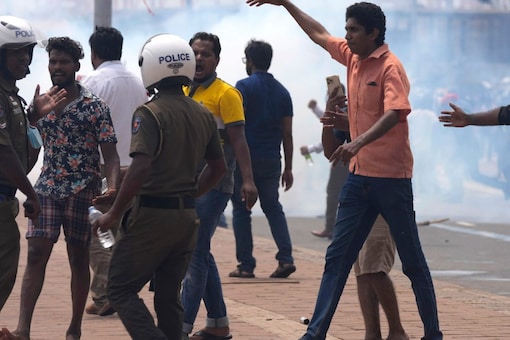
Sri Lankan government supporters and anti-government protesters clash outside president's office residence in Colombo in presence of police officers, Sri Lanka (Image: AP)
Sri Lankan government supporters and anti-government protesters clash outside president’s office residence in Colombo in presence of police officers, Sri Lanka (Image: AP)

A Sri Lankan lawmaker who shot dead an anti-government protester this week was later lynched by a mob, a forensic report showed Friday, contradicting a police report that he died by suicide. Amarakeerthi Athukorala opened fire on people blocking his car’s path in the town of Nittambuwa on Monday, after the country erupted into violence when a gang of government loyalists attacked peaceful protesters.

Police said Athukorala had tried to take refuge in a building and shot himself after being surrounded by about 5,000 people.

The MP’s death was due to multiple injuries, fractures and internal bleeding, but he had no gunshot wounds,” the Lankadeepa newspaper said, quoting the autopsy report.

Athukorala’s police bodyguard died of gunshot injuries, the report said. Police have been ordered to investigate and find out who may have fired the shot.

The duo’s car was surrounded by a large crowd, which had taken to the streets after a club-wielding mob attacked a peaceful protest demanding the government’s resignation over Sri Lanka’s painful economic crisis.

The prime minister, Mahinda Rajapaksa, who protesters blamed for orchestrating the violence, resigned soon afterwards. He was later forced to flee the capital Colombo, taking refuge at a naval base.

A total of nine people were killed in incidents related to the unrest, while at least 225 were wounded and hospitalised.

A overnight curfew is still in place across Sri Lanka.

Lambor ගිණි ආණ්ඩු ක්‍රම සංදර්ශනය

May 13th, 2022

ජයන්ත හේරත්

සාම-ආරගලිස්ට්ලා වෙත

ප්රචණ්ඩත්වය මුදා හැරියේ

ආණ්ඩුවේ අයියලා  නං

වැඩේ වැරදිය.

සාම-ආරගලිස්ට්ලා

ඉන් ප්රකෝප වීම

ඊටත් වැරදිය.

ඒ මොකදැයි කියනවා නං

මුල හිටං ම

අධි-සාමකාමී කොටළුන් සේ

පිටි කිරි ඉල්ලමින්  

බලා හිටියේ

වෙලාව එනතුරාය.

ගිනි තැබීම,

දේපල විනාශය

ජීවිත ඝාතන

උන්ගේ

ආණ්ඩු

ක්‍රමය.

ඔවුනට හැමදා

හුරු පුරුදු වැඩය.

අධිකරණයත් උන්ය.

නීති හදන්නේ

ක්රියාත්මක කරන්නෙත්

උන්මය.

තියවූ තියවූ

ගිනි තියවූ

ලම්බෝර්ග්ගිනි නම් ගිනි තියවූ.

ලස්සන ගෙයක් නම්

ගිනි තියවූ.

යාපනය පුස්තකාලයට

ගිනි තිබ්බේ 

LTTE ත්රස්තවාදීන්ය.

West එකේ

මිනිසුන්ගේ අනුකම්පාව

ගන්නටය.

ඉස්සර නම්

පුස්තකාල හොයමින්

පොත් කියෙව්ව

මතකය.

දැන් නම් පුස්තකාල

කිසි වැඩක් නැත

කියවන්නට නම්

වෙනත් ක්රම ඇත

පුස්තකාලයකට

මෑත කාලයකදී

වැරදිලාවත්

ගොඩ

වෙලා නැත.

JVP NPP ප්රගතිශීලීකාරයෝ

ක්රෝධය

ඊර්ෂ්යාව

වෛරය

වපුරමින් 

ඉන් පල නෙලන්නෝය.

උන්ට වැඩ නැත. 

දකින හැම දෙයක්ම

ගිනි තියන්නෝය.

විනාශ කර

විශාල

ප්රීතියක් ලබන්නෝය.

තරමක හෝ ලොකු

නිර්මාණශීලී

නව

ගෙයක් දැක්කොත්

උහුලා ගන්නට බැරි තරම්

ඊර්ෂ්යාවකින් දැවෙන්නෝය.

ඒවා දැවී අළුව 

බිම සමතලා වනු දැක්ම

ඔවුනගේ උද්දාමයට

කාරණාය.

ප්රාඩෝවක්

Ferrariයක්

Lambaurghiniයක්

දුටු සැනින් ගිනි තබන්නට

විනාශ කරන්නට කැමැත්තෝය.

ගින්නෙන් දැවෙන

ගෙවල්,

වාහන

ෆොටෝ ගහන්නත්

video කර බෙදා හරින්නත්

දක්ෂයෝය.

නැවත නැවත

ඒවා බලමින්

ලොකුකමක්

කල ලෙසින්

පුරසාරම්ද දොඩවන්නේය.

මේ ගති මොවුන්

අතරින් තුරන් වන්නේ නැත.

පහුගියදා

උන්

ප්‍රදර්ශනය කලේ

ආණ්ඩුවක්

පිහිටෙව්වොත්

කරන හැටිය.

71 ද

89ද කලේ

මේ ටිකමය.

Distruction ය.

ඩොලර් අර්බුධය

ආර්ථික දුෂ්කරතා වලට

ප්රධාන වශයෙන්

වග කිව යුත්තේ

පසුගිය

අවුරුදු 45 තුල

පන්ති වර්ජන මෙහෙය වූ 

විශ්ව විද්යාල

ශිෂ්ය නායකයෝය.

පන්ති වර්ජන

කල

ශිෂ්යයෝය.

වර්ජන

වලට වග කිව යුත්තෝ

පසු පසින් සිටි 

JVP NPP ප්‍රගතිගාමී කාරයෝය.

මොඋන්

වර්ජන කලේ

මොනයම් ක්රමයකින් හෝ

නිදහස් අධ්යාපන.

පහසුකම් වැඩි කරනවාට

විරුද්ධවය.

ආණ්ඩු

සාර්ථක වී

ජනතාව සතුටින්

ඉන්නවාට විරුද්දවය.

පාඩම් කවදාවත්

ඉගෙන ගන්නේ නැත.

නැති වන

ජීවිතවල අගය

ඇත්තේ ඒ

මිනිසුන්ගේ

ආදරනීයයන්ටය.

ඒ පාඩුව විඳින්නේ

යැපෙන අසරණයින්ය.

තට්ටු වෙන්නේ මුළු රටටමය.

දුප්පතාටමය.

Intelligence agencies alert on regrouping of ex-LTTE cadres

May 13th, 2022

S. Vijay Kumar Courtesy The Hindu

‘Sri Lankan Tamil outfits abroad have planned attacks to mark Mullivaikal anniversary’

Intelligence agencies have warned of erstwhile cadre of the banned Liberation Tigers of Tamil Eelam (LTTE) regrouping to launch attacks in Sri Lanka, as the country is embroiled in a deep economic and political crisis.

As the island nation has declared emergency twice amid escalating violent protests, some sections of the Sri Lankan Tamil diaspora, with multinational links, were trying to make their presence felt” in the ongoing clashes between protesters and security forces, police sources said on Friday.

Besides planning attacks to mark the Mullivaikal anniversary that falls on May 18, which some groups observe as Tamil Genocide Remembrance Day, the ex-LTTE cadre were also conspiring to avenge the killings of their leader Velupillai Prabhakaran, newsreader Isai Priya and others, who were killed as the ethnic conflict ended after fierce fighting in 2009.

The sources, quoting intelligence inputs, said some erstwhile cadre had entered Tamil Nadu to plan and execute their sinister plans in Sri Lanka. Special teams of the State intelligence and local police, drawn from coastal districts, had mounted vigil along the 1,000 plus km coastline in the State. The Coastal Security Group of the Tamil Nadu police had enhanced the frequency of patrolling along the territorial waters, they said.

Fishermen venturing into the sea were sensitised to the risk factors and advised to look for any suspicious activity or persons in deep sea and along the International Maritime Boundary Line. While coastal security agencies were told to prevent any intrusion of Sri Lankan nationals into India, Superintendents of Police of all coastal districts were told to strengthen check-posts for intensified vehicle check on all roads leading to the sea, the sources added.

Tamil Nadu has been witnessing activities of suspected LTTE sympathisers or its former cadre in the recent years. Last year, the National Investigation Agency arrested a former LTTE intelligence wing operative Satkunam, alias Sabesan, on charges of indulging in drug trafficking with international connections and also raising funds to revive the organisation in Sri Lanka.

In another case, a woman was arrested in Chennai airport, while she was proceeding to Mumbai to draw a huge sum of money lying in a dormant bank account, by fraudulent means. Investigation revealed that she was assigned to raise funds for the revival of LTTE in Sri Lanka, the sources added.

Business leaders think Ranil should be supported

May 13th, 2022

Courtesy LBO

May 13, 2022 (LBO) – Business leaders in Sri Lanka say the new Prime Minister Ranil Wickremesinghe should be given a chance to resuscitate the economy.

Wickremesinghe was appointed to replace Mahinda Rajapaksa, taking many political leaders by surprise and leaving them scrambling to respond. Much of the response from opposition parties was negative as they actively held media events aimed at undermining the legitimacy of Wickremesinghe’s appointment.

The business community’s views appear to be significantly different. Not wanting be quoted due to political sensitivities, several leaders in the software, agricultural and financial industries had confidence that the appointment of the new PM was the need of the hour, providing a solid chance to catalyze Sri Lanka’s economic recovery.

They view the appointment as bringing the political stability that its crucial for an economic recovery, and for the most part are disappointed at the opposition parties attempt to destabilise the new government before it is even formed.

Wickremesinghe enjoys significant credibility with the international community, and is seen by business leaders as someone who can significantly increase support from the donor community.

Markets reacted positively with the Colombo Stock Exchange up almost 10% on the back of the appointment, while the currency exhibited some stability due to moves by the Central Bank likely encouraged by the political stability its Governor demanded just days before.

Sri Lanka: Is ‘Mr Clean’ eyeing the presidency?

May 13th, 2022

Courtesy  Qadijah Irshad Khaleej Times

The suit-clad prime minister, who is more comfortable in English than Sinhala and less popular with the majority lower middle-class population, could be the answer to Sri Lanka’s unprecedented economic crisis for now.

Ranil Wickremesighe, the longest running leader for the oldest political party in Sri Lanka, was sworn in as prime minister for the sixth time on Thursday evening. His appointment comes three days after Mahinda Rajapaksa, brother of President Gotabaya Rajapaksa, resigned as prime minister following island-wide riots, incited by Rajapaksa supporters.

The 73-year-old was appointed amid a severe economic crisis in the nation, that has metamorphosed into a political upheaval. Suffering Sri Lankans, who have been facing a severe shortage of essential food, medicines, fuel and eight-hour long blackouts over months, have been calling the Rajapaksas to step down. Although Wickremesinghe, with his sound economic policies and strong international relations, has been grudgingly accepted as the man of the moment to help the debt ridden, nearly bankrupt nation, Sri Lankans are unhappy with his hand-in-glove relationship with the allegedly corrupt Rajapaksas.Paid ContentSheikh Khalifa Passes Away: Emiratis Mourn Loss Of Their Beloved Leade…https://cdn.speakol.com/widget/html/speakol-appends.html

Island-wide protestors, who have been demanding the expulsion of the Rajapaksas from politics, shouted for Wickremesinghe to step down immediately after his appointment.NextStay

Insiders say that Wickremesinghe’s appointment without election, following closed-door talks with the president on Wednesday, bodes only one thing — that he will use his premiership to protect the Rajapaksa family, who have been accused of widescale corruption of billions of dollars, bringing the nation to its knees.

Pact with Rajapaksas?

Wide speculation within political circles indicates that Wickremesinghe may have reached an agreement with the president to protect the allegedly nepotic Rajapaksa family. Sources say that President Rajapaksa might quit due to public angst, making way for Wickremesinghe to become president. According to the Sri Lankan constitution, the prime minister will automatically become president upon the resignation or death of a president. For a man who has lost majority public support, been prime minister six times and lost two presidential elections in 45 years of politics, this might well be his final chance at presidency.

The Rajapaksa-Wickremesinghe pact goes beyond Thursday’s appointment. In 2015, Wickremesinghe’s party led a coalition alliance and announced a common candidate, Maithripala Sirisena, for president against then president Mahinda Rajapaksa. Sirisena, an ally and health minister in the Rajapaksa government defected, and won the elections, with Wickremesinghe being appointed prime minister for 100 days in accordance with a 100-day programme. The Sirisena-Wickremesinghe election pledge promised to sweep corruption and bring perpetrators to justice. At this juncture, the Rajapaksas, who had been hailed as heroes for ending a three-decade civil war against the Liberation Tigers of Tamil Ealam (LTTE), had fallen from grace due to nepotism and wide scale corruption.

After the 100 days, Wickremesinghe’s coalition alliance — the United National Front for Good Governance — won the parliamentary elections with 106 seats. Although it fell short of an outright majority, Wickremesinghe was re-elected prime minister for the third time, with over 35 of the Rajapaksa party members defecting and joining his cabinet.

Wickremesinghe led the government with strong promises. Heading the list was bringing Mahinda and Gotabaya Rajapaksa, who served as defence minister during his brother’s presidency to trial for war crimes allegations, human rights violation, and mass corruption. Despite mounting evidence against the two brothers and their family members, for killings and disappearances of journalists, anti-Rajapaksa civilians and sportsmen, the investigations and interrogations did not lead to any charges. Public fury over the blatant cover-up of a Wickremesinghe-led investigations grew, when evidence following the exhumation of the body of a star rugby player, Wasim Thajudeen, mysteriously went missing. Evidence proved that Thajudeen had been abducted, tortured and murdered, allegedly upon the orders of the second son of Mahinda Rajapaksa.

The last premiership of Wickremesinghe also marred his image as Mr Clean” that he had earned from the public for not dabbling in family politics and corruption. Born into a wealthy family, with no siblings or children of his own, Wickremesinghe remained a cut above the rest in a nation that was steeped in nepotism and corruption.

The public, however, lost all faith when a bond scam involving the hen central bank governor, Arjuna Mahendra, a close confidante of Wickremesinghe, cost the country $11 million. This also soured his relationship with president Sirisena, who sacked Wickremesinghe overnight and brought back his former ally Rajapaksa back as prime minister. Following 52 days of constitutional crisis, Wickremesinghe was reinstated as prime minister after receiving 117 votes in favour of the 225-member legislative body.

During this period, a series of bombs targeting churches and civilians on Easter Sunday in 2019, killed more than 250 people, and plummeted the waning popularity of the UNP further. Critics blamed the government for ignoring warnings that could have prevented the attacks. Wickremesinghe’s party lost in the next elections, with the UNP securing just one seat in the parliament.

But Wickremesinghe has not always been an unpopular man. He cut a dashing figure when he entered politics as a young lawyer in 1977. Under the shadow of his uncle, then president Junius Jayawardene, the 28-year-old, who was the youngest parliamentarian, soon climbed up the UNP party ladder.

Elite background

Wickremesinghe hails from an elite family belonging to a high caste, and his roots go back to pre-independence Sri Lanka. His maternal grandfather, D.R Wijewardena, supported the independence movement with a series of nationalistic newspapers. His paternal grandfather, C.G Wickremesinghe, was the most senior Sri Lankan colonial government servant.

His father, Esmond Wickremesinghe was the managing director of Lake House, the publishing empire started by his father-in-law, and later became one of the closest confidantes of the UNP. Wickremesinghe, who is widely read, once said he would have taken journalism as a career if his family’s publishing empire had not been taken over by the government under Sirimavo Bandaranaike, the first woman prime minister of the world.

Young Wickremesinghe worked with the UNP during its resurgence, following a disastrous defeat by a coalition led by Bandaranaike in 1970. He joined the party following its landslide victory in 1977, led by his uncle president Jayawardene.

It was the beginning of an era of hope and optimism of the country, and the educated, eloquent, English-speaking young man, who schooled at the elite Royal College, was looked upon as a role model by the youth of the nation. The man who is considered crafty and intelligent by his peers, was first posted as deputy foreign minister, and then as minister of youth affairs and employment. He went on to make marked reforms during his tenure as minister of education.

In his four years as minister of industries under president Ranasinghe Premadasa, Wickremesinghe made some key changes to the Sri Lankan stock market, attracting much needed foreign investors to the country.

During his later years in power, Wickremesinghe has been known to take on larger projects and neglect grass root problems of the nation. This, together with his inability to connect to the masses, has led the suit-clad Wickremesinghe, who is more comfortable in English than Sinhala, to become less popular with the majority lower middle-class population.

First premiership

He first catapulted into the seat of premiership following the assassination of former president Premadasa in 1993, when then incumbent prime minister D.B. Wijetunga filled the presidential seat. Shortly before the assassination, the top two members of Wickremesinghe’s party, Gamini Fonseka and Lalith Athulathmudali, broke away, after a failed attempt to pass a no-confidence motion against Premadasa, paving the way for Wickremesinghe to become prime minister for the first time.

Following his stint as prime minister, he contested and lost in his first presidential election in 1994, against Chandrika Bandaranaike Kumaratunga, the daughter of late prime ministers S.W.R.D. Bandaranaike and Sirimavo Banadaranaike. Kumaratunge, who entered politics as the widow of assassinated popular former movie star and politician Vijaya Kumaratunga, gathered a large number of sympathy votes. Wickremesinghe was then appointed prime minister for the second time by president Kumaratunga, his childhood friend, who later became his bitter political rival.

In the same year, Wickremesinghe became leader of the UNP, a post he has held for 28 years, attracting much criticism.

In 2005, he failed once more in a bid to become president, this time losing narrowly by just about 150,000 votes to Mahinda Rajapaksa. This was during the middle of the bloody conflict, where Tamil and Muslim voters in the North and East, a strong UNP support base, were prevented from voting by the LTTE. Wickremesinghe has not run for president since.

Despite his survival in a political quagmire for almost half-a-century, Wickremesinghe has refused to relinquish party leadership to younger members. He has been accused of not grooming able, younger members to take over the leadership, and instead of elevating individuals prone to corruption, with limited intellect.

This resulted in Sajith Premadasa, son of the late president Premadasa, to break away from the UNP and form the Samagi Jana Balawegaya (United People’s Power) party in 2020.

Despite his inefficacies and mistrust by the public, critics and fellow politicians believe that Wickremesinghe is the man of the hour due to his strong international relations and economic acumen. Inside sources say that following his appointment as prime minister, several countries, including Japan, India and the United States, with whom Wickremesinghe maintains close ties, have already pledged financial support for the crippled nation. Reversing years of economic mismanagement and corruption and winning public support would yet be his biggest challenge.

Whatever his motives be, in the short run, the man the public detests as much as the Rajapaksas, could be the answer to Sri Lanka’s unprecedented economic crisis.

රනිල් අගමැති වෙන බව කලින්ම කිව්වා – ඊලඟට වෙන්න යන දේ ගැන ප්‍රභල හෙළිදරව්වක්- Has Kjanakka brought curse on Rajapaksa family

May 13th, 2022

‘Be patient, I will bring things back’ – new Sri Lanka president

May 13th, 2022

Courtesy Radio New Zealand 

Sri Lanka’s new prime minister says an economic crisis that has brought misery and unrest is “going to get worse before it gets better”.

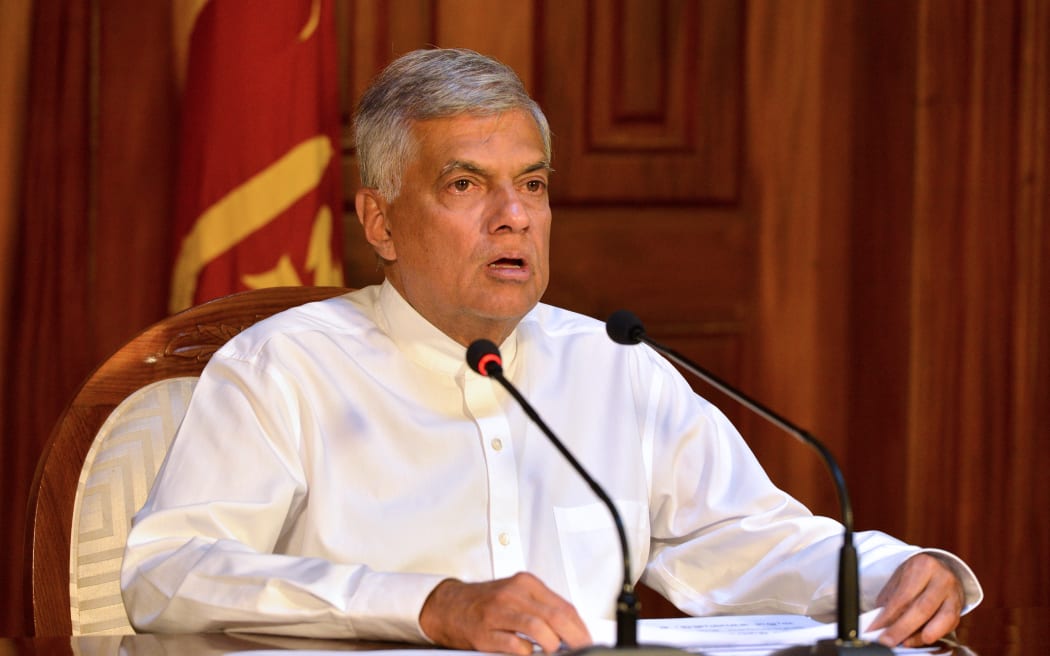
Sri Lankan Prime Minister Ranil Wickremesinghe

Ranil Wickremesinghe has been appointed Prime Minister, for the sixth time. Photo: AFP / ISHARA S. KODIKARA

The country is facing fuel shortages and soaring food prices, with some Sri Lankans forced to skip meals.

Anger over the government’s handling of the crisis has led to violent protests.

Ranil Wickremesinghe was appointed in an attempt to defuse the protests. It is the opposition MP’s sixth stint as prime minister.

In his first interview since taking office, Wickremesinghe told the BBC he would ensure families get three meals a day.

Appealing to the world for more financial help, he said “there won’t be a hunger crisis, we will find food”.

The new PM described the Sri Lankan economy as “broken”, but he said his message to Sri Lankans was to “be patient, I will bring things back”.

Wickremesinghe was sworn-in by President Gotabaya Rajapaksa on Thursday, but his appointment has largely been met with dismay, as he is seen as too close to the politically dominant Rajapaksa family.

In his interview, Wickremesinghe said he agreed with the sentiment of protesters who’ve been calling for President Rajapaksa to resign, but said that would not happen.

“Blaming won’t lead to action, I’m here to see people nourished,” he said.

But he added that he was “going to change all the policies of the Rajapaksa government”.

He also called on the international community for help.

“We need your assistance for a year, whatever we get from you we will repay. Help us to do it. We are the longest and oldest democracy in Asia,” he said.

Sri Lanka’s economy is in freefall. Food, medicine and fuel have run out or become unaffordable. Some people have died waiting at petrol stations to fill up their tanks.

It is the the island nation’s worst economic crisis since gaining independence from Britain in 1948.

“We don’t have kerosene, we don’t have petrol, we don’t have diesel, we don’t have cooking gas and we don’t even have access to wood-fired stoves,” a 68-year-old woman in the Sri Lankan capital Columbo told AFP.

“We are struggling everyday to feed our children. Food prices have tripled in the past few days. How are we supposed to manage?”

At the heart of Sri Lanka’s economic woes is that the country is heavily reliant on imports but has been burning through the foreign currency reserves it needs to pay for them.

The economy suffered in the Covid pandemic and tourism was hit by the 2019 church bombings. But experts have also blamed economic mismanagement too.

– BBC

New Lankan PM Wickremesinghe gets international backing

May 13th, 2022

By P.K.Balachandran Courtesy NewsIn.Asia

Colombo, May 13: Sri Lanka’s new Prime Minister, Ranil Wickremesinghe, has secured the support of key countries in the world such as India, the US, Japan and China. He is expected to get majority support in parliament also, though he is the lone representative of his party, the United National Party, in parliament.

Wickremesinghe might not head a truly national” government composed of all parties in parliament. But he might get the support enough MPs to have a majority, that is, at least 113 in the House of 225.   ADVERTISEMENT

World’s Interest in Stability

The countries supporting Wickremesinghe have based their policy on the critical requirement of stability, as the statements put out by their envoys show.

The Indian High Commission said in its tweet, that India hopes for political stability and looks forward to working with the Government of Sri Lanka formed in accordance with democratic processes pursuant to the swearing-in of Hon’ble Ranil Wickremesinghe as the Prime Minister of Sri Lanka.” It further said that India’s commitment to the people of Sri Lanka will continue.”

In its first reaction to the situation in Sri Lanka after Mahinda Rajapaksa resigned as Prime Minister, India on Tuesday said that it was fully supportive” of the island nation’s democracy, stability and economic recovery. India will always be guided by the best interests of the people of Sri Lanka expressed through democratic processes,” said External Affairs Ministry spokesperson, Arindam Bagchi.

In keeping with our Neighborhood First policy, India has extended this year alone, support worth over USD 3.5 billion to the people of Sri Lanka for helping them overcome their current difficulties. In addition, the people of India have provided assistance for mitigating the shortages of essential items such as food and medicine,” Bagchi added.

The Indian High Commissioner, Gopal Baglay, followed this up with a meeting with Wickremesinghe in the latter’s office on Friday. He presented the PM with a bouquet.  

Later, asked by newsmen about Sri Lanka’s relations with India, its closest neighbor, Wickremesinghe said:  It will become much better.” During his previous stints as PM, Wickremesinghe had visited India on four occasions – in October 2016, April 2017, November 2017 and October 2018.

Asked about his agenda as the Prime Minister, Wickremesinghe said: I have taken on a challenge of uplifting the economy and I must fulfill it.” Setting the economy right by meeting the forex shortage and getting  for the population essential goods, is his single point agenda. And for that, political stability in the form of parliament’s support, is needed.      

US Support

The US Ambassador, Julie Chung, also stressed the need for political stability for Sri Lanka to solve its grave economic problems. In a tweet she said: Look forward to working w/ @RW_UNP. His appointment as PM, and the quick formation of an inclusive government, are first steps towards addressing the crisis & promoting stability.”

We encourage meaningful progress at the IMF & long-term solutions that meet the needs of all Sri Lankans,” she added.  

Chung met Wickremesinghe on Friday, and discussed the US TREAsury team’s visit to Sri Lanka. The Japanese Ambassador Mizukoshi Hideaki and the Chinese Ambassador Qi Zhenhong also met him. The cancelled Japanese urban rail project is likely to be revived as a result of the  change in the government.

The Chinese envoy discussed financial assistance to Sri Lanka. Earlier, the Chinese Foreign Ministry spokesman had said in Beijing that China believes that with the joint efforts of all sectors of Sri Lanka, the country will regain peace and stability as soon as possible.” Again the stress was on the need for stability.

Problems in Parliament

While Wickremesinghe has strong support from the four most important countries in its foreign relations, he is yet to fathom the level of support in parliament. He has to face parliament on May 17, when the opposition Samagi Jana Balawegaya (SJB) led by Sajith Premadasa, will be bringing in a Motion of No Confidence against his government, and also President Gotabaya Rajapaksa.

As of now, the ruling Sri Lanka Podujana Peramuna (SLPP) is with Wickremesinghe as per the wishes of President Rajapaksa and the rest of the Rajapaksa clan. The 41 MPs from the SLPP and its allies, who had rebelled and are sitting as Independents, are expected to act independently but without the objective of toppling the government.

The group’s spokesman, Wimal Weerawansa, stated that it has no intention of sabotaging the administration. It will not indulge in hate politics” and will not allow the country to become anarchic”, he said.

The Pivithuru Hela Urumaya (PHU) leader Udaya Gammanpila stated that as long as PM Ranil Wickremesinghe works to rescue the country from the abyss” the Independents would extend support while remaining in the opposition. This country needs a government. We will not make any attempt to topple it,” the former Energy minister said. 

The Sri Lanka Freedom Party (SLFP), a former ally of the SLPP, has decided not to accept any portfolios or be part of a government under Prime Minister Wickremesinghe. It will decide on its stand vis-s-vis the SJB’s No Confidence Motion later on Friday after internal consultations.

Te Janatha Vimukthi Peramuna (JVP) and the Tamil National Alliance (TNA) are anti-government and are likely to vote for the No-Confidence Motion But they are small parties. The JVP has only three MPs and the TNA 10.

President asks Lankans to be resilient

In his Vesak festival message to the people of Sri Lanka on Friday, President Gotabaya Rajapaksa appealed to the people to be resilient and come out of the present dire situation through collective and resolute actions.

Resilience is essential in difficult situations. At this juncture when the country is in dire straits, all the people’s representatives must work together immediately for a solution on behalf of all citizens. The true goal should be to reach the desired target without deviating from the primary goal,” the President said.

We must be mindful of the current situation and unite around a program that can deliver a fair determination to all.  That is the Buddhist policy.”

May the common goal of all be to build a resilient, consensus and religious society based on principles. I wish you a Happy Vesak Poya Day,” the President said.

Ranil pledges to withdraw shoot at sight order given to security forces

May 13th, 2022

Courtesy The Daily Mirror

Newly appointed Prime Minister Ranil Wickremesinghe had pledged to repeal the shoot at sight order given to security forces after the recent violence.

Mr. Wickremesinghe made this pledge when foreign journalists questioned him about this procedure.

Prime Minister’s office said such orders will be given to security forces only if riots resume.

It was also reported that the new government will repeal the 20 amendment to the constitution and reduce President’s powers.

Meanwhile, UNP Assistant Leader Akila Viraj Kariyawasam told a press conference that no one from his party will look for any positions in the government. We will support without playing an active role in the government,” he said.

The new cabinet will comprise members from a number of political parties,” he added.(Yohan Perera)

Sri Lanka receives assurance of fertilizer supplies from India

May 13th, 2022

Kallol Bhattacherjee Suhasini Haidar Courtesy The Hindu

Sri Lanka, which is facing the biggest economic crisis in its post-independence history, is aiming to boost its agriculture sector

Sri Lanka has received assurance from Indian officials regarding supply of fertilizers that the island nation requires urgently. High Commissioner Milinda Moragoda met concerned officials on Friday where the issue was discussed.

“High Commissioner Milinda Moragoda met with the Secretary to the Department of Fertilizers of India Shri Rajesh Kumar Chaturvedi and thanked him for India’s decision to supply 65,000 MT of urea required for the current Yala cultivation season in Sri Lanka,” the High Commission of Sri Lanka said in a message. Yala is the season of paddy cultivation in Sri Lanka that lasts between May and August.

Sri Lanka, which is facing the biggest economic crisis in its post-independence history, is aiming to boost its agriculture sector to avoid any disruption in the agriculture market.

Soaring food prices in Sri Lanka have added to the economic difficulties and any setback to the next paddy cultivation season will be hard for the island to bear.

It is understood that India has given an oral assurance ahead of a final official order that will ensure flow of fertilizers to Sri Lanka. However it is not yet clear, how the cash-strapped Sri Lankan government will pay for the fertilizer shipment.

Sri Lanka is the second country after Nepal to have received India’s assurance for supply of fertilizers. During the pandemic season, the global fertilizer market was choked as several major producers banned export of fertilizers that affected non-producing countries. Nepal’s PM Sher Bahadur Deuba had taken up the issue during his April visit to Delhi. However, India too is dependent on imported urea.

The fertilizer sector has been repeatedly affected because of the global disruptions such the pandemic and the Ukraine crisis, which has disrupted Ukraine’s agriculture sector creating shortage of supplies in the global agriculture market.

India had been in talks with Russia to bolster its own fertilizer sector and has received approximately 3.60 lakh metric tonnes of fertilizers since the beginning of the Ukraine war. India’s own reliance on imported urea is going to increase as it plans to maintain top productivity of the agriculture sector that aims to fill up some of the scarcity that the absence of Ukrainian supplies has left in the global food market.

Sri Lanka economy crisis to get worse before it gets better, PM says

May 13th, 2022

By Rajini Vaidyanathan BBC South Asia Correspondent Courtesy BBC

Sri Lanka’s new prime minister has told the BBC an economic crisis that has brought misery and unrest is “going to get worse before it gets better”.

The country is facing fuel shortages and soaring food prices, with some Sri Lankans forced to skip meals.

Anger over the government’s handling of the crisis has led to violent protests.

Ranil Wickremesinghe was appointed in an attempt to defuse the protests. It is the opposition MP’s sixth stint as prime minister.

In his first interview since taking office, Mr Wickremesinghe told the BBC he would ensure families get three meals a day.

Appealing to the world for more financial help, he said “there won’t be a hunger crisis, we will find food”.

The new PM described the Sri Lankan economy as “broken”, but he said his message to Sri Lankans was to “be patient, I will bring things back”.

Mr Wickremesinghe was sworn-in by President Gotabaya Rajapaksa on Thursday, but his appointment has largely been met with dismay, as he is seen as too close to the politically dominant Rajapaksa family.

In his interview, Mr Wickremesinghe said he agreed with the sentiment of protestors who’ve been calling for President Rajapaksa to resign, but said that would not happen. “Blaming won’t lead to action, I’m here to see people nourished,” he said.

But he added that he was “going to change all the policies of the Rajapaksa government”.

He also called on the international community for help.

“We need your assistance for a year, whatever we get from you we will repay. Help us to do it. We are the longest and oldest democracy in Asia,” he said.

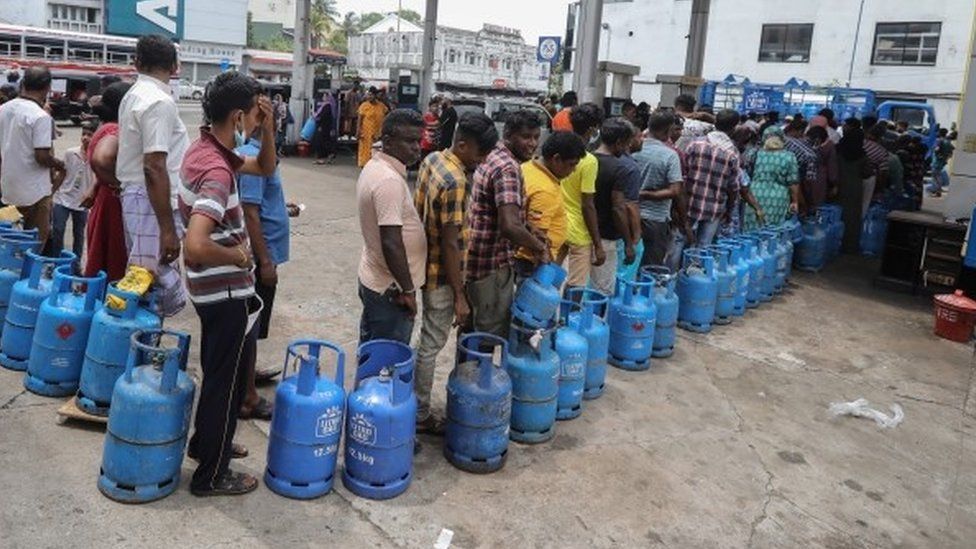
People queue for cooking gas in Sri Lanka
Image caption,Long queues for essentials are now part of daily life in Sri Lanka, for those that can afford them

Sri Lanka’s economy is in freefall. Food, medicine and fuel have run out or become unaffordable. Some people have died waiting at petrol stations to fill up their tanks.

It is the the island nation’s worst economic crisis since gaining independence from Britain in 1948.

“We don’t have kerosene, we don’t have petrol, we don’t have diesel, we don’t have cooking gas and we don’t even have access to wood-fired stoves,” a 68-year-old woman in the Sri Lankan capital Columbo told AFP.

“We are struggling everyday to feed our children. Food prices have tripled in the past few days. How are we supposed to manage?”

At the heart of Sri Lanka’s economic woes is that the country is heavily reliant on imports but has been burning through the foreign currency reserves it needs to pay for them.

The economy suffered in the Covid pandemic and tourism was hit by the 2019 church bombings. But experts have also blamed economic mismanagement too.

Sri Lanka: New PM Wickremesinghe Gets International Backing

May 13th, 2022

By  Courtesy Eurasia Review

Majority support in parliament is also on the cards

Sri Lanka’s new Prime Minister, Ranil Wickremesinghe, has secured the support of key countries in the world such as India, the US, Japan and China. He is expected to get majority support in parliament also, though he is the lone representative of his party, the United National Party, in parliament.Advertisement

Wickremesinghe might not head a truly national” government composed of all parties in parliament. But he might get the support enough MPs to have a majority, that is, at least 113 in the House of 225.   

World’s Interest in Stability

The countries supporting Wickremesinghe have based their policy on the critical requirement of stability, as the statements put out by their envoys show.

The Indian High Commission said in its tweet, that India hopes for political stability and looks forward to working with the Government of Sri Lanka formed in accordance with democratic processes pursuant to the swearing-in of Hon’ble Ranil Wickremesinghe as the Prime Minister of Sri Lanka.” It further said that India’s commitment to the people of Sri Lanka will continue.”

In its first reaction to the situation in Sri Lanka after Mahinda Rajapaksa resigned as Prime Minister, India on Tuesday said that it was fully supportive” of the island nation’s democracy, stability and economic recovery. India will always be guided by the best interests of the people of Sri Lanka expressed through democratic processes,” said External Affairs Ministry spokesperson, Arindam Bagchi.

In keeping with our Neighborhood First policy, India has extended this year alone, support worth over USD 3.5 billion to the people of Sri Lanka for helping them overcome their current difficulties. In addition, the people of India have provided assistance for mitigating the shortages of essential items such as food and medicine,” Bagchi added.Advertisement

The Indian High Commissioner, Gopal Baglay, followed this up with a meeting with Wickremesinghe in the latter’s office on Friday. He presented the PM with a bouquet.  

Later, asked by newsmen about Sri Lanka’s relations with India, its closest neighbor, Wickremesinghe said:  It will become much better.” During his previous stints as PM, Wickremesinghe had visited India on four occasions – in October 2016, April 2017, November 2017 and October 2018.

Asked about his agenda as the Prime Minister, Wickremesinghe said: I have taken on a challenge of uplifting the economy and I must fulfill it.” Setting the economy right by meeting the forex shortage and getting  for the population essential goods, is his single point agenda. And for that, political stability in the form of parliament’s support, is needed.      

US Support

The US Ambassador, Julie Chung, also stressed the need for political stability for Sri Lanka to solve its grave economic problems. In a tweet she said: Look forward to working w/ @RW_UNP. His appointment as PM, and the quick formation of an inclusive government, are first steps towards addressing the crisis & promoting stability.”

We encourage meaningful progress at the IMF & long-term solutions that meet the needs of all Sri Lankans,” she added.  

Chung met Wickremesinghe on Friday, and discussed the US TREAsury team’s visit to Sri Lanka. The Japanese Ambassador Mizukoshi Hideaki and the Chinese Ambassador Qi Zhenhong also met him. The cancelled Japanese urban rail project is likely to be revived as a result of the  change in the government.

The Chinese envoy discussed financial assistance to Sri Lanka. Earlier, the Chinese Foreign Ministry spokesman had said in Beijing that China believes that with the joint efforts of all sectors of Sri Lanka, the country will regain peace and stability as soon as possible.” Again the stress was on the need for stability.

Problems in Parliament

While Wickremesinghe has strong support from the four most important countries in its foreign relations, he is yet to fathom the level of support in parliament. He has to face parliament on May 17, when the opposition Samagi Jana Balawegaya (SJB) led by Sajith Premadasa, will be bringing in a Motion of No Confidence against his government, and also President Gotabaya Rajapaksa.

As of now, the ruling Sri Lanka Podujana Peramuna (SLPP) is with Wickremesinghe as per the wishes of President Rajapaksa and the rest of the Rajapaksa clan. The 41 MPs from the SLPP and its allies, who had rebelled and are sitting as Independents, are expected to act independently but without the objective of toppling the government.

The group’s spokesman, Wimal Weerawansa, stated that it has no intention of sabotaging the administration. It will not indulge in hate politics” and will not allow the country to become anarchic”, he said.

The Pivithuru Hela Urumaya (PHU) leader Udaya Gammanpila stated that as long as PM Ranil Wickremesinghe works to rescue the country from the abyss” the Independents would extend support while remaining in the opposition. This country needs a government. We will not make any attempt to topple it,” the former Energy minister said. 

The Sri Lanka Freedom Party (SLFP), a former ally of the SLPP, has decided not to accept any portfolios or be part of a government under Prime Minister Wickremesinghe. It will decide on its stand vis-s-vis the SJB’s No Confidence Motion later on Friday after internal consultations.

President asks Lankans to be resilient

In his Vesak festival message to the people of Sri Lanka on Friday, President Gotabaya Rajapaksa appealed to the people to be resilient and come out of the present dire situation through collective and resolute actions.

Resilience is essential in difficult situations. At this juncture when the country is in dire straits, all the people’s representatives must work together immediately for a solution on behalf of all citizens. The true goal should be to reach the desired target without deviating from the primary goal,” the President said.

We must be mindful of the current situation and unite around a program that can deliver a fair determination to all.  That is the Buddhist policy.”

May the common goal of all be to build a resilient, consensus and religious society based on principles. I wish you a Happy Vesak Poya Day,” the President said.

P. K. Balachandran

P. K. Balachandran is a senior Indian journalist working in Sri Lanka for local and international media and has been writing on South Asian issues for the past 21 years.

Lankan PM Wickremesinghe moots ‘aid consortium’ with foreign envoys

May 13th, 2022

Meera Srinivasan  The Hindu BusinessLine

Vows to deliver solutions” to the island’s deepening economic crisis

Sri Lanka’s newly appointed Prime Minister Ranil Wickremesinghe, who has vowed to deliver solutions” to the island’s deepening economic crisis, kicked off duties on Friday, discussing formation of a foreign aid consortium” with Colomb-based envoys, his office said.

His outreach came a day after he was sworn in Premier by President Gotabaya Rajapaksa, in the place of Mahinda Rajapaksa, who resigned earlier this week following widespread protests.

Indian envoy Gopal Baglay was among the first to meet Wickremesinghe shortly after he assumed charge Friday morning. High Commissioner called on Hon’ble PM [Ranil Wickremesinghe] @RW_UNP. Conveyed greetings and good wishes. Discussed continued cooperation for economic recovery and stability in #SriLanka through democratic processes towards the wellbeing of all the people of Sri Lanka,” the Indian Mission said in a tweet. India has extended assistance totalling $3.5 billion this year to help Sri Lanka cope with its severe dollar crunch.

The PM, who is in office for the sixth time, also met the Ambassadors of China, US<NO,,>nited States<NO>, Japan, and the British High Commissioner. The Chinese Ambassador expressed his country’s willingness to continue to support Sri Lanka while also pledging to review existing assistance,” his office said in a statement.

‘Little political support’

Wickremesinghe has few backers other than the ruling Sri Lanka Podujana Peramuna. Opposition parties have said they will not be part of a government led by him and Gotabaya, while government allies seem hesitant to take up ministerial positions. The PM has no parliamentary colleagues from the United National Party he leads, he is its sole legislator. It remains to be seen if Wickremsinghe can prove he has the confidence of the House when the Parliament convenes on May 17. The country also awaits a new cabinet and government to run its affairs at a critical time.

Meera Srinivasan is The Hindu Correspondent in Colombo.

New Sri Lanka PM to steadfastly push forward BRI projects in the country

May 13th, 2022

By Global Times

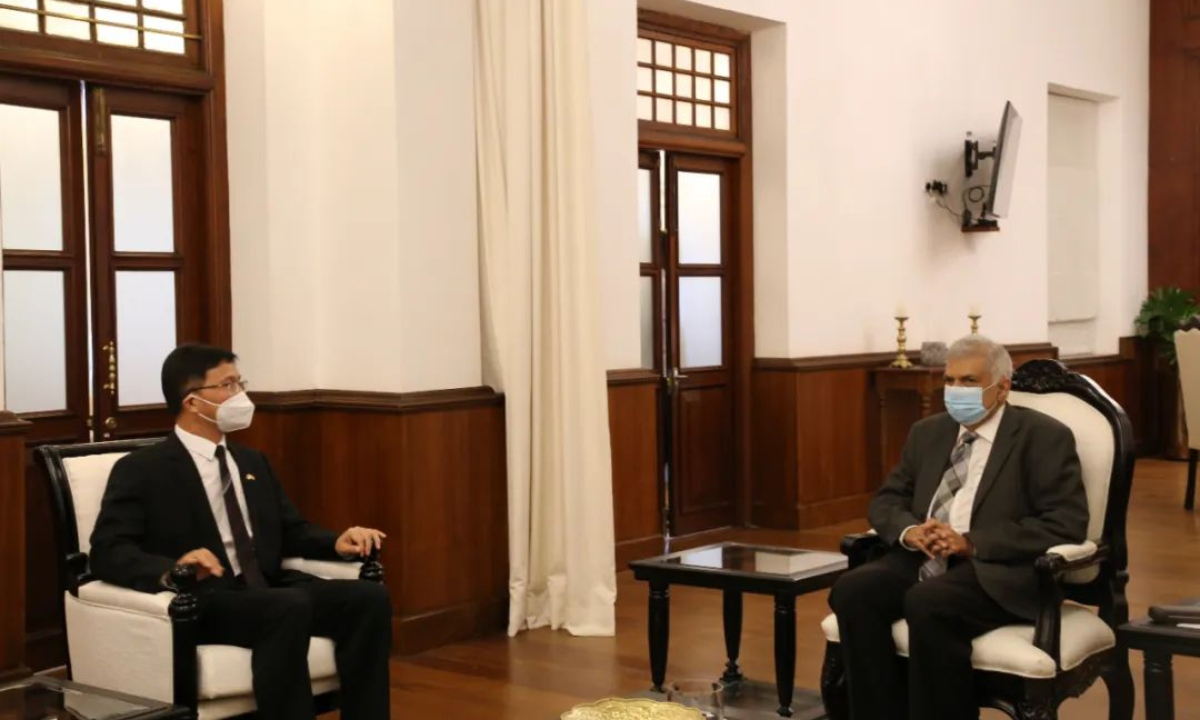
Ranil Wickremesinghe, Sri Lanka's new prime minister met with Qi Zhenhong, Ambassador of China to Sri Lanka on Friday. Photo: Courtesy of Embassy of China to Sri Lanka

Ranil Wickremesinghe, Sri Lanka’s new prime minister met with Qi Zhenhong, Ambassador of China to Sri Lanka on Friday. Photo: Courtesy of Embassy of China to Sri Lanka

Ranil Wickremesinghe, Sri Lanka’s new prime minister, said on Friday that his new government will continue to attach great importance to developing ties with China and will push forward Belt and Road projects in the country.

During a meeting with Qi Zhenhong, Ambassador of China to Sri Lanka on Friday, Wickremesinghe stressed that the new government will push forward the development of Colombo Port City and Hambantota Port projects among other major cooperation projects and make every effort to protect the safety of Chinese institutions and personnel in Sri Lanka, according to a notice issued by the Chinese Embassy to Sri Lanka on its website.

Wickremesinghe said he is looking forward to resuming and pushing forward the cooperation between the two countries in all aspects as soon as the new cabinet and government are in place.

Qi congratulated Wickremesinghe on being reappointed as prime minister and appreciated his contributions to promoting China-Sri Lanka friendly cooperation over the years.

The two sides also exchanged views on the current economic and financial situation in Sri Lanka and other issues of common interest.

Politicians’ Obligation to the Nation

May 13th, 2022

FB

As a country when Sri Lanka is in dire need of a debt restructure and economic recovery, the IMF in combination with The World Bank prepared a package on conditions set forth.

While these conditions were laid so clearly of what is being required from Sri Lanka, the sabotaging acts committed collectively by short sighted rulers, all other political fractions, Trade Unions, religious fractions and the majority of the citizens have brought this Resplendent Land to its death bed.

As the only viable option available to attempt a resurrection, Sri Lanka and its people have failed to recognize the International Monetary Fund (IMF) who would act in the best interest of that country.

While the top recognized economists were engaged in planning and implementations, the country opted to promote demonstrations, riots, political instability, social instability and violence or violence provoking acts for other agendas of personal growth.

First and foremost, the country needed to be on course of economic recovery and all other agendas to be secondary.

Demonstrations of any sort and provocation acts should not have occurred during this IMF planning stages.

This recovery needs to be achieved by Economists and NOT politicians, Attorneys, Law Enforcement, astrologers and the like.

Upon being on the path of economic restructure and recovery is when all else need to be addressed.

Sri Lanka need a bona fide government in place irrespective of its effectiveness for the IMF to enter into agreement of loan and debt restructure.

Currently they have effectively removed such preventing any financial entity entering into agreement.

If they force the President to be removed at this time, they will nail their coffin for good.

Once the country is in the correct path to economic recovery, is when they need to take steps in eliminating corruption and what surrounds those acts.

Political and social stability must be instilled for economic revamp.

Once the country is on its path to raising its heads, Sri Lanka must be rid of all who promoted all demonstrations, riots, looting, political chaos etc. for they have NOT the best interest for the country but agendas of their own.

Courtesy Hemnath De Silva‘s FB

Sri Lanka’s New Prime Minister Wickremesinghe Thanks PM Modi, Says ‘Want a Closer Relationship’ With India

May 13th, 2022

Courtesy News18

Sri Lanka’s new Prime Minister Ranil Wickremesinghe has said he looks forward to closer ties with India during his term and thanked India for its economic assistance to the country as it tackles the worst economic crisis since independence.

Wickremesinghe, 73, was sworn-in as Sri Lanka’s 26th prime minister on Thursday to stabilise the country’s debt-ridden economy and end the political turmoil. I want a closer relationship and I want to thank Prime Minister (Narendra) Modi, Wickremesinghe said, referring to the Indian economic assistance to his country.

His remarks came during a religious ceremony held here last night after he took the oath. India has committed more than USD 3 billion to debt-ridden Sri Lanka in loans, credit lines and credit swaps since January this year.

The 73-year-old United National Party (UNP) leader took over as the prime minister as the country was without a government since Monday when President Gotabaya Rajapaksa’s elder brother and prime minister Mahinda Rajapaksa resigned after violence erupted following an attack on the anti-government protesters by his supporters.

The attack triggered widespread violence against Rajapaksa loyalists, leaving nine people dead and wounding over 200 others. Wickremesinghe said his focus was limited to tackling the economic crisis. I want to settle this problem to ensure the supply of petrol, diesel and electricity to the people,” Wickremesinghe said.

Sri Lanka is facing its worst economic crisis since gaining independence from Britain in 1948. The crisis is caused in part by a lack of foreign currency, which has meant that the country cannot afford to pay for imports of staple foods and fuel, leading to acute shortages and very high prices.

I will do the job that I have undertaken to do. Asked if he could sustain his premiership in the 225-member Parliament since he only has only one seat, he said: I will prove the majority when it comes to that. Referring to the island-wide protests, Wickremesinghe said the main protest near president Gotabaya Rajapaksa’s secretariat for over a month now would be allowed to continue. I will talk to them (protesters) if they are willing,” he said.

Asked if he feared protest demanding him to quit, he said he would face them. If I can undertake the job to handle the economic crisis, I will handle that too,” he said. Wickremesinghe was appointed the Prime Minister as the main Opposition Samagi Jana Balawegaya (SJB) party and the third-largest party Janatha Vimukthi Peramuna (JVP) attached tough conditions, such as the resignation of President Rajapaksa, to lead the interim government.

Wickremesinghe heads the interim government in which all political parties are to be stakeholders for a limited period before facilitating a parliamentary election.

Members of the ruling Sri Lanka Podujana Peramuna (SLPP), a section of the main Opposition SJB and several other parties have expressed their support to show a majority for Wickremesinghe in Parliament, sources said.

However, several factions opposed the move to appoint Wickremesinghe as the new Prime Minister. The JVP and the Tamil National Alliance claimed that his appointment was unconstitutional.

The veteran politician is seen as being close to the Rajapaksa clan. But he does not currently command much support from the Opposition or among the public. It remains to be seen if he can prove his majority in the 225-member Parliament. We will allow him space,” Weerasumana Weerasinghe of the Communist Party said. Former President Maithripala Sirisena’s Sri Lanka Freedom Party party said its central committee would meet this morning to make a decision.

The trade union cum political party for the plantation community of Indian-origin, Ceylon Workers’ Congress, said they would support Wickremesinghe. Sri Lanka’s worst economic crisis has provoked widespread protests calling for political reform and the resignation of President Gotabaya Rajapaksa.

On April 1, President Rajapaksa imposed a state of emergency, lifting it five days later. The government reimposed a state of emergency on May 6 after police fired teargas and arrested students protesting near parliament, which was adjourned until May 17. Although the protests have been overwhelmingly peaceful, the police fatally shot a protester on April 19, and on several occasions have used teargas and water cannons against protesters. The authorities have made numerous arrests and repeatedly imposed curfews.

The political crisis was triggered in late March when people hurt by long hours of power cuts and essential shortages took to the streets demanding the resignation of the government. President Rajapaksa sacked his cabinet and appointed a younger cabinet as a response to the demand for resignation. A continuous protest opposite his secretariat has now gone on for well over a month.

On Monday, his brother Mahinda Rajapaksa resigned as the prime minister to make way for the president to appoint an interim all political party government.

Main Opposition Won’t Join New Government: Sri Lanka Latest

May 13th, 2022

Courtesy Bloomberg UK

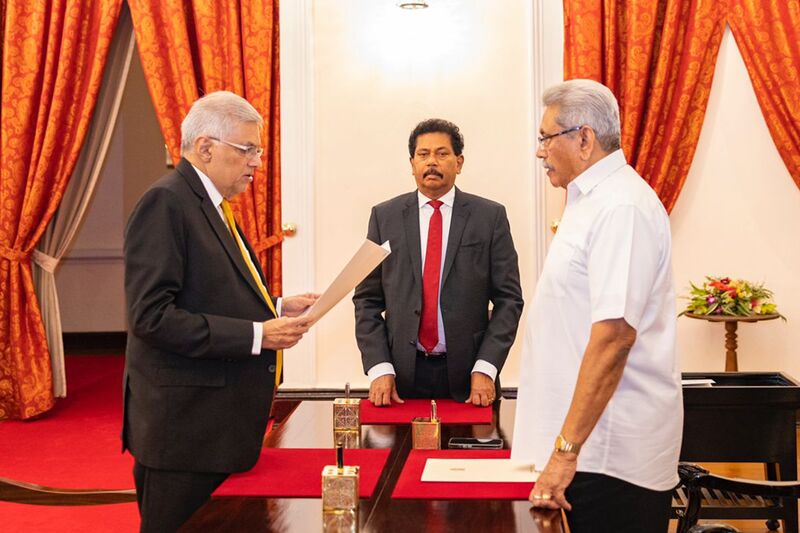
Ranil Wickremesinghe, left, is sworn in as Sri Lanka’s prime minister in front of President Gotabaya Rajapaksa, in Colombo, on May 13.
Ranil Wickremesinghe, left, is sworn in as Sri Lanka’s prime minister in front of President Gotabaya Rajapaksa, in Colombo, on May 13.Source: Sri Lankan President Media Division

By Anusha Ondaatjie and Asantha SirimanneMay 13, 2022, 2:32 AM GMT+1Updated on

Sri Lanka’s Prime Minister Ranil Wickremesinghe said he will show his majority in parliament and protests against President Gotabaya Rajapaksa should not be curbed, local media reported.  

However, the main opposition Samagi Jana Balawegaya party has said it won’t join a so-called unity government and will not take any cabinet roles, indicating that more political uncertainty could lie ahead. 

The new premier’s United National Party didn’t win a single seat in the 2020 election, which brought the Rajapaksas back to power, but he was able to return as lawmaker in 2021 through a system where parties with enough votes can nominate a member under the national list.” He can only prove a majority with the support of Rajapaksa’s ruling alliance.

Stocks Surge on News of Political Stability (1:30 p.m.)

Sri Lankan stocks surged for a second day as the appointment of the new prime minister was seen as a step toward political stability.

The Colombo All-Share Index jumped 4.4% and was the best performing key gauge in Asia on Friday. For the week, which saw only three days of trading, the gauge advanced 9%, its biggest weekly gain since January 2021, data compiled by Bloomberg show.

Still, market participants remain cautious as the premier needs to build a cabinet of ministers and take steps to calm public anger. Low foreign exchange reserves, a potential delay in negotiations with International Monetary Fund for financial aid and rising interest rates remain key risks for market sentiment, they say.

Main Opposition Will Not Join Government (1:00 p.m.)

The main opposition party told a news conference in Colombo that its lawmakers they would not join the new government. 

We are telling you that we will not take any portfolio in Ranil Wickremesinghe’s government,” said Ranjith Madduma Bandara, the general secretary of the Samagi Jana Balawegaya party.

Rajapaksa Tells Opposition Leader His PM Offer Came Late (9:44 p.m.)

President Gotabaya Rajapaksa told opposition leader Sajith Premadasa that his offer to form a government under several conditions came too late, local media reported, citing a letter. 

As Premadasa had rejected an earlier offer, Rajapaksa said he had decided to name Ranil Wickremesinghe as premier instead. Also Premdasa had some conditions that hadn’t been agreed to by other party leaders. 

Wickremesinghe Says No Decision Made on Cabinet (8:35 p.m.)

The new minister said he plans to show his majority in parliament, local media reported. The next session is slated for May 17. He said no decisions have been made on the size of the cabinet though there are news reports that some ministers could be sworn in as early as Friday. 

Wickremesinghe also said the protests against President Gotabaya Rajapaksa could continue and promised the police wouldn’t crack down. A nationwide curfew has been lifted at 6 a.m. for a few hours. 

India Hopes For Political Stability with new PM (7:35 p.m.)

The High Commission of India said it looks forward to working with a Sri Lankan government formed in accordance to democratic processes. The new prime also thanked India for the aid it has extended to the country. 

We need help from the Indian government, Wickremesinghe said. I must thank Prime Minister Modi

U.S. Ambassador Looks Forward to Working with New PM (6:55 p.m.)

The U.S. envoy to Sri Lanka Julie Chung said the quick formation of an inclusive government are first steps to addressing the crisis and promoting stability.

Sri Lanka Names Longtime MP Wickremesinghe as New PM (6:41 p.m.)

Ranil Wickremesinghe, a veteran lawmaker and former premier has been named Sri Lanka’s next prime minister, days after the last incumbent resigned in the face of escalating anger with the deepening economic crisis.

He was sworn in a private ceremony by President Gotabaya Rajapaksa. 

Ranil Wickremesinghe Visits Buddhist Temple
Ranil Wickremesinghe visits a Buddhist temple to receive blessings in Colombo, on May 12.Photographer: Buddhika Weerasinghe/Bloomberg

Opposition Leader Agrees to Be Prime Minister (2:47 p.m.)

Sajith Premadasa, the leader of the main opposition party Samagi Jana Balawegaya, told a news conference in Colombo that he has written to President Rajapaksa to inform him that he was ready to take on the role of prime minister and form an interim government.

Premadasa had earlier rejected several overtures from Rajapaksa. Among his conditions for becoming prime minister, is the end of the executive presidency and for Rajapaksa to step down within a given time frame.

Court Orders Travel Ban For Many Ruling Party MPs (2:00 p.m.)

A magistrate has barred 13 members of Rajapaksa’s ruling Sri Lanka Podujana Peramuna party, including former Prime Minister Mahinda Rajapaksa, from traveling overseas, local news website Newswire reported, citing unnamed sources.

It also includes Mahinda’s son and former cabinet member Namal Rajapaksa. The court was acting on an application moved by the Bar Association of Sri Lanka and demonstrators who were attacked by government supporters during Monday’s violence, the report added.

Namal Rajapaksa tweeted to say he would cooperate with any investigation into the violence.

— With assistance by Nupur Acharya

Wind Power to our rescue

May 12th, 2022

by Garvin Karunaratne

These days when we have to live with hours of power cuts, and when we are really short of dollars- scraping the barrel, my theory that wind power offers the solution to our power requirements comes to the forefront.

I enclose a write up by eesrilanka wordpress.com/2019/04/13/playing with history:

__________________________________________________________

C2. Buying Power from Multinationals

Garvin Karunaratne recalls his experience of 18 years working in stations like Hambantota as well as in the hilly Districts of Kandy and Nuwara Eliya. He chides the authorities for erecting wind turbines on the coast. He believes that the authorities seem to be working to prove that wind turbines are not suitable for Sri Lanka.

Karunaratne then mentions his vast travel experience and states that the US, Spain Portugal and many more countries have put up wind turbines never at their coastal areas but in their hills. Further he highlights authorities that have noted the vast resources of wind power in Sri Lanka. He urges Sri Lanka to use its wind resources and he actually has requested the State Engineering Corporation engineers who did make long concrete poles to hold the canopy for the Avukana Buddha statue to be enlisted to make the wind turbines. He emphasizes that Sri Lanka can become self sufficient in all its power requirements if only a few hundred wind turbines are constructed and he states that this can be done within a year.

Karunaratne speaks with the broad experience of having worked designing and establishing the Youth Self Employment Programme of Bangladesh in two years, a programme that has created employment for millions of youths, something which even the ILO  had failed earlier. He urges and provides many facts showing that wind power holds the magical solution for Sri Lanka.

– www.lankaweb.com/news/items/2019/04/09/buying-power-from-multinationals/

The only item that has to be imported for wind turbines is the turbine mechanism. It will be child’s play for Jinasenas, the makers of reputed Jinasena pumps to make these turbines if called upon.

For full details: Wind Power for Sri Lanka’s Energy Requirements: Godages, 2019

Why Myanmar Should Have ‘Friendship and Neighbourhood policy to Bangladesh’?

May 12th, 2022

Fumiko Yamada

Bangladesh and Myanmar share a land boundary of 271 kilometers. Prior to their establishment as contemporary nation states, both countries had a long history of exchanging political, cultural, and economic concerns. They also share a common history of British colonialism. The relationship between these two countries is based on demography rather than geography. Since Bangladesh’s 1971 independence from West Pakistan, the two countries have had “cordial” relations. One of the first countries to acknowledge Bangladesh was Myanmar. However, due to the Rohingya crisis and border disturbances, Bangladesh-Myanmar ties have turned tense at times.

Despite the persistence of certain topics of contention and the resulting Luke-Warm bilateral ties, Bangladesh and Myanmar had a fairly active cooperation process. Aside from bilateral collaboration, the two countries are strengthening cooperative links through a number of regional and sub-regional organizations and initiatives.

Bangladesh and Myanmar are founding members of the Bay of Bengal Initiatives for Multi-Sectoral Technical and Economic Cooperation, a sub-regional association (BIMSTEC). Both countries are also part of the Track-II Kunming effort, often known as BCIM, which comprises Bangladesh, China, India, and Myanmar.

Bangladesh is also working to strengthen its formal connection with the Association of Southeast Asian Nations (ASEAN), which Myanmar is a member of. Bangladesh has already joined the ASEAN Regional Forum (ARF) and is pursuing an ASEAN dialogue relationship. Despite both nations’ consistent efforts, the progress of Bangladesh-Myanmar ties has been clouded at times by controversial problems. The following are the main issues of bilateral relations in this context:

Though political and economic ties between countries in the Eastern South Asia subregion have improved since the 1990s, the Rohingya issue has frequently disrupted ties between Burma (Myanmar) and Bangladesh. The Rohingyas are a Muslim ethnic minority who live in the Buthidaung and Maungdaw Townships in the Arakan State of Burma’s northwestern region. The Mayu region is located near to the Naaf River, which serves as a border with Bangladesh. They make up the majority of the population, together with Buddhist Arakanese and Burmese. The number of the Rohingyas is unclear because no proper census has ever been done.

Their citizenship was officially denied by the Ne Win government in 1974. Due to Myanmar army’s Operation Dragon King in 1978, over 200,000 members of this ethnic group fled the country. Bangladesh and Myanmar resolved to resolve the issue in 1978 via a 1978 accord. However, the total number of Rohingya refugees in Bangladesh has always been a point of contention between Bangladesh and Myanmar. According to the various open sources, there have been living more than 1 million Rohingya refugees in Bangladesh temporarily. The region could see the holistic sustainable solution of this long pending crisis between Myanmar and Bangladesh if Myanmar accommodates a sophisticated holistic and pragmatic ‘Bangladesh policy’ based on friendship and neghbouhood.

Myanmar, with the help of the international community, was able to return almost all of the Rohingya refugees who had fled to Bangladesh in 1978-79. However, about 250,000 Rohingyas migrated to Bangladesh to escape persecution in 1991 and 1992. 5After disturbances pitting Buddhists against Muslims in Myanmar’s Rakhine province, a huge number of Rohingyas attempted to enter Bangladesh in June 2012.  More than 0.7 million Rohingya Muslims have been living in Bangladesh since 2017, causing the situation to deteriorate. The crisis forced over Rohingyas to flee to other countries. Most fled to Bangladesh, resulting in the creation of the South Asia and Southeast Asia’s largest refugee crisis.

It is vital to note that the Rohingya problem remains the most contentious political issue between the two countries. In this regard, Bangladesh’s approach should be to link up the Rohingya situation to regional security concerns, as well as how a peaceful border can boost bilateral friendship and goodwill.

After the ruling of the International Tribunal of the Law of the Sea on March 14, 2012, the long-running maritime dispute between Bangladesh and Myanmar came to a conclusion. In the Bay of Bengal, Bangladesh got 111000 square kilometers of exclusive economic zone. Bangladesh was also given a 12-mile territorial sea around St. Martins Island by the Tribunal. It’s a win-win situation for both countries. Order can boost bilateral friendship and goodwill.

Bangladesh and Myanmar share a land boundary of 271 kilometers. An effective and cooperative management of the common border is required to achieve a stable bilateral relationship. When the Myanmar government began fencing 40 kilometers of border in 2009, the Bangladesh government expressed reservations about the project. Following that, both countries agreed that “the erection of the barbed wire barrier will have no impact on bilateral relations.” Myanmar constructed 40 kilometers of fencing in 2011.

The Bangladesh Department of Narcotics Control has identified the Myanmar border region as a major entry site for illegal drugs into Bangladesh. The Rohingya are used as transporters, middlemen, and traffickers. Bangladesh’s security is threatened by some armed organizations led by Rohingya Muslims. The Arakan Rohingya Islamic Front (ARIF), Rohingya Solidarity Organization (RSO), Rohingya National Alliance (RNA), and Arakan Rohingya National Organization (ARNO) are among the prominent groups posing a security danger to Bangladesh. Myanmar has also same security threat. Both states can work together in combating those non-traditional security threat.

In the depths of the Chittagong Hill Tracts, some groups frequently coerce local communities into planting poppy. Arms and drug trafficking have now become major concerns along the Bangladesh-Myanmar border. For border stability and peace, the countries must preserve this unlawful networking.

The bilateral trade between the two countries is also improving. During the fiscal year of 2011-2012, Bangladesh exported goods to Myanmar worth US $ 13.45 million and imported goods worth $ 65 million. In the 2012-2013 fiscal years, the average amount of border trade was US $ 6.3 million.

The export value was $6.2 million, while the import value was $87 million. Despite the limited amount of trading, the potential is enormous. Despite the fact that the trade balance between the two countries favors Myanmar because Bangladesh imports many food items from the neighboring country, the trade gap is expected to narrow as Myanmar begins to import new materials from Bangladesh in early 2012, following Bangladesh Prime Minister Sheikh Hasina’s visit to Yangon in late 2011.

Connectivity is generally regarded as a crucial aspect of bilateral collaboration. Since 1988, the Myanmar government has prioritized physical infrastructure development to bolster the economy through state monopoly. The situation has evolved over time due to a lack of foreign exchange reserves. The power and communication sectors remained state monopolies, but road transport was given to private enterprise.

The current state of Bangladesh-Myanmar ties is extremely delicate. There is no doubt that bilateral issues arise out of national interest and national security considerations. The Rohingya refugee crisis in Bangladesh, in particular, has become a national security danger. Myanmar is to blame for the influx of Rohingya IDPs and refugees. As a result, it is Myanmar’s responsibility to make appropriate decisions in accordance with international law and standards in order to mitigate this issue. Bangladesh is not obligated to bear the brunt of the Rohingya refugee crisis. To tackle this challenge and enrich bilateral relations with Myanmar, Bangladesh requires a robust diplomatic movement. Myanmar also Should Have ‘Friendship and Neighbourhood policy to Bangladesh

අරගලය ජවිපෙ ට යද්දී රට රනිල්ට යයි

May 12th, 2022

 චින්තන ධර්මදාස උපුටා ගැන්ම  අරුණ පුවත්

මේ වෙලාවේ රටට ඕන රනිල්

මං ප්‍රතිසංස්කරණවාදියෙක්. කොයි විදිහකින්වත් සිස්ටම් චේන්ජ් වෙනුවෙන් පෙනී ඉන්න කෙනෙක් නෙමෙයි. කවුරු හරි එහෙම එකක් කරනවා නම් පැත්තකට වෙලා බලන් ඉන්නවා මිස විරුද්ධතාවයක් නෑ. අපි එක එක්කෙනා විශ්වාස කරන දේශපාලනය වෙනස්.

රනිල් කියන්නෙ මගේ ප්‍රියතම දේශපාලකයා නෙමෙයි. රනිල්ට ජනතා දේශපාලනය තේරෙන්නෙ නැති ප්‍රශ්නයක් තියෙනවා සහ මං ඒක නිතර විවේචනය කරනවා.

ඒත් රනිල් අපේ රටේ එක ශිෂ්ට දේශපාලන පරම්පරාවක අවසානතමයා කියන එකයි මගේ විශ්වාසය. ඒ වගේම අනිත් අයගේ සහාය ලැබුනොත් රට යම් ආර්ථිකමය ස්ථාවරත්වයකට ගේන්න රනිල්ට පුළුවන්. මොකද රනිල් දේශපාලනය කියල විශ්වාස කරන්නෙ ආර්ථිකය.

අවසාන වතාවට රනිල් මුනගැහුනු වෙලාවෙදිත් රනිල් කිව්වෙ මිනිස්සුන්ට ගෑස් විදුලිය ඉන්ධන බෙහෙත් නැති ප්‍රශ්නෙ විසඳන්න ඕන කියල. මං කිව්වෙ නෑ ඉස්සෙල්ලා රාජපක්ෂ සංස්කෘතිය නැති කරන්න ඕන කියල. මං දේශපාලනය කියන්නෙ ආර්ථිකය කියල විශ්වාස කරන්නෙ නැති නිසා සහ රනිල් සංස්කෘතිය කියන කාරණයට දේශපාලනයෙදි බරක් නොතබන නිසා අපි අතර පෑහීමක් නෑ.

ඒත් විවෘත ආර්ථිකය, ලිබරල් මතවාදය පැත්තෙන් මට රනිල් කියන්නෙ ක්ලැසික් චරිතයක්. එයා රාජපක්ෂලා හිරේ දාන්න යන්නෙ නැති එක ඇත්ත. ඒක නොකරන්නෙ රාජපක්ෂලා එක්ක හිතවත්කමකට වඩා තමන් ප්‍රතිවාදීන් හිරේ දාන නායකයෙක් විදිහට ජාත්‍යන්තරය දකිනවට අකමැති නිසයි. ඒක රනිල්ගෙ ක්‍රමය නෙමෙයි.

හොරු අල්ලන එක, දඩුවම් කරන එක, ද්‍රෝහීන් හොයන එක ජවිපෙ ක්‍රමය. ඒකෙන් මේ වෙලාවෙ රටේ මිනිස්සු මුහුන දෙන ප්‍රශ්නයට උත්තර ලැබෙන්නෙ නෑ. ඒ වගේම ඒ ප්‍රචන්ඩ චූන් එක රටට හොඳ මානසිකත්වයක් උදා කරන්නෙ නෑ.

අපි කොයිතරම් අකමැති වුනත් මේ රටේ ඉන්නවා රාජපක්ෂව බිත්තියේ අලවගෙන පහන් පත්තු කරපු ජනතාවක්. මහින්ද වගේ මහල්ලෙක් හිරේ දානවා කියන එක සහ රටක් බේරගත්තා කියල මිනිස්සු කියන නායකයෙක් (මට නං දෙමළ සංහාරයක් කරපු නායකයෙක්) අවසානයේ හිරේ මැරෙන්න අරිනවා කියන එක තමයි නාමල් රාජපක්ෂට හොඳම ආරම්භය දෙන්නෙ.

මේ අරගලය ගැන ඉතාම සුබවාදීව බලපු, ඒ ගැන වර්ණනා ලියපු කෙනෙක් මම. ඒත් රාජපක්ෂලා එළවපු මොහොතෙදි මං අරගලයේ ඉතාම අඳුරු පැත්තක් දැක්කා. අරගලය විසින් සජිත්ව එලවලා අනුරව වැළඳගත්තා. ජවිපෙ අරගලයේ අයිතිකාරයා වුනා. මෙච්චර කාලයක් ඒක ඇතුලෙ හැපුනු පෙරටුගාමීන් පවා මුල්ලකට තල්ලු වුනා. හැමදාම වීඩියෝ දදා එතන හිටපු මෝටිවේෂන් අප්පච්චිලා පන්නලා දැම්මා.

සජිත්ව පන්නා දැමීම ගැන මං ලිව්වා. එතනදි අරගලකරුවො මාව සජිත්වාදියෙක් කළා. සජිත්ගේ වාහන හින්ද එලෙව්වා කියල අනුර කුමාර හිනාවෙවී කිව්වා. මෝඩ සජියා එලෙව්වා කියල අරගලකරුවො හුරේ දැම්මා. ඒ ගැන කණගාටුවක් පළකරන එකම ප්‍රකාශයක් හෝ අරගලයෙන් නිකුත් වුනේ නෑ.

මිනිහෙක් මෝඩයෙක් වීම නිසා අපහාසයට බඳුන් විය යුතුයි කියල මං පිලිගන්නෙ නෑ. මෝඩයෙක් වුනත් ඒ මිනිහා නියෝජනය කරන ජනතාවක් ඉන්නවා. අරගලය ඇතුලෙත් සජබෙ පාක්ෂිකයො ඉන්නවා. අරගලය දෙකඩ වුනේ එතනදි. ජවිපෙට විතරක් ඇතුලට එන්නත් සජබෙ කිසි කෙනෙකුට ඇතුලට එන්න ඉඩ නොදෙන්නත් අරගලය ඇතුලෙ අප්‍රකාශිත කොන්දේසි තිබුන.

ඒ වගේම ඒ මිනිහගෙ අයිතිය වෙනුවෙන් කතා කිරීම නිසා මාවත් අරගලයෙන් නෙරපා හැරියා. මගේ වෝල් එක දිගේ බැලුවොත් කෙනෙකුට තේරුම් ගන්න පුළුවන් ඒ ජවිපෙ මානසිකත්වය තව කෙනෙකුගේ අදහස් දැරීමේ අයිතියට කරන ගෞරවයේ තරම. අපි අරගල කළ යුත්තේ ඒ ‍වගේ සමාජයක් හදන්නද?

මහින්ද සහ ආන්ඩුව එලෙව්වට පස්සෙ රටේ වැදගත්ම දේ කුමක් හෝ ආන්ඩුවක් ඉක්මනට පත් කරන එකයි. රට අරාජිකත්වයට යමින් තිබුන. එතනදි අනුර සහ සජිත් දෙන්නම ඉතාම කැත විදිහට තමන්ගේ වගකීම පැහැර හැරියා. ගෝටා ඉවත් කළ පසු තමන් බාරගන්නා වග කිව්වා. මේ වෙලාවෙ රට මැතිවරණයකට අරගෙන යන ඕනම දේශපාලකයෙක් Thakkaඩියෙක් නැත්තං modaයෙක්. ජවිපෙ උත්සාහය වුනේ රට අරාජික කිරීම හරහා තමන්ගේ බලය හදාගැනීම වග පැහැදිලියි.

රනිල්ට මගේ ගෞරවය හිමිවෙන්නෙ එතනදියි. මාස හයක හෝ කෙටි කාලයකට තමන්ට කළ හැකි දේ කරන්න ආණ්ඩුවක් නිර්මාණය කිරීමට රනිල් පියවර ගත්තා. ඒක රට වෙනුවෙන් බෙල්ල තැබීමක්. ඔය කියන කිසිම විප්ලවීය නායකයෙක් ඒක කරන්න ලෑස්ති වුනේ නෑ.

ගෝටා එලවන තෙක් අරගල කරමින් එලියෙ ඉන්න එක මං පිලිගන්න ක්‍රමය නෙමෙයි. ඒක කරන්න පුළුවන් රටේ දුක් විඳින මිනිස්සු ගැන හැගීමක් නැති උන්ට විතරයි. ඒ වෙනුවට ආණ්ඩුව අතට අරගෙන විධායකයේ බලතල නැති කරමින් ව්‍යවස්ථාදායකය හරහා විධායක ජනාධිපති ධූරය අහෝසි කිරීමයි ප්‍රායෝගික මාර්ගය වෙන්නෙ.

අපි හැමෝම අරගල කරන්නෙ එක එක අරමුණු වෙනුවෙන්. සමහරු කැමතියි සදා අරගලයේ ඉන්න. අපි කැමතියි අරමුණු ජයග්‍රහණය කරලා ගෙදර යන්න. සමහරු කොමියුනිස්ට් සමාජයක් ඇතිවෙනකල් අරගල කරනවා කියලත් කියනවා. ඒක ඒ අයගෙ අයිතිය.

ඒත් මේ වෙලාවෙ ආණ්ඩුවක් පිහිටුවීමයි වැදගත්. ඒ වෙනුවෙන් ඉදිරිපත් වෙන්නෙ රනිල්ද, අනුරද, සජිත්ද ඒ කාට වුනත් මගේ ගෞරවය හිමි වෙනවා. ඒත් අනිත් දෙන්නම තක්කඩි/මෝඩ කියන එක විතරයි අන්තිමට ඔප්පු වුනේ.

දැන් අරගලය සම්පූර්ණයෙන්ම තියෙන්නෙ ජවිපෙ උවමනාව මතයි. එහෙම නෑ කියනවා නම් ඒක ඔප්පු කරන්න වෙනවා.

(චින්තන ධර්මදාස)
දේශපාලන හා සමාජ විශ්ලේෂක
අධ්‍යක්ෂ – facultyofsex

පුද්ගල චරිත මතුවේ, නිර්පාක්ෂික හැව ගැලැවේ, අරගලය ඉදිරියටම….

May 12th, 2022

MALINDA SENEVIRATN​E

අදේශපාලනික අරගලකරුවන් සිටිය නොහැක. නිශ්චිත නොවුනත්, දේශපාලනික පක්ෂ සහ ඒවායේ අරමුණු සමග අනන්‍ය නොවුනත්, අරගලකරුවා දේශපාලනිකයි. අදේශපාලනික අරගලකරුවන් සිටිය නොහැකි නමුත් නිර්පාක්ෂික අරගලකරුවන් සිටිය හැක. 


නිර්පාක්ෂික අරගලකරුවන් අනිවාර්යයෙන්ම නිර්පාක්ෂික නොවූ අරගලකරුවන්ට වඩා උසස් වන්නේ ද පහත් වන්නේ ද නැත. එහෙත් යම් දේශපාලන සංවිධානයක් සමග අනන්‍ය වී ඇති අතරම තමුන් ‘නිර්පාක්ෂික’ යැයි කියන, ‘නිර්පාක්ෂිකයෙකු’ ලෙස හැසිරෙන අරගලකරුවන්ට වඩා සැබැවින්ම නිර්පාක්ෂික වූ අරගලකරුවන් සදාචාරාත්මක වේ.   

‘ගෝටාගෝහෝම්’ ලෙස නම් කර ඇති අරගලය තුළ නිර්පාක්ෂික සහ නිර්පාක්ෂික නොවූ අරගලකරුවන් සිටිති. අරගලයට වත් සමස්ත අරගලකරුවන්ට වත් මෙය ප්‍රශ්නයක් වුයේ නැත. ඒ, ගෝටා පන්නා දැමීම හෝ/සහ ඒ හා බැඳී සිස්ටම්-චේන්ජ් එකකට මේ දෙපිරිසම අප්‍රකාශිතව එකඟ වූ බැවිනි.  

#ගෝටාගෝහෝම් තුළ #සිස්ටම්චේන්ජ් ලෙස හැඳින්විය හැකි යටිපෙළක් ඇති බව ඉතා පැහැදිළිය. එහෙත් දැන් දැන් ඇතැම් අරගලකරුවන් සිස්ටම් එකෙන්ම නිර්මාණය වූ, සිස්ටම් එක නිසා ගොඩ ගිය, සිස්ටම් එක තුළම සිස්ටම් එක නඩත්තු කරන සහ එයට න්‍යාය සපයන දේශපාලන සංවිධාන සහ චරිත යෝජනා කරන්නට  පටන් ගෙන ඇත. එසේ නැතිනම් සිස්ටම් එකෙන්ම නිර්මාණය වූ, සිස්ටම් එක නිසා ගොඩ ගිය, සිස්ටම් එක තුළම සිස්ටම් එක නඩත්තු කරන සහ එයට න්‍යාය සපයන දේශපාලන සංවිධාන සහ චරිත යෝජනා වනවිට ඒවාට දැඩිව එරෙහි වන්නෝය.

උදාහරණයකින් පැහැදිලි කරගමු. රනිල්, මීළඟ අගමැති වීමට ඉඩක් තියෙනවා යැයි රාවය මාධ්‍යයේ සටහන් වූ වහාම ඔහුට ඇති ජනවරම ප්‍රශ්න කරන්නට බොහෝ දෙනා ඉදිරිපත් වුහ. ඇත්ත. ජාතික ලැයිස්තුවෙන් අමාරුවෙන් පාර්ලිමේන්තුවට ආපු රනිල්ට වඩා ඉතිරි 224න් අති බහුතරයකරට ‘ජනවරමක්’ ඇත. ඒත් එසේ තර්ක කරනවා නම්, එක ඡන්දයක් වත් ලබා නොගත් අරගලකරුවන් ගෝ හෝම් කිව්ව පළියට ඡන්දෙන් පත් වුන කිසිම කෙනෙක් ගෙදර යා යුතුද?

කෙසේ වෙතත් රනිල්ට විරුද්ධ වන අය අතරේ ‘අනේ ඇයි සජිත්ට නොදෙන්නේ,’ ‘රාජපක්ෂලා එක්ක ඩීල් ගහලා සජිත්ව අන්තිම මොහොතේ පැත්තකට තල්ලු කෙරුවා’ වගේ දුක හිතුන කතා දොඩවන ‘අරගලකරුවන්’ ඇති බව සමාජ මාධ්‍යයේ සටහන් වලින් පෙනේ. ඒ වගේම ‘අනුරට දුන්න නම් හරිනේ’ කියන අයත් දැකිය හැක.

තමන්ගේ දේශපාලන හැව ගැන වඩා සැලකිලිමත් වන අය ‘මේකෙන් විධායක ජනාධිපති ක්‍රමය ආරක්ෂා වෙනවා, කළ යුත්තේ ‘ගෝටා අස් වෙලා පොහොට්ටුවේ නොවන කෙනෙක් අගමැති කරන එක’ වගේ තියරි ඉදිරිපත් කරති. ව්‍යවස්ථාව ගැන සහ පවතින ව්‍යවස්ථාව තුළ කළ හැකි නොහැකි දේ ගැන එයාලා දන්නා තරම ඉන් පැහැදිලි වේ. අරයට-මෙයාට කතා මෙන්ම මෙයා හොඳයි එයා නරකයි කතා වලින් ද ගැළවෙන්නේ කාගේ කාගේත් අදේශපාලනික හැවමයි.

‘රනිල් ඊස් ද මෑන්’ කියලා දැන් කියන අය එවැනි දෙයක් කලින් යෝජනා නොකළේ මන්ද? ‘රනිල් ඊස් නොට් කේපබල්, සජිත් හැස් ද නම්බ(ර්)ස් ඇන්ඩ ලේජිටිමසි’ කියන අය අරගල භූමියේ වගේම සමාජ මාධ්‍ය වලද ‘අපි නිර්පාක්ෂිකයි’ කිව්වේ මන්ද? බොරුවටද?

අරගලයේ මෙන්ම ඉන් පිටත ද ගොටාගෝහෝම් සටන් පාඨය යටතේ ක්‍රියාත්මක වූ සියලු දෙනා ෆේක් කියනවා නොවේ. ෆේක් වුනත් කමක් නැහැ පසුව හෝ රියල් වෙනවා නම්. එහෙත් දුෂිතයින්, වංචනිකයින් පළවා හැරීමේ ව්‍යාපෘතියක බොරු කාරයෝ ඉන්න එක ප්‍රශ්නයක්.  ඒක ප්‍රශ්නයක් වන බව හොඳටම පැහැදිලි වී ඇති නිසාදෝ දැන් දැන් එක එක පක්ෂ අරගලයට අයිතිවාසිකම් කියන්න උත්සාහ කරති. වෙස් මුහුණු, හැව, මේක්-අප් ගැළවෙන එක හොඳයි. සැබෑ දේශපාලන සංවාදයක් ඇතිවන්නට නම් ඒ විවෘතභාවය අවශ්‍යයි. අරගලකරුවන්, විශේෂයෙන්ම, අව්‍යාජ ව අරගලයේ යෙදෙන නිර්පාක්ෂික අරගලකරුවන් සහ තමන්ගේ දේශපාලන අනන්‍යතාවයන් විවෘතව ප්‍රකාශ කරමින් අරගලයට ශක්තිය දුන් අරගලකරුවන් මෙය තේරුම් ගෙන ඇති බව විශ්වාසයි. 

 ඔවුන් අතර එවන් සංවාදයක් මුල සිටම තියෙන්නට ඇතැයි විශ්වාස කරමි. සිදුවන්නේ කොළේ වහගෙන දේශපාලන සෙල්ලමේ යෙදුනු අයට ‘මචං ලා මේකයි ඇත්ත…මම අහවලා, මගේ සැබෑ දේශපාලන වුවමනාව මෙයයි, මම උත්සාහ කරන්නේ අහවලා නැතිනම් අහවල් පක්ෂයේ වුවමනාවන් ඉදිරියට ගෙන යෑමටයි’ වගේ දෙයක් කියලා එම සංවාදයට එක් වන්න අවසර සැබෑ, නිර්පාක්ෂික සහ විවෘතව තම දේශපාලනය වෙනුවෙන් ක්‍රියාකරන අරගලකරුවන් ඉඩ දෙනු ඇත. අරගලයේ ඉතාම සුන්දර ස්වභාවය එයමැයි.

මෙවැනි විරෝධතාවල ස්වභාවය මෙයයි. සංවාදය ද විසංවාදය ද ඒවා තුළ ජීවමානයි. නිශ්චිත අයිතිකරුවන් නොමැති බැවින් තමන්ගේ මතවාදයට දේශපාලන සංවිධානයට අරගලය නතු කර ගැනීමට උත්සාහ කරන අය ද අරගල භූමියේ සරති. මේ සියලු දේ සිදුවන අතර අරගලය ගමක ස්වරූපයක් ගෙන ඇත. ඒ ගම තුළ, ඒ සමස්ත ක්‍රියාවලිය හරහා වෙනම රටක සිතියමක් ඇඳෙමින් පවතී. පැයකින් දෙකකින්, දවසකින් සතියකින් නිමා කළ හැකි සිතියමක් නොවේ එය. ඒ කෙසේ වෙතත් මේ නොනිමි සිතියම රෆ් ස්කෙච් එකක් ලෙස හෝ ඉදිරිපත් කළ හැකිනම් වටී. විශේෂයෙන් නිර්පාක්ෂික නොවූ එහෙත් නිර්පාක්ෂික වෙස් ගත් අයගෙන් අරගලය ආරක්ෂා කිරීමටත්, ඉතා ලස්සනට සිත්තම් වන අලුත් රට පටු දේශපාලන වර්ණ වලින් දුර්වර්ණ කිරීම වළකාලන්නටත් එවන් ඉදිරිපත් කිරීමක් වැදගත් වනු ඇත.

හෙට අප දන්නා අඳුණන, අහලා තියෙන, අඩු වැඩි වශයෙන් දේශපාලනිකව කිලිටි වූ කෙනෙක් අගමැති වෙනු ඇත. අරගලයේ අවසානය එය නොවනු ඇත. අරගලයට එවන් පත්වීමක් නැවැත්විය නොහැක, එහෙත් පත්වන අගමැති සහ ආණ්ඩුව මූලික කොන්දේසි සපුරාගත හැකි යම් නිශ්චිත වැඩපිළිවෙළකට අවනත කිරීමේ හැකියාව පවතී. එය අරගලය තුළ වෙසෙන නිර්පාක්ෂික-පාක්ෂික අරගලකරුවන්ට, රට ප්‍රතිනිර්මාණය කිරීමේ මුල් පියවරක් වනු ඇත. පොත්තක් නොව එය පෙත්තක් ම වනු ඇත. ෆේක් නොව රියල් වනු ඇත. අදේශපාලනික නොව දේශපාලනික වනු ඇත. නිර්පාක්ෂික නොවන, ෆේක්, අරගලය ගසා කෑමට උත්සාහ කරන අයගෙන් අරගලය ආරක්ෂා වනු ඇත. 

THE ECONOMY OF SRI LANKA Pt 4 A

May 12th, 2022

KAMALIKA  PIERIS

Sri Lanka possesses an abundance of minerals. The best known of these in Sri Lanka is our gemstones. Sri Lanka also has an abundance of good quality non-metallic mineral resources. They are mainly industrial minerals. These include Apatite, Calcite, Clay, Dolomite,  Feldspar, Garnet sand, Graphite, Ilmenite, Kaolin, Mica, Quartz, Rutile, Silica Sand, and Zircon.

Although the country has a large amount of valuable mineral resources, not all locations of these minerals have been identified. It is expensive to explore the mineral resources, to locate them and find out the size and depth of the area where those mineral resources are located, said experts.

 In 2022, Geological Survey and Mines Bureau bought through a VLF Receiver for Rs.3.5 million from France. This Very Low Frequency Device can detect minerals in the Earth’s crust up to 100-100 km away.

Sri Lanka‘s mineral resources are of interest to foreign commercial firms. Many  foreign research groups are beginning to realize that Sri Lanka is a treasure trove of many valuable metals and minerals, scouts said.

Reports indicate the presence of a 10 by 250 miles mineralization belt between Ambalantota and Seruwawila,  said these scouts. The region is also rich in other minerals such as magnetite, copper, iron and cobalt among others. Foreign expert teams, who have been studying the country for years, have come up with reports that indicate the presence of large gold deposits in Sri Lanka, they added. 

Sri Lanka however,   has failed to see the economic value of its   very own minerals. Sri Lanka has never   considered using mineral resources for economic development, observed disgusted critics.  Sri Lanka is living on loans instead of making best use of these valuable mineral resources.   Some minerals have not been exploited to their full potential, others are sold at a pittance to overseas buyers, they said.

Why are we selling our valuable raw material at rock bottom prices, asked Tissa Vitarana. Why are we sending the mineral rich earth from Pulmoddai in ship loads abroad. The Ilmenite is a source of Titanium dioxide. From Titanium dioxide is obtained Titanium , a highly priced substance essential for the aeronautics industry.

We have the best graphite in the world in Bogala and other places.  Elsewhere this is being converted into the wonder material, Graphine, which is being used to produce a whole range of goods in the west. We do nothing with it.  Also we must not forget the phosphate deposits in Eppawela that the McMorran of USA tried to steal from us for a pittance, concluded Tissa.

Our minerals  should be an  important money generating sector in our economy.  At present Quartz, ball clay, silica and feldspar are utilized in the ceramics and glass industries with great success. The country’s porcelain is ranked among the best in the world. But that seems to be all.

We should , in addition, establish graphite based industries, salt based industries and production of salt for export, said experts. We should develop export oriented ceramic industries, and the export of dolomite stone in polished slab and other forms.

High purity quartz based industries should be  set up. Quarts is the raw material used in producing silicon used for the huge semiconductor industry today. silicon production from quartz is simply out of the question, in Sri Lanka since it is technologically very complex and the electricity requeitmnets are very high. However , there are many other smaller industries which be started with quartz as the raw material such as water glass ( sodium silicate) quartz lenses and other quartz glass items which involves simple melting and reforming of quartz. said Oliver Ileperuma.

Joint ventures with outside firms should be initiated  for upgrading Ilmenite to a high titanium product and thereafter move to the production of Titanium dioxide pigments. There should be  manufacture of phosphate fertilizer utilizing the Eppawela apatite deposit. The production of phosphate fertilizer from this mine would greatly ease the burden of expensive fertilizer subsidies, experts said.

Apatite, Graphite, Minerals sands and Gem stones will be discussed later in this series. The other minerals mentioned in the first paragraph of this essay, as well as  some not mentioned will be  now be discussed  very briefly  .

The Balangoda Calcite Deposit is currently the best calcite deposit in the world, said Prof. H. M. G. A. Pitawala, speaking  in 2021. He said that no other country in the world has a calcite deposit comparable to Balangoda. Such a high quality calcite deposit has never been recorded in any other country in the world. Elsewhere, calcite deposits   come mixed with dolomite , and great effort  is needed to separate the two. Balangoda calcite deposit contains  only calcite. A high-tech process to separate  Dolomite is not required

It is unfortunate that the Sri Lanka does not to make the best use of this rare natural resource which can only be found in our country.At present minor excavations at the Balangoda Calcite Deposit are being carried out by various individuals in an informal manner. The deposit is currently used only in animal feed.

Calcite is used in many products abroad  and is in high demand  there. Calcite  powder is used as filler in industries. Calcium carbonate  is used in the manufacture of medicinal pills, in the building industry,  in paints, and in the production of animal feed.

Maximum use must be made of the Balangoda  resource now, Pitiwala said. In order to properly utilize this calcite deposit, it must be turned into calcium carbonate which can be used for a number of industrial products.

In 2021, Environment Ministry was instructed to explore the possibility of producing calcium carbonate using the 2,000 tonnes of waste calcite already excavated at the Balangoda Calcite deposit.  There was talk of setting up a factory to manufacture calcium carbonate using Balangoda deposit as a joint venture between the Geological Survey and Mines Bureau, a state-owned Technical Services Company and the Peradeniya University.

The three main types of clay – kaolinite, ball clay and brick clay, are used in Sri Lanka for export industries. Sri Lanka‘s deposit of clay and kaolin is considered ideal for ceramic ware and is used in the ceramic industry in Sri Lanka. Major Kaolin deposits in Sri Lanka are located at Boralesgamuwa and Meetiyagoda. The Boralesgamuwa deposit has already been exhausted.

Crystalline limestone deposits- which contain Dolomite, Calcite, and Magnesite and Dolomitic limestone are scattered throughout the Highland, South Western, Vijayan, and Wanni geological complexes. The dolomitic limestone is the most abundant type of material found in these deposits. Some of the localities known for limestone deposits are Anuradhapura, Habarana, Matale, Kandy, Ratnapura, Balangoda, Badulla, Bibile, Welimada, Ambilipitiya, Hambantota, and Kataragama.

Dolomite has many commercial uses. Dolomite is used, in the ceramic and glass industry. It is used to produce quicklime and slaked lime for the building industry.  Dolomite powders are also used in the rubber and paint industries as filler material and also to produce wall finishing materials.  Dolomite is also used as fertilizer.

As far as I know, Dolomite is not exploited industrially in Sri Lanka.  The colored dolomite stones, so appealing in their pink, blue and green, are sold as decorative lumps to tourists by local vendors. I have bought some. I attended an industrial fair some years back and found a  stall where a foreigner was  selling Dolomite lamp stands. When I pointed out that this was a serious misuse of Dolomite he told me that   it was a BOI project.

OreGeology-1.png

Source https://www.amecamining.com/serwulia

Feldspar deposits are found in many areas of Sri Lanka such as Rattota, Namaloya, Koslanda, Balangoda. At Rattota feldspar occurs with other pegmatite minerals such as quartz, biotite (mica), and fluorite (calcium fluoride) as thick bands with clear boundaries. This deposit is found more than 600m below the surface. Feldspar is used in the ceramic and glass industries.

Industrial quality Garnet sand can be recovered from beach sand.   Mineral sand deposits which are rich in Garnet sand are available in Dondra and Hambantota, but these are not commercially mined. Garnet sand has a wide range of applications in the mineral industry, as an abrasive. The demand for garnet sand is steadily rising.

Mica is easily identified by its unique flaky structure.  The most common types of mica in Sri Lanka are Biotite and Phlogopite. Phlogopite is mica rich in magnesium. Mica deposits are found in Matale, Talatu Oya, Badulla, Maskeliya, Haldummulla, Kebithigollewa and Balangoda. There is Phlogopite underground mine at Wariyapola, in Matale. Muscovite, a Mica variety with high levels of potassium can be found in Kebithigollewa.

Mica can withstand high temperatures, high dielectric strength, and is an electrical insulator. Because of these properties, sheet mica is used in electrical and electronic industries. Mica powder is used as filler in plastics, paints, some printing inks, and papers. Ground mica is used as a lubricant for special purposes and also for heat and electrical insulating purposes. 

High quality quartz is found in many locations in the country. Vein quartz deposits of high purity (over 98% Silica) are found in many areas of Sri Lanka, such as Galaha (Kandy), Rattota, Balangoda, Pelmadulla, Embilipitiya and  Ratnapura. In Sri Lanka, the mineral is currently exported in the raw form without any value addition.

Silica sand found in Sri Lanka is white in color and is of high purity (over 98% SiO2). Deposits are found in Marawila, Nattandiya, and Madampe (in Puttalam district) and also in Ampara and Jaffna peninsula. Silica sand is mined from Nattandiya and Madampe seas for use as a raw material in the glass and ceramic industries.

 Zircon has many commercial uses. It is used in ceramic industry, refractories and foundry casting , in water and air purification systems and a growing array of specialty applications  such as nuclear fuel rods, catalytic fuel converters  I think that it is  used in Sri Lanka only as a gemstone.

Sri Lanka also has other minerals which have economic potential. Marble is found in Kandy, Matale, Nalanda, Habarana, Badulla, Welimada and Balangoda. This marble is readily available in large minable quantities. There are marble quarries at Digana, Matale and Balangoda. 

Research into the commercial possibilities of local marble was done at Sri Lanka Institute of Nanotechnology, by a team led by PG Mantilake. By 2015, this group had six patents relating to this project. They had created high purity Precipitated Calcium Carbonate (PCC) from marble for industrial applications. The team observed that PCC was imported for about LKR 16 million per month for Sri Lanka industries in 2015.

Value added nano materials can be extracted from Sri Lanka‘s marble. There is great potential for this as a new industry, this team said.  Synthetic nano materials are in high demand in other countries. There is a huge export market for them.  Also, our nano pieces are more suitable for Sri Lanka industries, they added.

We are now working on design processing plants for this new industry, the team said in 2015. We have developed techniques for this manufacture. The processes are simple, and industrially viable.  The other items needed for the manufacture are available here. The chemicals additives needed are commercially available at low cost and they are environmentally friendly and biodegradable. The by- products are harmless. And the final product can be sold for USD 30-50 per 100 gms, they said.

Sri Lanka has scattered deposits of iron ore, mostly ignored today. Residents of Tholabowatte were surprised to be told in 2004, that the black unidentifiable stuff they threw away as nuisance was a grade of iron ore, said Milroy Ratwatte.

In 2019 Geological Survey and Mines Bureau found iron deposit in an area of about 100 kilometers in Arippu and Kollakulam. The Kurampola iron deposit covers an area of about 26 square kilometers and it contains at least 86 million tonnes of iron. In 2021 it was reported that Buttala, Kurampola and Chilaw Panirendawa iron ores would be excavated by the government.

In 2011,  Geological Survey and Mines Bureau of Sri Lanka recorded gold finds in Kiriibbanara, Balangoda and several places close to the Manik and Walawe Rivers . In 2016 Geological surveys have also found gold deposits in Horana, Akuressa, Deniyaya and Nilwala Ganga. There was a high amount of Uranium and Titanium in the samples.

So far, Sri Lanka has seen only limited commercial mining of gold, observed foreign firms interested in gold mining. The country is rich in alluvial gold deposits that can be easily processed with simple and already available mining techniques.

 These alluvial sources are attractive to small-scale and medium-scale mine operators. Most of the gold in rivers is being mined by artisanal miners throughout the country, they observed.

 The artisanal mining makes up the bulk of the country’s gold production. That’s because, in Sri Lanka, the gold is not deep under the earth, but in quartz reefs and alluvial deposits in the rivers.

Geological surveys conducted in 2019 revealed a golddeposit of 100 sq. kilometers buried in an area centered on Seruwawila. . They found that there was iron and  copper as well in the Seruwawila deposit.

The French Geological Survey (BRGM) began a drilling program in Seruwila in the early 1980s which ended with the start of the Eelam was in 1983.   Later, the French firm AMECA obtained an exploration licence and commenced work in  2018. AMECA said that it had selected Seruwawila area as its maiden project due to indications that the area could contain a significant amount of gold.

In 2019, it was reported that The Geological Survey and Mines Bureau had recommenced excavations in the  Seruwawila area and evidence of gold deposit has been found. In 2021, The Geological Survey and Mines Bureau (GSMB) announced that it has decided to explore further the gold and other deposits in Seruwawila..

Technology today is more advanced, it is possible to dig up to 250-300 meters deep  and we hope that more information can be revealed regarding the mineral resources that have been discovered in this deposit,  GSMB said.

Surveys are also needed to ascertain the economical viability of the expected gold deposit. Samples have to be analyzed to see the possibility of finding palladium, platinum elements. If the survey reveals positive results foreign investors can be attracted to develop the ore.

Government said it hoped to seek foreign investors willing to work in accordance with the policies and procedures adopted by the bureau to join with the GSMB to carry out further surveys based on the data and geological elements available. (Continued)

Sri Lanka’s Demise: What has to be done immediately.

May 12th, 2022

By Garvin Karunaratne, former Government Agent, Matara

Sri lanka my beloved motherland has descended to chaos. The causes are many, mainly by the country closely following the IMF’s Structural Adjustment Programme since it was imposed at the end of 1977 when President Jayawardena requested financial help and the ineptitude of our leaders. I have since leaving the Administrative Service devoted myself to study and my three books: How the IMF Ruined Sri Lanka & Alternative Programmes of Success(2006), How the IMF Sabotaged Third World Development(2017) and How the IMF’s Structural Adjustment Destroyed Sri Lanka(2022) tell it all.

Though we have approached the IMF, judging from the IMF’s record in the past we can only expect them to restructure the foreign debt. The IMF looks after the interests of the creditors, not the interests of the poor countries which their policies ruined.

We are in dire straits. We have since 1977 dismantled our administrative systems that we had built up for production and got weaned to live on imports.

We do not have any dollars to sustain essential imports for food and daily sustenance. It is my thinking that there will be famine and starvation of untold dimension. I have read of the ideas expressed by our economists Harsha de Silva and Eran Wickremaratna in the news and am thankful for their concern.

It is my plea to everyone to all citizens to get down to plant edibles like sweet potatoe, (batala) manioc, yams and vegetables immediately. Government officials working in every capacity may please also help this process. Though the IMF and our discredited leaders led us down, Mother Nature is bountiful. It is the rainy season and this will help to produce some edibles.

May this message be copied by the media.

Garvin Karunaratne

යල කන්නයේ පොහොර අවශ්‍යතාවය කඩිනමින් ඉන්දියාවෙන් සැපයෙන තීරණයක්

May 12th, 2022

High Commissioner of Sri Lanka in New Delhi

යල කන්නයේ පොහොර අවශ්‍යතාවය කඩිනමින් ඉන්දියාවෙන් සැපයෙන තීරණයක්
ඉදිරි යල වගා කන්නයේ වී වගාව සඳහා අවශ්‍ය යූරියා සැපයීම පිළිබඳව සාකච්ඡා කර තීරණ ගැනීම සඳහා නවදිල්ලියේ ශ්‍රී ලංකා මහ කොමසාරිස් මිලින්ද මොරගොඩ මහතා අද (12) ඉන්දියාවේ ජාතික පොහොර දෙපාර්තමේන්තුවේ ලේකම් රාෙජ්ෂ් කුමාර් චතුර්වේදි මහතා හමුවිය.

මෙම කන්නයේ වී සඳහා යූරියා මෙටි්‍රක් ටොන් 65,000ක් අවශ්‍ය වනු ඇති අතර දෙරට අතර දැනට පවතින ඇ.ඩො. බිලියනයක ණය පහසුකම යටතේ වහාම ශ්‍රී ලංකාවට පොහොර සැපයීමට ඉන්දීය රජය තීරණය කර ඇත. එයට අදාල ඉදිරි සැපයුම් සම්බන්ධව මෙම හමුව සිදුවිය. ඉන්දියාවෙන් යූරියා අපනයනය තහනම් කර ඇති අතර එරට අවශ්‍යතා ස`දහා පාලනය කර ඇති තීරණය තාවකාලිකව ඉවත් කරන්නට ඉන්දිය බලදාරීහු මෙහි දී එක`ගත්වය පළ කර ඇැත.  

කොළඹ සිටින ඉන්දීය මහ කොමසාරිස් ශ්‍රී ගෝපාල් බග්ලේ මහතා සමග සාකච්ඡා කර යූරියා මෙට්‍රික් ටොන් 65,000ක් ශ්‍රී ංකාවට සැපයීමට අවශ්‍ය අනුමැතිය සහ ප්‍රවාහන පහසුකම් සැලසීම සම්බන්ධයෙන් මහ කොමසාරිස් මිලින්ද මොරගොඩ පොහොර දෙපාර්තමේන්තුවේ ලේකම් චතුර්වේදි මහතාට මෙම හමුවේ දී ස්තුතිය පුද කළේය. ඊට ප්‍රතිචාර වශයෙන් ශ්‍රී චතුර්වේදි පැවසුවේ, ඉන්දියාවේ ‘අසල්වැසියාට ප්‍රථම ‘ ප්‍රතිපත්තියට අනුකූලව ශ්‍රී ලංකාවට සහාය දැක්වීමට තම දෙපාර්තමේන්තුව සැමවිටම සූදානම් බවත්, අවශ්‍ය යූරියා ප්‍රමාණය ශ්‍රී ලංකාව ආසන්නයේ පිහිටි ඉන්දියාවේ වරායක සිට නැව්ගත කිරීමට දෙපාර්තමේන්තුව කටයුතු කරමින් සිටින බවත්ය. දැනට පවතින ණය මාර්ගය යටතේ සහ ඉන් ඔබ්බට ඉන්දියාවෙන් ශ්‍රී ලංකාවට රසායනික පොහොර අඛණ්ඩව සැපයීම සහතික කිරීමේ සැලැස්මක් ද මහ කොමසාරිස්වරයා සහ ලේකම්වරයා සාකච්ඡා කළහ. මහ කොමසාරිස් මොරගොඩ, නියෝජ්‍ය මහ කොමසාරිස් නිලූක කදුරුගමුව, අමාත්‍ය උපුල් පුෂ්පකුමාර සහ අමාත්‍ය උපදේශක ගාමිණී සරත් ගොඩකන්ද යන මහත්වරුන් ද මෙම සාකච්ඡාවට එක්ව සිටියහ.


Copyright © 2026 LankaWeb.com. All Rights Reserved. Powered by Wordpress