MUSLIM VIOLENCE AGAINST BUDDHISTS IN BANGLADESH

May 4th, 2019

Dr. Daya Hewapathirane

Buddhists of Bangladesh are descendants of the earliest Buddhists of the Indian subcontinent and inherit the illustrious Buddhist culture and civilization of ancient India. Buddhism thrived in the greater Bengal region of northeast India from the early 3rd century BCE until the 12th century CE, making the region the last stronghold of Buddhism in the Indian subcontinent. In the 5th century CE, or more than 1500 years ago, Fa Hsien the famous Chinese pilgrim visited this region (Tamralipti-West Bengal), and reported on the many well-established Buddhist monasteries in Bengal. In the 7th century CE, Huen-Tsang visited Bengal and reported on the several thousands of Buddhist monks and many hundreds of Buddhist monasteries, some being outstanding seats of learning.

THE PALA BUDDHIST DYNASTY

Between 750 CE and 1150 CE, Buddhist civilization reached the pinnacle in the history of Bengal under the guidance of Pala Kings who were devout Buddhists. The Pala Buddhist Empire ushered in a period of stability and prosperity in Bengal. This was the first independent Buddhist dynasty of Bengal. Many temples, monasteries and places of learning equal to universities were built during this time. The Pala Empire can be considered as the golden era of Bengal. Never had the Bengali people reached such heights of power and glory. It was during the Pala period that Bengal became the main centre of Buddhist as well as secular learning in Bengal with the establishment of some of the most ancient universities of the world – Universities such as Vikramshila, Jagadala, Somapura Mahavihara, Shalban, Paharpur, Vickrampuri Mahavihara, and Pandit Vihara, flourished under the patronage of the Pala kings. Palas were responsible for the introduction of Buddhism to Tibet, Bhutan and Myanmar.

In 1125 CE, the Sena dynasty who were Hindus invaded and ousted the Pala dynasty which led to the decline of the former Buddhist supremacy in Bengal.  
Buddhists were harassed and killed by the armies of the Sena rulers. Some Sena rulers were instrumental in forcing Buddhists to convert to caste-based Hinduism. Buddhism was subject to serious decline during this period.  Buddhist shrines and places of learning including the universities were neglected.

MUSLIM INVASION AND ATROCITIES

In the 13th century, Muslim invaders under the leadership of Ikhtiar Uddin Muhammad Bin Bakhtiyar Khilji, defeated the Sena king Lakshman Sena and established Muslim rule in the entire Bengal region. Muslim rule led to widespread harassment and violence against Hindus and Buddhists, and extensive destruction of Buddhist shrines, monasteries and places of learning. Many Buddhist monks were killed and violent means were used to forcibly convert Buddhists and Hindus to Islam. Most Buddhists who survived this onslaught moved to the Chittagong Hill Tract areas in order to escape harassment and violence. This resulted in the general concentration of Buddhists in the Chittagong Hill Tract areas. 

BRITISH RULE AND DIVISION OF BENGAL

In the 17th century and towards the latter half of the 18th century, the British East India Company was encroaching Bengal and were in control of most of the Bengal region. In late 1760, the British East-India Company established their rule in Bangladesh. The Buddhists who were largely concentrated in the Chittagong Hill Tract areas were severely affected by the ‘Great famine in Bengal’ in the 1769-70 period which killed nearly 10 million people among whom were many Buddhists.

The Indian Mutiny of 1857 replaced rule by the British East India Company with the direct control of Bengal by the British government. Known as one of the most active provinces in freedom fighting”, Bengal was divided by the British in 1905, for administrative purposes. This resulted in an overwhelmingly Hindu west including present-day Bihar and Orissa and a predominantly Muslim east including Assam, which included the Buddhist occupied Chittagong Hill Tract region. Hindu Bengalese disagreed with the partition saying that it will divide Bengal which is united by language and history. But the Muslims supported partition. In 1912, owing to strong Hindu agitation, the British reunited East and West Bengal. However, Bengal was subject to partition again in 1947. Bengal split into the state of West Bengal of India and a Muslim region of East Bengal under Pakistan, renamed East Pakistan in 1958. East Pakistan later rebelled against Pakistani military rule to become in 1971, the independent Republic of Bangladesh.                                                                                            

BUDDHISTS OF BANGLADESH

Buddhists flourished during the Pala kingdom as the predominant Bengalese population with a highly advanced culture and civilization. The Chittagong Hill Tracts functioned as an independent region dominated by Buddhists until the British period. The Buddhists of the Chittagong region are popularly known as Jumma people or Jumma Buddhists. They form four small indigenous Buddhist communities: Chakma, Marma, Tanchyangya and Chak. Anthropologically they are all Mongolian origin and a peace-loving farming community. Their numbers dwindled substantially during the Sena and British periods of rule and thereafter with the establishment of East Pakistan and Bangladesh. In the present Bangladesh, Buddhists are confined to the south-east part of the country or the Chittagong Hill Tract which is also known as Jumma or Hill. The Chittagong Hill Tracts covers areas comprising the Rangamati, Khagrachhari and Bandarban districts of Bangladesh and is flanked by two international borders – on the southeast by Myanmar and on the north by India.

                                                                                                                  AGGRESSION AGAINST BUDDHISTS

Successive Muslim rulers of the former East Pakistan and later Bangladesh were instrumental in undermining and discriminating against the Jumma Buddhist community in the Chittagong Hill Tract. They imposed a tyrannical rule upon these people. Between 1957 and 1963, the then Pakistan government overlooking the opinions and objections of the Jumma Buddhists,  built a massive hydroelectric dam and reservoir in the Chittagong Hill Tract region. The dam and reservoir flooded 54,000 acres of productive farm lands of Jumma Buddhists and resulted in the loss of a further 40% of land belonging to Jumma Buddhist farmers. About 100,000 Jumma Buddhists were adversely affected by this so-called development project. About 40,000 of them had to be moved out of their traditional land as a result of this hydro dam project. Some of these people moved to India and are now living in Arunachal. 

VIOLENT ENCROACHMENT OF LAND OF BUDDHISTS

According to Jumma Buddhists, successive governments of Bangladesh were engaged in implementing a policy of ethnic cleansing to eradicate the indigenous Jumma Buddhists. Among the most horrendous acts against Jumma Buddhists in the Chittagong Hill Tract region, was the settling of more than 400,000 Muslims from other areas in ancestral lands of the Jumma Buddhist community. This encroachment of land owned and occupied by Buddhists is said to be continuing a rapid scale even in recent years. This has created a highly volatile situation resulting in constant clashes between the two groups of people. In addition, more than 100,000 military and paramilitary personnel have been stationed in the Chittagong Hill Tract making life insecure and miserable for the Jumma Buddhist community. The region today is crime prone, characterized by arson, killing, rape, land grabbing, and destruction of Buddhist temples, extra-judicial arrest and detentions. Between 1986 to1989 more than 70,000 Jumma Buddhists have fled Bangladesh and sought refuge in the Tripura state of India.

ARMED STRUGGLE AND PEACE ACCORD

Violence centering on land issues has been going on in this region since 1978, especially since the settling government, of Muslim people in the Chittagong Hill Tracts land traditionally owned by Buddhists. Many Buddhists were harassed and were forced to leave their traditional land.  Owing to continued harassment the Buddhists collectively protested and launched an armed struggle during the early 1980s, demanding full autonomy for the Chittagong Hill Tracts. This continued for two decades and an Accord was signed between the Jumma People’s political party of the Buddhists and Bangladesh government in December 1997, to withdraw the new settlers and the military from Chittagong Hill Tract. Expecting a peaceful situation following the Peace Accord, many indigenous people who had fled to refugee camps in India during times of violence, started returning home, only to find their land encroached upon by Muslims. The Buddhists allege that the Accord was not respected by the government.

                                                                                                                      BUDDHIST RIGHTS VIOLATED BY MUSLIMS

Thousands of Jumma Buddhist families who were displaced owing to violence have not been resettled, and the number of poverty-stricken Jumma refugees have increased substantially. Among them are thousands of children who are deprived of their education. Human Rights abuses continue to occur with the military resorting to violence against Buddhists. On 20th April 1999, the military and Muslim settlers attacked the Jumma Buddhists at Babuchara bazaar killing and wounding many Jumma Buddhists. In recent years Muslim extremism and violent tendencies have intensified. According to a Congressional Research Service Report of 2008,  authorities in Bangladesh have expressed concern about the use of madrasas or Islamic religious schools by a network of Islamic activists who were interrogated in connection with several attempted and successful bombing attacks across the country. Several madrasa students were detained in connection with such  investigations (CRS Report January 2008).

In the early part of 2010, the Chittagong Hill Tracts region was rocked by violence, flaring up decades old ethnic-religious tensions, as Muslim settlers set fire to hundreds of homes of indigenous Buddhists resulting in many deaths and many injuries. Thousands of Buddhists have been left homeless. These attacks were meant to forcibly grab land and properties of Buddhists. This violence was committed in the presence of law enforcement officers including soldiers who were Muslims. According to Jumma people, Muslim military personnel have been involved in gross human rights violations with impunity, in the Chittagong Hill Tracts for many years. Many indigenous Buddhist people of affected villages continue to live in hiding, in dense forests and some have abandoned their ancestral land and had moved to other villages and are leading desperate lives. Since 1980 there have been 14 major instances of massacre of thousands of Jumma people by the illegal Bengali Muslim settlers and in co-operation with the law enforce agencies of Bangladesh. Many Buddhists have experienced persecution because of their faith including unwarranted arrest, imprisonment, beating, torture, execution, and also including  confiscation or destruction of property, or the incitement of hatred towards Buddhists.

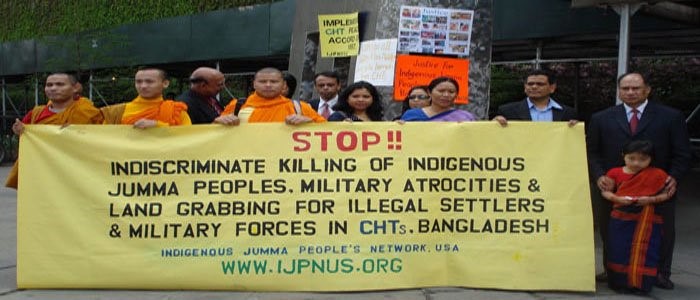
A Press Release on March 08, 2010, by the CHT-American Jumma People’s Association of the Indigenous Jumma People’s Network, USA, strongly condemns the continuous atrocities and arson to which the indigenous Jumma Buddhist people in Chittagong Hill Tracts (CHTs) have been subject to and the illegal Bengali Muslim settlers backed by Bangladesh army personnel who had burnt down houses and public buildings. 

More than 80,000 Jummas have fled across the border to India. Villages have been burnt down completely (www.jpnuk.org.uk, www.achrweb.org).  What these attacks on the indigenous Jumma people reveal is the fact that the government of Bangladesh has failed to change its policy of indiscriminate killings of indigenous Jumma people in order to occupy their lands and implant more illegal plain settlers instead of implementing the Chittagong Hill Tracts Accord of 1997.

In September 2012, there was a series of attacks by Muslims, on Buddhists and Buddhist sites in Bangladesh. This was referred to as the Ramu Violence, which involved a series of attacks on Buddhists and destruction of many Buddhist shrines, monasteries, and houses of Buddhist inhabitants in the Cox’s Bazar and Chittagong Districts of Bangladesh by local Muslim mobs. An estimated 25,000 Muslims participated in the violence directed at Buddhists. The Bangladeshi Prime Minister Sheikh Hasina condemned the anti-Buddhist violence.

Dr. Daya Hewapathirane

මුස්ලිම් බිළිඳෙකුට ජීවිතය දුනිමි.

May 4th, 2019

වෛද්‍ය රුවන් එම් ජයතුංග 

මීගමුව රෝහලේ මා නාරි හා ප්‍රසව ජ්‍යෙෂ්ඨ වෛද්‍ය නිලධාරී ලෙස සේවය කල සමයේදී ගර්භිනී මුස්ලිම් මවක් පැමිනියේ කුස තුල සිටින දරුවා දැඟලීමක් නොකරන බව කියමිනි. ඇය පැවසූ අන්දමට පුරා දින තුනක් පමණ දැඟලීම සිදුවී නැත. අප  දරුවාගේ හෘධ ස්පන්ධනයට සවන් දීමට පිනාඩය මවගේ කුසට තබා බැළුවෙමු. නමුත් ශබ්දයක් නැත. දරුවාගේ හෘධ ස්පන්ධනය ඉලෙක්ට්‍රොනිකව සටහන් කරන සීටීජී යන්ත්‍රය මගින් කියවීමක් ලබා ගත්තෙමු. එය අනුවද දරුවාගේ හෘධ ස්පන්ධන නොමැත. මේ අනුව කුස තුල සිටින දරුවා මිය ගොසිනි. කළ යුත්තේ ස්වභාවික ගබ්සාවක් වන තුරු කාන්තාව වාට්ටුවේ තබාගැනීම හෝ ශ්‍යල්‍යකර්මයක් මගින් මළ දරුවා ඉවත් කිරීමය. 

මුස්ලිම් කාන්තාව වාට්ටුවට ඇතුලත් කිරීමෙන් පසු ඇයට ඇඳක් දෙන ලදි. ඇය විවේක ගත්තාය. කුස තුල සිටින දරුවා මිය ගොස් බව ඇය  තේරුම් ගත්තාය.  නමුත් දුක හා පශ්චාත්තාපය ඇය එලි පිට නොපෙන්නුවාය. නමුත් සන්තාපය ඇයගේ දෙනෙත් වලින්  දැකිය හැකි විය. 

කරන ලද මූලික පරීක්‍ෂන වලින් සහ සීටීජී පටියෙන් සෑහිමකට පත් නොවූ මා  භ්‍රෑණයාගේ හෘධ ස්පන්ධනයට සවන් දිය හැකි පිනාඩය  යළිත් වරක් ඇයගේ කුස මත තබා සවන් දුන්නෙමි. ගර්භණී කාන්තාවගේ කුසේ විවිධ පැති වලට පිනාඩය තැබුවද කිසිදු ශබ්දයක් නොමැත. උත්සහය අතහැර දැමීමට පෙර අවසන් වතාවට මගේ දකුණු කන දකුණු අතේ දබර ඇඟිල්ලෙන් වසාගෙන වම් කන පිනාඩයට තබා කුසට සවන් දුන්නෙමි. ඉතා දුර්වළ සහ රිද්මයකින් තොර භ්‍රෑණ හෘධ හඞක් මට ඇසුනි. 

වහාම කාන්තාව සීසර් ශල්‍යකර්මයකට සූදානම් කරන ලෙසට මම හෙද නිලධාරිනී ගුණපාල මියට පැවසුවෙමි. ඉන්පසු සීමාවාසික වෛද්‍ය නිලධාරී චන්දන චඳ්‍රසේකරට රෝගියා වෙනුවෙන් ලේ සූදානම් කොට ඉතා ඉක්මනින් ඇය ශල්‍යගාරයට ගෙන එන ලෙස පවසා පවනට බඳු වේගයෙන් ශල්‍යගාරයට දිව ගියෙමි. 

ශල්‍යගාරයේ ශල්‍ය  ජ්‍යෙෂ්ඨ වෛද්‍ය නිලධාරී ලිලිත් ප්‍රසන්න ලියනගේ හර්නියා ශල්‍යකර්මයක් කරමින් සිටියේය. මාගේ අවශ්‍යතාවය තේරුම්ගත් ලිලිත් හැකි ඉක්මනින් ශල්‍යකර්මය අවසන් කොට මට ශල්‍යාගාරය නිදහස් කොට දුන්නේය. කාන්තාව ශල්‍යාගාරයට ගෙන ඒමෙන් පසු මම ඉක්මනට සීසර් ශල්‍යකර්ම ආරම්භ කලෙමි. මවට නිර්වින්දනය දෙනු ලැබුවේ වෛද්‍ය ගෝවින්ද රාජාය . සීමාවාසික වෛද්‍ය නිලධාරී චන්දන චඳ්‍රසේකර මගේ සහයකයා විය. 

සීසර් ශල්‍යකර්ම කරන අතරතුර ළමා වෛද්‍ය නිලධාරියාට ඉක්මනට ශල්‍යාගාරයට එන ලෙසට පණිවිඩයක් යවන ලෙසට ශල්‍යාගාර හෙදි ඩිනාලිට කීවෙමි. ඩිනාලිගේ දුරකථන පණිවිඩයට ළමා වෛද්‍යවරියද පැමිණියාය

කාන්තාවගේ ගර්භාශය සැතෙන් කපා ළදරුවා මම එලියට ගත්තෙමි. ඔහු පිරිමි දරුවෙකි. මිකෝනියම් හෙවත් භ්‍රෑණ බහිස්‍රාවිය ද්‍රව්‍ය වලින් නැහැවී සිටි ළදරුවා අසීරුවෙන් හුස්ම ගත්තේය. ඔහුගේ ස්වාසනාලයට මිකෝනියම් ඇතුළු වී තිබුනේය.  ළමා වෛද්‍යවරිය ළදරුවාට ස්වසනය කිරීම පහසු කරනු වස් ළමා කූපිකාවක් ස්ථාපිත කළාය ඉන් පසු ළදරුවා ඉන්කුබේටරය වෙත ගෙන යන ලදි. මම සීසර්  ශල්‍යකර්මයේ අවසන් අදියරයට පැමිනෙමින් සිටියෙමි. 

ශල්‍යකර්මය අවසන් කිරීමෙන් පසුව ඇයව වාට්ටුවට ගෙන යන ලදි.  නමුත් ළදරුවාව ළමා වාට්ටුවේ සතියක් පමණ තබාගෙන ප්‍රතිකාර  කරන ලදි. අවසානයේදී මවත් ළදරුවාත් නීරෝගීව රෝහලෙන් පිටව ගියෝය.අපගේ ක්‍ෂනික ක්‍රියාමාර්ගය නිසා ළදරුවාගේ ජීවිතය බේරිණි.

දැන් මෙම සිද්ධිය වී වසර 18 පමණ ගතවී තිබේ.මා අද ලංකාවේ නැත.  නිර්වින්දන වෛද්‍ය ගෝවින්ද රාජා ගම්පහ රෝහලේ සේවය කරයි. එදා මගේ සහයකයාව සිටි සීමාවාසික වෛද්‍ය නිලධාරී චන්දන චඳ්‍රසේකර අද ජීවත් වන්නේ ඕස්ටෙ‍්‍රලියාවේය. මෙම මුස්ලිම් මාතාව සහ පුතා මීගමුව අවට ප්‍රදේශයක ජීවත් වනවා ඇත. සිංහල වෛද්‍යවරයෙකුත් ද්‍රවිඩ නිර්වින්දන වෛද්‍යවරයෙකුත් ඔහුගේ දිවි ගලවා දුන් බව මෙම මුස්ලිම් තරුණයා බොහෝ විට නොදන්නවා විය හැකිය. 

එදා සහජීවනයෙන් සිටි සිංහල සහ මුස්ලිම් ජනයා ආගමික අන්තවාදය නිසා ඈත් වෙමින් සිටිති. සැකය වෛරය ලියලමින් පවතී. මුහුණු පොත් වල වීරයන් එකිනෙකාට තර්ජනය කර ගනිති. අපහාස කරති. අප සිටින්නේ තවත් ආගමික සහ වර්ගවාදී ගැටුමක් ආසන්නයෙනි. ආගමික අන්තවාදයන් නිසා එකිනෙකා මරා දැමීමට කඩු මුවහත් කරන ලෝකයක මෙම සත්‍ය කතාව වසර 18 පසු මම පවසමි. 

වෛද් රුවන් එම් ජයතුංග 

ELEPHANTS IN THE ROOM It’s Time for Saudi Arabia to Stop Exporting Extremism

May 4th, 2019

BY JOHN HANNAH | MAY 3, 2019, 7:03 PM Courtesy foreignpolicy.com

Trump should not waste his opportunity to begin repairing Wahhabism’s trail of wreckage.

Saudi Crown Prince Mohammed bin Salman, left, and U.S. President Donald Trump meet in the White House on March 20, 2018.

Here’s a sobering fact: Even after the destruction of the Islamic State’s territorial caliphate in Iraq and Syria, there are today more jihadis fighting in more countries than there were on Sept. 11, 2001. The horrific Easter Sunday bombings in Sri Lanka last month are simply exhibit A. The harsh reality is that despite the United States’ important successes in killing terrorists on the battlefield and preventing another 9/11-scale attack, the problem of radical Islamist terrorism is not shrinking. On the contrary, it has steadily morphed and metastasized. After nearly 18 years, and enormous expenditures and loss of life, the United States still has no proven strategy for reducing the number of young Muslims around the world susceptible to jihadism.

It’s been clear to U.S. policymakers for years that hard power alone—military action to kill terrorists and disrupt terrorist plots—is not by itself a winning formula. While necessary for long-term success, hard power on its own is simply insufficient. Also essential is a strategy for combating the extremist ideology that serves as the central building block of jihadism—the totalitarian, intolerant, ultraconservative interpretations of Islam that systematically dehumanize all those holding different beliefs, both Muslim and non-Muslim alike. Killing terrorists has proven a relatively straightforward task. Killing the state of mind—the idea that helps radicalize and then, in far too many instances, weaponize young Muslims to kill nonbelievers—has been a vastly more difficult undertaking.Trending Articles

Since 9/11, successive U.S. presidents have acknowledged the centrality of the ideological war. President George W. Bush spoke about the importance of the battle of ideas and the need to win hearts and minds among pious Muslims. President Barack Obama called it countering violent extremism. President Donald Trump (though too often guilty of incendiary and counterproductive language that impugned all Muslims) made the struggle against radical Islamism a signature of his presidential campaign. As president, he promised to combat the violent, extreme, and twisted ideologies that purport to justify the murder of innocent victims.” His first national security advisor, Michael Flynn, wrote extensively about the need to wag[e] an ideological war against radical Islam.” On his first foreign trip as president, Trump went to Saudi Arabia, the beating heart of Wahhabism—the harsh, absolutist religious creed that helped seed the worldviews of al Qaeda and the Islamic State—and publicly demanded that the Saudis and other leaders of Muslim-majority countries Drive [the extremists] out. Drive them out of your places of worship. Drive them out of your communities. Drive them out of your holy land, and drive them out of this earth.”

Important and necessary words, for sure. But by themselves, just words. Yes, each of the post-9/11 U.S. administrations made earnest attempts to establish policies and programs to weaken and undermine terrorist ideologies. But as the number of recruits signing up for jihadism’s global insurgency has steadily expanded, the inadequacy of these efforts is apparent. By nearly all accounts, the U.S. approach has been a jumble: disjointed, inconsistent, underfunded, and lacking leadership, coordination, and sustained high-level political support. Though accurate reporting is extremely hard to come by, there’s no doubt that U.S. spending to combat the ideology of Islamist extremism has made up but a tiny fraction of what’s been spent on the broader fight against terrorism—1 or 2 percent would be a generous estimate. In a speech in 2018, Lt. Gen. Michael Nagata, the senior official in charge of strategic planning at the National Counterterrorism Center, stressed that the resources devoted to fighting components of terrorism on and off the battlefield were badly out of balance. In a 2019 studycommissioned by the Department of Homeland Security, the Rand Corp. pointed to a conclusion about U.S. efforts to prevent domestic terrorism that applies equally well to its counterextremism efforts worldwide: more talk than action.”

One important example concerns what Trump discussed in Riyadh back in 2017: the need for America’s Muslim partners to take the lead in defeating the ideology of Islamist extremism. Or more importantly, the need for a handful of states, first and foremost Saudi Arabia, to get out of the business of exporting supremacist versions of the faith around the world. Yet you’d be hard-pressed to find Trump ever speaking publicly about the issue again. Instead, his demands of the Saudis rapidly shifted to shorter-term, more transactional issues like buying ever-greater quantities of U.S. weapons, keeping oil prices low, and supporting what in all likelihood will be a stillborn plan for Middle East peace. Holding the kingdom’s feet to the fire when it comes to unraveling the catastrophic damage that Wahhabism’s export has systematically inflicted on Muslim communities globally for at least two generations—the ideological tinder, if you will, for the jihadi fire that the United States has been battling for 20 years—has largely fallen by the wayside as a U.S. priority.

That’s particularly unfortunate, because Saudi Crown Prince Mohammed bin Salman has himself claimed since late 2017 that Riyadh is now determined to destroy the extremist ideology that it did so much, for so long, to promote. To the crown prince’s credit, it hasn’t all been lip service. At home, he’s reeled in the kingdom’s once all-powerful religious police and locked up some extremist clerics. Abroad, the Muslim World League, once the tip of the Saudi spear for exporting Wahhabism, recently surrendered its lease to the Grand Mosque of Brussels after Belgian authorities charged it with propagating extremism. And the league’s head, Mohammed al-Issa, a cleric and former justice minister, has made a series of remarkable statements in what appears to be a sincere one-man campaign to promote moderation—including condemning Holocaust denial, promising to visit Auschwitz, and telling Muslim minority communities to embrace the nations they live in,” strictly obey national laws, and positively integrate into society. In direct contravention of decades of Wahhabi proselytizing, Issa recently wrote, It makes no sense to separate Muslim children and youth from the rest of society or to cloister them away in Islamic private schools.”

But Wahhabism’s trail of wreckage runs deep and wide. It will take much more than a few op-eds by a single Saudi cleric to make a dent in the damage that’s been done. Last month, two potent reminders were on vivid display. In the run-up to Indonesia’s national elections, several reports detailed the troubling expansion of Saudi-backed Wahhabism in the world’s most populous Muslim-majority country, which is shifting its politics rightward and dangerously degrading longstanding national traditions of pluralism and tolerance. And in the aftermath of the Easter attacks in Sri Lanka, articleafter article described the inroads that Wahhabism had made over decades, generating serious fractures within Sri Lanka’s Muslim community and establishing a fertile breeding ground for the kind of violent extremists who perpetrated the bombings.

Importantly, over the past several months, a small band of U.S. officials within the State Department’s Counterterrorism Bureau and the National Security Council’s counterterrorism directorate have sought to refocus U.S. policy on combating extremist proselytization by foreign states—starting with the Saudis, but also including the troubling activities of countries including Qatar, Turkey, and Iran. As I learned in recent conversations, the issue has become a regular item on their agenda for discussions with counterterrorism colleagues from Europe and Canada that constitute a forum referred to as the like-minded group.” Greater information-sharing about the export of Islamic radicalism by the Saudis and others is being encouraged, as is the development of common diplomatic approaches to combat it. U.S. counterterrorism officials have also begun the process of directly engaging the Saudis on the issue—in particular by asking them to take action against a handful of individuals in countries outside the Middle East, mostly extremist preachers, who are believed to be operating with some degree of Saudi backing.

But relegating such a critical effort to narrow counterterrorism channels would be woefully inadequate to the scope of the challenge. The failure to prioritize the ideological war has been the perennial Achilles’ heel of U.S. strategy. A talking point on ending the export of extremism needs to be a standard feature, not simply of intermittent counterterrorism exchanges among midlevel officials, but of every U.S. diplomatic interaction with the Saudis, starting with the president and extending downward through his cabinet across the entire U.S. government. An even better mark of seriousness would be for Trump to put Mohammed bin Salman’s bona fides to the test by establishing a high-level U.S.-Saudi working group to put into practice the crown prince’s professed commitment to moderation. U.S. Vice President Mike Pence, with his long-standing interest in issues surrounding religious freedom, could be designated to co-chair such an effort alongside Mohammed bin Salman—ensuring that both sides had the stature to mobilize all elements of their governments and hold them accountable for results.

Getting serious about stopping the export of extremism means making it an intelligence priority as well. Remarkably, if Trump were to ask the vast U.S. intelligence community to provide him with a comprehensive list of all Saudi-affiliated mosques, schools, madrassas, universities, and community centers around the world, he’d largely be met with blank stares. Ditto if he wanted a list of radical preachers worldwide who were on the Saudi payroll. Or a chart showing how many versions of the Quran containing hate-filled Wahhabi commentaries were still being exported around the world by Saudi publishing houses. Even more worrisome is that the same gap in granular knowledge almost certainly extends to Saudi-related proselytization within the United States as well. Nearly eighteen years after 15 of the kingdom’s nationals helped perpetrate the murder of nearly 3,000 people on U.S. soil, the lack of the kind of hard data that U.S. diplomats could use to confront the Saudis, hold them to account, and measure progress over time is almost inexcusable.Nearly eighteen years after 15 of the kingdom’s nationals helped perpetrate the murder of nearly 3,000 people on U.S. soil, the lack of this kind of hard data that U.S. diplomats could use to confront the Saudis, hold them to account, and measure progress over time is almost inexcusable. The same goes for the activities of other countries, especially Qatar, Turkey, and Iran.

Making the export of extremism a collection priority should also apply to the State Department. In every country with a significant Muslim population, there should be at least one political officer at the U.S. Embassy whose job responsibilities include regular reporting on foreign proselytization efforts and their impact on local communities.

Understanding Shahran: Sri Lanka’s Ultra Terrorist – OpEd

May 4th, 2019

By  Courtesy eurasiareview.com

On April 24, 2019, three Catholic churches and three high-end hotels in Colombo were blown up leading to the death of hundreds of people including several foreign nationals. As of today, more than 250 people have been killed. The explosions also maimed hundreds more. It was later revealed that all of the attackers were suicide bombers and they were from the Sri Lankan Muslim community, the second largest minority group in the country.

The attacks inherently conveyed a number of messages. First, the terrorists wanted to kill as many people as possible. It was Easter Sunday. They knew that a large number of people attend mass on that day. The churches targeted were relatively small structures. For example, Saint Anthony’s Church was small in size compared to Saint Lucia’s Cathedral located in the same area. Presumably, they were looking for small structures with a large number of people to have a high impact.

Second, the targets were Western” in nature. According to even local perspectives, the Church and Christianity are Western inductions. They are not local.” The high-end hotels targeted, especially the Shangri-La Hotel and Kingsbury, are frequented mostly by Western visitors and tourists, although one can find Sri Lanka’s superrich in these spots. Hence, it was an attack on the West” undertaken in Sri Lanka. It is this factor that justifies the argument that it was an act of revenge for the Christchurch massacre of March 2019. Perhaps, Sri Lanka was considered a soft target.

Third, the local terrorists could not have done it without the assistance of international forces. The resources and manpower needed for an attack of this magnitude could be tremendous. Local organizations were not capable of independently mounting an attack like this. It was against this backdrop an ISIS connection was suggested. Within a couple of days, ISIS claimed responsibility for the attack and celebrated the achievement.” In Sammanthurai, where many suicide bombers were located and killed, ISIS flags and other symbols were discovered. On April 29, ISIS leader Abu Bakr al-Baghdadi himself acclaimed the Sri Lanka operation. Al-Baghdadi’s intervention put to rest any doubts about the ISIS connection to the Sri Lankan Easter Sunday massacre.

Shahran Hashim

Despite these apparent facts, many, who were directly and indirectly affected by the attack and its effects could not understand the nature of the targets and the brutality involved. Even some expert commentators claimed that they could not understand the whole tragedy. I cannot claim that I understood either. While discussing the Muslim issue” in my recent book entitled Post-war Dilemmas of Sri Lanka: Democracy and Reconciliation, I pointed out that,

The analysis indicated that tension and violence would escalate. I did not expect an attack of this magnitude. I wanted to understand more. I thought the best way to understand the barbarism demonstrated by attacking purely civilian targets was to understand the psyche and philosophy of Shahran Hashim, the alleged mastermind of the Easter Sunday massacre. I know he spoke Tamil, which he most likely treated as his home-language.” Since he was often described as a Youtuber,” I searched online for his videos. To my surprise, I could not find much. Either, social media companies have removed his videos or I was doing a wrong search.

Nevertheless, I located one video, which runs for 5.58 minutes. I was shaken by what I heard. First, I was puzzled by the question, how did we miss this? Then I was forced into a dilemma of whether to share the translation. I started to translate and transcribed intending to share with the readers. His sermon” was extraordinarily provocative and had the potential to invite violence. Hence, I decided not to publish the entire transcript. Only relevant excerpts are used for this analysis. The reason for sharing the excerpts is that the sermon contains enough warnings. Perhaps, it will help prevent future violence.

My Takeaway

I have a number of main takeaways from Shahran Hasim’s pronouncements.

1. He was right:

In his speech, Shahran promised that we would be busy picking up blown up bodies. He claimed, You will only have time to pick up your blown-up bodies. We will continue to send you to hell in large numbers.” That came true on Easter Sunday. He was not bluffing. Therefore, we should take his other assertions seriously and treat them as early warnings. This could prevent further attacks and bloodshed. We should research his other sermons and publications, if any, to develop our understanding of the philosophy and plan.

2. Civilian targets are fair game.

Some of my friends were at a loss to understand the reason why civilians were targeted. According to Shahran’s interpretation of Islam and Quran, there is no difference between civilian and military targets. He said, my brothers, do not distinguish between army, police or general kafir (infidel). They all are the same. In Islam, there are no separate laws for those who wear police uniform or military uniform. The only difference in Islam is between Muslims and kafir. You must know that the markkam (Islam) does not distinguish between military and civilians.” Therefore, from the perspective of the terrorists, non-Muslim civilian targets are entirely legitimate. If Shahran’s followers are still active, we should expect more attacks on non-Muslim civilian targets.

3. It was against the Buddhists.

Originally, Sharan’s fight was not against Christians. This is what he had to say about his jihad (holy war) against the Buddhists,

Meanwhile, we wish to say a few things to Allah’s enemies and infidels. Infidels and enemies of Allah, your destruction has started. We have counted every mosque you have destroyed, and we remember every shop you scorched. Blood of Muslims you have killed will not be wasted. Inshallah, we will avenge this. You will feel the pain of jihad, the scale of jihad, and the weight of jihad. You will see the agonizing cry of every Buddhist…We will certainly destroy those who destroyed our mosques. Even then, our knives will not be satisfied. Buddhist extremists, we will certainly come for you. We tell the Buddhist kafir who destroyed our temples and who torched our properties that we will come for you. Your police, your military and your intelligence (services) will be useless in front of Imani strength of the mujahideen.”

Perhaps, this video was made before he became a member of ISIS. Becoming a member of ISIS forced him to turn his guns against Christians and Westerners. However, there is no reason to believe that Buddhism in Sri Lanka is not a target any more. Some of the media reports connected to discoveries from terrorist hideout could also confirm this possibility. Buddhist locations, especially Buddhist places of worship should be monitored and protected, in addition to Christian churches and Hindu temples.

4. The promise of jihad.

Shahran promised to wage war in Sri Lanka. He thundered, Inshallah, soon, we will open the market of jihad in this country. You will not only hear but see the sights of thousands of our suicide bombers destroying you with a smile on their faces. Because it is the path our liberator promised….” Perhaps, it is already here, and thousands of suicide bombers are waiting with a smile on their faces. We do not know. I do not see why this cannot be the case. His promise of suicide massacre came true.

5. Anti-Muslim violence.

It is clear that the anti-Muslim riots unleashed after the end of the civil war have contributed immensely to Shahran’s anger and mobilization. He said, if they damage your mosques, destroy their vihara. If you are killed in this journey, you will definitely be a shaheed (martyr). Based on the evidence provided by the markkam, I am telling you that this is your duty. According to (Muslim) legal scholars, there is no bigger vagib (duty) than stopping the kafir…” The recent anti-Muslim violence could have also helped radicalize and mobilize other Muslims as well. Therefore, concerned parties have a responsibility to bring under control the anti-Muslim rhetoric and violence.

‘Asia fertile ground for IS ideology’

May 4th, 2019

Courtesy The Star online

KUALA LUMPUR: The Islamic State (IS) group’s self-proclaimed caliphate” may have collapsed in the Middle East but Asia provides fertile territory for a resurrection, analysts say, as last month’s bloody Easter Sunday suicide attacks in Sri Lanka have shown.

Factors such as poverty, discrimination, radicalisation via social media, weak governance, and poor gathering and sharing of intelligence mean the region is vulnerable to attacks by extremists operating under the IS banner, even if they aren’t directly supported by the group.

IS lost the last of its Middle East territory in late March, but analysts warned that the defeat would not kill off their ideology, and just weeks later the group claimed responsibility for one of the worst militant strikes on civilians in Asia.

The current status of IS cannot be gauged without an understanding that it is a global ideological movement, not a single organisational entity,” said analyst Scott Stewart in a new report for the US geopolitical intelligence group Stratfor.The coordinated bombings on churches and luxury hotels in Sri Lanka claimed more than 250 lives, with the government blaming a local, little-known Islamist group, National Thowheeth Jama’ath.

The country’s security agencies have faced heavy criticism for failing to act on warnings given by both its Muslim community and Indian intelligence ahead of the blasts.

Local security officials had been given ample warning,” said Stewart, adding: …there must be a serious accounting for how and why the warnings were not acted upon.”

Although two of the Sri Lanka bombers were brothers from a wealthy spice-trading family, analysts say it does not detract from the fact that poverty is often the driving force for increased militancy in other parts of Asia, including the southern Philippines.

Sidney Jones, director of the Institute for Policy Analysis of Conflict, said religion alone couldn’t be blamed for the long-running insurrection on Mindanao island.

It is because it is poor and neglected and sees itself as having suffered discrimination,” she said.

That is a very potent set of factors that make people look to other ideologies (such as IS) that can come in as an alternative.”

In Bangladesh and Indonesia, traditionally moderate forms of Islam have been eroded by the influence of hardliners spreading their messages online.

Bangladesh was particularly vulnerable, said Mubashar Hasan of the University of Oslo.

With increasing growth in Internet subscribers and mobile phone subscriptions, more people are connected online and the bad ideas of IS may facilitate self-radicalisation.We need to remember that in the current scenario of militancy in the age of digitisation, one bad idea by one person could be fatal,” he added.

New threats come from cells which by and large come together with little vetting, training, indoctrination, weapons or experience.

What they have in unlimited quantities is zeal and a desire for recognition,” Jones said in a recent report.

With a little imagination and better leadership, these pro-IScells could do far greater damage.” — AFP
Read more at https://www.thestar.com.my/news/regional/2019/05/04/asia-fertile-ground-for-is-ideology/#y2gAqy08FhmG7pi9.99

Sri Lanka’s pain fuels ugly debate in India

May 4th, 2019

Courtesy The Gulf News

Attack feeds into the Modi campaign’s ongoing efforts to exploit high-octane nationalism

OPN_LANKA-1556973662765
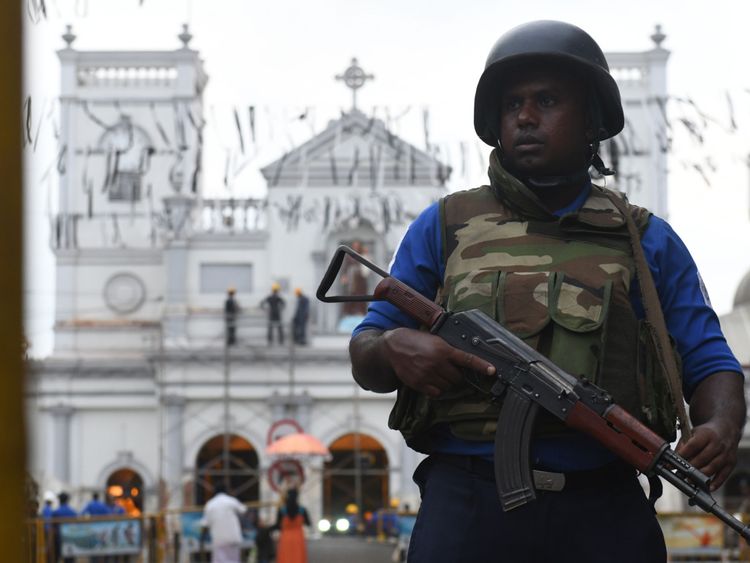
A Sri Lankan soldier stands guard outside St. Anthony’s Shrine in Colombo on May 2, 2019, a week after a series of bomb blasts targeting churches and luxury hotels on Easter Sunday in Sri Lanka.Image Credit: AFP

It is increasingly clear that the Easter Sunday blasts in Sri Lanka could and should have been prevented. Warnings about the group responsible, their intentions and even specific attackers were delivered well in advance. Both President Maithripala Sirisena and Prime Minister Ranil Wickremasinghe have acknowledged that the information did not reach them and wasn’t acted upon.

The two men — and their respective parties — are still at loggerheads after a months-long constitutional crisis last year in which the former tried and failed to fire the latter. The president has attempted to exclude the prime minister from decisions over most national-security issues; a divided and confused Colombo establishment clearly contributed to the security breakdown.

No doubt this will become a factor in elections later this year: Former Defence Minister Gotabhaya Rajapaksa — whose family, led by former president Mahinda Rajapaksa, dominated Sri Lankan politics till a few years ago — recently said that the government was never serious” about security and was more concerned” about reconciliation after Sri Lanka’s decades-long civil war.

Fair enough. In the elections already under way in next-door India, though, the attacks are adding more fuel to an already ugly politics of patriotism and national security. And accountability is the last thing being discussed.

Indian Prime Minister Narendra Modi was swift to bring up the Sri Lanka attacks as a reason to vote for his Bharatiya Janata Party: A vote for the BJP, he said, was a vote to destroy terrorism of the sort Sri Lanka had suffered.

This feeds into the Modi campaign’s ongoing efforts to exploit high-octane nationalism. The BJP seized upon a confrontation with Pakistan in February to turn the national conversation away from its spotty economic record.

Mudslinging

Since the BJP is actually in power, though, it can’t snipe from the outside as the Rajapaksas are doing. So BJP figures have essentially resorted to calling the opposition terrorist sympathisers.

The Congress Party’s fairly detailed election manifesto could have served to open an argument on the most effective way to balance welfare and economic growth. Instead, the BJP has zeroed in on the Congress’ proposal that some particularly draconian and illiberal laws be diluted. Modi’s finance minister, who you’d think would have had plenty to say regarding the opposition’s lack of fiscal mathematics, instead focused on calling their manifesto a charter to weaken India” and an agenda for balkanising India.”

Other rhetoric has been much harsher than that to which Indians are accustomed. Modi’s right-hand man, BJP President Amit Shah, said that after an Indian air strike on Pakistan there was mourning” in just two places: Pakistan and the Congress. This is a familiar charge: Before elections in Modi’s home state of Gujarat a couple years ago, Modi accused his predecessor prime minister Manmohan Singh of a secret meeting” with Pakistani diplomats, implying that the latter were seeking to influence the election results.

It has been absurdly easy for Modi and the BJP to make security into a major, if not the primary issue in the election. Unfortunately, this heated rhetoric seems to be considered an adequate replacement for any more rational response.

India’s February air strikes into Pakistan — in retaliation for an attack on an Indian paramilitary convoy in troubled Kashmir — were seen in many quarters as influenced by electoral considerations. Crucially, there has been no accountability for the security failures that led to the convoy bombing. Kashmir is so heavily militarised that a sophisticated attack of that sort should have been prevented.

Unlike in Sri Lanka, nobody in New Delhi has taken responsibility for the original failure. It’s fine to talk about national security during a campaign. But the most important questions aren’t being asked: Why did the attack happen? Which group organised it and how did they build up their strength? How can other such attacks be prevented?

The coarseness of the current debate in India is not just a betrayal of the large part of the electorate that wants a clear discussion of bread-and-butter issues. It is frankly dangerous for national security itself. One hopes Sri Lanka will, over the next few months, have a more productive political dialogue than India has had.

— Bloomberg

Some 25-30 Suspects Linked to Sri Lanka Bombings Still at Large – President

May 4th, 2019

Courtesy Sputnik International

On 21 April, deadly blasts took place in Sri Lanka; the explosions devastated St. Anthony’s Shrine in Colombo, St. Sebastian’s Church in Negombo, and the Zion Church in Batticaloa during Easter mass.

Some 30 people suspected of being involved in the Easter Sunday suicide blasts have not been detained yet, Sri Lankan President Maithripala Sirisena said on Saturday.

At the same time, the president stated that Daesh* is likely to be responsible for the terror attacks that rocked the country last month.

READ MORE: Sri Lanka Bans Mosques Run by Extremist Groups Amid Terror Crackdown

He stressed that the authorities have already identified all active members of the terror group and “it’s a case of now arresting them.” 

St.Sebastian's Church,Katuwapitiya,Negombo,Sri Lanka.

© PHOTO: ST.SEBASTIAN’S CHURCH,KATUWAPITIYA,NEGOMBO,SRI LANKA.A Beautiful Planet but UGLY WorldMaithripala Sirisena also vowed to “bring about stability” and “eradicate terrorism” before the presidential elections due for year-end, which, according to him, “cannot be postponed.”

The Sri Lankan president’s comments follow his previous remark that the Daesh terror group might be targeting smaller states now, following its defeat in Syria, as they lost their caliphate there in late March. Prior to making the statement, Daesh reportedly claimed responsibility for the Easter mass suicide attacks.

The Easter Sunday bombings that occurred on 21 April devastated Sri Lanka and left the global community in shock. In the week following the deadly blasts, Sri Lankan forces have arrested over 100 people allegedly linked to the bombings. Earlier in the week, the government warned the nation that Daesh militants were currently planning more attacks.

*Daesh (also known as ISIS/ISIL/Islamic State) is a terrorist group outlawed in Russia and many other countries.

Easter attack bombers travelled to 3 Indian states for ‘some sort of training’: Sri Lankan army chief

May 4th, 2019

Courtesy DAWN

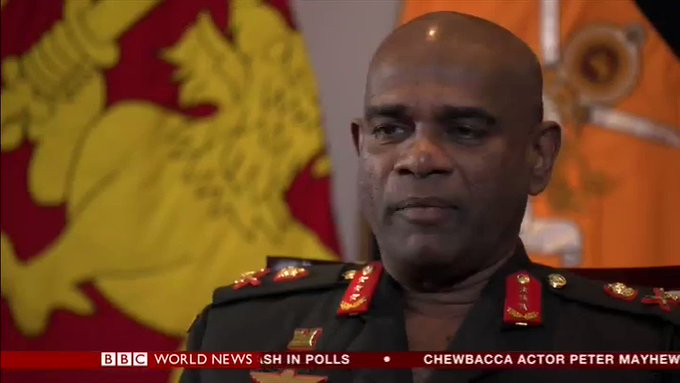
Lieutenant General Mahesh Senanayake of the Sri Lankan Army in an interview with BBC. — Photo courtesy: Secunder Kermani's Twitter account
Lieutenant General Mahesh Senanayake of the Sri Lankan Army in an interview with BBC. — Photo courtesy: Secunder Kermani’s Twitter account

The Sri Lankan Army has, for the first time since the deadly Easter Sunday bombings, confirmed that the suicide bombers involved in the attacks had travelled to India “for some sort of training or to make some more links towards the other organisations outside the country”.

They (those involved in the attack) have gone to India, they have travelled to [Indian-occupied] Kashmir, they have gone to Bangalore, they have travelled to Kerala state. [That is] the information available with us as of now,” said Sri Lankan army chief Lt Gen Mahesh Senanayake during an interview with the BBC.

Embedded video

The development comes a week after Indian media citing a top military official had reported that the suspected mastermind of the attack, Mohammad Zahran Hashim, had spent a “substantial amount of time in south India”.

Moreover, an unnamed security official had earlier told the Indian Express that intelligence agencies were tracking more than a dozen suspects from Tamil Nadu and Kerala whose phone numbers were found in Hashim’s call records.

When asked whether it could be gleaned from the information available that the attacks were plotted inside Sri Lanka or if there is evidence that the attacks were coordinated centrally by figures inside the militant Islamic State group in Syria, Senanayake said: “Looking at the pattern of operation and the places that the leadership has travelled […] so there has to be some outside involvement of some leadership or instructions.”

The army commander acknowledged that there had been some information and intelligence sharing issues, saying the “military intelligence wanted to go in a different direction and the others wanted a different [direction] and there was a gap which everyone can see today”.

When asked who then could be blamed for the failure to share intelligence, Senanayake said: “I believe that everybody who is responsible for intelligence gathering and preparation of these plans, who are responsible for the national security, are to be blamed, including the political hierarchies.”

He suggested that negligence in security matters was the reason Sri Lanka was attacked. “Too much of freedom, too much of peace for the last 10 years. People forget what happened for 30 years. People [were] enjoying peace and neglected security,” he said.

Senanayake gave an optimistic response when asked whether he could “confidently say to people around the world that Sri Lanka is a safe place for international tourists”.

“Sri Lanka is a country which fought for 26 years. The cases we faced at that time [were] more difficult, and [involved] more terror than what we are facing today.

“We are deployed on the ground to give confidence to the public and ensure there is no violence or escalation of communal riots in this country. I have trust [in] the armed forces and the police of this country to bring normalcy [as] soon as possible,” he said.

Baghdadi video shows evolving threat from ISIS’s ‘virtual caliphate’

May 4th, 2019

Gregory Aftandilian Courtesy The Arab Weekly

Continued threat. Members of the New York City Police Counterterrorism force stand guard in Times Square in New York City.(AFP)

Continued threat. Members of the New York City Police Counterterrorism force stand guard in Times Square in New York City.(AFP)

The recent video appearance of Abu Bakr al-Baghdadi and his praise of the large-scale terrorist attacks in Sri Lanka highlight the continued threat the Islamic State poses to countries around the world, including the United States.

The video aimed to underscore that, despite the loss of its territory and so-called caliphate in Syria and Iraq, the Islamic State (ISIS) will be a force to reckon with in the coming years, especially because it seems to inspire extremists around the globe. While there is not enough evidence to say ISIS planned or directed the deadly Easter attacks in Sri Lanka, the terrorists in that plot may have been inspired by ISIS propaganda.

Soon after those attacks, FBI Director Christopher Wray, speaking April 26 at the Council on Foreign Relations in Washington, warned of the evolving threat from ISIS’s virtual caliphate.” The threat isn’t gone,” he emphasised and countries around the world should not be complacent about it. Online radicalisation, he added, is becoming a bigger and bigger problem” and so the threat is real.”

This is not the first such warning from Wray. Last October, he told a congressional committee that ISIS has proven dangerously competent in employing digital communication” and that such terrorists can spot, assess, recruit and radicalise vulnerable persons” in the United States to travel abroad or conduct an attack on the homeland.”

In his Council on Foreign Relations appearance, Wray, perhaps indirectly referring to US President Donald Trump, said people talk about ISIS and the fall of the caliphate — absolutely true” but added that the FBI worries about how ISIS can organise in a way” that doesn’t require the same kind of physical infrastructure.”

Trump has made several comments in recent months suggesting that the fight against ISIS was over. In December, he declared: We have won against ISIS… we’ve beaten them badly. We’ve taken back the land.” In late February, Trump said: You kept hearing it was 90%, 92%, the caliphate in Syria, now it’s 100%. We have the whole thing.”

He seemed oblivious to the fact that an estimated 20,000-30,000 ISIS fighters escaped the destruction of the caliphate and hid in communities in both Syria and Iraq, various experts said. Some of those fighters have shifted tactics and undertaken classic terrorist attacks, as opposed to the previous policy of trying to hold territory.

Indeed, in January, ISIS took responsibility for a terrorist bombing in northern Syria that killed 19 people, including four Americans. ISIS cells have undertaken several terrorist attacks in Iraq in recent months.

Iraqi Prime Minister Adel Abdul-Mahdi, like Wray, has warned of the threat, stating that ISIS is not just a small organisation, it’s widespread and will try to put confidence back in its militants and carry out acts such as those in Sri Lanka.”

Some terrorism experts say that, in addition to ISIS fighters who escaped the fall of the physical caliphate, the organisation transferred caches of money and gold” to other locations, said Edmund Fitton-Brown, the former UK ambassador to Yemen and now coordinator of the UN Analytical Support and Sanctions Monitoring Team concerning ISIS and other terrorist groups.

With such prominent people, including the FBI director, warning about not being complacent and taking a victory lap, why is Trump not recognising these realities?

This has to do with his 2016 campaign pledge to wipe out ISIS and Trump’s nervousness that his supposed singular foreign policy success will be diminished if the American people in 2020 consider ISIS a continuing threat to the US homeland.

Trump’s foreign policy positions in 2016 were contradictory but seemed to resonate with a substantial portion of the American people. He called US interventions in the Middle East — such as the Iraq war of 2003 — a disaster” and a very costly mistake but also said he was determined to eradicate ISIS, saying he would bomb the sh.. out of them,” to keep the American people safe.

With ISIS having lost its physical caliphate, Trump wanted to use that development to boast that he accomplished two goals, defeating this terrorist group and bringing US troops home. He has backtracked on the latter, agreeing to keep about 400 troops in Syria after stating he wanted to bring all of them home from that country, but he has not backtracked on his claims to the former.

This is not at all surprising since Trump has exhibited a disdain for the professional intelligence services. In late January, he lashed out at his intelligence chiefs for giving public analytical assessments to Congress, which, among other things, said ISIS was degraded but not defeated — not music to Trump’s ears.

Intel Agencies Scan Records After Sri Lanka Claims India Link To Blasts

May 4th, 2019

Courtesy NDTV

Sri Lankan army chief has claimed that terrorists who carried out attacks in Colombo visited India – Kerala, Kashmir and Bengaluru for training and also establishing links with terror groups operating in these areas.

Over 250 people were killed in a string of bombings in Sri Lanka on April 21. (File)
NEW DELHI: 

Indian intelligence agencies are conducting background checks on all Sri Lankan nationals and tourists who visited India in the last four months. Special focus is being paid to ones who visited Kashmir.

The exercise comes amid reports that the Sri Lankan army chief has claimed that terrorists who carried out attacks in Colombo visited India – Kerala, Kashmir and Bengaluru for training and also establishing links with terror groups operating in these areas.

“We are trying to verify the assertion being made by Sri Lankan agencies. As of now nothing has been shared with Indian government. But we are doing our background checks,” a senior government functionary told NDTV on the condition of anonymity.

According to him, Kashmir is always on the radar for terror groups that want to expand their base and that is why special focus is being paid to the region while doing checks.

As per the Home Ministry, as many as 15,000 foreign tourists have visited Kashmir this year in the first four months. “Most of them are Malaysians followed by [those from] Thailand,” said a senior official.

According to him, only 20 Sri Lankans visited the valley during this period. “We are doing background checks on them. But these are registered tourists,” he added.

Sources indicate if these attackers would have visited Kashmir for training, they would have travelled with some local contact. “There would be no record in this case but we are still trying to get information,” the official said.

Intelligence agencies are worried about the implications of Sri Lanka blasts in India as it hints at active ISIS ideology. “Even though ISIS has been disseminated in Syria and Iraq but there are still takers of its worldview. There are youngsters who are still being radicalised,” he stated.

In 2010, as many as five young men from Kerala were identified for having links with the Pakistani terrorist group Lashkar-e-Taiba. Officers recall subsequently they were killed in North Kashmir.

According to the Research and Analysis Wing (R&AW), as many as 130 Indians have traveled to Syria and have been identified for having links with ISIS. And about same number who have been brought back or have been booked in various cases. “As far India is concerned, all affiliated with ISIS are accounted for,” said a senior level officer.COMMENT

However, agencies alert as they feel that even if a miniscule fraction of the population is being radicalised, the damages caused by them can be exhaustive. ‘It’s a wakeup call. We can’t be complacent anymore. The threat has come knocking very close to our home it is very serious,” a senior functionary in government said.

Sri Lanka fears attacks as Ramadan looms

May 4th, 2019

Courtesy SBS News

Sri Lanka is on high alert and rounding up Islamists as intelligence indicates there may be more attacks with the holy month of Ramadan due to start.

Sri Lanka President Maithripala Sirisena says his security forces would “eradicate terrorism” following devastating suicide attacks on Easter Sunday and restore stability before a presidential election due by year-end.

Sirisena also said in an interview he believed Islamic State was behind the April 21 attacks, which targeted churches and luxury hotels and killed more than 250 people including 42 foreign nationals. The group has claimed responsibility.

“Elections cannot be postponed, therefore before the elections I will bring about stability and I will eradicate terrorism,” Sirisena told Reuters on Saturday.

The presidential vote is likely to take place between November 10 and December 10 and sources close to Sirisena say he would seek re-election.

“We have already identified all active members of the group and it’s a case of now arresting them,” Sirisena said, adding that there were a further 25 to 30 “active members” linked to the bombings still at large.

Sirisena said all indications suggested IS had been involved, adding: “It’s crystal clear because after the attacks the IS organisation made an announcement claiming responsibility for the bombings.”

Sri Lanka authorities have previously said they suspect the attackers had international links although the precise nature of those connections is not known.

Police have said two previously little-known groups – National Thawheedh Jamaath and Jammiyathul Millathu Ibrahim – carried out the bombings.

Sirisena said intelligence services from eight countries, including the US Federal Bureau of Investigation and Interpol, were helping Sri Lanka with the investigation.

Local intelligence officials believe Zahran Hashim, a radical Tamil-speaking preacher from the east of the Indian Ocean island nation, may have been a key player in plotting the bombings. Officials believe he was one of nine suicide bombers.

Sirisena said the military and police have made huge progress with their investigations, but emphasised that more needs to be done.

“There are another 25-30 suspects still at large, but there is no information yet to say these suspects are suicide bombers.”

Scores of suspected Islamists have been arrested after the Easter attacks.

Sri Lanka’s security forces were on high alert amid intelligence reports that militants were likely to strike before the start of the Islamic holy month of Ramadan, due to begin on Monday.

The government has banned women from wearing face veils under an emergency law that was put in place after the attacks.

“This is not a Sri Lanka issue, it’s a global terrorist movement,” Sirisena said.

“Even advanced countries like the US, Russia, UK, Germany, India and Australia together haven’t been able to completely eradicate this IS global terrorism menace.”

Sri Lanka’s leaders, including the president, have come under heavy criticism for failing to heed warnings from Indian intelligence services – at least three in April alone – that an attack was imminent.

Critics said infighting between the president and Prime Minister Ranil Wickremesinghe had undermined the response to the militant threat. But Sirisena said he and the prime minister were co-operating on national security issues.

The tourism sector has grown rapidly in the last decade since the Sri Lankan government defeated the rebel Tamil Tigers. Around 2.5 million tourists visit the island nation each year.

“It’s a big blow to the economy, as well as the tourism industry,” Sirisena said. “For the economy to develop it’s important tourism to return to where it was before the attacks.”

Arrival of FETO terrorists – SL disregarded Turkish warnings: GL

May 4th, 2019

Courtesy The Daily Mirror

Amid reports of the government’s failure to act on specific intelligence on Easter Sunday’s bomb attacks, information has now surfaced that the defence authorities had also ignored Turkish government alerts that 50 members of the Fethullah Terrorist Organization (FETO) had arrived in Sri Lanka.

There was an attempted coup to overthrow the Turkish government and unseat President Recep Tayyip Erdogan on July 15, 2016. The Turkish government blamed FETO, a terrorist outfit led by Islamic preacher Fethullah Gulen as having carried out the coup in which 250 people were killed.

Later, FETO terrorists fled to different countries. The Turkish embassy has repeatedly informed the Sri Lankan government about this matter.

Turkish Ambassador Tunca Özçuhadar handed over documents related to the matters communicated to Sri Lanka Podujana Peramuna (SLPP) Chairman G.L. Peiris.

He brought this to the notice of President Maithripala Sirisena when he met him with a delegation led by Opposition Leader Mahinda Rajapaksa on Thursday to discuss the security situation in the country.

Prof. Peiris said FETO terrorists had fled to Denmark, Austria and some African countries. He said Turkey had alerted all these countries and that their authorities had taken prompt action but not so the Sri Lankan defence authorities.

When asked about the President’s response he said the President had not contradicted him. (Kelum Bandara)

Minister of Law and Order – Prez rejects request to appoint SF

May 4th, 2019

Courtesy The Daily Mirror

President Maithripala Sirisena is reported to have refused Prime Minister Ranil Wickremesinghe’s request to appoint UNP MP Field Marshal Sarath Fonseka as the Law and Order Minister.

A UNP delegation led by the Prime Minister met the President on Wednesday to make the request.

The President flatly turned down the request saying it would have dire consequences.

Ministers Lakshman Kiriella, Kabir Hashim, and Malik Samarawickrama accompanied the Prime Minister to the meeting.

The UNP urged that Mr. Fonseka, a wartime Army Commander, be appointed the Law and Order Ministry which is currently under the President. (Kelum Bandara)

Extremists planning attacks on bridges in Colombo: police

May 4th, 2019

Courtesy The Daily Mirror

Islamist extremists in Sri Lanka are believed to be planning attacks on bridges in Colombo, the authorities said, as they warned that several conspirators in the Easter Sunday bombings which killed 257 people were still at large.

Police confirmed they had instructed stations around Colombo to deploy additional officers and asked the navy to deploy more vessels on rivers, following leaks of police intelligence reports warning that bridges into the capital were at risk of attack.

Sri Lanka’s military has also set up a special command centre to coordinate anti-Islamist operations, while the army said more troops have been deployed for search operations.

Additional troops conducted searches overnight and seized explosives and weapons from several locations, although these were from criminal groups and not extremists, official sources said.

“Extensive cordon and search operations of the army and sister services across the country with assistance of the police are continuing in search of terrorists, hideouts, explosives, weapons and other war-like items… with the deployment of more and more troops as required,” the army said in a statement.

The authorities had information about a small group of radicals who may be trying to stage more strikes, said Health Minister and government spokesman Rajitha Senaratne, who added that the crackdown on extremists after the Easter bombings had been largely successful.

“You can’t say the threat is over, but the situation is well under control… better than what we expected.”

But the government was also still on the hunt for “four terrorists” involved in the Easter attacks who were still at large, Mr Senaratne told AFP in an interview on Thursday evening.

The Catholic Church announced on Thursday that it had called off the resumption of Sunday servicesfollowing information of a “specific threat” against two of their locations just outside the capital.

Catholic schools, which were due to reopen after an extended Easter holiday, will now be shut indefinitely.

Public schools are due to reopen on Monday under tight security.

Senthil Thondaman on unauthorized courses by Islamic universities in Tamil schools

May 4th, 2019

Courtesy Adaderana

Uva Province Tamil Education Minister Senthil Thondaman claims that two foreign Islamic universities are conducting courses inside Tamil schools in the province without the approval of his ministry, and that mainly non-Muslim students are being taught.

We looked into this. 520 are taking the course, but only 20 of them are Muslim children. The remaining 50 are Hindu and Christian children,” he said on Friday (03).

He says that they are teaching Arabic and the Quran to these students and that it is surprising as to why they are teaching non-Muslim children the Arabic language and the Quran.

The provincial minister said that this has been carried out without his permission and that the Secretary to his ministry has informed his that an inquiry will be launched. He also said that the CID had obtained all the relevant information from them.

Leaked document claims Saudi Arabia alerted envoy in Sri Lanka five days before attacks

May 4th, 2019

Courtesy Adaderana

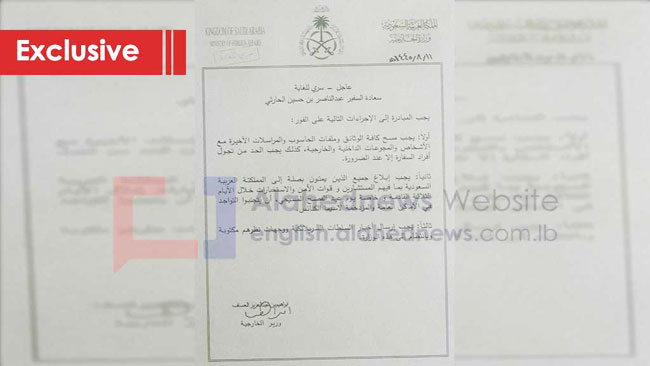
A leaked ‘urgent, confidential and top secret’ document obtained by Lebanese website Al-Ahed News claims that Saudi Arabia had alerted its Ambassador to Sri Lanka regarding a possible security threat some five days before the Easter Sunday attacks.

The website shows a letter, which carries the date of April 16, allegedly sent by Saudi Foreign Minister Ibrahim bin Abdul Aziz al-Assaf’s to Saudi Ambassador to Sri Lanka, Abdul Nasser al-Harethi.

The document reads the following:

                                           Urgent – Top Secret                                                            

His Excellency Ambassador Abdul Nasser bin Hussein al-Harethi

You should carry out the following measures immediately:

First: You should delete all documents, computer data and latest correspondence with domestic and foreign members and groups, in addition to imposing a curfew for the embassy personnel unless it is necessary

Second:  You should inform all those related to the Kingdom of Saudi Arabia including counselors, security forces and intelligence during the three coming days, especially on the Christian Easter Day, to avoid presence in public and crowded places namely churches

Third: You should send written news about the Sri Lankan authorities and their viewpoints regularly to this ministry

Ibrahim bin Abdul Aziz al-Assaf
Foreign Minister

Leaked document claims Saudi Arabia alerted envoy in Sri Lanka five days before attacks

Bombs found near mosque in Sri Lanka amid fear of new attacks after Easter massacre – report

May 4th, 2019

RT

Bombs found near mosque in Sri Lanka amid fear of new attacks after Easter massacre – report

Sri Lankan security personnel in Colombo. ©  Reuters / Danish Siddiqui

Three incendiary devices and 100 grams of ammonia were found buried near a mosque in Sri Lanka, local media report citing police as authorities warn of a new wave of terror two weeks after the attacks on Christian churches.

The ammo was discovered in the town of Welipenna – 70 kilometers south of Colombo – as police conducted a raid on Friday night, the local Daily Mirror paper reported. Authorities revealed the bombs were locally produced. A 42-year-old suspect is said to have been detained in connection with the findings.

In a separate operation, police seized 16 motherboards, 16 SIM cards and a range of other computer parts in a house in Mount Lavinia, a Sothern Colombo suburb. A 52-year old man was arrested during the raid.

View image on Twitter

Sri Lanka @CeylonMuslim

Three locally made bombs and 100 grams of ammonia were found buried in the backyard of a mosque at Welipenna last night, police said.

The explosives were recovered during a joint operation carried out by the STF and the police.#EasterAttackLk #lka #Srilanka259:02 AM – May 4, 201916 people are talking about thisTwitter Ads info and privacy

Sri Lankan security services are currently on high alert as the threat of potential new terror attacks looms large two weeks after the Easter Sunday bombings that killed over 250 people. Earlier this week, authorities warned of another wave of attacks,” possibly by people disguised as military.ALSO ON RT.COMSri Lankan authorities warn of ‘another wave of attacks’ by ‘persons dressed in military uniforms’

While the investigation is still underway, the Sri Lankan government has imposed a ban on face coverings worn in public which may help conceal a person’s identity. The prohibition makes no exceptions for religious attire such as burkas or veils, drawing criticism from Human Rights Watch as the wrong response” to the tragedy.ALSO ON RT.COMSri Lanka bans all face coverings, including Muslim veil, to facilitate terrorist identification

ඇමති කිරිඇල්ලගේ ගෝලයින් සමඟ අත්අඩංගුවට පත් ලිපිය මෙන්න.

May 4th, 2019

Sri Lanakn News

ජාතීන් අතර අසමගිය ඇතිවන අයුරින් සකස් කළ ලිපි 600ක් සමග අත්අඩංගුවට පත් එජාප ප්‍රභල අමාත්‍යවරයකු වන ලක්ෂ්මන් කිරිඇල්ලගේ කාර්ය මණ්ඩල සාමාජිකයන් තිදෙනා මේ වනවිට වැඩිදුර පරීක්ෂණ සඳහා කොළඹ අපරාධ කොට්ඨාසයට භාර දි තිබේ.

ඊයේ මෙම අත්අඩංගුවට ගැනීම කොළඹ මධ්‍යම තැපැල් හුවමාරුවේදී සිදුවිය.

එම ලිපිය පහත දැක්වේ..

Is this the most incompetent PM in the world?

May 4th, 2019

By Major General (Retd.) Lalin Fernando

When PM Wickramasinghe was asked by BBC’s Channel 4 why he had not taken action against ISIS terrorists who had returned to the Island in 2017, his fatuous reply was that it was not illegal in SL to take part in terrorist actions abroad.

The PM has a basic degree in law. He likes to continuously impress his ill educated but fawning parliamentary minions and Colombo’s socialites. But with the Channel 4 man the PM was clearly out of his depth and clearly in fear of personal repercussions for the Easter Sunday massacre. There were 250 dead, almost all Christians, and 450 wounded. A colossal intelligence failure was blamed for it. The PM thought it and anything else was not enough to damn him.

The PM, hoping to impress, casually tossed in the (French) Foreign Legion (FFR) as an example of a terrorist organization. It blew away the interviewer. It stripped any notion that the PM had but the foggiest notion of terrorists. This after being PM 4 times over in a land that went through 26 years of terrorism. Due to his incompetency, global terrorism has been spawned after 10 years of peace.

The Legion is a branch of the French Army raised in 1831.Frenchmen consist only of 24% in it .The others are from about 140 foreign countries. It has an unenviable reputation. The PM’s remarks were a reckless, unforgivable insult to the Legion. The PM’s off the cuff repartees often pass in SL but the BBC man must have wondered if he had heard right.

Pressed further by an astounded interviewer as to government responsibility for the massive security lapse, the PM blithely said defence and the police were under the President. He then quipped that had he been in charge of defence he would have resigned. That was a sniper shot at the head of the President. It also indicated he would not hang himself even if a thousand or more had died.

He may have forgotten how he installed his school friend Singaporean citizen Mahendra as Governor of the Central Bank as soon as he became PM in 2015. Mahendra is accused of being the mastermind behind the greatest ever bond scandal in SL. It ran into Rs 19 billion. The PM wise cracked that ignoramuses had got it mixed with James Bond. The PM was adamant that he had no responsibility for Mahendra’s conduct even though he was the subject minister and appointed Mahendra. He told the Courts that he got the information that Mahendra was innocent from Mahendra himself! He has steadfastly ignored demands to resign on this score too.

The PM must have cast his endearment for legality to the winds when in 2002 as PM he allowed a rendition flight from Australia to use Colombo International airport to ferry an Al Qaida suspect to the mercies of the USA and Guantanamo There was also another suspect living in SL. He was abducted by the Police and extradited illegally to the USA. So much for the PM’s beliefs in law, justice, HR and national sovereignty.

Is it a wonder that ISIS yet targeted SL despite the PM’s shameless excuse for not arresting the ISIS returned terrorists in SL.? According to this incorrigible PM a citizen can go abroad, commit any act of terror including rape, murder and bombings as the ISIS did, and return to SL without fear of arrest or punishment.

He admitted there was a lacuna in the law yet he did nothing to correct it for 2 years allowing these terrorists to roam freely. Is the lacuna in his thinking? Or is it in his head?

An ice cold PM opened the parliamentary sessions following the Easter Sunday massacre. Though a 2 minute silence preceded his address, grief, pain, agony or sorrow did not surface. He had survived 1983, 1988/9 and 26 years of conflict without any excessive heart beats or any thought of mea culpa too. He stammered, stuttered, stumbled and contradicted himself as never before. He was incoherent at times. He was fighting for his personal survival what ever happened.

Did he allow those ISIS returnees to roam freely for 2 years without making any change in the law that had a ‘lacuna’ for legal reasons or because he did not want to lose Muslim votes? His silver speech would not save him.

He had over looked the Prime Minister’s responsibility for government in his very own scrambled egg constitution of 2018. His powers were substantive as he had shackled the President’s. But he lacked the guts to enforce it. He as PM, almost an elected dictator, accepted without a whimper being kept out of Security Council meetings for 6 months.

To downplay the magnitude of his responsibility and the enormity of the tragedy the ice cool PM and his acolytes said the Easter Sunday terrorist atrocities were just a trend in global terrorism. He wants SL to learn to live with that. He wants to survive. Is that is what 250 deaths in 15 minutes means to him?

With countless examples to chose from including SL’s own conflict he dropped another clanger, a singularly ill timed and stupid remark when interviewed by Sun TV. According to him the ‘Falklands’ (war) was an example of a terrorist conflict.

Why he chose the Falklands war boggles the mind. Why he avoided mentioning the LTTE terror, Sambandan and Sumanthiran could guess easily. The Falkland’s war was a conventional one fought between Britain and Argentina with conventional forces. A British nuclear powered submarine even sank an Argentinean aircraft carrier. Three hundred died. Did the PM give this silly example to rope in the British? His uncle JRJ, isolating himself from all non western colonies and the Non Aligned countries, declared for Britain in that conflict.

The PM’s interview with a BBC man of African origin on 27 April blew away any remaining semblance of rationality in the PM. After many responses obstinately refusing to acknowledge his responsibility, the BBC man told the PM he had been in SL for about 4 days. He had picked up that the majority of people think he should resign.

The PM explained that it was a case of collective responsibility at cabinet level and not his fault alone, so there was no need for him to resign. He added that there was a Presidential commission of Inquiry and its report should be awaited. After looking heavenwards, the BBC man asked the PM if he would resign if the commission faulted him. The PM shot back saying it could not find fault with him. The BBC man propositioned that the PM was prejudging the Commission report. The obdurate PM did not think so.

The BBC man said he understood from the people that the PM did not empathize with them. The PM denied it. He said he had visited 2 (empty?) churches later in the day. He was asked what next he did. He said he was not in the habit of visiting each and every one who survived or were affected. So he went back to his office and started working on how to protect the Muslims. He was asked how he could do so when he could not protect the Christians. The ‘whole world’ that the PM never tires of saying that thinks SL is a marvelous place only after he took over, was listening. It must have squirmed.

Answers will have to be given to questions of collective and command responsibility (Geneva type or otherwise) and criminal negligence. Supplicants at Temple Trees, academically sanitized and biased ‘Forum’ members and alternative NGO types may pray with the PM that he will survive. They must hope this, like the Bond and other scams including Sri Lankan will wash away.

It will not, cannot and must not .The price SL paid is far too great to tolerate any more PMs who lead from the rear in greed for power and fear.

SL fortunately had Cardinal Malcolm Ranjith and Catholic clergy to lead at this very crucial time. The Cardinal spoke clearly, firmly and without fear. Catholics were told that reprisals would not be sanctioned. Tightly bonded, highly disciplined and God fearing, they listened and obeyed. The country of about 70% Buddhists also listened. They were astonished, amazed and hugely inspired by this response. To the Muslims the Cardinal was a savior. SL will be forever indebted to him, his clergy and the inconsolable, grief stricken Catholics for their singular act of unprecedented humanity.

Thus there was no return to 1983 when SL was leaderless. It was described as a pariah state for many years. The PM was then a minister. He and his party men were just as distant and dispassionate then, but unlike him JRJ pleaded mea culpa.

The peoples’ loathing for all politicians has been reinforced. The PM and incurably venal politicians must know where the buck stops. The people hold them in utter contempt. This tragic calamity and those responsible will not be forgotten or forgiven. There will be no more passing of the buck. Heads must roll.

– Asian Tribune –

Tamils should forget the past

May 4th, 2019

Dr Sarath obeysekera 

This is the time for Tamil Brotheren to forget the past and unite with Sinhalese to fight terrorism

As Muslims speak Tamil our brothers can infiltrate and provide advanced information about any radical movement among Muslims to security agencies Tamils should also remember that same Tamil speaking Muslims were providing information of Tigers to law enforcement agencies Tamils in the north should allow Muslims to return to north so that they are under their radar Emergency laws has given much power to security forces and they can check any unlawful activity in the north . That means any possibility of  revival of Tiger movement will also be remote. India from now on may not back Tamil separatism as they will be more involved in Suppression of Muslim radicalism Both Sinhalese and Tamils are of similar religions in someway believing in reincarnation and void of fancy    Muslim ideology of going to heaven to taste virgins It is high time we move our gear and spread both religions Hindu and Buddhism ,because we both believe in non violence ,  Metta and Karuna
Dr Sarath obeysekera 

The need of the hour to save the country and make the people to live in peace and harmony sans fear of life.

May 3rd, 2019

Dr Sudath Gunasekara 

I request all patriotic citizens to carefully and seriously go through the following statements of four Prominent Muslim politicians. TWO, senior Ministers in the present Cabinet and the Governors Hisbulla and Asad Sali.

Also please see the comments made by MP Sumanthiran at a meeting held at BMCI on April 29th.

The only difference between Muslim terrorism and Tamil terrorism in this country is that                  Tamil Terrorism was mainly operated only by the Tigers and Tamil politicians of the north and East with the assistance of India where as in Muslim terrorism it was operated by Muslim extremists living all over the Island trained and financed by Muslims living all over the world. But both were equally brutal and savage and disastrous to the Sinhala Buddhist nation in this country.  Also the Tamils wanted only to have their EELAM in the North and East perhaps with more future plans. Muslims on the other hand wanted to capture the whole Island at once to have perhaps their third Islamic State after ISIS (Islamic State of Iraq and Syria). Their disclosed plan to carry out bombing in all 9 provinces simultaneously clearly substantiates this statement. 

Furthermore to find out who Rishard Badurdeen is, I also request to you to view the debate telecasted in Hiru 6.55-7.30 pm news bulletin on April 30 for further stunning revelations by Badurdeen, rather open confessions, revealed by him, thanks to the brilliant members of the panel.

At the same time I request President Sirisena to remove all these four men from their posts as Ministers and Governors immediately and order the police to arrest them before they conspire and hatch, further attacks and proceed with action to remove these traitors form Sri Lankan politics. Together with these three the Western PC Governor also has to removed, in view of the allegations fired at him by many citizens. This I think is the best time to take such bold decisions lest you realize that you have done a big blunder by not doing so as MR did after the conclusion of the war in 2009, and repent later. 

Meanwhile I also take this opportunity to request the President (Not the Government as there is no Government in this country) to take the following course of actions at least to save his own life even if he is not seriously concerned about the wellbeing and the good of the country, or Sri Lanka and its people to have a tomorrow.

1To ban all Muslim political parties and Islamic terrorist organizations immediately and bring the country under one Law for all. Ban Muslim Law and all other special privileges afforded to them like polygamy, permission to wear a different dress, separate Muslim schools like Madrasa and nuisance of shouting Allahu Akbar five times a day. Continue the present operation non-stopped until the enemy is totally eradicated from the soil of this land and take all measures to prevent external involvements in all forms and continue the Island wide surveillance non-stop to stop re-emergence of similar situation in future. In this process don’t leave any stone unturned in all three spheres land, sea and air.

2 To ban all Tamil political parties including all such parties under different disguised names like the Akila ilangei Mahajana Congress, Lanka Kamkaru Conress, Upcountry Peoples Front and Mano Ganesan’s Democratic People’s Front and Tamil Progressive Alliance.

3 Setup a powerful search operation unit empowered to search every mosque and all suspected places in the Whole Island and take stern action against all those found involved in any crime against the Government or the people. Also demolish all illegally constructed Mosques

4 Suspend this illegal and unconstitutional Parliament headed by Ranil and Karu J, which has become a big threat to this country and ceased to be of any use for this country long ago and set up a War Council under the Heads of the Three Forces and the Police without any politicians immediately, to handle the present situation and to restore normalcy in the country

5 It may be very appropriate to adopt the Russian and Australian approaches in keeping the minorities in their places. Ask them to adapt to the native system as those countries have done or leave for good for their lands of origin. Just follow Putin and the Australian Prime Minister in tis regard.

7 Also ban communal segregation and control putting up of mosques by legislation with strict conditions to protect the rights of the natives and ban things like Halal and Sharia Law inimical to our traditions and culture.

8 Make everybody in this country and even the whole world to realize that this is the Land of the Sinhala Buddhists as it had been found, defended and protected by their ancestors for the past 2500 years against all foreign invasions

9 Make it compulsory to take native names and convert to Buddhism as it was done in Burma in 1947 if anyone wants to be a citizen and live in this country or go back to their lands of origin immediately.

10 Set up a National Supreme Advisory Council of the Mahasanga consisting of Mahanayaka Theras of the three Nikayas and the Most Rev Cardinal Malcolm Ranjith Fernando and any other whom you deem necessary to advice the government.

11 Initiate an action to work out a plan to get down all housemaids from the Muslim countries.

12 At the same time think of a plan to repeal the 19th A and restore the powers of the Executive President so that there will be a Sinhala Buddhist leader all the time to take crucial decisions on matters of national importance without leaving it in the hands of an anti- Sinhala and anti-Buddhist body like the present Constitutional Council.

I also like to bring to your notice a very serious lapse in peripheral governance and administration that has been a root cause of this wave of crimes and lack of governance in this country with a view to have effective and strong governance and administration all over the country.

One of the main reasons why law and order has disappeared and crimes have increased in the country side today is the complete breakdown of the administration and governance at the village level. 

The village, the last link of the administration and Governance of this country has to be completely restructured and reorganized. The main reason for this situation in the country side is the complete collapse of the GS Divisions that form the cornerstone of effective and good Governance of the country. In order to rectify this we have to completely re-organize and restructure the Grama Seva system with people of higher educational attainments, character and integrity, empowered with more power to arrest and produce criminals in courts in collaboration with the Police. The GSS should be given power to search and arrest those whore are found involved in antisocial activities within their Divisions such as illicit brewing, narcotics, illicit felling, illicit gemming, theft and other offences that come under the Criminal Procedure Code, encroachment on crown reservations, criminals and strangers hiding or carrying out any other illegal and criminal activity within his division.

But all this will be a day dream if we don’t make it compulsory for the Grama Niladharis to reside 24 hours within his division. Today in most places GSN comes to the village only once a week. This is the appalling situation in village administration in this country. If this is done I can vouch, at least 90% of the countryside crimes could be reduced. When the roots rot or the foundation is gone the tree falls and the building too falls. So no wonder the country has fallen to this sad situation in maintaining Law and Order when you see what has happened to village level administration under the present system.

Also if you need to make District Administration meaningful and effective and efficient in all field like keeping peace and Law and Order, expediting development and end waste and corruption, immediately abolish the Provincial Councils that has been a curse to this Island nation since 1987.That will also prevent the division of the country in to 9 independent political units eternally fighting against each other for resources and power.

It will also save billions of public funds and completely eradicate the existing chaotic governance and enormous waste of financial and human resources in the country

 Once normalcy is restored Dissolve the Parliament and allow the people of this country to elect a Government they want.

 Finally please remember Mr. President that you will not get a single Muslim or Tamil vote at the next election if you decide to contest. Even Asad Sali and Hisbulla will not give their votes. That is the stark truth about Sri Lankan communal politics. As a matter of fact all Tamils vote only for Tamil candidates and Muslim Muslim candidates. They work only for their own community and their religions. I hope you remember when Asad Sali migrated to Central Province as a PC candidate at the last PC elections he was voted in although he was a complete stranger to Kandy. That is how communalism works in Sri Lankan politics although none of the Sinhala politician accept this. That is why they have leaders like Asad Sali, Badurdeen and Hisbulla Since you are neither a Muslim nor a Tamil you will never get their vote. That is the stark truth though it might sound bitter for you.

Unfortunately we Sinhalese who founded the civilization here and lived and owned this land from the dawn of history today don’t have a single leader who is committed to protect and uphold our heritage and  rights and aspirations of the Sinhala nation. This is the biggest tragedy we have inherited from the day we got relieved from the Colonial yoke in 1948. Even the buffaloes and monkeys have their leaders. Isn’t it a tragedy we don’t. 

CT Web

02:00 AM May 01 2019

By Ranmini Gunaseka

The recent cache of swords and knives found in mosques, according to Minister of Muslim Religious Affairs, Abdul Haleem was to clear the overgrown shrubs surrounding compounds of mosques.

He said so at Media briefing at his Ministry yesterday. It is possible that certain mosques would have kept weapons and other sharp objects to clean the yards and surrounding shrubs around certain religious places,” he claimed.

This was in response to journalists’ queries as to why certain mosques had amassed weapons such as swords and other sharp objects. Most mosques have graveyards around them and some of these mosques could have a lot of shrubs and weeds growing in their yards, so it’s possible that they use these objects to clean up these areas,” claimed Haleem.

When queried by journalists as to why some of these places of worship were found keeping uniforms resembling Army fatigues, he claimed that he had seen the suspects involved claim to the media that these uniforms were for re-selling purposes. 

We didn’t know about such things other than from the media. We also saw a person in charge of a particular mosque saying these uniforms were for re-sale purposes and even showed receipts,” he added.

Meanwhile, releasing a statement, the Ministry of Muslim Religious Affairs has asked the Muslim community to cooperate with the necessary security measures implemented by the Government by avoiding different types of face covering veils such as the Niqab and the Burqa.

CT Web

02:00 AM May 01 2019

Updated 9 hours ago

Share

By Sulochana Ramiah Mohan

The Special Task Force (STF) yesterday (30) raided Eastern Province Governor A.L.M. Hizbullah’s Kattankudi office where they found 35 Type 56 bullets, which the Governor claims belong to the Police security officers working for him. 

According to the Police Media Unit, this office was shut down a month ago.

The STF detained two of Hizbullah’s office staff for further questioning.

The two staffers were taken to the Kattankudi Police Station for an inquiry and to determine whether the bullets belong to the Police security provided to the Governor.

The STF conducted a search operation in the coastal area of Kattankudi and entered the office belonging to Hizbullah on the road to the Telecom office in Kattankudi. However, when inquired about the raid, Governor Hizbullah told Ceylon Today that the STF that was conducting the search operation had entered the Police security office that is given to him which is in the same premises as his office.

The Governor in his statement claimed that the STF confiscated 40 bullets from the room in the Kattankudi Police post, but the Police Media Unit confirmed that it was 35 T-56 bullets.

He said, These bullets were officially given to the Police security offered to me and to probe further, my two staffers have been detained by the Police.”

He claimed that the bullets were not for his private use and that the detention of his staffers has no connection to the bullets confiscated.

He confirmed that the bullets were officially given to his security officers by the Kattankudi Police and they are theirs.

He also denied that the STF raided his residence in Kattankudi.

Bathiudeen’s coordinating secretary arrested in Wedithalathivu

30 April 2019

Four men including a coordinating secretary of Minister Rishad Bathiudeen were arrested by the Adampan police following the discovery of 10 detonators during a search in Wedithalathivu, Mannar on Monday.

47-year-old Mohamed Zanus believed to be on of the minister’s coordinating secretaries, the Wedithalathivu Rural Bank Manager and two other businessmen were among those arrested. It was reported that the Mr. Zanus is also the Mantai West Co-operative society chairman.

The detonators were recovered near a public toilet located near a shop belonging to Mohamed Zanus, during a search conducted at Erukkalapiddi in Wedithalathivu.

The arrested suspects will be produced in the Mannar Magistrate’s Court and the Adampan Police are investigating the incident to determine who had brought the detonators.

Meanwhile, the All Ceylon Makkal Congress (ACMC) said today that none of the coordinating secretaries of Minister Rishad Bathiudeen nor any member of his staff were arrested.

The ACMC said in a statement that Mohamed Zanus, was a former Member of the Mantai West PS representing ACMC, but he is not affiliated to ACMC anymore after he resigned voluntarily.

It said the minister’s two officially appointed coordinating secretaries are Jailabdeen Mohammed Naleem and Irshad Rahmathulla. They both attend to their duties regularly at the ministry office, Colombo 3 and not in Mannar. (Sithum Chathuranga)”

The way this man behaved at the yesterday’s Sirasa discussion and the words he used, answers he gave and the threats he made alone are quite sufficient to arrest his man immediately as he pauses a very big threat to the security of the country. He warned the panel to remember that there are 2 million Muslims in this country. The only thing he did not say last night is that the entire Arab world and their oil money is behind him

TNA blames Easter Sunday massacres on Sri Lanka’s failure to address grievances of minorities

April 30, 2019, 10:33 pm

Sumanthiran addressing event at the BMICH on Monday

By Shamindra Ferdinando

Tamil National Alliance (TNA) Jaffna District MP M.A. Sumanthiran on Monday (April 29) alleges that the Easter Sunday carnage was a result of Sri Lanka’s failure to ensure certain basic values.

Attorney-at-law Sumanthiran warned of dire consequences unless the government addressed the grievances of the minorities.

Sumanthiran warned: “Unless we agree on those basic values we are doomed.” Declaring that there wouldn’t be any future for the country unless consensus could be reached on what those basic values were, Sumanthiran called equality a key value.

Complaining about lack of ‘Social Contract,’ Sumanthiran warned that Tamil people hadn’t agreed to live in one country yet.

Declaring that the Tamils hadn’t accepted 1972 and 1978 Constitutions, Sumanthiran said that in the absence of their participation in the new Constitution making process, there couldn’t be a “Social Contract.

“The most significant minority not yet given their consent to live together as one country because they had not agreed to that social contract. They were not party to that social contract,” he said.

The TNA spokesman emphasized that there was no agreement/consensus with regard to .basic value of equality in the country. Sumanthiran recalled how he opposed in parliament Buddhism being given the foremost place in the Constitution. The Jaffna District MP said that he took a tough stand on behalf of his community when the interim report was debated. The MP said that he declared they were willing to concede that to appease the majority community. “I came under heavy attack. People asked me who are you to concede that,” Sumanthiran said. The MP acknowledged that his people were quite right in taking that stand.

At the conclusion, Sumanthiran asked whether Sri Lankans were really ready to accept that all were equal. And if not, there wouldn’t be a tomorrow, the MP said”.

My comments

Obviously he justifies this 21st carnage and he is overjoyed over the devastation done even as a Christian. Doesn’t it clearly displays his deep enmity and the inborn desire to destroy this Sinhala nation and their motherland

Now look at the audacity of this parasitic Indian intruder TIGER who represents only a mere 5 %of the total population of this country. Also note how much he hates the Sinhalese Buddhists and consistently stands for a separate state claiming 1/3 of the country and 2/3 of the coastal belt with over more than ½ of the country’s Oceanic resources of this Land of the Sinhala Nation that had been their only Motherland on this planet from the dawn of history. Just imagine what nasty speech he has made and what a hypocrite and a communalist he is as a Law maker who has sworn a as an MP under the 4th Schedule of the Constitution of the country.

Also now look at the list of traitors who have participated in this meeting

Professor Carlo Fonseka, former President Chandrika Bandaranaike Kumaratunga, Speaker Karu Jayasuriya, Minister Mano Ganeshan, MP. Dr. Jayampathy Wickramaratne, MP Dr. Nalinda Jayatissa, former MP Lal Kantha and a large group of civil society activists, including Ven. Dambara Amila, Gamini Viyangoda, Prof. Sarath Wijesuriya, Saman Ratnapriya, Chandragupta Thenuwara and Sandya Ekneligoda were present on the occasion. At the onset of the programme, Annidda editor attorney-at-law K. W. Janaranjana requested speakers Prof. Jayadeva Uyangoda, Human Rights Commissioner Dr. Deepika Udagama, MP M.A. Sumanthiran, PC, J.C. Weliamuna, PC and Constitutional Council member attorney-at-law Javid Yusuf and filmmaker Asoka Handagama to take the Easter Sunday carnage into consideration.”

Aren’t all these people sworn enemies of the Sinhala Buddhists and of this country?

MUSLIMS RUTHLESSLY DESTROYED THE BUDDHIST EMPIRE OF KASHMIR

May 3rd, 2019

Dr. Daya Hewapathirane

Kashmir has been referred to as Paradise on Earth” owing to its stunning natural beauty. The great Buddhist Emperor Asoka (273-236 BCE) was instrumental in introducing Buddhism to Kashmir. The introduction of Buddhism to Kashmir is of great historic importance because it was from Kashmir that Buddhism spread to the Himalayan region and beyond including Tibet. Kashmir played an important role in spread of Buddhism to Central Asia and eventually China. For more than 1300 years, from the 3rd century BCE to about the 12 century CE, Kashmir was inhabited by Buddhists. Kashmir flourished under illustrious Buddhist kings such as Jalouk, Hushka, Jushka followed by the great King Kanishka. This illustrious Buddhist Kingdom was marked by magnificent Buddhist shrines, monasteries, stupes, Buddha and Bodhisattva statues and other Buddhist monuments. It was a place adorned with exquisite Buddhist art, sculpture and architecture of high aesthetic and spiritual appeal.

Besides, it was a renowned place of Buddhist learning and practice. It was inhabited by many celebrated Buddhist scholar monks of high repute, including Asvaghosha the reputed Buddhist writer, Nagarjuna the philosopher, Vasumitra the Buddhist scholar, Charaka the physician, Samgharaksha the chaplain, Mathara  the politician and Agisala the engineer.  Learning and literature greatly expanded due to the patronage of king Kanishka. The Sanskrit language and literature flourished during this period and Sanskrit religious and secular literature were greatly enriched under the royal patronage. Several eminent Buddhist scholars wrote outstanding books in Sanskrit during this period time, including highly learned scholars such as Aswaghosha, Nagarjuna, Vasumitra, and Charaka.  Being an ardent and devoted Buddhist, king Kanishka was instrumental in organizing and holding a Buddhist Council or Conference in Kashmir, under the leadership of famous Buddhist scholar monks Vasumitra and Asvaghosha, with the participation of several leading scholars and monks including Parsva and Nagaijuna. In order to safeguard the original thinking in Buddhism which the Mahayana school refers to as Sarvastivada” or Vaibhashika” reputed Buddhist scholars at the time came to Kashmir and compiled a detailed and authentic commentary of this philosophy. This monumental work was completed in Kashmir and was known as ‘Abhidharma Mahavtbhashashastra ‘ which was translated to Chinese in year 383 CE.

Scholars and pilgrims came to Kashmir from many distant places in order to study the teachings of the Buddha, at the feet of these renowned scholars. It is reported that there were more than five hundred Buddhist scholars in Kashmir during the reign of King Kanishka in the 1st century CE. Much like Emperor Asoka, King Kanishka resorted to missionary activities for the spread of Buddhism outside India, to distant countries including Tibet, China, Myanmar. Mongolia and Japan.

MUSLIM MUGHAL OR MONGOL INVASION OF KASHMIR

Muslim Mughal invasion of Kashmir started during the early 11th century at a time when Kashmir was faced with political turmoil with internal rivalries within its royalty. These conditions led to disruption of Buddhist activities and the Buddhist community was in disarray, paving the way for Muslim invasion of Kashmir. A ruthless Mughal chief named Zulju led a savage raid of Kashmir causing severe destruction, including the massacre of Buddhists and Hindus. The Kashmir king fled Kashmir and the Mughal chief brought Kashmir under Muslim rule.

The Mughal occupation of Kashmir was marked by widespread bloodshed and destruction and forced conversion of Buddhists and Hindus to Islam. Most of the magnificent Buddhist shrines, monasteries, places of learning and monuments were destroyed. In the early part of the 13th century, there was another Mughal invasion of Kashmir which led to Kashmir becoming a Mughal dependency and the stationing of a Mughal Governor referred to as, Darughachi to administer Kashmir. A brutal and cruel period followed with people facing immense hardships. Their rule was the cruellest that the Kashmir people ever faced.  Buddhists of Kashmir were ruthlessly forced to convert to Islam. In the mid-13th century, the Buddhists and Hindus of Kashmir revolted unsuccessfully against the Muslims and this led to further subjugation of Kashmiris and forced conversions becoming the order of the day.   By the 14th century, Islam became the dominant religion in Kashmir. The former glory of the Buddhist culture of Kashmir was lost forever and Kashmir has continued for many centuries to be a place of turmoil and insecurity.

HARDSHIP INSTABILITY AND INSECURITY

Mughals ruled Kashmir for 167 long years, with the help of 35 governors who looted and plundered Kashmir. Tyranny was the order of the day and any whimper of rebellion was crushed mercilessly. Numerous Kashmiri Buddhists and Hindus laid their life in the process for the sake of independence. Since the 15th century, Kashmir was raided and attacked several times by the Afghans, Sikhs and Dogras and a highly troubled situation, marked by turmoil and insecurity continued to prevail in Kashmir until modern times.   Mughal rule came to an end in 1753 CE with the capture of capture of Kashmir by the Afghans. This proved to be a worst nightmare for Kashmiris. Muslim Afghans crossed all boundaries of civilization, killing, raping, plundering, looting, brutally torturing non-Muslims. It is reported that no woman was safe in her house during this brutal Afghan rule. Mass migration of Buddhists and Hindus out of their native Kashmir took place during this time. In desperation, many Kashmiri people turned to the powerful Sikh ruler of the Punjab – Ranjit Singh, who, accompanied by Gulab Singh, Raja of Jammu, eventually drove out the Moghal Afghans from Kashmir.   In 1819, Afghans were defeated by Sikh forces led by Ranjit Singh, and the Sikhs did not prove any better. Destruction and killing became rampant. The troubled situation continued until the partition of the subcontinent in 1947 and the division of Kashmir into Indian administered Kashmir and Pakistan administered Kashmir.

JESUS CHRIST IN KASHMIR

In recent years, European scholars have asserted that Jesus Christ spent a good part of his life in Buddhist Kashmir and was deeply influenced by Buddhist teachings. This was in the 1st century CE, at the time when the kingdom of Kashmir was ruled by the great Buddhist king Kanishka-I. This was the time of great Buddhist cultural and intellectual revival and the time when the historic Taxila and Nalanda Universities were at their peak in terms of Buddhist studies.

There is an undocumented time-span between Jesus’s childhood and the beginning of his ministry as recorded in the gospels or Bibles. The belief among Christians is that Jesus lived in Nazareth during this period, but there are various accounts that present other scenarios, including travels to India. Several authors have claimed to have found proof of the existence of manuscripts in India and Tibet that support the belief that Christ was in India during this time in his life. Among the several authors who have written on this subject are Nicolas Notovitch (1894), Mirza Ghulam Ahmad (founder of Ahmadiyya movement) (1899), Levi H. Dowling (1908), Swami Abhedananda (1922),  Nicholas Roerich (1923–1928),  Mathilde Ludendorff (1930), and Elizabeth Clare Prophet (founder of Ascended Master Teachings New Age group) (1956).

According to the German Holger Kersten’s book published in1894, titled “Jesus Lived in India” which is regarded as a thorough, methodical and authoritative examination of the evidence of Christ’s life beyond the Middle East before crucifixion and in India and elsewhere after it. He asserts that after the crucifixion, Jesus came to Kashmir in India with his Mother Mary and finally his death and entombment happened in Kashmir. He notes that there are many parallels of Christ’s teachings with those in Buddhism.

Nicolai Notovich a Russian scholar was the first to suggest that Christ may have gone to India. In 1887, he visited Kashmir and was a guest in a Buddhist monastery, where a monk told him of a bodhisattva saint called “Issa” who had come to Kashmir from somewhere and who had lived and died in Kashmir. According to Notovich’s extensive research, for about sixteen years, Christ travelled through Turkey, Persia and Western Europe and finally arrived with Mary at a place near Kashmir, where she died. He was a great prophet who was venerated by the people of Kashmir at that time, and after many years in Kashmir as a reformer he died and was buried in a tomb in Kashmir. In this light, not only Buddhists, but Christians, who venerate Jesus Christ also should be concerned about the tragedy that befell Kashmir owing to the savage Muslim hostility, violence, atrocities and misdemeanors, in ancient times.

Dr. Daya Hewapathirane

Alms bowls, empty bullet casings & military uniforms seized in search missions

May 3rd, 2019

Courtesy Ada Derana

A joint search operation by the Police and the Army has arrested three suspects in Welimada area last night (02).

A total of thirty empty bullet casings, a military uniform, 6 national identity cars, Cannabis and several other drugs were seized from one of the suspect’s house.

Welimada Police is conducting further investigations into the incident.


Meanwhile, in another search operation in Ahungalla area, two persons were arrested along with a cache of alms bowls and parts of robes ordained by Buddhist monks.

Ahungalla Police is probing the incident further.


A separate search mission in Ambalangoda area had managed to apprehend three persons last night (02). One suspect had been in possession of a sword.

The search was carried out by the Ambalangoda Police and Special Task Force.

FR petition against IGP & Defence Secretary to be taken up for consideration

May 3rd, 2019

Courtesy Ada derana

The Fundamental Rights (FR) petition filed against former Defence Secretary Hemasiri Fernando and Inspector General of Police Pujith Jayasundara is set to be considered on 21st of May.

The petition was taken up before the Supreme Court judge bench consisting of Justices Buwaneka Aluwihare and Preethi Padman Surasena today (03).

Attorney General told the court that a decision is yet to be reached regarding appearing on behalf of the IGP and the former Defence Secretary.

Considering the submissions, the Supreme Court decided to take up the petition on May 21st, said Ada Derana reporter.

The petition accuses the IGP and the former Defence Secretary of infringing the fundamental rights of the people by failing to prevent the Easter Sunday terrorist attacks on churches and hotels even when intelligence information had forewarned.

NTJ’s financial manager seized with cash receipts worth Rs 10 mn

May 3rd, 2019

Courtesy Adad Derana

A person by the name Abdul Sakthar Mohamed, who is suspected to have been in charge of the financial accounts of the National Thowheed Jamaath (NTJ), was arrested today (03).

The security forces had recovered 200 bank slips showing cash receipts worth Rs 10 million and 25 receipts of cash payments during the raid.

In addition to the bank slips, a laptop computer, videos on the Islamic State terrorist group, photos showing costumes similar to that of military uniforms, 2 national identity cards and video clips containing the clashes in Theldeniya have also been seized.

The police also found a voice clip of a female cautioning the members of the organization to be vigilant in the aftermath of the attacks.

The alleged financial manager of the NTJ Abdul Sakthar was arrested at a rented house located near the residence of the shoe shop owner, which had been a hideout of two suicide bombers.

US & UK must stop interfering in other nations if they want to stop terrorism – Ken Livingstone

May 3rd, 2019

Ken Livingstone is an English politician, he served as the Mayor of London between 2000 and 2008. He is also a former MP and a former member of the Labour Party.

Get short URL

US & UK must stop interfering in other nations if they want to stop terrorism – Ken Livingstone

Security personnel stand guard in front of St Anthony’s Shrine Colombo, Sri Lanka, April 29, 2019 © Reuters / Danish Siddiqui

The vast majority of people who believe in God are appalled by terrorism and we should no more be denouncing the Muslim community today than we did the Irish Catholic one forty years ago.

The world watched with horror as our TV screens showed the killing of at least 253 people in Sri Lanka, as locals went to their Sunday churches and holidaymakers relaxed in their hotels. This came shortly after the equally horrific mass murder of Muslims at prayers in New Zealand mosques.

All around the world people fear the rise of terrorism and increasingly people believe the real threat comes from the rise of Islamic fundamentalism. But the truth is Islamist terror incidents have been reducing across the world and particularly in the West since 2014. The decline of Islamist terror incidents has been matched by a surge of terror attacks by far-right racists which make up a third of terror attacks around the world.

Most people will find this surprising because our media focuses on Islamist terror rather than that of the far-right. In a recent report published by the Guardian, Scott Atran, who is a founder of the Centre of the Resolution of Intractable Conflict at the University of Oxford, revealed that attacks by Muslims received over four times more coverage in the media in the US than other terrorist incidents. Also on rt.com ‘I’ll never forget the scene’: Sri Lankan cricketer recalls bomb attack horror

So, is Islam the natural home of terrorism as implied by so much of our media coverage? To discover the truth, we need to look at the teachings of the founder of Islam, the prophet Mohammed. Born in 570 AD, he was the son of a poor merchant who was orphaned at the age of six and reared by his grandfather to be a merchant. Although he continued as a trader he was drawn to religion claiming he received revelations by the angel Gabriel and just like Jesus Christ he was a strong advocate that the rich should provide more support for the poorest. He started with a small band of devoted followers but within a decade had gained control over all of what is today’s Arabia.

Shortly before he died on 8th June 632 he delivered his last sermon which stands out as remarkably liberal: An Arab has no superiority over a non-Arab, nor a non-Arab any superiority over an Arab. Also, a white has no superiority over a black nor a black any superiority over a white.” He then went on to say that God had created humanity and formed you into tribes and nations so that you may get to know one another.” Not so you may fight or oppress or occupy or convert or terrorise but so that you can get to know one another.”

So, if these are the rules laid down by the founder of Islam how can someone like Osama bin Laden plan the murder of over 3,000 Americans in the attack on the Twin Towers back in 2001 and do the Sri Lankan terrorists even know that this was the message of Mohammed. And if they do how could they justify the monstrous crime they unleashed on their Christian neighbours.

The grim fact is that every faith has its extremist elements. The Ku Klux Klan, which hanged thousands of black Americans identified as a Christian organisation. Back in 2015, Rabbi Benzi Gopstein was asked in an interview: Do you support the burning of churches in Israel?” He replied that of course he was in support. This unleashed a wave of criticism, but Israel’s attorney general refused to prosecute him for this extreme statement. Since 2009, at least fifty-three mosques and churches have been vandalised in Israel. Perhaps one thing that could have fuelled Islamist extremism is the fact that the great mosque al-Masjid al-Kabir was destroyed by Israeli missiles on 8th July 2014 and the PLO claim that sixty-three mosques have been destroyed by Israel.

The growth of far-right terrorism is seen as being fuelled by Islamist threats. Dylann Roof killed nine African American churchgoers in South Carolina in 2015 and said he was Like a Palestinian in an Israel jail after killing nine people… the Palestinian would not be upset or have any regret.” Nor can we forget the vast number of Norwegian young socialists who were killed by Anders Breivik. Also on rt.com Weapons ending up with terrorists is OK, as long as Obama did it: The world according to CNN

I could go on endlessly listing terrorist attacks but it’s more important that we can look at what we can do to restrain them. How can we create a less violent, more tolerant world by dealing with what fuels the anger that leads to these acts of terrorism? Undoubtedly for many the terrible poverty has been a factor but as we saw with the terror attacks in Sri Lanka many of the individuals involved were relatively well-off.

There is no doubt in my mind that one of the major causes of the rise of terrorism has been the foreign policy of US presidents who have consistently interfered in Arab states for decades. In July 1979, President Jimmy Carter was briefed by the CIA about what was happening in Afghanistan. At that time the Afghan government was pro-Soviet and firmly clamped down on Islamist extremism whilst promoting equal rights for women. The CIA told President Carter that if the US started providing arms for the Muslim groups that were fighting to overthrow the pro-Soviet government, this could provoke the Soviet Union to invade Afghanistan and ‘it would be their Vietnam.’ Carter agreed, the Soviet Union invaded and forty years on the violence in Afghanistan continues.

The United Nations has just reported that the Afghan government, with US support, has killed more civilians in the first quarter of 2019 than the Taliban and other Islamist groups. American air strikes caused 140 deaths, a quarter of the total. The Afghan government was responsible for a fifth of deaths. Altogether 581 civilians have been killed and 1,192 injured between January and March.

We still live with a similar consequence in Iraq, following the invasion unleashed by US President George W Bush and UK PM Tony Blair. The West’s involvement in trying to overthrow the governments of Syria and Libya have been equally devastating in their consequences. Since 1945, the US has been responsible for many foreign invasions and coups to overthrow governments that they did not want to see continue in power. None of this was ever about defending human rights or democracy, it was always about defending US commercial interests.

The people of Britain and America were told we had to invade Iraq because it had weapons of mass destruction and had been linked to the 9/11 terror attacks in the US. The US Congress conducted a detailed investigation of this but when their report was published, twenty-eight pages were withheld. Had those pages been revealed Congress and the British House of Commons would not have voted to support the invasion of Iraq because these pages alleged that the funding for Osama bin Laden’s terrorist organisation came from Saudi Arabia. Also on rt.com Appalling that the UK govt supports Saudi regime, one of the most brutal on Earth – Ken Livingstone

Of course there are extreme religious elements that fuel terrorism. We know now that the slaughter in Sri Lanka was inspired by Zahran Hashim, a preacher whose video was released by Islamic State (IS, formerly ISIS) claiming responsibility for the attacks. We know little about Hashim. He is believed to be about forty-years-old and was driven out of his town in Sri Lanka because of his extremist views. Many, if not most, of these terrorist attacks, whether by religious groups or the far-right are inspired by charismatic individuals.

If we are to stop terrorism, the US, and its main ally Britain, have to stop interfering in other nations and we also have to mobilise international pressure to stop Saudi Arabia funding terrorist organisations. 

We also have to recognise the importance of religion in our world. Although I have been an atheist since the age of twelve, through all my time in politics I have engaged with different faiths. Back in the 1970s and 1980s I was defending the Irish Catholic community here in Britain. In those days the IRA was letting off two or three bombs a year but the British media demonised the whole Irish Catholic community with one appalling cartoon depicting every Irish Catholic as a terrorist. The media coverage fuelled intolerance towards Catholics and there were many physical attacks just as is the case today with Muslims. The vast majority of people who believe in God are appalled by terrorism and we should no more be denouncing the Muslim community today than we did the Irish Catholic one forty years ago.

Impact of Easter Sunday blasts on Lanka’s external and internal affairs

May 3rd, 2019

By P.K.Balachandran Courtesy Daily Express


Colombo, May 2 (Daily Express): The Easter Sunday multiple suicide bombings in Sri Lanka have had an impact on the country’s external relations and on the domestic social, economic and political front.

Looking at the impact on the country’s external relations first, the Sirisena-Wickremesinghe government has become quite dependent on the US and its Western allies for intelligence on the Islamic State (IS) and its world-wide tentacles. The West has been fighting with the IS and al Qaeda for many years now and has a fund of knowledge and expertise in this matter.

America’s FBI and British intelligence officials are already in Colombo participating in the investigations into the IS network including the National Tawheed Jamaath (NTJ) and the Jamaathei Millathu Ibraheemi (JMI) which had carried out the blasts in a joint operation on April 21.

Since Prime Minister Ranil Wickremesinghe feels that the blasts were carried out under the command of some elements based outside the island, the dependence on international intelligence agencies will only grow, especially since the US Ambassador in Sri Lanka Alaina Teplitz has said publicly that further attacks are possible.

The reappearance of the IS leader Abu Bakr-al Bhagdadi in a new IS video, his threat to fight a long war” and his celebration of the Lanka bombings will enable the US to have a foothold in Sri Lanka’s security and political Establishments indefinitely though the US embassy has said that American presence will be a short one.

After helping the Sri Lankan Security Forces with vital intelligence on the Tamil Tigers’ floating warehouses” during the war, the US intensified its military involvement in Sri Lanka. It has given US$ 39 million in aid for defense-related expenses. A Coast Guard Cutter has been given. Joint naval exercises on disaster management have been held in Trincomalee and Hambantota harbors. In addition, there is a logistics agreement and an American Air Logistics Hub in Katunanayake airbase, north of Colombo.

The US military and political interest in Sri Lanka is primarily rooted in the growing Chinese economic (and possibly strategic) footprint in Sri Lanka. However, it is also believed that the IS could have been irritated by the increasing American presence in Sri Lanka, and hence the bombing of places where Westerners gather and where Christians congregate.

Be that as it may, the addition of the IS factor to the existing China factor helps the US dig its boots into Sri Lanka.

And as The Sunday Times reported, the US would like to get all it wants from Sri Lanka while Sirisena and Wickremesinghe are in power. The Americans know that the duo may not get re-elected and the next man in, mostly probably Gotabaya Rajapaksa, is expected to be independent if not pro-China.

The Wickremesinghe regime is also humoring the US and the West so that the Western nations do not press for the implemention of the UNHRC resolutions on human rights in Sri Lanka. The government is said to be signing on the dotted line on pacts suggested by the US.

It is in view of this that the opposition Sri Lanka Podujana Peramuna (SLPP), led by former President Mahinda Rajapaksa, is vehemently opposing any plan to let American troops or American intelligence personnel in.

Mahinda Rajapaksa has said that the bulk of the intelligence work could be done by Lankan intelligence, which had only a decade ago broken the cells of the deadly Tamil Tigers and eliminated their leaders.

While relations with the US and the West are expected to be a bit problematic with the public mood being against close ties with the US and the West, relations with India are likely to improve because it was India which had given actionable intelligence 16 days before the April 21 blasts which killed 253 people including 40 foreigners. It had repeated the input two more times.

To a man, Sri Lankans are blaming Lankan security officials and political leaders for turning a blind eye to the intelligence inputs and turning a deaf ear to complaints about Islamic radicals in the past three years. However, Sri Lankans will tolerate India only so long as it remains in the background and does not make its presence felt as the US does.

Sri Lanka’s relations with China will be unaffected because in the absence of US and Western investments in infrastructure development, the island nation will have to depend on China which has liberally funded the building of roads, railways, airports and seaports.

Even the pro-West Wickremesinghe regime has given more projects to China than to any other country. However, relations with China will be even more warm if one of the Rajapaksas comes to power in the elections due at the end of 2019.

Impact on International Situation

The Catholic leader Cardinal Malcolm Ranjith has appealed to political parties not to politicize the blasts and has asked them to postpone elections to ensure concentration on cracking the terror network and maintaining national peace and harmony. But politicians of all hues are using the blasts to enhance their political chances and weaken their rivals.

Nobody or no political party is communalizing the blasts or seeking to humiliate, persecute or attack the Muslims community as such. They are saying with one voice that the perpetrators of the attacks were misguided individuals under the influence of a foreign terror group. But Muslim politicians, MPs and Ministers are being singled out for attacks by politicians from other communities.

This is because it is believed that Muslim leaders had been pampered by successive Sri Lankan governments and that these leaders had misused the privileges to continue to do communal politics.

Eastern Province Governor MLAM Hisbullah is being accused of getting Saudi money to set up a grandiose Sharia University which could be a breeding ground for Wahabist/Salafist ideology, which Islamic terrorists imbibe and uphold. Some key Muslim leaders’ staff have been arrested for possessing weapons like swords and explosives.

President Sirisena is using the post-blasts fear and apprehension to show that he can take resolute action in the interest of the country and live down the image that he has been ineffective for the last four years.

On May Day he declared that he is ready to sacrifice his life to protect the country against terror. He has said that terrorists attacked Sri Lanka because of his strong anti-drug campaign. He said terror groups survive on drug smuggling and that the IS was enraged because he was coming down heavily on drug trafficking.

He has promised action against officials who did not act on the intelligence made available by India. A good number of conspirators have been arrested under his orders.

While Sirisena’s actions are appreciated, there is still a deep-rooted feeling that he has been a weak leader under the thumb of Prime Minister Ranil Wickremesinghe who himself had not been a hands-on man. There is a general yearning among Sri Lankans, including Muslims, that the country needs a strong leader who will deliver on all fronts including national security and economic development.

The duo – Mahinda Rajapaksa and Gotabaya Rajapaksa – had delivered on both the national security and economic fronts when they were in power between 2005 and 2014. Gotabaya Rajapaksa has said that he is going to a candidate for the Presidency. If he is released from US citizenship and he contests, he has the best chance of winning.

But to weaken Gotabaya, the President, Prime Minister and other ministers are linking him with the National Tawheed Jamaath (NTJ) whose founder leader Zahran Hashim was a suicide bomber and leader of the bombing squad.

Cabinet spokesman Rajitha Senaratne said that when Gotabaya was Defense Secretary he had used some NTJ members as spies for Military Intelligence.

There also a number of cases against Gotabaya in the courts. These cases are being pursued vigorously now.

මැයි මස 06 වන දින 2වන වාරය සඳහා පාසල් ආරම්භ කිරීම සම්බන්ධවයි

May 3rd, 2019

වසන්ත හඳපාන්ගොඩ, ශ්‍රී ලංකා පොදුජන අධ්‍යාපන සේවා සංගමය .

ගරු අධ්‍යාපන අමාත්‍ය ,

අකිල විරාජ් කාරියවසම් මැතිතුමා,

අධ්‍යාපන අමාත්‍යංශය,

ඉසුරුපාය- පැලවත්ත,

බත්තරමුල්ල.

ගරු අමාත්‍යතුමනි,

මැයි මස 06 වන දින 2වන වාරය සඳහා පාසල් ආරම්භ කිරීම සම්බන්ධවයි

දෙ වන වාරය සඳහා මැයි මස 06 වන දින පාසැල් ආරම්භ කරණ බවට මාධ්‍ය මගින් ප්‍රකාශ කර ඇත. එදින පාසල් ආරම්භ කිරීම සම්බන්ධව වගකීමක් ඇති වෘත්තීය සමිතියක් හැටියට කිසිසේත්ම අපට එකඟ විය නොහැකිය.  ගරු මැල්කම් රංජිත් කාඩිනල් පියතුමා කතෝලික පාසැල් එදිනට ආරම්භ නොකරන බවට දැනටමත් ප්‍රකාශ නිකුත් කර ඇත. එසේම මේ සම්බන්ධව මහනුවර දිස්ත්‍රික්කයේ සියලුම විදුහල්පතිවරු මධ්‍යම පාලාතේ ආණ්ඩුකාරවරයා දැනුම්වත් කර ඇත.

කතෝලික පාසල් හා වෙනත් පාසල් වශයෙන් අධ්‍යාපන පද්ධතිය තුල නව පාසල් වාර්ගීකරණයක් ද සිදුවී ඇති බව දැන ගැනීම කණගාටුවට කරුණකි. සියළුම පාසල් වල අධ්‍යාපනය ලබන්නේ  මේ රටේ අහිංසක දරුවන්ය .  ඔවුන්ගේ ජීවිත වලට යම් හානියක් සිදුවුව හොත් සුරක්ෂා රක්ෂණ ක්‍රමය යටතේ  රුපියල් ලක්ෂයක වන්දි මුදලක් ගෙවන බවට ඔබ  විසින් කරන ප්‍රකාශ අපි දැඩි පිළිකුලෙන් යුතුව හෙළාදකිමු.  උණ හපුලුවාට උගේ පැටියා මැණිකක්ය. එම නිසා දරුවන්ගේ ජීවිත  රුපියල්  ලක්ෂයකට ලඝු කිරීමට තරම් ඔබ බොළඳ වීම ගැන අපි පුදුම නොවෙමු.

දිනෙන් දින අසන්නට හා දකින්නට ලැබෙන  සිදුවීම් අනුව රටේ ආරක්ෂාව  දැඩි  අනතුරකට ලක්ව ඇති බව අපි දකිමු.  මේ තත්වයට ඔබ ඇතුළු ආණ්ඩුව සම්පූරණයෙන්ම  වග කිව යුතු බවද අපි ප්‍රකාශ කර සිටිමු.   එම නිසා  රටේ අනාගතය භාර ගැනීමට   සිටින  දරු පරපුරේ ආරක්ෂාව ගැන වගකීමක් හා  සංවේදී  බවක්  ඇති  ගුරු සංගමයක් වශයෙන්  මැයි  06 වන දාට පාසල් ආරම්භ  කිරීම අත්හිටුවන ලෙස ඉතා ඕනෑකමින්  අවධාරණය කරමු. එසේ නොමැතිව  06 වනදාට   යම් වියසනකාරී තත්වයක් පාසල් තුල ඇති වුව හොත් ඔබ මේ රටේ  හතලිස් තුන්ලක්ෂයක දරුවන්ගේ  දෙමාපියන්ට  වග කිව යුතු බව අවධාරනය කරමු.

මෙයට,

ගරු සභාපති,

වසන්ත   හඳපාන්ගොඩ,

ශ්‍රී ලංකා  පොදුජන අධ්‍යාපන සේවා  සංගමය .

පිටපත්:  1  ගරු ජනාධිපති මෛත්‍රිපාල සිරිසේන  මැතිතුමා,

  2  5  වන විධා ධායක ජනාධිපති   අතිගරු මහින්ද රාජපක්ෂ මැතිතුමා,          

  3   ගරු බැසිල් රෝහන රාජපක්ෂ මැතිතුමා,

  4  ගරු අධ්‍යාපන  ලේකම් තුමා  ,

මුස්ලිම් බෝර නායකයෙකුගේ බණ්ඩාරවෙල ඇති මාලිගා දෙක

May 3rd, 2019

MOANRAGALA TV

An Australian Journalist’s attack on the Sinhalese Buddhists

May 2nd, 2019

Dr D.Chandraratna

As peace loving Sri Lankans we are dismayed by the surreptitious accusations and innuendos cast on the majority Sinhala Buddhist community by Waleed Ali, an Australian TV presenter in his Column in the Daily telegraph, on the recent tragic events in Sri Lanka. This terrorist activity in Easter Sunday was directed at the Christians, but not limited to Christian churches is obvious as bombings have been carried out in 5 and 6 star hotels in Colombo where the majority of the patrons are Sinhalese and Europeans as the numbers of dead and the injured reveal.  The terror extended to the North and the East of Sri Lanka is indicative that the North and the East where the majority are Muslims have become a fertile ground for insurgent activity. Waleed Ali’s reference to Sinhala Buddhists is an unnecessary digression, populist, irresponsible racial backsliding to distract the Islamic terror and mitigate the blame that should squarely fall on the radical Muslims.

Generally the Western media has been for decades noted for their historic partisanship. There assertions implicating the Sinhala Buddhists were tantamount to encouragement of Tamil separatist terrorism in Sri Lanka. The scant sympathy they extended to the Sinhalese victims is still reverberating in our memory for which we have forgiven.  Yet some have seen in the recent events a golden opportunity yet again to cast aspersions and accusations on the majority Sinhala Buddhist community in Sri Lanka.

Let us respond to this man in detail.  He writes, ‘ (E) very terrorist attack in which innocent people are killed is devastatingly tragic. Every one of them is heinous. But what we’ve seen in Sri Lanka this week exists on a rarefied level of depravity.

Of course, there’s the supreme violation of slaughtering people in worship – now an established feature of terrorism and particularly Islamic State’s violence’. We are in total agreement with Ali and might we also add that we extend our sympathy to the dead, both innocent and the misguided guilty, for it is a wanton waste of a precious human life as Cardinal Malcolm Ranjith said at the Easter mass in Colombo. As Sinhalese Buddhists we cultivate no hatred towards other religions for we have no concept of ‘infidels’ and we seek no revenge for not being Buddhists. As intelligent people we must use our words carefully. There is certainly no hatred between the Buddhists and the Christians, just like between Muslims and Christians that Ali is proud of. Moreover the Sinhalese and Christians are frequently consanguineal blood relatives, in the thousands. We have no religious, dogmatic taboos about marrying non-Buddhists and that is how we have been for centuries. The link between Christians and Buddhists is from time immemorial. The previous President is married to a Catholic family and the current Prime Minister hails from a Christian family.

Waleed Ali described the 30-year terrorist war as between Sinhalese Buddhists and Hindu minority is absurd nonsense. He does not know that it was an insurrection against the state. Was there a Hindu temple in Colombo ever attacked, did a single Buddhist ever murder a Hindu, we ask. To keep a 20 odd million agitated Sinhalese subdued when bombs were flying all around them, prevent attacking a single Tamil in the 30-year war is a tribute to the culture of the Sinhalese Buddhists. Yet, in disturbing contrast are his references to the extremism, muted, cagey and sheepish, showing double standards? A Sri Lankan commentator added, quite rightly, that in the Sunday Massacre ‘we haven’t seen outpouring of outrage from Muslim ‘civil society’ of the kind witnessed when the comparatively baby-like acts of violence perpetrated against Muslims by extremist Buddhists in Digana and Teldeniya last year or when similar violence was unleashed in Aluthgama a few years before. One has to ask if it is because Buddhists constitute a soft and preferred target as far as ‘civil society’ outfits are concerned’

This uninformed man must understand the nature of violence, which happens sporadically in a multiracial, politically active society where people are scrambling for the limited resources, in a competitive economy. No society is ever immune to such sporadic episodes for humans are emotionally charged being.  Race riots they are but terrorism they are not. Reality has to be grasped properly. Mob violence is round the corner in any multicultural, multi religious society when there is an immediate event that arouses the sensibilities of people. The rational beings control their impulses but the same does not hold with the under educated and irrational subjects. The Sinhalese – Muslim skirmishes that he so loudly proclaims to mitigate the depravity of the terror must be examined in its proper light. The Aluthgama riots were allegedly over the incident involving Muslim youth desecrating a temple by throwing a severed head of a cow and the Digana Kandy riots were due to the killing of a Sinhalese lorry driver by Muslim youth. These are not terrorist activities in any definition or there were no caches of weapons discovered to indicate they were intent on massacring innocent people. How many lives were lost, perhaps none. But to call something terrorism against a racial group needs a confluence of many things. It cannot happen in a day or two. It is organized as in a war situation by bringing weapons in large quantities. Illegal weapons, explosives, detonators, communication equipment, forged passports, National Identity Cards and vehicles. There must be hundreds and thousands of agents to carry out the mass violence. That is terrorism. The Thowheed Jama’th speaks of 200,000 followers according to Muslim sources. To write that in Digana, houses are set on fire, reminiscent of the old gruesome story of death inside their own home as in 1983, is over the top.

Take the case of the Sinhalese attacks on mushrooming Christian sects. Waleed Ali and others like Amanda Hodge must be factual in what they write. The truth of the matter is that Sinhalese Christians were annoyed as much as the Buddhists owing to the numerous evangelical sects mushrooming in the island after the tsunami. Converting poor Sinhalese was a past time on the pretext of assisting them materially out of the funds collected on the pretext of the disaster in Western countries was an irritant to the established Christian religions as much as to the Sinhalese. For conversion of their brethren the Sinhalese killed none. Unlike in the Muslim community these incidents do not end in blood letting and in a multi religious society these are events the state has to control through legislation. That silence gave the spark to the radical elements in the events after the Tsunami and they were a passing phase. No traditional churches were ever attacked by the rioters. Freedom of religion also has limits for you do not live in isolation.

These uninformed characters should note what Muslim intellectuals have to say. A respected scholar domiciled in Australia says that in a multi racial society that is Sri Lanka, there was a self-inflicted alienation which was widening the gap between some Muslims and other communities, primarily the Sinhala Buddhist community, arousing suspicion. Dr Ameer Ali is emphatic that the vast majority of Buddhists are not fanatics and a vast majority of Sinhalese are not racists either.  He said a minority, who is very vocal and is trying to grab attention should not be allowed to take the country in the wrong direction. The small radical element among the Sinhalese are legally punished and put in jail. At elections these elements are bundled out but the Muslims still go by ethnicity in all-political matters and make democracy really unworkable.

As far as the Muslims are concerned, it must be understood that the new doctrine promotes a vicious cycle

of self-alienation that leads to exclusivism to extremism ending in radicalization and terrorism.           Self-alienation
starts in many ways.  To give a few examples, the Muslim schools operate on a different calendar. It prevents the Muslims children from interacting with other communities. Muslims do not hoist the national flag in front of our mosques and schools and other institutions on the day of Independence, a symbolic meeting point for everyone. Kaththankudy, the newly discovered hot bed of terror was spending  millions of rupees to make it look like Arabia? The planned Arab University premises present an Arabic desert environment with date palms. The other vexatious issue was with halal and cattle slaughter, another reason for the skirmishes. Even moderate Muslims urged anyone with any humaneness to see the way the cows were being slaughtered; the way cows were dragged into the slaughterhouse in a Buddhist country where the slaughter of the cow is abhorrent to the Buddhists. Sri Lankans in general will not tolerate such a practice. A call for a ban on cattle slaughter has to be seen in this context.

The other issue of differentiation is the black dress the Burka that is covering the whole female body, except the eyes, which is alien to Sri Lanka. This attire is only misconstruing Islam.
While Muslim women in the 70s wore sarees, the radical women of today are making a political statement, a misreading of Islamic scriptures that had led to the current situation. Such extremism should be countered through education, which should be done by Muslims themselves. Surely the Peradeniya campus where not one wore the Burka in days gone by is now over strewn with it.  Wahabism from Saudi Arabia and the rising Islamic militant rhetoric in the East has had an impact in places like Kattankudy where allegedly, large scale overseas funding from Middle Eastern countries was fuelling a foreign brand of toxic Islamic revival, Building mosques surplus to requirements is unwarranted when the existing mosques are empty.

The brand of Islam imported from Saudi Arabia is intolerant in its teachings and it is increasingly becoming intolerant of others. This new brand is a misrepresentation of Islam and its scriptures.  The present Director of the Department of Muslim Religious and Cultural Affairs, recently disclosed more than 500 unregistered mosques in the country? It would be pertinent to raise the question, how many of these 500 mosques are involved in “preaching and practicing religious intolerance’. The teachers from abroad are purveyors of the radical ideology contamination the young” Does the government have the political will and the Peace Loving Moderate Muslims the commitment to shut down these 500 illegal mosques and deport the imams for good?

It is a known fact some mosques and madrassas are used by extremists for their destructive activities the world over. While religious freedom is guaranteed in our constitution, it is the state’s prerogative to monitor what goes on inside the religious places of every denomination. By mobilizing the Peace Loving Moderate Muslims membership (PLMM) in actively supporting government efforts to contain and prevent further extremist activities, the moderates can now make a worthwhile contribution.

Silence is complicity. All those who are speaking of inter-faith peace and unity now, irresponsibly ignored extremist Islamic thought on social media for years. They dismissed it as rants of some mad men. An exasperated Muslim journalist remarked that although there were many opportunities to nip such thoughts in the bud, they did not do so. ‘Now that the knife is at your throat you are crying hoarse that terrorism must be defeated and there is no room for violence in Islam’. Now it does not cut with the rest. ‘When more and more religious schools were established, abayas and other masks took root as default symbols of our superior ‘culture’’. Stop bashing the Sinhala Buddhists.  Speak the truth and not degrade the vocation of journalism.


Copyright © 2026 LankaWeb.com. All Rights Reserved. Powered by Wordpress