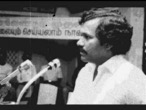
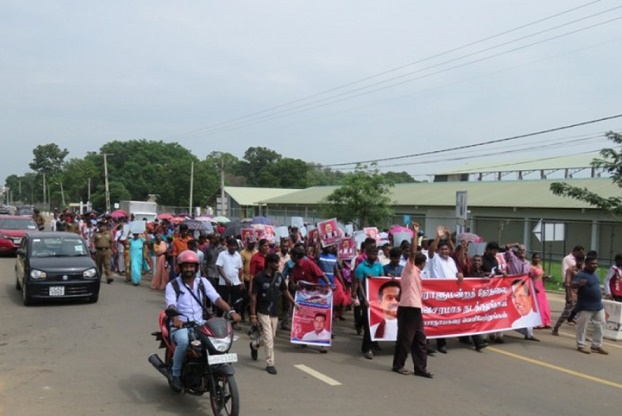
වහාම මහ මැතිවරණයක් පවත්වන ලෙස ඉල්ලා 1 දා දහවල් වවුනියාව නෙඩුන්කේණී නගරයේ උද්ඝෝෂණයක් පැවැත්විණි.

December 1st, 2018

දිනසේන රතුගමගේ

වහාම මහ මැතිවරණයක් පවත්වන ලෙස ඉල්ලා 1 දා දහවල් වවුනියාව නෙඩුන්කේණී නගරයේ උද්ඝෝෂණයක් පැවැත්විණි.

වවුනියාව සහ නෙඩුන්කේණී දිස්ත්‍රික් ශ්‍රී ලංකා පොදුජන පෙරමුණ පක්ෂ නියෝජිතයින් හා සාමාජිකයින් එක්ව මෙම විරෝධතා වැඩසටහන සංවිධානය කොට තිබුණි.

‍ජනතා මතයට ගරු කරමින් වහාම මැතිවරණයක් පවත්වන ලෙසට විරෝධතාකරුවෝ ඉල්ලීම් කළ අතර පක්ෂක්ග්‍රාහී කථානායක වහාම ඉල්ලා අස්විය යුතු බවටද විරෝධතාකරුවන් ඉල්ලීම් කළහ.

විරෝධතා වැඩසටහනට උතුරු මැද හිටපු ප්‍රධාන අමාත්‍ය එස්.එම්.රංජිත් මහතා,වවුනියාව ශ්‍රී ලංකා පොදුජන පෙරමුණ සංවිධායක ධර්මපාල සෙනවිරත්න මහතා, වවුනියාව දකුණ ප්‍රාදේශීය සභා සභාපති කසුන් සුමතිපාල මහතා,වවුනියාව ප්‍රාදේශීය සභා උප සභාපති වසන්ත රාජකරුණා මහතා ඇතුළු විශාල පිරිසක් එක්ව සිටියහ.


”ආවා කල්ලියේ” සාමාජිකයින් තුන් දෙනෙකු 1 දා අත් අඩංගුවට ගෙන තිබේ

December 1st, 2018

දිනසේන රතුගමගේ

යාපනයේ චුන්නාකම් පොලීසිය විසින් අපරාධ විසි එකකට සම්බන්ධආවා කල්ලියේසාමාජිකයින් තුන් දෙනෙකු 1 දා අත් අඩංගුවට ගෙන තිබේ.

ආවා කල්ලියේප්රබල නායකයෙකුව කටයුතු කොට ඔහුට  එල්ල වූ විවිධ තර්ජන නිසා පොලීසියට බාර වූ අශෝක් කුමර් නැමති  අයගෙන් ලැබුණු තොරතුරු මත මෙම සාමාජිකයින් තුන් දෙනා අත් අඩංගුවට ගැනීමට පොලීසියට හැකි වී තිබේ.

යාපනයේ චුන්නාකම් ඇතුළු ස්ථාන තුනක නිවෙස් වල දී මේ සාමාජිකයින් තුන්දෙනා අත් අඩංගුවට ගෙන ඇති අතර ඔවුන් අත් අඩංගුවට ගන්නා ලද අවස්ථාවේදී ඔවුන් ලග තිබී අඩි තුනක් දිග කඩු දෙකක්ද අඩි තුනහමාරක කඩුවක්ද ,කිණිසි,පිහි හා මුහුණු ආවරණ කීපයක්ද  පොලීසිය විසින් සොයාගෙන තිබේ

මොවුන්ගෙන් කළ ප්රශ්න කිරීම් වලදී හා යපනයේ ජනතාවගෙන් ලැබී ඇති පැමිණිලි වලට අනුව මේ තුන්  දෙනා විසින් අපරාධ හතරකටද මොවුන් වෙන් වෙන් වශයෙන් තවත් අපරාධ දාහතකටද සම්බන්ධ බවට පොලීසියට තොරතුරු ලැබී තිබේ.

සැකකරුවන් තුන් දෙනා යාපනය අධිකරණය වෙත ඉදිරිපත් කිරීමට පියවර ගෙන තිබේ.

යහපාලන යුගයේදී පමණක් රුපියල 30%කින් බාල්දුයි.. විදේශ ණය වැඩිවීම පමණක් රුපියල් කෝටි ලක්ෂය පනී..

December 1st, 2018

– nalaka godahewa FB

නව රඟහලේදී පැවති ඩි.ඒ. රාජපක්ෂ ගුණානුස්මරණ දේශනයේදී ආචාර්ය නාලක ගොඩහේවා මහතා මෙම අදහස් පල කලේය.

ලංකාවේ පැරණිතම දේශපාලන පවුල් අතර රාජපක්ෂ පවුල සුවිශේෂී ස්ථානයක් දරනවා. ඩී එම් රාජපක්ෂ හා ඩී ඒ රාජපක්ෂ සොහොයුරන් බ්‍රිතාන්‍ය පාලනය යටතේ රාජ්‍ය සභා සාමාජිකත්වය දැරීමෙන් ඇරඹි ගමන තුල සියවසකට ආසන්න කාලයක් රාජ්‍ය නිලධාරි, පාර්ලිමේන්තු මන්ත්‍රී, ඇමති, කතානායක, අගමැති , ජනාධිපති යන විවිධ තනතුරු හරහා මේ පවුල රටට සේවය කොට තිබෙනවා. ඒ නිසා අද මේ පැවැත්වෙන ඩී ඒ රාජපක්ෂ ගුණසමරු උත්සවයේදී ඔවුන් සියලු දෙනාගෙම ඒකායන අරමුණ වූ දේශය ගොඩනැගීම පිලිබඳව යම් අදහස් කිහිපයක් ප්‍රකාශ කිරීමට අවස්ථාව ලැබීම මා භාග්‍යයක් කොට සලකනවා

ඔබ දන්නවා ශ්‍රී ලංකාව ආසියාව තුල යටත් විජිතවාදීන්ගෙන් මුලින්ම නිදහස ලැබූ රටවල් කිහිපයෙන් එකක් බව . ඉන්දියාවට 1947 දීත් ලංකාවට 1948 දී ත් නිදහස ලැබුනා. මැලේසියාවට නිදහස් ලැබුනේ 1957 වන අතර සිංගපූරුව නිදහස ලැබුවේ 1965 දීයි

නිදහසින් පසු ආන්ඩු 20 ක් හා රාජ්‍ය නායකයන් 12 දෙනෙක් අපේ රට පාලනය කොට තිබෙනවා. නමුත් නිදහස ලබා වසර 70 ක් ගතවූ මේ 2018 වසර අවසානය වන විට ලංකාව සිටින්නේ මොන වගේ තත්වයකද?

අපි තවමත් සමාජ, ආර්ථික, දේශපාලන අර්බූදයන් නිසා නිරන්තරයෙන්ම බැට කන රටක්. විශේෂයෙන්ම පසුගිය රජයේ වසර 3 කුත් මාස 9 ක පාලන කාලය තුල රට විශාල අර්බූදයකට ඇද වැටී තිබුනා

අද ලෝකයේ දියුණු වෙමින් පවතින රටවල දළ ආර්ථික වර්ධන වේගය 4.9% වනවා. නමුත් පසුගිය පාලනය යටතේ ලංකාවේ ආර්ථික වර්ධන වේගය 3 % ක් පමන අඩු අගයකට වැටිලා තිබුනා.

රුපියල් ට්‍රිලියන 12 ඉක්මවා ඇති ලංකාවේ රාජ්‍ය ණය බර දළ ජාතික නිශ්පාදනයෙන් 87% ක් පමන වන් තෙක් ඉහල ගොස් තිබුනා.

*පසුගිය ජූනි මාසය වන විට මූඩීස් ආයතනය කියා තිබුනා ණය ආපසු ගෙවීමේ හැකියාව අතින් ලංකාව දැන් ඉන්නේ ආසියාවේ 24 වන ස්ථානයේ කියා.

*බ්ලූම්බර්ග් ආයතනය ලංකාව මේ වන විට ලෝකයේ ආයෝජනයට අනතුරුදායකම රටක් ලෙස නම් කොට තිබුනා

*නොමුරා බැංකුව කියා තිබුනා මේ වසරේ හඳුනාගෙන තිබෙන ලෝකයේ විනිමය අනුපාත අර්බූදයකට මුහුනදීමේ අවධානය වැඩිම රටවල් 7 අතරත් ලංකාව ඉන්නවා කියලා.

පසුගිය මාස 45 ක කාලය තුල රුපියලේ අගය 30% කින් අවප්‍රමාණය මේ නිසා රටේ විදේශ ණය වල දේශීය අගයේ වැඩි වීම පමනක් රුපියල් කෝටි ලක්ෂයක් පමන වෙනවා.

මේ අනුව නිදහසින් පසු මේ වන විට ආන්ඩු රැසක් විසින් රට පාලනය කර ඇතත් සෑබෑ සංවර්ධනයක් එදා මෙදා තුර සිදුවී තිබේද යන්න විවාදාත්මක කරුණක්.

ආසියාවේ අනෙකුත් දියුණු රටවල් හා සංසන්දනය කරන විට අපට පැහැදිලිවම පෙනෙන දෙයක් තමයි ලංකාවේ ආර්ථික ප්‍රතිපත්තීන් විටින් විට වෙනස් වීමේ ගැටලුව

එක් යුගයක සංවෘත ආර්ථිකයක් තුලින් රට ස්ව‍යං පෝෂණය කරන්නට උත්සාහ කල අපි තවත් වරෙක විවෘත ආර්ථික ක්‍රමයක් ගැන විශ්වාසය කලා. තවත් විටෙක මිශ්‍ර ආර්ථික ප්‍රතිපත්තියක් ගැන කතා කලා. මොනම ආර්ථික ප්‍රතිපත්තියක් වත් නැතුව ආන්ඩු පවත්වාගෙන යන ක්‍රමවේදයකුත් පසුගිය රජයේ මාස 45 ක පාලන කාලය තුල අපි දුටුවා

ලෝකය ඉදිරියට යන විට සමාජයේ බොහෝ වෙනස්කම් සිදුවෙනවා. එක්තරා යුගයකට ගැලපෙන සමාජ ආර්ථික ප්‍රතිසංස්කරණ තවත් යුගයකට ගැලපෙන්නේ නැහැ. ඒ නිසා අතීතය අපට විශේෂයින්ම වැදගත් වන්නේ පාඩම් ඉගන ගන්නට පමනයි කීවොත් නිවැරදියි. අතීතය විවේචනය කරමින් සිටීමෙන් අපේ ඉදිරි ගමනට වෙන සෙතක් නැහැ. ඒ නිසා අපි වර්ථ්මානයේ රටට ගැලපෙන ආර්ථික ප්‍රතිපත්තිය කුමක්ද යන කරුණ මදක් සාකච්චා කරමු.

අප බොහෝදෙනෙකු විශ්වාස කරනවා අද රටට අවශ්‍යව තිබෙන්නේ ජනතා කේන්ද්‍රීය සංවර්ධනයක් කියා.

කුමක්ද මින් අදහස් කෙරන්නේ ?

ජනතා කේන්ද්‍රීය සංවර්ධන ක්‍රියාවලියක ප්‍රධාන ලක්ෂණ 2 ක් තිබෙනවා.

පළමුවැන්න නම් එය ‘පොදු ජනතාවගේ අපේක්ෂාවන් ඉටුකරන සැබෑ සංවර්ධනයක්’ විය යුතු බවයි.

දෙවැන්න එය නොනැවතී ඉදිරියට යන ‘තිරසාර සංවර්ධනයක්’ විය යුතු බවයි.

චන්ද කාලයට මැතිවරණ වේදිකාවල දෙන විවිධ පොරොන්දු මත සාමාන්‍ය ජනතාව බොහෝ විට යම් රැල්ලකට අසුවී තම චන්දය භාවිත කරනවා.

නව රජයක් බලයට ආවාට පසු ආර්ථිකය කලමණාකරනය කිරීමේ වගකීම බාරදෙන බොහෝ ආර්ථික විශේසඥයින් කරන්නේ පුලුල් ආර්ථික දර්ශනයකින් තොරව එදා වේල කලමණාකරනය කිරීමයි. ඉන් ජනතා ප්‍රශ්ණ විසදෙන්නේ නැහැ.

ආන්ඩුව බලයට පත්වී යම් කලකට පසු තම සැබෑ අපේක්ෂාවන් ආන්ඩුවෙන් ඉටු නොවන බව හැඟී ජනතාව අලුත් ආන්ඩුවගැනත් කල කිරෙනවා.

ඒ නිසා ප්‍රජාතන්ත්‍රවාදී රටක බලයට පත් වන ආන්ඩුවට අභියෝගයක් තිබෙනවා ජනතාවට අවශ්‍ය කුමක්ද කියා නිසියාකාරව වටහා ගන්නට

ජනතාවට ඇත්තෙන්ම අවශ්‍ය කුමක්දැයි සොයාගැනීමට ඉතා සරල ක්‍රමයක් තිබෙනවා

පොඩ්ඩක් මතක් කරලා බලන්න සෑම වසරක් ඇරබෙන විටම අප එකිනෙකාට සුබ පතා ගන්නේ කුමක් ප්‍රාර්ථනය කරමින්ද කියලා

අපි කියනවා ඔබ සැමට සතුට,සාමය, සෞභාග්‍යය පිරි නව වසරක් වේවා ” කියලා.

වෙනත් විදියකට කියනවානම් ජීවිතයේ අපට අවශ්‍ය සියලු දෙනාටම දේවල් ඒ ප්‍රාර්ථනය තුල අඩංගු වෙලා තිබෙනවා

1. සතුට 2. සාමය 3. සෞභාග්‍යය

යම් ආර්ථික ක්‍රමවේදයකට පුලුවන්නම් ජනතාවට නිරන්තරයෙන්ම සතුට සාමය හා සෞභාග්‍යය ලබා දෙන්නට ඒ ආන්ඩුව විසින් ජනතාවගේ අපේක්ෂා ඉටුකලා වෙනවා. කල්පනා කර බලන්න රටක් පාලනය කරන විට අපි මේ සරල කරුණ ගැන අවධානය යොමුකරනවාද කියා. අපි සරලව අවශ්‍ය දේ හිතන්නේ නැති නිසා තමයි ඕනෑම විශයක් සංකීරණ කර ගන්නේ. ආර්ථික කලමණාකරනයත් එසේමයි.

අපි නිතර කතා කරන ආර්ථික දර්ශක වලින් සතුට,සාමය, සෞභාග්‍යය මනින්නට බැහැ. ඒ නිසා ආර්ථිකයක සාර්ථකත්වය මනින්නට අපිටම ආවේනික වූ දර්ශක පෙලක් අවශ්‍යයි.

දැන් අපි මෙය ප්‍රායෝගික කරගන්නේ කෙසේදැයි බලමු. සතුට සාමය හා සෞභාග්‍යය උදා කිරීමට නම් බලයට ආ ආන්ඩුවක් විසින් සම්පූර්ණ කල යුතු ජනතාවගේ අවශ්‍යතාවන් 3 ක් හඳුනාගත යුතුයි. මේ අවශ්‍යතා 3 රටේ සෑම පුරවැසියෙකුටම, පවුලකටම පොදුයි.

පලමුවැන්න ස්ථාවරත්වය ( STABILITY ) මින් අදහස් කරන්නේ රටේ සෑම පුරවැසියෙකුටම ආර්ථිකව ස්ථාවර වීමේ අවස්ථාව ඇත්ද යන්නයි.

දෙවැන්න ප්‍රගතිය ( PROGRESS ) මින් අදහස් කරන්නේ රටේ සෑම පුරවැසියෙකුටම තව තවත් දියුණු වීමේ අවස්ථාව ඇත්ද යන්නයි.

තුන්වැන්න ගෞරවය ( DIGNITY ) මින් අදහස් කරන්නේ රටේ සෑම පුරවැසියෙකුටම ගෞරවාන්විතව, ආත්මාභිමානයෙන් ජීවත්වීමේ වීමේ අවස්ථාව ඇත්ද යන්නයි.

1.ස්ථාවරත්වය

පලමුවෙන්ම ස්ථාවරත්වය (STABILITY ) ලෙස රටක පුරවැසියෙකු බලාපොරොත්තු වන්නේ කුමක්ද ?

-ජීවත් වීමට ස්ථිර ආදායමක්

-හිසට වහලක් තමුන්ගේම කියා නිවසක්

-දරුවන්ට හොඳ අධ්‍යාපනයක්

-පවුලට අවශ්‍ය සෞඛ්‍යය පහසුකම්

-සොර සතුරන්ගෙන් ආරක්ෂිත වටපිටාවක්

-නීතියේ සාධාරණත්වය හා රැකවරණය

බැලූ බැල්මට බොහෝ සරලයි වගේ හිතෙන නිසා අපි මදකට විමසා බලමු මේ කරුණු සම්බන්ධව මහපොලවේ යථාර්තය කුමක්ද කියා

රජයේ සංඛ්‍යාලේඛන වලටම අනුව මිලියන 22 කට ආසන්න ජනගහනයක් සිටින මේ රටේ 6% ක් එසේත් නැත්නම් දස ලක්ෂයකට වැඩි ජන කොටසක් තවමත් දිළිඳු ගනයට වැටෙනවා. මේ තුන්වේල හරියට කන්න නැති පවුල්

අපේ රටේ රැකියා වියුක්තිය 4.5% ක් පමන අඩු අගයක් කියා මහ බැංකු වාර්ථා කීවාට අද වයස අවුරුදු 19-30 අතර තරුණ තරුණියන්ගෙන් 16% කට රැකියා නැහැ.

ඉන් තරුණියන්ගේ තත්වය වඩාත් බරපතලයි. තරුණියන්ගෙන් 25% පමන රැකියා විරහිතබාවයෙන් පෙලෙනවා.

සාක්ෂරතාවෙන් 92 ක් කිව්වට ආර්ථික අපහසුකම් නිසා කිසි දිනෙක පාසැල් නොගිය වයස අවුරුදු 5 ට වැඩි පිරිස ලක්ෂ 7 ඉක්මවනවා. අවුරුදු 25 ට වැඩි ජනගහනයෙන් 4.7% ක් කිසිම දිනක පාසැල් ගිහිල්ල නැහැ

සෞඛ්‍ය සේවාවන් නොමිලයේ දෙනවා කීවාට අද දුෂ්කර ප්‍රදේශ රැසක විශාල වෛද්‍ය හිඟයක් හා පුහුණු සාත්තු සේවකයින්ගේ හිඟයක් තිබෙනවා. ශල්‍යකර්ම සඳහා ලෙඩ්ඩු මාස ගනන් පෝලිමේ ඉන්නවා. සමහරු ඒ අතර මියයනවා.

සෞඛ්‍ය පහසුකම් රට පුරා සමානව බෙදී ගොස් නැහැ. පෞද්ගලික ඉස්පිරිතාල තිබෙන්නේ ප්‍රධාන නගර වල පමනයි.

පසුගිය කාලේ ඩෙංගු වසංගතය අපු වෙලාවේ ඔබට මතක ඇති ඉස්පිරිතාල වල ගේට්ටු වැහුවා ඉඩ නැහැ කියලා. පෞද්ගලික රෝහලකට යන්නට වත්කමක් නැති රෝගීන්ට රජය දුන්න විකල්පය කුමක්ද

මේ රටේ මිලියන 5,2 ක් පමන වන නිවාස වලින් 63% කම ජීවත් වන්නේ කුලී නිවැසියන්. තමන්ගේම කියා නිවසක් නැති අය.

රටේ තිබෙන නිවාස වලින් 18% ක්ම තාවකාලික හෝ අර්ධතාවකාලික අමුද්‍රව්‍ය වලින් සෑදූ නිවාසයි.

පසුගිය කාලේ රට පුරා හොරකම් වැඩිවුනා, දිනපතා මිනීමැරූම්, පාතාල ක්‍රියාකාරකම් එලිපිට සිදුවුනා, පාරේ යද්දි නිකම් වෙඩි වැදිලා පහුගිය කාලේ කොපමන අය මැරුණාද. සුලු දෙයකටත් මිනී මරණ තත්වයට අද තරුණ පරපුර පත්වෙලා , අද සාමාන්‍ය ජනතාවට ආරක්ෂාව විශාල ප්‍රශ්ණයක් වෙලා

2.ප්‍රගතිය

මා කී දෙවන කරුණ වන ප්‍රගතිය එහෙමත් නැත්නම් දියුණු වීම( PROGRESS ) ලෙස රටක පුරවැසියෙකු බලාපොරොත්තු වන්නේ කුමක්ද ?

-තම ආදායමක් වැඩිකරගැනීමට අවස්ථා

-රැකියාවේ ඉහලට යාමට හෝ තම ව්‍යාපාරය දියුණු කර ගැනීමට අවස්ථා

-නව ව්‍යාපාර පටන් ගැනීමට අවස්ථා

-ව්‍යාපාර කිරීමේ පහසුව

-නව ආයෝජන අවස්ථා හා ආයෝජන දිරිමත් කිරීම්

-පවුලේ ජීවන මට්ටම ඉහල දමා ගැනීමට අවස්ථා

-දරුවනට වඩා හොඳ අධ්‍යාපන පහසුකම්

-වඩා හොඳ සෞඛ්‍ය පහසුකම්

-වඩා හොඳ නිවසක්

-ජීවත් වීමට වඩා හොඳ පරිසරයක්

-තමුන්ගේම කියා වාහනයක්

-විනෝදාස්වාදයට ඉඩපහසුකම්

-පිට රට සංචාරය. ලෝකය දැකීම

දැන් කුමක්ද මේ පිලිබඳ යථාර්තය ?

ලංකාව අද ආසියාවේ අඩුම සංවර්ධන වේගයක් තිබෙන රටක්. 2014 අවසන් වන විට 7% ක වර්ධන වේගයක් තිබුනත් 2017% දී එය 3.1% යි. මේ වසරේත් ඒ වගේමයි. රටක සංවර්ධන වේගය මන්දගාමී වන විට පුරවැසියන්ටත් දියුණු වීමේ අවස්ථා අඩු වෙනවා

උසස් පෙලට වාඩිවෙන සිසුන්ගෙන් 55 % ක් විශ්ව විද්‍යාලයට ඇතුලත් වීමට සුදුසුකම් ලැබුවත් 12% ක් පමනයි අවසානයේ විශ්ව විද්‍යාල වරම් ලබන්නේ. උසස් පෙල සඳහා වාඩි වෙන සිසුන්ගෙන් 6.6 % තමයි අවසානයේ විශ්ව විද්‍යාල වරම් ලබන්නේ.

ශ්‍රී ලංකාවේ උසස් අධ්‍යාපනය සඳහා යොමු වන ප්‍රතිශතය ඉතා අඩු මට්ටමකයි පවතින්නේ. එය මැදි ආදායම් ලබන රටවල සාමාන්‍ය වන 28% ටත්, අඩු ආදායම් ලබන රටවල සාමාන්‍ය වන 7.7 % ටත් වඩා පහලිනුයි තිබෙන්නේ. තායිලන්තය, ඉන්දියාව , වියට්නාමය හා ජැමෙයිකාවටත් පිටුපසින් සිටින ලංකාව ඒ අතින් සුඩානයට සමානයි.

වයස 25ට වැඩි ජනතාවගෙන් 3% ක් පමනයි උපාදියක් සම්පූර්ණ කර තිබෙන්නේ.

ජන හා සංඛ්‍යාලෙකන දෙපාර්තුමෙන්තුවට අනුව 2017 වන විට මේ රටේ ව්‍යාපාරිකයෝ සිටියේ 218,000 ක් පමන අඩු සංඛ්‍යාවක්.වැඩ කල හැකි ජනතාව අතුරින් 1.5% ටත් අඩුවෙන්.

පසුගිය කාලේ කල විවිධ ගාස්තු හා බදු වැඩිකිරීම් නිසා අලුතින් ව්‍යාපාරයක් ආරම්බ කරන්න ලියාපදිංචි ගාස්තු පමනක් රුපියල් ලක්ෂයකට වඩා වැයවුනා. ඒ නිසා අලුතින් ව්‍යවසායකයෝ බිහි වීම ඉතා මන්දගාමී වෙලා තිබෙනවා.

පසුගිය වසර 4 තුල කුඩා හා මධ්‍යම පරිමාණ ව්‍යාපාර විශාල ප්‍රමාණයක් වසා දමනු ලැබ තිබෙනවා

සාමාන්‍ය පවුලකට නිවාස ණයක් ගන්නට බැරි තරමට පොලී අනුපාතයන් ඉහල ගිහිල්ලා

වාහනයක් ගන්නවා කියන එක සිහිනයක් පමනක් වන තරමට පසුගිය කාලයේ රජයේ බදු නිසා වාහනවල මිල වැඩිවුනා. රජය සුඛෝපබෝගී පමනක් නොවේ අර්ධ සුඛෝපබෝගී භාන්ඩ වලට පවා අධික ලෙස බදු අයකරමින් ජනතාවගේ ජීවන මට්ටම ඉහල යාමට දැන හෝ නොදැන අකුල් හෙලමින් සිටියා

ඩොලරයට සාපෙක්ෂව රුපියල මේ විදියට කඩා වැටෙද්දි පිටරට සංචාරය කරන්න පුලුවන් කාටද ? දරුවන්ව පිටරට යවා අධ්‍යාපනය ලබා දෙන්න පුලුවන් කාටද ?

3.ගෞරවාන්විතව ජීවත්වීම

මා කී තුන්වන කරුණ වන ගෞරවාන්විතව ජීවත්වීම ( DIGNITY ) ලෙස රටක පුරවැසියෙකු බලාපොරොත්තු වන්නේ කුමක්ද ?

-සෑම පුරවැසියෙකුටම ආත්ම අභිමානයකින් යුතුව ජීවත් වීමේ අවස්ථාව

-තමුන්ගේ ආගම ඇදහීමේ නිදහස,

-වාර්ගික අනන්‍යතාව රැක ගෙන ජීවත් වීමේ අයිතිය

-යම් සමාජ මට්ටමකට අයත් වීම නිසා බලපොරොත්තු වන ගෞරවය

-රටේ පුරවැසියෙකු වීම නිසා බලපොරොත්තු වන ගෞරවය

-අදහස් ප්‍රකාශ කිරීමේ නිදහස

-තම චන්දය නිදහසේ භාවිත කිරීමේ ප්‍රජාතන්ත්‍රීය අයිතිය

-තම චන්දයෙන් බලයට ආ අය බලය අනිසි ලෙස භාවිත නොකලයුතුය යන අපේක්ෂාව

මිනිසුන්ට අවශ්‍යයි එකට ජීවත් වන්නට. ඒ වගේම තවත් කාරණාවලදී ඔවුන්ට තම අනන්‍යතාව රැක ගැනීමට අවශ්‍යයයි. මේ අවශ්‍යතා දෙකටම අපි ගරුකල යුතුයි. නමුත් අද මේ රටේ සැබෑ ජාතික , ආගමික නිදහසක් තිබෙනවාද ?. එසේ තිබෙනවානම් ඇයි මේ තරම් ඒ ගැන කතිකාවන් ?

මේ රටේ උපන් සෑම පුරවැසියෙකුටම සමාන අයිතිවාසිකම් තිබෙනවාද ? රජයට සම්බන්ධ බලවතුන්ට හා සාමාන්‍ය පුරවැසියන්නට නීතිය ක්‍රියාත්මක වෙන්නේ සමානවද? පසු ගිය කාලේ අපි ඕනෑ තරම් උදාහරණ දැක්කා රජයට පක්ෂ දේශපාලනඥයින්ට හා විරුද්ධ පක්ෂයේ දේශපාලනඥයින්ට නීතිය දෙවිදියකට ක්‍රියාත්මක වන ආකාරය ගැන.

අදහස් ප්‍රකාශ කිරීමේ නිදහස ඇත්තටම තිබෙනවාද ? අපි දුටුවා පසුගිය කාලයේ රටේ හිටපු අගමැතිවරයා මේ රටේ සුප්‍රකට මාධ්‍ය වේදීන්ට පාර්ලිමේන්තුව තුල පවා නම් කියා තර්ජනය කරනවා.

රටේ සමහර බලවතුන් ගැන යම් යම් වාර්ථා පල නොකරණ ලෙස මාධ්‍යවලට බල පෑම් වුනේ නැහැ කියා අවංකව කිව හැකිද ? රජයට විරුද්ධව අදහස් පලකල නිසා පසුගිය කාලයේ කී දෙනෙකුට විරුද්ධව පරීක්ෂණ ආරම්බ කොට බොරු චෝදනා මත රිමාන්ඩ් බන්ධනාගාර ගත කලාද ? සමහරක් බොරු උසාවියේ පවා හෙලිදරව් වුවා නේද ?

ප්‍රජාතන්ත්‍රවාදී රටක පුරවැසියෙකුගේ මූලික අයිතියක් තමයි චන්දය දැමීමේ අයිතිය. මොන තරම් බරපතල ලෙස මේ අයිතිය පසුගිය කාලයේ උල්ලංගනය කරනු ලැබ තිබෙනවාද ? සාධාරණ මැතිවරණ පවත්වන්නට කියා ආරම්ඹ කල මැතිවරණ කොමිසම පින් පඩි ගන්නා ආයතනයක් බවට පත් වුනා නේද ?

අද ලංකාවේ විපක්ෂය ජනතාවගේ චන්ද අයිතිය වැලැක්වීම සඳහා මහා අරගලයක නිරතව ඉන්නවා. තමුන්ගේ චන්දයෙන් පාර්ලිමේන්තු මන්ත්‍රීවරු ව්‍යවස්තාව කඩකරමින්, පාර්ලිමේන්තු ස්ථාවර නියෝග උල්ලංඝණය කරමින් , පාර්ලිමේන්තු සම්ප්‍රදායන් කඩකරමින් කටයුතු කරණ ආකාරය දුටුවිට චන්දය දුන්පුරවැසියන්ට ඇතිවෙන්නේ ගෞරවයක්ද ලැජ්ජාවක්ද චන්දය දුන් තමුන් ගැන.

මා මේ දත්ත හා පැහැදිලිකිරීම් හරහා පෙන්වන්නට උත්සාහ කලේ කවුරු මොන තර්කය ගෙන ආවත් අපේ රටේ පොදු ජනතාවගේ අපේක්ෂාවන් ඉටු කරන ජනතා කේන්ද්‍රීය ආර්ථික ප්‍රතිපත්තියක අවශ්‍යතාව තවමත් ඉතුරුව ඇති බවයි.

නිදහසින් පසු බලයට පත්වූ රජයන් බොහෝමයක් විසින් ක්‍රියාත්මක කල ආර්ථික ප්‍රතිපත්තීන් කාලයත් සමඟ මහජනතාව විසින් ප්‍රතික්ෂේප කරනු ලැබීමට හේතුව ලෙස අපි දකින්නේ ඒ ඒ රජයන් යටතේ ආර්ථිකයන් හසුරවපු බොහෝ අය මහ පොලවේ යථාර්ථය තේරුම් ගැනීමට අසමත් විමයි. ඔවුන් බොහෝ විට උත්සාහ කලේ බටහිර හෝ අපරදිග ආර්ථික න්‍යායන් ලංකාවට හඳුන්වාදීමටයි. ජාත්‍යන්තර මුල්‍ය අරමුදල හා ලෝක බැංකුව කියන ආකාරයට ආර්ථිකය හසුරවන්නට ඔවුන් බොහෝදෙනෙකු උත්සාහ කලා. .

මොනවද ජාත්‍යන්තර මුල්‍ය අරමුදල හැමවිටම දෙන සුපුරුදු උපදෙස් මාලාව ?

-රජයේ ආදායම වැඩිකරගෙන වියදම අඩු කරගෙන අයවැය පරතරය අඩු කරගන්න

-ඒ සඳහා ජනතාවට සහන දීම නවතන්න

-බදු වැඩිකරන්න,

-රාජ්‍ය ආයතන පෞද්ගලීකරණය කරන්න

-පාඩු ලබන රාජ්‍ය ආයතන වසා දමන්න නැත්නම් විකුණන්න

-විනිමය අනුපාතය පාවෙන්න අරින්න

-ආර්ථිකය විවෘත කරන්න.

මීට අමතරව ජාත්‍යන්තර මුල්‍ය අරමුදල දියුණු වෙමින් පවතින රටවලට ණය ගැනීමට පුරුදු කරනවා එම ණය වලින් කිසිදු දිර්ඝ කාලීන යහපත් ප්‍රථිපලයක් නැතුව. ඔවුන්ගේ කොන්දේසි ඉටු කරන්න අවධානය යොමු කරනවිට ණය ගත්ත හේතුවත් අමතක වෙනවා.

මොනවද මේවායේ නිසැක ප්‍රතිපල ?

දුප්පත් කම වැඩිවීම,

විරැකියාව වැඩිවීම,

දේශීය ව්‍යාපාර දුර්වල වීම,

පෞද්ගලික අංශයේ එකාධිකාර බිහිවී මහජනතාව සූරා කනු ලැබීම,

රට විශාල වශයෙන් ණය වීම,

ගත් ණය ගෙවා ගත නොහැකිව අසරණ වීම

1945 ආරම්ඹ කරපු ජාත්‍යන්තර මුල්‍ය අරමුදලින් පමනක් උපදෙස් ඇරගෙන දියුණු රටක් බවට පත් වූ කිසිම රටක් තිබෙනවාද . ඒත් මීට පෙර සිටි සමහරක් රජයන් හා විශේෂයෙන්ම පසුගිය රජය උපදෙස් ගත්තේ ජාත්‍යන්තර මුල්‍ය අරමුදලින්. ඒ විදියට කවදාවත් ජනතා කේන්ද්‍රීය ආර්ථිකයක් මේ රටේ හදන්න බැහැ.

ලෝකයේ එක තැනක සාර්ථක වන ආර්ථික න්‍යායක් තවත් තැනක ඒ ආකාරයෙන්ම ක්‍රියාත්මක කරන්නට බැහැ. එක රටකට තවත් රටක් සමාන කරන්න බැහැ මන්ද සෑම රටකටම ආවේනික ගැටලු තිබෙනවා. ඒවායේ ජීවත් වන ජනතාවන්ගේ සංස්කෘතීන් ,ජීවන රටාවන්, හැසිරීම් රටාවන්, විශ්වාසයන් එකිනෙකට වෙනස්. ඒ නිසා තමයි අපි දකින්නේ අනෙකුත් රටවල් සූරාකා අන් රටවල ධනයෙන් පොහොසොත් වූ යුරෝපීය රටවල් හැරුණ විට අද ලෝකයේ දියුණු යැයි සැලකිය හැකි සෑම රටක්ම සංවර්ධනය සඳහා තමුන්ටම ආවේනික ක්‍රමවේදයක් භාවිත කොට ඇති බව

මැලේසියාවෙ මහතීර් මොහොමඩ් ,කොරියාවේ ජෙනරල් පාර්ක් චුන් හී, සිංගප්පූරුවේ ලී කුවාන් යූ හා චීනයේ ඩෙන් සියා ඕ පිං යොදාගත්තේ තමුන්ටම ආවේනික විසඳුම් මිස පිටතින් ආනයන කල හෝ ජාත්‍යන්තර මුල්‍ය අරමුදල කියාදුන් විසඳුම් නොවෙයි. ඒ නිසා අනාගතයේ මේ රටට ආර්ථික සැලසුමක් ඉදිරිපත් කරන්නට බලාපොරොත්තු වන අයත් ස්වාධීනව සිතන්නට හැකියාවක් ඇති අය විය යුතුයි.

ලංකාව මෙතනින් ඉදිරියට ගෙනයන්නට නම් ජාතික ප්‍රතිපත්ති සකස්කිරීමේදී රජය විසින් විශේෂ අවධානය යොමුකල යුතු ක්ෂෙත්‍ර 5 ක් ගැන මා සඳහන් කරන්නට කැමතියි. මේ අප විසින් අරමුණු කරගත යුතු පිරිපුන් දේශයේ මූලික ලක්ෂණ කියාද කිවහැකියි. මේ කරුණු ප්‍රතිපත්ති සම්පාදකයින්, දේශපාලනඥයින් මෙන්ම සෑම රජයේ සේවකයෙකුම වටහා ගත යුතුයි. හැම කෙනෙකුටම නිසි අවභෝදයක් හා පොදු ඉලක්කයන් තියෙනාවිට අපට මේ කාර්යය කිරීම පහසුයි.

1) තිරසාර සාමයක්

2)සැමට පොදුවූ ආර්ථික සමුර්ධිය

3)සමාජ සාධාරණත්වය හා සමාජ ප්‍රගමනය

4) නිසි පරිසර කළමණාකරනය

5) ගුණ ගරුක සමාජයක් ගොඩනැගීම

මේ පහේම සම්මිශ්‍රණයක් තුලින් පමනයි අපේ රටේ සමාජ ආර්ථික දේශපාලන ප්‍රශ්ණ වලට විසඳුම් සෙවිය හැක්කේ.

මේ සෑම විශයක්ම දීර්ඝ වශයෙන් කතා කල හැකි ගැඹුරු මාතෘකායි. නමුත් මා අද කතා කරන්නේ මින් පලමුවැන්න වන සැමට පොදුවූ ආර්ථික සමුර්ධිය ගැන පමනයි.

කුමක්ද සැමට පොදුවූ ආර්ථික සමුර්ධියක් යනුවෙන් අදහස් කරන්නේ ? මෙහිදී වැදත්ම කරුණ වන්නේ ආර්ථික සංවර්ධනයේ ප්‍රතිලාබ රටේ සෑම ජනකොටසකටම බෙදී යනවාද යන්නයි. අපට අවශ්‍ය ආර්ථික දර්ශක වල ධනාත්මක බාවයට වඩා මිනිසුන් සතුටින් ජීවත් වනවාදයන්නයි.

මේ රටේ ආර්ථිකය තියෙන්නේ ජනතාව අතරයි. කම්හලේ ගොවිපොලේ කාර්යාලයේ, පාසැලේ, රෝහලේ වැඩකරන ජනතාව අමතක කරලා අපි දල ජාතික නිශ්පාදනයයි ඒක පුද්ගල ආදායමයි ගැන ගැන කතා කරල පලක් නැහැ.

චීනය වැනි විශාල රටවල් පවා අද මහජන සතුට මැනීමේ දර්ශකයන් ගැන විශේෂ අවධානයක් යොමුකරන්නේ මේ සත්‍යය වටහාගෙනයි.

අද එක්සත් ජාතීන්ගේ ‘ HAPPYNESS INDEX ‘ එහෙමත් නැත්නම් මහජන සතුට මැනීමේ දර්ශකයේ ලංකාව 2018 වසරේ සිටින්නේ 116 ව ස්ථානයේ. දකුණු ආසියාවේ බංගලාදේශයයි නේපාලය වැනි රටවල් පවා ලංකාවට ඉහලිනුයි සිටින්නේ. සෝමාලියාව කොන්ගෝව ඝානා වැනි අප්‍රිකානු රටවල් පවා සිටින්නේ ලංකාවට බොහෝ ඉදිරියෙනි. පලවන ස්ථාන 3 සිටින්නේ ෆින්ලන්තය, නෝර්වේ හා ඩෙන්මාර්කය යන ස්කැන්ඩිනේවියානු රටවලුයි. එසේ නම් අපිට ඉගන ගන්නට ඉතුරුව බොහෝ දේවල් තිබෙන බව පැහැදිලිය.

ජනතා කේන්ද්‍රීය ආර්ථිකයක් ගොඩ නැංවීම සඳහා අපට සිදුවෙනවා පැහැදිලි දැක්මක් ඇතුව නිශ්චිත ප්‍රතිපත්තීන් මත පදනම් වූ ක්‍රමාණුකූල සැලස්මකට අනුව ක්‍රියා කරන්නට.

විටින් විට අයවැයකට පෙර රැස්වීම් කිහිපයක් තබා හඳුනාගත් ප්‍රශ්ණ වලට උත්තර සෙවීමට වඩා රාජ්‍ය අයවැය සකස් කිරීමේදී දීර්ඝ කාලින සැලැස්මක් අනුවයි සියල්ල සිදුවිය යුත්තේ.

එසේ ගොඩ නැංවෙන ආර්ථිකයක විශේෂයෙන් අවධානය යොමුවිය යුතු අංශ 7 ක් ගැන මා සඳහන් කරන්නට කැමතියි.

1.ආර්ථිකයේ සර්ව සහභාගීත්වය

ආර්ථික ක්‍රියාවලියට රටේ සියලුදෙනාවම සම්බන්ධ කරගත යුතුයි. ආර්ථික විද්‍යාවේ මෙයට කියන්නේ සර්ව සහභාගීත්ව සංවර්ධනය කියායි.ජාති, ආගම්, ගැහැනු පිරිමි වෙනස්කම් නොමැතිව අධ්‍යාපනය, සෞඛ්‍ය හා නිවාස යනු ජනතාවගේ මූලික අවශ්‍යතාවන් බව වටහාගෙන ඒවා සම්පූර්ණ කිරීමට රජයේ ආර්ථික ප්‍රතිපත්තිය තුල විශාල අවධානයක් යොමු කල යුතුයි.

2.නීතිමය හා රාජ්‍ය ( ආයතනික ) යාන්ත්‍රණය

නිදහස ලබන කාලයේ ආසියාවේ ඉතාමත්ම ඉහලින් තිබුණ නීති පද්ධතියක් , පරිපාලන සේවයක් තිබුන අපට අද කලාපයේ අන් රටවල් හා සසඳන විට එසේ ආඩම්බරවිය හැකි තත්වයක් තිබෙනවාද යන්න අපි ප්‍රශ්ණ කල යුතුයි. විශේෂයෙන්ම මෑත ඉතිහාසයේ දේශපාලන අවශ්‍යතාවන් ඉටුකරගැනීම සඳහා නීති වෙනස් කිරීම නව නීති සකස් කිරීම බහුලව දක්නට ලැබුනා. දේශපාලන පලිගැනීම් සඳහා අටවා ගත් FCID වැනි නීති විරෝධී ආයතන වලින් රාජ්‍ය සේවකයන්ට කල බිය වැද්දීම නිසා සමස්ථ රාජ්‍ය යාන්ත්‍රණය අකර්මණ්‍ය වුනා. ඒ නිසා මේ නීති හා රෙගුලාසි තත්කාලීන කොට රාජ්‍ය සේවය වඩා පලදායි හා කාර්යක්ෂම කිරීම සඳහා ක්‍රමවේදයන් සොයාගත යුතුව තිබෙනවා

3.යටිතල පහසුකම්

රටක සංවර්ධනයට යටිතල පහසුකම් ඉතා වැදගත්, රට තුල ප්‍රවාහණය , සංනිවේදන, ගම හා නගර සංවර්ධනය පමනක් නොව ලෝකය සමඟ ගනුදෙනු කිරීම සඳහා වරාය, ගුවන්තොටුපොලවල් ආදිය සැලසුම් සහගතව ඉදි කිරීම රජයක වගකීමක්. බොහෝ විට මේ යටිතල පහසුකම් ගොඩ නැගිය යුත්තේ අනාගතය සඳහා නිසා එම පහසුකම් වලින් ක්ෂණික ප්‍රතිපල බලාපොරොත්තු වීම මෝඩ කමක් මෙන්ම කුහක කමක්.

උදාහරණයක් වශයෙන් සිංගපූරුවේ කන්ටේනර් වරායක් හදන්නට පටන් ගත්තේ 1969 . එයට පලමුවෙනි කන්ටේනර් නැව එන්නේ 1972 දී. ඊලඟ වසර පහ තුල වරාය දියුණු වුනේ ඉතාම හෙමින්. නමුත් කවුරුවත් වරායට නැව් එන්නේ නහැ කියල වරාය විකුණන්න කිව්වේ නැහැ. අද සිංගප්පුරු වරාය ලෝකයේ විශාලතම කන්ටේනර් වරාය.

නැව සමාගම් 200 ලෝකය පුරා විසිරුනු වරායවල් 600 ක් රටවල් 123ක් සිංගපූරු වරායෙන් සේවා ලබා ගන්නවා. වසරකට නැව් 130,000 කට වඩා මෙම වරායට සේන්දු වෙනවා. ලෝකයේ දියුණු රටක් වන සිංගපූරුවේ ආර්ථිකයෙන් 7% කට දායක වන්නේ මේ වරායයි. නමුත් පෙර අපරදිග යා කරන මුහුදු මාවතේ සිංගපූරුවටත් වඩා සුදුසු ස්ථානයක අප විසින් ඉදිකල වරාය සුදු අලියෙක්ය කියා චීනයට විකුණා දමන්නට පසු ගිය රජය ඉතා අදූරදර්ශී තීරණයක් ගත්තා

4.මානව සම්පත් සංවර්ධනය

අතීතයේ සිටම සාක්ෂරතාවෙන් ඉහල රටක් වූ අපට තිබෙන වැදගත්ම සම්පතක් නම් මානව සම්පතයි. එහෙත් මේ මානව සම්පත දියුණු කිරීම හරියාකාරව සැලසුම් සහගතව කලමණාකරනය වෙනවාද යන්න අප යලි සිතා බැලිය යුතුයි. මානව සම්පත් දියුණුකිරීමේ දර්ශකයේ අපි ඉන්නෙ රටවල් 188 කින් 79 වන ස්ථානයේයි. ඉන් පෙනෙනවා තව බොහෝ වැඩ කරන්නට තිබෙන බව.

තවමත් අපේ රටේ අධ්‍යාපනය සඳහා වසරකට වෙන් කෙරනා මුදල දල ජාතික නිශ්පාදනයෙන් 2%ට අඩුයි. මේ ප්‍රතිශතය 6% දක්වා ඉහල දමනවා කියා පැමිණි වත්මන් රජය යටතේත් එහි කිසිදු වර්ධනයක් වී නැහැ

කෙටි තාක්ෂණික උසස් අධ්‍යාපන වැඩසටහන් කෙරෙහි සිසුන් විශාල වශයෙන් යොමු කිරීම කාලීන අවශ්‍යතාවයක්

උපාධි අපේක්ෂකයින් සඳහා ගුණාත්මක අධ්‍යාපනයක් ලබාදීම, වෙළඳපොල අරමුණුකරගත් වානිජ පර්යේෂණයන් හා නව නිර්මාණ බිහිකිරීමට සිසුන් උනන්දු කිරීම රටේ සමාජ ආර්ථික සංවර්ධනයට ඔවුන් දායක කරගැනීමේදී ඉතා වැදගත්.

දැනට අපේ රටේ ජනගහනයෙන් 1.5% පමන වන ව්‍යවසායකයින් ප්‍රමාණය වැඩි කිරීමට අවශ්‍ය ප්‍රතිපත්තිමය තීරණ හා අවශ්‍ය කර්ණ සහාය රජය විසින් ලබාදිය යුතුයි. රැකිය අපේක්ෂකයන් වෙනුවට රැකියා සම්පාදකයින් වීමට අපේ තරුණ පරපුරට අවශ්‍ය මාර්ගෝපදේෂකත්වය හා අනෙකුත් පහසුකම් ලබා දිය යුතුයි.

5.ස්වාභාවික සම්පත්වල අගය වැඩිකිරීම

අපේ රටේ දේශගුණය, සරුසාර පස හා පාරම්පරික උරුමය දෙස බලන විට මේ රට කෘෂිකර්මාන්තයෙන් ස්ව්‍යංපෝශිත නොවීම ගැන අපි ලැජ්ජා විය යුතුයි. 2005-2014 කාලයේ දිවි නැගුම වැනි වැඩසටහන් හරහා ගෙවතුවල පවා කෘෂිකර්මාන්තය ප්‍රචලිත කරන්නට උත්සහයක් දැරුවත් පසු ගිය මාස 45 පුරා අපේ රටේ කෘෂිකර්මාන්තයට ලබුනේ කුඩම්මාගේ සැලකිලියි. මේ තත්වය වෙනස් කොට කෘෂිකර්මාන්තයෙන් ස්ව්‍යංපෝශිත වීම අපේ ආර්ථික ප්‍රතිපත්තියේ මූලික අරමුණක් කරගත යුතුයි. එමෙන්ම කෘෂි අපනයන්ගෙන් විශාල වශයෙන් විදේශ විනිමය ඉපයීමේ අවස්තා අප සතුව තිබෙනවා. ඒ සඳහා අවශ්‍ය වන්නේ නිශ්පාදනය හා අගය වැඩිකිරීම සඳහා හැකි පමනින් නව තාක්ෂණයන් හඳුන්වාදීමයි. එසේම අමුද්‍රව්‍ය ලෙස අපනයනය වෙනුවට හැකි පමන අපේ කෘෂි නිශ්පාදනයන් සඳහා වෙළඳ සන්නාම් ගොඩනැගීමට අපේ ව්‍යවසායකයින් උනන්දු කල යුතුයි. එමෙන්ම ඒ සඳහා අවශ්‍ය කරන කලමණාකරණ උපදේශණ සහායන් හා පුහුනුව ලබා දිය යුතුයි.

මුහුදින් වට වූ රටක් වන අපි පිටරටට අපනයන කරන මාලු ප්‍රමාණයට වඩා වැඩි ප්‍රමාණයක් ආනයනය කරනවා. මේ තත්වය වෙනස් කල යුතුයි. දනටමත් මේ රටේ මිලියන 2 කට ආසන්න පිරිසක් ධීවර කර්මාන්තයේ හා ඒ ආශ්‍රිත කර්මාන්තයන්හී යෙදී සිටිනවා. ලංකාව තුල මිරිදිය ධීවර කර්මාන්තය දියුණු කිරීමට බොහෝ ඉඩකඩ ඉතුරුව තිබෙනවා. ධීවර කර්මාන්තය සඳහාත් නව තාක්ෂණයන් හඳුන්වාදීම අත්‍යවශ්‍යයි.

ලංකාව මුතු මැණික් පමනක් නොවෙයි තවත් ඛනිජ සම්පත් රාශියක් තිබෙන රටක්. නමුත් බොහෝවිට අපනයනය කෙරෙන්නේ අගය වැඩිකිරීමකින් තොරවයි. මේ කර්මාන්ත දියුණු කොට නව තාක්ෂණය අගය වැඩි කිරීමෙන් විශාල වශයෙන් ලාබ ඉපයීමේ අවස්ථාව මෙතෙක් අපි හරියාකාරව ලබාගෙන නැහැ. අනාගතයේ නීති පනවා හෝ අගය වැඩිකිරීමෙන් තොරව මේ සම්පත් අපනයන සීමා කල යුතුයියි.

6.නව තාක්ෂණයෙන් ඉදිරි පිම්මක්

රටක් වශයෙන් අපිට ආර්ථික පිම්මක් ඉදිරියට පනින්නට නම් තාක්ෂණය අතිශයින්ම වැදගත්. විද්‍යා හා තාක්ෂණ කටයුතු වලට අදාල පර්යේෂණ හැකියාවන් අප දියුණු කල යුතුයි. ඒ සඳහා මානව සම්පත් පුහුණු කිරීමට මෙන්ම පර්යේෂණ විද්‍යාගාර පහසුකම් සඳහා රජය විශාල වශයෙන් ආයෝජනය කල යුතු අතර පෞද්ගලික අංශයද එවැනි ආයෝජනයන් සඳහා උනන්දු කල යුතුයි. අපනයනය කරණු ලබන අපේ රටේ සෑම නිෂ්පාදනයකම අගය වැඩිකිරීම පිටරටවල ඉතුරුනොකොට උපරිම මට්ටමෙන් මේ රටේම කිරීමට අධිෂඨාන කරගත යුතුයි. කෘෂිකර්මාන්තය, කර්මාන්ත හා සේවා යන සෑම අංශයකම ලෝකයේ ඉහලම තාක්ෂණය භාවිත කරණ රටක් බවට පත්වීමට අපි අරමුණු කරගත යුතුයි. එය කල හැක්කේ අප භාවිත කරන තාක්ෂණයන්හී විශාල ප්‍රගමණයක් තුලින් පමනයි. විශ්ව විද්යාල තුල පර්යේෂන දිරිගැන්වීම මෙන්ම නවෝත්පාදනයන් වානිජකරණය දක්වා ගෙන යාමට අවශ්‍ය පසුතලය සකස් කිරීම ඉතා වැදගත්.ඒ සඳහා පසුබිම සකස් කිරීම අපේ ආර්ථික ප්‍රතිපත්තියේ මූලික අරමුණක් විය යුතුය.

7.භූගෝලීය පිහිටීම හා ගෝලීය ආර්ථිකය තුල ලංකාවේ භූමිකාව

අපේ රට භූගෝලීය වශයෙන් ඉතා වටිනා ස්ථානයක පිහිටා තිබෙන්නේ. හරියටම ලෝකයේ මැද අපි පිහිටල තිබෙන්නේ. ලංකාවට පහලින් ඇන්ටාර්ටිකාවට යනකම් වෙන කිසිම රටක් නැහැ. පෙර අපරදිග යා කරන ප්‍රධාන මුහුදු මාර්ගය පිහිටල තිබෙන්නේ ලංකාවට නාවුක සැතපුම් කිහිපයක් පහලින්. මැදපෙරදිග හා නැගෙනහිර ආසියාවේ ගුවන් කෙන්ද්‍රස්ථාන තිබුනාට දකුණු ආසියාවේ පිලිගත් ගුවන් කෙන්ද්‍රස්ථානයක් තාම නැහැ. ඒ නිසා ගුවන් හා නාවුක කෙන්ද්‍රස්තානයක් ලෙස දියුණු වීමේ අවස්ථාව අපිට තාමත් තිබෙනවා.

ශ්‍රී ලංකාවට වර්ග කිලෝමීටර 21,500 ක මුහුදු තීරයක් සහ වර්ග කිලෝමීටර් 517,000 ක විශේෂ මුහුදු ආර්ථික කලාපයක් අයිතියි. මේ මුහුදු ආර්ථික කලාපය ලංකාව මෙන් 8 ගුනයක් විශාලයි. අන්තර් ජාතික සාගර නීතිය අනුව අප මීටත් වඩා විශාල මුහුදු ආර්ථික කලාපයකට අයිතිවාසිකම් ඉල්ලා තිබෙනවා. ඒ වර්ග කිලෝමීටර මිලියන 1.4 ක් හෙවත් ලංකාව මෙන් 23 ගුනයක සාගර කලාපයක්. ඒ අනුව සාගරය ආශ්‍රිත සම්පත් රැසක් අපට අනාගතයේදී නව තාක්ෂණය භාවිතයෙන් ප්‍රයෝජනයට ගැනීමේ අවස්ථාව තිබෙනවා.

පසුගියදා ලෝන්ලි ප්ලැනට් ( LONELY PLANET ) නම් සුප්‍රකට අන්තර්ජාතික සඟරාව ලංකාව 2019 වසරේ සංචාරය සඳහා සුදුසුම රට ලෙස නම් කොට තිබුණා. නමුත් තවමත් අපේ රටට සංචාරකයන් එන්නේ මිලියන 2 ක් පමනයි. අපට වඩා කුඩා රටක් වන සිංගප්පූරුවට වසරකට සංචාරකයින් මිලියන 14 ක් එනවා. මැලේසියාවට මිලියන 26 ක්. තායිලන්තයට මිලියන 35 ක්. 2017 ලංකාව සංචාරක ව්‍යපාරයෙන් ලද මුලු ආදායම ඇමෙරිකානු ඩොලර් 3.5 ක්. නිවැරදි සැලැස්මක් ඇතුව සංචාරය ව්‍යාපාරය දියුණු කලහොත් වසර 5 ක් තුල සංචාරක ව්‍යාපාරය වසරකට ඇමෙරිකානු ඩොලර් බිලියන 10 ක් ඉපයිය හැකි ලංකාවේ විශාලතම ව්‍යාපාර ක්ෂේත්‍රය බවට පත් කරන්නට පුලුවන්.

ආර්ථිකය ගැඹුරු විශයක්. බොහෝ පැතිකඩවලින් විමසා බැලිය යුතු විශයක්. රටක ආර්ථික සංවර්ධනය ඉතා සංකීර්ණ ක්‍රියාවක් මන්ද මෙහිදී අපට ඍජුව පාලනය කල නොහැකි විචල්‍යයන් රාශියක් සමග කටයුතු කරන්නට සිදු වෙනවා. අප ගන්නා තීරණයක අවසාන ප්‍රථිපලය නිසැකවම කියන්නට බැහැ මන්ද අපේ තීරණ ක්‍රියාත්මක වන්නේ සංවෘත අවකාශයක නොවන නිසා. අනපේක්ෂිත බාහිර බලපෑම් නිසා ප්‍රතිපල අපි හිතනවාට වඩා වෙනස් වෙන්න පුලුවන්. ඒ නිසා තමයි අපිට කන්ඩායමක් ලෙස කල හැකි දක්ෂ ආර්ථික කලමණාකරුවන් පිරිසක් අවශ්‍යවන්නේ සැලසුම් සෑදීමට හා ඒවා ක්‍රියාත්මක කිරීමට.

මේ දේශණය තුල මා උත්සාහ කලේ ජනතා කෙන්ද්‍රීය ආර්ථිකයක අවශ්‍යතාව ඔබට පෙන්වා දීමට හා ඒ වෙනුවෙන් සැලසුම් සකස් කිරීමේදී අවධානය යොමු විය යුතු කරුණු කිහිපයක් සාකච්ඡා කිරීමට පමනයි. මහින්ද රාජපක්ෂ ජනාධිපතිතුමාගේ 2005-2014 පාලන කාලය තුල මහින්ද චින්තන වැඩ පිලිවෙල යටතේ මින් බොහෝ කරුණු වලට අවධානය යොමු කර තිබුනා. රටේ අලුත් වෙනස්කම් සමඟ අපේ ආර්ථික සංවර්ධන ඉලක්කයන් ඉටුකරගැනීමට යම් කාලයක් අවශ්‍යයි. පලමුවෙන්ම අප කල යුත්තේ ආර්ථික සංවර්ධන ක්‍රියාවලිය සාර්ථක කර ගැනීමට අවශ්‍ය පරිසරය සකස් කර ගැනීමයි. ඒ සඳහා අපට වඩාත් පුලුල්ව සිතන්නට වෙනවා. දැන්ම අදාල සැලසුම් සාකච්ඡා කලොත් අපට ඊලඟ පියවරේ වැඩ කටයුතු ආරම්ඹ කරන්නට පුලුවන්.


Preventing the police from becoming a Gestapo

December 1st, 2018

by C. A. Chandraprema Courtesy The Island

At this moment, we are in the midst of a political crisis that was sparked off at least in part by a police officer. DIG Nalaka Silva is now in remand on suspicion of having being involved in a plot to assassinate President Maithripala Sirisena and former Defence Secretary Gotabhaya Rajapaksa. According to the recorded telephone conversations that were made public by a police informant Namal Kumara who had worked closely with DIG Nalaka Silva, the plan was to have both of them assassinated in the Battiocaloa area by underworld figure Makandure Madush. The mere fact that a senior police officer could claim to be able to get such things done by the most wanted underworld figure in this country, is in itself sufficient to show that something has gone very wrong with our police force.

Whether The UNP hierarchy was even aware of the favours that enthusiastic members of the police force were planning to bestow on them is a moot point. This entire telephone conspiracy could have been a result of some overly loyal and overly enthusiastic policemen trying to protect the interests of their master. The end result of all this has been that the master they were trying to serve has now ended up very much like the sleepy king who had a loyal monkey that would not allow even a fly to settle on his royal master. The Sri Lanka Police Department and especially the Criminal Investigation Department has shown a consistent tendency to throw up officers who are willing to do any kind of dirty work for the government they serve under.

One has to admit that society cannot function only with refined, well educated people of a gentle disposition. You need tough men who will do the bidding of their masters especially in the running of a state. However the state must be careful as to whom they use these tough men against. If the state uses them against terrorists, criminal gangs, drug smugglers, extortionists and the like, that will benefit the nation and the general public will be full of praise for those who make it possible for ordinary people to sleep peacefully at night. However if one uses them against one’s political rivals, that is going to evoke different kind of reaction. Organizations that operate under the radar and which carry out arrests and interrogations have always had a bad reputation throughout history in all countries.

article_image

Bodies like the CID are not organizations that fight open battles, where valour, honour, chivalry are held in high esteem. Officers serving in bodies like the CID run virtually no risk to their own lives but have the power of life or death over others. Hence there is the likelihood of such bodies attracting individuals with certain psychological tendencies. Having an opportunity work in an outfit like the CID would be the dream of every twisted sadist in society. This makes it all the more imperative to place bodies like the CID under very balanced, steady officers who can control the more Neanderthal elements that inevitably serve in such organizations. Bodies like the CID when they take on political tasks, essentially do what the Gestapo did in Nazi Germany.

The Milgram experiment

It was Stanley Milgram, a psychologist at Yale University who conducted a famous experiment in 1963 on the behavior of otherwise sane and normal people when they have complete authority and domination over other people. Milgram selected participants for his experiment by advertising in the newspapers. The participants so selected were paired with another person and lots were drawn to find out who would be the ‘learner’ and who would be the ‘teacher.’ The draw was rigged so that the participant was always the teacher, and the learner was one of Milgram’s people pretending to be a real participant.

The learner was taken into a room and had electrodes attached to his arms, and the teacher and researcher went into a room next door that contained an electric shock generator and a row of 30 switches marked from 15 volts to 450 volts. The intention was to find out how far people would go in obeying an instruction if it involved harming another person and how ordinary people could be influenced into committing atrocities. After he had learned a list of word pairs given him to learn, the “teacher” tests him by naming a word and asking the learner to recall its partner/pair from a list of four possible choices. The teacher is told to administer an electric shock every time the learner makes a mistake, increasing the level of shock each time.

The learner deliberately gave mostly wrong answers and for each of these, the teacher gave him an electric shock. When the teacher refused to administer a shock, the experimenter would give a series of instructions to ensure they continued. The experimenter would start by telling the ‘teacher’ to ‘please continue’ and keep egging him on with phrases like ‘The experiment requires you to continue’, ‘It is absolutely essential that you continue’ and finally, ‘You have no other choice but to continue’. The horrifying result of that experiment was that nearly two-thirds of the participants continued to the highest level of 450 volts and that all the participants continued to 300 volts. If that was the result of a random sample taken from among the general public, such tendencies are certain to be far more pronounced in a body like the CID.

Because of this likelihood, organizations like the CID have to be kept on a leash and directed only to work that involves protecting society from anti social types. But what happened after the yahapalana government came into power is that the police in general and bodies like the CID and FCID in particular, assumed an importance that they never had under any previous government. The entire future of the government was predicated on what the police department does. Special police units like the FCID was set up under the direct supervision of the political authorities. The FCID worked directly under a Cabinet sub-committee styled the ‘Anti-Corruption Committee’. There was probably no previous government that spent so much time talking to policemen.

The monkey sang the national anthem

The Anti-Corruption Committee was headed by Prime Minister Ranil Wickremesinghe with Ministers Mangala Samaraweera, Patali Champika Ranawaka, and Rauff Hakeem, and parliamentarians Anura Kumara Dissanayake, R. Sampanthan, M. A. Sumanthiran and Democratic Party Leader Sarath Fonseka along with President’s Counsel Dr. Jayampathy Wickramaratne, J. C. Weliamuna and Malik Samarawickrema. There was also an ‘Urgent Response Committee’ within this Anti-Corruption Committee with MP Anura Kumara Dissanayake as its head. Nothing like this has ever happened under any previous government. The sole purpose of this entire mechanism was to investigate the political rivals of the government in power. These police units coordinated closely not only with the UNP politicans but also with the pro UNP media.

Wasanthapriya Ramanayake who is now a Media Director working for President Sirisena told this writer that he had once been asked to report to the FCID to record a statement about a publication that had been done by the Government Information Department where he was then employed and before he got home after visiting the FCID, the details of the questions he had been asked and the answers he had given had appeared on Lanka e News, a pro UNP website operated from overseas. In such circumstances, it is hardly surprising that some officers in the police force like the monkey who wanted to protect his master would have hit upon the idea of getting rid of their benefactor’s competitors. Since they were privy to the conspiracies hatched by their bosses against their political rivals, they would naturally think, if it was ok to imprison the political rivals of the government even on manufacturted charges, why not go just one step further and solve the problem for good?

On the one hand, we saw police officers being egged on by politicians to go out of their way to hunt down and persecute members of the former government. An even more dangerous tendency has emerged for people who are politically closely associated with the yahapalana camp but who masquerade as ordinary members of society, to encourage police officers of the CID to redouble their efforts in doing what they had been doing for nearly four years. This is the Milgram experiment taking place again in Sri Lanka. Last week, this columnist wrote about the mistaken belief that Lasantha Wickrematunga’s daughter appears to be laboring under that the CID and especially one particular officer – Inspector Nishantha Silva – was investigating the murder of her father.

Ahimsa Wickrematunga lost her father and now her name is being used to prop up people who had played a lead role in ensuring that no actual investigation into Lasantha’s murder ever took place. We should be able to tell the difference between a murder investigation and a red herring thrown across the trail. The only real investigation into Lasantha’s murder took place in 2010 under the Rajapaksa government when five SIM cards that had clearly been used in the operation were detected and the person in whose name the cards had been bought was arrested. I do not know whether IP Silva was involved in that investigation. If he was, the credit should go to him. But thereafter, the investigation hit a dead end.

A soldier of the Sinha Regiment who had closely associated with the Nuwara Eliya based Tamil man in whose name the SIM cards had been bought was also arrested and kept in remand for two years and then released. If we suppose for a moment that the Rajapaksa government had the right lead when they arrested the Sinha Regiment soldier and they had deliberately suppressed the investigation at that point for fear of exposing the actual killers, then that investigation could have been revived after the yahapalana government came into power.

The fact that that investigation was never revived even under the yahapalana government means that the dead end reached by the Rajapaksa government was a real dead end and there was nothing further that anyone could hope to achieve by pursuing it further. After the yahapalana government came into power, there was talk about a motorcycle that had been found on the banks of the Attidiya canal in the days following Lasantha’s muder and there was an investigation into that. Then there was an investigation into Lasantha’s notebook which also ended up in a dead end when it was discovered that the numbers of the motorcycles that had followed Lasantha on the day of the incident were false.

Even though Ahimsa Wickrematunga will not be aware that an investigation into what happened to Lasantha’s notebook is not an investigation into his murder, Nishantha Silva certainly knows the difference. The yahapalanites are deliberately misleading Ahimsa by conveying the impression to her that there is an intrepid policeman who is pursuing her father’s killers day in and day out and that one of these days the culprit will be apprehended. Ahimsa herself had told inspector Nishantha Silva that when Lasantha was alive, he had told her that he would be killed by Gotabhaya Rajapaksa because of the revelations he made about the much spoken of MiG deal.

Once again, I would sooner believe that the monkey sang the national anthem than believe that Lasantha actually told his daughter that he would be bumped off. Is that the kind of thing that any father would tell a young daughter or son? That just does not sound like Lasantha. I cannot ever imagine Lasantha actually telling his daughter that he is going to be bumped off by Gotabhaya Rajapaksa and therefore they should prepare for life without him. If you go by the claims being made by the yahapalana mafia that hijacked Lasantha’s dead body, (and now apparently his children as well) he seems to have been doing nothing but predicting his own death. Just look at the last editorial that he is supposed to have written where he had not only predicted his own death but even indirectly named the killers. Given this propensity to predict his own death, it seems very strange that Lasantha has never predicted his own death in any conversation with me. Neither has he predicted his own death with any other journalist that I know of.

The last time I met Lasantha was several weeks before he was murdered and he was certainly not preparing to depart from the world. He told me then that after the 2010 elections, there had to be a national government meaning a UNP-UPFA government and that if something like that does not materialize he will go off to live in Australia. I told him then that in Australia he would be just nobody. Lasantha’s answer to that was that he was prepared to be a nobody. It is now common knowledge that Lasantha had opened up a line of communication to President Mahinda Rajapaksa and they were meeting at regular intervals with Dr Eliyantha White as the go between. I believe he had started these regular meetings to negotiate the national government that he was talking about.

The Milgram experiment in real life

Ahimsa should know that it is very unlikely that her father would have wanted to have any truck with the Rajapaksa government if he thought they had actually diddled the nation of millions of US Dollars via the MiG deal. All journalists go on the basis of information available to them. Lasantha may have made some allegations about the MiG affair, but that does not mean he was right. Of any journalist in this country, the one who has the most complete picture about that transaction is this writer. The fact that this writer has the correct picture about the MiG transaction is borne out by the fact that even after nearly four years of investigations by the yahapalana government, absolutely no evidence of wrongdoing has come to light.

The yahapalana camp should at least at this late stage refrain from doing real life Milgram experiments by egging on officers of the CID by writing articles in praise of their actions so as to get more dirty work out of them. It is obviously a process like this that got DIG Nalaka Silva landed behind bars. It could be seen from the manner that the UNP government went out of their way to defend Nalaka Silva that they had undoubtedly got him to do their dirty work for them. Once you get your dirty work done by the police, you end up having to shoulder the responsibility for the dirty work they may do on their own initiative as well. Furthermore, Inspector Nishantha Silva is already in enough trouble without being encouraged to get into more trouble. In 2016, the Supreme Court held that Inspector Nishantha Silva had violated the fundamental rights of one O.M.D.Gamini. The judgement was delivered by a three member bench comprising of Justices Sisira J De Abrew, Anil Gooneratne and K.T.Chitrasiri. In a separate judgement delivered by Justice K.T.Chitrasiri, he had cautioned all the police personnel involved in that case in the following words:

“The Police should remember that they exercise their powers in safeguard the rights of those very same members of the public whom they seek arrest, interrogate and detain. A Police officer, whilst displaying initiative, skill and finesse, should not make the investigation of crime, a personal crusade. He must investigate with an open mind and be always ready to change any theories he may have regarding the manner in which the crime was committed or the identity of offender, on the basis of fresh material which of course has to be carefully verified…”

IP Nishantha Silva has been involved in several other scrapes as well. There was a case in the Fort Magistrate’s court regarding the abduction and disappearance of 11 persons. The key winess in that case an ex LTTE  cadre named B.M. Vijekanthan had made a statement before the Fort Majistrate accusing IP Nishantha Silva of fabricating false evidence by getting him to sign a statement to the effect the he had seen 12 persons in Trincomalee whereas he had never known or seen the persons in the 12 photographs he had been shown. Vijekanthan had told the Magistrate that he had been surprised to hear that the entire abduction and disappearance case had been based on the statement that he is supposed to have given to the CID.

Mrs. WM Priyangani, the wife of an ex naval rating KA Gamini who was arrested by the CID on suspicion has complained to the Human Rights Commission of Sri Lanka stating that the CID had tried to induce her husband to give false evidence and to become a state witnesss with regard to the case relating to the abduction and disappearance of 11 persons in 2009. He had been promised an opportunity to migrate overseas with his family if he cooperated. Even though IP Nishantha Silva’s name has not been specifically mentioned in this complaint to the HRC, we hear he too is implicated in this matter.

However another affidavit signed by a naval officer by the name of M.M.D. Anil Mapa who had also been arrested in relation to the abduction of 11 persons, which has been countersigned by a Jailor of the Welikada prison and a lawyer, has in fact mentioned IP Nishantha Silva by name. Officer Mapa had been told to give evidence implicating the war time Navy Commander Wasantha Karnnagoda and former Defence Secretary Gotabhaya Rajapaksa in the alleged abduction of 11 persons by the navy in exchange for being released.  He had tried to persuade Mapa to become a state witness and obtain a release. If there is any truth in these allegations against IP Nishantha Silva, we see that he has not learnt anything from what Justice K.T.Chitrasiri told him in 2016.

අරලිය ගහ මැඳුරේ ලැගගෙන රනිල් ලිච්ඡවීන්ටත් අගෞරව කරනවා

December 1st, 2018

දෙනගම ධම්මික රණවීර උපුටාගැණීම  මව්බිම

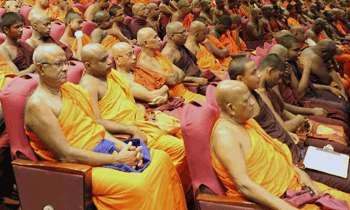
අරලියගහ මන්දිරය සිරිකොතේ ශාඛාවක් බවට පත් කරගෙන එජාපය ප්‍රජාතන්ත්‍රවාදය ගැන කතා කරමින් රටට විහිළු සපයනවා යැයි පැවිදි හඬ සංවිධානයේ සභාපති මුරුත්තෙට්ටුවේ ආනන්ද හිමියෝ පැවැසූහ.

උන්වහන්සේ එසේ පැවැසුවේ ඊයේ (28දා) නාරාහේන්පිටදී පැවිදි හඬ සංවිධානය පැවැත්වූ මාධ්‍ය හමුවකට සහභාගි වෙමින්ය. එහිදී මුරුත්තෙට්ටුවේ ආනන්ද හිමියෝ වැඩිදුරටත් මෙසේද පැවැසූහ. මේ රටේ ඉතිහාසයේ කුමන ව්‍යසනයකදී වුවත් මහා සංඝරත්නය මුල් වෙලා රට බේරා ගෙන තිබෙනවා. අද ඇති වී තිබෙන ව්‍යාකූලත්වයෙන් රට බේරා ගන්නට සිටින පිරිසක් මහා සංඝරත්නයයි.

අද රටේ පාලකයෙක් නැහැ. විධායකය කියන දේ ව්‍යවස්ථාදායකය කරන්නේ නැහැ. ව්‍යවස්ථාදායකය කියන දේ විධායකය නොකරන අරාජිකත්වයක් උදාවෙලා. මෙහෙම ගියොත් විදේශ රටක් අපේ රට ගිල ගනීවි.!
මීට වසර තුනහමාරකට පෙර වෙනසක් අපේක්ෂාවෙන් ජනතාව ඡන්දය දුන්නා. ඒ වෙනස ව්‍යසනයක් බවට පත් වෙලා. මේ විපතින් රට බේරා ගන්න නම් වහාම මහ මැතිවරණයකට යා යුතුයි.

එජාපය ජනාධිපතිවරණයක් ඉල්ලනවා. ඒත් ව්‍යවස්ථානුකූලව ඊට හැකියාවක් නැහැ. අර්බුදය තියෙන තැනට නෙවෙයි ඔවුන් විසඳුම් ඉදිරිපත් කරන්නෙ.

දෙවරක් පැරදිච්ච මහින්ද රාජපක්ෂට අගමැති දීමෙන් රට විනාශ වන බව රනිල් වික්‍රමසිංහ කියනවා. ඒත් ඔහු 29 වරක් පැරදිලයි එහෙම කියන්නෙ.

විදේශිකයන් ගෙන්වා ඔවුන්ගේ බලපෑම් මත මේ රට පාලනය කිරීමට එජාපය කටයුතු කරනවා. ඒත් ඒකට මහා සංඝරත්නය ඉඩ දෙන්නේ නැති බව අවධාරණය කරනවා.

පාර්ලිමේන්තුව විසුරුවා හැරීම ගැන ශේ්‍රෂ්ඨාධිකරණ තීන්දුව කුමක් වේවිද කියලා අපි දන්නේ නැහැ. ඒත් ජනතා පරමාධිපත්‍යය විමසන්නේ නැතිව මේ දේශපාලන අරාජිකත්වයෙන් රට ගොඩනඟන්න බැහැ.
එජාප ආණ්ඩුව දෙසැම්බර් 7 වැනිදා රට බෙදන ව්‍යවස්ථාව ගේන්නට සූදානමින් සිටියා. ඒත් දළදා හිමිගේ ආශීර්වාදය තිබෙන මේ රටේ ඒක කරන්න බැරි වී තිබෙනවා.

කොළඹ ආනන්ද විද්‍යාලයේ ආචාර්ය වේපතඉර හේමාලෝක හිමි

අද පාර්ලිමේන්තුව පාලනය කරගන්න කථානායකතුමාට බැහැ. පාර්ලිමේන්තුවට පිහි අරගෙන එනවා. ළමයිනුත් ඒවා ආදර්ශයට ගෙන ඇන කොටා ගන්නවා.

රනිල් වික්‍රමසිංහ කතා කළේ ලිච්ඡවී පාලනයක් ගැන. ඒත් වසර තුනහමාරක් පාලනය කළේ සාකච්ඡා සම්මුතිවලින් තොරව බව ජනාධිපතිතුමා ප්‍රකාශ කළා. රනිල් වික්‍රමසිංහ ලිච්ඡවීන්ටත් අගෞරව කරනවා.
පැවිදි හඬ සංවිධානයේ ලේකම් ගොම්බද්දල දමිත හිමි
එජාප, ජවිපෙ, සහ දෙමළ සන්ධාන මන්ත්‍රිවරු ප්‍රජාතන්ත්‍රවාදය ආරක්ෂා කර ගත යුතු බව කියනවා. ඒත් ප්‍රජාතන්ත්‍රවාදය ඉස්මතු විය යුත්තේ පාර්ලිමේන්තුවේ 225 දෙනාගෙන් නෙවෙයි. ලක්ෂ 225ක් වන ජනතාවගෙනුයි එම ප්‍රජාතන්ත්‍රවාදය ගැන විමසිය යුතු වෙන්නේ.

ඉත්තෑකන්දේ සද්ධාතිස්ස හිමි
තමන් මරා දැමීම සඳහා කුමන්ත්‍රණයක් ජනාධිපතිවරයා හෙළි කර තිබෙනවා. රනිල් වික්‍රමසිංහ, සරත් ෆොන්සේකා, නියෝජ්‍ය පොලිස්පති නාලක සිල්වා ඇතුළු පිරිසකගේ නම් හෙළි වෙලා. ජනාධිපති මැරුණොත් ඊළඟට එම ධුරය හමු වෙන්නෙ අගමැතිට.

දෙමළ සන්ධානය හා ජවිපෙ අමුතු භූමිකාවක නිරත වෙනවා. රනිල් වික්‍රමසිංහ අල්ලා ගෙන ජාතිවාදී අරමුණු ඉටු නොවීමෙන් ඇති වී තිබෙන දුක නිසා දෙමළ සන්ධානය දුක් ගී කියනවා. සුමන්තිරන් කියන දේ විතරයි කිරිඇල්ල අහන්නෙ. වාඩි වෙයන් කියලා සුමන්තිරන් කියන විට කිරිඇල්ල වාඩි වෙනවා.

කොළඹ නාගරික මන්ත්‍රි ගලගම ධම්මරංසි හිමි
පාර්ලිමේන්තුව තුළ අද සිටින්නේ දේශද්‍රෝහී, ජාතිද්‍රෝහී පිරිසක්. ඒක සතුන් වත්තක් බවට පත් වෙලා. මන්ත්‍රිවරුන්ගේ මිල ගණන් කෝටි 50ට විකිණෙනවා. රටට, ජාතියට වැඩක් නැති එවැනි මුදලකට යටවෙන පිරිසකගෙන් රටට වැඩක් නැහැ.


Independent Judiciary made it possible to make Parliament a Theatre.

November 30th, 2018

By Charles S.Perera

The most ridiculous theatrical shows continue to be enacted within the once august  meeting place of the people’s representatives the Parliament. Can one call a Parliament is in session when there is only the opposition seated in their seats  with a theatrically attired speaker in Chair?

The Comedy Francaise has a great  classical, cultural value.

But the theatrical sessions of the Parliament of Sri Lanka being enacted these days with Karunasena Jayasuriya in Chair in his British theatrical costume, are neither classical, nor cultural,  but a pure display of hatred , vengeance, with sometime even criminal undertones,  calling the people to surround the house of Ministers and rebel against the Constitutionally formed government, which they say is non existent.

There is no functioning Parliament  in Sri Lanka today.  All those speeches  being made on the opposition side and their passing of No Confidence Motions, and legislations  in the absence of the Prime Minister and the Ministers and the representatives of the Government make the whole show a  mere mockery of  Parliamentary Sessions. Those speeches  have no right to be printed in Parliamentary Hansards and the regislations have no legal value.

It is the Judiciary that bungled in haste allowing the Parliament to continue its session until their verdict on the illegal opposition, as the Attorney General had informed the Judges,  to the Presidential decision to appoint a new Prime Minister and a new Government, and issuing  a gazette notification to dissolve the parliament to hold general  elections.

The law students are perhaps aware of mock trials in preparing them  for exams, where the students try to make the mock trials as real as far as possible. It is exactly that which is happening in the Sri Lanka Parliament now  which has been boycotted by the government as the opposition has made the Parliament   a show place  for rhetoric. They have all  become great politicians speaking lightly and without respect for persons and office.

In the meantime, the Government of Mr. Mahinda Rajapakse appointed by the President as the Prime Minister,  and his Cabinet of Ministers are working hard to re establish the disorder the country had been put into by three years of non-rule” by the Yahapalanaya Government.  But the mock Parliament in session in the mean time try to put barriers before Prime Minister  Mahinda Rajapakse and his Government doing  their  best to give what ever relief they can to the people who had been put into financial difficulties, and help them continue their work for their lively hood, while  helping the farmers to plough their fields, despite the present difficulties being created by  the UNP and its allied partners.

The fear that both the UNP and its allied partners and the JVP dreaming to establish a  Marxist Government have  is that,  within a short time  the Prime Minister Mahinda Rajapakse and his Cabinet of Miniters may carry out an efficient refurbishment and bring back a little relief to the people which would put him in an advantageous position to face the coming General election.

Hence they are doing their damnedest possible against  the Prime Minister Mahinda Rajapakse and his Cabinet of Ministers from carrying out their work to put to right what had been done wrong by the Yahapalanaya government. The only way they can disable the Mahinda Rajapakse Government from working for the welfare of the people is by passing various legislations accepted as passed by the  Speaker of the House who it seems to have  momentarily gone insane.

Most hard hitting rhetoric comes from the Marxists of the JVP Anura Kumara Dissanayake, Bimal Ratnayake etc,  and  from Champika Ranawake who is hoping that by some chance the  post of the Opposition candidate for the next Presidential election may fall on his lap.

The speeches of the Marxist JVP speakers  which lack  moral, religious or disciplined eloquence, may be a bad influence on the minds of the Sri Lanka youth who are already suffering from an unknown malaise which was highlighted recently from a group of youth videoing a young woman being strangled to death by  another without coming to the help of the victim.

However, the most virulent un Buddhist speeches attacking Prime Minister Mahinda Rajapakse and his cabinet  by a man in yellow robes Dambara Amila have been exposed as being made for a fee of Rupees  95000 per month paid by Littro gaz.

There is also the danger of the mock parliamentary sessions open to the view of the public, may contribute to endanger the morality of the  Sri Lankan Youth, as the speakers go unchallenged  and uncorrected with their indiscipline immoral speeches of hatred and vengeance against  their enemy”  the Prime Minister and his Cabinet who are carrying  out their duties legitimately entrusted to them for the welfare of the country and the people.

People should take serious note of these self appointed saviours of democracy, and good governance from slowing down the Government of Prime Minister Mahinda Rajapakse’s process of bringing back to normal the three years of bad Yahapalanaya governance, which had denied to the people  any relief from rampant cost of living through anti people taxes imposed by the Yahapalanaya Government.

The Yahapalanaya Government  which was being directed by the West holding before it the GPS  and other minor relief  to make Sri Lanka dependent on the West and agree to pass a new Constitution with a federal twist to give an Eelam State to the Tamils and make Sri Lanka a non religious state by removing any special consideration  for Buddhism as it had been done in previous Constitutions.

JVP is already asking that they be given the right to rule the country and  with that idea behind, it is carrying on a bitter campaign to make the Prime Minister  Mahinda Rajapakse and his Ministers unpopular amoung the people, and obstruct the work the Prime Minister and his Cabinet of Minister are doing to ameliorate the living conditions of the people. The mock sessions of the Parliament have stopped the Prime Minister and his Cabinet of Ministers have resort to funds for proceeding with their work,  by passing mock legislation.

As the Parliament is  presently  not functioning in its legal form, there is a question whether the mock legislation passed at the mock sessions of the Parliament have any legal value. 

One does not know what could be expected from the independent judiciary in this regard.

Would their  decisions make it still more difficult for the people to expect the Government led by the Prime Minister Mahinda Rajapakse carry on its work for the immediate betterment of the conditions of the people, or whether they would be again thrown back to the Yahapalanaya wolves now reduced to the UNP , TNA, and JVP ?

ELECT A NEW PARLIAMENT WITHOUT FURTHER ADO!

November 30th, 2018

By Rohana R. Wasala

In a democracy, constitutions can be drafted, revised or replaced by the people as they wish, but when such a sovereign nation is disintegrated through a constitution (or by some other means), it can hardly be reintegrated into unity. Sri Lanka is today being threatened by one of the worst existential crises it has ever encountered since independence in 1948. According to one predominant point of view, there appears to be a constitutional conspiracy backed by geopolitics-driven foreign forces to undermine its unitary status. Many legal and constitutional experts, some of them politicians, convincingly argue that the 20th amendment (20A) is designed to clear the way for the implementation of a fully fledged federal constitution unsuitable for Sri Lanka camouflaged under a self-contradictory akeeya/orumittha label, against the will of the overwhelming majority of the politically savvy Sri Lankan citizens. The 19th amendment (19A) seems to be a live constitutional landmine.

Mr Sarath Kalugamage, convener of a civil interest group named ‘Ratata Hetak’, alleges that the 19th amendment has effectively robbed the people of their sovereignty through the inclusion of an article in terms of which the president cannot dissolve parliament before the lapse of four and a half years, because such a stipulation makes it impossible for a malfunctioning, corrupt legislature like the one under the Yahapalanaya to be brought to an end, enabling the people to elect a new parliament as per their inalienable right. It has been queried by responsible citizens how a piece of legislation (i.e., that which obstructs the executive president’s power to dissolve parliament during the first four and a half years of its term if the need arises) which should have been passed by a 2/3rds majority in parliament and in addition  should have been approved by the people at a general referendum, got into the statute book. Already there is a call for the annulment of 19A by a future government. It is now patently clear that, constitutional or unconstitutional, only the election of a new parliament will save the Sri Lankan nation and its democracy from anarchy.

Mr Maithripala Sirisena is still the executive president  of the Democratic Socialist Republic of Sri Lanka, where constitutionally, sovereignty resides in the people. He was elected in January 2015 by the people of the country (though this was not under ideal conditions owing to brazen foreign involvement) to exercise that sovereignty on their behalf. The president can’t relinquish his official prerogatives, much less his official responsibilities, under any circumstances. He dissolved parliament and appointed a new prime minister on October 26, 2018 in accordance with powers vested in him by the Constitution, though now the sudden dismissal of the dysfunctional yahapalana government is being challenged by the sacked prime minister and his allies. The news about Mr Mahinda Rajapaksa having formed a government at the invitation of the president generated a wave of public euphoria across the country: firecrackers were set off in celebration not only in the south but also in the north.

Having said that, personally, I remain somewhat skeptical (though less than before) about the sincerity of Mr Sirisena’s latest volte-face in his relations with his erstwhile leader and close associate Mr Rajapaksa. It is my sincere hope, nevertheless, that the turn of events will finally be in the best interest of the country. No Sri Lankan would have been more delighted than me by a proper rapprochement between the two of them. I was among the earliest who urged such a Mahinda Maithri burying of the hatchet for the greater good of the country (Ref. Urgent: A Maithri Mahinda reconciliation”/The Island/June 17, 2015); but I never hoped for this kind of ‘reconciliation’ that seems to have been forced by Mr Sirisena’s own currently vulnerable circumstances! To recall the past, what Mr Sirisena did by his controversial election eve statement in August 2015 that he won’t make Mr Rajapaksa prime minister even if he won a majority of seats (which was a certainty according to opinion polls at the time) put paid to the kind of  hope for genuine reconciliation that I, with so many other ordinary citizens, entertained : because his words so severely demoralized the pro-Mahinda voters that a substantial number of them didn’t cast their vote in their frustration. A third time Mr Sirisena let Mr Rajapaksa down was when, more recently, he prevented Mr Wickremasinghe from being defeated by a no confidence motion that he (Mr Sirisena) himself was instrumental in bringing against him. The suspicion rankles in my mind (as it could in others’) whether Mr Sirisena is again leading Mr Rajapaksa (with his three times proven naivety) up the garden path, for his usual way is not to spill the beans before time. However, the cogency of the reasons he adduces for his action (e.g., suspected UNP complicity in an alleged plot to assassinate him, crucial policy differences between Mr Wickremasinghe’s UNP and Mr Sirisena’s SLFP rump, personality clashes, obvious popular disapproval of their uneasy alliance, the role that Mr Wickremasinghe has played in the Central Bank robbery, etc) seems to be a guarantee against backtracking at this stage.

On the other hand, however, the current circumstances suggest that this time Mr Rajapaksa cannot be thought to be acting out of  his inherent naivety with regard to character-reading his associates (an accompaniment of his generous nature). Four years of Yahapalanaya has wrecked the country’s economy and has completely stalled the robust countrywide development programmes that had started during the previous Rajapaksa government that was toppled at the beginning of 2015. Starting during the period of Yahapalanaya (2015-18) the Sri Lankan rupee has fallen from 131 to the US dollar at the end of 2014 to nearly 180 at present; the poorest of the poor were persecuted by increased taxation; many valuable national assets were sold or earmarked for sale; local industrialists were heavily taxed while foreign investors were given tax concessions; the agrarian sector was deliberately discouraged or neglected; the country’s independence was pointlessly surrendered to paid bureaucrats serving the interests of the so-called international community which are clearly inimical to the wellbeing of our Motherland. A recrudescence of common crimes has been in evidence, so has mega scale corruption in the highest places in government. Signs of a resurgence of separatism began emerging in the north and east.

In this background, the camouflaged 20A drafted by antinational separatist sympathizers is proving to be a noose flung around the neck of unitary Sri Lanka. Its intended passage (presumably the same way that unconstitutional articles were smuggled into19A at the committee stage) would have been tantamount to the release of the trapdoor under the prisoner’s feet. This danger – the strongest reason behind the president’s decision and Mr Rajapaksa’s acquiescence) – will not disappear until fresh parliamentary elections are held and a new government formed that answers to the aspirations of all Sri Lankans, not those of foreign powers who are only following their own selfish national interests.

So, the dissolution of parliament is the need of the hour. But this is not an easy prospect. For one thing, a significant number of the incumbent members of parliament (I am calling them ‘incumbent’ because the presidential dissolution of parliament has been judicially suspended until December 5) are not likely to favour this idea for two reasons, not necessarily equally applicable to all of them. There are two groups of these individuals: those who want the parliament elected in August 2015 to continue until the end of its original term for the express purpose of taking an irreversible step towards the separatist goal that terrorism could not reach militarily, by further tinkering with the 1978 Constitution in the form of 20A; and they have NGO, foreign and some local support; the other group comprises those who are worried about their attractive pension rights which they must forfeit when parliament is dissolved before five years are completed. Besides, as the president who headed the Yahapalanaya himself admitted recently, under it some MPs willingly became  purchasable at astronomically high prices. What better argument than this for supporting the idea of dissolving parliament at this juncture? What democracy is there in allowing a handful of rogues like that to determine the future of today’s young and the unborn generations of our beloved Motherland?

The decisive presidential move must have been made by Mr Sirisena after consultation with his legal aides. But it has not been smooth sailing due to it being challenged by the ousted party. Ugly scenes in the house involving enraged legislators engaged in unseemly behavior – triggered obviously by  an inexplicably authoritarian Speaker assuming ultra vires executive powers instead of playing his legitimate role as the principal functionary and the highest authority in parliament, whose bounden duty is to remain politically neutral and independent of party loyalties at all times. Though the UNP, still dominated by the  former premier Mr Ranil Wickremasinghe, and its allied parties the TNA represented by Mr M.A. Sumanthiran and the JVP led by Mr Anura Kumara Dissanayake, pretend that the uproar in the house in the past few days was caused by the members of the government (earlier the Joint Opposition) conducting themselves in an unfairly disruptive manner, the truth is that Speaker Mr Karu Jayasuriya is to blame for it all.  The government MPs are only asking him to follow the proper procedure to allow them to show whether they have a majority or not, or to bring a no confidence motion against the new PM based on established procedures and traditions without violating standing orders unnecessarily. Apart from this, why does he reportedly consult foreign ambassadors about what to do and invite them to watch from the gallery the riotous proceedings on the floor which result from his own refusal to carry out his duties in an impartial manner?

The unruly conduct of the MPs earned much bad press for Sri Lanka, which was exactly what the foreign nosey-parkers were eager to bruit around the world, but which the ordinary Sri Lankan masses watched in genuine consternation and with serious concern. However, they well understood that the Joint Opposition members of parliament behaved in an agitated manner because all their peaceful overtures and abject pleadings in Sinhala (foreign ambassadors cannot be expected to understand this) failed to persuade the Speaker to table the UNP-led Opposition’s No Confidence Motion (NCM) against the new prime minister (Mr Mahinda Rajapaksa) adhering to established parliamentary norms, and pass it if possible. People also watched on TV screens how the Opposition MPs conducted themselves in even more despicable ways without any reason to at least partially justify such behaviour, two of them seen with objects that looked like knives; in fact a government MP was rushed to hospital with a bleeding hand after a scuffle. Before those riotous parliamentary meetings, which were entirely due to his vehement opposition to the executive president’s action, Speaker Mr Karu Jayasuriya had officially recognized the appointment of Mr Rajapkasa as prime minister and even made seating arrangements in the parliament chamber. Biased media, particularly the Western press, were silent about the real culprits who caused the recent incidents of violence in the house and allowed them to escalate: it was the handiwork of the Speaker and the Opposition members who stood by him as he let himself flout the proper parliamentary procedure, behaving like a pull-string puppet controlled by an invisible puppeteer. Can Sri Lankans look on passively when democracy is being thus outsourced?

The present clash is a headlong confrontation, which is completely uncalled for, between the legislative (parliament) and the executive (president) branches. According to the current republican constitution (operative since 1978 subject to various subsequent amendments), any dispute between these two branches of government should be referred to the judicial branch (represented by the supreme court).  Now, the supporters of the UNP and some minority parties who enjoy more influence than their electoral numbers justify have moved court calling into question the president’s dissolution of parliament and replacement of the Yahapalanaya administration on October 26, 2018. Had they done this immediately after the president’s actions, the unpleasant incidents that occurred recently would have been prevented; but better late than never. The judges deliberated it for three days; it was indicated that the petitioners and respondents will  be heard on December 4,5 and 6. It is also reported that an opposition member has filed a petition with the court of appeal pleading that  a writ of quo warranto be issued on Mr Mahinda Rajapaksa regarding his appointment as prime minister. On November 26, the Supreme Court appointed a seven member bench to hear the fundamental rights petitions filed against the dissolution of parliament. So, let justice take its course. Everything depends on the verdict that will be delivered on December 7 or probably a day or two later.

The people of the country have endured untold hardships over the past (nearly) four years of Yahapalanaya. This was the opposite of what they brought the UNP-led coalition to power for; they had been persuaded to believe that they were going to get a better country than under the war-winning SLFP-led UPFA. Postwar normalization of society has been deliberately thwarted; so has economic development. If the innocent Sri Lankans  suffered for so long without breaking the peace, without causing unnecessary mayhem, why can’t the  MPs supportive of the previous Yahapalanaya government cooperate with the president at least temporarily, and hold on with some patience for just a few days for the sake of the country? They may argue that the people are with them. But the majority are not with them. What has the ousted government done to be so cocky about public support? That is what the vast disgruntled majority of peaceful Sri Lankans are asking.  To their surprise, Mr Sirisena revealed, after appointing Mr Mahinda Rajapaksa as prime minister, that he was his third choice for the post following irreconcilable differences of opinion between him and ousted prime minister Mr Ranil Wickremasinghe. Mr Sirisena wanted to appoint another UNP member (than RW), namely Mr Karu Jayasuriya, Mr Sajith Premadasa, (or even Mr Ranjith Madduma Bandara as rumoured) as prime minister. All of them declined for reasons that any person with average intelligence can guess. Only Mr Mahinda Rajapaksa had the selfness to accept the invidious challenge for the sake of the country. There is no reason to believe that Mr Rajapaksa wanted to be PM by devious means. He always wants to be elected by the people, but not to be appointed by an appointing authority, to office.

Mr Sirisena’s assertion of the sovereignty of the people over the current parliament is legitimate, in my layman’s view, because the present parliament does not adequately represent the public will. The majority of ordinary citizens by now have no confidence in the parliament that was elected in 2015. At the February 2018 local government election, the Joint Opposition (with some 54 or 55 MPS as against the 22 or so of the official opposition) secured over 70% of the seats, leaving the rest to be divided between the estranged Yahapalanaya partners including the UNP and the SLFP, which contested against each other.  What better rational justification could be found for the president to believe that the present parliament does not at all represent the current public opinion about the ousted Yahapalanaya? Besides, recently, the Yahapalanaya coalition government came to an official end with the withdrawal of the UPFA. The people know why there is so much opposition against new parliamentary elections being proposed. Whenever elections are held most of them will never return to parliament. The JVP will vanish from the political scene for the treacherous role they are playing at the moment. The people were fed up with the previous foreign backed coalition regime. The earlier they are given a chance to vote in a new parliament, the better it will be for the survival of the Sri Lankan nation and its democracy.


දේශීය ආයෝජන ප්‍රවර්ධනය කිරීමේ කටයුත්ත ගැටලුවකින් තොරව නැවත ක්‍රියාත්මක කරනවා …..

November 30th, 2018

 මාධ්‍ය නිවේදනය රොහාන් වැලිවිට අග්‍රාමාත්‍ය මාධ්‍ය ලේකම්

2018.11.30

 ගරු අග්‍රාමාත්‍ය මහින්ද රාජපක්‍ෂ මැතිතුමා අද පෙරවරුවේ (2018.11.30)  අග්‍රාමාත්‍ය කාර්යාලයේ දී දේශීය ආයෝජකයින් සමඟ පැවැති සාකච්ඡාවේ දී මේ බව අවධාරණය කළේය. එතුමා මේ බව අවධාරණය කළේ පළතුරු බීම හා බිස්කට් නිෂ්පාදන ආයතන හිමියන් හමුවේ දීය.

මෙහිදී වෙළඳ පොළේ පාරිභෝගිකයින්ගේ පරිභෝජනයට ගන්නා කාබනික බීම සහ පළතුරු බීම නිෂ්පාදනයේ දී භාවිතා කරන සීනි සඳහා බද්ද අඩු කරන ලෙස ගරු අග්‍රාමාත්‍යතුමා මුදල් අමාත්‍යාංශ ලේකම්වරයාට දැනුම් දෙන ලදී. ඒ අනුව කාබනික බීම වර්ග සඳහා සීනි ග්රූම් 06 දක්වා ද, පළතුරු බීම වර්ග සඳහා සීනි ග්රූම් 09 දක්වා ද බද්දෙන් නිදහස් කිරීමට පියවර ගන්නා ලෙස උපදෙස් දෙන ලදී.  තවද පළතුරු බීම වර්ග සඳහා සීනි ග්රූම් 1 කට අය කළ ශත 50 බද්ද ශත 30 දක්වා අඩු කිරීමට ද උපදෙස් ලබාදුනි. එසේ හෙයින් වෙළඳ පොළේ පැණි බීම දැනට අලෙවි වන මිලට වඩා 30%කින් මිල අඩු කිරීමට හැකි වන බව නිෂ්පාදන ආයතන ප්‍රධානීන් මෙහිදී ප්‍රකාශ කළේය.

පසුගිය රජය බිස්කට් සඳහා සීනි බද්දක් අය කිරීමට සූදානමක් තිබූ බව එම සමාගම් වල නියෝජිතයින් මෙහිදී හෙළි කරන ලදී.  එහෙත් වත්මන් රජය එවැනි සීනි බද්දක් අය කිරීමට කිසිඳු සූදානමක් නොමැති බව ගරු අග්‍රාමාත්‍යතුමා මෙහිදී අවධාරණය කළේය.

ජාතික ආර්ථික සභාවේ දී ද මෙම කරුණු පිළිබඳව සාකච්ඡා කෙරුණු අතර, එකී සාකච්ඡා වල ප්‍රතිඵලයක් ලෙස ජාතික ආර්ථික සභාවේ මඟපෙන්වීම හා ගරු අග්‍රාමාත්‍යතුමා මුදල් අමාත්‍යවරයා වශයෙන් ලබාදෙන ලද උපදෙස් අනුව මුදල් අමාත්‍යාංශය මෙම සහනය ලබාදීමට තීරණය කෙරිණි.  

ගරු අග්‍රාමාත්‍යතුමා ගත් මෙම තීරණය අනුව පැණි බීම නිෂ්පාදනයට හා බිස්කට් නිෂ්පාදනයට අවශ්‍ය අමුද්‍රව්‍ය නිෂ්පාදනය කරන හා සේවා සපයන කුඩා ව්‍යාපාරිකයන්ට මෙයින් සහන සැලසෙන බව ජාත්‍යන්තර වෙළඳ කටයුතු හා ආයෝජන ප්‍රවර්ධන අමාත්‍ය බන්දුල ගුණවර්ධන මහතා මෙහිදී වැඩිදුරටත් පෙන්වා දෙන ලදී.

මේ අවස්ථාවට ජාතික ආර්ථික සභාවේ මහලේකම් ආචාර්ය ලලිත් පී. සමරකෝන් මහතා සහ මුදල් අමාත්‍යාංශයේ ලේකම් ආර්. ආටිගල මහතා ඇතුළුව කර්මාන්ත අමාත්‍යාංශයේ නිලධාරීන් සහ නිෂ්පාදන ආයතන ප්‍රධානීන් එක්ව සිටියහ.

රොහාන් වැලිවිට

අග්‍රාමාත්‍ය මාධ්‍ය ලේකම්

GIGO: garbage in à garbage out à = 19th Amendment

November 30th, 2018

C. Wijeyawickrema, LL.B., Ph. D.

A Judge is no saint. Underneath the black cloak is a human being of flesh and blood, a subjective mind filled with prejudices, perceptions, feelings and passion, struggling to project image of a fountain of logical objectivity.”

Law is an instrument of social control in the hands of a ruling class [suddage neethiya?] used to subjugate the toiling masses.”

One must go to courts with clean hands. A gazette notification has no magic power to purify and elevate an entity hitherto run like a public brothel into a shrine of world (representative) democracy, despite the gift of many virginity robes by the international king makers (IKMs).”

Chief Justice Sripavan’s baggage

Meetotamulla garbage disaster was a GIGO created by defective politicians. Likewise, current governing crisis of 19-A is a result of dishonest actions lead by three yahapalana lawyers, Abraham Sumanthiran, JayampathyW and RanilW, who thought law was an ass. The strange fact is that even the ex-chief justice K. Sripavan treated law as an ass by omission, perhaps due to selfish reasons. When the 19-A bill was before the SC in 2015, senior lawyer Gomin Dayasiri, asked Sripavan, if it was constitutional for the parliament to plan to ensure its tenure for four and half years (which in effect will be 5 years with time for an election). Sripavan evaded giving an answer, either way, and omitted to mention this questioning in the judgement.  A question like this is not like a challenge made by Nagananda Kodituwakku on MPs selling their vehicle permits.

By allowing the legislative branch to make its life secure for five years, the checks and balances scheme in the 1978 JRJ bahubootha thing was violated, which meant a need for a referendum. Reducing the president’s term from 6 to 5 years is different. Any modification towards enhancing people’s sovereignty such as a return to two-term limit are not against the spirit of the constitution. But removing a meaningful check on the legislative branch (by the executive president with power to dissolve it), if not after one year as in the past, but for example, at least after two years, when the president is convinced privately or publicly, that body is on a nationally suicidal path must have people’s consent.  By evading to tackle this issue then, the former chief justice Sripavan is directly responsible for the 33 (2)c versus 70 (1) crisis now before SC. He failed to fulfil his bahubootha constitutional duty.

Savitri vs. Gevindu

Two essays in the Island newspaper, (D. Laksiri Mendis (11/26/2018), and Nigel Hatch (11/25) tried to deal with this crisis from within the four corners of the law (legal perspective). On the other hand, the retired law prof. Savitri Goonesekere’s (The Island 11/25) essay on the topic began with an approach that law must be found (and interpreted) within case law and law books, ended as a legal to non-law (extra-legal data) friend of the court brief. NGO master Jehan Perera (Colombo Telegraph, Nov.26) was more direct in this regard complaining about a presidential arbitrariness. An evaluation if the president acted unfairly, requires judges to look at facts not in the statute applying an objective test. But a reasonable test can never be free from subjective elements creeping in. The use of extra-legal data in the interpretation of law started for the first time with the landmark American case of Brown Vs. Board of education in 1954. In that unanimous decision USSC overturned the separate-but-equal decision given in 1896. Utilizing sociological, non-law data, the court ruled that segregated schools are inherently unequal.

Adding non-law data to her supposedly ‘law only’ essay, prof. Savitri even talks about the convicted prisoner monk Gnanasara [BBS leader Ven Galabodaatte Gnanasara].” This means the November 23rd incident at the parliament where TNA’s Abraham Sumanthiran threatened UNP’s Kiriella for stupidly asking the speaker to have a second voting with each MP stay stand and vote so that the country could see the unfolding drama (and a humiliated Kiriella looking for his master RanilW’s moral support in vain), could become extra-legal evidence of a 19-A coup. Prof. Rajiva Wijesinha’s disclosure (LankaWeb, 27/11/18) about how he was shouted down in the parliament when he proposed a new section 23 A to the 19th Amendment (to change the electoral law promised as 20th Amendment) also must be relevant to show how dysfunctional was this supreme law-making body. At the 19-A chaotic debate environment in the parliament, Rajiva says, Dinesh Gunawardena was the only MP who tried to prevent the process soon degenerating into a farce.

Recently, in cases challenging American president Trump’s orders on Muslim immigrant ban, courts used his political speeches as facts relevant to the hearings. If so, why cannot SLCS consider public declarations by politicians as relevant evidence? For example, Sajith Premadasa said (Divaina, Nov. 29, 2018) president Sirisena asked him 10 times and Karu Jayasuriya 13 times (data still not out on how many times from Nalin Bandara) to accept the PM’s job, before it was finally offered to MahindaR. Is this revelation not relevant as evidence of good faith of a president to settle a possible constitutional crisis in a least disturbing manner? A court compelled to examine whether the president acted arbitrarily cannot ignore facts knocking at its front door.

Rules of Natural Justice

If details in Rajiva’s essay mentioned above is not an adequate reply to doubt Prof. Savitri’s attempt to use theory of constitutionalism and concept of representative democracy, one should watch the Nov. 19th Derana 360 interview with Gevindu Kumaratunga. Facts revealed by Gevindu compels one to take the 19-A GIGO episode back to at least the 2002 CFA between RanilW and Erick Solheim of Norway and to the2000-02 Neelan-GL package deals of president Kumaratunga. From Gevindu’s perspective, 19-A could be viewed as a lousy attempt to adjust the bahubootha constitution, a deliberate planting of a germ to create a governmental crisis sooner or later, or a sneaky unsuccessful strategy to ‘cheat’ on the 2015 Supreme Court ruling. Now the 2018 Supreme Court is forced to step in and try to unravel the mess. Would it be able to demonstrate that law is not an ass?  For example, the cheaters like JayampathyW added 33 (2)c as a standing alone clause, so that not only the 2015 SC requirement that the president’s power to dissolve parliament cannot be modified without a referendum (as well as the 2002 Seven Bench decision on the basic structure of the constitutional scheme) has been complied with as a law in the book.  The dishonest trap comes however, by way of omitting to refer to 70 (1) (may power to dissolve) in 33 (2)c (shall power to dissolve) or vice versa.

Savitri’s theory and concept above, are only two pinnacles of a floating iceberg, laden heavily with political garbage hidden below. These ideas (machines) of Savitri cannot function smoothly if sand is thrown on to the grease in between the wheels of constitutional machine.  How can constitutionalism function when, key operators entrusted to run it lie to people repetitively? If the leader of the opposition votes with the PM to save PM’s job in the guise of saving representative democracy, how can constitutionalism survive in such a setup? The entire drama of drafting a new constitution has become an open highway robbery of people’s sovereignty. The entire Sinhala Buddhist side of the equation was denied a seat in any of the committees or secretly-met sub-committees! Can anyone in Sri Lanka talk about a representative democracy under the current electoral scheme which promotes party-leader dictatorship from Colombo, district lists filled with local crooks and uneducated fools? Do these fools know what is rule of law, what is national policy or why there is a library in the parliament?  Key yahapalana operators manipulate the system, proving the assertion that law is nothing, but an instrument used by a ruling few (Colombo black-whites?) to subjugate the toiling masses (milk to Colombo and roughage to villages; suddage neethiya). When MPs behave like monkeys with razor blades in hand, what law and what democracy is there for prof. Savitri to try to sanitize? On the subject extra-legal need for international goodwill, she can learn a lot by watching Chapa Bandara on Youtube.

Did the dissolution of parliament violate the fundamental rights of 122 MPs who voted against it? Does president’s action under 33 (2)c subject to judicial review? How does a president concerned about a threat to his own life as well as an imminent threat to the survival of the country as one piece of real estate in the world perform his constitutional duty in good faith? What is the constitutional remedy available to a president to escape from a yahapalana prison, if parliament has become a den of thieves or a herd of goats lead by a UNP-TNA leadership cabal, with a JVP bent on promoting political chaos?  Obviously, 19-A GIGO pushed the SC into a political jungle of law and facts, which Prof. Savitri could not hide in her legal essay. Laws of natural justice demand a court to study the entire episode with a holistic perspective. Other non-law facts (evidence) become relevant in understanding the circumstances why certain words are used, and why some clauses are planted, purposely or haphazardly. If some clauses are added to circumvent previous SC rulings, is also relevant. Even a matter like some significant clauses were added in the middle of the night when law makers” were all tired and sleepy cannot be ignored under a veil of courts cannot interfere with parliaments internal business. If new additions were made to a bill already sanitized by SC during its final committee stage, where people cannot get a 14-day time period to go to SC to challenge the constitutionality of such new additions, it was downright cheating of peoples’ sovereignty. If parliament crooks use the committee stage to make a one-page bill into a 30-page law, it is criminal.

Genesis of 19-A

The best option available for the SC now is to pave way for a general election so that the treatment of law as an ass by the 19-A authors is remedied using judicial discretion. Otherwise, the harm done to the country as whole is irreparable than the harm allegedly caused to 122 MPs. By this action the court can show to the country that law is not an ass, but lawyers. In Bush vs. Gore (Dec.12, 2000), USSC prevented a constitutional crisis in America by giving a ‘political decision’. One of the judges, Antonin Scalia, later admitted that the decision was flawed, but the nation was saved. The following is a political and historical account to demonstrate that taking the 19-A dispute out of the hands of rival lawyers could be reasonably justified based on non-law data. The 12 petitions are not based on a good faith belief in democracy (or like what had happened in England centuries ago in a fight between the king and the commoners), but an attempt to use courts to prevent the exposure of abuse of democracy (constitutionalism and representative democracy per prof. Savitri) by party leaders of UNP, TNA and JVP.  The historical account below will show the petitioners come to court with blood in their hands.

PM cannot be an office peon

RanilW was brought into politics in 1977 by JRJ because he was his nephew. He had no prior exposure to politics or social services. His name was adversely mentioned in the Batalanda Commission report (March 1998) and again in the commission report (November 2003) on the police raid of the army’s secret long-range reconnaissance patrol hideout in Millenium City, Athurugiriya on Jan 2, 2002. The latter was characterized as a betrayal of a nation fighting a brutal terrorist war. RPremadasa under JRJ used to say that his office peon had more power than him as PM. When RanilW became PM, he wanted to change this perception by unilateral action. Thus, he signed the infamous Cease Fire Agreement (Feb. 2002) without any prior discussion with President Kumaratunga. This was the first example of RanilW trying to become an executive PM, de facto, not de jure (sand on grease). Prior to his firing by president K, RanilW tried to get president’s powers transferred to PM by law. That 19-A was before a seven-judge bench of SC in 2002. The court decided that any fundamental change in the 1978 constitutional framework must be approved by a referendum.

Scottish war correspondent Paul Harris identified this CFA as the world’s greatest giveaway, and he was deported by the government for his impartial and objective reporting of Tamil terrorist operations (LankaWeb, Dec. 10,2013).

https://www.lankaweb.com/news/items/2013/12/10/crimes-and-sins-of-the-englishman-paul-harris/).

Apparently, the CFA was drafted jointly by Erick Solheim and Prabakaran in the Wanni and signed first by RanilW in Colombo. It allowed a de facto Tamil Eelam in North and East with free access to any place in the rest of the island to Eelam agents.

A devil dance for power between Chandrika akka and Ranil malli

Growing up together in Colombo, Ranil called Chandrika affectionately, older sister and Ranil was a younger brother to Chandrika. But, the most important historical incident after this was the firing of RanilW and dissolution of parliament by President Kumaratunga in November 2003. See the quotation below:

President KUMARATUNGA: I was forced into it by a total breakdown of cohabitation in government. The Prime Minister (Ranil Wickremesinghe) was determined to harass me and chase me out. He has only one obsession: he wants to be the President. And he does not seem to care what happens to the country in the process. We came to an impossible impasse. The only way to resolve it was to ask the people for a mandate. —TIME’s Alex Perry at President’s House in Colombo, March 29, 2004”

Source: HLD Mahindapala, LankaWeb, November 10, 2018

There was a time president K’s house dog was the only friend (security guard?) she had when the cabinet met regularly at her official residence. Whenever minister Ravi K had heated arguments with her (abusing/harassing her?), the dog got agitated and was ready to jump on Ravi in any second!

What more a court is needed today than this historical evidence to understand the agony that president Sirisena had to face in a yahapalana prison? Unlike president K above, president S gave clear and convincing reasons publicly as to why he had no option other than to fire RanilW, both for his own personal safety as well as the survival of the country intact.

Ranil’s ill-fated 19-A vs. derailed package deals of Chandrika

Ranil tried 19-A without a legal 19-A in signing the nefarious CFA and got himself fired while visiting America promoting CFA. Chandrika, on the other hand wanted to eliminate the JRJ bahubootha constitution by replacing it lock stock and barrel and more. With Neelan Thiruchelavam, G L Peiris and the hardcore Marxist Jayampathy W behind her plan was for a union of regions, an executive PM, a blueprint for a mono-ethnic N-E two province Tamil homeland, potential Malayanadu for up-country Indian Tamils plus a Muslim Oluvil province. After drafts in 1995, 1996, 1997 and much love and hate, because of Chandrika’s design to stay in power under her new constitution Ranil managed to get the final draft in 2000 burnt inside the parliament. These theatrics are important in understanding the so-called constitutionalism operating now in 2018, because international king makers (IKMs) brought (bought) Chandrika and Ranil as reincarnated new force to implement the 1995-2000 package deal with a vengeance.

Ranil’s election campaign by IKMs

The elimination of UNP leadership (RPremadasa, Ranjan Wijeratna, LAthulathmudali, GaminiDissa etc.) by Prabakaran paved way for Ranil to become the leader of the party and he craftly managed to stay on top despite many attempts to derail him. He has the most undemocratic party constitution guaranteeing his party chairmanship. In 2005 presidential election MahindaR defeated him with a razor thing margin. H.L. Seneviratna of the Work of Kings fame in USA, described that election as a fight between an economist (RW) versus a nationalist (MR). America and other white European countries supported RW, but the Sinhala Buddhist votes went to MR as a result of the awakening of them by the late Ven. Gangodawila Soma (Soma dowry).

Common candidate # 1- IKMs plan to trick Sinhala Buddhists

The loss of 2005 presidential bid made RW a delusional man angry with Sinhala Buddhists. This was why he did everything possible to sabotage the war effort by MR and GR. His anti-country behavior led a faction of UNP to leave him and join the MR government to help win the war. Due to his anti-war and pro-Eelam stand RW realized that he would not be able to win any presidential bid. Therefore, after May 2009 war victory western countries (America, UK and EU) drag him into a new approach. The new strategy was that Ranil would support a puppet candidate, hoping to operate behind the scene as PM. American ambassador Robert Blake tricked Sarath Fonseka, thinking that Sinhala Buddhists will vote for him as a war hero, but when SF was getting the support of Tamils in the North (how come Tamils voting for a man who killed their hero Prabakaran), the plan boomeranged. If SF won in 2010, the usual American CIA norm in such an event would be to bribe some generals in the army and make SF a puppet or a prisoner and deploy RanilW to run the show.

PM ‘Sir’

MR and GR did not succumb to intimidation by IKMs to smuggle Prabakaran out of Nandikadal trap in April 2009. Similarly, they failed to topple MR regime in 2010 election, mainly because their common candidate was a hero in war but a bull-in-a-China shop in politics. Therefore, they did serious strategic planning for a second attempt. This attempt is directly linked to the current 19-A debacle. Some unwise and unfair acts of MR paved way for them to catch the best fish available in the political market (jungle). Of all the words and acts of MaithripalaS, the best Sinhala Buddhist quality that elicited the humble nature of this farmer’s son was his public gesture of asking RanilW if he could continue to address RW as Sir.” People will never know if in return Ranil addressed President S as Sir,” the Sinhala version of an official H.E. being only an automated politically correct usage.

Common candidate # 2

The second attempt with a common candidate was supposed to be a better deal for RanilW than a direct election defeat facing MR. He got amply rewarded from this low risk adventure, reminiscent of the saying that one breaks a honey comb expecting at least to lick the hand.  With the full backing of IKMs (500 million dollars from USA alone) a multi-pronged strategy was floated. Again, key issue was how to divide the Sinhala Buddhist vote. The plan included:

  1. April 2013à Singapore agreement (Tamil diaspora, Mangala Samaraweera, TNA’s Sumanthiran, Jayampathy W, Colombo Law Dean+ IKM agents), 13-A plus path
  2. Monk Maduluwave Sobhitha pathà NGOs for a just society
  3. JHU Patali Ranawaka, monk Athureliye Ratana pathà
  4. Chandrika-MaithripalaS pathà SLFP faction

Front # 1

The hidden other side of prof. Savitri’s concern for meeting international obligation comes under 1 above. A conspiracy exceeding a mere 19-A was the goal here. If white IKMs entertained a long-term geopolitical aim of having a foothold in the island with Trincomalee harbor in the bag, Singapore secret agreement decided to take the 13-A plus path to achieve it. In addition to getting real estate and ports the way Sudan was broken into two to get access to new state South Sudan’s oil and gas fields, a republic of regions in Sri Lanka via 13-A plus has another advantage of disintegrating the 2600-year old Sinhala Buddhist civilization in the island. Mrs. Rosy Senanayaka and Mrs. Chandrika want the Sinhala Buddhist foundation demolished. Ironically, after 1551, the Catholic Cardinal in 2018 rejected this opinion as lunatic. Still, some Tamil Catholic priests and Christian Fundamentalists such as UNP MP Eran Wickramaratna may be behind Rosy and co. who hates Buddha statutes.  Under the Singapore line, Geneva HRC was used to pass a 20 item Resolution # 30/1, sponsored jointly by USA and Mangala Samaraweera. Another ardent Marxist Lal Wijenayaka had the job of sanitizing Geneva requirements, and 18 out of his 19-member caravan were known pro 13-A plus agents. 19-A was within the requirements of the Geneva conspiracy. JVP’s 20-A and the federal constitution plan to be submitted to parliament in November 2018. President S’s decision to sack PM and parliament derailed the ultimate aim of the Singapore conspiracy to balkanize Sri Lanka despite the enactment of several other laws relating to war crimes.”

Fronts # 2 & 3

American ambassador Michell Sisson’s visit to Nagaviharaya, Kotte was the best evidence of IKM’s innocent-looking intervention in regime change in Sri Lanka. She did not go Malvatta or Asgiriya, because most probably CIA reporting identified the former firebrand monk, the most vulnerable target to be tapped. Ven. Maduluvawe Sobhita did not and could not fathom the gravity of his actions. Abolishing the Executive presidency was used as a bait to get his support for a regime change. Behind regime change was the NGO-backed conspiracy to balkanize Sri Lanka. The monk was so blind-folded that he did not know the yahapalana crooks signed two conflicting agreements with two different monks. The Maduluwave faction signed the promise to abolish EP position. The Rathana faction signed a promise to reduce powers of EP which could be done without a referendum. There is no doubt the NGOs with Ven. M knew this cheating. But Ven. M came to know about it only in April or so after the Jan. 8 election, when Gevindu Kumaratunga pointed it out to him at a Derana 360 debate.  JHU jumping into the yahapalana wagon was a result of MahindaR refusing to listen to JHU concerns. MR became an interfaith, multi-ethnic promoter forgetting the Ven. Soma dowry that gave him a razon thin victory over Ranil-based IKM power in 2005.

Front # 4

Sri Lankan political leaders were never that unselfish so as to treat the country first, and family second. This is why front # 4 became so successful. From DSS’ decision to make Dudley PM, PMs and Ps in Sri Lanka has had a bad reputation in this regard. Even JRJ, with a son not suitable to politics, planted his nephew RanilW, instead. MaithripalaS helped MR when he was a victim of Mrs. Chandrika who wanted Anura to replace her, but MR treated MS so unfairly that Mrs. Chandrika found MS has the ideal new Sarath Fonseka to topple MR. Sinhala Buddhist votes could be divided using MS. This was what really happened. 200,000 of Sinhala Buddhist votes went to MS at the 2015 election.

A human dilemma

MS was so grateful to Ranil and UNP for making him the P. It was true that Ranil would not have become a PM if not for MS. But, for Ranil and for IKMs it was a risky geopolitical investment opening the doors and windows to balkanize the country. MS did not understand that he had become a cat’s paw in an IKMs long-range plan. Shaking hand with the queen without her gloves, PM David Cameron opening his (MS’) car door, such things carried MS to a romantic world of politics never experienced by a farmer’s son.

He found he was into a marriage not because of his beauty or character, but because of the sheer geopolitical dowry he brought to RanilW. Ranil and Co., a cabal of Royal men, started the game. They robbed the Central Bank twice (only one was investigated so far) and then followed a very undemocratic way unmaking the country. Parliament became a total joke.  As we hear now from often vindictive public utterances by UNP MPs, MS had been a helpless bystander in this suicidal game. When he realized the marriage was sham and even his own life was in danger, he had to take a belated decision to fire his butterfly husband.

Human courage

Within a human live a potential saint as well as a devil. When one catalogues the harm done to the country by the RanilW cabal, MS has done a heroic act of saving Sri Lanka. This act on Oct 26, 2018 is as significant as the ending of the war on May 19, 2009, because everything done to save this island intact by the sacrifices made by Sinhala village poverty-stricken boys and girls (there were some Tamil and Muslim heroes too) began to slip away one by one by a systematic operation of a conspiracy floated after Jan 8, 2015. At that time in 2014, the country did not get the course correction expected from MR, and the outcome of the election was good wakeup call for MR. But it reminds what R G Senanayaka said after the April 1956 general election. He even won two seats, Kelaniya and Dambadeniya. He said people wanted to give a medicine to cure UNP patient’s diarrhea, but the patient died. Today when one observes MP Wasantha Senanayaka’s confused state of mind, how can the SLSC conclude that that the 123 MPs petitioning it are fighting for the preservation of democracy in Sri Lanka? Some want time to get their pension right. Some other want to get the new federal constitution passed. Some old crowds want to continue enjoying numerous perks bestowed upon them to get their vote. If Keheliya Rabukwella is correct, 109 of them are dead scared of the release of the Bond Scam Report. The Supreme Court cannot think of any higher law other than the stability of the country, because without a country, there will be no law and no SC. Dissolution of Parliament is the solution.

Reality in 8 years ago is still valid.

November 30th, 2018

Geethanjana 

This cartoon “Nelli Kale” was published on Lanka web 8 years ago. During that time, Somavansa Amarasinghe was the leader of JVP. Now Anura has taken over the party. Anurakumara is driving the party slowly but steadily into far-right. Many things they said and done today are unthinkable sometime back in JVP.  Anura Kumara is very successful for one thing. He has managed to turn revelries between UNP and JVP into lasting friendship. Actually forgiving and forgetting Batalanda within party rank and file in JVP must be recognized as greatest achievement of Sri Lankan politics.

I personally think if there is any award or trophy for politics, undoubtedly that must go to Anura Kumara. I don’t think anybody can make far right UNP rank and file to trust the JVP and consider that JVP as their most reliable political buddies in politics other than Anura Kumara. This is a greatest political achievement that even N.M. Perera like person cannot even imagine to do. Even though N.M’s case is much easier comparing to the rivalries between UNP and JVP, still I do not think that N.M or Colvin can do such a marvel. I have a great respect to Anura Kumara for his success in this regard therefore, I wish him all the best of luck. I honestly dream to see Anura to become our president in next election and Ranil to be his Prime Minister. Until that day comes, Sri Lanka will be in a political turmoil. I know for sure Anura can make a greatest presidency in our history and above all he can provide a very reliable and lasting refugee for our very unlucky prime minister ever, Ranil Wickramasinghe. Anura + Ranil combination would be a greatest political marriage of the century. By the way, please don’t misunderstand…I mean political marriage.

Thanks

Geethanjana

Nelli Kaley

Nelli Kaley cartoon -Somawansa leaves JVP lambasting new leader for deviating from Marxist path


Hold election to elect proper persons – Three Nikayas

November 30th, 2018

Vinitha M Gamage Courtesy The Daily Mirror

All three Nikayas have decided to advise the rulers to go for general election to elect the most suitable representatives to put an end to the current political deadlock, the Secretary General of the Asgiriya Chapter of the Shyamopali Maha Nikaya Ven.Dr. Medagama Dhammananda Thera said.

Speaking at the Sanga Samuluwa held at the Nelum Pokuna auditorium in Colombo to demand a general election in order to put an end to the current political impasse he asserted that everyone should realise that the present crisis is nothing but a conflict triggered by greed for power.

The 19th Amendment to the Constitution framed by a group identified themselves as the law experts without having any understanding about the peoples’ pulse targeting the Rajapaksa family has led to all these confusions, he stated.


This amendment to the constitution have been introduced to usurp the president’s power and consolidate the powers of parliament. Articles 33 ,62 and 70 have been so framed to interpret to suit the self interests of those who drafted it creating a confused situation in the country, the Thera added.

He warned that fundamentalism has crept into the politics and there are plans to defame Buddhism, grab power before February 4, discarding the Mace in parliament.  The speaker has to do a main role to avert the present political uncertainty, the Thera said.

Speaking at the event Ven. Shastrapathi Ganthune Assaji Mahanayake Thera of the Amarapura Chulaganthi Nikaya said that Sri Lanka have been accepted as a Sinhala Buddhist country. Even Cardinal of Colombo and former cricketer Muttaih Muralitharan have accepted this is a Sinhala-Buddhist country,” the Thera said.

Adikarana Sanghanayake of the North Western Province, Ven. Rekawa Sri Jinarathana Nayake Thera, Ven. Medagoda Sumanatissa Thera also addressed the gathering.

Voucher allegedly issued to Dambara Amila Thero by Litro Gas identified in court

November 30th, 2018

Courtesy Adaderana

The Permanent High Court Trial-at-Bar today (30) heard the case The Permanent High Court Trial-at-Bar today (30) heard the case against former President’s Chief of Staff Gamini Senarath and three others for allegedly misappropriating Rs 500 million in funds belong to Litro Gas.

The case was taken up before the Special High Court three-judge bench consisting of Justices Sampath Abeykoon, Sampath Wijeratne and Champa Janaki Rajaratne.

Accordingly, the court recorded witness statements from the Financial Controller of Litro Gas Company, Muditha Thamanagama.

Responding to the cross-examinations presented by the President’s Counsel Ali Sabry, the witness identified the voucher for Rs 95,000 supposedly paid to Ven. Dambara Amila Thero by himself for the month of July.

Responding further to the cross-examinations by the defense, Thamanagama stated that he did not receive any salary allowances during the time period in which the first defendant of the case Gamini Senarath was in office as the Chairman of the Company.

Subsequently, further recording of witness statements was postponed to December 07.

When the case was heard yesterday (29), Thamanagama, giving evidence in this regard, stated that after the year 2015, Ven. Dambara Amila Thero had been receiving an amount of Rs 95,000 per month from a secret account of the company.

Thamanagama stated that he opposed proposal made by the company’s management to pay Rs 125,000 per month to Dambara Amila Thero as a transport allowance, however, subsequent measures were taken to pay Rs 95,000 to the Thero on a monthly basis, through a secret account of the company, Thamanagama told the court.

Reportedly, 39 other persons who were not employees of the company have also been paid in such a manner, according to the witness statement given by Thamanagama yesterday.

The Attorney General had filed the case against Gamini Senarath and three others under the Public Property Act for allegedly misappropriating Rs 500 million funds belonging to Litro Gas Lanka by investing in ventures including the Helanko Hotels & Spa hotel project, from 1st of February 2014 to 20th January 2015.

Piyadasa Kudabalage and Neil Bandara Hapuhinna and Lasantha Bandara have been named as the other three defendants of the case.

රනිල් අගමැති කරන්න ආ දෙමල සන්ධානයට ජනපති ගිනි පන්දමක් හිසේ බැද ආපසු යවයි.. ඒ හීනෙත් අහවරයි..

November 30th, 2018

 lanka C news

වත්මන් අගමැති මහින්ද රාජපක්ෂ මහතාට බහුතරයක් නැත්තේ නම් නැවත වතාවක් විධිමත් ආකාරයෙන් විශ්වාසභංගයක් ගෙනවිත් එය සම්මත කරන්නැයි ජනාධිපති මෛත්‍රීපාල සිරිසේන මහතා අද දෙමළ ජාතික සන්ධානයේ මන්ත්‍රීවරුන් වෙත සඳහන් කර තිබේ.

අද පස්වරුවේ දෙමළ ජාතික සන්ධාන මන්ත්‍රීවරුන් සමග පැවති සාකච්ඡාවේදී ජනාධිපතිවරයා මේ බව සඳහන් කර ඇත.

ඒ අනුව ඉදිරියේදී ඉදිරිපත් වන විශ්වාස භංගයේ ප්‍රතිඵල මත තමන් තීරණයක් ගන්නා බව ද ජනාධිපතිවරයා සඳහන් කර ඇත.

පසුගිය දා සම්මත කළේ යැයි කියන විශ්වාසභංගයක් පාර්ලිමේන්තු ස්ථාවර නියෝගයක් මත පිහිටා සම්මත කළ ඒවා නොවන නිසා මෙවර හෝ ඒ මත පිහිටා විශ්වාසභංගය ගෙන එන ලෙස ද ජනාධිපතිවරයා තවදුරටත් සඳහන් කර ඇත.

රනිල් අගමැති කරන්න ආ දෙමල සන්ධානයට ජනපති ගිනි පන්දමක් හිසේ බැද ආපසු යවයි.. ඒ හීනෙත් අහවරයි..

මේ තත්ත්වය මත එළඹෙන 07දා නඩු විභාගයට පෙර විධිමත් ක්‍රමවේදයට විශ්වාසභංගයක් ගෙන ඒම දැඩි අසීරු තත්ත්වයකට පත්ව තිබේ.

මුලින්ම කතානායකවරයා විසින් අගමැති මහින්ද රාජපක්ෂ සහ සන්ධාන ආණ්ඩුව පිළිගත යුතු අතර ඉන් අනතුරුව පාර්ලිමේන්තු තේරීම්කාරක සභා ඇතුළු සියලු කාරක සභා පත් කර විශ්වාසභංග යෝජනාවක් න්‍යාය පුස්තකයට ඇතුළත් කර දින පහක පමණ සාධාරණ කාලයක විවාදයක් ද ලබා දී ඡන්ද විමසීමකට ගත හැක.

එම කාලය ගත වන විට අධිකරණයේ නඩු තීන්දුව බොහෝ දුරට ලබා දී තිබෙනු ඇත.

රනිල්ට අගමැතිකම දෙන්නේ නෑ.. නැවත ඒ ගැන කතා එපා.. ජනපති එජාප නායකයන්ට කණ රත්වෙන්න දෙසයි.. එජාප ලොක්කෝ මීක් නැතිව මාරු වෙති.. ජනපති-එජාප හමුවේ කතාව මෙන්න..

November 30th, 2018

lanka C news

රනිල් වික්‍රමසිංහ මහතාට කිසිසේත්ම නැවත වතාවක් තමන් විසින් අගමැති ධුරය ලබා නොදෙන බව එක්සත් ජාතික පෙරමුණ නායකයන් සමග පැවති සාකච්ඡාවේ දී ජනාධිපති මෛත්‍රීපාල සිරිසේන මහතා යළි අවධාරණය කර තිබේ.

ජනාධිපති ලේකම් කාර්යාලයේ පැවැති මෙම හමුව සඳහා සජිත් පේ‍්‍රමදාස, රවි කරුණානායක, කබීර් හසීම්, මලික් සමරවික්‍රම, අකිල විරාජ් කාරියවසම්, මනෝ ගනේෂන්, දිගම්බරන්, බදුර්දීන්, චම්පික රණවක, රවුෆ් හකීම්, ගයන්ත කරුණාතිලක යන එක්සත් ජාතික පෙරමුණේ නියෝජිතයින් එක්ව සිටියහ.

සාකච්ඡාව ආරම්භයේදීම ජනාධිපතිවරයා විනාඩි තිහකට ආසන්න කාලයක් මේ කරුණු පැහැදිලි කරමින් පසුගිය වසර තුනහමාරක කාලයේ දී රටට සිදුවූ විනාශය සහ ආර්ථික පසුබෑම ගැන දීර්ඝ විස්තරයක් සිදු කළේ එක්සත් ජාතික පෙරමුණේ කිසිදු නියෝජිතයෙක් බාධා කිරීමකින් තොරවයි.

රනිල් වික්‍රමසිංහ වෙනුවට වෙනත් අයකු පත් කරගන්න තමන් අවස්ථා ගණනාවක යෝජනා කළ ද අද වනතුරු එම කටයුත්ත සිදු කර ගැනීමට හැකි වී නැති බවද පවසා ඇති ජනාධිපතිවරයා රනිල් වික්‍රමසිංහ මහතාට කිසිසේත්ම තමන් අගමැති ධුරය ලබා නොදෙන බව දැඩිව අවධාරණය කර ඇත.

රනිල්ට අගමැතිකම දෙන්නේ නෑ.. නැවත ඒ ගැන කතා එපා.. ජනපති එජාප නායකයන්ට කණ රත්වෙන්න දෙසයි.. එජාප ලොක්කෝ මීක් නැතිව මාරු වෙති.. ජනපති-එජාප හමුවේ කතාව මෙන්න..

ජනාධිපතිවරයා සිය දීර්ඝ අදහස් දැක්වීම අවසන් කරමින් එක්සත් ජාතික පෙරමුණේ නායකයන්ට අදහස් දක්වන්න කී පසු ඔවුන් විනාඩි තුන හතරක් කටඋත්තර නැති ව සිට ඇති බවද වාර්තාවෙයි.

අනතුරුව කබීර් හෂීම් මන්ත්‍රීවරයා විසින් යෝජනා කර ඇත්තේ පොදු වැඩපිළිවෙළක් යටතේ එක්වී කටයුතු කරන කිරීමට හැකිද කියයි.

ජනාධිපතිවරයා ද එය හොඳ අදහසක් බවත් සඳහන් කර ඇති අතර රනිල් වික්‍රමසිංහ මහතා අගමැති ධුරයට පත් කර එම වැඩපිළිවෙළ ක්‍රියාත්මක කළ නොහැකි බව ද සඳහන් කළේය.

එහිදී ලක්ෂමන් කිරිඇල්ල මන්ත්‍රීවරයා විසින් පෙන්වා දුන්නේ පාර්ලිමේන්තුවේ බලය ඇත්තේ එක්සත් ජාතික පෙරමුණට නිසා නව අගමැතිවරයෙක් පත් කළ යුතු බවයි. ඊට ප්‍රතිචාර දක්වමින් ජනාධිපතිවරයා සඳහන් කර ඇත්තේ අගමැති පත් කිරීමේ බලය ඇත්තේ තමනට මිස පාර්ලිමේන්තුවට නොවන බවත් පාර්ලිමේන්තුවේ බහුතරය පෙන්වීම තමන් පත් කර අගමැතිගේ කටයුත්තක් බවත්ය.

පාර්ලිමේන්තු මන්ත්‍රී රාජිත සේනාරත්න මහතා අදහස් දක්වමින් පවසා ඇත්තේ ‘ඔබතුමා නායකත්වය අරගන්න. අපි ඔබ කියන විදිහට කරන්නම්. රනිල් වික්‍රමසිංහ මහතා නාමිකව හෝ අගමැති ලෙස තියාගෙන ඉදිරි කාල සීමාව ආණ්ඩුව කරගෙන යමු’ යනුවෙනි.

ඊට ද ජනාධිපතිවරයා පවසා ඇත්තේ තමන් කිසිසේත්ම අගමැතිවරයා ලෙස යළි රනිල් වික්‍රමසිංහ මහතාට කිසිම හේතුවක් මත පත් නොකරන බවයි.

පැය දෙකකට ආසන්න කාලයක් පැවති එම සාකච්ඡාව අවසන් වී ඇත්තේ කිසිදු විසඳුමකින් තොරවයි.

Win or lose, Ranil will be a lame duck

November 29th, 2018

H. L. D. Mahindapala

It is the common practice of politicians of all hues to engage passionately in fear-mongering each time they fall into political crisis.  They would cry from roof tops to inject into the electorate their fears of the world coming to an end should anyone of them lose their seats, or if the ruling party loses its majority in parliament.

Their success depends on the extent to which they can convince the people to accept their fears as the reality. Their immediate reaction is to take on the role of Biblical Jeremiahs prophesying the light going out of the stars, sun and the moon should their opponents move into their seats of power. But fortunately the people have not panicked like the leaders who are crying foul because they had lost their perks and privileges.  They have retained their common sense and stuck to their normal routine of rising with the sun and going home at sun set. They had settled down to watch the confounding events at the center from the sidelines, waiting for their turn to deliver their verdict at the next general election. That is a part of the miracle of resilient Sri Lanka.

In one sense, what is unfolding before our eyes can be seen as a tragi-comic drama.  (Or  is it  a farce? ) Amidst all this ha-ho, the rival contenders have never ceased to pose as the sole defenders of democracy. The latest twist in the tragi-comic drama is for one section to proclaim that if in the power-struggle they fail to the capture the hot seats of power in Parliament then they have a right to occupy empty state buildings, stripped of all power, to perpetuatik’se their imagined role as the symbols of democracy”, or as the only legitimate centre of power. The varied arguments, theories, legal punditry and constitutional hypotheses are thrown around liberally by one or the other party to take the high moral ground and paint the other side as the villains who should be thrown out by (1) the parliament, (2) the courts or (3) the people.

Worst is the conflicting interpretations of the law which has confused the electorate leading to paralysing anxiety and uncertainty. Hopefully the Supreme Court will put an end to the uncertainty on the final day of its sitting in early December. Whichever way the decision goes one significant political outcome is written large in blinking neon lights for everyone to see: Ranil Wickremesinghe will emerge as a lame-duck Prime Minister even if the Courts reinstate him and, if it doesn’t, he will go back to being the lame-duck leader with Sajith Premadasa, playing it nicely and sweetly knowing that the emerging trend is moving his way. It will impossible for him to regain his diminished power for the simple reason that he has lost all moral integrity to be worthy leader who can lift the nation up from its current depths.

The current crisis has revealed Ranil’s constant failure to manage power for his own advantage or that of the nation. He has never been a long distance runner. Ranil will come out of the ring battered and bruised. He will be limping all the way to the remaining period. Winning confidence votes in the Parliament, or rulings from the Supreme Court will not save him. Winning in Parliament or in the Supreme Court may boost his ego and the NGOs hired to pump air into deflated rubber balloons of green elephants made in India and the West. But neither parliament nor the judiciary will be the final arbiter of his future. It is the people who will pass the final verdict on him, sooner or later.

Whatever victory he scores, either in the Parliament or Supreme Court, it will have to be validated by the people – the sovereign repository of power. Until the people have their final say in a general election Ranil will have to wear some heavy protective helmet to guard against the Damoclean sword of uncertainty hanging over his head. Between now and the next election – whenever that may be — he will need more and more cylinders filled with the political oxygen of the West to survive. Ranil will go down in history as another one of those decadent leaders who were sponsored by the West. The record he has established so far indicates that he is on his way to join the list of condemned leaders of Asia like Chiang Kai-shek, Syngman Rhee, Ngo Dinh Diem – the Catholic puppet of CIA in Vietnam assassinated in a CIA-engineered coup in November 1963 after mass Buddhist protests.

Ranil depends heavily on the agents of the Western camp, plus India, who played their manipulative role behind the scenes to get their obedient toy-boy in the Prime Minister’s seat in January 2015. He relies on American and Indian power to prop him up more than the people of Sri Lanka. The Americans have willingly responded with their kiss of death. Of course, the Ugly Americans could never pick the right leaders in crisis-ridden nations of Asia, Africa or South America. Worst was in the Middle East. American commitment to democracy and human rights was also exposed in S. Americ a. For instance, Chilean forces, armed by CIA, bombed the palace of the democratically elected leader of Chile, Salvador Allende, in 1973 and crushed democracy in S. America. Though America had not recognised the government of Mahinda Rajapakse, it had no qualms about recognising the fascist dictator, Gen. Pinochet, who massacred thousands of dissidents with no questions asked by the Nixon regime.

If the Americans have their ears to the ground with any degree of accuracy they would know that their political pet in Sri Lanka had cut the ground under his own feet within the first few months of his grabbing the PM’s seat with only 41 MPs behind him. It didn’t take long for him to waste all the good will and the trust placed in the Sirisena-Ranil regime with his arrogant abuse of power and blatant violations of parliamentary traditions. The big moves he had made (example: the 19th Amendment) have pushed him into a corner and he is struggling to get out of it. His future is bleak because he does not have either time or the capacity to regain the trust of the people, or do a Lazarus and rise as a reliable and inspiring leader who can save the Party and the nation.  There is no viable formula at his disposal to rescue him from the dirty image of being Bondi-gay putha”.

He has lost the most vital element a leader needs to be in command of a political situation: trustworthiness. Within the first few months of grabbing the premiership with only 41 votes he plunged headlong into the Bond scam” – the biggest robbery of public funds. History will always remember him as Bondi-gay putha”, or as a stooge of the West and never as a son of the soil. Now he stands naked before the people without any positive strategies to give hope to the nation, or lead it into a promising future. At best, he could only play his usual card of slithering into the bewildering maze of committees producing reports which will wind up in bureaucratic morgues, to rest unseen, unread, and opened for any practical purposes. Ranil’s record as the monarch of good-for-nothing committees is, perhaps, his only legacy he can leave behind for posterity.

On top of all this, President Sirisena had dealt a deadly blow to his leadership in the UNP by inviting Sajith Premadasa to lead the party. Intentionally or not, with this move he has anointed Sajith as the next leader of the UNP. He has craftily undercut Ranil’s powers of choosing his next successor, particularly one of his favourites. Since there are other rivals aspiring to step into Ranil’s shoes he still could manipulate the internal cabal to hand over power to one of his choice.

Earlier, under mounting pressures from the UNP when the Party was challenging his leadership, he yielded reluctantly to make Sajith his deputy to appease the formidable internal forces threatening to split the GOP. Sajith was installed only as a temporary compromise to tide over the crisis facing him and not as an undisputable successor with a permanent guarantee. Playing his cards close to his chest he was playing one against the other to protect and preserve his leadership. He still has the option of manipulating his subservient committee to anoint one of his Samanalayas” to the leadership.  But President has cut into Ranil’s domain and instilled in the minds of the party and the public that the next best choice for the UNP is Sajith.

What is more, the grassroot forces of the UNP too are finding this crisis the right moment to challenge Ranil’s leadership once again. Rumblings of the undercurrents rising within the Party are moving decisively in the direction of identifying Sajith as the man who can take the UNP back to the roots of the Founding Fathers — and Sajith’s too, who peoplised” the elitist UNP. President Premadasa revolutionised the UNP by taking it away from the kith and kin of the Kurunduwatte cronies to the common man’s Kehelwatte.

Analysts tracing the trajectory of the UNP in the political chart will find it difficult to locate another leader who had dragged the party to its lowest depths as Ranil. Even D(eaf) and B(lind) Wijetunga was better only because he was incapable of doing any evil. But Ranil is absolutely dangerous because in his misguided way he thinks he is doing good when in reality he either dismantling the nation or selling it down the river to its enemies. Example: the Ceasefire Agreement with Prabhakaran which took the nation to the brink of liquidation.

In the history of the UNP Sir. John Kotelawela was seen as the most alienated, Westernised, pig-roasting, harem-hosting freak who had lost the trust of the people. He came at a fatal time when the tidal wave of Sinhala-Buddhism peaking at a time when even the Senanayakes, who were not only the founders of the new nation but also as the guardians of its historic legacies and values, were leaving the party. By 1956 Dudley had abandoned the UNP.  Sir. John, another Royalist, surrounded by his sycophantic inner circle, believed in his own propaganda of being popular with the masses.

When Dudley Senanayake left the UNP Sir. John was left hanging in the winds of change without the backing of the nationalist Senanayakes to win back the confidence of the people. The Left of the time had a field day in hitting the underbelly of Sir. John by confronting the voters with the unanswerable question: If the Senanayakes, the Founding Fathers of the UNP, have rejected the UNP why must you vote for it?”

Ranil, more or less, is in a predicament worse than that of Sir. John. The disillusionment with Ranil is total. The people who looked up to the Senanayakes and the Wijewardenes, as the pioneering nationalists, never expected that a descendant from these respected families would ever rob the poor people’s money. With all his failings, Sir. John never was accused of robbing a bank.  On the contrary, Sir. John sacked the Governor of the Central Bank, N. U. Jayawardena, for taking a bribe of a gold cigarette case. It was the biggest scandal of the day.

President Sirisena is absolutely right say when he says that today’s UNP leaders cannot hold a candle to the leaders who laid the foundations for the party and the nation.  Who could have ever dreamt that a UNPer from Royal College-Colombo 7, would import Arjuna Mahendran, a garrulous showman from Singapore, and plant him as the head of the Central Bank with full powers to oversee the robbing of the banks of the nation. In a damning statement when Ranil’s white collar criminal was asked by the Commission of Inquiry why he did it he replied: Ask the Prime Minister?”, meaning that whatever he did was with the consent of the Prime Minister. After that, can there be anything left of Ranil’s reputation of being Mr. Clean”, eh?

Besides, the rank-and-file have no faith in his capacity to win elections. He had never won an election to be the prime minister in his own right. His best record is for losing elections than winning them. He has admitted his inability to win the trust of the people by handing over presidential candidacy to non-UNPers who had better mass appeal. His so-called tactical victories have been laughable and short-lived. Who else in the democratic world would appoint a party of 16 MPs to be the Leader of the Opposition in a House of 225? What if at the end of the next election Mahinda Rajapakse wins a majority and appoints the next TNA leader as the Leader of the Opposition, citing the precedent established by Ranil? Will the American Ambassadress and the NGO then rise up in arms to uphold democratic traditions?

The most lethal thrust coming from the President’s sword is the latest statement vowing not to appoint Ranil as PM, come what may. This is bound to leave Ranil adrift in No-Man’s Land opening up space for the second tier to fill the vacuum. Despite the 19th Amendment, the President still has enough power to obstruct, frustrate and paralyse a government headed by Ranil. The symbiotic relationship between the president and the premier has to be maintained at least at the optimum level for the state machinery to function smoothly.

What is more, the Party insiders are thirsting for a change at the top not because they want to play musical chairs but to introduce a new policy that would taken the Party closer to the people. They are looking for a change in policy more than a change in personalities. They are demanding a change in direction because the path pursued by Ranil throughout his leadership has not yielded results. The rank and file are yearning to bring the UNP back to its roots. They feel that Ranil has sold the nation to foreign buyers and the sellers in the international market. Ranil has taken the peoplised UNP” of President Ranasinghe Premadasa to the IDU run mainly by the conservative, Christian, Right-wingers of the West. How many votes have the IDU to save Ranil? Or the Party?

Right now, Ranil is lost, cornered by the Presidential and his own party forces closing in on him. He is now fighting with his back to wall to preserve his premiership threatened by the President and the rebelling UNPers. He is unnerved and disturbed because the President is adamant not to make him the Prime Minister again. He sees his past catching up on him. He had set the precedent for the President to pick any MP, even without a majority, and make him the prime minister. Prof. Rajiva Wijesinghe had earlier described graphically how Ranil was fighting, tooth and nail on the very first day of the meeting of the Yahapalana-ya-kos in January 2015, to be made the prime minister even though D. M. Jayaratne was sitting  in the Prime Minister’s chair with a solid majority in the House. Besides, Ranil had no qualms in rejecting the sacred democratic principle of selecting the Leader of the Opposition from the party that holds the second largest party in the House when he hand-picked TNA leader with only 16 MPs in a House of 225 to be the Leader of the Opposition.

Now the wheel has gone full circle and has come back to hit him. The President is threatening not to give the premiership again even if he has the majority in the House. So it is rather hilarious to listen to the preaching of his new doctrine of majority rule. Here’s what he told a meeting in Kalutara this week: Gone are the days when President was able to hand pick a Prime Minister. It is Parliament which has the power to appoint a Prime Minister under the 19th Amendment to the Constitution,

We have been following the British tradition since 1948 and had appointed the person who commands a majority in the House as the Prime Minister,” Mr. Wickremesinghe said. (Daily Mirror – 28/11).

If he had adhered to the British tradition since 1948 what made him force the President to appoint him as Prime Minister when he had only 41 MPs and, second, what made him appoint R. Sampanthan Leader of the Opposition when he had only 16 MPs in a House of 225?

This certainly is the sound of Ranil talking through another opening in his anatomy which is not his mouth, as his close friend Chandrika Kumaratunga used to say. This sounds as if he is desperately looking around for excuses after having violated some of the basic norms of majority rule in the Westminster model. With all my experience as the Lobby Correspondent of The Observer in the star-studded chamber of the Old Parliament I can vouch for the fact that no other leader had abused and debased parliamentary standards, values, norms, traditions as Ranil Wickremesinghe. At least, as Asian Vice President of the IDU he has a moral obligation to uphold the basic norms of the parliamentary traditions. The crude way he manipulated the Parliament to cover-up the shady deals of his cronies robbing the bank is despicable and unpardonable, particularly for a man coming from families of unimpeachable respectability.

He is a disgrace to his revered forefathers. Would Dudley Senanayake who refused to speak to his father because he refused to sack C.P. de Silva, his Permanent Secretary, for misleading him with lies, ever touch Ranil with a barge pole ten miles long? Well, if the Senanayakes would not have a bar of the powers behind the biggest bank robbery in the history of the nation, why should the nation trust Ranil?  Why should any individual or institution ever help Ranil to perpetuate his immoral, corrupt, undemocratic regime?

Why the country should go for a General election immediately. Because it is the best Solution to get out of the present political impasse created by quarrelling political-ticks and restore people’s sovereignty and democracy in this country

November 29th, 2018

Dr Sudath Gunasekara

2018.11. 29.

This decision will, in the first rescue the motherland and its people from the present unfortunate political impasse created by selfish and corrupt politicians, who do not care a damn for what happen to the general public or the country, and restore normalcy in the country for people to breath a sense of relief and sanity.

Secondly it will give a golden opportunity for the Sinhala majority along with moderate Tamils and Muslims who love this country than Tamilnadu in South India and the Arab world to elect a patriotic government of their choice in place of a government imposed on them by force by power hungry corrupt politicians to suit their selfish, vicious and treacherous agendas as it is being conspired and manipulated by the present UNP under Ranil and people like Rajitha, Karu Jayasuriya and Champika the vicious, with the support of ultra -communal TNA and other Tamil and Muslim politicians like Rauf Hakeem and Richard Badurdeen and JVP outfit who have got reduced to a ‘Jatiya Vinasa kirrime Peramunak’ who behave rabid under some invisible foreign manipulation, whether it is CIA or KGB only time will reveal.

Thirdly it will also mark the beginning of an era of national politics in this country sans communal and religious fanatics which I see as  the beginning and a turning point in people centered development process in this country  ever since the regaining of partial political independence in 1948.

Looking at the prevailing nauseating political mess in the country, the following salient features could be highlighted.

1The Present Parliament does not have a valid people’s mandate to carry on without getting a fresh one as what it has got in 2015 August has already ceased to exist after the 2018 Feb10 Local Government elections. Therefore for people of this country a new and stable government is a must.

Even the Waniyale  etto  (Vedinayaka) has understood this reality when he said the other day that the people’s will (Sovereignty) lies with the people  and not with the 225 in Parliament”. Isn’t it a tragedy and a pity that Ranil, Karu J and their mad outfit cannot understand that much. In this context it would have been much better I think, if Wanniyele aetto was made the Speaker in our Parliament? He will certainly do better than the present UNP Speaker.

2 Even in the Parliament, out of the 225, 103 members who really represent the people’s will and aspirations and who love the country and its people are out of it at the moment. So, how can a sane person, justifies the continuity of this illegal, outdated, misdirected and dead Parliament. The Speaker has ceased to be the Speaker of Parliament instead he has become the speaker for the UNP violently behaving madly like a bull in a china shop with no  regard to Parliamentary procedure or the high etiquettes of a Speaker in Parliament.

3 All those who have gone to courts on behalf of the 122 group against a general election represent the interests of the anti-Sinhala, anti Sri Lanka and anti –Buddhist Western powers and those of separatist extremist communal Tamil and Muslim interests who are diehard Federalist who want to divide and destroy this country with the proposed new Constitution who are concerned only in retaining power in order to destroy this country and fulfill their personal agendas. They all are sworn enemies of the nation.

4 In this backdrop the best and the only solution on earth to get out of this political impasse and to do justice by the people with whom sovereignty lies is to go for a general election. So that the people can elect a Government they want.

The legitimate Government appointed by the President does not fall in to this category as it is only an interim Government as declared and they have in fact already decided to have a general Election on the 5th of January to seek a mandate to govern.

The dissolution of the Parliament and declaration of General election for January on the part of the President I think he has done in good intension for the good of the country and its people.  Ranil and his team had enjoyed full power in office for nearly four years while there was total anarchy in this country as there was no Government at all during this period why can’t they wait for another month without enjoying the fruits and luxuries of power as a general election is already declared for January and win the election to form a strong UNP government without betraying the nation with the help of Tamil and Muslim communal parties and notorious JVP.  Instead of creating confusion and political instability in the country by various politically suicidal mad moves like joining hands with anti- national and unpatriotic groups again     to form an unstable and unpopular government why cant the UNP try to get a solid mandate at the forthcoming election and form a strong UNP Government without committing political hara-kiri for the UNP by aligning with these anti national anti-Sinhala elements. If I were a UNP politician that is exactly what I would do.

If the UNP gets the majority Karu J still can make his dream a reality by getting his son-in-law appointed as the Prime Minister, of cause if he wins his seat and also can get nomination to contest for the Presidency in 2019 as the UNP candidate at the next Presidential election as already promised by Ranil.

So why quarrel and inconvenience the masses. Why create more anarchy in the country which will make you more unpopular. Go for elections as early as possible, prove your popularity and stop this madness you ruffians are engaged in, in the name of the democracy, the country and the suffering subjects of our motherland, if you have a wee bit of concern for the people and the country.

Please remember  what ever party wins the elections, finally the real victors will be the people and not politicians.

සුභාශිංසන පණිවුඩය

November 29th, 2018

මහින්ද රාජපක්‍ෂ ශ්‍රී ලංකා ප්‍රජාතන්ත්‍රවාදී සමාජවාදී ජනරජයේ අග්‍රාමාත්‍ය

2018 නොවැම්බර් 30

ශ්‍රී ලංකා රාමඤ්ඤ මහා නිකායේ මහානායක හුරීකඩුව, මැණික්හින්න විද්‍යාසාගර මූලමහා විහාරාධීශ්වර සාසන ශෝභන ත්‍රිපිටක වාගීශ්වරාචාර්ය, සිරි සීලවංශ වංශාලංකාර, පරියත්ති විශාරද, ත්‍රිපිටක ධර්ම චක්‍රවර්තී, ස්ථිවිර වංශාලංකාර සාසන කීර්ති ශ්‍රී අග්ගමහා පණ්ඩිත, අති ගෞරවාර්හ නාපාන සිරි පේමසිරි අභිධාන නායක ස්වාමීන් වහන්සේගේ 96 වෙනි ඡන්ම දිනය නිමිත්තෙන් සුභාශිංසන පණsවුඩයක් නිකුත් කිරීමට ලැබීම පිළිබඳව මම අතිශයින් සතුටට පත්වෙමි.

ශ්‍රී ලංකා රාමඤ්ඤ මහා නිකායේ 13 වන මහානායක පදවියට පත් අප නාහිමිපාණන් වහන්සේ ස්ව නිකාය එකම මහා නායක ස්වාමීන් වහන්සේ නමක් වශයෙන් කටයුතු කරනු දැකීම සතුටට කරුණකි.

උන්වහන්සේ සංස්කෘත භාෂාව පිළිබඳ ප්‍රවීනත්වයක් දරණ අතර විදෙස් රටවල් ගණනාවකම වැඩම කරමින් ථේරවාදී බුදු දහමේ අගය ලොවට පෙන්වා දුන් මහා යතිවරයාණන් වහන්සේ නමකි.

මෙරටේ ජාතික ප්‍රශ්ණ වලදී නොබියව අදහස් ප්‍රකාශ කරන අප නාහිමිපාණන් වහන්සේ සෙසු නිකායන්හි මහා නායක ස්වාමීන් වහන්සේලා අතර මෙන්ම මහා සංඝරත්නයේ මෙන්ම ගිහි ජනතාවගේ ඉමහත් ගෞරවාදරයට පාත්‍ර වූ නාහිමිපාණන් වහන්සේ නමකි.

1923-11-30 වන දින ජන්ම ලාභය ලැබූ උන්වහන්සේ පුරා වසර 96 ක කාල පරිච්ඡේදය තුළ ජාතික ආගමික, සාසනික වශයෙන් කළ සේවාව අපමණය. උන්වහන්සේ බැහැදකින සෑම අවස්ථාවකදීම මාහට ලබාදුන් අවවාදය වන්නේ මේ රට කෑලි කෑලි වලට කැඩීම වලක්වා රටේ ජීවත්වන සියලු ජන කොටස් වලට සමඟියෙන් ජීවත්වීමට අවශ්‍ය පරිසරය නිර්මාණය කරන ලෙසයි. ඒ සඳහා ඊට බාධාවන විදෙස් බලවේග වලට නතු නොවී මේ රටේ ජනතාවගේ සිතුම් පැතුම් මල් ඵල ගැන්වීම උදෙසා දේශියත්වයට මුල් තැන දී කටයුතු කරන ලෙසයි.

උන්වහන්සේ අප රටේ දියුණුව නිබඳව අපේක්‍ෂා කරන අතර ඒ සඳහා උන්වහන්සේගෙන් ලැබෙන ආශිර්වාදය මා සැමදා අගය කරමි.

පුරා වසර 96 ක් ගත කළත් තවමත් නීරෝගීව තම මහනායක පදවියේ ගෞරවය හා ආදර්ශමත් පැවිදි දිවිය සැමට ආදර්ශ සම්පන්න වන්නේය.

උන්වහන්සේගේ 96 වෙනි ඡන්ම දිනය සිහිපත් කරන මේ මොහොතේ ඉදිරියටත් තම ජාතික හා ආගමික, සමාජ මෙහෙවර අනලස්ව ඉටුකරගෙන යාමට උතුම් දන්ත දාතුන් වහන්සේගේත්, උතුම් ශ්‍රී මහා බෝධීන් වහන්සේගේත්, ත්‍රිවිධ රත්නයේ,  ආශිර්වාදයත් සියලු දෙවි දේවතාවුන් වහන්සේලාගේ රැකවරණයත් ලැබේවායි මම ඉත සිතින් ප්‍රාර්ථනා කරමි. 

මහින්ද රාජපක්‍ෂ

ශ්‍රී ලංකා ප්‍රජාතන්ත්‍රවාදී සමාජවාදී ජනරජයේ

අග්‍රාමාත්‍ය 

TRUE STORIES

November 29th, 2018

Stanley Perera.Melbourne. 

When RW became the Prime Minister without a majority in the parliament in 2015, it was not illegal or unconstitutional.  Today in 2018 when MR became the Prime Minister, RW is crying his eyes out calling it is illegal and unconstitutional and undemocratic also.  RW you have already created a presidence.  Therefore RW has no right to say a word against MR’s appointment as the Prime Minister.

RW , your objections are null and void.  If it is good for the goose to become the prime minister, it is also good enough for the gander to become the Prime Minister.  Who are you trying to fool RW?  You can fool the the white skinned anti Sinhalese, but you can’t fool all the people all the time.  My learned friends, please listen:  19 A was introduced for the benifit of the sitting government in 2015.  19A is now basturdised and ridiculed.  In that senario, 19 A is made null and void.

RW in accordance with your argument. you have proved yourself occupied that seat of Prime Minister illegally, unconstitutionally and undemocratically for good long four years.  RW should be in jail.

That big mouth JVPier took Rs,25,00000 from Wijedasa Rajapakse.  You back hander JVP big mouth just bugger off.

That Kiriella fellow wearing his wife’s surname.  The biggest con man in the Diyawanna.  You contested Kandy municipal council under the name of Luxman Perera.  Who are you trying to fool?

Stanley Perera.

Melbourne.

දඹර අමිිල හිමිි ඇතු`ථ 40 කට ලිට්‍රෝ ගෑස් සමාගමෙන් ලක්‍ෂ ගණනින් මාසික දීමනා දීලා…..

November 29th, 2018

යහපාලන දුෂණ

දඹර අමිල හිමියන්, හිටපු එක්සත් ජාතික පක්‍ෂ ජ්‍යෙශ්ඨයෙකු වූ වීරසිංහ මල්ලිමාරච්චි මහතාගේ පුත් ජනක මල්ලිමාරච්චි හා ජස්ටින් ගලප්පත්ති ඇතු`ථ 40 ක පමණ පිරිසකට මාස්පතා රු 75,000 සිට ලක්‍ෂයක් දක්වා මුදලක් පසුගිය වසර 3 තුළදී ලිට්‍රෝ ගෑස් සමාගමෙන් ගෙවා ඇතැයිද ,දඹර අමිල හිමියන්ට පමණක් මාස්පතා අලවි ප‍්‍රවර්ධන කටයුතු යටතේ රු 95,000 ක ඉන්ධන දීමනාවක් ලබාදී ඇතැයිද විශේශ ත‍්‍රීපුද්ගල මහාධිකරණය යටතේ ෙමි වන විට විභාග වෙමින් පවතින ගාමිණී සෙනරත් ඇතු`ථ විත්ති කරුවන් 4කට එරෙහි නඩුවේදී අද හෙළි විය.

එමෙන්ම රුපියල් බිලියන 6 ක් වැනි මුදලකට රජයට පවරාගත් ලිට්‍රෝ ගෑස් සමාගම 2010 සිට 2014 දක්වා ගාමිණී සෙනරත් ගේ කළමණාකාරීත්වය යටතේ උපයා ඇති බදු පෙර ලාභය රුපියල් බිලියන 18.5 ක් වූ බවද 2015 සිට 2017 වන විට එය රුපියල් මිලියන 200 ක් දක්වා පහත බැස ඇති බවද මෙහිදී හෙළිවූ අතර එයට හේතව ප‍්‍රවර්ධන හා ප‍්‍රචාරක කටයුතු වෙනුවෙන් ආයතනය දැරූ වියදම් ඉහල යාම බවද මෙහිදී හෙළි විය.
මෙහිදී පැමිණිල්ල වෙනුවෙන් සාක්‍ෂි දීමට ඉදිරිපත්ව සිටින ලිට්‍රෝ ගෑස් සමාගමේ ප‍්‍රධාන මූල්‍ය පාලක මුදිත තමානගම යන අයගෙන් විත්තියේ නීතීඥයින් කළ හරස් ප‍්‍රශ්න කිරීම් වලදී මෙම කරුණු සනාත විය.

මෙම නඩුව විශේශ ස්තිර ත‍්‍රීපුද්ගල මහාධිකරණයේ සභාපති විනිසුරු සම්පත් අබේකොන්, මහාධිකරණ විනිසුරු සම්පත් විිජේරත්න, මහාධිකරණ විනිසුරු චම්පා ජානකී රාජරත්න යන මහත්ම මහත්මීන් හමුවේ විභාග වන අතර මෙම නඩුව නැවතත් ලබන 30 දා(හෙට* විභාගයට ගැනීමට නියමිතය.
මෙහිදී පැමිණ්ල්ල වෙනුවෙන් නීතිපති දෙපාර්තමේන්තුවේ නියොජ්‍ය සොලිසිටර් ජනරාල් තුසිත් මුදලිගේ පෙනීසිටි අතර විත්තිය වෙනුවෙන් ජනාධිපති නීතීඥ ගාමිණී මාරපන, ජනාධිපති නීතීඥ අනිල් ද සිල්වා, ජනාධිපති නීතීඥ අලි සබි‍්‍ර මහතා ඇතු`ථ ජ්‍යෙශ්ඨ නීතීඥයින් රුසක් සහභාගීවිය.

කඩුගන්නාව දුම්රිය කෞතුකාගාරයේ කෞතුක භාණ්ඩ වලට හානි කිරීම සම්බන්ධයෙන් පරීක්‍ෂණයක් කරන ලෙස ඉල්ලිම

November 29th, 2018

මාධ් නිවේදනයයි

දුම්රිය සාමාන්යාධිකාරී

කඩුගන්නාව දුම්රිය කෞතුකාගාරයේ කෞතුක භාණ්ඩ වලට හානි කිරීම සම්බන්ධයෙන් පරීක්ෂණයක් කරන ලෙස ඉල්ලිම

කඩුගන්නාව දුම්රිය කොෟතුකාගාරයේ තබා ඇති කෞතුක භාණ්ඩ රාශියකටම මිළ කළ නොහැකි තරමේ අලාභ හානියක් සිදුකර ඇති බව අප වෙත වාර්තා වී ඇත.

දුම්රිය දෙපාර්තමේන්තුවට අයත් නොවන ජාවාරමක් කරගෙන යාමේ අරමුණින් ආරම්භ කර ඇති කෞතුකාගාර සමාගමක් පවත්වාගෙන යන ජාවාරම් කාරයෙකුගේ අවශ්‍යතාව සඳහා කඩුගන්නාව දුම්රිය කෞතුකාගාරයේ තබා ඇති කෞතුක භාණ්ඩ කොළඹට ප‍්‍රවාහනය කිරීම සඳහා කටයුතු කිරීමේදී මෙම හානිය සිදුකර ඇත. මෙම ජාවාරම් කරු මුදල් වැයකර, දෙපාර්තමේන්තුවේ නිලධාරීන් මෙම කාර්යයට යොදවා ගෙන ඇති බව දැනගැනිමට ඇත. එමෙන්ම දුම්රිය දෙපාර්තමේන්තුව සතු යන්ත‍්‍ර සූත‍්‍ර ද යොදාගෙන සිදුකරන මෙම විනාශය වහාම වැලැක්විය යුතුය.

දැනටමත් එස්. 3 වර්ගයේ 613 දරණ එන්ජිම, දොඹකරය හප්පා කඩාදමා ඇති අතර, ලංකාවේ පළමු දුම්රිය මැදිරිය හරි මැදින් කඩාදමා ඇත. තවත් පෞරාණික වටිනාකමින් යුත් දුම්රිය දේපල රාශියක්ම විනාශකර ඇති අතර, දුම්රිය දෙපාර්තමේන්තුවට මිළ කළ නොහැකි හානියක් සිදුකර ඇත.

දුම්රිය සම්බන්ධයෙන් උනන්දුවක් දක්වන මහජනතාවට සහ අධ්‍යාපන කටයුතු වල නිරත වන පාසල් දරුවන් වෙනුවෙන් කඩුගන්නාව දුම්රිය කෞතුකාගාරය ආරක්‍ෂා කරන ලෙස ඉල්ලා සිිටින අතර, ඉතාමත් ව්‍යාජ ලෙස එම අරමුණම පෙන්වා, සිදුකරන ජාවාරම් වහාම නතර කරන ලෙසත්, මෙම සිද්ධිය සම්බන්ධයෙන් ඉහල මණ්ඩලයක් පත්කර පරීක්‍ෂණයක් සිදුකරන ලෙසත් කාරුණිකව ඉල්ලා සිටිමු.

ස්තූතියි.

මෙයට,
එස්.පී.විතානගේ
සම කැඳවුම්කරු

மாற்றுத்திறனாளிகளுக்கான சர்வதேச தினத்தையொட்டிய கட்டுரைப்போட்டி முடிவுகள் ආබාධ සඳහා ජාත්යන්තර දිනය පාදක ලිපි තරගයේ ප්රතිඵල

November 29th, 2018

வவுனியா  P.Manikavasagam

மாற்றுதிறனாளிகளுக்கான சர்வதேச தினத்தையொட்டி வரோட் என்றழைக்கப்படுகின்ற மாற்றுத்திறனாளிகளுக்கான வலுவூட்டல் அமையம் – வன்னி என்ற நிறுவனத்தினால் நடத்தப்பட்ட கட்டுரைப்  போட்டியின் முடிவுகள்  வெளியிடப்பட்டிருக்கின்றன..

தரம் ஒன்று தொடக்கம் 10 வரையிலான வகுப்புக்களில் கல்வி பயிலும் மாணவர்கள் பிரிவு, உயர்தர வகுப்பு மாணவர்கள் பிரிவு மற்றும் 18 வயதுக்கு மேற்பட்டோருக்கான திறந்த பிரிவு என மூன்று பிரிவுகளாக இந்தக் கட்டுரைப் போட்டி நடத்தப்பட்டது.

இந்தப் போட்டியில் பரிசுக்குத் தெரிவானவர்களின் விபரங்கள் வருமாறு:

தரம் ஒன்று தொடக்கம் 10 வரையிலான வகுப்புக்களில் கல்வி பயிலும் மாணவர்கள் பிரிவில்

மாற்றுத்திறனாளிகளின் உரிமைகள், தேவைகள் அணுகும் வசதிகள் என்ற தலைப்பிலான கட்டுரை எழுதிய வவுனியா பன்றிக்கெய்தகுளம்; அரசினர் தமிழ்க் கலவன் பாடசாலையைச் சேர்ந்த கஜேந்திரநாத் லாவண்யா  முதலாமிடத்தையும் யாழ் கொக்குவில் இந்துக் கல்லூரியைச் சேர்ந்த சிவபாலன் கரிஸ் இரண்டாம் இடத்தையும் பெற்றுள்ளனர்.

உயர்தர வகுப்பு மாணவர்களுக்கான போட்டியில் மாற்றுத்திறனாளிகளின் உரிமைகள், தேவைகள், அணுகும் வசதிகள் என்ற தலைப்பிலான கட்டுரைக்கு வவுனியா

நெளுக்குளம் கலைமகள் மகாவித்தியாலயத்தைச் சேர்ந்த நிவேதிகா விஜயசிவா முதலாம் இடத்தையும்,

கண்டி தெஹியங்க அல் அஸ்ஹர் மத்திய கல்லூரியைச் சேர்ந்த அப்துல் ரஸாக் பாத்திமா இரண்டாம் இடத்தையும்

கண்டி    தெஹியங்க அல் அஸ்ஹர் மத்திய கல்லூரியைச் சேர்ந்த மொஹமட் முஹிபுல்லா பாத்திமா நிவஸ்லா மூன்றாம் இடத்தையும் பெற்றுள்ளனர்.

மூன்றாம் பிரிவாகிய 18 வயதுக்கு மேற்பட்டோருக்கான போட்டியில்

மாற்றுத்திறனாளிகளுக்கான அரச, அரசசார்பற்ற, சமூகத்தின் கடமைகளும், பொறுப்புக்களும்

என்ற தலைப்பிலான கட்டுரைக்கு கொட்டாஞ்சேனை கொலேஜ் வீதியைச் சேர்ந்த

சரவணமுத்து நாகராசா முதலாம் இடத்தைப் பெற்றுள்ளார்.

வவுனியா உக்குளாங்களம்

மனோகரன் தினுஜா இரண்டாம் இடத்தையும்,

மட்டக்களப்பு, வாழைச்சேனை, கொண்டயன் கேணி யோகராசா யோகதாசன் மூன்றாம் இடத்தையும் பெற்றுள்ளனர்.

இந்த கட்டுரைப் போட்டியில்

வவுனியா தெற்கு வலயக்கல்வி அலுவலக ஆசிரிய ஆலோசகர் கி.உதயகுமார்,

வவுனியா.  முஸ்லிம் மகாவித்தியாலய ஆசிரியை திருமதி றஸ்மியா,

வவுனியா கணேசபுரம் விநாயகர் வித்தியாலய ஆசிரியை திருமதி வ.ஜெகநாதன் நடுவர்களாகப் பணியாற்றி இருந்தனர்.

ஆக்கங்கள் எழுதி அனுப்பிய அனைத்துப் போட்டியாளர்களுக்கும், நடுவர்களாகப் பணியாற்றிய பெருந்தகைகளுக்கும் வரோட் நிறுவனம் தனது நன்றியறிதலைத் தெரிவித்துள்ளது.

P.Manikavasagam

යාපනයේ අක්කර 2400 ක පොල් පැල 25000 ක් සිටුවීමේ වැඩ සටහනක් යුද හමුදාව විසින් ආරම්භ කොට තිබේ.

November 29th, 2018

දිනසේන රතුගමගේ

යාපනයේ අක්කර  2400 පොල් පැල  25000 ක් සිටුවීමේ වැඩ සටහනක් යුද හමුදාව විසින් ආරම්භ කොට තිබේ.

යාපනයේ විවිධ පළාත්වල පිහිටි ප්රධාන යුද හමුදා කදවුරු 34 ක් යටතේ මෙම පොල්පැල සිටුවීමේ ව්යාපෘතිය ක්රියාත්මක වෙයි.

අදාල යුද හමුදා කදවුරු මගින් ගම්මානවල වැසියන්ද පාසල් සිසුන්ද වෙනත් ස්වේච්ඡා සංවිධානද දිරිමත් කරමින් පොල්පැල 25000 සිටුවීමේ ඉලක්කය සපුරාලීමට කටයුතු යොදා තිබේ.

යුද හමුදාව විසින් මෙම පොල් පැල සිටුවීමේ ව්යාපෘතිය සිදු කරණු ලබන්නේ යාපනයේ විවිධ වර්ගයේ පැල ලක්ෂයක් සිටුවීමේ ව්යාපෘතියට අමතරවය.

යාපනයේ පොල් සිටුවීමේ ව්යාපෘතියට පොල් සංවර්ධන මණ්ඩලයේද විශේෂ අනුග්රහය ලැබී තිබේ.

IT IS TIME SINHALESE PEOPLE SHOULD TAKE FULL CONTROL OF THE POLITICAL DEMOCRATIC PROCESS IN SRI LANKA.

November 28th, 2018

By Noor Nizam, Peace and Political Activist, Political Communication Researcher, SLFP Stalwart and Convener – The Muslim Voice – November 27th., 2018.

POLITICAL PARTIES BASED ON COMMUNITY, RELIGION AND COMMUNAL BASIS HAS TO BE BANNED IN SRI LANKA BY THE MAJORITY SINHALESE COMMUNITY AND NATIONALIST SINHALA FORCES IMMEDIATELY UNDER ANY NEW CONSTITUTION TO BE PRESENTED IN PARLIAMENT. FOR THIS –  ALL SINHALA FORCES, INCLUDING THE MAHA SANGHA, THE SLFP, UNP (those who love the “maathruboomiya”), JVP AND OTHER PATRIOTIC POLITICAL PARTIES INCLUDING THE SLPP/JO SHOULD GIVE THEIR FULLEST SUPPORT TO MAKE THIS HAPPEN. SEVENTY TWO PERCENTAGE (72% ) SINHALA MP’s (voters) CAN EASILY DO THIS. MINORITY REPRESENTATION SHOULD ONLY BE IN THE NATIONAL PARTIES BY MEMBERSHIP AND BY BEING ELECTED FOR OFFICE IN THOSE PARTIES.

THIS IS THE ONLY WAY VOTE BANK CREATION BY MINORITY COMMUNITY POLITICAL LEADERS (THE MUSLIMS AND TAMILS) WHO TRADE THE VOTE BANK FOR SELFISH PERSONAL BENEFITS, FORGOING THE REAL BENEFITS FOR WHICH THE MINORITY GROUPS, ESPECIALLY THE MUSLIM VOTERS CAN BE SURE TO REAP THE TRUE BENEFITS OF THEIR POLITICAL ASPIRATIONS AND INSPIRATIONS, BE MADE POSSIBLE / A REALITY. A good example is the confession made by Rauf Hakeem when Rauf Hakeem admitted that he took money from Mahinda Rajapaksa, then President, to vote in favour of the 18th., Amendment Bill to the constitution on September 8th., 2010. One of the SLMC stalwarts, Segu Dawood exposed this incident and Rauf Hakeem admitted it in public. Browse this web link and learn how this political leader (MP. Rauf Hakeem) got money to vote for the 18th., Amendment in parliament on 8th., September 2010.

http://www.jaffnamuslim.com/2016/07/blog-post_144.html  (for Muslim tamil readers).

In 1994, when the SLMC found an opportunity, supported by R. Premadasa to reduce the cut-off point in proportional representation from 12.5 to 5 per cent, in return NOT to field a Muslim candidate as a Presidential candidate, to stop the Muslims voting Premadasa, the SLMC joined the UNP. That was the beginning of the DEMOCRATIC DOWNFALL” of the aspirations and inspiration of the Sri Lanka Muslim community, because the late M.H.M. Ashraf started to trade with the Muslim vote bank to gain  POLITICAL POWER IN THE CENTER” and get ministerial and deputy ministerial positions, high government statutory posts, diplomatic posts and many other perks for his stooges/henchaiyas. The SLMC splitting into the All Ceylon Muslim Congress, which became the All Ceylon MAKKAL Congress (Rishad Bathiudeen) and the National Muslim Congress which later became the National Congress (Atthaullah, regional Eastern province Muslim party), began to adopt THIS POLITICAL TRADING OF THE MUSLIM VOTES” and making DEALS” that was of NO BENEFIT, BUT DETRIMENTAL TO THE MUSLIM FACTOR” which were supported by the All Ceylon Jamiyathul Ulema and so-called Muslim Civil Society groups, whose leadership also were given a SHARE” of these SPOILS and BENEFITS”, became the NORM” of the SLMC, ACMC, NATIONAL CONGRES, ACJU, THE NATIONAL SHOORA COUNCIL and the MUSLIM COUNCIL OF SRI LANKA, in the equation of Minority politics in Sri Lanka since 1994/1980. As a result of these deceptions, the Muslims in Sri Lanka do NOT have a voice – a POLITICAL VOICE” for that purpose. The Muslims did not benefit to resolve their economical, employment, development, land education and fundamental rights issues by VOTING the SLMC, ACMC or THE NATIONAL CONGRESS. The Muslims became POLITICAL ORPHANS” in Sri Lanka at last. Today this has become a MENACE and a SICKNESS in the democratic political process of our country. Not only has it affected the Sri Lanka Muslims, but also PRALALYSED THE DEMOCRATICE RIGHT OF THE MAJORITY SINHALA COMMUNITY WHICH IS 72% OF THE NATION TO MAKE ANY DECECIVE POLITICAL CONCLUSSION BENEFICAL TO THEIR AND OUR MAATHRUBOOMIYA” OR TO AMEND / ADJUST THE CONSTITUTION TO THEIR NEEDS FOR THE BENEFIT OF THE NATION AND OUR MAATHRUBOOMIYA”. The present constitutional conflict in parliament is a reslt of this “POLITICAL PLIGHT”, where “Democracy is killing Constitutional Democracy”

With the media uncovering the corruption and deception of the Muslim political leaders in recent times and exposing these DECEPTIVE AND HOODWINKING” Muslim politicians and their operating beneficial gangs, the Muslim political culture has begun to change. Today this VOTE BANK TRADING BY MINORITY MUSLIM AND TAMIL POLITICAL PARTY LEADERS” has become a MENACE and a SICKNESS in the democratic political process of our country. THIS HAS TO STOP FORTHWITH FOR A HEALTHY POLITICAL PROCESS TO TAKE PLACE IN OUR COUNTRY and the RIGHT for the voters to decide what their communities should do and the majority who are SINHALA VOTERS to decide what is best for the country they should do.

As for the Muslim Minority Community, the fact remains NOW, the Muslim voters are acting on their own and do NOT wish to be represented by these “MUNAAFIKK and DECEPTIVE POLITICIANS”. THE SLMC AND ACMC MP’S SHOULD ALSO ACT ON THEIR OWN NOW, Insha Allah. We Muslims should set an example like our predecessors who TRUSTED” the majority community in the wake of the British trying to delay giving us independence in 1948. The role of Dr. T B Jayah becomes paramount at this moment to recollect, because had he, or the Muslim community, sided with the British at that time, granting of Independence to Ceylon would have been postponed. It is only because the minorities agreed that there was a United Front of Sinhalese, Tamils, Muslims asking for Independence. But one man was against it. That was G G Ponnambalam who tried to extract his pound of flesh. He said I will sign on the dotted line only if you agree to “Fifty Fifty”. That is 50% of the seats for the Sinhalese and 50% for the minorities. Only if you agree to that, he told D S Senanayake, will I support the call for independence. It was at this point that Jayah rejected the ‘fifty fifty’ formula. He said he preferred to work in trust, to work in faith and goodwill with the majority community. Thereby T.B.Jayah totally undercut G G Ponnambalam’s “fifty fifty” cry. That was the death knell of “Fifty Fifty”. If Jayah joined the “fifty fifty” cry at that time, Independence would have been postponed. One has to remember that even the word Sinhala was erased from the political lexicon. S W R D Bandaranaike ditched the idea of the Sinhala Maha Saba and he first joined the UNP and later set up the Sri Lanka Freedom Party which too did not have racial connotations. Everybody felt that communal parties were counter-productive. It is time up that a NEW POLITICAL FORCE” that will be honest and sincere that will produce “CLEAN” and diligent Muslim Politicians to stand up and defend the Muslim Community politically and otherwise, especially from among the YOUTH has to RISE”, and this NEW POLITICAL FORCE” has to support the new government of PM Mahinda Rajapaksa and the majority Sinhalese citizens notwithstanding the fact that the Tamils of the North and East and the Upcountry Tamils and all minorities should be equally respected, politically, for a better Sri Lanka, God willing, Insha Allah.

About the writer.

The writer is a longstanding political and Peace activist who has been a Senior Party Member and district Organizer of the SLFP and later the SLMC in the Trincomalee District for many years, till recently as May 2000.He was a very close confidant of the late Hon. Mrs. Sirimavo Bandaranaike. In 1971, he was awarded a Norwegian Agency for International Development, NORAD-Fellowship offered by the Norwegian Government. This Fellowship was offered through the Ministry of Public Administration of the Government of Sri Lanka. He pursued higher education in Norway from 1971 to 1977. After a successful public and private sector career, while being engaged in national politics of Sri Lanka, he is now domiciled in Canada. Till recently he was engaged with a leading Canadian University and involved in Communication Studies and Political Communication Research. The agenda for Peace in Sri Lanka, the concerns of the Muslim Factor” and defending the sovereignty and integrity of Sri Lanka against all anti-Sri Lanka fronts in Canada have been his primary engagements. Being a Tamil speaking minority Muslim, he is also very much concerned of the Eastern Province of Sri Lanka. He vehemently supported the candidature of HE. Mahinda Rajapaksa at the all elections. From 2011 to 2015, he was the Press and Information Office to HE. Mahinda Rajapaksa. He is a practicing Free Lance Journalist at present.

“Commemorating Maaveerar Naal is Tamil people’s right – Wigneswaran” – then who is going to commemorate Tamils killed by LTTE

November 28th, 2018

What is Maaveerar Naal? Who originated it, when & why are fundamental questions anyone commenting on the subject should know to answer. Maaveerar Naal translated means ‘Great Heroes Day’ but it is not a Tamil civilian, Hindu or traditional event. Commenced first on 27 November 1989 by LTTE, it is a LTTE event to commemorate LTTE dead. Not Tamil dead but LTTE dead. It essentially means that Maaveerar Naal omits non-LTTE dead. Maaveerar Naal is certainly not commemorating Alfred Duraiappah (Mayor Jaffna), A. Amirthalingam, Sarojini Yogeswaran (Mayor Jaffna), Neelan Thiruchelvan, Sam Thambimuttu or even Lakshman Kadiragamar. Maaveerar Naal is a commemoration ONLY for LTTE dead – it is not for Tamil civilians & certainly not for Tamils (politicians, academics, public servants, clergy, children) killed by LTTE.

More importantly the Great Heroes imply only LTTE & does not include any of the dead from other Tamil militant groups – PLOTE, EPRLF, these families were forbidden from mourning the loss of their loved one’s publicly.


Maaveerar Naal is NOT commemorating these dead Tamils

DHARMALINGAM – TULF MP for MANIPAI father of D. SIDDHARTHAN (PLOTE leader) killed by LTTE in 1985

AMIRTHALINGAM – MP, Secretary General of the TULF/ a Former Opposition Leader killed by LTTE in 1989

PATHMANABHA – EPRLF leader killed by LTTE in India in 1990

Uma Maheshwaran, PLOTE leader killed by LTTE in 1989


TELO Leader K Sabaratnam killed by LTTE in 1986

Gopalaswamy Mahendraraja (Mahaththaya) Deputy leader of LTTE killed by Prabakaran in 1994 for being a RAW agent


Here’s a list of prominent Tamils LTTE has killed …. http://www.internationallawbureau.com/wp-content/uploads/2015/07/Law-Paper-Attachment-2-List-of-Tamil-Politicians-Assassinated-by-the-LTTE.pdf

Wigneswaran, TNA or Diaspora or even the Western leaders & NGOs commenting on allowing the commemoration of this event are speaking of mourning for the Tamils, that LTTE has killed. The commemorations are ONLY for LTTE dead & no one else so who is Wigneswaran & TNA really fooling?

The LTTE Great Heroes Week to honor dead LTTE commences on 21November & ends on 27 November while Prabakaran’s birthday falls on 26th November. It was during one such event that Prabakaran announced that if he betrays the Tamil Eelam cause he should be killed. The annual event turned into a type of cult martyrdom. Another noteworthy aspect is that Hindus do not bury their dead. Committing suicide is considered a crime – burial is more of an Abrahamic faith & martyrdom was also part of brainwashing LTTE to think they were going to heaven for the cause of Eelam.

Yes, there is mass participation with civilian members – but these are family members of dead LTTE. They are known as Maaveerar Kudumbangal”(Great hero families).

What it means is that Maaveerar Naal is for dead LTTE by LTTE families. All LTTE families take part in these events in Sri Lanka & overseas… so everyone attending the events are linked to LTTE. During LTTE heyday only these families were given preferential treatment. Non-LTTE Tamil civilians or non-LTTE other Tamil Groups or their families did not get any preferential treatment.

Non-LTTE Tamils civilians do not attend & these public mourning’s are not for non-LTTE dead – neither Tamil civilians nor Tamil militants from other armed groups.

None of the family members of the dead in other Tamil militant groups attended or were even invited. In fact families of these dead were not even allowed to mourn their loss publicly. Their families are not known as Maaveerar Kudumbangal”(Great hero families)

Part of the Maaveerar Naal commemorations are the Maaveerar Thuyilum Illangal” LTTE cemeteries. Each dead LTTEr had a tomb allocated though the actual body was not buried inside.

Maaveerar Naal ceremonies were in red & yellow the colours of the LTTE, LTTE flag is hoisted, Eelam map is prominently displayed, a garland is placed first for Shankar the 1st great LTTE hero.

As D B S Jeyraj says Maaveerar Naal is an event ‘of the Tigers, for the Tigers & by the Tigers’ – It is not a day or week of mourning for all Tamils killed but ONLY for LTTE dead & ONLY LTTE dead.

Therefore, while Maaveerar Naal is only for commemorating LTTE by LTTE supporting Tamils, the hype of ‘war widows’ are also relevant to only spouses of LTTE dead & is a term that should be immediately disallowed from use. LTTE being a non-state actor are legally not entitled to the use of the terms political prisoners nor POWs & the term war widows specifically applies to only wives of soldiers of a national army & not armed terrorists.

It is time these abused phrases & terms are corrected locally & internationally as even international experts, media & UN are using these terms inspite of knowing their connotations & inapplicability to the LTTE.

If LTTE commemorated only their dead even going so far as to disallow families of other Tamil militant groups to mourn their dead publicly, we demand to know why Wigneswaran & TNA should be allowed to mourn LTTE dead only & it is now long overdue to take action against the University of Jaffna, its academic staff & students who are commemorating these dead LTTE unabashedly with LTTE flags, emblems, garlanding portraits of dead LTTE but completely ignoring the other Tamils killed by LTTE or even other Tamil militant dead.

Ask Wigneswaran if the Maaveerar Naal commemorating Great Tamil heroes are also commemorating late Mr. Lakshman Kadiragamar and the answer will be a blunt NO.

Shenali D Waduge

Bicycle politicos aversion to Agri Industry

November 28th, 2018

By ; A.A.M.NIZAM – MATARA

The ungrateful designer turned former Finance Minister and a notorious Butterfly leader quisling Mangala Samaraweera has ridiculed the tax concessions announced by Prime Minister Mr. Mahinda Rajapaksa recently for the agriculture sector.  Before going to elaborate about the benefits the country could derive from these concessions, it is prudent to have a broad idea about the agriculture sector of this country and its history.

Priority and special attention from our ancient Kings and due to their dedication to agriculture and irrigation sectors a culture of Wewai Daagebai (Tank and the Temple) sprouted all over the country with a majority of population dedicated to agriculture and embracing agriculture as a vocation. They, the farming community became the majority community in the country and Sri Lanka became a major rice and spices exporting country during the times of King Maha Parakrama Bahu and many others. The farming community dominates almost all the districts in Sri Lanka today including the North in which South Indians (Tamils and Malayalis) brought by Dutch colonialists were settled there as tobacco cultivating farmers and were assimilated with the Sri Lankan population.

It is sad to note that quisling Mangala Samaraweera who does not belong to the farming community perhaps does not understand the importance of agriculture and as usual of him to forgetting his past has forgotten that he entered Parliament for the first time in 1989 because of the support extended to him by the Goigama (farming community) voters on the persuasion of Mr. Mahinda Rajapaksa. Mr. Mahinda Rajapaksa undertook this mission even neglecting his own election on the instructions of the late Prime Minister Madam Sirimavo Bandaranaike.  Madam Bandaranaike who had a thorough knowledge of compositions of people in all districts had instructed Mr. Mahinda Rajapaksa  who had much adoration by the Goigama community in the South and particularly in the Matara district as his mother was a respected lady from the Matara district to take Mr. Samaraweera (known at that time as Bicycle apekshaka without having even a vehicle to indulge in canvassing in the vast terrain of Matara district) to the Goigama chieftains in his vehicle and muster their support to Mangala’s candidacy.  This former bicycle apekshaka h as now completely forgotten his own history and has become ungrateful to the man who was the ladder to his rise in politics. When his mother the late Mrs. Khema Samaraweera was alive she used to tell many including this writer that Mangala would not have won his first election in 1989 if not for Mahinda.

This bicycle apekshaka has now become one of the super rich politicians in Sri Lanka and owns a super luxury palatial mansion in Panadura facing the Bogolla Lake and when he comes to Matara he stays at a luxury multi roomed Hotel built by him at Nakulugamuwa, facing the sea reportedly with a bevy of butterflies.  Despite spending millions at elections this super rich politician (former bicycle apekshaka) cannot become first in the district due to caste consciousness of the voters in the Matara district and beat the UNP MP Buddhika Pathirana who belongs to the Goigama caste in the race to become first in the district.

Mr. Samaraweera’s criticism of the agricultural sector could be understood due to  his utter ignorance of the agriculture sector, the products and services coming under this sector, the tools and equipment used in this sector, and its evolution up to the modern times.  It should also be mentioned that he is a politician who has never stepped into a paddy field, ploughed a field, does not understand the vocabulary used in the sector such as Wakkada, Niyara, etc., never gone to a rubber or tea estate, a cinnamon, betel, areca nut, pepper, or other plantations, never driven a tractor, even a hand tractor, never handled  a mamoty, does not know what is a sickle, a rubber tapping knife, how to use pesticides, weedicides and insecticides and when and why it should be used, when the Maha and Yala seasons for paddy start, how cinnamon is peeled, and how other tools are used and the modern methods being used to process agricultural products as value added export products, and anything about plants and cut flowers which have also gained a significant niche in the Agri industry.

Overwhelmed by jealously and criticising the Prime Minister’s tax concessions package he has said that the package also includes measures to reduce taxes for agricultural or other plantations which will benefit large scale, highly profitable rice millers and we wonder how rice millers could benefit from concessions granted to plantations?

Mr. Samaraweera states that revenue collected from all agriculture-based income taxes accounts for approximately 0.03% of total government tax revenue and it is a negligible figure and says that the removal of this will not have a material impact on the agriculture sector and the productivity thereof. How can he make such a stupid statement when over 70% of people in this country depend on various aspects of the agricultural sector?

We would like to point out that Ranil Wickremasinghe government on the whole was averse to the agricultural industry in this country and its first Finance Minister Ravi Karunanayake advocated to farmers to focus less attention on farming and said that it is cheaper to import rice compared to the cost incurred for paddy cultivation. One of the first measures undertaken by the butterfly clan was to halt the fertilizer subsidy which was a great incentive to the farmers. Tanks to Prime Minister Mr. Mahinda Rajapaksa’s farmer friendly measures the fertilizer subsidy has now been re-introduced.

Mr. Karunanayake said that paddy and coconut lands should be sold to foreigners to establish industries there.  The historical increase in coconut price and the need to import coconut resulted due to farmers neglecting coconut cultivation. In the pretext of establishing a factory for producing Walksvagon vehicles in Kuliyapitiya and thereby giving employment to many several hectares of coconut land were given to government supporters and the same thing was done in Horana saying that it was for establishing a tyre factory.  They introduced legislation to repeal landing holding laws and legislation banning sale of lands to foreigners and facilitate foreigners to purchase lands in Sri Lanka.

Starting a programme called Gamperaliya recently they in fact attempted to disintegrate villages and one of the objectives of this programme was to encourage foreigners to establish water bottling plants to tap our tank waters for export.  They even said that there are too many tanks in the country full of water being unused whereas there is an acute dearth of water all over the world.   These are a fraction of damages caused to the agriculture sector by the neoliberal and foreign servile butterfly quislings

By the end of 2014 Sri Lanka was self sufficient in rice, maize and several other agriculture products.  Locally produced fruits and vegetables filled market stalls everywhere. We even donated rice to the World Food Programme and commenced exporting rice to several African countries.  We exported maize as well.  If that trend continued Sri Lanka would have by now become a major food exporting country thereby further reducing our balance of payment deficit and providing employment to many youth and our Agriculture Research Institute discovering many improved varieties of seedlings. It is also suitable to mention here that many middle east countries receive a steady supply of fruits, vegetables, cashew, coconut and canned king coconut kernels, fresh coconuts, young coconuts (Kurumba) from the Philippines, Kerala (South India), Pakistan and some African countries earning valuable foreign exchange to those countries.  We also can fill a niche in this field by exporting these products and many others due to the large Sri Lankan population in these countries.

In addition to this many of our families were producing various food crops in their home court yards under the Divineguma programme thereby minimizing their expenses on food and selling the excess production to the nearby markets. Another major crime committed by Mangala and his butterfly clan was completely abandoning all assistance and encouragements provided under the Divineguma programme and force a natural death to this programme which was appreciated by several African countries and even Seychelles adopting it as a model programme.

The Tax concessions announced by Prime Minister Mr. Mahinda Rajapaksa have been hailed by agricultural equipment importers and exporters of value added food products.  They claim that in the long run export of food products will increase, and more and more people will get encouraged to become involved in agriculture and the sale of agricultural equipment and tools will get increased drastically.

As regards quisling butterfly Mangala’s criticism relating to tax concessions what we can say is that there is a Tamil saying which asks how can a donkey understand the fragrance of Camphor? (end)

Japan’s attack on Pearl Harbour ignited the liberation of Asia from Western domination – Time to express Asia’s Gratitude to Japan

November 28th, 2018

By Senaka Weeraratna,

Japan’s attack on Pearl Harbour ignited the liberation of Asia from Western domination – Time to express Asia’s Gratitude to Japan

bySenaka Weeraratna
Attorney at Law (Sri Lanka)

Good Afternoon. Ladies and Gentlemen. Thank you for inviting me to speak to you today. The title of my presentation is ‘Japan’s attack on Pearl Harbour ignited the liberation of Asia from Western domination – Time to Express Asia`s Gratitude to Japan`. This is a very important topic not only for the people of Japan but also for people of Asia and beyond.

I am indeed honoured and privileged to be among such a distinguished audience in the Japanese Diet. I am grateful to the Society for the Dissemination of Historical Fact for providing me this precious opportunity and in particular Mr. Hideaki Kase (President), Mr. Hiromichi Moteki, Mr. Hiroyuki Fujita and Mr. Yukio Tanimoto, with all of whom I have been having informative and cordial correspondence on matters relating to accurate dispersal of news and views particularly relating to the Japanese involvement in the Greater East Asian War.

The Society for the Dissemination of Historical Fact is doing something marvelous and timely. To correct distortions in historical narratives which are usually biased, euro- centric and prejudiced against Japan. Ever since the end of the war Japan has been the victim of malicious propaganda that is directed against Japan, demonizing Japan and its people as the guilty party or the wrong doers, who deserve to be punished and shamed. This has to be challenged and countered in the interest of ensuring truth and establishing historical fact. The existence of the Society for the Dissemination of Historical Fact is therefore warranted and its work eminently justifiable.

Mr. Hideaki Kase’s book ‘The Greater East Asian War: How Japan Changed the World’ and British Journalist Henry Scott Stokes book ‘ Fallacies in the Allied Nations’ Historical Perception as observed by a British Journalist’ serve as excellent resource material towards obtaining an insight into the true causes that forced Japan to enter the war.

I am here today not only to share thoughts on what needs to be done to rectify a blatant historical injustice done to the leaders and people of Japan in the aftermath of the second world war through manipulation of the media and history writing, but also to fulfill a long overdue duty as a Buddhist Sinhalese from Sri Lanka, as a representative of South Asia and a fellow Asian, to thank Japan for setting in motion a phenomenal process that brought about the liberation of Asia from western colonial domination.

This year on December 8th 2018 the 77th anniversary of the Japanese bombing raid on Pearl Harbour will be commemorated. Special ceremonies will be held to remember the loss of the loved ones, friends and relatives. We share their grief.
On December 8, 1941, Pearl Harbour was attacked by 353 Japanese fighter planes, bombers, and torpedo planes in two waves, launched from six aircraft carriers. All eight U.S. Navy battleships were damaged, with four sunk. The Japanese also sank or damaged three cruisers, three destroyers, an anti-aircraft training ship, and one minelayer. 188 U.S. aircraft were destroyed; 2,403 Americans were killed and 1,178 others were wounded. Japanese losses were light: 29 aircraft and five midget submarines lost, and 64 servicemen killed.

The purpose of my presentation today is not to embark on an inquiry to determine who was at fault and who was not. This is a complex issue with enough evidence readily available today to show that Japan was not the aggressor nation but was pushed under unavoidable circumstances to enter the war. Japan had no other option left to secure oil to sustain its existence as a nation, after USA regardless of probable consequences deliberately ceased oil exports to Japan in July 1941.

What is intended here is to examine the effects of the Japanese attack on Pearl Harbour and other western colonial possessions in Asia, on the psychology and morale of the people of Asia then mostly under western colonial domination, and ask whether Japan’s anti–colonial leadership and battle success in the early phase of the War helped Asia’s freedom fighters to step up their campaign for liberation from foreign occupation and achieve independence.

In the early part of the 20th century, it is undisputed that Japan was the only major country in the world that stood out openly for the liberation of Asia from western colonialism and had the capacity and resources to take on the challenge. ‘Asia for Asians’ became a battle cry of the Japanese. No other Asian country including China and India, took up such a Pan–Asian slogan or was placed in such militarily strong position.

On the day of the attack on Pearl Harbour i.e. December 8, 1941, an Imperial Rescript described Japan’s war aims: to ensure Japan’s integrity and to remove European colonialism from and bring stability to East and Southeast Asia.
On December 08, 1941, the Japanese Prime Minister Hideki Tojo read out the Japanese Emperor Hirohito’s proclamation of war to the Empire, excerpt of which are as follows:

It has been unavoidable and far from Our wishes that Our Empire has been brought to cross swords with America and Britain.

Eager for the realization of their inordinate ambitions to dominate the Orient, both America and Britain, …. have aggravated the disturbances in East Asia. Moreover, these two powers, inducing other countries to follow suit, increased military preparations on all sides of Our Empire to challenge us. They have obstructed by every means our peaceful commerce and finally resorted to direct severance of economic relations, menacing gravely the existence of Our Empire.

Patiently have we waited and long have we endured in the hope that Our Government might retrieve the situation in peace.
But our adversaries, showing not the least spirit of conciliation, have unduly delayed a settlement, and in the meantime they have intensified the economic and political pressure to compel thereby Our Empire to submission.
This turn of affairs would, if left unchecked, not only nullify Our Empire’s efforts of many years for the sake of the stabilization of East Asia, but also endanger the very existence of our nation.
The situation being such as it is Our Empire for its existence and self-defense has no other recourse but to appeal to arms and to crush every obstacle in its path.”

President Roosevelt called the attack on Pearl Harbour ‘a day of infamy’.

Prime Minister Winston Churchill declared that the Japanese attack on Pearl Harbor was a staggering blow” and our prestige suffered with the loss of Hong Kong”. In early 1942, Churchill reassured the House of Commons amidst widespread, mass resistance to colonialism in India, that the Atlantic Charter’s provisions were not applicable to [the] Coloured Races in [the] colonial empire, and that [the phrase] ‘restoration of sovereignty, self-government and national life’…[was] applicable only to the States and the Nations of Europe’.

Japan’s war policy intended a total break from Western dependence, including a rejection of bankrupt Western cultural traditions, which had been slavishly adopted since the Meiji restoration, and a return to an Asian consciousness (as opposed to Western) and civilizational values as a source for national greatness. Critical to the nation’s survival in the midst of unbridled Westernization was political and cultural regeneration and a pan-Asian solidarity under Japanese leadership which was articulated as a new Order for Asia in resistance to Western imperialism.

Matsuoka Yosuke, Japanese Foreign Minister, proclaimed the Greater East Asia Co-Prosperity Sphere” in August 1940. The idea of decolonization under Japanese leadership resonated with Asians widely because, in the words of former U.S. President Herbert Hoover in 1942, universally, the white man is hated by the Chinese, Malayan, Indian and Japanese alike,” due to his heartless and spiteful conduct as a colonial master over a few hundred years.

Japan’s military success in the Battle of Tsushima in 1905 fired the dreams of Asians and Africans for freedom.

Kaiser Wilhelm II of Germany appealed to Europe to rise above its parochial disputes to defend your holiest possession,” Christianity and European civilization, against the rising threat of the Yellow Peril”.

Within a decade of the German Kaiser’s raising of the alarm of the danger of the yellow peril,” Japan defeated Russia in 1905.

It prompted a young Oxford lecturer, Alfred Zimmern, to put aside his lesson on Greek history to announce to his class the most historical event which has happened, or is likely to happen, in our lifetime has happened; the victory of a non-white people over a white people.”

Japan’s spectacular military victories at the beginning of the 20th century and their impact on Asian intellectuals are well documented in Pankaj Mishra’s book titled, From the Ruins of Empire: The Revolt Against the West and the Remaking of Asia.”
This work is a survey of Asian intellectuals in the late 19th and early 20th centuries and their role in pan-Asian, pan-Islamic, and anti-colonial movements. The book begins with an electrifying moment in Asia’s struggle for liberation from Western domination: the spectacular Japanese naval victory over Russia at the Battle of Tsushima in May 1905, which stunned Asians and Africans living at the time under the yoke of colonialism.

This victory of the small but resurgent Japanese navy over the imperial might of what was then accepted as a major European power fired the imagination of an entire generation of Asian leaders.

Jawarharlal Nehru, Mohandas Gandhi, Sun Yat-Sen, Mao Zedong, the young Kemal Ataturk and nationalists in Egypt, Vietnam and many other countries welcomed Japan’s decisive triumph in the Russo-Japanese War with euphoric zeal. And they all drew the same lesson from Japan’s victory,” Pankaj Mishra writes. White men, conquerors of the world, were no longer invincible.”

Even Lord Curzon, Viceroy of India, noted that the reverberations of that victory have gone like a thunderclap through the whispering galleries of the East.” The world wars that followed further shrunk Europe of much of what remained of its moral and political authority in Asian eyes. In the long view, however,” Mishra concludes, it is the battle of Tsushima that seems to have struck the opening chords of the recessional of the West.”

Japan’s defeat of Russia in 1905 was uplifting news for Asians. For the first time since the middle ages, a non-European country had vanquished a European power in a major war. And Japan’s victory gave way to a hundred- and-one fantasies – of national freedom, racial dignity, or simple vengefulness – in the minds of those who had bitterly endured European occupation of their lands.

Mahatma Gandhi then made an astute far reaching forecast. He remarked that so far and wide have the roots of Japanese victory spread that we cannot now visualise all the fruit it will put forth.”

Japan’s proposal for equality of races at League of Nations
Japan had championed the cause of peoples under European colonial rule at the Treaty of Paris (1918–19) and the formation of the League of Nations. Japan proposed an amendment to the League’s covenant that would ensure equal and just treatment in every respect, making no distinction, either in law or in fact, on account of their race or nationality.” To their great shame, the western colonial powers rejected the notion of equality between human beings, fearing that it would become a challenge to white supremacy and the Colonial Order which suppressed non–white people. However, Japan by this proposal for recognition of equality of all, gained the esteem of Asians and Africans as the logical leader of all coloured peoples.”

In respect to the Second World War, Jawaharlal Nehru observed;
it became ever clearer that the western democracies were fighting not for a change but for a perpetuation of the old order, ” and both the Allied and Axis powers shared a common war interest, the preservation of white supremacy and the colonial status quo. Both sides, he noted, embraced legacies of empire and racial discrimination,” and in affirmation after the war, the old imperialisms still functioned….”

Japan’s stunning military victories in 1941 – 1942
Thirty-six years after its victory in the Battle of Tsushima, Japan struck the greatest decisive blow ever by any non – white country or non – white people to European power in Asia with the attack on Pearl Harbour. In about 90 days, beginning on December 8, 1941, Japan overran the possessions of Britain, the US and the Netherlands in east and south-east Asia, taking the Philippines, Singapore, Malaya, Hong Kong, the Dutch East Indies, much of Siam and French Indochina, and Burma with bewildering swiftness to stand poised at the borders of India by early 1942. All over Asia, subject people cheered the Japanese advance into countries forcibly held and occupied by western colonial powers.

Days before Singapore fell to the Japanese in early 1942, the Dutch Prime Minister-in-Exile, Pieter Gerbrandy, had conveyed his fears and anxieties to Churchill and other Allied leaders in the following words Japanese injuries and insults to the White population … would irreparably damage white prestige unless severely punished within a short time”.

Mahathir Mohamad, Malaysia’s former Prime Minister, has said most Asians felt inferior to the European colonisers and rarely did we even consider independence a viable option.” The colonies, he explained, were structured to serve the European demand for raw materials and natural resources,” and were thus dependencies. But Japan’s expulsion of the British changed our view of the world,” showing that an Asian race, the Japanese” could defeat whites and with that reality dawned a new awakening amongst us that if we wanted to, we could be like the Japanese. We did have the ability to govern our own country and compete with the Europeans on an equal footing.” So despite the suffering under Japanese wartime occupation and the tremendous disappointment” over the return of the British after the war, Mohamad wrote, the shackles of mental servitude” had been broken.

Similarly, Singapore’s Lee Kuan Yew testified that Japan’s defeat of the British completely changed our world”.

General Tomoyuki Yamashita – Tiger of Malaya
The brilliant military campaign of General Tomoyuki Yamashita in the Malay Peninsula in early 1942 is described in great detail and displayed with graphics in the Yushukan Museum which is found next to the Yasukuni Jinja (Shrine) in Tokyo.

The Japanese conquest of Malaya and Singapore (considered impregnable by the British colonial rulers) in a mere 70 days under the leadership of General Yamashita and the sinking of the British warships Prince of Wales (Pride of the British Royal Navy) and Repulse by Japanese carrier – borne torpedo aircraft led to the British Prime Minister Winston Churchill calling the humiliating fall of Singapore to Japan as the worst disaster” and largest capitulation” in British military history. It was one of the biggest blows to Western prestige in Asia as it was coupled with the surrender of 130, 000 British Empire troops to General Yamashita’s Japanese army of 30,000 troops. This was the death blow to European colonialism and it was never able to recover their supremacy in Asia thereafter.

Expressions of praise and gratitude to Japan
The Japanese with their stunning military victories over a common foe had made Asian people proud and stand erect with their heads held high.

Britain was colonizing, enslaving Asian people before WW2. They ruled the Indian people for 180 years. It was Japan that got rid of the British from most of Asia and later all those countries gained independence.”

Japan lost WW2 but as the consequence of Japan’s entry to war all S E Asian countries and India achieved their long hoped for independence from the Western colonial powers within 15 years after the end of the War.”

British historian Arnold Toynbee said: Japan put an end to West’s colonialism in Asia once and for all.”

Toynbee added In World War II, Japanese people left a great history. Not for their own country but for countries that achieved benefit from the War. Those countries were ones that were included in the Greater East Asia Co-Prosperity Sphere, a short-lived ideal that Japan held out. The biggest achievement Japanese people left in history is that they succeeded in displaying the fact that Westerners who dominated the world were not Undefeatable Gods.”

Former Thai Prime Minister Kukrit Pramoj Expressed his Admiration for Japan
The former Prime Minister of Thailand, Kukrit Pramoj, who was Chief Editor of the newspaper ‘Siam Rath’ at the time and who took office as Prime Minister in 1973, stated:

It was thanks to Japan that all nations of Asia gained independence. For Mother Japan, it was a difficult birth which resulted in much suffering, yet her children are growing up quickly to be healthy and strong.

Who was it that enabled the citizens of the nations of Southeast Asia to gain equal status alongside the United States and Britain today? It is because Japan, who acted like a mother to us all, carried out acts of benevolence towards us and performed feats of self-sacrifice. December 8th (1941) is the day when Mother Japan – who taught us this important lesson – laid her life on the line for us, after making a momentous decision and risking her own well-being for our sake.

Furthermore, August 15th (1945) is the day when our beloved and revered mother was frail and ailing. Neither of these two days should ever be forgotten.”

Long accustomed to servility in colonial countries, western powers grossly underestimated the post-war nationalism that the Japanese had both wittingly and unwittingly unleashed. They had also severely miscalculated their own staying power among foreign subject people innately hostile to them. Despite futile counter-insurgency operations and full-scale wars, especially in Indochina, the spread of de – colonisation was swift and extraordinary.

Burma, which hardly had a full blown nationalist movement before 1935, became free in 1948. The Dutch in Indonesia resisted with a rear guard defense and US and British assistance but Indonesian nationalists led by Sukarno finally overpowered them and pushed them out in 1953. Postwar chaos forced Malaya, Singapore and Vietnam into long periods of insurgencies and wars, but an ultimate European retreat was never in doubt.

Japan’s unsung role in India’s independence struggle
British governance in India — three centuries of exorbitant taxation, unfair trade practices, rampant free-marketeering and deliberate starvation had led to the deaths of millions of Indians in preventable famines. Japan played a critical (largely unsung) role in India’s struggle for independence by supporting Netaji Subhas Chandra Bose and assisting him to form the Indian National Army (INA).
It is argued with vehemence by informed observers that without Bose’s INA, India might never have achieved independence.

This is because, although the INA failed militarily in the Battles at Kohima and Imphal along the India–Burma border in 1944 as part of the Japanese attempted entry to India, its troops (INA) got another opportunity to challenge the British Colonial Government in a Delhi courtroom in 1945. Three INA Officers were put on trial for treason at Red Fort. This move backfired on the British. The accused a Muslim, Sikh and Hindu justified their roles as liberators of a colonized nation and won the sympathy of the Indian public.

This led to support for the defendants spreading throughout the nation — including among Indians serving in the British Indian Army. These newly radicalized troops staged strikes and mutinies across the subcontinent in 1946 against the British occupation. With its once-solid military foundation shaken to the core — and facing widespread, huge demonstrations and possible mutinies by the three forces, Army, Navy and Air Force, on a scale bigger than the Indian Mutiny in 1857 — the British authorities decided that it was time to pack up and leave. On August 15, 1947, they granted India its independence.

An unwise partition of the Indian subcontinent, which placed two new nation-states in endless conflict, marked Britain’s humiliating departure from India in 1947.
Europe,” Jean-Paul Sartre claimed in his preface to Franz Fanon’s Wretched of the Earth, seemed to be springing leaks everywhere.” In the past we made history,” Sartre asserted, and now it is being made of us.”

The retreat of the West from its colonies in the East may well be said to be the singular most important event of the 20th century.

My presentation is also intended to make a plea to right a great wrong done to Japan. In other words, to call on Asian countries to shun looking at Japan as an aggressor with criminal intent to plunder and loot other Asian countries a line pushed by massive western propaganda but to look at Japan as the real spark that ignited the fight all over Asia for independence from western domination. The time has come for fellow Asians who have benefited from Japan’s massive war effort and the blood sacrifices of Japanese soldiers to concede due acknowledgement to Japan.
To single out Japan for war crimes selectively while avoiding any mention of the crimes committed by western countries in third-world countries including calling for reparations which both Germany and Japan have paid, is anything but a travesty of justice.

What is surprising and morally repugnant today is the unrepentant nostalgia for western hegemony that has not only gripped many prominent Anglo-American leaders and opinion-makers but also several servile Asian politicians, NGOs and columnists writing as cheer leaders of neo–colonialism, who strive to see Asia through the narrow angle of protecting western colonial interests, leaving unexamined the historical memory and the collective experiences of Asian peoples during the dark period of western colonial rule.

Colonialism and foreign occupation constitute crimes against humanity. They represent some of the most serious violations of national sovereignty of states and breach of international law, and in almost all colonial territories in Asia, Africa, North and South America horrendous crimes against humanity have been committed by the occupying colonial powers. The perpetrators have yet to be held accountable and brought to book under international law for these genocidal crimes.

De-colonise Asian minds and show gratitude to Japan.
The challenge before fellow Asians is to de-colonise our minds and look at Japan’s conduct before and during the Second World War afresh. Though Japan eventually lost the war its military effort was not in vain. It substantially weakened and demoralised the western countries then in occupation of large tracts of Asia, such as Britain, France, Netherlands, Portugal and the US, that they were forced to quit Asia in next to no time.

Tragically today the legacy of Japan’s heroic contributions and sacrifices as the first Asian country that stood up and fought to drive out European colonialism from Asia in the 20th century, is seldom acknowledged, rarely celebrated, and hardly observed as a form of thanksgiving.

It is never too late to show Asia’s gratitude to Japan and re-write the historical narrative.

Sri Lanka’s Independence – a direct outcome of Japan’s entry to the Second World War which sealed the fate of European Colonialism in Asia

Now let me talk about Sri Lanka’s Independence.

Sri Lanka together with several other Asian countries owe much in winning their freedom, to Japan’s entry to the Second World War and the resulting chain of events that sealed the fate of European colonialism in Asia.

Jawaharlal Nehru, the Indian Prime Minister (1947 – 1964) when asked in the 1930s to name a likely date that India would win independence from Britain, replied by saying it would probably be in the late 1970s i.e. long after their time.

According to Major – General Mohan Singh of the Indian National Army (INA) The British had not given even an empty promise to grant us complete freedom after the war” ( The Reader’s Digest Illustrated History of World War II).

The fact that India gained freedom in 1947 much earlier than the date that Nehru thought was possible, followed by Burma and Ceylon in 1948, was largely due to the interplay of both external and internal factors.

Today, there is a great turn around in Historiography in respect to the role of Japan in the Second World War. Japan no longer has a pariah status or subject to isolation because of its conduct in the war. In fact, except in a couple of Far Eastern nations, Japan is increasingly gaining acceptance and recognition in much of Asia for being the catalyst in igniting the relatively dormant Asian Independence movements.

Nehru himself refused to take part in the San Francisco Peace Treaty Conference held in 1951 on several specified grounds and declared that Japan has done no wrong to India for India to seek an apology and reparations from Japan. India’s sympathies beginning with Subash Chandra Bose and Judge Radhabinod Pal ( the only dissenting Judge in the Tokyo War Crimes Trial) have always been with Japan. J.R. Jayewardene from Ceylon made a resounding plea for Japan citing the Buddha’s insightful words that ‘Hatred does not cease by hatred,but only by love;this is the eternal law.”

Asia’s leaders and Historians now see a direct and incontrovertible connection between the Japan’s attack on Pearl Harbour and Western Colonial bases in Asia, and the subsequent success of the independence movements which drew inspiration from Japan’s courage to take on the West and liberate Asian colonies. Japan more than any other Asian country was responsible for sealing the fate of European colonialism in the Orient.

Historiography and the narrative on who won Independence for India in 1947 is also rapidly changing with an increasing number of writers prepared to give credit to Netaji Subash Chandra Bose, Indian National Army and Japan for the eventual liberation of India, while conceding to Mahatma Gandhi and his followers due respect for their noble and sustained efforts in seeking freedom from British colonial rule.

New Book – ‘ Bose: An Indian Samurai’
In a new Book ‘ Bose: An Indian Samurai’ by military historian General GD Bakshi, claims that the former British Prime Minister Clement Atlee had said that the role played by Netaji’s Indian National Army was paramount in India being granted Independence, while the non-violent movement led by Gandhi was dismissed as having had minimal effect.

In the book, Bakshi cites a conversation between the then British PM Attlee and then Governor of West Bengal Justice PB Chakraborty in 1956 when Attlee – the leader of Labour Party and the British premier who had signed the decision to grant Independence to India in 1947 – had come to India and stayed in Kolkata as Chakraborty’s guest.

Chakraborty, who was then the Chief Justice of the Calcutta High Court and was serving as the acting Governor of West Bengal, is quoted as saying : When I was acting governor, Lord Attlee, who had given us Independence by withdrawing British rule from India, spent two days in the governor’s palace at Calcutta during his tour of India. At that time I had a prolonged discussion with him regarding the real factors that had led the British to quit India.”

My direct question to Attlee was that since Gandhi’s Quit India Movement had tapered off quite some time ago and in 1947 no such new compelling situation had arisen that would necessitate a hasty British departure, why did they had to leave?”

In his reply Attlee cited several reasons, the main among them being the erosion of loyalty to the British crown among the Indian Army and Navy personnel as a result of the military activities of Netaji,” Chakraborty said.

Toward the end of our discussion I asked Attlee what was the extent of Gandhi’s influence upon the British decision to leave India. Hearing this question, Attlee’s lips became twisted in a sarcastic smile as he slowly chewed out the word, ‘m-i-n-i-m-a-l’,” Chakraborty added.

Fear of another Indian Mutiny
Though Japan lost in 1945, the legacy of Subhas Chandra Bose endured to stir the Indian masses and soldiers of the British Indian Army and ratings of the Royal Indian Navy to mutiny following the trial of the INA Officers at the Red Fort. It was the fear of such a Mutiny on a scale bigger than the Indian Mutiny in 1857, that convinced the British that it was time to quit India, and Burma and Ceylon within a few months.

No colonial country withdraws voluntarily from its colonies unless there are insurmountable ‘ push ‘ factors or except under compelling circumstances. The best illustration of this proposition is the shameful return of the Dutch and the French to regain their colonies in Asia after the end of the second world war. Japanese occupation during World War II had ended Dutch rule, and the Japanese encouraged the previously suppressed Indonesian independence movement.

Despite their opposition to the tyranny of Nazi rule of France and Netherlands (1940 -1944), and delight in being liberated by the Allies, these two colonial powers were not prepared to share the freedom they gained in Europe with the subject people in Asia ( and Africa). They were not welcomed when they returned. Indonesians under Sukarno with the help of Japanese volunteers that remained in Indonesia after the defeat of Japan, defeated the Dutch in a series of military battles to finally gain independence in 1949. Likewise the Viet Minh under Ho Chi Minh performed admirably to wrest control from the

French by defeating them at Dien Bien Phu in 1954 and finally resulting in their withdrawal from all colonies of French Indo – China under the Geneva Accords of 1954.

External factors
Mainstream writings on the Independence movement in British occupied Ceylon have so far failed to account for the external factors that contributed to advancement of the date of independence.

A study of colonial history of Ceylon shows clearly that local Kings have sought external help to end foreign occupation of parts of Ceylon. Several Kings of Kandy had contacts with the Dutch finally leading to the Treaty of 1638 signed in Kandy where the Dutch undertook to assist the Kandyan Kingdom under King Rajasinghe the Second to expel the Portuguese which was successfully achieved in 1658.

Likewise the Kings of Kandy solicited the assistance of the British Empire towards the end of the 18th century to end Dutch occupation of Ceylon. This was achieved in 1796.

It is necessary to show that external factors again contributed substantially to end British occupation of Ceylon finally leading to independence in 1948.

To remain oblivious to these external factors and extend credit exclusively to the locals on the ground that they were ‘Freedom Fighters’ is an exercise in fantasy. There were no authentic freedom fighters in Ceylon after 1848. The last shot for freedom from colonial rule was fired in Matale in 1848 during the second war of independence (also called the Matale Rebellion).

The succeeding generations yearning for freedom produced marvelous orators, letter writers, pen pushers and even collaborators who preferred British colonial rule to continue rather than handing over the country to the locals. Several were quite happy to accept knighthoods and other perks, and co – exist with the colonial administration. There was no fight in them compared to what we have seen in warriors such as Keppetipola Disawe, Gongalegoda Banda, Puran Appu or even earlier in Kings such as Sitavaka Rajasinghe, Mayadunne, Veediya Bandara ( son in law of Buvanekabahu the 7th), Wimaladharmasuriya I, Senerath and Rajasinghe the Second, among others.

Local leaders pursued ‘ Constitutional Reform’ and not total independence though armed resistance e.g. Indonesia, or even large scale civil disobedience movements e.g. India. They were far removed from the type of fight and determination we have seen in other Asian nationalist leaders who fought against Western domination of Asia such as Hideki Tojo ( Japan), Subhas Chandra Bose (India), Mao Tse Tung (China), Ho Chi Minh ( Vietnam), Sukarno ( Indonesia), and Aung San ( Burma). These Asian freedom fighters and patriots preferred to use the only language that the West really understood and respected i.e. force of arms.

Except for Angarika Dharmapala, the world`s first Global Buddhist missionary, the freedom movement in Ceylon never produced a single leader of repute who enjoyed widespread support and admiration overseas for speaking out and engaging in battle for the liberation of Asia.

Historiography – a neglected field in Sri Lanka
Ceylon was very fortunate in gaining independence in 1948 despite not having fought in the real sense of the word to rid the country of foreign occupation. It is soldiers from other Asian countries e.g. Japan, who primarily made blood sacrifices to fight western domination of Asia during the Second World War. We were beneficiaries of these sacrifices and battles. We have to acknowledge this support from fellow Asians at some point in time.

Historiography in Sri Lanka is lagging behind the rest of the world. It is a relatively neglected field. In respect to the narrative relating to the Second World War, our Historians have been merely echoing western perspectives and self – serving interpretations instead of carving out a separate original and independent path of research and writing.

It is time that we learn to look at historical events not from the angle of the colonizer but from the angle of those who have resisted foreign occupation both within and outside Sri Lanka.

Perspectives on the Tokyo Trials
Finally, as a lawyer, I would like to end this speech by sharing some of my perspectives, on the International Military Tribunal for the Far East ( Tokyo Trials):

Japan was not prepared to accept the freezing of the World Order based on colonialism and making it the Status Quo that could not be challenged or changed except at the risk of being branded as committing crimes against peace. Japan led the world in rejecting the western theory of Manifest Destiny which held that the United States was destined—by God—to expand its dominion and spread democracy and capitalism across the entire North American continent and there after the Asia – Pacific.

Japanese leaders have unfortunately paid the supreme penalty for their defiance of the West. They were brought before Tribunals which in the words of their own American judges were nothing but ‘ high grade lynch mobs’. In a sense these Tribunals were nothing but ‘ Kangaroo Courts’.

A survey of Courts set up by colonial authorities all over the world in European colonies to try freedom fighters, whether they be black, brown, yellow or even white, shows a remarkable consistency in the manipulation of justice to serve political ends of colonial rulers.

Victor’s Justice was what was served to those who had fought for freedom of their people and were unfortunate to be defeated and then be brought before courts accused of committing crimes against peace, humanity and war crimes.

The International Military Tribunal for the Far East (also known as the Tokyo Trials) was a larger and more sophisticated manifestation of Kangaroo Court type trials held in European colonies during the last 500 years.

In Sri Lanka the rebels who fought in freedom struggles in 1818 and 1848 were executed and the entire communities in rebel controlled territories were subject to vicious reprisals e.g. Uva- Wellassa (1818) and Matale (1848) that were not very different to what happened to the innocent civilians in Lidice in Nazi occupied Czechoslovakia in 1942.

The Nuremberg Trials for major Nazi War Criminals (1946) and the Tokyo Trials for Japanese war time leaders were not conducted on the same footing though there were some similarities in respect to procedure adopted.

There were critical differences in the alleged war crimes. Racial prejudice against the accused of the Tokyo Trials stood out prominently. This was not surprising as the Japanese proposal for Racial Equality was rejected by several western countries in the League of Nations in 1919.

The Jewish Holocaust was the highlight of war crimes in the European theater of war. It had no parallel in the history of any country though anti – semitism has religious roots. There were no such similar crimes in the Greater East Asian war.

The Judges in the Nuremberg Trials were all Europeans. The majority of Judges in the Tokyo Trials were European though the theater of war was exclusively Asian.

In excluding Asians from the panel of Judges bar three out of the eleven judges the authorities displayed a crass colonial attitude of contempt and insensitivity to Asian claims for equality and like treatment.

Only one Judge had the spine and moral backbone to challenge the legitimacy of the Trial. He was the legal luminary Justice Radhabinod Pal (India). In his 1, 235 page landmark dissent he condemned the trial as unjust and unreasonable, contributing nothing to lasting peace. He saw the exclusion of western colonialism and US use of nuclear (Atom Bomb) weapons, on Hiroshima and Nagasaki from the list of war crimes and the side lining of Japanese judges (of the vanquished nation) from the bench of the IMTFE, as signifying the failure of the Tribunal to provide anything other than the opportunity for the victors to retaliate ”

Justice Pal referred to the US dropping of Atomic Bombs on Japanese cities and innocent Japanese civilians as the worst atrocities of the war comparable to Nazi crimes.

Weren’t Western countries morally guilty as well in practicing colonialism? If the acts of aggression of Western countries were not indictable as war crimes why should only Japan be singled out for war crimes, was Justice Pal’s line of thinking.

In every aspect of the Tokyo Trials there was unfairness and perversion of justice to achieve both political and unlawful objectives. Basically the trials were one sided and lacked even the trappings of Justice.

The conviction of the Japanese leaders was based on grounds that were not criminal at the time of the commission of such conduct. Retroactive trials are bad in law and unsustainable in societies that respect the Rule of War.

In applying the method of selectivity and singling out the Japanese and in turn excluding the victors i.e. British (India), Dutch (Indonesia), French (Vietnam), Russia (Poland), America (Philippines) from any form of investigation for war crimes in their colonies the controllers of the Trials showed extreme bias and prejudice, and lack of impartiality.

Japan is a part of the proud Asian civilization. Asia’s liberation after centuries of evil colonialism of the West was largely due to Japan’s daring effort to rid Asia of Western dominance.

Should Asia not be grateful to Japan for having come to our rescue when we were down and out?

How shall we repay our debt to Japan for contributing to our liberation from the stranglehold of western colonialism?

We must try to wipe out the ignominy of the Japanese being judged and convicted as war criminals and wrong doers in show trials that did not have even the slightest attribute or pretense of fairness and impartiality.

Enlightened leaders of Asia drawn from various professional and academic backgrounds must convene a Tribunal of Judges (like the Kuala Lumpur War Crimes Tribunal which works like a court of conscience rather than as a UN Backed body which has powers to enforce its determinations) to re- examine the verdicts of these so called ‘Tokyo Trials’ and set aside the flawed judgments as unacceptable as they constitute a travesty of justice.

‘Asia for Asians’ is not a slogan of the past. It has power and relevance in this ‘ Asian Century’. It is Asia’s turn to ensure Justice for its fellow Asians. There is no greater feat of Justice in Asia than to have a Re – Trial for the wrongfully convicted Japanese leaders by the International Military Tribunal for the Far East. Even the dead are entitled to be exonerated from false charges and wrongful convictions.

Former Tokyo Governor Shintaro Ishihara made the following observation in 1995 Many Westerners act as if Human Rights are their moral ace in the hole, until their abysmal record in Asia is cited, and their position collapses like a pack of cards. Pointing out their hypocrisy does not deter the Americans, however. They blunder on badgering Asian Governments …. ”

” Heramba Lal Gupta, one of the leaders of the Indian Independence Movement, gave the following speech in 1946: I think that the International Military Tribunal for the Far East will surely be re-evaluated by the nations of Asia by the time we enter the twenty-first century, and then, a second Tokyo Trial will be held where Asia and all the world will regain its good sense and will judge all deeds in a fair, equal, and truthful manner. At that time, all the war heroes of the United States and of the great powers of Europe, who have been committing acts of aggression against Asia for many years, will receive stern punishments. Conversely, the Japanese who were accused of serious crimes by the IMTFE, especially the seven killed as Class A war criminals, will be rehabilitated, and the day may come when they shall be worshipped like gods as the saviors of Asia. That is what should rightfully happen.”

When both Germany and Japan stood condemned like outlaws or pariahs of the international community by the victorious Allies at the end of the Second World War, seeking huge amounts of reparations and heavy punishments for their leaders, political and military, as war criminals, the leaders and people of Ceylon / Sri Lanka adopted an entirely different approach to both these countries. It was an approach based on the Buddha´s teachings.
The words of Ceylon´s delegate Finance Minister J.R. Jayawardene ( who later became President of Sri Lanka in 1978) in defense of a free Japan at the San Francisco Peace Conference on September 06, 1951 are worthy of reproduction here. He said:
We in Ceylon were fortunate that we were not invaded, but the damage caused by air raids, by the stationing of enormous armies under the South-East Asia Command, and by the slaughter-tapping of one of our main commodities, rubber, when we were the only producer of natural rubber for the Allies, entitles us to ask that the damage so caused should be repaired. We do not intend to do so for we believe in the words of the Great Teacher the Buddha whose message has ennobled the lives of countless millions in Asia that hatred ceases not by hatred but by love.
It is the message of the Buddha, the Founder of Buddhism which spread a wave of humanism through South Asia, Burma, Laos, Cambodia, Siam, Indonesia and Ceylon and also northwards through the Himalayas into Tibet, China and finally Japan, which bound us together for hundreds of years with a common culture and heritage.
This common culture still exists, as I found on my visit to Japan last week on my way to attend this Conference; and from the leaders of Japan, Ministers of State as well as private citizens and from their priests in the temples, I gathered the impression that the common people of Japan are still influenced by’ the shadow of that Great Teacher of peace, and wish to follow it. We must give them that opportunity.”
Mr. Kase`s father Kase Toshikaz participated in the surrender ceremony accompanying plenipotentiary Shigemitsu Mamoru. He was standing right beside Foreign Minister Shigemitsu on USS Missouri as he held back his tears and signed the Instrument of Surrender at the table placed directly in front of General MacArthur.
When Hideaki Kase was in middle school, he had asked his father what was going through his mind while he was on board the USS Missouri. His father`s reply was as follows:
Although Japan had been defeated in battle, we had liberated the people of Asia from hundreds of years of oppression and enslavement. As I stood on the deck of the USS Missouri, I knew in my heart with pride that Japan had actually won the war, insofar as we had led Asia into a great new era of history. Shigemitsu felt the same way.”
Mr. Kase says: As I grew up, I felt the same pride and sorrow that my father did the day that he stood on the deck of the USS Missouri. These feelings have still not left me. The impact of Asia’s liberation, which Japan had won at such a high price, was soon felt on the African continent as well. The peoples of Africa, who had been oppressed by Western powers, achieved their independence, one after another. Japan played a monumental role in human history. Today’s world of racial equality was forged through battles fought by Japan.”
I wish to end this presentation by reminding the people of Asia as a fellow Asian that the time has now come for Asia to express its gratitude to Japan.
Thank you, Japan.
Senaka Weeraratna

“In Memory of the Heroic Freedom Struggles of 1818 and 1848” 

November 28th, 2018

Key-note address delivered at the University, Peradeniya, Kandy By Dr. Palitha Kohona, Former Ambassador and Permanent Representative of Sri Lanka to the United Nations, Former Foreign Secretary 

26 November 2018

Today we look back on a heroic struggle that our ancestors waged 200 years ago   against the mightiest empire that the world had known up to that time, to regain their freedom and that of a nation that had remained unbowed for over 2300 years. Unfortunately, it was a heroic but unequal struggle with a much more powerful and vengeful colonial power which had also through unscrupulous  manipulation succeeded in splitting the Kandyan people  in to factions suspicious of each other and diluted the centuries old bonds that bound the nation together. Having gained access to the mountain fastness of the Kandyan Kingdom, it had also cleverly positioned itself and the boundless resources of its vast empire to snuff out any effort to regain our freedom which we had lost two years earlier. There may have been some hope of success at certain points of the uprising but the odds were weighted too unequally and the desperate struggle of our ancestors ended with failure. In the words of Tibetan, Mahinda Thero, The Independent Crown Which Was Ours for Two Thousand Years, Was Now No Longer Ours”. Britain, which had through devious strategies taken over the control of the Kandyan Kingdom, and as it demonstrated time and again in different parts of the world, perfidiously breached the solemn commitments that it undertook by treaty, causing the sparks that inflamed the Kandyan highlands and proceeded to entrench itself in Lanka for 133 years before leaving following the Second World War.

In 2016, the Government of Sri Lanka pardoned posthumously, those who rose up to regain the independence of the country two hundred years ago and who had been branded as traitors to the British crown. 101 names appear on that incomplete honour role. In reality, 778 rebel leaders were either executed, imprisoned or banished from the country, branded as traitors to the British crown. Their lands were confiscated and the owners were debarred from returning to their ancestral lands in perpetuity. The villagers who had worked on those lands suffered summary evictions. The land was later given to those who chose to serve the colonial master or to British plantation companies. Many in this audience will breathe a sad sigh at this thought.

During the uprising, thousands were slaughtered by the British forces, houses and crops were burned, women raped, children orphaned and most of the Kandyan countryside devastated. Britain was to repeat this ignominious performance many times in other parts of the world before it belatedly discovered human rights.

The people rose up again in 1848 against the colonial power. But on that occasion, the uprising was quelled much more rapidly by an occupier who, by this time, was much more solidly entrenched in the country. Though smaller uprisings occurred in 1820, 1823, and 1824, none of them seriously threatened the British control of the highlands.

We need to take a step back and examine the circumstances that led to the great Kandyan uprising of 1817/1818 to attempt to separate myth from reality, truth from convenient propaganda, including cheap political sloganeering and to understand why the Kandyan masses, led by their chiefs, rose up against the British in 1817 and later in 1848 and why the British were successful in suppressing them.

First, a comment on the fall of the Kandyan Kingdom. Despite the many assertions made to explain the fall of the Kandyan Kingdom to the British in 1815, there are a number of incontrovertible facts that tend to get blurred in the search for catchy slogans and easy analyses.

It is a fact that Kandy valiantly withstood the efforts of two contemporary world powers to conquer it for over two centuries and paid a massive price in men, resources and social coherence. By the early 19th century, it was an utterly exhausted kingdom, a fruit ready to be plucked by a strong empire. The Kandyan aristocracy, which tends to be conveniently criticized mainly for political correctness, provided the leadership to the people against the foreign invaders on all those occasions, without exception. They led the village militias in building defenses, armed them, provided the leadership and protected the King and religion. On occasion, it was the Kandyan leaders who ventured to the foreign dominated lowlands to harry the occupiers and even to negotiate with them.

While the Kingdom of Kotte in the western coastal lowlands, and Jaffna in the north of Lanka fell under the domination of the Portuguese during the 16th century, and the populations were quickly subjugated, in particular through proselytization, Kandy emerged as the bastion of Sinhala independence. There was not much resistance in the lowlands to the foreign occupiers once the Kotte and Sitawaka Kingdoms were subjugated.

The Kandyan Kingdom, commonly referred as the Sinhale”, since the first attempt of the Portuguese to control it in 1591, valiantly resisted repeated attempts of the Portuguese, the Dutch and initially the British, to conquer it, at great cost to itself and even greater cost to the invaders. The Europeans were, all in their day, the super powers of the world. It is important to note that in a supreme act of arrogance, the Portuguese and the Spanish had even divided up the newly discovered lands of the world to which their ships had sailed under the Treaty of Tordesillas, (June 7, 1494), which had the blessings of the Spanish-born Pope Alexander VI .

Portuguese ambitions in Sri Lanka were comprehensively thwarted by a Kandyan prince in 1591. The Portuguese, who were well established in the Kotte Kingdom by this time, invaded Kandy to enthrone their protégé, Dom Philip, an heir of the dispossessed ruler of Kandy, Karaliayadde Bandara. They were accompanied by a Sinhala nobleman, Konnappu Bandara, who had spent much of his childhood and youth in Goa under Portuguese protection and acquired western skills. Dom Philip was installed as king but died under suspicious circumstances, and Konnappu Bandara enthroned himself with the assistance of the chiefs, and taking the regal name of Vimala Dharma Surya. He also reverted to the traditional faith of the people, Buddhism. Many commentators believe that had he not done so, Buddhism would probably have disappeared from Lanka due to relentless Christian missionary activity. The demise of Sitawake Kingdom after the death of Rajasinha I, left Kandy the only independent Sinhala kingdom.

A prolonged period of warfare with the Portuguese, lasting over 70 years, ensued with the Portuguese persisting in their efforts to conquer Kandy and the Kandyans routing the invader repeatedly.

The kings, the chiefs and the people of the Kandyan kingdom were forced to defend their highland home time and time again for the next 215 years. A task which they accomplished with incredible success despite not having a standing army, being a small population and possessing relatively of meager resources. They used the mountainous terrain of their kingdom to maximum advantage, perfected military tactics that were unfamiliar to the European invaders and even copied and mastered the weapons that the Europeans had introduced. Their audacious endurance and commitment surprised the invaders. In 1841, Lieutenant De Butts noted that the ‘physiognomy of the mountaineers is influenced by the bold scenery amid which they reside, and which is supposed to impart somewhat of hardiesse to their manners and aspect.’ This physiognomic difference was said to map on to a divergence in character, evident in the ‘servility’ and ‘effeminate’ nature of the lowlanders, which contrasted with the elevated manliness of the highlanders.

But the incessant warfare and Portuguese depredations decimated the population, especially the male population, damaged the system of agriculture and disrupted the social fabric. As contemporary writings suggest, poverty and deprivation were common in the Kandyan kingdom but this did not prevent the average villager from picking up his arms and bravely rushing forward at the behest of their king and chiefs to confront the European invaders time and time again. On occasion, Kandyan victories over the Portuguese were nothing but spectacular. The surprising thing is not that the Kandayans held out but that they managed to hold out for over two hundred years. One could attribute this in large measure to a fierce sense of national pride and loyalty to the King, their land and their chiefs.

Another period of fending off the Dutch who had succeeded the Portuguese ensued. Although, the Dutch who were more interested in trade rather than territorial acquisitions and religious conversions, were lesser marauders than the Portuguese.

The British ousted the Dutch from Lanka. They had recently defeated Napoleon’s navy in the Battle of the Nile and were beginning to control vast areas of India. Supremely confident of their own superiority, they sought to ensure that the entire Island of Ceylon was firmly under their control mainly for strategic reasons. The existence of a small independent kingdom in the middle of the country was causing them additional expenses and could be exploited by a competing power at some point. It was an irritant that had to be erased.

Before long, they began to do what their European predecessors had been doing unsuccessfully for 200 years. Governor North even suggested the creation of a protectorate with a British regiment stationed in Kandy,

but this proposal was rejected. The first major British invasion of Kandy suffered the same fate as those of the Portuguese and the Dutch. The King commanded the loyalty of the chiefs, the people and the monks and the invaders were just massacred at Le Wella (Bloody Beach) but the world’s only superpower at the time did not take this defeat lying down.

Despite the success against the first British invasion, there is little doubt that the Kandyan Kingdom was in a state of acute fatigue and the inevitable challenge to its independence from the British Empire would be impossible to resist.

Britain’s agents astutely examined the reasons for Kandy’s success in the past and worked towards methodically neutralising them. Their strategy was successful and the result was that the second invasion in 1815 was an easy success and Kandy, the last hold-out of the Sinhala people, fell without much resistance.

First, the British set about demonising the King and splitting the King from the  chiefs, the people and the monks, the three traditional pillars on which power of the King rested. The King himself was probably an unwitting accessory to this devious plan and undertook actions that lost the confidence of the chiefs and the people. It has been suggested that he became an addict to alcohol. He attempted to take in to custody First Adigar Ehelepola, failing that, he executed 47 chiefs from Sabaragamuwa and put to death Ehelepola’s entire family in gruesome ways.

This was an incident that the British exploited to the hilt and publicized to maximum effect. The gruesome deaths shocked the Kandyan aristocracy whose loyalty could no longer be taken for granted and the people now revolted openly, only to be suppressed cruelly.

John D’Oyly Esqr, (later Sir John D’Oyly), a dedicated genius on his majesty’s civil service to some, but  a supremely devious manipulator to others, had inveigled himself in to the confidence of a number of senior Kandyan chiefs. He correctly advised Governor Brownrigg that Kandy’s nobles were ready to cooperate with any British attempt at dislodging their despised King, Sri Vikrama Rajasinghe. D’Oyly appeared to possess the key to the conquest that had so far eluded previous European invaders – a profound insight into the soul of the Kandyans, possibly facilitated by his fluency in Sinhala. Circumstance after circumstance ensured that the cherished freedom of the Sinhala people would be snuffed out by the global super power, Britain.

The King’s troops, providing the excuse, crossed the British-Kandyan border seeking Ehelepola, and attacked the British garrison at Sitawaka – of itself enough provocation for Brownrigg to dispatch a force to Kandy. The situation was aggravated by the return of a group of Muslim traders, British subjects, mutilated on the orders of Sri Vikrama Rajasingha at Hanguranketha.

With the King having antagonized the Kandyan chieftains, the monks disenchanted with the monarch, the people loathing their royal lord and the citizen militia not being ready to man the passes as usual, the background for the capture of the kingdom and the King was well orchestrated. D’Oyley had arranged for the chiefs to not oppose the invading British forces, who, after all, were only purporting to replace a detested King. The British, advancing in a number of columns, met scant resistance and entered Kandy on the 10th of February, 1815, accompanied by John d’Oyly.

A jubilant Brownrigg informed the Admiralty Let by the invitation of the chiefs and welcomed by the acclamations of the people, the forces of His Britannic Majesty, have entered the Kandyan territory and penetrated to the capital. Divine Providence has blessed their efforts with uniform success and complete victory. The ruler of the interior provinces has fallen into their hands and the government remains at the disposal of His Majesty’s Representative”. Later Sri Vikrama Rajasinghe was captured. The deposed King was exiled with his harem, to Vellore Fort in India, where he died 17 years later. His son, and potential heir, died childless in 1842.

The British proceeded to sign the, the much discussed, Kandyan Convention with the chiefs. In the absence of the King, the chiefs had to be party to the Convention as they now represented the remaining power base in the Kandyan Kingdom. Had they not been party to the Convention, the Kingdom could have been vested with the British crown with not even the pretense of the safeguards incorporated in the Convention.

The Convention was agreed to in March 1815 after negotiations between John d’Oyly and the nobles of Kandy. The essential points of the agreement were:

  1. ‘Sri Wickrema Rajasinha’, the ‘Malabari‘ king, would forfeit all claims to the throne of Kandy.
  2. The dominion is vested in the sovereign of the British Empire, to be exercised through colonial governors, except in the case of the Adikarams, Disavas, Mohottalas, Korales, Vidanes and other subordinate officers reserving the rights, privileges and powers within their respective ranks.
  3. The religion of the Buddha was declared inviolable and its rights were to be maintained and protected.
  4. All civil and criminal justice over the Kandyan territory was to be administered according to the established norms and customs of the country, the government reserving to itself the rights of interposition when and where necessary.

The King having fallen in to British hands and the British troops well established in strategic locations, one wonders why there was even a need for the Convention. There is no doubt that the British required the guarantee of the Convention to reassure the Chiefs whom they believed could disturb their relatively easy acquisition. The Chiefs for their part extracted much more safeguards from the British than would have been possible in the event of an outright military defeat. It is to their credit that they managed to negotiate such an outcome with the undoubted super power of the world that could have imposed its will on the occupied kingdom.

The Convention is also unique in many ways. It represents the voluntary transferal of authority in Kandy to George III of Britain, and indeed later events showed that the Kandyan nobility did hope that they were simply replacing one malleable master (the Nayakkar) with another from far away (George III). The British intentions and the Kandyan aspirations were not the same and Britain did not reveal its hand until after the kingdom was well under their control. Indeed, Ehelepola appears to have hoped that the new master would not be the British at all, but himself, a Sinhala with a genuine claim to the throne.


The Chiefs and the Buddhist hierarchy were adamant that the Kandyan Convention afforded exceptional protection to Buddhism, one of the key pillars of the Sinhala people. (But less than fifty years later the British had constructed a church within the sacred precinct of the Temple of the Tooth Relic). Curiously, George III, the defender of the faith (Christian) committed himself to protect the religion of the Buddha. Later in 1815 the heads of the Buddhist monasteries at Malwatte and Asgiriya both met Governor Brownrigg and extracted guarantees that Buddhism would not be compromised. This included a ban on proselytizing and mission schools. The Convention also committed the British to protect norms and customs of the country, thereby ensuring the continuance of the customs and practices of the people. These were more the clauses of a treaty between equals than a victor’s conditions imposed on a vanquished.

As to whether Kandy could have managed to hold the British at bay for much longer or extract much more from the British in the negotiations at that point in history is highly debatable. My view is that for a leadership which was not much familiar with the momentous events shaping the future of the world and Britain emerging the undisputed super power of the world, the chiefs did remarkably well. They knew what they wanted and had it reflected in the Convention while accepting the need for ridding the country of the detested Nayakkar king, who in their perception had become a tyrant, and replacing him with another foreigner from a distant land.

The British who concluded similar agreements elsewhere (Waitangi in New Zealand, in Bechanaland, etc), very quickly and perfidiously breached their solemn commitments. The breach of the Waitangi Treaty of 1840 was to result in the Maori Wars in 1845 which lasted till 1870. The results were roughly the same as those that followed the Kandyan uprising. Thousands of Maoris were killed and dispossessed and over 16,000 square kilometers of their land confiscated. The story in the Southern African highlands was not too dissimilar and the struggle to recover the lands illegally possessed by the colonialists continues. The more recent gory history of the Kenyan highlands is no different and a sad indictment of the British.

Dissatisfaction with the British began to simmer almost immediately. The chiefs who signed the Convention in their enthusiasm to rid themselves of the Nayakkar King, and some to advance their own personal interests, began to entertain doubts about the wisdom of what they had done. As records of their actual feelings are not available, it is difficult to gauge what they were actually going through. Perhaps self doubt would have crept into their thinking. The proud history of resistance so easily sacrificed may have begun to torture their souls. The British very quickly began to display their disregard for the Convention and the people’s expectations and this irked the leaders and the people even more. The people were used to being ruled by a king who moved with them at various social, cultural and religious occasions. Hence, resentment grew as they felt that they were being neglected and unwanted in the course of day to day administration and governance by the strangers from distant Europe. But the troops of the Empire were now well established at strategic locations of the Kandyan Kingdom and the dissension that D’Oyly so carefully nurtured among the chiefs festered.

The aristocracy and the Buddhist priests were accustomed to receiving respect from persons who interacted with them. However, since the British rule, even a common British soldier would pass by a Kandyan chief paying hardly any attention as he would to anybody else. The disrespect demonstrated by the British annoyed the chiefs.

The people of Uwa were the first to raise the flag of defiance. It was a spontaneous uprising but the pent up emotions quickly fuelled a widespread conflagration. The chiefs provided the leadership.

The first act of rebellion occurred in June 1816 when Madugalle Uda Gabada Nilame, secretly proposed to the chief priest the possible removal of the Sacred Tooth Relic from Kandy, thus removing one of the key symbols of power from British control.

Madugalle Nilame was dismissed from office and summarily dispatched to Colombo and then to Jaffna without being given the opportunity to even bid farewell to his family. His walauwa was publicly torched on the governor’s orders, and his other possessions were confiscated and sold. Adding insult to injury, the sale proceeds went toward the establishment of a pension fund for British officers!

The immediate spark that set off the uprising was the appointment a Moor, Haji Marikkar, as Travala Madige Muhandiram of Wellassa, being rewarded for his services to the British, thereby undermining the authority of Millewa Dissawa of Uwa.

Malabaris were prohibited from entering the Kandyan provinces without obtaining prior permission, but when a pretender to the throne, Wilbawe, emerged, Sylvester Wilson, the Government Agent of Badulla, immediately sent the recently elevated Haji Mohandiram with a detachment to investigate. Haji Mohandiram was captured by Bootawe Rate Rala at Wellassa and, on Wilbawe’s orders, put to death.

Sylvester Wilson then proceeded from Badulla on 16.10.1817 to investigate with an armed escort of twenty-four Malay and Javanese soldiers under the command of Lieutenant Newman met with a similar fate.

The British Resident in Kandy John D’Oyly, dispatched Monarawila Keppetipola, the Dissawe of Uva, who was in Kandy, to Badulla with instructions to crush the rebels. But he went up to Alupotha and, following discussions, joined the rebels and was immediately recognized as its leader. His presence inflamed the rebellion. Keppitipola, displaying a dash of misplaced chivalry in the face of an insidious foe, returned all the arms and ammunition of the British.

As news spread of Kappetipola’s defection, Wariyapola Sumangala Thero of Asgiriya fled to Hanguranketa with the relic casket from the Sacred Temple of the Tooth which resulted in the rebellion taking a more vigorous turn. There was a belief among the Sinhalese that whoever claimed the right to rule Sri Lanka must control the Tooth Relic. Now the Sacred Relic was with the rebels.

Reflecting the deep seated feelings of the people and the chiefs, the rebellion began spilling rapidly into other dissawes.

But, unfortunately for the uprising, the chiefs, Molligoda, Ekneligoda, Mahawalatenne and Dolosvala did not lend their support. Perhaps, a critical factor in its eventual failure. Eknaligoda had already benefitted from the British crown for his role in capturing the King.

The spreading rebellion alarmed Brownrigg. He informed Earl Bathurst in London, that British prestige was at stake and that, if Britain lost, it would have far-reaching consequences for the Empire in India. Accordingly, he requested the British Governor of Madras for reinforcements, which the Madras Government dispatched in the form of two battalions, one of European infantry and the other Sepoys of the Madras Native Infantry. The resources that could be drawn by the Empire to crush the rebellion were limitless. The tactics they employed were brutal, relentless and totally indiscriminate. The British Empire demonstrated that it would not tolerate rebellion.

Governor Brownrigg declared Marshall Law and issued a Proclamation on 01.01.1818 that seventeen leaders engaged in promoting rebellion and war against His Majesty’s Forces, were “Rebels, Outlaws and Enemies to the British.” Their lands and properties were confiscated by the Crown. The peasant farmers of these lands suffered as well.

The British forces then launched a campaign of unprecedented ferocity and brutality, employing all the power and technology at their disposal and proceeded to crush the uprising. The word scorched earth policy was invented in more recent times but the British, who would later preach human rights to the world, proceeded to implement this military approach without remorse. Burning, including rice crops, pillaging, destroying houses, fruit trees and domestic animals, devastating villages and killing and raping, they decimated the countryside. Lieutenant J. MaClaine of the 73rd Regiment, was in the habit of hanging captured prisoners whilst he took breakfast. For him, justice followed when the Kandyans shot him in an ambush. Lieutenant Colonel Hook used to hang anyone whom he suspected of being a rebel or a collaborator and anyone who appeared to be an adult male. Lieutenants Colonel Hook and Hardy concentrated their military activities in Wallapane and Badulla. Lieutenant Colonel  Kelly and Major Macdonald engaged the rebels in Uva/Wellassa.

First Adigar Molligoda, for reasons that need to be discussed elsewhere, assisted the British and was handsomely rewarded by them.

In April 1818, Native Lieutenant Annan of the Ceylon Rifle Regiment (CRR) and twenty-nine of his men having penetrated into the rebel dominated countryside trapped Kohukumbure Rate Rala, (the 11th on the governor’s Wanted List) by pretending to desert to the rebels. By September 1818, Ellepola Adikaram surrendered to the British. Ellepola, the Dissawa of Viyaluwa, was beheaded at Bogambara on 27 October 1818.

September 1818 saw the British gaining the upper hand whilst the rebel leaders showed signs of wavering. Governor. Brownrigg sensing an opportunity, promised leniency to the rebels and their leaders if they surrendered before the deadline of 20.09.1818. The rice fields had been left fallow for several seasons and the villages had been devastated. There was widespread hardship amongst the villagers who had fled to the jungles and hills. One by one, the rebel chiefs and their men began surrendering with their weapons to take advantage of the amnesty offered by the governor.

With the rebellion collapsing, the valiant Keppetipola fled to Anuradhapura but was captured together with Pilama Talawa II on 28.10.1818 by Lieutenent O’Neil assisted by Native Lieutenent Cader-Boyet of the CRR. Madugalle escaped. However, five days later, on 02.11.1818,  Ensign Shootbraid captured Madugalle in the jungles of Elahera.

On the same day, the Sacred Tooth Relic fell into the hands of Shootbraid. “Its recovery had a manifest effect on all classes and its having fallen into British hands again by accident, demonstrated to the superstitious people of this country that it was the destiny of the British Nation to govern the Kandyan Kingdom,” wrote Governor Brownrigg to Earl Bathurst, in a triumphant dispatch.

Ehelepola Maha Nilame whose role in the uprising has received various interpretations over the years, but who was in British custody, was banished with several other chiefs to Mauritius by Brownrigg. It transpired later that Ehelepola was secretly providing guidance to the rebels.

Both Keppetipola and Madugalle were tried and sentenced to death. They were executed in Bogambara thus snuffing out the last flames of resistance of the Great Uprising. Keppetipola faced death in a manner that would inspire the nation for centuries to come.

Reasons for the Failure of the Uprising

Many reasons can be given for the failure of the uprising.

First and foremost were the immense power and enormous resources of the rising British empire at the time. A small nation, and its chiefs, though demonstrating exceptional valour and purpose, had little chance of defeating Britain which was also basking in the glow of having recently defeated Napoleon and the French empire and was exuding supreme confidence.

The Kandyans did fight hard and Governor Brownrigg appears to have even entertained the possibility of losing the Kandyan territory for a while. The powerful and well organized forces of the empire were more than a match for the ill organized and un coordinated, poorly equipped and provisioned Kandyan militia.

The Kandyan forces were not trained and disciplined like the British military. Even the King did not have a large standing army and always relied on the local militia and the loyalty of the chiefs. Though fiercely committed to regaining their independence, they were at best a village militia and not led by ruthless Europeans  determined to kill, rape and devastate in order to reestablish their authority.

The uprising had individuals who inspired and set the imagination of the nation aflame but on the whole they could not match the disciplined forces of the British Empire and their ferocity.

The rebels were also not well coordinated. Sparks of rebellions glowed in separate parts of the Kandyan territory but eventually faded as there was no coordinated push. The lack of formal communication channels and the inability to move against the British in a coordinated manner, severely disadvantaged the rebels. In the past, especially during the times of Vimala Dharmasuriya and Rajasingha II, the king coordinated attacks against the invading Portuguese and the Dutch and deployed his forces in a strategic manner. The absence of a central authority was severely felt during the uprising.

The ferocious and persistent scorched earth policy of the British was a major factor in sapping the morale of the freedom fighters. As the uprising lasted, a severe shortage of food and manpower became an issue for the rebels. The British may have slaughtered over 10,000, perhaps many more, in Uwa Wellassa alone, including young boys. The region became devastated and was to remain so to this day due to the depredations of the British forces.

Added to this, was the dispossession caused by the confiscation of land. While the rebel chiefs had their extensive land holdings confiscated, the villagers who also rose up in rebellion, suffered when the land was taken over by the Crown. They were now forced to eke out a living on the fringes of the large holdings which had provided them with their livelihood in the past. The British crown acquired and subsequently allocated these lands to European plantation companies. This would set the stage for the second uprising, the Matale uprising, 30 years later.

A major factor in the failure of the Uwa-Wellassa uprising was the total uninvolvement in the uprising of a few chiefs occupying territory along key access routes to the Kandyan Kingdom. The absence of support from the Tun Korele and Hathara Korele were significant. Not only did they not rise up, but in some instances actively supported the British for which they were handsomely rewarded. There was no uprising in the coastal lowlands either. An insurrection in the coastal low lands would have contributed effectively to weakening the British effort to regain control of the highlands. But the people there had been subjugated both physically and psychologically for over two hundred years.

A serious consequence of the crushing of the 1817/1818 uprising was the deliberate effort of the British to change the boundaries of the Kandyan Kingdon so that it would not rise up as one unit again. Following the Colebrook-Cameron Recommendations of 1833, considerable parts of the east of the kingdom were hived off and annexed to the newly created administrative unit of the Eastern Province. Let us not forget that Ehelepola Disawe was also the Dissawe of Batticaloa. Previously, Etipola Dissawa had constructed a fort at Trincomallee. King Senerath had earlier destroyed the forts that the Portuguese had built in Batticaloe and Tricomallee when abandoned after their conquest by the Dutch clearly demonstrating who the overlord of these areas was. Similarly large segments of the north of the kingdom were annexed to a new province, subsequently called the Northern Province.

The Matale Uprising of 1848.

The next significant challenge to the British crown occurred in 1848, commonly known as the Matale uprising led by Gongale Goda Banda and Puran Appu.

In addition to the land confiscated after the Uwa-Wellassa uprising, under the Waste Lands Ordinance 1840, the British, expropriated all land to which no proper title could be demonstrated. Its chief architect was George Turnour, a British civil servant, scholar and a historian. He is also known for his translation of the Mahavamsa, which was published in 1837.The peasantry suffered immensely as the local forms of land title were not recognized by the British authorities. Their lands were occupied and cleared by British planters for planting coffee, a crop which was already flourishing in the highlands. In parallel, thousands of elephants were slaughtered to make the newly cleared highlands safe for the planters.

The dispossessed, but proud Kandyan peasantry, whom the colonial occupants had hoped to employ on the plantations as labourers, refused to oblige. They just refused to become wage-workers on the land that was theirs to use in the past and in the nightmarish conditions that prevailed on the new plantations. The British therefore began to recruit from their vast pool of labour in India, for the new plantations in Ceylon creating a lasting problem. An infamous system of contract labour (indentured labour) was established, and hundreds of thousands of Tamilcoolies‘ were brought from southern India into Sri Lanka for the coffee estates creating another threat for the Kandyan peasants. These Tamils labourers died in tens of thousands both on the journey itself as well as on the terrible conditions prevailing in the plantations.

At the same time, the government, strapped for funds, decided to abolish the export duty on coffee and reduce the export duty on cinnamon leaving a deficit of £40,000 Sterling which was to be met by direct taxes on the people. The new Governor, 35-year-old Lord Torrington, a cousin of Prime Minister Lord Russell, who was dispatched to Colombo by Queen Victoria to carry out these economic reforms, imposed on 1 July 1848, license fees on guns, dogs, carts, shops and labour was made compulsory on plantation roads, unless a special tax was paid. These taxes in addition to imposing a heavy burden on the Kandyan peasants, also disregarded their traditions. A mass movement against the oppressive taxes developed. The masses were, however, without the leadership of their King or their chiefs (either crushed after the Uwa-Wellassa uprising or collaborating with the colonial power). The leadership of the disenchanted people in the Kandyan provinces passed for the first time into the hands of the common people.

On 26 July 1848, the leaders and their supporters gathered at the historic Dambulla Vihara and at 11.30 a.m., Gongalegoda Banda, from a family that had migrated from the coast, was consecrated by the head monk of Dambulla, Ven. Giranegama Thera. As had always been the case, the Buddhist clergy was at the forefront of encouraging resistance to the foreign occupier and the protection of the Buddhist religion was the inspiration to raise the banner of rebellion. On the same day Dines, his brother, was declared the sub-king and Dingirala as the uncrowned king of the Sat Korale. Puran Appu was appointed prime minister and the sword bearer to Gongalegoda Banda and attended his consecration ceremony with 4000 others.

After his proclamation as king, Gongale Goda Banda, with his followers, left Dambulla via Matale to capture Kandy from the British. They attacked government buildings including the Matale Kachcheri and destroyed some of the tax records. Simultaneously, Dingirirala instigated attacks in Kurunegala, where eight people were shot dead by the British. Governor Torrington immediately declared Martial Law on 29 July 1848 in Kandy and on 31 July in Kurunegala.

Puran Appu was taken prisoner by the British troops and was executed on 8 August. Gongalegoda Banda and his elder brother Dines escaped and went into hiding in Elkaduwa, near Matale. On 21 September, he was arrested by Malay soldiers — although he offered resistance before his arrest – and was brought from Matale to Kandy where he was kept a prisoner.

Gongalegoda Banda was charged with high treason for claiming to be King of Kandy and waging war against the British. He declared that he was guilty of all the charges. The Supreme Court condemned him to be hanged on 1 January 1849. Subsequently, a proclamation was issued to amend the death sentence to flogging 100 times and deportation to Malacca.

Thus ended the second uprising in the Kandyan territory which lasted barely two months. The Matale uprising could not have lasted. It lacked the support of the bulk of the highland populace which had been thoroughly crushed only thirty years previously, was not properly organized, lacked any significant weaponry and seemed to have had little leadership from the remaining chiefs. The Kandyan peasantry which was already dire straits following the failure of the 1817-1818 uprising and the dispossession suffered afterwards, especially following the enactment of the Waste Lands Ordinance, were really not prepared for another mammoth struggle.

Dr Palitha Kohona

වහාම මහ මැතිවරණයක් පවත්වා පාර්ලිමේන්තුව ශක්තිමත් කොට ජනතා ප්රශ්න විසදන මෙන් ඉල්ලා කිළිනොච්චිය නගරයේ විරෝධතාවයක්

November 28th, 2018

දිනසේන රතුගමගේ

වහාම මහ මැතිවරණයක් පවත්වා පාර්ලිමේන්තුව ශක්තිමත් කොට ජනතා ප්රශ්න  විසදන මෙන් ඉල්ලා කිළිනොච්චිය නගරයේ 28 දා විරෝධතාවයක් පැවැත්වූහ.

කිළිනොච්චියේ කාක්කා හන්දියෙන් ආරම්භ වු මෙම විරෝධතා පෙළපාලිය -9 මාර්ගය ඔස්සේ කිලිනොච්චිය නගරය දක්වා ගමන් කොට නගරයේදී  විරෝධතාවය පැවැත්වුණි.

කිළිනොච්චිය දිස්ත්‍රික් ශ්‍රී ලංකා පොදුජන පෙරමුණ පක්ෂ නියෝජිතයින් හා සාමාජිකයින් එක්ව මෙම විරෝධතා වැඩසටහන සංවිධානය කොට තිබුණි.

‍ජනතා මතයට ගරු කරමින් වහාම මැතිවරණයක් පවත්වන ලෙසට විරෝධතාකරුවෝ ඉල්ලීම් කළ අතර පක්ෂක්ග්‍රාහී කථානායක වහාම ඉල්ලා අස්විය යුතු බවටද විරෝධතාකරුවන් ඉල්ලීම් කළහ.

විරෝධතා වැඩසටහනට උතුරු මැද හිටපු ප්‍රධාන අමාත්‍ය එස්.එම්.රංජිත් මහතා සහ කිළිනොච්චියේ ශ්‍රී ලංකා පොදුජන පෙරමුණ පක්ෂ නියෝජිතයින් හා සාමාජික සාමාජිකාවෝ විශාල පිරිසක් සහභාගී වී සිටියහ.

රට ගොඩ නගන ජාතික පිළිවෙත

November 28th, 2018

රට ගොඩ නගන ජාතික පිළිවෙත

බලගතු රටවල අනසකට අපේ රට වහල් කරන නව ලිබරල් වාදී ආර්ථික පිළිවෙතින් මිදී,

මිනිසුන් ගැන නොසිතන

විනාශකාරී සංවර්ධනය වෙනුවට සුන්දර ශ්‍රී ලංකාවේ

 අසිරිය රකිමින් සෑමදෙනාගේ ජීවන පැවැත්ම සනාත කරනා තිරසාර සංවර්ධන මගට රට මෙහෙයවමු.

ගල් අඟුරු, තෙල් මාෆියාවෙන් මිදී සූර්ය්‍ය ශක්ති ඇතුළු

 පුනර්ජනනීය බලශක්තිය කරා යොමු වෙමු !

මහ පොළොව ඇළ දොල ගංඟා දූෂණය කර

අපගේ නිරෝගීකම ගිල ගන්නා බහුජාතික සමාගම් මත

පදනම් වූ ගොවිතැන වෙනුවට වසවිසෙන් තොර

ගොවිතැනකට රට මෙහෙයවමු!

තේ නිෂ්පාදනය විධිමත් කොට,

වතුකම්කරු වහල් සේවය අවසන් කිරීමට,

 නූතන ලෝකයට ගැලපෙන නවීන අධ්‍යාපන ක්‍රමයකට,

දේශීය ව්‍යාපාරිකයා සුරක්ෂිත වන ජාතික වෙළඳ ප්‍රතිපත්තියකට,

තරුණ ව්‍යවසායකයන් ගොඩනගන වැඩපිළිවලකට,

නව නිපායුම්කරුවන්ගේ නිෂ්පාදන පෙරට ගැනීමට,

සමූපාකාර ව්‍යාපාරය බලගැන්වීමට,

නිරෝගී ජීවිතයකට නිසි සෞඛ්‍ය ප්‍රතිපත්තියකට,

රටේ ජාතික සම්පත් අගය එකතු කළ අගයක් බවට පත් කිරීමට,

මත්ද්‍රව්‍යයෙන් හා විසමාචාර මඟින් තරුණ පරපුර බේරාගැනීමේ ජාතික මෙහෙයුමකට,

නව කතිකාවක් ගොඩනගමු.

ගෞරවනීය ආරාධනයයි,

අපගේ සුන්දර දිවයින අවිචාරවත් දේශපාලනයෙන් බලවත් ව්‍යාකූලත්වයකට පත්ව ඇත. රට ගැන හිතන රටට ආදරය කරන මිනිසුන්ගේ ශක්තිමත් එකමුතුවක් ඉතා අත්‍යාවශ මොහොතකි. දේශපාලකයින් තීන්දු ගන්නවා වෙනුවට  ජාතික ව්‍යාපාරයක් මගින් මෙම ව්‍යාකූලත්වය සමනය කළ යුතුව ඇත.

රට ගැන හැඟීමක් ඇති සියල්ලෝ පක්ෂ පාට භේදයෙන් තොරව එක්වී මේ අගාධයෙන් රට ගොඩ නැගීමට ශක්තිමත් හඬක් ශක්තිමත් බලයක් ඇති කරමු.

අවුලෙන් මිදී රට හරි මගට ගෙන ඒම උදෙසා


තිරසර ජාතික වැඩ පිළිවෙල රට හමුවේ තබන මොහොතට ඔබත් එකතුවන්න.


2018 දෙසැම්බර් 02 ඉරිදා පෙරවරු 09.00 ට

රාජගිරිය,

සදහම් සෙවණ බෞද්ධ තොරතුරු හා පර්යේෂණ ආයතනයේදී.

ශ්‍රී  ලංකා ජාතික මහා සභාව – සභාපති

පූජ්‍ය අතුරලියේ රතන හිමි

පක්ෂ පාට භේදයෙන් තොර ජාතික ව්‍යාපාරයක් ගොඩනගමු!

අවුලෙන් මිදී – රට හරි මගට ගෙන එමු!

තිරසර ජාතික වැඩපිළිවෙල පිළිබඳ කතිකාව

2018 දෙසැම්බර් 02 ඉරිදා උදේ 09.00 ට

රාජගිරිය ගෝතමී පාරේ,

සදහම් සෙවණ බෞද්ධ තොරතුරු හා පර්යේෂණ ආයතනයේදී.

ජර්මන් ජාතික පවුලක් 27 දා යාපාන්යේ කෝපායි ප්රදේශයේ පැවති මහවිරු උළෙලකට සහභාගීවෙයි

November 28th, 2018

දිනසේන රතුගමගේ

යාපනයේ සංචාරයක් සදහා පැමිණ සිටි ජර්මන් ජාතික පවුලක් 27 දා යාපාන්යේ කෝපායි ප්රදේශයේ පැවති මහවිරු උළෙලකට සහභාගී වූහ.

මේ සිදුවන දේ පිළිබදව ඔවුන් විපරම් කොට බලද්දී යාපනයේ වැසියන්ගෙන් ඔවුන්ට දැනගැනීමට ලැබී ඇත්තේ යුද්ධයේදී විශාල දෙමළ පිරිසක් මරුමුවට පත් වූ බවත් ඔවුන් සිහිපත් කරමින් මේ උළෙල පවත්වන බවත්ය.

මේ ජර්මන් පවුලේ ගෘහමූලිකයාගේ සීයා හා ආච්චි ජර්මන් යුද්ධයෙන් මියගොස් ඇති බව ඔවුන් පවසා මේ වසරේ මළවුන් සැමරීමේ අවස්ථාවකට සහභාගී වීමට නොහැකි වූයේ ඔවුන් ශ්රී ලංකාවේ සංචාරය කළ නිසාවෙන් බවද ප්රකාශ කොට තිබේ.

අනුව ඔවුන්ටත් මළවුන් සිහි කිරීමට අවස්ථාවක් සලසා දෙන මෙන් සංවිධායකයින්ගෙන් ඉල්ලා සිටි අවස්ථාවේදී ජර්මන් පවුලටද මළවුන් වෙණුවෙන් දැල්වීමට සූදානම් කොට තිබූ පහනක් ඔවුන්ට ලබා දී තිබේ.

කෝපායි ප්රදේශයේ පැවති එම මහවිරු උළෙල අවසන් වනතුරුම එම ජර්මන් පවුල රැදී සිට මහවිරු උළෙල සමරා තිබේ.


Copyright © 2026 LankaWeb.com. All Rights Reserved. Powered by Wordpress