Sinhala Only’ in Retrospect

November 8th, 2018

By Rohana R. Wasala Courtesy The Daily Mirror

The ‘Sinhala Only’ legislation of 1956 was immediately turned into a bogey by anti-majority propagandists to frighten off progressive political reforms aimed at redressing the historical injustices perpetrated against the nation by European occupations of the previous 450 years. But the dethronement of English by making Sinhala the only official language ‘in 24 hours’ (as SWRD Bandaranaike had pledged) was not the renegade step which it was made out to be. An obviously well informed senior citizen signing as ND, in an opinion piece published in The Island/November 1, recalled that even (prime minister) John Kotelawala of the UNP, during electioneering that year, promised to make Sinhala the official language, although it was Bandaranaike who was elected to power and was able to implement the proposal. Making the language of the majority Sinhalese the official language was one of the well meant ‘affirmative actions’ taken to put an end to the oppressive discrimination that, particularly, they were made to endure under the British and even under their native successors who got into their boots on the former’s departure. ND also recollected that it was JR Jayawardane who moved in the State Council that Sinhala be made the official language in 1944. In other words, it was a necessary transitional first step taken towards a fuller realization of national independence from foreign domination; it was not intended to further disadvantage any section of the broad mass of the Lankan population that had long been oppressed and dispossessed by British colonialism. Affirmative action regimes implemented by some progressive governments since 1956 including language policy reforms have generally failed due to non-cooperation from certain opportunistic minority politicians who exploit race or religion to win votes at elections, for whom politics is everything and national interest is nothing. It has often been charged that so-called Sinhala-Buddhist chauvinism has done a lot of damage to Sri Lanka. The truth is that the Sinhala Buddhists have always been victims of chauvinists of other brands.

The 1956 ‘Sinhala Only’ slogan has to be understood in terms of the political context that prevailed at that time. The existing political reality then was characterized by the majority of the common people being oppressed by an English speaking Westernized native ruling elite (a privileged minority) that followed at the heels of the recently departed European colonizers in government. Whereas English was a key to privilege and a badge of prestige for this elite, it was a sword of oppression (kaduwa) for the masses. The Sinhala Only policy knocked it off its pedestal.

The Sinhala Only legislation was before long amended in parliament allowing ‘reasonable use of Tamil’. This reformative trend continued until Tamil was also made an official language in the early 1980s, and today both languages enjoy the same official language status. However, there are still lapses in the implementation of the official languages policy, which affect both communities. Scarcity of Sinhala and Tamil bilingual proficiency among government servants has been a perennial problem, but this is not an insurmountable obstacle, provided politicians in power make themselves responsible for the implementation of official language policies made into law. Such issues need to be addressed by those elected to power without unnecessarily politicizing them.

Language policy changes introduced in 1956 and appropriately reformed since have done a lot of good to the common masses of the country, particularly in the education of the young. Though  ‘language management’ began to rouse wide popular awareness only after 1956, the subject had already engaged the attention of the patriotic segment of the country’s intelligentsia decades before that date. This was mainly due to rising levels of education among common Sinhala and Tamil speaking masses who had been deliberately denied it in colonial times; at that time a decent education was available only in the English medium for the children of the privileged class, and it prepared them to serve as cogs in the colonial government machinery, in the businesses, and in the professions such as law, medicine, and engineering. This English medium education was  superior to the rudimentary kind of Swabhasha or vernacular (Sinhala and Tamil) medium instruction that catered to the rural poor who far outnumbered the privileged minority. The instruction provided in English medium schools cost the government many times more than what it spent on vernacular education. This was deliberate government policy. To prevent poor parents from sending their progeny to English medium schools, the authorities introduced a fee levying system. The fee charged was not very high, but it was high enough to be too prohibitive for poor parents to afford. The education minister of the State Council C.W.W. Kannangara succeeded in 1944 in seeing his free education bill through after an intense six year struggle against severe opposition mounted by the privileged class. Initially, his reforms benefited the minority of children attending English medium schools more than it did rural children, because the former didn’t have to pay for their education any longer. But this was insignificant compared to the immense benefit that the free education policy brought to the rural children studying in the Swabhasha mediums. It was not possible to provide English medium education to all the children at that time, and it is not possible even today for a variety of reasons.

It is sometimes argued that Bandaranaike played the official language card to gain power in 1956. This is wrong. Bandaranaike left the UNP in 1951 on a principled basis to form his own SLFP. He later conceived of the country’s polity as a close knit society consisting of a Fivefold Great Force or Pancha Maha Balavegaya spelt out as Sanga-Veda-Guru-Govi-Kamkaru or Buddhist Monks-Native Physicians-Teachers-Peasant Farmers and Workers. This was seen as an authentic analysis of the prevalent socio-political reality of the time. It seems that the small Westernized ruling elite represented by the UNP was excluded from this formula. Thus dawned the Era of the Common Man (as Bandaranaike often described it). It is nonsense to say that Mr Bandaranaike did away with English as the medium of instruction in all educational institutions, as someone said recently

The minority of schools that had English medium education continued to function as before while Swabhasha education greatly expanded. Kannangara reforms started the Central School system in order to extend English medium education to the villages, where well performing rural students were selected at a competitive examination to study in the English medium from Class Six onwards. However, since it was held that children learn best in their mother tongue, the pioneers of free education decided to phase out the English medium from government schools completely by 1960. And this is what happened.

Though the limited English medium instruction in the government school system thus came to an end, the importance of English for a proper education was never lost sight of. All post-independence governments, particularly, those after 1956, paid the highest attention to the teaching of English as a second language. But the effort became a failure for various reasons, which I don’t want to elaborate on here. It is not true that nationalist politics led to an abandonment of English. The truth is that English was made available to children from all classes irrespective of their economic or social background only after free education was introduced. This was done in compliance with the advice of the farseeing political and civil nationalist leaders of the past century who unerringly recognized English as the indispensable key to modernization.

All nationalist intellectuals of the time emphasized the importance of English for a decent education. Even Anagarika Dharmapala (1864-1933), who used to be condemned, until recently, for his alleged racism, chauvinism, fanaticism, etc., (though he was not guilty of any of these) stressed the need to learn English, in addition the mother tongue; he also wanted young people to learn science and technology, for these were indispensable for creating a modern independent progressive society. He was not averse to the adoption of good social etiquette from the Westernized class. For example, he wrote articles in Sinhala explaining, for those who liked to use forks and spoons during meals, how to do so in the proper manner. Anagarika Dharmapala was a passionate anti-imperialist, and he made no secret of this, either in his words or in his deeds. But he was careful to ensure that his criticism of the government was within the law. The Anagarika was primarily a Buddhist missionary, and secondarily a fervently nationalist social reformer. In both roles, he was a prodigious writer and speaker. According to the late Ananda Guruge, who researched into the Anagarika’s life and work for over fifty years, the bulk of his writings and speeches (75%) was done in English. All the pioneering nationalists who worked for freedom from foreign rule  were English educated, and acknowledged the value of the language for the betterment of the future of the Sri Lankan people.

The language policy changes that began with Sinhala Only were meant to eliminate English language based discrimination that prevailed even after independence was achieved in 1948. Sinhala is our birthright. It is an inalienable legacy of profound importance for us. Sinhala is a most ancient language. Even Mahinda Thera who formally introduced Buddhism to Sri Lanka more than two thousand three hundred years ago preached in the language of the islanders, Sihala/Sinhale. While preserving that invaluable linguistic heritage, we need to learn English with the same dedication that we learn Sinhala for our survival as a modern nation. There has never been a question about this need over the past one hundred and fifty years, though colonial discrimination against the dispossessed majority of the population prevented its fulfillment over most of that period. However, English language learning in combination with ICT and even English medium education received a new impetus in the last fifteen years. This trend must be fostered and properly channeled in the broad national interest, while preserving our own proud linguistic heritage.
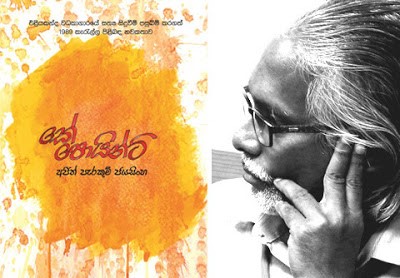
කේ පොයින්ට් නවකතාව

November 8th, 2018

වෛද් රුවන් එම් ජයතුංග 

 එළියකන්ද වධකාගාරයේ  සිටි රැඳවියෙකු වූ අජිත් පැරකුම් ජයසිංහගේ කේ පොයින්ට් නවකතාව පදනම් වන්නේ සත්‍ය අත්දැකීම් මතය.එය මිනිස් අත්දැකීම් වලින් ඔබ්බට ගිය කතාවකි.  නට්සීන් ගේ වධ කඳවුරු , ස්ටාලින් ගේ ගුලාග් වධ කඳවුරු,  පොල් පොට් ගේ   Tuol Sleng  මරණයේ ගොවි බිම් ආශ්‍රිත වධ කඳවුරු, ඇමරිකානු හමුදාව විසින් පවත්වාගෙන ගිය  Abu Ghraib සහ  , ග්වන්තනමෝ බේ වධ කඳවුරු ආදිය පිලිබඳව සත්‍ය තොරතුරු කියවා සිටින පාඨකයන් වූවද කේ පොයින්ට් නවකතාව කියවීමේදී තිගැස්සීමට පත්වෙති. 

කේ පොයින්ට් නොහොත්  එළියකන්ද වධකාගාරය පිලිබඳ කතාව දේශීය කතාවකි. එය නට්සීන් හෝ සෝවියට් එන් .කේ. වී. ඩී. හෝ කෙමරූජ්වරු හෝ ඇමරිකානු හමුදාවේ ලින්ඩී රානා ඉඞ්ලන්ඩ් ඇතුළු පිරිස විසින් දියත් කල වධයන් වලට වඩා වෙනස් මගක කිය කතාවකි. මේ කතාව සිදු වන්නේ අපගේ භූමිය මතය. දේශීය වධකයන් බොහෝ විට යොදා ගන්නේ දේශීය වධක ක්‍රමයන් වෙති. මේ කතාව සිදු වන්නේ අපගේම ජීවිත කාලය තුලදීය. 

එළියකන්ද වධකාගාරයේ සත්‍ය මෙන්ම බිහිසුණු අත්දැකීම් ලබන රචක හෙවත් කතුවරයා මේ කෘතිය හරහා ඔහුගේ ආත්මය නිරාවරණය කරයි. එහි බොරු වීරකම් හෝ පුරාජේරු නැත. එය මරණය අද්දරට තල්ලු කරන ලද මිනිසෙකුගේ අසරණ විළාපයකි.   

1988-89 සමයේදී ජවිපෙ කැරලිකරුවන් රිසි සේ තම විරුද්ධවාදීන් ද්‍රෝහියන් ලෙස ලේබල් කොට මරා දමති. ඔවුන් සමහරක් විට කිරි දරුවන් පවා මරා දමන්නට නොපැකිලෙති.  මේ භීෂණයට  රාජ්‍ය හමුදාවෝ භීෂණයෙන්ම ප්‍රති උත්තර   දෙති. එහිදී අඩු අධ්‍යාපනයක් ලත් ග්‍රාමීය සොල්දාදුවන් නිලධාරීන් ගේ මෙහෙයවීම මත වධකයන් බවට පත් වෙති. ඔවුන් ඉතා නිර්දය ලෙස මෙන්ම පර පීඩක කාමයෙන් අත් අඩංගුවට ගත් කැරලිකරුවන්ට වධ බන්දනය කරති. 

මින්ස්ක් සහ කියෙව් නගර වල යුදෙව්වන් සුවිසල් වලවල් අසල පෙළ ගස්වා මරා දැමූ වාෆන් එස් එස් භටයෝ මේ ඝාතන නිසා කම්පනයට පත් වූහ. මේ නිසා හිට්ලර් මෙන්ම අයික්මාන් හට යුදෙව්වන් මරා දැමීම සඳහා වඩාත් සුමුදු මෙන්ම මානුෂීය ක්‍රමයකට යන්නට සිදු වූ අතර ඔවුන් ඒ සඳහා ගෑස් කාමර විකල්පය ඉදිරිපත් කළහ. එහෙත් එළියකන්ද වධකාගාරයේ වධකයන් තුල මේ අන්දමට වත් මානුෂික භාවයක් තිබුනේ නැත. ඔවුන් වඩ වඩාත් නිර්මාණශීලී වෙමින් විවිධාකාරයේ වධක ක්‍රම බිහි කලහ. 

 යුදෙව් සහ ජිප්සි ළමුන් මරා දැමීමට පෙර නට්සි වෛද්‍ය ජෝස්ෆ් මැංගලී ළමුන් හට ලොලිපොප් දුන්නේය. එහෙත් ජවිපෙ කැරලිකරුවන් විසින් කිරි බොන දරුවෙකු අමු අමුවේ වෙඩි තබා ඝාතනය කල අයුරු රචක විසින් හෙළි කරයි. තවද වධ කඳවුරක් තුලදී වධකයන් සහ වින්දිතයන් අතර ඇති වන අසාමාන්‍ය බල තුලනය මෙන්ම අති පීඩාකාරී පරිසරයක ජීවත් වීමේදී මිනිසුන් ගේ අසාමාන්‍ය චර්‍යාවන් ද රචක විසින් පෙන්වා දෙනු ලබයි.   ඒ අතර යම් යම් මානුෂික ගනු දෙනුද ඔහු සඳහන් කරයි. භීම සමයකදී මිනිස් මනස දෝලනය වන ආකාරය ඔහු හෙලිදරව් කරයි  එම නිසා මනෝ විද්වතුන්ට මේ පොත අාශ්‍රයෙන් මානව චර්‍යාව පිලිබඳව බොහෝ දේවල් අධ්‍යනය කල හැකිය. එබැවින් කේ පොයින්ට් පොත ඉංග්‍රීසි බසට  පරිවර්තනය කිරීම සුදුසුය. 

කේ පොයින්ට් නවකතාව හුදු නවකතාවක් ලෙස නොව සත්‍ය සිදුවීම් පිලිබඳ ආත්ම කථනයක්  ලෙස  එළි දැක්වූයේ නම් එය වඩාත් යෝග්‍ය බව මම සිතමි. වධකයන් මෙන්ම වින්දිතයන් ගේ නියම නම් ගම් සහිතව මෙකී සත්‍ය සිදුවීම් වැල රචනා කලේ නම් මෙම පොතට වඩාත් වැඩි වටිනාකමක් මෙන්ම අප ජීවත් වූ ඒ අවලස්සන කාලය පිලිබඳව සාක්‍ෂාත්කරයක් වන්නටත් ඉඩ තිබුණි. 

Ambassador Azeez co-chairs the WHO Global Coordination Mechanism for the prevention and control of non-communicable diseases

November 8th, 2018

Permanent Mission of Sri Lanka Geneva

The WHO Global Coordination Mechanism for the prevention and control of Non-Communicable Diseases (GCM/NCD) concluded its General Meeting in Geneva on 6 November 2018. The two- day Conference brought together delegates and activist from Member States, UN organizations, and non-State Actors. The participants along with other stakeholders from the private sector, philanthropic foundations, and academic institutions, discussed means and modalities of strengthening the implementation of the SDG Agenda- 2030 and follow-up on the Political Declaration adopted at the Third High-level Meeting of the General Assembly in September 2018 on the prevention and control of NCDs.

Under the co-chairmanship of Ambassador Azeez, Permanent Representative of Sri Lanka, and the Representative of the host country, Switzerland, the Meeting facilitated stakeholder interactions at policy and political levels, regarding enhancing the effective coordination of prevention and control-related activities. The continued importance of multidisciplinary and multisectoral engagement, aimed to promote implementation of the WHO Global NCD Action Plan 2013-2020, and SDG 3.4 – NCD-related targets, was emphasized as was the need for building upon the existing networks of stakeholders bringing in industries, research institutions and local government bodies. A primary objective of the GCM was to assess and renew commitments that had emerged from the recently held UN High-level Meeting of the General Assembly, and its preceding High-level Conferences in 2011 and 2014.

Addressing the forum as the co-chair, Ambassador Azeez emphasized the necessity of transforming the high level political commitments into evidence-based, data-informed policy interventions and practices and of increased international cooperation and support to effectively respond to NCD challenges. Multisectoral and multistakeholder collaborations is a prerequisite to achieving tangible progress in NCD prevention, thereby showing early results in the implementation of SDG 3.4 and and other inter-linked targets in the overall SDG Agenda,” stated Ambassador Azeez, stressing further that this required sharing of knowledge, expertise, technology and resources to make the transformative change. He also highlighted the importance of sustained engagement of stakeholders, national and local ownership of programmes and initiatives and  appropriate funding mechanisms at national levels, in countries which are still striggling to make progress, for speedily addressing this growing epidemic.

The GCM Meeting had been structured around three plenary sessions and six parallel working sessions as well as an opening and two closing sessions, of which one session was devoted to high level policy discourse.

Tackling noncommunicable diseases, such as cardiovascular diseases, cancer, chronic obstructive lung disease, diabetes and mental health is timely as it is considered the number one killer in the world causing 41 million deaths each year. This includes 15 million people dying within the ages of 30 and 69 years. More than 85% of these premature deaths take place in low- and middle-income countries, negatively affecting macroeconomic productivity, national growth, healthcare costs and household incomes. Shared risk factors causing NCDs include tobacco use, harmful use of alcohol, unhealthy diets and physical inactivity, as well as air pollution. Sri Lanka was commended by participants for its cost effective NCD prevention and control programmes and for the progress made in SDG 3 4.

The delegation of Sri Lanka included Dr. Mrs. Champika Wickramasinghe, Deputy Director General of the Non-Communicable Diseases of the Ministry of Health, Nutrition and Indigenous Medicine and Ms. Dulmini Dahanayake, Second Secretary of the Permanent Mission in Geneva.

Permanent Mission of Sri Lanka

Geneva

China Center for South Asian Studies and the Pathfinder Foundation Consolidate Ties

November 8th, 2018

Gamini Sarath Godakanda Press Release Pathfinder Foundation

A senior academic delegation led by the Vice President of Sichuan University Prof. Yan Shijing and the Director General of the newly established China Center for South Asian Studies (CCSAS) Prof. Sun Shihai visited Pathfinder Foundation (PF), to discuss ways and means of further strengthening links between the two institutions through partnership and collaboration.

CCSAS of Sichuan University is authorised by the Central Government as one of China’s top think-tanks. CCSAS is committed to play a catalytic and decisive role in analysing the economic, social, security and strategic issues, as well as progress of the countries within the South Asian region, provide policy recommendations to the government, and to act as a platform for academic exchange and research cooperation between China and countries in Indian Ocean Region.

Sichuan University (SCU), established in 1896, is one of China’s top universities. SCU has a comprehensive range of disciplines covering 12 categories, and has shown great strength in research and made remarkable achievements over the years. SCU receives around 4000 overseas students from all over the world, including some from Sri Lanka, most of whom study medicine, civil engineering, humanities, economics and management.

The visiting delegation consisted of Prof. Yan Shijing – Vice President of Sichuan University; Mr. Sun Shihai – Director General of CCSAS; Prof. Zhang Li – Professor at CCSAS; Prof. Li Zhiqiang – Executive Dean of the School of International Studies; Prof. Huang Yunsong – Coordinator at CCSAS & Associate Dean of the School of International Studies and Dr. Chen Changning – Deputy Director of Center for American Studies at the School of International Studies.

The Pathfinder Foundation was represented by Bernard Goonetilleke – Chairman; Lalith Weeratunga – Senior Fellow; Mr. Luxman Siriwardena – Executive Director and Director, China Sri Lanka Cooperation Studies Centre; Admiral Prof. Jayanath Colombage- Director Centres for Indo-Lanka Initiatives and Law of the Sea; Mr. K. Balasundaram – Chief Executive Officer MMBL group of companies; Dr. Zhou Ying – Associate Director of the China – Sri Lanka Cooperation Studies Center; Ameera Arooz – Program Manager;  Gayathri Nanayakkara, Research Analyst, Yasalani Amarasekera, Asst. Program Manager and Sarah Hettiarchchi – Project Executive.

A round table discussion was conducted by the visiting delegation and Pathfinder Foundation focusing on political, strategic and economic areas impacting on both China and Sri Lanka.

Prof. Sun Shihai and Bernard Goonetilleke were signatories to the Memorandum of Understanding signed between the two think-tanks. Both institutions committed to designing and implementing a realistic roadmap that will strengthen and build institutional capacity, joint research projects and exchange of scholars, which would be beneficial to enhancing linkage between the two countries.


සී.වී.විග්නේස්වරන් මහතා 8 දා සිට තවදුරටත් දෙමළ ජාතික සන්ධානයේ සාමාජිකයෙකුද නොවේ.

November 8th, 2018

දිනසේන රතුගමගේ

උතුරු පළාත් සභාවේ හිටපු ප්රධාන අමාත් සී.වී.විග්නේස්වරන් මහතා ඉලංකෙයි තමිල් අරුසු කච්චි පක්ෂයෙන් ඉවත් වන බවට වූ නිල ලිපිය 8 දා එම පක්ෂයේ නායක මාවෙයි සේනාධිරාජා මහතා වෙත බාරදී තිබේ.

මේ අනුව සී.වී.විග්නේස්වරන් මහතා 8 දා සිට තවදුරටත් දෙමළ ජාතික සන්ධානයේ සාමාජිකයෙකුද නොවේ.

යාපනයේ පිහිටි දෙමළ ජාතික සන්ධාන පක්ෂ කාර්යාලයට පැමිණි විග්නේස්වරන් මහතා මාවෙයි සේනාධිරාජා මන්ත්රීවරයාට පක්ෂයෙන් ඉවත් වීමේ ලිපිය බාර දීමෙන් පසුව පැයක පමණ කාලයක් දෙදෙනා අතර ඉතා සුහද සාකච්ඡාවක් පැවතුණි.

එහිදී සී.වී.විග්නේස්වරන් මහතාගෙන් ඔහුගේ දේශපාලන අනාගතය පිළිබදව මාවෙයි සේනාධිරාජා මහතා තොරතුරු විමසා තිබේ.

තමන් විසින් පිහිටුවා ගන්නා ලද ටී.එම්.කේ.පක්ෂය ඔස්සේ ඉදිරියට තමන්ගේ දේශපාලන කටයුතු කරගෙන යන බවත් තමන් කිසි විටකත් උතුරු පළතේ දේශපාලන කටයුතු වලින් බැහැර නොවන බවත් මෙහිදී පවසා තිබේ.

මාවෙයි සේනාධිරාජා මන්ත්රීවරයා මේ අවස්ථාවේදී විග්නේස්වරන් මහතාගේ දේශපාලන ගමනට සුබ පතා ඇත.

රටේ වත්මන් තත්ත්වය ගැන සාකච්ඡා කළ අවස්ථාවේදී විග්නේස්වරන් මහතා මාවෙයි සේනාධිරාජා මහතාට පවසා ඇත්තේ ප්රධාන දේශපාලන පක්ෂ සමග දෙමළ ජාතික සන්ධානය ගණුදෙනු කිරීමේදී මීට වඩා පරෙස්ස්සම් වියයයුතු බවයි.

උතුරු පළාත් සභාව උග්ර මූල්ය අර්බුදයක

November 8th, 2018

දිනසේන රතුගමගේ

2018 වර්ෂය සදහා රජය මගින් උතුරු පළාත තුළ දියත් කොට ඇති සංවර්ධන  කටයුතු වෙණුවෙන්  වෙන් කළ මුදලේ අවසන් කොටස  ලබාගැනීමට යාමේදී ගැටළු සහගත තත්ත්වයක් උද්ගත වී ඇති නිසා උතුරු පළාත් සභාව උග් මූල් අර්බුදයකට මුහුණ පා සිටින බව පළත් සභා ලේකම්වරු ප්රකාශ කොට සිටිති.

උතුරේ විවිධ සංවර්ධන කටයුතු සදහා 2018 වර්ෂයට රුපියල් මිලියන 8628 ක්  වෙන්කොට ඇති බව පළාත් ලේකම්වරු කියා සිටිති.

මේ මුදලෙන් මේ වන විට රුපියල් මිලියන 6683 ක් ලැබී ඇති අතර මේ වර්ෂයේ අවසාන මාස තුන සදහා ලැබිය යුතු රුපියල් මිලියන1945 ක මුදල මෙතෙක් නොලැබීම උතුරු පළත් සභාවේ මූල්‍ය අර්බුදයට හේතුව වී ඇති බවද ඔවුන් කියා සිටිති.

මේ පිළිබදව මීට පෙර අවස්ථා කීපයක්ම  දැණුම් දෙනු ලැබුවත් මේ දක්වාම මුදල් නොලැබුණු බව කියන උතුරු පළාත් සභාවේ ලේකම්වරු තවදුරටත් කියා සිටින්නේ අමාත්‍යවරු මාරුවීම ලේකම්වරු මාරුවීම යන කාරණා මත මේ ඉතිරි මුදල ලැබීම තවත් ප්‍රමාද විය හැකි බවයි.

උතුරු පළාත් සභාවෙන් කොන්ත්රාත් කරුවන්ට ගෙවිය යුතු මුදල් ගෙවීම් මෙම මුදල් නොලැබීම නිසා සිදු කිරීමට හැකියාවක් නොමැතිව සිටින බවද ලේකම්වරු කියා සිටිති.

Sri Lanka tourists grow by 0.5% in Oct.

November 8th, 2018

Courtesy NewsIn.Asia

Colombo, Nov 8 (newsin.asia) – More than 150,000 tourists arrived in Sri Lanka last month, recording a 0.5 percent growth when compared to the same period last year, official statistics from the Tourism Ministry showed here Thursday.

According to the Ministry, the leading five markets were India, China, Britain, Germany and Australia.

So far over 1.8 million tourists have arrived in the island till October this year, with the industry expecting at least 2.5 million tourists by the end of the year.

Out of the total number, 228,000 Chinese tourists have visited the country this year, with October alone recording 18,800 Chinese arrivals.

Sri Lanka tourists grow by 0.5% in Oct.

Arrivals from India grew 3.2 percent to 38,169 tourists in Oct.

With the country currently facing a political crisis, Sri Lanka’s new government said this week that the recent travel advisories which had been issued by some foreign governments against visiting Sri Lanka was unnecessary as public life remained largely undisrupted by the ongoing political turbulence and tourism had not been subjected to any inconvenience.

The new Foreign Minister, Dr. Sarath Amunugama said the new government was fully committed to safeguarding and improving the tourism industry and new projects would be launched to increase its arrivals.

113 හරි.. පාර්ලිමේන්තුව විසුරුවීමක් නෑ.. නමුත් විසුරුවීමට ජනපතිට බලතල තිබෙනවා..- මහින්ද

November 8th, 2018

 lanka C news

අවශ්‍යතාවයක් ඇතිනම් පාර්ලිමේන්තුව විසුරුවා හැරීම සදහා ජනාධිපතිවරයාට ආණ්ඩු ක‍්‍රම ව්‍යවස්තාවේ ප‍්‍රතිපාදන ඇති බව අගමැති මහින්ද රාජපක්‍ෂ මහතා පවසයි.

නමුත් මේ මොහොතේ පාර්ලිමේන්තුව විසුරුවා හැරීමේ කිසිදු උවමනාවක් නැති බවත් ඒ මහතා සදහන් කර ඇත.

මේ වන විටත් නව ආණ්ඩුවට අවශ්‍ය කරව බහුතර බලය ඇතැයිද ඒ මහතා සදහන් කර ඇත්තේ ආණ්ඩු පක්‍ෂ මන්ත‍්‍රී කන්ඩායම අමතමිනි.

ජනාධිපතිවරයාගේ ප‍්‍රධානත්වයෙන් ඊයේ පස්වරුවේ මෙම හමුව පැවැත්වී ඇත්තේ ජනාධිපති ලේකම් කාර්යාලයේදීය.

113 හරි.. පාර්ලිමේන්තුව විසුරුවීමක් නෑ.. නමුත් විසුරුවීමට ජනපතිට බලතල තිබෙනවා..- මහින්ද

රනිල්ට එරෙහිව පොලිසියට ප‍්‍රබල පැමිණිල්ලක්.. පොදු දේපල පනතින් ඇප නැතිව රිමාන්ඩ්…[Video]

November 8th, 2018

 lanka C news

හිටපු අගමැති වත්මන් පාර්ලිමේන්තු මන්ත‍්‍රී රනිල් වික‍්‍රමසිංහ මහතාට එරෙහිව පොලිස්පතිවරයා වෙත පැමිණිල්ලක් බාර දී තිබේ.

ඔහුට එල්ල වී ඇති චෝදනාව වන්නේ අගමැති ධුරයෙන් ඉවත් කර තිබියදීත් අගමැති නිල නිවාසය බලහත්කාරයෙන් අල්ලාගෙන රාජ්‍ය දේපල අවභාවිත කරන බවටයි.

මෙම පැමිණිල්ල බාර දී ඇත්තේ අමාත්‍ය් ලේකම්වරුන්ගේ සංගමය විසිනි.

රාජ්‍ය දේපල අවභාවිතය සම්බන්ධයෙන් පොදු දේපල පනත යටතේ අත්අඩංගුවට ගන්නා පුද්ගලයන් මහේස්ත‍්‍රාත් අධිකරණය හමුවට ඉදිරිපත් කලද ඇප නොලැබෙන වරදක් වන අතර පසුගිය කාලයේදී ඒ ආකාරයෙන් දේශාපලඥයන් ගණනාවක් රිමාන්ඩ් කරනු ලැබීය.

How Sri Lanka got its lizards (and what it says about the island’s history)

November 8th, 2018

A study shows Sri Lanka’s dry zone lizards are also found in India, but its wet zone species are endemic.

Most households in South Asia would have at some point given shelter to the common house gecko Hemidactylus frenatus. This pale colourless reptile inhabiting the corners of our ceilings has inspired several ancient myths and superstitions that persist to this day. And now scientists are hoping that the species and its relatives, other Hemidactylus geckos, will help tell an even more ancient story – that of the origins of the Indian sub-continent and the island of Sri Lanka.

Though separated by the Indian Ocean, Peninsular India and Sri Lanka share much of their natural heritage. From massive elephants to tiny rodents, many creatures that are Indian are also Sri Lankan.

But there are also differences. Like other island ecosystems, Sri Lanka is also home to several endemic species, found nowhere in the world.

What causes this dichotomy?

One way of addressing this question is by understanding how species assembled in a particular region over evolutionary timescales,” said Aparna Lajmi, an evolutionary biologist at the National Centre for Biological Sciences, Bengaluru.

The common house gecko, Hemidactlylus frenatus, is widespread across South and Southeast Asia. Photo credit: Basile Morin/Wikimedia Commons [Licensed under CC BY 4.0]

There are two common theories for how any ecosystem develops its set of species.

One is by dispersing from the place of origin. Plants and animals constantly look for ways to move across the landscape and colonise new regions but, as Lajmi points out, this is dictated by whether they can reach the place. If it is very accessible, assembly of species is generally through dispersal of organisms from neighbouring regions,” she said. For instance, lions are believed to have originated in Africa about one million years ago and spread to Europe and Asia because these continents were connected by land.

Dispersal or diversification?

So, the question for Lajmi and her colleagues was, which of these theories applied to Sri Lanka, especially for the Hemidactylus geckos?

Given that it is an island, it might seem obvious that at least geckos in Sri Lanka must have evolved through diversification, with the Indian Ocean preventing them from spreading towards India or even further towards Africa or Southeast Asia. But here is the nub of it all: Sri Lanka has spent more time connected to India than separated.

About 175 million years ago, Peninsular India was part of the supercontinent Gondwanaland along with Madagascar, which was an extension of India’s south-western side. About 90 million years ago, India broke off from Gondwanaland and made its way towards Asia. Sri Lanka was part of the fragment. When about 45 million years ago the fragment collided with the Tibetan Plateau, raising the Himalayas from the dead Tethys sea and forming the Indian sub-continent, Sri Lanka was still connected.

A representation of the Indian subcontinent breaking away from Gondwanaland and slowly drifting towards Asia. Illustration by Fama Clamosa/Wikimedia Commons

Twenty-five million years ago, sea levels rose and the newly formed Indian Ocean crept in on all sides, submerging a bit of southern India, creating in the process a teardrop-shaped island. But every few thousands of years, climate would change again, the ocean would retreat, and the island would become part of the mainland once again.

Because of these intermittent connections, animals like Hemidactylus geckos have had plenty of opportunity to move from India to Sri Lanka or vice versa, explained Praveen Karanth, Lajmi’s doctoral advisor at the Indian Institute of Science and fellow researcher. Therefore, by and large, the Sri Lankan biota is a subset of what we find in India,” he said.

But Karanth points out that Sri Lanka has an independent biological history as well, adding, After all, currently it’s an island; and it exhibits some features of an island which makes it interesting.”

This where the geckos come in. Lajmi explains that gecko species of the Hemidactylus group served as a useful model to understand the journey of Sri Lanka’s biodiversity, because they were common across Peninsular India and Sri Lanka. While both these regions have endemic species, there are also species that are widely distributed in both these areas,” she said.

Aparna Lajmi, lead researcher of the study, looking for geckos in the wet forests of the Western Ghats. Photo credit: Aparna Lajmi

How are some species so widespread while others are restricted to the island? Did animals travel from the larger mainland, in this case India? Or did years of isolation create species unique to the island?

The answer might be both. By studying the genes of these gecko species, the researchers built a profile of when each species evolved, whether they originated in India or in Sri Lanka and the habitats they occupied.

They compared this information to geological events in this region at the time, including how often the two countries were connected and how the climate changed during the evolution of these species.

Shrinking rainforests

All seven species in Sri Lanka originated in India and then moved towards the island. The earliest arrivals were the two rainforest species, the spotted giant gecko and the Kandy leaf-nosed gecko. These two species settled in the region right after the Indian fragment joined Asia.

The four gecko species common to India and Sri Lanka arrived on the island during different times, but always when water levels subsided and the two countries were connected once again. The researchers speculate that some of the species, like the house gecko, might have accidentally travelled with humans moving into Sri Lanka. Importantly, even today, all four species are found in similar habitats in both regions – in scrub, rocky outcrops and grasslands of the dry zone.

Previous studies have found that in the wet zone in Sri Lanka, organisms seemed to have evolved because of isolation. The pattern seen in Hemidactylus is that the wet zone Hemidactylus of Sri Lanka are endemic, while the dry zone species are shared between India and Sri Lanka,” said Lajmi. This pattern implies that geckos in dry habitats in Sri Lanka were more connected to India, lending credence to the theory of dispersal in these parts.

But why were the wet rainforests of Sri Lanka isolated enough for the geckos to evolve into unique species? This we think has to do with the history of the dry and wet zone in this region,” said Lajmi.

The Central Highlands of Sri Lanka, a remnant of the island’s journey from the Southern Hemisphere to Asia, harbours much of Sri Lanka’s endemic species. Photo credit: Tjeerd Wiersma/Flickr [Licensed under CC BY 2.0]

We think that before the drying, rainforests of India and SL [Sri Lanka] were better connected leading to the dispersal of wet habitat species,” said Lajmi. The shrinking of the rainforests meant that even when India and Sri Lanka were connected, the wet forests of the spotted gecko and the Kandy leaf gecko were not.

These geckos were possibly isolated enough to become endemic species. On the other hand, with the drying, the dry habitats were now better connected which might have led to dispersal of more dry habitat species more recently,” she added.

It is an elegant piece of work and nicely complements what is known of the biotic connection between India and Sri Lanka,” said Rohan Pethiyagoda, a taxonomist at the Australian Museum, Sydney, not connected to the study. Pethiyagoda, who extensively studied freshwater fish species of the Sri Lankan rainforests, points out that this pattern has been seen with some other taxa in the region. There is a trenchant divide between the biotas of the wet and dry zones of both southern India and Sri Lanka.”

He also argued that the spread of dry zone effectively prevents any rainforest adapted species from moving across. Thus, literally dozens” of animals and plants that occur in southern India and the Western Ghats are absent from Sri Lanka. Climate is a great isolating mechanism,” he concluded.

For Lajmi, the study’s most important takeaway is the potential for using the evolutionary history of an organism to get a glimpse of the larger history of the landscape. We know little [about the] details and extent of these paleo changes, but hopefully studying different organisms in this framework along with paleo-climatic and paleo-vegetation studies will help build a more nuanced picture of the past,” she said.

This article first appeared on Mongabay.

Let people decide’: Sri Lankans want a vote as crisis drags on

November 8th, 2018

by &

Colombo residents urge leaders to call snap elections as power struggle over two rival prime ministers strain economy.

President Maithripala Sirisena, right, and newly appointed Prime Minister Mahinda Rajapaksa attend a rally on Monday [Eranga Jayawardena/AP]
Colombo, Sri Lanka – In the labyrinth corridors of power in Colombo, politicians loyal to two rival prime ministers have been fighting tooth and nail to muster enough votes to prove a majority when the country’s suspended parliament meets next week.

But on the streets of the Sri Lankan capital, home to almost one million people, the country’s protracted power struggle feels all too distant.

“All these politicians are crooks. All of them,” AK Piyadasa, an 83-year-old merchant, said matter-of-factly. “There’s no one to help us.”

It’s a sentiment that reverberates throughout Colombo – from the busy Pettah market, where AK Piyadasa sells plastic combs and strainers on a street corner, through the bustling middle-class neighbourhood of Wellawatta, to the quiet leafy suburb of Rajagiriya.

The chorus of despair – “everything is expensive”, “my life hasn’t improved at all”, “politicians don’t care about us” – seems to prevail across this multi-ethnic seaside city, where residents have been brought to their knees after years of high taxes, stagnant wages and a falling currency.

Grievances over the stuttering economy and the country’s direction have gained new impetus over the past two weeks following President Maithripala Sirisena’s decision to abruptly fire Prime Minister Ranil Wickremesinghe and replace him with Mahinda Rajapaksa, a controversial former president accused of corruption and grave human rights abuses.

The shock moves, which included a presidential order to suspend parliamentary proceedings, have plunged Sri Lanka into constitutional chaos. According to legal experts, the president has the authority to appoint the prime minister, but does not have the power to sack the incumbent.

Since being fired, Wickremesinghe has remained holed up in the prime ministerial residence while also demanding a parliamentary vote to prove his majority. Amid mounting pressure, Sirisena, who denies acting unconstitutionally, recalled parliament on November 14, when Wickremesinghe’s supporters are hoping to table a no-confidence motion against Rajapaksa.

With both Wickremesinghe and Rajapaksa claiming to be the country’s rightful prime minister, the turmoil risks straining a struggling economy – already at its lowest level in 16 years – as well as threatening major development projects and scaring off tourists amid warnings of violence.

‘Useless’

It wasn’t supposed to be like this. Back in 2015, Sirisena and Wickremesinghe joined forces in a bid to defeat Rajapaksa, who was seeking an unprecedented third five-year term after ending a decades-long bloody war against Tamil separatists.

The pair’s promises of economic reforms, accountability for alleged war crimes and a crackdown on corruption struck a chord with voters weary of alleged nepotism, corruption scandals and rights violations by Rajapaksa’s government.

Soon after taking office as president, Sirisena appointed Wickremesinghe as prime minister. But the euphoria of their unexpected election win gradually gave way to disillusionment as the two leaders began to clash over day-to-day administration and economic reform.

The new government, saddled by huge amounts of debt incurred by the Rajapaksa administration to fund an infrastructure boom, made a series of unpopular decisions, including leasing for 99-years a critical port in the country’s south to a Chinese company, hiking fuel prices, cutting fertiliser subsidies, and raising taxes.

As the Sirisena-Wickremesinghe infighting grew and the economy slowed down, investigations into human rights abuses and corruption also stalled. At the same time, Wickremesinghe became mired in a corruption scandal in which a central bank governor he appointed was accused of manipulating bond auctions, causing millions of dollars in losses to the state.

Meanwhile, rubbish piled up on the streets of Colombo, while the waterways that crisscross the city clogged up with waste, and residents of suburbs complained of poor street lighting and uncut grass.

“Wickremesinghe is useless. No one has benefitted from him,” said 25-year-old Pradeep Udaykumar, who barely makes ends meet by selling mobile phone batteries in Pettah.

Nearby, a 40-year-old sunglasses vendor, W Ravindran, said: “No one cares about the poor. Politicians – they make deals and they look after themselves. It’s us who suffer.”

A 60-year-old woman selling lottery tickets echoed the same sentiment. The only way out, she said, was a general election. “That way, everyone has a say.”

‘Go to the people’

That call for new polls seems to be on everyone’s lips in Colombo, partly because of a widespread belief that those already elected will not act in the public interest. The disenchantment has only grown in recent days over allegations that legislators have been taking millions of dollars in bribes to switch support, as well as long-standing grievances over the electorate’s effect on the political process.

“Go to the people,” urged a Muslim man. “Let the people decide,” said a Tamil woman. “We need change,” added a 21-year-old female university student.

That’s also a message Rajapaksa has been eager to trumpet.

His Sri Lanka Podujana Permanuna trounced Wickremesinghe’s United National Party (UNP) in local council elections earlier this year, and observers say his party is likely to come out on top if snap elections are held.

That’s partly because Rajapaksa, 72, continues to command huge support among Sri Lanka’s Sinhalese majority, who make up about 75 percent of the population. For many of them, the former president is a hero.

At a rally in Colombo on Monday, Upali Wijeykoon, a former soldier and the sole survivor of a mine explosion in 1992, said Rajapaksa “saved” Sri Lanka by ending the war, which according to the United Nations claimed more than 100,000 lives over three decades.

Upali, 58, travelled more than eight hours from his village in the country’s central highlands to attend the mass rally, which organisers said gathered more than 100,000 people despite heavy rains.

“I lost both my legs. I love my country and I have done whatever I can to safeguard our sovereignty,” Upali said over the din of patriotic songs and chants.

Blasting Wickremesinghe for “selling national assets to foreign countries”, the former soldier said the government’s decision to cut fertiliser subsidies has “destroyed the agricultural sector” in his home town of Horowpathana, where farming was the main source of income.

A supporter celebrates Rajapaksa’s recent appointment [Dinuka Liyanawatte/Reuters]

Return of fear

But on the opposite side, particularly among members of the country’s Tamil and Muslim minorities, the fear that Rajapaksa will roll back freedoms and democratic gains made under Wickremesinghe is more than real.

“Under Mahinda Rajapaksa people saw development. They had money. But under Ranil Wickremesinghe, I feel safer,” said Giyas Deen, a 52-year-old imam from the city of Galle in the country’s south.

“Sinhalese, Tamils and Muslims, we can all live together now.”

Deen, a father of two, said Rajapaksa had empowered Buddhist nationalists “who believe Sri Lanka is for Buddhists only”, adding he now feared a resurgence of anti-Muslim violence – such as the 2014 clashes between Buddhists and Muslims in the town of Aluthgama, in which at least four people were killed and more than a dozen Muslim houses were torched to the ground.

There are more concerns. The ex-president’s critics are particularly worried about the result of ongoing investigations into corruption allegations against members of his family, including his own brother over the massive losses incurred by the national carrier during Rajapaksa’s time in office.

‘Media taken hostage’

Amid the growing uncertainty, several journalists working for Sri Lanka’s public media company say they are thinking of quitting their jobs because of increased government censorship.

“We have been taken hostage,” said one young female journalist at Lakehouse, a colonial-era building housing the company. “Everything we write has to be approved by government supporters.”

That editorial shift has been evident on the articles published in the company’s English newspapers. Since Rajapaksa’s appointment, the front pages of the relatively independent Daily News and the Sunday Observer have been full of flattering articles that push the government’s lines on the transfer of power and the recall of parliament.

“It’s sickening,” said the Lakehouse journalist.

The attempt by the new government to influence public debate is also omnipresent on Colombo’s streets – lampposts, traffic lights and city walls are all covered with posters showing a smiling Rajapaksa and featuring words of gratitude for Sirisena and his “brave decision”.

It’s a message, however, that is still met with resistance ahead of the crucial parliamentary vote.

Shala Amarasinghe, 23, said it was this exact fear of renewed government control that prompted her to join hundreds of activists on Sunday protesting what they called the “unconstitutional” transfer of power.

Amarasinghe said it was her first time at a demonstration.

“I’m here because if they can change the prime minister in such an arbitrary manner overnight, they can do anything they want,” she said.

“And that scares me.”

Is Sri Lanka on the path to dictatorship?

SOURCE: AL JAZEERA NEWS

Behind Sri Lanka’s turmoil, a China-India struggle for investments, influence-Wickremesinghe’s firing followed Cabinet bust-up about Indian investments

November 8th, 2018

Courtesy The Hindu

COLOMBO, NOV 8

Gleaming cranes stretch out on the waterfront in the Sri Lankan capital Colombo as Chinese companies construct a $1.5 billion new commercial district, including hotels, marinas and a motor racing track. They have already built a giant container terminal nearby and a huge port in the south.

Now India, the traditional power in the region, is muscling into port and other projects, pushing back hard against China.

The big fear for India is that Sri Lanka, just off its southern coast and on one of the world’s busiest shipping routes, could become a Chinese military outpost.

The back story
  • President said he could not hand over more assets to foreigners
  • India had signed MoU for port and other projects last year
  • India determined to be counterweight to China in Sri Lanka
  • President and PM had also fought over economic reforms

But the battle is creating political turmoil in Sri Lanka. A bust-up between President Maithripala Sirisena and Prime Minister Ranil Wickremesinghe over how far to accommodate Indian interests is a key reason the nation’s unity government has just fallen apart, government officials and foreign diplomats said.

A view of Colombo Port City construction site, which is backed by Chinese investment.

Arguments over Colombo port project

Wickremesinghe, who was fired on October 26 and replaced by veteran pro-China politician Mahinda Rajapaksa, told Reuters about arguments at a cabinet meeting chaired by the president last month over a proposal to grant development of a Colombo port project to a Japan-India joint venture.

There are arguments in the cabinet, sometimes heated arguments,” he said.

Wickremesinghe did not name the president but said: There was a paper put forth to not give it to India, Japan.”

He added that he insisted that the ultimate decision should respect a memorandum of understanding signed between India, Japan and Sri Lanka.

It was the first account of what transpired in the October 16 meeting and the government’s pushback against India.

Wickremesinghe declined to respond when asked if he believed the China-India struggle was behind his firing. But Rajitha Senaratne, a former government minister who attended, confirmed the president and the prime minister had argued at the meeting.

Two Sri Lankan officials, as well as a Western diplomat and an Indian government source, who were all briefed on the meeting, corroborated the minister’s account.

China denies charges of conspiracy

The president’s office did not respond to requests for comment. Sirisena told a public meeting on Monday his political rivals were trying to drive a wedge between him and the Indian government by painting him as anti-India.

The Indian foreign ministry said Delhi was committed to giving developmental assistance to Sri Lanka.

In a statement last week, the Chinese embassy in Colombo rejected allegations China was involved in a conspiracy to change Sri Lanka’s leadership, saying it does not believe in such interference.

Japan did not respond to a request for comment on the sacking of the government. But Wickremesinghe and an official from the Japan International Cooperation Agency said a $1.4 billion soft loan for a light railway project in Colombo was on hold.

Second terminal

India had been pushing Sri Lanka for the award of an estimated $1 billion contract for a second foreign-operated container terminal in Colombo. It has pointed to a memorandum of understanding (MOU) Sri Lanka signed in April 2017.

Reuters has reviewed unpublished documents from that MOU and it lays out a blueprint for projects India would be involved in, including an oil refinery, roads, power stations and the container terminal. The agreement also includes room for Indian involvement in the development of industrial zones.

The cabinet meeting was supposed to give clearance for the port project but President Sirisena said the country, already mired in $8 billion of Chinese debt, couldn’t give any more of its assets to foreigners, according to Senaratne.

There was a misunderstanding between the president and the prime minister,” said Senaratne, who was the health minister in the deposed cabinet. The Colombo terminal should be left to the state-owned Sri Lanka Port Authority, which was already developing the facilities, he quoted the president as saying.

Tension had been building between Sirisena and Wickremesinghe even before the clash over the port project. The president did not approve of some economic reforms, such as opening up the services sector to foreign investment, being introduced by the prime minister.

Debt diplomacy

Sri Lanka is only one of a number of South Asian countries where the China-India rivalry has roiled domestic politics.

China has been constructing ports, power stations and highways in Pakistan, Bangladesh, Sri Lanka, the Maldives and Nepal, much of it now tied to its ambitious Belt and Road Initiative to connect China with countries cross Asia and beyond.

In September, the leader of the Maldives – who had courted Chinese investments – lost an election in a result seen as a setback to Beijing’s ambitions for the islands.

One of the officials briefed on the cabinet meeting said he was told Sirisena quoted U.S. Vice President Mike Pence’s warning last month that China was using debt diplomacy” and the Hambantota port in the south could become a Chinese forward military base.

Sirisena told the cabinet Sri Lanka didn’t want this kind of international attention and vowed he wasn’t going to compound the problem by granting the Colombo deal to an outside party, this official said.

But Wickremesinghe, who has forged close ties with India and Japan to balance ties with China, said at the meeting that the cabinet had already approved the broader pact with India a year ago, he told Reuters.

He said the debt-burdened Sri Lanka Port Authority wasn’t in a position to build the terminal on its own, Wickremesinghe said he told the meeting.

It wasn’t even an Indian project, Japan was going to be the majority partner with India at 20 per cent,” Wickremesinghe said in the interview. But the president not only rejected the proposal but shocked those present by turning on New Delhi, saying he was the target of an assassination plot and suggesting India’s foreign intelligence agency, the Research and Analysis Wing (RAW), was behind it, said officials who attended the meeting.

The Sri Lankan government later denied Sirisena named the agency, India’s equivalent of the CIA. India’s foreign ministry said Sirisena spoke to Indian Prime Minister Narendra Modi about the issue to ensure it didn’t lead to a diplomatic crisis.

But 10 days after the cabinet meeting, Wickremesinghe was out and former president Rajapaksa was named in his place. Rajapaksa had ushered in Chinese investment when he was president from 2005-2015 and lost a presidential election to Sirisena after reports that RAW had helped build a coalition against him.

Changing landscape

In Colombo, the increasing Chinese influence is there for all to see.

On the city’s ocean front, a part of the ocean is blocked from view because of the reclamation project that will eventually turn into the new commercial district. Giant billboards and wire mesh, including some signs in Chinese, close off the largest construction site in the capital.

There is a growing Chinese community of about 12,000 expatriates, up from barely a few hundred a few years ago. They are scattered in Colombo and Hambantota.

Modi’s government is determined to start to turn back the tide. It is aggressively pitching for projects next to Chinese investments, so China’s military does not get a free pass.

India can ill afford to ignore the strategic advantage China has gained in Sri Lanka so close to peninsular India,” said Colonel R. Hariharan, a retired Indian army intelligence officer.

The Colombo port isn’t the only priority. In Hambantota, India is bidding to take control of an airport built next to the Chinese seaport even though it handles hardly any flights.

We are fully in the game,” said an Indian government source. It kept its profile low, though, because of local sensitivities, the source said.

President can dissolve P’ment under 33 (2) C of 19 A: Former Chief Justice Sarath N Silva

November 8th, 2018

Ajith Siriwardane Courtesy The Daily Mirror

Former Chief Justice Sarath N Silva said yesterday the President had been vested with powers to dissolve Parliament under 33 (2) C of the 19th Amendment to the Constitution.

He told Daily Mirror that this special provision was incorporated into the Constitution under duties, powers and functions of the President in accordance with the judgment of the Supreme Court.

He said this special provision says that in addition to the powers, duties and functions expressly conferred or imposed on, or assigned to the President by the Constitution or other written law, the President shall have the power to summon, prorogue and dissolve Parliament.

He said the 19th Amendment brought in by the Ranil Wickremesinghe government in 2002, sought to remove the powers of President to dissolve parliament and make provisions that the President can dissolve Parliament only on the basis of a resolution passed with a simple majority in parliament, but this was challenged in the Supreme Court by several petitioners and the SC gave a ruling that it should be approved by a two thirds majority in Parliament and approved by the people in a referendum.

He said the present government amended Article 70 of the Constitution in the manner that the President may by Proclamation, summon, prorogue and dissolve Parliament: Provided that the President shall not dissolve Parliament until the expiration of a period of not less than four years and six months from the date appointed for its first meeting, unless Parliament requests the President to do so by a resolution passed by not less than two-thirds of the whole number of members.

He said when amending Article 70, section 33 (2) C was introduced in the 19th Amendment in 2015 in accordance with the judgment of the SC and added that the prevailing provision of the Constitution was 33 (2) C.

The President can act on his own in a critical situation or on a resolution approved by the Parliament when dissolving Parliament. This new section was incorporated to evade a referendum,” he said.

Sri Lanka political situation: Let us ask ourselves some questions

November 7th, 2018

All types of people have suddenly become constitutional experts, legal pundits, democratic veterans, angels of law & order but let us stop & first ask ourselves some questions & see how best we can find the answers

  • What type of democracy prevails in Sri Lanka? Is the head of State – the President, the Prime Minister or the Speaker?
  • In 2015 January did Sri Lanka have a Presidential Election or a Parliamentary Election?
  • If Presidential, then have the people voted for a President or a Prime Minister?
  • If people voted for a President in January 2015 how did the President appoint a Prime Minister? Was there provision in the constitution for him to do so?
  • Was the sitting PM removed before appointing Ranil as Prime Minister & gazetted too? If not is this appointment legally valid?
  • Is it constitutionally possible to appoint Ranil as PM in January 2015 (note only the 18th amendment to the constitution applied at this stage)
  • Ranil had only 46MPs in Parliament in January 2015, on what legal & constitutional basis was he made the Prime Minister?
  • What is the legal & constitutional provision of a National Government mentioned in the 19a and the National Unity Government that comprises the parties led by UNP?
  • If there is a National Government why did only UNP & SLFP sign a 2 year MOU? What was the position of this national government & 2 year MOU when that term expired in August 2017? Did the national government legally stand?
  • Can only the SLFP & UNP sign a 2 year MOU because both of them did not contest independently but through alliances, why was an MOU not signed with all alliance heads?
  • Everyone speaking of following the democratic process were silent in April 2015 – when Parliament was supposed to be dissolved & elections held which did not happen? Can someone explain how this did not fit into the democratic process violation?
  • The President is elected by the People directly – how democratic was it to help draft 19a that transferred the power given to the People and hand it to Parliament which reduced the President’s term to 5 years and reduced his ability to dissolve Parliament
  • Isn’t 19a deciding on a reduced Presidential term of office a violation of Article 3 of the Constitution that gives inalienable sovereign rights to the People? If People elect the President the People should also decide if there is to be a change of years in office not the Parliament.
  • How legal is it to also allow Parliament to decide how many times a President can contest? Shouldn’t that too be the decision of the People? A contestant has a right to contest & the People have the right to reject or elect that contestant. Isn’t that true democracy?
  • The National Government was only mentioned for the 100 day program such a set up was not in the election manifestos of the UNP or SLFP in August 2015 – on what basis was this National Government continued – there was no national crisis? (even during the military operation the Opposition did not wish to support the ruling government by forming a national government)
  • What has this National Government done in the ‘National Interest’ of the country?
  • How legal & constitutional is it to allow defeated candidates to enter through the National List? Where are all the proponents of democracy opposing this?
  • Why are those speaking of MP ‘buy-overs’ & corruption now silent in 2014-2015 when MPs of the Rajapakse govt crossed over to topple him & 26MPs were enticed from the SLFP in March 2015 to form a 77 member government?
  • The President is elected by the People – the Prime Minister is not, why has the 19a limited scope for the President (powers given to him by the People) to remove the Prime Minister as could be done previously?
  • Why are all those preaching democratic process now silent when the assurances made to the people was a 25member cabinet which rose to 30 and then by April 2015 ended up with 45 cabinet Ministers, 55 non-cabinet & deputy ministers. Why this selective democracy outcries?
  • What legal right does the Parliament have to pass 19a that usurps the executive powers given directly by the People to the Executive President & transfer those powers to a Prime Minister not elected directly by the People?
  • On 26 October 2018, the President decided to remove Ranil Wickremasinghe as Prime Minister & hand over the Premiership to Mahinda Rajapakse. What is the unconstitutionality in this? Please quote necessary clauses from the constitution for violations.
  • The appointment of new Prime Minister was made after all the SLFP MPs in the National Unity Government exited thus making null & void the unity government as the MOU was signed between only these 2 parties. What is illegal or unconstitutional in this?
  • Whereas the sitting PM was not removed before appointing a PM in January 2015, not only the sitting PM was removed but a gazette notification of the said removal & another gazette notification of the PM appointment was made in October 2018. Where is the unconstitutionality if any?
  • There have been plenty of governments that have run as minority governments and 113MPs is not necessary to run the government.
  • Where does it say that the President can only appoint as PM the person who has the most MPs in Parliament?
  • Doesn’t the constitution say that the President can appoint as PM the person HE FEELS has the most confidence in Parliament?
  • Can the President remove the Prime Minister? Doesn’t 48(1) give 3 opportunities to dissolve cabinet including sacking the PM & under other reasons” 47 (2)
  • Isn’t Sri Lanka’s Executive Head & 1st citizen, the President? Yes
  • Isn’t the President the Head of the Government? Yes
  • Isn’t the President the Head of the Cabinet? Yes – 42(3)
  • If the President has all these powers why can’t he change the Prime Minister who is not elected by the People?
  • If anyone feels that any constitutional provisions have been violated why are they not going to Supreme Court to get a determination? Making the Speaker hysterical & a laughing stock is not the solution.
  • What are the provisions available for the President to dissolve Parliament?
  • Is the sovereignty in the hands of the People or Parliament? Certainly People
  • If the sovereignty of the people is being violated, can the President use his executive powers & take action under Article 62
  • Has the 19a tried to usurp the powers of the People and give it to Parliament?
  • How come all those crusading against illegalities & demanding democratic process was silent regarding the unceremonious removal of Chief Justice Mohan Peiris. He was simply not allowed into his chambers. His term is included in Wikipedia as the 43rd ‘defacto Chief Justice’ how morally & legally right is this?
  • How legal is the FCID & all other corruption units set up directly under the supervision of the PM?
  • How legal & ethical was it to appoint a finance minister in 2015 who was facing a case for money laundering?
  • How legal was it to transfer the Central Bank, Exchange & Securities Commission & Statistics directly under the PM? Was this not to facilitate the Central Bank Bond Scam?
  • Is it also legal for a foreigner to be appointed as Governor of the Central Bank & was this person not responsible for the Bond Scam & will that foreign citizenship factor affect legal action to be taken for the economic chaos that has arise as a result?
  • All those crying foul & issuing statements on upholding democracy were not to be seen or heard when the Ranil Wickremasinghe government did not hold a single election from August 2015 to February 2018 – why?
  • How legal has it been to ask people to come to give statements & then order their arrests & refusal for bail? How legal was it to even open magistrates office late in the hours to imprison people arrested?
  • How legal are the investments, land sales, national asset sales taken arbitrarily via bills that have been passed ad hoc & by a Speaker who has shown his open bias?
  • How legal has been the reparations bill compensating LTTE when LTTE remains banned in Sri Lanka still.
  • What is the legality in co-sponsoring the Geneva Resolution which is arguably legally questionable too given that all UNHRC Resolutions & Investigation stemmed from a personal report commissioned by the UNSG which did not have the mandate of the UN General Assembly or the UN Security Council?
  • How legal is it to shelve the COPE report & BOND COMMISSION report which should be released to the public

Answering some of these questions will help any to understand the precarious situation the Ranil-led government has put the country in. Allowing unnecessary foreign meddling into the internal affairs of a sovereign country, opening internal systems for foreign perusal & adjustments which no government is bound to do, which has only compromised our internal security systems & exposed our weak points for them to manipulate at will.

None of these countries are concerned about democracy – they probably don’t even understand the word leave alone wanting to abide by it. They preach to us about human rights & rule of law & then sell arms for profit which are devastating Yemen & leaving these innocent people in starvation & hunger. Countries who can do this have no moral right to be coming preaching to us or any other country.

Sovereignty is in the hands of the People & it is the People of Sri Lanka who must decide not foreign nations or the UN and it is time people elected by the People stop going crying to foreign countries for help, it only shows they are incapable of leading without being spoon-fed by them on how to rule according to their agendas & dictates.

An important lesson for all is NOT TO BELIEVE the campaigns & pseudo experts now emerging to make a big noise & tell you that what is happening in Sri Lanka is unconstitutional.
You decide if anything is unconstitutional not because others says so but because you search & find answers to questions which help you decide whether it is unconstitutional or not.
Therefore, please go through these questions & seek the answers yourself & you come to your own conclusions….
All the time look at the larger picture… always think and ask yourself whether a Govt’s decision is affecting the national security, the safety of the people & their future … this should always be in the back of your mind.
Whoever governs – we must have a safe country to live in & that land must belong to all of us.

Shenali D Waduge

ජාතිකත්වයයි බහුතරයයි

November 7th, 2018

තිස්ස ගුණතිලක

යහපාලන අටමගලය අවසන්වී ඇ‌ත. එය දින ඉකුත්වූ පල්හෑල්ලකි. ශ්‍රී ලංකාව මුළු ලෝකයේම සිනහවට ලක්කල විගඩමකි. දූෂණය පිටුදකින්නට පැමිනියවුන් එතෙක් මෙතෙක් ලක් ඉතිහාසයේ සිදුවූ දූෂිතම මංකොල්ලය සිදුකලේය. මහබැංකු සුරැකුම්පත්වලින් හොරකම්කල මුදල රැපියල් මිලියන 11,000කට වඩා වැඩිබව වාර්තාවෙයි.

හොරැ අල්ලන මුවාවෙන් ජනතාවට බේගල් ඇ‌දබා පාලනයට පැමිනියත් අල්ලපු හොරෙක් නැත. වූයේ එජාප නායකත්වය හොරෙක් වීම පමනකි. රටක් පාලනය කිරීම තබා මුන් හොරකමක්වත් හරියට කරන්න නොදන්නා තකතීරැවන් පිරිසකි. එහෙව් රැලක් අද නැති අගමැති තනතුරක එල්ලෙන්නට බහුතරයක් සොයයි. මෙහිදි සොරාගත් මහබැංකු මුදල්ද කරලියට පැමිනේ. ඒ‌ එජාප නායකත්වය හැරයාමට සැරසී සිටින්නවුන් මුදලට ගැනීමටය.

එදා ඩී එස් ලා බිහිකල ඩඩ්ලි, ජේ ආ‌ර්, ප්‍රේමදාසලා වැන්නන් පෝෂණය කල එජාපය ගෙෳරවාන්විත පක්ෂයක්ව තිබිනි. අද එහි නායකත්වය ජරාජීර්ණවී තිබුනත් බිම්මට්ටමින් ඊට එකතුවන සාමාජිකත්වය ජාතිකත්වය අගයන පිරිසක් බිහිකර ඇ‌ත. එජා පක්ෂය නියෝජනය කරමින් පාර්ලිමේන්තුව තුල අද මොවුන් සිටිනවා ඇ‌ත. ඔවුන් රටත් ජාතියත් විපතට පත්වී ඇ‌ති මොහොතක ජාතිකත්වය තනිනොකරනු ඇ‌ත.

අද අප රට පත්වී ඇ‌ති දේශපාලන වාතාවරනය ජාතිකත්වය විජයග්‍රණය කරන තත්වයකට පත්කරගතහොත් එය අවුරැදු 206 කට පසු (1803 ජයග්‍රාහී ලේවැල්ල සටනින් පසු ) නන්දිකඩාල් වලදී අප ලබාගත් පලමු ජයග්‍රහණයේ පලමුවන දිගුව වනු නොඅනුමානය. එජාපය නියෝජනය කරන ජාතිකත්වය අගයන පාර්ලිමේන්තුව තුල සිටින මහජන නියෝජනය ජනපති හා මහින්ද ප්‍රමුඛ  පිරිස සමග එක්වී අද රට හා ජාතිය රැකගතහොත් ලක්මෑණියන්ගේ ශ්‍රේෂ්ඨ දූපුතුන් ලෙස ජනතාව ඔබ පුදනු ඇ‌ත. අනාගත සෑම මැතිවරණයකදීම ඔබට උපහාර දක්වනු ඇ‌ති.

අනෙක් අතට රනිල් ප්‍රමුඛ එජාප නායකත්වය කෙසේ හෝ මේ මස 14 වනදා බහුතරය ලබාගත්තත් ජනාතාව තුල ඔවුන් කෙරෙහිවූ ස්ථාවරය සම්පූර්ණයෙන්ම බිදවැටී හමාරය. ඒ‌ පසුගිය වසර 3 1/2 තුල රටේ ආ‌ර්ථිකය කාබාසීනියා කල අයුරැත්, රටේ ආ‌ර්ථික මර්මස්තාන පිටරැටියන්ට විකුනා දැමූ අයුරැත්, ජනතාව බදු බරින් පෙලූ අයුරැත්, ඉතිහාසයේ සිදුකල දැවැන්තම බැදුම්කර මංකොල්ලය තමුන්ගේ ඇ‌ස්පනා පිට සිදුකල අයුරැත්, ජනතාවට මේ කල්පයේ අමතක නොවන බැවිනි. වරක් කාටත් හොරෙන් කොටින්ට උතුර හා නැගෙනහිර ලියා දුන් එජාප නායකත්වය තවදුරටත් ජනතා අප්‍රසාදය නොතකා පාලනය ගෙනයාමට උත්සාහකලහොත් ජනතාව ඔවුනට නිසි පිලිතුරැ ලබා දීමට මැතිවරණයක් පැමිනෙන තෙක් බලා නොසිටිනු ඇ‌ත.


ඔබට සුභ පැතුම්

තිස්ස ගුණතිලක සිඩ්නි නුවර සිට

2018 නොවැම්බර් මස 08වනදා

19: ශූන්‍යයයි, බල රහිතයි?

November 7th, 2018

ආචාර්ය වරුණ චන්ද්‍රකීර්ති

ඇමෙරිකා ජනපද සංගමයෙන් අපේ රටට තානාපති නෝනා කෙනෙක් පත්කරලා. ඒ නෝනාට ඇලෙයිනා බී. ටිප්ලිට්ස් වගේ නමක් තියෙන්නේ. නම මොකක් වුනත් කමක් නෑ. අපිට වැදගත්වෙන්නේ ඒ නෝනා කරන වැඩනේ. අලුතින් තානාපති කෙනෙක් පත්වෙලා ආවාම මුලින් ම කරන්නේ අපේ ජනාධිපතිතුමා මුණගැහිලා අක්ත පත්‍ර භාරදෙන එක. මේ නෝනා තවමත් ඒ වැඩේ කළ බවට නම් ආරංචියක් නෑ. ඒත් ආ පයින් ම කතානායකතුමාවත්, දෙමළ ජාතික සංධානයෙන් සහ ජනතා විමුක්ති පෙරමුණෙන් සමන්විත විපක්‍ෂයේ නායකයාත් මුණගැහිලා. කතානායක කරූ ජයසූරිය මහත්තයා මුණගැහුණාට පස්සේ ඒ නෝනා කියනවා තෝරාපත් කරගෙන ඉන්න නියෝජිතයෝ එකතුවෙලා ප්‍රජාතාන්ත්‍රිය විදිහට” දැන් අපේ රටේ තියෙන ප්‍රශ්නය විසඳගන්න කියලා.

ජනාධිපතිවරයා කියලා කියන්නෙත් අපේ රටේ මිනිස්සු එකතුවෙලා තෝරාපත් කරගත්ත නියෝජිතයෙක්. එහෙම නැතුව එංගලන්තයේ එලිසබෙත් රැජින විසින් පත්කරලා එවපු නියෝජිතයෙක් නෙවෙයි. අපේ රටේ ජනතාවට අයිති විධායක බලය ක්‍රියාත්මක කරවන්නේ මේ විදිහට අපි තෝරාපත් කරගෙන ඉන්න විධායක ජනාධිපතිවරයා මාර්ගයෙන්.

අපේ රටේ ව්‍යවස්ථාදායකයකුත් තියෙනවා. ව්‍යවස්ථායක බලයත් අයිති අපිටමයි. අපිට එකතුවෙලා ඒ බලය ක්‍රියාත්මක කරන්න බැරි හින්දා අපි තවත් පිරිසක් ඒ වැඩේට තෝරාපත් කරගෙන තියෙනවා. ඒ අයට අපි කියන්නේ පාර්ලිමේන්තු මන්ත්‍රීවරු කියලා. ඒත් අපේ ව්‍යවස්ථාදායක බලය මුළුමනින් ම නියෝජනයකිරීමේ ඉඩක් අපි ඒ අයට ලබාදීලා නෑ. සමහර කරුණු කාරණා සම්බන්ධයෙන් තීන්දු තීරණ ගන්න කෙළින් ම අපේ කැමැත්ත ඕන වෙනවා. අපි අපේ ඒ කැමැත්ත ලබාදෙන්නේ ජනමත විචාරණ මාර්ගයෙන්.

පාර්ලිමේන්තු මන්ත්‍රීවරුන්ට අපි පවරපු කාර්යයක් තියෙනවා. ඒ තමයි අපේ රට පාලනයකරන්න උවමනාකරන නීති, අණ පනත් සම්පාදනය කරන කටයුත්ත. ඉතින් ඒ අයට අපි පවරලා තියෙන්නේ ව්‍යවස්ථාදායක බලයක්. ඊට අමතරව අපේ අධිකරණ බලය ක්‍රියාත්මක කරන්න ඕනකරන ආයතන හදලා දෙන වගකීමත් අපි ඒ අයට පවරලා තියෙනවා.

හැබැයි අපේ රටේ විධායක බලය අපි පවරලා තියෙන්නේ ඡන්දයෙන් තෝරා පත්කරගත්ත ජනාධිපතිවරයාට. අගමැතිවරයෙක් පත්කරනවා කියලා කියන්නේ, ඇමැතිවරු පත්කරනවා කියලා කියන්නේ, ඒ අය ඉවත්කරනවා කියලා කියන්නේ අපේ විධායක බලයට අයිති වැඩ. ඒ, ව්‍යවස්ථාදායක බලයට අයිති කටයුතු නෙවෙයි. ඒ වගේ ම, පාර්ලිමේන්තුව කැඳවන එක, පාර්ලිමේන්තුව වාරාවසාන කරන එක, පාර්ලිමේන්තුව විසුරවන එක අයිතිවෙන්නෙත් අපේ විධායක බලයට. මේ කටයුතු ව්‍යවස්ථාදායක බලයට අයිති නෑ.

ව්‍යවස්ථාදායක බලය වගේ ම විධායක බලයත් රටේ ජනතාවට අයිති එකක්. අපි තෝරාපත් කරගත්ත පාර්ලිමේන්තු මන්ත්‍රීවරුන්ට අපේ ව්‍යවස්ථාදයක බලයෙන් යම් ප්‍රමාණයක් ක්‍රියාත්මකකිරීමේ වගකීමත් අපි තෝරාගත්ත ජනාධිපතිවරයාට අපේ විධායක බලය ක්‍රියාත්මකකිරීමේ වගකීමත් අපි පවරලා තියෙනවා. මේ දක්වා පවත්වපු මැතිවරණවල දී, ජනාධිපතිවරණවල දී අපි කරලා තියෙන්නේ මේ විදිහට අපේ බලය ක්‍රියාත්මකකිරීමේ වගකීම පවරන වැඩේ.

ඉතින් 2015 ජනවාරි 8 වැනි දා පවත්වපු ජනාධිපතිවරණයේ දී අපේ මුළු රට ම තනි ඡන්ද කොට්ඨාශයක් විදිහට ක්‍රියාකරලා රටේ ජනතාව තමන්ගේ විධායක බලය ක්‍රියාත්මක කිරීමේ වගකීම මෛත්‍රිපාල සිරිසේන මහත්තයාට පවරලා දුන්නා. මේ විදිහට පවරලා දුන්නේ ජනතා පරමාධිපත්‍යයට අයිති බලයක්. මෛත්‍රිපාල සිරිසේන මහත්තයා ඒ බලය නියෝජනයකිරීමේ වගකීම පවරාගත්තේ අවුරුදු හයක කාලයක් ‍සඳහා. අපේ ආණ්ඩුක්‍රම ව්‍යවස්ථාව ආරක්‍ෂාකරලා, අනුගමනය කරන්න එතුමා ඒ වගකීම පවරාගන්නා අවස්ථාවේ දිවුරුම් දීලා තියෙනවා. අපේ ආණ්ඩුක්‍රම ව්‍යවස්ථාවේ තමයි අපිට අයිති ඒ බලය සංග්‍රහකරලා තිබුණේ.

මේ පරමාධිපත්‍යය බලයේ කිසියම් වෙනසක් කරනවා නම් ඒක කරන්න ඕන කොහොම ද කියන එකත් අපේ ආණ්ඩුක්‍රම ව්‍යවස්ථාවේ දක්වලා තියෙනවා. අපිට හිමි මේ බලයෙන් – ඒ කියන්නේ ජනාධිපතිවරයාට අපි පවරපු විධායක බලයෙන්; අංශු මාත්‍රයක්වත් එක පෑන් ඉරකින් කපලා, අවලංගුකරලා දාන්න පාර්මේන්තුවට බෑ. මේ බලයේ යම් වෙනසක් කරන්න ඕන නම් පාර්ලිමේන්තුවේ මන්ත්‍රීවරු 150 කට වඩා ඡන්දය දීලා සම්මත කරගත්ත යෝජනාවක් ජනමත විචාරණයකටත් ඉදිරිපත්කරලා සම්මත කරගන්නත් ඕන. ඊට පස්සේ ඒ විදිහට අනුමත කරගත්ත යෝජනාව ජනාධිපතිවරයාගේ අත්සනින් සහතික කරන්නත් ඕන.

ඒත් 2015 අප්‍රේල් මාසයේ 28 වැනි දා පාර්ලිමේන්තුවේ මන්ත්‍රීවරු එකතුවෙලා සම්මත කරගත්ත ජනතාවගේ විධායක බලය අඩුකරන යෝජනාව ජනමත විචාරණයකට ඉදිරිපත් කළේ නෑ. හැබැයි මේ විදිහට සම්මත කරගත්ත යෝජනාව නම් කරලා තියෙන්නේ ආණ්ඩුක්‍රම ව්‍යවස්ථාවේ 19 වැනි සංශෝධනය කියලා.

ආණ්ඩුක්‍රම ව්‍යවස්ථාවේ තවත් ඉතාමත් වැදගත් වගන්තියක් තියෙනවා. ඒ තමයි 75. (අ) වගන්තිය. ඒ වගන්තියෙන් කියනවා “ආණ්ඩුක්‍රම ව්‍යවස්ථාවේ හෝ එහි යම් කොටසක හෝ ක්‍රියාකාරීත්වය අත්හිටුවන්නා වූ නීතියක් පැනවීම පාර්ලිමේන්තුව විසින් නොකළ යුත්තේ ය” කියලා. මේ 75 කියන වගන්තියෙන් තමයි පාර්ලිමේන්තුවට ජනතාව විසින් පවරපු ව්‍යවස්ථාදායක බලය පැහැදිළි කරලා දෙන්නේ.

ඒත්, 19 වැනි ව්‍යවස්ථා සංශෝධනය කියලා සම්මත කරගත්ත යෝජනාවෙන් මොකක්ද කරලා තියෙන්නේ? ජනතාවගේ විධායක බලතල විශාල ප්‍රමාණයක් ජනතාවගෙන් අහන්නේ නැතිවම කප්පාදු කරන එක නෙවෙයි ද? ආණ්ඩුක්‍රම ව්‍යවස්ථාවේ යම් යම් කොටස්වල ක්‍රියාකාරීත්වය අත්හිටුවන එක නෙවෙයි ද?

අපි ජනාධිපතිවරයෙක් පත් කරගන්නේ අපිට අයිති විධායක බලය ක්‍රියාත්මක කරවන්න. ජනාධිපතිවරයාට ඒ වැඩේ තනියම කරන්න අපහසු හින්දා අමාත්‍ය මණ්ඩලයක් පත්කරගෙන ඒ අයත් එක්ක එකතුවෙලා “ජනරජයේ ආණ්ඩුවේ පාලනය මෙහෙයවීම සහ ඒ පිළිබඳ පාලනය” සිදුකරන්න එතුමාට සිද්දවෙනවා. ආණ්ඩුක්‍රම ව්‍යවස්ථාවේ 42. (1) වගන්තියෙන් කියන්නේ මේ ගැන.

දැන් අපි ආයෙත් හිතමු. මේ බලය අයිති කාට ද? ජනතාවට. මේ බලය ක්‍රියාත්මක කරන්න අපි පත්කරගන්නේ කවුද? ජනාධිපතිවරයා. ඒ වැඩේ එයාට තනියෙන් කරන්න අපහසු හින්දා එතුමා ඒ වැඩේට හවුල් කරගන්නේ කවුද? අමාත්‍ය මණ්ඩලය.

  1. (3) වගන්තියෙන් කියැවෙන විදිහට “ජනාධිපතිවරයා අමාත්‍ය මණ්ඩලයේ සාමාජිකයෙක් ද අමාත්‍ය මණ්ඩලයේ ප්‍රධානයා ද වන්නේ ය.” මේ කියන කතාව හරියට ම හරි. විධායක බලය ක්‍රියාත්මකකිරීමේ වගකීම අපි එතුමාට පවරලා තියෙන හින්දා තමයි මෙහෙම වෙන්නේ.

මෙතෙන් දී අපි තව කාරණයක් තේරුම්ගන්න ඕන. ඒ තමයි, මේ ඇමැතිවරු හැම කෙනෙක් ම ජනාධිපතිවරයා විසින් පත්කරන අය. මොකද එතුමා විසින් ක්‍රියාත්මකකරන්නේ ජනතාවගේ විධායක බලය. මෙතැන දී කරන්නේ ඒ බලයෙන් යම් ප්‍රමාණයක් විෂයානුබද්ධ විදිහට වෙනත් පිරිසක වෙත නියෝජනය කිරීමක් විතරයි. එහෙම නැතුව අපේ විධායක බලය මේ විදිහේ පිරිසකට සින්නක්කරව පවරාදෙන්න අයිතියක් ජනාධිපතිවරයාට නෑ. ඒක තාවකාලික නියෝජිතයන් පිරිසක් පත්කරගැනීමක් විතරයි.

ආණ්ඩුවේ පාලනය අවුලක් නැතිව මෙහෙයවන්න ඕන හින්දා ජනාධිපතිවරයාට පුළුවන් “තමන්ගේ මතය අනුව පාර්ලිමේන්තුවේ විශ්වාසය උපරිම වශයෙන් ඇති පාර්ලිමේන්තු මන්ත්‍රීවරයා අග්‍රාමාත්‍යවරයා ලෙසින්” පත් කරගන්න. 42. (4) වගන්තියෙන් කියන්නේ මේ ගැන.

ඒ විතරක් නෙවෙයි. “අග්‍රාමාත්‍යවරයාගේ අදහස් විමසීම අවශ්‍ය යැයි ජනාධිපතිවරයා සළකන අවස්ථාවන්හි අග්‍රාමාත්‍යවරයාගේ අදහස් ද විමසා, අමාත්‍යංශවරයන්ගේ සංඛ්‍යාව ද අමාත්‍යාංශ සංඛ්‍යාව ද ඒ අමාත්‍යවරයන්ට පවරන විෂයය සහ කාර්යය ද නිශ්චය” කරන්න පුළුවන්. 43. (1) වගන්තියෙන් කියන්නේ මේ ගැන.

ඊට පස්සේ 43. (3) වගන්තියෙන් මෙහෙම කියනවා. “ජනාධිපතිවරයා විසින් කවර අවස්ථාවක දී වුව ද, අමාත්‍ය මණ්ඩලය වෙත පවරන ලද විෂයය සහ කාර්යය වෙනස්කිරීම සහ අමාත්‍ය මණ්ඩලයේ සංයුතිය වෙනස්කිරීම ද කරනු ලැබිය හැක්කේ ය.”

ඉතින් මේ හැම කාරණයක් ම ඉතාමත් හොඳින් තේරුම්ගන්න අපිට පුළුවන්. මේ හැම වගන්තියකින් ම කියන්නේ අපි ජනාධිපතිවරයාට පවරපු විධායක බලය ක්‍රියාත්මකකිරීම සඳහා එතුමා විසින් අනුගමනය කළ යුතු යම් යම් ක්‍රියාමාර්ග කීපයක් ගැන. ඒත් 19 වැනි සංශෝධනය කියන ලියැවිල්ලෙන් කරලා තියෙන්නේ මොකක්ද? මේ විදිහට තමන්ගේ පහසුව වෙනුවෙන් පත් කරගන්න අයව අවශ්‍ය අවස්ථාවල දී ඉවත්කරන්න තියෙන බලය එක පෑන් පහරකින් නැතිකරලා දාන එක නෙවෙයි ද?

මේ විදිහට නැතිකරලා තියෙන්නේ ජනාධිපතිවරයාට අයිති බලයක් නෙවෙයි. මේ නැතිකරලා තියෙන්නේ ජනතාවට අයිතිවෙලා තිබුණු බලයක්.

19 වැනි ව්‍යවස්ථා සංශෝධනය කියන ලියැවිල්ලෙන් ජනතාවට අහිමිකරලා තියෙන්නේ මේ බලය විතරක් නෙවෙයි. 70. (1) වගන්තියෙන් ජනාධිපතිවරයාට පවරලා තිබුණු පාර්ලිමේන්තුව විසුරුවා හැරීමේ බලයත් ඉතාමත් බරපතල විදිහට මේ ලියැවිල්ලෙන් කප්පාදුකරලා තියෙනවා. ඒ විතරක් නෙවෙයි. ජනතාව සතුව තිබුණු ව්‍යවස්ථාදායක බලය පවා බරපතල විදිහට කප්පාදුකරන්න මේ ලියැවිල්ල යොදාගෙන තියෙනවා. මේ කාරණය සම්බන්ධයෙන් පෙන්නන්න පුළුවන් හොඳම උදාහරණය තමයි අපේ ආණ්ඩුක්‍රම ව්‍යවස්ථාවේ තිබුණු 85. (2) වගන්තිය.

  1. (2) වගන්තියෙන් දක්වලා තිබුණේ ව්‍යවස්ථා සංශෝධන වැනි කටයුතුවලට අදාළ නොවන පනත් කෙටුම්පතක් ජනමත විචාරණයකට ඉදිරිපත් කරලා අපේ අනුමැතිය ලබාගැනීමට තිබුණු ඉඩ ප්‍රස්ථාවයි. මේ වගේ යම් පනතක් අනුමතකිරීම පාර්ලිමේන්තුව විසින් ප්‍රතික්‍ෂේප කරනවා නම් ඒක ජනතාවට ඉදිරිපත් කරලා අනුමත කරවාගන්න ඒ මාර්ගයෙන් ඉඩක් දීලා තිබුණා. ඒත් 19 වැනි ව්‍යවස්ථා සංශෝධනය කියන ලියැවිල්ලෙන් කරලා තියෙන්නේ ඒ ඉඩ ප්‍රස්ථාව මුළුමනින් ම කපාහරින එකයි.

ඒ කියන්නේ ජනතාවට අයිතිවෙලා තිබුණු ව්‍යවස්ථාදායක බලයකුත් 2015 අප්‍රේල් 28 වැනි දා කඩිමුඩියේ සම්මත කරගත්ත 19 වැනි සංශෝධනයෙන් ඉවත්කරලා තියෙනවා.

මේ විදිහට 19 වැනි සංශෝධනය කියන ලියැවිල්ලෙන් ඉවත්කරලා තියෙන්නේ, කප්පාදුකරලා තියෙන්නේ විධායක ජනාධිපතිවරයාට අයිති බලතල නෙවෙයි කියන එක අපි තේරුම්ගත යුතුයි. මේ හැම දෙයක් ම ජනතාවට අයිතිවෙලා තිබුණු බලතල. අපි කරන්නේ ජනාධිපතිවරණ සහ මහ මැතිවරණ මාර්ගයෙන් අපේ බලය ක්‍රියාත්මකකිරීමේ වගකීම ඒ ඒ ආයතනවලට තාවකාලිකව පවරලා දෙන එක. මේ බලය නැතිකරලා දාන්න පුළුවන්කමක් ඒ ආයතනවලට නෑ.

ඒත්, 19 වැනි සංශෝධනය කියන ලියැවිල්ලේ අදහස් ඇතුළත් කරපු ආණ්ඩුක්‍රම ව්‍යවස්ථාවක් තමයි දැන් භාවිතයේ තියෙන්නේ. මේක වුනේ කොහොම ද? ජනමත විචාරණයක් පවත්වන්නේ නැතුව ජනතාවගේ බලය කප්පාදුකරපු ලියැවිල්ලක තියෙන නීතිමය වලංගුභාවය මොකක් ද? අපි මේ ගැන හිතමු.

ආචාර්ය වරුණ චන්ද්‍රකීර්ති

iamwaruna@yahoo.com

2018 නොවැම්බර් 7

සැළැකිය යුතුයි: 18 වැනි ව්‍යවස්ථා සංශෝධනයෙන් ජනාධිපතිවරයාගේ බලතල අසීමිත ලෙසින් වැඩි කළ බවට චෝදනාවක් තිබෙන නිසා, මෙම ලිපියට ඇසුරු කළේ 2001 අවුරුද්දේ ඔක්තෝබර් 3 වැනි දින දක්වා සංශෝධිත (එනම් 17 වැනි සංශෝධනය ඇතුළත්) ව්‍යවස්ථාවත් 2015 මැයි මස 15 වැනි දින දක්වා සංශෝධිත (එනම් 19 වැනි සංශෝධනය ඇතුළත්) ව්‍යවස්ථාවත් බව සළකන්න

කතානායක කරුට එරෙහිව අල්ලස් හෝ දූෂණ කොමිෂමට පැමිණිලි

November 7th, 2018

NUTA Sri Lanka

 ජාතික විශ්වවිද්‍යාල ආචාර්ය සංගමය මීට ටික වෙලාවකට පෙර කොළඹ 07 මලලසේකර මාවතේ පිහිටි අල්ලස් හෝ දුෂණ  කොමිෂන් සභාවේදී කතානායක කරු ජයසුරිය මහතාට එරෙහිව පැමිණිල්ලක් ගොනු කළේය. ආරම්භයේදී මහින්ද රාජපක්ෂ මහතා අග්‍රාමාත්‍යවරයා ලෙස පිළිගෙන  දින කිහිපයක් ඇතුලත සිය ස්ථාවරය වෙනස් කිරීමට හේතු වූ කරුණු සහිතව පැමිණිල්ල ගොනු කර ඇත.

මෙහිදී අදහස් දැක්වූ මහාචාර්ය චන්න ජයසුමන මහතා පැවසුවේ කතානායකවරයා ව්‍යවස්ථා විරෝධීව, සම්ප්‍රදාය විරෝධීව, සදාචාර විරෝධීව, සාතිශය බහුතර ජනතාවගේ අභිලාෂයට එරෙහිව අත්තනෝමතිකව කටයුතු කරන බවයි. විවෘත විශ්ව විද්‍යාලයේ නීති අධ්‍යයන අංශ ප්‍රධානී ජ්‍යෙෂ්ඨ කථිකාචාර්ය රාජා ගුණරත්න මහතා පැවසුවේ 1994, 20 අංක දරන අල්ලස් පනතේ 70 වගන්ති ප්‍රකාරව රනිල් වික්‍රමසිංහ මහතාට පක්ෂග්‍රාහීව කටයුතු කිරීමෙන් කරු ජයසුරිය මහතා වසර දහයක කාලයක උපරිමයකට යටත්ව සිර දඩුවම් ලැබිය හැකි වරදක් බැලූ බැල්මට  කර ඇති බවයි.

ආචාර්ය  මාදුරුඔය ධම්මිස්සර හිමි ප්‍රමුඛ විශ්වවිද්‍යාල ආචාර්යවරු පිරිසක්  පැමිණිල්ල ගොනු කරන අවස්ථාවට සහභාගී වූහ.

Tourism Promotion Bureau’s ‘So( rry)  Sri Lanka’ Campaign

November 7th, 2018

Dr Sarath Obeyskera

When one reads about the new Slogan So Sri Lanka I wonder whose not so bright idea is this ?There was a confusion about this slogan as it surely looks incomplete ! One would say So(rry) Sri Lanka when one  watches  TV in Sri Lanka and news abroad about Sri Lankan Not  So promising future due political unrest .Couldn’t this wise people in J Walter Thomson or Dentsu Grant has given any meaning to this So” stupid slogan ?

We Sri Lankans are quite good in creating surprise moves like creating such a slogan .

God bless So   Sri Lanka

In colloquial language urban youngsters sometime say  SOrima thamai


ජනවාරි 8 පොරොන්දු අද පුස්සක් වෙලා

November 7th, 2018

ආරියරත්න ගනේගොඩ ජායාරූපය – අනුරුද්ධ මැදවත්තෙගෙදර උපුටාගැණීම  මව්බිම

විධායක ජනාධිපති ක්‍රමය මූලිනුපුටා දමා හොරු කණ්ඩායම හිරේ විලංගුවේ දමන බව පවසමින් 2015 ජනවාරි 8 වැනිදා ජනතාවට ලබාදුන් පෙරොන්දුව පුස්සක් වී ඇතැයි ජනාධිපති නීතිඥ මනෝහරද සිල්වා මහතා එළිය සංවිධානයේ මෙහෙයවීමෙන් පැවැති මාධ්‍ය හමුවක දී මාධ්‍යවේදීන් නඟන ලද ප්‍රශ්නයකට පිළිතුරු දෙමින් පැවැසීය.

එහිදී ඒ මහතා මෙසේද පැවැසීය.

ජනාධිපති මෛත්‍රිපාල සිරිසේන විසින් අග්‍රාමාත්‍ය ධුරයට හිටපු ජනාධිපති මහින්ද රාජපක්ෂ පත්කිරීම නීති විරෝධී යැයි බොහෝ දෙනෙක් සඳහන් කරන්නේ ව්‍යවස්ථාව පිළිබඳ කිසිවක් නොදැනය. ඒ ගැන කනගාටු වෙනවා. ජනාධිපතිවරයාගේ මතය අනුව පාර්ලිමේන්තුවේ විශ්වාසය උපරිම වශයෙන් ඇති පාර්ලිමේන්තු මන්ත්‍රිවරයාව ජනාධිපතිවරයා විසින් අග්‍රාමාත්‍ය ධුරයට පත්කර තිබෙනවා. ඒ සමඟම ජනාධිපතිවරයා විසින් එසේ නිශ්චය කරනු ලබන අමාත්‍යාංශ භාරව කටයුතු කිරීම සඳහා අග්‍රාමාත්‍යවරයාගේ උපදෙස් මත පාර්ලිමේන්තු මන්ත්‍රිවරුන් අතුරෙන් අමාත්‍යවරුන් පත් කළ යුතු වෙනවා.

ජනාධිපතිවරයා විසින් කවර අවස්ථාවකදී වුවද අමාත්‍ය මණ්ඩලය වෙත පවරන ලද විෂය සහ කාර්ය වෙනස් කිරීම සහ අමාත්‍ය මණ්ඩලයේ සංයුතිය වෙනස් කිරීමටද කරනු හැකිය. අමාත්‍ය මණ්ඩලයේ මුළු අමාත්‍යවරුන් සංඛ්‍යාව 30 නොඉක්මවිය යුතුයි.

අමාත්‍ය මණ්ඩලයේ සාමාජිකයන් නොවන අමාත්‍යවරුන්ගේ සහ නියෝජ්‍ය ඇමැතිවරුන්ගේ සංඛ්‍යාව 40 නොඉක්මවිය යුතුයි.

19 වැනි ව්‍යවස්ථාව අනුව පාර්ලිමේන්තුව විසුරුවා හැරීමත් අගමැතිවරයා ඉල්ලා අස්වීමත් නිසා ඒ සමඟම ඇමැති මණ්ඩලයත් විසුරු වෙනවා.

43 (3) උප වගන්තිය අනුව ජනාධිපති කවර අවස්ථාවකදී ඇමැති මණ්ඩලය සංයුතිය වෙනස් කරන්න පුළුවන්. අගමැතිවරයා පත්කළාට පසුව පාර්ලිමේන්තුවටවත් කථානායකවරයාටවත් එය වෙනස් කිරීමට නොහැකිය.
එක්සත් ජාතීන්ගේ ශ්‍රී ලංකා නිත්‍ය නියෝජිත හිටපු තමරා කුනායගම් මහත්මිය

ශ්‍රී ලංකාවේ ඇති වී තිබෙන මෙම සිද්ධිය පිළිබඳව බටහිර රටවල් විවිධ කෝණවලින් බලනවා. එසේ විවිධ කෝණ මඟින් බලමින් විවිධ දේවල් බටහිර නායකයන් තම සිත් තුළ ධාරණය කරගන්නවා.

මෙවැනි සිද්ධීන් නොව මෙයට වඩා බලවත් දේවල් රට රටවල සිදුවෙනවා. එක්සත් ජාතික පක්ෂ රජය කටයුතු කළේ බටහිර රටවලට විශාල ගැතිකමක් දක්වමින්. ශ්‍රී ලංකාවේ මෙම සිද්ධිය අල්ලාගෙන ජාත්‍යන්තර වශයෙන් බටහිර රටවල් බහුතරයක්ම බොරු ප්‍රචාර ගෙනයනවා. එලෙස කරනු ලබන්නේ ඇමෙරිකාවට යටත්ව කටයුතු කරන රටවල්.

මෙම පෙරළිය ජාත්‍යන්තරව ප්‍රසිද්ධියක් ඉසුලුවත් ශ්‍රී ලංකාවට මෙය දැඩි ප්‍රශ්නයක් වෙන්නේ නෑ. හිටපු පාලකයන් ජාත්‍යන්තර වශයෙන් විවිධ වුවමනාවන් සඳහා වෙනත් කණ්ඩායම් මෙරටට ගෙන්වා ගැනීමටත් ඔවුන් මාන බලමින් සිටිනවා.

මාධ්‍යවේදී සී.ඒ. චන්ද්‍රප්‍රේම
මහින්ද රාජපක්ෂ හිටපු ජනාධිපතිවරයා ලෙස පත්කිරීමත් සමඟ එක්සත් ජාතික පක්ෂය රට තුළත් පිටරටවලත් සාවද්‍ය දේවල් ප්‍රචාරය කරමින් සිටින බවට වාර්තා ලැබෙමින් තිබෙනවා. 19 වැනි සංශෝධනය කෙටුම්පත් කෙරුවේ නීතිඥ ජයම්පති වික්‍රමරත්න මහතා බව අමුතුවෙන් කිවයුතු නැහැ. 19 වැනි ව්‍යවස්ථා සංශෝධනයේ පිටපත් කිසිවකු ළඟ නැහැ. මෙම ව්‍යවස්ථාව සම්මත කරන විට එදා පාර්ලිමේන්තුව පෑලියගොඩ මාළු වෙළෙඳසලේ මෙන් ඝෝෂාකාරී තත්ත්වයක පැවැතියා.

ආරියරත්න ගනේගොඩ

ජායාරූපය – අනුරුද්ධ මැදවත්තෙගෙදර

අගමැතිවරයා පත්කරන්න 113ක් අවශ්‍ය නෑ

November 7th, 2018

උපුටාගැණීම  මව්බිම

රට දේශපාලන වශයෙන් ව්‍යාකූලත්වයට පත්වීමට ආණ්ඩුක්‍රම ව්‍යවස්ථාවේ 19 වැනි සංශෝධනය හේතුවී ඇති බවට සංවාද සිදුවෙනවා. ඒ ගැන මොකද හිතන්නේ?

1978 ආණ්ඩුක්‍රම ව්‍යවස්ථාව විධායක බලතල සහිත ජනාධිපතිවරයකුගෙන් යුතු එකක්. ජාතික පරමාධිපත්‍යය ඍජු ලෙසම නියෝජනය කළේ විධායකය විසින්. එහි විධායකය ගැන කියන 8 පරිච්ඡේදයේ අනුව ඕනෑම වේලාවක හේතුවක් දක්වන්නේ නැතිව අගමැති ඉවත් කරන්න ජනාධිපතිට බලයක් තිබුණා. අමාත්‍ය මණ්ඩලය තිබෙන තාක්කල් අගමැති එම ධුරය දරනවා. නමුත් ඉල්ලා අස්වුණොත් මන්ත්‍රිකම නැති වුණොත් හෝ ජනාධිපති විසින් ඉවත් කළොත් එම ධුරය දරන්නෙ නැහැ.

ඒත් 19 වැනි ව්‍යවස්ථා සංශෝධනය කරන අවස්ථාවේදී එය සකස් කළ අය වංචාවක් කළා. විධායකය අහෝසි කරන්නට කිව්වා නම් ශේ්‍රෂ්ඨාධිකරණය කියනවා 2/3 ඡන්දයෙනුත්, ජනමත විචාරණයකිනුත් සම්මත කළ යුතුයි කියලා. ඒ නිසා එම පරිච්ඡේදය වෙනුවට 19 සංශෝධනයට අලුත් පරිච්ඡේදයක් දමා ගත්තා. එතකොට උසාවියේදී කතා කරන්නෙ අලුත් පරිච්ඡේදය ගැන විතරයි. උසාවියටත් මන්ත්‍රිවරුන්ටත් කලින් තිබුණු එක පේන්නෙ නැහැ.

එතකොට ඒක විධායකය මඟින් අගමැති ඉවත් කරන ආකාරය ඉවත් කිරීමද වංචාවක් කළා කියන්නේ?

ඒක නොකළ යුතු වරදක්. 19 සංශෝධන කෙටුම්පත ශේ්‍රෂ්ඨාධිකරණයට ඉදිරිපත් කළාම වගන්ති 6ක් ව්‍යවස්ථාවට පටහැනි නිසා ඒවාට ජනමත විචාරණයක් අවශ්‍ය බව කිව්වා. නමුත් ඒ වන විට මේ වැදගත්ම වගන්තිය එම කෙටුම්පත මඟින් ඉදිරිපත් කර තිබුණෙ නැහැ. ඒක ඇතුළු කළා නම් ශේ්‍රෂ්ඨාධිකරණය ඒක ප්‍රතික්ෂේප කරනවා. එහෙම වුණා නම් වංචා සහගත ලෙස 19 සංශෝධනය කළ නොහැකි වෙනවා.
ඒ වගේම 19 සංශෝධනය 46 වගන්තියේ අග්‍රාමාත්‍යවරයා, ඉල්ලා අස්වුවහොත් හෝ මන්ත්‍රි ධුරය අහිමි වුවහොත් වශයෙන් සඳහන් කරලා ඇමැති මණ්ඩලය පවතින තාක්කල් අගමැති සිටින බවට කාරක සභාව පවතින තාක්කල් අගමැති ඉන්න බව කියා සිටියා.

ජනාධිපතිට අභිමතය පරිදි අගමැති ඉවත් කරන්න තිබූ ඍජු බලතල ඉතා සූක්‍ෂ්මව ඉවත් කළා. උසාවියෙත්, ජනතාවගෙත් පාර්ලිමේන්තුවෙත් ඇස් වහලා තමයි ඒ තක්කඩි වැඩේ කරලා තියෙන්නේ. එහෙත් කෙටුම්පතේ තිබුණා නම් අපි ඒක අභියෝගයකට ලක් කරනවා. ඒත් කාරක සභා අවස්ථාවේ කළ වංචාව නිසා එවැනි අවස්ථාවක් නැතිවුණා. ජයම්පති වික්‍රමරත්නල කරපු හපන්කම් තමයි ඒවා.

ඒ වගේම ලෝකෙට කිව්වා විධායක ජනාධිපති පාර්ලිමේන්තුවට යටත් කළා කියලා. ඒත් ඒක පට්ටපල් බොරුවක්. 19 සංශෝධනයට 33 ‘ආ’කියලා නව වගන්තියක් ගෙනාවා. ‘මහජන ආරක්‍ෂාව සම්බන්ධයෙන් ලෝකයේ බලපවත්නා නීතිය ඇතුළු යම් ලිඛිත නීතියක් යටතේද ස්වකීය බලතල කාර්ය සහ කර්තව්‍ය යථා පරිදි ක්‍රියාත්මක කිරීම සහ යථා පරිදි ඉටු කිරීම සම්බන්ධයෙන් ජනාධිපතිවරයා පාර්ලිමේන්තුවට වගකිව යුත්තේය’ මේක තක්කඩි වැඩක්. මේ වගන්තිය 9 පරිච්ඡේදයේ 42 වගන්තියේ තිබුණා. එතැනින් ඉවත් කර වෙන තැනකට ගෙන ලෝකයට පෙන්නුවා විධායක ජනාධිපති පාර්ලිමේන්තුවට යටත් කළා කියලා. මේකත් තවත් තක්කඩි වැඩක්.

එමඟින් අගමැති ඉවත් කිරීමේ බලතල ජනාධිපතිගෙන් ඉවත්වී තිබේද?

එහෙම ඉවත් වෙලා නැහැ. 19 හදපු අයට වැරැදීමකින් වෙන්න ඇති එසේ වෙලා තියෙන්නේ. නැත්නම් ඒ වචන කිහිපය ඉවත් කරනවා. 48(1) තුළ ‘පාර්ලිමේන්තුව විසුරුවා හරිනු ලැබීමත් මහ මැතිවරණය අවසාන වීමත් අතර කාලය තුළ හැර ධුරයෙන් ඉවත් කරනු ලැබීමෙන් හෝ ඉල්ලා අස්වීමෙන් හෝ අන්‍යාකාරයකින් හෝ අග්‍රාමාත්‍යවරයා ධුරය දැරීම නතර වූ විට… යනුවෙන් සඳහන් වෙනවා. මේක ඉංගී්‍රසි පිටපතෙහි තිබෙන්නේ ඡර ඤඥචබඩ (අභාවය) කියලා. ඒත් සිංහල පිටපතෙහි පැහැදිලිවම තියෙනවා ධුරයෙන් ඉවත් කරනු ලැබුවොත් කියලා.

ඒ අනුව ජනාධිපතිගේ විධායක බලය පැහැදිලිවම ඉතිරි වෙලා තියෙනවා. ඒත් පිරිසක් තර්ක කරනවා කැබිනට් මණ්ඩලය විසිරුණාම තමයි එහෙම වෙන්නෙ කියලා. ඒත් සමස්තයක් ලෙස සලකන කල විධායක බලතල සහිත ව්‍යවස්ථාවක්. ඒ බලය ජනාධිපතිවරයා විසින් තමයි ක්‍රියාත්මක කරන්නෙ. ව්‍යවස්ථාවේ 4 (ආ) වගන්තියේ පැහැදිලිවම කියනවා ‘රටේ ආරක්‍ෂාව ඇතුළු විධායක බලය ජනතාව විසින් තෝරාපත් කර ගනු ලබන ජනාධිපතිවරයා විසින් ක්‍රියාත්මක කළ යුත්තේය’ කියලා. ඒ වගේම 19 ව්‍යවස්ථාවේ 33 වගන්තියෙ හි තියෙනවා ‘රජයේ ප්‍රධානියාද, විධායකයේ ප්‍රධානියාද, ආණ්ඩුවේ ප්‍රධානියාද, සන්නද්ධ සේවාවන්හි ප්‍රධානියාද ජනාධිපති වන්නේය’ කියලා. ඒ අනුව ආණ්ඩුවේ ප්‍රධානියා අගමැති නෙවෙයි. අගමැතිට විශේෂ බලයක් තියෙනවා කියලා කිසිම තැනක සඳහනක් නැහැ.

ඊළඟට ‘ජනාධිපතිවරයාගේ මතය අනුව පාර්ලිමේන්තුවේ විශ්වාසය උපරිම වශයෙන් ඇති මන්ත්‍රිවරයා අග්‍රාමාත්‍යවරයා ලෙස පත්කළ යුත්තේය’ කියලා සඳහන් වෙනවා. පක්‍ෂ නායකයා ලෙස වෙන කෙනෙක් සිටියත් ජනාධිපතිට අවශ්‍ය කෙනා පත් කළ හැකියි. ඒ බලතල පාවිච්චි කරලා ජනාධිපතිට ඕන අයෙක් පත්කළ හැකියි.

ඒත් ජාතික ආණ්ඩුවේ කැබිනට් මණ්ඩලය තවමත් පවතින බවට අදහසක් පවතිනවා?

කැබිනට් මණ්ඩලය හැදුවේ ජාතික ආණ්ඩුවක කැබිනට් මණ්ඩලයක් ලෙසයි. කැබිනට් ඇමැතිවරු 48ක් සහ රාජ්‍ය හා නියෝජ්‍ය ඇමැතිවරු 45 දෙනකු සිටිනවා. එක් පාර්ශ්වයක් ඉවත් වෙනකොට එම කැබිනට් මණ්ඩලය අවසන් වෙනවා. එතකොට අගමැතිත් ඉබේම අහෝසි වෙනවා. අමුතුවෙන් අස් කරන්න දෙයකුත් නැහැ.

නමුත් ඉවත් කිරීමේ බලය ව්‍යවස්ථාවේ තියෙනවා. ඒ අනුව බොහොම පැහැදිලියි මේ ඉවත් කිරීමත් පත් කිරීමත් දෙකම ව්‍යවස්ථානුකූලයි. මම දැක්කා ජයම්පති වික්‍රමරත්න මහත්තයා කියා තිබෙනවා සන්ධානය ඉවත් වුණත් මුස්ලිම් කොංග්‍රසයේ එක් මන්ත්‍රිවරයකු ඉන්නව කියලා. ඒක විකාර තර්කයක්. එක්කෙනෙක් හිටිය කියලා ජාතික ආණ්ඩුවක් හැදෙන්නේ නැහැ. ඇමැති මණ්ඩලයේ පදනම තමයි ජාතික ආණ්ඩුව, පදනම බිඳ වැටුණම ජාතික ආණ්ඩුවක් ඉතිරි වෙන්නෙ නැහැනෙ. අවුරුදු 2කට ගිවිසුම් අස්සන් කරලා නීති විරෝධීව තමයි එම ජාතික ආණ්ඩුව ඇදගෙන ගියේ.

පාර්ලිමේන්තුව කැඳවන්න කියලා මන්ත්‍රිවරු 118ක් අස්සන් කරලා කථානායකගෙන් ඉල්ලා තිබෙනවා. ඒක කළ හැකිද?

පාර්ලිමේන්තුව වාර අවසාන කිරීම හා කැඳවීම ජනාධිපති සතුයි. නීතිපතිත් ඒක දැනුම් දී තිබෙනවා. ඒ නිසා කථානායකට ව්‍යවස්ථාව උල්ලංඝනය කරන්න බැහැ.

රනිල් වික්‍රමසිංහ මහතාට විශ්වාසය පළ කිරීමේ යෝජනාවක් ගේන්න මන්ත්‍රිවරුන්ට හැකිද?

එහෙම කරන්න බැහැ. නමුත් ජනාධිපතිතුමාට ලිපියක් භාර දෙන්න පුළුවන් මෙයාට තමයි වැඩි දෙනෙක් කැමැති කියලා.

නියමිත කාලයට පෙර පාර්ලිමේන්තුව විසුරුවා හැරීමට හැකියාවක් තිබේද?

19 ව්‍යවස්ථාවේ 17 (1) මඟින් පාර්ලිමේන්තුව විසුරුවා හරින්න පුළුවන් කියා තිබුණත්, පාර්ලිමේන්තුව විසින් එහි නොසිටි මන්ත්‍රිවරුන්ද ඇතුළුව මන්ත්‍රිවරුන්ගේ සංඛ්‍යාවෙන් 2/3ට නොඅඩු සංඛ්‍යාවකගේ යෝජනා සම්මතයක් මඟින් ඉල්ලීමක් නොකළොත් අවුරුදු හතර හමාරක් යනතුරු කළ නොහැකි බවයි සඳහන් වෙන්නේ. මේක 19 සංශෝධනයෙන් කොට තිබෙන බොරුවක් ලෙසයි මම දකින්නේ. ජනතාවට එම ආණ්ඩුව එපා නම් වෙන ආණ්ඩුවක් පත් කිරීමට තිබෙන අයිතිය අහෝසි කිරීම සාධාරණ නැහැ. ජනතාවගේ බලය තමයි මේ උදුරාගෙන තිබෙන්නේ. ජනාධිපතිගේ බලතල උදුරා ගන්න ගමන් පරමාධිපත්‍යයත් කොල්ලකා තිබෙනවා.

අය-වැය පරාජයට පත්වුවහොත් එම ආණ්ඩුව පවත්වාගෙන යා හැකිද?

එහෙම වුණොත් අගමැති අයින් වෙලා අලුත් අගමැති කෙනෙක් පත්වෙනවා. අලුත් කැබිනට් මණ්ඩලයකුත් පත්වෙනවා. සාමාන්‍යයෙන් මතයක් තියෙනවා පාර්ලිමේන්තුව විසුරුවන්න පුළුවන් කියලා. ඒත් ඒක තීන්දු කරන්න ඕන ශේ්‍රෂ්ඨාධිකරණයයි.

පාර්ලිමේන්තුව විසුරුවා හැරීම ජනාධිපතිගේ කාර්යභාරයක් නිසා ඒක ශේ්‍රෂ්ඨාධිකරණයේදී ප්‍රශ්න කළ හැකිද?

ව්‍යවස්ථාවට පටහැනිව කරනවා නම් පුළුවන්. ජනාධිපතිතුමා කටයුතු කළ යුත්තෙත් ව්‍යවස්ථාවට අනුකූල ලෙසයි. රනිල් වික්‍රමසිංහ මහත්තයා බහුතරය ගැන කතා කරනවා. ඔහුට මැතිවරණයෙන් ලැබුණේ 106යි. ජනාධිපතිතුමා තමයි ඔහු අගමැති කළේ. ඒත් 2018 පෙබරවාරි 10 පළාත් පාලන මැතිවරණයෙන් ඔහුට ජනමතයක් නැහැ කියලා තහවුරු වුණා. සියයට 32.1%යි ඡන්ද ලැබුණේ.

මේ අවස්ථාවේ තානාපතිවරුන්ගේ කාර්ය භාරය නීත්‍යනුකූලද?

තානාපතිවරුන් කැඳවීමත්, තානාපතිවරුන් පැමිණීමත් වැරැදියි. ඔවුන්ට මෙවැනි අවස්ථාවක එක පැත්තකට පක්‍ෂව කතා කරන්න බැහැ. ස්වාධීන රටක අභ්‍යන්තර කටයුතුවලට මැදිහත්වීම ජාත්‍යන්තර ප්‍රඥප්ති උල්ලංඝනය කිරීමක්.

19 වැනි සංශෝධනයේ වැරැදි නිවැරැදි කරගත හැකිද?

කෝටි 130ක් ඉන්න චීනයේ ඇමැතිවරු 30ට අඩුයි. මෙහේ 48යි. අනෙක එක පවුලක් ඉලක්ක කරලයි මේක ඇති කළේ.

ඒ වගේම අද තිබෙන ව්‍යාකූලතා ඇති නොවන පරිදි එය නිවැරැදි කළ යුතුයි සියලු දෙනාම එක්වෙලා.

පාර්ලිමේන්තුවේ බලය පෙන්වනතුරු පෙර පැවැති තත්ත්වය පිළිගන්නා බව කථානායකතුමා නිවේදනය කරනවා?

එයාට දැන් එජාපයේ විධායක සභාව වගේ ක්‍රියා කරන්න බැහැ. කථානායක ලෙසයි කටයුතු කළ යුත්තේ.

රාජාසන කතාව ලබන 14දා ජනාධිපති විසින් ඉදිරිපත් කිරීමට නියමිතයි. එය පරාජය වුණොත් ඇති වන තත්ත්වය කුමක්ද?

රාජාසන කතාව කියන්නෙ පවතින ආණ්ඩුවේ ප්‍රතිපත්තිනෙ. ඒක පරාජයට පත් වුණොත් අගමැති ඇතුළු කැබිනට් මණ්ඩලය අයින් වෙන්න ඕන. අය-වැය පරාජයට පත් වුණත් එහෙමයි.

රනිල් වික්‍රමසිංහ මහත්තයට කියන්න පුළුවන්ද තවදුරටත් මම අගමැති කියලා?

ඔහු ඉවත් කරලා අවසන්. එහෙම කියන එක වැරැදියි.

මොකක්ද මේ 113 ගැන උනන්දුව?

අගමැති පත් කරන්න 113ක් අවශ්‍ය නැහැ. ඒත් අය-වැයේදී අවශ්‍යයි. නැත්නම් ආණ්ඩුව පවත්වාගෙන යන්න මුදල් නැහැ. අනෙක් අතට රාජාසන කතාව ජය ගන්නත් ඕන. ඒවට තමයි 113 අවශ්‍ය වෙන්නෙ.

සංලාපය: දෙනගම ධම්මික රණවීර

කතානායකට ජනපති බලතල ඉක්මවන්න බෑ -හිටපු අගවිනිසුරු සරත් එන්.සිල්වා

November 7th, 2018

ඩබ්ලිව්.කේ. ප්‍රසාද් මංජු උපුටාගැණීම  මව්බිම

පාර්ලිමේන්තුව වාර අවසාන කර ඇති අවස්ථාවක කථානායක කරු ජයසූරිය මහතා නිවේදන නිකුත් කිරීමෙන් ලංකා පාර්ලිමේන්තු ක්‍රමයම බරපතළ අර්බුදයකට ලක්වන බව හිටපු අගවිනිසුරු සරත් එන්. සිල්වා මහතා ‘මව්බිම’ට ප්‍රකාශ කළේය. කථානායකවරයාට කිසිසේත්ම ජනාධිපතිවරයාගේ බලතල ඉක්මවා කටයුතු කිරීමට නොහැකි බවද ඒ මහතා පෙන්වා දෙයි.

ආණ්ඩුක්‍රම ව්‍යවස්ථාවේදී කථානායකවරයාට තියෙන්නේ එකම එක භූමිකාවයි. ඒ පාර්ලිමේන්තුව රැස් වන වෙලාවෙදී මුලසුන දැරීම පමණයි. කථානායක කළ යුත්තේ දෙපැත්තටම නැතිව ස්වාධීන වී මුලසුන දැරීම පමණයි. නැත්නම් නියෝජ්‍ය කථානායක මැතිසබයේ මුලසුන හොබවනවා.

පාර්ලිමේන්තු සැසිවාරය අවසන් කර තිබෙන අවස්ථාවක ක්‍රියා කරන්න කථානායකට කිසිම පදනමක් නැහැ. කථානායක යම් කිසි පාර්ලිමේන්තු මන්ත්‍රිවරුන් පිරිසකගෙන් ලියුම් ගත්තා නම් ඒ අරගෙන තියෙන්නේ පාර්ලිමේන්තු සැසිවාරය අවසන් කරපු අවස්ථාවක. පාර්ලිමේන්තු සැසිය නැති අවස්ථාවකදී එහෙම කරන්න බැහැ. ඊට නීතිය අනුව කිසිදු පිළිගැනීමක් නැහැ. ඒ මත නිවේදන නිකුත් කිරීමට පටන් ගත්තොත් කථානායකට තියෙන ස්වාධීන තත්ත්වය නැති වෙනවා.

කථානායකට ආණ්ඩු පිහිටුවීම සම්බන්ධයෙන් කිසිදු බලයක් නැහැ. අඩුම තරමේ කථානායක කැබිනට් මණ්ඩලයේ සාමාජිකයකුවත් නොවේ. ආණ්ඩු පිහිටුවීමේ බලය සම්පූර්ණයෙන්ම තියෙන්නේ ජනාධිපතිතුමාට.

මම අර ආණ්ඩුව පිළිගන්නවා, මේ ආණ්ඩුව පිළිගන්නවා කියලා කථානායකට කියන්න බැහැ. ජාතික ලැයිස්තුවෙන් පත්කළ මන්ත්‍රිවරයකුට ජනාධිපතිවරයාගේ බලතල ඉක්මවා යන්න බැහැ. එහෙම කරන්න බැහැ. එය නීති විරෝධීයි. එහෙම කළොත් නොයෙක් ප්‍රශ්න ඇති වෙන්න පුළුවන්. එහෙම කළොත් කථානායකගේ ස්වාධීනකම දැඩි අභියෝගයකට ලක්වෙනවා. අපේ පාර්ලිමේන්තු ක්‍රමයටම මේක කැළලක් වෙනවා.

හෘද සාක්ෂිය අනුව ක්‍රියා කරනවා කියලා කරු ජයසූරිය කථානායකවරයා කියනවා. මේක හෘද සාක්ෂිය අනුව ක්‍රියා කිරීමට වඩා එක්සත් ජාතික පක්ෂයේ වුවමනාවට අනුව ක්‍රියා කිරීමක් බව පැහැදිලි වෙනවා.

කථානායක විනිසුරුවරයකු වගෙයි. මැච් එක ගහනකොට විතරයි අම්පයර්ගේ භූමිකාව තියෙන්නේ. දැන් පාර්ලිමේන්තුවේ සැසිවාරය කල්දාලා. එතකොට මැච් එක ගහන්නේ නැහැ. මැච් එක ගහන්න එක පැත්තක ක්‍රීඩකයන් නැති වෙලාවේ අනෙක් පැත්තේ ක්‍රීඩකයන්ගෙන් විතරක් අහලා කථානායකට ප්‍රකාශ නිකුත් කරන්න ප්‍රවෘත්ති නිවේදන නිකුත් කරන්න බැහැ.

කථානායක ධුරය කියන්නේ බි්‍රතාන්‍ය පාර්ලිමේන්තුවෙන් උපුටා ගත්තු ආයතනයක්. බි්‍රතාන්‍ය පාර්ලිමේන්තුවේ කථානායක කවදාවත් කියලා නැහැ මං අර ආණ්ඩුව පිළිගන්නවා, මේ ආණ්ඩුව පිළිගන්නවා කියලා. මහ රැජනගෙ විධායක බලය ඉහළයි. එම විධායක බලය තමයි ජනාධිපති ක්‍රියාත්මක කරන්නේ.

හෘද සාක්ෂිය අනුව ක්‍රියා කළා කියලා කරු ජයසූරිය කථානායකවරයා ප්‍රකාශ කරලා තියෙනවා. හෘද සාක්ෂිය අනුව නොයෙක් නොයෙක් අවස්ථාවල කරු ජයසූරිය මහතා ක්‍රියා කර තිබෙනවා. එක පාරක් හෘද සාක්ෂිය අනුව එක්සත් ජාතික පක්ෂයේ සිට එක්සත් ජනතා නිදහස් සන්ධානයට ආවා. ඇවිල්ලා ඇමැති ධුරයක් ගත්තා. ආපහු හෘද සාක්ෂිය අනුව එක්සත් ජනතා නිදහස් සන්ධානයේ සිට එක්සත් ජාතික පක්ෂයට ගියා. ඔය විවිධ දේවල් පාර්ලිමේන්තුවේදීත් වෙනවා. හෘද සාක්ෂිය කියන එක වෙලාවෙන් වෙලාවට වෙනස් වෙන්න පුළුවන්.

ඒක නිසා මේ වගේ ප්‍රකාශ නිකුත් කිරීමට කථානායක කරු ජයසූරිය මහතාට ආණ්ඩුක්‍රම ව්‍යවස්ථාවෙන්, නීතියෙන් හා පාර්ලිමේන්තුවේ ස්ථාවර නියෝග අනුව කිසිම අවකාශයක් නැහැයිද හිටපු අගවිනිසුරු සරත් එන්. සිල්වා මහතා වැඩිදුරටත් ප්‍රකාශ කළේය.

මහ බැංකුව කඩපු හොරුන්ව රැක්ක රනිල් අගමැති ධුරයට සුදුසු නෑ

November 7th, 2018

මතුගම – වසන්ත කුමාර උපුටාගැණීම  මව්බිම

“සිරිසේන ජනාධිපතිතුමා හදලා තියෙන්නේ නිශාචර කැබිනට් එකක්. මේ දිවුරුම් දීලා තියෙන ඇමැති ලැයිස්තුවෙන් දවල් කාලෙ දිවුරුම්දීලා ඉන්නෙ ෆවුසි ඇමැතිතුමා විතරයි. මහින්ද රාජපක්ෂ මහත්තයගෙ ඉඳලා එක්සත් ජාතික පක්ෂයෙන් බාගත්ත අශෝක ප්‍රියන්ත දක්වා අනෙක් සියලු දෙනා දිවුරුම් දුන්නෙ හඳපානේ” යැයි ජනතා විමුක්ති පෙරමුණේ කළුතර දිස්ත්‍රික් පාර්ලිමේන්තු මන්ත්‍රි වෛද්‍ය නලින්ද ජයතිස්ස කීවේය.

පළාත් පාලන ආයතන නියෝජිත පිරිසක් අමතමින් හොරණ පැවැති රැස්වීමකදී වෛද්‍ය නලින්ද ජයතිස්ස මෙසේ කීවේය.

රෑට, රෑට හොරෙන්, හොරෙන් එකා දෙන්න දිවුරුම් දීලා හදන ඇමැති මණ්ඩලය මොකක්ද? 2015 ජනාධිපතිවරණයට කලින් සිරිසේන මහත්තය කිව්වෙ “රටකට ඕනෑ අපමණ අගයක්, ඒකට ඕනෑ මෛත්‍රි යුගයක්” කියලායි. ඊට පසුව අවුරුදු හතරක් යන කොට දැන් අපට කියන්න වෙලා තියෙන්නෙ” “මන්ත්‍රි කෙනකුට අපමණ අගයක්. ඒකට ඕනෑ මෛත්‍රි යුගයක්” කියන්නයි.

රටක ඉදිරි ගමනේ සුක්කානම දේශපාලනයයි. ආර්ථික, සමාජ, ක්‍රීඩා, සෞඛ්‍ය, විද්‍යාව, තාක්ෂණය මේ ආදී සෑම ක්ෂේත්‍රයකම ගමන් මඟ තීරණය කරන්නෙ දේශපාලනයයි. මේ දේශපාලනය කරන පිරිසට බලය ලබාදෙන්නෙ ජනතාවයි. මැතිවරණවලදී තමන් සතු පරමාධිපත්‍ය බලය තමන්ගෙ නියෝජිතයන් අතට පත් කරන්නෙ ජනතාවයි. ඉතිරිය කුඩා ඉරි කෑලි දෙකක් වුණාට එමඟින් පවරන පරමාධිපත්‍ය ඉතා විශාල එකක්. අනුලංඝනීය බලයක් එමඟින් ලැබෙනවා. ඒ නිසා මන්ත්‍රිවරු ජනතා නියෝජිතයන් වෙනවා. ජනතා නියෝජිතයන් මඟින් නිරූපණය වෙන්නෙ ජනතාවයි. පාර්ලිමේන්තුවට අරගෙන යන්නෙ අපට කතිරය ගහපු ජනතාවගේ හෘද සාක්ෂියයි.

රුපියල් කෝටි පනහට – හැටට එහෙට මෙහෙට පනින මන්ත්‍රිවරුන්ගෙන් ජනතා පරමාධිපත්‍ය ආරක්ෂා වෙනවාද කියන එක ප්‍රශ්නයක්. විධායක ඔටුන්න බිම තියන්නම්, අලුත් ඡන්ද ක්‍රමයක් ගේන්නම්, අලුත් දේශපාලන සංස්කෘතියක් හදන්නම් කියල ආව සිරිසේන මහත්තයා ඉඳිවල්ල පොළොවෙ ගැහුව වගේ රටේ මිනිසුන්ගෙ බලාපොරොත්තු සීසීකඩ වීසි කළා. එදා රාජපක්ෂ භීෂණයට මුහුණ දෙමින් ආණ්ඩුව පරාජය කරන්න කටයුතු කළ ජීවිතවලට වග කියන්න සිරිසේන මහතා සූදානම්ද? 2014 නොවැම්බර් වෙනකොටත් රටේ ජනතාවට තිබුණු දැවැන්ත රාජපක්ෂ විරෝධය සිරිසේන මහත්තයාට තිබුණෙ නැහැ. ඔහුට තිබුණෙ තමන්ට අගමැතිකම නොලැබීමේ ප්‍රශ්නය පමණයි. අද මෛත්‍රිපාල සිරිසේන මහත්තයාට තියෙන්නෙ ඊළඟ ජනාධිපති අපේක්ෂක කම ගැනීමේ ප්‍රශ්නයයි.

තමන්ගෙ බල වුවමනාව වෙනුවෙන් ලක්ෂ ගාණකගේ ජනවරමට පස්ස හරවන්න පුළුවන් අය රටක නායකයා නෙමෙයි. මිනිස්සු හැටියටත් ඒ අයට සලකන්න බැහැ. ජනතා විමුක්ති පෙරමුණ විරුද්ධ වෙන්නෙ මේ දේශපාලන කුමන්ත්‍රණයට හා මේ ජඩ දේශපාලන සංස්කෘතියටයි. විධායක ජනාධිපති කමේ තියෙන කැතම කැත බලතල පාවිච්චි කරලා ප්‍රජාතන්ත්‍ර විරෝධී සදාචාර විරෝධී, ව්‍යවස්ථා විරෝධී ලෙස වැඩ කරන්න කාටවත් ඉඩ දෙන්න බැහැ. මේක රනිල් වික්‍රමසිංහ මහත්තයාගෙ අගමැතිකම ගැන ප්‍රශ්නයක් නොවෙයි. ඔහු කළ දේවල්වල හැටියට රනිල් වික්‍රමසිංහ මහතා අගමැතිකමේ සිටිය යුතු අයකු නෙමෙයි. හොරු ආරක්ෂා කළා.

මහ බැංකුව බිඳින්න මුල්වූ, හම්බන්තොට වරාය විකණ­ූ, ජනතාව මත අධික බදු බර පැටවූ වික්‍රමසිංහ මහතා ගෙදර යා යුතුමයි. ඒ ගැන කතා දෙකක් නෑ. නමුත් ඒක සිදුවිය යුත්තේ ප්‍රජාතන්ත්‍රවාදී විදියට. ව්‍යවස්ථාවට අනුකූලවයි.

හෙට දවස වනවිට මෛත්‍රි – මහින්ද දීගය අවසන් වෙලා සිරිසේන ජනාධිපතිවරයා අගමැතිකමට වෙන කෙනකු පත් කළොත් අද කෑගහන රාජපක්ෂ හිතවාදීන් මොකද කියන්නෙ මෛත්‍රිපාල සිරිසේන මහත්තයා එහෙම කරන්න බැරි කෙනකු නොවෙයි.

පොහොට්ටුවෙ කට්ටිය තමන්ගෙ පින්තූරය කටවුට්වලට නොදා මහින්ද රාජපක්ෂ මහතාගෙ පින්තූරය විතරක් කටවුට්වලට දැම්මොත් ඒ කාරණය වුණත් මහින්දගෙ අගමැතිකම අහවර කරන්න මෛත්‍රිපාල සිරිසේනට හොඳටම ඇති. සිරිසේන ජනාධිපතිවරයාට හුරේදාන, පාර්ලිමේන්තුව වහපු එක පරම ප්‍රජාතන්ත්‍රවාදය යැයි කියන දිනේෂ්, වාසු, වීරවංශලාට තරු පේන්නෙ අන්න එදාටයි. ජනතා විමුක්ති පෙරමුණේ සටන ප්‍රජාතන්ත්‍රවාදය වෙනුවෙනුයි. රටේ දේශපාලන සදාචාරය වෙනුවෙනුයි. රාජපක්ෂ පරාජය කරන්න ඡන්දය දීපු ලක්ෂ 62ක ජනතාව වෙනුවෙන් පමණක් නොව රාජපක්ෂට ඡන්දය දීපු ලක්ෂ 58 ඇතුළු කෝටියකට අධික ජනතාවට ප්‍රජාතන්ත්‍රවාදය අවශ්‍යයි.

මතුගම – වසන්ත කුමාර

Cornermen as referees

November 7th, 2018

Editorial -Courtesy The Island 


The first step in treating a seriously ill patient is diagnosing his or her disease. He or she has to be rushed to hospital and nowhere else. Nothing is stupider than to consult anyone other than a qualified doctor on his or her condition. Likewise, a country’s political ills, caused by constitutional ambiguities, should be identified properly before remedies are adopted; the only institution which is qualified and empowered to handle this task is the apex court.

Unfortunately, where the current crisis situation in this country is concerned, the Supreme Court has been totally ignored. Political leaders including the President, lawyers, the media, civil society groups or foreign diplomats and the Speaker have no authority to interpret the Constitution. They can shout for or against the recent change of government till they are blue in the face, but their views lack legal validity.

The present crisis situation has triggered a flurry of diplomatic activity in Colombo. Foreign envoys, representing powerful nations, are acting as if they thought the clash between the UNP and the SLFP-SLPP alliance could lead to a world war unless nipped in the bud. They are meeting both sides to the conflict, either openly or on the sly, and some of them have gone so far as to make public statements, suggesting solutions. The question is whether such actions will be allowed in other countries which cherish their sovereignty and are even ready to fire nukes to protect it.

If the US happens to experience a constitutional issue, will it allow the Russian ambassador, or any other foreign envoy in Washington for that matter, to run around like a headless chicken, giving his opinion thereon and telling the White House or the Congress what to do? A Sri Lankan military attache had to be recalled from London for making what came to be known as a throat-slitting gesture to a group of LTTE activists, who were protesting near the Sri Lankan High Commission. What would happen if a Sri Lankan diplomat ever tried to tell Prime Minister Theresa May how to handle Brexit or tackle the issue of British MPs refusing to eat halal meat?

Curiously, none of the overly concerned diplomats weeping buckets for Sri Lanka’s democracy have urged the warring parties to invoke the jurisdiction of the Supreme Court over the constitutional issues underlying the current political crisis.

The ongoing crisis management process, where various persons are trying to resolve the present crisis without moving the Supreme Court, is like performing a life-saving surgery without a surgeon. We can only hope that the patient—Sri Lanka’s ailing democracy—will survive the operation. The current political battle is also like a boxing match refereed by cornermen instead of a professional referee.

In an interesting turn of events, two senior parliamentary officials are reported to have said they will abide by the President’s gazette in making arrangements for the reopening of Parliament on Nov. 14. Speaker Karu Jayasuriya has declared that he does not recognise the new government until and unless it proves it has a majority in the House, and, in the meantime he will stick to the pre-Oct. 26 status in the House. Here is a situation where the Speaker refuses to follow a presidential directive, but the parliamentary staff has chosen to do otherwise! What will be the Speaker’s reaction?

Meanwhile, the UNP and the SLFP-SLPP combine should not lose sight of the danger of seeking help from external forces. There is said to be no such thing as a free lunch. Foreign help for the parties embroiled in the ongoing power struggle does not come without strings attached. Whichever side emerges victorious, the country will be the loser in that it will have to divest itself of an airport or a port or a container terminal or another section of its oil tank farm in the East or vast extents of land.

Mr. Vijay Thanigasalam, Conservative MPP for Scarborough-Rouge Park’s Statement at the Ontario Legislative Assembly on 30th October, 2018 (Hansard) on Sri Lanka.

November 7th, 2018

 Asoka Weerasinghe  Kings Grove Crescent  .  Gloucester  .  Ontario . Canada

7 November 2018

Honourable Doug Ford
Premier of Ontario
Legislative Building
Queen’s Park
Toronto, Ontario
M74 1A1

Dear Hon. Premier Doug Ford:

 Re: Mr. Vijay Thanigasalam, Conservative MPP for Scarborough-Rouge Park’s
Statement at the Ontario Legislative Assembly on 30th October, 2018 (Hansard) on Sri Lanka.

As a Sri Lankan-Canadian Ontarian, permit me to share my observations on your Conservative MPP Vijay Thanigasalam’s disingenuous and mischievous Statement about today’s Sri Lankan politics.

Honourable Premier, all what I can say is —here we go again with bitter smarting Tamils in Canada who resented and cried that their Tamil Tiger ruthless terrorists leader  Velupillai Prabhakaran and his ruthless terrorist gang were annihilated on 19 May 2009 by the Mahinda Rajapaksa Government’s Armed Forces.  By that time his Tamil Tiger terrorists in 30 years of warring  for the want of their separate, mono-ethnic, racist Tamil State, Eelam, had killed over 100,000 innocent Sri  Lankans, the majority were from my Sinhalese community.   The Tamil Tiger terrorists ASSASSINATED two heads of states, Rajiv Gandhi of India (21.5. 1991), and President  Ranasinghe Premadasa  of Sri Lanka (1.5.1993).  They also ASSASSINATED Alfred Duraiappah, Mayor of Jaffna, (27.7.1975); Thomas Anton, Deputy Mayor of Batticaloa (26. 19 1995); Sarojini Yogeswaran, Mayor of Jaffna   (17. 5., 1998); P. Sivapalan, Mayor of Jaffna (11.9. 1998) ; Lakshman Kadirgamar, Minister of Foreign Affairs (12.8.2005); Ranjan Wijeratne, State Minister of Defence and Former Foreign Minister (2.3’1991); Vice Admiral Clancy Fernando, Navy Commander (16. 11. 1992), and the catalogue of  assassinations of prominent Sri Lankans goes on and on, and on.

In his statement  of Tamil TRUTHS, Vijay certainly hid these Tamil FACTS from the members of the Ontario Legislative Assembly. His knuckles should be rapped by the Speaker for the misguiding untruths spewed out at you all in the Ontario Legislative Assembly purposely failing to adhere to the code of conduct  of honesty and making a mockery of the Queen’s Park Legislative Assembly..  Vijay might have thought that he was standing at attention at a Legislative Assembly in his Tamil Tiger leader Velupillai Prabhakaran’s hometown in Velvettithurai, in North of Sri Lanka.

My request and warning to you Honourable Premier and to the Members of the Legislative Assembly is that MPP Vijay Thanigasalam is making an effort to paint the Tamils as lily-white, innocent victims and perhaps Babes-in-the-Woods.  Take all what he said that day with a pinch of salt, as the Tamils who are trying to defend their cause for a separate, mono-ethnic,  racist Tamil state, Eelam in the North and East of Sri Lanka are a horde of no good disingenuous separatist Tamils.

Premier Ford, I’d hate to rain on his parade, but I am prepared to challenge him in front of the Members of the Ontario Legislative Assembly at an appropriate venue.  It will be a work in progress to understand what the separatist Canadian-Tamils are upto in the Province of Ontario since later 1983.  Invite me.

2, Tamil Truth :  In Vijay’s statement to the Legislative Assembly is said – :”The recent appointment of Mahinda Rajapaksa as the Prime Minister of Sri Lanka without any Justice for war crimes against humanity and Tamil genocide is extremely alarming for the protect of Tamils in Sri Lanka”

Tamil Fact : What?  This MPP Vijay of yours is up the creek to a black-hole of lies  He talks of ‘Tamil Genocide’ linking those words to Prime Minister Mahinda Rajapaksa.

Let’s get this right.  Please ask this MPP Vijay Thanigasalam how he would  reconcile with his charge of Tamil Genocide” when it was the, former President Mahinda Rajapaksa’s edict to his Armed Forces  was to deal with the Tamils in the North and East humanely.

So the Sri Lankan Armed Forces by 19 May 2009, rescued 295,873 Tamils from the clutches of Tamil Tigers, who had marched them from the West Coast to the East Coast, using them as a human shield for 30 long months under the scorching  Jaffna-Kilinochchi sun, marching them like unwashed cattle.  Former President Mahinda Rajapaksa did it, and Vijay knows it, and he hides this  amazing humane  Class Act from you all.  There shouldn’t be Tamil Genocide” in this humane equation.  What?  Was MPP Vijay hallucinating  after a breakfast of a coconut shell full of illicit Jaffna  kassippu when he made his statement in Ontario’s Legislative Assembly at Queen’s Park.  What he said to you all were tosh, were all poppycock, were all strings of wade hanging from the stalls of a Tamil Scarborough Market.

Tamil Fact:  What? This Vijay is up the creek when he talks of Tamil Genocide” linking these words to former President Mahinda Rajapaksa who is now appointed as the Prime Minister of Sri Lanka.

Perhaps, Premier Ford, you may want to ask your MPP Vijay Thanigasalam to reconcile the charge of Tamil Genocide” with the fact that Mahinda Rajapaksa without starving to death the rescued 295,873 Tamils from the clutches of the Tamil Tiger terrorists, housed them in temporary refugee camps and prepared  one million hearty meals a day – breakfasts, lunches and dinners, to feed them to sustain their lives.  Vijay knows all about it, and decided  disingenuously and mischievously hide this fact from you all. He is one no good MPP in your caucus.  Embarrassing, isn’t it?  Well, rap his knuckles Premier Ford.  Rein  Vijay in and read him your Conservative  Riot Act.

He also hid the fact from you all that over half of the cooks who prepared those one-million meals a day were from the Sri Lankan Armed Forces.  The majority of the soldiers were from the Sinhalese community.  I say eat your heart out Vijay… eat your hearts out Amnesty International…eat your hearts out Human Rights Watch.

All you guys were not honest were you when you tried your shenanigans talking of Tamil Genocide in SriLanka to gullible western politicians.  Too bad!

3 Tamil Truth:  MPP Vijay Thanigasalam in his statement to the Ontario’s Legislative Assembly  at Queen’s Park said during his diatribe against Mahinda Rajapaksa, who was appointed as the Prime Minister of Sri Lanka late last month, ...Tamil genocide in 2009, including Massacres, rapes…….”  Hummm…Vijay is up the creek again.

Tamil Fact:   It does seem that his breakfast of illicit Jaffna kassippu had not left his system yet, when it was time for Vijay to make this statement.  And he was too young to suffer from Dementia.  He was confused.  I doubt he was talking of the Sri Lankan soldiers.  It were his Tamil Tiger terrorists  indeed who were maestroes of massacres.

Here are some examples of a scores of hundreds of massacres that they were involved in.

  1. On 30 November 1984, the Tamil Tigers crept into the adobe huts in the Dollar Farm and Kent Farm in Welioya in the indigo dark morning and chopped with machetes like butchers and shot with Kalashnikovs massacring 62 unarmed civilians including women and children who were fast asleep;
  2. On 14 May 1985, the Tamil Tigers shot and killed 120 Buddhist devotees meditating under the sacred Bodhi Tree in the Sacred City of Anuradhapura.  and they wounded and maimed for life 85 others.  Vijay knew it.
  3. On June 1987, Vijay’s buddies, the Tamil Tiger terrorists massacred and brutally mutilated 33 novice Buddhist monks and their mentor Chief Priest Ven. Hegoda Indrasara at Aranthalawa in Ampara.  The bus that they were travelling on a pilgrimage was ambushed and the massacre took place.  Vijay, knows of it and didn’t admit to you all.  Bad politician!
  4. On Friday, 3 August 1990, Vijay’s buddies the Tamil Tigers Terrorists opened fire and killed 103 Muslims and injured 70 others while they were praying at the Meera Jumma Mosque, in Kathankudy.  And Vijay knows of it  Pointing the finger at Sri Lankan soldiers for alleged masacres doesn’t cut mustard

Premier Ford.  Your caucus member for Scarborough–Rouge Park is on another agenda.  Wanting to hurt my Motherland, Sri Lanka unfairly.  And I tell Vijay with a copy of this letter to you is…”No..No…don’t even try it and fool yourself, Vijay.  You try it one more time you will hear my voice of protest loud and clearly as the ding-dong of London’s Big Ben.”

Tamil Facts :  Vijay Thanigasalam, complained to the Legislative Assembly in his Statement alleging  rape” by the Sri Lankan soldiers.  He has no way to substantiate his case. He has no foot to stand on over this charge.

But here is what happened which will quash his statement.  This Vijay is something else Premier Ford.,  You might find him an embarrassment in your caucus and a good candidate to read the Conservative Riot Act to get him on  the right track of being an honest politician and not a Humbug.

When Hillary Clinton during her hustings toi win Tamil votes for her Presidency, foolishly, like Vijay, pointed her finger at Sri Lanka accusing the soldiers using rape as a tactic to win the Eelam war.

After Sri Lanka Government’s vehement protest seeking from her to provide examples of such acts or apologize to Sri Lanka’s soldiers.  Well…what do you know, Premier Ford!

The Ambassador-at-large for Global Women’s issues at  the US State Department Melanie Vervrer backtracked on August 5th, 2009 by issuing this statement in a letter

In the most recent phase of the Sri Lanka conflict from 2006 to 2009, we have not received reports that rape and sexual abuse were used as tools of war as they clearly have in other conflict areas  around the world.”

So I tell your Caucus member VijayThanigasalam  to get off his high-horse and attend to his constituency affairs, and don’t meddle with Sri Lanka’s internal affairs, as he is already caught in a web of deceit and humbuggery,  And I, Asoka Weerasinghe, who is on a Mission to guard the good name of my Motherland, Sri Lanka, which I am still romancing with having left  her 62 years ago.

My humble request to you Premier Doug Ford is rein in the MPP for Scarborough-Rouge Park,  and tell him not to meddle with Sri lanka’s  Internal Affairs if he is not on top of issues and Facts.

He is mudding the waters and only getting my goat with stupid statements as he did,  What was he trying to prove, To be recognized as a smart politician!  That is too much to ask for with such stupidity coming out of him.

I could go on destroying every point of his statement to the Legislative Assembly, as he is on a Mission to destroy Sri Lanka.  As far as I am concerned, your caucus member is a sheepish, no good Humbug,

Before I conclude this letter, I wish to make two points for your understanding off this Eelam War:

One.  When the Tamil Tigers (aka Liberation Tigers of Tamil Eelam) were annihilated on 19 May 2009, what it did was to give back to the 20.5 million Sri Lankans their Human Right of right-to-life, which was hijacked by the Tamil Tiger terrorists for 30 bloodying years.

Two.  Vijay in his statement to the Legislative Assembly said that he wanted the International Community to get involved to find a solution for the protection of Tamils in Sri Lanka.

I am not sure when Vijay last visited   Sri Lanka.  I ask him to go back to Sri Lanka and walk the mile long business drag in Pettah, in the heart of Colombo., the capital of Sri Lanka,  What he will find out is that of every five business establishments, three will be owned by Tamils – Sari Emporiums, Gold Jewellery Stores, Spice markets, Thosai boutiques, etc.  And 80% of their patrons are from the majority Sinhalese community.  Vijay should ask the Tamil owners, why aren’t you picking up a plane ticket and come to Canada saying that you are a refugee.  The roads are paved with gold!” 

The answer would be, What for Vijay.  We are happy as clams here.  We are minting millions of rupees almost every day.  Na, count me out of this  infectious fraud!  I am not a refugee.  Never had been one.  Sri Lanka is my home.  I want to bury my bones here.  This is my Motherland!”

Very sincerely,

Asoka Weerasinghe (Mr.)

Beacon Hill North, Gloucester, Ontario.


Cc: House3 Leader. Hon.Todd Smith  <todd.smithco@pc.ola.org>

Deputy Premier, Hon. Christine Elliot <christine.elliott@pc.ola.org>

Attorney General, Hon. Caroline Mulroney <caroline.mulroney@pc.ola.org>

Ontario NDP Leader, Hon. Andrea Horwath <ahorwath-qp@ndp.on.ca>

Ontario Liberal Leader, Hon. John Fraser <Jfraser.mpp.co@liberal.ola.org>

Vijay.Thanigasalam@pc.ola.org

Natalia kusendova <natalia.kusendova@pc.ola.org>

State & parliamentary officials already recognizes new govt. – Rambukwella

November 7th, 2018

The public sector employees as well as the parliamentary officials have accepted the new government, says the Co-Cabinet Spokesperson and State Minister of Mass Media and Digital Infrastructure Keheliya Rambukwella.

He stated this addressing the post-Cabinet briefing held at the Department of Government Information yesterday (07).

State Minister further said that the content of the letter issued by the former Minister of Law and Order Ranjith Madduma Bandara to the heads of state institutions does not contain any validity.

Addressing the post-Cabinet briefing, Co-Cabinet Spokesperson and Minister of Ports and Shipping Mahinda Samarasinghe stated that there has been no interruption for the functions of any of the ministries.

Refusing to accept the letter, the Minister called for the former Minister to abstain from engaging in such disruptive acts.

He further commented that letters of this sort send out a false message to the public sector employees, however, they cannot be influenced by such means.

Co-Cabinet Spokesperson Mahinda Samarasinghe also called for the Speaker of Parliament to convene the parliament while abiding by the Constitution and rules and without looking at the situation from a political standpoint.

He rejected the press release issued by the Speaker in this regard, claiming it to be invalid.

Sirisena-Wickremesinghe feud keeps Lankans on the edge

November 7th, 2018

By P.K.Balachandran Courtesy NewsIn.Asia

Colombo, November 7 (The Citizen): The on-going power struggle in Sri Lanka between two powerful groups, one led by President Maithripala Sirisena and Prime Minister Mahinda Rajapaksa; and the other led by ousted Prime Minister Ranil Wickremesinghe; has been keeping the 21 million citizens of the island nation on the edge since October 26.

It was on October 26 that President Sirisena upset the political apple cart when he suddenly and unceremoniously sacked Prime Minister Wickremesinghe and appointed former President Mahinda Rajapaksa in his place.

Sirisena followed this up the very next day by proroguing  parliament up to November 15, clearly to enable Rajapaksa to garner supporters among Members of Parliament (MPs) to acquire a parliamentary majority.

Sirisena-Wickremesinghe feud keeps Lankans on the edge

But this triggered a domestic and international outcry. Those wanting to be polite called it a constitutional coup” since the sacking was permissible (albeit in a convoluted way) under the official Sinhalese version of the constitution. But the more blunt critics dubbed it a Machiavellian power grab in flagrant violation of the constitution.”

On Tuesday, the eleventh day of the crisis, the contest appears to be even. It could go either way between now and November 14, when parliament will meet as per the latest Presidential proclamation.

The United Peoples’ Freedom Alliance (UPFA)-Sri Lanka Podujana Peramuna (SLPP) alliance led by Sirisena and Rajapaksa, has been engineering defections from the United National Front (UNF) led by Wickremesinghe. The UPFA-SLPP tally has gone up from 95 to 104, including one MP from the Tamil National Alliance (TNA).

The UNF, which began with 106, is now down to 99. But it has the support of 15 MPs of the TNA. That makes it a 114 strong group. It is therefore still the single largest grouping in parliament with a majority enabling it to sit in the Treasury benches.

The UPFA-SLPP needs nine more defectors to reach 113 needed to continue to be in the government. It feels it can pull it off because it has power, and the ability to dispense largesse in terms of ministerial posts. It also has time until parliament meets on November 14 and fixes a date for taking up the No Confidence Motion submitted by the UNF.

Distribution of portfolios among party people and defectors is proving to be a problem for the Sirisena-Rajapaksa group. For example, Manusha Nanayakkara of the UPFA was obviously not satisfied either with the Deputy Minister’s post or the portfolio given to him. He left and pledged support to the UNF on Tuesday. Likewise, senior UPFA leader Duminda Dissanayake threatened to defect to UNF with 10 MPs if he was not given the portfolio of irrigation.

Speaker and President On War Path

As if this is not enough, parliament Speaker Karu Jaysruriya and the President are on the war path giving rise to the expectation that when parliament meets on November 14, there will be a titanic clash between the Executive and the Legislature which could result in the dissolution of parliament and the ordering of  fresh elections.

President Sirisena declared at a public rally here on Monday that he will not back out of his actions in regard to the Prime Minister and the cabinet. Earlier in the day, the Speaker declared that he will not go by the changes effected by the President on October 26 and thereafter.

The Speaker claimed that the President had given him a verbal assurance that parliament will be ordered to meet on November 7, but contradicting this, his proclamation said it would meet on November 14. An angry Speaker issued a statement saying that he would convene parliament  on November 7.

If he does that, it will be clearly illegal and unconstitutional as only the President can convene parliament. But the UNF and the TNA will marshal 114 MPs and demand the right to form the government.

The President would then be compelled to take action against the Speaker for violating the constitution. This could set off a clash between the Legislature and the Executive. Despite dilutions mentioned in the 19 th.Amendment, the Executive Presidency is still endowed with considerable power over the other pillars of the State.

Meanwhile President Sirisena has firmed up his stand.

I will not step back from the decisions I have taken and will not bow down to pressure,” he told the Ratama Rakina Jana Mahimaya” rally here on Monday.

The President also said that the government formed by the newly appointed Prime Minister Rajapaksa already has 113 MPs on its side to defeat any No Confidence Motion against him.

However, to win over Speaker Karu Jayasuriya, and top UNF leader Sajith Premadasa, the President said that when he was on the lookout for a Prime Minister he had first offered the post to Karu Jayasyuriya and then to Sajith Premadasa. But both had refused to take up the post. Mahinda Rajapaksa was not in the picture until much later.

The President said that he wanted to select a leader suitable for the country and with whom he could work. He said that he could not work with leaders who functioned as per foreign agendas.”

He was hinting that while he could work with homegrown and nationalistic leaders like Jayasuriya, Premadasa and Rajapaksa, he could not work with pro-West Wickremesinghe.

National Government

Even as the bid to get defectors, and to prevent MPs from crossing over is on, there is talk of forming a national or unity government.

The ball was set rolling on October 31 itself, when top UNF leaders Rajitha Senaratne, Champika Ranawaka and Kabir Hashim proposed a national government.  But the Sirisena-Rajapaksa group turned a deaf ear as it was confident of getting 113 plus MPs at that time.

Recently, Rajitha Senaratne, accompanied by UNF stalwart John Amaratunge met President Sirisena. There are rumors that a compromise formula was discussed – perhaps a national government.

There are hints that the Sirisena-Rajapaksa group is also toying with the idea of forming a national government as poaching has proved to more difficult than imagined.

Sri Lanka’s ruling class is divided on the issue, with the vocal sections using Facebook and Twitter being harshly critical of the power grab and subsequent manipulations to engineer defections.

The international community led by the US and including India, has urged speedy return to constitutionalism’ and the convening of parliament to resolve the issue.

Fear of Dissolution

The most powerful argument for the formation of a national government is that it will prevent the dissolution of parliament before its term ends in mid-2020. If parliament does not complete its constitutionally set term, its members would lose their pension.

And if President Sirisena carries out his threat to resign within a hour” if Wickremesinghe wins the vote on the No Confidence Motion and becomes Premier, the country will be subjected to a mid-term Presidential election. Provincial polls will also have to be held as they are overdue.

(The featured image at the top shows ousted Prime Minister Ranil Wickremesinghe with President Maitrhipala Sirisena) 

Ranil Wickramasinghe has a problem growing up, trying to remain forever in the safety of childhood ?

November 7th, 2018

By Charles S.Perera

Every day children are born most of them, unless they are born mentally handicapped, grow to be matured men or women experiencing the simple duality of life –the good and the bad. When we are babies and children we think that all solutions can be solved by crying and yelling at parents and others that pass by making them understand  by gesticulation or crying loud for what we want.

But  that way of satisfying our demands ends as we grow up learning from teachers , books, thinking and reflecting,  how to live , what we expect from life. Then we learn by experiencing through human relationships how to react to what we think is good or what we think is bad. It was easy with our parents we can be peaceful or aggressive with them and their reactions would be mild or manageably harsh .

But later on   our relations with those  outside our homes are unpredictable they may some times be enriching experiences, or dangerous  experiences which  may even cost our lives. Life is a constant learning experience.  It is that which  makes us wise or foolish.

In our selected professions too we have to learn to adopt ourselves  to situations , be it may be as a teacher, as a doctor, as a lawyer, as a labourer or as a politician.  If we do not  adopt ourselves correctly then we may not be successful in our chosen profession.

In Sri Lanka  after 70 years of Independence we have our own politicians, parliamentarians. Have they adopted themselves  as good politicians or parliamentarians ? Most of  the parliamentarians in Sri Lanka are lawyers, doctors, or simply men with experience in dealing with people  to solve their social or economic problems.

If some citizens not satisfied with what is taking place as they are not happening for their personal benefits  take arms to fight against the antagonists and try to wrench from them what they need, they become terrorists and their  antagonists may then  take arms to stop them and eliminate them.

If the politicians and parliamentarians act in like manner  they will also be terrorists and the government may take appropriate action as those taken against the terrorist.

But do we expect Parliamentarians act like terrorists ? No .

Why ?

Because we do not expect such behaviour from them as they are experienced men and know how to act wisely and patiently, with people of different ideas, beliefs and cultures. They are not children who cry and yell  demanding what they want, but act peacefully using common sense and using their experience in their human relations as politicians who stand for the interest of the country and its people with different political views and expectations.

As we grow up we should  learn to see  reality through maturity of  thoughts interacting with men and matters  and stand by those realities  rather than vacillate unable like children to decide what to do or wher to go. See for instance an experienced politicians who was many times the Prime Minister of Sri Lanka  and the leader of the UNP for over 20 years,  a lawyer, who lost 30 elections still  unable to face defeat as a man,  and unable to take a decision on his own.   He cannot accept to be told that he is no more the Prime Minister.

What then is such a  man  who cannot accept eight worldly conditions (asta loka damma) gain and loss (labo-alabo), grace  and disgrace (ayaso-yasoca) insults and praise(ninda –presansa),  enjoyment and suffering (sapanci  – dukkham), if not he is not  a wise man and has still learnt nothing of life.

It is now evident that  Ranil Wickramsinghe has no existence of his own. He  depends on others. As the Prime Minister he depended on Paskaralingams and Charitha Ratwattes, foreign NGOs and lots of yes men who are after their own benefits.  Now holed up in Temple Trees Ranil Wickramasinghe ex Prime Minister  depends  on friend  Karu Jayasuriya-an indecisive vacillator, foreign journalists, embassies, of USA,UK,Germany,France and European Union.  These are his life support of existence as a rebel ex-Prime Minister.  He tells them the possibilities of street fights, he has stressed that  one does not know what arises in a situation like this . A few desperate people he tells them, can start off a blood bath.

Ranil Wickramasinghe  is insinuating  before   the foreign embassadors  a calamitous situation and indirectly requests them to be on guard to defend Sri Lanka and perhaps be ready with  an army contingent. He had already written to these embassies  requesting them to demand  the   UN to be in readiness to send  a UN peace keeping force. (https://www.lankaweb.com/news/items/2018/10/31/call-for-ranil-to-be-indicted-for-high-treason/)

Doesn’t this show that Ranil Wickramasinghe has not reached mental maturity, but  instead descending  to the childhood level of  having fear  and yelling for security ?  Unfortunately he seems to have suddenly found himself in a kindergarten class with all his political companions, Karu Jayasuriya, Harin Fernando, Ajith Perera, Ravi Karunanayake, Harsha de Silva, Rajitha Senarathana, Mangala Samaraweera, Majuba Rhaman  and even Gomin Dayasiri in the same class.

A lollipop for a crying and yelling child is what money does to young growing up politician  give them a bundle of money they immediately  become manageable by the one who provides him with the toy bundle. Manusha Nanayakkara found it was more democratic to join the Government of  Prime Minister Rajapakse sworn in by the President and in the morning he took oath before the President to be a Minister in the Cabinet of the new Prime Minister Mahinda Rajapakse. And in the evening he comes back to Ranil Wickramasinghe  the ex Prime Minister and says he made a mistake  about understanding democracy and says democracy is besides  Ranil Wickramasinghe.

Sampanthan and other TNA Parliamentarians refuse to grow up and remain eternal children.

Strangely though even the foreign Ambassadors have a problem growing up. The new Ambassador of US Alaina Teplitz, true to their nature of destabilising the governments of developing countries , goes to the former Prime Minister crying over his lost jobn trying to sympathise with his plight and give some hope that he still has Ambassadors coming to tap on his back.

But yet there are wise men even when they are old- Lord Michael Naseby at 82 years  who had once been a Deputy Speaker of the House of Parliament, who  is wise and refuses to be a child.

Lord Michael Naseby  has warned the UK Parliamentarians that it is not their role to interfere in to internal affairs of Sri Lanka and says that he is fully aware that all actions taken so far  by the President of Sri Lanka are Constitutional. He says that Sri Lankans  should be allowed to settle their own problems without foreign intervention and that he has met the President of Sri Lanka several times and that he is a wise man.

Opinion: masquerading behind the so-called “constitutional crisis” is an incompetent UNP leadership

November 7th, 2018

Ruwan Rajapakse 

There is a popular belief in Sri Lanka that is well supported by a kind of postmodern pseudo-intelligentsia, that all politicians are rogues”. This fascinating meme – a viral idea that fits snugly in our consciences – is an intellectually vacuous concept. Yet time and time again it is craftily touted by people with vested interests, who often are on the loosing side of a major political struggle, and wish to detract support for the winners. Aside from the ostentatious and hypocritical nature of this presumption (especially when politicians themselves speak to it), there are good practical reasons for caring citizens to steer clear of this type of shallow, counterproductive analysis.

How on earth can we improve over time if we are unwilling to spot subtle differences in the choices that are made available to us? Sociologists tell us that progress is made through consistent, small wins. Like in nature, where tiny genetic mutations aggregate over many generations to produce entire new life forms, it is the seemingly small differences in the attitudes and skills of our representatives which ultimately amount to vast sociopolitical progress (or regress) over time.

The transition from a chaotic, war-torn country into a peaceful and more prosperous one is an excellent example from our own country’s recent past. This transition was led by an administrative team that was explicitly chosen by some of us; a team that succeeded where others had failed miserably for over three decades. They clearly had something better in them that suited the purpose, that some of us saw. So we absolutely must pay close attention and make definitive choices, or risk drifting into some clandestine political agenda that has little to do with mainstream interests like economic development.

In the present context of the so-called constitutional crisis, the better administrative team would be the one that has a clearer top-level agenda for responsible and purposeful government producing practical results, and not metaphysical rhetoric. Facilitation of economic growth and individual financial autonomy, skilled defense of an economy against global churn or downturn, liberalization of human values and improvements to the system of justice, prevention of terrorism, the enhancement of public services and utilities, and the facilitation of better lifelong education are obvious competency areas to watch out for amongst the two factions. Proof of even a marginal difference between the two factions is worthy of decisive support in favor of one side over the other.

The RW-led Yahapalanaya government performed abysmally in this regard, in comparison with the previous MR one. To put it plainly, they won on a deceitful ticket of dubious merit – the cry of rogues, rogues”, a well-know political gambit that appeals to the downtrodden, who observe the rich and powerful strutting their stuff with envy, and pity themselves. They did little except to weaken government and bestow undue power on their otherwise apathetic leader, whilst allowing their cronies to embezzle over 10 billion rupees from the state coffers on the side.

The only serious charge that was substantiated through the Yahapalanaya government’s infamous campaign against corruption”, was that of the reallocation of some state funds outside of financial regulations (FR) by the previous MR government, as a grant for prayer cloths for Buddhist devotees! This is after operating a special police taskforce for over three years to bring to justice those involved in supposed major financial crimes. Mind you, this special” taskforce operated with brazen political bias under the direction of the Prime Minister, arresting or questioning all and sundry from the previous government on a daily basis, alas to no avail.

Let us come to the crux of the dilemma facing us today. Let’s be generous, and steel man the case for a so-called constitutional crisis”. President MS, after working closely with, or rather attempting to work closely with the RW team for years, found himself to be increasingly irrelevant, and witnessing a rogue political agenda that was derailing Lanka’s economic progress. Worse, he found himself to be the target of a plausible assassination plot with high government connections, and made a quick decision to use his political clout to kick RW and his team out and restore some semblance of controlled, purposeful government. He consulted his legal advisors, and finding a loophole in the constitution that would serve him well in explanations later on, sent RW his dismissal note, and appointed his more capable former ally MR as the new Prime Minister.

Here is my key point. The same pundits who touted the all are rogues” theory (like the JVP for instance) are screaming that due process is sacrosanct, and if process breaks down, all hell breaks loose. Who says? Why, if there weren’t revolutions in human society, we’d be stuck in a tribal, Neolithic world. Constitutions are drawn up (and amended) to uphold values and good practices as best understood at a given time in history. They however are ultimately just a means to an end, which is the overall wellbeing of the people at large. Means do not always supersede ends (just as ends do not always supersede means), especially if the means are preventing us from stopping a calamity like bloodshed or economic regression in this case.

We create due process to help us preserve human wellbeing based on existing knowledge, and when we discover a novel situation that needs urgent action outside of previous precedent, we first break the coded rules in the interest of time, and then amend them for future benefit. That’s why there have been hundreds of unconstitutional Executive Orders and Acts of Congress with sweeping consequences in American history, why the Australian Prime Minister was sacked unconstitutionally by the Governor General in 1975, and how Abraham Lincoln emancipated slaves.

President MS’s little constitutional coup is not such a remarkable action. So he exploited a loophole in the 19thAmendment to sack a grossly underperforming Prime Minister. The Supreme Court is the final authority to decide on the constitutionality of this action. Perhaps RW knows in his legal mind that MS was technically correct, since there doesn’t appear to be any move so far to clarify the matter with the Supreme Court. In any case MS did it to right a pretty bad situation. The rupee was in freefall, the Prime Minister was covering up the bond scam against a mountain of evidence, there appeared to be no purposeful moves to defend and strengthen the economy, taxation was rising with no corresponding increase in available public utilities or benefits for the disadvantaged.

In fact, benefits to the disadvantaged were being taxed, agriculture was neglected, infrastructure development was neglected, and there was evidence of a plot to murder The President. So all in all a good political move! Strongman-ish perhaps in nature but bloodless and easily democratized through parliament within the next few days. The President struck when the iron was hot, to the chagrin of his incompetent opponents who were trusting precedent and loyalty – two worthless values in the face of real problems.

A couple of other points for us to ponder on the present political situation. We now see yet another red herring being tossed up in the air, to distract us ordinary folks from the core issue of the failure of RW to perform sensibly. It is once again a version of the pitiful cry of rogues, rogues”, this time taking the form of financial inducement for taking up ministerial posts. Listening to the first three audio recordings of MP Ranga Bandara’s phone conversations and his subsequent analysis of them, it is plainly apparent that the said Ranga Bandara is the one who is stitching three different conversations with three different people together, with his own unsubstantiated explanation of what is going on.

The first conversation sounds like a credible one, between himself and S.B. Dissanayake, a Government minister. In summary, the minister was urging him to cross over and join the the new government, before the 30 available cabinet positions are taken up by others. A perfectly reasonable and ethical conversation, that a minister from the new government would have with a UNP MP, to canvass support against RW, whose leadership they (the new government) consider as an active obstacle to the nation’s progress. The second and third conversations, which are suggestive of inducement, are between Ranga Bandara and two perfectly unknown persons, one of whom claims to be an agent of SB Dissanayake, and the other whom Ranga Bandara claims to be an agent of Yoshitha Rajapakse. Where is the evidence that SB Dissanayake offered money to Ranga Bandara, or that these two unknown people are in fact agents of the new government? Why, any pickpocket can be hired from the street to discuss a bribe over the phone, claiming to represent someone else.

I wouldn’t fret over this red herring, unless we can find evidence that clearly shows these two people acted on SB Dissanayake’s instructions. Transparency international has submitted this evidence” to a court this morning, lets see what the legal experts have to say.

The other more general point was that, for the umpteenth time, the RW camp is trying its level best to turn away our attention from administrative performance towards abstract morality. Getting the speaker to voice his personal displeasure over the immorality” of RW’s sacking and the prorogation of parliament, the talk of bribes, the talk of dictatorships and unconstitutional government, prostration in front of foreign emissaries etc., are all part of a clever yet (unfortunately) regressive political campaign to gain sympathy and rekindle the nonperforming Yahapalanaya government. I urge all well meaning representatives and citizens to not get lost in these dubious details, but to stay focused on the big picture and act accordingly.

Was there not a gross failure in the administration of our country over the past three years, and didn’t The President make the right move to change the administrative leadership? Sift through the evidence and come to your own conclusions, ladies and gents.

Are political commentators a bunch of humbugs?

November 7th, 2018

Bodhi Dhanapala, Quebec, Canada

The daring but calculated political moves of Sri Lanka’s president have given a golden opportunity for the so called political scientists” and constitutional experts” to come out of the woodwork in numbers,  to  elucidate matters for plebeians like myself. Sirisena, declared a Mugabe by the Economist,  called a Naive  Godaya” and ridiculed even by the likes of Nalin de Silva,  has proved that he  is a master of political chess, capable of eating hoppers wih Kautilya and get  Machaivelli  to  cook noodles at the Temple Trees for him, and kick out Machiavelli  when the time came.

Like most Sri Lankans, I read the political analysts  driven by the need to understand the drama that is unfolding in Sri Lanka.  However, whether you open the pages of the Island Newspaper, Daily Mirror, Colombo Telegraph or Lankaweb,  on finds roughly the same set of pundit pontificating with great certainty, seemingly forgetting that they had themselves argued for the very opposite in previous parallel circumstances. One is reminded of George Bernard Shaw’s remark that if you ask ten such analysts for directions,  they would point in twenty different directions.

The Island, 5th November carried an article by Dr. Jayadeva  Uyangoda where he says  that Sirisena

was actually the last hope of democracy in Sri Lanka, at a time when Sri Lankan politics under the existing regime, was moving in the direction of what we political scientists call ‘hard authoritarianism.”

So, we are told that, contrary to G. B. Shaw’s adage, political scientists do seem to agree on something. But then, I see articles by Dyan Jayatillke, another political scientist” who likes to mention the name of Gramasci or take  tit bits from Cuban scripts  to justify his position where he  takes a diametrically different view. So, the analysts  don’t even have the unanimity that even astrologers manage to cobble together. Shouldn’t these people give us our money back?

Plato, the author of the Republic, was surely one of the earliest political scientists. Uyangoda seems to have forgotten that hard authoritarianism” is claimed to be an essential quality of the ruler, as long as the ruler  was also a philosopher! Unlike Plato, Uyangoda has his own prescription for the ideal prince
and this does not involve any philosophic capacity. Let us continue with Uyangoda, who says

To stop that nightmarish drift (towards authoritarianism), a regime change was needed. For a regime change, a credible presidential candidate other than Ranil Wickremasinghe was needed. A man or woman who could personify the democratic political hopes of future generations of our citizens, particularly the young ones and first-time voters, needed. The new leader had to be one who had not earlier tasted political power as a government leader, and therefore unsullied by a record of corruption, abuse of power, megalomania and personalized rule, and limitless political ambitions”

So, are we to believe that a long-standing  general secretary of the SLFP and many-times minister had never tasted political power as a government leader, and never knew corruption? If we go back to 2010 presidential elections, and the danger of authoritarianism, one has to look at what Uyangoda said of the common candidate Gen. Sarath Fonseka!  Furthermore, in Sirisena’s address to the nation he accused Wickremasinghe of his authoritarianism, cliquish decision making  and participating in a bank-bond heist. So, according to Uyangoda’s logic, I would conclude that Uyangoda agrees with Sirisena that a regime change” is needed. If so, why is Uyangoda claiming even personal despair!

There is not one word in Uyangoda’s recipe about the excessive executive powers of the president which was a main theme of the 2015 election, allegedly engineered by the West. Instead he prescribes that we search for a specific kind of person for the leader!

One has to go away with the feeling that political science” is some kind of science where the guiding principles are deep secretes and we never see the rational principles guiding them? Or, like the Wizard of Oz, it is nothing but a put up job, with no substance to it what ever when you look close? Sheer humbug? The only professional political analysts are the NGO spokesmen who utter the views of their pay masters and get paid, while getting free column space in our newspapers.

Let’s look at another political  analyst, Dr. Kumar David. He analyzes Sirisena’s moves in 2018 as a Putsch” and a  secretive power grab. He has to go back to the 1922 Italian Fascist movement to even understand what has happened. However, according to Dr. David, Sirisena’s 2014 Hopper move on the political chess board was  a selfless act of political heroism. That it was a regime change financed by the West exploiting local grievances and ethnic divides  is never mentioned by this political observer who claims to watch the international picture. I do not remember if he quoted Rosa Luxemberg or Althuser  to prove” that 2015 was indeed Kosher.

In 2010 Dr. David was even able to produce dialectical arguments to demand that everyone should vote Sarath Fonseka, the ideal person” to save Sri Lanka!  He ridiculed the old left” for hanging onto the Rajapaksas just to safeguard their perks”. Unfortunately, Dr. David has over the years proved that his dialectical materialism can be used to prop us neo-con regimes like the UNP, or defend fascist terrorist one-man dictatorships like the LTTE.

Dr. David is not just another political scientist. He is a distinguished engineering professor and text-book-reading revolutionary, and hence I expected him to be more capable of rational and quantitative thinking well beyond the usual haul of social scientists”. But no. His political prejudices overwhelm even his engineering training. I realized this when he  began to adulate the LTTE terrorists for their technical prowess when they put out a baby plane assembled from a kit and sent it to bomb Colombo! Although now retired, at the time I was a teacher  in a Quebec technical college, and I knew how a few of our  students – a bunch of buddies –  would get together to pass their summer holidays building a plane from a kit that they can buy for a few thousand dollars. So, the LTTE aeronautics was no big deal. But perhaps Dr. Kumar David  may have had some atavistic or other sympathies that blinded him to the facts, and so it is understandable that he viewed the Rajapaksas as the very devil, while Prabhakaran was a liberator?

If we leave aside the political scientists, and look at the constitutional lawyers”, we might expect  a greater level of objectivity. But alas NO.  If you knew the political disposition of G. L Peiris and that of Prof. Savirti Goonaskera (two colleagues of the Colombo Law faculty), that was the only necessary and sufficient condition needed to say how they  interpret the 19th amendment with respect to President Sirisena’s actions. We could also predict how the whole of  the Friday Forum” would react, even without knowing the individual opinions! Of course, there are rare analysts who do not fit in. I would have predicted that Laksiri Fernando, Kumar David and Jayamapathy Wikramaratne to be in the same camp in interpreting the 19th amendment, and in the camp opposite to that of Dyan Jayatilleke and Wijayadasa Rajapaksa.   Laksiri Fernando’s  case turns out to be the exception which proves the rule.

Constitutions aside, if the President thinks that the  Prime minster is planning to kill him, and if they detest each other, shouldn’t the President remove the prime minster as soon as possible? Amazingly, no political analysts has addressed this common sense question.

So, why don’t these people very humbly say that they are expressing their considered personal opinions, instead of pretending that what they say has a theoretical basis” in political science”, or constitutional law”? Why does Dr. Uyangoda have to put out grand-staged statements like what WE POLITICAL SCIENTISTS  call hard authoritarianism”, where it seems that the WE” refers only to a few political cronies who are as lost as he has been, possibly since 1971 in a political wilderness of their own making?

Sri Lanka has had a political philosophy far superior to  all current political science”, inspired by the Buddha’s teaching of universal love and the Lichchavi approach.  When Uyangoda and others gave it up  1971,  and when Philip Goonawardena, N. M. Perera and others gave it up in the 1930s, and embraced the immoral idea that the end justified the means”, Lanka  took to the path of confrontation and violence.

Bodhi Dhanapala, Quebec, Canada

පාර්ලිමේන්තුව විසිරවීමට ජනතාවගේ කැමැත්ත ලබා ගැනීමට ජනමතවිචාරණයක් පැවැත්වීමට ජනාධිපති ට ආණ්ඩුක්‍රම ව්‍යවස්ථාවෙන් බලය ඇති බව දැනගත් වහාම අරලිය මැදුරේ ඇත්තෝ, එංගලන්තය සහ ඇමෙරිකාව ගොලු වී ඇත

November 7th, 2018

නීතිඥ අරුණ ලක්සිරි උණවටුන

ජනාධිපතිවරයාට පාර්ලිමේන්තුව විසරවීමට බලය ලැබෙන අවස්ථා 03ක් ඇත. ඒවා නම්…..

  1. පාර්ලිමේන්තු ව මුල් වරට කැදවා වසර 4 1/2 ක් ගතවීම. (70 වන ව්‍යවස්ථාව)
  2. පාර්ලිමේන්තුව මුල් වරට කැදවා වසර 4 1/2 කට පෙර නම් පාර්ලිමේන්තු වේ මන්ත්‍රීවරුන් 2/3 කගේ කැමැත්ත තිබීම.(70 වන ව්‍යවස්ථාව)
  3. ජනමතවිචාරණය ක් මගින් පාර්ලිමේන්තුව විසුරුවන ලෙස ජනතාව විසින් අනුමත කිරීම (86, 3 සහ 4.(අ), 4.(ඉ), 33.2.ඇ, සහ 70 ව්‍යවස්ථා)

මෙම ක්‍රම වලින් නොවන වෙනත් ක්‍රම වලින් පාර්ලිමේන්තුව විසුරවා දැමීමට ජනාධිපතිවරයා ක්‍රියා කළහොත් එය බරපතල අහිතකර ප්‍රතිඵල අත් කරනු ඇත.

(පාර්ලිමේන්තුව විසිරවීමට ජනතාවගේ කැමැත්ත ලබා ගැනීමට ජනමතවිචාරණයක් පැවැත්වීමට ජනාධිපති ට ආණ්ඩුක්‍රම ව්‍යවස්ථාවෙන් බලය ඇති බව දැනගත් වහාම අරලිය මැදුරේ ඇත්තෝ, එංගලන්තය සහ ඇමෙරිකාව ගොලු වී ඇත.)

*****

පාර්ලිමේන්තුව විසුරුවීමට ජනතාවගේ මතය ලබා ගැනීමට ජනමතවිචාරණයක් කැදවන්න එපා…!-නීති විශාරදයෙක් ජනාධිපති ට කියයි.

ජනවරම ලැබුණොත් පාර්ලිමේන්තුව විසුරුවන්න ම වෙනවා. පාර්ලිමේන්තුව විසුරුවීමට ලැබෙන ජනවරමට එරෙහිව අධිකරණය ට යන්නත් බෑ. එක්තරා නීති විශාරදයෙක් ජනාධිපති ට කියයි.

*****

අරලිය මැදුරෙන් අදෝනා ….!

පාර්ලිමේන්තුව විසුරුවීමට ජනමතවිචාරණය ක් තියන්න දෙන්න එපා. ඇමතිධූර නැතිව අපට චන්ද කරන්න බෑ. ජනමතවිචාරණය උඩින්ම දිනාවි. ඊට පස්සෙ අපට පාර්ලිමේන්තු මැතිවරණයෙන් මන්ත්‍රී වෙන්නත් බැරිවෙනව. අරලිය මැදුරෙන් අදෝනා  ….!

******

අලුත්කඩේ කලු සුද්දන් කියන පරිදි මුලින්ම පාර්ලිමේන්තුව විසුරුවන්න එපා.

ජනාධිපතිතුමනි…….! 

අගමැති පත්කිරීම….පාර්ලිමේන්තුව වාරාවසාන කිරීම සම්බන්ධව ඔබ කර ඇති සියලු ක්‍රියා නීතියට අනුකූලයි. අලුත්කඩේ කලු සුද්දන් කියන පරිදි මුලින්ම පාර්ලිමේන්තුව විසුරුවන්න එපා. වහාම ජනමතවිචාරණයක් කැදවන්න.. ජනමතය ලබාගෙන පාර්ලිමේන්තුව විසුරුවන්න. අඩුව තියෙද්දි අත පුච්චාගන්න එපා….. මැතිවරණ වලට වියදම් කිරීම බස්, දුම්රිය, පොලීසි ගිනි තියනවට වඩා ලාබයි කියා රටට කියන්න.

*******

ජනාධිපතිවරයා ජනමතවිචාරණයකින් බලය ලබා නොගෙන පාර්ලිමේන්තුව විසුරුවාහැරියහොත් මැතිවරණයෙන් පසුව ශක්තිමත් විපක්ෂයක් බිහිවී නැවත රට ආරාජික වේ.

*****


Copyright © 2026 LankaWeb.com. All Rights Reserved. Powered by Wordpress