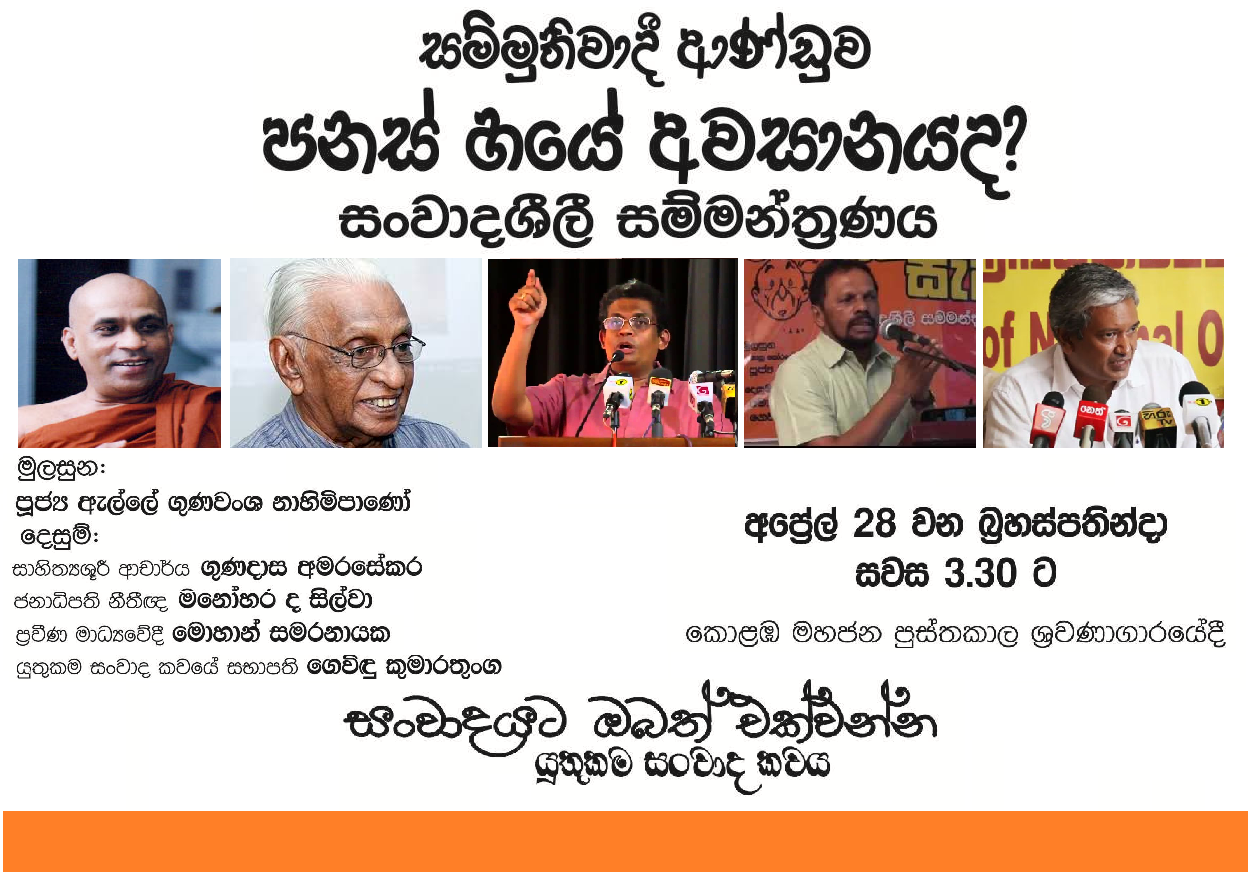
සම්මුතිවාදී ආණ්ඩුව පනස් හයේ අවසානයද?” -සම්මන්ත්‍රණය අද(28)

April 28th, 2016

-යටියන ප්‍රදීප් කුමාර

යුතුකම සංවාද කවය මගින් කාලීන දේශපාලන තත්වය සහ රටේ ඉදිරි ගමන් මග පිළිබඳ පවත්වන සම්මන්ත්‍රණ මාලාවේ මීලඟ  සම්මන්ත්‍රණය ‘සම්මුතිවාදී ආණ්ඩුව පනස් හයේ අවසානයද?’ යන මැයෙන් අප්‍රේල් මස 28 වැනි දින (අද)  සවස 3.30 ට කොළඹ මහජන පුස්තකාල ශ්‍රවණාගාරයේදී පැවැත්වීමට කටයුතු යොදා ඇත.
පූජ්‍ය ඇල්ලේ ගුණවංශ හිමිපාණන් වහනසේ මුලසුන හොබවන මෙහි ආචාර්ය ගුණදාස අමරසේකර මහතා, මොහාන් සමරනායක මහතා,ජනාධිපති නීතීඥ මනෝහර ද සිල්වා මහතා,ගෙවිඳු කුමාරතුංග මහතා විසින් දේශන පැවැත්වීමට නියමිතය.
සහභාගි විය හැකි සැමට මෙම අවස්ථාවට සහභාගී වන ලෙස සංවිධායක මණ්ඩලය ඇරයුම් කර සිටී.

yuthukama

සම්බන්ධන් හමුදා කඳවුරකට කඩා පැනීම ගැන පැමිණිල්ල ඉල්ලා අස්කර ගනී..

April 27th, 2016

විපක්‍ෂ නායක ආර්. සම්බන්ධන් මහතා පසුගිය 16 වන දා කිලිනොච්චියේ හමුදා කඳවුරකටdalasබලහත්කාරයෙන් ඇතුළු වීම සම්බන්ධයෙන් හමුදාව විසින් පොලීසියට කරන ලද පැමිණිල්ල ඉහලින් ලද නියෝග මත ඉවත් කරගෙන ඇති බව තොරතුරු ඇති බව පාර්ලිමේන්තු මන්ත‍්‍රී ඩලස් අලහප්පෙරුම මහතා කොළඹදී පැවති මාධ්‍ය හමුකදී කියා සිටියේය.

From Kilinochchi to Galle

April 27th, 2016

Editorial Courtesy The Island


Pivithuru Hela Urumaya leader and Joint Opposition firebrand Udaya Gammanpila has challenged newly appointed IGP Pujith Jayasundara to arrest Opposition Leader R. Sampanthan for ‘forcibly entering’ an army camp in Kilinochchi on April 16. Gammanpila is being very naïve. The IGP cannot do so for obvious reasons.

Sampanthan is a member of the Constitutional Council (CC) which selected Jayasundara as the IGP without following any procedure or rules, which, to begin with, are conspicuous by their absence. How can the new IGP act against any of the CC members who voted for him? Second, arresting the Opposition Leader is a tall order for an IGP who has even failed to nab those who recently demolished a multi-million-rupee walking track near the Wattala police station.

The Opposition Leader and other TNA politicians have denied that they forced themselves into the army camp concerned. They insist that the barrier at the entrance to the military facility was raised for them to enter. This has not been denied by the army. However, the fact remains that nobody must enter a military camp without obtaining permission for two reasons. First, they must abide by the law. Second, they must not run the risk of being shot dead.

There are times when the TNA’s reaction to certain issues assumes a theatrical hue. It behoves Tamil politicians representing democratic parties to act responsibly without resorting to anything that might serve the purpose of sinister elements now in suspended animation.

TNA MP M. A. Sumanthiran has told this newspaper that he, Sampanthan and others entered the camp premises because some houses therein had not been returned to their owners. Why the army continues to occupy houses belonging to civilians some of whom are said to be languishing in temporary shelters defies comprehension. It is nearly seven years since the war ended and those houses must be returned to their original owners without further delay.

There is a positive side to the Kilinochchi incident. TNA politicians did not dare go anywhere near LTTE camps without obtaining permission and undergoing security checks though they had good relations with the Tigers. But, they have driven into an army camp without fear of being shot while demonising the military!

One may not try to question Gammanpila’s right to demand police action against those involved in the Kilinochchi incident. But, the question is why there were no such strident calls for arrests when a bunch of savage fanatics unleashed violence against the Muslims in Aluthgama in 2014. If Gammanpila and others of his ilk had campaigned for arresting the perpetrators of Aluthgama violence, perhaps they would not have had to run around like headless chickens today in a bid to re-enthrone Mahinda Rajapaksa, who lost the last presidential election mainly because he had alienated the Muslim voters.

Meanwhile, Education Minister Akila Viraj Kariyawasam has rhetorically asked the media whether arrests help solve problems. Paradoxical as it may sound the answer is both ‘yes’ and ‘no’. Arrests may not help solve the problems people are faced with, but they do certainly enable politicians to tackle issues that trouble them.

Those who are ensconced in power today told us before the last presidential election that the leaders of the previous government had helped themselves to public funds to the tune of USD 18 bn. If this staggering amount of forex said to be stashed away overseas could be brought back the country’s economic woes would disappear in no time. Several politicians and their bureaucratic lackeys were arrested and detained, but not a single stolen dollar has so far been recovered. Instead, the government is squeezing the public dry to raise funds to tide it over.

However, arrests have helped the government neutralise some of its political enemies. After being detained for many moons, an ex-MP described by the champions of good governance as the former ruling clan’s collector has switched his allegiance to the government; he is said to be singing like a canary now. Moreover, he has been appointed one of the organisers of the SLFP’s May Day rally in Galle. One problem less for the government!


President Maithripala Sirisena all out to foil predecessor Mahinda Rajapaksa’s comeback bid … vows to adopt constitutional and legal measures to achieve that end

April 27th, 2016

President Maithripala Sirisena yesterday declared that his goal was to thwart his immediate predecessor Mahinda Rajapaksa’s bid to return to power.

The 19th Amendment to the Constitution was meant to scuttle his predecessor’s political project, the SLFP leader said.

article_image

President Sirisena was responding to a query by The Island at a media briefing at the President’s House. The President emphasised that he would achieve his objective through constitutional and legal means. Underscoring the pivotal importance of punishing those who had been found guilty of wrongdoings, the President said that he would take all possible constitutional and legal remedies to defeat corrupt as well as scheming elements.

The Independent Commissions established in accordance with the 19th Amendment to the Constitution would play a crucial role in ongoing efforts to create a righteous environment.

President Maithripala Sirisena launched a scathing attack on former Economic Development Minister and ex-SLFP National Organiser Basil Rajapaksa. Alleging that the former SLFP strongman had been distributing bundles of money among supporters to bring people to the Kirulapone May Day rally organised by ‘disruptive’ and ‘corrupt’ elements, the President said that he was in a quandary as to how those funds had been raised. The President castigated the former Economic Development Minister over his current role organising the May Day rally for the Joint Opposition.

Referring to the period leading to January 2015 presidential polls, the President said the then ruling clan had sidelined almost the entire Cabinet and parliamentary group by late 2013/early 2014. There had been regular meetings on Wednesday mornings at Temple Trees where crucial decisions were taken, the President claimed, alleging that the ruling clan deprived ministers of an opportunity to take part in the decision making process. According to the President, breakfast meetings were attended by five members of the ruling family.

The President alleged that in the run-up to the last presidential polls, the former Economic Development Minister had launched a special project at the expense of his ministerial colleagues. At the then minister’s behest, District Secretaries had organised district-level functions to coincide with the release of funds allocated to districts, he said. “The then ministers and other members of parliament weren’t given a role to play. Ministers weren’t given an opportunity to address meetings.”

Claiming that the vast majority of members had resented the then ruling clan’s strategy, President Sirisena said that senior ministers went to the extent of boycotting meetings organized by District Secretaries. The former Economic Development Minister used to address respective meetings for 45 minutes to one hour after District Secretaries at the expense of other elected representatives.

The President said some had conveniently forgotten the situation in the country prior to what he called the January 2015 revolution.

The 19th Amendment to the Constitution had been enacted exactly one year back, but the media had completely forgotten the enactment of the vital piece legislation, the President said, adding that he met members of the National Police Commission (NPC) and the Public Service Commission (PSC) on Tuesday to disucss ways and means of ensuring their smooth functioning.

Acknowledging that independent commissions experienced difficulties, the President revealed that his advice to their members were to take all problems and issues into consideration but to address at least a few selected issues which required their immediate attention.

The President said that members of independent commissions should be able to retire happy.

Responding to The Island query what would be his priorities during his first term in office, President Maithripala Sirisena said he would give precedence to taking constitutional and legal measures to thwart the return of the defeated the former ruling clan. The President indicated that blocking the previous ruler was his priority. The SLFP leader refrained from mentioning any other issue.


Wrath of Kali – The dark side of God

April 27th, 2016

Wrath of Kali – The dark side of God  By Mario Perera

Published by Godage and Brothers, No 661, P.D.S. Kularatne Mawatha, Maradana, Colombo 10.

Review by Dr.Juanita Perera, Ph.D (University of Rochester, New York): formerly of the University of Heidelberg, Germany

This book is an extraordinary mix of fiction and history. It is a penetrative probe into the entire belief system that animates the country viewed from within what were the most tumultuous years of Sri Lanka’s modern history. The book dares to analyze what pious minds would prefer to pass under a calculated silence. In that sense this ‘novel’ serves as a psycho-therapy for a nation still coming to grips with what transpired between 1971- 2009.

The story begins in the squalid ‘lines’ of a tea plantation of this country. A boy of low caste birth awakens to the irreparable tragedy of his birth and consequent identity. His one and only ambition in life is to rid himself of that heritage. At a precise moment of his life, he sees what appears to be an exit from the labyrinth in which he lives and moves.

The vicissitudes of his destiny bring to his awareness the rumblings of the rebellions that are taking form both in the south and in the north and which are about to shake the nation to its foundation. He dreams of the goddess of destruction, Kali, extending to him her hand promising her help to free him from the life of servitude his identity has imposed on him. The condition she imposes on him is his total commitment and cooperation.

The book is an in-depth scrutiny into how religious creeds could be interpreted and adapted to meet the demands of revolutionists intent on displacing the beneficiaries of the existing social, economic and political system. The book shows how the ‘reign of Kali’ when ushered in, is stronger than the force of order and stability that religions interpreted traditionally set in place, which serve as pillars of support for the ruling powers.

This book with its realism, power, imagery and its dramatic depiction of the most momentous years of the country’s recent history will leave no reader unmoved.


මරියකඩේ වට්ටි අම්මලාගේ දේශපාලන සංවාදය

April 27th, 2016

චන්ද්‍රසේන පණ්ඩිතගේ විසිනි

මාගරටෝ, බලපන්කො අපෙ‌ එකා කියල තියෙන කථාව අැහුවද?

මොකක්ද බං ඕකා අලුතින්ම කියල තියෙන කථාව

හොයාගෙන බං අරක

මොකක්ද බං අරක කිව්වෙ?

අර ඉබ්බන්වල තිබ්බ රැස්වීමට ආපු මිනිස්සු ගාන හොයා ගෙනලු.

අනෙ අම්මප! ඕක ඔතනට ගියෙ ඕක කරන්නද? ඕක අර ඒබරන් ගොයියට කීව නම් යස අගේට ඔය වැඩේ කරාවිණේ. ඇත්තටම බං ඕකට කරන්න වෙන චැඩක් ඇත්තේම නැද්ද?


ඔන්න ඔන්න උඹලගෙ ඉරිසියාවත් එලියට පැන්නෙ! උඹලට අපේ එකෙක් ඔය වගේ තැනක ඉන්න එක හරියට ඇහේ කටු අනින්නා වගේනෙ. උඹලගෙ කටවහ හොදටම ඇති. තුක් විතරක් මූසල කට! ඉරිසියා කාරයෝ.

උඹට ඔච්චර දොං යන්න මම කියපු දෙයක් නැහැ උඹට වඩා මම ඕකට ආදරෙයි. පොඩි කාලෙ ඕක මගේ ඇගේ කොච්චර කියල  චූ කරල තියෙනවද? ඉතින් ඉතින් කියපන් බලන්න කොලුව කියල තියෙන කථාව.

කියල තියෙනවා අර රැස්වීමට මිනිස්සු 11,900ක් ලු ඇවිත් තියෙන්නේ කියලා.

අම්මප මූ හොයාගෙන තියෙන දේ, මුගෙ කටේ මසුරං දාන්න වටිනවානේ! හොදට බලපන් ඔත ගාන 11,901 නෙමෙයිද?

උඹට පිස්සු හරියටම 11,900 ක් කියල තමයි, කොලූ කියල තියෙන්නේ.

ඒක වෙන්න බැහැ බං මොකක් හරි වැරද්දක් වෙලා තියෙනවා එහෙම නම් ඔය ගාන 11,899ක් වෙන්න ඇති.

උඹට ඔල්මාදෙ කොලූට වරදින්නෙ නැහැ හරි ගනන් කාරයා. පොඩි සන්දියෙත් ඔහොමමයි; ඇත්තටම මොකක්ද බං උඹට ව‌ෙලා තියෙන රුදාව, මේ ගාන අල්ලගෙන දගලන්නේ?

නැහැ බං මම කැමති නැහැ අර පිටිපස්සෙ තියෙන බිංදු දෙකට; සමහර විට ඔතන අගට බිංදු තුනක් තියෙන්න ඇති කොලුව හිමින් සැරේ එක බිංදුවක් හංග ගන්න ඇති.

ඒක යකාගෙ වැඩක්නේ; එතකොට උඹ කියන්නේ ඔය රැස්වීමට එක් ලක්ෂ දහනවදාහක් ආවා කියලද?

නිකම් බොරු කියන්න එපා බං ඒ වගේ ගානක් ආවා. උඹත් දැක්කනෙ ආපු සෙනග,

ඉතින් කවුද බං ගැන්නෙ? අපෙ එකාට වෙන වැඩක් නැති නිසා ගැනල තියෙනවා.

ඔව් උඹ කියන කථාවත් හරි. ඌත් හරි ගනන් කාරයානේ මේකත් උගෙ තවත්  උප්පර වැට්ටියක් තමයි; ඒ උනාට බලපන් ඕක බැනුම් අහන විදිය.

මොකටද බං

ඇයි උඹට තේරෙන්නෙ නැද්ද? මේක කියල තියෙන්නේ, ඊට දවස් දෙකකට ඉස්සෙල්ලා ඔතන තියන්න හදපු රැස්වීමට 250 ක් විතර ආවා කියලනේ

හුටා, උඹට තියෙන මොලේ ඌට නැහැනේ


UNP MP Cyril Mathew Report to UNESCO: Proof Sinhalese were living in the North before Tamils

April 26th, 2016

Shenali D Waduge

In his capacity as President of the Congress of Buddhist Associations of State Corporations & President of the Foundation for the Restoration & Protection of Buddhist Shrines in Sri Lanka as well as being the Minister of Industries & Scientific Affairs under the UNP Government, Minister C Cyril Mathew sent an appeal to UNESCO to safeguard and preserve the cultural property in Sri Lanka endangered by racial prejudice, unlawful occupation or wilful destruction. It was sent on 20 July 1983. The Sinhala Buddhists owe gratitude to late Cyril Mathew for this report which clearly establishes that Sinhalese Buddhists were very much living in the North & East, Buddhist monasteries prevailed thousands of Buddhist stupas and architecture prevails and his report will reveal that if these remains are now missing the separatist elements among Tamils have purposely destroyed them and have built other structures on top of them in a cunning effort to nullify Sinhala Buddhist claims to North. However, these sites clearly invalidates any homeland claims by Tamils and should throw into the dustbin all notions being put forward that the North is the original homeland of the Tamils. Tamils have no historical right to claim a separate Tamil Homeland in the North.

 Sadly apart from Cyril Mathew we have yet to see present day politicians make an effort to nullify bogus notions that have been peddled over the years and accepted by the international public for lack of counter arguments. It is reports like these sent to proper authorities that can be used. We do not need political hysterics on stages anymore. We need the Sinhala Politicians to now stop their wailing which are only confined to the political stage for the next minute they are sipping tea with the very parties they had been shouting against.

 We also would like to see the historians, the academics who take salaries from the state come out to defend the nation by using their expert knowledge to refute and nullify the lies that are being used to establish a division of the country and a new constitution that would pave the way for a separate state. The ploy of asking for a little now and more later has worked well for the separatists for every year they have gained grounds riding on lies and well-funded campaigns while the Sinhalese leaders and parties that should come forward have kept silent.

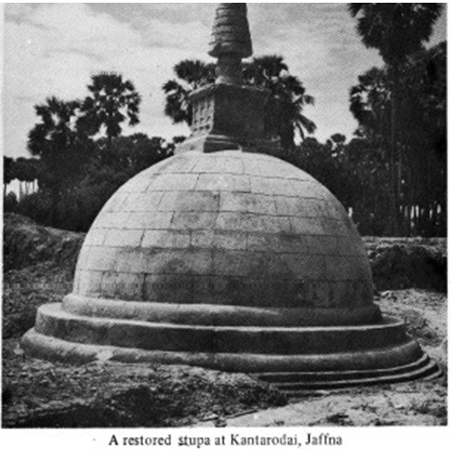
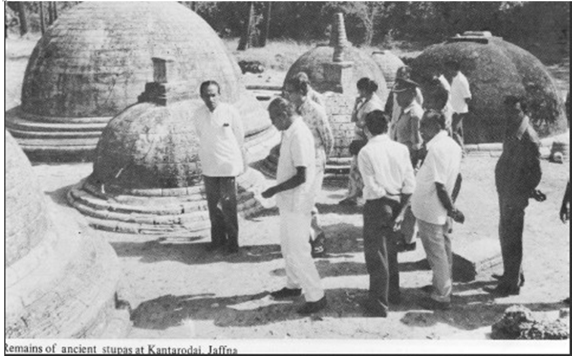
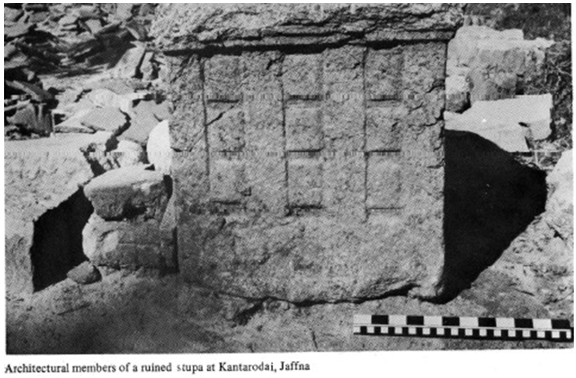
 Looking at the photos taken in 1983 of the remains of ancient sites is sad that people have stooped so low to destroy ancient artefacts that present day engineers cannot even dream of constructing. These were built without any educational qualifications or PhDs. It should be made an indictable crime to destroy such and action must be taken against any religious party or organization that attempts to build their religious structures over these ancient remains as we see taking place even now.

 The report is also good for the Sinhalese amongst us who will be surprised to find evidence that Sinhalese Buddhists were in fact living in the North and would have been pushed southwards probably due to Tamil Nadu incursions and invasions and that was how Tamils have come to migrate and settle in Sri Lanka and why they were always known as Malabars until 1911 when they became referred to as Ceylon Tamils. This scenario also should make everyone worry that if ETCA is signed the arrival of Indians would leave the Sinhalese nowhere else to move to other than the sea (a prediction made by Srimath Anagarika Dharmapala)

 Prof. Kartigesu himself said that Tamil settlements in the North was established only after the middle of the 13th century.

 Selective picking of dates and time periods overlooking the fact that Sinhalese have more right to claim the North does not give any basis for TNA or its Chief Minister to make any demands whatsoever. The Sri Lankan Government and the International Community are doing injustice to the Sinhalese who built the nation by using lies to carve out or devolve powers with later intention to create a separate nation.

 Please note these are just a handful of examples to showcase that the Sinhalese were living in the North very much before Tamils arrived from South India. Sinhalese cannot colonize their own land!

 SINHALA BUDDHIST SETTLEMENTS IN NORTHERN PROVINCE
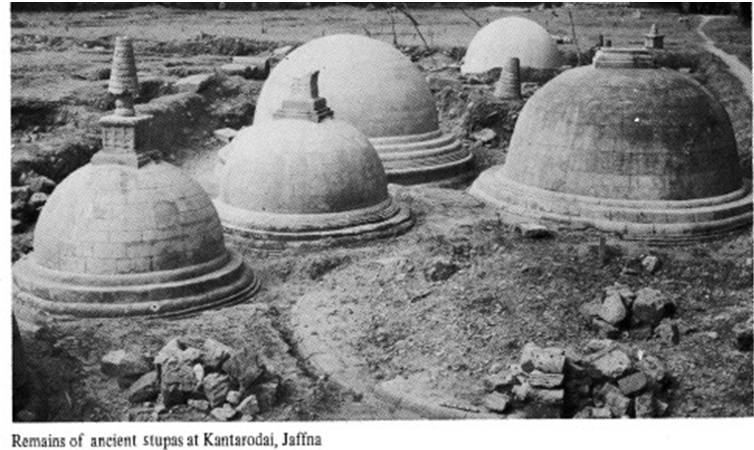
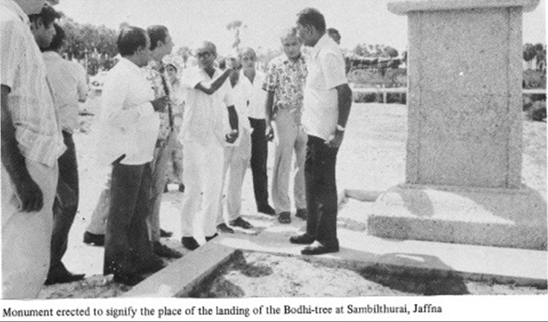
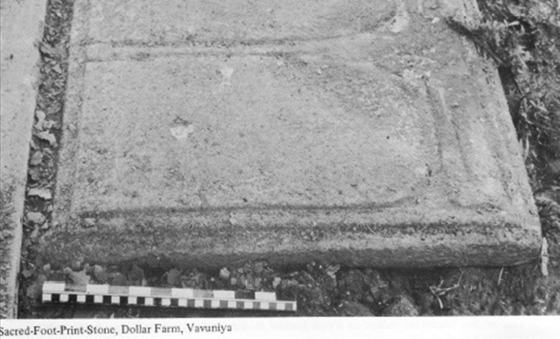
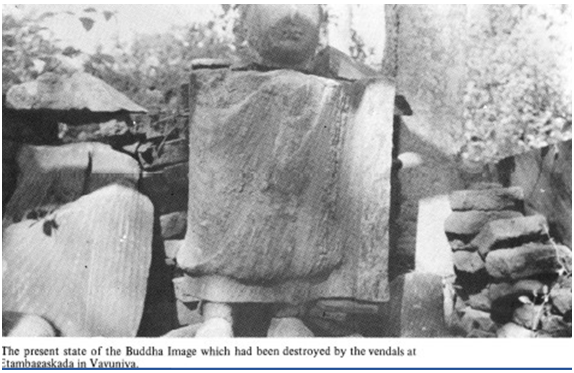
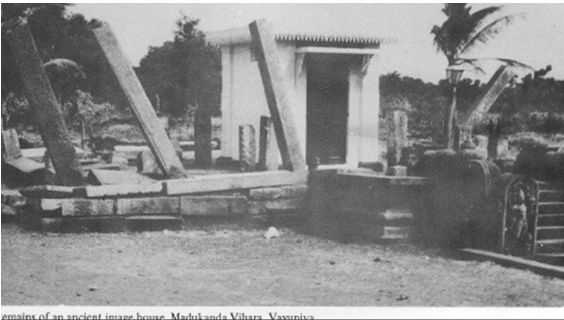
shenali2604161shenali2604162shenali2604163shenali2604164shenali2604165shenali2604166shenali2604167shenali2604168shenali2604169shenali26041610shenali26041611shenali26041612shenali26041613shenali26041615

Kurundanmalai

·        Ancient site near Kurundankulama in Nedunkarni (District of Mullaitivu)

·        Remains of ancient stupas, ponds, monastic buildings, image houses and other architectural embellishments scattered in a large area on a hillock.

·        Kurundapasana vihara built by King Khallatanaga in 2nd century BC where Sinhalese commentary called ‘Kurundi Atthakatha” was written.

·        The Kurundi vihara was 78 acres, covered 2 roods and 13 perches in extent.

·        It was declared an archaeological reservation by Gazette No. 7981 of 12th May 1933

·        The communal disturbances in August 1981, during state of emergency individuals had entere the archaeological reservation without permission & constructed a tiled roof on the remaining stone pillars of an ancient image house with the intent of converting it to a modern Hindu kovil. A section of the floor inside the image house was concreted and cemented and a trident planted.

·        The stone slab placed before the trident to light camphor was a sacred foot print stone of the Buddha.

·        Summit of the adjacent stupa mound had been levelled and cemented also to construct a Hindu kovil.

·        This constituted another violation of Buddhist sites in Sri Lanka’s North that existed since 2nd century BC.


Samalankulam


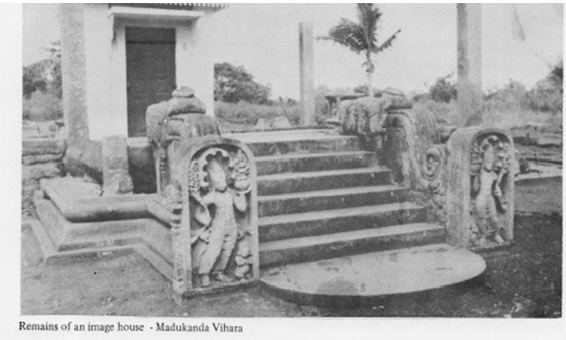
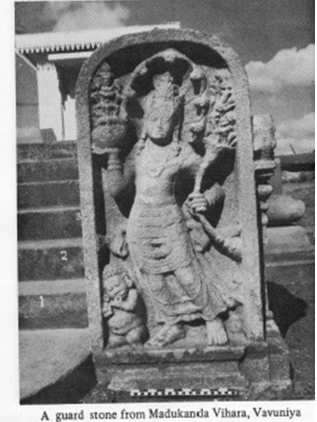
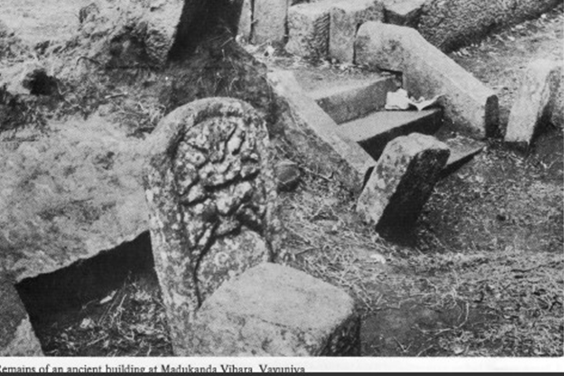
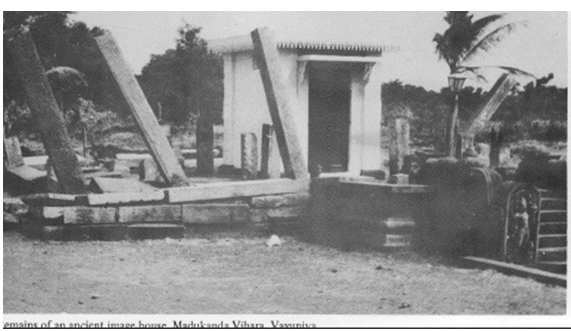
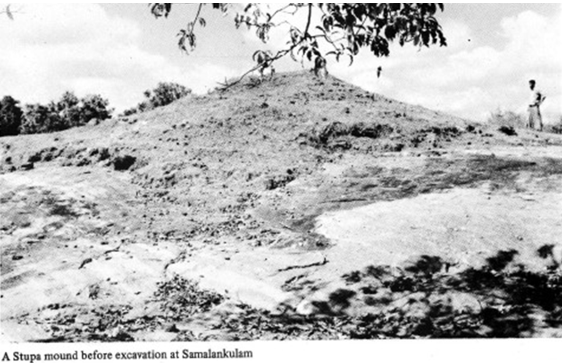
·        Ancient site in village of Samalankulam in Vavuniya District containing remains of 2 stupa mounds and an image house belonging to Anuradhapura period.

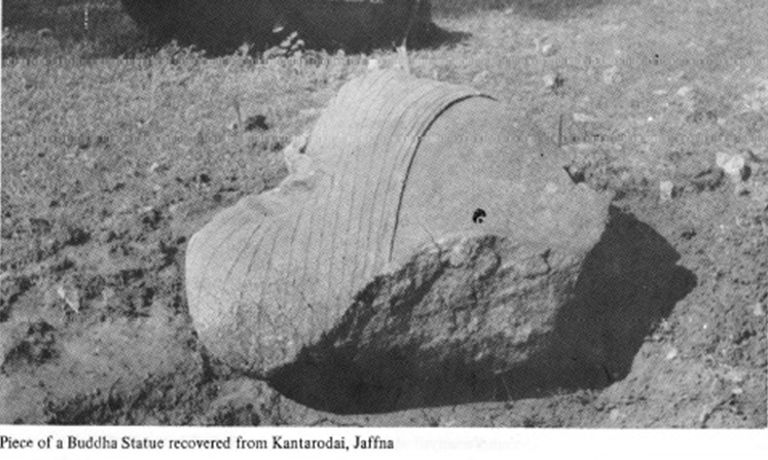
·        Statue of Avalokitesvara Bodhisattva and a fragment of a Buddha Statue discovered during excavations and conservation of image house by Dept of Archaeology.

·        Excavations revealed constructions of 2 periods at the site.

·        However a modern Hindu kovil was being constructed at site.

·        Damage had been done to the site and archaeological work was done with much opposition.

·        Image house and stupa mounds have been conserved (don’t know what the situation is after 1983)
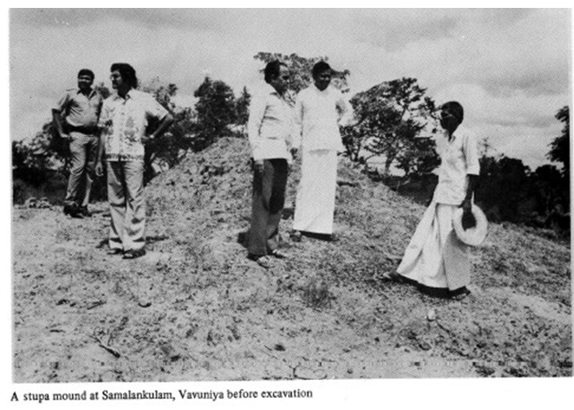
shenali26041616shenali26041617

Nelukkulam

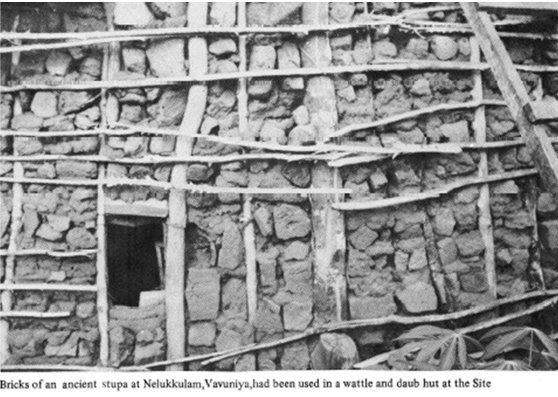
·        Stupa mound 30ft in height in Vavuniya was destroyed, levelled and cemented and trident put.

·        The stupa on a square platform belongs to Anuradhapura period – 3rd century BC-6th century AD

·        A few yards from the stupa are remains of a structure with standing stone pillars identified as monastic building of ancient Buddhist monks.
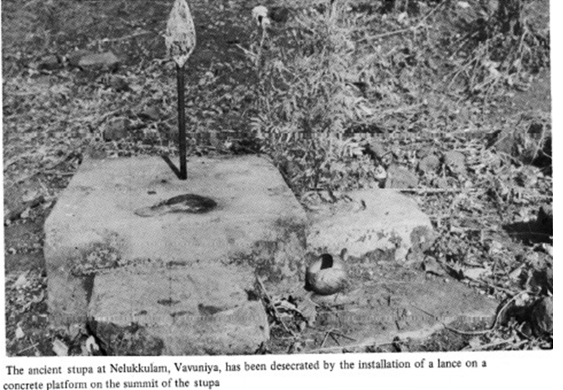
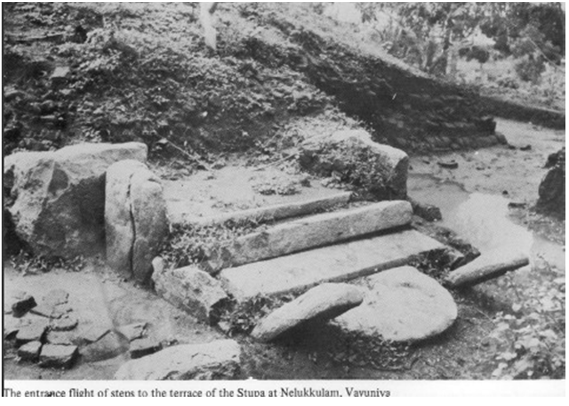
shenali26041618shenali26041619shenali26041620

Nilaveri

·        Situated ¼ mile from Puttur in Jaffna district

·        Ancient well and foundations of an ancient structure next to an ancient Bodhi Tree

·        West of the Bodhi tree are pieces of sculpture, stone pillars and brickbats scattere.

·        Limestone Buddha statue recovered from site is exhibited in Jaffna archaeological museum (hope it is still there)
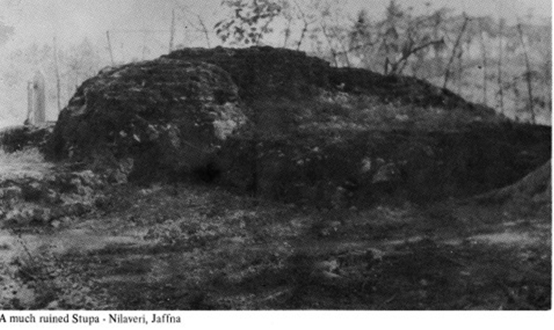
shenali26041621

Nedunkerni     

·        Ancient Buddhist monastic site of Nedunkerni situate between 20-21 mile posts on road to Vavuniya from Mullaitivu. (a key LTTE strong-hold and where severe fighting between LTTE and SL Army took place)

·        Ruins of ancient stupa and extensive monastic establishment found at site

·        Ancient balustrades, guardstones scattered

·        4th century AD rock inscriptions at site registers donation to the monastery

·        Ruins belong to a period before the Anuradhapura period.

Mohantankulam     

·        Remains of several ancient stupa on site in Vavuniya

·        Entire area with ruins fenced and used as a cattle shed

·        A modern Hindu kovil constructed in front of site within the ancient vihara premises which still contains Bodhi tree and a foot print stone.

·        Sacred foot print stone indicates site was in active religious worship since beginning of the Christian era.

Tadikulam       

·        2 miles north towards Jaffna on Vavuniya-Jaffna road

·        Remains of ancient stupa, an image house, an inscription and other ruins has been turned into a private farm

·        Inscription belongs to 2nd century AD, recording a grant to an ancient monastery

·        Inscription has been removed to the residence of the GA Jaffna district (hope it is still there)

·        Remains belong to Anuradhapura period.
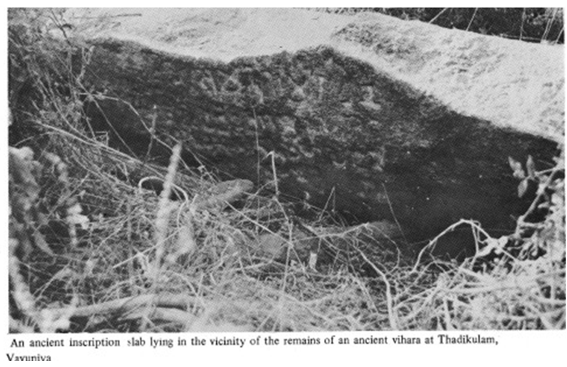
shenali26041622

SINHALA BUDDHIST SETTLEMENTS IN EASTERN PROVINCE


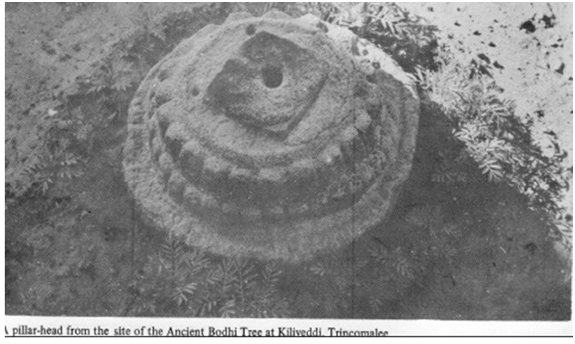
The Sri Wardhana Bodhi Tree at Kiliveddi (Trincomalee District/Eastern Province)

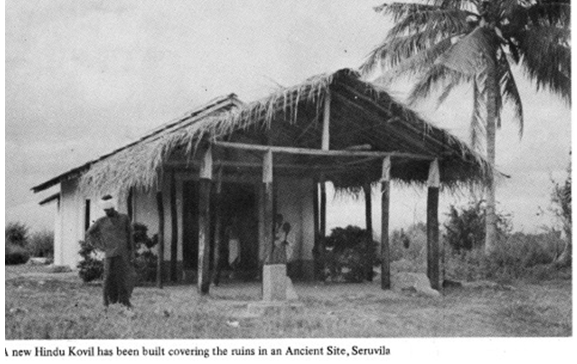
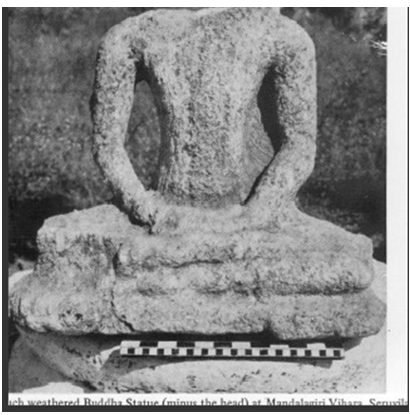
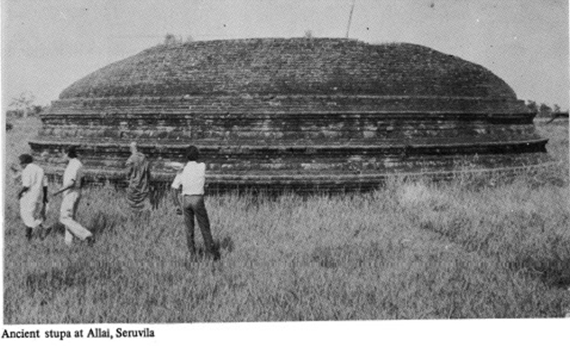
·        Ancient Bo Tree near the ancient temple of Seruvila

·        Planted in 3rd century BC by King Devanampiyatissa.

·        According to Dhatuvamsa (Sinhalese text) of the 14th century the Bo Tree belonged to Mangala Maha Stupa of Seruvila erected by Kavantissa, father of King Dutugemunu as per wish of the Buddha.

·        However, the Sri Wardhana Bo Tree was actually planted before the erection of the Stupa by King Kavantissa in the 2nd century BC.

·        According to Bodhivamsa (Sinhalese text) which gives the history of the Great Bodhi Tree at Anuradhapura, the Sri Wardhana bo tree was one of the original saplings that grew out of the first five berries that appeared on the Bo Tree in Anuradhapura. This makes Sri Wardhana Bo Tree second to Great Bo Tree in Anuradhapura in terms of its sanctity and antiquity.

·        The Bo Tree was included as ancient monument under the Antiquities Ordinance No-9 of 1940 (Cap.188-Legislative Enactment of Ceylon)

·        On 4 Nov 1957 under the Village Committee Ordinance (Sec 40) the land on which the Sri Wardhana Bodhi Tree (Kiliveddi) of Seruvila stood was veste in Mallikativu Village Committee.

·        It was in 1970 on orders by a Federal Party (ITAK) MP that branches of this sacred Bo Tree was cut on the excuse to provide telephone line to the residence of Thangadorai, another ITAK MP. The Chief incumbent of the Seruvila Mangala Rajamaha Vihara & Chief High Priest of the Tamandaku East brought this to the attention of PM Sirimavo, GA Trincomalee, Commissioner of Archaeology but nothing was done.

·        The ACBC made a complaint to the Minister of Posts & Telecommunications Mr. Kumarasuriyar against the ITAK MP for Muttur Mr Thangadorai who got the workmen from the Telecommunications Dept to cut the branches. The Minister wrote to the ACBC on 23 Jan 1971 expressing his deep regret.

·        In 1971 M H Sirisom the Assistant Commissioner of Archaeology went with Hon. Min of Cultural Affairs to inspect site and reported there was no wall around the land on which the Bo Tree stood and that work was under way to erect a Kovil in the adjacent land.

·        Minister of Justice Dr. Nissanka Wijeratne visited the Kiliveddi Bo Tree in Seruvila with S S Kulatillaka Minister of Cultural Affairs and reported that he sensed a plan to destroy the Bo Tree by non-Buddhist vandals and that instructions were given to officers of the Archaeological Dept to guard the place.

·        The Government Agent of Trincomalee Mr. Eric J de Silva reported to the Superintended of Police, Trincomalee Mr Y D Senerat that he was notified of branches of the Bodhi Tree been cut on 2 August 1976 and the plan was to cut more branches with the intention to totally destroy it. A tense situation was arising among Sinhala Buddhists in the area.

·        The GA Mr. Eric de Silva had been told by Mr. Thangadorai over the telephone that ‘if the Bodhi Tree stoon on the land of the Kovil what they do with it is the responsibility of the people to whom the Kovil belongs”. 2 days later when the GA visited the site, there was only a 10ft stump of the sacred Bodhi Tree which had been venerated by Buddhists for thousands of years.

·        Given the explosive nature of the situation, the chief incumbent of the Seruvila Mangala Rajamaha Vihara lodged a complaint to the Headquarters Inspector of Muttur Police Mr. B M S B Basnayake. The Muttur Police filed action on 12 August 1976 charging not against the destruction of a place of worship but a land dispute. The case was put off due to the Non-Aligned Conference being held. The case was retaken on 1 April 1977 but the case was dismissed.

·        The GA visiting the Bodhi Tree site on 4 April 1977 found that even the main trunk had been destroyed. What is noteworthy is that while the case was filed and after its dismissal the entire Bo Tree had been eradicated.

·        The age venerable nayake thera of Seruvila struck with grief sent letters to the President, the PM, Minister of Cultural Affairs, IGP, GA, Commissioner of Archaeology and the Head Quarters Inspector of Muttur.

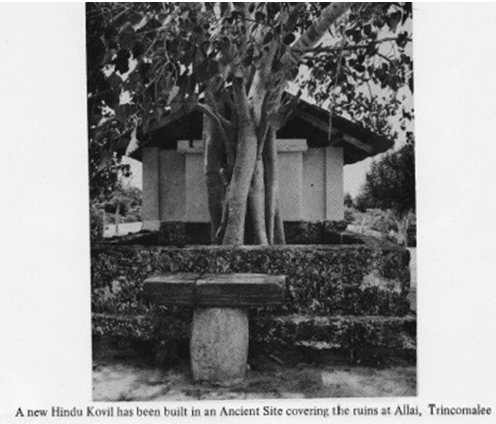
·        After change of government in July 1977, it emerged that an unlawful construction of a new Hindu Kovil had commence on the site where the historic Bodhi Tree stood (there were now 2 Hindu kovils). All evidence of the existence of the Bodhi Tree had been obliterated.

·        The premises of the Bodhi Tree containing ruins of stone pillars that came under the Village Committee of Mallikativu in 1957 had violated the statutory provision honoured since 1815.

·        Between 1970-77 a calculate scheme was executed to destroy the Bodhi Tree, obliterate the ruins of the Bodhighara and reduce the shrine to bare land. The Sirimavo Govt took no steps to safeguard it and failed to uphold the constitution which undertook to ‘safeguard and protect Buddhism’.

·        A memorandum was submitted the President by the Seruvila Sacred City Development Society on 27 June 1979. A Presidential Order was given that the land on which the Sri Wardhana Kilivedda Bodhi Tree stood was to be taken over by the Dept of Archaeology on 29 Nov 1979 as an archaeological reserve.

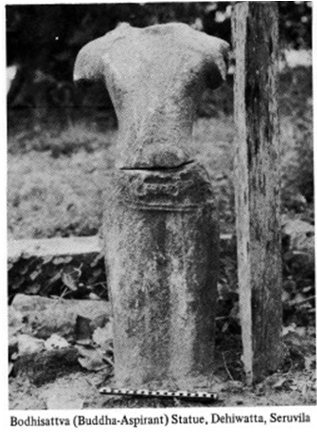
shenali26041623shenali26041624shenali26041625shenali26041626shenali26041627shenali26041628

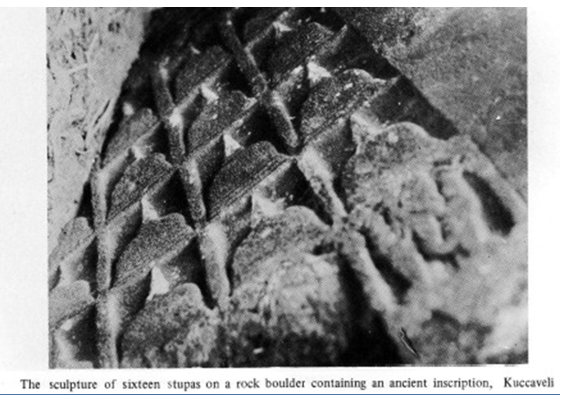
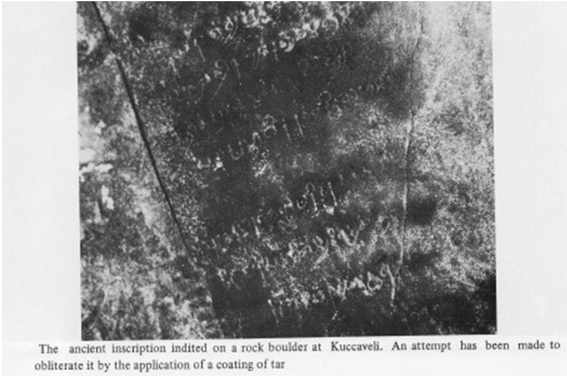
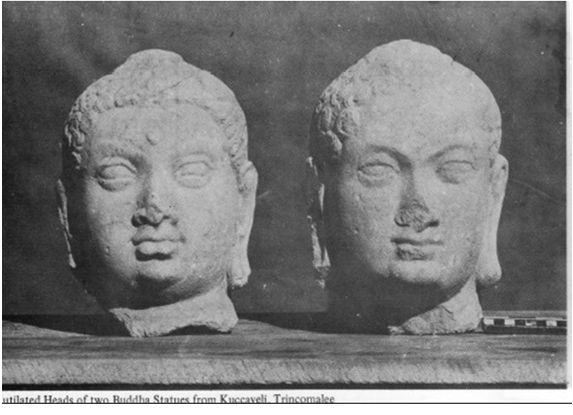
Kucceveli rock inscriptions

·        Small fishing village in Kaddukulam East, 21 miles to the North of Trincomalee

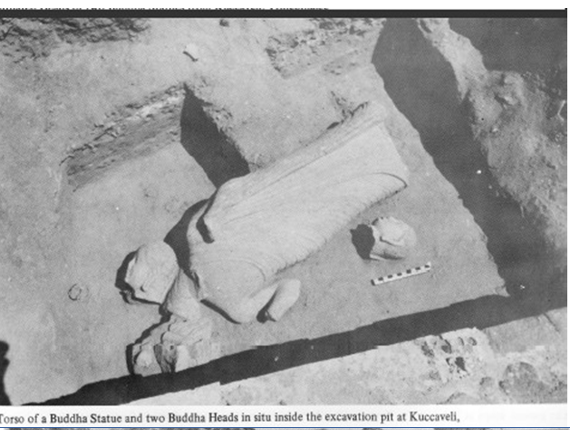
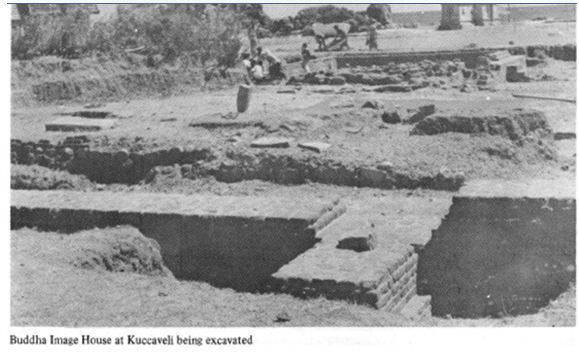
·        Dr. E Muller in his ‘Ancient Inscriptions of Ceylon’ writes this is a solitary rock close to the sea which bears a fragment of an inscription in the characters of the 7th century. The country is now inhabited almost exclusively by Tamils, but at that time it must have been Sinhalese as we can see not only from this inscription but also from the remains of a Buddhist temple found at Nattana Kovil about 3 miles west of Nilaveli (8 miles from Trincomalee) and close to the bund of Periyankulam tank”.
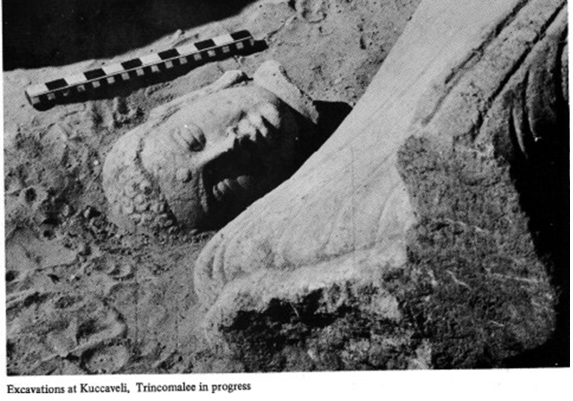
shenali26041629shenali26041630shenali26041631shenali26041632shenali26041633shenali26041634shenali26041635

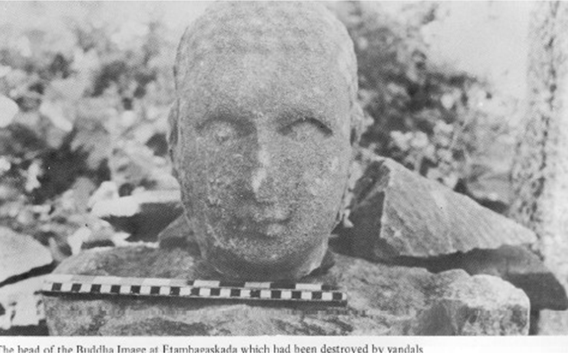
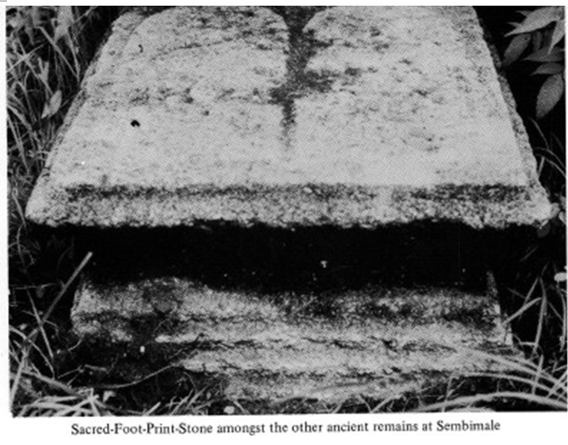
Sembimalai

·        Situated a few miles from Kuccaveli contains remains of extensive Buddhist monastic establishment dating to early Anuradhapura period.

·        Remains of large stupa mounds, sacred foot-print-stones, monastic buildings and Buddha images can be seen at site.

·        A large Buddha statue 8ft in height was seen in the beginning of Oct 1978 when the GA Trincomalee visited. It was missing when the District Revenue Officer of the area went to visit the site on 25th Oct 1978.

·        Indications revealed the statue had been dragged down the precipice prior to removal

·        The statue was subsequently recovered by Archaeological Officers 6miles away from Sembimalai near a modern Hindu kovil.

·        Excavation at the site exposed remains of 2 early stupas which are being conserved by the Archaeology Dept.

·        The ancient foundation of the vihara extends beyond the new Hindu kovil.

·        A 1st century AD rock inscription discovered at site gives the name vihara.
shenali26041636

Vilankulam

·        Ancient monastery near Vilankulam tank bund on Trincomalee Kantalai Rd in district of Trincomalee

·        Site contains a stupa mound dated to Anuradhapura period.

·        Entire site is replete with ancient brick-bats and other ruins dated to 3rd century BC-6th century AD.

·        Site had been occupied by non-Sinhalese and occupants had converted site to a farm and a well had been dug cutting through the stupa to provide water.

·        Land containing the ruins are 10 acres and declared an archaeological reservation.

Pulukunawa

·        Pulukunawa is situated in the village of Pulukunawa in Eruvil Porathivu and Manmunai AGA’s division in the district of Batticoloa.

·        Pulukunawa archaeological reserve is a large forested hill with large numbers of dripledged caves. These caves have inscriptions which record the donation of the caves of Buddhist monks.

·        The flat area below the hill are remains of ancient structures.

·        A Dagoba dug into by treasure hunters, pillared structures and a dried pond

·        A prakara (ancient boundary wall) also seen

·        Inscriptional evidence proves the site is pre-christian era. Other ruins dates to 6th, 7th, and 8th century AD

·        Site inspected on 15th Jan 1982 by Asst Commissioner of Archaeology – ruins on the hillock had been disturbed by unauthorized chena cultivation.

·        Stone pillars have been removed while attempts made to remove other pillars and spur stone.

Rahatgala / Santimalai

·        Site situated about 8miles beyond Pulunkunawa towards Batticoloa jungle.

·        25 acres remains of ancient buildings visible and

·        3 new Hindu kovils erected on top of 3 ancient image houses

·        The rocky area beyond pond can be seen 3 double-platform buildings and remains of several ancient structures belonging to 7th, 8th centuries AD.

Kanchikudichchiaru site

·        Proposed archaeological site in Tirukovil AGA’s division in Amparai District

·        Site can be approached from Kanchankudi junction on Akkaraipattu Pottuvil road.

·        Site surveyed in 1974 and to be declared archaeological reserve and delay in handing over to Archaeological Dept because relevant files have gone missing from the Ampara Kachcheri.

·        Remains of 2 hillocks on either side of tank bund with ancient stupa mound 20ft in height.

·        A new Hindu kovil being constructed in area

·        11 excavated caves contain pre-christian Brahmi inscription recording gift of the cave and tank to Buddhist monks which means a forest monastery existed at the site.

Ettama-Pottuvil

·        Remains of a Buddhist vihara and a stupa

·        At present a modern Hindu kovil is found at site.

·        Bricks of stupa used to construct huts

·        Site has a beautiful footprint of Buddha carved on a rock boulder.

·        Number of ancient buildings at site denotes Buddhist monastic establishment.

Sangamankanda

·        3 miles from Pottuvil-Akkaraipattu main road is Sangamankanda are remains of a few ancient stupas and monastic buildings.

·        These ruins are remains of an early monastic establishment belonging to early Anuradhapura period.

·        Non-Buddhists occupying area pose a threat to existing ruins at site.

Kottadicolai

·        New hindu kovil called Tanton-isvara kovil in district of Batticaloa constructed over ruins of an ancient Buddhist vihara

·        Remains of the site are a Yupa stone of a stupa, ancient brickbats, stone pillars, stone seats and stupa mound

·        Yupa stone (stone pillar of the stupa) indicates stupa belongs to earliest phase of stupa construction in Sri Lanka.

Nelugala

·        Situated in Batticoloa district

·        Vast ancient monastic complex containing remains of several stupa mounds and image houses.

·        Ancient caves with dripledges which were monastic cells of Buddhist monks and natural water holes on the extensive rocky area bespeaks the antiquity of the place going back to the time Buddhism was introduced to Sri Lanka in the 3rd century BC.

·        Buddha statues and other objects of antiquity and religious worship are missing from site.

·        Inscription of 2nd century AD at site records grants to the monastery. (hope these also are available

Taravakulam

·        Ancient site situated on road to Vadamunai through Vakaneri in Batticoloa district

·        Stone pillars and remains of ancient buildings visible at site

·        Existing remains evidence of extensive monastery belonging to Anuradhapura period

Kavudagala

·        Situated in the vicinity of the tank called Omandiamadukulam on Trincomalee road from Valaichchenai in district of Batticoloa.

·        The stupa mound on one of the hillocks has been dug by treasure hunters

·        Site is replete with guard stones, stone pillars and other remains of ancient monastic buildings

·        Plain guard stones and moonstone at site has been removed and is now used as an alter stone at a modern Hindu kovil. Removal has caused guardstone and few steps to be broken and damaged.

·        Bricks of ancient stupa used for the construction of a modern house too.

Kirimetiaru

·        Situated 3 miles from Pottuvil in Amparai district.

·        Site contains a stupa mound used as a large cattle shed

·        By the side of the stupa mound are few stone pillars and ruins which extend to adjoining lands.

Samudragiri    

·        9 miles from Seruvila

·        Ancient sea-port called Lankapatuna are remains of an ancient stupa and image house.

·        A modern hindu kovil is being constructed at site

·        Place was sanctified by landing of Prince Kalinga who brought the sacred Tooth-Relic of Buddha to Sri Lanka in 3rd century AD.

·        Ancient port and port city at the place.

Sunethravewa

·        Situated in Kantalai in district of Trincomalee

·        Modern Hindu kovil constructed covering the Buddhist monuments at site

·        Architectural members of ancient Buddhist monuments scattered all over the place and have been used in the construction of the new kovil building

·        Moonstone slabs, lotus pedestal stones and other antiquities found in abundance at site.

Gokarnna Vihara

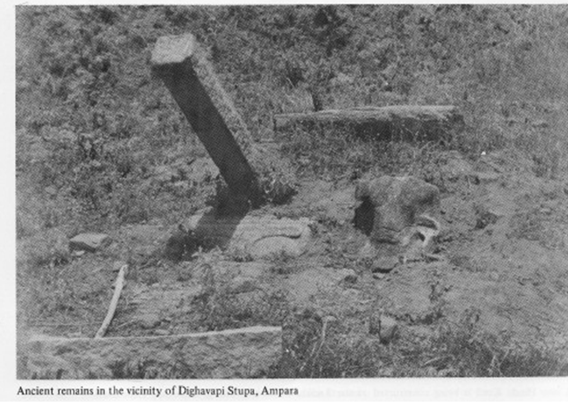
·        Ancient district of Gokarnna (Pali form is Gokanna mentioned in Chronicles of Mahavamsa and Culavamsa) and medieval inscriptions lies in area of Fort Fredrick

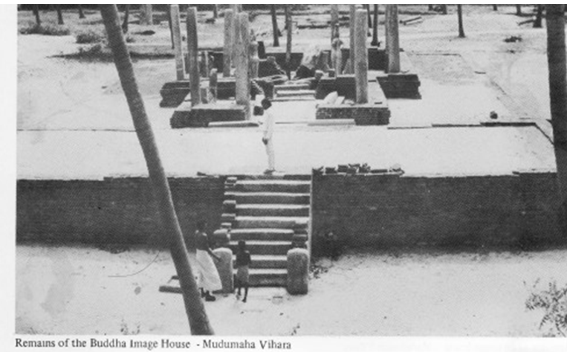
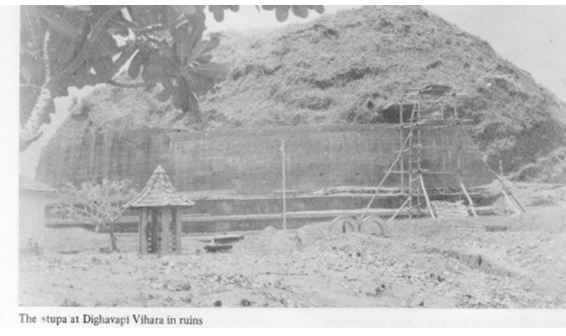
·        Several pre-christian Brahmi (ancient Sinhala) inscriptions and about 150 ancient sites with visible Buddhist remains discovered in the area is evidence that Sinhalese Buddhist settlements prevailed in Trincomalee at least since 2nd century BC if not from 5th century BC.

·        Sanskrit inscription written in Grantha characters of 13th century discovered within Fort Fredrick gives name of site as Gokarnna which is the ancient name of modern Trincomalee

·        The writings of Portuguese historian De Queroz mentions of Francis Xavier trying to convert a Buddhist monk who was chief incumbent of the Vihara built by King Mahasena. This proves that a Buddhist monastery existed continuously upto the 17th century till it was destroyed by the Portuguese to build the Fort at Trincomalee.
shenali26041637shenali26041638shenali26041639shenali26041640shenali26041641shenali26041642shenali26041643shenali26041644

shenali26041645

Shenali D Waduge

http://www.jaffnahistory.com/Cyril.pdf Late UNP MP Cyril Mathew’s report to UNESCO


Ranil’s unceasing Mahinda Phobia

April 26th, 2016

By : A.A.M.Nizam – MATARA

Western puppet Ranil Wickremesinghe has an unceasing phobia about the former President Mahinda Rajapaksa and he attempts to attrihute all follies and mismanagement of this government as results of follies made by the previous government.  He is displaying this Mahinnda phobia since he is determined to damage the image of Mr. Mahinda Rajapaksa by whatever means as he knows as long as Mr. Mahinda Rajapaksa is in the political arena puppet Wickremasinghe cannot win an election against him, and even the Sinhala UNPers will prefer Mahinda Rajapaksa over him.

He has issued a statement saying that the main reason why the fish export ban was issued in the first instance by the European Union was the inability of the previous Government to honour international agreements and mechanisms Sri Lanka was party to. He has said in his statement that instead of abiding by these agreements, the Rajapakse Regime preferred to encourage illegal fishing activities, resulting in Sri Lanka becoming isolated and internationally condemned. He has also stated that EU’s fish ban on Sri Lanka, resulted in a colossal loss of valued foreign exchange to the country

We remember that the former Minister of Fisheries and Aquatic Resources Development the political chameleon and the present Minister of Health and Indigenous Medicine Dr. Rajitha Senaratne addressing several media conferences during the time of the previous government alleged that his predecessor (former Minister Felix Perera) failed to take action on the directives given by the European Union on honouring the international conventions relating to fishing  activities and hence the EU was in the verge of banning fish exports from Sri Lanka but he held several successful meetings with the EU top officials and averted such a ban.  He also made several official visits to Brussels purporting to meet EU officials in this connection and claimed with much confidence that the EU will not impose a fish export ban to Sri Lanka.  His claim was a blatant lie as the lies he has been telling the people of this country for the last several years.

His blatant lies included his claim that China is building two multiday fishing vessels for Sri Lanka and these vessels will enable our fishermen to handover their catch to these vessels and get their vessels to refuel in the mid sea without returning to the shore.  He also stated various other things relating to the fishing industry giving much hope to our fishing community.  But what we have come across ultimately relates to allegations that he has become a multi millionaire by misusing his Ministry activities and his family members have become owners of several modern vessels.

This political chameleon Minister even now is misusing the resources of his current Ministry for personal gain and glory.  He has antagonized the much reputed professional association the Government Medical Officers’ Association and it is said that he has a personal animosity with this Association because it averted an attempt made by this Minister to get his wife appointed as the chairperson of the GMOA.

Thousands of people make by-pass surgeries in this country since they have much confidence in our able doctors. Contrary to this fact this Minister had to go to the highly expensive Mount Elizabeth Hospital in Singapore to get a by-pass surgery done for him and definitely it may have been done at State expenses.  In addition to that the eunuch President Sirisena also made a visit to Singapore to see him wasting our State resources.

The puppet Prime Minister says that Sri Lanka lost several millions of rupees due to the EU Fish export ban.  If he is really concerned about the loss of revenue to the country, instead of misleading the people by attributing the cause of loss to the previous government he should get rid of his Mahinda phobia and introduce a mechanism to make the Ministers responsible to pay for the follies they have done and continue to do and in this case Rajitha Senaratne to pay for the loss we have incurred by the EU fish export ban. This is what the puppet Ranil should do instead of wasting the time and energy of the so-called political outfit FCID to hunt on the Rajapaksas and other credible people and order to direct their operations against the rogues enjoying impunity by being members in the Cabinet and the government.   .

Misery of Mark Salter: the voice of an ordinary Sri Lankan

April 26th, 2016

By Rohana R. Wasala

When I recently watched the You Tube video of the launch of the book To End a Civil War: Norway’s Peace Engagement in Sri Lanka” at the School of Oriental and African Studies (SOAS), University of London held on October 28, 2015, I felt sorry for British  ‘writer, researcher, and consultant’ Mark Salter the author, but angry with Erik Solheim and Vidar Helgesen, the Norwegian politicians who got him to turn out what could only be called a potboiler out of the misery that all of us Sri Lankans endured for nearly three decades. It is meant for the indiscriminate consumption of readers around the world, especially those in the West, who are sympathetic to the unjust cause of dividing Sri Lanka on ethnic lines. According to Michael Hutt, Director of the Centre for International Studies and Diplomacy/CISD, University of London, who chaired the event, the event was co-hosted by the SOAS and the Norwegian Embassy.

My anger with Solheim and Helgesen was provoked by their shameless exhibition of their irrational animosity towards the country’s indigenous Sinhalese majority (75% of the population) and of their murderous hatred of Mahinda and Gotabhaya Rajapaksa on account of their immense contribution to the historic elimination of separatist terrorism in Sri Lanka in defiance of Western interventionists’ wishes and dictates. The popular belief among the masses in Sri Lanka is that the locally little known Norwegians were/are no more than the West’s willing cat’s paw in the context of their relentless manipulation of the country’s national crisis for pursuing their narrow geopolitical goals. It is obvious that, as far as we the hapless Sri Lankans are concerned, these meddling foreigners are not peacemakers, but peace wreckers: we are today experiencing the ruinous legacy of their ‘piece’ efforts.

At the same time, I felt sorry for Mark Salter, for it appeared that a pathetic attempt was being made (as is probably still being made) to make some money by selling his ‘story’ (about Norway’s failed ‘peace process’ in Sri Lanka). Michael Hutt made an initial announcement to the few guests who were there (including BBC’s Francis Harrison) (not shown on the video) to purchase copies of the book for cash (as it had been specifically requested by Salter’s publisher Hurst) at a concessionary 15 pounds, which was 10 pounds less than the marked price; Mark Salter made the same reminder towards the end of the function. Similar book launches have been held, under the same motivation, no doubt, at many venues in Europe, North and South America, India and Sri Lanka. I still feel poignantly sorry for Salter because, as revealed in his speech, he is not an unfeeling man unlike the biased, dishonest brokers that it has become his miserable lot to serve.

It was Dr Kamal Wickremasinghe’s sensible comments concerning Salter’s book (The Island/13 April, 2016) that prompted me to watch the You Tube video of the launch of the book held at the University of London. There were four panelists who, in the order in which they were introduced by the chair and later addressed the audience, were: Mark Salter, Erik Solheim, Vidar Helgesen, and Suthaharan Nadaraja. There was no panelist to represent the views of the 75% of the Sri Lankan population most seriously affected by the conflict with the most far-reaching consequences (including nothing less than the threatened dismantling of the unitary state of the country which has persisted for well over two and a half millennia).

Watching the video saved me the trouble of reading that thick volume of 549 pages, which was good for me. I could have downloaded the book into my Kindle within a few seconds for a mere 20 Australian dollars. But I thought better of it, for after watching the book launch video I was convinced that ‘To End a Civil War’ is of the same category of ‘commissioned’ nonsense as Gordon Weiss’s ‘The Cage’ (2011) merely designed to mislead the world about Sri Lanka. I didn’t fancy spending another two hours watching the video of the launch of the same book at the International Centre for Ethnic Studies (ICES), Colombo, held on March 3, 2016, which promised nothing better.

Mark Salter, the putative author of the book, was the first to speak at the book launch function held at the University of London previously mentioned. He outlined the circumstances in which he was tasked with writing the book, and also the history of the Norwegian engagement in Sri Lanka, which, according to him, began in the mid-6o’s (i.e., prior to their much touted peace engagement) with some development assistance programmes. He claimed that the initiative for Norway’s ‘peace diplomacy’ exercise in Sri Lanka was actually due to former president Chandrika’s suggestion in December 1999 that the Norwegians assume that role (which proposal, presumably, came to them as a surprise, though they decided to go along with it anyway). Salter explained that his purpose in writing the book was not ‘hagiographic’: he didn’t mean to idealize the Norwegians as perfectly successful peacemakers. In reality, he admitted, their peace effort in Sri Lanka was a failure contrary to their alleged expectations. He asserted that the collapse of the peace process was entirely blamed by both sides (the government  and the Tamil rebels) on Norway; the Norwegians became the (proverbial) ‘whipping boy’, he said. I felt that there was a deliberate exaggeration of their alleged plight of being blamed by both the government and the tigers. It is not plausible that the Mahinda Rajapaksa government blamed the Norwegians for the failure of their peacemaking, because, in my view, the government did not repose any faith in their sincerity. I won’t describe the Norwegian claim/complaint in this regard as a downright lie, though it very nearly approaches that. I would be content to just dismiss Salter’s grumbling as a result of his inadequate understanding of Mahinda Rajapaksa government’s perception of the so-called Norwegian peace process: the government knew that international intervention (effected through the Norwegians) was a hindrance, rather than a help, to the task of overcoming terror. Would the government blame the Norwegians for failing to achieve something it knew for sure they could not achieve? Besides, the overwhelming majority of ordinary Sri Lankans saw no reason to accept foreigners including Norwegians as honest peace brokers; their pro-rebel bias was evident in many instances; Solheim’s speech on the occasion of the book launch made no secret of his pro-Tamil bias. As far as the masses were concerned, they knew that the Norwegian peace process was a sham. Vidar Helgesen’s assertion during his speech that Salter’s book is unbiased is an utter falsehood.

Salter emphasized that he only tells a story in the book and that he wanted it to be read as a story. At the conclusion of his speech he thanked his publishers for ‘having faith in’ his book and effectively expressed the cautious hope that they won’t be disappointed. The mercenary motive in writing the book was obvious. Of course, I don’t see anything wrong in a writer expecting a return for his labour. That Salter wanted to write a story that sells is as natural as it is clear. But what is unacceptable is that the miserly economy with the truth that he is obliged to maintain regarding the serious historical aspect of his story (i.e., fiction) could harm the future of innocent millions in my country.

The reason for saying this is that the story the writer tells (the nature of whose contents can be guessed from the book launch video without having to read the book itself)  has important ramifications that have the potential to generate a serious impact on the lives of all Sri Lankans, who have been suffering for at least three decades, as a result of armed terrorism. It is a story alright, but it is not innocuous fiction by any means; for it is presented as history, the history of Norway’s peace diplomacy in Sri Lanka covering three decades of a devastatingly destructive civil conflict. The unacceptable thing is that the story is completely biased against the 75% Sinhalese majority on whom the terrorists visited much misery during that long period (Not that the terrorists spared the minorities the same suffering; the minorities suffered as much). My previous impression (based on personal conviction) that the Norwegians were determined, as agents of Western powers, to punish the patriotic Sri Lankan leaders who led the successful military campaign that put an end to terrorism was confirmed when I listened to the three foreign speakers (of non-Sri Lankan origin) at the book launch (Salter, Solheim, and Helgesen).

Briefly referring to the final chapter that seems to focus on the lessons that the self-appointed  peacemakers learnt, Salter touched on what he considered were two main factors that accounted for the failure of the Norwegian peace process: First, he thought that they misread the Sri Lankan political context; they worked with only one faction of the ‘Sinhalese side’ represented by Ranil and ignored the other side represented by Chandrika, the president; the two sides backstabbed each other whenever one of them proposed a solution to the Tamil problem, he said. This resulted in a failure to form a truly bi-partisan approach. (In my view, the implicit equation of the government with the Sinhalese and the rebel side with the Tamils was something unacceptable to Sri Lankans, for there has never been any sharp ethnic division among the common people, except some temporary feelings of estrangement fomented by certain shortsighted communalist minority politicians.)  In his opinion, the second contributory factor involved the Norwegians’ alleged failure to manage the local impact of the 9/11 global anti-terror environment, a failure that allowed the allegedly despotic Mahinda Rajapaksa to exploit the situation for crushing the tigers (allegedly through foul means). According to Salter, Rajapaksa dressed up his campaign against  Tamil separatists as a part of the global war on terror; and Salter ridiculed Sri Lanka’s upholding of its experience of overcoming terrorism as a model for other similarly affected nations to follow. An obvious ignoramus in military matters, Salter seemed to have thought that Sri Lanka’s successful campaign against the terrorists was a cakewalk. We know that Salter, in order to honour his tacit contract with Norway, is intent on rubbishing Sri Lanka’s legitimate success against terror. He completely ignores Mahinda’s political capabilities and his undeniable statesmanship, and the very high level of military acumen of his brother Gotabhaya and all the service commanders and the rank and file that served under them. Salter concluded his remarks offering his personal thanks to the duo Erik Solheim and Vidar Helgesen, who, he said, were his ‘constant interlocutors’. The book project was their idea in the first place, he stressed. So, one of  his main sources then had been these two vilely prejudiced individuals. The other source comprised, according to him, the UN documents (whose validity we know was extremely suspect) that formed the basis of anti-Sri Lanka UNHRC resolutions that threaten further harassment to the country in the future in the form of punishments for crimes not committed.

In the Q & A session that followed the speeches, Salter quite rightly admitted that the Norwegians’ lack of familiarity with the local culture was a serious shortcoming. He also pointed out that many Sri Lankan journalists lacked a knowledge of English, which hampered communication with them. Translation was a poor remedy. The Norwegian point of view had difficulty in being communicated to the local journalists. That could be true. Had that obstacle not been there, the Norwegians could have been better apprised of the futility of their partisan involvement in peacemaking in our country.

Erik Solheim in his turn began by outlining what he called three main issues: The first was that Prabhakaran degenerated into an isolated warlord, who believed in violence. When the tigers killed someone, Solheim said, he attributed it to the government. The Norwegians offered to arrange for the rebels to surrender to the army so they could live to fight another day, but Prabhakaran didn’t listen to their suggestion. A second point, according to him, was that the Sri Lankan government forces did commit war crimes, killing 80,000 civilians through indiscriminate shelling. He assured the audience that these crimes will invariably be punished. A third issue was the proscription of the Tamil terror organization by the international community, which in Solheim’s opinion was a mistake. He expressed his personal admiration for the Tamil people (which was OK, except for the fact that the majority Sinhalese were, by implication, negatively compared with them without any justification).

Solheim then talked about the cynicism of Mahinda Rajapaksa as a politician. While portraying himself as the great saviour of the Sinhalese he would agree to any ‘dirty deal’ ‘to help his political fortunes’; Rajapaksa pretended to be a principled politician, but the opposite was the case. The truth, as we Sri Lankans know, is that Rajapaksa championed the cause of all Sri Lankans; he was the savior of all of them. Only the Norwegians, the other anti-Sri Lankan elements, and those expatriate Tamils who are sympathetic to the separatist cause would believe such nonsense about the former president. But Solheim uttered a much bigger and blatant lie. It was that Rajapaksa told him that he would give up the North to Prabhakaran without elections on two conditions, which were 1) that the north should remain a part of the unitary state of Sri Lanka, and 2) that there should be no protracted peace process involved, because that would undermine support for him among the Sinhalese. There is no doubt in my mind that this is a fabrication, or at least an exaggeration or misinterpretation of something Rajapaksa said as a desperate peaceful alternative to a military confrontation. But he was not the kind of president to propose something akin to the madly irresponsible offer that Chandrika made to the terror leader to allow him to rule the north for ten years without any electoral mandate. It is not Rajapaksa’s fault that narrow-minded foreign meddlers fail to deal with Mahinda’s skilled and intelligent use of language when talking with those deemed to be diplomats. If he actually made such an offer, he surely should have added those two conditions in the conviction that they would be invariably rejected by Prabhakaran, for he had no intention of offering the north to Prabhakaran on a platter, something that Chandrika who hates Mahinda out of personal malice wanted to actually do before him. Prabhakaran was too sane to take Chandrika’s offer seriously. In the unlikely case of Mahinda making a similar offer, he should have done so only to demonstrate his preference of a mutually acceptable peaceful settlement to a military showdown.

Further, Solheim blamed the failure of the Norwegian peacemaking project in Sri Lanka equally on Prabhakaran, Mahinda Rajapaksa, and his brother Gotabhaya. Solheim’s enthusiastic approval of the change of government in Sri Lanka, like that of fellow Norwegian Helgesen, and of the British writer Salter, was obvious. They trusted and respected Ranil. They reserved nothing but abject contempt for the nationally more popular and more respected Mahinda. Solheim mentioned the fact at the presidential election, 55% of the Sinhalese vote went to Rajapaksa. He didn’t seem to see any anomaly in their trying to impose on Sri Lanka a solution that a majority of the majority disapprove of. Norwegians should learn that demonizing the most popular national leader of a conflict ridden country through false propaganda is not the best way of peacemaking in that country. The reality of Rajapaksa and his reception among the common people are quite the opposite of what Western misinformation has made them out to be.

Vidar Helgesen was the next to speak. He maintained that Salter had viewed the Norwegian peace process in Sri Lanka with ‘unbiased eyes’. (Go and tell that to the marines!) The main point of his speech was that Ranil, who was willing, like Balasingham (of all people!), to make sacrifices for peace, is back as PM. Ordinary Sri Lankans know about that happy circumstance incredibly better than Vidar Helgesen would care to recognize or would be able to realize. Helgesen also referred to a point that Solheim had raised previously: that one reason for the failure of the peace process was the Norwegians’ lack of ‘a big stick’ to bring pressure on the Rajapaksa government. On his part, Helgesen didn’t believe that a big stick, even if they had one, would have worked: Sri Lanka would have kept them out in that case (damning their ill conceived peace venture to an early stillbirth, I would have added had I been there).

The last panelist to speak before the Q&A session was Suthaharan Nadaraja, presumably of Sri Lankan origin, who is a lecturer in international relations at SOAS, University of London. He had been advisor to LTTE ‘ideologue’ Balasingham while the latter was alive. Nadaraja’s doctoral thesis at the same university focused on the Norwegian peace engagement in Sri Lanka. He was the only speaker worth listening to, I felt, for he talked sense (i.e., he uttered something that would lend itself to rational debate).

If the joint organizers of the book launch were looking forward to any fulsome praise of Salter’s book from Nadaraja, it was not forthcoming. He agreed with the idea that it is a story; but it is a story told from an exclusively Norwegian perspective, he emphasized. Nadaraja made an observation about the book, which he said was not a criticism. However, to me it was nothing less than an important piece of criticism. He described the work as ‘a track one account’, because one does not derive (from it) a sense of what is Sri Lanka. His idea was that any peace process must start with an account of the conflict, but here you have to deduce the conflict from the peace process, not the other way around. In Nadaraja’s view, what is left out is ‘the force of Sinhala Buddhist nationalism as a mainstream legitimizing context’. Though I do not agree with the implicit argument here, drawing out such perceptions to the public domain is salutary. The book suffers from that deficit, according to Nadaraja. Though it covers a long period beginning 1981 and extending to the end of the Norwegian role in the Lankan conflict with the defeat of the tigers, its failure to place the story in a broader context that includes what went on before 1981 is a clear weakness of the book, Nadaraja opined. In my own view, Nadaraja’s apparent belief that the Tamil demand for a separate state originated in the post-independence years is wrong. The beginnings of the problem (that gradually evolved into a call for separation) can be traced to the very early years of British colonial rule in Sri Lanka (to the 1830’s, that is). For communal unity to be restored permanently, conflicting ideas about that long history must be resolved among Sri Lankans themselves without foreign interference. That is my opinion for what it is worth. For this reason, Suthaharan Nadaraja’s critical observation on the book flashed a ray of hope for Sri Lanka in the increasingly darkening current context, I thought. I affectionately invite my patriotic Sri Lankan compatriots of all communities to judge whether my optimism on this point is justified.

Open letter to Sri Lankan parliament opposition leader R. Sampanthan

April 26th, 2016

Chandrasena Pandithage

Mr R. Sampanthan

Opposition leader in Sri Lanka.

Dear Sir,

We would like to take this opportunity to express Sri Lankan Sinhalese community’s view on ongoing activities in northern part of Sri Lanka. This is a new era and all of us should concern on our people’s future developments. We are given limited periods and it is not right to waste every bodies time doing nothing. Sri Lanka is one country and  it’s confirmed geographically, historically and religiously. Majority Sinhalese, minority Tamils and Muslims have long historical recognition in here and after western invasions, appeared Burgers,  Malays and Indian Tamil communities too. This country is belongs to all of us and everybody have right to live in this country indiscriminately. That’s what we got golden opportunity here. Majorities or Minorities have no right to do anything exceeding these rights This country belongs to all of us. It’s clear.

Ramayana tells us about the boundaries in between Ravana’s Lanka and India clearly, and it’s expressed how Hanuman and other monkey forces entered into Lanka  and it’s valuable assets burnt down to ashes. That was the first known Indian invasion on Lanka. After that, India, used to do several number of invasions targeting Sri Lanka. The specialty is all the Indian invasions instantly stop our developments as well as year 2015 January 8th election. If we start to talk about back stabbing to Sri Lanka and the Sri Lankan nationalities; we can talk lots continuously till finish our life time.

We propose you to rethink on your political carrier with self criticism. You entered into parliament year 1977 and at that time you were in opposition leader’s party. Since 1977 up to now, you have been working for targeting Tamils’ liberation. It is more than 39 years period and now it’s time to turn back and try to understand what type of liberator you are?.

When you go back to year 1977 and look at the establishment of our society wisely. Deeply rooted Tamil intellectualism were spread all over the country and it helps lots to country development and government establishment too. Highly recognized Doctors, Lawyers, Judges Engineers Departments heads worked here, most of them were from Tamil community. It means most of the governing bodies were Tamils. They got high class family values. While they were enjoying with that type of social benefits. you entered into parliament. Remember on your 1977 political campaign mostly you used anti Sinhalese slogan to get Tamil votes. Your anti Sinhalese words and slogans got power to get Tamil votes and action of that power create a reaction against Tamil community. Year 1983 the reactions sparked and started riots against Tamils. The result of riots indicate the danger of racism. Your Tamil liberation struggle badly damaged to Whole country. Specially it’s given uncountable damage to Tamil community and it’s uprooted all the Tamil establishments from the society. Tamils were given horrible situation here. They lost everything instantly become up to refugees level inside their own motherland. That’s what your politics presented to Tamils. Since 1983-2005 most of Tamils got gypsy type life style in Northern Sri Lanka inside your liberated State. Premature  Tamil state gave cyanide capsules, guns and suicide jackets to children and let down Tamil dignity to very low level in the history. They did not see the developments and they were in the dark until year 2009 May.

According to our view President Mahinda Rajapaksa and Sri Lankan Army started Tamil liberation struggle and it’s end in year 2009 May 18th. We propose you to organize to celebrate that day as “Tamils Liberation day” because cyanide capsules were remove from Tamil children’s neck. all the child soldiers were released and they got freedom to go back to their home. Tamil children are the future of Tamil community and you failed to understand the value of Tamil children. You did not stand for Tamil children. What type of liberation you expect to give Tamil community using infants for your so called Tamil liberation.

We are having a peaceful country now. Everybody enjoy with the freedom. Nowadays we are getting informations on your activities against Sri Lankan Army. You are the opposition leader. But you are not the president or prime minister.Please do opposition leaders job wisely. Because you have to do lots to raise Tamil community bring up to 1977 level. It was damaged by your so called Tamil liberation struggle. Your all the activities damage badly to Sinhalese and Tamils relationship and your actions make reactions against Tamils living in island wide. Please make the path to all Tamils have long life as same as you. God bless you!

සාදුකින් පෙලෙන උන් මැයි දිනයට නැගිටියව් !

April 26th, 2016

තේජා ගොඩකන්දෙආරච්චි

ජාත්‍යන්තර කම්කරු දිනය වන මැයි 1 වන දා ලං ලංව එයි. මෙය ජාත්‍යන්තර කම්කරු දිනය ලෙස සැලකුනද, ශ්‍රී ලංකාවේ ඇති සියලුම ධනවාදී පක්ෂ ද මැයි දින සැමරුම් උත්සව පැවැත්වීම සාමාන්‍ය සිරිතකි.

මේ දිනවල කාගේත් අවධානයට ලක්ව ඇති කරුණ වන්නේ මේ සම්බන්ධව ශ්‍රී ලංකා නිදහස් පක්ෂය තුල මතුව ඇති අර්බුදයයි. ජනාධිපති මෙෙත්‍රීපාල සිරිසේන ඇතුලු රජයට එකතු වූ පිරිස තම මැයි දින රැලිය ගාල්ලේදී පවත්වන්නට සියලු කටයුතු සූානම් කර ඇති අතර, ඒකාබද්ධ විපක්ෂය ද වැඩ කරන ජනතාව වෙනුවෙන් කිරුළපනදී වෙනම මැයි රැලියක් පවත්වන්නට සැරසෙමින් සිටී. එජාපයේ මැයි රැලිය සුපුරුදු පරිදි කැම්බල් පිටියේ පැවැත්වීමට කටයුතු යොදා ඇත.

මේ ශ්‍රීලනිප යේ මැයි රැලි අර්බුදය පිලිබඳව අදාල දෙපාර්ශ්වය අතරද, වෙනත් පාර්ශ්වයන් අතරද විවිධ ආකාරයේ කතාබහ මාධ්‍ය තුලින් ඇසේ. මේ කතාබහ සියල්ල අතර වඩාත්ම හාස්‍යජනක වන්නේ ශ්‍රී ලංකා නිදහස් පක්ෂයේ බෙදීම ගැන එක්සත් ජාතික පක්ෂය හෙලන කිඹුල් කඳුලුය. වරෙක මහින්ද රාජපක්ෂ ඇතුලු කණ්ඩායම ශ්‍රීලනිප ය දෙකඩ කරන්නට හදන බවට චෝදනා කරන මොවුන් මී ලඟට, මෙතරම් වංචා දූෂණ  කල මහින්ද රාජපක්ෂට මැයි දින රැලියක් පැවැත්වීමට අයිතියක් නැති බව පවසති.

එසේ නම්? ඒ අයිතිය තිබෙන්නේ එක්සත් ජාතික පක්ෂයට කියාද ඔවුන් පවසන්නේ? ප්‍රධානවම මේ චෝදනාව කරන එජාපය කතා කරන්නේ හරියට මැරී ඉපදුනා වගේය. ජාත්‍යන්තර කම්කරු දිනයක් එලැඹෙමින් ඇති මේ මොහොතේ ඔවුන්ගේම රජයක් යටතේ 1980 ජුලි වැඩ වර්ජකයන්ට අත් වූ ඉරණම මේ මැති ඇමතිලාට මතක් කර දිය යුතුය.

1980 වසරේ මාර්තු මාසයේ දී ශ්‍රී ලංකාවේ සියලුම වෘත්තීය සමිති ඒකාබද්ධව පැවැත් වූ සමුලුවක දී එලඹුන ප්‍රධානතම තීරණය වූයේ සියලුම රජයේ හා පෞද්ගලික අංශවල සේවකයන්ට රු.300 ක වැටුප් වැඩිවීමක් සහ තවත් කරුණු කිහිපයක් රැගත් ඉල්ලීම් කිහිපයක් රජයට ඉදිරිපත් කිරීමටත්, රජය මීට සවන් නොදෙන්නේ නම් දීප ව්‍යාප්ත වැඩ වර්ජනයකට යාමටත්ය.

මේ වන විට කලින් පැවති රජය යටතේ භාණ්ඩ හිඟය, පෝලිම් සංස්කෘතිය වැනි ප්‍රශ්ණ නිසා ජනතාව අත්විඳි දුෂ්කරතා විකුණාගෙන විශාල ජන බලයක් ලබාගත් එජාප රජයට වසර තුනක් ගතව තිබිනි. ඔවුන් බලයට පැමිනි වහාම විවෘත කල ආර්ථික ප්‍රතිපත්ති ඹස්සේ රට තුලට ගලා ආ ආනයනිත ආහාර ඇතුලු භාණ්ඩ කන්දරාව මගින් ජනතාවගේ අවශ්‍යතාවයන් සහ අභිලාශයන් මහා පරිවර්තනයකට හසු කරමින් තිබූ අවධියයි ඒ. නමුත් අත්‍යවශ්‍ය භාණ්ඩ මිල පවා දිනෙන් දින ඉහල යන විට ජනතාවට කන අඳින දේ පෙනෙන්නට තිබුනා කියා ඇති ඵලය කුමක්ද? ඔවුන්ට ඒවා මිලදී ගන්නට හැකියාවක් නොමැත. නමුත් මේ කාලයේ ද මගේ මතකයේ හැටියට පාර්ලිමේන්තු මැති ඇමති වරුන්ට තීරුබදු රහිත වාහන ඇතුලු වෙනත් වරප්‍රසාද ලැබෙමින් පැවතුනි. ඒ වන විට කඩිනම් මහවැලිය වැනි යෝධ ව්‍යාපෘතීන් ඔස්සේ රටට ගලා ආ ධනස්කන්ධයක් තිබියදී ද මෙසේ ජනතා ප්‍රශ්ණ දිනෙන් දින ඉහල යන්නට හේතුවද, ඔවුන් අද මහින්ද රාජපක්ෂට ඇඟිල්ල දිගු කොට කරන චෝදනාත්මක හේතූන්මය. එනම් නාස්තිය, දූෂණය සහ වංචාවය.

එදා, අද මෙන් සමාජ වෙබ් අඩවි භාවිතයේ නොතිබුන අතර, විද්‍යුත් මාධ්‍යයන් ඉතා සීමිත විය. ජනතාවට පුවත් මගින් හෝ ගුවන් විදුලිය මගින් ලැබෙන තොරතුරු වලින් සෑහිමකට පත් වන්නට සිදුවී තිබින. ඒවායිනුත් බහුතරයක් රජයේ ග්‍රහණයට හසුව තිබිනි. එබැවින් එකල සිදු වූ දූෂණ – වංචා කතාවන් වැඩි දුර දිග ගියේ නැත.

මෙවන් තත්වයක් මත එදා රජයේ සහ පෞද්ගලික අංශ සේවකයන් මසකට රු. 300 ක වැටුප් වැඩි වීමක් ඉල්ලුවේ දිනෙන් දින ඉහල යන ජීවන වියදම දරාගනු නොහැකි තැනය. ඒ වන විටත් අඩු තරමින් ජේ ආර් 77 දී දෙන්නට පොරොන්දු වූ ඇට රාත්තල් 8 වත් දී තිබුනේ නැත. මෙම ඉල්ලීම්වලට රජය කන් නොදුන් තැන 1980 ජුනි මස 5 වන දින දිවා ආහාර පැයේදී දීප ව්‍යාප්ත සංකේත වැඩ වර්ජනයකට එළැඹීමට වෘත්තීය සමිති තීරණය කලහ. එදා ඒ සංකේත වැඩ වර්ජනයට එජාප රජය යෙදවූ මැර පිරිස් පහර දුන් අතර, ඉන් එක් වර්ජකයකු මියගොස්, තවත් කිහිප දෙනෙකු තුවාල ලදහ.

රජයේ මේ හිතුවක්කාර ප්‍රතිපත්තයට එරෙහිව එම වසරේ ජුලි මාසයේදී වෘත්තීය සමිති විසින් සැලසුම් කල මහා වැඩ වර්ජනය ඇරඹිනි. සේවයට වාර්තා නොකරන පිරිස් සේවය අතහැර ගියා සේ සලකන බව රජය පාර්ශ්වයෙන් නිවේදනය කරන ලදී. එම තර්ජනයෙන් නොනැවතී, රජය විසින් ඒකමතිකව එළැඹුන තීරණයට අනුව වර්ජනයට සහභාගී වූ රජයේ සේවකයන් 40, 356 දෙනෙකු සේවයෙන් පහ කල බව 1980 ජුලි මස 24 වනදා අගමැති ආර්. ප්‍රේමදාස විසින් නිවේදනය කරන ලදී.

මේ වන විට රජය විසින් විශේෂයෙන් තම පාක්ෂිකයන්ට රැකියා ලබාදීම අරමුණු කර ගෙන පිහිටුවන ලද රැකියා බැංකුවල ලියාපදිංචි වී සිටි පිරිස් යොදාගෙන වහාම පුරප්පාඩු සම්පූර්ණ කිරීමට රජය පියවර ගත්තේය. එදා තමන්ගේ මේ හපන්කම ගැන ජේ ආර් උදම් ඇනුයේ ‘ ඔය අලියා යන්තම් හොඬවැල හෙලෙව්ව විතරයි’ කියමිනි.

මෙය, තම සේවක අයිතිවාසිකම් සඳහා ඉදිරිපත් වන්නන්ට වැදුනු මරු පහරක් වූ අතර, පසු කලකදී මෙම අත්තනෝමතික තීරණයේ අතුරු ඵල වශයෙන් මෙසේ රැකියා අහිමි වූවන්ට සහ ඔවුන්ගේ දරු පවුල් වලට විශාල දුර්විපාක වලට මුහුණ දීමට සිදුවිය.

ශ්‍රී ලංකා ඉතිහාසයේ පලමු වරට මැයි දිනය තහනම් දිනයක් බවට පත්වූයේ එජාප රජය තම දැවැන්ත මර්ධනකාරී ආඥාදායකත්වය සියලු විපක්ෂ ක්‍රියාකාරීන් හමුවේ මුදාහැර තිබූ වකවානුවේය. ඒ 1987 මැයි 1 දාය. එයට එරෙහිව විපක්ෂය නාරාහේන්පිට අභයාරාමයේදී මැයි දිනය සැමරූ අතර ආණ්ඩුව පොලීසිය යොදවා වෙඩි තබා දෙදෙනෙක් ඝාතනය කරන ලදී.

ඒ වත්මන් අගමැතිවරයාද කැබිනට් අමාත්‍ය ධූරයක් හෙබවූ 77 -94 එජාප දුර්දාන්ත පාලනයේ මුල්ම සමය තුල සිදු කල හපන් කම්ය. මහින්ද රාජපක්ෂට වැඩ කරන ජනතාව එක් රැස් කරන්නට අයිතියක් නැතැයි පවසන්නේ එහෙව් එක්සත් ජාතික පක්ෂයයි.

අජිත් මාන්නප්පෙරුම හෝ ලක්ෂ්මන් කිරිඇල්ල වැනි එජාප ඇමතිවරුන් හෝ ඊනියා සම්මුතිවාදී රජය සමග එක් වූ සන්ධාන ඇමතිවරුන් ද පවසන පරිදි ශ්‍රීලනිප ය දෙකඩ කරන්නේ මහින්ද ද? එය  හැබෑවටම සිදු කරන්නෙ එජාපයයි. ඔවුන් ඒ සඳහා පාවිච්චිකල ඉත්තා මෙෙත්‍රීපාල සිරිසේනය. එදා ඔහු එජාපය ඇතුලු වෙනත් පක්ෂවල ආශීර්වාදයෙන් මහින්ද රාජපක්ෂ පැරදවූ අතර, ඊට ප්‍රති උපකාර ලෙස එජාප රජයේ බලය තබා ගැනීමට සන්ධානයේ පිරිසක් තනතුරු වරදාන මගින් රජයට නම්මා ගත්තේය. මේ නයින් බැලූ කල එජාපයේ හිත සුව පිනිස වැඩකරමින් සිටින්නේ සැබැවින්ම මෙෙත්‍රී පිල නොවේද?

මේ ආකාරයෙන් තම වාසියම අරමුණ කරගෙන, යථාර්තයට දෑස වසාගත් පිරිසකට කිසි දිනෙක වැඩ කරන ජනතාවගේ දුෂ්කරතා වැටහෙනු නැත.

ඉතා සුලු ඡන්ද ප්‍රමාණයක් ලබාගත් සරත් ෆොන්සේකා එජාප ය සමග ගිවිසුම් ගතව, ජාතික ලැයිස්තුවෙන් පාර්ලිමේන්තුවට රිංගා ගෙන ඇමතිකමක් ද ලබාගෙන ඇත. එජාපය, මෙෙත්‍රීපාල සිරිසේන මෙන්ම මොහුවද භාවිතා කරන්නේ පැහැදිලිවම රාජපක්ෂ පිලට පහර ගැසීමටය. පසුගිය සතියක පුද්ගලික රූපවාහිනී නාලිකාවක් සමග පැවති සාකච්ඡාවකදී, ඔහු තමන්ට මහජන සේවය සඳහා ගමන් බිමන් යාමට රු. ලක්ෂ 400 ක් වටිනා වාහනයක් ඉල්ලා සිටීමේ කරුණ සාධාරණීකරනය කලේය. ඔහු පැවසුවේ අනිකුත් මැති ඇමතිවරු පාවිච්චි කරන්නේ රු. ලක්ෂ 500 වාහන බවත්, තමා ඒ අතින් රජයට රු. ලක්ෂ 100 ක ලාභයක් කල බවත්ය. මහජන සේවය සඳහා ලක්ෂ 400 ක ම වාහනයක් අවශ්‍යමද යනුවෙන් ප්‍රශ්ණකරු විමසූ විට, තමාට තම රාජකාරි සඳහා සුව පහසුවට යාමට අවශ්‍ය බවත්, එවන් වාහනයක නොගියහොත් තම ඇඟ පත තැලී පොඩිවී, මහජන සේවය පසෙක තබා ඇඟේ අමාරුවට නිදා ගන්නට සිදුවනු ඇති බවත් ඔහු පැවසීය. අප රටේ මහජන නියෝජිතයෙකු ලෙස  මේ උද්දච්ච මිනිසා වෙතින් පිළිබිඹු වූ ආකල්ප සහ සංවේදීභාවයේ තරම දුටු විට ඔහු වෙතින් ජනතාවට අපේක්ෂා කල හැක්කේ ‘පාන් ගණන් වැඩි නම් කේක් කාපල්ලා’ යන උපදෙසට වැඩි දෙයක් නොවේ.

ශ්‍රී ලංකාවේ පොදු ප්‍රවාහන සේවයේ තත්වය අමුතුවෙන් විස්තර කල යුතු නොවේ. ඉතින් බස් රිය, දුම්රියවල තැලී පොඩිවී, දූවිලි කාගෙන, තනි කකුලෙන් හිටගෙන ගොස් සේවා ස්ථානවලට යන වැඩ කරන පන්තියේ ජනතාවට, මෙවන් ඇමතිවරුන් මෙවර මැයි රැලියේ වේදිකාවේදී රට නගා සිටුවන්නට උපදෙස් දෙනු ඇත. රට කරවන ඇත්තන්ට ලක්ෂ 400 ට අඩු වටිනාකමින් යුතු වාහනයක ගිය විට ඇඟපත තැලී නිදා ගන්නට සිදු වෙනවා නම්, අප රටේ පොදු ප්‍රවාහණ සේවයේ ගමන් කරන වැඩ කරන පන්තියේ ජනතාවගෙන් විශිෂ්ඨ ගනයේ සේවාවක් කෙසේ අපේක්ෂා කරමුද?

පාර්ලිමේන්තුවේ සිටින මහජන නියෝජිතයින් 225 ට තීරුබදු රහිත වාහන මිලදී ගැනීම සඳහා $ 62 500 බැගින් වටිනා බලපත්‍ර නිකුත් කිරීමට අනුමැතිය ලැබී ඇත. ඒ අතර එජනිස ප්‍රධාන සංවිධායක මහින්ද අමරවීර පැවසුවේ තම රජය, රජයේ සහ පුද්ගලික අංශයේ වැටුප් රු. 10 000 කින් වැඩිකල බවත්, මේවාට වැඩිවන වියදම් පියවීමට රජයට ආදායම් අවශ්‍ය බවත්ය. මැයි 1 දා සිට වැඩිවන වැට් බද්ද සම්බන්ධව ඔහු පවසන නිදහසට කරුණ එයයි. ඒ අනුව මේ වැටුප් වැඩි කිරීම පෙන්වා උදුරා ගැනීමකි.

එමෙන්ම පසුගිය දිනෙක රූපවාහිනී නාලිකාවන් ඔස්සේ කතාකල මහරගම පිලිකා රෝහලේ අධ්‍යක්ෂකවරයා, තම රෝහලට පෙට් ස්කෑනර් යන්ත්‍රයක් මිල දී ගැනීමට දායකවන ලෙස මහජනතාවගෙන් ඉල්ලා සිටියේය.

කිසිදු ඵලදායිතාවක් නැති තකතිරු දේශපාලකයින් රැලක් නඩත්තු කරන්නට ඉතා විශාල මුදල් කන්දරාවක් වියදම් කරන අප රටේ, අසරණ පිලිකා රෝගීන්ගේ ප්‍රතිකාර සඳහා අත්‍යවශ්‍ය උපකරණ මිලදී ගන්නට ප්‍රතිපාදන වෙන්ව නැත ! මේ ගැන සෞඛ්‍ය ඇමති නිහඬය. මන්ද ඔහුට යන්තම් හෘදයාබාධ ලක්ෂණ පහල වන විටම විදේශ රටකට ගොස් ප්‍රතිකාර ගැනීමේ හැකියාව ඇත. ඔහුට පාලු නැත. ඔහුගේ පවුල පිටින්ම එහි ගොස් උපන්දින සාද පවත්වති. අනිත් පාර්ලිමේන්තු සගයෝ ඔහු දකින්නට නෑගම් යති. මේ ගැන මාධ්‍ය කතාකල විට ඒ ඔවුන්ගේ පුද්ගලික මුදල් බව පවසති. මේ පුද්ගලික මුදල් ඔවුන්ට කොහෙන්ද? ලක්ෂ්මන් කිරිඇල්ල ඇමතිවරයාට අනුව රු. ලක්ෂයක වැටුපෙන් ඔවුන් ජීවත් වන්නේ අමාරුවෙනි ! එසේ නම් ඔය පෞද්ගලික මුදල් ලැබෙන ක්‍රම ගැන සොයාගන්නට මොලයක් ඇති කෙනෙකුට කිරිඇල්ලගේ කිරිපල්ල අතගාන්නට අවශ්‍ය නොවනු ඇත.

මහජනතාවට සිදුව ඇත්තේ මේ අවස්ථාවාදී, අසික්කිත දේශපාලන සංස්කෘතිය දෙස සිත් වේදනාවෙන් බලා සිටින්නට පමනි. තම තමන්ගේ පෞද්ගලික සැප පහසුව ගැන මේ අයුරින් ඉතාම ආත්මාර්ථකාමී ලෙස, පහත් අයුරින් කතා කරන පාර්ලිමේන්තු මැති ඇමතිවරු, වැඩ කරන ජනතාව වෙනුවෙන් හඬ නැගීම පිලිබඳ අයිතිවාසිකම් තම භුක්තියට තබා ගන්නේ කෙසේද?

දැන් දැන් මේ මැයි රැලි වලට සෙනග අදින්නට සැරසෙන ක්‍රම සහ ඊට වියදම් කරන්නට යන මුදල් මිලියන ගනන් පිලිබඳවත් මේවා සංවිධානය කරන අයගේ පැටිකිරිය ගැනත් සමාජය තුල කසු කුසු ඇසෙයි.

මේ නම් වැඩ කරන ජනතාව ගැන සහානුකම්පාවෙන් සිදු කරන ක්‍රියාවන් නොවේ. මේ චරිතයන් තුල ජාත්‍යන්තර කම්කරු දිනයේ අර්ථය පිලිබඳවත් අවබෝධයක් වේ දැයි සැක සහිතය.

ශ්‍රී ලංකාවේ වැඩ කරන පන්තියේ ජනතාවට, රට කරවන පන්තියේ ජනතාව වෙතින් ලැබෙන සැලකිල්ල මෙයාකාරය !

Support for Terrorism On New Zealand Roads

April 26th, 2016

Dr. Chula Rajapakse MNZM

The Editor. DomPost

Dear Editor,

I was shocked and horrified to see a car with a personalized  plate LTTE”, in Wellington on Sunday 24th.

LTTE,  Liberation Tigers of Tamil Elam  have been labeled the most brutal” terrorist group by the FBI. They devised suicide bombers kits and so introduced suicide bombing in it’s present form & waged three decades of terrorism  in Sri Lanka causing untold loss of innocent life, limb and property. Many of us fled Sri Lanka to escape this terror.

In 2009 they were eliminated from Sri Lanka but the international machinery that sustained them with propaganda and funds still remains intact.

This plate is a brazen declaration of support for Tiger Terrorism  as it attempts revival.

Would New Zealand permit such open support for Al Qaeda or ISIS,   that is having immense adverse impact on the west.

If   countries turn a blind eye to support of terrorist groups because these groups don’t directly affect them, in this case LTTE & New Zealand, the scourge of terrorism will always be with us.

I urge the authorities to withdraw this plate and place it’s owner under surveillance for supporting terrorism .


Dr. Chula Rajapakse MNZM

Spokesperson,

United Sri Lanka Association

Lower Hutt.

The Panama Papers: The People Deceived

April 26th, 2016

Christopher Black   Courtesy Electronic analytical journal New Eastern Outlook

Umberto Eco in his last book, Numero Zero, in describing the reality of the manipulating and manipulated western media, has a newspaper editor say, let’s just stick to spreading suspicion. Someone is involved in fishy business, and though we don’t know who it is, we can give him a scare. That’s enough for our purposes. Then we’ll cash in, our proprietor can cash in, when the time is right.”

And that is exactly what is happening with the appearance simultaneously in all the western media, on Sunday, April 3 of a story about what are called the Panama Papers. The story attributed to a shadowy organisation called the International Coalition of Investigative Journalists (ICIJ) has all the hallmarks of an operation by western secret services to attempt to subvert targeted governments. The primary target is of course President Putin in order to influence the coming elections and to further attempt to portray him in the eyes of the peoples of the west as a criminal.

But the targets also include FIFA directors, continuing the harassment of FIFA by the United States government, in order to keep Russia out of the next world cup football games, Lionel Messi one of the world’s best football players, perhaps because he refused a request by President Obama’s daughters to meet him when Obama visited Argentina, Jackie Chan, no doubt punishment for supporting the Communist Party of China, and various people blacklisted by the United States for dealing with North Korea, Iran, Hezbollah, Syria and other American designated enemies.

They include President Poroshenko of Ukraine, perhaps signalling they are tired of him, the prime minister of Iceland, since forced to resign, no doubt for jailing bankers, seizing their banks and giving the people some compensation for their losses in the financial crisis of 2008, Hosni Mubarak who has accused the United States of trying to overthrow him, the murdered Gadhafi, and Xi Jinping, president of China. No Americans or NATO leaders are named though David Cameron’s father is named, perhaps a slap at Cameron for allowing a referendum to take place on whether Britain should leave the European Union, which would reduce US influence in Europe.

Essentially these people are all considered by the United States government to be enemies or critics of the United States in one way or another, or no longer reliable partners.

The immediate positioning of President Putin as the principal target of this story, despite the fact he is not mentioned in the documents, coupled with the timing of the story make a reasonable observer conclude that this information was not released just to inform the public but to subvert and discredit chosen governments, that is, it is a propaganda operation, using information that will get the attention of the masses. The rich hiding their money is always a good way to generate anger among the people and to provoke unrest in order to destabilise governments, as we saw just happened in Iceland. It does not matter whether the information in the story is true or not. Some of the information may be but the law firm from which the information was stolen says much of what the story says is untrue. But it doesn’t really matter because the story is what is important and that’s all that people see.

This conclusion is the more inescapable when the true nature of the ICIJ is revealed. For to understand what this story is about it is important to know who put it out, with whom they are connected and who provides the money.

The key is found in the list of the members of the Advisory Board, the Board of Directors and the funders of its parent organisation, the Centre For Public Integrity (CFPI). The ICIJ states on its website that is a non-profit organisation. That technically may be true but they failed to add that they act for the profit of the people who fund them and who control their operations. Funders of the CFPI include the Democracy Fund, the Carnegie Foundation, the Ford Foundation, the MacArthur Foundation, the Open Society Foundations of George Soros, the Rockefeller Brothers Fund, the Rockefeller Family Fund and many others of the same pedigree. Individual donors include such people as Paul Volcker, former chairman of the US Federal Reserve and many others of the powerful US corporate and financial elite.

Its Advisory Board includes Geoffrey Cowan, who was appointed Director of Voice of America by President Clinton in 1994 and was in 1994-96 associate director of the United States Information Agency. He is now president of the Annenberg Foundation which has hosted US presidents at its retreat in California, dubbed Camp David West, including President Obama. He is also a member of the Council on Foreign Relations which is the American think tank whose membership includes several former heads of the CIA, several US Secretaries of State, and connected media figures and which has the role of promoting globalisation, free trade and other economic and foreign policies for the benefit of the rich and powerful in America.

The Advisory Board also includes Hodding Carter III, former assistant secretary of state under President Carter and later a journalist for major western media such as BBC, ABC, CBC, CNN, NBC, PBS Wall Street

Journal, and now President of the Knight Foundation. There is Edith Everett, President of Gruntal and Company, one of the oldest and biggest investment banks in New York City, Hebert Hafif, connected establishment lawyer, Kathleen Hill Jamieson, Dean of the Annenberg School for Communication, an expert on the use of the media for political purposes including how to influence political campaigns and elections, and Sonia Jarvis, a lawyer who once worked with President Clinton,

It includes Harold Hongji Koh who was a legal adviser at the US Department of State from 2009 to 2013, nominated by President Obama, who in March 2010 gave a speech supporting the legality of drone assassinations. There is Charles Ogletree, Harvard law professor and a close friend of President Obama, Allen Pusey, publisher and editor of the American Bar Association Journal, Ben Sherwood, co-chair of Disney Media, former president of ABC News and also a member of the Council on Foreign Relations. Paul Volcker not only is an individual financial supporter but is also on the Board. Aside from his position as a former chairman of the Federal Reserve (1979-1987) he was also chair of the US Economic Advisory Board, appointed by President Obama (2009-2011) a former chair of the Trilateral Commission, worked for the Chase Manhattan Bank and is very close to the Rockefeller family.

It includes Harold Williams, former Chair of the US Securities and Exchange Commission (1977-1981) and member of board of directors of dozens of companies, William Julius Wilson, professor of sociology at Harvard and, last but not least, Christiane Amanpour, chief war propagandist for CNN, who just a few days ago appeared on CNN acting out a charade in which she interviewed a staffer from the ICIJ about the Panama Papers while pretending not to know anything about them. She was in fact interviewing a member of her own organisation but she never informed her viewers of this. For some reason her name does not appear on the CFPI website but her name does appear in the organisation’s latest annual report for 2014-15.

The Board of Directors includes Peter Beale a former head of CNN.com, a former Reuters agent, editor at the London Times, and Microsoft editorial director, as well as Arianna Huffington, president of Post Media, and Bill Kovach, journalist for the New York Times, to name just a few of the establishment figures listed.

The point is made. This is not some independent, muckraking group dedicated to truth and democracy. This is a group of propagandists who, under the cloak of journalism, carry out the art of deception on behalf of the American government and secret services. Indeed in the annual report, they even quote President Obama approving their work. In January this same group launched an attack on the government of China with another story of leaked” financial documents implicating the Chinese leadership and have done it again in this new story, now doubt part of the pivot to China.”

So there you have it, the information you need to know but which CNN, The Guardian, the BBC, CBC, the New York Times and all the rest of the media refuse to provide you so that you can properly assess the story they have propagated through the world media. The role of the western media is not to inform the public but, as Umberto Eco says, to teach people how to think,” to manipulate opinion and action. Their suppression of that information is a lie and as that other great writer, Jose Saramago, wrote, they use the lie as a weapon, the lie as the advance guard of tanks and cannons, the lie told over the ruins, over the corpses, over humanity’s wretched and perpetually frustrated hopes.” It is time for these people to be exposed for what they are and called to account for their deception of the people they claim to serve, for what greater crime can there be than to deceive the people?

Christopher Black is an international criminal lawyer based in Toronto, he is a member of the Law Society of Upper Canada and he is known for a number of high-profile cases involving human rights and war crimes, especially for the online magazine New Eastern Outlook”.

Why English?

April 26th, 2016

Dr. C.S.Weeraratna

During the last few decades a lot of emphasis has been placed on teaching/ learning English. A large number of students, especially from rural areas travel long distances spending a lot of money and time to attend private English classes to become proficient in English so that they could secure employment. Dept. of Education spends a substantial amount of human and financial resources to teach English. However, even after spending a lot of time and money most students do not become fluent in English as a few hours of English per week   is not going to make anyone fluent in the language.

Competency in a language, specially speaking  is not acquired from a good knowledge of a language studied from books. There must be sufficient exposure to the language to enable one to speak it; In the case of a living language,  one could, without studying it, acquire the ability to speak it fluently, if one is exposed to it. Thousands of Sinahala people in many parts of the country are fluent in Tamil and vice versa although most of them do not know even the alphabet. Similarly, Sri Lankans going to a foreign country become fluent in the respective language because they get exposed to it

Almost 100% of the people living in Sri Lanka can converse either in Sinhala or in Tamil or both. There are some holding high posts in the government sector who  are not very fluent in English but are very good at their work and have been able to maintain their professional standards.  A large number of non-english (NE) speaking countries have developed more than the english-speaking countries during the last two decades, although a large percentage of the people from these NE countries are not fluent in English. Our forefathers who constructed massive irrigation systems, which have marveled the western scientists, did not know a word of English.

For most of the activities/transactions with in the country,  a good knowledge in Sinhala/Tamil is more useful than English. Currently,  Korean has become important to secure jobs in South Korea. Perhaps,  in the near future, some other foreign language/s may become essential to secure jobs in other foreign countries. Our President delivered his speech in Sinhala at the recently concluded UN sessions. Thus, English is not all that essential although some cry head over heels for the low-standard of English among the school children.

In many  schools, specially in the rural areas, there are no teachers proficient in English to teach English. Even if there are such teachers, teaching English only a few hours a week will not make a student fluent in the language unless he/she uses it frequently. Hence, only a very insignificant percentage of students, particularly from rural areas  are fluent in English at the time of leaving school. According to my experience in universities, even most of the undergraduates are in this category. Fluency  in any language can be achieved only by complete immersion” in the language. A few hours of English lessons per week is not going to make students fluent in the language.

Of course English is essential for those who have to make numerous transactions in English. To access the internet, one needs to be able to understand English for which one should have a good vocabulary. Hence, those  who need to have a good knowledge of English to do their work well, it is necessary for them to be proficient in English. Any one could master  English, if one gets exposed well to this language for a few months. Students who go to  non- English speaking countries such as China, Japan  France , Germany become very fluent in the language of those countries within a few months. But, what is happening in Sri Lanka is that there is a great big hurry to make all our students, from the primary classes,  fluent in English. In some schools, all subjects including Buddhism are taught in English although the mother tongue of the students is Sinhala or Tamil. As a result students do not learn the actual subject matter properly,  but only learn some English.

English for undergraduates

It is very important that atleast those who are selected to follow an undergraduate course have a good command of English.  It will help them to follow lectures in some faculties where English is the medium of instruction. It will also help them to read and understand the text books in their fields of training. A few years ago a General English Language Training (GELT) programme of a few months duration was conducted for the first year students. The deficiency of English among the first year undergraduates was corrected to a great extent by this programme. As far as I am aware this programme is not conducted as at present. A more effective GELT programme of longer duration, and getting the undergraduates to read, write and speak in English over the  three-five year undergraduate period would improve their proficiency in this language to a great extent.

English for Employment

Many organizations, especially those in the private sector, seek fluency in English for recruitment.  Interviews are conducted in English, and only those who are fluent in the language get selected. Hence, those who come from rural areas, where English is hardly used, tend to get rejected even if they are very capable and have very sound educational and other qualifications. The present system of recruiting only those fluent in English is extremely unfair, as such a system excludes youths from rural areas who are not proficient in English but extremely intelligent and capable.

If the Dept. of Education wants to improve the standard of English, a realistic programme need to be implemented.  It would be effective if the Dept .conducts intensive English classes of 3-4 months duration or more , by teachers who are  proficient in English, for those including adults who need to have a good knowledge of English. These classes can be conducted in all DS Divisions (perhaps 1-2 schools in each DS Division)  in the afternoons/evenings/week-ends. For this purpose the vacant class rooms of schools can be used. These classes may be fee-levying. Hence it will not be a financial burden to the Dept. of Education,  and students are benefited as they do not have to travel to nearby towns where private English classes are held.

The need for proficiency in English is unquestionable. But, what we need to decide are the various aspects of learning/teaching English such as its objectives, how much of English, at what stage and how.  The policy on English education needs to be practicable, and should ensure social justice..  English should be used only as a tool and not as a  weapon.


Dr. C.S.Weeraratna

csweera@sltnet.lk


විකල්ප ඉරිදා පුවත්පත්වල ශෝකාන්තය

April 26th, 2016

ධර්මන් වික්‍රමරත්න විසිනි

රාජකාරියට කලක් කීවේ දෙවියන්ගේ කාරිය කියාය. එහිදී ඔබ මෙන්ම අපගෙන්ද ඉටුවිය යුතු කොටසක් ඇත. අප කීවේ පත්‍රකලාවේදීන්ය. මේ දෙපිරිසේම විවේචන අවසානයේ මහජනයාගේ යහපත වෙනුවෙනි. හැම රජයක්ම බලයට පත්වන්නට පෙර මාධ්‍ය නිදහස ගැන ලොකුවට කථා කලද බලයට පත්වු විගස එයට එරෙහිව කඩුව අතට ගනී. මෙය වසර 1970 බලයට පත්වූ සමඟි පෙරමුණේ සිට අද දක්වා සෑම ආණ්ඩුවකටම වලංගුය. මේ සියළු අටුවා ටීකා කීවේ ප්‍රධාන ධාරාවේ ඉරිදා පුවත්පත්වලට විකල්පයක් ලෙස බිහිවූ විකල්ප ඉරිදා පුවත්පත්වල අද අත්වෙමින් පවතින ශෝකාන්තය කියා පෑමටය.

dharman2604161

මෑත කාලයේ අලුතින්ම ප්‍රකාශයට පත්වූ ‘මුල්පිටුව’ පුවත්පතට පලකිරීමට හැකිවූයේ කලාප 4කි. එය 2016 අප්‍රේල් 10වැනිදායින් පසු වසාදමා ඇත. හිමිකරු බාහිර සමාජයෙන් ‘නෛතිකව හුදකලාකර’ දැන් සති තුනකි. මුල්පිටුව ආරම්භ කළේම ජේෂ්ඨ මාධ්‍යවේදි බන්දුල පද්මකුමාරගේ මුල්පිටුව වෙළෙඳ නාමය ඩැහැගෙනය. මුල්පිටුව පුවත්පතේ කතුවරයා වූයේ රෝහණ වෙත්තසිංහය. ප්‍රධාන උපකර්තෘ චන්න දොලපීහිල්ලය. රන්දිව, සියත, ජවය(වීරකේෂරි සිංහල පුවත්පත) දැනටමත් වැසීගොස් ඇති පුවත්පත් අතරින් කිහිපයකි. තවත් විකල්ප ඉරිදා පුවත්පත් කිහිපයක් පවත්වාගෙන යන්නේ අතුරේ යන්නාක් මෙනි.

dharman2604162.

මේවා වැසී යාමට ප්‍රධාන හේතුවක් වන්නේ පුවත්පත් කතුවරයෙකු හොද පරිපාලකයෙකුද විය යුතුයි යන සිද්ධාන්තය බැහැර කිරීමය. අනෙක තමාව හිස් මුදුනින් පිලිගන්නා ‘වැඩකාරයන්’ නොවන මාධ්‍යවේදීන් බහුතරයක්ම ඒවාට එක්කර ගැනීමට කතුවරුන්ගේ ක්‍රියා පටිපාටිය වේ. එසේම ඒවායේ ලේඛකයින් සමාජශෝධකයෙකු සහ උද්ඝෝෂකයෙකු ලෙසද අගතියට සහ දූෂණයට එරෙහිව සටන්වදින සෙබලෙකු සේ ක්‍රියා නොකිරීමය. බොහෝ විට ඇතැම් තරුණ මාධ්‍යවේදීන් පවා බස්රථයෙන් දුරබැහැර ගොස් ප්‍රවෘත්ති වටිනාකමක් ඇති විශේෂාංග ලිපියක් සකස්කිරීමට මැලිකමක් දක්වයි. අනෙක් කරුණ විකල්ප මාධ්‍ය ධාරාව පිළිබඳව පාඨකයින්ගේ විශ්වාසය අසීමිත ලෙස බිඳ වැටෙමින් තිබීමය. විකල්ප පුවත්පතක් පවත්වාගෙන යෑමට මෙම කරුණු කාරනාද අතිශය තීරණාත්මක ලෙස බලපානු ලබයි. උපන් නැකත හොද උනාට පමණක් මදිය.dharman2604163.

මින් වඩාත් කනගාටුදායක පෙරටුගාමි සමාජවාදී පක්ෂයේ නිල නොවන පුවත්පතවූ ජනරළද දැන් කළෙක සිට වැසීයාමය. එහි කතුවරයාවූ චන්දන සිරිමල්වත්ත නම් ‘උනන්දුවෙකි’. හොඳ සමාජ ක්‍රියාකාරිකයෙකි. ජනරළ වැසීයාමට හේතුව සාමාන්‍ය පාඨකයින් අතර එය අළෙවි නොවීමය. එයට ප්‍රධාන හේතුව වූයේ නව ලිබරල්වාදය වැනි මොස්තර ලිපි ජනරළ තුළ වැඩි වැඩියෙන් එබ්බවීමය. ඒ හේතුවෙන් මුලදී ජනරළ තුළ ජනප්‍රියවූ රාමචන්ද්‍ර කොලම, ඇරීනාව වැනි තීරු ලිපිද කාලීන ප්‍රවෘත්තිමය වටිනාකමක් ඇති ජනතාවගේ සැබෑ ප්‍රශ්න කථා කරන ලිපිද ලලිත් – කූගන් මෙන් අතුරුදහන් වීමය. සටන් කරන අකුරු යළි විකසිත වනවිට මේවා ගැන පසු විපරමක් සිදුකල යුතුය.

dharman2604164

අර වාදය, මේ වාදය, ධනවාදය, සමාජවාදය, ත්‍රස්තවාදය, යහපාලනය, සමාජ ප්‍රජාතන්ත්‍රවාදය, ඉරිදා විකල්ප පුවත්පත් පාඨකයින්ට ශේෂ්පියර්ගේ හැම්ලට් කීවාක් මෙන් වචන, වචන, තවත් වචන බවට පත්වූවාදැයි සැකයකි.

dharman2604165A

කවර දේශපාලන මිනුම් දඬුවලින් මෙම පුවත්පත් මනිනු ලැබුවද 80 දශකයේ අවසානයේ සහ 90 දශකයේ මුල් භාගයේ ඉරිදා විකල්ප පුවත්පත් සහ මාසික සඟරා මගින් රටේත් ජනතාවගේ උවමනාවන් වෙනුවෙන් රඟපෑ භූමිකාව කිසිවෙකු කිසිසේත් අවතක්සේරු කලයුතු නැත. ජනසංනිවේදන විෂය හදාරන විද්‍යාර්ථීන්ට ඉරිදා විකල්ප පුවත්පත්වලට අත්වූ සහ අත්වන ඉරණම සිය ඉදිරි පර්යේෂණ සඳහා නැවුම් පැතිකඩක් විවර කරනු ඇත.

විද්‍යාත්මක පරීක්ෂණ ක්‍රමය සහ වෙද හාමිනේගේ ඊනියා ක්‍රමය.

April 26th, 2016

බෝධි ධනපාල, කිබෙක්, කැනඩාව

ඩෙන්ගු රෝගීන්ගේ තත්තවය හොඳ කිරීමට පැපොල් කොල යුෂ පාවිච්චියට ගැනීම ගැන සනත් හෙට්ටිගේ දොස්තර මහතා ගේ පරීක්ෂණ පිලිබඳව වාර්තාවක් ඩේලි මිරර් සහ ලංකා වෙබ්
https://www.lankaweb.com/news/items/2016/04/25/papaya-leaves-can-beat-dengue )  වල පලවිය. මෙම වාර්තවෙහි පරීක්ෂණයට භාජන වන ද්‍රව්‍යය  පරීක්ෂා කරණ විද්‍යාත්මක ක්‍රමය ද කෙටියෙන් හෝ එහි සඳහන් වී ඇත. එනම් (i) “බෙහෙත” පරීක්ෂා කිරීමට නියම ලෙස අවසර ගැනීම, (ii) ප්‍රථම වශයෙන් බෙහෙත මීයන්ට දීම, (iii) දෙවනුව පරීක්ෂාවට භාජන වීමට එකඟ රෝගීන් දෙකොටසක් ගෙන එයින් එක් කොටස්ක ට පිලියම දී අනෙක් කොටස සංසන්දනය සඳහා තබා ගැනීම,  ආදිය ගැන එම වාර්තාවේ සඳහන් වී ඇත

බෙහෙතක් පරීක්ෂණයට ගැනීමේ දී මෙම විද්‍යාත්මක ක්‍රමය අනුගමන කල යුතු යැයි මගේ ඉහත ලිපි වලින් දැක්වූ විට,  ධර්මසිරි සෙනෙවිරදුන් ගේ ලිපි වලින් ඔහු එය හෙලා දකිමින්, බටහිර දොස්තරු ඉන්නේ ඔවුන්ගේ පුරාජේරුව සහ මහන්තත්වය රක්ෂා කර ගැනීමට බව කීය.  දේශීය ක්‍රමයට  මේ පිලියම  හොයාගෙන ඇති වෙද හාමිනේ කෙනෙක් ඇති නුමුත් ඇයට රජය සහ දොස්තර වරු  හරස් කපා ඇති බවක් දැක්වීය. තවද, ඔහුගේ මතය වූවේ රෝග වලට පිලිවෙත් ලැබ්න්නේ ඉසිවරුන්ගේ ප්‍රකාශ වලින් සහ සමත භාවනා මාර්ගයෙන්  බැවය. එම් අන්දමින් ලබා ගත් ප්‍රතිකාර වෙද පරම් පරා වල එන බව් ද ඔහු ප්‍රකාශ කලේය. විද්‍යාත්මක ක්‍රමය ට පක්ෂව කථා කරණ අය දේශීයත්වයට විර්ද්ධව ක්‍රියා කරන පර ගැතියන් ලෙස ද ඔහු නම් කලේය.

 “කේන්දර බලමු, පේන අසමු” යයි කියමින් බුදු රදුන් විසින් “තිරශ්චීන විශ්වාස” ලෙස නම් කොට ඇති බ්‍රහ්මජාලයන් ව්‍යාප්ත කිරීමට තැත්කරන නලින් සිල්වා සිල්වා මහතාගේ මනස්ගාත අවිචාරවත් ලෙස ගිලගත් ධර්මසිරි මහතා  විද්යාත්මක ක්‍රමය ට විරුද්ධ වන්නේ නලින් ද සිල්වා අනුගමනය කරමින් දේව් භක්තිය ට යට වීමෙනි. සිල්වා මහතා නාථා දෙවියන් සමඟ කථා කරන්නේ යැයි කියන ගැහැනියක් විශ්වාස කරන අතර දර්මසිරි මහතා මහසෙන් දෙවියන් ගැන සඳහන් කරයි. මේවා ආර්ය අෂ්ඨාංග මාර්ගයට අනුකූල නොවන වෛතුල්‍ය වාද වේ. ය. “ගිරය” නැමති ටී-වී (TV) වැඩසටහනක දී අතුරැලියේ රතන හිමියෝ ද නාථ දෙවියෙන් ගෙන් ඇසූ “බහුබූත”  තමාට අවශ්‍ය නොවන බව කියා එයින් ඈත් වූහ.

නියම ආකාරයට, ලෙඩාගේ රෝගයේ විකාශනයේ මුල දී උචිත අවස්ථා වල  දී පමණක් පැපොල් බෙහෙත දිය යුතුය. නැත්නම් බෙහෙතෙන් ලෙඩා මරු මුවට පත් විය හැකිය. විද්‍යාත්මක ලෙස බෙහෙත ප්‍රයෝජනයට ගන්නා ක්‍රමය විමසීමට තැත් නොකෙරූ  “හාමිනේලා” ට සහ “හාමුලා” ට අසාධ්‍ය ලෙඩුන් ට පැපොල කොල ආදිය දීමට අවසර දිය යුතු ද යන්න ප්‍රශ්නයක් වී ඇත.  මෙහිදී විද්‍යාව් පාවිච්චි නොකර නාථ දෙවියන්ගෙන් ඇසිය යුතු ද? පේන ඇසිය යුතු ද? කේන්දර බැලිය යුතු ද? සමත භාවනා කල යුතු ද, ඉසිවරු කී දේ විමසිය යුතු ද? ඒක දේශීය ක්‍රමය යැයි කීම රටටම නිගාවකි.

සිල්වා මහතා විද්‍යාව සහ ඉන් ලැබුනු තාක්ෂණය, වෛද්‍ය ක්‍රමය,  ආදිය පට්ට පල් බොරුවක් යයි කියයි. ඔහු සිංහල ව්‍යවහාරය කනපිට් හරවමින්, මුසාව යන්නට අයුතු, හිතුවක්කාර,  අර්ථයක් දෙයි. සිල්වා මහතා මෙසේ ලියා ඇත:

“ධනපාල මහතා මුසා යන්න ද තේරුම් නො ගනියි. ත්‍රිලක්‍ෂණය අවබෝධ කරගෙන නොමැති පෘථග්ජනයෝ මනසින් ඒ ඒ දේ නිර්මාණය කරති. ඒ අතර මනස ද වෙයි. මම යන්න ද මුසාවකි. එහෙත් ඒ මුසා හෙවත් බොරු අපට ජීවත්වීමට අවශ්‍ය වෙයි. මේ මුසා බොහොමයක් අපේ ප්‍රත්‍යක්‍ෂ වෙයි. එනම් ඒ පංචෙන්ද්‍රිය ගෝචර වෙයි. ඒ මුසා නිර්මාණය කෙරෙන්නේ තවත් මුසාවක් වූ මනස ආධාරයෙනි. බටහිර විද්‍යාවේ දී මේ ඇතැම් මුසා තේරුම් කිරීමට වියුක්ත කතා ගෙතෙයි. ඒ වියුක්ත කතා ප්‍රත්‍යක්‍ෂ  නො වේ ඒවා පට්ටපල් බොරු ය”.

මේ අනුව, පෘථිවිය   ගෝලාකරා යයි කීම “ව්‍යුක්ත මුසාවක්” නිසා “පට්ට පල් බොරුවකි”. එමෙන්ම පට්ට පල් බොරුව යන නම සිංහල භාෂාවෙ කිසි සේත් නොයෙදන අන්දමින් බොහෝ කරුණු සිල්වා මහතාගේ ව්‍යවහාරය අනුව “පට්ට-පල් බොරු” ලෙස නම් කෙරෙනු ඇත.   එපමනක් නොව
අළු විහාරයෙහි දී ග්‍රන්ථ කරන ලද බුදු දහම ද  “මුසාවකි”. ඒ ගැන මහා ව්ංශයෙහි එන කථා විචාර වත් ලෙස විනිශ්චය කිරීමෙන් පලක් නැත. එය සිල්වා මහතා ගේ මනස්ගාත දර්ශණය අනුව “පට්ට පල් බොරුවක්” ය. බුදු රදුන් සහ බෞද්ධ දර්මය ගැන අපට වැඩි හිටියන් සහ හිමි වරු කියන දේ “පට්ට පල් බොරු”  ය. නමුත් සිල්වා මහතා අපට කියන්නේ පේන ඇසිය යුතු බවය, කේන්දර බැලිය යුතු බවය! මේවා යක්ෂ සහ නාග ගෝත්‍රිකයන් අපට දුන් “දේශීය දේවල්”  යයි ඔහු කියන හෙයින් කෙසේ හෝ බදා ගත යුතු බව සිල්වා මහතාගේ මතය වේ.  
 
විද්‍යාව පට්ට පල් බොරුවක් පමනක් නොව, එය යුදෙව්-ක්‍රිස්තියානි දර්ශනය ට පමණක් අයිති, බෞද්ධ චින්තනයට  පටහැනි, මැවුම් කාර දෙවියෙක් මුල් කරගත් බටහිර ස්මාජයට අයිති, විදේශික දෙයක් ලෙස ද සිල්වා මහතා සහ ඔහුගේ අනුගාමිකයෙක් වන දර්මසිරි මහතා කියන බව පෙනේ.
විද්‍යාව අනුගමනය කරන ගවේෂණ ක්‍රමය මුලින් ම ඉගැන්වූයේ බුදු රදුන් බව ද, එතුමා උතුරු-දකුණු සහ ප්‍රතිචීණ-ප්‍රාචීණ “සිල්ක් මාර්ගය” න් හි මං සන්ධිය වන බරණැස් නුවර දී මෙම දර්ශනය මුලින් ම වදාල  බව ද මම දැක්වීමි. එම සිල්ක් මාර්ගය මගීන් මෙම දර්මයේ අදහස් බුදුන් වහන්සේට සම කාලීනව සහ ඉන් පසුව ග්‍රීසියට ද පැමිණි බව ද පැහැදිලි කලෙමි. බුදු දහමේ අදහස් ග්‍රීක චින්තනයට පහසුවෙන් අවෂෝශනය වූවේ එම සමාජයේ තුබුනු අදහස් වල විවෘත භාවය නිසාය.

විද්‍යාව සහ එහි චින්තන ක්‍රමය ලොව ඇති වූවේ එකල උතුරු ඉන්දියාවේ ය. සැම දෙයක්ම ප්‍රත්‍යක්ෂ කොට දත යුතු යැයි පැහැදිලිවම මුලින්ම කිව්වේ බුදුන් වහන්සේ ය.  එම පරීක්ෂා-මූල්ක ක්‍රමය වන “එහිපස්සිකො  ධ්ර්මය” ද මුලින්ම වදාලේ  බුදුන් වහන්සේ ය. වෙනත් සූත්‍ර වල ද, උම්මග්ග ජාතකය ආදියෙහි කරුණු පරීක්ෂා කිරීම සහ විචාර ශීලී ක්‍රමය බෞද්ධ ක්‍රමය ම බව බුදු දහම දන්නා අය දනී. ග්‍රීකයන් බොහෝ දෙනෙක් ඔර්පික් ආගම ( Orphism) පිලිගත්තේය. ඉන්දික ආගම් වල තිබෙන විශ්වාස බොහොම්යක් (උදාහරණ:  පුනරුත්පත්තිය, කර්මය )  ඔර්පික් ආගමෙහි තුබුනි. ඉහලම  පෙලේ  ග්‍රීක චින්තකයා වූ සොක්‍රටීස් ඔර්පික්  විශ්වාශ දැරීය. ඔහු මධ්‍යම ප්‍රතිපදාව ද ඉගැන්නුවේ “රන්වන් මැද මග” ( path of the golden mean) යන නමින් ය. ඉන්දික සමාජයෙහි මෙන්ම, ග්‍රීක සමාජයෙහිද බොහෝ දෙවි වරු සිටියේය. නුමුත් දෙවි වරුන් මහා භක්තියකින් ඇදහූවේ නැත. ගීක දෙවි වරුන් ගේ නම් සහ ඉන්දික දෙවි වරුන්ගේ නම් අතර ඇති සම්බන්ධත්වයන් ගැන විශාරදයන් පොත් පත් ලියා ඇත.

සෑම දෙයක්ම නිරන්තරයෙන් වෙනස් වෙමින් පැවත් වෙන බව බුදුන් වහන්සේ දෙසූ අතර, එය ග්‍රීක සමාජයට දුන්නේ බුද්ධ-කාලීනයෙක් වූ හෙරාක්ලීටස් ය.  මූලික විද්‍යා පංති වලදී ලීවර, කප්පි, ගියර් ආදිය පිලිබඳ ඉගෙන ගනිමු.  ඒවා ග්‍රීකයන් ගෙන් ලැබුනු විද්‍යා දැනුමකි.  එවනි දැනුම් සමකාලීන දඹදිව ද, ඊජිප්තුවේ ද තුබුනේය.  ද්‍රවයන් තුල ඇති ඉපිලෙන වස්තූන් (floating bodies) පිලිබඳ ආකිමීඩිස් ගේ  නියමයන් හදාරමු. ආකිමීඩිස් පරීක්ෂණ පවත්වා කරුණු සොයා ගත යුතු බව ඉගැන්නුවේය.  මෙහිදී දරම්සිරි මහතා හුදු ජන පරවාදයක් අවිචාර ශීලීව බදා ගෙන  ආකිමීඩිස් “හෙලුවෙන් දිව්ව” යැයි ඔහුට ගැරහුවේ ය!

 සුලු වශයෙන් හෝ  ග්‍රීසියේ පටන් ගත් විද්‍යාවට ලැබුනේ ඉන්දීය චින්තනයෙන් මුල දී පෝහණි වූ බෞද්ධ ක්‍රමයයි.   ග්‍රීක ඩිමොක්‍රිටස් සහ ලුක්‍රිටස් සෑම වස්තුවක්ම තැනී ඇත්තේ පරමාණු නැමති ක්ශුද්‍ර අංශු වලින් යැයි කීමට පවා පොහොසත් විය.  එම සඳහා ඔවුන් පරීක්ෂණය ලෙස දැක්වූයේ ආලෝක ධාරාවක දඟලනවා මෙන් පෙනෙන කුඩා දූවිලි කැබලිය. එම පරීක්ෂණය විවේචන කල හැකි මුත්, එයට පදනම් වූ චින්තන ක්‍රමය විද්යාවේ සැබෑ ප්‍රායෝගී ක්‍රමය වෙයි.   ග්‍රීයියෙහි මෙම සමගම ගණිත විද්‍යාව සහ තාරකා විද්‍යාව ද ඇති විය.   එයට ද පදනම් වූයේ අහස සැබැවින් පරීක්ෂා කිරීම සහ ග්‍රීකයන් අතර දියුණු වූ ජ්‍යාමිතිය එම පරීක්ෂාවන් ගේ ප්‍රතිඵල ගොනු කිරීමට යොදා ගැනීමය. 

මේවා යුදෙව්-ක්‍රිස්තියානි චින්තන පදනමකින් එන්නේ යයි මනස්ගාත කියන්නෝ ඉතිහාසය නොදනිති.   ග්‍රීක සහ රෝමක සමාජයන් යුදෙව්-ක්‍රිස්තියානි චින්තනයට යට වූ විට විද්‍යාව යට ගොස් දේව භක්තිය ඉහලට ගියේය.  දුර්භාග්‍ය සමය (Dark ages) ලෙස හඳුන්වන, පාප වහන්සේගේ බලයට යට වූ සමාජයෙහි නිදහස් චින්තනයක් නුතුබිනි.  විද්‍යාව පල්ලියේ බලයෙන් මිදෙන්නට පටන ගත්තේ පුනරුදය (renaissance) නමින් හැඳින්වෙන 16-17 වන ශත වර්ෂ වලදී ඇති වූ විද්‍යා පුනරුත්පත්තියයයි. එකල වූ විද්‍යාඥයෝ ක්‍රිස්තියානි සමාජයක ඉපිද  එයින් පිටස්තර දෙවියන් ගේ අත්තනොමතික බලය නොමැති, විද්‍යාවේ නියමයනට යටත් ලොවකට අදාල  චින්තනයක් දෙසට ගියේ පල්ලියේ මහා ප්‍රහාරයන් විඳගෙනය. ගැලීලියෝ සහ නිව්ටන් ක්‍රිස්තු භක්තික වූයේ එය එකල විශ්වාස ක්‍රමය වූ නිසාය. එහෙත්, එහෙයින් විද්‍යාවේ චින්තන ක්‍රමය යුදෙව්-ක්‍රිස්තියානි ක්‍රමයක් යයි කියන්නෝ මනස්ගාත ප්‍රකාශ කරන්නෝ විය යුතුය. එය හෝ, ඔව්න් කිතු ලබ්ධිකයන් විය හැකිය. ඔවුන් නවීන විද්‍යාව ඔව්න් ගේ ලබ්ධියට අනු කූලයයි කීමට කමැත්ත නිසා ද,  ඔවුන්ගේ විශ්වාසය අනුව ලොව සහ ව්ද්‍යාව ද දෙවියන් මවූ දේ නිසා ද එවැන්නක් ප්‍රකාශ කරනු ඇතැති සිතමි.

ආගම් පිලිබඳ අයින්ස්ටයින් ගේ මත ගැන මහාචාර්ය ධර්මවර්ධන මහතා ලියා ඇති, ලංකා වෙබ් හි පල වූ 
https://www.lankaweb.com/news/items/2016/04/22/what-did-einstein-say-about-god-science-and-religion/
ලිපියෙහි ද   විද්‍යාව බෞද්ධ ක්‍රමයෙන් පැණ නැඟුනක් ලෙස ඉංගි කොට ඇත. වෙනත් විද්වතුන් ද එවනි මත ප්‍රකාශ කොට ඇත.

උතුරු ඉන්දියාවෙන් ග්‍රීසියට පැමිණ, එහි විද්‍යාත්මක ක්‍රමය දියුණු වූ මුත්, එය ඉන්දියාවේ (සහ ලංකාවේ) නැති වී ගියේ කරුනු දෙකක් නිසාය. අලුත් කරුණු ගුරු මුෂ්ටි ලෙස රහසේ තබාගෙන, කරුණු ලැබුනේ ඉසිවරුන්ගේ ප්‍රතිභාවෙනි හෝ දෙවි වරුන්ගේ ප්‍රකාශ වලින් යැයි කීම එක කරුණක් විය. දර්මසිරි මහතාගේ වෙද හාමිනේලා ඔවුන් දන්නා වෙදකම් හෙලි කෙරීමට කැමති නැත. තමන් ගේ දරුවන් ට සහ ගෝලයන්ට පමණක එය දුනි. තමන්ගේ ගෝලයෝ ද එක කුලයේ විය. කුල බේදය අනුව ද   ඥාණය විවුර්ත ලෙස ප්‍රකාශ කරන්නේ නැත. බුදු සමයට බමුණෝ විරුද්ධ වූ කරුණුම විද්යාත්මක ක්‍රමයට එරෙහිව පිහිටුනි.  

විද්‍යාවේ ක්‍රමය බෞද්ධ ක්‍රමයම බව එහෙයින් අපට නොපැකිල්ව ප්‍රකාශ කල හැකිය.

ඔක්තෝබර් 2013 අයිලන්ඩ් පත්තරේ ලිපියකින් සිල්වා මහතා රසායන සහ ජෛව විද්යාවන් නොදන්නා බව (ආඩම්බරයෙන් මෙන් ) කියා ඇත. ඔහු ට භෞතික විද්‍යාව සහ ගණිතය ගැන හුදු මාස 18 ක ආධුනික පශ්චාත් උපාධි පරිචයක් පමණක් ඇති බව ද, එම මාස 18 තුල දී බ්‍රිතාන්‍ය කම්කරු පක්ෂයට් උදව් කල බව ද සිල්වා මහතා කියා ඇත. එහෙයින් සිල්වා මහතා නවීන විද්යාව හෝ ගනිතයේ ප්‍රඥප්ති   නොහඳුනයි. ගණිතයේ පර්ඥප්ති සිලවා මහතා නොදන්න බවට උදාහරණයක් නම්, A=B සහ ඹB=C නම් A=C වන්නේ කෙසේ දැයි සිල්වා මහතා මහා ගැඹුරු පැණයක අසන්නක් මෙන් විමසයි.මෙය සමාන ලකුනේ අර්ථ දැක්වීම බව ඔහු නොදනියි. එහෙයින් ඔහු තමාගේ හීන මානය වසා ගැනීමට එය අනුන්ට අටවයි. මිදි වල්ල තිත්ත වූ සිවලා මෙන් ක්‍රියා කරයි. සිල්වා මහතා එහෙයින් මෙසේ ලියයි.       “මා සිංහල බෞද්ධ විද්‍යාඥයන් විවේචනය කරන්නේ ඔවුන් තම හීනමානය වසා ගැනීමට බුදුදහම බටහිර විද්‍යාව සමග සංසන්දනය කරන බැවිනි.”

විද්‍යාවේ ක්‍රමය බෞද්ධ ක්‍රමයම බව නැවතත්  අපි නොපැකිල්ව ප්‍රකාශ  කරමු.

විද්‍යාවේ කරමයට හෝ බෞද්ධ කරමයට කුලයක් සහ ඉහල පහල මට්ටමක් නැත. බමුණු මහන්තත්වයක් නැත.   බුදු හිමි ම්ංසන්දි වල තෙල් බෙහෙත් කාරයන් සහ දුප්පත් ගොඩ වෙදුන් සමග පමනක් නොව චන්ඩාලයන් නවතින අම්බලම් වල පවා නතර වී හිංගමනයෙන් දානය ලබා ගත් හ. බුදු හිමි සහ අනෙක් බුද්ධ පුත්‍රයෝ සොහොන් වල තිබෙන වස්තර වලින් සිවුරු තනාගැනීම ආදිය සිරිත කර ගති. එහෙයින් බරණැස දී බනකීම මං සන්දියේ දී බන කීමක් යැයි කීම බුදු සමයේ ජන මාමක ස්වභාවය ප්‍රකාශ කිරීමක් බව දේව-පස්සිකො භක්තික දර්මසිරි මහතාට වැටහෙන්නේ නැතැයි සිතමි.

Sampanthan, others storming army camp: Probe hushed up

April 25th, 2016

by Hemantha Randunu Courtesy The Island

Police investigations into a complaint that a group of more than 50 persons led by Opposition and TNA Leader R Sampanthan forcibly entering an army camp at Paravipachchan in Kilinochchi on April 16 have been stalled as the army has been ordered not to pursue the case.

Police said yesterday that officers of the Paravipachchcan camp had been summoned to Kilinochchi police to record their statements on the incident but the camp officers declined to cooperate saying that they had been instructed not to proceed with the case.

A group of more than 50 persons including opposition and TNA Leader R Sampanthan, TNA MPs S Sritharan, and MA Sumanthiran entered the Paravipachchan camp around 3.00 pm on April 16 without obtaining prior permission. They remained in the camp premises for several hours.

Following the incident army lodged a complaint with the Kilinochchi police and another complaint with the Senior DIG of the Northern Range.

A special team of policemen under an ASP was appointed to investigate the incident. The officers and men of the Paravipachchan camp were asked to visit the Kilinochchi police to make statements.

Police said they could not proceed without statements from camp authorities and men who were manning the entry point to the camp.

Tamil leaders say “Sinhalese colonization in North” What about Tamil Colonization of South?

April 25th, 2016

Shenali D Waduge

The Northern Provincial Council has boldly passed a resolution contravening its mandate claiming ‘Sinhalese colonization in the North’. Leaving aside what the Government should do about the NPC violations, the counter question is what about Tamil colonization of the South steadily taking place. Why are those supporting the Northern colonization claim silent on the Southern colonization by Tamils for it will only be a matter of time that the same demands being made in the North for self-rule will start being voiced in the South as well. Let us not forget that Tamils account for 76million and illegally entering Sri Lanka from Tamil Nadu while Sinhalese are less than 14.8million making Sinhalese a minority endangered ethnic group requiring international protection since UN has classified Sinhalese language as endangered.

Colonization refers strictly to migration.  Colonization was linked to the spread of tens of millions from Western European states all over the world to the Americas, Australia and New Zealand. These settlements were done using the legal maxim of terra nullius (empty land). This was a Christian Church doctrine used via Papal Bulls to take over any lands/territories that were not Christian. Therefore Americas, Africa, Asia and Australasia which were inhabited by non-Christians lost their lands because they were not practicing Christianity.

There is nowhere that says that colonization refers to movement of people from the same state within the state. A government cannot be accused of colonization of one’s own territory especially in an island nation. The TNA is making a fool of themselves with these bogus claims.

 shenali2504161our opposition leader is busy carrying ‘stop genocide against Tamil’ placards!

The Constitution of Sri Lanka guarantees equal rights to all citizens as well as freedom of movement and residence. It is a fundamental right of a citizen to live and work anywhere he likes.

A plethora of campaigns surround the claim of genocide. None of those putting their names to campaigns have bothered to look at the population statistics of Tamils to question whether genocide can take place without deaths? Migration statistics of Tamils moving out of North to South have never been properly studied either. How many have looked at the housing population in the South in particular Colombo and suburbs where the Tamil population is slowly increasing as are the Indian arrivals?

In 2014 the Northern Province Chief Minister called for Sri Lankan and foreign experts to re-write Sri Lanka’s history obviously because he and his racist coterie could not prove with evidence a key argument now being raised that Tamils who were always known as Malabars (coming from India’s coastal regions) and were later known in 1911 as Ceylon Tamils had no rightful claim to any part of Sri Lanka. The self-determination, self-rule, autonomy were all sham quests just so that a handful of caste/class conscientious Tamil leaders could wrest political control over their own people in a return to slave-master set up.

The colonization claim does not hold water as sufficient historical and archaeological evidence prevails to showcase Sinhala Buddhist heritage in North Sri Lanka and Sinhalese and Muslims have every right to even without historical proof decide to reside in the North if they so wish.

Tamils have no right to jump up and down claiming ‘genocide’ and ‘colonization’ as gimmicks to stop Sinhalese & Muslims from exercising their fundamental rights to live where they like especially return to their original habitats from which they were chased by LTTE and IPKF.

GOSL should not be scared and refrain from assisting the Sinhalese & Muslims who wish to return to live in the North and new comers who also wish to reside in the North. If Tamils can live in the South why can’t Sinhalese & Muslims live in the North.

In fact the GOSL is bound to help such people because of the threats they may face by quarters of the TNA who by some obnoxious logic think they can reside anywhere and everywhere in Sri Lanka while Sinhalese or Muslims cannot enter the North because it is Tamil territory.

There is and was and will never be any such demarcated territory. There is no such territory demarcated and called Land of Tamils in Sri Lanka. There is a State for Tamils found in Tamil Nadu where the state official language is Tamil too and it is from where Sri Lanka’s Tamils originally came from too.

In making genocide and colonization claims the TNA and Chief Minister of NPC are violating Section 120 of the Penal Code :

“Whoever by words, either spoken or intended to be read, or by signs, or by visible representations, or otherwise… attempts to raise discontent and dissatisfaction amongst the People of Sri Lanka, or to promote feelings of ill-will and hostility between different classes of People, shall be punished with simple imprisonment for a term which may extend to two years”.

Let us look at the statistics and demographic change taking place.

  • As per population census of 2001 taking to account 18 districts

o   Sinhalese population was 13.8million

o   Sri Lankan Tamils was 732,149

o   Indian Tamils was 855,025

o   Muslims 1.3m

o   Burghers 35,283

  • As per population census of 2012 taking all 25 districts

o   Sinhalese population was 15.1million

o   Sri Lankan Tamils was 2.2million of which the population of Jaffna, Mannar, Mullaitivu, Vavuniya & Kilinochchi came to 987,692 which means that of the 2.2million only 987,692 are living in the so-claimed ‘Tamil homeland’ area!

o   This is very interesting because it also questions the genocide claims. How come Tamils are increasing if they are supposed to be getting killed????

o   Of the 2.2million Sri Lankan Tamils, 231,318 are living in Colombo, 80,071 are living in Gampaha (majority Sinhala area), 71,640 are living in Kandy, 47,523 living in Puttalam, 54,658 in Ratnapura

o   We need to seriously ask where these Tamils are coming from if there is supposed to be genocide taking place because the Indian Tamil population numbers are taken separately.

o   Indian Tamils account for 842,323

o   Indian Tamils are located in Nuwara Eliya-375,795, Colombo-27,336, Kalutara-23,611, Matale-23,400, Matara-11,984, Polonnaruwa- 1,190, Moneragala-4,590, Ratnapura-62,595, Kegalle-41,468

There is also another factor that has gone unnoticed. Who is keeping a tab on the rising apartments, condominiums coming up like mushrooms with every single storeyed house now being turned into a flat. Who are living in them, who owns them, how many foreigners and Indians are living in them – do the authorities know how many tourists are overstaying, how many tourists are working and then taking money back, how many illegals are entering or have entered since LTTE times? How many of these illegals are now posing as Sri Lankan Tamils or have even married and acquired land? How many Maldivians are now living in Sri Lanka and ownership of land by them through marriage to locals. Is there a competent authority in Sri Lanka that is looking into these concerns as we see a very subtle demographic change taking place where soon there will be no Sinhala-majority areas while minorities are using every dirty trick possible to claim rights to land as only theirs when they have no historical right to claim so. What is the situation likely to be when the present government has removed ownership rules for foreigners and we don’t know who is coming from where and what they are upto? If this situation is not addressed this will qualify for colonization when people who do not belong to Sri Lanka are entering to change the demography of the country while our politicians are having sleepless nights on how to stay in power.

All parties & individuals that aligned to the TNA & Chief Minister’s genocide and colonization calls are exposed for their silence in not representing the Sinhalese and Muslims for their rights to live in the North and to return to their original habitats.

Shenali D Waduge


SRI LANKA:Kondaya, Raised to the Status of Mysterious Criminal

April 25th, 2016

by Basil Fernando Asian Human Rights Commission

The name Kondaya is now a household name, following the tragic Sewwandi case, the abduction, rape and murder of a little girl of around 4 years. Discovery of the dead body led to an uproar not only in her village and the neighbouring villages but throughoutthecountry. There was a demand for immediate inquiries and for prosecution and also for vengeance.

As usual the local police failed to make any arrests for some time and instead began to float stories that were reported in the media, and various people were named as possible suspects. The first was the father and the grandfather in the same family, who happen to be the males in the house.

So, simply because they were male, the police developed a suspicion that they might have done this, and before any evidence was collected, their suspicion was transmitted to the media and the media gave it to the whole nation. These days it is not only the whole nation; because of social media and the Internet, it was also discussed in the Sri Lankan circles outside Sri Lanka.

The arrests were made, and later the suspects” were found to have nothing to do with the crimes relating to the little girls abduction, rape, and murder and they were released.

The next suspect was a young boy, who happened to have a computer and Internetfacilities, and on that basis he was suspected as the possible culprit. Again, the police suspicion was taken as fact and proof, and theinformation was leaked to the media, and again the same kind of publicity greeted the local village, the country, and the Sri Lankan circles abroad.

In the case of Kondaya, the DNA results have themselves proven and confirmed and he was positively identified as the person who could have not committed this crime. And so, the boy was also released, after many days in custody, and after being tortured.

Later, someone else was charged. And now the trial is over, and he has been found guilty of the charges by a high court.

The story does not end there. In fact, at this point, a series of new stories begin to emerge. The Kondaya and the boy both sought legal advice and they filed fundamental rights applications against the police officers who illegally arrested, detained, tortured, and also gave massive media publicity, blackening their names in the local community and wider.

Next, we hear that there is a case against both persons and the police have filed criminal charges, try to manipulate them by using the powers of arrest for the purpose of trying to obstruct the proceedings in the actions that they have filed against the police.

Against Kondaya, according to media reports, the charges that the police have alleged and the offences that the police have allegedis that somebody likeKondaya was seen to be in aposition thatwould have been likely to have committed an unnatural offence against an animal. Again, with this, Kondaya began being portrayed as a person who will do any type of offence.

But, the worst was yet to come. Just few days back, the people in Gampaha Minuwangoda, and other villages, witnessed a completely new phenomenon. Two police officers were walking behind a carriage on which loudspeakers were tied,and someone was talking to the villagers through the loud speakers with the message that the police have got information that Kondaya has joined a gang of criminals who intend to abduct children, and that therefore there is a big danger of children being kidnapped. So, parents and adults were being warned that children must be kept inside the houses at all times and the doors and windows should be shut at all times. The police cautioned that due to the heavy heat, families are likely to keep their windows and doors open. However, they should understand the danger and that despite the heat, windows and doors must be kept closed.

Now, what evidence the police have, of this particular person being a part of a criminal gang, planning such criminal activities, has not been revealed. Besides, even if there were any allegations of the sort, the duty of the police was to investigate and to act within the procedures described by law and to bring the matters to court and act only in the manner that they are supposed to act within the rules that are well established. The suspects that are facing investigations have a right to protection, and thisprotection includes the protection of theirreputation. In any case, there is no law that authorises the police to go about making such announcements through loudspeakers,labelling any accused as a serious criminal. The policemen that engaged in such activity, obviously with the knowledge of thesenior officers of theirpolicestation, were clearly acting against basicrules of law and decency.

But, what is more worrying is about the possible consequences of such announcements.

One of the following thingscould happen to Kondaya in the following days.

He could be attacked by mobs or even be killed by mobs because, naturally, people will be very angry with anybody who is engaged in an organised manner seeking to abduct their children. Nothing offends parents and adults more than such types of crime.

The second possibility is that it may be said that Kondaya was arrested, and then he tried to escape, and in the process policehad to use force and in that process he was injured and killed. Such stories have been commonly reported in the recent past.

The third possibility is that a group of criminals can be indirectly mobilized to go and attack this suspect and to either injure him or murder him. And, it will be said that the mobs attacked this person who was killed.

The result of this announcement is that if any one of these things were to happen to Kondaya, nobody will care. They would think, at last, a menace to society has been removed.

Anxieties created on people, particularly, on the security of their children and in them adjusting their minds to the elimination of such persons even through illegal means. This experience we have had, in terms of both the suppression of the JVP rebellions and the LTTE and other groups in the North and the East. Mental conditions can be created within which otherwise normal and reasonable peoplecan tell themselves that under these circumstances if some extraordinary action is taken, even if these actions violate basic laws, it is okay, given the dangers that are posed to their person or to the society at large.

The problem is that it makes no difference at all to complain about all these matters to the higher authorities or to the police. The people have gotten used tothe belief that it is futile to make suchcomplaints, because unless thereisheavy political pressure, as in the Embilitpitiya case, there would not be any investigations into this matter. That is the impression that has been created throughout the country about how the premier law enforcement agency works.

In one way, there is nothing to be surprised about such behaviour, because 29,000 persons who work today as policemen were those who were recruited in 2006, purely from a political point of view, as mostly reserved police officers, i.e. the lowest ranking police officers. Neither were such persons subject to any interviews, nor did they undergo the normal one-year programme of training, which is given to other police officers. Most of them do not have a strong ability to read or write, and are certainly devoid of critical faculties, even to basic levels. Police work requires high degree of critical faculty, because, very serious judgements have to be made by these officers, which affects the individual liberties of human beings.

A basicprincipleis already established in common law, which was reported by one of the greatest authorities on British law, A.V. Dicey, who is also credited with coining the term rule of law, which has now become oneof the most common terms used throughout the world.

He described that, by then, in England, a practice hadbeen established that arrest is illegal, per se. Arrest can be justified only if thereis an investigation on the basis of reasonable grounds that a persons mayhave engaged in the commission of crime. Only then, he or she could be arrested, for the purpose of such investigation.

The second ground that is allowed as an exception to the general rule, which is against arrest, is that a person can be arrested to carry out a sentence meted out by the judiciary.

A V Dicey goes further to state that it is established law in Britain, in the mid-19th century, that it is the duty of the magistrate who, if they, find that person has been arrested outside those two grounds, will criminally punish those who arrested such a person.

Further, it is the duty of the magistrate to see that the victim who has been illegally arrested is compensated. That is the basis of the law, which was introduced to Sri Lanka through our penal codes, criminal procedure code, and our constitutional law.

Exact quote is as follows:

The right to personal liberty as understood in England means in substance a person’s right not to be subjected to imprisonment, arrest, or other physical coercion in any manner that does not admit of legal justification. That anybody should suffer physical restrain is in England prima facie illegal and can be justified (speaking in very general terms) on two grounds only, that is to say, either because the prisoner or person suffering restraint is accused of some offence and must be brought before the Courts to stand his trial or because he has been duly convinced of some office and must suffer punishment for it. Now personal freedom in this sense of the term is secured in England by the strict maintenance of the principle that no man can be arrested or imprisoned except in due course of law i.e. (speaking again in very general terms indeed) under some legal warrant or authority and, what is of far more consequence, it is secured by the provisions of adequate legal means for the enforcement of this principle. These methods are twofold; namely, redress for unlawful arrest or imprisonment by means of a prosecution or an action, and deliverance from unlawful imprisonment by means of the writ of habeas corpus”. [Introduction to the study of the law of the Constitution, 10h edition, London, Macmillan, 1959, with an introduction by E C S Wade Q.C., pp. 207-08]

However, today this most important principal, on which the freedom and the liberty of the individualrests, is being flouted, in the most casual manner. How can good governance be established in a society like this? How can the officers win the confidence of the people, when the situation is such?

The new IGP appointed has been put in an unenviable position. He has to take steps to correct the heavy load of problems inherited from the past. These problems include the 29,000 police officers out of a total cadre of 80,000 police, who are basically not qualified to do theirjob?

Furthermore, the practices established in flouting the law when making arrests and detention and also illegal killings entrenched in the system need to be eliminated. Will the new IGP beup to this task? The people will soon talk about it and his term of office will be judged partly on this basis, i.e. whether a significant reform was initiated during his term. (Naturally such a process cannot be completed within a short time.)

Next, it will be judged on the basis of whether the IGP had the cooperation of the government to achieve this task, particularly by allocating necessary resources, in order to engage in significant reform.

It is not only the IGP who will be judged on this issue, of course. The entire country’s legal system will be judged on this issue. If the legal system does not prove it is up to the task, of making a fundamental change, then what is implied is that the Sri Lankan society is heading towards even worse form of peril than what it has witnessed in the years that followed the 1971 rebellion right up to the 9th of May 2009.

Will we ever get responsible govts under our democracy?

April 25th, 2016

By R. M. B. Senanayake Courtesy The Island

Statesmen and public interest organizations expected much from the UNP government under Ranil, which came to office on January 8th last year. They have been in office for over a year, but have carried out the same irresponsible populist policies; and done nothing to ensure sound government and fiscal rectitude. They have done nothing to stop the haemorrhage of public funds from loss making State Corporations, seem to be no longer committed to sound fiscal management, and have failed to explain to the people the unsound fiscal and monetary policies of the previous MR government.

Our governments don’t like to restrict public expenditure. They use the dispensation of public funds as a means to win the votes of the people, never mind the contribution to increase the GDP. Of course, the government is always keen to spend other people’s money in the name of development. But we often ignore the fact that if the government has not sought to rectify the revenue and expenditure policies.

The government obtains money to fund its expenditure from taxation or from running government owned public enterprises. But they don’t like to tax people and they are unable to run the public enterprises profitably, because of the need to dispense favours from such enterprises to their supporters. So, they don’t recruit the most suited for any vacancies but only their favourites, from political supporters who are invariably not suited for the jobs. As for income for the government, it must come from taxation. But taxation of the people makes them unpopular and thence they try hard to avoid it. But what other source of income or rather funds, does the government have? It can borrow from both domestic sources or from abroad. The domestic sources could be the people who are savers or from the financial institutions. But the latter do not always lend the savings of the people deposited with them. They can and do create new money to be lent to borrowers, and such new money when spent adds to the Aggregate Expenditure. Aggregate Expenditure must equal Aggregate Income. All private sector spending units can spend only what they earn as income. Of course they can borrow, but lenders will not lend ad lib to private sector borrowers without adequate security, and any private sector unit which borrows more than what it can repay is heading for financial trouble.

But it is not so with the government, which can obtain its income not only from taxation, and it must borrow taking into account the capacity to repay. Generally, revenue from taxation will increase more or less at the similar rate as that of the growth of the Gross National Income or GDP, apart from borrowing of course. Lenders in the private sector will look at the income of a borrower when lending to it. But there is the general presumption that the government will not default on its debt and people believe it. Since they control the government owned banks and financial institutions, they are able to borrow without limit. But economists say there are prudential limits to government borrowing.

Firstly, when the government borrows the savings of the people it reduces the availability of national savings for the private sector, which is often proclaimed as the engine of growth by politicians. But the engine of growth requires money to invest, which alone can provide the necessary growth. Economists talk of Investment as necessary for growth. How much investment? They have calculated the Capital/Output ratio which is considered as 4.5 or four and half times the capital invested produces one unit of growth. The higher the ratio the greater is the amount of capital required to be invested to produce growth. But capital must first be generated before it can be invested. Capital can be created only by savings, and savings to economists means the foregoing of spending on consumption. So savings in money terms must translate to Real savings where there are restrictions on consumption, at least on the freezing of consumption, so economists stress that a country that wants to speed up its investment must also save more in real terms. Our national savings is only about 21% of GDP. But we manage to invest about 29% of GDP because we borrow from foreign sources through direct foreign investment, as when a foreign party sets up a new industry here or from portfolio investments where foreigners by or subscribe to local borrowings by companies or the government. Much foreign borrowings take the form of foreigners buying government securities either in the primary market when they are issued for the first time, or in the secondary market when they are traded by the original subscribers to other investors.

Is there a limit?

Is there a limit to government borrowings? When the government borrows from domestic lenders it merely has to repay the borrowing in rupees, and the government need not be short of rupees for debt repayment since it can borrow afresh to repay the maturing debt. But when government borrowing keeps on increasing, the public may demand higher and higher interest rates. So when the Central Bank conducts public auctions to issue securities for new borrowings, lenders or subscribers to them want higher and higher rates of interest. But the Central Bank, which manages the public debt on behalf of the government, is faced with a conflict of interest. It must seek to reduce the rate of interest on new borrowings to reduce the interest burden on the government. But monetary policy may sometimes require a tightening of interest rates. What matters however is not the nominal rate of interest, but the Real rate of interest which is the nominal rate of interest less the rate of inflation. Inflation has come down in the recent years, but as the demand for government borrowings keeps on increasing, the government as a borrower will have to pay higher and higher rates of nominal interest which translate into higher real rates of interest as well. Higher real rates of interest become a burden on the borrowers. But the lenders will want higher rates of interest. So the government as borrower may then prefer to borrow from the Central Bank and the banking system, but that means the creation of new money, adding to the Money Supply, which then leads either to higher and higher prices or higher deficits in the current account of the balance of payments. So the Central Bank rejects tenders at public auctions where the lenders demand higher rates of interest. But the alternative is for the Central Bank and the banking system to either pay higher interest rates or be the major subscribers to the issue of government securities in the primary market, without raising the interest rates. But borrowings from the Central Bank and the banking system are highly inflationary and/or detrimental to the balance of payments since the banks may create new money to subscribe to them (unless it has savings not invested).

Supply of funds

The supply of funds in the banking system is also not unlimited, and hence when the government takes more of the national savings there is less available on offer to the private sector, which is recognized as the more productive sector of the economy and the engine of productive growth.

Our governments have borrowed vast sums of money to spend on welfare services instead of investing such borrowings to expand the productive capacity of the economy. Normally, such borrowings must be invested to produce a return from which the interest on the borrowings can be repaid. When the borrowings are used to provide welfare services to the people there is no return on such investments, and no possibility of recovering even the borrowings. This is the problem that our governments have since Independence created for themselves – borrowing to spend on welfare services instead of investing. If they have invested they have failed to obtain an adequate return on them. We have constructed expressways but have not seen to it that the beneficiaries pay the cost by way of a fee, so that the investment provides a sufficient return. It is true that tolls are now levied on the use of expressways. This should be the pattern for all future constructions of roads and highways. The principle should be extended from the highways to even the less important roadways, which should of course be built according to modern standards. The same should apply to the construction of new bridges. The principle should be extended to the Provincial Council and Pradeshiya Sabha investments in overheads, such as in the construction of roads and bridges which are presently used by people with much hardship. The people will appreciate the work involved and pay up willingly.

IMF vs. Irresponsible values

The Government is said to be in talks with the IMF for balance of payments support to tide over a looming crisis. All our governments have disregarded the prudential rules of fiscal management. They come to office hoping to spend money that is not there, and fail to address their minds to stop the losses in the commercial undertakings of the State Corporations. They have no commitment to run the public sector with economy and efficiency. They have adopted the irresponsible values of providing benefits without recovering the costs. Plato would have quoted this as the inevitable result of mass democracy. What future is there for a State which is run by such an irresponsible bunch. They only want to expand public expenditure. They turn a blind eye to the colossal losses incurred by State Corporations and are not interested in doing anything to turn them around for they themselves are the cause. There is a Sinhala folk saying about asking the rogue’s mother about the whereabouts of the stolen property. So they will continue to incur losses which have to be reimbursed by the Treasury, which in turn must borrow and pay interest or create money.

The IMF is the only hope to compel our irresponsible governments to reform the public sector. The IMF must insist that the government commit itself to reform of the public sector enterprises to stop the haemorrhage of public money. The problem of losses in State Corporations are caused by the members of the government themselves. They appoint unsuitable political nominees with no expertise or experience in running enterprises and who are knaves.

Sri Lanka recorded a Government Debt to GDP of 75.50 percent of the country’s Gross Domestic Product in 2014. Government Debt to GDP in Sri Lanka averaged 90.83 percent from 1990 until 2014, reaching an all time high of 103.20 percent in 2001 and a record low of 75.50 percent in 2014. Government Debt to GDP in Sri Lanka is reported by the Central Bank of Sri Lanka. But this reduction in the ratio is due more to the increase in government income to fund its expenditure rather than to any decrease in borrowing.

Beyond belief

April 25th, 2016

Foundation stone laid for the Indian Housing Project in Central and Uva Provinces

High Commissioner of India, Mr. Y. K. Sinha, and Hon’ble P. Thigambaram, Minister of Hill Country New Villages, Infrastructure & Community Development jointly laid the foundation stone for the third phase of the Indian Housing Project at Dunsinane estateon 24 April 2016 in the presence of Hon’ble Mano Ganesan, Minister of National Co-existence, Dialogue and Official Languages and Hon’ble V.S. Radhakrishnan, State Minister of Education.Mr, Thilagaraj, MP, Central Provincial Council members, Mrs. Ranjini Nadarajapillai, Secretary, Ministry of Hill Country New Villages, Infrastructure & Community Development, Mr. V. Puththirasigamoney, Chairman, Plantation Human Development Trust, Mr. Bathiyabulumulla, CEO, Elpitiya plantations, and Ms. Radha Venkataraman, Assistant High Commissioner of India in Kandy were also present during the ceremony.

As part of Government of India’s commitment to construct 50,000 houses in Sri Lanka, 4000 houses will be constructed in the Central and Uva Provinces as the third and final phase of the project.

The houses in the estates will be constructed through the Estate Workers Housing Cooperative Societies (EWHCS), who in consultation with the beneficiaries will facilitate construction. The services of four Implementing Agencies (UN-Habitat, International Federation of Red Cross and Red Crescent Societies, Habitat for Humanity and National Housing Development Authority) who have been providing necessary technical assistance and support under the second phase involving construction of 45,000 houses in the Northern and Eastern Provinces, will be utilised for the Project.

High Commission of India would release payment of a total of SLR 950,000 per house in four tranches, linked to the physical progress, directly to the special bank account operated by the EWHCS. The beneficiaries will be selected through a transparent and norm-based process on the basis of clearly defined and objective criteria.

Government of Sri Lanka has earmarked an area of 7 perches per family for 1134 houses and hence only 1134 houses will be taken up for construction initially. Government of India will commence construction of the remaining 2866 houses as soon as land is made available.

The project will be implemented in close consultation with the Ministry of Hill Country New Villages, Infrastructure & Community Development and Plantation Human Development Trust.

*****

24 April 2016

The above news is a blatant racial bias of the Indian government’s intrusion in violating the Sri Lanka sovereignty by extending aid ONLY to the ex-Indian community in SL. Even the whole foundation ceremony saga is represented by the Indian and ex-Indian clique in open blatancy! This separate support is discriminating the indigenous Sinhela people who are worse off than the estate workers in their living conditions, if one looks at the destitute state of the vast majority of the population in remote rural areas. The major blame goes to the so called government of SL who could allow India such apartheid type assistance to ex-Indians openly discriminating the native population. This is clearly how India is preparing to separately strengthen their people against the indigenous people of SL in order to establish dominance over our independent Island Country with the hope of annexing with the Indian subcontinent! Which national country or government will allow such foreign intervention almost by invitation to be destroyed???

Anura Seneviratna.


‘War not over until SL Tamils achieve justice and self-determination’ – British Opposition Leader, Jeremy Corbyn

April 25th, 2016

by Sujeeva Nivunhella in London Courtesy The Island

British Opposition Leader, Jeremy Corbyn said that until Sri Lanka’s Tamils achieve justice and self-determination the “war is not over”.

Addressing a meeting organized by ‘Tamils for Labour’ at the committee room in the Houses of Parliament last week, Corbyn said the Labour Party is committed to the cause of the Tamil people.

Although it is said that 2016 marks the seventh anniversary of the end of the conflict, it was not the end until Tamils achieve justice, self-expression and self-determination, he said.

Corbyn, who is also the Leader of UK’s Labour Party, further noted: “You have to go into the question of the human rights abuses, the camps that were set up, the missing people, the lack of freedom for journalists and independent observers, and about the issue being properly being taken up at the UN.

“Those issues have to be dealt with. Unless you solve the issue of the rights of people for their cultural identity, their rights, their language, their freedom, their ability to organise themselves as a community, then the war is not over, the conflict is not over. The situation will only rear its head again.

“Thousands have died during that war, thousands have lost their lives and families have suffered. Do we say it’s all over? No we don’t.

“When it comes to trade treaties, they must include a very clear definition of what human rights abuses are. If the trade partner is abusing human rights…then quite simply, we should not be treating them as a normal equal trading partner, we should put all the demands and pressure we would put for anybody else where there is abuse of rights going on. We, as a party, are very committed to the issues of human rights and justice.

“We are very committed to the rights of peoples, Tamil people, in this case, to achieve their justice, their self-expression and their self-determination.

“When I was first elected to parliament in 1983, there was a useful rule that any MP could take up any immigration case in the country, wherever it was. So every MP had the power to intervene on behalf of an asylum applicant to make representations to the home office. Because of the work of volunteers that did hundreds of cases

“As a result of this hard work, a very large number of people were not deported to Sri Lanka in 1983, ‘84 and ‘85. They were able to remain in this country, build their lives, run their businesses and be active in Tamils for Labour.

“When we had the camp in parliament square, people were staging hunger strikes to draw attention to the situation in Sri Lanka. 200,000 people marched through the streets of London and I was one of very few people who were not part of the Tamil community to join that march. I remember to this day, and am still angry about it, the utter silence of the majority of British and world’s media to the demonstration as well as the cause on the issue.

“The meeting tonight draws attention to the abuse of human rights and attention to the demands you are making. I hope ‘Tamils for Labour’ continue ensuring that we, as a party, remain committed to the needs and justice for the Tamil people”.

Responding to Corbyn’s speech, President of the Sinhala Association in the United Kingdom, Douglas Wickremaratne, said that the Sinhalese living in London should not vote for Labour at the forthcoming London Mayoral election. “They should not do so at the general election as well”.


Comments 

Dev H Says;

Dear Douglas

This man makes my blood boil. What is our Yahapalanaya doing about it. Nothing By not appointing a High Commissioner capable of tackling LTTE supporting idiots  like Corbyn they are making things worse for us . I dont know why he wont appoint the present deputy HC who is doing an excellent job as our HC I hear Minister Chapika is having a meeting in London today. Perhaps you could go there and discuss how to reply to Corbyn)

I support your initiative   . Lets start to campaign among Srilankans not to vote any Labour man in future elections including the Mayoral. I mean we must have at least 80,000 Srilankns living in UK to take a stong stand .

Before that a delegation from our community  must go and meet Cameron and tell him that not to play in LTTE hand by  making statements favourable to Diaspora like at last election time. He should know LTTE Tamils would never vote for  any of the Tory candiadtes , Cameron should know  at every election time they play a double game and pretend to vote Conservatives during the campaign to get them to make anti Srilankan statement . Then  on election day they all go and vote for Labour

If Corbyn becomes  PM in 4 years time God helps Srilanka

Explain the stance on NPC resolution – Gammanpila urges Govt.

April 25th, 2016

Courtesy Adaderana

Neither the Prime Minister nor the President had responded in connection with the Northern Provincial Council’s decision to adopt a resolution seeking a federal solution for the country’s Tamil community, Pivithuru Hela Urumaya leader Udaya Gammanpila says.

The observation was made while speaking at a press conference held in Colombo this afternoon (25).

As a politician, R. Sampanthan is trying to achieve what Velupillai Prabhakaran couldn’t accomplish through the war,” Gammanpila stressed.

He also went on to say only Minister Ajith. P. Perera explained the Government’s stance in this regard so far.

The NPC adopted the resolution seeking a federal solution to the long-pending issue of political independence for the country’s minority Tamil community, last week.  The resolution was presented by Chief Minister C.V. Wigneswaran while the Ministers and members of the council expressed views on the proposal afterwards.

 – See more at: http://adaderana.lk/news/35027/explain-the-stance-on-npc-resolution-gammanpila-urges-govt#sthash.tCFsHxSc.dpuf

Papaya leaves can beat dengue

April 25th, 2016

 Courtesy The Daily Mirror

Dr. Sanath Hettige won the Presidential Award for the best medical invention for 2013 at the presidential awards ceremony held on the Feb 5, 2016 for his invention of papaya leaf syrup, tablets and capsules for the treatment of dengue fever and other medical conditions. This is the highest award for practitioners in the field of medicine. The award is generally given to inventors and rarely to doctors. Dr Hettige is a certified specialist in the field of Family Medicine and is the chairman for the Board of Study in Family Medicine of the Postgraduate Institute of Medicine in the University of Colombo. He is also the editor of the Independent Medical Association and a council member of the College of General Practitioners of Sri Lanka.  In an engaging interview with the Daily Mirror Dr.Hettige shared his experience, research results and myths associated with the positive effects of papaya leaf syrup.

Q  Please tell us about your research.

Research and invention are my keen interests. I have invented ointments such as ‘Oil of Dermae’ which is a remedy for the cracking of feet, soles and hands, dry skin, and effective for a rare  medical condition known as plantar keratosis and a hair cream for the stimulation of hair growth. They are my own preparations and are not copied formulae. Indian doctors have experienced the efficacy of this preparation and are now in the process of importing them . In 2008, the knowledge about dengue management was poor. As a result complications arose and the death rate was high. At that time I thought of a herbal medicine. I have established a medical centre, a research laboratory and a factory in Maharagama where my products are manufactured. I used to observe monkeys eating papaya leaves. I conducted research on papaya leaves and found that papaya leaves had been used by aborigines to treat malaria. At the time there were no suggestions that papaya leaves were a remedy for dengue, but as monkeys consumed it, we knew it wasn’t toxic. Four of my employees and myself consumed papaya leaves and another five did not. Then we took blood tests and found that the platelet count, white blood cells count (WBC) and the red blood cell count (RBC) of even healthy individuals had increased. Meanwhile, my clerk contracted dengue when his platelet count dropped to 70 000. As one who had participated in papaya leaves trial before insisted in taking papaya leaf syrup. Within 2 days his platelet count increased dramatically and the fever receded. He recovered without been admission to a hospital

Some three wheel drivers of the Watthegedara area close to my clinic my clerk was friendly with also took papaya leaf syrup when they contracted dengue and were cured proving the efficacy papaya leaves in treating dengue. It was then that I decided to conduct scientific research on the papaya leaf treatment. 12 patients who came to my clinic voluntarily agreed to take papaya leaves and then take blood tests when it was found that their platelet count and WBC counts had increased with improvement of their overall medical condition. So, papaya leaves not only increase the platelet count but helps to increase WBC counts and reduce fever and the duration of the illness simultaneously. This is where a lot of people misunderstood my first article. There is no isolated increase of the platelet count; we monitor the improvement through the platelet count alone.

Q  And then?

When you conduct research, there are 3 stages: First you conduct experiments using rats, then the experiment is done on human beings followed by a control experiment where we give the syrup to some and not give it to others in the experiment. The rat experiment was done in other countries after my human experiment. In late 2009 I wanted to conduct a randomised control clinical experiment. I needed approval from ethical clearance committees such as the unit at the Sri Lanka Medical Association to conduct the control trial. If they approve it, they have to take the responsibility in case something happens to the patient. In 2009 the ethical clearance unit at the Sri Lanka Medical Association did not permit me to conduct the experiment because they were not convinced [of its safety and efficacy]. They wanted me to bring evidence from Ayurveda literature and show that papaya leaves has been prescribed as a remedy.
A control experiment was conducted in Malaysia before I got the opportunity. In 2013 I applied again highlighting that Malaysia had conducted the experiment. Thereafter, the ethical clearance committee of the Sri Jayawardene University approved my application.
If the platelet count increases despite the fact that the patient’s condition(fever etc) was not improving, it becomes a complication to the physician. This is where my control experiment played a major role as it was able to clear the previous misconception that papaya leaves only increases the platelet count. As part of the experiment we reached patients who had not yet reached the critical stage warded at the Kalubowila Hospital. We divided them into two groups and checked them to ascertain how many had reached the critical phase and how many had not in the two groups. We examined the thorax of all the patients daily and found that only two patients from the treated group had fluid in their lungs compared to ten in the untreated group. We also saw that the duration of fever was reduced by 50% and the hospital stay reduced by one day. It was not only the platelet count increase we observed but also in a reduction in the conversion of dengue patients to the dengue hemorrhagic stage. The results of this study will be published soon.


Q Are there any side effects in this treatment?

The syrup (papaya leaf extract) can also be taken in the form of a capsule which contains only pure papaya leaf extract. There are no side effects. The only problem is the bitter taste in the syrup. However, patients must take the medicine in the first spike of fever, and they must take it regularly to obtain optimum results.

Q Is the papaya syrup more of an Ayurveda product?

A Herbal medicine is generally categorised as Ayurvedic but most western medicines are derived from plant material or originally identified in plant extracts. Quinine, for instance, was discovered from the cinchona tree. Ayurvedic preparations are not proven by clinical research. However, before western medicine enters a market extensive research is done to prove its efficacy and safety. But, when considering the papaya leaf juice, substantial research has been done locally and internationally proving its safety and efficacy.

Q  Why are doctors reluctant to use the papaya leaf medicine on dengue patients?

The papaya leaf syrup is a herbal medicine and therefore not categorized as an allopathic drug (as in western/modern medicine) and doctors usually refrain from using herbal medicine on patients. However, this is the first time in Sri Lanka a herbal medicine which is not allopathic was used in a clinical trial in a tertiary care hospital for a potentially serious illness. Clinical trials are rarely conducted in herbal medicine.

Q  Can papaya leaf extract be used for other diseases?

Papaya syrup is also effective in the treatment of cancer as it improves their blood counts. Papaya leaf also has cancer curing properties.

Q  What was the response from the international community?

After my research was published in Lankapuwath, it received international acclaim even from BBC and CNN. BBC correspondent Chris Howell visited my lab and did a documentary. As a result the research results spread and people from around the world started using it as a remedy. In many countries it was found to be effective and as consequently there was research conducted in India, Pakistan, Malaysia and even in the University of Florida. We have more than 20 research projects conducted worldwide with regard to this subject. Articles on the preparation of the papaya leaf medicine and its effectiveness have been discussed in length in the British Medical Journal.
The institute of medical research Malaysia encourages and recommends the use of papaya leaf syrup. They even have a video on their website, where they present how the juice is prepared. It should also be noted that this is the first time in the world history that a herbal medicine is being promoted by the government Medical Research Institute.

Q  What advice would you give dengue patients?

Dengue is  potentially a serious illness. You must consult your doctor immediately if there are signs of fever, headache and body pain, you can request for an NS1 antigen test. Through this test you can diagnose dengue on the very first day of the illness. If results are positive you can take papaya leaf syrup, in addition to the usual dengue management. Papaya leaf syrup should be taken as early as possible, preferably at the first spike of fever and continued until the patient has recovered fully. Papaya leaf is only a supportive treatment and is mandatory  that you take advice and treatment from an allopathic doctor or from a government hospital. You should not take any type of non-steroidal anti-inflammatory drugs like ibuprofen, mefenamic acid or diclofinac sodium for fever or body pain.
Listed below are some links and websites where one can receive precise details on the preparation of the syrup and its effectiveness.
•     IMPA.LK.ORG
•     Guidelines in using carica papaya leaf extract for dengue- An article by the British Medical Journal ( link address- http://www.bmj.com/content/351/bmj.h4661/rr-4)
•     Institute of Medical Research Malaysia ( http://www.imr.gov.my/en/highlights-featured-articles/2245-carica-papaya-extract-for-dengue-treatment.html)  

Pics by Pradeep Dilrukshana

– See more at: http://www.dailymirror.lk/108638/Papaya-leaves-can-beat-dengue#sthash.egnAQz5w.dpuf

Are the demands of ITAK – TULF – TNA – LTTE – LTTE Fronts & India one & the same?

April 25th, 2016

Shenali D Waduge

Commencing with the ITAK in 1949 and its aims and objectives to the TULF and the Vaddukoddai Resolution of 1976 and the formation of the LTTE in the same year/month, to the demands made by LTTE (Thimpu Principles/ISGA as solutions) and India’s solutions (Indo-Lanka Accord/13th amendment) the similarities in the demands being made and the wordings used cannot be a coincidence. Taken together these highlight a very concerted effort with foreign support to divide an island nation using an ethnic group as excuse for the political aspirations of a handful of elite caste/class whose aspirations have combined well with the geopolitical needs and wishes of parties/countries & organizations that have been aligned to these players over the years. Demands for self-determination, autonomy, self-rule are all terminologies created by the British/West and indoctrinated into locals through colonial education system. The first demands have come even under British rule and aligned to India’s Tamil Nadu self-determination so obviously Sri Lanka’s Tamils who descend from India’s coastal Malabar and adjoining areas are only continuing the initial clarion call. Sadly, the context of these calls have not been highlighted by the politicians in Sri Lanka in particular the Sinhalese politicians of all political parties.

ITAK – Ilankai Thamil Arasu Katchi

  • Formed on 18 Dec 1949 (a year after Sri Lanka gained independence from the British)
  • ITAK says ‘Shamasthi’ stood for Federalism why have they replaced it with ‘Innaipatchchi’ in 2008?

Excerpts from speech by Samuel J. V. Chelvanayagam, 1949, Maradana, Ceylon.  http://dh-web.org/hrsits/SJV1949.html

  • We have met together with the common aim of creating an organisation to work for the attainment of freedom for the Tamil speaking people of Ceylon.”
  • Tamil speaking people were divided into three groups: Muslims, Indian Tamils and Ceylon Tamils.”
  • The Muslims and Ceylon Tamils occupy parts of the country which had been least developed during the British period and had actually under­gone decay.”
  • “The Tamil people of Ceylon have rejected the Soulbury Constitution in as much as at the general elections not one Tamil candidate of the U. N. P. was elected to Parliament and all but one of the Tamil Representatives who voted for the acceptance of the White Paper of 1945 in the defunct State Council were (sic) defeated. The All Ceylon Tamil Congress demands a free constitution for Ceylon conferring sovereignty on its people with equal freedom for all communities and calls for a constituent assembly to frame a constitution acceptable to all sections of the people. An Unitary Government with present composition of legislature and structure of executive totally una­acceptable to the Tamils. In the absence of a satisfactory alternative we demand the right of self-determination for the Tamil people.” (Telegram sent by President of the Tamil Congress through the Governors Office to the Secretary of State for the Colonies on 20th November 1947)

The 15th National Convention of the Ilankai Tamil Arasu Kadchi which met in Vauniya on 5, 6, 7 September 2014. The ITAK passed 15 resolutions https://www.colombotelegraph.com/index.php/full-text-of-the-itak-15-resolutions-including-merger-of-the-north-and-east-provinces/

The 15th National Convention of the Ilankai Tamil Arasu Kadchi which met in Vauniya on 5, 6, 7 September 2014. 15 Resolutions were passed

  1. ITAK assures to take forward the political aspirations of the Tamil People until the objective of ‘autonomous rule in the North East based on the principles of self-determination and shared sovereignty within a united, undivided Sri Lanka’ is achieved.
  1. ITAK invites Tamil, Muslim political parties, formations, forces and all progressive forces within Sri Lanka to join struggle through a new constitutional arrangement based on maximum devolution to solve the ethnic conflict. Requests India, international community and people of Sri Lanka not to permit GOSL to breach provisions of Indo-Lanka Accord. ITAK resolves that the Indo-Lanka agreement should be implemented in full.
  1. GOSL has failed to keep its promises on a) war crimes investigations b)resettlement, rehabilitation and livelihood support c)political solution to India and international community. GOSL is accused of gender based and other violence on women and children. GOSL is colonizing Tamil areas. ITAK appeals to India and international community to halt ‘genocidal actions of the government”.
  1. ITAK thanks USA and other countries and diaspora for March 2014 UNHRC Resolution. ITAK commits to assist them to conduct international inquiry. ITAK requests Tamil people to give evidence before the inquiry and ITAK assures to make available ‘avenues’ for this purpose. ITAK claims ‘our people have no faith in the present internal inquiry’.
  1. ITAK expresses concern about forced disappearance during, prior to and after the end of the war. ITAK appeals to GOSL and international mechanism that those responsible must be identified and punished and those alive returned to their next of kin and compensation paid for those dead.
  1. ITAK says thousands of Tamils displaced internally or taken residence outside of country. State aided colonisation schemes have changed demography and population percentage. Parliament seats in Jaffna district reduced from 9 to 6. People must be resettled in Valikamam North and Sampoor.
  1. ITAK appeals to repeal PTA – Prevention of Terrorism Act. Former combatants released must be integrated into society and given assistance in education and jobs.
  1. Suppression of media freedom must be removed. Corruption, dictatorship and family rule brought to an end and good governance restored. 18th amendment to be repealed. Independent institutions established. Executive Presidential system abolished.
  1. ITAK condemns majoritarian forces. State aided colonization to be halted. Dual citizenship must be given to Tamils who have settled overseas.
  1. GOSL has neglected Tamil people’s economic condition using discriminatory policies.
  1. Dispute between Tamil fishermen from India and Sri Lanka must not continue. Bottom-trawling that destroys marine bed to be banned. Indian Govt, Tamil Nadu State, Sri Lankan Government and NPC ‘Government’ to act jointly to find a solution. People from the south coming with the assistance of the army and navy must be stopped
  1. Exploitation of those who depend on palmyrah should cease and no intervention from central ministry. Thikkam distillery has to be handed back to employees and given back to the NPC.
  1. Natural resources – minerals, forests, sand in ‘Tamil areas’ to be preserved. Iranaimadu water project to be re-formulated. Arumugam Plan to be implemented.
  1. National question can be solved only through maximum possible devolution of political power to the merged NorthEast province”.
  1. If the GOSL continues ‘suppressing our people, grabbing more land, destroy our people’s wealth, subject our women and children to abuse and keep postponing the achieving of a political solution’ before the end of 2014 ITAK resolves to ‘commence a non-violent struggle in the lines of Mahatma Gandhi from January next year (2015)’. ITAK appeals to international community including India to support.

Sampanthan’s speech at the 14th Annual ITAK convention in 2012 Batticoloa covered the following points : http://www.tamilcanadian.com/article/6255

  • ITAK ‘political symbol of the Tamil Nation with its own political culture and ideals’
  • ITAK ‘single most recognized political organization both here and abroad, which embodies the political aspirations of the Tamil people’
  • ITAK remembers the ‘Tamil youth who sacrificed their lives in armed struggle’
  • ITAK is gathered following ‘our victory in the passage of the recent Resolution at UN Human Rights Council’
  • ITAK created by SJV Chelvanayagam father of the Tamil Nation to establish self determination of the Tamil people. ‘This objective is evident in both the name of the party and the manner in which it operates’.
  • ITAK is the leader of the TNA alliance
  • ITAK is now the ‘legitimate representative of the Tamil people’
  • ‘Tamil United Liberation Front, of which our party was a member took the historical decision to establish the separate government of Tamil Eelam in 1976’
  • ‘India will never welcome a political solution in Sri Lanka that does not accord with the interests of India’.
  • ‘Our expectation for a solution to the ethnic problem of the sovereignty of the Tamil people is based on a political structure OUTSIDE that of a UNITARY GOVERNMENT, in a UNITED SRI LANKA in which Tamil people have all the powers of government needed to live with self-respect and self sufficiency’.
  • ‘North and East of Sri Lanka are the areas of historical habitation of the Tamil speaking people’.
  • ‘meaningful devolution should go beyond the 13th Amendment to the Constitution passed in 1987’.
  • ‘our priority now is to expose the Sri Lankan government that for so many years in the past attempted to describe the ethnic problem and a ‘terrorist problem’”.
  • The international practice prevalent during the mid eighties, when the intervention of India occurred, has now changed. Although the issue at hand is the same, the prevailing conditions are different. The struggle is the same, but the approaches we employ are different. Our aim is the same, but our strategies are different. The players are the same, but the alliances are different. That is the nature of the Tamil people. Although we still have the same aim, the methods we use are now different.”
  • United States and India are to a great extent supporting our position.”
  • the Sri Lankan government will eventually be forced to include our participation in schemes being implemented for the economic development of our people. However, until then, we must be patient.”

TULF Tamil United Liberation Front

Vaddukoddai Resolution emerged from the first National Convention of the Tamil United Liberation Front meeting at Pannakam (Vaddukoddai Constituency) on the 14th day of May, 1976 by Chairman S.J.V. Chelvanayakam.

5 objectives were declared

  1. State of Tamil Eelam to consist of North & Eastern provinces to all Tamil speaking people
  1. Constitution of Tamil Eelam based on principles of decentralization. No foremost place to any religion or territorial community.
  1. Tamil Eelam will assure equal status to all
  1. Tamil Eelam will be a secular state with equal protection to all religions
  1. Tamil will be language of the State but Sinhala speaking minority can educate and transact in Sinhala subject to reciprocity of Tamil speaking minority in Sinhala state.

The Convention called upon Tamil youth to ‘throw themselves fully’ to ‘fight’ for freedom and to ‘flinch not till the goal of a sovereign state of Tamil Eelam is reached”.

TULF Manifesto 1977

http://www.sangam.org/FB_HIST_DOCS/TULFManifesto77.htm

The TULF formed an alliance with the three Indian backed paramilitary groups, Eelam National Democratic Liberation Front (ENDLF), Eelam People’s Revolutionary Liberation Front (EPRLF) and Tamil Eelam Liberation Organization (TELO), to contest the 15 February 1989 election. The alliance won 3.40% of the popular vote and 10 out of 225 seats in the Sri Lankan parliament.

Note: Prabakaran set up Tamil New Tigers (TNT) on May 22, 1972 at the age of 17 immediately after the Republican Constitution of Sri Lanka. In 1975 he killed Jaffna Mayor Alfred Duraiappah. He rechristened TNT as Liberation Tigers of Tamil Eelam (LTTE) on May 5, 1976 just days before the Vaddukoddai Resolution calling youth to fight for freedom.

http://www.sangam.org/FB_HIST_DOCS/vaddukod.htm

The TULF Manifesto also stated that Eelam would be ultimately established either by peaceful means or by direct action or struggle.”

TULF 1994

Then TULF President, M. Sivasiththamparam, petitioned the court on July 8, 1994 for cancellation of the Jaffna poll. TULF pointed out the absurdity in having an election in the Jaffna electoral district as only about 10 per cent of the population lived in the area, under government control, whereas the rest lived with the LTTE. http://www.island.lk/index.php?page_cat=article-details&page=article-details&code_title=112090

 TULF Manifesto 2010

http://transcurrents.com/tc/2010/03/election_manifesto_full_text_t.html

TNA – Tamil National Alliance

TNA formed on 1st October 2001 month after 9/11 and the US War on Terror.

TNA 2001 election manifesto

http://www.tamilnet.com/img/publish/2010/03/TNA_Election_Manifesto_2001.pdf

  1. Recognition of the Tamils of Sri Lanka as a distinct nationality.
  1. Recognition of an identified Tamil homeland and guarantee of its territorial integrity.
  1. Based on the above, recognition of the inalienable right of self-determination of the Tamil nation. 
  1. Recognition of the right to full citizenship and other fundamental democratic rights of all Tamils who look upon the island as their country.’

The immediate aims and objectives of the Tamil Alliance comprising the Tamil United Liberation Front (TULF), the All Ceylon Tamil Congress (ACTC), the Tamil Eelam Liberation Organization (TELO) and the Eelam People’s Revolutionary Liberation Front (EPRLF) are the following: –

  1. i) The immediate lifting of the economic embargo currently in force in parts of the northeast province
  1. ii) The withdrawal of the residential and travel restrictions foisted on the Tamil nationality

iii) The immediate cessation of the war being currently waged in the northeast

  1. iv) The immediate commencement of the process of negotiations with the Liberation Tigers of Tamil Eelam ( LTTE) with international third party involvement.

TNA 2004 election manifesto https://www.tamilnet.com/img/publish/2010/03/TNA_Election_Manifesto_2004pdf.pdf

http://www.thesundayleader.lk/2014/10/26/dont-deal-with-pro-ltte-tna/

  • Find a political solution to the Tamil national problem based on the acceptance of the fundamental proposals regarding (Tamil Nation’s) Tamil homeland, Tamil Nation, Tamils’ right to self-government (autonomy). 
  • TNA on Muslims – Muslims have Tamil as their Mother tongue like the Tamils and on the recognition that they have lived in amity amongst the Tamil in the Tamil homeland, the TNA has decided that any solution to the Tamil national problem must incorporate matters and features that reassure the distinctiveness, security, culture and economy of the Muslims.
  • Sinhala nation should accept ISGA document put forward by the LTTE which contains excellent proposals  
  • The high security zones and armed forces camps which are located in areas populated by Tamils disregarding their welfare, priority given to strategic interest of warfare, should be removed and arrangements made for the Tamil people to return and settle in their places of residence.
  • The armed forces’ interdiction and oppression imposed must be lifted
  • The international community should step forward and directly assist in the pressing humanitarian needs and economic development schemes and improve the economic life of the Tamil nation.
  • The political prisoners unreasonably held in jail for years should all be released forthwith.
  • An international judicial inquiry should be conducted to deliver justice to our people
  • All the provisions of the cease-fire agreements must be completely fulfilled and peace and normalcy should prevail in our homeland.
  • The LTTE has for the past two years put up with the violent, surly behaviour of the armed forces without impairing the conditions for peace and observing the cease-fire and acting steadfastly and firmly towards the path of peace. Hence, the international community should create the environment by removing the restrictions put in place by certain countries on the LTTE, the authentic sole representatives of the Tamil people, so that they could, with authority, dignity and with equal status conduct talks with the government of Sri Lanka.
  • Accepting LTTE’s leadership as the national leadership of the Tamil Eelam Tamils and the Liberation Tigers as the sole and authentic representatives of the Tamil people, let us devote our full cooperation for the ideals of the Liberation Tigers’ struggle with honesty and steadfastness. Let us endeavour determinedly, collectively as one group, one nation, one country, transcending race and religious differences, under the leadership of the LTTE for a life of liberty, honor and justice for the Tamil people. Let us work side by side with the LTTE, who are fighting for the protection and autonomous life of the Tamil speaking people, for the political initiatives under their leadership.  

TNA 2010 election manifesto

http://transcurrents.com/tc/2010/03/full_text_general_election_201.html

  • Tamil people a distinct nationality
  • Tamil speaking Northern & Eastern provinces are historical habitation of the Tamil people peoples.
  • Tamil people are entitled to right of self-determination
  • Power sharing arrangement must be established in a unit merged Northern and Eastern Provinces based on a federal structure
  • Devolution of power over land, law and order, socioeconomic development including health, education, resources and fiscal powers
  • Direct foreign investment in the North & East
  • Tertiary education
  • Demilitarization return to pre-war 1983
  • Resettlement of Tamil people in their original places, housing and livelihood to be restored.
  • Compensation paid to loss of lives, maimed as a result of military campaign
  • Releasing persons detained without charges
  • Tamils who fled country must be allowed to return
  • Creation of employment opportunities for youth with participation of International Community & Tamil Diaspora
  • No displaced persons
  • Special commission to  uplift socially and economically disadvantaged sections of society
  • TNA will raise standard of living of fishing communities providing them access to modern technologies
  • Increasing salaries of government servants and private sector employees
  • Equal status to women,
  • TNA assures to secure employment opportunities to unemployed graduates

TNA 2013 election manifesto (Northern Provincial Council election)

https://www.colombotelegraph.com/index.php/full-text-tnas-northern-provincial-council-election-manifesto-2013/

  • The Tamils are a distinct People and from time immemorial have inhabited this island together with the Sinhalese People and others
  • The contiguous preponderantly Tamil Speaking Northern and Eastern provinces is the historical habitation of the Tamil Speaking Peoples
  • The Tamil People are entitled to the right to self-determination
  • Power sharing arrangements must be established in a unit of a merged Northern and Eastern Provinces based on a Federal structure, in a manner also acceptable to the Tamil Speaking Muslim people
  • Devolution of power on the basis of shared sovereignty shall necessarily be over land, law and order, socio-economic development including health and education, resources and fiscal powers.

TNA 2015 Parliamentary Election Manifesto – issued by the TNA comprising of ITAK, TELO, EPRLF and PLOTE.

https://www.colombotelegraph.com/index.php/tna-manifesto-full-text/

  • The Tamils are a distinct People with their own culture, civilization, language and heritage and from time immemorial have inhabited this island together with the Sinhalese People and others (slight change to their earlier stand)
  • The contiguous preponderantly Tamil Speaking Northern and Eastern provinces is the historical habitation of the Tamil People and the Tamil Speaking Peoples
  • The Tamil People are entitled to the right to self-determination in keeping with United Nations International Covenants on Civil and Political Rights and Economic, Social and Cultural Rights, both of which Sri Lanka has accepted and acceded to
  • Power sharing arrangements must continue to be established as it existed earlier in a unit of a merged Northern and Eastern Provinces based on a Federal structure. The Tamil speaking Muslim historical inhabitants shall be entitled to be beneficiaries of all power-sharing arrangements in the North-East. This will no way inflict any disability on any People.
  • Devolution of power on the basis of shared sovereignty shall be over land, law and order, enforcement of the law so as to ensure the safety and security of the Tamil People, socio-economic development including inter-alia health, education, higher and vocational education, agriculture, fisheries, industries, livestock development, cultural affairs, mustering of resources, both domestic and foreign and fiscal powers.
  • Direct foreign investment in the North-East should be facilitated resulting in new industries and employment opportunities being created for youth
  • Avenues for tertiary education should also be set-up so that those who cannot enter universities can pursue higher education in relevant fields

Anandasangaree writes to Narendra Modi in 2014 and says TNA is LTTE proxy http://www.mea.gov.lk/index.php/en/news-from-other-media/5352-mr-modi-tna-is-a-lttes-proxy-anandasangaree-

In a letter to Indian PM Modi TULF leader Anandasangaree says TULF MP Mavai Senathirajah who is in the process of reviving the Federal Party (ITAK) visited Killinochchi had meetings with the LTTE Deputy Political Commissar Thangan on 14-10-2003. The revival of the Federal party is being undertaken at the behest of the LTTE”…. The TNA was started by four parties of which TULF was one. The TULF was replaced by ITAK without any reference to anybody or to the party concerned. All concerned parties should now accept that both the TNA and the ITAK had been revived by dishonest means on the instigation of the LTTE to look after their interest. It is this TNA that nominated candidates for all electoral districts in the North and in the East for the 2004 elections, Mr. Tamilselvan retaining half the number of slots in each one of the electoral districts. Of all the members elected to the 2004 Parliament, majority belonged to the LTTE.”

In the same letter Anandasangaree writes that the secretaries of the ITAK, ACTC, Telo & EPRLF endorsed Accepting the leadership of the LTTE as the National Leadership of the Tamil people and also accepting the LTTE as the real sole – representatives of the Tamil people, we honestly and firmly pledge to give our full support for the struggle the LTTE had undertaken on behalf of the Tamil Nation”.

LTTE – Liberation Tigers of Tamil Eelam

The LTTE aims to create a separate homeland for the Tamils known as the Tamil Eelam (State) in the Northern and Eastern provinces of Sri Lanka. The LTTE leadership was organized along a two-tier structure: a military wing and a subordinate political wing. Overseeing both was a central governing committee, headed by the LTTE chief, Velupillai Prabhakaran.  http://www.satp.org/satporgtp/countries/shrilanka/terroristoutfits/LTTE.HTM

Thimpu Principles – demands made by LTTE delegation in 1985

  • recognition of the Tamils of Ceylon as a nation
  • recognition of the existence of an identified homeland for the Tamils of Ceylon
  • recognition of the right of self determination of the Tamil nation
  • recognition of the right to citizenship and the fundamental rights of all Tamils of Ceylon

Note: Term Ceylon Tamils came to be used only after 1911 prior Tamils were known and referred to as Malabars by Portuguese, Dutch and British. Malabars are from India and have no right to seek self-determination in Sri Lanka while Ceylon Tamils earlier known as Malabars cannot seek self-determination either!

Global Tamil Forum

http://www.globaltamilforum.org/

Key objectives

  • The creation of an independent, international war crimes accountability mechanism.
  • A negotiated political settlement that ends Tamil marginalisation. GTF, along with other Diaspora groups and Tamil representatives in Sri Lanka, are working towards a Tamil Common Declaration, which will state the conditions conducive to a political settlement that addresses the underlying grievances of the Tamil people.
  • The resettlement of IDPs to their places of origin.
  • An investigation into the fate and location of persons reported to have been disappeared.
  • The publication of a detainee database list.
  • The demilitarisation of Tamil areas and the restoration of complete civil administration to all militarised government departments and national institutions.
  • The end of the Sinhalisation of Tamil majority areas, with immediate effect.
  • To engage with civil society in South of Sri Lanka, in order to facilitate better understanding of each communities concerns and problems on the island.

 Transnational Government for Tamil Eelam

The Transnational Government of Tamil Eelam (TGTE) is a political formation to win the freedom of the Tamil people on the basis of their fundamental political principles of Nationhood, Homeland and Right of self-determination. http://www.tgte-us.org/about.html

It is not difficult to see that there is a very concerted and coherent call by ITAK, TNA, remnants of LTTE, LTTE fronts and even India to seek a separate nation. Their demands are aligned to the initial quest for self-determination in Tamil Nadu calling for a homeland for all Tamils of the world. The wordings used have been carefully articulated over the years so as to curry flavor with other self-determination quests and aligned to the UN (West’s instrument and puppet) who will be the mechanism to deliver these goals.

Sambanthan’s 2012 speech made in Batticoloa to the Tamil people is crucial to understand the psyche.

Although the issue at hand is the same, the prevailing conditions are different. The struggle is the same, but the approaches we employ are different. Our aim is the same, but our strategies are different. The players are the same, but the alliances are different. That is the nature of the Tamil people. Although we still have the same aim, the methods we use are now different.”

Sambanthan says the issue (self-determination for Tamils) is the same.

Sambanthan says the struggle (self-determination for Tamils) is the same

Sambanthan says their aims are the same (but strategies are different)

Sambanthan says the players are the same (but alliances are different

Sambanthan ends by saying That is the nature of the Tamil people. Although we still have the same aim, the methods we use are now different”

Where are our Sinhala politicians one has to wonder and what have they being doing about these calls to counter them with historical facts and evidence and place proper factual arguments before the world’s public who have been fooled all these years with lies and distorted history?

Shenali D Waduge


අන්තරේ 18වන කැඳවුම්කරු විරාජ් පෙරේරා ජීවන මගෙන් සමුගනී.

April 25th, 2016

ධර්මන් වික්‍රමරත්න විසිනි

අන්තර් විශ්ව විද්‍යාල ශිෂ්‍ය බල මණ්ඩලයේ(අන්තරේ) 1992 මැයි සිට 1993 පෙබරවාරි දක්වා කැඳවුම්කරු වශයෙන් කටයුතු කල කැලණි සරසවියේ සමාජ විද්‍යා පීඨයේ සිසු ඩබ්ලිව් එම්. විරාජ් මර්වින් පෙරේරා(47) ඉකුත් 2016 අප්‍රේල් 23 වැනිදා ජිවිතයෙන් සමුගත්තේය. අභාවප්ප්‍රාප්ත වනවිට රාජ්‍ය පරිපාලන සේවයට අනුබද්ධ අනුරාධපුර සහකාර ගොවිජන සේවා කොමසාරිස් ලෙස කටයුතු කල විරාජ්ගේ අවසාන කටයුතු අනුරාධපුරයේදී අප්‍රේල් 25වැනිදා සිදුකෙරිණි. දෙදරු පියෙකුවූ ඔහු මියගියේ හෘදයාබාධයකිනි.

dharman25041601අන්තර් විශ්ව විද්‍යාල ශිෂ්‍ය බල මණ්ඩලයේ 18වන කැඳවුම්කරු දිවියෙන් සමුගත් විරාජ් පෙරේරා.

වසර 1986 සිට 1990 දක්වා ජවිපෙ 2වැනි කැරැල්ලේදී රාජ්‍ය මර්ධනය හේතුවෙන් සරසවි සිසුන් 396ක් ඝාතනයට පත්වූ අතර 226ක් අතුරුදහන් විය. එම සරසවි සිසුන්ගේ තොරතුරු එක්රැස් කිරීමට සහ විරු සමරු ප්‍රදර්ශන 3ක් 1992/93දී පැවැත්වීමට මුල් වූයේ අන්තරේ වෙනුවෙන් එහි කැඳවුම්කරු විරාජ් පෙරේරාය. ජවිපෙ 2වැනි කැරැල්ල පරාජය වූවද සෑම සරසවියකම පාවාදෙන්නන් සහ ඔත්තුකරුවන් සිටි බැවින්ද සරසවි පාලකයින් දැඩි මර්ධනයක් ගෙන ගිය බැවින්ද එය අතිශය දුෂ්කර වකවානුවක් විය.


රැඳවුම් කඳවුරුවල සිටින සරසවි සිසුන් නිදහස් කරන ලෙසටද උද්ඝෝෂණයක් එකල දියත්වු අතර සිසු-ජන සහයෝගිතා ව්‍යාපාරය ගොඩනගමින් 1993 ජනවාරි 26වැනිදා නුගේගොඩදී ප්‍රසිද්ධ රැස්වීමක් පැවැත්වීමටද අන්තරයට හැකිවූයේ විරාජ්ගේ නායකත්වය යටතේය.

dharman25041605Aජයවර්ධනපුර සරසවියේදී 1992 ජුලි 15වැනිදා සිට 17 දක්වා පැවති විරු සිසු සමරු ප්‍රදර්ශනයේදී එය නැරඹීමට ආ මවක් මියගිය සිය සරසවි පුතුගේ ඡායාරූපය සහ සටහනින් කම්පිතව සිහිවිසඥව ඇද වැටුණු අයුරු සහ ඇය ඔසවන ශිෂ්‍ය ක්‍රියාකාරිකයින්වන රුහුණු සරසවියේ වසන්ත රත්නායක(උනන්දුවා) සහ අජිත් ප්‍රේමවංශ.

විරු සිසු ප්‍රදර්ශනයක් සහ සමරු උළෙලක් ජයවර්ධනපුර සරසවියේදී 1992 ජුලි 15 සිට 17 දක්වා පැවැත්වීමටද, කොළඹ වෛද්‍ය පීඨයේ 1992 ඔක්තෝබර් 23වැනිදා පැවැත්වීමටද පේරාදෙණිය සරසවියේදී 1993 පෙබරවාරි 25වැනිදා සහ ජුනි 20 පැවැත්වීමටද මුල්වූයේද විරාජ් පෙරේරාය. ජවිපෙ යළි ගොඩනැගීමේදී 1992/93 ක්‍රියාත්මකවු ‘ගුලිය’ සංවිධානයේ පුරෝගාමීන්වූ පානදුර නන්දන ගලප්පත්ති නොහොත්සහකාර ගොවිජන කොමසාරිස්  සුමේධ, සේනාධීර ගුණතිලක, කළුතර කමල් දේශප්‍රිය නොහොත් සෙනවි, කෑගල්ලේ ප්‍රේමකුමාර් ගුණරත්නම්, කළුතර ඥාණසිරි සිල්වා නොහොත් මංජු ඇතුළු පිරිසටද විරාජ්ගේ නොමද සහාය හිමිවිය.

dharman25041602පේරාදෙණිය සරසවි ශිෂ්‍ය ක්‍රියාකාරි කමිටුව මගින් 1989 ජුනි 20 ජාතික ශිෂ්‍ය වීර දිනය නිමිත්තෙන් දිවිදුන් සිසු විරුවන් සැමරීමේ පෝස්ටරයක්.

පේරාදෙණිය සරසවියේදී 1969 ජුනි 18 වැනිදා ආරම්භවූ අන්තරේ 18වන කැඳවුම්කරු වූයේ විරාජ් පෙරේරාය. ඔහුට පෙර අන්තරේ කැඳවුම්කරු වශයෙන් කොළඹ දේශීය වෛද්‍ය පීඨයේ සුදත් අලහකෝන්(1991 පෙබරවාරි සිට 1992 අප්‍රේල් දක්වා) කටයුතු කල අතර විරාජ්ගෙන් පසුව අන්තරේ කැදවුම්කරු වශයෙන්(1993 මාර්තු සිට 1994 දක්වා) පත්වූයේ පේරාදෙණිය ඉංජිනේරු පීඨයේ තෙවන වසරේ සිසු රෝහිත තිලකරත්නය.

dharman25041603පොඩිබණ්ඩා ඇතුළු පේරාදෙණිය වෛද්‍ය පීඨයේ ඝාතනයට ලක්වූ සිසුන් 24 දෙනාගෙන් 16 දෙනෙකුගේ ඡායාරූප වෛද්‍ය පීඨ ආපන ශාලාවේදී 1993 පෙබරවාරි 25වැනිදා නිරාවරණය කල අයුරු.

ආරම්භයේ සිට මේ දක්වා අන්තරේ කැඳවුම්කරුවන් වශයෙන් 30 දෙනෙකු කටයුතු කල අතර ඉන් 12 දෙනෙකු ඝාතනයට පත්වූයේ 1989 සහ 1990 වසරයන්හිදී ජවිපෙ 2වැනි කැරල්ලේ අවසාන භාගයේදිය. විරාජ් සමඟ ස්භාවිකව මරණයට පත්වූ අන්තරේ කැඳවුම්කරුවන් සංඛ්‍යාව 2කි.

dharman25041604මියගිය සරසවි සිසුන් වෙනුවෙන් මොරටු සරසවියේදී 1993 පෙබරවාරි 25වැනිදා පැවති සමරු උළෙලක පෝස්ටරයක්.

අන්තරේ හිටපු කැඳවුම්කරුවන් 8 දෙනෙකු පූර්ණකාලීනව වර්තමානයේද දේශපාලනයේ නිරත වෙති. ඉන් 6ක්  පෙරටුගාමි සමාජවාදී පක්ෂයේද එක් අයෙකු ජනතා විමුක්ති පෙරමුණේද තවත් අයෙකු ශ්‍රිලනිප(නෛතික පාර්ශවය)ද නියෝජනය කරනු ලබයි.


පෙරදිගට ගමනක් – 11 පද්මාසනය කෝ?

April 25th, 2016

වරුණ චන්ද්‍රකීර්ති

ගල් විහාරයේ සැතපෙන බුද්ධ ප්‍රතිමාවේ ශීර්ෂය පැත්තට වෙන්න නෙළලා තියෙන සිටි ප්‍රතිමාවහන්සේ ගැන විවිධ අදහස් පළකරපු කාලයක් තිබුණා. ඒ, බුදුරජාණන්වහන්සේ ගේ පරිනිර්වාණය ගැන කම්පාවෙන ආනන්ද හාමුදුරුවෝ කියලා සමහරු කිව්වා. ඒත් පරණවිතාන මහත්තයා කිව්වේ ඒ පර දුක්ඛ දුක්ඛිත මුද්‍රාවෙන් නිරූපණය කළ බුද්ධ ප්‍රතිමාවක් කියලා. කොහොම වුනත් මේ ගැන දැන් කවුරුවත් වාදකරන්නේ නෑ. ඒකට හේතුව තමයි මේ ප්‍රතිමාවහන්සේ පද්මාසනයක් මත්තේ වැඩ සිටීම. පද්මාසනයක් මත වැඩ සිටින විදිහට ඉදිකරන්නේ බුද්ධ ප්‍රතිමා සහ බෝධිසත්ව ප්‍රතිමා විතරයි. ඉතින් පොළොන්නරුවේ ගල් විහාරයේ වැඩවසන සිටි පිළිමවහන්සේගෙන් නිරූපණය කරන්නේත් අපේ බුදුරජාණන්වහන්සේ. ඒ ගැන තවත් වාද කළ යුතු නෑ.

චීනයේ පෙයි-චිං නුවර බටහිර කෙළවරට වෙන්න තියෙන කඳුවැටියේ තියෙනවා අට මහා ප්‍රදේශ” කියලා නම් කරපු අඩවියක්. මේ අඩවියේ ඉදිකරලා තියෙන පන්සල් අට අතර මුල් තැනැක් ලැබෙන්නේ ලිං-කුවං විහාරයට. අපිට ඒ පන්සල බුද්ධ රශ්මි විහාරය කියලා සිංහලෙන් හඳුන්වන්න පුළුවන්. මේ බුද්ධ රශ්මි විහාරයේ අපේ බුදුහාමුදුරුවන් ගේ දළදාවහන්සේ නමක් වැඩ ඉන්නවා. අපේ ලංකාවේ හැරුණම තවත් දළදාවහන්සේ නමක් වැඩ ඉන්න තැනැක් විදිහට අද ලෝකයේ ශේෂ වෙලා තියෙන්නේ මේ බුද්ධ රශ්මි විහාරය විතරයි. චීනයේ බොහෝ ප්‍රදේශවල ඇවිදලා, ඒ රටේ තියෙන බුද්ධ ප්‍රතිමා, බෝධිසත්ව ප්‍රතිමා දැක බලාගෙන තියෙන මේ ලේඛකයා පෙයි-චිං නුවර තියෙන බුද්ධ රශ්මි විහාරයේ දී අමුතු ප්‍රතිමාවක් දැක්කා. ඒ විහාරයේ තියෙනවා පද්මාසනයක් නැතුව වඩවා තැබූ බුද්ධ ප්‍රතිමාවක්. මේ අඩුව ගැන සළකලා, ඒ ප්‍රතිමාවෙන් නිරූපණය කරන්නේ අපේ බුදුරජාණන්වහන්සේ නෙවෙයි කියලා ඕන නම් කෙනකුට කියන්න පුළුවන්. බුද්ධ ප්‍රතිමා, බෝධිසත්ව ප්‍රතිමා ඉදිකරන සම්ප්‍රදාය දන්න කෙනෙක් එහෙම හිතන එකේ වැරැද්දක් නෑ. වැදගත් කාරණේ ඒක නෙවෙයි. මේ ප්‍රතිමාව බුද්ධ රශ්මි විහාරයට පූජාකරලා තියෙන්නේ අපේ රටෙන්. මේ ගෞතම බුද්ධ රාජ්‍යයයි” කියලා දැන් දැන් උදේ හවස කියන අපේ මේ ශ්‍රී ලංකාවෙන්. ඒ, චීන – ශ්‍රී ලංකා රාජ තාන්ත්‍රික සබඳතා ආරම්භකරලා අවුරුදු පනහක් ගතවීම සැමරීමට පෙයි-චිං නුවර පවත්වපු උත්සව මාලාව අතරතුරේ දී.

මේ ගැන දොස් කියන්න ඕන කාට ද? එහෙම කාටවත් දොස් කියන්න කලින් ඔබට ම බලන්න පුළුවන් ඔබේ නිවසේ තැන්පත් කරලා තියෙන ප්‍රතිමාව ඉදිකරලා තියෙන්නේ පද්මාසනයක් මත ද කියලා. ඒ වගේ ම බලන්න, මග තොට යද්දී පාර දෙපැත්තේ ඔබ දකින ප්‍රතිමා දිහා. උදාහරණයක් විදිහට කොළඹ තුම්මුල්ල හන්දියේ ලක්සල ආයතනය ඉදිරිපිට වඩා හිඳුවා තිබෙන ප්‍රතිමාව දෙස බලන්න. කොළඹ කොටුවේ මුදල් අමාත්‍යාංශයට යාබද ව, හිල්ටන් හෝටලය පසෙකින් තියෙන ශ්‍රී සම්බුද්ධාලෝක විහාරයේ වඩා හිඳුවා තිබෙන ප්‍රතිමාව දෙස බලන්න. මේ ප්‍රතිමාවහන්සේලා ගේ රූප කාලයක් තිස්සේ වෙසක් සුභ පැතුම්වලට පවා යොදාගන්නවා. ඒත්, පද්මාසනය කෝ?

අවුරුදු හාරසිය පනහක් විතර කාලයක් බටහිර රාජ්‍යයන් තුනක ඍජු බලපෑමට යටත්වුනු අපට බොහෝ දේ අහිමිවුනා. අපි හැමෝ ම දන්නවා උපසම්පදාව පවා අහිමිවෙලා අදාළ සංඝකර්ම කිරීමේ උදව්ව සියමයෙන්, රාමඤ්ඤයෙන් සහ අමරපුරෙන් ලබාගැනීමට සිදු වූ ආකාරය. පද්මාසනයටත් අත්වෙලා තියෙන්නේ ඒ හා සමාන ඉරණමක්. තවමත් ඇතැම් අය මේ සම්ප්‍රදාය අමතක කරන්නේ නැතිව පෙර පරිදි ම බුද්ධ රූප නිර්මාණය කරන බව ඇත්ත. ඒත්, අපි වදවෙන්න ඕන මේ අමතකවීම, අතපසුවීම සිදුවුනේ කොහොම ද කියන එක ගැන. මේ සුළුපටු අමතකවීමක් නෙවෙයි. පද්මාසනය අමතක කළා මදිවට බුද්ධ ප්‍රතිමා, බෝසත් ප්‍රතිමා ඉදිකිරීමේ දී අනුගමනය කළ යුතු අනුපාත, පරිමාණ ගැන පවා තැකීමක් කෙරෙන්නේ නෑ. මෑත කාලයේ දී මරදාන දුම්රිය ස්ථානය ආසන්නයේ දුම්රිය මාර්ගය පසෙකින් ඉදිකළ සිටි පිළිමයේ පහත කොටස බැම්මක් බැඳ වසා දැමීමට පවා සිදු වී තිබෙනවා. ඒ, අදාළ මිනුම් නොතැකීමෙන් සිදු වූ වරදක් සැඟවීමේ අරමුණෙන්. මේ මිනුම් ගැන අපේ සම්ප්‍රදාය තුළ ඉතා හොඳින් සටහන් වෙලා තිබුණා. ඒවා ගැන අදත් දන්නෝ දනිති. අදාළ මිනුම් ගැන පැහැදිළි සටහනක් පෙයි-චිං නුවර තියෙන චීන ජාතික කෞතුකාගාරයේ හතරවැනි මහලේ බිත්තියක ඇඳ සටහන් කර තබා තිබෙන ආකාරය මේ ලේඛකයා දැක තිබෙනවා. මේ අපේ ම මිනුම් නේ ද කියලා ඒවා දකින කෙනකුට වැටහේවී.

යටත්විජිත පාලන කාල තුළ අපට අහිමි වූ දේ අති විශාලයි. මොන පම්පෝරි කිව්වත් අද අපි රෙද්ද පවා අහිමි වෙච්ච ජාතියක්. ජාතික ඇඳුම පිළිබඳ ගැටලුව මෙයට පෙර ලිපියක සාකච්ඡා කරලා තියෙනවා. දැන් ජාතික ඇඳුම කියලා කියන එක අඳින්න අපේ අතිමහත් බහුතරයක් මිනිස්සු කැමැති නෑ. අඳින්න අකැමැති රෙද්දක් ජාතික ඇඳුමක් විදිහට සළකන්න පුළුවන් ද? මෙයට කලින් කියලා තියෙන විදිහට අපි පාට ඇඳුම් අදින්න කැමැති ජාතියක්. අපි සුදු අඳින්නේ ඉලව් ගෙවල්වල යන්න. අනිත් කාරණය, මේ අඳුන්නලා දීලා තියෙන ඇඳුම වගේ එකක් ඉතිහාසයේ කවදාවත් අපි ඇඳලා තියෙනවා කියලා තහවුරු කරගන්න බෑ. විදේශ රටවල පැවැත්වෙන නිල උත්සවවලට ජාතික ඇඳුමෙන් හරි බටහිර විදිහට ටයි-කෝට් ඇඳලා හරි සහභාගීවෙන්න කියලා ඒවා සංවිධානය කරන අය විදේශික ආරාධිතයන්ට කියනවා. එහෙම වෙලාවට ලංකාවෙන් යන අයට ටයි-කෝට් දාගන්නවා හැරෙන්න වෙන විකල්පයක් නෑ. ඒත් අපි හැමෝ ම වගේ දන්නවා අනෙක් රටවල අය බොහෝ ම උජාරුවෙන් තමන් ගේ ජාතික ඇඳුම් ඇඳගෙන ඒ වගේ අවස්ථාවලට සහභාගී වෙන අපූරුව.

අපිට අපේ කෑම පවා අහිමිවෙලා කියලා හිතෙනවා. දැන් අපි ශ්‍රී ලංකන් කියලා සිංහලෙන් කියන්නේ අපේ කෑමවලට ද? උදාහරණයක් විදිහට පරිප්පු ගැන හිතන්න. ලංකාවට පරිප්පු ආවේ මොන කාලේ ද? ඉංග්‍රීසි යටත්විජිත පාලකයෝ තමන් ගේ වැඩවලට ගෙනාපු දෙමළ කම්කරුවන්ට කන්න දෙන්න පාන් පිටි සහ පරිප්පු ගෙනාවා. ඒ දෙමළ කම්කරුවෝ තමන් ගේ වැඩබිම් ආසන්නයේ ගම්මානවල හිටිය සිංහල මිනිස්සුන්ගෙන් පොල් තෙල්, තුන පහ වගේ දේවල් ගත්තේ තමන්ට ලැබුණු පාන් පිටි, පරිප්පු වගේ දේවල්වලින් කොටසක් හුවමාරු කරගෙන. ඉතින් සිංහල අපිත් පරිප්පු කන්න පුරුදුවුනා. අපි මේ ආගන්තුක කෑමට පොල් කිරි එකතු කරලා ඒක සිංහල කරගෙන තියෙන බව ඇත්ත. අපි කොහොමත් ඒ වගේ වැඩවලට දක්‍ෂයි. අපි පාන් වුනත් කන්නේ අඟල් හතරේ පෙතිවලට කපලා හොද්දක් මාළුවක් එක්ක. ඒක තමයි සිංහල ක්‍රමේ. මිලි මීටර් හතරේ පහේ පාන් පෙතිවල ජෑම් බටර් ගාගෙන කන ක්‍රමේ අපිට පුරුදුවෙන්න අමාරුයි. කොහොම හරි අපි දැන් ඕස්ට්‍රෙලියාවෙන් ආනයනය කරන මයිසූර් පරිප්පුත් එක්ක ශ්‍රී ලංකන් කෑම කනවා. අපේ ළමයට පරිප්පු නැතුව ම බෑනේ” කියලා කියන අම්මලා තාත්තලා නැති ගෙදරක් තියෙනවා ද? ඒත් ඇත්තට ම ළමයින්ට පරිප්පු කන්න පුරුදු ක‍රලා තියෙන්නේ කවුද?

වෙලාවකට හිතෙනවා අපි දැන් මේ ශ්‍රී ලංකන් කියලා කන්නේ සාගත කාලයක දී කාපු කෑම ද කියලා. මොකද අපි යටත්විජිත කාලේ නිතර ම යුද්ධ කෝලාහලවලින් පීඩා වින්දා. මූදුකරය මුළුමනින් ම වගේ යටත්විජිත පාලනයට නතුවෙලා තිබුණා. රට ඇතුළේ තිබුණු වැව් අමුණු පවා ආලපාළුවෙලා ගිහිල්ලා තිබුණා. ගහක ගෙඩියක් කඩාගෙන තම්බගෙන කන්න, කරවල කෑල්ලක් තෙල් දාගෙන කනවා ඇරෙන්න වෙන විකල්පයක් අපිට තිබුණේ නෑ. රට වටේ ම මාළු හිටියට අපි ඒවා උයාගෙන කන්න දන්නේ තුන් හතර විදිහකට විතරයි. කැඳක්, බීමක් පවා හරියට හදාගන්න දන්නේ නෑ. මේ ගැන යමක් චීනයේ දී ලබපු අත්දැකීම් ආශ්‍රයෙන් විස්තරකරන්න පුළුවන්.

චීනයේ මාළු උයන ක්‍රම දහස් ගානක් තියෙනවා. කැඳ ජාති කොච්චර නම් තියෙනවා ද? නූඩ්ල්ස් හදන ක්‍රම හයදාස් ගානක් තියෙනවා කියලා කියනවා. හාල්වලින්, තිරිඟු-මෙනේරි වගේ දේවල්වලින්, කොළ-පලා ජාතිවලින්, අලවලින්, බතලවලින්, එළවළුවලින්, බිම්මල්වලින්, උණ ගොබ – මොටෙයියෝ වගේ දේවල්වලින්, මුහුදු පැලෑටිවලින් කොච්චර නම් කෑම ජාති හදනවා ද? බල්ලෝ, ගෙම්බෝ, කැරපොත්තෝ, නයි – පොළොංගු කනවා කියන එක ගැන කියන්නේ නැත්තේ ඇයි කියලා කෙනකුට අහන්න පුළුවන්. එහෙම දේවල් ගැන වදවෙන අයට ම ඒ ගැන හොඳින් හොයලා බලන්න ඉඩ දෙමු. මේ ලිපි පෙළ ලියන්නේ මගේ පෙරදිග ගමනට හේතු පාදක වෙච්ච කරුණු කාරණා විස්තර කරලා ඒ ගමනේ අත්දැකීම් අපේ අයත් එක්ක බෙදාගන්න අරමුණ ඇති ව. ඒ අත්දැකීම්වලින් කිසියම් ආකාරයක හරි වැඩක් ගන්න පුළුවන් කියලා හිතෙන හින්දා තමයි මේ වැඩේ කරන්නේ.

අපි කොහොමත් අනෙක් අයගෙන් යමක් ගන්න පැකිළෙන්නේ නැති ජාතියක්. මෙයට පෙර ලිපියෙන් කියපු විදිහට අපි ලිබරල් අදහස් පවා ඉහළින් පිළි ඇරගෙන තියෙන්නේ ඒ හින්දා. අද කොළඹ නගරයේ විතරක් නෙවෙයි, ඉතා ඈත පිටිසර පවා වෙළෙඳසැල්වල බෝඩ් ලෑලි ලියන්නේ ඉංග්‍රීසියෙන් විතරයි. එහෙම නැති අය ඉන්නේ බොහොම අල්පයයි. අපි ගෙයක් හදන කොට පවා බටහිර ගෘහ නිර්මාණ ක්‍රම අනුගමනය කරනවා. ඒකත් අපේ සිංහලකමේ ම කොටසක් බවට පත්වෙලා. ඉතින් එහෙම ජාතියකට චීන සම්ප්‍රදායෙන් යමක් ගන්න එක අමාරු කටයුත්තක් වෙන්න බෑ. එහෙම ගන්න පුළුවන් කියලා හිතෙන දේවල් ගැන පස්සේ කියන්නම්. මේ කිය කියා හිටියේ යටත්විජිත පාලන කාලය තුළ අපිට අහිමි වුන සහ අපි උරුම කරගත්ත දේවල් ගැනනේ.

අපි උරුම කරගත්ත තව දෙයක් ගැන කියන්න කලින් චීන කතාවක් කියන්න ඕන. ඒ, චීනයේ ඉන්න කාලේ අහපු විහිළු කතාවක්. මේ කතාවට පදනම් වෙලා තියෙන්නෙත් චීනයේ තියෙන ඉවරයක් නැති කෑම වර්ග. මේ ලේඛකයාට හිතෙන විදිහට චීනයේ ආත්ම හතළිහක් විතර ජීවත්වුනොත් නම් ඒ තියෙන කෑම වර්ගවලින් සෑහෙන ප්‍රමාණයක් රස විඳින්න පුළුවන් වෙයි. ඒ ගැන පස්සේ කියන්න පුළුවන්. දැන් අර විහිළු කතාව කියන්නම්. චීන මිනිස්සු ඉතිහාසයේ පුරා ම කර කර ඉඳලා තියෙන්නේ එක එක කෑම ජාති හදන එක. ඒ හින්දා චීන මිනිස්සුන්ට අනුන් ගේ රටවල් අල්ලන්න වෙලාවක් තිබිලා නෑ. ඒත් එංගලන්තේ මිනිස්සු ඉතිහාසයේ පුරා ම කර කර ඉඳලා තියෙන්නේ අනුන් ගේ රටවල් අල්ල අල්ල ඉන්න එක. ඒ හින්දා එංගලන්තයේ මිනිස්සුන්ට කෑම හදන්න වෙලාවක් තිබිලා නෑ. ඒ හින්දා තමයි අද එංගලන්තේ එච්චර කන්න දෙයක් නැත්තේ.”

දැන් මේ කතාව කොහොම ද අපිට අදාළ වෙන්නේ? අපේ රටේ අපි බොහොම ආඩම්බරයෙන් අනෙක් අයට පෙන්නන දෙයක් තියෙනවා. ඒ තමයි, සිලෝන ටී. මේ සිලෝන් ටී වගාකරන විදිහ, හදන විදිහ අපිට කියලා දුන්නේ කවුද? අර අනුන් ගේ රටවල් අල්ල අල්ල හිටපු හින්දා කෑමක් බීමක් හදන්න වෙලාවක් නො තිබුණු බ්‍රිතාන්‍ය යටත්විජිත පාලකයෝ. අපිට මේ තේ කර්මාන්තය ගැන කියලා දෙන කාලය වෙන විට එංගලන්තේ මිනිස්සු තේ ගැන දැනගෙන කොපමණ කාලයක් ගතවෙලා තියෙන්න ඇති ද? එංගලන්තය කියන්නේ තේ වැවෙන රටක් නෙවෙයිනේ. ඒ අය තේ වවන්න ඕන කියලා තීරණය කළේ 1833 දී. ඊට පස්සේ ඒ සඳහා සුදුසු ප්‍රදේශ හෙව්වා. මියන්මාරයට යාබදව තියෙන ඇසෑමය තේ වගාවට සුදුසුයි කියලා හඳුනාගත්තා. මේ කාලයේ දී – ඒ කියන්නේ 1835 දී, තමයි අපේ රටට තේ වගාව හඳුන්වලා දීපු ජේම්ස් ටේලර් ඉපැදුනේ. ඔහු වයස 17 දී – ඒ කියන්නේ 1852 දී, ලංකාවට ඇවිල්ලා ගලහ පැත්තේ තියෙන ලූල්කඳුරේ පදිංචි වුනා. ඊට අවුරුදු 15 කට විතර පස්සේ – ඒ කියන්නේ 1867 දී, කොල්කතාවට ගිය ජේම්ස් ටේලර් තේ ගැන ඉගෙනගෙන ඇවිල්ලා ලූල්කඳුරේ කැලෑව එළිකරලා තේ වගාව පටන්ගත්තා. ඒ වෙනකොට බ්‍රිතාන්‍ය ජාතිකයෝ තේ වවන්න පටන් ඇරගෙන අවුරුදු තිහක්වත් ගතවෙලා තිබුණේ නෑ. ජේම්ස් ටේලර් ගේ වික්‍රමයෙන් පස්සේ සුදු ජාතික වැවිලිකරුවෝ විශාල පිරිසක් තේ වගාවට පෙළැඹුනා. වවපු තේ ඔක්කොම රට යැව්වා. 1927 දී තමයි බාල තේ රට යැවීම තහනම් කළේ. ඊට පස්සේ තමයි ඒ වගේ රට යවන්න බැරි තේ අපේ රටේ විකුණන්න පටන්ගත්තේ. ඒ කියන්නේ, අපි තේ බොන්න පුරුදුවෙලා තව අවුරුදු අනූවක්වත් ගතවෙලා නෑ. දැන් අපේ රටේ බහුතරයක් කියන්නේ උදේ නැගිට්ට වෙලාවට තේ එකක් නැතුව ම බෑ” කියලා.

වරුණ චන්ද්‍රකීර්ති෴

You are talking about discrimination in Sri Lanka!!!!!!!!!! WHAT ABOUT 13,000 SLAVES IN THE UK

April 25th, 2016

Slavery Up to 13,000 working as slaves in UK -Courtesy The Guardian

Government launches strategy to end slavery as number of victims found to be up to four times higher than thought.

As many as 13,000 people in Britain are victims of slavery, about four times the number previously thought, analysis for the government has found.

The figure for 2013 marks the first time the government has made an official estimate of the scale of modern slavery in the UK, and includes women forced into prostitution, domestic staff, and workers in fields, factories and fishing.

The National Crime Agency (NCA)’s human trafficking centre had previously put the number at 2,744.

Launching the government’s strategy to eradicate modern slavery, the home secretary, Theresa May, said the scale of abuse was shocking.

The first step to eradicating the scourge of modern slavery is acknowledging and confronting its existence,” she said. The estimated scale of the problem in modern Britain is shocking and these new figures starkly reinforce the case for urgent action.”

The data was collated from sources including the police, the UK Border Force, charities and the Gangmasters Licensing Authority. The Home Office described the estimate as a dark figure” that may not have come to the NCA’s attention.

Professor Bernard Silverman, the chief scientific adviser to the Home Office, said the new statistical analysis aimed to calculate the number of hidden” victims who are not reported to the authorities.

Modern slavery is very often deeply hidden and so it is a great challenge to assess its scale,” he said. The data collected is inevitably incomplete and, in addition, has to be very carefully handled because of its sensitivity.”

The modern slavery minister, Karen Bradley, told the BBC the issue was a hidden crime. What we have to do today is not make people acknowledge it’s wrong – everybody knows it’s wrong – but we have to find it,” she said.

It’s going on in streets, in towns, in villages across Britain and we need to help people find the signs of it so we can find those victims and importantly then find the perpetrators.”

The modern slavery bill going through parliament will provide courts in England and Wales with powers to protect victims of human trafficking. Scotland and Northern Ireland are planning similar measures.

May said: Working with a wide range of partners, we must step up the fight against modern slavery in this country, and internationally, to put an end to the misery suffered by innocent people around the world.”

The Home Office said the UK Border Force would introduce specialist trafficking teams at major ports and airports to identify potential victims, and the legal framework would be strengthened for confiscating the proceeds of crime.

But Aidan McQuade, the director of the Anti-Slavery International charity, questioned whether the government’s strategy went far enough.

He told BBC Radio 4’s Today programme: If you leave an employment relationship, even if you’re suffering from any sort of exploitation up to and including forced labour, even if you’re suffering from all sorts of physical and sexual violence, you’ll be deported.

So that [puts] enormous power in the hands of unscrupulous employers. And frankly, the protections which the government has put in place are not worth the paper they’re written on in order to prevent this sort of exploitation once they’ve given employers that sort of power.”

Many victims are foreign nationals from countries such as Romania, Poland, Albania and Nigeria, but vulnerable British adults and children are also systematically preyed upon by traffickers and slave drivers. The NCA estimates that the UK was the third most common country of origin for slavery victims.

In November last year three highly traumatised” women were rescued from a house in south London where they appear to have been held captive for three decades, Scotland Yard said. One of the women contacted Aneeta Prem, the founder of the Freedom Charity, after seeing her on TV.

A couple, both in their late 60s, remain on bail after being arrested on suspicion of being involved in forced labour and domestic servitude.

Prem said the south London case had raised awareness of the problem, and that the charity had been receiving more calls.

One of the biggest barriers to freeing victims was the repercussions that family members living in other countries could face, she said. That meant action had to be coordinated with authorities overseas and could take time to arrange.

People needed to be more aware of the problem, she said, and urged anyone who had concerns that something doesn’t seem right” to contact Freedom

LTTE’s 2 country proposal

April 24th, 2016

A.A.M.Nizam – Matara

It is a well known fact that the Tamil Diaspora which is very powerful in the western countries due to its voting strength were in the forefront of mustering the United States, Britain, other western countries and India to install the eunuch Sirisena as President and westernophile puppet Ranil Wickremasinghe as the Prime Minister of Sri Lanka.  Prior to January 2015 since the vanquishing of tiger terrorism from the soil of this country and even before that the Tamil diaspora carried out continuous and vicious anti-Sri Lankan propaganda projecting this noble country as a country of barbarians exterminating the Tamil population and emphasizing the need to save the Tamils from this what they called the continuous genocide.  The so-called massacre of 40,000 Tamils in the final stage of the war being blindly believed in the western world was a calculated invention of this Tamil diaspora propaganda machine.

Unfortunately we did not have a proper mechanism or an outfit to counter these blatant allegations and lies and all our counter action against distorted propaganda about this country died down with the brutal assassination of the great statesman and the patriot Lakshman Kadiragamar who rendered a yeoman service to expose the folly and the cruel nature of the tiger terrorists and get them proscribed in the United States and the European nations..

Once again these diaspora elements have become active to raise the blatant allegations of Tamils being persecuted in this country.  Tamil terrorist websites and organizations have intensified their vicious campaign against this country and the recent demand for President Barak Obama of the United States to take the former Defense Secretary who was responsible for ending tiger terrorism in this country is a part of drawing western attention to this propaganda asserting that he was mainly responsible for the so-called massacre of 40,000 Tamils.

Meanwhile the tiger terrorist websites such as Tamil Guardian published from Britain and the TamilNet website published from Norway have started carrying series of articles and news items with concocted lies alleging that Tamils are facing persecution in this country despite the fact that they have become the king makers under the new government.

The Tamil Guardian reported on April 21st that human rights violations and militarization across all eight districts of the North-East are being carried out and harassment and violence by security forces, ongoing occupation of Tamil land and the extensive militarization are fostering a sense of disillusionment amongst the Tamil population in the North-East.

It said that the “massive operational presence” of the military and its involvement in civilian activities not only contributes to a sense of being under occupation but also harms the economic development of the North-East. It added that the government has continued with the policies of the previous government and is providing state-impunity for crimes against the Tamils.

The other terrorist organ TamilNet reported on 20th April that Colombo’s military Establishment has stepped up white-van abductions and hostage-taking of family members of former LTTE members in the North and East recently and least 13 Tamils, including a woman, are being detained in the notorious torture chamber known as 4th Floor in Colombo, and Ex-LTTE members returning from employment abroad in the Middle East have been subjected to arrests at Katunayake airport. It also stated that the Sinhala government” has reinforced Sinhala military rule in the Tamil populated areas.

The report added that the extra-judicial abductions and the interference by the Sri Lanka military in the civil affairs in the North are being justified citing the recent seizure of explosives from a former LTTE member at Chavakachcheri in Jaffna.
It is quite clear that these anti Sri Lankan propaganda has been unleashed to justify the proposal unanimously approved by the Northern Provincial Council yesterday(22nd April) on Constitutional Reforms which highlights the need of a federal solution.

The Resolution presented to the Council by NPC Chief Minister C.V. Wigneswaran on 7th April proposes a federal solution that exceeds the 13th Amendment to the Constitution. It was debated for two days on April 12 and yesterday (April 22nd), and was passed without any amendments. Nineteen members of the Council, including two Opposition members belonging to two United People’s Freedom Alliance (UPFA), who abstained from voting had been present at the time of the adoption of the Resolution.

The heinous Resolution is to be handed over to Opposition Leader R. Sampanthan on April 30th at the Public Library premises in Jaffna. It is also to be handed over to President Eunuch Sirisena, Prime Minister westernophile puppet Ranil Wickremesinghe and backboneless Speaker Karu Jayasuriya.

Wigneswaran speaking on the resolution has said that this could be the last opportunity before the country to work out an agreeable solution and if a solution on the federal lines were not agreed upon, the situation in the country could further deteriorate.

He has further stated that over the past five years they have worked towards a harmonious country. However, the problems of the Tamil people in the North are still lingering and there are Tamil prisoners still languishing in prisons, and there is yet no information on missing persons. He has added that about 150,000 military personnel are still present in the North hindering the normal life of the people.

The Resolution proposes to set up two states in the country, one by merging the Northern and Eastern Provinces and the other by merging the seven other provinces..

The Resolution also proposes to declare Muslim majority districts within the Eastern Province as an autonomous region, and a similar autonomous region for the estate community in the upcountry.

Although the proposal was formally submitted on 7th April, other than the members of the joint opposition, the UNP members and SLFP lapdogs in the government have remained completely silent on the proposal despite its adverse consequences to the country. Time has come now for the government to come out with its real stance over this issue without remaining silent and launch a massive counter propaganda mechanism against the terrorist diaspora’s attempt to project this country as a State of Barbarians and help the neo-colonialist western nations and India to use international high handedness to divide this country as it is being proposed in the heinous resolution.

Will the eunuch Sirisena and the puppet Ranil will have the guts to stand against Sambanthan and Wigneswaran and uphold the integrity of this country safeguarded for several centuries.  Otherwise the joint opposition and the media should take up this matter seriously as their national responsibility and should make all efforts to defeat this divisive move once and for all at any cost.


Economy: Nosediving or sailing towards safer waters?

April 24th, 2016

By Dr. Janaka Ratnasiri Courtesy The Island

Two news items on the economy of the country which appeared in The Island recently prompted me to write this. One was a press release issued by the leader of an IMF team, Todd Schneider, who visited Colombo during March 31- April 11 to hold discussions with the government on its request for a loan. The other was a news item on a statement made by the Governor of the Central Bank at a press briefing.

IMF Mission recommendations

The IMF team has observed: “Macroeconomic performance in 2015 reflected a mix of positive underlying growth momentum, the impact of domestic policies, and an increasingly difficult external environment. The fiscal deficit expanded, public debt increased, and the balance of payments position deteriorated despite an improvement in the terms of trade”.

The team has made several recommendations, among which was “other near-term steps include a clear strategy to define and address outstanding obligations of state enterprises, start broadening the tax base by reducing tax exemptions, and introduction of a new Inland Revenue Act.” The key recommendation is the reduction of tax exemptions.

Central Bank and bonds

The Central Bank Governor’s view on the economy has been that “government finances are out of sync. There is a chronic tax-shortfall and as a consequence of the vast wage increase given to public servants, our recurrent expenditure has ballooned. Thus, the need for borrowing has increased. On top of that, the external environment is less benign for emerging markets. These factors have combined to create a volatile situation. Our borrowing rates are quite high.”

Although he complains that the borrowing rates are quite high, isn’t it the Central Bank which is responsible for borrowing at high rates with the current system of depending on Treasury Bonds offered by a few finance companies called primary dealers? Previously, the government used to auction Treasury bills, in which the public could invest through commercial banks at a reasonable rate of interest. But, currently interest rates on Treasury Bills are very minimal as decided by the Central Bank and a very few would invest in them. As a result, the primary dealers have a monopoly over loans to the government and amass huge sums of money annually.

Finance minister’s stand

While the IMF team leader and the Central Bank Governor think that the country’s economy is in a bad state, the Minister of Finance thinks otherwise. At a recent function held at the Defence Services Command and Staff College at Sapugaskanda, he has said that the government is confident of steering the country’s economy towards safer waters and ushering an all-round growth within the next five years, according to a posting in the Treasury website. He has further said: “A budget is an income and expenditure statement of the government. Here we have to think of ways and means to bridge the budget deficit. A very salient factor is efficient tax collection. But, I have to state that this is a most difficult task”.

The Minister, while recognising that efficient tax collection is necessary for bridging the budget deficit, has done away with it almost totally apparently because he thinks that “tax collection is a most difficult task”. This is what he did while presenting the 2016 budget last November. There is an entire department responsible for collecting income tax and other taxes from individuals and businesses with hundreds of professionals and thousands of other staff.

Simplification of income tax

I believe these officers are provided with the latest computer hardware and software necessary for keeping track of businessmen, professionals and other wage earners and their income levels. These officers have been doing their job of collecting tax over so many decades boosting the government revenue. Therefore, how can the present minister say that it is a most difficult task? Even if it is a difficult task, as claimed can it be done away with? He has justified his proposal for reducing the tax structure to two slabs saying that it will simplify tax computation. In fact, he has given the title, ‘Simplification of Income Taxation’ for the section on income tax in his budget speech.

In the budget speech, the Finance Minister has proposed to restructure the present corporate income tax rate structure to introduce a two-rate band system with a higher rate of 30 percent and a standard rate of 15 percent. Higher rate will be applicable to the profit and income of betting and gaming, liquor, tobacco and banking and financial services, including insurance and leasing industry and the trading activities. All the other sectors will be subject to the standard rate of 15 percent irrespective of the income level. The Appendix to the budget speech shows a loss of revenue amounting to LKR 6 billion annually due to this restructuring.

For individual tax payers, the Finance Minister has proposed to increase the tax free annual threshold to Rs. 2.4 million. The PAYE tax over and above this limit to be charged at a uniform 15 percent and the taxable income will be inclusive of all the earnings by the employee with no exemptions. This method and rate will also be applied to individual income earners instead of the present progressive rate of up to 24 percent. The loss of revenue due to this restructuring is estimated as LKR 4 billion annually.

Enhancing VAT regime

To compensate for these losses, what the minister has been doing is to increase the rate for value added tax (VAT) and bring new items under it. Prime Minister Ranil Wickremesinghe, while the Finance Minister was out of the country, tabled in Parliament some amendments to the Minister’s proposals and that was tantamount to expressing no confidence in the Minister. One amendment was to suspend the proposals on Corporate and Non Corporate income tax revisions by one year. Existing 2015 rates will apply to these two taxes in 2016, but the new proposals will be applied next year. Another amendment was to increase the VAT rates. There is much public outcry against this decision and President Maithripala Sirsena himself has taken exception to it.

As the its very name suggests, VAT is expected to be computed on the value added to the product sold, and I believe this is how it is computed in other countries. However, in Sri Lanka, the computation of VAT according to procedures laid down in the VAT Act is very complex; some items are exempted and it is imposed on services where no value addition takes place. Further, the present system has so many opportunities for people both inside and outside the department to siphon off money from the state coffers.

According to the Ministry of Finance Annual Report for 2014, the VAT collected in 2012, 2013 and 2014 has been LKR 230 billion, 250 billion and 275 billion respectively. With the total government revenue for the same period being LKR 1,061 billion, 1,137 billion and 1,195 billion respectively the average VAT collected during this period has been 22.27%. With the new enhanced rate, the government may want to rake in about LKR 400-500 billion as VAT from the rich and the poor.

According to latest media reports, imposing taxes like VAT will be decided by a committee including the President, the PM and apparently the proposal for the 15% VAT will be put on hold till then. This committee should also consider restructuring the income tax collection from both individuals and the corporate sector, enabling a larger section of the higher income earners to contribute to the government revenue by this means, as described below.

Enhanced income tax in place of VAT

If the Finance Minister wishes to make the tax system simple, the first thing he should do is to do away with the present VAT system and restructure the income tax collection where the higher earners both individual and corporate are required to pay higher taxes, which is the norm in most countries. Also, the exemption limit should be brought down to a figure that prevailed a few years back and the balance taxed on a progressive scale rather than at a flat rate as proposed in the last budget. The lowest slab could be 5 or 10% while the highest slab is, say, 40%.

The income tax collected from individuals and the corporate sector during 2012, 2013 and 2014, according to the Finance Ministry’s Annual Report has been LKR 98.1 billion, 121.1 billion and 122.3 billion respectively with an average collection of 10.0% only. Most countries, both developed and developing, income tax is one of the key sources of revenue to the government and contribute much more. However, for reasons best known to the Minister, he is proposing that the income tax be further reduced with the exemption limit raised to LKR 2,400,000 a year, making the richer folk happy. It is difficult to understand why the Minister wants to mollycoddle the rich.

If the Finance Minister maintains the income tax structure at the level it was before he took over and adopts measures to get more individuals and businesses earning more than the exempted amount to pay their tax dues, the government can increase its income tax revenue substantially. If he did that the people would accept it without any protests. Considering the huge amounts of profits some companies are making as reported in business pages of print media occasionally, to tax them on a flat rate of 15% is a disservice to the country. It may be a difficult task, but the government has to do it if it is to survive. If the IR Department can do this efficiently, it may not be necessary to levy indirect taxes like VAT on everybody.

Improving the external trade

The IMF team has also referred to “increasingly difficult external environment”, probably meaning reduced revenue from exports. In a series of articles on the national economy published by the writer in The Island of 10, 11, 14 and 28 of August, 2015, several ways and means of increasing the export revenue were shown, particularly in the areas such as tea, fisheries, electronics and energy, where all other countries in the region are far ahead of us in generating export revenues. Lack of vision, lack of political will and unethical practices are among the barriers for Sri Lanka achieving such targets.

Our political leaders have to go on mission to multinational agencies and foreign governments and depend on local financiers seeking bailout funding for want of any long term programmes to improve the economy.


Copyright © 2026 LankaWeb.com. All Rights Reserved. Powered by Wordpress