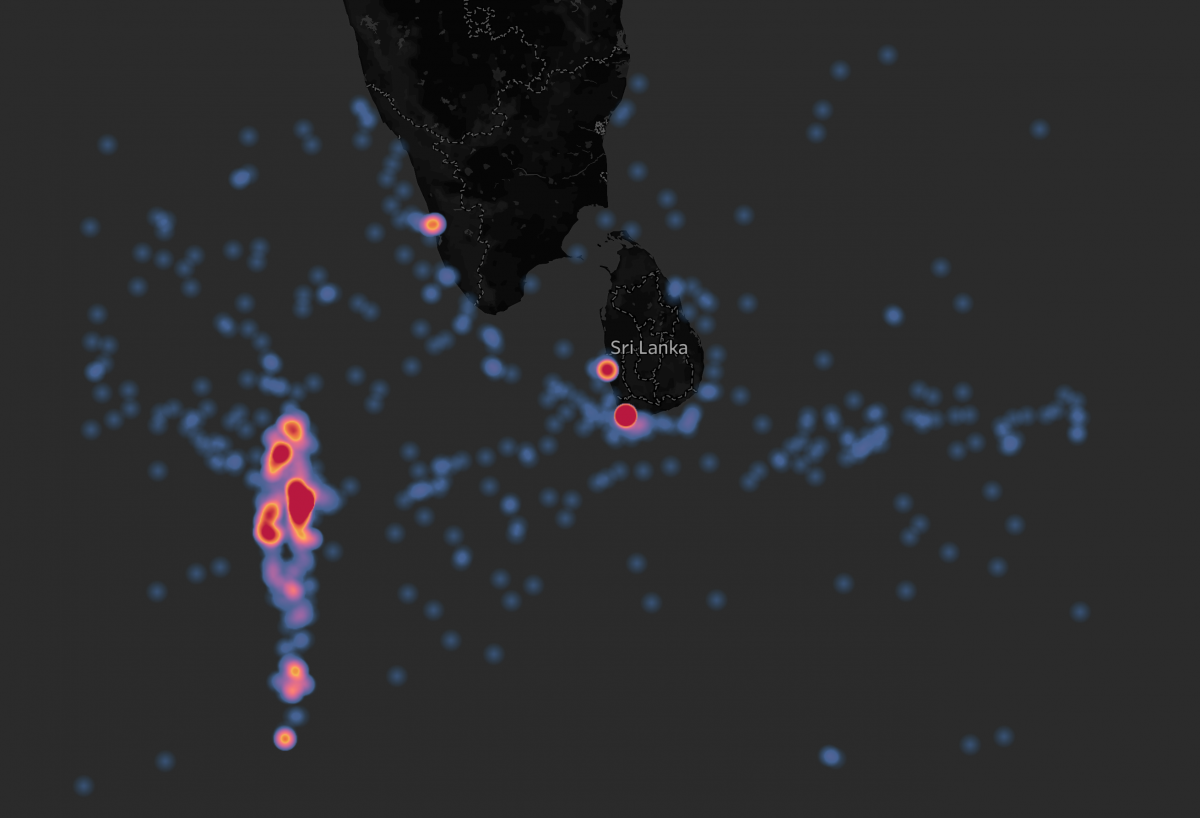
Sri Lanka reports 1,231 new Covid-19 cases and 25 deaths

February 20th, 2022

Courtesy Adaderana

The Director General of Health Services has confirmed anther 25 coronavirus related deaths for February 19, pushing the country’s death toll due to the virus pandemic to 15,994.

The deaths reported today includes 08 males and 17 females, according to the figures released by the Department of Govt. Information. 

Twelve of the victims are between the ages of 30-59 years while the reaming 13 are in the age group of 60 years and above.  

Meanwhile the Health Ministry says that another 1,231 persons have tested positive for Covid-19 within today (20).

This brings the tally of Covid-19 cases registered in the country to 636,837 while presently approximately 23,725 infected patients are undergoing treatment island-wide. 

Creating Employment and Production. A Case Study for Emulation.

February 19th, 2022

by Garvin Karunaratne 

I enclose a write up of my Youth Self Employment Programme in Bangladesh, written by me in 2016, which details  how the Programme came into being. It is hoped that this writing detailing  how Bangladesh succeeded in employment creation may offer ideas to our leaders to get out of the problems that besett our economy today. 

Starting from scratch, without any subsidies or grants whatsoever, we had only our voices to convince the 40,000 youths who were being trained to commence some activity to get into production.  I trained the youth officers that had hitherto attended to only welfare oriented youth work to get down to economic development. Today(2022) the number of youths that have been guided to become self employed is well over three million. 

 It is hoped that this true story will encourage our leaders to create an employment creation programme that can settle the poverty and  deprivation that has besett our Motherland.

Not a cent is required to commence a similar programme. That is how Bangladesh has succeeded even to get to a position to help Sri Lanka with millions of dollars. 

If any detail is required I am available on garvin_karunaratne@ hotmail.com.  It will be a pleasure to provide details.

The Youth Self Employment Program of Bangladesh.

The Ministry of Youth Development where I was working as a two year consultant from the Commonwealth Secretariat was attending to traditional youth work and providing skills training to 40,000 youths annually. The Military Government that took over in 1982 expressed dissatisfaction with the programmes and at an Evaluataion, presided over by Air Vice Marshall Aminul Islam, the Minister for Labour and Manpower, I was questioned as to what contribution I could make for Bangladesh.

I replied that it would be ideal to have a Self Employment Program which will guide and train the youths undertaking skills programs to become self employed. I was told blankly that this was something that can never be achieved because The ILO had miserably failed to establish a self employment program in Tangail in the earlier three years. The Secretaries of the Finance and other Ministries strongly objected, stating that it would end up in a waste of funds and also that the Youth Ministry shoulod not be entrusted with the task of creating employment opportunities. I argued that though the ILO failed, I had the ability to assure that I would succeed because I had established many employment projects in my work in Sri Lanka. I also argued that youth work should concentrate on skills training and guiding the trained to establish enterprises. The Hon Minister listened carefully to an easy two hours’ arguments between me and the Secretaries of some Line Ministries. He ordered all of us to shut up and asked the Secretaries for the number of drop outs of the education system in any one year, those who would be searching for employment without any qualification. The answer was in the millions. Then he asked for the number of youths who would be guided to become self-employed through Government Programs. The answer was none. He immediately ruled that I should be allowed to establish a youth self employment program. The Secretary to the Treasury immediately vetoed it by stating that there were no funds. I immediately said that I needed no funds, but authority should be granted for the Ministry to re deploy officers, redraft their work remits and to find savings within the skills training budgets for expenses on holding workshops to train and guide youths to become self employed. The Hon Minister granted that request.

The Ministry of Labour and Manpower got cracking the very next day, identifying key areas where the work will commence, drafting training schedules to train the staff who attended to skills training on how to guide the youths to make their own assessment of how they can be self employed in their habitat. The Ministry took over elements of national planning, in identifying areas where there was a potential for youths tpo become self employed. I with a core of officials addressed the 40,000 youths in training on identifying areas where they could generate incomes, and how they should draft plans to be self employed. It was to be a family basis where the parents and elders of the youths were also consulted. All skills training institutes were activated till late at night to enable youths to uitilize the machinery to make something that could be sold. What they made was evaluated at the next days training and this took on a process of training to make marketable products. The three Livestock and Poultry Training Institutes of the Ministry established an extension service to help youths who commence farms in their homes. The Deputy Directors of Youth Development in charge of Districts took on the mantle of guiding the youths to establish income generation activities and guiding them on a day to day basis. In short the Ministry of Youth Development became in facto a Ministry creating employment and providing training for that purpose/.

In 1982 I commenced training the staff in economics and techniques of community development and non formal education where the thrust was to enable youths to make their own decisions and develop their abilities to makew them become successful entrepreneurs. I was training 2000 youths and also training the staff to continue the program when I leave.

The design of the program and my accomplishment is recorded in the certificates issued by the two Secretaries with whom I worked.

Mr Ayubur Rahaman, The Secretary to the Ministry wrote on 5/10/1983:

His contribution towards successful launching of a number of skills development training programsto promote employment of youths deserves special appreciation. His role as formulator of the self employment project has been particularly commendable. Dr Karunaratne applied his initiative, skills, expertise and energy on training of youth officers, preparation of business profiles for encouraging self employment and guding youths to formulate small projects. It was mainly through his dedication and hard work that the pilot program for self employment has now been formally accepted as one of the most important development projects to be implemented by the Youth Development Department.”

Mr Md. Asafuddowlah, Joint Secretary on 28/8/1983:

Dr Karunaratne’s significant contribution has been in the field of self employment to the drop out youths. This Programme was not only designed by him but also guided by him. This activity which was initially launched as a pilot experimental project has been a great success and has now been adopted as a full fledged programme of the Youth Development Department. This is a non subsidy programme in which the youths are subjected to non formal education inputs while they are engaged in viable bur small scale commercial ventures. The Government has been successful in providing meaning ful employment to age number of youths on this programme.

Mr Md Asafuddowlah, Secretary to the Ministry, on 20/2005

You will be happy to learn that the Self Employment Program of the Youth Development Department has expanded across the country and attained great success. I have not forgotten your valuable contribution to the success of this programme.”

The Programme has been expanded apace. On 19/2/2011, the Government of Bangladesh, in its Report to the 34 th Session of the IFAD(FAO) stated that two million youths have found self employment on this Programme.

Today this is the largest employment creation program the world has known.

Garvin Karunaratne

Commonwealth Fund Advisor on Youth Development. to the Ministry of Labour and Manpower, Bangladesh in 1981-1983

වැරදි ඉවසීම – උද්ධමනය සහ විදුලි කප්පාදුව Fault Tolerance – Inflation and Power Cuts 

February 19th, 2022

ජයන්ත හේරත්

ඔන්න විදුලිය කපනවා

power cut  එනවා 

බය වෙන්න එපාය

උද්ධමනය එනවා

බය වෙන්න එපාය

අපට අපේ විසඳුම් තිබිය යුතුය

තෙල් ඉන්ධන මිල ඉහල යනවා

බය වෙන්න එපාය.

හාල් මිල ඉහල යනවා

බය වෙන්න එපාය.

ගෑස් නැත

බය වෙන්න එපාය.

කිරි පිටි නැත

බය වෙන්න එපාය.

සිද්ධාර්ථ කුමාරයා

පොඩි කාලයේදී

අම්මා මළේය

මවු කිරි නැත 

කිරි පිටි තිබුනේත් නැත

බුදු උනේය

බබෝ බිල්ලෝ එනවා

බය වෙන්න එපාය.

ගම්වල

කිරි නැති අම්මලා

පොඩි උන්ට 

පොවන්නේ රා ය

දුෂ්කර පළාත් වල

heart-attack

හැදුන අය

හැතපුම් ගණන් 

ඉස්පිරිතාලයට

උස්සා ගෙන එන්නේ

4-5ස් දෙනකුගේ අර පිටින්ය 

අපි භය විය යුත්තේ භය වෙන්නටය

බඩු මිල නැගීම උද්දමනයයි

බඩු වල මිල නගින්නේ ඉල්ලුම වැඩි නිසාය

අපි නොගන්නා බඩු නැග්ගත් එකය  බැස්සත් එකය

අධික මිල බඩු

නොගැනීම එක විසඳුමකි

බඩු  ප්‍රමාණය  අඩු කිරීම තවත් ක්‍රමයකි

65-70 වල 

ඩ ඩ් ලි නිකම් හාල් දුන්නේය

මිනිස්සු වවන්න පටන් ගත්තේය

තමන්ගේ එළවලු තමන් ම වවා ගත්තේය

කුඹුරු ගොවිතැන කර හාල් නිෂ්පාදනය කළේය

මයියොක්ක

බතල

අර්තාපල් අල

එළවලු 

වත්තේ වගා කර කෑවේය

විදුලි මිල

ඉහල යන්නේය

ඉන්ධන මිල ඉහල යන්නේය

ලංකාවේ 98-100% විදුලිය ඇත

එක්සත් ජනපදයේත් 100% විදුලිය ඇත

විදුලිය 100% තිබුනත්

විසන්දි විය හැක

සැපයුම unreliable ය

ග්‍රිඩ් එක unstable ය

විශ්වාසදායක නැත

අනුන් සපයන

විදුලි බලය නැතිඋනොත්

රෑ අඳුරේ ය

අඳුරට බයය

අපි 60-80 වල

ජීවත් උනේ

විදුලි බලය නැතිවය

පාඩම් කලේ දවල් ඍජු හිරු එලියෙනි

රෑ කුප්පි ලාම්පු ඉටිපන්දම් වල පිහිටෙනි

ඉව්වේ

කටින් දර ලිපට පිඹලා

ඍජු wind power වලිනි 

අඳුරේ සිටීමට

බිය වන්නන්

ඔවුන්ගේම

බලය නිපදවීමේ ආශ්චර්යය සිතනු නොඅනුමානය

නව ව්‍යාපාර technologies බිහිවනු ඇත

පුද්ගලික

power generators,

solar panels

micro-ග්‍රිඩ්ස්

වලින්     

තමන්ගේ electric Power

තමන්ම නිපදවා ගන්නා තැනට එක්සත් ජනපදයද පැමිණ ඇත. 

Covid-19

අධ්‍යාපන විප්ලවයේ

පරිවර්තනයේ

උත්ප්‍රේරකයක්

ලෙස ක්‍රියා කරයි.

එය

සංක්‍රාන්ති ක්‍රියාවලිය

වේගවත් කරයි.

වැලිගම දෙනිපිටිය ශ්‍රී ගංගාතිලක මහා විහාරාධිපති ගරු මැද්දවත්තේ සෝරත මහාස්ථිවිරපාදයන් වහන්සේට දකුණු පළාතේ උප ප්‍රධාන සංඝනායක පදිවිය පිරිනැමීම

February 19th, 2022

අග්‍රාමාත්‍ය මාධ්‍ය අංශය

කෝට්ටේ ශ්‍රී කල්‍යාණී සාමාග්‍රී ධර්ම මහා සංඝ සභාව මඟින් වැලිගම දෙනිපිටිය ශ්‍රී ගංගාතිලක මහා විහාරාධිපති ගරු මැද්දවත්තේ සෝරත මහාස්ථිවිරපාදයන් වහන්සේ වෙත විමලකීර්ති ශ්‍රී විජිත” ගෞරව නාමය සහිතව දකුණු පළාතේ උප ප්‍රධාන සංඝනායක පදිවිය පිරිනැමීමේ සන්නස් පත්‍රය ප්‍රදානය කිරීමේ අවස්ථාවට අග්‍රාමාත්‍ය මහින්ද රාජපක්ෂ මහතා අද (19) පස්වරුවේ සහභාගී විය.

කෝට්ටේ රාජමහා විහාරස්ථානයේ පිහිටි කෝට්ටේ ශ්‍රී කල්‍යාණි සාමාග්‍රී ධර්ම මහා සංඝ සභා උපෝසථාගාරයේ දී මෙම සන්නස් පත්‍ර ප්‍රදානය පැවැත්විණි.

කෝට්ටේ ශ්‍රී කල්‍යාණි සාමග්‍රී ධර්ම මහා සංඝ සභාවේ මහානායක ශ්‍රී ජයවර්ධනපුර විශ්වවිද්‍යාලයේ කුලපති ආචාර්ය අග්ගමහා පණ්ඩිත අතිපූජ්‍ය ඉත්තෑපානේ ධම්මාලංකාර මහානායක ස්වාමීන් වහන්සේ විසින් දකුණු පළාතේ උප ප්‍රධාන සංඝනායක පදවිය පිරිනැමීමට අදාළ සන්නස් පත්‍රය වැලිගම දෙනිපිටිය ශ්‍රී ගංගාතිලක මහා විහාරාධිපති ගරු මැද්දවත්තේ සෝරත මහාස්ථිවිරපාදයන් වහන්සේ වෙත මෙහිදී පිළිගන්වනු ලැබූහ.

අනතුරුව ඊට අදාළ විජිනිපත කථානායක මහින්ද යාපා අබේවර්ධන මහතා විසින් පිළිගන්වන ලදි.

දකුණු පළාතේ උප ප්‍රධාන සංඝනායක පදිවියෙන් පිදුම් ලැබූ වැලිගම දෙනිපිටිය ශ්‍රී ගංගාතිලක මහා විහාරාධිපති මැද්දවත්තේ සෝරත මහාස්ථිවිරපාදයන් වහන්සේ වෙත අෂ්ට පරිෂ්කාර පූජා කළ අග්‍රාමාත්‍ය මහින්ද රාජපක්ෂ මහතා, නායක ස්වාමීන් වහන්සේට විශේෂ තිලිණයක් ද ප්‍රදානය කළේය.

ජනමාධ්‍ය අමාත්‍ය ඩලස් අලහප්පෙරුම මහතා ද මැද්දවත්තේ සෝරත මහාස්ථිවිරපාදයන් වහන්සේට අෂ්ට පරිෂ්කාර පූජා කළේය.

කෝට්ටේ ශ්‍රී කල්‍යාණි සාමග්‍රී ධර්ම මහා සංඝ සභාවේ මහානායක ශ්‍රී ජයවර්ධනපුර විශ්වවිද්‍යාලයේ කුලපති ආචාර්ය අග්ගමහා පණ්ඩිත අතිපූජ්‍ය ඉත්තෑපානේ ධම්මාලංකාර මහානායක ස්වාමීන් වහන්සේ,කෝට්ටේ රාජමහා විහාරාධිපති කෝට්ටේ ශ්‍රී කල්‍යාණි සාමග්‍රී ධර්ම මහා සංඝ සභාවේ උප නාම ලේඛකාධිකාරී ගරු අළුත්නුවර අනුරුද්ධ නායක ස්වාමීන් වහන්සේ,නියෝජ්‍ය ලේඛකාධිකාරී මහාචාර්ය නෙලුවේ සුමනවංශ නායක ස්වාමීන් වහන්සේ, වැලිගම අග්‍රබෝධි රාජමහා විහාරාධිපති, මහාචාර්ය මිදිගම සෝරත නායක ස්වාමීන් වහන්සේ, සහකාර ලේඛකාධිකාරී රාජකීය පණ්ඩිත තන්තිරිමුල්ලේ සරණ ස්ථිවිරයන් වහන්සේ ඇතුළු මහා සංඝරත්න මෙහි වැඩම කර සිටියහ.

THE NEW CONSTITUTION

February 19th, 2022

Jayantha: Liyanage – General Secretary – SJP

The proposed new Constitution must restore the historical national rights of the Sinhala nation lost in the year 1815 by taking the following aspects into consideration. 

(01). The New Constitution must be named as THE SINHALA CONSTITUTION”. The name of the nation must be named as SINHALA NATION” and the country’s name as SINHALADEEPA”.

After fifty years, the Republican constitutions of 1972 & 1978 only created ethnic & religious strife, separatism and economic underdevelopment as there is no unifying common ground for all the ethnic groups to unite. Absence of such a common uniting factor (moral absolutes in the USA) means various ethnic groups try to go on their own way. DS & SWRD are fully responsible for not specifying a common ground before 1948. Instead the two bogus leaders allowed the Divide & Rule” policy of the British to continue unhindered. The result was Tamil separatism, Islamic expansionism & foreign economic encroachments.

For thousands of years, the country’s civilization was created and protected under great sacrifices by the Sinhala people. The Tamil ethnic group mostly consists of descendents of invaders; labors brought by the Dutch & the British for tobacco, coffee and Tea cultivations and encroachers, hence the Tamils have not contributed anything to the country’s Nation building process, instead they have a history of trying to destroy the Sinhala nation. The Muslim ethnic group in present Sinhaladeepa lives as descendents of Arabs with the aspiration to destroy all other religions, cultures, identities and even the Sinhala language and to replace it with everything Arabic, which is fast underway.

(02). The national Flag must be the Sinhala Lion Flag of 1815. The present distorted Lion Flag was created by the said two bogus leaders in order to lure Tamil & Muslim voters into the two main political groups that assumes power on five-year terms.

(03). The concepts of Multiculturalism”  & Unity through Diversity” must be rejected completely. The multiculturalism was created by the British rulers to divide the indigenous Sinhala people and the ethnic groups living in Sinhaladeepa. The concept of Unity through Diversity” has been created in order to give a false perception of national unity and time & space for the Tamil separatists to acquire sufficient devolutionary powers & to create an infrastructure in the north in order to go for full separation at the opportune moment and for the Muslim religious group to build up a sufficient population to influence politics & economy.

(04). The Provincial Council system established under the 13A must be abolished completely. Devolution of political power or power sharing mechanism under any circumstances must not be implemented.

(05). Propagating the Thimpu conditions  – that Tamils in Sri Lanka  (1). Are a nation (2). Have a traditional homeland in the north of Sri Lanka (3). Have the right of self-determination must be prohibited in the new Constitution under the amended article of 157 (a) & (b) as followers.  

Prohibition against violation of territorial integrity of Sinhaladeepa.

157A. (1) No person shall, directly or indirectly, in or outside Sinhaladeepa, support, espouse, promote, finance, encourage or advocate the establishment of a Federal State, United State, Federation, Confederation, Union or a separate State within the territory of Sinhaladeepa.

(2) No political party or other association or organization shall have as one of its aims or objects in its Constitution, in election manifestos or in any document, the establishment of a Federal State, United State, Federation, Confederation, Union or a separate State within the territory of Sinhaladeepa.

Jayantha: Liyanage – General Secretary – SJP – 17.02.2022

SL hopes to further consolidate & expand solid partnership with Russia, President tells Putin

February 19th, 2022

Courtesy Adaderana

President Gotabaya Rajapaksa says he wishes to further consolidate and expand the existing solid partnership between Russia and Sri Lanka into new and more extensive areas of cooperation.

He made this remark in a felicitation message for his Russian counterpart Vladimir Putin, to mark the 65th anniversary of the establishment of diplomatic relations between the two countries.

President Rajapaksa stated that the abiding friendship and vibrant relations between the two nations are time-tested, and mutually rewarding.

On behalf of the Government and the people of Sri Lanka, and on my own behalf, I take great pleasure in conveying to Your Excellency, the Government and people for the Russian Federation, our warm greetings and sincere felicitations as Sri Lanka and Russia mark the momentous occasion of the 65th anniversary of establishing diplomatic relations between our two countries,” 

Underpinned by shared values and mutual respect, relations between the two countries have continued to flourish over the years, promising further expansion into multiple spheres of shared interest, the felicitation message read further.

As we commemorate this historical milestone in our bilateral ties, I wish to express my fervent desire to continue to work closely with you to further consolidate and expand the existing solid partnership between our countries into new and more extensive areas of cooperation in the years ahead for the betterment of our people.”

The President extended his best wishes for his Russian counterpart’s good health, happiness, and personal well-being and for the continued progress of the bilateral relations between the two countries.

Daily Covid-19 cases count hits 1,273 today and confirms 20 new Covid-related deaths

February 19th, 2022

Courtesy Adaderana

he Health Ministry says that another 1,273 persons have tested positive for Covid-19 today, bringing the total infections registered in the country thus far to 635,606. 

According to official figures, 596,891 positive cases have recovered.

Following the new development, the number of virus-infected people who are undergoing treatment moved to 22,746. Meanwhile, the death toll stands at 15,969.

The Director-General of Health Services has confirmed 20 new coronavirus-related fatalities for February 18, moving the death toll in the country from the virus to 15,969.

This includes 12 males and 08 females, according to the Department of Government Information.

Two of the deceased were in the age group of 30-59 years. Another one was aged below 30 years and the remaining 17 victims were aged 60 years and above.

Shortage of Motor Spares

February 18th, 2022

Garvin Karunaratne, former G.A.Matara

 A Report from Reuters on 17/2: Shortage of Suzuki Car Mirrors reflect Sri Lanka’s growing economic crisis harks a re write of one of my early Papers:

Old memories of development: A Youth I will never forget

By Garvin Karunaratne
Posted on October 15th, 2019

Seeing what is happening in Elpitiya my mind travels back decades to a youth that struck me most in my eighteen years’ service in the Administrative Service of my beloved country.

It was a youth from Elpitiya. In 1970 I was the Deputy Director in the Small Industries Department in charge of making allocations of foreign exchange to small industrialists to import an item that was required to make something useful for sale.  Mr Kariyawasam the Member of Parliament for Bentara Elpitiya met me with a youth. Mr Kariyawasam introduced the youth to me with a number of side mirrors of cars, which he had made. The side mirrors were good replicas.  They were very well done. An allocation of foreign exchange was sought to import mirrors to be fitted into the side mirrors that he had made. It was a reasonable request. I immediately summoned one of my Inspectors and told him to inspect the process of manufacture and submit a recommendation.

In a weeks’ time the inspector reported that this was a bogus case, a youth that did not have an industry. I sent for Mr Kariyawasam and gave him a piece of my mind. Mr Kariyawasam said that he stood by what the youth said and added that the youth was not a bluff case and requested me to look into the case further. I told Mr Kariyawasam that I will myself come to inspect the industry and gave him an appointment  to inform the youth. Later he phoned me to meet the youth at the Lorry Garage of the Cooperative Union at Elpitiya. On the appointed date I was at that place ten minutes earlier and neither the youth was there nor was there any place where side mirrors were made in the vicinity. I waited a while and the youth appeared with a bag slung on his neck. I told him to take me to the place where he had the smithy where he made the side mirrors. He opened his bag which was full of all sorts of metal pieces of different shapes along with some sheets of metal cut up to different sizes. Sir these are all my tools and all these are side mirrors I have made.”

Show me the machinery with which you make.”

Sir, you have to wait a while till one of the Coop Union lorries come back. I know some of the drivers who allow me to use their jacks. I have a number of iron rods with bolts which I fix and make a jig and use their lorry jacks to get different shapes of metal made.”

I looked at his bag and there were a few iron rods about two feet long and bolts. It was a mass of metal. I could not even imagine what he was speaking about and how he made anything.

Sir, please believe me. Please wait till a lorry comes. I am sure a lorry will return soon.”

The youth looked genuine and his tone was pleasant and I felt I should listen. I then understood what my inspector had reported that the youth had no industry. He had only a bag of tools and pieces of metal of different shapes. I waited and waited. He looked to be too genuine for me to tell him not to fool me.  In a while a lorry came in and the youth ran to the driver and got back to me.

Sir that driver is not going to give me the use of his jack. I will wait for the next driver.”

I waited a few minutes and luckily another lorry came in.

That is a good driver. I can get his jack.” He ran away and returned with the lorry jack. I yet could not fathom what he was going to do. He moved to a corner of the lorry garage pulled up his bag and got hold of the two feet rods which he fitted with bolts to make a jig. He tightened the nuts till the jig was very firm. Then he pulled out the pieces of metal and scouted around for some bricks which he fitted into the jig. Then he got the lorry jack which he placed at different angles and moved the jack lever till the piece of sheet metal was made into a shape. The then took the piece that was shaped up and fixed different pieces of metal and used the jack to shape it up further. It took a while but he did it again and again till the shapes were fully acceptable. Then he sat on the side shaped further with a file and cut off the ends. It took a while but he made a replica of a side mirror that was exact to what was imported. I gave him an allocation of foreign exchange and asked him to call over at my office to collect the allocation paper. If only that youth had access to a lathe and welding equipment he could have done wonders. Is it not sad that we do not yet make a bicycle in our country!

I called Mr Kariyawasam and thanked him.

I know not where the youth is now. Perhaps he happened to be one of the intelligent youths who lost their lives in the 1971 JVP uprising. That mistake of the JVP done to make Sri Lanka an appendage of the socialist block- -then it was North Korea that tried to get the JVP to wrest control of our island. That insurrection  took away the lives of many intelligent youths.

We have an intelligent cadre of youths and we have to enlist their support, help them to march on an import substitution venture to make everything we import. Later as Government Agent Matara, I was able to direct my staff to find the art of making crayons and also able to ensure that a cooperative industry was established.  It took three months of nocturnal experiments locked up in the Rahula College science lab from six till midnight for three long months to find he art of making crayons. Then it took three weeks for Sumanapala Dahanayake the member of parliament to establish it. He was the President of the Morawaka Coop Union. In a few months Coop Crayon was sold island wide. That was a feat done by the katcheri staff and Sumanapala’s   cooperative youths.

To my mid therein lies the path for the development of our industries. No foreigner or foreign country will come to our help. We have to do it ourselves. The above true achievements I can speak of tell me that it is a task that can be won.

Garvin Karunaratne, Ph.D. Michigan State University

Former Government Agent, Matara    15 th October 2019

It is high time that people who were selling cars commence small enterprises making car spares.  Near my Sri Lankan home on Old Kesbewa Road Gangodawila is a young lad making smallmotor spares. He took it over from his father and I had seen his father at work in the Fifties when I lived there. The Government has to also take action to develop this type of industry. Sad to say our last attempt was in 1971 when under the Divisional Development Councils Programme we(I was then GA Matara) we did wonders. I and my men- the Planning Officer of the Katcheri and other officers along with Member of parliament Sumanapala Dahanayake in his capacity as the President of the Morawaka Coop Union did get down to make crayons. We established that small factory in two weeks working day and night. It was developed to have islandwide sales with coop union lorries and lads selling coop crayon even in the far north.

Perhaps this idea may reach the ears of our Prime Minister or President. When there is a crisis at hand, it is time for quick action.

Garvin Karunaratne, former G.A.Matara

ERASING THE EELAM VICTORY Part 26A

February 18th, 2022

KAMALIKA PIERIS

Scratch below the surface of any civil war and there is usually a foreign sponsor to be found, said   analysts. Almost all civil wars have an external dimension. In virtually every case of  political violence within  a third world country,  it is usually  a foreign government that  has  helped to fund, arm, train or otherwise aid and assist  in the conflict, said  P.B. Hayner.

 Super powers instigate conflicts in target states to promote their interests, observed TIME. Super powers   create or use a disaffected group to destabilize countries they are interested in. These groups are encouraged to engage in terrorism. Terrorism is the perfect tool to exert pressure upon government.  It provides the perfect cover for hidden agendas. Terrorists exist because they are armed and supported by powerful foreign countries. Terrorism is not meant to be defeated, analysts observed.

 James Petras observed that when the US is not able to control a country and install a client government inside it, it finances and promotes separatist organizations which emphasis ethnic, religious, regional divisions.    Petras noted that from the 1970s USA started to finance and direct such groups inside countries which were not doing what USA wanted.

US has infiltrated, invaded, bombed, and destroyed several countries. They dropped Agent Orange on Vietnam. There were US-promoted separatist movements in at least three Latin American countries, Bolivia, Ecuador and Venezuela. CIA trained and funded the Contras of Nicaragua.  USA helped Bosnia, Macedonia and Kosovo in the Yugoslavia break up. Europe, USA and UK supported the Libyan rebels with military hardware. This was illegal.  

The Eelam war was supported, trained and funded, directly or indirectly, by external powers, observed Tamara Kunanayagam. ‘There was foreign interference, an invisible force seen only by a few discerning individuals,’ said Sunanda Mahendra. The intelligentsia in Sri Lanka    only realized that there was western involvement in the Eelam War, when they saw the biased presentation on BBC, Al Jazeera and CNN when the LTTE war ended, announced critics.

Jayantha Dhanapala giving evidence before the   Lessons Learnt and Reconciliation (LLRC) Commission in 2010 said that that the Commission should examine the roleof those members of the international community who have intervened in the war. States which encourage terrorism, by nurturing the terrorists groups, letting them have HQs there, do fundraising, and helped with weapons, should be held responsible. I wish to draw attention to the way in which terrorist groups are given sanctuary, are harbored, and are supplied with arms and training by some countries, he said.  We know that in our case this happened. I don’t want to name the countries. Countries who have allowed their financial procedures and systems to be used for buying arms and ammunition should also be held responsible, concluded Dhanapala.

It is generally held that the external influence” in the Eelam wars is the United States of America. The hidden enemy in the Eelam war was the imperialist superpowers that have already caused havoc in Vietnam, Cambodia, Afghanistan, Pakistan and Iraq, said a commentator.

US has always been interested in Sri Lanka‘s strategic position in the Indian Ocean, specially the deep water harbor in Trincomalee which can hold the whole of the US 7th Fleet.  ‘Trincomalee is Sri Lanka’s most valuable asset. The depth of the harbor is such that nuclear submarines are able to dive low within the inner harbor to effectively avoid radar detection.  Any power that controlled this harbor had a great advantage from a naval and strategic perspective. During the period of sailing ships Trincomalee harbor the harbor could ensure the safety of a whole fleet during monsoon and a fleet so protected was in a position to dominate the Bay of Bengal and the eastern sea, said Romesh Somasundaram.

USA admits that it is deeply interested in Sri Lanka.  Sri Lanka is a key piece, said US in 2010.All of China’s and Japan’s energy resource from the Persian Gulf transits Sri Lanka  and the island has the potential to control or impede the free flow these resources to China. Half the world’s container traffic passes through Sri Lanka and the island has the potential to block this as well.  The US has a competing interest with India and China in securing this maritime route.

Sri Lanka’s position in a strategic location in the Indian Ocean, and its critical ports with access to global maritime lanes and trading routes plays a pivotal role in a free and open Indo-Pacific architecture and reinforce the necessity for the United States to build constructive relationships with Sri Lanka, said Julie Jiyoon Chung, America’s  current ambassador to Sri Lanka.

The Eelam war was actually a war with America. It was not a direct war like that between USA and Vietnam.  It was a war between Sri Lanka and a proxy of America, observed analysts. If the LTTE had succeeded, US would have gained control of two thirds of Sri Lanka’s coast line, enabling them to secure Persian Gulf energy resources to Japan, interfere with the flow of resources to China.

The Eelam war seems to have been planned by the US way back in the 1970s.  In 1977, or thereabouts, at a cocktail party, in Manila, an American had boasted to Sri Lanka‘s Ambassador, Oliver Perera, that soon there would be an armed rebellion by Tamils in Sri Lanka.

Once the Eelam war started, US watched its progress carefully.  It showed concern at the end of Eelam war 3 (1995-2002). In 2002 the US Pacific Command team was   invited by Ranil Wickremasinghe to examine the strengths and weakness of the armed forces. Given access to the Sri Lanka army in this manner, US prepared a top secret report on the Sri Lanka armed forces.

The US report said that the major strength of the army was its impressive soldiers, who endure tremendous hardships while maintaining a fighting spirit. It is this that has prevented more drastic defeats.

The report said the SLAF was not capable of fighting the LTTE. It lacked equipment needed for intelligence, surveillance and reconnaissance.  But it had competent and committed officers and men. Also the air force did not have a comprehensive air operational plan.  US pointed out that the MiG 27 s and C-130s had been bought at the expense of other critical sectors.

 Obviously the US underestimated the SLAFs trust in its jet squadrons, said commentators later on. Regardless of the US assessment, the SLAF continued to enhance its capability to launch operations by jets. The US failed to see that a powerful strike force was needed to take targets though the development of ISR capability (Intelligence, Surveillance, Reconnaissance).

The west did their utmost to prevent us from winning the war. They would have succeeded if not for Russia and China, observed diplomat K Godage. Bushmaster guns purchased from USA by Sri Lanka could not be used because USA refused to provide the ammunition. The Leahy Amendment would not allow it. Leahy Amendment stopped the U.S. from providing military assistance to foreign armies that violated human rights. Spares for Bell 412 helicopters were withheld for the same reason, said Palitha Kohona.

A victory for Sri Lanka was an outcome to be avoided said Hillary Clinton, US Secretary of State during Eelam war IV. She wanted the final offensive to stop, and the government return to the negotiating table and work out a political solution. This showed that the US was “leading from behind”, observed Dayan Jayatilleke. USA threatened to withhold the promised 1. 9 million loan unless a ceasefire was declared and foreign intervention was allowed, reported Shamindra Ferdinando.

US wanted to weaken Sri Lanka economically.  Wikileaks cables showed that Hillary Clinton, as Secretary of State, had intervened and stopped a critical stand-by loan from IMF just two weeks before the LTTE was defeated.

Sri Lanka’s application in April 2009, for a US$1.9 billion loan from the International Monetary Fund met with US resistance. ‘We have raised questions about the IMF loan at this time. We think it is not an appropriate time to consider that until there is a resolution of the conflict,’ said US Secretary of State Hillary Clinton.

However, the US did help in the defeat of the LTTE. The almost complete destruction of the LTTE shipping fleet was possible due to advanced technical intelligence and satellite data provided by US Pacific command to the Sri Lanka Navy. President Rajapakse publicly thanked the US for helping Sri Lanka Navy destroy some of the LTTE floating warehouses. They had provided the intelligence. Sri Lanka received initial leads from the US and Australia, with some assistance from Indian navy for that operation, said Rohan Gunaratne.

But, though the US helped to weaken the LTTE militarily, it was not prepared to allow a complete military defeat of the LTTE, observed Dayan Jayatilleka. The west did not want the total annihilation of the LTTE. They wanted LTTE to remain a viable fighting unit in Sri Lanka and keep the country in destabilized state. LTTE was their tool said critics. The US wanted to keep the LTTE alive politically and possibly militarily, agreed India.

US Ambassador Robert O Blake had wanted to bring an advanced US mission to Sri Lanka to see if it was possible to get LTTE to surrender to American troops, failing which, US wanted the LTTE to surrender to a third party. Sri Lanka insisted that LTTE must surrender to Sri Lanka and not to a third party.  Weerawansa said the west had asked Prabhakaran to lay down arms to a third party because if he was arrested he would tell the government how the west had helped him with the war.

USA had wanted President Rajapakse to offer a general amnesty to the LTTE. This coincided with the unilateral ceasefire declared by the LTTE when they found they were losing. President Rajapakse refused. The government could not offer an amnesty, he said. Even if the top leaders surrendered the government would go ahead with legal proceedings against them for crimes committed.

It was also too late for the LTTE to negotiate a deal with the government.   President said that he would not accept Prabhakaran as party to any future settlement. Nothing could be more ridiculous than allowing LTTE to take part in negotiations when it had lost its fighting capability.

When US saw that the government of Sri Lanka was winning the war, it was keen on getting the LTTE leaders out of Sri Lanka before the war ended. Mark Salter reported that there was a secret meeting in Kuala Lumpur between Ambassador Tore Hattrem and chief LTTE representative Kumaran Pathmanathan ‘KP.’ The date is not given. The meeting was attended by Jon Westborg and Tomas Stangeland on the Norwegian side and V. Rudrakumaran and Jay Maheswaran on the LTTE side.   Pathmanathan was working out a plan to get the LTTE leadership away to another country, possibly Eritrea, South Africa or East Timor. 

In February 2009, after the fall of Mullaitivu in January certain outside forces were making plans to invade Sri Lanka to save LTTE leaderships, said the media. Wikileaks showed that the US had planned to pick LTTE leadership up from the Mullaitivu beach and take them away.

Then about two months before the final battle at Nanthikadal lagoon, USA had offered to evacuate the top LTTE leaders and their families.  There were secret negotiations to take away Prabhakaran, Sea tiger wing leader, Soosai, intelligence wing leader Pottu Amman and their families, numbering over 100. 

US ambassador Blake tried to take Prabhakaran out through an operation by the US Marines based in Hawaii, said K.  Godage.  The US Pacific command sent a team of experts at the height of the war to explore way and mean of carrying out an organized evacuation of the top leadership. A high-level team of the United States Pacific Command (US PACOM) from their headquarters in Hawaii is now in Colombo for this purpose said the media. 

An aircraft from Hawaii carrying US experts touched down at BIA following a dispute over formalities regarding landing rights. Sri Lanka was told of its arrival only after it was airborne, continued the media. Michael Roberts met a senior SLAF officer who had been in SLAF HQ when US officers in civilian clothes visited the SLAF HQ in Colombo in 2009. He thought it was April but could not be certain.

USA also tried to save Prabhakaran by offering to send a ship to evacuate the civilians used by the LTTE as human shield. The US ambassador said that one of their ships was nearby and sought the permission of the President to enter Sri Lankan waters. President Mahinda Rajapaksa said No. It was obvious that the real purpose was to rescue Prabhakaran.

There was also a media report which said that the Sri Lanka navy had seized and brought in an enemy vessel captured in an unprecedented operation, details of which cannot be disclosed. This vessel may have been involved in a last ditch attempt to evacuate LTTE leader Prabhakaran, since a light helicopter could have been sent from the vessel to pick him up (Island 22.12.09 p 1).

 Lastly, Kumaran Pathmanathan (KP) has stated in an interview with an Indian newspaper, that around May 16 or 17, 2009, the UN and a western government had asked if LTTE leaders were ready to leave the country and if so they could send a ship to go somewhere.  Prabhakaran had been convinced that he would be rescued, even at the last minute. Prabhakaran and his group were huddled together at Vellamullivaikal in the Nanthikadal lagoon, waiting to be rescued, when the army accidentally killed them.

When it became clear that the government was going to win the war, the western powers wanted President Rajapakse to stop the war. The pressure exerted on President Rajapakse was enormous. We were hounded and intimidated by the US to stop the war, said Godage. The Rajapakse government did not give in.  

There were appeals made to the Sri Lankan Government to “pause” hostilities during the final stages of the conflict. When Kilinochchi fell in January 2009 USA, UK, Norway and France, followed by India and Japan met Rajapaksa. These countries were trying to save the badly cornered LTTE.

  Later, there was a joint visit to Sri Lanka by Foreign Secretaries from the U.K. and France, Milliband and Kouchner, respectively. They met President, Mahinda Rajapaksa, Defence Secretary Gotabaya Rajapaksa and the Foreign Minister, Bogollagama.There were heated exchanges.Milliband had said that he had received reports that army was killing civilians.

  Gotabaya Rajapaksa did not hide his feelings in an interview with visiting correspondent of Daily Telegraph. He launched an angry verbal attack on Milliband, complaining about his interruptions.  Why should he interfere? A leader must listen to the people of his own country not the foreign minister of the UK.  

UN Secretary General Ban Ki Moon sent his chief of staff, Nambiar to meet the President.  UN wanted an immediate ceasefire. USA wanted a meeting between the UN representative and Prabhakaran as well. Representatives of UN, UNDP, ICRC together with the ambassadors for USA, India and European Union met the Foreign Minister. The fact that all these appeals were made to the Government and none to the LTTE convinced the Government that all these efforts were to save the LTTE leadership. (Continued)

සාගර විශ්වවිද්‍යාලයේ ප්‍රථම ඩිප්ලෝමාධාරී සහතික ප්‍රදානෝත්සවය පැවැත්වේ

February 18th, 2022

නිපුණතා සංවර්ධන වෘත්තීය අධ්‍යාපන පර්යේෂණ හා නව නිපැයුම් රාජ්‍ය අමාත්‍යාංශය

ශ්‍රී ලංකා සාගර විශ්වවිද්‍යාලය මඟින් සිදුකෙරෙන නාවික, ධීවර හා සාගර සම්බන්ධ පාඨමාලා 21ක් අතරින් පාඨමාලා ත්‍රිත්ත්වයක අධ්‍යයන කටයුතු සාර්ථකව අවසන් කළ සිසු සිසුවියන්ගේ  ප්‍රථම ඩිප්ලෝමා සහතික ප්‍රදානෝත්සවය  රාජ්‍ය අමාත්‍ය විශේෂඥ වෛද්‍ය සීතා අරඹේපොල මැතිණියගේ ප්‍රධානත්වයෙන් (18) බණ්ඩාරනායක අනුස්මරණ ජාත්‍යන්තර සම්මන්ත්‍රණ ශාලා පරිශ්‍රයේ දී (BMICH) පැවැත්විණ.

එහි දී,

·         ජලජීවී වගාව සහ ජලජ සම්පත් කළමනාකරණය පිළිබඳ ජාතික ඩිප්ලෝමාව (National Diploma in Aquaculture and Aquatic Resources Management)

·         සමුද්‍ර හා සැපයුම් කළමනාකරණය පිළිබඳ ඩිප්ලෝමාව (Diploma in Maritime and Logistics Management)

·         නාවික ඉංජිනේරු ජාතික ඩිප්ලෝමාව (National Diploma Marine Engineering)

යන පාඨමාලා හැදෑරූ සිසු සිසුවියන් අද දින ඩිප්ලෝමාධාරීන් බවට පත් විය.

දේශීය සහ විදේශීය රැකියා සුලබ මෙම පාඨමාලාවන් අවසානයේ ජාතික සහ ජාත්‍යන්තර වශයෙන් පිළිගැනෙන සහතිකයක් ලබාදෙන අතර සුදුසුකම් ලබන අභ්‍යාසලාභීන් හට සෘජුවම රැකියාගත වීමට අවස්ථාව හිමි වේ. දිවයිනේ වෙරළාසන්නව පිහිටි ප්‍රාදේශීය මධ්‍යස්ථාන අටක මෙම පාඨමාලා සිංහල, දෙමළ, ඉංග්‍රීසි භාෂා ත්‍රිත්ත්වයෙන්ම පවත්වනු ලැබේ.

මෙම අවස්ථාව සඳහා සාගර විශ්වවිද්‍යාලයේ කුලපති මහාචාර්ය ඔස්කා(ර්) අමරසිංහ මහතා, උප කුලපති මහාචාර්ය වසන්ත රත්නායක මහතා, විශ්වවිද්‍යාලයීය ආචාර්යවරුන් ද වෘත්තීය තාක්ෂණ විශ්වවිද්‍යාලයේ හිටපු උප කුලපති ආචාර්ය තිලකරත්න ඒ. පියසිරි  මහතා, රාජ්‍ය අමාත්‍යාංශ ලේකම් දීපා ලියනගේ මහත්මිය ඇතුළු පිරිසක්  සහභාගී වූහ.

මාධ්‍ය ඒකකය

නිපුණතා සංවර්ධන වෘත්තීය අධ්‍යාපන පර්යේෂණ හා නව නිපැයුම් රාජ්‍ය අමාත්‍යාංශය

Sinhala Buddhist Strategist N.Q. Dias was Feared as the “Tsar”

February 18th, 2022

D.B.S.Jeyaraj Courtesy The Daily Mirror

Interestingly enough much interest has been evinced by readers about N.Q. Dias. Many people have heard of him but  seem to know very little about  who exactly he was or 
what he  accomplished

N.Q.Dias was not merely the 
Perm. Sec. Defence and External affairs, but the most powerful public servant around  and because of his influence over Mrs.Bandaranaike feared 
and respected even by Cabinet Ministers, and referred to publicly as The Tsar(Czar)

N.Q.Dias was also the ultimate colonial CCS stereotype and pukka sahib. He was not fluent in Sinhala, was aloof and arrogant, was wealthy in his own right, played an impressive singles at tennis at one of Colombo’s elite clubs, and lunched regularly on the Galle Face Hotel  terrace to the accompaniment of his favoured aperitif, gin and tonic. Although he wore the national dress, he certainly wasn’t the people’s public servant stereotype!

In the article titled 1962 Coup:Takeover of Govt. Through Operation Holdfast” that was published in the Daily Mirror”of  January 29th 2022, I had written about some persons who were to be arrested and detained at the Army headquarters by the Coup d’etat conspirators.Among these were the then Finance Minister Felix R. Dias Bandaranaike who was also the Parliamentary Secretary of the Ministry of Defence and External Affairs (junior minster) and the powerful Defence and External Affairs  ministry secretary Neil Quintus Dias. In the eyes of the Coup conspirators they were the dangerous  Dias duo”. 


Interestingly enough much interest has been evinced by readers about N.Q. Dias. Many people have heard of him but  seem to know very little about  who exactly he was or what the man accomplished. Some were intrigued by the fact that N.Q. Dias was the only Permanent secretary earmarked for incarceration  in the Coup conspiracy.  Several Politicians, defence officials, Trade Unionists and Journalists  were to be held in custody but N.Q.Dias seems to be the only permanent secy who would have been arrested if the coup had not been aborted. Many wondered why?

Neil Quintus Dias

Former Civil servant and prolific author Neville Jayaweera had  first-hand knowledge of N.Q.Dias and the role he played in the public and political life of this country. He has also written a lot  about Dias offering valuable insights into the controversial as well as lesser known aspects of his life. The importance of N.Q. Dias and the possible reason for being targeted in the 1962 coup is explained well  by the following lines written by Jayaweera. N.Q.Dias was not merely the Perm. Sec. Defence and External affairs, but the most powerful public servant around  and because of his influence over Mrs.Bandaranaike feared and respected even by Cabinet Ministers, and referred to publicly as The Tsar(Czar).”


Indira Gandhi- P.N. Haskar
N.Q. Dias wielded considerable influence  in the Sirimavo Bandaranaike led Govt of 1960 to 65. His advice and guidance was of great value to the inexperienced Prime Minister. The role played by Dias was very much like the role played by India’s P. N. Haskar vis – a  vis Indian Prime Miniser Indira Gandhi. Serving as  the Prime Minister’s principal secretary,Haskar was Indira Gandhi’s chief strategist and  policy adviser in the seventies of the last century. The role played by N.Q.Dias in the sixties  as the Sirimavo regime strategist was also the same.


What is little-known however is the role played by N.Q. Dias in bringing Sirimavo’s husband S.W.R.D. Bandaranaike to power in 1956. Dias  being a civil servant holding a top Govt.  job  kept himself in the background and engaged in behind the scenes activity. Hence the part played by Dias in the 1956 electoral verdict  has not  received due recognition.  More important is the fact that N.Q. Dias in his own right was a man with a vision and mission. He was a Sinhala Buddhist strategist whose goal was to unseat and exclude the UNP from the seat of power so that the Sinhala Buddhist majority would find its rightful place under the Sri Lankan sun.


Two Contradictory Personalities
It is against this backdrop therefore that I focus on N.Q. Dias in  this two-part article. I shall begin  with by quoting extensively  from Neville Jayaweera’s writings about N.Q Dias.  They provide a fascinating perspective about this complex personality. Here are the relevant excerpts – 


N.Q. Dias was more than merely a public servant or a military strategist. He was an iconic phenomenon, surfing the tidal wave of Sinhala- Buddhist nationalism that had erupted out of the abyss of Sri Lanka’s history. However, to understand him fully we have to grasp two totally contradictory personalities in which he was framed.”


Within one frame, along with L.H.Mettananda, F.R.Jayasuriya, K.M.P.Rajaratna, and Bhikku Henpitagedera Gnanasiha, though only a public servant, N.Q marched in the vanguard of the 1956 Sinhala-Buddhist renaissance and was the archetypal ultra-nationalist. When S.W.R.D. Bandaranaike swept to power in May 1956 he offered N.Q the choice of any public office he desired, but rather than choose to be the Secretary to the Treasury which was the highest office a Civil Servant could aspire to, he chose the comparatively lowly post of Director Cultural Affairs so as to be able to consolidate the cultural gains of Bandaranaike’s great victory. He was also the first public servant to swap western attire for the national dress. N.Q. was also an implacable xenophobic, considering Indians, the Tamil people, the Roman Catholic Church and western culture to be abominations. Not least, he was utterly paranoid about India. Having read and internalised the Panikkar Doctrine which postulated the inevitability of Indian hegemony in the Indian Ocean, he believed that India had sinister designs on Sri Lanka, if not to take the island over completely, at least to keep it permanently disabled and dependent on India.”


Within the opposite frame however, N.Q.Dias was also the ultimate colonial CCS stereotype and pukka sahib. He was not fluent in Sinhala, was aloof and arrogant, was wealthy in his own right, played an impressive singles at tennis at one of Colombo’s elite clubs, and lunched regularly on the Galle Face Hotel  terrace to the accompaniment of his favoured aperitif, gin and tonic. Although he wore the national dress, he certainly wasn’t the people’s public servant stereotype! To the contrary, everything about him, except his xenophobia, testified to a man from the decadent past, which the 1956 revolution claimed to have swept away. Not least, he never jettisoned his westernised names- Neil Quintus Dias, even as a concession to his extreme nationalist ideology. Nevertheless, his children were not named Dias and were given the Sinhala surname Dayasri. However, though most of his colleagues disliked him for his stand-offishness, they conceded that he was an honourable man, brilliant, disciplined, incorruptible and always observing the work ethic and traditions of the old Civil Service.”


Neil Quintus Dias
Neil Quintus Dias known generally as NQ” or  N.Q.Dias hailed from a privileged family in Panadura. After studying at Trinity  College,Kandy,  Dias went to the UK and obtained a BA degree from the  University of London. He  then pursued legal studies, enrolled at middle temple and was called to the bar.Thereafter N.Q. Dias sat  successfully for the prestigious Civil Service examinations and  was recruited as a CCS cadet in 1936.


Dias served in  many different capacities as a civil servant in the pre-independence years.  During the  World war 2 years  N.Q. Dias worked as Assistant Government Agent in several districts. This followed in the years after the war ended too. In those days the head of a Province was the Government Agent while the Asst. Govt. Agent  was the district head.


Sri Lanka known then as Ceylon  gained  Independence from Britain in February 1948. The  United National Party (UNP) formed the first Government with D. S. Senanayake as Prime Minister in 1947 prior to full independence in 1948. Sir Oliver Goonetilleke was  appointed Senator and made minister of Home Affairs and Rural Development. Dias was appointed Asst. Government Agent of Matara district in the Southern Province. It was then that the first of two incidents that changed his life and set N.Q. Dias on a collision course with the Pro-Western UNP took place.


First Incident
The first incident was perhaps one of the earliest instances of attempted political interference in Independent Sri Lanka. In the aftermath of the 1947 Parliamentary elections , several MP’s who had been elected as Independents joined the UNP Govt. One such legislator  was  Deniyaya MP Victor Garvin Weerawardana Ratnayake known as Victor Ratnayake. In 1948 a Village Headman post had become vacant in the Deniyaya electorate.Victor Ratnayake wanted one of his supporters to be appointed to the post. N.Q.Dias the AGA of Matara  ignored the MP’s request  and  ensured that a worthy candidate was selected through due process.


The Deniyaya MP complained to the Home Minister. Sir Oliver Goonetilleke  who telephoned N.Q. Dias  and asked  him to rescind the appointment and nominate Victor Ratnayake’s catcher” instead.  The incorruptible Dias refused to do so and pointed out that the Home Minister was violating Public Service Commission(PSC)  regulations. A furious Sir Oliver transferred N.Q. Dias  from Matara to Trincomalee as Asst. Govt. Agent.


 Though independent, Ceylon/Sri Lanka was then not quite free of British dominance or influence. The Trincomalee harbour and naval base were in the hands of the UK still.Moreover the British East Indies fleet was headquartered in Trinco.One of the customary duties of the Trincomalee AGA was to attend the numerous cocktail  parties thrown by Captains of  naval vessels docking at Trincomalee. The AGA was expected to be dressed in formal western attire. This was somewhat repugnant to N.Q. Dias whose hitherto dormant nationalist leanings were  stirring  in the post-independence period.


Wearing the National Dress
Acting on a whim, Neil Quintus Dias ordered  three sets of  national dress  at short notice from a  Wellawatte tailoring establishment. The London educated Civil servant transformed overnight into a national dress wearing patriot. This was N.Q’s  symbolic act of defiance. The change of dress was revolutionary at that time. N.Q Dias was the first Ceylon   civil servant to wear the national dress in an official capacity. The act raised more than eyebrows.In the eyes of many a colleague and contemporary what N.Q. did was simply not done”. 


Second Incident
This change of attire led to the consequential second  life-changing incident. The  British Governor position  of the colonial era  had  changed into that of Governor – General in Independent Ceylon. The pre-independence Governor Sir Henry Monck-Mason Moore  became  Ceylon’s first Governor -General.One of the traditions maintained by the Governor was to conduct an annual dinner for  Government Agents and Assistant Govt agents of Provinces and Districts.The traditional Governor’s  Dinner party  was now called the Governor  – General’s  dinner party. The AGA Trincomalee  N.Q. Dias and Mrs.Dias were also among the invitees to Queen’s House in Colombo.


The protocol adopted was for the invitees to present their invitations at the portico and be announced formally. Thereafter the Home Affairs minister would welcome the guests with a handshake and then introduce them to the Prime Minister. After shaking hands, the Prime Minister  in turn would introduce them to the Governor – General who would ensure that the guests are escorted to the main reception hall. 


Prevailing social  etiquette required all male guests to be clad  in black bow ties, dark dinner jackets, starched shirts and braided trousers. The ladies would be dressed in ballroom gowns or expensive sarees. But Queens House was in for a rude shock when Mr.and Mrs. N.Q. Dias arrived, presented their invitation cards  and were formally announced.  The Trincomalee Asst Govt Agent was wearing  a white national dress.


Governor – General
Instead of shaking hands with the guest ,- as was customary  – the Home Minister Sir Oliver Goonetilleke pointedly ignored N.Q. Dias and his outstretched hand. The slighted Dias then moved forward towards Prime Minister Don Stephen Senanayake . The Premier  simply turned away. Embarrassed by the successive snubs ,Dias and his wife tried to turn around and return home but the gentlemanly Governor-  General  Sir Monck-Mason Moore known for his old world manners  and charm  had observed  the plight of the Dias couple and breached protocol by stepping forward. Sir Henry extended his hand towards N.Q. Dias shook hands with him and Mrs. Dias and courteously escorted the couple personally to the reception hall.


Their troubles however were not over. N.Q. Dias in his national dress stood out like a sore thumb in that western attire-clad environment. The couple was ignored nay virtually shunned by their fellow guests most of whom were N.Q’s CCS colleagues.At dinner time they were seated at the lower end of the table with no one to talk to. Even the waiters paid them little attention.


Sinhala Buddhist Renaissance”
A fuming N.Q. Dias returned home. The snubs he received in his own country for wearing the national dress hurt his nationalist feelings.His sense of national pride was aroused. N.Q. Dias vowed  that night  not to rest until the powerful  pro-western UNP Govt was ousted and a nationalist Govt was installed in power. He also resolved to bring about a Sinhala Buddhist Renaissance” that would restore the  Sinhala language and Buddhist Religion to their rightful positions. It was a defining moment in the life of Neil Quintus Dias!


From that day of decision onwards N.Q. Dias began to strategize and systematically implement  his plans. His objective was to  mobilise public opinion   on  anti – western, anti – christian and anti – Tamil lines  thereby  creating an overwhelming Sinhala Buddhist ethos in the country.Since Dias was a top public servant, he used his position and status to interact with  like  minded persons from different walks of life.


Among those cultivated by N.Q. Dias were  the Ven Madihe Pannaseeha Mahanayake Thero, Ven, Henpitagedera Gnanaseeha Thero,  School Principal LH Mettananda, Prof. F.R. Jayasuriya and Prof. Wimalananda Tennekoon. At the same time Dias  being a Govt. servant avoided publicity. His name never figured prominently in these pro-Sinhla Buddhist activities. N.Q. preferred to be the backroom boy and let others  hog the limelight.


Subterfuge of Religion
Although his goal and mission was  essentially political, N.Q.Dias adopted the  subterfuge of religion to camouflage his underlying intentions. Projecting  himself as a devout Buddhist, N.Q. Dias  initially utilized the All Ceylon Buddhist Congress as his platform and began promoting Buddhism within the Government services. During week-days N.Q. Dias was the conscientious,hard working public servant. He served then  as the Sabaragamuwa Province Government Agent in Ratnapura and later as Registrar—General in Colombo. During week-ends he travelled far and wide paying homage to Buddhist places of worship and meeting Buddhist dignitaries.


Dias broke new ground by pioneering the Government Services Buddhist Association and becoming its founder president. He followed it up by  helping to set up similar Buddhist associations within different branches of  the administration.  Subsequently 23 Buddhist associations  and societies came together as the Public Services and Local Government Services Buddhist Society Federation. N.Q.Dias was the president and an  accountant Gunaseela Vithanage the secretary. 


Another of N.Q. Dias’s far sightedness was the strategy of harnessing the Buddhist clergy and laity  as organized  political entities. Dias kept himself in the background while encouraging others to play lead roles.  Initially  Dias collaborated with Ven. Henpitagedera Gnanasiha Thero  in attempting to bring the Buddhist clergy into a Sangha Sabha” outside the Nikayas.  Ultimately these efforts bore fruit in the form of the powerful Esath Bhikku Peramuna”. 


At another level Dias worked quietly  in tandem with  Bauddha Jathika Balavegaya” founder  and Ananda College Principal L.H.Mettananda to  organize the Buddhist laity politically.Dias also  extended strong  behind the scenes support to the Buddhist Commission project launched on April 2,1954.  The unofficial” Buddhist Committee of Inquiry  became popularly known as the `Buddhist Commission’.  After holding sittings throughout the  Country the Commission released its report on Feb 4th 1956.


Chanakya  found his Chandragupta!
NQ Dias was in  a  sense a latter-day Chanakya seeking to expand the Mauryan empire through Chandragupta. He needed a modern equivalent of Chandragupta to  establish Sinhala Buddhist hegemony over the Island. The opportunity came when Solomon  West Ridgeway Dias Bandaranaike  split from the UNP Govt and crossed over to the opposition. S.W.R.D.B also formed the Sri Lanka Freedom Party(SLFP) . Bandaranaike  born and baptized a Christian had later become a Buddhist. SWRD Bandaranaike  was a man in a hurry in pursuit of political power.It appeared that the liberal, westernized, Oxford educated Bandaranaike was prepared to adopt any stratagem to achieve political success.Chanakya had found his Chandragupta!


The civil servant N.Q.Dias  drew close to S.W.R.D. Bandaranaike in 1954 sans any fanfare. He established close links with the SLFP Leader while remaining in the background. Though he was somewhat suspicious of Bandaranaike’s genuine commitment towards the Sinhala Buddhist cause, Dias felt that the laird of Horagolla could be utilized to ride the crest of a Sinhala Buddhist wave that would defeat the UNP at the polls.  The fact that Sir John Kotelawela was the UNP prime minister was an added advantage  as the tendentious UNP leader was a vulnerable  political target. 


Dias devised a strategy to bring Bandanaike to power through  the next elections scheduled for 1957.   The country was gearing up for the Buddha Jayanthi celebration in May 1957. The Buddha Jayanthi year was to commence from May 1956. Dias planned out his electoral strategy to co -incide  with the  Buddha Jayanthi  event celebrations in a bid to strengthen the anti-UNP electoral campaign.Making Sinhala the sole official language and redressing the historic wrongs done to Buddhists were  to be the major campaign themes. Bandaranaike had for long been wanting Sinhala and Tamil to be the official languages replacing English. But S.W.R.D was persuaded to switch to Sinhala only in December 1955. N.Q played a  huge role in this persuasion exercise. 


1956 Parliamentary elections
The UNP Govt. which stood for parity changed track in early 1956. The Kelaniya convention of the UNP passed a resolution calling for Sinhala as the sole official language.  The  UNP prime minister Sir John Kotelawela  opted to go in for elections a year ahead. Parliament was dissolved in February and elections scheduled for April 1956.The advent of Parliamentary elections in 1956 saw the master Sinhala Buddhist strategist Neil Quintus Dias swinging into action. 

‘කපුටාස්’ කතාවේ කිසිම වරදක් නෑ.. ලංකාවට ගැලපෙන්නේ බැසිල්ගේ ඉංග‍්‍රීසි ක‍්‍රමයයි..- ආචාර්ය මහින්ද පතිරණ

February 18th, 2022

උපුටා ගැන්ම ලංකා සී නිව්ස්

ශ්‍රී ලංකාවට ගැලපෙනම ඉංග්‍රීසි භාෂා ක්‍රමය බැසිල් රාජපක්ෂ මහතා භාවිතා කරන ක්‍රමය බව ශ්‍රී ලංකා පුවත්පත් මණ්ඩලයේ සභාපති ආචාර්ය මහින්ද පතිරණ මහතා සඳහන් කරයි.

ඉංග්‍රීසි භාෂාවෙන් කතා කරන විට බොහෝ දෙනෙකු දේශීය භාෂාෙවන් ද ඇතැම් වචන යොදා ගන්නා බවද හෙතෙම පවසයි.

මේ ආකාරයෙන් ඉංග්‍රීසි භාවිතා කරන්නන් තමන් දැක ඇත්තේ දෙදෙනෙක් බවත් එක් අයෙක් විශ්වවිද්‍යාලයක කුලපතිවරයෙක් බවත් අනෙක් පුද්ගලයා බැසිල් රාජපක්ෂ මහතා බවත් හෙතෙම පෙන්වා දෙයි.

බැසිල් රාජපක්ෂ මහතාගේ වීඩියෝවේ ඇති එකම ඉංග්‍රීසි වරදක් හෝ ඇතිනම් පෙන්වා දෙන ලෙස ද හෙතෙම අභියෝග කරයි.

ඔහු මේ අදහස් පල කරන්නේ තම සමාජ ජාල ගිණුමේ සටහනක් පළකරමිනි.

****

බැසිල් රාජපක්ෂ මේ වීඩියෝවෙම crows කියල මුලින් කියල පස්සෙ කපුටාස් කියල තව තප්පර තුනකට විතර පස්සෙ කියනව. ඉංග්‍රීසි කතා කරනකොට මිනිස්සු ඕන තරම් සිංහල වචන, එහෙම නැත්නම් vernacular වචන භාවිත කරනව. එහෙම කරන්නෙ සංභාෂකයින් දෙන්නම vernacular එක දන්නව නම්. මෙතනත් එහෙමයි. අනික බැසිල් රාජපක්ෂ භාවිත කරන මේ ඉංග්‍රීසි ක්‍රමය තමා ලංකාවට ගැලපෙනම second language strategy එක. මේක භාවිතා කරන දෙන්නෙක් මම දැකල තියෙනව. එක්කෙනෙක් දැන් එක් විශ්වවිද්‍යාලයක උපකුලපති කෙනෙක්. ඔහුගේ කේෂ්ත්‍රය කෘෂි විද්‍යාව. මම දන්න විදියට international index journal වල පත්‍රිකා සිය ගණනක් තියෙන කෙනෙක්. මේ විද්වතා ඉතාම ප්‍රසිද්ධ doer කෙනෙක්. ප්‍රායෝගික වැඩකාරයෙක්. අනික් කෙනා තමා බැසිල්. ඔහුත් භාෂාව යොදා ගන්නෙ පණ්ඩිතමානිකම පෙන්නන්න නෙමෙයි, සංනිවේදනය කරන්න. ඔහුට භාෂාව tool එකක් විතරයි. ලංකාවේ ඉංග්‍රීසි ඉගැන්වීම අසාර්ථක වෙලා තියෙන්නෙ වෙන මොනවත් නිසා නෙමෙයි, භාෂාව සන්නිවේදන උපකරණයක් විදියට නොවී, එය පන්ති සංකේතයක් විදියට භාවිත කිරීම, එසේ කිරීමට ඉගැන්වීම. මට මතකයි නැසී ගිය කැළනියේ ඉංග්‍රීසි මහාචාර්ය මැණික් ගුණසේකර මේ ක්‍රමය ප්‍රචලිත කරන්න උත්සාහ කළා. හැබැයි ලංකාවේ විශ්වවිද්‍යාවල ඉංග්‍රීසි අධ්‍යනාංශවල ගොඩක් ම උත්සාහ කරන්නෙ සුද්දෝ හදන්නෙ. සුද්දො කියල අපි හිතාගෙන ඉන්න අය හදන්න. මොකද ඇත්ත සුද්දො කියන අය තරම් එදිනෙදා ජීවිතයේ දී අපි කියන කැඩිච්ච ඉංග්‍රීසි වෙන කවුරුත් භාවිතා කරන්නෙ නැ. උත්ප්‍රාසජනකම කාරණය කියන්නෙ බැසිල් කපුටාස් කිව්ව කියල උපහාසයට ලක් කරන්නෙ ජවිපෙට සම්බන්ධ ඔය දුයිෂෙන්ගෙ අඩවිය කියන පේජය. අනිත් උත්ප්‍රාසය තමා මේකට හිනාවෙන කිසිම කෙනෙකුට ඉංග්‍රීසි වාක්‍ය දෙකක් හරියට ගලප ගන්න බැහැ. ඔවුන් මේ වීඩියෝවෙත් දන්නෙ කපුටාස් විතරයි.

මන්නාරමේ වී අස්වැන්න 50%කින් බසී…

February 18th, 2022

වන්නි රොමේෂ් මධුෂංඛ උපුටා ගැන්ම ලංකා සී නිව්ස්

උතුරු පලාතේ සහල නැලිය ලෙසින් හැඳින්වෙන මන්නාරම් දිස්ත්‍රීක්කයේ මෙවර මවකන්නයේ වී අස්වැන්නට නිසි කලට පොහොර නොලැබීම හේතුවෙන්  අස්වැන්න 50 %කින් පමණ අඩුවෙනු ඇතැයි දිස්ත්‍රීක් ගොවීහු පෙන්වා දෙති.

මන්නාරම පූවර්සන්කුලම් ප්‍රදේශයේ වී අස්වැන්න නෙලීමේ කටයුතු මේ දින වල සිදුවන අතරම එම ප්‍රදේශයේ පිහිටි සියලු කුඹුරු ගොවිතැන්හි වී වගාවන් සඳහා නිසි කලට පොහොර නොලැබීම මත වී අස්වැන්න දැඩි ලෙසින් හානි සිදුවීමෙන් වී බොල් වී ඇති බවටත් ගොවීහු පවසති.

එමෙන්ම වී ගොයමේ මහබණ්ඩි සමයට අවශ්‍ය වූ බණ්ඩි පොහොර නොලැබීම මත වී අස්වැන්න 50 % කින්ම අඩුවීම මත තම වී ගොවිතැන දැඩි ලෙසින් මෙවර මහකන්නයේදී කඩා වැටී ඇතැයි පූවර්සන්කුලම් ගොවීහු වැඩිදුරටත් පැවසූහ.

පවතින වාතාවරනය හමුවේ සමස්ථ මන්නාරම් දිස්ත්‍රීක්කයේම වී අස්වැන්න මෙවර මහක්නනයේදී දැඩි කඩා වැටීමකට ලක්වීම මත ගොවීන් පීඩාවන් රැසකට මුහුණ පා සිටන බවටද මන්නාරම් දිස්ත්‍රීක් ගොවි සංවිධාන වැඩිදුරටත් පෙන්වා දෙති.

– වන්නි රොමේෂ් මධුෂංඛ

Xi Jinping Sends a Congratulatory Letter to the Chinese and Sri Lankan Political Parties Celebrating the 65th Anniversary of the Establishment of China-Sri Lanka Diplomatic Relations and the 70th Anniversary of the Signing of the Rubber-Rice Pact

February 18th, 2022

China News

On February 17, 2022, General Secretary of the Central Committee of the Communist Party of China (CPC) Xi Jinping sent a congratulatory letter to the Chinese and Sri Lankan political parties celebrating the 65th anniversary of the establishment of China-Sri Lanka diplomatic relations and the 70th anniversary of the signing of the Rubber-Rice Pact.

Xi Jinping said, 70 years ago, China and Sri Lanka broke through many obstacles and signed the historic Rubber-Rice Pact, which opened the door for friendly exchanges between the two countries. Since the establishment of diplomatic relations 65 years ago, the two countries have always respected each other, united and helped each other, and supported each other on issues concerning each other’s core interests. China-Sri Lanka relations have set an example of friendly coexistence and mutually beneficial cooperation between large and small countries. Since the outbreak of COVID-19, China and Sri Lanka have stood together and helped each other, further elevating the traditional friendship.

Xi Jinping stressed, the CPC has maintained friendly exchanges and promoted practical cooperation with major political parties in Sri Lanka, which has played an important role in the sound and stable development of bilateral relations and benefited the two peoples. The CPC stands ready to make joint efforts with Sri Lankan political parties to take the 65th anniversary of the establishment of diplomatic ties between the two countries as a new starting point, carry forward the traditional friendship between China and Sri Lanka, strengthen political guidance for bilateral relations, and make greater contributions to promote the steady progress of bilateral relations and regional peace, stability, development and prosperity.

Sri Lanka’s musical tuk-tuks blare Beethoven as they deliver fresh bread

February 18th, 2022

Meenakshi J Courtesy The National News

Known as choon paan, the vehicles deliver baked goods while playing everything from classical music to Tamil tunes

A choon paan tuk-tuk in Jaffna with a menu in Tamil. Photo: Meenakshi J

On my way back from an early morning stroll around Nuwara Eliya’s tea gardens, the sound of Beethoven’s Fur Elise pervades the calmness of the countryside, as the warmth and golden hues of a rising Sun illuminate the lush mountain slopes.

The hill city is located in the Central Province of Sri Lanka, about 180 kilometres east of Colombo, and 80km from the sacred city of Kandy. Dubbed Little England, this once-colonial destination is famous for its flavoursome Ceylon tea, vintage cottages, sacred Hindu kovils amid mist-shrouded mountains and cascades, winding roads dotted with colourful tuk-tuks, and breathtaking vistas.

As Beethoven’s tune plays from afar, I decide to wait, as the tuk-tuk blasting out the melody comes closer, so I can buy some freshly baked goods from the vehicle, known as a choon paan, and pair them with a morning cuppa in the comforts of my room at The BlackPool hotel.

A winding road near the Sri Lankan town of Nuwara Eliya. Photo: Meenakshi J

Choon paan in Sri Lanka is a musical tuk-tuk or other vehicle that drives around delivering freshly baked goods from as early as 5.30am. Its passenger compartment is refitted with glass cabinets to display the wares, while the driver plays Beethoven’s 1180 classic through a loudspeaker, announcing his arrival to potential customers.

Choon means music or tune, while paan is bread in Sinhala. Thus, “choon paan” loosely translates as ‘tune bread” or music bread”.

More often, these tuk-tuks are mobile extensions of a larger bakery, catering to a wider customer base, according to Nishada Dunuwila, my co-traveller who hails from Piliyandala near Colombo.

She joins me as I wait, hoping to buy her favourite bread.

Choon paan was the source of our daily bread during the lockdowns”, she says.

Nishada says although these tuk-tuks are a constant in everyday life in the country, they regained popularity only during the pandemic after suffering a slump for about a decade. The resurgence is thanks to the freshness of the baked products, and the fact they can be bought at one’s doorstep.

It is all about convenience,” she says. Why walk up to the bakery when it is being delivered to your home?”

Nevertheless, I wouldn’t have discovered these colourful musical bread sellers if it weren’t for a recent road trip across Sri Lanka.It isn’t only classical tunes these bread-trucks play, but also Christmas carols. Of late, drivers have also switched to playing Tamil music

From the outskirts of Colombo to Jaffna in the northern province, I saw mobile bakeries catering to even the most remote of alleys in villages and towns of Sri Lanka, circling the neighbourhoods many times in the mornings and late afternoons.

They’re a boon for travellers like me, who might not know the nearest grocery to buy a quick snack while on the road.

They taste better than the packaged buns,” Kuru, my chauffeur had said a day earlier as he bought half a dozen buns filled withseeni sambol (caramelised spicy onion) on the outskirts of Kandy as we ascended the mountains to reach Nuwara Eliya.

Interestingly, it was only in the early 2000s that these customised colourful three-wheelers made their appearance on Sri Lankan roads, using Beethoven’s most popular composition as their signature tune – blaring it from their mobile phones over a loud-speaker.

A choon paan tuk-tuk that plays Sinhalese titles. Photo: Meenakshi J

However, during my road trip, I observe that it is not only classical tunes these bread-trucks play, but also Christmas carols. Of late, drivers also seem to have switched to playing Tamil music, especially in the Jaffna region.

The children in Jaffna listen to a lot of Tamil music,” says Kayan, a choon paan man in Jaffna. To attract more customers, he switched to playing the latest numbers from Tamil movies.The choon paan man opens the glass door and a heavenly waft of freshly baked aroma engulfs me

Standing near our hotel in Nuwara Eliya, Nishada and I feel similar excitement to that of a child at Christmas, waiting patiently for Santa Claus to arrive.

We spot a red tuk-tuk meandering around the nearest bend, blaring the signature tune, then briefly halting to sell its goodies.

I greedily browse through the freshly baked confections stacked symmetrically behind the glass shelves. While the seeni sambol-filled buns lining the first rack look appetising, my gaze turns to the delicious cupcakes on the second rack. I point at them.

The choon paan man opens the glass door and a heavenly waft of freshly baked aroma engulfs me. How I wanted to hoard them all. Yet, like an obedient child, I buy a couple of cupcakes – their tops glistening and decorated with colourful candied peels – while Nishada gets her toast.

“Da na na na dananana danana” … and off it goes, the tune of the choon paan as it leaves, until we meet again.

Island-wide power cuts from today

February 18th, 2022

Chaturanga Samarawickrama Courtesy The Daily Mirror

Despite assurances that there will be no scheduled power outages in the next three months, the Public Utilities Commission of Sri Lanka (PUCSL) announced its decision to impose power outages from today.

The PUCSL Chairman, Janaka Ratnayake said the power shedding starts from 2.30 p.m. to 6.30 p.m. and from 6.30 p.m. to 10.30 p.m.

One-hour power cuts will be implemented in four different areas between 2.30 p.m. and 6.30 p.m. Meanwhile, 45 minutes of power shedding will be implemented in other areas between 6.30 p.m and 10.30 p.m.

“This is an unavoidable and unpleasing decision that had to be made due to not having sufficient diesel, furnace oil and naptha stocks. Therefore, 400 MW of electricity has been lost to the national grid. The decision to reduce hydroelectricity generation has been implemented along with the scheduled power shedding, ” Ratnayake said.

Accordingly, 10 GWh of hydropower generation per day was reduced to 7.5 GWh while managing the water at reservoirs for the next 45 days.

Due to the inability to meet their financial commitments, the Ceylon Electricity Board (CEB) was unable to get their sufficient diesel, furnace oil and naptha stocks today due to the inability to meet their financial commitments. So the PUCSL intervened with the situation and managed to borrow Rs. 250 million from the Lanka Electricity Co. (Pvt) Ltd. (LECO) from next Monday (21) to overcome this situation temporarily. 

But we need a long-lasting solution in order to avoid this scheduled power shedding for at least the next two years, Rathnayaka said. 

Rasamanickam’s tweet on Kalmunai abduction false & misleading: Police

February 18th, 2022

Courtesy The Daily Mirror

An investigation has revealed that a controversial tweet by Tamil National Alliance (TNA) MP Shanakiyan Rasamanickam about an alleged abduction attempt in Kalmunai, was false and misleading, Police Headquarters issuing a statement said. 

On Thursday, MP Rasamanickam taking to his Twitter account reported an alleged abduction of a member of a Tamil political group. Unidentified men who claimed to be part of the state intelligence apparatus attempted to kidnap Illankai Tamil Arasu Kachchi youth wing assistant sect Nithanshan in the white van in the photo. A complaint has been lodged with the Kalmunai police re this @ReAdSarath” the MP tweeted. He added that the youth was actively taking part in the ongoing campaign to repeal the PTA. 

Police, however, revealed that an investigation into the incident found that a complaint was lodged by a youth named Arul Gnanamoorthy Nithanshan, following an altercation with another group who was travelling in a white van. 

Police said the two persons travelling in the white at the time van were businessmen, and in no way connected to the state intelligence services, adding that Nithanshan has not been abducted. Therefore the tweet by a person named Shanakiyan Rajaputhiran Rasama… and other messages circulating on social media are false and misleading. Further investigations into this incident will be carried out by the ASP of Kalmunai District,” Police said in a statement.

Colombo High Court Trial-at-Bar acquits former IGP and former Defence Secretary (English)

February 18th, 2022

Courtesy Adaderana

Former Inspector-General of Police (IGP) Pujith Jayasundara too has been acquitted in the case filed against him over criminal negligence of duty by failing to prevent the 2019 Easter Sunday terror attacks despite receiving intelligence information beforehand.

The verdict was delivered by Colombo High Court Trial-at-Bar Namal Balalle, Aditya Patabendige, and Mohamed Irshadeen today (February 18).

Following a lengthy trial, the judge bench ordered to acquit and release the accused without calling for evidence from the defence.

The former IGP Jayasundara and former Defence Secretary Hemasiri Fernando were arrested for allegedly failing to prevent the coordinated terror attacks orchestrated by the now-banned terror group National Thowheed Jamaath which claimed the lives of over 250 persons and injured approximately 500 more people on Easter Sunday in 2019.

A total of 855 charges of criminal negligence had been laid against the duo, individually.

Earlier today, the Colombo High Court Trial-at-Bar also ordered the acquittal and release of Hemasiri Fernando from all charges laid against him in connection with the Easter Sunday terror attacks.

Sri Lanka identifies 1,282 new Covid-19 cases and confirms 23 new deaths

February 18th, 2022

Courtesy Adaderana

The Health Ministry says that another 1,282 persons have tested positive for Covid-19 today, as the daily count of new cases continues to rise in the country.

This brings the tally of Covid-19 cases registered in the country thus far to 634,333. 

According to official figures, 596,639 positive cases have recovered.

Following the new development, the number of virus-infected people who are undergoing treatment moved to 21,745. Meanwhile, the death toll stands at 15,949.

The Director-General of Health Services has confirmed 23 new coronavirus-related fatalities for February 17, moving the death toll in the country from the virus to 15,949.

This includes 17 males and 06 females, according to the Department of Government Information.

Eight of the deceased were in the age group of 30-59 years. The remaining 15 victims were aged 60 years and above

Energy Minister calls for removal of taxes on fuel

February 18th, 2022

Courtesy Adaderana

Distribution of fuel has been restricted until the prices are increased, says the chairman of National Employees Union of the Ceylon Petroleum Corporation (CPC).

According to him, shortages of fuel are observed at some filling stations in parts of the country including the Colombo District.

Filling station owners have complained that petrol stocks are inaccessible when diesel stocks are available, or vice versa, or both are unavailable at times.

Against this backdrop, the consumers have been compelled to purchase fuel from Lanka IOC for higher prices, Mr. Ananda Palitha added.

However, Minister of Energy Udaya Gammanpila assured that there is no shortage of fuel in the country at present. The CPC is in possession of adequate stocks of fuel, he added.

The lawmaker also stated that Sri Lanka is currently facing a serious challenge in finding foreign exchange required for purchasing fuel, noting that it is extremely difficult to spend more than two-thirds of the country’s export earnings on fuel purchases.

Amidst this, rumours were rife that CPC fuel prices would be increased tonight, in line with the Lanka IOC’s move. The energy minister, however, refuted these claims.

The CPC had repeatedly sought the go-ahead from the government for a fuel price hike, stressing the dire need to increase prices against the backdrop of rising crude oil prices in the world market.

Addressing a media briefing, Minister Gammanpila stated that he has made a written request from the Finance Minister to remove the taxes imposed on petrol and diesel, so the Ceylon Petroleum Corporation can stay in business.

He lamented that the CPC incurs a loss of Rs.500 million on a daily basis at prevailing prices. 

The lawmaker added that the Central Bank has proposed a fuel price hike, to steady the ship.

Buying Power from Multinationals

February 17th, 2022

Garvin Karunaratne

Garvin Karunaratne recalls his experience of 18 years working in stations like Hambantota as well as in the hilly Districts of Kandy and Nuwara Eliya. He chides the authorities for erecting wind turbines on the coast. He believes that the authorities seem to be working to prove that wind turbines are not suitable for Sri Lanka.

Karunaratne then mentions his vast travel experience and states that the US, Spain Portugal and many more countries have put up wind turbines never at their coastal areas but in their hills. Further he highlights authorities that have noted the vast resources of wind power in Sri Lanka. He urges Sri Lanka to use its wind resources and he actually has requested the State Engineering Corporation engineers who did make long concrete poles to hold the canopy for the Avukana Buddha statue to be enlisted to make the wind turbines. He emphasizes that Sri Lanka can become self sufficient in all its power requirements if only a few hundred wind turbines are constructed and he states that this can be done within a year.

Karunaratne speaks with the broad experience of having worked designing and establishing the Youth Self Employment Programme of Bangladesh in two years, a programme that has created employment for millions of youths, something which even the ILO  had failed earlier. He urges and provides many facts showing that wind power holds the magical solution for Sri Lanka.

Buying Power from Multinationals

People Demand the Immediate Arrest and Trial of the American Fifth Columnists for Treason and Abuse of Power

February 17th, 2022

A Statement by The ‘Socialist Vanguard Party for the Restoration of a United and Sovereign Sri Lanka’ 

On the 06th of January 2022, an illegal and unsanctioned compact was made by some representatives of the people of Sri Lanka, leasing out 99 oil tanks and thousands of acres of land in the vicinity of the Trincomalee port to the Indians; not one of the 6.9 million people, who elected this bunch of representatives, gave any one of them the authority to lease-out this strategic piece of land or the oil tanks, for even a day, let alone fifty years.

The people decry this as an act of downright treachery and demand that the perpetrators of this treachery – Basil Rajapakse, Attygala, Olga, Athula Kumara, Wijesinghe, Mahiyahewa, Paragahagoda and others – be arrested immediately and put on trial; the people also demand that all assets of these persons and their families be put on freeze till the completion of the trial.

The Trinco oil-tank deal was done secretly behind the backs of the people. Many allege that money, under the table, was a strong motivating factor.

Political analysts, drawing an allegory, say that this treacherous act is not dissimilar to an estate watcher, employed on a contract for 4 years, selling the estate to avaricious buyers, behind the back of the owners.

The previous watchers, Sirisena and Wickramasinghe, engaging in similar perfidy, were summarily sacked by the people who expected the betrayal undone and justice served.

To fill Sirisena’s vacancy, the incumbent watcher, Nandasena, was selected, after a close scrutiny of his credentials -boosted in large measure by the charisma of MR, the Sri Lankan Rajapakse -.

It did not take long for the people to realise that Nandasena was an imposter and had duped them; watcher Nandasena began where watcher Sirisena ended.

The misfit in the army has now become an embarrassing misfit to the country and is more than a burden for her. 

If the treacherous representatives of the people were to mitigate, in their defence, that the Trinco deal was for the purpose of bringing in money to the cash-strapped country, they have failed the country miserably, in that respect too; no international investors were invited to bid, thus depriving the country of a very much better deal.

If international bids were called for, the Chinese, for example, would surely have outbid the Indians. 

The million-dollar question is ‘Why did the seedy American-Rajapakses act outside the mandate given by the 6.9 million people?’

The Americans, for long, had been coveting the Trinco port, the oil tanks and the land; indeed, Sri Lanka battled 30 years, with the American sponsored terrorists who had made known their intention to make Trincomalee their Capital.

The Americans attempted to brainwash Sri Lanka to believe that the terrorist ‘war’ was unwinnable; employing a carrot and stick strategy through their ‘Donor Co-chair-Group’ mechanism, the Americans did almost succeed in establishing an Interim Self-Governing Authority (ISGA) in the North and the East; Ashley Wills’ treacherous twins – Peiris and Moragoda – were the agents promoting the American idea. 

So confident were the Americans, of Sri Lanka’s defeat in the conflict, they hinged their foreign policy in the region on that assumption.

When Sri Lanka did the unthinkable and defeated the terrorists, American foreign policy in the region, collapsed like a pack of cards.

To fill the void, fix the vulnerability and hide their embarrassment caused by the stunning and unexpected turn of events, the Americans were compelled to go back to the drawing board to come up with a new strategy; this strategy is chalked out in the Kerry Report of 07 December 2009, captioned ‘SRI LANKA: RECHARTING U.S. STRATEGY AFTER THE WAR’. (https://www.foreign.senate.gov/imo/media/doc/SRI.pdf

SRI LANKA: RECHARTING U.S. STRATEGY AFTER THE WAR – United States Senate Committee on Foreign Relations LETTER OF TRANSMITTAL UNITED STATES SENATE, COMMITTEE ON FOREIGN RELATIONS, Washington, DC, December 7, 2009. DEAR COLLEAGUES: The administration is currently evaluating U.S. policy toward Sri Lanka in the wake of the military defeat of the Liberation Tigers of Tamil Eelam (LTTE), one of the world’s www.foreign.senate.gov

)

 Pray, how does America benefit by Sri Lanka handing over the Trincomalee Port to the Indians?

Based on their new strategy, the Americans took practical measures to fill the void, by directly extending their overt military presence in the Pacific Ocean to now include the Indian Ocean; their ‘Pacific Ocean’ military command, responsible for the security of all US interests in the Pacific region, was renamed the ‘Indo-Pacific Command’; this independent Military Command was tasked with the added responsibility of ensuring the security of all US interests in the ‘Indian Ocean’ region.  

The Commander of the 400,000 strong Indo-Pacific Army Group is directly responsible to the President of the US; he reports directly to the US President and gets his orders and instructions, directly from the latter (and not through the commanders of the Army, Navy or Air Force).

Proceeding in tandem with the extension of responsibility of the US Pacific Army Group, were the reassignment of military assets; a majority of the US Naval assets were moved into the Indo-Pacific theatre.  

To beef-up American military capability in the region, the US established a ‘Southern NATO’, a powerful military alliance named Quad (Quadrilateral Security Dialogue), marshalling the combined military power of India, Japan and Australia.  

Trincomalee is strategic to the US; Nandikadal is an elegy to the valour, heroism and sacrifice of the Sri Lankan people in defeating the Americans and denying them Trincomalee.

The secret deal by Basil Rajapakse and Co in surrendering Trincomalee is a reversal of the epical victory at Nandikadal and a gross betrayal of the Sri Lankan people. Giving Trincomalee to the Indians is tantamount to the Americans being given the strategic Port on a platter.

It is indeed, heart-breaking. Did the Sri Lankan people shed their blood in vain to be betrayed in this fashion by an American within their ranks?

/ to be contd

Where will the IMF take us this time: It already took us to our grave.

February 17th, 2022

Garvin Karunaratne Ph.D.Michigan State University

The former PrimeMinister Mr Ranil Wickremasinghe sings praise of the IMF:

US dollar will hit Rs 300 in near future

By Methmalie Dissanayake

UNP Leader Ranil Wickremesinghe yesterday (16), warned the US dollar would reach Rs 300 before the end of the year.

In a statement, he said the economy is deteriorating, while both the dollar deficit and the rupee deficit have not been resolved yet. 

Today, the real value of the rupee is actually Rs 250 to the dollar. Even more so, this way it can go up to Rs 275. If we do not stop there, it will reach Rs 300 before the end of the year,” he said. 

The middle class is facing hardship, many are being pushed down the economic ladder. The agriculture sector has been destroyed. Small and big businessmen are unable to procure goods to do their work. This is the problem faced by the citizens. By June and July, we will have to repay foreign loans again. We have a total of US$ 6 billion to repay this year. We have not yet discussed the situation with the IMF. So we have to find the money to repay the loans in June and July. New problems are continuing to arise and this is why the banking system has been abandoned, Wickremesinghe said.

Under Article 4 of the IMF’s Constitution, each member state is required to discuss and report on its economic situation once a year. The IMF team arrived in Sri Lanka last December. We know that the report will be presented next week. As soon as the Government receives that report they have to present it to Parliament. Once it is presented to Parliament we must hold a debate on it. The proposals put forth in the report must be discussed. From there, we will see if we can come to a consensus and agree to basic principles. It is our duty,” he said.

Speaking further, the UNP Leader said, Our country just has a single resource and that  is the younger generation which comprise Millennials and Generation Zs. We need to think about that group. They want to create a future, but they have lost faith. The Government has broken its trust.”

(Extracted from Ceylon Today}

The former Hon Prime Minister has not read my book: How the IMF Sabotaged Third World Development, a manuscript of which was submitted to him by former Ambassador Nanda Godage in early 2017, even before the book was published in 2017 by Godages. 

When ever I step into Sri Lanka I make it a point to meet friends and specially officers who once worked under me, if I can find them.  Once in early 2017, I handed over a copy in manuscript form to Nanda Godage.  A day later I was  at a shop in Nawala when my phone rang. It was a strange voice I had never heard earlier. It was Maitripala Sirisena our President. I had never met him. He accosted me:”You have written a book about our country and the IMF and have given a copy to the Prime Minister. Why have you not sent me a copy.” I explained that I have never given a copy to the Prime Minister but added that I will send him a copy. Back at home I made a copy and submitted to him. 

Later on speaking to Nanda Godage he confided in me that he thought of the worth of the book and submitted it to the Prime Minister whom he knew well..

I would like the former Prime Minister to kindly read that book and also my earlier published  book: How the IMF Ruined Sri Lanka & Alternative Programs of Success,  published by Godages in 2006. These books prove that it was our following the neolibearl economics of the Structural Adjustment program that  made a country that did not owe a single  dollar to anyone in 1977 come to the point where we are in debt to the tume of $ 56 billion.

The economic rule is clear even to a peddler on the streets that if one lives on loans without being able to pay back, one will be in real trouble before long.  However advised by the Ph.D. pundits in our Central bank- (they sang praises of the IMF’s St Adj. in their Annual Reports) and our book worm dons at all our universities, President Jayawardena as well as my close associate Ronnie de Mel were fooled to accept loans and live on loans and allow the rich in the country to go on pilgrimage , to go cruising, to send off their progeny to study abroad all funded by loans. To entice our leaders to accept the loans the IMF even gave grace periods of 5 to 10 years when the loans need not get serviced, enticing the leaders to enjoy and put off the payment onto the shoulders of a future leader.

That is the process that has led to the build up of the foreign debt. 

Our former Prime Minister is kindly requested to read that book. Another book of mine: How the IMF’s Structural Adjustment Destroyed Sri Lanka has just been published in 2022 by Godages.

Our Mother land has been taken for a ride by the IMF who fooled President Jayawardena and how to get back will never be done by pleading to the IMF.

Hark back to the United National Party policies of Prime Minister Dudley Senanayake when he ruled in 1965 to 1970 when every dollar that came in was collected very strictly and used to fund essentials first and small allocations were given to get down cars and other necessaries. Then there were no grants for foreign studies abroad.   That is a blue print to follow- the only blue print that will take our country out of this morass.

Garvin Karunaratne

Ph.D.Michigan State University

It may be of interest to note that in 2015, our foreigndebt was at 

පුද්ගලීකරණය සහ මිලිටරීකරණයෙන් නිදහස් අධ්‍යාපනය  දෙමු

February 17th, 2022

ජයන්ත හේරත්

චීනයේ  අවුරුදු පතා ඉංජිනේරුවෝ ලක්ෂ 6 ක් උපාධි ලබා විශ්ව විද්යාල වලින් පිටවෙති. 

චීනයට කිට්ටුවීමට නම් අපේ ඉංජිනේරු උපාධි නිෂ්පාදනය අවුරුදු පතා 8000 දක්වා වත් වැඩි කල යුතුය පුද්ගලීකරණ සහ මිලිටරීකරණ ක්‍රම ඇතුලත්ව.

2016 දී චීනයේ Science Technology Engineering Mathematics  උපාධිධාරීන් මිලියන 4.7 ක් ද, ඉන්දියාවේ STEM උපාධිධාරීන් මිලියන 2.6 ක් ද  එක්සත් ජනපදයේ 568,000 ක් ය. ලංකාණු සංඛ්‍යා දන්නේ නැත.

ච්ලි වල Gabriel Boric දිනුවාය. වයස අවුරුදු 35 ය. Boric ඊයේ පෙරේදා දීනුවාට jvp-npp ලාට දිනන්නට බෑය. එන්නට බෑ ය. කොරන්නත් බෑය. 2000 මුල් දශකයේ ආසන 38-40ක් ගත්තාට කල බම්බුවක් නැත. අන්තිමේදී දමලා ගහලා ගියේය. මුන්ට ප්‍රශ්න වලට විසදුම් නැත. වැරදුන තැනට reverse ගිහින් හදන්නට බැරිය.

ආණ්ඩු එනවාය. යනවාය. ඒක හොඳය. නිකම් දුන්නාට දිනන්නට බැරි බව ආණ්ඩු දැන ගත යුතුය. ආණ්ඩු වර්ජන මර්දනය කල යුතුය. මර්දනය නොකලාට දිනන්නේ නැත. අද කලයුතු දේ අද කල යුතුය. හෙට නොවේ. අදය.

පසුගිය දශක හය  තුළ විශ්ව විද්‍යාල ප්‍රවේශයට සුදුසුකම් ලත් තරුණයින් සියයට 80 කට වැඩි පිරිසකට ඔවුන්ගේ උසස් අධ්‍යාපනය දිගටම කරගෙන යාමට අවස්ථාව ලබා දී නොමැත. JVP කාරයා ඇතුළු උසස් අධ්‍යාපන විරෝදී කණ්ඩායම් මීට වග කිව යුතුය. උන්ට උත්තර නැත.

තරුණ පරම්පරා 50 කට  උසස් අධ්‍යාපනය දිගටම කරගෙන යාමට ඇති අයිතිය අහිමි කිරීම ගැන වග කිව යුත්තේ  JVP කාරයාය. රටේ වටිනාම  සම්පත් විනාශ කල කණ්ඩායම JVP එක බව අවිවාදයෙන් පිළිගත යුතුය.

රටේ අනවශ්‍ය වර්ජන රැලි මහෙය වූයේ උන්ය. විශ්ව විද්‍යාල සිසුන් ඉගෙනීම නවතා වර්ජන වලට යැව්වේ උන්ය. එහෙම කිරීමෙන් උන්ට තරුණයන් වහලුන් වශයෙන් ජීවිත කාලය පුරාම තබා ගත හැකි යයි සිතුවා විය  හැක.

සියලුම සංවර්ධිත රටවල් මානව ශ්‍රමය ඔවුන්ගේ ප්‍රධාන සම්පත ලෙස පිළිගන්නා නිසා, ඔවුන් උගත් මිනිසුන් බිහි කරයි.

බොහෝ රටවල අධ්‍යාපනය විශාල ව්‍යාපාරයකි. විශ්ව විද්‍යාල යනු උගත්, ඉහළ දක්ෂතා ඇති, නිර්මාණශීලී පුද්ගලයින් බිහිකරන කර්මාන්තශාලාය. විශ්ව විද්‍යාලවලට යන සිසුන් උසස් අධ්‍යාපනය ලැබීමට සහ ඔවුන්ගේ කුසලතා වැඩි දියුණු කිරීමට උපකාරක පන්ති සහ ගාස්තු ගෙවයි. මෙම මුදල් ආර්ථික වර්ධනයට දායක වන අතරම සුදුසුකම් ලත් පීඨ, කාර්ය මණ්ඩලය සහ පරිපාලනය සඳහා නව විශ්වවිද්‍යාල සහ රැකියා අවස්ථා නිර්මාණය කළ හැක.

කෙසේ වෙතත්, සියලුම සිසුන්ට තමන් කැමති විෂයකින් උසස් අධ්‍යාපනය හැදෑරීමට අවස්ථාව සැලසීම රජයක  පරම යුතුකමකි බැඳීමකි.

ලංකා ජනගහණයෙන් 98-100%කට දැන් විදුලිය ඇත. 98-100%කට Smart phone, Computer, Internet ඇත. එය 1970 ගණන්වල තනි ඉලක්කම්වලට  සාපේක්ෂව දැවැන්ත ප්රගතියකි.

අධ්යාපනය සඳහා එම  සංඛ්යාව 20% කි. අධ්යාපනය සඳහා 98-100%  ඉලක්කය  සාක්ෂාත් කර ගැනීම  වැදගත්ය.

ලංකාවේ කොතලාවල ආරක්ෂක විශ්ව විද්‍යාලය  මොරටුව විශ්ව විද්‍යාලය වැනි ප්‍රමුඛ පෙලේ ආයතන  රටපුරා Replicae  කල යුතුය. මෙවැනි ව්‍යාපෘති කරනවාට විරුද්ධ කණ්ඩායම් දේශපාලන භූමිකාවෙන් ඉවත් කල යුතුය, ස්වේච්චාවෙන් ඉවත් විය යුතුය.

රටවල් අතර මිත්‍රත්වයෙන් සහ ස්ව ශක්තියෙන් නැගී සිටි චීනය නිසා අද සමස්ත ආසියාවම වෙනසකට ලක්වෙලා – අග්‍රාමාත්‍ය මහින්ද රාජපක්ෂ මහතා

February 17th, 2022

අග්‍රාමාත්‍ය මාධ්‍ය අංශය

රටවල් අතර තිබෙන මිත්‍රත්වයෙන් සහ ස්ව ශක්තියෙන් නැගී සිටි චීනය නිසා අද සමස්ත ආසියාවම වෙනසකට ලක්වෙලා තිබෙනවා යැයි අග්‍රාමාත්‍ය මහින්ද රාජපක්ෂ මහතා පැවසීය.

චීන-ශ්‍රී ලංකා තානාපති සබඳතා සඳහා වසර 65ක් පිරීම  සහ රබර්-සහල් ගිවිසුමට වසර 70ක් පිරීම නිමිත්තෙන් නෙළුම් පොකුණ රඟහලේ දී අද (17) පස්වරුවේ පැවැති සමරු උත්සවයට එක්වෙමින් අග්‍රාමාත්‍යතුමා මේ බව පෙන්වා දුන්නේය.

වසර 65 සපිරෙන චීන-ශ්‍රී ලංකා තානාපති සබඳතා වෙනුවෙන් නිකුත් කළ සමරු සාර සංග්‍රහය ශ්‍රී ලංකා කොමියුනිස්ට් පක්ෂයේ වැඩ බලන සභාපති පාර්ලිමේන්තු මන්ත්‍රී වීරසුමන වීරසිංහ මහතා විසින් මෙහිදී අග්‍රාමාත්‍ය මහින්ද රාජපක්ෂ, හිටපු ජනාධිපති මෛත්‍රීපාල සිරිසේන, හිටපු අග්‍රාමාත්‍ය රනිල් වික්‍රමසිංහ මහත්වරු ඇතුළු පක්ෂ නායකයන්ට පිළිගන්වන ලදි. 

චීන-ශ්‍රී ලංකා තානාපති සබඳතා සඳහා වසර 65ක් පිරීම  සහ රබර්-සහල් ගිවිසුමට වසර 70ක් පිරීම නිමිත්තෙන් පැවති සමරු උත්සවයේ දී අග්‍රාමාත්‍ය මහින්ද රාජපක්ෂ මහතා කළ සම්පූර්ණ කතාව මෙසේය.

මම මගේ දේශනය කිරීමට පෙර, සියලු කාරුණික වචන සහ ඒ වචන පිටුපස ඇති ක්‍රියාවට චීනයේ අතිගරු ජනාධිපති ෂී ජින් පින්ග් මහතාට ස්තුතිවන්ත වෙනවා. අපගේ ජාතීන් අතර ඇති ශක්තිමත් බැඳීම් අපගේ ජනතාව අතර බෙදාහදා ගන්නා ගැඹුරින් මුල් බැසගත් මිත්‍රත්වය මගින් තවදුරටත් ස්ථිරව තහවුරු වී ඇති බව මට විශ්වාසයි. 

චීනය දීර්ඝ ඉතිහාසයකට උරුමකම් කියන රටක්. ඒ වගේම ඒක ශ්‍රේෂ්ඨ ඉතිහාසයක්. එම ශ්‍රේෂ්ඨ ඉතිහාසය පෝෂණය වන්නට කොන්ෆියුසියස් දර්ශනයත් ඉවහල් වන්න ඇතියි කියලා මම හිතනවා.

චීන ඉතිහාසයට තවත් වැදගත් තැනක් හිමි වන්නේ චීනය විශාල රටක් වුවත් කවදාවත් කිසිම රටක් ආක්‍රමණය නොකිරීමයි.ඒ වගේම තමන්ගේ මාතෘ භූමිය මොනම විදෙස් බලවේගයකටවත් යටත් කරන්න ඉඩ දීලත් නැහැ.

අතීතයේ ලෝක බලවතුන් චීනය අල්ලන්නට ගත් සෑම උත්සාහයක්ම අසාර්ථක වුණා. චීනය අඛණ්ඩව එක්සත් රාජ්‍යයක් හැටියට පවත්වාගෙන ඒමට අද වෙනකල් හැකි වී තිබෙනවා.

ශ්‍රී ලංකාවත් චීනයත් අතර සබඳතා ආරම්භ වන්නේ වසර 2000 කට පෙර ඉඳන් බවයි ඉතිහාසයේ සඳහන් වන්නේ. බෞද්ධාගම, ජාත්‍යන්තර වෙළඳාම, සංස්කෘතික සබඳතා, හරහා දෙරටේ ජනතාව අතර මිත්‍රත්වය වර්ධනය වී තිබෙනවා.

විවිධ ආක්‍රමණවලට මුහුණ දෙමින් නව චීනය බිහි වන්නේ 1949 දී.

දේශපාලන වශයෙන් චීන නායකයින් සමඟ සබඳතා පැවැත්වීමට දොස්තර සුගීශ්වර වික්‍රමසිංහ මහතා කටයුතු කර තිබෙනවා . ඔහු 1945 දී ලෝක කම්කරු සමිති සම්මේලනය පිහිටුවීමේ ආරම්භක උත්සවයට සහභාගී වුණා. එය පැවැත්වුනේ පැරිස් නුවර. චීන නායකයින්ද එයට සහභාගී වුණා. එහිදී ශ්‍රී ලංකාව හා චීනය අතර දේශපාලන සබඳතා ගොඩනැඟීම ආරම්භ වෙනවා.

චීනයට ගිය පළමු දේශපාලන නියෝජිත පිරිසට පිලිප් ගුණවර්ධන, එස්.ඩී. බණ්ඩාරනායක, එඩ්මන් සමරක්කොඩි සහ එස්.ජී.එස්.රත්නවීර ඇතුලත් වී තිබෙනවා.

ඊට පසු ශ්‍රී ලංකා – චීන මිත්‍ර සංගමය පිහිටුවනු ලැබුවා. එහි මූලිකත්වය ගත්තේ පූජ්‍ය උඩකැන්දවල සිරි සරණංකර හිමි, කුසුමා ගුණවර්ධන, තේජා ගුණවර්ධන, පීටර් කෙන්මන්, එස්.ඩී. බණ්ඩාරනායක ඇතුළු කණ්ඩායමක්.

රබර් සහල් ගිවිසුම (1952) මිත්‍රත්වයේ තවත් සන්ධිස්ථානයක් ලෙස හඳුන්වන්න පුළුවන්. ඇත්ත වශයෙන්ම මිත්‍රත්වයට හොඳ පදනමක් දැම්මේ 1‍956 මහජන එක්සත් පෙරමුණ රජය කාලයේදී යි. දිවංගත බණ්ඩාරනායක මහතා විදේශ ප්‍රතිපත්තියේ පැහැදිලි වෙනසක් ඇති කළා.සමාජවාදී රාජ්‍යයන් සමඟ සබඳතා ගොඩනැඟුවා.

චීනය පිළිගැනීමට සහ චීනය සමඟ රාජතාන්ත්‍රික සබඳතා ගොඩ නැඟීම වෙනුවෙන් වමේ ව්‍යාපාරය, වෘත්තීය සමිති ව්‍යාපාරය, තරුණ ශිෂ්‍ය ව්‍යාපාරය  දැවැන්ත අරගල කරගෙන ගියා. මා තර්ස්ටන් විද්‍යාලයේ ශිෂ්‍යයෙකු වශයෙන් සිටියදී එම පෙළපාලිවලට සහභාගී වුණා.

මට මතකයි චීනයේ පළමු තානාපති වුනේ විල්මට් ඒ පෙරේරා මහතායි. ඔහු සූරිය මල් ව්‍යාපාරයේ පුරෝගාමියෙක්. ඉන් පසු ඒ.බී. පෙරේරා, රොබට් ගුණවර්ධන, විලියම් ගොපල්ලව දෙරටේ මිත්‍රත්වය ශක්තිමත් කළා.මෙහිදී විශේෂ කාර්යභාරයක් ඉටු කළේ ටී.බී. සුබසිංහයන්.

1978 න් පස්සේ චීනය නව ආර්ථික උපාය මාර්ගවලට පිවිසුනා. 1978 හා 2010 අතර ඉතා වේගවත් සංවර්ධනයක් ඇති කළා. ගත වූ දශකය තුළ චීනය නව ආර්ථික වැඩ සටහන් දෙකක් ක්‍රියාත්මක කළා. පළමුව ක්‍රියාත්මක කළේ නව සේද මාවත ව්‍යාපෘතිය. ශ්‍රී ලංකාවත් එහි ආරම්භක සාමාජිකයෙක්. දෙවන ව්‍යාපෘතිය වුනේ අන්ත දරිද්‍රතාවය අහෝසි කිරීමයි. මිලියන 800 ක ජනතාවක් අන්ත දරිද්‍රතාවයෙන් මුදා ගැනීමට එහිදී හැකි වුණා. ලෝක ඉතිහාසයේ මෙතෙක් නොඇසූ ජයග්‍රහණයක් ඒක.

චීනය අද ලොව විශාලතම වෙළඳපොළක්. ඒ නිසාම විදේශ විනිමය ගලා එනවා. ලෝකයේ දෙවන ආර්ථික  බලවතා බවට චීනය මේ වන විටත් පත්වෙලා අවසන්. චීනය නිසාම සමස්ත ආසියාවම වෙනසකට ලක් වෙලා තිබෙනවා. චීනය නැඟී සිටියේ ස්ව ශක්තියෙන්. ඒ වගේම රටවල් අතර තිබෙන මිත්‍රත්වයෙන්. චීනය අපගේ ඓතිහාසික මිත්‍රයෙක්. ඒ වගේම අව්‍යාජ  මිත්‍රයෙක් බවත් කියන්න ඕනෙ. ඒ බව මා මෙහිදී විශේෂයෙන්ම සඳහන් කරන්න ඕනෙ.

චීනයේ වත්මන් ජනාධිපති ෂී ජින් පින්ග් මැතිතුමා අපගේ පෞද්ගලික මිතුරෙක් වගේම ශ්‍රී ලංකාවෙත් හොඳ මිතුරෙක්.  ශ්‍රී ලංකාවේ සංවර්ධන ව්‍යාපෘතිවලට එතුමා අපට උදව් කරනවා.

ෂී ජින් පින්ග් ජනාධිපතිතුමාගේ ශක්තිමත් නායකත්වය යටතේ 2012 වසරෙන් පසුව චීනය නව යුගයකට පා තැබූ බව සඳහන් කරන්න ඕනෙ.

චීනයේ දෛවය වෙනස් කරමින් අද අත්දකින චීන සාර්ථකත්වය ලබා දීමට එතුමාගේ නායකත්වය ප්‍රධාන සාධකයක් වූ බව සඳහන් කරන්න කැමතියි. එසේ නොවුනානම් අද අපි දකින චීනය බිහි වන්නේ නැහැ.

චීන කොමියුනිස්ට් පක්ෂයට වසර 100 ක් සම්පූර්ණ වන අවස්ථාවේ එම සංවත්සරය සඳහා මම ද අන්තර්ජාලය ඔස්සේ සහභාගී වුණා. චීන කොමියුනිස්ට් පක්ෂයේ 20 වන ජාතික කොන්ග්‍රස් සමුළුව 2022 වසරේදී පැවැත්වීමට නියමිත අතර එම සමුළුව සාර්ථක වේවායි සුභ පැතීමටත් මා මෙය අවස්ථාවක් කර ගන්නවා.

චීන ශ්‍රී ලංකා රාජතාන්ත්‍රික සබඳතාවලට වසර 65 ක් පිරීම නිමිත්තෙන් අපි සමරු කාසියකුත් නිකුත් කළා. එය අපි කළේ අපගේ මිත්‍රත්වයේ සංකේතයක් ලෙසයි.

චීනය, තීරණාත්මක  සෑම අවස්ථාවකම ශ්‍රී ලංකාව සමඟ මිත්‍රත්වයෙන් සිටියා. චීනයත් ශ්‍රී ලංකාවත් අතර තිබෙන මිත්‍රත්වය ඉදිරියටත් ශක්තිමත්ව පවත්වාගෙන යාම අපගේ අපේක්ෂාව  හා වගකීමයි. ඔබ සැමට                            තෙරුවන් සරණයි! යැයි අග්‍රාමාත්‍යතුමා පැවසීය.

මෙම අවස්ථාවට ශ්‍රීලනිප සභාපති හිටපු ජනාධිපති මෛත්‍රීපාල සිරිසේන, එක්සත් ජාතික පක්ෂයේ නායක හිටපු අග්‍රාමාත්‍ය රනිල් වික්‍රමසිංහ, මහජන එක්සත් පෙරමුණේ නායක අමාත්‍ය දිනේෂ් ගුණවර්ධන, ප්‍රජාතන්ත්‍රවාදී වාමාංශික පෙරමුණේ නායක අමාත්‍ය වාසුදේව නානායක්කාර, ජාතික නිදහස් පෙරමුණේ නායක අමාත්‍ය විමල් වීරවංශ, පිවිතුරු හෙළ උරුමය නායක අමාත්‍ය උදය ගම්මන්පිල, , ශ්‍රී ලංකාවේ චීන තානාපති චී.ෂෙන්හොංග්, ශ්‍රී ලංකා කොමියුනිස්ට් පක්ෂයේ වැඩ බලන සභාපති පාර්ලිමේන්තු මන්ත්‍රී වීරසුමන වීරසිංහ,  ලංකා සම සමාජ පක්ෂයේ නායක පාර්ලිමේන්තු මන්ත්‍රී මහාචාර්ය තිස්ස විතාරණ, ශ්‍රී ලංකා මහජන පක්ෂයේ නායක පාර්ලිමේන්තු මන්ත්‍රී අසංක නවරත්න, ජනතා විමුක්ති පෙරමුණේ මධ්‍යම කාරක සභික වසන්ත සමරසිංහ, ශ්‍රී ලංකා කොමියුනිස්ට් පක්ෂයේ හිටපු ප්‍රධාන ලේකම් ඩිව් ගුණසේකර, ශ්‍රී ලංකා කොමියුනිස්ට් පක්ෂයේ ප්‍රධාන ලේකම් විශේෂඥ වෛද්‍ය ජී.වීරසිංහ, සංවත්සර කමිටුවේ ලේකම් මහාචාර්ය කේ.ඩී.එන්. වීරසිංහ මහත්වරු ඇතුළු පිරිසක් එක්ව සිටියහ.

අධ්‍යාපන අමාත්‍යංශය යටතේ පුරප්පාඩු වී ඇති අධ්‍යාපන අධ්‍යක‍ෂ හා කොමසාරිස් තනතුරු 18 ක් ස`දහා සිදු කිරීමට නියමිත පත්වීම් සම්බන්ධවයි.

February 17th, 2022

ලංකා ගුරු සේවා සංගමය.

ගරු ජනාධිපති
ගෝඨාභය රාජපක‍ෂ මැතිතුමා,
ජනාධිපති ලේකම් කාර්යාලය,
කොළඹ 01.

ජනාධිපතිතුමනි,

අධ්‍යාපන අමාත්‍යංශය යටතේ පුරප්පාඩු වී ඇති අධ්‍යාපන අධ්‍යක‍ෂ හා කොමසාරිස් තනතුරු 18 ක් ස`දහා සිදු කිරීමට නියමිත පත්වීම් සම්බන්ධවයි.

රාජ්‍ය සේවා කොමිෂන් සභාවේ අධ්‍යාපන සේවා කමිටුවේ අනුමැතියට යටත්ව අධ්‍යාපන ලේකම්වරයා විසින් අධ්‍යාපන අමාත්‍යංශයේ පුරප්පාඩු වී පවතින අධ්‍යාපන අධ්‍යක‍ෂ හා කොමසාරිස් තනතුරු 18 ක් සදහා 2021.09.13 දිනැතිව අධ්‍යාපන පරිපාලන සේවයේ 1 පන්තියේ නිලධාරීන්ගෙන් අයදුම්පත් කැදවා පවත්වන ලද සම්මුඛ පරීක‍ෂණ හා එහි නිර්දේශයන්ට අනුව ලබාදීමට නියමිත පත්වීම් සම්බන්ධව ඔබගේ දැඩි අවධානය යොමු කරමු.

02ග මෙම පුරප්පාඩු තනතුරුවල පත්වීම්වලට පෙර ජාතික පාසල් 31 ක් ස`දහා සිදු කළ සම්මුඛ පරීක‍ෂණ හා ලබාදුන් පත්විම් සම්බන්ධව මේ වනවිට එල්ලවී ඇති බරපතළ විවේචන හේතුවෙන් අදාළ පත්වීම් වහාම අත්හිටුවමින් අපක‍ෂපාති විධිමත් පරීක‍ෂණයක් අරඹන ලෙස මගේ අංක ල.ගු.සේ.ස./ජනාධිපති/02 හා 2022.01.24 දිනැති ලිපිය මගින් ඔබගේ අවධානය යොමු කිරීමට ද කටයුතු කළ බව අවධාරණය කරමු.

03ග විශේෂයෙන් උක්ත තනතුරු අධ්‍යාපන පරිපාලන සේවයට අයත් තනතුරු වන අතර රාජ්‍ය සේවය තුළ ශ්‍රී ලංකා පරිපාලන සේවයක් තිබියදී අධ්‍යාපන ක්ෂේත්‍රයේ පරිපාලනය සදහා අධ්‍යාපන පරිපාලන සේවයක් ස්ථාපිත කරනුයේ මෙරට අධ්‍යාපනයේ සුව්ශේෂීව හදුනාගත් කාර්යභායක් ඊට පැවරී තිබීමත් ඒ සදහා ව්‍යවස්ථානුකූල පළපුරුද්දක් ඇති සුදුස්සන් තෝරාපත් කර ගැනීමට බවත් පෙන්වා දිය යුතු නැත. තවදුරටත් ශී්‍ර ලංකා අධ්‍යාපන පරිපාලන සේවය තුළ ද ව්‍යවස්ථානුකූලව නිශ්චිත සුදුසුකම් ඇතිව තරග විභාග මගින් බදවා ගැනීමේ ක්‍රමවේදයක් හදුන්වාදී ඇත්තේ ද අධ්‍යාපනයේ අරමුණු වඩා ඵලදායීව ඉටු කර ගැනීමේ අරමුණිනි.

04ග නමුත් රාජ්‍ය සේවා කොමිෂන් සභාව හෝ අධ්‍යාපන ලේකම්වරයා ඇතුඵ සම්මුඛ පරික‍ෂණ මණ්ඩලය එවැනි අරමුණකින් කටයුතු කර මෙම බදවා ගැනීම් සිදු කළේ ද යන බරපතළ විවේචනය මේ වනවිට අදාළ විදුහල්පතිවරුන් පත්කිරීමේදී පැන නැගී ඇත. එපරිදිම අදාළ සම්මුඛ පරීක‍ෂණ මගින් අධ්‍යාපන අධ්‍යක‍ෂ හා කොමසාරිස් තනතුරු ස`දහා ද තෝරා පත් කර ගැනීම් සිදු කර ඇති අතර උක්ත අක්‍රමිකතාම මෙහිදී ද සිදුව ඇති බවට තොරතුරු අප සංගමය වෙත වාර්තා වේ.

එහෙයින් මෙම සියලූ බදවා ගැනීම් සම්බන්ධව රාජ්‍ය සේවා කොමිෂන් සභාව ද ඇතුඵව අපක‍ෂපාති විධිමත් පරීක‍ෂණයකට යොමු කරන ලෙසත් සේවා ව්‍යවස්ථාවන් හා අදාළ තනතුරුවල පැවරෙන රාජකාරි හා වගකීම් නිවැරදිව අර්ථනිරූපණය කරමින් ඊට අදාළ අධ්‍යාපන හා වෘත්තීය සුදුසුකම් මෙන්ම ජ්‍යෙෂ්ඨතාවය හා පළපුරුද්ද ඇති නිලධාරීන් පමණක් මෙම වගකිව යුතු තනතුරුවලට පත්කිරීමට පියවර ගත යුතුව ඇත. එසේ නොවන්නේ නම් අධ්‍යාපනයේ අනාගත අභිවෘද්ධිය වෙනුවෙන් මේ වනවිට අපගේ දැනුවත් කිරීම්වලට අනුව තවදුරටත් ඔබගේ ද අනුදැනුම ඇතිව සිදුවන මෙම අක්‍රමිකතාවලට එරෙහිව ඉදිරි ක්‍රියාමාර්ග ගැනීමට ලංකා ගුරුසේවා සංගමය ලෙසත් අධ්‍යාපන ක්ෂේත්‍රයේ සෙසු සංගම් ඒකාබද්ධවත් කටයුතු කිරීමට සිදුවන බව අවධාරණය කරමු.

මෙයට,
විධායක සභාව වෙනුවෙන්,

මහින්ද ජයසිංහ,
ප්‍රධාන ලේකම්,
ලංකා ගුරු සේවා සංගමය.

සම්බන්ධීකරණය – 0718297022/0777685038

පිටපත් – 01. ගරු අධ්‍යාපන අමාත්‍ය දිනේෂ් ගුණවර්ධන මහතා

  1. ලේකම් – රාජ්‍ය සේවා කොමිෂන් සභාව 03. ලේකම් – අධ්‍යාපන අමාත්‍යංශය
    1. සහකාර ලේකම් (අධ්‍යාපන සේවා) – අධ්‍යාපන අමාත්‍යංශය

Lonely planet names 10 best beaches in Sri Lanka

February 17th, 2022

Courtesy NewsIn.Asia

Beaches in Sri Lanka. Image credits - Oliver Sjöström @ollivves / Unsplash

Feb 17 (LonelyPlanet) – Sri Lanka’s tropical beaches are unanimously adored. Crafted from a 1340km (833-mile) coastline, its countless topographically varied beaches, coves, and bays attract sun-seekers, fun lovers, and surfers throughout the year. Wildlife plays its part too – beaches are vital nesting grounds for endangered marine turtles, while blue whales are sighted at sea.

Sri Lanka is a year-round destination, but it’s influenced by two opposing monsoons that affect the weather, ocean currents, and when and where you should visit. Generally speaking, the southwest coast is best between November and April, and the east from May to September. These are the best beaches in Sri Lanka.

Unawatuna

Unawatuna, 6km (3.7 miles) from history-laden Galle Fort, is still one of the most sought-after swimming beaches in Sri Lanka, despite encroaching development. Thanks to an offshore reef, its azure water is relatively calm for most of the year. Sunbeds line the beach, Jet Skis buzz around the bay and although it gets busy during peak season, it never feels crowded. Unawatuna’s dining scene is sophisticated, and there are regular weekend beach parties.

Dalawella

Just east of Unawatuna, much-photographed Frog Rock presides over Dalawella’s slender champagne sands. Otherwise known as Wijeya Beach after its most popular restaurant, its idyllic aqua-blue lagoon is protected by a reef, so you can swim or paddle here for much of the year. It’s a super spot for families, particularly as curious turtles often make an appearance.

READ: Sri Lanka listed as one of the best countries to travel as voted by Condé Nast Traveller’s readers

Weligama

Weligama’s smiling 2km (1.2-mile) bay has emerged as one of the best surfing beaches in Sri Lanka for beginners, thanks to a forgiving sandy-bottomed break. Rent boards and book lessons from the surf outfits to the west of the bay – most are run by young surfers with first-hand knowledge of the local breaks. Weligama’s fine sand attracts families too, and there are plenty of places to eat, drink and sleep in every price range.

Kabalana

Forming part of laid-back Ahangama’s hip surf-and-yoga scene, Kabalana feels like a quieter, more intimate alternative to Weligama or Unawatuna. Arrange surf lessons from beachfront restaurants, or rent a board for riding local breaks – the A-frame known as the Rock is rumored to be Sri Lanka’s best deep-reef break. After dark, the focus shifts to the foodie restaurants flanking busy Galle-Matara road.

Mirissa

Many of those descending upon Mirissa’s gentle moon-shaped bay is here for the blue whales; boats depart daily during the season for half-day cruises, and sightings are good. Yet its appeal runs much deeper – you can snorkel in the bay east of Parrot Rock or surf its western reef break, take a yoga class or enjoy a scenic ramble, such as Mirissa’s (not so) Secret Beach. Restaurants are plentiful, and evenings can be lively.

Hiriketiya

Flanked by a pair of jungle-tangled headlands, Hiriketiya’s deep bay is a real showstopper. Discovered by sun-kissed surfers, this dramatic setting, low-key atmosphere, and year-round swimming now hold universal appeal. Hidden beneath coconut palms, the bay houses a chic collection of timber-frame restaurants, coffee shops, guesthouses, and villas, stretching up and over the western hill en route to neighboring Dikwella’s vast sandy bay.

Bentota

Sri Lanka’s west coast is dominated by large package-holiday hotels basking over fine stretches of sand. The best is Bentota, where the long honey-hued beach ends in a spit of sand separating the Indian Ocean from a big lagoon. A combination of water sports, decent swimming, and lifeguards attract families, though there are no independent restaurants on the beach itself.

Arugam Bay Beach

East coast A-Bay is Sri Lanka’s surfing trump. Best between May and September, it has a variety of evocatively named breaks – Whiskey Point, Peanut Farm, Crocodile Rock – in wild, unspoiled, and sometimes hard-to-reach locations. Once the preserve of die-hard surfers and fishermen, Arugam Bay attracts budget-conscious sun-seekers looking to combine surfing with visits to deserted beaches, historic temples, and remote national parks (Kumana and Lahugala Kitulana).

Kalkudah Beach

If you’re craving wild and deserted beaches, Kalkudah’s vast stretch is as close to Crusoe-like perfection as you’ll find in Sri Lanka. A profusion of coconut estates and gnarled cashew plantations back this idyllic east-coast beach, and though swimming is possible here, it can be treacherous out of season as the sea shelves deeply. Sleep in one of Karpaha Sands’ chic tents or day trip from the upmarket resort-lined bay of Passekudah, 2km (1.2 miles) to the north.

Nilaveli

Nilaveli, 13km (8 miles) north of Trincomalee, is a 4km-long (2.5-mile) east-coast beach characterized by wide ivory sands, palmyra palms, and roaming cattle. Between May and September, when the shallow ocean laps gently onto the beach, Nilaveli becomes Sri Lanka’s deep-sea diving and whale-watching hub. Just offshore lies Pigeon Island’s protected marine park – home to turtles and blacktip reef sharks, it’s one of the best sites for snorkeling and diving in the country.  

Casuarina Beach

Make it as far as the northernmost Jaffna peninsula and the beaches become barren, windswept, and remote. Many are deserted and offer little shade, so it’s no wonder that idyllic Casuarina Beach – named after the variety of trees fringing the sand – is so popular, despite the adventurous 40-minute cross-island drive from Jaffna. Casuarina tends to be busiest at weekends, with day-tripping family groups frolicking in the warm, shallow sea.

Kalpitiya Beach

Kalpitiya is a 35km (22-mile) peninsula that juts out from the northwest coast near Puttalam. Firs flank a beach that extends almost uninterrupted to the very tip of the peninsula, where there’s a ruined Dutch Fort. To the east lies the vast Puttalam Lagoon, where the dancing sails of kite-surfers color the skies during the windier, off-season months of May to September. 

Mawella

Mawella is a mesmerizing yet little-known south coast beach. Its 2km (1.2 mile) crescent-shaped bay is backed by just a handful of boutique hotels, villas, and simple bungalows, basking in vast palm-shaded grounds. Despite being just 7km (4.3 miles) from Tangalla, those in the know come here for a rare taste of southern escapism and plan to do very little at all. That said, the rolling waves are fun for body-boarding, and the long beach is super for break-of-dawn runs. 

Fire breaks out on drillship in Sri Lanka

February 17th, 2022

by 

A drillship owned by Aquadrill Offshore, formerly known as Seadrill Partners, has caught fire while docked at a port in Sri Lanka.

Polaris drillship; Courtesy of Hambantota International Port

The Hambantota International Port Emergency Response Unit (ERU) together with the port’s Quality, Health, Safety & Environment Dept. (QHSE), and Port Control, responded to a fire that occurred onboard the drillship Polaris, on Tuesday evening, 15 February 2022.

According to the Hambantota International Port, the ship’s crew had alerted Port Control for assistance in dousing the sudden fire that had broken out in the ship’s emergency generator room.

The ERU’s fire trucks arrived on the scene within minutes of being notified, assisting the crew to quickly contain the fire with charged fire hoses. The respective ERU teams brought the fire fully under control within 33 minutes of their arrival. They were able to prevent serious damage to the drillship or its surrounding area, the port said in the statement.

The joint effort of this venture reflects professionalism and assurance to HIP port users and stakeholders of optimum safety and proactive response to unforeseen events related in maritime operations,” said Tissa Wickramasinghe, COO of HIPG.

The 14-year-old drillship called at the Hambantota Port for a layup on 11 January 2021 and was at Berth 6 when the fire occurred. The ship is expected to remain in port until June 2022.

Courtesy of Hambantota International Port

Seadrill Partners became Aquadrill last year following an exit from bankruptcy. As part of the plan, new management services agreements were entered into for the management of the company’s offshore drilling units. As a result, Aquadrill’s 2008-built Polaris drillship, previously known as West Polaris, is managed by Vantage Drilling, which is actively bidding the rig for new employment.

Offshore Energy has reached out to Aquadrill and Vantage, seeking confirmation and further details about the incident but we are yet to receive a response.

Earlier this year, Aquadrill and Vantage reached an agreement for Vantage to manage and market another rig, the Aquarius. The 2009-built rig was previously managed by Odfjell Drilling.

250 kg of ganja packets bound for Sri Lanka seized in Thanjavur, 14 held

February 17th, 2022

Courtesy The New Indian Express

The ganja seized on Tuesday night is valued at Rs 1.25 crore, and with the vehicles used to smuggle which included a mini-lorry, two cars, and a scooter, the total value of seizure is Rs 2 crore.

By Express News Service

THANJAVUR: Ganja packets weighing 250 kg and bound for Sri Lanka were seized by a special team of police in Thanjavur on Tuesday night. A total of 14 persons were arrested in connection with the incident.

On the orders of DIG A Kayalvizhi, special teams were constituted to prevent smuggling and sales of ganja in the delta districts.

One such team, on Tuesday night, intercepted a mini lorry in Thanjavur and found equipment from a thermal power plant in Bihar being transported for repair.

On suspicion, the police conducted an intense search in the lorry and found ganja packets weighing 250 kg inside the equipment.

On interrogation, those in the mini lorry told the police that the ganja packets were being smuggled for onward despatch to Sri Lanka. Police sources further said the ganja packets used to be smuggled from Visakhapatnam in Andhra Pradesh into Tamil Nadu via Vellore and taken to places like Vedaranyam in Nagapattinam district and Jambuvanodai in Tiruvarur district for smuggling to Sri Lanka through boats.

It is further said the ganja bought at Rs 3,000 per kg at Visakhapatnam is being sold at a rate of Rs 20,000 per kg to intermediaries from Sri Lanka who, in turn, sell the same at Rs 50,000 per kg in retail. Hence the ganja seized on Tuesday night is valued at Rs 1.25 crore, and with the vehicles used to smuggle which included a mini-lorry, two cars, and a scooter, the total value of seizure is Rs 2 crore, sources added.

Based on investigations the police arrested 14 persons, including 11 from Tamil Nadu — R SugaPerumal (42), Muthulingam (31), M Vellaiyan (29), M Sakthivel (38), J George Fernandes (27), Murugan (28), R Raja (43), S Veeraganesan (28), K Senthil (27), S Uma Maheswaran (51), and Raman (36), and three persons from Andhra: Pradesh K Srinivasalu (30), Govinda (27), and V Soya Nagarajan (31).

Meanwhile, A Kayalvizhi inspected the ganja seized by the special team. Thanjavur ASP V Jayachandran was present.

New yachting infrastructure proposed in Sri Lanka

February 17th, 2022

Courtesy superyachtnews

However, questions remain over the project’s tangible yachting benefit given current procedures and processes…

Image for article New yachting infrastructure proposed in Sri Lanka

The Sri Lanka Port Authority (SPLA) has announced that nearly 100 acres of landmass will be added to the Galle Harbour. The Cabinet of Ministers has cleared a proposal to call for Expressions of Interest from investors to develop the Galle Port as a regional commercial port with additional services including tourism. However, with a focus on commercial shipping, as well as prohibitive customs and immigration procedures, even local stakeholders have doubts over whether or not this with yield any benefit for the local superyacht market.

Extensive studies have been conducted with the assistance of a sufficient spectrum of data and the design is robust and economical. Environmental Impact Assessment has also been completed and validity of the development permit is being renewed up to date,” comments Sri Lanka’s sports minister. We will be officially calling for global expressions of interest at the end of February and we expect the project to be completed in three years.”

The project involves deepening the port from the current 10m to 20m parallel to the construction of the two breakwaters. A 45-hectare land area will be reclaimed from the sea as a Port City in which shopping malls, leisure parks, community centres, hotels and many other facilities will be available. The first phase of the project, including the construction of the two breakwaters and land reclamation, is estimated to cost approximately $175m.

This is a significant incentive in attracting superyachts wanting to explore and enjoy Sri Lanka’s cruising and on-land attractions,” says Priyantha Perera, who heads up Asia Pacific Superyachts Sri Lanka. The main cruising destinations consist of the North-East coast and the South coast which boasts of some of the most pristine beaches in the world.”

Pristine beaches or not, Sri Lanka is not currently a popular superyacht destination. While superyachts undeniably visit the nation, they do so in order to provision, fuel and complete security on route to more established yachting destinations in Asia. Being a superyacht stopover or provisioning destination, however, can still be incredibly beneficial to regions, but Sri Lanka is not currently reaping the benefits of this because for the most part crews will remain on board because arriving by superyacht to one of the country’s two major ports is not considered a legitimate way for visitors to enter the country unless they are willing to wade through significant amounts of red tape that has been designed for the commercial shipping industries.

The above graph provides a snapshot of superyacht migratory data in Sri Lanka over two years. It is clear from the two hotspots that all of the superyacht activity in Sri Lanka is focused on its two major commercial ports in Colombo and Galle.

According to a stakeholder who wishes to remain anonymous, Sri Lanka is in its superyachting infancy. While the various government departments and authorities have long since expressed interest in growing the superyacht market, little action has been taken to update the various policies and processes that would allow superyachts to visit the region with any sufficient degree of freedom. They also expressed that they doubt that there will be any significant change to these policies in the short term. It must be said at this juncture that Sri Lanka is not unique in this sense.

The superyacht market often paints itself out to be global and limitless, and while the opportunities for superyachts are without doubt exceptional, they are not without their limits. In order to be a truly global market and benefit economies beyond the tried and tested yachting stomping grounds, a number of governments need to reassess their policies. Indeed, even major economies like Australia have only recently amended their systems to allow the visitation of foreign-flagged superyachts, so it would be overly harsh to point the finger at Sri Lanka. Nevertheless, if the region wishes its newest proposed development to have any significant yachting impact, it will first need to amend its policies.


Copyright © 2026 LankaWeb.com. All Rights Reserved. Powered by Wordpress