
Attempts to sneak out funds received by terrorists – Roshan Ranasinghe (English)
June 1st, 2019Courtesy Adaderana
SOFA
June 1st, 2019Dr Sarath Obeysekera
Don’t enter into any agreement with foreign countries: Buddhist, Catholic leaders
31 May 2019 08:59 pm – 1 – 2275
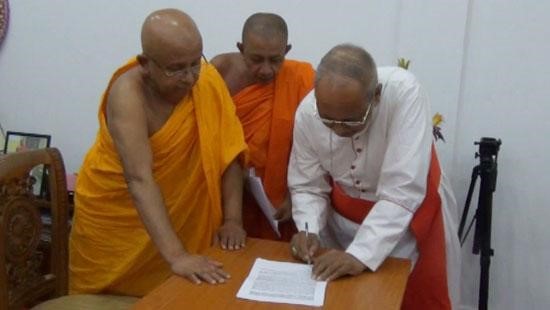
Chief prelates of the Malwatte and Asgiriya chapters and Colombo’s Archbishop Malcolm Cardinal Ranjith today called on the government to refrain from entering into any agreement with any foreign country in a manner foreign armed forces could enter Sri Lanka and set up camps in the country jeopardizing the people’s sovereignty upheld by the Constitution.
Note
Now SOFA agreement with US
By Our Diplomatic Editor
Foreign Minister Tilak Marapana raised concerns of the Sri Lanka Government — during his visit to Washington DC this week — with his US counterpart, Secretary of State Michael Pompeo, on the proposed Status of Forces Agreement (SOFA) between the two countries.
SOFA is another controversial agreement the US was proposing to the Acquisition and Cross Services Agreement (ACSA) signed first in 2007 and renewed in 2017.
The ACSA provides for joint military cooperation between Sri Lanka and the United States and includes logistic support, supplies, services and the use of airports and ports during unforeseen circumstances”. While the 2007 ACSA permits US military vessels to anchor in Sri Lanka ports on a ‘one-off’ basis, the 2017 ACSA appears to be open ended
Do we need this now ?
We have Sen(di)nayake who is not second to the Marshal ( not in the field) these days who can handle any situation ,we should be rushing to enter into such treaties?
Do we need heavily built Green Berets loafing around courting our lasss and mistreating our skinny soldiers like in Okinawa ?
Quote
1995 Okinawa rape incident
(The 1995 Okinawa rape incident took place on September 4, 1995, when three U.S. servicemen – U.S. Navy Seaman Marcus Gill and U.S. Marines Rodrico Harp and Kendrick Ledet, who were all serving at Camp Hansen on Okinawa – rented a van and kidnapped a 12-year-old Okinawan girl. They beat her, duct-taped her eyes and mouth shut, and bound her hands. Gill and Harp then raped her, while Ledet claimed he only pretended to do so out of fear of Gill.[1] The incident led to further debate over the continued presence of U.S. forces in Japan. The offenders were tried and convicted in Japanese court by Japanese law, in accordance with the U.S.–Japan Status of Forces Agreement. The families of the defendants initially claimed that Japanese officials had racially discriminated against the men because they were all black and coerced confessions from them, but later retracted the claims.[2]))
Yankee Dickie in Sri Lanka made a similar blunder and Indian army of Occupation was evicted with a great difficulty by Premadasa
We should be wary about such situation when you see what happened in Vietnam,Iraq ,Libya Japan and Afghanistan
Dr Sarath OBEYSEKERA .
Rise-up Sri Lanka Rise-up! Destroy the Enemy as It Pivots-to-Lanka to Build An Electrified Eelam ‘Border-Wall’ and Make the Island Its Military-Hub in the Indo-Pacific (Part 1)
Posted on February 26th, 2019
By ‘Che’
Children of Lanka, behold thy Mother in the year 2050, penetrated and abused! Mother Lanka behold thy Children of 2050, bereft of mother, dignity and enslaved!
The above map of Sri Lanka, in the year 2050, is taken from the Gospel according to ‘Born Again’ America, printed by courtesy of the Millennium Challenge Corporation (MCC).
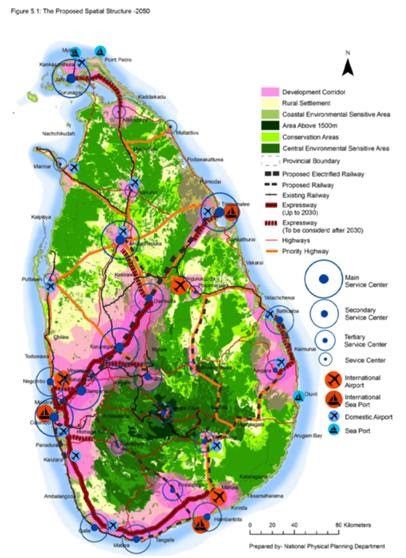
This Map is a visual representation of some key elements of an Agreement reached between Wickramasinghe and the Millennium Challenge Corporation (MCC), after two years of very secretive discussions.
The Agreement (the Americans prefer to call it a ‘Compact’) was to have been signed in November 2018 between the Americans and Wickramasinghe.
Had the Agreement been signed as planned, the Island by 2050, as depicted in the Map, would have been splintered and the entire Country whored into being an American Military-Base.
Sri Lanka’s recent history records how three European nations, successfully invaded the Country by stoking in-fighting amongst the native population. The Sri Lankans of that time did not realise they were being set-up. Consequently, Sri Lanka was conquered and the Europeans ruled the Island for nearly 400 years.
It appears that we have yet not learned this vital lesson of history. The threat of the country being subjugated by a new Imperial power is imminent. Sri Lanka is on the edge of an abyss with the Enemy now at our door.
And pray, what are we Sri Lankans doing? We are squabbling with each other gazing at the other’s navel.
Make no mistake, the Americans are going full throttle to take over Sri Lanka. No apologies are needed, no need to couch our language. Sri Lanka’s Enemy Number One, right now, is America. FULL STOP.
With the MCC Agreement, only awaiting Wickramasinghe’s signature, the Americans are on the verge of taking over our Country; Wickramasinghe and his cohorts are handing it over to them on a platter.
Sri Lankans, we do not have much time left; now is the time to comprehend and unite to defend our Motherland. Shed Party, Ethnic and Religious affiliations and differences to drive this accursed Enemy from our shores.
Harbour no illusions, it is a hard fight like what David experienced when he squared off with bullyboy Goliath.
But united, we have the strength, the cunning and the wisdom to drive this Enemy out from our shores. And this we shall!
Vide America’s map of Sri Lanka featured above, a prominent feature of the map is the Land-Corridor running the length of Trincomalee to Colombo via Dambulla.
Under cover of ‘Megapolis’ development, the Americans demanded from Sri Lanka an ‘Economic’ Corridor of 1.2 Million Acres of land from Trincomalee to Colombo for a lease period of 200 years; the Americans insisted that the law inside this Corridor must perforce be US law.
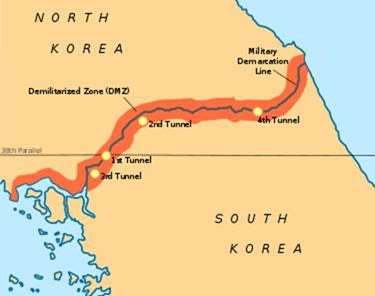
This Corridor literally divides Sri Lanka into two – the North and the South – like in the Eelam Map of the defeated terrorists or the DMZ (Demilitarized Zone) on the 38th parallel in the Korean peninsula separating North Korea from the South.
For the lease of this Corridor, in Sri Lanka, the Americans have offered 400 Million US Dollars, which works out to a meagre Rupees Twenty-Four (Rs. 24/=) per Acre per Month!
To boot, this Corridor has the ‘Eppawela’ phosphates (one of the world’s largest deposits which the Americans were trying to snatch in the 1980’s and were prevented by a brilliant landmark judgement of the Supreme Court), ilmenite, thorium (a nuclear fuel used as a substitute for uranium), Monazite, and rare-earth metals Cerium and Lanthanum. All this for Rs. 24/= per month!
The MCC did a ‘Constraints to Investment’ analysis of Sri Lanka. Consequently, the Americans threatened that if Sri Lanka wanted the Americans to go ahead with their ‘Rupees 24/= per acre per month’ investment for 200 years, Sri Lanka should abrogate her land laws which had protected her Sovereignty and National Security; Sri Lanka was instructed to pass new Land Laws that would legalise State Land to be brought under the hammer (viz Privatised) and laws which would permit the Americans to buy outright any extent of Land in any part of the Island.
Wickramasinghe agreed to oblige and these new Bills – the ‘State Land Bank’ Bill and the ‘Land (Special Provision)’ Bill – were drafted.
These two Bills and the ‘Constraints to Investment’ Report were drafted at Harvard in Massachusetts and subsequently sent to Sri Lanka’s Attorney General and the Legal Draftsman for their signatures.
To give the readers a sneak view of the draft Bills, some highlights are excerpted from the respective preambles to the Bills.
State Land Bank Bill: a. Provides for the establishment of a State Land Bank: b. Requires the compilation of a register of all State Lands belonging to Public Institutions: c. Makes provision for these Public institutions to lease such lands to persons making a request for same: d. Repeals Part 1v, Part v and Part v1 of the Land Reform Act No:1 of 1972 (this repeal includes the restriction in place on ownership of property by a single individual to a maximum of 50-acres): e. Vests the powers of the Land reform Commission in the State Land Bank: f. (Sec 17) – Enables any person, including foreigners, to lease out State Land.
Land (Special Provisions) Bill: a. Grants absolute Title to citizens who presently, by ‘Government Grant’, have regulated usage of State Lands: b. Permits citizens, who hold Title to State Lands, to mortgage such land to banks: c. Permits banks to sell off such State Lands, mortgaged to the banks, to private individuals including foreigners: d. This Act shall be in operation for only seven years.
The Americans further instructed Wickramasinghe to ‘replicate’ in Sri Lanka’s rural areas, the ‘40-Acres and a Mule’ concept that had been enforced in America in 1865; the former slave owners were required to give each of the emancipated slave-families, 40- acres of land and a mule.
Without wherewithal, the black families survived the first month on the flesh of the Mule; thereafter, to survive, they sold their property back to the former slave owners for a pittance and the black families, in droves, trekked and trekked and trekked to the industrial cities like Detroit, Michigan and Chicago in search of employment.
The ‘40-acre and a mule’ concept drove out the black community from their Lands in the South, pauperised and bonded the former slaves from the inception of their emancipation, created mass urban migration to the industrial centres, was responsible for the creation of black ghettos in American cities, created the foundation for a large number of the black community to be sent to prison for drug offences and be deprived of their voting-rights, created a bank of surplus labour which the American private sector exploited by paying them less than subsistent wages.
In an ‘everywhere-Mary-went-the-lamb -was-sure-to-go’ attitude, Wickramasinghe publicly complied with American directives and announced his intentions of giving each rural farmer family 2-acres of land.
With the proviso in the ‘Land (Special Provisions) Bill that this law applies only for seven years, the problems the American black community are burdened with, would be compounded and accelerated; it could be anticipated that the rural poor would hurriedly sell off or mortgage their Lands.
When the rural poor are compelled and encouraged to mortgage their lands and trek to the cities, the land (devoid of any one occupying it), becomes available for companies like Monsanto to initiate their assault on our land.
This is Ranawaka-Wickramasinghe ‘Megapolis’ development, if you may.
It is pertinent that over 80% of Sri Lanka is State Land.
Does it behove an Imperial Power to invade an island and capture her territory by force of arms when it can simply buy up the entire country with the aid of collaborators from within?
As can be deduced from the Map, the country has been perforated into several parts with provision to make further divisions in the future.
An ‘Electrified’ Railway Line from Trincomalee to Colombo (Vide the Electrified Railway Line featured as little rectangles in the legend to the Sri Lanka Map above) makes a distinct physical separation of the North of the Island from the South.
The electric ‘protective’ fences on either side of the electrified railway line to protect humans and animals from being electrocuted, would make this ‘Eelam Wall’ the World’s first electrified ‘Border-Wall’!
As can be evinced from the Map, Sri Lanka has been metamorphosed into a large ‘aircraft carrier with several runways, plum in the centre of the Indian Ocean.
There is an International Airport in Polonnaruwa too!
There is cause for even greater concern. Some researchers claim that MCC has put out another Map, portraying Sri Lanka in the year 2100, a hundred years from hence; as per that map it is arguable whether Sri Lanka is one Island or two Islands.
These researchers have reportedly challenged the MCC and Alaina Teplitz to put out into the public domain the map of Sri Lanka in the Year 2100.
According to the emerging reports, in the American Map of Sri Lanka in the Year ‘2100’, a Canal like the Suez Canal, has been dredged along the length of the Economic Corridor from Trincomalee to Colombo; this Canal has opened up the Bay of Bengal to the Arabian Sea via the Laccadive Sea, affording the INDOPACOM and its RIMPAC military alliance a tremendous strategic advantage over Powers like India, China and Russia.
For Sri Lanka such an ‘Eelam Canal’ would sound the death knell for her; this Canal would permanently slice the Island into two.
The Megapolis Minister reportedly is the mid-wife for the Millennium Challenge Corporation (MCC) baby, delivering a Frankenstein mutation of Sri Lanka.
Who or what is this MCC which can commit America to Agreements with Sovereign Nation States?
The MCC is a bi partisan American organisation (approved by both the Democrats and the Republicans) set up and funded by the US Government, to do what the CIA, the NED (National Endowment for Democracy) and USAID, have been trained to do.
The Chairman of the MCC Board is the US Secretary of State and its Vice- Chairman, the US Secretary of the Treasury; the rest of the MCC Board are the US Trade Representative, Administrator of USAID, the CEO of the MCC and four private sector members appointed by the US President on the advice and consent of the US Senate.
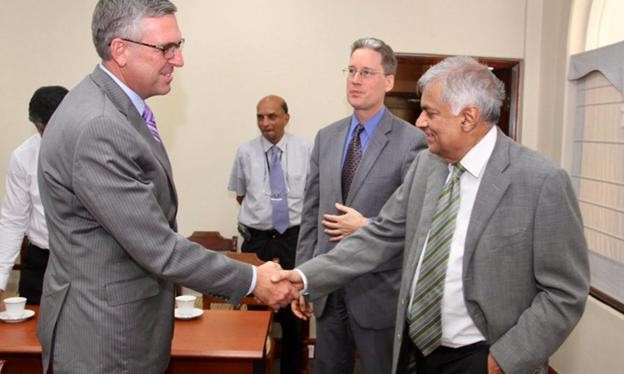
MCC CEO Jonathan Nash and Chargé d’affaires ad interim Robert Hilton meeting Prime Minister Ranil Wickremesinghe at Temple Trees on 20 Sep 18
BULLET PROOF VEHICLE
June 1st, 2019Dr Sarath Obeysekera
.Cabinet paper on bulletproof vehicle for MR due to request..
- Opp. Leader’s office sent request for bulletproof vehicle in letter to PM’s Office
- It cited serious security threats to former President
- Decision on Cabinet paper referred for next week
Daily FT ,…….
Should we take a clue from the His Eminence The Cardinal ??
I agree that Ex-President’s life is worth protection because people are now lamenting that they made a wrong decision.Hence they may want to revert the decision they made .
Maduluwawe Sobhita Thero is no more hence there is no one to advise .Rathana Thero is also in a warpath with the President and the Government.
Prof Wijesooriya who was an ardent supporter of the incumbent government is now regretting that he supported them to come to power .
We are not sure about Rajitha Senaratne ,as he is unpredictable and Patali is head on collision with the PM in getting rid of Badhurdin. These were the same people who towed the line with MS to get rid of MR .
Now with Dammika .Nagananda ,Pallewatta eying for the post ,we should keep the experienced ex leader alive to take the helm.
I remember we did lot of work in converting a land rover to a bullet proof vehicle for the President Premadasa after JVP tried to blow off Athulathmidali in the Parliament. Unfortunately President Premadasa was driving around in the same converted bullet proof vehicle when he was killed by tigers ,That is because ,fate made him come out if vehicle with Mohiddeen to greet Babu. ( I sometimes wonder whether Mohidden was a member of NTJ?)
Whether we all take precautions by driving bullet proof vehicles or not when time is up you may die of choking a Coa Cola .
At this juncture MR should say that he did not want any bullet proof vehicle and say, my people are more important and let the government protect them .
That is what the Cardinal said .
Dr Sarath Obeysekera
දක්ෂිණ අධිවෙිගී මාර්ගය දෙපස රුක් රෝපණ සමාජ සත්කාරය සඳහා ඔබටත් ආරාධනා
June 1st, 2019පේශල පසන් කරුණාරත්න Peshala Media
මානව හා සත්ව සංහතියේ සුරක්ෂිතභාවය රඳා පවතින පරිසරයේ සුවිශේෂී වැදගත්කම කියාපාමින් ජුනි මස 5 වන දිනට යෙදී ඇති ජගත් පරිසර දිනය සැමරීම සඳහා බොහෝ දෙනා විවිධ වූ වැඩසටහන් රැසක් දිවයින පුරා සංවිධානය කර ඇත.
එම වැඩසටහන් අතුරින් බියගම නොර්ත් සේල්ස් ආයතනය හා මාර්ග සංවර්ධන අධිකාරිය සමඟ එක්ව 2019 ජුනි මස 05 වන බදාදා දින දක්ෂිණ අධිවේගී මාර්ගයේ ගැලනිගම හා වැලිපැන්න හුවමාරු අතර රුක් රෝපණ වැසඩටහනක් සංවිධනය කර ඇත.
පරිසර සංරක්ෂණය හා තිරසාර සංවර්ධනය මඟින් මිහිතලය සුරැකීම අරමුණු කර ගනිමින් #BePlanetWorthy# හරිත ව්යාපෘතියේ Plants for the Planet පැළ සිටුවීමෙහි දෙවන අදියර වශයෙන් නොර්ත් සේල්ස් ආයතනය විසින් පවත්වන මෙම වැඩසහන මගින් කුඔුක් සහ කරඳ පැළ සමඟින් මාර්ගය දෙපස අලංකාරය සඳහා විසිතුරු ශාක සමඟින් පැළ 1600 ක් පමණ රෝපණය කිරීම සඳහා සියලු කටයුතූ සූදානමි කර ඇත.
නිෂ්පාදන ආයතනයක් වශයෙන් එහි කාබන් පියසටහන අඩු කරලීමත් සංවර්ධනයේ නාමයෙන් ලොවපුරා සිදු කරනු ලබන වන විනාශයත් ඒ හා බැදී මතු වී ඇති මිහිකත දූෂණය වීම, ඕසෝන් වියන ක්ෂය වීම වැනි ගෝලීය පාරිසරික ගැටලුවලට විසඳුමක් වශයෙන් සහ අනාගත පරම්පරාවල සුරක්ෂිතතාවය උදෙසා පරිසරය රැක ගනිමින් තිරසාර සංවර්ධනය කරා පිය නැගීම අරමුණූ කර ගනිමින් නොර්ත් සේල්ස් ආයතනය මගින් සිදු කරන මෙම සමාජ සත්කාරය සඳහා ඔබටත් සහභාගී වීමට අවස්ථාව උදා කර ඇත. ඒ සඳහා 0769823684 (තරුෂි රාජපක්ෂ) අමතා තොරතුරු ලබා ගත හැකි වේ.
ස්තූතියි
පේශල පසන් කරුණාරත්න
Peshala Media
German Jews warned not to wear kippas after rise in anti-Semitism
June 1st, 2019The German government’s anti-Semitism commissioner has urged Jews to avoid wearing skullcaps in public.
When I read above news I was wondering whether Sri Lankan Authorities may contemplate to issue a advisory to Muslims also with similar waning ?
Similar waRning has been issued to Muslim Women regarding wearing Burqa covering the face Soon it may be applied to Muslim men against wearing their traditional cap?
I recall an anecdote in Russia about Jews ,Christians and Muslims started wearing skull caps and buddhist none .
A Russian Communist who is an atheist was leading a group of priests of Christian ,Jew .Muslim and a Buddhist faiths through the jungle A ferocious black bear started chasing them and all three other than Russian started praying .The Russian thought that praying would not help as the God was nowhere ,he climbed up a tree and shouted to other three to also climg the tree .
Bear was trying to come up the tree and the Russian got scared and urinated ( he uttered Naa Hui)
Next to him on the tree was the Jew who had some drops fallen on his heary head ,more unrine fell on Christian and muslim also much more
Head of the buddhist was fully soaked
Anecdote says that after the incident Jew shaved part of the head and started wearing a skullcaps (kippah ) ,Christian who was a priest started wearing a bigger cap ( Zecchetto
.Muslim shaved hair and started wearing cap ( Kufi/Taqiyah) to cover the whole head
Finally buddhist priest whose head was fully soaked decided to shave the whole head !
Very soon all the buddhists may have to shave their heads to identify themselves as buddhists?
Dr Sarath Obeysekera
Social Insecurity and its impact on Socio-Economic and Political conditions in Sri Lanka
June 1st, 2019Professor Dr. Edward Perera
Politics කියන යුරෝපීය වචනයෙ සිංහල තේරුම ලෙස දැනට භාවිතා කරන දේශපාලනය” නමැති වචනය වෙනුවට ජනතා සේවය” වැනි වචනයක් භාවිතයට යොදා ගැනීම.( ප්රධාන හේතුව දේශපාලනය කියන වචනය ජනතාවට ඒ තරමට එපා වී තිබීම නිසාත් දේශපාලනය කියන වචනයට ප්රතිවිරුද්ධ අර්ථයක් ප්රකට කරන අන්දමේ සමාජ විරෝධී හැසිරීමක් ඊනියා මහජන නියෝජිතයින් විසින් මේ දක්වා පවත්වාගෙන යාම).
රටේ ජනතාවගේ අවශ්යතාවයන් පන්ති පදනමක් මත නොව මානුෂික පදනමක් මත හඳුනාගෙන ඒ අවශ්යතාවයන් ඉටු කිරීමට රටේ සම්පත් ප්රමාණය සමානාත්මකව බෙදී යන සාධාරණ සමාජයක් බිහි කිරීම
පුද්ගල අපේක්ෂාවන්, අභිමතාර්ථයන් හා පාරිභෝජන හැසිරීම් එම පුද්ගලයාගේ මනෝමූලික (subjective) අවශ්යතාවයන් මත ඉටු කර දීම වෙනුවට පොදු ක්රියාදාමයක අත්යවශ්ය අංගයක් ලෙස හඳුනාගෙන පුද්ගල දක්ෂතාවයට ලබාදිය හැකි උපරිම ශක්තිය හා අවස්ථාව ලබා දීම හා එවැනි පුද්ගලයින් සමාජ විරෝධී බලවේග වලින් ආරක්ෂා කර දීම.
පුද්ගල දක්ෂතාවයන් දේශයේ සම්පතක් හැටියට හඳුනාගෙන එම දක්ෂතාවයන් සමාජ, ආර්ථික හා අධ්යාත්මික දියුණුව නමැති සන්දර්භය (context) තුළ වර්ධනය වීමට සැලැස්වීම හා රට සංවර්ධනය කිරීමේ ක්රියාවලියේ එක් වැදගත් නිර්ණායකයක් ලෙස එම පුද්ගල ගුණාංග හඳුනා ගැනීම හා ඇගයුමට ලක් කිරීම.
පුද්ගල පරිහානිය සමාජ පරිහානියට මුල් වන අන්දම පැහැදිලි කර, පුද්ගලයන් සමාජ ධර්මතාවයන්ගෙන් අපගමනය වීමට තුඩු දෙන හේතු සාධක සොයා බලා ඒවාට වැට කඩුලු බැන්ද ආර්ථික හා සමාජ සංවර්ධන ක්රියාවලියේ පුද්ගල දායකත්වයට විශේෂ ස්ථානයක් හිමිකර දීම
වැරදි දේශපාලනයේ සෘජු ගොදුරු බවට පත්ව අකර්මණ්යව සිටින පුද්ගලයින් පුනරුත්ථාපනය කර ජාතිය ගොඩනැංවීමේ ක්රියා ක්රියාදාමයට සම්බන්ධ කර ගැනීම (උදා : මත් කුඩු භාවිතා කරන්නන් )
රටක සිටිය යුත්තේ උගතුන් නොව නිරෝගී පුද්ගලයන් ය. මන්දපෝෂණයෙන් පෙළෙන දරුවන්ට අධ්යාපනය දීම බල්ලන්ට ලෙලි පොල් දීම වැනි ය. ඉගෙන ගත්ත ලෙඩුන්ගෙන් රටේ සංවර්ධනයට දායකත්වයක් ලබාගත නොහැක. කායික දුබලතාවයට වඩා මානසික දුබලතාවය ජාතියක් පිරිහීමට ප්රධාන හේතුවකි.
පොදු සෞඛ්ය පිළිබඳ සාධනය රාජ්ය සේවයේ වැදගත්ම සාධකයක් ලෙස පිළිගත යුතුය. ජනතාව රෝගී වූ විට, ඔවුන්ගේ මනස ද රෝගී වී සේවයේ කාර්යක්ෂමතාවය පහත වැටීමක් සිදුවේ. ඊට අමතරව මහජන නියෝජිතයන් වීමට ඉදිරිපත් වන අයත් බොහෝවිට මානසික රෝගීන් වනවා පමණක් නොව, එවැනි මානසික රෝගීන් විසින් භාවිතා කරන ඡන්දයෙන් ජනාධිපති ධූරයේ සිට මන්ත්රීවරයා දක්වා තේරී පත්වීමට ඉඩකඩ බොහෝය (— පාර්ලිමේන්තු ඉතිහාසය ඊට කදිම නිදසුනක්)
ආරෝග්යා පරමා ලාභා- සන්තුට්ඨි පරමං ධනං යන්න ජාතියේ ජප මන්ත්රය විය යුතුය. හෙළයේ මුතුන් මිත්තෝ ඉහත සඳහන් බුදු වදන අනුව ජීවත්වීම නිසා නිරෝගී ජාන ඇති අනාගත පරම්පරාවක් බිහිවීමට අවශ්ය ජීව විද්යාත්මක පදනම මෙන් ම සමාජ ආර්ථික හා අධ්යාත්මික පරිසරය ද සකස් කර දුන්හ.
සත්ව හිංසාවෙන් වැළකුණු ඔවුන් බොහෝවිට බොහෝ විට ආහාරයට ගත්තේ පෝෂණයෙන් හා ඖෂධීය වටිනාකමකින් යුතු එළවලු, පලතුරු, ධාන්ය හා පලා වර්ගයන්ය. අදටත් අප තුළ ශාරීරික හා මානසික සෞඛ්යයත්, නිවුණු ගතියත්, ප්රඥාවන්ත බවත්, ශේෂ වී ඇත්තේ මුතුන් මිත්තන් ඔවුන්ගේ ඊයේ ගැන පමණක් නොව අපේ හෙට ගැනත් සිතු නිසාය. ජනතාවට වස විස කැවීම දූෂිත දේශපාලනයේ එක් අවජාතක දරුවෙකි.
විශාල ධනයක් වැය කොට ශරීරයට ඉතාමත් අහිතකර ආහාර ද්රව්ය —- කර ජනතාවට කෑමට බීමට සලස්වා දී ඇත්තේ වස විෂ ය. මෙය දූෂිත දේශපාලකයින් ආනයනකරුවන්ගෙන් ලබාගන්නා කොමිස් මුදල් වෙනුවෙන් කරනා අපරාධකාරී ක්රියාවකි. මීට විරුද්ධව නැගී සිටින දේශප්රේමීන් හා විද්වතුන් රැකගන්නා නෛතිකමය වැඩපිළිවෙළක් ක්රියාවට නැංවිය යුතු ම ය. (උදා : මහාචාර්ය සේනක බිබිලේගේ සැක කටයුතු මරණය )
අධ්යාපනයේ පරමාර්ථය රැකියාවක් ලබාගැනීම පමණක් නොව පුද්ගලයා සම්පූර්ණ මිනිසෙකු කිරීම බව මුළු මහත් ජාතිය විසින් ම වටහා ගත යුතුය. නිදහස් අධ්යාපනයේ පියා වන C.W.W කන්නන්ගර මහතා එම නිදහස් අධ්යාපනයෙන් බලාපොරොත්තු වූ ඉලක්කය ළඟා කර ගැනීමට නොහැකි වූයේ නිදහසින් පසු බලයට පත්වූ සෑම කණ්ඩායමක්ම වාගේ අධ්යාපනය හා ජාතික සංවර්ධනය අතර පාලමක් ඉදි කිරීමට අපොහොසත් වීම නිසයි.
රටේ ජනගහනය වැඩිවීමත් සමග ප්රසාරණය වන ශිෂ්ය සංඛ්යාවක්, ගුරුවරුන් හා පරිපාලන නිලධාරීන් ප්රමාණයක්, අධ්යාපනයට ප්රමාණාත්මක බවක් ලබා දුන්නා මිස ඊට ගුණාත්මක බවක් ලබා දීමට උත්සාහ කළේ නැත. ඒ සඳහා පාලක පිරිස් වලට දැනුමක් තිබුණේ ද නැත. අධ්යාපන බල පත්රිකා හා ප්රතිසංස්කරණ වරින් වර කරලියට පැමිණිමත්, රටේ සංවර්ධනයට සෘජුව බලපාන තිරසාර අධ්යාපන ක්රියාවලියකට කිසිදාක අඩිතාලමක් නොවැටුණේ කාලකන්නි පක්ෂ දේශපාලනයක නූගත් දේශපාලකයින් හිර වී සිටි නිසයි. ඔවුන් සදා අන්ධකාරයේ සිටියා පමණක් නොව ජාතියේ අනාගතය භාර ගැනීමට සිටින පාසල් හා විශ්වවිද්යාල පරපුරද අන්ධකාරයට ඇද දැමූහ. (උදා: ශිෂ්ය අරගල හා විප්ලවකාරී හැසිරීම් 1971 සහ 1988-89 )
රටේ අධ්යාපනය ජනතාවගේ බදු මුදලින් පෝෂණය වන නිසා පාසල් දරුවාගේ සිට විශ්වවිද්යාල ශිෂ්යයා දක්වා තමන් ලබන අධ්යාපනයෙන් ජනතාවට පෙරළා යමක් දිය යුතු බව පසක් කරගත හැකි චර්යා ධාර්මික ඇගයුම් පද්ධතියක් ස්ථාපිත කළ යුතුය. අධ්යාපනය මුළුමනින්ම ප්රතිව්යුහගත කර දේශයේ අවශ්යතාවයන්ට අවශ්ය අන්දමේ උගතුන් බිහි කරන අතර ජාන උරුමයක් වූ බුද්ධිමත් බව මතුකර ගත හැකි මානසික උත්තේජනයක් හා ප්රදානයන් (psychological stimulation and —–) අධ්යාපනයේ අනිවාර්ය අංගයක් බවට පත් කළ යුතුය. (උදා; වෛද්යවරුන් හා රෝගීන් අතර අන්තර් ක්රියාවලිය බිඳ වැටී ඇති අන්දම )
ශ්රී ලංකා අධ්යාපනයේ ප්රධානතම දුර්වල කමක් වන්නේ දැනුම ලබාගත හැක්කේ පොතෙන් පමණක් යැයි විශ්වාස කිරීමයි. විශ්වය පුරා විහිදී ඇති දැනුම දේශනා ගාරයකට හා පුස්තකාලයකට සීමා කර විභාගයෙන් සමත් වීමට පමණක් ශිෂ්යයන් උනන්දු කිරීම අවම කර පර්යේෂණාත්මක හා ගවේෂණාත්මකව සිසුන්ට මෙන් ආචාර්යවරුන්ටත් නිම් වළලු පුළුල් කිරීමට රජය විසින් ප්රතිපාදන වැඩි කළ යුතු ය.
ගෙවීගිය දශක හතරක කාල පරිච්ඡේදය තුළ සිදු වූ තත්ත්වයන් සැලකිල්ලට ගත් කල රටේ ජාතික ආරක්ෂාවට ප්රමුඛ තැනක් දිය යුතුව තිබෙනවා. රජය වශයෙන් ගත් කළ සමස්ත පාලනය හා පරිපාලන ව්යුහයම ඊට අයත් වුවත් කපටි දේශපාලකයන් එය රාජ්ය ආරක්ෂාව හෝ ආණ්ඩුවේ ආරක්ෂාව නැත්නම් කාලකන්නි දේශපාලකයන්ගේ ආරක්ෂාව කියන තත්ත්වයට ඇද දමා ඇත. ජනතා නියෝජිතයින්ට වෙඩි නොවදින රථ මෙන්ම කොමාන්ඩෝ බලකායේ ආරක්ෂාව ලබා දෙන එකම රට ශ්රී ලංකාව විය හැක. මෙසේ ආරක්ෂාව ලබාගත් නූගත් දේශපාලකයින් රටේ ආරක්ෂාව දිනෙන් දිනම ප්රපාතයට හෙලා ඇත. (උදා: ශ්රී ලංකා දේශපාලනයේ මහ දැවැන්තයකු වූ ජේ. ආර්. ජයවර්ධන 1983 දී රූපවාහිනිය ඔස්සේ කියා සිටියේ තම තමන්ගේ ආරක්ෂාව තම තමන් විසින් සපයා ගත යුතු බවයි) ඔහුව සෘජුව අනුගමනය කළ හිටපු ජනාධිපති මහින්ද රාජපක්ෂ තමන්ගේ ආරක්ෂාවට හමුදා භටයින් තුන්දාස් පන්සියයකට ආසන්න පිරිසක් අරලියගහ මන්දිරය භූමියේම නේවාසිකව නතර කරගෙන සිටියේය.
ආරක්ෂාව සොයන සෑම පාලකයෙක්ම ඉතිහාසය පුරාම පෙන්නුම් කළේ දැඩි අනාරක්ෂිත බවක්. මේ අනාරක්ෂිත බවින් මිදීම සඳහා ඉතිහාසය පුරාම බියගුළු පාලකයින් විසින් කළේ තමන්ගේ ප්රතිවාදීන් ව ඝාතනය කිරීමයි.( උදා: එවකට සෝවියට් දේශයේ පාලකයා වූ ස්ටැලින් තමාට අභියෝගයක් වූ ට්රොට්ස්කිව මරා දැමීමට ක්රියා කිරීම)
ත්රස්තවාදී ප්රහාරයන්ට මුහුණ දීමට සන්නද්ධ හමුදාවන් ක්රියාන්විතයේ යෙදවීම අවශ්ය වුවත් ත්රස්තවාදය බිහි වීමට තුඩු දෙන සමාජ, ආර්ථික, දේශපාලන හා ආගමික හේතූන් අවම කර ගත හැක්කේ උගතුන්, බුද්ධිමතුන් හා ආගමික නායකයන්ගේ සහය ඊට ලබා ගැනීමෙනි. ශ්රී ලංකා දේශපාලන සන්දර්භය (context) තුළ වූ විවිධ කැරලි කෝලාහල හා සන්නද්ධ නැගීටීම් වලදී එය වළක්වා ගැනීමට හැකියාවක් තිබූ, මේ කියන සුවිශේෂී පුද්ගලයින් එම කැරලි ගැසීම් වල කොටස් කාරයින් වීම සමාජ විද්යාත්මක පර්යේෂණ වලට භාජනය කළ යුතු වැදගත් මාතෘකාවකි.
අවාසනාවකට මෙන් ආගමික නායකයින් ලෙස පෙනී සිටින ඇතැම් ආගමික නායකයින්, තම තමන්ගේ ආගම් වල සාස්තෘන් වරුන්ටත් පිටු පාමින් බංකොලොත් දේශපාලකයින්ගෙන් ලැබෙන පඬුරු —-(සුඛෝපභෝගී රථ ද ඇතුළුව ) වෙනුවෙන් අවිහිංසාව පාවා දුන් අවස්ථා බොහෝය. ඇතැම් ආගමික අන්තවාදී කණ්ඩායම් තමන් අදහන දෙවියන්ගේ නාමයෙන් අන්ය ආගම් ලබ්ධිකයින් මරා දැමීම ගෝලීය මට්ටමෙන් සිදු වුවත් අපගේ අතීන්ද්රිය දැනුමට අනුව අවි ගත්තෝ අවියෙන්ම නැසෙන නිසා එවැනි පාපතරයන්ගෙ හෙට විශ්ව ධර්මතාවයන්ටම විසඳීමට ඉඩ තබා ඒ ශක්තිය කෙරෙහි විශ්වාසයක් තබා රටේ ආරක්ෂාව වෙනුවෙන් සන්නද්ධ හමුදා ශක්තිමත් කිරීමත් ඊට සහාය දීමත් කළ යුතු ව ඇත.
යැපීම් ආර්ථිකය හෙවත් ණයට ඉල්ලන් කෑම තුළින් අභිමානවත් ජාතියක් වූ හෙළයාගෙන් බහුතරයක් අද හිඟන්නන් බවට පත්වී ඇත. ඉස්ලාම් භක්තිකයන්ගේ දරිද්රතාවය මැඩලීමට පොහොසත් අරාබි රටවල් ඉදිරිපත් වන අතර දමිළ, ක්රිස්තියානි කොටස්වලට පිහිටවීමට ජාත්යන්තර කතෝලික හා ක්රිස්තියානි සංවිධාන හා පල්ලි ඉදිරිපත් වෙති. සුළුවෙන් හෝ හින්දු දමිල පිරිස් වලට උදව් කිරීමට ඉන්දියාව සමහරවිට ඉදිරිපත් වුවත්, අසරණ වන සිංහල බෞද්ධයාට සරණ වීමට ඉදිරිපත් වෙන ලෝක සංවිධාන විරල ය.
ශ්රී ලංකාව තුළ වෙනත් ජනවාර්ගික කොටස් උදාර පාරිභෝජනයට” (conspicuous consumption) ගොදුරු වූවා කියා සිංහල බෞද්ධයින් හැසිරීම් හා පරිභෝජනය තුලින් එවැනි ජන කොටස් වල චර්යාව අනුගමනය කළ යුතුව නැත. භෞතික අවශ්යතාවයන් ඉටුකර ගැනීමට අපොහොසත්වීම නිසාම අපි අසරණ වූවා කියන තත්ත්වයට පත්විය යුතු නැත. මේ කියන තත්ත්වයන් තුළ සිංහල බෞද්ධයින් අනාරක්ෂිත බවට පත් වේ නම්, අප ඒ අනාරක්ෂිත බවින් මිදී මේ මාර්ගයට අවතීරණය විය යුතුය. අනාගත දේශපාලන බලවේගයක ප්රධානම පිරිස සිංහල බෞද්ධයින්ගෙන් සමන්විය යුතු නම් අනාරක්ෂිත බවට හේතු හඳුනාගෙන, අනාරක්ෂිත බවෙන් මිදී මේ මාර්ගයට අවතීර්ණ ව අනාරක්ෂිත භාවයෙන් මිදී සුරක්ෂිත බව තහවුරු කර ගත යුතුය.
දුක පදනම් කරගත් චතුරාර්ය සත්ය හරහා භෞතිකව නො වන එහෙත් ආධ්යාත්මික විමුක්තියක් වෙනුවෙන් බුදු දහම ප්රයෝජනයට ගත හැකි වුවත්, භෞතික සාධක මත පදනම් වූ සමාජ ආර්ථික ක්රමයක් තුළ වෙනත් ආගමික ලබ්ධිකයින් ට ද පොදු වූ සාධකයක් වන සමාජ අනාරක්ෂිත” භාවයට අපට සමාජ ප්රජාතන්ත්රවාදී පාලන ක්රමයක් තුළින් සියලුම ජන කොටස් වල සහයෙන් පොදු අනාරක්ෂිත භාවයෙන් මිදී මේ දේශපාලන” ( ජනතා සේවය) ක්රියාදාමයකට අපට පැමිණිය හැක. මේ කියන සුරක්ෂිතභාවයට පහත සඳහන් කරුණු ඇතුළත් විය යුතුය.
- අනාරක්ෂිතභාවයට තුඩු දෙන ආරක්ෂක අංශවල ක්රියාකාරකම් වල දුර්වලතාවයන් හා බිඳවැටීම් අධ්යනය කිරීම.
- ජාතික ආරක්ෂාව තුළින් පුද්ගල ආරක්ෂාව තහවුරු කිරීම.
- අනාරක්ෂිතභාවයට තුඩු දෙන මනෝභාවයන් සමනය කළ හැක්කේ තුවක්කුවෙන් හා උණ්ඩයෙන් නොවන බව තේරුම් ගත හැකි පාලකයින් හා සන්නද්ධ හමුදා අධිපතිවරුන් මෙන්ම ආරක්ෂක ලේකම් වරුන් ද පත්කර ගැනීම.
- අනාරක්ෂිත භාවය, සමාජ ප්රශ්නයක් ලෙස සලකා, සමාජ ක්රියාවට (social action) හා අන්තර් ක්රියාවට (social interaction ) මූලික සාධකයක් වන අනාරක්ෂිතභාවය පාසල් අධ්යාපනයේ සිට විශ්වවිද්යාල මට්ටමේ අධ්යාපනය දක්වාත්, පශ්චාත් උපාධි අධ්යාපන යේ පර්යේෂණාත්මක විෂය ධාරාවන්ට ද ඇතුළත් කර, අනාගත අනාරක්ෂිත තත්ත්වයන්ට මුහුණදිය හැකි දේශීය මෙන්ම ගෝලීය සුරක්ෂිතතාවය වෙනුවෙන් ලෝක ප්රජාවට ද සහාය විය හැකි දැනුම විශේෂයක් දියුණු කර ගැනීම.
- රටේ නිෂ්පාදන කටයුතු වලට බාධා වන සාධකයන් හඳුනා ගෙන ඒවා ඉවත් කිරීම.
- දේශීය අමු ද්රව්ය පිළිබඳ සමීක්ෂණ වාර්තා ඇසුරින් සකස් කළ දත්ත අනුසාරයෙන් දේශීය අවශ්යතාවයේ ඉල්ලුමට භාණ්ඩ සැපයීම හා ප්රමිතිකරණය තුළින් නිෂ්පාදන වල ගුණාත්මක බව වැඩි කිරීම, අතිරික්තය විදේශීය වෙළෙඳ පොළට නිකුත් කිරීම.
- ශ්රී ලංකාවට පමණක් සුවිශේෂී වූ වගාවන්ගෙන් ලැබෙන බෝග හා ශාකමය ද්රව්ය වලට ජාත්යන්තර වෙළඳපොලක් සොයා ගැනීම. එමෙන්ම මෙන්ම ඖෂධීය වටිනාකමක් ඇති ශාක වලින් හෙළ වෙදකමට අනුව දේශීය හා ජාත්යන්තර වෙළඳ පොළට ඖෂධ නිපදවා දේශයේ මෙන්ම දේශයේ මෙන්ම විදේශ වල ජනයාට නිරෝගී ජීවනයක් ලබා දීම.
- ශ්රී ලංකාව සිංහල බෞද්ධ රටක් ලෙස, ලොවට සාමයත්, දුකින් මිදීමේ මාර්ගය මෙන් ම අනාරක්ෂිත භාවයෙන් මිදීමේ මාර්ගයක් න්යායිකව මෙන් ම ප්රායෝගික ව කියා දෙන, සුරක්ෂිත ලොවක් බිහි කිරීමේ දැවැන්ත අභියෝගය ට ජාතියක් වශයෙන් මුහුණ දීම.
- ශ්රී ලංකාව තුළ ඇත්තේ විවිධ ජාතීන් නොව විවිධ ජනවාර්ගික කොටස් බව දේශයේ මුග්ධයින් ට කියා දෙන අතර එය ශ්රී ලංකාව තුළ මුළාවට පත්ව ජාතික අනන්යතාවයක් ගැන කතා කරන සුළු ජන කොට්ඨාස එම මුලාවෙන් ගලවා ගැනීම.
- ඓතිහාසික හා භූගෝලීය වශයෙන් මේ භූමියට උරුමකම් ඇති සිංහල ජාතියට නැති ජාතික අනන්යතාවය වෙනත් කිසි ම ජනවාර්ගික කොටසකට අයිති නැති බව ව්යවස්ථාවෙන් තහවුරු කර එම ජන කොටස්
- දැනට පත්ව ඇති අනාරක්ෂිත භාවයෙන් මුදවා, ශ්රී ලංකාව තුළ එකම ජාතියක් ලෙස සිංහල ජාතිය සමගියෙන් සමාදානයෙන් ජීවත් වීමට අවශ්ය භෞතික හා මානසික ප්රතිපාදන සැපයීම.
- වහලුන් හා අර්ධ වහලුන් ලෙස මැද පෙරදිග හෝ වෙනත් කිසිම රටකට අපේ ශ්රමිකයන් නොයැවීම, විශේෂයෙන් කාන්තා හිංසනයෙන් ශ්රමිකයින් රැකගැනීම, තාක්ෂණයෙන් ඉහළම දැනුමක් හා පුහුණුවක් ලැබූ ශ්රමිකයින් ලොව පුරා බෙදා හැර දළ ජාතික වත්කම් වල ප්රමාණාත්මක වර්ධනයක් ඇති කිරීම.
Professor Dr. Edward Perera
Dr.Rer.Pol.(Berlin), Diplom.HD, (Kassel), B.A & B.A Hon. (Sri Lanka), MCP (Microsoft)
June, a decisive month for Yahapalana govt.
June 1st, 2019
Ven Athureliye Rathana Thera
The fast unto death started by Ven Athureliye Rathana Thera in the hallowed precincts of the Sri Dalada Maligawa last Friday is all the more significant because he is a UNP national list MP. This is a fast unto death started by a member of the government against the government – a governing party MP starting a fast demanding the removal of a Cabinet Minister and two provincial Governors of the same government. Even though the President and Prime Minister may be pulling in different directions, for all practical purposes, it is one government. The fast started by Ven Rathana Thera is in many ways reminiscent of the similar fast unto death started by Ven Omalpe Sobitha Thera against the Chandrika Kumaratnga government’s Post Tsunami Operational Management Structure or P-TOMS in 2005.
That however was a fast unto death started by an opposition Bhikku MP against a proposed move by the government. This time it’s a member of the government that has started a fast unto death against his own government. One may assume that the fast unto death started by Ven Rathana will end in much the same way as the fast unto death started by Ven Omalpe Sobitha Thera – what happened at that time was that the Ven Mahanayake Theras prevailed upon Ven Sobitha Thera to give up his fast on the assurance that the Chandrilka Kumaratunga government had pledged to the Ven Mahanayakes that the government would not sign P-TOMS without giving the Ven Mahanayake’s the final say in the matter.
In any event the P-TOMS arrangement was shot down by the Supreme Court for being in violation of the Sri Lankan Constitution and things ended on a satisfactory note for all concerned. Ven Omalpe Sobitha Thera is alive and well and we see him often on TV. Ven Rathana has gone on a fast unto death demanding the removal of Minister Rishard Baithiudeen, and Governors Azath Salley and A.L.M..Hisbulla and if something is not done about these individuals, Ven Rathana will not be able to give up his fast. The dates for the debate on the no confidence motion against Minister Rishard Baithiudeen has been fixed for the 18th and 19th of this month. How long can a human being last without food and water? The government will have to ensure that Ven Rathana is not still lying in the precincts of the Dalada Maligawa when the debate takes place in Parliament.
Death fast during the debate?
The last thing the government needs is for Ven Rathana to be lingering between life and death in the Dalada Maligawa premises while the NCM against Baithiudeen is being debated in Parliament. Ven Rathana is not just any monk, but a sitting member of the very Parliament that will be discussing the NCM. Christian MPs within the government have already said that they will be voting against Minister Baithiudeen. They have been joined by several members of the TNA representing the ITAK, the EPRLF and TELO. The larger body of TNA Parliamentarians may still not have committed themselves either way but it’s obvious that no TNA Parliamentarian will really be in a position to take the political risk of voting in favour of Minister Baithudeen because of the simmering issues between Tamils and Muslims in the North and East.
The Eastern Tamils want Governor Hisbulla removed from that post. They organized a hartal when he was first appointed to that position by President Sirisena. The antagonism between the Muslims and the Tamils in the East is so sharp that we should not be surprised to at all if a delegation of Tamils comes from the East to support the fast unto death started by Ven Rathana because one of the demands he has put forward is the removal of Governor Hisbulla from that post. If the Tamils of the East think that Ven Rathana’s fast is their ticket to success and that their joining in will give Ven Rathana’s project a better chance of succeeding, they will at some point definitely make an appearance before the Dalada Maligawa.
As this column was being penned on Saturday, the news came that TNA MP S.Viyalendran who defected to the JO late last year had also started a fast in Batticaloa in support of Ven Rathana’s fast in Kandy. Two Parliamentarians on hunger strike at the same time in different parts of the country making the same demands. Viyalendran’s hunger strike will undoubtedly gain as much traction in Batticaloa as Ven Rathana’s fast in Kandy because there were hartals in Batticaloa when Hisbulla was first appointed Governor, and Batticaloa was also the scene of one of the Easter Sunday suicide bombings.
One by one the government’s defences are crumbling when it comes to the NCM against Minister Baithiudeen. First it was the Christian MPs in the government. Then it was an ITAK Parliamentarian from Manner. Then the TELO and EPRLF MPs. The latest to join the chorus from within the government against Minister Baithiudeen is Minister Champika Ranawaka. At a press conference last Thursday flanked by the JHU high command Ven Hedigalle Wimalasara Thera, Karunaratne Paranavithana and Nishantha Warnasinghe Minister Champika Ranawaka said that Minister Rishard Baithiudeen should resign pending an investigation. The JHU has stressed that the allegations levelled at Baithiudeen cannot be examined adequately through a debate in Parliament and that they should be investigated by the police and that Minister Baithiudeen should resign until he is cleared of the charges. He described the charges against Minister Baithiudeen as being of a serious criminal nature.
Champika stopped short of saying what he would do in the event that Minister Baithudeen does not resign. However it is quite obvious that when the debate on the NCM against Baithudeen most of the Sinhala MPs in the government will make themselves scarce. It will in fact be worth seeing how many government MPs actually turn up to vote at all. Indeed, how may will even speak in Parliament on the NCM if it entails defending Minister Baithudeen? How many Sinhala MPs will consider it worth their while to defend Baithudeen and risk a reduction in the votes they get? Due to the poisonous contagion of ethnic politics in this country very few Sinhala MPs get any Muslim votes and very few Muslim MPs get Sinhala votes.
Due to this divide, few Sinhala MPs will consider it worth their while to go out on a limb to defend Baithudeen even if he is completely innocent of the charges against him. A major inhibiting factor in this regard is the storm gathering in the form of the allegations against Dr Mohamed Shafi of the Kurunegala hospital over infertility reported by many Sinhala women who had undergone cesarian operations by him. For several days now, dozens of women have been arriving at the Kurunegala hospital complaining of unexplained infertility after being operated on by Dr Shafi. The fact that he is a member of Rishard Baithudeen’s political party and contested elections on the UNP list as a nominee of Baithudeen’s party is going to make all Sinhala politicians think twice before even speaking at the debate on the NCM against him.
Can the allegations against
Rishard be proved?
When one takes a closer look at the NCM against Minister Baithudeen, one sees that it is very difficult to argue against it. The first charge on the NCM is that the Sri Lanka Army Commander had stated to the ‘Silumina’ newspaper on 5th May 2019 that pressure was exerted on him by Minister Baithiudeen to release a suspect apprehended in connection with the Easter Sunday terrorist attacks on 21st April 2019. One can argue whether the Minister was exerting pressure on the Army commander or merely making an inquiry and a request. In the early days, during the JVP’s armed rebellions and the Tamil separatist struggle, Sinhala and Tamil politicians used to phone the police or the army about arrested suspects. Today however, after suffering multiple outbreaks of terrorism, the tolerance for this kind of behaviour on the part of politicians is at a low ebb.
If there is another JVP insurgency today, anybody who phones the police on behalf of an arrested suspect will be regarded as a terrorist himself. This Islamic terror comes at a time when the people’s tolerance level has gone down and Baithudeen’s intervention will be looked at in that light. The exact words exchanged between the Army Commander and Baithiudeen will be of crucial importance. In that regard, what the Army commander has revealed to the public does not bode well. He said that his last words to Minister Baithudeen was “Give me this call after one and a half years”. This refers to the maximum period of detention under the PTA. The mention of this maximum period of detention gives one the impression that Baithiudeen did ask for the suspect to be released.
Champika was right when he said that the allegations made against Baithiudeen cannot be examined in a debate in Parliament and that a police investigation will be necessary to ascertain whether they are true or not. The second allegation against Baithudeen is that the factory owned by Ahmed Ibrahim, who carried out the suicide bomb attack on Cinnamon Grand Hotel had been supplied with empty cartridge casings by the Ministry of Trade and Commerce which is under Minister Rishard Baithiudeen in breach of the usual procedures. This too has to be investigated properly just like other allegations against the Minister such as the following
* Reasonable suspicions have arisen that political influence has been instrumental in allowing the workers of the factory which is believed to have been used for the manufacture of the bombs to be released on bail on 06.05.2019 by not producing them to court under the Prevention of Terrorism Act by the Sri Lanka Police.
* No action was taken against S. K. P. Alahudeen, the Treasurer of the All Ceylon People’s Congress led by Minister Rishad Bathiudeen for not disclosing the plans of terrorists to the authorities despite being aware of the activities of the terrorists.
* Two sons of Al-Haj Mohamad Ibraim Yusuf Ibrahim, a close associate of Minister Rishard Baithiudeen, carried out suicide attacks.
* Abdul Hanuth, a Pradeshiya Sabha member of the All Ceylon People’s Congress, who claimed to be a Coordinating Secretary to the Minister, has been arrested as a terrorist suspect.
* A Movulavi who claims to be an advisor to the Minister has been arrested as a terrorist suspect.
* Rifkan Bathiudeen, one of the Minister’s brothers, when handed over to the police after being arrested by the army, was released without being produced before Courts, as a result of pressure exerted on the police.
* A very strong opinion prevails in society based on information provided by the officers of the security forces and the police that Minister Bathiudeen is exerting undue pressure on the investigations in relation to the Easter Sunday terrorist attack.
* The fact that Minister Rishard Baithiudeen is in the government is an obstacle to the investigations and the police have so far failed to question the Minister despite strong suspicions about a direct link between the Minister and the terrorists.
The nature of these allegations are such that the first instinct of even a reasonably cautious MP will be to avoid saying anything in defence of Baithiudeen and to wait for a proper investigation to clear him. For example, who can argue against the last allegation that Minister Baithiudeen’s continued presence in the government is an obstacle to the investigations? Furthermore, who will argue publicly that Al-Haj Mohammad Ibraim Yusuf Ibrahim was not a close associate of the Minister or that S. K. P. Alahudeen, the father of one of the female suicide bombers was not the Treasurer of the All Ceylon People’s Congress? Baithiudeen for his part has not made it any easier for government MPs to support him by issuing a detailed rebuttal of these allegations.
Polarisation between Muslims
and non-Muslims
The polarization between the Muslim community, on the one hand, and non-Muslim communities, on the other, is growing by the day. The Easter Sunday attacks did not just come out of the blues. This was preceded by years of conflicts within the Muslim community itself with various schools of thought fighting each other verbally as well as physically. The Mulsim leaders remained deaf and blind to these goings-on because all that they were interested in was votes. Whether those votes came from moderate Muslims or extremist Muslims was not the concern of these Muslim politicians. For them every last vote counted and the since the extremist Muslim was also a Muslim, they tried to balance the two and the end result of this was the Easter Sunday attacks and the resultant fall out.
Last week, after Muslim villages in Madatugama in Kekirawa in the Anuradhapura District demolished a Towheed Jamath mosque in Kekirawa, the Eastern Province Governor A. L. M. Hisbulla issued a statement stating that it was wrong to take advantage of the prevailing situation and to demolish the mosque of a rival school of Islamic thought. As this writer has been stating all along, Hisbulla’s home town of Kattuankudy is a hotbed of Towheed activity and unless he holds a candle to them, he has no political prospects in that part of the country. He has tried to couch his statement in terms giving the Jamiyathul Ulema and the Muslim Affairs Ministry the final say without various Muslim sects taking the law into their own hands, but can this issue be solved without taking sides?
The very reason why this went out of control is that the Muslim politicians who were dependent on the Muslim vote failed to take action against the rising tide of extremism. Hisbulla’s statement shows clearly that all that this country can expect of the established Muslim political leadership is more of the same. A sobering thought indeed. This appears to be a time for each Muslim to think for himself or herself and decide accordingly. The purported leaders of the Muslims are no longer leaders, but followers of whoever can deliver votes to them. Obviously, there is a great deal of confusion within the Muslim community as to how to deal with the new situation.
Some Muslim groups that have been pushing for reforms in the laws applicable to Muslims seem to be apprehensive that they will be seen as traitors to the Islamic cause because of the stand they have taken. The Muslim Personal Law Reform Action Group (MPLRAG) which has been pushing for reforms to the Muslim Marriage and Divorce Act put out a statement last week stating among other things that the current heightened interest towards reforms to the MMDA and in particular, the lack of a minimum age of marriage for Muslims of Sri Lanka is motivated by prejudice and majoritarian entitlement.
This obviously is a reference to the Prime Minister’s statement that the Muslim Marriage and Divorce Act will be amended. So far as this writer is aware, no one else referred to the MMDA in the month since the Easter Sunday bombings. The MPLRAG statement also stated that Muslims had been forced into ‘performative atonement’ and ‘self-policing’. What that would mean is that the atonement that one has seen from within the Muslim community was just a performance put on to placate non Muslims and it was done involuntarily just to wriggle out of a sticky situation. Even the self-policing that the Muslims professed to be doing in the wake of the Easter Sunday bombings has been forced on them.
MPLRAG complains that “MMDA reform has been pushed into the government’s agenda in a policy environment that is emotionally charged for Muslim communities and driven by prejudice of certain non-Muslim quarters”. They have also said that “At this juncture, we will work to ensure that the reform conversation is not hijacked by those forces who are not interested in the wellbeing of the community nor leave it to be held in continuous hostage by anti-reform forces within the community”. The contortions that MPLRAG has been forced to perform indicates the bind that the Muslim community finds itself in. If the Muslim Marriage and Divorce Act is to be reformed at all, the vast majority of the MPs who will have to vote for it will be non-Muslims. When MPLRAG talks about Muslims being forced into performative atonement and self-policing, who will want to have anything to do with reforming Muslim personal laws?
In 2010, when the EU wanted to withdraw the GSP+ facility from Sri Lanka, they wrote an interim report outlining some of the conditions that Sri Lanka had to fulfill to retain GSP+ and one of those conditions was the banning of female circumcision among Muslims. At that time, this writer said that no government was going to interfere in a religious practice especially if it had no bearing on the adherents of other religions. Of what concern is it to any non-Muslim whether Muslim women were circumcised or not? Likewise, what interest would any non-Muslim have in how old a Muslim girl is if they are to be given in marriage?
The SLFP group in Parliament has been speaking of a law that will apply to everybody regardless of religion and ethnicity and that is the restriction of the number of children in a family to two per family because this country is overpopulated already. If organisations like MPLRAG want to reduce the sufferings of Muslim women under the existing Muslim personal laws, they are not going to succeed in that objective by referring to expressions of contrition by prominent Muslims as performative atonement and steps taken by Muslims against extremist elements within the community as self-policing. These things are happening in a context where Sri Lanka has suffered the worst ever terrorist attack on civilian targets in South Asia at the hands of Islamic extremists.
Modi and Sirisena agree: No fishermen should be kept in custody either by India or SL Sirisena impresses Indian media
June 1st, 2019by S. VENKAT NARAYAN, Courtesy The Island
NEW DELHI. Sri Lankan President Maithripala Sirisena returned to Colombo on Friday night after a visit to India diplomats described as successful.
“It was a successful visit for three reasons”, Sri Lankan High Commissioner to India Austin Fernando told The Sunday Island here today.
He elaborated thus: “Our President came to attend Prime Minister Narendra Modi’s second swearing-in ceremony – an auspicious moment. His meeting with Mr. Modi and his team went off very well. It was friendly and productive. And the visit ended with the President’s declaration that Mr. Modi will go to Sri Lanka next Sunday.”
The President was accompanied by Ministers Rauff Hakeem and Mano Ganesan, while lawmaker Arumugam Thondaman arrived here on his own. They all attended Modi’s swearing-in at a spectacular ceremony in the sprawling forecourt of the Rashtrapati Bhavan (President’s Palace) in sweltering heat on Thursday evening.
While Fernando accompanied Sirisena to the bilateral meeting with the Indian leader, Modi’s team included his National Security Advisor Ajit Doval, Foreign Secretary Vijay Gokhale, Indian High Commissioner to Sri Lanka Taranjit Sandhu and Dinesh Patnaik, Additional Secretary (Indian Ocean Region) in the External Affairs Ministry.
The two leaders had a one-on-one meeting after the team-level talks.
The Sunday Island understands that Sirisena raised the issue of some Sri Lankan fishermen being kept in Indian prisons for illegal fishing in Indian waters. Modi responded by suggesting that no fishermen should be kept in custody either by India or Sri Lanka. And both sides agreed.
A senior Indian official said big business houses are involved in deploying large fishing vessels which had been indulging in bottom-trawling for years and, in the process, destroying the coast lines of both India and Sri Lanka. While Sri Lanka has banned bottom-trawling, India has only “prohibited” it with no legal repercussions.
India has been spending millions on training Tamil Nadu fishermen in deep-sea fishing to wean them away from bottom-trawling. But much more needs to be done to stop big business houses to put an end to the practice of bottom-trawling, the official opined.
The highlight of Sirisena’s visit was his hour-long interaction with Indian and foreign media, attended by about a hundred print and television journalists. But the interaction was not a part of his original program.
While driving from the airport to The Taj Palace Hotel on Thursday, High Commissioner Austin Fernando suggested the presser to Sirisena after receiving several requests for interviews. The President agreed.
Immediately, Nirmala Paranavitana Fonseka, Minister (Press) in the High Commission, got into the act and, with help from the Foreign Correspondents’ Club of South Asia, put together a well-attended interaction with the global media. Fernando conducted the proceedings.
The President spoke in Sinhalese, and was ably translated into English by Pabodha Senaratne, his brilliant interpreter. His answers to pointed questions were lucid and precise, and he spoke with confidence and answered all questions without any fumbling.
The media men went away duly impressed. Since New Delhi-based foreign journalists cover Sri Lanka as a part of their “beat,” they said such interactions with visiting Sri Lankan dignitaries are a great help.
දොස්තර සාෆිගෙන් හෙලිවුණ සිංහල දරු පැටවුන් මරා දමන ඝර්භාෂ යුද්දය.. ජනවාර්ගික සංහාරය ගැන විමල් හෙලි කරයි..
June 1st, 2019– අනුරුද්ද බණ්ඩාර lanka C news
කුරුණෑගල රෝහලේ සේවයේ නියුතුව සිටි වෛද්ය සාෆි සහබ්දීන් එක්සත් ජාතික පක්ෂයේ මැතිවරණ අපෙක්ෂකයකු වගේම එහි සිරිකොත මූලස්ථානයේ නඩත්තු කිරීමට මුදල් ලබාදෙන අයකු හෙයන් එජාප ආණ්ඩුවේ සෞඛ්ය ඇමති රාජිත සේනාරත්නගේ කමිටුවලින් සිදුවන්නේ ඉහත වෛද්යවරයාට සුදුහුණු ගෑම පමණක් බවත් මේ ‘සාෆිගේ ගර්භාෂ යුද්ධයේ’ ගොදුරු බවට පත් වූ මව්වරුන්ට යම් හෝ සාධාරණයක් ඉටු කළ හැක්කේ රෝහල් කාර්ය මණ්ඩලය ද නියෝජනය වන ලෙස ජනාධිපතිවරයා පිහිටුවනු ලබන ස්වාධීන කමිටුවකින් බවත් ජාතික නිදහස් පෙරමුණේ නායක විමල් වීරවංශ මහතා පෙන්වා දෙයි.
කුරුණෑගල රෝහලේ අධ්යක්ෂවරුන් ඇතුළු කාර්ය මණ්ඩලයේ නිලධාරීන් සහ වෛද්ය සාෆි සහබ්දීන්ට එරෙහිව පැමිණිලි ඉදිරිපත් කිරීමට පැමිණ සිටි මව්වරුන් ද සමඟ සාකච්ඡා කිරීමෙන් අනතුරුව රෝහල් පරිශ්රයේ සිටි මාධ්යවේදීන් අමතා විමල් වීරවංශ මහතා මෙසේ පෙන්වා දුන්නේය.
ඉහත වෛද්යවරයා විසින් සිසේරියන් සැත්තම්වලට භාජනය කරන ලද මව්වරුන් 300ක් පමණ පැමිණිලි කර ඇත්තේ එකම කරුන බවත් එනම් තමන් හට සිදු කරන ලද සැත්කමින් පසු දරු ඵල අහිමි වූ බවත් යැයි පැවසූ විමල් වීරවංශ මහතා මෙය මේ රටේ ඉපදීමට සිටි රත්තරන් දරු පැටව් ටිකක් මරා දැමීමක් නොවේදැයි විමසා සිටියේය.
සාෆි වෛද්යවරයා සිදුකර ඇත්තේ ‘ගර්භාෂ යුද්ධයක් බවත්, සිංහල මව්වරුන් පමණක් ඉලක්කකර ගෙන සිදුකරන ලද හෙයින් එය ‘ජනවාර්ගික සංහාරයක්’ ලෙසද හැඳින්විය හැකි බවත් වීරවංශ මහතා සඳහන් කළේය.
මෙම අවස්ථාවට ජානිපෙ ජාතික සංවිධායක ජයන්ත සමරවීර, ලක්මව දියණියෝ ජාතික සංවිධායිකා ප්රියංගා කොතලාවල, කුරුණෑගල දිස්ත්රික් නායක කැලුම් ජයසුමන යන මහත්ම මහත්මීන් ද එක්ව සිටියහ.
Ven. Athureliye Rathana Thero’s protest fast continues for second day
June 1st, 2019Courtesy Adaderana
TNA MP Viyalendiran begins protest fast supporting Rathana Thero
June 1st, 2019Courtesy Adaderana
TNA Parliamentarian S. Viyalendiran has launched a protest fast at Gandhi Park in Batticaloa, supporting the hunger strike launched by MP Ven. Athureliye Rathana Thero.
The TNA Batticaloa District MP, who has pledged support to the Joint Opposition, commenced the protest this morning (01) supporting the demands made by Ven. Rathana Thero.
Viyalendiran calls on the Prime Minister to remove Minister Rishad Bathiudeen immediately and questions why the President still has not sacked Governors Hizmullah and Salley, who he called racists.
Rathana Thero commenced a protest fast in front of Sri Dalada Maligawa in Kandy yesterday (31) demanding the removal of Minister Rishad Bathiudeen, Eastern Province Governor M.L.A.M Hizbullah and Western Province Governor Azath Salley from their respective posts.
The Thero has said that he is prepared to sacrifice his life if need be in order to achieve his demands.
Meanwhile the Thero’s hunger strike has entered day two as he continues his protest today.
Viyalendiran had pledged support to Mahinda Rajapaksa and joined the Joint Opposition during the constitutional crisis in October last year. He was was sworn in as Deputy Minister, a position he held for a few days.
Viyalendiran was subsequently sacked by his party, the Democratic People’s Liberation Front (DPLF), the political wing of People’s Liberation Organisation of Tamil Eelam (PLOTE).
The Millennium Challenge Corporation Agreement
May 31st, 2019Anil Amarasekera Co-President National Joint Committee
Hon. Ranil Wickramasinghe,
The Prime Minister of Democratic Socialist Republic of Sri Lanka,
The Prime Minister’s 0ffice,
No. 58, Sir Ernest de Silva Mawatha
Colombo 7.
Dear Sir,
The Millennium Challenge Corporation Agreement
The National Joint Committee is committed to protect and preserve the unity and territorial integrity of our nation. We believe that Sri Lanka should follow a foreign policy of nonalignment. Due to the fact that Sri Lanka is strategically located in the Indian Ocean the country needs to remain nonaligned and refrain from getting involved in the geopolitical confrontation that is developing between America and China, through agreements that would enable these countries to gain a foothold in Sri Lanka.
The nonaligned policy was compromised when the Acquisition and Cross Service Agreement (ACSA) was first signed in 2007 and subsequently renewed in 2017. This agreement is now contemplated to be further extended to a Status of Forces Agreement (ACSA) with immunity being provided to foreign servicemen on Sri Lankan soil. There is another controversial agreement with the Millennium Challenge Corporation (MCC) of America that is supposed to have been signed on 27th of April 2019.
Therefore the National Joint Committee at its last meeting decided to request you to release to the public the text of the MCC agreement. The information available in certain websites argue that as a result of this MCC agreement with America the sovereignty, unity and territorial integrity of our nation will be lost to posterity. These websites are given below for your information.
The articles in these websites point out that the MCC agreement will create an economic corridor extending from Trincomalee to Colombo containing a land mass of 1.2 million acres which would be leased for 200 years to America for sum of 480 million dollars. To accommodate the acquisition of land for this proposed economic corridor these articles state that two new laws namely the State Land Bank bill and Land Special Provision Bill are to be enacted.
Furthermore these articles indicate that the area covered by this economic corridor will contain Eppawala phosphates, Limonite, Thorium, Monazite and rare earth metals Cerium and Lanthanum. It is also pointed out in these articles that the law applicable within this economic corridor would be the American law and not the Sri Lankan law.
Therefore if such an agreement is implemented the country will be divided into two parts by this economic corridor with the northern part being available to create the nation of Eelam as envisaged in the separatist ideology. It is in this northern part that the ancient cities of Anuradhapura, Polonnaruwa and Kurunangala are situated.
Freeport McMoRan which is an American Company in the year 2000 tried to mine the phosphates in Eppawala that is now within the proposed economic corridor by acquiring land using the Ministry of Industrial Development. However this was not made possible as the Fundamental Rights of the people to possess their land was upheld by the Supreme Court. When delivering judgment in this Eppawala case Justice Amarasinghe quoted what Arahat Mahinda had said to King Devanampiyatissa
O great King, the birds of the air and the beasts have as equal a right to live and move about in any part of the land as thou; The land belongs to the people and all living beings; thou art only the guardian of it ….
Therefore if the land belongs to the people and the King who was the head of state was only a guardian what right has a Prime Minister to sign an agreement to establish an economic corridor and deprive the people of the land on which they live?
However given the fact that you did sign a peace agreement as the Prime Minister with the LTTE leader Prabhakaran in 2002 sans the approval of the then head of state or the cabinet and been made aware that MCC has recommended a 500 million dollars payment to Sri Lanka subject to the approval of the American Congress, would you be kind enough to inform the National Joint Committee and the public the text of this agreement and if it was signed by you on or about 27th April 2019.
Yours faithfully,
Anil Amarasekera/-
Lt Col. A.S.Amarasekera. (Retd.)
Co-President National Joint Committee.
ඉදිරියේදී සිදුවන්නේ කුමක්ද? ඒ සදහා අප සුදානම් විය යුත්තේ කෙසේද?
May 31st, 2019චන්ද්රසේන පණ්ඩිතගේ විසිනි
සිරිසේනගේ දුෂිත පාලනය මේ රට ඉතිහාසයේ කිසිදා මුහුණ නොදුන් අවදානම් තත්වයකට, තල්ලු කර දමා හමාරය. බොරුව වංචාව හා දුෂණය පෙරටුකර ගත් පාලනය, මේවන විට සිරිසේනව ඉතිහාසයේ ඉතා අවදානම් තත්වයකට තල්ලුකර දමා ඇත. ඒ ඔහු විසින් මේ රටට සිදුකල මහා විනාශයට ඔහුට උරුම කර්මයේ පලයයි. අපට වැදගත් වනුයේ ඔහුට සිදුවන්නේ කුමක්ද යන්න නොව. මේ රටට සිදුවන්නට යන්නේ කුමක්ද යන ගැටලුවයි. ඇත්තටම ම්හු මේ රටට සිදුකලේ කුමක්ද? දැන් මේ රටට සිදුවන්නට යන්නේ කුමක්ද යන දෙකරුණ සම්බන්ධව නිසි අවබෝධයකින් තොරව කිසිදු කටයුත්තකට මෙරට ජනතාව අත ගැසිම නොකළ යුතුය. එසේ කිරීමට පෙර වරක් දෙවරක් නොව තෙවරක්ම සිතා බලා සැහැල්ලු මනසක් ඇති අවස්ථාවකදී පමණක් තීරණ ගත යුතු යුගයක අද අපි සිටින්නෙමු.
නැතිකළ ත්රස්තවාදය වෙනුවට නවතම ත්රස්තවාදයක් ජනතාවට උරුම කර ඇත. මේ ත්රස්තවාදය සිරිසේනගේ නිර්මාණයක් නොවුනද, නිර්මාතෘවරයා, එය මෙරට තුල ස්ථාපිත කිරීම සදහා දොරටු විවරකර දෙන දොරටුපාලයාගේ තනතුර සිරිසේනට ප්රධානය කර දෙන ලදී. සිරිසේනගේ වෙනස තුලින් මේ නුතන ත්රස්තවාදයට වැදීමට සරු බිමක් සකස් කර දෙන ලදී. නුතන ත්රස්තවාදියා ඉස්ලාම අත්තවාදය ලෙස නම්කරද, ඔවුන්ගේ එකම අවශ්යතාවය ශ්රී ලාංකීය සිංහල හා ද්රවිඩ ජනතාව සමුල ඝාතනය කර මුළු රටම අන්තවාදී ඉස්ලාම් දහමට අනුව ගොඩනංවන ලද රාජ්යක් මගින් පාලනය කිරීම ලෙස ඒ ත්රස්තවාදීන් තුල මනෝරාජ්යක් නිර්මාණය කර ඒ සදහා සටන් පසුබිම ගොඩනංවන ලදී. මේ මනෝ කල්පිතය, ඇමරිකා එක්සත් ජනපදයේ ව්යාපෘතියක් වන අතර එයට මුල්ය දායකත්වය සපයන්නේ, සවුදි අරාබිය හා කටාර් යන රාජ්ය වලිනි. බැලු බැල්මට නිර්මාණය කරන්නේ, ඉස්ලාම් රාජ්යක් වන බැවින්, ඇමරිකාව ඒ සදහා මුදල් වැය කල යුතු නැති බවක් දෘශ්යමාන වන අතර, එසේනම් සව්දි අරාබියේ හා කටාර් රාජ්යයේ මුදල් යොදවා හෝ මේ රට තුල ඉස්ලාම් රාජ්යක් ගොඩනංවන්නට ඇමරිකාව සැරසෙන්නේ ඇයිද යන ප්රශ්නය ඉස්මතුවේ.
ඇමරිකාව යනු දෙවන ලෝක යුද්ධයත් සමග බලවත් වූ ලෝක බලවතෙක් වන අතර, අවුරුදු හැත්තාවකට පසු වැහැරෙමින් ගරාවැටෙන තත්වයට පත්ව සිටින අධිරාජ්යකි. මේ මහලු අධ්රාජ්යට අද හිසරදයක්ව ඇත්තේ වසර 5000කට අධික ශිෂ්ඨාචාරයකට උරුමකම් කියන චීනයයි. ච්නයේ බලය ඉදිරියේ මුළුමහත් ලෝකයම විශාල වෙනසක් සිදුවෙමින් පවතී. මේ වනවිට චීනය මුළුමහත් ලෝකයම චීනය හා බද්ධවනසේ, සේදමාවත ව්යාපෘතිය ගොඩනංවමින් සිටි. මේ සේදමාවත ව්යාපෘතිය ගොඩබිමින් හා මුහුදු මාර්ගයෙන් නිර්මාණය වන අතර, මෙය නිමවීමත් සමග චීනයේ බලය දිදුලන තත්වයකට පත්වීම නොරුස්සන ඇමෙරිකාවේ ඒකායන අරමුණ මේ ව්යාපෘතිය හොදින් හෝ නරකින් විනාශ කර දැමීමයි.
අනාගත ලෝක සංවර්ධනයේ මහා පරිවර්තනය සිදුකරන චීනයේ, “සේද මාවත ” ව්යාපෘතිය, විනාශ කිරීම ඇමරිකාවේ ප්රධාන අරමුණකි. මුහුණට මුහුණ සටන් සටන් කිරීමේ කලාවට කොමාවක් තබා ඇති මේ රාජ්යය, ඒ වෙනුවට ත්රස්තවාදී සංවිධාන නිර්මාණය කිරීම හා ඒ තුලින් තම අරමුණු කරා ගමන් කිරීමේ නවතම කලාවක් අනුව සටන් මෙහෙයවයි. ඒ අනුව ඔවුන් නිර්මාණය කල ISIS නම්වූ ඉස්ලාම් ත්රස්තවාදී සංවිධානය, මේ වනවිට ලෝකයේ ඇමරිකන් විරෝධී රාජ්යන් ගණනාවක්ම විනාශ කර හමාරය. මේ සංවිධානයම ලංකාව තුල ඉස්ලාම් රාජ්යක් නිර්මාණය කිරීමට යොදා ගැනීම තුලින්, චීනයේ සේද මාවතේ ප්රධාන මධ්යස්ථානයක් වන ශ්රී ලංකාවේ සිදුවෙන ඒ ව්යාපෘතියේ කාර්යයන් විනාශකර දැමීම ඉලක්ක කරගෙන ආරම්භ කරන ලද ප්රහාර මාලාවේ පළමු ප්රහාරය පසුගිය අප්රේල් මස 21 වෙනිදා මෙරට ජනතාව අත්විදින ලදී. සත්ය වන්නේ මේ දැවැන්ත සේද මාවත ව්යාපෘතිය නවතා දැමිය හැකි ජගතෙක් මිහිපිට නොමැති බවයි. තවද මේ ව්යාපෘතිය තුලින් ආසියාවේ විශාල රාජ්ය පද්ධතියක් මහත්වූ ප්රතිපල ලබා දියුණු වන අතර, ඉන් ප්රමුඛස්ථානයක් ශ්රී ලංකාවට උරුම වේ. මේ ව්යාපෘතිය නිසා යම් පසු බෑමක් ආර්ථික වශයෙන් සිදුවන රාජ්යන් දෙකක් ඇති අතර, ඒ ඉන්දියාව හා සිංගප්පුරුවයි. මේ සංසිද්ධිය අවබෝධ කරගත් එරට රාජ්ය පාලකයින්, සමන්ට වන ඒ ආර්ථික පසුබෑමෙන් ගොඩ එම සදහා කළහැකි හොදම විසදුම වන අප රටට ලැබෙන ඒ දායාදය කොල්ලකෑම ඉලක්ක කරගෙන ඔවුන්ගේ ශ්රම බලකායන්ට මෙරටට පැමිණ වැඩකිරීමට හැකිවනසේ ගිවිසුමද ගසාගෙන හමාරය. නමුත් අප පාලකයින්, සිංගප්පුරුව හා ඉන්දියාව තමන් හා මේ ගිවිසුම් ගසාගත්තේ ඇයිදැයි යන්න පවා නොදනී. ඇමෙරිකාව සේද මාවත් ව්යාපෘතිය විනාශ කිරීමට වෙර දරන අතර, ඉන්දියාව හා සිංගප්පුරුව සේදමාවතෙන් අපට උරුම පලය ඉලක්ක කරගෙන එය කොල්ල කෑමට සුදානම් වෙමින් සිටි.
ශ්රී ලාංකීය සිංහල දෙමල මුස්ලිම් යන සියලුම ජාතින්, දැන් මැදිව සිටින්නේ, ලෝක බලවතුන් මේ දිවයින තුල සිදුකරන බල අරගලයේ පලයන්ටය. හිරු නැගෙන්නාසේ සිදුවන සත්ය වන්නේ “සේද මාවත ව්යාපෘතිය කිසිදු බලවේගයකට නවතාලිය නොහැක” යන්නයි. ඒ ආකාරයටම “ඇමරිකා අධිරාජ්ය පිරිහෙමින් විනාශ වන බව හා චීනය තව තවත් ප්රබලව නැගීසිටිම” සිදුවෙන බවයි. මේ සත්යට එහා කිසිවක් සිදු නොවන බවයි. එසේනම් මේ භූමියේදී, ඇමරිකානු LTTE ව්යාපෘතියට අත්වූ ඉරණමම ISIS ව්යාපෘතියටත් උරුමවීම නියතයක් බව අප වටහා ගත යුතුය. ඒ අනුව මේ නිර්මාණය කර ඇති සියලුම ත්රස්තවාදී යාන්ත්රණයන්, වසර 2030- 2035 අතර කාලයේදී මුළුමනින්ම දකුණු ආසියාවෙන් අතුගා දැමෙන අතර, පරාජය හා විනාශය කැමති වුන් ත්රස්තවාදය හා බද්ධව කටයුතු කිරීම තුලින් ත්රස්තවාදය පමණක් නොව මුස්ලිම් ජනතාව හා ඉස්ලාම් ධර්මයද මහා අර්බුදයකට මේ රට තුලදී ලක්වීම කිසිවෙකුටත් නතර කල නොහැකි තත්වයකට පත්වෙන බව ඉතා පැහැදිලි පෙර නිමිත්තකි.
වර්තමානය යනු, ඒ විනාශයේ ආරම්භක අවස්තාවයි. අප මේ දකින්නේ හා මුහුණ දෙමින් සිටින්නේ, ඇමෙරිකන් අධිරාජ්යවාදීන්, සේදමාවත ව්යාපෘතිය විනාශ කිරීමේ අරමුණින් සිදුකරන සංදර්ශනයන්ය. ඔවුන් මේ සදහා යොදා ගන්නේ, ඔවුන්ගේ නවතම බලය ඉස්ලාම් අන්තවාදයයි. ලෝකය පුරා අත්හදා ඔවුන්ගේ ඉලක්කයන් සාර්ථක කිරීමට උපකාරිවු මේ බලය ලංකාවට ආදේශ කිරීමත් සමග එක්සත් ජාතීන්ගේ සංවිධානය නම්වූ ගෝලීය ත්රස්තවාදී මුලස්ථානය මෙරටට සරණාගතයන් යොමු කිරීම හරහා ත්රස්තවාදීන්ගේ සංක්රමනයන්ද වේගවත් කරන ලද අතර ඔවුනට රටපුරා සරි සැරීමටද හා මුස්ලිම් අන්තවාදය ප්රචාරණය කිරීමට මෙරට අන්තවාදී මුස්ලිම් වරුන්ද දායකත්වය සපයා ඇත. තවද එක්සත් ජාතීන්ගේ සංවිධානය විසින් මෙරට ආරක්ෂක හමුදාවන්ට විටින් විට දෝෂාරෝපනය කරමින් තහන්චි දමමින්, ඔවුන්ව අකර්මන්ය තත්වයට පත් කිරීමට වග බලාගත් අතර, පාලන දේශපාලන බලවතුන්ද නිවට තත්වයට පත්කර ගැනීමට බටහිර බලවතුන් සමත්වුහ. මේ සියලු කටයුතුවල පලය අප්රේල් මස 21 වෙනි පාස්කු ඉරිදා ප්රහාරයත් සමග එලි දක්වන ලදී. මෙය ආරම්භක ප්රහාරය මිස අවසන් ප්රහාරය නොවන බව මෙරට ජනතාව වටහාගත යුතුය.
මේ ඇමෙරිකානු අධිරාජ්යවාදීන් මෙරට රාජ්ය ගොඩනැංවීමට දායක වෙනවායි කියන කුළුණු තුනම ගලවා තුන් කොනක තබා රාජ්යක් අහෝසිකර ඇත. දැන් සියල්ලක්ම සිදුවන්නේ කිසිවෙක් නොහදුනන ගුප්ත බලවේගයකට අනුව බව සිදුවෙන සෑම ක්රියාවලියකින්ම දෘශ්යමානවේ. දැන් අපට රාජ්යක් නැති රටක් තුල නවතම ත්රස්තවාදී කණ්ඩායමක් සමග සටනක් නිර්මානයව ඇත. අප එයට මුහුණ දිය යුතු අතර, මෙරට ජනතාව වශයෙන් මුහුණදීමට හැකියාවක්ද ඇත. අප ඉතිහාසයේ, “විධායක කෝලම්” ” ව්යාවස්ථාදායක කෝලම” හා “අධිකරණ කෝලම” යන කෝලම් තුනම එක විට නරඹන්නන් බවට පත්ව සිටින්නෙමු. අපිට පැහැදිලිව දිස්වෙන්නේ, “ව්යවස්තාදායක කෝලම” සෘජුවම ඇමරිකාව මෙහෙය වන බවකි. “විධායක කෝලම ” තටු සිදගත් හංසයෙක්ව, සවුදිය හා කටාර් රාජ්යන් විසින් මෙහෙයවන ඉස්ලාම් අන්තවාදය වෙනුවෙන්ම පෙනී සිටින බවක් පෙන්නුම් කරන අතර, මෙරට ජනතාව ගලවා ගැනීමට මේ කෝලම් ත්රිත්වයෙන් කිසිවෙකුටත් නොහැකි බව පැහැදිලිව දිස්වේ. එසේනම් අප කල යුත්තේ කුමක්ද යන පැනය මෙරට ජනතාව ඉදිරියේ ඇත. ඇත්තටම අප කල යුත්තේ කුමක්ද?
අපට සිදුකිරීමට ඇත්තේ,
1, මුස්ලිම් අන්තවාදය පරාජය කිරීම.
2. ඉන්දීය හා සිංගප්පුරු බල සේනාවෝ එක්ටා හා සිංගප්පුරුව සමග ඇතිකරගත් ගිවිසුම් ප්රකාරව මෙරටට පැමිණීම වලක්වා ගැනීම හා
3. 2030න් පසු සේද මාවත ව්යාපෘතියෙන් පසු, ඒ හේතුවෙන් පැන නගින සමාජීය ගැටළු වලට මුහුණ දීමට සුදානම් වීමයි.
කලයුතු සටන්වලට කාල රාමුවක් ඇති අතර, ඒ ඒ සටන් කිරීම සිදුකල යුත්තේ අවදීන් තුනකදීය. පළමු සටන ඇත්තේ ඉස්ලාම් අන්තවාදය සමග වන අතර, මෙරට ජනතාව වහ වහාම සිදුකලයුත්තේ, ඉස්ලාම් අන්තවාදය පරාජය කිරීමේ සටන වේගවත් කිරීම හා මුවහත් කිරීමයි. මේ සදහා ජනතාව තුල සතුරා, සතුරාගේ ඉලක්කයන්, සතුරාගේ විදේශීය මිතුරන්, සතුරාගේ දේශීය මිතුරන්, හා සතුරාගේ ප්රහාරයන්ගේ ස්වරූපයන් සම්බන්ධව මනා අවබෝධයක් තිබිය යුතුය. මේ අනුව
a. සතුරා මුස්ලිම් අන්තවාදය ලෙසත්.
b.සතුරාගේ ඉලක්කය, ඉස්ලාම් රාජ්යක් පිහිටුවීම යන තේමාව යටතේ, මුළු මහත් රටම ගරාවැටුන සිරියාවක තත්වයට හෝ ලිබියාවක තත්වයට පත් කිරීම බවත්.
c. සතුරාගේ විදේශීය මිතුරන්,ඇමරිකාව ප්රමුඛ බටහිර ප්රජාව, තුර්කිය, සවුදි අරාබිය, කටාර් රාජ්ය හා එක්සත් ජාතීන්ගේ සංවිධානය සෘජුවම සිටින බවත්.
d.සතුරාගේ ස්වදේශීය මිතුරන් වශයෙන් මෙරට පාලනය සිදුකරන කුළුණු තුනම පෙනී සිටින බවත් ඊට අමතරව මෙරට මුස්ලිම් ප්රජාව තුල සිටින අන්තවාදී කොටස් සෘජුවම පෙනී සිටින බව ඉතා පැහැදිලිය
දැන් ඉස්ලාම් අන්තවාදයට එරෙහි සටන යනු ඉහත දක්වන ලද බලවේගයන්ට එරෙහි සටනක් බවද, මේ සටන ජයග්රහණයෙන් නිමවන බවද පැහැදිලිය. ඒ අනාගතයේදී ඉදිවෙන සේද මාවතේ නිමාව ඉර හඳ පායන සේම සැබෑවක් වන බැවිනි. සේද මාවත ව්යාපෘතිය නිමවනවිට මෙරට මුස්ලිම් අන්තවාදයද නිමවන බව සත්යකි. නමුත් ඒ සදහා තවත් වසර 10ක් හෝ 15 කාලය තුල අපිට ත්රස්තවාදය සමග ජිවත් විය නොහැක. එබැවින් මේ සටන මෙරට ජනතාව විසින් තමන් අතට ගත යුතුය. පොලිසිය ආරක්ෂක හමුදාවන්ට අමතරව ත්රස්තවාදයෙන් බැටකන ජනතාව එකාවන්ව මේ සටන ගෙන යා යුතුය. ඉස්ලාම් අන්තවාදය සරුවට ගොඩනැගෙන්නේ, මුස්ලිම් සමාජය තුල බැවින් ඒ සරුබිම ඉස්ලාම අන්තවාදයට නිසරු බිමක් බවට පත් කිරීමේ කාර්යය,
1a. සිංහල බෞද්ධ
1b. සිංහල කතෝලික හා ක්රිස්තියානි.
1c.ද්රවිඩ හින්දු
1d. ද්රවිඩ කතෝලික හා ක්රිස්තියානි.
1e. මුස්ලිම් අන්තවාදයට එරෙහි මුස්ලිම් ජනතාව
මුස්ලිම් සමාජය අන්තවාදීන්ට සරු බිමක් බවට පත්කරන ක්රියාවලින් සියල්ලක්ම අත්හැරිය යුතුය. මේ කාර්යයේදී
සිංහල බෞද්ධ හා කතෝලික, ක්රිස්තියානි සමාජයන්, මේ මුස්ලිම් අන්තවාදීන් විසින් වසර ගණනාවක් මුළුල්ලේ තම සමාජීය ප්රජාවන් රටපුරාම ඉපදීමටත් පෙර ලක්ෂ ගණනක් ඝාතනය කර ඇති බව වටහා ගත යුතුය. ඒ ගබ්සා පෙති හා සිසේරියන් සැත්කම් හරහා බව ඉතා පැහැදිලිය. තවද, මුස්ලිම් නායකයින් වර්තමාන සමාජයේ ජාතික නායකත්වයට නොගැලපෙන බව මේ වනවිට ආණ්ඩුකාර ධුරයන් දරන ආණ්ඩුකාරවරුන්ගේ ජාතිවාදී හැසිරීම් රටාව මනාව පෙන්නුම් කරයි. එබැවින් සිංහල සමාජය විසින් මුළුමනින්ම මුස්ලිම් සමාජය පෝෂණය කිරීමේ ක්රියාවලියෙන් ඉවත් විය යුතුය. කිසිදා වෛද්ය විද්යාලයට ශරීරයක් පරිත්යාග නොකරන මුස්ලිමුන්, පරිත්යාගශීලි, සිංහල හා ද්රවිඩ මලකඳන් තුලින් වෛද්ය අධ්යාපනය හදාරා, තමන්ට වෛදවරයෙකු වීමට උපකාර කල ඒ මලකඳන් දායාදය ජනසමාජය සමුල ඝාතනය කිරීමට තරම් දීන පහත් තත්වයේ මානසිකත්වයක් මුස්ලිම් වෛද්ය ප්රජාවට උරුම බවත් වටහා ගත යුතුය. අපට ඉස්ලාම් ත්රස්තවාදියා හා මුස්ලිම් සහෝදරයා වෙන්කොට හදුනා ගත නොහැක. තවද ඉස්ලාම දොස්තරවරයා සිංහල අනාගත පරම්පරාවන් විනාශ කරන්නෙක් නම්, මුස්ලිම් ව්යාපාරිකයා සිංහල තරුණයින්ට කුඩු පොවමින් ඒ තාරුණ්ය විනාශ කරන්නෙක් නම්. කඩකාරයා සිය නිෂ්පාදන, වලට වඳ බෙහෙත් කලවම් කරන්නෙක් නම්, අප සියලු දෙනාටම සමස්ත මුස්ලිම් ජන සමාජයෙන්ම දිවි ගලවා ගැනීමට සිදුව ඇති බව අප තේරුම් ගත යුතුය. අප විසින් ප්රවර්ධනය කල මුස්ලිම ජන සමාජය අපට එරෙහි වන්නේ නම්, ඒ ජන සමාජය මෙල්ල කිරීමද අපි සතු පරම යුතුකමක්දවේ. ජනතාව ස්වයංව සටනට අවතීර්ණව ඇත. මුස්ලිම් ප්රජාවට සම්බාදක පනවා ඇත. මුස්ලිම් නිෂ්පාදන වර්ජනය කරමින් සිටි. මුස්ලිම් කඩ වර්ජනයක් දියත් කර ඇත. මුස්ලිම් වෛද්යවරුන් වෙත යාම නවතා ඇත. එය ජනතාව ස්වයංව ගත තීරණයන් මත පිහිටා ආරම්භ කල සටනකි. ඊට අමතරව මුස්ලිමුන් අතට විශාල මුදල් ප්රමාණයක් ගලා යන සිංහල ජන සමාජයේ කුඩ්ඩන් සියල්ලකම් මර්ධනය කිරීමේ මහා ක්රියාවලියද සිංහල ජන සමාජය අතට ගත යුතුය. අපි මේ සියලු සටන් වලටම ජය පතමු.
Public sector employees must wear saree: Public Admin Ministry
May 31st, 2019Dr Sarath obeysekera
There should be more clarity in above ruling
Muslims and burger ladies may not wate sarees?

Standards for the blouse whether sleeveless or sleeved , whether naval button can be seen or not , and obe’ Theeraya” measurement by specifying width , front of the blouse to cover chest area and the back , etc etc
Otherwise fashionable ladies may improvise saree to look more revealing and vulgar ?
Dr Sarath obeysekera
FEW HINTS FOR MY SRI LANKA CRICKET TEAM
May 31st, 2019By M D P DISSANAYAKE
My dearest Team
By now you would have been inundated with advise, hints etc by many.
These are my hints or pathways, take it or leave it:
i. Never underestimate your opposing team;
ii. At the beginning of your innings, if you are successful in scoring couple of boundries or sixers, do not underestimate the Bowler or field placements;
iii. Refrain from playing your Shots assuming that the Bowler is silly;
iv. Remember there are 300 deliveries and no hurry at all;
v. Matches are lost by few runs on many occasions;
vi. Matches are won mostly by strong innings by an individual member;
vii. If you are settled and scoring rapidly, do not be over-confident;
viii. If your Team is at 175 at the end of 35 over for the loss of 3 or 4 wickets, DO NOT ATTEMPT TO SET A TARGET OF OVER 300;
ix. Avoid dot balls, at least consistently score 4 to 5 runs per over;
x. And finally, once again DO NOT UNDERESTIMATE THE OPPOSING TEAM.
පාස්කු සිද්ධිය සම්බන්ධයෙන් චෝදනා එල්ලවෙන සියලුදෙනාගේ වත්කම් බැරකම් පරීක්ෂා කරන්න ඕනේ. චෝදනා එල්ල වෙන බොහෝ දෙනෙක්ගේ වත්කම් බැරකම් මැතිවරණ කොමාසාරිස් ළග
May 31st, 2019අද (31) දින පැවැති ශ්රී ලංකා පොදු ජන පෙරමුනේ මාධ්ය සාකච්ඡාව
අද (31) දින මාධ්ය සාකච්ඡාවට සහභාගි වූ නියෝජිතයින්
■ පාර්ලිමේන්තු මන්ත්රී රොෂාන් රණසිංහ මහතා
■ පාර්ලිමේන්තු මන්ත්රී ඉන්දික අනුරුද්ධ මහතා
පාර්ලිමේන්තු මන්ත්රී රොෂාන් රණසිංහ මහතා
තේරීම් කාරක සභාව පත්කරලා කරන්නෙත් කල්මැරීමක්. මේ වෙද්දි පොලීසිය මගින් රිෂාඩි බදියුදින් ඇමැතිවරයා ප්රශ්න කර අධිකරණයට කරුණු වාර්තා කළ යුතුයි. එවැනි ක්රියාදාමයකින් පමණයි සැකසහිත කාරණයක් තියෙනවා නම් රැදවුම් නියෝගයක්, බැංකු ගිණුම් විමර්ශනය කිරීමේ නියෝගයක් ගැනීමේ හැකියාව තියෙන්නේ. රිෂාඞ් බදියුදින් ඇමැතිවරයා සහ එතුමාට අයත් මුදල්, හිතමිත්රයින්ගේ ගිණුම්වල, ඥාතීන්ගේ ගිණුම්වල තියෙන මුදල් විශාල ප්රමාණයක් ආපසු මෙරටින් පිටමං කිරීම හෝ තැන්පත් මුදල් නැවත ගැනීමක් සිදුවෙනවා. දරුවෙක් විදේශයේ පාසලකට යැව්වාම මුදල් යවන්න මහ බැංකුවෙන් අවසරය ගන්න විශාල කාලයක් ගත වෙනවා. මහ බැංකු අධිපතිවරයා සහ නිලධාරීන්ගෙන් අපි ඉල්ලා සිටින්නේ අසාමාන්ය ලෙස මුදල් ඇති සියලු බැංකු ගිණුම් අත් හිටුවන්න. ඒ මුදල්වලින් කිසිදු මුදලක් දේශිය වශයෙන් බැහැර කරන්න හෝ ආපසු යවන්න හෝ ඉඩක් තියන්න එපා. මේ හරහා අපිට ත්රස්ත ක්රියාවලට සම්බන්ධය හොයා ගන්න පුලුවන්.
මොහොමඞ් සාෆි එජාපය යටතේ පහුගිය මැතිවරණයට තරඟ කළා. එජාප පෙරමුනෙන් තරග කළ මොහොමඞ් සාෆිගේ වත්කම් බැරකම් ප්රකාශය තියෙනවා. වත්කම් බැරකම් හොයන්න අධිකරණ තින්දුවක් ගත්තා නම් අසාමාන්ය ලෙස මොහොමඞ් සාෆි ගේ ගිණුමට ආපු මුදල් මොනවාද හොයා ගන්න පුලුවන්. අලවුදීන් කියන්නේ රිෂාඞ් බදියුදීන්ගේ මාමණ්ඩි නම් ඒ මාමණ්ඩිගේ වත්කම් බැරකම් මොනවාද? මොහොමඞ් ඊබ්රාහිම් කුලුබඩු ව්යාපාරිකයා කියන මරාගෙන මැරුණු බෝම්බකරුවෝ දෙන්නෙක්ගේ පියා ජේ. වී. පී යෙන් මැතිවරණයට ආපු නිසා ඔහුගේ වත්කම් බැරකම් ප්රකාශයත් මැතිවරණ කොමසාරිස්තුමා ළග තියෙනවා. මේවා ගන්න නම් රහස් පොලිස් දෙපාර්තමේන්තුව, පොලීසිය හෝ ත්රස්ත විමර්ශන ඒකකය කඩිනම් පරීක්ෂණ කරන්න ඕනේ. තේරිම් කාරක සභාවක් දාගෙන කල් මැරීමක් කරන්නේ. මේ රංගනයට මුවා වෙලා ත්රස්ත ක්රියාකාරිකයින්ට ආපු මුදල් මේ රටෙන් පිටයවන්න කිසිම වෙලාවක ඉඩක් තියන්න එපා කියලා මහ බැංකු නිලධාරීන්ගෙන් ඉල්ලා සිටිනවා. සාමාන්ය පුරවැසියෙක්ට සාමාන්ය මුදලක් පිටරටකට යවන්නත් නීති රිතී තියෙනවා. විදේශයෙන් අසාමාන්ය ලෙස මෙරටට මුදල් ආවා කියලාත් කතාවක් තියෙනවා. අපේ ආයතනයකින් කුඩා මුදලක් මෙරටට ආවාත් ප්රශ්න කරනවා. ත්රස්ත ක්රියාකාරකම් හා රාජ්ය නොවන සංවිධාන හරහා මෙතරම් මුදලක් මෙරටට එද්දිත් නිශ්ශබ්ද වුනේ ඇයි?.
පාස්කු ප්රහාරයට වගකිය යුතු දේශපාලනඥයින්ගේ අසාර්ථකත්වය හා නිරුවත හෙළිවන නිසා තේරීම් කාරක සභාව හොදයි. නමුත් බුද්ධි අංශ ගෙන්වලා ජාතික ආරක්ෂාව අවධානමට ලක්වෙන කරුණු සජිවීව දීම නතර කරන්න. ජාතික ආරක්ෂාවට වැදගත් බුද්ධි තොරතුරු එලියට යන ආකාරය අපි දැක්කා.
මේ තේරීම් කාරක සභාවේ තොරතුරු සජීවීව දීම නතර කරලා මාධ්යවේදීන් සමග සාකච්ඡා ජාතික ආරක්ෂාවට හානි නොවන තොරතුරු පමණක් හෙළි කිරීම වැදගත්. රිෂාඞ් බදියුදීන් ඇමැතිවරයා මේ තේරීම් කාරක සබාවට ගෙන්වීමත් වැරදියි. අපරාධවිමර්ශන ඒකකය හෝ ත්රස්තවිමර්ශන ඒකකයි මොහුගෙන් ප්රශ්න කළ යුත්තේ. ආණ්ඩුවේ ඇමැතිවරයෙක් වන පාඨලී චම්පික ඇමැතිවරයාත් කියන්නේ රිෂාඞ් බදියුදීන් ඇමැති ධූරයෙන් ඉල්ලා අස්විය යුතු බවයි. රිෂාඞ් බදියුදීන්ගේ නිසා ආණ්ඩුවම අද මත කිහිපයකට බෙදිලයි ඉන්නේ. මේක ආණ්ඩුවක්ද පෙර පාසලක්ද? රටක වගකිය යුතු ආණ්ඩුවක් කටයුතු කරන්නේ පෙරපාසලක වගෙයි. පෙරපාසල් දරුවෝ මීට වඩා බුද්ධිමත්. ඩොලර් මිලියන ගණනක් මේ ත්රස්ත සංවිධාන මගින් මෙරටට ඇවිත් දේශපාලනඥයින්ගේ හිතවතුන්ගේ ඥාතින්ගේ ගිණුම් වල තියෙනවා. රිෂාඞ් බදියුදීන්ගේවගේම ඥාති රන්බඩු අලෙවිකරු, මොහොමඞ් ඊබ්රාහීම්, මොහොමඞ් සාෆි, ඇතුලු පිරසගේ වත්කම් බැරකම් වහාම පරීක්ෂා කරන්න. ඒ තුළින්ම පුලුවන් මේ සිද්ධියේ මුල මැද අග හොයාගන්න පුලුවන්. සරම කමිසය විතරක් ඇදගෙන පාර්ලිමෙන්තුවට ආවා කියන පාර්ලිමේන්තු මන්ත්රීවරුන් කිහිප දෙනාගෙන් කෙනෙක් රිෂාඞ් බදියුදීන් කියන්නෙත්.
ජනාධීපතිවරයා වෙලාවකට රටේ කිසිම ප්රශ්නයක් නැහැ වගේ කටයුතුකළත් රටේ ජනතාව අද වෙද්දි ජනාධීපතිවරයා අගමැතිවරයා ඇතුලු ඇමැතිවරුන් කියන කිසිම දෙයක් විශ්වාස කරන්නේ නැහැ. ත්රස්තවාදී ජාලයක් ක්රියාත්මක වෙන බවයි ජනතාව හිතන්නේ. අද රටේ පාතාල ක්රියාකාරකම් නැත්තේ ඇයි. හරි සෝදිසියකින් කටයුතු කරපුවාම පාතාල ක්රියාකාරකම් නැහැ. මේ රටේ ත්රස්තවාදය මෙහෙයවන්නෙත්, පාතාලය මෙහෙයවන්නෙත්, මත්කුඩු ව්යාපාරය මෙහෙයවන්නෙත් එකම කල්ලියක්. හොරුයි බඩුයි දෙකම රකින්නේ මේ ආන්ඩුවේ දේශපාකයින්. කිසිම දේශපාලන හෙංචයියෙකුට හිස නොනමා ප්රශ්න කළ යුතු ඕනෑම කෙනෙක්ගෙන් ප්රශ්න කරමින් මාතෘභූමිය වෙන්වෙන් ඕබේ වගකිම ඉටු කරන්න කියලා අපි ආරක්ෂක අංශවලින් ඉල්ලා සිටිනවා.
■ ඊළග විශ්වාසභංග යෝජනාව ගේන්නේ රාජිත සේනාරත්නටයි
■ අද පන්සල් පල්ලිවල කට්ටියක් ආගමික වතාවත් කරද්දි කට්ටියක් එලියේ පන්සල පල්ලිය ආරක්ෂා කරනවා
පාර්ලිමේන්තු මන්ත්රී ඉන්දික අනුරුද්ධ මහතා
දරුවෝ පාසල් යවලා දරුවොත් එක්ක දෙමව්පියොත් පාසල් යන්න වෙලා. පෙරපාසලට යන දරුවා ආරක්ෂා කරගන්න එක පුරවැසියාට භාර වෙලා. පන්සලට පල්ලියට යනවා නම් ඇතුලේ ආගමික වතාවත් කරද්දි තව කටිටියක් එළීයේ මුර. පාලකයෝ හරියට පාලනය කළානම් මේ වගේ තත්ත්වයක් ඇති වෙන්නේ නැහැ. මහ බැංකුව හොරකම් කරපු සිද්ධීයෙදි පාර්ශවයක් අගමැතිට චෝදනා කරනවා. අනික් පාර්ශ්වය ජනාධිපතිට චෝදනා කරනවා. වෙන ප්රශ්නයක් ඇති වුනාම පැවැති ආන්ඩුවට බනිනවා. විදුලි අර්බුදයක් ආවෙත් හිටපු ඇමැතිට චෝදනා කරනවා. කට්ටිය එකට මඟුල් කාලා දීගකාලා ආණ්ඩු පිහිටුවලා සුන්දර සුපුරිසිදු ලෝකයක් මවලා පෙන්නුවා. ග්රාමීය බැංකුවේ ඉදලා ආර්ථීකය පර්ස්සම් කරනවා.අධිකරණ ක්රියාවලිය හරියට කරන්න්නම් කියපු මහාචාර්යවරුන්ට අද පාරට බහින්න බැහැ. ජනතාව අහනවා රෙදි ඇදගෙනද පාරට බහින්නේ කියලා. අද ඒ මහාචාර්යවරු ආණ්ඩුව පත්කරපු එකට අපිම ශාප කරගන්නවාලු.
මේ ආන්ඩුව පත්වුන දවසේ ඉදලා ජනතාවට මතකයේ තියාගන්න බැරි විදියට පීඩාවන්ට ලක්වෙන්න ජනතාවට සිද්ධ වුනා. සමස්ත පුරවැසියාම දුක් විදිනවා. ජාතික ආරක්ෂාව අංක එක. ආර්ථිකය සංවර්ධනය සංහිදියාව කියන හැමදේටම ඉහළින් ජාතික ආරක්ෂාව තිබුනොත් තමයි හැම දේම කරන්න හැකි වෙන්නේ.මාස දෙකක් ආරක්ෂක මණ්ඩලය රැස්වුනේ නැහැ කියලා ප්රසිද්ධියේ කියනවා අපි දැක්කා. මේ ප්රහාරය ගැන දැනුම් දුන්නත් පියවර ගත්තේ නැති බවයි ඉන් හැගෙන්නේ. රටේ ආර්ථිකය වැටුනා. මිනිස්සු මැරුණා. බෝම්බ කෑලී තමන්ගේ ශරීරවල තියෙන දරුවෝ ඉන්නවා. දේශපාලනය කරන අපිට මේවාට වන්දි වෙනවා. ආණ්ඩුව හා ආන්ඩුවට උදව් කරන අය වරදාන වරප්රසාද විදිමින් පාර්ලිමේන්තුවේ 225ටම මේ සිද්ධියේ වගකීම පවරන්න හදනවා.
ශ්රී ලාංකිකයෝ විදියට අපි මුස්ලිම් සහෝදරත්වය පිළිගන්නවා. මුස්ලිම් නායකයෝ ඇවිත් ගණන්කාර පාට් දාන නිසයි අනෙක් අයටත් කරදර විදින්න වෙන්නේ. විශ්වාස භංගය ගෙනාවේ ආණ්ඩු පෙරලන්න නෙවෙයි. ඒ වුනාට රිෂාඞ් බදියුදීන් ඇවිත් කියනවා මම ඉවත් වෙන්නේ නැහැ කියනවා. ආයතන 42ක් මේ ඇමැතිවරයා යටතේ තියනවා කියන්නේ ලේසි පහසු දෙයක් නෙවෙයි. මේ හැම තැනම ඉන්නේ එතුමාගේ හෙංචයියෝ. ඒ අය සියලු තොරතුරු හංගමින් සිටින්නේ. ඒ විදියට පරික්ෂඛයක් කරන්නේ කොහොමද? තේරීම් කාරක සභාවේ ඉන්නේ කවුද. පට්ටපල් හොරු ටිකක්. රජයේ නිලධාරීන් ඉන්නේ ඒ අයට උත්තර දෙන්නද? රටම විනාශ කරලා තේරීම් කාරක සබාවට ඇවිත් බුද්ධී නිලධාරීන්ගෙන් ප්රශ්න අහනවා. දේශපාලනඥයෝ මේ විදියට තොරතුරු අරන් ඒ තොරතුරු එළියට ගියාම එදා මිලේනියම් සිටි වලටවඩා පාවාදිමක් වෙනවා. පාර්ලිමේන්තුවට බෝම්බ ගහන්න ඕනේ කියන තැනට අද ජනතාව ඇවිත්. එජාපයට ඕන විදියට පාර්ලිමේන්තුව මෙහෙයවිම නිසයි මේ විදියට පාර්ලිමේන්තුව හැල්ලු වෙන්නේ.
ඡන්දෙට කෑ ගහන අසාත් සාලිලට රැවටෙන්න එපා කියලා අපි මුස්ලිම් ජනතාවට කියනවා.අප ිදැක්කා ප්රගති සමාචෝචන රැස්විමකට අසාත් සාලි එද්දි ජනතා නියෝජිතයෝ නැගිටලා යනවා. ආන්ඩුකාරවරයගේ උවමනාවට පතිවීම් දෙනවා. මහජන මුදල් වියදම් කරනවා. මේ නීති පද්ධතියේ තියෙන වෙනස් කම් සංශෝධනය කරලා එක නීතිපද්ධතියක අපි කටයුතු කරමු. එක මුස්ලිම් සහෝදරයෙක් දරුවෝ 28ක් හදලා කාන්තාවෝ 4ක් තියාගෙන ඉන්නවා. එහෙම නිතියක් කොහෙද තියෙන්නේ.මේ දරුවෝ 28 වැඩ කොහෙම කළාද දන්නේ නැහැ. මැෂීමක් වගේ දරුවෝ හදලා විතරයි. ඒවිදියට නිතිය එකිනෙකාට ඕන විදියට වෙනස් වෙන්න බැහැ. එක නිතියක් ලංකාවේ සියලු දෙනා වෙනුවෙන් ක්රියත්මක විය යුතුයි.අද මුස්ලිම් නායකයෝ සිංහල නායකයින් එක්ක ගැටෙනවා. දේශපාලන අධීකාරිය එක්ක ගැයෙනවා. කිසිම නිහතමානිත්වයක් නැහැ. ඒ අය හතන්නේ වීරයෝ කියලා.අපි දැක්කා හැම අයවැයකදිම ඡන්දේ භාවිතා කරන්න මේ අය කෝටි ගණන් ගත්ත හැටි. හැම විශ්වාසභංගයකදිම, හැම පනතකදිම මේ අය කලේ ඒ දේමයි.අපි ළග ඒ තොරතුරු තියෙනවා. මේ කිහිප දෙනා කිස සමස්ත මුස්ලිම් ජනතාවම අද අමාරුවේ වැටිලා තියෙන්නේ. මේ දරදඩු මුස්ලිම් නායකයොයි ඒ දේ කාලේ.
රටේ ප්රජාතන්ත්රවාදය ගැන ආන්ඩුව කතා කරනවා.ඒ වුනාට පත්තරේ තියෙන්නේ මොකක්ද? වසර 25ක් පුරා සමෘද්දි සහනාධාරය අහිමි වු එජාප පාක්ෂිකයින්ට සමෘද්දි සහනාදාරය දෙනවා කියලා ගොං ඇමැති කෙනෙක් අගැතිගේ පින්තූරයත් එක්කම පත්තරේ දාලා. අවුරුදු 25ක් පුරාවටම එජාප පාක්ෂිකයාට සමෘද්ධි සහනාදාරය ලැබිලා නැද්ද. මෙහෙම කරන්නද ආන්ඩු පත්වෙන්නේ.රටේ ආර්ථීකය කඩා වැටිලා තියෙන මේ වෙලාවේ අසරණ වෙලා ඉන්නේ එජාප පාක්ෂිකයෝ විතරද? සමස්ත ජනතාවම අසරණ වෙලා තියෙද්දි ආන්ඩුව පෝස්ටර් ගහලා මුදල් අවභාවිතා කරලා එජාප පාක්ෂීකයා තෝර තෝර සමෘද්ධි දෙන වැඩපිීළිවෙලක් කරන එකයි ආරම්භ කරලා තියෙන්නේ. සමෘද්දි නිලධාරීන් මේ වෙලාවේ තමන්ගේ කර්තව්යයි කරන්න ඕනේ. එජාප ශාඛා සමිති සභාපති, ප්රාදේශීය සභා මන්ත්රීයි අද සමෘද්ධි දෙන අය තොර්න්නේ. තව මාස කිහිපයයි බලයේ ඉන්නේ. ඒ මාස කිහිපයේ මේවගේ දේවල් කරන්න එපා. සජිත් මහත්තයා කරන්නෙත් තෝර තෝර පාක්ෂීකයින්ට නිවාද ආධාර දෙනවා.
පහුගිය 21 වෙනිදා තිබුණු තත්ත්වය නෙවෙයි අද තියෙන්නේ. රිෂාඩි බදියුදීන් එක්ක හිටපු වෛද්යවරු, මුදල් අමාත්යංශයේ අධ්යක්ෂවරු අහුවෙනවා. ඒ නිසා සාධාරණ පරික්ෂණයක් පවත්වන්න ඕනේ. ඊළග විශ්වාසභංගය ගේන්නේ මේ වගේ වෛද්යවරු වෙනුවෙන් පෙනීසිටින, ජනතාවගේ ප්රශ්න කර අරින, බිස්නස් කරන, තමන්ගේ පවුල් සංස්ථාව ගොඩනගන රාජිත සේනාරත්නටයි.
සෞඛ්ය ඇමති ඉන්නේ රිෂාඩ්ගෙ සාක්කුවේ – එස්.බී.දිසානායක-Health Minister is in Rishad’s pocket – S.B. Dissanayake
May 31st, 2019Ada Derana
GM fungus rapidly kills 99% of malaria mosquitoes, study suggests
May 31st, 2019
A fungus – genetically enhanced to produce spider toxin – can rapidly kill huge numbers of the mosquitoes that spread malaria, a study suggests.
Trials, which took place in Burkina Faso, showed mosquito populations collapsed by 99% within 45 days.
The researchers say their aim is not to make the insects extinct but to help stop the spread of malaria.
The disease, which is spread when female mosquitoes drink blood, kills more than 400,000 people per year.
Worldwide, there are about 219 million cases of malaria each year.
- Would it be wrong to eradicate mosquitoes?
- Working the night shift on Malaria’s frontline in Sierra Leone
- Africa pilots world’s first malaria vaccine in major trial
Conducting the study, researchers at the University of Maryland in the US – and the IRSS research institute in Burkina Faso – first identified a fungus called Metarhizium pingshaense, which naturally infects the Anopheles mosquitoes that spread malaria.
The next stage was to enhance the fungus. “They’re very malleable, you can genetically engineer them very easily,” Prof Raymond St Leger, from the University of Maryland, told BBC News.

They turned to a toxin found in the venom of a species of funnel-web spider in Australia.
The genetic instructions for making the toxin were added to the fungus’s own genetic code so it would start making the toxin once it was inside a mosquito.
“A spider uses its fangs to pierce the skin of insects and inject toxins, we replaced the fangs of spider with Metarhizium,” Prof St Leger explained.
Laboratory tests showed the genetically modified fungus could kill quicker, and that it took fewer fungal spores to do the job. The next step was to test the fungus in as close to real-world conditions as possible.
A 6,500-sq-ft fake village – complete with plants, huts, water sources and food for the mosquitoes – was set up in Burkina Faso. It was surrounded by a double layer of mosquito netting to prevent anything escaping.

The fungal spores were mixed with sesame oil and wiped on to black cotton sheets. The mosquitoes had to land on the sheets to be exposed to the deadly fungus. The researchers started the experiments with 1,500 mosquitoes.
The results, published in the journal Science, showed numbers soared when the insects were left alone. But when the spider-toxin fungus was used, there were just 13 mosquitoes left after 45 days.
“The transgenic fungus quickly collapsed the mosquito population in just two generations,” said Dr Brian Lovett, from the University of Maryland.
Tests also showed the fungus was specific to these mosquitoes and did not affect other insects such as bees.
He added: “Our technology is not aiming to drive the extinction of mosquitoes, what we’re aiming to do is break malaria transmission in an area.”
New tools are needed to tackle malaria as mosquitoes are becoming resistant to insecticides. The World Health Organization has warned that cases are now increasing in the 10 worst affected countries in Africa.
Commenting on the findings, Prof Michael Bonsall, from the University of Oxford, said: “Neat – this is a super-exciting study.
“The prospects for controlling mosquitoes using this modified fungus are high.
“Proportionate bio-safety regulations are needed to ensure that the viability of this and other approaches for vector [mosquito] control using genetic methods are not lost through overly zealous restrictions.”
Dr Tony Nolan, from the Liverpool School of Tropical Medicine, added: “These results are encouraging.
“We need new and complementary tools to augment existing control methods, which are being affected by the development of insecticide-resistance.”
Sweet balancing skills!
May 31st, 2019Courtesy Sputnik
One man’s morning commute included quite the spectacle in Moratuwa, Sri Lanka, after he spotted a local pineapple salesman taking his job to the next level.
According to the owner of the footage, the salesman is a normal passenger on the train and is always seen with a pineapple dish. However, on this particular day the man displayed a new talent by balancing the bowl of fresh fruit on his head while the train flew through the town.
Let’s hope these balancing skills translate to sales!
Rising Threat of Radicalization in Kerala and Connections to Sri Lanka
May 31st, 2019By: Publication: Terrorism Monitor Volume: 17 Issue: 11
Aside from a branch of fighters in the restive region of Jammu and Kashmir, India has largely been spared violence at the hands of fighters belonging to, or aligned with, Islamic State (IS). Similarly, many of the once potent terrorist groups operating in India have largely been dismantled in recent years. The country does, however, have its fair share of IS sympathizers and individuals who have traveled abroad to fight alongside IS in Syria and Iraq. Indian security forces have mostly managed to foil attacks plotted by IS sympathizers across the country over the past year.
During IS’ recent rebranding and string of announcements regarding new Wilayat (provinces), the group announced the formation of Wilayat al-Hind in May following an attack in Jammu and Kashmir. Perhaps the most shocking recent development regarding IS in India, however, is the revelation of tentative connections between radicalized individuals in Kerala State and the culprits behind the deadly Easter Sunday bombings in Colombo, Sri Lanka.
IS Connections and Radicalization in India
India has long struggled with a variety of terrorist organizations throughout the country, with groups adhering to a wide range of ideologies from radical Islamist groups to militant communist and Maoist groups. The relationship between Indians and IS has been relatively insignificant when compared to other countries in the region when looking at the per capita number of individuals who have travelled to join the group or the presence of official affiliates. IS, however, has gained a toehold in Jammu and Kashmir through local militants who pledged allegiance to IS, ultimately becoming Islamic State in Jammu and Kashmir (ISJK), an offshoot of the larger Islamic State-Khurasan (ISK) which at the time was primarily based in Afghanistan and Pakistan.
Outside of Jammu and Kashmir, however, there are not any areas as largely affected by armed violence and very few pockets of Indian Muslims adhere to more strict forms of Islam that fall in line with IS ideology. Although Muslims are a considerable minority in India, comprising around 13 percent of the population, it is the second largest Muslim community in the world. Given this fact, the number of foreign fighters, which is estimated to be in the low hundreds, is a very small fraction of the country and there is no indication of a rapidly growing support base. There are, however, a few worrisome trends that have developed in Kerala over the past several years.
Kerala police stated in 2017 that they believed upward of 100 individuals had joined IS in Afghanistan, Iraq, and Syria (India Today, November 11, 2017). Among the 100 were reportedly five families from Kerala who joined IS in Afghanistan in 2016. Additionally, militants hailing from Kerala have also been identified as fighting alongside ISJK, suggesting links not only to IS branches outside of India but also those far closer geographically. The cause for the disparity between the number of Keralites radicalized compared to those from more northern states is hard to pin down to a single cause, but among the reasons reported by Kerala police and locals are historical links to Gulf states and the high percentage of migrant workers subjected to a more conservative brand of Islam in the Gulf and even in the Maldives. Upward of 90 percent of Kerala’s emigrants travel to the Gulf, 38 percent to the UAE and 22 to Saudi Arabia.
Along with the high number of migrant workers has come an influx of remittances, accounting for a third of the state’s economy, and a steady rise in Salafist mosques and madrassas. The areas that historically had the highest number of emigrants and the largest rise in Salafist mosques and madrasas, such as Malappuram, Palakkad and Kasaragod, are also among the areas that have seen the highest number of foreign fighters and terrorism related arrests (First Post, June 21, 2017). Similarly, over the past several years they have also seen the most significant return of emigrants, despite remittances still rising, suggesting a higher than normal return of individuals exposed to a more conservative brand of Islam that more closely corresponds with that of IS (News Minute, February 9). According to accounts by locals, many spread their newfound conservativism to their families, neighbors, and disenfranchised youth. The return of a large number of emigrants has also placed significant stress on the economy. Meanwhile, there has been a more concerted effort by IS to recruit from southern India, Sri Lanka, and the Maldives through propaganda published in Malayalam and other regional languages.
Sri Lanka – India Connection
In early May, Sri Lankan Army chief, Mahesh Senanayake, reported that some of the suicide bombers responsible for the Easter Sunday attacks had recently traveled to Bangalore, Kashmir, and Kerala for training or to make links with local groups. Meanwhile, India’s National Investigation Agency raided the homes of several individuals in Kerala, including Riyas Aboobacker from Pallakkad. Riyas had reportedly been following the speeches and videos of the mastermind of the Sri Lankan attacks, Zahran Hashim, for more than a year and was in contact with individuals who had traveled to Afghanistan and Syria (Economic Times, April 29). Riyas was also allegedly in the early stages of planning his own attack in Kerala.
It is unclear which of the bombers traveled to India and the exact nature of their trip but Kerala and Jammu and Kashmir are the most likely locations in which they might have found partners. Kerala was also placed on high alert after being warned that 15 alleged IS-inspired militants had left Sri Lanka and were bound for the Kerala coast (Times of India, May 25). The growing trend in Kerala has prompted the state’s police to establish its own Anti-Terrorism Squad to tackle rising fundamentalism and terrorist activity (The Hindu, May 28).
These revelations, along with the fact that India warned Sri Lankan authorities before the attack, indicates the possibility of an interconnected (even if only loosely) network that links militants from Jammu and Kashmir—where IS does have more solid ties—to Kerala, Sri Lanka, and beyond. These nascent connections coupled with links to foreign fighters as well as familial and migrant ties to Gulf states and the Maldives raises concerns over the possibility for more cross-coordination between recruiters, propagandists, and would-be terrorists.
Don’t enter into any agreement with foreign countries in a manner foreign armed forces could enter Sri Lanka: Buddhist, Catholic leaders
May 31st, 2019J.A.L.Jayasinghe Courtesy The Daily Mirror
Chief prelates of the Malwatte and Asgiriya chapters and Colombo’s Archbishop Malcolm Cardinal Ranjith today called on the government to refrain from entering into any agreement with any foreign country in a manner foreign armed forces could enter Sri Lanka and set up camps in the country jeopardizing the people’s sovereignty upheld by the Constitution.
They also requested the government leaders to proscribe extremist organisations in order to bring in lasting peace in the country and implement one law in the country, without destabilizing it through harmful agreements with foreign countries, at a time when the country is in a mess.
They made this request after a discussion participated by the Mahanayake of the Asgiriya Chapter Most Ven. Warakagoda Sri Gnanarathana Thera, the Anunayakes of the Malwatte and Asgiriya Maha Viharayas and Archbishop of Colombo Malcolm Cardinal Ranjith at the Asgiriya Maha Viharaya today.
The said that the country’s sovereignty was under threat due to party politics and the non-aligned policy of the country has been threatened by the agreements entered into by the present government with various other countries.
The Buddhist and Catholic leaders were of the view that Sri Lanka had become a target of various extremist organisations as a result of politicians acting in an opportunistic manner in order to protect their political power.
They added that they had information that the government was planning secretly and in an arrogant manner to enter into various agreements with foreign countries that would jeopardize the sovereignty of the country, and stressed that the government had no right to do so. (
Number of complaints soars to 377
May 31st, 2019Pushpakumara Jayarathne and Kanchana Kumara Ariyadasa Courtesy The Daily Mirror
The number of complaints received by the Kurunegala and Dambulla hospitals against Dr. Siyabdeen Mohamed Safi, who is alleged to have engaged in sterilisation surgeries, has reached 377 as at yesterday, the spokespersons of both hospitals revealed.
While the Kurunegala Hospital has received 99 complaints yesterday, the Dambulla Hospital has received 42.
The mothers who lodged the complaints are residents in Narammala, Kuliyapitiya, Gokarella, Polgahawela, Wellawa, Polpithigama, Barandana, Katupitiya, Mawathagama, Dambulla, Sigiriya and Galewela. (
Wrongful to request list of informants for petty political gains: MR
May 31st, 2019Aneesha Manage Courtesy The Daily Mirror
Opposition Leader Mahinda Rajapaksa today said it was absolutely wrong to request a list of intelligence service informants to fulfil petty political gains as it would jeopardise the national security of the country.
Speaking at a public meeting held at the Carlton House in Tangalle, Mr. Rajapaksa said investigations into sensitive issues such as intelligence services should be done in a responsible manner.
In order to find information, agents need to get into organisations. Any government does that, police do this, informants are being paid. When these organisations are being formed, intelligence services had sent groups to them. They were paid based on the information they give or on a monthly basis. Based on this today, lists of agents are being requested to fulfil petty political gains, sling mud at them and to make allegations,” he said.
He reiterated that the situation prior to and after the Easter Sunday bomb attack was disappointing and said revealing sensitive information about national security in public was unacceptable.
When names were revealed during the Millennium City incident, the LTTE killed the informants one by one. Personnel of our forces who were in that organisation were also killed. Only one person escaped after leaving the country. These are times we have to be extra careful. Today, we are being told that 99 per cent is fine in terms of the situation in the country. However, one per cent is left. We have our concerns about that one per cent,” he said. (
Dress code for Govt. employees
May 31st, 2019Hiran Priyankara Jayasinghe Courtesy The Daily Mirror
The Ministry of Public Administration has made it compulsory for all female employees who work in government institutions, to wear a sari or an osari. Male employees should wear a shirt and trousers, or national dress.
It said in its circular to ministry secretaries, provincial chief secretaries and department heads, to make sure that the provisions of circular 2121/1 issued on April 29, 2019 and 2123/4 issued on May 13, 2019 should be strictly adhered to.
The circular has also given guidelines for the dress code for officials and clients – adding that the clients who enter government offices for services should wear a dress which allows for clear recognition.
It said the employees who were provided with uniforms should wear the uniforms provided to them while on duty. (
Bathiudeen No Confidence Motion: UPFA urge Nominal vote system
May 31st, 2019Courtesy Ceylon Today
The Joint Opposition has decided to request Speaker Karu Jayasuriya to hold a vote by name when the No Confidence Motion (NCM) against Minister of Industry and Commerce, Resettlement of Protracted Displaced Persons, Co-operative Development and Vocational Training and Skills Development Rishad Bathiudeen is debated and taken to vote.
UPFA Parliamentarian Udaya Gammanpila said he will make the request to the Speaker on 4 June as the public should know the decisions made by their representatives.
He added that as opposed to the nominal vote system, in the case of the electronic vote system the name of the MP cannot be seen. In the case of the former, the relevant MP could be identified through their image. The Speaker will accept it as it protects the right to information, he claimed.
The NCM against Bathiudeen will be debated on 18 and 19 June and voting will be on 19 June at 6 p.m., he noted.
Demanding secret agents’ names for narrow political interests unacceptable – Mahinda
May 31st, 2019Courtesy Adaderana
Leader of Opposition Mahinda Rajapaksa says that it is improper to inquire the names of secret agents of state intelligence services to fulfil narrow political interests.He stated this addressing a public meeting held in Tangalle last evening (31).
The Opposition Leader said that any government have their own secret agents placed at certain organizations, however, it is improper to ask for their names for the sake of political interests and to sling mud at others.
He added that issues concerning national security were resulted due to such attempts to fulfil such narrow political interests. Even the LTTE had murdered a number of secret agents of the government who were in their organization when their names were revealed during the Millennium City incident, the Opposition Leader commented.
Speaking further he said the situation prior to and after the Easter attacks is regrettable, as it is now revealed that the government had received forewarnings but has not taken any measures until the attacks took place.
This proves that this government has not had any interest concerning national security, the Opposition Leader added.
AG seeks fuller bench to hear petition against IGP and fmr. Defence Secretary
May 31st, 2019Courtesy Adaderana
The Attorney General’s Department has requested the Supreme Court for a fuller bench to consider the Fundamental Rights petition against the Inspector General of Police (IGP) and the former Defence Secretary.
The FR petition has been filed against former Defence Secretary Hemasiri Fernando and IGP Pujith Jayasundara for allegedly failing to act on prior information pertaining to the Easter Sunday terror attacks.
The petition was taken up before a three-judge bench consisting of Supreme Court Justices Sisira de Abrew, Murdu Fernando and Gamini Amarasekara this morning (31).
Additional Solicitor General Farzana Jameel, appearing on behalf of the Attorney General, informed the court that the AG has requested from the Chief Justice through a motion to consider the petition before a fuller bench as the case is of national importance.
Attorney-at-law Gamini Perera, who is appearing on behalf of the plaintiffs, informed the court that he had no objections to the AG’s request for a fuller bench.
The judge bench ordered to submit the petitions to the Chief Justice to decide on the further steps and decided to take it up again on June 06.
The petition was filed by a father, who had lost his son and daughter in the attack on April 21, accusing the IGP and the former Defense Secretary of infringing the fundamental rights of the people by failing to prevent the attacks on churches and hotels even when intelligence information had forewarned.
Religious leaders oppose to agreements allowing foreign force bases in SL
May 31st, 2019Courtesy Adaderana
The Asigiriya and Malwatta chapters and His Eminence Malcolm Cardinal Ranjith have strongly expressed opposition to any agreement that may enable foreign forces to set up bases in Sri Lanka.
Cardinal Ranjith called on Chief Prelate of Asgiriya Chapter Most Venerable Warakagoda Sri Gnanarathana Thero at the Asgiri Maha Viharaya in Kandy this evening (31).
The Working Committee of the Sangha Council at the Asgiriya Maha Viharaya and Anunayake Theros of Malwatta Chapter Most Ven. Niyangoda Sri Vijithasiri Anunayake and Most Ven. Dimbul Kumbure Sri Wimaladharma Thero also joined the event.
President undecided on contesting for upcoming presidential polls
May 31st, 2019Courtesy Adaderana
President Maithripala Sirisena says that he is not in a hurry to make his decision on contesting for the upcoming presidential election.
The President, who is currently in India for the oath-taking ceremony of Prime Minister Narendra Modi, speaking at a press conference held in New Delhi stated that he is waiting for the other political parties to decide their presidential candidates.
Further commenting, President Sirisena said the presidential election is slated to be held on December 7th.
The Elections Commission has made a statement in this regard, the President added.