Gota slams British hypocricy on Julian Assange

February 7th, 2016

by Shamindra Ferdinando Courtesy The Island


Former Defence Secretary Gotabhaya Rajapaksa yesterday said that the UK’s outright rejection of the UN ruling that Wikileaks founder Julian Assange be allowed to go free highlighted again British double standards vis-a-vis Sri Lanka.

“Obviously, the British do not practice what they preach to us here as well as other international forums regularly,” Rajapaksa sarcastically said.

Referring to recent statements made in Colombo by Hugo Swire, UK Minister of State at the Foreign and Commonwealth Office, he told the Sunday Island that the UK had been exerting pressure on Sri Lanka on the basis of unsubstantiated UN accusations propagated by the pro-LTTE Tamil diaspoa.

article_image

The war veteran pointed out that UK Foreign Secretary Philip Hammond has branded the UN ruling as ridiculous.

The UK, which is a member of the Geneva-based United Nations Human Rights Council, appeared to have been shocked by the ruling made by the U.N. Working Group on Arbitrary Detention, Rajapaksa said.

UK wants to arrest and hand over Assange, an Australian, to Sweden where he is wanted in connection with allegations of rape. Assange obtained refuge in Ecuador’s embassy in London in 2012.

“Assange is a fugitive from justice, voluntarily hiding in the Ecuadorian Embassy,” UK Foreign Minister Philip Hammond tweeted. “I reject the report from UNWGAD.”

The UK arrested Assange in London in 2010 under a European arrest warrant issued by Sweden over rape and sexual assault allegations.

Two years later, while on bail, Assange claimed asylum in the Ecuador embassy in Knightsbridge.

Rajapaksa said that the UN-UK clash couldn’t have happened at a better time for Sri Lanka now facing war crimes inquiry. “I hope the local media raise this issue with UN high commissioner for human rights, Zeid Ra’ad Al Hussein, who arrived in Sri Lanka on Saturday,”the former Defence Secretary said.

Rajapaksa alleged that Hussein is here to press for hybrid war crimes court to investigate allegations.

The former Defence Secretary said that the country appreciated the recent declaration made by President Maithripala Sirisena that there was no requirement for international judges in the proposed court. He urged the British High Commission here to explain UK’s response to UN ruling on Assange.

The British HC here had been playing a big role in pushing for a UN probe on alleged war crimes here at the behest of the UK based diaspora groups, Rajapaksa said recalling a spate of Wikileaks revelations pertaining to Sri Lanka over the years.

In fact, if not for Julian Assange we wouldn’t have known the then British Foreign Secretary David Miliband throwing a lifeline to sinking Tigers to appease British voters of Sri Lankan origin, he said.

Responding to a query, Rajapaksa said that the US reaction to the UN ruling would be the same as of the British. The former Defence Secretary, whom former US Ambassador in Colombo Patricia Butenis called a war criminal, in a cable exposed by Wikileaks pointed out that Assange had reiterated his fear of being extradited to the US to face charges.

Rajapaksa said that the reaction of various Western-funded champions of human rights should reveal their stand on the Assange affair. They had been ready to condemn Sri Lanka during the war as well as the post-conflict period, Rajapaksa said.

සුද්දාගේ දෙවන නාඩගම කණපිට හරවන්න අපි ලෑස්තියි.. – අල් හුසේන්ගේ දොරකඩ වටලා විමල් අභියෝග කරයි..

February 7th, 2016

lanka C news

 ඊයේ(06) එක්සත් ජාතීන්ගේ මානව හිමිකම් කොමසාරිස්ගේ පැමිණීමට එරෙහිව ලිප්ටන් වටරවුමේ සිට එක්සත් ජාතීන්ගේ කොළඹ කාර්යාලය දක්වා පක්‍ෂ සාමාජිකයින් සමග දැවැන්ත පා ගමනකින් පැමිණි විමල් වීරවංශ මහතා එම කාර්යාලය ඉදිරිපිටදී මෙසේ අවධාරණයකර සිටියේය.

එහිදී වැඩිදුරටත් අදහස් දැක්වූ විමල් වීරවංශ මහතා මෙසේද පැවසීය.

‘‘අපි එක්සත් ජාතීන්ගේ කොළඹ මූලස්ථාන කාර්යාලය ඉදිරි පිටට අවේ, ගෙවී ගිය කාලය පුරා මේ රට බේරාගත්තු රණවිරුවන්ට අවලාද නගපු, උතුරේ අවසන් යුද්ධයේදී අපේ රණවිරුවන් විසින් දෙමළ සිවිල් වැසියන් 40,000ක් මරා දැමූ බවට බොරු චෝදනා නගපු, දෙමළ ජාතිවාදී බෙදුම්වාදයේ සරණ ගිය, ඔවුන්ගේ පරමාර්ථ, අරමුණු ඉටු කරන්න කැපවෙන අද ලංකාවට පැමිණි එක්සත් ජාතින්ගේ මානව හිමිකම් කවුන්සිලයේ මහ කොමසාරිස්වරයාට අපේ විරෝධය පළ කරන්න.

‘සුද්දන්ගේ උසාවි එපා!’

සුද්දාගේ දෙවන නාඩගම කණපිට හරවන්න අපි ලෑස්තියි.. – අල් හුසේන්ගේ දොරකඩ වටලා විමල් අභියෝග කරයි..

මහින්ද රාජපක්‍ෂ මැතිතුමාගේ පාලන කාලය තුළ එක්සත් ජාතින්ගේ මහ කොමසාරිස් නිලය දරන්නන් ලංකාවට එන්න ඇහුවා. යුද්ධයේ අන්තිම තීරණාත්මක සතියේදී මානව හිමිකම් කවුන්සිලයේ කාර්යාලයක් ලංකාව තුළ පිහිටුවන්නට උත්සාහ කළා. ‘යුද්ධය නතර කරන්න’ කියලා කරන්න පුළුවන් ජඩකම්, බලූකම් සියල්ල කළා. එහෙම කරලාත් බටහිර බලවතුන්ට යුද්ධය අතරමග නතර කරලා. තමන්ගේ කොටි සුරතලූන් රැකගන්න බැරිවුණා. ඒ නිසා ඔවුන්ට උවමනායි ‘සාමය දිනා දීපු, යුද්ධ කරලා සමගි සම්පන්න කරපු මේ මාතෘභූමිය නැවත බෙදන්න. ඒ වගේම රණවිරුවන්ගෙන් තම කොටි සුරතලූන් පැරද වූ පලිය ගන්න. ඒකට තමයි බටහිර බලවතුන්ගේ නියෝජිතයා වන සෙයිඩ් අල් හුසේන් යුද අපරාධ අධිකරණයක් පිහිටුවන මුවාවෙන් අද මේ රටට එන්නේ. අපේ රටේ නීති පද්ධතියක් තිබෙනවා. ඒ නිසා රණවිරුවන් වරදක් කරලා තියෙනවා නම් ඒ නීතිය අනුව, නඩු අහන්න පුළුවන්. ඒකට සුද්දන්ගේ උසාවි ඕනේ නැහැ. සුදු විනිසුරුවන්, අභිචෝදකයන්, නීතිඥයන්, පරීක්‍ෂකයන් සහිත, සුද්දන්ට ඕනේ විදිහට නඩු අහන, සුද්දන්ගේ උසාවි මේ රටේ පිහිටුවන්න ඉඩ දෙන්න බැහැ.

අද මේ අය සුද්දන්ගේ උසාවියක් හදලා අහන්න හදන නඩුව කුමක්ද? ‘රණවිරුවන් යුද අපරාධ කළාද?’ කියන නඩුවයි අහන්න හදන්නේ. එහෙම නඩුවක් අහන්න අපේ රණවිරුවන් කරපු අපරාධය කුමක්ද? බටහිර බලවතුන්ගේ ඇස් විමතියට පත්කරලා, ‘දිනන්න බැහැ’ කියලා කියපු යුද්ධය දිනලා පෙන්නපු එකයි ඔවුන් කරපු අපරාධය. එවැනි විජයග‍්‍රහණයක් දිනාදුන්නු විරුවන් පිරිසක් බිලි ගන්න අපි ඉඩ තියන්නේ නැහැ.

‘ඔබාමාගෙන් අහලා උත්තර අරන් එන්න’

එදා ත‍්‍රිවිධ හමුදාව, පොලීසිය හා සිවිල් ආරක්‍ෂක බලකාය ජීවිත පරිත්‍යාගයෙන් කැප වුණේ යුද්ධය දිනලා වසර 6ක් යනවිට ඔවුන්ට දඩුවම් දෙන්න යුද අපරාධ අධිකරණ අටවන්න නොවෙයි. අපි කියනවා අල් හුසේන් මහත්තයෝ ‘මේක මැදපෙරදිග ෂරියා නීතිය ක‍්‍රියාත්මක වන රටක් නොවෙයි. මානව හිමිකම් උල්ලංඝනය වන හැටි හොයන්න ඕනෑ නම් පටන් ගන්න ඕනෙ තමුන්නාන්සේගේ රටින්. ඒ විතරක් නොවෙයි ලිබියාවට, ඉරාකයට යන්න. තමුන්නාන්සේගේ ගජමිතුරු බටහිර බලවතුන් අද මුළු ලෝකයම දඩබිමක් කරගෙන මිනිස්සු මරණවා. ඔයා ඒවා ගැන ඇස් අරලා බලන්නේ නැති මානව හිමිකම් කොමසාරිස්. මේ රට දරණුතම ත‍්‍රස්තවාදයක් පරදවලා, යුද්ධයක් දිනපු රටක්. අපෙන් යුද්ධය හරියට කළාද කියලා අහන්න එන්න එපා! ගිහිල්ලා අහපන් හුසේන් මහත්තයෝ ඔබාමාගෙන්,’ ලිබියාවේ, ඉරාකයේ යුද්ධය කළේ හරියටද?’ කියලා. එහෙම උත්තර අරගෙන මේ රටට එන්න’ කියලා

ඒ විතරක් නොවෙයි එක්සත් ජාතීන්ගේ කමිටුවකින් නියෝග කරලා තියෙනවා, ‘විකිලීක්ස් වෙබ් අඩවියේ ජුලියන් අසාන්ජේ මාධ්‍යවේදියාට එල්ල කරලා තියෙන චෝදනා සාධාරණ නැහැ. ඔහුව නිදහස් කරන්න’ කියලා. නමුත් ඔහු බි‍්‍රතාන්‍යයේ ඉක්වදෝර් තානාපති කාර්යාලයට වෙලා වසර ගණනක් ඉන්නවා. බි‍්‍රතාන්‍යය සහ බටහිර රටවල් ඒ කියන දේවල් අහනවාද? ඇයි හුසේන් මහත්තයෝ ඒවා ගැන ප‍්‍රශ්න කරන්නේ නැත්තේ., ‘කටේ පිට්ටුද?’ ඔයාගේ කට ඇරෙන්නේ ලංකාව ගැන කතා කරන්න විතරද?

මේ රටේ නිදහස් දිනය සමරලා දින 2න් ඔන්න එනවා සෙයිඩ් අල් හුසේන්, යටත් විජිත ලේකම් කාර්යාලය මෙහි පිහිටුවන්න, අපේ රණවිරුවෝ දිනා දීපු ජයග‍්‍රහණ උදුරා ගන්න. සිරිසේන-වික‍්‍රමසිංහ දෙබෑයන්ට අපි කියනවා, ‘මහත්වරුනි, සෙයිඩ් අල් හුසේන්ලාට ඕනෑ විදියට මේ මාතෘභූමිය දෙපලූ කරන්න, බෙදුම්වාදීන්ට කත් අදින්න ඔයාලා මොන නෙයියාඩගම නැටුවත්, රණවිරුවන් දංගෙඩියට දක්කන යුද අපරාධ අධිකරණ පිහිටුවන්න අපි ඉඩ තියන්නේ නැහැ. එකා මත්තේ එකා මලත් ජාතියේ සාමුහික හෘදසාක්‍ෂියට පණ තියෙන තුරු අපි සටන් වදිනවා, ජාතියේ සූජාත දූ පුතුන් විදිහට’ කියලා.

‘වෙනම ජාතික කොඩි දෙකක්…’

ලංකා ඉතිහාසයේ මුල් වතාවට සිරිසේන – වික‍්‍රමසිංහ දෙබෑයෝ නිදහස් දින උළෙලේදී අලූත් ජාතික ගීයක් ගයනා කෙරෙව්වා. මුලින්ම ජාතික ගී දෙකකින් පටන් ගන්නවා. ඊළ`ගට ඕනෑ වෙනම ජාතික කොඩි දෙකක්, එතැනින් තමයි මේක කෙළවර වෙන්නේ. ජාතික සංහිදියාව ඇති කරන්න බැහැ, අන්තවාදය පෝෂණය කරලා, බෙදුම්වාදය පිනවලා. බටහිර පදයට නටන මේ රූකඩ ආණ්ඩුව ජිනීවාවලදී එක්සත් ජනපද යෝජනාවට එකග වෙලා ශ‍්‍රී ලංකාවේ යුද අපරාධ අධිකරණයක් පිහිටුවන බවට අල් හුසේන්ගේ ‘ඔළුවේ අත තියලා’ දිවුරලා පොරොන්දු වුණා.

‘සිරිසේන – වික‍්‍රමසිංහ දෙබෑයෝ මත දෙකක?’

පසුගිය දිනවල ජනාධිපති මෛත‍්‍රීපාල සිරිසේන මහත්තයා කියනවා, ‘යුද අපරාධ අධිකරණයට විදේශ විනිසුරන් ගෙනෙන එකට අපි එකග නැහැ’ කියලා. ඊට පස්සේ ලංකාවේ බි‍්‍රතාන්‍ය මහ කොමසාරිස් කියනවා ‘ජනාධිපති කියන ඒවා ගණන් ගන්න ඕන නැහැ. ලංකාව ජිනීවාවලදී එකග වුණු විදිහට වැඩේ හරියට සිද්ධ වෙන්න ඕනෑ. අපි සියල්ල විමසිල්ලෙන් බලන් ඉන්නවා. කියලා. රනිල් වික‍්‍රමසිංහ කියන්නේ ‘ජිනීවාවලදී එකග වුණු විදිහට වැඩේ හරියට කෙරෙනවා’ කියලා. අගමැති එක මතයක. ජනාධිපති තවත් මතයක. මෙතැන රාජ්‍යතාන්ත‍්‍රික වියවුලක් ඇති වෙලා නැද්ද? එතකොට මංගල සමරවීර විදේශ අමාත්‍යවරයා ජිනීවාවලදී තීරණ ගත්තේ මෛත‍්‍රීපාල සිරිසේන ජනාධිපතිවරයාගෙන් අහන්නේ නැතිවද? එහෙනම් මෛත‍්‍රීපාල සිරිසේන මහත්තයා‘මොකුත් නොදන්න ජනාධිපතිද?’ මොකුත් නොදන්න ජනාධිපති කෙනෙක්ගෙන් රටකට වැඩක් තියෙනවාද?

‘ඔය සෙල්ලම අපි නතර කරනවා’

අපි අද තීන්දු කරන්න ඕනේ ‘මොන බලවේග මේ සටන පාවාදුන්නත් ජාතිය දිනාගත්තු ජයග‍්‍රහණ බිලිගන්න, එක්සත් ජනපද අධිරාජ්‍යවාදයේ රූකඩ මානව හිමිකම් කොමසාරිස්ට ඉඩ දෙන්න බැහැ. ජිනීවාවලදී ඒ මානව හිමිකම් කොමසාරිස්ගේ දෙපතුල ලෙවකාපු සිරිසේන-වික‍්‍රමසිංහ දෙබෑයන්ගේ ආණ්ඩුවට වැඩිකල් යන්න දෙන්නේ නැහැ.’ කියලා. අපි කියනවා එක්සත් ජාතීන්ගේ සංවිධානයේ මහත්වරුන්ට ‘නුඹලා දරුස්මාන් වාර්තාවක් එළියට දාලා වැඬේ පටන් ගන්න කොට අපි දැන ගත්තා ඒක අවසන් වෙන්නේ ඊනියා යුද අපරාධ පිළිබඳව සොයන අධිකරණ යාන්ත‍්‍රණයකින් කියලා. සුඩානයේදී, ක්‍රොඒෂියාවේදී ඔහේලාගේ ‘සෙල්ලම්’ හරියන්න ඇති. අද ලෝකයේ ඔහේලාගේ සෙල්ලම් හරියන රටවල් ගොඩක් ඇති. නමුත් මේ ලංකාවේ ඔහේලාගේ සෙල්ලම නතර කරන්න, අනෙක් පැත්ත හරවන්න අපි කටයුතු කරනවා’ කියලා. සටන්විරාම ගිවිසුම ගහගෙන රට බෙදන්න ආපු ගමන අනෙක් පැත්ත හරවන්න පුළුවන් වුණු අපට, සුද්දාගේ මේ දෙවන නාගඩමත් අනෙක් පැත්ත හරවන්න නියත වශයෙන්ම පුළුවන්.

කවර දේශපාලන බලවේග නිදිකිරා වැටුණත් මේ රටේ ජාතිකවාදී බලවේගවලට අයිතියක් නැහැ නිදි කිරා වැටෙන්න. ‘මාතෘභූමිය දිනාගත්තු නිදහස අමු අමුවේ මරාගෙන කන්න හදන වෙලාවේ, රට බේරාගත්තු සේනාධිනායකයාගෙන් පන්න පන්නා පළි ගන්න වෙලාවේ, හිටපු ආරක්‍ෂක ලේකම් ගෝඨාභය රාජපක්‍ෂලා අත්අඩංගුවට ගන්න වලිකන මේ වෙලාවේ, කොටි නායකයන්ට තිබෙන රතු නිවේදන ඉවත්කර ගන්න මේ වෙලාවේ, ජාතිය නැවත වතාවක් පාවා දෙමින් තිබෙන මේ වෙලාවේ ලක් මාතාවට ආදරය කරන සූජාත දූ දරුවනි, ඊට එරෙහිව පෙරමුණ ගන්න, රොද බැඳ ගන්න’ කියලා අපි ආයාචනය කරනවා.

‘මේ දේශද්‍රෝහී කැනහිලූන්ගේ ආණ්ඩුව ගෙදර යවලා මේ මානව හිමිකම් කොමසාරිස්ලාගේ ක‍්‍රියාදාමය ආපසු හරවන්න සටන් වදින්න’ කියලා ඉල්ලමින් මම නතර වෙනවා.

– අනුරුද්ධ බණ්ඩාර

කවර බලවේග සටන පාවා දුන්නත් ජාතිය දිනාගත් ජයග‍්‍රහණ බිලි ගැනීමට එක්සත් ජනපද අධිරාජ්‍යවාදයේ රූකඩ මානව හිමිකම් කොමසාරිස්ට ඉඩ නොදෙන බවත් ජිනීවාවලදී ඔහුගේ දෙපතුල ලෙව කෑ සිරිසේන-වික‍්‍රමසිංහ ආණ්ඩුවට වැඩිකල් යාමට ඉඩ නොදෙන බවත් ජාතික නිදහස් පෙරමුණේ නායක, පාර්ලිමේන්තු මන්ත‍්‍රී විමල් වීරවංශ මහතා අවධාරණය කළේය.

25,966 Viewers

Sri Lanka’s sovereignty for sale & at stake

February 6th, 2016

Shenali D Waduge

 Sri Lanka is facing a very critical juncture of its history. Apart from a handful, the nation appears euthanized and incapable to understand that the nation is nearing the precipice and the collapse unlikely to be reversed. How aware or ready are we to subjugate our nation?

 Danger in India’s incursion

What separated Sri Lanka for over 50,000 years from India is likely to be breached leaving floodgates of Tamil Nadu Tamils to freely enter Sri Lanka. When that happens our sovereignty would automatically collapse. When we cannot control Indian fishermen from stealing our fish can we stop the influx of Indians into Sri Lanka? Even the Northern Province Chief Minister or their newly formed federal government will have no say. The influx will be far greater than the indentured laborers brought by the British and settled down in Sri Lanka. Indians will not care too hoots for any Thesavalamai laws that Sambanthans or Wigneswaran’s will chant.

 Our memories are short. We have forgotten that India started Tamil Terrorist militancy by clandestinely training Tamil youth in India and sending them to fight our forces and destabilize our nation. A friend will never do that. We have never had a proper India policy. We still do not know how many Tamil Nadu Tamils fought for the LTTE or even how many Tamil Nadu Tamils turned Sri Lankan into their home throughout the 3 decades that LTTE ruled allowing a flow of Indians into Sri Lanka. This is one reason why we cannot gauge the number of deaths against the actual Tamil population. We have also forgotten India’s attempt to annex Sri Lanka an endeavor lasting centuries and mentioned in the writings of Kautilya.

 Setting out to achieve that objective is the use of the Tamil card. The Indian Government with one stone is able to deal with both Tamil Nadu and get Sri Lankan Tamil on to their side as well.

 Incremental territorial gains was India’s next option starting off with the Indo-Lanka Accord of 1987 and tweaking Sri Lanka’s constitution to introduce the 13th amendment and the provincial council system that declared the north and east to be merged and referred to as traditional homeland of Tamil speaking people. The next was to bring in 100,000 Indian troops with no intention of leaving though that plan did not work out as expected. With each incremental gain, India was able to diplomatically exert its will and ensure that Indianization took place socially, culturally, economically and even politically with politicians of all party in the secret payroll of India pushing forward India’s agenda.    

 What role does Tamils and Tamil Nadu play in all this. They are simply happy to play along for all minority political leadership/their families and associates have served to gain by peddling the minority grievance/aspiration slogan, a theme that gels well with the geopolitics of liberal think tanks busy breaking up the nation-states to create mini-states that would provide new means of taxations and bigger profits for the corporates/secret societies that run the world.

 Tamil Nadu is a 99% Tamil majority state. Its official language in Tamil, everything is done in Tamil. But Tamil Nadu’s 72million Tamils does not dare to sing the Indian national anthem in Tamil or even demand to. Yet, in a state where Tamils run themselves why are Tamils not been treated well? DMK and AIADMK are guilty of not alleviating poverty.  19 % of Tamil Nadu’s population consists of Dalit’s, 50% of them are illiterate, 70% of Dalit’s are Christian. If this is the case in the state where separatism started when they can’t even look after their own, on what grounds are they claiming to want their own state to look after and be led by their own people? Meanwhile, 836 million people live on less than Rs. 20 a day in India.

 India’s plan is simple enough. LTTE helped India to make inroads into Sri Lanka. 30 years was enough time for India to decipher which buttons needed to be pressed. The next need was to get rid of LTTE and that too took less than 3 years to complete. India was quick to play its cards and ‘concern for Tamils’ became a perfect ploy to ensure enough of Indians were relocated, given land deeds (for those who never owned lands) and placed in strategic locations that India had been eyeing (which they could easily buy off from the IDPs).

 The perfect opportunity has come with a weak government now in power. India asks and India gets. CEPA has become the ECTA likely to result in detrimental repercussions for all Sri Lankans irrespective of their economic status.

 Everybody is likely to be affected when Indians are allowed to enter, set up business, bring family, take residence and carry on everything that Sri Lankans do in their home. India has 1.3billion people and Sri Lanka just 20million. Tamil Nadu has 72million. A little imagination will help visualize the future. Indian empire just like the Roman Empire is expanding. Sinhalese are destined to become poorer than they are. IT industry opening up 100% to Indians will not only leave 80,000 Sri Lankans jobless but will pose a national security risk with all computer systems under RAW. We will be sovereign in name only.

 Collapse of nation-states – redrawing/recreating nation-states

 These are the visible political situations taking place. These events have a backdrop and are devised by global think tanks with bigger plans for the world.

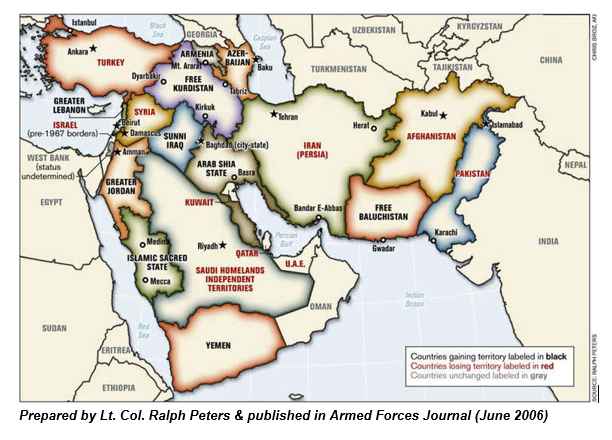
 How was East Europe Balkanized? By lies helped by UN. How has the Middle East suddenly gone up in flames? By lies helped by UN. Thus, by carving out new independent states a ‘New Middle East’ will be created. Iraqi Kurdistan will be created, Kosovo was created and had nothing to do with saving Kosovars, Yugoslavia was cut into independent states, South Sudan was created, the same happened to the Soviet Union. These carved out new states are all been promoted as humanitarian righteous solutions. For this minorities are used as battering ram and the grievances flogged for public consumption has been language, minority rights, discriminations, minority grievances, injustice etc. All issues given oxygen by well-funded NGOs, human rights organizations, the UN and Anglo-American foreign powers along with their non-white strategic partners elsewhere.

 All these new map creations taking place totally ignores or is not bothered about the root cause of problems. Even the media has failed to highlight that modern conflicts are all manufactured for Anglo-American agendas. The issues that are being highlighted as being reason to draw the new maps were issues that these parties helped create or fanned into further chaos.

 Libya never had ISIS, Al Qaeda or any of its partners. Now they do. Iraq never had Al Qaeda or ISIS, the Balkans were divided all on lies, Africa is kept divided to fleece, Afghanistan is in chaos for gas and opium.

 MAP OF THE NEW MIDDLE EAST

image of ME

Now we come to Asia. Nepal has been pushed into having a new constitution that too drafted overseas. In 2013 a key cabinet minister and the person drafting the new constitution met the present Opposition Leader, members of the TNA and LTTE Diaspora in Singapore and agreed upon what is known as the Singapore Principles. https://www.tamilnet.com/art.html?catid=79&artid=37606 in watching the events that have unfolded since, it is not difficult to understand that the developments have all the hallmarks of outside planning and plenty of money thrown in. The singing of the national anthem violating Sri Lanka’s constitution has been the icing on the cake and a signal to all of what’s to come. What is laughable about all the reconciliation goodwill of only the Sinhala politicians giving everything that is not theirs is that at the other spectrum from the Northern Province Chief Minister, to the Opposition Leader who is doing just what Amirthalingam did as Opposition Leader and the deproscribed LTTE front leaders are chanting separatism and collecting money for it too. The world is laughing at the Sinhalese leaders & their yes-men who are clapping reconciliation with one hand while the other side is scheming to divide the nation. 

When Kerry says he is proud of the regime change and the UNSG sends congratulatory messages when every day a murder is taking place it goes to show the extent hypocrisy prevails in world affairs. 

Since all these secret dealings must take place without the public getting a whiff of it, the best tactic being employed is to divert people’s attention and the politicians are ready to make fools of themselves too. To add spice, and keep scorecard the Opposition are being either arrested, taken for questioning to a serious of questionable entities that have been created only to deal with Opposition members. In the meanwhile the service commandos are named by the UN Resolution and the stamp of treachery comes in the government co-sponsoring it making a laughing stock of the military victory over the LTTE. The military is being further neutralized by allowing the divide and rule masters to restructure the military while UN/US officials are going in and out of our security establishments as if going shopping. Will you find anyone allowing another country or official near the security establishments of US, UK, EU nations or even India? 

If people are clueless about the state of affairs in the nation, it is because we have a sepoy media/press plenty of foreign funded NGOs who are paid by foreign governments, Bar Association’s former president who had much to say before the new government came into power but is now busy having got a job in the new government. 

A specter of silence from quarters that must voice their concern to the public apart from a handful rings alarms to a proud nation that has a longer history than the enemies that are knocking at our doors. Even the social media that had been the only source for alternate opinion is now under attack. So where is this good governance that has been promised? Where is the freedom to voice one’s views/opinions?  

The theatrics at play are all part of a global agenda to which Sri Lanka has fallen prey.  

India’s designs are partnered with the West now on its second imperial venture of Asia having decimated the Middle East and enemy nations and their leaders, Africa is unlikely to come out of its misery any time too soon. It’s now Asia’s turn to be again fleeced and flogged by the inquisitors returning for a second wave of brutality.  

Sri Lanka’s geopolitical position is ideal. That equals the oil and gas that the West is attracted to. A country that secures Sri Lanka is able to even block the trade lanes and supply routes via sea. The antipathy with China is what unites the West & India which is a battle between the corporates that own and run the West against a rising China coming out with its new partners, new banking systems and a new world order that contradicts with the West’s corporate plan. Unfortunately Sri Lanka has fallen prey to global politics and our politicians for lack of any brains or vision have chosen to play along with their appeasement policy siphoning of Sri Lanka’s limited territory to foreigners and our people for sheer selfishness remain silent. 

Where will all this madness end in this law of the jungle, only time will tell!

Only those who know the history value it. Only those who know the true heroes will look nowhere else. Only those who appreciate our ancestors will determine to carry on even if we are the only few standing. We will be remembered for trying not for giving on a platter what was never ours!.

 Shenali D Waduge

FIVE QUESTIONS FOR ZEID

February 6th, 2016

DHARSHAN WEERASEKERA

UN Human Rights High Commissioner Zeid Al Hussain is in Sri Lanka.  I’m not sure whether he has given a press conference yet, but when he does, I hope someone asks him one or more of the following questions:

  1. Your report to the Human Rights Council in September-2015, is the only official UN report to conclude that Sri Lanka as a State may have committed war crimes, (i.e. that a case for ‘Command Responsibility’ can be made). On the other hand, there are two reports commissioned by the Government, one of which included international legal experts who had been consultants to the UN in war crimes investigations in other countries.  The latter reports have concluded that no case for war crimes can be made against the State.  Under the circumstances, would you be willing to submit your Report to an independent assessment of experts picked by the General Assembly?
  1. Normally, in private life, if a person makes baseless allegations against another person, the person against whom those accusations are made has actions in law, including actions for defamation, which he can bring against the accuser in order to gain compensation. A country that is submitted to baseless allegations obviously does not have such an option.  If, after an independent assessment such as the one mentioned above, it is established that your allegations against Sri Lanka are baseless, or lacking in merit (according to standards of evidence recognized in civilized countries) what would you recommend as a way that Sri Lanka should proceed against you, the Human Rights Council, and the UN, to gain compensation for what has been done to this country?
  1. You are scheduled to travel to Jaffna for the obligatory confab with the Tamils. They will no doubt give you their usual ‘sob story’ about how they are ‘victims’ in this country, that they have ‘grievances’ that remain unresolved, that the Sinhalese don’t let them live in ‘dignity’, and so on.

Are you aware that the Tamils have a repulsive caste-system that, to this day, allows the higher-castes to treat the lower-castes as if the latter were no better than animals?  Are you aware that to this day the higher-castes don’t let a person from a lower-caste enter a Hindu Temple through the front door?  Are you aware that to this day the lower-castes are not allowed to use wells used by the higher-castes?  Are you aware that as a rule Tamils belonging to the higher castes refuse to eat at the same table as Tamils of the lower castes?  And so on.

The Tamil ‘leaders’ who will come to meet with you in Jaffna are, needless to say, from the higher castes.  These are the same scumbags (I’m sorry, ‘gentlemen’) who are complaining that the Sinhalese don’t let them live in ‘dignity.’  Let’s leave aside the Sinhalese for a moment.  Will you make some inquiries about the state of the lower-castes in Tamil society, and ask the said Tamil ‘leaders’ who will flock to meet you in Jaffna, when they plan on treating their own people with dignity?

  1. The census held most recently reveals that there are roughly 250 or so Sinhalese people in Jaffna. The census held in the 1980’s reveals a much higher number of Sinhalese living in Jaffna and its environs.  Some suggest as many as 20,000 Sinhalese lived in these areas.  As one goes back even further, for instance to the surveys carried out at the time of Independence, one finds an even larger population of Sinhalese in the said areas.  Of course, the decline of the Sinhalese population in these areas can be attributed to natural causes, such as migration, and so on.

But, such a precipitous decline also suggests another cause, ethnic cleansing.  Since you are the High Commissioner of Human Rights, and since the Sinhalese, as human beings, are presumably also entitled to ‘human rights,’ will you take steps to launch an immediate inquiry into the demographic changes in the Northern Province, say, in the last hundred years or so, with an eye to determining if in fact the Sinhalese have been ethnically cleansed from that province?

  1. Are you willing to make available to the public a list of the occasions, from the time you took office to the present, where you or any other official of the OHCHR met representatives of the TNA, the GTF (Global Tamil Forum) or any other group specifically advocating on behalf of Tamils? And, just for purposes of comparison, can you also make available the number of times you met the official representatives of Sri Lanka, during the same period?

Dharshan Weerasekera is an Attorney-at-Law.  He is the author of two books:  The UN’s Relentless Pursuit of Sri Lanka (2013), and The UN’s Subversion of International Law:  The Sri Lanka Story (2015)

UN role in Sri Lanka’s accountability process

February 6th, 2016

By Neville Ladduwahetty Courtesy The Island


After several contradictory statements from the President, the Prime Minister, and spokespersons, finally the Prime Minister has very correctly stated that the “Constitution does not permit foreign judges to sit in judgment” (The Island, February 2, 2016). Elaborating further, the PM stated: “If we are to permit foreign judges to sit in judgment then our Constitution has to be amended with the consent of the people at a referendum”. It would also need a 2/3 approval of Parliament.

This position should satisfy the provisions in paragraph 6 of the UN Resolution A/HRC/30/L.29 dated 29 September, 2015 that recognizes “the importance of participation in a Sri Lankan judicial mechanism, including special council’s office, of Commonwealth and other judges…”. Since the operative word in the above Resolution is “participation” the clarification by the PM was needed in view of calls by the US, UK and others, for foreign judges to sit in judgment during the proceedings. Considering the contradictory statements that have been made on this and other subjects, the concern of the public is that the Government would cave in under external pressure and retract its statement.

article_image

According to paragraph 6 of the Resolution the purpose of the accountability process is “to investigate allegations of violations and abuses of human rights and violations of international humanitarian law, as applicable”. As such, the “applicable” parties to the accountability process should be the Sri Lankan Government, the LTTE and their supporters both in Sri Lanka and outside, and the International Community, in particular the UN. Had these parties acted jointly in a decisive manner during the Armed Conflict they could have made a difference to the human rights and humanitarian law violations that are characteristically associated with such conflicts.

ROLE of the UN during the ARMED CONFLICT

The role of the UN during the final stages of the Armed Conflict when the LTTE held nearly 300,000 plus civilians hostage is contained in the “Report of the Secretary-General’s Internal Review Panel on United Nations Actions in Sri Lanka”. This report was prepared by a Panel Headed by Charles Petrie and three staff. Given below are some relevant extracts from this report:

1. “Some members of the diplomatic corps said that because the CHAP’s (Consolidated Humanitarian Appeals process) and other UN documents referred prominently to protection they assumed that the UN had a monitoring and response system to address attacks on civilians and other violations. The fact that protection was defined so broadly that it included a wide range of humanitarian actions obscured the very limited extent to which the UN’s protections actions actually served to protect people from the most serious attacks”(p.19).

2. “The UN, in headquarters and in Sri Lanka, did not appear to fully recognize the scope of its responsibility to respond to Government violations and did not realize until very late that its protection actions were largely empty”(p. 19).

3. “The UNCT (UN Country Team) leadership in Colombo had insufficient political expertise and experience in armed conflict, and in human rights and humanitarian law to deal with the extraordinary challenges that Sri Lanka presented. The UNHQ heads of agencies and departments, however, did not appear to recognize this. The senior-most position on the ground was ranked a D1. Several heads of UNCT entities in Colombo complained that the HQs of their respective agencies were not adequately seized of the evolving situation and did not provide policy and political support”. (p. 24).

4. “The events in Sri Lanka highlight the urgent need for the UN to update its strategy for engagement with Member States in situations where civilian populations caught up in the midst of armed conflicts are not protected in accordance with international human rights and humanitarian law”(p. 26)).

5. Subtitled “Systemic Failure”; “…the Panel’s report concludes that events in Sri Lanka mark a grave failure of the UN to adequately respond to early warnings and to the evolving situations during the final stages of the conflict and its aftermath, to the detriment of hundreds of thousands of civilians and in contradiction with their principles and responsibilities of the UN. The elements of what was a systemic failure can be distilled into the following: (i) a UN system that lacked an adequate and shared sense of responsibility for human rights violations; (ii) an incoherent internal UN crisis-management structure which failed to conceive and execute a coherent strategy in response to early warnings and subsequent international human rights and humanitarian law violations against civilians, and which did not exercise sufficient oversight for UN action in the field; (iii) the ineffective dispersal of UNHQ’s structures to coordinate UN action and to address international human rights and humanitarian law violations across several different UNHQ entities in Geneva and New York with overlapping mandates; (iv) a model for UN action in the field that was designed for development rather than conflict response; (v) the most senior position in the field graded at a D1 seniority that was below the heavy responsibilities required for the position, and a corps of senior staff that did not sufficiently include the armed conflict, political, human rights and international humanitarian law and related management experience to deal with the challenge Sri Lanka presented, and who were given insufficient support; (vi) inadequate political support from Member States as a whole, notwithstanding bilateral efforts from all regions, and inadequate efforts by the Secretariat to build such support; and (vii) a framework for a Member State engagement with international human rights and humanitarian law protection crises that was outdated and often unworkable, in part because it did not enable Member States to reach a sufficiently and a full political consensus on the situation and the UN response”(p. 29).

6. “The UN had been preparing a joint letter to the Government from heads of several UN departments and agencies raising concerns over the situation; the hope was to use their combined weight to advocate for the protection of civilians and humanitarian action. However, during the time needed to circulate the draft across the various entities involved, to make changes and redistribute the draft, the situation had evolved and participants agreed the letter needed updating. DPA (UN Department of Political Affairs) recalled the need for a “viable political framework” and common situation analysis and coordination among UN agencies, Participants discussed alternatives, other than road convoys, for delivering assistance” (p. 64).

The “Systemic Failures” listed above demonstrate the total inadequacy of the UN and its agencies to handle the unique circumstances associated with the Armed Conflict in Sri Lanka. Perhaps the reason for coming down hard on Sri Lanka is to cover up the UN’s own inadequacies and that of the International Community. However, for an inquiry to be credible it has to expose the serious inadequacies within the UN and its agencies; inadequacies that could have minimized or even prevented some of the violations by all parties. The fact that the UN was not equipped to handle the unprecedented circumstances associated with the Armed Conflict in Sri Lanka could very well have contributed considerably to the human rights and humanitarian law violations. Assessing the degree to which the UN and the International Community is accountable in this regard should also be addressed during the course of the proposed inquiry.

ROLE of the UN in POST- CONFLICT SRI LANKA

The UN is also responsible for several procedural flaws associated with its post-conflict engagement with Sri Lanka. These are presented below:

1. Following the joint statement between the Secretary-General of the UN and former President Rajapaksa on May 23, 2009, Sri Lanka was to undertake an “accountability process”. In keeping with this commitment Sri Lanka appointed the Lessons Learnt and Reconciliation Commission (LLRC) on May 15, 2010. Despite this, the UNSG appointed a Panel of Experts (PoE) on June 22, 2010 ; i.e., 5 weeks later.

Although the report of the PoE was meant for INTERNAL USE ONLY by the UNSG under the rules of the General Assembly, it found its way to the public domain. This is in total violation of the remit of the UN, and brings into question the professionalism and the credibility of the office of the UNSG.

2. Paragraph 10 of the Human Rights Council’s Resolution on Sri Lanka specifically states: “…the need for an international inquiry mechanism in the ABSENCE (emphasis added) of a credible national process…”. On July 14, 2014 a national process was initiated in the form of a Presidential Commission headed by Justice Paranagama under the 2nd mandate to look into allegations of war crimes and other violations of international law. Despite the fact that this Commission was assisted by 3 internationally eminent legal experts, the OHCHR set up “a special investigating team within the OHCHR in Geneva that came into operation in mid-August 2014 – i.e., 1 month AFTER the national process was initiated.

The measures adopted by the UN clearly demonstrate that they have violated their own commitments by initiating actions that should have been taken ONLY in the ABSENCE of initiatives by Sri Lanka. The measures resorted to by the UN and its agency the OHCHR violate concepts that are required to guide the work of the Council such as “impartiality, objectivity and non-selectivity, and cooperation with a view to enhancing the promotion and protection of human rights”; concepts that the OHCHR is expected to exercise as per paragraph 4 of the General Assembly Resolution that set up the Human Rights Council in 2006. The levels of unprofessionalism and misconduct reflect the degree to which the UN and its agencies are being manipulated; a fact that should be a matter of deep concern for all Member States.

CONCLUSION

The undertaking given in the Resolution of the UNSG and the UNHRC was that any inquiry into alleged violations should ONLY be undertaken in the absence of inquiries initiated by Sri Lanka. The UNSG and UNHRC both violated their respective undertakings. The most egregious act was the unofficial release of the Report of the UNSG appointed Panel of Experts report on Sri Lanka. This action was in complete violation of the remit granted to a UNSG by the General Assembly. The contents of this unofficial report that should NOT have seen the light of day except by the UNSG, have become the official source for other reports, the most specific being the arbitrary allegation of some “40,000 civilian deaths”.

The consequence of these actions was for Sri Lanka to be on the defensive to such an extent that Sri Lanka ended up co-sponsoring a UNHRC- initiated Resolution. All this was possible because Sri Lanka failed to bring to the attention of the UN and its agencies their inadequacies and abject failures to act decisively in Sri Lanka’s Armed Conflict. These systemic failures are highlighted in the Report of the Secretary General’s Internal Review Panel of United Nations Actions in Sri Lanka dated November 2012. Six specific systemic failures cited in the Report are quoted above.

These Systemic Failures should be a vital component of any “credible investigation”. What is revealing is the fact these failures prevented the UN and its agencies and the International Community from acting decisively to minimize or even to prevent human rights and humanitarian law violations. Therefore, the UN and the International Community who were closely engaged throughout the Armed Conflict should bear proportionate responsibility for any human rights and humanitarian law violations as well as omissions that may have occurred during the conflict. The most glaring example of collective responsibility relates to the delivery of humanitarian aid; a responsibility that has come to be solely tagged on to Sri Lanka despite the fact that it is not an obligation under rules of Armed Conflict, and furthermore, it was a task undertaken by a multiplicity of national and international agencies.

What is most disturbing is that after the experiences of Rwanda, and former Yugoslavia as well as the unimaginable tragedies in Iraq and Afghanistan, the UN still remains bogged down by its own system failures. As admitted by them, not only were unqualified persons assigned tasks that they were incapable of handling, but also the UN was weighed down by bureaucratic baggage that prevented it from fulfilling its assigned role in Sri Lanka. Instead of accepting its inabilities to cope with global tragedies it has duplicitously decided to hit on countries like Sri Lanka to cover up the UN’s own nakedness.

Notwithstanding all of the above it is very likely that Sri Lanka would not raise a hair to bring to the attention of the UNHRC, the fact that accountability is a shared responsibility. Sri Lanka is not likely to calmly and firmly say that whatever happened took place because the LTTE took 300,000 plus civilians hostage, and the UN and the International Community did not with all their might and influence compel the LTTE to release the civilians. Despite this justifiable collective responsibility Sri Lanka is not likely to take a principled stand, because of a misguided notion prevalent in Sri Lanka that the need to stay “engaged” with the UN and the West outweighs all other imperatives.


ලෙයින්, යකඩින් සහ ගින්දරින් මර්දනය කළ 1986-90 භීෂණ යුගයේ සත්‍ය කථා – 84 කොටස- කොමියුනිස්ට් පක්ෂයේ 41ක් ජවිපෙ ඝාතනය කළ හැටි

February 6th, 2016

 ධර්මන් වික්‍රමරත්න

මෙතෙක් කථාව : ලාංකීය දේශපාලන ඉතිහාසයේ සම්ප්‍රදායික ගමන්මග වෙනස්කල සන්ධිස්ථානයක් ලෙස අසූව දශකය අවසානයේදී ඇතිවූ ජවිපෙ 2වැනි කැරැල්ල හැදින්විය හැකිය. එය 1986දී ඇරඹුණු අතර 1990 සැප්තැම්බර් මස නිමාවට පත්විය.  එම කාලය තුළ ඝාතනයට ලක්වූ සහ අතුරුදහන් වූ සංඛ්‍යාව 41,813 වේ. නිල නොවන වාර්තා කියන්නේ එය 60,000කට ආසන්න බවය. ජවිපෙ දෙවන කැරළි සමයට පාදකවූ මෙම ලිපි මාලාව ඉදිරිපත් කරන ධර්මන් වික්‍රමරත්න එම බොහෝ සිද්ධීන් සියසින් දුටු  අදාළ කථා නායකයින් සමීපව ඇසුරුකල සහ වාර්තාකල කර්තෘ මාණ්ඩලික පුවත්පත් කලාවේදියෙකි. මෙම ලිපි මාලාව ඉදිරිපත් කරනුයේ ඉතිහාසය කිසිවෙකුට වැලලිය නොහැකි බවට පසක් කරමින් පමණක් නොව දත්ත සහ  ඓතිහාසික කරුණු රැසකින්ද එය පොහොසත් බැවිනි. එමෙන්ම වර්තමානයේ වයස 35 අඩු සියළු පුරවැසියන්ට කිසිදා නොදුටු එහෙත් අසන්නට ලැබුණු අසම්පුර්ණ ඒ අතීත සිදුවීම් මාලාව පිළිබදව පැහැදිලි චිත්‍රයක් මවාගැනීම සඳහාය.

කොමියුනිස්ට් පක්ෂයේ 41ක්  ජවිපෙ ඝාතනය කළ හැටි

 ශ්‍රී ලංකාවේ වාමාංශික ව්‍යාපාරය රටේ ඉතිහාසයට විශාල වශයෙන් බලපෑමක් ඇතිකල ලොකු කථාවකි. කම්කරු පන්ති ව්‍යාපාරයේ සටන් මෙන්ම බ්‍රිතාන්‍ය අධිරාජ්‍යවාදයට සහ රදළවාදයට එරෙහිව කල නිදහස් සටනද එය හා බැදී පවතී. ලංකා සමසමාජ පක්ෂය 1935 දෙසැම්බර් 18වැනිදා බිහිවීම තුළින් කම්කරු පන්ති නායකත්වයෙන් සමාජවාදී ආණ්ඩුවක් ගොඩනගා ගත යුතුය යන අදහස පළමු වරට මෙරට දේශපාලන භූමිය තුළ ජනගත විය.

Dharman06021502.ශ්‍රී ලංකාවේ කොමියුනිස්ට් පක්ෂයේ නායකයින් 1987 පෙලපාලියකදී

දෙවන ලෝක යුද්ධය 1939 ආරම්භ වීමත් සමඟම අධිරාජ්‍යවාදී යුද්ධය සම්බන්ධයෙන් අනුගමනය කල යුතු ස්ථාවරය ගැන න්‍යායික විවාදයක් සමසමාජ පක්ෂය තුළින් මතුවිය. ජාත්‍යන්තර කම්කරු පන්ති ව්‍යාපාරයේ උන්නතිය වෙනුවෙන් 3 වන ජාත්‍යන්තරයට ක්‍රියා නොකරන බැවින් එය සමඟ පවත්වන සම්බන්ධතාවලින් ඉවත් විය යුතු බවට යෝජනාවක් සමසමාජ මධ්‍යම කාරක සභාවට ඉදිරිපත් විය. එම යෝජනාවට විරුද්ධව ඡන්දය පාවිච්චි කල වෛද්‍ය එස්.ඒ. වික්‍රමසිංහ, එම්.ඩී. මෙන්ඩිස්, ඩබ්ලිව් ආරියරත්න, ඒ. ගුණසේකර, ඒ රාමනාදන් 5 දෙනා  සමසමාජයෙන් නෙරපා දැමීය. එය වාමාංශික ව්‍යාපාරය තුළ ප්‍රථම බෙදීම විය. අතර ඉන් අනතුරුව එම කණ්ඩායමේ පිරිසක් විසින් 1943 ජුලි 3වැනිදා ශ්‍රී ලංකාවේ කොමියුනිස්ට් පක්ෂය බිහිකිරීමට කටයුතු කරන ලදී. එහෙත් එහි ආරම්භය 1930 ගණන් දක්වා ඈතට දිව යයි. සූරියමල් ව්‍යාපාරය(1933), ලංකා සම සමාජ පක්ෂය(1935), කොළඹ කම්කරු සමාජය(1940) සමාජවාදී එක්සත් පක්ෂය(1940) එම අවධින්ය. වසර 2016 වන විට කොමියුනිස්ට් පක්ෂය පාර්ලිමේන්තුවේ විපක්ෂයේ වසර 49ක්ද ආණ්ඩු පක්ෂයේ ආණ්ඩු 3 යටතේ වසර 24ක්ද කටයුතු කර තිබේ. එය පරාජයන්, පසුබැසීම් මෙන්ම තහනම් කිරීම් වලටද මුහුණ දුන් පක්ෂයකි.

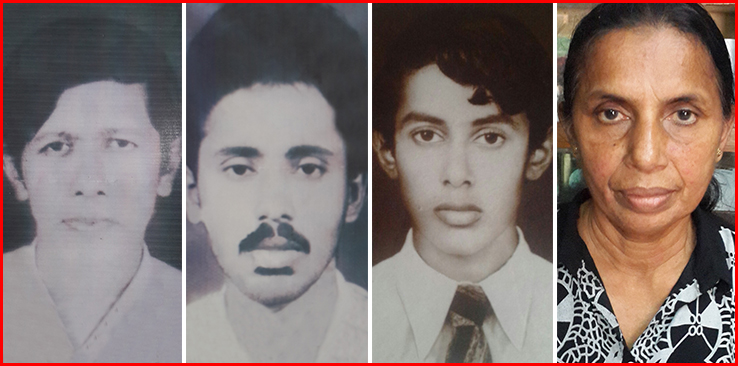
Dharman06021503.ජවිපෙ ඝාතනය කල කොමියුනිස්ට් පක්ෂයේ 41 අතරවූ ප්‍රමුඛ වෘත්තීය සමිති නායක සහ දේශපාලන මණ්ඩල සභික එල්. ඩබ්ලිව් පණ්ඩිත, ගුරු සංගම් නායක සහ මධ්‍යම කාරක සභික හබරාදූවේ ජෝර්ජ් රත්නායක, වීරකැටිය බුද්ධියායේ නීතිඥ ජේ. එම්. දේශප්‍රිය බණ්ඩාර, විද්වත් සමාජසේවා නියමු මහරගම හෙන්රි පමුණුව, අකුරැස්ස කේ. ඒ. ඩී. සද්ධාතිස්ස,  හබරකඩ රණාල ප්‍රවීණ සාහිත්‍යධර ජේ. ඊ. ගුණසේකර,  දිවුලපිටියේ විශ්‍රාමික විදුහල්පති ටී. අමරදාස, මාතර කේ. එච්. විමලසේන, මාතර ගාමිණී තුඩාව, හෙදි සංගම් මාතර සංවිධායක පී.ජී. ප්‍රේමපාල, හිටපු ගම්සභාපති මාතර ටී. ධනපාල, හක්මන එන්. ජී. ඒබ්‍රහම්, හිටපු ගම්සභාපති පී.ඒ. ජයවර්ධන, මාතර නන්දසේන ප්‍රතාපසිංහ, කැලණියේ ධර්මදාස අතපත්තු, හේනේගම උපුල් සද්ධාතිස්ස, ඇඹිලිපිටියේ එච්.ජී. ජිනදාස, හක්මන ගාමිණී රණවීර, බූස්ස සුදත්ලාල් ගමගේ, මාතර වසන්ත කේ. සේනාධීර, සරත්චන්ද්‍ර අතුරලිය, වීරසිංහ, ඩබ්ලිව් කරුණාරත්න සහ දෙමළ බෙදුම්වාදී කොටි සංවිධානය මගින් ඝාතනය කල යාපනයේ දිසා සංවිධායක කේ. විජයානන්දන්(වමේ ඉහළ සිට)

ජනතා විමුක්ති පෙරමු‍ණේ(ජවිපෙ) ක්‍රියාකාරිත්වය පිළිබදව ප්‍රථම හෙළිදරව්ව සිදුකළේ කොමියුනිස්ට් පක්ෂයේ පුවත්පතක්වූ 1964දී ඇරඹූ ඇත්ත පුවත්පත මගිනි. ජවිපෙ මගින් 1969 අගෝස්තු තරුණයින් 125කට ආසන්න දින 5ක අධ්‍යාපනික සහ අභ්‍යාස පුහුණු කඳවුරක් තණමල්විලදී පවත්වන ලද අතර ඇත්ත පුවත්පත 1969 සැප්තැම්බර් එය අනාවරණය කළේ ‘තරුණයන් බා ගැනීමට සී.අයි.ඒ. කෙමනක්’ යන ශීර්ෂ පාඨය යොදමිනි. රෝහණ විජේවීර එම ‘ඇත්ත’ ප්‍රවෘත්තිය හැදින්වූයේ විප්ලවාදී ව්‍යාපාරය මර්ධනය කිරීමට යොදාගත් සූක්ෂම උපායශීලි ක්‍රියාමාර්ගයක් ලෙසිනි. කිරින්ද ගොවිපොලේ කටයුතුවලට සහායවීමට පැමිණි සේපාල නොහොත් පියදාස යාලේගල එම පුවත හෙළිකළ බවට චෝදනාවකි.

ජවිපෙ 2වැනි කැරැල්ල ආරම්භවීමත් සමඟම කැරළිකරුවන් 7කගේ කණ්ඩායමක් 1987 ඔක්තෝබර් 1වැනිදා පස්වරු 7ට පමණ බොරැල්ලේ ඇත්ත පුවත්පත් කාර්යාලයට කඩා පැන එහි මුද්‍රණාලයට ගිනි තබා අලාභහානි සිදුකර සේවකයින්ද බැද දමා පලා ගියහ. එකල ඇත්ත පුවත්පතේ කතුවරයා කෑගල්ලේ යූ.එම්. අ‍බේරත්නවූ අතර කර්තෘ මණ්ඩලයේ ප්‍රධාන මාණ්ඩලික වර්තාකරු බෙනට් රූපසිංහ, විශේෂාංග කර්තෘ සිරිලාල් කොඩිකාර, ප්‍රධාන උප කර්තෘ කුලසිරි රාජපක්ෂ, අධිකරණ වාර්තාකරු ස්ටැන්ලි සමරසිංහ, සුනිල් සිල්වා ඇතුළු කිහිප දෙනෙක්ම විය. පසුව ජනජීවිතයට අතිශයින් හානිකර වූ අභ්‍යන්තර ප්‍රකාශ තහනම් කිරීමේ නියෝගය යටතේ ලේක්හවුස් පුවත්පත් සමඟ ඇත්ත පුවත්පතද ජවිපෙ මගින් 1988 මැයි 20වැනිදා සිට තහනම් කරන ලදී. ඒ යටතේ ලේක්හවුස් සහ ඇත්ත පුවත්පත්වලට ලිපි සැපයීම, මුද්‍රණය කිරීම, බෙදාහැරීම, අළෙවිකිරීම සහ ලඟ තබාගැනීම ඉදිරිපත් වන්නන්ට මරණ දඬුවම නියෝග කරන නිවේදනයක් පනවන ලදී. අනතරුව 1988 ජුනි 1වැනිදා ඇත්ත පුවත්පත් කාර්යාලයට දෙවන වරටද බෝම්බ ප්‍රහාරයක් ජවිපෙ මගින් එල්ල කරන ලදී.

Dharman06021504.

කොමියුනිස්ට් පක්ෂය වෙනුවෙන් 1989 ජනවාරි 4වැනිදා එකම දින දිවිපිදූ එකම පවුලක්. අනුරාධපුර දිසා සංවිධායකවරයෙකු වූ මහසෙන් විදුහලේ නියෝජ්‍ය විදුහල්පති රාජාංගනය යාය 17 නාරංදෙණියවත්තගේ විජේරත්න(43), ඔහු‍ගේ මස්සිනාවරුන්වූ තරුණ සමිති ක්‍රියාකාරි හොරවිල විදුහලේ ගණිත ගුරු කංකානම්ගේ වීරරත්න(24) සහ මොරටු සරසවියේ ඉංජිනේරු පීඨයේ පළමු වසර සිසු කොමියුනිස්ට් ලංකා ජාතික ශිෂ්‍ය සංගමයේ ක්‍රියාකාරි කංකානම්ගේ තිලකරත්න(20) වමේ සිට මෙහි වේ. දකුණේ සිටින්නේ වසර 27කට එපිට එම තිරස්චින සිදුවීම ආවර්ජනය කල විජේරත්නගේ බිරිඳ ප්‍රේමලතාය(59).

වසර 1986 සිට 90 දක්වා ජවිපෙ 2වැනි කැරැල්ලේදී  දෙමළ බෙදුම්වාදයට, ඉන්දීය ආක්‍රමණයට සහ ඉන්දු ලංකා ගිවිසුමට සහාය දක්වන වාමාංශිකයින් ජවිපෙ සන්නද්ධ අංශය වන දේශප්‍රේමි ජනතා ව්‍යාපාරය නම් කළේ තුන්වන සතුරු හමුදාව ලෙසිනි. ඒ අනුව තුන්වන සතුරු හමුදාව අතුගා දැමීම දේශප්‍රේමි අරගලේම කොටසක් බවට 1988 ජනවාරි 18වැනිදා නිකුත් කල නියෝගයක සඳහන් විය. මේ අනුව කොමියුනිස්ට්, සමසමාජ, නව සමසමාජ, ශ්‍රී ලංකා මහජන පක්ෂද ජනතා සංගමය ඇතුළු ජවිපෙන් කැඩී ගිය කණ්ඩායම් සහ කල්ලිද වහාම ක්‍රියාත්මකවන පරිදි ජවිපෙ විසින් තහනම් කල අතර ඒවායේ නායකයින්ට ඉල්ලා අස්වන ලෙසද නොඑසේනම් දැඩි දඬුවම් විදීමට සූදානම් විය යුතු බවද 1988 ජනවාරි 25වැනිදා නියෝගයක් පැනවීය. ඔවුන් අතුගා දමන ලෙස ජනතාව ගෙන් ඉල්ලමින් 1988 පෙබරවාරි 10වැනිදා නිවේදනයක්ද ප්‍රකාශයට පත් කළේය.

පළාත් සභා මැතිවරණය 1988 පැවැත්වීමේදී එක්සත් සමාජවාදී පෙරමුණෙන් පළාත් සභා මන්ත්‍රීවරුන් 139 තේරී පත්වූ අතර එසපෙ සාමාජික පක්ෂවු කොමියුනිස්ට් පක්ෂයට 25ද, මහජන පක්ෂයට 83ද, නව සමසමාජයට 5ක්ද සෙසු 26 සමසමාජය ඇතුළු අනෙකුත් කණ්ඩායම්වලටද හිමිවිය. කැරැල්ල නිමාවන විට ජවිපෙ මගින් ඝාතනය කරන ලද 6,577ක් අතුරින් 250කට ආසන්න වාමාංශික දේශපාලන පක්ෂවල නායකයින්, ක්‍රියාකාරිකයින් සහ සාමාජිකයින් අතරින්  කොමියුනිස්ට් පක්ෂයේ ක්‍රියාකාරිකයින් 41 විය. කොමියුනිස්ට් පක්ෂයේ මාතර කාර්යාලය ඇතුළු ස්ථාන කිහිපයක්ම කැරළිකරුවන්ගේ බෝම්බ ප්‍රහාරවලට ලක්වූ අතර හිටපු අධ්‍යාපන නියෝජ්‍ය අමාත්‍ය බී.වයි. තුඩාවේට පිහියෙන් ඇන ඝාතනය කිරීමට දැරූ ප්‍රයත්නය ව්‍යාර්ථ විය. ඇත්ත පුවත්පතේ නිව්ටන් සෙනෙවිරත්නගේ බොරලැස්ගමුවේ පිහිටි නිවස ඇතුළු කිහිප දෙනෙකුගේ නිවාස ගිනිතබා විනාශ කරන ලදී. කොමියුනිස්ට් පක්ෂයේ බොරැල්ලේ පිහිටි මූලස්ථානය, මාතර පක්ෂ කාර්යාලය, කුරුණෑගල පොල්පිතිගම ප්‍රේමරත්නගේ නිවස ඇතුළු ස්ථාන කිහිපයක්ම ඝාතන තර්ජනවලට ලක්වූ කොමියුනිස්ට් පක්ෂයේ සාමාජිකයින්ගේ ආරක්ෂිත කඳවුරු ලෙසින් පවත්වාගෙන යන ලදී.

Dharman06021505.ජවිපෙ 2වැනි කැරළි සමයේ කොමියුනිස්ට් පක්ෂයේ ලේකම් මණ්ඩලයේ 6 දෙනාගේ නායකත්වයෙන් පක්ෂය රැකගැනීමට නොබියව මුහුණදුන් ජාත්‍යන්තර ලේකම් ඩිව් ගුණසේකර සහ සංවිධායක එස්. සුදසිංහ(වමේ සිට)

කොමියුනිස්ට් පක්ෂය ඉතිහාසයේ මුහුණ දුන් දුෂ්කරතම කාල පරිච්ජේදය 1988/89 විය. එවකට පක්ෂ ලේකම් මණ්ඩලයේ සාමාජිකයින් වශයෙන් කටයුතු කළේ පීටර් කේනමන්, කේ. පී. සිල්වා, ඩී. ඊ. ඩබ්ලිව්(ඩිව්) ගුණසේකර, සී. කුමාරස්සාමි, රාජා කොල්ලුරේ සහ එස්. සුදසිංහය. කැරළිකරුවන්ගේ ප්‍රධාන ඉලක්කයක් වූයේ බැද්දගානේ පදිංචි ඩිව් ගුණසේකර සහ පැලවත්තේ පදිංචි එස්. සුදසිංහය. රක්වානේ ඉපිද වසර 1962දී කොමියුනිස්ට් පක්ෂයට බැදුනු එස්. සුදසිංහ 1966 සිට එහි පූර්ණකාලීනයෙකු වන අතර වර්තමානයේ ශ්‍රී ලංකා දේශපාලන පක්ෂයක සිටින  ජේෂ්ඨතම පූර්ණකාලීන ක්‍රියාකාරිකයාද වේ. බොහෝ ස්ථානයන්හි කොමියුනිස්ට් පාක්ෂිකයින් උපාය උපක්‍රමයන් භාවිතා කිරීම නිසා ජීවිත රැසක් බේරා ගැනීමට හැකිවිය.

Dharman06021506කොමියුනිස්ට් පක්ෂයේ දිසා සංවිධායක අකුරැස්ස හේ‍නේගම උපුල් සද්ධාතිස්ස(29) 1988 ජනවාරි 5වැනිදා පැතෑටියන හන්දියේ සිය ‍ලොරි රථය තුළදීම ඝාතනයකර තිබූ අයුරු. මෙහි රවුම්කර ඇත්තේ උපුල්ගේ සිරුර ලොරි රථයෙන් පහතට එල්ලෙමින් තිබූ අයුරුය. ගාල්ල දිසා සංවිධායක චන්ද්‍රසිරි ගජධීරද මෙහි වේ.


කොමියුනිස්ට් පක්ෂයේ ශිෂ්‍ය සංගමය වූයේ 1943 ජුලි 3වැනිදා ආරම්භ වූ ලංකා ජාතික ශිෂ්‍ය සංගමය වූ අතර මූලික අඩිතාලම 1942 මාර්තු 8වැනිදා ෂන්මුගදාසන් විසින් දමන ලදී. ප්‍රථම ලේකම්වරයා එල්. ආරියවංශ වූ අතර 1961 මාර්තු මස 10 වැනිදා ශිෂ්‍ය සංවිධානය දෙකඩවී ආරියවංශ පිළ එහි තීරක බලවේගයක් බවට පත්වෙමින් කොමියුනිස්ට් පක්ෂයට එහි බලය 1961දී ලබා දෙන ලදී. කොමියුනිස්ට් පක්ෂය 1942දි ආරම්භ වූවද එහි කටයුතු 1934 දක්වා දිව යයි. ධර්මසිරි සේනානායක සහ රාජා කොල්ලුරේ ලංකා ජාතික ශිෂ්‍ය සංගමය නියෝජනය කරමින් ජාත්‍යන්තර ශිෂ්‍ය සංගමයේ විධායක සභාවටද වරෙක පත්විය. එමගින් 1969 හයිඩ්පාර්ක් පිටියේදී රැස්වීමක්ද පවත්වන ලදී. කොළඹ ගිල්බට් අබේසේකර, පේරාදෙණියේ ඩබ්ලිව්. ඩී. කරුණාරත්න, කැළණියේ සේන යද්දෙහිගේ, වසන්ත ජයසිංහ ඇතුළු සරසවි ශිෂ්‍ය නායකයින් වශයෙන් එකල කැපී පෙනිණි. වීරසූරිය ශිෂ්‍ය ඝාතනය 1976 නොවැම්බර් සිදුවීමත් සමඟම කොමියුනිස්ට් ශිෂ්‍ය සංගමයේ බලය සරසවි වලින් වියැකී ගොස් ජවිපෙ ශිෂ්‍ය සංගමය සරසවි බලය ක්‍රමයෙන් තහවුරු කර ගත්හ.

Dharman06021507.ජවිපෙ ඝාතනය කල කොමියුනිස්ට් පක්ෂයේ ජෝර්ජ් රත්නායකට පක්ෂයේ නායක පීටර් කේනමන් විප්ලවීය ආචාරය පුදකරන අයුරු.

ජවිපෙ 2වැනි කැරළි සමයේදී ලංකා ජාතික ශිෂ්‍ය සංගමයේ සාමාජිකයින් 6 දෙනෙකුද  ජවිපෙ විසින් ඝාතනය කරන ලද කොමියුනිස්ට් පක්ෂ ක්‍රියාකාරිකයින් 41දෙනා අතර විය. රුසියාවේ ලුලුම්බා වැනි සරසවි වලින් නොමිලේ අධ්‍යාපනය ලැබීමට වාර්ෂිකව ශිෂ්‍යත්ව 54ක් පමණ ශ්‍රී ලංකාවට වෙන්වූ අතර ඒවා හිමිවූයේ කොමියුනිස්ට් පක්ෂයේ නාමයෝජනා අනුමතවු ශිෂ්‍යයින්ට පමණි. සෝවියට් දේශය සහ නැගෙනහිර යුරෝපයේ සමාජවාදී අකෘතිය 1991දී බිඳ වැටීමත් සමඟම ලංකා ජාතික ශිෂ්‍ය සංගමය බිඳ වැටුණු අතර එහි ශිෂ්‍ය සංගමය අහෝසිකර එය තරුණ සංවිධානය යටතේ ක්‍රියාත්මක කිරීම 2006දී සිදුවිය.

ජවිපෙ මගින් ඝාතනයට ලක්කල කොමියුනිස්ට් පක්ෂයේ ක්‍රියාකාරිකයින් 41 දෙනා මෙසේය. කොමියුනිස්ට් පක්ෂයේ දේශපාලන මණ්ඩල සභිකයෙකුවූ එල්. ඩබ්ලිව් පණ්ඩිත ශ්‍රී ලංකාවේ ප්‍රමුඛ පෙළේ වෘත්තීය සමිති නායකයින්වූ බාල තම්පෝ, ඊ. ඒ ගුණසිංහ, එම්. ජී මෙන්ඩිස්, ජී. ජී විලියම්, ජැක් පෙරේරා, පියදාස ආදි‍පොල ආදීහු සමඟ සමකල හැකි වෘත්තීය සමිති නායකයෙකි. කොමියුනිස්ට් පක්ෂයේ 1950 පැවති 4වැනි ජාතික සම්මේලනයේ ගනු ලැබූ අධිරාජ්‍ය විරෝධී, ප්‍රගතිශීලි පුළුල් පෙරමුණක් සදහාවූ මූලෝපායික දේශපාලන තීරණ නිවැරදිබව පිළිගනිමින් 1955දී පක්ෂයට එක්විය. වැඩකරන ජනතාව වර්තමානයේ භුක්ති විදින පැය 8 වැඩ දිනය, සේවක අර්ථසාධක අරමුදල, ස්ත්‍රී පුරුෂ සම වැඩ අයිතිය ලබාදීමට මුල්වූ පිරිස අතර ක්‍රියාකාරිකයෙකුවූ පණ්ඩිත ලංකා වෘත්තීය සමිති සම්මේලනයේ ප්‍රධාන ලේකම්ය. කොළඹ නගර සභාවේ කෙසෙල්වත්තේ නාගරික මන්ත්‍රීවරයෙකුවූ ඔහු 1983 කළු ජූලියේදී එජාප ආණ්ඩුව මගින් සිරභාරයටද ගනු ලැබීය. කොළඹ සුගතදාස ක්‍රීඩා පිටියේදී 1986 කම්කරු සම්මේලනයකදී ජවිපෙ සාමාජිකයින්ගේ ශාරිරික ප්‍රහාරයකටද ලක්වූ එල්. ඩබ්ලිව් පණ්ඩිත ජවිපෙ මගින් ‍පිහියෙන් ඇන ඝාතනය කරන ලද්දේ 1988 ජුනි 26වැනිදා රාත්‍රී දෙමටගොඩදීය. 
Dharman06021508.ප්‍රමුඛ වෘත්තිය සමිති නායක එල්. ඩබ්ලිව් පණ්ඩිත 1988 ජුනි 26 කොළඹදී ඝාතනය කල පුවත ඇත්ත පුවත්පත විසින් 1988 ජුනි 28වැනිදා වාර්තාකළ අන්දම.

ශ්‍රී ලංකා ජාතික ගුරු සම්මේලනයේ සභාපතිවරයාවූ ජෝර්ජ් රත්නායක කොමියුනිස්ට් පක්ෂ මධ්‍යම කාරක සභිකයෙකි. හබරාදූව අහංගම උපන් ජෝර්ජ් ගුරුවරුන්ගේ අයිතීන් වෙනුවෙන් සුවිශේෂි කාර්යභාරයක් කල අතර 1988 ජුනි 09 පැවති දකුණු පළාතේ ඡන්දයේදී කොමියුනිස්ට් පක්ෂයද ඇතුළත් එසපෙ පළාත් සභා මන්ත්‍රීවරයෙකු වශයෙන් තේරී පත්විය. ජවිපෙ විසින් 1988 සැප්තැම්බර් 14 අහංගමදී වෙඩිතබා ඝාතනය කරන ලදී. සූරියමල් ව්‍යාපාරයෙන් දේශපාලන ව්‍යාපාරයට එක්වූ අතුරුගි‍රියේ හබරකඩ ජේ.ඊ ගුණසේකර වෘත්තියෙන් ගුරුවරයෙකි. ජනප්‍රිය ලේඛකයෙකි. කෘතහස්ත පරිවර්තකයෙකි. ඇත්ත පුවත්පතේ නිදහස් මාධ්‍යවේදියෙකි. ළමා සාහිත්‍ය නංවාලීමේ පුරෝගාමියෙකුවූ ඔහුගේ ළමා කථාවල පරිවර්තනයන් රුසියන් භාෂාවටද නගා තිබිණි. ස්වයංක්‍රීය තුවක්කුවකින් කැරලිකරුවන් ඔහුට වෙඩි තබා ඝාතනයකර තිබිණි.

වීරකැටිය බුද්ධියගමදී 1939 ජුනි 18වැනිදා උපන් ‍නීතිඥ ජේ. ඇම්. දේශප්‍රිය බණ්ඩාර වලස්මුල්ල ගම්කාර්ය සභාවේ වසර 18ක් සභාපතිවරයා වශයෙන් කටයුතු කල 1981දී මියගිය ෆැන්සිස් බණ්ඩාරගේ ප්‍රත්‍රයාය. ෆැන්සිස් බණ්ඩාරගේ මවවූයේ හම්බන්තොට දිස්ත්‍රික් මන්ත්‍රී මහින්ද රාජපක්ෂ‍ගේ එකම නැන්දාවූ දෝන කතිරිනා රාජපක්ෂය.  ගාල්ල රිච්මන්ඩ් විද්‍යාලයේ අධ්‍යාපනය ලැබීමෙන් පසු ගල්ඹය ව්‍යාපාරයේ සිවිල් ඉංජිනේරුවෙකු වශයෙන් සේවය කල දේශප්‍රිය බණ්ඩාර  දේශපාලන පලිගැනීම් හේතුවෙන් ඉන් ඉවත්ව 1973 නීති විද්‍යාලයට ඇතුල් විය. ඇඹිලිපිටිය කොලොන්න ආසනයේ කොමියුනිස්ට් පක්ෂයේ ප්‍රධාන සංවිධායකවරයාවූ දේශප්‍රිය, ඇඹිලිපිටියේ අධිකරණයේ සේවය කල  ප්‍රකට නීතිඥයෙකි. නීතිඥ සරත් මුත්තෙට්ටුවගේ පොදුජන දේශපාලනයේ නොසැලෙන ගමන් සගයෙකුවූ දේශප්‍රිය ඔහු යටතේ නීතිඥයෙකු වශයෙන්ද කලක් සේවය කළේය.

Dharman06021509.ඝාතනයට ලක්වූ හෙන්රි පමුණුව‍ගේ දේහයට අවසන් ගෞරව දක්වන පීටර් කේනමන්, එස් සුදසිංහ, අශෝක ජයසිංහ, ගා. දේනෙත්ති, කේ.ඒ.ඊ. බ්‍රිටෝ, හේ.මා. විල්බට් ඇතුළු කොමියුනිස්ට් පක්ෂ නායකයින් සහ ක්‍රියාකාරිකයින් පිරිසක්.

දකුණේ ජනයාගේ මානව හිමිකම් අයිතීන් වෙනුවෙන් පෙනී සිටි නීතිඥ දේශප්‍රිය බණ්ඩාර සිය ඥාතියෙකුවූ නීතිඥ විජේදාස ලියනාරච්චි පොලිසිය මගින් පැහැරගෙන යෑමෙන් පසු ලියනාරච්චිගේ පියාවූ දොන් ජුවානිස් අප්පුහාමි සමඟ තංගල්ල පොලිස් අධිකාරි කරවිටගේ ධර්මදාසට ඒ පිළිබදව පැමිණිලි කර තිබිණි. සිය ඉඩමේ පිහිටි පියාගේ සොහොන වෙත වන්දනා කිරීම දෛනික කාර්යයක් බවට පත්කරගෙන තිබූ නීතිඥ දේශප්‍රිය එසේ කරමින් සිටියදී 1989 අප්‍රේල් 25වැනිදා ජවිපෙ මගින් පස්වරු 7.30ට ටී 56 ස්වයංකීය ගිණි අවියකින් වෙඩිතබා ඝාතනය කර තිබිණි. නීතිඥ දේශප්‍රිය බණ්ඩාර සයදරු පියෙකු වූ අතර දෙවැන්නා වූයේ පසුකලෙක මහේස්ත්‍රාත්වරයෙකු සහ එක්සත් ජනතා නිදහස් සන්ධානයේ හිටපු පාර්ලිමේන්තු මන්ත්‍රීවරයෙකුවූ ජානක බණ්ඩාරය.

සමූපාකාර ව්‍යාපාරයට විශාල සේවාවක්කල අකුරැස්ස හේනේගම පදිංචි කේ.ඒ.ඩී. සද්ධාතිස්ස(69) දෙමාපියන් වූයේ පළාතේ ප්‍රභූවරයෙකුවූ කේ. ඒ. දොන් මතෙස් ඔපිසර සහ එම්. එල්. හීංහාමිය. වැලිගම සහ අකුරැස්ස සමුපාකාරවල ආරම්භක සභාපති ලෙස කටයුතු කල සද්ධාතිස්ස ගුරුවරයෙකු ලෙස ගලහිටියාව, වීරකැටිය, මොරවක, ගොඩපිටිය යන මධ්‍ය මහා විද්‍යාලවල සේවයකර විදුහල්පතිවරයෙකු ලෙස විශ්‍රාමගත් අයෙකි. සද්ධාතිස්සගේ සොහොයුරාවූ කේ. ඒ සමරතුංගද කොමියුනිස්ට් පක්ෂයේ මාතර දිස්ත්‍රික් නායකයෙකුව සිටියදී එජාප ආණ්ඩුව මගින් 1967දී ඝාතනයට ලක්කර තිබිණි. හිටපු මධ්‍යම කාරක සභිකයෙකුවු සද්ධාතිස්ස අංශභාග රෝගයට ගොදුරුව නිවසේ සිටියදී 1988 ජනවාරි 5 ජවිපෙ විසින් ගල්කටස් තුවක්කුවකින් හිසට වෙඩිතබා ඝාතනය කරන ලදී. ඔහුගේ පුත්‍රයාවූ කොමියුනිස්ට් තරුණ සංගමයේ මාතර දිසා නායක උපුල් සද්ධාතිස්සද(29) තේ දළු එකතු කිරීම සඳහා පැතෑටියනට ලොරිය පදවාගෙන යන අවස්ථාවේදී ජවිපෙ මගින් 1988 ජනවාරි 5 පස්වරුවේදී වෙඩිතබා ඝාතනය කරන ලදී. කේ.ඒ.ඩී. සද්ධාතිස්සගේ බාල පුත් චම්පාද පසු කළෙක අකුරැස්ස ප්‍රාදේශීය සභා මන්ත්‍රී විය. 

මහරගම පමුණුවේදී 1938 මාර්තු 1වැනිදා උපන් හෙන්රි පමුණුව මහරගම සහ ඒ අවට සමාජසේවා සංවිධාන 36කින් සමන්විත මහරගම සමාජසේවා බල මණ්ඩලයේ ලේකම්ය. කොමියුනිස්ට් පක්ෂයේ දිසා සභිකයෙකුවූ ඔහු ඇත්ත පුවත්පතේ මුද්‍රණ අංශය භාරව සිටි අතර නිදහස් මාධ්‍යවේදියෙකි. පන්නිපිටිය සණස සංගමය සහ මහරගම පොදු සේවා සංගමයේ සමාරම්භක සභාපතිවරයාවූ ප්‍රදේශයේ ජනප්‍රිය සමාජසේවකයෙකුවූ හෙන්රි ජවිපෙ මගින් 1988 ඔක්තෝබර් 1වැනිදා සිය නිවස ඉදිරිපිටදී රාත්‍රී 7.30ට ඝාතනය කරන ලදී. සිව් දෙනෙකුගෙන් සමන්විත ඝාතක කණ්ඩායම හෙන්රිට වෙඩි තැබීමෙන් අනතුරුව සිරුරේ 21ක් පොලකට පිහි පහරවල් ඇන තිබිණි. මහරගම ජනාධිපති විදුහලේ ගුරුවරියක සමඟ අවාහ වී සිටි හෙන්රි තිදරු පියෙකු වු අතර වැඩිමලාවූ චතුර දිවයින පුවත්පතේ වර්තමාන ප්‍රවෘත්ති කර්තෘවරයෙකි. හෙන්රිගේ සොහොයුරෙකු වන්නේ ඡායාරූප ශිල්පි සරණපාල පමුණුවය.

කොමියුනිස්ට් තරුණ සම්මේලනයේ මධ්‍යම කාරක සභිකයෙකු වූ නුවර වත්තේගෙදර උපන් ගාමිණී මැදගෙදර පොළොන්නරුවේ පදිංචිකරුවෙකි. එජාප ආණ්ඩුව 1977දී බලයට පත්වීමත් සමඟම ඔහුගේ නිවස ගිණිබත්කර රැකියාව අහිමි කළේය. උන්හිටි තැන් සහ ජීවන මාර්ගය අහිමිවුවද ගාමිණී ධනපති විරෝධී අරගලය අත්හරිනු නොලැබීය. දක්ෂ ඉංග්‍රීසි ගුරුවරයෙකුවූ ඔහු කොළඹ සරසවියේ නීති උපාධිධාරියෙකුද වූ අතර නොබෝ කලකින් නීති වෘත්තියට පිවිසීමටද සූදානම්ව සිටියේය. සිව් හැවිරිදි දරුවෙකුගේ පියෙකුවූ ගාමිණි, සොයුරු සොහොයුරියන් 11 යුත් පවුලේ වැඩිමලා වශයෙන් එම යුතුකම්ද නොපිරිහෙලා ඉටුකල අයෙකි. ජවිපෙ 2වැනි කැරැල්ලේ පුද්ගල ඝාතන දේශපාලනයේ 3වැනි ගොදුර වශයෙන් 1988 පෙබරවාරි 12  මහමගදි වෙඩි තැබීමෙන් ඝාතනට පත්වූ ගාමිණීගේ දේහයට අවසන් ගෞරව දැක්වීමට විජය කුමාරතුංගද පැමිණි අතර ඉන් සිව්දිනකට පසු විජයද ඝාතනය විය. ජවිපෙ තර්ජන හේතුවෙන් මරණ පරික්ෂණය කිරීමට පො‍ළොන්නරුවේ මරණ පරික්ෂකවරයා පසුබටවූ හෙයින් මාතලෙන් මරණ පරික්ෂකවරයෙක් ගෙන ඒමට සිදුවිය. දේහය තැන්පත් කිරීම සදහා පෙට්ටියද ගෙන යන ලද්දේ කොළඹිනි. ආගමික වතාවන් පොළොන්නරුව නිවසේදී කිරීමෙන් අනතුරුව දේහය මිහිදන් කරන ලද්දේ සීදුවේදීය.

ලංකා කොමියුනිස්ට් තරුණ සංගමයේ මුල්පෙළේ ක්‍රියාකාරිකයින්වූ මාතර දිසා ‍ලේකම් ගාමිණී තුඩාව 1988 ජුලි 16ද, දිසා සංවිධායක හක්මන කේ.ඒ. උපුල් රංජිත් 1988 ජනවාරි 4ද, මාතර දිසා සභිකයෙකුවූ කේ.එච්. විමලසේන 1988 ඔක්තෝබර් 26ද දිසා සංවිධායක මාතර ගාමිණී රණවීර 1988 අගෝස්තු 28ද, කුරුණෑගල ජිනදාස, සරත්චන්ද්‍ර අතුරලිය, ඩී. වීරසිංහ සහ  ඩබ්ලිව් කරුණාරත්න 1988 සහ 1989දී ඝාතනයට ලක්විය. රුහුණු සරසවියේ ප්‍රථම වසරේ(කණිෂ්ඨ) කණ්ඩායමේ සිසුවෙකුවු මාතර වසන්ත සේනාධීර ලංකා ජාතික ශිෂ්‍ය සංගමයේ ක්‍රියාකාරිකයෙකුව සිටියදී 1988 ඝාතනයට ලක්විය. කොමියුනිස්ට් පක්ෂයේ ඝාතනයට ලක්වූ 41 අතරට ලංකා ජාතික ශිෂ්‍ය සංගමයේ ක්‍රියාකාරිකයින්  6ක් ඇතුලත් විය. සෙසු අයවූ අබේසේකර 1988දීද, පුත්තලමේ අමිල දුල්ෂාන් 1989දීද මාතර ප්‍රසන්න ලංකාතිලක 1988දීද ඝාතනය විය.

විශ්‍රාමලත් විදුහල්පතිවරයෙකුවූ දිවුලපිටියේ ටී. අමරදාස කොමියුනිස්ට් පක්ෂයේ ගම්පහ දිස්ත්‍රික් භාණ්ඩාගාරික මෙන්ම දිවුලපිටිය ශාඛා ලේකම්ය. එක්සත් සමාජවාදී පෙරමුණේ මැතිවරණ රැස්වීමක් අමතමින් සිටියදී 1988 මැයි 8 ඝාතනය කරන ලදී. ඇඹිලිපිටිය එච්. ජී. ජිනදාස දිසා සභිකයෙකුවූ අතර ජවිපෙ මගින් 1988 ජුලි 20වැනිදා වෙඩිතබා ඝාතනය කරන ලදී. සූරියවැව හත්පෝරුවේ පදිංචි ජිනදාස දෙවන ලෝක යුද්ධයේ සේවා මුක්ත භටයෙකුවූ අතර ඔහුට වෙඩි තැබීමට ආ ඝාතකයින් දෙදෙනාගෙන් එක් අයෙකු එම ස්ථානයේදීම ජිනදාස විසින් වෙඩිතබා ඝාතනය කල අතර අනෙකාට වෙඩි වැදීමෙන් බරපතල තුවාල සිදුවිය. තමා අතවූ පිස්තෝලයට යළිත් ජිනදාස මූනිස්සම් පිරවීමේදී තුවාල ලැබූ කැරළිකරු තැබූ වෙඩි පහරකින් ජිනදාස මරමුවට පත්විය. කැරළිකරුගේ දේහයද කිසිවෙකු භාර නොගත් බැවින් එය පොලිසිය මගින් වළලා දමන ලදී. ජිනදාසගේ දේහය විප්ලවීය ආචාර මැද මිහිදන්කර තිබිණි.

කොමියුනිස්ට් පක්ෂයේ මාතර දිස්ත්‍රික් මුල් පෙළේ ක්‍රියාකාරිකයෙකුවූ පී.ජී. ප්‍රේමපාල වෘත්තියෙන් හෙද නිලධාරියෙකුවූ අතර තිදරු පියෙකි. රාජ්‍ය සේවා එක්සත් හෙද සංගමයේ විධායක කමිටු සාමාජිකයෙකු සහ මාතර රෝහලේ ශාඛා කමිටුවේ සංවිධායකවරයා විය. මාතර රෝහලේ බාහිර රෝග අංශයේ රෝගීනට හෙද සේවය ඉටුකරමින් සිටියදී 1988 දෙසැම්බර් 18වැනිදා දහවල් වෙඩිතබා ඝාතනය කරන ලදී. හිටපු ගම්පතියෙකු වූ මාතර ටී. ධනපාල කඹුරුපිටිය කිරින්ද පුහුල්වැල්ලේ පදිංචිකරුවෙකු වූ අතර කැරළිකරුවන් ඔහු කුඹුරට රැගෙන ගොස් පිහියෙන් ඇන මරාදා තිබුණේ 1988 ජුනි 5වැනිදාය. කොමියුනිස්ට් පක්ෂයට සම්බන්ධව මාතර ගම්සභාවේ සභාපතිවරයාද ලෙස කටයුතු කල පී. ඒ ජයවර්ධන අකුරැස්ස වැලිදූව සිය නිවසේ ‍සිටියදී 1988 අප්‍රේල් 22වැනිදා වෙඩිතබා ඝාතනය කරන ලදී. ඝාතනය වන විට මාතර ශාඛා ලේකම් විය.

ජවිපෙ මගින් ඝාතනය කරන ලද කොමියුනිස්ට් පක්ෂයේ ක්‍රියාකාරිකයින් 41 දෙනා අතර දිසාසභික හක්මන ක.ගි. දහම්සිරි 1988 ජුලි 15ද, දිසාසභික වේයන්ගොඩ සමරවර්ධන රාජපක්‍ෂ 1989 සැප්තැම්බර් 22ද, ගම්පහ කේ.ඒ. ගුරුසිංහ 1988 සැප්තැම්බර් 22ද, මාතර ලුවිස් ප්‍රතාපසිංහ 1988 ඔක්තෝබර් 13ද, කැලණිය අතපත්තු ධර්මදාස  1988 දෙසැම්බර් 2ද, වසර 1988 තුළදී මාතර ජී.මී. කුලතුංග, බූස්ස සුදත් ලාල් ගමගේ, මාතර ශාඛා ලේකම්වරයෙකුවූ නන්දසේන ප්‍රතාපසිංහ, මාතර දිසා සභිකයෙකුවූ එන්.ජී. ඒබ්‍රහම්, මාතර ඩබ්ලිව් පියසේන සහ මාතර බෙම්පිසිංඤෝ පියසේන යන අයද විය. යාපනයේ දිසා ලේකම් වශයෙන් කටයුතු කල මධ්‍යම කාරක සභික කේ. විජයානන්දන්  නල්ලූරුවේ පිහිටි සිය නිවසේදී 1988දී ඝාතනය කරන ලද්දේ දෙමළ බෙදුම්වාදී කොටි සංවිධානය මගිනි.

කොමියුනිස්ට් පක්ෂයේ ක්‍රියාකාරිකයින්වූ එකම පවුලේ තිදෙනෙක්ද  ජවිපෙ මගින් 1989 ජනවාරි 4වැනිදා තිරස්චීන ලෙස ඝාතනය කරන ලදී. ඒ අනුරාධපුර රාජාංගනයේ යාය 17 ප්‍රදේශයේදීය. අනුරාධපුර කොමියුනිස්ට් පක්ෂ දිසා සංවිධායකවරයාවන එක්දරු පියෙකු වූ නාරංදෙණියවත්තගේ විජේරත්න(43), ඔහුගේ මස්සිනාවරුන් දෙදෙනාවූ කොමියුනිස්ට් තරුණ සම්මේලනයේ සංවිධායකවරයෙකුවූ කංකානම්ගේ වීරරත්න(24) සහ ලංකා ජාතික ශිෂ්‍ය සංගමයේ සාමාජිකයෙකුවූ කංකානම්ගේ තිලකරත්න(20)ය. කැලණි සරසවියේ උපාධිධාරියෙකුවූ විජේරත්න යාය 13/14 මහසෙන් විදුහලේ නියෝජ්‍ය විදුහල්පතිවරයාවූ අතර වීරරත්න, ‍හොරවිල රජයේ විදුහලේ ගණිත ගුරුවරයෙකු වශයෙන්ද, තිලකරත්න මොරටු සරසවියේ ඉංජිනේරු පීඨයේ ප්‍රවේශය ලැබූ සිසුවෙකු විය.

නිවසේ දොර කඩාගෙන පැමිණි ජවිපෙ කැරළිකරුවන් නිවසේ සිටි නැගණියන්වූ සුමනා, නිශාන්ති, දිල්රුක්ෂි ඇතුළු නිවසේ අය කාමරයක සිරකර විජේරත්න, වීරරත්න සහ තිලකරත්න යන අයගේ දෙපා සහ දෑත් බැද බෙල්ලේ ලනුවක් ගැටගසා කිලෝමීටර් දෙකක් පමණ බිම දිගේ ඇදගෙන ‍ගොස් තිදෙනාම පහල මාරගහවැව බස්නැවතුම්පොල අසළදී වෙඩිතබා ඝාතනය කරන ලදී. මොවුන්ට එයට දින 14කට පෙර කොමියුනිස්ට් පක්ෂයෙන් ඉල්ලා අස්වී නිවස ඉදිරිපිට බැනරයක් දමා පෝස්ටරයක් අතැතිව නගරයේ සමාව ඉල්ලමින් දවස පුරා සිටගෙන සිටින ලෙස දන්වා තිබිණි. විජේරත්නගේ බිරිඳ ප්‍රේමලතාට ආරක්ෂාව සඳහා සිය දියණිය සහ නැගණියන් සමඟ ප්‍රදේශය අතහැර යාමට පසුව සිදුවූ අතර දියණිය වර්තමානයේ උපාධිධාරි ගුරුවරියකි.

යහපත් සමාජයක් ගොඩනැගීම වෙනුවෙන් අරගලයක නිරතව සිටියදී මියගිය අය සැමරිය යුත්තේ ඔවුන්ට කෘතවේදීත්වය පළකිරීමට පමණක් නොව එම චරිත වලින් සහ දේශපාලන ගමන් මගෙන් අවශ්‍ය පාඩම් ඉගෙන ගැනීමටය. එමෙන්ම එදා දුටු දේශපාලන ප්‍රපංචය සහ වර්තමානයේ පවතින දේශපාලන යථාර්ථය විමසුමට ලක්කොට ඉදිරි ගමන්මග සකස්කර ගැනීමටය. කොමියුනිස්ට් පක්ෂයේ ක්‍රියාකාරිකයින් 41 දෙනෙකුගේ මෙම ඝාතන දේශපාලන ඝාතනවලට වඩා ඔබ්බට ගිය ඝාතන දේශපාලනය තුළින් සිදුවූ ඛේදවාචයකි. ඔවුහු මියගියේ තමන් විශ්වාස කරන යහපත් සමාජයක් වෙනුවෙන් අරගලයක් කල, කැපකිරීමක් කල, මිනිසුන් හැටියට ප්‍රබෝධජනක අපේක්ෂාවෙන් බවට සැකයක් නොමැත.

1986/90 සමයේ ඝාතනයට ලක්වූ ශ්‍රී ලංකා කොමියුනිස්ට් පක්ෂයේ ක්‍රියාකාරිකයින් පිළිබදව ඔබ දන්නා ඡායාරූප සහ තොරතුරු පහත ආකාරයට යොමුකල හැකිය. ධර්මන් වික්‍රමරත්න, තැපෙ 26, ශ්‍රී ජයවර්ධනපුර.දුරකථනය: 011-5234384 විද්‍යුත් තැපෑල: ejournalists@gmail.com

තව කොටසක් ලබන සතියේ…              

MUSLIMS RUTHLESSLY ELIMINATE THE BUDDHIST EMPIRE OF KASHMIR  

February 6th, 2016

Dr. Daya Hewapathirane   

 Kashmir has been referred to as Paradise on Earth” owing to its stunning natural beauty’. In the past, from the 3rd century BCE to about the 12 century CE, or for more than one thousand three hundred years, Kashmir wasinhabited by Buddhists. Ruled by illustrious Buddhist kings, most notably King Kanishka, the Buddhist Kingdom of Kashmir developed to be an exceptional Buddhist region marked by magnificent Buddhist shrines, monasteries, stupes, Buddha and Bodhisattva statues and their Buddhist monuments. It was a place adorned with exquisite Buddhist art, sculpture and architecture of high aesthetic and spiritual appeal. Besides, it was a renowned place of Buddhist learning and practice. It was inhabited by a large number of celebrated Buddhist scholar monks of high repute. Scholars and pilgrims came to Kashmir from many distant places in order to study the teachings of the Buddha, at the feet of these renowned scholars. It is reported that there were more than five hundred Buddhist scholars in Kashmir during the reign of King Kanishka in the 1st century CE.

EMPEROR ASOKA

Kashmir being part of his Maurya Empire, the great Buddhist Emperor Asoka (273-236 BCE) was instrumental in introducing Buddhism to Kashmir. It was in mid 3rd century BCE that Emperor Asoka sent Majihantiko, a Buddhist Bhikkhu, to propagate the Buddha Dhamma in Kashmir. Initially the Naaga king of Kashmir became a Buddhist and subsequently all 14 tribes of people in Kashmir became followers of Buddhism. Nagaas were among the earliest settlers of Kashmir.

Emperor Asoka visited Kashmir twice and founded the city of Srinagar which soon developed to be a fabulous city characterized by a uniquely Buddhist cultural landscape consisting of magnificent shrines, monasteries, leading Buddhist learning centres and other varied Buddhist monuments. Above all, the city had a Buddhist atmosphere resonating noblest of spiritual values. Emperor Asoka gifted beautiful Kashmir to the Buddhist Sangha considering it as an ideal place for the propagation of Buddhism.

Kashmir flourished under Buddhist kings such as Jalouk, Hushka, Jushka followed by  the great King Kanishka. The last three kings including Kanishka, belonged to the famous Kusana royal dynasty. This glorious Buddhist period in Kashmir was known as the Golden Age of Kashmir. By the latter part of the 1stcentury, during the reign of Emperor Kanishka, Kashmir became  the foremost centre of Mahayana Buddhism.

The introduction of Buddhism to Kashmir is of great historic importance because it was from Kashmir that Buddhism spread to the Himalayan region and beyond, to Quandhar, Kabul, Bactria and Tibet. Kashmir played an important role in spread of Buddhism to Central Asia and eventually China.

 ERA OF BUDDHIST KING KANISHKA

 King Kanishka ruled the kingdom of Kashmir during the period 78 to 103 CE.  Buddhist  intellectual and cultural development reached a peak during this period. Through inheritance and conquest King Kanishka built and enjoyed one of the largest empires both in India and Asia in ancient times. His Empire extended from Kashmir in the North, upper and lower Indus valley in the west, the Vindhya Mountains and Bihar in the South and South-East respectively. His empire extended outside the frontiers of India and included the whole of the Trans-Pamir region, such as Kashgar, Yarkand, Khotan, the Oxus valley or Bactria and the territories between the Hindukush in Central Asia, Kabul and the Hemand regions. At present these territories between the Hindukush and the Indus fall within Afganistan as the Afghan Provinces of Kabul. Ghazni, Kandahar. Seisthan and Beluchistan. It was an extensive empire with Purusapura or Peshawar as its Capital City. At present this city is within Pakistan.

King Kanishka is regarded as the greatest king of the Kushan royal dynasty that ruled over the northern part of the Indian subcontinent, including  the whole of present day Afghanistan and large areas of Central Asia north of the Kashmir region. King Kanishka He is primarily remembered as a great patron of Buddhism. Most of what is known today about king Kanishka is derived from Chinese sources, particularly from Buddhist writings. King Kanishka  was drawn closer to Buddhism when he came in contact with   Asvaghosha, a most renowned Buddhist Scholar at Pataliputra. The king was so impressed with the teachings of Asvaghosa, he invited  Asvaghosa to Peshawar. It was  in his capital city Peshawar, that the king became a Buddhist.

He became a very dedicated Buddhist, but was quite tolerant towards other faiths. This is well reflected in the images of coins produced during his reign having figures of various Hindu, Persian and Greek deities. Images in these coins show his respect not only for the Buddha, but also Zoroastrian, Greek and Brahmanic deities. King Kanishka is known to have constantly sought advice and instructions from Buddhist monks. Overwhelmed by Buddhist teachings, the king virtually turned over the administration of his kingdom to the community of Buddhist monks.  At this time the spiritual leader was the great Nagarjuna who is considered as the most influential Philosopher of Mahayana Buddhism.  The main Buddhist Centre of Learning in Kashmir at this time was the ancient University of Taxila, which was known far and wide at that time. During the era of king Kaniska, many Buddhist  pilgrims and scholars from distant places were attracted to Kashmir to study Buddhism.

A LOVER OF EDUCATION  AND SCHOLARSHIP

Kanishka was a great lover of education and many learned men received his patronage. Often, he surrounded himself with men of letters and scholarship. Galaxies of great scholars adorned the court of King Kanishka, including Asvaghosa the Buddhist Writer, Nagarjuna the philosopher,  Vasumitra  the Buddhist scholar,  Charaka the physician,  Samgharaksha the chaplain, Mathara  the politician and Agisala the engineer.  Learning and literature greatly expanded due to the patronage of king Kanishka. He gave his royal patronage to the Sanskrit language which virtually disappeared after the Mauryas, was restored to its former glory.  All the Mahayana scriptures during this period were written in Sanskrit language. The Sanskrit literature was highly developed and both religious and secular literatures were equally enriched under the congenial atmosphere of royal patronage. Several eminent Buddhist scholars wrote outstanding books in Sanskrit during this time Among the many highly learned men and scholars who gathered around  king Kanishka were Aswaghosh, Nagarjuna, Vasumitra, and Charaka. .

Aswaghosha

The most famous among the Buddhist writers of this time was Aswaghosha. He was a philosopher, intellectual, preacher, moralist, an accomplished poet, musician, dramatist and author in both prose and verse. He wrote the famous epic  ‘Buddha Charita’ in Sanskrit.  This book is the complete life story of the Buddha. He was the author of the Soundarananda Kavya” written in Kavya style or as poetry. This book deals with  various episodes of the life of the Buddha. He was also the writer of the Vajra Suchi” the book  which condemns the Brahmanical caste system. He wrote the famous play called ‘Sariputta Parkarana’. .

Nagarjuna

The Next important Buddhist writer of this period was Nagaijuna who was born in Vidarbha in Southern India. He mastered the Vedas and other Brahmanical works.  After he became a Buddhist; he expounded the philosophy of relativity or the ‘Madhyamika Darsan’ which finds expression in his book called the ‘Prajna Paramita Sutta Sastra’. This philosophy postulates  that everything exists in relation to other things and there is no independent existence of anything. He was a great teacher and exponent of the Mahayana Buddhist philosophy.

Vasumitra was another great scholar and monk, an outstanding Buddhist intellectual of this period. He presided over the fourth Buddhist conference held at Kashmir. He contributed a lot to the Buddhist theological literature and was the author of the famous commentary–VibhashSastra.

Charaka was the court physician of king Kanishka and made lasting contributions to the field of the Indian Ayurvedic Science. He was the author of Susruta”,   Ayurvedic Science in India. ‘

 BUDDHIST COUNCIL OR CONFERENCE HELD IN KASHMIR

King Kanishka was an ardent and devoted Buddhist. He was instrumental in organizing and holding a Buddhist Council or Conference at Kundalvana vihara in Kashmir, under the leadership of  famous Buddhist scholar monks such as  Vasumitra and Asvaghosha. Several leading scholars and monks like Parsva, Asvaghosh, Nagaijuna and many others attended the conference.

In order to safeguard the original thinking in Buddhism which the Mahayana school refers to as Sarvastivada” or Vaibhashika” reputed Buddhist scholars at the time came to Kashmir and compiled a detailed and authentic commentary of this philosophy. This monumental work was completed in Kashmir and was known by the name ‘ Abhidharma Mahavtbhashashastra .’  (This was translated into Chinese in year 383 CE).

A fundamental concept in Buddhist metaphysics stipulated in Sarvastivada”  is the assumption of the existence of dharma’s, cosmic factors and events that combine momentarily under the influence of a person’s past deeds to form a person’s life flux, which he considers his personality and career. Differences arose among the various early Buddhist schools concerning the ontological reality of these dharmas. While, like all Buddhists, the Sarvastivadins consider everything empirical to be impermanent, they maintain that the dharma factors are eternally existing realities. The dharmas are thought to function momentarily, producing the empirical phenomena of the world, which is illusory, but to exist outside the empirical world. The elements of the Sarvastivada school came to influence Mahayana thought.

There appears to be a controversy between the Mahayana and Theravada schools whether the Fourth Buddhist Council was held in Kashmir or Aluvihara in Sri Lanka. According to the Mahawamsa, the Aluvihara Buddhist Council, was held in the 1 century BCE and according the historical records of the Mahayana school, the Fourth Buddhist Council was held in Kashmir in the 1st century CE during the reign of King Kanishka.

 MAHAYANA BUDDHISM

The conference codified the Buddhist Sutras in the Sanskrit language. This conference also gave birth to the new School of Buddhism called the Mahayana Buddhism, which soon became widespread in Tibet, China, Burma, Japan and many other Far Eastern and Central Asian countries.  As proposed in this conference, King Kanishka declared Mahayana Buddhism as the state religion of his empire.

At the Council or Conference held in Kashmir, according to Chinese sources, authorized commentaries on the Buddhist canon were prepared and engraved on copper plates. These texts have survived only in Chinese translations and adaptations.
The Convocation of the first Buddhist council marked the ascendancy of Mahayana Buddhism with Sanskrit as its vehicle of propagation. The religious policy of Kanishka stated that Bodhisatva would work for the salvation of all beings. Hence during the reign of Kanishka, people did not need to undergo hardship and penance in order to attain salvation. Kanishka replaced the worship of Buddhist symbols like Buddha`s footprints, Dharmachakra, stupa or Bodhi Tree by initiating the worship of Buddha and Bodhisattva

  1. The cult of Bodhisattva and the worship of Buddha images became widely prevalent in the Kushana period during King Kanishka’s reign.

   PROPAGATION OF BUDDHISM

Much like Emperor Asoka, King Kanishka resorted to missionary activities for the spread of Buddhism outside India. King Kanishka undertook the policy of propagating Buddhism  to distant countries including Tibet, China, Burma and Japan. Historians have later presumed that since King Kanishka had commanded over the major parts of Central Asia, Buddhism  (Mahayana tradition) spread to those countries. Contact between King  Kaniska and the Chinese in Central Asia may have inspired the transmission of Indian ideas, particularly Buddhism, to China. Buddhism first appeared in China in the 2nd century CE.

King Kanishka is the most important of the Kushana kings. His name is cherished in  traditional literature of Kashmir and nations observing the Mahayana tradition. His name lives in the legends of Kashmir and also in Tibet, China and Mongolia. The Buddhist texts of China, Tibet, Mongolia and other Far Eastern countries, hail him as the greatest royal patron of Buddhism and his name was closely associated with the spread of Mahayana. Most of what is known about King Kanishka derives from Chinese sources, particularly Buddhist writings. During his reign, via the popular Silk Road, there were contacts with the Roman Empire. This led to a significant increase in trade and the exchange of ideas. Perhaps the most remarkable example of the fusion of Eastern and Western influences during his reign was the Gandhara school of art, in which Classical Greco-Roman characteristics  are seen in the images of the Buddha that developed during this time.

ART  AND ARCHITECTURE

King Kanishka`s reign was a landmark in the realm of art and architecture. It was marked by the evolution of distinct styles of Buddhist art, sculpture and architecture.  Four eminent schools of art received great impetus during his reign.  These schools developed in four different centres within the empire – namely Sarnath, Mathura, Amaravati and Gandhara.  Each had its own distinct characteristics. Saranath, Mathura and Amaravati were famous for their fabulous sculpture. These four schools, the Gandhara School of Art received a thriving prosperity during the reign of Kanishka.

In art, King Kanishka`s reign was marked with the growth of two distinct styles, one Indian and the other is a new alien or exotic school of art called   the Graeco – Buddhist School of Art or Indo-Greek School of Art. The latter came into existence in the valley of Peshwar called Gandhar. It is popularly known as the Gandhar School of Art.  King Kanishka invited the Greek sculptors from Bastria, one of his Central Asian colonies to Gandhar and provided them all patronage and facilities to produce beautiful works of art in collaboration with the native Indian sculptors.

As a result, a new kind of art came up with both Greek and Indian characteristics, at Gandhara. The Gandhara Art was marked by foreign technique with Indian spirit.  In it was found the Graceo – Roman style. The Indo-Greek sculptors made beautiful things out of stone stucco, terra cota and clay. This art was characterized by the depiction of human body in a realistic manner with greater physical accuracy, elaborate ornamentation and complex symbolism. This  art tradition is called the Graeco-Indian school of Art, which formed a significant feature of the cultural achievements of the reign of King Kanisika.

The Indian style is evident in the statue of King Kanishka at Mathura and also in the image of Buddha at Sarnath. The exotic school known as Gandhara art was a Graoko-Roman art tradition applied to Buddhist works of art in the  Gandhara Region. What remains of this great works of art shows the technical excellence and the artistic richness of the Gandhar school of art. From Peshawar valley, in the North-West India, this Graeco- Buddhist Art gradually migrated to the Far-East along with Buddhism, under the personal patronage and care of King Kanisika. It was from Kashmir that Graeco-Buddhist art of Gandara found its adherents who carried it to far off places in

Central Asia and China. The Gandhara School of Art profoundly influenced the general sources of Indian culture and it successfully brought about a fine cultural synthesis or mixture which was half Greek and half Indian in character.

In the Kushana period, especially during King Kanishka’s reign, the cult of Bodhisattva and the worship of Buddha images became quite popular.  Under the patronage of the King, numerous Buddha and Bodhisatva images were constructed. A large statue of the Buddha, built in the second year of king Kanishka’s  reign has been discovered at Kausambi.  Another remarkable statue of the Buddha built by the king has been found at Mathura. First Buddha image was made in King Kanishka’s reign in Kashmir. One of the earliest figures of Buddha are found in King Kanishka`s coins and in the Peshawar casket. This is an image of standing Buddha with the words Boddo” on the obverse.

 ARCHITECTURE

 In the field of architecture Kanishka`s reign was highly creative. Numerous stupas, monuments, columns were built during his sovereignty. Purushapur or Peshwar was the Capital of this vast Buddhist empire of king Kanishka. It was the capital of religious cultural and trading activities of the kingdom. The king was instrumental in beautifying and decorating his capital city with beautiful structures, buildings, monasteries and towers. At Purushpur he constructed a huge relic tower which was 400 feet high and was built in wood. From historic travel records of Hiuen Tsang and Al Beruni,  it is known that this  great relic tower at Peshawar was a rare thing of beauty and artistic imagination. It was   famous throughout the Buddhist world.  It was a Greek architect named Agelisas or Agisala who constructed this magnificent  tower. Amazing archeological  remnants of Purushapur have been discovered recently  at the site of Purushwar or Peshwar which is now located in Pakistan.

King Kanishka was succeeded by two Buddhist Kings ‘ Hushaka ‘ and ‘ Jushaka ‘. Both of them raised two cities by the name ‘ Hushakpura ‘ and ‘ Jushakpura ‘ respectively.  Buddhist influence is well evident in Kashmiri architecture. Buddhist architecture in Kashmir has three clear divisions – First is the architecture of Harwan (Srinagar) of 3rd  century BCE, reflective of the Indo-Parthian style. Secondly, the architecture of Kusana king Hushka in the 1st century CE,  who raised the city of ‘ Hushkapura.’ in the Gandhara style. The architecture and sculptural remains found at Pandrethan near Srinagar reflect the Gupta style.

 YEARS FOLLOWING KANISHKA                                                     

During the period following the Kusana kings, there were times when the Buddhist community of Kashmir faced challenges and subject to hardships. This was largely owing to internal rivalries and associated turmoil within the royalty.  Also, Hinduism was receiving increased by the 4th century.  In early 6th century, with Mihirakula who was not inclined towards Buddhism becoming the king of Kashmir, Buddhists began to face atrocities including the destruction of their  shrines. After the seventh century, Hinduism was receiving more attention of scholars in Kashmir and in the centuries that followed, Kashmir produced many poets, philosophers, and artists who contributed to Hindu religion and Sanskrit literature.  Among notable scholars of this period was Vasugupta (875–925 CE) who wrote the Shiva Sutras which laid the foundation for amonastic Shaiva system called Kashmiri Shaivism. Soon Kashmir Shaivism came to dominate lives of ordinary people in Kashmir  largely at the expense of Buddhism. In the eighth century, Karkota dynasty established themselves as rulers of Kashmir. Towards mid 9th century, the Utpala dynasty assumed power but their civil  administration collapsed and chaos reigned in Kashmir.In 1003, the Kashmir throne passed to the Lohara dynasty.

 MUSLIM MUGHAL OR MONGOL INVASION OF KASHMIR

 Muslim Mughal invasion of Kashmir started during the early 11th century at a time when Kashmir was faced with political turmoil with internal rivalries within its royalty. This was the time when the Lohara royal dynasty was ruling Kashmir. This period was marked by intrigue and treachery among kings and the lack of patronage for Buddhism as before. These conditions in Kashmir led to severe disruption of Buddhist activities and the general decline of Buddhism in Kashmir. Oppressive taxation, corruption, internecine fights, and rise of feudal lords during the rule of the Lohara dynasty (1003–1320 CE) led the Buddhist community in disarray and this paved way for foreign invasion of Kashmir. It was at the time of Suhadeva, the last king of the Lohara dynasty, that the first Muslim invasion of Kashmir took place. A ruthless Mughal chief named  Zulju led a savage raid of Kashmir causing much destruction and killing of Buddhists and Hindus. The king fled Kashmir and this Mughal chief brought Kashmir under Muslim  rule.

The Mughal occupation of Kashmir was marked by widespread bloodshed and destruction and forced conversion of Buddhists and Hindus to Islam. Most of the magnificent Buddhist shrines, monasteries, places of learning and monuments were destroyed. In the early part of the 13th century, there was another Mughal invasion of Kashmir which led to Kashmir becoming a Mughal dependency and the stationing of a Mughal Governor referred to as, Darughachi to administer Kashmir. A brutal and cruel period followed with people facing immense hardships. People of Kashmir were ruthlessly forced to convert to Islam. In the mid 13th century, the Buddhists and Hindus of Kashmir revolted unsuccessfully against the Muslims and this led to further subjugation of the Kashmiris  and forced conversions becoming the order of the day.

By the 14th century, Islam became the dominant religion in Kashmir. The former glory of the Buddhist culture of Kashmir was lost forever and Kashmir has continued for many centuries to be a place of turmoil and insecurity.

 CONTINUED HARDSHIP  INSTABILITY AND INSECURITY

Since the 15th century, Kashmir was raided and attacked several times by the Afgans, Sikhs and Dogras and a highly troubled situation, marked by turmoil and insecurity  continued to prevail in Kashmir until modern times.

Mughals ruled Kashmir for 167 long years, with the help of 35 governors who looted and plundered Kashmir. Tyranny was the order of the day and any whimper of rebellion was crushed mercilessly. Numerous Kashmiri Buddhists and Hindus laid their life in the process for the sake of independence.

Mughal rule came to an end in 1753 CE with the capture of capture of Kashmir by the  Afghans. This proved to be a worst nightmare for Kashmiris. Muslim Afghans crossed all boundaries of civilization, killing, raping, plundering, looting, brutally torturing non-Muslims. It is reported that no woman was safe in her house during this brutal Afghan rule. Mass migration of Buddhists and Hindus out of their native Kashmir took place during this time.

In 1819, Afghans were defeated by Sikh forces led by Ranjit Singh, and the Sikhs did not prove any better. Destruction and killing became rampant. The troubled situation continued until the partition of the subcontinent in 1947 and the division of Kashmir into Indian administered Kashmir and Pakistan administered Kashmir.

 Dr. Daya Hewapathirane

Comparison and contrast of editorial policies of Sunday Island and Sunday Times from 2000-2015 show disagreements on Tamils, India, and federalism Part II

February 6th, 2016

By Shelton A. Gunaratne, Ph.D. (Minn.)

Professor of communication emeritus, Minnesota State University Moorhead and lead author of the book Mindful Journalism and Media Ethics in the Digital Era: A Buddhist Approach (New York & London: Routledge, 2015)

  1. September 4, 2005
  2. Sunday Island Editorial Title:   When the chips are down”

Summary: This editorial was on the JVP’s decision to support the Prime Minister [MR] as the presidential candidate of the UPFA (Sandhanaya) just before the arrival of the lame duck president [CBK] from her overseas visit. The Supreme Court had ruled that she could not have one more year on the throne” that enabled MR to become CBK’s successor. The editorial called on both major presidential candidates [MR and RW] to declare unequivocally if they have any agreement or understanding with the LTTE on the resumption of the peace process. The Sunday Island revealed its position unequivocally: We have no doubt that the country, after years of debilitating war that has sapped its vitality, will vote overwhelmingly for a federal solution [emphasis added]. The Tigers are already trying to wriggle out of their commitment to a settlement on these lines expressed in Norway in early direct negotiations after the Ceasefire Agreement (CFA) was signed.” It condemned the continuing LTTE strategy of unbending a little when the chips are down and then retracting back to Square One which is Eelam.” it praised india for being the one country that chose not to close its eyes to this reality, and asserted: India is the one country that can help us over this hurdle and she is morally obliged to do so, given the role she played in making the LTTE what it is today.” it faulted the media for letting the politicians off the hook by not digging out what the politicians would prefer to leave unsaid.
B. Sunday Times Editorial Title:
Exchanging the devil for the rascal”

  • Comparison and Commentary: The ST editorial focused on the trigger happiness” of the LTTE, which has been pussyfooting on the peace process,” and the almost altogether lost credibility of the Norwegians. It ridiculed President CBK’s attempt to internationalize the peace process: It’s doubtful that either Presidential candidate [MR or RW] will endorse this kind of 0internationalizing of what is essentially still a domestic dispute. It could be a case of as is best said in the pithy Sinhala idiom ‘ getting rid of the spouse with the cold for the spouse with the cough’? The best is that the peace process be on cold storage now.”
  • [These two editorials reveal the differences between the two cousin” newspapers. The SI editor looks at India in positive terms as the one country that can help us” whereas the ST editor views India with utmost suspicion. The SI editor also hopes that the country would vote overwhelmingly for a federal solution” whereas the ST editor convincingly argues that a district c0ouncil system is the way to share power because the   country will never reach a consensus on federalism. Even though the SI editor says that the Sinhalese interests were inadequately represented in the agreement reached with the LTTE, he seems to believe that the Tamils who demand self-rule (eelam) will not settle for anything less than federalism.]
  1. September 10, 2006
  1.      The Sunday Island Editorial Title: The cat among the pigeons”

Summary: This editorial re-iterated the Sunday Island’s pro-Indian stance by reprimanding Tourism Minister Anura Bandaranaike for setting a cat among the pigeons” with his two-fisted attack on the Indian High Commissioner Nirupama Rao for interfering with the internal affairs of the country. It asserted: Good relations with India must be the cornerstone of Sri Lanka’s foreign policy. Some facets of Indian assistance in military and security spheres must be left unpublicized for good and obvious reasons” [emphasis added]. It supported both the president (Rajapakse) and the foreign minister (Samaraweera) for disavowing Bandaranaike’s criticism and acknowledging deep appreciation of her [Rao’s] proactive role.” The editorial asserted: Sri Lankans who applauded Bandaranaike have not forgotten the famous parippu drop when the government of India “which does not interfere in the internal affairs of any country” prevented the LTTE’s defeat at Vadamarachchi by a flagrant intrusion with fighter jets into the sovereign Sri Lanka airspace to deliver an ominous message. Nor have they forgotten a high commissioner called Dixit who was accused of behaving like a Vice Roy, provoking a pun about a latter day Vice Rao! While the past must not be forgotten, we have to live in the present.”

  1. The Sunday Times Editorial Title: Democracy despite strife”
  • Comparison and Commentary: The ST editorial cited the Norwegian-led Sri Lanka Monitoring Mission (SLMM) and the LTTE for being impervious to human rights violations by their own groups as evident from their lack of concern for international scrutiny in their killings of innocent civilians such as at Kebitigollewa. But, it argued, the Sri Lankan State could not descend to the levels of terrorists and indulge in human rights violations. Furthermore, while the negative experience of the SLMM may not foreshadow wide public acceptance of international monitoring missions,” it drew attention to the success of such missions in South Asia in countries like Nepal. [Although these two editorials dwelt on different topics that are unlikely to have been spurred by discussions of the Editors Guild, they are related in the sense that they help the two cousins” to elucidate the justification for their stands on India and the disregard for human rights in the LTTE dominated territory supervised by Norwegian-led SLMM.]
  1. March 18, 2007
  1. Sunday Island Editorial Title: Time has come to do what’s right”

Summary: This editorial focused on the saying Politics … is the art of the possible. But some of our politicians are doing not just what is possible but what in any democracy … would surely be considered impossible.” It provided examples like the huge cabinet of ministers and the ladling of taxpayer funded gravy into overloaded ministerial plates”; the size of the presidential entourage to China; the abuse of the National List by leaders in power to give patronage to undesirables” like the three politicians who controlled the Colombo underworld. It concluded: the time has now come for the president [MR] with over one year in office under his belt to forget about cashing cheques for his friends and supporters and run the country in the best way possible for all its people.”

  1. Sunday Times Editorial Title: Be on the right track”

Comparison and Commentary: This was another India-bashing ST editorials claiming that in the1980s India began lobbying foreign governments” like Argentina against Sri Lanka at the behest of Tamil separatist guerrilla groups that India was openly sponsoring at the time.”  Now, 25 years after their prime minister [Rajiv Gandhi] was assassinated by these same guerrillas, and the British have no qualms about being in a West-led campaign scrutinizing human rights violations in Sri Lanka.” The editorial also reflected the ST’s anti-IC stance by its condemnation of what it euphemistically called the Sri Lanka Bashing Week” in Geneva.  Citing UN Ambassador Allan Rock’s half-baked findings based on flimsy evidence” on human rights violations in Sri Lanka that have found their way to the UN Security Council, the editorial concluded: Government officials have reason to grouse. They ask, quite legitimately, why the Human Rights lobbies and Western Governments have bleeding hearts only when the Security Forces give the guerrillas a bloodied nose.” The ST, therefore, found no reason for letting UN investigators make whistle-stop visits to areas under military conflict in Sri Lanka, and it again gleefully slammed the biases of the Norwegian-led SLMM.  [Again, the SI and ST editorials dwelt on two different topics. The ST focused more on wider cosmopolitan/international issues in contrast to the SI, which preferred to pontificate on narrower local/political corruption and misuse of the National List and  Cabinet portfolios for patronage– issues that ST editorials have also covered time and again.]

  1. August 31, 2008
  2. Sunday Island Editorial Title: Inflation terror”

Summary: This SI editorial dwelt on the dangers of printing money to fund wars or provide subsidies to populations that are being impoverished by inflation.” It claimed that the recent provincial council election results were a clear indicator that the voters, despite the economic travails, preferred the Tigers to be militarily crushed to achieve a durable peace rather than risking another period of euphoria that followed the 2002 ceasefire agreement that the LTTE used to re-arm and re-group. It agreed with the contention of the deputy governor of the Central Bank that the best way that a Central Bank can support a government fighting terrorism was to maintain price stability and help society to create more wealth.” Already, those people who were fortunate to be in jobs that entitled them to EPF benefits wee being robbed of their savings in EPF coffers with the inflation rate running well ahead of the interest paid on such savings.
B. Sunday Times Editorial Title: Fixed dates instead of fixing polls”

Comparison and Commentary: This ST editorial commented on the inadequacy of the Dinesh Gunawardena Select Committee report on electoral reform because of its failure to consider the fixed term, fixed election dates as practiced in the United States except to give the Commissioner of Elections the right to fix the date of polling on a Saturday. Holding the poll on a holiday is intended to eliminate the wastage of work-hours.” It asserted that the gerrymandering of the terms started with the 1972 republican constitution thereby vitiating the country’s democratic framework by allowing a president to hold elections at times s/he deems favorable to her/his political fortunes. This editorial is clearly aimed at enhancing the democratic potential of the country. [Thus, the ST editorial was concerned with the broad issue of constitutional reform to enhance the country’s democratic framework whereas the SI editorial bogged down in an attempt to inappropriately compare the effects of inflation with loss of life resulting from terrorism. The SI editor failed to apply the syllogistic to test his premises, which takes the illogical form: Inflation diminishes the purchasing power of fixed-income earners; this loss of purchasing power is similar to the loss of life caused by terrorism; therefore, those who are responsible for causing inflation are terrorists. The untenable second premise exposes the vacuity of this editorial.]

  1. November 22, 2009
  2. Sunday Island Editorial Title: Health sector worries”

Summary: This editorial asserted that a conscious effort to depoliticize the public sector would help greatly in restoring the efficiency of essential services, such as health. Those who administered the health sector must grasp the truth that health is wealth. Asserting that dreaded diseases like dengue are coming back in an era when people are deprived of free health care, the SI declared: Not everything could be bartered away in the ‘free market’. Sectors, such as, health, education and agriculture, need to be protected from the corrosive impact of ‘commodification’, which comes in the wake of market liberalization. The state needs to intervene strongly to save these sectors.”

  1. Sunday Times Editorial Title: Don’t say no to the people’s right to know”

Comparison and Commentary:  This ST editorial repeated the need for the passage of the FOIA. It argued: The Government, which claims to be a progressive one rather than turning the clock back and rekindling archaic laws like the Press Council Act in a bid to suppress the free flow of information, must look to implementing laws that are modern and empower the citizen.” [These two editorials clearly mark the ST’s predilection for topics with a cosmopolitan touch vis-à-vis the SI’s preference to comment on domestic issues such as the politicization of the country’s public sector, including the essential health services.]

  1. August 29, 2010
  2. Sunday Island Editorial Title: Appointments to our missions”

Summary: This SI editorial centered on the controversy over the use of diplomatic appointments as an instrument of political patronage and reward — a subject of intense interest for the Island during the entire period. Pointing out the successful non-career diplomats like Sir Oliver Goonetiilake and Sir Senarath Gunawardene as examples, the editorial went on to say: There must be the right balance of career officers and others whose experience in different fields can serve the country well. We must not forget that experience is often the best teacher. But considerations such as kinship or rewards for personal services should not be part of the equation. Former Foreign Minister Lakshman Kadirgamar … tried to get the mix right and combine career appointments with those from outside in accordance with a fixed proportion.”

  1. Sunday Times Editorial Title: Slaughter of animals and the constitution”
  • Comparison and Commentary: The ST editorial made a two-pronged attack on the Rajapaksa administration for ignoring the constitutionally legislated (Prevention of) ‘Cruelty to Animals’ law and the Butchers Ordinance for allowing the gory annual animal sacrifice n at the Sri Badrakali Kovil at Munneswaram in Chilaw to appease the god” at a time when the Constitution itself was being brazenly flouted.” It castigated the President [MR] for his refusal to implement the 17th Amendment, which the parliament had unanimously passed in 2001. Asserting that the continuation of the executive presidency; the abolition of the independent commissions for the police, elections, bribery and corruption etc., were of paramount concern for the general well-being of the country and its people, it accused the president of attempting to rush through” amendments, which are still being hatched in secrecy and incubated in darkness,” as urgent bills. Although one may view this editorial as a commendable attempt to promote libertarian democratic norms, one can also see the editor’s sloppiness in failing to subject his comparison to syllogistic testing. in the absence of a clear thesis, this ST editorial leaves the reader confused because it does not elucidate how the violation of animal rights law relates to the desire for enhancing presidential power. [The SI editorial tries to justify the patronage system in the diplomatic service without any attempt to examine the criteria that Foreign Minister Kadirgamar tried to apply to derive the right balance” while other SI editorials have unequivocally blamed the patronage system for the politicization, inefficiency and corruption in the public sector.]

Did Japan contribute to Sri Lanka and India to gain independence?

February 6th, 2016

By Senaka Weeraratna Courtesy The Daily Mirror

Sri Lanka’s history since 1505 shows clearly that it was the intervention of an external power that had always helped us to get rid of a foreign occupier from the country’s soil. Our embattled Kings sought the help of the Dutch to throw out the Portuguese (1658), then solicited the British to overcome the Dutch (1796), and nearly 150 years later the entry of another external power; Japan, into Lanka’s (and India’s) geo – political region with the battle cry ‘Asia for Asians’ sealed the fate of the British Empire such that within 2-3 years towards the end of the second World War and Sri Lanka, India and Burma became independent countries.

Sri Lanka gained Independence in February 1948, almost effortlessly (without blood letting) when compared to what other countries had to face. There was no mass-based independence struggle or armed rebellion in Sri Lanka akin to that in India, Burma, Kenya, Zimbabwe, South Africa, Indonesia and Vietnam. Except for Anagarika Dharmapala, Sri Lanka never produced a single iconic global figure in the pre-independence period that the rest of the colonized world could look up to as an inspirational figure for their liberation struggles. Letter writing, essay writing and speech making which was the hallmark of our local national leaders never really disturbed or effectively weakened the foreign occupier.

Armed resistance did. After the last two great Sinhala rebellions in 1818 and 1848, which were brutally crushed the political will for any more such armed uprising in Ceylon against the foreign occupier simply disappeared.
Colonialism – a crime against humanity      
Colonialism and foreign occupation constitute crimes against humanity. They represent some of the most serious violations of national sovereignty of States and breaches of international law, and in almost all colonial territories in Asia, Africa, North and South America, horrendous crimes against humanity have been committed by the occupying colonial powers. The perpetrators have yet to be held accountable and brought to book under international law for these genocidal crimes.

As Sri Lanka celebrates the 68th anniversary of the grant of independence from British colonial rule, it is necessary to recap that during the period of  foreign occupation of Sri Lanka (then known as ‘Sinhale’) by the Portuguese, Dutch and the British (1505–1948), our forebears  were exposed to a wide range of systemic and gross violations of human rights and freedom, including dispossession, displacement and denial of their right to self- determination and independence with huge restrictions placed on freedom of religion. Buddhism in particular was denied its rightful place and singularly targeted for rapid displacement from public life and the belief system of almost the entire citizenry.

George Orwell, the reputed English writer referred to the British Empire as despotism with theft as its final object”.

Orwell’s penetrative insights were valid truths for millions of Asians and Africans then calling for an end to western control of their lands. But what is surprising and morally repugnant today is the unrepentant nostalgia for a western dominated hegemonic global order, that has not only gripped many prominent Anglo-American leaders and opinion-makers but also several servile Asian politicians, NGOs and newspaper columnists writing as cheer leaders of neo–colonialism, who strive to see Asia through the narrow angle of protecting western colonial interests, leaving unexamined the historical memory and the unhappy collective experiences of Asian peoples during the dark period of colonial rule.

It must be readily acknowledged that Sri Lanka benefited massively from the blood sacrifices of fellow Asians though we have yet to concede this fact in public. The British Empire would have clung to its colonial possessions in Asia for a much longer time, if Japan did not make aggressive war against the West in Asia and drive fear into the colonial west of the dangers of continuing with European colonial rule East of the Suez Canal. This was the only language that the imperial west understood and grudgingly respected.

Despite all the rhetoric of fighting for freedom from tyranny under Hitler, two major colonial countries namely France and Netherlands returned to Asia to retake their colonial possessions in Indo–China and Indonesia respectively.  The Vietminh under Ho Chi Minh and Indonesian liberation forces under Sukarno put paid to these vile ambitions through successful counter attacks such that these colonial powers had no other choice but to surrender and leave the occupied lands in disgrace.
Asia’s debt to Japan
When the British Prime Minister Clement Atlee on a visit to India in 1947, he was asked a question on the extent to which Gandhi’s civil disobedience movement had on the British Government’s decision to vacate India, Atlee had replied slowly by saying ‘ M-I-N-I-M-A-L’.

Reflecting on the factors that guided the British decision to relinquish the Raj in India, Clement Atlee had cited several reasons, the most important of which were the INA (Indian National Army) activities of Nethaji Subhash Chandrabose, which weakened the Indian Army – the foundation of the British Empire in India – and the RIN (Royal Indian Navy) Mutiny that made the British realise that the Indian armed forces could no longer be trusted to prop up the Raj.  The threat of mutiny of the Britain Indian Army in 1946 following an ill-advised decision to put INA officers on trial for treason, convinced the British Raj to quit India without delay.

Therefore it would not be wrong to say that the heroic sacrifices of external actors in Asia mainly the Japanese and Indians, and the war waged by the Axis powers (Germany, Italy and Japan)  contributed substantially to the prompt grant of independence to Sri Lanka in 1948, than any collective input from local actors.

An additional point being stressed in this piece is that there is another narrative that must be heard regarding the causes that led Japan to enter the war and the acknowledgement and credit to which Japan is entitled to especially from Asian countries that gained their independence within less than a decade of the Japanese attack on Pearl Harbour on Dec. 7, 1941.

Pankaj Mishra’s book
Japan’s spectacular military victories at the beginning of the 20th century and their impact on Asian intellectuals are well documented in Pankaj Mishra’s (an Indian author) book called From the Ruins of Empire: The Revolt Against the West and the Remaking of Asia”.

The book begins with an electrifying moment in Asia’s struggle for independence: The spectacular Japanese naval victory over Russia at the Battle of Tsushima in May 1905, which stunned the world.

Japan’s stunning early military victories
36 years later, Japan struck the greatest decisive blow ever by any non – white country or non – white people to European power in Asia with the attack on Pearl Harbour.  In about 90 days beginning on December 8, 1941, Japan overran the possessions of Britain, the US and the Netherlands in east and south-east Asia, taking the Philippines, Singapore, Malaya, Hong Kong, the Dutch East Indies; much of Siam and French Indochina and Burma with bewildering swiftness to stand poised at the borders of India by early 1942.

It is political correctness and revelations of Japan’s conduct in war related atrocities during the Second World War that prevent Japan from being given due credit for its unique contribution towards hastening the liberation of Asia from western colonial rule.

Though we, in Sri Lanka live under a self–styled grand delusion, that independence for Sri Lanka was won from Britain exclusively by our own local efforts through an exchange of correspondence and political negotiations without any supportive foreign factor, it is factually unsustainable and a big lie. We were extremely lucky.

The West was grudgingly forced to withdraw from Asia by the assaults of Japan and other armed liberation movements such as the INA and Vietminh. The retreat of the West from its colonies in the East may well be said to be the singular most important event of the 20th century.
Senaka Weeraratna

Senaka Weeraratna is an Attorney at Law. Holds an LLB degree (University of Sri Lanka), and Master of Laws (Monash University, Australia). 

– See more at: http://www.dailymirror.lk/105069/Did-Japan-contribute-to-Sri-Lanka-and-India-to-gain-independence-#sthash.J7A0v6Mu.dpuf

සින්හල  මළකුණ  බුදිනු රිසින් සිංහල ලකුණ සුරා කන්නෝ  5 කොටස

February 6th, 2016

ධර්මසිරි  සෙනෙ විරත්න

 ………… සිංහල රටේදී  රට වැසියාගේ සකලවිධ  කාර්ය භාරයම බෞද්ධ විය  මහනුවර යුගයේදී පවා  සිරිත් කඩ  කරන  රජවරුන්ට පවා දඩ ගසමින්  රටවැසියා විසින් දඩුවම් පමුණුවන ලදී  එසේවුයේ මහින්ද මහරහතන් වහන්සේ විසින්  පැවසූ පරිදි රජු රටේ භාරකාරයා මිස  දේව නියෝජිත්හයෙකු නොව්මය්  1815 ගිවිසුම්දීද  ආක්රමණික ඉංග්රීසි කාරයා   බෞද්ධ රටක් බව පිළිගත්තේය . ඉංග්රීසි සතුරා එසේ පි ලිගත්තද , තවමත් 70% ක් බෞද්ධයන් සිටින මේ රටේ  සිංහල බෞද්ධ දරුවන්ට තම සංස්කෘතිය සකස් වීමට  පදනම් වූ  මහගු දර්ශනය පාසලේදී  ඉගෙන ගැනීමේ  අවස්තාව පවා  අහිමි කෙරෙන පිඹුරුපත් සකස් කෙරමින් පවතිය් , මෙය හන ගහන අපරාහයකි .

වික්ටෝරියා රැජිනගේ ඇටනි  වරයා වූ සෙල්බි සාමි  මෙසේ පවසා ඇත .”””  ලංකාවේ බුද්ධාගම සුලන්නේ එන්ගල න්තයේ එංගලන්ත සභාව උසුලන තත්වය මය ”.  සිංහල රටේරාජ්යාගම ”’ බුද්ධාගම  බව මෙයින්ද තහවුරුවේ .ඉන්ග්රීසිකාරයාත් මේ රටේ සිටින පර ගතියනුත් හදන්නේ මේ තත්වය නැති කිරීමටය  බුද්ධාගම හා සා ණයආරක්ෂා කිරීමේ වගකීමෙන් හෙමින් සීරුවේ  ලිස්සායාම සඳහා  ඉංග්රීසීහු වගකීම  භාරදීම සඳහා ”’ ගිහි පැවිදි දෙපාර්ශවයෙන්ම  යුත්ප්රධාන  බෞද්ධ මණ්ඩලයක් පිහිටුවීමට  1846 අංක 2 දරන  පනත සම්මත කළහ .   වැඩිදුර කල්පනා කරනවිට ඉංග්රීසින්ට පෙනීගියේ බුද්ධාගම ආරක්ෂා කිරීමේ වගකීමෙන්  නිදහස් වීමට තමන්ට හැකිවුවත් මේ මණ්ඩලය  අනාගතයේ විධිමත් සංඝ සංවිධානයක් වී  තම පාලනයට අනාගත යෙදී තර්ජනයක් විය හැකිබවය් . නිසා පනත ක්රියාත්මක නොකරන ලදී  . සිංහල බෞධයෝද මේ පනතට විරුද්ධ වුහ එසේ විරුද්ධ වුයී  වසර දහස් ගණනක සිට  රටේ පාලකයා විසින්  ”’   අභය සලස්වා  ආරක්ෂා කල ””” බුදු සසුන  හා සිංහල  සංස්කෘතිය  ආරක්ෂා කිරීමේ වගකීමෙන්  පාලකයින් මහහැ රිය  නොයුතුය ”’ යන අදහසිනි ඉංග්රීසින්ගේ 1799සැප්තැම්බර් 23  ප්රකාශනය අනුව ””””” රටේ අනිත් වැසියන්ගේ  අයිතිවාසිකම්වලට  අවහිර  නොවන පරිද්දෙන්  සන්සුන් ලෙස හා සාමයෙන්  සියහර්ද   සාක්ෂියටඅනුව  වැදුම් පිදුම් කිරීමේ නිදහස ඇත ”””” යනුවෙන් සඳහන්ය . එහෙත් 1948  දී අපේම සිංහලයන්  යය කියා ගත් අයද  එකතුවී  හැදු ව්යවස්ථාවේ  අර පැහැදිලි නිරවුල් බව  නැතිකර ”””’ආගමික කටයුතුකිරීමේ සෑම නිදහසම ඇත ””” යනුවෙන් ”’පසුව අවශ්යවිට  කරකවා විග්රහ කිරී  මට පහසුවන පරිදි අපහදිලිවගන්තියක් යොදා ඇත . ””””තමන්ට දිව්යමය සත්යය පැවසීමේ  අයිතිය ඇති බවත්  බුද්ධාගම සමග  කිසිකලෙක සමගි සම්මුතියක්  ඇති කරගත නොහැකිබවත් ”””” පවසන ( 1946 ලංකා සභාව ) ආගම් වලට  ”’  ආගමික කටයුතුකිරීමේ  සෑම  නිදහසම ””’ දීම යනු  අනිත් ආගම් විනාශ කර දැමීමය .

DS ලාගේ මේ වැඩ  මුස්ලිම කාරයින්ටනව පණක් දුන්නේයකේම්බ්රිජ් සරසවියේ . ඉතිහාස මහාචාර්ය  ක්  ටන් සාමි  මෙසේ කිතුනු අදහස පවසය් .””” පෙරදිග වැසියන්ගේ  ආගම හා චාරිත්  අතර අන්යෝන්ය  සම්බන්ධයක් තිබේ  . ඊහි නීති  ආගම හා සම්බන්ධය . එකකින් එකක් වෙනස් කල නොහැක . එහෙයින් අපේ සභ්යත්වය  උන්ට දීමට නම් ((())ඉන්දියාවේ ))) රටේ ආගම  නැති කල යු තුය  එමෙන්ම අපේ ආගම ප්රචාරය කිරීමට පෙර උන්ගේ සංස්කෘතිය විනාශ කලයුතුය .””””’ මෙවැනි යට සිය අවශ්යතා ඉටු කර ගත හැකිවනසේ   අපේමඅ  ව්යවස්ථා හැදීම පාපී දුෂ්ට ක්රියාවකි මොවුන්ට ජාතියේ පියායය් පුෂ්පොපහාරද පැවැත්වේ. අදෝමැය්, 1948  අර්ධ නිදහසෙන් පසු අගමැතිවූ DS  ඉංග්රීසින්ට අවශ් පරිදි ඉන්දියානුවන් මෙහිම නවත්වා ගත්තේය . බ්රතාන්යයන් රුචි පරිදි ව්යවස්ථාව සකස් කළේය . තමන් බලයට ගෙනා භික්ෂුන් කොන්කර රජයේ සරණ නොපතන ලෙස කියා  පිටමන් කළේය  රජයත් ආගමත් වෙන් කල යුතුය යන බ්රතාන්ය අවවාදය  පරිදි ක්රියා කිරෙමකි  කිතුනු ආගම මේ රට වැඩි දෙනාගේ ආගම වුවා නම් බ්රතාන්ය යන්දෙන අවවාදය වන්නේ   මේ රටේ කිතුනු ආගම රාජ්යාගම විය යුතුය යනුවෙනි .එංගලන්තයේ   එංගලන්ත සභාවට ඇති  තැන අපට මෙහි නැත්තේ මොකදය්  අහන්නට  DS   කොන්දක් නැතිවිය  ‘ ජාතියේ පියා විසින් රක ගත්තේ මොන ජාතියද  එය සිංහල ජාතිය නම් නොවේ  උඩරට සිංහලයන්ගේ ඉඩම් බ්රතාන්යයන්ගේ සේවකයන්ට ලැබෙන පරිදි  කටයුතුකර ඉඩම් අහිමිවූ  උඩරැටියන්  ජනපදවලට ගාල්කිරීම සිංහල ජාතිය රැකීම නොවේ   ඉරාන මඩුවට කොත්මලෙන්  ගෙනගිය අවුල් 500 වුනේ මොකක්ද  තවමත් එය රහසකි  ජනපදවලට ගාල් කල යද අද කොටින්ට බයේ ඉබාගාතේ ගොස් .ඇත    සිංහලයෝ තමන්ගේ රටේම අනාථයන් වී ඇත .

KIDNEY RACKET REPORT HANDED OVER TO MINISTER. CAN WE TRUST THE MINISTER AND THE POLICE TO MEET OUT JUSTICE.

February 6th, 2016


By Noor Nizam. Peace and Political Activist and Political Communication Researcher and longstanding SLFP Stalwart – February 5th., 2016. 

In the name of God AllMighty, do not cover up this scandal. There are many powerful and elite society including politicians and medical professionals who have used their lobbying power and influence to either stalemate this scandal report again or block the facts by trying to submit a fake report.

Thanks God that the media, especially Derana.lk, even in the face of threats on other issues have been a champion in bring this out to the public and giving an opportunity for sensible, factual, statistical and researched comments to be presented in this forum which has also been referred to HE. The President, it is rumoured and the reason for it to be handed for CID/Police investigations.

As a longstanding SLFP Stalwart since 1969, I have the fullest confidence that HE. President Maithripala Sirisena will make sure that no political or money power will  cloud the Police/CID inquiries and the culprits will go scotch free at the end, because, there is no-confidence in the 5 member committee appointed by the Hon. Minister of Health to have produced a fair report as they are all from the medical profession (Doctors) who are also in private practice, it is suspected. The Hon. Minister should have appointed a committee of senior public service administrators with a representative of the legal profession and one member of the medical profession from the private medical sector.

This scandal by the medical profession (not all) is the biggest inhuman undertakings that has ever been brought to light by the Indian police and the Media in Sri Lanka. I hope that this will also end up like the culprits being arrested in the Embilipitiya police murder case. All those involved,whatever person he or she is, whatever community they belong and how famous they may be in the medical profession or how close they are to the Hon. Minister of Health, they must be arrested and brought before the law and punished severely in accordance to the civil and criminal laws that apply to such crimes.

Zeid Al Hussein’s arrival and the chaos of ‘yahapalanaya’

February 6th, 2016

Courtesy The Island

article_image

Q. The UN Human Rights Commissioner who has been pressing for the setting up of a hybrid war crimes court in Sri Lanka is in the country now to promote his cause. On the eve of his arrival, the President and the Prime Minister of Sri Lanka were expressing contradictory views on the participation of foreign judges in such a process. The President expressed views in Opposition to the participation of foreign judges while the Prime Minister appeared to be in favour of the participation of foreign judges. By now we are quite used to the government talking in tongues in this manner but how do you think the UN Human Rights Commissioner is going to take it?

A. All this adds up to a picture of total confusion. This is hardly the way to prepare for a dangerous onslaught against this country. There is no coherence in our stand. In any case Paragraph 6 of the UNHRC resolution puts this matter beyond any doubt. It clearly refers to the participation of Commonwealth and other foreign judges, prosecutors and investigators.

This government has committed our country to that position. We must understand that this is not somebody else’s resolution. This is our own resolution because we have co-sponsored it and called upon other countries to support it. The countries that had supported us through thick and thin in the past could do nothing to help us.

Recently the US Ambassador to Geneva categorically said in a Tweet that there could not be a change in that matter. Now, when the President says we don’t need to import foreign judges; we have enough expertise in this country, and that he will not agree to foreign judges, he is repudiating his government’s own position taken in Geneva. The Prime Minister is taking a different view and saying that there is no change in the commitment made in Geneva. The President said in that BBC interview that there were no allegations of war crimes against Sri Lanka.

This is a case of deliberately shutting our eyes to the problem. There are, in fact, allegations of war crimes in the OHCHR report against Sri Lanka. The allegations include the ‘widespread’ unlawful killing of civilians, widespread and systematic enforced disappearances, rape, torture and the repeated shelling of hospitals.

Q. There are certain practical issues here. The President holds all the executive power, not the Prime Minister. Furthermore, if foreign judges are to participate in a Sri Lankan judicial process, the Constitution and some other laws will have to be changed and this has not happened. So, how is anybody to proceed with the commitments made in Geneva?

A. When the government committed itself to these positions in Geneva, it did not give any thought to the implications of what it was doing. If these commitments are to be implemented, there will have to be changes in Sri Lanka’s laws.

Q. Since no changes have been made in the Constitution and in the legal system to enable foreign judges to participate in a Sri Lankan judicial process, what the President says may hold true by default.

A. Yes. But, there are also attempts being made to circumvent it. A couple of days ago there was a statement by the Prime Minister that we couldn’t have foreign judges in terms of the Constitution, but he says that there is nothing against the participation of foreign judges in a different capacity. If that means that they are going to be appointed to a commission here that is equally objectionable because the report of that commission will lay the foundation for subsequent action. They may not be called judges and may be referred to as commissioners, but they will still be foreign.

Q. The contradictory positions taken by the President and the Prime Minister of Sri Lanka on a UNHRC resolution would be a unique experience for the UN Human Rights Commissioner, wouldn’t it? He will be experiencing for the first time what we have come to take for granted over the past one year.

A. Yes, because no other country operates in this haphazard fashion.

Q. While there is confusion at our end what is the credibility of the UN Human Rights Commissioner who is in this country to pontificate to us about our commitments? He heads the Office of the High Commissioner of Human Rights which functions as the secretariat of the UN Human Rights Council. The impartiality and objectivity of his office which is funded and staffed mainly by westerners is questioned at almost every session of the UNHRC and there is a regular resolution always passed with a two-thirds majority in the council demanding that the number of westerners on his staff be reduced and that his office should be less dependent on western funds. But, no change ever takes place. The UN Human Rights Commissioner spends half his time devising ways and means of dodging the implementation of UNHRC resolutions passed against his office – the OHCHR. If he is doing that why would it be wrong for us to do the same?

A. Many of his actions in relation to Sri Lanka go beyond his mandate. In his report on Sri Lanka which triggered all these developments, he holds that there are reasonable grounds to believe that Sri Lanka’s armed forces committed acts which constitute war crimes such as murder rape, abductions, shelling of hospitals, and the deliberate starvation of the people of the North. However all these allegations are based on evidence obtained from anonymous sources which will not be disclosed for twenty years! So what is the credibility of his report? The whole thing becomes a political exercise because there is no way of filtering the evidence that he is supposed to possess. That report was prepared in a manner we consider to be totally inequitable.

Q. Even the manner in which this so-called investigation against Sri Lanka was carried out by the Office of the High Commissioner on Human Rights was itself highly questionable wasn’t it? Usually, when the UNHRC institutes a Commission of Inquiry against a member state, it is the President of the UNHRC who is an Ambassador of one of the member states who appoints the three member commission. But, in relation to Sri Lanka, it was the highly tainted OHCHR that appointed the three-member panel and carried out the investigation.

A. That is so. The whole process was flawed from the beginning and contrary to the precedents and best practices of the UN system.

Q. If there is a deadlock in relation to the war crimes court in Sri Lanka due to the stand that the President has taken and the unresolved legal and constitutional and legal issues, can Sri Lanka go back and question the legitimacy of the whole process? We did register our protest at the beginning. We didn’t co-operate with the investigation.

A. As a matter of principle we can do that because we have adopted that stand from the beginning. But, now that the resolution has been passed in Geneva what we can do is to resist the implementation of it. The Joint Opposition will certainly do that in parliament at every turn. Where necessary we will invoke the jurisdiction of the Sri Lankan courts. In addition to all that there will have to be a widespread political campaign to inform the people as to what is going on.

Q. There were certain very invasive recommendations made in the OHCHR report on Sri Lanka such as for instance the repealing of the PTA and the removal from the armed forces by administrative action, any personnel suspected of having committed war crimes but against whom there is insufficient evidence to place before a war crimes tribunal.

A. The recommendations were certainly very invasive. In addition to the examples you have mentioned, there was also one about the total overhaul of the Public Security Act, how to deal with land issues in the North, the devolution of power and the powers of provincial councils. Then there are recommendations about bringing criminal laws with retrospective effect. All these amount to interference in the internal affairs of our country. No self-respecting country would tolerate this form and degree of interference.

Q. The international powers that sponsored the UNHRC resolution against Sri Lanka were also the same powers that sponsored regime change in Sri Lanka. One would think that they, in particular, would have an interest in safeguarding the government they brought into power. To burden the government with commitments that would make them unpopular would endanger the whole project. Then why do these foreign powers seem to be insisting on their pound of flesh regardless of the situation that their protégés would have to face on the ground by acceding to those demands?

A. There is no doubt that these forces played a major role in the change of government that occurred last year. I have been in politics since 1994 and in these two decades there was no other instance where there was this degree of external intervention in an election. So, it would certainly be in the interests of these forces to protect the government that they created. However, there are other considerations. They are under very considerable pressure from the Tamil Diaspora which has leverage with these governments. Suren Surenthiran of the Global Tamil Forum has clearly indicated that there cannot be any change in the resolution and that it has to be carried out to the letter. The TNA has also adopted that position. So, as much as these foreign powers would like not to cause difficulties to the government they created they also have to accommodate these other forces.

අතීතය සිහිකොට වර්තමානය පසක් කර ගනිමු!

February 6th, 2016

තේජා ගොඩකන්දෙආරච්චි

සිංහලයාට පැය 24න් අතීතය අමතක වේ යැයි කීවේ වේලුපිල්ලේ පිරබාහරන්ය. ඔහුගේ ක්‍රියාකලාපය කෙසේ වෙතත් ඒ කතාවටනම් ගෞරව පුද කල යුතුය.

68 වන නිදහස සමරන මේ මොහොතේ විද්යුත් හා අනිකුත් මාධ්‍ය තුලිනුත් සමහරුන් කීවේ දැන් සුදු වෑන්වලින්පැහැර ගැනීම් නැති බවය. ජනමාධ්‍යවේදීන්ට හිරිහැර නැති බවය. දෙමල හෝ මුස්ලිම් ජාතිකයෙකුට නිදහසේ ඕනෑ තැනක යා හැකි බවය. දැන් නිදහස අගයන ගාන්ධි යුගයේ අනුගාමිකයන් පාලකයන් වශයෙන් අපට ලැබී ඇත. ශ්‍රී ලංකා ඉතිහාසයේ එකම එක ඒකාධිපති පාලකයා මහින්ද රාජපක්ෂය. අප ඔහුගෙන් නිදහස් වීමු. දැන් කිසි බියක් නැත. අපට ඉදිරියේදී කල්පවෘක්ෂය පහල වනු ඇත.

එස් ඩබ් ආර් ඩී බන්ඩාරනායකයන් එජාපයෙන් ඉවත්වී ශ්‍රීලනිප ය පිහිටුවා සඟ වෙද ගුරු ගොවි කම්කරු යන පංච මහා බලවේගයන් ඒ වටා ගොනුකර අනිකුත් වාමාංශික පක්ෂ වලද සහාය ඇතිව පීඩිත පංතියේ ජනතාවට රැකවරනය දෙන මහාබලවේගයක් රටතුල නිර්මානය කලේය. එවකට ලෝක දේශපාලන තත්වයත් රටතුල  පැවති වාතාවරනයත් සැලකිල්ලට ගනිමින් සිංහල භාෂාවත් බෞද්ධාගමත් ආරක්ෂාකර ගැනීම පරම අරමුන විය. එතුමන්ගේ හදිසි අභාවයෙන් පසුව පක්ෂ නායකත්වයට පැමිනි සිරිමාවෝ බන්ඩාරනායක මැතිනිය 1970 සමගි පෙරමුන ආණ්ඩුව පිහිටුවා කල කාර්යභාරය ඓතිහාසිකය. ආචාර්ය එන්. එම්. පෙරේරා කොල්වින් ආර් ඩි සිල්වා හෙක්ටර් කොබ්බෑකඩුව මෛත්‍රීපාල සේනානායක  වැනි වියතුන් ගෙන් සමන්විතවූ ඇමති මන්ඩලය ශ්‍රී ලංකා පාර්ලිමේන්තු ඉතිහාසයේ කැපී පෙනෙන අද්විතීය කාර්යභාරයක් සිදුකලේය. අධිරාජ්‍යවාදයේ අවසන් බැමි වලින් මිදී නිදහස් නිවහල් ජනරජයක් බවට ශ්‍රී ලංකාව පත්වුයේ 1972 දීය. බ්‍රිතාන්‍ය වැවිලි සමාගම් ජනසතු කරන ලද අතර ඉඩම් අයිතිය අක්කර 50 ට සීමාකර ඉතිරිය ඉඩම් අහිමි ග්‍රාමීය දුප්පත් ජනයා අතර බෙදාදෙන ලදී. 1973 වසරේ ලෝක ආහාර අර්බුදයට හා ලෝක වෙලඳපලේ තෙල් මිළ ඉහලයාම ට මුහුනදීම සඳහා රටපුරා ගෙනගිය වගා සංග්‍රාමය මගින් අස්සක් මුල්ලක් නෑර වගා බිම් බිහිවිය. සෑම ගෙවත්තකම පාසැල් භූමියකම හිස් ඉඩමක්ම කුමක්හෝ වගා කිරීම අනිවාර්ය විය. කෘෂිකර්මාන්තයේ මෙන්ම අනිකුත් දේශීය කර්මාන්ත වල නවෝදයක් ඇතිවිය. රජය විසින් අනුගමනය කල නොබැඳි ප්‍රතිපත්තිය හේතුවෙන් ජාත්‍යයන්තරයේ සහාය සමබරව පවත්වා ගැනීමට හැකිවිය. ටයර් වානේ රෙදිපිලි නිමැවුම් වැනි දැවැන්ත කර්මාන්ත ශාලා විදේශීය පරිත්‍යාගයෙන් අපට ලැබුනේ මේ යුගයේය.

එහෙත් සියලු දෙයක්ම අප පහසුවෙන් අමතක කර දැමුවෙමු. 1977 දී ජේ ආර් ජයවර්ධන කල්ප වෘක්ෂය රැගෙන අප වෙත පැමිණියේය.  ධාන්‍ය ඇට රාත්තල්අටක් නොමිලයේ දෙන බවත් අපව ධර්ම රාජ්‍යයක් කරා රැගෙන යන බවත් කීවේය. අප ඔහුට 5/6 බලයක් ලබා දී ආචාර්ය එන්. එම්. පෙරේරා කොල්වින් ආර් ඩි සිල්වලා දේශපාලනයෙන් විශ්‍රාම ගන්වා ගෙදර යැව්වෙමු.

පලමුවෙන්ම ජේ ආර් කලේ සතියක් පොලීසියට නිවාඩු දී තම පාක්ෂිකයන්ට හිතුමතයේ විරුද්ධ පාක්ෂිකයන්ට හිරිහැර කිරීමට අවසර දීමය. පසුව එය ද්‍රවිඩ ජතිකයන්ට හිරිහැර කිරීම දක්වා දිගුවිය. දෙවනුව ව්‍යවස්ථාව වෙනස්කර ‘අතිගරු ජනාධිපති උතුමානන්’ නමින් සිංහාසනාරූඩ වී අනාගත රජුන් ඒකාධිපතියන් නිර්මානය කිරිමේ පලමු අඩිතාලම දැම්මේය. වෘත්තිකයන්ගේ පරම හිමිකමක්වු වැඩවර්ජනය කිරීමේ අයිතිය අමුවේ උල්ලංඝනය කරමින් 40,000 පමන 80′ ජුලි වර්ජකයින් ගෙදර යැව්වේය. එසේම 1980 දශකයේ කඩිනම් මහවැලි ව්‍යාපෘතියත් සමගම කරලියට ආ ගාමිණී දිසානායකගේ ස්විස් බැංකු ගිණුම්, ඔස්ට්‍රේලියාවේ ඇපල් වතු ජන සමාජය කැළඹවීය. 1981 දී යාපනය සංවර්ධන සභා චන්ද මකොල්ලයත් යාපනය පුස්ථකාලයට ගිනිතැබීමත් ලැයිස්තුවට අයත්ය. 1982 දී පාර්ලිමේන්තු කාලය දීර්ඝ කර ගැනීම සඳහා වංචනික ලෙස ජනමත විචාරනයක් පවත්වා චන්ද අයිතිය ගැන ජනතාව තුල තිබූ  විශ්වාසය බින්දුවට දැම්මේය. 83 කලු ජුලිය නිර්මානය කර ද්‍රවිඩයින් සමූල ඝාතනය කලේය. ඒ පිට දමා ජවිපෙ තහනම් කර තවත් සිවිල් අරගලයකට මග පෑදුවේය. ගැටඹේ පන්සලට කටුකම්බි ගසා ස්වාමීන් වහන්සේලාට හිරිහැර කලේය. ඇත්ත පත්තර කාර්යාලයට සීල්තිබ්බේය. මහාචාර්ය සරත්චන්ද්‍රයන්ට පහර දුන්නේය. ඇමති මන්ඩලයෙන් දින රහිත අස්වීමේලිපි ලබා ගත්තේය. මේ ඔහුගේ ක්‍රියාකලාපයෙන් කොටසකි. ඉන්පසු පාලනය ආර්. ප්‍රේමදාස අතට මාරුවී ගියේය. පාරේ තැන තැන ගිනිගෙන දැවෙන මලසිරුරු සුලබ දසුනක් විය. මුහුන වසාගත් ගෝනි බිල්ලෙකුගේ සුලු අංගචලනයකින් මරණය තීරනය කෙරෙන යුගයක් විය. දිනක මරා දැමෙන සංඛ්‍යාව පුවත්පත් වල පලවුයේ ක්‍රිකට් තරඟයක ලකුනු ප්‍රමානය ලෙසය. අඩුවූයේ සුදුවෑන් සංස්කෘතිය පමනි. රෝහන විජේවීර මරා දැමුවේ මුලු ශ්‍රී ලංකාවටම පෙන්වා වෙඩි තබා පනපිටින් පුලුස්සා දැමීමෙනි. එකල ඒ වෙනුවෙන් කතා කරන්නට විදේශීයවත් දේශීයවත් මානව හිමිකම් සංවිධාන හෝ වෙනයම් කිසිම සංවිධානයක්  අපට සිටියේ නැත. ජනපති ආර් ප්‍රේමදාස  තමන්ට එරෙහිව ආ දෝෂාභියෝගය සටකපටකමින් ජය ගත්තේය.  ඊලඟට යුද්ධය පවතිද්දී ආයුධ ගණුදෙනු, යුධ පෙරමුනේ දිවි පරදුවට තබා සටන් වදින සෙබලුන්ගේ ආහාර වේලෙන් පවා ගසා කෑ හැටි රටට රහසක් නොවේ. 1990 දශකය මුල් භාගයේදී රජය සතු පොල් ඉඩම්, තේ ඉඩම් අක්කරය රු.1.57 ට,රු.1.64 ට මිලට ගත් තොරතුරු පුවත් පත්වල පලවිය. ප්‍රේමදාස ජනාධිපති තම බෑණාට උඩවැඩියා වවන්නට 99 අවුරුදු බද්දට ලබාදුන් නුවර එළිය නගරයේ ඉඩම් ද, ඔහු මියගිය පසු, ඔහු කල් ගෙවූ අරලිය ගහ මැදුරේ තිබී අතුරුදන් වූ වටිනා චිත්‍ර ද ගැන කලක් කතාබහට ලක්වුනි.

මහින්ද රාජපක්ෂ පාලනය විවේචනය කරන්නවුන් ජේ ආර් සහ ප්‍රේමදාස පාලනය ගැන කියන්නේ කුමක්ද? සත්‍ය නම් ආර්. ප්‍රේමදාස ජනපති අහඹුලෙස මිය නොගියේ නම් ඔහුට විරුද්ධව නැගී සිටින්නට සමතෙක් නොසිටින බවය. ජනපතිනි චන්ද්‍රිකා බන්ඩාරනායක ගැනද කිව යුතුය. වික්ටර් අයිවන් ‘චෞර රැජින’ පොත ලිව්වේ ඇය ගැනය. මේ සියලු දෙන විසින් අන්ත දූෂිත තත්වයට පත්කල සමාජයක මහින්ද රාජපක්ෂගෙන් පමණක් සාධාරනය බලාපොරොත්තු වන්නේ කෙසේද?

අප ප්‍රජාතන්ත්‍රවාදය හා මූලික මිනිස් අයිතිවාසිකම් රහිත යුගයන් පසුකර ඇත. එහෙත් එම බලවේග පරාජය කරන්නට    බලමුලු බඳින්නට අපට  සහයට කිසිවෙක් සිටියේ නැත. අපම ඒවා විඳ දරා ගත්තෙමු. එහෙත් මෙවර අපට උදව් කිරීම සඳහා දේශීය මෙන්ම ජාත්‍යන්තර සංවිධානද  ඕනෑ තරම් තිබේ.මෙහි රහස කුමක්ද? එය විමර්ශනය කල යුත්තකි.

එකල එජාප රජයකින් වන කිසියම්ම උපද්‍රවයකදී ජනතාවගේ පිහිටට අාවේ ශ්‍රිලනිපය ඇතුලු වාමාංශික පක්ෂයි. එහෙත් ඒ කාර්යභාරය වර්තමාන විපක්ෂය විසින් කල යුතුව ඇතත් පෙනෙන්නට ඇත්තේ ඔවුන් ද්‍රවිඩ ජනයාගේ අයිතීන් ගැන පමණක් පෙනී සිටින බවයි. එදා ආසන 8 ට බැස එජාපයේ නූල් සූත්තරවලට මැදිවූ ශ්‍රිලනිපය අවුරුදු 17ක් විපක්ෂයට වී සිටියේය. අද ශ්‍රීලනිප ය ඉතිහාසයේ කවරදාටවත් වඩා බලවත් අනතුරට ලක්ව තිබේ. ඒ ශ්‍රිලනිපය තුලින්ම ශ්‍රිලනිපය දියකර හැරීමෙනි. ජනපති මතෛ්‍රීපාල ප්‍රජාතන්ත්‍රවාදය තහවුරු කිරීමේ වැඩ පිලිවෙල ආරම්භ කලේ  ප්‍රජාතන්ත්‍රවාදය උල්ලංඝනය කිරීමෙනි ඒ ශ්‍රිලනිපයේ අඩකට වරදාන ප්‍රදානය කර විලංගු ලා යතුර එජාපයේ අතට දීමෙන්ය.

දැන් දැන් සාධාරන සමාජයක් ඇති කිරීම සඳහා උරදුන් ක්‍රියාකාරීන් එජාප යේ ගුණ වර්නනා කිරීමෙන් නොනැවතී එජාප යේ අතීත ක්‍රියාවලියද වනන්නට පටන්ගෙන තිබේ. ඔවුන්ට අතීතය අමතකවී  ඇත්ද?නොඑසේනම් අපට අතීතය මතක නැතැයි සිතනවාද?

අනාගතය අපැහැදිලිය.එහෙත් කෙටි කාලීන මතකයක් ඇති ජාතියකට එය ප්‍රශ්නයක් ද නොවේ.ඇත්තේ ඊලඟ මොහොතේ අවදිවී කාට හෝ ජාතියේ අනාගතය බාර කිරීම පමණි.

තේජා ගොඩකන්දෙආරච්චි

ඥානසාර හිමියන් වැලිකඩ සිට ලියූ ලිපිය

February 6th, 2016

ගලගොඩඅත්තේ ඥානසාර හිරගෙදර – වැලිකඩ,

01-02-2016

අතිපූජනීය මහනායක හිමිවරු,

ගරු ජනාධිපති,

ගරුඅගමැති

කැබිනට්‌ ඇමැතිවරු වෙත මහත් සංවේගයෙනි,

අපගේ භාවිතාවන් දෙස හේතුඵලවාදී න්‍යායෙන් බලත්වා”

වසර 20 ක්‌ තිස්‌සේ රටටත්, සම්මා සම්බුද්ධ ශාසනයටත්, ජාතියටත් එරෙහිව පෙළගැසුණු අනේකවිධ සතුරු බලවේග හා මිථ්‍යාදෘෂ්ඨික බලවේග පිළිබඳ වගකිවයුත්තන්ගේ අවධානයට යොමු කිරීම පිණිස අපමණ වෙහෙසක්‌ දැරුවෙමි.

වරෙක මෘදු ලෙසත්, තවත් වරෙක ඉතා රළු ලෙසත්, රට දැය, සමය වෙත ඇති අනතුර පිළිබඳව හඬගා කීවෙමු.

බෞද්ධයන්ගේ හා හින්දුන්ගේ චින්තන නිදහසට බාධා කරමින් ආගමික කලකෝලාහල නිර්මාණය කරමින් සදාචාර විරෝධී සහ නීති විරෝධී ලෙස ක්‍රියාත්මක වන බලවේග සංවිධාන හැටියට 400 ක්‌ ඉක්‌මවා ලියාපදිංචි වී ඇති අතර ඔවුන්ගේ ක්‍රියාකාරකම් පිළිබඳ සියලු මාධ්‍ය මගින් අප අනාවරණය කරද්දී කිසිම සංඝ සභාවක්‌ හෝ කිසිම ඇමැතිවරයෙක්‌ හෝ මන්ත්‍රීවරයෙක්‌ ඒ පිළිබඳ ප්‍රශ්න කිරීමට අපට අවස්‌ථාවක්‌ ලබාදී සාකච්ඡා කොට නැත.

බුද්ධ ප්‍රතිමා ගිනි තබමින්, ඒවා බෞද්ධයන් ලවා පොළොවේ ගස්‌සමින් කළ සැහැසිකම් සියෑසින් දැක ඇති මා ඊට එරෙහිව නැඟී සිටිමින් මිථ්‍යා දෘෂ්ඨික බලවේගවලට එරෙහිව නැගීසිටීම විනය විරෝධී නම් ඕනෑම දඬුවමකට සූදානම්ය. ඒ බලවේග සියල්ලම අද මට එරෙහිව අවි අමෝරා ඇති අතර නීතියෙන් මා වරදකරුවකු කොට සිර ගත කිරීමට පිඹුරුපත් සකස්‌ කරමින් සිටී.

මූලධර්මවාදය, මුස්‌ලිම් ආක්‍රමණය පිළිබඳව සාකච්ඡා කිරීමට එකදු අවස්‌ථාවක්‌ හෝ ඔබ වහන්සේලා, පක්‍ෂ විපක්‍ෂ මැති ඇමැතිවරු කිසිවෙක්‌ අවස්‌ථාවක්‌ දී තිබේද? සියලු දේශපාලකයෝ තමන්ගේ බලය උදෙසා කෑ මෝර දෙන විට මා අරගල කළේ නිර්වින්දනය වූ සිංහලයා අවදි කොට සිංහලයාට ඇති එකම රට බේරා ගැනීම පිණිස ම ය.

එහිදී සිදුවූයේ කුමක්‌ද? දේශපාලකයෝ ද ඇතැම් මාධ්‍යවේදීන් යෑයි කියාගන්නා එන්ජීඕ කාරයන්ද මා කලහකාරී, ජාතිවාදී, ආගම්වාදී භික්‍ෂුවක ලෙස හංවඩු ගැසීම පමණි. ඇතැම් අවස්‌ථාවාදී භික්‍ෂූන් ද අලඡ්ජි ලෙසින් අපව නිර්දය ලෙස විවේචනය කරනු පෙනේ.

රටට, ජාතියට එරෙහිව මුස්‌ලිම් ආක්‍රමණික බලවේග පිළිබඳ මා සතුව විශාල ප්‍රමාණයක්‌ සාක්‍ෂි තිබේ. අද වනතෙක්‌ කිසිම වගකිවයුත්තෙක්‌ ඇස්‌ ඇර බලා තිබේද?

සුළු ජාතික, සුළු ආගමික කණ්‌ඩායම්වල ප්‍රශ්න තමන්ගේ ගෙදර ප්‍රශ්නවලටත් කලින් විස¹ දීමට යුහුසුළුවන දේශපාලකයෝ සිංහල සංවිධාන පෙන්වාදී ඇති කිනම් කරුණකට විසඳුම් ලබාදී තිබේද? උදාහරණ ලෙස හලාල් ප්‍රශ්නය, කූරගල ප්‍රශ්නය, අන්‍යාගමික කරන පනත, නැගෙනහිර පුරාවස්‌තු සංහාරය වන්ද්‍යාකරණ, වැඩපිළිවෙළ, ත්‍රිවිධරත්නය යනු මැණික්‌ගල් තුනකි. බුදු හාමුදුරුවෝ මිනී මස්‌ කෑවේය. මැණික්‌ ගල්වලට වඳින්නේ මෝඩයෝය යනාදි වශයෙන් සීඩීපට පවා නිකුත් කොට බෞද්ධයන් කුපිත කරවීමේදී ඔබලා ගත් ක්‍රියාමාර්ගය කුමක්‌ද?

අතේ සතයකුදු නැතිව ඒවාට විරුද්ධව, ආත්ම ශක්‌තියෙන් වැඩ කළ මා මිථ්‍යා දෘෂ්ඨික බලවේගවලින් වන හානියට වඩා ශාසනික හානියක්‌ සිsදු කොට තිබේද?

සමහරවිට ඉදිරි දින මට ඇප ලැබුණත් නැතත් දින 14 කට නොව වසර 14 කට සිරබත් කෑමට සිදු වුවත් කිව යුතු දේ ලියා එවිය යුතුය.

අප සතුව ඇති සාක්‍ෂි, තොරතුරු සංයමයකින් තොරව හෙළි කළේ නම් අදටත් මේ රට ලේ විලකි.

මා අහිංසාවාදීව සටන ආරම්භ කළෙමි. ඉදිරියේදී නොනවතින අරගලයක්‌ ලෙසින් එය ගොඩනැගෙනු ඇත.

අපගේ අතීත භාවිතාවන් හා අප සතුව ඇති දේවල් පිළිබඳ සාකච්ඡා කිරීමට මැති ඇමැත්තෝa සමඟ අවස්‌ථාවක්‌ උදා කරන්නේ නම් මැනවි.

වරදක්‌ වී නම් මහනාහිමිවරු කමා කෙරෙත්වා!

මා ලෝ සසුන් වැඩ වඩන

– ගලගොඩඅත්තේ ඥානසාර

galaoda_thero

Zeid Al Hussein’s supervisory role in SL

February 6th, 2016

Courtesy The Island

UN Human Rights Commissioner Zeid Al Hussein arrived in Sri Lanka yesterday. In the days prior to his arrival, it appeared as if a divergence of opinion had emerged between the President and the Prime Minister about the implementation of last September’s UNHRC resolution against Sri Lanka. One of the key demands in that resolution was the institution of a war crimes tribunal in Sri Lanka with the participation of foreign judges, prosecutors and investigators. In the past couple of weeks, President Maithripala Sirisena gave two interviews to the BBC and Al Jazeera where he claimed that there were no war crimes allegations against Sri Lanka and that there was no need for foreign judges to be imported to Sri Lanka as we had enough expertise in this country. In the meantime, the Prime Minister gave an interview to Channel 4 saying that the participation of foreign judges had not been ruled out.
 
This apparent divergence of opinion was widely commented on. But in President Sirisena’s Independence Day speech, he set the record straight by coming into alignment with the PM’s statement. What the president said in essence was that because we had not done what should have been done in the post conflict period after the war, some ‘recommendations’ had been put forward by the UN Human Rights Council. He stated that had we done what needed to be done after the war, such recommendations would never have been put forward and that the people had voted him into power in order to fulfil incomplete tasks pertaining to national reconciliation and unity between Sinhalese Tamils, Muslims and Burghers. He stated that the UNHRC recommendations which had been put forward in this connection were being given wrong interpretations by some people.
 
President Sirisena further stated that we will be ‘facing’ (muhuna denne) these recommendations to safeguard the respect of the state, the armed forces and the people and gain acceptance for our armed forces in the world. He stated that we will be ‘facing’ these recommendations and implementing them (kriyathmaka karanne) with patience, and fortitude. He stated that those who sought quick ways to get into power were trying to mislead the people about the actions taken by the government to implement these recommendations and that implementing those recommendations will only strengthen freedom, democracy, and reconciliation in the country. The president stated that extremist forces were carrying out propaganda aimed at causing anxiety among members of the armed forces and he said that as the president he was making the solemn pledge that in implementing the (UNHRC) recommendations, the independence and territorial integrity of the country, and the respect of the country and the armed forces would be safeguarded.
 
This independence day message made it quite clear that what the president meant by ‘facing’ the Geneva resolutions was ‘accepting’ them and he was trying to make the implementation of those demands acceptable to the people with sweet sounding words. It is a moot question as to what understanding the President has of the Geneva resolution because he is not familiar with the English language. If what was given to him was the doctored and sugar coated Sinhala translation prepared by the Foreign Ministry, then he may actually be under the impression that the Geneva resolution can be implemented without much damage.
 
 The undertakings given in Geneva
 
 What exactly did the government undertake to do by co-sponsoring the American initiated resolution against Sri Lanka in the UNHRC last September? The undertakings assumed by the government are as follows.
 
 *In Operative Paragraph 1, the government agreed to accept the report against Sri Lanka prepared by the Office of the High Commissioner on Human Rights (OHCHR) which had accused SL of committing unlawful killings of civilians, torture, rape, deliberate starvation of people and other such war crimes. With this Sri Lanka has officially accepted that war crimes were committed. President Sirisena has no way of reading the OHCHR and understanding its contents so he tells the BBC that there were no accusations of war crimes against in Sri Lanka in a context where his government has already officially accepted that war crimes have been committed!
 
 *In OP 4 the government agreed to allow the war crimes tribunal that was going to be set up and related institutions to obtain funding directly from foreign sources. What this would mean is that the Judges and prosecutors who will be jailing members of the Sri Lankan armed forces will be paid directly by foreign powers.
 
 *In OP 6 the government agreed to set up a judicial mechanism to try our war heroes with the participation of foreign judges, prosecutors, investigators and lawyers.
 
 *In OP 7 it was agreed that the Government of Sri Lanka would reform its domestic law to ensure that it can implement the commitments made in this UNHRC resolution.
 
 *In OP 8 the government undertook to remove through administrative action members of the armed forces suspected of having committed human rights violations and war crimes but against whom there isn’t enough evidence to place before a war crimes tribunal.
 
 In OP 12 the government undertook to review the Public Security Ordinance and repeal the PTA and replace it with internationally acceptable anti-terrorism legislation.
 
 In OP 16 the government undertook to bring about a political settlement through the devolution of power and to ensure that the Provincial Councils were able to function effectively.
 
  In terms of OPs 18 and 20 all the above were to be implemented under the supervision of the Office of the High Commissioner on Human Rights. Well, Zeid Al Hussein is in the country now to begin his supervisory work!
 
Fonseka as a fig leaf?
 
It was obvious that the sudden interest in getting Sarath Fonseka into the UNP fold was due to the impending implementation of this UNHRC resolution. Those in the government who do understand the implications of the Geneva resolution seem to be convinced that Sarath Fonseka’s presence in the government will somehow help to contain the public outrage that is expected when the above provisions are implemented. Last week an MOU was signed between Sarath Fonseka and the UNP and it was widely speculated that he would be given the UNP national list seat that fell vacant due to the demise of M.K.A.D.S Gunawardene. The UNP however has not officially made any commitment with regard to the vacant national list seat as yet. Given how unpopular the implementation of the UNHRC resolution will be especially among the armed forces, some in the government would feel better if they had Sarath Fonseka by their side.
 
However the fact that the UNP has not made any official commitment yet indicates that they may be weighing their options. Sarath Fonseka is a seriously discredited politician who now has no following worth talking about even among the armed forces. That he would be able to convince the armed forces to accept the war crimes tribunal is therefore in doubt. By accommodating Fonseka the actual returns the UNP gets may be minimal but by bringing a volatile and unpredictable individual into their ranks, unnecessary conflicts and turbulence in the cabinet and in the party will be a certainty. If the UNP is to change its policy of not appointing defeated candidates on the national list in favour of a person who has not even contested from the UNP, they should be assured of some worthwhile return, but that is exactly what is in doubt in this instance.
 
While the UNP will be grappling with the question whether they should accommodate Fonseka on the national list rather than a UNP veteran like Rosy Senanayake, there is the resistance from the journalistic community to contend with. Colombo Telegraph, edited by Uvindu Kurukulasuriya was one of the first to raise objections to Fonseka being appointed to parliament and the cabinet. In an article titled “With SF’s ‘Re-Entry’ What Will Happen To The Attack On Keith And The Killing Of Journos?” which featured a photograph of former The Nation Deputy Editor Keith Noyhar’s battered face, the Colombo Telegraph raised the question about Fonseka’s alleged involvement in attacks on media persons, including the killing of Lasantha Wickrematunga.
 
The general opinion within the journalistic community is that no investigations have been made by the yahapalana government into the killing of Lasantha Wickremetunga, and the assaults on Keith Noyhar, Upali Tennakoon and Namal Perera because these were carried out on the orders of a prominent yahapalana partner. Fonseka has not yet been appointed to parliament by the UNP. Once the appointment takes place, the mumblings of resentment within the journalistic community are definitely going to increase.
 
Furthermore before appointing Sarath Fonseka to parliament, Prime Minister Ranil Wickremesinghe should have the courtesy to explain to the journalistic community whether he was lying to parliament on January 9, 2009 – the day after Lasantha was killed – when he said that an army team reporting directly Fonseka was responsible for Lasantha’s murder. What the then opposition leader said in parliament was that Lasantha Wickrematunga was killed by a group over which the government of the country had no control. He stated that according to the constitution, the cabinet should rule the country and be responsible to parliament and if there is any part of the government over which the cabinet has no control, that impinges directly on the powers of parliament as well. He stated that the attack on the Sirasa TV station and the killing of Lasantha Wickrematunga indicated that there was an element that the government could not control.
 
He also said that the armed forces were saying that because of the disreputable activities of a few people in the intelligence services, the good name of the armed forces were being sullied. “That is the section over which the government has no control. The Prime Minister has no control over this element which is responsible only to the army commander and through the army commander to the defence secretary.” The leader of the opposition further said that all operational groups should be placed under the DIG of the area or the Colombo Coordinating Officer and that motorcycle teams should never be allowed to act without such oversight. The opposition leader warned that without such supervision, this uncontrolled element will hit the government as well without stopping at the opposition and the media. Ranil Wickremesinghe also said that they are asking for an international investigation into Lasantha Wickrematunga’s killing.
 
Many journalists would feel that this is an ideal time for Ranil Wickremesinghe to call for that international inquiry. If war crimes tribunals are going to be set up to try members of our armed forces for killing terrorists, why not an international investigation into the killing of a top journalist?
 
Foreign money for jam
 
Many commentators have expressed serious misgivings about the scheme the government has launched to allow inward remittances to Sri Lanka from investors including undisclosed investors with no questions asked. This was supposed to be the first step in turning this country into a financial hub where people come to park their surplus money. These were in the form of deposits with no fixed terms and money could be put in and taken out at will and so long as the money is in Sri Lanka, the depositors will be paid an interest rate of 2% per annum. The government is already supposed to have got something like 1.2 billion USD under this scheme from foreign depositors.
 
Even though it is said that these deposits are accepted on a ‘no questions asked’ policy, in practice since the laws have not yet been changed, bankers have said that they are adhering to the existing laws and in fact asking questions before accepting deposits. So one may assume that whatever money that has come in, may not be black money – at least not for the moment. However commentators have expressed worries that Sri Lanka’s stated keenness not to ask questions in a situation where the trend everywhere else is to ask questions would attract disreputable characters looking for ‘friendly’ countries willing to launder their money for them.
 
The experience of the yahapalana government itself over the past one year should give them enough reason to be cautious. Of all the treasury bonds issued by Sri Lanka, about 12% were held by foreign investors. This 12% was a ceiling above which no foreign investments could be made in bonds. Last year, the percentage of treasury bonds held by foreigners went down sharply and is now just above 6%. The government was so embarrassed by the headlong flight of foreign money from the bond market that they even reduced the ceiling to 10%. Even after reducing the ceiling, there is still a lot of slack left which can be filled by foreign investors at interest rates between 6 to 7%. About half of the investors in Sri Lanka bonds were Americans with about 30% taken by Europe and the remaining 20% by various Asian countries. Now all of them have been withdrawing their money and the trend has continued this year as well.
 
The last dollar denominated sovereign bond issued by the present government was at an interest of between 6 to 7%. Since that is what the Sri Lanka government is willing to pay for foreign money, why would any depositor be willing to park his money here for 2% unless there was some unseen benefit for the depositor? Bonds have fixed periods whereas these ‘no questions asked’ deposits don’t, but bonds too can be sold and the money recovered if the investor wants to. This is one reason why many people have suspicions about the money coming in. There is also the problem that just as easily as this money comes in, it can also be withdrawn depending on the needs of the depositor. And any such withdrawal will cause immense instability in the economy.
 
The CSN mass arrests
 
Carlton Sports Network has been mired in controversy from the time it was set up. Widely believed to be owned by the Rajapaksa family, this writer too has heard various stories about the manner in which they obtained cricket broadcasting rights by telling the state owned TV stations to stay away so as to ensure that the rights are award to CSN. The new government even slapped a rupees one billion tax on CSN as a punitive measure as soon as they assumed power. They have moreover been investigating CSN for the past one year and the premises of this TV station have been raided on numerous occasions and its directors and employees questioned. Now after one year of investigations, they have arrested past and sitting directors of CSN en masse along with Yoshitha Rajapaksa who is said to have been the ‘Chairman’ of CSN even though he is not on the board of directors.
 
According to a media release issued by the police spokesman, they have been remanded under Section 32 of the Penal Code and Section 109(5) of the Criminal Procedure Code. What section 32 of the Penal Code says is that “When a criminal act is done by several persons in furtherance of the common intention of all, each of such persons is liable for that act in the same manner as if it were done by him alone.”
 
Section 109(05) of the Criminal Procedure Code says “If from information received or otherwise an officer in charge of a police station or inquirer has reason to suspect the commission of a cognizable offence or to apprehend a breach of the peace he shall forthwith send a report of the same to the Magistrate’s Court having jurisdiction in respect of such offence, or, in the case of an officer in charge of police station, to his own immediate superior, and shall proceed in person to the spot to investigate the facts and circumstances of the case and to take such measures as may be necessary for the discovery and arrest of the offender.”
 
If CSN has been investigated for one year, it is profoundly dissatisfactory when arrests are made only under such omnibus provisions giving general powers to the police to arrest and investigate. It is not as if these people were fugitives who were evading arrest. All of them were present in the country and presenting themselves to give statements to the police when called upon. In such circumstances, the police should have something concrete in hand before making these arrests. The excuse that the police had filed more than 20 reports before the Magistrate’s courts pertaining to this case means nothing. The police simply inform courts that they are carrying out an investigation into such and such matter. Sometimes they seek an order from the courts to examine phone records and the like, but most often they simply report that they are investigating one thing or another without asking the courts for any help. When that happens, the Magistrate can only acknowledge it. No examination of the merits of the investigation is done at that stage.
 
The fact is that all these people were arrested the day before CSN was going to make their first news broadcast in their programme to shift from being a dedicated sports channel into a news channel. When a mass arrest of TV station personnel takes place, it has to be on specific grounds so that the media will be assured that this is not a witch hunt. Because CSN gives good coverage to Mahinda Rajapaksa they would no doubt have attracted a good viewership as a news channel. The rest of the private media has to be convinced that this is not an attempt to destroy a pro-opposition media organisation. While we have heard stories to the effect that the state media was prevented from making bids for cricket broadcasting rights for the benefit of CSN, that does not explain why other private TV channels which have very deep pockets also did not win the cricket broadcasting rights. There is no way for the government to prevail upon a private TV channel not to put in bids for lucrative cricket broadcasting rights. So there are many unanswered questions over the mass arrests of CSN personnel.


ආර්ථික යටිතල පහසුකම් සංවර්ධනය කිරීමේ දී උපරිම ආයෝජන කාර්යක්ෂමතාවක් තහවුරු කිරීම උදෙසා යහපාලන මූලධර්ම වෙනුවෙන් පෙනී සිටීම

February 6th, 2016

a group of professionals

2016 ජනවාරි 18

කොළඹ දී.

අතිගරු ජනාධිපති මෛත්‍රීපාල සිරිසේන මැතිතුමා ,

ජනාධිපති ලේකම් කාර්යාලය

කොළඹ 01

අතිගරු ජනාධිපතිතුමනි,

ර්ථික යටිතල පහසුකම් සංවර්ධනය කිරීම දී උපරිම ජන කාර්යක්ෂමතාවක් තහවුරු කිරීම උදෙසා යහපාලන මූලධර්ම වෙනුවෙන් පෙනී සිටීම

2015 ජනවාරි 8 දින පැවැති ජනපතිවරණය හමුවේ යහපාලනයක් සඳහා වෙනසක් ඇති කිරීම පිළිබඳ ඔබතුමන් විසින් දෙන ලද ප්‍රතිඥාවන් අතර ප්‍රධාන ස්ථානයක් ගත් එක් ගැටලුවක් වූයේ මහා පරිමාණ රාජ්‍ය ආයෝජන ව්‍යාපෘති ක්‍රියාත්මක කිරීමේදී එවක පැවති බව පැවසුණු දූෂණ හා අක්‍රමිකතා බව ඔබතුමන්ට අමතක වී ඇතැයි අපි මොහොතකටවත් නොසිතමු. එහෙත් මෑතදී අපගේ නිරීක්ෂණයන්ට භාජනය වූ විවිධ පියවර නිසා මෙම ඉල්ලීම ඔබතුමන් වෙත ඉදිරිපත් කරන අති මහත් බහුතරයක් එම ජනවාරි 8 අරගලයේදී ඔබතුමන් සමඟ සිටගත් අයවලුන් ද ඇතුළත් වෘත්තිකයන් හා අවධානවත් පුරවැසියන් වන අපි නැවත වතාවක් විපිලිසර තත්වයකට පත් වී සිටිමු. අප ගේ එම විපිලිසරත්වය, ඊට පාදක වූ කරුණු හා ඒ සමබන්ධ අපගේ අදහස්, උදහස් හා යෝජනා ඔබතුමන් හමුවේ තැබීම මේ ලිපියේ අරමුණයි.

ආර්ථික යටිතල පහසුකම් සංවර්ධනය කිරීමේ දී උපරිම ආයෝජන කාර්යක්ෂමතාවක් තහවුරු කිරීම ප්‍රාග්ධන සම්පත් ඌනතාවන්ට මුහුණ දී සිටින ශ්‍රී ලංකාව වැනි සංවර්ධනය වෙමින් පවතින ආර්ථීකයන්ට දැඩිව බලපාන අවශ්‍යතාවකි. විශේෂයෙන්ම, සැලකිය යුතු විදේශ ණය බරකින්, ගෙවුම් ශේෂ ගැටලුවකින් හා විදේශ විනිමය පීඩනයකින් මේ වන විටත් මිරිකෙමින් සිටින ආර්ථීකයකට මෙ වැනි ඉදි කිරීම් සඳහා තව දුරටත් විදේශයන්ට ණය වීමේ දී මෙම ආයෝජන කාර්යක්ෂමතාව තහවුරු කිරීමේ අවශ්‍යතාව වඩාත් ඉස්මතු වෙයි.

ව්‍යාපෘති අවශ්‍යතා හැකි උපරිම ගුණාත්මකත්වයෙන් යුතුව සහ හැකි අවම ආයෝජන පිරිවැයකින් ඉටුකර ගැනීම මේ සඳහා අත්‍යවශ්‍ය වන මූලික ප්‍රවේශයයි. එ විට ව්‍යාපෘතියේ ප්‍රතිලාභ ආකර්ෂණීයත්වය ඉහළ යන අතර ආයෝජන කාර්යක්ෂමතාව ද තහවුරු වෙයි. මේ වෙනුවෙන් අනුගමනය කළ යුතු ප්‍රධාන උපායමාර්ග දෙකක් ඇත. පළමුව, එවැනි ව්‍යාපෘති හැකි උපරිම මට්ටමින් දේශීයව ඉටු කර ගත යුතු ය. සෑම ක්ෂේත්‍රයකම උදා වන්නා වූ සංවර්ධන අවශ්‍යතා අදාළ දෙපාර්තමේන්තු හා ආයතන තුළින් හෝ, එසේ නොහැකි නම් ක්ෂේත්‍රයේ වෙනත් රාජ්‍ය හා පුද්ගලික ව්‍යවසායයන්ට එම අවස්ථා ලබා දීම තුළින් හෝ, දේශීය යන්ත්‍රණයන් හරහා ඉටු කර ගන්නේ නම් ජාතික ආර්ථිකයට ගුණාකාර වර්ධනයක් ඇතිකළ හැකි අතර එය ආයෝජන කාර්යක්ෂමතාවට ද ඉවහල් වෙයි. රට තුළ දිගු කාලීන තාක්ෂණ සංවර්ධනයක් හා රජය අරමුණු කරන නවෝත්පාදන ආර්ථිකයක් උදා තරගත හැක්කේ මෙතුවක් රට තුළ කළ නොහැකිව තිබූ නිෂ්පාදනයන් හා ඉදි කිරීම් සඳහා ද ක්‍රමයෙන් අවතීර්ණ වීමෙනි. අලුත් අලුත් දෑ නොතනන ජාතිය ලොවැ නොනඟින බවට කුමාරතුංග මුනිදාස කිවිඳුන් මීට දශක අටකට පමණ ඉහතදී පැවසුවේ ද මේ යථාර්ථයයි. දෙවනුව, මෙම ව්‍යාපෘති නිර්මාණය කර ක්‍රියාත්මක කිරීමේ දී තව දුරටත් රට විදේශයන්ට ණයවීම අවම කර ගත හැකි පරිදි ඒවා ගොඩනඟා ගැනීම ද ඉතා වැදගත් ය. දේශීය වශයෙන් එම ව්‍යාපෘති ක්‍රියාත්මක කිරීමෙන් මෙන්ම ඒවා සඳහා අරමුදල් සම්පාදනයේ දී විවෘත තරගකාරී මිල කැඳවුම් ප්‍රසම්පාදන ක්‍රියාවලිය අනුගමනය කිරීමෙන් ද මෙම අරමුණ ඉටු කර ගත හැකි ය. ණය සැපයුම්කාර රටෙන් එක් භාණ්ඩ හෝ සේවා සැපයුම් සමාගමක් පමණක් ඉදිරිපත් කෙරෙන්නේ නම් එය විනිවිද පෙනෙන සුළු තරගකාරී ප්‍රසම්පාදන ක්‍රමවේදයන්ට පටහැනි වනවාට අමතරව මිල දී ගැනීමේ දී දූෂණ – වංචා ඇතිවීමට, ජාතික සම්පත් නාස්ති වීමට හා ප්‍රසම්පාදනයේ ගුණාත්මක බවට හානි සිදුවීමට ඉඩ කඩ විවර කරයි. පසු ගිය කාලය තුළ උද්ගතව තිබූ බව පැවසුණු මෙවැනි තත්වයන්ට නැවත ඉඩ නො තැබිය යුතු ය.

ගත යුතු මාවත මෙසේ වෙද්දී අප ඉතා අන්දමන්දව අසමින් පවතින්නේ මීට හාත්පසින් වෙනස් වූ දිශාවක රජයේ පියවර දිග හැරෙන බවයි. මෑතදී යළි පටන් ගැනුණු මධ්‍යම අධිවේගී මාර්ගයේ කොන්ත්‍රාත්තු විදේශීය සමාගම් වලට පැවරෙනු ඇති බවද, එසේ කිරීමේ දී විනිවිද පෙනෙන සුළු විවෘත ටෙන්ඩර් පටිපාටිය උපයෝගී නොකෙරෙන බවද, වාර්තා වෙයි. එසේම, සාම්පූර් විදුලි බලාගාරය ඉදි කිරීමේදී ද මෙ වැනි තත්වයක් උද්ගතව ඇතැයි පැවසෙන අතර ඊට විදුලිබල මණ්ඩල වෘත්තීය සමිති වල විරෝධය ප්‍රකාශ වී ඇතැයි දැන ගන්නට ඇත. ජල සම්පාදන යෝජනා ක්‍රම කීපයක් ද මෙසේ ටෙන්ඩර් රහිතව ප්‍රදානය කිරීමට උත්සාහයක් පවතීදැයි අදාළ අංශ සැක පළ කරන බව ද දැනගන්නට තිබේ. සති කීපයකට පෙර අසන්නට ලැබුණේ නැගෙනහිර දුම්රිය මාර්ග අලුත්වැඩියාව සඳහා ශක්‍යතා විග්‍රහයකට චීන සමාගමකට සංසන්දනාත්මක විශ්ලේෂණයකින් තොරව පැවරීමට යන වගකි.  මහව සිට ඕමන්ත දක්වා දුම්රිය මාර්ග හා සංඥා පුනරුත්ථාපනය මෙන්ම දුම්රිය එංජින් හා මැදිරි සැපයීම එවැනිම විවෘත නො වන ක්‍රියාවලියක් හරහා ඉන්දීය සමාගම් වලට පැවරීමට ප්‍රවාහන අමාත්‍යාංශය විසින් යෝජනා කර ඇති බව ද වාර්තා විය. 2005 දී සුනාමියෙන් විනාශ වූ මුහුදුබඩ දුම්රිය මාර්ගය සති අටක් වැනි ඉතා සුළු කාලයක් තුළ පුනරුත්ථාපනය කර අවසන් කිරීම තුළින් සහ ඉතා මෑත දී තාණ්ඩිකුලම් සිට ඕමන්ත දක්වා දුම්රිය මාර්ග කොටස ඉදි කරමින් ශ්‍රී ලංකාවේදුම්රිය මාර්ග පුනරුත්ථාපනය දේශීය වශයෙන් සාපේක්ෂව ඉතා අඩු පිරිවැයකින් ඉටු කර ගත හැකි බව සැකයකින් තොරව දුම්රිය දෙපාර්තමේන්තුව විසින් ඔප්පු කර පෙන්වා දී තිබියදී මෙතෙක් සියවස් එකහමාරක පමණ කාලයක් දේශීයව ඉටු කර ගන්නා ලද දුම්රිය මාර්ග වැඩි දියුණු කිරීම හා අලුත්වැඩියාව උදෙසා විදේශ ඉංජිනේරු හා නිර්මාණ සමාගම් වලට කොන්ත්‍රාත් දීමට යත්න දැරෙන්නේ නම් එය ජාතික ආර්ථික ඉදිරි ගමනට ඉතා හානිකර තත්වයකි.මෙවැනි තොරතුරු නිසා අප අතර අතිමහත් බහුතරයක් වන යහපාලනයක් අරමුණු කර පාර සැකසූවන් ඇතුළු ශ්‍රී ලාංකීය ජාතික ආර්ථික සංවර්ධනයට කැප වී සිටින වෘත්තික ප්‍රජාව අපේක්ෂා භංගත්වයටත් කලකිරීමටත් පත්වීම පුදුමයක් නො වන බව ඔබතුමන්ට වැටහෙන බව අපට සැකයක් නැත.

මෙම ප්‍රවණතාවට තිත තැබීම අපගේ මෙන්ම ඔබතුමන් ගේ ද වගකීමකි. වෘත්තිකයන් ගෙන් සහ වෘත්තීය සමිති වලින් එල්ල වූ දැඩි විවේචනයන් හා විරෝධයන් මත ගොඩ නැඟුණු බලවේග වල ආධාරයෙන් යහපාලන ප්‍රතිඥාව මත බලයට පැමිණි ඔබතුමන් ගෙන් හා වර්තමාන රජයෙන් එම අගතිගාමී ක්‍රමවේදයන් හා තත්වයන්ම යළි උදා කිරීමට ඉඩ තැබීමක් අපි කිසි ලෙසකත් බලාපොරොත්තු නො වෙමු.

එබැවින්, ඉදිකිරීම් හා ඉංජිනේරුමය කර්මාන්තවල පමණක් නොව ආර්ථිකයේ හැකි සෑම ක්ෂේත්‍රයකම උදා වන්නා වූ අවශ්‍යතා ජාතික ආර්ථිකයට ගුණාකාර වර්ධනයක් ඇතිකළ හැකි පරිදි අදාළ දෙපාර්තමේන්තු හා ආයතන තුළින් හෝ, එ සේ නො හැකි නම් ක්ෂේත්‍රයේ වෙනත් රාජ්‍ය හා පුද්ගලික ව්‍යවසායයන්ට එම අවස්ථා ලබා දීම තුළින් හෝ, දේශීය යන්ත්‍රණයන් හරහා ඉටු කර ගැනීමට ද, ශ්‍රී ලංකාවේ නිෂ්පාදනය කළ නො හැකි නිසා යම් භාණ්ඩ සේවා හෝ කොන්ත්‍රාත් කටයුතු විදේශයන්ගෙන් සපයා ගැනීම හැර වෙන විකල්පයක් නොමැති විටදී ඒවා පූර්ණ වශයෙන් විනිවිද පෙනෙන සුළු අයුරු ජාත්‍යන්තර තරගකාරී මිල කැඳවුම් මඟින්ම ප්‍රසම්පාදනය කර  ගැනීමට ද, ප්‍රතිපත්ති තීරණයන් ගන්නා මෙන් යහපාලනයේ නාමයෙන් ඔබතුමන් ගෙන් ඉතා ඕනෑකමින් ඉල්ලා සිටිමු.

මෙයට විශ්වාසී,

ආචාර්ය ලලිතසිරි ගුණරුවන්                                                                 ආචාර්ය නිර්මාල් රංජිත් දේවසිරි

කොළඹ විශ්ව විද්‍යාලය                                                                         කොළඹ විශ්ව විද්‍යාලය

(හිටපු දුම්රිය සාමාන්‍යාධිකාරී සහ හිටපු ප්‍රවාහන ලේකම්)


මහාචාර්ය (ඉංජිනේරු) අමල් කුමාරගේ                                                  මහාචාර්ය සරත් විජේසූරිය

මොරටුව විශ්ව විද්‍යාලය                                                                        කොළඹ විශ්ව විද්‍යාලය

(ජාතික ගමනාගමන කොමිසමේ හිටපු සභාපති)                                        (සාධාරණ සමාජයක් සඳහා වූ ජාතික ව්‍යාපාරයේ කැඳවුම්කරු)

ආර්ථිකයේ දේශීයත්වය සහ සැබෑ සංවර්ධනය උදෙසා මෙම ඉල්ලීමට එකඟ වන පහත නම් සඳහන් සියලු වෘත්තිකයන් වෙනුවෙන්.

චන්ද්‍රා ජයරත්න (ලංකා වාණිජ මණ්ඩලයේ හිටපු සභාපති)

නිරාල් කඩවතආරච්චි (ශ්‍රී ලංකා වරලත් කාර්යෝපාය හා ප්‍රවාහන ආයතනයේ සභාපති)

ආචාර්ය (ඉංජිනේරු) තිලක් සියඹලාපිටිය  (ශ්‍රී ලංකා බලශක්ති කළමනාකරුවන්ගේ සංගමයේ හිටපු සභාපති)

ඉංජිනේරු ප්‍රියාල් ද සිල්වා  (ශ්‍රී ලංකා ඉංජිනේරු ආයතනයේ හිටපු සභාපති  සහ හිටපු දුම්රිය සාමාන්‍යාධිකාරී)

මහාචාර්ය සුමනසිරි ලියනගේ  (සණස විශ්ව විද්‍යාලය)

මහාචාර්ය අසංග තිලකරත්න (කොළඹ විශ්ව විද්‍යාලය)

ඉංජිනේරු ඒ මනම්පේරි  (ශ්‍රී ලංකා වරලත් ඉංජිනේරු ආයතනයේ යාන්ත්‍රික ඉංජිනේරු කමිටු සභාපති)

සුභාෂිණී අබේසිංහ (වෙරිතේ රිසර්ච් ආයතනයේ ජ්‍යෙෂ්ඨ අර්ථ ශාස්ත්‍රඥ)

ආචාර්ය අමින්ද මෙත්සීල පෙරේරා (වයඹ විශ්ව විද්‍යාලය)

ක්‍රිස් තිලක ධර්මකීර්ති (ආර්ථික සංවර්ධනය පිළිබඳ ජාතික සභාවේ හිටපු ප්‍රධාන මෙහෙයුම් නිළධාරී)

ආචාර්ය වසන්ත අතුකෝරළ (ශ්‍රී ලංකා විශ්ව විද්‍යාලයීය ආර්ථික විද්‍යාර්ථී සංසදයේ හිටපු සම්බන්ධිකාරක)

හරිනි අමරසිංහ (ශ්‍රී ලංකා විශ්ව විද්‍යාලයීය ආර්ථික විද්‍යාර්ථී සංසදයේ සම්බන්ධිකාරක)

ඉංජිනේරු නාමලී සියඹලාපිටිය (ශ්‍රී ලංකා වරලත් කාර්යෝපාය හා ප්‍රවාහන ආයතනයේ නියෝජ්‍ය සභාපති)

ජයන්ත රත්නායක (කාර්යෝපායඥ සහ කොළඹ, සිනෙක් හා සාගර විශ්ව විද්‍යාලයන්හි බාහිර කථිකාචාර්ය)

ආචාර්ය ප්‍රිමාල් ප්‍රනාන්දු (පේරාදෙනිය විශ්ව විද්‍යාලය)

ආචාර්ය ඩී එච් එස් මෛත්‍රීපාල (පේරාදෙනිය විශ්ව විද්‍යාලය)

ආචාර්ය රංගික හල්වතුර (මොරටුව විශ්ව විද්‍යාලය)

ආචාර්ය ජානකී ජයවර්ධන (කොළඹ විශ්ව විද්‍යාලය)

ආචාර්ය ඒ ඩබ්ලිව් විජේරත්න (සබරගමුව විශ්ව විද්‍යාලය)

සිතුමිණි රත්නමලල (මොරටුව විශ්ව විද්‍යාලය)

ආචාර්ය ප්‍රභාත් ජයසිංහ (කොළඹ විශ්ව විද්‍යාලය)

ආචාර්ය මාධව මීගස්කුඹුර  (පේරාදෙනිය විශ්ව විද්‍යාලය)

ආචාර්ය සුනිල් විජේසිරිවර්ධන

සිසිර ජයමහ (ශ්‍රී ලංකා විවෘත විශ්වවිද්‍යාලය)

TRAFFIC (POLICE) JAMS ,MONRAILS ,CABLE CARS AND  MEGA ( NO  POLICY) POLIS

February 6th, 2016

Dr Sarath Obeysekera

Despite very high expectations I waited for Megapolis Master plan presented by the Megapolis by  an able Minister !!

On previous day I was at well attended Invest in East Forum organized by an able chief Minster and I observed the enthusiasm shown by foreign delegates

There was a visible contrast as many were very sceptical of the grandiose megapolis plan probably derived by Harward specialists !

I wanted to see how traffic problem and garbage problem is going to be solved   so that we relieve Traffic police from  the stressful duty sessions so that they can avoid skin deceases which may incur due to standing under hot sun and poor people in Kollonnawa live happily ever after

I feel so sorry and deplore people calling them These Kossa fellow are the course of the Traffic  Jam”

It is not their fault it is the fault of the politicians

Just like I presented some solutions to regain popularity of the government few days back I suggest more workable solutions to solve traffic problems

  • Raise duty of the three wheelers and prohibit three wheelers coming to city
  • Failing that due to fear of losing their votes ,plan to pay them a dole ( monthly payment ) and ask them to find another job and increase productive population in Sri Lanka
  • Build a monorail /two lane highway mounted on single pillar along the canals from Malabe to Fort via Kollonnawa and Narahenpita and along Muthurajawela
  • Install a cable car system under the highway for people to travel ( who cannot afford a car)

To solve the garbage problem

  • Government should enhance environment police-force to ensure that every house segregates the garbage to two types by working with the local authorities
  • One bin to be used for paper,metal and plastics and other for organic waste which can be composted ( this is already done in Dehiwela Mount Lavinia area)
  • It will be very easy to treat the segregated garbage by generating power by incinerating the paper etc and other type  by composting

There are many experts in Sri Lanka who can guide the able minister to implement such programs and save the country from ever increasing environment pollution and make people like us and traffic police stressless  and People in Kollanawa and Karadiyana  live happily ever after

We all  will be happy until next election !


Derana reporter Speake’s About Danno Budunge New Version

February 6th, 2016

මද කිපී ලතෝනි දෙන බැලලියන් ගඩොල් බාගයකින් ගසා පන්නනු.. ‘දන්නෝ බුදුන්ගේ’ විකෘති ගීතයට සංඛගෙන් මල්ටි බැරල් ප‍්‍රතිචාර.. [Video]

පසුගිය 04 වනදා පැවති නිදහස් දිනයේදී සැඳෑ සංගීත වැඩසටහනේදී ‘දන්නෝ බුදුන්ගේ ශ‍්‍රී ධර්මස්කන්ධා’ ගීතය විකෘති කර ගායනා කිරීම ගැන දෙරණ රූපවාහිනියේ සංඛ අමරජිත් දෙරණ අරුණ වැඩසටහනේදී අදහස් පල කලේය.

ඔහු කියා සිටියේ මද කිපී ලතෝනි දෙන බැලලියන්ට ගඩොල් බාගයකන් බහර දී පන්නා දැමිය යුතු බවයි.

https://youtu.be/dnlrLDZwNHU

නව සන්ධානයක්, නව පක්‍ෂයක් එකවර බිහිවේ.. ආණ්ඩුවේ ශ‍්‍රිලනිප පළුවක් ගැලවෙන ලකුණු..

February 6th, 2016

 lanka C news

නව සන්ධානයක්, නව පක්‍ෂයක් එකවර බිහිවේ.. ආණ්ඩුවේ ශ‍්‍රිලනිප පළුවක් ගැලවෙන ලකුණු..ඉදිරි දින කිහිපයේදී ඒකාබද්ද විපක්‍ෂයේ දේශපාලක පක්‍ෂ විසින් නව දේශපාලන සන්ධානයක් හා නව දේශපාලන පක්‍ෂයක් එකවර ආරම්භ කිරීමට නියමිතව ඇති බව එහි සමීප ආරංචි මාර්ග පවසයි.

මෙම මස නිමවන්නට පෙර මෙම කටයුතු සුභ නැකතින් ඇරඹෙනු ඇතැයිද පැවසෙන අතර මේ වන විටත් ලියාපදිංචි වී ඇති පක්‍ෂයක් යටතේ මෙම නව පක්‍ෂය ආරම්භ වනු ඇතැයිද දැනගන්නට ඇත.

මෙම නව පක්‍ෂය තුල රාජපක්‍ෂවරුන් පස් දෙනෙකු පමණ සිටිනු ඇති අතර දැනට විපක්‍ෂයේ සිටින ශ‍්‍රීලනිප මන්ත‍්‍රීන්ට අමතරව ආණ්ඩුවේ ඇමති නියෝජ්‍ය ඇමති ධුර දරන කිහිප දෙනෙක්ද එක් වන්නේ යයිද වාර්තා වෙයි.

– See more at: http://lankacnews.com/sinhala/main-news/140307/#sthash.LEsp4gml.dpuf

Australian War memorial Acknowledge the Indigenous Frontier Massacres during Colonisation

February 6th, 2016

Aboriginal Tent Embassy Canberra

Each year Indigenous Australians march to remember the uncounted thousands whom were massacred during the British colonial invasion of Australia.

The Aboriginal Tent Embassy is demanding the honour, respect and dignity be afforded to those slaughtered during the colonisation of Australia to be acknowledged in a National Day of Remembrance for the Frontier Massacres and that a monument be erected on ANZAC Parade infront of the War Memorial in Canberra.

Previous attempts by Aboriginal People to honour their dead in the official ANZAC day march have been handed the greatest indignity by event organisers and police who physically block the procession and prevent living descendants from honoring their fallen Ancestors at the Australian War Memorial on April 25th.

watch the video here

We ask that the Australian Government initiate an official enquiry into the exact nature and details of the Frontier Massacres of Aboriginal People from 1778 until the present day and produce a proper report into the matter.

We also ask for an Official National Day of Remembrance to occur every year for the Frontier Massacre of Aboriginal people in Australia from 1788 onwards. This Day of remembrance is to occur on a signifigant date during colonisation, not ANZAC day, as this is a separate issue.

We also ask that a proper memorial be constructed on ANZAC Parade infront of the Australian War Memorial in Canberra to honour our Ancestors whom were slaughtered during the colonisation of Australia.

The furthering of proceedings in relation to this issue must be decided at a NATIONAL SUMMIT MEETING to be held in Canberra April 16-18 of this year at the Aboriginal Tent Embassy.

We invite all Aboriginal people, supporters and those affected by or with knowledge of the massacres to come forward at the national meeting.

follow this link to RSVP your attendace at the national Frontier Massacres Conference in Canberra this April to help lay to rest this national indignity.

RSVP at the National Summit website : goo.gl/kZLlnN

Sincerely

Patrick Norman Lock,

Son Of A Ngunnawal Woman

Custodian of the land of Canberra

Aboriginal Tent Embassy

Connect with the Aboriginal Tent Embassy on facebook

contact ; sovereignty.parliament@gmail.com

Massacre Details ;

The ‘Frontier Wars’ were undeclared yet resulted in the destruction of entire tribes and nations, We will never know for certain the exact figure.

The documentation needed to determine an exact figure is scarce – be it 100,000 or more ? A proper enquiry has never been comissioned, but absolutely must occur to determine the true nature of the colonisation of Australia.

Two historians, Raymond Evans and Robert Ørsted-Jensen, have concluded that in Queensland alone – the epicentre of frontier war in the mid-19th century Australia – at least 65,180 Aboriginal Australians were killed from the 1820s until the early 1900s.

Considering that their research focuses on Queensland alone, their findings are freighted with a disturbing implication about the number of Indigenous Australians killed continent-wide. Australian deaths in world war one would pale in comparison.

“Certainly the stories of massacres of Indigenous Australians are everywhere in the archives of the major cultural institutions of Australia and Great Britain. The diaries, letters, journals and memoirs of colonial and postcolonial officials, troops, police, farmers, frontiersmen and women are replete with accounts of fights against – and massacres of – the “marauding blacks”. – Sovereign Union

Incomplete List of massacres of Indigenous Australians

Unfortunately the list of massacres is much longer than this but here is an annotated version of the full list ;

https://en.wikipedia.org/wiki/List_of_massacres_of_Indigenous_Australians#Tasmania
https://en.wikipedia.org/wiki/List_of_massacres_in_Australia

Tasmania

Risdon Cove
Cape Grim, Tasmania

Victoria
1. Portland, Victoria
2. Broken River at Benalla
3. Wangaratta on the Ovens River, at Murchison
4. Campaspe Creek, Central Victoria
5. Camperdown, Victoria
6. Hamilton, Victoria
7. Warrigal Creek
8. Cape Otway.
9. Hospital Creek in Brewarrina
10. Butchers Tree near Brewarrina,
11. along the Barwon River, near Brewarrina,
12. on the Narran River near Brewarrina,
13. Orbost – Snowy River Mouth
14. Wyendonable, Yerring Station
15. 1840 – Nuntin
16. Boney Point
17. Butchers Creek
EAST GIPPSLAND – https://en.wikipedia.org/wiki/Gippsland_massacres
18. Maffra
19. Skull Creek
20. Bruthen Creek
21. Warrigal Creek
22. Maffra
23. South Gippsland
24. Central Gippsland
25. East Gippsland
26. 1Murrindal
27. Brodribb River
Western Australia
1. Fremantle
2. Pinjarra Western Australia:
3. Lake Minimup in Western Australia
4. La Grange Bay in the Kimberley region
5. Mowla Bluff Kimberley region
6. Dampier Archipelago
7. Halls Creek.
8. Derby,
9. Fitzroy Crossing
10. Margaret River
11. Warmun/Turkey Creek
12. Canning Stock Route Kimberly
13. Bedford Downs Station
14. Forrest River in the East Kimberleys
15. Flying Foam Passage, WA
16. Alligator Creek, Mackay, Queensland
South Australia
Waterloo Bay
Mount Gambier region

Queensland
1. Brisbane valley Whiteside
2. Kilcoy Station owned by MacKenzie
3. Upper Burnett River
4. Balonne River
5. Condamine River of Queensland
6. Paddy Island in the Burnett River.
7. Hornet Bank Station in the Dawson River Basin in Queensland
8. “Water view”, North Bundaberg,
9. 1861. Central Highlands what was then known as the Medway
10. Goulbolba Hill St Helens Station Central Queensland:
11. Bowen district Port Denison
12. Skull Hole on the head of Mistake Creek,
13. Bladensburg station (near Winton) Central Queensland.
14. from the Endeavour River to the Palmer river The Battle Camp collision, Far North Queensland
15. Blackfellow’s Creek, Far North Queensland
16. Cook district in Far North Queensland
17. Selwyn Range, North-West Queensland
18. Cape Bedford, Cook district Far North Queensland:
19. Mount Isa, Queensland
20. near Durrie on the Diamantina
21. Speewah, Far North Queensland
22. Bentinck Island: Part of the Mornington Island group,
23. Yurrkuru waterhole, 20 km west of the Coniston homestead
24. Cullin-La-Ringo

Northern Territory
Barrow Creek
Arnhem Land Florida Station.

NSW

  1. Sydney Cove
    2. Botany Bay
    3. Appin Cataract River, a tributary of the Nepean River (south of Sydney
    4. Cataract Gorge
    5. Bathurst
    6. Waterloo Creek
    7. Myall Creek near Inverell, New South Wales
    8. Gwydir River
    9. confluence of the Murrumbidgee and Murray Rivers in New South Wales.
    10. WIRADJERI around the Murrumbidgee.
    11. The Rufus River
    12. Evans Head
    13. north of present-day Nyngan
    14. Broken Hill, New South Wales,

ACT
Lake Burley Griffin

https://www.facebook.com/Aboriginal-Tent-Embassy-210730945611610/

LETTER TO

Australian War Memorial

Indigenous Affairs Minister Nigel Scullion

Shadow Indigenous Affairs Minister Shayne Neumann MP

and 3 others

Prime Minister Prime Minister Malcolm Turnbull

Director of the Australian War Memorial Brendan Nelson

Andrew Barr – ACT Chief Minister

You must acknowledge the Indigenous Frontier Massacres during Colonisation with a National Day of Remembrance and Proper Investigation Immediately.

US, Canada, Ukraine reject UN resolution condemning glorification of Nazism; Moscow ‘bewildered’

February 6th, 2016

Courtesy RT

A UN General Assembly committee has passed a resolution combating glorification of Nazism,” with 126 countries voicing their support. Meanwhile, the US, Ukraine and Canada voted against,” raising eyebrows. Moscow has called the decision regrettable.”

The resolution, which was initially proposed by Russia and co-authored by 52 states, including Brazil, China, India, and Kazakhstan, deals with measures to fight the glorification of Nazism, neo-Nazism, and other practices that facilitate the escalation of modern forms of racism, racial discrimination, xenophobia and intolerance.

READ MORE: Ukrainian nationalists assault women & elderly in war on Soviet-era Victory Day symbols

It condemns any denial of the Holocaust, as well as any form of glorification of the Nazi movement, including honoring former members of the Waffen SS organization. The document also expresses concern over the installation of memorials related to Nazism and unending attempts to desecrate or destroy the monuments to those who fought against Nazism during World War II.”

The vote was held at the UN General Assembly’s so-called Third Committee on social, humanitarian and cultural issues. The full General Assembly is scheduled to vote on the resolution later, during the 70th session.

READ MORE: Russian social media seethes as BBC describes Soviet WWII monument as ‘memorial to unknown rapist’

A total of 126 member-states supported the resolution, while four countries — the US, Canada, Palau, and Ukraine – voted against it. Another 53 countries, including the European Union nations and NATO members abstained from the vote.

The four votes against the resolution raised questions, with Russia stating that it finds the decision of those countries to reject the resolution bewildering” and regrettable.” 

READ MORE: US, Canada & Ukraine vote against Russia’s anti-Nazism resolution at UN 

Last year, 115 countries voted in support of a similar resolution, with three countries voting against – the US, Canada, and Ukraine.

READ MORE: West rewrites history to alienate Russia – Kremlin administration head

How to improve your home cooking with the power of science

February 6th, 2016

Dr Hector Perera      London

Cooking is chemistry, and every time you set foot in your kitchen, you walk into a laboratory, packed with high-tech gear and stocked with supplies, made just for you. People say cooking is an art, and that’s true, but the science of cooking is easier to grasp and repeat. Understanding it will make you a better cook and help you have a little fun in the process. If you’re the type who hates cooking, or just doesn’t think you’re any good at it, here’s your solution. I honestly feel sorry for the University students who are unaware of simple cooking and spend their money nothing but on unhealthy junk foods. When they see these British TV chef’s cooking they think, cooking is very tedious so they never try to cook. I discovered this scientific energy saving cooking while I was a University student so my work is not spring chicken. Certainly I need to help them as they deserve.

Cooking is Science, So Easy to Study

There are some simple scientific principles you can take with you to the kitchen to improve your food and have a little more fun. In this post, I will walk you through them, and introduce you to a movement that wants to bring the benefits of modern technology, experimentation, and observation into your kitchen. Finally, we’ll look at some food hacks that incorporate these methods, and explain why they work so well.

  “Cooking is chemistry and physics, except you get to eat your lab work.”

If you’re not convinced that science has a place in the kitchen, just look at a recipe. Ingredients and measurements, instructions and written documentation, all designed to lead you to a specific, repeatable outcome that someone else has also perfected. Baking is a bit more precocious, but it’s a science in its own right.

If you know how to follow instructions, you can follow a recipe. The key is to pay attention, learn to interpret and understand measurements, and make sure you have the basic tools to help you succeed: Measuring cups or spoons, a timer, a thermometer, and a kitchen scale (when you’re ready, you can add a few helpful upgrades). Unlike in the past there are simple gadgets to cut, slice, grate and grind. Back home our kussi amma” used grinding stones to grind chillies, coriander and all the rest to make curry paste. Now you just walk into a supermarket to find the bottled ones so you just open them to make those curries. Actually to make it better tastier dishes it is better to make them fresh. The bottled ones may be filled with chemicals, additives, colourings and food preservative. That is another reason why I prefer to make them fresh.

Kussi Amma as well applied science in cooking

Don’t worry, measurements and recipes don’t have to be a crutch, and there’s always room for experimentation, but if you’re just getting started, want reproducible results, or you’re tired of ruining everything you try to cook, stick to the recipe and pay attention. You’ll begin to understand how much of what adds which specific flavours to your dishes, and whether you like them or not.

Just imagine in the good old days kussi amma” used the Polkatuhanda” for most of the measurements and also used it to check if the rice is cooked by dipping deep into the pot. She applied some science from the start of washing rice. When rice is washed at the start, the water turns somewhat white, that is due to soluble starch. Then she puts the rice into the nebiliya” then swirled the water so that the dense sand particles sank to the bottom. That is a centrifugal force separated rice from sand. The rough nature of nebiliya” helps to retain sand while rice get washed into the koraha”. Those days’ clay pots were to cook rice and curries but they are not good conductors of heat, not a lot one can do those days. Then came Aluminium pots and pans. By cooking acidic and alkaline type of food in them then some Aluminium gets dissolved while cooking. In cooking fish, chicken and even dry fish we add acidic things such as vinegar, tamarind, garcinia Indica or goraka”. These substances are capable of dissolving the Aluminium metal. Would you think those hotels and restaurants use proper stainless steel pots and pans which are resistant to acidic and alkali substances. I have my doubts. Now the scientists have proved that when Aluminium gets into the system, one might get forgetfulness disease that is Alkazima.

Learn Your Cooking Methods Inside and Out

As with any scientific endeavour, you need to do is break down the language barrier between yourself and your study topic. When it comes to cooking, you’ll want to understand cooking methods on their own terms. Learn the differences between dry cooking methods like frying, baking, roasting, broiling, or grilling and wet cooking methods like poaching, boiling, braising, steaming, and stewing.

Studying cooking methods does more than just clear up terminology: By understanding each, you’ll also understand how foods and flavours develop under different conditions and temperatures. For example, poaching involves a gentle, stable liquid cooking environment with relatively low temperatures, while sautéing or frying are high temperature techniques (separated largely by how much oil is involved. Sautéing implies a thin film of oil while frying can involve a thick layer or completely submerging food in oil, a la deep frying). Once you’re familiar with each, you’ll also be familiar with how temperature plays a role in cooking different types of food, and you’ll be able to see your desired result and the cooking method to get you there more easily.

Do not burn your food

Many people hate cooking and ruin dishes for no other reason than that they cook at entirely too high temperatures, so don’t hesitate to turn it down a bit. A high temperature is a wastage of energy, wastage of money and also it pollutes the atmosphere. If fish, chicken, beef or pork, bacon and sausages get burned on frying then there is possibility of forming cancer causing chemicals called acrylamide and many more related compounds? So one needs to be careful about the temperature in cooking. Also you should make sure there is ventilation in the kitchen while cooking otherwise poisonous gases such as carbon monoxide gathers. This gas is undetectable by smell.

Absorbed heat cooks even later

And it’s also important to remember that even after you’ve removed food from direct heat, it’s internal temperature will continue to rise for a short resting period before it begins to come back down. If you’re cooking meat that means you should expect the internal temperature of your meats to come up a bit after you’ve taken them off the heat or out of the frying pan, cooking pan or even from the oven.

My work is not just limited to this kind of writing only. I have experimented for years how to save energy, how to stop smell depositing on you while cooking.

I have helped the general public by live demonstrations in TV

I demonstrated it to the Sustainable Energy Authority in Sri Lanka for their official approval. The Invention Commission in Sri Lanka added my work to their official web site. The day I went to Sirasa TV for live cooking demonstration, I didn’t have the certificate awarded by the Energy Authority to show it to the public even though the method had been approved by the Sustainable Energy Authority officials. Even the Sirasa TV programme presenters accepted that I didn’t use too much energy in cooking rice and chicken curry.  Sameera and Juliana, the two presenters, both kept the hands very close to the cooking vessels to prove that there is very little heat is felt on the hands that means my methods cuts down excess radiation energy. That day even a famous chef called Duminda was there in the show making herb toast. Once the cooking vessels attains the thermodynamic equilibrium condition, I can reduce the flame to save around 60% or slightly more energy. This has to be properly demonstrated again for the benefit of general public. I have challenged any energy saving experts in England, yes in England to come forward either to approve or disprove my scientific energy saving cooking technique, so far didn’t get any response. Some might think the public in England have money to burn and they don’t care about energy wastage in cooking. Take my word there are so many people in England in struggling to pay the gas and electricity bills. I made it very clear in cooking things such rice, pasta, spaghetti, chicken, beef, fish curries or even vegetable curries one can save around 60% energy. Who would not accept that it is a reasonable amount of saving energy? Your comments are welcomed perera6@hotmail.co.uk

UK, Sweden reject UN panel ruling in favor of Julian Assange

February 6th, 2016

Courtesy RT

Britain says it rejects a UN panel ruling that WikiLeaks founder Julian Assange is the victim of arbitrary detention at the Ecuadorian embassy in London and insists he will still be extradited to Sweden if arrested in the UK.

This changes nothing,” a British government spokesman responded to the UN decision, adding that London will formally contest the ruling.

The UK insists that Assange is voluntarily avoiding lawful arrest by staying at the Ecuadorian mission in the British capital and Whitehall is deeply frustrated that this unacceptable situation is still being allowed to continue.”

An allegation of rape is still outstanding and a European Arrest Warrant in place, so the UK continues to have a legal obligation to extradite him to Sweden. As the UK is not a party to the Caracas Convention, we do not recognize ‘diplomatic asylum’,” the statement said in reference to a 1954 treaty between Latin American countries, under which Ecuador gave Assange diplomatic asylum at its embassy.

The Swedish government expressed its own disagreement with the UN decision and questioned its legal competence to consider issues related to fugitives’ self-confinement, such as asylum and extradition.”

It added that it has no power to interfere with a criminal investigation against Assange and that Sweden has legal safeguards in place that ensure he would not face a risk of refoulement contrary to international human rights obligations to the United States from Sweden.”

Earlier UN’s Working Group on Arbitrary Detention (WGAD) said that Assange’s stay at the embassy and his previous experience with the Swedish and British legal systems amounted to arbitrary detention by Britain and Sweden.

It said that Assange was entitled to freedom of travel and a compensation for his detention and called on the UK and Sweden to act accordingly.

WGAS opinions are binding, but the UN relies on the goodwill of member states to enforce its decisions, Christophe Peschoux from the Office of the UN’s High Commissioner for Human Rights, which oversees the working group, said on Friday. This leaves the question of what would happen to Assange if he chooses to leave the embassy as he said he would.

We have no way of knowing what will happen, but given the heavy surveillance he is subjected to and the international arrest warrant, which is still valid, he is likely to be arrested,” the UN official said.

The opinion was a rare case of split vote rather than a consensus vote, Peschoux said. Four of the five members voted, as Leigh Toomey of Australia didn’t participate in the case because she shares nationality with Assange. The Ukrainian representative Vladimir Tochilovsky dissented from the majority opinion.

Assange has been living at the Ecuadorian embassy since 2012 under constant surveillance by British law enforcement. He was granted asylum after arguing that his extradition to Sweden would result in his eventual extradition to the US, where he is wanted on espionage charges related to his work for WikiLeaks. He insists that the website was defending human rights and exposing illegal actions by revealing classified material to public scrutiny.

No to Hybrid Courts, War Crimes Tribunals, Domestic Courts and the US Resolution

February 6th, 2016

A Concerned Sri Lankan Citizen

Hon. Maithripala Sirisena,
President of the Democratic Socialist Republic of Sri Lanka,
Presidential Secretariat,
Galle Face,
Colombo 1,
Sri Lanka

Dear Sir,

Unless Sri Lanka Replies with a Definite No to Hybrid Courts and Even a Domestic Court, the US, UK, EU, Canada, Norway, Sweden and India will Totally Ensure that the Hybrid Court’s Verdict Pave the Way to an Eelam or a Large Separate State and the Dismemberment of Sri Lanka

I thought of writing to you as a responsible citizen regarding an extreme danger that Sri Lanka is facing at this juncture. It is extremely alarming that Sri Lanka accepted the US resolution at the UNHRC last October. It is an unprecedented move since no other sovereign country with any integrity has so far accepted such a resolution, let alone implement such a resolution.

These hybrid courts suggested by the US resolution is a huge trap set up for Sri Lanka to fall into. This hybrid court will consist of judges (if not in the actual panel, then as advisors) from the US, UK, EU, Canada, Norway, Sweden and India or from countries who support these countries imperialist aims. The entire process, inclusive of salaries of personnel, will be paid by the OHCHR (with funding actually originating from the US). Therefore, the judgment of this hybrid court will certainly be what the US wants it to be.

The judgment of this hybrid court will for certain be that the Sri Lankan Armed Forces committed war crimes during the last phases of the war. This judgment is totally bogus but that is what they have been instructed to come up with by the US.

The minute this judgment is given, the Chief Minister of the Northern Province, Vigneshwaran, will make a request from Norway stating that ‘There is no safety for the Sri Lankan Tamils from any Sri Lankan Government. From 1948 until 2016, we have been subjected to such and such adversities (here he will write a huge number of bogus or extremely exaggerated stories since Vigneshwaran has already sent a report to the UNHRC regarding what he says are the ‘adversities’ faced by Tamils from 1948 until 2016 (all of which are bogus or extremely exaggerated stories). There is no safety for the Sri Lankan Tamils from the Sri Lankan Armed Forces. Look, this judgment by a court in Sri Lanka itself has accepted as such’ (actually this judgment is the judgment of the hybrid court which is manned by foreign judges doing the US bidding but unwittingly provided the ‘cover’ of a domestic court by the Sri Lankan Government by the ill thought of acceptance and implementation of this US resolution).

Then Vigneshwaran will request Norway to bring about a vote at the United Nations General Assembly (UNGA), using the R2P concept (the ‘right to protect’ concept has been forcefully imposed by the West led by the US on the UN to serve the US’s nefarious interests. The R2P concept is totally against the UN ethos, the foundation of which is the sovereignty of nations which is the basis of the founding of the UN. Nevertheless, the UN has had to accept this concept due to the forceful imposition of it on the UN by the US).

Norway at this juncture will definitely bring on a vote for a separate state or Eelam using the judgment of the hybrid court as the basis. The US, UK, EU, Canada, Norway and Sweden will support this vote. At this critical juncture, it is a certainty that India will back this vote. Not only that, India will persuade by force all the developing countries, which is the vast majority of the UNGA, who will be very reluctant to accept such a vote. India will even go to the length of forcefully persuading all the developing countries to vote for this resolution.

Therefore, I implore President Sirisena, Sir, this hybrid court judgment is not going to end with our Sri Lankan Forces personnel going to prison only. That is not the real plan of these countries, US, UK, EU, Canada, Norway, Sweden and India who are only but implementing their imperialistic plans. Their actual and real plan is to bring about a large separate state or an Eelam using this hybrid court’s judgment. Those of us who have lived abroad for quite some time have seen this happening on many other occasions again and again to other unfortunate countries who were targets of the US. Sri Lanka is a tiny country and we need this island intact if we are to exist in the future even. So for Sri Lanka, the creation of a large separate state will be the beginning of our end. Please, if you care even a little bit about Sri Lanka, please don’t let this happen. Also don’t think for a moment that the US, UK, EU, Canada, Norway, Sweden and India will treat Sri Lanka any differently (no matter who is in Government) than they have treated all the other unfortunate countries where they have carried out such a process in again and again, even if they show friendship towards us. Their plans have never ever been based on friendship but on their imperialistic ambitions.

Therefore I urge you and implore you, please reject this hybrid court in total. Even accepting a domestic court is inherently dangerous since even an innocuous adverse judgment even by a purely domestic court could be used to initiate a dangerous process as described above. However, if you are pressurized in an exceptional way, at least only accept a domestic court only (with all the personnel paid by the Sri Lankan Government only). What should really happen from Sri Lanka’s point of view is to reject the US resolution in total which is our sovereign right. The only just and fair way forward is instead of a domestic court, to  initiate a commission of inquiry only which is not a judicial process but a commission of inquiry only, just like the LLRC, which will then provide recommendations to the Government at the end of the inquiry.

Please think about the future generations in particular and the fact that since Sri Lanka is a tiny country, any kind of partition of this island will mean that the very existence of the Sri Lankan people will be placed at great risk. Actually, any partition will be the beginning of our end. That is for certain. Please don’t be a party to that. I have every confidence however that you will do the needful by the vast majority of the Sri Lankan people at this critical juncture and save Sri Lanka from this extremely dangerous situation that we are facing at present.

Kind regards,

A Concerned Sri Lankan Citizen

Comparison and contrast of editorial policies of Sunday Island and Sunday Times from 2000-2015 show disagreements on Tamils, India, and federalism Part I

February 5th, 2016

By Shelton A. Gunaratne, Ph.D. (Minn.)

Professor of communication emeritus, Minnesota State University Moorhead and lead author of the book Mindful Journalism and Media Ethics in the Digital Era: A Buddhist Approach (New York & London: Routledge, 2015)

Moorhead, Minn.– Upali Wijewardene, a nephew of the legendary newspaper magnate D. R. Wijewardene, commenced   publishing the Sunday Island (SI) newspaper in 1981 as an alternative to the conservative state-owned Sunday Observer and the struggling Independent Newspapers’ Weekend. Thus, the SI did not envisage the Sunday Times (ST), which the Wijeya Group started six years later, as competition. As independent newspapers established by the Wijewardene clan to promote diversity within unity, these two groups currently operate in harmony like cousins.

Sunday Times (circulation 330,000) wears the crown of the current weekly English language newspapers in Sri Lanka. Sunday Island (circulation 103,000) occupies the fourth rank after the Sunday Observer (circulation 175,000) and Rivira Media Corporation’s The Nation (circulation 132,000). The circulation of the Sunday Leader (founded in 1994) is not known.

For heuristic purposes, we wanted to compare and contrast how the two cousin” Sunday newspapers took their editorial stance on various issues during the period 2000-2015 on the basis of a random sample of 16 Sundays stratified by each year.

Our content analysis of the ST and SI editorials for the 16 years (with one Sunday selected for each year through the Random Calendar Date Generator of Select Random.org) yielded a clearly unexpected result: their polar opposite editorial stands on national issues like India’s intervention in the internal affairs of Sri Lanka, federalism as a solution to devolution of power, and the behavior of the Tamil politicians in the national political scene and the SI’s editorial focus on narrow domestic issues might  partly explain the SI’s stagnation .

The comparison/contrast of the SI and ST also indicated that the ST used the majority of its editorials to subjects that related to its few dominant themes whereas the SI took an interest in fewer dominant themes and preferred to dwell on domestic politics and narrower concerns. Whereas the ST was aggressively nationalistic, the SI favored caving into Tamil militants by conceding federalism as an alternative to eelam to restore peace and treading cautiously on political terrain on the basis of what is practical” rather than what is desirable.  The SI advocated a pro-Indian stance to encourage Indian investment in Sri Lanka. It supported federalism as the practical” solution and extended sympathy for the plight of the Tamil politicians’ plight.

What follows are the chronologically arranged Sundays randomly selected by year constituting our sample, the heading and summary of each SI editorial included in the sample, the heading of each ST editorial published on the same date, and, where necessary, my comparisons and contrasts of the two editorials to show the editorial stands of the two newspapers.


  1. April 23, 2000
  2.  Sunday Island Editorial Title: [Irretrievable through SI archive or search engine]

Summary: [Unavailable. We made three attempts to contact the Webmaster, the Internet operations manager and the editor of the Sunday Island using the contact addresses published every day in the Island.  But none even acknowledged our request for help even when we offered payment. However, the SI editor, who chaired the Editors Guild from 2009 for four years, had valiantly fought for an FOIA in Sri Lanka. Our attempt to enlist the cooperation of the ST editor, who has written more than two editorials advocating the adoption of an FOIA to open up information as in other South Asian countries also failed. I appeal to editors in Sri Lanka to cease playing Jekyll and Hyde and to act on the basis of what they publicly advocate. Newspaper shenanigans are not immune from FOIA legislation.]  

  1. Sunday Times Editorial Title: All’s well or all’s hell.”

Comparison and Commentary: All’s well or all’s hell” commented on the precarious impasse at Elephant Pass, blaming the authorities for not revealing the LTTE gains in breaking the blockade to Jaffna peninsula under conditions of press censorship. All aspects considered, the handling of the war by both political and military establishments have reflected tardiness, corruption and gross inefficiency. The ill effects have been totally advantageous to the LTTE,” it alleged.

  1. September 9, 2001
  2. Sunday Island Editorial Title: The JVP’s ‘look good’ card”

Summary: This editorial credited the JVP for exacting much needed conditions for signing the memorandum of understanding with the PA to help the president [CBK] to hold onto power by maintaining her parliamentary numbers. Conditions included limiting the size of the cabinet to 20, a six-month deadline for legislation to abolish the executive presidency, and appointing five commissions. Whether CBK has merely used the JVP to buy time till October 10 when a dissolution is possible or whether she will try to make the present arrangement work at least for the year after which she is pledged by the MOU to call fresh elections, the country must wait and see. The people can only hope that the many good intentions incorporated in that document will see actual implementation in substance and spirit,” the editorial said.

  1. B. Sunday Times Editorial Title: It’s called survival”

Comparison and Commentary: The ST editorial was on the same topic and on similar lines. It gave full marks” to the People’s Alliance for surviving September 7 but compared the MOU to the classic case of the drowning man clutching any straw.”

  1. February 24, 2002
  2. Sunday Island Editorial Title: Peace process. . . tread warily”

Summary: The editorial asked everyone to rejoice the peace agreement signed by the prime minister [RW] with the LTTE with Norwegian mediation. It asserted: Whatever its drawbacks may be, the Agreement marks a vital step in the peace process. And it is in the national interest for everyone to be supportive of the government whose intentions for peace are genuine [emphasis added].” It criticized the LTTE for not reciprocating the goodwill shown by President Premadasa who granted almost everything the LTTE asked for,” including the withdrawal of the IPKF. The LTTE used the peace process only to regroup themselves and massacre some 700 policemen whom the government had asked to surrender in 1990 in hopes of keeping the Tigers at the negotiating table. The LTTE had disregarded another peace attempt initiated                                   by the PA government in 1995. Referring to the agreement that Prabhakaran had signed with the prime minister and shown to the president only as a fait accompli had already drawn the rancor of y the JVP, the editorial warned that the government will be mistaken if it thinks everything is hunky-dory and will go exactly the way it wants. While treading the path to peace, the government must be mindful of the dangers involved.”

  1. Sunday Times Editorial Title: The peace frenzy”

Comparison and Commentary: Although the ST editorial of this date also dealt with the same agreement (MoU), it took a pessimistic view of it unlike the SI, which   called on everyone to support the agreement in the national interest.  Quite different from the SI editor who wanted to accommodate Tamil dissidents despite their untrustworthiness, the ST editor expressed the view that this should not become  the classic case of the shotgun marriage — of signing in haste and repenting at leisure.” The ST editorial concluded: The Prime Minister and his new government has, like his predecessor did, taken a gigantic gamble – on trust. It’s not just the highways and the coastline that are strewn with mines, the entire peace process is a laden minefield as well.”


  1. February 23, 2003


  1. Sunday Island Editorial Title: One year after the MoU”

Summary: This SI editorial points out the predictably slow character” of the Norwegian mediated peace process between the LTTE and the government one year after the signing of the MoU. It called the absence of any mechanism to facilitate the representation of Sinhala majority interests in the negotiations a political blunder.” It observed: Given its wafer-thin majority in parliament and given the President’s powers of dissolution, the government [of RW] cannot afford to alienate itself from the people in this manner.” Moreover, the government has been giving more than taking in the give-and-take” transactions in the negotiations. That the LTTE has violated the MoU on over two thousand occasions, continues to conscript children, smuggle in arms shipments and engage in numerous acts of provocation, has been well documented,” the editorial alleged. Referring to the wisdom of the adage that politics is the art of the possible, and that this [MoU] is the starting point from which that which is seemingly impossible can be eyed,” the SI editor continued with his optimism toward achieving peace despite the fact that the government was acting like a blind-folded man, bumping into things, stumbling from one crisis to another, unable to identify the problem because its contours and colors are invisible.”

  1. Sunday Times Editorial Title: Press freedom’s success story”

Comparison and commentary: Although this date’s ST editorial was titled to place emphasis on press freedom, it began with a lead drawing attention to the first anniversary of peace since signing the MoU with the LTTE, one of the world’s most brutally fascist organizations.” However, the ST gave credit to the government for the way it handled the press despite press criticism on the mishandling of the peace process and the economy. It praised the astute” minister of defense for surviving the no-confidence motion. It noted that the government had not taken any journalist to courts or bashed any journalist’s head. The ST editor parroted the virtues of the Western notion of freedom of the press, thus:  A free press is one of the pillars that sustain advanced liberal democracies anywhere in the world.” Moreover, an enlightened parliament had repealed the draconian and archaic criminal defamation laws that the despotic leaders of the last government had unwisely used.


  1. March 23, 2004
  2. Sunday Island Editorial Title: No blank cheques, please”

Summary: Written on the eve of the April 2 general election, this editorial says the vast majority of people who did not want this election will have to decide between Tweedledum and Tweedledee (UPA or UNF). The prime minister [RW] had only a slender two-seat majority in the parliament. The President [CBK] prepared the ground for dissolution, arming herself with the defence, interior and media ministries. Implementing election promises would require an increase in the money supply thereby engendering inflation in an economy carrying a national debt as big as the GDP. Both contenders have flagrantly abused public property and vitiated financial responsibility. The state media, of course, is the most visible of the abused resources  and its bosses have already thumbed their noses at the Elections Commissioner who tried to talk to them about proper conduct,” it claimed. It called on voters not to arm untrustworthy political leaders with blank cheques that they use with impunity.

  1. B. Sunday Times Editorial Title: Amnesty amnesia”

Comparison and Commentary:  Although the ST editorial had a different angle, it too was aimed at the April 2 parliamentary election. It accused the president [CBK] of trying to absolve herself from the controversial Tax Amnesty law approved by the UNF government the previous year. Only one MP from the JVP had spoken against the amnesty during the debate. The very nature of the amnesty had provided utmost secrecy to smugglers, money-launderers and others”– some 64,000 people and businesses — at the expense of honest citizens. Thus, both SI and ST editorials exposed political dishonesty of politicians of all parties just before the people went to the polls.

National anthem

February 5th, 2016

Neville L

A Cabinet appointed sub-committee is reported to have recommended that the National Anthem be sung in both Sinhala and Tamil. Apparently, a final decision is to be made jointly by the President and the Prime Minister.

The primary reason advanced for the National Anthem is in order to promote reconciliation. However, measures to promote reconciliation should not be at the cost of violating the Constitution, because Article 7 is an entrenched clause listed in Article 83 meaning that any change to an entrenched article requires a 2/3 approval by Parliament and approval of the People at a referendum.

Article 7 states: “The National Anthem of the Republic of Sri Lanka shall be “Sri Lanka Matha”, the words and music of which are set out in the Third Schedule”.

According to this article whatever language is used to write the script of the National Anthem, the “words and music” should be Sri Lanka Matha if the Constitution is not to be violated. The English version of the National Anthem reflects this principle – the script is in English but when sung, the words and music are “Sri Lanka Matha”.

The argument that it has been sung in Tamil for a long time, the last occasion being when the President and the PM were in Jaffna only means that the Constitution has been repeatedly violated and no action has been taken to correct it. Furthermore, anyone raising the issue has been dubbed a racist even in Parliament.

If there is general consensus that the National Anthem should be sung in Tamil or other languages in addition to Sinhala, please respect the Constitution and amend it accordingly. However, if Sri Lanka as a nation is to honour one flag, should not the words and music of its National Anthem also reflect one nation?

Therefore, we need to make up our minds whether we are to respect and uphold the supreme law of the land, or bend it depending on the circumstances. If we settle for the latter, we cannot afford to talk about Good Governance and “Rule of Law”, nor should we lament whenever it is abused. Now that the President and the PM have violated this provision of the Constitution in Jaffna, the forthcoming Independence Day celebrations will demonstrate to the nation whether they would honour our independence by upholding the Constitution.

BAD MOVE.

February 5th, 2016

Lorenzo

This song was there sometime back. I was briefly in a Tamil school in Colombo and we sang that in 1990s. Some kids used to TWIST the verse SRI LANKA THAYE into THAMILELAM THAYE (mother Tamil Elam). Goes perfectly. The rest is valid for TE as well as SL.

ஸ்ரீ லங்கா தாயே is replaced by தமிழ் ஈழம் தாயே

The SL national anthem in Tamil (Sri Lanka Thaye ஸ்ரீ லங்கா தாயே) is very similar to the TAMIL NADU anthem (Thamil Thay vaalthu தமிழ் தாய் வாழ்த்து). Anyone can see where the govt. and PART of the country is going with this!!

NZ is a different case. Everyone agrees MAORIS are NATIVES and the ENGLISH are invaders. It is NOT the case in SL.

Now SLs will be divided into THOSE WHO SING THE NATIONAL ANTHEM IN SINGHALA and THOSE WHO SING IT IN TAMIL.

Yet another division.

The country is DIVIDED.

……………………….SINGHALA COUNTRY—————–TAMIL COUNTRY
Name……………………..Sri Lanka………………………………..Ilankai or Elam
Language…………………Singhala…………………………………Thamil
National anthem………..Sri Lanka matha……………………….Sri Lanka thaye
Capital…………………….Kotte…………………………………….Jaffna
War heroes……………….Army…………………………………….LTTE
War criminals…………….LTTE……………………………………..army
Reconcilaition…………….coexistance…………………………….Tamil only
Heroes day………………..May 19…………………………………November 25

IF Tamils want to be part of SL, they had a MILLION reasons to do so. Singing national anthem in Tamil will not change ANYTHING. Soon all Tamil kids will be singing தமிழ் ஈழம் தாயே.

A cyanide ball can be coated in chocolate and sugar but I still call it cyanide.

THIS IS HOW THE TAMILS RIPPED OFF THE MAJORITY SINHALESE 12.5% STEALS 76%

February 5th, 2016

By Stanley Perera from Melbourne

Until late 90s Tamil minority dominated white collar jobs in the public sector and almost 75% of the Medical, Engineering, accounting and all top jobs in the country.

During the time of colonial rule divide and rule policy of the British regime played a key role in patronising the Tamils in the North.  Christian missionary managed by the Christian church educated the Tamil youth in English language while majority Sinhalese who deprived with English language education in the South except in the major cities.  Tamils were lulled patted while the Majority 76% of the Sinhalese were not employed in the public sector jobs.  Hence minority Tamils 12.5% took the upper hand against the Majority Sinhalese.  Sinhalese being the proud race and indigenous people of Sri Lanka were reluctant to serve under foreigners.  That was quite a set back to the Sinhalese Buddhists being the Majority population of Sri Lanka.

It was a myth that Tamils are clever, intelligent and academics than the Majority population.  If that is so, how come the Tamil Nadoo Tamils are so backwards, illiterate and uneducated?  How come Tamil Nadoo Tamils were brought in to Sri Lanka by the colonial masters to do the cooli’es jobs and as cheap plantation labourers?  Tamil Nadoo Tamils were fooled to believe that Maldive Fish was grown under the Tea bushes.  The Tamils in the North came to Sri Lanka as illegal immigrants (kallathonis) and as invaders.

1950s to 1970s some youth sate for the exams in the deep South and all Tamil youth in the South sat for the exams in the North specially Jaffna.  Dry Zone areas like Hambanthota needed lowmarks to enter the University.  But the Situation in the North was quite different to that of the South.  The pass rate in the North was over 90%.

COMMISSIONER OF EXAMS PERIMPANAYAGAM

Tamil national Perimpanayagam was the commissioner of examination for quite a long time.  Perimpanayagam leaked out the question papers to the Tamils of the North and the Tamils passed the exams with flying colours.  So that is the secret of Tamils becoming a clever race and how the minority Tamils ripped off the Majority Sinhalese.  It is also believed Perimpanayagam issued to the Tamils bogus certificates in the Government service.large numbers to secure Top administrative and civil service jobs in

Is Sarath Fonseka’s Opportunism In  Joining The Maithri- Ranil Coalition Ahead Of The UN backed Special Courts Probe-Showing ?

February 5th, 2016

In Retrospect By Sarath Kumara

Feb. 4th, 2016

Is  Former Army Chief Sarath Fonseka  showing the opportunism he has long since been suspected of by many, in joining the ruling coalition Wednesday as it appears to be a a multi pronged attempt and perhaps a ploy towards clearing the way for him to secure a key position in the government ahead of special courts to investigate alleged war crimes as well as avoiding related liabilities that could be directed at him?

There may be depositions from him to attempt avoiding any liability towards the accusations levelled at the Armed Forces under his command but the fact of the matter is, regardless of his attempts to be exonerated of liability, he still was the Army Chief who continues to insist that it was under him alone that the war against the LTTE terrorists was won and somewhat naive on his part which involves a glaring double standard based on the statements he has made to the media if he beleives that by finger pointing at Fmr. Defence Secretary Gotabhaya Rajapaksa and using the excuse that he was away in China at the time the conflict ended he could shrug off the heavy responsibility that it was under his leadership that the alleged attrocities were committed.

ranil&MFatTempleTree

Former army chief Sarath Fonseka (left) with Prime Minister Ranil Wickremesinghe at Temple Trees.

It appears to be a pathetic revelation of his true nature of attempting to survive as an innocent party when the true facts stare him right between the eyes!

Obviously there will be perks attached to his joining the UNP as he will accomplish many objectives he was not able to previously as a politician- a failed one at that who has apparently turned his back on former President Mahinda Rajapaksa where everything points to a conniving, and calculating individual who would stop at nothing towards his self centered goals and ambits.

As reported in the latest bulletin on the issue of Fonseka signing an agreement with Prime Minister Ranil Wickremesinghe at Temple Trees to support the United National Front for Good Governance, there was no immediate word on what portfolio would be offered to him although it is quite likely a substantial and important one will handed to him. With no pun intended it just might be fair to say “hopefully it will be no tiger by the tail! where the end result could be getting chewed up!”

When the bulletin continues as quoted that: “The decorated soldier told reporters that he supported any investigation into allegations that at least 40,000 Tamil civilians were killed by government forces in the final stages of the war that ended in May 2009. Is he trying to suggest that he was ignorant of the fact or simply admitting he was an unwilling accessory?

“I have always said that I am ready to face any investigation,” Fonseka said. “We have nothing to hide. I feel that the allegations must be investigated. I have always maintained that.” And does he realise that such bravado could easily backfire on him as most of the Armed Forces offensive was indeed under his command !

Fosenka’s entry into the government also coincides with the visit to the Island by UN human rights chief Zeid Ra’ad Al Hussein which adds further to the speculation that the timing seems quite uncanny and no simple coincidence!

Fonseka maintains that no attrocities were committed under his command, but in the final days of the war he was away in China and the then defence secretary Gotabhaya Rajapaksa had been giving direct orders to field commanders, which further points to his credibilities towards passing the buck and confusing the issue further

He fell out with the then president Mahinda Rajapakse over sharing credit for the spectacular military success in crushing Tamil Tiger rebels by May 2009 and ending a 37-year-old  separatist war but today his rhetoric seems veiled in innuendo leaving many to beleive it must be Fonseka that needs investigation regardless of the glory bequeathed upon him and all the felicitations as it is he who must bear the brunt of all the attrocities if they can be proven as being exactly that.

Soon after defeating the Tiger rebels who were known for their trade-mark suicide bombings, Fonseka mounted a challenge at Rajapakse in a failed election bid in January 2010 which was defiitely no show of gratitude towards his former Commander in Chief as no loyalties seemed to be showing. Simply ingratitude.

Fonseka was arrested two weeks after losing the election and was jailed for two and a half years following a controversial court martial and a criminal prosecution in civilian courts.

After getting out of jail, he supported Maithripala Sirisena, toppled Rajapakse at his third attempt at the presidency in January 2015 and has since been made Sri Lanka’s first Field Marshall by the new government.

Fonseka’s fledgling Democratic Party failed to secure any seats at the August parliamentary elections, but officials said he was likely to be nominated to a vacancy in the legislature in exchange for his support to the ruling party” end quote

Apparently the Maithri- Ranil coalition seems to have just laid  bare their vulnerabilities in these patronage like concessions afforded Fonseka who seems to  be a dangerous and desperate individual for any party to be consorting with where the last laugh just might belong to fmr. President Rajapaksa said to be having a hearty chuckle at the goings on .

Concerns Regarding the Proposed Changes to the Constitution

February 5th, 2016

Sri Lankan Solidarity Movement, London, United Kingdom

Hon. Maithripala Sirisena,

President of the Democratic Socialist Republic of Sri Lanka,

Presidential Secretariat,

Galle Face,

Colombo 1,

Sri Lanka

Dear Sir,

Concerns Regarding the Proposed Changes to the Constitution i.e. No to Any More Powers to Provincial Councils, No to Any War Crimes Tribunals, No to Reduction of HSZs and the Army from the North, the Signing of a CEPA Agreement with India, Patrolling of the IMBL and the Proposed Bridge and Tunnel Project between India and Sri Lanka

We hold grave concerns regarding the proposed changes to the constitution i.e. proposals to grant further powers to the provincial councils than at present. We are also extremely alarmed by statements made by the government regarding the proposing of the abolition of the Prevention of Terrorism Act, bringing in amendments to the Mahajana Aarakshaka Panatha, bringing in new Acts to approve new Yudha Aparaadha Neethi, bringing in a new Act to allow evidence of anonymous witnesses in court and extremely alarmed by government statements indicating that possible war crimes tribunals may take place which should not happen under any circumstances.

There is also concern over reduction of the Army, Navy and the Air Force from the North and the East and handing over of HSZs lands when instead, alternative lands can be provided to those affected. A great concern is the plan to convert the extremely important Palali Air Force Base into a civilian airport.

We are also extremely concerned and alarmed by the proposed building of a bridge and tunnel between India and Sri Lanka which should be stopped immediately. We hold the view that there is a need to reinstate the naval cordon around the Northern Seas. We are of the very firm view that the proposed CEPA Agreement (or a similar agreement known by any other name such as ETCA) between India and Sri Lanka should not be signed under any circumstances.

Our concerns in details are provided below:

1.0 Concerns Regarding Changes to the Constitution

1.1 A Unitary State should be Guaranteed

The state should be a unitary state since Sri Lanka is a small country (smaller than the Republic of Ireland for example). Almost all small countries of the world are unitary for good reason. When considering the history of Sri Lanka, it has always been a unitary state. Rajarata (600BC – 1400AD) which encompassed the North Central, North Western, Northern and Eastern provinces was situated in the dry zone of the country (please refer to The National Atlas of Sri Lanka, 2007 printed by The Survey Department for a map of the thousands of irrigation tanks located in the dry zone of Sri Lanka encompassing the North Central, North Western, Northern and Eastern provinces which would give anyone an idea of Rajarata) The Kandyan Kingdom (1400AD – 1815AD) encompassed most of the island inclusive of the Eastern and 90% of the Northern province. So it is very clear that this island always was a unitary state. The present provincial boundaries were drawn by British colonialists for their own nefarious purposes of suppressing especially the rebellious Sinhala people who they did not like at all (1815-1818 and the 1848 rebellions made the British very vary of the Sinahalese). It is only reasonable and fair that the unitary nature of Sri Lanka from even over 30,000 years ago (since the earliest human remains of our own tribal ancestors, Vaddho, have been found which are around 30,000 years old) until even after the fall of the Kandyan Kingdom be preserved. A constitution should reflect the history of a country too and considering the above evidence of the unitary nature, the independence and freedom of the country for over 30,000 years, it is only right, just and fair that Sri Lanka remains a unitary state.

Only a unitary state will create an impression amongst all the ethnic, religious and linguistic groups living in this country that we are indeed living together in one country. If the country is in pieces (very powerful provincial councils for example will only break this small country apart considering the separatist nature of the Tamil National Alliance, for example) and will not do justice to the fact that as shown above that during the very long history of this island, it has always been unitary, independent and free. Therefore if provincial councils are provided further powers than at present, the unitary nature of Sri Lanka will collapse and Sri Lanka will fall apart especially since the separatist TNA and the like are likely to hold power in the North, for example.

1.2 No to Land, Police, Fiscal or any other Additional Powers to Provincial Councils

Land powers should not be handed over to the provincial councils under any circumstances. A small country has only a small amount of resources i.e. in Sri Lanka’s case land area, coastline or the exclusive economic zone or EEZ (the ocean around Sri Lanka which belongs to Sri Lanka) are all a small amount. If every citizen does not have a right to fully utilize these limited resources (for example, if the present provincial councils are given powers than they have at present, for example land powers, political parties such as the Tamil National Alliance who are clearly separatist in nature will deny all other ethnic, religious and linguistic groups in the country (apart from Tamils) from living in the North or even in the East (if they can)). This would then constitute a grave violation of a vast majority of citizens of this country to fully enjoy the right to live in or utilize effectively 28% land area of the country, over 66% of the coastline and almost 66% of the EEZ (since the North and the East constitute 28% land area of the country, over 66% of the coastline and almost 66% of the EEZ). Since over 87% of the citizens of the country live outside the North and the East, this will effectively deny over 87% of the population of the country the right to live in the North and the East and most especially this will affect the Sinhala people, who are over 74% of the population, the most. This is not acceptable under any circumstances. Therefore the fundamental right of all citizens right to live in any part of the island and the right to utilize the resources of the entire island should be guaranteed by the constitution without favouritism towards any particular ethnic, religious or linguistic group.

In a small country such as Sri Lanka, all citizens should have the right to utilize land in any part of the country and such decisions should be decided by the central government only. There could otherwise be scenarios where for example the North and the East comprising 28% land area of the country, over 66% of the coastline and almost 66% of the EEZ (since the North and the East constitute 28% land area of the country, over 66% of the coastline and almost 66% of the EEZ) being utilized by any citizen living outside the North or the East being denied by provincial councils since the Northern provincial council is very likely to be governed by the TNA which is separatist in nature. The same goes for decisions regarding who can in the future be relocated to the North and the East. Surely the TNA will deny the above rights mentioned to the Sinhala people or to those of the Buddhist faith especially or anyone else who is not Tamil. This is a violation of the fundamental rights of citizens of this small island to live anywhere in the island which should be guaranteed by the constitution by ensuring that land powers remain with the central government.

Police powers should also only be with the central government and not with provincial councils. This is due to the fact that we cannot have nine different police forces in the country answerable to nine different provincial councils. In a small country such as Sri Lanka there should only be one police force, modernized and the police administrative system should be computerised and connected electronically too. The police force should be answerable to the entire public of the entire country via the system that is there at present. Since there is an independent police commission as well, as a counterbalance, there is no need to change the system that is there at present whatsoever. Considering the fact that for example the Northern provincial council which is very likely to be governed by the TNA which is separatist in nature, what would happen if a separate police force in the North answerable only to the chief minister of the North commence harassing for example Sinhala people or those of the Buddhist faith in the North?

All financial matters of the country should be decided and handled by the central government only. Under no circumstance should any aspects of finance be delegated to the provincial councils. Fiscal powers should not be handed over to the provincial councils. In a small country like Sri Lanka, fiscal matters should be centrally planned and executed by the central government which would be the only efficient thing to do and makes a lot of common sense. For example, what development loans the country should obtain for what and from where should be decided by the central government only.

1.3 No to Non-Existent (According to History) and Illegal ‘Homelands’

The clause which states in the 13th amendment that the Northern and Eastern provinces are the homelands of the Tamil speaking people is totally incorrect as attested by the history of the island as written above. For example Sinhala Prakrit writing written using the Brahmi script has been found all over the island inclusive of the North and the East, earliest being 600BC. Buddhist statues, relics, remains have been found all over the island, inclusive of the North and the East, dating back to earlier than 300BC. Other remains have been found all over the island dating back to earlier than 900BC. Even in 900BC Anuradhapura was a large village and expanded into a city by 600BC. Actually our tribal ancestors, Vaddho, have been living in the island since 30,000 years ago as earliest human remains found on the island date back 30,000 years. So it is very clear that all parts of the island is the homeland of all its citizens. This includes the North and the East. Therefore the clause which states that the Northern and Eastern provinces are the homelands of the Tamil speaking people is totally incorrect.

This should be replaced with a clause which states that the entire island is the homeland of all its citizens in total. This not only historically accurate but is only just and fair towards all the citizens of the country.

1.4 No to Merger between any Two Provinces

The 13th amendment allows for the merger of two provinces. Is this not a cynical ploy by the Indians to somehow merge the North and the East, two disparate and unrelated provinces, just to ensure that a large separate state is created? Therefore, for the sake of justice and fairplay by all citizens, the clause in the 13th amendment which states that two provinces can be merged should be deleted.

1.5 Sharing Power at the Centre

The provincial councils should only be bestowed with the powers they have been bestowed at present. In the present 13th amendment to the constitution, those subjects in the concurrent list which should not be there, should be taken back and placed in the national list. This is due to the fact that if provincial councils are provided further powers than at present, the unitary nature of Sri Lanka will collapse and Sri Lanka will fall apart especially since the separatist TNA and the like are likely to hold power in the North, for example.

As stated above, provincial councils should only be granted the powers they have at present only, in order to preserve the unitary nature of the country. The aim should be for the central government to be strong since in a small country such as Sri Lanka if provinces have too much powers, and with separatist tendencies being the dominant nature of political parties such as the TNA, the country will surely fall apart if any more powers are provided to the provincial councils. Almost all countries in this world which are small have strong central governments. This is since it allows for the planning of fiscal, development and all other matters in a panned and cohesive manner at the centre.

It is best as at present that power is shared at the centre i.e. successive governments of Sri Lanka have had ministers and cabinets which comprise people of all ethnic groups, religions and cultures. Therefore, this is the way forward rather than provincial councils being given more powers since this is only likely to pull the country apart rather than bring it together. Minorities should be encouraged to join major national parties and enter politics rather than take up membership of narrow ethnic or religiously oriented political parties which only sow seeds of separatism for their own selfish purposes.

1.6 The State Religion should be Buddhism

As stated in the present constitution, Buddhism should be safeguarded as the state religion. This is reconfirming the historic reality that since 300BC, Buddhism has indeed been the state religion whether it was during the Rajarata period (600BC – 1400AD) or during the Kandyan Kingdom period (1400AD – 1815AD). A constitution should reflect the history of a country too and give due respect to that history. Therefore it is only right and proper that Buddhism is provided a foremost place in the constitution and be safeguarded as the state religion.

Since Buddhism is the state religion, promoting, fostering and safeguarding of Buddhism will be a duty of the state. As such, Buddhism must be taught at school as a subject (those of other faiths should be taught their own religions) as at present. If this is not done, knowledge about Buddhism will disappear from the island altogether which cannot be accepted. It will also lead to deterioration of morals, values and ethics in society.

2.0 The National Anthem

There should only be one national anthem since only this will develop a feeling in every citizen that Sri Lanka is one country. A country should have one national anthem around which all citizens can gather around as one country so that every citizen develops an admiration for one’s country.

3.0 No to the Abolition of the Prevention of Terrorism Act, No to Amendment of the Mahajana Aarakshaka Panatha, No to New Acts to Approve any New Yudha Aparaadha Neethi or Allowing of Evidence of Anonymous Witnesses and No to War Crimes Tribunals

3.1 No to the Abolition of the Prevention of Terrorism Act

The Prevention of Terrorism Act should not be abolished under any circumstances to fulfill the nefarious aspirations of the Tamil National Alliance or the US, UK, EU, Canada, Norway, Sweden or India. If there are shortcomings to this Act, why not amend the Act?

Those who are jailed due to committing the gravest acts of terrorism against the Sri Lankan people in prison (or cases pending), and only around two hundred are left, should not be freed by abolishing this Act.

However this does not mean that compassion should not be shown towards even these individuals in the pursuit of peace. However their cases should go through a proper judicial procedure. Once convicted, they should follow whatever sentence is given to them. However, the government can place them on a special rehabilitation programme and if those running such a programme are satisfied at a future date with their rehabilitation, then they may be able to be released at a future date for the sake of peace.

However, under no circumstances should the Prevention of Terrorism Act be abolished but only amended, if that is necessary.

The government should realize that the LTTE committed grave acts of terrorism. Also those clamouring for abolition of the Prevention of Terrorism Act in Sri Lanka i.e. the US, UK, EU, India for example, have very strict Prevention of Terrorism Acts themselves in their own countries which they will never abolish and so there is no need to talk about how extremely hypocritical these countries are. They are only trying to fulfill their nefarious and selfish goals here in Sri Lanka and nothing else. They do not want real peace in Sri Lanka under any circumstances. They have shown by their many, many, many acts of war around the world what their agenda in the world is so there is no need to elaborate on that.

3.2 No to Amendment of the Mahajana Aarakshaka Panatha

Under no circumstances should the Mahajana Aarakshaka Panatha be amended. For example, if a provincial council acts out of line and acts over and above the political powers that they have as in the case of Varatharaja Perumal who as chief minister of the North East declared a Tamil Eelam in the eighties, the president has the right to dissolve the said provincial council and govern that province from the centre using the relevant clauses of the Mahajana Aarakshaka Panatha. Therefore the Mahajana Aarakshaka Panatha should not be amended under any circumstances. If these relevant clauses are abolished from this Act, then in the future if a provincial council acts out of line, the president will not be able to dissolve that provincial council and govern that province from the centre.

Those clamouring for the amendment of the Mahajana Aarakshaka Panatha in Sri Lanka i.e. the US, UK, EU, Canada, Norway, Sweden, India, for example, have very strict Mahajana Aarakshaka Panath themselves in their own countries which they will never amend and so there is no need to talk about how extremely hypocritical these countries are. They are only trying to fulfill their nefarious and selfish goals here in Sri Lanka and nothing else. They do not want real peace in Sri Lanka under any circumstances. They have shown by their many, many, many acts of war around the world what their agenda around the world is so there is no need to elaborate on that.

Additionally, the Mahajana Aarakshaka Panatha was introduced during British rule and has served this country extremely well. So why amend it unless it is for nefarious reasons mentioned above?

3.3 No to Any New Acts to Approve any New Yudha Aparaadha Neethi or Allowing of Evidence of Anonymous Witnesses

The constitution should not allow any new Acts apart from those Acts that are already there to investigate so called ‘war crimes’ (as accused only by the separatist TNA and the likes of the US, UK, EU, Canada, Norway, Sweden who have always been adversarial towards Sri Lanka for over three decades). The Sri Lankan forces, the police, the civil defense forces were acting under the laws which were prevalent at the time. So it is incredible that new laws called Yudha Aparaada Neethi and new laws which allow anonymous witnesses evidence to be allowed in court are to be brought in which were not around when the war was fought. If the Sri Lankan forces, the police and the civil defense forces committed any crimes (which they did not) it is only just and fair that any such crimes should be tried under the laws prevailing at the time of the war, not under these new Yudha Aparaadha Neethi which were not around at the time. It is a grave injustice to allow evidence of anonymous witnesses in court since this is a great injustice if a witness cannot be cross questioned by the defendant’s lawyer. This is not justice but a grave injustice. Sri Lankan law should not allow such grave injustices to take place.

3.4 No to Any War Crimes Tribunals

It is very clear that our Sri Lankan forces, the police, the civil defense forces did not commit any ‘war crimes’. However it is amply clear that the LTTE terrorists committed many war crimes by massacring over 68,000 persons (mainly Sri Lankan forces members) in 26 years of war (out of a total of around 115,000 in total who perished on both sides of the war) and permanently maiming at least 6,000 Sri Lankan Forces members alone. Who committed ethnic cleansing of the North of over 50,000 Sinhala and over 50,000 Muslim people? It is the LTTE. What about the Sinhala and Muslim people of the East, the North Central and a part of the North Western province and the capital Colombo living in fear of LTTE attacks during 26 years of war?

Besides two reports, one by Sir Desmond De Silva and the other headed by Justice Udalagama, both looked at this issue of the last phases of the war and both reports are of the firm view that the Sri Lankan Forces did not commit any war crimes. It is gravely clear that this ‘war crimes’ ploy is nothing but a tool of the US, UK, EU, Canada, Norway, Sweden, India to control Sri Lanka or any government of Sri Lanka in order to fulfill their nefarious and selfish goals here in Sri Lanka. From their many, many, many wars waged across the world these countries have shown that they care not one little bit about war crimes. So let us not talk about these countries hypocrisy but safeguard our Sri Lankan forces, the police, the civil defense forces and do justice by the over 68,000 people massacred by the LTTE in 26 years of war (out of a total of around 115,000 in total who perished on both sides of the war) and permanently maiming at least 6,000 Sri Lankan forces members, by neither bringing in these new Acts to change our laws and by informing the UNHRC that we will not abide by their unjust resolutions which seem to endorse all the war crimes committed by the LTTE who massacred over 68,000 people (mainly Sri Lankan forces members) in over 26 years of war and permanently maiming at least 6,000 Sri Lankan forces members alone. Who committed ethnic cleansing of the North of over 50,000 Sinhala and over 50,000 Muslim people? It is the LTTE. What about the Sinhala and Muslim people of the East, the North Central and a part of the North Western province and the capital Colombo living in fear of LTTE attacks during 26 years of war?

A truth and reconciliation commission is a good idea just as the earlier LLRC was. This and this alone should be established here in Sri Lanka so that anyone can talk about their individual experiences. Since all sides suffered from this war unleashed by the LTTE terrorists, (as the figures show more people, over 68,000, died on the Sri Lankan government’s side, all massacred by the LTTE and over 6,000 members of the Sri Lanka forces alone were permanently maimed), then only a truth and reconciliation commission can bring a closure of a war of this nature. If we commence investigating all the war crimes committed by the LTTE terrorists and then investigate any omissions that were committed by individual members of the security forces, these investigations will go on forever and nothing good will happen except create huge rifts amongst the Sri Lankan people reliving all the painful experiences of the war again and again creating more rifts and hatred. What is needed is closure of this painful experience and to move forward as quickly as possible towards a brighter future. For this, only a truth and reconciliation commission should be established and even that is not needed in my opinion. What is really needed is for people to forget about this war and to move forward. However certain countries US, UK, EU, Canada, Norway, Sweden, India cannot leave Sri Lanka alone and want hatred to continue in Sri Lanka in order to harass this country’s people. The constitution should not allow this to happen.

4.0 No to Reducing the HSZs the Army, Navy and the Air Force from the North and No to Converting the Palali Air Force Base into a Civilian Airport

There is extreme concern over reduction of the Army, Navy and the Air Force from the North and the East. In the other seven provinces, no one has demanded the reduction of the Army, Navy or Air Force. So why should then there be a reduction of the Army, Navy or Air Force from the North and the East only? It is unacceptable. It is up to the Army, Navy or Air Force to decide whether there should be a reduction of the Army, Navy or Air Force from the North and the East or anywhere else and not the separatist TNA, the US, UK, EU, Norway, Canada, Sweden or India.

The handing over of HSZs to their original owners need not happen since alternative lands can be provided to them. This is because according to Sri Lankan law, the government can acquire land for national purposes provided due compensation or alternative lands are provided to the affected persons. This is what should happen not handing over of HSZs as the separatist TNA, the US, UK, EU, Norway, Canada, Norway, Sweden or India wants.

There is also extreme concern over plans to convert the Palali Air Force Base into a civilian airport. Why is this necessary? Considering the vast size of the Northern Province, there should be an Air Force Base at this location. It is up to the Air Force to decide whether there should be an Air Force Base at Palali. The status of this Air Force Base must not change according to what the separatist TNA, the US, UK, EU, Norway, Canada, Sweden or India wants.

5.0 No to the Proposed Bridge and Tunnel between India and Sri Lanka, Need to Reinstate the Naval Cordon around the Northern Seas and No to Signing of the CEPA Agreement

5.1 No to the Bridge and Tunnel between India and Sri Lanka

A security matter of great concern for the vast majority of Sri Lankan people is the building of a bridge and tunnel between India and Sri Lanka. If India and Sri Lanka had similar socio economic circumstances, this would not be an issue. However as we know there is a huge disparity between the socio economic condition of the Sri Lankan people which is vastly better than the socio economic situation of the Indian people. So when this bridge and tunnel are built, would Sri Lanka not get flooded by all those who are desperate to improve their socio economic situation, from India? This is a totally unacceptable situation. Therefore the building of this bridge and tunnel by India should be stopped immediately if Sri Lanka wants to exist even. If this bridge is built drastic demographic changes will for sure happen which means Sri Lanka will end up becoming the thirty first state of India in the future. This project must be stopped for the sake of sanity, unless we here in Sri Lanka are totally insane, since it is insane to commence such a project which will jeopardise the existence of Sri Lanka even, in the future. India must be told that they should spend the US dollars 5.2 billion meant to be spent on this project to improve the socio economic conditions of its people not nefariously try to make Sri Lanka their thirty first state. Since this is a security issue, this issue should be discussed with India and this project cancelled immediately. Sri Lanka should discuss this issue with India immediately and stop this project as I am sure this is unconstitutional and affects the public security of this country.

5.2 Reinstate the Naval Cordon around the Northern Seas

A security matter of great concern is that the International Maritime Boundary Line (IMBL) between India and Sri Lanka is not patrolled by the Sri Lankan Navy. There is smuggling of all kinds between the maritime borders inclusive of illegal fishing affecting our marine life very adversely inclusive of use of illegal fishing methods. Sri Lanka should discuss this issue with India immediately and stop these illegal activities as I am sure this is unconstitutional and affects the public security of this country.

5.3 The CEPA Agreement should not be Signed with India

Another matter which will affect public security in a drastic way is the proposed signing of the CEPA agreement (or a similar agreement known by any other name such as ETCA) with India. This again will create a situation where Sri Lanka will be flooded with labourers and professionals from India which has a huge unemployment problem and their families too seeking a better life here in Sri Lanka since they work for smaller salaries than labourers and professionals in Sri Lanka. This will surely change the demographics of this country drastically, effectively making Sri Lanka the thirty first state of India. Therefore, this CEPA agreement (or a similar agreement known by any other name such as ETCA) should not be signed under any circumstances for the sake of sanity unless we here in Sri Lanka are totally insane. The agreements signed so far with India are surely sufficient for commercial purposes. What need is there for further agreements with this adversarial country India which had always tried to harass Sri Lanka.

We hope that your good office will take our above concerns outlined into account and ensure that Sri Lanka’s unitary status, integrity, sovereignty, independence and freedom are not compromised in anyway under any circumstances.

Yours faithfully,

Chairman,

Sri Lankan Solidarity Movement


Sri Lanka Freedom Party – UK Branch

Jathika Nidahas Peramuna -UK Branch

Sinhala Welfare Association, UK

Ipswich Sri Lankika Ekamuthuwa

Videshagatha Sri Lankikayo Mawbima Wenuwen


cc:       Hon. Ranil Wickramasinghe, Prime Minister

Hon. Mangala Samaraweera, Minister of Foreign Affairs

Hon. Mahinda Rajapaksha, MP

Hon. Dinesh Gunawardena, MP

Hon. Wimal Weerawansa, MP

Hon. Udaya Gammanpila, MP

Hon. Vasudewa Nanayakkara MP

Civil Society Organisations and the Media


Copyright © 2026 LankaWeb.com. All Rights Reserved. Powered by Wordpress